WO2022065381A1 - 硫黄含有重合体、その製造方法、及び、硫黄含有重合体組成物 - Google Patents
硫黄含有重合体、その製造方法、及び、硫黄含有重合体組成物 Download PDFInfo
- Publication number
- WO2022065381A1 WO2022065381A1 PCT/JP2021/034860 JP2021034860W WO2022065381A1 WO 2022065381 A1 WO2022065381 A1 WO 2022065381A1 JP 2021034860 W JP2021034860 W JP 2021034860W WO 2022065381 A1 WO2022065381 A1 WO 2022065381A1
- Authority
- WO
- WIPO (PCT)
- Prior art keywords
- group
- sulfur
- containing polymer
- polymer
- functional group
- Prior art date
- Legal status (The legal status is an assumption and is not a legal conclusion. Google has not performed a legal analysis and makes no representation as to the accuracy of the status listed.)
- Ceased
Links
Images





Classifications
-
- G—PHYSICS
- G02—OPTICS
- G02B—OPTICAL ELEMENTS, SYSTEMS OR APPARATUS
- G02B1/00—Optical elements characterised by the material of which they are made; Optical coatings for optical elements
- G02B1/04—Optical elements characterised by the material of which they are made; Optical coatings for optical elements made of organic materials, e.g. plastics
- G02B1/041—Lenses
-
- C—CHEMISTRY; METALLURGY
- C08—ORGANIC MACROMOLECULAR COMPOUNDS; THEIR PREPARATION OR CHEMICAL WORKING-UP; COMPOSITIONS BASED THEREON
- C08G—MACROMOLECULAR COMPOUNDS OBTAINED OTHERWISE THAN BY REACTIONS ONLY INVOLVING UNSATURATED CARBON-TO-CARBON BONDS
- C08G75/00—Macromolecular compounds obtained by reactions forming a linkage containing sulfur with or without nitrogen, oxygen, or carbon in the main chain of the macromolecule
- C08G75/02—Polythioethers
- C08G75/0204—Polyarylenethioethers
- C08G75/025—Preparatory processes
- C08G75/0268—Preparatory processes using disulfides
-
- C—CHEMISTRY; METALLURGY
- C08—ORGANIC MACROMOLECULAR COMPOUNDS; THEIR PREPARATION OR CHEMICAL WORKING-UP; COMPOSITIONS BASED THEREON
- C08G—MACROMOLECULAR COMPOUNDS OBTAINED OTHERWISE THAN BY REACTIONS ONLY INVOLVING UNSATURATED CARBON-TO-CARBON BONDS
- C08G75/00—Macromolecular compounds obtained by reactions forming a linkage containing sulfur with or without nitrogen, oxygen, or carbon in the main chain of the macromolecule
- C08G75/02—Polythioethers
- C08G75/0204—Polyarylenethioethers
- C08G75/0209—Polyarylenethioethers derived from monomers containing one aromatic ring
- C08G75/0213—Polyarylenethioethers derived from monomers containing one aromatic ring containing elements other than carbon, hydrogen or sulfur
-
- C—CHEMISTRY; METALLURGY
- C08—ORGANIC MACROMOLECULAR COMPOUNDS; THEIR PREPARATION OR CHEMICAL WORKING-UP; COMPOSITIONS BASED THEREON
- C08G—MACROMOLECULAR COMPOUNDS OBTAINED OTHERWISE THAN BY REACTIONS ONLY INVOLVING UNSATURATED CARBON-TO-CARBON BONDS
- C08G75/00—Macromolecular compounds obtained by reactions forming a linkage containing sulfur with or without nitrogen, oxygen, or carbon in the main chain of the macromolecule
- C08G75/02—Polythioethers
- C08G75/0204—Polyarylenethioethers
- C08G75/0286—Chemical after-treatment
-
- C—CHEMISTRY; METALLURGY
- C08—ORGANIC MACROMOLECULAR COMPOUNDS; THEIR PREPARATION OR CHEMICAL WORKING-UP; COMPOSITIONS BASED THEREON
- C08G—MACROMOLECULAR COMPOUNDS OBTAINED OTHERWISE THAN BY REACTIONS ONLY INVOLVING UNSATURATED CARBON-TO-CARBON BONDS
- C08G75/00—Macromolecular compounds obtained by reactions forming a linkage containing sulfur with or without nitrogen, oxygen, or carbon in the main chain of the macromolecule
- C08G75/02—Polythioethers
- C08G75/0204—Polyarylenethioethers
- C08G75/0286—Chemical after-treatment
- C08G75/029—Modification with organic compounds
-
- C—CHEMISTRY; METALLURGY
- C08—ORGANIC MACROMOLECULAR COMPOUNDS; THEIR PREPARATION OR CHEMICAL WORKING-UP; COMPOSITIONS BASED THEREON
- C08G—MACROMOLECULAR COMPOUNDS OBTAINED OTHERWISE THAN BY REACTIONS ONLY INVOLVING UNSATURATED CARBON-TO-CARBON BONDS
- C08G75/00—Macromolecular compounds obtained by reactions forming a linkage containing sulfur with or without nitrogen, oxygen, or carbon in the main chain of the macromolecule
- C08G75/02—Polythioethers
- C08G75/04—Polythioethers from mercapto compounds or metallic derivatives thereof
- C08G75/045—Polythioethers from mercapto compounds or metallic derivatives thereof from mercapto compounds and unsaturated compounds
-
- C—CHEMISTRY; METALLURGY
- C08—ORGANIC MACROMOLECULAR COMPOUNDS; THEIR PREPARATION OR CHEMICAL WORKING-UP; COMPOSITIONS BASED THEREON
- C08G—MACROMOLECULAR COMPOUNDS OBTAINED OTHERWISE THAN BY REACTIONS ONLY INVOLVING UNSATURATED CARBON-TO-CARBON BONDS
- C08G75/00—Macromolecular compounds obtained by reactions forming a linkage containing sulfur with or without nitrogen, oxygen, or carbon in the main chain of the macromolecule
- C08G75/18—Polysulfoxides
-
- C—CHEMISTRY; METALLURGY
- C08—ORGANIC MACROMOLECULAR COMPOUNDS; THEIR PREPARATION OR CHEMICAL WORKING-UP; COMPOSITIONS BASED THEREON
- C08G—MACROMOLECULAR COMPOUNDS OBTAINED OTHERWISE THAN BY REACTIONS ONLY INVOLVING UNSATURATED CARBON-TO-CARBON BONDS
- C08G75/00—Macromolecular compounds obtained by reactions forming a linkage containing sulfur with or without nitrogen, oxygen, or carbon in the main chain of the macromolecule
- C08G75/20—Polysulfones
-
- G—PHYSICS
- G02—OPTICS
- G02B—OPTICAL ELEMENTS, SYSTEMS OR APPARATUS
- G02B1/00—Optical elements characterised by the material of which they are made; Optical coatings for optical elements
- G02B1/04—Optical elements characterised by the material of which they are made; Optical coatings for optical elements made of organic materials, e.g. plastics
Definitions
- the present invention relates to a sulfur-containing polymer, a method for producing the same, and a sulfur-containing polymer composition. More specifically, the present invention relates to a sulfur-containing polymer having a high refractive index, a method for producing the same, and a sulfur-containing polymer composition.
- a high refractive index material a polycarbonate having an aromatic ring and a polymer material having a fluorene skeleton are known.
- a refractive index adjusting material for improving the light extraction efficiency of an LED and a lens material for an imaging system a material having a large Abbe number, that is, a material having a small light dispersion is required.
- a material having such a high refractive index and small light dispersion a material into which sulfur molecules and halogen molecules have been introduced, a material containing metal oxide nanoparticles, and the like have been developed.
- Patent Document 1 has a repeating unit containing a benzene ring in which the hydrogen atom of 2 is substituted with a methyl group and a sulfur atom in the main chain, and has a dispersity of 3.0 or more, so that it is in a solution state.
- a polymer material having excellent formability is described.
- Patent Document 2 is excellent in moldability in a solution state by containing a polymer having a repeating unit containing a benzene ring in which one hydrogen atom is substituted with a methyl group and a sulfur atom in the main chain.
- a polymer material capable of forming an optical member having a high refractive index is described.
- the above-mentioned polymer material has a sufficiently high refractive index, and there is room for improvement. Further, in recent years, it has a high refractive index, and can impart excellent physical properties required for various applications such as optical applications such as heat resistance, mechanical strength, adhesion to a substrate, etc., and has a wider range. There has been a demand for a polymer material that can be used in the above applications.
- the present inventor has made various studies on high-refractive index materials, and found that a sulfur-containing polymer having a specific functional group and a specific structure has a high refractive index and is suitable for optical applications and the like. We have found that it can be a polymer material that can be used. Further, it has been found that by combining such a sulfur-containing polymer with an inorganic substance to form a sulfur-containing polymer composition, it is possible to obtain a material having a high refractive index, which is excellent in transparency and more suitable as an optical material or the like. Has been completed.
- the present invention is represented by the structural unit (A) represented by the following general formula (1), the structural unit (B) represented by the following general formula (2), and the following general formula (3).
- X 1 , X 2 and X 3 represent divalent aromatic hydrocarbon groups which may have a substituent, which may be the same or different.
- the sulfur-containing polymer preferably contains at least one structural unit selected from the group consisting of the structural unit (A), the structural unit (B), and the structural unit (C) as a repeating unit.
- the sulfur-containing polymer preferably has the reactive functional group at the end of the main chain and / or the side chain.
- the reactive functional group is at least one functional group selected from the group consisting of a carboxyl group, a phosphoric acid group, a phosphonic acid group, a hydroxyl group, and a curable functional group, or the functional group. It is preferably a group containing a group.
- the substituent is an alkyl group, an alkoxy group, an aryl group, an aralkyl group, or a sulfur-containing substituent which may have a reactive functional group, a halogen atom, or a substituent. Is preferable.
- the element content ratio (O / S) of the oxygen atom O bonded to the sulfur atom S of the main chain and the sulfur atom S of the main chain may be 0.1 to 1.5. preferable.
- the sulfur-containing polymer is preferably for optical use.
- the present invention is also a sulfur-containing polymer composition containing the above-mentioned sulfur-containing polymer and at least one selected from the group consisting of an inorganic substance, a cross-linking agent, and an organic resin.
- the present invention is also a cured product of the above-mentioned sulfur-containing polymer.
- the present invention is also a cured product of the above-mentioned sulfur-containing polymer composition.
- the present invention is also the above-mentioned method for producing a sulfur-containing polymer, which has a polymerizable double bond and a reactive functional group in a sulfur-containing aromatic polymer having a disulfide bond and / or a thiol group at the terminal. It is also a method for producing a sulfur-containing polymer, which comprises a step of reacting a compound.
- the present invention it is possible to provide a sulfur-containing polymer and a sulfur-containing polymer composition having a high refractive index.
- the sulfur-containing polymer and the sulfur-containing polymer composition of the present invention can be suitably used for optical applications such as image pickup lens materials.
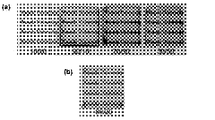
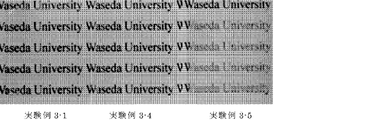
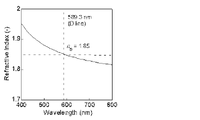
- Example 1 It is a photograph of the hybrid membrane obtained in Example 1. It is a photograph of the nanoparticle dispersion liquid of Example 2 and Comparative Example 1. It is a photograph of the hybrid membrane obtained by using the nanoparticle dispersion liquid of Example 2 and Comparative Example 1. It is a photograph of the hybrid membrane obtained in Experimental Examples 3-1, 3-4, and 3-5. It is a figure which showed the measurement data of the refractive index of the hybrid solution of Experimental Examples 8-1 and 8-4 in Example 7.
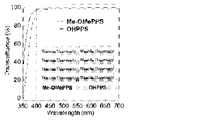
- FIG. It is a photograph of the hybrid membrane obtained in Experimental Examples 8-1 to 8-4 in Example 7. It is a figure which showed the XRD profile of PPS and P1 of Example 9. It is a figure which showed the measurement data of the transmittance of the P1 film of Example 9.
- the sulfur-containing polymer of the present invention has a structural unit (A) represented by the following general formula (1), a structural unit (B) represented by the following general formula (2), and the following general formula.
- X 1 , X 2 and X 3 represent divalent aromatic hydrocarbon groups which may have a substituent, which may be the same or different.
- the sulfur-containing polymer of the present invention has the above-mentioned structure, it has a high refractive index. It is presumed that the sulfur-containing polymer of the present invention has a high refractive index because it contains a structural unit in which an S atom having a high atomic refraction is directly bonded to an aromatic hydrocarbon group.
- the sulfur-containing polymer of the present invention is characterized by having a reactive functional group.
- the reactive functional group can be appropriately selected depending on the purpose and use of the sulfur-containing polymer of the present invention, for example, a carboxyl group (-COOH), a phosphate group (-OPO (OH) 3 ), and a hydroxyl group.
- Acidic functional groups such as mercapto group) (-SH); basic functional groups such as amino group, ammonium group, imino group, amide group, imide group, maleimide group, cyano group; group having reactive unsaturated bond (for example).
- a group having a reactive double bond and as a typical example, a vinyl group, a (meth) acryloyl group, an allyl group, a metalyl group, etc.) and a group having a reactive ion bond (for example, a reactive cyclic ether).
- the group containing these functional groups include the above-mentioned acidic functional group, basic functional group, curable functional group, nitro group, nitroso group, and a group having a hydrocarbon chain or a bonding group. Be done. That is, in the present invention, the above-mentioned reactive functional group includes not only the above-mentioned acidic functional group, basic functional group, curable functional group, nitro group and nitroso group, but also a group containing these functional groups and a binding chain. Is also included.
- the bonded chain include divalent hydrocarbon groups such as alkylene groups and arylene groups, bonding groups such as ethers, esters, carbonyls and amides, and combinations thereof.
- an acidic functional group, a basic functional group, or a group containing these functional groups is preferable, and a carboxyl group, a phosphoric acid group, and a phosphone are preferable. More preferred are acid groups, hydroxyl groups, or groups containing these functional groups. From the viewpoint of low linear expansion rate, a carboxyl group, a phosphoric acid group, a phosphonic acid group, a hydroxyl group, or a group containing a functional group thereof is preferable, and a hydroxyl group or a group containing a hydroxyl group is more preferable.
- a carboxyl group, a phosphoric acid group, a phosphonic acid group, or a group containing these functional groups is preferable, and a phosphoric acid group, a phosphonic acid group, or a group containing these functional groups is contained. Groups are more preferred. From the viewpoint of improving heat resistance, mechanical strength, and solvent resistance, a carboxyl group, a hydroxyl group, an amino group, a maleimide group, a curable functional group, or a group containing these functional groups is preferable, and a carboxyl group, a hydroxyl group, and an amino group are preferable. , Maleimide group, vinyl group, (meth) acryloyl group, allyl group, metallyl group, epoxy group, oxetane group, or a group containing these functional groups is more preferable.
- the above-mentioned reactive functional group is a carboxyl group, a phosphoric acid group, a phosphonic acid group, a hydroxyl group, a curable functional group, or a functional group thereof, in that it can give a higher refractive index as well as excellent physical properties. It is preferably a group containing a carboxyl group, a phosphoric acid group, a hydroxyl group, a vinyl group, an epoxy group, or a group containing these functional groups, and more preferably a phosphoric acid group, a hydroxyl group, a vinyl group, or these. It is more preferable that the group contains the functional group of.
- the reactive functional group is a carboxyl group, a phosphoric acid group, or a functional group thereof in that the adhesion to the substrate can be improved by a low linear expansion rate in addition to a high refractive index. It is more preferable that the group contains.
- the sulfur-containing polymer also preferably has a substituent involved in hydrogen bonding among the reactive functional groups in that the refractive index can be further increased. Hydrogen bonds increase the density of the polymer and increase the refractive index. Examples of the substituent involved in the hydrogen bond include a hydroxyl group, a carboxylic acid group, an amino group, an amide group, an imide group, a cyano group, a nitro group, a nitroso group, a sulfonic acid group and the like.
- the amount of the substituent involved in the hydrogen bond is preferably 10 mol% or more, more preferably 20 mol% or more, and more preferably 50 mol% per repeating unit (monomer constituent unit) of the sulfur-containing polymer.
- One repeating unit may contain two or more substituents involved in the hydrogen bond, and the amount thereof is preferably 0.1 mol or more, more preferably 0.5 mol or more, on average. It is preferable that the amount is 1 mol or more, more preferably 1.5 mol or more, still more preferably 2 mol or more, and particularly preferably 3 mol or more.
- the amount of the substituent involved in the hydrogen bond is preferably less than 4 mol, more preferably less than 3.5, from the viewpoint of solubility in a solvent and heat resistance.
- the sulfur-containing polymer may have one or more reactive functional groups of one or more.
- the sulfur-containing polymer preferably has the reactive functional group at the end of the main chain and / or the side chain.
- the reactive functional group at least at the end of the main chain or the side chain, in addition to a high refractive index, excellent physical properties due to the reactive functional group can be exhibited.
- the case where the reactive functional group is present in the side chain is not only the case where the reactive functional group is present in the side chain of the sulfur-containing polymer, but also represented by the general formulas (1) to (3).
- the case where the substituent in the structural units (A) to (C) is the above-mentioned reactive functional group is also included.
- the sulfur-containing polymer is represented by the structural unit (A) represented by the general formula (1), the structural unit (B) represented by the general formula (2), and the general formula (3). It has at least one kind of structural unit selected from the group consisting of the structural unit (C).
- the sulfur-containing polymer preferably contains at least one structural unit selected from the group consisting of the structural unit (A), the structural unit (B), and the structural unit (C) as a repeating unit. It is preferable that a plurality of the structural units (A), (B), and (C) are contained in the sulfur-containing polymer, and it is more preferable that the structural units (A), (B), and (C) are contained as a repeating unit.
- X 1 , X 2 and X 3 represent divalent aromatic hydrocarbon groups which may have the same or different substituents.
- the divalent aromatic hydrocarbon group include a phenylene group, a naphthylene group, an anthrylene group, a triphenylene group, a biphenylene group, a phenanthrylene group and the like.
- the divalent aromatic hydrocarbon group is preferably a phenylene group, a naphthylene group, an anthrylene group, a biphenylene group, or a triphenylene group in that the light dispersion of the sulfur-containing polymer is small. It is more preferably a phenylene group.
- substituent A examples of the substituent that the divalent aromatic hydrocarbon group may have include a reactive functional group, a halogen atom, an alkyl group, an alkoxy group, an aryl group, and an aralkyl. Groups, sulfur-containing substituents and the like are preferably mentioned. Examples of the reactive functional group in the substituent A include the same groups as the above-mentioned reactive functional group.
- halogen atom examples include a fluorine atom, a chlorine atom, a bromine atom and an iodine atom, and among them, a bromine atom is preferable.
- alkyl group examples include a methyl group, an ethyl group, an n-propyl group, an isopropyl group, an n-butyl group, an s-butyl group, a t-butyl group, a hexyl group and the like.
- an alkyl group having 1 to 18 carbon atoms is preferable, an alkyl group having 1 to 6 carbon atoms is more preferable, and a methyl group is further preferable.
- alkoxy group examples include a methoxy group, an ethoxy group, a propoxy group, an isopropoxy group, an s-butoxy group, a t-butoxy group, a pentyloxy group, a phenoxy group, a cyclohexyloxy group, a benzyloxy group and the like.
- an alkoxy group having 1 to 18 carbon atoms is preferable, an alkoxy group having 1 to 6 carbon atoms is more preferable, and a methoxy group is further preferable.
- aryl group examples include a phenyl group, a naphthyl group, a biphenyl group and the like. Of these, a phenyl group is preferable.
- the aryl group preferably has 6 to 30 carbon atoms, more preferably 6 to 18 carbon atoms, and even more preferably 6 to 12 carbon atoms.
- aralkyl group examples include a benzyl group, a phenethyl group, a phenylpropyl group, a phenylpentyl group, a phenylhexyl group, a phenyloctyl group and the like.
- the carbon number of the aralkyl group is preferably 7 to 14, and more preferably 7 to 9.
- sulfur-containing substituent examples include a thioalkyl group and a thioaryl group. Of these, the thioalkyl group is preferable.
- the sulfur-containing substituent preferably has 1 to 8 carbon atoms, more preferably 1 to 6 carbon atoms, and even more preferably 1 to 4 carbon atoms.
- the alkyl group, alkoxy group, aryl group, aralkyl group, and sulfur-containing substituent may have a substituent (hereinafter, also referred to as "substituent B").
- substituent B include the above-mentioned groups other than the above-mentioned reactive functional groups such as halogen atoms.
- the substituent (substituent A) of the divalent aromatic hydrocarbon group is a reactive functional group, a halogen atom, or a substituent (substituent) in that the refractive index can be further increased. It is preferably an alkyl group, an alkoxy group, an aryl group, an aralkyl group, or a sulfur-containing substituent, which may have a group B), and has the above-mentioned reactive functional group and substituent (substituent B). It is more preferably an alkyl group or a sulfur-containing substituent, further preferably a reactive functional group, a methyl group or a thioalkyl group, and particularly preferably a reactive functional group or a methyl group.
- the above-mentioned substituent may be only one kind or two or more kinds. Further, when the above-mentioned substituent is one kind, the substituent may be one or more, and when there are two or more kinds, each substituent may be one or more.
- the substituent having the phenylene group is a hydroxyl group, a carboxyl group, an amino group, an amide group, an imide group, a cyano group, in that a higher refractive index can be obtained. It is preferably a nitro group, a nitroso group, or a sulfo group.
- the position of the substituent in the phenylene group is a combination of the 2-position and the 6-position, a combination of the 2-position and the 3-position, a combination of the 2-position and the 4-position, or a combination of the 2-position and the 5-position in that the refractive index can be higher.
- the phenylene group is particularly preferably a phenylene group having hydroxyl groups at the 2- and 6-positions.
- the 1-position is the position of the carbon of the phenylene group bonded to the sulfur atom in the above-mentioned structural unit.
- the sulfur-containing polymer preferably further has a substituent capable of imparting amorphousness to the sulfur-containing polymer from the viewpoint of excellent both high refractive index and high transparency, and is preferably methyl. It is more preferable to have an alkyl group such as a group, an ethyl group and a propyl group, an alkoxy group such as a methoxy group and an ethoxy group, an aryl group, a sulfur-containing substituent and a halogen-containing group, and further to have a methyl group and a methoxy group. preferable.
- the sulfur-containing polymer may have the substituent as the substituent A or as the substituent B.
- the number of substituents A contained in the divalent aromatic hydrocarbon group is not particularly limited, but it is preferably as small as possible in that the refractive index of the sulfur-containing polymer is further increased, and specifically, 1 to 1 to 1 to It is preferably 6, more preferably 1 to 3, and even more preferably 1.
- the sulfur-containing polymer is preferably composed of the structural unit (A), the structural unit (B), or the structural unit (C) as a repeating unit.
- the connection position between these structural units is any of the o-position, m-position, and p - position with respect to the -S-, -SO-, and -SO2 - position positions of X1, X2, and X3, respectively .
- the p-position is preferable, and from the viewpoint of solubility, the o-position and the m-position are preferable.
- the sulfur-containing polymer may have structural units having different connection positions between two or more types of structural units.
- the amount of the structural units linked at the p-position is preferably 10 mol% or more, preferably 30 mol% or more, based on 100 mol% of all the structural units of the polymer. It is more preferably less than 99 mol%, more preferably less than 90 mol%, still more preferably less than 80 mol%.
- the structural unit (A) represented by the general formula (1) is preferably the structural unit (A-1) represented by the following general formula (1-1).
- R 1 contains an alkyl group, an alkoxy group, an aryl group, an aralkyl group, or a sulfur-containing substituent which may have a halogen atom, a reactive functional group, or a substituent, which may be the same or different.
- Represents a represents the number of R1 and is an integer from 0 to 4).
- structural unit (B) represented by the general formula (2) is preferably the structural unit (B-1) represented by the following general formula (2-1).
- R 2 contains an alkyl group, an alkoxy group, an aryl group, an aralkyl group, or a sulfur-containing substituent which may have a halogen atom, a reactive functional group, or a substituent, which may be the same or different.
- b represents the number of R 2 and is an integer from 0 to 4).
- structural unit (C) represented by the general formula (3) is preferably the structural unit (C-1) represented by the following general formula (3-1).
- R 3 contains an alkyl group, an alkoxy group, an aryl group, an aralkyl group, or a sulfur-containing substituent, which may have a halogen atom, a reactive functional group, or a substituent, which may be the same or different.
- Represents c represents the number of R3 and is an integer from 0 to 4).
- halogen atom, reactive functional group, alkyl group, alkoxy group, aryl group, aralkyl group, and sulfur-containing substituent represented by R 1 , R 2 , and R 3 are the same as those of the above-mentioned groups. Groups are preferred. Further, as the substituent that these groups may have, the same group as the above-mentioned substituent B is preferably mentioned.
- a, b, and c represent the number of substituents of R 1 , R 2 , and R 3 , respectively, and are integers of 0 to 4, preferably integers of 0 to 2, and more preferably 1 to 2. It is an integer.
- the sulfur-containing polymer may be an alternating copolymer of the structural units (A), (B) and (C), a block copolymer, or a random copolymer. You may.
- the sulfur-containing polymer may have one or more of the above structural units (A), (B), or (C), respectively.
- the sulfur-containing polymer may have a form containing only one of the structural units (A), (B) and (C), or a form containing two structural units. It may be a form including three structural units. These forms and their content ratios can be appropriately selected according to the purpose and use of the sulfur-containing polymer.
- the sulfur-containing polymer preferably contains the structural unit (A), and more preferably contains it as a main component, in that it can have a higher refractive index.
- the sulfur-containing polymer preferably contains the structural unit (B), and more preferably contains it as a main component, in that it can achieve both solubility and a high refractive index.
- the sulfur-containing polymer preferably contains the structural unit (C), and more preferably contains it as a main component, in that transparency and a high refractive index can be compatible with each other.
- the content ratio of the structural unit (A) is 1 to 100 mol% with respect to 100 mol% of all the structural units of the polymer from the viewpoint of high refractive index. It is preferably 10 to 100 mol%, more preferably 50 to 100 mol%, and even more preferably 50 to 100 mol%.
- the total content ratio of the structural unit (B) and the structural unit (C) is preferably 0 to 99 mol% and 0 to 90 mol% with respect to 100 mol% of all the structural units. Is more preferable, and 0 to 50 mol% is further preferable.
- the content ratio of the structural unit (B) is 1 to 100 mol% with respect to 100 mol% of all the structural units of the polymer from the viewpoint of high polarity due to solubility. Is more preferable, 10 to 100 mol% is more preferable, and 50 to 100 mol% is further preferable.
- the total content ratio of the structural unit (A) and the structural unit (C) is preferably 0 to 99 mol% and 0 to 90 mol% with respect to 100 mol% of all the structural units. Is more preferable, and 0 to 50 mol% is further preferable.
- the content ratio of the structural unit (C) is preferably 1 to 100 mol% with respect to 100 mol% of all the structural units of the polymer from the viewpoint of high transparency. It is more preferably to 100 mol%, still more preferably 50 to 100 mol%.
- the total content ratio of the structural unit (A) and the structural unit (B) is preferably 0 to 99 mol% and 0 to 90 mol% with respect to 100 mol% of all the structural units. Is more preferable, and 0 to 50 mol% is further preferable.
- the total content ratio of the structural units (A), (B) and (C) is preferably 50 mol% or more with respect to 100 mol% of all the structural units of the polymer. It is more preferably 80 mol% or more, further preferably 90 mol% or more, further preferably 95 mol% or more, and particularly preferably 100 mol%.
- the sulfur-containing polymer may have a structural unit (A), a structural unit (B), and a structural unit (D) other than the structural unit (C).
- the sulfur-containing polymer may further have a structural unit (D) as a repeating unit.
- Examples of the structural unit (D) include the structural unit having at least the above-mentioned reactive functional group.
- Examples of the structural unit (D) include a structural unit derived from a monomer having a polymerizable double bond and the reactive functional group.
- Examples of the polymerizable double bond include a vinyl group, a (meth) acryloyl group, an allyl group, a metharyl group and the like, and among them, a (meth) acryloyl group is preferable.
- Examples of the monomer having the polymerizable double bond and the reactive functional group include (meth) acrylate 2-carboxyethyl, (meth) acrylate 2-carboxypropyl, and (meth) acrylate 3-carboxy.
- Carboxyl group-containing (meth) acrylates such as propyl, 4-carboxybutyl (meth) acrylate; phosphate group-containing (meth) acrylates such as 2- (meth) acryloyloxyethyl acid phosphate; glycidyl (meth) acrylates, 3, Epoxide group-containing (meth) acrylates such as 4-epoxycyclohexylmethyl (meth) acrylate; vinyl ether group-containing (meth) acrylates such as 2- (2-vinyloxyethoxy) ethyl (meth) acrylate; and the like.
- the content ratio of the structural unit (D) is preferably 0 to 80 mol%, more preferably 0 to 50 mol%, and 0 to 20 with respect to 100 mol% of all the structural units of the polymer. It is even more preferably mol%, even more preferably 0-10 mol%, and particularly preferably 0-5 mol%.
- the sulfur-containing polymer has an element content ratio (O / S) of 0.1 to 1.5 between the oxygen atom O bonded to the sulfur atom S in the main chain and the sulfur atom S in the main chain. preferable.
- the element content ratio is in the above range, the transparency and the refractive index become higher.
- the sulfur atom S in the main chain means the sulfur atom S of —S— in the main chain in the structural unit (A) represented by the general formula (1).
- the structural unit (B) represented by the general formula (2) it means the sulfur atom S of —SO— in the main chain
- the structural unit (C) represented by the general formula (3) Means the sulfur atom S of -SO 2- in the main chain.
- the oxygen atom bonded to the sulfur atom S in the main chain is specifically, for example, the oxygen atom O of —SO— in the main chain in the structural unit (B) represented by the general formula (2).
- the structural unit (C) represented by the above general formula (3) it means the oxygen atom O of ⁇ SO2- on the main chain.
- the element content ratio (O / S) is more preferably 0.3 or more, further preferably 0.7 or more, and further increase the refractive index in that the transparency can be further increased. It is more preferably 1.3 or less, and even more preferably 1.1 or less, in that it can be made even higher.
- the element content ratio is measured by evaluating the peak intensities of the 1s orbital (O1s) of the oxygen atom, the 1s orbital (C1s) of the carbon atom, and the 2p orbital (S2p) of the sulfur atom using an X-ray photoelectron spectrometer (XPS). It can be obtained by the above, and specifically, it can be obtained by the method described in the examples.
- the sulfur-containing polymer preferably has a glass transition temperature (Tg) of 80 to 250 ° C.
- Tg glass transition temperature
- the glass transition temperature is more preferably 90 ° C. or higher, further preferably 100 ° C. or higher, and 200 ° C. or lower from the viewpoint of facilitating molding processing, from the viewpoint of increasing heat resistance. Is more preferable.
- the glass transition temperature is taken from the DSC curve obtained by raising the temperature from room temperature to 250 ° C. (heating rate 10 ° C./min) under a nitrogen gas atmosphere using a differential scanning calorimeter (DSC) as the baseline. It can be obtained by a method of evaluating by the intersection of tangents at the inflection point.
- DSC differential scanning calorimeter
- the sulfur-containing polymer preferably has an SO binding energy of 163 eV to 167 eV.
- the SO binding energy can be obtained by evaluating the position of the peak top of the 2p3 / 2 orbital of the sulfur atom obtained by measuring with an X-ray photoelectron spectrometer (XPS).
- the weight average molecular weight (Mw) of the sulfur-containing polymer is preferably 500 to 10000000. When the weight average molecular weight is in the above range, it can be suitably used as an optical material.
- the weight average molecular weight is more preferably 1000 or more, further preferably 3000 or more, still more preferably 10,000 or more, and 1,000,000 or less from the viewpoint of reducing melt viscosity. It is more preferable that it is 100,000 or less, and it is further preferable that it is 100,000 or less.
- the dispersity (weight average molecular weight / number average molecular weight) of the sulfur-containing polymer is preferably 1 to 10. When the degree of dispersion is in the above range, molding becomes easy.
- the dispersity is more preferably 5 or less, and even more preferably 3 or less, in that the moldability can be further improved.
- the weight average molecular weight and the number average molecular weight can be obtained by measuring by a gel permeation chromatography (GPC) method, and specifically, can be obtained by the method described in Examples described later.
- the degree of dispersion can be determined by dividing the weight average molecular weight by the number average molecular weight.
- the refractive index of the sulfur-containing polymer is preferably 1.69 or more. When the refractive index is within the above range, it is used for various purposes such as optical materials (members), mechanical parts materials, electrical / electronic parts materials, automobile parts materials, civil engineering and building materials, molding materials, as well as paints and adhesive materials. Can be suitably used for.
- the refractive index is more preferably 1.7 or more, and even more preferably 1.71 or more.
- the refractive index is measured by forming a film having a thickness of 50 nm using the sulfur-containing polymer as a measurement sample, using a spectroscopic ellipsometer UVISEL (manufactured by HORIBA Scientific), and using a Na D line (589 nm). It can be obtained by doing.
- the Abbe number of the sulfur-containing polymer is preferably 10 or more. When the Abbe number is in the above range, the light dispersion is small, and an optical material suitable for a lens or the like can be obtained.
- the Abbe number is more preferably 15 or more, further preferably 18 or more, and even more preferably 20 or more.
- the Abbe number is preferably 60 or less, and more preferably 55 or less, from the viewpoint of adjusting the light dispersibility.
- the Abbe number is formed by forming a film using the sulfur-containing polymer, and using the spectroscopic ellipsometer, D line (589.3 nm), F line (486.1 nm), and C line.
- the refractive index at (656.3 nm) can be measured and calculated using the following formula.
- Abbe number (v D ) (n D -1) / (n F -n C )
- n D , n F , and n C represent the refractive indexes of Fraunhofer at the D line (589.3 nm), the F line (486.1 nm), and the C line (658.3 nm), respectively.
- the sulfur-containing polymer preferably has a visible light transmittance of 70% or more.
- the visible light transmittance is in the above range, it can be suitably used as an optical material.
- the visible light transmittance is more preferably 80% or more, more preferably 85% or more, and further preferably 88% or more.
- the visible light transmittance is a parallel line transmittance, and a spectrophotometer (for example, by using a thin film having a certain thickness (for example, 1 ⁇ m) made of the sulfur-containing polymer or by standardizing the thickness). For example, it is obtained by measuring the range of 400 nm to 700 nm in an air object without using an integrating sphere with an ultraviolet visible infrared spectrophotometer V-700 series manufactured by Nippon Kogaku and evaluating the lowest value of transmittance. be able to.
- the sulfur-containing polymer is preferably amorphous for optical material applications that require transparency.
- the sulfur-containing polymer preferably has a crystallinity of less than 80%, more preferably less than 50%, still more preferably less than 30%, and particularly preferably less than 10%. Most preferably less than 5%.
- the crystallinity of the sulfur-containing polymer is preferably 1% or more, more preferably 10% or more. , 30% or more is more preferable, and 60% or more is particularly preferable.
- the crystallinity can be determined by measuring by X-ray diffraction (XRD).
- the obtained XRD profile is separated into a plurality of peaks, the peak having a half-price width of less than 1 is crystalline, and the peak having 1 or more is amorphous, and the area of the crystalline peak with respect to the total peak area. It can be obtained by calculating the ratio as the crystallinity.
- the sulfur-containing polymer is preferably thermoplastic.
- the molding processability is improved, such as the ability to form a thin film uniformly and the formation of a complicated shape with high accuracy, and the application to a wide range of applications becomes easy.
- the sulfur-containing polymer can also use a reactive functional group, particularly a curable functional group, to form a thermoplastic resin by copolymerization with another monomer or an addition reaction.
- a reactive functional group particularly a curable functional group
- the thermoplastic resin it is preferable to use a compound (monomer) having a substituent that reacts with the reactive functional group of the sulfur-containing polymer, and the sulfur-containing polymer may be used as the monomer.
- substituent of the monomer examples include a ring-opening polymerizable group such as an epoxy group, an oxetane ring, an ethylene sulfide group and an aziridine group; and a radically curable group such as an acrylic group, a methacryl group, an allyl group, a vinyl group and a maleimide group.
- a ring-opening polymerizable group such as an epoxy group, an oxetane ring, an ethylene sulfide group and an aziridine group
- a radically curable group such as an acrylic group, a methacryl group, an allyl group, a vinyl group and a maleimide group.
- an addition-reactive group such as a hydroxyl group, a thiol group, a hydrosilyl group
- an esterification reaction group such as a carboxylic acid group, an oxazoline group, a hydroxyl group, a thiol group, an amino group
- Examples thereof include thiourethane-reactive groups.
- the monomer examples include a compound having a ring-opening polymerizable group (epoxide group, oxetane group, ethylene sulfide group, etc.) that is cured by cation curing, a compound having an acrylic group and / or a methacrylic group that is cured by radical curing, and hydrosilylation. It is preferably a compound having a vinyl group that is cured by an addition reaction such as an epoxide reaction.
- a thermoplastic copolymer by radical polymerization with another monofunctional double bond by utilizing a sulfur-containing polymer having a monofunctional double bond at the terminal. It is also possible to obtain a thermoplastic polymer by subjecting a sulfur-containing polymer having a monofunctional thiol group at the terminal to an enthiol reaction with a double bond of the other polymer.
- the method for producing the sulfur-containing polymer of the present invention is any method capable of producing a polymer having at least one of the above-mentioned reactive functional group and the constituent units (A) to (C).
- the present invention is not particularly limited, and examples thereof include known polymerization methods, such as a method for polymerizing a monomer component containing a sulfur-containing monomer having a reactive functional group, and a monomer containing a sulfur-containing monomer. Examples thereof include a method of introducing the above-mentioned reactive functional group into the polymer by polymerizing the components to obtain a polymer and then reacting with the compound having the above-mentioned reactive functional group. Among them, a method of reacting the polymer with a compound having the reactive functional group to introduce the functional group is preferable in that the sulfur-containing polymer can be efficiently produced.
- a sulfur-containing aromatic polymer having a disulfide bond and / or a thiol group at the terminal is reacted with a compound having a polymerizable double bond and a reactive functional group.
- a method including a step is preferably mentioned.
- Such a method for producing a sulfur-containing polymer is also one of the present inventions.
- the disulfide bond at the end of the sulfur-containing aromatic polymer is cleaved with light or a radical initiation catalyst in the sulfur-containing aromatic polymer having a disulfide bond at the terminal, and the polymerizable double
- method a for introducing a reactive functional group by reacting a compound having a bond and a reactive functional group and binding the above compound can be mentioned.
- a reducing agent such as sodium borohydride, triphenylphosphine, triiron tetroxide, or diiron trioxide is reacted with a sulfur-containing aromatic polymer having a disulfide bond at the end to form a thiol group (-) at the end.
- a method for introducing a reactive functional group by reacting the compound having the polymerizable double bond and the reactive functional group after forming SH) and binding the compound by a thiolene reaction (method c). Can be mentioned.
- a hydroxyl group is subjected to a nucleophilic reaction of water with respect to a sulfur-containing aromatic polymer having a substituent such as a halogen atom (for example, an alkyl halide substituent).
- a method (method d) of introducing a reactive functional group by producing a reactive functional group can be mentioned.
- a method for producing the above-mentioned sulfur-containing polymer a method (method e) for obtaining a polymer from a sulfur-containing monomer having a substituent having a reactive functional group such as a carboxyl group by using a method described later may be used.
- the sulfur-containing aromatic polymer having a carboxyl group obtained in the above (method e) is generated with a hydroxyl group by a reducing agent such as dimethylsulfide borane, borane-tetratetra complex, N, N-dimethylanilineborane.
- a reducing agent such as dimethylsulfide borane, borane-tetratetra complex, N, N-dimethylanilineborane.
- the above (method a), (method b), and (method c) are preferable as a method for producing a sulfur-containing polymer having a reactive functional group at the end of the main chain.
- the above (method d), (method e), and (method f) are preferable as a method for producing a sulfur-containing polymer having a reactive functional group in the side chain.
- Examples of the polymerizable double bond include a vinyl group, a (meth) acryloyl group, an allyl group, and a metharyl group.
- Examples of the reactive functional group include the above-mentioned reactive functional groups.
- the above-mentioned (method a) to (method f) can be appropriately selected depending on the type of the reactive functional group to be introduced and the above-mentioned compound to be used. Further, the reaction conditions and the like may be appropriately selected from known techniques.
- the above (method c) is preferable when producing a sulfur-containing polymer having a carboxyl group, a phosphoric acid group, a phosphonic acid group, or a curable functional group at the terminal. That is, first, a sulfur-containing aromatic polymer having a disulfide bond at the terminal is cleaved with a disulfide bond (—S—S—) using a reducing agent such as sodium borohydride to form a thiol group at the terminal. To form.
- the reducing agent in addition to sodium borohydride, lithium triethylborohydride, triphenylphosphine, longalit (sodium formaldehyde sulfoxylate) and the like can be used.
- the amount of the reducing agent used can be appropriately set according to the amount of side chains and terminal groups of the sulfur-containing aromatic polymer, and is, for example, 100 parts by mass of the sulfur-containing aromatic polymer. On the other hand, it is preferably 1 to 1000 parts by mass, more preferably 5 to 300 parts by mass, and further preferably 10 to 100 parts by mass.
- the reaction temperature for forming a thiol group from a disulfide bond is preferably 0 to 200 ° C, more preferably 10 to 100 ° C.
- the reaction time is not particularly limited, but is usually 0.1 to 100 hours, preferably 0.5 to 50 hours, and more preferably 1 to 24 hours.
- a solvent may be used in the reaction for forming the thiol group.
- the solvent used include alcohol solvents such as methanol, ethanol, propanol, butanol, methyl cellosolve, butyl cellosolve and propylene glycol monomethyl ether; ketone solvents such as acetone, methyl ethyl ketone, methyl isobutyl ketone and cyclohexanone; ethyl acetate and acetic acid.
- Ester-based solvents such as isopropyl, butyl acetate and ⁇ -butyrolactone; ether-based solvents such as diethyl ether, diisopropyl ether, 1,2-dimethoxyethane (DME) and tetrahydrofuran (THF); aromatic hydrocarbon-based solvents such as toluene and xylene.
- ether-based solvents such as diethyl ether, diisopropyl ether, 1,2-dimethoxyethane (DME) and tetrahydrofuran (THF)
- aromatic hydrocarbon-based solvents such as toluene and xylene.
- Solvents Halogenated hydrocarbon solvents such as chlorobenzene, fluorobenzene, dichloromethane, chloroform, carbon tetrachloride, 1,2-dichloroethane, benzotrifluoride; amides such as dimethylformamide (DMF), dimethylacetamide, N-methylpyrrolidone Solvents: dimethylsulfoxide (DMSO), nitromethane and the like.
- Halogenated hydrocarbon solvents such as chlorobenzene, fluorobenzene, dichloromethane, chloroform, carbon tetrachloride, 1,2-dichloroethane, benzotrifluoride
- amides such as dimethylformamide (DMF), dimethylacetamide, N-methylpyrrolidone
- Solvents dimethylsulfoxide (DMSO), nitromethane and the like.
- the terminal thiol group is reacted with a compound having a polymerizable double bond and a carboxyl group, a phosphoric acid group, a phosphonic acid group, or a curable functional group (two or more polymerizable groups).
- a compound having a polymerizable double bond and a carboxyl group, a phosphoric acid group, or a phosphonic acid group include a compound having a polymerizable double bond capable of reacting with a thiol group and a carboxyl group, a phosphoric acid group, or a phosphonic acid group.
- a compound having a vinyl group and a carboxyl group a compound having a (meth) acryloyl group and a phosphonic acid group, a compound having a (meth) acryloyl group and a carboxyl group, and a (meth) acryloyl group and a phosphoric acid group.
- examples thereof include compounds having the above.
- the above compounds include, for example, 4-pentenoic acid, carboxyethyl acrylate, 2-acryloyloxyethyl-succinic acid, 2-acryloyloxyethyl hexahydrophthalic acid, 2-acryloyloxyethyl phosphate, vinylphosphon. Acids and the like can be mentioned. Of these, 4-pentenoic acid, carboxyethyl acrylate, 2-acryloyloxyethyl phosphate, and vinylphosphonic acid are preferable because they can be highly refracted and have high reactivity.
- the amount of the compound used can be appropriately set according to the amount of the reactive functional group to be introduced, and is, for example, 0.1 to 1000 with respect to 100 parts by mass of the sulfur-containing aromatic polymer. It is preferably parts by mass, more preferably 1 to 20 parts by mass, and even more preferably 1 to 10 parts by mass.
- the reaction between the polymerizable double bond and the compound having a carboxyl group, a phosphoric acid group or a phosphonic acid group is carried out by light irradiation.
- the light irradiation can be performed by a known method using a known light source. Further, the above reaction may be carried out using a known polymerization initiator, catalyst or the like, and the type and amount thereof can be appropriately set.
- the above (method a) is preferable.
- the sulfur-containing aromatic polymer is directly reacted with the above-mentioned polymerizable double bond and a compound having a carboxyl group, a phosphoric acid group, or a phosphonic acid group.
- the amount of the compound having the polymerizable double bond and the carboxyl group, the phosphate group, or the phosphonic acid group is appropriately set according to the amount of the reactive functional group to be introduced.
- it is preferably 0.1 to 5000 parts by mass, more preferably 1 to 100 parts by mass, and 1 to 20 parts by mass with respect to 100 parts by mass of the sulfur-containing aromatic polymer. It is more preferably by mass.
- the reaction with the compound having a polymerizable double bond and a carboxyl group is preferably carried out by light irradiation.
- the light irradiation can be performed by a known method using a known light source. Further, the above reaction may be carried out using a known initiator, catalyst or the like, and the type and amount thereof can be appropriately set.
- the above (method b) is preferable.
- the reaction between the sulfur-containing polymer having a thiol group and the compound having the polymerizable double bond and the reactive functional group is preferably carried out under the same conditions as in the above (method c).
- the above (method d) or (method e) is preferable.
- the sulfur-containing aromatic polymer having a substituent such as a halogen atom is, for example, a sulfur-containing polymer having an alkyl substituent in the method for producing a sulfur-containing aromatic polymer described later. It can be obtained by adding N-bromosuccinimide and 2,2'-azobis (isobutyronitrile) and reacting them.
- the temperature of the reaction is not particularly limited, but is preferably 10 to 200 ° C, more preferably 50 to 150 ° C.
- a sulfur-containing polymer having a carboxyl group in the side chain is produced by the above (method e)
- a benzenethiol having a carboxyl group specifically, a benzenethiol having a carboxyl group is used. It can be obtained by using 2-mercaptobenzoic acid, 3-mercaptobenzoic acid or the like as a sulfur-containing monomer.
- the sulfur-containing polymer having an alkyl substituent is combined with N-bromosuccinimide 2, After adding 2'-azobis (isobutyronitrile) and reacting to obtain a sulfur-containing aromatic polymer having a substituent of a halogen atom (bromine atom), triphenylphosphine, an aqueous formaldehyde solution, and potassium t- Examples include a method of reacting butoxide.
- a method for producing a sulfur-containing polymer having a hydroxyl group in the side chain for example, in the method for producing a sulfur-containing aromatic polymer described later, a monomer having an alkoxy group substituent such as a methoxy group is used.
- a method of adding water by reacting with boron tribromide after obtaining a sulfur-containing aromatic polymer having a substituent of an alkoxy group can be mentioned.
- the sulfur-containing aromatic polymer may be produced by polymerization or may be a commercially available product.
- Examples of the method for producing the sulfur-containing aromatic polymer include a method of polymerizing a monomer component containing a sulfur-containing monomer.
- a disulfide compound and a thiol compound are preferably mentioned, and specifically, for example, a diaryldisulfide compound represented by the following general formula (4) and the following general formula (5).
- the thioaryl compound represented by is more preferably mentioned.
- a 1 and A 2 represent monovalent aromatic hydrocarbon groups which may have the same or different substituents.
- a divalent aromatic hydrocarbon group represented by X 1 in the above general formula (1) is monovalent.
- examples thereof include a phenyl group, a naphthyl group, an anthryl group, a triphenyl group, a biphenyl group, a phenanthryl group and the like.
- a phenyl group, a naphthyl group, an anthryl group, a biphenyl group, or a triphenyl group is preferable, and a phenyl group is more preferable.
- Examples of the substituent contained in the monovalent aromatic hydrocarbon group represented by A 1 and A 2 include a reactive functional group, a halogen atom, an alkyl group, an alkoxy group, an aryl group, an aralkyl group, a sulfur-containing substituent and the like. Can be mentioned. Examples of the above-mentioned reactive functional group, halogen atom, alkyl group, alkoxy group, aryl group, aralkyl group and sulfur-containing substituent include the same groups as the above-mentioned respective groups.
- the diallyl disulfide compound is preferably a compound represented by the following general formula (4-1).
- the thioaryl compound is preferably a compound represented by the following general formula (5-1).
- R 4 , R 5 , R 6 , R 7 , R 8 , R 9 , R 10 and R 11 are the same or different, and are hydrogen atom and halogen atom.
- the above-mentioned general formula (1-1) is used as the alkyl group, alkoxy group, aryl group, aralkyl group, or sulfur-containing substituent which may have a halogen atom, a reactive functional group, or a substituent, respectively.
- the same as each group represented by R 1 can be mentioned. Examples of the substituent that these groups may have include the same as the above-mentioned substituent B, and among them, a halogen atom is preferable.
- the disulfide compound can also be prepared by oxidizing a thiol compound. Therefore, in the polymerization step, a thiol compound can also be used as a precursor of the disulfide compound. A disulfide compound can be obtained by oxidatively binding two molecules of a thiol compound.
- the method for obtaining the disulfide compound by oxidizing the thiol compound is not particularly limited, and a known method such as a method for oxidizing with hydrogen peroxide, iodine or the like can be used.
- Only one type of the sulfur-containing monomer may be used, or two or more types may be used.
- the above polymerization is preferably oxidative polymerization.
- the oxidative polymerization is not particularly limited, and can be carried out by a known method such as a method using a quinone compound or a method using a metal compound such as a vanadium compound. Above all, it is preferable that the oxidative polymer is carried out by using a quinone-based oxidizing agent because the transparency can be improved. It is preferable to use a metal compound in that the amount used for the monomer component is small and the amount of waste is small.
- quinone-based oxidizing agent examples include 2,3-dichloro-5,6-dicyano-parabenzoquinone (DDQ), 2,3,5,6-tetrachloroparabenzoquinone (chloranyl), 2,3,5.
- DDQ 2,3-dichloro-5,6-dicyano-parabenzoquinone
- chloranyl 2,3,5,6-tetrachloroparabenzoquinone
- 6-Tetrabromobenzoquinone (bromanyl), 2,3,5,6-tetrafluoroparabenzoquinone, anthraquinone, 1,4-naphthoquinone, 2,3-dichloro-1,4-naphthoquinone, 2,3-dibromo-1, 4-Naphthoquinone, 2,3-dicyano-1,4-naphthoquinone, 3,4,5,6-tetrachloroorthobenzoquinone (ortrochloranyl), 3,4,5,6-tetrabromoortobenzoquinone (orthobromanyl), 3 , 4, 5, 6-Tetrafluorobenzoquinone and the like.
- DDQ is preferable because of its high oxidizing power and easy availability. Only one kind of the above-mentioned quinone-based oxidizing agent may be used, or two or more kinds thereof may be used.
- the amount of the quinone-based oxidizing agent added is preferably 0.1 to 3 mol, more preferably 0.8 to 1.5 mol, based on 1 mol of the sulfur-containing monomer used. It is more preferably 0.9 to 1.1 mol.
- an acid may be further added.
- the quinone-based oxidizing agent acts, the quinone-based compound becomes a hydroquinone dianion, but when an acid is added, the quinone can be stabilized and the oxidizing power can be maintained.
- the acid is not particularly limited, and is, for example, sulfuric acid, acetic acid, methanesulfonic acid, benzenesulphonic acid, toluenesulphonic acid, trifluoromethanesulphonic acid, 1,1,2,2-tetrafluoroethanesulphonic acid, trifluoroacetic acid. , Perfluoropropionic acid, perfluorobutyric acid and the like. Of these, trifluoroacetic acid is preferable in terms of increasing acidity. Only one kind of the above acid may be used, or two or more kinds may be used.
- the amount of the acid added is preferably 10 to 1000 mol, more preferably 50 to 500 mol, and more preferably 80 to 120 mol with respect to 100 mol of the total amount of the quinone-based oxidizing agent to be added. Is more preferable.
- the reaction temperature is not particularly limited as long as it is a temperature at which the polymerization proceeds, but it is preferably 0 to 200 ° C., more preferably 10 ° C. or higher, and further preferably 15 ° C. or higher, because the above-mentioned oxidative polymerization is likely to proceed. It is preferable, and 180 ° C. or lower is more preferable, and 150 ° C. or lower is further preferable, because side reactions can be suppressed.
- the reaction time is not particularly limited, but is usually 0.1 to 100 hours, preferably 1 to 80 hours, more preferably 5 to 50 hours, and further preferably 10 to 24 hours. preferable.
- a solvent may be used.
- Preferred solvents include, for example, dichloromethane, chloroform, carbon tetrachloride, 1,2-dichloroethane, tetrachlorethylene, 1,1,2,2-tetrachloroethane, nitromethane, nitrobenzene, chlorobenzene, 1,2-dichlorobenzene, 1,3. -Dichlorobenzene, N-methylpyrrolidone, tetrahydrofuran, ethyl acetate and the like can be mentioned.
- a monomer component containing a sulfur-containing monomer may be sequentially added during the polymerization reaction. Further, after the above-mentioned thiol compound is oxidatively polymerized to obtain a disulfide compound, the obtained disulfide compound may be oxidatively polymerized and then polymerized in multiple stages.
- the method for producing the sulfur-containing polymer may include a step of oxidizing the polymer into which the reactive functional group is introduced by the above-mentioned step using an oxidizing agent.
- oxidation step By the oxidation step, -S- in the main chain is oxidized to -SO- or -SO 2- , and a sulfur-containing polymer having the above-mentioned structural units (B) and / or (C) can be obtained.
- the oxidizing agent is not particularly limited, and known ones can be used. Among them, a sulfoxide (sulfinyl group) (-) by appropriately oxidizing a sulfide group (-S-) on the main chain can be used. It is preferable to use peroxide or chloric acid in that SO-) can be formed.
- the peroxide examples include metachloroperbenzoic acid, hydrogen peroxide, ammonium persulfate, sodium persulfate, peracetic acid, t-butyl hydroperoxide and the like.
- the oxidizing agent is preferably a peroxide, and may be metachloroperbenzoic acid or hydrogen peroxide, in that it can be dissolved in the same solvent as the solvent capable of dissolving the sulfur-containing polymer. More preferred. It is more preferable that the oxidizing agent is metachloroperbenzoic acid in terms of not using water in which the polymer precipitates and in terms of suppressing oxidation of the sulfonyl group by an excess oxidizing agent.
- phase transfer catalyst such as trifluoroacetone
- oxidizing agent Only one kind of the above-mentioned oxidizing agent may be used, or two or more kinds thereof may be used in combination.
- the amount of the oxidizing agent added is not particularly limited as long as the desired oxidation reaction of sulfur atoms proceeds, but is usually 0.1 to 10 mol with respect to 1 mol of sulfur atoms in the sulfur-containing polymer. It is preferably 0.5 to 5 mol, more preferably 0.8 to 1.5 mol, and even more preferably 0.8 to 1.5 mol.
- the reaction temperature of the oxidative reaction is not particularly limited as long as it is a temperature at which the desired oxidative reaction proceeds, but it is preferably 0 to 200 ° C., more preferably 10 ° C. or higher, because the oxidative reaction is likely to proceed. It is preferably 15 ° C. or higher, more preferably 180 ° C. or lower, still more preferably 150 ° C. or lower in terms of suppressing side reactions.
- the reaction time is not particularly limited, but is usually 0.1 to 100 hours, preferably 1 to 80 hours, more preferably 5 to 50 hours, and further preferably 10 to 24 hours. preferable.
- the reaction may be carried out for a longer time than the above-mentioned reaction temperature.
- the amount of the oxidizing agent added in this case is not particularly limited as long as the desired oxidation reaction of the sulfur atom proceeds, but is usually 1.5 to 100 with respect to 1 mol of the sulfur atom in the sulfur-containing polymer. It is preferably mol, more preferably 2 to 50 mol, still more preferably 2 to 10 mol.
- a solvent may be used, and as the above-mentioned solvent, the same solvent as the solvent used in the above-mentioned polymerization step can be preferably mentioned.
- the cleaning method is not particularly limited, and examples thereof include a method of cleaning with water, an acid, a base, or the like. Further, in order to remove the unreacted substance, the polymer may be filtered or washed with a solvent.
- the solvent is not particularly limited, but the same solvent as the reaction solvent can be used.
- the sulfur-containing polymer of the present invention can be combined with other components to form a sulfur-containing polymer composition.
- the other components are not particularly limited, and may be appropriately selected from known components according to the purpose and use of the sulfur-containing polymer composition.
- the content of the sulfur-containing polymer in the sulfur-containing polymer composition may be appropriately set according to the use and purpose of the sulfur-containing polymer composition, but the total solid content of the sulfur-containing polymer composition is 100% by mass. It is preferably 10 to 100% by mass, more preferably 20% by mass or more, still more preferably 50% by mass or more, in that the permeability and the refractive index can be further improved. Further, in that the viscosity of the sulfur-containing polymer composition can be kept low, the content is preferably 99% by mass or less, more preferably 95% by mass or less, and 85% by mass or less. It is even more preferably 80% by mass or less, and most preferably 60% by mass or less.
- the above other components include, for example, inorganic substances, cross-linking agents, curing catalysts, curing agents, organic resins, pigments, dyes, antioxidants, ultraviolet absorbers, IR cut agents, reactive diluents, and light stabilizers.
- Plasticizers non-reactive compounds, chain transfer agents, thermal polymerization initiators, anaerobic polymerization initiators, polymerization inhibitors, fillers, adhesion improvers such as coupling agents, heat stabilizers, antibacterial and antifungal agents, Flame retardant, matting agent, defoaming agent, leveling agent, wetting / dispersing agent, sedimentation inhibitor, thickener / sag inhibitor, color separation inhibitor, emulsifier, slip / scratch inhibitor, anti-skin agent, drying Examples thereof include agents, antifouling agents, antistatic agents, conductive agents (electrostatic aids), solvents and the like. These components may be used alone or in combination of two or more.
- the sulfur-containing polymer composition preferably contains the sulfur-containing polymer and at least one selected from the group consisting of an inorganic substance, a cross-linking agent, and an organic resin.
- the characteristics of the added inorganic substance can be imparted and the dispersibility is excellent, so that the transparency of the composition can be significantly improved.
- the inorganic substance examples include metals, inorganic oxides, inorganic nitrides, inorganic carbides, inorganic sulfides, and inorganic hydroxides.
- the above-mentioned inorganic substances may be used alone or in combination of two or more.
- the inorganic substance preferably contains a metal.
- the metal examples include lithium (Li), sodium (Na), potassium (K), magnesium (Mg), calcium (Ca), manganese (Mn), strontium (Sr), barium (Ba), and titanium (Ti). ), Zyrium (Zr), Iron (Fe), Cobalt (Co), Nickel (Ni), Copper (Cu), Zinc (Zn), Aluminum (Al), Tin (Sn), Silicon (Si) and the like. ..
- a metal oxide containing a metal element is preferable.
- the metal oxide include a single metal oxide composed of one kind of metal element, a composite oxide which is an oxide composed of two or more kinds of metal elements, the single metal oxide, or a dissimilar element to the composite oxide. Examples thereof include solid solution oxides in which a solid solution is dissolved.
- the dissimilar element may be a metal element or a non-metal element such as nitrogen or fluorine other than oxygen. Examples of the metal element include the above-mentioned metal elements.
- Examples of the single metal oxide include magnesium oxide, calcium oxide, strontium oxide, barium oxide, titanium oxide, zinc oxide, cerium oxide, silicon oxide, tin oxide, zirconium oxide, aluminum oxide, indium oxide and the like.
- Examples of the composite oxide include perovskite-type composite oxides such as barium titanate, barium strontium titanate, strontium titanate, barium titanate strontium titanate, barium titanate zirconium, and lead zircate titanate; spinel, lithium titanate, and the like.
- Spinel-type composite oxide examples thereof include composite oxides such as aluminum titanate.
- Examples of the solid solution oxide include solid solution oxides in which a dissimilar metal element and / or a non-metal element other than oxygen, for example, nitrogen or fluorine is solid-dissolved in the single metal oxide or composite oxide.
- metal nitride is preferable, and examples thereof include boron nitride, carbon nitride, and aluminum nitride.
- the inorganic carbide is preferably a metal carbide, and examples thereof include silicon carbide, calcium carbide, titanium carbide, and boron carbide.
- the inorganic sulfide is preferably a metal sulfide, and examples thereof include copper sulfide, zinc sulfide, and cadmium sulfide.
- the inorganic hydroxide is preferably a metal hydroxide, and examples thereof include aluminum hydroxide, magnesium hydroxide, and barium hydroxide.
- the inorganic substance is preferably an inorganic oxide, more preferably a metal oxide, in that it has a wide band gap (visible light transparent).
- Ti, Zr, Ce, Zn, and Ti, Zr, Ce, Zn are easy to obtain in a colorless and transparent composition in which coloring by the inorganic substances is suppressed because they are not absorbed or are less absorbed in the visible light region.
- Oxides containing In, Al, Si, and Sn as the main components of the metal element are more preferable, and titanium oxide (TiO 2 ), zirconium oxide (ZrO 2 ), cerium oxide (CeO 2 ), zinc oxide (ZnO), and indium oxide are more preferable.
- In 2 O 3 ) aluminum oxide (Al 2 O 3 ), silicon oxide (SiO 2 ), tin oxide (SnO 2 ) are particularly preferable.
- zirconium oxide, titanium oxide, and silicon dioxide are more advantageous in that the transparency of the sulfur-containing polymer composition can be further improved and the low-line expansion of the composition can be achieved.
- zirconium oxide and titanium oxide are more preferable from the viewpoint of improving the refractive index of the sulfur-containing polymer composition.
- the perovskite type composite oxide is preferable in that it has a high relative permittivity and the sulfur-containing polymer composition can be suitably used as a ferroelectric material and a piezoelectric material.
- Boron nitride, aluminum hydroxide, and aluminum titanate are preferable in that they have high thermal conductivity and the sulfur-containing polymer composition can be suitably used as a heat dissipation material.
- a solid solution oxide in which a dissimilar metal element or an additive element such as fluorine is dissolved in a solid solution is preferable, and for example, zinc oxide in which In, Al or Ga is solid-dissolved, indium oxide in which Sn or Ti is solid-dissolved, Sb or F is solidified. Melted tin oxide and the like are more preferable.
- the shape of the inorganic substance is not particularly limited and may be indeterminate, particulate, plate, fibrous or the like, but particulate is preferable.
- the above-mentioned inorganic substance may be surface-treated.
- the surface treatment is not particularly limited as long as it does not affect the effect of the present invention, and a method using a silane coupling agent, a method of reacting a compound having a phosphoric acid group, and a compound having a carboxylic acid group can be used. Known methods such as a method of reacting may be mentioned.
- the average particle size of the inorganic substance is preferably 1 nm or more and 1000 nm or less. When the average particle size of the inorganic substance is in the above range, the transparency in the visible light region and the infrared region can be improved.
- the average particle size of the inorganic substance is more preferably 5 nm or more, and further preferably 10 nm or more, from the viewpoint of reducing the amount of the organic resin. Further, the average particle size of the inorganic substance is more preferably 100 nm or less, further preferably 50 nm or less, and further preferably less than 30 nm. As the above-mentioned inorganic substances, two or more kinds having different particle sizes may be used in order to achieve close packing of the inorganic substances.
- the average particle size is about 10 to 1000 individual particles (primary particles) by observing the inorganic substance with SEM (magnification: 1000 to 100,000 times, preferably 10,000 times) and analyzing the obtained image. ) Is obtained by determining the particle size (diameter equivalent to the circle area) and evaluating the 50% particle size based on the number-based particle size distribution.
- image analysis software for example, Mac-View manufactured by Mountech
- the content of the inorganic substance is not particularly limited, and can be appropriately set according to the purpose and use of the sulfur-containing polymer composition.
- the content of the inorganic substance may be 10 parts by mass or more with respect to 100 parts by mass of the sulfur-containing polymer in that the transparency can be further improved and the line can be expanded low. It is more preferably 30 parts by mass or more, further preferably 50 parts by mass or more, particularly preferably 70 parts by mass or more, and most preferably 80 parts by mass or more.
- the content of the inorganic substance is preferably 90 parts by mass or less, preferably 80 parts by mass or less, with respect to 100 parts by mass of the sulfur-containing polymer. It is more preferably 70 parts by mass or less, still more preferably 50 parts by mass or less.
- the cross-linking agent is not particularly limited, but a curable organic compound having a curable functional group capable of reacting with the reactive functional group of the sulfur-containing polymer is preferable.
- the curable functional group refers to a functional group (a group that causes a curing reaction of a polymer composition) that undergoes a curing reaction by heat or light.
- the curable functional group include a ring-opening polymerizable group such as an epoxy group, an oxetane ring, an ethylene sulfide group and an aziridine group, and a radical curable group such as an acrylic group, a methacryl group, an allyl group, a vinyl group and a maleimide group.
- addition reactive group such as hydroxyl group, thiol group, hydrosilyl group, carboxylic acid group, oxazoline group, hydroxyl group, thiol group, esterification reaction group such as amino group, urethane such as isocyanate group.
- addition reactive group such as hydroxyl group, thiol group, hydrosilyl group, carboxylic acid group, oxazoline group, hydroxyl group, thiol group, esterification reaction group such as amino group, urethane such as isocyanate group.
- thiol group such as hydroxyl group, thiol group, hydrosilyl group, carboxylic acid group, oxazoline group, hydroxyl group, thiol group, esterification reaction group such as amino group, urethane such as isocyanate group.
- esterification reaction group such as amino group, urethane such as isocyanate group.
- urethane such as isocyanate group.
- the curable organic compound examples include a compound having a ring-opening polymerizable group (epoxy group, oxetane group, ethylene sulfide group, etc.) that is cured by cationic curing, and a compound having an acrylic group and / or a methacrylic group that is cured by radical curing.
- a compound having a vinyl group that is cured by an addition reaction such as hydrosilylation or an enthiol reaction is preferable.
- Enthiol a compound having a ring-opening polymerizable group that is cured by cation curing, has a low shrinkage rate during primary curing and is easy to give a shape in molding with a mold such as nanoimprint or a resin mold.
- Compounds having a thiol group that reacts are more preferable.
- the compound having a ring-opening polymerizable group may be a compound having one or more ring-opening polymerizable groups in one molecule, but a compound having a total of two or more ring-opening polymerizable groups, that is, a polyfunctional compound. It is preferable to make it indispensable. As a result, the curing reactivity is further enhanced, and the resin composition having excellent curability and curing speed can be obtained, so that a cured molded product can be obtained in a shorter time.
- the cross-linking agent to be used is preferably a cross-linking agent having a thiol group or a cross-linking agent having a reactive double bond. .
- the cross-linking agent to be used includes a cross-linking agent having a thiol group, a cross-linking agent having a reactive ionic bond, and an amine. Crosslinking agents are preferred.
- the cross-linking agent used is a cross-linking agent having a reactive double bond, a cross-linking agent having a reactive ionic bond, and a cross-linking agent having an isocyanate group. Is preferable.
- the reactive functional group of the sulfur-containing polymer is a thiol group
- the cross-linking agent used is a cross-linking agent having a reactive double bond, a cross-linking agent having a reactive ionic bond, and a cross-linking agent having an isocyanate group. Agents are preferred.
- cross-linking agent having a thiol group examples include methanedithiol, 1,2-ethanedithiol, 1,2-bis [(2-mercaptoethyl) thio] 3-mercaptopropane, and tris (mercaptoethylthio) methane.
- Aliphatic polythiol compounds 1,2-dimercaptobenzene, 1,3-dimercaptobenzene, 1,4-dimercaptobenzene, 1,3,5-tris (mercaptoethyleneoxy) benzene, 2,5-toluenedithiol, Aromatic polythiol compounds such as 3,4-toluenedithiol, 1,5-naphthalenedithiol, 2,6-naphthalenedithiol; 2-methylamino-4,6-dithiol-thym-triazine, 3,4-thiofendithiol, bismuthiol , 4,6-Bis (mercaptomethylthio) -1,3-dithione, 2- (2,2-bis (mercaptomethylthio) ethyl) -1,3-dithiotane and other heterocyclic polythiol compounds and the like can be mentioned.
- cross-linking agent having a reactive double bond examples include compounds having an acrylic group, a methacrylic group, an allyl group, or a vinyl group, and specific examples thereof include aromatic vinyl-based monomers such as divinylbenzene; Aromatic allyl-based monomers such as diallyl phthalate and diallylbenzene phosphonate; vinyl ester monomers such as polyvinyl acetate; (di) ethylene glycol di (meth) acrylate, propylene glycol di (meth) acrylate, trimethyl propanide (meth) acrylate , Trimethylol propantri (meth) acrylate, pentaerythritol tetra (meth) acrylate, dipentaerythritol hexa (meth) acrylate, adamantyl (meth) acrylate, fluorene (meth) acrylate, tris [2- (meth) acryloyloxyethyl] Examples thereof include
- cross-linking agent having a reactive ionic bond examples include a compound having an epoxy group, a compound having an oxetane ring, an episulfide compound and the like.
- the compound having an epoxy group examples include aromatic epoxy compounds such as bisphenol A type epoxy compound, bisphenol F type epoxy compound, fluorene-based epoxy compound, and aromatic epoxy compound having a bromo substituent; ethylene glycol, diethylene glycol, and tri.
- Adipose epoxy compounds such as those obtained by the condensation reaction of ethylene glycol, tetraethylene glycol, polyethylene glycol (PEG600) and epihalohydrin, 3,4-epoxycyclohexylmethyl-3', 4'-epoxycyclohexanecarboxylate, epsilon- Caprolactone-modified 3,4-epoxycyclohexylmethyl 3', 4'-epoxycyclohexanecarboxylate, alicyclic epoxy compounds such as bis- (3,4-epoxycyclohexyl) adipate, hydrogenated bisphenol A type epoxy compounds, hydrogenated bisphenol Examples thereof include hydrogenated epoxy compounds such as S-type epoxy compounds and hydrogenated bisphenol F-type epoxy compounds.
- Examples of the compound having an oxetane ring include aliphatic compounds such as 1,2-bis [(3-ethyl-3-oxetanylmethoxy) methyl] ethane and dipentaerythritol tetrakis (3-ethyl-3-oxetanylmethyl) ether.
- Examples include aromatic oxetane compounds such as compounds.
- episulfide compound examples include bis (2,3-epiothiopropyl) sulfide, bis (2,3-epiothiopropyl) disulfide, 1,3-bis (2,3-epiothiopropylthio) cyclohexane and the like.
- Aromatic episulfide compounds such as 1,2-bis (2,3-epithiopropylthio) benzene and 1,3-bis (2,3-epthiopropylthio) benzene; 3-mercaptopropylene sulfide , 4-Mercapto group-containing epithio compound such as mercaptobutene sulfide and the like.
- cross-linking agent having an isocyanate group examples include aliphatic polyisocyanate compounds such as tetramethylene diisocyanate, hexamethylene diisocyanate, lysine triisocyanate, and xylylene diisocyanate; isophorone diisocyanate, bis (isocyanatomethyl) cyclohexane, and 4,9-.
- Alicyclic polyisocyanate compound such as bis (isocyanatomethyl) tricyclodecane; aromatic polyisocyanate compound such as tolylene diisocyanate, 4,4'-diphenylmethane diisocyanate, diphenylsulfide-4,4-diisocyanate, phenylenediisocyanate; 4 , 5-Bis (isocyanatomethyl) -1,3-dithiolane and other heterocyclic polyisocyanate compounds; bis (isothiocyanatoethyl) disulfide and other aliphatic polyisocyanate compounds; 3,9-bis (isocyanatomethyl) ) Alicyclic polyisocyanate compounds such as tricyclodecane, 4,8-bis (isocyanatomethyl) tricyclodecane; aromatic polyisocyanate compounds such as tolylene diisocyanate; 2,5-diisocyanato Examples thereof include sulfur-containing heterocyclic polyisocyanate compounds such
- the content of the cross-linking agent is preferably 0.1 to 1000 parts by mass, more preferably 1 to 500 parts by mass, and 5 to 100 parts by mass with respect to 100 parts by mass of the sulfur-containing polymer. It is even more preferably 10 to 50 parts by mass.
- a curing catalyst or a curing agent may be contained in combination. These can be appropriately selected depending on the reaction.
- the curing catalyst and curing agent examples include a thermal latent cationic curing catalyst, a photolatent cationic curing catalyst, a thermal latent radical curing catalyst, a photolatent radical curing catalyst, and an acid when performing thermal curing and a heating reaction.
- examples thereof include an anhydride-based curing agent, a phenol-based curing agent, and an amine-based curing agent.
- a thermal latent cationic curing catalyst For the purpose of reducing the amount of shrinkage of the cured product, it is particularly preferable to use a thermal latent cationic curing catalyst.
- a curing agent when the reaction is carried out by irradiation with active energy rays, it is preferable to use a curing agent, a photolatent cation curing catalyst, and a photolatent radical radical curing catalyst.
- a photolatent cationic curing catalyst For the purpose of reducing the amount of shrinkage of the cured product, it is particularly preferable to use a photolatent cationic curing catalyst.
- thermal latent cation curing catalyst and the photolatent cation curing catalyst onium salts and boron compounds (boron complexes) are preferable.
- thermal latent radical curing catalyst for example, an organic peroxide such as cumene hydroperoxide; an azo compound such as 2,2'-azobis (isobutyronitrile) is suitable.
- Examples of the photolatent radical curing catalyst include acetophenones such as acetophenone and diethoxyacetophenone; benzophenones such as benzoin and benzoin methyl ether; benzophenones such as benzophenone and methyl o-benzoylbenzoate; 2-isopropylthioxanthone and the like.
- Thioxanthones; xanthones; anthraquinones such as 2-methylanthraquinone; sylphosphinoxides are preferred.
- the content of the curing catalyst is preferably 0.01 to 10% by mass with respect to 100% by mass of the sulfur-containing polymer composition.
- a photosensitizer in combination with the above-mentioned photolatent curing catalyst.
- the photosensitizer include triethanolamine, methyldiethanolamine, triisopropanolamine, methyl 4-dimethylaminobenzoate, ethyl 4-dimethylaminobenzoate, isoamyl 4-dimethylaminobenzoate, and benzoic acid (2-). Amines such as dimethylamino) ethyl, 4-dimethylaminobenzoic acid (n-butoxy) ethyl, and 2-ethylhexyl 4-dimethylaminobenzoate are preferable.
- the blending amount of the photosensitizer is preferably 0.1 to 20% by mass with respect to 100% by mass of the sulfur-containing polymer composition.
- Examples of the curing agent include commonly used curing agents such as acid anhydride type, phenol type and amine type.
- the acid anhydride-based curing agent include aliphatic carboxylic acid anhydrides such as tetrahydrophthalic anhydride and polydodecanedianhydride; phthalic acid anhydride, trimellitic acid anhydride, pyromellitic acid anhydride, and the like.
- aromatic carboxylic acid anhydrides such as biphenyltetracarboxylic acid anhydrides.
- the curing accelerator include organic base acid salts and aromatic compounds having tertiary nitrogen
- examples of the organic base acid salts include organic onium salts such as organic phosphonium salts and organic ammonium salts. Examples thereof include the salt of an organic base having a tertiary nitrogen.
- examples of the organic phosphonium salt include phosphonium bromide having four phenyl rings such as tetraphenylphosphine bromide, triphenylphosphine and toluene bromide.
- Examples of the organic ammonium salt include tetra (C1 to C8) alkylammonium bromides such as tetraoctylammonium bromide, tetrabutylammonium bromide, and tetraethylammonium bromide.
- Examples of the acid salt of the organic base having tertiary nitrogen include organic acid salts of alicyclic bases having tertiary nitrogen in the ring and organic acid salts of various imidazoles.
- the above curing accelerator may be used alone or in combination of two or more.
- the amount of the curing accelerator used is preferably 0.01 to 5% by mass, more preferably 0.03 to 3% by mass, based on 100% by mass of the sulfur-containing polymer composition.
- the organic resin is not particularly limited as long as it is not the sulfur-containing polymer, and conventionally known polymer materials can be used.
- polyolefins such as polyethylene, polypropylene, and cyclic polyolefin; polyvinyl chloride, polyvinylidene chloride, and the like.
- Vinyl-based polymers such as polystyrene, polyvinyl acetate, polyvinyl alcohol; (meth) acrylic resin; polyurethane; fluororesin such as polytetrafluoroethylene; ABS resin; AS resin; polyamide; polyacetal; polycarbonate; modified polyphenylene ether; polyethylene terephthalate Polybutylene terephthalate and other polyesters; amorphous polyarylates; Liquid crystal polymers; Polyether ether ketones; Polymetries; Silicone resins; Polyamideimide; Cellulous polymers; Epoxy resins; Julia resins; Melamine resins; Phenolic resins; Urethane resins; Unsaturated Examples thereof include polyester resin; diallyl phthalate resin; alkyd resin; fluorene-containing resin; and the like. Of these, polystyrene, polycarbonate, fluorene-containing resin, and cyclic polyolefin are preferable.
- the content of the organic resin is preferably 10% by mass or more in 100% by mass of the total solid content of the sulfur-containing polymer composition in that the refractive index becomes higher. It is more preferably mass% or more, and further preferably 50 mass% or more. Further, from the viewpoint of improving curability and heat resistance, the content of the organic resin is preferably less than 90% by mass, preferably less than 80% by mass, based on 100% by mass of the total solid content of the sulfur-containing polymer composition. Is more preferable, and it is further preferable that it is less than 70% by mass.
- the glass transition temperature (Tg) of the sulfur-containing polymer composition is preferably 80 to 250 ° C. When the glass transition temperature is in the above range, the molding process can be easily performed.
- the glass transition temperature is more preferably 90 ° C. or higher, further preferably 100 ° C. or higher, and 200 ° C. or lower from the viewpoint of facilitating molding processing, from the viewpoint of increasing heat resistance. Is more preferable.
- the glass transition temperature can be determined by the same method as the method for measuring the glass transition temperature of the sulfur-containing polymer described above.
- the refractive index of the sulfur-containing polymer composition is preferably 1.69 or more. When the refractive index is in the above range, it can be suitably applied as an optical material or the like.
- the refractive index is more preferably 1.70 or more, and further preferably 1.71 or more.
- the refractive index can be determined by the same method as the method for measuring the refractive index of the sulfur-containing polymer described above.
- the Abbe number of the sulfur-containing polymer composition is preferably 10 or more. When the Abbe number is in the above range, the light dispersion is small and the optical material can be suitable for a lens or the like.
- the Abbe number is more preferably 15 or more, further preferably 18 or more, and even more preferably 20 or more.
- the Abbe number is more preferably 60 or less, and further preferably 55 or less, from the viewpoint of adjusting the light dispersibility.
- the Abbe number can be obtained by the same method as the method for measuring the Abbe number of the sulfur-containing polymer described above.
- the visible light transmittance of the sulfur-containing polymer composition is preferably 70% or more. When the visible light transmittance is in the above range, it can be suitably used for an optical material.
- the visible light transmittance is more preferably 80% or more, more preferably 85% or more, and further preferably 88% or more.
- the visible light transmittance is a parallel line transmittance, and can be obtained by the same method as the method for measuring the visible light transmittance of the sulfur-containing polymer described above.
- the density of the sulfur-containing polymer composition is preferably 1.1 g / cm 3 or more, preferably 1.3 g / cm 3 in that the refractive index can be further increased when the inorganic substance is not contained.
- the above is more preferable, 1.4 g / cm 3 or more is further preferable, 1.6 g / cm 3 or more is further preferable, and 1.8 g / cm 3 or more is particularly preferable. ..
- the density of the sulfur-containing polymer composition is preferably less than 3.0 g / cm 3 , more preferably less than 2.5 g / cm 3 , and 2.0 g / cm / cm. It is more preferably less than cm 3 .
- the method for producing the sulfur-containing polymer composition is not particularly limited, and the sulfur-containing polymer is mixed with the inorganic substance and, if necessary, other components to obtain the sulfur-containing polymer composition. Obtainable.
- the mixing include known means such as a bead mill, a roll mill, a ball mill, a jet mill, a kneader, and a blender.
- the sulfur-containing polymer composition is preferably thermoplastic. Since the sulfur-containing polymer composition contains the sulfur-containing polymer, it has properties that require high refractive index, heat resistance, and the like. When the sulfur-containing polymer composition is thermoplastic, the moldability becomes good, and it becomes easy to apply it to various applications requiring the above-mentioned characteristics.
- the method for curing the sulfur-containing polymer and the sulfur-containing polymer composition is not particularly limited, and heating, irradiation with active energy rays, or a known method in which these are combined can be used.
- the curing method may be appropriately selected depending on the purpose and use of the reactive functional group of the sulfur-containing polymer and the sulfur-containing polymer composition.
- the heating method is not particularly limited, but is, for example, 40 to 400 ° C. for 30 seconds to 48 hours, preferably 50 to 300 ° C. for 10 minutes to 30 hours, and more preferably 120 to 260 ° C. for 30 minutes to 3 hours. There is a way to do it.
- the active energy ray is not particularly limited, and known active energy rays such as electron beam, ultraviolet light, and visible light can be used.
- the active energy dose to be irradiated is not particularly limited, and may be appropriately set according to the purpose and use of the sulfur-containing polymer and the sulfur-containing polymer composition.
- the sulfur-containing polymer and the cured product obtained by curing the sulfur-containing polymer composition have a high refractive index and various properties based on the reactive functional group of the sulfur-containing polymer. It can be suitably used for optical applications and the like.
- Such a cured product of the sulfur-containing polymer is also one of the present inventions.
- a cured product of the sulfur-containing polymer composition is also one of the present inventions.
- the sulfur-containing polymer and the sulfur-containing polymer composition of the present invention are used for various purposes other than optical and optical, and are preferably used for optical purposes. Specifically, for example, in addition to image pickup lenses, optical materials (members), mechanical parts materials, electrical / electronic parts materials, automobile parts materials, civil engineering and building materials, molding materials, etc., various applications such as paints and adhesive materials, etc. Used for. Among them, it is particularly preferably used for optical materials, optodevice members, display device members and the like. Specific examples of such applications include eyeglass lenses, image pickup lenses for cameras such as (digital) cameras, mobile phone cameras, and in-vehicle cameras, light beam condensing lenses, lenses such as light diffusion lenses, and LEDs.
- Transparent glass such as encapsulants, optical adhesives, optical adhesives, bonding materials for optical transmission, filters, diffraction grids, diffractive optical elements, prisms, optical guides, watch glasses, cover glasses for display devices, etc.
- Optical applications such as covers and covers; Photo sensors (optical sensors (CMOS sensors, TOF sensors, etc.)), photo switches, LEDs, micro LEDs, light emitting elements, optical waveguides, duplexers, demultiplexers, breakers, light Opto-device applications such as dividers and optical fiber adhesives; display element substrates such as LCDs, organic EL and PDPs, color filter substrates, touch panel substrates, index matching materials used for touch panels, hard coats, brightness improvement films, etc.
- Examples thereof include display device applications such as prism films, lenticular sheets, microlens sheets, display protective films, display backlights, light guide plates, antireflection films, antifogging films, and light extraction improvers such as LEDs and organic EL.
- the sulfur-containing polymer and the sulfur-containing polymer composition of the present invention are also excellent in heat resistance, heat-resistant materials, strong dielectric materials, heat-dissipating materials, separators for battery materials, gas separation membranes, liquid separation membranes, etc. It can also be suitably used for a filter or the like. Further, the sulfur-containing polymer and the sulfur-containing polymer composition of the present invention have a wide region having no absorption in the visible region and the infrared region, and are suitably used as an optical material in the visible region and the infrared region. .. Further, since it has excellent heat resistance, it can be used as a battery member such as an electrode material such as a fuel cell and a Li battery, and an electrolyte material. Further, it can be suitably used as an insulating material or an antenna material utilizing low dielectric constant.
- the sulfur-containing polymer and the sulfur-containing polymer composition of the present invention can be suitably used as a molding material.
- the molding method include conventionally known injection molding, T-die method, inflation method, imprint molding, molding such as nanoimprint molding, and molding with a resin mold. It may be formed into a desired shape by a method such as casting or coating. The shape is not particularly limited, and examples thereof include various known shapes such as a lens, a sheet, and a film.
- the sulfur-containing polymer and the sulfur-containing polymer composition of the present invention can be suitably used for processing by a conventionally known etching step such as plasma etching and a resist step utilizing a conventionally known solubility difference. ..
- the sulfur-containing polymer composition of the present invention is preferably a thermoplastic resin composition in terms of good processability, and has a low viscosity, so that it can be molded into a fine mold or resin mold at the time of molding.
- a curable resin composition is preferable in that the followability is improved.
- the sulfur-containing polymer and the sulfur-containing polymer composition of the present invention have a high refractive index and can have various properties according to the purpose. Therefore, it can be suitably used for a wide range of applications including optical applications.
- part means “part by mass”
- % means “% by mass”.
- each evaluation was performed by the following method.
- the weight average molecular weight and the number average molecular weight of the polymer were determined by measurement under the following conditions by gel permeation chromatography (GPC) method.
- the degree of dispersion was calculated by dividing the weight average molecular weight by the number average molecular weight.
- IR> IR measurement was performed under the following conditions.
- Device JASCO Fourier Transform Infrared Spectrophotometer (FT / IR-6100) Sample preparation: About 2 mg of sample was mixed with about 300 mg of dry potassium bromide (KBr) and the mixture was ground and molded in a mortar and pestle.
- FT / IR-6100 JASCO Fourier Transform Infrared Spectrophotometer
- ⁇ Refractive index (n D )> With respect to the obtained film, the phase difference of the polarization and the reflection declination ratio before and after the incident were measured using a spectroscopic ellipsometer UVISEL manufactured by HORIBA Scientific. For the wavelength (450 nm) and incident angle (75 °) of the incident light, preset values were used to obtain the complex refractive index, the refractive index at 190-2000 nm was calculated, and the refractive index at the wavelength of 589.3 nm was obtained. ..
- the film forming method 30 mg of the sulfur-containing polymer or the sulfur-containing polymer composition is dissolved in 1,1,2,2-tetrachloroethane (1 ml) to form a membrane filter having a pore size of 0.2 ⁇ m. 0.4 ml of the solution passed through the filter was taken and dropped cast onto a glass substrate (2 cm ⁇ 2 cm) to obtain a film having a film thickness of about 50 nm, which was measured.
- ⁇ Abbe number (v D )> The refractive index of the obtained film was measured using a spectroscopic ellipsometer UVISEL manufactured by HORIBA Scientific Co., Ltd., using D line (589.3 nm), F line (486.1 nm), and C line (656.3 nm).
- the Abbe number (v D ) was calculated by using the following formula (A).
- Abbe number (v D ) (n D -1) / (n F -n C ) (A)
- n D , n F , and n C indicate the refractive indexes of Fraunhofer at the D line (589.3 nm), the F line (486.1 nm), and the C line (656.3 nm), respectively.
- a film having a film thickness of 50 nm was obtained and measured by the same method as the above-mentioned measurement of the refractive index.
- Tg ⁇ Glass transition temperature (Tg)>
- ⁇ Glass transition temperature (Tg)> Using a differential scanning calorimeter manufactured by Seiko Electronics Co., Ltd., using ⁇ -alumina as a reference, the DSC curve obtained by raising the temperature from room temperature to 250 ° C. at a heating rate of 10 ° C./min is used as the baseline. It was evaluated and obtained by the intersection of the tangents at the inflection point.
- the peak intensity derived from the 1s orbital of the carbon atom was also measured, and the O / S ratio was calculated in consideration of the result.
- the Handbook of X-ray Photoelectron Spectroscopy (JEOL Ltd., published in March 1991) was referred to.
- the obtained solution was spin-coated on a glass substrate having almost no absorption of visible light at about 500 rpm ⁇ 60 s and dried at 100 ° C. for 10 minutes to form a thin film (thickness 1 ⁇ m).
- the drop cast film shows the transmittance at the measured film thickness.
- Example 1 ⁇ Sulfur-containing polymer 1> (Synthesis of methoxy-substituted polyphenyl sulfide resin (OMePPS)) Chloroform (300 mL) and 2-methoxybenzenethiol (28.0 g, 0.2 mol) are added to a 1000 mL conical beaker, and a methanol solution (300 mL) containing iodine (25.4 g, 0.1 mol) is further added. The mixture was stirred at room temperature for 1 hour. Then, an aqueous sodium thiosulfate solution was added, iodine was removed, and the solvent was distilled off.
- OMS methoxy-substituted polyphenyl sulfide resin
- reaction solution was dispersed in diethyl ether, washed separately in the order of aqueous hydrochloric acid solution (3% by mass), aqueous sodium hydroxide solution (5% by mass), and pure water, dehydrated, solvent removed, and vacuum dried before bis (2-). A methoxyphenyl) disulfide was obtained.
- the polymerization solution was added dropwise to hydrochloric acid acidic methanol to precipitate the produced polymer, and the polymer was filtered through a glass filter to recover the precipitate as a powder. Then, it was washed with potassium hydroxide aqueous solution (0.1M), pure water, and methanol in order, and vacuum dried to synthesize a methoxy-substituted polyphenyl sulfide resin (OMePPS).
- the glass transition point Tg is 118 ° C
- the 5% weight loss temperature Td 5% is 317 ° C
- the molar extinction coefficient ⁇ is 6.2 ⁇ 10 2 L / (mol ⁇ cm)
- the refractive index is 1.73
- the Abbe number is 22. there were. Since OMePPS is amorphous and soluble in chloroform, tetrahydrofuran, N, N'-dimethylacetamide, N, N'-dimethylformamide, it was possible to form a transparent thin film by drop casting.
- DMF (10 mL) is added to the solution after completion of the reaction to dilute it, and then it is precipitated and purified in hydrochloric acid acidic methanol (300 mL, containing 5 vol% hydrochloric acid), filtered by a glass filter, washed with methanol / water, and vacuum dried overnight ().
- COOH-OMePPS which is a sulfur-containing polymer having a carboxyl group, is a high-refractive index material having a refractive index of 1.7 or more.
- a hybrid solution (solute concentration 60 mg / mL solution) is dropped onto a silicon wafer, spin-coated at 2000 rpm for 20 seconds, and then heat-treated at 0.08 MPa and 60 ° C. for 4 hours and at 0.08 MPa and 150 ° C. for 3 hours. , A hybrid film (thickness 0.13 ⁇ m) was obtained.
- a hybrid solution (solute concentration 15 mg / mL solution, 400 ⁇ L) was dropped onto a glass substrate and heat-treated at 0.08 MPa and 60 ° C. for 4 hours and at 0.08 MPa and 150 ° C. for 3 hours to form a hybrid film (thickness 5). .5 ⁇ m) was obtained.
- IR measurement absorption from the -OH group on the surface of the TiO 2 domain was observed at 3400 cm -1 , and absorption of Ti-O-Ti expansion and contraction vibration was observed at 610 cm -1 , confirming the formation of TiO 2 .
- Table 2 shows various physical property values of the hybrid solution with the above COOH-OMePPS having a different TiO 2 content (Experimental Examples 1-1 to 1-4).
- FIG. 1 shows a photograph of a hybrid film prepared on a glass substrate using a sulfur-containing polymer composition having a different compounding ratio of sulfur-containing polymer and TiO 2 .
- (a) shows, in order from the left, the solid content mass ratio of (COOH-OMePPS / TiO 2 ) is (100/0), (90/10), (70/30), (50/50). A case is shown, and (b) shows a case where the mass ratio of (OMePPS / TiO 2 ) is (80/20).
- Example 2 ⁇ Sulfur-containing polymer 2> (Synthesis of Methyl Substituted Polyphenyl Sulfide Resin (Methyl Substituted PPS))
- bis (3-methylphenyl) disulfide was obtained by using m-toluenethiol instead of 2-methoxybenzenethiol, and the polymer was synthesized using this, as described above (OMePPS). Synthesis was carried out in the same manner as in (synthesis) to obtain a methyl-substituted polyphenyl sulfide resin (MePPS).
- Table 3 shows various physical property values of MePPS and the obtained carboxyl group-containing methyl-substituted PPS (Experimental Examples 2-1 to 2-3).
- the refractive index of the obtained polymers decreased with the introduction of the acrylic acid unit, but all of them had a high value of 1.7 or more.
- the obtained dispersion was spin-coated on a silicon wafer or drop-cast on a glass substrate to form a film (film thickness of about 0.1 ⁇ m). By visual inspection, it was confirmed that fine particles were dispersed in the obtained nanoparticle dispersion liquid and thin film.
- the refractive index of the nanoparticle dispersion liquid was 1.73.
- Comparative Example 1 In the preparation of the nanoparticle dispersion, a nanoparticle dispersion was obtained in the same manner as in Example 2 except that the methyl-substituted PPS was used instead of the carboxyl group-containing methyl-substituted PPS, and the nanoparticle dispersion was produced using the same. Filmed (Comparative Example 1).
- FIG. 2 is a photograph of the nanoparticle dispersion liquid obtained above
- FIG. 3 is a photograph of a hybrid membrane obtained by using the nanoparticle dispersion liquid.
- (a) is a nanoparticle dispersion liquid containing a carboxyl group-containing methyl-substituted PPS of Example 2, or a hybrid membrane obtained by using the same
- (b) is Comparative Example 1. It is a nanoparticle dispersion liquid containing methyl-substituted PPS or a hybrid membrane obtained by using the same.
- the sulfur-containing polymer composition of the example had a higher refractive index and was superior in transparency to the sulfur-containing polymer composition of the comparative example. It was also found that the inclusion of nanoparticles causes low line expansion.
- Example 3 (Surface modification of zirconia nanoparticles) S. Kawaguchi et. al. , Macromolecules, 2017, 50, 9713-9725, p-toluic acid (0.15 g, 23% relative to nanoparticles), methanol (15 mL), toluene (0.5 mL), zirconia (ZrO) in a 100 mL flask. 2 ) An aqueous dispersion of nanoparticles (manufactured by Aitec, average particle size 4 nm, 30% by mass) (1.8 g, nanoparticles 0.54 g) was added, and the mixture was stirred at room temperature for 2 hours.
- Example 3 a dispersion was prepared in the same manner as in Example 3 except that the methyl-substituted PPS of Comparative Example 1 was used instead of the carboxyl group-containing methyl-substituted PPS, and a hybrid membrane was prepared.
- Table 4 shows various physical property values of the hybrid membranes obtained in Example 3 and Comparative Example 2.
- Experimental Examples 3-1 to 3-4 are hybrid membranes of Example 3
- Experimental Examples 3-5 are hybrid membranes of Comparative Example 2.
- ⁇ indicates “dispersed” and "x” indicates “cloudy”.
- the film thickness was measured from the uneven shape of the sample by scraping a part of the surface using a stylus type step meter (P-6 manufactured by KLA Tencor). Further, FIG. 4 shows photographs of the hybrid membranes of Experimental Examples 3-1, 3-4, and 3-5.
- the thin film composed of the dispersion liquid containing the carboxyl group-containing methyl-substituted PPS and the surface-modified zirconia nanoparticles was excellent in dispersibility, high refractive index, and excellent transparency.
- Example 4 ⁇ Sulfur-containing polymer 3> (Synthesis of monomer) Chloroform (300 mL) and m-toluenethiol (24.8 g, 0.2 mol) are added to a 1000 mL conical beaker, and a methanol solution (300 mL) containing iodine (25.4 g, 0.1 mol) is further added. The mixture was stirred for hours at room temperature. Then, an aqueous sodium thiosulfate solution was added to remove iodine, and the solvent was distilled off.
- reaction solution was dispersed in diethyl ether, and the aqueous solution of hydrochloric acid (3% by mass), the aqueous solution of sodium hydroxide (5% by mass), and pure water were separated and washed in this order, dehydrated, solvent removed, and vacuum dried, and then bis (3-). Methylphenyl) disulfide was recovered. The yield was 80%. The structure was confirmed by 1 H-NMR, 13 C-NMR and FAB-MS.
- polymerization solution After removing the by-products in the polymerization solution with a glass filter, the polymerization solution was added dropwise to hydrochloric acid acidic methanol to precipitate the produced polymer, and the polymer was filtered through a glass filter to recover the precipitate as a powder. Then, it was washed with potassium hydroxide aqueous solution (0.1M), pure water, and methanol in order, and vacuum dried to obtain polymer A having a repeating unit represented by the following formula (A).
- Polymer A was identified by 1 1 H-NMR and 13 C-NMR.
- the weight average molecular weight Mw of the obtained polymer A was 2700, and Mn was 1300.
- the glass transition temperature was 73 ° C.
- the refractive index was 1.79.
- the element content ratio (O / S) of the oxygen atom bonded to the sulfur atom of the main chain in the polymer A and the sulfur atom of the main chain was 0.04 (0.04 / 1). ..
- the SO binding energy was 162-164 eV. That is, S had 100% sulfide.
- the yield of Polymer A was 72%.
- X in the formula (A) was 0.833.
- P-MePPSO was dissolved in 1,1,1,3,3,3-hexafluoro-2-propanol (HFIP) so that P-MePPSO was 5% by mass (solute mass / solution mass).
- HFIP 1,1,1,3,3,3-hexafluoro-2-propanol
- P-MePPSO and zirconia (ZrO 2 ) nanoparticle dispersed methyl ethyl ketone solution manufactured by Nippon Catalyst Co., Ltd., ZP-153, solid content 70% by mass
- ZP-153 zirconia
- Comparative Example 3 A zirconia nanoparticle dispersion solution was prepared by the same method as in Example 4 except that polymer A-1 obtained by oxidizing the main chain of polymer A was used instead of P-MePPSO, and a film was formed thereof. The transmittance and refractive index were evaluated. The results are shown in Table 5. The method for preparing the polymer A-1 is shown below.
- the element content ratio (O / S) of the oxygen atom bonded to the sulfur atom of the main chain of the polymer and the sulfur atom of the main chain was 0.92 (0.92 / 1).
- the SO binding energy peaked at 165 eV and 163 eV, and the peaks could be separated into 164-168 eV (sulfoxide) and 162-168 eV (sulfide) by peak separation, and the peak area of sulfoxide and sulfide was 47.8 to 4. It was 4.
- x was 0.08 and y was 0.92.
- P-MePPSO had a high refractive index of 1.7 or more and a high transmittance of 87% or more. Further, it was confirmed that P-MePPSO has a higher transmittance and a higher refractive index than the polymer alone when it is made into a composition with ZrO2. It was found that the aggregation of ZrO 2 can be suppressed even at a high temperature of 260 ° C., and that it is a transparent material with high heat resistance and high refractive index suitable for injection molding of polymers. On the other hand, the transmittance of the polymer A-1 of Comparative Example 3 was lowered by preparing the composition with ZrO2.
- Example 5 ⁇ Sulfur-containing polymer 4> (Synthesis of thiol-terminated PPS-2) 20 g (0.18 mol) of the polymer A used in Example 4 was weighed, dissolved in tetrahydrofuran (THF, 200 mL), 4.8 g of triphenylphosphine was added, and the mixture was stirred at 35 ° C. for 18 hours. After completion of the reaction, the mixture was precipitated and purified in hydrochloric acid acidic methanol (2000 mL, containing 5 vol% hydrochloric acid), filtered off with a glass filter, and washed with methanol and water.
- hydrochloric acid acidic methanol 2000 mL, containing 5 vol% hydrochloric acid
- COOH-MePPSO was dissolved in 1,1,1,3,3,3-hexafluoro-2-propanol (HFIP) so that COOH-MePPSO was 5% by mass (solute mass / solution mass).
- HFIP 1,1,1,3,3,3-hexafluoro-2-propanol
- the composition was prepared. Each of the above compositions was applied to a slide glass with a spin coater (500 rpm ⁇ 60 s, film thickness of about 1 ⁇ m), heated and dried at 260 ° C. for 10 minutes to form a film, and the transmittance was evaluated.
- HFIP was further added to each composition, diluted 10-fold, coated on a silicon wafer with a spin coater (1000 rpm ⁇ 60 s, film thickness 10-900 nm), and heat-dried at 260 ° C. for 10 minutes. The film was formed and the refractive index was evaluated. Further, it was compared with the composite composition of the polymer A-1 and the polymer A-1 of Comparative Example 3 and the zirconia nanoparticle dispersion liquid. The results are shown in Table 6.
- the carboxyl group-terminated methyl-substituted oxidized PPS had a high refractive index of 1.7 or more and a high transmittance of 86% or more. Further, it was confirmed that the transmittance and the refractive index of the carboxyl group-terminated methyl-substituted oxidized PPS were higher than those of the polymer alone by using a composition with ZrO2. It was also found that ZrO 2 can be suppressed from agglomeration even at a high temperature of 260 ° C., and that it is a transparent material with high heat resistance and high refractive index suitable for injection molding of polymers.
- Example 6 Sulfur-containing polymer 5> (Synthesis of Vinyl Group Terminal Methyl Substituted PPS (V-MePPS)) 1 g of SH-MePPS-2 is weighed, dissolved in 20 mL of THF and 1 mL of water, and then 0.34 g of VEEA (registered trademark) (CAS86273-46-3 manufactured by Nippon Shokubai) and 0.76 g of potassium carbonate are added. The mixture was stirred at 25 ° C. for 18 hours.
- VEEA registered trademark
- CAS86273-46-3 manufactured by Nippon Shokubai
- Example 7 ⁇ Sulfur-containing polymer 6> (Synthesis of bromo-containing polymer B)
- Example 1 except that 2,6-dimethylthiophenol was used instead of 2-methoxybenzenethiol and bis (2,6-methylphenyl) disulfide was used instead of bis (2-methoxyphenyl) disulfide.
- Poly (2,6-dimethyl-1,4-phenylene sulfide) (PMPS) was synthesized by the same method as (synthesis of OMePPS). The above PMPS (2.7242 g, repeating unit 20 mmol, 20 mmol) was added to a 300 mL three-necked flask and dissolved in chlorobenzene (100 mL).
- NBS N-bromosuccinimide, 3.5998 g, 20 mmol, 1 eq. For PMPS
- AIBN 2,2'-azobisisobutyronitrile, 98.526 mg, 0.6 mmol, 0.03 eq. For PMPS).
- nitrogen aeration was performed at room temperature for 30 minutes. Then, the temperature was raised to 80 ° C., and the mixture was refluxed in a nitrogen atmosphere for 5 hours. After the reaction was completed, when the mixture was cooled in an ice bath, NBS-derived precipitates appeared, and the cells were separated by filtration.
- the amount of SO and SO 2 of each polymer was measured by IR, and the amount of OH, Br and CH 3 was measured by 1 H-NMR.
- Tg glass transition temperature
- n D refractive index
- v D Abbe number
- the obtained hybrid solution was drop-cast on a glass substrate or spin-coated on a silicon wafer so as to have the thickness shown in Table 8, respectively, and the film was formed at 60 ° C. under reduced pressure for 2 hours at 150 ° C.
- a hybrid membrane was prepared by heating and drying in 1 hour.
- the obtained hybrid film was evaluated by the above method for the absorbance at 400 nm with respect to the film thickness, the refractive index (n D ) at the Fraunhofer D line (589.3 nm), and the Abbe number (v D ). The results are shown in Table 8.
- FIG. 5 shows a diagram showing measurement data of the refractive index of the sulfur-containing polymer compositions of Experimental Examples 8-1 and 8-4 in Example 7. In the figure, the solid line indicates Experimental Example 8-1, and the broken line indicates Experimental Example 8-4. Further, FIG. 6 shows photographs of the hybrid membranes obtained in Experimental Examples 8-1 to 8-4 in Example 7.
- Example 8 ⁇ Sulfur-containing polymer 7> (Synthesis of bromo-substituted PPS) Chlorobenzene (55 mL) was added to poly (2,6-dimethyl-1,4-phenylene sulfide) (PMPS) (1.5 g, repeating unit 11.0 mmol, 1 eq) in a 100 mL two-necked flask and dissolved. Then, N-bromosuccinimide (NBS) (0.55 eq or 0.28 eq) and AIBN (0.016 eq or 0.008 eq) were added, and the mixture was heated under reflux at 135 ° C. for 4 hours.
- NBS N-bromosuccinimide
- AIBN 0.016 eq or 0.008 eq
- the precipitated succinimide is filtered, and the filtrate is precipitated and purified into hydrochloric acid acidic methanol (1000 mL, containing 5 vol% hydrochloric acid), filtered through a glass filter, washed with methanol / water, and vacuum dried to obtain bromo-substituted PPS. Obtained.
- Table 9 shows the introduction ratio (x, y) and the glass transition temperature (Tg) of each structural unit in the obtained polymer.
- the polymer 5 in Table 9 is the polymer (5) of the above reaction formula
- the polymer 6 is the polymer (6) of the above reaction formula.
- the introduction ratios x and y are the values of x and y in (6) of the above reaction formula.
- Table 10 shows the measurement results of 1 H-NMR of the obtained polymer 6 and various molecular weights.
- the obtained sulfur-containing polymer had a refractive index of 1.7 or more, showed Tg of 200 ° C. or higher, and had reactivity.
- Example 9 ⁇ Sulfur-containing polymer 8> (Synthesis of bis (2,6-dimethoxyphenyl) disulfide) Magnesium (1.16 g, 48 mmol) was added to a 100 mL two-necked flask and dispersed in THF (20 mL). After adding 2 drops of 1,2-dibromoethane and substituting with nitrogen, a THF solution of 1,3-dimethoxy-2-bromobenzene (8.68 g, 40 mmol / 10 mL) was added dropwise and the reaction was carried out under reflux for 2 hours.
- Dimethoxy-substituted PPS (P1) was dissolved in 1,1,2,2-tetrachloroethane at a concentration of 30 mg / mL, dropped cast on a glass substrate, and dried under reduced pressure at 40 ° C. for 4 hours to form a film.
- the film thickness was 5.2 ⁇ m, and the transmittance of this film at 400 nm was 82%.
- FIG. 7 shows the XRD profile of the polyphenyl sulfide resin (PPS) and the dimethoxy-substituted PPS (P1) membrane. Further, FIG. 8 shows the measurement data of the transmittance of the dimethoxy-substituted PPS (P1) film by UV-vis measurement, and FIG. 9 shows the measurement data of the refractive index of the dimethoxy-substituted PPS film (P1).
- the glass transition temperature of the dihydroxy-substituted PPS (P2) was 140 ° C., which was significantly higher than that of the dimethoxy-substituted PPS (P1) by introducing hydrogen bonds.
- FIG. 10 shows the XRD profiles of the polyphenyl sulfide resin (PPS) and the dihydroxy-substituted PPS (P2).
- FIG. 11 shows the DSC curves of dimethoxy-substituted PPS (P1) and dihydroxy-substituted PPS (P2). That is, P1 is PPS before demethylation and P2 is PPS after demethylation.
- dihydroxy-substituted PPS (P2) was dissolved in DMF at a concentration of 15 mg / mL, dropped cast on a glass substrate, and dried under reduced pressure at 40 ° C. for 4 hours to form a film.
- the film thickness was 2.5 ⁇ m, and the transmittance of this film at 400 nm was 90%.
- a DMF solution (concentration: 30 mg / mL) of dihydroxy-substituted PPS (P2) was formed on a silicon wafer by spin coating, and the refractive index and Abbe number were measured.
- n D 1.85
- v D 16. Met.
- FIG. 12 shows the measurement data of the transmittance of the hydroxy-substituted PPS (P2) film by UV-vis measurement
- FIG. 13 shows the measurement data of the refractive index of the hydroxy-substituted PPS (P2) film.
- Example 10 The same method as in Example 8 using poly (3-methyl 1,4-phenylene sulfide) instead of poly (2,6-dimethyl-1,4-phenylene sulfide) that imparts toughness by cross-linking vinyl-substituted PPS.
- Three kinds of vinyl-substituted PPS (P3) were synthesized in. Each vinyl-substituted PPS (P3) was dissolved in 1,1,2,2-tetrachloroethane, passed through a membrane filter, and then m-benzenedithiol was added and stirred to prepare a sulfur-containing polymer composition.
- the concentration of P3 was adjusted to 100 mg / mL, and 0.5 equivalent of m-benzenedithiol was added to the vinyl group.
- 1.5 mL of the sulfur-containing polymer composition was added dropwise to a 1 cm ⁇ 5 cm Teflon® plate and heated at 50 ° C. for 12 hours, 100 ° C. for 2 hours, 120 ° C. for 12 hours, and 150 ° C. for 3 hours.
- a crosslinked film P3-BDTH crosslinked product was obtained.
- the chemical formula showing the cross-linking reaction is shown below.
- CH CH 2 (mol%) and Br (mol%) were determined by 1 H-NMR.
- Tg a) was determined by DSC measurement.
- Example 11 ⁇ Sulfur-containing polymer 9> (Synthesis of methyl group-terminated methoxy-substituted PPS (Me-OMePPS))
- Me-OMePPS methoxy-substituted PPS
- THF 8.1 mL
- iodomethane 299 ⁇ L, 4. 8 mmol, 20 eq
- the flask was quenched by slowly dropping pure water (12 mL) while cooling in an ice bath, and the solvent was removed by an evaporator.
- the remaining product was redissolved in DMF (10 mL) and purified by precipitation in 1 M hydrochloric acid (300 mL) to obtain a white precipitate.
- the recovered solid was vacuum dried until it was completely dried.
- the product is redissolved in acetone (20 mL), then reprecipitated and purified in 1 M hydrochloric acid (200 mL) (twice in total), recovered with a glass filter, washed with water, vacuum dried, and then hydroxy-substituted as a white powder.
- Hydroxy-substituted PPS (OHPPS) is dissolved in DMF at a concentration of 15 mg / mL, drop-cast on a glass substrate, and dried under reduced pressure at 50 ° C. for 12 hours and at room temperature for 12 hours to form a film, and the thickness is colorless and transparent. A thin film of 4.5 ⁇ m was obtained. Further, methyl group-terminated methoxy-substituted PPS (Me-OMePPS) was dissolved in N, N-dimethylacetamide (DMAc) at a concentration of 15 mg / mL, dropped cast onto a glass substrate, and dropped at 50 ° C. for 12 hours at room temperature.
- DMAc N, N-dimethylacetamide
- the film was formed by drying under reduced pressure for 12 hours to obtain a colorless and transparent thin film having a thickness of 2.8 ⁇ m.
- the transmittance of the two obtained thin films in terms of thickness of 1 ⁇ m was determined.
- FIG. 14 shows measurement data (converted to a thickness of 1 ⁇ m) of the transmittances of these thin films. As shown in FIG. 14, the transmittance of OHPPS was 97%, and it was confirmed that the transmittance was higher than that of Me-OMePPS of 93%.
- OHPPS 60 mg was dissolved in DMF (1 mL), dropped onto a silicon wafer, and rotated at 2000 rpm for 30 seconds using a spin coater to form a film.
- the obtained sample was dried under reduced pressure at 50 ° C. for 12 hours and at room temperature for 12 hours to obtain a uniform thin film.
- Me-OMePPS (30 mg) is dissolved in 1,1,2,2-tetrachloroethane (1 mL), dropped onto a silicon wafer, and rotated at 500 rpm for 45 seconds and 1500 rpm for 50 seconds using a spin coater to form a film. did.
- the obtained sample was dried under reduced pressure at 50 ° C. for 12 hours and then at room temperature for 12 hours to obtain a uniform thin film.
- FIG. 15 shows the measurement data of the refractive index.
- Table 12 From Table 12, it was confirmed that OHPPS having a hydroxyl group had a higher refractive index and a smaller Abbe number than Me-OMePPS.
Landscapes
- Chemical & Material Sciences (AREA)
- Chemical Kinetics & Catalysis (AREA)
- Health & Medical Sciences (AREA)
- Medicinal Chemistry (AREA)
- Polymers & Plastics (AREA)
- Organic Chemistry (AREA)
- Physics & Mathematics (AREA)
- General Chemical & Material Sciences (AREA)
- Optics & Photonics (AREA)
- General Physics & Mathematics (AREA)
- Polymers With Sulfur, Phosphorus Or Metals In The Main Chain (AREA)
- Addition Polymer Or Copolymer, Post-Treatments, Or Chemical Modifications (AREA)
- Compositions Of Macromolecular Compounds (AREA)
Priority Applications (4)
| Application Number | Priority Date | Filing Date | Title |
|---|---|---|---|
| JP2022552041A JP7641977B2 (ja) | 2020-09-24 | 2021-09-22 | 硫黄含有重合体、その製造方法、及び、硫黄含有重合体組成物 |
| CN202180065391.3A CN116235081B (zh) | 2020-09-24 | 2021-09-22 | 含硫聚合物、其制造方法及含硫聚合物组合物 |
| EP21872510.9A EP4220242A4 (en) | 2020-09-24 | 2021-09-22 | Sulfur-containing polymer, method for producing same, and sulfur-containing polymer composition |
| US18/246,124 US12606675B2 (en) | 2020-09-24 | 2021-09-22 | Sulfur-containing polymer, method for producing same, and sulfur-containing polymer composition |
Applications Claiming Priority (4)
| Application Number | Priority Date | Filing Date | Title |
|---|---|---|---|
| JP2020-160170 | 2020-09-24 | ||
| JP2020160170 | 2020-09-24 | ||
| JP2021-045174 | 2021-03-18 | ||
| JP2021045174 | 2021-03-18 |
Publications (1)
| Publication Number | Publication Date |
|---|---|
| WO2022065381A1 true WO2022065381A1 (ja) | 2022-03-31 |
Family
ID=80846573
Family Applications (1)
| Application Number | Title | Priority Date | Filing Date |
|---|---|---|---|
| PCT/JP2021/034860 Ceased WO2022065381A1 (ja) | 2020-09-24 | 2021-09-22 | 硫黄含有重合体、その製造方法、及び、硫黄含有重合体組成物 |
Country Status (6)
| Country | Link |
|---|---|
| US (1) | US12606675B2 (https=) |
| EP (1) | EP4220242A4 (https=) |
| JP (1) | JP7641977B2 (https=) |
| CN (1) | CN116235081B (https=) |
| TW (1) | TWI844797B (https=) |
| WO (1) | WO2022065381A1 (https=) |
Cited By (7)
| Publication number | Priority date | Publication date | Assignee | Title |
|---|---|---|---|---|
| JP2023008136A (ja) * | 2021-07-05 | 2023-01-19 | 株式会社日本触媒 | 重合体含有組成物 |
| JPWO2023162489A1 (https=) * | 2022-02-22 | 2023-08-31 | ||
| WO2024128145A1 (ja) * | 2022-12-15 | 2024-06-20 | 株式会社ダイセル | 置換型ポリフェニレンサルファイド樹脂 |
| JP2024086554A (ja) * | 2022-12-15 | 2024-06-27 | 株式会社ダイセル | 置換型ポリフェニレンサルファイド樹脂 |
| KR20250010028A (ko) | 2022-05-18 | 2025-01-20 | 닛산 가가쿠 가부시키가이샤 | 중합체 및 광학 렌즈용 수지 조성물 |
| WO2025089142A1 (ja) * | 2023-10-23 | 2025-05-01 | 株式会社ダイセル | 置換型ポリフェニレンサルファイド樹脂を含む樹脂組成物 |
| WO2025089141A1 (ja) * | 2023-10-23 | 2025-05-01 | 株式会社ダイセル | 置換型ポリフェニレンサルファイド樹脂を含む樹脂組成物 |
Citations (10)
| Publication number | Priority date | Publication date | Assignee | Title |
|---|---|---|---|---|
| JPH0280458A (ja) * | 1988-09-16 | 1990-03-20 | Mitsubishi Gas Chem Co Inc | 新規な耐熱性樹脂組成物 |
| JPH04169568A (ja) * | 1990-11-01 | 1992-06-17 | Mitsubishi Petrochem Co Ltd | イオウ含有アクリルオリゴマー組成物 |
| WO1994010226A1 (fr) * | 1992-10-28 | 1994-05-11 | Biomaterial Research Institute Co., Ltd. | Polysulfone acylamidomethylee et procede pour sa production |
| JPH0959382A (ja) * | 1995-08-24 | 1997-03-04 | Toray Thiokol Co Ltd | 官能基末端ポリサルファイド化合物及びその製造法 |
| JPH10306162A (ja) * | 1997-05-08 | 1998-11-17 | Ube Ind Ltd | 側鎖にヒドロキシメチル基を有する新規なポリチオエーテルおよびその製造方法 |
| JP2000080166A (ja) * | 1998-07-06 | 2000-03-21 | Toray Ind Inc | 高分子電解質およびイオン交換体 |
| JP2010043191A (ja) * | 2008-08-13 | 2010-02-25 | Fujifilm Corp | 光学部品およびプラスチックレンズ |
| WO2012057319A1 (ja) * | 2010-10-29 | 2012-05-03 | 東レ株式会社 | ポリアリーレンスルフィドの製造方法およびポリアリーレンスルフィド |
| JP2015168790A (ja) | 2014-03-10 | 2015-09-28 | Jx日鉱日石エネルギー株式会社 | 成形材料及びそれを用いた光学部材 |
| JP2017052834A (ja) | 2015-09-07 | 2017-03-16 | Jxエネルギー株式会社 | 成形材料及びその製造方法、並びに、光学部材及びその製造方法 |
Family Cites Families (30)
| Publication number | Priority date | Publication date | Assignee | Title |
|---|---|---|---|---|
| DE1770012C3 (de) * | 1967-03-22 | 1974-07-11 | Minnesota Mining And Manufacturing Co., Saint Paul, Minn. (V.St.A.) | Verfahren zur Herstellung thermoplastischer, linearer, löslicher PoIyarylsulfone |
| US5144004A (en) | 1990-12-10 | 1992-09-01 | Phillips Petroleum Company | Process for preparing arylene sulfide sulfone/sulfoxide polymers |
| EP0495457B1 (en) * | 1991-01-14 | 1996-06-12 | Kureha Kagaku Kogyo Kabushiki Kaisha | Composition comprising polyarylene sulfide and polyamide |
| JPH04292653A (ja) * | 1991-03-19 | 1992-10-16 | Denki Kagaku Kogyo Kk | 共重合熱可塑性樹脂およびプラスチックレンズ |
| GB9307201D0 (en) | 1993-04-06 | 1993-05-26 | Smithkline Beecham Plc | Novel process |
| WO1996015178A1 (de) * | 1994-11-09 | 1996-05-23 | Hoechst Aktiengesellschaft | Oxidation von schwefelhaltigen polymeren mit no2/n2o¿4? |
| EP0829505A1 (de) * | 1996-09-17 | 1998-03-18 | Ticona GmbH | Lösliche Polyarylensulfoxide, ein Verfahren zu deren Herstellung und deren Verwendung |
| DE19751239A1 (de) * | 1997-11-19 | 1999-05-20 | Ticona Gmbh | Oxidation von Polyarylensulfiden |
| JP2003335842A (ja) | 2002-03-12 | 2003-11-28 | Sumitomo Seika Chem Co Ltd | 硬化性樹脂組成物 |
| JP4204242B2 (ja) * | 2002-03-25 | 2009-01-07 | 株式会社トクヤマ | 光学材料 |
| JP4912103B2 (ja) | 2005-09-28 | 2012-04-11 | 株式会社日本触媒 | 脱塩重縮合反応による重合体の製造方法 |
| CN101370651B (zh) | 2006-01-13 | 2012-07-18 | Lg化学株式会社 | 用于液晶显示器的负c-型延迟补偿器 |
| JP5245233B2 (ja) | 2006-09-22 | 2013-07-24 | 信越化学工業株式会社 | 高分子電解質用シリコーンゴム組成物並びにプロトン伝導性高分子電解質膜 |
| JP5590481B2 (ja) | 2008-01-17 | 2014-09-17 | 独立行政法人産業技術総合研究所 | 複合化高分子材料、およびこれを含む光学材料 |
| JP2010053251A (ja) * | 2008-08-28 | 2010-03-11 | Fujifilm Corp | 樹脂、有機無機複合材料、成形体、光学部品およびプラスチックレンズ |
| FR2965808B1 (fr) | 2010-08-04 | 2013-10-18 | Michelin Soc Tech | Monomere triazine soufre utilisable pour la synthese d'une membrane polymere pour pile a combustible |
| JP6327616B2 (ja) * | 2013-09-03 | 2018-05-23 | Dic株式会社 | ポリアリーレンスルフィド樹脂を含む樹脂組成物及びその製造方法、並びに成形品 |
| JP6845403B2 (ja) | 2015-02-26 | 2021-03-17 | Dic株式会社 | ポリアリーレンスルフィド樹脂及びその製造方法、並びに、ポリ(アリーレンスルホニウム塩)及びその製造方法 |
| WO2016136738A1 (ja) * | 2015-02-26 | 2016-09-01 | Dic株式会社 | ポリアリーレンスルフィド樹脂及びその製造方法、並びに、ポリ(アリーレンスルホニウム塩)及びその製造方法 |
| JP6830617B2 (ja) | 2016-01-25 | 2021-02-17 | Dic株式会社 | ビフェニル骨格を有するポリアリーレンスルフィド樹脂及びその製造方法 |
| WO2017221620A1 (ja) | 2016-06-22 | 2017-12-28 | 富士フイルム株式会社 | 硬化性組成物、硬化膜、カラーフィルタ、遮光膜、固体撮像素子、画像表示装置、硬化膜の製造方法、及び、多官能チオール化合物 |
| JP6816408B2 (ja) | 2016-08-30 | 2021-01-20 | Dic株式会社 | ポリアリーレンスルフィド樹脂組成物及びその成形品 |
| JP6976694B2 (ja) * | 2017-02-24 | 2021-12-08 | 三星電子株式会社Samsung Electronics Co., Ltd. | 有機無機複合組成物、ならびにこれを含む成形品および光学部品 |
| JP6894290B2 (ja) * | 2017-05-17 | 2021-06-30 | 東京応化工業株式会社 | 硬化性組成物、硬化膜、表示パネル、及び硬化物の製造方法 |
| CN109320443B (zh) * | 2017-08-01 | 2021-02-26 | 财团法人工业技术研究院 | 化合物的制备方法及包含其的聚合物的制备方法 |
| CN108164702B (zh) * | 2017-12-27 | 2020-05-12 | 浙江新和成股份有限公司 | 一种聚苯硫醚树脂的制备方法,及由其制备得到的聚苯硫醚树脂 |
| CN109608638A (zh) | 2018-11-19 | 2019-04-12 | 太原理工大学 | 一种高分子量线型聚苯硫醚的合成方法 |
| JP7269716B2 (ja) * | 2018-11-22 | 2023-05-09 | 東京応化工業株式会社 | 硬化性組成物、硬化物、マイクロレンズ、及び光学素子 |
| WO2020216615A1 (en) | 2019-04-26 | 2020-10-29 | Solvay Specialty Polymers Usa, Llc | Powdered material (p) containing poly(arylene sulfide) (pas) polymer and its use for additive manufacturing |
| WO2021040014A1 (ja) | 2019-08-30 | 2021-03-04 | 学校法人早稲田大学 | 高分子材料、その製造方法、及び高分子材料組成物 |
-
2021
- 2021-09-22 WO PCT/JP2021/034860 patent/WO2022065381A1/ja not_active Ceased
- 2021-09-22 US US18/246,124 patent/US12606675B2/en active Active
- 2021-09-22 EP EP21872510.9A patent/EP4220242A4/en active Pending
- 2021-09-22 CN CN202180065391.3A patent/CN116235081B/zh active Active
- 2021-09-22 JP JP2022552041A patent/JP7641977B2/ja active Active
- 2021-09-24 TW TW110135606A patent/TWI844797B/zh active
Patent Citations (10)
| Publication number | Priority date | Publication date | Assignee | Title |
|---|---|---|---|---|
| JPH0280458A (ja) * | 1988-09-16 | 1990-03-20 | Mitsubishi Gas Chem Co Inc | 新規な耐熱性樹脂組成物 |
| JPH04169568A (ja) * | 1990-11-01 | 1992-06-17 | Mitsubishi Petrochem Co Ltd | イオウ含有アクリルオリゴマー組成物 |
| WO1994010226A1 (fr) * | 1992-10-28 | 1994-05-11 | Biomaterial Research Institute Co., Ltd. | Polysulfone acylamidomethylee et procede pour sa production |
| JPH0959382A (ja) * | 1995-08-24 | 1997-03-04 | Toray Thiokol Co Ltd | 官能基末端ポリサルファイド化合物及びその製造法 |
| JPH10306162A (ja) * | 1997-05-08 | 1998-11-17 | Ube Ind Ltd | 側鎖にヒドロキシメチル基を有する新規なポリチオエーテルおよびその製造方法 |
| JP2000080166A (ja) * | 1998-07-06 | 2000-03-21 | Toray Ind Inc | 高分子電解質およびイオン交換体 |
| JP2010043191A (ja) * | 2008-08-13 | 2010-02-25 | Fujifilm Corp | 光学部品およびプラスチックレンズ |
| WO2012057319A1 (ja) * | 2010-10-29 | 2012-05-03 | 東レ株式会社 | ポリアリーレンスルフィドの製造方法およびポリアリーレンスルフィド |
| JP2015168790A (ja) | 2014-03-10 | 2015-09-28 | Jx日鉱日石エネルギー株式会社 | 成形材料及びそれを用いた光学部材 |
| JP2017052834A (ja) | 2015-09-07 | 2017-03-16 | Jxエネルギー株式会社 | 成形材料及びその製造方法、並びに、光学部材及びその製造方法 |
Non-Patent Citations (3)
| Title |
|---|
| "Handbook of X-ray Photoelectron Spectroscopy", March 1991, JEOL LTD. |
| S. KAWAGUCHI ET AL., MACROMOLECULES, vol. 50, 2017, pages 9713 - 9725 |
| See also references of EP4220242A4 |
Cited By (11)
| Publication number | Priority date | Publication date | Assignee | Title |
|---|---|---|---|---|
| JP2023008136A (ja) * | 2021-07-05 | 2023-01-19 | 株式会社日本触媒 | 重合体含有組成物 |
| JP7750681B2 (ja) | 2021-07-05 | 2025-10-07 | 株式会社日本触媒 | 重合体含有組成物 |
| JPWO2023162489A1 (https=) * | 2022-02-22 | 2023-08-31 | ||
| KR20250010028A (ko) | 2022-05-18 | 2025-01-20 | 닛산 가가쿠 가부시키가이샤 | 중합체 및 광학 렌즈용 수지 조성물 |
| WO2024128145A1 (ja) * | 2022-12-15 | 2024-06-20 | 株式会社ダイセル | 置換型ポリフェニレンサルファイド樹脂 |
| JP2024086554A (ja) * | 2022-12-15 | 2024-06-27 | 株式会社ダイセル | 置換型ポリフェニレンサルファイド樹脂 |
| JP7527577B2 (ja) | 2022-12-15 | 2024-08-05 | 株式会社ダイセル | 置換型ポリフェニレンサルファイド樹脂 |
| KR20250021575A (ko) * | 2022-12-15 | 2025-02-13 | 주식회사 다이셀 | 치환형 폴리페닐렌술피드 수지 |
| KR102816815B1 (ko) | 2022-12-15 | 2025-06-09 | 주식회사 다이셀 | 치환형 폴리페닐렌술피드 수지 |
| WO2025089142A1 (ja) * | 2023-10-23 | 2025-05-01 | 株式会社ダイセル | 置換型ポリフェニレンサルファイド樹脂を含む樹脂組成物 |
| WO2025089141A1 (ja) * | 2023-10-23 | 2025-05-01 | 株式会社ダイセル | 置換型ポリフェニレンサルファイド樹脂を含む樹脂組成物 |
Also Published As
| Publication number | Publication date |
|---|---|
| TW202222983A (zh) | 2022-06-16 |
| JPWO2022065381A1 (https=) | 2022-03-31 |
| EP4220242A1 (en) | 2023-08-02 |
| TWI844797B (zh) | 2024-06-11 |
| US20230357507A1 (en) | 2023-11-09 |
| CN116235081A (zh) | 2023-06-06 |
| EP4220242A4 (en) | 2024-10-30 |
| CN116235081B (zh) | 2025-09-16 |
| JP7641977B2 (ja) | 2025-03-07 |
| US12606675B2 (en) | 2026-04-21 |
Similar Documents
| Publication | Publication Date | Title |
|---|---|---|
| JP7641977B2 (ja) | 硫黄含有重合体、その製造方法、及び、硫黄含有重合体組成物 | |
| JP7257530B2 (ja) | 高分子材料、その製造方法、及び高分子材料組成物 | |
| KR101208314B1 (ko) | 투명성과 고내열성을 갖는 폴리아릴렌에테르계 중합체 및 그 제조 방법 | |
| WO2009090799A1 (ja) | 複合化高分子材料、これを含む光学材料および熱可塑性芳香族ポリマー | |
| JP7570865B2 (ja) | 樹脂組成物 | |
| JP7750681B2 (ja) | 重合体含有組成物 | |
| JP2007308693A (ja) | 高屈折率線状重合体及びその製造方法 | |
| CN110894358A (zh) | 有机-无机混杂组合物、以及包括其的制品和光学部件 | |
| JP7718881B2 (ja) | 硫黄含有重合体の製造方法、硫黄含有重合体、及び、硫黄含有重合体組成物 | |
| JP7724857B2 (ja) | 硫黄含有重合体の製造方法 | |
| JP7734530B2 (ja) | 硫黄含有重合体の製造方法 | |
| JP7699480B2 (ja) | 硫黄含有重合体の製造方法 | |
| JP2023079178A (ja) | 硫黄含有重合体、その製造方法、及び、硫黄含有重合体含有組成物 | |
| JP2025133733A (ja) | スルフィド結合含有重合体、その製造方法、スルフィド結合含有重合体組成物、及び光学材料 | |
| JP2024027918A (ja) | 組成物 | |
| JP5633829B2 (ja) | 複合化高分子材料およびこれを含む光学材料 | |
| JPWO2019208441A1 (ja) | 重合体、成形体及び物品 | |
| WO2025178005A1 (ja) | 無機粒子含有組成物 | |
| WO2025178004A1 (ja) | 無機粒子含有組成物 | |
| WATANABE | Optical Property Tuning of Sulfur-containing Polymers with Precise Design of Intermolecular Interactions | |
| JP2025128873A (ja) | パターン膜の製造方法 | |
| JP2025128874A (ja) | パターン膜の製造方法 | |
| TW202323367A (zh) | 組成物、硬化物、硬化物的製造方法、結構體及元件 | |
| JP2013035995A (ja) | 脂環式構造及びトリアジン構造を含む重合体、並びに当該重合体を含んでなる透明材料 |
Legal Events
| Date | Code | Title | Description |
|---|---|---|---|
| 121 | Ep: the epo has been informed by wipo that ep was designated in this application |
Ref document number: 21872510 Country of ref document: EP Kind code of ref document: A1 |
|
| ENP | Entry into the national phase |
Ref document number: 2022552041 Country of ref document: JP Kind code of ref document: A |
|
| NENP | Non-entry into the national phase |
Ref country code: DE |
|
| ENP | Entry into the national phase |
Ref document number: 2021872510 Country of ref document: EP Effective date: 20230424 |
|
| WWG | Wipo information: grant in national office |
Ref document number: 202180065391.3 Country of ref document: CN |