WO2021215207A1 - 被介護者の情報を提供するためにコンピューターで実行される方法、プログラム、および、情報提供装置 - Google Patents
被介護者の情報を提供するためにコンピューターで実行される方法、プログラム、および、情報提供装置 Download PDFInfo
- Publication number
- WO2021215207A1 WO2021215207A1 PCT/JP2021/013648 JP2021013648W WO2021215207A1 WO 2021215207 A1 WO2021215207 A1 WO 2021215207A1 JP 2021013648 W JP2021013648 W JP 2021013648W WO 2021215207 A1 WO2021215207 A1 WO 2021215207A1
- Authority
- WO
- WIPO (PCT)
- Prior art keywords
- activities
- daily living
- displaying
- rehabilitation
- care recipient
- Prior art date
- Legal status (The legal status is an assumption and is not a legal conclusion. Google has not performed a legal analysis and makes no representation as to the accuracy of the status listed.)
- Ceased
Links
Images





Classifications
-
- G—PHYSICS
- G16—INFORMATION AND COMMUNICATION TECHNOLOGY [ICT] SPECIALLY ADAPTED FOR SPECIFIC APPLICATION FIELDS
- G16H—HEALTHCARE INFORMATICS, i.e. INFORMATION AND COMMUNICATION TECHNOLOGY [ICT] SPECIALLY ADAPTED FOR THE HANDLING OR PROCESSING OF MEDICAL OR HEALTHCARE DATA
- G16H80/00—ICT specially adapted for facilitating communication between medical practitioners or patients, e.g. for collaborative diagnosis, therapy or health monitoring
Definitions
- This disclosure relates generally to the presentation of information, and more specifically to the presentation of information related to activities of daily living.
- Patent Document 1 discloses "systems and methods for monitoring human activities of daily living in an environment and ADL". There is. According to the technique disclosed in Patent Document 1, "The system receives a sensor output signal representing the detected value of at least one of the characteristics of human and environment, and generates an inferred ADL output signal representing human inferred ADL. It has an ADL inference unit that is adapted. The monitor unit is adapted to generate a monitor signal that depends on at least one of the received sensor output signal and the inferred ADL output signal. "(See [Summary]. ).
- a care recipient also referred to as a “resident” as appropriate
- the care recipient's family or care staff rather than the care recipient himself / herself, determines the condition of the person.
- This disclosure was made in view of the above background, and according to a certain aspect, a technique for objectively displaying the state of activities of daily living is disclosed.
- a computer-executed method is provided to provide information about the care recipient.
- This method accesses multiple movement data acquired by observing the activities of daily living of the care recipient multiple times, displays multiple movement data, and based on each movement data, daily life.
- the relevant information is displayed based on the display of information indicating the change in the degree of movement, the content of the rehabilitation performed for the care recipient, the content of the rehabilitation, and the change in the degree of activity of daily living. Includes outputting recommended rehabilitation for the care recipient.
- the method of following a certain aspect further includes accepting the selection of one or more activities of daily living from multiple activities of daily living.
- Displaying a plurality of motion data includes displaying motion data for one or more selected activities of daily living.
- Displaying information in a way that follows a certain aspect involves displaying a graph that represents the change.
- the method further comprises displaying in the graph one or more marks indicating that one or more rehabilitations have been performed by the care recipient in association with the date on which the rehabilitation was performed.
- Displaying one or more marks in a method that follows a certain aspect includes displaying a mark that identifies each of the plurality of rehabilitations performed on the care recipient.
- the method of following a certain aspect further includes displaying a comment showing the change in activities of daily living on which the graph is displayed.
- the method of following a certain aspect further includes accepting the designation of the day when any of multiple activities of daily living was performed.
- Displaying the contents of rehabilitation includes displaying the contents of rehabilitation performed on a designated day.
- the method of following an aspect further includes accepting an operation to change the date designated as the date on which any of the activities of daily living was performed.
- Displaying the content of rehabilitation includes displaying the content of rehabilitation performed on the day after the change in response to the operation of the change.
- the method of following a certain aspect further includes displaying information indicating a change in the degree of activities of daily living based on a plurality of movement data acquired for other care recipients.
- a program is provided that causes one or more processors to execute the method described in any of the above.
- an information providing device including the above program and a processor that executes the program is provided.
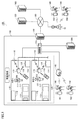
- FIG. 1 is a diagram showing an example of the configuration of the watching system 100.
- An example of the object to be watched over is a resident in each living room provided in the living room area of the facility 180.
- living rooms 110 and 120 are provided in the living room area.
- the living room 110 is assigned to the resident 111.
- the living room 120 is assigned to the resident 121.
- the monitoring system 100 includes a gateway server 130, an switching device 12, an access point 140, a management server 200, a sensor box 119, various devices communicating with the sensor box 119, and mobile terminals 161, 162, 163, 164. including.
- the gateway server 130 connects the internal network (intranet) of the facility 180 and the external network 16 of the facility 180 to each other.
- the external network 16 is, for example, the Internet or a public telephone line network.
- the cloud server 150, the push server 160, and the wireless base station 15 are connected to the external network 16.
- the switching device 135 connects each device of the internal network of the facility 180 to each other.
- a router or switch may be used as the switching device 135.
- the number of switching devices 135 is 2, but the number is not limited to this.
- the internal network of the facility 180 may be composed of a combination of a plurality of switching devices 135.
- the access point 140 is used to connect the mobile terminals 161, 162 to the internal network of the facility 180.
- a Wi-Fi® (Wireless Fidelity) router can be used as the access point 140.
- the management server 200 receives event information from the sensor box 119 in the facility 180 and manages the resident information of each room.
- the management server 200 also communicates with the mobile terminals 161, 162, manages the staff holding the mobile terminals, and transmits various notifications to each mobile terminal.
- the management server 200 may use an external push server 160 when transmitting a notification to the mobile terminals 161, 162. Further, the external cloud server 150 may have some or all the functions of the management server 200.
- the sensor box 119 acquires information about the residents 111 and 121 in the living rooms 110 and 120 by cooperating with the camera and the sensor built in the housing and various other sensors in the living rooms 110 and 120, respectively. ..
- the information may include an image showing the walking of each resident, body temperature, pulse and other vital information.
- the sensor box 119 transmits the acquired information regarding the tenants 111 and 121 to the management server 200 via the internal network. Details of the sensor box 119 will be described later.
- the mobile terminals 161, 162 are used by caregivers and other staff engaged in nursing care at facility 180.
- the staff can input the long-term care record and the like using the mobile terminals 161, 162.
- the mobile terminals 161, 162 transmit the care record to the management server 200.
- the staff receives a notification from the management server 200 using the mobile terminals 161, 162.
- the mobile terminals 161, 162 are connected to the access point 140 in the facility 180 and communicate with the management server 200 via the internal network.
- caregivers 141, 142, 143, and 144 hold mobile terminals 161, 162, 163, and 164, respectively.
- the mobile terminals 163 and 164 can communicate with the management server 200 from outside the facility 180 via the wireless base station 15 and the like via the gateway server 11.
- the mobile terminals 163 and 164 communicate with the management server 200 from outside the facility 180, some of the services provided by the management server 200 to the mobile terminals 163 and 164 are restricted in order to protect the resident's information. In some cases.
- the number of other devices such as mobile terminals 161, 162, access points 140, and switching devices 135 is not limited to the number illustrated in FIG.
- the living rooms 110 and 120 include furniture 112, a bed 113, and a toilet 114, respectively, as equipment.
- Door sensors 118 that detect the opening and closing of the doors are installed on the doors of the living rooms 110 and 120, respectively.
- a toilet sensor 116 that detects the opening and closing of the toilet 114 is installed on the door of the toilet 114.
- An odor sensor 117 that acquires excretion information of the resident 111 is installed on the bed 113.
- the resident 111 is equipped with a vital sensor 290 that detects the vital information of the resident 111.
- An example of the vital information detected is the resident's body temperature. Another example is resident breathing. Yet another example is the resident's heart rate. Yet another example is two or more types of information in this information.
- the resident 111 can operate the care call slave unit 115.
- the care call slave unit 115 transmits a call signal, and the call signal is received by the sensor box 119.
- the sensor box 119 transmits the received call signal to the management server 200.
- the management server 200 transmits a signal to the mobile terminal 220 notifying that the call is being received from the resident 111.
- the sensor box 119 has a built-in sensor for detecting the behavior of objects in the living rooms 110 and 120.
- An example of a sensor is a Doppler sensor for detecting the movement of an object.
- Another example is a camera.
- Still other examples are the care call slave unit 115, the door sensor 118, the toilet sensor 116, the odor sensor 117, or the vital sensor 290.
- the sensor box 119 may include at least one of these sensors as a sensor.
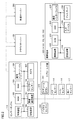
- FIG. 2 is a block diagram showing an outline of the configuration of the watching system 100.
- the sensor box 119 includes a control device 101, a ROM (Read Only Memory) 102, a RAM (Random Access Memory) 103, a communication interface 104, a camera 105, a Doppler sensor 106, a wireless communication device 107, and a storage device. It includes 108.
- the control device 101 controls the sensor box 119.
- the control device 101 is composed of, for example, at least one integrated circuit.
- the integrated circuit is, for example, at least one CPU (Central Processing Unit), MPU (Micro Processing Unit) or other processor, at least one ASIC (Application Specific Integrated Circuit), at least one FPGA (Field Programmable Gate Array), or these. It is composed of a combination of.
- An antenna (not shown) or the like is connected to the communication interface 104.
- the sensor box 119 exchanges data with an external communication device via the antenna.
- External communication devices include, for example, a management server 200, mobile terminals 161, 162, 163, 164 and other terminals, an access point 140, a cloud server 150, and other communication terminals.
- the camera 105 is a near-infrared camera in one realization example.
- Near-infrared cameras include IR (Infrared) floodlights that project near-infrared light. By using a near-infrared camera, images showing the inside of the living rooms 110 and 120 can be taken even at night.
- the camera 105 is a surveillance camera that receives only visible light.
- a 3D sensor or a thermography camera may be used as the camera 105.
- the sensor box 119 and the camera 105 may be configured as a single unit or as a combination of individual devices.
- the Doppler sensor 106 functions as a body motion sensor.
- the Doppler sensor 106 transmits and receives microwaves, ultrasonic waves, and other radio waves to detect the behavior (operation) of an object (for example, a resident 111, a care staff, etc.) in the living rooms 110 and 120.
- an object for example, a resident 111, a care staff, etc.
- the biometric information of the residents 111 and 121 of the living rooms 110 and 120 can be detected.
- the Doppler sensor 106 is connected to the control device 101 and measures the movement of the chest body surface accompanying the breathing of the resident 111 according to the control of the control device 101.
- the Doppler sensor 106 transmits microwaves and ultrasonic waves (hereinafter, also referred to as “transmitted waves”), receives microwaves and ultrasonic waves reflected by an object (that is, “reflected waves”), and transmits and reflected waves. Based on, the Doppler signal of the Doppler frequency component is output.
- the frequency of the reflected wave shifts in proportion to the moving speed of the object due to the so-called Doppler effect. Therefore, there is a difference (Doppler frequency component) between the frequency of the transmitted wave and the frequency of the reflected wave.
- the Doppler sensor 106 generates a signal of the Doppler frequency component as a Doppler signal at a predetermined sampling rate, and outputs the Doppler signal to the control device 101.
- the control device 101 receives the Doppler signal from the Doppler sensor 106, the control device 101 stores the received Doppler signal in the storage device 108 in chronological order.
- microwaves are used as transmitted waves, the microwaves pass through the clothes and are reflected on the body surface of the resident 111. Therefore, even if the resident 111 is wearing clothes, the movement of the body surface can be detected.
- each Doppler sensor 106 radiates microwaves in the 24 GHz band toward the beds 113 of the rooms 110 and 120, and receives the reflected waves reflected by the residents 111, 121 and the like.
- the reflected wave is Doppler-shifted by the movements of the residents 111 and 121.
- the Doppler sensor 106 can detect the respiratory state and heart rate of the residents 111 and 121 from the reflected wave.
- the wireless communication device 107 receives signals from the care call slave unit 115, the door sensor 118, the toilet sensor 116, the odor sensor 117, and the vital sensor 290, and transmits the signals to the control device 101.
- the care call slave unit 115 includes a care call button 241. When the care call button 241 is operated, the care call slave unit 115 transmits a signal (for example, a call signal) indicating that the operation has been performed. The transmitted signal is received by the wireless communication device 107. When the door sensor 118, the toilet sensor 116, the odor sensor 117, and the vital sensor 290 transmit their respective detection results, the transmitted signal is received by the wireless communication device 107.
- the storage device 108 is, for example, a fixed storage device such as a flash memory or a hard disk, or a recording medium such as an external storage device.
- the storage device 108 stores a program executed by the control device 101 and various data used for executing the program.
- Various data may include behavioral information of residents 111 and 121. Details of the behavior information will be described later.
- At least one of the above programs and data is a storage device accessible to the control device 101, a storage device other than the storage device 108 (for example, a storage area of the control device 101 (for example, a cache memory), ROM 102, etc.). It may be stored in the RAM 103, an external device (for example, a management server 200, a mobile terminal 161, 162, 163, 164, etc.).
- a storage device other than the storage device 108 for example, a storage area of the control device 101 (for example, a cache memory), ROM 102, etc.). It may be stored in the RAM 103, an external device (for example, a management server 200, a mobile terminal 161, 162, 163, 164, etc.).
- the action information is, for example, information indicating that the residents 111 and 121 have executed a predetermined action.
- the predetermined actions are "getting up” indicating that the residents 111 and 121 have awakened, “getting out” indicating that the residents 111 and 121 have left the bed (bedding) 113, and the residents 111 and 121. It includes four actions, “falling” indicating that the bed (bedding) 113 has fallen, and “falling” indicating that the residents 111 and 121 have fallen.
- the behavioral information may include actions taken by the resident to refuse to receive long-term care.
- the behavioral information may include an action of shaking off the caregiver by hand, an action of trying to kick the caregiver with a leg, an action of clinging to the bed 113 and refusing to change clothes, and the like.
- the control device 101 generates behavioral information for the occupants 111, 121 associated with the rooms 110, 120, based on images taken by the cameras 105 installed in the rooms 110, 120. do. For example, the control device 101 detects the heads of the occupants 111, 121 from the above image, and based on the time change of the size of the detected heads of the resident 111, 121, the resident 111, 121 " In addition to the usual information of "getting up”, “getting out of bed”, “falling” and “falling", the information of "refusal of long-term care" is detected.
- a specific example of generating behavioral information will be described in more detail.
- the storage device 108 stores the location area of each bed 113 in the living rooms 110 and 120, the first threshold value Th1, the second threshold value Th2, and the third threshold value Th3.
- the first threshold Th1 discriminates the size of the resident's head between the lying posture and the sitting posture in the location area of the bed 113.
- the second threshold Th2 identifies whether or not the resident is in a standing posture based on the size of the resident's head in the living rooms 110 and 120 excluding the area where the bed 113 is located.
- the third threshold Th3 identifies whether or not the resident is in the lying position based on the size of the resident's head in the living rooms 110 and 120 excluding the area where the bed 113 is located.
- the control device 101 extracts a moving object region from the target image as a region of the resident 111, 121 by, for example, a background subtraction method or a frame subtraction method.
- the control device 101 is further derived from the extracted moving body region by a neural network learned for head detection by pattern matching using a head model prepared in advance by, for example, a circular or elliptical Hough transform.
- the head regions of the residents 111 and 121 are extracted using the determined threshold.
- the control device 101 detects "getting up”, “getting out of bed”, “falling", and “falling" from the position and size of the extracted head.
- the position of the head extracted as described above is within the location region of the bed 113, and the size of the head extracted as described above is lying down by using the first threshold Th1.
- the control device 101 When the position of the head extracted as described above moves from the inside of the location area of the bed 113 to the outside of the location area of the bed 113, the control device 101 refers to the size of the head extracted as described above. By applying the second threshold value Th2, when it is detected that the head has changed from a certain size to a standing posture size, it may be determined that the action “getting out of bed” has occurred.
- the control device 101 When the position of the head extracted as described above moves from the inside of the location area of the bed 113 to the outside of the location area of the bed 113, the control device 101 refers to the size of the head extracted as described above.
- the third threshold value Th3 when it is detected that the head has changed from a certain size to the size of the lying posture, it may be determined that the behavior "fall" has occurred.
- the control device 101 uses the position of the head extracted as described above in the living rooms 110 and 120 excluding the area where the bed 113 is located, and the size of the extracted head uses the third threshold Th3. When it is detected that the size has changed from a certain size to the size of the lying posture, it may be determined that the behavior "fall" has occurred.
- control device 101 detects the caregiver in addition to the resident from the image data, and estimates the distance between the resident and the caregiver. If the control device presumes that the interval is shorter than a predetermined normal interval, it can determine that the long-term care refusal behavior is being performed. Further, when the control device 101 determines that the movement of the resident is different from the usual movement, it can be determined that the resident is showing the care refusal behavior to the caregiver.
- control device 101 of the sensor box 119 generates each action information of the residents 111 and 121.
- elements other than the control device 101 for example, the cloud server 150
- the control device 101 generate behavior information of the residents 111 and 121 using the images in the living rooms 110 and 120. May be good.
- the mobile terminal 220 includes a control device 221, a ROM 222, a RAM 223, a communication interface 224, a display 226, a storage device 228, and an input device 229.
- the mobile terminals 161, 162, 163, 164 are realized as, for example, smartphones, tablet terminals, wristwatch-type terminals, and other wearable devices.
- the control device 221 controls the mobile terminals 161, 162, 163, 164.
- the control device 221 is composed of, for example, at least one integrated circuit.
- An integrated circuit is composed of, for example, at least one CPU, at least one ASIC, at least one FPGA, or a combination thereof.
- An antenna (not shown) or the like is connected to the communication interface 224.
- the mobile terminals 161, 162, 163, and 164 exchange data with an external communication device via the antenna and the access point 140.
- External communication devices include, for example, a sensor box 119, a management server 200, and the like.
- the display 226 is realized by, for example, an organic EL (Electro Luminescence) display, a liquid crystal display, or the like.
- the input device 229 is realized by, for example, a touch sensor provided on the display 226. The touch sensor receives a touch operation on the mobile terminals 161, 162, 163, and 164, and outputs a signal corresponding to the touch operation to the control device 221.
- the storage device 228 is realized by, for example, a flash memory, a hard disk or other fixed storage device, a detachable data recording medium, or the like.
- the control device 101 identifies bed rest, lying down, getting up, getting out of bed, falling, falling, and microtremor abnormality, for example, as follows.
- the area in which the bed 113 is arranged (the area where the bed 113 is located) in the target image is stored in advance in the ROM 102 as one of various data.
- each threshold value and the continuation determination time are appropriately set from a plurality of samples and are stored in advance in the ROM 102 as one of various data.
- the control device 101 In the determination of entering the bed, the control device 101 has a person whose previous state variable (variable for storing the action determination result) is "getting out of bed” and is extracted from the target image acquired from the camera 105 this time by, for example, the background subtraction method.
- the area completely overlaps the location area of the bed 113 when the person area completely falls within the location area of the bed 113, it is tentatively determined to enter the floor, and the duration of the completely superimposed state is determined to continue entering the bed. If it continues for more than an hour, it is finally determined that there is a bed, and the bed is detected.
- the control device 101 updates the state variable as "entering the floor".
- the bed admission continuation determination time is used as a threshold value for finally determining the bed admission that is provisionally determined by the complete overlap between the extracted person area and the location area of the bed 113. ..
- Bed rest refers to a state in which a resident (monitored person) is lying on the bed 113.
- the control device 101 provides resident behavior information when the area occupied by the resident in the image is included in the area of the bed 113 and the movement amount of the resident is equal to or less than a predetermined amount. Detects "bed rest" as.
- the control device 101 determines that the previous state variable is "bed rest", and the area where the person area extracted from the target image acquired from the camera 105 this time protrudes from the location area of the bed 113 is wake-up determination. If it is equal to or more than the threshold value and less than the bed rest determination threshold value, it is tentatively determined to wake up. When the duration of the region in which the region is equal to or greater than the wake-up determination threshold value and is less than the wake-up determination threshold value exceeds the wake-up continuation determination time, the control device 101 finally determines that there is wake-up. Detects getting up. The control device 101 updates the state variable with "wake up".
- the wake-up determination threshold is used to determine whether or not the wake-up is caused by the size of the area.
- the bed leaving determination threshold value is used to determine whether or not the person has left the bed based on the size of the area.
- the wake-up determination threshold is set to a value larger than the wake-up determination threshold.
- the wake-up continuation determination time is used as a threshold value for finally determining wake-up, which is tentatively determined by comparing the area with the wake-up determination threshold value.
- the previous state variable was either "getting into bed” or “getting up”, and the person area extracted from the target image acquired from the camera 105 this time is the bed 113. If the area protruding from the location area is equal to or greater than the bed leaving determination threshold value, it is tentatively determined to be bed leaving. When the duration of the area in which the area is equal to or greater than the bed leaving determination threshold value exceeds the bed leaving continuation determination time, the control device 101 finally determines that the area has left the bed and detects the bed leaving. The control device 101 updates the state variable with "getting out of bed”. The bed leaving continuation determination time is used as a threshold value for finally determining that the bed leaving is tentatively determined by comparing the area with the bed leaving determination threshold value.
- the control device 101 has the size of the head region of the human region extracted from the target image acquired from the camera 105 this time equal to or less than the lying posture determination threshold value, and the change speed of the size of the head region. Is equal to or greater than the fall determination speed threshold value, and when the person area is within the fall determination area set around the location area of the bed 113, it is determined that there is a fall and the fall is detected.
- the lying posture determination threshold is used to determine whether or not it is the size of the head region in the lying posture. Whether it is in the lying position or the sitting position is determined based on the size of the head region.
- the fall determination speed threshold is used to determine whether or not there is a fall based on the rate of change in the size of the head region.
- the control device 101 has the size of the head region of the human region extracted from the target image acquired from the camera 105 this time equal to or less than the lying posture determination threshold value, and the change speed of the size of the head region. Is equal to or greater than the fall determination speed threshold value, and when the person area is in an area other than the location area of the bed 113 and the fall determination area, it is determined that there is a fall and a fall is detected.
- the fall determination speed threshold is used to determine whether or not a fall has occurred based on the rate of change in the size of the head region.
- the microdynamic abnormality is detected based on the Doppler signal output from the Doppler sensor 106. More specifically, the control device 101 performs, for example, a fast Fourier transform (FFT) on the Doppler signal measured within a predetermined time from the measurement time point to the past, and from the spectrum obtained by this FFT, it is general. Find the average value of the amplitude in the frequency band corresponding to the frequency of breathing. The control device 101 compares the obtained average value with a threshold value for determining whether or not the body movement is abnormal, and if the obtained average value is equal to or less than the threshold value, it is provisionally regarded as a microbody movement abnormality.
- FFT fast Fourier transform
- microtremor abnormality If the duration of the state in which the average value is equal to or less than the threshold value continues beyond the predetermined determination time, it is finally determined that there is a microtremor abnormality, and the microtremor abnormality is determined. Is detected.
- the control device 101 updates the state variable with "microbody movement abnormality".
- the determination time is used as a threshold value for finally determining the microbody movement abnormality tentatively determined by comparing the obtained average value with the microbody movement abnormality determination threshold value.
- the control device 101 When the control device 101 detects the predetermined behavior from the behavior of the resident in this way, the control device 101 transmits an event notification signal including event information representing the content of a predetermined event related to the resident from the communication interface 104 on the management server. Send to 200. More specifically, the control device 101 outputs an event notification signal including a sensor ID of the sensor box 119, event information indicating the content of the event, and a target image used when detecting wake-up, wake-up, wake-up, fall, and fall. , Transmit to the management server-200 via the communication interface 104.
- Event information includes one or more of bed rest, lying down, getting up, getting out of bed, falling, falling, microtremor abnormalities and care calls.
- the control device 101 accommodates one or more of the detected wake-up, wake-up, wake-up, fall, fall, and micro-movement abnormality in the event notification signal as event information.
- the image may include at least one of a still image and a moving image.
- a still image is first transmitted from the sensor box 119 to the management server 200, and the video is delivered at the request of the user (eg, caregiver, manager, doctor or other staff), as described below. Can be done.
- the moving image may be delivered first.
- the still image and the moving image are transmitted to the management server 200, and the mobile terminal 220 may display the still image or the moving image on the display 226 in a split screen state based on the signal sent from the management server 200. ..
- the control device 101 transmits an event notification signal including that fact as another example of a predetermined event to the management server 200, and uses a speaker (not shown) or the like. , Make a voice call with the mobile terminal 220. More specifically, when the care call button 241 is operated, a signal corresponding to the operation is received by the wireless communication device 107.
- the sensor box 119 generates an event notification signal including a nurse call as its sensor ID and event information, and transmits the event notification signal to the management server-200 via the communication interface 104.
- the control device 101 makes a voice call between the microphone (not shown) and the speaker (not shown) of the care call slave unit 115 and the mobile terminal 220 via a wireless communication device 107, for example, by VoIP (Voice over Internet Protocol). To realize.
- VoIP Voice over Internet Protocol
- control device 101 When the control device 101 receives a request for video distribution from an image display device such as a management server 200, a cloud server 150, or a mobile terminal 220 via the communication interface 104, the control device 101 responds to the request and takes a picture of the camera 105. (For example, a live video) is streamed and played back, and the video is distributed to the image display device.
- an image display device such as a management server 200, a cloud server 150, or a mobile terminal 220 via the communication interface 104
- the control device 101 responds to the request and takes a picture of the camera 105. (For example, a live video) is streamed and played back, and the video is distributed to the image display device.
- a live video For example, a live video
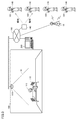
- FIG. 3 is a diagram showing an outline of the monitoring system 100 using the sensor box 119.
- the watching system 100 is used to watch over the residents 111, 121 and other residents who are the monitoring targets (monitoring targets).
- a sensor box 119 is attached to the ceiling of the living room 110. Sensor boxes 119 are similarly attached to other living rooms.
- the range 31 represents the detection range by the sensor box 119.
- the Doppler sensor detects the behavior of a person occurring within the range 31.
- the sensor box 119 has a camera as a sensor, the camera captures an image within range 31.
- the sensor box 119 is installed in, for example, a nursing care facility, a medical facility, or a home. In the example of FIG. 3, the sensor box 119 is mounted on the ceiling, and the resident 111 and the bed 113 are photographed from the ceiling.
- the mounting location of the sensor box 119 is not limited to the ceiling, and the sensor box 119 may be mounted on the side wall of the living room 110.
- the watching system 100 detects the danger occurring in the resident 111 based on a series of images (that is, images) obtained from the camera 105.
- the detectable danger includes a fall of the resident 111, a state where the resident 111 is present at a dangerous place (for example, a bed fence), and the like.
- the watching system 100 When the watching system 100 detects that the resident 111 is in danger, it notifies the caregivers 141, 142 and the like. As an example of the notification method, the monitoring system 100 notifies the mobile terminals 161, 162 of the caregivers 141 and 142 of the danger of the resident 111. Upon receiving the notification, the mobile terminals 161, 162 notify the caregiver 141, 142 of the danger of the resident 111 by a message, voice, vibration, or the like. As a result, the caregivers 141 and 142 can immediately grasp that the resident 111 is in danger and can quickly rush to the resident 111.
- the monitoring system 100 can also notify the mobile terminals 163 and 164 of the caregivers 143 and 144 outside the facility via the radio base station 15.
- FIG. 3 shows an example in which the watching system 100 includes one sensor box 119, but in other aspects, the watching system 100 may include a plurality of sensor boxes 119. Further, FIG. 3 shows an example in which the watching system 100 includes a plurality of mobile terminals 161, 162, but in another aspect, the watching system 100 can be realized by one mobile terminal.
- FIG. 4 is a block diagram showing a hardware configuration of the computer system 400.
- the computer system 400 functions as a gateway server 130, a cloud server 150, a push server 160, or a management server 200.
- the computer system 400 has, as main components, a CPU 1 that executes a program, a mouse 2 and a keyboard 3 that receive an instruction input by a user of the computer system 400, data generated by executing the program by the CPU 1, or a mouse 2.
- the RAM 4 that volatilely stores the data input via the keyboard 3, the hard disk 5 that stores the data non-volatilely, the optical disk drive device 6, the communication interface (I / F) 7, and the monitor 8 are used.
- the components are connected to each other by a data bus.
- a CD-ROM9 or other optical disc is mounted on the optical disc drive device 6.
- the processing in the computer system 400 is realized by each hardware and software executed by the CPU 1.
- Such software may be stored in the hard disk 5 in advance. Further, the software may be stored in a CD-ROM9 or other recording medium and distributed as a computer program. Alternatively, the software may be provided as an application program that can be downloaded by an information provider connected to the so-called Internet.
- Such software is temporarily stored in the hard disk 5 after being read from the recording medium by the optical disk driving device 6 or other reading device or downloaded via the communication interface 7.
- the software is read from the hard disk 5 by the CPU 1 and stored in the RAM 4 in the form of an executable program.
- the CPU 1 executes the program.
- Each component constituting the computer system 400 shown in FIG. 4 is a general one. Therefore, it can be said that one of the essential parts of the technical idea according to the present disclosure is software stored in RAM 4, hard disk 5, CD-ROM 9, or other recording medium, or software that can be downloaded via a network.
- the recording medium may include a non-temporary, computer-readable data recording medium. Since the operation of each hardware of the computer system 400 is well known, the detailed description will not be repeated.
- the recording medium is not limited to CD-ROM, FD (Flexible Disk), and hard disk, but also magnetic tape, cassette tape, and optical disc (MO (Magnetic Optical Disc) / MD (Mini Disc) / DVD (Digital Versatile Disc)).
- IC Integrated Circuit
- card including memory card
- optical card mask ROM
- EPROM Electrically Programmable Read-Only Memory
- EEPROM Electrically Erasable Programmable Read-Only Memory
- fixed semiconductor memory such as flash ROM, etc. It may be a medium that specifically carries the program.
- the program referred to here includes not only a program that can be directly executed by the CPU, but also a source program format program, a compressed program, an encrypted program, and the like.
- FIG. 5 is a diagram conceptually representing one aspect of data on the hard disk 5.
- the hard disk 5 holds tables 510 and 520.
- the hard disk 5 is included in the cloud server 150, the management server 200, and the like.
- Table 510 includes areas 511-515. Region 511 holds the date of observation. Area 512 holds identification information (ADL ID) of activities of daily living. Region 513 holds the measured values of the activities of daily living. Region 514 holds the observer ID. Area 515 holds text information, image information, voice information, and other information input by an observer or the like as remarks. Table 510 is created for each care recipient.
- ADL ID identification information
- Region 513 holds the measured values of the activities of daily living.
- Region 514 holds the observer ID.
- Area 515 holds text information, image information, voice information, and other information input by an observer or the like as remarks. Table 510 is created for each care recipient.
- Table 520 includes areas 521 and 522.
- Area 521 holds identification information (ADL ID) of activities of daily living.
- Region 522 holds an item of activities of daily living (also referred to as a "display index").
- the data shown in FIG. 5 includes, for example, measurement data acquired by the sensor box 119.
- the measurement data is sent from the sensor box 119 to the cloud server 150 for each care recipient at preset time intervals.
- the measurement data is stored in the hard disk 5 of the cloud server 150 or the management server 200. In another aspect, the measurement data may be stored in the mobile terminal 220.
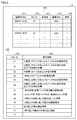
- FIG. 6 is a diagram conceptually showing one aspect of storing data related to rehabilitation records for each care recipient.
- the hard disk 5 is included in the cloud server 150, the management server 200, and the like.
- the hard disk 5 holds the table 610.
- Table 610 includes regions 611, 612, 613, 614, 615, 616.
- Area 611 holds the date on which the rehabilitation took place.
- Area 612 holds the identification information ID of the rehabilitated care recipient.
- Area 613 holds the time during which the rehabilitation was performed.
- Area 614 holds information that identifies the person in charge of rehabilitation.
- Area 615 holds a rehabilitation menu.
- Region 616 holds the events observed during the rehabilitation and entered by the rehabilitation officer identified in Region 614.
- the data shown in FIG. 6 is input from the mobile terminal 220 by, for example, the staff in charge of rehabilitation of the care recipient.
- the staff selects a rehabilitation menu from the screen displayed on the mobile terminal 220, and records the ID (name or number) of the care recipient who received the rehabilitation, the time when the rehabilitation was performed, and the observation record. input.
- the mobile terminal 220 includes the date and time when the rehabilitation was performed, the care recipient ID, the staff identification data (person in charge ID), the time when the rehabilitation was performed, the person in charge ID, the rehabilitation menu, and the observation.
- the record is transmitted to the cloud server 150.
- the CPU 1 of the cloud server 150 sequentially stores these data in the hard disk 5 (areas 611 to 616).
- FIG. 7 is a flowchart showing a part of the processing executed by the CPU 1 of the management server 200.
- step S710 the CPU 1 accepts the selection of the display index (item) constituting the activities of daily living (ADL).
- the monitor 8 of the management server 200 displays a screen (FIG. 8) described later.
- the care staff selects the item to be displayed from the screen by touch operation, mouse operation, voice input or other operations.
- step S720 the CPU 1 accesses the database of the selected display index.
- the database is configured on the hard disk 5 as, for example, tables 510 and 520.
- step S730 the CPU 1 calculates the moving average of the display index data for the designated period.
- the period is, for example, one week, two weeks, one month, three months, six months, one year, and the like, but is not particularly limited.
- the period may be preset by the administrator or changed each time by the care staff.
- step S740 the CPU 1 calculates the rate of change of the moving average.
- the care staff can know the degree of change in activities of daily living by referring to the rate of change in the moving average.
- step S750 the CPU 1 accesses the database (table 610) and reads out the rehabilitation record.
- the CPU 1 reads out a record of rehabilitation performed on the care recipient during the period specified in step S730.
- the CPU 1 may read a record of rehabilitation performed during the same period for another care recipient to be compared. In this case, the CPU 1 reads out the rehabilitation record of the other long-term care person based on the input of the identification data of the long-term care person designated as the comparison target.
- step S760 the CPU 1 selects a rehabilitation menu according to the care recipient from a predetermined recommended menu list based on the rate of change and the rehabilitation record.
- the management server 200 holds a rehabilitation menu prepared in advance according to the degree of change in activities of daily living on the hard disk 5.
- the CPU 1 can select the rehabilitation menu to which the change rate corresponds from the hard disk 5 by using the change rate of the selected activities of daily living of the care recipient as a search key.
- the CPU 1 may read the contents of the rehabilitation performed on the other care recipient from the hard disk 5 and display it on the monitor 8 in a manner selectable by the care staff.
- step S770 the CPU 1 displays a graph including the display index data (the value actually measured or calculated for each monitoring item) and the moving average on the monitor 8. Since the care staff can see the moving average in addition to the data, it is possible to easily confirm the transition of the ADL state of the care recipient.
- step S780 the CPU 1 displays the rehabilitation record on the monitor 8.
- the rehabilitation record is associated with the date shown in the graph above. Therefore, the care staff can easily confirm what kind of rehabilitation has been performed in the past and how the ADL state has changed as a result by referring to the graph.
- step S790 the CPU 1 displays a rehabilitation menu corresponding to the care recipient on the monitor 8.
- the CPU 1 selects a recommended rehabilitation from a pre-prepared rehabilitation menu according to a change in the ADL state, and displays the selected rehabilitation on the monitor 8.
- the CPU 1 may display the content of rehabilitation performed on another care recipient who has shown a similar change in ADL state.
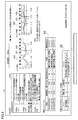
- FIG. 8 is a diagram showing an example of information related to activities of daily living displayed on the monitor 8.
- the monitor 8 displays tables 810, 840, 850 and screens 820, 830 for the designated care recipient.
- Table 810 accepts an input for selecting an activity of daily living to be displayed on the monitor 8 among a plurality of activities of daily living (step S710).
- the user selects a check box displayed on the monitor 8 by mouse operation, touch operation, or voice input, so that an activity of daily living associated with the check box is selected.
- two activities of daily living namely "walking speed” and "degree of wobbling", are selected so that two check boxes are specified.
- the screen 820 displays the information of the "walking speed" selected in the table 810. More specifically, the screen 820 displays the graphs 821 and 822.
- Graph 821 shows the transition of walking speed. In a certain aspect, the graph 821 shows the transition of the walking speed over a predetermined period. This period is set, for example, as a period that goes back a certain period from the date on which the information shown in FIG. 8 is extracted. The fixed period going back is, for example, one week, two weeks, one month, three months, etc., but the period is not limited to these, and the user can arbitrarily specify the display period.
- Graph 822 shows the change in the moving average of walking speed.
- the two symbols represent the date on which the rehabilitation was performed and the content of the rehabilitation, respectively. Since the graph displayed on the screen 820 and the rehabilitation are associated with each other by the symbol, the user can recognize the relationship between the transition of activities of daily living and the content of the rehabilitation.
- the screen 830 displays the information of the "stagger degree” selected in the table 810. More specifically, the screen 830 displays graphs 831 and 832.
- Graph 831 shows the transition of the degree of wobble. In a certain aspect, the graph 831 shows the transition of the degree of wobble over a predetermined period. Similar to the graphs 821 and 822 on the screen 820, this period is set as, for example, a period that goes back a certain period from the date when the information shown in FIG. 8 is extracted. This period may be the same as or different from the period displayed on the screen 820.
- Graph 832 shows the change in the moving average of the degree of wobble.
- Table 840 displays the contents of the rehabilitation performed. In one aspect, the table 840 displays the contents of the most recent rehabilitation. The period illustrated in Table 840 is 3 days, but the period displayed is not limited and may be displayed retroactively. In another aspect, the period displayed on the table 840 may be moved in conjunction with the change of the period on the screen 820 or the screen 830.
- the content of the rehabilitation performed during the period corresponding to the period specified on the screen 820 or 830 may be displayed. For example, when "September 8th to September 15th" is selected on the screen 820, the rehabilitation performed during the selected period may be displayed on the table 840. At this time, the period may be scrolled and displayed according to the size of the area reserved for displaying the table 840.
- Table 850 contains information on the rehabilitation menu recommended for the care recipient.
- table 850 includes a menu, a recommended number of times to implement the menu, activity time, and comments.
- the menu is determined based on the care recipient's current condition, the care recipient's wishes, and past changes in activities of daily living.
- the menu is determined by the caregiver in one aspect, or based on performance data by other caregivers who have seen similar conditions, wishes, and changes in past activities of daily living in other aspects. obtain.
- the graph showing changes in activities of daily living by the care recipient does not necessarily have to be a rising graph.
- FIG. 9 is a diagram showing measured values and moving averages of other activities of daily living.
- Graphs 910 and 930 represent measured values of activities of daily living.
- Graphs 920 and 940 represent moving averages of activities of daily living.
- another ADL status to be compared may be displayed.
- the comparison target past ADL states of a plurality of care recipients in the same state, changes in the average ADL state, and the like can be used.
- FIG. 10 is a diagram showing a state in which the ADL state to be compared is displayed in addition to the ADL state of the designated care recipient.
- the monitor 8 displays a graph 1010 showing the ADL state of the designated care recipient (for example, the care recipient currently resident in the facility) and a graph 1020 showing the ADL state to be compared.
- Graph 1020 may show the average or median value of each of the data for a particular care recipient or for a plurality of care recipients similarly classified.
- the manager or the care recipient's family can compare the ADL status of the care recipient with other ADL status, so that the state of change in the ADL status or the tendency of the care recipient to improve their activity ability can be easily improved. Can be grasped.
- the information indicating the ADL state of the care recipient and the change in the ADL state is displayed on the monitor 8, the display 226 and other display devices, so that the user can use the care recipient.
- the tendency of improvement can be judged objectively.
- a method is provided that is performed on a computer (a computer system 400 such as a cloud server 150 or a management server 200, a mobile terminal 220, etc.) to provide information about a care recipient.
- a computer a computer system 400 such as a cloud server 150 or a management server 200, a mobile terminal 220, etc.
- This method is performed, for example, by the CPU 1 or the control device 221.
- This method includes a step of accessing a plurality of motion data (for example, amount of activity, walking speed, degree of wobble, repetitive behavior) acquired by observing the activities of daily living of the care recipient multiple times, and a plurality of motion data.
- a step of displaying information indicating a change in the degree of activities of daily living for example, a graph of moving average
- the rehabilitation recommended for the care recipient is shown on the monitor 8 or the display 226.
- a computer user for example, an administrator or a care recipient's family
- the objectivity is ensured and the family of the care recipient can obtain a sense of security.
- the method further includes, in addition to the above configuration, a step of accepting selection of one or more activities of daily living from a plurality of activities of daily living.
- the selection is, for example, to mark a check box on the displayed screen.
- the step of displaying a plurality of motion data includes displaying motion data for one or more selected activities of daily living. According to this configuration, the situation of the care recipient can be confirmed for the activities of daily living selected from a plurality of activities of daily living.
- the step of displaying information includes displaying a graph showing a change (for example, a line graph, a bar graph, etc.).
- a change for example, a line graph, a bar graph, etc.
- one or more marks indicating that one or more rehabilitations have been performed by the care recipient are displayed on the monitor 8 or the display 226 in association with the date on which the rehabilitation was performed in the graph. Including further.
- the mark includes symbols or letters. According to such a configuration, the user of the computer system 400 can easily confirm when the rehabilitation was performed.
- the step of displaying one or more marks includes displaying a mark that identifies each of the plurality of rehabilitations performed on the care recipient. For example, different symbols or different colors with the same symbol are used as the mark. According to such a configuration, the user of the computer system 400 can easily confirm when a plurality of rehabilitations have been performed.
- the method of following a certain aspect further includes a step of displaying a comment indicating a change in activities of daily living in which a graph is displayed. According to such a configuration, even a person who does not have specialized knowledge, such as a family member of the care recipient, can confirm the situation of the care recipient by referring to the comment.
- the method according to a certain aspect further includes a step of accepting the designation of the day when any of a plurality of activities of daily living is performed.
- the step of displaying the contents of rehabilitation includes displaying the contents of rehabilitation performed on a specified day. According to such a configuration, for example, when the past data is stored for a long period of time, the user of the computer system 400 can quickly confirm the contents of the rehabilitation on a specific date or period.
- the method according to a certain aspect further includes a step of accepting an operation for changing a day designated as a day when any of a plurality of activities of daily living is performed.
- Displaying the content of rehabilitation includes displaying the content of rehabilitation performed on the day after the change in response to the operation of the change.
- the user can easily change the date to be displayed to another date by sliding and changing the date on the monitor 8 or the display 226 by a mouse operation or a touch operation.
- the contents of the rehabilitation performed on the changed date are displayed, so that the manager or the care staff or the family of the care recipient can see the past transition of the ADL state and the past transition of the ADL state at that time. It is possible to easily confirm the rehabilitation performed.
- the method according to a certain aspect further includes a step of displaying information indicating a change in the degree of activities of daily living based on a plurality of motion data acquired for other care recipients. According to such a configuration, information about other care recipients is displayed for comparison. Therefore, the manager, the care staff, or the care recipient's family can compare the transition of the ADL status of the care recipient with the transition of the ADL status of the other care recipient, and thus the ADL of the caregiver that day. It becomes easier to judge the state.
- a program causes one or more processors to execute a method for providing information on a care recipient.
- the program accesses one or more processors to access multiple motion data acquired by observing the activities of daily living of the care recipient multiple times, displays multiple motion data, and displays each motion data. Based on this, displaying information indicating changes in the degree of activities of daily living, displaying the contents of rehabilitation performed for the care recipient, the contents of rehabilitation, and changes in the degree of activities of daily living. To output the recommended rehabilitation to the care recipient based on the above.
- a program that follows a certain aspect further causes one or more processors to accept a selection of one or more activities of daily living from a plurality of activities of daily living.
- Displaying a plurality of motion data includes displaying motion data for one or more selected activities of daily living.
- displaying information includes displaying a graph showing changes.
- the program will display on one or more processors one or more marks indicating that one or more rehabilitations have been performed by the care recipient, in association with the date of the rehabilitation in the graph. Let it run further.
- a program that follows a certain aspect causes one or more processors to further execute a comment indicating a change in activities of daily living on which a graph is displayed.
- a program that follows a certain aspect further causes one or more processors to accept the designation of the day when any of a plurality of activities of daily living is performed. Displaying the contents of rehabilitation includes displaying the contents of rehabilitation performed on a designated day.
- a program further executes information indicating a change in the degree of activities of daily living on one or more processors based on a plurality of motion data acquired for other care recipients. Let me.
- an information providing device includes a memory for storing an instruction and a processor for executing the instruction.
- the instruction accesses the processor to access multiple movement data acquired by observing the care recipient's activities of daily living multiple times, and displays multiple movement data.
- Displaying information indicating changes in the degree of activities of daily living based on each movement data displaying the contents of rehabilitation performed for the care recipient, the contents of rehabilitation, and activities of daily living To output the recommended rehabilitation to the care recipient based on the change in the degree of.
- an instruction further causes a processor to accept a selection of one or more activities of daily living from a plurality of activities of daily living.
- Displaying a plurality of motion data includes displaying motion data for one or more selected activities of daily living.
- Displaying information in an information providing device includes displaying a graph showing a change.
- the instruction further causes the processor to display one or more marks in the graph indicating that one or more rehabilitations have been performed by the care recipient, in association with the date on which the rehabilitation was performed.
- the instruction further causes the processor to display a comment indicating a change in activities of daily living on which a graph is displayed.
- an instruction further causes a processor to accept a designation of a day when any of a plurality of activities of daily living is performed. Displaying the contents of rehabilitation includes displaying the contents of rehabilitation performed on a designated day.
- an instruction further indicates that the processor displays information indicating a change in the degree of activities of daily living based on a plurality of motion data acquired for other care recipients. Let it run.
- This disclosure is applicable to computers used in facilities where information on activities of daily living (ADL) is required.
Landscapes
- Health & Medical Sciences (AREA)
- Engineering & Computer Science (AREA)
- Medical Informatics (AREA)
- Biomedical Technology (AREA)
- Pathology (AREA)
- Epidemiology (AREA)
- General Health & Medical Sciences (AREA)
- Primary Health Care (AREA)
- Public Health (AREA)
- Alarm Systems (AREA)
- Measuring And Recording Apparatus For Diagnosis (AREA)
Priority Applications (1)
| Application Number | Priority Date | Filing Date | Title |
|---|---|---|---|
| JP2022516920A JP7666508B2 (ja) | 2020-04-22 | 2021-03-30 | 被介護者の情報を提供するためにコンピューターで実行される方法、プログラム、および、情報提供装置 |
Applications Claiming Priority (2)
| Application Number | Priority Date | Filing Date | Title |
|---|---|---|---|
| JP2020-075888 | 2020-04-22 | ||
| JP2020075888 | 2020-04-22 |
Publications (1)
| Publication Number | Publication Date |
|---|---|
| WO2021215207A1 true WO2021215207A1 (ja) | 2021-10-28 |
Family
ID=78270644
Family Applications (1)
| Application Number | Title | Priority Date | Filing Date |
|---|---|---|---|
| PCT/JP2021/013648 Ceased WO2021215207A1 (ja) | 2020-04-22 | 2021-03-30 | 被介護者の情報を提供するためにコンピューターで実行される方法、プログラム、および、情報提供装置 |
Country Status (2)
| Country | Link |
|---|---|
| JP (1) | JP7666508B2 (https=) |
| WO (1) | WO2021215207A1 (https=) |
Cited By (4)
| Publication number | Priority date | Publication date | Assignee | Title |
|---|---|---|---|---|
| JP2023108852A (ja) * | 2022-01-26 | 2023-08-07 | コニカミノルタ株式会社 | 表示装置、表示システム、表示方法、および表示プログラム |
| JP2023161202A (ja) * | 2022-04-25 | 2023-11-07 | パラマウントベッド株式会社 | 情報処理システム、情報処理装置及び情報処理方法 |
| JP2023183536A (ja) * | 2022-06-16 | 2023-12-28 | コニカミノルタ株式会社 | 情報処理装置、プログラム、コンピューター読取可能な記録媒体、情報処理システム、および情報処理方法 |
| JP2023183537A (ja) * | 2022-06-16 | 2023-12-28 | コニカミノルタ株式会社 | 情報処理装置、プログラム、コンピューター読取可能な記録媒体、情報処理システム、および情報処理方法 |
Citations (4)
| Publication number | Priority date | Publication date | Assignee | Title |
|---|---|---|---|---|
| WO2015019477A1 (ja) * | 2013-08-08 | 2015-02-12 | 株式会社日立製作所 | リハビリシステム及びその制御方法 |
| US20180254096A1 (en) * | 2015-09-15 | 2018-09-06 | Commonwealth Scientific And Industrial Research Organisation | Activity capability monitoring |
| JP2020506445A (ja) * | 2016-10-20 | 2020-02-27 | シグニファイ ホールディング ビー ヴィSignify Holding B.V. | 人の日常生活動作を監視するためのシステム及び方法 |
| WO2021014718A1 (ja) * | 2019-07-24 | 2021-01-28 | 株式会社Lixil | 情報提供装置及び情報提供プログラム |
-
2021
- 2021-03-30 JP JP2022516920A patent/JP7666508B2/ja active Active
- 2021-03-30 WO PCT/JP2021/013648 patent/WO2021215207A1/ja not_active Ceased
Patent Citations (4)
| Publication number | Priority date | Publication date | Assignee | Title |
|---|---|---|---|---|
| WO2015019477A1 (ja) * | 2013-08-08 | 2015-02-12 | 株式会社日立製作所 | リハビリシステム及びその制御方法 |
| US20180254096A1 (en) * | 2015-09-15 | 2018-09-06 | Commonwealth Scientific And Industrial Research Organisation | Activity capability monitoring |
| JP2020506445A (ja) * | 2016-10-20 | 2020-02-27 | シグニファイ ホールディング ビー ヴィSignify Holding B.V. | 人の日常生活動作を監視するためのシステム及び方法 |
| WO2021014718A1 (ja) * | 2019-07-24 | 2021-01-28 | 株式会社Lixil | 情報提供装置及び情報提供プログラム |
Cited By (5)
| Publication number | Priority date | Publication date | Assignee | Title |
|---|---|---|---|---|
| JP2023108852A (ja) * | 2022-01-26 | 2023-08-07 | コニカミノルタ株式会社 | 表示装置、表示システム、表示方法、および表示プログラム |
| JP2023161202A (ja) * | 2022-04-25 | 2023-11-07 | パラマウントベッド株式会社 | 情報処理システム、情報処理装置及び情報処理方法 |
| JP7766553B2 (ja) | 2022-04-25 | 2025-11-10 | パラマウントベッド株式会社 | 情報処理システム、情報処理装置及び情報処理方法 |
| JP2023183536A (ja) * | 2022-06-16 | 2023-12-28 | コニカミノルタ株式会社 | 情報処理装置、プログラム、コンピューター読取可能な記録媒体、情報処理システム、および情報処理方法 |
| JP2023183537A (ja) * | 2022-06-16 | 2023-12-28 | コニカミノルタ株式会社 | 情報処理装置、プログラム、コンピューター読取可能な記録媒体、情報処理システム、および情報処理方法 |
Also Published As
| Publication number | Publication date |
|---|---|
| JPWO2021215207A1 (https=) | 2021-10-28 |
| JP7666508B2 (ja) | 2025-04-22 |
Similar Documents
| Publication | Publication Date | Title |
|---|---|---|
| JP7666508B2 (ja) | 被介護者の情報を提供するためにコンピューターで実行される方法、プログラム、および、情報提供装置 | |
| JP7776254B2 (ja) | サービスのメニューの作成を支援する方法、当該方法をコンピューターに実行させるプログラム、および、情報提供装置 | |
| JP7342863B2 (ja) | コンピュータで実行されるプログラム、情報処理システム、および、コンピュータで実行される方法 | |
| JP7388200B2 (ja) | リハビリテーションを支援する情報の提供の方法およびリハビリテーション支援システム | |
| JP7310327B2 (ja) | 行動検知装置、それを備えるシステム、行動検知方法、および、プログラム | |
| JP2023105966A (ja) | 入居者の状態の変化を検知するためにコンピューターによって実行される方法、プログラム、および、入居者の状態変化検出装置 | |
| JP7276336B2 (ja) | コンピュータで実行されるプログラム、情報処理システム、および、コンピュータで実行される方法 | |
| JP7255359B2 (ja) | 情報を通知するためのプログラム、情報通知装置、および、情報を通知するためにコンピューターで実行される方法 | |
| JPWO2020071374A1 (ja) | 状態監視装置および状態監視方法 | |
| WO2020003951A1 (ja) | コンピューターで実行されるプログラム、情報処理装置、および、コンピューターで実行される方法 | |
| JPWO2020075675A1 (ja) | ケアシステムの管理方法および管理装置、ならびにプログラム | |
| JP7487577B2 (ja) | 介護スタッフを割り当てるためにコンピューターで実行される方法、プログラム、情報処理装置、および見守りシステム | |
| JP7468363B2 (ja) | 情報表示方法、プログラムおよび情報表示装置 | |
| JP7327397B2 (ja) | コンピューターで実行されるプログラム、情報処理システム、および、コンピューターで実行される方法 | |
| JP7753699B2 (ja) | 介護を支援する情報を提供するためにコンピューターによって実行される方法、当該方法をコンピューターに実行させるプログラム、および、介護支援情報提供装置 | |
| JP7803052B2 (ja) | データ変換方法、介護情報変換装置、および、当該データ変換方法をコンピューターに実行させるプログラム | |
| JP7215481B2 (ja) | コンピューターで実行されるプログラム、情報処理装置、および、コンピューターで実行される方法 | |
| JP2021197000A (ja) | コンピューターによって実行される方法、プログラム、監視装置、および監視システム | |
| JP2020057222A (ja) | 状態監視装置および状態監視方法 | |
| JP7354538B2 (ja) | 端末装置、見守りシステムおよびプログラム | |
| JPWO2020075674A1 (ja) | ケアシステムの管理方法および管理装置、ならびにプログラム | |
| JP7505242B2 (ja) | コンピューターで実行される方法、プログラムおよび介護情報提供装置 | |
| JP2020184201A (ja) | 情報を通知するためのプログラム、情報処理装置、および、情報を通知するためにコンピューターで実行される方法 | |
| JP2024065638A (ja) | 睡眠パターンの安定性を表す指標を取得するためのコンピューターが実行する方法、プログラムおよび情報処理装置 | |
| JP2024073800A (ja) | プログラム、症状の発症の予測を支援するためにコンピューターによって実行される方法、および、予測支援装置 |
Legal Events
| Date | Code | Title | Description |
|---|---|---|---|
| 121 | Ep: the epo has been informed by wipo that ep was designated in this application |
Ref document number: 21792791 Country of ref document: EP Kind code of ref document: A1 |
|
| ENP | Entry into the national phase |
Ref document number: 2022516920 Country of ref document: JP Kind code of ref document: A |
|
| NENP | Non-entry into the national phase |
Ref country code: DE |
|
| 122 | Ep: pct application non-entry in european phase |
Ref document number: 21792791 Country of ref document: EP Kind code of ref document: A1 |