WO2021149675A1 - 3-ヒドロキシ酪酸脱水素酵素及びその製造方法 - Google Patents
3-ヒドロキシ酪酸脱水素酵素及びその製造方法 Download PDFInfo
- Publication number
- WO2021149675A1 WO2021149675A1 PCT/JP2021/001653 JP2021001653W WO2021149675A1 WO 2021149675 A1 WO2021149675 A1 WO 2021149675A1 JP 2021001653 W JP2021001653 W JP 2021001653W WO 2021149675 A1 WO2021149675 A1 WO 2021149675A1
- Authority
- WO
- WIPO (PCT)
- Prior art keywords
- hydroxybutyric acid
- acid dehydrogenase
- treatment
- dehydrogenase according
- residual activity
- Prior art date
- Legal status (The legal status is an assumption and is not a legal conclusion. Google has not performed a legal analysis and makes no representation as to the accuracy of the status listed.)
- Ceased
Links
Images



Classifications
-
- C—CHEMISTRY; METALLURGY
- C12—BIOCHEMISTRY; BEER; SPIRITS; WINE; VINEGAR; MICROBIOLOGY; ENZYMOLOGY; MUTATION OR GENETIC ENGINEERING
- C12N—MICROORGANISMS OR ENZYMES; COMPOSITIONS THEREOF; PROPAGATING, PRESERVING, OR MAINTAINING MICROORGANISMS; MUTATION OR GENETIC ENGINEERING; CULTURE MEDIA
- C12N15/00—Mutation or genetic engineering; DNA or RNA concerning genetic engineering, vectors, e.g. plasmids, or their isolation, preparation or purification; Use of hosts therefor
- C12N15/09—Recombinant DNA-technology
- C12N15/63—Introduction of foreign genetic material using vectors; Vectors; Use of hosts therefor; Regulation of expression
-
- C—CHEMISTRY; METALLURGY
- C12—BIOCHEMISTRY; BEER; SPIRITS; WINE; VINEGAR; MICROBIOLOGY; ENZYMOLOGY; MUTATION OR GENETIC ENGINEERING
- C12N—MICROORGANISMS OR ENZYMES; COMPOSITIONS THEREOF; PROPAGATING, PRESERVING, OR MAINTAINING MICROORGANISMS; MUTATION OR GENETIC ENGINEERING; CULTURE MEDIA
- C12N15/00—Mutation or genetic engineering; DNA or RNA concerning genetic engineering, vectors, e.g. plasmids, or their isolation, preparation or purification; Use of hosts therefor
- C12N15/09—Recombinant DNA-technology
- C12N15/63—Introduction of foreign genetic material using vectors; Vectors; Use of hosts therefor; Regulation of expression
- C12N15/74—Vectors or expression systems specially adapted for prokaryotic hosts other than E. coli, e.g. Lactobacillus, Micromonospora
-
- C—CHEMISTRY; METALLURGY
- C12—BIOCHEMISTRY; BEER; SPIRITS; WINE; VINEGAR; MICROBIOLOGY; ENZYMOLOGY; MUTATION OR GENETIC ENGINEERING
- C12N—MICROORGANISMS OR ENZYMES; COMPOSITIONS THEREOF; PROPAGATING, PRESERVING, OR MAINTAINING MICROORGANISMS; MUTATION OR GENETIC ENGINEERING; CULTURE MEDIA
- C12N15/00—Mutation or genetic engineering; DNA or RNA concerning genetic engineering, vectors, e.g. plasmids, or their isolation, preparation or purification; Use of hosts therefor
- C12N15/09—Recombinant DNA-technology
- C12N15/63—Introduction of foreign genetic material using vectors; Vectors; Use of hosts therefor; Regulation of expression
- C12N15/79—Vectors or expression systems specially adapted for eukaryotic hosts
- C12N15/80—Vectors or expression systems specially adapted for eukaryotic hosts for fungi
-
- C—CHEMISTRY; METALLURGY
- C12—BIOCHEMISTRY; BEER; SPIRITS; WINE; VINEGAR; MICROBIOLOGY; ENZYMOLOGY; MUTATION OR GENETIC ENGINEERING
- C12N—MICROORGANISMS OR ENZYMES; COMPOSITIONS THEREOF; PROPAGATING, PRESERVING, OR MAINTAINING MICROORGANISMS; MUTATION OR GENETIC ENGINEERING; CULTURE MEDIA
- C12N15/00—Mutation or genetic engineering; DNA or RNA concerning genetic engineering, vectors, e.g. plasmids, or their isolation, preparation or purification; Use of hosts therefor
- C12N15/09—Recombinant DNA-technology
- C12N15/63—Introduction of foreign genetic material using vectors; Vectors; Use of hosts therefor; Regulation of expression
- C12N15/79—Vectors or expression systems specially adapted for eukaryotic hosts
- C12N15/80—Vectors or expression systems specially adapted for eukaryotic hosts for fungi
- C12N15/81—Vectors or expression systems specially adapted for eukaryotic hosts for fungi for yeasts
-
- C—CHEMISTRY; METALLURGY
- C12—BIOCHEMISTRY; BEER; SPIRITS; WINE; VINEGAR; MICROBIOLOGY; ENZYMOLOGY; MUTATION OR GENETIC ENGINEERING
- C12N—MICROORGANISMS OR ENZYMES; COMPOSITIONS THEREOF; PROPAGATING, PRESERVING, OR MAINTAINING MICROORGANISMS; MUTATION OR GENETIC ENGINEERING; CULTURE MEDIA
- C12N5/00—Undifferentiated human, animal or plant cells, e.g. cell lines; Tissues; Cultivation or maintenance thereof; Culture media therefor
- C12N5/10—Cells modified by introduction of foreign genetic material
-
- C—CHEMISTRY; METALLURGY
- C12—BIOCHEMISTRY; BEER; SPIRITS; WINE; VINEGAR; MICROBIOLOGY; ENZYMOLOGY; MUTATION OR GENETIC ENGINEERING
- C12N—MICROORGANISMS OR ENZYMES; COMPOSITIONS THEREOF; PROPAGATING, PRESERVING, OR MAINTAINING MICROORGANISMS; MUTATION OR GENETIC ENGINEERING; CULTURE MEDIA
- C12N9/00—Enzymes; Proenzymes; Compositions thereof; Processes for preparing, activating, inhibiting, separating or purifying enzymes
- C12N9/0004—Oxidoreductases (1.)
-
- C—CHEMISTRY; METALLURGY
- C12—BIOCHEMISTRY; BEER; SPIRITS; WINE; VINEGAR; MICROBIOLOGY; ENZYMOLOGY; MUTATION OR GENETIC ENGINEERING
- C12Q—MEASURING OR TESTING PROCESSES INVOLVING ENZYMES, NUCLEIC ACIDS OR MICROORGANISMS; COMPOSITIONS OR TEST PAPERS THEREFOR; PROCESSES OF PREPARING SUCH COMPOSITIONS; CONDITION-RESPONSIVE CONTROL IN MICROBIOLOGICAL OR ENZYMOLOGICAL PROCESSES
- C12Q1/00—Measuring or testing processes involving enzymes, nucleic acids or microorganisms; Compositions therefor; Processes of preparing such compositions
-
- C—CHEMISTRY; METALLURGY
- C12—BIOCHEMISTRY; BEER; SPIRITS; WINE; VINEGAR; MICROBIOLOGY; ENZYMOLOGY; MUTATION OR GENETIC ENGINEERING
- C12Q—MEASURING OR TESTING PROCESSES INVOLVING ENZYMES, NUCLEIC ACIDS OR MICROORGANISMS; COMPOSITIONS OR TEST PAPERS THEREFOR; PROCESSES OF PREPARING SUCH COMPOSITIONS; CONDITION-RESPONSIVE CONTROL IN MICROBIOLOGICAL OR ENZYMOLOGICAL PROCESSES
- C12Q1/00—Measuring or testing processes involving enzymes, nucleic acids or microorganisms; Compositions therefor; Processes of preparing such compositions
- C12Q1/26—Measuring or testing processes involving enzymes, nucleic acids or microorganisms; Compositions therefor; Processes of preparing such compositions involving oxidoreductase
- C12Q1/32—Measuring or testing processes involving enzymes, nucleic acids or microorganisms; Compositions therefor; Processes of preparing such compositions involving oxidoreductase involving dehydrogenase
Definitions
- the present invention relates to 3-hydroxybutyric acid dehydrogenase.
- the present invention comprises a 3-hydroxybutyric acid dehydrogenase derived from a microorganism of the genus Geobacillus, an expression vector having a DNA encoding the 3-hydroxybutyric acid dehydrogenase, and transformation with the expression vector.
- the present invention relates to the transformed product, a method for producing the 3-hydroxybutyric acid dehydrogenase, a method for measuring a ketone body using the 3-hydroxybutyric acid dehydrogenase, and the like.
- ketone bodies In the field of clinical examination, measurement of blood ketone bodies is used as a metabolic index that reflects the degree of deficiency of insulin action in diabetic patients.
- the ketone body is a general term for acetoacetic acid, 3-hydroxybutyric acid and acetone, but most of the blood ketone bodies are occupied by acetoacetic acid and 3-hydroxybutyric acid.
- ketone bodies are mainly produced in the liver as metabolites in the process of oxidizing fatty acids, but they are also an indicator of whether or not sugars are properly used as an energy source. Since 3-hydroxybutyric acid dehydrogenase can be used for the quantification of ketone bodies, it is an industrially useful enzyme.
- 3-Hydroxybutyric acid dehydrogenase (EC 1.1.1.130) reacts in the presence of nicotinamide adenine dinucleotide (NAD) to oxidize 3-hydroxybutyric acid to produce acetoacetic acid and reduced NAD.
- NAD nicotinamide adenine dinucleotide
- microbial-derived enzymes include Rhodobacter rubrum (Non-Patent Document 1), Pseudomonas remoignei (Non-Patent Document 2), and Rhodobacter meliotilia (Non-Patent Document 3).
- Alcaligenes faecalis (Patent Document 1), Rhodobacter sphaeroides (Patent Document 2) and the like.
- Patent Document 3 reports a method of adding an alkali metal halide as a stabilizer. In this method, the effect of improving the storage stability of 3-hydroxybutyric acid dehydrogenase is observed by using an alkali metal halide and a specific buffer solution. However, since the buffer solution suitable for the alkali metal halide is limited, there is a problem in practicality.
- Patent Document 4 reports a variant of 3-hydroxybutyric acid dehydrogenase derived from Alkaline Genesis faecalis
- Patent Document 5 reports a variant of 3-hydroxybutyric acid dehydrogenase derived from Rhodobacter spharoides.
- the stability of 3-hydroxybutyric acid dehydrogenase is improved by introducing mutations at specific sites, but enzyme properties other than stability may change unexpectedly.
- Japanese Unexamined Patent Publication No. 8-70856 Japanese Unexamined Patent Publication No. 11-318438 Japanese Unexamined Patent Publication No. 2000-83660 International Publication No. 2017/109003 International Publication No. 2017/137491
- the present invention was devised in view of the current state of the prior art as described above, and an object of the present invention is to dehydrogenase 3-hydroxybutyric acid, which has high stability and high affinity for 3-hydroxybutyric acid. It is an object of the present invention to establish an industrial production method of an enzyme and the 3-hydroxybutyric acid dehydrogenase, and to provide a blood ketone body measurement composition using the 3-hydroxybutyric acid dehydrogenase.
- a typical aspect of the present invention is as follows.
- Item 1 A 3-hydroxybutyric acid dehydrogenase derived from a microorganism of the genus Geobacillus and having the following physicochemical properties (a) to (g).
- Action Catalyzes the following reactions.
- B Optimal temperature: 55 ° C. or higher
- Thermal stability The range in which the residual activity rate after 30 minutes treatment is 90% or higher is 65 ° C. or lower
- Optimal pH 6.0 to 9.0
- E pH stability: The range in which the residual activity rate after treatment at 25 ° C. for 20 hours is 80% or more is 5.0 to 10.0.
- Km value Km value for 3-hydroxybutyric acid is 0.6 mM or less Item 2.
- B The 3-hydroxybutyric acid dehydrogenase according to Item 1, wherein the optimum temperature is 65 ° C. or higher.
- Item 3. The 3-hydroxybutyric acid dehydrogenase according to Item 1 or 2, wherein the range showing a residual activity rate of 90% or more after treatment for 16 hours is 55 ° C. or less.
- Thermal stability The range in which the residual activity rate after 30 minutes treatment is 90% or more is 65 ° C.
- Item 8. Item 3. The 3-hydroxybutyric acid dehydrogenase according to any one of Items 1 to 7, wherein the residual activity rate after treatment at 25 ° C. for 1 hour is 90% or more in the presence of a metal chloride having a concentration of 2 mM.
- the metal chloride is any one selected from the group consisting of manganese chloride, calcium chloride, manganese chloride, cobalt chloride, nickel chloride, and iron (III) chloride.
- Item 10 The 3-hydroxybutyric acid dehydrogenase according to any one of Items 1 to 9, wherein the residual activity rate after treatment at 25 ° C. for 1 hour is 90% or more in the presence of a chelating agent having a concentration of 1 to 50 mM.
- Item 11. Item 3. The 3-hydroxybutyric acid dehydrogenase according to Item 10, wherein the chelating agent is any one selected from the group consisting of EDTA (ethylenediaminetetraacetic acid), phenanthroline, and ⁇ , ⁇ '-dipyridyl.
- Item 12. Item 3. The 3-hydroxybutyric acid dehydrogenase according to any one of Items 1 to 11, wherein the residual activity rate after treatment at 25 ° C.
- Item 13 Item 2. The 3-hydroxybutyric acid dehydrogenase according to Item 12, wherein the residual activity rate after treatment at 25 ° C. for 1 hour is 80% or more.
- Item 14 Item 2. The 3-hydroxybutyric acid dehydrogenase according to Item 12, wherein the residual activity rate after treatment at 25 ° C. for 1 hour is 90% or more.
- Surfactants are Triton X-100 (polyethylene glycol mono-p-isooctylphenyl ether), Tween20 (polyoxyethylene sorbitan monolaurate), Brij35 (polyoxyethylene lauryl ether), sodium cholate, and Span20 ( Item 3.
- Item 16 The 3-hydroxybutyric acid dehydrogenase according to any one of Items 1 to 15, wherein the microorganism of the genus Geobacillus is Geobacillus stearophyllus.
- Item 2. The gene encoding 3-hydroxybutyric acid dehydrogenase according to Item 21, which comprises a base sequence having 95% or more identity with SEQ ID NO: 2.
- Item 23. The gene encoding the 3-hydroxybutyric acid dehydrogenase according to Item 21, which comprises the nucleotide sequence shown in SEQ ID NO: 2.
- Item 24. A recombinant vector containing a gene encoding the 3-hydroxybutyric acid dehydrogenase according to any one of Items 21 to 23.
- 3-Hydroxybutyric acid dehydration which comprises a step of culturing the transformant, producing 3-hydroxybutyric acid dehydrogenase in the culture solution, and purifying the 3-hydroxybutyric acid dehydrogenase from the culture solution.
- Method for producing elementary enzyme Item 27.
- Item 8. A method for measuring a ketone body using the 3-hydroxybutyric acid dehydrogenase according to any one of Items 1 to 20.
- Item 30. A ketone body measurement sensor using the 3-hydroxybutyric acid dehydrogenase according to any one of Items 1 to 20.
- the 3-hydroxybutyric acid dehydrogenase of the present invention has a high affinity for 3-hydroxybutyric acid, that is, the Km value for 3-hydroxybutyric acid is significantly low, so that the amount of 3-hydroxybutyric acid in the sample is smaller. It makes it possible to measure the concentration of.
- the 3-hydroxybutyric acid dehydrogenase of the present invention has excellent thermal stability, which enables efficient production of a sensor strip accompanied by heat treatment or the like. Due to these properties, the 3-hydroxybutyric acid dehydrogenase of the present invention makes it possible to accurately measure 3-hydroxybutyric acid in any sample containing 3-hydroxybutyric acid (eg, blood).
- 3-Hydroxybutyric acid dehydrogenase (EC 1.1.1.130) reversibly reacts to oxidize 3-hydroxybutyric acid in the presence of nicotinamide dinucleotide (NAD) to produce acetacetic acid and reduced NAD. It is an enzyme having physicochemical properties that catalyze to. In the present invention, this physicochemical property is referred to as 3-hydroxybutyric acid dehydrogenase activity, and unless otherwise specified, "enzyme activity” or "activity” means 3-hydroxybutyric acid dehydrogenase activity.
- the 3-hydroxybutyric acid dehydrogenase of the present invention is a recombinant enzyme produced by using a gene recombination technique.
- the properties of the 3-hydroxybutyric acid dehydrogenase will be described below.
- the 3-hydroxybutyric acid dehydrogenase of the present invention catalyzes the following reactions.
- the 3-hydroxybutyric acid dehydrogenase of the present invention has a substrate specificity that acts specifically on a ketone body (3-hydroxybutyric acid).
- 3-hydroxypropionic acid (3-Hydroxypropionate), lactic acid (Lactate), glyceric acid (Glycate), 2-hydroxybutyric acid (2-Hydroxybutyrate), L-apple acid (L-Mate), D, L-apple.
- It is characterized by low reactivity with acids (D, L-Mate), 2-butanol (sec-Butyl alcohol), gluconic acid (Gluconicate), glycolic acid (Glycolate) and the like.
- Gluconicate glycolic acid
- Glycolate glycolic acid
- coenzyme it has excellent specificity for NAD + and low reactivity for NADP +.
- the optimum temperature of the 3-hydroxybutyric acid dehydrogenase of the present invention is preferably 55 ° C. or higher, more preferably 60 ° C. or higher, still more preferably 65 ° C. or higher.
- the thermal stability of the 3-hydroxybutyric acid dehydrogenase of the present invention shall be evaluated by the residual activity rate after heat treatment for 30 minutes at pH 6.5, and when the residual activity rate is 90% or more, heat It shall have stability. More preferably, the residual activity rate is 95% or more.
- the range showing such thermal stability is 50 ° C. or lower, preferably 55 ° C. or lower, more preferably 60 ° C. or lower, and particularly preferably 65 ° C. or lower.
- the thermal stability of the 3-hydroxybutyric acid dehydrogenase of the present invention can also be evaluated by the residual activity rate after heat treatment for 16 hours at pH 6.5.
- the residual activity rate is 90% or more, it shall have thermal stability. More preferably, the residual activity rate is 95% or more.
- the range showing such thermal stability is 45 ° C. or lower, preferably 50 ° C. or lower, and more preferably 55 ° C. or lower.
- the optimum pH of the 3-hydroxybutyric acid dehydrogenase of the present invention is in the range of pH 6.0 to 9.0. It is preferably in the range of pH 6.5 to 8.5, and more preferably in the range of pH 7.5 to 8.5.
- the pH stability of the 3-hydroxybutyric acid dehydrogenase of the present invention shall be evaluated by the residual activity rate after treatment at 25 ° C. for 20 hours, and when the residual activity rate is 80% or more, the pH stability Shall have.
- the pH stability range is in the range of pH 5.0 to 10.0, preferably in the range of pH 5.2 to 9.4. Since the pH stability of the 3-hydroxybutyric acid dehydrogenase of the present invention has such a wide range of pH indicating stability, a reagent composition for measuring ketone bodies and a sensor for measuring ketone bodies are prepared. It is very useful in that the type of buffer used in the case is less limited.
- the molecular weight of the 3-hydroxybutyric acid dehydrogenase of the present invention is about 25 to 30 kDa, preferably about 27 to 29 kDa, and more preferably about 28 kDa when determined by SDS-PAGE.
- the Km value of the 3-hydroxybutyric acid dehydrogenase of the present invention with respect to 3-hydroxybutyric acid is 0.6 mM or less, more preferably 0.5 mM or less.
- the 3-hydroxybutyric acid dehydrogenase of the present invention is less affected by the inhibition of enzyme activity by various coexisting substances, there are few restrictions on the reaction conditions used for the measurement of ketone bodies, and it is versatile. It is advantageous in that. It is also advantageous from the viewpoint of storage stability.
- coexisting substances that are not hindered as described above include various metal salts such as metal chlorides, and chemical substances such as preservatives, chelating agents, and surfactants.
- these metal chlorides or other metal salts have a residual activity rate of 70% or more after treatment at 25 ° C. for 1 hour at a concentration of 2 mM. It is preferably 80% or more, more preferably 90% or more, and particularly preferably 95% or more.
- preservatives examples include monoiodoacetic acid (MIA), sodium azide, sodium fluoride and the like.
- MIA monoiodoacetic acid
- these preservatives have a residual activity rate of 70% or more after treatment at 25 ° C. for 1 hour at a concentration of 2 mM to 20 mM. It is preferably 80% or more, more preferably 90% or more, and particularly preferably 95% or more.
- chelating agent examples include EDTA (ethylenediaminetetraacetic acid), phenanthroline, ⁇ , ⁇ '-dipyridyl and the like.
- these chelating agents have a residual activity rate of 70% or more after treatment at 25 ° C. for 1 hour at a concentration of 1 mM to 50 mM. It is preferably 80% or more, more preferably 90% or more, and particularly preferably 95% or more.
- examples of other chemical substances include borate, hydroxylamine, iodoacetate amide (IAA) and the like.
- the surfactant examples include Triton X-100 (polyethylene glycol mono-p-isooctylphenyl ether), Tween20 (polyoxyethylene sorbitan monolaurate), Brij35 (polyoxyethylene lauryl ether), sodium cholate, and Span20. (Sorbitan monolaurate) and the like.
- these surfactants have a concentration of 0.1% and a residual activity rate of 70% or more after treatment at 25 ° C. for 1 hour. It is preferably 80% or more, more preferably 90% or more, and particularly preferably 95% or more.
- the fact that it is not inhibited even in the presence of a surfactant is a very useful property in producing a reagent for measuring ketone bodies and a sensor for measuring ketone bodies.
- 3-hydroxybutyric acid dehydrogenase having the following physicochemical properties (a) to (g), which is derived from a microorganism of the genus Geobacillus, can be mentioned.
- the 3-hydroxybutyric acid dehydrogenase having the above-mentioned physicochemical properties is an enzyme produced by a 3-hydroxybutyric acid dehydrogenase-producing microorganism, for example, a microorganism of the genus Geobacillus.
- Geobacillus stearothermophilus (Geobacillus stearophermophilus), Geobacillus Anatorikasu (Geobacillus anatolicus), Geobacillus Bogazici (Geobacillus bogazici), Geobacillus Thermo Glico fern mouse (Geobacillus galactosidasius), Geobacillus Genomosupu (Geobacillus genomosp.), Geobacillus Jurashikusu (Geobacillus jurassicus), Geobacillus Kaue (Geobacillus kaue), Geobacillus Mahdia (Geobacillus mahadia), Geobacillus proteoglycan Initiative stearothermophilus (Geobacillus proteiniphilus), Geobacillus Sabuteraneusu (Geobacillus subterraneus), Geobacillus ⁇ (Geobacillus thermodenitrificans), Geobacillus Coast
- the 3-hydroxybutyric acid dehydrogenase of the present invention can be isolated by extracting and purifying from a culture solution obtained by culturing these Geobacillus microorganisms, but from the viewpoint of production efficiency, genetic recombination It is preferably a recombinant enzyme using the technique.
- the 3-hydroxybutyric acid dehydrogenase of the present invention is a protein consisting of the amino acid sequence set forth in SEQ ID NO: 1, or from an amino acid sequence in which one or more amino acids are deleted, substituted or added in SEQ ID NO: 1. Also included are proteins that have 3-hydroxybutyric acid dehydrogenase activity. Further, the identity with the amino acid sequence shown in SEQ ID NO: 1 is preferably 70% or more, more preferably 75% or more, more preferably 80% or more, more preferably 85% or more, and more preferably 90. % Or more, more preferably 95% or more, more preferably 98% or more.
- the gene encoding the 3-hydroxybutyric acid dehydrogenase of the present invention may be obtained directly from the genome of the genus Geobacillus, or may be artificially synthesized.
- the gene includes, for example, a DNA encoding a protein consisting of the amino acid sequence set forth in SEQ ID NO: 1, or an amino acid sequence in which one or more amino acids are deleted, substituted or added in SEQ ID NO: 1.
- DNA encoding a protein with 3-hydroxybutyric acid dehydrogenase activity.
- a DNA consisting of the base sequence shown in SEQ ID NO: 2 can be mentioned.
- the degree of DNA deletion, substitution, or addition includes those that do not change the basic characteristics or are designed to improve the characteristics.
- the identity with the nucleotide sequence shown in SEQ ID NO: 2 is preferably 70% or more, more preferably 75% or more, more preferably 80% or more, more preferably 85% or more, and more preferably 90. % Or more, more preferably 95% or more, more preferably 98% or more.
- the DNA consisting of the base sequence encoding the 3-hydroxybutyric acid dehydrogenase is Escherichia coli or the like in a state of being linked to the vector. It is transferred to the host microorganism of Escherichia coli and becomes a transformant producing 3-hydroxybutyric acid dehydrogenase.
- Escherichia collie JM109, Escherichia collie DH5, Escherichia collie W3110, Escherichia collie C600 and the like can be used.
- a method for transferring the recombinant vector into the host microorganism for example, when the host microorganism is a microorganism belonging to Escherichia collie, a method of transferring the recombinant DNA in the presence of calcium ions can be adopted, and further, electro The poration method may be used. Further, commercially available competent cells (for example, Competent High JM109; manufactured by Toyobo Co., Ltd.) may be used.
- the microorganism thus obtained as a transformant can stably produce a large amount of 3-hydroxybutyric acid dehydrogenase by culturing in a nutrient medium.
- the culture form of the host microorganism, which is a transformant may be selected in consideration of the nutritional and physiological properties of the host. In most cases, the culture is performed in liquid culture, but industrially, aeration stirring culture is performed. Is advantageous.
- a nutrient source for the medium used for culturing the transformant those usually used for culturing microorganisms are widely used.
- the carbon source any carbon compound that can be assimilated may be used, and for example, glucose, sucrose, lactose, maltose, molasses, pyruvic acid and the like are used.
- the nitrogen reduction any available nitrogen compound may be used, for example, peptone, meat extract, yeast extract, casein hydrous monster, soybean meal alkaline decomposition product and the like are used.
- salts such as phosphates, carbonates, sulfates, magnesium, calcium, potassium, iron, manganese, and zinc, specific amino acids, specific vitamins, etc. are used as needed.
- the medium temperature can be changed on an appropriate day within the range in which the bacteria grow and produce 3-hydroxybutyric acid dehydrogenase, but in the case of Escherichia collie, it is preferably about 20 to 42 ° C.
- the culture temperature varies slightly depending on the conditions, but the culture may be terminated at an appropriate time after the time when the 3-hydroxybutyric acid dehydrogenase reaches the maximum yield, and is usually about 6 to 48 hours.
- the pH of the medium can be appropriately changed within the range in which the bacteria grow and produce 3-hydroxybutyric acid dehydrogenase, but the pH is particularly preferably about 6.0 to 9.0.
- 3-hydroxybutyric acid dehydrogenase is present in the culture solution according to a conventional method. In this case, it is used after separating the solution containing 3-hydroxybutyric acid dehydrogenase and the microbial cells by filtration, centrifugation or the like. If 3-hydroxybutyric acid dehydrogenase is present in the cells, the cells are collected from the obtained culture by a method such as filtration or centrifugation, and then the cells are collected by a mechanical method or an enzyme such as lysozyme.
- a chelating agent such as EDTA and / or a surfactant is added to solubilize the 3-hydroxybutyric acid dehydrogenase, and the mixture is separated and collected as an aqueous solution.
- the solution containing 3-hydroxybutyric acid dehydrogenase thus obtained is subjected to, for example, vacuum concentration, membrane concentration, salting out treatment of ammonium sulfate, sodium sulfate, or the like, or a hydrophilic organic solvent such as methanol, ethanol, etc. It may be precipitated by a fractional precipitation method using acetone or the like. In addition, heating treatment and isoelectric point treatment are also effective purification means. Purified 3-hydroxybutyric acid dehydrogenase can be obtained by gel filtration with an adsorbent or a gel filter, adsorption chromatography, ion exchange chromatography, affinity chromatography and the like.
- the 3-hydroxybutyric acid dehydrogenase of the present invention is preferably an isolated or purified 3-hydroxybutyric acid dehydrogenase. Further, the 3-hydroxybutyric acid dehydrogenase of the present invention may exist in a state of being dissolved in the above-mentioned solution suitable for storage or in a state of being lyophilized (for example, in the form of powder).
- isolated means a component other than the enzyme (for example, a contaminating protein derived from a host cell, another component, a culture solution, etc.). The state that is not included.
- the isolated 3-hydroxybutyric acid dehydrogenase has a contaminating protein content of less than about 20%, preferably less than about 10%, more preferably less than about 5% in terms of weight. Even more preferably, it is less than about 1%.
- the 3-hydroxybutyric acid dehydrogenase of the present invention may be present in a solution (eg, buffer) suitable for storage or measurement of enzyme activity.
- nicotinamide adenine NAD
- NADH reduced nicotinamide dinucleotide
- ⁇ Measurement conditions Preheat 3 mL of the reaction reagent at 37 ° C. for 5 minutes. Add 0.1 mL of 3-hydroxybutyric acid dehydrogenase solution, mix gently, and then record the change in absorbance at 340 nm for 5 minutes with a spectrophotometer controlled at 37 ° C. using water as a control. That is, the change in absorbance ( ⁇ OD TEST ) per minute is measured (after the reaction rate becomes constant).
- a solvent for dissolving 3-hydroxybutyric acid dehydrogenase is added to the reagent mixture, and the change in absorbance ( ⁇ OD BLANK ) per minute is similarly measured.
- 3-hydroxybutyric acid dehydrogenase activity is determined according to the following formula.
- 1 unit (U) in 3-hydroxybutyric acid dehydrogenase activity is the amount of enzyme that produces 1 micromol of NADH per minute in the presence of 3-hydroxybutyric acid under the above-mentioned measurement conditions.
- 3.1 is the liquid volume (mL) of the reaction reagent + enzyme solution
- 6.22 is the mmol molecular extinction coefficient of NADH under the present activity measurement conditions (cm 2 / micromol)
- 0.1 is the enzyme solution.
- the liquid volume (mL) and 1.0 indicate the optical path length (cm) of the cell.
- the enzyme activity is measured according to the above-mentioned measuring method.
- the vector of the present invention is a vector in which a DNA encoding the 3-hydroxybutyric acid dehydrogenase of the present invention is incorporated.
- the "vector” is a nucleic acid molecule (carrier) capable of transporting a nucleic acid molecule inserted therein into a target such as a cell, and can replicate the DNA of the present invention in an appropriate host cell.
- a target such as a cell
- its type and structure are not particularly limited.
- an appropriate vector is selected in consideration of the type of host cell.
- the vector examples include a plasmid vector, a cosmid vector, a phage vector, a virus vector (for example, an adenovirus vector, an adeno-associated virus vector, a retrovirus vector, a herpesvirus vector) and the like.
- a virus vector for example, an adenovirus vector, an adeno-associated virus vector, a retrovirus vector, a herpesvirus vector
- M13 phage or a variant thereof, ⁇ phage or a variant thereof, pBR322 or a variant thereof can be used as a vector. It is not limited.
- the vector usually contains a promoter sequence necessary for the expression of the inserted nucleic acid, an enhancer sequence that promotes the expression, and the like.
- Vectors containing selectable markers can also be used. When such a vector is used, the presence or absence (and its degree) of introduction of the vector can be confirmed by using a selectable marker.
- Insertion of the DNA encoding the 3-hydroxybutyric acid dehydrogenase of the present invention into a vector,, if necessary, insertion of a selectable marker gene, insertion of a promoter, etc., are performed by standard recombinant DNA techniques (eg, Molecular). It can be carried out using a method using restriction enzymes and DNA ligase, which can refer to Cloning, Third Edition, 1.84, Cold Spring Harbor Laboratory Press, New York).
- the present invention relates to a transformant in which a DNA encoding the 3-hydroxybutyric acid dehydrogenase of the present invention is transformed into a host cell.
- the means for introducing the DNA encoding the 3-hydroxybutyric acid dehydrogenase of the present invention into the host is not particularly limited.
- the host cell is not particularly limited as long as it can express the DNA encoding the 3-hydroxybutyric acid dehydrogenase of the present invention to produce 3-hydroxybutyric acid dehydrogenase, but specifically, Escherichia coli.
- Prokaryotic cells such as bacillus
- eukaryotic cells such as yeast, mold, insect cells, and mammalian cells can be used.
- Escherichia coli Escherichia coli
- Escherichia collie JM109 Escherichia collie DH5
- Escherichia collie W3110 Escherichia collie C600 and the like
- examples of the vector include pBR322, pUC19 and pBluescript.
- the transformant of the present invention is preferably prepared by transfection or transformation using a vector.
- the transformation may be transient or stable transformation.
- Transfections and transformations include calcium phosphate co-precipitation, electroporation (Potter, H. et al., Proc. Natl. Acad. Sci. USA 81, 7161-7165 (1984)), lipofection (Felgner). , PL et al., Proc. Natl. Acad. Sci. USA 84, 7413-7417 (1984)), Microinjection (Graessmann, M. & Graessmann, A., Proc. Natl. Acad Sci.
- the transformant of the present invention has the ability to produce the 3-hydroxybutyric acid dehydrogenase of the present invention, it is possible to efficiently produce the 3-hydroxybutyric acid dehydrogenase of the present invention using the transformant of the present invention. It becomes.
- the 3-hydroxybutyric acid dehydrogenase of the present invention is recovered from the cells, for example, after the cells are crushed by a pressure treatment, an ultrasonic treatment, a mechanical method, a method using an enzyme such as lysozyme, or the like.
- a chelating agent such as EDTA and a surfactant can be added to solubilize the 3-hydroxybutyric acid dehydrogenase, and the enzyme can be obtained by separating and collecting it as an aqueous solution, separating and purifying it. can. After collecting the bacterial cells from the culture solution in advance by filtration, centrifugation or the like, the above series of steps (crushing, separation, purification of the bacterial cells) may be performed.
- Purification is performed by, for example, concentration under reduced pressure, film concentration, salting out treatment of ammonium sulfate, sodium sulfate, etc., or precipitation treatment, heat treatment, isoelectric spot treatment, etc. by a fractional precipitation method using a hydrophilic organic solvent such as methanol, ethanol, acetone, etc. , Gel filtration with an adsorbent or a gel filter, adsorption chromatography, ion exchange chromatography, affinity chromatography and the like can be appropriately combined.
- a hydrophilic organic solvent such as methanol, ethanol, acetone, etc.
- Gel filtration with an adsorbent or a gel filter, adsorption chromatography, ion exchange chromatography, affinity chromatography and the like can be appropriately combined.
- the ketone measurement kit containing the 3-hydroxybutyric acid dehydrogenase of the present invention contains the 3-hydroxybutyric acid dehydrogenase of the present invention in an amount sufficient for at least one assay.
- a typical ketone measurement kit includes a buffer solution, a chromogen, a nicotinamide adenine dinucleotide, and a ketone standard for preparing a calibration curve. Contains solution.
- the 3-hydroxybutyric acid dehydrogenase of the present invention can be provided in various forms, for example, as a lyophilized reagent or as a solution in a suitable storage solution.
- 3-Hydroxybutyric acid (3-OHBA) is affected by D-3-hydroxybutyric acid dehydrogenase (3-HBDH) in the presence of the coenzyme thionicotinamide adenine dinucleotide oxidized form (Tio-NAD). It becomes acetoacetic acid (AcAc).
- AcAc returns to 3-OHBA under the action of 3-HBDH in the presence of the coenzyme ⁇ -nicotinamide adenine dinucleotide reduced form ( ⁇ -NADH).
- the enzyme reaction rate of 3-HBDH is proportional to the total amount of 3-OHBA and AcAc present before the reaction is started, and can be grasped by the rate of increase of the thionicotinic acid amide adenine dinucleotide reduced form (Thio-NADH). ..
- 3-HBDH is allowed to act on the measurement target (3-HB or AcAc) in the presence of ⁇ -NAD or ⁇ -NADH
- AcAc or 3-HB is produced. It can be obtained by measuring the amount of change in absorbance accompanying the formation of ⁇ -NADH or ⁇ -NAD at this time.
- Ketone measurement sensor As the electrode of the ketone measurement sensor of the present invention, for example, a carbon electrode, a gold electrode, a platinum electrode, or the like can be used.
- the 3-hydroxybutyric acid dehydrogenase of the present invention is immobilized on this electrode.
- the immobilization method include a method using a cross-linking reagent, a method of encapsulating in a polymer matrix, a method of coating with a dialysis membrane, a photocrosslinkable polymer, a conductive polymer, a redox polymer, etc., or hexaamine ruthenium or a method thereof. Together with an electron mediator typified by a derivative, it may be fixed in a polymer or adsorbed and fixed on an electrode, or these may be used in combination.
- the ketone concentration can be measured as follows.
- a buffer solution is placed in a constant temperature cell and maintained at a constant temperature.
- As the mediator hexaamine ruthenium, potassium ferricyanide, phenazinemethsulfate and the like can be used.
- As the working electrode an electrode on which the 3-hydroxybutyric acid dehydrogenase of the present invention is immobilized is used, and a counter electrode (for example, a platinum electrode) and a reference electrode (for example, an Ag / AgCl electrode) are used.
- a constant voltage is applied to the carbon electrode, and after the current becomes steady, a sample containing a ketone is added and the increase in the current is measured.
- the ketone concentration in the sample can be calculated according to the calibration curve prepared with the standard concentration of ketone standard solution.
- Example 1 Cloning SEQ ID NO: 1 of various 3-hydroxybutyric acid dehydrogenases shows the amino acid sequence of 3-hydroxybutyric acid dehydrogenase (hereinafter abbreviated as “HBDH-GS”) derived from Geobacillus stearothermophilus. Based on SEQ ID NO: 1, the artificially synthesized gene set forth in SEQ ID NO: 2 was prepared, which was optimized for the codon usage of the Escherichia coli K-12 strain.
- HBDH-GS 3-hydroxybutyric acid dehydrogenase
- amino acid sequences of 3-hydroxybutyric acid dehydrogenase derived from Pseudomonas aeruginosa, Helicobacter mustellae, and Hydrogenophilus thermoluteolus are SEQ ID NO: 3 (hereinafter abbreviated as "HBDH-PA”), SEQ ID NO: 5 (hereinafter, “HBDH-PA”). HM ”), SEQ ID NO: 7 (hereinafter abbreviated as“ HBDH-HT ”).
- SEQ ID NO: 3 amino acid sequences of 3-hydroxybutyric acid dehydrogenase derived from Pseudomonas aeruginosa, Helicobacter mustellae, and Hydrogenophilus thermoluteolus
- HM amino acid sequences of 3-hydroxybutyric acid dehydrogenase derived from Pseudomonas aeruginosa, Helicobacter mustellae, and Hydrogenophilus thermoluteolus
- HM amino acid sequences of 3-hydroxybutyric acid dehydrogenas
- restriction enzyme site NdeI is added to the N-terminal side of this primer, and the restriction enzyme site BamHI is added to the C-terminal side.
- This DNA fragment was cleaved with restriction enzymes NdeI and BamHI, mixed with the vector plasmid pBluescriptII KSN + cleaved with the same enzyme, and the mixture was incubated with an equal amount of ligation reagent (Toyo Spinning Ligation High) to ligate. carried out.
- Example 2 E. coli of various 3-hydroxybutyric acid dehydrogenase genes. Expression and purification in colli Using the various plasmids constructed in Example 1, E. coli. A competent cell of coliJM109 strain (Competent High JM109 manufactured by Toyobo Co., Ltd.) was transformed according to the protocol attached to this product to obtain a transformant. The obtained colonies of each transformant were inoculated into 5 mL of LB liquid medium (containing 50 ⁇ g / mL ampicillin) sterilized in vitro, and then aerobically cultured by shaking at 30 ° C. for 16 hours. ..
- LB liquid medium containing 50 ⁇ g / mL ampicillin
- the obtained culture broth was used as a seed culture broth, inoculated into 100 mL of TB medium (including 1 mM IPTG, 50 ⁇ g / mL ampicillin) in a 500 ml Sakaguchi flask, and cultured at 37 ° C. for 22 hours at a shaking rate of 180 rpm. ..
- the cells thus obtained were collected by centrifugation, suspended in a 25 mM phosphate buffer solution (pH 7.5), crushed using glass beads, and the obtained crude enzyme 3-hydroxybutyric acid dehydration was performed.
- His-HBDH-GS and HBDH-PA were highly expressed
- His-HBDH-HT was moderately expressed
- His-HBDH-HM was not expressed at all.
- HBDH-HM Three kinds of crushed solutions except HBDH-HM were applied to HisTrap HP 1 mL (manufactured by GE Healthcare Bioscience) equilibrated with 25 mM phosphate buffer solution (pH 7.5) containing 20 mM imidazole, and 25 mM phosphate containing 500 mM imidazole. By eluting with a buffer solution (pH 7.5), a high-purity 3-hydroxybutyric acid dehydrogenase solution was obtained.
- Example 3 Thermal stability evaluation of various 3-hydroxybutyric acid dehydrogenases His-HBDH-GS, His-HBDH-PA and His-HBDH-HT enzyme solutions obtained in Example 2 were added to 1 U / mL at 50 mM KPB (pH 6). After the preparation in 5.5), the mixture was heated at 50 ° C. for 15 minutes, the activity of 3-hydroxybutyric acid dehydrogenase was measured, and the thermal stability was evaluated by the residual activity. As a result, as shown in Table 2, His-HBDH-GS had a residual rate of 99.8%, His-HBDH-PA had a residual rate of 38.0%, and His-HBDH-HT had a residual rate of 27.7%.
- Example 4 Cloning of 3-hydroxybutyric acid dehydrogenase derived from Geobacillus stearothermophilus Using the artificial synthetic gene shown in SEQ ID NO: 2 as a template and the primers shown in Table 3, the same method as in Example 1 was used.
- the 3-hydroxybutyric acid dehydrogenase gene derived from Geobacillus stearothermophilus was amplified. Specifically, the forward primer is amplified to include the start codon 5'upstream of the gene encoding 3-hydroxybutyric acid dehydrogenase, and the reverse primer contains the stop codon at the 3'end of 3-hydroxybutyric acid dehydrogenase. Designed to do. Primers of SEQ ID NO: 17 and SEQ ID NO: 18 were used for amplification of the gene encoding HBDH-GS.
- Example 5 E. coli of the 3-hydroxybutyric acid dehydrogenase gene derived from Geobacillus stearothermophilus. Expression and purification in colli Using the plasmid constructed in Example 4 by the same method as in Example 2, E. coli. A competent cell of coliJM109 strain (Competent High JM109 manufactured by Toyobo Co., Ltd.) was transformed according to the protocol attached to this product to obtain a transformant. Each of the obtained transformants was inoculated into 7 L of TB liquid medium (containing 1 mM IPTG, 50 ⁇ g / mL ampicillin) using a 10 L-volume jar fermenter, and then cultured at 37 ° C. for 22 hours.
- TB liquid medium containing 1 mM IPTG, 50 ⁇ g / mL ampicillin
- the cells thus obtained are collected by centrifugation, suspended in a 50 mM phosphate buffer solution (pH 7.5), sent to a French press (manufactured by Niro Soavi) at a flow rate of 160 mL / min, and 700 to The mixture was crushed at 800 bar, subjected to nucleic acid removal treatment, and then centrifuged to obtain a supernatant.
- a 50 mM phosphate buffer solution pH 7.5
- a French press manufactured by Niro Soavi
- Ammonium sulfate (manufactured by Sumitomo Chemical Co., Ltd.) was gradually added to this so as to be 0.6 saturated, and after stirring at room temperature for 30 minutes, the target protein was precipitated, and the precipitate collected by centrifugation was a 50 mM phosphate buffer solution. It was redissolved in (pH 7.5). Then, gel filtration by Sephadex G-25 column, anion exchange chromatography by DEAE-Sepharose column (both elution conditions extract peak fraction by applying a sodium chloride concentration gradient of 0 to 1 M) and hydrophobicity by Penyl-Sepharose column.
- Example 6 Evaluation of Enzyme Properties The following enzyme properties of the 3-hydroxybutyric acid dehydrogenase derived from Geobacillus stearothermophilus obtained in Example 5 were confirmed.
- Optimal temperature The optimum active temperature was examined using the HBDH-GS enzyme solution (0.1 U / mL) obtained in Example 5. 50 mM KPB (pH 6.5) was used as the buffer solution, and 3-hydroxy at 15 ° C, 20 ° C, 25 ° C, 30 ° C, 37 ° C, 40 ° C, 45 ° C, 50 ° C, 55 ° C, 60 ° C and 65 ° C. The butyric acid dehydrogenase activity was determined. The results are shown in FIG.
- the HBDH-GS of the present invention showed the highest activity value at 65 ° C. From the above, it was shown that the optimum temperature of HBDH-GS is 65 ° C. or higher.
- Temperature stability 6-2-1 Temperature stability (1) The temperature stability was examined using the HBDH-GS enzyme solution (50 U / mL) obtained in Example 5. After treating the HBDH-GS enzyme solution with 50 mM KPB (pH 6.5) at each temperature (4 ° C, 40 ° C, 45 ° C, 50 ° C, 55 ° C, 60 ° C, 65 ° C, 70 ° C) for 30 minutes. , 3-Hydroxybutyric acid dehydrogenase activity was measured, and the residual rate was measured as compared with the activity before treatment. The results are shown in FIG.
- the HBDH-GS of the present invention had a residual rate of 90% at a temperature in the range of 4 ° C. to 65 ° C. From this, it was shown that HBDH-GS is stable below 65 ° C.
- the optimum active pH of HBDH-GS of the present invention was the highest at pH 8.5 when the Tris-HCl buffer was used. Moreover, when the potassium phosphate buffer solution was used, the highest activity was shown in the pH range of 6.5 to 7.0. Furthermore, when MES-NaOH buffer was used, the highest activity was shown at pH 7.0. From these results, it is considered that the optimum active pH of this HBDH-GS is in the range of about 6.5 to 8.0.
- the HBDH-GS of the present invention had a residual rate of 80% or more at a pH in the range of pH 5.2 to 9.4. From this, it was shown that HBDH-GS is stable in the pH range of 5.2 to 9.4.
- the molecular weight of the purified enzyme was determined by SDS-polyacrylamide gel electrophoresis using Nu-PAGE 4-12% Bis-Tris Gel (manufactured by Invitrogen) (Fig. 5).
- the molecular weight of HBDH-GS was about 28 kDa.
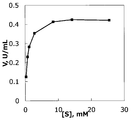
- Example 6-6 The activity of HBDH-GS purified in Example 5 was measured by changing the concentration of 3-hydroxybutyric acid, which is a substrate for measuring the Km value, and a graph of the substrate concentration and the reaction rate was prepared (FIG. 6). Based on this, a Lineweaver-burk plot was prepared, and the Km value of the enzyme with respect to 3-hydroxybutyric acid was calculated (FIG. 7). As a result, the Km value of HBDH-GS of the present invention with respect to 3-hydroxybutyric acid was calculated to be 0.6 mM.
- the 3-hydroxybutyric acid dehydrogenase of the present invention can be applied to a diagnostic agent or sensor for measuring ketone bodies to measure ketone bodies as an index in the ketogenic diet (ketogenic diet) as well as in the fields of medicine and diagnosis. It is expected that it will be widely used in.
Landscapes
- Health & Medical Sciences (AREA)
- Life Sciences & Earth Sciences (AREA)
- Genetics & Genomics (AREA)
- Chemical & Material Sciences (AREA)
- Engineering & Computer Science (AREA)
- Organic Chemistry (AREA)
- Wood Science & Technology (AREA)
- Zoology (AREA)
- Bioinformatics & Cheminformatics (AREA)
- Biotechnology (AREA)
- General Engineering & Computer Science (AREA)
- Biomedical Technology (AREA)
- General Health & Medical Sciences (AREA)
- Microbiology (AREA)
- Biochemistry (AREA)
- Molecular Biology (AREA)
- Biophysics (AREA)
- Physics & Mathematics (AREA)
- Proteomics, Peptides & Aminoacids (AREA)
- Plant Pathology (AREA)
- Mycology (AREA)
- Immunology (AREA)
- Analytical Chemistry (AREA)
- Cell Biology (AREA)
- Medicinal Chemistry (AREA)
- Enzymes And Modification Thereof (AREA)
- Micro-Organisms Or Cultivation Processes Thereof (AREA)
Priority Applications (1)
| Application Number | Priority Date | Filing Date | Title |
|---|---|---|---|
| JP2021572737A JPWO2021149675A1 (https=) | 2020-01-24 | 2021-01-19 |
Applications Claiming Priority (2)
| Application Number | Priority Date | Filing Date | Title |
|---|---|---|---|
| JP2020-009961 | 2020-01-24 | ||
| JP2020009961 | 2020-01-24 |
Publications (1)
| Publication Number | Publication Date |
|---|---|
| WO2021149675A1 true WO2021149675A1 (ja) | 2021-07-29 |
Family
ID=76992416
Family Applications (1)
| Application Number | Title | Priority Date | Filing Date |
|---|---|---|---|
| PCT/JP2021/001653 Ceased WO2021149675A1 (ja) | 2020-01-24 | 2021-01-19 | 3-ヒドロキシ酪酸脱水素酵素及びその製造方法 |
Country Status (2)
| Country | Link |
|---|---|
| JP (1) | JPWO2021149675A1 (https=) |
| WO (1) | WO2021149675A1 (https=) |
Cited By (4)
| Publication number | Priority date | Publication date | Assignee | Title |
|---|---|---|---|---|
| JP2023174271A (ja) * | 2022-05-27 | 2023-12-07 | 東洋紡株式会社 | タンパク質の製造方法 |
| CN117587049A (zh) * | 2022-08-16 | 2024-02-23 | 广州达安基因股份有限公司 | 重组d-3-羟基丁酸脱氢酶及其制备方法和应用 |
| WO2025105408A1 (ja) * | 2023-11-15 | 2025-05-22 | 天野エンザイム株式会社 | 改変型酵素 |
| WO2025253875A1 (ja) * | 2024-06-03 | 2025-12-11 | ニプロ株式会社 | フェニルグリオキシル酸の測定方法、及びそれに用いられる測定キット |
Citations (1)
| Publication number | Priority date | Publication date | Assignee | Title |
|---|---|---|---|---|
| JP2003339335A (ja) * | 2002-05-29 | 2003-12-02 | Hajime Kimura | 滋養豆腐及び滋養豆腐の製造方法 |
-
2021
- 2021-01-19 JP JP2021572737A patent/JPWO2021149675A1/ja active Pending
- 2021-01-19 WO PCT/JP2021/001653 patent/WO2021149675A1/ja not_active Ceased
Patent Citations (1)
| Publication number | Priority date | Publication date | Assignee | Title |
|---|---|---|---|---|
| JP2003339335A (ja) * | 2002-05-29 | 2003-12-02 | Hajime Kimura | 滋養豆腐及び滋養豆腐の製造方法 |
Non-Patent Citations (5)
| Title |
|---|
| DATABASE Protein [online] 15 May 2014 (2014-05-15), "3-hydroxybutyrate dehydrogenase [Geobacillus sp. CAMR5420", XP055843629, Database accession no. KDE48280 * |
| DATABASE Protein [online] 16 September 2015 (2015-09-16), "3-hydroxybutyrate dehydrogenase [Geollacillus thermoleovorans B23", XP055843633, Database accession no. GAJ58677 * |
| DATABASE Protein [online] 21 July 2019 (2019-07-21), "3-hydroxybutyrate dehydrogenase [Geobacillus sp. LEMMJ02", XP055843625, Database accession no. TRY42745 * |
| DATABASE Protein [online] 21 May 2019 (2019-05-21), "3-hydroxybutyrate dehydrogenase [Geollacillus kaustophilus NBRC 102445", XP055843641, Database accession no. QCK83167 * |
| DATABASE Protein [online] 4 December 2017 (2017-12-04), "3-hydroxybutyrate dehydrogenase [Geollacillus sp. WSUCF-018B", XP055843637, Database accession no. PJW17206 * |
Cited By (4)
| Publication number | Priority date | Publication date | Assignee | Title |
|---|---|---|---|---|
| JP2023174271A (ja) * | 2022-05-27 | 2023-12-07 | 東洋紡株式会社 | タンパク質の製造方法 |
| CN117587049A (zh) * | 2022-08-16 | 2024-02-23 | 广州达安基因股份有限公司 | 重组d-3-羟基丁酸脱氢酶及其制备方法和应用 |
| WO2025105408A1 (ja) * | 2023-11-15 | 2025-05-22 | 天野エンザイム株式会社 | 改変型酵素 |
| WO2025253875A1 (ja) * | 2024-06-03 | 2025-12-11 | ニプロ株式会社 | フェニルグリオキシル酸の測定方法、及びそれに用いられる測定キット |
Also Published As
| Publication number | Publication date |
|---|---|
| JPWO2021149675A1 (https=) | 2021-07-29 |
Similar Documents
| Publication | Publication Date | Title |
|---|---|---|
| CN102292439B (zh) | 黄素结合型葡萄糖脱氢酶 | |
| JP5169991B2 (ja) | 改変型フラビンアデニンジヌクレオチド依存性グルコースデヒドロゲナーゼ | |
| CN101454449B (zh) | 葡萄糖脱氢酶 | |
| WO2021149675A1 (ja) | 3-ヒドロキシ酪酸脱水素酵素及びその製造方法 | |
| JP6311270B2 (ja) | 耐熱性に優れたフラビンアデニンジヌクレオチド依存性グルコースデヒドロゲナーゼ | |
| CN101918553B (zh) | 新型葡萄糖脱氢酶 | |
| JP5593689B2 (ja) | 乳酸オキシダーゼ組成物 | |
| EP1666586B1 (en) | Pyrroloquinoline quinone (pqq)-dependent glucose dehydrogenase modification having excellent substrate specificity | |
| JP2004344145A (ja) | 基質特異性または安定性に優れたピロロキノリンキノン(pqq)依存性グルコースデヒドロゲナーゼ改変体 | |
| JP2004313180A (ja) | 基質特異性または安定性に優れたピロロキノリンキノン(pqq)依存性グルコースデヒドロゲナーゼ改変体 | |
| JP6127496B2 (ja) | ジアホラーゼ | |
| JP4036667B2 (ja) | 新規グルコース脱水素酵素及びそれをコードする遺伝子 | |
| US5744342A (en) | Protein having heat-resistant malate dehydrogenase activity | |
| CN116601286A (zh) | 突变葡萄糖脱氢酶 | |
| JP2942564B2 (ja) | 乳酸オキシダーゼの遺伝情報を有するdnaおよびその用途 | |
| JP2014097050A (ja) | ジアホラーゼ | |
| JP5531272B2 (ja) | 熱安定性を向上させた改変型グリセロールキナーゼ | |
| JP4591074B2 (ja) | 加熱処理を施した脱水素酵素 | |
| JP4816103B2 (ja) | グリセロールキナーゼ改変体 | |
| JP2006034165A (ja) | Pqqgdh製造法 | |
| JP4478865B2 (ja) | 改変した金属酵素 | |
| JP2004313172A (ja) | 基質特異性または安定性に優れたピロロキノリンキノン(pqq)依存性グルコースデヒドロゲナーゼ改変体 | |
| JP2006081407A (ja) | Pqq依存性グルコースデヒドロゲナーゼの製造方法 | |
| JP4452988B2 (ja) | ピロロキノリンキノン依存性グルコース脱水素酵素の比活性を向上する方法、および、比活性の向上したピロロキノリンキノン依存性グルコース脱水素酵素 | |
| JP6390776B2 (ja) | 耐熱性に優れたフラビンアデニンジヌクレオチド依存性グルコースデヒドロゲナーゼ |
Legal Events
| Date | Code | Title | Description |
|---|---|---|---|
| 121 | Ep: the epo has been informed by wipo that ep was designated in this application |
Ref document number: 21744527 Country of ref document: EP Kind code of ref document: A1 |
|
| ENP | Entry into the national phase |
Ref document number: 2021572737 Country of ref document: JP Kind code of ref document: A |
|
| NENP | Non-entry into the national phase |
Ref country code: DE |
|
| 122 | Ep: pct application non-entry in european phase |
Ref document number: 21744527 Country of ref document: EP Kind code of ref document: A1 |