WO2021100830A1 - 細胞凝集体の凍結方法 - Google Patents
細胞凝集体の凍結方法 Download PDFInfo
- Publication number
- WO2021100830A1 WO2021100830A1 PCT/JP2020/043276 JP2020043276W WO2021100830A1 WO 2021100830 A1 WO2021100830 A1 WO 2021100830A1 JP 2020043276 W JP2020043276 W JP 2020043276W WO 2021100830 A1 WO2021100830 A1 WO 2021100830A1
- Authority
- WO
- WIPO (PCT)
- Prior art keywords
- cells
- cell
- cell aggregate
- dopamine
- cryopreservation solution
- Prior art date
- Legal status (The legal status is an assumption and is not a legal conclusion. Google has not performed a legal analysis and makes no representation as to the accuracy of the status listed.)
- Ceased
Links
Images





Classifications
-
- A—HUMAN NECESSITIES
- A01—AGRICULTURE; FORESTRY; ANIMAL HUSBANDRY; HUNTING; TRAPPING; FISHING
- A01N—PRESERVATION OF BODIES OF HUMANS OR ANIMALS OR PLANTS OR PARTS THEREOF; BIOCIDES, e.g. AS DISINFECTANTS, AS PESTICIDES OR AS HERBICIDES; PEST REPELLANTS OR ATTRACTANTS; PLANT GROWTH REGULATORS
- A01N1/00—Preservation of bodies of humans or animals, or parts thereof
- A01N1/10—Preservation of living parts
- A01N1/12—Chemical aspects of preservation
- A01N1/122—Preservation or perfusion media
- A01N1/125—Freeze protecting agents, e.g. cryoprotectants or osmolarity regulators
-
- A—HUMAN NECESSITIES
- A01—AGRICULTURE; FORESTRY; ANIMAL HUSBANDRY; HUNTING; TRAPPING; FISHING
- A01N—PRESERVATION OF BODIES OF HUMANS OR ANIMALS OR PLANTS OR PARTS THEREOF; BIOCIDES, e.g. AS DISINFECTANTS, AS PESTICIDES OR AS HERBICIDES; PEST REPELLANTS OR ATTRACTANTS; PLANT GROWTH REGULATORS
- A01N1/00—Preservation of bodies of humans or animals, or parts thereof
- A01N1/10—Preservation of living parts
- A01N1/16—Physical preservation processes
- A01N1/162—Temperature processes, e.g. following predefined temperature changes over time
-
- A—HUMAN NECESSITIES
- A61—MEDICAL OR VETERINARY SCIENCE; HYGIENE
- A61K—PREPARATIONS FOR MEDICAL, DENTAL OR TOILETRY PURPOSES
- A61K35/00—Medicinal preparations containing materials or reaction products thereof with undetermined constitution
- A61K35/12—Materials from mammals; Compositions comprising non-specified tissues or cells; Compositions comprising non-embryonic stem cells; Genetically modified cells
- A61K35/30—Nerves; Brain; Eyes; Corneal cells; Cerebrospinal fluid; Neuronal stem cells; Neuronal precursor cells; Glial cells; Oligodendrocytes; Schwann cells; Astroglia; Astrocytes; Choroid plexus; Spinal cord tissue
-
- A—HUMAN NECESSITIES
- A61—MEDICAL OR VETERINARY SCIENCE; HYGIENE
- A61L—METHODS OR APPARATUS FOR STERILISING MATERIALS OR OBJECTS IN GENERAL; DISINFECTION, STERILISATION OR DEODORISATION OF AIR; CHEMICAL ASPECTS OF BANDAGES, DRESSINGS, ABSORBENT PADS OR SURGICAL ARTICLES; MATERIALS FOR BANDAGES, DRESSINGS, ABSORBENT PADS OR SURGICAL ARTICLES
- A61L27/00—Materials for grafts or prostheses or for coating grafts or prostheses
- A61L27/36—Materials for grafts or prostheses or for coating grafts or prostheses containing ingredients of undetermined constitution or reaction products thereof, e.g. transplant tissue, natural bone, extracellular matrix
-
- A—HUMAN NECESSITIES
- A61—MEDICAL OR VETERINARY SCIENCE; HYGIENE
- A61L—METHODS OR APPARATUS FOR STERILISING MATERIALS OR OBJECTS IN GENERAL; DISINFECTION, STERILISATION OR DEODORISATION OF AIR; CHEMICAL ASPECTS OF BANDAGES, DRESSINGS, ABSORBENT PADS OR SURGICAL ARTICLES; MATERIALS FOR BANDAGES, DRESSINGS, ABSORBENT PADS OR SURGICAL ARTICLES
- A61L27/00—Materials for grafts or prostheses or for coating grafts or prostheses
- A61L27/36—Materials for grafts or prostheses or for coating grafts or prostheses containing ingredients of undetermined constitution or reaction products thereof, e.g. transplant tissue, natural bone, extracellular matrix
- A61L27/38—Materials for grafts or prostheses or for coating grafts or prostheses containing ingredients of undetermined constitution or reaction products thereof, e.g. transplant tissue, natural bone, extracellular matrix containing added animal cells
- A61L27/3804—Materials for grafts or prostheses or for coating grafts or prostheses containing ingredients of undetermined constitution or reaction products thereof, e.g. transplant tissue, natural bone, extracellular matrix containing added animal cells characterised by specific cells or progenitors thereof, e.g. fibroblasts, connective tissue cells, kidney cells
- A61L27/383—Nerve cells, e.g. dendritic cells, Schwann cells
-
- A—HUMAN NECESSITIES
- A61—MEDICAL OR VETERINARY SCIENCE; HYGIENE
- A61L—METHODS OR APPARATUS FOR STERILISING MATERIALS OR OBJECTS IN GENERAL; DISINFECTION, STERILISATION OR DEODORISATION OF AIR; CHEMICAL ASPECTS OF BANDAGES, DRESSINGS, ABSORBENT PADS OR SURGICAL ARTICLES; MATERIALS FOR BANDAGES, DRESSINGS, ABSORBENT PADS OR SURGICAL ARTICLES
- A61L27/00—Materials for grafts or prostheses or for coating grafts or prostheses
- A61L27/36—Materials for grafts or prostheses or for coating grafts or prostheses containing ingredients of undetermined constitution or reaction products thereof, e.g. transplant tissue, natural bone, extracellular matrix
- A61L27/38—Materials for grafts or prostheses or for coating grafts or prostheses containing ingredients of undetermined constitution or reaction products thereof, e.g. transplant tissue, natural bone, extracellular matrix containing added animal cells
- A61L27/3804—Materials for grafts or prostheses or for coating grafts or prostheses containing ingredients of undetermined constitution or reaction products thereof, e.g. transplant tissue, natural bone, extracellular matrix containing added animal cells characterised by specific cells or progenitors thereof, e.g. fibroblasts, connective tissue cells, kidney cells
- A61L27/3834—Cells able to produce different cell types, e.g. hematopoietic stem cells, mesenchymal stem cells, marrow stromal cells, embryonic stem cells
-
- C—CHEMISTRY; METALLURGY
- C12—BIOCHEMISTRY; BEER; SPIRITS; WINE; VINEGAR; MICROBIOLOGY; ENZYMOLOGY; MUTATION OR GENETIC ENGINEERING
- C12N—MICROORGANISMS OR ENZYMES; COMPOSITIONS THEREOF; PROPAGATING, PRESERVING, OR MAINTAINING MICROORGANISMS; MUTATION OR GENETIC ENGINEERING; CULTURE MEDIA
- C12N5/00—Undifferentiated human, animal or plant cells, e.g. cell lines; Tissues; Cultivation or maintenance thereof; Culture media therefor
- C12N5/06—Animal cells or tissues; Human cells or tissues
- C12N5/0602—Vertebrate cells
- C12N5/0607—Non-embryonic pluripotent stem cells, e.g. MASC
-
- C—CHEMISTRY; METALLURGY
- C12—BIOCHEMISTRY; BEER; SPIRITS; WINE; VINEGAR; MICROBIOLOGY; ENZYMOLOGY; MUTATION OR GENETIC ENGINEERING
- C12N—MICROORGANISMS OR ENZYMES; COMPOSITIONS THEREOF; PROPAGATING, PRESERVING, OR MAINTAINING MICROORGANISMS; MUTATION OR GENETIC ENGINEERING; CULTURE MEDIA
- C12N5/00—Undifferentiated human, animal or plant cells, e.g. cell lines; Tissues; Cultivation or maintenance thereof; Culture media therefor
- C12N5/06—Animal cells or tissues; Human cells or tissues
- C12N5/0602—Vertebrate cells
- C12N5/0618—Cells of the nervous system
-
- A—HUMAN NECESSITIES
- A61—MEDICAL OR VETERINARY SCIENCE; HYGIENE
- A61P—SPECIFIC THERAPEUTIC ACTIVITY OF CHEMICAL COMPOUNDS OR MEDICINAL PREPARATIONS
- A61P25/00—Drugs for disorders of the nervous system
-
- C—CHEMISTRY; METALLURGY
- C12—BIOCHEMISTRY; BEER; SPIRITS; WINE; VINEGAR; MICROBIOLOGY; ENZYMOLOGY; MUTATION OR GENETIC ENGINEERING
- C12N—MICROORGANISMS OR ENZYMES; COMPOSITIONS THEREOF; PROPAGATING, PRESERVING, OR MAINTAINING MICROORGANISMS; MUTATION OR GENETIC ENGINEERING; CULTURE MEDIA
- C12N2501/00—Active agents used in cell culture processes, e.g. differentation
- C12N2501/01—Modulators of cAMP or cGMP, e.g. non-hydrolysable analogs, phosphodiesterase inhibitors, cholera toxin
-
- C—CHEMISTRY; METALLURGY
- C12—BIOCHEMISTRY; BEER; SPIRITS; WINE; VINEGAR; MICROBIOLOGY; ENZYMOLOGY; MUTATION OR GENETIC ENGINEERING
- C12N—MICROORGANISMS OR ENZYMES; COMPOSITIONS THEREOF; PROPAGATING, PRESERVING, OR MAINTAINING MICROORGANISMS; MUTATION OR GENETIC ENGINEERING; CULTURE MEDIA
- C12N2501/00—Active agents used in cell culture processes, e.g. differentation
- C12N2501/10—Growth factors
- C12N2501/13—Nerve growth factor [NGF]; Brain-derived neurotrophic factor [BDNF]; Cilliary neurotrophic factor [CNTF]; Glial-derived neurotrophic factor [GDNF]; Neurotrophins [NT]; Neuregulins
-
- C—CHEMISTRY; METALLURGY
- C12—BIOCHEMISTRY; BEER; SPIRITS; WINE; VINEGAR; MICROBIOLOGY; ENZYMOLOGY; MUTATION OR GENETIC ENGINEERING
- C12N—MICROORGANISMS OR ENZYMES; COMPOSITIONS THEREOF; PROPAGATING, PRESERVING, OR MAINTAINING MICROORGANISMS; MUTATION OR GENETIC ENGINEERING; CULTURE MEDIA
- C12N2501/00—Active agents used in cell culture processes, e.g. differentation
- C12N2501/70—Enzymes
- C12N2501/72—Transferases [EC 2.]
- C12N2501/727—Kinases (EC 2.7.)
-
- C—CHEMISTRY; METALLURGY
- C12—BIOCHEMISTRY; BEER; SPIRITS; WINE; VINEGAR; MICROBIOLOGY; ENZYMOLOGY; MUTATION OR GENETIC ENGINEERING
- C12N—MICROORGANISMS OR ENZYMES; COMPOSITIONS THEREOF; PROPAGATING, PRESERVING, OR MAINTAINING MICROORGANISMS; MUTATION OR GENETIC ENGINEERING; CULTURE MEDIA
- C12N2506/00—Differentiation of animal cells from one lineage to another; Differentiation of pluripotent cells
- C12N2506/45—Differentiation of animal cells from one lineage to another; Differentiation of pluripotent cells from artificially induced pluripotent stem cells
-
- C—CHEMISTRY; METALLURGY
- C12—BIOCHEMISTRY; BEER; SPIRITS; WINE; VINEGAR; MICROBIOLOGY; ENZYMOLOGY; MUTATION OR GENETIC ENGINEERING
- C12N—MICROORGANISMS OR ENZYMES; COMPOSITIONS THEREOF; PROPAGATING, PRESERVING, OR MAINTAINING MICROORGANISMS; MUTATION OR GENETIC ENGINEERING; CULTURE MEDIA
- C12N2513/00—3D culture
-
- C—CHEMISTRY; METALLURGY
- C12—BIOCHEMISTRY; BEER; SPIRITS; WINE; VINEGAR; MICROBIOLOGY; ENZYMOLOGY; MUTATION OR GENETIC ENGINEERING
- C12N—MICROORGANISMS OR ENZYMES; COMPOSITIONS THEREOF; PROPAGATING, PRESERVING, OR MAINTAINING MICROORGANISMS; MUTATION OR GENETIC ENGINEERING; CULTURE MEDIA
- C12N2533/00—Supports or coatings for cell culture, characterised by material
- C12N2533/90—Substrates of biological origin, e.g. extracellular matrix, decellularised tissue
Definitions
- the present application relates to a method for freezing cell aggregates containing neural cells.
- Non-Patent Documents 1 to 3 In cell medicines, achieving cryopreservation of the final product is an essential element for the spread of cell therapy (Patent Documents 1 to 4). Unlike cell biology studies, when used clinically, cryopreserved cells are thawed and immediately transplanted without recovery culture. Therefore, it is important for frozen cells to maintain their engraftment ability, function / activity, and cell viability after thawing.
- Non-Patent Document 4 It has been suggested that the presence of donor blood vessels and antigen-presenting cells as they are in solid tissue transplantation induces a stronger immune response than cell suspension transplantation.
- VM ventral midbrain
- FIG. 5 Shows behavioral recovery.
- mechanical and enzymatic dissociation processes for obtaining cell suspensions can alter cell properties and cause cell damage. Therefore, for clinical use, it is desirable to formulate the final product as a cell mass rather than a cell suspension.
- cell clusters are more difficult to cryopreserve than single cells.
- Non-Patent Documents 6 to 8 As a cell freezing method, a slow method and a vitrification method are known (Non-Patent Documents 6 to 8).
- the slow method is a method of freezing cells at about 1 ° C./min with a low concentration of cryoprotectant (CPA) (10% dimethyl sulfoxide (DMSO), etc.) (Patent Document 5, Non-Patent Documents 9 and 10).
- CCA cryoprotectant
- DMSO dimethyl sulfoxide
- Non-Patent Documents 9 and 10 In the slow method, ice formation first begins in the extracellular space, resulting in the concentration of extracellular fluid. As a result, water is withdrawn from the cells by the osmotic gradient across the cell membrane. This dehydration of cells avoids intracellular ice formation.
- the vitrification method is a high-speed cooling method in which cells are immediately transferred into liquid nitrogen after adding a high-concentration cryoprotectant (for example, DMSO, acetamide or ethylene glycol) and frozen at once in an amorphous state.
- a high-concentration cryoprotectant for example, DMSO, acetamide or ethylene glycol
- Non-Patent Document 12 discloses that mycoplasma contamination can be prevented by freezing cultured cells in the gas phase using a gas phase type liquid nitrogen storage container that can be stored at ⁇ 190 ° C. None was known about freezing cell aggregates in a liquid nitrogen gas phase.
- An object of the present application is to provide a method for freezing cell aggregates containing neural cells.
- a method for freezing cell aggregates containing neural cells having a three-dimensional structure which comprises the following steps (1) and (2): (1) A step of immersing a cell aggregate containing neural cells in a cryopreservation solution at 0 ° C. or higher and 30 ° C. or lower before freezing to prepare a cell aggregate immersed in the cryopreservation solution, and (2)-. A step of freezing cell aggregates immersed in the cryopreservation solution under the gas phase of a liquid nitrogen container at 150 ° C. or lower.
- the cell aggregate containing neural cells is a cell aggregate containing neural cells derived from pluripotent stem cells.
- the cell aggregate containing nervous system cells contains cells in which at least one of FOXA2, TH and NURR1 is positive.
- the cell aggregate containing the nervous system cells contains FOXA2-positive and LMX1A-positive cells.
- the cell aggregate containing the nervous system cells contains FOXA2-positive, TH-positive and NURR1-positive cells.
- the nervous system cells are dopamine-producing neurons or progenitor cells thereof.
- the cell aggregate containing the nervous system cells is a cell aggregate having a circle-equivalent diameter of 150 ⁇ m to 1000 ⁇ m.
- the cell aggregate contains 500 to 150,000 cells.
- Nervous system cells including storing a container containing a cell aggregate obtained by the method according to any one of [1] to [14] above in a gas phase or a liquid phase of a liquid nitrogen container. A method for long-term storage of cell aggregates containing.
- the cell aggregate containing 60% or more of dopamine-producing neural progenitor cells and having a circle-equivalent diameter of 150 ⁇ m to 1000 ⁇ m and a cryopreservation solution are contained, and it is not necessary to culture for recovery after thawing.
- composition for transplantation according to any one of [16] to [19] above, wherein the cell aggregate and the cryopreservation solution are filled in a container of 0.5 mL to 15 mL.
- the number of cells is 80,000 to 5,000,000 cells / mL, 60% or more of dopamine-producing neural progenitor cells are contained, and the equivalent circle diameter is 150 ⁇ m to 1000 ⁇ m.
- a method for treating a disease requiring regeneration of dopaminergic nerves which comprises the following steps: (1) The step of thawing the transplantation composition according to any one of the above [16] to [20] at 30 ° C. to 40 ° C., and the transplantation composition obtained in (2) and (1). , The process of transplanting into the striatal region of the patient.
- the present application provides a method for freezing cell aggregates containing neural cells.
- Cell aggregates of neural cells frozen by the method of the present application show high cell viability and maintain functional properties such as neurite outgrowth action.
- the frozen cell aggregates can be stored as they are without being transferred to the storage device, so that it is possible to avoid a temporary temperature rise due to the transfer to the storage device. , Does not damage unwanted cell aggregates. Even if it is stored at a temperature lower than that of the liquid nitrogen vapor phase, it can be immersed in liquid nitrogen as it is without taking it out of the container, so the number of steps can be reduced as an industrial manufacturing method, and workability can be reduced. Is improved.
- the present application provides a method for freezing a cell aggregate containing a neural cell having a three-dimensional structure.
- Neural cells include a nerve cell (Neuronal cell or Neuron) and a precursor cell of the nerve cell, that is, a neural progenitor cell or a neural precursor cell and the like.
- Nervous system cells are derived from any site, such as the nervous system cells of the central nervous system, or the somatic nervous system cells of the motor nerve or sensory system, or the nervous system cells of the peripheral nervous system of the nervous system cells of the autonomic nerve. These include nerves (neurons), nerve ridge-derived cells, glial cells such as oligodendrocytes or astrocytes, and stem cells or precursor cells thereof. Nervous system cells include cells that express a nervous system cell marker.
- Nervous system cell markers include, for example, NCAM, ⁇ III Tubulin (TUJ1), tyrosine hydroxylase (TH), serotonin, nestin, MAP2, MAP2AB, NEUN, GABA, glutamate, CHAT, SOX1, BF1, EMX1, VGLUT1, PAX. , NKX, GSH, Nestin, GLUR1, CAKMII, CTIP2, TBR1, Reelin, TBR1, BRN2, OTX2, LMX1A, LMX1B, EN1, NURR1, PITX3, DAT, GIRK2 and TH. It can be confirmed that the cells are nervous system cells by the expression of one or more of the neural system cell markers.
- examples of neural cells include cells expressing 1 or more, 2 or more, or 3 or more of the above nervous system cell markers.
- Nervous system cells of the central nervous system can be classified according to the difference in the site where the nervous system cells are present. That is, nerve cells derived from the forebrain, the telencephalon, the diencephalon, the cerebrum, the hypothalamus, the midbrain, the retencephalon, the mesencephalon-posterior border region, the cerebellum, the retina, the pituitary gland, or the spinal cord, and their precursor cells. ..
- Forebrain-derived neurons are neurons that exist in forebrain tissues (that is, the telencephalon, cerebrum, hippocampus or choroid, diencephalon, hypothalamus, etc.). Forebrain neurons can be identified by the expression of forebrain neurons markers.
- the forebrain nerve cell marker include OTX1 (forebrain), BF1 (also referred to as FOXG1), and SIX3 (also a marker for the telencephalon or cerebrum).
- examples of nervous system cells include cells expressing 1 or more, 2 or more, or 3 or more of the above-mentioned forearn nerve cell markers, telencephalon or cerebral markers.
- cerebral-derived neurons examples include dorsal cells (eg, cerebral cortex cells, Kahar-retius cells, hippocampal neurons, etc.) or ventral cells (eg, basal ganglia cells, etc.).
- ventral cerebral nerve cell marker examples include basal ganglia nerve cell markers (eg, GSH2, MASH1, NKX2.1, NOZ1).
- dorsal cerebral nerve cell marker examples include cerebral cortical nerve cell markers (for example, PAX6, EMX1, TBR1).
- neural cells include cells expressing one or more, two or more, or three or more of the above-mentioned cerebral nerve cell markers, basal ganglia nerve cell markers, or cerebral cortex nerve cell markers.
- Examples of the nervous system cells derived from the midbrain include ventral midbrain-derived neurons, dopamine-producing neurons (also referred to as dopamine neurons or Dopaminergic neurons) or dopamine-producing neurons (dopamine neurons or Dopaminergic projectors). ), Etc. can be mentioned.
- Examples of markers of nervous system cells derived from the midbrain include FOXA2, EN2, TUJ1 and the like.
- Examples of FOXA2-positive and TUJ1-positive neural cells include dopamine-producing neural progenitor cells and dopamine-producing neurons.
- dopamine-producing neurons can be identified using FOXA2-positive, NURR1-positive, and TH-positive as indicators.
- dopamine-producing neural progenitor cells can be identified using FOXA2-positive and LMX1A-positive as indicators. More preferably, one or more of OTX2, LMX1A, LMX1B, CORIN, SHH, AADC, ⁇ III-Tubulin, EN1, NURR1, PITX3, DAT, GIRK2 and TH contain positive cells.
- the cell aggregate containing dopamine-producing neural progenitor cells may include dopamine-producing neurons, dopaminergic neurons, and the like, unless otherwise specified.
- examples of neural cells include cells expressing 1 or more, 2 or more, or 3 or more of markers of midbrain-derived nervous system cells, dopamine-producing neural progenitor cells, or dopamine-producing nerve cells. Be done.
- cells expressing FOXA2 and / or LMX1A (FOXA2-positive and / or LMX1A-positive), preferably in addition to FOXA2 and LMXA1, OTX2, LMX1B, EN1, CORIN
- Examples include cells expressing 1 or more, 2 or more or 3 or more selected from the group consisting of SHH, AADC, and ⁇ III-Tubulin.
- dopamine-producing neurons dopamine neurons
- cells expressing TH and / or NURR1 TH-positive and / or NURR1-positive
- FOXA2 AADC
- DAT DAT in addition to TH and NURR1.
- Examples of nerve cells derived from the midbrain-metencephalon boundary region include nerve cells existing in the cerebellum, cerebellar plate tissue, ventricular zone, hindbrain lip and the like.
- Examples of the midbrain-hindbrain border region marker include EN2 (midbrain), GBX2 (hindbrain), and N-Cadherin (nerve progenitor cells in the midbrain-hindbrain border region).
- Examples of the cerebellar nerve progenitor cell marker include GABAergic nerve progenitor cell markers KIRREL2, PTF1A or SOX2, and cerebellar granule cell progenitor cell markers ATOH1 or BARHL1.
- the nervous system cells one or more, two or more, or three or more of the above-mentioned mesencephalic brain border region marker, cerebral nerve progenitor cell marker, GABAergic nerve progenitor cell marker or cerebral granule cell progenitor cell marker.
- Examples include cells that express.
- Examples of retinal-derived neural cells include photoreceptor cells, photoreceptor progenitor cells, retinal pigment epithelial cells, and corneal cells.
- Neural cells can also be classified according to the difference in neurotransmitters produced (secreted). For example, dopamine-producing neurons, dopamine-producing neural progenitor cells, GABA neurons, GABA neural progenitor cells, cholinergic neurons, etc. Examples thereof include cholinergic neurons, serotonin neurons, serotonin neurons, glutamate neurons, glutamate neurons, noradrenaline neurons, noradrenaline neurons, adrenaline neurons, adrenaline neurons and the like.
- Examples of the neural cells of the motor nerve and the sensory organ system include cholinergic neurons or progenitor cells thereof.
- Examples of the nervous system cells of the autonomic nerve include cholinergic neurons, adrenergic neurons, and progenitor cells thereof.
- Preferred examples of the nervous system cells in the present specification include dopamine-producing neurons (dopamine neurons) and dopamine-producing neural progenitor cells (dopamine neural progenitor cells).
- Living-derived nervous system cells are cells isolated from mammals such as humans.
- cells isolated from human brain tissue include Nature Neuroscience, 2,1137 (1999) or N. Engl. J. Med. .; 344: 710-9 (2001) exemplifies cells contained in fetal mesencephalic tissue.
- Nervous system cells may also be cells obtained by inducing differentiation from pluripotent stem cells such as embryonic stem cells (ES cells) and iPS cells.
- pluripotent stem cells such as embryonic stem cells (ES cells) and iPS cells.
- Methods for inducing differentiation of neural cells from pluripotent stem cells include, for example, the methods described in Non-Patent Documents 3 and 4 and WO2015 / 034012 (dopamine neural progenitor cells), WO2009 / 148170 (nervous cells such as cerebral brain).
- the nervous system cell may be a cell obtained by inducing differentiation from a multipotent stem cell such as a mesenchymal stem cell (MSC).
- a multipotent stem cell such as a mesenchymal stem cell (MSC).
- MSC mesenchymal stem cell
- Examples of the method for inducing differentiation of neural cells from mesenchymal stem cells include the method described in J Chem Neuroanat. 96: 126-133 (2019).
- the pluripotent stem cell means a stem cell having pluripotency capable of differentiating into almost all cells existing in a living body and also having proliferative ability.
- Pluripotent stem cells can be derived from fertilized eggs, cloned embryos, reproductive stem cells, tissue stem cells, somatic cells and the like.
- the pluripotent stem cells are not particularly limited, but are, for example, embryonic stem (ES) cells, embryonic stem (ntES) cells derived from cloned embryos obtained by nuclear transplantation, sperm stem cells (GS cells), and embryonic germ cells.
- Pluripotent stem cells may be ES cells, ntES cells, or iPS cells. From an ethical point of view, the pluripotent stem cell may be an iPS cell. Embryonic stem cells were established from embryos within 14 days of fertilization.
- Embryonic stem cells were first established in 1981 and have been applied to the production of knockout mice since 1989. Human embryonic stem cells were established in 1998 and are being used in regenerative medicine. Embryonic stem cells can be produced by culturing the inner cell mass on feeder cells or in a medium containing LIF (leukemia inhibitory factor). Methods for producing embryonic stem cells are described in, for example, WO96 / 22362, WO02 / 10157, US5,843,780, US6,200,806, US6,280,718 and the like. Embryonic stem cells can be obtained from a given institution or can be purchased commercially. For example, human embryonic stem cells KhES-1, KhES-2 and KhES-3 are available from the Institute for Frontier Medical Sciences, Kyoto University. The human embryonic stem cell Rx :: GFP strain (derived from KhES-1 strain) is available from RIKEN. The mouse embryonic stem cells, EB5 cell line and D3 cell line, are available from RIKEN and ATCC, respectively.
- LIF
- ntES cells Nuclear transplanted embryonic stem cells
- ntES cells which are one of the embryonic stem cells, can be established from cloned embryos produced by transplanting somatic nuclei into eggs from which the nuclei have been removed.
- EG cells can be produced by culturing primordial germ cells in a medium containing mSCF, LIF and bFGF (Cell, 70: 841-847, 1992).
- the “artificial pluripotent stem cell” in the present specification is a cell in which pluripotency is induced by reprogramming a somatic cell by a known method or the like.
- differentiated somatic cells such as fibroblasts or peripheral blood mononuclear cells are used in OCT3 / 4, SOX2, KLF4, MYC (c-MYC, N-MYC, L-MYC), GLIS1, NANOG, etc.
- Examples thereof include cells in which pluripotency is induced by reprogramming by expression of any combination of a plurality of genes selected from a group of reprogramming genes including SALL4, LIN28, ESRRB and the like.
- Preferred combinations of reprogramming factors include (1) OCT3 / 4, SOX2, KLF4, and MYC (c-MYC or L-MYC), (2) OCT3 / 4, SOX2, KLF4, LIN28 and L-MYC (Stem). Cells, 2013; 31: 458-466), (3) OCT3 / 4, SOX2, NANOG and LIN28 (Science 2007; 318: 1917-1920) and the like.
- Induced pluripotent stem cells were established in mouse cells by Yamanaka et al. In 2006 (Cell, 2006, 126 (4), pp.663-676). Induced pluripotent stem cells were also established in human fibroblasts in 2007 and have pluripotency and self-renewal ability similar to embryonic stem cells (Cell, 2007, 131 (5), pp.861-872; Science. , 2007, 318 (5858), pp. 1917-1920; Nat. Biotechnol., 2008, 26 (1), pp. 101-106).
- Induced pluripotent stem cells can be produced not only by a method of direct reprogramming by gene expression, but also by a method of inducing induced pluripotent stem cells from somatic cells by adding a compound or the like (Science, 2013, 341). , Pp. 651-654).
- induced pluripotent stem cells for example, 201B7 cells, 201B7-Ff cells, 253G1 cells, 253G4 cells, 1201C1 cells, 1205D1 cells, 1210B2 cells established at Kyoto University.
- 1231A3 cells and other human induced pluripotent stem cell cell lines are available from Kyoto University.
- the induced pluripotent stem cells for example, Ff-I01 cells, Ff-I01s04 cells, QHJ-I01 and Ff-I14 cells established at Kyoto University are available from Kyoto University.
- the somatic cells used in producing artificial pluripotent stem cells are not particularly limited, but are tissue-derived fibroblasts, blood cell lineage cells (for example, peripheral blood mononuclear cells (PBMC), T cells), and liver.
- tissue-derived fibroblasts for example, peripheral blood mononuclear cells (PBMC), T cells
- PBMC peripheral blood mononuclear cells
- liver examples include cells, pancreatic cells, intestinal epithelial cells, smooth muscle cells and the like.
- the means for expressing the genes is not particularly limited.
- an infection method using a virus vector for example, a retrovirus vector, a lentivirus vector, a Sendai virus vector, an adenovirus vector, or an adeno-associated virus vector
- a plasmid vector for example, a plasmid vector, or an episomal vector
- RNA vector for example, calcium phosphate method, lipofection method, or electroporation method
- examples include a method of directly injecting a protein (for example, a method using a needle, a lipofection method, or an electroporation method).
- Induced pluripotent stem cells can be produced in the presence of feeder cells or in the absence of feeder cells (feeder-free).
- the induced pluripotent stem cells can be produced in the presence of undifferentiated maintenance factors by a known method.
- the medium used for producing induced pluripotent stem cells in the absence of feeder cells is not particularly limited, but is a known embryonic stem cell and / or a maintenance medium for induced pluripotent stem cells, or a feeder-free artificial pluripotent stem cell.
- a medium for establishing pluripotent stem cells can be used.
- Examples of the medium for establishing a feeder-free induced pluripotent stem cell include Essential 8 medium (E8 medium), Essential 6 medium, TeSR medium, mTeSR medium, mTeSR-E8 medium, Stabilized Essential 8 medium, and StemFit medium. Feeder-free medium can be mentioned.
- feeder-free somatic cells are genetically subjected to four factors, OCT3 / 4, SOX2, KLF4, and MYC (L-MYC or c-MYC), using a Sendai viral vector. By introducing it, artificial pluripotent stem cells can be produced.
- the pluripotent stem cells used in the present invention are mammalian pluripotent stem cells, preferably rodent (eg, mouse or rat) or primate (eg, human or monkey) pluripotent stem cells. More preferably, it is a human or mouse pluripotent stem cell, and even more preferably, it is a human induced pluripotent stem cell (iPS cell) or a human embryonic stem cell (ES cell).
- rodent eg, mouse or rat
- primate eg, human or monkey
- iPS cell human induced pluripotent stem cell
- ES cell human embryonic stem cell
- cell aggregate has a three-dimensional structure
- cells are a three-dimensional cell population formed by adhering cells to each other, for example, by suspension culture or three-dimensional culture. It means that it forms an aggregate (Cell aggregate or sphere).
- Cell aggregates of nervous system cells are also called neurospheres.
- the shape of the cell aggregate is not particularly limited, and may be spherical or non-spherical.
- the cell aggregate in the present specification is preferably a cell aggregate having a three-dimensional shape close to a spherical shape.
- a three-dimensional shape that is close to a sphere is a shape that has a three-dimensional structure and, when projected onto a two-dimensional surface, shows, for example, a circular or elliptical shape.
- the size of cell aggregates containing neural cells having a three-dimensional structure is not particularly limited, but is usually 150 ⁇ m to 1000 ⁇ m in equivalent circle diameter, for example, 200 ⁇ m to 800 ⁇ m, or 300 ⁇ m to 500 ⁇ m in one embodiment.
- the cell aggregate containing a nervous system cell having a three-dimensional structure usually contains 500 to 150,000 cells, and in one embodiment, for example, 1,000 to 100,000 cells, 1,000 to 70,000 cells, or 3,000 to 30,000 cells.
- the cell aggregate containing the nervous system cells may contain other cells together with the nervous system cells. Examples thereof include cell aggregates containing 60% or more, 70% or more, 80% or more, and more preferably 90% or more of nervous system cells.
- the cell aggregate containing the nervous system cells may contain 60% or more, 70% or more, or 80% or more of dopamine-producing neural progenitor cells and / or dopamine-producing neurons. That is, cell aggregates containing neural cells contain 60% or more, 70% or more, or 80% or more of neural cells expressing one or more markers selected from FOXA2, LMX1A, LMX1B, NURR1 and TH. You may be.
- the cell aggregate containing nervous system cells contains 40% or more, 60% or more, 70% or more, 80% or more, 85% or more or 90% or more of dopamine-producing neural progenitor cells.
- the cell aggregate containing neural cells contains 40% or more, 60% or more, 70% or more, 80% or more of cells expressing 1 or more, 2 or more or 3 or more of the markers of dopamine-producing neural progenitor cells. , 85% or more or 90% or more.
- the cell aggregate containing nervous system cells contains 40% or more, 60% or more, 70% or more, 80% or more, 85% or more or 90% or more of FOXA2-positive and LMX1A-positive cells. In one aspect, the cell aggregate further comprises 40% or less of TH-positive and NURR1-positive cells.
- the cell aggregate containing nervous system cells may contain 0% or more, 10% or more, or 20% or more of FOXA2-positive, TH-positive, and NURR1-positive cells.
- cell aggregates containing dopamine-producing neural progenitor cells contain 60% or less, 50% or less, 40% or less, 5-50%, 5-40% or 5-20% of NURR1-positive cells. May be good.
- cell aggregates containing dopaminergic neural progenitor cells and / or dopaminergic neurons are 30% or less, 20% or less, 1-30%, 5-30%, 1-20% TH-positive cells. It may contain 5 to 20%, or 5 to 15%.
- cell aggregates containing dopamine-producing neural progenitor cells and / or dopamine-producing neurons contain 30% or less, 1-25%, 1-20%, or 5-20% of KI67-positive cells. May be good.
- the cell aggregate containing dopamine-producing neural progenitor cells and / or dopamine-producing neurons may contain SOX1-positive cells in an amount of 20% or less, 10% or less, 5% or less, or 1% or less.
- the cell aggregate containing dopamine-producing neural progenitor cells and / or dopamine-producing neurons may contain PAX6 positive cells in an amount of 5% or less, 2% or less, 1% or less, or 0.5% or less. Good.
- the cell aggregate containing dopamine-producing neural progenitor cells and / or dopamine-producing neurons further comprises 20% or less of TH-positive and NURR1-positive cells, specifically 1% to 20%, more specifically. Contains 5% to 15%.
- the cell aggregate containing dopamine-producing neural progenitor cells and / or dopamine-producing neurons contains 50% or more, preferably 60% or more, 70% or more, or 80% or more of FOXA2-positive and LMX1A-positive cells.
- TH-positive and NURR1-positive cells are contained in an amount of 20% or less, 1% to 20%, and more specifically, 5% to 15%.
- the cell aggregate containing dopamine-producing neural progenitor cells and / or dopamine-producing neurons further contains 10% or less, preferably 7% or less, more preferably 3% or less of SOX1-positive cells, and PAX6-positive cells. Is 5% or less, preferably 4% or less, and more preferably 2% or less.
- the cell aggregate containing dopamine-producing neural progenitor cells and / or dopamine-producing neurons contains 60% or more of FOXA2-positive and LMX1A-positive cells, and 1% to 20% of TH-positive and NURR1-positive cells.
- SOX1-positive cells are 10% or less, preferably 7% or less, more preferably 3% or less
- PAX6-positive cells are 5% or less, preferably 4% or less, still more preferably 2% or less.
- the cell aggregate containing dopamine-producing neural progenitor cells and / or dopamine-producing neurons contains 60% or more of the total number of FOXA2-positive and LMX1A-positive cells, and TH-positive and NURR1-positive cells are all cells. It may contain 20% or less of the number, 1 to 20%, or 5 to 15%.
- the above-mentioned cell aggregate containing dopamine-producing neural progenitor cells and / or dopamine-producing neurons is a cell aggregate having a circle-equivalent diameter of 150 ⁇ m to 1000 ⁇ m.
- the cell aggregate containing dopamine-producing neural progenitor cells and / or dopamine-producing neurons contains 60% or more of FOXA2-positive and LMX1A-positive cells, and 1% to 20% of NURR1-positive and TH-positive cells. Moreover, it is a cell aggregate having a circle-equivalent diameter of 150 ⁇ m to 1000 ⁇ m.
- a cell aggregate having a three-dimensional structure and containing neural cells is immersed in a cryopreservation solution at 0 ° C. or higher and 30 ° C. or lower before freezing, and the cell aggregate is immersed in the cryopreservation solution.
- a cryopreservation solution at 0 ° C. or higher and 30 ° C. or lower before freezing, and the cell aggregate is immersed in the cryopreservation solution.
- the cryopreservation liquid means an aqueous liquid containing a cryoprotectant substance.
- the cryoprotectant has a high affinity with water molecules and means a substance having a high effect of suppressing the growth of ice crystals in a cryopreservation solution.
- DMSO dimethylsulfoxide
- EG ethylene glycol
- PG propylene glycol
- 1,3-propanediol 1,3-propanediol
- BG butylene glycol
- IPG isopylene glycol
- DPG dipropylene glycol
- the cryoprotectant is preferably dimethyl sulfoxide, glycerin and / or propylene glycol.
- concentration of the cryoprotectant in the cryopreservation solution is usually about 2-12%, preferably about 5-12%, more preferably about 7 when dimethyl sulfoxide, glycerin and / or propylene glycol is used as the cryoprotectant. It is -12%, more preferably about 7-10%, even more preferably about 10%.
- aqueous liquid examples include physiological saline, buffer solutions such as PBS, EBSS, and HBSS, culture solutions for culturing cells and tissues such as DMEM, GMEM, and RPMI, serum, serum substitutes, or mixtures thereof. Can be used.
- cryopreservation solution a commercially available cryopreservation solution containing dimethyl sulfoxide (DMSO), glycerin and / or propylene glycol as a main component can be used.
- DMSO dimethyl sulfoxide
- SCB ZENOAQ
- SCB DMSO free a commercially available cryopreservation solution
- Bambanker hRM Bambanker hRM
- Bambanker DMSO Free Bambanker DMSO Free
- Commercially available cryopreservation solutions such as NIPPON Genetics), CryoStor CS5 (CS5; BioLife Solutions), CryoStor CS10 (CS10; BioLife Solutions), and Synth-a- Freeze (SaF; Thermo Fisher Scientific) can be mentioned.
- cryopreservation solutions containing, for example, 7-12%, preferably about 10% dimethyl sulfoxide, glycerin and / or propylene glycol (eg, STEM-CELL BANKER, Bambanker hRM, CryoStor CS10 and Synth-a-Freeze). It is desirable to do. More preferably, Bambanker hRM can be used.
- the number of cells (cell packing density) with respect to the cryopreservation solution is 80,000 to 5,000,000 cells / mL, 100,000 to 4000,000 cells / mL, or 200,000 to 2000,000 cells / mL, 300,000 to 1,000,000 cells / mL. is there.
- the equivalent circle diameter of the cell aggregate is 150 to 1000 ⁇ m, 150 ⁇ m to 600 ⁇ m, or 300 ⁇ m to 500 ⁇ m.
- the volume of the cell aggregate and the preservation solution is 0.25 mL to 2 mL, 0.5 ml to 1.5 ml, or 0.5 ml to 1 ml.
- the cell aggregate and the preservation solution may be filled in a container of 0.5 ml to 15 ml, 1 ml to 5 ml, or 1 ml to 2 ml.
- the freezing point of the cryopreservation solution in the present application is not particularly limited, but is usually about -1 ° C to -10 ° C, preferably -3 ° C to -10 ° C, more preferably -3 ° C to -6 ° C, and even more preferably about-. It is 5 ° C.
- the temperature at which cell aggregates containing nervous system cells are immersed in a cryopreservation solution is usually 0 ° C. or higher and 30 ° C. or lower, preferably 0 ° C. or higher and 20 ° C. or lower, more preferably 0 ° C. or higher and 10 ° C. or lower, still more preferably. It is 0 ° C or higher and 5 ° C or lower.
- the time for immersing the cell aggregate containing the nervous system cells in the cryopreservation solution is usually 5 minutes to 360 minutes, 5 minutes to 240 minutes, 5 minutes to 180 minutes, preferably 5 minutes to 120 minutes, 5 minutes to. It is 60 minutes, 15 minutes to 360 minutes, 15 minutes to 240 minutes, 15 minutes to 180 minutes, 15 minutes to 150 minutes, preferably 15 minutes to 120 minutes, and more preferably 15 minutes to 60 minutes.
- the method of the present application also includes (2) a step of freezing cell aggregates immersed in the cryopreservation solution obtained in step (1) under the gas phase of a liquid nitrogen container at ⁇ 150 ° C. or lower.
- the liquid nitrogen container is a container filled with liquid nitrogen, and the gas phase space is maintained at ⁇ 150 ° C. or lower in the container.
- the temperature of the gas phase space is not particularly limited as long as it is ⁇ 150 ° C. or lower. For example, it may be about ⁇ 160 ° C., about ⁇ 170 ° C., about ⁇ 180 ° C., or about ⁇ 190 ° C.
- the ratio of the volume of liquid nitrogen in the liquid nitrogen container to the volume of the gas phase space is not particularly limited as long as the temperature of the gas phase space can be maintained at ⁇ 150 ° C. or lower. Specifically, a volume ratio of about 1: 2 to 1:10 can be mentioned.
- a liquid nitrogen container G48-6R (Tayo Nippon Sanso) and CryoSystem 6000 (MVE) are commercially available.
- liquid nitrogen in the liquid nitrogen container can be impregnated with an absorbent such as glass fiber to create a liquid nitrogen vapor phase atmosphere.
- an absorbent such as glass fiber
- DR-22DS Deniyo Nisshi
- MVE CryoShipper
- the container filled with the cell aggregates immersed in the cryopreservation solution is arranged in the gas phase space in the liquid nitrogen container.
- the ratio of the volume of the cell aggregate and the cryopreservation solution filled in the container to the volume of the gas phase in the liquid nitrogen container is not particularly limited as long as the temperature of the gas phase space can be maintained at ⁇ 150 ° C. or lower. It may be appropriately adjusted according to the capacity and volume of the liquid nitrogen gas phase storage, but it is preferably 5% or less. For example, when the volume of the gas phase space is 1500 L, the number of containers (vials) that can be filled with 2 mL of cell aggregates and cryopreservation solution is about 1 to 35200.
- the packing density of cell aggregates with respect to the cryopreservation solution is 5 to 500 cells / ml or 10 to 500 cells / ml, preferably 50 to 500 cells / ml, and more preferably 50 to 200 cells / ml.
- the shape and material of the container for filling the cell aggregates are not particularly limited, and a container capable of sealing the cell aggregates and the cryopreservation solution can be used.
- a container filled with a composition containing cell aggregates frozen by the method of the present application and a cryopreservation solution can be stored for a long period of time in a liquid nitrogen container. That is, the method of the present application may further include a step of storing the container filled with the frozen cell aggregate obtained in the step (3) step (2) in the gas phase or the liquid phase of the liquid nitrogen container. It can be stored for a long time at 150 ° C. or lower.
- a container filled with a composition containing a cell aggregate frozen by the method of the present application and a cryopreservation solution is separately placed in a deep freezer, a program freezer, a proton freezer, a quick liquid freezer, an electrostatic air quick freezer, and a cell. It may be transferred to an alive system (CAS) quick freezer, a brine quick freezer, or another liquid nitrogen container for storage, and stored for a long period of time at ⁇ 80 ° C. or lower, preferably ⁇ 150 ° C. or lower. For example, it may be about ⁇ 160 ° C., about ⁇ 170 ° C., about ⁇ 180 ° C., or about ⁇ 190 ° C.
- CAS alive system
- the storage period of "long-term storage” is not limited, and means, for example, storage for a period of 1 week or more, 1 month or more, 6 months or more, 1 year or more, 3 years or more, 5 years or more. There is no particular upper limit to the storage period for long-term storage, including storage for, for example, 10 years, 20 years, 30 years, 50 years, 100 years, or more.
- Frozen cell aggregates can be appropriately thawed and used.
- the thawing method is not particularly limited, but from the viewpoint of function / activity and cell viability, it is desirable to thaw at a temperature of about body temperature in a short time. Specifically, it is desirable to thaw at 30 ° C. to 40 ° C., preferably 35 ° C. to 38 ° C., more preferably a temperature near human body temperature, for example, about 37 ° C.
- the cell aggregate frozen by the method of the present invention can maintain the same properties as the unfrozen cell aggregate.
- the cell aggregates frozen by the method of the present invention have the same marker expression rate as the cell aggregates before freezing when they are subjected to recovery culture for 7 days after thawing.
- the markers may include FOXA2, LMX1A, NURR1 or TH.
- the same marker expression rate means that the difference in the ratio of marker-expressing cells to the total number of cells is about 10% or less between before freezing and after thawing or culturing for 7 days after thawing. means.
- composition containing a cell aggregate frozen or stored for a long period of time by the above method as an active ingredient, that is, a composition (formulation) for transplantation.
- composition for transplantation is a concept including both a pharmaceutical composition frozen by the method of the present invention and a pharmaceutical composition obtained by thawing the pharmaceutical composition. That is, as the pharmaceutical composition (composition for transplantation) of the present invention, a frozen or non-frozen composition containing cell aggregates containing nervous system cells and a cryopreservation solution, and a cryopreservation solution after thawing are used as a medium for administration. Examples thereof include cell aggregates containing neural cells replaced with and a composition containing a medium for administration.
- Examples of the pharmaceutical composition (transplantation composition) of the present invention include the transplantation compositions described in the above [16] to [20].
- the present invention comprises FOXA2-positive and LMX1A-positive cells having a total cell count of 80,000 to 5,000,000 cells / mL, 100,000 to 4,000,000 cells / mL or 200,000 to 2000,000 cells / mL, 300,000 to 1,000,000 cells / mL.
- Compositions for transplantation comprising 5% to 15% are included.
- the equivalent circle diameter of the cell aggregate is 150 to 1000 ⁇ m, 150 ⁇ m to 600 ⁇ m, or 300 ⁇ m to 500 ⁇ m.
- the volume of the cell aggregate and the preservation solution is 0.25 mL to 2 mL, 0.5 ml to 1.5 ml, or 0.5 ml to 1 ml.
- the cell aggregate and the preservation solution may be filled in a container of 0.5 ml to 15 ml, 0.5 ml to 5 ml, or 1 ml to 2 ml.
- the present invention includes a composition for transplantation, which is characterized in that it does not require culturing for recovery after thawing.
- the cell aggregate is contained in an amount of 8 to 192 cells / ml, the average particle size of the cell aggregate is 150 ⁇ m to 1000 ⁇ m, and the number of cells per container is 80,000 to 2400000.
- the transplant composition according to any one of [20] is included.
- the cell aggregate is useful as a pharmaceutical composition for transplantation for a patient suffering from a disease requiring transplantation of nervous system cells, and treats a disease associated with degeneration, damage or dysfunction of nervous system cells. It can be used as a medicine such as a medicine. That is, a pharmaceutical composition containing the cell aggregate of the present invention and a pharmaceutically acceptable carrier is also within the scope of the present invention.
- Diseases that require transplantation of neurological cells, or diseases associated with neurological cell damage or dysfunction include, for example, spinal cord injury, motor neurological disease, multiple sclerosis, muscle atrophic lateral atrophic sclerosis, atrophic side. Sclerosis, Huntington butoh disease, multilineage atrophy, spinocerebellar degeneration, Alzheimer's disease, retinal pigment degeneration, age-related yellow spot degeneration, Parkinson's syndrome (including Parkinson's disease).
- One aspect of the present invention is a pharmaceutical composition for treating Parkinson's disease, which comprises the dopamine-producing neural progenitor cells and / or cell aggregates containing dopamine-producing neurons of the present invention as an active ingredient.
- the number of dopamine-producing neuroprogenitor cells and / or dopamine-producing neurons contained in the Parkinson's disease therapeutic agent is not particularly limited as long as the graft can be engrafted after administration, and is, for example, 1.0 ⁇ 10 per transplant. 4 or more can be included. In addition, it may be adjusted by appropriately increasing or decreasing according to the symptom and the size of the body. Transplantation of dopamine-producing neural progenitor cells into diseased sites is described, for example, in Nature Neuroscience, 2,1137 (1999) or N Engl J Med. It can be done by the method described in 344: 710-9 (2001).
- the pharmaceutical composition of the present invention (also referred to as a composition for transplantation) contains a cell aggregate containing neural cells to be transplanted into a human and a cryopreservation solution.
- the pharmaceutical composition of the present invention includes both a frozen solid form and a liquid form before or after thawing.
- the pharmaceutical composition may appropriately contain additives used for maintaining cell survival within a range that does not affect the freezing rate and freezing temperature. Examples of the cryopreservation solution include those described above.
- the pharmaceutical composition or the composition for transplantation of the present invention is used for transplantation after thawing, removing the cryopreservation solution, replacing with a administration medium that can be administered to a living body. That is, a composition containing thawed cell aggregates and a medium for administration is also in the category of the pharmaceutical composition of the present invention (also referred to as a composition for transplantation).
- composition for transplantation The pharmaceutical composition (transplantation composition) according to the above-mentioned [16] to [20] can be produced by the freezing method according to any one of the above-mentioned [1] to [14]. That is, the present invention includes the method for producing the above-mentioned pharmaceutical composition (composition for transplantation).
- ⁇ Method of treatment As one aspect of the present invention, there is a method for treating a disease requiring supplementation of nervous system cells, which comprises a step of transplanting the cell aggregate of the present invention into a patient suffering from a disease requiring transplantation of nervous system cells. Can be mentioned.
- the cell aggregate containing dopamine-producing neural progenitor cells and / or dopamine-producing neurons obtained in the present invention is administered to a Parkinson's disease patient as a pharmaceutical composition, specifically as a material for transplantation. Can be done.
- a frozen pharmaceutical composition containing a cell aggregate containing dopamine-producing nerve progenitor cells and / or dopamine-producing nerve cells of the present invention and a cryopreservation solution is thawed, and appropriately transplanted with physiological saline or the like. It is done by suspending in a medium and implanting it in a patient's dopaminergic nerve-deficient area, such as the striatum.
- the pharmaceutical composition may be thawed, washed with a medium containing a suitable carrier, and replaced with a transplant medium for suspending cell aggregates when the cryopreservation solution is transplanted into humans.
- the thawing temperature is not particularly limited, but as described above, 30 ° C.
- the cell aggregate contained in the pharmaceutical composition (composition for transplantation) of the present invention can be transplanted into a living body by substituting a cryopreservation solution with a medium for administration after thawing without culturing for recovery. is there.
- the carrier used for the transplantation medium (administration medium) used for the dopamine-producing neural progenitor cells and / or the cell aggregate containing the dopamine-producing neurons may be a substance used for maintaining the survival of the cells.
- a physiological aqueous solvent physiological saline solution, buffer solution, serum-free medium, etc.
- a pharmaceutical composition containing a tissue or cell to be transplanted may be blended with a preservative, a stabilizer, a reducing agent, an isotonic agent, etc., which are usually used.
- the thawed cell aggregates may be stored in a medium necessary for maintaining the viability of each cell aggregate.
- the "medium necessary for maintaining viability" include a medium, a physiological buffer solution, etc., but are particularly limited as long as a cell population containing dopamine-producing neural progenitor cells and / or dopamine-producing neurons survives.
- a person skilled in the art can appropriately select it.
- a medium prepared by using a medium usually used for culturing animal cells as a basal medium can be mentioned.
- basal medium for example, BME medium, BGJb medium, CMRL 1066 medium, GMEM medium, Improved MEM Zinc Option medium, Neurobasal medium, IMDM medium, Medium 199 medium, Eagle MEM medium, ⁇ MEM medium, DMEM medium, F-12 medium. , DMEM / F12 medium, IMDM / F12 medium, ham medium, RPMI 1640 medium, Fisher's medium, or a mixed medium thereof, and the like, which can be used for culturing animal cells.
- the transplanted dopamine-producing neural progenitor cells and / or dopamine-producing neurons were administered to the treated patients. Engraft functionally.
- transplantation means that the transplanted cells survive for a long period of time (eg, 30 days or more, 60 days or more, 90 days or more) and adhere to the organs. Means.
- the "functional engraftment rate" in the present specification means the proportion of transplanted cells that have achieved functional engraftment.
- the functional engraftment rate of transplanted dopamine-producing neural progenitor cells can be determined, for example, by measuring the number of TH-positive cells in the graft.
- the functional engraftment rate of the transplanted cells and the dopamine-producing neural progenitor cells and / or dopamine-producing neurons induced after transplantation is 0.1% or more, preferably 0.2. % Or more, more preferably 0.4% or more, still more preferably 0.5% or more, still more preferably 0.6% or more.
- One aspect of the present invention includes a method for treating a disease requiring regeneration of dopamine-producing nerves, which comprises the following steps.
- One aspect of the present invention includes a therapeutic method characterized in that, after thawing, the cryopreservation solution is replaced with an administration medium and the step (2) is performed without culturing.
- mammals to be transplanted in the present specification include humans, mice, rats, guinea pigs, hamsters, rabbits, cats, dogs, sheep, pigs, cows, horses, goats, monkeys and the like, and are preferable.
- Rodents eg, mice, rats
- primates eg, humans, monkeys
- Example 1 Production of cell aggregates Maintenance and neural differentiation of human iPS cells
- Human iPSC (1231A3) (Kyoto University) was placed on a 6-well plate coated with iMatrix511 (Nippi) in StemFit medium (Ajinomoto). Maintained inside.
- iPSCs were incubated with TrypLE select (Invitrogen) for 10 minutes, then dissociated into single cells at a density of 5 ⁇ 10 6 cells / well on 6-well plates coated with iMatrix511 (Nippi). It was sown with a differentiation medium.
- the differentiation medium is a medium containing 8% KSR, 0.1 mM MEM non-essential amino acids (all Invitrogen), sodium pyruvate (Sigma-Aldrich) and GMEM supplemented with 0.1 mM 2-mercaptoethanol.
- the differentiation medium was changed daily from the day after sowing to the 12th day.
- LDN193189 (STEMGENT) and A83-01 (Wako) were added to efficiently induce neural differentiation.
- 2 ⁇ M palmolfamine and 100 ng ml- 1 FGF8 (Wako) were added on days 1 to 7 and 3 ⁇ M CHIR99021 (Wako) was added on days 3 to 12 to induce bottom plate cells.
- Test Example 1 Cell Viability Assay To the pre-frozen cell aggregates obtained in Example 1, a dispersion for nerve cells (Wako Pure Drug: Cat. No. 297-78101) was added and a water bath (37 ° C.) was added. The cells were immersed in a single cell for 10 minutes, and the cell mass was dispersed into a single cell by pipetting, and then the cell viability was measured by a Countess TM automatated cell counter (Thermo Fisher Scientific: Cat.No. C10281).
- Example 2 to 7 and Comparative Example 1 below were immersed in a water bath (37 ° C.), thawed in about 2 minutes, and then recovered and cultured in a neural differentiation medium. The supernatant was removed 1 day after the recovery culture, and the number of surviving cells was measured in the same manner as in the cell aggregates before freezing.
- the cell viability (%) after freezing and thawing in Examples 2 to 7 and Comparative Example 1 was calculated by dividing the number of cell viable cells in the cell mass after freezing by the number of cell viable cells in the cell mass before freezing.
- Test Example 2 On a 24-well plate coated with the neurite outgrowth assay iMatrix511, one unfrozen cell aggregate obtained in Example 1 was seeded per well and cultured in a neural differentiation medium for 5 days. After that, it was fixed with 4% paraformaldehyde. The immobilized cell mass was stained with PE-labeled anti-PSA-NCAM antibody (Miltenyi Biotec) and visualized using a fluorescence microscope (BZ-9000; Keyence). The area of neurites extending from cell aggregates was measured using Photoshop (Adobe systems) and WinRoof (Mitani Corporation).
- the frozen cell aggregates obtained in Examples 3 to 7 below were immersed in a water bath (37 ° C.), thawed in about 2 minutes, and then cultured in a neural differentiation medium for 5 days. Using the cell aggregates obtained after culturing for 5 days, the area of neurites was measured by the same method as the above cell aggregates.
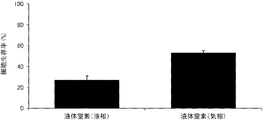
- Example 2 Freezing of cell aggregates 64 cell aggregates on the 28th day produced by the method of Example 1 were collected together with the medium in a 15 mL centrifuge tube (IWAKI: Cat. No. 2323-015) and the cell aggregates were collected. Was naturally precipitated, the supernatant was removed, and 1.0 mL of Bambanker® DMSO Free (Linfotec), a cryopreservation solution, was added to prepare a cell aggregate suspension. Inject the entire amount of the cell aggregate suspension into a sample container (SARSTEDT: Cat. No. 72.687.028S, 1.5 mL screw cap microtube), allow it to stand on ice for 40 minutes, and then place it in a cryobox. did.
- SARSTEDT Cat. No. 72.687.028S, 1.5 mL screw cap microtube
- each cryobox was placed in a liquid nitrogen cryopreservation container (Tayo Nippon Sanso: Cat. No. DR-430M, gas phase storage type) and a -80 ° C ultra-low temperature freezer (Panasonic:). It was carried into a Cat. No. KM-DU73Y1) and an ultra-low temperature freezer (Panasonic: Cat. No. MDF-C2156VAN) at ⁇ 150 ° C. and frozen to prepare a test preparation of cell aggregates.
- the cell viability (FIG. 1) of the test preparation carried out from the liquid nitrogen cryopreservation container, the -80 ° C ultra-low temperature freezer and the -150 ° C ultra-low temperature freezer was evaluated.
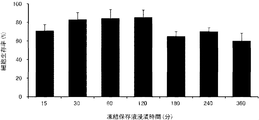
- Example 3 Effect of immersion time of cell aggregates in cryopreservation solution 64 cells of cell aggregates on the 28th day produced by the method of Example 1 were placed in a 15 mL centrifuge tube (IWAKI: Cat. No. 2323-015) together with the medium. ), The cell aggregates were allowed to settle spontaneously, the supernatant was removed, and 1.0 mL of Bambanker® hRM (Linfotec), a cryopreservation solution, was added to prepare a cell mass suspension. To evaluate the effect of immersion time of cell aggregates in cryopreservation solution, the total amount of cell aggregate suspension in a sample container (SARSTEDT: Cat. No.
- 72.687.028S 1.5 mL screw cap microtube
- a liquid nitrogen cryopreservation container (Tayo Nissin). : Cat. No. DR-430M, gas phase preservation type) and frozen to prepare a test preparation.
- test Example 1 and Test Example 2 the cell viability and neurite outgrowth ability of the test preparation carried out from the liquid nitrogen cryopreservation container were evaluated. The results are shown in FIGS. 2 and 3. When the immersion time in the cryopreservation solution was 15 to 120 minutes, the cell viability and the neurite outgrowth ability tended to be particularly high.
- the immersion time of the cell aggregate in the cryopreservation solution was particularly preferably 15 minutes to 120 minutes.
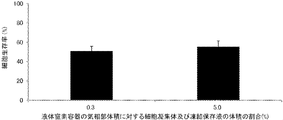
- Example 4 Effect of vapor phase volume of liquid nitrogen container 64 day 28 cell aggregates produced by the method of Example 1 were collected together with the medium in a 15 mL centrifuge tube (IWAKI: Cat. No. 2323-015). After allowing the cell aggregates to spontaneously settle, the supernatant was removed, and 2 mL of Bambanker® hRM (Linfotec), a cryopreservation solution, was added to prepare a cell mass suspension. The entire amount of the cell aggregate suspension was transferred to a 2 mL sample container (Nalgene: Cat. No. NL5000-0020), sealed with a cap, and then allowed to stand on ice for 35 minutes.
- one box gas phase volume of the liquid nitrogen container in which three 2 mL sample containers are arranged in a 25-piece cryobox.
- the volume ratio of the cell aggregate and the cryopreservation solution filled in the 2 mL sample container is 0.3%), or 2 boxes (2 mL sample container) in which 25 2 mL sample containers are arranged in a 25-piece cryobox.
- a 2L dewar flask (ISOTHERM: Cat. No. 27B-E) was prepared and filled with liquid nitrogen to prepare a liquid nitrogen vapor phase atmosphere in advance. ) was carried in and frozen to prepare a test preparation.
- test Example 1 According to the methods described in Test Example 1 and Test Example 2, the cell viability and neurite outgrowth ability of the test preparation carried out from the liquid nitrogen cryopreservation container (2L dewar flask) were evaluated.
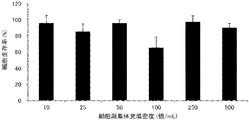
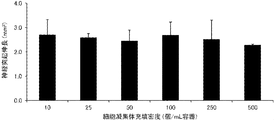
- the 28-day cell aggregates produced by the method of Example 1 were collected in 10, 25, 50, 100, 250 or 500 cells, together with the medium, in a 15 mL centrifuge tube (IWAKI: Cat. No. 2323-015). After spontaneously precipitating the cell aggregates, the supernatant was removed, and 1.0 mL of Bambanker (registered trademark) hRM (Linfotec), which was a cryopreservation solution, was added to prepare a cell aggregate suspension. The entire amount of the cell aggregate suspension was transferred to a sample container (1.5 mL Sumitomo Bakelite: Cat. No. MS-4702WS), allowed to stand on ice for 35 minutes, and then placed in a cryobox. .. This was carried into a liquid nitrogen cryopreservation container (Tayo Nissin: Cat. No. DR-430M, gas phase preservation type), frozen, and used as a test preparation for cell aggregates.
- a sample container 1.5 mL Sumitomo Bakelite:
- test Example 1 According to the methods described in Test Example 1 and Test Example 2, the cell viability and neurite outgrowth ability of the test preparation carried out from the liquid nitrogen cryopreservation container were evaluated.
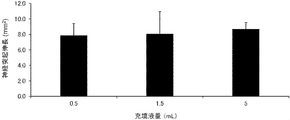
- Example 6 Effect of the amount of filling liquid per cell aggregate (size of sample container) 64 cell aggregates on the 28th day produced by the method of Example 1 were placed in a 15 mL centrifuge tube (IWAKI: Cat.No) together with the medium. After recovering to .2323-015) and allowing the cell aggregates to spontaneously settle, the supernatant is removed, and the cryopreservation solution Bambanker® hRM (Linfotec) is 0.5 mL, 1.5 mL or 5 mL. In addition, it was used as a cell mass suspension. 0.5 mL sample container (SARSTEDT: Cat. No. 72.733.001), 1.5 mL sample container (SARSTEDT: Cat. No.
- test Example 1 According to the methods described in Test Example 1 and Test Example 2, the cell viability and neurite outgrowth ability of the test preparation carried out from the liquid nitrogen cryopreservation container were evaluated.
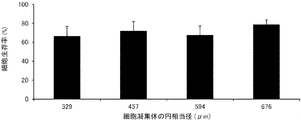
- Example 7 Effect of equivalent circle diameter of cell aggregates Among the methods of Example 1, 0.5 ⁇ 10 4 cells / well, 1.0 ⁇ 10 4 cells / well, 2.0 ⁇ 10 4 cells / well.
- a neural differentiation medium as 3.0 ⁇ 10 4 cells / well to obtain 4 types of cell aggregates (mean circle equivalent diameter: 329 ⁇ m, 457 ⁇ m, 594 ⁇ m or 676 ⁇ m) having different sizes on the 28th day. It was.
- 4 types of cell aggregates (mean circle equivalent diameter: 329 ⁇ m, 457 ⁇ m, 594 ⁇ m or 676 ⁇ m) having different sizes on the 28th day. It was.
- These were collected in a 15 mL centrifuge tube (IWAKI: Cat. No. 2323-015) for each size and medium, and the cell aggregates were allowed to settle naturally.
- hRM Linfotec
- a cell aggregate suspension 1.0 mL of hRM (Linfotec) was added to prepare a cell aggregate suspension. All of these cell aggregate suspensions are transferred to a sample container (1.5 mL Sumitomo Bakelite: Cat.No. MS-4702WS), allowed to stand on ice for 45 minutes, and then cryoboxed. Placed in. This was carried into a liquid nitrogen cryopreservation container (Tayo Nissin: Cat. No. DR-430M, gas phase preservation type), frozen, and used as a test preparation for cell aggregates.
- Test Example 1 According to the methods described in Test Example 1 and Test Example 2, the cell viability and neurite outgrowth of the test preparation carried out from the liquid nitrogen cryopreservation container were evaluated.
- the cell viability of the cell aggregates of the average circle equivalent diameters: 329 ⁇ m, 457 ⁇ m, 594 ⁇ m and 676 ⁇ m was the same, and the neurite outgrowth ability tended to be particularly high at the average circle equivalent diameters: 329 ⁇ m, 457 ⁇ m and 594 ⁇ m. (FIGS. 10 and 11).
- the equivalent circle diameter of the cell aggregate was particularly preferably 329 ⁇ m to 594 ⁇ m.
- Comparative Example 1 64 day 28-day cell aggregates produced by the method of Example 1 were collected together with the medium in a 15 mL centrifuge tube (IWAKI: Cat. No. 2323-015), and the cell aggregates were naturally precipitated, and then the supernatant. Was removed, and 1.0 mL of Bambanker® DMSO Free (Linfotec), a cryopreservation solution, was added to prepare a cell aggregate suspension. Transfer the entire amount of the cell aggregate suspension to a sample container (SARSTEDT: Cat. No. 72.687.028S, 1.5 mL screw cap microtube), allow it to stand on ice for 30 minutes, and then place it in a cryobox.
- SARSTEDT Cat. No. 72.687.028S, 1.5 mL screw cap microtube
Landscapes
- Health & Medical Sciences (AREA)
- Life Sciences & Earth Sciences (AREA)
- Engineering & Computer Science (AREA)
- Biomedical Technology (AREA)
- Chemical & Material Sciences (AREA)
- Zoology (AREA)
- Cell Biology (AREA)
- General Health & Medical Sciences (AREA)
- Developmental Biology & Embryology (AREA)
- Biotechnology (AREA)
- Medicinal Chemistry (AREA)
- Veterinary Medicine (AREA)
- Public Health (AREA)
- Animal Behavior & Ethology (AREA)
- Wood Science & Technology (AREA)
- Bioinformatics & Cheminformatics (AREA)
- Organic Chemistry (AREA)
- Epidemiology (AREA)
- Genetics & Genomics (AREA)
- Chemical Kinetics & Catalysis (AREA)
- Neurosurgery (AREA)
- Neurology (AREA)
- Immunology (AREA)
- Oral & Maxillofacial Surgery (AREA)
- Transplantation (AREA)
- Botany (AREA)
- Pharmacology & Pharmacy (AREA)
- Dermatology (AREA)
- Biochemistry (AREA)
- Microbiology (AREA)
- Ophthalmology & Optometry (AREA)
- Virology (AREA)
- General Engineering & Computer Science (AREA)
- Urology & Nephrology (AREA)
- Dentistry (AREA)
- Environmental Sciences (AREA)
- Hematology (AREA)
- General Chemical & Material Sciences (AREA)
- Nuclear Medicine, Radiotherapy & Molecular Imaging (AREA)
- Micro-Organisms Or Cultivation Processes Thereof (AREA)
Priority Applications (5)
| Application Number | Priority Date | Filing Date | Title |
|---|---|---|---|
| CN202080093132.7A CN115003156A (zh) | 2019-11-20 | 2020-11-19 | 冷冻细胞聚集体的方法 |
| US17/778,194 US20220408717A1 (en) | 2019-11-20 | 2020-11-19 | Method for freezing cell aggregates |
| CA3162273A CA3162273A1 (en) | 2019-11-20 | 2020-11-19 | Method for freezing cell aggregates |
| JP2021558458A JP7702604B2 (ja) | 2019-11-20 | 2020-11-19 | 細胞凝集体の凍結方法 |
| EP20890786.5A EP4063495A4 (en) | 2019-11-20 | 2020-11-19 | METHOD FOR FREEZING CELL Aggregates |
Applications Claiming Priority (2)
| Application Number | Priority Date | Filing Date | Title |
|---|---|---|---|
| JP2019209931 | 2019-11-20 | ||
| JP2019-209931 | 2019-11-20 |
Publications (1)
| Publication Number | Publication Date |
|---|---|
| WO2021100830A1 true WO2021100830A1 (ja) | 2021-05-27 |
Family
ID=75981590
Family Applications (1)
| Application Number | Title | Priority Date | Filing Date |
|---|---|---|---|
| PCT/JP2020/043276 Ceased WO2021100830A1 (ja) | 2019-11-20 | 2020-11-19 | 細胞凝集体の凍結方法 |
Country Status (6)
| Country | Link |
|---|---|
| US (1) | US20220408717A1 (https=) |
| EP (1) | EP4063495A4 (https=) |
| JP (1) | JP7702604B2 (https=) |
| CN (1) | CN115003156A (https=) |
| CA (1) | CA3162273A1 (https=) |
| WO (1) | WO2021100830A1 (https=) |
Citations (15)
| Publication number | Priority date | Publication date | Assignee | Title |
|---|---|---|---|---|
| WO1996022362A1 (en) | 1995-01-20 | 1996-07-25 | Wisconsin Alumni Research Foundation | Primate embryonic stem cells |
| US6280718B1 (en) | 1999-11-08 | 2001-08-28 | Wisconsin Alumni Reasearch Foundation | Hematopoietic differentiation of human pluripotent embryonic stem cells |
| WO2002101057A1 (fr) | 2001-06-08 | 2002-12-19 | Dnavec Research Inc. | Transfert genique dans des cellules souches embryonnaires de primate a l'aide d'un virus de l'immunodeficience simienne de pseudo type vsv-g utilise comme vecteur |
| JP2009209930A (ja) * | 2008-02-08 | 2009-09-17 | Sanwa Seiki Co Ltd | エアコンプレッサ |
| WO2009148170A1 (ja) | 2008-06-06 | 2009-12-10 | 独立行政法人理化学研究所 | 幹細胞の培養方法 |
| JP2012217342A (ja) * | 2011-04-04 | 2012-11-12 | Bio Verde:Kk | 多能性幹細胞その他の分散浮遊可能な細胞用の凍結保存液および凍結保存法 |
| WO2013065763A1 (ja) | 2011-10-31 | 2013-05-10 | 独立行政法人理化学研究所 | 幹細胞の培養方法 |
| JP2013110988A (ja) * | 2011-11-25 | 2013-06-10 | Sumitomo Chemical Co Ltd | 多能性幹細胞由来の組織の凍結保存方法 |
| WO2015034012A1 (ja) | 2013-09-05 | 2015-03-12 | 国立大学法人京都大学 | 新規ドーパミン産生神経前駆細胞の誘導方法 |
| WO2015076388A1 (ja) | 2013-11-22 | 2015-05-28 | 国立研究開発法人理化学研究所 | 終脳又はその前駆組織の製造方法 |
| WO2016013669A1 (ja) | 2014-07-25 | 2016-01-28 | 国立研究開発法人理化学研究所 | 腺性下垂体又はその前駆組織の製造方法 |
| WO2016039317A1 (ja) | 2014-09-08 | 2016-03-17 | 国立研究開発法人理化学研究所 | 小脳前駆組織の製造方法 |
| WO2017126551A1 (ja) | 2016-01-22 | 2017-07-27 | 国立大学法人名古屋大学 | ヒト多能性幹細胞から視床下部ニューロンへの分化誘導 |
| JP2019006695A (ja) * | 2017-06-22 | 2019-01-17 | 学校法人明治大学 | 生体試料保存容器 |
| WO2019160148A1 (ja) * | 2018-02-19 | 2019-08-22 | 大日本住友製薬株式会社 | 細胞凝集体、細胞凝集体の混合物及びそれらの製造方法 |
Family Cites Families (9)
| Publication number | Priority date | Publication date | Assignee | Title |
|---|---|---|---|---|
| US5766948A (en) * | 1993-01-06 | 1998-06-16 | The Regents Of The University Of California | Method for production of neuroblasts |
| US7811819B2 (en) * | 2005-05-31 | 2010-10-12 | The University Of Washington | Cryopreservation of primate embryonic stem cells |
| WO2008120832A1 (en) * | 2007-03-30 | 2008-10-09 | Industry-Academic Cooperation Foundation, Yonsei University | Human neural stem cell secreting a smac, preparation method and use thereof |
| CN101070534B (zh) * | 2007-05-11 | 2010-09-29 | 大连理工大学 | 一种冷冻保存神经干细胞的方法 |
| EP2221362A1 (en) * | 2009-02-19 | 2010-08-25 | Naturin GmbH & Co | Method for the cryopreservation of cells, artificial cell constructs or three-dimensional complex tissues assemblies |
| ES2880948T3 (es) * | 2014-05-12 | 2021-11-26 | Roosterbio Inc | Células listas para imprimir y dispositivos integrados |
| WO2017139638A1 (en) * | 2016-02-11 | 2017-08-17 | The Johns Hopkins University | Compositions and methods for neuralgenesis |
| CN107996559B (zh) * | 2018-01-03 | 2021-03-16 | 吉林省拓华生物科技有限公司 | 一种神经干细胞冻存液及其使用方法 |
| CN108293979A (zh) * | 2018-03-07 | 2018-07-20 | 山东国源人类遗传资源库管理有限公司 | 一种神经干细胞球玻璃化冻存/复苏方法及冻存装置 |
-
2020
- 2020-11-19 WO PCT/JP2020/043276 patent/WO2021100830A1/ja not_active Ceased
- 2020-11-19 CN CN202080093132.7A patent/CN115003156A/zh active Pending
- 2020-11-19 CA CA3162273A patent/CA3162273A1/en active Pending
- 2020-11-19 EP EP20890786.5A patent/EP4063495A4/en not_active Withdrawn
- 2020-11-19 US US17/778,194 patent/US20220408717A1/en active Pending
- 2020-11-19 JP JP2021558458A patent/JP7702604B2/ja active Active
Patent Citations (17)
| Publication number | Priority date | Publication date | Assignee | Title |
|---|---|---|---|---|
| WO1996022362A1 (en) | 1995-01-20 | 1996-07-25 | Wisconsin Alumni Research Foundation | Primate embryonic stem cells |
| US5843780A (en) | 1995-01-20 | 1998-12-01 | Wisconsin Alumni Research Foundation | Primate embryonic stem cells |
| US6200806B1 (en) | 1995-01-20 | 2001-03-13 | Wisconsin Alumni Research Foundation | Primate embryonic stem cells |
| US6280718B1 (en) | 1999-11-08 | 2001-08-28 | Wisconsin Alumni Reasearch Foundation | Hematopoietic differentiation of human pluripotent embryonic stem cells |
| WO2002101057A1 (fr) | 2001-06-08 | 2002-12-19 | Dnavec Research Inc. | Transfert genique dans des cellules souches embryonnaires de primate a l'aide d'un virus de l'immunodeficience simienne de pseudo type vsv-g utilise comme vecteur |
| JP2009209930A (ja) * | 2008-02-08 | 2009-09-17 | Sanwa Seiki Co Ltd | エアコンプレッサ |
| WO2009148170A1 (ja) | 2008-06-06 | 2009-12-10 | 独立行政法人理化学研究所 | 幹細胞の培養方法 |
| JP2012217342A (ja) * | 2011-04-04 | 2012-11-12 | Bio Verde:Kk | 多能性幹細胞その他の分散浮遊可能な細胞用の凍結保存液および凍結保存法 |
| WO2013065763A1 (ja) | 2011-10-31 | 2013-05-10 | 独立行政法人理化学研究所 | 幹細胞の培養方法 |
| JP2013110988A (ja) * | 2011-11-25 | 2013-06-10 | Sumitomo Chemical Co Ltd | 多能性幹細胞由来の組織の凍結保存方法 |
| WO2015034012A1 (ja) | 2013-09-05 | 2015-03-12 | 国立大学法人京都大学 | 新規ドーパミン産生神経前駆細胞の誘導方法 |
| WO2015076388A1 (ja) | 2013-11-22 | 2015-05-28 | 国立研究開発法人理化学研究所 | 終脳又はその前駆組織の製造方法 |
| WO2016013669A1 (ja) | 2014-07-25 | 2016-01-28 | 国立研究開発法人理化学研究所 | 腺性下垂体又はその前駆組織の製造方法 |
| WO2016039317A1 (ja) | 2014-09-08 | 2016-03-17 | 国立研究開発法人理化学研究所 | 小脳前駆組織の製造方法 |
| WO2017126551A1 (ja) | 2016-01-22 | 2017-07-27 | 国立大学法人名古屋大学 | ヒト多能性幹細胞から視床下部ニューロンへの分化誘導 |
| JP2019006695A (ja) * | 2017-06-22 | 2019-01-17 | 学校法人明治大学 | 生体試料保存容器 |
| WO2019160148A1 (ja) * | 2018-02-19 | 2019-08-22 | 大日本住友製薬株式会社 | 細胞凝集体、細胞凝集体の混合物及びそれらの製造方法 |
Non-Patent Citations (25)
| Title |
|---|
| CELL, vol. 131, no. 5, 2007, pages 861 - 872 |
| CELL, vol. 70, 1992, pages 841 - 847 |
| CHONG ET AL., STEM CELLS, vol. 27, no. 1, 2009, pages 29 - 39 |
| FAHYWOWK: "Methods and Protocols", vol. 1257, 2015, SPRINGER, article "Methods in Molecular Biology" |
| FRICKER ET AL., PLOS ONE, vol. 7, no. 10, 2012, pages 47169 |
| J CHEM NEUROANAT., vol. 96, 2019, pages 126 - 133 |
| JANG ET AL., INTEGRATIVE MEDICINE RESEARCH, vol. 6, no. 1, 2017, pages 12 - 18 |
| N ENGL J MED., vol. 344, 2001, pages 710 - 9 |
| N. ENGL. J. MED., vol. 344, 2001, pages 710 - 9 |
| NAGANO ET AL., BIOMEDICAL RESEARCH, vol. 28, no. 3, 2007, pages 153 - 160 |
| NAT. BIOTECHNOL., vol. 26, no. 1, 2008, pages 101 - 106 |
| NATURE NEUROSCIENCE, vol. 2, 1999, pages 1137 |
| NOLBRANT ET AL., NATURE PROTOCOLS, vol. 12, no. 9, 2017, pages 1962 - 1979 |
| NUMASAWA- KUROIWA, Y ET AL., STEM CELL REPORTS, vol. 2, no. 3, 2014, pages 648 - 661 |
| QIU, L ET AL., STEM CELLS TRANSL MED., vol. 6, no. 9, 2017, pages 1803 - 1814 |
| REDMOND ET AL., NEUROBIOLOGY OF DISEASE, vol. 29, no. 1, 2008, pages 103 - 116 |
| SCHWARTZ ET AL., JOURNAL OF NEUROSCIENCE RESEARCH, vol. 74, no. 6, 2003, pages 838 - 851 |
| SCIENCE, vol. 318, no. 5858, 2007, pages 1971 - 1920 |
| SCIENCE, vol. 341, 2013, pages 651 - 654 |
| See also references of EP4063495A4 |
| SMITH ET AL., FERTILITY AND STERILITY, vol. 94, no. 6, 2010, pages 2088 - 2095 |
| SUNDBERG ET AL., STEM CELLS, vol. 31, 2013, pages 1548 - 1562 |
| TISS CULT RES COMMUN, vol. 26, 2007, pages 165 - 170 |
| WOODS ET AL., CRYOBIOLOGY, vol. 59, no. 2, 2009, pages 150 - 157 |
| YAMANAKA ET AL., CELL, vol. 126, no. 4, 2006, pages 663 - 676 |
Also Published As
| Publication number | Publication date |
|---|---|
| JPWO2021100830A1 (https=) | 2021-05-27 |
| CA3162273A1 (en) | 2021-05-27 |
| JP7702604B2 (ja) | 2025-07-04 |
| EP4063495A1 (en) | 2022-09-28 |
| US20220408717A1 (en) | 2022-12-29 |
| CN115003156A (zh) | 2022-09-02 |
| EP4063495A4 (en) | 2023-12-27 |
Similar Documents
| Publication | Publication Date | Title |
|---|---|---|
| JP7787527B2 (ja) | 神経系細胞の凍結方法 | |
| US20260002125A1 (en) | Neural tissue unit and use of such a unit for implantation into the nervous system of a mammal | |
| KR102725720B1 (ko) | 망막 색소 상피 세포 조성물 | |
| JP7602768B2 (ja) | 神経組織の保存方法 | |
| KR20230165846A (ko) | 도파민성 전구세포 및 사용 방법 | |
| JP2018506559A (ja) | パーキンソン病の処置または予防のための方法および組成物 | |
| JP7702604B2 (ja) | 細胞凝集体の凍結方法 | |
| HK40079781A (en) | Method for freezing cell aggregates | |
| WO2025225695A1 (ja) | 細胞凝集体の保存方法 | |
| HK40079780A (en) | Method for freezing neural cells | |
| Su et al. | The Use of Stem Cells in the Treatment of Parkinsons Disease | |
| CN112640887B (zh) | 一种神经干细胞冻存液及其应用 | |
| Lu et al. | Neural Stem Cells for Spinal Cord Injury | |
| Houdek et al. | Comparison of P19-derived neuroprogenitor and naive cell survival after intracerebellar application into B6CBA mice | |
| JP2025094837A (ja) | 凍結細胞の製造方法 | |
| WO2025003393A1 (en) | Enhancing neuronal differentiation of neural progenitor cells | |
| HK40076519A (en) | Retinal pigment epithelium cell compositions | |
| CN117441011A (zh) | 多巴胺能前体细胞及使用方法 | |
| Fan et al. | Embryonic Stem Cell in the Therapy of Neurodegenerative Diseases | |
| Ganz et al. | Stem Cells as a Source for Cell Therapy in Parkinson’s Disease | |
| Peng et al. | COMPARISON OF HUMAN (FOETAL) PRIMARY WITH HUMAN IPS CELL-DERIVED DOPAMINERGIC NEURON GRAFTS IN THE RAT MODEL FOR PARKINSON’S DISEASE | |
| Peng | iPS cell therapy for Parkinson’s disease |
Legal Events
| Date | Code | Title | Description |
|---|---|---|---|
| 121 | Ep: the epo has been informed by wipo that ep was designated in this application |
Ref document number: 20890786 Country of ref document: EP Kind code of ref document: A1 |
|
| ENP | Entry into the national phase |
Ref document number: 3162273 Country of ref document: CA Ref document number: 2021558458 Country of ref document: JP Kind code of ref document: A |
|
| NENP | Non-entry into the national phase |
Ref country code: DE |
|
| ENP | Entry into the national phase |
Ref document number: 2020890786 Country of ref document: EP Effective date: 20220620 |