WO2021039943A1 - 間葉系幹細胞を含む生体由来細胞試料から間葉系幹細胞を製造する方法 - Google Patents
間葉系幹細胞を含む生体由来細胞試料から間葉系幹細胞を製造する方法 Download PDFInfo
- Publication number
- WO2021039943A1 WO2021039943A1 PCT/JP2020/032514 JP2020032514W WO2021039943A1 WO 2021039943 A1 WO2021039943 A1 WO 2021039943A1 JP 2020032514 W JP2020032514 W JP 2020032514W WO 2021039943 A1 WO2021039943 A1 WO 2021039943A1
- Authority
- WO
- WIPO (PCT)
- Prior art keywords
- mesenchymal stem
- stem cells
- cells
- vitronectin
- partial peptide
- Prior art date
- Legal status (The legal status is an assumption and is not a legal conclusion. Google has not performed a legal analysis and makes no representation as to the accuracy of the status listed.)
- Ceased
Links
Images



Classifications
-
- C—CHEMISTRY; METALLURGY
- C12—BIOCHEMISTRY; BEER; SPIRITS; WINE; VINEGAR; MICROBIOLOGY; ENZYMOLOGY; MUTATION OR GENETIC ENGINEERING
- C12N—MICROORGANISMS OR ENZYMES; COMPOSITIONS THEREOF; PROPAGATING, PRESERVING, OR MAINTAINING MICROORGANISMS; MUTATION OR GENETIC ENGINEERING; CULTURE MEDIA
- C12N5/00—Undifferentiated human, animal or plant cells, e.g. cell lines; Tissues; Cultivation or maintenance thereof; Culture media therefor
- C12N5/06—Animal cells or tissues; Human cells or tissues
- C12N5/0602—Vertebrate cells
- C12N5/0652—Cells of skeletal and connective tissues; Mesenchyme
- C12N5/0662—Stem cells
- C12N5/0663—Bone marrow mesenchymal stem cells (BM-MSC)
-
- C—CHEMISTRY; METALLURGY
- C07—ORGANIC CHEMISTRY
- C07K—PEPTIDES
- C07K14/00—Peptides having more than 20 amino acids; Gastrins; Somatostatins; Melanotropins; Derivatives thereof
- C07K14/435—Peptides having more than 20 amino acids; Gastrins; Somatostatins; Melanotropins; Derivatives thereof from animals; from humans
- C07K14/78—Connective tissue peptides, e.g. collagen, elastin, laminin, fibronectin, vitronectin or cold insoluble globulin [CIG]
-
- C—CHEMISTRY; METALLURGY
- C12—BIOCHEMISTRY; BEER; SPIRITS; WINE; VINEGAR; MICROBIOLOGY; ENZYMOLOGY; MUTATION OR GENETIC ENGINEERING
- C12N—MICROORGANISMS OR ENZYMES; COMPOSITIONS THEREOF; PROPAGATING, PRESERVING, OR MAINTAINING MICROORGANISMS; MUTATION OR GENETIC ENGINEERING; CULTURE MEDIA
- C12N5/00—Undifferentiated human, animal or plant cells, e.g. cell lines; Tissues; Cultivation or maintenance thereof; Culture media therefor
- C12N5/0081—Purging biological preparations of unwanted cells
-
- C—CHEMISTRY; METALLURGY
- C12—BIOCHEMISTRY; BEER; SPIRITS; WINE; VINEGAR; MICROBIOLOGY; ENZYMOLOGY; MUTATION OR GENETIC ENGINEERING
- C12N—MICROORGANISMS OR ENZYMES; COMPOSITIONS THEREOF; PROPAGATING, PRESERVING, OR MAINTAINING MICROORGANISMS; MUTATION OR GENETIC ENGINEERING; CULTURE MEDIA
- C12N5/00—Undifferentiated human, animal or plant cells, e.g. cell lines; Tissues; Cultivation or maintenance thereof; Culture media therefor
- C12N5/06—Animal cells or tissues; Human cells or tissues
- C12N5/0602—Vertebrate cells
- C12N5/0652—Cells of skeletal and connective tissues; Mesenchyme
- C12N5/0662—Stem cells
- C12N5/0667—Adipose-derived stem cells [ADSC]; Adipose stromal stem cells
-
- C—CHEMISTRY; METALLURGY
- C12—BIOCHEMISTRY; BEER; SPIRITS; WINE; VINEGAR; MICROBIOLOGY; ENZYMOLOGY; MUTATION OR GENETIC ENGINEERING
- C12N—MICROORGANISMS OR ENZYMES; COMPOSITIONS THEREOF; PROPAGATING, PRESERVING, OR MAINTAINING MICROORGANISMS; MUTATION OR GENETIC ENGINEERING; CULTURE MEDIA
- C12N2500/00—Specific components of cell culture medium
- C12N2500/90—Serum-free medium, which may still contain naturally-sourced components
-
- C—CHEMISTRY; METALLURGY
- C12—BIOCHEMISTRY; BEER; SPIRITS; WINE; VINEGAR; MICROBIOLOGY; ENZYMOLOGY; MUTATION OR GENETIC ENGINEERING
- C12N—MICROORGANISMS OR ENZYMES; COMPOSITIONS THEREOF; PROPAGATING, PRESERVING, OR MAINTAINING MICROORGANISMS; MUTATION OR GENETIC ENGINEERING; CULTURE MEDIA
- C12N2500/00—Specific components of cell culture medium
- C12N2500/98—Xeno-free medium and culture conditions
-
- C—CHEMISTRY; METALLURGY
- C12—BIOCHEMISTRY; BEER; SPIRITS; WINE; VINEGAR; MICROBIOLOGY; ENZYMOLOGY; MUTATION OR GENETIC ENGINEERING
- C12N—MICROORGANISMS OR ENZYMES; COMPOSITIONS THEREOF; PROPAGATING, PRESERVING, OR MAINTAINING MICROORGANISMS; MUTATION OR GENETIC ENGINEERING; CULTURE MEDIA
- C12N2500/00—Specific components of cell culture medium
- C12N2500/99—Serum-free medium
-
- C—CHEMISTRY; METALLURGY
- C12—BIOCHEMISTRY; BEER; SPIRITS; WINE; VINEGAR; MICROBIOLOGY; ENZYMOLOGY; MUTATION OR GENETIC ENGINEERING
- C12N—MICROORGANISMS OR ENZYMES; COMPOSITIONS THEREOF; PROPAGATING, PRESERVING, OR MAINTAINING MICROORGANISMS; MUTATION OR GENETIC ENGINEERING; CULTURE MEDIA
- C12N2501/00—Active agents used in cell culture processes, e.g. differentation
- C12N2501/10—Growth factors
- C12N2501/115—Basic fibroblast growth factor (bFGF, FGF-2)
-
- C—CHEMISTRY; METALLURGY
- C12—BIOCHEMISTRY; BEER; SPIRITS; WINE; VINEGAR; MICROBIOLOGY; ENZYMOLOGY; MUTATION OR GENETIC ENGINEERING
- C12N—MICROORGANISMS OR ENZYMES; COMPOSITIONS THEREOF; PROPAGATING, PRESERVING, OR MAINTAINING MICROORGANISMS; MUTATION OR GENETIC ENGINEERING; CULTURE MEDIA
- C12N2501/00—Active agents used in cell culture processes, e.g. differentation
- C12N2501/10—Growth factors
- C12N2501/135—Platelet-derived growth factor [PDGF]
-
- C—CHEMISTRY; METALLURGY
- C12—BIOCHEMISTRY; BEER; SPIRITS; WINE; VINEGAR; MICROBIOLOGY; ENZYMOLOGY; MUTATION OR GENETIC ENGINEERING
- C12N—MICROORGANISMS OR ENZYMES; COMPOSITIONS THEREOF; PROPAGATING, PRESERVING, OR MAINTAINING MICROORGANISMS; MUTATION OR GENETIC ENGINEERING; CULTURE MEDIA
- C12N2501/00—Active agents used in cell culture processes, e.g. differentation
- C12N2501/10—Growth factors
- C12N2501/15—Transforming growth factor beta (TGF-β)
-
- C—CHEMISTRY; METALLURGY
- C12—BIOCHEMISTRY; BEER; SPIRITS; WINE; VINEGAR; MICROBIOLOGY; ENZYMOLOGY; MUTATION OR GENETIC ENGINEERING
- C12N—MICROORGANISMS OR ENZYMES; COMPOSITIONS THEREOF; PROPAGATING, PRESERVING, OR MAINTAINING MICROORGANISMS; MUTATION OR GENETIC ENGINEERING; CULTURE MEDIA
- C12N2501/00—Active agents used in cell culture processes, e.g. differentation
- C12N2501/30—Hormones
- C12N2501/38—Hormones with nuclear receptors
- C12N2501/39—Steroid hormones
-
- C—CHEMISTRY; METALLURGY
- C12—BIOCHEMISTRY; BEER; SPIRITS; WINE; VINEGAR; MICROBIOLOGY; ENZYMOLOGY; MUTATION OR GENETIC ENGINEERING
- C12N—MICROORGANISMS OR ENZYMES; COMPOSITIONS THEREOF; PROPAGATING, PRESERVING, OR MAINTAINING MICROORGANISMS; MUTATION OR GENETIC ENGINEERING; CULTURE MEDIA
- C12N2501/00—Active agents used in cell culture processes, e.g. differentation
- C12N2501/70—Enzymes
- C12N2501/72—Transferases [EC 2.]
- C12N2501/727—Kinases (EC 2.7.)
-
- C—CHEMISTRY; METALLURGY
- C12—BIOCHEMISTRY; BEER; SPIRITS; WINE; VINEGAR; MICROBIOLOGY; ENZYMOLOGY; MUTATION OR GENETIC ENGINEERING
- C12N—MICROORGANISMS OR ENZYMES; COMPOSITIONS THEREOF; PROPAGATING, PRESERVING, OR MAINTAINING MICROORGANISMS; MUTATION OR GENETIC ENGINEERING; CULTURE MEDIA
- C12N2513/00—3D culture
-
- C—CHEMISTRY; METALLURGY
- C12—BIOCHEMISTRY; BEER; SPIRITS; WINE; VINEGAR; MICROBIOLOGY; ENZYMOLOGY; MUTATION OR GENETIC ENGINEERING
- C12N—MICROORGANISMS OR ENZYMES; COMPOSITIONS THEREOF; PROPAGATING, PRESERVING, OR MAINTAINING MICROORGANISMS; MUTATION OR GENETIC ENGINEERING; CULTURE MEDIA
- C12N2533/00—Supports or coatings for cell culture, characterised by material
- C12N2533/50—Proteins
-
- C—CHEMISTRY; METALLURGY
- C12—BIOCHEMISTRY; BEER; SPIRITS; WINE; VINEGAR; MICROBIOLOGY; ENZYMOLOGY; MUTATION OR GENETIC ENGINEERING
- C12N—MICROORGANISMS OR ENZYMES; COMPOSITIONS THEREOF; PROPAGATING, PRESERVING, OR MAINTAINING MICROORGANISMS; MUTATION OR GENETIC ENGINEERING; CULTURE MEDIA
- C12N2533/00—Supports or coatings for cell culture, characterised by material
- C12N2533/50—Proteins
- C12N2533/52—Fibronectin; Laminin
-
- C—CHEMISTRY; METALLURGY
- C12—BIOCHEMISTRY; BEER; SPIRITS; WINE; VINEGAR; MICROBIOLOGY; ENZYMOLOGY; MUTATION OR GENETIC ENGINEERING
- C12N—MICROORGANISMS OR ENZYMES; COMPOSITIONS THEREOF; PROPAGATING, PRESERVING, OR MAINTAINING MICROORGANISMS; MUTATION OR GENETIC ENGINEERING; CULTURE MEDIA
- C12N2533/00—Supports or coatings for cell culture, characterised by material
- C12N2533/90—Substrates of biological origin, e.g. extracellular matrix, decellularised tissue
-
- C—CHEMISTRY; METALLURGY
- C12—BIOCHEMISTRY; BEER; SPIRITS; WINE; VINEGAR; MICROBIOLOGY; ENZYMOLOGY; MUTATION OR GENETIC ENGINEERING
- C12N—MICROORGANISMS OR ENZYMES; COMPOSITIONS THEREOF; PROPAGATING, PRESERVING, OR MAINTAINING MICROORGANISMS; MUTATION OR GENETIC ENGINEERING; CULTURE MEDIA
- C12N5/00—Undifferentiated human, animal or plant cells, e.g. cell lines; Tissues; Cultivation or maintenance thereof; Culture media therefor
- C12N5/0018—Culture media for cell or tissue culture
- C12N5/0043—Medium free of human- or animal-derived components
Definitions
- the present invention comprises the step of culturing a biological cell sample containing mesenchymal stem cells in a serum-free medium or a heterologous component-free medium in the presence of bitronectin or a partial peptide thereof capable of adhering mesenchymal stem cells.
- the present invention relates to a method for producing mesenchymal stem cells from a biological cell sample containing lineage stem cells.
- mesenchymal stem cells are pluripotent and can be differentiated into not only multiple mesenchymal cells (osteoblasts, adipocytes, chondrocytes) but also non-mesenchymal (neural progenitor cells, hepatocellular) lineage cells. Since it has the ability and does not have the problems that occur in embryonic stem cells and induced pluripotent stem cells, it is expected to be used as a cell source for regenerative medicine and cell therapy.
- Mesenchymal stem cells can be produced not only from adult tissues such as bone marrow, fat, synovium, alveolar bone, and periodontal ligament, but also from various tissues such as placenta, umbilical cord blood, and umbilical cord, and in vitro. Can be cultured and amplified. As a conventional method for obtaining mesenchymal stem cells, since bone marrow mononuclear cells produced from bone marrow contain a small amount of mesenchymal stem cells, bone marrow mononuclear cells produced from bone marrow are contained in bovine fetal serum (FBS) -containing medium.
- FBS bovine fetal serum
- the mesenchymal stem cells were produced by culturing them in the same manner and utilizing the adhesiveness of the mesenchymal stem cells to the culture vessel.
- mesenchymal stem cells are used as a cell source for regenerative medicine, it is inconvenient for heterologous components to be mixed with mesenchymal stem cells. Therefore, a method of culturing mesenchymal stem cells using a serum-free medium has been devised (Patent Document 1).
- mesenchymal stem cells in order to proliferate mesenchymal stem cells, it is necessary to produce mesenchymal stem cells from bone marrow mononuclear cells containing mesenchymal stem cells, and bone marrow mononuclear cells containing mesenchymal stem cells are used in a serum-free medium.
- a method for efficiently producing mesenchymal stem cells from spheres has not yet been developed.
- An object of the present invention is to provide a method for efficiently producing mesenchymal stem cells from a biological cell sample containing mesenchymal stem cells.
- the present inventors obtained vitronectin when bone marrow mononuclear cells containing mesenchymal stem cells were cultured in a culture vessel coated with vitronectin in a serum-free medium.
- the produced aggregate was dissociated to obtain a single mesenchymal stem cell population.
- the mesenchymal stem cells obtained in a serum-free medium were cultured again in the presence of vitronectin, they were compared with the mesenchymal stem cells cultured under the same conditions except that fibronectin was used instead of the first vitronectin.
- mesenchymal stem cells can be produced from adipocytes including mesenchymal stem cells by using vitronectin and a TGF ⁇ receptor inhibitor. From the above discoveries, the present invention has been completed.
- a method for producing mesenchymal stem cells from a biological cell sample containing mesenchymal stem cells which comprises the following steps. (1) A step of culturing a biological cell sample containing mesenchymal stem cells in a serum-free medium in the presence of vitronectin or a partial peptide thereof capable of adhering mesenchymal stem cells. (2) A step of collecting cell aggregates of mesenchymal stem cells.
- [2] Culturing in the presence of the partial peptide capable of adhering vitronectin or mesenchymal stem cells is culturing on a culture vessel on which the partial peptide capable of adhering vitronectin or mesenchymal stem cells is immobilized.
- Cultivation in the presence of the extracellular matrix protein or the partial peptide capable of adhering mesenchymal stem cells is carried out on a culture vessel on which the extracellular matrix protein or the partial peptide capable of adhering mesenchymal stem cells is immobilized.
- [5] The method according to any one of [1] to [4], wherein the partial peptide of vitronectin contains an RGD domain.
- Culturing in the presence of the partial peptide capable of adhering vitronectin or mesenchymal stem cells is culturing on a culture vessel on which the partial peptide capable of adhering vitronectin or mesenchymal stem cells is immobilized. 9].
- the method according to [9] or [10] further comprising the following steps.
- Step of dissociating the collected cell aggregates (4) A step of culturing dissociated mesenchymal stem cells in a culture medium free of heterologous components in the presence of extracellular matrix protein or its partial peptide capable of adhering mesenchymal stem cells. (5) A step of recovering mesenchymal stem cells grown on a culture vessel via an extracellular matrix protein or a partial peptide thereof to which mesenchymal stem cells can be adhered. [12] Cultivation in the presence of the extracellular matrix protein or the partial peptide capable of adhering mesenchymal stem cells is carried out on a culture vessel on which the extracellular matrix protein or the partial peptide capable of adhering mesenchymal stem cells is immobilized.
- the mesenchymal cells from the biological cell sample containing mesenchymal stem cells are mixed.
- Mesenchymal stem cells can be efficiently produced.
- the obtained mesenchymal stem cells can be used as they are as a cell source for regenerative medicine.
- the present invention provides a method for producing mesenchymal stem cells from a biological cell sample containing mesenchymal stem cells (hereinafter, the production method of the present invention).
- the biological cell sample containing mesenchymal stem cells is a cell sample isolated from the biological tissue containing mesenchymal stem cells.
- biological tissues containing mesenchymal stem cells include tissues such as bone marrow, fat, synovium, alveolar bone, periodontal ligament, placenta, umbilical cord blood, and umbilical cord.
- a cell sample is a cell population contained in a living tissue.
- the cell population means two or more cells of the same type or different types.
- Cell population also means a mass of cells of the same or different types.
- the cell population may be a primary cell directly separated from a living tissue, or may be a cell subcultured from the primary cell.
- directly means not going through the step of culturing and / or proliferating in vitro.
- the mesenchymal stem cell is a somatic stem cell derived from a mesoderm tissue (mesoderm).
- Mesenchymal stem cells express positive markers on the cell surface and do not express negative markers. By detecting both markers on the cell surface, it can be determined whether or not the cell is a mesenchymal stem cell.
- Positive markers include CD73, CD90 and CD105.
- Negative markers include CD11b, CD14, CD19, CD34, CD45, CD79a and HLA-Class II (DR). The expression of these markers can be examined by a known immunological method (for example, flow cytometry using an antibody) or the like.
- the production method of the present invention includes the following steps as one embodiment.
- (1a) A step of culturing a biological cell sample containing mesenchymal stem cells in a serum-free medium in the presence of vitronectin or a partial peptide thereof capable of adhering mesenchymal stem cells (step (1a) of the present invention).
- the production method of the present invention includes the following steps as another embodiment.
- step (1b) A step of culturing a biological cell sample containing mesenchymal stem cells in a culture medium free of heterologous components in the presence of vitronectin or a partial peptide capable of adhering mesenchymal stem cells (step (1b) of the present invention). .. (2b) A step of collecting cell aggregates of mesenchymal stem cells (step (2b) of the present invention).
- vitronectin or a partial peptide thereof (hereinafter referred to as "partial peptide of vitronectin”) capable of adhering mesenchymal stem cells.
- Vitronectin is, for example, cells of mammals (eg, humans, mice, rats, rabbits, sheep, pigs, cows, horses, cats, dogs, monkeys, chimpanzees, etc.), or any tissue or organ in which these cells are present. It may be a protein isolated and purified from.
- it may be a protein chemically synthesized or biochemically synthesized by a cell-free translation system, or a recombinant protein produced from a transformant into which a nucleic acid having a base sequence encoding bitronectin has been introduced. There may be.
- vitronectin The amino acid sequence of vitronectin is disclosed in a known database.
- NP_000629 human vitronectin
- NP_035837 mouse vitronectin
- NCBI Reference Sequence No the mesenchymal stem cells produced by the production method of the present invention preferably do not contain heterologous components
- the vitronectin is preferably a living body-derived vitronectin from which the cell sample to be cultured is derived. Therefore, when the cell sample to be cultured is of human origin, the vitronectin used in the production method of the present invention is preferably a protein containing the same or substantially the same amino acid sequence as SEQ ID NO: 1.
- the amino acid sequence substantially the same as the amino acid sequence represented by SEQ ID NO: 1 is about 60% or more, preferably about 70% or more, more preferably about 80% of the amino acid sequence represented by SEQ ID NO: 1.
- an amino acid sequence having about 90% or more homology is particularly preferable.
- homology is the optimum alignment when two amino acid sequences are aligned using a mathematical algorithm known in the art (preferably, the algorithm is used for the optimum alignment of sequences. It means the ratio (%) of the same amino acid and similar amino acid residues to all the overlapping amino acid residues in which the introduction of a gap in one or both can be considered).
- the homology calculation algorithm NCBI BLAST National Center for Biotechnology Information Basic Local Alignment Search Tool
- the amino acid sequence substantially the same as the amino acid sequence represented by SEQ ID NO: 1 is about 60% or more, preferably about 70% or more, more preferably about 70% or more of the amino acid sequence represented by SEQ ID NO: 1.
- a protein containing an amino acid sequence substantially the same as the amino acid sequence represented by SEQ ID NO: 1 includes, for example, an amino acid sequence substantially the same as the amino acid sequence represented by the above-mentioned SEQ ID NO: 1.
- a protein having substantially the same activity as the protein containing the amino acid sequence represented by SEQ ID NO: 1 is preferable.
- substantially homogeneous activity examples include mesenchymal stem cell adhesion activity.
- mesenchymal stem cell adhesion activity examples include mesenchymal stem cell adhesion activity.
- substantially homogeneous is meant that their activity is qualitatively (eg, physiologically or pharmacologically) identical. Therefore, the mesenchymal stem cell adhesive activity is preferably the same (for example, about 0.5 to about 2 times), but quantitative factors such as the degree of these activities and the molecular weight of the protein may be different.
- human bitronectin for example, (1) an amino acid sequence in which one or two or more (preferably about 1 to 10) amino acids among the amino acid sequences represented by SEQ ID NO: 1 are deleted, (2). Amino acid sequence in which 1 or 2 or more (preferably about 1 to 10) amino acids are added to the amino acid sequence represented by SEQ ID NO: 1, (3) 1 or 2 in the amino acid sequence represented by SEQ ID NO: 1. An amino acid sequence in which 1 or more (preferably about 1 to 10) amino acids are inserted, and (4) 1 or 2 or more (preferably about 1 to 10) of the amino acid sequences represented by SEQ ID NO: 1. It also includes proteins containing an amino acid sequence in which an amino acid is replaced with another amino acid, or (5) an amino acid sequence in which they are combined. When the amino acid sequence is inserted, deleted or substituted as described above, the position of the insertion, deletion or substitution is not particularly limited as long as the activity of the protein is maintained.
- the partial peptide of vitronectin may be any peptide as long as it is a peptide having the above-mentioned partial amino acid sequence of vitronectin and has substantially the same activity as that of vitronectin.
- substantially homogeneous activity has the same meaning as described above.
- the measurement of "substantially homogeneous activity” can be performed in the same manner as in the case of vitronectin.
- Such partial peptides of vitronectin include proteins containing the RGD domain. More preferably, the partial peptide of vitronectin is a protein containing a somatomedin B domain and an RGD domain.
- the somatomedin B domain for example, the region represented by amino acid numbers 1 to 40 in the amino acid sequence represented by SEQ ID NO: 1 is used.
- the RGD domain for example, the region represented by amino acid numbers 41 to 52 in the amino acid sequence represented by SEQ ID NO: 1 is used.
- the size of the partial peptide of vitronectin is not particularly limited as long as it has mesenchymal stem cell adhesive activity, but preferably contains 100 or more partial amino acid sequences, and more preferably contains 200 or more partial amino acid sequences. , More preferably those containing 300 or more partial amino acid sequences.
- the partial amino acid sequence may be one continuous partial amino acid sequence, or may be a concatenation of a plurality of discontinuous partial amino acid sequences.
- the most preferable partial peptide of vitronectin satisfying such a condition is a polypeptide consisting of amino acid numbers 1 to 379 of the amino acid sequence represented by SEQ ID NO: 1.
- a commercially available partial peptide of vitronectin may be used as the partial peptide of vitronectin.
- Commercially available partial peptides of vitronectin include, for example, Vitronectin (20-398 aa) (wako), Vitronectin (VTN-N, 62-478 aa) (manufactured by Thermo Fisher Scientific), Vitronectin (Full length, 20-478). aa) (Sigma), synthesizemax II (manufactured by Corning Incorporated) and the like.
- the culture of a biological cell sample containing mesenchymal stem cells in the presence of a vitronectin or a partial peptide of vitronectin is performed by combining the mesenchymal stem cells with the partial peptide of vitronectin or vitronectin. It may be carried out in any way of contact. For example, a method of culturing in a state where a vitronectin or a partial peptide of vitronectin is present in either the culture solution or the surface of the culture vessel can be mentioned.
- the presence of vitronectin or a partial peptide of vitronectin in the culture broth means a mode in which it is directly contained in the culture broth.
- the concentration of the partial peptide of bitronectin or bitronectin in the culture solution is 0.1 ⁇ g / ml to 4.0 ⁇ g / ml, preferably 1.0 ⁇ g / ml to 4.0 ⁇ g. / ml.
- vitronectin or a partial peptide of vitronectin on the surface of the culture vessel means an embodiment in which the surface of the culture vessel is immobilized.
- a vessel or a carrier (microbeads or the like) used for cell culture is used as the culture vessel.
- the culture vessel any material and shape can be used as long as it does not inhibit cell maintenance, survival, differentiation, maturation, and self-renewal.
- the material of the culture container include glass, synthetic resin including non-woven fabric, natural resin, metal and the like.
- the shape of the culture vessel is a polygonal prism such as a triangular prism, a cube, or a rectangular parallelepiped, a cylinder, a polygonal pyramid or a cone such as a triangular pyramid or a quadrangular pyramid, an arbitrary shape such as a gourd, a spherical shape, a hemispherical shape, a circular shape, or an elliptical shape. , Semi-circular, etc.
- Commercially available culture flasks, culture dishes (culture dishes), culture bags, hollow thread type culture devices, and the like can also be used.
- As the culture bag a bag having gas permeability is preferable. Large culture tanks may be used if large numbers of cells are required.
- the culture can be carried out in either an open system or a closed system, but when the purpose is to administer the obtained mesenchymal stem cells to humans or the like, it is preferable to carry out the culture in the closed system.
- Immobilization of vitronectin or a partial peptide of vitronectin in a culture vessel can be carried out by a known means.
- Vitronectin or a partial peptide of Vitronectin may be dissolved in a solvent (eg, sterile distilled water, buffer or saline, etc.), added to a culture vessel, and then allowed to stand overnight at 4 ° C. to Vitronectin or Vitronectin.
- Partial peptides can be immobilized in a culture vessel.
- the concentration of the vitronectin or the partial peptide solution of the vitronectin at the time of immobilizing the partial peptide of the vitronectin or the vitronectin in the culture vessel may be appropriately determined by those skilled in the art.
- the concentration may be set so that 0.5 ⁇ g to 10.0 ⁇ g of vitronectin or a partial peptide of vitronectin is usually immobilized per unit area of the culture vessel.
- the culture vessel in which vitronectin or a partial peptide of vitronectin is immobilized can be stored at a low temperature, for example, 4 ° C. until use. Immediately before use, vitronectin or a partial peptide-containing solution of vitronectin is removed by suction from these culture vessels, washed once with PBS and then once with a culture medium, and then subjected to culture.
- the serum-free medium is not particularly limited as long as it does not contain serum. Therefore, unless serum is contained, the serum-free medium is a component derived from the same species as the species from which the biological cell sample containing the mesenchymal stem cells to be cultured is derived (same species-derived component) or a component derived from a different species (heterogeneous origin). Ingredients) may be included.
- allogeneic components include platelet lysates, serum-derived proteins (eg, albumin, etc.) and the like.
- heterologous components include animal-derived lipids.
- the heterologous component-free medium is not particularly limited as long as it does not contain the heterologous component. Therefore, the heterologous component-free medium may contain allogeneic serum as long as it does not contain the heterologous component.
- the allogeneic serum is preferably autologous serum.
- the autologous serum and the autologous plasma described later mean serum and plasma obtained from blood collected from the same donor as the cultured biological cell sample, respectively.
- a medium containing autologous plasma may be used.
- deactivated autologous plasma is added to the medium.
- cells are cultured in a culture medium containing deactivated autologous plasma of 10% (V / V) or less, preferably 5% (V / V) or less, more preferably 2% (V / V) or less.
- the serum-free medium or the heterologous component-free medium can be prepared using the medium used for normal animal cell culture as the basal medium.
- the basal medium include Dalveco medium (eg IMDM), Eagle medium (eg DMEM, EMEM, BME, MEM, ⁇ MEM), Ham medium (eg F10 medium, F12 medium), RPMI medium (eg RPMI- 1640 medium, RPMI-1630 medium), MCDB medium (eg MCDB104, 107, 131, 151, 153 medium), Fisher medium, 199 medium, medium for primate ES cells (culture medium for primate ES / iPS cells, reprocell) , Mouse ES cell medium (TX-WES culture medium, Thrombo X), serum-free medium (mTeSR, Stemcell Technology), ReproFF, StemSpan (registered trademark) SFEM, StemSpan (registered trademark) H3000, StemlineII, ESF -B medium, ESF-C medium, C
- these media can be mixed and used as needed, and examples thereof include DMEM / F12 medium.
- DMEM / F12 medium examples thereof include DMEM / F12 medium.
- serum-free medium or the culture medium containing no heterologous component a known medium or a commercially available medium may be used as it is or modified.
- a commercially available heterologous component-free medium for example, DEF-CS500XF (manufactured by Cellartis) and DXF (manufactured by PromoCell) can be used.
- the serum-free medium or the heterologous component-free medium may contain a TGF- ⁇ receptor inhibitor.
- TGF- ⁇ is a peptide factor that is secreted as an inactive form from almost all normal cells, activated under specific conditions, and exhibits various functions such as inhibition of epithelial cell and lymphocyte proliferation.
- BMP bone morphogenetic factor
- TGF- ⁇ family molecules having a structure similar to TGF- ⁇ . ..
- TGF- ⁇ also includes TGF- ⁇ family molecules.
- TGF- ⁇ includes TGF- ⁇ , activin, Nodal, BMP, GDF (growth / differentiation factor), AMH (anti-Mollerian hormone), MIS (Mullerian inhibition substance), and TGF- ⁇ .
- the TGF- ⁇ receptor is composed of type I and type II receptors present on the cell membrane. Both type I and type II receptors have serine / threonine kinase activity, and the substrate for type II receptors is type I receptor.
- the type II receptor phosphorylates the type I receptor, and the activated type I receptor further phosphorylates the intracellular signal transduction molecule Smad. And transmit a signal inside the cell.
- TGF- ⁇ type I receptor TGF- ⁇ type I receptor
- ALK5 activin-like receptor kinase
- TGFBR2 TGF- ⁇ type I receptor
- ALK4 or ALK7 and ActR-II or ActR-IIB can be mentioned
- BMP BMP
- TGF- ⁇ receptor type I and type II receptor combinations include ALK5 or ALK1 and TGFBR2 combinations.
- the above-mentioned inhibitor for TGF- ⁇ receptor may be any as long as it suppresses the above-mentioned function of TGF- ⁇ receptor, for example, complex formation of TGF- ⁇ and TGF- ⁇ receptor. Examples include substances that inhibit the growth factor.
- examples of the TGF- ⁇ receptor inhibitor include neutralizing antibodies against the TGF- ⁇ receptor.
- the antibody may be either a polyclonal antibody or a monoclonal antibody. These antibodies can be produced according to a method for producing an antibody or antiserum known per se.
- the isotype of the antibody is not particularly limited, but IgG, IgM or IgA is preferable, and IgG is particularly preferable.
- the antibody is not particularly limited as long as it has at least a complementarity determining region (CDR) for specifically recognizing and binding to a target antigen, and is not particularly limited as long as it has a complete antibody molecule, for example, Fab, Fab', F.
- CDR complementarity determining region
- Fragments such as (ab') 2 , scFv, scFv-Fc, minibodies, diabodies and other genetically engineered conjugate molecules, or polyethylene glycol (PEG) and other molecules with protein stabilizing activity. It may be a modified derivative thereof or the like.
- the neutralizing antibody is a neutralizing antibody contained in a serum-free medium or a heterologous component-free medium, when the biological cell sample is of human origin, (i) a human antibody-producing animal (eg, mouse).
- the concentration of the neutralizing antibody against the TGF- ⁇ receptor in a serum-free medium or a heterologous component-free medium is not limited as long as it can inhibit the intracellular signal transduction of the TGF- ⁇ receptor, but is not limited, for example, 0.01.
- It is ⁇ g / mL to 10 ⁇ g / mL, preferably 0.05 ⁇ g / mL to 5 ⁇ g / mL, and more preferably 0.1 ⁇ g / mL to 2.5 ⁇ g / mL.
- the TGF- ⁇ receptor inhibitor is a low molecular weight compound that exhibits antagonistic activity against the TGF- ⁇ receptor.
- the "antagonist activity” means an activity that binds to the TGF- ⁇ receptor and inhibits the binding between TGF- ⁇ and the TGF- ⁇ receptor.
- Such compounds include, for example, SB431542 (Stemgent), sc-203294, RepSox, Vactosertib (TEW-7197), SB525334, GW788388, SB505124, SD-208, LDN-193189, Galunisertib (LY2157299), LY2109761, LY364947, K02288.
- the concentration of a low molecular weight compound exhibiting antagonistic activity against the TGF- ⁇ receptor in a serum-free medium or a heterologous component-free medium is limited as long as it can inhibit the intracellular signal transduction of the TGF- ⁇ receptor. However, for example, it is 0.1 ⁇ M to 100 ⁇ M, preferably 1 ⁇ M to 50 ⁇ M, and more preferably 5 ⁇ M to 25 ⁇ M.
- various amino acids such as insulin, transferase, selenium, various vitamins, L-glutamine, non-essential amino acids, 2-mercaptoethanol, and various cytokines (interleukins (IL-2)) , IL-7, IL-15, etc.), Stem cell factor (SCF (Stem cell factor)), Actibin, etc.), various hormones, various growth factors (leukemia inhibitory factor (LIF), basic fibroblast growth factor (bFGF)) Etc.), antibiotics such as penicillin / streptomycin and puromycin, pH indicators such as phenol red, etc. can be appropriately added.
- various cytokines interleukins (IL-2)) , IL-7, IL-15, etc.
- SCF Stem cell factor
- Actibin etc.
- various hormones various growth factors (leukemia inhibitory factor (LIF), basic fibroblast growth factor (bFGF)) Etc.)
- antibiotics such as penicillin / streptomycin and puromycin, pH indicators such
- the biological cell sample containing the mesenchymal stem cells cultured in the steps (1a) or (1b) of the present invention is not particularly limited as long as it is a cell sample containing the mesenchymal stem cells.
- the biological cell sample containing mesenchymal stem cells is a bone marrow-derived cell.
- the method for separating bone marrow-derived cells from bone marrow may follow known means. For example, it can be carried out by removing stromal cells from the collected bone marrow fluid by a density gradient centrifugation method using a density-adjusted separation medium.
- bone marrow containing mesenchymal stem cells and mononuclear cells at the interface between the separation medium and the bone marrow fluid by layering the bone marrow fluid diluted with physiological saline on the upper part of the separation medium in the tube and centrifuging it.
- a layer of derived cells can be obtained.
- the bone marrow-derived cells thus obtained contain trace amounts of mesenchymal stem cells.
- the proportion of mesenchymal stem cells contained in bone marrow-derived cells is not particularly limited, but is about 0.01% to about 1%, preferably about 0.01% to about 0.1% of the number of bone marrow-derived cells.
- the number of bone marrow-derived cells including mesenchymal stem cells cultured in the steps (1a) or (1b) of the present invention is not particularly limited, but is usually 0.5 ⁇ 10 5 cells / cm 2 to 25 per culture vessel.
- ⁇ well 105 be cells / cm 2, 2 ⁇ 10 5 cells / cm 2 ⁇ 13 ⁇ 10 5 cells / cm 2 is preferred.
- the culture conditions for bone marrow-derived cells including mesenchymal stem cells are not particularly limited, and normal cell culture conditions can be adopted.
- Examples of the culture conditions include culture at a temperature of 37 ° C., a humidity of 95%, and a CO 2 concentration of 5%, but the present invention is not limited to such conditions.
- culturing at a temperature of 30 to 40 ° C., a humidity of 90 to 98%, and a CO 2 concentration of 3 to 7% is exemplified, but if the temperature is such that the desired cell proliferation can be achieved, the temperature is outside the above range. Humidity and CO 2 concentration may be used.
- the exchange of the medium includes total exchange of the medium, partial exchange of the medium, addition of the medium, and a combination thereof.
- the whole amount of the medium is exchanged with a medium having the same composition the day after the start of the culture, and the cells are cultured while adding 20% of the medium on the 3rd and 5th days from the start of the culture.
- the culture period is, for example, 4 to 14 days, preferably 7 days.
- mesenchymal stem cells contained in bone marrow-derived cells can be selectively adhered onto the culture vessel via vitronectin or a partial peptide of vitronectin.
- Adhered mesenchymal stem cells form cell aggregates.
- the cell aggregate is either a cell population that proliferates so as to spread parallel to the adhesive surface of the culture vessel, a cell population that proliferates so as to vertically overlap the adhesive surface of the culture vessel, or a cell population having the characteristics of both. Also includes cell populations.
- the culture period is less than 4 days, the number of cell aggregates formed is small, and the number of cells for culturing in the step (4) of the present invention described later cannot be secured. Further, when the culturing period exceeds 14 days, the cell aggregates collapse and the number of cells decreases, so that the number of cells for culturing in the step (4) of the present invention cannot be secured.
- the biological cell sample containing the mesenchymal stem cells cultured in the step (1a) or (1b) of the present invention is an adipose tissue-derived cell.
- the method for separating adipose tissue-derived cells from adipose tissue may follow known means. For example, as a method for separating adipose tissue-derived cells including mesenchymal stem cells from adipose tissue, the collected adipose tissue is shredded, incubated in a collagenase solution, and filtered with a mesh sheet to obtain mesenchymal stem cells. Adipose tissue-derived cells containing the cells can be obtained.
- the adipose tissue-derived cells thus obtained contain a trace amount of mesenchymal stem cells.
- the proportion of mesenchymal stem cells contained in the adipose tissue-derived cells is not particularly limited, but is about 0.01% to about 1%, preferably about 0.1% to about 1% of the number of adipose tissue-derived cells.
- the number of adipose tissue-derived cells including mesenchymal stem cells cultured in the steps (1a) or (1b) of the present invention is not particularly limited, but is usually 1 ⁇ 10 3 cells / cm 2 to 1 x 10 3 cells / cm 2 to a culture vessel. It may be 1 ⁇ 10 6 cells / cm 2 , preferably 1 ⁇ 10 4 cells / cm 2 to 1 ⁇ 10 5 cells / cm 2.
- the culture conditions for adipose tissue-derived cells including mesenchymal stem cells are not particularly limited, and the same culture conditions as those for bone marrow-derived cells including mesenchymal stem cells can be adopted.
- the exchange of the medium includes total exchange of the medium, partial exchange of the medium, addition of the medium, and a combination thereof.
- the cells are cultured on the next day and the second day after the start of the culture while exchanging the entire amount of the medium in a medium having the same composition.
- the culture period is, for example, 1 to 14 days, preferably 5 days.
- mesenchymal stem cells contained in adipose tissue-derived cells can be selectively adhered onto a culture vessel via vitronectin or a partial peptide of vitronectin.
- the adhered mesenchymal stem cells form a cell cluster that proliferates so as to spread parallel to the adherent surface of the cell aggregate, particularly the culture vessel.
- cell aggregates formed by mesenchymal stem cells adhered to the culture vessel via vitronectin or a partial peptide of vitronectin are recovered by known means.
- cells other than mesenchymal stem cells contained in a biological cell sample do not adhere to the culture vessel via vitronectin or a partial peptide of vitronectin, and therefore, together with a serum-free medium or a heterologous component-free medium by total medium exchange.
- removed from culture vessel As a result, cell aggregates of mesenchymal stem cells remain in the culture vessel in the culture after the total medium exchange.
- the cell aggregates of mesenchymal stem cells adhere to the culture vessel via vitronectin or a partial peptide of vitronectin, but the cell aggregates also have weak adhesion between cells and easily separate from the cell aggregates and float in the medium. To do. Therefore, the recovery of mesenchymal stem cell cell aggregates was (i) recovery of mesenchymal stem cell cell aggregates suspended in serum-free medium or heterologous component-free medium and (ii) adhesion on culture vessels. It may include two steps of collecting cell aggregates of mesenchymal stem cells.
- (I) Recovery of cell aggregates of mesenchymal stem cells floating in serum-free medium or heterologous component-free medium is performed by, for example, collecting the entire amount of serum-free medium or heterologous component-free medium and centrifuging. Can be carried out.
- (Ii) Recovery of cell aggregates of mesenchymal stem cells adhered to the culture vessel can be carried out, for example, by easily peeling from the culture vessel only by pipetting, collecting the entire amount together with the medium or PBS, and centrifuging. ..
- the recovery of the cell aggregates of the mesenchymal stem cells adhered to the culture vessel is carried out by treating with a release agent to obtain the vitronectin or a partial peptide of the vitronectin and the cell aggregates of the mesenchymal stem cells. Adhesion can be broken down and mesenchymal stem cells can be recovered.
- a release agent a mixed solution of trypsin and EDTA (usually 0.001-0.5% trypsin / 0.1-5 mM EDTA, preferably about 0.1% trypsin / 1 mM EDTA) may be used, or a commercially available product (for example, TrypLE (for example, TrypLE)) may be used. Thermo Fisher Scientific)) may be used.
- Vitronectin or a partial peptide of vitronectin has higher adhesion activity to mesenchymal stem cells than other extracellular matrices, and can efficiently adhere to mesenchymal stem cells contained in biological cell samples. By doing so, mesenchymal stem cells can be efficiently produced from living cell samples. However, when the cell aggregates of the mesenchymal stem cells adhered in the step (1a) or (1b) of the present invention are continuously cultured for a long period of time, the proliferation of the mesenchymal stem cells is not observed depending on the origin of the cell sample.
- step (1a) or (1b) of the present invention when bone marrow-derived cells are cultured in step (1a) or (1b) of the present invention and the cell aggregates of adhered mesenchymal stem cells are continuously cultured for a long period of time, proliferation of mesenchymal stem cells is not observed. ..
- proliferation of mesenchymal stem cell cell aggregates obtained by culturing adipose tissue-derived cells in the steps (1a) or (1b) of the present invention can be confirmed. This is thought to be due to the presence of cells in the bone marrow-derived cells that prevent the proliferation of mesenchymal stem cells.
- the production method of the present invention may further include the following steps. That is, the production method including the steps (1a) and (2a) of the present invention may further include the following steps. (3a) A step of dissociating the recovered cell aggregate (step (3a) of the present invention).
- step (4a) A step of culturing dissociated mesenchymal stem cells in a serum-free medium in the presence of an extracellular matrix protein or a partial peptide thereof capable of adhering mesenchymal stem cells (step (4a) of the present invention).
- step (4a) A step of recovering mesenchymal stem cells grown on a culture vessel via an extracellular matrix protein or a partial peptide thereof to which mesenchymal stem cells can be adhered (step (5a) of the present invention).
- the production method including the steps (1b) and (2b) of the present invention may further include the following steps.
- step (3b) A step of dissociating the recovered cell aggregate (step (3b) of the present invention).
- step (4b) A step of culturing dissociated mesenchymal stem cells in a heterologous component-free medium in the presence of an extracellular matrix protein or a partial peptide thereof capable of adhering mesenchymal stem cells (step (4b) of the present invention). .. (5b) A step of recovering mesenchymal stem cells grown on a culture vessel via an extracellular matrix protein or a partial peptide thereof to which mesenchymal stem cells can be adhered (step (5b) of the present invention).
- the dissociation of the recovered cell aggregate is carried out by a known means. Since cell aggregates have weak cell-cell adhesion, for example, cell-cell adhesion of cell aggregates can be easily eliminated only by pipetting, and a cell population of a single mesenchymal stem cell can be prepared. Alternatively, it can also be carried out by treating with the above-mentioned release agent.
- the culture vessel used for the culture the serum-free medium, the heterologous component-free medium, the mode in which the mesenchymal stem cells and the extracellular matrix protein come into contact with each other in the culture, etc. , It may be the same as the step (1a) or (1b) of the present invention.
- the culture is in the presence of an extracellular matrix protein or a partial peptide thereof (hereinafter referred to as "partial peptide of extracellular matrix protein") capable of adhering mesenchymal stem cells. It is carried out in.
- the extracellular matrix protein is not particularly limited as long as it can adhere mesenchymal stem cells to the culture vessel. Examples of such extracellular matrix proteins include vitronectin, fibronectin, laminin, collagen and the like.
- examples of the partial peptide of the extracellular matrix protein include iMatrix-511 (a partial peptide of laminin-511).
- extracellular matrix proteins are traits into which a nucleic acid having a base sequence encoding a protein isolated and purified from mammalian cells or the like, a biochemically synthesized protein, or an extracellular matrix protein has been introduced. It may be any recombinant protein produced from the transformant.
- the partial peptide of the extracellular matrix protein may be any peptide as long as it is a peptide having a partial amino acid sequence of the extracellular matrix protein and has mesenchymal stem cell adhesive activity.
- Examples of such partial peptides of extracellular matrix proteins include proteins containing at least one domain selected from the group consisting of RGD domain and heparin binding domain.
- the tissue from which the mesenchymal stem cells seeded in the step (4a) or (4b) of the present invention is derived is not particularly limited, but in the step (1a) or (1b) of the present invention, the mesenchymal stem cells of the cell aggregate are used. Tissues that do not grow sufficiently are preferred. Examples of such tissues include bone marrow, umbilical cord blood and the like. Further, even when the mesenchymal stem cells of the cell aggregate proliferate in the step (1a) or (1b) of the present invention, for the purpose of further increasing the number of mesenchymal stem cells, the step of the present invention ( Mesenchymal stem cells may be cultured in 4a) or (4b).
- the number of mesenchymal stem cells seeded in the steps (4a) or (4b) of the present invention is not particularly limited, but is usually 2 ⁇ 10 5 cells / cm 2 to 26 ⁇ 10 5 cells / in a culture vessel. It may be cm 2, and preferably 8 ⁇ 10 5 cells / cm 2 ⁇ 13 ⁇ 10 5 cells / cm 2.
- the culture conditions for mesenchymal stem cells are not particularly limited, and may be the same as the culture conditions for a biological cell sample containing mesenchymal stem cells. Normal cell culture conditions can be adopted.
- the exchange of the medium includes total exchange of the medium, partial exchange of the medium, addition of the medium, and a combination thereof.
- the cells are cultured in a medium having the same composition every two or three days from the start of the culture while exchanging the entire amount of the medium.
- the culture period is, for example, 1 to 14 days, preferably 1 to 8 days. This culture initiates the proliferation of mesenchymal stem cells.
- the mesenchymal stem cells grown on the culture vessel via the extracellular matrix protein or the partial peptide of the extracellular matrix protein are recovered by a known means.
- the recovery means may be the same as the method described in step (2a) or (2b) of the present invention.
- Example 1 Examination of mesenchymal stem cell (MSC) production promoting effect by vitronectin Due to the limitation of purification technology, bone marrow mononuclear cells (MNC) isolated from bone marrow are slightly contaminated with mesenchymal stem cells (MSC). To do. In this example, we will verify a method for producing MSC from MNC using serum-free medium. Bone marrow mononuclear cells (MNC) (Lonza) were put to sleep using the seeding medium below.
- MNC mesenchymal stem cell
- the above cells were seeded at a concentration of 2.6 ⁇ 10 6 cells / well on a 24-well plate coated with Fibronectin (Sigma) or Vitronectin (wako) at a concentration of 1.5 ⁇ g / cm 2 , respectively, at 37 ° C. and 5% CO. It was cultured under two conditions. The day after sowing, the entire amount of the medium in the plate was replaced with the sowing medium, and on the 3rd and 5th days after sowing, an amount of the sowing medium corresponding to 20% of the amount of the medium in the plate was further added.
- Fibronectin Sigma
- Vitronectin Vitronectin
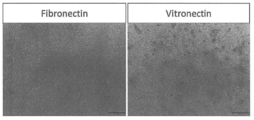
- Dissemination medium StemFit® AK03N medium (Ajinomoto Co., Inc.) A solution, StemFit (registered trademark) AK03N medium (Ajinomoto Co., Inc.) B solution, 3 ng / mL bFGF (peprotech), 10 ⁇ M SB431542 (Stemgent) ), 1/100 Lipid Concentrate (Life Technologies), 10 nM Dexamethasone (Sigma-Aldrich), 10 ng / mL PDGF-BB (Fuji Film Wako Pure Drug), 1 mM Lithium Chloride (Sigma-Aldrich) Figure 1 shows a photograph of the cells 5 days after seeding.
- Vitronectin-coated well plates formed more cell aggregates than fibronectin-coated well plates. Aggregates were collected 7 days after seeding and the cells were reseeded using the growth medium below. Specifically, after collecting the culture supernatant, DPBS (Nacalai Tesque) was added to the plate, and the aggregates were peeled off from the plate by pipetting, and all the aggregates were collected together with DPBS. Then, the collected culture supernatant and DPBS were collectively centrifuged to collect only the aggregates. Aggregates were dissociated into single cells by resuspending the aggregates collected in growth medium.
- DPBS Nacalai Tesque
- Fibronectin Sigma
- Vitronectin wako
- iMatrix-511 Nippi
- the entire amount of collected cells was seeded on a plate and cultured under 37 ° C. and 5% CO 2 conditions. Then, the entire amount of medium in the plate was replaced with growth medium every 2 to 3 days until the cells became subconfluent.
- StemFit registered trademark
- AK03N medium A solution, 1/4 StemFit (registered trademark) AK03N medium (Ajinomoto Co., Inc.) B solution, StemFit (registered trademark) AK03N medium (Ajinomoto Co., Inc.) )) Solution C, 1/100 Lipid Concentrate (Life Technologies), 10 nM Dexamethasone (Sigma-Aldrich), 10 ng / mL PDGF-BB (Fuji Film Wako Pure Drug), 1 mM Lithium Chloride (Sigma-Aldrich) After confirming that the cells became subconfluent, passage was performed 13 days after seeding, and the number of cells was measured.
- Figure 2 shows the measurement results of the number of cells.
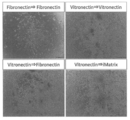
- Fig. 3 shows a photograph of the cells. It was found that the difference in extracellular matrix coating the culture vessel in reseeding did not affect the number of cells obtained. From the above results, it is obtained by the number of cell aggregates obtained and the subsequent re-seeding when the culture vessel coated with Vitronectin is used at the time of seeding of the cells, as compared with the case where the culture vessel coated with Fibronectin is used. It turned out that the number of cells was large. In addition, cells detached from the Vitronectin-coated plate were expanded and cultured, and surface antigen analysis was performed.
- CD105, CD90, CD73 Surface antigen analysis of 3 types of MSC positive markers (CD105, CD90, CD73) and 2 types of MSC negative markers (CD45, CD34) was performed using FACS. Table 1 shows the analysis results. The cells obtained were positive for CD105, CD90 and CD73, negative for CD45 and CD34, and were confirmed to be MSCs.
- Example 2 Examination of difference in MSC production promoting effect depending on the type of Vitronectin MNC (Lonza) was put to sleep using the following seeding medium (serum-free), and Vitronectin (20-398 aa) (wako) (sequence).
- Number: 1 corresponds to amino acid numbers 1-379), Vitronectin (VTN-N, 62-478 aa) (Life Technologies) (corresponds to amino acid numbers 43-459 of SEQ ID NO: 1) and Vitronectin (Full length, Seed the above cells at a concentration of 2.6 ⁇ 10 6 cells / well on a 24-well plate each coated with 20-478 aa) (Sigma) (corresponding to SEQ ID NO: 1) at a concentration of 1.5 ⁇ g / cm 2. , 37 ° C, 5% CO 2 conditions.
- the cells were seeded at 37 ° C. and cultured under 5% CO 2 conditions.
- Synthemax II is a vitronectin-based synthetic peptide containing RGD motif and flanking sequence. The day after sowing, the entire amount of the medium in the plate was replaced with the sowing medium, and on the 3rd and 5th days after sowing, an amount of the sowing medium corresponding to 20% of the amount of the medium in the plate was further added.
- Dissemination medium StemFit (registered trademark) AK03N medium (Ajinomoto Co., Inc.) A solution, 1/4 StemFit (registered trademark) AK03N medium (Ajinomoto Co., Inc.) B solution, 3 ng / mL bFGF (peprotech), 10 ⁇ M SB431542 (Stemgent), 1/100 Lipid Concentrate (Life Technologies), 10 nM Dexamethasone (Sigma-Aldrich), 10 ng / mL PDGF-BB (Fuji Film Wako Pure Chemical Industries), 1 mM Lithium Chloride (Sigma-Aldrich) Aggregates were collected 7 days after seeding and the cells were reseeded using the growth medium below.
- DPBS Nacalai Tesque
- StemFit (registered trademark) AK03N medium (Ajinomoto Co., Inc.) A solution, 1/4 StemFit (registered trademark) AK03N medium (Ajinomoto Co., Inc.) B solution, StemFit (registered trademark) AK03N medium (Ajinomoto Co., Inc.) )) Solution C, 1/100 Lipid Concentrate (Life Technologies), 10 nM Dexamethasone (Sigma-Aldrich), 10 ng / mL PDGF-BB (Fuji Film Wako Pure Chemical Industries), 1 mM Lithium Chloride (Sigma-Aldrich), 0.2 ⁇ g / mL iMatrix 511 (Nippi) After confirming that the cells became subconfluent, passage was performed on the 13th and 12th days after seeding, and the number of cells was measured.
- FIG. 4 shows the number of cells when Vitronectin (20-398 aa) (wako), Vitronectin (VTN-N, 62-478aa) (Life Technologies) and Vitronectin (Full length, 20-478 aa) (Sigma) were used. The measurement result is shown. Although MSC could be produced using any of the vitronectins at the time of sowing of MNC, Vitronectin (20-398 aa) (wako) was able to produce MSC from MNC most efficiently.
- FIG. 5 shows the measurement results of the cell number when Vitronectin (20-398 aa) (wako) and Synthemax II (CORNING) were used. Even if Synthemax II (CORNING) was used when sowing MNC, MSC could be efficiently produced from MNC.
- Example 3 Examination of MSC production promoting effect by TGF ⁇ receptor inhibitor MNC (Lonza) was put to sleep using the following seeding medium (1) or (2). Seed the above cells at a concentration of 2.6 ⁇ 10 6 cells / well on a 24-well plate coated with Vitronectin (VTN-N, 62-478 aa) (Life Technologies) at a concentration of 1.5 ⁇ g / cm 2 at 37 ° C. , 5% CO 2 conditions. The day after sowing, the entire amount of medium in the plate was replaced with the seeding medium (1) or (2), and on the 3rd and 5th days after sowing, an amount equivalent to 20% of the amount of medium in the plate was sown. Medium (1) or (2) was further added.
- VTN-N, 62-478 aa Vitronectin
- TGF ⁇ inhibitor (-) StemFit (registered trademark) AK03N medium (Ajinomoto Co., Ltd.) A solution, StemFit (registered trademark) AK03N medium (Ajinomoto Co., Ltd.) B solution, 3 ng / mL bFGF (peprotech), 1/100 Lipid Concentrate (Life Technologies), 10 nM Dexamethasone (Sigma-Aldrich), 10 ng / mL PDGF-BB (Fuji Film Wako Pure Drug), 1 mM Lithium Chloride (Sigma-Aldrich) seeding Medium for use (2) (TGF ⁇ inhibitor (+)): StemFit (registered trademark) AK03N medium (Ajinomoto Co., Ltd.) A solution, StemFit (registered trademark) AK03N medium (Ajinomoto Co., Ltd.) B solution, 3 ng / mL bFGF (pepro
- DPBS Nacalai Tesque
- StemFit (registered trademark) AK03N medium (Ajinomoto Co., Inc.) A solution, 1/4 StemFit (registered trademark) AK03N medium (Ajinomoto Co., Inc.) B solution, StemFit (registered trademark) AK03N medium (Ajinomoto Co., Inc.) )) Solution C, 1/100 Lipid Concentrate (Life Technologies), 10 nM Dexamethasone (Sigma-Aldrich), 10 ng / mL PDGF-BB (Fuji Film Wako Pure Drug), 1 mM Lithium Chloride (Sigma-Aldrich), 0.2 ⁇ g / mL iMatrix 511 (Nippi) After confirming that the cells became subconfluent, passage was performed 15 days after seeding, and the number of cells was measured. Figure 6 shows the measurement results of the number of cells. By including the TGF ⁇ inhibitor in the seeding medium at the time of seeding of
- Example 4 Examination of difference in MSC production promoting effect depending on the type of TGF ⁇ receptor inhibitor MNC (Lonza) was put to sleep using the following seeding media (1), (2) and (3). Seed the above cells at a concentration of 2.6 ⁇ 10 6 cells / well on a 24-well plate coated with Vitronectin (20-398 aa) (wako) at a concentration of 1.5 ⁇ g / cm 2 , 37 ° C., 5% CO 2 Cultured under conditions. The day after sowing, the entire amount of medium in the plate was replaced with the medium for sowing (1), (2) or (3), and on the 3rd and 5th days after sowing, it corresponded to 20% of the amount of medium in the plate.
- Seeding medium (1) StemFit (registered trademark) AK03N medium (Ajinomoto Co., Inc.) A solution, 1/4 StemFit (registered trademark) AK03N medium (Ajinomoto Co., Inc.) B solution, 3 ng / mL bFGF (peprotech) , 10 ⁇ M SB431542 (Stemgent), 1/100 Lipid Concentrate (Life Technologies), 10 nM Dexamethasone (Sigma-Aldrich), 10 ng / mL PDGF-BB (Fuji Film Wako Pure Drug), 1 mM Lithium Chloride (Sigma-Aldrich) ) Seeding medium (2): StemFit (registered trademark) AK03N medium (Ajinomoto Co., Inc.) A solution, 1/4 StemFit (registered trademark) AK03N medium (Ajinomoto Co., Inc.)
- DPBS Nacalai Tesque
- StemFit (registered trademark) AK03N medium (Ajinomoto Co., Inc.) A solution, 1/4 StemFit (registered trademark) AK03N medium (Ajinomoto Co., Inc.) B solution, StemFit (registered trademark) AK03N medium (Ajinomoto Co., Inc.) )) Solution C, 1/100 Lipid Concentrate (Life Technologies), 10 nM Dexamethasone (Sigma-Aldrich), 10 ng / mL PDGF-BB (Fuji Film Wako Pure Drug), 1 mM Lithium Chloride (Sigma-Aldrich), 0.2 ⁇ g / mL iMatrix 511 (Nippi) After confirming that the cells became subconfluent, passage was performed 12 days after seeding, and the number of cells was measured.
- FIG. 7 shows the measurement results of the number of cells. Efficient production of MSCs from MNC using any of the TGF ⁇ receptor inhibitors SB431542 (ALK5 inhibitor), A-83-01 (ALK4, ALK5, ALK7 inhibitor) and LDN-193189 (ALK2, ALK3 inhibitor) did it.
- TGF ⁇ receptor inhibitors SB431542 AK5 inhibitor
- A-83-01 ALK4, ALK5, ALK7 inhibitor
- LDN-193189 AK2, ALK3 inhibitor
- Example 5 Examination of MSC production from adipose tissue
- the above cells were seeded on a 24-well plate at a concentration of 6.0 ⁇ 10 4 cells / well and cultured at 37 ° C. under 5% CO 2 conditions.
- a 24-well plate coated with Vitronectin (VTN-N, 62-478 aa) (Life Technologies) at a concentration of 1.5 ⁇ g / cm 2 was applied. used.
- Seeding medium (1) StemFit (registered trademark) AK03N medium (Ajinomoto Co., Inc.) A solution, 1/4 StemFit (registered trademark) AK03N medium (Ajinomoto Co., Inc.) B solution, 3 ng / mL bFGF (peprotech) , 10 ⁇ M SB431542 (Stemgent), 1/100 Lipid Concentrate (Life Technologies), 10 nM Dexamethasone (Sigma-Aldrich), 10 ng / mL PDGF-BB (Fuji Film Wako Pure Drug), 1 mM Lithium Chloride (Sigma-Aldrich) ) Medium for seeding (2): DMEM medium (sigma), 10% fetal bovine serum (Life Technologies) After confirming that the cells became subconfluent, passage was performed 5 days after seeding, and the number
- the biogenic cell sample By culturing a biogenic cell sample containing mesenchymal stem cells in a serum-free medium or a heterologous component-free medium in the presence of vitronectin or its partial peptide capable of adhering mesenchymal stem cells, the biogenic cell sample can be interleaved.
- Leaf-based stem cells can be efficiently produced.
- the obtained mesenchymal stem cells can be used as they are as a cell source for regenerative medicine.
- This application is based on Japanese Patent Application No. 2019-156537 (Filing date: August 29, 1st year of Reiwa) and Japanese Patent Application No. 2020-012333 (Filing date: January 29, 2nd year of Reiwa). , All of which are incorporated herein by reference.
Landscapes
- Health & Medical Sciences (AREA)
- Life Sciences & Earth Sciences (AREA)
- Engineering & Computer Science (AREA)
- Biomedical Technology (AREA)
- Chemical & Material Sciences (AREA)
- Organic Chemistry (AREA)
- Zoology (AREA)
- Genetics & Genomics (AREA)
- Biotechnology (AREA)
- Wood Science & Technology (AREA)
- Bioinformatics & Cheminformatics (AREA)
- Developmental Biology & Embryology (AREA)
- Biochemistry (AREA)
- General Health & Medical Sciences (AREA)
- Microbiology (AREA)
- Cell Biology (AREA)
- General Engineering & Computer Science (AREA)
- Rheumatology (AREA)
- Molecular Biology (AREA)
- Immunology (AREA)
- Hematology (AREA)
- Medicinal Chemistry (AREA)
- Toxicology (AREA)
- Gastroenterology & Hepatology (AREA)
- Biophysics (AREA)
- Proteomics, Peptides & Aminoacids (AREA)
- Micro-Organisms Or Cultivation Processes Thereof (AREA)
Priority Applications (6)
| Application Number | Priority Date | Filing Date | Title |
|---|---|---|---|
| CA3152505A CA3152505A1 (en) | 2019-08-29 | 2020-08-28 | Method for producing mesenchymal stem cells from living body-derived cell sample containing mesenchymal stem cells |
| EP20859384.8A EP4023669A4 (en) | 2019-08-29 | 2020-08-28 | METHOD FOR PRODUCING MESENCHYMAL STEM CELLS FROM A SAMPLE OF CELLS DERIVED FROM A LIVING BODY CONTAINING MESENCHYMAL STEM CELLS |
| KR1020227010264A KR20220047879A (ko) | 2019-08-29 | 2020-08-28 | 간엽계 줄기세포를 포함한 생체 유래 세포 시료로부터 간엽계 줄기세포를 제조하는 방법 |
| CN202080060201.4A CN114286860A (zh) | 2019-08-29 | 2020-08-28 | 由含有间充质干细胞的生物来源细胞试样制造间充质干细胞的方法 |
| JP2021543023A JP7757793B2 (ja) | 2019-08-29 | 2020-08-28 | 間葉系幹細胞を含む生体由来細胞試料から間葉系幹細胞を製造する方法 |
| US17/680,619 US12516294B2 (en) | 2019-08-29 | 2022-02-25 | Method for producing mesenchymal stem cells from living body-derived cell sample containing mesenchymal stem cells |
Applications Claiming Priority (4)
| Application Number | Priority Date | Filing Date | Title |
|---|---|---|---|
| JP2019156537 | 2019-08-29 | ||
| JP2019-156537 | 2019-08-29 | ||
| JP2020-012333 | 2020-01-29 | ||
| JP2020012333 | 2020-01-29 |
Related Child Applications (1)
| Application Number | Title | Priority Date | Filing Date |
|---|---|---|---|
| US17/680,619 Continuation US12516294B2 (en) | 2019-08-29 | 2022-02-25 | Method for producing mesenchymal stem cells from living body-derived cell sample containing mesenchymal stem cells |
Publications (1)
| Publication Number | Publication Date |
|---|---|
| WO2021039943A1 true WO2021039943A1 (ja) | 2021-03-04 |
Family
ID=74683469
Family Applications (1)
| Application Number | Title | Priority Date | Filing Date |
|---|---|---|---|
| PCT/JP2020/032514 Ceased WO2021039943A1 (ja) | 2019-08-29 | 2020-08-28 | 間葉系幹細胞を含む生体由来細胞試料から間葉系幹細胞を製造する方法 |
Country Status (7)
| Country | Link |
|---|---|
| US (1) | US12516294B2 (https=) |
| EP (1) | EP4023669A4 (https=) |
| JP (1) | JP7757793B2 (https=) |
| KR (1) | KR20220047879A (https=) |
| CN (1) | CN114286860A (https=) |
| CA (1) | CA3152505A1 (https=) |
| WO (1) | WO2021039943A1 (https=) |
Cited By (1)
| Publication number | Priority date | Publication date | Assignee | Title |
|---|---|---|---|---|
| WO2024157985A1 (ja) * | 2023-01-24 | 2024-08-02 | 味の素株式会社 | 細胞凝集塊解離剤 |
Families Citing this family (2)
| Publication number | Priority date | Publication date | Assignee | Title |
|---|---|---|---|---|
| WO2023101943A1 (en) * | 2021-11-30 | 2023-06-08 | Trailhead Biosystems Inc. | Methods and compositions for maintaining and expanding hematopoietic stem cells |
| DE102023131198B4 (de) * | 2023-11-09 | 2025-11-27 | Anna Höving | Verfahren und Verwendung von serumfreien Medium zur Herstellung von Fleisch |
Citations (8)
| Publication number | Priority date | Publication date | Assignee | Title |
|---|---|---|---|---|
| JP2007528702A (ja) * | 2003-06-27 | 2007-10-18 | エチコン、インコーポレイテッド | 胎盤組織から由来最多分娩後細胞、及びそれらを作成し使用する方法。 |
| JP2012500792A (ja) * | 2008-08-22 | 2012-01-12 | アンスロジェネシス コーポレーション | 胎盤細胞集団による骨欠損の治療のための方法および組成物 |
| US20120301962A1 (en) * | 2011-05-06 | 2012-11-29 | Thomson James A | Vitronectin-derived cell culture substrate and uses thereof |
| WO2015064661A1 (ja) * | 2013-10-31 | 2015-05-07 | 富士フイルム株式会社 | ポリペプチド組成物およびこれを用いた多能性幹細胞の培養方法 |
| JP2017506511A (ja) * | 2014-02-14 | 2017-03-09 | ナショナル ユニバーシティー オブ アイルランド, ゴールウェイ | 無血清培地 |
| WO2017094879A1 (ja) * | 2015-12-03 | 2017-06-08 | タカラバイオ株式会社 | 間葉系幹細胞の製造方法 |
| JP2019156537A (ja) | 2018-03-09 | 2019-09-19 | 株式会社タダノ | クレーン |
| JP2020012333A (ja) | 2018-07-20 | 2020-01-23 | 株式会社エムケー技研 | マンホールの吸排気用のチャンバー |
Family Cites Families (2)
| Publication number | Priority date | Publication date | Assignee | Title |
|---|---|---|---|---|
| EP2545928B1 (en) | 2010-03-10 | 2016-07-20 | Two Cells Co., Ltd | Cell preparation containing mesenchymal stem cells, and method for producing same |
| CN108517313B (zh) * | 2018-04-17 | 2021-06-01 | 郭子宽 | 一种用于培养扩增牙髓干细胞的血清/血浆替代物 |
-
2020
- 2020-08-28 CN CN202080060201.4A patent/CN114286860A/zh active Pending
- 2020-08-28 JP JP2021543023A patent/JP7757793B2/ja active Active
- 2020-08-28 EP EP20859384.8A patent/EP4023669A4/en active Pending
- 2020-08-28 WO PCT/JP2020/032514 patent/WO2021039943A1/ja not_active Ceased
- 2020-08-28 CA CA3152505A patent/CA3152505A1/en active Pending
- 2020-08-28 KR KR1020227010264A patent/KR20220047879A/ko active Pending
-
2022
- 2022-02-25 US US17/680,619 patent/US12516294B2/en active Active
Patent Citations (8)
| Publication number | Priority date | Publication date | Assignee | Title |
|---|---|---|---|---|
| JP2007528702A (ja) * | 2003-06-27 | 2007-10-18 | エチコン、インコーポレイテッド | 胎盤組織から由来最多分娩後細胞、及びそれらを作成し使用する方法。 |
| JP2012500792A (ja) * | 2008-08-22 | 2012-01-12 | アンスロジェネシス コーポレーション | 胎盤細胞集団による骨欠損の治療のための方法および組成物 |
| US20120301962A1 (en) * | 2011-05-06 | 2012-11-29 | Thomson James A | Vitronectin-derived cell culture substrate and uses thereof |
| WO2015064661A1 (ja) * | 2013-10-31 | 2015-05-07 | 富士フイルム株式会社 | ポリペプチド組成物およびこれを用いた多能性幹細胞の培養方法 |
| JP2017506511A (ja) * | 2014-02-14 | 2017-03-09 | ナショナル ユニバーシティー オブ アイルランド, ゴールウェイ | 無血清培地 |
| WO2017094879A1 (ja) * | 2015-12-03 | 2017-06-08 | タカラバイオ株式会社 | 間葉系幹細胞の製造方法 |
| JP2019156537A (ja) | 2018-03-09 | 2019-09-19 | 株式会社タダノ | クレーン |
| JP2020012333A (ja) | 2018-07-20 | 2020-01-23 | 株式会社エムケー技研 | マンホールの吸排気用のチャンバー |
Non-Patent Citations (1)
| Title |
|---|
| See also references of EP4023669A4 |
Cited By (1)
| Publication number | Priority date | Publication date | Assignee | Title |
|---|---|---|---|---|
| WO2024157985A1 (ja) * | 2023-01-24 | 2024-08-02 | 味の素株式会社 | 細胞凝集塊解離剤 |
Also Published As
| Publication number | Publication date |
|---|---|
| CA3152505A1 (en) | 2021-03-04 |
| US12516294B2 (en) | 2026-01-06 |
| CN114286860A (zh) | 2022-04-05 |
| JPWO2021039943A1 (https=) | 2021-03-04 |
| KR20220047879A (ko) | 2022-04-19 |
| EP4023669A1 (en) | 2022-07-06 |
| JP7757793B2 (ja) | 2025-10-22 |
| US20220177848A1 (en) | 2022-06-09 |
| EP4023669A4 (en) | 2023-09-13 |
Similar Documents
| Publication | Publication Date | Title |
|---|---|---|
| JP6937821B2 (ja) | 生体組織から単離できる多能性幹細胞 | |
| JP7372910B2 (ja) | ヒト多能性幹細胞由来の胸腺オルガノイドのインビトロ生成 | |
| AU2010225612B2 (en) | Isolating method for umbilical cord blood-derived pluripotent stem cells expressing ZNF281 | |
| US20020045260A1 (en) | Method of isolating mesenchymal stem cells | |
| US12516294B2 (en) | Method for producing mesenchymal stem cells from living body-derived cell sample containing mesenchymal stem cells | |
| JP6097076B2 (ja) | 対象外の表現型が除外された、分化多能性幹細胞の子孫 | |
| JP2007536935A (ja) | 間葉幹細胞の無血清増殖のための細胞培養環境 | |
| US20120295347A1 (en) | Methods and Compositions for Producing Endothelial Progenitor Cells from Pluripotent Stem Cells | |
| CN110300798B (zh) | 从干细胞分化诱导的软骨细胞的制备方法 | |
| JPWO2010134619A1 (ja) | 人工多能性幹細胞からの上皮系前駆細胞・幹細胞群及び角膜上皮細胞群の分化誘導方法 | |
| JP6421335B2 (ja) | 肝幹前駆様細胞の培養方法及びその培養物 | |
| TW202345878A (zh) | 控制性t細胞之製造方法 | |
| AU2023353929A1 (en) | T cell production method | |
| Liu et al. | A synthetic substrate to support early mesodermal differentiation of human embryonic stem cells | |
| JP7329265B2 (ja) | ヒト多能性成人幹細胞 | |
| Raghunath et al. | Chondrogenic potential of blood-acquired mesenchymal progenitor cells | |
| WO2016201077A1 (en) | Growth and survival compositions for cells capable of producing antibodies and methods related thereto | |
| WO2021200901A1 (ja) | T前駆細胞の製造方法 | |
| RU2631005C1 (ru) | Способ культивирования клеток слюнной железы человека | |
| Umran et al. | Comparative Study of Expansion and Proliferation of Adult Mice Mesenchymal Stem Cells Derived from Bone Marrow and Adipose Tissue | |
| KR20250143327A (ko) | Cd4+ 및 cd8+ 단일 양성 t 세포 및 이를 생성하기 위한 조성물 및 방법 | |
| WO2024247915A1 (ja) | 骨髄ニッチ細胞およびその製造方法 | |
| HK1178568B (en) | Differentiated pluripotent stem cell progeny depleted of extraneous phenotypes |
Legal Events
| Date | Code | Title | Description |
|---|---|---|---|
| 121 | Ep: the epo has been informed by wipo that ep was designated in this application |
Ref document number: 20859384 Country of ref document: EP Kind code of ref document: A1 |
|
| ENP | Entry into the national phase |
Ref document number: 2021543023 Country of ref document: JP Kind code of ref document: A |
|
| ENP | Entry into the national phase |
Ref document number: 3152505 Country of ref document: CA |
|
| NENP | Non-entry into the national phase |
Ref country code: DE |
|
| ENP | Entry into the national phase |
Ref document number: 20227010264 Country of ref document: KR Kind code of ref document: A |
|
| ENP | Entry into the national phase |
Ref document number: 2020859384 Country of ref document: EP Effective date: 20220329 |