WO2020235546A1 - 肝臓機能改善用組成物 - Google Patents
肝臓機能改善用組成物 Download PDFInfo
- Publication number
- WO2020235546A1 WO2020235546A1 PCT/JP2020/019742 JP2020019742W WO2020235546A1 WO 2020235546 A1 WO2020235546 A1 WO 2020235546A1 JP 2020019742 W JP2020019742 W JP 2020019742W WO 2020235546 A1 WO2020235546 A1 WO 2020235546A1
- Authority
- WO
- WIPO (PCT)
- Prior art keywords
- composition
- liver function
- group
- resorcinol
- improving
- Prior art date
- Legal status (The legal status is an assumption and is not a legal conclusion. Google has not performed a legal analysis and makes no representation as to the accuracy of the status listed.)
- Ceased
Links
Images



Classifications
-
- A—HUMAN NECESSITIES
- A61—MEDICAL OR VETERINARY SCIENCE; HYGIENE
- A61K—PREPARATIONS FOR MEDICAL, DENTAL OR TOILETRY PURPOSES
- A61K31/00—Medicinal preparations containing organic active ingredients
- A61K31/045—Hydroxy compounds, e.g. alcohols; Salts thereof, e.g. alcoholates
- A61K31/05—Phenols
-
- A—HUMAN NECESSITIES
- A23—FOODS OR FOODSTUFFS; TREATMENT THEREOF, NOT COVERED BY OTHER CLASSES
- A23K—FODDER
- A23K20/00—Accessory food factors for animal feeding-stuffs
- A23K20/10—Organic substances
- A23K20/111—Aromatic compounds
-
- A—HUMAN NECESSITIES
- A23—FOODS OR FOODSTUFFS; TREATMENT THEREOF, NOT COVERED BY OTHER CLASSES
- A23K—FODDER
- A23K20/00—Accessory food factors for animal feeding-stuffs
- A23K20/10—Organic substances
- A23K20/158—Fatty acids; Fats; Products containing oils or fats
-
- A—HUMAN NECESSITIES
- A23—FOODS OR FOODSTUFFS; TREATMENT THEREOF, NOT COVERED BY OTHER CLASSES
- A23K—FODDER
- A23K50/00—Feeding-stuffs specially adapted for particular animals
- A23K50/40—Feeding-stuffs specially adapted for particular animals for carnivorous animals, e.g. cats or dogs
-
- A—HUMAN NECESSITIES
- A23—FOODS OR FOODSTUFFS; TREATMENT THEREOF, NOT COVERED BY OTHER CLASSES
- A23L—FOODS, FOODSTUFFS OR NON-ALCOHOLIC BEVERAGES, NOT OTHERWISE PROVIDED FOR; PREPARATION OR TREATMENT THEREOF
- A23L33/00—Modifying nutritive qualities of foods; Dietetic products; Preparation or treatment thereof
- A23L33/10—Modifying nutritive qualities of foods; Dietetic products; Preparation or treatment thereof using additives
- A23L33/105—Plant extracts, their artificial duplicates or their derivatives
-
- A—HUMAN NECESSITIES
- A23—FOODS OR FOODSTUFFS; TREATMENT THEREOF, NOT COVERED BY OTHER CLASSES
- A23L—FOODS, FOODSTUFFS OR NON-ALCOHOLIC BEVERAGES, NOT OTHERWISE PROVIDED FOR; PREPARATION OR TREATMENT THEREOF
- A23L33/00—Modifying nutritive qualities of foods; Dietetic products; Preparation or treatment thereof
- A23L33/10—Modifying nutritive qualities of foods; Dietetic products; Preparation or treatment thereof using additives
- A23L33/115—Fatty acids or derivatives thereof; Fats or oils
- A23L33/12—Fatty acids or derivatives thereof
-
- A—HUMAN NECESSITIES
- A61—MEDICAL OR VETERINARY SCIENCE; HYGIENE
- A61K—PREPARATIONS FOR MEDICAL, DENTAL OR TOILETRY PURPOSES
- A61K36/00—Medicinal preparations of undetermined constitution containing material from algae, lichens, fungi or plants, or derivatives thereof, e.g. traditional herbal medicines
- A61K36/18—Magnoliophyta (angiosperms)
- A61K36/88—Liliopsida (monocotyledons)
- A61K36/899—Poaceae or Gramineae (Grass family), e.g. bamboo, corn or sugar cane
-
- A—HUMAN NECESSITIES
- A61—MEDICAL OR VETERINARY SCIENCE; HYGIENE
- A61P—SPECIFIC THERAPEUTIC ACTIVITY OF CHEMICAL COMPOUNDS OR MEDICINAL PREPARATIONS
- A61P1/00—Drugs for disorders of the alimentary tract or the digestive system
- A61P1/16—Drugs for disorders of the alimentary tract or the digestive system for liver or gallbladder disorders, e.g. hepatoprotective agents, cholagogues, litholytics
-
- A—HUMAN NECESSITIES
- A23—FOODS OR FOODSTUFFS; TREATMENT THEREOF, NOT COVERED BY OTHER CLASSES
- A23V—INDEXING SCHEME RELATING TO FOODS, FOODSTUFFS OR NON-ALCOHOLIC BEVERAGES AND LACTIC OR PROPIONIC ACID BACTERIA USED IN FOODSTUFFS OR FOOD PREPARATION
- A23V2002/00—Food compositions, function of food ingredients or processes for food or foodstuffs
Definitions
- the present invention relates to a composition for improving liver function using a plant-derived component.
- the resorcinol lipid is a lipophilic substance having an alkyl group at the 2-position, 4-position, 5-position, and / or 6-position of the aromatic ring of resorcinol (1,3-dihydroxybenzene).
- resorcinol lipids have been used for humans such as oral antibacterial, immunosuppressive, antidiabetic, anti-inflammatory, intestinal flora regulation, anticholesterol, antiobesity, sleep improvement, aging suppression, and circadian rhythm regulation.
- Patent Documents 1 to 10 There are reports of various functionality (for example, Patent Documents 1 to 10).
- Japanese Patent No. 2613474 Japanese Unexamined Patent Publication No. 2013-091612 Japanese Patent No. 2014-139166 Japanese Patent No. 2015-020993 Japanese Patent No. 2015-218130 Japanese Patent No. 2015-231986 Japanese Patent No. 2016-132641 Japanese Patent No. 2016-153387 Japanese Patent No. 5926616 Japanese Patent No. 5951448
- An object of the present invention is to provide a composition for improving liver function, which is useful for improving the symptoms of non-alcoholic hepatitis, for example, by utilizing plant-derived resorcinol fats and oils.
- the present invention provides, from the first viewpoint, a composition for improving liver function containing a plant-derived resorcinol lipid as an active ingredient.
- the resorcinol lipid is preferably an alkylresorcinol.
- the resorcinol lipid is preferably derived from a gramineous plant.
- the resorcinol lipid is preferably derived from wheat and / or rye bran and / or whole grain.
- the composition for improving liver function comprises a solvent extract of a plant containing a resorcinol lipid.
- the composition for improving liver function when the composition for improving liver function is composed of a solvent extract of a plant containing a resorcinol lipid, it is preferable that the solvent is ethanol and / or hexane.
- the composition for improving liver function is used for improving the symptoms of hepatitis.
- the composition for improving liver function is used for improving the symptoms of non-alcoholic hepatitis.
- the composition for improving liver function is used for suppressing the accumulation of triglyceride in the liver due to non-alcoholic hepatitis.
- the composition for improving liver function is provided as a food or drink, a food additive, a pharmaceutical product, a supplement, or an animal feed.
- the present invention provides, in the second aspect, the use of plant-derived resorcinol oils and fats for the preparation of compositions for improving liver function.
- the resorcinol lipid is preferably an alkylresorcinol.
- the resorcinol lipid is derived from a gramineous plant.
- the resorcinol lipid is preferably derived from wheat and / or rye bran and / or whole grains.
- the composition for improving liver function preferably comprises a solvent extract of a plant containing a resorcinol lipid.
- the composition for improving liver function is composed of a solvent extract of a plant containing a resorcinol lipid
- the solvent is ethanol and / or hexane.
- composition for improving liver function is used for improving the symptoms of hepatitis.
- composition for improving liver function is used for improving the symptoms of non-alcoholic hepatitis.
- the composition for improving liver function is used for suppressing the accumulation of triglyceride in the liver due to non-alcoholic hepatitis.
- the composition for improving liver function is provided as a food or drink, a food additive, a pharmaceutical product, a supplement, or an animal feed.
- composition for improving liver function which is useful for improving the symptoms of non-alcoholic hepatitis, for example, by utilizing plant-derived resorcinol fats and oils.
- statistically significant difference from the control group (Group C) was obtained by Dunnett's multiple comparison test method, and "*" in the figure indicates that there is a significant difference at a risk rate p ⁇ 0.05.
- the statistically significant difference from the control group (Group C) was obtained by Dunnett's multiple comparison test method, and "*" in the figure indicates that there is a significant difference at a risk rate p ⁇ 0.05.
- a plant-derived resorcinol lipid is used as the active ingredient of the composition for improving liver function.
- the resorcinol lipid is a lipophilic substance having an alkyl group at the 2-position, 4-position, 5-position, and / or 6-position of the aromatic ring of resorcinol (1,3-dihydroxybenzene).
- resorcinol lipid is a lipophilic substance having an alkyl group at the 2-position, 4-position, 5-position, and / or 6-position of the aromatic ring of resorcinol (1,3-dihydroxybenzene).
- it is often found in plants belonging to the family Araceae, Araceae, Proteas, Myrsinoideae, Primroses, Myristicaceae, Iridaceae, Araceae, Araceae, Gramineae, etc., and Asteraceae.
- gramineous plants such as wheat and rye contain a relatively abundant resorcinol lipid in their edible part (seed), and thus are raw materials for the resorcinol lipid used in the present invention.
- an alkylresorcinol compound represented by the following formula (I) is contained in an edible portion (seed) of wheat, rye or the like, or a whole grain, in an amount of about 0.015 to 0.3% by mass.
- a fermented product such as miso made from wheat or rye can also be exemplified as a preferable raw material for the resorcinol lipid used in the present invention.
- Typical examples of the resorcinol lipid used in the present invention include an alkylresorcinol compound represented by the following formula (I).
- R1 represents a saturated or unsaturated linear or branched chain alkyl group.
- the number of carbon atoms of the alkyl group represented by R1 is not limited, but is preferably 1 to 27, more preferably 3 to 27, and even more preferably 5 to 27.
- R1 is preferably a saturated or unsaturated linear alkyl group, and more preferably a saturated linear alkyl group.
- saturated linear alkyl groups represented by R1 are methyl, n-propyl, n-pentyl, n-heptyl, n-nonade, n-undecylic, n-tridecylic, n-pentadecylic, n-heptadecyl, n. -Nonadecyl, n-henicosylic acid, n-tridecylic acid and the like.
- the position and number of unsaturated bonds of the unsaturated linear alkyl group represented by R1 are not particularly limited.
- the unsaturated linear alkyl group include an alkyl group having an unsaturated bond at an arbitrary position on the carbon chain of the saturated linear alkyl group described above.
- the position and number of branches of the saturated or unsaturated branched chain alkyl group represented by R1 or the position and number of unsaturated bonds are not particularly limited.
- Preferred examples of the compound of the above formula (I) include the following.
- 5-Pentyl Resorcinol [Olivetol or 1,3-dihydroxy-5-n-Pentylbenzene (C5: 0)] 5-Heptyl resorcinol [or 1,3-dihydroxy-5-n-heptylbenzene (C7: 0)] 5-Nonyl resorcinol [or 1,3-dihydroxy-5-n-nonylbenzene (C9: 0)] 5-Undecyl resorcinol [or 1,3-dihydroxy-5-n-undecylbenzene (C11: 0)] 5-Tridecylresorcinol [or 1,3-dihydroxy-5-n-tridecylbenzene (C13: 0)] 5-Pentadecyl resorcinol [or 1,3-dihydroxy-5-n-pentadecylbenzene (C15: 0)] 5-Heptadecyl resorcinol [
- the plant-derived resorcinol lipid used in the present invention may be, for example, obtained from a commercially available product and used, or may be extracted from a plant by a conventional method and used.
- a commercially available product of the compound of the above formula (I) can be purchased from ReseaChem GmbH, SIGMA-ALDRICH and the like.
- Examples of the extraction method from the plant include a method of immersing the raw material in an extraction solvent heated at room temperature or under normal pressure or pressure with stirring as necessary, and a reflux extraction method.
- the raw material may be cut, pulverized, squeezed, dried, or a combination thereof, if necessary, before being added to the extraction solvent.
- lower alcohols such as methanol, ethanol, n-propanol, isopropanol and n-butanol, or alcohols which are liquid at room temperature
- polyhydric alcohols such as 1,3-butylene glycol, propylene glycol and glycerin
- examples include ethers such as diethyl ether and propyl ether; esters such as butyl acetate and ethyl acetate; ketones such as acetone and ethyl methyl ketone; hexane; and organic solvents such as chloroform.
- ethers such as diethyl ether and propyl ether
- esters such as butyl acetate and ethyl acetate
- ketones such as acetone and ethyl methyl ketone
- hexane and organic solvents such as chloroform.
- organic solvents such as chloroform.
- alcohols that are liquid at room temperature for example, lower alcohols having 1 to 4 carbon atoms are preferably used from the viewpoint of operability and the influence on the environment, and from the viewpoint of safety due to the residual solvent. It is more preferable to use ethanol.
- the extraction solvent may further include a hydrous organic solvent in which an aqueous component is contained in the organic solvent.
- a hydrous organic solvent in which an aqueous component is contained in the organic solvent.
- the content of the aqueous component in the hydrous organic solvent is usually 50% by volume or less, preferably 30% by volume or less, and more preferably 20% by volume or less.
- the hydrous organic solvent include hydrous alcohols in which an aqueous component is contained in alcohols that are liquid at room temperature as described above, and more preferably hydrous ethanol.
- Conditions such as temperature and time for extraction can be appropriately set depending on the type of extraction solvent used, extraction conditions, etc., but the extraction temperature is 2 to 100 ° C. and the extraction time is about 30 minutes to 60 hours. Is preferable.
- the amount of the extraction solvent may be preferably about 200 to 2000 parts by mass with respect to 100 parts by mass of the raw material.
- the mixture containing the extract and the residue may be subjected to filtration or centrifugation, if necessary, to remove the solid component which is the residue. Further, the removed solid component can be subjected to an extraction operation using an extraction solvent again, and this operation may be repeated several times.
- the obtained extract may be subjected to liquid chromatography or the like to prepare an extract containing a further purified resorcinol lipid.
- the degree of purification can be, for example, typically in the range of 1% by mass or more as the content of the above-mentioned plant-derived resorcinol fats and oils in any form, and is more typical. It can be in the range of 5% by mass or more, and more typically in the range of 10% by mass or more. Further, for example, it can be typically in the range of 100% by mass or less, more typically in the range of 90% by mass or less, and even more typically in the range of 80% by mass or less.
- the obtained extract can be used in the present invention as it is or after further subjecting it to treatments such as concentration, freeze-drying, hot air drying, pulverization, pulverization, classification, dilution, and water mixing, if necessary. ..
- the present invention provides a composition for improving liver function based on the attributes of this resorcinol lipid.
- the "liver function" includes, for example, improvement of hepatitis symptoms such as non-alcoholic hepatitis, alcoholic hepatitis, and viral hepatitis. In addition to hepatitis, improvement of symptoms of liver diseases such as non-alcoholic liver disease, fatty liver, and cirrhosis can be mentioned.
- the application of the composition for improving liver function according to the present invention is not limited to these symptoms, and can be widely used for the purpose of improving liver function. Whether or not the symptom has improved can be evaluated, for example, by measuring the aspartate aminotransferase (AST) level or the alanine aminotransferase (ALT) level in plasma, which are general indicators of liver function. ..
- the dose of the composition for improving liver function according to the present invention can be appropriately changed according to the species, symptoms, age, sex, etc. of the individual to which it is applied.
- the dose for humans can usually be 0.01-10 g of the above plant-derived resorcinol fats and oils per adult per day.
- the daily dose may be administered once, or may be administered in several divided doses. Moreover, it is more preferable to administer it orally.
- the application target is not limited to humans, and for example, it can be applied to animals such as dogs and cats.
- the form of the composition for improving liver function according to the present invention is not particularly limited as long as it can ingest the above-mentioned plant-derived resorcinol fats and oils.
- the form may be solid, semi-solid or liquid, or may be in various forms such as tablets, chewable tablets, powders, capsules, granules, drinks, gels, syrups, liquid foods for tubeal intestinal nutrition, etc. possible.
- foods and drinks such as health foods, functional foods and drinks, foods and drinks for specified health use, foods and drinks for the sick, food additives for that purpose, medicines, supplements, livestock, racehorses, ornamental animals, pets, etc. It may be in the form of animal feed or the like.
- the composition for improving liver function according to the present invention may be substantially composed of the above-mentioned plant-derived resorcinol fats and oils.
- the content of the above plant-derived resorcinol fats and oils in any form can typically be in the range of 0.1% by mass or more, more typically 0.5% by mass. It can be in the above range, and more typically in the range of 1.0% by mass or more. Further, for example, it can be typically in the range of 100% by mass or less, more typically in the range of 90% by mass or less, and even more typically in the range of 80% by mass or less.
- Typical pharmaceutical forms include, for example, oral preparations such as tablets, capsules, granules, powders, syrups, dry syrups, liquids and suspensions, and enteral preparations such as inhalants, transdermal preparations and suppositories.
- Parenteral preparations such as preparations, infusions and injections can be mentioned.
- Liquid preparations such as the above liquids and suspensions may be dissolved or suspended in water or other suitable medium immediately before administration, and the above tablets and granules are coated on the surface by a well-known method. May be.
- the injection may be a solution or suspension of sterile distilled water or sterile saline of the above plant-derived resorcinol fats and oils, optionally containing a lysis aid.
- various pharmaceutically acceptable carriers such as excipients, stabilizers, other additives and the like may be contained, if necessary, or further other medicinal ingredients.
- various vitamins, minerals, crude drugs and the like may be contained.
- Typical food and drink forms include green tea, tea beverages such as oolong tea and tea, coffee beverages, soft beverages, jelly beverages, sports beverages, dairy beverages, carbonated beverages, fruit juice beverages, lactic acid bacteria beverages, fermented dairy beverages, and powdered beverages.
- tea beverages such as oolong tea and tea
- coffee beverages soft beverages, jelly beverages, sports beverages, dairy beverages, carbonated beverages, fruit juice beverages, lactic acid bacteria beverages, fermented dairy beverages, and powdered beverages.
- Cocoa beverages, alcoholic beverages, mineral water and other beverages, butter, jam, sprinkles, margarine and other spreads mayonnaise, shortening, cream, dressings, breads, rice, noodles, pasta, miso soup, tofu, milk
- examples include yogurt, soups or sauces, confectionery (eg, biscuits and cookies, chocolates, candy, cakes, ice cream, chewing gum, tablets) and the like.
- the typical form of the food additive may be any composition and form that can be blended in foods and drinks as exemplified above.
- compositions and a form substantially similar to the composition and a form of food and drink as exemplified above, except for those for animals.
- a typical form of supplement is an oral composition among the above-mentioned forms.
- it can be in the form of tablets, chewable tablets, powders, capsules, granules, drinks, gels, syrups and the like.
- ⁇ Preparation Example 1> Preparation of Alkylresorcinol- Rye bran (about 9.4 kg) was dried under reduced pressure (80 ° C., 16 hours), 5 times the amount of 99% ethanol was added to the dried raw material, and the mixture was stirred and extracted under heating (60 ° C., 1 hour). .. Then, solid-liquid separation was performed to obtain filtrate A, and an equal volume of 99% ethanol was added to the residue, and after rinsing, solid-liquid separation was obtained to obtain filtrate B. The obtained filtrate A and filtrate B were combined and concentrated under reduced pressure to obtain 516 g of rye bran ethanol extract.
- the above dried product was dissolved in 2 L of hexane and purified by silica normal phase chromatography.
- a high flash column silica 5L manufactured by Yamazen Corporation, catalog number: W007 (column inner diameter x column length: 60 x 180 mm, filler amount: 250 g) was used.
- the chromatographic conditions are as follows: flow velocity 70 mL / min, detection wavelength 280 nm, mobile phase (hexane / ethyl acetate: 90/10 (v / v) for 9 minutes ⁇ 80/20 (v / v) for 15 minutes ⁇ 60/40 (v). / V) was set to 16 minutes step gradient), and the eluate was separated with an elution time of 30 to 40 minutes.
- the sample was dried under reduced pressure to obtain 50 g of a dry product.
- ⁇ Test Example 1> Analysis by High Performance Liquid Chromatography- The amount of alkylresorcinol in the dry matter obtained in Preparation Example 1 was quantified by an analysis method by high performance liquid chromatography.
- alkylresorcinol may be referred to as "ARs" or "AR”.
- GL Sciences Inertsil ODS4 is used as the analysis column, and the analysis conditions are a flow rate of 1 mL / min, a detection wavelength of 275 nm, a column temperature of 40 ° C., and a mobile phase (89 v / v% methanol ⁇ (5 minutes). ) ⁇ 92v / v% methanol ⁇ (25 minutes) ⁇ 100% methanol gradient).
- alkylresorcinol commercially available olivetol (AR having a linear alkyl chain having 5 carbon atoms: Sigma-Aldrich) was used.
- the elution position is specified in advance, and the measured peak area is multiplied by the coefficient obtained by dividing each molecular weight by the molecular weight of olivetol. By doing so, it was converted.
- Non-alcoholic steatohepatitis model mice male C57BL / 6NASH mice manufactured by Charles River Laboratories Japan, Inc.
- 6 mice were bred per cage.
- Mice are bred in a constant temperature / humidity room maintained in a light-dark cycle (light period: 8:00 am to 20:00 pm) at 12-hour intervals, and after the acclimation period, feeds according to each test group shown below are fed. It was allowed to be taken freely.
- Control group Control feed containing no test substance
- Resveratrol intake group Group R
- High intake of ARs Group AH group
- AH group Feed containing 0.9% by mass of ARs
- Low intake group of ARs A group: Feed containing 0.3% by mass of ARs
- body weight was measured once a day.
- blood was collected once a week, and blood was collected from the tail vein of mice to obtain plasma.
- Plasma was stored at -80 ° C until used for measurement.
- the body weight was measured, blood was collected under anesthesia with diethyl ether, the liver was removed immediately after slaughter, weighed, frozen on dry ice, divided in half, and then 1.5 mL tube. And stored at -80 ° C.
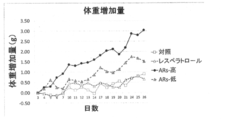
- Figure 1 shows the transition of the weight gain of each group during the test period.
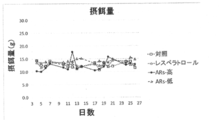
- FIG. 2 shows the transition of the feed intake of each group during the test period. As shown in FIG. 2, there was no significant difference in food intake between the groups.
- AST Aspartate aminotransferase
- ALT alanine aminotransferase
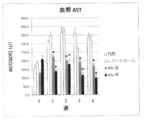
- Figure 3 shows the transition of the AST value of each group during the test period.
- Figure 4 shows the transition of the ALT value of each group during the test period.
- the ALT value increased from the 0th week to the 4th week, and the progression of hepatitis was confirmed.
- the increase in ALT value was suppressed.
- the degree of suppression was more pronounced in the high intake group (AH group) than in the low intake group (AL group).
- the resveratrol intake group (R group) the level remained almost the same as that in the control group (C group).
- ARs have an effect of suppressing hepatitis in an intake-dependent manner.
- the effect was a peculiar effect on the symptoms of hepatitis, which was not achieved by resveratrol, which is generally known to suppress fat accumulation in organs such as the liver.
- ⁇ Test Example 4> Measurement of triglyceride mass in liver tissue- 50 mg of frozen liver tissue was placed in a tube, and 1 mL of a mixed solution containing chloroform and methanol in a liquid volume ratio of 2: 1 was added to the tube. The mixture was ground with a homogenizer until it became a paste, and the whole mixture was stirred at room temperature for 15-20 minutes using a shaker. The homogenate was centrifuged at 15000 rpm for 5 minutes and the supernatant was collected. 0.5 mL of physiological saline was added to the collected supernatant and mixed for several seconds. The mixture was centrifuged at 2000 rpm for 1 minute and the operation of removing the upper phase was repeated twice. The lower chloroform phase was dried under reduced pressure, and the dry matter was suspended in 100 ⁇ L each with ethanol, and 45 ⁇ L each was added to ethanol for mixing. Using this as a sample, the amount of triglyceride was measured.
- the triglyceride mass was 130 mg / g, showing a clear fatty liver value.
- the ARs low intake group (AL group) and the ARs high intake group (AH group) both were halved to 60 mg / g or less. These numbers were within the normal triglyceride mass range.
- the resveratrol intake group (R group) which is known to have the effect of suppressing fat accumulation in organs such as the liver, the amount of triglyceride in the liver tissue in hepatitis model mice could not be corrected. It was. Therefore, it was considered that the effect of taking alkylresorcinol was not merely an effect as a result of general improvement in fat metabolism, but an effect peculiar to the symptoms of hepatitis.
- HE staining of liver tissue in each group are shown in FIG.
- PPAR ⁇ liver tissue- Peroxisome Proliferators-Activated Receptor ⁇
- PPAR ⁇ liver tissue- Peroxisome Proliferators-Activated Receptor ⁇
- This PPAR ⁇ ligand, pioglitazone is also effective as a therapeutic agent for non-alcoholic hepatitis. From this, it was considered that the functional enhancement of PPAR ⁇ is a useful target for the treatment of non-alcoholic hepatitis. Therefore, in this test example, the expression level of the PPAR ⁇ gene in liver tissue was examined. Specifically, it was measured by quantitative PCR as follows.
- RNA from liver tissue was prepared using "NucleoSpin (registered trademark) RNA II kit (manufactured by Takara Bio Inc.)” according to the company's instructions.
- CDNA synthesis from Total RNA was carried out using "Protoscript (registered trademark) II First strand cDNA Synthesis Kit (manufactured by NEW ENGLAND BioLabs)” according to the company's instructions.
- Quantitative PCR using the prepared cDNA was carried out using "MyGoMiniRealTimePCR device (manufactured by Funakoshi)" and using Luna universal LPCR Mix (manufactured by NEW ENGLAND BioLabs) according to the company's instructions. The following sequence was used as the primer.
- the PCR reaction was carried out under the following conditions. (95 ° C 30 seconds ⁇ 95 ° C 5 seconds ⁇ 60 ° C 30 seconds) ⁇ 40 cycles ⁇ 95 ° C 60 seconds
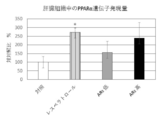
- the PPAR ⁇ gene expression level in the liver tissue in the ARs high intake group (AH) was increased by about 3.5 times as compared with the control group (C group). Therefore, it was suggested that the effect of enhancing the expression of PPAR ⁇ gene is involved in the effect of improving liver function by alkylresorcinol.
- ⁇ Test Example 7> Measurement of expression levels of various genes in liver tissue- Peroxisome Proliferators-Activated Receptor ⁇ Coactivator-1 ⁇ (PGC-1 ⁇ ), peroxisome proliferators-Activated Receptor ⁇ Coactivator-1 ⁇ , which are known to play an important role in lipid metabolism.
- PPC-1 ⁇ Peroxisome Proliferators-Activated Receptor PPAR ⁇
- various genes of adiponectin Adiponectin
- the PCR reaction was carried out under the following conditions. (95 ° C 30 seconds ⁇ 95 ° C 5 seconds ⁇ 60 ° C 30 seconds) ⁇ 40 cycles ⁇ 95 ° C 60 seconds
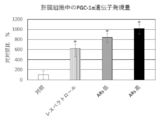
- the expression levels of the PGC-1 ⁇ , PPAR ⁇ , and adiponectin genes in the liver tissue were significantly increased in the ARs ingestion group.
- the gene expression levels of PGC-1 ⁇ and adiponectin were even higher than those of the positive control resveratrol intake group (R group) (FIGS. 8A and 8C). Therefore, it was suggested that the effect of enhancing the expression of these genes is involved in the effect of improving liver function by alkylresorcinol.
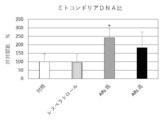
- the number of intracellular mitochondria in liver tissue was investigated. Specifically, the number of intracellular mitochondria in liver tissue was evaluated by comparing the amount ratio of the amount of mitochondrial DNA to the amount of genomic DNA measured by quantitative PCR performed as follows.
- DNA extraction from liver tissue was carried out using the "NucleoSpin (registered trademark) Tissue kit (manufactured by Takara Bio Inc.)” according to the company's instructions.
- the number of each DNA copy was quantified using "Mouse Feeder Cell Quantification Kit (manufactured by Takara Bio Inc.)” according to the company's instructions. The following sequence was used as the primer.
- the PCR reaction was carried out under the following conditions. (95 ° C 30 seconds ⁇ 95 ° C 5 seconds ⁇ 60 ° C 30 seconds) ⁇ 40 cycles ⁇ 95 ° C 60 seconds
Landscapes
- Health & Medical Sciences (AREA)
- Life Sciences & Earth Sciences (AREA)
- Chemical & Material Sciences (AREA)
- Polymers & Plastics (AREA)
- Engineering & Computer Science (AREA)
- Natural Medicines & Medicinal Plants (AREA)
- Food Science & Technology (AREA)
- Veterinary Medicine (AREA)
- Medicinal Chemistry (AREA)
- Pharmacology & Pharmacy (AREA)
- Animal Behavior & Ethology (AREA)
- General Health & Medical Sciences (AREA)
- Public Health (AREA)
- Mycology (AREA)
- Zoology (AREA)
- Animal Husbandry (AREA)
- Botany (AREA)
- Epidemiology (AREA)
- Nutrition Science (AREA)
- Nuclear Medicine, Radiotherapy & Molecular Imaging (AREA)
- General Chemical & Material Sciences (AREA)
- Microbiology (AREA)
- Biotechnology (AREA)
- Alternative & Traditional Medicine (AREA)
- Gastroenterology & Hepatology (AREA)
- Organic Chemistry (AREA)
- Medical Informatics (AREA)
- Chemical Kinetics & Catalysis (AREA)
- Bioinformatics & Cheminformatics (AREA)
- Birds (AREA)
- Oil, Petroleum & Natural Gas (AREA)
- Acyclic And Carbocyclic Compounds In Medicinal Compositions (AREA)
- Fodder In General (AREA)
- Coloring Foods And Improving Nutritive Qualities (AREA)
- Medicines Containing Plant Substances (AREA)
Priority Applications (6)
| Application Number | Priority Date | Filing Date | Title |
|---|---|---|---|
| CN202411368223.3A CN119214306A (zh) | 2019-05-22 | 2020-05-19 | 肝功能改善用组合物 |
| CN202080037969.XA CN113873895B (zh) | 2019-05-22 | 2020-05-19 | 肝功能改善用组合物 |
| US17/607,950 US20220323372A1 (en) | 2019-05-22 | 2020-05-19 | Composition for improving liver function |
| EP20809751.9A EP3974026A4 (en) | 2019-05-22 | 2020-05-19 | COMPOSITION INTENDED TO IMPROVE HEPATIC FUNCTION |
| JP2021520792A JP7333815B2 (ja) | 2019-05-22 | 2020-05-19 | 肝臓機能改善用組成物 |
| JP2023132389A JP7675138B2 (ja) | 2019-05-22 | 2023-08-15 | 肝臓機能改善用組成物 |
Applications Claiming Priority (2)
| Application Number | Priority Date | Filing Date | Title |
|---|---|---|---|
| JP2019095658 | 2019-05-22 | ||
| JP2019-095658 | 2019-05-22 |
Publications (1)
| Publication Number | Publication Date |
|---|---|
| WO2020235546A1 true WO2020235546A1 (ja) | 2020-11-26 |
Family
ID=73459385
Family Applications (1)
| Application Number | Title | Priority Date | Filing Date |
|---|---|---|---|
| PCT/JP2020/019742 Ceased WO2020235546A1 (ja) | 2019-05-22 | 2020-05-19 | 肝臓機能改善用組成物 |
Country Status (6)
| Country | Link |
|---|---|
| US (1) | US20220323372A1 (cg-RX-API-DMAC7.html) |
| EP (1) | EP3974026A4 (cg-RX-API-DMAC7.html) |
| JP (2) | JP7333815B2 (cg-RX-API-DMAC7.html) |
| CN (2) | CN113873895B (cg-RX-API-DMAC7.html) |
| TW (1) | TWI830917B (cg-RX-API-DMAC7.html) |
| WO (1) | WO2020235546A1 (cg-RX-API-DMAC7.html) |
Cited By (2)
| Publication number | Priority date | Publication date | Assignee | Title |
|---|---|---|---|---|
| JP2021016363A (ja) * | 2019-07-23 | 2021-02-15 | 株式会社日清製粉グループ本社 | 脂質分解促進剤及びこれを含む飲食品、並びに脂質分解促進用加工食品 |
| US11994899B2 (en) | 2020-11-25 | 2024-05-28 | Qubit Moving And Storage, Llc | System that generates a shared random number |
Families Citing this family (1)
| Publication number | Priority date | Publication date | Assignee | Title |
|---|---|---|---|---|
| CN115557830B (zh) * | 2022-10-26 | 2024-02-13 | 江南大学 | 基于超声辅助酶解法提取小麦麸皮中烷基间苯二酚的方法 |
Citations (11)
| Publication number | Priority date | Publication date | Assignee | Title |
|---|---|---|---|---|
| JPS5926616B2 (ja) | 1975-12-06 | 1984-06-29 | ヘンケル・コマンディ−トゲゼルシャフト・アウフ・アクチェン | 酸性α−スルホ脂肪酸エステルの連続漂白法 |
| JPS5951448B2 (ja) | 1980-03-17 | 1984-12-14 | 株式会社日立製作所 | 台車けん引形無人運搬車 |
| JP2613474B2 (ja) | 1989-03-25 | 1997-05-28 | サンスター株式会社 | 口腔用抗菌剤組成物 |
| JP2013091612A (ja) | 2011-10-25 | 2013-05-16 | Nisshin Seifun Group Inc | 免疫抑制剤 |
| JP2014139166A (ja) | 2012-12-20 | 2014-07-31 | National Institute Of Advanced Industrial & Technology | 耐糖能異常改善剤 |
| JP2015020993A (ja) | 2013-07-23 | 2015-02-02 | 株式会社日清製粉グループ本社 | 炎症予防剤 |
| JP2015218130A (ja) | 2014-05-16 | 2015-12-07 | 国立研究開発法人産業技術総合研究所 | 腸内フローラ調整能を有するイネ科植物抽出物 |
| WO2015193962A1 (ja) * | 2014-06-17 | 2015-12-23 | 独立行政法人産業技術総合研究所 | 耐糖能異常改善剤 |
| JP2015231986A (ja) | 2014-05-16 | 2015-12-24 | 国立研究開発法人産業技術総合研究所 | コレステロール排出促進能を有するイネ科植物抽出物 |
| JP2016132641A (ja) | 2015-01-20 | 2016-07-25 | 国立研究開発法人産業技術総合研究所 | 食品の摂取方法 |
| JP2016153387A (ja) | 2015-02-12 | 2016-08-25 | 国立研究開発法人産業技術総合研究所 | 睡眠改善剤 |
Family Cites Families (4)
| Publication number | Priority date | Publication date | Assignee | Title |
|---|---|---|---|---|
| RU2405562C1 (ru) * | 2009-07-24 | 2010-12-10 | Тихоокеанский океанологический институт им. В.И. Ильичева Дальневосточного отделения Российской академии наук (ТОИ ДВО РАН) | Средство, обладающее гепатопротекторным действием |
| CN105566492A (zh) * | 2016-01-16 | 2016-05-11 | 深圳市贝沃德克生物技术研究院有限公司 | 抗乙肝表面抗原的荧光抗体的制备方法 |
| US10307388B2 (en) * | 2016-12-29 | 2019-06-04 | The United States Of America As Represented By The Secretary Of The Navy | Compositions and methods for diagnosis and treatment of inflammation |
| KR20220049790A (ko) * | 2020-10-15 | 2022-04-22 | 강릉원주대학교산학협력단 | 대사성 질환 및 간 질환의 치료제로서 4-헥실레조르시놀의 용도 |
-
2020
- 2020-05-19 WO PCT/JP2020/019742 patent/WO2020235546A1/ja not_active Ceased
- 2020-05-19 CN CN202080037969.XA patent/CN113873895B/zh active Active
- 2020-05-19 EP EP20809751.9A patent/EP3974026A4/en active Pending
- 2020-05-19 JP JP2021520792A patent/JP7333815B2/ja active Active
- 2020-05-19 CN CN202411368223.3A patent/CN119214306A/zh active Pending
- 2020-05-19 US US17/607,950 patent/US20220323372A1/en active Pending
- 2020-05-21 TW TW109116941A patent/TWI830917B/zh active
-
2023
- 2023-08-15 JP JP2023132389A patent/JP7675138B2/ja active Active
Patent Citations (11)
| Publication number | Priority date | Publication date | Assignee | Title |
|---|---|---|---|---|
| JPS5926616B2 (ja) | 1975-12-06 | 1984-06-29 | ヘンケル・コマンディ−トゲゼルシャフト・アウフ・アクチェン | 酸性α−スルホ脂肪酸エステルの連続漂白法 |
| JPS5951448B2 (ja) | 1980-03-17 | 1984-12-14 | 株式会社日立製作所 | 台車けん引形無人運搬車 |
| JP2613474B2 (ja) | 1989-03-25 | 1997-05-28 | サンスター株式会社 | 口腔用抗菌剤組成物 |
| JP2013091612A (ja) | 2011-10-25 | 2013-05-16 | Nisshin Seifun Group Inc | 免疫抑制剤 |
| JP2014139166A (ja) | 2012-12-20 | 2014-07-31 | National Institute Of Advanced Industrial & Technology | 耐糖能異常改善剤 |
| JP2015020993A (ja) | 2013-07-23 | 2015-02-02 | 株式会社日清製粉グループ本社 | 炎症予防剤 |
| JP2015218130A (ja) | 2014-05-16 | 2015-12-07 | 国立研究開発法人産業技術総合研究所 | 腸内フローラ調整能を有するイネ科植物抽出物 |
| JP2015231986A (ja) | 2014-05-16 | 2015-12-24 | 国立研究開発法人産業技術総合研究所 | コレステロール排出促進能を有するイネ科植物抽出物 |
| WO2015193962A1 (ja) * | 2014-06-17 | 2015-12-23 | 独立行政法人産業技術総合研究所 | 耐糖能異常改善剤 |
| JP2016132641A (ja) | 2015-01-20 | 2016-07-25 | 国立研究開発法人産業技術総合研究所 | 食品の摂取方法 |
| JP2016153387A (ja) | 2015-02-12 | 2016-08-25 | 国立研究開発法人産業技術総合研究所 | 睡眠改善剤 |
Non-Patent Citations (1)
| Title |
|---|
| KAYASHIMA Y. ET AL.: "Alkylresorcinols activate SIRT1 and delay ageing in Drosophila melanogaster", SCI. REP., vol. 7, no. 43679, 2017, pages 1 - 8, XP055644334, DOI: 10.1038/srep43679 * |
Cited By (2)
| Publication number | Priority date | Publication date | Assignee | Title |
|---|---|---|---|---|
| JP2021016363A (ja) * | 2019-07-23 | 2021-02-15 | 株式会社日清製粉グループ本社 | 脂質分解促進剤及びこれを含む飲食品、並びに脂質分解促進用加工食品 |
| US11994899B2 (en) | 2020-11-25 | 2024-05-28 | Qubit Moving And Storage, Llc | System that generates a shared random number |
Also Published As
| Publication number | Publication date |
|---|---|
| CN113873895A (zh) | 2021-12-31 |
| EP3974026A4 (en) | 2023-07-05 |
| CN119214306A (zh) | 2024-12-31 |
| JP7675138B2 (ja) | 2025-05-12 |
| TWI830917B (zh) | 2024-02-01 |
| TW202110427A (zh) | 2021-03-16 |
| US20220323372A1 (en) | 2022-10-13 |
| JP7333815B2 (ja) | 2023-08-25 |
| JP2023157951A (ja) | 2023-10-26 |
| EP3974026A1 (en) | 2022-03-30 |
| JPWO2020235546A1 (cg-RX-API-DMAC7.html) | 2020-11-26 |
| CN113873895B (zh) | 2024-10-11 |
Similar Documents
| Publication | Publication Date | Title |
|---|---|---|
| JP7675138B2 (ja) | 肝臓機能改善用組成物 | |
| JP2018524398A (ja) | 筋肉疾患の予防、改善または治療用または筋機能改善用組成物 | |
| EP3135293A1 (en) | Agent for preventing or ameliorating diabetes | |
| KR20110005294A (ko) | 글루타티온 생산 촉진제, 글루타티온의 결핍에 기인하는 질환의 예방·치료제, 음식품 및 사료 | |
| EP2992933B1 (en) | Ginsenoside f2 for prophylaxis and treatment of liver disease | |
| JP6042800B2 (ja) | トマトシドaの抽出方法 | |
| JP2008255040A (ja) | アディポネクチン産生促進剤 | |
| KR20060119706A (ko) | 생활 습관병 예방ㆍ개선용의 유지 가공 조성물 | |
| JP5926616B2 (ja) | 老化抑制剤 | |
| JP6131275B2 (ja) | Igf−1産生促進剤 | |
| JP2016132641A (ja) | 食品の摂取方法 | |
| WO2015193962A1 (ja) | 耐糖能異常改善剤 | |
| KR102709472B1 (ko) | 와사비잎 추출물을 유효성분으로 포함하는 비만의 예방, 개선 또는 치료용 조성물 | |
| JP6460402B2 (ja) | コレステロール排出促進用医薬組成物又は食品組成物 | |
| WO2006033351A1 (ja) | チオレドキシン発現誘導用組成物 | |
| WO2007001080A1 (ja) | ビワ葉抽出物を含有する飲食品及び医薬品 | |
| JP6179840B2 (ja) | サルナシ由来の高極性有機溶媒抽出物とその利用 | |
| JP7659768B2 (ja) | 脂質分解促進剤及びこれを含む飲食品、並びに脂質分解促進用加工食品 | |
| JP5590758B2 (ja) | マーカータンパク質量調節用組成物 | |
| JP2025053993A (ja) | 熱ショックタンパク質発現誘導剤及び熱ショックタンパク質発現誘導用組成物 | |
| JP7376335B2 (ja) | 脂質異常症の予防、改善又は治療用組成物 | |
| JP2012180340A (ja) | 脳機能低下抑制剤 | |
| WO2008072725A1 (ja) | アガリクス含有組成物 | |
| KR20240099961A (ko) | 항염증 활성을 갖는 여주 초음파 추출물의 제조방법 | |
| JP2021078482A (ja) | ヤーコンの加工物を有効成分として含有する制御性t細胞の増加促進用組成物 |
Legal Events
| Date | Code | Title | Description |
|---|---|---|---|
| 121 | Ep: the epo has been informed by wipo that ep was designated in this application |
Ref document number: 20809751 Country of ref document: EP Kind code of ref document: A1 |
|
| DPE1 | Request for preliminary examination filed after expiration of 19th month from priority date (pct application filed from 20040101) | ||
| ENP | Entry into the national phase |
Ref document number: 2021520792 Country of ref document: JP Kind code of ref document: A |
|
| NENP | Non-entry into the national phase |
Ref country code: DE |
|
| ENP | Entry into the national phase |
Ref document number: 2020809751 Country of ref document: EP Effective date: 20211222 |