WO2020217301A1 - 楽曲データ編集装置、および楽曲データ編集プログラム - Google Patents
楽曲データ編集装置、および楽曲データ編集プログラム Download PDFInfo
- Publication number
- WO2020217301A1 WO2020217301A1 PCT/JP2019/017181 JP2019017181W WO2020217301A1 WO 2020217301 A1 WO2020217301 A1 WO 2020217301A1 JP 2019017181 W JP2019017181 W JP 2019017181W WO 2020217301 A1 WO2020217301 A1 WO 2020217301A1
- Authority
- WO
- WIPO (PCT)
- Prior art keywords
- music data
- unit
- unit interval
- data editing
- change
- Prior art date
- Legal status (The legal status is an assumption and is not a legal conclusion. Google has not performed a legal analysis and makes no representation as to the accuracy of the status listed.)
- Ceased
Links
Images


Classifications
-
- G—PHYSICS
- G11—INFORMATION STORAGE
- G11B—INFORMATION STORAGE BASED ON RELATIVE MOVEMENT BETWEEN RECORD CARRIER AND TRANSDUCER
- G11B27/00—Editing; Indexing; Addressing; Timing or synchronising; Monitoring; Measuring tape travel
- G11B27/02—Editing, e.g. varying the order of information signals recorded on, or reproduced from, record carriers
- G11B27/031—Electronic editing of digitised analogue information signals, e.g. audio or video signals
- G11B27/036—Insert-editing
-
- G—PHYSICS
- G11—INFORMATION STORAGE
- G11B—INFORMATION STORAGE BASED ON RELATIVE MOVEMENT BETWEEN RECORD CARRIER AND TRANSDUCER
- G11B27/00—Editing; Indexing; Addressing; Timing or synchronising; Monitoring; Measuring tape travel
- G11B27/10—Indexing; Addressing; Timing or synchronising; Measuring tape travel
- G11B27/19—Indexing; Addressing; Timing or synchronising; Measuring tape travel by using information detectable on the record carrier
- G11B27/28—Indexing; Addressing; Timing or synchronising; Measuring tape travel by using information detectable on the record carrier by using information signals recorded by the same method as the main recording
-
- G—PHYSICS
- G10—MUSICAL INSTRUMENTS; ACOUSTICS
- G10L—SPEECH ANALYSIS TECHNIQUES OR SPEECH SYNTHESIS; SPEECH RECOGNITION; SPEECH OR VOICE PROCESSING TECHNIQUES; SPEECH OR AUDIO CODING OR DECODING
- G10L19/00—Speech or audio signals analysis-synthesis techniques for redundancy reduction, e.g. in vocoders; Coding or decoding of speech or audio signals, using source filter models or psychoacoustic analysis
Definitions
- the present invention relates to a music data editing device and a music data editing program.
- a music sequencer a DAW (Digital Audio Workstation), or the like is known as a device for editing music data (see, for example, Patent Document 1).
- the music sequencer, DAW, etc. display the sounding position, etc. along the time axis for each performance part of the music on the computer screen, and edit the sounding position, BPM (Beats Per Minute), etc. in each performance part. New music data can be generated.
- a new phrase is found in a bar unit, a composition unit of a music such as an verse, a verse, etc., and a good phrase is found while actually playing each performance part by trial and error.
- Phrase data may be created using this.
- the phrase data created by such trial and error is accidental phrase data, it cannot be easily reproduced even if it is attempted to be reproduced.
- the conventional music data editing device has an undo / redo function for recording and reading music data in operation units for the music data, and a playback start position of the music data played by trial and error like DAW. A function to read the end position is provided.
- the undo / redo function there is a problem that it is difficult to efficiently search for a good phrase because operations other than operations related to changes in sound are also read out.
- the UNDO / REDO function does not restore the performance itself in the first place, but can only record in real time intentionally. Therefore, there is a problem that the operation performed by the undo / redo function cannot be recorded in synchronization with the progress timing of the music reproduction.
- the work of checking the recorded result on the screen, specifying the playback start position and playback end position, and playing back and checking the relevant part is repeated. There is also the problem that it is difficult to find a good phrase efficiently because it is not known where the good phrase was recorded.
- An object of the present invention is to provide a music data editing device and a music data editing program capable of easily reproducing a phrase found by playing by trial and error and efficiently creating good phrase data. To do.
- the music data editing device of the present invention includes a music data reproduction means for reproducing music data to which unit intervals for music reproduction are assigned, and a unit interval recording means for recording the music data being reproduced in time series for each unit interval.
- the unit interval reading means for reading the unit interval recorded by the unit interval recording means is provided.
- the music data editing program of the present invention causes a computer to function as the above-mentioned music data editing device.
- the schematic diagram for demonstrating the idea of this invention The plan view which shows the operation panel of the music sequencer which concerns on embodiment of this invention.
- the functional block diagram which shows the structure of the music sequencer in the said Embodiment.
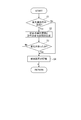
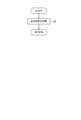
- the flowchart for demonstrating the operation in the said Embodiment The flowchart for demonstrating the operation in the said Embodiment.
- the present invention records an operation or performance performed by oneself when creating a phrase of a musical piece, and efficiently reproduces the recorded result to create a phrase of a new musical piece.
- the purpose is to contribute.
- the music data to be reproduced in the present invention is assigned a unit interval to the music data, and the music can be reproduced for each unit interval.
- the unit interval may be composed of, for example, one bar, two bars, or the like, and is composed of a music structure section, which is a characteristic section of the music structure such as an intro, verse, B melody, or chorus. May be good.
- music data is stored in a storage device such as a memory in chronological order for each unit interval during reproduction of music data.
- the operation (performance) performed by the operator (performer) during the playback of the music data is recorded for each unit interval, and the unit section in which the operator feels that the phrase is a good phrase is arbitrarily selected.
- the operation in the present invention means an operation of changing the reproduction direction, reproduction speed, sounding timing, strength, length, key, chord, scale, etc. of music data.
- the method of recording for each unit interval in the present invention is a method of recording all the unit intervals constituting the music data in chronological order, or only when a new operation is performed and a change occurs in the unit interval.
- a method of recording can be considered. Further, the recording may always be performed automatically, or the recording may be started on the premise of the operation of the operator.
- the method of reading the recorded unit interval may be configured to set the reading order on the device side such as FILO (First In Last Out) or FIFO (First In First Out), but the recorded unit interval The operator may be made to recognize the order so that the operator can select it arbitrarily.
- FIG. 2 shows a music sequencer 1 according to an embodiment of the present invention.
- Electronic devices such as MIDI keyboards, drum machines, synthesizers, and sound modules are connected to the music sequencer 1.
- the music sequencer 1 records music data input from an electronic musical instrument, and edits music data such as changing the playback direction, playback speed, pronunciation timing / strength / length, keys, chords, etc. It functions as a music data editing device that outputs the edited music data to the connected electronic musical instrument.
- FIG. 2 shows an operation panel of the music sequencer 1, and the operation panel is divided into an overall setting area 1A, a phrase editing area 1B, and a unit interval editing area 1C.
- the overall setting area 1A is an area for setting the entire music sequencer 1, and is provided with an operation switch 11 for calling the music data editing function according to the present invention.
- the phrase editing area 1B is an area for operating the reproduction speed, reproduction direction, and the like of the music data being reproduced.
- the unit interval editing area 1C has two functions. When recording a unit interval, it is possible to edit the timing, strength, length, keys, chords, etc. of the pronunciation of the music data by using an operator including a pad. At the time of reading the unit interval, the recorded unit section can be read and reproduced by using the pads P1 to P16.
- the pads P1 to P16 are provided according to the unit section, and when each pad is operated, the unit section corresponding to the operated pad is read, and the read unit section can be edited.
- the unit interval to be read by the operation can be arbitrarily selected. For example, when one bar is set as the unit interval, the unit interval for 16 measures can be read.
- FIG. 3 shows a functional block diagram of the music sequencer 1 of the present embodiment.
- the music sequencer 1 includes music data reproduction means 2, unit interval recording means 3, change interval detecting means 5, and unit interval reading means 6.
- Each of these functional means is configured as a computer-readable music data editing program to be executed on a computer.
- the music data reproduction means 2 reproduces the music data.
- the music data is not particularly limited as long as it is music data allocated with measures as unit intervals.
- the music data reproduction means 2 outputs the music data edited by the music sequencer 1 to the outside as a MIDI signal.
- the unit interval recording means 3 records the music data output from the music data reproducing means 2 in chronological order for each unit interval. Specifically, the unit interval recording means 3 records the reproduced music data in the memory 4 for each unit interval in chronological order.
- the change section detecting means 5 detects whether or not a change has occurred in the reproduction operation of the unit section being reproduced by the music data reproducing means 2.
- the change in the reproduction operation is detected by whether or not a reproduction operation different from the conventional reproduction operation has occurred.
- different playback operations include, for example, a change in the playback speed, a change in the pitch of the music being played, a change due to a new scale input, and the like.
- Examples of the change in the reproduction speed include fluctuations in the reproduction speed, changes in the reproduction tempo (BPM), changes due to loops, jumps, and the like.
- Examples of the pitch change of the music being played include changes in keys and chords, and cases where the playback tempo changes locally to change the pitch.
- Examples of the change due to the new scale input include the input of a new scale when the operator operates the MIDI keyboard, the input of the scale changed by the music sensor in the previous stage, and the like.
- the unit interval reading means 6 reads and reproduces the unit interval recorded in the memory 4. Specifically, the unit interval reading means 6 reads and reproduces the data of the unit interval corresponding to the pad operated by the operator among the pads P1 to P16 shown in FIG. That is, the pads P1 to P16 function as the reading operation unit of the present invention, and can be arbitrarily reproduced depending on which of the pads P1 to P16 is operated by the operator.
- the pads P1 to P16 of the unit interval editing area 1C are an operation for editing the music data in the music data reproduction means 2 when the functions of the unit interval recording means 3 and the change interval detecting means 5 are effective. Used as a means.
- the function of the unit interval reading means 6 is effective, it is used as an operating means for reading the unit interval.
- the change section detecting means 5 determines whether or not to record only when there is a change in the reproduction operation in the unit section (procedure S1).
- the unit interval recording means 3 records the music data being played in time series for each unit interval (procedure S4).
- the change interval detecting means 5 compares the previously reproduced unit interval with the currently reproduced unit interval (procedure S2), and determines whether or not there is a change in the reproduction operation (procedure S3). When there is no change in the reproduction operation, the change section detecting means 5 performs steps S1 to S2 without recording the unit interval, and compares the unit sections of the new reproduction points. When there is a change in the playback operation, the change section detecting means 5 instructs the unit section recording means 3 to that effect, and the unit section recording means 3 stores the unit section in which the playback operation has changed as the change section in the memory 4. Record and continue the same procedure in chronological order (procedure S4).
- the unit interval reading means 6 reads the unit interval recorded in the memory 4 and reproduces the unit section as shown in FIG. 5 (procedure S5). Specifically, the unit interval reading means 6 can read the unit intervals recorded in the memory 4 in time series in the order of FIFO, or can read in the order of FILO that is reverse reproduction. At this time, it is preferable that the pads P1 to P16 are lit according to the unit section being reproduced. Further, the operator may operate the pad P1 to the pad P16 by operating any pad to allow the operator to select the unit section to be read and reproduced.
- the unit interval recording means 3 records the music data being reproduced in the memory 4 in chronological order for each unit interval. Therefore, since the unit interval reading means 6 can read and reproduce an arbitrary unit interval recorded in the memory 4, a good phrase operated by the operator by trial and error during reproduction of the music data can be easily and efficiently performed. It can be reproduced.
- the change section detecting means 5 can record a change in the reproduction operation of the unit section as a unit section. Therefore, it is possible to prevent unnecessary recording of data in the same unit interval and reproduce a better phrase more efficiently.
- the unit interval reading means 6 includes a reading operation unit from pad P1 to pad P16. Therefore, when the operator operates the pad P16 from the pad P1, an arbitrary unit interval can be read out and reproduced, so that a more efficient phrase can be reproduced.
- the present invention is not limited to the above-described embodiment, but also includes modifications as shown below.
- the present invention has been applied to the music sequencer 1 connected to a MIDI standard electronic device, but the present invention is not limited to this.
- the electronic device for inputting the music data may be an electronic device such as a computer connected by a USB standard connector.
- the specific structure and shape of the present invention may be other structures as long as the object of the present invention can be achieved.
Landscapes
- Engineering & Computer Science (AREA)
- Multimedia (AREA)
- Computational Linguistics (AREA)
- Signal Processing (AREA)
- Health & Medical Sciences (AREA)
- Audiology, Speech & Language Pathology (AREA)
- Human Computer Interaction (AREA)
- Physics & Mathematics (AREA)
- Acoustics & Sound (AREA)
- Electrophonic Musical Instruments (AREA)
Priority Applications (3)
| Application Number | Priority Date | Filing Date | Title |
|---|---|---|---|
| PCT/JP2019/017181 WO2020217301A1 (ja) | 2019-04-23 | 2019-04-23 | 楽曲データ編集装置、および楽曲データ編集プログラム |
| US17/594,541 US11817128B2 (en) | 2019-04-23 | 2019-04-23 | Music data editing device and music data editing program |
| JP2021515342A JP7231719B2 (ja) | 2019-04-23 | 2019-04-23 | 楽曲データ編集装置、および楽曲データ編集プログラム |
Applications Claiming Priority (1)
| Application Number | Priority Date | Filing Date | Title |
|---|---|---|---|
| PCT/JP2019/017181 WO2020217301A1 (ja) | 2019-04-23 | 2019-04-23 | 楽曲データ編集装置、および楽曲データ編集プログラム |
Publications (1)
| Publication Number | Publication Date |
|---|---|
| WO2020217301A1 true WO2020217301A1 (ja) | 2020-10-29 |
Family
ID=72941054
Family Applications (1)
| Application Number | Title | Priority Date | Filing Date |
|---|---|---|---|
| PCT/JP2019/017181 Ceased WO2020217301A1 (ja) | 2019-04-23 | 2019-04-23 | 楽曲データ編集装置、および楽曲データ編集プログラム |
Country Status (3)
| Country | Link |
|---|---|
| US (1) | US11817128B2 (https=) |
| JP (1) | JP7231719B2 (https=) |
| WO (1) | WO2020217301A1 (https=) |
Cited By (1)
| Publication number | Priority date | Publication date | Assignee | Title |
|---|---|---|---|---|
| JP2024178187A (ja) * | 2020-08-21 | 2024-12-24 | エーアイエムアイ インコーポレイテッド | 音楽生成器のための比較トレーニング |
Citations (3)
| Publication number | Priority date | Publication date | Assignee | Title |
|---|---|---|---|---|
| JPH0411597U (https=) * | 1990-05-21 | 1992-01-30 | ||
| JPH0962261A (ja) * | 1995-08-25 | 1997-03-07 | Casio Comput Co Ltd | メロディ変換装置及びその方法 |
| JP2015069047A (ja) * | 2013-09-30 | 2015-04-13 | 株式会社エクシング | カラオケ用プログラム、情報処理装置及びホスト装置 |
Family Cites Families (3)
| Publication number | Priority date | Publication date | Assignee | Title |
|---|---|---|---|---|
| JP2755784B2 (ja) | 1990-04-27 | 1998-05-25 | 三菱重工業株式会社 | 舶用二重反転プロペラー軸のシール潤滑装置 |
| JP3627636B2 (ja) * | 2000-08-25 | 2005-03-09 | ヤマハ株式会社 | 楽曲データ生成装置及び方法並びに記憶媒体 |
| JP5230002B2 (ja) | 2008-09-09 | 2013-07-10 | 株式会社河合楽器製作所 | 楽曲データ編集装置及び楽曲データ編集用コンピュータ・プログラム |
-
2019
- 2019-04-23 US US17/594,541 patent/US11817128B2/en active Active
- 2019-04-23 JP JP2021515342A patent/JP7231719B2/ja active Active
- 2019-04-23 WO PCT/JP2019/017181 patent/WO2020217301A1/ja not_active Ceased
Patent Citations (3)
| Publication number | Priority date | Publication date | Assignee | Title |
|---|---|---|---|---|
| JPH0411597U (https=) * | 1990-05-21 | 1992-01-30 | ||
| JPH0962261A (ja) * | 1995-08-25 | 1997-03-07 | Casio Comput Co Ltd | メロディ変換装置及びその方法 |
| JP2015069047A (ja) * | 2013-09-30 | 2015-04-13 | 株式会社エクシング | カラオケ用プログラム、情報処理装置及びホスト装置 |
Cited By (1)
| Publication number | Priority date | Publication date | Assignee | Title |
|---|---|---|---|---|
| JP2024178187A (ja) * | 2020-08-21 | 2024-12-24 | エーアイエムアイ インコーポレイテッド | 音楽生成器のための比較トレーニング |
Also Published As
| Publication number | Publication date |
|---|---|
| US11817128B2 (en) | 2023-11-14 |
| US20220189510A1 (en) | 2022-06-16 |
| JPWO2020217301A1 (https=) | 2020-10-29 |
| JP7231719B2 (ja) | 2023-03-01 |
Similar Documents
| Publication | Publication Date | Title |
|---|---|---|
| US8772618B2 (en) | Mixing automatic accompaniment input and musical device input during a loop recording | |
| CN103208296B (zh) | 进行反复再现的录音再现装置及录音再现方法 | |
| CN102969010B (zh) | 录音再现装置及录音再现方法 | |
| US20080069383A1 (en) | Mixing apparatus for audio data, method of controlling the same, and mixing control program | |
| JP3277844B2 (ja) | 自動演奏装置 | |
| JP7231719B2 (ja) | 楽曲データ編集装置、および楽曲データ編集プログラム | |
| JP2006106641A (ja) | 電子音楽装置 | |
| JP2001013962A (ja) | 楽曲自動再生装置および連続楽曲情報作成再生プログラムを記録した記録媒体 | |
| JP3591227B2 (ja) | カラオケ装置 | |
| JPH11305772A (ja) | 電子楽器 | |
| US6201177B1 (en) | Music apparatus with automatic pitch arrangement for performance mode | |
| JP4315116B2 (ja) | 電子音楽装置 | |
| JP6168649B2 (ja) | コード検出装置及びプログラム | |
| JPH11219175A (ja) | 自動演奏装置 | |
| JP3446278B2 (ja) | 自動演奏装置 | |
| JP5402167B2 (ja) | アルペジオ生成装置およびアルペジオ生成方法を実現するためのプログラム | |
| JP2004219495A (ja) | 電子楽器 | |
| JP5200384B2 (ja) | 電子楽器及びプログラム | |
| JP2011099895A (ja) | 電子鍵盤楽器 | |
| JP4066319B2 (ja) | サンプラ機能を備えたディジタルレコーダ | |
| JP3885791B2 (ja) | 自動伴奏装置および自動伴奏方法を実現するためのプログラム | |
| JPS5846391A (ja) | 電子楽器 | |
| JP4651128B2 (ja) | 演奏装置、演奏方法及び演奏のためのコンピュータプログラム | |
| JP3098352B2 (ja) | 自動演奏装置 | |
| JPH04136997A (ja) | 電子音楽再生装置 |
Legal Events
| Date | Code | Title | Description |
|---|---|---|---|
| 121 | Ep: the epo has been informed by wipo that ep was designated in this application |
Ref document number: 19925848 Country of ref document: EP Kind code of ref document: A1 |
|
| ENP | Entry into the national phase |
Ref document number: 2021515342 Country of ref document: JP Kind code of ref document: A |
|
| NENP | Non-entry into the national phase |
Ref country code: DE |
|
| 122 | Ep: pct application non-entry in european phase |
Ref document number: 19925848 Country of ref document: EP Kind code of ref document: A1 |