WO2020196753A1 - 光硬化性立体造形用組成物、立体造形物及び立体造形物の製造方法 - Google Patents
光硬化性立体造形用組成物、立体造形物及び立体造形物の製造方法 Download PDFInfo
- Publication number
- WO2020196753A1 WO2020196753A1 PCT/JP2020/013668 JP2020013668W WO2020196753A1 WO 2020196753 A1 WO2020196753 A1 WO 2020196753A1 JP 2020013668 W JP2020013668 W JP 2020013668W WO 2020196753 A1 WO2020196753 A1 WO 2020196753A1
- Authority
- WO
- WIPO (PCT)
- Prior art keywords
- meth
- acrylate
- photocurable
- acrylic acid
- acid ester
- Prior art date
- Legal status (The legal status is an assumption and is not a legal conclusion. Google has not performed a legal analysis and makes no representation as to the accuracy of the status listed.)
- Ceased
Links
Images




Classifications
-
- C—CHEMISTRY; METALLURGY
- C09—DYES; PAINTS; POLISHES; NATURAL RESINS; ADHESIVES; COMPOSITIONS NOT OTHERWISE PROVIDED FOR; APPLICATIONS OF MATERIALS NOT OTHERWISE PROVIDED FOR
- C09D—COATING COMPOSITIONS, e.g. PAINTS, VARNISHES OR LACQUERS; FILLING PASTES; CHEMICAL PAINT OR INK REMOVERS; INKS; CORRECTING FLUIDS; WOODSTAINS; PASTES OR SOLIDS FOR COLOURING OR PRINTING; USE OF MATERIALS THEREFOR
- C09D4/00—Coating compositions, e.g. paints, varnishes or lacquers, based on organic non-macromolecular compounds having at least one polymerisable carbon-to-carbon unsaturated bond ; Coating compositions, based on monomers of macromolecular compounds of groups C09D183/00 - C09D183/16
-
- B—PERFORMING OPERATIONS; TRANSPORTING
- B29—WORKING OF PLASTICS; WORKING OF SUBSTANCES IN A PLASTIC STATE IN GENERAL
- B29C—SHAPING OR JOINING OF PLASTICS; SHAPING OF MATERIAL IN A PLASTIC STATE, NOT OTHERWISE PROVIDED FOR; AFTER-TREATMENT OF THE SHAPED PRODUCTS, e.g. REPAIRING
- B29C64/00—Additive manufacturing, i.e. manufacturing of three-dimensional [3D] objects by additive deposition, additive agglomeration or additive layering, e.g. by 3D printing, stereolithography or selective laser sintering
- B29C64/10—Processes of additive manufacturing
- B29C64/106—Processes of additive manufacturing using only liquids or viscous materials, e.g. depositing a continuous bead of viscous material
- B29C64/124—Processes of additive manufacturing using only liquids or viscous materials, e.g. depositing a continuous bead of viscous material using layers of liquid which are selectively solidified
-
- B—PERFORMING OPERATIONS; TRANSPORTING
- B33—ADDITIVE MANUFACTURING TECHNOLOGY
- B33Y—ADDITIVE MANUFACTURING, i.e. MANUFACTURING OF THREE-DIMENSIONAL [3D] OBJECTS BY ADDITIVE DEPOSITION, ADDITIVE AGGLOMERATION OR ADDITIVE LAYERING, e.g. BY 3D PRINTING, STEREOLITHOGRAPHY OR SELECTIVE LASER SINTERING
- B33Y10/00—Processes of additive manufacturing
-
- B—PERFORMING OPERATIONS; TRANSPORTING
- B33—ADDITIVE MANUFACTURING TECHNOLOGY
- B33Y—ADDITIVE MANUFACTURING, i.e. MANUFACTURING OF THREE-DIMENSIONAL [3D] OBJECTS BY ADDITIVE DEPOSITION, ADDITIVE AGGLOMERATION OR ADDITIVE LAYERING, e.g. BY 3D PRINTING, STEREOLITHOGRAPHY OR SELECTIVE LASER SINTERING
- B33Y70/00—Materials specially adapted for additive manufacturing
-
- B—PERFORMING OPERATIONS; TRANSPORTING
- B33—ADDITIVE MANUFACTURING TECHNOLOGY
- B33Y—ADDITIVE MANUFACTURING, i.e. MANUFACTURING OF THREE-DIMENSIONAL [3D] OBJECTS BY ADDITIVE DEPOSITION, ADDITIVE AGGLOMERATION OR ADDITIVE LAYERING, e.g. BY 3D PRINTING, STEREOLITHOGRAPHY OR SELECTIVE LASER SINTERING
- B33Y80/00—Products made by additive manufacturing
-
- C—CHEMISTRY; METALLURGY
- C08—ORGANIC MACROMOLECULAR COMPOUNDS; THEIR PREPARATION OR CHEMICAL WORKING-UP; COMPOSITIONS BASED THEREON
- C08F—MACROMOLECULAR COMPOUNDS OBTAINED BY REACTIONS ONLY INVOLVING CARBON-TO-CARBON UNSATURATED BONDS
- C08F2/00—Processes of polymerisation
- C08F2/46—Polymerisation initiated by wave energy or particle radiation
- C08F2/48—Polymerisation initiated by wave energy or particle radiation by ultraviolet or visible light
- C08F2/50—Polymerisation initiated by wave energy or particle radiation by ultraviolet or visible light with sensitising agents
-
- C—CHEMISTRY; METALLURGY
- C08—ORGANIC MACROMOLECULAR COMPOUNDS; THEIR PREPARATION OR CHEMICAL WORKING-UP; COMPOSITIONS BASED THEREON
- C08F—MACROMOLECULAR COMPOUNDS OBTAINED BY REACTIONS ONLY INVOLVING CARBON-TO-CARBON UNSATURATED BONDS
- C08F220/00—Copolymers of compounds having one or more unsaturated aliphatic radicals, each having only one carbon-to-carbon double bond, and only one being terminated by only one carboxyl radical or a salt, anhydride ester, amide, imide or nitrile thereof
- C08F220/02—Monocarboxylic acids having less than ten carbon atoms; Derivatives thereof
- C08F220/10—Esters
- C08F220/12—Esters of monohydric alcohols or phenols
- C08F220/16—Esters of monohydric alcohols or phenols of phenols or of alcohols containing two or more carbon atoms
- C08F220/18—Esters of monohydric alcohols or phenols of phenols or of alcohols containing two or more carbon atoms with acrylic or methacrylic acids
- C08F220/1811—C10or C11-(Meth)acrylate, e.g. isodecyl (meth)acrylate, isobornyl (meth)acrylate or 2-naphthyl (meth)acrylate
-
- C—CHEMISTRY; METALLURGY
- C08—ORGANIC MACROMOLECULAR COMPOUNDS; THEIR PREPARATION OR CHEMICAL WORKING-UP; COMPOSITIONS BASED THEREON
- C08F—MACROMOLECULAR COMPOUNDS OBTAINED BY REACTIONS ONLY INVOLVING CARBON-TO-CARBON UNSATURATED BONDS
- C08F222/00—Copolymers of compounds having one or more unsaturated aliphatic radicals, each having only one carbon-to-carbon double bond, and at least one being terminated by a carboxyl radical and containing at least one other carboxyl radical in the molecule; Salts, anhydrides, esters, amides, imides, or nitriles thereof
- C08F222/10—Esters
- C08F222/1006—Esters of polyhydric alcohols or polyhydric phenols
- C08F222/102—Esters of polyhydric alcohols or polyhydric phenols of dialcohols, e.g. ethylene glycol di(meth)acrylate or 1,4-butanediol dimethacrylate
-
- C—CHEMISTRY; METALLURGY
- C08—ORGANIC MACROMOLECULAR COMPOUNDS; THEIR PREPARATION OR CHEMICAL WORKING-UP; COMPOSITIONS BASED THEREON
- C08F—MACROMOLECULAR COMPOUNDS OBTAINED BY REACTIONS ONLY INVOLVING CARBON-TO-CARBON UNSATURATED BONDS
- C08F222/00—Copolymers of compounds having one or more unsaturated aliphatic radicals, each having only one carbon-to-carbon double bond, and at least one being terminated by a carboxyl radical and containing at least one other carboxyl radical in the molecule; Salts, anhydrides, esters, amides, imides, or nitriles thereof
- C08F222/10—Esters
- C08F222/1006—Esters of polyhydric alcohols or polyhydric phenols
- C08F222/106—Esters of polycondensation macromers
- C08F222/1065—Esters of polycondensation macromers of alcohol terminated (poly)urethanes, e.g. urethane(meth)acrylates
-
- C—CHEMISTRY; METALLURGY
- C08—ORGANIC MACROMOLECULAR COMPOUNDS; THEIR PREPARATION OR CHEMICAL WORKING-UP; COMPOSITIONS BASED THEREON
- C08F—MACROMOLECULAR COMPOUNDS OBTAINED BY REACTIONS ONLY INVOLVING CARBON-TO-CARBON UNSATURATED BONDS
- C08F290/00—Macromolecular compounds obtained by polymerising monomers on to polymers modified by introduction of aliphatic unsaturated end or side groups
- C08F290/02—Macromolecular compounds obtained by polymerising monomers on to polymers modified by introduction of aliphatic unsaturated end or side groups on to polymers modified by introduction of unsaturated end groups
- C08F290/06—Polymers provided for in subclass C08G
- C08F290/067—Polyurethanes; Polyureas
-
- C—CHEMISTRY; METALLURGY
- C09—DYES; PAINTS; POLISHES; NATURAL RESINS; ADHESIVES; COMPOSITIONS NOT OTHERWISE PROVIDED FOR; APPLICATIONS OF MATERIALS NOT OTHERWISE PROVIDED FOR
- C09D—COATING COMPOSITIONS, e.g. PAINTS, VARNISHES OR LACQUERS; FILLING PASTES; CHEMICAL PAINT OR INK REMOVERS; INKS; CORRECTING FLUIDS; WOODSTAINS; PASTES OR SOLIDS FOR COLOURING OR PRINTING; USE OF MATERIALS THEREFOR
- C09D133/00—Coating compositions based on homopolymers or copolymers of compounds having one or more unsaturated aliphatic radicals, each having only one carbon-to-carbon double bond, and at least one being terminated by only one carboxyl radical, or of salts, anhydrides, esters, amides, imides, or nitriles thereof; Coating compositions based on derivatives of such polymers
- C09D133/04—Homopolymers or copolymers of esters
- C09D133/06—Homopolymers or copolymers of esters of esters containing only carbon, hydrogen and oxygen, the oxygen atom being present only as part of the carboxyl radical
- C09D133/062—Copolymers with monomers not covered by C09D133/06
-
- B—PERFORMING OPERATIONS; TRANSPORTING
- B29—WORKING OF PLASTICS; WORKING OF SUBSTANCES IN A PLASTIC STATE IN GENERAL
- B29K—INDEXING SCHEME ASSOCIATED WITH SUBCLASSES B29B, B29C OR B29D, RELATING TO MOULDING MATERIALS OR TO MATERIALS FOR MOULDS, REINFORCEMENTS, FILLERS OR PREFORMED PARTS, e.g. INSERTS
- B29K2105/00—Condition, form or state of moulded material or of the material to be shaped
- B29K2105/0002—Condition, form or state of moulded material or of the material to be shaped monomers or prepolymers
Definitions
- the present invention relates to a composition for photocurable three-dimensional modeling, a three-dimensional model using the composition, and a method for producing the three-dimensional model.
- the technology for producing three-dimensional objects by laminated modeling has been developed.
- the photocurable composition is modeled by light irradiation.
- the present invention has been made in view of such a problem, and provides a photocurable three-dimensional modeling composition capable of high-speed modeling, a three-dimensional model using the composition, and a method for producing the three-dimensional model. is there.
- the present invention is a composition for photocurable three-dimensional modeling, contains a polymerizable organic compound component, and has a steady flow viscosity measured with a rotary rheometer at 25 ° C. and a shear rate of 0.01 seconds- 1 .
- the photocurable three-dimensional modeling composition is irradiated with light having a light irradiation intensity of 1.3 mW / cm 2 or less of 30,000 mPa ⁇ s, the cumulative light irradiation time is 4 seconds or less after the start of photopolymerization.
- G' is 1 ⁇ 10 6 Pa or more
- the maximum value of tan ⁇ after the gel point is 0.5 or more after the start of photopolymerization
- This is the point that the shear storage modulus calculated based on the measurement data for 30 seconds per measurement by a rotary rheometer at a parallel plate of 10 mm ⁇ , a measurement gap of 0.1 mm, a frequency of 0.1 Hz, a strain of 0.5% or less, and 25 ° C.
- a photocurable three-dimensional modeling composition having a ratio of G', a modulus loss elastic modulus of G', and a loss tangent of tan ⁇ .
- the present inventors have found that the characteristics of the composition to be satisfied in high-speed molding for shortening the molding time are within the constant flow viscosity of the composition before light irradiation and the predetermined integrated light irradiation time.
- the shear storage elastic modulus of the cured product and the shear loss elastic modulus are in the loss tangent when there is a predetermined relationship, and the present invention has been completed.
- the polymerizable organic compound component includes at least one selected from a monofunctional (meth) acrylic acid ester monomer and a monofunctional (meth) acrylamide-based monomer, and a polyfunctional (meth) acrylic acid.
- a composition for photocurable three-dimensional modeling containing an ester monomer Preferably, the content of the polyfunctional (meth) acrylic acid ester monomer in 100% by mass of the polymerizable organic compound component is 6 to 50% by mass, which is a photocurable three-dimensional modeling composition.
- the monofunctional (meth) acrylic acid ester monomer is a photocurable three-dimensional modeling composition containing a monofunctional (meth) acrylic acid ester monomer having a cyclic structure.
- the polyfunctional (meth) acrylic acid ester monomer is a photocurable three-dimensional modeling composition containing a polyfunctional (meth) acrylic acid ester monomer having a cyclic structure.
- the cyclic structure is a polycyclic structure or an alicyclic hydrocarbon group, which is a photocurable three-dimensional modeling composition.
- a composition for photocurable three-dimensional modeling which comprises a urethane (meth) acrylate oligomer.
- a composition for photocurable three-dimensional modeling which comprises a photopolymerization initiator.
- a three-dimensional model including the above-mentioned photocurable three-dimensional modeling composition or a cured product thereof.
- a method for producing a three-dimensional model which comprises a step of irradiating the photocurable three-dimensional modeling composition with light.
- the light irradiation is a method for manufacturing a three-dimensional model, which is light irradiation by a surface exposure method.
- a three-dimensional model including the above-mentioned photocurable three-dimensional modeling composition or a cured product thereof is provided.
- a method for producing a three-dimensional model which comprises a step of irradiating the photocurable three-dimensional modeling composition with light.
- the light irradiation is light irradiation by a surface exposure method.
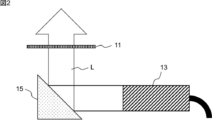
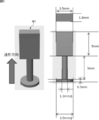
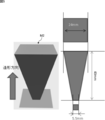
- 1A to 1C are schematic views of a method for manufacturing a three-dimensional model according to an embodiment of the present invention. It is the schematic of the light irradiation mechanism in the rotary rheometer which can irradiate light. It is a figure explaining the shape and dimension of the formability evaluation model M1.
- 4A and 4B are diagrams showing an example of the evaluation criteria of the formability evaluation model M1. It is a figure explaining the shape and dimension of the formability evaluation model M2.
- 6A and 6B are photographs showing an example of the evaluation criteria of the formability evaluation model M2. It is a figure which shows the photograph of the modeled object of the formability evaluation model M1 in each Example and comparative example.
- FIG. 9A and 9B are schematic views illustrating the gel point in the relationship of G'and G'' with respect to the integrated light irradiation time.
- 10A and 10B are diagrams showing photographs of the modeled objects of the modelability evaluation models M1 and M2 in Example 5.
- the photo-curable three-dimensional modeling composition according to one embodiment of the present invention is a photo-curable three-dimensional modeling composition containing a polymerizable organic compound component.
- the photocurable three-dimensional modeling composition according to one embodiment of the present invention has a steady flow viscosity measured with a rotary rheometer at 25 ° C. and a shear rate of 0.01 seconds- 1 and has a steady flow viscosity of 30,000 mPa ⁇ s or less. It is preferably 10000 mPa ⁇ s or less, more preferably 1000 mPa ⁇ s or less, and further preferably 100 mPa ⁇ s or less.
- the steady flow viscosity means the viscosity of the composition before photopolymerization.
- the lower limit of the steady flow viscosity is not particularly limited, but is practically 1 mPa ⁇ s or more, and more preferably 5 mPa ⁇ s or more.
- the composition can be filled in a short time.
- filling the composition means filling the composition to form the next layer after forming a layer of the cured product by irradiating the composition with light.
- a case where a modeled object is produced by a surface exposure method (DLP method: digital processing method) in which light is irradiated from below using the modeling apparatus 1 as shown in FIG. 1 will be described.
- the composition 3 is irradiated with light L (FIG. 1A) to form a first layer composed of the cured layer 9 of the composition 3 between the modeling substrate 5 and the modeling film 7 (FIG. 1B).
- the cured layer 9 (nth layer) is peeled off from the modeling film 7, and the composition flows into the formed space to prepare for forming the next layer (n + 1 layer) (FIG. 1C). That is, the flow of the composition between the modeling film 7 and the cured layer 9 in FIGS. 1B to 1C is the filling of the composition.
- the steady flow viscosity is in the above range, the time required to completely fill the space formed by peeling the cured layer 9 from the modeling film 7 with the composition is short. Further, if the steady flow viscosity is too large, the composition may not flow in itself.
- the steady flow viscosity at a shear rate of 0.01 seconds -1 is less than 1000 mPa ⁇ s and 100 mPa ⁇ s or more
- the steady flow viscosity at 1 second- 1 , 10 seconds -1 , and 100 seconds -1 is measured, respectively.
- the vertical axis is the steady flow viscosity
- the horizontal axis is the shear rate
- the extrapolated value at the shear rate of 0.01 seconds -1 is calculated by drawing an approximate straight line from both logarithmic graphs.
- the steady flow viscosity at a shear rate of 0.01 seconds -1 is less than 100 mPa ⁇ s and is 10 mPa ⁇ s or more
- the steady flow viscosity at 10 seconds- 1 , 100 seconds -1 , and 1000 seconds -1 is measured, respectively.
- the vertical axis is the steady flow viscosity
- the horizontal axis is the shear rate
- the extrapolated value at the shear rate of 0.01 seconds -1 is calculated by drawing an approximate straight line from both logarithmic graphs.
- the photocurable three-dimensional modeling composition according to one embodiment of the present invention has integrated light when light irradiation with a light irradiation intensity of 1.3 mW / cm 2 is applied to the photocurable three-dimensional modeling resin composition.
- the irradiation time is 4 seconds or less, G'is 1 ⁇ 10 6 Pa or more, preferably 1.5 ⁇ 10 6 Pa or more, and more preferably 2 ⁇ 10 6 Pa or more.
- the integrated light irradiation time may need to be 2 seconds or more.
- the integrated light irradiation time required to satisfy the predetermined value regarding G' is preferably 3.5 seconds or less, more preferably 3 seconds or less, and further preferably 3 seconds or less from the viewpoint of high-speed modeling. It is 2.5 seconds or less.
- the modeled object has a shear storage elastic modulus necessary for maintaining its shape even when irradiated with light for a short period of time, and discontinuity in the modeled object is unlikely to occur, so that in a short time. Can be modeled.
- the wavelength of the irradiation light is preferably 405 nm.
- the shear storage elastic modulus calculated based on the measurement data for 30 seconds per measurement by a rotary rheometer at a parallel plate of 10 mm ⁇ , a measurement gap of 0.1 mm, a frequency of 0.1 Hz, a strain of 0.5% or less, and 25 ° C. is G'.
- the shear loss elastic modulus is G'', and the loss tangent is tan ⁇ .
- Calculation based on measurement data for 30 seconds means calculation based on raw data obtained by continuous measurement for 30 seconds. In other words, 30 seconds of raw data per measurement is read into the device, and the measurement is performed and calculated.
- the method of light irradiation and measurement is not particularly limited as long as the above conditions are followed, but as an example, the following method of alternately performing the irradiation step and the measurement step can be mentioned.
- Irradiation step Light irradiation for X n seconds
- Measurement step Measurement is started by a rotary rheometer immediately after the light irradiation is stopped, and the measurement for 30 seconds per measurement is performed twice. (It takes 60 seconds for two measurements. That is, it takes 60 seconds from the stop of light irradiation to the next light irradiation.)
- X n is any positive real number (eg, 0.5) and may be the same or different each time in each irradiation step.
- the total of X n (X 1 + X 2 + X 3 ... + X n ) is the integrated light irradiation time.
- all X n may be 0.5, and one cycle of the irradiation step and the measurement step may be performed in 60.5 seconds.
- X n is 4 or less.
- shear storage elastic modulus G' exceeds a predetermined value in any of the measurements when the measurement is performed twice in the measurement step as described above, it is judged that the condition is satisfied.
- the shear storage elastic modulus G' is often the latter of the two measurements.
- the maximum value of tan ⁇ after the gel point after the start of photopolymerization is 0.5 or more, preferably 0.53 or more, and more. It is preferably 0.6 or more, and more preferably 0.8 or more.
- the maximum value of tan ⁇ means a value calculated by measuring the composition (at least part of which was polymerized by light irradiation) during curing after the gel point after the polymerization was started by irradiating the composition with light. ..
- the upper limit of the maximum value of the tan ⁇ is not particularly limited, but in some cases, it is preferably 10 or less, more preferably 5 or less, in consideration of the recovery of strain in the cleaning step and the additional curing step after molding. Yes, more preferably 2 or less.
- the maximum value of the tan ⁇ is in the above range, delamination is unlikely to occur, so that modeling can be performed in a short time.
- the intersection (then G'> G'') corresponds to the gel point GP.
- delamination means that at least one set of delamination is delaminated, that is, it is not adhered. When such delamination occurs, further modeling cannot be performed. For example, in the production of a modeled object by the process as shown in FIG. 1, when the nth layer is formed and then the nth layer is peeled off from the modeling film 7, the mth layer and the m-1th layer are formed. It means that peeling occurs between them (2 ⁇ m ⁇ n).
- the composition for photocurable three-dimensional modeling of the present invention contains a polymerizable organic compound component and is not limited as long as the above conditions are satisfied, but a preferable component in one embodiment will be described below.
- the polymerizable organic compound component preferably contains a (meth) acrylic acid-based monomer.
- the (meth) acrylic acid-based monomer is a general term for a (meth) acrylic acid ester monomer, a (meth) acrylamide-based monomer, and a (meth) acrylic acid-based monomer. It may also be called meta) acrylate.
- the polymerizable organic compound component is at least one selected from a monofunctional (meth) acrylic acid ester monomer and a monofunctional (meth) acrylamide-based monomer, and a polyfunctional (meth) acrylic acid. Includes an ester monomer.
- the monofunctional (meth) acrylic acid ester monomer means a compound having one (meth) acryloyl group.
- the polyfunctional (meth) acrylic acid ester monomer refers to a compound having two or more (meth) acryloyl groups.
- the monofunctional (meth) acrylamide-based monomer refers to a (meth) acrylamide compound having one (meth) acryloyl group.
- the polymerizable organic compound component is at least one selected from a monofunctional (meth) acrylic acid ester monomer and a monofunctional (meth) acrylamide-based monomer, and a polyfunctional (meth) acrylic acid ester monomer.
- the content of the monofunctional (meth) acrylate ester monomer is preferably 50 to 94% by mass, more preferably 55 to 90% by mass in 100% by mass of the polymerizable organic compound component. Yes, more preferably 60-85% by mass.
- the polymerizable organic compound component is at least one selected from a monofunctional (meth) acrylic acid ester monomer and a monofunctional (meth) acrylamide-based monomer, and a polyfunctional (meth) acrylic acid ester monomer.
- the content of the polyfunctional (meth) acrylate ester monomer is preferably 6 to 50% by mass, more preferably 10 to 45% by mass in 100% by mass of the polymerizable organic compound component. Yes, more preferably 15-40% by mass.
- the content of the polyfunctional (meth) acrylic acid ester monomer is, for example, 6, 8, 10, 15, 20, 25, 30, 35, 40, 45, 50% by mass, and here. It may be in the range between any two of the illustrated values.
- the polymerizable organic compound component is a monofunctional (meth) acrylic acid ester monomer or a monofunctional (meth) acrylamide-based monomer (hereinafter, these two are combined to form a “monofunctional (meth)".
- the monofunctional (meth) acrylic acid ester single amount is also referred to as "acrylamide-based monomer, etc.”
- mole percent M S of the body such as the (mol%) having a like monofunctional (meth) acrylic acid ester monomer (meth) number of acryloyl groups a S (mol) (i.e., 1 mol) and divided by a multi functional (meth) number a M (mol) (2-functional (meth) acryloyl groups of the molar percentages M M acrylic acid ester monomer (mol%) a polyfunctional (meth) acrylate monomer
- the total value (%) with the value divided by 2 mol) is preferably 76 to 97%, more preferably 80 to 96%.
- the total value is calculated by the following formula (1), and specifically, for example, 76, 77, 78, 79, 80, 81, 82, 83, 84, 85, 86, 87, 88, 89, 90, It is 91, 92, 93, 94, 95, 96, 97%, and may be within the range between any two of the numerical values exemplified here.
- the monofunctional (meth) acrylic acid ester monomer preferably contains a monofunctional (meth) acrylic acid ester monomer having a cyclic structure, and more preferably the cyclic structure is a polycyclic structure or an alicyclic hydrocarbon group.
- the cyclic structure is more preferably a polycyclic structure and a saturated hydrocarbon group.
- the monofunctional (meth) acrylic acid ester monomer preferably has at least one of a hetero atom other than an ether bond, an aromatic ring, and oxygen, and is a single amount of monofunctional (meth) acrylic acid ester. Includes monofunctional (meth) acrylic acid ester monomers that include the body, more preferably not all.
- the monofunctional (meth) acrylamide-based monomer preferably contains a monofunctional (meth) acrylamide-based monomer having a cyclic structure, and more preferably the cyclic structure contains a hetero atom such as an oxygen atom or a nitrogen atom.
- the acrylic equivalent of the monofunctional (meth) acrylic acid ester monomer is preferably 160 to 250, more preferably 180 to 220, and even more preferably 200 to 215.
- the acrylic equivalent of the monofunctional (meth) acrylic acid ester monomer is a value obtained by dividing the molecular weight of the monofunctional (meth) acrylic acid ester monomer by the number of functional groups of the (meth) acryloyl group.
- the acrylic equivalent of the monofunctional (meth) acrylamide-based monomer is preferably 100 to 200, more preferably 120 to 180, and even more preferably 130 to 160.
- the acrylic equivalent of the monofunctional (meth) acrylamide-based monomer is a value obtained by dividing the molecular weight of the monofunctional (meth) acrylamide-based monomer by the number of functional groups of the (meth) acryloyl group.
- the molecular weight of the monofunctional (meth) acrylic acid ester monomer is preferably 160 to 250, more preferably 180 to 220, and even more preferably 200 to 215.
- the molecular weight of the monofunctional (meth) acrylamide-based monomer is preferably 100 to 200, more preferably 120 to 180, and even more preferably 130 to 160.
- Examples of monofunctional (meth) acrylic acid ester monomers include methyl (meth) acrylate, ethyl (meth) acrylate, n-butyl (meth) acrylate, iso-butyl (meth) acrylate, and t-butyl (meth).
- the alicyclic (meth) acrylic acid ester is preferable.
- the alicyclic (meth) acrylic acid esters dicyclopentanyl (meth) acrylate, tetracyclododecanyl (meth) acrylate, isobornyl (meth) acrylate, norbornyl (meth) acrylate, and adamantane-1-yl (meth) )
- One or more selected from the group consisting of acrylate is preferable.
- one or more of the group consisting of an acyclic aliphatic (meth) acrylic acid ester and an alicyclic (meth) acrylic acid ester is preferable, and an alicyclic (meth) acrylic acid ester is more preferable.
- Isobornyl (meth) acrylate is preferable from the viewpoint of availability, glass transition temperature, and the like. These may be used alone or in combination of two or more.
- Examples of monofunctional (meth) acrylamide-based monomers include (meth) acryloylmorpholine, dimethyl (meth) acrylamide, diethyl (meth) acrylamide, hydroxyethyl (meth) acrylamide, isopropyl (meth) acrylamide, and dimethylaminopropyl. Examples thereof include (meth) acrylamide and N- (meth) acryloyloxyethyl hexahydrophthalimide.
- (meth) acryloylmorpholin or N- (meth) acryloyloxyethyl hexahydrophthalimide is preferable, and (meth) acryloylmorpholin is particularly preferable. These may be used alone or in combination of two or more.
- a preferable monofunctional (meth) acrylic acid ester monomer or monofunctional (meth) acrylamide-based monomer is used, other monofunctional (meth) acrylic acid esters are used as long as the effects of the present invention are not impaired. It may contain a monomer or other monofunctional (meth) acrylamide-based monomer.
- a preferable monofunctional (meth) acrylic acid ester monomer is a main component, and more specifically, a preferable monofunctional (meth) acrylic acid ester in 100% by mass of the monofunctional (meth) acrylic acid ester monomer.
- the content of the monomer is preferably 50% by mass or more, more preferably 90% by mass or more, and further preferably substantially 100% by mass. Further, from the viewpoint of availability, glass transition temperature, and the like, it is preferable that the monofunctional (meth) acrylic acid ester monomer is substantially composed of isobornyl (meth) acrylate only.
- polyfunctional (meth) acrylic acid ester monomer a bifunctional (meth) acrylic acid ester monomer, a trifunctional (meth) acrylic acid ester monomer, and a tetrafunctional or higher (meth) acrylic acid ester single amount.
- the body etc. can be mentioned.
- the acrylic equivalent of the polyfunctional (meth) acrylic acid ester monomer is preferably 80 to 200, more preferably 100 to 180, and even more preferably 120 to 160.
- the acrylic equivalent of the polyfunctional (meth) acrylic acid ester monomer is a value obtained by dividing the molecular weight of the polyfunctional (meth) acrylic acid ester monomer by the number of functional groups of the (meth) acryloyl group.
- the molecular weight of the polyfunctional (meth) acrylic acid ester monomer is preferably 200 to 2000, more preferably 250 to 1500, and even more preferably 280 to 1000.
- Alicyclic di (meth) acrylic acid ester monomers such as 1,3-adamantane dimethanol di (meth) acrylate, tricyclodecanedimethanol di (meth) acrylate, and 1,3-butanediol di (meth) acrylate.
- Alcans such as 1,4-butanediol di (meth) acrylate, 1,6-hexadioldi (meth) acrylate, 1,9-nonanediol di (meth) acrylate, and 1,10-decanediol di (meth) acrylate.
- Examples of the trifunctional (meth) acrylic acid ester monomer include isocyanurate ethylene oxide-modified tri (meth) acrylate, pentaerythritol tri (meth) acrylate, trimethylolpropane tri (meth) acrylate, and tris [(meth) acryloixi. Ethyl] Isocyanurate and the like.
- tetrafunctional or higher functional (meth) acrylic acid ester monomer examples include ditrimethylolpropanetetra (meth) acrylate, dimethylolpropanetetra (meth) acrylate, pentaerythritol tetra (meth) acrylate, and pentaerythritol ethoxytetra (meth) acrylate. , Dipentaerythritol penta (meth) acrylate, dipentaerythritol hexa (meth) acrylate and the like.
- the polyfunctional (meth) acrylic acid ester monomer preferably has a cyclic structure, more preferably the cyclic structure is a polycyclic structure or an alicyclic hydrocarbon group, and further preferably the cyclic structure is a polycyclic structure. It has a structure and is a saturated hydrocarbon group. Further, the polyfunctional (meth) acrylic acid ester monomer preferably does not have at least one of heteroatoms other than an ether bond, an aromatic ring, and oxygen, and more preferably does not have all of them. From another point of view, the polyfunctional (meth) acrylic acid ester monomer is preferably a bifunctional (meth) acrylic acid ester monomer.
- alicyclic di (meth) acrylic acid ester monomer (poly) alkylene glycol di (meth) acrylic acid ester monomer, trimethylolpropane tri (meth) acrylate, diglycerin EO-modified di (di)
- One or more of the group consisting of meta) acrylate is preferable.
- the alicyclic di (meth) acrylic acid ester monomers one or more of the group consisting of 1,3-adamantane dimethanol di (meth) acrylate and tricyclodecanedimethanol di (meth) acrylate is preferable.
- (poly) alkylene glycol di (meth) acrylic acid ester monomers tetramethylene glycol di (meth) acrylate, diethylene glycol di (meth) acrylate, triethylene glycol di (meth) acrylate, tetraethylene glycol di (meth) acrylate ) Acrylate, polyethylene glycol di (meth) acrylate, propylene glycol di (meth) acrylate, dipropylene glycol di (meth) acrylate, tripropylene glycol di (meth) acrylate, polypropylene glycol di (meth) acrylate.
- the above is preferable.
- One or more of the group consisting of glycol di (meth) acrylate, trimethyl propantri (meth) acrylate, and diglycerin EO modified di (meth) acrylate is preferable, and tricyclodecanedimethanol di (meth) acrylate and diethylene glycol di (meth) acrylate are preferable.
- tricyclodecanedimethanol di (meth) acrylate propylene glycol di (meth) acrylate, dipropylene glycol di (meth) acrylate, tripropylene glycol di (meth) acrylate, trimethylolpropane tri
- One or more of the group consisting of (meth) acrylate and diglycerin EO-modified di (meth) acrylate is preferable. These may be used alone or in combination of two or more.
- a preferable polyfunctional (meth) acrylic acid ester monomer is a main component, and more specifically, a preferable polyfunctional (meth) acrylic acid ester in 100% by mass of the polyfunctional (meth) acrylic acid ester monomer.
- the content of the monomer is preferably 50% by mass or more, more preferably 90% by mass or more, and further preferably substantially 100% by mass.
- the polyfunctional (meth) acrylic acid ester monomer is preferably composed substantially only of tricyclodecanedimethanol di (meth) acrylate, and only tricyclodecanedimethanol diacrylate. It is more preferable to consist of.
- the polymerizable organic compound component may contain a monomer such as another vinyl compound or an epoxy compound as long as the effect of the present invention is not impaired.
- a monomer such as another vinyl compound or an epoxy compound as long as the effect of the present invention is not impaired.
- the vinyl compound include vinylpyrrolidone, N-vinylformamide and the like.
- the polymerizable organic compound component may contain a urethane (meth) acrylate oligomer.
- the urethane (meth) acrylate oligomer has at least one urethane bond and at least one (meth) acrylate group in the molecule.
- the urethane (meth) acrylate oligomer By containing the urethane (meth) acrylate oligomer, the effect of improving the toughness of the modeled product obtained after modeling can be obtained.
- the addition of the urethane (meth) acrylate oligomer is preferable from the viewpoint of curing shrinkage in high-speed modeling, and can contribute to the flexural strength of the modeled object by stress relaxation in a low temperature region.
- the urethane (meth) acrylate oligomer is preferably a polyfunctional urethane (meth) acrylate oligomer.
- the polyfunctional urethane (meth) acrylate oligomer is preferably a bifunctional or higher functional urethane (meth) acrylate oligomer, more preferably a 2 to 15 functional urethane (meth) acrylate oligomer, and further preferably a 2 to 6 functional urethane (2 to 6 functional urethane). It is a meta) acrylate oligomer, most preferably a bifunctional urethane (meth) acrylate oligomer.
- the urethane (meth) acrylate oligomer it is preferable to remove the above-mentioned polyfunctional (meth) acrylic acid ester monomer.
- the urethane (meth) acrylate oligomer is preferably removed from the above-mentioned polyfunctional (meth) acrylic acid ester monomer.
- the urethane (meth) acrylate oligomer comprises an active hydrogen group-containing polyol component (a), a diisocyanate component (b), and an active hydrogen group-containing (meth) acrylic component (c).
- the component (a) is, for example, polyethylene glycol, polypropylene glycol, polytetramethylene glycol, ethylene oxide-modified bisphenol, propylene oxide-modified bisphenol, polyglycol obtained by copolymerization of ethylene oxide and propylene oxide, polyester polyol, polycarbonate polyol, and the like. Examples thereof include polyacrylic polyol and polybutadiene polyol. These may be used alone or in combination of two or more.
- the component (b) is, for example, tolylene diisocyanate, xylylene diisocyanate, diphenylmethane diisocyanate, hexamethylene diisocyanate, trimethylhexamethylene diisocyanate, tetramethylxylylene diisocyanate, isophorone diisocyanate, hydrogenated tolylene diisocyanate, hydrogenated xyl.
- examples thereof include range isocyanate and hydrogenated diphenylmethane diisocyanate. These may be used alone or in combination of two or more.
- the component (c) is, for example, 2-hydroxyethyl acrylate, 2-hydroxyethyl methacrylate, 2-hydroxypropyl acrylate, 2-hydroxypropyl methacrylate, 4-hydroxybutyl acrylate, 4-hydroxybutyl methacrylate, pentaerythritol triacrylate, penta.
- hydroxyalkyl (meth) acrylates such as erythritol trimethacrylate. These may be used alone or in combination of two or more.
- the urethane (meth) acrylate oligomer reacts, for example, with the active hydrogen group-containing polyol component (a), the diisocyanate component (b), and the active hydrogen group-containing (meth) acrylic component (c) (for example, a polycondensation reaction). ) Is obtained.
- the weight average molecular weight of the urethane (meth) acrylate oligomer is preferably 1000 to 60,000, more preferably 3000 to 40,000, and most preferably 5000 to 10000.
- the weight average molecular weight is preferably determined by preparing a calibration curve with commercially available standard polystyrene using tetrahydrofuran as a solvent and using a GPC system (SC-8010 manufactured by Tosoh Corporation) or the like under the following conditions.
- the measurement conditions used in the experimental examples are shown below. Flow velocity: 1.0 ml / min Set temperature: 40 ° C.
- the polymerizable organic compound component contains a monofunctional (meth) acrylamide-based monomer, a polyfunctional (meth) acrylic acid ester monomer, and a urethane (meth) acrylate oligomer
- 100 mass of the polymerizable organic compound component The content of the monofunctional (meth) acrylamide-based monomer in% is preferably 30 to 70% by mass, more preferably 40 to 60% by mass, and further preferably 45 to 65% by mass.
- the polymerizable organic compound component contains a monofunctional (meth) acrylamide-based monomer, a polyfunctional (meth) acrylic acid ester monomer, and a urethane (meth) acrylate oligomer
- 100 mass of the polymerizable organic compound component The content of the polyfunctional (meth) acrylic acid ester monomer in% is preferably 20 to 60% by mass, more preferably 30 to 50% by mass, and further preferably 35 to 45% by mass. ..
- the content of the polyfunctional (meth) acrylic acid ester monomer is, for example, 20, 25, 30, 35, 40, 45, 50, 55, 60% by mass, and the numerical values exemplified here are used. It may be within the range between any two.
- the polymerizable organic compound component contains a monofunctional (meth) acrylamide-based monomer, a polyfunctional (meth) acrylic acid ester monomer, and a urethane (meth) acrylate oligomer
- 100 mass of the polymerizable organic compound component The content of the urethane (meth) acrylate oligomer in% is preferably 0.1 to 30% by mass, more preferably 1 to 20% by mass, and further preferably 5 to 15% by mass.
- Photopolymerization initiator examples include benzophenone and its derivatives, benzyl and its derivatives, anthraquinone and its derivatives, benzoin, benzoin methyl ether, benzoin ethyl ether, benzoin propyl ether, benzoin isobutyl ether, benzoin derivatives such as benzyl dimethyl ketal, and diethoxy.
- Acetophenone derivatives such as acetophenone and 4-t-butyltrichloroacetophenone, 2-dimethylaminoethylbenzoate, p-dimethylaminoethylbenzoate, diphenyldisulfide, thioxanthone and its derivatives, camphorquinone, 7,7-dimethyl-2,3-di Oxobicyclo [2.2.1] heptane-1-carboxylic acid, 7,7-dimethyl-2,3-dioxobicyclo [2.2.1] heptane-1-carboxy-2-bromoethyl ester, 7, 7-Dimethyl-2,3-dioxobicyclo [2.2.1] heptane-1-carboxy-2-methyl ester, 7,7-dimethyl-2,3-dioxobicyclo [2.2.1] heptane Benzoyl quinone derivatives such as -1-carboxylic acid chloride, 2-methyl-1
- the content of the photopolymerization initiator is preferably 0.5 to 10 parts by mass and more preferably 1 to 7 parts by mass with respect to 100 parts by mass of the polymerizable organic compound component. Within such a range, a sufficient curing rate can be obtained and storage stability is also good.
- composition for photocurable three-dimensional modeling is, if desired, a curing accelerator, a chain transfer agent, a thickener, in addition to the above components, as long as it is within the range satisfying the physical properties of the present invention. It may contain already known substances such as fillers, plasticizers, colorants and rust inhibitors.
- the curing accelerator examples include those containing a nitrogen atom. Of these, tertiary amines having an alkyl group and the like are preferable, and specific examples thereof include dimethylpalmitylamine.
- the content of the curing accelerator is preferably 0.5 to 10 parts by mass, and more preferably 1 to 7 parts by mass with respect to 100 parts by mass of the polymerizable organic compound component.
- the filler examples include an inorganic filler and an organic filler. Further, as the filler, a particulate one and a fibrous one can be used. When a particulate filler is used, the average particle size is not particularly limited and may be 0.001 to 50 ⁇ m. Further, two kinds of fillers having different average particle diameters, for example, those having 0.5 ⁇ m and 5 ⁇ m may be used in combination.
- the average particle size is preferably obtained from a mass or volume particle size distribution curve obtained from a laser diffraction type particle size measuring device (Coulter "Model LS-230" type).
- the inorganic filler include aluminum oxide, aluminum hydroxide, silica soil, glass beads, hollow glass beads, magnesium oxide, magnesium hydroxide, magnesium carbonate, spherical silica, silas balloon, glass fiber, and potassium titanate whiskers. , Carbon whiskers, sapphire whiskers, beryllia whiskers, boron carbide whiskers, silicon carbide whiskers, silicon nitride whiskers and the like.
- organic filler examples include polyisobutene, polybutadiene, polyisoprene, styrene-butadiene copolymer, styrene-isoprene copolymer, (meth) acrylonitrile-butadiene copolymer, and ethylene- ⁇ -olefin copolymer.
- Ethylene- ⁇ -olefin-polyene copolymer butyl rubber, styrene-butadiene block copolymer, styrene-isoprene block copolymer, hydride styrene-butadiene block copolymer, hydride butadiene polymer, hydride styrene- Butadiene copolymer, chloroprene rubber, (meth) acrylic rubber, urethane rubber, (meth) acrylonitrile-butadiene-styrene copolymer, (meth) methyl acrylate-butadiene-styrene copolymer, polyester resin, polyethylene, polypropylene, etc. Polymers can be mentioned. Further, it is preferable to dissolve it in a raw material such as (meth) acrylate.
- the photocurable three-dimensional modeling composition according to one embodiment of the present invention can be applied to various three-dimensional modeling methods in which polymerization is carried out by light irradiation. It is preferably used in a surface exposure method, particularly in a photocurable three-dimensional modeling composition that irradiates light from below.
- the method for producing a three-dimensional model according to an embodiment of the present invention includes a step of irradiating the photocurable three-dimensional model composition with light.
- the method for producing a three-dimensional model according to an embodiment of the present invention will be described in more detail with reference to FIG. 1, at least a part of the photocurable three-dimensional modeling composition 3 between the modeling substrate 5 and the modeling film 7. It includes a step of irradiating the material with light to form a cured layer.
- the light irradiation is light irradiation by a surface exposure method, and more preferably, the light irradiation is performed from below.
- the irradiation time of the irradiation light is preferably 4 seconds or less, more preferably 2 to 4 seconds.
- the intensity of the irradiation light is 0.5 mW / cm 2 or more.
- the manufacturing method further includes a step of moving the modeling substrate 5 or the modeling film 7 in the vertical direction.
- the moving distance in the vertical direction is 0.1 to 10 mm.
- the movement in the vertical direction is performed for peeling the modeled object from the modeling film 7 and for moving the next layer to the light irradiation position.
- the movement for peeling may be increased more than the amount required to move the next layer to the light irradiation position, and then the modeling is advanced so as to return (lower) to the light irradiation position of the next layer.
- the time required for moving in the vertical direction is 0.5 to 1.5 seconds.
- the production method further comprises the step of filling the photocurable three-dimensional modeling composition 3.
- the time required for filling is 0.1 to 1 second.
- the step of taking out the modeled object from the modeling apparatus 1 and performing cleaning and light irradiation to further cure the modeled object is included.
- the composition for photocurable three-dimensional modeling according to the present invention enables high-speed modeling, it can be used for various three-dimensional photomodeling applications, especially for producing a modeled object for testing.
- Such applications include, for example, the production of molding dies used for injection molding and blow molding. Since it is a resin, its durability is inferior to that of a metal mold, but the durability is not so problematic in the production of small lots and the production of temporary molds for testing.
- the photocurable three-dimensional modeling composition according to the present invention it is possible to fabricate such a mold at low cost and in a short time. That is, the photocurable three-dimensional modeling composition of the present invention is, on one side, a photocurable composition for molding molding.
- Example 1 (Preparation of composition for photocurable three-dimensional modeling)
- IBX-A Isobornyl acrylate
- A-DCP tricyclodecanedimethanol diacrylate
- A-DCP new
- C phenylbis (2,4,6-trimethylbenzoyl) phosphine oxide
- I-819 IGM Resins B.V.
- the composition (S-1) was prepared by mixing 4 parts by mass of (manufactured by Kao) and 3 parts by mass of (D) dimethylpalmitylamine (DM6098: manufactured by Kao).
- the vertical axis was the steady flow viscosity
- the horizontal axis was the shear rate
- the extrapolated value at the shear rate of 0.01 seconds -1 was calculated by drawing an approximate straight line from both logarithmic graphs.
- the vertical axis was the steady flow viscosity
- the horizontal axis was the shear rate
- the extrapolated value at the shear rate of 0.01 seconds -1 was calculated by drawing an approximate straight line from both logarithmic graphs.
- the steady flow viscosity at a shear rate of 0.01 seconds -1 is less than 100 mPa ⁇ s and is 10 mPa ⁇ s or more
- the steady flow viscosity at 10 seconds- 1 , 100 seconds -1 , and 1000 seconds -1 is measured, respectively.
- the vertical axis was the steady flow viscosity
- the horizontal axis was the shear rate
- the extrapolated value at the shear rate of 0.01 seconds -1 was calculated by drawing an approximate straight line from both logarithmic graphs.
- the composition (S-1) is irradiated with light having a light irradiation intensity of 1.3 mW / cm 2 and a wavelength (peak wavelength) of 405 nm, and the composition at each integrated light irradiation time is measured by a rotary rheometer (MCR302: Antonio Par). Made by).
- the light irradiation is output from the uniform surface irradiation lens (HLL-Q2: manufactured by HOYA Corporation, light source H-4VH: manufactured by HOYA Corporation) 13 with respect to the sample on the glass perche plate 11 of the rotary rheometer.
- the measurement conditions were a parallel plate of 10 mm ⁇ , a measurement gap of 0.1 mm, a frequency of 0.1 Hz, a strain of 0.5% or less, and 25 ° C.
- one measurement was 30 seconds, and was performed twice continuously without an interval immediately after the light irradiation was stopped.
- the shear storage elastic modulus G' was 1 ⁇ 10 6 Pa (1 MPa) at the integrated light irradiation time of 4 seconds.
- the maximum value of the loss tangent tan ⁇ after the gel point was 1.44.
- Leveling property was evaluated by observing whether the composition was sufficiently leveled under the above-mentioned modeling conditions (leveling time provided for leveling: 0.5 seconds). That is, under the above modeling conditions, after the nth layer is formed and the nth layer is peeled off from the modeling film 7, the composition flows between the nth layer and the modeling film 7 until light irradiation. It was observed that the composition for layer formation was filled, that is, the composition was leveled.
- the evaluation criteria are as follows. ⁇ : Sufficient leveling ⁇ : Insufficient leveling
- ⁇ Shaping discontinuity> The evaluation of the modeling discontinuity was performed by modeling the modelability evaluation model M1 shown in FIG. 3 under the above modeling conditions.
- the evaluation criteria are as follows. An example of the modeled object in the case of " ⁇ " is shown in FIG.
- FIG. 4A An example of the modeled object in the case of "x" is shown in FIG. 4B.
- ⁇ There was no deformation that would make modeling impossible during modeling in the modeling of all three models, and modeling was completed.
- ⁇ Deformation during modeling in the modeling of at least one model even when the integrated light irradiation time was 4 seconds. I could't model the model
- FIG. 7 shows the formability evaluation model M1 created by each example.
- Example 1 in which modeling was attempted using the composition (S-1), all three models could be obtained in the shape as designed.
- ⁇ Delamination> The evaluation of delamination was performed by modeling the formability evaluation model M2 shown in FIG. 5 under the above modeling conditions. We tried to model three model M2s with light irradiation for 4 seconds per layer, and observed whether they could be modeled without delamination. When modeling could not be performed, even if light irradiation was performed for 4 seconds per layer, peeling occurred between any of the cured layers when the film was peeled off from the modeling film 7, and modeling could not be continued.
- the evaluation criteria are as follows. An example of the modeled object in the case of " ⁇ " is shown in FIG. 6A, and an example of the modeled object in the case of "x" is shown in FIG. 6B.
- ⁇ Delamination did not occur during modeling in the modeling of all three models, and modeling was completed.
- ⁇ Delamination occurred during modeling in the modeling of at least one model, and model modeling could not be performed.
- Figure 8 shows the formability evaluation model M2 created in each example.
- Example 1 in which modeling was attempted using the composition (S-1), all three models could be obtained in the shape as designed.
- the numerical value shown below each modeled object in FIG. 8 is the height of each modeled object obtained.
- Examples 2 to 4 and Comparative Examples 1 to 3 The compositions (S-2) to (S-7) having the compositions shown in Table 1 were prepared, and the physical properties were measured and a modeling model was created in the same manner as in Example 1 for evaluation. The contents of the components (A) to (E) are all described by "parts by mass”.
- compositions (S-8) to (S-11) below Physical property measurement and modeling model creation were performed and evaluated in the same manner as in Example 1.
- the FB5D used in Example 4 and Comparative Example 3 was spherical silica having an average particle diameter of 5 ⁇ m (FB-5D, manufactured by Denka Co., Ltd.), and the SFP30M was spherical silica having an average particle diameter of 0.5 ⁇ m (SFP-30M, manufactured by Denka Co., Ltd.). is there.
- Acrylate is 2-hydroxyethyl acrylate.) 10 parts by mass, phenylbis (2,4,6-trimethylbenzoyl) phosphine oxide (I-819: manufactured by IGM Resins VV) 4 parts by mass, and dimethyl palmityl. 0.5 parts by mass of amine (DM6098: manufactured by Kao Co., Ltd.) was mixed to prepare a composition (S-12). Using the obtained composition (S-12), physical property measurement and modeling model creation were performed and evaluated in the same manner as in Example 1.
- the flexural strength was evaluated by molding a test piece having a length of 10 mm, a width of 5 mm, and a thickness of 1 mm under the above molding conditions using the composition (S-1 and S-12).
- the obtained test piece was evaluated using a viscoelasticity measuring device (RSA-G2: manufactured by TA Instruments) according to the test method described in JIS T 6501: 2012. It was calculated as an average value of flexural strength (MPa) by 10 tests.
- Modeling device 3 Composition
- 5 Modeling substrate
- 7 Modeling film
- 9 Hardened layer
- 11 Glass Pelce plate
- 13 Uniform surface irradiation lens
- 15 45 ° prism
- L Light
- M1 Formability evaluation model M1
- M2 Formability evaluation model M2
- GP P1: Gel point (first intersection)
- P2 Second intersection
- P3 Third intersection
Landscapes
- Chemical & Material Sciences (AREA)
- Engineering & Computer Science (AREA)
- Materials Engineering (AREA)
- Organic Chemistry (AREA)
- Polymers & Plastics (AREA)
- Health & Medical Sciences (AREA)
- Chemical Kinetics & Catalysis (AREA)
- Medicinal Chemistry (AREA)
- Manufacturing & Machinery (AREA)
- Wood Science & Technology (AREA)
- Life Sciences & Earth Sciences (AREA)
- Physics & Mathematics (AREA)
- Mechanical Engineering (AREA)
- Optics & Photonics (AREA)
- Polymerisation Methods In General (AREA)
- Addition Polymer Or Copolymer, Post-Treatments, Or Chemical Modifications (AREA)
- Polyurethanes Or Polyureas (AREA)
- Macromonomer-Based Addition Polymer (AREA)
Priority Applications (4)
| Application Number | Priority Date | Filing Date | Title |
|---|---|---|---|
| EP20778370.5A EP3882028B1 (en) | 2019-03-28 | 2020-03-26 | Photocurable composition for three-dimensional molding, three-dimensional molded product, and method for producing three-dimensional molded product |
| CN202080017579.6A CN115989146A (zh) | 2019-03-28 | 2020-03-26 | 光固化性立体造型用组合物、立体造型物以及立体造型物的制造方法 |
| US17/413,446 US11787951B2 (en) | 2019-03-28 | 2020-03-26 | Photocurable composition for three-dimensional molding, three-dimensional molded product, and method for producing three-dimensional molded product |
| JP2021509589A JP7284251B2 (ja) | 2019-03-28 | 2020-03-26 | 光硬化性立体造形用組成物、立体造形物及び立体造形物の製造方法 |
Applications Claiming Priority (2)
| Application Number | Priority Date | Filing Date | Title |
|---|---|---|---|
| JP2019-062349 | 2019-03-28 | ||
| JP2019062349 | 2019-03-28 |
Publications (1)
| Publication Number | Publication Date |
|---|---|
| WO2020196753A1 true WO2020196753A1 (ja) | 2020-10-01 |
Family
ID=72611503
Family Applications (1)
| Application Number | Title | Priority Date | Filing Date |
|---|---|---|---|
| PCT/JP2020/013668 Ceased WO2020196753A1 (ja) | 2019-03-28 | 2020-03-26 | 光硬化性立体造形用組成物、立体造形物及び立体造形物の製造方法 |
Country Status (5)
| Country | Link |
|---|---|
| US (1) | US11787951B2 (https=) |
| EP (1) | EP3882028B1 (https=) |
| JP (1) | JP7284251B2 (https=) |
| CN (1) | CN115989146A (https=) |
| WO (1) | WO2020196753A1 (https=) |
Cited By (1)
| Publication number | Priority date | Publication date | Assignee | Title |
|---|---|---|---|---|
| JPWO2023188464A1 (https=) * | 2022-03-29 | 2023-10-05 |
Families Citing this family (3)
| Publication number | Priority date | Publication date | Assignee | Title |
|---|---|---|---|---|
| US11008561B2 (en) | 2014-06-30 | 2021-05-18 | Bioverativ Therapeutics Inc. | Optimized factor IX gene |
| KR20220097891A (ko) | 2019-09-30 | 2022-07-08 | 바이오버라티브 테라퓨틱스 인크. | 렌티바이러스 벡터 제형 |
| US12291648B2 (en) * | 2020-09-11 | 2025-05-06 | Canon Kabushiki Kaisha | Energy ray-curable resin compositions and its cured products |
Citations (6)
| Publication number | Priority date | Publication date | Assignee | Title |
|---|---|---|---|---|
| JPH1030002A (ja) * | 1996-07-16 | 1998-02-03 | Olympus Optical Co Ltd | 光硬化性流動樹脂組成物 |
| JP2014159556A (ja) * | 2013-01-22 | 2014-09-04 | Jnc Corp | 光学的立体造形用光硬化性組成物および造形物の製造方法 |
| WO2017018525A1 (ja) * | 2015-07-29 | 2017-02-02 | 株式会社カネカ | 光硬化型3次元立体造形物の製造方法 |
| WO2017033427A1 (ja) * | 2015-08-26 | 2017-03-02 | ナガセケムテックス株式会社 | パターニング材料、パターニング方法、およびパターニング装置 |
| JP2017210539A (ja) | 2016-05-25 | 2017-11-30 | Dic株式会社 | 光造形用硬化性組成物、光硬化物、及び成形品の製造方法 |
| WO2018235943A1 (ja) * | 2017-06-23 | 2018-12-27 | 国立大学法人九州大学 | 無機成形体製造用組成物、無機成形体の製造方法 |
Family Cites Families (6)
| Publication number | Priority date | Publication date | Assignee | Title |
|---|---|---|---|---|
| EP2436510A1 (en) * | 2010-10-04 | 2012-04-04 | 3D Systems, Inc. | System and resin for rapid prototyping |
| JP5738367B2 (ja) * | 2013-08-19 | 2015-06-24 | シーメット株式会社 | 黄色度の低い光学的立体造形物 |
| JP6188495B2 (ja) * | 2013-08-30 | 2017-08-30 | 富士フイルム株式会社 | 積層体及びその応用 |
| JP6679234B2 (ja) * | 2015-07-29 | 2020-04-15 | マクセルホールディングス株式会社 | モデル材用樹脂組成物、サポート材用樹脂組成物、光造形品、および、光造形品の製造方法 |
| US10259956B2 (en) * | 2016-10-11 | 2019-04-16 | Xerox Corporation | Curable ink composition |
| EP3658598B1 (en) * | 2017-07-28 | 2022-11-16 | Nikon Corporation | Photocurable composition and method of manufacturing three-dimensional object |
-
2020
- 2020-03-26 EP EP20778370.5A patent/EP3882028B1/en active Active
- 2020-03-26 CN CN202080017579.6A patent/CN115989146A/zh active Pending
- 2020-03-26 WO PCT/JP2020/013668 patent/WO2020196753A1/ja not_active Ceased
- 2020-03-26 JP JP2021509589A patent/JP7284251B2/ja active Active
- 2020-03-26 US US17/413,446 patent/US11787951B2/en active Active
Patent Citations (6)
| Publication number | Priority date | Publication date | Assignee | Title |
|---|---|---|---|---|
| JPH1030002A (ja) * | 1996-07-16 | 1998-02-03 | Olympus Optical Co Ltd | 光硬化性流動樹脂組成物 |
| JP2014159556A (ja) * | 2013-01-22 | 2014-09-04 | Jnc Corp | 光学的立体造形用光硬化性組成物および造形物の製造方法 |
| WO2017018525A1 (ja) * | 2015-07-29 | 2017-02-02 | 株式会社カネカ | 光硬化型3次元立体造形物の製造方法 |
| WO2017033427A1 (ja) * | 2015-08-26 | 2017-03-02 | ナガセケムテックス株式会社 | パターニング材料、パターニング方法、およびパターニング装置 |
| JP2017210539A (ja) | 2016-05-25 | 2017-11-30 | Dic株式会社 | 光造形用硬化性組成物、光硬化物、及び成形品の製造方法 |
| WO2018235943A1 (ja) * | 2017-06-23 | 2018-12-27 | 国立大学法人九州大学 | 無機成形体製造用組成物、無機成形体の製造方法 |
Cited By (2)
| Publication number | Priority date | Publication date | Assignee | Title |
|---|---|---|---|---|
| JPWO2023188464A1 (https=) * | 2022-03-29 | 2023-10-05 | ||
| JP7473080B2 (ja) | 2022-03-29 | 2024-04-23 | Dic株式会社 | 硬化性樹脂組成物、硬化物及び立体造形物 |
Also Published As
| Publication number | Publication date |
|---|---|
| EP3882028B1 (en) | 2023-08-23 |
| US20220073753A1 (en) | 2022-03-10 |
| US11787951B2 (en) | 2023-10-17 |
| CN115989146A (zh) | 2023-04-18 |
| EP3882028A4 (en) | 2022-03-02 |
| EP3882028A1 (en) | 2021-09-22 |
| JP7284251B2 (ja) | 2023-05-30 |
| JPWO2020196753A1 (https=) | 2020-10-01 |
Similar Documents
| Publication | Publication Date | Title |
|---|---|---|
| WO2020196753A1 (ja) | 光硬化性立体造形用組成物、立体造形物及び立体造形物の製造方法 | |
| JP5235056B2 (ja) | 面露光による光学的立体造形用樹脂組成物 | |
| JP4282873B2 (ja) | 光造形用硬化性組成物および成形品 | |
| Green et al. | Modification of mechanical properties and resolution of printed stereolithographic objects through RAFT agent incorporation | |
| JP2008189782A (ja) | 面露光による光学的立体造形用樹脂組成物 | |
| WO2020085166A1 (ja) | 硬化性樹脂組成物、およびその硬化物 | |
| JP4409683B2 (ja) | 光学的造形用樹脂組成物、その製造方法及び光学的造形物 | |
| WO2018105463A1 (ja) | 光学的立体造形用光硬化性樹脂組成物 | |
| JP7547894B2 (ja) | 光造形用ポリマー組成物 | |
| JP6662041B2 (ja) | インク組成物および画像又は三次元造形物形成方法 | |
| JP2021003890A (ja) | 立体造形用の光硬化性樹脂組成物、及び、物品の製造方法 | |
| JPWO2005008299A1 (ja) | レンズシート用活性エネルギー線硬化型樹脂組成物及びレンズシート | |
| JP2554443B2 (ja) | 光学的立体造形用樹脂組成物 | |
| JPH0820620A (ja) | 光学的立体造形用樹脂組成物 | |
| JP7289676B2 (ja) | 立体造形用の硬化性樹脂組成物 | |
| JP3705511B2 (ja) | 光学的立体造形用の光硬化性樹脂組成物 | |
| JP4307636B2 (ja) | 光学的立体造形用の光硬化性樹脂組成物 | |
| JP4021347B2 (ja) | 耐熱性に優れる光硬化性樹脂組成物 | |
| JP4315507B2 (ja) | 耐熱性に優れる光硬化性樹脂組成物 | |
| US20220282025A1 (en) | Resin composition and resin cured product | |
| JP4007704B2 (ja) | 光学的立体造形用の光硬化性樹脂組成物 | |
| JP6442602B2 (ja) | ナノパターンを含む光学シート及びその製造方法 | |
| JP7429783B2 (ja) | 光硬化性組成物、立体造形物、及び歯科用製品 | |
| JP2006119424A (ja) | 光学素子及びその製造方法 | |
| TW202248232A (zh) | 光固化性樹脂組成物、光固化物以及立體造型物的製造方法 |
Legal Events
| Date | Code | Title | Description |
|---|---|---|---|
| 121 | Ep: the epo has been informed by wipo that ep was designated in this application |
Ref document number: 20778370 Country of ref document: EP Kind code of ref document: A1 |
|
| ENP | Entry into the national phase |
Ref document number: 2021509589 Country of ref document: JP Kind code of ref document: A |
|
| ENP | Entry into the national phase |
Ref document number: 2020778370 Country of ref document: EP Effective date: 20210617 |
|
| NENP | Non-entry into the national phase |
Ref country code: DE |