WO2020184594A1 - 粘着シート - Google Patents
粘着シート Download PDFInfo
- Publication number
- WO2020184594A1 WO2020184594A1 PCT/JP2020/010417 JP2020010417W WO2020184594A1 WO 2020184594 A1 WO2020184594 A1 WO 2020184594A1 JP 2020010417 W JP2020010417 W JP 2020010417W WO 2020184594 A1 WO2020184594 A1 WO 2020184594A1
- Authority
- WO
- WIPO (PCT)
- Prior art keywords
- pressure
- sensitive adhesive
- adhesive layer
- release sheet
- sheet
- Prior art date
- Legal status (The legal status is an assumption and is not a legal conclusion. Google has not performed a legal analysis and makes no representation as to the accuracy of the status listed.)
- Ceased
Links
Images




Classifications
-
- C—CHEMISTRY; METALLURGY
- C09—DYES; PAINTS; POLISHES; NATURAL RESINS; ADHESIVES; COMPOSITIONS NOT OTHERWISE PROVIDED FOR; APPLICATIONS OF MATERIALS NOT OTHERWISE PROVIDED FOR
- C09J—ADHESIVES; NON-MECHANICAL ASPECTS OF ADHESIVE PROCESSES IN GENERAL; ADHESIVE PROCESSES NOT PROVIDED FOR ELSEWHERE; USE OF MATERIALS AS ADHESIVES
- C09J9/00—Adhesives characterised by their physical nature or the effects produced, e.g. glue sticks
- C09J9/02—Electrically-conducting adhesives
-
- A—HUMAN NECESSITIES
- A61—MEDICAL OR VETERINARY SCIENCE; HYGIENE
- A61B—DIAGNOSIS; SURGERY; IDENTIFICATION
- A61B5/00—Measuring for diagnostic purposes; Identification of persons
- A61B5/24—Detecting, measuring or recording bioelectric or biomagnetic signals of the body or parts thereof
- A61B5/25—Bioelectric electrodes therefor
- A61B5/251—Means for maintaining electrode contact with the body
- A61B5/257—Means for maintaining electrode contact with the body using adhesive means, e.g. adhesive pads or tapes
-
- A—HUMAN NECESSITIES
- A61—MEDICAL OR VETERINARY SCIENCE; HYGIENE
- A61N—ELECTROTHERAPY; MAGNETOTHERAPY; RADIATION THERAPY; ULTRASOUND THERAPY
- A61N1/00—Electrotherapy; Circuits therefor
- A61N1/02—Details
- A61N1/04—Electrodes
- A61N1/0404—Electrodes for external use
- A61N1/0408—Use-related aspects
- A61N1/0452—Specially adapted for transcutaneous muscle stimulation [TMS]
-
- A—HUMAN NECESSITIES
- A61—MEDICAL OR VETERINARY SCIENCE; HYGIENE
- A61N—ELECTROTHERAPY; MAGNETOTHERAPY; RADIATION THERAPY; ULTRASOUND THERAPY
- A61N1/00—Electrotherapy; Circuits therefor
- A61N1/02—Details
- A61N1/04—Electrodes
- A61N1/0404—Electrodes for external use
- A61N1/0472—Structure-related aspects
- A61N1/0492—Patch electrodes
-
- C—CHEMISTRY; METALLURGY
- C09—DYES; PAINTS; POLISHES; NATURAL RESINS; ADHESIVES; COMPOSITIONS NOT OTHERWISE PROVIDED FOR; APPLICATIONS OF MATERIALS NOT OTHERWISE PROVIDED FOR
- C09J—ADHESIVES; NON-MECHANICAL ASPECTS OF ADHESIVE PROCESSES IN GENERAL; ADHESIVE PROCESSES NOT PROVIDED FOR ELSEWHERE; USE OF MATERIALS AS ADHESIVES
- C09J7/00—Adhesives in the form of films or foils
- C09J7/10—Adhesives in the form of films or foils without carriers
-
- C—CHEMISTRY; METALLURGY
- C09—DYES; PAINTS; POLISHES; NATURAL RESINS; ADHESIVES; COMPOSITIONS NOT OTHERWISE PROVIDED FOR; APPLICATIONS OF MATERIALS NOT OTHERWISE PROVIDED FOR
- C09J—ADHESIVES; NON-MECHANICAL ASPECTS OF ADHESIVE PROCESSES IN GENERAL; ADHESIVE PROCESSES NOT PROVIDED FOR ELSEWHERE; USE OF MATERIALS AS ADHESIVES
- C09J7/00—Adhesives in the form of films or foils
- C09J7/40—Adhesives in the form of films or foils characterised by release liners
-
- H—ELECTRICITY
- H05—ELECTRIC TECHNIQUES NOT OTHERWISE PROVIDED FOR
- H05K—PRINTED CIRCUITS; CASINGS OR CONSTRUCTIONAL DETAILS OF ELECTRIC APPARATUS; MANUFACTURE OF ASSEMBLAGES OF ELECTRICAL COMPONENTS
- H05K1/00—Printed circuits
- H05K1/02—Details
- H05K1/09—Use of materials for the conductive, e.g. metallic pattern
- H05K1/092—Dispersed materials, e.g. conductive pastes or inks
- H05K1/095—Dispersed materials, e.g. conductive pastes or inks for polymer thick films, i.e. having a permanent organic polymeric binder
-
- C—CHEMISTRY; METALLURGY
- C09—DYES; PAINTS; POLISHES; NATURAL RESINS; ADHESIVES; COMPOSITIONS NOT OTHERWISE PROVIDED FOR; APPLICATIONS OF MATERIALS NOT OTHERWISE PROVIDED FOR
- C09J—ADHESIVES; NON-MECHANICAL ASPECTS OF ADHESIVE PROCESSES IN GENERAL; ADHESIVE PROCESSES NOT PROVIDED FOR ELSEWHERE; USE OF MATERIALS AS ADHESIVES
- C09J2203/00—Applications of adhesives in processes or use of adhesives in the form of films or foils
- C09J2203/326—Applications of adhesives in processes or use of adhesives in the form of films or foils for bonding electronic components such as wafers, chips or semiconductors
-
- C—CHEMISTRY; METALLURGY
- C09—DYES; PAINTS; POLISHES; NATURAL RESINS; ADHESIVES; COMPOSITIONS NOT OTHERWISE PROVIDED FOR; APPLICATIONS OF MATERIALS NOT OTHERWISE PROVIDED FOR
- C09J—ADHESIVES; NON-MECHANICAL ASPECTS OF ADHESIVE PROCESSES IN GENERAL; ADHESIVE PROCESSES NOT PROVIDED FOR ELSEWHERE; USE OF MATERIALS AS ADHESIVES
- C09J2301/00—Additional features of adhesives in the form of films or foils
- C09J2301/20—Additional features of adhesives in the form of films or foils characterized by the structural features of the adhesive itself
- C09J2301/204—Additional features of adhesives in the form of films or foils characterized by the structural features of the adhesive itself the adhesive coating being discontinuous
-
- C—CHEMISTRY; METALLURGY
- C09—DYES; PAINTS; POLISHES; NATURAL RESINS; ADHESIVES; COMPOSITIONS NOT OTHERWISE PROVIDED FOR; APPLICATIONS OF MATERIALS NOT OTHERWISE PROVIDED FOR
- C09J—ADHESIVES; NON-MECHANICAL ASPECTS OF ADHESIVE PROCESSES IN GENERAL; ADHESIVE PROCESSES NOT PROVIDED FOR ELSEWHERE; USE OF MATERIALS AS ADHESIVES
- C09J2301/00—Additional features of adhesives in the form of films or foils
- C09J2301/30—Additional features of adhesives in the form of films or foils characterized by the chemical, physicochemical or physical properties of the adhesive or the carrier
-
- C—CHEMISTRY; METALLURGY
- C09—DYES; PAINTS; POLISHES; NATURAL RESINS; ADHESIVES; COMPOSITIONS NOT OTHERWISE PROVIDED FOR; APPLICATIONS OF MATERIALS NOT OTHERWISE PROVIDED FOR
- C09J—ADHESIVES; NON-MECHANICAL ASPECTS OF ADHESIVE PROCESSES IN GENERAL; ADHESIVE PROCESSES NOT PROVIDED FOR ELSEWHERE; USE OF MATERIALS AS ADHESIVES
- C09J2301/00—Additional features of adhesives in the form of films or foils
- C09J2301/30—Additional features of adhesives in the form of films or foils characterized by the chemical, physicochemical or physical properties of the adhesive or the carrier
- C09J2301/314—Additional features of adhesives in the form of films or foils characterized by the chemical, physicochemical or physical properties of the adhesive or the carrier the adhesive layer and/or the carrier being conductive
-
- C—CHEMISTRY; METALLURGY
- C09—DYES; PAINTS; POLISHES; NATURAL RESINS; ADHESIVES; COMPOSITIONS NOT OTHERWISE PROVIDED FOR; APPLICATIONS OF MATERIALS NOT OTHERWISE PROVIDED FOR
- C09J—ADHESIVES; NON-MECHANICAL ASPECTS OF ADHESIVE PROCESSES IN GENERAL; ADHESIVE PROCESSES NOT PROVIDED FOR ELSEWHERE; USE OF MATERIALS AS ADHESIVES
- C09J2433/00—Presence of (meth)acrylic polymer
-
- C—CHEMISTRY; METALLURGY
- C09—DYES; PAINTS; POLISHES; NATURAL RESINS; ADHESIVES; COMPOSITIONS NOT OTHERWISE PROVIDED FOR; APPLICATIONS OF MATERIALS NOT OTHERWISE PROVIDED FOR
- C09J—ADHESIVES; NON-MECHANICAL ASPECTS OF ADHESIVE PROCESSES IN GENERAL; ADHESIVE PROCESSES NOT PROVIDED FOR ELSEWHERE; USE OF MATERIALS AS ADHESIVES
- C09J2465/00—Presence of polyphenylene
-
- C—CHEMISTRY; METALLURGY
- C09—DYES; PAINTS; POLISHES; NATURAL RESINS; ADHESIVES; COMPOSITIONS NOT OTHERWISE PROVIDED FOR; APPLICATIONS OF MATERIALS NOT OTHERWISE PROVIDED FOR
- C09J—ADHESIVES; NON-MECHANICAL ASPECTS OF ADHESIVE PROCESSES IN GENERAL; ADHESIVE PROCESSES NOT PROVIDED FOR ELSEWHERE; USE OF MATERIALS AS ADHESIVES
- C09J2481/00—Presence of sulfur containing polymers
-
- H—ELECTRICITY
- H05—ELECTRIC TECHNIQUES NOT OTHERWISE PROVIDED FOR
- H05K—PRINTED CIRCUITS; CASINGS OR CONSTRUCTIONAL DETAILS OF ELECTRIC APPARATUS; MANUFACTURE OF ASSEMBLAGES OF ELECTRICAL COMPONENTS
- H05K1/00—Printed circuits
- H05K1/02—Details
- H05K1/0277—Bendability or stretchability details
- H05K1/0283—Stretchable printed circuits
-
- H—ELECTRICITY
- H05—ELECTRIC TECHNIQUES NOT OTHERWISE PROVIDED FOR
- H05K—PRINTED CIRCUITS; CASINGS OR CONSTRUCTIONAL DETAILS OF ELECTRIC APPARATUS; MANUFACTURE OF ASSEMBLAGES OF ELECTRICAL COMPONENTS
- H05K2201/00—Indexing scheme relating to printed circuits covered by H05K1/00
- H05K2201/03—Conductive materials
- H05K2201/032—Materials
- H05K2201/0329—Intrinsically conductive polymer [ICP]; Semiconductive polymer
-
- H—ELECTRICITY
- H05—ELECTRIC TECHNIQUES NOT OTHERWISE PROVIDED FOR
- H05K—PRINTED CIRCUITS; CASINGS OR CONSTRUCTIONAL DETAILS OF ELECTRIC APPARATUS; MANUFACTURE OF ASSEMBLAGES OF ELECTRICAL COMPONENTS
- H05K2201/00—Indexing scheme relating to printed circuits covered by H05K1/00
- H05K2201/10—Details of components or other objects attached to or integrated in a printed circuit board
- H05K2201/10007—Types of components
- H05K2201/10151—Sensor
Definitions
- the present invention relates to an adhesive sheet that has adhesiveness and adheres to the surface to be attached.
- a biological signal for example, an element having a function of receiving a biological signal is mounted on a substrate on which wiring or the like is formed, and the entire substrate is mounted on the skin surface of the living body (hereinafter, simply referred to as “skin surface”). It is done by pasting.
- skin surface As the substrate used here, an elastic substrate that can be expanded and contracted according to the movement of a living body is suitable.
- the elastic substrate is attached to the skin surface of a living body by an adhesive layer.
- a device configured by combining an element, an elastic substrate, and an adhesive layer is also referred to as a biosensor below.
- the adhesive layer used for the biological sensor is required not to come off from the skin surface due to the movement of the living body, and to make the living body feel as little pain as possible when it is peeled off from the skin surface.
- the elastic substrate is often disposable, it is also required that the adhesive layer can be reattached in consideration of the case where the elastic substrate is reattached to the skin surface.
- the adhesive layer used for the biosensor is required to have conductivity for transmitting a biological signal between the skin surface and the elastic substrate.
- a conductive filler is applied to the pressure-sensitive adhesive layer in order to exhibit conductivity.
- Conductive fillers include graphite-based, metal-based, metal oxide-based, metal-coated, metal-oxide-coated, etc., but adhesive materials that are directly attached to the living body have little effect on the living body. It is preferable to use a polymer compound.
- Patent Document 1 describes that a conductive organic polymer compound is added to an adhesive to form an antistatic adhesive. Further, Patent Document 1 describes that an antistatic adhesive is applied onto a base material to form a protective film.
- the adhesive sheet of the present invention is an adhesive sheet used for attaching a wiring board to a surface to be attached to which the wiring board is attached, and is an adhesive layer containing a conductive organic polymer compound and an adhesive material.
- a first release sheet provided on the first surface of the pressure-sensitive adhesive layer, and a second release sheet provided on the second surface of the pressure-sensitive adhesive layer, which is the back surface of the first surface.
- the present invention can provide an adhesive sheet that enhances the manufacturing efficiency of a product using this adhesive layer while using the adhesive layer to which a conductive organic polymer compound is added.
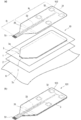
- FIG. (A) is a schematic perspective view for explaining the pressure-sensitive adhesive sheet according to the embodiment of the present invention
- (b) is a schematic perspective view of a biosensor using the pressure-sensitive adhesive sheet shown in (a). It is a top view of the adhesive sheet shown in FIG. It is sectional drawing which cut
- FIGS. (A) to (D) are views showing the results of observing the pressure-sensitive adhesive material from above with a microscope before drying the pressure-sensitive adhesive layer.
- FIGS. (A) to (C) are views showing the results of observing the pressure-sensitive adhesive material from above with a microscope before drying the pressure-sensitive adhesive layer. It is a figure for demonstrating the adhesive sheet of the modification of the embodiment shown in FIG.
- FIG. 1A is a schematic perspective view for explaining the pressure-sensitive adhesive sheet 10 of the present embodiment.
- FIG. 1B is a perspective view of the biosensor 101 formed by using the adhesive sheet 10.
- the illustrated adhesive sheet 10 is an adhesive sheet used for attaching the wiring board 100 to the surface to be attached to which the wiring board 100 is attached.
- the wiring board 100 is shown together with the adhesive sheet 10 for explanation.
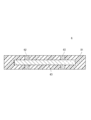
- FIG. 2 is a top view of the adhesive sheet 10 shown in FIG. 1 (a)
- FIG. 3 is a single-dot chain line shown in FIG. 2 for cutting the adhesive sheet 10 and cutting the cut surfaces in the directions of arrows A and A. It is a cross-sectional view as seen.
- the wiring board 100 is used as a stretchable board, attached to the body (living body) of a subject, and used as a biological sensor 101 for measuring a biological signal such as a myoelectric potential.
- the adhesive sheet 10 attached to the skin surface S
- the side facing the skin surface S is the back side (back surface, back side)
- the opposite side of the back surface is the front surface (front surface, front side).
- FIG. 1A is a top perspective view of the adhesive sheet 10 viewed from the front side
- FIG. 2 is a top view of the adhesive sheet 10 viewed from the front side.
- the wiring board 100 has an elastic base material 31 having elasticity and a film base material 35 having lower elasticity than the elastic base material 31. Further, the wiring board 100 has an elastic wiring 32. The elastic wiring 32 is formed over an overlapping region O in which the elastic base material 31 and the film base material 35 overlap, and a non-overlapping region N in which both do not overlap. In addition to the above configuration, the wiring board 100 has an elastic cover (not shown). The elastic cover is a member for protecting the elastic wiring 32 on the elastic base material 31.
- An external terminal 51 is formed at one end of the overlapping region O of the wiring board 100, and the elastic wiring 32 is connected to the external terminal 51.
- An electrode 33 is connected to the other end of the elastic wiring 32. The electrode 33 comes into contact with a living body and detects a biological signal.
- the detected biological signal is input from the external terminal 51 to the element mounted on the wiring board 100. Further, on the elastic base material 31 of the wiring board 100, a separator (not shown) that protects the elastic base material 31 and prevents the elastic base material 31 having tackiness from sticking to an unintended member or wrinkling. Is provided.
- the adhesive sheet includes the adhesive layer 3, the first release sheet 1 provided on the first surface of the adhesive layer 3, and the second release provided on the second surface of the adhesive layer 3 which corresponds to the back surface of the first surface. It has a sheet 2 and.
- the surface of the pressure-sensitive adhesive sheet 10 and the pressure-sensitive adhesive layer 3 facing the wiring board 100 is designated as the first surface, and the surface of the pressure-sensitive adhesive layer 3 facing the skin surface S is defined as the second surface.
- the first surface is referred to as "front surface” 3a
- the second surface is referred to as "back surface” 3b.
- the first release sheet 1 is first peeled off from the pressure-sensitive adhesive layer 3, and the surface 3a of the pressure-sensitive adhesive layer 3 is exposed.
- the exposed front surface 3a comes into contact with the back surface of the wiring board 100, and is pressurized to adhere to the back surface.
- the wiring board 100 and the adhesive layer 3 are integrated.
- the wiring board 100 is in close contact with the front surface 3a of the pressure-sensitive adhesive layer 3, and the second release sheet 2 is in close contact with the back surface 3b.
- the terms "film”, “sheet” and “film” generally broadly include thin shaped objects. That is, the size of the individual thickness is not specified by the difference in the name of the sheet, film, film-like material, or the like.
- the first release sheet 1 and the second release sheet 2 sandwich the pressure-sensitive adhesive layer 3, and their dimensions and shapes are sufficiently larger than the pressure-sensitive adhesive layer 3 in top view. ..
- the reason for this is to prevent the first release sheet 1 and the second release sheet 2 from being peeled from the adhesive layer 3 even if a force is applied to the end portions of the first release sheet 1 and the second release sheet 2. This is to prevent the adhesive from being exposed from the end face, which is a problem when the first release sheet 1 and the second release sheet 2 have the same dimensions and shapes as the adhesive layer 3.
- As a material for the first release sheet 1 and the second release sheet 2 it is conceivable to use resin or paper.
- the resin used for the first release sheet 1 and the second release sheet 2 for example, a PET (PolyEthylene Terephthalate) film is suitable.
- the first release sheet 1 and the second release sheet 2 of the present embodiment are formed by using paper or a PET film as a base material and coating the base material with a release agent.
- a barrier layer may be provided between the base material and the release agent to prevent the release agent from seeping into the paper.
- silicone type and non-silicone type release agents Silicone-based release agents are suitable for release sheets that are subjected to a thermal pressure step because they have excellent heat resistance.
- the non-silicone type release agent for example, there is a fluorine type release agent. Fluorine-based release agents are mainly suitable for electronic devices because of their cleanliness (does not generate dust), antistatic properties, and high adhesion.
- the first release sheet 1 and the second release sheet 2 are not limited to resin or paper, and any member has such a function and can be easily peeled from the adhesive layer 3. It may use a material.
- the second release sheet 2 integrated with the wiring board 100 is required to have flexibility that can follow the wiring board 100.
- Resins that meet such requirements include, for example, resins such as polyethylene terephthalate, polyethylene naphthalate, tetraacetyl cellulose, syndiotactic polystyrene, polyphenylene sulfide, polycarbonate, polyarylate, polysulfone, polyestersulfone, polyetherimide, and cyclic polyolefin.
- the thickness of the first release sheet 1 and the second release sheet 2 is generally 3 ⁇ m to 5 mm, preferably 5 ⁇ m to 1 mm, and particularly preferably 10 ⁇ m from the viewpoint of mechanical strength, durability, and transparency. It is ⁇ 100 ⁇ m.
- the pressure-sensitive adhesive layer 3 has a shape and size that match a part of the non-overlapping region N and the entire surface of the overlapping region O on the back surface of the wiring board 100.
- the reason for this is that if the outer circumference of the pressure-sensitive adhesive layer 3 is smaller than the outer circumference of the wiring board 100, the wiring board 100 is likely to peel off from the outer circumference, and if the outer circumference of the pressure-sensitive adhesive layer 3 is larger than the outer circumference of the wiring board 100, the pressure-sensitive adhesive layer 3 This is because a part of the surface is exposed and adheres to an unintended part.
- the adhesive layer 3 is not provided in the overlapping region O of the wiring board 100 at a portion having a predetermined length from the external terminal 51. The reason for this is that a portion having a predetermined length from the external terminal 51 is bent and connected to an input terminal of an element (not shown).
- the pressure-sensitive adhesive layer 3 contains a conductive organic polymer compound and a pressure-sensitive adhesive material.
- a conductive organic polymer compound at least one of polyanilines, polypyrroles and polythiophenes and derivatives thereof is used.
- Polyanilines, polypyrroles, and polythiophenes are conductive organic polymer compounds having conductivity due to ⁇ -electron conjugation.
- Polyanilines are high molecular weight compounds of compounds in which the 2-, 3- or N-position of aniline is replaced with an alkyl group having 1 to 18 carbon atoms, an alkoxy group, an aryl group, a sulfonic acid group, or the like.
- Examples of the polyaniline derivatives include those obtained by doping or mixing the above polyanilines with a dopant.
- the dopant include halide ions such as chloride ion, bromide ion, and iodide ion; perchlorate ion; tetrafluoroborate ion; arsenic hexafluoride ion; sulfate ion; nitrate ion; thiocyanate ion; hexafluoride.
- Phylate ion Phosphate ion such as phosphate ion, phenylphosphate ion, hexafluorophosphate ion; Trifluoroacetate ion; Alkylbenzenesulfonic acid ion such as tosylate ion, ethylbenzenesulfonic acid ion, dodecylbenzenesulfonic acid ion; Methylsulfone Alkyl sulfonic acid ions such as acid ions and ethyl sulfonic acid ions; or polyacrylic acid ions, polyvinyl sulfonic acid ions, polystyrene sulfonic acid ions (PSS), poly (2-acrylamide-2-methylpropane sulfonic acid) ions and the like. Polymer ions; these may be used alone or in combination of two or more.
- Phosphate ion such as phosphate ion,
- Polypyrroles are high molecular weight compounds of compounds in which the 1st or 3rd position of pyrrole is replaced with an alkyl group or an alkoxy group having 1 to 18 carbon atoms, and are, for example, poly1-methylpyrrole and poly3. -Methylpyrrole, poly1-ethylpyrrole, poly3-ethylpyrrole, poly1-methoxypyrrole, 3-methoxypyrrole, poly1-ethoxypyrrole, poly3-ethoxypyrrole, etc.).
- Examples of the polypyrrole derivative include those obtained by doping or mixing the polypyrrole with a dopant. As the dopant, the above-mentioned one can be used.
- Polythiophenes are high molecular weight compounds in which the 3- or 4-position of thiophene is replaced with an alkyl group or an alkoxy group having 1 to 18 carbon atoms, and are, for example, poly-3-methylthiophene, poly3-ethylthiophene, and poly. Examples thereof include polymer compounds such as 3-methoxythiophene, poly 3-ethoxythiophene, and poly (3,4-ethylenedioxythiophene) (PEDOT). Examples of the derivative of the polythiophenes include those obtained by doping or mixing the polythiophenes with a dopant. As the dopant, those exemplified above can be used.
- poly (polythiophenes) is a derivative of polythiophenes because it can obtain high conductivity, has a hydrophilic skeleton useful for retaining water molecules, and is easily dispersed in water.
- a mixture of polystyrene sulfonate ions (PSS) (hereinafter, may be referred to as "PEDOT: PSS”) or the like, using 3,4-ethylene oxidethiophene) (PEDOT) as a dopant, is preferable.
- the pressure-sensitive adhesive material forming the pressure-sensitive adhesive layer 3 is a conductive pressure-sensitive adhesive composition containing an aqueous emulsion (emulsion) pressure-sensitive adhesive.
- the water-based emulsion adhesive is not particularly limited as long as it has film-forming properties and adhesiveness, such as acrylic emulsion adhesives, vinyl acetate emulsion adhesives, and ethylene-vinyl acetate copolymer emulsion adhesives. Can be mentioned.
- acrylic emulsion pressure-sensitive adhesives are preferable from the viewpoint of imparting weather resistance, heat resistance, oil resistance, etc. in addition to tackiness and transparency.
- the acrylic emulsion pressure-sensitive adhesive is composed mainly of an acrylic copolymer, uses water as a dispersion medium, and is usually unsaturated with (meth) acrylic acid alkyl ester or the like using various emulsifiers. It can be produced by emulsion polymerization of a monomer and, if desired, a functional group-containing monomer or another monomer.
- (meth) acrylic acid alkyl ester a (meth) acrylic acid ester having an alkyl group having 1 to 20 carbon atoms is preferable, and specifically, methyl (meth) acrylic acid, ethyl (meth) acrylic acid, (meth).
- Examples of the functional group-containing monomer include 2-hydroxyethyl (meth) acrylate, 2-hydroxypropyl (meth) acrylate, 3-hydroxypropyl (meth) acrylate, and 2-hydroxybutyl (meth) acrylate.
- (Meta) Acrylic acid hydroxyalkyl esters such as (meth) acrylic acid 3-hydroxybutyl, (meth) acrylic acid 4-hydroxybutyl; (meth) acrylic acid acetoacetoxymethyl; acrylamide, methacrylic acid, N-methylacrylamide, N , N-dimethylacrylamide, N-methylmethacrylate, N, N-dimethylmethacrylate, N-methylolacrylamide, N-methylolmethacrylate, diacetoneacrylamide and other acrylamides; (meth) acrylic acid mono or (Meta) Acrylic Acid Mono or Dialkylaminoalkyl such as dimethylaminoethyl, (meth) acrylic acid mono or diethylaminoethyl, (meth) acrylic acid mono or dimethylaminopropyl, (meth) acrylic acid mono or diethylaminopropyl; acrylic acid, Examples thereof include ethylenically unsaturated carboxylic acids such as methacrylic acid, crotonic acid
- the functional group-containing monomer is usually preferably 0.1 to 5.0% by mass, preferably 0.3 to 5.0% by mass, and 0.5 to 3.0% by mass with respect to the total amount of the monomer. It is more preferable to include it. Within this range, the stability of the conductive pressure-sensitive adhesive composition and the adhesion between the conductive layer formed from the conductive pressure-sensitive adhesive composition and the elastic base material 31 are good.
- examples of other monomers include vinyl esters such as vinyl acetate and vinyl propionate; olefins such as ethylene, propylene and isobutylene; halogenated olefins such as vinyl chloride and vinylidene chloride; styrene, ⁇ -methylstyrene and the like.
- Styrene-based monomers Diene-based monomers such as butadiene, isoprene, and chloroprene; nitrile-based monomers such as acrylonitrile and methacrylonitrile. These may be used alone or in combination of two or more.
- the other monomer is usually preferably 0.1 to 5.0% by mass, preferably 0.3 to 5.0% by mass, and 1.0 to 3.0% by mass with respect to the total amount of the monomer. It is more preferable to include%.
- emulsifier those usually used for emulsification polymerization can be used and are not particularly limited, and for example, an anion having a radically polymerizable functional group such as a vinyl group, a propenyl group, an isopropenyl group, a vinyl ether group and an allyl ether group.
- Known emulsifiers such as type, nonionic reactive emulsifiers, or non-reactive emulsifiers are used.
- non-reactive emulsifier examples include sodium lauryl sulfate, ammonium lauryl sulfate, sodium dodecylbenzene sulfonate, sodium polyoxyethylene lauryl sulfate, sodium polyoxyethylene alkyl ether sulfate, ammonium polyoxyethylene alkyl phenyl ether sulfate, and polyoxyethylene alkyl phenyl.
- Anionic emulsifiers such as ether sodium sulfate and sodium polyoxyethylene alkyl sulfosuccinate, for example, nonionic emulsifiers such as polyoxyethylene alkyl ether, polyoxyethylene alkyl phenyl ether, polyoxyethylene fatty acid ester, and polyoxyethylene polyoxypropylene block polymer. Examples include emulsifiers.
- anion-type reactive emulsifier examples include commercially available products such as "Adecaria Soap SE-20N", but are not particularly limited as long as they have reactivity.
- nonionic reactive emulsifier examples include commercially available products such as "Adecaria Soap NE-10", but the nonionic reactive emulsifier is not particularly limited as long as it has reactivity.
- the amount of these emulsifiers used is preferably 0.1 to 8.0 parts by mass, preferably 0.5 to 8.0 parts by mass, based on 100 parts by mass of the above-mentioned monomer mixture as an active ingredient (component excluding solvent and various additives). 5.0 parts by mass is more preferable.
- the emulsion polymerization stability When the amount used is within this range, the emulsion polymerization stability, the storage stability of the obtained aqueous emulsion pressure-sensitive adhesive, and the mechanical stability are good.
- the conditions for emulsion polymerization are not particularly limited, and the conditions applied in ordinary emulsion polymerization can be applied as they are. Generally, after replacing the inside of the reactor with an inert gas, the temperature rise is started while stirring under reflux, and polymerization is carried out in the temperature range of about 40 to 100 ° C. for about 1 to 8 hours after the start of temperature rise.
- a polymerization initiator When preparing an aqueous emulsion pressure-sensitive adhesive by emulsion polymerization, a polymerization initiator is usually used.
- the polymerization initiator an azo system such as 2,2'-azobis (2-methylpropionamidine) dihydrochloride, a persulfate such as potassium persulfate, and a peroxide such as benzoyl peroxide can be used. ..
- the concentration of the acrylic copolymer in the acrylic emulsion pressure-sensitive adhesive is usually preferably 30 to 70% by mass. Further, the weight average molecular weight of the acrylic copolymer is preferably 100,000 to 3 million in terms of Mw, more preferably 400,000 to 2 million, from the viewpoint of adhesive performance and the like.
- the aqueous emulsion pressure-sensitive adhesive is preferably not strongly basic in liquidity. If the liquidity of the aqueous emulsion pressure-sensitive adhesive is strongly basic, the conductive organic polymer compound may precipitate when the conductive organic polymer compound is blended.
- the liquid property of the aqueous emulsion pressure-sensitive adhesive is preferably less than pH 13.
- the average particle size of the emulsion particles of the aqueous emulsion pressure-sensitive adhesive is about 100 to 500 nm, preferably 100 to 300 nm.
- a pressure-sensitive adhesive having an excellent balance of emulsion polymerization stability, storage stability of the obtained emulsion, and mechanical stability can be obtained.
- the average particle size is in this range, stable emulsion particles can be obtained, and it is possible to prevent the amount of emulsifier used from increasing.
- the average particle size of the emulsion particles can be controlled by the type and concentration of the emulsifier added at the time of polymerization, the concentration of the polymerization initiator, and the like.
- the aqueous emulsion pressure-sensitive adhesive includes a defoaming agent, a preservative, a rust preventive agent, a solvent, a tackifier, a stabilizer, and a thickening agent, if necessary, within a range that does not impair the effects of the present invention.
- a defoaming agent such as agents, cross-linking agents, plasticizing agents, wetting agents, fillers such as inorganic powders and metal powders, pigments, colorants, and ultraviolet absorbers can be added.
- the pressure-sensitive adhesive sheet 10 is manufactured by using the pressure-sensitive adhesive layer 3 manufactured by the pressure-sensitive adhesive material described above.
- the pressure-sensitive adhesive layer 3 was formed by using a one-component aqueous emulsion type acrylic pressure-sensitive adhesive as the pressure-sensitive adhesive material.
- the one-component aqueous emulsion type acrylic pressure-sensitive adhesive used in the present embodiment contains 50 to 60% of water and 40 to 50% of an acrylic acid ester-based copolymer compound.
- PEDOT: PSS is contained as a conductive organic polymer compound in such an adhesive material.
- the acrylic pressure-sensitive adhesive and PEDOT: PSS are mixed.
- a commercially available PEDOT: PSS solution may be pre-concentrated according to the viscosity of the adhesive material suitable for coating, or the PEDOT: PSS solution having a suitable viscosity may be used. May be purchased.
- the PEDOT: PSS in the PEDO solution is about 3% by mass when mixed with the acrylic pressure-sensitive adhesive.
- the acrylic pressure-sensitive adhesive and PEDOT and PSS may be mixed manually or by using a device such as a magnet stirrer.
- the pressure-sensitive adhesive material in the present embodiment refers to a mixture of at least an acrylic pressure-sensitive adhesive, PEDOT, and PSS.
- the above-mentioned adhesive material is applied to the second release sheet 2.
- the second release sheet 2 may be subjected to processing such as coating or forming a barrier layer as described above.
- the coating may be performed by a method using an adhesive material as an ink, such as a screen printing method or an inkjet printing method.
- the coating may be performed by a bar coating method, a slit coating method, a die coating method, a blade coating method, a roll coating method, a dip coating method, a spin coating method or the like.
- the adhesive material is not limited to being applied to the second release sheet 2, and may be applied to the first release sheet 1.
- the first release sheet 1 and the second release sheet 2 may use the same material or may use different materials. Further, the same treatment may be applied, or a different treatment may be applied.
- the film thickness of the pressure-sensitive adhesive layer 3 is not particularly limited.
- the film thickness of the pressure-sensitive adhesive layer 3 is preferably 30 ⁇ m or less, more preferably 25 ⁇ m or less, and particularly preferably 20 ⁇ m or less, the resistance value in the thickness direction of the pressure-sensitive adhesive layer 3 can be lowered, and the quality is higher. Easy to acquire biological signals. Further, the thinner the film thickness of the pressure-sensitive adhesive layer 3, the less likely it is that a peeling residue is generated on the skin surface when the pressure-sensitive adhesive layer 3 is peeled off from the skin surface, and it is preferable because the pain at the time of peeling can be reduced.
- the lower limit of the film thickness of the pressure-sensitive adhesive layer 3 is not particularly limited, but for example, 5 ⁇ m or more is preferable, and 10 ⁇ m or more is more preferable, because it is easy to stably form the pressure-sensitive adhesive layer 3 having a uniform film thickness.
- the first release sheet 1 coated with the adhesive material is dried by a drying step.
- the first release sheet 1 is stored in a hot air oven and dried at 105 ° C. for 75 seconds or longer. The drying is performed so that the amount of PEDOT contained in the adhesive material is, for example, 2.2 wt%.
- the adhesive material becomes the adhesive layer 3 by the drying step.
- the first release sheet 1 is attached to the pressure-sensitive adhesive layer 3.
- the pressure-sensitive adhesive layer 3 to which the first release sheet 1 and the second release sheet 2 are attached was cured at room temperature for 24 hours.
- the acrylic adhesive By curing the acrylic adhesive, the main agent is linked by a cross-linking material and the physical and chemical properties change.
- the cross-linking reaction depends on the temperature and time during curing.
- the pressure-sensitive adhesive sheet 10 of the present embodiment is completed by obtaining the required adhesiveness of the pressure-sensitive adhesive layer 3.
- the first release sheet 1 is peeled from the adhesive layer 3 and attached to the lower surface of the wiring board 100.
- the wiring board 100 provided with the pressure-sensitive adhesive layer 3 to which the second release sheet 2 is attached is provided to the end user as a biosensor 101.
- the second release sheet 2 is peeled off when used by the end user, and the biological sensor 101 is attached to the skin surface S of the subject by the adhesive layer 3. Since the pressure-sensitive adhesive layer 3 has conductivity because it contains the conductive organic polymer compound as described above, the biological signal obtained from the skin surface S can be transmitted to the electrode 33.
- an adhesive layer 3 has anisotropy in conductivity, and the anisotropy is exhibited with high resistance in the in-plane direction and low resistance in the thickness direction of the pressure-sensitive adhesive layer 3. Therefore, in the wiring board 100 to which the pressure-sensitive adhesive layer 3 is attached, a biological signal obtained from the skin surface S is appropriately guided toward the elastic wiring 32 via the pressure-sensitive adhesive layer 3 and input to an element (not shown). To do.
- the first release sheet 1 is first peeled from the pressure-sensitive adhesive layer 3, and then the second release sheet 2 is peeled off from the pressure-sensitive adhesive layer 3.
- a force in the outward direction is applied to the first release sheet 1 with the pressure-sensitive adhesive layer 3 inside while supporting the second release sheet 2.
- the pressure-sensitive adhesive sheet 10 is formed on the surface 3a of the pressure-sensitive adhesive layer 3
- the adhesive strength between the one release sheet 1 and the back surface 3b is weaker than the adhesive force between the back surface 3b and the second release sheet 2.
- the pressure-sensitive adhesive layer 3 is a single layer between the first release sheet 1 and the second release sheet 2.
- the “single layer” means that there is no boundary in the portion of the pressure-sensitive adhesive layer 3 between the first release sheet 1 and the second release sheet 2.
- the boundary refers to the boundary line between the same members or different members. That is, the pressure-sensitive adhesive layer 3 is a layer made of the same member (not including other members) in the thickness direction.
- Such an adhesive layer 3 does not include, for example, a layer in which a non-woven fabric or the like is impregnated with an adhesive material, or a non-woven fabric or the like is coated with the adhesive material on both sides.
- the present embodiment can be easily thinned, and therefore, the biological contact impedance and the pain of the subject when removing the wiring board 100 can be reduced. it can.
- Changing the adhesive strength between the front surface 3a and the back surface 3b of the single-layer adhesive layer 3 is achieved by changing the state of the surfaces of the first release sheet 1 and the second release sheet 2 toward the adhesive layer 3, respectively. It will be possible.
- the state of the first release sheet 1 and the second release sheet 2 can be changed by selecting the material of the first release sheet 1 and the second release sheet 2 and surface processing, and the processing includes the above-mentioned coating of the release agent and the like. There is.
- the adhesive strength of the back surface 3b attached to the skin surface of the subject of the adhesive layer 3 is, for example, 0.05 N / mm or more, 1.0 N / mm or less, more preferably 0.08 N / mm.
- the range is 0.3 N / mm or less.
- a sample is used as a sample in which a stretchable base material 31 at a position corresponding to a portion of the wiring board 100 to be attached to the skin surface of the subject is attached to the surface 3a of the pressure-sensitive adhesive layer 3. ..
- the pressure-sensitive adhesive layer 3 is not formed on the wiring board 100, but is configured as an independent pressure-sensitive adhesive sheet 10. Therefore, in the present embodiment, even if there is a step such as curing that requires a relatively long time in the step of manufacturing the pressure-sensitive adhesive layer 3, the pressure-sensitive adhesive sheet 10 that has undergone such a step is placed on the manufacturing side of the biosensor 101. Can be supplied. Then, the manufacturer of the biosensor 101 can complete the biosensor 101 by peeling off the first release sheet 1 of the adhesive sheet 10 and attaching it to the wiring board 100, so that the manufacturing throughput of the biosensor 101 can be increased. Can be enhanced.
- the adhesive sheet 10 of the present embodiment can be used not only as a biological sensor 101 that detects an electric signal output from a living body, but also as an EMS (Electrical Muscle Stimulation) device that gives an electric signal to the living body. Since the adhesive sheet 10 exhibits higher adhesiveness to the living body than the known adhesive sheet such as hydrogel, it is possible to prevent the EMS device from peeling off from the living body even if the user moves while using the EMS device. it can. Further, since the pressure-sensitive adhesive sheet 10 has the same electrical conductivity as the known pressure-sensitive adhesive sheet, it is possible to efficiently transmit an electric signal to the living body to give good stimulation to the muscles due to the high adhesiveness to the living body.
- the adhesive sheet 10 of the present embodiment is attached to the EMS device each time it is used, and can be peeled off and thrown away after use. Therefore, it can be said that the EMS device using the adhesive sheet 10 is more hygienic than the known EMS device on the premise that the pad is used a plurality of times.
- FIG. 4 is a schematic diagram for explaining the element 6 used for detecting the electrical characteristics in this embodiment.
- the element 6 connects a film base material 61 represented by PET or the like, two silver (Ag) electrodes 62 printed and formed on the film base material 61 in a separated state, and the respective silver (Ag) electrodes 62. It is composed of a wiring 63 made of the pressure-sensitive adhesive layer 3 attached as described above.
- the inventors of the present invention prepared five types of pressure-sensitive adhesive layers 3 by changing the process conditions, and measured their electrical characteristics (resistance value) using the prepared pressure-sensitive adhesive layer 3 as wiring 63.
- Table 1 shows the preparation conditions for the five types of pressure-sensitive adhesive layers 3.
- the five types of pressure-sensitive adhesive layers 3 are referred to as No1 to No5, respectively.
- the conditions for producing the pressure-sensitive adhesive layers 3 of No. 1 to No. 5 are as shown in Table 1 below. That is, the pressure-sensitive adhesive layer 3 of No5 from No1, both PEDOT: PSS, a member having mixed conductivity of H 2 O and IPA (Isopropyl Alcohol), olivine (TM) BPW HW-1 (product name) Is a mixture of and.
- PEDOT PSS
- a powder one manufactured by Sigma-Aldrich, product name: 768618-5G
- a liquid one manufactured by Sigma-Aldrich, product name: 739324-100G
- commercially available PEDOT: PSS was concentrated approximately to 3 wt% and are mixed by stirring by hand it together with H 2 O and IPA.
- the drying condition of the wiring 63 is 105 ° C. for 75 seconds or more, and the curing condition is 24 hours at room temperature.
- the pressure-sensitive adhesive layers 3 of No. 1 to No. 4 powdered ones are used for PEDOT: PSS.
- the No. 2 pressure-sensitive adhesive layer 3 and the No. 4 pressure-sensitive adhesive layer 3 contain 2.2% (weight ratio) of PEDOT: PSS after drying, and the No. 1 pressure-sensitive adhesive layer 3 contains 1.2% after drying. It contains (weight ratio) PEDOT: PSS, and the No. 3 pressure-sensitive adhesive layer 3 contains 8.6% (weight ratio) PEDOT: PSS after drying.
- 10% (weight ratio) of silver-coated powder manufactured by Sigma Aldrich, product name: 327077-10G is added only to the pressure-sensitive adhesive layer 3 of No4.
- the silver-coated powder is produced by direct plating without a base layer, and has the high conductivity inherent in silver.
- the pressure-sensitive adhesive layer 3 of No. 5 uses a liquid PEDOT: PSS.
- the liquid PEDOT: PSS is, for example, a neutral aqueous solution of poly (3,4-ethylenedioxythiophene) -poly (styrene sulfonate) 1.1%.
- the present inventors measured the average contact impedance, adhesive strength, and noise of the adhesive layer 3 as the characteristics of the adhesive layer 3 required for application to the biological sensor 101.
- Table 2 shows the average contact impedance and adhesive strength.
- Table 3 shows hum noise and noise floor.
- As the impedance a 10 Hz rectangular wave ( ⁇ 0.04 ⁇ A) was input and measured.
- the "reference example” shown in Table 3 shows the electrical characteristics obtained by attaching the biosensor to the skin of the subject by TEN20 (trademark).
- TEN20 trademark
- Such a water-containing gel paste is an agent that has been conventionally applied to the back surface of a biological sensor and used for detecting a biological signal.
- TEN20 TM is used by manually applying it to the electrodes of a biosensor.
- the hum noise and noise floor shown in Table 3 change relatively significantly depending on the time and environment elapsed since the pressure-sensitive adhesive layer 3 was formed. Therefore, the present inventors produced a biosensor 101 using the pressure-sensitive adhesive layer 3 on the pressure-sensitive adhesive sheet 10 and a biosensor coated with TEN20 on the same day in the same environment, respectively, and manufactured in the same environment on the same day. They were classified into groups A, B, and C, respectively. Then, the electrical characteristics of the pressure-sensitive adhesive layer 3 are evaluated based on the electrical characteristics of the biosensor using TEN20 belonging to the same group.
- the average contact impedance, hum noise, and floor noise were measured by preparing the biosensor 101 shown in FIG. 1 and using the adhesive layer 3 on the adhesive sheet 10 of the biosensor 101. According to the contact impedance, an index of impedance between the pressure-sensitive adhesive layer 3 and the skin surface S can be obtained. According to the hum noise and noise floor, it is possible to obtain an index of noise of the signal of the biosensor using the adhesive layer.
- the contact impedance shown in Table 2 is a value obtained when an AC signal of 10 Hz is applied to the electrode 62, and is an average value of measurements performed a plurality of times.
- the hum noise is a value indicating the noise intensity in the presence of an external AC power supply of 50 Hz or 60 Hz (mainly derived from the power supply frequency in Japan), and the noise floor is a hum noise in the range of 54.5 Hz to 55.5 Hz and the purpose. It shows the intensity of noise that does not overlap with the biometric signal frequency of. According to the contact impedance, an index for the sensitivity of the biosensor 101 using the pressure-sensitive adhesive layer 3 can be obtained. Further, according to the hum noise and the noise floor, it is possible to obtain an index of noise of the signal obtained from the biosensor 101 using the adhesive layer 3.
- the quantitative measurement of the adhesive strength was carried out according to the JIS Z 0237 standard. Further, the sensory evaluation of the adhesive strength is performed by applying a finger to the pressure-sensitive adhesive layer 3 about 3 to 5 times, or by actually attaching the finger to the living body and examining the feel at the time of peeling.
- the present inventors have changed the film thickness of the pressure-sensitive adhesive layer 3 of No. 2 from 10 ⁇ m to 16 ⁇ m.
- the pressure-sensitive adhesive layer 3 of No. 2 can obtain good adhesive strength regardless of the film thickness.
- the pressure-sensitive adhesive layer 3 of No. 5 can also obtain good adhesive strength.
- the adhesive layer 3 of No. 3 has a weak adhesive force, so that it is difficult to apply it to the biosensor 101. It is considered that such a thing is caused by the pressure-sensitive adhesive layer 3 of No. 3 containing more PEDOT: PSS than the pressure-sensitive adhesive layer 3 of No. 2.
- the pressure-sensitive adhesive layer 3 of No. 4 is painful when peeled off from the living body because of its strong adhesive strength.
- the pressure-sensitive adhesive layer 3 of No. 4 contains silver-coated powder, and it is considered that this point acts in a direction of reducing the adhesive strength. From this, it can be inferred that the contribution of the thickness of the film thickness to the adhesive strength is large.
- the thickness of the pressure-sensitive adhesive layer 3 of the embodiment described above is preferably 25 ⁇ m or less, more preferably 20 ⁇ m or less.
- the adhesive strength of the pressure-sensitive adhesive layer 3 to the living body was determined to be 0.05 N / mm or more, 1.0 N / mm or less, more preferably 0.08 N / mm or more, 0, as described above. It can be seen that the range is 3 N / mm or less.
- Such adhesive strength can be adjusted by adjusting the thickness of the pressure-sensitive adhesive layer 3, and the amount of PEDOT: PSS can be changed within a range allowed by the electrical characteristics, or silver-coated powder can be used. It can be adjusted by adding.
- the pressure-sensitive adhesive layer 3 of this embodiment shows a value of contact impedance of 200 k ⁇ or less in all the biosensors 101.
- the pressure-sensitive adhesive layer 3 having such a value tends to be high in view of the contact impedance obtained by the conductive paste TEN20 (trademark, manufactured by Waver and Company) used for known biosensors of about 22 k ⁇ .
- the contact impedance between the pressure-sensitive adhesive layer 3 and the skin is preferably 200 k ⁇ or less, more preferably 150 k ⁇ or less, still more preferably 70 k ⁇ or less when measured by inputting a 10 Hz square wave ( ⁇ 0.04 ⁇ A).
- the pressure-sensitive adhesive layers 3 of No. 3 and No. 4 are particularly preferable, but the pressure-sensitive adhesive layers 3 of No. 3 and No. 4 are inappropriate in terms of adhesive strength as described above. From the above, it was found that the pressure-sensitive adhesive layers 3 of No. 2 and No. 5 can be applied to the biosensor 101 according to the present embodiment.
- the adhesive layers 3 of No. 2 and No. 5 have both the hum noise and the noise floor in a range suitable for use in the biosensor 101.
- the present inventors have a noise floor in which only the adhesive layer 3 of No. 5 has a lower noise floor than the reference example, although the film thickness (14 ⁇ m) and the content of PEDOT: PSS are the same in the adhesive layers 3 of No. 2 and No. 5. I focused on showing. Since the production conditions of the pressure-sensitive adhesive layer 3 of No. 2 and the pressure-sensitive adhesive layer 3 of No. 5 differ in that PEDOT: PSS is a powder or a liquid, the present inventors have described both of them. : The state of diffusion of PSS into the liquid was observed.
- 5 (a) to 6 (c) are views showing the results of observing the adhesive material of the pressure-sensitive adhesive layer 3 before drying with a microscope from above.
- 5 (a) and 5 (b) are the adhesive materials of No. 1, and FIG. 5 (b) shows a further enlarged view of FIG. 5 (a).
- 5 (c) and 5 (d) are the adhesive materials of No. 2, and FIG. 5 (d) shows a further enlarged view of FIG. 5 (c).
- 6 (a) and 6 (b) are the adhesive materials of No. 3, and FIG. 6 (b) shows a further enlarged view of FIG. 6 (a).
- FIG. 6C is a No. 5 adhesive material.
- FIGS. 5 (a) to 6 (c) members derived from PEDOT: PSS are aggregated in an "island shape" in the adhesive material, and are shown in FIGS. 5 (c) and 5 (d).
- the adhesive material of No. 2 has more remarkable aggregation than the others.
- the present inventors observed an island-shaped portion, and measured and averaged the diameter (particle size) when this portion was approximated to a substantially circular “grain”. ..
- the present inventors calculated the ratio of the area occupied by the island-shaped portion in the observation range (microscopic field of view) of the adhesive material.
- Table 4 together with the volume resistivity of each pressure-sensitive adhesive layer 3.
- the volume resistivity is measured a plurality of times using the element 6 shown in FIG. 4 and the average thereof is calculated. Volume resistivity was measured after 24 hours of curing.
- the measured volume resistivity is converted into DC and shown in Table 4.
- the volume resistivity of the pressure-sensitive adhesive layer of No. 2 is 12800 ⁇ cm
- the volume resistivity of the pressure-sensitive adhesive layer of No. 3 is 700 ⁇ cm
- the volume resistivity of the pressure-sensitive adhesive layer of No. 5 is 15260 ⁇ cm.
- the volume resistivity includes both the resistance values in the in-plane direction and the thickness direction of the pressure-sensitive adhesive layer.
- the PEDOT: PSS contained in the adhesive layers of No. 2 and No. 5 after drying is both 2.2%. From this, it is considered that the pressure-sensitive adhesive layers No. 2 and No. 5 contain PEDOT: PSS, which is a conductive member, to the same extent, and their volume resistivity values are substantially the same.
- the No. 3 adhesive material containing 8.6% of PEDOT: PSS is so dense that the particle size of PEDOT: PSS is indistinguishable, and also contains 2.2% of liquid PEDOT: PSS. It can be seen that the adhesive material of No. 5 is so dispersed that the particle size of PEDOT: PSS is indistinguishable.
- the pressure-sensitive adhesive layer of No. 2 had a relatively large particle size of the agglomerates, and that 44% of the observation area was occupied by the PEDOT: PSS-derived member. From these results and the result that the contact impedance of the No. 2 pressure-sensitive adhesive layer shown in Table 2 is higher than that of other elements, the No. 2 pressure-sensitive adhesive layer has an island-shaped conductive member in the pressure-sensitive adhesive material. It is considered that the contact area with the skin becomes smaller and the contact impedance increases. Further, the present inventors have found that the diameter of the island-shaped portion of the adhesive material of No.
- PEDOT PSS is not sufficiently dispersed in Oliveine (registered trademark) BPW HW-1. I think. Then, the present inventors consider that the degree of dispersion of the pressure-sensitive adhesive material affects the characteristics of the pressure-sensitive adhesive layer related to noise.
- the pressure-sensitive adhesive layer of No. 5 contains PEDOT: PSS to the same extent as the pressure-sensitive adhesive layer of No. 2, the contact impedance with the skin is lower than that of the pressure-sensitive adhesive layer of No. 2. It has become.
- the contact impedance with the skin indicates the resistance value in the thickness direction of the pressure-sensitive adhesive layer, and is a factor having a large influence on the contact area between the skin and the pressure-sensitive adhesive layer having conductivity.
- members derived from PEDOT: PSS are dispersed in the pressure-sensitive adhesive without agglomeration, and the ratio of the area of the members containing PEDOT: PSS is No. 2.
- the adhesive layer of No. 5 has increased conductivity in the thickness direction and decreased electrical conductivity in the in-plane direction. From such a point, the present inventors consider that the anisotropic conductivity of the pressure-sensitive adhesive layer can be controlled by controlling the degree of aggregation and dispersion of the pressure-sensitive adhesive material.
- FIG. 7 is a diagram for explaining the adhesive sheet 70 of the modified example.
- the pressure-sensitive adhesive sheet 70 has pressure-sensitive adhesive layers 3c, 3d, 3e, and 3f.
- the pressure-sensitive adhesive layers 3c, 3d, 3e, and 3f form a plurality of islands isolated from each other.
- isolated from each other means that there are no portions that come into contact with or intersect with each other for all of the plurality of pressure-sensitive adhesive layers 3c, 3d, 3e, and 3f.
- the front surfaces 3ca, 3da, 3ea, and 3fa adhere to the back surface of the wiring board 100, and the back surfaces 3db, 3db, 3eb, and 3fb adhere to the skin surface S, respectively.
- the positions and shapes of the pressure-sensitive adhesive layers 3c, 3d, 3e and 3f correspond to the positions and shapes of the four electrodes 33 of the wiring board 100, respectively, and the pressure-sensitive adhesive layers 3c, 3d, 3e and 3f are electrodes, respectively. Adheres directly to 33.
- the modified adhesive sheet 70 is manufactured by, for example, the following method. That is, in this modification, the adhesive material is applied onto the second release sheet 2 and dried to form the adhesive layer 3 in the same manner as in the above-described embodiment. Then, a third release sheet (not shown) different from the first release sheet 1 is attached from above the pressure-sensitive adhesive layer 3, and the pressure-sensitive adhesive layer 3 is press-punched together with the third release sheet.
- the press punching process is a step for removing unnecessary portions (parts other than the pressure-sensitive adhesive layers 3c, 3d, 3e, and 3f) of the pressure-sensitive adhesive layer 3. In the press punching process, a notch is made in the third release sheet and the adhesive layer 3 by a press machine (not shown).
- the second release sheet 2 is half-cut by making a notch on the side of the second release sheet 2 to a depth of about half or less than half the thickness of the second release sheet 2.
- the unnecessary portion of the pressure-sensitive adhesive layer 3 can be reliably removed from the second release sheet 2.
- the portion of the pressure-sensitive adhesive layer 3 that has been press-punched, excluding the pressure-sensitive adhesive layer 3f from the pressure-sensitive adhesive layer 3c is removed.
- the third release sheet on the pressure-sensitive adhesive layer excluding the pressure-sensitive adhesive layer 3f from the pressure-sensitive adhesive layer 3c is removed together with the pressure-sensitive adhesive layer.
- the third release sheet on the pressure-sensitive adhesive layer 3f is also removed from the pressure-sensitive adhesive layer 3c, and the first release sheet 1 is attached from the pressure-sensitive adhesive layer 3c on the pressure-sensitive adhesive layer 3f.
- Such a modification can contribute to the provision of a highly reliable biosensor by eliminating the concern that the electrodes 33 will be short-circuited even when the conductivity anisotropy of the pressure-sensitive adhesive layer 3 is low.
Landscapes
- Health & Medical Sciences (AREA)
- Life Sciences & Earth Sciences (AREA)
- Engineering & Computer Science (AREA)
- Veterinary Medicine (AREA)
- Biomedical Technology (AREA)
- Animal Behavior & Ethology (AREA)
- General Health & Medical Sciences (AREA)
- Public Health (AREA)
- Chemical & Material Sciences (AREA)
- Organic Chemistry (AREA)
- Radiology & Medical Imaging (AREA)
- Nuclear Medicine, Radiotherapy & Molecular Imaging (AREA)
- Surgery (AREA)
- Heart & Thoracic Surgery (AREA)
- Medical Informatics (AREA)
- Molecular Biology (AREA)
- Physics & Mathematics (AREA)
- Pathology (AREA)
- Biophysics (AREA)
- Dispersion Chemistry (AREA)
- Microelectronics & Electronic Packaging (AREA)
- Adhesives Or Adhesive Processes (AREA)
- Adhesive Tapes (AREA)
- Medicines Containing Antibodies Or Antigens For Use As Internal Diagnostic Agents (AREA)
- Laminated Bodies (AREA)
Abstract
導電性有機高分子化合物を添加した粘着剤層を用いながら、この粘着剤層を使用した製品の製造効率を高める粘着シートを提供する。 配線基板100を、配線基板100が貼り付けられる皮膚面Sに貼り合せることに用いられる粘着シート10を、導電性有機高分子化合物と粘着材料とを含む粘着剤層3と、粘着剤層3の表面3aに設けられる第一剥離シート1と、粘着剤層3において表面3a裏面に当たる裏面3bに設けられる第二剥離シート2と、によって構成する。
Description
本発明は、粘着性を持って被貼付面に粘着する粘着シートに関する。
近年、社会全体におけるヘルスケア指向の高まりや、増大する医療費の削減、また、IOT(Internet of Things)社会へのビッグデータ活用を背景として、様々な環境下で、生体から得られる微弱な信号(生体信号)を取得しようとするニーズが社会的に高まっている。生体信号の取得は、例えば、生体信号の受信等をする機能を有した素子を配線等が形成された基板に搭載し、基板ごと生体の皮膚表面(以下、単に「皮膚面」と記す)に貼り付けて行われる。ここで用いられる基板としては、生体の動きに合わせて伸縮可能な伸縮性基板が好適である。伸縮性基板は、粘着剤層により生体の皮膚面に貼り付けられる。本明細書では、素子、伸縮性基板及び粘着剤層を組み合わせて構成される機器を、以下、生体センサとも記す。
生体センサに使用される粘着剤層には、生体の動きによって皮膚面から外れることがなく、皮膚面から剥がす際には生体に極力痛みを感じさせないことが要求される。また、伸縮性基板は使い捨てにされる場合も多いが、皮膚面に対して貼り直す場合も考慮して、粘着剤層には貼り直し可能なことも要求される。
さらに、生体センサに使用される粘着剤層には、皮膚面と伸縮性基板との間で生体信号を伝える導電性が要求される。導電性を発揮するため、粘着剤層には導電性のフィラーが付与される。導電性フィラーには、グラファイト系、金属系、金属酸化物系、金属被覆系、金属酸化物被覆系等があるが、生体に直接貼り付けられる粘着材料には生体への影響が少ない導電性有機高分子化合物を用いることが好ましい。
さらに、生体センサに使用される粘着剤層には、皮膚面と伸縮性基板との間で生体信号を伝える導電性が要求される。導電性を発揮するため、粘着剤層には導電性のフィラーが付与される。導電性フィラーには、グラファイト系、金属系、金属酸化物系、金属被覆系、金属酸化物被覆系等があるが、生体に直接貼り付けられる粘着材料には生体への影響が少ない導電性有機高分子化合物を用いることが好ましい。
導電性有機高分子化合物を粘接着剤に添加して帯電防止性粘接着剤を形成することは、例えば、特許文献1に記載されている。また、特許文献1には、帯電防止性粘接着剤を基材上に塗付して保護膜を構成することが記載されている。
しかしながら、特許文献1に記載のように、基材に粘接着剤(粘着剤)を直接塗布して乾燥させると、製品の製造開始から完了までの間に粘接着剤を乾燥させる時間が加わって製品製造のスループットが低下する。
本発明は、このような点に鑑みてなされたものであり、導電性有機高分子化合物を添加した粘着剤層を用いながら、この粘着剤層を使用した製品の製造効率を高めることができる粘着シートに関する。
本発明は、このような点に鑑みてなされたものであり、導電性有機高分子化合物を添加した粘着剤層を用いながら、この粘着剤層を使用した製品の製造効率を高めることができる粘着シートに関する。
本発明の粘着シートは、配線基板を、前記配線基板が貼り付けられる被貼り付け面に貼り合せることに用いられる粘着シートであって、導電性有機高分子化合物と粘着材料とを含む粘着剤層と、前記粘着剤層の第一面に設けられる第一剥離シートと、前記粘着剤層において前記第一面の裏面に当たる第二面に設けられる第二剥離シートと、を有する。
本発明は、導電性有機高分子化合物を添加した粘着剤層を用いながら、この粘着剤層を使用した製品の製造効率を高める粘着シートを提供することができる。
以下、本発明の一実施形態を図面に基づいて説明する。なお、すべての図面において、同様の構成要素には同様の符号を付し、重複する説明は適宜省略する。また、本実施形態及びその変形例で示す図面は、本実施形態の粘着シートの構成や機能等を説明するための模式図であって、その寸法形状や長さ、幅、厚さ及びそれらのバランスを必ずしも正確に示したものではない。
図1(a)は、本実施形態の粘着シート10を説明するための模式的な斜視図である。図1(b)は、粘着シート10を用いて形成される生体センサ101の斜視図である。図示した粘着シート10は、配線基板100を、配線基板100が貼り付けられる被貼り付け面に貼り合せることに用いられる粘着シートである。図1(a)においては、説明のため、粘着シート10と共に配線基板100を示している。図2は、図1(a)に示した粘着シート10の上面図、図3は、図2に示した一点鎖線で粘着シート10を切断し、その切断面を矢線A、Aの方向に見た断面図である。
本実施形態では、配線基板100を伸縮性の基板とし、対象者の身体(生体)に貼り付けて、筋電位等の生体信号を測定する生体センサ101に使用する例を挙げて説明する。
本実施形態では、粘着シート10を皮膚面Sに貼り付けた状態で皮膚面Sに向かう側を裏(裏面、裏側)とし、裏の反対の側を表(表面、表側)とする。図1(a)は粘着シート10を表側から見た上面斜視図であり、図2は粘着シート10を表側から見た上面図である。
本実施形態では、配線基板100を伸縮性の基板とし、対象者の身体(生体)に貼り付けて、筋電位等の生体信号を測定する生体センサ101に使用する例を挙げて説明する。
本実施形態では、粘着シート10を皮膚面Sに貼り付けた状態で皮膚面Sに向かう側を裏(裏面、裏側)とし、裏の反対の側を表(表面、表側)とする。図1(a)は粘着シート10を表側から見た上面斜視図であり、図2は粘着シート10を表側から見た上面図である。
配線基板100は、伸縮性を有する伸縮性基材31と、伸縮性基材31よりも伸縮性が低いフィルム基材35と、を有している。また、配線基板100は、伸縮性配線32を有している。伸縮性配線32は、伸縮性基材31とフィルム基材35とが重なった重複領域Oと、両者が重なっていない非重複領域Nとにわたって形成されている。
また、配線基板100は、上記構成の他、図示しない伸縮性カバーを有している。伸縮性カバーは、伸縮性基材31上の伸縮性配線32を保護するための部材である。
配線基板100の重複領域Oの一方の端部には外部端子51が形成されていて、伸縮性配線32は、外部端子51に接続されている。伸縮性配線32の他方の端部には電極33が接続されている。電極33は、生体と接触して生体信号を検出する。検出された生体信号は、外部端子51から配線基板100に搭載される素子に入力する。
また、配線基板100の伸縮性基材31には、伸縮性基材31を保護し、タック性を有する伸縮性基材31が意図しない部材に貼り付く、あるいはシワになることを防ぐ図示しないセパレータが設けられている。
また、配線基板100は、上記構成の他、図示しない伸縮性カバーを有している。伸縮性カバーは、伸縮性基材31上の伸縮性配線32を保護するための部材である。
配線基板100の重複領域Oの一方の端部には外部端子51が形成されていて、伸縮性配線32は、外部端子51に接続されている。伸縮性配線32の他方の端部には電極33が接続されている。電極33は、生体と接触して生体信号を検出する。検出された生体信号は、外部端子51から配線基板100に搭載される素子に入力する。
また、配線基板100の伸縮性基材31には、伸縮性基材31を保護し、タック性を有する伸縮性基材31が意図しない部材に貼り付く、あるいはシワになることを防ぐ図示しないセパレータが設けられている。
粘着性シートは、粘着剤層3と、この粘着剤層3の第一面に設けられる第一剥離シート1と、粘着剤層3において第一面の裏面に当たる第二面に設けられる第二剥離シート2と、を有している。以下、本実施形態では、粘着シート10及び粘着剤層3の配線基板100に向かう側の面を第一面とし、皮膚面Sに向かう側の面を第二面とする。そして、第一面を「表面」3a、第二面を「裏面」3bとする。
本実施形態の粘着シート10は、先に第一剥離シート1が粘着剤層3から剥離され、粘着剤層3の表面3aが露出する。露出された表面3aは、配線基板100の裏面と接触し、加圧されて密着する。このような処理により、配線基板100と粘着剤層3とが一体化する。このとき、粘着剤層3の表面3aには配線基板100が密着し、裏面3bには第二剥離シート2が密着した状態になっている。
なお、上述の通り、第一剥離シート1を第二剥離シート2よりも先にかつ確実に剥離させるためには、粘着剤層3とそれら剥離シートの貼合強度のバランスを考慮することが重要となる。すなわち、粘着剤層3と第一剥離シート1との貼合強度を、粘着剤層3と第二剥離シート2との貼合強度よりも低く設定しておくことが望ましい。
上記説明において、「フィルム」や「シート」及び「膜」の文言は、一般的に厚みの薄い形状物を広く含む。すなわち、シート、フィルムまたは膜状物等の称呼の違いにより個別の厚みの大小を規定するものではない。
本実施形態の粘着シート10は、先に第一剥離シート1が粘着剤層3から剥離され、粘着剤層3の表面3aが露出する。露出された表面3aは、配線基板100の裏面と接触し、加圧されて密着する。このような処理により、配線基板100と粘着剤層3とが一体化する。このとき、粘着剤層3の表面3aには配線基板100が密着し、裏面3bには第二剥離シート2が密着した状態になっている。
なお、上述の通り、第一剥離シート1を第二剥離シート2よりも先にかつ確実に剥離させるためには、粘着剤層3とそれら剥離シートの貼合強度のバランスを考慮することが重要となる。すなわち、粘着剤層3と第一剥離シート1との貼合強度を、粘着剤層3と第二剥離シート2との貼合強度よりも低く設定しておくことが望ましい。
上記説明において、「フィルム」や「シート」及び「膜」の文言は、一般的に厚みの薄い形状物を広く含む。すなわち、シート、フィルムまたは膜状物等の称呼の違いにより個別の厚みの大小を規定するものではない。
図1から図3に示すように、第一剥離シート1及び第二剥離シート2は、粘着剤層3を挟んでおり、その寸法形状が上面視において粘着剤層3よりも充分大きくなっている。この理由は、第一剥離シート1、第二剥離シート2の端部分に力が加わったとしても、第一剥離シート1及び第二剥離シート2が粘着剤層3から剥がれることを防ぐため、あるいは第一剥離シート1及び第二剥離シート2が粘着剤層3と同等の寸法形状であった場合に問題となる端面からの粘着剤の露出を防ぐためである。
第一剥離シート1及び第二剥離シート2の素材としては、樹脂や紙を使用することが考えられる。第一剥離シート1及び第二剥離シート2に使用される樹脂としては、例えば、PET(PolyEthylene Terephthalate)フィルムが好適である。本実施形態の第一剥離シート1及び第二剥離シート2は、紙やPETフィルムを基材にし、基材に剥離剤をコーティングして形成される。基材が紙である場合、基材と剥離剤との間に剥離剤が紙に染み込むことを防ぐためにバリア層を設けてもよい。剥離剤には、シリコーン系と非シリコーン系とがある。シリコーン系の剥離剤は、耐熱性に優れるため熱圧工程がなされる剥離シートに好適である。また、非シリコーン系の剥離剤としては、例えば、フッ素系の剥離剤がある。フッ素系の剥離剤は、そのクリーン性(粉塵を発生しない)や帯電防止、高密着性から主に電子機器に好適である。
第一剥離シート1及び第二剥離シート2の素材としては、樹脂や紙を使用することが考えられる。第一剥離シート1及び第二剥離シート2に使用される樹脂としては、例えば、PET(PolyEthylene Terephthalate)フィルムが好適である。本実施形態の第一剥離シート1及び第二剥離シート2は、紙やPETフィルムを基材にし、基材に剥離剤をコーティングして形成される。基材が紙である場合、基材と剥離剤との間に剥離剤が紙に染み込むことを防ぐためにバリア層を設けてもよい。剥離剤には、シリコーン系と非シリコーン系とがある。シリコーン系の剥離剤は、耐熱性に優れるため熱圧工程がなされる剥離シートに好適である。また、非シリコーン系の剥離剤としては、例えば、フッ素系の剥離剤がある。フッ素系の剥離剤は、そのクリーン性(粉塵を発生しない)や帯電防止、高密着性から主に電子機器に好適である。
ただし、第一剥離シート1、第二剥離シート2は、樹脂や紙に限定されず、このような機能を有し、かつ、粘着剤層3から容易に剥離可能な部材であればどのような材料を使用するものであってもよい。
特に配線基板100と一体化される第二剥離シート2には、配線基板100に追従可能な柔軟性を有することが要求される。このような要求を満たす樹脂には、例えば、ポリエチレンテレフタレート、ポリエチレンナフタレート、テトラアセチルセルロース、シンジオタクチックポリスチレン、ポリフェニレンスルフィド、ポリカーボネート、ポリアリレート、ポリスルホン、ポリエステルスルホン、ポリエーテルイミド、環状ポリオレフィン等の樹脂からなるフィルムが挙げられ、中でも機械的強度、耐久性、透明性等に優れたものが好ましい。
第一剥離シート1、第二剥離シート2の厚さは、機械的強度、耐久性、透明性の点から一般的には3μm~5mmであり、好ましくは5μm~1mmであり、特に好ましくは10μm~100μmである。
特に配線基板100と一体化される第二剥離シート2には、配線基板100に追従可能な柔軟性を有することが要求される。このような要求を満たす樹脂には、例えば、ポリエチレンテレフタレート、ポリエチレンナフタレート、テトラアセチルセルロース、シンジオタクチックポリスチレン、ポリフェニレンスルフィド、ポリカーボネート、ポリアリレート、ポリスルホン、ポリエステルスルホン、ポリエーテルイミド、環状ポリオレフィン等の樹脂からなるフィルムが挙げられ、中でも機械的強度、耐久性、透明性等に優れたものが好ましい。
第一剥離シート1、第二剥離シート2の厚さは、機械的強度、耐久性、透明性の点から一般的には3μm~5mmであり、好ましくは5μm~1mmであり、特に好ましくは10μm~100μmである。
粘着剤層3は、配線基板100の裏面のうち、非重複領域Nの一部及び重複領域Oの全面に一致する形状及びサイズを有している。この理由は、配線基板100の外周より粘着剤層3の外周が小さいと配線基板100が外周から剥がれ落ち易くなり、配線基板100の外周より粘着剤層3の外周が大きいと、粘着剤層3の一部が露出して意図しない箇所に粘着するためである。なお、本実施形態では、配線基板100のうち、重複領域Oにおいて外部端子51から所定の長さの部分に粘着剤層3を設けていない。この理由は、外部端子51から所定の長さの部分は折り曲げられて図示しない素子の入力端子と接続されるからである。
粘着剤層3は、導電性有機高分子化合物と、粘着材料とを含むものである。導電性有機高分子化合物としては、ポリアニリン類、ポリピロール類及びポリチオフェン類ならびにそれらの誘導体の少なくとも一種が用いられる。ポリアニリン類、ポリピロール類及びポリチオフェン類は、π電子共役により導電性を有する導電性有機高分子化合物である。
ポリアニリン類は、アニリンの2位または3位あるいはN位を炭素数1~18のアルキル基、アルコキシ基、アリール基、スルホン酸基等で置換した化合物の高分子量体であり、例えば、ポリ2-メチルアニリン、ポリ3-メチルアニリン、ポリ2-エチルアニリン、ポリ3-エチルアニリン、ポリ2-メトキシアニリン、ポリ3-メトキシアニリン、ポリ2-エトキシアニリン、ポリ3-エトキシアニリン、ポリN-メチルアニリン、ポリN-プロピルアニリン、ポリN-フェニル-1-ナフチルアニリン、ポリ8-アニリノ-1-ナフタレンスルホン酸、ポリ2-アミノベンゼンスルホン酸、ポリ7-アニリノ-4-ヒドロキシ-2-ナフタレンスルホン酸等が挙げられる。
ポリアニリン類は、アニリンの2位または3位あるいはN位を炭素数1~18のアルキル基、アルコキシ基、アリール基、スルホン酸基等で置換した化合物の高分子量体であり、例えば、ポリ2-メチルアニリン、ポリ3-メチルアニリン、ポリ2-エチルアニリン、ポリ3-エチルアニリン、ポリ2-メトキシアニリン、ポリ3-メトキシアニリン、ポリ2-エトキシアニリン、ポリ3-エトキシアニリン、ポリN-メチルアニリン、ポリN-プロピルアニリン、ポリN-フェニル-1-ナフチルアニリン、ポリ8-アニリノ-1-ナフタレンスルホン酸、ポリ2-アミノベンゼンスルホン酸、ポリ7-アニリノ-4-ヒドロキシ-2-ナフタレンスルホン酸等が挙げられる。
ポリアニリン類の誘導体としては、上記のポリアニリン類にドーパントをドープまたは混合したもの等が挙げられる。ドーパントとしては、塩化物イオン、臭化物イオン、ヨウ化物イオン等のハロゲン化物イオン;過塩素酸イオン;テトラフルオロ硼酸イオン;六フッ化ヒ酸イオン;硫酸イオン;硝酸イオン;チオシアン酸イオン;六フッ化ケイ酸イオン;燐酸イオン、フェニル燐酸イオン、六フッ化燐酸イオン等の燐酸系イオン;トリフルオロ酢酸イオン;トシレートイオン、エチルベンゼンスルホン酸イオン、ドデシルベンゼンスルホン酸イオン等のアルキルベンゼンスルホン酸イオン;メチルスルホン酸イオン、エチルスルホン酸イオン等のアルキルスルホン酸イオン;または、ポリアクリル酸イオン、ポリビニルスルホン酸イオン、ポリスチレンスルホン酸イオン(PSS)、ポリ(2-アクリルアミド-2-メチルプロパンスルホン酸)イオン等の高分子イオン;挙げられ、これらは単独でもまたは2種以上組み合わせて用いてもよい。
ポリピロール類とは、(ピロールの1位または3位、4位を炭素数1~18のアルキル基またはアルコキシ基等で置換した化合物の高分子量体であり、例えば、ポリ1-メチルピロール、ポリ3-メチルピロール、ポリ1-エチルピロール、ポリ3-エチルピロール、ポリ1-メトキシピロール、3-メトキシピロール、ポリ1-エトキシピロール、ポリ3-エトキシピロール等)が挙げられる。
ポリピロール類の誘導体としては、前記ポリピロール類にドーパントをドープまたは混合したもの等が挙げられる。ドーパントとしては、前述のものが使用できる。
ポリピロール類の誘導体としては、前記ポリピロール類にドーパントをドープまたは混合したもの等が挙げられる。ドーパントとしては、前述のものが使用できる。
ポリチオフェン類は、チオフェンの3位または4位を炭素数1~18のアルキル基またはアルコキシ基等で置換した化合物の高分子量体であり、例えば、ポリ3-メチルチオフェン、ポリ3-エチルチオフェン、ポリ3-メトキシチオフェン、ポリ3-エトキシチオフェン、ポリ(3,4-エチレンジオキシチオフェン)(PEDOT)等の高分子体が挙げられる。
ポリチオフェン類の誘導体としては、前記ポリチオフェン類にドーパントをドープまたは混合したもの等が挙げられる。ドーパントとしては、先に例示したものが使用できる。
ポリチオフェン類の誘導体としては、前記ポリチオフェン類にドーパントをドープまたは混合したもの等が挙げられる。ドーパントとしては、先に例示したものが使用できる。
本実施形態では、高い導電性を得ることができ、かつ、水分子を保持するために有用な親水骨格を有し、水に容易に分散するという点から、ポリチオフェン類の誘導体としては、ポリ(3,4-エチレンオキサイドチオフェン)(PEDOT)をドーパントとして、ポリスチレンスルホン酸イオン(PSS)の混合物(以下、「PEDOT:PSS」と記載することがある)等が好ましい。
粘着剤層3を形成する粘着材料は、水系エマルジョン(emulsion)粘着剤を含む導電性の粘着剤組成物である。
水系エマルジョン粘着剤としては、成膜性があり、粘着性を有するものであれば特に制限はなく、アクリル系エマルジョン粘着剤、酢酸ビニル系エマルジョン粘着剤及びエチレン-酢酸ビニル共重合体系エマルジョン粘着剤等が挙げられる。
上記の水系エマルジョン粘着剤のうち、本実施形態では、粘着性、透明性に加え、耐候性、耐熱性、耐油性等も付与できるという観点からアクリル系エマルジョン粘着剤が好ましい。また、粘着剤に透明性を付与することには、粘着剤層3を配線基板100に貼合をした際に、異物付着や貼りずれの確認等の種々検査が容易になるという利点を生じる。
アクリル系エマルジョン粘着剤は、アクリル系共重合体を主成分として構成されるものであり、分散媒として水を使用し、通常は、各種乳化剤を用いて(メタ)アクリル酸アルキルエステル等の不飽和モノマー及び所望により官能基含有モノマーや他の単量体とを乳化重合して製造することができる。
水系エマルジョン粘着剤としては、成膜性があり、粘着性を有するものであれば特に制限はなく、アクリル系エマルジョン粘着剤、酢酸ビニル系エマルジョン粘着剤及びエチレン-酢酸ビニル共重合体系エマルジョン粘着剤等が挙げられる。
上記の水系エマルジョン粘着剤のうち、本実施形態では、粘着性、透明性に加え、耐候性、耐熱性、耐油性等も付与できるという観点からアクリル系エマルジョン粘着剤が好ましい。また、粘着剤に透明性を付与することには、粘着剤層3を配線基板100に貼合をした際に、異物付着や貼りずれの確認等の種々検査が容易になるという利点を生じる。
アクリル系エマルジョン粘着剤は、アクリル系共重合体を主成分として構成されるものであり、分散媒として水を使用し、通常は、各種乳化剤を用いて(メタ)アクリル酸アルキルエステル等の不飽和モノマー及び所望により官能基含有モノマーや他の単量体とを乳化重合して製造することができる。
(メタ)アクリル酸アルキルエステルとしては、アルキル基の炭素数が1~20の(メタ)アクリル酸エステルが好ましく、具体的には、(メタ)アクリル酸メチル、(メタ)アクリル酸エチル、(メタ)アクリル酸プロピル、(メタ)アクリル酸ブチル、(メタ)アクリル酸ペンチル、(メタ)アクリル酸ヘキシル、(メタ)アクリル酸シクロヘキシル、(メタ)アクリル酸2-エチルヘキシル、(メタ)アクリル酸イソオクチル、(メタ)アクリル酸デシル、(メタ)アクリル酸ドデシル、(メタ)アクリル酸ミリスチル、(メタ)アクリル酸パルミチル、(メタ)アクリル酸ステアリル等が挙げられる。これらは単独で用いてもよく、2種以上を組み合わせて用いてもよい。
また、官能基含有モノマーとしては、例えば(メタ)アクリル酸2-ヒドロキシエチル、(メタ)アクリル酸2-ヒドロキシプロピル、(メタ)アクリル酸3-ヒドロキシプロピル、(メタ)アクリル酸2-ヒドロキシブチル、(メタ)アクリル酸3-ヒドロキシブチル、(メタ)アクリル酸4-ヒドロキシブチル等の(メタ)アクリル酸ヒドロキシアルキルエステル;(メタ)アクリル酸アセトアセトキシメチル;アクリルアミド、メタクリルアミド、N-メチルアクリルアミド、N,N-ジメチルアクリルアミド、N-メチルメタクリルアミド、N,N-ジメチルメタクリルアミド、N-メチロ-ルアクリルアミド、N-メチロ-ルメタクリルアミド、ジアセトンアクリルアミド等のアクリルアミド類;(メタ)アクリル酸モノまたはジメチルアミノエチル、(メタ)アクリル酸モノまたはジエチルアミノエチル、(メタ)アクリル酸モノまたはジメチルアミノプロピル、(メタ)アクリル酸モノまたはジエチルアミノプロピル等の(メタ)アクリル酸モノまたはジアルキルアミノアルキル;アクリル酸、メタクリル酸、クロトン酸、マレイン酸、イタコン酸、シトラコン酸等のエチレン性不飽和カルボン酸等が挙げられる。これらの官能基含有モノマーは単独で用いてもよく、2種以上を組み合わせて用いてもよい。
官能基含有モノマーは、単量体全量に対して、通常0.1~5.0質量%が好ましく、0.3~5.0質量%含むことが好ましく、0.5~3.0質量%含むことがさらに好ましい。この範囲であれば、導電性粘着剤組成物の安定性、ならびに導電性粘着剤組成物から形成された導電層と伸縮性基材31との密着性が良好である。
その他の単量体としては、例えば酢酸ビニル、プロピオン酸ビニル等のビニルエステル類;エチレン、プロピレン、イソブチレン等のオレフィン類;塩化ビニル、ビニリデンクロリド等のハロゲン化オレフィン類;スチレン、α-メチルスチレン等のスチレン系単量体;ブタジエン、イソプレン、クロロプレン等のジエン系単量体;アクリロニトリル、メタクリロニトリル等のニトリル系単量体等が挙げられる。これらは単独で用いてもよく、2種以上を組み合わせて用いてもよい。その他の単量体は、単量体全量に対して、通常0.1~5.0質量%が好ましく、0.3~5.0質量%含むことが好ましく、1.0~3.0質量%を含むことがさらに好ましい。
その他の単量体としては、例えば酢酸ビニル、プロピオン酸ビニル等のビニルエステル類;エチレン、プロピレン、イソブチレン等のオレフィン類;塩化ビニル、ビニリデンクロリド等のハロゲン化オレフィン類;スチレン、α-メチルスチレン等のスチレン系単量体;ブタジエン、イソプレン、クロロプレン等のジエン系単量体;アクリロニトリル、メタクリロニトリル等のニトリル系単量体等が挙げられる。これらは単独で用いてもよく、2種以上を組み合わせて用いてもよい。その他の単量体は、単量体全量に対して、通常0.1~5.0質量%が好ましく、0.3~5.0質量%含むことが好ましく、1.0~3.0質量%を含むことがさらに好ましい。
乳化剤としては、乳化重合に通常使用されているものが使用でき、特に制限されず、例えば、ビニル基、プロペニル基、イソプロペニル基、ビニルエーテル基、アリルエーテル基等のラジカル重合性官能基を有するアニオン型、ノニオン型の反応性乳化剤、または非反応性乳化剤等の公知の乳化剤が用いられる。
非反応性乳化剤としては、例えば、ラウリル硫酸ナトリウム、ラウリル硫酸アンモニウム、ドデシルベンゼンスルホン酸ナトリウム、ポリオキシエチレンラウリル硫酸ナトリウム、ポリオキシエチレンアルキルエーテル硫酸ナトリウム、ポリオキシエチレンアルキルフェニルエーテル硫酸アンモニウム、ポリオキシエチレンアルキルフェニルエーテル硫酸ナトリウム、ポリオキシエチレンアルキルスルホコハク酸ナトリウム等のアニオン系乳化剤、例えば、ポリオキシエチレンアルキルエーテル、ポリオキシエチレンアルキルフェニルエーテル、ポリオキシエチレン脂肪酸エステル、ポリオキシエチレンポリオキシプロピレンブロックポリマー等のノニオン系乳化剤等が挙げられる。
非反応性乳化剤としては、例えば、ラウリル硫酸ナトリウム、ラウリル硫酸アンモニウム、ドデシルベンゼンスルホン酸ナトリウム、ポリオキシエチレンラウリル硫酸ナトリウム、ポリオキシエチレンアルキルエーテル硫酸ナトリウム、ポリオキシエチレンアルキルフェニルエーテル硫酸アンモニウム、ポリオキシエチレンアルキルフェニルエーテル硫酸ナトリウム、ポリオキシエチレンアルキルスルホコハク酸ナトリウム等のアニオン系乳化剤、例えば、ポリオキシエチレンアルキルエーテル、ポリオキシエチレンアルキルフェニルエーテル、ポリオキシエチレン脂肪酸エステル、ポリオキシエチレンポリオキシプロピレンブロックポリマー等のノニオン系乳化剤等が挙げられる。
アニオン型反応性乳化剤としては、「アデカリアソープSE-20N」等の市販品が挙げられるが、反応性を有していればよく、特にこれらに限定されない。
ノニオン型反応性乳化剤としては、「アデカリアソープNE-10」等の市販品が挙げられるが、反応性を有していればよく、特にこれらに限定されない。
これら乳化剤の使用量は、先に挙げたモノマーの混合物100質量部に対して有効成分(溶媒や各種添加剤を除いた成分)で0.1~8.0質量部が好ましく、0.5~5.0質量部がさらに好ましい。使用量がこの範囲であれば、乳化重合安定性、得られる水系エマルジョン粘着剤の保存安定性、機械安定性が良好である。
乳化重合の条件としては、特に限定されず、通常の乳化重合で適用される条件をそのまま適用することができる。一般的には、反応器内を不活性ガスで置換した後、還流下撹拌しながら昇温を開始し40~100℃程度の温度範囲で昇温開始後1~8時間程度重合を行う。
ノニオン型反応性乳化剤としては、「アデカリアソープNE-10」等の市販品が挙げられるが、反応性を有していればよく、特にこれらに限定されない。
これら乳化剤の使用量は、先に挙げたモノマーの混合物100質量部に対して有効成分(溶媒や各種添加剤を除いた成分)で0.1~8.0質量部が好ましく、0.5~5.0質量部がさらに好ましい。使用量がこの範囲であれば、乳化重合安定性、得られる水系エマルジョン粘着剤の保存安定性、機械安定性が良好である。
乳化重合の条件としては、特に限定されず、通常の乳化重合で適用される条件をそのまま適用することができる。一般的には、反応器内を不活性ガスで置換した後、還流下撹拌しながら昇温を開始し40~100℃程度の温度範囲で昇温開始後1~8時間程度重合を行う。
水系エマルジョン粘着剤を乳化重合で調製する際、通常、重合開始剤が用いられる。重合開始剤としては、2,2´-アゾビス(2-メチルプロピオンアミジン)二塩酸塩等のアゾ系、過硫酸カリウム等の過硫酸塩、ベンゾイルパ―オキサイド等の過酸化物を使用することができる。
また、アクリル系エマルジョン粘着剤中のアクリル系共重合体の濃度は通常、30~70質量%が好ましい。
さらに、アクリル系共重合体の重量平均分子量は、粘着性能等の点から、Mwで10万~300万であることが好ましく、さらに好ましくは40万~200万の範囲である。
水系エマルジョン粘着剤は、液性が強塩基性でないことが好ましい。水系エマルジョン粘着剤の液性が強塩基性であると、導電性有機高分子化合物を配合した場合に、導電性有機高分子化合物が析出する可能性がある。水系エマルジョン粘着剤の液性は、好ましくはpH13未満である。
また、アクリル系エマルジョン粘着剤中のアクリル系共重合体の濃度は通常、30~70質量%が好ましい。
さらに、アクリル系共重合体の重量平均分子量は、粘着性能等の点から、Mwで10万~300万であることが好ましく、さらに好ましくは40万~200万の範囲である。
水系エマルジョン粘着剤は、液性が強塩基性でないことが好ましい。水系エマルジョン粘着剤の液性が強塩基性であると、導電性有機高分子化合物を配合した場合に、導電性有機高分子化合物が析出する可能性がある。水系エマルジョン粘着剤の液性は、好ましくはpH13未満である。
水系エマルジョン粘着剤のエマルジョン粒子の平均粒子径は、100~500nm程度、好ましくは100~300nmである。平均粒子径がこのような範囲内であると乳化重合安定性、得られるエマルジョンの保存安定性、機械安定性のバランスに優れた粘着剤が得られる。
平均粒子径がこの範囲であれば、安定なエマルジョン粒子が得られ、乳化剤の使用量が多くなるのを防止することができる。エマルジョン粒子の平均粒子径は重合時に添加する乳化剤の種類や濃度、重合開始剤濃度等でコントロールすることができる。
本実施形態において、水系エマルジョン粘着剤には、必要に応じて、本発明の効果を損なわない範囲内で、消泡剤、防腐剤、防錆剤、溶剤、粘着付与剤、安定剤、増粘剤、架橋剤、可塑剤、濡れ剤、無機粉末や金属粉末等の充填剤、顔料、着色剤、紫外線吸収剤等の公知の各種添加剤を添加することができる。
平均粒子径がこの範囲であれば、安定なエマルジョン粒子が得られ、乳化剤の使用量が多くなるのを防止することができる。エマルジョン粒子の平均粒子径は重合時に添加する乳化剤の種類や濃度、重合開始剤濃度等でコントロールすることができる。
本実施形態において、水系エマルジョン粘着剤には、必要に応じて、本発明の効果を損なわない範囲内で、消泡剤、防腐剤、防錆剤、溶剤、粘着付与剤、安定剤、増粘剤、架橋剤、可塑剤、濡れ剤、無機粉末や金属粉末等の充填剤、顔料、着色剤、紫外線吸収剤等の公知の各種添加剤を添加することができる。
次に、以上説明した粘着材料によって製造される粘着剤層3を使って粘着シート10を製造することについて説明する。なお、ここでは、粘着材料に1液水性エマルジョンタイプのアクリル系粘着剤を用いて粘着剤層3を形成した。本実施形態で使用した1液水性エマルジョンタイプのアクリル系粘着剤は、水を50~60%、アクリル酸エステル系共重化合物を40~50%含むものである。また、本実施形態では、このような粘着材料に対し、導電性有機高分子化合物としてPEDOT:PSSを含むようにした。
本実施形態では、先ず、上記アクリル粘着剤とPEDOT:PSSとを混合する。このとき、本実施形態では、市販されているPEDOT:PSSの溶液を塗付に好適な粘着材料の粘度に合わせて予め濃縮するものであってもよいし、粘度が好適なPEDOT:PSSの溶液を購入するものであってもよい。本実施形態は、アクリル粘着剤との混合時にPEDO溶液中のPEDOT:PSSが3質量%程度になっていることが好ましい。
アクリル粘着剤とPEDOT及びPSSの混合は、手作業で行ってもよいし、マグネットスターラ等の機器を用いて行うものであってもよい。
なお、以降、本実施形態でいう粘着材料は、少なくともアクリル粘着剤とPEDOT及びPSSとを混合したものを指す。
アクリル粘着剤とPEDOT及びPSSの混合は、手作業で行ってもよいし、マグネットスターラ等の機器を用いて行うものであってもよい。
なお、以降、本実施形態でいう粘着材料は、少なくともアクリル粘着剤とPEDOT及びPSSとを混合したものを指す。
次に、本実施形態では、上記の粘着材料を第二剥離シート2に塗付する。このとき、第二剥離シート2には上記したように、コーティングやバリア層の形成といった加工を施しておくものであってもよい。
また、塗付は、スクリーン印刷法、インクジェット印刷法等の粘着材料をインクとして用いる方法によって行うものであってもよい。また、塗付は、バーコート法、スリットコート法、ダイコート法、ブレードコート法、ロールコート法、ディップコート法及びスピンコート法等により行ってもよい。
また、本実施形態では、粘着材料を第二剥離シート2に塗付することに限定されず、第一剥離シート1に塗付してもよい。第一剥離シート1と第二剥離シート2は、同一の素材を用いるものであってもよいし、別の素材を用いるものであってもよい。また、同様の処理が施されたものであってもよいし、異なる処理が施されるものであってもよい。
また、塗付は、スクリーン印刷法、インクジェット印刷法等の粘着材料をインクとして用いる方法によって行うものであってもよい。また、塗付は、バーコート法、スリットコート法、ダイコート法、ブレードコート法、ロールコート法、ディップコート法及びスピンコート法等により行ってもよい。
また、本実施形態では、粘着材料を第二剥離シート2に塗付することに限定されず、第一剥離シート1に塗付してもよい。第一剥離シート1と第二剥離シート2は、同一の素材を用いるものであってもよいし、別の素材を用いるものであってもよい。また、同様の処理が施されたものであってもよいし、異なる処理が施されるものであってもよい。
粘着剤層3の膜厚は特に限定されない。例えば、粘着剤層3の膜厚が、好ましくは30μm以下、より好ましくは25μm以下、特に好ましくは20μm以下であると、粘着剤層3の厚さ方向の抵抗値を低くでき、より高品質の生体信号を取得しやすい。また、粘着剤層3の膜厚が薄い程、粘着剤層3を皮膚表面から剥離した際の皮膚表面への剥離残が生じ難く、また、剥離時の苦痛を低減できるために好ましい。さらに、粘着剤層3の膜厚が薄いほど、少ない粘着材料で粘着剤層3を形成できるため、粘着シート10、ひいては生体センサ101のコストの低廉化を図ることができる。
粘着剤層3の膜厚の下限は特に限定されないが、膜厚が均一な粘着剤層3を安定して形成しやすいことから、例えば5μm以上が好ましく、10μm以上がより好ましい。
粘着剤層3の膜厚の下限は特に限定されないが、膜厚が均一な粘着剤層3を安定して形成しやすいことから、例えば5μm以上が好ましく、10μm以上がより好ましい。
次に、本実施形態では、粘着材料が塗付された第一剥離シート1を乾燥工程により乾燥させる。本実施形態の乾燥工程では、上記の第一剥離シート1を熱風オーブンに収納し、105℃、75秒以上の条件で乾燥させる。乾燥は、粘着材料に含まれるPEDOTの分量が例えば2.2wt%になるように行われる。乾燥工程によって粘着材料が粘着剤層3になる。粘着剤層3には第一剥離シート1が貼り付けられる。
次に、本実施形態では、第一剥離シート1及び第二剥離シート2が貼り付けられた粘着剤層3を室温で24時間養生した。アクリル系粘着剤は、養生することによって主剤が架橋材により連結されて物理的、化学的性質が変化する。架橋反応は、養生中の温度や時間によって相違する。養生後、本実施形態の粘着シート10は、粘着剤層3が必要な粘着性を得て完成する。
完成した粘着シート10は、第一剥離シート1が粘着剤層3から剥離されて配線基板100の下面に貼り付けられる。第二剥離シート2が貼り付けられた粘着剤層3を備える配線基板100は、生体センサ101としてエンドユーザに提供される。また、生体センサ101は、エンドユーザが使用する際に第二剥離シート2が剥離され、被験者の皮膚面Sに粘着剤層3によって貼り付けられる。
粘着剤層3は、上記のように、導電性有機高分子化合物を含んでいるために導電性を有していることから、皮膚面Sから得られる生体信号を電極33に伝えることができる。また、このような粘着剤層3は、導電性に異方性を有し、異方性は、粘着剤層3の面内方向に高抵抗、厚さ方向に低抵抗に発揮される。このため、粘着剤層3が貼り付けられた配線基板100は、皮膚面Sから得られる生体信号が粘着剤層3を介して適正に伸縮性配線32に向けて導かれ、図示しない素子に入力する。
粘着剤層3は、上記のように、導電性有機高分子化合物を含んでいるために導電性を有していることから、皮膚面Sから得られる生体信号を電極33に伝えることができる。また、このような粘着剤層3は、導電性に異方性を有し、異方性は、粘着剤層3の面内方向に高抵抗、厚さ方向に低抵抗に発揮される。このため、粘着剤層3が貼り付けられた配線基板100は、皮膚面Sから得られる生体信号が粘着剤層3を介して適正に伸縮性配線32に向けて導かれ、図示しない素子に入力する。
本実施形態の粘着シート10は、上記のように、先に第一剥離シート1を粘着剤層3から剥離し、後に第二剥離シート2を粘着剤層3から剥離している。このようにするために、本実施形態では、第二剥離シート2を支持しながら粘着剤層3を内側にして外側に向かう方向の力を第一剥離シート1に加える。このとき、粘着剤層3が第一剥離シート1の側に残って第二剥離シート2が粘着剤層3から剥離することを防ぐため、粘着シート10は、粘着剤層3の表面3aと第一剥離シート1との間の粘着力が、裏面3bと第二剥離シート2との間の粘着力よりも弱くなるように構成している。
粘着剤層3は、第一剥離シート1と第二剥離シート2との間で単層である。ここで、「単層」とは、粘着剤層3の第一剥離シート1と第二剥離シート2との間にある部分において境界が存在しないことをいう。境界とは、同じ部材同士、または異なる部材の境界線を指す。つまり、粘着剤層3は、厚さ方向に同一の部材でなる(他の部材を含まない)層である。このような粘着剤層3は、例えば不織布等に粘着材料を含浸する、あるいは不織布等に粘着材料を両面塗布した層を含まないものである。このように粘着剤層3を構成することにより、本実施形態は、薄膜化が容易に実現可能となり、このために生体接触インピーダンスや、配線基板100を取り外す際の被験者の苦痛を低減することができる。
単層である粘着剤層3の表面3aと裏面3bとで粘着力を変えることは、第一剥離シート1及び第二剥離シート2のそれぞれ粘着剤層3に向かう面の状態を変更することによって可能になる。第一剥離シート1、第二剥離シート2の状態は、第一剥離シート1、第二剥離シート2の素材の選択や表面加工によって変更することができ、加工としては上記した剥離剤のコーティング等がある。
単層である粘着剤層3の表面3aと裏面3bとで粘着力を変えることは、第一剥離シート1及び第二剥離シート2のそれぞれ粘着剤層3に向かう面の状態を変更することによって可能になる。第一剥離シート1、第二剥離シート2の状態は、第一剥離シート1、第二剥離シート2の素材の選択や表面加工によって変更することができ、加工としては上記した剥離剤のコーティング等がある。
また、本実施形態は、粘着剤層3の被験者の皮膚面に貼り付けられる裏面3bの粘着力を、例えば0.05N/mm以上、1.0N/mm以下、より好ましくは0.08N/mm以上、0.3N/mm以下の範囲とする。裏面3bの皮膚面に対する粘着力をこのような範囲に設定することにより、本実施形態の粘着シート10は、被験者の皮膚面に配線基板100を貼り付けて、配線基板100のずれや落下を防ぎ、さらには配線基板100を取り外す際に被験者に与える苦痛を低減することができる。
なお、上記粘着力の評価は、JIS規格Z0237(粘着力)の試験方法に準拠して行った。この試験では、粘着剤層3の表面3aに、配線基板100のうち被験者の皮膚面に貼り付けられる箇所に相当する位置となる伸縮性基材31が貼り合されたものを検体として用いている。
なお、上記粘着力の評価は、JIS規格Z0237(粘着力)の試験方法に準拠して行った。この試験では、粘着剤層3の表面3aに、配線基板100のうち被験者の皮膚面に貼り付けられる箇所に相当する位置となる伸縮性基材31が貼り合されたものを検体として用いている。
以上説明したように、本実施形態は、粘着剤層3を配線基板100上に形成するのではなく、独立した粘着シート10として構成する。このため、本実施形態は、粘着剤層3の製造の工程において例えば比較的長時間を要する養生等の工程があっても、このような工程を経た粘着シート10を生体センサ101の製造側に供給することができる。そして、生体センサ101の製造者は、粘着シート10の第一剥離シート1を剥離して配線基板100に貼り付けることによって生体センサ101を完成することができるので、生体センサ101の製造のスループットを高めることができる。
また、本実施形態の粘着シート10は、生体から出力される電気信号を検出する生体センサ101の他、生体に電気信号を与えるEMS(Electrical Muscle Stimulation)デバイスにも使用することができる。粘着シート10は、公知のハイドロゲル等の粘着シートよりも生体に対して高い粘着性を示すので、EMSデバイスの使用中に使用者が動いてもEMSデバイスが生体から剥がれ落ちることをなくすことができる。また、粘着シート10は公知の粘着シートと同等の電気伝導性を有するので、生体への粘着性が高い分だけ電気信号を効率的に生体に伝えて筋肉に良好な刺激を与えることができる。
さらに、本実施形態の粘着シート10は、使用の都度EMSデバイスに貼り付けられ、使用後には剥がして使い捨てにすることができる。このため、粘着シート10を使用したEMSデバイスは、パッドを複数回使用することを前提にした公知のEMSデバイスよりも衛生面で好ましいものと言える。
また、本実施形態の粘着シート10は、生体から出力される電気信号を検出する生体センサ101の他、生体に電気信号を与えるEMS(Electrical Muscle Stimulation)デバイスにも使用することができる。粘着シート10は、公知のハイドロゲル等の粘着シートよりも生体に対して高い粘着性を示すので、EMSデバイスの使用中に使用者が動いてもEMSデバイスが生体から剥がれ落ちることをなくすことができる。また、粘着シート10は公知の粘着シートと同等の電気伝導性を有するので、生体への粘着性が高い分だけ電気信号を効率的に生体に伝えて筋肉に良好な刺激を与えることができる。
さらに、本実施形態の粘着シート10は、使用の都度EMSデバイスに貼り付けられ、使用後には剥がして使い捨てにすることができる。このため、粘着シート10を使用したEMSデバイスは、パッドを複数回使用することを前提にした公知のEMSデバイスよりも衛生面で好ましいものと言える。
次に、以上説明した本実施形態の粘着シート10の実施例を説明する。本実施例では、上記の粘着剤層3を配線基板100に貼り付けて実験用の生体センサを作製し、生体センサで得られた信号の電気特性を素子で検出している。
図4は、本実施例で電気特性の検出に使用される素子6を説明するための模式図である。素子6は、PET等に代表されるフィルム基材61と、フィルム基材61上に離間した状態で印刷形成された2つの銀(Ag)電極62と、それぞれの銀(Ag)電極62をつなぐように貼付された粘着剤層3からなる配線63と、から構成されている。
図4は、本実施例で電気特性の検出に使用される素子6を説明するための模式図である。素子6は、PET等に代表されるフィルム基材61と、フィルム基材61上に離間した状態で印刷形成された2つの銀(Ag)電極62と、それぞれの銀(Ag)電極62をつなぐように貼付された粘着剤層3からなる配線63と、から構成されている。
本発明の発明者らは、プロセス条件を変えて五種類の粘着剤層3を作製し、作製された粘着剤層3を配線63としてその電気的特性(抵抗値)を計測した。五種類の粘着剤層3の作製条件を表1に示す。表1においては、五種類の粘着剤層3をそれぞれのNo1からNo5と記す。No1からNo5の粘着剤層3の作製条件は、以下の表1に示す通りである。すなわち、No1からNo5の粘着剤層3は、いずれもPEDOT:PSS、H2O及びIPA(IsoPropyl Alcohol)を混合した導電性を有する部材と、オリバイン(登録商標)BPW HW-1(製品名)とを混合したものである。本実施例では、PEDOT:PSSとして粉体のもの(シグマアルドリッチ製、製品名:768618-5G)と液体のもの(シグマアルドリッチ製、製品名:739324-100G)とを使用している。粉体のものについては、市販のPEDOT:PSSを凡そ3wt%に濃縮し、これをH2O及びIPAと合わせて手動で撹拌することによって混合している。配線63の乾燥条件は105℃、75秒以上であって、養生条件は室温で24時間である。

No1からNo4の粘着剤層3は、PEDOT:PSSに粉体のものを用いている。No1からNo4のうち、No2の粘着剤層3及びNo4の粘着剤層3は乾燥後に2.2%(重量比)のPEDOT:PSSを含み、No1の粘着剤層3は乾燥後に1.2%(重量比)のPEDOT:PSSを含み、No3の粘着剤層3は乾燥後に8.6%(重量比)のPEDOT:PSSを含んでいる。このうち、No4の粘着剤層3にのみ銀コート粉(シグマアルドリッチ製、製品名:327077-10G)が10%(重量比)添加されている。銀コート粉は、下地層のないダイレクトめっきによって製造されていて、銀本来の高い導電性を有している。
No5の粘着剤層3は、PEDOT:PSSに液体のものを用いている。
液体のPEDOT:PSSは、例えば、ポリ(3,4-エチレンジオキシチオフェン)-ポリ(スチレンスルホナート)1.1%の中性の水溶液である。
No5の粘着剤層3は、PEDOT:PSSに液体のものを用いている。
液体のPEDOT:PSSは、例えば、ポリ(3,4-エチレンジオキシチオフェン)-ポリ(スチレンスルホナート)1.1%の中性の水溶液である。
本発明者らは、生体センサ101への適用にあたって必要とされる粘着剤層3の特性として、粘着剤層3の平均接触インピーダンス、粘着力及びノイズを測定した。表2は、平均接触インピーダンス及び粘着力について示している。また、表3は、ハムノイズ及びノイズフロアについて示している。なお、インピーダンスとしては、10Hzの矩形波(±0.04μA)を入力して計測した。
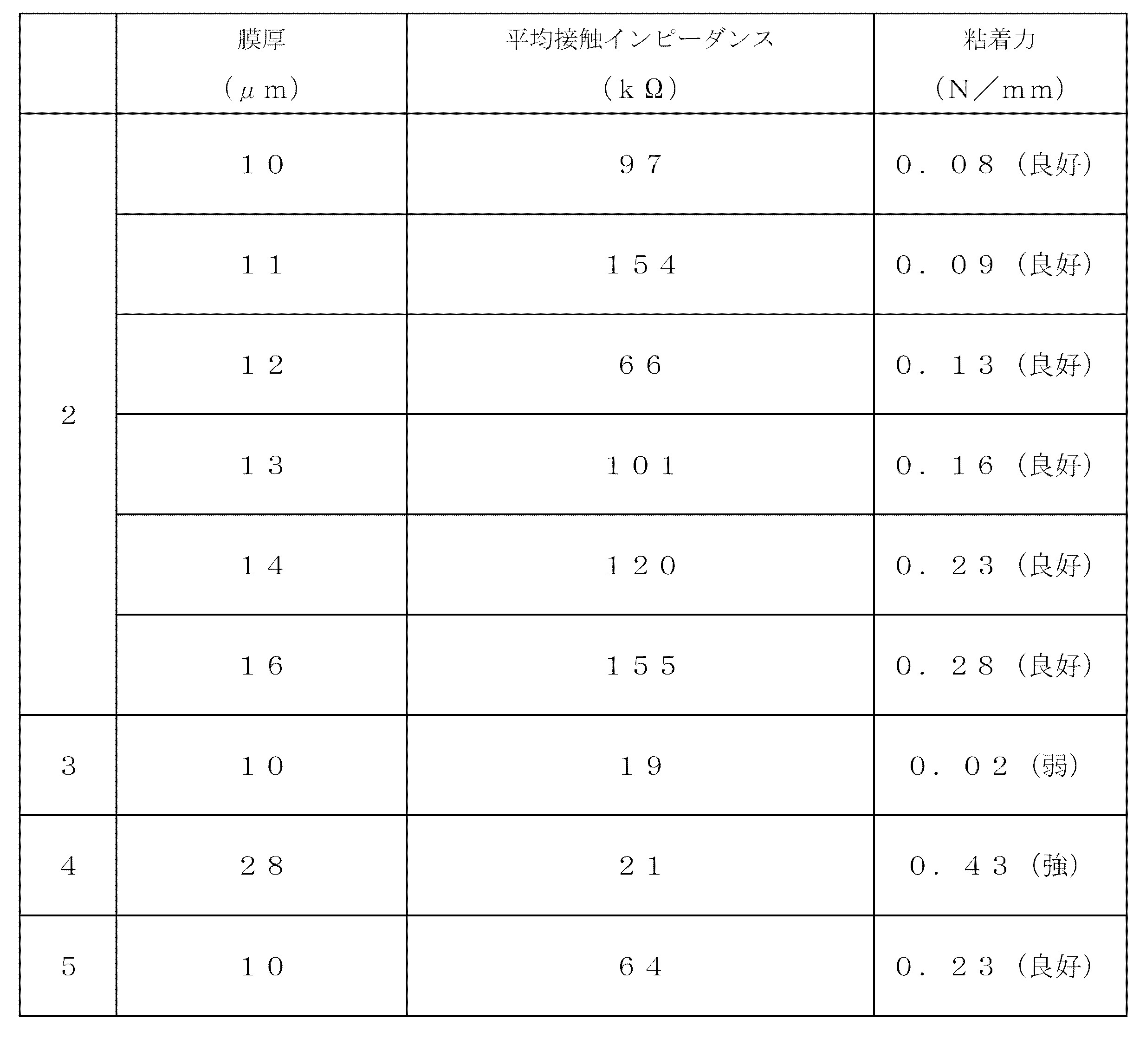
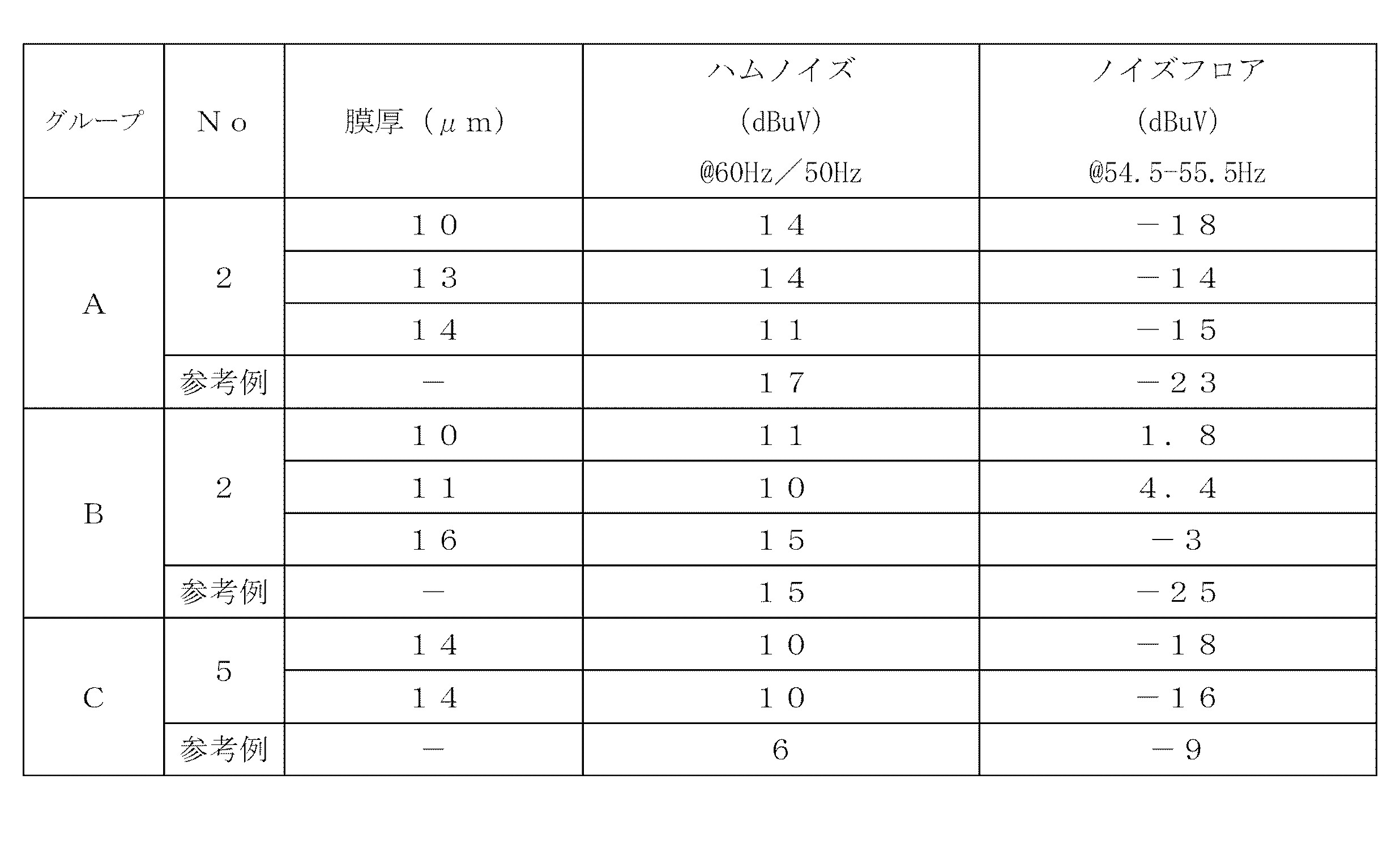
表3中に示す「参考例」は、TEN20(商標)により生体センサを被験者の皮膚に貼り付けて得られた電気特性を示している。このような水含有ゲルペーストは、従来から生体センサの裏面に塗付されて、生体信号の検出に使用される剤である。TEN20(商標)は、生体センサの電極に手作業で塗布されて使用されている。表3に示すハムノイズ及びノイズフロアは、粘着剤層3が作製されてから経過した時間や環境によって比較的大きく変化する。このため、本発明者らは、粘着剤層3を粘着シート10に用いた生体センサ101及びTEN20を塗付した生体センサをそれぞれ同日、同環境下で作製し、同日、同環境下で作製されたものをそれぞれグループA、B、Cに分類した。そして、同じグループに属するTEN20を用いた生体センサの電気特性を基準に粘着剤層3の電気的特性を評価するものとした。
平均接触インピーダンス、ハムノイズ及びフロアノイズは、図1に示す生体センサ101を作成し、この生体センサ101の粘着シート10に粘着剤層3を用いて測定したものである。接触インピーダンスによれば、粘着剤層3と皮膚面Sとのインピーダンスの指標を得ることができる。ハムノイズ及びノイズフロアによれば、粘着剤層を使った生体センサの信号のノイズの指標を得ることができる。表2に示した接触インピーダンスは、10Hzの交流信号を電極62に加えた場合に得られる値であって、複数回行った測定の平均値である。ハムノイズは50Hzまたは60Hz(主に日本国内における電源周波数に由来)の外部交流電源が存在するときのノイズの強度を示す値であり、ノイズフロアは54.5Hzから55.5Hzの範囲のハムノイズ及び目的の生体信号周波数と重ならないノイズの強度を示すものである。接触インピーダンスによれば、粘着剤層3を使った生体センサ101の感度に対する指標を得ることができる。また、ハムノイズ及びノイズフロアによれば、粘着剤層3を使った生体センサ101から得られる信号のノイズの指標を得ることができる。
粘着力の定量測定は、JIS Z 0237の規格に沿って行った。また、粘着力の官能評価は、粘着剤層3に指を3回から5回程度当てる、あるいは実際に生体に貼り付けて剥離時の感触を調べることによって行っている。
粘着力の定量測定は、JIS Z 0237の規格に沿って行った。また、粘着力の官能評価は、粘着剤層3に指を3回から5回程度当てる、あるいは実際に生体に貼り付けて剥離時の感触を調べることによって行っている。
表2に示すように、本発明者らは、No2の粘着剤層3について10μmから16μmまで膜厚を変更している。No2の粘着剤層3は、膜厚によらず良好な粘着力を得ることができる。また、No5の粘着剤層3も良好な粘着力を得ることができる。一方、No3の粘着剤層3は粘着力が弱いために生体センサ101に適用することが困難である。このようなことは、No3の粘着剤層3がPEDOT:PSSをNo2の粘着剤層3よりも多く含むことによって生じるものと考えられる。また、反対に、No4の粘着剤層3は、粘着力が強いために生体から剥がす際に痛みを伴う。このような点は、No4の粘着剤層3の厚さが28μmと厚いことによって生じたものと考えられる。なお、No4の粘着剤層3は銀コート粉を含んでいて、この点は粘着力を低下させる方向に作用するものと考えられる。このことから、膜厚の厚さの粘着力への寄与は大きいものと推測することができる。
表2に示す結果から、先に説明した実施形態の粘着剤層3の厚さは、25μm以下が好ましく、20μm以下がより好ましい。また、表2に示す結果から、粘着剤層3の生体に対する粘着力を、前述したように、0.05N/mm以上、1.0N/mm以下、より好ましくは0.08N/mm以上、0.3N/mm以下の範囲とすることが分かる。なお、このような粘着力は、粘着剤層3の厚さによって調整することが可能であるし、また、電気的特性が許容する範囲でPEDOT:PSSの量を変更する、あるいは銀コート粉を添加することによって調整可能である。
また、表2に示すように、本実施例の粘着剤層3は、全ての生体センサ101で接触インピーダンスが200kΩ以下の値を示している。このような値の粘着剤層3は、公知の生体センサに使用される伝導性ペーストTEN20(商標、Weaver and Company社製)で得られる接触インピーダンスが22kΩ程度であることに鑑みれば高い傾向にあるものの、生体センサ101に充分適用可能である。すなわち、粘着剤層3と皮膚との接触インピーダンスは、10Hzの矩形波(±0.04μA)を入力して計測した場合に200kΩ以下が好ましく、150kΩ以下がより好ましく、70kΩ以下がさらに好ましい。
接触インピーダンスに着目すると、No3及びNo4の粘着剤層3が特に好ましいが、No3及びNo4の粘着剤層3は、上述のように粘着力の点で不適切である。以上のことから、本実施例によれば、No2及びNo5の粘着剤層3が生体センサ101に適用することが可能であることが分かった。
接触インピーダンスに着目すると、No3及びNo4の粘着剤層3が特に好ましいが、No3及びNo4の粘着剤層3は、上述のように粘着力の点で不適切である。以上のことから、本実施例によれば、No2及びNo5の粘着剤層3が生体センサ101に適用することが可能であることが分かった。
また、表3に示すように、No2及びNo5の粘着剤層3は、そのハムノイズ及びノイズフロアがいずれも生体センサ101に使用することに適正な範囲にある。本発明者らは、No2及びNo5の粘着剤層3で膜厚(14μm)及びPEDOT:PSSの含有量が等しいにも関わらず、No5の粘着剤層3だけが参考例よりも低いノイズフロアを示すことに着目した。そして、No2の粘着剤層3とNo5の粘着剤層3との作製条件はPEDOT:PSSが粉体であるか液体であるかの点で相違することから、本発明者らは、両者のPEDOT:PSSの液中への拡散の状態を観察した。
図5(a)から図6(c)は、乾燥する前の粘着剤層3の粘着材料を上方から顕微鏡により観察した結果を示す図である。図5(a)及び図5(b)はNo1の粘着材料であり、図5(b)は、図5(a)をさらに拡大して示している。図5(c)及び図5(d)はNo2の粘着材料であり、図5(d)は、図5(c)をさらに拡大して示している。図6(a)及び図6(b)はNo3の粘着材料であり、図6(b)は、図6(a)をさらに拡大して示している。図6(c)は、No5の粘着材料である。
図5(a)から図6(c)は、乾燥する前の粘着剤層3の粘着材料を上方から顕微鏡により観察した結果を示す図である。図5(a)及び図5(b)はNo1の粘着材料であり、図5(b)は、図5(a)をさらに拡大して示している。図5(c)及び図5(d)はNo2の粘着材料であり、図5(d)は、図5(c)をさらに拡大して示している。図6(a)及び図6(b)はNo3の粘着材料であり、図6(b)は、図6(a)をさらに拡大して示している。図6(c)は、No5の粘着材料である。
図5(a)から図6(c)によれば、粘着材料にはPEDOT:PSSに由来する部材が「島状」に凝集していて、図5(c)及び図5(d)に示すNo2の粘着材料においては他より凝集が顕著であることが分かる。
本発明者らは、凝集の程度を定量的に測るため、島状の部位を観察し、この部分を略円形の「粒」に近似した場合の径(粒径)を計測して平均化した。さらに、本発明者らは、粘着材料の観察範囲(顕微鏡の視界)中で島状の部分が占める面積の割合を算出した。この結果を、各粘着剤層3の体積抵抗率と共に表4に示す。なお、体積抵抗率は、図4に示す素子6を使って複数回測定し、その平均を算出したものである。体積抵抗率は、24時間の養生後に測定した。測定された体積抵抗率をDC換算して表4に示す。
本発明者らは、凝集の程度を定量的に測るため、島状の部位を観察し、この部分を略円形の「粒」に近似した場合の径(粒径)を計測して平均化した。さらに、本発明者らは、粘着材料の観察範囲(顕微鏡の視界)中で島状の部分が占める面積の割合を算出した。この結果を、各粘着剤層3の体積抵抗率と共に表4に示す。なお、体積抵抗率は、図4に示す素子6を使って複数回測定し、その平均を算出したものである。体積抵抗率は、24時間の養生後に測定した。測定された体積抵抗率をDC換算して表4に示す。

表4によれば、No2の粘着剤層の体積抵抗率が12800Ωcm、No3の粘着剤層の体積抵抗率が700Ωcm、No5の粘着剤層の体積抵抗率が15260Ωcmである。体積抵抗率は、粘着剤層の面内方向及び厚み方向の抵抗値の両方を含むものである。また、表1によれば、乾燥後のNo2、No5の粘着剤層に含まれるPEDOT:PSSが共に2.2%である。このことから、No2、No5の粘着剤層は、導電性部材であるPEDOT:PSSを同程度含んでいて、その体積抵抗率の値も概ね等しいものと考えられる。
また、表4によれば、PEDOT:PSSを8.6%含むNo3の粘着材料は、PEDOT:PSSの粒径が識別できないほどに密集し、また、液体のPEDOT:PSSを2.2%含むNo5の粘着材料は、PEDOT:PSSの粒径が識別できないほどに分散していることが分かる。
また、表4によれば、PEDOT:PSSを8.6%含むNo3の粘着材料は、PEDOT:PSSの粒径が識別できないほどに密集し、また、液体のPEDOT:PSSを2.2%含むNo5の粘着材料は、PEDOT:PSSの粒径が識別できないほどに分散していることが分かる。
表4によれば、No2の粘着剤層は凝集物の粒径が相対的に大きく、また、観察領域の44%をPEDOT:PSS由来の部材が占めていることが分かった。このような結果と、表2に示したNo2の粘着剤層の接触インピーダンスが他の素子より高いという結果から、No2の粘着剤層は、粘着材料における導電性部材が島状になっているために皮膚との接触面積が小さくなって接触インピーダンスが高まるものと考えられる。
また、本発明者らは、No2の粘着材料について、島状の部分の径が他の素子の粘着材料よりも大きく、PEDOT:PSSがオリバイン(登録商標)BPW HW-1に充分分散していないと考える。そして、本発明者らは、粘着材料の分散の程度がノイズに係る粘着剤層の特性に影響するものと考える。
また、本発明者らは、No2の粘着材料について、島状の部分の径が他の素子の粘着材料よりも大きく、PEDOT:PSSがオリバイン(登録商標)BPW HW-1に充分分散していないと考える。そして、本発明者らは、粘着材料の分散の程度がノイズに係る粘着剤層の特性に影響するものと考える。
また、表2によれば、No5の粘着剤層は、No2の粘着剤層と同程度のPEDOT:PSSを含んでいるにも関わらず、皮膚との接触インピーダンスがNo2の粘着剤層よりも低くなっている。皮膚との接触インピーダンスは、粘着剤層の厚み方向の抵抗値を示していて、皮膚と導電性を有する粘着剤層との接触面積に係る影響が大きい因子である。図6(c)及び表4のように、No5の粘着剤層ではPEDOT:PSS由来の部材が凝集せずに粘着剤中に分散していて、PEDOT:PSSを含む部材の面積の割合がNo2の粘着剤層よりも充分大きくなっている。このことから、本実施例では、No5の粘着剤層においては厚さ方向の導電性が高まり、面内方向の電気伝導性が低くなっているものと考える。
このような点により、本発明者らは、粘着材料の凝集、分散の程度を制御することによって粘着剤層の異方導電性を制御することができるものと考える。
このような点により、本発明者らは、粘着材料の凝集、分散の程度を制御することによって粘着剤層の異方導電性を制御することができるものと考える。
[変形例]
次に、先に説明した本実施形態の変形例を説明する。本変形例は、図1(a)、図1(b)に示した構成が配線基板100の裏面の全面に粘着剤層3を貼り付けているのに対し、配線基板100の電極33の部分にのみ粘着剤層を設けている。
次に、先に説明した本実施形態の変形例を説明する。本変形例は、図1(a)、図1(b)に示した構成が配線基板100の裏面の全面に粘着剤層3を貼り付けているのに対し、配線基板100の電極33の部分にのみ粘着剤層を設けている。
図7は、変形例の粘着シート70を説明するための図である。粘着シート70は、粘着剤層3c、3d、3e、3fを有している。粘着剤層3c、3d、3e、3fは、互いに孤立した複数のアイランドを構成している。
ここで、「互いに孤立した」とは、複数の粘着剤層3c、3d、3e、3fの全てについて互いに接触または交わる部分がないことをいう。粘着剤層3c、3d、3e、3fは、各々表面3ca、3da、3ea、3faが配線基板100の裏面に粘着し、裏面3cb、3db、3eb、3fbが皮膚面Sに粘着する。
粘着剤層3c、3d、3e、3fの位置及び形状は、各々配線基板100が有する四つの電極33の位置及び形状に対応していて、粘着剤層3c、3d、3e、3fは、各々電極33に直接粘着する。
ここで、「互いに孤立した」とは、複数の粘着剤層3c、3d、3e、3fの全てについて互いに接触または交わる部分がないことをいう。粘着剤層3c、3d、3e、3fは、各々表面3ca、3da、3ea、3faが配線基板100の裏面に粘着し、裏面3cb、3db、3eb、3fbが皮膚面Sに粘着する。
粘着剤層3c、3d、3e、3fの位置及び形状は、各々配線基板100が有する四つの電極33の位置及び形状に対応していて、粘着剤層3c、3d、3e、3fは、各々電極33に直接粘着する。
変形例の粘着シート70は、例えば、以下の方法によって製造される。
すなわち、本変形例では、先に説明した実施形態と同様に、第二剥離シート2上に粘着材料を塗付して乾燥させ、粘着剤層3を形成する。そして、粘着剤層3の上から第一剥離シート1とは別の第三剥離シート(図示せず)を貼り付けて、第三剥離シートごと粘着剤層3をプレス打抜加工する。プレス打抜加工は、粘着剤層3の不要な部分(粘着剤層3c、3d、3e、3f以外の部分)を除去するための工程である。プレス打抜加工においては、図示しないプレス機により第三剥離シート、粘着剤層3に切り込みを入れる。このとき、本変形例では、第二剥離シート2の側にも第二剥離シート2の厚さの半分程度、あるいは半分に満たない深さまで切り込みを入れて第二剥離シート2をハーフカットする。このような工程により、本変形例では、第二剥離シート2から粘着剤層3の不要部分を確実に除去することができる。
次に、本変形例では、プレス打抜加工された粘着剤層3から、粘着剤層3cから粘着剤層3fを除く部分を除去する。このとき、粘着剤層3cから粘着剤層3fを除く粘着剤層上の第三剥離シートは、粘着剤層と共に除去される。さらに、粘着剤層3cから粘着剤層3f上の第三剥離シートも除去されて、粘着剤層3cから粘着剤層3f上には第一剥離シート1が貼り付けられる。
すなわち、本変形例では、先に説明した実施形態と同様に、第二剥離シート2上に粘着材料を塗付して乾燥させ、粘着剤層3を形成する。そして、粘着剤層3の上から第一剥離シート1とは別の第三剥離シート(図示せず)を貼り付けて、第三剥離シートごと粘着剤層3をプレス打抜加工する。プレス打抜加工は、粘着剤層3の不要な部分(粘着剤層3c、3d、3e、3f以外の部分)を除去するための工程である。プレス打抜加工においては、図示しないプレス機により第三剥離シート、粘着剤層3に切り込みを入れる。このとき、本変形例では、第二剥離シート2の側にも第二剥離シート2の厚さの半分程度、あるいは半分に満たない深さまで切り込みを入れて第二剥離シート2をハーフカットする。このような工程により、本変形例では、第二剥離シート2から粘着剤層3の不要部分を確実に除去することができる。
次に、本変形例では、プレス打抜加工された粘着剤層3から、粘着剤層3cから粘着剤層3fを除く部分を除去する。このとき、粘着剤層3cから粘着剤層3fを除く粘着剤層上の第三剥離シートは、粘着剤層と共に除去される。さらに、粘着剤層3cから粘着剤層3f上の第三剥離シートも除去されて、粘着剤層3cから粘着剤層3f上には第一剥離シート1が貼り付けられる。
このような変形例は、粘着剤層3の導電の異方性が低い場合であっても、電極33間がショートする懸念をなくし、信頼性の高い生体センサの提供に寄与することができる。
上記実施形態及び実施例は以下の技術思想を包含するものである。
(1)配線基板を、前記配線基板が貼り付けられる被貼り付け面に貼り合せることに用いられる粘着シートであって、導電性有機高分子化合物と粘着材料とを含む粘着剤層と、前記粘着剤層の第一面に設けられる第一剥離シートと、前記粘着剤層において前記第一面の裏面に当たる第二面に設けられる第二剥離シートと、を有する、粘着シート。
(2)前記粘着材料は、水系エマルジョン粘着剤を含む導電性の粘着剤組成物である、(1)の粘着シート。
(3)前記第一面と前記第一剥離シートとの間の粘着力が、前記第二面と前記第二剥離シートとの間の粘着力よりも弱い、(1)または(2)の粘着シート。
(4)前記粘着剤層は、前記第一剥離シートと前記第二剥離シートとの間で単層である、(1)から(3)のいずれか一つの粘着シート。
(5)前記粘着剤層は、互いに孤立した複数のアイランドを有する、(1)から(4)のいずれか一つの粘着シート。
(6)前記粘着剤層の厚さは、20μm以下である、(1)から(5)のいずれか一つの粘着シート。
(7)前記粘着剤層の生体に対する粘着力は、0.08N/mm以上、かつ0.3N/mm以下である、(1)から(6)のいずれか一つの粘着シート。
(8)前記粘着剤層は、10Hz、±0.04μAの矩形波を供給した場合の生体に対する接触インピーダンスが150kΩ以下である、(1)から(7)のいずれか一つの粘着シート。
(9)前記導電性有機高分子化合物が、ポリアニリン類、ポリピロール類及びポリチオフェン類ならびにそれらの誘導体の少なくとも一種である(2)の粘着シート。
(10)前記水系エマルジョン粘着剤が、アクリル系エマルジョン粘着剤である(9)の粘着シート。
(1)配線基板を、前記配線基板が貼り付けられる被貼り付け面に貼り合せることに用いられる粘着シートであって、導電性有機高分子化合物と粘着材料とを含む粘着剤層と、前記粘着剤層の第一面に設けられる第一剥離シートと、前記粘着剤層において前記第一面の裏面に当たる第二面に設けられる第二剥離シートと、を有する、粘着シート。
(2)前記粘着材料は、水系エマルジョン粘着剤を含む導電性の粘着剤組成物である、(1)の粘着シート。
(3)前記第一面と前記第一剥離シートとの間の粘着力が、前記第二面と前記第二剥離シートとの間の粘着力よりも弱い、(1)または(2)の粘着シート。
(4)前記粘着剤層は、前記第一剥離シートと前記第二剥離シートとの間で単層である、(1)から(3)のいずれか一つの粘着シート。
(5)前記粘着剤層は、互いに孤立した複数のアイランドを有する、(1)から(4)のいずれか一つの粘着シート。
(6)前記粘着剤層の厚さは、20μm以下である、(1)から(5)のいずれか一つの粘着シート。
(7)前記粘着剤層の生体に対する粘着力は、0.08N/mm以上、かつ0.3N/mm以下である、(1)から(6)のいずれか一つの粘着シート。
(8)前記粘着剤層は、10Hz、±0.04μAの矩形波を供給した場合の生体に対する接触インピーダンスが150kΩ以下である、(1)から(7)のいずれか一つの粘着シート。
(9)前記導電性有機高分子化合物が、ポリアニリン類、ポリピロール類及びポリチオフェン類ならびにそれらの誘導体の少なくとも一種である(2)の粘着シート。
(10)前記水系エマルジョン粘着剤が、アクリル系エマルジョン粘着剤である(9)の粘着シート。
1・・・第一剥離シート
2・・・第二剥離シート
3、3c、3d、3e、3f・・・粘着剤層
3a、3ca、3da、3ea、3fa・・・表面
3b、3cb、3db、3eb、3fb・・・裏面
6・・・素子
10、70・・・粘着シート
31・・・伸縮性基材
32・・・伸縮性配線
33・・・電極
35・・・フィルム基材
51・・・外部端子
61・・・配線マスク
62・・・電極
63・・・配線
100・・・配線基板
101・・・生体センサ
2・・・第二剥離シート
3、3c、3d、3e、3f・・・粘着剤層
3a、3ca、3da、3ea、3fa・・・表面
3b、3cb、3db、3eb、3fb・・・裏面
6・・・素子
10、70・・・粘着シート
31・・・伸縮性基材
32・・・伸縮性配線
33・・・電極
35・・・フィルム基材
51・・・外部端子
61・・・配線マスク
62・・・電極
63・・・配線
100・・・配線基板
101・・・生体センサ
Claims (10)
- 配線基板を、前記配線基板が貼り付けられる被貼り付け面に貼り合せることに用いられる粘着シートであって、
導電性有機高分子化合物と粘着材料とを含む粘着剤層と、
前記粘着剤層の第一面に設けられる第一剥離シートと、
前記粘着剤層において前記第一面の裏面に当たる第二面に設けられる第二剥離シートと、を有する、
粘着シート。 - 前記粘着材料は、水系エマルジョン粘着剤を含む導電性の粘着剤組成物である、請求項1に記載の粘着シート。
- 前記第一面と前記第一剥離シートとの間の粘着力が、前記第二面と前記第二剥離シートとの間の粘着力よりも弱い、請求項1または2に記載の粘着シート。
- 前記粘着剤層は、前記第一剥離シートと前記第二剥離シートとの間で単層である、請求項1から3のいずれか一項に記載の粘着シート。
- 前記粘着剤層は、互いに孤立した複数のアイランドを有する、請求項1から4のいずれか一項に記載の粘着シート。
- 前記粘着剤層の厚さは、20μm以下である、請求項1から5のいずれか一項に記載の粘着シート。
- 前記粘着剤層の生体に対する粘着力は、0.08N/mm以上、かつ0.3N/mm以下である、請求項1から6のいずれか一項に記載の粘着シート。
- 前記粘着剤層は、10Hz、±0.04μAの矩形波を供給した場合の生体に対する接触インピーダンスが150kΩ以下である、請求項1から7のいずれか一項に記載の粘着シート。
- 前記導電性有機高分子化合物が、ポリアニリン類、ポリピロール類及びポリチオフェン類ならびにそれらの誘導体の少なくとも一種である請求項2に記載の粘着シート。
- 前記水系エマルジョン粘着剤が、アクリル系エマルジョン粘着剤である請求項9に記載の粘着シート。
Priority Applications (1)
| Application Number | Priority Date | Filing Date | Title |
|---|---|---|---|
| CN202080006723.6A CN113166603B (zh) | 2019-03-12 | 2020-03-11 | 粘合片 |
Applications Claiming Priority (2)
| Application Number | Priority Date | Filing Date | Title |
|---|---|---|---|
| JP2019045152A JP7283654B2 (ja) | 2019-03-12 | 2019-03-12 | 粘着シート |
| JP2019-045152 | 2019-03-12 |
Publications (1)
| Publication Number | Publication Date |
|---|---|
| WO2020184594A1 true WO2020184594A1 (ja) | 2020-09-17 |
Family
ID=72424212
Family Applications (1)
| Application Number | Title | Priority Date | Filing Date |
|---|---|---|---|
| PCT/JP2020/010417 Ceased WO2020184594A1 (ja) | 2019-03-12 | 2020-03-11 | 粘着シート |
Country Status (4)
| Country | Link |
|---|---|
| US (1) | US12286573B2 (ja) |
| JP (1) | JP7283654B2 (ja) |
| CN (1) | CN113166603B (ja) |
| WO (1) | WO2020184594A1 (ja) |
Families Citing this family (8)
| Publication number | Priority date | Publication date | Assignee | Title |
|---|---|---|---|---|
| KR102760349B1 (ko) * | 2021-02-24 | 2025-02-03 | 신메이 폰타나 홀딩(홍콩) 리미티드 | 폴더블 백플레이트 필름의 제조 방법 |
| KR102760397B1 (ko) * | 2021-02-24 | 2025-02-03 | 신메이 폰타나 홀딩(홍콩) 리미티드 | 폴더블 백플레이트 필름의 제조 방법 |
| WO2023084971A1 (ja) * | 2021-11-11 | 2023-05-19 | 株式会社村田製作所 | 伸縮デバイス |
| US20230310850A1 (en) * | 2022-03-31 | 2023-10-05 | Novocure Gmbh | Devices, Systems, And Methods For Applying Tumor-Treating Fields |
| WO2024070680A1 (ja) * | 2022-09-27 | 2024-04-04 | 日東電工株式会社 | 生体信号取得用粘着性電極及び生体センサ |
| US20240108881A1 (en) * | 2022-09-29 | 2024-04-04 | Novocure Gmbh | Flexible Electrode Arrays |
| FI20235920A1 (en) * | 2023-08-17 | 2025-02-18 | Teknologian Tutkimuskeskus Vtt Oy | FUNCTIONAL ACCESSORY FOR A BIOELECTRODE |
| KR20250069043A (ko) * | 2023-11-10 | 2025-05-19 | 한국과학기술원 | 생체전자공학용 고전도도 조직 유사 접착성 하이드로겔 및 이의 제조방법 |
Citations (6)
| Publication number | Priority date | Publication date | Assignee | Title |
|---|---|---|---|---|
| JP2001238860A (ja) * | 2000-02-28 | 2001-09-04 | Sekisui Plastics Co Ltd | 生体インピーダンス測定用電極 |
| JP2012017399A (ja) * | 2010-07-07 | 2012-01-26 | Nagase Chemtex Corp | 帯電防止性粘着剤組成物、粘着剤層、粘着シート、表面保護フィルム及び偏光板 |
| JP2016089021A (ja) * | 2014-11-04 | 2016-05-23 | リンテック株式会社 | 導電性粘着剤組成物及び導電性粘着シート |
| JP2017057256A (ja) * | 2015-09-15 | 2017-03-23 | リンテック株式会社 | 導電性粘着シート |
| JP2017186486A (ja) * | 2016-04-08 | 2017-10-12 | 日東電工株式会社 | 剥離ライナー付き粘着シート |
| WO2018101438A1 (ja) * | 2016-11-30 | 2018-06-07 | 株式会社カネカ | 電極構造体、生体信号計測装置、粘着剤形成用組成物 |
Family Cites Families (14)
| Publication number | Priority date | Publication date | Assignee | Title |
|---|---|---|---|---|
| JP4601105B2 (ja) | 1999-12-24 | 2010-12-22 | スリーエム イノベイティブ プロパティズ カンパニー | 導電性接着剤及び生体電極 |
| JP4079617B2 (ja) * | 2001-10-01 | 2008-04-23 | ゼネラル株式会社 | 転写テープ及び転写具並びに転写テープの粘着層の切断方法 |
| JP4332663B2 (ja) * | 2002-07-08 | 2009-09-16 | 日本ジッパーチュービング株式会社 | 導電性シート |
| JP2004114559A (ja) | 2002-09-27 | 2004-04-15 | Daicel Chem Ind Ltd | 水性インクジェット印刷用感熱性粘着シート、粘着性積層体、及び粘着性積層体付き物品 |
| JP2004224835A (ja) | 2003-01-20 | 2004-08-12 | Toppan Forms Co Ltd | 導電性高分子マイクロカプセルインクおよびそれを用いたシート |
| JP4987267B2 (ja) | 2005-08-15 | 2012-07-25 | 信越ポリマー株式会社 | 帯電防止性粘接着剤の製造方法および保護材の製造方法 |
| US20080191174A1 (en) * | 2005-07-08 | 2008-08-14 | Cypak Ab | Use Of Heat-Activated Adhesive For Manufacture And A Device So Manufactured |
| US8372492B2 (en) * | 2006-12-15 | 2013-02-12 | Nitto Denko Corporation | Pressure-sensitive adhesive optical film and image display |
| JP5280034B2 (ja) * | 2007-10-10 | 2013-09-04 | 日東電工株式会社 | 配線回路基板用両面粘着テープ又はシートおよび配線回路基板 |
| JP5351432B2 (ja) * | 2008-04-10 | 2013-11-27 | リンテック株式会社 | 両面粘着シートおよびその製造方法 |
| JP5690833B2 (ja) * | 2010-09-30 | 2015-03-25 | リンテック株式会社 | 電子デバイス及び電子デバイスの製造方法 |
| KR101357604B1 (ko) * | 2010-11-12 | 2014-02-03 | 연세대학교 산학협력단 | 전도성 투명 접착 조성물 및 이를 이용하여 제조한 전도성 투명 접착제 |
| JP2017066407A (ja) * | 2013-11-27 | 2017-04-06 | 日東電工株式会社 | 導電性粘着テープ、電子部材及び粘着剤 |
| CN109804444A (zh) * | 2016-10-17 | 2019-05-24 | 株式会社村田制作所 | 固体电解电容器以及固体电解电容器的制造方法 |
-
2019
- 2019-03-12 JP JP2019045152A patent/JP7283654B2/ja active Active
-
2020
- 2020-03-11 WO PCT/JP2020/010417 patent/WO2020184594A1/ja not_active Ceased
- 2020-03-11 CN CN202080006723.6A patent/CN113166603B/zh active Active
- 2020-03-12 US US16/817,352 patent/US12286573B2/en active Active
Patent Citations (6)
| Publication number | Priority date | Publication date | Assignee | Title |
|---|---|---|---|---|
| JP2001238860A (ja) * | 2000-02-28 | 2001-09-04 | Sekisui Plastics Co Ltd | 生体インピーダンス測定用電極 |
| JP2012017399A (ja) * | 2010-07-07 | 2012-01-26 | Nagase Chemtex Corp | 帯電防止性粘着剤組成物、粘着剤層、粘着シート、表面保護フィルム及び偏光板 |
| JP2016089021A (ja) * | 2014-11-04 | 2016-05-23 | リンテック株式会社 | 導電性粘着剤組成物及び導電性粘着シート |
| JP2017057256A (ja) * | 2015-09-15 | 2017-03-23 | リンテック株式会社 | 導電性粘着シート |
| JP2017186486A (ja) * | 2016-04-08 | 2017-10-12 | 日東電工株式会社 | 剥離ライナー付き粘着シート |
| WO2018101438A1 (ja) * | 2016-11-30 | 2018-06-07 | 株式会社カネカ | 電極構造体、生体信号計測装置、粘着剤形成用組成物 |
Also Published As
| Publication number | Publication date |
|---|---|
| US20200291274A1 (en) | 2020-09-17 |
| JP7283654B2 (ja) | 2023-05-30 |
| CN113166603B (zh) | 2023-11-03 |
| CN113166603A (zh) | 2021-07-23 |
| JP2020147659A (ja) | 2020-09-17 |
| US12286573B2 (en) | 2025-04-29 |
Similar Documents
| Publication | Publication Date | Title |
|---|---|---|
| WO2020184594A1 (ja) | 粘着シート | |
| CN1127567A (zh) | 导电性微粒和用它们制成的压敏粘合带 | |
| WO2013099329A1 (ja) | 粘着性ハイドロゲル及びその用途 | |
| CN1147268A (zh) | 耐高温抗静电的压敏胶粘带 | |
| CN102171306A (zh) | 各向异性导电粘结剂及使用该粘结剂的连接结构体的制备方法 | |
| JP2010138317A (ja) | 導電性粘着シートおよびその製造方法 | |
| TW201431997A (zh) | 透明導電層用水分散型黏著劑組合物、透明導電層用黏著劑層、附有黏著劑層之光學膜、及液晶顯示裝置 | |
| JP2014501318A (ja) | 離型フィルム | |
| TWI648751B (zh) | 在彈性基材上之透明導電塗層 | |
| JP2018188646A (ja) | 接着剤組成物、フィルム状接着剤、接着シート、回路接続体、回路部材の接続方法、接着剤組成物の使用、フィルム状接着剤の使用及び接着シートの使用 | |
| WO2018134411A1 (en) | Stretchable conductive ink | |
| JP2002241613A (ja) | 帯電防止能を有する剥離剤組成物 | |
| KR101012140B1 (ko) | 전기전자기기용 아크릴계 점착제의 제조방법 | |
| WO2023120327A1 (ja) | 生体信号取得用粘着性電極、電極片及び生体センサ | |
| JP5185839B2 (ja) | 導電性粒子、異方性導電材料及び接続構造体 | |
| JPWO2023048013A5 (ja) | ||
| WO2024204664A1 (ja) | 生体信号取得用粘着性電極、電極片、生体センサ及び生体信号取得用粘着性電極の製造方法 | |
| KR20130074065A (ko) | 인체측정 전극용 점착성 겔 조성물 | |
| CN108541267B (zh) | 离型涂层材料中的非有机硅添加剂 | |
| CN109135601A (zh) | 导电性粘着片 | |
| KR101419018B1 (ko) | 인체측정 전극용 점착성 겔 조성물 | |
| JPH0547592B2 (ja) | ||
| JP3795478B2 (ja) | 剥離処理剤 | |
| JPS62321A (ja) | 医療用導電性粘着剤およびそれを用いた医療用粘着電極 | |
| KR101419020B1 (ko) | 인체측정 전극용 점착성 겔 조성물 |
Legal Events
| Date | Code | Title | Description |
|---|---|---|---|
| 121 | Ep: the epo has been informed by wipo that ep was designated in this application |
Ref document number: 20771151 Country of ref document: EP Kind code of ref document: A1 |
|
| NENP | Non-entry into the national phase |
Ref country code: DE |
|
| 122 | Ep: pct application non-entry in european phase |
Ref document number: 20771151 Country of ref document: EP Kind code of ref document: A1 |