WO2020162382A1 - 熱可塑性エラストマー組成物及びその用途 - Google Patents
熱可塑性エラストマー組成物及びその用途 Download PDFInfo
- Publication number
- WO2020162382A1 WO2020162382A1 PCT/JP2020/003867 JP2020003867W WO2020162382A1 WO 2020162382 A1 WO2020162382 A1 WO 2020162382A1 JP 2020003867 W JP2020003867 W JP 2020003867W WO 2020162382 A1 WO2020162382 A1 WO 2020162382A1
- Authority
- WO
- WIPO (PCT)
- Prior art keywords
- thermoplastic elastomer
- ethylene
- mass
- parts
- propylene
- Prior art date
- Legal status (The legal status is an assumption and is not a legal conclusion. Google has not performed a legal analysis and makes no representation as to the accuracy of the status listed.)
- Ceased
Links
Classifications
-
- B—PERFORMING OPERATIONS; TRANSPORTING
- B60—VEHICLES IN GENERAL
- B60R—VEHICLES, VEHICLE FITTINGS, OR VEHICLE PARTS, NOT OTHERWISE PROVIDED FOR
- B60R21/00—Arrangements or fittings on vehicles for protecting or preventing injuries to occupants or pedestrians in case of accidents or other traffic risks
- B60R21/02—Occupant safety arrangements or fittings, e.g. crash pads
- B60R21/16—Inflatable occupant restraints or confinements designed to inflate upon impact or impending impact, e.g. air bags
- B60R21/20—Arrangements for storing inflatable members in their non-use or deflated condition; Arrangement or mounting of air bag modules or components
- B60R21/215—Arrangements for storing inflatable members in their non-use or deflated condition; Arrangement or mounting of air bag modules or components characterised by the covers for the inflatable member
-
- B—PERFORMING OPERATIONS; TRANSPORTING
- B60—VEHICLES IN GENERAL
- B60R—VEHICLES, VEHICLE FITTINGS, OR VEHICLE PARTS, NOT OTHERWISE PROVIDED FOR
- B60R21/00—Arrangements or fittings on vehicles for protecting or preventing injuries to occupants or pedestrians in case of accidents or other traffic risks
- B60R21/02—Occupant safety arrangements or fittings, e.g. crash pads
- B60R21/16—Inflatable occupant restraints or confinements designed to inflate upon impact or impending impact, e.g. air bags
- B60R21/23—Inflatable members
- B60R21/235—Inflatable members characterised by their material
-
- C—CHEMISTRY; METALLURGY
- C08—ORGANIC MACROMOLECULAR COMPOUNDS; THEIR PREPARATION OR CHEMICAL WORKING-UP; COMPOSITIONS BASED THEREON
- C08L—COMPOSITIONS OF MACROMOLECULAR COMPOUNDS
- C08L15/00—Compositions of rubber derivatives
-
- C—CHEMISTRY; METALLURGY
- C08—ORGANIC MACROMOLECULAR COMPOUNDS; THEIR PREPARATION OR CHEMICAL WORKING-UP; COMPOSITIONS BASED THEREON
- C08L—COMPOSITIONS OF MACROMOLECULAR COMPOUNDS
- C08L23/00—Compositions of homopolymers or copolymers of unsaturated aliphatic hydrocarbons having only one carbon-to-carbon double bond; Compositions of derivatives of such polymers
- C08L23/02—Compositions of homopolymers or copolymers of unsaturated aliphatic hydrocarbons having only one carbon-to-carbon double bond; Compositions of derivatives of such polymers not modified by chemical after-treatment
- C08L23/04—Homopolymers or copolymers of ethene
- C08L23/08—Copolymers of ethene
-
- C—CHEMISTRY; METALLURGY
- C08—ORGANIC MACROMOLECULAR COMPOUNDS; THEIR PREPARATION OR CHEMICAL WORKING-UP; COMPOSITIONS BASED THEREON
- C08L—COMPOSITIONS OF MACROMOLECULAR COMPOUNDS
- C08L23/00—Compositions of homopolymers or copolymers of unsaturated aliphatic hydrocarbons having only one carbon-to-carbon double bond; Compositions of derivatives of such polymers
- C08L23/02—Compositions of homopolymers or copolymers of unsaturated aliphatic hydrocarbons having only one carbon-to-carbon double bond; Compositions of derivatives of such polymers not modified by chemical after-treatment
- C08L23/10—Homopolymers or copolymers of propene
Definitions
- the present invention relates to an olefinic thermoplastic elastomer composition and its use.
- Olefin-based thermoplastic elastomers are lightweight, easy to recycle, and do not generate toxic gas when incinerated, so that they are an alternative to vulcanized rubber especially from the viewpoint of energy saving and resource saving, and in recent years environmental protection. Widely used as automobile parts, industrial machine parts, electric/electronic parts, building materials, etc. An example of such an automobile part is an airbag cover of an automobile airbag system.
- the airbag cover of the airbag system for automobiles has rigidity suitable for each application such as driver's seat and passenger's seat, and the tear line part (provided to tear the airbag cover when the airbag is deployed. It is required that the airbag cover has a high tensile elongation at break other than the thin portion of the airbag cover) so as not to be cleaved, and the elongation at low temperature is excellent so as to withstand use in cold regions.
- thermoplastic elastomer composition for an airbag cover is one containing an ethylene/butene copolymer and block polypropylene.
- Patent Document 1 describes a thermoplastic elastomer composition for an airbag cover, which includes a polypropylene resin (for example, a propylene/ethylene block copolymer), an ethylene/butene copolymer rubber, and an ethylene/propylene copolymer rubber. Has been done.
- JP-A-10-273001 (for example, claim 1, Tables 1 to 3)
- An object of the present invention is to provide a thermoplastic elastomer composition having good low temperature tensile elongation.
- the gist of the present invention is as follows. (1) At least one of 30 to 60 parts by mass of a propylene polymer (A) and 32 to 65 parts by mass of an ethylene/ ⁇ -olefin copolymer (B) composed of ethylene and an ⁇ -olefin having 4 to 20 carbon atoms. A thermoplastic elastomer composition containing 1 to 20 parts by mass of a rubber (C) whose parts are cross-linked (the total amount of components (A), (B) and (C) is 100 parts by mass). (2) The intrinsic viscosity [ ⁇ ] measured in decalin at 135° C.
- n-decane in the propylene-based polymer (A) is 0.5 to 4.0 dl/g.
- thermoplastic elastomer molded body obtained by molding the thermoplastic elastomer composition according to any one of (1) to (4) above.
- thermoplastic elastomer composition of the present invention is excellent in elongation at break at low temperature.
- thermoplastic elastomer composition of the present invention will be specifically described below.
- thermoplastic elastomer composition of the present invention comprises a propylene-based polymer (A), an ethylene/ ⁇ -olefin copolymer (B) composed of ethylene and an ⁇ -olefin having 4 to 20 carbon atoms, and at least a part of which is crosslinked. Rubber (C).
- the thermoplastic elastomer composition of the present invention may contain only one type or two or more types of propylene polymer (A).
- the propylene polymer (A) has a melt flow rate (MFR) measured according to ASTM D1238 at 230° C. and a load of 2.16 kg of usually 5 to 150 g/10 minutes, preferably 10 to 100 g/10 minutes. Is.
- MFR melt flow rate
- a thermoplastic elastomer composition can be easily injection-molded, and a molded product excellent in dimensional stability and impact strength can be obtained.
- the propylene-based polymer (A) may be a propylene homopolymer (polypropylene) or a copolymer of propylene and ⁇ -olefin.
- the propylene/ ⁇ -olefin copolymer may be a random copolymer or a block copolymer.
- Examples of ⁇ -olefins copolymerized with propylene include ethylene and ⁇ -olefins having 4 to 12 carbon atoms.
- the amount of constituent units derived from propylene is preferably 60 to 99.5 mol %.
- the amount of the propylene-derived structural unit is more preferably 80 to 99 mol%, further preferably 90 to 98.5 mol%, and particularly preferably 95 to 98 mol%.
- the total of the amount of the propylene-derived constitutional unit and the amount of the ethylene-derived constitutional unit is 100 mol %.
- the propylene-based polymer is a copolymer of propylene and an ⁇ -olefin having 4 to 12 carbon atoms
- examples of the ⁇ -olefin having 4 to 12 carbon atoms include 1-butene, 1-pentene and 3 Linear or branched ⁇ -olefins such as -methyl-1-butene, 1-hexene, 4-methyl-1-pentene, 3-methyl-1-pentene, 1-octene, 1-decene, 1-dodecene Is included.
- the propylene/ ⁇ -olefin copolymer may contain an olefin having a carbon number other than 4 to 12, and for example, a small amount of a structural unit derived from ethylene or the like (for example, in all the structural units of the propylene-based copolymer, 10 mol% or less) may be included.
- the propylene/ ⁇ -olefin copolymer may contain only one type of ⁇ -olefin, or may contain two or more types of ⁇ -olefin.
- the propylene-based polymer (A) preferably contains block polypropylene from the viewpoint of elongation at break at low temperature.
- the block polypropylene is preferably a propylene/ethylene block copolymer, for example, a polymer having a propylene homopolymer block and an ethylene/propylene random copolymer block.
- the propylene homopolymer block is a component insoluble in n-decane
- the ethylene/propylene random copolymer block is a component soluble in n-decane. Therefore, these can be clearly distinguished or separated in the propylene/ethylene block copolymer.
- the intrinsic viscosity [ ⁇ ] measured in decalin at 135° C. in a portion soluble in room temperature n-decane in the propylene polymer (A) is preferably 0.5 to It is 4.0 dl/g, and more preferably 0.7 to 4.0 dl/g.
- the propylene/ethylene block copolymer can be appropriately produced by a known method. For example, it can be produced by homopolymerizing propylene in the first step and then copolymerizing propylene and ethylene.
- the propylene/ethylene block copolymer although referred to as a block copolymer, is considered to be a complicated composition composed of polypropylene, polyethylene, and ethylene propylene rubber (EPR) (Takashi Inoue, Sho Ichihara). Next, Polymer New Material One Point 12 Polymer Alloy, Kyoritsu Shuppan, p.62 (1988)).
- the density of the propylene polymer (A) used in the present invention is usually 0.90 to 0.92 g/cm 3 , preferably 0.90 to 0.91.
- the density is the density measured according to ASTM D1505.
- the initial flexural modulus of the propylene polymer (A) measured according to ASTM D790 is preferably 700 to 2000 MPa.
- the ethylene/ ⁇ -olefin copolymer (B) used in the present invention is an ethylene/ ⁇ -olefin copolymer composed of ethylene and an ⁇ -olefin having 4 to 20 carbon atoms, and has impact resistance of the thermoplastic elastomer composition. It is a component for improving the tensile elongation and is not crosslinked.
- the melt flow rate (MFR) is preferably 0.1 to 50 g/10 minutes, more preferably from the viewpoint of impact resistance and tensile elongation. It is 0.2 to 40 g/10 minutes.
- MFR is a value measured according to ASTM D1238, and the measurement conditions are 190° C. and 2.16 kg load.
- the melt flow rate of the ethylene/ ⁇ -olefin copolymer (B) is adjusted to be within a desired range by appropriately adjusting the degree of polymerization when polymerizing ethylene and ⁇ -olefin as raw materials. Is possible.
- Examples of the ethylene/ ⁇ -olefin copolymer (B) include ethylene/butene copolymer, ethylene/octene copolymer and ethylene/hexene copolymer.
- the ethylene/ ⁇ -olefin copolymer (B) preferably contains an ethylene/butene copolymer and an ethylene/octene copolymer from the viewpoint of impact resistance and tensile elongation, and the ethylene/butene copolymer and ethylene -It is more preferable that the octene copolymer alone is used.
- the mass ratio of the ethylene/butene copolymer and the ethylene/octene copolymer is preferably 5:95 to 95:5, more preferably 10:90 to 90:10.
- the ethylene/ ⁇ -olefin copolymer (B) As a method for producing the ethylene/ ⁇ -olefin copolymer (B), a known polymerization method using an olefin polymerization catalyst is used.
- the ethylene/ ⁇ -olefin copolymer (B) is, for example, a solution polymerization method, a slurry polymerization method, a high pressure ionic polymerization method, a gas polymerization method using a Ziegler-Natta catalyst, a complex catalyst such as a metallocene complex or a nonmetallocene complex. It is preferably produced by a phase polymerization method, a bulk polymerization method using a radical initiator, a solution polymerization method, or the like. Above all, it is particularly preferable to use a method of polymerizing a monomer using a Ziegler-Natta catalyst or a complex catalyst, or a method of polymerizing a monomer in the presence of a metalloc
- the at least partially crosslinked rubber (C) used in the present invention is not particularly limited, but a peroxide crosslinked olefin-based copolymer rubber is preferable.
- the peroxide-crosslinking olefin-based copolymer rubber is, for example, an amorphous random elastic rubber containing olefin as a main component such as ethylene/propylene copolymer rubber, ethylene/propylene/non-conjugated diene rubber, and ethylene/butadiene copolymer rubber.
- the above-mentioned ⁇ -olefin is usually an ⁇ -olefin having 3 to 20 carbon atoms, specifically, propylene, 1-butene, 1-pentene, 4-methylpentene-1,1-hexene, 1-heptene.
- propylene, 1-butene, 4-methylpentene-1,1-hexene and 1-octene are preferable, and propylene is particularly preferable.
- These ⁇ -olefins may be used alone or in combination of two or more.
- non-conjugated polyene examples include 1,4-hexadiene, 3-methyl-1,4-hexadiene, 4-methyl-1,4-hexadiene, 5-methyl-1,4-hexadiene, 4,5 -Chain non-conjugated dienes such as dimethyl-1,4-hexadiene, 7-methyl-1,6-octadiene, 8-methyl-4-ethylidene-1,7-nonadiene, 4-ethylidene-1,7-undecadiene; Methyl tetrahydroindene, 5-ethylidene-2-norbornene, 5-methylene-2-norbornene, 5-isopropylidene-2-norbornene, 5-vinylidene-2-norbornene, 6-chloromethyl-5-isopropenyl-2-norbornene Cyclic non-conjugated dienes such as 5-vinyl-2-norbornene,
- the intrinsic viscosity [ ⁇ ] of the ethylene/ ⁇ -olefin/non-conjugated polyene copolymer rubber measured in decalin at 135° C. is usually 0.6 to 6.5 dl/g, preferably 0.8 to 6. It is 0 dl/g, and more preferably 0.9 to 5.5 dl/g.
- the iodine value of the ethylene/ ⁇ -olefin/non-conjugated polyene copolymer rubber is usually 2 to 50 g/100 g, preferably 5 to 40 g/100 g, more preferably 7 to 30 g/100 g.
- the Mooney viscosity ML 1+4 (100° C.) of the copolymer rubber is usually 10 to 300, preferably 30 to 250.
- the rubber used in the present invention in addition to the olefin copolymer rubber, other rubbers such as styrene-butadiene rubber (SBR), nitrile rubber (NBR), natural rubber (NR), butyl rubber (IIR), etc.
- SBR styrene-butadiene rubber
- NBR nitrile rubber
- NR natural rubber
- IIR butyl rubber
- examples include diene rubber, SEBS, polyisobutylene, and the like.
- thermoplastic elastomer composition of the present invention may contain a plasticizer (softening agent) (D), if necessary.
- plasticizer (D) a plasticizer usually used for rubber can be used.
- petroleum-based plasticizers such as process oils, lubricating oils, paraffin oils, liquid paraffin, petroleum asphalt, and petrolatum
- coal tar-based plasticizers such as coal tar and coal tar pitch
- castor oil, linseed oil, rapeseed oil a plasticizer usually used for rubber.
- Fat oil plasticizers such as soybean oil and coconut oil; tall oil; sub (factis); waxes such as beeswax, carnauba wax and lanolin; ricinoleic acid, palmitic acid, stearic acid, barium stearate, calcium stearate, laurin Fatty acids and fatty acid salts such as zinc acid; naphthenic acid; pine oil, rosin or its derivatives; synthetic polymer substances such as terpene resin, petroleum resin, atactic polypropylene, coumarone indene resin; dioctyl phthalate, dioctyl adipate, dioctyl sebacate Ester plasticizers such as; microcrystalline wax, liquid polybutadiene, modified liquid polybutazine, liquid thiocol, hydrocarbon synthetic lubricating oil, and the like.
- petroleum-based plasticizers particularly process oils such as paraffin-based process oils and naphthene-based process oils are preferably used.
- the blending amount of the plasticizer is preferably 0 part by mass or more and 10 parts by mass or less from the viewpoint of bleeding suppression and coating adhesion.
- the propylene polymer (A) and the at least partially crosslinked rubber (C) may be present in a completely or partially crosslinked polyolefin-based thermoplastic elastomer.
- thermoplastic elastomer for example, (1) A mixture of (a) peroxide-crosslinking olefin-based copolymer rubber and (b) peroxide-decomposing olefin-based plastic (propylene-based polymer (A)), or (a) peroxide-crosslinking olefin-based copolymer Polymer rubber, (b) peroxide decomposing type olefin-based plastic (propylene polymer (A)), and (c) peroxide non-crosslinking rubber-like substance and/or (d) petroleum plasticizer, if necessary A partially crosslinked thermoplastic elastomer obtained by dynamically heat treating a mixture consisting of: (2) (a) Peroxide-crosslinking olefin-based copolymer rubber, (b) Peroxide-decomposing olefin-based plastic (propylene-based polymer (A)), and
- the above-mentioned (c) peroxide non-crosslinking rubber-like substance is a mixture with a peroxide such as polyisobutylene, butyl rubber, atactic polypropylene, propylene/ ⁇ -olefin copolymer rubber having a propylene content of 50 mol% or more.
- a peroxide such as polyisobutylene, butyl rubber, atactic polypropylene, propylene/ ⁇ -olefin copolymer rubber having a propylene content of 50 mol% or more.
- it means a hydrocarbon rubber-like substance that does not crosslink even when kneaded under heating and does not deteriorate in fluidity.
- a mass compounding ratio ((b)/(a) of (b) olefin-based plastic (propylene polymer (A)) and (a) olefin-based copolymer rubber. )) is usually in the range of 90/10 to 10/90, preferably 70/30 to 15/85.
- the other rubber is 100 in total of the peroxide-decomposing olefin plastic (propylene polymer (A)) and the rubber.
- the amount is usually 40 parts by mass or less, preferably 5 to 20 parts by mass with respect to parts by mass.
- the olefin thermoplastic elastomer preferably used in the present invention is crystalline polypropylene (propylene polymer (A)) and ethylene/ ⁇ -olefin copolymer rubber or ethylene/ ⁇ -olefin/non-conjugated polyene copolymer rubber. Which is present in a partially crosslinked state in the olefin-based thermoplastic elastomer, and has a mass compounding ratio of crystalline polypropylene (propylene polymer (A)) and rubber (crystalline polypropylene (propylene-based polymer)). It is an olefinic thermoplastic elastomer having a polymer (A))/rubber) in the range of 70/30 to 3/97.
- organic peroxide examples include dicumyl peroxide, di-tert-butyl peroxide, 2,5-dimethyl-2,5-di-(tert-butylperoxy)hexane, 2,5-dimethyl-2, 5-di-(tert-butylperoxy)hexyne-3,1,3-bis(tert-butylperoxyisopropyl)benzene, 1,1-bis(tert-butylperoxy)-3,3,5-trimethylcyclohexane, n -Butyl-4,4-bis(tert-butylperoxy)valerate, benzoyl peroxide, p-chlorobenzoyl peroxide, 2,4-dichlorobenzoyl peroxide, tert-butyl peroxybenzoate, tert-butyl peroxyisopropyl carbonate, diacetyl peroxide, lauroyl Examples thereof include peroxides and tert-buty
- 2,5-dimethyl-2,5-di-(tert-butylperoxy)hexane and 2,5-dimethyl-2,5-di-(tert-butyl) are preferable in terms of odor and scorch stability.
- the organic peroxide is usually 0.01 to 5 parts by mass, preferably 0.05 to 100 parts by mass of the total amount of the crystalline polyolefin (the propylene polymer (A) in the olefinic thermoplastic elastomer) and the rubber. It is used in a proportion of ⁇ 3 parts by mass.
- Divinylbenzene is easy to handle, has good compatibility with the crystalline polyolefin and the rubber, which are the main components of the above-mentioned substance to be crosslinked, and has the action of solubilizing the organic peroxide, and is a dispersant for the organic peroxide.
- an olefinic thermoplastic elastomer having a uniform cross-linking effect by heat treatment and a good balance of fluidity and physical properties can be obtained.
- the olefin-based thermoplastic elastomer used in the present invention is produced by using a phenol resin-based cross-linking agent as a cross-linking agent, a propylene-based polymer (A) and an uncross-linked rubber (C), such as ethylene/ ⁇ -olefin/ It is preferable to dynamically crosslink the non-conjugated polyene copolymer with a phenol resin crosslinking agent.
- “dynamic crosslinking” means crosslinking while applying a shearing force to the mixture.
- the phenol resin-based cross-linking agent a halogenated phenol resin-based cross-linking agent can be mentioned.
- the phenol resin-based cross-linking agent is a resol resin and is produced by condensation of an alkyl-substituted phenol or an unsubstituted phenol with an aldehyde in an alkaline medium, preferably with formaldehyde, or a condensation of difunctional phenol dialcohols. Is also preferable.
- the alkyl-substituted phenol is preferably a substituted alkyl group having 1 to about 10 carbon atoms.
- the phenol resin-based curable resin is typically a heat-crosslinkable resin, and is also called a phenol resin-based crosslinking agent or a phenol resin.
- phenol resin-based cured resin examples include compounds represented by the following general formula (I).
- Q is a divalent group selected from the group consisting of —CH 2 — and —CH 2 —O—CH 2 —, m is 0 or a positive integer of 1 to 20, and R′ is Is an organic group.
- Q is a divalent group —CH 2 —O—CH 2 —
- m is 0 or a positive integer from 1 to 10
- R′ is an organic group having less than 20 carbon atoms. More preferably, m is 0 or a positive integer of 1 to 5 and R'is an organic group having 4 to 12 carbon atoms.
- Specific examples thereof include an alkylphenol formaldehyde resin, a methylolated alkylphenol resin, and a halogenated alkylphenol resin.
- a halogenated alkylphenol resin is preferable, and a terminal hydroxyl group is more preferably brominated.
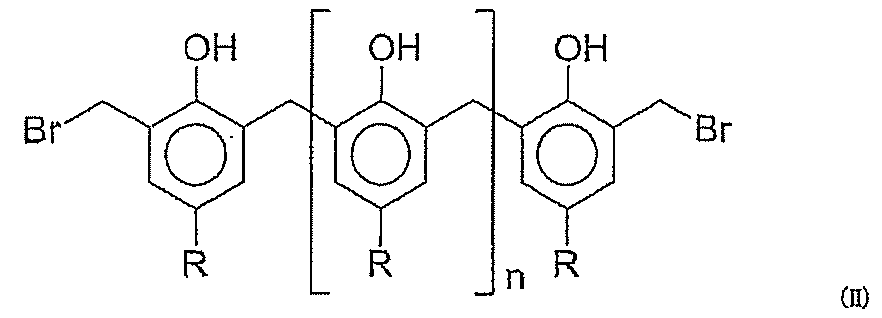
- An example of a phenolic resin-based cured resin whose terminal is brominated is represented by the following general formula (II).
- n is an integer of 0 to 10 and R is a saturated hydrocarbon group of 1 to 15 carbon atoms.
- Examples of the product of the phenol-based curable resin include Takkyrol (registered trademark) 201 (alkylphenol formaldehyde resin, manufactured by Taoka Chemical Industry Co., Ltd.), Takkyrol (registered trademark) 250-I (brominated alkylphenol having a bromination rate of 4%).
- Formaldehyde resin manufactured by Taoka Chemical Co., Ltd., Takkyrol (registered trademark) 250-III (brominated alkylphenol formaldehyde resin, manufactured by Taoka Chemical Co., Ltd.), PR-4507 (Gunei Chemical Co., Ltd.)
- Vulkaresat 510E manufactured by Hoechst
- Vulkaresat 532E manufactured by Hoechst
- VulkaresenE manufactured by Hoechst
- Vulkaresen 105E manufactured by Hoechst Co.
- Vulkaresen 130E manufactured by Hoechst
- Vulkaresen 130E manufactured by Hoechst
- Vulkaresen 130E manufactured by Hoechst
- Vulkaresen 130E manufactured by Hoechst
- Vulkaresen 130E manufactured by Hoechst
- Vulkaresen 130E manufactured by Hoechst
- Vulkaresen 130E manufactured by Hoechst
- Examples include SP1055F (manufactured by Schenectady Chem., brominated alkylphenol formaldehyde resin), Schenectady SP1056 (manufactured by Schenectady Chem.), CRM-0803 (manufactured by Showa Union Synthetic Co., Ltd.), and Vulkadur A (manufactured by Bayer).
- halogenated phenol resin-based cross-linking agents are preferable, and brominated alkylphenol formaldehyde resins such as Tackyroll (registered trademark) 250-I, Tackyroll (registered trademark) 250-III, and Schenectady SP1055F can be more preferably used.
- thermoplastic vulcanizate with a phenol resin
- crosslinking of the thermoplastic vulcanizate with a phenol resin are described in US Pat. No. 4,311,628, US Pat. No. 2,972,600 and US Pat. No. 3,287,440. Although described, these techniques can also be used in the present invention.
- U.S. Pat. No. 4,311,628 discloses a phenolic curative system consisting of a phenolic curing resin and a cure activator.
- the basic component of the system is either the condensation of a substituted phenol (eg halogen-substituted phenol, C 1 -C 2 alkyl-substituted phenol) or an unsubstituted phenol with an aldehyde, preferably formaldehyde, in an alkaline medium, or a bifunctional phenol.
- a phenol resin cross-linking agent produced by condensation of dialcohols (preferably dimethylolphenols substituted at the para position with a C 5 -C 10 alkyl group).
- Halogenated alkyl-substituted phenolic resin-based crosslinkers prepared by halogenation of alkyl-substituted phenolic resin-based crosslinkers are particularly suitable.
- a phenol resin-based cross-linking agent comprising a methylol phenol curable resin, a halogen donor and a metal compound is particularly recommended, and the details are described in US Pat. Nos. 3,287,440 and 3,709,840. Has been done.
- the non-halogenated phenolic resin-based crosslinker is used at the same time as the halogen donor, preferably with a hydrogen halide scavenger.
- halogenated phenolic resin-based cross-linking agents preferably brominated phenolic resin-based cross-linking agents containing 2 to 10% by weight of bromine
- halogen donors such as iron oxides, titanium oxides, oxides.
- hydrogen halide scavengers such as metal oxides such as magnesium, magnesium silicate, silicon dioxide and zinc oxide, preferably zinc oxide.
- hydrogen halide scavengers such as zinc oxide are usually used in an amount of 1 to 20 parts by mass with respect to 100 parts by mass of the phenol resin crosslinking agent.
- halogen donors are, for example, stannous chloride, ferric chloride, or halogen donating heavy compounds such as chlorinated paraffins, chlorinated polyethylenes, chlorosulfonated polyethylenes and polychlorobutadienes (neoprene rubber).
- a phenolic resin-based crosslinker and includes metal oxides and halogen donors, Are used alone or in combination.
- vulcanization accelerator means any substance that substantially increases the crosslinking efficiency of a phenolic resin-based crosslinker, and includes metal oxides and halogen donors, Are used alone or in combination. For more details on phenolic vulcanizing agents, see “Vulcanization and Vulcanizing Agents" (W. Hoffman, Palmerton Publishing Company).
- Suitable phenolic resin-based crosslinkers and brominated phenolic resin-based crosslinkers are commercially available, for example such crosslinkers are available from Schenectady Chemicals, Inc. under the trade names "SP-1045”, “CRJ-352”. ,”SP-1055F” and “SP-1056". Similar functionally equivalent phenolic resin crosslinkers can also be obtained from other suppliers.
- the phenolic resin-based cross-linking agent is a suitable vulcanizing agent from the viewpoint of preventing fogging because it produces few decomposition products.
- the phenolic resin-based crosslinker is used in an amount sufficient to achieve essentially complete vulcanization of the rubber.
- the phenol resin-based cross-linking agent is usually used in an amount of 0.1 to 20 parts by mass, preferably 1 to 10 parts by mass, based on 100 parts by mass of the ethylene/ ⁇ -olefin/non-conjugated polyene copolymer rubber.
- amount of the phenol resin-based cross-linking agent to be in the above range, a composition having excellent moldability can be obtained, and the obtained molded article has high strength and excellent oil resistance, It has heat resistance and mechanical properties.
- auxiliary agent divinylbenzene is preferable. Divinylbenzene is easy to handle, has good compatibility with the crystalline olefin polymer and the ethylene/ ⁇ -olefin/non-conjugated polyene copolymer rubber contained as the main components in the thermoplastic elastomer composition, and is phenol It has a function of solubilizing the resin-based cross-linking agent and acts as a dispersant for the phenol resin-based cross-linking agent, so that the cross-linking effect by heat treatment is uniform, and a thermoplastic elastomer composition having a good balance of fluidity and physical properties is obtained.
- the auxiliary is used in an amount of usually 2 parts by mass or less, preferably 0.3 to 1 part by mass, based on 100 parts by mass of the ethylene/ ⁇ -olefin/non-conjugated polyene copolymer rubber.
- a dispersion accelerator may be used to accelerate the decomposition of the phenol resin crosslinking agent.
- tertiary amines such as triethylamine, tributylamine, 2,4,6-tri(dimethylamino)phenol; aluminum, cobalt, vanadium, copper, calcium, zirconium, manganese, magnesium, lead, mercury, etc.
- naphthenic acid salts of naphthenic acid and various metals for example, Pb, Co, Mn, Ca, Cu, Ni, Fe, Zn, and rare earths).
- the above-mentioned crosslinking aid or polyfunctional vinyl monomer is used in a proportion of 0.01 to 5 parts by weight, and particularly 0.05 to 3 parts by weight, based on 100 parts by weight of the whole article to be crosslinked. Is preferred.
- the cross-linking reaction proceeds too fast when the blending amount of the organic peroxide is large, so that the obtained thermoplastic elastomer has a fluidity.
- the content of the organic peroxide is small, the cross-linking aid and the polyfunctional vinyl monomer remain as unreacted monomers in the thermoplastic elastomer, and the thermoplastic elastomer does not undergo heat treatment during molding. Physical properties may change due to history. Therefore, the cross-linking aid and the polyfunctional vinyl monomer should not be blended in excess.
- “Dynamic heat treatment” means kneading each of the above components in a molten state.
- a conventionally known kneading device such as an open type mixing roll, a non-open type Banbury mixer, an extruder, a kneader, or a continuous mixer can be used.
- a non-open type kneading device is preferable, and kneading is preferably performed in an atmosphere of an inert gas such as nitrogen gas or carbon dioxide gas.
- the kneading is preferably performed at a temperature at which the half-life of the organic peroxide used is less than 1 minute.
- the kneading temperature is usually 150 to 280° C., preferably 170 to 270° C.
- the kneading time is usually 0.5 to 20 minutes, preferably 1 to 10 minutes.
- the shear force applied is typically a shear rate, 10 ⁇ 50,000sec -1, is preferably determined in the range of 100 ⁇ 10,000sec -1.
- the completely crosslinked olefinic thermoplastic elastomer is prepared by changing the conditions such as the amount of the organic peroxide used and the kneading time according to the method for preparing the olefinic thermoplastic elastomer described in (1) and (2) above. can do.
- the olefinic thermoplastic elastomer used in the present invention preferably has a type A hardness (instantaneous value) of 60 or more in accordance with JIS K6253.
- the type A hardness (instantaneous value) is usually 1 to 98, preferably 60 to 98, more preferably 70 to 98, and particularly preferably 80 to 98.
- the olefinic thermoplastic elastomer used in the present invention has a melt flow rate (MFR: ASTM D1238, 230° C., load 2.16 kg) measured at 230° C. and a load 2.16 kg, usually 0.1 to 100 g/10 min, preferably Is in the range of 1 to 100 g/10 minutes.
- MFR melt flow rate
- thermoplastic elastomer composition of the present invention is a rubber in which 30 to 60 parts by mass of a propylene polymer (A) and 32 to 65 parts by mass of an ethylene/ ⁇ -olefin copolymer (B) are at least partially crosslinked. (C) 1 to 20 parts by mass (the total amount of components (A), (B) and (C) is 100 parts by mass), preferably 32 to 60 parts by mass of the propylene polymer (A).
- the amount is 100 parts by mass), and more preferably at least part of 35 to 60 parts by mass of the propylene polymer (A) and 34 to 58 parts by mass of the ethylene/ ⁇ -olefin copolymer (B).
- 1 to 12 parts by mass of crosslinked rubber (C) (the total amount of components (A), (B) and (C) is 100 parts by mass).
- the ratio of the propylene-based polymer (A) is less than 30 parts by mass, sufficient rigidity cannot be obtained and molding becomes difficult. On the other hand, when it exceeds 60 parts by mass, the rigidity becomes too high and sufficient resistance is obtained. Impact and tensile elongation cannot be obtained. If the ratio of the ethylene/ ⁇ -olefin copolymer (B) is less than 32 parts by mass, the rigidity becomes too high and sufficient impact resistance and tensile elongation cannot be obtained, while if it exceeds 65 parts by mass. However, sufficient rigidity cannot be obtained and molding becomes difficult. When the ratio of the crosslinked rubber (C) is less than 1 part by mass, sufficient tensile elongation at low temperature cannot be obtained, while when it exceeds 20 parts by mass, sufficient rigidity cannot be obtained and molding becomes difficult. ..
- the gel fraction of the thermoplastic elastomer composition is preferably 0.5 to 16.0 mass%, more preferably 1.0 to 12.0 mass% from the viewpoint of tensile elongation.
- thermoplastic elastomer composition of the present invention preferably has a Shore D hardness (after 5 seconds) according to ISO7619 of 32 to 55 from the viewpoint of the rigidity of the molded product.
- thermoplastic elastomer composition of the present invention comprises a propylene polymer (A), an ethylene/ ⁇ -olefin copolymer (B) and at least a partially crosslinked rubber (C), a plasticizer if necessary, Furthermore, it can be manufactured by adopting a method of granulating or pulverizing after melt-kneading other components.
- the thermoplastic elastomer composition of the present invention comprises a part of the propylene polymer (A), an uncrosslinked rubber (C), an organic peroxide, and, if necessary, other components. Is dynamically heat-treated to prepare an olefin-based thermoplastic elastomer containing at least partially crosslinked rubber (C), and then the remaining propylene-based polymer (A) and, if necessary, It is preferable to manufacture by a method of granulating or pulverizing after melt-kneading other components.
- a mixing roll As a kneading device, a mixing roll, an intensive mixer (for example, a Banbury mixer, a kneader), a single-screw or twin-screw extruder, etc. can be used, but a non-open type device is preferable.
- an intensive mixer for example, a Banbury mixer, a kneader
- a single-screw or twin-screw extruder etc.
- a non-open type device is preferable.
- thermoplastic elastomer composition of the present invention can be molded by various known molding methods, specifically, various molding methods such as extrusion molding, press molding, injection molding, calender molding, and hollow molding building. Can be Further, a molded product such as a sheet obtained by the above-mentioned molding method can be subjected to secondary processing by thermoforming or the like.
- thermoplastic elastomer molded article of the present invention is not particularly limited, but for example, various known applications such as automobile parts, civil engineering/construction material products, electric/electronic parts, hygiene products, films/sheets, etc. It is suitable.
- the automobile parts that can be used for the thermoplastic elastomer molded article of the present invention include automobile interior parts and automobile exterior parts, for example, weather strip materials, bumper moldings, side moldings, air spoilers, deflectors, mudguards, air duct hoses, wires. Harness grommets, rack and pinion boots, suspension cover boots, glass guides, inner belt line seals, corner moldings, glass encapsulation, hood seals, glass run channels, secondary seals, various packings, hoses, airbag covers, etc.
- the thermoplastic elastomer composition of the present invention is particularly preferable for automobile parts such as an airbag cover, an air spoiler, a deflector, and a mudguard because it has excellent elongation at break at low temperature.
- thermoplastic elastomer molded article of the present invention examples include, for example, ground improvement sheets, water plates, civil engineering materials and construction materials such as noise prevention, various civil engineering/construction gaskets and sheets, waterproofing. Materials, jointing materials, window frames for construction, etc. can be exemplified.
- thermoplastic elastomer molded body of the present invention examples include electric/electronic parts such as electric wire coating materials, connectors, caps and plugs.
- thermoplastic elastomer molded article of the present invention examples include sanitary products such as sanitary products, disposable diapers, and grips for toothbrushes.
- thermoplastic elastomer molded article of the present invention examples include, for example, infusion bags, medical containers, automobile interior/exterior materials, beverage bottles, costume cases, food packaging materials, food containers, retort containers, pipes, transparent. Examples include bases and sealants.
- thermoplastic elastomer molded article of the present invention can be used include, for example, footwear such as shoe soles and sandals, swimming fins, underwater glasses, leisure products such as golf club grips, baseball bat grips, gaskets, and waterproof cloth. , Belts, garden hoses, anti-slip tape for stairs, anti-slip tape for distribution pallets, and the like.
- thermoplastic elastomer molding of the present invention is not limited to the above-mentioned uses, but may be used for various uses.
- MFR Melt flow rate
- a condenser was attached to the eggplant-shaped flask, and while operating the rotor, the flask was heated in an oil bath at 135° C. for 120 minutes to dissolve the sample in n-decane.
- the solution in the beaker was stirred with a stirrer and allowed to cool to room temperature (25° C.) (8 hours or more), and then the precipitate was removed. It was filtered with a wire net.
- the obtained filtrate was further filtered with a filter paper and then poured into 2,000 ml of methanol contained in a 3,000 ml beaker, and this liquid was stirred at room temperature (25°C) with a stirrer for 2 hours. I left it over.
- the obtained precipitate was collected by filtration with a wire mesh, air-dried for 5 hours or more, and then dried at 100° C. for 240 to 270 minutes by a vacuum dryer to recover an n-decane-soluble portion at 25° C.
- the temperature was raised from 30°C to 200°C at 320°C/min, and kept at 230°C for 10 minutes, and then from 230°C.
- the melting point is determined from the endothermic curve when the temperature is lowered to 30° C. at 10° C./min, the temperature is kept at 30° C. for another minute, and then the temperature is raised at 10° C./min.
- Tm melting point
- the phrase “melting point is not observed” means that the heat of fusion ( ⁇ H) is less than 1 J/g.
- -(B-1) Ethylene/1-butene copolymer This product is a commercial product, consisting of ethylene and 1-butene, having an ethylene content of 69% by mass and a melt flow rate (ASTM D1238, 190°C, 2.16 kg). (Load) is 0.5 g/10 minutes, and a melting point peak is not substantially observed by DSC.
- -(B-2) Ethylene/1-octene copolymer This product is a commercial product, is composed of ethylene and 1-octene, has an ethylene content of 55% by mass, and has a melt flow rate (ASTM D1238, 190°C, 2.16 kg). It is a copolymer having a load of 0.5 g/10 minutes and a melting point of 55° C. by DSC.
- This product is a commercial product, has an ethylene unit content of 78 mol%, an iodine value of 13 g/100 g, and an intrinsic viscosity [ ⁇ ] of 3.4 dl/g measured in decalin at 135° C., relative to 100 parts by mass of rubber.
- Thermoplastic elastomer ( ⁇ -1) Oil-extended ethylene/propylene/5-ethylidene-2-norbornene copolymer rubber (C-1) 50 parts by mass, block polypropylene (PP-1) 50 parts by mass, and organic peroxide (Perhexa 25B, NOF Corporation) as a crosslinking agent. 0.3 parts by mass, divinylbenzene 0.3 parts by mass as a crosslinking aid, and a phenolic antioxidant (Irganox 1010, manufactured by BASF Co., Ltd.) 0.1 parts by mass as an antioxidant. Were thoroughly mixed with a Henschel mixer, and extrusion kneaded under the following conditions.
- the melt flow rate (230° C., 2.16 kg load) of the partially or completely crosslinked thermoplastic elastomer ( ⁇ -1) obtained by the above step was 25 g/10 minutes, and the durometer hardness D was 39. ..
- thermoplastic elastomer composition was evaluated according to the method described above. The results are shown in Table 1.
- thermoplastic elastomer composition of the present invention is excellent in elongation at break at low temperature.
Landscapes
- Chemical & Material Sciences (AREA)
- Health & Medical Sciences (AREA)
- Chemical Kinetics & Catalysis (AREA)
- Medicinal Chemistry (AREA)
- Polymers & Plastics (AREA)
- Organic Chemistry (AREA)
- Engineering & Computer Science (AREA)
- Mechanical Engineering (AREA)
- Compositions Of Macromolecular Compounds (AREA)
- Air Bags (AREA)
Abstract
本発明は、プロピレン系重合体(A)30~60質量部と、エチレンと炭素数4~20のα-オレフィンからなるエチレン・α-オレフィン共重合体(B)32~65質量部と、少なくとも一部が架橋されたゴム(C)1~20質量部(成分(A)、(B)及び(C)の合計量は100質量部である)を含む熱可塑性エラストマー組成物;前記熱可塑性エラストマー組成物を成形して得られる熱可塑性エラストマー成形体;及び前記成形体を含む自動車部品、特にエアバッグカバーに関する。
Description
本発明は、オレフィン系熱可塑性エラストマー組成物及びその用途に関する。
オレフィン系熱可塑性エラストマーは、軽量でリサイクルが容易であり、また、焼却時に有毒なガスを発生しないことから、省エネルギー、省資源、更に近年は、地球環境保護の観点から、特に加硫ゴムの代替品として自動車部品、工業機械部品、電気・電子部品、建材等に広く使用されている。このような自動車部品の一例として、自動車用エアバッグシステムのエアバッグカバーが挙げられる。
自動車用エアバッグシステムのエアバッグカバーには、運転席用、助手席用等の各用途に適した剛性を有すること、ティアライン部(エアバッグ展開時にエアバッグカバーを開裂させるために設けられたエアバッグカバーの薄肉部)以外でエアバッグカバーが開裂しないように高い引張破断伸びを有すること、寒冷地での使用にも耐えるように低温での伸びに優れることなどが求められている。
エアバッグカバー用熱可塑性エラストマー組成物の従来の配合は、エチレン・ブテン共重合体及びブロックポリプロピレンを含むものが用いられている。
例えば、特許文献1には、ポリプロピレン樹脂(例えば、プロピレン・エチレンブロック共重合体)、エチレン・ブテン共重合体ゴム及びエチレン・プロピレン共重合体ゴムを含むエアバッグカバー用熱可塑性エラストマー組成物が記載されている。
しかしながら、低温での引張伸びの更なる改良が望まれている。
本発明の課題は、低温引張伸びが良好な熱可塑性エラストマー組成物を提供することである。
本発明の要旨は以下のとおりである。
(1)プロピレン系重合体(A)30~60質量部と、エチレンと炭素数4~20のα-オレフィンからなるエチレン・α-オレフィン共重合体(B)32~65質量部と、少なくとも一部が架橋されたゴム(C)1~20質量部(成分(A)、(B)及び(C)の合計量は100質量部である)を含む熱可塑性エラストマー組成物。
(2)プロピレン系重合体(A)中の室温n-デカンに可溶な部分で、135℃のデカリン中で測定した極限粘度[η]が0.5~4.0dl/gである前記(1)に記載の熱可塑性エラストマー組成物。
(3)熱可塑性エラストマー組成物のゲル分率が0.5~16.0質量%である前記(1)又は(2)に記載の熱可塑性エラストマー組成物。
(4)エチレン・α-オレフィン共重合体(B)がエチレン・ブテン共重合体及びエチレン・オクテン共重合体を含む前記(1)~(3)のいずれかに記載の熱可塑性エラストマー組成物。
(5)前記(1)~(4)のいずれかに記載の熱可塑性エラストマー組成物を成形して得られる熱可塑性エラストマー成形体。
(6)前記(5)に記載の熱可塑性エラストマー成形体を含む自動車部品。
(7)エアバッグカバーである前記(6)に記載の自動車部品。
(1)プロピレン系重合体(A)30~60質量部と、エチレンと炭素数4~20のα-オレフィンからなるエチレン・α-オレフィン共重合体(B)32~65質量部と、少なくとも一部が架橋されたゴム(C)1~20質量部(成分(A)、(B)及び(C)の合計量は100質量部である)を含む熱可塑性エラストマー組成物。
(2)プロピレン系重合体(A)中の室温n-デカンに可溶な部分で、135℃のデカリン中で測定した極限粘度[η]が0.5~4.0dl/gである前記(1)に記載の熱可塑性エラストマー組成物。
(3)熱可塑性エラストマー組成物のゲル分率が0.5~16.0質量%である前記(1)又は(2)に記載の熱可塑性エラストマー組成物。
(4)エチレン・α-オレフィン共重合体(B)がエチレン・ブテン共重合体及びエチレン・オクテン共重合体を含む前記(1)~(3)のいずれかに記載の熱可塑性エラストマー組成物。
(5)前記(1)~(4)のいずれかに記載の熱可塑性エラストマー組成物を成形して得られる熱可塑性エラストマー成形体。
(6)前記(5)に記載の熱可塑性エラストマー成形体を含む自動車部品。
(7)エアバッグカバーである前記(6)に記載の自動車部品。
本発明の熱可塑性エラストマー組成物は、低温での破断伸びに優れている。
以下に、本発明の熱可塑性エラストマー組成物について具体的に説明する。
本発明の熱可塑性エラストマー組成物は、プロピレン系重合体(A)、エチレンと炭素数4~20のα-オレフィンからなるエチレン・α-オレフィン共重合体(B)、及び少なくとも一部が架橋されたゴム(C)を含むものである。
[プロピレン系重合体(A)]
本発明の熱可塑性エラストマー組成物は、プロピレン系重合体(A)は1種のみ含んでも、2種以上を含んでいてもよい。
プロピレン系重合体(A)のASTM D1238に準拠し、230℃、荷重2.16kgで測定したメルトフローレート(MFR)は、通常5~150g/10分であり、好ましくは10~100g/10分である。プロピレン系重合体(A)のMFRが前記の範囲にあると、熱可塑性エラストマー組成物を射出成形しやすく、更に寸法安定性及び衝撃強度のバランスに優れる成形体が得られる。
本発明の熱可塑性エラストマー組成物は、プロピレン系重合体(A)は1種のみ含んでも、2種以上を含んでいてもよい。
プロピレン系重合体(A)のASTM D1238に準拠し、230℃、荷重2.16kgで測定したメルトフローレート(MFR)は、通常5~150g/10分であり、好ましくは10~100g/10分である。プロピレン系重合体(A)のMFRが前記の範囲にあると、熱可塑性エラストマー組成物を射出成形しやすく、更に寸法安定性及び衝撃強度のバランスに優れる成形体が得られる。
プロピレン系重合体(A)は、プロピレン単独重合体(ポリプロピレン)であってもよく、プロピレンとα-オレフィンとの共重合体であってもよい。プロピレン・α-オレフィン共重合体は、ランダム共重合体であってもよく、ブロック共重合体であってもよい。プロピレンと共重合するα-オレフィンの例には、エチレンや、炭素数4~12のα-オレフィンが含まれる。プロピレン系重合体をプロピレンとエチレンとの共重合体とする場合、プロピレン由来の構成単位の量は、60~99.5モル%であることが好ましい。プロピレン由来の構成単位の量は、より好ましくは80~99モル%であり、更に好ましくは90~98.5モル%であり、特に好ましくは95~98モル%である。ここで、プロピレン由来の構成単位の量とエチレン由来の構成単位の量との合計は100モル%である。
プロピレン系重合体を、プロピレンと炭素数4~12のα-オレフィンとの共重合体とする場合、炭素数4~12のα-オレフィンの例には、例えば1-ブテン、1-ペンテン、3-メチル-1-ブテン、1-ヘキセン、4-メチル-1-ペンテン、3-メチル-1-ペンテン、1-オクテン、1-デセン、1-ドデセンなどの直鎖状又は分岐状のα-オレフィンが含まれる。また、プロピレン・α-オレフィン共重合体は、炭素数が4~12以外のオレフィンを含んでいてもよく、例えばエチレンなどから導かれる構成単位を少量(例えばプロピレン系共重合体の全構成単位に対して10モル%以下)含んでいてもよい。当該プロピレン・α-オレフィン共重合体は、1種のα-オレフィンのみを含んでいてもよく、2種以上のα-オレフィンを含んでいてもよい。
プロピレン系重合体(A)は、低温での破断伸びの観点から、ブロックポリプロピレンを含むことが好ましい。ブロックポリプロピレンとしては、プロピレン・エチレンブロック共重合体、例えば、プロピレン単独重合体ブロックと、エチレン・プロピレンランダム共重合体ブロックとを有する重合体が好ましい。プロピレン単独重合体ブロックは、n-デカンに不溶な成分であり、エチレン・プロピレンランダム共重合体ブロックは、n-デカンに可溶な成分である。したがって、プロピレン・エチレンブロック共重合体において、これらを明確に区別したり、分離したりすることができる。
低温での破断伸びの観点から、プロピレン系重合体(A)中の室温n-デカンに可溶な部分で、135℃のデカリン中で測定した極限粘度[η]は、好ましくは0.5~4.0dl/gであり、更に好ましくは0.7~4.0dl/gである。
プロピレン・エチレンブロック共重合体は、公知の方法により適宜製造することができる。例えば、最初の段階でプロピレンを単独重合し、ついで、プロピレンとエチレンの共重合を行うことにより製造することができる。ここで、プロピレン・エチレンブロック共重合体は、ブロック共重合体とは称するものの、ポリプロピレン、ポリエチレン、エチレンプロピレンゴム(EPR)からなる複雑な組成物であると考えられている(井上隆,市原祥次,高分子新素材 One Point 12 ポリマーアロイ,共立出版, p.62 (1988)参照)。
本発明に用いるプロピレン系重合体(A)は、密度が、通常0.90~0.92g/cm3、好ましくは0.90~0.91である。ここで、密度はASTM D1505に準拠して測定した密度である。
プロピレン系重合体(A)のASTM D790に準拠して測定した曲げ初期弾性率は、700~2000MPaであることが好ましい。
[エチレン・α-オレフィン共重合体(B)]
本発明に用いるエチレン・α-オレフィン共重合体(B)は、エチレンと炭素数4~20のα-オレフィンからなるエチレン・α-オレフィン共重合体であり、熱可塑性エラストマー組成物の耐衝撃性と引張伸びを向上させるための成分であり、架橋されておらず、メルトフローレート(MFR)は、耐衝撃性と引張伸びの観点から、好ましくは0.1~50g/10分、更に好ましくは0.2~40g/10分である。ここで、MFRはASTM D1238に準拠して測定される値であり、その測定条件は190℃、2.16kg荷重である。
本発明に用いるエチレン・α-オレフィン共重合体(B)は、エチレンと炭素数4~20のα-オレフィンからなるエチレン・α-オレフィン共重合体であり、熱可塑性エラストマー組成物の耐衝撃性と引張伸びを向上させるための成分であり、架橋されておらず、メルトフローレート(MFR)は、耐衝撃性と引張伸びの観点から、好ましくは0.1~50g/10分、更に好ましくは0.2~40g/10分である。ここで、MFRはASTM D1238に準拠して測定される値であり、その測定条件は190℃、2.16kg荷重である。
エチレン・α-オレフィン共重合体(B)のメルトフローレートは、原料であるエチレンとα-オレフィンを重合する際に、重合度を適宜調整することによって所望の範囲内となるように調整することが可能である。
エチレン・α-オレフィン共重合体(B)としては、例えばエチレン・ブテン共重合体、エチレン・オクテン共重合体、エチレン・ヘキセン共重合体が挙げられる。エチレン・α-オレフィン共重合体(B)は、耐衝撃性と引張伸びの観点から、エチレン・ブテン共重合体及びエチレン・オクテン共重合体を含むことが好ましく、エチレン・ブテン共重合体及びエチレン・オクテン共重合体のみからなることが更に好ましい。
エチレン・ブテン共重合体とエチレン・オクテン共重合体との質量比は、好ましくは5:95~95:5であり、更に好ましくは10:90~90:10である。
エチレン・α-オレフィン共重合体(B)の製造方法としては、オレフィン重合用触媒を用いた公知の重合方法が用いられる。エチレン・α-オレフィン共重合体(B)は、例えば、チーグラー・ナッタ系触媒、メタロセン錯体や非メタロセン錯体等の錯体系触媒を用いた、溶液重合法、スラリー重合法、高圧イオン重合法、気相重合法、また、ラジカル開始剤を用いた塊状重合法、溶液重合法等により製造することが好ましい。中でもチーグラー・ナッタ系触媒や錯体系触媒を用いてモノマーを重合する方法、又はメタロセン触媒の存在下でモノマーを重合する方法を用いることが特に好ましい。
[架橋されたゴム(C)]
本発明に用いる少なくとも一部が架橋されたゴム(C)としては、特に制限はないが、好ましくは、ペルオキシド架橋型オレフィン系共重合体ゴムが挙げられる。
本発明に用いる少なくとも一部が架橋されたゴム(C)としては、特に制限はないが、好ましくは、ペルオキシド架橋型オレフィン系共重合体ゴムが挙げられる。
前記ペルオキシド架橋型オレフィン系共重合体ゴムとは、例えばエチレン・プロピレン共重合体ゴム、エチレン・プロピレン・非共役ジエンゴム、エチレン・ブタジエン共重合体ゴム等のオレフィンを主成分とする無定形ランダムな弾性共重合体であって、ペルオキシドと混合し、加熱下に混練することにより架橋して流動性が低下するか又は流動しなくなるゴムをいう。
前記ペルオキシド架橋型オレフィン系共重合体ゴムの具体的な例としては、以下のようなゴムが挙げられる。
(1)エチレン・α-オレフィン共重合体ゴム
[エチレン/α-オレフィン(モル比)=約95/5~50/50]
(2)エチレン・α-オレフィン・非共役ポリエン共重合体ゴム
[エチレン/α-オレフィン(モル比)=約95/5~50/50]
(1)エチレン・α-オレフィン共重合体ゴム
[エチレン/α-オレフィン(モル比)=約95/5~50/50]
(2)エチレン・α-オレフィン・非共役ポリエン共重合体ゴム
[エチレン/α-オレフィン(モル比)=約95/5~50/50]
前記のα-オレフィンは、通常、炭素数3~20のα-オレフィンであり、具体的には、プロピレン、1-ブテン、1-ペンテン、4-メチルペンテン-1、1-ヘキセン、1-ヘプテン、1-オクテン、1-ノネン、1-デセン、1-ウンデセン、1-ドデセン、1-トリデセン、1-テトラデセン、1-ペンタデセン、1-ヘキサデセン、1-ヘプタデセン、1-ノナデセン、1-エイコセン、9-メチルデセン-1、11-メチルドデセン-1、12-エチルテトラデセン-1などが挙げられる。中でも、プロピレン、1-ブテン、4-メチルペンテン-1、1-ヘキセン、1-オクテンが好ましく、とりわけプロピレンが好ましい。これらのα-オレフィンは、単独で、又は2種以上組み合わせて用いられる。
非共役ポリエンとしては、具体的には、1,4-ヘキサジエン、3-メチル-1,4-ヘキサジエン、4-メチル-1,4-ヘキサジエン、5-メチル-1,4-ヘキサジエン、4,5-ジメチル-1,4-ヘキサジエン、7-メチル-1,6-オクタジエン、8-メチル-4-エチリデン-1,7-ノナジエン、4-エチリデン-1,7-ウンデカジエン等の鎖状非共役ジエン;メチルテトラヒドロインデン、5-エチリデン-2-ノルボルネン、5-メチレン-2-ノルボルネン、5-イソプロピリデン-2-ノルボルネン、5-ビニリデン-2-ノルボルネン、6-クロロメチル-5-イソプロペニル-2-ノルボルネン、5-ビニル-2-ノルボルネン、5-イソプロペニル-2-ノルボルネン、5-イソブテニル-2-ノルボルネン、シクロペンタジエン、ノルボルナジエン等の環状非共役ジエン;2,3-ジイソプロピリデン-5-ノルボルネン、2-エチリデン-3-イソプロピリデン-5-ノルボルネン、2-プロペニル-2,5-ノルボルナジエン、4-エチリデン-8-メチル-1,7-ノナジエン等のトリエンなどが挙げられる。中でも、5-エチリデン-2-ノルボルネン、5-ビニル-2-ノルボルネン、シクロペンタジエン、4-エチリデン-8-メチル-1,7-ノナジエンが好ましい。
前記エチレン・α-オレフィン・非共役ポリエン共重合体ゴムは、135℃のデカリン中で測定した極限粘度[η]が、通常0.6~6.5dl/g、好ましくは0.8~6.0dl/g、更に好ましくは0.9~5.5dl/gである。
前記エチレン・α-オレフィン・非共役ポリエン共重合体ゴムのヨウ素価は、通常2~50g/100g、好ましくは5~40g/100g、更に好ましくは7~30g/100gである。
前記共重合体ゴムのムーニー粘度ML1+4(100℃)は、通常10~300、好ましくは30~250である。
本発明に用いるゴムとしては、前記オレフィン系共重合体ゴムのほかに、他のゴム、例えばスチレン-ブタジエンゴム(SBR)、ニトリルゴム(NBR)、天然ゴム(NR)、ブチルゴム(IIR)等のジエン系ゴム、SEBS、ポリイソブチレンなどが挙げられる。
[可塑剤(D)]
本発明の熱可塑性エラストマー組成物は、必要に応じて、可塑剤(軟化剤)(D)を含むことができる。
本発明の熱可塑性エラストマー組成物は、必要に応じて、可塑剤(軟化剤)(D)を含むことができる。
可塑剤(D)としては、通常ゴムに使用される可塑剤を用いることができる。具体的には、プロセスオイル、潤滑油、パラフィン油、流動パラフィン、石油アスファルト、ワセリン等の石油系可塑剤;コールタール、コールタールピッチ等のコールタール系可塑剤;ヒマシ油、アマニ油、ナタネ油、大豆油、ヤシ油等の脂肪油系可塑剤;トール油;サブ(ファクチス);蜜ロウ、カルナウバロウ、ラノリン等のロウ類;リシノール酸、パルミチン酸、ステアリン酸、ステアリン酸バリウム、ステアリン酸カルシウム、ラウリン酸亜鉛等の脂肪酸及び脂肪酸塩;ナフテン酸;パイン油、ロジン又はその誘導体;テルペン樹脂、石油樹脂、アタクチックポリプロピレン、クマロンインデン樹脂等の合成高分子物質;ジオクチルフタレート、ジオクチルアジペート、ジオクチルセバケート等のエステル系可塑剤;マイクロクリスタリンワックス、液状ポリブタジエン、変性液状ポリブタジン、液状チオコール、炭化水素系合成潤滑油等が挙げられる。中でも石油系可塑剤、特にプロセスオイル、例えばパラフィン系プロセスオイル、ナフテン系プロセスオイルが好ましく用いられる。
可塑剤の配合量は、ブリード抑制及び塗装密着性の点から、0質量部以上、10質量部以下であることが好ましい。
[オレフィン系熱可塑性エラストマー]
前記のプロピレン系重合体(A)及び少なくとも一部が架橋されたゴム(C)は、ポリオレフィン系の完全又は部分架橋熱可塑性エラストマーに存在してもよい。
前記のプロピレン系重合体(A)及び少なくとも一部が架橋されたゴム(C)は、ポリオレフィン系の完全又は部分架橋熱可塑性エラストマーに存在してもよい。
このようなポリオレフィン系の完全又は部分架橋熱可塑性エラストマーのうち、部分架橋熱可塑性エラストマーとしては、例えば、
(1)(a)ペルオキシド架橋型オレフィン系共重合体ゴムと、(b)ペルオキシド分解型オレフィン系プラスチック(プロピレン系重合体(A))とからなる混合物、又は(a)ペルオキシド架橋型オレフィン系共重合体ゴムと、(b)ペルオキシド分解型オレフィン系プラスチック(プロピレン系重合体(A))と、必要に応じて、(c)ペルオキシド非架橋型ゴム状物質及び/又は(d)石油系可塑剤とからなる混合物を、有機ペルオキシドの存在下に動的に熱処理して得られた、部分的に架橋された熱可塑性エラストマー、
(2)(a)ペルオキシド架橋型オレフィン系共重合体ゴムと、(b)ペルオキシド分解型オレフィン系プラスチック(プロピレン系重合体(A))と、必要に応じて、(c)ペルオキシド非架橋型ゴム状物質及び/又は(d)石油系可塑剤とからなる混合物を、有機ペルオキシド(もしくはフェノール樹脂系架橋剤)の存在下に動的に熱処理して得られた架橋されたゴム組成物に、(e)プロピレン系重合体(A)を均一に配合せしめた、部分的に架橋された熱可塑性エラストマー(及び完全に架橋された熱可塑性エラストマー)等が挙げられる。
(1)(a)ペルオキシド架橋型オレフィン系共重合体ゴムと、(b)ペルオキシド分解型オレフィン系プラスチック(プロピレン系重合体(A))とからなる混合物、又は(a)ペルオキシド架橋型オレフィン系共重合体ゴムと、(b)ペルオキシド分解型オレフィン系プラスチック(プロピレン系重合体(A))と、必要に応じて、(c)ペルオキシド非架橋型ゴム状物質及び/又は(d)石油系可塑剤とからなる混合物を、有機ペルオキシドの存在下に動的に熱処理して得られた、部分的に架橋された熱可塑性エラストマー、
(2)(a)ペルオキシド架橋型オレフィン系共重合体ゴムと、(b)ペルオキシド分解型オレフィン系プラスチック(プロピレン系重合体(A))と、必要に応じて、(c)ペルオキシド非架橋型ゴム状物質及び/又は(d)石油系可塑剤とからなる混合物を、有機ペルオキシド(もしくはフェノール樹脂系架橋剤)の存在下に動的に熱処理して得られた架橋されたゴム組成物に、(e)プロピレン系重合体(A)を均一に配合せしめた、部分的に架橋された熱可塑性エラストマー(及び完全に架橋された熱可塑性エラストマー)等が挙げられる。
前記の(c)ペルオキシド非架橋型ゴム状物質とは、例えばポリイソブチレン、ブチルゴム、アタクチックポリプロピレン、プロピレン含量が50モル%以上のプロピレン・α-オレフィン共重合体ゴム等のように、ペルオキシドと混合し、加熱下に混練しても架橋せず、流動性が低下しない炭化水素系のゴム状物質をいう。
本発明で好ましく用いられるオレフィン系熱可塑性エラストマーにおいて、(b)オレフィン系プラスチック(プロピレン系重合体(A))と(a)オレフィン系共重合体ゴムとの質量配合比((b)/(a))は、通常90/10~10/90、好ましくは70/30~15/85の範囲である。
また、ゴムとして、オレフィン系共重合体ゴムとその他のゴムを組み合わせて用いる場合には、その他のゴムは、ペルオキシド分解型オレフィン系プラスチック(プロピレン系重合体(A))とゴムとの合計量100質量部に対して、通常40質量部以下、好ましくは5~20質量部の割合で配合する。
本発明で好ましく用いられるオレフィン系熱可塑性エラストマーは、結晶性ポリプロピレン(プロピレン系重合体(A))と、エチレン・α-オレフィン共重合体ゴム又はエチレン・α-オレフィン・非共役ポリエン共重合体ゴムとからなり、オレフィン系熱可塑性エラストマー中においてこれらが部分架橋された状態で存在し、かつ、結晶性ポリプロピレン(プロピレン系重合体(A))とゴムとの質量配合比(結晶性ポリプロピレン(プロピレン系重合体(A))/ゴム)が70/30~3/97の範囲内にあるオレフィン系熱可塑性エラストマーである。
本発明で好ましく用いられるオレフィン系熱可塑性エラストマーのより具体的な例としては、エチレン・プロピレン共重合体ゴム又はエチレン・プロピレン・ポリエン共重合体ゴムからなるゴム(a-1)30~97質量部と結晶性ポリプロピレン(b-1)(プロピレン系重合体(A))70~3質量部[成分(a-1)及び(b-1)の合計量は、100質量部とする]と、前記ゴム(a-1)以外のゴム(c)及び/又は石油系可塑剤(d)5~150質量部とからなる混合物を、有機ペルオキシドの存在下で動的に熱処理して得られる、前記ゴム(a-1)が部分的に架橋された熱可塑性エラストマーが挙げられる。
前記有機ペルオキシドとしては、具体的には、ジクミルペルオキシド、ジ-tert-ブチルペルオキシド、2,5-ジメチル-2,5-ジ-(tert-ブチルペルオキシ)ヘキサン、2,5-ジメチル-2,5-ジ-(tert-ブチルペルオキシ)ヘキシン-3、1,3-ビス(tert-ブチルペルオキシイソプロピル)ベンゼン、1,1-ビス(tert-ブチルペルオキシ)-3,3,5-トリメチルシクロヘキサン、n-ブチル-4,4-ビス(tert-ブチルペルオキシ)バレレート、ベンゾイルペルオキシド、p-クロロベンゾイルペルオキシド、2,4-ジクロロベンゾイルペルオキシド、tert-ブチルペルオキシベンゾエート、tert-ブチルペルオキシイソプロピルカーボネート、ジアセチルペルオキシド、ラウロイルペルオキシド、tert-ブチルクミルペルオキシド等が挙げられる。
これらのうち、臭気性、スコーチ安定性の点で、2,5-ジメチル-2,5-ジ-(tert-ブチルペルオキシ)ヘキサン、2,5-ジメチル-2,5-ジ-(tert-ブチルペルオキシ)ヘキシン-3、1,3-ビス(tert-ブチルペルオキシイソプロピル)ベンゼン、1,1-ビス(tert-ブチルペルオキシ)-3,3,5-トリメチルシクロヘキサン、n-ブチル-4,4-ビス(tert-ブチルペルオキシ)バレレートが好ましく、なかでも、2,5-ジメチル-2,5-ジ-(tert-ブチルペルオキシ)ヘキサン、2,5-ジメチル-2,5-ジ-(tert-ブチルペルオキシ)ヘキシン-3、1,3-ビス(tert-ブチルペルオキシイソプロピル)ベンゼンが最も好ましい。
有機ペルオキシドは、結晶性ポリオレフィン(オレフィン系熱可塑性エラストマー中のプロピレン系重合体(A))とゴムとの合計量100質量部に対して、通常0.01~5質量部、好ましくは0.05~3質量部の割合で用いられる。
前記有機ペルオキシドによる架橋処理に際し、イオウ、p-キノンジオキシム、p,p’-ジベンゾイルキノンジオキシム、N-メチル-N,4-ジニトロソアニリン、ニトロソベンゼン、ジフェニルグアニジン、トリメチロールプロパン、N,N’-m-フェニレンジマレイミド、ジビニルベンゼン、トリアリルシアヌレート、トリアリルイソシアヌレートのような架橋助剤、あるいはエチレングリコールジメタクリレート、ジエチレングリコールジメタクリレート、ポリエチレングリコールジメタクリレート、トリメチロールプロパントリメタクリレート、アリルメタクリレートのような多官能性メタクリレートモノマー、ビニルブチラート、ビニルステアレートのような多官能性ビニルモノマーを配合することができる。
前記のような化合物を用いることにより、均一かつ緩和な架橋反応が期待できる。特に、本発明においては、ジビニルベンゼンが最も好ましい。ジビニルベンゼンは、取扱い易く、前記の被架橋処理物の主成分である結晶性ポリオレフィン及びゴムとの相溶性が良好であり、かつ、有機ペルオキシドを可溶化する作用を有し、有機ペルオキシドの分散剤として働くため、熱処理による架橋効果が均質で、流動性と物性とのバランスのとれたオレフィン系熱可塑性エラストマーが得られる。
本発明に用いるオレフィン系熱可塑性エラストマーを、架橋剤としてフェノール樹脂系架橋剤を用いて製造する場合は、プロピレン系重合体(A)及び未架橋のゴム(C)、例えばエチレン・α-オレフィン・非共役ポリエン共重合体をフェノール樹脂系架橋剤により動的架橋することが好ましい。なお、本発明において、「動的架橋」とは、前記混合物にせん断力を加えながら架橋することをいう。
フェノール樹脂系架橋剤としては、ハロゲン化フェノール樹脂系架橋剤が挙げられる。 フェノール樹脂系架橋剤としては、レゾール樹脂でありアルキル置換フェノール又は非置換フェノールのアルカリ媒体中のアルデヒドでの縮合、好ましくはホルムアルデヒドでの縮合、又は二官能性フェノールジアルコール類の縮合により製造されることも好ましい。アルキル置換フェノールは1乃至約10の炭素原子のアルキル基置換体が好ましい。更にはp-位において1乃至約10の炭素原子を有するアルキル基で置換されたジメチロールフェノール類又はフェノール樹脂が好ましい。フェノール樹脂系硬化樹脂は、典型的には、熱架橋性樹脂であり、フェノール樹脂系架橋剤又はフェノール樹脂とも呼ばれる。
フェノール樹脂系硬化樹脂(フェノール樹脂系架橋剤)の例としては、下記一般式(I)で示される化合物を挙げることができる。

好ましくは、Qは、二価基-CH2-O-CH2-であり、mは0又は1乃至10の正の整数であり、R’は20未満の炭素原子を有する有機基である。より好ましくは、mは0又は1乃至5の正の整数であり、R’は4乃至12の炭素原子を有する有機基である。具体的にはアルキルフェノールホルムアルデヒド樹脂、メチロール化アルキルフェノール樹脂、ハロゲン化アルキルフェノール樹脂等があげられ、好ましくはハロゲン化アルキルフェノール樹脂であり、更に好ましくは、末端の水酸基を臭素化したものである。フェノール樹脂系硬化樹脂において、末端が臭素化されたものの一例を下記一般式(II)に示す。
前記フェノール系硬化樹脂の製品例としては、タッキロール(登録商標)201(アルキルフェノールホルムアルデヒド樹脂、田岡化学工業(株)社製)、タッキロール(登録商標)250-I(臭素化率4%の臭素化アルキルフェノールホルムアルデヒド樹脂、田岡化学工業(株)社製)、タッキロール(登録商標)250-III(臭素化アルキルフェノールホルムアルデヒド樹脂、田岡化学工業(株)社製)、PR-4507(群栄化学工業(株)社製)、Vulkaresat510E(Hoechst社製)、Vulkaresat532E(Hoechst社製)、Vulkaresen E(Hoechst社製)、Vulkaresen105E(Hoechst社製)、Vulkaresen130E(Hoechst社製)、Vulkaresol315E(Hoechst社製)、Amberol ST 137X(Rohm&Haas社製)、スミライトレジン(登録商標)PR-22193(住友デュレズ(株)社製)、Symphorm-C-100(Anchor Chem.社製)、Symphorm-C-1001(Anchor Chem.社製)、タマノル(登録商標)531(荒川化学(株)社製)、Schenectady SP1059(Schenectady Chem.社製)、Schenectady SP1045(SchenectadyChem.社製)、CRR-0803(U.C.C社製)、Schenectady SP1055F(Schenectady Chem.社製、臭素化アルキルフェノールホルムアルデヒド樹脂)、Schenectady SP1056(Schenectady Chem.社製)、CRM-0803(昭和ユニオン合成(株)社製)、Vulkadur A(Bayer社製)が挙げられる。その中でも、ハロゲン化フェノール樹脂系架橋剤が好ましく、タッキロール(登録商標)250-I、タッキロール(登録商標)250-III、Schenectady SP1055Fなどの臭素化アルキルフェノールホルムアルデヒド樹脂がより好ましく使用できる。
また、熱可塑性加硫ゴムのフェノール樹脂による架橋の具体的な例としては、米国特許第4,311,628号、米国特許第2,972,600号及び米国特許第3,287,440号に記載され、これらの技術も本発明で用いることができる。
米国特許第4,311,628号には、フェノール系硬化性樹脂(phenolic curing resin)及び加硫活性剤(cure activator)からなるフェノール系加硫剤系(phenolic curative system)が開示されている。該系の基本成分は、アルカリ媒体中における置換フェノール(例えば、ハロゲン置換フェノール、C1-C2アルキル置換フェノール)又は非置換フェノールとアルデヒド、好ましくはホルムアルデヒドとの縮合によるか、あるいは二官能性フェノールジアルコール類(好ましくは、パラ位がC5-C10アルキル基で置換されたジメチロールフェノール類)の縮合により製造されるフェノール樹脂系架橋剤である。アルキル置換フェノール樹脂系架橋剤のハロゲン化により製造されるハロゲン化されたアルキル置換フェノール樹脂系架橋剤が、特に適している。メチロールフェノール硬化性樹脂、ハロゲン供与体及び金属化合物からなるフェノール樹脂系架橋剤が特に推奨でき、その詳細は米国特許第3,287,440号及び同第3,709,840号各明細書に記載されている。非ハロゲン化フェノール樹脂系架橋剤は、ハロゲン供与体と同時に、好ましくはハロゲン化水素スカベンジャーとともに使用される。通常、ハロゲン化フェノール樹脂系架橋剤、好ましくは、2~10質量%の臭素を含有している臭素化フェノール樹脂系架橋剤はハロゲン供与体を必要としないが、例えば酸化鉄、酸化チタン、酸化マグネシウム、ケイ酸マグネシウム、二酸化ケイ素及び酸化亜鉛、好ましくは酸化亜鉛のような金属酸化物のごときハロゲン化水素スカベンジャーと同時に使用される。これら酸化亜鉛などのハロゲン化水素スカベンジャーは、フェノール樹脂系架橋剤100質量部に対して、通常1~20質量部用いられる。このようなスカベンジャーの存在はフェノール系樹脂系架橋剤の架橋作用を促進するが、フェノール樹脂系架橋剤で容易に加硫されないゴムの場合には、ハロゲン供与体及び酸化亜鉛を共用することが望ましい。ハロゲン化フェノール系硬化性樹脂の製法及び酸化亜鉛を使用する加硫剤系におけるこれらの利用は米国特許第2,972,600号及び同第3,093,613号各明細書に記載されており、その開示は前記米国特許第3,287,440号及び同第3,709,840号明細書の開示とともに参考として本明細書にとり入れるものとする。適当なハロゲン供与体の例としては、例えば、塩化第一錫、塩化第二鉄、又は塩素化パラフィン、塩素化ポリエチレン、クロロスルホン化ポリエチレン及びポリクロロブタジエン(ネオプレンゴム)のようなハロゲン供与性重合体が挙げられる。本明細書で使用されている「加硫促進剤」なる用語はフェノール系樹脂系架橋剤の架橋効率を実質上増加させるあらゆる物質を意味し、そして金属酸化物及びハロゲン供与体を包含し、これらは単独で、又は組み合わせて使用される。フェノール系加硫剤系のより詳細に関しては、「Vulcanization and Vulcanizing Agents」(W. Hoffman, Palmerton Publishing Company)を参照されたい。適当なフェノール系樹脂系架橋剤及び臭素化フェノール系樹脂系架橋剤は商業的に入手することができ、例えばかかる架橋剤はSchenectady Chemicals, Inc.から商品名「SP-1045」、「CRJ-352」、「SP-1055F」及び「SP-1056」として購入されうる。同様の作用上等価のフェノール系樹脂系架橋剤は、また他の供給者から得ることができる。
フェノール系樹脂系架橋剤は、分解物の発生が少ないため、フォギング防止の観点から好適な加硫剤である。フェノール系樹脂系架橋剤は、ゴムの本質的に完全な加硫を達成させるに充分な量で使用される。
フェノール樹脂系架橋剤は、エチレン・α-オレフィン・非共役ポリエン共重合体ゴム100質量部に対して、通常0.1~20質量部、好ましくは1~10質量部となるような量で用いられる。フェノール樹脂系架橋剤の配合量を前記範囲にすることにより、成形性に優れる組成物が得られ、また、得られる成形体は、高強度であって、優れた耐油性を有し、十分な耐熱性及び機械物性を有する。
本発明においては、フェノール樹脂系架橋剤による動的架橋に際し、硫黄、p-キノンジオキシム、p,p'-ジベンゾイルキノンジオキシム、N-メチル-N-4-ジニトロソアニリン、ニトロソベンゼン、ジフェニルグアニジン、トリメチロールプロパン-N,N'-m-フェニレンジマレイミドのようなペルオキシ架橋助剤、ジビニルベンゼン、トリアリルシアヌレート、エチレングリコールジメタクリレート、ジエチレングリコールジメタクリレート、ポリエチレングリコールジメタクリレート、トリメチロールプロパントリメタクリレート、アリルメタクリレートなどの多官能性メタクリレートモノマー、ビニルブチラート、ビニルステアレートなどの多官能性ビニルモノマー等の助剤を配合することができる。
前記助剤を用いることにより、均一かつ穏やかな架橋反応が期待できる。前記助剤としては、ジビニルベンゼンが好ましい。ジビニルベンゼンは、取扱い易く、熱可塑性エラストマー組成物に主成分として含まれる結晶性オレフィン系重合体及びエチレン・α-オレフィン・非共役ポリエン共重合体ゴムとの相溶性が良好であり、かつ、フェノール樹脂系架橋剤を可溶化する作用を有し、フェノール樹脂系架橋剤の分散剤として働くため、熱処理による架橋効果が均質で、流動性と物性とのバランスのとれた熱可塑性エラストマー組成物が得られる。
前記助剤は、エチレン・α-オレフィン・非共役ポリエン共重合体ゴム100質量部に対して、通常2質量部以下、好ましくは0.3~1質量部となるような量で用いられる。
また、フェノール樹脂系架橋剤の分解を促進するために、分散促進剤を用いてもよい。分解促進剤としては、トリエチルアミン、トリブチルアミン、2,4,6-トリ(ジメチルアミノ)フェノールなどの三級アミン;アルミニウム、コバルト、バナジウム、銅、カルシウム、ジルコニウム、マンガン、マグネシウム、鉛、水銀等、ナフテン酸と種々の金属(例えば、Pb、Co、Mn、Ca、Cu、Ni、Fe、Zn、希土類)とのナフテン酸塩等が挙げられる。
前記のような架橋助剤又は多官能性ビニルモノマーは、前記の被架橋処理物全体100質量部に対して、0.01~5質量部、特に0.05~3質量部の割合で用いるのが好ましい。架橋助剤又は多官能性ビニルモノマーの配合割合が5質量部を超えると、有機ペルオキシドの配合量が多い場合には、架橋反応が速く進行し過ぎるため、得られる熱可塑性エラストマーは、流動性に劣り、一方、有機ペルオキシドの配合量が少ない場合には、架橋助剤及び多官能性ビニルモノマーが、熱可塑性エラストマー中に未反応のモノマーとして残存し、熱可塑性エラストマーは、加工成形の際に熱履歴による物性の変化が生じたりする。したがって、架橋助剤及び多官能性ビニルモノマーは、過剰に配合すべきではない。
前記の「動的に熱処理する」とは、前記のような各成分を融解状態で混練することをいう。混練装置としては、従来公知の混練装置、例えば開放型のミキシングロール、非開放型のバンバリーミキサー、押出機、ニーダー、連続ミキサー等が用いられる。これらのうちでは、非開放型の混練装置が好ましく、混練は、窒素ガス、炭酸ガス等の不活性ガスの雰囲気下で行うことが好ましい。
また、混練は、使用する有機ペルオキシドの半減期が1分未満となる温度で行うのが望ましい。混練温度は、通常150~280℃、好ましくは170~270℃であり、混練時間は、通常0.5~20分間、好ましくは1~10分間である。また、加えられる剪断力は、剪断速度として通常、10~50,000sec-1、好ましくは100~10,000sec-1の範囲内で決定される。
なお、完全に架橋されたオレフィン系熱可塑性エラストマーは、前記(1)、(2)のオレフィン系熱可塑性エラストマーの調製方法に準じて有機ペルオキシドの使用量、混練時間等の条件を変えることによって調製することができる。
本発明に用いるオレフィン系熱可塑性エラストマーは、JIS K6253に準拠するタイプA硬度(瞬間値)が60以上であることが好ましい。前記タイプA硬度(瞬間値)は、通常1~98、好ましくは60~98、更に好ましくは70~98、特に好ましくは80~98である。
本発明に用いるオレフィン系熱可塑性エラストマーは、230℃、荷重2.16kgで測定したメルトフローレート(MFR:ASTM D1238,230℃、荷重2.16kg)が通常0.1~100g/10分、好ましくは1~100g/10分の範囲内である。
[熱可塑性エラストマー組成物]
本発明の熱可塑性エラストマー組成物は、プロピレン系重合体(A)30~60質量部と、エチレン・α-オレフィン共重合体(B)32~65質量部と、少なくとも一部が架橋されたゴム(C)1~20質量部(成分(A)、(B)及び(C)の合計量は100質量部である)を含み、好ましくは、プロピレン系重合体(A)32~60質量部と、エチレン・α-オレフィン共重合体(B)32~60質量部と、少なくとも一部が架橋されたゴム(C)1~15質量部(成分(A)、(B)及び(C)の合計量は100質量部である)を含み、更に好ましくは、プロピレン系重合体(A)35~60質量部と、エチレン・α-オレフィン共重合体(B)34~58質量部と、少なくとも一部が架橋されたゴム(C)1~12質量部(成分(A)、(B)及び(C)の合計量は100質量部である)を含む。前記の割合で成分(A)、(B)及び(C)を配合することにより、低温引張伸びが良好な熱可塑性エラストマー組成物を得ることができる。
本発明の熱可塑性エラストマー組成物は、プロピレン系重合体(A)30~60質量部と、エチレン・α-オレフィン共重合体(B)32~65質量部と、少なくとも一部が架橋されたゴム(C)1~20質量部(成分(A)、(B)及び(C)の合計量は100質量部である)を含み、好ましくは、プロピレン系重合体(A)32~60質量部と、エチレン・α-オレフィン共重合体(B)32~60質量部と、少なくとも一部が架橋されたゴム(C)1~15質量部(成分(A)、(B)及び(C)の合計量は100質量部である)を含み、更に好ましくは、プロピレン系重合体(A)35~60質量部と、エチレン・α-オレフィン共重合体(B)34~58質量部と、少なくとも一部が架橋されたゴム(C)1~12質量部(成分(A)、(B)及び(C)の合計量は100質量部である)を含む。前記の割合で成分(A)、(B)及び(C)を配合することにより、低温引張伸びが良好な熱可塑性エラストマー組成物を得ることができる。
プロピレン系重合体(A)の前記割合が30質量部未満であると、十分な剛性が得られず成形が困難になり、一方、60質量部を超えると、剛性が高くなり過ぎ、十分な耐衝撃性や引張伸びを得られない。エチレン・α-オレフィン共重合体(B)の前記割合が32質量部未満であると、剛性が高くなり過ぎ、十分な耐衝撃性や引張伸びを得られず、一方、65質量部を超えると、十分な剛性が得られず成形が困難になる。架橋ゴム(C)の前記割合が1質量部未満であると、低温での十分な引張伸びを得られなくなり、一方、20質量部を超えると、十分な剛性が得られず成形が困難になる。
熱可塑性エラストマー組成物のゲル分率は、引張伸びの観点から、好ましくは0.5~16.0質量%、更に好ましくは1.0~12.0質量%である。
本発明の熱可塑性エラストマー組成物は、成形品の剛性の観点から、ISO7619に準拠するショアーD硬度(5秒後)が32~55であることが好ましい。
本発明の熱可塑性エラストマー組成物は、プロピレン系重合体(A)、エチレン・α-オレフィン共重合体(B)及び少なくとも一部が架橋されたゴム(C)、必要に応じて、可塑剤、更にその他の成分を溶融混練後、造粒あるいは粉砕する方法を採用して製造することができる。
本発明の熱可塑性エラストマー組成物は、流動性調整の観点から、プロピレン系重合体(A)の一部と、未架橋のゴム(C)と、有機ペルオキシドと、必要に応じて、その他の成分を含有する混合物を動的に熱処理して、少なくとも一部が架橋されたゴム(C)を含むオレフィン系熱可塑性エラストマーを作成した後、残りのプロピレン系重合体(A)と、必要に応じて、その他の成分を溶融混練後、造粒あるいは粉砕する方法により製造することが好ましい。
混練装置としては、ミキシングロール及びインテンシブミキサー(例えば、バンバリーミキサー、ニーダー)、一軸又は二軸押出機等を用いることができるが、非開放型の装置が好ましい。
[熱可塑性エラストマー組成物の用途]
本発明の熱可塑性エラストマー組成物は、種々公知の成形方法、具体的には、例えば、押出成形、プレス成形、射出成形、カレンダー成形、中空成形棟の各種の成形方法により、熱可塑性エラストマー成形体とすることができる。更に、前記成形方法で得られたシートなど成形体を熱成形などで二次加工することができる。
本発明の熱可塑性エラストマー組成物は、種々公知の成形方法、具体的には、例えば、押出成形、プレス成形、射出成形、カレンダー成形、中空成形棟の各種の成形方法により、熱可塑性エラストマー成形体とすることができる。更に、前記成形方法で得られたシートなど成形体を熱成形などで二次加工することができる。
本発明の熱可塑性エラストマー成形体は特にその使用用途を限定されるものではないが、例えば、自動車用部品、土木・建材用品、電気・電子部品、衛生用品、フィルム・シートなど種々公知の用途に好適である。
<自動車部品>
本発明の熱可塑性エラストマー成形体の使用しえる自動車部品としては、自動車内装部品、自動車外装部品があり、例えば、ウェザーストリップ材、バンパーモール、サイドモール、エアスポイラー、デフレクター、マッドガード、エアダクトホース、ワイヤーハーネスグロメット、ラックアンドピニオンブーツ、サスペンションカバーブーツ、ガラスガイド、インナーベルトラインシール、コーナーモールディング、グラスエンキャプシュレーション、フードシール、グラスランチャンネル、セカンダリーシール、各種パッキン類、ホース、エアバッグカバー等を例示でき、中でも本発明の熱可塑性エラストマー組成物は、低温での破断伸びに優れるため、エアバッグカバー、エアスポイラー、デフレクター、マッドガード等の自動車部品が特に好ましい。
本発明の熱可塑性エラストマー成形体の使用しえる自動車部品としては、自動車内装部品、自動車外装部品があり、例えば、ウェザーストリップ材、バンパーモール、サイドモール、エアスポイラー、デフレクター、マッドガード、エアダクトホース、ワイヤーハーネスグロメット、ラックアンドピニオンブーツ、サスペンションカバーブーツ、ガラスガイド、インナーベルトラインシール、コーナーモールディング、グラスエンキャプシュレーション、フードシール、グラスランチャンネル、セカンダリーシール、各種パッキン類、ホース、エアバッグカバー等を例示でき、中でも本発明の熱可塑性エラストマー組成物は、低温での破断伸びに優れるため、エアバッグカバー、エアスポイラー、デフレクター、マッドガード等の自動車部品が特に好ましい。
<土木・建材用品>
本発明の熱可塑性エラストマー成形体の使用しえる土木・建材用品としては、例えば、地盤改良用シート、上水板、騒音防止等の土木資材や建材、土木・建築用各種ガスケット及びシート、止水材、目地材、建築用窓枠などを例示できる。
本発明の熱可塑性エラストマー成形体の使用しえる土木・建材用品としては、例えば、地盤改良用シート、上水板、騒音防止等の土木資材や建材、土木・建築用各種ガスケット及びシート、止水材、目地材、建築用窓枠などを例示できる。
<電気・電子部品>
本発明の熱可塑性エラストマー成形体の使用しえる電気・電子部品としては、例えば、電線被覆材、コネクター、キャップ、プラグ等の電気・電子部品などを例示できる。
本発明の熱可塑性エラストマー成形体の使用しえる電気・電子部品としては、例えば、電線被覆材、コネクター、キャップ、プラグ等の電気・電子部品などを例示できる。
<衛生用品>
本発明の熱可塑性エラストマー成形体の使用しえる衛生用品としては、例えば生理用品、使い捨ておむつ、歯ブラシ用グリップ等の衛生用品などを例示できる。
本発明の熱可塑性エラストマー成形体の使用しえる衛生用品としては、例えば生理用品、使い捨ておむつ、歯ブラシ用グリップ等の衛生用品などを例示できる。
<フィルム・シート>
本発明の熱可塑性エラストマー成形体の使用しえるフィルム・シートとしては、例えば、輸液バッグ、医療容器、自動車内外装材、飲料ボトル、衣装ケース、食品包材、食品容器、レトルト容器、パイプ、透明基盤、シーラントなどを例示できる。
本発明の熱可塑性エラストマー成形体の使用しえるフィルム・シートとしては、例えば、輸液バッグ、医療容器、自動車内外装材、飲料ボトル、衣装ケース、食品包材、食品容器、レトルト容器、パイプ、透明基盤、シーラントなどを例示できる。
<その他>
本発明の熱可塑性エラストマー成形体の使用しえるその他用途としては、例えば、靴底、サンダル等の履物、水泳用フィン、水中メガネ、ゴルフクラブグリップ、野球バットグリップ等のレジャー用品、ガスケット、防水布、ベルト、ガーデンホース、階段用滑り止めテープ、物流用パレットの滑り止めテープなどを例示できる。
本発明の熱可塑性エラストマー成形体の使用しえるその他用途としては、例えば、靴底、サンダル等の履物、水泳用フィン、水中メガネ、ゴルフクラブグリップ、野球バットグリップ等のレジャー用品、ガスケット、防水布、ベルト、ガーデンホース、階段用滑り止めテープ、物流用パレットの滑り止めテープなどを例示できる。
本発明の熱可塑性エラストマー成形体の使用しえる用途として、前記用途に限らず、種々の用途に使用しえる。
本明細書は、本願の優先権の基礎である特願2019-021192の明細書に記載される内容を包含する。
次に本発明について実施例を示して更に詳細に説明するが、本発明はこれらによって限定されるものではない。
以下において実施した物性の測定方法及び評価方法は次のとおりである。
(1)引張強度試験
JIS K6251に準拠して、射出成形にて試験片(JIS 3号ダンベル、厚み2mm)を作成し、引張強さ(TB)(単位:MPa)と破断伸び(EB)(単位:%)を23℃又は-35℃の雰囲気下にて引張速度500mm/分にて測定した。
JIS K6251に準拠して、射出成形にて試験片(JIS 3号ダンベル、厚み2mm)を作成し、引張強さ(TB)(単位:MPa)と破断伸び(EB)(単位:%)を23℃又は-35℃の雰囲気下にて引張速度500mm/分にて測定した。
(2)ショアーD硬度
ISO7619に準拠して、厚さ3mmの射出成形角板を用い、厚み6mm(厚み3mm片の2枚重ね)の積層されたシートを用いてショアーD硬度計により測定した。ショアーD硬度については、測定5秒後の値を求めた。
ISO7619に準拠して、厚さ3mmの射出成形角板を用い、厚み6mm(厚み3mm片の2枚重ね)の積層されたシートを用いてショアーD硬度計により測定した。ショアーD硬度については、測定5秒後の値を求めた。
(3)メルトフローレート(MFR)
ASTM D1238に準拠し、230℃又は190℃、2.16kg荷重で測定した。
ASTM D1238に準拠し、230℃又は190℃、2.16kg荷重で測定した。
(4)ゲル分率
試料として熱可塑性エラストマー組成物のペレットを約100mg秤量し、325メッシュのスクリーンに包んで、密閉容器中にてこのペレットに対して充分な量である30mlのp-キシレンに、140℃で3時間浸漬した。次に、この試料を濾紙上に取り出し、80℃にて2時間以上恒量になるまで乾燥した。ゲル分率は、次式で表わされる。
ゲル分率[重量%]
=〔p-キシレン浸漬後の試料乾燥重量/p-キシレン浸漬前の試料重量〕×100
試料として熱可塑性エラストマー組成物のペレットを約100mg秤量し、325メッシュのスクリーンに包んで、密閉容器中にてこのペレットに対して充分な量である30mlのp-キシレンに、140℃で3時間浸漬した。次に、この試料を濾紙上に取り出し、80℃にて2時間以上恒量になるまで乾燥した。ゲル分率は、次式で表わされる。
ゲル分率[重量%]
=〔p-キシレン浸漬後の試料乾燥重量/p-キシレン浸漬前の試料重量〕×100
(5)プロピレン系重合体の室温n-デカン可溶部の極限粘度[η]
まず、試料を5g精秤し、1,000mlのナス型フラスコに入れ、更にBHT(ジブチルヒドロキシトルエン、フェノール系酸化防止剤)1gを添加した後、回転子及びn-デカン700mlを投入した。
まず、試料を5g精秤し、1,000mlのナス型フラスコに入れ、更にBHT(ジブチルヒドロキシトルエン、フェノール系酸化防止剤)1gを添加した後、回転子及びn-デカン700mlを投入した。
次いで、ナス型フラスコに冷却器を取り付け、回転子を作動させながら、135℃のオイルバスでフラスコを120分間加熱して、試料をn-デカンに溶解させた。
次に、1,000mlのビーカーにフラスコの内容物を注いだ後、ビーカー内の溶液をスターラーで攪拌しながら、室温(25℃)になるまで放冷(8時間以上)した後、析出物を金網でろ取した。
得られたろ液を、更に、ろ紙でろ過した後、3,000mlのビーカーに収容されたメタノール2,000ml中に注ぎ、この液を、室温(25℃)下、スターラーで攪拌しながら、2時間以上放置した。
次に、得られた析出物を金網でろ取した後、5時間以上風乾後、真空乾燥機にて100℃で240~270分間乾燥し、25℃におけるn-デカン可溶部を回収した。
回収サンプル約20mgをデカリン15mlに溶解し、135℃のオイルバス中で比粘度ηspを測定した。このデカリン溶液にデカリン溶媒を5ml追加して希釈後、同様にして比粘度ηspを測定した。この希釈操作を更に2回繰り返し、濃度(C)を0に外挿した時のηsp/Cの値を極限粘度([η]:〔dl/g〕)として求めた。
[η]=lim(ηsp/C) (C→0)
[η]=lim(ηsp/C) (C→0)
(6)融点(Tm)
示差走査熱量分析(DSC)により測定した。この測定は、例えば次のようにして行われる。
示差走査熱量分析(DSC)により測定した。この測定は、例えば次のようにして行われる。
試料5mg程度を専用アルミパンに詰め、(株)パーキンエルマー社製Diamond DSCを用い、30℃から200℃までを320℃/分で昇温し、230℃で10分間保持したのち、230℃から30℃までを10℃/分で降温し、30℃で更に1分間保持し、次いで10℃/分で昇温する際の吸熱曲線より融点を求める。なお、DSC測定時に、複数のピークが検出される場合は、最も高温側で検出されるピーク温度を融点(Tm)と定義する。なお、「融点が観測されない」とは融解熱量(ΔH)が1J/g未満であることを意味する。
[実施例1~3及び比較例1~3]
<使用材料>
(A)プロピレン系重合体としては、以下のものを使用した。
・ブロックポリプロピレン(PP-1)
本製品は、市販品であり、メルトフローレート43g/10分(ASTM D1238、230℃、2.16kg荷重)、密度(ASTM D1505)0.91g/cm3、曲げ初期弾性率(ASTM D790)1200MPaのブロックポリプロピレンである。なお、室温n-デカン可溶部の135℃デカリン中で測定した極限粘度[η]は3.3(dl/g)であった。
<使用材料>
(A)プロピレン系重合体としては、以下のものを使用した。
・ブロックポリプロピレン(PP-1)
本製品は、市販品であり、メルトフローレート43g/10分(ASTM D1238、230℃、2.16kg荷重)、密度(ASTM D1505)0.91g/cm3、曲げ初期弾性率(ASTM D790)1200MPaのブロックポリプロピレンである。なお、室温n-デカン可溶部の135℃デカリン中で測定した極限粘度[η]は3.3(dl/g)であった。
(B)エチレン・α-オレフィン共重合体としては以下のものを使用した。
・(B-1)エチレン・1-ブテン共重合体
本製品は、市販品であり、エチレンと1-ブテンからなり、エチレン含量69質量%、メルトフローレート(ASTM D1238、190℃、2.16kg荷重)が0.5g/10分であり、DSCにて融点ピークが実質的に観測されない共重合体である。
・(B-2)エチレン・1-オクテン共重合体
本製品は、市販品であり、エチレンと1-オクテンからなり、エチレン含量55質量%、メルトフローレート(ASTM D1238、190℃、2.16kg荷重)が0.5g/10分であり、DSCでの融点が55℃である共重合体である。
・(B-1)エチレン・1-ブテン共重合体
本製品は、市販品であり、エチレンと1-ブテンからなり、エチレン含量69質量%、メルトフローレート(ASTM D1238、190℃、2.16kg荷重)が0.5g/10分であり、DSCにて融点ピークが実質的に観測されない共重合体である。
・(B-2)エチレン・1-オクテン共重合体
本製品は、市販品であり、エチレンと1-オクテンからなり、エチレン含量55質量%、メルトフローレート(ASTM D1238、190℃、2.16kg荷重)が0.5g/10分であり、DSCでの融点が55℃である共重合体である。
(C)ゴムとしては以下のものを使用した。
・油展エチレン・プロピレン・5-エチリデン-2-ノルボルネン共重合体ゴム(C-1)
・油展エチレン・プロピレン・5-エチリデン-2-ノルボルネン共重合体ゴム(C-1)
本製品は、市販品であり、エチレン単位含量78モル%、ヨウ素価13g/100g、135℃のデカリン中で測定した極限粘度[η]3.4dl/gであり、ゴム100質量部に対して、可塑剤(ダイアナプロセスオイルPW-380、出光興産製)を40質量部配合した油展ゴムである。
(製造例)
熱可塑性エラストマー(α-1)
油展エチレン・プロピレン・5-エチリデン-2-ノルボルネン共重合体ゴム(C-1)50質量部と、ブロックポリプロピレン(PP-1)50質量部と、架橋剤として有機ペルオキシド(パーヘキサ25B、日本油脂(株)製)0.3質量部と、架橋助剤としてジビニルベンゼン0.3質量部と、酸化防止剤としてフェノール系酸化防止剤(イルガノックス1010、BASF(株)製)0.1質量部とをヘンシェルミキサーで充分に混合し、下記条件下で押出混練した。
熱可塑性エラストマー(α-1)
油展エチレン・プロピレン・5-エチリデン-2-ノルボルネン共重合体ゴム(C-1)50質量部と、ブロックポリプロピレン(PP-1)50質量部と、架橋剤として有機ペルオキシド(パーヘキサ25B、日本油脂(株)製)0.3質量部と、架橋助剤としてジビニルベンゼン0.3質量部と、酸化防止剤としてフェノール系酸化防止剤(イルガノックス1010、BASF(株)製)0.1質量部とをヘンシェルミキサーで充分に混合し、下記条件下で押出混練した。
(混練条件)
押出機:品番 KTX-46、神戸製鋼(株)製
シリンダー温度:C1~C2 120℃、C3~C4 140℃、C5~C14 200℃
ダイス温度:200℃
スクリュー回転数:400rpm
押出量:80kg/h
押出機:品番 KTX-46、神戸製鋼(株)製
シリンダー温度:C1~C2 120℃、C3~C4 140℃、C5~C14 200℃
ダイス温度:200℃
スクリュー回転数:400rpm
押出量:80kg/h
前記工程により得られた、部分的又は完全に架橋された熱可塑性エラストマー(α-1)のメルトフローレート(230℃、2.16kg荷重)は25g/10分、デュロメータ硬度Dは39であった。
(混練及び評価)
各材料を表1に記載した量で、それぞれ秤量し、各材料の混合物100質量部に対して、耐熱安定剤としてフェノール系酸化防止剤(イルガノックス1010、BASF(株)製)0.1質量部と、耐候安定剤としてジアゾ系耐候安定剤(チヌビン326、BASF(株)製)0.1質量部とをヘンシェルミキサーで充分に混合し、下記条件下で押出混練し熱可塑性エラストマー組成物のペレットを得た。
各材料を表1に記載した量で、それぞれ秤量し、各材料の混合物100質量部に対して、耐熱安定剤としてフェノール系酸化防止剤(イルガノックス1010、BASF(株)製)0.1質量部と、耐候安定剤としてジアゾ系耐候安定剤(チヌビン326、BASF(株)製)0.1質量部とをヘンシェルミキサーで充分に混合し、下記条件下で押出混練し熱可塑性エラストマー組成物のペレットを得た。
(混練条件)
押出機:品番 KTX-46、神戸製鋼(株)製
シリンダー温度:C1~C2 120℃、C3~C4 140℃、C5~C14 200℃
ダイス温度:200℃
スクリュー回転数:400rpm
押出量:80kg/h
押出機:品番 KTX-46、神戸製鋼(株)製
シリンダー温度:C1~C2 120℃、C3~C4 140℃、C5~C14 200℃
ダイス温度:200℃
スクリュー回転数:400rpm
押出量:80kg/h
得られた熱可塑性エラストマー組成物を上述した方法にしたがって評価した。結果を表1に示す。
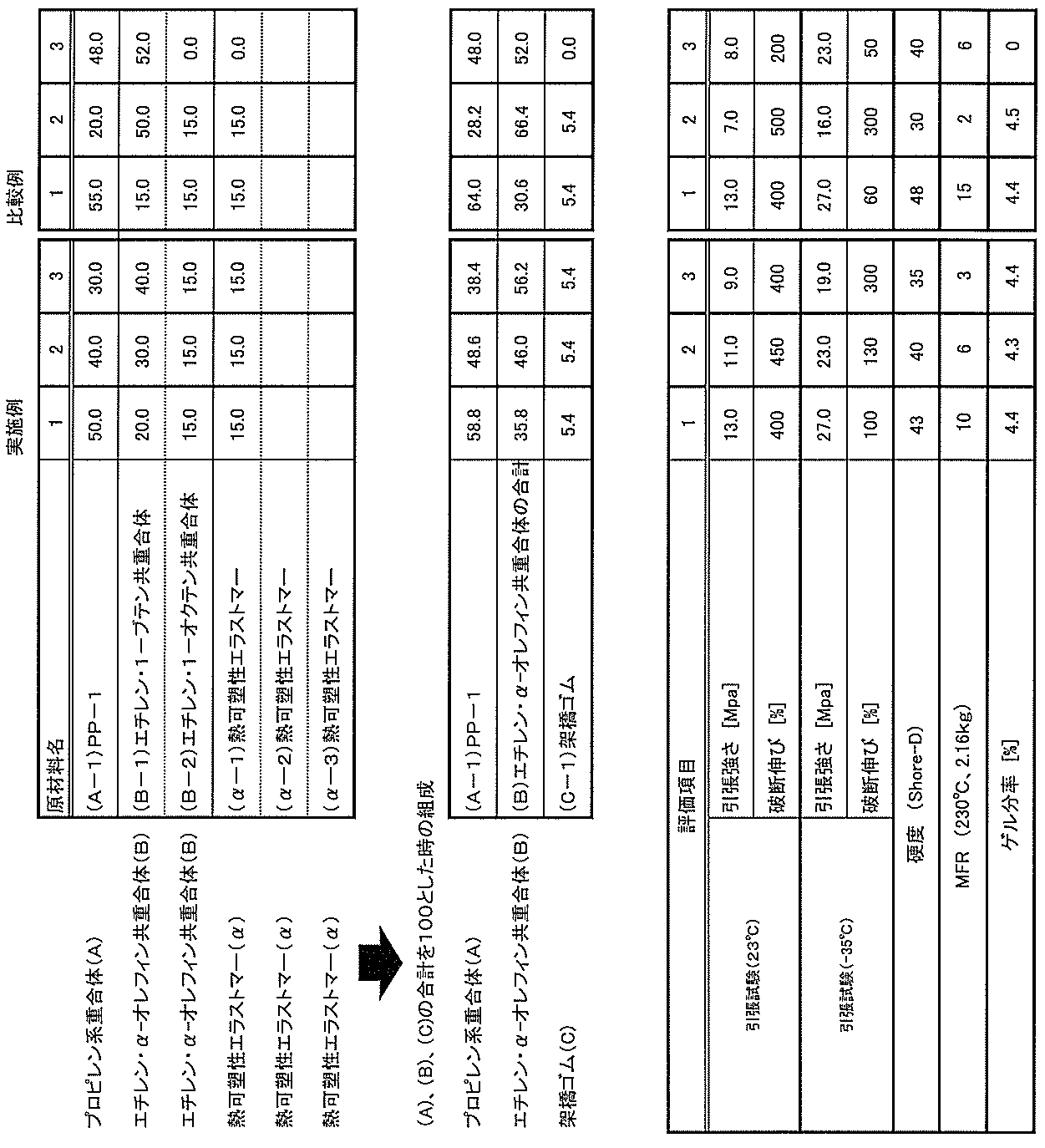
表1に示す結果から、本発明の熱可塑性エラストマー組成物は、低温での破断伸びに優れたものであることがわかる。
本明細書中で引用した全ての刊行物、特許及び特許出願をそのまま参考として本明細書中にとり入れるものとする。
Claims (7)
- プロピレン系重合体(A)30~60質量部と、エチレンと炭素数4~20のα-オレフィンからなるエチレン・α-オレフィン共重合体(B)32~65質量部と、少なくとも一部が架橋されたゴム(C)1~20質量部(成分(A)、(B)及び(C)の合計量は100質量部である)を含む熱可塑性エラストマー組成物。
- プロピレン系重合体(A)中の室温n-デカンに可溶な部分で、135℃のデカリン中で測定した極限粘度[η]が0.5~4.0dl/gである請求項1記載の熱可塑性エラストマー組成物。
- 熱可塑性エラストマー組成物のゲル分率が0.5~16.0質量%である請求項1又は2記載の熱可塑性エラストマー組成物。
- エチレン・α-オレフィン共重合体(B)がエチレン・ブテン共重合体及びエチレン・オクテン共重合体を含む請求項1~3のいずれか1項に記載の熱可塑性エラストマー組成物。
- 請求項1~4のいずれか1項に記載の熱可塑性エラストマー組成物を成形して得られる熱可塑性エラストマー成形体。
- 請求項5記載の熱可塑性エラストマー成形体を含む自動車部品。
- エアバッグカバーである請求項6記載の自動車部品。
Priority Applications (2)
| Application Number | Priority Date | Filing Date | Title |
|---|---|---|---|
| CN202080012280.1A CN113383037A (zh) | 2019-02-08 | 2020-02-03 | 热塑性弹性体组合物及其用途 |
| JP2020571175A JP7293261B2 (ja) | 2019-02-08 | 2020-02-03 | 熱可塑性エラストマー組成物及びその用途 |
Applications Claiming Priority (2)
| Application Number | Priority Date | Filing Date | Title |
|---|---|---|---|
| JP2019-021192 | 2019-02-08 | ||
| JP2019021192 | 2019-02-08 |
Publications (1)
| Publication Number | Publication Date |
|---|---|
| WO2020162382A1 true WO2020162382A1 (ja) | 2020-08-13 |
Family
ID=71947342
Family Applications (1)
| Application Number | Title | Priority Date | Filing Date |
|---|---|---|---|
| PCT/JP2020/003867 Ceased WO2020162382A1 (ja) | 2019-02-08 | 2020-02-03 | 熱可塑性エラストマー組成物及びその用途 |
Country Status (3)
| Country | Link |
|---|---|
| JP (1) | JP7293261B2 (ja) |
| CN (1) | CN113383037A (ja) |
| WO (1) | WO2020162382A1 (ja) |
Cited By (6)
| Publication number | Priority date | Publication date | Assignee | Title |
|---|---|---|---|---|
| WO2020256000A1 (ja) * | 2019-06-21 | 2020-12-24 | 三井化学株式会社 | 熱可塑性エラストマー組成物および熱可塑性エラストマー成形体 |
| JP2022050066A (ja) * | 2020-09-17 | 2022-03-30 | Mcppイノベーション合同会社 | 熱可塑性エラストマー組成物、射出成形品及びエアバッグ収納カバー |
| JP2022050065A (ja) * | 2020-09-17 | 2022-03-30 | Mcppイノベーション合同会社 | 熱可塑性エラストマー組成物、射出成形品及びエアバッグ収納カバー |
| JPWO2024058181A1 (ja) * | 2022-09-13 | 2024-03-21 | ||
| WO2025089365A1 (ja) * | 2023-10-26 | 2025-05-01 | 三井化学株式会社 | 熱可塑性エラストマー組成物、成形体、および自動車部品 |
| WO2025089366A1 (ja) | 2023-10-26 | 2025-05-01 | 三井化学株式会社 | 熱可塑性エラストマー組成物、成形体、および自動車部品 |
Citations (6)
| Publication number | Priority date | Publication date | Assignee | Title |
|---|---|---|---|---|
| JPH10264755A (ja) * | 1997-03-25 | 1998-10-06 | Toyoda Gosei Co Ltd | エアバッグカバー |
| JP2000272453A (ja) * | 1999-03-25 | 2000-10-03 | Chisso Corp | ポリプロピレン製エアバッグカバー |
| JP2006282992A (ja) * | 2005-03-07 | 2006-10-19 | Sumitomo Chemical Co Ltd | 熱可塑性エラストマー組成物の製造方法およびエアバッグカバー |
| JP2008045038A (ja) * | 2006-08-17 | 2008-02-28 | Sumitomo Chemical Co Ltd | エアバッグカバー成形体 |
| JP2010024357A (ja) * | 2008-07-18 | 2010-02-04 | Mitsui Chemicals Inc | 発泡用熱可塑性エラストマー組成物、その発泡成形体、その複合成形体および自動車用インストゥルメントパネル |
| JP2018141092A (ja) * | 2017-02-28 | 2018-09-13 | Mcppイノベーション合同会社 | 熱可塑性エラストマー組成物 |
Family Cites Families (10)
| Publication number | Priority date | Publication date | Assignee | Title |
|---|---|---|---|---|
| MY114719A (en) * | 1995-06-29 | 2002-12-31 | Mitsui Chemicals Inc | Olefin thermoplastic elastomer compositions |
| CN1246378C (zh) * | 2000-04-21 | 2006-03-22 | Jsr株式会社 | 热塑性弹性体组合物 |
| US7268185B2 (en) * | 2003-09-24 | 2007-09-11 | Sumitomo Chemical Company, Limited | Thermoplastic resin composition and its injection molded article |
| WO2006098452A1 (ja) * | 2005-03-18 | 2006-09-21 | Mitsui Chemicals, Inc. | プロピレン系重合体組成物、その用途、および熱可塑性重合体組成物の製造方法 |
| JP5140911B2 (ja) * | 2005-09-12 | 2013-02-13 | 住友化学株式会社 | 真空成型用熱可塑性エラストマ−組成物および積層体 |
| JP2011000839A (ja) * | 2009-06-22 | 2011-01-06 | Sumitomo Chemical Co Ltd | 熱可塑性樹脂発泡成形体及びその製造方法 |
| JP5953805B2 (ja) * | 2011-04-05 | 2016-07-20 | 住友化学株式会社 | エアバッグカバー用熱可塑性エラストマー組成物およびエアバッグカバー |
| JP2013067818A (ja) * | 2013-01-23 | 2013-04-18 | Mitsui Chemicals Inc | 熱可塑性エラストマー組成物 |
| JP6972573B2 (ja) * | 2017-02-20 | 2021-11-24 | Mcppイノベーション合同会社 | 熱可塑性エラストマー組成物の製造方法 |
| JP2018154821A (ja) * | 2017-03-16 | 2018-10-04 | Mcppイノベーション合同会社 | 熱可塑性エラストマー組成物 |
-
2020
- 2020-02-03 CN CN202080012280.1A patent/CN113383037A/zh active Pending
- 2020-02-03 WO PCT/JP2020/003867 patent/WO2020162382A1/ja not_active Ceased
- 2020-02-03 JP JP2020571175A patent/JP7293261B2/ja active Active
Patent Citations (6)
| Publication number | Priority date | Publication date | Assignee | Title |
|---|---|---|---|---|
| JPH10264755A (ja) * | 1997-03-25 | 1998-10-06 | Toyoda Gosei Co Ltd | エアバッグカバー |
| JP2000272453A (ja) * | 1999-03-25 | 2000-10-03 | Chisso Corp | ポリプロピレン製エアバッグカバー |
| JP2006282992A (ja) * | 2005-03-07 | 2006-10-19 | Sumitomo Chemical Co Ltd | 熱可塑性エラストマー組成物の製造方法およびエアバッグカバー |
| JP2008045038A (ja) * | 2006-08-17 | 2008-02-28 | Sumitomo Chemical Co Ltd | エアバッグカバー成形体 |
| JP2010024357A (ja) * | 2008-07-18 | 2010-02-04 | Mitsui Chemicals Inc | 発泡用熱可塑性エラストマー組成物、その発泡成形体、その複合成形体および自動車用インストゥルメントパネル |
| JP2018141092A (ja) * | 2017-02-28 | 2018-09-13 | Mcppイノベーション合同会社 | 熱可塑性エラストマー組成物 |
Cited By (12)
| Publication number | Priority date | Publication date | Assignee | Title |
|---|---|---|---|---|
| WO2020256000A1 (ja) * | 2019-06-21 | 2020-12-24 | 三井化学株式会社 | 熱可塑性エラストマー組成物および熱可塑性エラストマー成形体 |
| JPWO2020256000A1 (ja) * | 2019-06-21 | 2020-12-24 | ||
| JP7361773B2 (ja) | 2019-06-21 | 2023-10-16 | 三井化学株式会社 | 熱可塑性エラストマー組成物および熱可塑性エラストマー成形体 |
| US12344733B2 (en) | 2019-06-21 | 2025-07-01 | Mitsui Chemicals, Inc. | Thermoplastic elastomer composition and thermoplastic elastomer molded body |
| JP2022050066A (ja) * | 2020-09-17 | 2022-03-30 | Mcppイノベーション合同会社 | 熱可塑性エラストマー組成物、射出成形品及びエアバッグ収納カバー |
| JP2022050065A (ja) * | 2020-09-17 | 2022-03-30 | Mcppイノベーション合同会社 | 熱可塑性エラストマー組成物、射出成形品及びエアバッグ収納カバー |
| JP7622382B2 (ja) | 2020-09-17 | 2025-01-28 | Mcppイノベーション合同会社 | 熱可塑性エラストマー組成物、射出成形品及びエアバッグ収納カバー |
| JP7622383B2 (ja) | 2020-09-17 | 2025-01-28 | Mcppイノベーション合同会社 | 熱可塑性エラストマー組成物、射出成形品及びエアバッグ収納カバー |
| JPWO2024058181A1 (ja) * | 2022-09-13 | 2024-03-21 | ||
| JP7855076B2 (ja) | 2022-09-13 | 2026-05-07 | 三井化学株式会社 | 熱可塑性エラストマー組成物およびその成形体 |
| WO2025089365A1 (ja) * | 2023-10-26 | 2025-05-01 | 三井化学株式会社 | 熱可塑性エラストマー組成物、成形体、および自動車部品 |
| WO2025089366A1 (ja) | 2023-10-26 | 2025-05-01 | 三井化学株式会社 | 熱可塑性エラストマー組成物、成形体、および自動車部品 |
Also Published As
| Publication number | Publication date |
|---|---|
| CN113383037A (zh) | 2021-09-10 |
| JP7293261B2 (ja) | 2023-06-19 |
| JPWO2020162382A1 (ja) | 2021-10-28 |
Similar Documents
| Publication | Publication Date | Title |
|---|---|---|
| JP7293261B2 (ja) | 熱可塑性エラストマー組成物及びその用途 | |
| EP1195404B1 (en) | Thermoplastic elastomer composition | |
| JP3856480B2 (ja) | オレフィン系熱可塑性エラストマー組成物 | |
| US7994253B2 (en) | Translucent propylene-based elastomeric compositions | |
| CN1296420C (zh) | 热塑性弹性体及其成型体 | |
| JP6847203B2 (ja) | 成形外観に優れた熱可塑性エラストマー組成物及びその成形体 | |
| WO2020171019A1 (ja) | オレフィン系重合体組成物及びその成形体 | |
| JP3575426B2 (ja) | 熱可塑性エラストマー組成物及びその製造方法 | |
| JP5055072B2 (ja) | 熱可塑性エラストマー組成物の製造方法、及び成形体 | |
| JP6472270B2 (ja) | 熱可塑性エラストマー組成物及びその成形体 | |
| WO2018235961A1 (ja) | ゴム粒子含有エラストマー組成物及びその製造方法 | |
| JP2019127528A (ja) | 熱可塑性エラストマー組成物 | |
| JP2024041456A (ja) | 熱可塑性エラストマー組成物およびその用途 | |
| JP3445314B2 (ja) | オレフィン系熱可塑性エラストマー組成物 | |
| JP6994357B2 (ja) | カレンダー成形用樹脂組成物並びに自動車内装表皮材及び成形体の製造方法 | |
| JP7847656B2 (ja) | 摺動性組成物及びその用途、ならびに摺動性組成物の製造方法 | |
| JP7849181B2 (ja) | 動的架橋型熱可塑性エラストマー及びその製造方法並びに成形体 | |
| JP2023146519A (ja) | 熱可塑性エラストマー組成物およびその用途 | |
| JP2022068980A (ja) | 重合体組成物からなる成形体 | |
| WO2023013773A1 (ja) | 熱可塑性エラストマー組成物およびこれからなる成形体 | |
| JP4824330B2 (ja) | 高分子成形体 | |
| WO2023120624A1 (ja) | 熱可塑性エラストマー組成物およびその用途 | |
| JP2020164700A (ja) | エチレン・α−オレフィン・ビニルノルボルネン共重合体組成物およびその架橋物 | |
| JP2006057016A (ja) | 黒色系熱可塑性エラストマー組成物 | |
| JP2007070387A (ja) | 熱可塑性エラストマー組成物およびその成形体 |
Legal Events
| Date | Code | Title | Description |
|---|---|---|---|
| 121 | Ep: the epo has been informed by wipo that ep was designated in this application |
Ref document number: 20752904 Country of ref document: EP Kind code of ref document: A1 |
|
| ENP | Entry into the national phase |
Ref document number: 2020571175 Country of ref document: JP Kind code of ref document: A |
|
| NENP | Non-entry into the national phase |
Ref country code: DE |
|
| 122 | Ep: pct application non-entry in european phase |
Ref document number: 20752904 Country of ref document: EP Kind code of ref document: A1 |