WO2020004645A1 - 吸収性物品 - Google Patents
吸収性物品 Download PDFInfo
- Publication number
- WO2020004645A1 WO2020004645A1 PCT/JP2019/025912 JP2019025912W WO2020004645A1 WO 2020004645 A1 WO2020004645 A1 WO 2020004645A1 JP 2019025912 W JP2019025912 W JP 2019025912W WO 2020004645 A1 WO2020004645 A1 WO 2020004645A1
- Authority
- WO
- WIPO (PCT)
- Prior art keywords
- cover sheet
- liquid
- core cover
- core
- sheet
- Prior art date
- Legal status (The legal status is an assumption and is not a legal conclusion. Google has not performed a legal analysis and makes no representation as to the accuracy of the status listed.)
- Ceased
Links
Images


Classifications
-
- A—HUMAN NECESSITIES
- A61—MEDICAL OR VETERINARY SCIENCE; HYGIENE
- A61F—FILTERS IMPLANTABLE INTO BLOOD VESSELS; PROSTHESES; DEVICES PROVIDING PATENCY TO, OR PREVENTING COLLAPSING OF, TUBULAR STRUCTURES OF THE BODY, e.g. STENTS; ORTHOPAEDIC, NURSING OR CONTRACEPTIVE DEVICES; FOMENTATION; TREATMENT OR PROTECTION OF EYES OR EARS; BANDAGES, DRESSINGS OR ABSORBENT PADS; FIRST-AID KITS
- A61F13/00—Bandages or dressings; Absorbent pads
- A61F13/15—Absorbent pads, e.g. sanitary towels, swabs or tampons for external or internal application to the body; Supporting or fastening means therefor; Tampon applicators
- A61F13/51—Absorbent pads, e.g. sanitary towels, swabs or tampons for external or internal application to the body; Supporting or fastening means therefor; Tampon applicators characterised by the outer layers of the pads
- A61F13/511—Topsheet, i.e. the permeable cover or layer facing the skin
- A61F13/51121—Topsheet, i.e. the permeable cover or layer facing the skin characterised by the material
-
- A—HUMAN NECESSITIES
- A61—MEDICAL OR VETERINARY SCIENCE; HYGIENE
- A61F—FILTERS IMPLANTABLE INTO BLOOD VESSELS; PROSTHESES; DEVICES PROVIDING PATENCY TO, OR PREVENTING COLLAPSING OF, TUBULAR STRUCTURES OF THE BODY, e.g. STENTS; ORTHOPAEDIC, NURSING OR CONTRACEPTIVE DEVICES; FOMENTATION; TREATMENT OR PROTECTION OF EYES OR EARS; BANDAGES, DRESSINGS OR ABSORBENT PADS; FIRST-AID KITS
- A61F13/00—Bandages or dressings; Absorbent pads
- A61F13/15—Absorbent pads, e.g. sanitary towels, swabs or tampons for external or internal application to the body; Supporting or fastening means therefor; Tampon applicators
- A61F13/42—Absorbent pads, e.g. sanitary towels, swabs or tampons for external or internal application to the body; Supporting or fastening means therefor; Tampon applicators with wetness indicator or alarm
-
- A—HUMAN NECESSITIES
- A61—MEDICAL OR VETERINARY SCIENCE; HYGIENE
- A61F—FILTERS IMPLANTABLE INTO BLOOD VESSELS; PROSTHESES; DEVICES PROVIDING PATENCY TO, OR PREVENTING COLLAPSING OF, TUBULAR STRUCTURES OF THE BODY, e.g. STENTS; ORTHOPAEDIC, NURSING OR CONTRACEPTIVE DEVICES; FOMENTATION; TREATMENT OR PROTECTION OF EYES OR EARS; BANDAGES, DRESSINGS OR ABSORBENT PADS; FIRST-AID KITS
- A61F13/00—Bandages or dressings; Absorbent pads
- A61F13/15—Absorbent pads, e.g. sanitary towels, swabs or tampons for external or internal application to the body; Supporting or fastening means therefor; Tampon applicators
- A61F13/51—Absorbent pads, e.g. sanitary towels, swabs or tampons for external or internal application to the body; Supporting or fastening means therefor; Tampon applicators characterised by the outer layers of the pads
- A61F13/511—Topsheet, i.e. the permeable cover or layer facing the skin
-
- A—HUMAN NECESSITIES
- A61—MEDICAL OR VETERINARY SCIENCE; HYGIENE
- A61F—FILTERS IMPLANTABLE INTO BLOOD VESSELS; PROSTHESES; DEVICES PROVIDING PATENCY TO, OR PREVENTING COLLAPSING OF, TUBULAR STRUCTURES OF THE BODY, e.g. STENTS; ORTHOPAEDIC, NURSING OR CONTRACEPTIVE DEVICES; FOMENTATION; TREATMENT OR PROTECTION OF EYES OR EARS; BANDAGES, DRESSINGS OR ABSORBENT PADS; FIRST-AID KITS
- A61F13/00—Bandages or dressings; Absorbent pads
- A61F13/15—Absorbent pads, e.g. sanitary towels, swabs or tampons for external or internal application to the body; Supporting or fastening means therefor; Tampon applicators
- A61F13/51—Absorbent pads, e.g. sanitary towels, swabs or tampons for external or internal application to the body; Supporting or fastening means therefor; Tampon applicators characterised by the outer layers of the pads
- A61F13/511—Topsheet, i.e. the permeable cover or layer facing the skin
- A61F13/51104—Topsheet, i.e. the permeable cover or layer facing the skin the top sheet having a three-dimensional cross-section, e.g. corrugations, embossments, recesses or projections
- A61F13/51108—Topsheet, i.e. the permeable cover or layer facing the skin the top sheet having a three-dimensional cross-section, e.g. corrugations, embossments, recesses or projections the top sheet having corrugations or embossments having one axis relatively longer than the other axis, e.g. forming channels or grooves in a longitudinal direction
-
- A—HUMAN NECESSITIES
- A61—MEDICAL OR VETERINARY SCIENCE; HYGIENE
- A61F—FILTERS IMPLANTABLE INTO BLOOD VESSELS; PROSTHESES; DEVICES PROVIDING PATENCY TO, OR PREVENTING COLLAPSING OF, TUBULAR STRUCTURES OF THE BODY, e.g. STENTS; ORTHOPAEDIC, NURSING OR CONTRACEPTIVE DEVICES; FOMENTATION; TREATMENT OR PROTECTION OF EYES OR EARS; BANDAGES, DRESSINGS OR ABSORBENT PADS; FIRST-AID KITS
- A61F13/00—Bandages or dressings; Absorbent pads
- A61F13/15—Absorbent pads, e.g. sanitary towels, swabs or tampons for external or internal application to the body; Supporting or fastening means therefor; Tampon applicators
- A61F13/51—Absorbent pads, e.g. sanitary towels, swabs or tampons for external or internal application to the body; Supporting or fastening means therefor; Tampon applicators characterised by the outer layers of the pads
- A61F13/511—Topsheet, i.e. the permeable cover or layer facing the skin
- A61F13/5116—Topsheet, i.e. the permeable cover or layer facing the skin being formed of multiple layers
-
- A—HUMAN NECESSITIES
- A61—MEDICAL OR VETERINARY SCIENCE; HYGIENE
- A61F—FILTERS IMPLANTABLE INTO BLOOD VESSELS; PROSTHESES; DEVICES PROVIDING PATENCY TO, OR PREVENTING COLLAPSING OF, TUBULAR STRUCTURES OF THE BODY, e.g. STENTS; ORTHOPAEDIC, NURSING OR CONTRACEPTIVE DEVICES; FOMENTATION; TREATMENT OR PROTECTION OF EYES OR EARS; BANDAGES, DRESSINGS OR ABSORBENT PADS; FIRST-AID KITS
- A61F13/00—Bandages or dressings; Absorbent pads
- A61F13/15—Absorbent pads, e.g. sanitary towels, swabs or tampons for external or internal application to the body; Supporting or fastening means therefor; Tampon applicators
- A61F13/51—Absorbent pads, e.g. sanitary towels, swabs or tampons for external or internal application to the body; Supporting or fastening means therefor; Tampon applicators characterised by the outer layers of the pads
- A61F13/511—Topsheet, i.e. the permeable cover or layer facing the skin
- A61F13/513—Topsheet, i.e. the permeable cover or layer facing the skin characterised by its function or properties, e.g. stretchability, breathability, rewet, visual effect; having areas of different permeability
-
- A—HUMAN NECESSITIES
- A61—MEDICAL OR VETERINARY SCIENCE; HYGIENE
- A61F—FILTERS IMPLANTABLE INTO BLOOD VESSELS; PROSTHESES; DEVICES PROVIDING PATENCY TO, OR PREVENTING COLLAPSING OF, TUBULAR STRUCTURES OF THE BODY, e.g. STENTS; ORTHOPAEDIC, NURSING OR CONTRACEPTIVE DEVICES; FOMENTATION; TREATMENT OR PROTECTION OF EYES OR EARS; BANDAGES, DRESSINGS OR ABSORBENT PADS; FIRST-AID KITS
- A61F13/00—Bandages or dressings; Absorbent pads
- A61F13/15—Absorbent pads, e.g. sanitary towels, swabs or tampons for external or internal application to the body; Supporting or fastening means therefor; Tampon applicators
- A61F13/51—Absorbent pads, e.g. sanitary towels, swabs or tampons for external or internal application to the body; Supporting or fastening means therefor; Tampon applicators characterised by the outer layers of the pads
- A61F13/511—Topsheet, i.e. the permeable cover or layer facing the skin
- A61F13/513—Topsheet, i.e. the permeable cover or layer facing the skin characterised by its function or properties, e.g. stretchability, breathability, rewet, visual effect; having areas of different permeability
- A61F13/51394—Topsheet, i.e. the permeable cover or layer facing the skin characterised by its function or properties, e.g. stretchability, breathability, rewet, visual effect; having areas of different permeability creating a visual effect, e.g. having a printed or coloured topsheet, printed or coloured sub-layer but being visible from the topsheet, other than embossing for purposes of bonding, wicking, acquisition, leakage-prevention
-
- A—HUMAN NECESSITIES
- A61—MEDICAL OR VETERINARY SCIENCE; HYGIENE
- A61F—FILTERS IMPLANTABLE INTO BLOOD VESSELS; PROSTHESES; DEVICES PROVIDING PATENCY TO, OR PREVENTING COLLAPSING OF, TUBULAR STRUCTURES OF THE BODY, e.g. STENTS; ORTHOPAEDIC, NURSING OR CONTRACEPTIVE DEVICES; FOMENTATION; TREATMENT OR PROTECTION OF EYES OR EARS; BANDAGES, DRESSINGS OR ABSORBENT PADS; FIRST-AID KITS
- A61F13/00—Bandages or dressings; Absorbent pads
- A61F13/15—Absorbent pads, e.g. sanitary towels, swabs or tampons for external or internal application to the body; Supporting or fastening means therefor; Tampon applicators
- A61F13/51—Absorbent pads, e.g. sanitary towels, swabs or tampons for external or internal application to the body; Supporting or fastening means therefor; Tampon applicators characterised by the outer layers of the pads
- A61F13/514—Backsheet, i.e. the impermeable cover or layer furthest from the skin
- A61F13/51401—Backsheet, i.e. the impermeable cover or layer furthest from the skin characterised by the material
-
- A—HUMAN NECESSITIES
- A61—MEDICAL OR VETERINARY SCIENCE; HYGIENE
- A61F—FILTERS IMPLANTABLE INTO BLOOD VESSELS; PROSTHESES; DEVICES PROVIDING PATENCY TO, OR PREVENTING COLLAPSING OF, TUBULAR STRUCTURES OF THE BODY, e.g. STENTS; ORTHOPAEDIC, NURSING OR CONTRACEPTIVE DEVICES; FOMENTATION; TREATMENT OR PROTECTION OF EYES OR EARS; BANDAGES, DRESSINGS OR ABSORBENT PADS; FIRST-AID KITS
- A61F13/00—Bandages or dressings; Absorbent pads
- A61F13/15—Absorbent pads, e.g. sanitary towels, swabs or tampons for external or internal application to the body; Supporting or fastening means therefor; Tampon applicators
- A61F13/51—Absorbent pads, e.g. sanitary towels, swabs or tampons for external or internal application to the body; Supporting or fastening means therefor; Tampon applicators characterised by the outer layers of the pads
- A61F13/514—Backsheet, i.e. the impermeable cover or layer furthest from the skin
- A61F13/51496—Backsheet, i.e. the impermeable cover or layer furthest from the skin having visual effects
-
- A—HUMAN NECESSITIES
- A61—MEDICAL OR VETERINARY SCIENCE; HYGIENE
- A61F—FILTERS IMPLANTABLE INTO BLOOD VESSELS; PROSTHESES; DEVICES PROVIDING PATENCY TO, OR PREVENTING COLLAPSING OF, TUBULAR STRUCTURES OF THE BODY, e.g. STENTS; ORTHOPAEDIC, NURSING OR CONTRACEPTIVE DEVICES; FOMENTATION; TREATMENT OR PROTECTION OF EYES OR EARS; BANDAGES, DRESSINGS OR ABSORBENT PADS; FIRST-AID KITS
- A61F13/00—Bandages or dressings; Absorbent pads
- A61F13/15—Absorbent pads, e.g. sanitary towels, swabs or tampons for external or internal application to the body; Supporting or fastening means therefor; Tampon applicators
- A61F13/53—Absorbent pads, e.g. sanitary towels, swabs or tampons for external or internal application to the body; Supporting or fastening means therefor; Tampon applicators characterised by the absorbing medium
-
- A—HUMAN NECESSITIES
- A61—MEDICAL OR VETERINARY SCIENCE; HYGIENE
- A61F—FILTERS IMPLANTABLE INTO BLOOD VESSELS; PROSTHESES; DEVICES PROVIDING PATENCY TO, OR PREVENTING COLLAPSING OF, TUBULAR STRUCTURES OF THE BODY, e.g. STENTS; ORTHOPAEDIC, NURSING OR CONTRACEPTIVE DEVICES; FOMENTATION; TREATMENT OR PROTECTION OF EYES OR EARS; BANDAGES, DRESSINGS OR ABSORBENT PADS; FIRST-AID KITS
- A61F13/00—Bandages or dressings; Absorbent pads
- A61F13/15—Absorbent pads, e.g. sanitary towels, swabs or tampons for external or internal application to the body; Supporting or fastening means therefor; Tampon applicators
- A61F13/53—Absorbent pads, e.g. sanitary towels, swabs or tampons for external or internal application to the body; Supporting or fastening means therefor; Tampon applicators characterised by the absorbing medium
- A61F13/534—Absorbent pads, e.g. sanitary towels, swabs or tampons for external or internal application to the body; Supporting or fastening means therefor; Tampon applicators characterised by the absorbing medium having an inhomogeneous composition through the thickness of the pad
-
- A—HUMAN NECESSITIES
- A61—MEDICAL OR VETERINARY SCIENCE; HYGIENE
- A61F—FILTERS IMPLANTABLE INTO BLOOD VESSELS; PROSTHESES; DEVICES PROVIDING PATENCY TO, OR PREVENTING COLLAPSING OF, TUBULAR STRUCTURES OF THE BODY, e.g. STENTS; ORTHOPAEDIC, NURSING OR CONTRACEPTIVE DEVICES; FOMENTATION; TREATMENT OR PROTECTION OF EYES OR EARS; BANDAGES, DRESSINGS OR ABSORBENT PADS; FIRST-AID KITS
- A61F13/00—Bandages or dressings; Absorbent pads
- A61F13/15—Absorbent pads, e.g. sanitary towels, swabs or tampons for external or internal application to the body; Supporting or fastening means therefor; Tampon applicators
- A61F13/53—Absorbent pads, e.g. sanitary towels, swabs or tampons for external or internal application to the body; Supporting or fastening means therefor; Tampon applicators characterised by the absorbing medium
- A61F13/534—Absorbent pads, e.g. sanitary towels, swabs or tampons for external or internal application to the body; Supporting or fastening means therefor; Tampon applicators characterised by the absorbing medium having an inhomogeneous composition through the thickness of the pad
- A61F13/537—Absorbent pads, e.g. sanitary towels, swabs or tampons for external or internal application to the body; Supporting or fastening means therefor; Tampon applicators characterised by the absorbing medium having an inhomogeneous composition through the thickness of the pad characterised by a layer facilitating or inhibiting flow in one direction or plane, e.g. a wicking layer
- A61F13/5376—Absorbent pads, e.g. sanitary towels, swabs or tampons for external or internal application to the body; Supporting or fastening means therefor; Tampon applicators characterised by the absorbing medium having an inhomogeneous composition through the thickness of the pad characterised by a layer facilitating or inhibiting flow in one direction or plane, e.g. a wicking layer characterised by the performance of the layer, e.g. acquisition rate, distribution time, transfer time
-
- A—HUMAN NECESSITIES
- A61—MEDICAL OR VETERINARY SCIENCE; HYGIENE
- A61F—FILTERS IMPLANTABLE INTO BLOOD VESSELS; PROSTHESES; DEVICES PROVIDING PATENCY TO, OR PREVENTING COLLAPSING OF, TUBULAR STRUCTURES OF THE BODY, e.g. STENTS; ORTHOPAEDIC, NURSING OR CONTRACEPTIVE DEVICES; FOMENTATION; TREATMENT OR PROTECTION OF EYES OR EARS; BANDAGES, DRESSINGS OR ABSORBENT PADS; FIRST-AID KITS
- A61F13/00—Bandages or dressings; Absorbent pads
- A61F13/15—Absorbent pads, e.g. sanitary towels, swabs or tampons for external or internal application to the body; Supporting or fastening means therefor; Tampon applicators
- A61F13/53—Absorbent pads, e.g. sanitary towels, swabs or tampons for external or internal application to the body; Supporting or fastening means therefor; Tampon applicators characterised by the absorbing medium
- A61F13/538—Absorbent pads, e.g. sanitary towels, swabs or tampons for external or internal application to the body; Supporting or fastening means therefor; Tampon applicators characterised by the absorbing medium characterised by specific fibre orientation or weave
-
- A—HUMAN NECESSITIES
- A61—MEDICAL OR VETERINARY SCIENCE; HYGIENE
- A61F—FILTERS IMPLANTABLE INTO BLOOD VESSELS; PROSTHESES; DEVICES PROVIDING PATENCY TO, OR PREVENTING COLLAPSING OF, TUBULAR STRUCTURES OF THE BODY, e.g. STENTS; ORTHOPAEDIC, NURSING OR CONTRACEPTIVE DEVICES; FOMENTATION; TREATMENT OR PROTECTION OF EYES OR EARS; BANDAGES, DRESSINGS OR ABSORBENT PADS; FIRST-AID KITS
- A61F13/00—Bandages or dressings; Absorbent pads
- A61F13/15—Absorbent pads, e.g. sanitary towels, swabs or tampons for external or internal application to the body; Supporting or fastening means therefor; Tampon applicators
- A61F13/84—Accessories, not otherwise provided for, for absorbent pads
- A61F13/8405—Additives, e.g. for odour, disinfectant or pH control
-
- A—HUMAN NECESSITIES
- A61—MEDICAL OR VETERINARY SCIENCE; HYGIENE
- A61L—METHODS OR APPARATUS FOR STERILISING MATERIALS OR OBJECTS IN GENERAL; DISINFECTION, STERILISATION OR DEODORISATION OF AIR; CHEMICAL ASPECTS OF BANDAGES, DRESSINGS, ABSORBENT PADS OR SURGICAL ARTICLES; MATERIALS FOR BANDAGES, DRESSINGS, ABSORBENT PADS OR SURGICAL ARTICLES
- A61L15/00—Chemical aspects of, or use of materials for, bandages, dressings or absorbent pads
- A61L15/16—Bandages, dressings or absorbent pads for physiological fluids such as urine or blood, e.g. sanitary towels, tampons
- A61L15/20—Bandages, dressings or absorbent pads for physiological fluids such as urine or blood, e.g. sanitary towels, tampons containing organic materials
-
- A—HUMAN NECESSITIES
- A61—MEDICAL OR VETERINARY SCIENCE; HYGIENE
- A61L—METHODS OR APPARATUS FOR STERILISING MATERIALS OR OBJECTS IN GENERAL; DISINFECTION, STERILISATION OR DEODORISATION OF AIR; CHEMICAL ASPECTS OF BANDAGES, DRESSINGS, ABSORBENT PADS OR SURGICAL ARTICLES; MATERIALS FOR BANDAGES, DRESSINGS, ABSORBENT PADS OR SURGICAL ARTICLES
- A61L15/00—Chemical aspects of, or use of materials for, bandages, dressings or absorbent pads
- A61L15/16—Bandages, dressings or absorbent pads for physiological fluids such as urine or blood, e.g. sanitary towels, tampons
- A61L15/42—Use of materials characterised by their function or physical properties
- A61L15/46—Deodorants or malodour counteractants, e.g. to inhibit the formation of ammonia or bacteria
-
- A—HUMAN NECESSITIES
- A61—MEDICAL OR VETERINARY SCIENCE; HYGIENE
- A61F—FILTERS IMPLANTABLE INTO BLOOD VESSELS; PROSTHESES; DEVICES PROVIDING PATENCY TO, OR PREVENTING COLLAPSING OF, TUBULAR STRUCTURES OF THE BODY, e.g. STENTS; ORTHOPAEDIC, NURSING OR CONTRACEPTIVE DEVICES; FOMENTATION; TREATMENT OR PROTECTION OF EYES OR EARS; BANDAGES, DRESSINGS OR ABSORBENT PADS; FIRST-AID KITS
- A61F13/00—Bandages or dressings; Absorbent pads
- A61F13/15—Absorbent pads, e.g. sanitary towels, swabs or tampons for external or internal application to the body; Supporting or fastening means therefor; Tampon applicators
- A61F13/51—Absorbent pads, e.g. sanitary towels, swabs or tampons for external or internal application to the body; Supporting or fastening means therefor; Tampon applicators characterised by the outer layers of the pads
- A61F2013/51002—Absorbent pads, e.g. sanitary towels, swabs or tampons for external or internal application to the body; Supporting or fastening means therefor; Tampon applicators characterised by the outer layers of the pads with special fibres
-
- A—HUMAN NECESSITIES
- A61—MEDICAL OR VETERINARY SCIENCE; HYGIENE
- A61F—FILTERS IMPLANTABLE INTO BLOOD VESSELS; PROSTHESES; DEVICES PROVIDING PATENCY TO, OR PREVENTING COLLAPSING OF, TUBULAR STRUCTURES OF THE BODY, e.g. STENTS; ORTHOPAEDIC, NURSING OR CONTRACEPTIVE DEVICES; FOMENTATION; TREATMENT OR PROTECTION OF EYES OR EARS; BANDAGES, DRESSINGS OR ABSORBENT PADS; FIRST-AID KITS
- A61F13/00—Bandages or dressings; Absorbent pads
- A61F13/15—Absorbent pads, e.g. sanitary towels, swabs or tampons for external or internal application to the body; Supporting or fastening means therefor; Tampon applicators
- A61F13/51—Absorbent pads, e.g. sanitary towels, swabs or tampons for external or internal application to the body; Supporting or fastening means therefor; Tampon applicators characterised by the outer layers of the pads
- A61F2013/51002—Absorbent pads, e.g. sanitary towels, swabs or tampons for external or internal application to the body; Supporting or fastening means therefor; Tampon applicators characterised by the outer layers of the pads with special fibres
- A61F2013/51019—Absorbent pads, e.g. sanitary towels, swabs or tampons for external or internal application to the body; Supporting or fastening means therefor; Tampon applicators characterised by the outer layers of the pads with special fibres being cellulosic material
-
- A—HUMAN NECESSITIES
- A61—MEDICAL OR VETERINARY SCIENCE; HYGIENE
- A61F—FILTERS IMPLANTABLE INTO BLOOD VESSELS; PROSTHESES; DEVICES PROVIDING PATENCY TO, OR PREVENTING COLLAPSING OF, TUBULAR STRUCTURES OF THE BODY, e.g. STENTS; ORTHOPAEDIC, NURSING OR CONTRACEPTIVE DEVICES; FOMENTATION; TREATMENT OR PROTECTION OF EYES OR EARS; BANDAGES, DRESSINGS OR ABSORBENT PADS; FIRST-AID KITS
- A61F13/00—Bandages or dressings; Absorbent pads
- A61F13/15—Absorbent pads, e.g. sanitary towels, swabs or tampons for external or internal application to the body; Supporting or fastening means therefor; Tampon applicators
- A61F13/51—Absorbent pads, e.g. sanitary towels, swabs or tampons for external or internal application to the body; Supporting or fastening means therefor; Tampon applicators characterised by the outer layers of the pads
- A61F13/511—Topsheet, i.e. the permeable cover or layer facing the skin
- A61F13/513—Topsheet, i.e. the permeable cover or layer facing the skin characterised by its function or properties, e.g. stretchability, breathability, rewet, visual effect; having areas of different permeability
- A61F2013/51355—Topsheet, i.e. the permeable cover or layer facing the skin characterised by its function or properties, e.g. stretchability, breathability, rewet, visual effect; having areas of different permeability for improving fluid flow
-
- A—HUMAN NECESSITIES
- A61—MEDICAL OR VETERINARY SCIENCE; HYGIENE
- A61F—FILTERS IMPLANTABLE INTO BLOOD VESSELS; PROSTHESES; DEVICES PROVIDING PATENCY TO, OR PREVENTING COLLAPSING OF, TUBULAR STRUCTURES OF THE BODY, e.g. STENTS; ORTHOPAEDIC, NURSING OR CONTRACEPTIVE DEVICES; FOMENTATION; TREATMENT OR PROTECTION OF EYES OR EARS; BANDAGES, DRESSINGS OR ABSORBENT PADS; FIRST-AID KITS
- A61F13/00—Bandages or dressings; Absorbent pads
- A61F13/15—Absorbent pads, e.g. sanitary towels, swabs or tampons for external or internal application to the body; Supporting or fastening means therefor; Tampon applicators
- A61F13/51—Absorbent pads, e.g. sanitary towels, swabs or tampons for external or internal application to the body; Supporting or fastening means therefor; Tampon applicators characterised by the outer layers of the pads
- A61F13/514—Backsheet, i.e. the impermeable cover or layer furthest from the skin
- A61F13/51401—Backsheet, i.e. the impermeable cover or layer furthest from the skin characterised by the material
- A61F2013/51441—Backsheet, i.e. the impermeable cover or layer furthest from the skin characterised by the material being a fibrous material
- A61F2013/5145—Backsheet, i.e. the impermeable cover or layer furthest from the skin characterised by the material being a fibrous material being treated materials
-
- A—HUMAN NECESSITIES
- A61—MEDICAL OR VETERINARY SCIENCE; HYGIENE
- A61F—FILTERS IMPLANTABLE INTO BLOOD VESSELS; PROSTHESES; DEVICES PROVIDING PATENCY TO, OR PREVENTING COLLAPSING OF, TUBULAR STRUCTURES OF THE BODY, e.g. STENTS; ORTHOPAEDIC, NURSING OR CONTRACEPTIVE DEVICES; FOMENTATION; TREATMENT OR PROTECTION OF EYES OR EARS; BANDAGES, DRESSINGS OR ABSORBENT PADS; FIRST-AID KITS
- A61F13/00—Bandages or dressings; Absorbent pads
- A61F13/15—Absorbent pads, e.g. sanitary towels, swabs or tampons for external or internal application to the body; Supporting or fastening means therefor; Tampon applicators
- A61F13/53—Absorbent pads, e.g. sanitary towels, swabs or tampons for external or internal application to the body; Supporting or fastening means therefor; Tampon applicators characterised by the absorbing medium
- A61F2013/530131—Absorbent pads, e.g. sanitary towels, swabs or tampons for external or internal application to the body; Supporting or fastening means therefor; Tampon applicators characterised by the absorbing medium being made in fibre but being not pulp
- A61F2013/530343—Absorbent pads, e.g. sanitary towels, swabs or tampons for external or internal application to the body; Supporting or fastening means therefor; Tampon applicators characterised by the absorbing medium being made in fibre but being not pulp being natural fibres
-
- A—HUMAN NECESSITIES
- A61—MEDICAL OR VETERINARY SCIENCE; HYGIENE
- A61F—FILTERS IMPLANTABLE INTO BLOOD VESSELS; PROSTHESES; DEVICES PROVIDING PATENCY TO, OR PREVENTING COLLAPSING OF, TUBULAR STRUCTURES OF THE BODY, e.g. STENTS; ORTHOPAEDIC, NURSING OR CONTRACEPTIVE DEVICES; FOMENTATION; TREATMENT OR PROTECTION OF EYES OR EARS; BANDAGES, DRESSINGS OR ABSORBENT PADS; FIRST-AID KITS
- A61F13/00—Bandages or dressings; Absorbent pads
- A61F13/15—Absorbent pads, e.g. sanitary towels, swabs or tampons for external or internal application to the body; Supporting or fastening means therefor; Tampon applicators
- A61F13/53—Absorbent pads, e.g. sanitary towels, swabs or tampons for external or internal application to the body; Supporting or fastening means therefor; Tampon applicators characterised by the absorbing medium
- A61F13/534—Absorbent pads, e.g. sanitary towels, swabs or tampons for external or internal application to the body; Supporting or fastening means therefor; Tampon applicators characterised by the absorbing medium having an inhomogeneous composition through the thickness of the pad
- A61F2013/5349—Absorbent pads, e.g. sanitary towels, swabs or tampons for external or internal application to the body; Supporting or fastening means therefor; Tampon applicators characterised by the absorbing medium having an inhomogeneous composition through the thickness of the pad being a tissue-wrapped core
-
- A—HUMAN NECESSITIES
- A61—MEDICAL OR VETERINARY SCIENCE; HYGIENE
- A61F—FILTERS IMPLANTABLE INTO BLOOD VESSELS; PROSTHESES; DEVICES PROVIDING PATENCY TO, OR PREVENTING COLLAPSING OF, TUBULAR STRUCTURES OF THE BODY, e.g. STENTS; ORTHOPAEDIC, NURSING OR CONTRACEPTIVE DEVICES; FOMENTATION; TREATMENT OR PROTECTION OF EYES OR EARS; BANDAGES, DRESSINGS OR ABSORBENT PADS; FIRST-AID KITS
- A61F13/00—Bandages or dressings; Absorbent pads
- A61F13/15—Absorbent pads, e.g. sanitary towels, swabs or tampons for external or internal application to the body; Supporting or fastening means therefor; Tampon applicators
- A61F13/53—Absorbent pads, e.g. sanitary towels, swabs or tampons for external or internal application to the body; Supporting or fastening means therefor; Tampon applicators characterised by the absorbing medium
- A61F13/534—Absorbent pads, e.g. sanitary towels, swabs or tampons for external or internal application to the body; Supporting or fastening means therefor; Tampon applicators characterised by the absorbing medium having an inhomogeneous composition through the thickness of the pad
- A61F13/537—Absorbent pads, e.g. sanitary towels, swabs or tampons for external or internal application to the body; Supporting or fastening means therefor; Tampon applicators characterised by the absorbing medium having an inhomogeneous composition through the thickness of the pad characterised by a layer facilitating or inhibiting flow in one direction or plane, e.g. a wicking layer
- A61F2013/53765—Absorbent pads, e.g. sanitary towels, swabs or tampons for external or internal application to the body; Supporting or fastening means therefor; Tampon applicators characterised by the absorbing medium having an inhomogeneous composition through the thickness of the pad characterised by a layer facilitating or inhibiting flow in one direction or plane, e.g. a wicking layer characterized by its geometry
- A61F2013/53778—Absorbent pads, e.g. sanitary towels, swabs or tampons for external or internal application to the body; Supporting or fastening means therefor; Tampon applicators characterised by the absorbing medium having an inhomogeneous composition through the thickness of the pad characterised by a layer facilitating or inhibiting flow in one direction or plane, e.g. a wicking layer characterized by its geometry with grooves
-
- A—HUMAN NECESSITIES
- A61—MEDICAL OR VETERINARY SCIENCE; HYGIENE
- A61F—FILTERS IMPLANTABLE INTO BLOOD VESSELS; PROSTHESES; DEVICES PROVIDING PATENCY TO, OR PREVENTING COLLAPSING OF, TUBULAR STRUCTURES OF THE BODY, e.g. STENTS; ORTHOPAEDIC, NURSING OR CONTRACEPTIVE DEVICES; FOMENTATION; TREATMENT OR PROTECTION OF EYES OR EARS; BANDAGES, DRESSINGS OR ABSORBENT PADS; FIRST-AID KITS
- A61F13/00—Bandages or dressings; Absorbent pads
- A61F13/15—Absorbent pads, e.g. sanitary towels, swabs or tampons for external or internal application to the body; Supporting or fastening means therefor; Tampon applicators
- A61F13/84—Accessories, not otherwise provided for, for absorbent pads
- A61F13/8405—Additives, e.g. for odour, disinfectant or pH control
- A61F2013/8408—Additives, e.g. for odour, disinfectant or pH control with odour control
Definitions
- the present invention relates to an absorbent article, and more particularly, to an absorbent article such as a light incontinence pad, a panty liner, a sanitary napkin, a vaginal absorbent pad, a urine absorbent pad, a disposable diaper for adults and children.
- an absorbent article such as a light incontinence pad, a panty liner, a sanitary napkin, a vaginal absorbent pad, a urine absorbent pad, a disposable diaper for adults and children.
- Patent Document 1 discloses that tissue paper or the like is used without bleaching.
- JP 2011-505505 A JP 2016-120192 A JP-A-56-53745
- Patent Document 2 discloses that a deodorant-containing sheet using granular activated carbon as a deodorant and two covering sheets covering the front and back surfaces of the sheet form a deodorant sheet. ing.
- Patent Literature 3 discloses an absorbent article provided with an absorbent containing wood pulp fiber that has not been subjected to delignification treatment.
- the wood pulp fiber has a natural color derived from natural wood because the wood pulp fiber contained in the absorber is not subjected to delignification treatment, and the absorber has a surface sheet. Can give an impression to a wearer or the like that the product is a natural-oriented product using a natural material.
- the cellulose component is highly hydrophilic, whereas lignin has low hydrophilicity and can be said to be hydrophobic. Therefore, the pulp fibers that have not been subjected to delignification treatment have high hydrophobicity, and when the pulp fibers are distributed throughout the absorber, the humor cannot be absorbed by the body fluid from the surface of the absorber and absorbed and retained. .
- the third and fourth inventions are improvements of the conventional invention, and provide an absorbent article provided with an absorber having a natural color tone inherent to wood and capable of sufficiently absorbing and retaining body fluid. Make it an issue.
- the first invention is directed to a liquid-permeable top sheet positioned on the skin-facing surface side, a liquid-impermeable back sheet positioned on the non-skin-facing surface side, and an absorbent positioned between the top sheet and the back sheet. And an absorbent article including a body.
- the absorber includes a liquid-absorbent core and a core cover sheet that covers the liquid-absorbent core, and the core cover sheet is provided on the skin-facing surface side of the liquid-absorbent core.
- a first core cover sheet that covers at least a part thereof and includes a first pulp fiber; and a second core cover sheet that covers at least a part of a non-skin facing surface side of a liquid-absorbent core and includes a second pulp fiber.
- the kappa number of the second pulp fiber is smaller than the kappa number of the first pulp fiber.
- the kappa number of the first pulp fiber is 8 to 40, and the difference between the kappa number of the second pulp fiber and the kappa number of the first pulp fiber is 2.4 or more. For this reason, since the first pulp fiber of the first core cover sheet has a relatively large amount of lignin component, it is possible to further reduce chemical substances.
- the difference between the kappa number of the second pulp fiber and the kappa number of the first pulp fiber is 7.2 or more.
- the skin-facing surface of the absorber can be made to have a wood-derived color, giving an impression that the article is a natural-oriented article using a natural material.
- the first core cover sheet has both side edges located between the non-skin-facing surface of the liquid-absorbent core and the second core cover sheet. For this reason, the area of the first core cover sheet visible from the skin-facing surface can be reduced as much as possible so that the white area can be widened, and the user can be given an impression that the article is clean.
- the absorbent article has a horizontal direction and a vertical direction, and a total of the horizontal dimensions of both side edges is smaller than 1/3 of the horizontal dimension of the liquid-absorbent core. For this reason, the second core cover sheet can be visually recognized from the non-skin-facing surface, and it is possible to prevent mistaken presence or absence of urination.
- the first core cover sheet is overlapped in the thickness direction on the lateral outer sides of both side edges of the liquid absorbent core. For this reason, the brown on both sides of the liquid-absorbent core can be darkened, and the user can recognize the position of the liquid-absorbent core.
- Absorbent article and a horizontal and vertical direction, opposite side edges and opposite side edges of the second core cover sheet of the first core cover sheet may extend laterally outside than both side edges of the absorbent core
- the first core cover sheet and the second core cover sheet are joined to the outer side of both sides of the absorbent core in the lateral direction. For this reason, the visible area of the first core cover sheet viewed from the skin-facing surface side can be made as large as possible, the portion having a wood-derived color can be enlarged, and a natural-oriented article using a natural material can be used. You can give the impression that there is.
- the length dimension of the joint between the first core cover sheet and the second core cover sheet is 50 mm or less. For this reason, the use of a bonding agent such as a hot melt adhesive can be reduced as much as possible, and waste of materials can be suppressed.
- an indicator capable of identifying the presence or absence of excrement from the outside of the back sheet is located on the non-skin-facing surface side of the liquid-absorbent core, and the indicator and the second core cover sheet overlap in the thickness direction. I have. Since the second core cover sheet around the indicator is white, it is possible to prevent mistaken presence or absence of urination.
- the absorbent article another member is located between the top sheet and the first core cover sheet. Therefore, the first core cover sheet allows the user to grasp the position of another member.
- the topsheet has a convex portion and a concave portion each extending in the vertical direction and alternately arranged in the horizontal direction, and the concave portion is in contact with the absorber, while the convex portion is from the absorber. is seperated. For this reason, in the convex portion, the brown color of the first core cover sheet can be reduced, and the user can be given an impression that the article is clean.
- the liquid-absorbent core has a small width in the center in the longitudinal direction, in which the horizontal dimension of the liquid-absorbent core is small, and a portion that overlaps with the narrow region in the back sheet has a colored portion. .
- the first core cover sheet outside the narrow area can be prevented from being viewed from the non-skin-facing surface side, and the user can be given an impression that the article is clean.
- a second invention provides a liquid-permeable top sheet located on the skin-facing surface side, a liquid-impermeable back sheet located on the non-skin-facing surface side, and a position between the top sheet and the back sheet. And an absorbent article including the absorbent.
- the absorber has a liquid-absorbent core and a core cover sheet that covers at least the skin-facing surface side of the liquid-absorbent core, and a material constituting the absorber is a lignin component.
- the L value, a value, and b value in the Lab color system are 0.5 ⁇ the a value ⁇ 10.0, 7 ⁇ the b value. ⁇ 15, 70 ⁇ The L value ⁇ 90.
- the absorbent article when standard menstrual blood is dropped onto the liquid-absorbent core through the topsheet, a Lab color system is used in the menstrual blood absorption region and the non-menstrual blood absorption region viewed from the skin-facing surface side. Is 50 or less, and the difference between the b values is 20 or less. For this reason, the difference between the a value and the b value can be reduced, and the discomfort when the user or the caregiver views the absorbent article after use can be suppressed.
- the core cover sheet has a first covering portion that covers at least the skin-facing surface side of the liquid-absorbent core, and the first covering portion and the topsheet are bonded via an adhesive. Bonded to each other, the content of the lignin component of the core cover sheet is higher than the content of the lignin component of the liquid-absorbent core, and is continuous from the topsheet to a part of the liquid-absorbent core in the thickness direction. And has a plurality of concave portions extending. For this reason, excretions such as menstrual blood and urine can be retained in the concave portion, and the surface area of the liquid-absorbing core in contact with menstrual blood can be increased indirectly via the topsheet and the core cover sheet. The excrement can be promptly absorbed and held in the absorbent core via the front and back sheets.
- the concave portion has a bottom, and the topsheet, the core cover sheet, and a part of the liquid-absorbent core are compressed, and the bottom of the concave portion is a peripheral region of the concave portion.
- the density is higher than that of. Therefore, the excrement accumulated in the concave portion can be quickly drawn into the liquid-absorbent core, and the excrement can be absorbed and held.
- the concave portion is a through hole that penetrates the topsheet and the absorber in the thickness direction. For this reason, since the liquid-impervious back sheet is located at the bottom of the concave portion, the excrement accumulated in the concave portion does not leak to the non-skin-facing surface side of the absorber, and the peripheral portion of the concave portion Excrement can be absorbed and retained in the absorbent core.
- a third invention provides a liquid-permeable top sheet located on the skin-facing surface side, a liquid-impermeable back sheet located on the non-skin-facing surface side, and a position between the top sheet and the back sheet. And an absorbent article including the absorbent.
- the absorbent body includes a liquid-absorbent core and a core cover sheet that covers at least the skin-facing surface side of the liquid-absorbent core, wherein the core cover sheet is In the first covering portion that covers the skin-facing surface side of the liquid-absorbent core, the content of the lignin component is higher than the peripheral region, and has a plurality of high lignin regions scattered and located in plan view, The content of the lignin component of the core cover sheet is higher than the content of the lignin component of the liquid-absorbent core.
- the absorbent article according to the third invention includes the following embodiments.
- the core cover sheet has a lignin component content of 0.2 to 10%.
- the core cover sheet has a crepe ratio of 7 to 20% and a formation index of 50 to 300.
- the core cover sheet contains wood or non-wood pulp fibers, and the liquid absorbent core contains cellulosic fibers.
- the liquid-absorbent core contains particles having odor-adsorbing performance.
- the absorber has a plurality of concave portions that are concave from the skin facing surface side toward the non-skin facing surface side.
- the core cover sheet further includes a second covering portion that covers the non-skin-facing surface side of the liquid-absorbent core, and the plurality of high lignin regions are located in the second covering portion.
- the topsheet contains cotton fibers, and the core cover sheet has a higher Krem water absorption than the topsheet.
- the topsheet has a first portion and a second portion having a higher fiber density than the first portion, and the first portion is joined to the high lignin region, Two parts are joined with the low lignin zone.
- the topsheet has a multilayer structure, and the layer located on the side facing the skin is mainly made of cotton fibers.
- the top sheet has a Klem water absorbency lower than that of the core cover sheet.
- a fourth invention is directed to a liquid-permeable top sheet positioned on the skin-facing surface side, a liquid-impermeable back sheet positioned on the non-skin-facing surface side, and a position between the top sheet and the back sheet. And an absorbent article including the absorbent.
- an absorbent article wherein the absorbent body has a liquid-absorbent core and a core cover sheet that covers at least the skin-facing surface side of the liquid-absorbent core, wherein the core cover sheet is A first covering portion for covering the skin-facing surface side of the liquid-absorbent core, wherein the first covering portion and the topsheet are joined to each other via an adhesive, and a lignin of the core cover sheet is provided.
- the content of the component is higher than the content of the lignin component of the liquid-absorbent core, and in the thickness direction, a plurality of concave portions extending continuously from at least the topsheet to a part of the liquid-absorbent core. It is characterized by having.
- the absorbent article according to the fourth invention includes the following embodiments.
- the core cover sheet further includes a second covering portion that covers the non-skin-facing surface side of the liquid-absorbing core, and the second covering portion and the back sheet are mutually bonded via an adhesive.
- the concave portion has a bottom, and the top sheet, the core cover sheet, and a part of the liquid-absorbent core are compressed, and the thin portion where the concave portion is located is the concave portion. The density is higher than that of the thick portion where no is located.
- the concave portion is an opening that penetrates the topsheet and the absorber in the thickness direction.
- the adhesive is a SIS-based hot melt adhesive.
- the core cover sheet has a plurality of high lignin regions in which the content of the lignin component is higher than that in the peripheral region and is scattered in plan view.
- the core cover sheet has a crepe ratio of 7 to 20% and a formation index of 50 to 300.
- the topsheet has a first portion and a second portion having a higher fiber density than the first portion, wherein the first portion is joined to the high lignin region, Two parts are joined with the peripheral area.
- the topsheet has a multilayer structure, and the layer located on the skin-facing surface side is mainly composed of cotton fibers. (10)
- the top sheet has a Klem water absorbency lower than that of the core cover sheet.
- the kappa value of the second pulp fiber of the second core cover sheet 122b is smaller than the kappa value of the pulp fiber of the first core cover sheet. High in unbleached pulp fiber. Therefore, unbleached pulp fibers use less chemical substances, and can provide an absorbent article with reduced use of chemical substances.
- the second core cover sheet located on the non-skin-facing surface side has a small kappa value and is white, it is possible to reduce the possibility of making a mistake in excretion.
- the absorber has the absorbent core and the core cover sheet that covers at least the skin-facing surface side of the absorbent core, and constitutes the absorbent body.
- the material contains a lignin component. Therefore, it is possible to provide an absorbent article using unbleached pulp fibers for the absorber and reducing the use of chemical substances.
- the L value, a value, and b value in the Lab color system are 0.5 ⁇ a value ⁇ 50.0, 7 ⁇ b value ⁇ 15, 70 ⁇ Both conditions of L value ⁇ 90 are satisfied.
- the constituent material contains a lignin component, the color of the absorber becomes light brown due to the lignin component.
- Excretions such as menstrual blood or urine are excreted into an absorbent article having a light brown absorbent, and when the absorbent absorbs and retains the excrement, red of menstrual blood or yellow of urine is suppressed. Therefore, discomfort when the user or caregiver views the absorbent article after use can be suppressed. Therefore, it is possible to provide an absorbent article that makes effective use of the color used for the absorber.
- the absorber since the absorber has a wood-derived color, it is possible to give an impression that the absorbent article is a skin-friendly product using a natural material.
- the absorber can realize appropriate adhesiveness to the topsheet and liquid absorption.
- the core cover sheet contains a relatively large amount of lignin component
- the core cover sheet has a natural color derived from natural materials such as wood, and has a thickness direction.
- FIG. 4 is a partially broken development plan view of the diaper in a state where the side seam portion is peeled off and extended in the vertical and horizontal directions, as viewed from the skin-facing surface.
- FIG. 3 is a sectional view taken along line III-III of FIG. 2.
- FIG. 5A is a partially enlarged view of a region surrounded by a line V (a) in FIG. (B) Partly enlarged view of a region surrounded by line V (b) in FIG.
- FIG. 5A is a partially enlarged view of a region surrounded by a line V (a) in FIG. (B) Partly enlarged view of a region surrounded by line V (b) in FIG.
- FIG. 4 is a partially broken development plan view similar to FIG. 2 of the diaper according to the second embodiment of the first invention.
- FIG. 7 is a sectional view taken along line VIII-VIII of FIG. 6.
- FIG. 7 is a partially exploded plan view similar to FIG. 2 of the diaper according to the third embodiment.
- FIG. 10 is a sectional view taken along line XX of FIG. 9.
- FIG. 6 is a partially broken development plan view similar to FIG. 2 of the diaper of the second embodiment.
- FIG. 14 is a sectional view taken along line XV-XV in FIG. 13.
- FIG. 17 is a partially enlarged view of a region surrounded by line XVII in FIG. 16.
- FIG. 17 is a partially enlarged view of a region surrounded by a dashed-dotted line XVIII-XVIII in FIG. 15.
- the top view of the sanitary napkin concerning a 2nd embodiment of a 2nd invention.
- A A sectional view taken along line XX (a) -XX (a) of FIG.
- FIG. 20A A cross-sectional view similar to FIG. 20A in an example of a modification of the absorber according to the second embodiment.
- FIG. 20A A cross-sectional view similar to FIG. 20A in an example of a modification of the absorber according to the second embodiment.
- FIG. 6 is a plan view of an absorbent article according to a third embodiment of the second invention.
- XXIV-XXIV sectional drawing of FIG. The top view of an absorber.
- FIG. 26 is a partially enlarged view of a region surrounded by line XXVI in FIG. 25.
- FIG. 27 is a partially enlarged view of a region surrounded by a dashed line XXVII-XXVII in FIG. 24.
- FIG. 29 (b) is a cross-sectional view similar to FIG. 29 (a) in an example of a modification of the absorber according to the second embodiment of the third invention.
- FIG. 10 is a plan view of an absorbent article according to a third embodiment of the third invention. The top view which looked at the sanitary napkin from the surface side in a 1st embodiment of an absorptive article concerning a 4th invention. The top view which looked at the sanitary napkin from the back side. The top view of an absorber.
- FIG. 34 is a sectional view taken along the line XXXIV of FIG. 33.
- FIG. 35 is a cross-sectional view similar to FIG. 34 illustrating an example of a modification of the absorber.
- FIG. 37 is a partially enlarged view of a region surrounded by a line XXXVII in FIG. 36.
- FIG. 35 is a sectional view similar to FIG. 34 of the sanitary napkin according to the second embodiment of the fourth invention.
- FIG. 13 is a plan view of an absorbent article according to a third embodiment of the fourth invention.
- the disposable diaper 101 which is an example of an absorbent article according to the present invention will be described with reference to the accompanying drawings.
- the disposable diaper 101 has a horizontal direction X, a vertical direction Y, and a thickness direction Z that intersect (orthogonally) with each other.
- the disposable diaper 101 has a vertical center line bisecting the dimension in the width direction and a horizontal center line bisecting the dimension in the length direction.
- the elastic waist panel 102 has an elastic belt function of expanding and contracting in the waist direction, and includes a front waist panel 107 forming the front waist region 104 and a rear waist panel 108 forming the front waist region 105.
- the front waist panel 107 includes an inner edge 107a, an outer edge 107b, first side edges 107c and 107d extending inward in the vertical direction Y from the outer edge 107b, and first and second edges 107c and 107d. It has a substantially trapezoidal shape defined by second side edges 107e and 107f extending obliquely inward in the vertical direction Y from both side edges 107c and 107d.
- the rear waist panel 108 includes an inner edge 108a, an outer edge 108b, first side edges (side edges of the front waist region 105) 108c and 108d extending inward in the vertical direction Y from the outer edge 108b, It has a substantially trapezoidal shape defined by first side edges 108c and 108d and second side edges 108e and 108f extending obliquely inward in the vertical direction Y.
- the first side edges 107c, 107d of the front waist panel 107 facing each other and the first side edges 108c, 108d of the rear waist panel 108 are overlapped with each other and connected by side seams 109 intermittently arranged in the vertical direction Y (for example, , Heat embossing, sonic, etc.), and a waist opening 110 and a pair of leg openings 111 are defined.
- side seams 109 intermittently arranged in the vertical direction Y (for example, , Heat embossing, sonic, etc.), and a waist opening 110 and a pair of leg openings 111 are defined.
- the front and rear waist panels 107 and 108 include inner layer sheets (inner sheets) 112 and 113 located on the skin facing surface side and outer layer sheets (outer sheets) 114 and 115 located on the non-skin facing surface side, respectively.
- the inner and outer layer sheets 112 to 115 are made of an SMS (spunbond / meltblown / spunbond) fiber nonwoven fabric, a spunbond fiber nonwoven fabric or an air-through fiber nonwoven fabric having a mass of 10 to 30 g / m 2 , or a plastic sheet, a perforated plastic sheet and the like.
- SMS spunbond / meltblown / spunbond
- a laminate sheet or the like can be used.
- a plurality of strings or strands of front and rear waist elastics (elastic members) 116, 117 expand and contract in the horizontal direction X.
- the front and rear waist panels 107 and 108 are elasticized at least in the lateral direction X.
- the front and rear waist elastics 116 and 117 are partially cut or removed at the central portions of the front and rear waist regions 104 and 105 overlapping with the absorption chassis 103, respectively, so that the front and rear non-stretchable regions 18 and 19 are defined.
- the center of the absorbing chassis 103 located on the inner surfaces of the front and rear waist panels 107 and 108 (the liquid absorbing core). Since the contraction force of the front and rear waist elastics 116 and 117 is directly applied to the (central portion) and no gather or the like is formed, it is possible to suppress a decrease in absorption performance due to the contraction force.
- front and rear waist elastics 116 and 117 for example, a string-like or strand-like elastic material having a fineness of 470 to 1240 dtex and being stretched 1.5 to 3.5 times is used. Can be. Conditions such as the fineness of the front and rear waist elastics 116 and 117, the elongation ratio, and the separation dimension (pitch) between the elastics can be changed as appropriate.
- the inner and outer layer sheets 112 and 114 in the front waist region 104 and the inner and outer layer sheets 113 and 115 in the front waist region 105 do not have a hot melt adhesive applied to their inner surfaces. Each is joined to each other only via the hot melt adhesive applied to the front and rear waist elastics 116 and 117. The hot melt adhesive only needs to be applied to the portion facing the inner and outer layer sheets 112 to 115 over the entire circumference of the front and rear waist elastics 116 and 117.
- the absorbing chassis 103 includes a liquid-permeable top sheet 131 located on the skin-facing surface side, a liquid-impermeable back sheet 132 located on the non-skin-facing surface side, and both of these.
- An absorbent body 120 having a liquid absorbing property which is located between the sheets 131 and 132 and has a narrow central portion in the vertical direction Y.
- the topsheet 131 and the absorber 120 are joined to each other by a known joining means such as a hot melt adhesive to form the liquid absorbing layer 130.
- a liquid-impervious leak-proof sheet 136 having air permeability is preferably arranged in order to suppress leakage of excrement such as urine.
- the size in the horizontal direction X and the size in the vertical direction Y of the leakage prevention sheet 136 are larger than the size in the horizontal direction X and the size in the vertical direction Y of the liquid-absorbent core 121.
- the entire area is covered with a leak-proof sheet 136.
- the back sheet 132 has both side portions 134 located outside the side edges of the absorber 120 in the lateral direction X. Both side portions 134 are bent to the skin facing surface along a bending line 135 extending in the vertical direction Y, fixed to the topsheet 131 and separated from each other in the vertical direction Y, and both end fixing portions 133, both sides of the topsheet 131 A proximal edge 137 fixed to the edge and located outside in the lateral direction X, and a distal edge extending in the vertical direction Y between the both-end fixing portions 133 and parallel to the proximal edge 137 (free edge) 138).
- the distal edge portion 138 has a sleeve shape formed by bending and fixing an outer edge portion of the back sheet 132 in the lateral direction X, and a string-like or strand-like cuff elastic member 128 extending in the longitudinal direction Y extends. It is fixed to the back sheet 132 in such a manner that it can contract in a state. The contraction of the cuff elastic body 128 causes the distal edge portion 138 to separate from the topsheet 131, and the distal edge portion 138 comes into contact with the wearer's thigh to form a leak-proof cuff, and the leak-proof cuff is excreted. Prevent leaks.
- a string-like or strand-like leg elastic body 129 extending in the vertical direction Y is provided on the outer side of the cuff elastic body 128 in the lateral direction X in such a manner that the leg elastic body 129 can contract in an extended state. It is fixed. When the leg elastic body 129 contracts, both side portions 134 of the back sheet 132 contact the thigh of the wearer.
- the topsheet 131 can be formed from various liquid-permeable fibrous nonwoven fabrics, for example, an air-through fibrous nonwoven fabric having a mass of about 15 to 45 g / m 2 , a porous plastic film, or a laminate sheet thereof.
- the back sheet 132 can be formed from a liquid-impermeable and moisture-permeable plastic film, a liquid-impermeable fibrous nonwoven fabric, a laminate sheet thereof, and the like.
- the absorbent body 120 is made of a liquid-absorbent core formed by mixing superabsorbent polymer particles (SAP) with cellulosic fibers such as fluff wood pulp and rayon fibers and shaping the mixture into a predetermined shape. 121, and a liquid-permeable core cover sheet 122 that covers the entire liquid-absorbent core 121 in order to improve the shape retention and liquid diffusibility.
- SAP superabsorbent polymer particles
- the liquid-absorbent core 121 is located at both ends in the vertical direction Y and has a constant width X in the wide region 121c, and is located at the center in the vertical direction Y and has a larger width X in the horizontal direction than the wide region. It has a small narrow area 121d. In the wearing state of the diaper 101, the narrow region 121d is located at the base of the leg, and when the leg is moved, the leg can be prevented from hitting both side edges 121a and 121b of the liquid absorbent core 121 having high rigidity.
- the back sheet 132 has a colored portion in a portion overlapping the narrow region 121d, and the first core cover sheet 122a outside the narrow region 121d is visually recognized from the non-skin facing surface side. Can be prevented, and the user can be given an impression that the article is clean.
- the core cover sheet is located on the skin-facing surface side of the liquid-absorbent core 121, the first core cover sheet 122a containing the first pulp fiber, and the second core cover sheet is located on the non-skin-facing surface side of the liquid-absorbent core 121, A second core cover sheet 122b containing pulp fibers.
- the first and second core cover sheets 122a and 122b have a dimension in the lateral direction X larger than the dimension in the lateral direction X of the liquid-absorbent core, and cover the entire liquid-absorbent core 121. Outside the liquid absorbing core 121 in the lateral direction X, the first and second core cover sheets are laminated so as to be in contact with each other, and the contacted portions are joined by a known joining means such as a hot melt adhesive.
- the first and second core cover sheets 122a and 122b are formed from various known fiber nonwoven fabrics or tissues, and are mainly formed of pulp fibers.
- the first core cover sheet 122a contains a large amount of unbleached pulp fibers (first pulp fibers) 142 that have not been subjected to delignification treatment.
- the second core cover sheet 122b contains a large amount of bleached pulp fibers (second pulp fibers) 141 subjected to delignification treatment.
- the pulp fibers include non-wood pulp fibers made of linter, manila hemp, kenaf, straw, bamboo, and banana, in addition to wood pulp fibers obtained from softwood or hardwood.
- pulp fiber is subjected to a raw chip processing step, and then to a cooking step (first stage of delignification processing) in which a lignin is digested by adding a chemical to the raw chip and boiling under high temperature and high pressure.
- first stage of delignification processing in which a lignin is digested by adding a chemical to the raw chip and boiling under high temperature and high pressure.
- second stage of delignification process By passing through a screen process for removing foreign matter, an oxygen exposure process for decomposing lignin remaining in the digestion process with oxygen (second stage of delignification process), and a bleaching process for bleaching pulp using a plurality of chemicals,
- the bleached pulp fibers 141 are bleached.
- the unbleached pulp fiber 142 is obtained through, for example, only the digestion step and the screening step, which are the first stage of the delignification treatment, of these steps, and is subjected to a certain degree of delignification treatment. is there.
- the lignin content of the unbleached pulp fibers 142 according to the present invention is between 0.2 and 10.0%.
- the lignin content of the unbleached pulp fiber 142 and the bleached pulp fiber 141 was measured by the following method.
- ADF quantitative reagent acidic detergent solution ⁇ 10 g of cetyltrimethylammonium bromide (hexadecyltrimethylammonium bromide) dissolved in 500 mL of 1N sulfuric acid> Acetone Decahydronaphthalene as antifoam (optional) ⁇ Measurement procedure> A 300 g sample was weighed and placed in a 50 mL Erlenmeyer flask, and 30 mL of the acidic datagen and the solution were added. The flask was capped with aluminum foil, placed in boiling water in an Erlenmeyer flask, and disintegrated for 60 minutes.
- the mixture was transferred to a gou-ttsuru crucible covered with glass fiber filter paper (GA-200), subjected to suction filtration, and the residue was washed with hot water and acetone. After air-drying, it was heat-dried.
- the weight after drying is constant weight and after subtracting the ash content is ADF, the ash content after lignin quantification cannot be used for this.
- Lignin quantitative reagent 72% sulfuric acid ⁇ Measurement procedure> After dripping a few drops of 72% sulfuric acid on the dried goo-tchi crucible to wet the whole, sulfuric acid of about twice the amount of ADF was added, and the mixture was allowed to stand for 3 to 4 hours while adding sulfuric acid appropriately every hour. Thereafter, the solution was filtered by suction, and washed with hot water until the filtrate no longer showed acidity. After air drying, heat dry to constant weight. The goochi crucible was ashed at 550 ° C, and the ash content was determined.
- the first core cover sheet 122a includes a low lignin region (lignin low content region) 151 having a relatively low lignin component content, and a lignin region lower than the low lignin region 151.
- a high lignin region (lignin high content region) 152 having a high component content.
- the low lignin region 151 is formed mainly of the bleached pulp fibers 141, and the high lignin region 152 is formed mainly of the unbleached pulp fibers 142.
- the low lignin area 151 is a peripheral area relatively located in a wide range of the outer surface of the first core cover sheet 122a, whereas the high lignin area 152 is It is arranged so as to be scattered with respect to the low lignin area 151. Further, because of this arrangement, the first core cover sheet 122a can be said to have a sea-island structure in which the low lignin region 151 is an ocean and the high lignin region 152 is an island.
- the second core cover sheet 122b is formed only of the bleached pulp fibers 141, for example.
- the first core cover sheet 122a contains a large amount of unbleached pulp fibers 142
- the first core cover sheet 122a generally has a light brown color derived from plant materials such as wood.
- the second core cover sheet 122b has a white color because it contains only the bleached pulp fibers 141 without including the unbleached pulp fibers 142.
- the other sheets 131 and 132 other than the first and second core cover sheets 122a and 122b have a white color as a whole by kneading a white pigment such as titanium dioxide into the constituent fibers.
- the cover sheet 122a is easily seen through the other sheets 131 and 132 when viewed from the inside of the diaper 101.
- the second core cover sheet 122b has a white color as a whole, it is difficult to visually distinguish the diaper 101 from the other sheets 131 and 132 when viewed from the outside.
- the first core cover sheet 122a is formed by entanglement of a mixture of the bleached pulp fiber 141 and the unbleached pulp fiber 142 in the papermaking process to form a sheet, and the low lignin region 151 mainly includes the bleached pulp fiber. Since the unbleached pulp fibers 142 are mainly disposed in the high lignin region 141 and the high lignin region 152, the boundaries between the two regions 151 and 152 are unclear and cannot be clearly distinguished.
- a method of forming the high lignin area 152 in the low lignin area 151 on the entire outer surface of the first core cover sheet 122a for example, a method of mixing the pulp fibers 141 and 142, a mixing ratio, and a manufacturing method may be used. It is conceivable to appropriately adjust the transfer speed of the transfer conveyor at the time, the nozzle diameter, the amount of blown air, the wind speed, and the like when pulp fibers are deposited via air jetted from a plurality of nozzles on the conveyor.
- the unbleached pulp fiber 142 is contained in a part of the low lignin region 151 and the bleached pulp fiber 141 is contained in the high lignin region 152. It can be said that there are times. Therefore, the low lignin region 151 and the high lignin region 152 are not formed only from the bleached pulp fibers 141 and the unbleached pulp fibers 142, respectively.
- the high lignin region 152 means a region where the content of the lignin component is higher than the low lignin region 151 which is the peripheral region in the first core cover sheet 122a. Therefore, the bleached pulp fiber 141 and the unbleached pulp fiber 142 are mixed. It can be formed without using a prepared sheet.
- a high lignin region 152 having a higher lignin component content than the peripheral region can be formed by infiltrating the lignin component-containing solution into the nonwoven fabric sheet made of rayon fiber or synthetic fiber by scattering.
- the first core cover sheet 122a Since the first core cover sheet 122a has a plurality of high lignin regions 152 mainly composed of the unbleached pulp fibers 142, the first core cover sheet 122a has a higher plant material in surface view than the second core cover sheet 122b composed solely of the bleached pulp fibers 141. It has a light brown (wood color) of origin and can give the wearer or wearer an image that the product is a skin-friendly product using natural materials. In addition, since the first core cover sheet 122a has a light brown color, when excreted urine (excretion) passes through the topsheet 131 and is absorbed and held by the absorber 120, the yellow color of urine is suppressed. Is done. Thereby, disgust caused by directly recognizing the color of urine can be suppressed. In addition, since the lignin component has an antibacterial action, it can be disposed of in a sanitary manner while suppressing the growth of various bacteria after use.
- the bleached pulp fibers 141 and the unbleached pulp fibers 142 have different kappa numbers due to different lignin contents.
- the unbleached pulp fiber 142 has a high lignin content and therefore a high kappa number, while the bleached pulp fiber 141 has a low lignin content and a low kappa number. Therefore, when the two are compared, the kappa number of the bleached pulp fiber 141 is smaller than the kappa number of the unbleached pulp fiber 142.
- the kappa number of the bleached pulp fiber 141 is 1-2.
- the unbleached pulp fibers 142 have a kappa number of 8 to 40.
- the test method of a kappa number is based on JIS8211.
- the kappa value of the bleached pulp fibers 141 of the second core cover sheet 122b is smaller than the unbleached pulp fibers 142 of the first core cover sheet 122a, and the first core cover sheet 122a is not bleached. High in pulp fiber 142. Therefore, since the unbleached pulp fiber 142 uses less chemical substances, it is possible to provide an absorbent article using less chemical substances. Moreover, since the kappa value of the pulp fibers of the second core cover sheet 122b located on the non-skin-facing surface side is small and white, the possibility of mistaken excretion can be reduced.
- Sheet a in the uppermost column of Table 1 has a ratio of unbleached pulp fiber 142 of 0.0 and a ratio of bleached pulp fiber 141 of 1.0 to form a sheet (in other words, sheet of bleached pulp fiber 141 only). ) Means that the kappa number of the pulp fibers of the sheet is 1.0.
- Sheet k in the lowermost column of Table 1 has a ratio of unbleached pulp fibers 142 of 25.0 and a ratio of bleached pulp fibers 141 of 0.0 to form a sheet (in other words, only unbleached pulp fibers 142).
- To form a sheet means that the kappa number of the pulp fibers of the sheet is 25.0.
- the sheet b in the second column from the top in Table 1 has a kappa number K1 of the unbleached pulp fibers 142 per unit weight of 2.5 and a kappa number of the bleached pulp fibers 141 per unit weight of 0.9. Therefore, the kappa number of the pulp fiber of the sheet is 3.4.
- the liquid-absorbent core, the first core cover sheet, the leak-proof sheet, and the back sheet were laminated in this order, and an evaluation experiment was performed as to whether or not light brown could be seen with the naked eye from the back sheet side.
- Sheets d to k were visually recognizable by the subject as light brown, and sheets a to c were visually recognizable by the subject as white. Therefore, the kappa number of the pulp fibers of the first core cover sheet 122a is preferably larger than 8.2. Further, it is clear that the degree of unbleaching is increased by appropriately bypassing the bleaching step, and if the kappa number of the pulp fiber is 40.0, the sheet becomes a brown sheet without a sense of incongruity. , The kappa number is preferably smaller than 40.0.
- the kappa number of the pulp fibers of the core cover sheet 122 formed of only the bleached pulp fibers 141 is 1.0. Therefore, when the sheet a in Table 1 is used for the second core cover sheet 122b and the sheet d is used for the first core cover sheet 122a, the kappa number of the pulp fiber of the sheet d is 8.2, The difference between the two is 7.2. When the sheet d is used for the first core cover sheet 122a, the kappa value of the pulp fiber of the sheet d is 8.2, and when the sheet c is used for the second core cover sheet 122b, the kappa value of the pulp fiber of the sheet c is set. Since the value is 5.8, the difference between the two is 2.4.
- the kappa value of the pulp fiber of the first core cover sheet 122a is 8 to 40, the kappa value of the pulp fiber of the second core cover sheet 122b, and the kappa value of the pulp fiber of the first core cover sheet 122a. It is preferable that the difference from the value is 2.4 or more. More preferably, the kappa value of the pulp fiber of the first core cover sheet 122a is 8 to 40, and the kappa value of the pulp fiber of the second core cover sheet 122b and the kappa value of the pulp fiber of the first core cover sheet 122a. It is preferred that the difference from the value is 7.2.
- the reason for using these sheets is to use a white sheet for the second core cover sheet 122b located on the non-skin-facing surface side to give the user and caregiver an impression that the product is clean. Therefore, it is preferable to use at least the sheet c, more preferably, the sheet a. Further, since a light brown sheet is used for the first core cover sheet 122a located on the skin-facing surface side, and it is possible to give an impression that the article is a highly natural-oriented article using a natural material, at least the sheet d Preferably, it is used.
- Table 2 shows the L value, a value, b value, and ⁇ E value of the sheet formed by changing the ratio [%] of the bleached pulp fiber 141 and the ratio [%] of the unbleached pulp fiber 142 in the Lab color system. .
- the measuring instrument and the measuring method are the same as described later.
- the sheet in Table 2 was shown to the subject, and an evaluation experiment was performed to determine whether the sheet was light brown. Then, it was possible to recognize that most of the subjects were light brown in the sheet D, and that most of the subjects were light brown in the sheet E.
- the L value, the a value, and the b value in the Lab color system are: 82.81 ⁇ the L value ⁇ 92.53 -0.24 ⁇ the a value ⁇ 1.57 9.08 ⁇ the b value ⁇ 17.87 It is preferable that both conditions are satisfied.
- the L value, a value, and b value in the Lab color system when the absorber including the first core cover sheet 122a is viewed from the skin-facing surface side are as follows: 70.00 ⁇ the L value ⁇ 90.00 0.50 ⁇ the a value ⁇ 10.00 7.00 ⁇ the b value ⁇ 15.00 It is preferable that both conditions are satisfied.
- both side edges 122 c and 122 d of the first core cover sheet 122 a and both side edges 122 e and 122 f of the second core cover sheet are formed on both side edges 121 a and 121 b of the liquid absorbent core 121.
- the first core cover sheet 122a and the second core cover sheet 122b are joined at the joint 127 outside the lateral edges 121a and 121b of the absorbent core 121 in the lateral direction X. It is. For this reason, the visible area of the first core cover sheet 122a viewed from the skin-facing surface side can be made as large as possible, the portion having a wood-derived color can be enlarged, and a natural-oriented article using a natural material is used.
- the dimension in the lateral direction X of the second core cover sheet 122b is larger than the dimension in the lateral direction X of the first core cover sheet 122a, and the entire area of the first core cover sheet 122a is covered by the second core cover sheet 122b.
- the diaper 101 is viewed from the non-skin-facing surface side, it is difficult to visually recognize the light brown color of the first core cover sheet 122a, and to give a third party the impression that the article is clean. Can be.
- the length of the joint 127 is 50 mm or less. For this reason, the use of a bonding agent such as a hot melt adhesive can be reduced as much as possible, and waste of materials can be suppressed.
- FIG. 6 is a developed plan view similar to FIG. 2 of the diaper 101 according to the second embodiment of the first invention
- FIG. 7 is a perspective view of a top sheet 131a used for the absorber 120 of the diaper 101.
- FIG. 8 is a sectional view taken along line VIII-VIII of FIG.
- the basic configuration of the diaper 101 according to the present embodiment is the same as that of the diaper 101 according to the first embodiment, and therefore only different points will be described below.
- the topsheet 131a has convex portions 161 and concave portions 162 that extend in the vertical direction Y and are alternately arranged in the horizontal direction X.
- the concave portions 162 are in contact with the absorber 120, while the convex portions 161 are It is away from the absorber 120. For this reason, in the convex portion 161, the brown color of the first core cover sheet 122 a can be reduced, and the user can be given an impression that the product is clean.
- the first core cover sheet 122a has both side edges 122c and 122d located between the non-skin facing surface of the liquid absorbent core 121 and the second core cover sheet 122b. For this reason, the area of the first core cover sheet 122a visible from the skin-facing surface can be reduced as much as possible, and the white area can be widened, giving the user the impression that the article is clean. .
- the total W3 of the dimension W1 in the lateral direction X of one side edge 122c of the side edges of the first core cover sheet 122a and the dimension W2 in the lateral direction X of the other side edge 122d is equal to the suction force. It is smaller than 1/3 of the dimension W4 in the lateral direction X of the liquid core 121. For this reason, the second core cover sheet 122b can be visually recognized from the non-skin-facing surface, and it is possible to prevent mistaken presence or absence of urination.
- the first core cover sheet 122a may be overlapped in the thickness direction Z on the outer side in the lateral direction X of both side edges 121a and 121b of the liquid-absorbent core 121. By doing so, the brown color of both side edges 121a and 121b of the liquid-absorbent core 121 can be darkened, and the user can recognize the position of the liquid-absorbent core 121.
- FIG. 9 is a developed plan view similar to FIG. 2 of the diaper 101 according to the third embodiment of the first invention, and FIG. 10 is a sectional view taken along line XX of FIG.
- the basic configuration of the diaper 101 according to the present embodiment is the same as that of the diaper 101 according to the first embodiment, and therefore only different points will be described below.
- an intermediate sheet 139 which is a separate member, is located between the top sheet 131 and the first core cover sheet 122a.
- the intermediate sheet 139 is made of bleached pulp fiber or kneaded with a pigment such as titanium dioxide in the constituent fiber, and is white. Therefore, the user can grasp the position of the intermediate sheet 139 by the light brown first core cover sheet 122a.
- the diaper 101 has an indicator 171 that can identify the presence or absence of excrement such as urine from the outside of the back sheet on the non-skin-facing surface side of the liquid-absorbent core 121, and the indicator 171 and the second core cover.
- the sheet 122b overlaps in the thickness direction Z. Since the second core cover sheet 122b around the indicator 171 is white, it is possible to prevent a mistake in urinating or not.
- Table 3 shows the L value, a value, b value, and ⁇ E value of the diaper manufacturer's indicator in the Lab color system.
- the measuring instrument and the measuring method are the same as described later.
- the b value of each company's indicator is 15.85 to 22.72, which is yellow.
- the indicator 171 used in the present invention is also included in this range. Since the second core cover sheet 122b of the diaper 101 is white, the position of the indicator 171 can be easily visually recognized.
- FIG. 11 is a developed plan view similar to FIG. 2 of the diaper 101 according to the fourth embodiment of the first invention.
- the basic configuration of the diaper 101 according to the present embodiment is the same as that of the diaper 101 according to the first embodiment, and therefore only different points will be described below.
- the superabsorbent polymer particles 163 are interposed between the opposing surfaces of the first core cover sheet 122a and the second core cover sheet 122b.
- the absorber 120 is disposed around the first bonding area 164 in which the superabsorbent polymer particles 163 are fixed to the sheets 122a and 122b via a bonding agent such as a hot melt adhesive, and the first bonding area 164. It has a second bonding area 165 in which the first core cover sheet 122a and the second core cover sheet 122b are directly bonded via a bonding agent such as a hot melt adhesive.
- the first joining regions 164 are arranged at intervals in the vertical direction Y, and a second joining region 165 is arranged between the plurality of first joining regions 164. Further, the liquid-absorbent core 121 is formed only of the superabsorbent polymer particles 163.
- FIG. 12 shows an example of the use of the absorbent article according to the first invention.
- the absorbent body 120 is used for a sanitary napkin (absorbent article) 180.
- the sanitary napkin 180 has a skin-facing surface (inner surface) side and a non-skin-facing surface (outer surface) side opposite thereto, first and second convex edges 180a and 180b, and a position of a horizontal center line Q.
- the first and second side edges 180c and 180d that are convexly curved at the central portion, the liquid-permeable top sheet 131 located on the skin-facing surface side, and the stretchable and liquid-impermeable material located on the non-skin facing surface side Back sheet 132 and a liquid-absorbent absorber 120 located between the two sheets 131 and 132.
- the absorber 120 extends in the longitudinal direction between the first edge 120a facing the first edge 180a, the second edge 120b facing the second edge 180b, and the first and second edges 120a, 120b. It has first and second side edges 120c and 120d.
- the front and back sheets 181 and 182 extend outward from the outer periphery of the absorber 120, and a pair of side surfaces extending in the vertical direction Y so as to face each other in the horizontal direction X on the skin facing surface side of the top sheet 181.
- a sheet 184 is arranged.
- the pair of side sheets 184 is joined to the top sheet 181 via a side joint (not shown) formed by a known bonding means or welding means.
- a wing portion 188 formed by a part of both side edges 187 that protrudes outward in the horizontal direction X is located at a central portion in the vertical direction Y of the sanitary napkin 180. Further, the sheets 181, 182, and 184 stacked on each other are joined to each other via an outer peripheral seal portion 189 located along the outer peripheral edge of the sanitary napkin 180.
- Example 1 uses a sanitary napkin 180 having no intermediate sheet and having a weight per unit area of the first core cover sheet 122a of 14 g / m 2 , and Example 2 includes an intermediate sheet.
- a sanitary napkin 180 having a mass per unit area of the first core cover sheet 122a of 20 g / m 2 was used. Further, for comparison with these Examples 1 and 2, a first core cover sheet containing a lignin component and an intermediate sheet not containing a lignin component were provided, and the mass per unit area of the first core cover sheet 122a was 14 g / unit.
- Comparative example 1 of the napkin of m 2, of Comparative example 2 by each other with the white core coversheet containing no lignin components are used cotton topsheet napkins, and the white core coversheet containing no lignin components Similarly, when napkin of Comparative Example 3 was used and cotton was not used for the topsheet, the standard menstrual blood was dropped on the absorbent core 121 via the topsheet, and the napkin was viewed from the skin-facing surface side. The a value, the b value, and the L value of the Lab color system were measured in the blood absorption region and the menstrual non-absorption region. The experimental results are shown in Tables 4 to 7.
- the a value is mainly related to red and green. The larger the value, the more reddish and the smaller the value, the more greenish. Negative numbers result in darker green. Referring to Table 4, in the napkins of Comparative Examples 2 and 3, since the white core cover sheet was used, the a value of the non-absorbing region was a negative number while the a value of the absorbing region was 50.0 or more. Therefore, the difference between the two is large, and the red color in the absorption region is conspicuous.
- the a value of the non-absorbing region is 0.5 or more, which is a positive number, and the a value of the absorbing region is Is smaller than 50.0, the difference between them is 50 or less, and the red color in the absorption region can be suppressed from being conspicuous.
- the a value of the non-absorbing region is a positive number because the light brown core cover sheet is used, but the a value of the absorbing region is small because the white intermediate sheet is used. It will exceed 50. For this reason, the red color of the absorption region becomes conspicuous.
- the a value of the non-absorbing region is 0.50 ⁇ a value ⁇ 10.00. Further, the a value of the absorption region is preferably 50 or less. Further, the difference between the absorption region and the non-absorption region is preferably 50 or less. Regarding the a value, the napkins of Examples 1 and 2 are preferable, and the napkins of Comparative Examples 1 to 3 are not preferable.
- the b value mainly relates to yellow and blue. The larger the value, the yellower the color becomes, and the smaller the value, the more blue the color.
- Table 5 in the napkin of Comparative Example 2, since the white core cover sheet was used, the b value of the non-absorbing region was smaller than 7, the b value of the absorbing region exceeded 27, and the difference between the two was smaller. The difference between the two is large, and yellow in the absorption region is conspicuous. In the napkin of Comparative Example 3, since the white core cover sheet was used, the b value of the absorption region exceeded 27, the difference between the two was large, and the yellow color of the absorption region was conspicuous.
- the b value of the non-absorbing region is 7 or more and 15 or less, and the b value of the absorbing region is 15 or less. Is 30 or less, and the difference between them is 20 or less, so that yellow in the absorption region can be suppressed from being noticeable.
- the napkin of Comparative Example 1 although the light brown core cover sheet was used, since the white intermediate sheet was used, the b value in the non-absorbing region was smaller than 7 (when the b value was close to 0, the blue color was reduced). Take on).
- the color difference between the absorption region and the non-absorption region is large, and the color of the absorption region cannot be suppressed from being noticeable.
- the b value of the non-absorbing region is 7.00 ⁇ b value ⁇ 15.00.
- the b value of the absorption region is preferably 30 or less.
- the difference between the absorption region and the non-absorption region is preferably 20 or less.
- the napkins of Examples 1 and 2 are preferable, and the napkins of Comparative Examples 1 to 3 are not preferable.
- the L value is related to the brightness of a color. The larger the value, the whiter the color becomes, and the smaller the value, the blacker the color. Referring to Table 6, the L value is preferably 70 or more and 90 or less (70.00 ⁇ L value ⁇ 90.00). Regarding the L value, the napkins of Examples 1 and 2 are preferable, and the napkins of Comparative Examples 1 to 3 are not preferable.
- the whole of the first core cover sheet 122a is light brown derived from plant materials such as wood, and the absorber 120 is light brown, while the wing portion 188 is white. Therefore, the a value of the Lab color system was measured for the absorber 120 including the absorbent core 121 and the wing portion 188 not including the absorber 120.
- a sanitary napkin 180 having no intermediate sheet and having a mass per unit area of the absorber of 14 g / m 2 was used.
- the napkins of Comparative Examples 1 to 3 each using a core cover sheet containing no lignin component, also have an absorbent body 120 including a liquid-absorbent core 121 and an absorbent body 120.
- the a value of the Lab color system was measured at the wing portion 188 that does not include. Table 7 shows the experimental results.
- the absorbent core 121 does not include the lignin component has been described.
- the present invention is not limited thereto, and the absorbent core 121 may include a lignin component.
- the so-called pants-type diaper in which both side edges of the front and rear waist regions are joined in advance has been described.
- the present invention is not limited to this, and can also be applied to open diapers.
- members constituting the absorbent article may use, in addition to the materials described in this specification, known materials generally used in this kind of field without limitation. it can. Also, terms such as “first” and “second” used in this specification are used merely for distinguishing between similar elements, positions, and the like.
- the second embodiment of the invention described below relates to an absorbent article shown in the accompanying drawings, and includes not only the essential configuration of the invention but also a selective and preferred configuration.
- a sanitary napkin 210 which is an example of an absorbent article according to the present invention will be described with reference to the accompanying drawings.
- the sanitary napkin 210 has a vertical direction Y, a horizontal direction X, and a thickness direction Z that intersect (orthogonal) with each other.
- the sanitary napkin 210 has a vertical center line P bisecting the dimension in the width direction and a horizontal center line Q bisecting the length dimension.
- the convex surface is curved at the central portion where the opposing surface (inner surface) side and the non-skin opposing surface (outer surface) side opposite thereto, the first and second end edges 210a and 210b, and the horizontal center line Q are located.
- the topsheet 211 and the absorber 220 are joined to each other by a known joining means such as a hot melt adhesive or the like, so that the liquid absorbing layer 213 is formed.
- an intermediate sheet made of a relatively bulky fiber nonwoven fabric may be disposed between the topsheet 211 and the absorber 220 in order to improve the flexibility of the sanitary napkin 210.
- a leak-proof sheet made of a liquid-impermeable fibrous nonwoven fabric or a plastic film, which preferably has air permeability is preferably arranged to suppress leakage of bodily fluids. Good.
- the absorber 220 extends in the longitudinal direction between the first edge 220a facing the first edge 210a, the second edge 220b facing the second edge 210b, and the first and second edges 220a, 220b. It has first and second side edges 220c and 220d.
- the front and back sheets 211 and 212 extend outward from the outer periphery of the absorber 220.
- a pair of side sheets 214 extending in the vertical direction Y are arranged on the skin facing surface side of the top sheet 211 so as to face each other in the horizontal direction.
- the pair of side sheets 214 is joined to the top sheet 211 via a side joint (not shown) formed by a known bonding means or welding means.
- an elastic material extending in the vertical direction Y may be arranged on the side sheet 214 so as to be contractible in an extended state in order to form a leak-proof wall that rises toward the body in a worn state.
- the side joint portion for fixing the side sheet 214 may be a seal line having a design element such as a floral pattern or a geometric pattern and extending in the vertical direction Y.
- the sanitary napkin 210 is formed by a top sheet 211, a back sheet 212, and a side sheet 214, and has both ends extending in the horizontal direction X outside the first and second edges 220a, 220b of the absorber 220 in the vertical direction Y. 216 and both side edges 217 extending in the vertical direction Y outside the first and second side edges 220c and 220d of the absorber 220 in the horizontal direction X.
- a wing portion 218 formed by a part of both side edge portions 217 protruding outward in the horizontal direction X is located at a central portion in the vertical direction Y of the sanitary napkin 210.
- the sheets 211, 212, and 214 stacked on each other are joined to each other via an outer peripheral seal portion 219 located along the outer peripheral edge of the napkin 210.
- a plurality of fastening areas 230 are arranged on the back side of the sanitary napkin 210.
- the fastening area 230 is for fastening the sanitary napkin 210 to clothing such as underwear, and is formed of a plurality of lines of pressure-sensitive adhesive or pressure-sensitive adhesive extending in the vertical direction Y.
- the fastening region 230 has a central region 231 extending in the vertical direction Y in a region overlapping with the absorber 220, and a side region 232 located at the wing portion 218.
- the fixing area 230 is covered with a plastic film separator (not shown).
- the surface sheet 211 can be formed from various fiber nonwoven fabrics having liquid permeability, for example, an air-through fiber nonwoven fabric having a mass of about 15 to 45 g / m 2 , a porous plastic film, a laminate sheet thereof, or the like.
- the back sheet 212 can be formed from a liquid-impermeable and moisture-permeable plastic film, a liquid-impermeable fibrous nonwoven fabric, a laminate sheet thereof, and the like.
- the side sheet 214 the same sheet material as the top sheet 211 can be used. However, in order to effectively prevent lateral leakage of body fluid, it is preferable to use a sheet material having hydrophobicity or water repellency.
- a sheet having an uneven surface on the front side may be used.
- the surface of such a sheet is formed from a plurality of concave portions and a plurality of convex portions alternately arranged in the vertical direction Y or the horizontal direction X.
- Examples of the method include a method of forming a low bulk portion and a high bulk portion by controlling the amount of fibers, a method of forming a concave portion by embossing / debossing, and a method of shaping into an uneven shape.
- the fibers are arranged such that one of the protrusions and the recesses has a different fiber density, and one is sparse and the other is dense. While the sparsely arranged portion (first portion) and the high lignin region 252 of the core cover sheet 222 described later are joined to each other, the joining strength is further increased, while the portion where the fibers are densely arranged (first portion). 2) and the low lignin region 251 are joined, so that the liquid absorbing property can be further improved.
- a part of the concave portion of the topsheet 211 is substantially (continuously or discontinuously) surrounded by a compressed portion forming a compressed groove or a compressed concave portion formed by embossing. . In such a case, it is possible to prevent the body fluid accumulated in the concave portion from leaking in the horizontal direction X and the vertical direction Y.
- the light brown core cover sheet 222 is visually recognized as darker than the protruding portions in the concave portions when viewed from the surface, so that a decorative effect due to color gradation occurs. .
- the outer peripheral seal portion 219 can be singly or in combination of bonding by known bonding means such as bonding with an adhesive, ultrasonic welding, heat welding, laser welding, high-frequency welding, and embossing.
- the sheets 211, 212, and 214 stacked in the thickness direction Z are joined to each other via an adhesive such as a hot melt adhesive.
- an adhesive such as a hot melt adhesive.
- Examples of the method for applying the hot melt adhesive include various known application methods such as spiral coating, coater coating, curtain coater coating, and spray coating.
- an absorbent body 220 is made of a liquid-absorbent core 221 formed by mixing superabsorbent polymer particles (SAP) and cellulosic fibers such as fluff wood pulp and rayon fibers and shaping the mixture into a predetermined shape. And a liquid-permeable core cover sheet 222 that covers the entire liquid-absorbent core 221 in order to improve the shape retention and liquid diffusibility.
- SAP superabsorbent polymer particles
- cellulosic fibers such as fluff wood pulp and rayon fibers
- the core cover sheet 222 has a dimension in the vertical direction Y that is larger than the dimension in the vertical direction Y of the liquid-absorbent core 221, and both side edges 222 a and 222 b cover the entire liquid-absorbent core 221.
- the liquid-absorbent cores 221 are located so as to overlap with each other on the bottom surface side in the central portion in the lateral direction X.
- a superimposed portion 223 formed by laminating the side edges 222a and 222b extending in the vertical direction Y is formed at the central portion in the horizontal direction X of the absorber 220. Is done.
- the core cover sheet 222 has a first covering portion 225 that covers the skin-facing surface side of the liquid-absorbing core 221 and a second covering portion 226 that covers the non-skin-facing surface side of the liquid-absorbing core 221.
- the core cover sheet 222 is formed from one continuous sheet.
- the first core cover sheet forming the first covering portion 225 is separate from the first core cover sheet.
- core cover sheet 222 is formed from various known fiber nonwoven fabrics or tissues, and is mainly composed of pulp fibers 240.
- the pulp fibers 240 of the core cover sheet 222 include bleached pulp fibers 241 subjected to delignification treatment and unbleached pulp fibers 242 not subjected to delignification treatment.
- the pulp fibers 240 include non-wood pulp fibers made of linter, manila hemp, kenaf, straw, bamboo, and banana in addition to wood pulp fibers obtained from softwood or hardwood.
- the core cover sheet 222 is made of, for example, a first layer (upper layer or lower layer) made of a regenerated cellulose fiber such as rayon fiber or a hydrophilic fiber such as a semi-synthetic cellulose fiber, and a non-bleached non-lignin-treated layer. It may have a multilayer structure composed of a second layer (lower layer or upper layer) composed of pulp fibers 242. In such a case, as described later, even when the second layer has a sea-island structure including the low lignin region 251 and the high lignin region 252, the body fluid can be sufficiently diffused in the first layer. The unevenness of the diffusion of the bodily fluid in the entire core cover sheet 222 can be suppressed. Thereby, even after the bodily fluid is absorbed a plurality of times, it is possible to suppress a decrease in the bonding property with the topsheet 211 and to maintain a suitable liquid absorbing property.
- the pulp fibers 240 are generally subjected to a raw chip processing step, and then a chemical step is performed at a high temperature and a high pressure to add a chemical to the raw chip to cook lignin (the first stage of delignification processing).
- a chemical step is performed at a high temperature and a high pressure to add a chemical to the raw chip to cook lignin (the first stage of delignification processing).
- an oxygen exposure process to decompose lignin remaining in the digestion process with oxygen (the second stage of delignification treatment)
- a bleaching process to bleach the pulp using a plurality of chemicals.
- the bleached pulp fiber 241 is obtained.
- the unbleached pulp fiber 242 has undergone only a digestion step and a screen step, which are the first stage of delignification treatment, among these steps, and has been subjected to a certain degree of delignification treatment.
- the unbleached pulp fiber 242 according to the present invention has a lignin content of 0.2 to 10.0%.
- the lignin content of the unbleached pulp fiber 242 was measured by the following method.
- ADF quantitative reagent acidic detergent solution ⁇ 10 g of cetyltrimethylammonium bromide (hexadecyltrimethylammonium bromide) dissolved in 500 mL of 1N sulfuric acid> Acetone Decahydronaphthalene as antifoam (optional) ⁇ Measurement procedure> A 300 g sample was weighed and placed in a 50 mL Erlenmeyer flask, and 30 mL of the acidic datagen and the solution were added. The flask was capped with aluminum foil, placed in boiling water in an Erlenmeyer flask, and disintegrated for 60 minutes.
- the mixture was transferred to a gou-ttsuru crucible covered with glass fiber filter paper (GA-200), subjected to suction filtration, and the residue was washed with hot water and acetone. After air-drying, it was heat-dried.
- the weight after drying is constant weight and after subtracting the ash content is ADF, the ash content after lignin quantification cannot be used for this.
- Lignin quantitative reagent 72% sulfuric acid ⁇ Measurement procedure> After dripping a few drops of 72% sulfuric acid on the dried goo-tchi crucible to wet the whole, sulfuric acid of about twice the amount of ADF was added, and the mixture was allowed to stand for 3 to 4 hours while adding sulfuric acid appropriately every hour. Thereafter, the solution was filtered by suction, and washed with hot water until the filtrate no longer showed acidity. After air drying, heat dry to constant weight. The goochi crucible was ashed at 550 ° C, and the ash content was determined.
- the first covering portion 225 of the core cover sheet 222 has a low lignin region (low lignin region) 251 having a relatively low lignin component content and a high lignin region having a higher lignin component content than the low lignin region 251. (High lignin content area) 252.
- the low lignin region 251 is formed mainly of the bleached pulp fibers 241 and the high lignin region 252 is formed mainly of the unbleached pulp fibers 242.
- the low lignin region 251 is a peripheral region located in a relatively wide area on the outer surface of the core cover sheet 222, whereas the high lignin region 252 is located. Are scattered with respect to the low lignin area 251.
- the entire core cover sheet 222 or at least the first covering portion 225 has a sea-island structure in which the low lignin region 251 is the sea and the high lignin region 252 is the island.
- the core cover sheet 222 Since the core cover sheet 222 has a plurality of high lignin regions 252, it has a light brown color derived from plant materials such as wood as a whole. Since the other sheets 211, 212, and 214 other than the core cover sheet 222 have a white color as a whole by kneading a white pigment such as titanium dioxide into constituent fibers, the core cover sheet 222 is made of the sanitary napkin 210. When viewed from the front and / or the back, the light can easily be seen through the other sheets 211, 212, and 214.
- the core cover sheet 222 is formed by entangling a mixture of the bleached pulp fiber 241 and the unbleached pulp fiber 242 in the papermaking process to form a sheet, and the low lignin region 251 is mainly Since the bleached pulp fiber 241 and the high lignin area 252 are mainly provided with the unbleached pulp fiber 242, the boundary between the two areas 251 and 252 is unclear and cannot be clearly distinguished.
- a method of forming the high lignin region 252 in the low lignin region 251 on the entire outer surface of the core cover sheet 222 in this manner for example, a mixing method and a mixing ratio of the pulp fibers 241, 242 are used.
- both regions 251 and 252 are formed. Therefore, unbleached pulp fiber 242 is contained in a part of low lignin region 251 and bleached pulp fiber 241 is contained in high lignin region 252. It can be said that there are times. Therefore, the low lignin region 251 and the high lignin region 252 are not formed only from the bleached pulp fibers 241 and the unbleached pulp fibers 242, respectively, and may include fibers other than the pulp fibers.
- the content of the bleached pulp fiber 241 in the pulp fiber in the low lignin region 251 is 50 to 100%
- the content of the unbleached pulp fiber 242 in the pulp fiber in the high lignin region 252 is 50 to 100%.
- the high lignin region 252 is a region in which the content of the lignin component is higher than that of the low lignin region 251 which is a peripheral region in the core cover sheet 222. Therefore, the sheet in which the bleached pulp fibers 241 and the unbleached pulp fibers 242 are mixed. It can be formed without using.
- a high lignin region 252 having a higher content of the lignin component than the peripheral region can be formed by infiltrating the liquid containing the lignin component into the fibrous nonwoven fabric sheet made of rayon fibers or synthetic fibers in a scattering manner.
- the core cover sheet 222 Since the core cover sheet 222 has a plurality of high lignin regions 252 mainly composed of the unbleached pulp fibers 242, the core cover sheet 222 is more plant-derived than in the case of using the core cover sheet composed only of the unbleached pulp fibers. It has a light brown color (wood color), and gives the wearer or wearer an image that the product is a skin-friendly product using a natural material. In addition, since the core cover sheet 222 has a light brown color, when excreted menstrual blood passes through the topsheet 211 and is absorbed and held by the absorber 220, redness of menstrual blood is suppressed.
- the lignin component has an antibacterial action, it can be disposed of in a sanitary manner while suppressing the growth of various bacteria after use.
- the content of the lignin component of the core cover sheet 222 is 0.2 to 10%. Is preferred.
- the content of the lignin component in the core cover sheet 222 is less than 0.2%, the light brown color of the core cover sheet 222 is indistinguishable from the other sheets 211, 212, 214 having white color. There is a risk of becoming thin.
- the content of the lignin component in the core cover sheet 222 exceeds 10%, the color due to the lignin component may be darkened, impairing the natural appearance of the natural material, and the redness of menstrual blood may be reduced. There is a possibility that the amount of menstrual blood may not be able to be accurately grasped due to difficulty in visual recognition.
- the core cover sheet has a role of transferring the body fluid permeating the surface sheet to the liquid-absorbing core while absorbing and diffusing the body fluid transmitted through the surface sheet, in addition to the shape retention of the liquid-absorbing core. It is preferably used.
- the unbleached pulp fibers 242 in the high lignin region 252 have a low degree of hydrophilicity due to containing a large amount of lignin components, and can be said to be relatively hydrophobic.
- the entire first coating portion 225 is formed from the high lignin region 252. In this case, menstrual blood that has passed through the topsheet 211 cannot be absorbed and retained in the high lignin region 252, and menstrual blood cannot be transferred to the liquid-absorbent core 221 quickly.
- the first covering portion 225 of the core cover sheet 222 has a low lignin region 251 and a plurality of high lignin regions 252 scattered around the low lignin region 251, both regions 251 and 251 are seen in a sectional view. 252 appear alternately in the horizontal direction X. Since the high lignin areas 252 are scattered in the low lignin areas 251, the low lignin areas 251 and the high lignin areas 252 are alternately arranged not only in the horizontal direction X but also in the vertical direction Y. It can be said that there is.
- the low lignin region 251 and the high lignin region 252 are alternately positioned in the horizontal direction X and the vertical direction Y, so that menstrual blood that has passed through the topsheet 211 is hydrophilic.
- the liquid can be promptly transferred to the liquid-absorbent core 221 to be absorbed and held, and have a required absorption speed.
- the bleached pulp fiber swells due to the absorption of menstrual blood, so that the bonded portion is separated at the bonded interface between the topsheet 211 and the core cover sheet 222 via the hot melt adhesive. As a result, the joining strength may be reduced.
- the high lignin region 252 since the high lignin region 252 has lower hydrophilicity and hydrophobicity than the low lignin region 251, it absorbs menstrual blood and does not easily swell, and the bonded portion does not peel off.
- the bonding strength at the bonding interface with the topsheet 211 is higher than in the low lignin region 251.
- the bonding strength between the core cover sheet 222 and the topsheet 211 is increased, and the bonding strength of the topsheet 211 from the absorber 220 during wearing is increased. Peeling and lifting can be suppressed.
- the amount of the adhesive is increased to increase the bonding strength between the two sheets 211 and 222, the sheet rigidity may be increased and the flexibility and the liquid permeability may be reduced, but such disadvantages do not occur. .
- the absorbent core 221 mainly includes SAP particles and bleached fluff pulp, and may optionally have cellulosic fibers, but does not include unbleached pulp fibers 242 and has a core cover sheet 222.
- the lignin content is lower than that. Therefore, menstrual blood that has passed through the topsheet 211 and has been absorbed and diffused into the core cover sheet 222 is likely to be quickly transferred to the liquid-absorbent core 221 having a higher degree of hydrophilicity than the core cover sheet 222. Become.
- the core cover sheet 222 since the plurality of high lignin areas 252 are scattered in the low lignin area 251 in the core cover sheet 222, the core cover sheet 222 has a natural appearance, a menstrual concealing property, and antibacterial properties. In addition, the core cover sheet 222 and the topsheet 211 have appropriate bonding strength and liquid absorbing properties.
- the liquid absorbent core 221 may be formed only of the SAP particles.
- the absorber 220 is composed of a liquid-absorbent core 221 composed of only SAP particles and a core cover sheet 222 surrounding the core.
- the core cover sheet 222 has a low lignin area 251 and thus has a relatively low liquid retention
- the liquid absorbent core 221 is formed only of SAP particles having a high liquid absorption capacity.
- the absorbent 220 as a whole can exhibit appropriate liquid absorbing properties.
- the low lignin region 251 and the high lignin region 252 are formed by the bleached pulp fiber 241 and the unbleached pulp fiber 242, the shape of the boundary line between them is unclear, and at least in plan view. It has a wavy shape instead of a linear shape. Therefore, the required absorption area of the low lignin region 251 can be maintained per unit width (for example, 1.0 mm) near the boundary between the low lignin region 251 and the high lignin region 252.
- an overlapping portion 223 in which both side edges 222 a and 222 b of the core cover sheet 222 are stacked on each other is located at the center of the absorber 220 in the lateral direction X. Since the overlapped portion 223 is a portion where the core cover sheet 222 is folded, the light brown color of the unbleached pulp fiber is visually recognized as being darker than other portions of the absorber 220, and extends in the vertical direction Y in external appearance. It can be a design accent as a line. Further, the line extending in the vertical direction Y can be used as a mark indicating the central portion of the absorber 220 and used for positioning when the sanitary napkin 210 is attached to underwear or the like.
- the hydrophobic high lignin area 252 is compared to the outside of the both edges in the vertical direction Y.
- the formation index of the core cover sheet 222 is preferably 50 to 300. If the formation index of the core cover sheet 222 is less than 50, the pulp fibers are arranged densely and uniformly, so that the liquid permeability decreases, and menstrual blood cannot be transferred to the liquid-absorbing core 221 quickly. On the other hand, when the formation index exceeds 300, extremely poor formation is formed, the tensile strength is reduced, and there is a possibility that a part may be broken during use.
- the formation index of the core cover sheet 222 was measured using a formation tester FMT-MIII manufactured by Nomura Corporation.
- the measurement area was 250 mm ⁇ 180 mm, the measurement time was 3 seconds / sample, the formation indices of both surfaces of the three samples were measured, and the average value was used as the measured value.
- the formation index means that the smaller the measured value, the less the formation unevenness.
- the unbleached pulp fibers 242 are higher in rigidity than the bleached pulp fibers 241, when the core cover sheet is formed only of the unbleached pulp fibers 242, the unbleached pulp fibers 242 have relatively low flexibility. Although the core cover sheet may not follow the movement of 211 and the core cover sheet may peel off from the topsheet 211, the high lignin area 252 is scattered in the low lignin area 251 and does not greatly impair flexibility.
- the core cover sheet 222 has a required flexibility, and specifically, the crepe ratio of the core cover sheet 222 is 7 to 20%.
- the crepe rate of the core cover sheet 222 is less than 7%, the rigidity of the core cover sheet 222 becomes relatively high and cannot follow the movement of the topsheet 211, while the crepe rate becomes 20%. If it exceeds, the core cover sheet 222 becomes too flexible, and the sheet may be broken during manufacturing or use.
- the crepe rate of the core cover sheet 222 was measured by an underwater elongation method.
- the core cover sheet 222 is cut into 100 mm x 100 mm to prepare a measurement sample, the measurement sample is immersed in water for 10 seconds, then pulled up, and the crepe ratio is calculated from the amount of change in dimensions according to the following equation.
- Crepe ratio (%) ⁇ (dimension after immersion in water) / (dimension before immersion in water) ⁇ 1 ⁇ ⁇ 100
- a hydrophilic sheet containing cotton fibers can be used for the top sheet 211.
- a sheet is used as the topsheet 211, it is excellent in cushioning property, softness, and liquid absorption.
- the core cover sheet 222 has a relatively low liquid retention of constituent fibers, Since the sheet has high hygroscopicity, the moisture in the absorber 220 can be absorbed by the top sheet 211. Thereby, the generation of moisture between the sanitary napkin and the body can be suppressed, and the internal stuffiness can be suppressed.
- the topsheet 211 has a multilayer structure made of hydrophilic fibers, and the layer located on the skin facing surface side is substantially formed of cotton fibers.
- the cotton fibers can more efficiently absorb moisture in a portion close to the skin.
- the core cover sheet has a higher Krem water absorption than the top sheet 211 containing cotton fibers. Since the Klemm absorption of the core cover sheet 222 is higher than the Klem absorption of the topsheet 211 located on the skin-facing surface side, the core cover sheet 222 draws menstrual blood absorbed and diffused in the topsheet 211. And the liquid can be promptly transferred to the liquid-absorbent core 221, and liquid residue on the topsheet 211 can be effectively suppressed.
- the measurement of the Krem water absorption of the core cover sheet 222 was performed in accordance with the Krem water absorption test (JIS-L1907, P8141).
- a measuring instrument, a stopwatch, a plastic container and artificial urine (colored with blue No. 1) were used as measuring instruments.
- artificial urine was placed in a plastic container until the depth of the artificial urine became 10 mm or more.
- the collected test piece was fixed with a fixed chuck, and set so as to be immersed in artificial urine at a depth of 5 mm from the tip of the sample.
- the liquid-absorbing core is promptly used because both have high liquid retention properties. Menstrual blood cannot be transferred.
- the core cover sheet 222 having the high lignin region 252 has a low liquid retention property as a whole, and it can be said that menstrual blood can be smoothly shifted downward.
- the liquid-absorbent core 221 optionally has cellulose fibers such as semi-synthetic cellulose fibers such as acetate and regenerated cellulose fibers such as rayon in addition to cellulose fibers such as cotton and pulp fibers.
- the core cover sheet 222 also has a high affinity since it has the cellulosic fiber composed of the bleached pulp fiber 241 and the unbleached pulp fiber 242, similarly to the liquid absorbent core 221, and has a high affinity in the compressed grooves and the like located on the outer periphery of the absorber. When the core cover sheet 222 and the liquid absorbent core 221 are welded to each other, the joining strength is improved.
- the liquid-absorbent core 221 may have a plurality of functional particles formed of activated carbon, zeolite, or the like and having a function of adsorbing odors of body fluids such as menstrual blood. Since the liquid-absorbent core 221 has an odor-adsorbing property, the sanitary napkin 210 can be used and disposed more sanitarily and cleanly in combination with the antibacterial property of the core cover sheet 222.
- the absorbent 220 of the core cover sheet 222 A plurality of high lignin regions 252 are scattered not only in the first covering portion 225 covering the skin facing surface side, but also in the second covering portion 226 covering the non-skin facing surface side of the absorber 220. Therefore, in the cross-sectional view, the low lignin regions 251 and the high lignin regions 252 are alternately located in the horizontal direction X also in the second covering portion 226.
- the bonding strength with the back sheet 212 is lower than when a normal core cover sheet having no high lignin area 252 is used. Excellent. Therefore, in order to increase the bonding strength, it is not necessary to increase the mass per unit area of the adhesive, and the increase in the adhesive increases the sheet stiffness, and does not decrease the ability to follow the absorber 220.
- the entire core cover sheet 222 is light brown derived from plant materials such as wood, when artificial menstrual blood is dropped (5 ml) onto the absorbent core 221 via the topsheet 211, the skin-facing surface side
- L * a * b color system L * a * b color space, hereinafter simply abbreviated as "Lab" in the menstrual blood absorption region and the non-menstrual blood absorption region including the liquid-absorbent core 221 as viewed from above. )
- a value, b value and L value were measured.
- the sanitary napkin 210 having no intermediate sheet and having a mass per unit area of the core cover sheet of 14 g / m 2 was used, and Example 2 had an intermediate sheet.
- a sanitary napkin 210 having a mass per unit area of the core cover sheet of 20 g / m 2 was used.
- a comparative example having a core cover sheet containing a lignin component and an intermediate sheet containing no lignin component and having a mass per unit area of 14 g / m 2 of the core cover sheet The napkin of Comparative Example 2 using a napkin and a white core cover sheet containing no lignin component and using a white core cover sheet containing no lignin component and using a cotton as the surface sheet, and the surface using a napkin and a white core cover sheet containing no lignin component Similarly, when the standard menstrual blood was dropped on the absorbent core 221 via the topsheet, the menstrual blood absorption area and the menstrual blood absorption area viewed from the skin-facing surface side were similarly applied to the napkin of Comparative Example 3 in which cotton was not used for the sheet.
- the a value, the b value, and the L value of the Lab color system were measured in the non-blood absorption region. Tables 8 to 10 show the experimental results.
- glycerin sodium carbomethylcellulose, sodium chloride, sodium hydrogen carbonate, pigment red 102, pigment red 2, pigment yellow 5 (each pigment is manufactured by Marubeni Corporation) An appropriate mixture was used.
- the a value is mainly related to red and green. The larger the value, the more reddish and the smaller the value, the more greenish. Negative numbers result in darker green.
- Table 8 in the napkins of Comparative Examples 2 and 3, since the white core cover sheet was used, the a value of the non-absorbing region was a negative number, while the a value of the absorbing region was 50.0 or more. Therefore, the difference between the two is large, and the red color in the absorption region is conspicuous.
- the a value of the non-absorbing region was 0.5 or more, which is a positive number, and the a value of the absorbing region was 50 or more.
- the difference between them is 50 or less, so that the red color in the absorption region can be suppressed from being conspicuous.
- the a value of the non-absorbing region is a positive number because the light brown core cover sheet is used, but the a value of the absorbing region is small because the white intermediate sheet is used. It will exceed 50. For this reason, the red color of the absorption region becomes conspicuous.
- the a value of the non-absorbing region is 0.5 ⁇ a value ⁇ 10.0.
- the a value of the absorption region is preferably 50 or less.
- the difference between the absorption region and the non-absorption region is preferably 50 or less.
- the napkins of Examples 1 and 2 are preferable, and the napkins of Comparative Examples 1 to 3 are not preferable.
- the b value mainly relates to yellow and blue. The larger the value, the yellower the color becomes, and the smaller the value, the more blue the color.
- Table 9 in the napkin of Comparative Example 2, since the white core cover sheet was used, the b value of the non-absorbing region was smaller than 7, the b value of the absorbing region exceeded 27, and the difference between the two was smaller. The difference between the two is large, and yellow in the absorption region is conspicuous. In the napkin of Comparative Example 3, since the white core cover sheet was used, the b value of the absorption region exceeded 27, the difference between the two was large, and the yellow color of the absorption region was conspicuous.
- the b value of the non-absorbing region was 7 or more and 15 or less, and the b value of the absorbing region was 30 or less. And the difference between the two is 20 or less, so that yellow in the absorption region can be suppressed from being noticeable.
- the b value in the non-absorbing region was smaller than 7 (when the b value was close to 0, the blue color was reduced). Take on).
- the color difference between the absorption region and the non-absorption region is large, and the color of the absorption region cannot be suppressed from being noticeable.
- the b value of the non-absorbing region is 7 ⁇ b value ⁇ 15.
- the b value of the absorption region is preferably 30 or less.
- the difference between the absorption region and the non-absorption region is preferably 20 or less.
- the napkins of Examples 1 and 2 are preferable, and the napkins of Comparative Examples 1 to 3 are not preferable.
- the L value is related to the brightness of a color. The larger the value, the whiter the color becomes, and the smaller the value, the blacker the color. Referring to Table 10, the L value is preferably 70 or more and 90 or less. Regarding the L value, the napkins of Examples 1 and 2 are preferable, and the napkins of Comparative Examples 1 to 3 are not preferable.
- the whole core cover sheet 222 is light brown derived from plant materials such as wood, and the absorber 220 is light brown, while the wings 218 are white. Therefore, the a value of the Lab color system was measured in the absorber 220 including the absorbent core 221 and in the wing portion 218 not including the absorber 220.
- the sanitary napkin 210 having no intermediate sheet and having a mass per unit area of the core cover sheet of 14 g / m 2 was used. Further, for comparison with Example 1, the napkins of Comparative Examples 1 to 3 each using a core cover sheet containing no lignin component were similarly used for the absorbent 220 including the absorbent core 221 and the absorbent 220.
- the a value of the Lab color system was measured in the wing portion 218 that did not include.
- Table 11 shows the experimental results.
- a standard white plate was placed on a napkin as a sample, and a light beam was applied from below to measure the a value. This is because the wing portion 218 transmits light and prevents the measurement result from being different depending on the color on the back side of the napkin.
- the liquid-absorbent core 221 does not contain a lignin component has been described.
- the present invention is not limited to this, and the absorbent core 221 may include a lignin component.
- FIG. 19 is a plan view of a sanitary napkin 210 according to the second embodiment of the second invention
- FIG. 20A is a cross-sectional view similar to FIG. 15 in the second embodiment.
- the basic configuration of the sanitary napkin 210 according to the present embodiment is the same as that of the first embodiment, and only the differences will be described below.
- the sanitary napkin 210 includes a plurality of concave portions 260 that are concave from the top sheet 211 toward the back sheet 212 in the liquid absorbing layer 213, and a discontinuous portion surrounding the plurality of concave portions 260. And a compressed groove 270 extending annularly.
- the concave portion 260 has a bottom and is located apart from each other in the vertical direction Y and the horizontal direction X in plan view.
- the concave portion 260 has various known shapes such as a circular shape, an elliptical shape, a triangular shape, and a rectangular shape in addition to the illustrated embodiment.
- the concave portion 260 can be formed by, for example, a pressure heating process. Specifically, in a known embossing process, it can be formed by compressing the absorber 220 together with the topsheet 211 by pressing embossing pins from the topsheet 211 side. Therefore, the thin portion 261 of the absorber 220 where the concave portion 260 is located has a higher fiber density than the thick portion 262 where the concave portion 260 located therearound is not located. Since the core cover sheet 222 has a plurality of high lignin regions 252, the diffusibility of the bodily fluid is relatively low, and there is a possibility that the bodily fluid cannot be diffused and absorbed in the entire absorbent core 221.
- the bodily fluid can be retained directly in the concave portions 260, and can be passed through the topsheet 211 and the core cover sheet 222.
- the surface area of the liquid-absorbent core 221 that indirectly comes into contact with blood is increased, and menstrual blood can be quickly absorbed and retained in the liquid-absorbent core 221 via the two sheets 211 and 222.
- the thin portion 261 where the concave portion 260 is located has a higher fiber density than the thick portion 262, the body fluid accumulated in the concave portion 260 can be drawn down more quickly and absorbed and held.
- FIG. 20B is a cross-sectional view similar to FIG. 20A in a modified example of the sanitary napkin 210 according to the second embodiment.
- the concave portion 260 is formed from an opening penetrating the liquid absorbing layer 213 in the thickness direction Z. Since the liquid-impervious back sheet 212 is located on the bottom surface of the concave portion 260, the bodily fluid accumulated in the through-opening does not leak out, and is absorbed and held by the absorber 220 from the peripheral wall of the opening. You.
- FIG. 21 shows an example of a usage example of the absorbent article according to the second invention.
- the absorber 220 is used for a disposable diaper (absorbent article) 280.
- the disposable diaper 280 is shown in a state in which side seams joining both side edges of the front and rear waist panels 284 and 285 are peeled off and extended in the horizontal and vertical directions.
- the disposable diaper 280 has a front waist area 281, a rear waist area 282, and a crotch area 283 located between the front and rear waist areas 281 and 282. Also, the diaper 280 includes a front waist panel 284 defining a part of the front waist area 281 and the crotch area 283, a rear waist panel 285 defining a part of the rear waist area 282 and a part of the crotch area 283, and a front waist area.
- a liquid absorbing structure 286 extending in the vertical direction on the skin-facing surface side of the panels 284, 285, and in a state in which both side edges of the front and rear waist panels 284, 285 are overlapped with each other, with a gap in the vertical direction.
- a waist opening and a pair of leg openings are defined by being joined to each other via the plurality of seams arranged.
- the absorber 220 extends from the crotch region 283 to the front and rear waist regions 281 and 282 in the liquid absorbing structure 286.
- the diaper 280 is of a so-called pants type in which both side edges of the front and rear waist regions 281 and 282 are joined in advance.
- the absorber 220 covers the absorbent core 221 and the absorbent core 221.
- the core cover sheet 222 includes a peripheral region including a low lignin region 251 and a plurality of high lignin regions 252 scattered in the peripheral region.
- the absorber 220 gives a natural product image using a natural material and is excellent in antibacterial properties by allowing the light brown color of the core cover sheet 222 to be seen through in the inside view and / or the outside view of the diaper 280. Fluid such as loose stool can be promptly transferred from the core cover sheet 222 to the absorbent core 221.
- the absorbent article according to the present invention may be not only a pants-type diaper but also an open-type diaper.
- a separate sheet having a bulky and excellent cushioning property may be disposed between the topsheet 211 and the core cover sheet 222. Since the separate sheet is bonded to the topsheet 211, it can be said that the separate sheet is substantially a part of the topsheet 211.
- the core cover sheet 222 is formed of two fiber nonwoven fabric sheets, and a sheet including the above-described bleached pulp fiber 241 and unbleached pulp fiber 242 is used as the core cover sheet located on the skin-facing surface to form a non-skin-facing sheet.
- a sheet containing only bleached pulp fibers 241 may be used as the core cover sheet located on the surface.
- the absorber 220 is light brown when viewed from the skin-facing surface, and white when viewed from the non-skin-facing surface. Therefore, if the opening of the package having a plurality of napkins is formed on the non-skin-facing surface side, it is possible to give the user an impression that the article has a clean feeling. If formed on the facing surface side, it is possible to give a user the image that the article is a skin-friendly article using a natural material.
- each component constituting the absorbent articles 210 and 280 includes, in addition to the materials described in this specification, various known materials commonly used in this type of field. Materials can be used without limitation. Further, the terms “first” and “second” used in the present specification and claims are used merely for distinguishing between similar elements, positions, and the like.
- the following third embodiment of the present invention relates to the absorbent article shown in the attached drawings, and includes not only the essential configuration of the invention but also a selective and preferred configuration.
- a sanitary napkin 310 as an example of an absorbent article according to the present invention will be described with reference to the accompanying drawings.
- the sanitary napkin 310 has a vertical direction Y, a horizontal direction X, and a thickness direction Z.
- the sanitary napkin 310 has a vertical center line P bisecting the dimension in the width direction and a horizontal center line Q bisecting the length dimension.
- the convex surface is curved at the center where the facing surface (inner surface) side and the non-skin facing surface (outer surface) side opposite thereto, the first and second end edges 310a and 310b, and the horizontal center line Q are located.
- the topsheet 311 and the absorber 320 are joined to each other by a known joining means such as a hot melt adhesive, and the liquid absorbing layer 313 is formed.
- a relatively bulky fiber nonwoven fabric intermediate sheet may be disposed between the topsheet 311 and the absorber 320. Further, between the absorber 320 and the back sheet 312, in order to suppress the leakage of bodily fluids, preferably a leak-proof sheet made of a liquid-impermeable fibrous nonwoven fabric or a plastic film having air permeability is arranged. Good.
- the absorber 320 extends in the vertical direction between the first edge 320a facing the first edge 310a, the second edge 320b facing the second edge 310b, and the first and second edges 320a, 320b. It has first and second side edges 320c and 320d.
- the front and back sheets 311, 312 extend outward from the outer periphery of the absorber 320, and a pair of side sheets extending in the vertical direction Y so as to face each other in the horizontal direction on the skin facing surface side of the top sheet 311. 314 are arranged.
- the pair of side sheets 314 is joined to the top sheet 311 via a side joint (not shown) formed by a known bonding means or welding means.
- an elastic material extending in the vertical direction Y may be arranged on the side sheet 314 so as to be contractible in an extended state in order to form a leak-proof wall that stands on the body side in a worn state.
- the side joint portion for fixing the side sheet 314 may be a seal line having a design element such as a floral pattern or a geometric pattern and extending in the vertical direction Y.
- the sanitary napkin 310 is formed by a top sheet 311, a back sheet 312, and a side sheet 314, and both ends extending in the horizontal direction X outside the first and second edges 320a, 320b of the absorber 320 in the vertical direction Y. 316 and both side edges 317 extending in the vertical direction Y outside the first and second side edges 320c and 320d of the absorber 320 in the horizontal direction X.
- a wing portion 318 formed by a part of both side edge portions 317 is formed at a central portion in the vertical direction Y of the sanitary napkin 310 and protrudes outward in the horizontal direction X.
- the sheets 311, 312, and 314 stacked on each other are joined to each other via an outer peripheral seal portion 319 located along the outer peripheral edge of the sanitary napkin 310.
- a plurality of fastening areas 330 are arranged on the back side of the sanitary napkin 310.
- the plurality of fastening areas 330 are for fastening the sanitary napkin 310 to clothing such as underwear, and are formed of a plurality of line-shaped adhesives or pressure-sensitive adhesives extending in the vertical direction Y. Is done.
- the fastening region 330 has a central region 331 extending in the vertical direction Y in a region overlapping with the absorber 320, and a side region 332 located at the wing portion 318.
- the fixing area 330 is covered with a plastic film separator (not shown).
- the topsheet 311 can be formed from various liquid-permeable fibrous nonwoven fabrics, for example, an air-through fibrous nonwoven fabric having a mass of about 15 to 45 g / m 2 , a porous plastic film, or a laminate sheet thereof.
- the back sheet 312 can be formed from a liquid-impermeable and moisture-permeable plastic film, a liquid-impermeable fibrous nonwoven fabric, a laminate sheet thereof, and the like.
- As the side sheet 314, a sheet material similar to the top sheet 311 can be used. However, in order to effectively prevent lateral leakage of body fluid, it is preferable to use a sheet material having hydrophobicity or water repellency.
- a sheet having an uneven surface on the front side may be used.
- the surface of such a sheet is formed from a plurality of concave portions and a plurality of convex portions alternately arranged in the vertical direction Y or the horizontal direction X.
- Examples of the method include a method of forming a low bulk portion and a high bulk portion by controlling the amount of fibers, a method of forming a concave portion by embossing / debossing, and a method of shaping into an uneven shape.
- the fibers are arranged such that one of the protrusions and the recesses has a different fiber density, and one is sparse and the other is dense. While the sparsely arranged portion (first portion) is joined to the high lignin region 352 of the core cover sheet 322 described later, the joining strength is further increased, while the portion where the fibers are densely arranged (first portion). 2) and the low lignin region 351 are joined, so that the liquid absorbing property can be further improved.
- a part of the concave portion of the topsheet 311 is substantially (continuously or discontinuously) surrounded by a compressed portion forming a compressed groove or a compressed concave portion formed by embossing. .
- a compressed portion forming a compressed groove or a compressed concave portion formed by embossing.
- embossing it is possible to prevent the body fluid accumulated in the concave portion from leaking in the horizontal direction X and the vertical direction Y.
- the surface of the topsheet is uneven, the light brown core cover sheet 322 is seen darker than the protruding portions in the concave portions in the surface view, so that a decorative effect due to color gradation is generated. .
- the outer peripheral seal portion 319 can be formed alone or in combination of bonding by known bonding means such as bonding with an adhesive, ultrasonic welding, heat welding, laser welding, and high-frequency welding, and embossing.
- the sheets 311, 312, and 314 stacked in the thickness direction Z are joined to each other via an adhesive such as a hot melt adhesive.
- an adhesive such as a hot melt adhesive.
- the method for applying the hot melt adhesive include various known application methods such as spiral coating, coater coating, curtain coater coating, and spray coating.
- an absorbent body 320 is made of a liquid-absorbent core 321 formed by mixing superabsorbent polymer particles (SAP) and cellulosic fibers such as fluff wood pulp and rayon fibers and shaping the mixture into a predetermined shape. And a liquid-permeable core cover sheet 322 that covers the entire liquid-absorbent core 321 in order to improve shape retention and liquid diffusion.
- SAP superabsorbent polymer particles
- cellulosic fibers such as fluff wood pulp and rayon fibers
- the core cover sheet 322 has a dimension in the longitudinal direction Y that is larger than the dimension in the longitudinal direction Y of the liquid-absorbent core, and both side edges 322 a and 322 b of the core cover sheet 322 cover the entire liquid-absorbent core 321.
- the liquid cores 321 are positioned so as to overlap with each other on the bottom surface side in the central portion in the lateral direction X of the liquid core 321.
- a superimposed portion 323 formed by laminating the side edges 322a and 322b extending in the vertical direction Y is formed at the central portion in the horizontal direction X of the absorber 320. Is done.
- the core cover sheet 322 has a first covering portion 325 that covers the skin-facing surface side of the liquid-absorbing core 321 and a second covering portion 326 that covers the non-skin-facing surface side of the liquid-absorbing core 321.
- the core cover sheet 322 is formed from one continuous sheet.
- the first core cover sheet forming the first covering portion 325 is separate from the first core cover sheet.
- core cover sheet 322 is formed of various known fiber nonwoven fabrics or tissues, and is mainly composed of pulp fibers 340.
- the pulp fibers 340 of the core cover sheet 322 include bleached pulp fibers 341 subjected to delignification treatment and unbleached pulp fibers 342 not subjected to delignification treatment.
- the pulp fibers 340 include non-wood pulp fibers made from linter, manila hemp, kenaf, straw, bamboo, and banana, in addition to wood pulp fibers obtained from softwood or hardwood.
- the core cover sheet 322 includes, for example, a first layer (upper layer or lower layer) made of a regenerated cellulose fiber such as rayon fiber or a hydrophilic fiber such as a semi-synthetic cellulose fiber, and an unbleached non-lignin-treated layer. It may have a multilayer structure composed of a second layer (lower or upper layer) made of pulp fibers 342. In such a case, as described later, even when the second layer has a sea-island structure including the low lignin region 351 and the high lignin region 352, the body fluid can be sufficiently diffused in the first layer. The unevenness of the diffusion of the bodily fluid in the entire core cover sheet 322 can be suppressed. Thereby, even after the body fluid has been absorbed a plurality of times, it is possible to suppress a decrease in the bonding property with the topsheet 311 and to maintain a suitable liquid absorbing property.
- a first layer upper layer or lower layer
- a regenerated cellulose fiber such as
- the pulp fiber 340 is generally subjected to a raw chip processing step, and then to a cooking step (the first stage of delignification processing) in which a chemical is added to the raw chip and the mixture is boiled under high temperature and high pressure to digest lignin.
- a cooking step the first stage of delignification processing
- a chemical is added to the raw chip and the mixture is boiled under high temperature and high pressure to digest lignin.
- an oxygen exposure process to decompose lignin remaining in the digestion process with oxygen (the second stage of delignification treatment)
- a bleaching process to bleach the pulp using a plurality of chemicals.
- the bleached pulp fiber 341 is obtained.
- the unbleached pulp fiber 342 has been subjected to only a digestion step and a screen step, which are the first stage of delignification treatment, among these steps, and has been subjected to a certain degree of delignification treatment.
- the unbleached pulp fiber 342 according to the present invention has a lignin content of 0.2 to 10.0%.
- the lignin content of the unbleached pulp fiber 342 was measured by the following method.
- ADF quantitative reagent acidic detergent solution ⁇ 10 g of cetyltrimethylammonium bromide (hexadecyltrimethylammonium bromide) dissolved in 500 mL of 1N sulfuric acid> Acetone Decahydronaphthalene as antifoam (optional) ⁇ Measurement procedure> A 300 g sample was weighed and placed in a 50 mL Erlenmeyer flask, and 30 mL of the acidic datagen and the solution were added. The flask was capped with aluminum foil, placed in boiling water in an Erlenmeyer flask, and disintegrated for 60 minutes.
- the mixture was transferred to a gou-ttsuru crucible covered with glass fiber filter paper (GA-200), subjected to suction filtration, and the residue was washed with hot water and acetone. After air-drying, it was heat-dried.
- the weight after drying is constant weight and after subtracting the ash content is ADF, the ash content after lignin quantification cannot be used for this.
- Lignin quantitative reagent 72% sulfuric acid ⁇ Measurement procedure> After dripping a few drops of 72% sulfuric acid on the dried goo-tchi crucible to wet the whole, sulfuric acid of about twice the amount of ADF was added, and the mixture was allowed to stand for 3 to 4 hours while adding sulfuric acid appropriately every hour. Thereafter, the solution was filtered by suction, and washed with hot water until the filtrate no longer showed acidity. After air drying, heat dry to constant weight. The goochi crucible was ashed at 550 ° C, and the ash content was determined.
- the first covering portion 325 of the core cover sheet 322 includes a low lignin region (lignin low content region) 351 having a relatively low lignin component content and a high lignin region having a higher lignin component content than the low lignin region 351. (High lignin content area) 352.
- the low lignin region 351 is formed mainly of the bleached pulp fibers 341, and the high lignin region 352 is formed mainly of the unbleached pulp fibers 342.
- the low lignin area 351 is a peripheral area relatively located in a wide range of the outer surface of the core cover sheet 322, whereas the high lignin area 352 is located. Are scattered with respect to the low lignin area 351.
- the entire core cover sheet 322 or at least the first covering portion 325 has a sea-island structure in which the low lignin region 351 is the sea and the high lignin region 352 is the island.
- the core cover sheet 322 has a plurality of high lignin regions 352, the core cover sheet 322 has a light brown color derived from plant materials such as wood as a whole. Since the other sheets 311, 312, and 314 other than the core cover sheet 322 have a white color as a whole by kneading a white pigment such as titanium dioxide into the constituent fibers, the core cover sheet 322 is made of a sanitary napkin 310. When viewed from the front and / or the back, the light can easily be seen through the other sheets 311, 312, and 314.
- the core cover sheet 322 is formed by entanglement of a mixture of the bleached pulp fiber 341 and the unbleached pulp fiber 342 in a sheet-making process, and the low lignin region 351 is mainly Since the bleached pulp fiber 341 and the high lignin area 352 mainly include the unbleached pulp fiber 342, the boundary between the two areas 351 and 352 is unclear and cannot be clearly distinguished.
- a method of forming the high lignin area 352 in the low lignin area 351 on the entire outer surface of the core cover sheet 322 in this manner for example, a mixing method and a mixing ratio of the pulp fibers 341 and 342 are used.
- both regions 351 and 352 are formed by adjusting various conditions in the manufacturing process, unbleached pulp fiber 342 is included in a part of low lignin region 351 and bleached pulp fiber 341 is included in high lignin region 352. It can be said that there are times. Therefore, the low lignin region 351 and the high lignin region 352 are not formed only from the bleached pulp fibers 341 and the unbleached pulp fibers 342, respectively, and may include fibers other than the pulp fibers.
- the content of the bleached pulp fiber 341 in the pulp fiber in the low lignin region 351 is 50 to 100%
- the content of the unbleached pulp fiber 342 in the pulp fiber in the high lignin region 352 is 50 to 100%.
- the high lignin region 352 is a region in which the content of the lignin component is higher than that of the low lignin region 351 which is a peripheral region in the core cover sheet 322. It can be formed without using.
- a high lignin region 352 having a higher lignin component content than the peripheral region can be formed by infiltrating the liquid containing the lignin component into the nonwoven fabric sheet made of rayon fiber or synthetic fiber by scattering.
- the core cover sheet 322 Since the core cover sheet 322 has a plurality of high lignin regions 352 mainly composed of the unbleached pulp fibers 342, the core cover sheet 322 is more plant-derived than in the case of using the core cover sheet composed only of the unbleached pulp fibers. It has a light brown color (wood color), and gives the wearer or wearer an image that the product is a skin-friendly product using a natural material. In addition, since the core cover sheet 322 has a light brown color, when excreted menstrual blood passes through the topsheet 311 and is absorbed and held by the absorber 320, redness of menstrual blood is suppressed.
- the lignin component has an antibacterial action, it can be disposed of in a sanitary manner while suppressing the growth of various bacteria after use.
- the content of the lignin component of the core cover sheet 322 is 0.2 to 10%. Is preferred. When the content of the lignin component of the core cover sheet 322 is less than 0.2%, the light brown color of the core cover sheet 322 is indistinguishable from the other sheets 311, 312, 314 having white color. There is a risk of becoming thin. On the other hand, when the content of the lignin component in the core cover sheet 322 exceeds 10%, the color of the lignin component becomes dark, which may impair the natural appearance of the natural material and the redness of menstrual blood. There is a possibility that the amount of menstrual blood may not be able to be accurately grasped due to difficulty in visual recognition.
- the core cover sheet has a role of transferring the body fluid permeating the surface sheet to the liquid-absorbing core while absorbing and diffusing the body fluid transmitted through the surface sheet, in addition to the shape retention of the liquid-absorbing core. It is preferably used.
- the unbleached pulp fiber 342 in the high lignin region 352 has a low degree of hydrophilicity due to containing a large amount of a lignin component and is relatively hydrophobic.
- the entire first coating portion 325 is formed from the high lignin region 352. In this case, menstrual blood that has passed through the topsheet 311 cannot be absorbed and retained in the high lignin region 352, and menstrual blood cannot be transferred to the liquid-absorbent core 321 quickly.
- the first covering portion 325 of the core cover sheet 322 has a low lignin area 351 and a plurality of high lignin areas 352 scattered around the low lignin area 351. 352 alternately appear in the horizontal direction X. Since the high lignin areas 352 are scattered in the low lignin areas 351, the low lignin areas 351 and the high lignin areas 352 are alternately arranged not only in the horizontal direction X but also in the vertical direction Y. It can be said that there is.
- the low lignin region 351 and the high lignin region 352 are alternately located in the horizontal direction X and the vertical direction Y, so that menstrual blood transmitted through the topsheet 311 becomes hydrophilic.
- the liquid can be promptly transferred to the liquid-absorbent core 321 to be absorbed and retained, and have a required absorption speed.
- the bleached pulp fiber swells by absorbing menstrual blood, so that the bonded portion is separated at the bonded interface between the topsheet 311 and the core cover sheet 322 via the hot melt adhesive. As a result, the joining strength may be reduced.
- the high lignin region 352 since the high lignin region 352 has lower hydrophilicity and hydrophobicity than the low lignin region 351, it absorbs menstrual blood and does not easily swell, and the joint does not peel off.
- the bonding strength at the bonding interface with the topsheet 311 is higher than in the low lignin region 351.
- the bonding strength between the core cover sheet 322 and the topsheet 311 is increased, and the bonding strength of the topsheet 311 from the absorber 320 during wearing is increased. Peeling and lifting can be suppressed.
- the amount of the adhesive is increased to increase the bonding strength between the two sheets 311 and 322, the sheet rigidity may be increased and the flexibility and the liquid permeability may be reduced, but such disadvantages may occur. Absent.
- the absorbent core 321 mainly includes SAP particles and bleached fluff pulp, and may optionally have cellulosic fibers, but does not include unbleached pulp fibers 342, and the core cover sheet 322 includes The lignin content is lower than that. Therefore, menstrual blood that has passed through the topsheet 311 and has been absorbed and diffused into the core cover sheet 322 is likely to be promptly transferred to the liquid-absorbent core 321 having a higher degree of hydrophilicity than the core cover sheet 322. Become.
- the plurality of high lignin regions 352 are scattered in the low lignin region 351 in the core cover sheet 322, so that the core cover sheet 322 has a natural appearance, a menstrual concealing property, and antibacterial properties.
- the core cover sheet 322 and the topsheet 311 have appropriate bonding strength and liquid absorbability.
- the liquid-absorbent core 321 may be formed only of SAP particles.
- the absorber 320 is composed of a liquid-absorbent core 321 composed of only SAP particles and a core cover sheet 322 that covers the core. Since the core cover sheet 322 has a low lignin area 351 and thus has a relatively low liquid holding property, the liquid absorbing core 321 is formed of only SAP particles having a high liquid absorbing capacity, so that the entire absorbent body 320 is formed. As a result, it can exhibit an appropriate liquid absorbing property.
- the low lignin region 351 and the high lignin region 352 are formed by the bleached pulp fiber 341 and the unbleached pulp fiber 342, the shape of the boundary line between them is unclear, and at least in plan view. It has a wavy shape instead of a linear shape. Therefore, the required absorption area of the low lignin region 351 can be maintained per unit width (for example, 1.0 mm) near the boundary between the low lignin region 351 and the high lignin region 352.
- an overlapping portion 323 formed by laminating both side edges 322 a and 322 b of the core cover sheet 322 is located at a central portion in the lateral direction X of the absorber 320. Since the overlapped portion 323 is a portion where the core cover sheet 322 is folded, the light brown color of the unbleached pulp fiber is visually recognized more densely than the other portion of the absorber 320, and extends in the vertical direction Y in appearance. It can be a design accent as a line. Further, the line extending in the vertical direction Y can be used as a mark indicating the central portion of the absorber 320 and used for positioning when the sanitary napkin 310 is attached to underwear or the like.
- the hydrophobic high lignin area 352 is compared to the outside in the vertical direction Y of the both edges.
- the formation index of the core cover sheet 322 is preferably 50 to 300. If the formation index of the core cover sheet 322 is less than 50, the pulp fibers are arranged densely and uniformly, so that the liquid permeability is reduced, and menstrual blood cannot be transferred to the liquid-absorbent core 321 quickly. On the other hand, when the formation index exceeds 300, extremely poor formation is formed, the tensile strength is reduced, and there is a possibility that a part may be broken during use.
- the formation index of the core cover sheet 322 was measured using a formation tester FMT-MIII manufactured by Nomura Corporation.
- the measurement area was 250 mm ⁇ 180 mm, the measurement time was 3 seconds / sample, the formation indices of both surfaces of the three samples were measured, and the average value was used as the measured value.
- the formation index means that the smaller the measured value, the less the formation unevenness.
- the unbleached pulp fiber 342 has higher rigidity than the bleached pulp fiber 341, when the core cover sheet is formed only of the unbleached pulp fiber 342, the flexibility is relatively low, and the surface sheet Although the core cover sheet cannot follow the movement of 311 and the core cover sheet may peel off from the top sheet 311, the high lignin area 352 is scattered in the low lignin area 351, so that the flexibility is not greatly impaired.
- the core cover sheet 322 has a required flexibility, and specifically, the crepe ratio of the core cover sheet 322 is 7 to 20%.
- the crepe rate of the core cover sheet 322 is less than 7%, the rigidity of the core cover sheet 322 becomes relatively high and cannot follow the movement of the topsheet 311. On the other hand, the crepe rate becomes 20%. If it exceeds, the core cover sheet 322 becomes too flexible, and the sheet may be broken during manufacturing or use.
- the crepe rate of the core cover sheet 322 was measured by an underwater elongation method.
- the measurement sample is prepared by cutting the core cover sheet 322 into 100 mm x 100 mm, and the measurement sample is immersed in water for 10 seconds, then pulled up, and the crepe ratio is calculated from the amount of change in dimension by the following formula.
- Crepe ratio (%) ⁇ (dimension after immersion in water) / (dimension before immersion in water) ⁇ 1 ⁇ ⁇ 100
- a hydrophilic sheet containing cotton fibers can be used for the top sheet 311.
- the cushioning property, the touch property, and the liquid absorbing property are excellent.
- the core cover sheet 322 has a relatively low liquid retention of constituent fibers, Since the sheet has high hygroscopicity, the moisture in the absorber 320 can be absorbed by the top sheet 311. Thereby, the generation of moisture between the sanitary napkin and the body can be suppressed, and the internal stuffiness can be suppressed.
- the core cover sheet has a higher Krem water absorption than the top sheet 311 containing cotton fibers.
- the core cover sheet 322 has a higher Krem water absorption than the topsheet 311 located on the skin-facing surface side, so that the core cover sheet 322 draws in menstrual blood absorbed and diffused in the topsheet 311. And the liquid can be promptly transferred to the liquid-absorbent core 321, and liquid residue on the topsheet 311 can be effectively suppressed.
- the measurement of the Krem water absorption of the core cover sheet 322 was carried out in accordance with the Krem water absorption test (JIS-L1907, P8141).
- a measuring instrument, a stopwatch, a plastic container and artificial urine (colored with blue No. 1) were used as measuring instruments.
- artificial urine was placed in a plastic container until the depth of the artificial urine became 10 mm or more.
- the collected test piece was fixed with a fixed chuck, and set so as to be immersed in artificial urine at a depth of 5 mm from the tip of the sample.
- the liquid-absorbing core is promptly used because both have high liquid retention properties. Menstrual blood cannot be transferred.
- the core cover sheet 322 has the high lignin area 352, so that the liquid holding property is lowered as a whole, and menstrual blood can be smoothly shifted downward.
- the topsheet 311 may have a multilayer structure, in which case it is preferable that the layer (upper layer) located on the skin-facing surface side is substantially formed of cotton fibers. In such a case, the cotton fibers can more efficiently absorb moisture in a portion close to the skin.
- the topsheet 311 has a multi-layer structure, in which the layer (upper layer) located on the side facing the skin is mainly made of cotton fibers, and the layer (lower layer) located on the side facing the non-skin is mainly made of hydrophobic synthetic resin fibers. , Respectively.
- the topsheet 311 contains water-absorbing cotton fibers on the skin side
- the clem water absorption of the topsheet 311 is lower than that of the core cover sheet 322. Since the Klemm water absorption of the topsheet 311 is lower than the Klem water absorption of the core cover sheet 322, the core cover sheet 322 closer to the absorber 320 than the sanitary napkin 310 does not diffuse bodily fluid on the surface thereof.
- the body fluid can be diffused, and the body fluid absorbed by the absorber 320 can be prevented from returning to the surface side (rewet back).
- the liquid-absorbent core 321 optionally has cellulose fibers including semi-synthetic cellulose fibers such as acetate and regenerated cellulose fibers such as rayon, in addition to cellulose fibers such as cotton and pulp fibers.
- the core cover sheet 322 also has a high affinity since it has the cellulosic fiber composed of the bleached pulp fiber 341 and the unbleached pulp fiber 342, similarly to the liquid absorbent core 321, and has a high affinity in the compressed grooves and the like located at the outer periphery of the absorber. When the core cover sheet 322 and the liquid-absorbent core 321 are welded to each other, the joining strength is improved.
- the liquid-absorbent core 321 may have a plurality of functional particles formed of activated carbon, zeolite, or the like and having a function of adsorbing odors of body fluids such as menstrual blood. Since the liquid-absorbent core 321 has an odor-adsorbing property, the sanitary napkin 310 can be used and disposed more sanitarily and cleanly in combination with the antibacterial property of the core cover sheet 322.
- the absorbent 320 of the core cover sheet 322 is A plurality of high lignin regions 352 are scattered not only in the first covering portion 325 covering the skin facing surface side, but also in the second covering portion 326 covering the non-skin facing surface side of the absorber 320. Therefore, in the cross-sectional view shown in FIG. 24, the low lignin regions 351 and the high lignin regions 352 are alternately located in the horizontal direction X also in the second covering portion 326.
- the high lignin area 352 has higher adhesive strength to the sheet than the low lignin area 351, the high lignin area 352 is bonded to the back sheet 312 as compared with the case where a normal core cover sheet having no high lignin area 352 is used. Excellent strength. Therefore, in order to increase the bonding strength, it is not necessary to increase the mass per unit area of the adhesive, and the increase in the adhesive increases the sheet rigidity and does not decrease the ability to follow the absorber 320.
- FIG. 28 is a plan view of a sanitary napkin 310 according to the second embodiment of the third invention
- FIG. 29A is a cross-sectional view similar to FIG. 24 in the second embodiment.
- the basic configuration of the sanitary napkin 310 according to the present embodiment is the same as that of the first embodiment, and only the differences will be described below.
- the sanitary napkin 310 includes a plurality of concave portions 360 that are concave from the top sheet 311 toward the back sheet 312 in the liquid absorbing layer 313, and a discontinuous portion surrounding the plurality of concave portions 360. And a compressed groove 370 extending annularly.
- the concave portion 360 has a bottom and is located apart from each other in the vertical direction Y and the horizontal direction X in plan view.
- the concave portion 360 has various known shapes such as a circular shape, an elliptical shape, a triangular shape, and a rectangular shape in addition to the illustrated embodiment.
- the concave portion 360 can be formed by, for example, a pressure heating process. Specifically, in the known embossing, it can be formed by pressing the embossing pin from the top sheet 311 side to compress the absorber 320 together with the top sheet 311. Therefore, the thin portion 361 of the absorber 320 where the concave portion 360 is located has a higher fiber density than the thick portion 362 where the concave portion 360 located therearound is not located. Since the core cover sheet 322 has a plurality of high lignin regions 352, the diffusibility of bodily fluids is relatively low, and there is a possibility that the bodily fluids cannot be diffused and absorbed in the entire liquid absorbing core 321.
- the plurality of concave portions 360 extending to the inside of the liquid-absorbent core 321
- bodily fluids can be directly retained in the concave portions 360, and can be passed through the topsheet 311 and the core cover sheet 322.
- the surface area of the liquid-absorbent core 321 that indirectly comes into contact with blood increases, and the liquid-absorbent core 321 can quickly absorb and hold menstrual blood via both sheets 311 and 322.
- the thin portion 361 where the concave portion 360 is located has a higher fiber density than the thick portion 362, the body fluid accumulated in the concave portion 360 can be drawn down more quickly and absorbed and held.
- FIG. 29B is a cross-sectional view similar to FIG. 29A in a modified example of the sanitary napkin 310 according to the second embodiment.
- the concave portion 360 is formed from an opening penetrating the liquid absorbing layer 313 in the thickness direction Z. Since the liquid-impervious back sheet 312 is located on the bottom surface of the concave portion 360, the bodily fluid accumulated in the through-opening does not leak out and is absorbed and held by the absorber 320 from the peripheral wall of the opening. You.
- FIG. 30 shows an example of a usage example of the absorbent article according to the third invention.
- the absorber 320 is used for a disposable diaper (absorbent article) 380.
- the disposable diaper 380 is shown in a state where the side seams joining both side edges of the front and rear waist panels 384 and 385 are peeled off and extended in the horizontal and vertical directions.
- the disposable diaper 380 has a front waist region 381, a rear waist region 382, and a crotch region 383 located between the front and rear waist regions 381 and 382.
- the disposable diaper 380 includes a front waist panel 384 defining a part of the front waist region 381 and the crotch region 383, a rear waist panel 385 defining a part of the rear waist region 382 and a part of the crotch region 383, and front and rear.
- a liquid-absorbing structure 386 extending in the vertical direction on the skin-facing surface side of the waist panels 384 and 385, and in the state where both side edges of the front and rear waist panels 384 and 385 are overlapped with each other, there is an interval in the vertical direction.
- the waist opening and the pair of leg openings are defined by being joined to each other through a plurality of seams arranged in a horizontal direction.
- the absorber 320 extends from the crotch area 383 to the front and rear waist areas 381 and 382 in the liquid absorbing structure 386.
- the disposable diaper 380 is a so-called pants type in which both side edges of the front and rear waist regions 381 and 382 are joined in advance.
- the absorbent body 320 covers the absorbent core 321 and the absorbent core 321.
- the core cover sheet 322 includes a peripheral region including a low lignin region 351 and a plurality of high lignin regions 352 scattered in the peripheral region.
- the absorber 320 gives a natural product image using a natural material and is excellent in antibacterial properties by urging the light brown color of the core cover sheet 322 through the inner and / or outer views of the disposable diaper 380, and is excellent in urination. Body fluid such as stool and loose stool can be quickly transferred from the core cover sheet 322 to the absorbent core 321.
- the absorbent article according to the present invention may be not only a pants-type diaper but also an open-type diaper.
- a separate sheet having a bulky and excellent cushioning property may be disposed between the topsheet 311 and the core cover sheet 322. Since the separate sheet is joined to the topsheet 311, it can be said that the separate sheet is substantially a part of the topsheet 311.
- each of the components constituting the absorbent articles 310 and 380 includes, in addition to the materials described in this specification, various known materials commonly used in this type of field. Materials can be used without limitation. Further, the terms “first” and “second” used in the present specification and claims are used merely for distinguishing between similar elements, positions, and the like.
- the following fourth embodiment of the present invention relates to the absorbent article shown in the attached drawings, and includes not only the essential constitution of the invention but also selective and preferred constitutions.
- a sanitary napkin 410 which is an example of an absorbent article according to the present invention will be described with reference to the accompanying drawings.
- the sanitary napkin 410 has a vertical direction Y, a horizontal direction X, and a thickness direction Z.
- the sanitary napkin 410 has a vertical center line P bisecting the dimension in the width direction and a horizontal center line Q bisecting the dimension in the length dimension.
- a convex portion is formed at the central portion where the facing surface (inner surface) 402 side and the non-skin facing surface (outer surface) 403 on the opposite side, the first and second end edges 410a and 410b, and the horizontal center line Q are located.
- First and second side edges 410c and 410d that bend, a liquid-permeable top sheet 411 located on the skin-facing surface side, and a liquid-impermeable back sheet 412 located on the non-skin-facing surface side.
- a liquid-absorbing absorber 420 located between the sheets 411 and 412.
- the topsheet 411 and the absorber 420 are joined to each other by a known joining means such as a hot melt adhesive, and the liquid absorbing layer 413 is formed.
- a relatively bulky fiber nonwoven fabric intermediate sheet may be disposed between the topsheet 411 and the absorbent body 420 in order to improve the flexibility of the sanitary napkin 410.
- a leak-proof sheet made of a liquid-impermeable fibrous nonwoven fabric or a plastic film, which preferably has air permeability, is preferably arranged to suppress leakage of bodily fluids. Good.
- the absorber 420 extends in the vertical direction between the first edge 420a facing the first edge 410a, the second edge 420b facing the second edge 410b, and the first and second edges 420a, 420b. It has first and second side edges 420c and 420d.
- the front and back sheets 411 and 412 extend outward from the outer periphery of the absorber 420, and a pair of side sheets extending in the vertical direction Y so as to face each other in the horizontal direction on the skin facing surface side of the top sheet 411. 414 is arranged.
- the pair of side sheets 414 are joined to the top sheet 411 via side joints (not shown).
- an elastic material extending in the vertical direction Y may be disposed on the side sheet 414 so as to be contractible in an extended state in order to form a leak-proof wall that rises toward the body in a worn state.
- the side joint portion for fixing the side sheet 414 may be a seal line having a design element such as a floral pattern or a geometric pattern and extending in the vertical direction Y.
- the sanitary napkin 410 is formed by a top sheet 411, a back sheet 412, and a side sheet 414, and has both ends extending in the horizontal direction X outside the first and second edges 420 a and 420 b of the absorber 420 in the vertical direction Y. 416, and both side edges 417 extending in the vertical direction Y outside of the first and second side edges 420c and 420d of the absorber 420 in the horizontal direction X.
- a wing portion 418 formed by a part of both side edges 417 that protrudes outward in the horizontal direction X is located at a central portion in the vertical direction Y of the sanitary napkin 410.
- the sheets 411, 412, 414 stacked on each other are joined to each other via an outer peripheral seal portion 419 located along the outer peripheral edge of the sanitary napkin 410.
- a plurality of fastening areas 430 are arranged on the back side of the sanitary napkin 410.
- the plurality of fastening areas 430 are for fastening the sanitary napkin 410 to clothing such as underwear, and are formed of a plurality of line-shaped adhesives or pressure-sensitive adhesives extending in the vertical direction Y. Is done.
- the fastening region 430 has a central region 431 extending in the vertical direction Y in a region overlapping with the absorber 420, and a side region 432 located at the wing portion 418.
- the fixing area 430 is covered with a plastic film separator (not shown).
- the topsheet 411 can be formed from various fibrous nonwoven fabrics having liquid permeability, for example, an air-through fibrous nonwoven fabric having a mass of about 15 to 45 g / m 2 , a porous plastic film, or a laminate sheet thereof.
- the back sheet 412 can be formed from a liquid-impermeable and moisture-permeable plastic film, a liquid-impermeable fibrous nonwoven fabric, a laminate sheet thereof, and the like.
- As the side sheet 414 a sheet material similar to the top sheet 411 can be used. However, in order to effectively prevent lateral leakage of body fluid, it is preferable to use a sheet material having hydrophobicity or water repellency.
- a sheet having an uneven shape on the surface side can be used.
- the surface of such a sheet is formed from a plurality of concave portions and a plurality of convex portions alternately arranged in the vertical direction Y or the horizontal direction X.
- Examples of the method include a method of forming a low bulk portion and a high bulk portion by controlling the amount of fibers, a method of forming a concave portion by embossing / debossing, and a method of shaping into an uneven shape.
- the fibers are arranged such that one of the protrusions and the recesses has a different fiber density, and one is sparse and the other is dense. While the sparsely arranged portion (first portion) is joined to the high lignin region 452 of the core cover sheet 422 described later, the joining strength is further increased, while the portion where the fibers are densely arranged (first portion). 2) and the low lignin region 451 are joined, so that the liquid absorbing property can be further improved.
- a part of the concave portion of the topsheet 411 is substantially (continuously or discontinuously) surrounded by a compressed portion forming a compressed groove or a compressed concave portion formed by embossing. .
- the body fluid accumulated in the concave portion from leaking in the horizontal direction X and the vertical direction Y.
- the light brown core cover sheet 422 is seen darker in the recesses than in the projections in the surface view, so that a decorative effect due to color gradation occurs. .
- the outer peripheral seal portion 419 can be formed alone or in combination of bonding by known bonding means such as bonding with an adhesive, ultrasonic welding, heat welding, laser welding, and high frequency welding, and embossing.
- the sheets 411, 412, and 414 stacked in the thickness direction Z are joined to each other via an adhesive such as a hot melt adhesive.
- an adhesive such as a hot melt adhesive.
- the method for applying the hot melt adhesive include various known application methods such as spiral coating, coater coating, curtain coater coating, and spray coating.
- an absorbent body 420 is made of a liquid-absorbent core 421 formed by mixing superabsorbent polymer particles (SAP) and cellulosic fibers such as fluff wood pulp and rayon fibers and shaping the mixture into a predetermined shape. And a liquid-permeable core cover sheet 422 that covers the entire liquid-absorbent core 421 in order to improve shape retention and liquid diffusion.
- SAP superabsorbent polymer particles
- cellulosic fibers such as fluff wood pulp and rayon fibers
- the core cover sheet 422 has a dimension in the longitudinal direction Y that is larger than the dimension in the longitudinal direction Y of the liquid-absorbent core.
- the liquid cores 421 are located so as to overlap with each other on the bottom surface side in the central portion in the lateral direction X.
- an overlap portion 423 formed by laminating the side edges 422a and 422b extending in the vertical direction is formed at the central portion in the horizontal direction X of the absorber 420.
- the core cover sheet 422 has a first covering portion 425 that covers the skin-facing surface side of the liquid-absorbing core 421, and a second covering portion 426 that covers the non-skin-facing surface side of the liquid-absorbing core 421.
- the core cover sheet 422 is formed from one continuous sheet.
- the first core cover sheet forming the first covering portion 425 is separate from the first core cover sheet.
- a second core cover sheet forming the second covering portion 426 is forming the second covering portion 426.
- the core cover sheet 422 is formed from various known fiber nonwoven fabrics or tissues, and is mainly composed of pulp fibers.
- the pulp fibers of the core cover sheet 422 include bleached pulp fibers that have been subjected to delignification treatment and unbleached pulp fibers that have not been subjected to delignification treatment.
- the pulp fibers include non-wood pulp fibers made of linter, manila hemp, kenaf, straw, bamboo, and banana, in addition to wood pulp fibers obtained from softwood or hardwood.
- the core cover sheet 422 includes, for example, a first layer (upper layer or lower layer) made of a regenerated cellulose fiber such as rayon fiber or a hydrophilic fiber such as semi-synthetic cellulose fiber, and an unbleached material that has not been subjected to delignification treatment. It may have a multilayer structure composed of a second layer (lower or upper layer) made of pulp fibers 442. In such a case, as described later, even when the second layer has a sea-island structure including a low lignin region 451 and a high lignin region 452 described later, the body fluid can be sufficiently diffused in the first layer. Therefore, unevenness of the diffusion of the bodily fluid in the entire core cover sheet 422 can be suppressed. Thereby, even after the body fluid has been absorbed a plurality of times, it is possible to suppress a decrease in the bonding property with the topsheet 411 and to maintain a suitable liquid absorbing property.
- a first layer upper layer or lower layer
- the core cover sheet 422 Since the core cover sheet 422 has unbleached pulp fibers, it has a light brown color (wood color) derived from plant materials such as wood as a whole. Since the other sheets 411, 412, and 414 other than the core cover sheet have a white color as a whole by kneading a white pigment such as titanium dioxide into the constituent fibers, the core cover sheet 422 is formed of the sanitary napkin 410. When viewed from the front surface and / or the back surface, the light is transmitted through the other sheets 411, 412, and 414 and is easily recognized.
- pulp fiber is subjected to a raw chip processing step, and then to a cooking step (first stage of delignification processing) in which a lignin is digested by adding a chemical to the raw chip and boiling under high temperature and high pressure.
- a screen process for removing foreign matter By passing through a screen process for removing foreign matter, an oxygen exposure process for decomposing lignin remaining in the digestion process with oxygen (second stage of delignification process), and a bleaching process for bleaching pulp using a plurality of chemicals, It becomes bleached pulp fiber.
- the unbleached pulp fiber has been subjected to only the digestion step and the screen step, which are the first stage of the delignification treatment, among these steps, and has been subjected to a certain degree of delignification treatment.
- the unbleached pulp fiber contained in the core cover sheet 422 has a lignin content of 0.2 to 10.0%.
- ⁇ Lignin content with unbleached pulp fiber was measured by the following method.
- ADF quantitative reagent Acid detergent solution A solution obtained by dissolving 10 g of cetyltrimethylammonium bromide (hexadecyltrimethylammonium bromide) in 500 mL of 1N sulfuric acid. Acetone Decahydronaphthalene as antifoam (optional) ⁇ Measurement procedure> A 300 g sample was weighed and placed in a 50 mL Erlenmeyer flask, and 30 mL of the acidic datagen and the solution were added. The flask was capped with aluminum foil, placed in boiling water in an Erlenmeyer flask, and disintegrated for 60 minutes.
- the mixture was transferred to a gou-ttsuru crucible covered with glass fiber filter paper (GA-200), subjected to suction filtration, and the residue was washed with hot water and acetone. After air-drying, it was heat-dried.
- the weight after drying is constant weight and after subtracting the ash content is ADF, the ash content after lignin quantification cannot be used for this.
- Lignin quantitative reagent 72% sulfuric acid ⁇ Measurement procedure> After dripping a few drops of 72% sulfuric acid on the dried goo-tchi crucible to wet the whole, sulfuric acid of about twice the amount of ADF was added, and the mixture was allowed to stand for 3 to 4 hours while adding sulfuric acid appropriately every hour. Thereafter, the solution was filtered by suction, and washed with hot water until the filtrate no longer showed acidity. After air drying, heat dry to constant weight. The goochi crucible was ashed at 550 ° C, and the ash content was determined.
- the core cover sheet 422 Since the core cover sheet 422 has unbleached pulp fibers, the core cover sheet 422 has a light brown color derived from plant raw materials in surface view, compared to a case where a core cover sheet made of only bleached pulp fibers is used, and The assistant can be given the image of a skin-friendly product using natural materials. Further, since the core cover sheet 422 has a light brown color, when excreted menstrual blood passes through the topsheet 411 and is absorbed and held by the absorber 420, redness of menstrual blood is suppressed. Thereby, it is possible to suppress disgust caused by directly recognizing menstrual blood, and to alleviate mental anxiety caused by visually recognizing the redness of menstrual blood, for example, for a wearer at the beginning of menstruation. . In addition, since the lignin component has an antibacterial action, it can be disposed of in a sanitary manner while suppressing the growth of various bacteria after use.
- the content of the lignin component of the core cover sheet 422 is preferably 2 to 10%. preferable.
- the content of the lignin component of the core cover sheet 422 is less than 2%, the light brown color of the core cover sheet 422 becomes thin enough to be visually indistinguishable from the other sheets 411, 412, 414 having white. There is a risk.
- the content of the lignin component in the core cover sheet 422 exceeds 10%, the color of the lignin component may be increased, and the natural appearance of the natural material may be impaired. There is a possibility that the amount of menstrual blood may not be able to be accurately grasped due to difficulty in visual recognition.
- the liquid absorbing layer 413 is located between the first and second end areas 413A and 413B opposed to each other in the vertical direction Y, and the first and second end areas 413A and 413B. And an intermediate region 413C.
- the liquid absorbing layer 413 further includes a plurality of concave portions 460 that are concave from the top sheet 411 toward the back sheet 412, and a compressed groove 470 that extends discontinuously and annularly so as to surround the plurality of concave portions 460. Have.
- the compressed groove 470 includes a curved first outer groove 471 located in the first end area 413A, a curved second outer groove 472 located in the second end area 413B, and a first outer groove 471.
- the concave portion 460 has a bottom and continuously extends from the topsheet 411 to a part of the liquid-absorbent core 421, and is located apart from each other in the vertical direction Y and the horizontal direction X in plan view. I have.
- the concave portion 460 includes a first concave portion 460a located in a region surrounded by the first and second inner groove grooves 474, 475 and the third outer groove groove 473, a first outer groove groove 471, and a first inner groove.
- a second concave portion 460b disposed in a region surrounded by the ridge groove 474, and a third concave portion 460c disposed in a region surrounded by the second outer ridge groove 472 and the second inner groove 475.
- the first concave portion 460a has a substantially circular shape, whereas the second and third concave portions 460b and 460c have a substantially cross shape unlike the first concave portion 460a.
- the first concave portion 460a is arranged more densely than the second and third concave portions 460b and 460c.
- the concave portion 460 may have various known shapes such as a circular shape, an elliptical shape, a triangular shape, and a rectangular shape in addition to the illustrated embodiment.
- the diameter is 1.0 to 1.5 mm
- the pitch in the horizontal direction X is 3.0 to 5.0 mm
- the pitch in the vertical direction Y is The pitch is between 5.0 and 7.0 mm.
- the pitch means a distance between the center points of the first concave portions 460a.
- the plurality of concave portions 460 in the liquid absorbing layer 413, it is possible to suppress the deformation and deformation of the absorber 420 during wearing.
- the region where the first concave portion 460a is arranged is a portion of the absorber 420 facing the excretion opening of the wearer that is thicker than other regions, the first concave portion 460a is arranged. Thereby, the rigidity can be increased, and the warping and deformation during wearing can be effectively prevented.
- the compressed groove 470 extending in the vertical direction Y in the entire region of the absorber 420, the body fluid can be quickly diffused through the compressed groove 470, and the absorber 420 can be attached to the body. It can be deformed into a curved shape as a whole along the shape.
- the concave portion 460 of the liquid absorbing layer 413 can be formed by, for example, a pressure and heat treatment. Specifically, in a known embossing process, it can be formed by compressing the absorber 420 together with the topsheet 411 by pressing heated embossing pin from the topsheet 411 side of the liquid absorbing layer 413.
- the core cover sheet has a role of absorbing and diffusing body fluid permeating the surface sheet and transferring to the liquid-absorbing core in addition to retaining the shape of the liquid-absorbing core.
- the unbleached pulp fibers contained in the core cover sheet 422 according to the present embodiment have a low degree of hydrophilicity due to the high content of the lignin component and are hydrophobic, and menstrual blood that has passed through the topsheet 411 is used. Cannot be sufficiently absorbed and retained, and cannot be promptly transferred to the liquid-absorbent core 421.
- menstrual blood can be directly retained in the concave portion 460 by having the plurality of concave portions 460 extending to the inside of the liquid-absorbent core 421, and the menstrual blood can be directly retained in the concave portion 460, via the topsheet 411 and the core cover sheet 422.
- the surface area of the liquid-absorbent core 421 that indirectly comes into contact with menstrual blood is increased, and the liquid-absorbent core 421 can quickly absorb and hold body fluid via both sheets 411 and 422.
- the core cover sheet 422 has unbleached pulp fibers and has a lower diffusivity than a core cover sheet made of a normal tissue, menstrual blood entering the concave portion 460 is not diffused, and Since it is held by the bottom and the peripheral wall of the 460, the body fluid can be spot-absorbed in the arrangement portion of the plurality of concave portions 460. Therefore, it is possible to prevent the body fluid from being diffused to both side edges of the liquid-absorbent core 421 and from passing through the side sheet 414 to adhere menstrual blood to the body.
- the bleached pulp fibers may absorb menstrual blood and swell, and the bonding portion may peel off to lower the bonding strength. is there.
- the unbleached pulp fiber has lower hydrophilicity and hydrophobicity than the bleached pulp fiber 441, so that it does not easily absorb menstrual blood and swell, and the joint does not peel off. Therefore, in the core cover sheet 422, the bleached pulp fiber and the unbleached pulp fiber are mixed, so that peeling and lifting of the topsheet 411 during wearing can be suppressed.
- the sheet rigidity may increase and the flexibility and liquid permeability may decrease. It can be said that by adjusting the value, the joining strength can be controlled without such disadvantages.
- the second covering portion 426 of the core cover sheet 422 is joined to the back sheet 412 via a hot melt adhesive. Since the core cover sheet 422 contains unbleached pulp fibers, the back sheet 412 and the core cover sheet 422 are joined via a hot melt adhesive as compared with a core cover sheet made of only bleached pulp fibers. It is hard to peel off at the interface and has the required bonding strength. Therefore, it is not necessary to increase the mass of the hot-melt adhesive in order to prevent the sheet from peeling, and the rigidity of the sheet is increased by increasing the mass of the hot-melt adhesive, and the followability to the absorber 420 is reduced. None to do.
- the first covering portion 425 and the top sheet 411 of the core cover sheet 422, and the second covering portion 426 and the back sheet 412 are respectively bonded to each other via a rubber-based adhesive, for example, a SIS-based hot melt adhesive.
- a rubber-based adhesive for example, a SIS-based hot melt adhesive.
- the volatile organic compound (VOC) value can be reduced as compared with an EVA resin-based adhesive or the like using an organic solvent. It is more gentle on the skin and can be used safely.
- the thin portion (bottom portion of the concave portion 460) 461 of the absorber 420 where the concave portion 460 is located has a higher density than the thick portion 462 where the concave portion 460 is not located. . Since the density of the thin portion 461 where the concave portion 460 is located is high, menstrual blood that has entered the concave portion 460 is quickly absorbed and diffused by the thin portion 461.
- the formation index of the core cover sheet 422 is preferably 50 to 300. If the formation index of the core cover sheet 422 is less than 50, the pulp fibers are arranged densely and uniformly, so that the liquid permeability decreases, and menstrual blood cannot be transferred to the liquid-absorbent core 421 immediately. On the other hand, when the formation index exceeds 300, extremely poor formation is formed, the tensile strength is reduced, and there is a possibility that a part may be broken during use.
- the formation index of the core cover sheet 422 was measured using a formation tester FMT-MIII manufactured by Nomura Corporation.
- the measurement area was 250 mm ⁇ 180 mm, the measurement time was 3 seconds / sample, the formation indices of both surfaces of the three samples were measured, and the average value was used as the measured value.
- the formation index means that the smaller the measured value, the less the formation unevenness.
- the core cover sheet 422 Since the unbleached pulp fibers have higher rigidity than the bleached pulp fibers, when the core cover sheet 422 is formed only of the unbleached pulp fibers, the flexibility becomes relatively low, and Although the core cover sheet cannot follow the movement and may peel off from the topsheet 411, the flexibility is not greatly impaired by including the bleached pulp fiber. Therefore, the core cover sheet 422 has a required flexibility. Specifically, the crepe ratio of the core cover sheet 422 is 7 to 20%. If the crepe ratio of the core cover sheet 422 is less than 7%, the rigidity of the core cover sheet 422 becomes relatively high, and the core cover sheet 422 cannot follow the movement of the topsheet 411. On the other hand, when the crepe ratio exceeds 20%, the core cover sheet 422 becomes too flexible, and the sheet may be broken during production or use.
- the crepe rate of the core cover sheet 422 was measured by an underwater elongation method.
- the core cover sheet 422 is cut into 100 mm ⁇ 100 mm to prepare a measurement sample, the measurement sample is immersed in water for 10 seconds, then pulled up, and the crepe ratio is calculated from the amount of change in dimensions by the following equation.
- Crepe ratio (%) ⁇ (dimension after immersion in water) / (dimension before immersion in water) ⁇ 1 ⁇ ⁇ 100
- a hydrophilic sheet containing cotton fibers can be used for the top sheet 411.
- the cushioning property, the touch property, and the liquid absorbing property are excellent.
- the core cover sheet 422 has relatively low liquid retention of constituent fibers, Since the sheet has high hygroscopicity, the moisture in the absorber 420 can be absorbed by the top sheet 411. Thereby, the generation of moisture between the sanitary napkin and the body can be suppressed, and the internal stuffiness can be suppressed.
- the core cover sheet 422 preferably has a higher Krem water absorption than the top sheet 411 containing cotton fibers. Since the Clem water absorption of the core cover sheet 422 is higher than the Krem water absorption of the topsheet 411 located on the skin facing surface side, the core cover sheet 422 draws menstrual blood absorbed and diffused in the topsheet 411. And the liquid can be promptly transferred to the liquid-absorbent core 421, and liquid residue on the topsheet 411 can be effectively suppressed.
- the measurement of the Klemm water absorption of the core cover sheet 422 was performed in accordance with the Krem water absorption test (JIS-L1907, P8141).
- a measuring instrument, a stopwatch, a plastic container and artificial urine (colored with blue No. 1) were used as measuring instruments.
- artificial urine was placed in a plastic container until the depth of the artificial urine became 10 mm or more.
- the collected test piece was fixed with a fixed chuck, and set so as to be immersed in artificial urine at a depth of 5 mm from the tip of the sample.
- the topsheet 411 may have a multilayer structure, in which case it is preferable that the layer (upper layer) located on the skin-facing surface side is substantially formed of cotton fibers. In such a case, the cotton fibers can more efficiently absorb moisture in a portion close to the skin.
- the topsheet 411 has a multi-layer structure, in which a layer (upper layer) located on the side facing the skin is mainly made of cotton fibers, and a layer (lower layer) located on the side facing the non-skin is mainly made of hydrophobic synthetic resin fibers. , Respectively.
- the topsheet 411 contains water-absorbing cotton fibers on the skin side
- the topsheet 411 has a lower Krem water absorption than the core cover sheet 422. Since the Klem water absorbency of the topsheet 411 is lower than the Klem water absorbency of the core cover sheet 422, the core cover sheet 422 closer to the absorber 420 without diffusing body fluid on the surface of the sanitary napkin 410. The body fluid can be diffused, and the body fluid absorbed by the absorber 420 can be prevented from returning to the surface side (rewet back).
- the liquid-absorbent core 421 has, as an option, a cellulose fiber including a semi-synthetic cellulose fiber such as acetate and a regenerated cellulose fiber such as rayon in addition to cellulose fibers such as cotton and pulp fibers.
- the core cover sheet 422 also has a high affinity because it has a cellulosic fiber composed of bleached pulp fiber and unbleached pulp fiber similarly to the liquid absorbent core 421, and has a high liquid absorbing property with the core cover sheet 422 in the compressed groove 470.
- the liquid absorbing core 421 may be formed only of the SAP particles.
- the absorber 420 is composed of a liquid-absorbent core 421 composed of only SAP particles and a core cover sheet 422 that covers the core.
- the core cover sheet 422 has a low lignin region 451 described later, the liquid holding property is relatively low, while the liquid absorbing core 421 is formed only of SAP particles having a high liquid absorbing capacity. This allows the absorber 420 as a whole to exhibit appropriate liquid absorbing properties.
- the liquid-absorbent core 421 may have a plurality of functional particles formed of activated carbon, zeolite, or the like and having a function of absorbing odor of body fluids such as menstrual blood. Since the liquid-absorbent core 421 has an odor-adsorbing property, the sanitary napkin 410 can be used and disposed more sanitarily and cleanly in combination with the antibacterial property of the core cover sheet 422.
- an overlapping portion 423 formed by laminating both side edges 422 a and 422 b of the core cover sheet 422 is located at the central portion in the lateral direction X of the absorber 420. Since the overlapping portion 423 is a portion where the core cover sheet 422 is folded, the light brown color of the unbleached pulp fiber is visually recognized as being darker than other portions of the absorber 420, and extends in the vertical direction Y in external appearance. It can be a design accent as a line. Further, the line extending in the vertical direction Y can be used as a mark indicating the central portion of the absorber 420 and used for positioning when the sanitary napkin 410 is attached to underwear or the like.
- FIG. 35 is a cross-sectional view similar to FIG. 34 in an example of a modification of the absorber 420.
- a plurality of concave portions 460 formed in the liquid absorbing layer 413 are formed from openings passing through the topsheet 411 and the absorber 420.
- Such an opening can be formed by hollowing out the entire thickness dimension of the liquid absorbing layer 413. Since the liquid-impervious back sheet 412 is located on the bottom surface of the concave portion 460, the bodily fluid accumulated on the bottom surface does not leak out, and is absorbed and held by the absorber 420 from the peripheral wall of the opening. .
- FIG. 36 is a plan view of an absorbent body 420 of a sanitary napkin 410 according to the second embodiment of the fourth invention
- FIG. 37 is a partially enlarged view of a region surrounded by a line XXXVII in FIG. 36
- FIG. 35 is a sectional view similar to FIG. 34 of the sanitary napkin according to the second embodiment.
- the first covering portion 425 of the core cover sheet 422 includes a low lignin region (lignin low content region) 451 having a relatively low lignin component content, and a lignin component content higher than the low lignin region 451.
- the low lignin region 451 is mainly formed by aggregating bleached pulp fibers 441, and the high lignin region 452 is mainly formed by aggregating unbleached pulp fibers 442.
- the low lignin area 451 is a peripheral area relatively located in a wide range on the outer surface of the core cover sheet 422, whereas the high lignin area 452 is located. Are scattered with respect to the low lignin area 451.
- the first covering portion 425 of the core cover sheet 422 has a sea-island structure in which the low lignin region 451 is the sea and the high lignin region 452 is an island.
- the core cover sheet 422 is formed by entangling a mixture of the bleached pulp fibers 441 and the unbleached pulp fibers 442 in a paper-making process into a sheet shape, and the low lignin region 451 is mainly Since the bleached pulp fiber 441 and the high lignin region 452 mainly include the unbleached pulp fiber 442, the boundary between the two regions 451 and 452 is unclear and cannot be clearly distinguished.
- a method of forming the high lignin region 452 in the low lignin region 451 on the entire outer surface of the core cover sheet 422 in this manner for example, a mixing method and a mixing ratio of the pulp fibers 441 and 442 may be used.
- unbleached pulp fiber 442 is contained in a part of low lignin region 451 and bleached pulp fiber 441 is contained in high lignin region 452. It can be said that there are times. Therefore, the low lignin region 451 and the high lignin region 452 are not formed only from the bleached pulp fibers 441 and the unbleached pulp fibers 442, respectively, and may include fibers other than pulp fibers.
- the content of the bleached pulp fiber 441 in the pulp fiber of the low lignin region 451 is 50 to 100%
- the content of the unbleached pulp fiber 442 in the pulp fiber of the high lignin region 452 is 50 to 100%.
- the high lignin region 452 means a region where the content of the lignin component is higher than the low lignin region 451 which is a peripheral region in the core cover sheet 422. Therefore, the bleached pulp fiber 441 and the unbleached pulp fiber 442 are not used. Can also be formed.
- a high lignin region 452 having a higher content of the lignin component than the surrounding region can be formed by infiltrating the liquid containing the lignin component into the fibrous nonwoven fabric sheet made of rayon fiber or synthetic fiber.
- the first covering portion 425 of the core cover sheet 422 has a low lignin region 451 and a plurality of high lignin regions 452 scattered around the first lignin region 451. 452 alternately appear in the horizontal direction X. Since the high lignin areas 452 are scattered in the low lignin area 451, the low lignin areas 451 and the high lignin areas 452 are alternately arranged not only in the horizontal direction X but also in the vertical direction Y. It can be said that there is.
- the low lignin region 451 and the high lignin region 452 are alternately positioned in the horizontal direction X and the vertical direction Y, so that menstrual blood transmitted through the topsheet 411 is hydrophilic.
- the low lignin region 451 and quickly migrates to the liquid-absorbent core 421 to be absorbed and retained, and has a required absorption rate.
- the low lignin region 451 and the high lignin region 452 are formed by the bleached pulp fiber 441 and the unbleached pulp fiber 442, the shape of the boundary line between them is unclear, and at least in plan view. It has a meandering wavy shape instead of a straight shape. Therefore, a required absorption area can be maintained per unit width (for example, 1.0 mm) near the boundary between the low lignin region 451 and the high lignin region 452.
- FIG. 39 is a plan view of an absorbent article according to the third embodiment of the fourth invention, in which an absorbent body 420 is used for a disposable diaper (absorbent article) 480.
- the disposable diaper 480 is shown in a state where the side seams joining the side edges of the front and rear waist panels 484 and 485 are peeled off and extended in the horizontal and vertical directions.
- the disposable diaper 480 has a front waist region 481, a rear waist region 482, and a crotch region 483 located between the front and rear waist regions 481 and 482.
- the diaper 480 includes a front waist panel 484 defining a part of the front waist area 481 and the crotch area 483, a rear waist panel 485 defining a part of the rear waist area 482 and a part of the crotch area 483, and a front waist area.
- a liquid absorbing structure 486 extending in the vertical direction on the skin-facing surface side of the panels 484 and 485, and in a state in which both side edges of the front and rear waist panels 484 and 485 are overlapped with each other, a gap is provided in the vertical direction.
- a waist opening and a pair of leg openings are defined by being joined to each other via the plurality of seams arranged.
- the absorber 420 extends from the crotch region 483 to the front and rear waist regions 481 and 482 in the liquid absorbing structure 486.
- the diaper 480 is a so-called pants type in which both side edges of the front and rear waist regions 481 and 482 are joined in advance, and like the sanitary napkin 410, the absorbent body 420 covers the absorbent core 421 and the absorbent core 421.
- the core cover sheet 422 includes unbleached pulp fibers 442, and the liquid absorbing layer 413 has a plurality of concave portions 460 formed therein.
- Absorbent body 420 gives a natural product image using a natural material and is excellent in antibacterial properties by urinating urine while light brown color of core cover sheet 422 is seen through inside and / or outside view of diaper 480.
- Body fluid such as stool and loose stool can be promptly transferred from the core cover sheet 422 to the absorbent core 421 via the plurality of concave portions 460.
- the absorbent article according to the present invention may be not only a pants-type diaper but also an open-type diaper.
- a separate sheet having a bulky and excellent cushioning property may be disposed between the topsheet 411 and the core cover sheet 422. Since the separate sheet is joined to the topsheet 411, it can be said that the separate sheet is substantially a part of the topsheet 411.
- each component constituting the absorbent articles 410 and 480 includes, in addition to the materials described in this specification, various known materials commonly used in this type of field. Materials can be used without limitation. Further, the terms “first” and “second” used in the present specification and claims are used merely for distinguishing between similar elements, positions, and the like.
- Disposable diapers 121 Liquid absorbent core 121d Narrow area 122a First core cover sheet (core cover sheet) 122c Both edge portions 122d Both edge portions 122b Second core cover sheet (core cover sheet) 122e Both side edges 122f Both side edges 127 Joining portion 131 Top sheet 131a Top sheet 132 Back sheet 139 Intermediate sheet (separate member) 141 bleached pulp fiber 142 unbleached pulp fiber 161 convex part 162 concave part 171 indicator 180 disposable napkin (absorbent article) L1 Length dimension W1 of joint portion W1 lateral dimension of one side edge of both side edges W2 lateral dimension of the other side edge of both side edges W4 lateral dimension X of absorber Horizontal direction Y Vertical direction Z Thickness direction 210 Sanitary napkin (absorbent article) 211 Top sheet 212 Back sheet 220 Absorbent 221 Absorbent core 222 Core cover sheet 225 First covering section 226 Second covering section 240
Landscapes
- Health & Medical Sciences (AREA)
- General Health & Medical Sciences (AREA)
- Epidemiology (AREA)
- Engineering & Computer Science (AREA)
- Veterinary Medicine (AREA)
- Public Health (AREA)
- Life Sciences & Earth Sciences (AREA)
- Animal Behavior & Ethology (AREA)
- Heart & Thoracic Surgery (AREA)
- Vascular Medicine (AREA)
- Biomedical Technology (AREA)
- Hematology (AREA)
- Chemical & Material Sciences (AREA)
- Materials Engineering (AREA)
- Dermatology (AREA)
- Absorbent Articles And Supports Therefor (AREA)
Abstract
吸収性物品に使用する化学物質を可及的に減少させることができ、第三者が排泄を間違うおそれのない吸収性物品を提供する。 吸収性物品である使い捨ておむつ(101)は、肌対向面側に位置する透液性の表面シート(131)と、非肌対向面側に位置する不透液性の裏面シートと、表面シートと裏面シート(132)との間に位置する吸収体(120)とを含む。吸収体(120)は、吸液性コア(121)と、吸液性コア(121)を被覆するコアカバーシート(122)とを含む。コアカバーシート(122)は、吸液性コア(121)の肌対向面側の少なくとも一部を被覆し、第1パルプ繊維を含む第1コアカバーシート(122a)と、吸液性コア(121)の非肌対向面側の少なくとも一部を被覆し、第2パルプ繊維を含む第2コアカバーシート(122b)とを有する。第2パルプ繊維のカッパ価が、第1パルプ繊維のカッパ価よりも小さい。
Description
この発明は、吸収性物品に関し、より詳しくは、軽失禁パッド、パンティライナ、生理用ナプキン、おりもの吸収用パッド、尿吸収パッド、大人用及び子供用の使い捨ておむつ等の吸収性物品に関する。
従来、ティシュ等の紙を漂白しないで使用することは公知である。例えば、特許文献1には、ティシュペーパー等を漂白しないで使用することが開示されている。
(第1の発明の課題)
ところで、近年、おむつ等の吸収性物品に関して、使用者または介護者の健康に対する意識が高まり、より安全な物の使用する志向、オーガニック等の天然素材を使用する志向が高まり、それらの志向を満たした吸収性物品の開発が望まれている。
ところで、近年、おむつ等の吸収性物品に関して、使用者または介護者の健康に対する意識が高まり、より安全な物の使用する志向、オーガニック等の天然素材を使用する志向が高まり、それらの志向を満たした吸収性物品の開発が望まれている。
そこで、おむつにおいて、吸液性コアを被覆するコアカバーシートに、漂白をしないティシュを用いることが考えられる。
しかしながら、おむつに、漂白をしないティシュを用いると、このティシュが薄茶色であって、尿の色に似ているため、介護等を行う第三者が、排尿が分かりにくくなるおそれがあり、排尿をしていないにもかかわらず、排尿をしていると考えておむつを交換してしまうおそれがある。
そこで、本願の第1発明は、吸収性物品に使用する化学物質を可及的に減少させることができ、第三者が排泄を間違うおそれのない吸収性物品を提供することを課題とする。
(第2の発明の課題)
従来、吸収性コアと非肌側シートとの間に有色の消臭シートを配置してある使い捨ての生理用ナプキンは公知である。例えば、特許文献2には、粒状の活性炭を消臭剤として用いた消臭剤含有シートと、このシートの表裏面を被覆する2枚の被覆シートとで消臭シートを形成することが開示されている。
従来、吸収性コアと非肌側シートとの間に有色の消臭シートを配置してある使い捨ての生理用ナプキンは公知である。例えば、特許文献2には、粒状の活性炭を消臭剤として用いた消臭剤含有シートと、このシートの表裏面を被覆する2枚の被覆シートとで消臭シートを形成することが開示されている。
特許文献2に開示されている発明では、消臭シートが、吸収性コアと非肌側シートとに間に配置されているため、肌対向面からナプキンを視たとき、消臭シートの色をほとんど視認することができず、消臭シートの色を有効活用できていない。
また、近年、生理用ナプキン等の吸収性物品に対して安心して使用できる観点での開発が望まれている。
そこで、本願の第2の発明は、吸収性物品に使用する化学物質を可及的に減少させることができ、使用している色を有効活用した吸収性物品を提供することを課題とする。
(第3及び第4の発明の課題)
従来、透液性の表面シートと、不透液性の裏面シートと、表裏面シート間に介在された吸収体とを含む吸収性物品は公知である。例えば、特許文献3には、脱リグニン処理がされてない木材パルプ繊維を含む吸収体を備えた吸収性物品が開示されている。
従来、透液性の表面シートと、不透液性の裏面シートと、表裏面シート間に介在された吸収体とを含む吸収性物品は公知である。例えば、特許文献3には、脱リグニン処理がされてない木材パルプ繊維を含む吸収体を備えた吸収性物品が開示されている。
特許文献3に開示の吸収性物品においては、吸収体に含まれる木材パルプ繊維が脱リグニン処理されてないことによって、木材パルプ繊維は天然木材由来のナチュラルな色合いを有し、吸収体が表面シートを介して透視されたときに、着用者等に対して、天然材料を使用したナチュラル志向の高い製品であるとの印象を与えることができる。
しかし、木材又は非木材パルプに主として含まれる、セルロース、ヘミセルロース、リグニンの各成分のうち、セルロース成分が高度な親水性であるのに対し、リグニンは親水性が低く、疎水性ともいえる。したがって、脱リグニン処理されていないパルプ繊維は疎水性が高く、吸収体全体に該パルプ繊維が分布されている場合には、体液を吸収体の表面から内部に引き込んで吸収、保持することができない。
第3及び第4の発明は、従来の発明の改良であって、木材本来のナチュラルな色合いを有するとともに、体液を十分に吸収、保持することのできる吸収体を備えた吸収性物品の提供を課題とする。
(第1の発明の解決手段)
第1の発明は、肌対向面側に位置する透液性の表面シートと、非肌対向面側に位置する不透液性の裏面シートと、表面シートと裏面シートとの間に位置する吸収体とを含む吸収性物品に関する。
第1の発明は、肌対向面側に位置する透液性の表面シートと、非肌対向面側に位置する不透液性の裏面シートと、表面シートと裏面シートとの間に位置する吸収体とを含む吸収性物品に関する。
第1の発明に係る吸収性物品は、吸収体が、吸液性コアと、吸液性コアを被覆するコアカバーシートとを含み、コアカバーシートは、吸液性コアの肌対向面側の少なくとも一部を被覆し、第1パルプ繊維を含む第1コアカバーシートと、吸液性コアの非肌対向面側の少なくとも一部を被覆し、第2パルプ繊維を含む第2コアカバーシートとを有し、第2パルプ繊維のカッパ価が、第1パルプ繊維のカッパ価よりも小さいことを特徴とする。
吸収性物品において、第1パルプ繊維のカッパ価が8~40であり、第2パルプ繊維のカッパ価と、第1パルプ繊維のカッパ価との差が2.4以上である。このため、第1コアカバーシートの第1パルプ繊維は、比較的にリグニン成分が多いため、化学物質をより減少させることができる。
吸収性物品において、第2パルプ繊維のカッパ価と、第1パルプ繊維のカッパ価との差が7.2以上である。このため、吸収体の肌対向面を、木材由来の色合いにすることができ、天然素材を使用したナチュラル志向の高い物品であるとの印象を与えることができる。
吸収性物品において、第1コアカバーシートは、吸液性コアの非肌対向面と第2コアカバーシートとの間に位置する両側縁部を有する。このため、肌対向面から視認できる第1コアカバーシートの面積を可及的に減少させて白色の面積を広くでき、使用者に清潔性がある物品であるとの印象を与えることができる。
吸収性物品は、横方向と縦方向とを有し、両側縁部の前記横方向の寸法の合計は、吸液性コアの前記横方向の寸法の1/3よりも小さい。このため、非肌対向面から第2コアカバーシートを視認することができ、排尿の有無を間違えることを防止することができる。
吸収性物品において、吸液性コアの両側縁の横方向の外側に、第1コアカバーシートが厚さ方向において重なっている。このため、吸液性コアの両側縁の茶色を濃くすることができ、使用者に吸液性コアの位置を認識させることができる。
吸収性物品は、横方向と縦方向とを有し、第1コアカバーシートの両側縁および第2コアカバーシートの両側縁は、吸液性コアの両側縁よりも横方向の外側へ延出し、吸液性コアの両側縁の横方向の外側において、第1コアカバーシートと第2コアカバーシートとが接合してある。このため、肌対向面側から視た第1コアカバーシートの視認できる面積を可及的に広くして、木材由来の色合いを有する部分を大きくでき、天然素材を使用したナチュラル志向の高い物品であるとの印象を与えることができる。
吸収性物品において、第1コアカバーシートと第2コアカバーシートとの接合部の長さ寸法が50mm以下である。このため、ホットメルト接着剤等の接合剤の使用を可及的に減少させ、資材が無駄になることを抑えることができる。
吸収性物品において、排泄物の有無を裏面シートの外側から識別可能なインジケータが、吸液性コアの非肌対向面側に位置し、インジケータと第2コアカバーシートとが厚さ方向において重なっている。インジケータの周囲の第2コアカバーシートが白色であるため、排尿の有無を間違えることを防止することができる。
吸収性物品は、表面シートと第1コアカバーシートとの間に別部材が位置する。このため、第1コアカバーシートによって、使用者に別部材の位置を把握させることができる。
吸収性物品において、表面シートは、縦方向へそれぞれ延びて横方向において交互に配置してある凸部と凹部とを有し、凹部が吸収体に接触している一方、凸部が吸収体から離れている。このため、凸部では、第1コアカバーシートの茶色を薄くすることができ、使用者に清潔性がある物品であるとの印象を与えることができる。
吸収性物品において、吸液性コアは、縦方向の中央において、吸液性コアの前記横方向の寸法が小さい幅狭域を有し、裏面シートにおける幅狭域と重なる部位が着色部を有する。このため、幅狭域の外側における第1コアカバーシートが、非肌対向面側から視認されることを防止でき、使用者に清潔性がある物品であるとの印象を与えることができる。
(第2の発明の解決手段)
第2の発明は、肌対向面側に位置する透液性の表面シートと、非肌対向面側に位置する不透液性の裏面シートと、前記表面シートと前記裏面シートとの間に位置する吸収体とを含む吸収性物品に関する。
第2の発明は、肌対向面側に位置する透液性の表面シートと、非肌対向面側に位置する不透液性の裏面シートと、前記表面シートと前記裏面シートとの間に位置する吸収体とを含む吸収性物品に関する。
前記吸収性物品において、前記吸収体は、吸液性コアと、前記吸液性コアの少なくとも前記肌対向面側を被覆するコアカバーシートとを有するとともに、前記吸収体を構成する資材がリグニン成分を含み、前記表面シートを介して前記吸収体を視たとき、Lab表色系におけるL値、a値、およびb値が、0.5≦前記a値≦10.0、7≦前記b値≦15、70≦前記L値≦90のいずれの条件も満たすことを特徴とする。
吸収性物品において、前記表面シートを介して前記吸液性コアに標準経血を滴下したとき、前記肌対向面側から視た経血吸収領域と経血非吸収領域とにおいて、Lab表色系における前記a値の差が50以下であり、前記b値の差が20以下である。このため、a値及びb値における両者の差を小さくして、使用後の吸収性物品を、使用者又は介護者が視たときの嫌悪感を抑えることができる。
吸収性物品において、前記コアカバーシートは、前記吸液性コアの少なくとも前記肌対向面側を被覆する第1被覆部を有し、前記第1被覆部と前記表面シートとが接着剤を介して互いに接合され、前記コアカバーシートのリグニン成分の含有率が、前記吸液性コアのリグニン成分の含有率よりも高く、厚さ方向において、前記表面シートから前記吸液性コアの一部まで連続して延びる複数の凹状部を有する。このため、経血及び尿等の排泄物を凹状部に滞留させることができるとともに、表面シート及びコアカバーシートを介して間接的に、経血に接する吸液性コアの表面積を大きくすることができ、表裏面シートを介して吸液性コアに速やかに排泄物を吸収、保持することができる。
吸収性物品において、前記凹状部は、有底であって、前記表面シート、前記コアカバーシート及び前記吸液性コアの一部が圧縮され、前記凹状部の底部は、前記凹状部の周辺領域に比べて密度が高くなっている。このため、凹状部に溜まった排泄物を速やかに吸液性コアに引き込んで、排泄物を吸収、保持することができる。
吸収性物品において、前記凹状部は、前記表面シートと前記吸収体とを前記厚さ方向へ貫通する貫通孔である。このため、凹状部の底部には、不透液性の裏面シートが位置するから、凹状部に溜まった排泄物が吸収体の非肌対向面側に漏れ出ることがなく、凹状部の周面部から吸液性コアに排泄物を吸収・保持することができる。
(第3の発明の解決手段)
第3の発明は、肌対向面側に位置する透液性の表面シートと、非肌対向面側に位置する不透液性の裏面シートと、前記表面シートと前記裏面シートとの間に位置する吸収体とを含む吸収性物品に関する。
第3の発明は、肌対向面側に位置する透液性の表面シートと、非肌対向面側に位置する不透液性の裏面シートと、前記表面シートと前記裏面シートとの間に位置する吸収体とを含む吸収性物品に関する。
第3の発明に係る吸収性物品は、前記吸収体は、吸液性コアと、前記吸液性コアの少なくとも前記肌対向面側を被覆するコアカバーシートとを有し、前記コアカバーシートは、前記吸液性コアの前記肌対向面側を被覆する第1被覆部において、リグニン成分の含有率が周辺域よりも高く、平面視において散在して位置する複数の高リグニン域を有し、前記コアカバーシートのリグニン成分の含有率が、前記吸液性コアのリグニン成分の含有率よりも高いことを特徴とする。
第3の発明に係る吸収性物品は、以下の実施態様を含む。
(1)前記コアカバーシートのリグニン成分の含有率が、0.2~10%である。
(2)前記コアカバーシートのクレープ率が7~20%であって、地合い指数が50-300である。
(3)前記コアカバーシートは、木材又は非木材のパルプ繊維を含み、前記吸液性コアはセルロース系繊維を含む。
(4)前記吸液性コアが、臭気の吸着性能を有する粒子を含む。
(5)前記吸収体は、前記肌対向面側から前記非肌対向面側へ向かって凹となる複数の凹状部を有する。
(6)前記コアカバーシートは、前記吸液性コアの前記非肌対向面側を被覆する第2被覆部をさらに有し、前記第2被覆部に複数の前記高リグニン域が位置する。
(7)前記表面シートは、コットン繊維を含み、前記コアカバーシートのクレム吸水度が前記表面シートのクレム吸水度よりも高い。
(8)前記表面シートは、第1部分と、前記第1部分に比して繊維密度が密である第2部分とを有し、前記第1部分が前記高リグニン域と接合され、前記第2部分が前記低リグニン域と接合される。
(9)前記表面シートは、複層構造を有し、肌対向面側に位置する層が主としてコットン繊維から構成されている。
(10)前記表面シートのクレム吸水度が、前記コアカバーシートのクレム吸水度よりも低い。
(1)前記コアカバーシートのリグニン成分の含有率が、0.2~10%である。
(2)前記コアカバーシートのクレープ率が7~20%であって、地合い指数が50-300である。
(3)前記コアカバーシートは、木材又は非木材のパルプ繊維を含み、前記吸液性コアはセルロース系繊維を含む。
(4)前記吸液性コアが、臭気の吸着性能を有する粒子を含む。
(5)前記吸収体は、前記肌対向面側から前記非肌対向面側へ向かって凹となる複数の凹状部を有する。
(6)前記コアカバーシートは、前記吸液性コアの前記非肌対向面側を被覆する第2被覆部をさらに有し、前記第2被覆部に複数の前記高リグニン域が位置する。
(7)前記表面シートは、コットン繊維を含み、前記コアカバーシートのクレム吸水度が前記表面シートのクレム吸水度よりも高い。
(8)前記表面シートは、第1部分と、前記第1部分に比して繊維密度が密である第2部分とを有し、前記第1部分が前記高リグニン域と接合され、前記第2部分が前記低リグニン域と接合される。
(9)前記表面シートは、複層構造を有し、肌対向面側に位置する層が主としてコットン繊維から構成されている。
(10)前記表面シートのクレム吸水度が、前記コアカバーシートのクレム吸水度よりも低い。
(第4の発明の解決手段)
第4の発明は、肌対向面側に位置する透液性の表面シートと、非肌対向面側に位置する不透液性の裏面シートと、前記表面シートと前記裏面シートとの間に位置する吸収体とを含む吸収性物品に関する。
第4の発明は、肌対向面側に位置する透液性の表面シートと、非肌対向面側に位置する不透液性の裏面シートと、前記表面シートと前記裏面シートとの間に位置する吸収体とを含む吸収性物品に関する。
第4の発明に係る吸収性物品は、吸収体は、吸液性コアと、前記吸液性コアの少なくとも前記肌対向面側を被覆するコアカバーシートとを有し、前記コアカバーシートは、前記吸液性コアの前記肌対向面側を被覆する第1被覆部を有し、前記第1被覆部と前記表面シートとが接着剤を介して互いに接合されており、前記コアカバーシートのリグニン成分の含有率が、前記吸液性コアのリグニン成分の含有率よりも高く、前記厚さ方向において、少なくとも前記表面シートから前記吸液性コアの一部まで連続して延びる複数の凹状部を有することを特徴とする。
第4の発明に係る吸収性物品は、以下の実施態様を含む。
(1)前記コアカバーシートは、前記吸液性コアの前記非肌対向面側を被覆する第2被覆部をさらに有し、前記第2被覆部と前記裏面シートとが接着剤を介して互いに接合される。
(2)前記凹状部は、有底であって、前記表面シート、前記コアカバーシート及び前記吸液性コアの一部が圧縮されており、前記凹状部の位置する肉薄部分は、前記凹状部が位置していない肉厚部分に比べて密度が高くなっている。
(3)前記凹状部は、前記表面シートと前記吸収体とを前記厚さ方向へ貫通する開口である。
(4)前記接着剤は、SIS系のホットメルト接着剤である。
(5)前記コアカバーシートは、リグニン成分の含有率が周辺域よりも高く、平面視において散在して位置する複数の高リグニン域を有する。
(6)前記コアカバーシートのクレープ率が7~20%であって、地合い指数が50-300である。
(7)前記表面シートは、第1部分と、前記第1部分に比して繊維密度が密である第2部分とを有し、前記第1部分が前記高リグニン域と接合され、前記第2部分が前記周辺域と接合される。
(8)前記表面シートは、複層構造を有し、肌対向面側に位置する層が主としてコットン繊維から構成されている。
(10)前記表面シートのクレム吸水度が、前記コアカバーシートのクレム吸水度よりも低い。
(1)前記コアカバーシートは、前記吸液性コアの前記非肌対向面側を被覆する第2被覆部をさらに有し、前記第2被覆部と前記裏面シートとが接着剤を介して互いに接合される。
(2)前記凹状部は、有底であって、前記表面シート、前記コアカバーシート及び前記吸液性コアの一部が圧縮されており、前記凹状部の位置する肉薄部分は、前記凹状部が位置していない肉厚部分に比べて密度が高くなっている。
(3)前記凹状部は、前記表面シートと前記吸収体とを前記厚さ方向へ貫通する開口である。
(4)前記接着剤は、SIS系のホットメルト接着剤である。
(5)前記コアカバーシートは、リグニン成分の含有率が周辺域よりも高く、平面視において散在して位置する複数の高リグニン域を有する。
(6)前記コアカバーシートのクレープ率が7~20%であって、地合い指数が50-300である。
(7)前記表面シートは、第1部分と、前記第1部分に比して繊維密度が密である第2部分とを有し、前記第1部分が前記高リグニン域と接合され、前記第2部分が前記周辺域と接合される。
(8)前記表面シートは、複層構造を有し、肌対向面側に位置する層が主としてコットン繊維から構成されている。
(10)前記表面シートのクレム吸水度が、前記コアカバーシートのクレム吸水度よりも低い。
第1の発明に係る吸収性物品によれば、第2コアカバーシート122bの第2パルプ繊維のカッパ価が、第1コアカバーシートのパルプ繊維のカッパ価よりも小さく、第1コアカバーシートは未漂白パルプ繊維を多く含む。よって、未漂白パルプ繊維は、化学物質の使用が少ないため、化学物質の使用を減少させた吸収性物品を提供することができる。しかも、非肌対向面側に位置する第2コアカバーシートは、カッパ価が小さい白色であるため、排泄の有無を間違えるおそれを減少することができる。
第2の発明に係る使い捨て吸収性物品によれば、吸収体が、吸液性コアと、吸液性コアの少なくとも肌対向面側を被覆するコアカバーシートとを有するとともに、吸収体を構成する資材がリグニン成分を含む。このため、吸収体に未漂白パルプ繊維を使用し、化学物質の使用を減少させた吸収性物品を提供することができる。しかも、表面シートを介して吸収体を視たとき、Lab表色系におけるL値、a値、およびb値が、0.5≦a値≦50.0、7≦b値≦15、70≦L値≦90のいずれの条件も満たす。構成する資材がリグニン成分を含むと、このリグニン成分によって吸収体の色が薄茶色となる。薄茶色をした吸収体を有する吸収性物品に、経血又は尿等の排泄物が排泄され、吸収体が排泄物を吸収・保持したとき、経血の赤色又は尿の黄色が抑制される。そのため、使用後の吸収性物品を、使用者又は介護者が視たときの嫌悪感を抑えることができる。よって、吸収体に使用している色を有効活用した吸収性物品を提供することができる。
第3の発明に係る吸収性物品の少なくとも1つの実施形態においては、吸収体が木材由来の色合いを有することによってナチュラルな材料を使用した肌に優しい製品であるとの印象を与えることができるとともに、吸収体は、適度な表面シートとの接着性と吸液性とを実現することができる。
第4の発明に係る吸収性物品の少なくとも1つの実施形態においては、コアカバーシートがリグニン成分を比較的に多く含むことから、木材等の天然材料由来のナチュラルな色合いを有するとともに、厚さ方向において表面シートから吸液性コアの一部まで連続して延びる複数の凹状部を有することから、体液を速やかに吸収、保持することができる。
図面は、第1~第4の発明の特定の実施の形態を示し、発明の不可欠な構成ばかりでなく、選択的及び好ましい実施の形態を含む。
第1の発明の吸収性物品の一例として示す、使い捨ておむつの斜視図。
サイドシーム部を剥離して縦方向および横方向に伸展した状態のおむつを肌対向面から見た一部破断展開平面図。
図2のIII-III線断面図。
吸収体の平面図。
(a)図4のV(a)線で囲んだ領域の一部拡大図。(b)図4のV(b)線で囲んだ領域の一部拡大図。
第1の発明の第2実施形態のおむつの図2と同様の一部破断展開平面図。
表面シートの斜視図。
図6のVIII-VIII線断面図。
第3実施形態のおむつの図2と同様の一部破断展開平面図。
図9のX-X線断面図。
第2実施形態のおむつの図2と同様の一部破断展開平面図。
第1の発明の吸収性物品の一例として示す、生理用ナプキンの平面図。
第2の発明の吸収性物品の一例として示す、第1実施形態に係る生理用ナプキンを表面側から見た平面図。
吸収体を裏面側から見た平面図。
図13のXV-XV線断面図。
吸収体の平面図。
図16のXVII線で囲んだ領域の一部拡大図。
図15の一点鎖XVIII-XVIII線で囲んだ領域の一部拡大図。
第2の発明の第2実施形態に係る生理用ナプキンの平面図。
(a)図19のXX(a)-XX(a)線断面図。(b)第2実施形態に係る吸収体の変形例の一例における、図20(a)と同様の断面図。
第2の発明の第3実施形態に係る吸収性物品の平面図。
第3の発明の吸収性物品の一例として示す、第1実施形態に係る生理用ナプキンを表面側から見た平面図。
吸収体を裏面側から見た平面図。
図22のXXIV-XXIV線断面図。
吸収体の平面図。
図25のXXVI線で囲んだ領域の一部拡大図。
図24の一点鎖線XXVII-XXVII線で囲んだ領域の一部拡大図。
第3の発明の第2実施形態に係る生理用ナプキンの平面図。
(a)図28のXXIX(a)-XXIX(a)の断面図。(b)第3の発明の第2実施形態に係る吸収体の変形例の一例における、図29(a)と同様の断面図。
第3の発明の第3実施形態に係る吸収性物品の平面図。
第4の発明に係る吸収性物品の第1実施形態における、生理用ナプキンを表面側から見た平面図。
生理用ナプキンを裏面側から見た平面図。
吸収体の平面図。
図33のXXXIV線に沿う断面図。
吸収体の変形例の一例における図34と同様の断面図。
第4の発明の第2実施形態に係る生理用ナプキンの吸収体の平面図。
図36のXXXVII線で囲んだ領域の一部拡大図。
第4の発明の第2実施形態に係る生理用ナプキンの図34と同様の断面図。
第4の発明の第3実施形態に係る吸収性物品の平面図。
<第1の発明>
下記の実施の形態は、添付の図面に示す使い捨て吸収性物品に関し、発明の不可欠な構成ばかりではなく、選択的及び好ましい構成を含む。
下記の実施の形態は、添付の図面に示す使い捨て吸収性物品に関し、発明の不可欠な構成ばかりではなく、選択的及び好ましい構成を含む。
<第1の発明の第1実施形態>
以下に添付の図面を参照して、この発明に係る吸収性物品の一例である使い捨ておむつ101を説明する。使い捨ておむつ101は、互いに交差(直交)する横方向Xと、縦方向Yと、厚さ方向Zとを有する。
以下に添付の図面を参照して、この発明に係る吸収性物品の一例である使い捨ておむつ101を説明する。使い捨ておむつ101は、互いに交差(直交)する横方向Xと、縦方向Yと、厚さ方向Zとを有する。
図1~3を参照すると、使い捨ておむつ101は、その幅方向における寸法を2等分する縦中心線及びその長さ方向における寸法を2等分する横中心線とを有し、肌対向面(内面)及びその反対側の非肌対向面と、ウエスト回り方向へ延びる環状の弾性ウエストパネル102と、弾性ウエストパネル102の肌対向面側に取り付けられた吸収シャーシ103と、前ウエスト域104と、前ウエスト域105と、前後ウエスト域104,105間に位置するクロッチ域106とを含む。
弾性ウエストパネル102は、ウエスト回り方向へ伸縮する弾性ベルト機能を有し、前ウエスト域104を形成する前ウエストパネル107と、前ウエスト域105を形成する後ウエストパネル108とを含む。
前ウエストパネル107は、内端縁107aと、外端縁107bと、外端縁107bから縦方向Yの内方へ延びる第1両側縁(前ウエスト域の両側縁)107c,107dと、第1両側縁107c,107dから縦方向Yの内方へ斜めに延びる第2両側縁107e,107fとによって画定された略台形状を有する。
後ウエストパネル108は、内端縁108aと、外端縁108bと、外端縁108bから縦方向Yの内方へ延びる第1両側縁(前ウエスト域105の両側縁)108c,108dと、第1両側縁108c,108dから縦方向Yの内方へ斜めに延びる第2両側縁108e,108fとによって画定された略台形状を有する。
互いに対向する前ウエストパネル107の第1両側縁107c,107dと後ウエストパネル108の第1両側縁108c,108dとは、互いに重ね合わされ、縦方向Yへ断続的に並ぶサイドシーム109によって連結(例えば、熱エンボス加工、ソニック等による各種の熱溶着手段によって連結)され、ウエスト開口110と一対のレッグ開口111とが画定される。
前後ウエストパネル107,108は、それぞれ、肌対向面側に位置する内層シート(内面シート)112,113と、非肌対向面側に位置する外層シート(外面シート)114,115とを含む。内外層シート112~115は、質量10~30g/m2のSMS(スパンボンド・メルトブローン・スパンボンド)繊維不織布、スパンボンド繊維不織布若しくはエアスルー繊維不織布、または、プラスチックシート、開孔プラスチックシート及びそれらのラミネートシートなどを用いることができる。
前後ウエストパネル107,108の内層シート112,113と外層シート114,115との間には、ストリング状又はストランド状の複数条の前後ウエスト弾性体(弾性部材)116,117が横方向Xへ伸縮可能にそれぞれ配設されており、前後ウエストパネル107,108は少なくとも横方向Xへ弾性化されている。
前後ウエスト弾性体116,117は、それぞれ、吸収シャーシ103と重なる前後ウエスト域104,105の中央部においてその一部が切断又は除去されており、前後非伸縮域18,19が画定される。このように、前後非伸縮域18,19が前後ウエスト域104,105の中央部に位置することから、前後ウエストパネル107,108の内面に位置する吸収シャーシ103の中央部(吸液性コアの中央部)に前後ウエスト弾性体116,117の収縮力が直接作用されてギャザー等が形成されないので、その収縮力が作用することによる吸収性能の低下を抑制することができる。
前後ウエスト弾性体116,117としては、例えば、繊度が470~1240dtexであって,1.5~3.5倍に伸長された状態で配設されたストリング状又はストランド状の弾性材料を用いることができる。前後ウエスト弾性体116,117の繊度、伸長倍率、各弾性体間の離間寸法(ピッチ)等の条件は適宜変更することが可能である。
前ウエスト域104の内外層シート112,114と前ウエスト域105の内外層シート113,115とは、それらの内面にホットメルト接着剤は塗布されておらず、サイドシーム109による接合部分を除き、それぞれ、前後ウエスト弾性体116,117に塗布されたホットメルト接着剤を介してのみ互いに接合される。ホットメルト接着剤は、前後ウエスト弾性体116,117の全周において、内外層シート112~115と対向する部分に塗布されていればよい。
図2及び3を参照すると、吸収シャーシ103は、肌対向面側に位置する透液性の表面シート131と、非肌対向面側に位置する不透液性の裏面シート132と、これらの両シート131,132の間に位置し、縦方向Yにおける中央部が幅狭状の吸液性を有する吸収体120とを含む。表面シート131と吸収体120とは、ホットメルト接着剤等の公知の接合手段によって互いに接合され、吸液層130が形成される。また、吸収体120と裏面シート132との間において、尿等の排泄物の漏れを抑制するため、好ましくは通気性を有する不透液性の防漏シート136を配置してある。防漏シート136の横方向Xの寸法及び縦方向Yの寸法は、吸液性コア121の横方向Xの寸法及び縦方向Yの寸法よりも大きく、吸液性コア121の非肌対向面の全域を防漏シート136で被覆している。
裏面シート132は、吸収体120の両側縁から横方向Xの外側に位置する両側部134を有する。両側部134は、縦方向Yへ延びる折曲ライン135に沿って肌対向面側へ折り曲げられ、表面シート131に固定されて縦方向Yへ互いに離隔する両端固定部133と、表面シート131の両側縁部に固定され、横方向Xの外側に位置する近位縁部137と、両端固定部133の間において縦方向Yへ延び、かつ近位縁部137と平行する遠位縁部(自由縁部)138とを有する。
遠位縁部138は、裏面シート132の横方向Xの外側の縁部を折り曲げて固定することによって形成したスリーブ状をなし、縦方向Yへ延びるストリング状またはストランド状のカフ弾性体128が伸長状態で収縮可能な態様で裏面シート132に固定してある。カフ弾性体128が収縮することによって、遠位縁部138が表面シート131から離れ、着用者の大腿部に遠位縁部138が接触して防漏カフを形成し、防漏カフが排泄物の漏れを防止する。裏面シート132の両側部134において、カフ弾性体128の横方向Xの外側には、縦方向Yへ延びるストリング状またはストランド状のレッグ弾性体129が伸長状態で収縮可能な態様で裏面シート132に固定してある。レッグ弾性体129が収縮することによって、裏面シート132の両側部134が着用者の大腿部に接触する。
表面シート131には、透液性を有する各種の繊維不織布、例えば、質量約15~45g/m2のエアスルー繊維不織布、多孔プラスチックフィルム、それらのラミネートシート等から形成することができる。また、裏面シート132は、不透液性及び透湿性のプラスチックフィルム、不透液性の繊維不織布、それらのラミネートシート等から形成することができる。
図3および図4を参照すると、吸収体120は、超吸収性ポリマー粒子(SAP)とフラッフ木材パルプ、レーヨン繊維等のセルロース系繊維とを混合して所定の形状に賦型した吸液性コア121と、その保形性及び液拡散性の向上のために吸液性コア121全体を包被する透液性のコアカバーシート122とを有する。
吸液性コア121は、縦方向Yの両端部に位置して横方向Xの寸法が一定である幅広域121cと、縦方向Yの中央に位置して幅広域よりも横方向Xの寸法が小さい幅狭域121dとを有している。おむつ101の着用状態において、幅狭域121dが脚の付け根に位置し、脚を動かす際に剛性の大きい吸液性コア121の両側縁121a,121bに脚が当たるのを防止することができる。また、図示省略するが、裏面シート132は、この幅狭域121dと重なる部位に着色部を有し、幅狭域121dの外側における第1コアカバーシート122aが、非肌対向面側から視認されることを防止でき、使用者に清潔性がある物品であるとの印象を与えることができる。
コアカバーシートは、吸液性コア121の肌対向面側に位置し、第1パルプ繊維を含む第1コアカバーシート122aと、吸液性コア121の非肌対向面側に位置し、第2パルプ繊維を含む第2コアカバーシート122bとを有する。
第1および第2コアカバーシート122a,122bは、横方向Xの寸法が吸液性コアの横方向Xの寸法よりも大きく、吸液性コア121の全体を包被している。吸液性コア121の横方向Xの外側において、第1及び第2コアカバーシートが互いに接触するように積層され、接触した部分においてホットメルト接着剤等の公知の接合手段によって接合してある。
第1および第2コアカバーシート122a,122bは、各種公知の繊維不織布又はティッシュから形成されており、主としてパルプ繊維から構成されている。第1コアカバーシート122aは、脱リグニン処理がなされていない未漂白パルプ繊維(第1パルプ繊維)142を多く含んでいる。第2コアカバーシート122bは、脱リグニン処理がなされた漂白パルプ繊維(第2パルプ繊維)141を多く含んでいる。パルプ繊維は、針葉樹又は広葉樹を原料として得られる木材パルプ繊維のほかに、リンター、マニラ麻、ケナフ、藁、竹、バナナを原材料とする非木材パルプ繊維を含む。
パルプ繊維は、一般的に、原料チップ処理工程を経た後に、原料チップに薬品を加えて高温・高圧下で煮沸してリグニンを蒸解する蒸解工程(脱リグニン処理の第1段階)、パルプ中の異物を除去するスクリーン工程、蒸解工程において残存したリグニンを酸素で分解する酸素晒し工程(脱リグニン処理の第2段階)、複数種類の薬品を使用してパルプを漂白する漂白工程を経ることによって、漂白された漂白パルプ繊維141となる。未漂白パルプ繊維142は、これらの各工程のうち、例えば、脱リグニン処理の第1段階である蒸解工程とスクリーン工程のみを経たものであって、一定程度の脱リグニン処理を施されたものである。本発明に係る未漂白パルプ繊維142のリグニン含有率は0.2~10.0%である。
未漂白パルプ繊維142と漂白パルプ繊維141とのリグニン含有率は、以下の方法によって測定した。
<リグニン含有率の測定方法>
ADFの定量
試薬: 酸性デタージェント溶液 <セチルトリメチルアンモニウムブロミド(ヘキサデシルトリメチルアンモニウムブロミド)10gを500mLの1N硫酸に溶かしたもの>
アセトン
消泡剤としてデカヒドロナフタレン(オプション)
<測定手順>
サンプル300gを秤量し、50mL三角フラスコに入れ、酸性データジェンと溶液を30mL加えた。アルミホイルで蓋をして、沸騰水中に三角フラスコを入れて、60分間分解した。分解後、ガラス繊維濾紙(GA-200)を敷いたグーチルツボに移して吸引濾過し、残査を熱水とアセトンで洗滌した。風乾した後、熱乾燥した。なお、乾燥後恒量し、灰分を差し引いたものの重さがADFであるが、リグニン定量後の灰分をこれに用いることはできない。
リグニン定量
試薬: 72%硫酸
<測定手順>
上記で乾燥させたグーチルツボに72%硫酸を数滴垂らして全体を湿らせた後、ADF量の約2倍の硫酸を加え、一時間毎に硫酸を適宜加えながら3-4時間放置した。その後吸引濾過し、熱水で炉液が酸性を示さなくなるまで洗滌した。風乾した後、熱乾燥して恒量する。グーチルツボを550℃で灰化し、灰分を求めた。
ADFの定量
試薬: 酸性デタージェント溶液 <セチルトリメチルアンモニウムブロミド(ヘキサデシルトリメチルアンモニウムブロミド)10gを500mLの1N硫酸に溶かしたもの>
アセトン
消泡剤としてデカヒドロナフタレン(オプション)
<測定手順>
サンプル300gを秤量し、50mL三角フラスコに入れ、酸性データジェンと溶液を30mL加えた。アルミホイルで蓋をして、沸騰水中に三角フラスコを入れて、60分間分解した。分解後、ガラス繊維濾紙(GA-200)を敷いたグーチルツボに移して吸引濾過し、残査を熱水とアセトンで洗滌した。風乾した後、熱乾燥した。なお、乾燥後恒量し、灰分を差し引いたものの重さがADFであるが、リグニン定量後の灰分をこれに用いることはできない。
リグニン定量
試薬: 72%硫酸
<測定手順>
上記で乾燥させたグーチルツボに72%硫酸を数滴垂らして全体を湿らせた後、ADF量の約2倍の硫酸を加え、一時間毎に硫酸を適宜加えながら3-4時間放置した。その後吸引濾過し、熱水で炉液が酸性を示さなくなるまで洗滌した。風乾した後、熱乾燥して恒量する。グーチルツボを550℃で灰化し、灰分を求めた。
図5(a),(b)を参照すると、第1コアカバーシート122aは、比較的にリグニン成分の含有率が低い低リグニン域(リグニン低含有域)151と、低リグニン域151よりもリグニン成分の含有率が高い高リグニン域(リグニン高含有域)152とを有する。低リグニン域151は、主として漂白パルプ繊維141が集合して形成されており、高リグニン域152は、主として未漂白パルプ繊維142が集合して形成されている。第1コアカバーシート122aの平面視において、低リグニン域151は、比較的に第1コアカバーシート122aの外表面の広い範囲に位置する周辺域であるのに対して、高リグニン域152は、低リグニン域151に対して散在するように配置されている。また、かかる配置態様を有することから、第1コアカバーシート122aは、低リグニン域151を海、高リグニン域152を島とする海島構造を有するともいえる。また、第2コアカバーシート122bは、例えば、漂白パルプ繊維141のみによって形成してある。
第1コアカバーシート122aは、未漂白パルプ繊維142を多く含むため、全体的に木材等の植物原料由来の薄茶色を有する。第2コアカバーシート122bは、未漂白パルプ繊維142を含まずに漂白パルプ繊維141のみを含むため、白色を有する。また、第1及び第2コアカバーシート122a,122b以外の他のシート131,132は、構成繊維に二酸化チタン等の白色顔料を練り込まれることによって全体的に白色を有することから、第1コアカバーシート122aは、おむつ101の内面視において、他のシート131,132から透過して容易に視認される。一方、第2コアカバーシート122bは全体的に白色を有するため、おむつ101の外面視において、他のシート131,132と区別して視認することは困難である。
第1コアカバーシート122aは、その抄紙工程において、漂白パルプ繊維141と未漂白パルプ繊維142との混合物を絡合させてシート状に形成したものであって、低リグニン域151は主として漂白パルプ繊維141、高リグニン域152は主として未漂白パルプ繊維142が配置されてなるものであるから、両域151,152の境界は不明瞭なものであって、明確に区分できるものではない。また、第1コアカバーシート122aの外表面全体において、低リグニン域151内に高リグニン域152を散在的に形成する方法としては、例えば、各パルプ繊維141,142の混合方法、混合率、製造時の搬送コンベアの搬送速度、コンベア上に複数のノズルから噴射される空気を介してパルプ繊維を堆積させる際のノズル径、吹付空気の風量、風速等を適宜調整することが考えられる。
製造工程における諸条件を調整することによって、両域151,152を形成するものであるから、低リグニン域151の一部に未漂白パルプ繊維142、高リグニン域152に漂白パルプ繊維141がそれぞれ含まれることもあるといえる。したがって、低リグニン域151と高リグニン域152とは、それぞれ、漂白パルプ繊維141、未漂白パルプ繊維142のみから形成されるものではない。
高リグニン域152は、第1コアカバーシート122aにおける周辺域である低リグニン域151よりもリグニン成分の含有量が高い領域を意味することから、漂白パルプ繊維141と未漂白パルプ繊維142とを混在したシートを用いなくても形成することができる。例えば、レーヨン繊維や合成繊維からなる繊維不織布シートにリグニン成分の含有液を散点的に滲入させることによって、周辺域よりもリグニン成分の含有量の高い高リグニン域152を形成することができる。
第1コアカバーシート122aは、主として未漂白パルプ繊維142からなる複数の高リグニン域152を有することから、漂白パルプ繊維141のみからなる第2コアカバーシート122bに比べて、表面視において、植物原料由来の薄茶色(ウッド色)を有し、着用者又は着用補助者に対して、天然材料を使用した肌に優しい製品であるとのイメージを与えることができる。また、第1コアカバーシート122aが薄茶色を有することから、排泄された尿(排泄物)が表面シート131を透過して、吸収体120に吸収、保持されたときに、尿の黄色が抑制される。それによって、尿の色を直接的に視認することによる嫌悪感を抑えることができる。加えて、リグニン成分は抗菌作用を有することから、使用後の雑菌の繁殖を抑えて衛生的に廃棄処理することができる。
漂白パルプ繊維141および未漂白パルプ繊維142は、リグニン含有率がそれぞれ異なることによって、カッパ価がそれぞれ異なる。未漂白パルプ繊維142は、リグニン含有率が大きいため、カッパ価が大きい一方、漂白パルプ繊維141は、リグニン含有率が小さいため、カッパ価が小さい。このため、両者を比較すると、漂白パルプ繊維141のカッパ価が、未漂白パルプ繊維142のカッパ価よりも小さい。漂白パルプ繊維141のカッパ価は、1~2である。未漂白パルプ繊維142のカッパ価は、8~40である。なお、カッパ価の試験方法はJIS8211による。
このおむつ101によれば、第2コアカバーシート122bの漂白パルプ繊維141のカッパ価が、第1コアカバーシート122aの未漂白パルプ繊維142カッパ価よりも小さく、第1コアカバーシート122aは未漂白パルプ繊維142を多く含む。よって、未漂白パルプ繊維142は、化学物質の使用が少ないため、化学物質の使用を減少させた吸収性物品を提供することができる。しかも、非肌対向面側に位置する第2コアカバーシート122bのパルプ繊維のカッパ価が小さく白色であるため、排泄の有無を間違えるおそれを減少することができる。
本発明において、シートのパルプ繊維のカッパ価Kに関して、単位重量あたり未漂白パルプ繊維142のカッパ価K1と、単位重量あたりの漂白パルプ繊維141のカッパ価K2とを求め、それらの和(すなわちK=K1+K2)をシートのパルプ繊維のカッパ価としてある。表1の最上欄のシートaは、未漂白パルプ繊維142の割合が0.0であり、漂白パルプ繊維141の割合が1.0でシートを形成すると(換言すると、漂白パルプ繊維141のみでシートを形成すると)、そのシートのパルプ繊維のカッパ価が1.0であることを意味する。表1の最下欄のシートkは、未漂白パルプ繊維142の割合が25.0であり、漂白パルプ繊維141の割合が0.0でシートを形成すると(換言すると、未漂白パルプ繊維142のみでシートを形成すると)、そのシートのパルプ繊維のカッパ価が25.0であることを意味する。表1の上から二番目の欄のシートbは、単位重量あたりの未漂白パルプ繊維142のカッパ価K1が2.5であり、単位重量あたりの漂白パルプ繊維141のカッパ価が0.9であるため、シートのパルプ繊維のカッパ価が3.4となる。

吸液性コアと第1コアカバーシートと防漏シートと裏面シートとをこの順に積層し、裏面シート側から肉眼で視たとき、薄茶色が視えるか否かの評価実験を行った。シートd~シートkは、被験者が薄茶色であることを視認でき、シートa~シートcは、被験者が白色であることを視認できた。よって、第1コアカバーシート122aのパルプ繊維のカッパ価は、8.2より大きいことが好ましい。さらに、漂白工程を適宜バイパスすることによって、未漂白の程度を大きくし、パルプ繊維のカッパ価が40.0のシートであれば、違和感のない茶色のシートとなることが明らかとなっているため、カッパ価は、40.0より小さいことが好ましい。
また、漂白パルプ繊維141のみで形成したコアカバーシート122のパルプ繊維のカッパ価は、1.0である。このため、第2コアカバーシート122bに、表1のシートaを用い、かつ、第1コアカバーシート122aにシートdを用いると、シートdのパルプ繊維のカッパ価が8.2であるため、両者の差は、7.2となる。また、第1コアカバーシート122aにシートdを用いると、シートdのパルプ繊維のカッパ価が8.2であり、第2コアカバーシート122bにシートcを用いると、シートcのパルプ繊維のカッパ価が5.8であるため、両者の差は2.4となる。これらの結果によって、第1コアカバーシート122aのパルプ繊維のカッパ価が8~40であって、第2コアカバーシート122bのパルプ繊維のカッパ価と、第1コアカバーシート122aのパルプ繊維のカッパ価との差が2.4以上であることが好ましい。より好適には、第1コアカバーシート122aのパルプ繊維のカッパ価が8~40であって、第2コアカバーシート122bのパルプ繊維のカッパ価と、第1コアカバーシート122aのパルプ繊維のカッパ価との差が7.2であることが好ましい。これらのシートを用いる理由としては、非肌対向面側に位置する第2コアカバーシート122bに白色のシートを使用し、使用者および介護者に清潔感のある製品であるとの印象を与えることができるため、少なくともシートc、より好適にはシートaを用いるのが好ましい。また、肌対向面側に位置する第1コアカバーシート122aに薄茶色のシートを使用し、天然素材を使用したナチュラル志向の高い物品であるとの印象を与えることができるため、少なくともシートdを用いることが好ましい。
漂白パルプ繊維141の割合[%]と未漂白パルプ繊維142の割合[%]とを変化させて形成したシートのLab表色系におけるL値、a値、b値、ΔE値を表2に示す。測定器および測定方法は、後述と同一である。
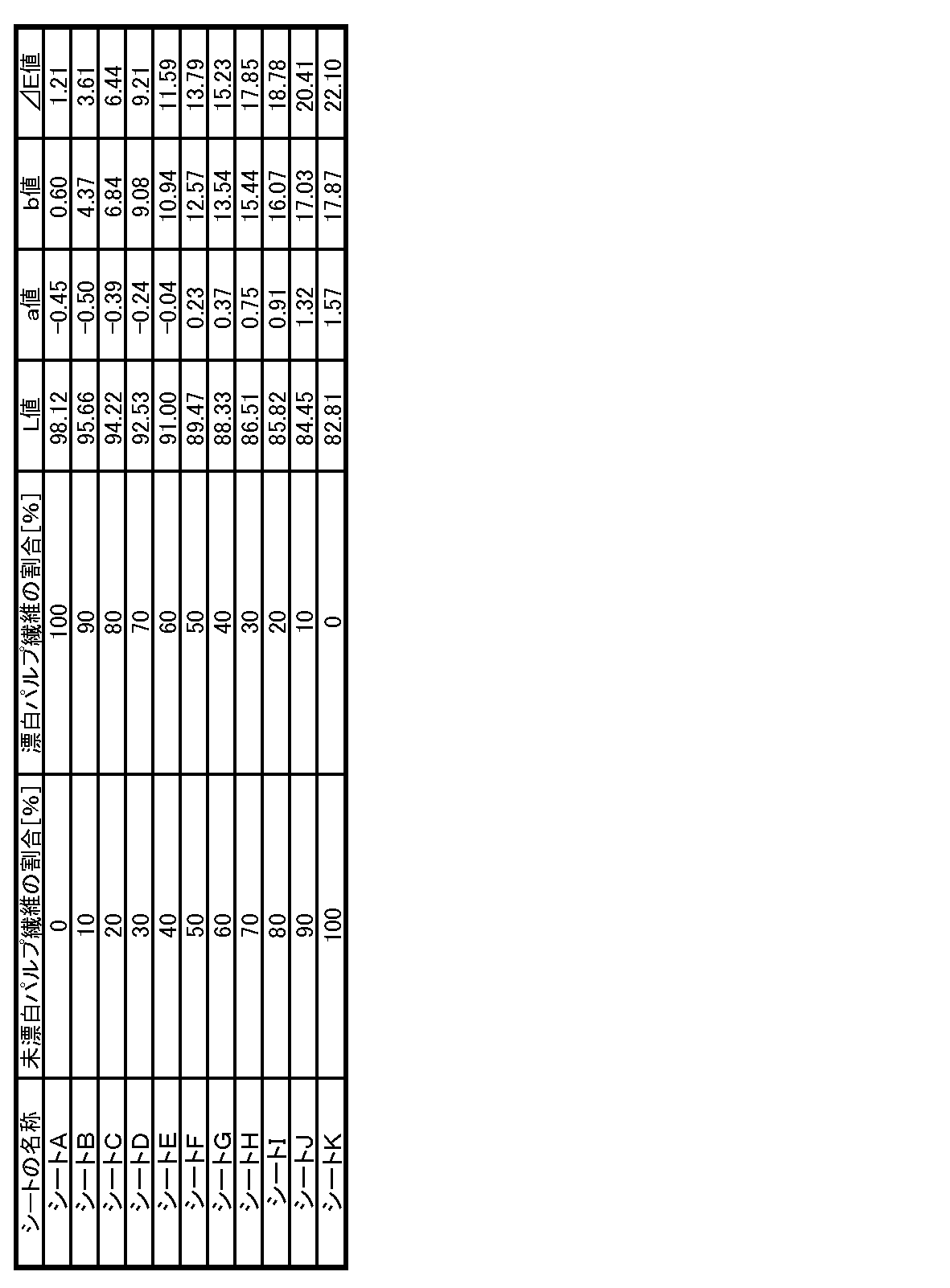
また、表2のシートを被験者に見せ、そのシートが薄茶色であるか否かの評価実験をした。すると、シートDでは、被験者の大部分が薄茶色であることを認識でき、シートEでは、ほとんどの被験者が薄茶色であることを認識できた。
このため、第1コアカバーシート122aを肌対向面側から視たLab表色系におけるL値、a値、およびb値が、
82.81≦前記L値≦92.53
-0.24≦前記a値≦1.57
9.08≦前記b値≦17.87
のいずれの条件も満たすことが好ましい。
82.81≦前記L値≦92.53
-0.24≦前記a値≦1.57
9.08≦前記b値≦17.87
のいずれの条件も満たすことが好ましい。
また、後述する実験結果より、第1コアカバーシート122aを含む吸収体を肌対向面側から視たLab表色系におけるL値、a値、およびb値が、
70.00≦前記L値≦90.00
0.50≦前記a値≦10.00
7.00≦前記b値≦15.00
のいずれの条件も満たすことが好ましい。
70.00≦前記L値≦90.00
0.50≦前記a値≦10.00
7.00≦前記b値≦15.00
のいずれの条件も満たすことが好ましい。
また、図3および図4に示すように、第1コアカバーシート122aの両側縁122c,122dおよび第2コアカバーシートの両側縁部122e,122fは、吸液性コア121の両側縁121a,121bよりも横方向の外側へ延出し、吸液性コア121の両側縁121a,121bの横方向Xの外側において、第1コアカバーシート122aと第2コアカバーシート122bとが接合部127で接合してある。このため、肌対向面側から視た第1コアカバーシート122aの視認できる面積を可及的に広くして、木材由来の色合いを有する部分を大きくでき、天然素材を使用したナチュラル志向の高い物品であるとの印象を与えることができる。さらに、第1コアカバーシート122aの横方向Xの寸法よりも第2コアカバーシート122bの横方向Xの寸法が大きく、第1コアカバーシート122aの全域が第2コアカバーシート122bで覆われるため、非肌対向面側からおむつ101を視ると、第1コアカバーシート122aの薄茶色を視認することが困難であり、第三者に、清潔感のある物品であるとの印象を与えることができる。
さらに、接合部127の長さ寸法が50mm以下である。このため、ホットメルト接着剤等の接合剤の使用を可及的に減少させ、資材が無駄になることを抑えることができる。
<第1の発明の第2実施形態>
図6は、第1の発明の第2実施形態に係るおむつ101の図2と同様の展開平面図であり、図7は、そのおむつ101の吸収体120に用いられる表面シート131aの斜視図であり、図8は、図6のVIII-VIII線断面図である。本実施形態に係るおむつ101の基本構成は、第1実施形態のおむつ101と同様であるので、相違する点についてのみ以下に説明する。
図6は、第1の発明の第2実施形態に係るおむつ101の図2と同様の展開平面図であり、図7は、そのおむつ101の吸収体120に用いられる表面シート131aの斜視図であり、図8は、図6のVIII-VIII線断面図である。本実施形態に係るおむつ101の基本構成は、第1実施形態のおむつ101と同様であるので、相違する点についてのみ以下に説明する。
表面シート131aは、縦方向Yへそれぞれ延びて横方向Xにおいて交互に配置してある凸部161と凹部162とを有し、凹部162が吸収体120に接触している一方、凸部161が吸収体120から離れている。このため、凸部161では、第1コアカバーシート122aの茶色を薄くすることができ、使用者に清潔性がある物品であるとの印象を与えることができる。
また、第1コアカバーシート122aは、吸液性コア121の非肌対向面と第2コアカバーシート122bとの間に位置する両側縁部122c,122dを有する。このため、肌対向面から視認できる第1コアカバーシート122aの面積を可及的に減少させて白色の面積を広くでき、使用者に清潔性がある物品であるとの印象を与えることができる。
さらに、第1コアカバーシート122aの両側縁部のうちの一方の側縁部122cの横方向Xの寸法W1と、他方の側縁部122dの横方向Xの寸法W2との合計W3は、吸液性コア121の横方向Xの寸法W4の1/3よりも小さい。このため、非肌対向面から第2コアカバーシート122bを視認することができ、排尿の有無を間違えることを防止することができる。
また、図示省略するが、吸液性コア121の両側縁121a,121bの横方向Xの外側において、第1コアカバーシート122aが厚さ方向Zに重なるようにしてもよい。このようにすれば、吸液性コア121の両側縁121a,121bの茶色を濃くすることができ、使用者に吸液性コア121の位置を認識させることができる。
<第1の発明の第3実施形態>
図9は、第1の発明の第3実施形態に係るおむつ101の図2と同様の展開平面図であり、図10は、図9のX-X線断面図である。本実施形態に係るおむつ101の基本構成は、第1実施形態のおむつ101と同様であるので、相違する点についてのみ以下に説明する。
図9は、第1の発明の第3実施形態に係るおむつ101の図2と同様の展開平面図であり、図10は、図9のX-X線断面図である。本実施形態に係るおむつ101の基本構成は、第1実施形態のおむつ101と同様であるので、相違する点についてのみ以下に説明する。
このおむつ101は、表面シート131と第1コアカバーシート122aとの間に別部材である中間シート139が位置する。中間シート139は、漂白パルプ繊維で構成してあるか、若しくは構成繊維に二酸化チタン等の顔料を練り込み、白色である。このため、薄茶色の第1コアカバーシート122aによって、使用者に中間シート139の位置を把握させることができる。
また、このおむつ101には、尿等の排泄物の有無を裏面シートの外側から識別可能なインジケータ171が、吸液性コア121の非肌対向面側に位置し、インジケータ171と第2コアカバーシート122bとが厚さ方向Zにおいて重なっている。インジケータ171の周囲の第2コアカバーシート122bが白色であるため、排尿の有無を間違えることを防止することができる。
おむつメーカーのインジケータのLab表色系におけるL値、a値、b値、ΔE値を表3に示す。測定器および測定方法は後述と同じである。

表3に示すように、各社のインジケータのb値は、15.85~22.72であって黄色である。また、本発明に使用するインジケータ171もこの範囲に含まれる。このおむつ101の第2コアカバーシート122bは白色であるため、インジケータ171の位置を容易に視認することができる。
<第1の発明の第4実施形態>
図11は、第1の発明の第4実施形態に係るおむつ101の図2と同様の展開平面図である。本実施形態に係るおむつ101の基本構成は、第1実施形態のおむつ101と同様であるので、相違する点についてのみ以下に説明する。
図11は、第1の発明の第4実施形態に係るおむつ101の図2と同様の展開平面図である。本実施形態に係るおむつ101の基本構成は、第1実施形態のおむつ101と同様であるので、相違する点についてのみ以下に説明する。
このおむつ101の吸収体120では、第1コアカバーシート122aと第2コアカバーシート122bとの対向面間に高吸水性ポリマー粒子163を介在させてある。吸収体120は、高吸水性ポリマー粒子163がホットメルト接着剤等の接合剤を介してシート122a,122bに固定してある第1接合域164と、第1接合域164の周囲に配置し、第1コアカバーシート122aと第2コアカバーシート122bとを直接、ホットメルト接着剤等の接合剤を介し接合してある第2接合域165とを有している。第1接合域164は、縦方向Yへ間隔をあけて配置してあり、複数の第1接合域164の間には第2接合域165を配置してある。また、吸液性コア121は、高吸水性ポリマー粒子163のみによって形成してある。
<第1の発明の第5実施形態>
図12は、第1の発明に係る吸収性物品の使用の一例を示すものであって、本実施例において、吸収体120は、生理用ナプキン(吸収性物品)180に使用されている。
図12は、第1の発明に係る吸収性物品の使用の一例を示すものであって、本実施例において、吸収体120は、生理用ナプキン(吸収性物品)180に使用されている。
生理用ナプキン180は、肌対向面(内面)側及びその反対側の非肌対向面(外面)側と、凸曲状の第1及び第2端縁180a,180bと、横中心線Qの位置する中央部において凸曲する第1及び第2側縁180c,180dと、肌対向面側に位置する透液性の表面シート131と、非肌対向面側に位置する伸縮性かつ不透液性の裏面シート132と、これら両シート131,132間に位置する吸液性の吸収体120とを含む。
吸収体120は、第1端縁180aと対向する第1端縁120aと第2端縁180bと対向する第2端縁120bと、第1及び第2端縁120a,120b間において縦方向へ延びる第1及び第2側縁120c,120dとを有する。表裏面シート181,182は、吸収体120の外周から外方へ延出しており、表面シート181の肌対向面側には、横方向Xにおいて互いに対向するように縦方向Yへ延びる一対のサイドシート184が配置される。一対のサイドシート184は、表面シート181に公知の接着手段又は溶着手段からなるサイド接合部(図示せず)を介して接合される。
生理用ナプキン180の縦方向Yの中央部分には、横方向Xの外側へ凸となる、両側縁部187の一部によって形成されたウイング部188が位置する。また、互いに積層されたシート181,182,184は、生理用ナプキン180の外周縁に沿って位置する外周シール部189を介して互いに接合されている。
また、コアカバーシート122の全体が、木材等の植物原料由来の薄茶色であるため、表面シート181を介して吸液性コア121に人工経血を滴下(5ml)したとき、肌対向面側から視た経血吸収領域と、吸液性コア121を含む経血非吸収領域とにおいて、L*a*b表色系(L*a*b色空間、以下、単に「Labと省略する。」)のa値、b値及びL値を測定した。実施例1には、中間シートを有しておらず、第1コアカバーシート122aの単位面積当たりの質量が14g/m2の生理用ナプキン180を用い、実施例2には、中間シートを有しておらず、第1コアカバーシート122aの単位面積当たりの質量が20g/m2の生理用ナプキン180を用いた。さらに、これらの実施例1~2と比較するため、リグニン成分を含む第1コアカバーシートとリグニン成分を含まない中間シートを有し、第1コアカバーシート122aの単位面積当たりの質量が14g/m2の比較例1のナプキン、リグニン成分を含まない白色のコアカバーシートを用いてあって表面シートにコットンを用いてある比較例2のナプキン、及びリグニン成分を含まない白色のコアカバーシートを用いてあって表面シートにコットンを用いてない比較例3のナプキンにも、同様に、表面シートを介して吸液性コア121に標準経血を滴下したとき、肌対向面側から視た経血吸収領域と経血非吸収領域とにおいて、Lab表色系のa値、b値及びL値を測定してみた。その実験結果を表4~表7に示す。なお、人工経血には、イオン水、グリセリン、カルボメチルセルロースナトリウム、塩化ナトリウム、炭酸水素ナトリウム、色素赤102号、色素赤2号、色素黄5号(各色素は、株式会社丸紅商会製)を適量混合したものを使用した。
(色差の測定方法について)
色差の測定は、日本電色工業株式会社製の色差計ZE6000(標準白板[X=93.19,Y=95.20,Z=112.28]、反射測定径30mm)を用いてJIS Z 8722に準拠して行った。測定は、サンプルごとに5回行い、測定値の平均値を各サンプルのL値、a値及びb値とした。
色差の測定は、日本電色工業株式会社製の色差計ZE6000(標準白板[X=93.19,Y=95.20,Z=112.28]、反射測定径30mm)を用いてJIS Z 8722に準拠して行った。測定は、サンプルごとに5回行い、測定値の平均値を各サンプルのL値、a値及びb値とした。

a値は、主として赤色と緑色に関するものであり、値が大きくなると赤色を帯び、値が小さくなると緑色を帯びる。負の数になると、より緑色が濃くなる。表4を参照すると、比較例2,3のナプキンでは、白色のコアカバーシートを用いてあるため、非吸収領域のa値が負の数である一方、吸収領域のa値が50.0以上であるため、両者の差が大きく、吸収領域の赤色が目立つ。一方、実施例1~2のナプキンでは、薄茶色の第1コアカバーシート122aを用いてあるため、非吸収領域のa値が正の数である0.5以上であり、吸収領域のa値が50.0より小さいであるため、両者の差が50以下であり、吸収領域の赤色が目立つのを抑えることができる。一方、比較例1のナプキンでは薄茶色のコアカバーシートを用いてあるため、非吸収領域のa値が正の数であるものの、白色の中間シートを用いてあるため、吸収領域のa値が50を超えてしまう。このため、吸収領域の赤色が目立ってしまう。これらを考慮すると、非吸収領域のa値は、0.50≦a値≦10.00であることが好ましい。また、吸収領域のa値は、50以下であることが好ましい。さらに、吸収領域と非吸収領域との差が50以下であることが好ましい。a値に関して、実施例1,2のナプキンが好ましく、比較例1~3のナプキンは好ましくない。

b値は、主として黄色と青色に関するものであり、値が大きくなると黄色を帯び、値が小さくなると青色を帯びる。表5を参照すると、比較例2のナプキンでは、白色のコアカバーシートを用いてあるため、非吸収領域のb値が7よりも小さく、吸収領域のb値が27を超え、両者の差が20を超えてしまい、両者の差が大きく、吸収領域の黄色が目立つ。比較例3のナプキンでは、白色のコアカバーシートを用いてあるため、吸収領域のb値が27を超え、両者の差が大きく、吸収領域の黄色が目立つ。一方、実施例1~2のナプキンでは、薄茶色の第1コアカバーシート122aを用いてあるため、非吸収領域のb値が、7以上であって、15以下であり、吸収領域のb値が30以下であって、両者の差が20以下であり、吸収領域の黄色が目立つのを抑えることができる。一方、比較例1のナプキンでは薄茶色のコアカバーシートを用いてあるものの、白色の中間シートを用いてあるため、非吸収領域のb値が7より小さい(b値が0に近くなると青色を帯びる)。このため、吸収領域と非吸収領域との色の差が大きく、吸収領域の色が目立つのを抑えることができない。これらを考慮すると、非吸収領域のb値は、7.00≦b値≦15.00であることが好ましい。また、吸収領域のb値は、30以下であることが好ましい。さらに、吸収領域と非吸収領域との差が20以下であることが好ましい。b値に関して、実施例1,2のナプキンが好ましく、比較例1~3のナプキンは好ましくない。
L値は、色の明るさに関するものであり、値が大きくなると白色を帯び、値が小さくなると黒色を帯びる。表6を参照すると、L値に関しては、70以上であって、90以下であること(70.00≦L値≦90.00)が好ましい。L値に関して、実施例1,2のナプキンが好ましく、比較例1~3のナプキンは好ましくない。
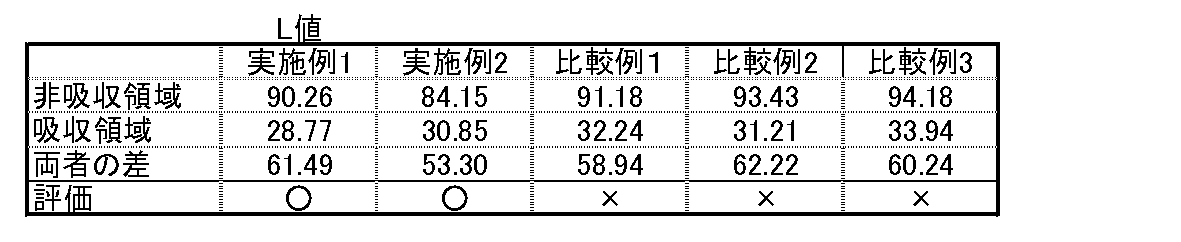
ところで、第1コアカバーシート122aの全体が、木材等の植物原料由来の薄茶色であり、吸収体120が薄茶色である一方、ウイング部188は白色である。そこで、吸液性コア121を含む吸収体120と、吸収体120を含まないウイング部188において、Lab表色系のa値を測定してみた。実施例1には、中間シートを有しておらず、吸収体の単位面積当たりの質量が14g/m2の生理用ナプキン180を用いた。さらに、実施例1と比較するため、リグニン成分を含まないコアカバーシートをそれぞれ用いてある比較例1~3のナプキンも、同様に、吸液性コア121を含む吸収体120と、吸収体120を含まないウイング部188において、Lab表色系のa値を測定してみた。その実験結果を表7に示す。

表7に示すように、実施例1のナプキンのみが、両差の差が0.5以上である一方、比較例1~3のナプキンは、両者の差が0.5より小である。両者の差が0.5以上であると、吸収体の周縁と、ウイング部188を含むその他の領域との境界が明確となるため、着用者または介護者が吸収体120の位置を把握できるため、好ましい。
なお、上述した実施形態には、吸液性コア121がリグニン成分を含まないものを説明した。しかし、この発明はそれに限られず、吸液性コア121がリグニン成分を含んでもよい。
上記実施形態には、予め前後ウエスト域の両側縁部が接合された、いわゆるパンツ型おむつを説明した。しかし、この発明はそれに限られず、開放型のおむつにも適用できる。
上記に開示した本発明の複数の実施形態は、分離して又は互いに組み合わせて採択することができる。
吸収性物品を構成する部材には、特に明記されていない限りにおいて、本明細書に記載されている材料のほかに、この種の分野において通常用いられている公知の材料を制限なく用いることができる。また、本明細書において使用されている「第1」および「第2」等の用語は、同様の要素、位置等を単に区別するために用いてある。
<第2の発明>
下記の第2の発明の実施の形態は、添付の図面に示す吸収性物品に関し、発明の不可欠な構成ばかりではなく、選択的及び好ましい構成を含む。
<第2の発明の第1実施形態>
以下、添付の図面を参照して、この発明に係る吸収性物品の一例である生理用ナプキン210の実施形態を説明する。生理用ナプキン210は、互いに交差(直交)する縦方向Yと、横方向Xと、厚さ方向Zとを有する。
下記の第2の発明の実施の形態は、添付の図面に示す吸収性物品に関し、発明の不可欠な構成ばかりではなく、選択的及び好ましい構成を含む。
<第2の発明の第1実施形態>
以下、添付の図面を参照して、この発明に係る吸収性物品の一例である生理用ナプキン210の実施形態を説明する。生理用ナプキン210は、互いに交差(直交)する縦方向Yと、横方向Xと、厚さ方向Zとを有する。
図13~15を参照すると、生理用ナプキン210は、その幅方向における寸法を2等分する縦中心線P及びその長さ寸法における寸法を2等分する横中心線Qとを有し、肌対向面(内面)側及びその反対側の非肌対向面(外面)側と、凸曲状の第1及び第2端縁210a,210bと、横中心線Qの位置する中央部において凸曲する第1及び第2側縁210c,210dと、肌対向面側に位置する透液性の表面シート211と、非肌対向面側に位置する不透液性の裏面シート212と、これら両シート211,212間に位置する吸液性の吸収体220とを含む。表面シート211と吸収体220とは、ホットメルト接着剤等の公知の接合手段によって互いに接合され、吸液層213が形成される。
なお、図示していないが生理用ナプキン210の柔軟性を向上させるために、表面シート211と吸収体220との間に比較的に嵩高の繊維不織布製の中間シートを配置してもよい。また、吸収体220と裏面シート212との間において、体液の漏れを抑制するために、好ましくは通気性を有する、不透液性の繊維不織布又はプラスチックフィルムからなる防漏シートを配置してもよい。
吸収体220は、第1端縁210aと対向する第1端縁220aと第2端縁210bと対向する第2端縁220bと、第1及び第2端縁220a,220b間において縦方向へ延びる第1及び第2側縁220c,220dとを有する。表裏面シート211,212は、吸収体220の外周から外方へ延出している。表面シート211の肌対向面側には、横方向において互いに対向するように縦方向Yへ延びる一対のサイドシート214が配置される。一対のサイドシート214は、表面シート211に公知の接着手段又は溶着手段からなるサイド接合部(図示せず)を介して接合される。図示していないが、サイドシート214には、着用状態において身体側へ起立する防漏壁を形成するために、縦方向Yへ延びる弾性材料を伸長状態で収縮可能に配置してもよい。また、サイドシート214を固定するためのサイド接合部は、花柄や幾何学模様等の意匠要素を有する、縦方向Yへ延びるシールラインであってもよい。
生理用ナプキン210は、表面シート211、裏面シート212及びサイドシート214から形成された、吸収体220の第1及び第2端縁220a,220bの縦方向Yの外側において横方向Xへ延びる両端部216と、吸収体220の第1及び第2側縁220c,220dの横方向Xの外側において縦方向Yへ延びる両側縁部217とを有する。生理用ナプキン210の縦方向Yの中央部分には、横方向Xの外側へ凸となる、両側縁部217の一部によって形成されたウイング部218が位置する。また、互いに積層されたシート211,212,214は、ナプキン210の外周縁に沿って位置する外周シール部219を介して互いに接合されている。
図14を参照すると、生理用ナプキン210の裏面側には、複数の止着域230を配置してある。止着域230は、生理用ナプキン210を下着等の被服に止着するためのものであって、縦方向Yへ延びる複数のライン状に塗布された粘着剤や感圧性接着剤から形成される。止着域230は、吸収体220と重なる領域において縦方向Yへ延びる中央域231と、ウイング部218に位置するサイド域232と有する。止着域230は、プラスチックフィルム製のセパレータ(図示せず)によって被覆される。
表面シート211には、透液性を有する各種の繊維不織布、例えば、質量約15~45g/m2のエアスルー繊維不織布、多孔プラスチックフィルム、それらのラミネートシート等から形成することができる。また、裏面シート212は、不透液性及び透湿性のプラスチックフィルム、不透液性の繊維不織布、それらのラミネートシート等から形成することができる。サイドシート214には、表面シート211と同様のシート材を用いることができる。但し、体液の横漏れを効果的に防止するには、疎水性もしくは撥水性を有するシート材を用いることが好ましい。
表面シート211として、表面側が凹凸状を有するシートを使用することもできる。かかるシートの表面は、縦方向Y又は横方向Xに交互に配置された複数条の凹部と複数条の凸部とから形成されており、かかる複数条の凸部と凹部とを形成する方法としては、たとえば、繊維量をコントロールして嵩低部分と嵩高部分とを形成する方法、エンボス/デボス加工によって凹部を形成する方法、凹凸状に賦形する方法等が考えられる。凸部と凹部とは、互いに繊維密度が異なるように、一方が疎であって他方が密となるように繊維が配置されている。繊維が疎に配置された部分(第1部分)と後記のコアカバーシート222の高リグニン域252とが接合されることによって接合強度がより高くなる一方、繊維が密に配置された部分(第2部分)と低リグニン域251とが接合されることによって、吸液性をより高くすることができる。
また、比較的短時間に繰り返して経血が排泄された場合であっても、凹部に経血を一時的に溜めることで、表面シート211の表面及び表面シート211とコアカバーシート222との間から経血が横漏れするのを抑制することができる。また、表面シート211の凹部の一部は、圧搾条溝を形成する圧搾部やエンボス加工によって形成された圧縮凹部等によって実質的に(連続的又は非連続的に)囲まれていることが好ましい。かかる場合には、凹部に溜まった体液が横方向X及び縦方向Yへ漏れ出るのを抑制することができる。加えて、表面シートの表面が凹凸状の場合には、表面視において、薄茶色のコアカバーシート222が凹部において凸部に比べて濃く視認されることから、色のグラデーションによる装飾的効果を生じる。
外周シール部219は、接着剤による接合、超音波溶着、熱溶着、レーザー溶着、高周波溶着等の公知の溶着手段による接合、及びエンボス加工による接合を、単独又は組み合わせて行うことができる。また、厚さ方向Zにおいて積層されたシート211,212,214は、ホットメルト接着剤等の接着剤を介して互いに接合される。ホットメルト接着剤の塗工方法としては、スパイラル塗工、コーター塗工、カーテンコーター塗工、スプレー塗工などの各種公知の塗工方法が挙げられる。
図15,16を参照すると、吸収体220は、超吸収性ポリマー粒子(SAP)とフラッフ木材パルプ、レーヨン繊維等のセルロース系繊維とを混合して所定の形状に賦型した吸液性コア221と、その保形性及び液拡散性の向上のために吸液性コア221全体を包被する透液性のコアカバーシート222とを有する。
コアカバーシート222は、縦方向Yの寸法が吸液性コア221の縦方向Yの寸法よりも大きく、その両側縁部222a,222bは、吸液性コア221の全体を包被するように、吸液性コア221の横方向Xの中央部分における底面側において互いに重なるように位置する。両側縁部222a,222bが互いに折り重ねられることによって、吸収体220の横方向Xの中央部分には、縦方向Yへ延びる両側縁部222a,222bどうしが互いに積層されてなる重畳部分223が形成される。
コアカバーシート222は、吸液性コア221の肌対向面側を被覆する第1被覆部225と、吸液性コア221の非肌対向面側を被覆する第2被覆部226とを有する。本実施形態において、コアカバーシート222は1枚の連続するシートから形成されているが、第1被覆部225を形成する第1コアカバーシートと、第1コアカバーシートとは別体であって、第2被覆部226を形成する第2コアカバーシートとから構成されていてもよい。
図17を参照すると、コアカバーシート222は、各種公知の繊維不織布又はティッシュから形成されており、主としてパルプ繊維240から構成されている。コアカバーシート222のパルプ繊維240は、脱リグニン処理がなされた漂白パルプ繊維241と、脱リグニン処理がなされていない未漂白パルプ繊維242とを有する。ここで、パルプ繊維240は、針葉樹又は広葉樹を原料として得られる木材パルプ繊維のほかに、リンター、マニラ麻、ケナフ、藁、竹、バナナを原材料とする非木材パルプ繊維を含む。
また、コアカバーシート222は、例えば、レーヨン繊維等の再生セルロース繊維、半合成セルロース繊維等の親水性繊維から構成された第1層(上層又は下層)と、脱リグニン処理がなされていない未漂白パルプ繊維242からなる第2層(下層又は上層)とからなる複層構造を有していてもよい。かかる場合には、後記のとおり、第2層が低リグニン域251と高リグニン域252とからなる海島構造を有する場合であっても、第1層において体液を十分に拡散することができるので、コアカバーシート222全体における体液の拡散のムラを抑制することができる。それによって、複数回に渡って体液を吸収した後であっても、表面シート211との接合性の低下を抑制することができとともに、好適な吸液性を維持することができる。
パルプ繊維240は、一般的に、原料チップ処理工程を経た後に、原料チップに薬品を加えて高温・高圧下で煮沸してリグニンを蒸解する蒸解工程(脱リグニン処理の第1段階)、パルプ中の異物を除去するスクリーン工程、蒸解工程において残存したリグニンを酸素で分解する酸素晒し工程(脱リグニン処理の第2段階)、複数種類の薬品を使用してパルプを漂白する漂白工程を経ることによって、漂白された漂白パルプ繊維241となる。未漂白パルプ繊維242は、これらの各工程のうち、脱リグニン処理の第1段階である蒸解工程とスクリーン工程のみを経たものであって、一定程度の脱リグニン処理を施されたものである。本発明に係る未漂白パルプ繊維242のリグニン含有率は、0.2~10.0%である。
未漂白パルプ繊維242のリグニン含有率は、以下の方法によって測定した。
<リグニン含有率の測定方法>
ADFの定量
試薬: 酸性デタージェント溶液 <セチルトリメチルアンモニウムブロミド(ヘキサデシルトリメチルアンモニウムブロミド)10gを500mLの1N硫酸に溶かしたもの>
アセトン
消泡剤としてデカヒドロナフタレン(オプション)
<測定手順>
サンプル300gを秤量し、50mL三角フラスコに入れ、酸性データジェンと溶液を30mL加えた。アルミホイルで蓋をして、沸騰水中に三角フラスコを入れて、60分間分解した。分解後、ガラス繊維濾紙(GA-200)を敷いたグーチルツボに移して吸引濾過し、残査を熱水とアセトンで洗滌した。風乾した後、熱乾燥した。なお、乾燥後恒量し、灰分を差し引いたものの重さがADFであるが、リグニン定量後の灰分をこれに用いることはできない。
リグニン定量
試薬: 72%硫酸
<測定手順>
上記で乾燥させたグーチルツボに72%硫酸を数滴垂らして全体を湿らせた後、ADF量の約2倍の硫酸を加え、一時間毎に硫酸を適宜加えながら3-4時間放置した。その後吸引濾過し、熱水で炉液が酸性を示さなくなるまで洗滌した。風乾した後、熱乾燥して恒量する。グーチルツボを550℃で灰化し、灰分を求めた。
ADFの定量
試薬: 酸性デタージェント溶液 <セチルトリメチルアンモニウムブロミド(ヘキサデシルトリメチルアンモニウムブロミド)10gを500mLの1N硫酸に溶かしたもの>
アセトン
消泡剤としてデカヒドロナフタレン(オプション)
<測定手順>
サンプル300gを秤量し、50mL三角フラスコに入れ、酸性データジェンと溶液を30mL加えた。アルミホイルで蓋をして、沸騰水中に三角フラスコを入れて、60分間分解した。分解後、ガラス繊維濾紙(GA-200)を敷いたグーチルツボに移して吸引濾過し、残査を熱水とアセトンで洗滌した。風乾した後、熱乾燥した。なお、乾燥後恒量し、灰分を差し引いたものの重さがADFであるが、リグニン定量後の灰分をこれに用いることはできない。
リグニン定量
試薬: 72%硫酸
<測定手順>
上記で乾燥させたグーチルツボに72%硫酸を数滴垂らして全体を湿らせた後、ADF量の約2倍の硫酸を加え、一時間毎に硫酸を適宜加えながら3-4時間放置した。その後吸引濾過し、熱水で炉液が酸性を示さなくなるまで洗滌した。風乾した後、熱乾燥して恒量する。グーチルツボを550℃で灰化し、灰分を求めた。
コアカバーシート222の第1被覆部225は、比較的にリグニン成分の含有率が低い低リグニン域(リグニン低含有域)251と、低リグニン域251よりもリグニン成分の含有率が高い高リグニン域(リグニン高含有域)252とを有する。低リグニン域251は、主として漂白パルプ繊維241が集合して形成されており、高リグニン域252は、主として未漂白パルプ繊維242が集合して形成されている。コアカバーシート222の第1被覆部225の平面視において、低リグニン域251は、比較的にコアカバーシート222の外表面の広い範囲に位置する周辺域であるのに対して、高リグニン域252は、低リグニン域251に対して散在するように配置されている。また、かかる配置態様を有することから、コアカバーシート222全体又は少なくとも第1被覆部225は、低リグニン域251を海、高リグニン域252を島とする海島構造を有するともいえる。
コアカバーシート222は、複数の高リグニン域252を有することから、全体的に木材等の植物原料由来の薄茶色を有する。コアカバーシート222以外の他のシート211,212,214は、構成繊維に二酸化チタン等の白色顔料を練り込まれることによって全体的に白色を有することから、コアカバーシート222は、生理用ナプキン210の表面視及び/又は裏面視において、他のシート211,212,214から透過して容易に視認される。
本実施形態に係るコアカバーシート222は、その抄紙工程において、漂白パルプ繊維241と未漂白パルプ繊維242との混合物を絡合させてシート状に形成したものであって、低リグニン域251は主として漂白パルプ繊維241、高リグニン域252は主として未漂白パルプ繊維242が配置されてなるものであるから、両域251,252の境界は不明瞭なものであって、明確に区分できるものではない。また、このように、コアカバーシート222の外表面全体において、低リグニン域251内に高リグニン域252を散在的に形成する方法としては、例えば、各パルプ繊維241,242の混合方法、混合率、製造時の搬送コンベアの搬送速度、コンベア上に複数のノズルから噴射される空気を介してパルプ繊維240を堆積させる際のノズル径、吹付空気の風量、風速等を適宜調整することが考えられる。
製造工程における諸条件を調整することによって、両域251,252を形成するものであるから、低リグニン域251の一部に未漂白パルプ繊維242、高リグニン域252に漂白パルプ繊維241がそれぞれ含まれることもあるといえる。したがって、低リグニン域251と高リグニン域252とは、それぞれ、漂白パルプ繊維241、未漂白パルプ繊維242のみから形成されるものではなく、また、パルプ繊維以外の他の繊維を含むこともあり、例えば低リグニン域251におけるパルプ繊維中の漂白パルプ繊維241の含有率は50~100%、高リグニン域252のパルプ繊維中の未漂白パルプ繊維242の含有率は50~100%である。
高リグニン域252は、コアカバーシート222における周辺域である低リグニン域251よりもリグニン成分の含有量が高い領域を意味することから、漂白パルプ繊維241と未漂白パルプ繊維242とを混在したシートを用いなくても形成することができる。例えば、レーヨン繊維や合成繊維からなる繊維不織布シートにリグニン成分の含有液を散点的に滲入させることによって、周辺域よりもリグニン成分の含有量の高い高リグニン域252を形成することができる。
コアカバーシート222は、主として未漂白パルプ繊維242からなる複数の高リグニン域252を有することから、未漂白パルプ繊維のみからなるコアカバーシートを使用する場合に比べて、表面視において、植物原料由来の薄茶色(ウッド色)を有し、着用者又は着用補助者に対して、天然材料を使用した肌に優しい製品であるとのイメージを与えることができる。また、コアカバーシート222が薄茶色を有することから、排泄された経血が表面シート211を透過して、吸収体220に吸収、保持されたときに、経血の赤味が抑制される。それによって、経血を直接的に視認することによる嫌悪感を抑えるとともに、例えば、月経初期の着用者等に対して、経血の赤味を視認することによる精神的な不安を和らげることができる。加えて、リグニン成分は抗菌作用を有することから、使用後の雑菌の繁殖を抑えて衛生的に廃棄処理することができる。
コアカバーシート222が、かかるナチュナルな外観、経血の赤味の抑制及び一定の抗菌作用を発揮するためには、コアカバーシート222のリグニン成分の含有率は、0.2~10%であることが好ましい。コアカバーシート222のリグニン成分の含有率が0.2%未満の場合には、コアカバーシート222の薄茶色の色味が白色を有する他のシート211,212,214と視覚上区別できない程度に薄くなるおそれがある。一方、コアカバーシート222のリグニン成分の含有率が10%を超える場合には、リグニン成分による色味が濃くなって、天然材料によるナチュラルな外観を損ねるおそれがあるとともに、経血の赤味が視認され難くなって経血量を正確に把握することができなくなるおそれがある。
通常、コアカバーシートは、吸液性コアの保形のほかに、表面シートを透過した体液を吸収、拡散しながら吸液性コアに移行させる役割を有するものであるから、親水性のシートが好適に使用されている。高リグニン域252の未漂白パルプ繊維242は、リグニン成分を多く含むことによって親水度合いが低く、比較的に疎水性といえることから、例えば、第1被覆部225全体が高リグニン域252から形成されている場合には、表面シート211を透過した経血が高リグニン域252で吸収、保持することができずに、速やかに経血を吸液性コア221に移行させることができない。
図18を参照すると、コアカバーシート222の第1被覆部225は、低リグニン域251とその周辺に散在する複数の高リグニン域252とを有することから、断面視において、それらの両域251,252が横方向Xに交互に現われている。高リグニン域252は、低リグニン域251内に散在して配置されていることから、横方向Xのみならず、縦方向Yにおいても低リグニン域251と高リグニン域252とは交互に配置されているといえる。
このように、第1被覆部225の断面視において、低リグニン域251と高リグニン域252が横方向X及び縦方向Yへ交互に位置することによって、表面シート211を透過した経血を親水性の低リグニン域251において引き込むようにして速やかに吸液性コア221に移行して、吸収、保持させることができ、所要の吸収速度を有する。
また、親水性の低リグニン域251では、経血を吸収して漂白パルプ繊維が膨潤することによって、表面シート211とコアカバーシート222とのホットメルト接着剤を介した接合界面において接合部分が剥離して接合強度が低下するおそれがある。一方、高リグニン域252は、低リグニン域251よりも親水性が低く、疎水性であることから、経血を吸収して膨潤し難く、接合部分が剥離することはなく、コアカバーシート222と表面シート211との接合界面における接合強度が、低リグニン域251に比べて高くなる。
したがって、コアカバーシート222全体が低リグニン域251から形成される場合に比べて、コアカバーシート222と表面シート211との接合強度が高くなって、着用中における表面シート211の吸収体220からの剥離や浮き上がりを抑制することができる。また、両シート211,222の接合強度を上げるために接着剤量を増やす場合には、シート剛性が高くなって柔軟性及び透液性が低下するおそれがあるが、かかる不利益を生じることない。
加えて、吸液性コア221は、主としてSAP粒子と漂白処理したフラッフパルプを含み、オプションとしてセルロース系繊維を有することがあるが、未漂白パルプ繊維242を含むものではなく、コアカバーシート222に比してリグニン含有量が低くなっている。そのために、表面シート211を透過してコアカバーシート222に吸収、拡散された経血は、コアカバーシート222に比べて親水度合いの高い吸液性コア221に引き込まれるように速やかに移行されやすくなる。
このように、本実施形態においては、コアカバーシート222において低リグニン域251に散在するように複数の高リグニン域252が位置することによって、ナチュラルな外観を有するとともに、経血の隠蔽性や抗菌性に優れ、かつ、コアカバーシート222と表面シート211との適度な接合強度と吸液性とを有する。
また、吸液性コア221は、SAP粒子のみから形成されていてもよい。かかる場合には、吸収体220は、SAP粒子のみからなる吸液性コア221とそれを包被するコアカバーシート222とから構成される。かかる場合には、コアカバーシート222が低リグニン域251を有することによって液保持性が比較的に低い一方、吸液性コア221が高い吸液容量を有するSAP粒子のみから形成されていることによって、吸収体220全体として適度な吸液性を発揮することができる。
低リグニン域251と高リグニン域252とは、漂白パルプ繊維241と未漂白パルプ繊維242とによって形成されていることから、互いの境界ラインの形状が不明瞭であって、平面視においては、少なくとも直線状ではなく波状を有する。したがって、低リグニン域251と高リグニン域252との境界近傍の単位幅(例えば、1.0mm)当たりにおいて、低リグニン域251による所要の吸収面積を保持することができる。
再び、図15および図16を参照すると、吸収体220の横方向Xの中央部分には、コアカバーシート222の両側縁部222a,222bが互いに積層されてなる重畳部分223が位置している。重畳部分223はコアカバーシート222が折り重ねられている部分であるから、吸収体220の他の部分に比べて未漂白パルプ繊維による薄茶色がより濃く視認され、外観視において縦方向Yへ延びるラインとして意匠的なアクセントとなりうる。また、かかる縦方向Yへ延びるラインを吸収体220の中央部分を示す目印として捉えて、生理用ナプキン210を下着等に貼付するときの位置決めに利用することもできる。さらに、吸液性コア221が多量の経血を吸収してその両端縁から経血が滲出する場合であっても、その両端縁の縦方向Yの外側に疎水性の高リグニン域252を比較的に多く含んだ重畳部分223が位置することによって、経血が吸収体220の両側縁220a,220bから外側へ滲出するのを効果的に抑制することができる。
コアカバーシート222の地合い指数は、50~300であることが好ましい。コアカバーシート222の地合い指数が50未満であると、パルプ繊維が高密かつ均一に配置されることによって透液性が低下し、速やかに経血を吸液性コア221に移行させることができない。一方、地合い指数が300を超える場合には、極度に地合いの悪い部分が形成されて引張強度が低下し、使用中に一部が破断するおそれがある。
<地合い指数の測定方法>
コアカバーシート222の地合い指数は、野村商事株式会社製フォーメーションテスターFMT-MIIIを用いて測定した。測定面積は250mm×180mm、測定時間は3秒/サンプルで、3枚のサンプルの表面両面の地合い指数を測定し、その平均値を測定値とした。地合い指数は、測定値が小さいほどに地合いムラが少ないことを意味する。
コアカバーシート222の地合い指数は、野村商事株式会社製フォーメーションテスターFMT-MIIIを用いて測定した。測定面積は250mm×180mm、測定時間は3秒/サンプルで、3枚のサンプルの表面両面の地合い指数を測定し、その平均値を測定値とした。地合い指数は、測定値が小さいほどに地合いムラが少ないことを意味する。
未漂白パルプ繊維242は漂白パルプ繊維241に比べて剛性が高いことから、コアカバーシートが未漂白パルプ繊維242のみから形成されている場合には、比較的に柔軟性が低くなって、表面シート211の動きに追従することができず、コアカバーシートが表面シート211から剥離するおそれがあるが、高リグニン域252が低リグニン域251に散在することによって大きく柔軟性を損なうことはない。
したがって、コアカバーシート222は所要の柔軟性を有し、具体的には、コアカバーシート222のクレープ率は、7~20%である。コアカバーシート222のクレープ率が7%未満の場合には、コアカバーシート222の剛性が比較的に高くなって表面シート211の動きに追従することができず、一方、クレープ率が20%を超える場合には、コアカバーシート222が柔軟になりすぎて、製造中や使用中にシート破れを生じるおそれがある。
<クレープ率の測定方法>
コアカバーシート222のクレープ率は、水中伸度法により測定した。コアカバーシート222を100mm×100mmに切断して測定試料を作製し、測定試料を水中に10秒間浸漬した後引き上げて、寸法の変化量から次式によりクレープ率を算出する。測定は3回行い(n=3)、平均値を測定値とする。
クレープ率(%)={(水に浸漬した後の寸法)/(水に浸漬する前の寸法)-1}×100
コアカバーシート222のクレープ率は、水中伸度法により測定した。コアカバーシート222を100mm×100mmに切断して測定試料を作製し、測定試料を水中に10秒間浸漬した後引き上げて、寸法の変化量から次式によりクレープ率を算出する。測定は3回行い(n=3)、平均値を測定値とする。
クレープ率(%)={(水に浸漬した後の寸法)/(水に浸漬する前の寸法)-1}×100
表面シート211には、コットン繊維(オーガニックコットンを含む)を含む親水性のシートを用いることができる。表面シート211としてかかるシートを用いた場合には、クッション性、肌触り性及び吸液性に優れる。また、コットン繊維を含む表面シート211と高リグニン域252を有するコアカバーシート222とによって吸液層を形成することによって、コアカバーシート222では構成繊維の液保持性が比較的に小さい一方、表面シートは高い吸湿性を有するので、吸収体220内の湿気を表面シート211において吸湿することができる。それによって、生理用ナプキンと身体との間における湿気の発生を抑えて、内部の蒸れを抑制することができる。また、表面シート211は、親水性繊維からなる複層構造を有し、肌対向面側に位置する層が、実質的にコットン繊維から形成されていることが好ましい。かかる場合には、肌に近い部分でコットン繊維がより効率的に湿気を吸湿することができる。
ただし、コアカバーシートのクレム吸水度は、コットン繊維を含む表面シート211のクレム吸水度よりも高いことが好ましい。コアカバーシート222のクレム吸水度が、その肌対向面側に位置する表面シート211のクレム吸水度よりも高いことによって、表面シート211において吸収、拡散された経血をコアカバーシート222が引き込むように吸収して速やかに吸液性コア221に移行させることができ、表面シート211上の液残りを効果的に抑制することができる。
<クレム吸水度の測定方法>
コアカバーシート222のクレム吸水度の測定は、クレム吸水試験(JIS-L1907、P8141)に準拠して行った。測定器具として、ものさし、ストップウォッチ、プラスチック容器及び人工尿(青色1号で着色)を用いた。コアカバーシート222から幅25mm、長さ150mmの大きさに切り取ったシートをサンプル(N=3)とした。まず、人工尿をプラスチック容器に人工尿の深さが10mm以上となるまで入れた。次に、採取した試験片を固定チャックで固定し、サンプル先端から5mmの深さで人工尿に浸るようセットした。これをそのままの状態で120秒放置した(環境:温度20℃/湿度60%)。人工尿がサンプルを伝い上昇し、サンプル上における吸い上げ距離を人工尿の表面から測定した。吸い上げ距離の長い方が、クレム吸水度が高いことを示している。
コアカバーシート222のクレム吸水度の測定は、クレム吸水試験(JIS-L1907、P8141)に準拠して行った。測定器具として、ものさし、ストップウォッチ、プラスチック容器及び人工尿(青色1号で着色)を用いた。コアカバーシート222から幅25mm、長さ150mmの大きさに切り取ったシートをサンプル(N=3)とした。まず、人工尿をプラスチック容器に人工尿の深さが10mm以上となるまで入れた。次に、採取した試験片を固定チャックで固定し、サンプル先端から5mmの深さで人工尿に浸るようセットした。これをそのままの状態で120秒放置した(環境:温度20℃/湿度60%)。人工尿がサンプルを伝い上昇し、サンプル上における吸い上げ距離を人工尿の表面から測定した。吸い上げ距離の長い方が、クレム吸水度が高いことを示している。
また、表面シートとしてコットン繊維を含むシート、その下層に位置するコアカバーシートとして主として漂白パルプ繊維からなるティッシュを使用した場合には、いずれも液保持性が高いことから、速やかに吸液性コアに経血を移行させることができない。本実施形態においては、コアカバーシート222が高リグニン域252を有することによって全体として液保持性が低くなり、経血を下方へスムーズに移行させることができるといえる。
吸液性コア221は、既述のとおり、オプションとして、コットン、パルプ繊維等のセルロース繊維のほかに、アセテート等の半合成セルロース繊維やレーヨン等の再生セルロース繊維を含むセルロース系繊維を有する。コアカバーシート222も吸液性コア221と同様に、漂白パルプ繊維241と未漂白パルプ繊維242からなるセルロース系繊維を有することから親和性が高く、吸収体の外郭に位置する圧搾条溝等において、コアカバーシート222と吸液性コア221とが互いに溶着される場合には、接合強度が向上する。
吸液性コア221は、活性炭やゼオライト等から形成された、経血等の体液の臭気の吸着機能を有する複数の機能性粒子を有していてもよい。吸液性コア221が、臭気の吸着性を備えることによって、コアカバーシート222の抗菌性と相俟って、より衛生的かつ清潔に生理用ナプキン210を使用、廃棄することができる。
本実施形態においては、コアカバーシート222の全体において、低リグニン域251からなる周辺域に散在するように複数の高リグニン域252が位置することから、コアカバーシート222のうちの吸収体220の肌対向面側を被覆する第1被覆部225のみならず、吸収体220の非肌対向面側を被覆する第2被覆部226においても複数の高リグニン域252が散在している。したがって、断面視において、第2被覆部226においても低リグニン域251と高リグニン域252とが横方向Xへ交互に位置している。
高リグニン域252は低リグニン域251に比べてシートに対する接着強度が高いといえるので、高リグニン域252を有しない通常のコアカバーシートを使用する場合に比べて、裏面シート212との接合強度に優れる。したがって、接合強度を上げるために、接着剤の単位面積当たりの質量を高くする必要はなく、接着剤の増加によってシート剛性が高くなり、吸収体220への追従性が低下することもない。
また、コアカバーシート222の全体が、木材等の植物原料由来の薄茶色であるため、表面シート211を介して吸液性コア221に人工経血を滴下(5ml)したとき、肌対向面側から視た経血吸収領域と、吸液性コア221を含む経血非吸収領域とにおいて、L*a*b表色系(L*a*b色空間、以下、単に「Labと省略する。」)のa値、b値及びL値を測定した。実施例1には、中間シートを有しておらず、コアカバーシートの単位面積当たりの質量が14g/m2の生理用ナプキン210を用い、実施例2には、中間シートを有しておらず、コアカバーシートの単位面積当たりの質量が20g/m2の生理用ナプキン210を用いた。さらに、これらの実施例1~2と比較するため、リグニン成分を含むコアカバーシートとリグニン成分を含まない中間シートを有し、コアカバーシートの単位面積当たりの質量が14g/m2の比較例1のナプキン、リグニン成分を含まない白色のコアカバーシートを用いてあって表面シートにコットンを用いてある比較例2のナプキン、及びリグニン成分を含まない白色のコアカバーシートを用いてあって表面シートにコットンを用いてない比較例3のナプキンにも、同様に、表面シートを介して吸液性コア221に標準経血を滴下したとき、肌対向面側から視た経血吸収領域と経血非吸収領域とにおいて、Lab表色系のa値、b値及びL値を測定した。その実験結果を表8~表10に示す。なお、人工経血には、イオン水、グリセリン、カルボメチルセルロースナトリウム、塩化ナトリウム、炭酸水素ナトリウム、色素赤102号、色素赤2号、色素黄5号(各色素は、株式会社丸紅商会製)を適量混合したものを使用した。

(色差の測定方法について)
色差の測定は、日本電色工業株式会社製の色差計ZE6000(標準白板[X=93.19,Y=95.20,Z=112.28]、反射測定径30mm)を用いてJIS Z 8722に準拠して行った。測定は、サンプルごとに5回行い、測定値の平均値を各サンプルのL値、a値及びb値とした。
色差の測定は、日本電色工業株式会社製の色差計ZE6000(標準白板[X=93.19,Y=95.20,Z=112.28]、反射測定径30mm)を用いてJIS Z 8722に準拠して行った。測定は、サンプルごとに5回行い、測定値の平均値を各サンプルのL値、a値及びb値とした。
a値は、主として赤色と緑色に関するものであり、値が大きくなると赤色を帯び、値が小さくなると緑色を帯びる。負の数になると、より緑色が濃くなる。表8を参照すると、比較例2,3のナプキンでは、白色のコアカバーシートを用いてあるため、非吸収領域のa値が負の数である一方、吸収領域のa値が50.0以上であるため、両者の差が大きく、吸収領域の赤色が目立つ。一方、実施例1~2のナプキンでは、薄茶色のコアカバーシート222を用いてあるため、非吸収領域のa値が正の数である0.5以上であり、吸収領域のa値が50.0より小さいため、両者の差が50以下であり、吸収領域の赤色が目立つのを抑えることができる。一方、比較例1のナプキンでは薄茶色のコアカバーシートを用いてあるため、非吸収領域のa値が正の数であるものの、白色の中間シートを用いてあるため、吸収領域のa値が50を超えてしまう。このため、吸収領域の赤色が目立ってしまう。これらを考慮すると、非吸収領域のa値は、0.5≦a値≦10.0であることが好ましい。また、吸収領域のa値は、50以下であることが好ましい。さらに、吸収領域と非吸収領域との差が50以下であることが好ましい。a値に関して、実施例1,2のナプキンが好ましく、比較例1~3のナプキンは好ましくない。

b値は、主として黄色と青色に関するものであり、値が大きくなると黄色を帯び、値が小さくなると青色を帯びる。表9を参照すると、比較例2のナプキンでは、白色のコアカバーシートを用いてあるため、非吸収領域のb値が7よりも小さく、吸収領域のb値が27を超え、両者の差が20を超えてしまい、両者の差が大きく、吸収領域の黄色が目立つ。比較例3のナプキンでは、白色のコアカバーシートを用いてあるため、吸収領域のb値が27を超え、両者の差が大きく、吸収領域の黄色が目立つ。一方、実施例1~2のナプキンでは、薄茶色のコアカバーシート222を用いてあるため、非吸収領域のb値が、7以上であって、15以下であり、吸収領域のb値が30以下であって、両者の差が20以下であり、吸収領域の黄色が目立つのを抑えることができる。一方、比較例1のナプキンでは薄茶色のコアカバーシートを用いてあるものの、白色の中間シートを用いてあるため、非吸収領域のb値が7より小さい(b値が0に近くなると青色を帯びる)。このため、吸収領域と非吸収領域との色の差が大きく、吸収領域の色が目立つのを抑えることができない。これらを考慮すると、非吸収領域のb値は、7≦b値≦15であることが好ましい。また、吸収領域のb値は、30以下であることが好ましい。さらに、吸収領域と非吸収領域との差が20以下であることが好ましい。b値に関して、実施例1,2のナプキンが好ましく、比較例1~3のナプキンは好ましくない。
L値は、色の明るさに関するものであり、値が大きくなると白色を帯び、値が小さくなると黒色を帯びる。表10を参照すると、L値に関しては、70以上であって、90以下であることが好ましい。L値に関して、実施例1,2のナプキンが好ましく、比較例1~3のナプキンは好ましくない。
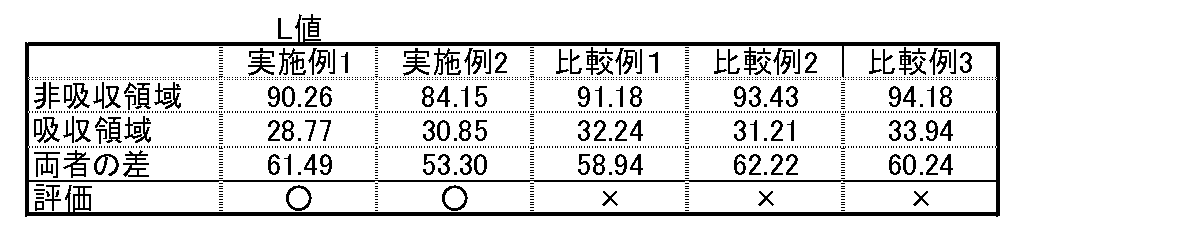
ところで、コアカバーシート222の全体が、木材等の植物原料由来の薄茶色であり、吸収体220が薄茶色である一方、ウイング部218は白色である。そこで、吸液性コア221を含む吸収体220と、吸収体220を含まないウイング部218において、Lab表色系のa値を測定した。実施例1には、中間シートを有しておらず、コアカバーシートの単位面積当たりの質量が14g/m2の生理用ナプキン210を用いた。さらに、実施例1と比較するため、リグニン成分を含まないコアカバーシートをそれぞれ用いてある比較例1~3のナプキンも、同様に、吸液性コア221を含む吸収体220と、吸収体220を含まないウイング部218において、Lab表色系のa値を測定した。その実験結果を表11に示す。なお、試料であるナプキンの上に標準白板を被せて光線を下からあててa値を測定した。これは、ウイング部218は、光を透過し、ナプキンの背面側の色によって測定結果が異なることを防止するためである。
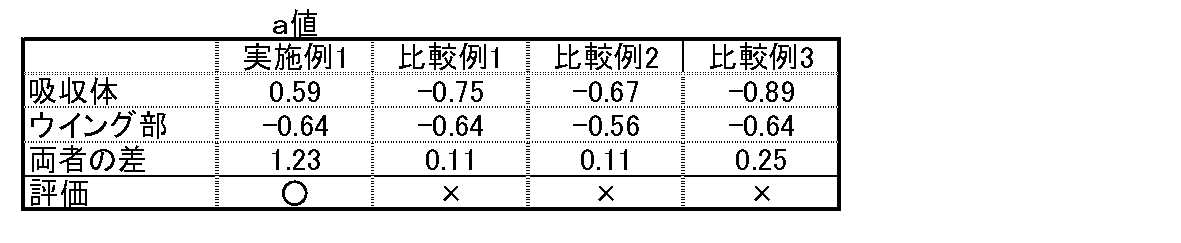
表11に示すように、実施例1のナプキンのみが、両差の差が0.5以上である一方、比較例1~3のナプキンは、両者の差が0.5より小である。両者の差が0.5以上であると、吸収体の周縁と、ウイング部218を含むその他の領域との境界が明確となるため、着用者または介護者が吸収体220の位置を把握できるため、好ましい。
なお、上述した実施形態には、吸液性コア221がリグニン成分を含まないものを説明した。しかし、この発明はそれに限られず、吸液性コア221がリグニン成分を含んでもよい。
<第2の発明の第2実施形態>
図19は、第2の発明の第2実施形態に係る生理用ナプキン210の平面図、図20(a)は、第2実施形態における図15と同様の断面図である。本実施形態に係る生理用ナプキン210の基本構成は、第1実施形態のそれと同様であるので、相違する点についてのみ以下に説明する。
図19は、第2の発明の第2実施形態に係る生理用ナプキン210の平面図、図20(a)は、第2実施形態における図15と同様の断面図である。本実施形態に係る生理用ナプキン210の基本構成は、第1実施形態のそれと同様であるので、相違する点についてのみ以下に説明する。
本実施形態においては、生理用ナプキン210は、吸液層213において表面シート211から裏面シート212側へ向かって凹となる複数の凹状部260と、複数の凹状部260を囲むように非連続的に環状に延びる圧搾条溝270とを有する。凹状部260は、有底であって、平面視において、縦方向Y及び横方向Xにおいて互いに離間して位置している。凹状部260は、図示した態様のほかに、円形、楕円形、三角形、矩形等の各種公知の形状を有する。
凹状部260は、例えば、加圧加熱処理によって形成することができる。具体的には、公知のエンボス加工において、表面シート211側からエンボスピンを押し当てて表面シート211とともに吸収体220を圧縮することによって形成することができる。したがって、吸収体220のうちの凹状部260が位置する肉薄部分261は、その周辺に位置する凹状部260が位置していない肉厚部分262に比べて繊維密度が高くなっている。コアカバーシート222は、複数の高リグニン域252を有することによって比較的に体液の拡散性が低く、吸液性コア221全体に体液を拡散して吸収させることができないおそれがある。
本実施形態においては、吸液性コア221の内部まで延びる複数の凹状部260を有することによって、体液を凹状部260に直接滞留させることができ、表面シート211及びコアカバーシート222を介して経血に間接的に接する吸液性コア221の表面積が大きくなり、吸液性コア221において両シート211,222を介して速やかに経血を吸収、保持することができる。また、凹状部260の位置する肉薄部分261は、肉厚部分262に比べて繊維密度が高いことから、凹状部260に溜まった体液をより速やかに下方に引き込んで吸収、保持することができる。
図20(b)は、第2実施形態に係る生理用ナプキン210の変形例における、図20(a)と同様の断面図である。
図20(b)を参照すると、本変形例に係る凹状部260は、吸液層213を厚さ方向Zへ貫通する開口から形成される。凹状部260の底面には、不透液性の裏面シート212が位置することから、貫通開口に溜まった体液は外部に漏れ出ることはなく、開口の周面壁から吸収体220に吸収、保持される。
<第2の発明の第3実施形態>
図21は、第2の発明に係る吸収性物品の使用例の一例を示すものであって、本使用例においては、吸収体220は、使い捨ておむつ(吸収性物品)280に使用されている。使い捨ておむつ280は、前後ウエストパネル284,285の両側縁部を接合するサイドシームを剥離して、横方向及び縦方向へ伸展した状態を示されている。
図21は、第2の発明に係る吸収性物品の使用例の一例を示すものであって、本使用例においては、吸収体220は、使い捨ておむつ(吸収性物品)280に使用されている。使い捨ておむつ280は、前後ウエストパネル284,285の両側縁部を接合するサイドシームを剥離して、横方向及び縦方向へ伸展した状態を示されている。
使い捨ておむつ280は、前ウエスト域281と、後ウエスト域282と、前後ウエスト域281,282間に位置するクロッチ域283とを有する。また、おむつ280は、前ウエスト域281とクロッチ域283の一部を画成する前ウエストパネル284と、後ウエスト域282とクロッチ域283の一部を画成する後ウエストパネル285と、前後ウエストパネル284,285の肌対向面側において縦方向へ延びる吸液構造体286とを備え、前後ウエストパネル284,285の両側縁部どうしが互いに重ね合された状態において、縦方向へ間隔を空けて配置された複数のシーム部を介して互いに接合されることによって、ウエスト開口と一対のレッグ開口とが画成される。吸収体220は、吸液構造体286内においてクロッチ域283から前後ウエスト域281,282に延在している。
おむつ280は、予め前後ウエスト域281,282の両側縁部が接合された、いわゆるパンツ型であって、生理用ナプキン210と同様に、吸収体220は、吸液性コア221とそれを被覆するコアカバーシート222とから構成されており、コアカバーシート222は、低リグニン域251からなる周辺域と、周辺域に散在する複数の高リグニン域252とを含む。吸収体220は、コアカバーシート222の薄茶色がおむつ280の内面視及び/又は外面視において透視されることによって、天然材料を使用したナチュラル感な製品イメージを与えるとともに抗菌性に優れ、排尿や軟便等の体液をコアカバーシート222から吸液性コア221へ速やかに移行させることができる。なお、本発明に係る吸収性物品としては、パンツ型おむつだけではなく、開放型おむつであってもよい。
各実施形態において、表面シート211とコアカバーシート222との間には、嵩高でクッション性に優れた別体のシートを配置してもよい。別体のシートは、表面シート211と接合されることから、実質的に表面シート211の一部ともいえる。
また、コアカバーシート222を2枚の繊維不織布シートで構成し、肌対向面に位置するコアカバーシートに、上述した漂白パルプ繊維241と未漂白パルプ繊維242とを含むシートを用い、非肌対向面に位置するコアカバーシートに、漂白パルプ繊維241のみを含むシートを用いてもよい。このようなナプキンであれば、肌対向面から視認すると吸収体220が薄茶色であり、非肌対向面から視認すると吸収体220が白色である。よって、複数のナプキンを有する包装体の開口を、非肌対向面側に形成すれば、使用者に清潔感のある物品であるとの印象を与えることができる一方、包装体の開口を、肌対向面側に形成すれば、使用者に天然材料を使用した肌に優しい物品であるとのイメージを与えることができる。
上記に開示した本発明の複数の実施形態は、分離して又は互いに組み合わせて採択することができる。
吸収性物品210,280を構成する各構成部材には、特に明記されていない限りにおいて、本明細書に記載されている材料のほかに、この種の分野において通常用いられている、各種公知の材料を制限なく用いることができる。また、本明細書及び請求の範囲において使用されている、「第1」及び「第2」の用語は、同様の要素、位置等を単に区別するために用いている。
<第3の発明>
<第3の発明の第1実施形態>
下記の第3の発明の実施の形態は、添付の図面に示す吸収性物品に関し、発明の不可欠な構成ばかりではなく、選択的及び好ましい構成を含む。以下、添付の図面を参照して、この発明に係る吸収性物品の一例である生理用ナプキン310の実施形態を説明する。生理用ナプキン310は、縦方向Yと、横方向Xと、厚さ方向Zとを有する。
<第3の発明の第1実施形態>
下記の第3の発明の実施の形態は、添付の図面に示す吸収性物品に関し、発明の不可欠な構成ばかりではなく、選択的及び好ましい構成を含む。以下、添付の図面を参照して、この発明に係る吸収性物品の一例である生理用ナプキン310の実施形態を説明する。生理用ナプキン310は、縦方向Yと、横方向Xと、厚さ方向Zとを有する。
図22~24を参照すると、生理用ナプキン310は、その幅方向における寸法を2等分する縦中心線P及びその長さ寸法における寸法を2等分する横中心線Qとを有し、肌対向面(内面)側及びその反対側の非肌対向面(外面)側と、凸曲状の第1及び第2端縁310a,310bと、横中心線Qの位置する中央部において凸曲する第1及び第2側縁310c,310dと、肌対向面側に位置する透液性の表面シート311と、非肌対向面側に位置する不透液性の裏面シート312と、これら両シート311,312間に位置する吸液性の吸収体320とを含む。表面シート311と吸収体320とは、ホットメルト接着剤等の公知の接合手段によって互いに接合され、吸液層313が形成される。
なお、図示していないが生理用ナプキン310の柔軟性を向上させるために、表面シート311と吸収体320との間に比較的に嵩高の繊維不織布製の中間シートを配置してもよい。また、吸収体320と裏面シート312との間において、体液の漏れを抑制するために、好ましくは通気性を有する、不透液性の繊維不織布又はプラスチックフィルムからなる防漏シートを配置してもよい。
吸収体320は、第1端縁310aと対向する第1端縁320aと第2端縁310bと対向する第2端縁320bと、第1及び第2端縁320a,320b間において縦方向へ延びる第1及び第2側縁320c,320dとを有する。表裏面シート311,312は、吸収体320の外周から外方へ延出しており、表面シート311の肌対向面側には、横方向において互いに対向するように縦方向Yへ延びる一対のサイドシート314が配置される。一対のサイドシート314は、表面シート311に公知の接着手段又は溶着手段からなるサイド接合部(図示せず)を介して接合される。図示していないが、サイドシート314には、着用状態において身体側へ起立する防漏壁を形成するために、縦方向Yへ延びる弾性材料を伸長状態で収縮可能に配置してもよい。また、サイドシート314を固定するためのサイド接合部は、花柄や幾何学模様等の意匠要素を有する、縦方向Yへ延びるシールラインであってもよい。
生理用ナプキン310は、表面シート311、裏面シート312及びサイドシート314から形成された、吸収体320の第1及び第2端縁320a,320bの縦方向Yの外側において横方向Xへ延びる両端部316と、吸収体320の第1及び第2側縁320c,320dの横方向Xの外側において縦方向Yへ延びる両側縁部317とを有する。生理用ナプキン310の縦方向Yの中央部分には、横方向Xの外側へ凸となる、両側縁部317の一部によって形成されたウイング部318が位置する。また、互いに積層されたシート311,312,314は、生理用ナプキン310の外周縁に沿って位置する外周シール部319を介して互いに接合されている。
図23を参照すると、生理用ナプキン310の裏面側には、複数の止着域330が配置される。複数の止着域330は、生理用ナプキン310を下着等の被服に止着するためのものであって、縦方向Yへ延びる複数のライン状に塗布された粘着剤や感圧性接着剤から形成される。止着域330は、吸収体320と重なる領域において縦方向Yへ延びる中央域331と、ウイング部318に位置するサイド域332と有する。止着域330は、プラスチックフィルム製のセパレータ(図示せず)によって被覆される。
表面シート311には、透液性を有する各種の繊維不織布、例えば、質量約15~45g/m2のエアスルー繊維不織布、多孔プラスチックフィルム、それらのラミネートシート等から形成することができる。また、裏面シート312は、不透液性及び透湿性のプラスチックフィルム、不透液性の繊維不織布、それらのラミネートシート等から形成することができる。サイドシート314には、表面シート311と同様のシート材を用いることができる。但し、体液の横漏れを効果的に防止するには、疎水性もしくは撥水性を有するシート材を用いることが好ましい。
表面シート311として、表面側が凹凸状を有するシートを使用することもできる。かかるシートの表面は、縦方向Y又は横方向Xに交互に配置された複数条の凹部と複数条の凸部とから形成されており、かかる複数条の凸部と凹部とを形成する方法としては、たとえば、繊維量をコントロールして嵩低部分と嵩高部分とを形成する方法、エンボス/デボス加工によって凹部を形成する方法、凹凸状に賦形する方法等が考えられる。凸部と凹部とは、互いに繊維密度が異なるように、一方が疎であって他方が密となるように繊維が配置されている。繊維が疎に配置された部分(第1部分)と後記のコアカバーシート322の高リグニン域352とが接合されることによって接合強度がより高くなる一方、繊維が密に配置された部分(第2部分)と低リグニン域351とが接合されることによって、吸液性をより高くすることができる。
また、比較的短時間に繰り返して経血が排泄された場合であっても、凹部に経血を一時的に溜めることで、表面シート311の表面及び表面シート311とコアカバーシート322との間から経血が横漏れするのを抑制することができる。また、表面シート311の凹部の一部は、圧搾条溝を形成する圧搾部やエンボス加工によって形成された圧縮凹部等によって実質的に(連続的又は非連続的に)囲まれていることが好ましい。かかる場合には、凹部に溜まった体液が横方向X及び縦方向Yへ漏れ出るのを抑制することができる。加えて、表面シートの表面が凹凸状の場合には、表面視において、薄茶色のコアカバーシート322が凹部において凸部に比べて濃く視認されることから、色のグラデーションによる装飾的効果を生じる。
外周シール部319は、接着剤による接合、超音波溶着、熱溶着、レーザー溶着、高周波溶着等の公知の溶着手段による接合、及びエンボス加工による接合を、単独又は組み合わせて行うことができる。また、厚さ方向Zにおいて積層されたシート311,312,314は、ホットメルト接着剤等の接着剤を介して互いに接合される。ホットメルト接着剤の塗工方法としては、スパイラル塗工、コーター塗工、カーテンコーター塗工、スプレー塗工などの各種公知の塗工方法が挙げられる。
図24,25を参照すると、吸収体320は、超吸収性ポリマー粒子(SAP)とフラッフ木材パルプ、レーヨン繊維等のセルロース系繊維とを混合して所定の形状に賦型した吸液性コア321と、その保形性及び液拡散性の向上のために吸液性コア321全体を包被する透液性のコアカバーシート322とを有する。
コアカバーシート322は、縦方向Yの寸法が吸液性コアの縦方向Yの寸法よりも大きく、その両側縁部322a,322bは、吸液性コア321の全体を包被するように、吸液性コア321の横方向Xの中央部分における底面側において互いに重なるように位置する。両側縁部322a,322bが互いに折り重ねられることによって、吸収体320の横方向Xの中央部分には、縦方向Yへ延びる両側縁部322a,322bどうしが互いに積層されてなる重畳部分323が形成される。
コアカバーシート322は、吸液性コア321の肌対向面側を被覆する第1被覆部325と、吸液性コア321の非肌対向面側を被覆する第2被覆部326とを有する。本実施形態において、コアカバーシート322は1枚の連続するシートから形成されているが、第1被覆部325を形成する第1コアカバーシートと、第1コアカバーシートとは別体であって、第2被覆部326を形成する第2コアカバーシートとから構成されていてもよい。
図26を参照すると、コアカバーシート322は、各種公知の繊維不織布又はティッシュから形成されており、主としてパルプ繊維340から構成されている。コアカバーシート322のパルプ繊維340は、脱リグニン処理がなされた漂白パルプ繊維341と、脱リグニン処理がなされていない未漂白パルプ繊維342とを有する。ここで、パルプ繊維340は、針葉樹又は広葉樹を原料として得られる木材パルプ繊維のほかに、リンター、マニラ麻、ケナフ、藁、竹、バナナを原材料とする非木材パルプ繊維を含む。
また、コアカバーシート322は、例えば、レーヨン繊維等の再生セルロース繊維、半合成セルロース繊維等の親水性繊維から構成された第1層(上層又は下層)と、脱リグニン処理がなされていない未漂白パルプ繊維342からなる第2層(下層又は上層)とからなる複層構造を有していてもよい。かかる場合には、後記のとおり、第2層が低リグニン域351と高リグニン域352とからなる海島構造を有する場合であっても、第1層において体液を十分に拡散することができるので、コアカバーシート322全体における体液の拡散のムラを抑制することができる。それによって、複数回に渡って体液を吸収した後であっても、表面シート311との接合性の低下を抑制することができるとともに、好適な吸液性を維持することができる。
パルプ繊維340は、一般的に、原料チップ処理工程を経た後に、原料チップに薬品を加えて高温・高圧下で煮沸してリグニンを蒸解する蒸解工程(脱リグニン処理の第1段階)、パルプ中の異物を除去するスクリーン工程、蒸解工程において残存したリグニンを酸素で分解する酸素晒し工程(脱リグニン処理の第2段階)、複数種類の薬品を使用してパルプを漂白する漂白工程を経ることによって、漂白された漂白パルプ繊維341となる。未漂白パルプ繊維342は、これらの各工程のうち、脱リグニン処理の第1段階である蒸解工程とスクリーン工程のみを経たものであって、一定程度の脱リグニン処理を施されたものである。
本発明に係る未漂白パルプ繊維342のリグニン含有率は、0.2~10.0%である。
未漂白パルプ繊維342のリグニン含有率は、以下の方法によって測定した。
<リグニン含有率の測定方法>
ADFの定量
試薬: 酸性デタージェント溶液 <セチルトリメチルアンモニウムブロミド(ヘキサデシルトリメチルアンモニウムブロミド)10gを500mLの1N硫酸に溶かしたもの>
アセトン
消泡剤としてデカヒドロナフタレン(オプション)
<測定手順>
サンプル300gを秤量し、50mL三角フラスコに入れ、酸性データジェンと溶液を30mL加えた。アルミホイルで蓋をして、沸騰水中に三角フラスコを入れて、60分間分解した。分解後、ガラス繊維濾紙(GA-200)を敷いたグーチルツボに移して吸引濾過し、残査を熱水とアセトンで洗滌した。風乾した後、熱乾燥した。なお、乾燥後恒量し、灰分を差し引いたものの重さがADFであるが、リグニン定量後の灰分をこれに用いることはできない。
リグニン定量
試薬: 72%硫酸
<測定手順>
上記で乾燥させたグーチルツボに72%硫酸を数滴垂らして全体を湿らせた後、ADF量の約2倍の硫酸を加え、一時間毎に硫酸を適宜加えながら3-4時間放置した。その後吸引濾過し、熱水で炉液が酸性を示さなくなるまで洗滌した。風乾した後、熱乾燥して恒量する。グーチルツボを550℃で灰化し、灰分を求めた。
ADFの定量
試薬: 酸性デタージェント溶液 <セチルトリメチルアンモニウムブロミド(ヘキサデシルトリメチルアンモニウムブロミド)10gを500mLの1N硫酸に溶かしたもの>
アセトン
消泡剤としてデカヒドロナフタレン(オプション)
<測定手順>
サンプル300gを秤量し、50mL三角フラスコに入れ、酸性データジェンと溶液を30mL加えた。アルミホイルで蓋をして、沸騰水中に三角フラスコを入れて、60分間分解した。分解後、ガラス繊維濾紙(GA-200)を敷いたグーチルツボに移して吸引濾過し、残査を熱水とアセトンで洗滌した。風乾した後、熱乾燥した。なお、乾燥後恒量し、灰分を差し引いたものの重さがADFであるが、リグニン定量後の灰分をこれに用いることはできない。
リグニン定量
試薬: 72%硫酸
<測定手順>
上記で乾燥させたグーチルツボに72%硫酸を数滴垂らして全体を湿らせた後、ADF量の約2倍の硫酸を加え、一時間毎に硫酸を適宜加えながら3-4時間放置した。その後吸引濾過し、熱水で炉液が酸性を示さなくなるまで洗滌した。風乾した後、熱乾燥して恒量する。グーチルツボを550℃で灰化し、灰分を求めた。
コアカバーシート322の第1被覆部325は、比較的にリグニン成分の含有率が低い低リグニン域(リグニン低含有域)351と、低リグニン域351よりもリグニン成分の含有率が高い高リグニン域(リグニン高含有域)352とを有する。低リグニン域351は、主として漂白パルプ繊維341が集合して形成されており、高リグニン域352は、主として未漂白パルプ繊維342が集合して形成されている。コアカバーシート322の第1被覆部325の平面視において、低リグニン域351は、比較的にコアカバーシート322の外表面の広い範囲に位置する周辺域であるのに対して、高リグニン域352は、低リグニン域351に対して散在するように配置されている。また、かかる配置態様を有することから、コアカバーシート322全体又は少なくとも第1被覆部325は、低リグニン域351を海、高リグニン域352を島とする海島構造を有するともいえる。
コアカバーシート322は、複数の高リグニン域352を有することから、全体的に木材等の植物原料由来の薄茶色を有する。コアカバーシート322以外の他のシート311,312,314は、構成繊維に二酸化チタン等の白色顔料を練り込まれることによって全体的に白色を有することから、コアカバーシート322は、生理用ナプキン310の表面視及び/又は裏面視において、他のシート311,312,314から透過して容易に視認される。
本実施形態に係るコアカバーシート322は、その抄紙工程において、漂白パルプ繊維341と未漂白パルプ繊維342との混合物を絡合させてシート状に形成したものであって、低リグニン域351は主として漂白パルプ繊維341、高リグニン域352は主として未漂白パルプ繊維342が配置されてなるものであるから、両域351,352の境界は不明瞭なものであって、明確に区分できるものではない。また、このように、コアカバーシート322の外表面全体において、低リグニン域351内に高リグニン域352を散在的に形成する方法としては、例えば、各パルプ繊維341,342の混合方法、混合率、製造時の搬送コンベアの搬送速度、コンベア上に複数のノズルから噴射される空気を介してパルプ繊維340を堆積させる際のノズル径、吹付空気の風量、風速等を適宜調整することが考えられる。
製造工程における諸条件を調整することによって、両域351,352を形成するものであるから、低リグニン域351の一部に未漂白パルプ繊維342、高リグニン域352に漂白パルプ繊維341がそれぞれ含まれることもあるといえる。したがって、低リグニン域351と高リグニン域352とは、それぞれ、漂白パルプ繊維341、未漂白パルプ繊維342のみから形成されるものではなく、また、パルプ繊維以外の他の繊維を含むこともあり、例えば、低リグニン域351におけるパルプ繊維中の漂白パルプ繊維341の含有率は50~100%、高リグニン域352のパルプ繊維中の未漂白パルプ繊維342の含有率は50~100%である。
高リグニン域352は、コアカバーシート322における周辺域である低リグニン域351よりもリグニン成分の含有量が高い領域を意味することから、漂白パルプ繊維341と未漂白パルプ繊維342とを混在したシートを用いなくても形成することができる。例えば、レーヨン繊維や合成繊維からなる繊維不織布シートにリグニン成分の含有液を散点的に滲入させることによって、周辺域よりもリグニン成分の含有量の高い高リグニン域352を形成することができる。
コアカバーシート322は、主として未漂白パルプ繊維342からなる複数の高リグニン域352を有することから、未漂白パルプ繊維のみからなるコアカバーシートを使用する場合に比べて、表面視において、植物原料由来の薄茶色(ウッド色)を有し、着用者又は着用補助者に対して、天然材料を使用した肌に優しい製品であるとのイメージを与えることができる。また、コアカバーシート322が薄茶色を有することから、排泄された経血が表面シート311を透過して、吸収体320に吸収、保持されたときに、経血の赤味が抑制される。それによって、経血を直接的に視認することによる嫌悪感を抑えるとともに、例えば、月経初期の着用者等に対して、経血の赤味を視認することによる精神的な不安を和らげることができる。加えて、リグニン成分は抗菌作用を有することから、使用後の雑菌の繁殖を抑えて衛生的に廃棄処理することができる。
コアカバーシート322が、かかるナチュナルな外観、経血の赤味の抑制及び一定の抗菌作用を発揮するためには、コアカバーシート322のリグニン成分の含有率は、0.2~10%であることが好ましい。コアカバーシート322のリグニン成分の含有率が0.2%未満の場合には、コアカバーシート322の薄茶色の色味が白色を有する他のシート311,312,314と視覚上区別できない程度に薄くなるおそれがある。一方、コアカバーシート322のリグニン成分の含有率が10%を超える場合には、リグニン成分による色味が濃くなって、天然材料によるナチュラルな外観を損ねるおそれがあるとともに、経血の赤味が視認され難くなって経血量を正確に把握することができなくなるおそれがある。
通常、コアカバーシートは、吸液性コアの保形のほかに、表面シートを透過した体液を吸収、拡散しながら吸液性コアに移行させる役割を有するものであるから、親水性のシートが好適に使用されている。高リグニン域352の未漂白パルプ繊維342は、リグニン成分を多く含むことによって親水度合いが低く、比較的に疎水性といえることから、例えば、第1被覆部325全体が高リグニン域352から形成されている場合には、表面シート311を透過した経血が高リグニン域352で吸収、保持することができずに、速やかに経血を吸液性コア321に移行させることができない。
図27を参照すると、コアカバーシート322の第1被覆部325は、低リグニン域351とその周辺に散在する複数の高リグニン域352とを有することから、断面視において、それらの両域351,352が横方向Xに交互に現われている。高リグニン域352は、低リグニン域351内に散在して配置されていることから、横方向Xのみならず、縦方向Yにおいても低リグニン域351と高リグニン域352とは交互に配置されているといえる。
このように、第1被覆部325の断面視において、低リグニン域351と高リグニン域352が横方向X及び縦方向Yへ交互に位置することによって、表面シート311を透過した経血を親水性の低リグニン域351において引き込むようにして速やかに吸液性コア321に移行して、吸収、保持させることができ、所要の吸収速度を有する。
また、親水性の低リグニン域351では、経血を吸収して漂白パルプ繊維が膨潤することによって、表面シート311とコアカバーシート322とのホットメルト接着剤を介した接合界面において接合部分が剥離して接合強度が低下するおそれがある。一方、高リグニン域352は、低リグニン域351よりも親水性が低く、疎水性であることから、経血を吸収して膨潤し難く、接合部分が剥離することはなく、コアカバーシート322と表面シート311との接合界面における接合強度が、低リグニン域351に比べて高くなる。
したがって、コアカバーシート322全体が低リグニン域351から形成される場合に比べて、コアカバーシート322と表面シート311との接合強度が高くなって、着用中における表面シート311の吸収体320からの剥離や浮き上がりを抑制することができる。また、両シート311,322の接合強度を上げるために接着剤量を増やす場合には、シート剛性が高くなって柔軟性及び透液性が低下するおそれがあるが、かかる不利益を生じることがない。
加えて、吸液性コア321は、主としてSAP粒子と漂白処理したフラッフパルプを含み、オプションとしてセルロース系繊維を有することがあるが、未漂白パルプ繊維342を含むものではなく、コアカバーシート322に比してリグニン含有量が低くなっている。そのために、表面シート311を透過してコアカバーシート322に吸収、拡散された経血は、コアカバーシート322に比べて親水度合いの高い吸液性コア321に引き込まれるように速やかに移行されやすくなる。
このように、本実施形態においては、コアカバーシート322において低リグニン域351に散在するように複数の高リグニン域352が位置することによって、ナチュラルな外観を有するとともに、経血の隠蔽性や抗菌性に優れ、かつ、コアカバーシート322と表面シート311との適度な接合強度と吸液性とを有する。
また、吸液性コア321は、SAP粒子のみから形成されていてもよい。かかる場合には、吸収体320は、SAP粒子のみからなる吸液性コア321とそれを包被するコアカバーシート322とから構成される。コアカバーシート322が低リグニン域351を有することによって液保持性が比較的に低い一方、吸液性コア321が高い吸液容量を有するSAP粒子のみから形成されていることによって、吸収体320全体として適度な吸液性を発揮することができる。
低リグニン域351と高リグニン域352とは、漂白パルプ繊維341と未漂白パルプ繊維342とによって形成されていることから、互いの境界ラインの形状が不明瞭であって、平面視においては、少なくとも直線状ではなく波状を有する。したがって、低リグニン域351と高リグニン域352との境界近傍の単位幅(例えば、1.0mm)当たりにおいて、低リグニン域351による所要の吸収面積を保持することができる。
再び、図24を参照すると、吸収体320の横方向Xの中央部分には、コアカバーシート322の両側縁部322a,322bが互いに積層されてなる重畳部分323が位置している。重畳部分323はコアカバーシート322が折り重ねられている部分であるから、吸収体320の他の部分に比べて未漂白パルプ繊維による薄茶色がより濃く視認され、外観視において縦方向Yへ延びるラインとして意匠的なアクセントとなりうる。また、かかる縦方向Yへ延びるラインを吸収体320の中央部分を示す目印として捉えて、生理用ナプキン310を下着等に貼付するときの位置決めに利用することもできる。さらに、吸液性コア321が多量の経血を吸収してその両端縁から経血が滲出する場合であっても、その両端縁の縦方向Yの外側に疎水性の高リグニン域352を比較的に多く含んだ重畳部分323が位置することによって、経血が吸収体320の両側縁部320a,320bから外側へ滲出するのを効果的に抑制することができる。
コアカバーシート322の地合い指数は、50~300であることが好ましい。コアカバーシート322の地合い指数が50未満であると、パルプ繊維が高密かつ均一に配置されることによって透液性が低下し、速やかに経血を吸液性コア321に移行させることができない。一方、地合い指数が300を超える場合には、極度に地合いの悪い部分が形成されて引張強度が低下し、使用中に一部が破断するおそれがある。
<地合い指数の測定方法>
コアカバーシート322の地合い指数は、野村商事株式会社製フォーメーションテスターFMT-MIIIを用いて測定した。測定面積は250mm×180mm、測定時間は3秒/サンプルで、3枚のサンプルの表面両面の地合い指数を測定し、その平均値を測定値とした。地合い指数は、測定値が小さいほどに地合いムラが少ないことを意味する。
コアカバーシート322の地合い指数は、野村商事株式会社製フォーメーションテスターFMT-MIIIを用いて測定した。測定面積は250mm×180mm、測定時間は3秒/サンプルで、3枚のサンプルの表面両面の地合い指数を測定し、その平均値を測定値とした。地合い指数は、測定値が小さいほどに地合いムラが少ないことを意味する。
未漂白パルプ繊維342は漂白パルプ繊維341に比べて剛性が高いことから、コアカバーシートが未漂白パルプ繊維342のみから形成されている場合には、比較的に柔軟性が低くなって、表面シート311の動きに追従することができず、コアカバーシートが表面シート311から剥離するおそれがあるが、高リグニン域352が低リグニン域351に散在することによって大きく柔軟性を損なうことはない。
したがって、コアカバーシート322は所要の柔軟性を有し、具体的には、コアカバーシート322のクレープ率は、7~20%である。コアカバーシート322のクレープ率が7%未満の場合には、コアカバーシート322の剛性が比較的に高くなって表面シート311の動きに追従することができず、一方、クレープ率が20%を超える場合には、コアカバーシート322が柔軟になりすぎて、製造中や使用中にシート破れを生じるおそれがある。
<クレープ率の測定方法>
コアカバーシート322のクレープ率は、水中伸度法により測定した。コアカバーシート322を100mm×100mmに切断して測定試料を作製し、測定試料を水中に10秒間浸漬した後引き上げて、寸法の変化量から次式によりクレープ率を算出する。測定は3回行い(n=3)、平均値を測定値とする。
クレープ率(%)={(水に浸漬した後の寸法)/(水に浸漬する前の寸法)-1}×100
コアカバーシート322のクレープ率は、水中伸度法により測定した。コアカバーシート322を100mm×100mmに切断して測定試料を作製し、測定試料を水中に10秒間浸漬した後引き上げて、寸法の変化量から次式によりクレープ率を算出する。測定は3回行い(n=3)、平均値を測定値とする。
クレープ率(%)={(水に浸漬した後の寸法)/(水に浸漬する前の寸法)-1}×100
表面シート311には、コットン繊維(オーガニックコットンを含む)を含む親水性のシートを用いることができる。表面シート311としてかかるシートを用いた場合には、クッション性、肌触り性及び吸液性に優れる。また、コットン繊維を含む表面シート311と高リグニン域352を有するコアカバーシート322とによって吸液層を形成することによって、コアカバーシート322では構成繊維の液保持性が比較的に小さい一方、表面シートは高い吸湿性を有するので、吸収体320内の湿気を表面シート311において吸湿することができる。それによって、生理用ナプキンと身体との間における湿気の発生を抑えて、内部の蒸れを抑制することができる。
ただし、コアカバーシートのクレム吸水度は、コットン繊維を含む表面シート311のクレム吸水度よりも高いことが好ましい。コアカバーシート322のクレム吸水度が、その肌対向面側に位置する表面シート311のクレム吸水度よりも高いことによって、表面シート311において吸収、拡散された経血をコアカバーシート322が引き込むように吸収して速やかに吸液性コア321に移行させることができ、表面シート311上の液残りを効果的に抑制することができる。
<クレム吸水度の測定方法>
コアカバーシート322のクレム吸水度の測定は、クレム吸水試験(JIS-L1907、P8141)に準拠して行った。測定器具として、ものさし、ストップウォッチ、プラスチック容器及び人工尿(青色1号で着色)を用いた。コアカバーシート322から幅25mm、長さ150mmの大きさに切り取ったシートをサンプル(N=3)とした。まず、人工尿をプラスチック容器に人工尿の深さが10mm以上となるまで入れた。次に、採取した試験片を固定チャックで固定し、サンプル先端から5mmの深さで人工尿に浸るようセットした。これをそのままの状態で120秒放置した(環境:温度20℃/湿度60%)。人工尿がサンプルを伝い上昇し、サンプル上における吸い上げ距離を人工尿の表面から測定した。吸い上げ距離の長い方が、クレム吸水度が高いことを示している。
コアカバーシート322のクレム吸水度の測定は、クレム吸水試験(JIS-L1907、P8141)に準拠して行った。測定器具として、ものさし、ストップウォッチ、プラスチック容器及び人工尿(青色1号で着色)を用いた。コアカバーシート322から幅25mm、長さ150mmの大きさに切り取ったシートをサンプル(N=3)とした。まず、人工尿をプラスチック容器に人工尿の深さが10mm以上となるまで入れた。次に、採取した試験片を固定チャックで固定し、サンプル先端から5mmの深さで人工尿に浸るようセットした。これをそのままの状態で120秒放置した(環境:温度20℃/湿度60%)。人工尿がサンプルを伝い上昇し、サンプル上における吸い上げ距離を人工尿の表面から測定した。吸い上げ距離の長い方が、クレム吸水度が高いことを示している。
また、表面シートとしてコットン繊維を含むシート、その下層に位置するコアカバーシートとして主として漂白パルプ繊維からなるティッシュを使用した場合には、いずれも液保持性が高いことから、速やかに吸液性コアに経血を移行させることができない。本実施形態においては、コアカバーシート322が高リグニン域352を有することによって全体として液保持性が低くなり、経血を下方へスムーズに移行させることができるといえる。
また、表面シート311は、複層構造を有していてもよく、その場合には、肌対向面側に位置する層(上層)が、実質的にコットン繊維から形成されていることが好ましい。かかる場合には、肌に近い部分でコットン繊維がより効率的に湿気を吸湿することができる。
さらに、表面シート311が、複層構造を有し、肌対向面側に位置する層(上層)を主としてコットン繊維、非肌対向面側に位置する層(下層)を主として疎水性の合成樹脂繊維からそれぞれ形成することもできる。かかる場合には、表面シート311が肌側に吸水性のコットン繊維を含むにも拘わらず、表面シート311のクレム吸水度がコアカバーシート322のクレム吸水度よりも低くなる。表面シート311のクレム吸水度がコアカバーシート322のクレム吸水度よりも低くなることによって、生理用ナプキン310の表面において体液を拡散させずに、それよりも吸収体320に近いコアカバーシート322において体液を拡散させることができるとともに、吸収体320に吸収された体液が表面側へ液戻りすること(リウエットバック)を抑制することができる。
吸液性コア321は、既述のとおり、オプションとして、コットン、パルプ繊維等のセルロース繊維のほかに、アセテート等の半合成セルロース繊維やレーヨン等の再生セルロース繊維を含むセルロース系繊維を有する。コアカバーシート322も吸液性コア321と同様に、漂白パルプ繊維341と未漂白パルプ繊維342からなるセルロース系繊維を有することから親和性が高く、吸収体の外郭に位置する圧搾条溝等において、コアカバーシート322と吸液性コア321とが互いに溶着される場合には、接合強度が向上する。
吸液性コア321は、活性炭やゼオライト等から形成された、経血等の体液の臭気の吸着機能を有する複数の機能性粒子を有していてもよい。吸液性コア321が、臭気の吸着性を備えることによって、コアカバーシート322の抗菌性と相俟って、より衛生的かつ清潔に生理用ナプキン310を使用、廃棄することができる。
本実施形態においては、コアカバーシート322の全体において、低リグニン域351からなる周辺域に散在するように複数の高リグニン域352が位置することから、コアカバーシート322のうちの吸収体320の肌対向面側を被覆する第1被覆部325のみならず、吸収体320の非肌対向面側を被覆する第2被覆部326においても複数の高リグニン域352が散在している。したがって、図24に示す断面視において、第2被覆部326においても低リグニン域351と高リグニン域352とが横方向Xへ交互に位置している。
高リグニン域352はシートに低リグニン域351に比べてシートに対する接着強度が高いといえるので、高リグニン域352を有しない通常のコアカバーシートを使用する場合に比べて、裏面シート312との接合強度に優れる。したがって、接合強度を上げるために、接着剤の単位面積当たりの質量を高くする必要はなく、接着剤の増加によってシート剛性が高くなり、吸収体320への追従性が低下することもない。
<第3の発明の第2実施形態>
図28は、第3の発明の第2実施形態に係る生理用ナプキン310の平面図、図29(a)は、第2実施形態における図24と同様の断面図である。本実施形態に係る生理用ナプキン310の基本構成は、第1実施形態のそれと同様であるので、相違する点についてのみ以下に説明する。
図28は、第3の発明の第2実施形態に係る生理用ナプキン310の平面図、図29(a)は、第2実施形態における図24と同様の断面図である。本実施形態に係る生理用ナプキン310の基本構成は、第1実施形態のそれと同様であるので、相違する点についてのみ以下に説明する。
本実施形態においては、生理用ナプキン310は、吸液層313において表面シート311から裏面シート312側へ向かって凹となる複数の凹状部360と、複数の凹状部360を囲むように非連続的に環状に延びる圧搾条溝370とを有する。凹状部360は、有底であって、平面視において、縦方向Y及び横方向Xにおいて互いに離間して位置している。凹状部360は、図示した態様のほかに、円形、楕円形、三角形、矩形等の各種公知の形状を有する。
凹状部360は、例えば、加圧加熱処理によって形成することができる。具体的には、公知のエンボス加工において、表面シート311側からエンボスピンを押し当てて表面シート311とともに吸収体320を圧縮することによって形成することができる。したがって、吸収体320のうちの凹状部360が位置する肉薄部分361は、その周辺に位置する凹状部360が位置していない肉厚部分362に比べて繊維密度が高くなっている。コアカバーシート322は、複数の高リグニン域352を有することによって比較的に体液の拡散性が低く、吸液性コア321全体に体液を拡散して吸収させることができないおそれがある。
本実施形態においては、吸液性コア321の内部まで延びる複数の凹状部360を有することによって、体液を凹状部360に直接滞留させることができ、表面シート311及びコアカバーシート322を介して経血に間接的に接する吸液性コア321の表面積が大きくなり、吸液性コア321において両シート311,322を介して速やかに経血を吸収、保持することができる。また、凹状部360の位置する肉薄部分361は、肉厚部分362に比べて繊維密度が高いことから、凹状部360に溜まった体液をより速やかに下方に引き込んで吸収、保持することができる。
図29(b)は、第2実施形態に係る生理用ナプキン310の変形例における、図29(a)と同様の断面図である。
図29(b)を参照すると、本変形例に係る凹状部360は、吸液層313を厚さ方向Zへ貫通する開口から形成される。凹状部360の底面には、不透液性の裏面シート312が位置することから、貫通開口に溜まった体液は外部に漏れ出ることはなく、開口の周面壁から吸収体320に吸収、保持される。
<第3の発明の第3実施形態>
図30は、第3の発明に係る吸収性物品の使用例の一例を示すものであって、本使用例においては、吸収体320は、使い捨ておむつ(吸収性物品)380に使用されている。使い捨ておむつ380は、前後ウエストパネル384,385の両側縁部を接合するサイドシームを剥離して、横方向及び縦方向へ伸展した状態を示されている。
図30は、第3の発明に係る吸収性物品の使用例の一例を示すものであって、本使用例においては、吸収体320は、使い捨ておむつ(吸収性物品)380に使用されている。使い捨ておむつ380は、前後ウエストパネル384,385の両側縁部を接合するサイドシームを剥離して、横方向及び縦方向へ伸展した状態を示されている。
使い捨ておむつ380は、前ウエスト域381と、後ウエスト域382と、前後ウエスト域381,382間に位置するクロッチ域383とを有する。また、使い捨ておむつ380は、前ウエスト域381とクロッチ域383の一部を画成する前ウエストパネル384と、後ウエスト域382とクロッチ域383の一部を画成する後ウエストパネル385と、前後ウエストパネル384,385の肌対向面側において縦方向へ延びる吸液構造体386とを備え、前後ウエストパネル384,385の両側縁部どうしが互いに重ね合された状態において、縦方向へ間隔を空けて配置された複数のシーム部を介して互いに接合されることによって、ウエスト開口と一対のレッグ開口とが画成される。吸収体320は、吸液構造体386内においてクロッチ域383から前後ウエスト域381,382に延在している。
使い捨ておむつ380は、予め前後ウエスト域381,382の両側縁部が接合された、いわゆるパンツ型であって、生理用ナプキン310と同様に、吸収体320は、吸液性コア321とそれを被覆するコアカバーシート322とから構成されており、コアカバーシート322は、低リグニン域351からなる周辺域と、周辺域に散在する複数の高リグニン域352とを含む。吸収体320は、コアカバーシート322の薄茶色が使い捨ておむつ380の内面視及び/又は外面視において透視されることによって、天然材料を使用したナチュラル感な製品イメージを与えるとともに抗菌性に優れ、排尿や軟便等の体液をコアカバーシート322から吸液性コア321へ速やかに移行させることができる。なお、本発明に係る吸収性物品としては、パンツ型おむつだけではなく、開放型おむつであってもよい。
各実施形態において、表面シート311とコアカバーシート322との間には、嵩高でクッション性に優れた別体のシートを配置してもよい。別体のシートは、表面シート311と接合されることから、実質的に表面シート311の一部ともいえる。
吸収性物品310,380を構成する各構成部材には、特に明記されていない限りにおいて、本明細書に記載されている材料のほかに、この種の分野において通常用いられている、各種公知の材料を制限なく用いることができる。また、本明細書及び特許請求の範囲において使用されている、「第1」及び「第2」の用語は、同様の要素、位置等を単に区別するために用いている。
<第4の発明>
<第4の発明の第1実施形態>
下記の第4の発明の実施の形態は、添付の図面に示す吸収性物品に関し、発明の不可欠な構成ばかりではなく、選択的及び好ましい構成を含む。以下、添付の図面を参照して、この発明に係る吸収性物品の一例である生理用ナプキン410の実施形態を説明する。生理用ナプキン410は、縦方向Yと、横方向Xと、厚さ方向Zとを有する。
<第4の発明の第1実施形態>
下記の第4の発明の実施の形態は、添付の図面に示す吸収性物品に関し、発明の不可欠な構成ばかりではなく、選択的及び好ましい構成を含む。以下、添付の図面を参照して、この発明に係る吸収性物品の一例である生理用ナプキン410の実施形態を説明する。生理用ナプキン410は、縦方向Yと、横方向Xと、厚さ方向Zとを有する。
図31~33を参照すると、生理用ナプキン410は、その幅方向における寸法を2等分する縦中心線P及びその長さ寸法における寸法を2等分する横中心線Qとを有し、肌対向面(内面)402側及びその反対側の非肌対向面(外面)403側と、凸曲状の第1及び第2端縁410a,410bと、横中心線Qの位置する中央部において凸曲する第1及び第2側縁410c,410dと、肌対向面側に位置する透液性の表面シート411と、非肌対向面側に位置する不透液性の裏面シート412と、これら両シート411,412間に位置する吸液性の吸収体420とを含む。表面シート411と吸収体420とは、ホットメルト接着剤等の公知の接合手段によって互いに接合され、吸液層413が形成される。
なお、図示していないが生理用ナプキン410の柔軟性を向上させるために、表面シート411と吸収体420との間に比較的に嵩高の繊維不織布製の中間シートを配置してもよい。また、吸収体420と裏面シート412との間において、体液の漏れを抑制するために、好ましくは通気性を有する、不透液性の繊維不織布又はプラスチックフィルムからなる防漏シートを配置してもよい。
吸収体420は、第1端縁410aと対向する第1端縁420aと第2端縁410bと対向する第2端縁420bと、第1及び第2端縁420a,420b間において縦方向へ延びる第1及び第2側縁420c,420dとを有する。表裏面シート411,412は、吸収体420の外周から外方へ延出しており、表面シート411の肌対向面側には、横方向において互いに対向するように縦方向Yへ延びる一対のサイドシート414が配置される。一対のサイドシート414は、表面シート411にサイド接合部(図示せず)を介して接合される。図示していないが、サイドシート414には、着用状態において身体側へ起立する防漏壁を形成するために、縦方向Yへ延びる弾性材料を伸長状態で収縮可能に配置してもよい。また、サイドシート414を固定するためのサイド接合部は、花柄や幾何学模様等の意匠要素を有する、縦方向Yへ延びるシールラインであってもよい。
生理用ナプキン410は、表面シート411、裏面シート412及びサイドシート414から形成された、吸収体420の第1及び第2端縁420a,420bの縦方向Yの外側において横方向Xへ延びる両端部416と、吸収体420の第1及び第2側縁420c,420dの横方向Xの外側において縦方向Yへ延びる両側縁部417とを有する。生理用ナプキン410の縦方向Yの中央部分には、横方向Xの外側へ凸となる、両側縁部417の一部によって形成されたウイング部418が位置する。また、互いに積層されたシート411,412,414は、生理用ナプキン410の外周縁に沿って位置する外周シール部419を介して互いに接合されている。
図32を参照すると、生理用ナプキン410の裏面側には、複数の止着域430が配置される。複数の止着域430は、生理用ナプキン410を下着等の被服に止着するためのものであって、縦方向Yへ延びる複数のライン状に塗布された粘着剤や感圧性接着剤から形成される。止着域430は、吸収体420と重なる領域において縦方向Yへ延びる中央域431と、ウイング部418に位置するサイド域432と有する。止着域430は、プラスチックフィルム製のセパレータ(図示せず)によって被覆される。
表面シート411には、透液性を有する各種の繊維不織布、例えば、質量約15~45g/m2のエアスルー繊維不織布、多孔プラスチックフィルム、それらのラミネートシート等から形成することができる。裏面シート412は、不透液性及び透湿性のプラスチックフィルム、不透液性の繊維不織布、それらのラミネートシート等から形成することができる。サイドシート414には、表面シート411と同様のシート材を用いることができる。但し、体液の横漏れを効果的に防止するには、疎水性もしくは撥水性を有するシート材を用いることが好ましい。
表面シート411として、表面側が凹凸状を有するシートを使用することもできる。かかるシートの表面は、縦方向Y又は横方向Xに交互に配置された複数条の凹部と複数条の凸部とから形成されており、かかる複数条の凸部と凹部とを形成する方法としては、たとえば、繊維量をコントロールして嵩低部分と嵩高部分とを形成する方法、エンボス/デボス加工によって凹部を形成する方法、凹凸状に賦形する方法等が考えられる。凸部と凹部とは、互いに繊維密度が異なるように、一方が疎であって他方が密となるように繊維が配置されている。繊維が疎に配置された部分(第1部分)と後記のコアカバーシート422の高リグニン域452とが接合されることによって接合強度がより高くなる一方、繊維が密に配置された部分(第2部分)と低リグニン域451とが接合されることによって、吸液性をより高くすることができる。
また、比較的短時間に繰り返して経血が排泄された場合であっても、凹部に経血を一時的に溜めることで、表面シート411の表面及び表面シート411とコアカバーシート422との間から経血が横漏れするのを抑制することができる。また、表面シート411の凹部の一部は、圧搾条溝を形成する圧搾部やエンボス加工によって形成された圧縮凹部等によって実質的に(連続的又は非連続的に)囲まれていることが好ましい。かかる場合には、凹部に溜まった体液が横方向X及び縦方向Yへ漏れ出るのを抑制することができる。加えて、表面シートの表面が凹凸状の場合には、表面視において、薄茶色のコアカバーシート422が凹部において凸部に比べて濃く視認されることから、色のグラデーションによる装飾的効果を生じる。
外周シール部419は、接着剤による接合、超音波溶着、熱溶着、レーザー溶着、高周波溶着等の公知の溶着手段による接合、及びエンボス加工による接合を、単独又は組み合わせて行うことができる。また、厚さ方向Zにおいて積層されたシート411,412,414は、ホットメルト接着剤等の接着剤を介して互いに接合される。ホットメルト接着剤の塗工方法としては、スパイラル塗工、コーター塗工、カーテンコーター塗工、スプレー塗工などの各種公知の塗工方法が挙げられる。
図33,34を参照すると、吸収体420は、超吸収性ポリマー粒子(SAP)とフラッフ木材パルプ、レーヨン繊維等のセルロース系繊維とを混合して所定の形状に賦型した吸液性コア421と、その保形性及び液拡散性の向上のために吸液性コア421全体を包被する透液性のコアカバーシート422とを有する。
コアカバーシート422は、縦方向Yの寸法が吸液性コアの縦方向Yの寸法よりも大きく、その両側縁部422a,422bは、吸液性コア421の全体を包被するように、吸液性コア421の横方向Xの中央部分における底面側において互いに重なるように位置する。両側縁部422a,422bが互いに折り重ねられることによって、吸収体420の横方向Xの中央部分には、縦方向へ延びる両側縁部422a,422bどうしが互いに積層されてなる重畳部分423が形成される。
コアカバーシート422は、吸液性コア421の肌対向面側を被覆する第1被覆部425と、吸液性コア421の非肌対向面側を被覆する第2被覆部426とを有する。本実施形態において、コアカバーシート422は1枚の連続するシートから形成されているが、第1被覆部425を形成する第1コアカバーシートと、第1コアカバーシートとは別体であって、第2被覆部426を形成する第2コアカバーシートとから構成されていてもよい。
コアカバーシート422は、各種公知の繊維不織布又はティッシュから形成されており、主としてパルプ繊維から構成されている。コアカバーシート422のパルプ繊維は、脱リグニン処理がなされた漂白パルプ繊維と、脱リグニン処理がなされていない未漂白パルプ繊維とを有する。ここで、パルプ繊維は、針葉樹又は広葉樹を原料として得られる木材パルプ繊維のほかに、リンター、マニラ麻、ケナフ、藁、竹、バナナを原材料とする非木材パルプ繊維を含む。
また、コアカバーシート422は、例えば、レーヨン繊維等の再生セルロース繊維、半合成セルロース繊維等の親水性繊維から構成された第1層(上層又は下層)と、脱リグニン処理がなされていない未漂白パルプ繊維442からなる第2層(下層又は上層)とからなる複層構造を有していてもよい。かかる場合には、後記のとおり、第2層が後記の低リグニン域451と高リグニン域452とからなる海島構造を有する場合であっても、第1層において体液を十分に拡散することができるので、コアカバーシート422全体における体液の拡散のムラを抑制することができる。それによって、複数回に渡って体液を吸収した後であっても、表面シート411との接合性の低下を抑制することができるとともに、好適な吸液性を維持することができる。
コアカバーシート422は、未漂白パルプ繊維を有することから、全体的に木材等の植物原料由来の薄茶色(ウッド色)を有する。コアカバーシート以外の他のシート411,412,414は、構成繊維に二酸化チタン等の白色顔料を練り込まれることによって全体的に白色を有することから、コアカバーシート422は、生理用ナプキン410の表面視及び/又は裏面視において、他のシート411,412,414から透過して容易に視認される。
パルプ繊維は、一般的に、原料チップ処理工程を経た後に、原料チップに薬品を加えて高温・高圧下で煮沸してリグニンを蒸解する蒸解工程(脱リグニン処理の第1段階)、パルプ中の異物を除去するスクリーン工程、蒸解工程において残存したリグニンを酸素で分解する酸素晒し工程(脱リグニン処理の第2段階)、複数種類の薬品を使用してパルプを漂白する漂白工程を経ることによって、漂白された漂白パルプ繊維となる。未漂白パルプ繊維は、これらの各工程のうち、脱リグニン処理の第1段階である蒸解工程とスクリーン工程のみを経たものであって、一定程度の脱リグニン処理を施されたものである。
コアカバーシート422に含まれる未漂白パルプ繊維のリグニン含有率は、0.2~10.0%である。
未漂白パルプ繊維とのリグニン含有率は、以下の方法によって測定した。
<リグニン含有率の測定方法>
ADFの定量
試薬: 酸性デタージェント溶液 セチルトリメチルアンモニウムブロミド(ヘキサデシルトリメチルアンモニウムブロミド)10gを500mLの1N硫酸に溶かしたもの。
アセトン
消泡剤としてデカヒドロナフタレン(オプション)
<測定手順>
サンプル300gを秤量し、50mL三角フラスコに入れ、酸性データジェンと溶液を30mL加えた。アルミホイルで蓋をして、沸騰水中に三角フラスコを入れて、60分間分解した。分解後、ガラス繊維濾紙(GA-200)を敷いたグーチルツボに移して吸引濾過し、残査を熱水とアセトンで洗滌した。風乾した後、熱乾燥した。なお、乾燥後恒量し、灰分を差し引いたものの重さがADFであるが、リグニン定量後の灰分をこれに用いることはできない。
リグニン定量
試薬: 72%硫酸
<測定手順>
上記で乾燥させたグーチルツボに72%硫酸を数滴垂らして全体を湿らせた後、ADF量の約2倍の硫酸を加え、一時間毎に硫酸を適宜加えながら3-4時間放置した。その後吸引濾過し、熱水で炉液が酸性を示さなくなるまで洗滌した。風乾した後、熱乾燥して恒量する。グーチルツボを550℃で灰化し、灰分を求めた。
ADFの定量
試薬: 酸性デタージェント溶液 セチルトリメチルアンモニウムブロミド(ヘキサデシルトリメチルアンモニウムブロミド)10gを500mLの1N硫酸に溶かしたもの。
アセトン
消泡剤としてデカヒドロナフタレン(オプション)
<測定手順>
サンプル300gを秤量し、50mL三角フラスコに入れ、酸性データジェンと溶液を30mL加えた。アルミホイルで蓋をして、沸騰水中に三角フラスコを入れて、60分間分解した。分解後、ガラス繊維濾紙(GA-200)を敷いたグーチルツボに移して吸引濾過し、残査を熱水とアセトンで洗滌した。風乾した後、熱乾燥した。なお、乾燥後恒量し、灰分を差し引いたものの重さがADFであるが、リグニン定量後の灰分をこれに用いることはできない。
リグニン定量
試薬: 72%硫酸
<測定手順>
上記で乾燥させたグーチルツボに72%硫酸を数滴垂らして全体を湿らせた後、ADF量の約2倍の硫酸を加え、一時間毎に硫酸を適宜加えながら3-4時間放置した。その後吸引濾過し、熱水で炉液が酸性を示さなくなるまで洗滌した。風乾した後、熱乾燥して恒量する。グーチルツボを550℃で灰化し、灰分を求めた。
コアカバーシート422は、未漂白パルプ繊維を有することから、漂白パルプ繊維のみからなるコアカバーシートを使用する場合に比べて、表面視において、植物原料由来の薄茶色を有し、着用者又は着用補助者に対して、天然材料を使用した肌に優しい製品であるとのイメージを与えることができる。また、コアカバーシート422が薄茶色を有することから、排泄された経血が表面シート411を透過して、吸収体420に吸収、保持されたときに、経血の赤味が抑制される。それによって、経血を直接的に視認することによる嫌悪感を抑えるとともに、例えば、月経初期の着用者等に対して、経血の赤味を視認することによる精神的な不安を和らげることができる。加えて、リグニン成分は抗菌作用を有することから、使用後の雑菌の繁殖を抑えて衛生的に廃棄処理することができる。
コアカバーシート422が、かかるナチュナルな外観、経血の赤味の抑制及び一定の抗菌作用を発揮するためには、コアカバーシート422のリグニン成分の含有率は、2-10%であることが好ましい。コアカバーシート422のリグニン成分の含有率が2%未満の場合には、コアカバーシート422の薄茶色の色味が白色を有する他のシート411,412,414と視覚上区別できない程度に薄くなるおそれがある。一方、コアカバーシート422のリグニン成分の含有率が10%を超える場合には、リグニン成分による色味が濃くなって、天然材料によるナチュラルな外観を損ねるおそれがあるとともに、経血の赤味が視認され難くなって経血量を正確に把握することができなくなるおそれがある。
図33及び図34を参照すると、吸液層413は、縦方向Yにおいて互いに対向する第1及び第2端域413A,413Bと、第1端域413Aと第2端域413Bとの間に位置する中間域413Cとを有する。吸液層413は、表面シート411から裏面シート412側へ向かって凹となる複数の凹状部460と、複数の凹状部460を囲むように非連続的に環状に延びる圧搾条溝470とをさらに有する。
圧搾条溝470は、第1端域413Aに位置する曲状の第1外郭条溝471と、第2端域413Bに位置する曲状の第2外郭条溝472と、第1外郭条溝471と第2外郭条溝472との間であって中間域413Cに位置する第3外郭条溝473と、第1外郭条溝471内に位置する第1内郭条溝474と、第2外郭条溝472内に位置する第2内郭条溝475とを有する。
凹状部460は、有底であって、表面シート411から吸液性コア421の一部まで連続して延びており、平面視において、縦方向Y及び横方向Xにおいて互いに離間して位置している。凹状部460は、第1及び第2内郭条溝474,475と第3外郭条溝473とに囲まれた領域に位置する第1凹状部460aと、第1外郭条溝471と第1内郭条溝474とに囲まれた領域に配置された第2凹状部460bと、第2外郭条溝472と第2内郭条溝475とに囲まれた領域に配置された第3凹状部460cとを有する。
第1凹状部460aは、略円形であるのに対し、第2及び第3凹状部460b,460cは、第1凹状部460aとは異なり、略十字状を有する。第1凹状部460aは、第2及び第3凹状部460b,460cよりも密に配置されている。凹状部460は、図示した態様のほかに、円形、楕円形、三角形、矩形等の各種公知の形状を有していてもよい。第1凹状部460aの各種寸法として、例えば、それが略円形状を有する場合には直径が1.0~1.5mm、横方向Xのピッチは3.0~5.0mm、縦方向Yのピッチは5.0~7.0mmである。ここで、ピッチとは、第1凹状部460aの中心点間の離間寸法を意味する。
吸液層413に複数の凹状部460が形成されていることによって、着用中における吸収体420のよれや変形を抑制することができる。特に、第1凹状部460aが配置された領域は、着用者の排泄口と対向する、吸収体420において他の領域に比べて肉厚の部分であるから、第1凹状部460aを配置することによって剛性を高くして、着用中におけるよれや変形を効果的に防止しうる。また、吸収体420の全域において縦方向Yへ環状に延びる圧搾条溝470が形成されることによって、圧搾条溝470を介して体液を速やかに拡散することができるとともに、吸収体420を身体の形状に沿って全体的に湾曲状に変形させることができる。
吸液層413の凹状部460は、例えば、加圧加熱処理によって形成することができる。具体的には、公知のエンボス加工において、吸液層413の表面シート411側から加熱されたエンボスピンを押し当てて表面シート411とともに吸収体420を圧縮することによって形成することができる。
通常、コアカバーシートは、吸液性コアの保形のほかに、表面シートを透過した体液を吸収、拡散しながら吸液性コアに移行させる役割を有するために、親水性のシートが好適に使用されているが、本実施形態に係るコアカバーシート422に含まれる未漂白パルプ繊維はリグニン成分の含有量が高いことから親水度合いが低く疎水性であって、表面シート411を透過した経血を十分に吸収、保持することができずに、速やかに吸液性コア421に移行させることができない。
本実施形態においては、吸液性コア421の内部まで延びる複数の凹状部460を有することによって、経血を凹状部460に直接滞留させることができ、表面シート411及びコアカバーシート422を介して経血に間接的に接する吸液性コア421の表面積が大きくなり、吸液性コア421において両シート411,422を介して速やかに体液を吸収、保持することができる。
コアカバーシート422は、未漂白パルプ繊維を有することによって、通常のティッシュからなるコアカバーシートに比べて拡散性が低いことから、凹状部460に入り込んだ経血は拡散されることなく、凹状部460の底部及び周壁に保持されるので、複数の凹状部460の配置部分においてスポット的に体液を吸収することができる。したがって、体液が吸液性コア421の両側縁まで拡散されて、サイドシート414を伝って経血が身体に付着することを抑制することができる。
また、表面シート411とコアカバーシート422とのホットメルト接着剤を介した接合界面において、漂白パルプ繊維は、経血を吸収して膨潤し、接合部分が剥離して接合強度が低下するおそれがある。未漂白パルプ繊維は、漂白パルプ繊維441よりも親水性が低く、疎水性であることから、経血を吸収して膨潤し難く、接合部分が剥離することはない。したがって、コアカバーシート422は、漂白パルプ繊維と未漂白パルプ繊維とが混在していることによって、着用中における表面シート411の剥離や浮き上がりを抑制することができる。また、両シート411,422の接合強度を上げるために接着剤量を増やす場合には、シート剛性が高くなって柔軟性及び透液性が低下するおそれがあるが、未漂白パルプ繊維の含有量を調整することによって、かかる不利益を生じることなく、接合強度をコントロールすることができるといえる。
コアカバーシート422の第2被覆部426は、裏面シート412とホットメルト接着剤を介して互いに接合されている。コアカバーシート422は、未漂白パルプ繊維を含むことから、漂白パルプ繊維のみからなるコアカバーシートに比して、裏面シート412とコアカバーシート422とがホットメルト接着剤を介して接合される接合界面において剥離し難く、所要の接合強度を有する。したがって、シートの剥離を防止するためにホットメルト接着剤の質量を高くする必要はなく、ホットメルト接着剤の質量を高くすることによってシートの剛性が高くなり、吸収体420への追従性が低下することもない。
コアカバーシート422の第1被覆部425と表面シート411、第2被覆部426と裏面シート412とは、それぞれ、ゴム系の接着剤、例えば、SIS系のホットメルト接着剤を介して互いに接合されることが好ましい。各シート411,412,422が互いにSIS系の接着剤を介して接合されることによって、有機溶媒を使用したEVA樹脂系接着剤等に比べて揮発性有機化合物(VOC)値を低減することができ、より肌に優しく安全に使用することができる。
吸収体420のうちの凹状部460が位置する肉薄部分(凹状部460の底部)461は、その周辺に位置する凹状部460が位置していない肉厚部分462に比べて密度が高くなっている。凹状部460の位置する肉薄部分461の密度が高くなっていることから、凹状部460に進入した経血は肉薄部分461により素早く吸収、拡散される。
コアカバーシート422の地合い指数は、50~300であることが好ましい。コアカバーシート422の地合い指数が50未満であると、パルプ繊維が高密かつ均一に配置されることによって透液性が低下し、速やかに経血を吸液性コア421に移行させることができない。一方、地合い指数が300を超える場合には、極度に地合いの悪い部分が形成されて引張強度が低下し、使用中に一部が破断するおそれがある。
<地合い指数の測定方法>
コアカバーシート422の地合い指数は、野村商事株式会社製フォーメーションテスターFMT-MIIIを用いて測定した。測定面積は250mm×180mm、測定時間は3秒/サンプルで、3枚のサンプルの表面両面の地合い指数を測定し、その平均値を測定値とした。地合い指数は、測定値が小さいほどに地合いムラが少ないことを意味する。
コアカバーシート422の地合い指数は、野村商事株式会社製フォーメーションテスターFMT-MIIIを用いて測定した。測定面積は250mm×180mm、測定時間は3秒/サンプルで、3枚のサンプルの表面両面の地合い指数を測定し、その平均値を測定値とした。地合い指数は、測定値が小さいほどに地合いムラが少ないことを意味する。
未漂白パルプ繊維は漂白パルプ繊維に比べて剛性が高いことから、コアカバーシート422が未漂白パルプ繊維のみから形成されている場合には、比較的に柔軟性が低くなって、表面シート411の動きに追従することができず、コアカバーシートが表面シート411から剥離するおそれがあるが、漂白パルプ繊維も含むことによって柔軟性を大きく損なうことはない。したがって、コアカバーシート422は所要の柔軟性を有するものであって、具体的には、コアカバーシート422のクレープ率は、7~20%である。コアカバーシート422のクレープ率が7%未満の場合には、コアカバーシート422の剛性が比較的に高くなって表面シート411の動きに追従することができない。一方、クレープ率が20%を超える場合には、コアカバーシート422が柔軟になりすぎて、製造中や使用中にシート破れを生じるおそれがある。
<クレープ率の測定方法>
コアカバーシート422のクレープ率は、水中伸度法により測定した。コアカバーシート422を100mm×100mmに切断して測定試料を作製し、測定試料を水中に10秒間浸漬した後引き上げて、寸法の変化量から次式によりクレープ率を算出する。測定は3回行い(n=3)、平均値を測定値とする。
クレープ率(%)={(水に浸漬した後の寸法)/(水に浸漬する前の寸法)-1}×100
コアカバーシート422のクレープ率は、水中伸度法により測定した。コアカバーシート422を100mm×100mmに切断して測定試料を作製し、測定試料を水中に10秒間浸漬した後引き上げて、寸法の変化量から次式によりクレープ率を算出する。測定は3回行い(n=3)、平均値を測定値とする。
クレープ率(%)={(水に浸漬した後の寸法)/(水に浸漬する前の寸法)-1}×100
表面シート411には、コットン繊維(オーガニックコットンを含む)を含む親水性のシートを用いることができる。表面シート411としてかかるシートを用いた場合には、クッション性、肌触り性及び吸液性に優れる。また、コットン繊維を含む表面シート411と高リグニン域452を有するコアカバーシート422とによって吸液層を形成することによって、コアカバーシート422では構成繊維の液保持性が比較的に小さい一方、表面シートは高い吸湿性を有するので、吸収体420内の湿気を表面シート411において吸湿することができる。それによって、生理用ナプキンと身体との間における湿気の発生を抑えて、内部の蒸れを抑制することができる。
コアカバーシート422のクレム吸水度は、コットン繊維を含む表面シート411のクレム吸水度よりも高いことが好ましい。コアカバーシート422のクレム吸水度が、その肌対向面側に位置する表面シート411のクレム吸水度よりも高いことによって、表面シート411において吸収、拡散された経血をコアカバーシート422が引き込むように吸収して速やかに吸液性コア421に移行させることができ、表面シート411上の液残りを効果的に抑制することができる。
<クレム吸水度の測定方法>
コアカバーシート422のクレム吸水度の測定は、クレム吸水試験(JIS-L1907、P8141)に準拠して行った。測定器具として、ものさし、ストップウォッチ、プラスチック容器及び人工尿(青色1号で着色)を用いた。コアカバーシート422から幅25mm、長さ150mmの大きさに切り取ったシートをサンプル(N=3)とした。まず、人工尿をプラスチック容器に人工尿の深さが10mm以上となるまで入れた。次に、採取した試験片を固定チャックで固定し、サンプル先端から5mmの深さで人工尿に浸るようセットした。これをそのままの状態で120秒放置した(環境:温度20℃/湿度60%)。人工尿がサンプルを伝い上昇し、サンプル上における吸い上げ距離を人工尿の表面から測定した。吸い上げ距離の長い方が、クレム吸水度が高いことを示している。
コアカバーシート422のクレム吸水度の測定は、クレム吸水試験(JIS-L1907、P8141)に準拠して行った。測定器具として、ものさし、ストップウォッチ、プラスチック容器及び人工尿(青色1号で着色)を用いた。コアカバーシート422から幅25mm、長さ150mmの大きさに切り取ったシートをサンプル(N=3)とした。まず、人工尿をプラスチック容器に人工尿の深さが10mm以上となるまで入れた。次に、採取した試験片を固定チャックで固定し、サンプル先端から5mmの深さで人工尿に浸るようセットした。これをそのままの状態で120秒放置した(環境:温度20℃/湿度60%)。人工尿がサンプルを伝い上昇し、サンプル上における吸い上げ距離を人工尿の表面から測定した。吸い上げ距離の長い方が、クレム吸水度が高いことを示している。
また、表面シート411は、複層構造を有していてもよく、その場合には、肌対向面側に位置する層(上層)が、実質的にコットン繊維から形成されていることが好ましい。かかる場合には、肌に近い部分でコットン繊維がより効率的に湿気を吸湿することができる。
さらに、表面シート411が、複層構造を有し、肌対向面側に位置する層(上層)を主としてコットン繊維、非肌対向面側に位置する層(下層)を主として疎水性の合成樹脂繊維からそれぞれ形成することもできる。かかる場合には、表面シート411が肌側に吸水性のコットン繊維を含むにも拘わらず、表面シート411のクレム吸水度がコアカバーシート422のクレム吸水度よりも低くなる。表面シート411のクレム吸水度がコアカバーシート422のクレム吸水度よりも低くなることによって、生理用ナプキン410の表面において体液を拡散させずに、それよりも吸収体420に近いコアカバーシート422において体液を拡散させることができるとともに、吸収体420に吸収された体液が表面側へ液戻りすること(リウエットバック)を抑制することができる。
吸液性コア421は、既述のとおり、オプションとして、コットン、パルプ繊維等のセルロース繊維のほかに、アセテート等の半合成セルロース繊維やレーヨン等の再生セルロース繊維を含むセルロース系繊維を有する。コアカバーシート422も吸液性コア421と同様に、漂白パルプ繊維と未漂白パルプ繊維からなるセルロース系繊維を有することから親和性が高く、圧搾条溝470において、コアカバーシート422と吸液性コア421とが互いに溶着される場合には、接合強度が向上する。
また、吸液性コア421は、SAP粒子のみから形成されていてもよい。かかる場合には、吸収体420は、SAP粒子のみからなる吸液性コア421とそれを包被するコアカバーシート422とから構成される。かかる場合には、コアカバーシート422が後記の低リグニン域451を有することによって液保持性が比較的に低い一方、吸液性コア421が高い吸液容量を有するSAP粒子のみから形成されていることによって、吸収体420全体として適度な吸液性を発揮することができる。
吸液性コア421は、活性炭やゼオライト等から形成された、経血等の体液の臭気の吸着機能を有する複数の機能性粒子を有していてもよい。吸液性コア421が、臭気の吸着性を備えることによって、コアカバーシート422の抗菌性と相俟って、より衛生的かつ清潔に生理用ナプキン410を使用、廃棄することができる。
再び、図33及び図34を参照すると、吸収体420の横方向Xの中央部分には、コアカバーシート422の両側縁部422a,422bが互いに積層されてなる重畳部分423が位置している。重畳部分423はコアカバーシート422が折り重ねられている部分であるから、吸収体420の他の部分に比べて未漂白パルプ繊維による薄茶色がより濃く視認され、外観視において縦方向Yへ延びるラインとして意匠的なアクセントとなりうる。また、かかる縦方向Yへ延びるラインを吸収体420の中央部分を示す目印として捉えて、生理用ナプキン410を下着等に貼付するときの位置決めに利用することもできる。さらに、吸液性コア421が多量の経血を吸収してその両端縁から経血が滲出する場合であっても、その両端縁の縦方向Yの外側に疎水性の未漂白パルプ繊維を比較的に多く含んだ重畳部分423が位置することによって、経血が吸収体420の両側縁420c,420dから外側へ滲出するのを効果的に抑制することができる。
図35は、吸収体420の変形例の一例における、図34と同様の断面図である。本変形例においては、吸液層413に形成された複数の凹状部460が、表面シート411と吸収体420とを貫通する開口から形成される。かかる開口は、吸液層413の厚さ寸法全体に対して刳り貫き加工することによって形成することができる。凹状部460の底面には、不透液性の裏面シート412が位置することから、底面に溜まった体液は外部に漏れ出ることはなく、開口の周面壁から吸収体420に吸収、保持される。
<第4の発明の第2実施形態>
図36は、第4の発明の第2実施形態に係る生理用ナプキン410の吸収体420の平面図、図37は、図36のXXXVII線で囲んだ領域の一部拡大図、図38は、第2実施形態に係る生理用ナプキンの図34と同様の断面図である。
図36は、第4の発明の第2実施形態に係る生理用ナプキン410の吸収体420の平面図、図37は、図36のXXXVII線で囲んだ領域の一部拡大図、図38は、第2実施形態に係る生理用ナプキンの図34と同様の断面図である。
本実施形態において、コアカバーシート422の第1被覆部425は、比較的にリグニン成分の含有率が低い低リグニン域(リグニン低含有域)451と、低リグニン域451よりもリグニン成分の含有率が高い高リグニン域(リグニン高含有域)452とを有する。低リグニン域451は、主として漂白パルプ繊維441が集合して形成されており、高リグニン域452は、主として未漂白パルプ繊維442が集合して形成されている。コアカバーシート422の第1被覆部425の平面視において、低リグニン域451は、比較的にコアカバーシート422の外表面の広い範囲に位置する周辺域であるのに対して、高リグニン域452は、低リグニン域451に対して散在するように配置されている。また、かかる配置態様を有することから、コアカバーシート422の第1被覆部425は、低リグニン域451を海、高リグニン域452を島とする海島構造を有するともいえる。
本実施形態に係るコアカバーシート422は、その抄紙工程において、漂白パルプ繊維441と未漂白パルプ繊維442との混合物を絡合させてシート状に形成したものであって、低リグニン域451は主として漂白パルプ繊維441、高リグニン域452は主として未漂白パルプ繊維442が配置されてなるものであるから、両域451,452の境界は不明瞭なものであって、明確に区分できるものではない。また、このように、コアカバーシート422の外表面全体において、低リグニン域451内に高リグニン域452を散在的に形成する方法としては、例えば、各パルプ繊維441,442の混合方法、混合率、製造時の搬送コンベアの搬送速度、コンベア上に複数のノズルから噴射される空気を介してパルプ繊維440を堆積させる際のノズル径、吹付空気の風量、風速等を適宜調整することが考えられる。
製造工程における諸条件を調整することによって、両域451,452を形成するものであるから、低リグニン域451の一部に未漂白パルプ繊維442、高リグニン域452に漂白パルプ繊維441がそれぞれ含まれることもあるといえる。したがって、低リグニン域451と高リグニン域452とは、それぞれ、漂白パルプ繊維441、未漂白パルプ繊維442のみから形成されるものではなく、また、パルプ繊維以外の他の繊維を含むこともあり、例えば、低リグニン域451のパルプ繊維中の漂白パルプ繊維441の含有率は50~100%、高リグニン域452のパルプ繊維中の未漂白パルプ繊維442の含有率は50~100%である。
高リグニン域452は、コアカバーシート422における周辺域である低リグニン域451よりもリグニン成分の含有量が高い領域を意味することから、漂白パルプ繊維441と未漂白パルプ繊維442とを用いなくても形成することができる。例えば、レーヨン繊維や合成繊維からなる繊維不織布シートにリグニン成分の含有液を散点的に滲入させることによって、周辺域よりもリグニン成分の含有量の高い高リグニン域452を形成することができる。
図38を参照すると、コアカバーシート422の第1被覆部425は、低リグニン域451とその周辺に散在する複数の高リグニン域452とを有することから、断面視において、それらの両域451,452が横方向Xに交互に現われている。高リグニン域452は、低リグニン域451内に散在して配置されていることから、横方向Xのみならず、縦方向Yにおいても低リグニン域451と高リグニン域452とは交互に配置されているといえる。
このように、第1被覆部425の断面視において、低リグニン域451と高リグニン域452が横方向X及び縦方向Yへ交互に位置することによって、表面シート411を透過した経血を親水性の低リグニン域451において吸収し、速やかに吸液性コア421に移行して、吸収、保持させることができ、所要の吸収速度を有する。
低リグニン域451と高リグニン域452とは、漂白パルプ繊維441と未漂白パルプ繊維442とによって形成されていることから、互いの境界ラインの形状が不明瞭であって、平面視においては、少なくとも直線状ではなく蛇行したような波状を有する。したがって、低リグニン域451と高リグニン域452との境界近傍の単位幅(例えば、1.0mm)当たりにおいて所要の吸収面積を保持することができる。
<第4の発明の第3実施形態>
図39は、第4の発明の第3実施形態に係る吸収性物品の平面図であって、吸収体420は、使い捨ておむつ(吸収性物品)480に使用されている。使い捨ておむつ480は、前後ウエストパネル484,485の両側縁部を接合するサイドシームを剥離して、横方向及び縦方向へ伸展した状態を示されている。
図39は、第4の発明の第3実施形態に係る吸収性物品の平面図であって、吸収体420は、使い捨ておむつ(吸収性物品)480に使用されている。使い捨ておむつ480は、前後ウエストパネル484,485の両側縁部を接合するサイドシームを剥離して、横方向及び縦方向へ伸展した状態を示されている。
使い捨ておむつ480は、前ウエスト域481と、後ウエスト域482と、前後ウエスト域481,482間に位置するクロッチ域483とを有する。また、おむつ480は、前ウエスト域481とクロッチ域483の一部を画成する前ウエストパネル484と、後ウエスト域482とクロッチ域483の一部を画成する後ウエストパネル485と、前後ウエストパネル484,485の肌対向面側において縦方向へ延びる吸液構造体486とを備え、前後ウエストパネル484,485の両側縁部どうしが互いに重ね合された状態において、縦方向へ間隔を空けて配置された複数のシーム部を介して互いに接合されることによって、ウエスト開口と一対のレッグ開口とが画成される。吸収体420は、吸液構造体486内においてクロッチ域483から前後ウエスト域481,482に延在している。
おむつ480は、予め前後ウエスト域481,482の両側縁部が接合された、いわゆるパンツ型であって、生理用ナプキン410と同様に、吸収体420は、吸液性コア421とそれを被覆するコアカバーシート422とから構成されており、コアカバーシート422は、未漂白パルプ繊維442を含み、吸液層413には複数の凹状部460が形成されている。吸収体420は、コアカバーシート422の薄茶色がおむつ480の内面視及び/又は外面視において透視されることによって、天然材料を使用したナチュラル感な製品イメージを与えるとともに抗菌性に優れるとともに、排尿や軟便等の体液を複数の凹状部460を介してコアカバーシート422から吸液性コア421へ速やかに移行させることができる。なお、本発明に係る吸収性物品としては、パンツ型おむつだけではなく、開放型おむつであってもよい。
各実施形態において、表面シート411とコアカバーシート422との間には、嵩高でクッション性に優れた別体のシートを配置してもよい。別体のシートは、表面シート411と接合されることから、実質的に表面シート411の一部ともいえる。
吸収性物品410,480を構成する各構成部材には、特に明記されていない限りにおいて、本明細書に記載されている材料のほかに、この種の分野において通常用いられている、各種公知の材料を制限なく用いることができる。また、本明細書及び特許請求の範囲において使用されている、「第1」及び「第2」の用語は、同様の要素、位置等を単に区別するために用いている。
101 使い捨ておむつ(吸収性物品)
121 吸液性コア
121d 幅狭域
122a 第1コアカバーシート(コアカバーシート)
122c 両側縁部
122d 両側縁部
122b 第2コアカバーシート(コアカバーシート)
122e 両側縁部
122f 両側縁部
127 接合部
131 表面シート
131a 表面シート
132 裏面シート
139 中間シート(別部材)
141 漂白パルプ繊維
142 未漂白パルプ繊維
161 凸部
162 凹部
171 インジケータ
180 使い捨てナプキン(吸収性物品)
L1 接合部の長さ寸法
W1 両側縁部のうちの一方の側縁部の横方向の寸法
W2 両側縁部のうちの他方の側縁部の横方向の寸法
W4 吸収体の横方向の寸法
X 横方向
Y 縦方向
Z 厚さ方向
210 生理用ナプキン(吸収性物品)
211 表面シート
212 裏面シート
220 吸収体
221 吸液性コア
222 コアカバーシート
225 第1被覆部
226 第2被覆部
240 パルプ繊維
241 漂白パルプ繊維
242 未漂白パルプ繊維
251 低リグニン域
252 高リグニン域
260 凹状部
280 使い捨ておむつ(吸収性物品)
310 生理用ナプキン(吸収性物品)
311 表面シート
312 裏面シート
320 吸収体
321 吸液性コア
322 コアカバーシート
325 第1被覆部
326 第2被覆部
340 パルプ繊維
341 漂白パルプ繊維
342 未漂白パルプ繊維
351 低リグニン域
352 高リグニン域
360 凹状部
380 使い捨ておむつ(吸収性物品)
402 肌対向面
403 非肌対向面
410 生理用ナプキン(吸収性物品)
411 表面シート
412 裏面シート
420 吸収体
421 吸液性コア
422 コアカバーシート
425 第1被覆部
426 第2被覆部
440 パルプ繊維
441 漂白パルプ繊維
442 未漂白パルプ繊維
451 低リグニン域
452 高リグニン域
460 凹状部
460a 第1凹状部
460b 第2凹状部
460c 第3凹状部
480 使い捨ておむつ(吸収性物品)
121 吸液性コア
121d 幅狭域
122a 第1コアカバーシート(コアカバーシート)
122c 両側縁部
122d 両側縁部
122b 第2コアカバーシート(コアカバーシート)
122e 両側縁部
122f 両側縁部
127 接合部
131 表面シート
131a 表面シート
132 裏面シート
139 中間シート(別部材)
141 漂白パルプ繊維
142 未漂白パルプ繊維
161 凸部
162 凹部
171 インジケータ
180 使い捨てナプキン(吸収性物品)
L1 接合部の長さ寸法
W1 両側縁部のうちの一方の側縁部の横方向の寸法
W2 両側縁部のうちの他方の側縁部の横方向の寸法
W4 吸収体の横方向の寸法
X 横方向
Y 縦方向
Z 厚さ方向
210 生理用ナプキン(吸収性物品)
211 表面シート
212 裏面シート
220 吸収体
221 吸液性コア
222 コアカバーシート
225 第1被覆部
226 第2被覆部
240 パルプ繊維
241 漂白パルプ繊維
242 未漂白パルプ繊維
251 低リグニン域
252 高リグニン域
260 凹状部
280 使い捨ておむつ(吸収性物品)
310 生理用ナプキン(吸収性物品)
311 表面シート
312 裏面シート
320 吸収体
321 吸液性コア
322 コアカバーシート
325 第1被覆部
326 第2被覆部
340 パルプ繊維
341 漂白パルプ繊維
342 未漂白パルプ繊維
351 低リグニン域
352 高リグニン域
360 凹状部
380 使い捨ておむつ(吸収性物品)
402 肌対向面
403 非肌対向面
410 生理用ナプキン(吸収性物品)
411 表面シート
412 裏面シート
420 吸収体
421 吸液性コア
422 コアカバーシート
425 第1被覆部
426 第2被覆部
440 パルプ繊維
441 漂白パルプ繊維
442 未漂白パルプ繊維
451 低リグニン域
452 高リグニン域
460 凹状部
460a 第1凹状部
460b 第2凹状部
460c 第3凹状部
480 使い捨ておむつ(吸収性物品)
Claims (23)
- 肌対向面側に位置する透液性の表面シートと、非肌対向面側に位置する不透液性の裏面シートと、前記表面シートと前記裏面シートとの間に位置する吸収体とを含む吸収性物品において、
前記吸収体は、吸液性コアと、前記吸液性コアの少なくとも前記肌対向面側を被覆するコアカバーシートとを有し、
前記コアカバーシートは、前記吸液性コアの前記肌対向面側を被覆する第1被覆部において、リグニン成分の含有率が周辺域よりも高く、平面視において散在して位置する複数の高リグニン域を有し、
前記コアカバーシートのリグニン成分の含有率が、前記吸液性コアのリグニン成分の含有率よりも高いことを特徴とする吸収性物品。 - 前記コアカバーシートのリグニン成分の含有率が、0.2~10%である請求項1に記載の吸収性物品。
- 前記コアカバーシートのクレープ率が7~20%であって、地合い指数が50-300である請求項1又は2に記載の吸収性物品。
- 前記コアカバーシートは、木材又は非木材のパルプ繊維を含み、前記吸液性コアはセルロース系繊維を含む請求項1~3のいずれかに記載の吸収性物品。
- 前記吸液性コアが、臭気の吸着性能を有する粒子を含む請求項1~4のいずれかに記載の吸収性物品。
- 前記吸収体は、前記肌対向面側から前記非肌対向面側へ向かって凹となる複数の凹状部を有する請求項1~5のいずれかに記載の吸収性物品。
- 前記コアカバーシートは、前記吸液性コアの前記非肌対向面側を被覆する第2被覆部をさらに有し、前記第2被覆部に複数の前記高リグニン域が位置する請求項1~6のいずれかに記載の吸収性物品。
- 前記表面シートは、コットン繊維を含み、前記コアカバーシートのクレム吸水度が前記表面シートのクレム吸水度よりも高い請求項1~7のいずれかに記載の吸収性物品。
- 前記表面シートは、第1部分と、前記第1部分に比して繊維密度が密である第2部分とを有し、前記第1部分が前記高リグニン域と接合され、前記第2部分が前記低リグニン域と接合される請求項1~8のいずれかに記載の吸収性物品。
- 前記表面シートは、複層構造を有し、肌対向面側に位置する層が主としてコットン繊維から構成されている請求項8に記載の吸収性物品。
- 前記表面シートのクレム吸水度が、前記コアカバーシートのクレム吸水度よりも低い請求項10に記載の吸収性物品。
- 厚さ方向を有し、肌対向面側に位置する透液性の表面シートと、非肌対向面側に位置する不透液性の裏面シートと、前記表面シートと前記裏面シートとの間に位置する吸収体とを含む吸収性物品において、
前記吸収体は、吸液性コアと、前記吸液性コアの少なくとも前記肌対向面側を被覆するコアカバーシートとを有し、
前記コアカバーシートは、前記吸液性コアの前記肌対向面側を被覆する第1被覆部を有し、
前記第1被覆部と前記表面シートとが接着剤を介して互いに接合されており、
前記コアカバーシートのリグニン成分の含有率が、前記吸液性コアのリグニン成分の含有率よりも高く、
前記厚さ方向において、少なくとも前記表面シートから前記吸液性コアの一部まで連続して延びる複数の凹状部を有する前記吸収性物品。 - 前記コアカバーシートは、前記吸液性コアの前記非肌対向面側を被覆する第2被覆部をさらに有し、前記第2被覆部と前記裏面シートとが接着剤を介して互いに接合される請求項12に記載の吸収性物品。
- 前記凹状部は、有底であって、前記表面シート、前記コアカバーシート及び前記吸液性コアの一部が圧縮されており、前記凹状部の位置する肉薄部分は、前記凹状部が位置していない肉厚部分に比べて密度が高くなっている請求項12又は13に記載の吸収性物品。
- 前記凹状部は、前記表面シートと前記吸収体とを前記厚さ方向へ貫通する開口である請求項12~14のいずれかに記載の吸収性物品。
- 前記接着剤は、SIS系のホットメルト接着剤である請求項12~15のいずれかに記載の吸収性物品。
- 前記コアカバーシートは、リグニン成分の含有率が周辺域よりも高く、平面視において散在して位置する複数の高リグニン域を有する請求項12~16のいずれかに記載の吸収性物品。
- 前記コアカバーシートのクレープ率が7~20%であって、地合い指数が50-300である請求項12~17のいずれかに記載の吸収性物品。
- 前記表面シートは、第1部分と、前記第1部分に比して繊維密度が密である第2部分とを有し、前記第1部分が前記高リグニン域と接合され、前記第2部分が前記周辺域と接合される請求項17に記載の吸収性物品。
- 前記表面シートは、複層構造を有し、肌対向面側に位置する層が主としてコットン繊維から構成されている請求項12~19のいずれかに記載の吸収性物品。
- 前記表面シートのクレム吸水度が、前記コアカバーシートのクレム吸水度よりも低い請求項20に記載の吸収性物品。
- 肌対向面側に位置する透液性の表面シートと、非肌対向面側に位置する不透液性の裏面シートと、前記表面シートと前記裏面シートとの間に位置する吸収体とを含む吸収性物品において、
前記吸収体は、吸液性コアと、前記吸液性コアを被覆するコアカバーシートとを含み、
前記コアカバーシートは、前記吸液性コアの前記肌対向面側の少なくとも一部を被覆し、第1パルプ繊維を含む第1コアカバーシートと、前記吸液性コアの前記非肌対向面側の少なくとも一部を被覆し、第2パルプ繊維を含む第2コアカバーシートとを有し、
前記第2パルプ繊維のカッパ価が、前記第1パルプ繊維のカッパ価よりも小さいことを特徴とする吸収性物品。 - 肌対向面側に位置する透液性の表面シートと、非肌対向面側に位置する不透液性の裏面シートと、前記表面シートと前記裏面シートとの間に位置する吸収体とを含む吸収性物品において、
前記吸収体は、吸液性コアと、前記吸液性コアの少なくとも前記肌対向面側を被覆するコアカバーシートとを有するとともに、前記吸収体を構成する資材がリグニン成分を含み、
前記表面シートを介して前記吸収体を視たとき、Lab表色系におけるL値、a値、およびb値が、
0.5≦前記a値≦10.0、
7≦前記b値≦15、
70≦前記L値≦90、
のいずれの条件も満たすことを特徴とする吸収性物品。
Priority Applications (6)
| Application Number | Priority Date | Filing Date | Title |
|---|---|---|---|
| KR1020207003086A KR102381597B1 (ko) | 2018-06-29 | 2019-06-28 | 흡수성 물품 |
| KR1020217030534A KR102560789B1 (ko) | 2018-06-29 | 2019-06-28 | 흡수성 물품 |
| CN202210275863.4A CN114748249B (zh) | 2018-06-29 | 2019-06-28 | 吸收性物品 |
| MYPI2020007009A MY206979A (en) | 2018-06-29 | 2019-06-28 | Absorbent article |
| CN201980043799.3A CN112334111B (zh) | 2018-06-29 | 2019-06-28 | 吸收性物品 |
| CN202210275862.XA CN114748248B (zh) | 2018-06-29 | 2019-06-28 | 吸收性物品 |
Applications Claiming Priority (8)
| Application Number | Priority Date | Filing Date | Title |
|---|---|---|---|
| JP2018125328A JP6838015B2 (ja) | 2018-06-29 | 2018-06-29 | 吸収性物品 |
| JP2018-125325 | 2018-06-29 | ||
| JP2018-125328 | 2018-06-29 | ||
| JP2018125326A JP6839135B2 (ja) | 2018-06-29 | 2018-06-29 | 吸収性物品 |
| JP2018125327A JP6838014B2 (ja) | 2018-06-29 | 2018-06-29 | 吸収性物品 |
| JP2018-125327 | 2018-06-29 | ||
| JP2018125325A JP6838013B2 (ja) | 2018-06-29 | 2018-06-29 | 吸収性物品 |
| JP2018-125326 | 2018-06-29 |
Publications (1)
| Publication Number | Publication Date |
|---|---|
| WO2020004645A1 true WO2020004645A1 (ja) | 2020-01-02 |
Family
ID=68985448
Family Applications (1)
| Application Number | Title | Priority Date | Filing Date |
|---|---|---|---|
| PCT/JP2019/025912 Ceased WO2020004645A1 (ja) | 2018-06-29 | 2019-06-28 | 吸収性物品 |
Country Status (4)
| Country | Link |
|---|---|
| KR (2) | KR102560789B1 (ja) |
| CN (3) | CN112334111B (ja) |
| MY (1) | MY206979A (ja) |
| WO (1) | WO2020004645A1 (ja) |
Cited By (3)
| Publication number | Priority date | Publication date | Assignee | Title |
|---|---|---|---|---|
| CN114305880A (zh) * | 2020-09-30 | 2022-04-12 | 尤妮佳股份有限公司 | 短裤型吸收性物品 |
| EP3799848B1 (en) | 2020-03-19 | 2022-04-13 | Ontex BV | Absorbent articles and methods of making |
| EP4494617A1 (en) | 2023-07-18 | 2025-01-22 | Ontex BV | Assorbent assembly |
Citations (6)
| Publication number | Priority date | Publication date | Assignee | Title |
|---|---|---|---|---|
| JPS5320690A (en) * | 1976-08-09 | 1978-02-25 | Colgate Palmolive Co | Disposable absorbent article |
| JPS5444953A (en) * | 1977-06-27 | 1979-04-09 | Procter & Gamble | Disposable absorbent bandage of low density |
| JP2009148328A (ja) * | 2007-12-19 | 2009-07-09 | Daio Paper Corp | 吸収性物品 |
| JP2011189035A (ja) * | 2010-03-16 | 2011-09-29 | Livedo Corporation | 吸収体およびおむつ |
| JP2014158527A (ja) * | 2013-02-19 | 2014-09-04 | Nippon Paper Crecia Co Ltd | 吸収性物品 |
| JP2017014679A (ja) * | 2005-05-02 | 2017-01-19 | インターナショナル・ペーパー・カンパニー | リグノセルロース系材料及びこれから製造した生成物 |
Family Cites Families (20)
| Publication number | Priority date | Publication date | Assignee | Title |
|---|---|---|---|---|
| AU530540B2 (en) | 1979-09-19 | 1983-07-21 | Johnson & Johnson Baby Products Company | Absorbent structure |
| DE3943404C1 (ja) * | 1989-12-30 | 1990-11-29 | Vp-Schickedanz Ag, 8500 Nuernberg, De | |
| JP3018304B2 (ja) * | 1992-02-21 | 2000-03-13 | 株式会社日本吸収体技術研究所 | 衛生用吸収体製品 |
| US5538783A (en) * | 1992-08-17 | 1996-07-23 | Hansen; Michael R. | Non-polymeric organic binders for binding particles to fibers |
| US5484896A (en) * | 1994-03-24 | 1996-01-16 | The Procter & Gamble Company | Esterified high lignin content cellulosic fibers |
| DE19750890A1 (de) * | 1997-11-18 | 1999-05-27 | Alexander Maksimow | Verfahren und Vorrichtung zur Herstellung einer aus Zellstoff-Fasern bestehenden Faserstoffbahn |
| TR200200537T2 (tr) * | 1999-09-03 | 2002-06-21 | Rayonier Products And Financial Services Company | Emici ürünlerde kullanmak için yumuşak, emici malzeme ve imalatı için işlem. |
| US6893473B2 (en) * | 2002-05-07 | 2005-05-17 | Weyerhaeuser.Company | Whitened fluff pulp |
| JP5111952B2 (ja) * | 2007-06-22 | 2013-01-09 | 株式会社リブドゥコーポレーション | 吸収性物品 |
| JP5497987B2 (ja) * | 2007-06-22 | 2014-05-21 | ユニ・チャーム株式会社 | 不織布およびその製造方法 |
| CA2731073C (en) | 2007-12-05 | 2014-05-20 | Shandong Fuyin Paper & Environmental Protection Technology Co., Ltd | Grass type unbleached paper product and preparation method thereof |
| JP5548431B2 (ja) * | 2009-11-13 | 2014-07-16 | 花王株式会社 | 吸収性物品 |
| US8975210B2 (en) * | 2010-04-23 | 2015-03-10 | The Procter & Gamble Co. | Web substrate having activated color regions in deformed regions |
| US20120226249A1 (en) * | 2011-03-04 | 2012-09-06 | Michael Scott Prodoehl | Disposable Absorbent Articles Having Wide Color Gamut Indicia Printed Thereon |
| JP5812641B2 (ja) * | 2011-03-25 | 2015-11-17 | ユニ・チャーム株式会社 | 吸収体および吸収性物品 |
| US9205006B2 (en) * | 2013-03-15 | 2015-12-08 | The Procter & Gamble Company | Absorbent articles with nonwoven substrates having fibrils |
| WO2014140819A1 (en) * | 2013-03-15 | 2014-09-18 | Gp Cellulose Gmbh | Modified cellulose from chemical kraft fiber and methods of making and using the same |
| JP6411066B2 (ja) * | 2014-05-12 | 2018-10-24 | ユニ・チャーム株式会社 | 吸収体用の不織布シートを含む吸収性物品、及び当該吸収性物品に用いられる不織布シートの製造方法 |
| JP6462356B2 (ja) | 2014-12-25 | 2019-01-30 | 花王株式会社 | 吸収性物品 |
| JP6717675B2 (ja) * | 2016-06-13 | 2020-07-01 | 花王株式会社 | 吸収性物品 |
-
2019
- 2019-06-28 CN CN201980043799.3A patent/CN112334111B/zh active Active
- 2019-06-28 KR KR1020217030534A patent/KR102560789B1/ko active Active
- 2019-06-28 KR KR1020207003086A patent/KR102381597B1/ko active Active
- 2019-06-28 WO PCT/JP2019/025912 patent/WO2020004645A1/ja not_active Ceased
- 2019-06-28 MY MYPI2020007009A patent/MY206979A/en unknown
- 2019-06-28 CN CN202210275863.4A patent/CN114748249B/zh active Active
- 2019-06-28 CN CN202210275862.XA patent/CN114748248B/zh active Active
Patent Citations (6)
| Publication number | Priority date | Publication date | Assignee | Title |
|---|---|---|---|---|
| JPS5320690A (en) * | 1976-08-09 | 1978-02-25 | Colgate Palmolive Co | Disposable absorbent article |
| JPS5444953A (en) * | 1977-06-27 | 1979-04-09 | Procter & Gamble | Disposable absorbent bandage of low density |
| JP2017014679A (ja) * | 2005-05-02 | 2017-01-19 | インターナショナル・ペーパー・カンパニー | リグノセルロース系材料及びこれから製造した生成物 |
| JP2009148328A (ja) * | 2007-12-19 | 2009-07-09 | Daio Paper Corp | 吸収性物品 |
| JP2011189035A (ja) * | 2010-03-16 | 2011-09-29 | Livedo Corporation | 吸収体およびおむつ |
| JP2014158527A (ja) * | 2013-02-19 | 2014-09-04 | Nippon Paper Crecia Co Ltd | 吸収性物品 |
Cited By (3)
| Publication number | Priority date | Publication date | Assignee | Title |
|---|---|---|---|---|
| EP3799848B1 (en) | 2020-03-19 | 2022-04-13 | Ontex BV | Absorbent articles and methods of making |
| CN114305880A (zh) * | 2020-09-30 | 2022-04-12 | 尤妮佳股份有限公司 | 短裤型吸收性物品 |
| EP4494617A1 (en) | 2023-07-18 | 2025-01-22 | Ontex BV | Assorbent assembly |
Also Published As
| Publication number | Publication date |
|---|---|
| KR102560789B1 (ko) | 2023-07-26 |
| CN114748248A (zh) | 2022-07-15 |
| KR102381597B1 (ko) | 2022-04-01 |
| CN112334111B (zh) | 2022-06-24 |
| KR20210118984A (ko) | 2021-10-01 |
| CN114748248B (zh) | 2022-09-27 |
| CN114748249A (zh) | 2022-07-15 |
| MY206979A (en) | 2025-01-22 |
| CN112334111A (zh) | 2021-02-05 |
| KR20200019754A (ko) | 2020-02-24 |
| CN114748249B (zh) | 2023-04-25 |
Similar Documents
| Publication | Publication Date | Title |
|---|---|---|
| US4908026A (en) | Flow distribution system for absorbent pads | |
| CA2441038C (en) | Absorbent article having hydrophobic leak protection zones | |
| TW200301690A (en) | Disposable body fluids absorbent article | |
| AU656043B2 (en) | An absorbent article | |
| SG187679A1 (en) | Absorbent pants | |
| KR102560789B1 (ko) | 흡수성 물품 | |
| CN102046128B (zh) | 吸收性物品 | |
| JP2008525148A (ja) | パンツ型吸収用品 | |
| RU2687645C1 (ru) | Впитывающее изделие с показанной впитывающей зоной | |
| JP6838015B2 (ja) | 吸収性物品 | |
| CA2337151A1 (en) | Elastic-sided absorbent pad with soft, comfortable side panels | |
| WO2020004648A1 (ja) | 吸収性物品用の透液性シート | |
| JP6839135B2 (ja) | 吸収性物品 | |
| JP7158513B2 (ja) | 吸収性物品 | |
| TW200307528A (en) | Absorbent article having a multilayer blended core and a method of forming | |
| JP6838014B2 (ja) | 吸収性物品 | |
| JP2020000717A5 (ja) | ||
| JP7463432B2 (ja) | 吸収性物品 | |
| JP6838013B2 (ja) | 吸収性物品 | |
| JP7812651B2 (ja) | 吸収性物品 | |
| TWI797350B (zh) | 吸收性物品 | |
| JP2020000716A5 (ja) | ||
| JP2020054436A (ja) | 吸収性物品 | |
| JP2020000720A (ja) | 吸収性物品用の透液性シート | |
| CN117597096A (zh) | 吸收性物品 |
Legal Events
| Date | Code | Title | Description |
|---|---|---|---|
| ENP | Entry into the national phase |
Ref document number: 20207003086 Country of ref document: KR Kind code of ref document: A |
|
| 121 | Ep: the epo has been informed by wipo that ep was designated in this application |
Ref document number: 19825691 Country of ref document: EP Kind code of ref document: A1 |
|
| NENP | Non-entry into the national phase |
Ref country code: DE |
|
| 122 | Ep: pct application non-entry in european phase |
Ref document number: 19825691 Country of ref document: EP Kind code of ref document: A1 |