WO2020003396A1 - 運転支援装置および運転支援方法 - Google Patents
運転支援装置および運転支援方法 Download PDFInfo
- Publication number
- WO2020003396A1 WO2020003396A1 PCT/JP2018/024330 JP2018024330W WO2020003396A1 WO 2020003396 A1 WO2020003396 A1 WO 2020003396A1 JP 2018024330 W JP2018024330 W JP 2018024330W WO 2020003396 A1 WO2020003396 A1 WO 2020003396A1
- Authority
- WO
- WIPO (PCT)
- Prior art keywords
- lane
- vehicle
- intersection
- guidance information
- lanes
- Prior art date
- Legal status (The legal status is an assumption and is not a legal conclusion. Google has not performed a legal analysis and makes no representation as to the accuracy of the status listed.)
- Ceased
Links
Images










Classifications
-
- G—PHYSICS
- G01—MEASURING; TESTING
- G01C—MEASURING DISTANCES, LEVELS OR BEARINGS; SURVEYING; NAVIGATION; GYROSCOPIC INSTRUMENTS; PHOTOGRAMMETRY OR VIDEOGRAMMETRY
- G01C21/00—Navigation; Navigational instruments not provided for in groups G01C1/00 - G01C19/00
- G01C21/26—Navigation; Navigational instruments not provided for in groups G01C1/00 - G01C19/00 specially adapted for navigation in a road network
- G01C21/34—Route searching; Route guidance
Definitions
- the present invention relates to a driving support device and a driving support method for guiding a driver to change lanes.
- Patent Document 1 a technique of calculating or estimating a traveling route of a host vehicle in advance and guiding the host vehicle to travel in an appropriate lane before the host vehicle goes straight or turns right or left at an intersection.
- Patent Document 1 the lane in which the vehicle is traveling is recognized using a high-accuracy map database having a route regulation for each lane at an intersection and a high-accuracy location technology. Then, guidance for changing the lane of the own vehicle is provided based on the lane regulation of the lane in which the own vehicle should travel when entering the intersection and the lane regulation of other lanes.
- right-turn lanes which are dedicated lanes for vehicles to turn right, may be provided. In such a case, the number of lanes on the road at the intersection increases.
- Patent Document 1 assumes that the number of lanes on the road on which the vehicle is currently traveling is the same as the number of lanes at the intersection, and does not consider the case where the number of lanes on the road increases at the intersection. Therefore, for example, there is a problem that the lane change to the increased lane cannot be guided at an appropriate timing. As described above, conventionally, no consideration has been given to the case where the number of lanes on a road increases at an intersection, so that lane change cannot be guided at an appropriate timing.
- the present invention has been made to solve such a problem, and an object of the present invention is to provide a driving support device and a driving support method that can guide lane change at an appropriate timing.
- the driving support device is a map information acquisition unit that acquires map information including the number of lanes of a road, a point at which the number of lanes changes, and a route restriction for each lane at an intersection.
- An own vehicle traveling position recognition unit that recognizes the own vehicle traveling position including the current traveling lane and position of the own vehicle, a course calculation unit that calculates the course of the own vehicle at the intersection, and map information acquired by the map information acquisition unit;
- the lane guidance information generator includes a notification controller configured to perform notification of the lane guidance information generated by the lane guidance information generator. At least one of the route regulation acquired by the map information acquisition unit and the distance and time from the own vehicle traveling position to the first base point which is the intersection, and the second base point where the number of lanes changes from the own vehicle traveling position.
- the lane guidance information is generated based on at least one of the distance to and / or the time.
- the driving support method acquires map information including the number of lanes on a road, a point at which the number of lanes changes, and route regulation for each lane at an intersection, and the own vehicle traveling position including the current traveling lane and position of the own vehicle. Based on the acquired map information, the recognized traveling position of the own vehicle, and the calculated route, the lane including the timing and content of the lane change guidance before entering the intersection.
- Generating the guidance information, performing control to notify the generated lane guidance information, and generating the lane guidance information include calculating the route, the obtained route regulation, and the travel distance from the own vehicle traveling position to the first base point, which is the intersection. At least one of the distance and the time and at least one of the distance and the time from the own vehicle traveling position to the second base point where the number of lanes changes. Based on at least one of comprises generating lane guidance information.
- the driving support device includes: a map information acquisition unit that acquires map information including the number of lanes on a road, a point where the number of lanes changes, and a route restriction for each lane at an intersection; And an own-vehicle traveling-position recognizing unit that recognizes the own-vehicle traveling position including the position, a course calculating unit that calculates a course of the own vehicle at the intersection, and map information acquired by the map information acquiring unit, A lane guidance information generation unit that generates lane guidance information including timing and content of lane change guidance before entering an intersection based on the recognized own vehicle traveling position and the route calculated by the route calculation unit; A notification control unit that performs control for notifying the lane guidance information generated by the generation unit, and the lane guidance information generation unit obtains the route calculated by the route calculation unit and the map information acquisition unit.
- the driving support method acquires map information including the number of lanes on a road, a point at which the number of lanes changes, and route regulation for each lane at an intersection, and the own vehicle traveling position including the current traveling lane and position of the own vehicle. Based on the acquired map information, the recognized traveling position of the own vehicle, and the calculated route, the lane including the timing and content of the lane change guidance before entering the intersection.
- Generating the guidance information, performing control to notify the generated lane guidance information, and generating the lane guidance information include calculating the route, the obtained route regulation, and the travel distance from the own vehicle traveling position to the first base point, which is the intersection.
- FIG. 1 is a block diagram illustrating an example of a configuration of a driving support device according to a first embodiment of the present invention.
- 1 is a block diagram illustrating an example of a configuration of a driving support device according to a first embodiment of the present invention.
- FIG. 2 is a block diagram illustrating an example of a hardware configuration of the driving support device according to the first embodiment of the present invention.
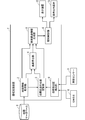
- 5 is a flowchart illustrating an example of an operation of the driving support device according to the first embodiment of the present invention.
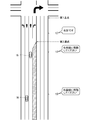
- FIG. 3 is a diagram showing an example of an operation of the driving support device according to the first embodiment of the present invention.
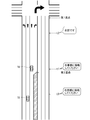
- FIG. 3 is a diagram showing an example of an operation of the driving support device according to the first embodiment of the present invention.
- FIG. 3 is a diagram showing an example of an operation of the driving support device according to the first embodiment of the present invention.
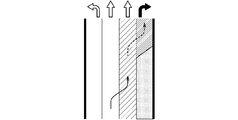
- FIG. 5 is a diagram illustrating an example of a display of a lane change according to the first embodiment of the present invention.
- FIG. 5 is a diagram illustrating an example of a display of a lane change according to the first embodiment of the present invention.
- FIG. 5 is a diagram illustrating an example of a display of a lane change according to the first embodiment of the present invention.
- FIG. 5 is a diagram illustrating an example of a display of a lane change according to the first embodiment of the present invention.
- FIG. 5 is a diagram illustrating an example of a display of a lane change according to the first embodiment of the present invention.
- FIG. 5 is a diagram illustrating an example of a display of a lane change according to the first embodiment of the present invention.
- FIG. 5 is a diagram illustrating an example of a display of a lane change according to the first embodiment of the present invention.
- FIG. 4 is a diagram for explaining an operation of the driving support device according to the first embodiment of the present invention. It is a figure which shows an example of implementation of operation
- 13 is a flowchart illustrating an example of an operation of the driving support device according to the fourth embodiment of the present invention.
- FIGS. 22 to 24 are diagrams for explaining the base technology, and show a case where the number of lanes dedicated to right turns is increasing at intersections. It is assumed that the host vehicle 16 is traveling in accordance with the guidance of a route that makes a right turn at the intersection that is the first base point.
- the distance of the right turn-only lane is different in each figure, but the timings t0, t1, and t2 for guiding the driver to change lanes are the same in each figure. That is, in the base technology, guidance of lane change is performed at the same timing regardless of whether or not the number of lanes on the road is increasing at the intersection.
- the driver is instructed by voice "Please move to the right lane".
- the driver is instructed by voice to "move to the right lane".
- the vehicle is guided to the right-turn-only lane at a timing that facilitates lane change.
- the timing of the guidance is too early, and the lane cannot be changed to the right turn lane at the timing. In the example of FIG. 24, the guidance timing is too late.
- FIG. 1 is a block diagram illustrating an example of a configuration of a driving support device 1 according to Embodiment 1 of the present invention.
- the driving support device 1 is installed in the host vehicle.
- the driving support device 1 includes a map information acquisition unit 2, a vehicle traveling position recognition unit 3, a route calculation unit 4, a lane guidance information generation unit 5, and a notification control unit 6. ing.
- the map information acquisition unit 2 acquires map information including the number of lanes on a road, the point at which the number of lanes changes, and the traffic regulation for each lane at an intersection.
- the own vehicle traveling position recognition unit 3 recognizes the own vehicle traveling position including the current traveling lane and position of the own vehicle based on the map information acquired by the map information acquiring unit 2.
- the route calculation unit 4 calculates the route of the own vehicle at the intersection.
- the lane guidance information generation unit 5 is configured to provide the information to the intersection based on the map information acquired by the map information acquisition unit 2, the own vehicle travel position recognized by the own vehicle travel position recognition unit 3, and the route calculated by the route calculation unit 4.
- the lane guidance information including the timing and the contents of the lane change guidance before entering is generated.
- the lane guidance information generation unit 5 includes the route calculated by the route calculation unit 4, the route regulation acquired by the map information acquisition unit 2, and the distance and time from the own vehicle traveling position to the first base point which is the intersection.
- Lane guidance information is generated based on at least one of at least one of the distance and the time from the own vehicle traveling position to the second base point where the number of lanes changes from the own vehicle traveling position. That is, when the host vehicle travels toward the first base point, the second base point exists upstream of the first base point.
- the notification control unit 6 performs control for notifying the lane guidance information generated by the lane guidance information generation unit 5.
- FIG. 2 is a block diagram showing an example of the configuration of the driving support device 7 according to another configuration.
- the driving support device 7 includes a map information acquisition unit 2, an own vehicle traveling position recognition unit 3, a route calculation unit 4, a lane guidance information generation unit 5, a notification control unit 6, And a vehicle position detecting unit 8.
- the map information acquisition unit 2 is connected to the map database 9.
- the host vehicle position detecting unit 8 is connected to a GNSS (Global Navigation Satellite System) 10 and a vehicle sensor 11.
- the notification control unit 6 is connected to the display device 12 and the audio output device 13.
- the map database 9 is configured by a storage device such as a hard disk drive or a semiconductor memory, and stores map information including the number of lanes on a road, points where the number of lanes changes, and route regulation for each lane at an intersection. .
- the map database 9 may be installed in the own vehicle or may be installed outside the own vehicle. Further, the map database 9 may be provided in the driving support device 7.
- the map information acquiring unit 2 acquires, from the map database 9, map information including the number of lanes of the road, the point at which the number of lanes changes, and the route regulation for each lane at the intersection. Further, the map information is not limited to the above information, and also includes information on the position of the lane constituting the road, and road links necessary for calculating a route from the current position to the destination.
- the own vehicle position detection unit 8 detects the current position of the own vehicle based on the absolute position of the own vehicle obtained from the GNSS 10 and the speed of the own vehicle obtained from the vehicle sensor 11.
- the GNSS 10 acquires the absolute position of the own vehicle from the satellite.
- the vehicle sensor 11 includes a vehicle speed sensor that measures the speed of the host vehicle.
- the vehicle sensor 11 may include an acceleration sensor that measures the acceleration of the host vehicle and a gyro sensor that measures the inclination of the host vehicle.
- the own vehicle position detection unit 8 may detect the current position of the own vehicle with higher accuracy by taking into account the acceleration and inclination of the own vehicle acquired from the vehicle sensor 11.
- the own vehicle traveling position recognition unit 3 determines the current traveling lane and position of the own vehicle. Recognize the running position of the own vehicle, including
- the route calculation unit 4 calculates or estimates the route of the host vehicle at the intersection based on the map information acquired by the map information acquisition unit 2 and the host vehicle traveling position recognized by the host vehicle traveling position recognition unit 3. Specifically, the route calculation unit 4 calculates a route from the current position of the host vehicle to the destination set by the user, and calculates a route at the intersection included in the route and closest to the current position of the host vehicle. Calculate the path of the vehicle. Alternatively, the course calculation unit 4 may determine the traveling direction of the own vehicle based on the accumulated traveling data of the own vehicle, the current position of the own vehicle, the current time, and the like. Estimate the course of the vehicle.
- the lane guidance information generation unit 5 determines an intersection based on the route calculated by the route calculation unit 4, the route regulation at each intersection at the intersection acquired by the map information acquisition unit 2, and the own vehicle traveling position recognized by the own vehicle traveling position recognition unit 3. And / or at least one of the distance and the time from the host vehicle traveling position recognized by the host vehicle traveling position recognition unit 3 to the point where the number of lanes changes. Based on this, lane guidance information including the timing and content of lane change guidance before entering the intersection is generated.
- the position of the intersection is included in the map information acquired by the map information acquisition unit 2.
- the time from the own vehicle traveling position to the intersection is calculated based on the distance from the own vehicle traveling position to the intersection and the speed of the own vehicle.
- the lane guidance information generation unit 5 acquires the speed of the own vehicle detected by the vehicle sensor 11 from the own vehicle position detection unit 8. The same applies to the calculation of the time from the own vehicle traveling position to the point where the number of lanes changes.
- the notification control unit 6 controls the display device 12 and the audio output device 13 to notify the lane guidance information generated by the lane guidance information generation unit 5.
- the display device 12 displays lane guidance information in accordance with an instruction from the notification control unit 6.
- the voice output device 13 outputs the lane guidance information by voice according to the instruction of the notification control unit 6.
- FIG. 3 is a block diagram illustrating an example of a hardware configuration of the driving support device 7. The same applies to the driving support device 1 shown in FIG.
- Each function of the map information acquisition unit 2, the own vehicle traveling position recognition unit 3, the route calculation unit 4, the lane guidance information generation unit 5, the notification control unit 6, and the own vehicle position detection unit 8 in the driving support device 7 is a processing circuit. Is realized by: That is, the driving support device 7 acquires map information, recognizes the traveling position of the own vehicle, calculates a course, generates lane guidance information, performs control for notifying the lane guidance information, and detects the own vehicle position.
- the processing circuit is a processor 14 (also referred to as a central processing unit, a processing unit, an arithmetic unit, a microprocessor, a microcomputer, or a DSP (Digital Signal Processor)) that executes a program stored in the memory 15.
- a processor 14 also referred to as a central processing unit, a processing unit, an arithmetic unit, a microprocessor, a microcomputer, or a DSP (Digital Signal Processor)
- the functions of the map information acquisition unit 2, the own vehicle traveling position recognition unit 3, the route calculation unit 4, the lane guidance information generation unit 5, the notification control unit 6, and the own vehicle position detection unit 8 in the driving support device 7 are software, This is realized by firmware or a combination of software and firmware.
- Software or firmware is described as a program and stored in the memory 15.
- the processing circuit realizes the function of each unit by reading and executing the program stored in the memory 15. That is, the driving support device 7 obtains map information, recognizes the traveling position of the own vehicle, calculates a course, generates lane guidance information, performs control for notifying lane guidance information, It comprises a memory 15 for storing a program that results in the step of detecting the vehicle position being executed.
- the memory is, for example, a nonvolatile (volatile memory) such as a RAM (Random Access Memory), a ROM (Read Only Memory), a flash memory, an EPROM (Erasable Programmable Read Only Memory), and an EEPROM (Electrically Erasable Programmable Read Only Memory).
- a nonvolatile memory such as a RAM (Random Access Memory), a ROM (Read Only Memory), a flash memory, an EPROM (Erasable Programmable Read Only Memory), and an EEPROM (Electrically Erasable Programmable Read Only Memory).
- a semiconductor memory, a magnetic disk, a flexible disk, an optical disk, a compact disk, a mini disk, a DVD, or the like, or any storage medium used in the future may be used.
- FIG. 4 is a flowchart illustrating an example of the operation of the driving support device 7.
- step S101 the map information acquisition unit 2 acquires, from the map database 9, map information including the number of lanes of the road, the point at which the number of lanes changes, and the traffic regulation for each lane at the intersection.
- step S ⁇ b> 102 the own vehicle traveling position recognition unit 3 performs the current traveling of the own vehicle based on the current position of the own vehicle detected by the own vehicle position detection unit 8 and the map information acquired by the map information acquisition unit 2. Recognize the running position of the vehicle including the lane and the position.
- step S ⁇ b> 103 the lane guidance information generation unit 5 determines the own vehicle traveling position recognized by the own vehicle traveling position recognition unit 3 and the position of the intersection included in the map information acquired by the map information acquisition unit 2. It is determined whether the vehicle has reached the intersection. If the own vehicle has reached the intersection, the processing shown in FIG. 4 is ended. On the other hand, if the host vehicle has not reached the intersection, the process proceeds to step S104.
- step S104 the lane guidance information generation unit 5 uses the number of lanes of the road included in the map information acquired by the map information acquisition unit 2 and the right-turn right before the intersection based on the lane regulation for each lane at the intersection. Determine whether the lane is increasing. If the right-turn-only lane has not increased before the intersection, the processing illustrated in FIG. 4 ends. On the other hand, if the right-turn-only lane is increasing just before the intersection, the process proceeds to step S105.
- step S ⁇ b> 105 the lane guidance information generation unit 5 determines whether or not the vehicle turns right at an intersection based on the route calculated by the route calculation unit 4. If the host vehicle does not make a right turn at the intersection, the processing shown in FIG. 4 ends. On the other hand, when the vehicle turns right at the intersection, the process proceeds to step S106.
- the lane guidance information generation unit 5 includes the current travel lane of the own vehicle included in the own vehicle travel position recognized by the own vehicle travel position recognition unit 3 and the map information acquired by the map information acquisition unit 2. Is calculated based on the number of lanes of the road and the lane regulation for each lane at the intersection, the number of lanes for which the host vehicle should change lanes from the current traveling lane to the lane corresponding to the lane. Specifically, the lane guidance information generation unit 5 calculates the number of lanes that must be changed between the lane in which the host vehicle is traveling and the lane dedicated to right turn.
- step S107 based on the number of lanes calculated in step S106, the lane guidance information generation unit 5 determines whether the vehicle needs to change lanes. When the lane change of the own vehicle is necessary, the process proceeds to step S108. On the other hand, when it is not necessary to change the lane of the own vehicle, the process proceeds to step S113.
- the lane guidance information generation unit 5 includes the current position of the own vehicle included in the own vehicle travel position recognized by the own vehicle travel position recognition unit 3 and the current position of the own vehicle included in the map information acquired by the map information acquisition unit 2. Based on the position of the intersection and the point where the number of lanes changes, it is determined whether or not there is a point between the host vehicle and the intersection where the number of lanes dedicated to right turns is increasing. Here, the point where the number of lanes changes corresponds to the point where the number of lanes dedicated to right turns is increasing. If there is a point where the number of lanes dedicated to right turn is increasing between the own vehicle and the intersection, the process proceeds to step S109. On the other hand, if there is no point where the number of lanes dedicated to right turn is increasing between the own vehicle and the intersection, the process proceeds to step S113.
- the lane guidance information generation unit 5 calculates at least one of the distance and the time from the host vehicle to the point where the right turn dedicated lane is increasing. Specifically, the lane guidance information generation unit 5 compares the current position of the own vehicle included in the own vehicle travel position recognized by the own vehicle travel position recognition unit 3 with the map information acquired by the map information acquisition unit 2. The distance from the own vehicle to the point where the right-turn-only lane is increasing is calculated based on the point where the number of the included lanes changes.
- the lane guidance information generation unit 5 outputs a right turn only signal from the own vehicle based on the distance from the own vehicle to the point where the right turn dedicated lane is increasing and the speed of the own vehicle detected by the own vehicle position detection unit 8. Calculate the time required to reach the point where the lane is increasing.
- step S110 the lane guidance information generation unit 5 needs to change the lane to the right lane based on at least one of the distance and the time from the host vehicle calculated in step S109 to the point where the right turn dedicated lane is increasing.
- the timing of notifying the user of the presence is calculated.
- the lane guidance information generation unit 5 generates the content of the lane change guidance. That is, the lane guidance information generation unit 5 generates lane guidance information including the timing and content of the lane change guidance before entering the difference point.
- step S111 the lane guidance information generation unit 5 determines whether or not it is the timing calculated in step S110. If it is the timing calculated in step S110, the process proceeds to step S112. On the other hand, if it is not the timing calculated in step S110, the process returns to step S109.
- step S112 the notification control unit 6 notifies the user that it is necessary to change lanes to the right lane. Specifically, based on the lane guidance information generated by the lane guidance information generation unit 5 in step S110, the notification control unit 6 notifies the display device 12 and the voice output device 13 that the lane needs to be changed to the right lane. The user is notified from at least one of them. Then, the process returns to step S106.
- the lane guidance information generation unit 5 calculates at least one of the distance and the time from the vehicle to the intersection. Specifically, the lane guidance information generation unit 5 compares the current position of the own vehicle included in the own vehicle travel position recognized by the own vehicle travel position recognition unit 3 with the map information acquired by the map information acquisition unit 2. The distance from the host vehicle to the intersection is calculated based on the included position of the intersection. The lane guidance information generation unit 5 calculates the time required for the vehicle to reach the intersection based on the distance from the vehicle to the intersection and the speed of the vehicle detected by the vehicle position detection unit 8. I do.
- step S114 the lane guidance information generation unit 5 determines the timing of notifying the user that it is necessary to make a right turn at the intersection based on at least one of the distance from the vehicle to the intersection and the time calculated in step S113. calculate. In addition, the lane guidance information generation unit 5 generates the content of the right turn guidance. That is, the lane guidance information generation unit 5 generates lane guidance information including the timing and content of right turn guidance before entering the difference point.
- step S115 the lane guidance information generation unit 5 determines whether or not the timing calculated in step S114 is reached. If it is the timing calculated in step S114, the process proceeds to step S116. On the other hand, if it is not the timing calculated in step S114, the process returns to step S113.
- step S116 the notification control unit 6 notifies the user that it is necessary to make a right turn. Specifically, based on the lane guidance information generated by the lane guidance information generation unit 5 in step S114, the notification control unit 6 indicates at least one of the display device 12 and the audio output device 13 that a right turn is required. To notify the user. Thereafter, the processing illustrated in FIG. 4 ends.
- Example> 5 to 7 are diagrams showing an example of the operation of the driving support device 7.
- the host vehicle 16 is traveling on a road having a plurality of lanes on one side toward an intersection in front. Right before the intersection, the right-turn lanes are increasing, and the other lanes are straight-ahead lanes or left-turn lanes.
- the first base point corresponds to an intersection.
- the second base point corresponds to a point where the number of lanes dedicated to right turns increases.
- the route calculation unit 4 of the driving support device 7 calculates a route where the vehicle 16 turns right at the intersection.
- the host vehicle 16 is traveling in the second lane from the left of the road. Then, at the timing t0, the notification control unit 6 controls the voice output device 13 to output a voice "Please move to the right lane".
- the notification control unit 6 may control the display device 12 to display characters, graphics, or a combination thereof indicating movement to the right lane.
- the timing t0 corresponds to the timing calculated by the lane guidance information generation unit 5 in step S110 of FIG. Specifically, the lane guidance information generation unit 5 notifies the user of the necessity of changing lanes to the right lane based on at least one of the distance from the host vehicle to the second base point and the time. Is calculated.
- the timing t0 may be a point just before the second base point by a predetermined distance, for example, a point 500 m before.
- the further preceding point may be set as the timing t0, and when the speed of the own vehicle 16 is lower than the predetermined threshold value. May be a point a little further ahead as the timing t0.
- the point before this point may be set as timing t0, and the time required to reach the second base point is determined in advance. If the time is longer than the predetermined time, a point slightly earlier may be set as the timing t0.
- a predetermined time until reaching the second base point may be set as the timing t0.
- a point before this point may be set as timing t0, and when the distance or time from the host vehicle to the first base point is longer than the threshold value, the timing is a little more.
- the previous point may be the timing t0.
- the driver performs driving to change the lane of the vehicle 16 to the right lane.
- the notification control unit 6 controls the audio output device 13 to output an audio signal “Please move to the right lane”.
- the notification control unit 6 may control the display device 12 to display characters, graphics, or a combination thereof indicating movement to the right lane.
- the timing t1 corresponds to the timing calculated by the lane guidance information generation unit 5 in step S110 of FIG. Specifically, the lane guidance information generation unit 5 notifies the user of the need to change lanes to the right lane based on at least one of the distance and the time from the host vehicle to the second base point. Is calculated.
- the timing t1 is a point located a predetermined distance before the second base point. At this point, as in the calculation of the timing t0, the time to reach the second base point may be considered, and at least one of the distance to the first base point and the time may be considered.
- timing t1 is a point at which the host vehicle 16 has passed the second base point.
- the point at which the host vehicle 16 has passed the second base point may be set as the timing t1.
- the timing t1 may be calculated according to the distance between the first base point and the second base point.
- the notification control unit 6 controls the sound output device 13 to output a sound “turn right”. Note that the notification control unit 6 may control the display device 12 to display a character indicating a right turn, a graphic, or a combination thereof.
- the driver performs a driving to turn the host vehicle 16 right at the intersection.
- ⁇ Display example> 8 to 13 are views showing an example of the display of the lane change, and show the margin before turning right at the intersection.
- the dashed arrow indicates that the lane should be changed to the right turn lane.
- the hatched portion indicates the position of the host vehicle on the upstream side of the point where the number of lanes changes, that is, on the upstream side of the second base point shown in FIGS. 5 to 7, and the host vehicle moves in the order of FIGS. This indicates that the vehicle is approaching the second base point.
- the hatched portion may be, for example, blue.
- the hatched portion may be yellow, for example.
- the hatched portion since the host vehicle is quite close to the second base point and there is no room, the hatched portion may be, for example, red.
- the solid arrow indicates that the lane should be changed to the right lane at the timing t0 shown in FIGS. 5 to 7, for example.
- the dashed arrow indicates that the lane should be changed to a right turn lane, for example, at timing t1 shown in FIGS. That is, the dashed arrow indicates a future lane change.
- 11, 12, and 13 show that the own vehicle is approaching the intersection.
- FIG. 11 shows that the lane can be changed to the right lane or the right turn lane because there is enough distance between the host vehicle and the intersection.
- FIG. 12 shows that the own vehicle is closer than in FIG. 11 and should move to the right lane within 2 seconds, for example.
- FIG. 13 shows that it is difficult to make a right turn at an intersection even if the vehicle changes lanes to the right lane now because the host vehicle is so close to the intersection that there is no room.
- the timing of the lane change is set based on the point where the number of lanes changes. Calculated. Therefore, it is possible to guide the user to change lanes at an appropriate timing.
- the present invention is not limited to this.
- the timing t0 may be calculated based on the first base point. That is, when the host vehicle 16 travels toward the first base point, the second base point is located downstream of the first base point.
- the voice output or display "Please move to the left lane" is displayed. The driver can change lanes with a margin before passing through the intersection without having to change lanes in a rush after passing through the intersection.
- the lane guidance information generating unit 5 may generate lane guidance information indicating that the number of lanes changes.
- the timing of notifying the user of the change in the number of lanes may be, for example, before the timing t0 shown in FIG.
- the present invention is not limited to this.
- the same effect can be obtained even when the number of lanes dedicated to left turns increases at an intersection and the vehicle turns left at the intersection.
- FIG. 15 is a diagram illustrating an example of the operation of the driving support device 7.
- the host vehicle 16 is traveling on a road having a plurality of lanes on one side toward an intersection in front.
- the right turn lane is increasing.
- the lanes that can be turned right at the intersection are the right-turn-only lane and the straight-on and right-turn-only lanes existing to the left of the right-turn only lane.
- the first base point corresponds to an intersection.
- the second base point corresponds to a point where the number of lanes dedicated to right turns increases.
- the route calculation unit 4 of the driving support device 7 calculates a route where the vehicle 16 turns right at the intersection.
- the host vehicle 16 is traveling in the second lane from the left of the road. Then, at the timing t0a, the notification control unit 6 controls the audio output device 13 to output an audio signal “Please move to the right lane”.
- the notification control unit 6 may control the display device 12 to display characters, graphics, or a combination thereof indicating movement to the right lane.
- the timing t0a corresponds to the timing calculated by the lane guidance information generation unit 5 in step S110 of FIG. Specifically, the lane guidance information generation unit 5 determines whether the vehicle 16 has at least one of the distance and the time from the own vehicle to the second base point and the lane between the own vehicle 16 and the lane corresponding to the course. Based on the number of lanes to be changed, a timing t0a for notifying the user that the lane needs to be changed to the right lane is calculated.
- the timing t0a is calculated by the same method as the timing t0 described in FIGS. 5 to 7 of the first embodiment, but differs from the timing t0 in that the number of lanes to be changed is taken into account. In the example of FIG. 15, the number of lanes to be changed by the host vehicle 16 is “1”. That is, it is possible to make a right turn at an intersection by moving to the right lane only once.
- the timing t0a is delayed as the number of lanes to be changed is smaller.
- the number of lanes for which the host vehicle 16 should change lanes is “2”. Therefore, the timing of guiding the lane change at the timing t0a shown in FIG. 15 is later than the timing t0 shown at FIGS.
- the timing and content of notifying the lane change guidance are determined according to the number of lanes to be changed. Therefore, it is possible to guide the user to change lanes at an appropriate timing.
- the timing and the content of the guidance for the lane change are different between when it is necessary to change lanes to an increasing lane at an intersection and when it is not necessary to change lanes to an increasing lane at an intersection. It is characterized by the following.
- the configuration and operation of the driving support device according to the third embodiment are the same as those in the second embodiment, and thus detailed description is omitted here.
- the driving assistance device according to the third embodiment will be described as being the driving assistance device 7 shown in FIG.
- the driving support device according to the third embodiment performs the operation shown in FIG.
- FIG. 16 is a diagram showing an example of the operation of the driving support device 7.
- the host vehicle 16 is traveling on a road having a plurality of lanes on one side toward an intersection in front. Right before the intersection, the right turn lane is increasing. The right-turn lane is the only lane that can be turned right at the intersection.
- the first base point corresponds to an intersection.
- the second base point corresponds to a point where the number of lanes dedicated to right turns increases.
- the route calculation unit 4 of the driving support device 7 calculates a route where the vehicle 16 turns right at the intersection.
- the own vehicle 16 is traveling on the third lane from the left of the road. Then, at the timing t0b, the notification control unit 6 controls the sound output device 13 to output a sound such as "Branch soon. Please move to the right lane".
- the notification control unit 6 may control the display device 12 to display characters, graphics, or a combination thereof indicating movement to the right lane.
- the timing t0b corresponds to the timing calculated by the lane guidance information generation unit 5 in step S110 of FIG. Specifically, the lane guidance information generation unit 5 determines whether the vehicle 16 has at least one of the distance and the time from the own vehicle to the second base point and the lane between the own vehicle 16 and the lane corresponding to the course. Based on the number of lanes to be changed, a timing t0b for notifying the user that the lane needs to be changed to the right lane is calculated.
- the timing t0b is calculated by the same method as the timing t0a described in the second embodiment with reference to FIG. In the example of FIG. 16, the number of lanes to be changed by the host vehicle 16 is “1”. That is, it is possible to make a right turn at an intersection by moving to the right lane only once. In this case, guidance of lane change is provided at timing t0.
- FIG. 17 is a diagram showing an example of the operation of the driving support device 7.
- the host vehicle 16 is traveling on a road having a plurality of lanes on one side toward an intersection in front.
- the right turn lane is increasing.
- the lanes that can be turned right at the intersection are the right-turn-only lane and the straight-on and right-turn-only lanes existing to the left of the right-turn only lane.
- the first base point corresponds to an intersection.
- the second base point corresponds to a point where the number of lanes dedicated to right turns increases.
- the route calculation unit 4 of the driving support device 7 calculates a route where the vehicle 16 turns right at the intersection.
- the host vehicle 16 is traveling on the third lane from the left of the road. In this case, the host vehicle 16 can make a right turn at the intersection if the vehicle 16 continues to travel in the current lane. That is, the host vehicle 16 can make a right turn at the intersection without changing lanes. Therefore, the notification control unit 6 does not guide the lane change.
- the notification control unit 6 may notify that there is no need to change lanes, for example, at timing t0b shown in FIG.
- the configuration of the driving support device according to the fourth embodiment is the same as that of the first embodiment, and a detailed description is omitted here.
- the driving support device 7 according to the fourth embodiment will be described as the driving support device 7 illustrated in FIG.
- FIG. 18 is a flowchart showing an example of the operation of the driving support device 7.
- step S201 the map information acquisition unit 2 acquires, from the map database 9, map information including the number of lanes of the road, the point at which the number of lanes changes, and the traffic regulation for each lane at the intersection.
- step S ⁇ b> 202 the own vehicle traveling position recognition unit 3 performs the current traveling of the own vehicle based on the current position of the own vehicle detected by the own vehicle position detecting unit 8 and the map information acquired by the map information acquiring unit 2. Recognize the running position of the vehicle including the lane and the position.
- step S ⁇ b> 203 the lane guidance information generation unit 5 is configured to calculate the vehicle traveling position based on the own vehicle traveling position recognized by the own vehicle traveling position recognition unit 3 and the position of the intersection included in the map information acquired by the map information acquisition unit 2. It is determined whether the vehicle has reached the intersection. If the own vehicle has reached the intersection, the processing shown in FIG. 18 is ended. On the other hand, when the own vehicle has not reached the intersection, the process proceeds to step S204.
- step S204 the lane guidance information generation unit 5 uses the number of lanes of the road included in the map information acquired by the map information acquisition unit 2 and the right-turn right before the intersection on the basis of the lane regulation for each lane at the intersection. Determine whether the lane is increasing. If the right-turn-only lane has not increased before the intersection, the processing illustrated in FIG. 18 ends. On the other hand, if the right-turn-only lane is increasing just before the intersection, the process proceeds to step S205.
- step S ⁇ b> 205 the lane guidance information generation unit 5 determines whether or not the vehicle travels straight at the intersection based on the route calculated by the route calculation unit 4. If the host vehicle does not go straight on the intersection, the processing shown in FIG. 18 ends. On the other hand, when the own vehicle goes straight ahead at the intersection, the process proceeds to step S206.
- step S ⁇ b> 206 the lane guidance information generation unit 5 includes the current travel lane of the own vehicle included in the own vehicle travel position recognized by the own vehicle travel position recognition unit 3 and the map information acquired by the map information acquisition unit 2. It is determined whether or not the route regulation at the intersection of the current traveling lane is exclusively for straight ahead, based on the route regulation for each lane at the intersection included in (1). If the route regulation at the intersection of the current lane is exclusive for straight ahead, the process proceeds to step S207. On the other hand, when the course regulation at the intersection of the current driving lane is not exclusive for straight ahead, the processing shown in FIG. 18 ends.
- the lane guidance information generation unit 5 includes the current position of the own vehicle included in the own vehicle travel position recognized by the own vehicle travel position recognition unit 3 and the current position of the own vehicle included in the map information acquired by the map information acquisition unit 2. It is determined whether or not the vehicle is traveling in the rightmost lane before the point where the number of lanes dedicated to right turns is increasing, based on the point at which the number of lanes changing is changed. That is, the lane guidance information generation unit 5 determines whether or not the own vehicle is traveling in a lane located before the point where the right turn dedicated lane is increasing and to the left of the right turn dedicated lane. If the host vehicle is traveling in the rightmost lane before the point where the right turn dedicated lane is increasing, the process proceeds to step S208. On the other hand, when the host vehicle is not traveling in the rightmost lane before the point where the right turn dedicated lane is increasing, the processing shown in FIG. 18 is ended.
- step S208 the lane guidance information generation unit 5 determines the current travel lane of the own vehicle included in the own vehicle travel position recognized by the own vehicle travel position recognition unit 3 and the map information acquired by the map information acquisition unit 2. It is determined whether or not the left lane existing to the left of the current traveling lane of the own vehicle can go straight through the intersection, based on the lane-by-lane route regulation at the intersection included in . If the left lane can travel straight at the intersection, the process proceeds to step S209. On the other hand, if it is not possible for the left lane to go straight on the intersection, the processing shown in FIG. 18 ends.
- the lane guidance information generation unit 5 calculates at least one of the distance and the time from the host vehicle to the point where the right turn dedicated lane is increasing. Specifically, the lane guidance information generation unit 5 compares the current position of the own vehicle included in the own vehicle travel position recognized by the own vehicle travel position recognition unit 3 with the map information acquired by the map information acquisition unit 2. The distance from the own vehicle to the point where the right-turn-only lane is increasing is calculated based on the point where the number of the included lanes changes. Further, the lane guidance information generation unit 5 outputs a right turn only signal from the own vehicle based on the distance from the own vehicle to the point where the right turn dedicated lane is increasing and the speed of the own vehicle detected by the own vehicle position detection unit 8. Calculate the time required to reach the point where the lane is increasing.
- step S210 the lane guidance information generation unit 5 performs lane change to the left lane based on at least one of the distance and the time from the host vehicle calculated in step S209 to the point where the right turn dedicated lane is increasing.
- the timing for notifying the user of the recommendation is calculated.
- the lane guidance information generation unit 5 generates the content of the lane change guidance. That is, the lane guidance information generation unit 5 generates lane guidance information including the timing and content of the lane change guidance before entering the difference point.
- step S211 the lane guidance information generation unit 5 determines whether or not it is the timing calculated in step S210. If it is the timing calculated in step S210, the process proceeds to step S212. On the other hand, if it is not the timing calculated in step S210, the process returns to step S208.
- step S212 the notification control unit 6 notifies the user that lane change to the left lane is recommended. Specifically, based on the lane guidance information generated by the lane guidance information generation unit 5 in step S210, the notification control unit 6 notifies the display device 12 and the audio output device 13 that lane change to the left lane is recommended. The user is notified from at least one of them. Thereafter, the processing illustrated in FIG. 18 ends.
- FIG. 19 is a diagram illustrating an example of an operation of the driving support device 7.
- the host vehicle 16 is traveling on a road having a plurality of lanes on one side toward an intersection in front.
- the host vehicle 16 is traveling in a lane corresponding to a straight-only lane at the intersection.
- the right turn lane is increasing.
- the right-turn lane is the only lane that can be turned right at the intersection.
- the first base point corresponds to an intersection.
- the second base point corresponds to a point where the number of lanes dedicated to right turns increases.
- the course calculation unit 4 of the driving support device 7 calculates a course in which the host vehicle 16 travels straight through the intersection.
- the host vehicle 16 is traveling in the third lane from the left of the road. In this case, if the vehicle travels toward the intersection as it is, it may be affected by traffic congestion of other vehicles extending from the right turn lane. Therefore, in the fourth embodiment, at the timing t0c, the notification control unit 6 controls the sound output device 13 to output a sound saying “we recommend moving to the left lane”.
- the notification control unit 6 may control the display device 12 to display characters, graphics, or a combination thereof indicating movement to the right lane.
- the host vehicle 16 changes lanes to the lane on the left side in response to such a lane change guidance, so that the influence of traffic congestion caused by other vehicles extending from the right turn lane can be avoided.
- the timing t0c corresponds to the timing calculated by the lane guidance information generation unit 5 in step S210 in FIG. Specifically, the lane guidance information generation unit 5 notifies the user of recommending the lane change to the left lane based on at least one of the distance from the host vehicle to the second base point and the time. Is calculated.
- the timing t0c is calculated in the same manner as the timing t0 described in the first embodiment with reference to FIG.
- the notification control unit 6 may control the voice output device 13 to output a voice saying “there is a right turn lane on the right”.
- the notification control unit 6 may control the display device 12 to display a character, a graphic, or a combination thereof indicating that there is a right-turn-only lane.
- the timing t1 is calculated in the same manner as the timing t0c.
- the timing t0c may be changed according to the distance between the first base point and the second base point. For example, the shorter the distance between the first base point and the second base point, the earlier the timing t0c may be.
- the lane guidance information generation unit 5 When the traffic congestion travel time for each lane can be obtained by VICS (Vehicle Information and Communication System) or the like, the lane guidance information generation unit 5 generates the lane guidance information in consideration of the traffic congestion travel time. You may.
- the traffic congestion travel time refers to the time required to pass a certain distance. For example, if the lane guidance information generation unit 5 determines that the right-turn-only lane is not congested based on the traffic congestion travel time, the lane guidance information generation unit 5 may not perform the guidance for changing lanes to the left lane.
- the lane guidance information generation unit 5 may determine the timings t0c and t1 according to the traffic jam travel time.
- FIG. 20 is a diagram illustrating an example of the operation of the driving support device 7.
- the own vehicle 16 is traveling on a road having a plurality of lanes on one side toward an intersection in front.
- the host vehicle 16 is traveling in a lane corresponding to a straight-ahead and a right-turnable lane at an intersection.
- the right turn lane is increasing.
- the lanes that can be turned right at the intersection are the right-turn-only lane and the straight-on and right-turn-only lanes existing to the left of the right-turn only lane.
- the first base point corresponds to an intersection.
- the second base point corresponds to a point where the number of lanes dedicated to right turns increases.
- the course calculation unit 4 of the driving support device 7 calculates a course in which the host vehicle 16 travels straight through the intersection.
- the host vehicle 16 is traveling on the third lane from the left of the road. At the intersection, there are two lanes that can be turned right. In such a case, there is a low possibility that another vehicle will be congested in the right turn lane and the right turn lane adjacent to the left turn lane. Therefore, the notification control unit 6 may control the voice output device 13 so as to output a voice message “running in a straight-ahead and right-turnable lane” at the timing t1 without guiding the lane change. Note that the notification control unit 6 may control the display device 12 to display a character, a graphic, or a combination thereof indicating that the vehicle is traveling in a straight lane and a right turn lane. The timing t1 is calculated in the same manner as the timing t0c.
- the fourth embodiment when the right-turn-only lane is increasing at the intersection, it is determined that there is a high possibility of congestion, and the vehicle traveling straight at the intersection can go straight at the intersection. It is recommended to change lanes to the left lane. As a result, the own vehicle can avoid the influence of traffic congestion caused by another vehicle extending from the right turn dedicated lane. In addition, when there are a plurality of lanes that can make a right turn at an intersection, it is determined that there is a low possibility of congestion, and no lane change guidance is given to the vehicle traveling straight through the intersection. Thus, it is possible to guide the user to change lanes at an appropriate timing.
- the driving support device described above is not only a vehicle-mounted navigation device, that is, a car navigation device, but also a PND (Portable Navigation Device) that can be mounted on a vehicle, a server provided outside the vehicle, and the like, and appropriately combined as a system.
- the present invention can be applied to a navigation device to be constructed or a device other than the navigation device. In this case, each function or each component of the driving support device is distributed and arranged for each function constituting the system.
- the function of the driving support device can be arranged in the server.
- the user side includes a GNSS 10, a vehicle sensor 11, a display device 12, and an audio output device 13.
- the server 17 includes a map information acquisition unit 2, an own vehicle traveling position recognition unit 3, a route calculation unit 4, a lane guidance information generation unit 5, a notification control unit 6, and an own vehicle position detection unit 8.
- the software for executing the operations in the above embodiments may be incorporated in, for example, a server.
- the driving assistance method realized by executing this software by the server acquires the map information including the number of lanes of the road, the point at which the number of lanes changes, and the route regulation for each lane at the intersection, and obtains the current Recognize the own vehicle traveling position including the traveling lane and position, calculate the path of the own vehicle at the intersection, and based on the acquired map information, the recognized own vehicle traveling position, and the calculated path, before entering the intersection.
- Generating lane guidance information including the timing and content of lane change guidance, performing control for notifying the generated lane guidance information, and generating lane guidance information are based on the calculated route, the acquired route regulation, and the own vehicle traveling.
- the embodiments can be freely combined, or the embodiments can be appropriately modified or omitted within the scope of the invention.
- 1 driving assistance device 2 map information acquisition unit, 3 own vehicle traveling position recognition unit, 4 track calculation unit, 5 lane guidance information generation unit, 6 notification control unit, 7 driving assistance device, 8 own vehicle position detection unit, 9 map Database, 10 GNSS, 11 vehicle sensor, 12 display device, 13 audio output device, 14 processor, 15 memory, 16 vehicle.
Landscapes
- Engineering & Computer Science (AREA)
- Radar, Positioning & Navigation (AREA)
- Remote Sensing (AREA)
- Automation & Control Theory (AREA)
- Physics & Mathematics (AREA)
- General Physics & Mathematics (AREA)
- Navigation (AREA)
Abstract
本発明は、適切なタイミングで車線変更を案内することが可能な運転支援装置および運転支援方法を提供することを目的とする。本発明による運転支援装置は、道路の車線数、車線数が変化する地点および交差点における車線ごとの進路規制を含む地図情報を取得する地図情報取得部と、自車両走行位置を認識する自車両走行位置認識部と、交差点における自車両の進路を算出する進路算出部と、地図情報、自車両走行位置および進路に基づいて交差点への進入前における車線変更案内のタイミングおよび内容を含む車線誘導情報を生成する車線誘導情報生成部と、車線誘導情報を報知する制御を行う報知制御部とを備え、車線誘導情報生成部は、進路、進路規制および自車両走行位置から第1基点までの距離および時間のうちの少なくとも一方と、自車両走行位置から第2基点までの距離および時間のうちの少なくとも一方とのうちの少なくとも一方に基づいて車線誘導情報を生成する。
Description
本発明は、運転者に車線変更の案内を行う運転支援装置および運転支援方法に関する。
従来、自車両の走行経路を予め計算または推測し、自車両が交差点を直進または右左折するのに先立って適切な車線を走行するように案内する技術が開示されている(例えば、特許文献1参照)。
特許文献1では、交差点における車線ごとの進路規制を有する高精度の地図データベースと、高精度のロケーション技術とを用いて自車両が走行中の車線を認識している。そして、交差点に進入するときに自車両が走行すべき車線の進路規制と、その他の車線の進路規制とに基づいて自車両の車線変更の案内を行っている。
交差点では、車両が右折するための専用車線である右折専用車線が設けられていることがある。このような場合、交差点において道路の車線数が増加することになる。
特許文献1では、自車両が現在走行中の道路の車線数と、交差点における車線数とが同一であることを前提としており、交差点において道路の車線数が増加する場合について考慮されていない。従って、例えば増加した車線への車線変更を適切なタイミングで案内することができないという問題があった。このように、従来では、交差点において道路の車線数が増加する場合について考慮されていないため、適切なタイミングで車線変更を案内することができない。
本発明は、このような問題を解決するためになされたものであり、適切なタイミングで車線変更を案内することが可能な運転支援装置および運転支援方法を提供することを目的とする。
上記の課題を解決するために、本発明による運転支援装置は、道路の車線数、車線数が変化する地点、および交差点における車線ごとの進路規制を含む地図情報を取得する地図情報取得部と、自車両の現在の走行車線および位置を含む自車両走行位置を認識する自車両走行位置認識部と、交差点における自車両の進路を算出する進路算出部と、地図情報取得部が取得した地図情報、自車両走行位置認識部が認識した自車両走行位置、および進路算出部が算出した進路に基づいて、交差点への進入前における車線変更案内のタイミングおよび内容を含む車線誘導情報を生成する車線誘導情報生成部と、車線誘導情報生成部が生成した車線誘導情報を報知する制御を行う報知制御部とを備え、車線誘導情報生成部は、進路算出部が算出した進路、地図情報取得部が取得した進路規制、および自車両走行位置から交差点である第1基点までの距離および時間のうちの少なくとも一方と、自車両走行位置から車線数が変化する地点である第2基点までの距離および時間のうちの少なくとも一方とのうちの少なくとも一方に基づいて、車線誘導情報を生成する。
また、運転支援方法は、道路の車線数、車線数が変化する地点、および交差点における車線ごとの進路規制を含む地図情報を取得し、自車両の現在の走行車線および位置を含む自車両走行位置を認識し、交差点における自車両の進路を算出し、取得した地図情報、認識した自車両走行位置、および算出した進路に基づいて、交差点への進入前における車線変更案内のタイミングおよび内容を含む車線誘導情報を生成し、生成した車線誘導情報を報知する制御を行い、車線誘導情報を生成することは、算出した進路、取得した進路規制、および自車両走行位置から交差点である第1基点までの距離および時間のうちの少なくとも一方と、自車両走行位置から車線数が変化する地点である第2基点までの距離および時間のうちの少なくとも一方とのうちの少なくとも一方に基づいて、車線誘導情報を生成することを含む。
本発明によると、運転支援装置は、道路の車線数、車線数が変化する地点、および交差点における車線ごとの進路規制を含む地図情報を取得する地図情報取得部と、自車両の現在の走行車線および位置を含む自車両走行位置を認識する自車両走行位置認識部と、交差点における自車両の進路を算出する進路算出部と、地図情報取得部が取得した地図情報、自車両走行位置認識部が認識した自車両走行位置、および進路算出部が算出した進路に基づいて、交差点への進入前における車線変更案内のタイミングおよび内容を含む車線誘導情報を生成する車線誘導情報生成部と、車線誘導情報生成部が生成した車線誘導情報を報知する制御を行う報知制御部とを備え、車線誘導情報生成部は、進路算出部が算出した進路、地図情報取得部が取得した進路規制、および自車両走行位置から交差点である第1基点までの距離および時間のうちの少なくとも一方と、自車両走行位置から車線数が変化する地点である第2基点までの距離および時間のうちの少なくとも一方とのうちの少なくとも一方に基づいて、車線誘導情報を生成するため、適切なタイミングで車線変更を案内することが可能となる。
また、運転支援方法は、道路の車線数、車線数が変化する地点、および交差点における車線ごとの進路規制を含む地図情報を取得し、自車両の現在の走行車線および位置を含む自車両走行位置を認識し、交差点における自車両の進路を算出し、取得した地図情報、認識した自車両走行位置、および算出した進路に基づいて、交差点への進入前における車線変更案内のタイミングおよび内容を含む車線誘導情報を生成し、生成した車線誘導情報を報知する制御を行い、車線誘導情報を生成することは、算出した進路、取得した進路規制、および自車両走行位置から交差点である第1基点までの距離および時間のうちの少なくとも一方と、自車両走行位置から車線数が変化する地点である第2基点までの距離および時間のうちの少なくとも一方とのうちの少なくとも一方に基づいて、車線誘導情報を生成することを含むため、適切なタイミングで車線変更を案内することが可能となる。
本発明の目的、特徴、態様、および利点は、以下の詳細な説明と添付図面とによって、より明白となる。
本発明の実施の形態について、図面に基づいて以下に説明する。
<前提技術>
本発明の前提となる技術である前提技術について説明する。
本発明の前提となる技術である前提技術について説明する。
図22~24は、前提技術を説明するための図であり、交差点において右折専用車線が増加している場合を示している。なお、自車両16は、第1基点である交差点を右折する経路の案内に従って走行中であるものとする。
図22~24に示すように、右折専用車線の距離は各図で異なっているが、運転者に車線変更を案内するタイミングt0、t1、t2は各図で同じである。すなわち、前提技術では、交差点において道路の車線数が増加しているか否かに関わらず、同じタイミングで車線変更の案内を行っている。
具体的には、まず、自車両16が道路の左から2車線目を走行中に、タイミングt0で運転者に対して「右車線に移動してください」と音声で案内する。当該音声案内に従って自車両16が右車線に移動した後、タイミングt1で運転者に対して「右車線に移動してください」と音声で案内する。このとき、図22の例では、右折専用車線に車線変更しやすいタイミングで案内しているといえる。一方、図23の例では、案内のタイミングが早過ぎるため、当該タイミングでは右折専用車線に車線変更することができない。また、図24の例では、案内のタイミングが遅過ぎる。
このように、前提技術では、交差点において道路の車線数が変化する場合について考慮されていないため、適切なタイミングで車線変更を案内することができなかった。
本発明の実施の形態は、上記の前提技術による問題を解決するためになされたものであり、以下に詳細に説明する。
<実施の形態1>
<構成>
図1は、本発明の実施の形態1による運転支援装置1の構成の一例を示すブロック図である。以下、運転支援装置1は自車両内に設置されているものとして説明する。
<構成>
図1は、本発明の実施の形態1による運転支援装置1の構成の一例を示すブロック図である。以下、運転支援装置1は自車両内に設置されているものとして説明する。
図1に示すように、運転支援装置1は、地図情報取得部2と、自車両走行位置認識部3と、進路算出部4と、車線誘導情報生成部5と、報知制御部6とを備えている。
地図情報取得部2は、道路の車線数、車線数が変化する地点、および交差点における車線ごとの進路規制を含む地図情報を取得する。自車両走行位置認識部3は、地図情報取得部2が取得した地図情報に基づいて、自車両の現在の走行車線および位置を含む自車両走行位置を認識する。進路算出部4は、交差点における自車両の進路を算出する。
車線誘導情報生成部5は、地図情報取得部2が取得した地図情報、自車両走行位置認識部3が認識した自車両走行位置、および進路算出部4が算出した進路に基づいて、交差点への進入前における車線変更案内のタイミングおよび内容を含む車線誘導情報を生成する。また、車線誘導情報生成部5は、進路算出部4が算出した進路、地図情報取得部2が取得した進路規制、および自車両走行位置から交差点である第1基点までの距離および時間のうちの少なくとも一方と、自車両走行位置から車線数が変化する地点である第2基点までの距離および時間のうちの少なくとも一方とのうちの少なくとも一方に基づいて車線誘導情報を生成する。すなわち、自車両が第1基点に向かって走行するとき、第2基点は第1基点よりも上流側に存在している。報知制御部6は、車線誘導情報生成部5が生成した車線誘導情報を報知する制御を行う。
次に、図1に示す運転支援装置1を含む運転支援装置の他の構成について説明する。
図2は、他の構成に係る運転支援装置7の構成の一例を示すブロック図である。
図2に示すように、運転支援装置7は、地図情報取得部2と、自車両走行位置認識部3と、進路算出部4と、車線誘導情報生成部5と、報知制御部6と、自車両位置検出部8とを備えている。地図情報取得部2は、地図データベース9に接続されている。自車両位置検出部8は、GNSS(Global Navigation Satellite System)10および車両センサー11に接続されている。報知制御部6は、表示装置12および音声出力装置13に接続されている。
地図データベース9は、例えばハードディスクドライブまたは半導体メモリなどの記憶装置から構成されており、道路の車線数、車線数が変化する地点、および交差点における車線ごとの進路規制を含む地図情報を記憶している。なお、地図データベース9は、自車両内に設置してもよく、自車両外に設置してもよい。また、地図データベース9は、運転支援装置7が備えてもよい。
地図情報取得部2は、地図データベース9から、道路の車線数、車線数が変化する地点、および交差点における車線ごとの進路規制を含む地図情報を取得する。また、地図情報は、これらの情報に限らず、道路を構成する車線の位置の情報、現在位置から目的地までの経路の算出に必要な道路リンクも含んでいる。
自車両位置検出部8は、GNSS10から取得した自車両の絶対位置と、車両センサー11から取得した自車両の速度とに基づいて、自車両の現在位置を検出する。GNSS10は、衛星から自車両の絶対位置を取得する。車両センサー11は、自車両の速度を計測する車速センサーを含んでいる。なお、車両センサー11は、自車両の加速度を計測する加速度センサー、および自車両の傾きを計測するジャイロセンサーを含んでもよい。この場合、自車両位置検出部8は、車両センサー11から取得した自車両の加速度および傾きを加味して、より高精度な自車両の現在位置を検出してもよい。
自車両走行位置認識部3は、自車両位置検出部8が検出した自車両の現在位置と、地図情報取得部2が取得した地図情報とに基づいて、自車両の現在の走行車線および位置を含む自車両走行位置を認識する。
進路算出部4は、地図情報取得部2が取得した地図情報と、自車両走行位置認識部3が認識した自車両走行位置とに基づいて、交差点における自車両の進路を計算または推定する。具体的には、進路算出部4は、自車両の現在位置からユーザが設定した目的地までの経路を計算し、当該経路に含まれており、かつ自車両の現在位置から最も近い交差点における自車両の進路を算出する。あるいは、進路算出部4は、蓄積した自車両の走行データ、自車両の現在位置、および現在時刻などに基づいて、自車両の進行方向であり、かつ自車両の現在位置から最も近い交差点における自車両の進路を推定する。
車線誘導情報生成部5は、進路算出部4が算出した進路、地図情報取得部2が取得した交差点における車線ごとの進路規制、および自車両走行位置認識部3が認識した自車両走行位置から交差点までの距離および時間のうちの少なくとも一方と、自車両走行位置認識部3が認識した自車両走行位置から車線数が変化する地点までの距離および時間のうちの少なくとも一方とのうちの少なくとも一方に基づいて、交差点への進入前における車線変更案内のタイミングおよび内容を含む車線誘導情報を生成する。
交差点の位置は、地図情報取得部2が取得した地図情報に含まれている。自車両走行位置から交差点までの時間は、自車両走行位置から交差点までの距離と、自車両の速度とに基づいて算出する。この場合、車線誘導情報生成部5は、自車両位置検出部8から車両センサー11が検出した自車両の速度を取得する。なお、自車両走行位置から車線数が変化する地点までの時間の算出についても同様である。
報知制御部6は、車線誘導情報生成部5が生成した車線誘導情報を報知するために、表示装置12および音声出力装置13の制御を行う。表示装置12は、報知制御部6の指示に従って車線誘導情報を表示する。音声出力装置13は、報知制御部6の指示に従って車線誘導情報を音声出力する。
図3は、運転支援装置7のハードウェア構成の一例を示すブロック図である。なお、図1に示す運転支援装置1についても同様である。
運転支援装置7における地図情報取得部2、自車両走行位置認識部3、進路算出部4、車線誘導情報生成部5、報知制御部6、および自車両位置検出部8の各機能は、処理回路により実現される。すなわち、運転支援装置7は、地図情報を取得し、自車両走行位置を認識し、進路を算出し、車線誘導情報を生成し、車線誘導情報を報知する制御を行い、自車両位置を検出するための処理回路を備える。処理回路は、メモリ15に格納されたプログラムを実行するプロセッサ14(中央処理装置、処理装置、演算装置、マイクロプロセッサ、マイクロコンピュータ、DSP(Digital Signal Processor)ともいう)である。
運転支援装置7における地図情報取得部2、自車両走行位置認識部3、進路算出部4、車線誘導情報生成部5、報知制御部6、および自車両位置検出部8の各機能は、ソフトウェア、ファームウェア、またはソフトウェアとファームウェアとの組み合わせにより実現される。ソフトウェアまたはファームウェアは、プログラムとして記述され、メモリ15に格納される。処理回路は、メモリ15に記憶されたプログラムを読み出して実行することにより、各部の機能を実現する。すなわち、運転支援装置7は、地図情報を取得するステップ、自車両走行位置を認識するステップ、進路を算出するステップ、車線誘導情報を生成するステップ、車線誘導情報を報知する制御を行うステップ、自車両位置を検出するステップが結果的に実行されることになるプログラムを格納するためのメモリ15を備える。また、これらのプログラムは、地図情報取得部2、自車両走行位置認識部3、進路算出部4、車線誘導情報生成部5、報知制御部6、および自車両位置検出部8の手順または方法をコンピュータに実行させるものであるともいえる。ここで、メモリとは、例えば、RAM(Random Access Memory)、ROM(Read Only Memory)、フラッシュメモリ、EPROM(Erasable Programmable Read Only Memory)、EEPROM(Electrically Erasable Programmable Read Only Memory)等の不揮発性または揮発性の半導体メモリ、磁気ディスク、フレキシブルディスク、光ディスク、コンパクトディスク、ミニディスク、DVD等、または、今後使用されるあらゆる記憶媒体であってもよい。
<動作>
図4は、運転支援装置7の動作の一例を示すフローチャートである。
図4は、運転支援装置7の動作の一例を示すフローチャートである。
ステップS101において、地図情報取得部2は、地図データベース9から、道路の車線数、車線数が変化する地点、および交差点における車線ごとの進路規制などを含む地図情報を取得する。
ステップS102において、自車両走行位置認識部3は、自車両位置検出部8が検出した自車両の現在位置と、地図情報取得部2が取得した地図情報とに基づいて、自車両の現在の走行車線および位置を含む自車両走行位置を認識する。
ステップS103において、車線誘導情報生成部5は、自車両走行位置認識部3が認識した自車両走行位置と、地図情報取得部2が取得した地図情報に含まれている交差点の位置とに基づいて、自車両が交差点に到達しているか否かを判断する。自車両が交差点に到達している場合は、図4に示す処理を終了する。一方、自車両が交差点に到達していない場合は、ステップS104に移行する。
ステップS104において、車線誘導情報生成部5は、地図情報取得部2が取得した地図情報に含まれている道路の車線数、および交差点における車線ごとの進路規制に基づいて、交差点の手前で右折専用車線が増加しているか否かを判断する。交差点の手前で右折専用車線が増加していない場合は、図4に示す処理を終了する。一方、交差点の手前で右折専用車線が増加している場合は、ステップS105に移行する。
ステップS105において、車線誘導情報生成部5は、進路算出部4が算出した進路に基づいて、自車両が交差点で右折するか否かを判断する。自車両が交差点で右折しない場合は、図4に示す処理を終了する。一方、自車両が交差点で右折する場合は、ステップS106に移行する。
ステップS106において、車線誘導情報生成部5は、自車両走行位置認識部3が認識した自車両走行位置に含まれている自車両の現在の走行車線と、地図情報取得部2が取得した地図情報に含まれている道路の車線数、および交差点における車線ごとの進路規制とに基づいて、自車両が現在の走行車線から進路に対応する車線までの間に車線変更すべき車線数を算出する。具体的には、車線誘導情報生成部5は、自車両が走行中の車線から右折専用車線までの間に車線変更しなければならない車線数を算出する。
ステップS107において、車線誘導情報生成部5は、ステップS106で算出した車線数に基づいて、自車両の車線変更が必要か否かを判断する。自車両の車線変更が必要である場合は、ステップS108に移行する。一方、自車両の車線変更が必要でない場合は、ステップS113に移行する。
ステップS108において、車線誘導情報生成部5は、自車両走行位置認識部3が認識した自車両走行位置に含まれている自車両の現在位置と、地図情報取得部2が取得した地図情報に含まれている交差点の位置、および車線数が変化する地点とに基づいて、自車両と交差点との間に右折専用車線が増加している地点が存在しているか否かを判断する。ここでは、車線数が変化する地点は、右折専用車線が増加している地点に相当する。自車両と交差点との間に右折専用車線が増加している地点が存在している場合は、ステップS109に移行する。一方、自車両と交差点との間に右折専用車線が増加している地点が存在していない場合は、ステップS113に移行する。
ステップS109において、車線誘導情報生成部5は、自車両から右折専用車線が増加している地点までの距離および時間のうちの少なくとも一方を算出する。具体的には、車線誘導情報生成部5は、自車両走行位置認識部3が認識した自車両走行位置に含まれている自車両の現在位置と、地図情報取得部2が取得した地図情報に含まれている車線数が変化する地点とに基づいて、自車両から右折専用車線が増加している地点までの距離を算出する。また、車線誘導情報生成部5は、自車両から右折専用車線が増加している地点までの距離と、自車両位置検出部8が検出した自車両の速度とに基づいて、自車両から右折専用車線が増加している地点に到達するまでに要する時間を算出する。
ステップS110において、車線誘導情報生成部5は、ステップS109で算出した自車両から右折専用車線が増加している地点までの距離および時間のうちの少なくとも一方に基づいて、右車線に車線変更する必要があることをユーザに報知するタイミングを算出する。また、車線誘導情報生成部5は、車線変更案内の内容を生成する。すなわち、車線誘導情報生成部5は、差点への進入前における車線変更案内のタイミングおよび内容を含む車線誘導情報を生成する。
ステップS111において、車線誘導情報生成部5は、ステップS110で算出したタイミングであるか否かを判断する。ステップS110で算出したタイミングである場合は、ステップS112に移行する。一方、ステップS110で算出したタイミングでない場合は、ステップS109に戻る。
ステップS112において、報知制御部6は、右車線に車線変更する必要があることをユーザに報知する。具体的には、報知制御部6は、ステップS110で車線誘導情報生成部5が生成した車線誘導情報に基づいて、右車線に車線変更する必要があることを表示装置12および音声出力装置13のうちの少なくとも一方からユーザに報知する。その後、ステップS106に戻る。
ステップS113において、車線誘導情報生成部5は、自車両から交差点までの距離および時間のうちの少なくとも一方を算出する。具体的には、車線誘導情報生成部5は、自車両走行位置認識部3が認識した自車両走行位置に含まれている自車両の現在位置と、地図情報取得部2が取得した地図情報に含まれている交差点の位置とに基づいて、自車両から交差点までの距離を算出する。また、車線誘導情報生成部5は、自車両から交差点までの距離と、自車両位置検出部8が検出した自車両の速度とに基づいて、自車両から交差点に到達するまでに要する時間を算出する。
ステップS114において、車線誘導情報生成部5は、ステップS113で算出した自車両から交差点までの距離および時間のうちの少なくとも一方に基づいて、交差点を右折する必要があることをユーザに報知するタイミングを算出する。また、車線誘導情報生成部5は、右折案内の内容を生成する。すなわち、車線誘導情報生成部5は、差点への進入前における右折案内のタイミングおよび内容を含む車線誘導情報を生成する。
ステップS115において、車線誘導情報生成部5は、ステップS114で算出したタイミングであるか否かを判断する。ステップS114で算出したタイミングである場合は、ステップS116に移行する。一方、ステップS114で算出したタイミングでない場合は、ステップS113に戻る。
ステップS116において、報知制御部6は、右折する必要があることをユーザに報知する。具体的には、報知制御部6は、ステップS114で車線誘導情報生成部5が生成した車線誘導情報に基づいて、右折する必要があることを表示装置12および音声出力装置13のうちの少なくとも一方からユーザに報知する。その後、図4に示す処理を終了する。
<実施例>
図5~7は、運転支援装置7の動作の実施の一例を示す図である。
図5~7は、運転支援装置7の動作の実施の一例を示す図である。
図5~7に示すように、自車両16は、片側に複数の車線がある道路を、前方の交差点に向かって走行している。交差点の手前では、右折専用車線が増加しており、他の車線は直進専用車線または左折専用車線である。第1基点は、交差点に相当する。第2基点は、右折専用車線が増加する地点に相当する。また、運転支援装置7の進路算出部4は、自車両16が交差点を右折する進路を算出している。
図5~7において、自車両16は、道路の左から2車線目の車線を走行している。そして、タイミングt0の時、報知制御部6は、「右車線に移動してください」と音声出力するように音声出力装置13を制御する。なお、報知制御部6は、右車線への移動を示す文字、図形、またはそれらの組み合わせを表示装置12に表示するように制御してもよい。
タイミングt0は、図4のステップS110で車線誘導情報生成部5が算出したタイミングに相当する。具体的には、車線誘導情報生成部5は、自車両から第2基点までの距離および時間のうちの少なくとも一方に基づいて、右車線に車線変更する必要があることをユーザに報知するタイミングt0を算出する。タイミングt0は、第2基点から予め定められた距離だけ手前の地点、例えば500m手前の地点であってもよい。なお、この地点を基準として、自車両16の速度が予め定められた閾値よりも速い場合はさらに手前の地点をタイミングt0としてもよく、自車両16の速度が予め定められた閾値よりも遅い場合はもう少し先の地点をタイミングt0としてもよい。また、この地点を基準として、第2基点に到達するまでの時間が予め定められた時間よりも短い場合はさらに手前の地点をタイミングt0としてもよく、第2基点に到達するまでの時間が予め定められた時間よりも長い場合はもう少し先の地点をタイミングt0としてもよい。
さらに、第2基点に到達するまでの予め定められた時間をタイミングt0としてもよい。また、自車両から第1基点までの距離または時間が閾値よりも短い場合はさらに手前の地点をタイミングt0としてもよく、自車両から第1基点までの距離または時間が閾値よりも長い場合はもう少し先の地点をタイミングt0としてもよい。
タイミングt0の後、運転者は、自車両16を右車線に車線変更する運転を行う。そして、タイミングt1の時、報知制御部6は、「右車線に移動してください」と音声出力するように音声出力装置13を制御する。なお、報知制御部6は、右車線への移動を示す文字、図形、またはそれらの組み合わせを表示装置12に表示するように制御してもよい。
タイミングt1は、図4のステップS110で車線誘導情報生成部5が算出したタイミングに相当する。具体的には、車線誘導情報生成部5は、自車両から第2基点までの距離および時間のうちの少なくとも一方に基づいて、右車線に車線変更する必要があることをユーザに報知するタイミングt1を算出する。
図5,6において、タイミングt1は、第2基点から予め定められた距離だけ手前の地点である。この地点は、タイミングt0の算出と同様、第2基点に到達するまでの時間を考慮してもよく、第1基点までの距離および時間のうちの少なくとも一方を考慮してもよい。
図7において、タイミングt1は、自車両16が第2基点を通過した地点である。このように、第1基点と第2基点との距離が予め定められた距離よりも長い場合は、自車両16が第2基点を通過した地点をタイミングt1としてもよい。このとき、第1基点と第2基点との距離に応じてタイミングt1を算出してもよい。
タイミングt1の後、図示していないが、運転者は、自車両16を右車線である右折専用車線に車線変更する運転を行う。そして、タイミングt2の時、報知制御部6は、「右折です」と音声出力するように音声出力装置13を制御する。なお、報知制御部6は、右折を示す文字、図形、またはそれらの組み合わせを表示装置12に表示するように制御してもよい。
タイミングt2の後、図示していないが、運転者は、自車両16を交差点で右折する運転を行う。
<表示例>
図8~13は、車線変更の表示の一例を示す図であり、交差点を右折するまでの余裕度を示している。
図8~13は、車線変更の表示の一例を示す図であり、交差点を右折するまでの余裕度を示している。
図8~10において、破線の矢印は、右折専用車線に車線変更すべきであることを示している。斜線部分は、車線数が変化する地点よりも上流側、すなわち図5~7に示す第2基点よりも上流側における自車両の位置を示しており、図8,9,10の順に自車両が第2基点に近づいていることを示している。なお、図8では、自車両と第2基点までの距離に余裕があるため、斜線部分を例えば青色にしてもよい。図9では、自車両が図8のときよりも第2基点に近づいているため、斜線部分を例えば黄色にしてもよい。図10では、自車両が第2基点にかなり近づいて余裕がないため、斜線部分を例えば赤色にしてもよい。
図11~13において、実線矢印は、例えば図5~7に示すタイミングt0のとき、すなわち現時点で右車線に車線変更すべきであることを示している。破線矢印は、例えば図5~7に示すタイミングt1のとき、右折専用車線に車線変更すべきであることを示している。すなわち、破線矢印は、今後の車線変更を予告している。図11,12,13の順に自車両が交差点に近づいていることを示している。図11は、自車両と交差点までの距離に余裕があるため、右車線および右折専用車線への車線変更が可能であることを示している。図12は、自車両が図11のときよりも近づいているため、例えば2秒以内に右車線に移動すべきであることを示している。図13は、自車両が交差点にかなり近づいて余裕がないため、いま右車線に車線変更しても交差点で右折することは難しいことを示している。
以上のことから、本実施の形態1によれば、自車両の現在位置と交差点との間に車線数が変化する地点が存在するとき、車線数が変化する地点を基準として車線変更のタイミングを算出している。従って、適切なタイミングでユーザに車線変更を案内することが可能となる。
なお、上記では、自車両と交差点との間に車線数が変化する地点が存在する場合について説明したが、これに限るものではない。例えば、図14に示すように、自車両16が交差点である第1基点を直進する場合であって、かつ交差点を通過した後に車線数が減少している地点である第2基点が存在している場合は、第1基点を基準としてタイミングt0を算出するようにしてもよい。すなわち、自車両16が第1基点に向かって走行するとき、第2基点は第1基点よりも下流側に存在している。この場合、タイミングt0のときに、「左車線に移動してください」と音声出力または表示される。運転者は、交差点通過後にあわてて車線変更することなく、交差点を通過する前に余裕を持って車線変更することができる。
車線誘導情報生成部5は、車線数が変化することを示す車線誘導情報を生成してもよい。この場合、車線数が変化することをユーザに報知するタイミングは、例えば図5に示すタイミングt0よりも前であってもよい。また、直近の交差点において車線数が変化することを報知するだけでなく、さらに先の交差点において車線数が変化することを報知してもよい。
上記では、交差点において右折専用車線が増加し、かつ自車両が交差点を右折する場合について説明したが、これに限るものではない。例えば、交差点において左折専用車線が増加し、かつ自車両が交差点を左折する場合であっても同様の効果が得られる。
上記では、自車両が道路の左側を通行する場合について説明したが、これに限るものではない。例えば、自車両が道路の右側を通行する場合であっても同様の効果が得られる。
<実施の形態2>
本発明の実施の形態2では、自車両が現在の走行車線から進路に対応する車線までの間に車線変更すべき車線数に応じて車線変更案内を報知するタイミングおよび内容を決定する場合について説明する。本実施の形態2による運転支援装置の構成および動作は、実施の形態1と同様であるため、ここでは詳細な説明を省略する。以下では、本実施の形態2による運転支援装置は、図2に示す運転支援装置7であるものとして説明する。また、本実施の形態2による運転支援装置は、図4に示す動作を行うものとする。
本発明の実施の形態2では、自車両が現在の走行車線から進路に対応する車線までの間に車線変更すべき車線数に応じて車線変更案内を報知するタイミングおよび内容を決定する場合について説明する。本実施の形態2による運転支援装置の構成および動作は、実施の形態1と同様であるため、ここでは詳細な説明を省略する。以下では、本実施の形態2による運転支援装置は、図2に示す運転支援装置7であるものとして説明する。また、本実施の形態2による運転支援装置は、図4に示す動作を行うものとする。
図15は、運転支援装置7の動作の実施の一例を示す図である。
図15に示すように、自車両16は、片側に複数の車線がある道路を、前方の交差点に向かって走行している。交差点の手前では、右折専用車線が増加している。交差点で右折可能な車線は、右折専用車線と、当該右折専用車線の左隣に存在している直進および右折可能車線である。第1基点は、交差点に相当する。第2基点は、右折専用車線が増加する地点に相当する。また、運転支援装置7の進路算出部4は、自車両16が交差点を右折する進路を算出している。
図15において、自車両16は、道路の左から2車線目を走行している。そして、タイミングt0aの時、報知制御部6は、「右車線に移動してください」と音声出力するように音声出力装置13を制御する。なお、報知制御部6は、右車線への移動を示す文字、図形、またはそれらの組み合わせを表示装置12に表示するように制御してもよい。
タイミングt0aは、図4のステップS110で車線誘導情報生成部5が算出したタイミングに相当する。具体的には、車線誘導情報生成部5は、自車両から第2基点までの距離および時間のうちの少なくとも一方と、自車両16が現在の走行車線から進路に対応する車線までの間に車線変更すべき車線数とに基づいて、右車線に車線変更する必要があることをユーザに報知するタイミングt0aを算出する。タイミングt0aは、実施の形態1の図5~7で説明したタイミングt0と同様の方法で算出するが、車線変更すべき車線数を考慮することがタイミングt0とは異なる。図15の例では、自車両16が車線変更すべき車線数は「1」である。すなわち、1回だけ右車線に移動すれば交差点を右折することが可能となる。
本実施の形態2では、車線変更すべき車線数が少ないほど、タイミングt0aは遅くなる。例えば、図5~7の例では、自車両16が車線変更すべき車線数は「2」である。従って、図5~7に示すタイミングt0よりも、図15に示すタイミングt0aの方が車線変更を案内するタイミングが遅い。
以上のことから、本実施の形態2によれば、車線変更すべき車線数に応じて車線変更案内を報知するタイミングおよび内容を決定している。従って、適切なタイミングでユーザに車線変更を案内することが可能となる。
<実施の形態3>
本発明の実施の形態3では、交差点において増加する車線に車線変更する必要があるときと、交差点において増加する車線に車線変更する必要がないときとで車線変更を案内するタイミングおよび内容を異ならせることを特徴とする。本実施の形態3による運転支援装置の構成および動作は、実施の形態2と同様であるため、ここでは詳細な説明を省略する。以下では、本実施の形態3による運転支援装置は、図2に示す運転支援装置7であるものとして説明する。また、本実施の形態3による運転支援装置は、図4に示す動作を行うものとする。
本発明の実施の形態3では、交差点において増加する車線に車線変更する必要があるときと、交差点において増加する車線に車線変更する必要がないときとで車線変更を案内するタイミングおよび内容を異ならせることを特徴とする。本実施の形態3による運転支援装置の構成および動作は、実施の形態2と同様であるため、ここでは詳細な説明を省略する。以下では、本実施の形態3による運転支援装置は、図2に示す運転支援装置7であるものとして説明する。また、本実施の形態3による運転支援装置は、図4に示す動作を行うものとする。
図16は、運転支援装置7の動作の実施の一例を示す図である。
図16に示すように、自車両16は、片側に複数の車線がある道路を、前方の交差点に向かって走行している。交差点の手前では、右折専用車線が増加している。交差点で右折可能な車線は、右折専用車線のみである。第1基点は、交差点に相当する。第2基点は、右折専用車線が増加する地点に相当する。また、運転支援装置7の進路算出部4は、自車両16が交差点を右折する進路を算出している。
図16において、自車両16は、道路の左から3車線目を走行している。そして、タイミングt0bの時、報知制御部6は、「もうすぐ分岐です。右車線に移動してください」と音声出力するように音声出力装置13を制御する。なお、報知制御部6は、右車線への移動を示す文字、図形、またはそれらの組み合わせを表示装置12に表示するように制御してもよい。
タイミングt0bは、図4のステップS110で車線誘導情報生成部5が算出したタイミングに相当する。具体的には、車線誘導情報生成部5は、自車両から第2基点までの距離および時間のうちの少なくとも一方と、自車両16が現在の走行車線から進路に対応する車線までの間に車線変更すべき車線数とに基づいて、右車線に車線変更する必要があることをユーザに報知するタイミングt0bを算出する。タイミングt0bは、実施の形態2の図15で説明したタイミングt0aと同様の方法で算出する。図16の例では、自車両16が車線変更すべき車線数は「1」である。すなわち、1回だけ右車線に移動すれば交差点を右折することが可能となる。この場合、タイミングt0のときに車線変更を案内する。
図17は、運転支援装置7の動作の実施の一例を示す図である。
図17に示すように、自車両16は、片側に複数の車線がある道路を、前方の交差点に向かって走行している。交差点の手前では、右折専用車線が増加している。交差点で右折可能な車線は、右折専用車線と、当該右折専用車線の左隣に存在している直進および右折可能車線である。第1基点は、交差点に相当する。第2基点は、右折専用車線が増加する地点に相当する。また、運転支援装置7の進路算出部4は、自車両16が交差点を右折する進路を算出している。
図17において、自車両16は、道路の左から3車線目を走行している。この場合、自車両16は、現在の走行車線をそのまま走行し続けると交差点を右折することができる。すなわち、自車両16は車線変更することなく交差点を右折することができる。従って、報知制御部6は、車線変更を案内しない。なお、報知制御部6は、例えば図16に示すタイミングt0bのときに、車線変更する必要がないことを報知してもよい。
以上のことから、本実施の形態3によれば、交差点において増加する車線に車線変更する必要があるときと、交差点において増加する車線に車線変更する必要がないときとで車線変更を案内するタイミングおよび内容を異ならせている。従って、適切なタイミングでユーザに車線変更を案内することが可能となる。
<実施の形態4>
本発明の実施の形態4では、交差点において車線数が増加し、かつ自車両が交差点を直進する場合について説明する。例えば、交差点において右折専用車線が増加している場合、当該右折専用車線で他車両が渋滞し、右折専用車線の左隣の車線まで渋滞が延びている可能性が高い。このような場合において、自車両が右折専用車線の左隣を走行し、そのまま交差点を直進しようとすると、右折専用車線から延びた他車両の渋滞の影響を受けてしまってスムーズに交差点を直進することができないという問題が生じる。本実施の形態4は、このような問題を解決したものである。
本発明の実施の形態4では、交差点において車線数が増加し、かつ自車両が交差点を直進する場合について説明する。例えば、交差点において右折専用車線が増加している場合、当該右折専用車線で他車両が渋滞し、右折専用車線の左隣の車線まで渋滞が延びている可能性が高い。このような場合において、自車両が右折専用車線の左隣を走行し、そのまま交差点を直進しようとすると、右折専用車線から延びた他車両の渋滞の影響を受けてしまってスムーズに交差点を直進することができないという問題が生じる。本実施の形態4は、このような問題を解決したものである。
本実施の形態4による運転支援装置の構成は、実施の形態1と同様であるため、ここでは詳細な説明を省略する。以下では、本実施の形態4による運転支援装置7は、図2に示す運転支援装置7であるものとして説明する。
図18は、運転支援装置7の動作の一例を示すフローチャートである。
ステップS201において、地図情報取得部2は、地図データベース9から、道路の車線数、車線数が変化する地点、および交差点における車線ごとの進路規制などを含む地図情報を取得する。
ステップS202において、自車両走行位置認識部3は、自車両位置検出部8が検出した自車両の現在位置と、地図情報取得部2が取得した地図情報とに基づいて、自車両の現在の走行車線および位置を含む自車両走行位置を認識する。
ステップS203において、車線誘導情報生成部5は、自車両走行位置認識部3が認識した自車両走行位置と、地図情報取得部2が取得した地図情報に含まれている交差点の位置とに基づいて、自車両が交差点に到達しているか否かを判断する。自車両が交差点に到達している場合は、図18に示す処理を終了する。一方、自車両が交差点に到達していない場合は、ステップS204に移行する。
ステップS204において、車線誘導情報生成部5は、地図情報取得部2が取得した地図情報に含まれている道路の車線数、および交差点における車線ごとの進路規制に基づいて、交差点の手前で右折専用車線が増加しているか否かを判断する。交差点の手前で右折専用車線が増加していない場合は、図18に示す処理を終了する。一方、交差点の手前で右折専用車線が増加している場合は、ステップS205に移行する。
ステップS205において、車線誘導情報生成部5は、進路算出部4が算出した進路に基づいて、自車両が交差点を直進するか否かを判断する。自車両が交差点を直進しない場合は、図18に示す処理を終了する。一方、自車両が交差点を直進する場合は、ステップS206に移行する。
ステップS206において、車線誘導情報生成部5は、自車両走行位置認識部3が認識した自車両走行位置に含まれている自車両の現在の走行車線と、地図情報取得部2が取得した地図情報に含まれている交差点における車線ごとの進路規制とに基づいて、現在の走行車線の交差点における進路規制が直進専用であるか否かを判断する。現在の走行車線の交差点における進路規制が直進専用である場合は、ステップS207に移行する。一方、現在の走行車線の交差点における進路規制が直進専用でない場合は、図18に示す処理を終了する。
ステップS207において、車線誘導情報生成部5は、自車両走行位置認識部3が認識した自車両走行位置に含まれている自車両の現在位置と、地図情報取得部2が取得した地図情報に含まれている車線数が変化する地点とに基づいて、右折専用車線が増加している地点よりも手前の最右端の車線を自車両が走行中であるか否かを判断する。すなわち、車線誘導情報生成部5は、右折専用車線が増加している地点よりも手前であって、かつ右折専用車線の左隣の車線を自車両が走行中であるか否かを判断する。右折専用車線が増加している地点よりも手前の最右端の車線を自車両が走行中である場合は、ステップS208に移行する。一方、右折専用車線が増加している地点よりも手前の最右端の車線を自車両が走行中でない場合は、図18に示す処理を終了する。
ステップS208において、車線誘導情報生成部5は、自車両走行位置認識部3が認識した自車両走行位置に含まれている自車両の現在の走行車線と、地図情報取得部2が取得した地図情報に含まれている交差点における車線ごとの進路規制とに基づいて、自車両の現在の走行車線の左隣に存在している左車線は交差点を直進することが可能であるか否かを判断する。左車線は交差点を直進することが可能である場合は、ステップS209に移行する。一方、左車線は交差点を直進することが可能でない場合は、図18に示す処理を終了する。
ステップS209において、車線誘導情報生成部5は、自車両から右折専用車線が増加している地点までの距離および時間のうちの少なくとも一方を算出する。具体的には、車線誘導情報生成部5は、自車両走行位置認識部3が認識した自車両走行位置に含まれている自車両の現在位置と、地図情報取得部2が取得した地図情報に含まれている車線数が変化する地点とに基づいて、自車両から右折専用車線が増加している地点までの距離を算出する。また、車線誘導情報生成部5は、自車両から右折専用車線が増加している地点までの距離と、自車両位置検出部8が検出した自車両の速度とに基づいて、自車両から右折専用車線が増加している地点に到達するまでに要する時間を算出する。
ステップS210において、車線誘導情報生成部5は、ステップS209で算出した自車両から右折専用車線が増加している地点までの距離および時間のうちの少なくとも一方に基づいて、左車線への車線変更を推奨することをユーザに報知するタイミングを算出する。また、車線誘導情報生成部5は、車線変更案内の内容を生成する。すなわち、車線誘導情報生成部5は、差点への進入前における車線変更案内のタイミングおよび内容を含む車線誘導情報を生成する。
ステップS211において、車線誘導情報生成部5は、ステップS210で算出したタイミングであるか否かを判断する。ステップS210で算出したタイミングである場合は、ステップS212に移行する。一方、ステップS210で算出したタイミングでない場合は、ステップS208に戻る。
ステップS212において、報知制御部6は、左車線への車線変更を推奨することをユーザに報知する。具体的には、報知制御部6は、ステップS210で車線誘導情報生成部5が生成した車線誘導情報に基づいて、左車線への車線変更を推奨することを表示装置12および音声出力装置13のうちの少なくとも一方からユーザに報知する。その後、図18に示す処理を終了する。
<実施例>
図19は、運転支援装置7の動作の実施の一例を示す図である。
図19は、運転支援装置7の動作の実施の一例を示す図である。
図19に示すように、自車両16は、片側に複数の車線がある道路を、前方の交差点に向かって走行している。また、自車両16は、交差点における直進専用車線に対応する車線を走行している。交差点の手前では、右折専用車線が増加している。交差点で右折可能な車線は、右折専用車線のみである。第1基点は、交差点に相当する。第2基点は、右折専用車線が増加する地点に相当する。また、運転支援装置7の進路算出部4は、自車両16が交差点を直進する進路を算出している。
図19において、自車両16は、道路の左から3車線目を走行している。この場合、そのまま交差点に向かって走行すると、右折専用車線から延びた他車両の渋滞の影響を受ける可能性がある。従って、本実施の形態4では、タイミングt0cの時、報知制御部6は、「左車線への移動を推奨します」と音声出力するように音声出力装置13を制御する。なお、報知制御部6は、右車線への移動を示す文字、図形、またはそれらの組み合わせを表示装置12に表示するように制御してもよい。このような車線変更の案内を受けて自車両16が左隣の車線に車線変更することによって、右折専用車線から延びた他車両による渋滞の影響を回避することができる。
タイミングt0cは、図19のステップS210で車線誘導情報生成部5が算出したタイミングに相当する。具体的には、車線誘導情報生成部5は、自車両から第2基点までの距離および時間のうちの少なくとも一方に基づいて、左車線への車線変更を推奨することをユーザに報知するタイミングt0cを算出する。タイミングt0cは、実施の形態1の図5で説明したタイミングt0と同様の方法で算出する。
なお、タイミングt1の時、報知制御部6は、「右に右折専用車線があります」と音声出力するように音声出力装置13を制御してもよい。なお、報知制御部6は、右折専用車線があることを示す文字、図形、またはそれらの組み合わせを表示装置12に表示するように制御してもよい。タイミングt1は、タイミングt0cと同様の方法で算出する。
第1基点と第2基点との距離に応じてタイミングt0cを変更してもよい。例えば、第1基点と第2基点との距離が短いほど、タイミングt0cを早めてもよい。
車線ごとの渋滞旅行時間をVICS(登録商標)(Vehicle Information and Communication System)などで取得することができる場合、車線誘導情報生成部5は、当該渋滞旅行時間を考慮して車線誘導情報を生成してもよい。ここで、渋滞旅行時間とは、一定の距離を通過するために要する時間のことをいう。例えば、車線誘導情報生成部5は、渋滞旅行時間から右折専用車線が渋滞していないと判断すると、左車線への車線変更の案内を行わないようにしてもよい。また、車線誘導情報生成部5は、渋滞旅行時間に応じてタイミングt0c,t1を決定してもよい。
図20は、運転支援装置7の動作の実施の一例を示す図である。
図20に示すように、自車両16は、片側に複数の車線がある道路を、前方の交差点に向かって走行している。また、自車両16は、交差点における直進および右折可能車線に対応する車線を走行している。交差点の手前では、右折専用車線が増加している。交差点で右折可能な車線は、右折専用車線と、当該右折専用車線の左隣に存在している直進および右折可能車線である。第1基点は、交差点に相当する。第2基点は、右折専用車線が増加する地点に相当する。また、運転支援装置7の進路算出部4は、自車両16が交差点を直進する進路を算出している。
図20において、自車両16は、道路の左から3車線目を走行している。交差点では、右折可能な車線は2車線存在している。このような場合、右折専用車線およびその左隣の右折可能な車線で他車両が渋滞する可能性は低い。従って、報知制御部6は、車線変更を案内せず、タイミングt1の時に「直進および右折可能車線を走行中です」と音声出力するように音声出力装置13を制御してもよい。なお、報知制御部6は、直進および右折可能車線を走行中であることを示す文字、図形、またはそれらの組み合わせを表示装置12に表示するように制御してもよい。タイミングt1は、タイミングt0cと同様の方法で算出する。
以上のことから、本実施の形態4によれば、交差点において右折専用車線が増加している場合は渋滞が生じる可能性が高いと判断し、交差点を直進する自車両に対して交差点を直進可能な左車線に車線変更することを推奨する。これにより、自車両は、右折専用車線から延びた他車両による渋滞の影響を回避することができる。また、交差点において右折可能な車線が複数存在している場合は渋滞が生じる可能性が低いと判断し、交差点を直進する自車両に対して車線変更の案内を行わない。このように、適切なタイミングでユーザに車線変更を案内することが可能となる。
以上で説明した運転支援装置は、車載用ナビゲーション装置、すなわちカーナビゲーション装置だけでなく、車両に搭載可能なPND(Portable Navigation Device)、および車両の外部に設けられるサーバなどを適宜に組み合わせてシステムとして構築されるナビゲーション装置あるいはナビゲーション装置以外の装置にも適用することができる。この場合、運転支援装置の各機能あるいは各構成要素は、上記システムを構築する各機能に分散して配置される。
具体的には、一例として、運転支援装置の機能をサーバに配置することができる。例えば、図21に示すように、ユーザ側は、GNSS10、車両センサー11、表示装置12、および音声出力装置13を備えている。サーバ17は、地図情報取得部2、自車両走行位置認識部3、進路算出部4、車線誘導情報生成部5、報知制御部6、および自車両位置検出部8を備えている地図データベース9は、サーバ17が備えてもよく、サーバ17の外部に設けてもよい。このような構成とすることによって、運転支援システムを構築することができる。
このように、運転支援装置の各機能を、システムを構築する各機能に分散して配置した構成であっても、上記の実施の形態と同様の効果が得られる。
また、上記の実施の形態における動作を実行するソフトウェアを、例えばサーバに組み込んでもよい。このソフトウェアをサーバが実行することにより実現される運転支援方法は、道路の車線数、車線数が変化する地点、および交差点における車線ごとの進路規制を含む地図情報を取得し、自車両の現在の走行車線および位置を含む自車両走行位置を認識し、交差点における自車両の進路を算出し、取得した地図情報、認識した自車両走行位置、および算出した進路に基づいて、交差点への進入前における車線変更案内のタイミングおよび内容を含む車線誘導情報を生成し、生成した車線誘導情報を報知する制御を行い、車線誘導情報を生成することは、算出した進路、取得した進路規制、および自車両走行位置から交差点である第1基点までの距離および時間のうちの少なくとも一方と、自車両走行位置から車線数が変化する地点である第2基点までの距離および時間のうちの少なくとも一方とのうちの少なくとも一方に基づいて、車線誘導情報を生成することである。
このように、上記の実施の形態における動作を実行するソフトウェアをサーバに組み込んで動作させることによって、上記の実施の形態と同様の効果が得られる。
なお、本発明は、その発明の範囲内において、各実施の形態を自由に組み合わせたり、各実施の形態を適宜、変形、省略することが可能である。
本発明は詳細に説明されたが、上記した説明は、すべての態様において、例示であって、この発明がそれに限定されるものではない。例示されていない無数の変形例が、この発明の範囲から外れることなく想定され得るものと解される。
1 運転支援装置、2 地図情報取得部、3 自車両走行位置認識部、4 進路算出部、5 車線誘導情報生成部、6 報知制御部、7 運転支援装置、8 自車両位置検出部、9 地図データベース、10 GNSS、11 車両センサー、12 表示装置、13 音声出力装置、14 プロセッサ、15 メモリ、16 自車両。
Claims (12)
- 道路の車線数、前記車線数が変化する地点、および交差点における車線ごとの進路規制を含む地図情報を取得する地図情報取得部と、
自車両の現在の走行車線および位置を含む自車両走行位置を認識する自車両走行位置認識部と、
前記交差点における前記自車両の進路を算出する進路算出部と、
前記地図情報取得部が取得した前記地図情報、前記自車両走行位置認識部が認識した前記自車両走行位置、および前記進路算出部が算出した前記進路に基づいて、前記交差点への進入前における車線変更案内のタイミングおよび内容を含む車線誘導情報を生成する車線誘導情報生成部と、
前記車線誘導情報生成部が生成した前記車線誘導情報を報知する制御を行う報知制御部と、
を備え、
前記車線誘導情報生成部は、前記進路算出部が算出した前記進路、前記地図情報取得部が取得した前記進路規制、および前記自車両走行位置から前記交差点である第1基点までの距離および時間のうちの少なくとも一方と、前記自車両走行位置から前記車線数が変化する地点である第2基点までの距離および時間のうちの少なくとも一方とのうちの少なくとも一方に基づいて、前記車線誘導情報を生成する、運転支援装置。 - 前記自車両が前記第1基点に向かって走行するとき、前記第2基点は前記第1基点よりも上流側に存在していることを特徴とする、請求項1に記載の運転支援装置。
- 前記車線誘導情報生成部は、前記自車両が現在の走行車線から前記進路に対応する車線までの間に車線変更すべき車線数に応じて前記車線変更案内のタイミングおよび内容を決定することを特徴とする、請求項2に記載の運転支援装置。
- 前記車線誘導情報生成部は、前記第2基点で増加する車線に車線変更する必要があるときと、前記第2基点で増加する車線に車線変更する必要がないときとで前記車線変更案内のタイミングおよび内容を異ならせることを特徴とする、請求項2に記載の運転支援装置。
- 前記車線誘導情報生成部は、前記第2基点で増加する車線に車線変更する必要がないとき、前記車線変更案内を行わない、または前記車線変更する必要がないことを示す前記車線変更案内を行うことを特徴とする、請求項4に記載の運転支援装置。
- 前記車線誘導情報生成部は、前記第2基点で前記車線数が変化することを示す前記内容を含む前記車線誘導情報を生成することを特徴とする、請求項2に記載の運転支援装置。
- 前記車線誘導情報生成部は、車線変更する必要があることを示す前記内容を含む前記車線誘導情報を生成することを特徴とする、請求項2に記載の運転支援装置。
- 前記進路算出部は、前記交差点において前記自車両が右折または左折する前記進路を算出することを特徴とする、請求項2に記載の運転支援装置。
- 前記進路算出部は、前記自車両が前記交差点を直進する前記進路を算出し、
前記車線誘導情報生成部は、前記第2基点で前記自車両の走行車線の隣に右折専用または左折専用の車線が増加するとき、前記自車両の走行車線の前記交差点における前記進路規制に応じて前記車線変更案内のタイミングおよび内容を異ならせることを特徴とする、請求項2に記載の運転支援装置。 - 前記車線誘導情報生成部は、前記自車両の走行車線の隣に前記交差点を直進可能な車線が存在するか否かに応じて前記車線変更案内のタイミングおよび内容を異ならせることを特徴とする、請求項9に記載の運転支援装置。
- 前記自車両が前記第1基点に向かって走行するとき、前記第2基点は前記第1基点よりも下流側に存在していることを特徴とする、請求項1に記載の運転支援装置。
- 道路の車線数、前記車線数が変化する地点、および交差点における車線ごとの進路規制を含む地図情報を取得し、
自車両の現在の走行車線および位置を含む自車両走行位置を認識し、
前記交差点における前記自車両の進路を算出し、
取得した前記地図情報、認識した前記自車両走行位置、および算出した前記進路に基づいて、前記交差点への進入前における車線変更案内のタイミングおよび内容を含む車線誘導情報を生成し、
生成した前記車線誘導情報を報知する制御を行い、
前記車線誘導情報を生成することは、算出した前記進路、取得した前記進路規制、および前記自車両走行位置から前記交差点である第1基点までの距離および時間のうちの少なくとも一方と、前記自車両走行位置から前記車線数が変化する地点である第2基点までの距離および時間のうちの少なくとも一方とのうちの少なくとも一方に基づいて、前記車線誘導情報を生成することを含む、運転支援方法。
Priority Applications (2)
| Application Number | Priority Date | Filing Date | Title |
|---|---|---|---|
| JP2020526767A JP7065959B2 (ja) | 2018-06-27 | 2018-06-27 | 運転支援装置および運転支援方法 |
| PCT/JP2018/024330 WO2020003396A1 (ja) | 2018-06-27 | 2018-06-27 | 運転支援装置および運転支援方法 |
Applications Claiming Priority (1)
| Application Number | Priority Date | Filing Date | Title |
|---|---|---|---|
| PCT/JP2018/024330 WO2020003396A1 (ja) | 2018-06-27 | 2018-06-27 | 運転支援装置および運転支援方法 |
Publications (1)
| Publication Number | Publication Date |
|---|---|
| WO2020003396A1 true WO2020003396A1 (ja) | 2020-01-02 |
Family
ID=68986676
Family Applications (1)
| Application Number | Title | Priority Date | Filing Date |
|---|---|---|---|
| PCT/JP2018/024330 Ceased WO2020003396A1 (ja) | 2018-06-27 | 2018-06-27 | 運転支援装置および運転支援方法 |
Country Status (2)
| Country | Link |
|---|---|
| JP (1) | JP7065959B2 (ja) |
| WO (1) | WO2020003396A1 (ja) |
Cited By (5)
| Publication number | Priority date | Publication date | Assignee | Title |
|---|---|---|---|---|
| JP2021170292A (ja) * | 2020-04-17 | 2021-10-28 | トヨタ自動車株式会社 | 車両制御装置 |
| CN113744539A (zh) * | 2021-09-17 | 2021-12-03 | 合肥工业大学 | 一种基于渗透率的网联车专用车道动态调控方法 |
| CN114646326A (zh) * | 2020-12-18 | 2022-06-21 | 阿里巴巴集团控股有限公司 | 导航方法、设备、计算机存储介质及计算机程序产品 |
| JP2023515188A (ja) * | 2020-02-28 | 2023-04-12 | 華為技術有限公司 | ナビゲーション方法および装置 |
| CN116257597A (zh) * | 2021-12-10 | 2023-06-13 | 腾讯科技(深圳)有限公司 | 车道指示方法、装置、设备、存储介质及计算机程序产品 |
Families Citing this family (1)
| Publication number | Priority date | Publication date | Assignee | Title |
|---|---|---|---|---|
| CN113850994B (zh) * | 2021-09-09 | 2022-12-30 | 安徽科力信息产业有限责任公司 | 一种道路信息展示与变更方法及系统 |
Citations (5)
| Publication number | Priority date | Publication date | Assignee | Title |
|---|---|---|---|---|
| JP2003240581A (ja) * | 2003-01-14 | 2003-08-27 | Aisin Aw Co Ltd | ナビゲーション装置及び該装置の記録媒体 |
| JP2014115231A (ja) * | 2012-12-11 | 2014-06-26 | Alpine Electronics Inc | 車載ナビゲーション装置 |
| JP2017032438A (ja) * | 2015-08-03 | 2017-02-09 | アイシン・エィ・ダブリュ株式会社 | 推奨レーン決定システム、方法およびプログラム |
| JP2017053678A (ja) * | 2015-09-08 | 2017-03-16 | アイシン・エィ・ダブリュ株式会社 | 走行支援システム、走行支援方法及びコンピュータプログラム |
| JP2017173261A (ja) * | 2016-03-25 | 2017-09-28 | パイオニア株式会社 | 表示制御装置及び表示制御方法並びに表示制御用プログラム及び記録媒体 |
-
2018
- 2018-06-27 JP JP2020526767A patent/JP7065959B2/ja active Active
- 2018-06-27 WO PCT/JP2018/024330 patent/WO2020003396A1/ja not_active Ceased
Patent Citations (5)
| Publication number | Priority date | Publication date | Assignee | Title |
|---|---|---|---|---|
| JP2003240581A (ja) * | 2003-01-14 | 2003-08-27 | Aisin Aw Co Ltd | ナビゲーション装置及び該装置の記録媒体 |
| JP2014115231A (ja) * | 2012-12-11 | 2014-06-26 | Alpine Electronics Inc | 車載ナビゲーション装置 |
| JP2017032438A (ja) * | 2015-08-03 | 2017-02-09 | アイシン・エィ・ダブリュ株式会社 | 推奨レーン決定システム、方法およびプログラム |
| JP2017053678A (ja) * | 2015-09-08 | 2017-03-16 | アイシン・エィ・ダブリュ株式会社 | 走行支援システム、走行支援方法及びコンピュータプログラム |
| JP2017173261A (ja) * | 2016-03-25 | 2017-09-28 | パイオニア株式会社 | 表示制御装置及び表示制御方法並びに表示制御用プログラム及び記録媒体 |
Cited By (9)
| Publication number | Priority date | Publication date | Assignee | Title |
|---|---|---|---|---|
| JP2023515188A (ja) * | 2020-02-28 | 2023-04-12 | 華為技術有限公司 | ナビゲーション方法および装置 |
| JP7459276B2 (ja) | 2020-02-28 | 2024-04-01 | 華為技術有限公司 | ナビゲーション方法および装置 |
| JP2021170292A (ja) * | 2020-04-17 | 2021-10-28 | トヨタ自動車株式会社 | 車両制御装置 |
| JP7200970B2 (ja) | 2020-04-17 | 2023-01-10 | トヨタ自動車株式会社 | 車両制御装置 |
| US11685379B2 (en) | 2020-04-17 | 2023-06-27 | Toyota Jidosha Kabushiki Kaisha | Vehicle control device and storage medium storing computer program for vehicle control |
| CN114646326A (zh) * | 2020-12-18 | 2022-06-21 | 阿里巴巴集团控股有限公司 | 导航方法、设备、计算机存储介质及计算机程序产品 |
| CN113744539A (zh) * | 2021-09-17 | 2021-12-03 | 合肥工业大学 | 一种基于渗透率的网联车专用车道动态调控方法 |
| CN113744539B (zh) * | 2021-09-17 | 2022-05-10 | 合肥工业大学 | 一种基于渗透率的网联车专用车道动态调控方法 |
| CN116257597A (zh) * | 2021-12-10 | 2023-06-13 | 腾讯科技(深圳)有限公司 | 车道指示方法、装置、设备、存储介质及计算机程序产品 |
Also Published As
| Publication number | Publication date |
|---|---|
| JPWO2020003396A1 (ja) | 2021-06-03 |
| JP7065959B2 (ja) | 2022-05-12 |
Similar Documents
| Publication | Publication Date | Title |
|---|---|---|
| JP7065959B2 (ja) | 運転支援装置および運転支援方法 | |
| JP4466238B2 (ja) | 車両用ナビゲーション装置 | |
| EP2056070B1 (en) | Vehicle navigation apparatus and vehicle navigation program | |
| JP6036371B2 (ja) | 車両用運転支援システム及び運転支援方法 | |
| US8868334B2 (en) | Moving body position detection system, moving body position detection apparatus, moving body position detection method, and computer-readable storage medium | |
| JP5479398B2 (ja) | 運転支援装置、運転支援方法及びコンピュータプログラム | |
| JP2009047491A (ja) | ナビゲーション装置 | |
| JP6307853B2 (ja) | 車線変更支援装置 | |
| US20210197811A1 (en) | Course prediction device, computer readable medium, and course prediction method | |
| WO2020008220A1 (ja) | 走行軌道生成方法及び走行軌道生成装置 | |
| JP2019147406A (ja) | 車両進路予測方法、車両走行支援方法及び車両進路予測装置 | |
| JP4950494B2 (ja) | 走行車線推定装置及び走行車線推定方法 | |
| JP2018181036A (ja) | 車線変更判定方法及び車線変更判定装置 | |
| JP2019219868A (ja) | 運転支援方法及び運転支援装置 | |
| JP4466277B2 (ja) | ナビゲーション装置およびプログラム | |
| KR20100010298A (ko) | 경로 안내 방법 및 장치 | |
| CN110476038A (zh) | 显示控制装置及显示控制方法 | |
| JP2019179407A (ja) | 逆走警告システム、逆走警告方法、及び逆走警告プログラム | |
| CN115187937A (zh) | 用于为车辆确定道路边界的方法和设备 | |
| JP4833125B2 (ja) | ナビゲーション装置 | |
| JPWO2020053612A1 (ja) | 車両挙動予測方法及び車両挙動予測装置 | |
| JP6921023B2 (ja) | 情報処理装置、情報処理方法、及びプログラム | |
| JP4885287B2 (ja) | ナビゲーション装置 | |
| JP2023095099A (ja) | 歩行者横断予測方法及び歩行者横断予測装置 | |
| KR20230016445A (ko) | 차량의 차로변경 안내장치 및 방법 |
Legal Events
| Date | Code | Title | Description |
|---|---|---|---|
| 121 | Ep: the epo has been informed by wipo that ep was designated in this application |
Ref document number: 18923783 Country of ref document: EP Kind code of ref document: A1 |
|
| ENP | Entry into the national phase |
Ref document number: 2020526767 Country of ref document: JP Kind code of ref document: A |
|
| NENP | Non-entry into the national phase |
Ref country code: DE |
|
| 122 | Ep: pct application non-entry in european phase |
Ref document number: 18923783 Country of ref document: EP Kind code of ref document: A1 |