WO2019230961A1 - 温度耐性型糖応答性ゲル - Google Patents
温度耐性型糖応答性ゲル Download PDFInfo
- Publication number
- WO2019230961A1 WO2019230961A1 PCT/JP2019/021766 JP2019021766W WO2019230961A1 WO 2019230961 A1 WO2019230961 A1 WO 2019230961A1 JP 2019021766 W JP2019021766 W JP 2019021766W WO 2019230961 A1 WO2019230961 A1 WO 2019230961A1
- Authority
- WO
- WIPO (PCT)
- Prior art keywords
- mol
- gel
- sugar
- general formula
- responsive
- Prior art date
- Legal status (The legal status is an assumption and is not a legal conclusion. Google has not performed a legal analysis and makes no representation as to the accuracy of the status listed.)
- Ceased
Links
- 0 *C*C(c1ccccc1)=O Chemical compound *C*C(c1ccccc1)=O 0.000 description 1
Images




Classifications
-
- A—HUMAN NECESSITIES
- A61—MEDICAL OR VETERINARY SCIENCE; HYGIENE
- A61K—PREPARATIONS FOR MEDICAL, DENTAL OR TOILETRY PURPOSES
- A61K9/00—Medicinal preparations characterised by special physical form
- A61K9/0012—Galenical forms characterised by the site of application
- A61K9/0019—Injectable compositions; Intramuscular, intravenous, arterial, subcutaneous administration; Compositions to be administered through the skin in an invasive manner
- A61K9/0024—Solid, semi-solid or solidifying implants, which are implanted or injected in body tissue
-
- A—HUMAN NECESSITIES
- A61—MEDICAL OR VETERINARY SCIENCE; HYGIENE
- A61K—PREPARATIONS FOR MEDICAL, DENTAL OR TOILETRY PURPOSES
- A61K9/00—Medicinal preparations characterised by special physical form
- A61K9/06—Ointments; Bases therefor; Other semi-solid forms, e.g. creams, sticks, gels
-
- A—HUMAN NECESSITIES
- A61—MEDICAL OR VETERINARY SCIENCE; HYGIENE
- A61K—PREPARATIONS FOR MEDICAL, DENTAL OR TOILETRY PURPOSES
- A61K38/00—Medicinal preparations containing peptides
- A61K38/16—Peptides having more than 20 amino acids; Gastrins; Somatostatins; Melanotropins; Derivatives thereof
- A61K38/17—Peptides having more than 20 amino acids; Gastrins; Somatostatins; Melanotropins; Derivatives thereof from animals; from humans
- A61K38/22—Hormones
- A61K38/28—Insulins
-
- A—HUMAN NECESSITIES
- A61—MEDICAL OR VETERINARY SCIENCE; HYGIENE
- A61K—PREPARATIONS FOR MEDICAL, DENTAL OR TOILETRY PURPOSES
- A61K47/00—Medicinal preparations characterised by the non-active ingredients used, e.g. carriers or inert additives; Targeting or modifying agents chemically bound to the active ingredient
- A61K47/06—Organic compounds, e.g. natural or synthetic hydrocarbons, polyolefins, mineral oil, petrolatum or ozokerite
- A61K47/16—Organic compounds, e.g. natural or synthetic hydrocarbons, polyolefins, mineral oil, petrolatum or ozokerite containing nitrogen, e.g. nitro-, nitroso-, azo-compounds, nitriles, cyanates
- A61K47/18—Amines; Amides; Ureas; Quaternary ammonium compounds; Amino acids; Oligopeptides having up to five amino acids
-
- A—HUMAN NECESSITIES
- A61—MEDICAL OR VETERINARY SCIENCE; HYGIENE
- A61K—PREPARATIONS FOR MEDICAL, DENTAL OR TOILETRY PURPOSES
- A61K47/00—Medicinal preparations characterised by the non-active ingredients used, e.g. carriers or inert additives; Targeting or modifying agents chemically bound to the active ingredient
- A61K47/06—Organic compounds, e.g. natural or synthetic hydrocarbons, polyolefins, mineral oil, petrolatum or ozokerite
- A61K47/24—Organic compounds, e.g. natural or synthetic hydrocarbons, polyolefins, mineral oil, petrolatum or ozokerite containing atoms other than carbon, hydrogen, oxygen, halogen, nitrogen or sulfur, e.g. cyclomethicone or phospholipids
-
- A—HUMAN NECESSITIES
- A61—MEDICAL OR VETERINARY SCIENCE; HYGIENE
- A61K—PREPARATIONS FOR MEDICAL, DENTAL OR TOILETRY PURPOSES
- A61K47/00—Medicinal preparations characterised by the non-active ingredients used, e.g. carriers or inert additives; Targeting or modifying agents chemically bound to the active ingredient
- A61K47/30—Macromolecular organic or inorganic compounds, e.g. inorganic polyphosphates
- A61K47/32—Macromolecular compounds obtained by reactions only involving carbon-to-carbon unsaturated bonds, e.g. carbomers, poly(meth)acrylates, or polyvinyl pyrrolidone
-
- A—HUMAN NECESSITIES
- A61—MEDICAL OR VETERINARY SCIENCE; HYGIENE
- A61M—DEVICES FOR INTRODUCING MEDIA INTO, OR ONTO, THE BODY; DEVICES FOR TRANSDUCING BODY MEDIA OR FOR TAKING MEDIA FROM THE BODY; DEVICES FOR PRODUCING OR ENDING SLEEP OR STUPOR
- A61M37/00—Other apparatus for introducing media into the body; Percutany, i.e. introducing medicines into the body by diffusion through the skin
- A61M37/0015—Other apparatus for introducing media into the body; Percutany, i.e. introducing medicines into the body by diffusion through the skin by using microneedles
-
- A—HUMAN NECESSITIES
- A61—MEDICAL OR VETERINARY SCIENCE; HYGIENE
- A61P—SPECIFIC THERAPEUTIC ACTIVITY OF CHEMICAL COMPOUNDS OR MEDICINAL PREPARATIONS
- A61P3/00—Drugs for disorders of the metabolism
- A61P3/08—Drugs for disorders of the metabolism for glucose homeostasis
- A61P3/10—Drugs for disorders of the metabolism for glucose homeostasis for hyperglycaemia, e.g. antidiabetics
-
- C—CHEMISTRY; METALLURGY
- C08—ORGANIC MACROMOLECULAR COMPOUNDS; THEIR PREPARATION OR CHEMICAL WORKING-UP; COMPOSITIONS BASED THEREON
- C08F—MACROMOLECULAR COMPOUNDS OBTAINED BY REACTIONS ONLY INVOLVING CARBON-TO-CARBON UNSATURATED BONDS
- C08F220/00—Copolymers of compounds having one or more unsaturated aliphatic radicals, each having only one carbon-to-carbon double bond, and only one being terminated by only one carboxyl radical or a salt, anhydride ester, amide, imide or nitrile thereof
- C08F220/02—Monocarboxylic acids having less than ten carbon atoms; Derivatives thereof
- C08F220/52—Amides or imides
- C08F220/54—Amides, e.g. N,N-dimethylacrylamide or N-isopropylacrylamide
-
- A—HUMAN NECESSITIES
- A61—MEDICAL OR VETERINARY SCIENCE; HYGIENE
- A61M—DEVICES FOR INTRODUCING MEDIA INTO, OR ONTO, THE BODY; DEVICES FOR TRANSDUCING BODY MEDIA OR FOR TAKING MEDIA FROM THE BODY; DEVICES FOR PRODUCING OR ENDING SLEEP OR STUPOR
- A61M37/00—Other apparatus for introducing media into the body; Percutany, i.e. introducing medicines into the body by diffusion through the skin
- A61M37/0015—Other apparatus for introducing media into the body; Percutany, i.e. introducing medicines into the body by diffusion through the skin by using microneedles
- A61M2037/0023—Drug applicators using microneedles
Definitions
- the present invention relates to a sugar-responsive gel and a drug administration device using the gel. More specifically, the present invention relates to a temperature-tolerant glucose responsive gel and a drug administration device responsive to blood sugar concentration using the gel, and more particularly to an insulin administration device (artificial pancreas device).
- the blood glucose level (blood glucose level) is adjusted within a certain range by the action of various hormones such as insulin, but if this adjustment function fails, the sugar content in the blood increases abnormally, resulting in diabetes. .
- blood glucose levels are usually measured and insulin is injected.
- overdose of insulin can cause brain damage. Therefore, in the treatment of diabetes, it is important to adjust the amount of insulin delivered according to the blood glucose concentration.
- Patent Document 1 Japanese Patent Laid-Open No. 2015-110623 discloses that insulin is released from the gel body in response to a high glucose concentration under biological conditions of pKa 7.4 or lower and a temperature of 35 ° C. to 40 ° C.
- Patent Document 2 Japanese Patent Laid-Open No.
- Patent Document 3 also discloses a device capable of releasing a drug depending on stimulation such as glucose concentration, which is improved by using a porous body such as a hollow fiber having biocompatibility and drug permeability.
- the gel filler is inserted subcutaneously or intradermally in a state of being accommodated in the catheter or needle.
- the gel composition in the gel filling portion binds to glucose and expands, and the insulin diffused in the gel filling portion is released into the blood through the opening of the catheter or needle. Is done.
- the gel composition contracts and insulin release is suppressed. This makes it possible to deliver insulin according to the glucose concentration.
- an object of the present invention is to provide a sugar-responsive gel having high resistance to temperature changes.
- Another object of the present invention is to provide a drug delivery device using a gel having resistance to such temperature changes.
- a gel having resistance to temperature change can be prepared by adding a monomer having a hydroxyl group such as HEAAm as a new component to a conventional sugar-responsive gel composition.
- the present invention is based on such knowledge and includes, for example, the following aspects. *
- the sugar-responsive gel characterized by comprising the gel composition containing the monomer represented by this.
- HEAAm N-hydroxyethylacrylamide
- NIPMAAm N-isopropylmethacrylamide
- the phenylboronic acid monomer represented by the general formula (1) is about 30 mol%
- the monomer represented by the general formula (2) is about 30 mol%
- N-isopropyl is contained in an amount of about 40 mol%.
- a drug delivery device comprising the sugar-responsive gel according to any one of [1] to [10].
- the following general formula (1) [Wherein, R is H or CH 3 , F is independently present, n is 1, 2, 3 or 4, and m is 0 or an integer of 1 or more.
- a phenylboronic acid monomer represented by the following general formula (2) [Wherein R 1 is H or CH 3 , m is 0 or an integer of 1 or more, R 2 is OH, a saturated or unsaturated C 1-6 alkyl group substituted with one or more hydroxyl groups, 1 or more C 3-10 cycloalkyl group for hydroxyl group that is substituted with a saturated or unsaturated, NH substituted with one or more hydroxyl groups, containing O and 1 to 4 heteroatoms selected from S C 3- A 12 heterocyclic group, a C 6-12 aryl group substituted with one or more hydroxyl groups, a monosaccharide group, or a polysaccharide group.
- phenylboronic acid monomer represented by the general formula (1) is contained in an amount of 25 mol% to 35 mol%, and the monomer represented by the general formula (2)
- a sugar-responsive gel comprising a gel composition comprising 25 mol% to 35 mol% of a body and 30 mol% to 50 mol% of N-isopropylmethacrylamide (NIPMAAm).
- the sugar-responsive gel which shows the outstanding temperature tolerance, and the drug delivery device using such a gel can be provided.
- Such sugar-responsive gels are less susceptible to temperature changes and can prevent undesired over-delivery of drugs (such as insulin) even when the body temperature of the patient wearing the device decreases for any reason.
- FIG. 1 shows N-isopropylmethacrylamide (NIPMAAm) as a gelling agent (main chain), 4- (2-acrylamidoethylcarbamoyl) -3-fluorophenylboronic acid (AmECFPBA), hydroxyl as a phenylboronic acid monomer N-hydroxyethylacrylamide (HEAAm) as a monomer, N, N′-methylenebisacrylamide (MBAAm) as a crosslinking agent, and 2,2′-azobisisobutyronitrile as a polymerization initiator are charged in a molar ratio of 62.
- NIPMAAm N-isopropylmethacrylamide
- AmECFPBA 4- (2-acrylamidoethylcarbamoyl) -3-fluorophenylboronic acid
- HEAAm phenylboronic acid monomer
- HEAAm N-hydroxyethylacrylamide
- MBAAm N′-m
- NIPMAAm N-isopropylmethacrylamide
- AmECFPBA 2-acrylamidoethylcarbamoyl
- HEAAm N-hydroxyethylacrylamide
- FIG. 3 is a graph showing the results of testing the release behavior of a temperature-resistant gel containing N-hydroxyethylacrylamide (HEAAm). Tested at each temperature from 25 ° C to 45 ° C. Insulin release in response to changes in glucose concentration in the lower row is shown in the upper row.
- HEAAm N-hydroxyethylacrylamide
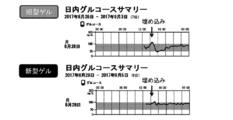
- FIG. 4A shows a graph (continuous blood glucose meter data) in which suppression of hypoglycemia due to hypothermia at the time of device implantation in a rat was examined using an old gel (upper) and a new gel (lower). For the measurement, FreeStyle Libre Pro was used.
- the vertical axis of the graph represents glucose concentration
- the horizontal axis represents time.
- HEAAm N-hydroxyethylacrylamide
- FIG. 4B is a graph showing the results of monitoring the rat's subcutaneous temperature using a microchip.
- the vertical axis represents the subcutaneous temperature. It was found that the subcutaneous temperature was greatly reduced to about 34 ° C by various operations and procedures such as alcohol disinfection and hair removal shown on the horizontal axis.
- FIG. 4C is a graph showing a comparison of temperature resistance between the new gel according to one embodiment of the present invention and the conventional old gel. As a temperature tolerance experiment, a low-temperature load was applied by ethanol spraying under isoflurane anesthesia. The horizontal axis is time (minutes).
- FIG. 5A schematically shows an example of a cross-sectional view of a drug delivery device according to the present invention.
- FIG. 5B schematically shows another example of the structure of the drug delivery device according to the present invention.
- the device 1 has a force taper 2 and a reservoir 3, and the force taper 2 is provided with a side hole.
- FIG. 5C shows an enlarged view of the force teeter of FIG. 5B.
- a plurality of side holes 5 are provided in the force taper side wall 4.
- a gel filling part 6 is provided along the inner wall of the force taper, and a drug filling part 7 is provided in a hollow part not filled with the gel.
- FIG. 5D shows a schematic cross-sectional view of an insulin delivery microneedle that is an embodiment of the drug delivery device according to the present invention.
- the sugar-responsive gel of the present invention has the following general formula (1).
- R is H or CH 3
- F is independently present, n is 1, 2, 3 or 4, and m is 0 or an integer of 1 or more.
- the sugar-responsive gel of the present invention includes a phenylboronic acid monomer unit represented by the general formula (1) and a monomer unit represented by the formula (2). It is a copolymer containing.
- the term “monomer unit” means a structural unit in a (co) polymer derived from a monomer.
- the present invention utilizes a mechanism by which a phenylboronic acid monomer changes its structure depending on the glucose concentration as described below.
- Phenylboronic acid (PBA) dissociated in water reversibly binds to sugar molecules and maintains the above equilibrium state. As the glucose concentration increases, glucose binds to the boronic acid and the gel volume expands, but contracts when the glucose concentration is low. When the drug delivery device is filled with the gel, this reaction occurs at the gel interface in contact with blood, and the gel contracts only at the interface, resulting in a dehydrated shrink layer that we call the “skin layer”.
- the insulin delivery device utilizes this property for controlling the release of insulin.
- the phenylboronic acid monomer used for the preparation of the gel composition according to the present invention is represented by the following general formula (1). [Wherein, R is H or CH 3 , F is independently present, n is 1, 2, 3 or 4, and m is 0 or an integer of 1 or more. ]
- the above-described phenylboronic acid monomer has a structure in which a hydrogen on a phenyl ring has a fluorinated phenylboronic acid group substituted with 1 to 4 fluorines, and an amide group carbon is bonded to the phenyl ring.
- a hydrogen on a phenyl ring has a fluorinated phenylboronic acid group substituted with 1 to 4 fluorines, and an amide group carbon is bonded to the phenyl ring.
- the phenylboronic acid monomer having the above-described structure has high hydrophilicity, and the pKa can be set to 7.4 or less at a biological level because the phenyl ring is fluorinated.
- this phenylboronic acid monomer not only acquires the ability to recognize sugar in a biological environment, but also allows copolymerization with a gelling agent and a crosslinking agent described later by unsaturated bonds, and the glucose concentration. Depending on the gel, it can be a gel that causes a phase change.
- the introduction site of F and B (OH) 2 may be ortho, meta, or para. good.
- a phenylboronic acid monomer when m is 1 or more can have a lower pKa than a phenylboronic acid monomer when m is 0.
- the upper limit of m is not specifically limited, For example, it is 20 or less, Preferably it is 10 or less, More preferably, it is 4 or less.
- phenylboronic acid monomer there is a phenylboronic acid monomer in which R is hydrogen, n is 1, and m is 2.
- R is hydrogen
- n is 1, and m is 2.
- AmECFPBA 2-acrylamidoethylcarbamoyl
- the phenylboronic acid monomer represented by the general formula (1) is, for example, 1 mol or more, 5 mol% or more, 10 mol% or more, 15 mol% or more, 20 mol% or more, 25 mol% or more, 30 mol% in the gel composition. As mentioned above, it can be contained in a proportion of 35 mol% or more, 40 mol% or more, 45 mol% or more, 50 mol% or more, or 60 mol% or more.
- the phenylboronic acid monomer represented by the general formula (1) is, for example, 90 mol% or less, 80 mol% or less, 70 mol% or less, 60 mol% or less, 50 mol% or less, 45 mol% or less in the gel composition.
- the phenylboronic acid monomer represented by the general formula (1) is, for example, 10 mol% to 90 mol%, 15 mol% to 45 mol%, 20 mol% to 40 mol%, or 25 mol in the gel composition.
- the ratio may be in the range of% to 35 mol%.
- the concentration range can be specified by any combination of the above upper limit and lower limit.
- a preferred proportion of the phenylboronic acid monomer is about 30 mol%.
- the term “about” is used to indicate a range of 10% before and after the subsequent numerical value. That is, about 30 mol% means a range of 27 mol% to 33 mol%.
- the gel composition according to the present invention contains a monomer (hydroxyl monomer) represented by the following general formula (2) in addition to the above phenylboronic acid monomer.
- R 1 is H or CH 3
- m is 0 or an integer of 1 or more
- R 2 is OH, a saturated or unsaturated C 1-6 alkyl group substituted with one or more hydroxyl groups, 1 or more C 3-10 cycloalkyl group for hydroxyl group that is substituted with a saturated or unsaturated, NH substituted with one or more hydroxyl groups, containing O and 1 to 4 heteroatoms selected from S C 3- A 12 heterocyclic group, a C 6-12 aryl group substituted with one or more hydroxyl groups, a monosaccharide group, or a polysaccharide group.
- the monomer of the general formula (2) has a hydroxyl group in the molecule. Without being bound by any particular theory, this hydroxyl group increases the hydrophilicity of the gel to offset the hydrophobicity of the boronic acid and acts on the boronic acid in the gel to prevent excessive swelling of the gel. It is considered to have an effect.
- the upper limit of m is not specifically limited, For example, it is 20 or less, Preferably it is 10 or less, More preferably, it is 4 or less.
- hydroxyl monomer is a monomer in which R 1 is hydrogen, m is 1, and R 2 is OH, which is particularly preferred as a hydroxyl monomer.
- Hydroxyethyl acrylamide N- (Hydroxyethyl) acrylamide, HEAAm.
- HEAAm Hydroxyethyl acrylamide
- R 2 may be a sugar derivative such as a catechol group or a glycolyl group.
- the monosaccharide can be, for example, glucose.
- the hydroxyl monomer represented by the general formula (2) is, for example, 1 mol or more, 5 mol% or more, 10 mol% or more, 15 mol% or more, 20 mol% or more, 25 mol% or more, 30 mol% or more, It can be contained in a proportion of 35 mol% or more, 40 mol% or more, 45 mol% or more, 50 mol% or more, or 60 mol% or more.
- the hydroxyl-type monomer represented by General formula (2) is 90 mol% or less, 80 mol% or less, 70 mol% or less, 60 mol% or less, 50 mol% or less, 45 mol% or less, 40 mol in a gel composition, for example.
- the hydroxyl monomer represented by the general formula (2) is, for example, 10 mol% to 90 mol%, 15 mol% to 45 mol%, 20 mol% to 40 mol%, or 25 mol% to 25% in the gel composition. It is good also as a ratio in the range of 35 mol%.
- the concentration range can be specified by any combination of the above upper limit and lower limit.
- a preferred proportion of hydroxyl monomer is about 10 mol%.
- the term “about” is used to indicate a range of 10% before and after the subsequent numerical value. That is, about 30 mol% means a range of 27 mol% to 33 mol%.
- the gel composition includes a gelling agent having a property (biocompatibility) that does not cause toxic or harmful effects on biological functions in vivo, the phenylboronic acid monomer, and the hydroxyl monomer. And a crosslinking agent.
- the method for preparing the gel is not particularly limited. First, a gelling agent that becomes the main chain of the gel, a phenylboronic acid monomer, a hydroxyl monomer, and a crosslinking agent It can be prepared by mixing at a charged molar ratio and causing a polymerization reaction. For the polymerization, a polymerization initiator is used as necessary.
- the polymerization reaction can be performed using, for example, dimethyl sulfoxide (DMSO) as a reaction solvent, the reaction temperature can be set to, for example, 60 ° C., and the reaction time can be set to, for example, 24 hours. Those skilled in the art can appropriately adjust these conditions.
- DMSO dimethyl sulfoxide
- the gel composition of the drug delivery device preferably contains a drug (for example, insulin) in advance.
- a drug for example, insulin
- the drug can be diffused into the gel by immersing the gel in an aqueous solution such as a phosphate buffer aqueous solution containing the drug at a predetermined concentration.
- the gel taken out from the aqueous solution is immersed in hydrochloric acid for a predetermined time to form a thin dehydrated shrink layer (called a skin layer) on the surface of the gel body, thereby encapsulating the drug (loading), and the device A gel that can be filled in can be obtained.
- a suitable ratio of gelling agent, phenylboronic acid monomer, hydroxyl monomer, and cross-linking agent can control the release of insulin in response to glucose concentration under physiological conditions.
- Any composition may be used as long as it has a temperature resistance, and it varies depending on the monomer used, and is not particularly limited.
- the present inventors have previously prepared a gel by combining various phenylboronic acid monomers in various ratios with a gelling agent and a crosslinking agent, and studied the behavior thereof (for example, Patent No. 5622188). See).
- a person skilled in the art can obtain a gel having a suitable composition based on the description herein and the technical information reported in the art.
- Methods for preparing and analyzing a sugar-responsive gel containing phenylboronic acid monomer units include, for example, Matsumoto et al., Angew. Chem. Int. Ed. 2012, 51, 2124-2128, Matsumoto ⁇ et al., Sci. Adv. 2017; Vol. 3, no. 11, eaaq0723.
- Examples of the gel composition that can be suitably used in the present invention include N-isopropylmethacrylamide (NIPMAAm) as a gelling agent (main chain) and 4- (2-acrylamidoethylcarbamoyl) as a phenylboronic acid monomer.
- NIPMAAm N-isopropylmethacrylamide
- AmECFPBA 2-acrylamidoethylcarbamoyl
- HEAAm N-hydroxyethylacrylamide
- MBAAm N'-methylenebisacrylamide
- 2,2'- as a polymerization initiator
- azobisisobutyronitrile adjusted to a charged molar ratio of 62/27/11/5 / 0.1 may be mentioned.
- the present invention is not limited to this, and the gel body that can be formed by the gel composition containing the gelling agent, the phenylboronic acid monomer, the hydroxyl monomer, and the crosslinking agent swells or responds to the glucose concentration. If the desired temperature resistance can be exhibited while shrinking, the gelling ratio of the gelling agent / phenylboronic acid monomer / hydroxyl monomer / crosslinking agent is set to various other numerical values. May be prepared.
- the gelling agent may be any biocompatible material that is biocompatible and can be gelled, and examples thereof include biocompatible acrylamide compounds (compounds having one acrylamide group or methacrylamide group). It is done. Specific examples include N-isopropylmethacrylamide (NIPMAAm), N-isopropylacrylamide (NIPAAm), N, N-dimethylacrylamide (DMAAm), N, N-diethylacrylamide (DEAAm) and the like.
- NIPMAAm N-isopropylmethacrylamide
- NIPAAm N-isopropylacrylamide
- DMAAm N-dimethylacrylamide
- DEAAm N-diethylacrylamide
- the gelling agent is contained in the gel composition in the range of, for example, 10 mol% to 90 mol%, 15 mol% to 75 mol%, 20 mol% to 60 mol%, 25 mol% to 55 mol%, or 35 mol% to 45 mol%. It is good also as a ratio.
- the concentration range can be specified by any combination of the above upper limit and lower limit.
- a preferred gelling agent ratio is about 60 mol%.
- the cross-linking agent may be any material that is also biocompatible and capable of cross-linking monomers, and preferably includes a compound having at least two acrylamide groups or methacrylamide groups in the molecule. Examples include '-methylenebisacrylamide (MBAAm), ethylene glycol dimethacrylate (EGDMA), N, N'-methylenebismethacrylamide (MBMAAm) and other various crosslinking agents.
- MBAAm '-methylenebisacrylamide
- EGDMA ethylene glycol dimethacrylate
- MBMAAm N, N'-methylenebismethacrylamide
- the crosslinking agent is 0.1 mol% or more, 0.3 mol% or more, 0.5 mol% or more, 1 mol% or more, 2 mol% or more, 3 mol% or more, 4 mol% or more, or 5 mol% or more. Can be included in proportions.
- a crosslinking agent is contained in a gel composition in the ratio of 10 mol% or less, 5 mol% or less, 3 mol% or less, 2 mol% or less, 1.5 mol% or less, 1 mol% or less, or 0.5 mol% or less, for example. be able to.
- the cross-linking agent may be, for example, a ratio in the range of 0.1 mol% to 10 mol%, 0.3 mol% to 2 mol%, or 0.5 mol% to 1.5 mol% in the gel composition. .
- the concentration range can be specified by any combination of the above upper limit and lower limit.
- a preferred ratio of the cross-linking agent is about 1 mol%.
- the gel composition comprises N-isopropylmethacrylamide (NIPMAAm), 4- (2-acrylamidoethylcarbamoyl) -3-fluorophenylboronic acid (AmECFPBA) as shown below: ), N-hydroxyethylacrylamide (HEAAm), and N, N′-methylenebisacrylamide (MBAAm) at a charge molar ratio of 62/27/11/5 (mol%).
- NIPMAAm N-isopropylmethacrylamide
- AmECFPBA 2-acrylamidoethylcarbamoyl) -3-fluorophenylboronic acid
- HEAAm N-hydroxyethylacrylamide
- MBAAm N, N′-methylenebisacrylamide
- a phenylboronic acid monomer and a hydroxyl monomer are copolymerized with a gelling agent and a crosslinking agent to form a gel body.
- a drug such as insulin can be diffused into the gel and the surface of the gel body can be surrounded by a dehydrated shrink layer.
- physiological conditions for example, pKa 7.4 or less, temperature 35 ° C. to 40 ° C.
- the dehydrated contraction layer disappears, and the drug in the gel (for example, insulin) is released to the outside. Can be released.
- the gel composition used in the present invention can autonomously release a drug (for example, insulin) in response to the glucose concentration.
- Drugs that can be delivered using the gel according to the present invention include, but are not limited to, proteins, peptides, nucleic acids, other high-molecular polymers, low-molecular compounds, and the like.
- the drug may be a therapeutic agent for a disease, a preventive drug, a vaccine, a nutritional supplement, and the like.
- a particularly preferred drug is insulin.
- Various natural insulins or modified insulins are available through commercial purchase or synthesis.
- As insulin for example, Humarin (registered trademark) may be used.
- Humarin (registered trademark) is human (genetically modified) insulin marketed by Eli Lilly.
- As an insulin preparation various preparations including a fast-acting type, an intermediate-type and a long-acting type have been developed, and can be appropriately selected and used.
- the gel composition may contain a drug in advance.
- the drug can be diffused into the gel by immersing the gel in an aqueous solution (for example, a phosphate buffered aqueous solution) containing a predetermined concentration of the drug.
- an aqueous solution for example, a phosphate buffered aqueous solution
- the gel taken out from the aqueous solution is immersed in hydrochloric acid for a predetermined time, for example, to form a thin dehydrated shrink layer (called a skin layer) on the surface of the gel body, thereby encapsulating the drug (loading), and the device A gel that can be filled in can be obtained.
- the drug delivery device according to the present invention includes the sugar-responsive gel, and is preferably used for insulin delivery.
- the drug delivery device according to the present invention may take any form including an implantable type and a microneedle type. With respect to the implantable device, for example, JP-A-2016-209372 and International Publication Pamphlet WO2017 / 069282 can be referred to.
- the drug delivery device may take the form of an implantable hollow fiber fusion device.
- FIG. 5A schematically shows an example of a cross-sectional view of a device of the present invention using a porous body.
- a hollow fiber is used as the porous body
- the gel composition is filled along the inner wall of the hollow fiber
- the drug solution is filled inside thereof.
- a gel may exist also in the pore of a hollow fiber outer wall.
- there are compartments filled with the drug solution inside the gel composition but the gel composition containing the drug is uniformly filled inside the hollow fiber structure without providing such compartments. It is good also as the structure made.
- the device of the present invention is not limited, but can be constituted by using one hollow fiber structure having the above structure or using 2 to 100,000 hollow fiber structures. .
- the device of the present invention may be provided with a reservoir so that the drug can be replenished after the drug is released from the porous body (hollow fiber) or the drug releaser (drug release part).
- the reservoir for the hollow fiber may be in the form of a force taper having an outer diameter of 1 mm to 2 mm and a length of 10 mm to 200 mm, for example, and is a commercially available silicon force taper 4 French size (inner diameter: 0.6 mm / outer diameter). : 1.2 mm) can be preferably used.
- FIG. 5B shows an example of the appearance of a device which is another embodiment of the present invention.
- the device 1 has a force tape 2 as a drug emitter and a reservoir 3.
- the force taper 2 has a tube shape having an outer diameter of 1 mm to 2 mm and a length of 10 mm to 200 mm, for example, and a commercially available silicon force taper 4 French size can be suitably used.
- the force taper has a plurality of side holes 5 on the side wall 4 as drug release portions. The side holes can be provided at the tip of the force taper regardless of their names.
- a gel filling portion 6 containing a copolymer gel composition containing a phenylboronic acid monomer as a monomer is provided along the inner wall of the force taper, and the drug is solidified by the gel filling portion 6
- a filling part 7 is provided.
- the drug filling part 7 is present in a section surrounded by the gel filling part 6 and that it is possible to fill a section close to the drug release part with a high concentration of drug. It is.
- controlled release of the drug (insulin) depending on the glucose concentration is possible.
- the reservoir 3 is provided so that the medicine filling portion 7 can be replenished with medicine, and the medicine filling portion in the force taper and the reservoir are filled together with, for example, up to about 10 ml of medicine, and the desired insertion or It may be possible to allow continuous controlled release of the drug during the wearing period.
- Example 1 Preparation of gel N-isopropylmethacrylamide (NIPMAAm) as gelling agent (main chain), 4- (2-acrylamidoethylcarbamoyl) -3-fluorophenylboronic acid (AmECFPBA) as phenylboronic acid monomer , N-hydroxyethylacrylamide (HEAAm) as a hydroxyl monomer, N, N′-methylenebisacrylamide (MBAAm) as a crosslinking agent, and 2,2′-azobisisobutyronitrile as a polymerization initiator
- a gel-like gel body having a cylindrical shape (diameter of 1 mm in dimethyl sulfoxide (DMSO) as a reaction solvent) is prepared by mixing at a ratio of 62/27/11/5 / 0.1 and performing radical polymerization.
- DMSO dimethyl sulfoxide
- FITC-modified insulin insulin modified with bovine-derived FITC (fluorescein isothiocyanate) (hereinafter simply referred to as FITC-modified insulin) at a concentration of 0.5 mg / 1 mL. ),
- FITC-modified insulin insulin modified with bovine-derived FITC (fluorescein isothiocyanate)
- the gel body was soaked and kept at 4 ° C. for 24 hours to diffuse FITC-modified insulin into the gel body.
- the gel body is taken out from the phosphate buffer solution and immersed in 0.01 M hydrochloric acid at 37 ° C. for 1 hour to form a thin dehydrated shrink layer (skin layer) on the surface of the gel body.
- a sugar-responsive gel including FITC-modified insulin (loading) was produced.
- Example 2 Analysis of gel temperature sensitivity N-isopropylmethacrylamide (NIPMAAm), 4- (2-acrylamidoethylcarbamoyl) -3-fluorophenylboronic acid (AmECFPBA) and N-hydroxyethyl were prepared in the same manner as in Example 1. Fifteen types of samples a to o having various blending ratios (mol%) of acrylamide (HEAAm) were prepared. Here, gel sample a was prepared by mixing N-isopropylmethacrylamide (NIPMAAm) and 4- (2-acrylamidoethylcarbamoyl) -3-fluorophenylboronic acid (AmECFPBA) at a blending ratio (mol%) of 90:10.
- the ratio of AmECFPBA to NIPMAAm is preferably 30 mol% or more. Also, if the blending ratio of AmECFPBA is 30 mol% or more, the gel volume due to temperature change (including 10 g / L) can be increased by increasing the volume ratio of HEAAm as in gel samples i to l. Can reduce the effects of For example, the gel sample 1 is considered to be excellent in terms of temperature resistance with little influence on the gel volume even if the temperature changes. Therefore, the volume ratio of HEAAm to the mixture of NIPMAAm and AmECFPBA is preferably 30 or more.
- Example 4 Release behavior of temperature-resistant gel
- a polysulfone dialyzer (APS-15SA4537693003682) manufactured by Asahi Kasei Medical Co., Ltd. was used as the device (inner diameter 185 ⁇ m, film thickness 45 ⁇ m).
- a commercially available cocoon silicon force taper (4Fr: inner diameter of about 600 ⁇ m, Prime Tech Co., Ltd.) was connected to the device to function as a reservoir for supplying insulin.
- Insulin release experiments were performed using a high performance liquid chromatography (HPLC) system (JASCO, Japan) equipped with two pumps and internal detectors for refractive index (RI), UV and fluorescence intensity.
- HPLC high performance liquid chromatography
- the gel prepared in the same manner as in Example 1 was immersed in PBS containing 130 mg / L of FITC-labeled bovine insulin (WAKO, Japan) at 4 ° C. for 24 hours to encapsulate FITC-labeled insulin in the gel. I let you.
- the gel was filled in the device of the present invention, and the device was immediately put in a 0.01 M HCl aqueous solution and incubated at 37 ° C. for 60 minutes to form a skin layer on the gel surface.
- the device of this example containing insulin and gel was loaded into a Tricorn® Empty® High-Performance® Column (GE Healthcare, USA) having an inner diameter of 10 mm and a length of 50 mm.
- the amount of FITC-labeled insulin released from the gel was measured by monitoring the fluorescence intensity (excitation wavelength: 495 nm) of the solution at 520 nm.
- PBS with and without 10 g / L glucose was prepared and supplied on a program basis from the two pumps of the system.
- the solution supplied from the pump was made to have a predetermined glucose concentration gradient pattern (0 to 5 g / L) in a part of the mixer that was continuously mixed.
- the in-situ glucose concentration during the experiment was monitored in the downstream part close to the column by an RI detector.
- Example 5 Comparison of new and old gel temperature resistant gels Rats were implanted using an embedding device (PCT / JP2016 / 081407) having a structure in which an old gel not containing HEAAm and a new gel containing HEAAm were coated on a dialysis hollow fiber. Suppression of hypoglycemia due to hypothermia at the time was investigated (continuous blood glucose meter data). For the measurement, FreeStyle Libre Pro was used. FreeStyle Libre Pro is a blood glucose self-monitoring device sold by Abbott. FIG. 4A shows the blood glucose level measurement results when the insulin delivery device was implanted in the rat.
- FIG. 4A A device was placed on the left side of the back of the rat and a continuous blood glucose monitoring device was placed on the right side of the back, and blood glucose fluctuations after the implantation surgery were measured. It was found that the old gel had hypoglycemia early after the surgery. (FIG. 4A). When the rat's subcutaneous temperature was monitored using a microchip, it was found that the subcutaneous temperature was greatly reduced to about 34 ° C. by various operations and procedures such as alcohol disinfection and hair removal (FIG. 4B). On the other hand, the new gel showed no decrease in blood glucose level immediately after implantation and improved temperature resistance, particularly resistance to low temperatures. In the new gel, the basal secretion was optimized and the basal secretion was suppressed.
- the present invention can provide a sugar-responsive gel having high resistance to temperature changes. Moreover, this invention can provide the drug delivery device using the gel provided with the tolerance with respect to such a temperature change.
- the body temperature of mammals including humans is kept almost constant. However, for example, when starting treatment with a drug delivery device, the patient's body temperature may temporarily decrease after anesthesia of the patient or immediately after the drug delivery device is attached to the body. It is undesirable for the gel in the drug delivery device to be affected by temperature changes resulting in excessive drug delivery. For example, excessive delivery of insulin causes hypoglycemia.
- the sugar-responsive gel developed by the present inventors is highly resistant to temperature changes, and can reduce the risk of undesirably excessive drug release, such as when a drug delivery device is attached. It can be said that the usefulness and safety are higher than those of the gel.
Landscapes
- Health & Medical Sciences (AREA)
- Life Sciences & Earth Sciences (AREA)
- Chemical & Material Sciences (AREA)
- Animal Behavior & Ethology (AREA)
- General Health & Medical Sciences (AREA)
- Public Health (AREA)
- Veterinary Medicine (AREA)
- Medicinal Chemistry (AREA)
- Pharmacology & Pharmacy (AREA)
- Epidemiology (AREA)
- Engineering & Computer Science (AREA)
- Diabetes (AREA)
- Chemical Kinetics & Catalysis (AREA)
- Bioinformatics & Cheminformatics (AREA)
- Endocrinology (AREA)
- Proteomics, Peptides & Aminoacids (AREA)
- General Chemical & Material Sciences (AREA)
- Zoology (AREA)
- Gastroenterology & Hepatology (AREA)
- Dermatology (AREA)
- Biomedical Technology (AREA)
- Hematology (AREA)
- Inorganic Chemistry (AREA)
- Immunology (AREA)
- Oil, Petroleum & Natural Gas (AREA)
- Organic Chemistry (AREA)
- Medical Informatics (AREA)
- Anesthesiology (AREA)
- Heart & Thoracic Surgery (AREA)
- Emergency Medicine (AREA)
- Polymers & Plastics (AREA)
- Nuclear Medicine, Radiotherapy & Molecular Imaging (AREA)
- Biophysics (AREA)
- Molecular Biology (AREA)
- Obesity (AREA)
- Neurosurgery (AREA)
- Medicinal Preparation (AREA)
- Infusion, Injection, And Reservoir Apparatuses (AREA)
- Medicines That Contain Protein Lipid Enzymes And Other Medicines (AREA)
Priority Applications (5)
| Application Number | Priority Date | Filing Date | Title |
|---|---|---|---|
| JP2020522634A JP7281659B2 (ja) | 2018-06-01 | 2019-05-31 | 温度耐性型糖応答性ゲル |
| CA3101963A CA3101963A1 (en) | 2018-06-01 | 2019-05-31 | Temperature-resistant sugar-responsive gel |
| EP19810343.4A EP3804762A4 (en) | 2018-06-01 | 2019-05-31 | TEMPERATURE RESISTANT SUGAR SENSITIVE GEL |
| US17/055,032 US11819570B2 (en) | 2018-06-01 | 2019-05-31 | Temperature-resistant sugar-responsive gel |
| CN201980037079.6A CN112236170B (zh) | 2018-06-01 | 2019-05-31 | 耐高温糖响应性凝胶 |
Applications Claiming Priority (2)
| Application Number | Priority Date | Filing Date | Title |
|---|---|---|---|
| JP2018105788 | 2018-06-01 | ||
| JP2018-105788 | 2018-06-01 |
Publications (1)
| Publication Number | Publication Date |
|---|---|
| WO2019230961A1 true WO2019230961A1 (ja) | 2019-12-05 |
Family
ID=68698889
Family Applications (1)
| Application Number | Title | Priority Date | Filing Date |
|---|---|---|---|
| PCT/JP2019/021766 Ceased WO2019230961A1 (ja) | 2018-06-01 | 2019-05-31 | 温度耐性型糖応答性ゲル |
Country Status (6)
| Country | Link |
|---|---|
| US (1) | US11819570B2 (https=) |
| EP (1) | EP3804762A4 (https=) |
| JP (1) | JP7281659B2 (https=) |
| CN (1) | CN112236170B (https=) |
| CA (1) | CA3101963A1 (https=) |
| WO (1) | WO2019230961A1 (https=) |
Cited By (1)
| Publication number | Priority date | Publication date | Assignee | Title |
|---|---|---|---|---|
| WO2024158039A1 (ja) * | 2023-01-26 | 2024-08-02 | 地方独立行政法人神奈川県立産業技術総合研究所 | 糖応答性ゲル |
Families Citing this family (3)
| Publication number | Priority date | Publication date | Assignee | Title |
|---|---|---|---|---|
| CN113603816B (zh) * | 2021-07-21 | 2022-08-19 | 上海应用技术大学 | 一种卡波姆衍生物及其制备方法与应用 |
| CN115715756A (zh) * | 2022-10-11 | 2023-02-28 | 浙江大学 | 一种丙烯酰基甘氨酰胺-含氟苯硼酸基糖敏微针及其制备方法 |
| CN115746196A (zh) * | 2022-11-15 | 2023-03-07 | 电子科技大学长三角研究院(湖州) | 一种异丙基甲基丙烯酰胺-氟基苯硼酸共聚葡萄糖响应微凝胶的制备方法及其应用 |
Citations (8)
| Publication number | Priority date | Publication date | Assignee | Title |
|---|---|---|---|---|
| JPS5622188B2 (https=) | 1975-10-17 | 1981-05-23 | ||
| JPH07126323A (ja) * | 1993-11-05 | 1995-05-16 | Nippon Oil & Fats Co Ltd | フッ素化フェニルボロン酸基含有重合体 |
| JP2011140537A (ja) * | 2010-01-05 | 2011-07-21 | Univ Of Tokyo | フェニルボロン酸系単量体及びフェニルボロン酸系重合体 |
| JP2015110623A (ja) | 2010-05-26 | 2015-06-18 | 国立研究開発法人物質・材料研究機構 | 糖応答性ゲル及び薬剤投与デバイス |
| JP2015151427A (ja) * | 2014-02-12 | 2015-08-24 | セイコーエプソン株式会社 | 刺激応答性ゲル材料および刺激応答性ゲル材料の製造方法 |
| JP2016209372A (ja) | 2015-05-11 | 2016-12-15 | 国立大学法人 東京医科歯科大学 | インスリン送達用デバイス |
| WO2017069282A1 (ja) | 2015-10-23 | 2017-04-27 | 国立大学法人東京医科歯科大学 | 薬剤送達用デバイス |
| JP2018105788A (ja) | 2016-12-27 | 2018-07-05 | 石油資源開発株式会社 | 地殻応力測定方法 |
Family Cites Families (1)
| Publication number | Priority date | Publication date | Assignee | Title |
|---|---|---|---|---|
| CN102068700B (zh) * | 2009-12-28 | 2012-11-21 | 中国人民解放军总医院 | 苯硼酸聚乙二醇凝胶及其作为葡萄糖敏感材料的用途 |
-
2019
- 2019-05-31 US US17/055,032 patent/US11819570B2/en active Active
- 2019-05-31 CN CN201980037079.6A patent/CN112236170B/zh active Active
- 2019-05-31 EP EP19810343.4A patent/EP3804762A4/en active Pending
- 2019-05-31 JP JP2020522634A patent/JP7281659B2/ja active Active
- 2019-05-31 WO PCT/JP2019/021766 patent/WO2019230961A1/ja not_active Ceased
- 2019-05-31 CA CA3101963A patent/CA3101963A1/en active Pending
Patent Citations (8)
| Publication number | Priority date | Publication date | Assignee | Title |
|---|---|---|---|---|
| JPS5622188B2 (https=) | 1975-10-17 | 1981-05-23 | ||
| JPH07126323A (ja) * | 1993-11-05 | 1995-05-16 | Nippon Oil & Fats Co Ltd | フッ素化フェニルボロン酸基含有重合体 |
| JP2011140537A (ja) * | 2010-01-05 | 2011-07-21 | Univ Of Tokyo | フェニルボロン酸系単量体及びフェニルボロン酸系重合体 |
| JP2015110623A (ja) | 2010-05-26 | 2015-06-18 | 国立研究開発法人物質・材料研究機構 | 糖応答性ゲル及び薬剤投与デバイス |
| JP2015151427A (ja) * | 2014-02-12 | 2015-08-24 | セイコーエプソン株式会社 | 刺激応答性ゲル材料および刺激応答性ゲル材料の製造方法 |
| JP2016209372A (ja) | 2015-05-11 | 2016-12-15 | 国立大学法人 東京医科歯科大学 | インスリン送達用デバイス |
| WO2017069282A1 (ja) | 2015-10-23 | 2017-04-27 | 国立大学法人東京医科歯科大学 | 薬剤送達用デバイス |
| JP2018105788A (ja) | 2016-12-27 | 2018-07-05 | 石油資源開発株式会社 | 地殻応力測定方法 |
Non-Patent Citations (5)
| Title |
|---|
| LI, SIQI ET AL.: "Synthesis and Development of Poly (N-Hydroxyethyl Acrylamide) -Ran-3-Acrylamidophenylboronic Acid Polymer Fluid for Potential Application in Affinity Sensing of Glucose", JOURNAL OF DIABETES SCIENCE AND TECHNOLOGY, vol. 5, no. 5, September 2011 (2011-09-01), pages 1060 - 1067, XP055662655 * |
| LIU, LEI ET AL.: "A Versatile Dynamic Mussel-Inspired Biointerface:From Specific Cell Behavior Modulation to Selective Cell Isolation", ANGEW. CHEM. INT. ED., vol. 57, 25 May 2018 (2018-05-25), pages 7878 - 7882, XP055662648 * |
| MATSUMOTO ET AL., ANGEW. CHEM. INT. ED., vol. 51, 2012, pages 2124 - 2128 |
| MATSUMOTO, SCI. ADV., vol. 3, no. 11, 2017, pages eaaq0723 |
| See also references of EP3804762A4 |
Cited By (1)
| Publication number | Priority date | Publication date | Assignee | Title |
|---|---|---|---|---|
| WO2024158039A1 (ja) * | 2023-01-26 | 2024-08-02 | 地方独立行政法人神奈川県立産業技術総合研究所 | 糖応答性ゲル |
Also Published As
| Publication number | Publication date |
|---|---|
| CA3101963A1 (en) | 2019-12-05 |
| US20210121400A1 (en) | 2021-04-29 |
| JPWO2019230961A1 (ja) | 2021-06-10 |
| CN112236170B (zh) | 2024-04-26 |
| JP7281659B2 (ja) | 2023-05-26 |
| EP3804762A4 (en) | 2022-03-23 |
| US11819570B2 (en) | 2023-11-21 |
| EP3804762A1 (en) | 2021-04-14 |
| CN112236170A (zh) | 2021-01-15 |
Similar Documents
| Publication | Publication Date | Title |
|---|---|---|
| JP6830662B2 (ja) | 薬剤送達用デバイス | |
| JP7281659B2 (ja) | 温度耐性型糖応答性ゲル | |
| JP7547438B2 (ja) | 安定なタンパク質組成物 | |
| JP5696961B2 (ja) | 糖応答性ゲル及び薬剤投与デバイス | |
| US20210052822A1 (en) | Glucose responsive composite gel composition, method for producing same, insulin delivery microneedle including said glucose responsive composite gel composition, and production method thereof | |
| JP6784352B2 (ja) | インスリン送達用デバイス | |
| WO2024158039A1 (ja) | 糖応答性ゲル | |
| BR112018007507B1 (pt) | Formulação farmacêutica bifásica, e, uso da mesma |
Legal Events
| Date | Code | Title | Description |
|---|---|---|---|
| 121 | Ep: the epo has been informed by wipo that ep was designated in this application |
Ref document number: 19810343 Country of ref document: EP Kind code of ref document: A1 |
|
| DPE1 | Request for preliminary examination filed after expiration of 19th month from priority date (pct application filed from 20040101) | ||
| ENP | Entry into the national phase |
Ref document number: 2020522634 Country of ref document: JP Kind code of ref document: A |
|
| ENP | Entry into the national phase |
Ref document number: 3101963 Country of ref document: CA |
|
| NENP | Non-entry into the national phase |
Ref country code: DE |
|
| ENP | Entry into the national phase |
Ref document number: 2019810343 Country of ref document: EP Effective date: 20210111 |