WO2019073709A1 - 認証システム及び認証対象装置 - Google Patents
認証システム及び認証対象装置 Download PDFInfo
- Publication number
- WO2019073709A1 WO2019073709A1 PCT/JP2018/031805 JP2018031805W WO2019073709A1 WO 2019073709 A1 WO2019073709 A1 WO 2019073709A1 JP 2018031805 W JP2018031805 W JP 2018031805W WO 2019073709 A1 WO2019073709 A1 WO 2019073709A1
- Authority
- WO
- WIPO (PCT)
- Prior art keywords
- signal
- authentication target
- unit
- authentication
- portable device
- Prior art date
- Legal status (The legal status is an assumption and is not a legal conclusion. Google has not performed a legal analysis and makes no representation as to the accuracy of the status listed.)
- Ceased
Links
Images




Classifications
-
- B—PERFORMING OPERATIONS; TRANSPORTING
- B60—VEHICLES IN GENERAL
- B60R—VEHICLES, VEHICLE FITTINGS, OR VEHICLE PARTS, NOT OTHERWISE PROVIDED FOR
- B60R25/00—Fittings or systems for preventing or indicating unauthorised use or theft of vehicles
- B60R25/20—Means to switch the anti-theft system on or off
- B60R25/24—Means to switch the anti-theft system on or off using electronic identifiers containing a code not memorised by the user
-
- H—ELECTRICITY
- H04—ELECTRIC COMMUNICATION TECHNIQUE
- H04W—WIRELESS COMMUNICATION NETWORKS
- H04W12/00—Security arrangements; Authentication; Protecting privacy or anonymity
- H04W12/06—Authentication
-
- B—PERFORMING OPERATIONS; TRANSPORTING
- B60—VEHICLES IN GENERAL
- B60R—VEHICLES, VEHICLE FITTINGS, OR VEHICLE PARTS, NOT OTHERWISE PROVIDED FOR
- B60R25/00—Fittings or systems for preventing or indicating unauthorised use or theft of vehicles
- B60R25/40—Features of the power supply for the anti-theft system, e.g. anti-theft batteries, back-up power supply or means to save battery power
-
- E—FIXED CONSTRUCTIONS
- E05—LOCKS; KEYS; WINDOW OR DOOR FITTINGS; SAFES
- E05B—LOCKS; ACCESSORIES THEREFOR; HANDCUFFS
- E05B49/00—Electric permutation locks; Circuits therefor ; Mechanical aspects of electronic locks; Mechanical keys therefor
-
- H—ELECTRICITY
- H02—GENERATION; CONVERSION OR DISTRIBUTION OF ELECTRIC POWER
- H02J—ELECTRIC POWER NETWORKS; CIRCUIT ARRANGEMENTS OR SYSTEMS FOR SUPPLYING OR DISTRIBUTING ELECTRIC POWER; SYSTEMS FOR STORING ELECTRIC ENERGY
- H02J50/00—Circuit arrangements or systems for wireless supply or distribution of electric power
- H02J50/20—Circuit arrangements or systems for wireless supply or distribution of electric power using microwaves or radio frequency waves
-
- H—ELECTRICITY
- H04—ELECTRIC COMMUNICATION TECHNIQUE
- H04L—TRANSMISSION OF DIGITAL INFORMATION, e.g. TELEGRAPHIC COMMUNICATION
- H04L5/00—Arrangements affording multiple use of the transmission path
- H04L5/003—Arrangements for allocating sub-channels of the transmission path
- H04L5/0053—Allocation of signalling, i.e. of overhead other than pilot signals
- H04L5/0055—Physical resource allocation for ACK/NACK
-
- H—ELECTRICITY
- H04—ELECTRIC COMMUNICATION TECHNIQUE
- H04Q—SELECTING
- H04Q9/00—Arrangements in telecontrol or telemetry systems for selectively calling a substation from a main station, in which substation desired apparatus is selected for applying a control signal thereto or for obtaining measured values therefrom
Definitions
- the present disclosure relates to an authentication system that permits control of an authentication target according to a result of collation using wireless communication between an authentication target device used as an authentication target and a portable device carried by a user, and an authentication system thereof. Relates to an authentication target device used in
- Patent Document 1 an authentication system that locks and unlocks a door of a vehicle according to a result of collation using a wireless communication between a portable device carried by a user and an in-vehicle device. It has been known.
- the on-vehicle apparatus transmits a Wake signal for activating the portable device to the portable device prior to the transmission of the Challenge signal for the encrypted communication.
- the Ack signal is sent back to the in-vehicle device.
- the Ack signal reply timing for the Wake signal is set for each portable device.
- Different schemes hereinafter referred to as slot schemes.
- slot schemes since the return timing of the Ack signal is different for each portable device, the in-vehicle apparatus can specify which portable device is the response from the response timing of the Ack signal to the Wake signal.
- the on-vehicle device In recent years, along with the installation of functions such as a pick-up function to turn on lights when a user carrying a portable device approaches the vehicle, the on-vehicle device periodically transmits a Wake signal when the vehicle is parked. It has become necessary to confirm the presence of portable devices. Since it is necessary to suppress the dark current when the vehicle is parked, it is necessary to minimize the consumption current as much as possible by exchanging wireless communication between the Wake signal and the Ack signal at the time of parking.
- a simultaneous reception system may be considered in which an Ack signal is sent back at the timing when each of the registered portable devices receives a Wake signal.
- the simultaneous reception method when a plurality of portable units exist within the communication range with the on-vehicle apparatus, the Ack signal can not be received correctly on the on-vehicle unit side because the waveforms of Ack signals from the plurality of portable units overlap. There is a risk of
- the present disclosure has been made in view of the above-described circumstances, and one object disclosed is to provide an authentication system and an authentication target device that can further reduce current consumption while securing communication reliability. It is to do.
- An authentication system includes an authentication target device used as an authentication target and a portable device carried by a user, and the authentication target device performs verification by wireless communication with the portable device.
- An authentication system for performing authentication to control an authentication target wherein the authentication target device includes an authentication target transmission unit that transmits a radio wave carrying a signal, and an authentication target reception unit that receives a radio wave carrying a signal.
- the registration unit for registering a plurality of authorized portable devices, and the authentication target transmission unit transmits a Wake signal for activating the portable device prior to the collation, and the authentication target reception unit Is activated when transmitting the Wake signal in the authentication target transmission unit, and the portable device transmits the radio wave carrying the signal, and the mobile reception unit receives the radio wave carrying the signal.
- the transmitter on the mobile side is The Ack signal as an affirmative response is sent back based on the reception of the Wake signal in the reception unit, and the Ack signal's return timing to the Wake signal for each of a plurality of legitimate portable devices registered in the registration unit. It is possible to switch between the slot method in which the reply timing is set to be different and the simultaneous method in which the same reply timing is set uniformly for each of these portable devices earlier than the latest reply timing set in the slot method.
- the authentication target transmitter transmits the Wake signal including the designation information for designating the portable device to return the Ack signal in the simultaneous mode, and the authentication target receiver
- the operation of the authentication target side reception unit is stopped, while when the radio wave is received by the authentication target side reception unit,
- a Wake signal including designation information for designating the portable device to send an Ack signal in response to the transmission method is transmitted, and the portable-side transmission section includes designation information for designating transmission of the Ack signal in a simultaneous manner.
- the Ack signal When the Wake signal is received by the mobile reception unit and the Ack signal is sent back, while it is sent back at the same same reply timing for each of a plurality of legitimate mobile devices registered in the registration unit, the Ack signal in the slot system
- the wake signal including the designation information for designating to send back is received by the portable side reception unit and the Ack signal is sent back, it is sent back at the reply timing that is uniquely set to the own device.
- the transmitter to be authenticated transmits a wake signal
- the transmitter transmits a wake signal including designation information for instructing the portable device to return an Ack signal in a simultaneous mode
- the authentication target When the side receiving unit does not receive the radio wave, the operation of the authentication target side receiving unit is stopped. Therefore, when the portable unit does not exist within the communication range of the authentication target side transmission unit, the authentication target side reception unit when the simultaneous system response timing is exceeded earlier than the latest response timing set in the slot system. It is possible to stop the operation of Therefore, the authentication target reception unit operates compared to the case where the operation of the authentication target reception unit is stopped when all the return timings of the registered plural portable devices set in the slot system have been exceeded.
- the Wake signal including the designation information for designating the portable device to send back the Ack signal in the slot system is transmitted, so the plurality of portable devices return The Ack signal waveform can be prevented from overlapping, and the Ack signal can be received more accurately at the device to be authenticated. As a result, it is possible to further reduce the current consumption while securing the communication reliability.
- an authentication target device is used as an authentication target, and performs authentication for performing control of the authentication target by matching with a portable device carried by a user via wireless communication.
- An authentication target device which is an authentication target transmission unit that transmits a radio wave carrying a signal, and a radio wave carrying a signal sent from a portable device to a signal transmitted from the authentication target transmission unit with radio waves.
- the authentication target side reception unit to be received, and the registration unit to register a plurality of authorized mobile devices, the authentication target side transmission unit transmits a Wake signal for activating the mobile device prior to the matching. Yes, the authentication target receiver starts when transmitting the Wake signal in the authentication target transmitter, and the authentication target transmitter transmits the Wake signal.
- the authentication target transmitter is registered in the registration unit. Wa for multiple mobile devices
- the response timing of the Ack signal to the e signal is different.
- the same response timing is uniformly set for each of a plurality of regular portable devices registered in the registration unit, earlier than the latest response timing set in the slot system in which the response timing is set.
- the authentication target device when the authentication target transmission unit transmits the Wake signal, first, the Wake signal including the designation information for designating the portable device to return the Ack signal in the simultaneous mode is transmitted to perform authentication. If the target receiving unit does not receive a radio wave, the operation of the authentication target receiving unit is stopped. Therefore, when the portable unit does not exist within the communication range of the authentication target side transmission unit, the authentication target side reception unit when the simultaneous system response timing is exceeded earlier than the latest response timing set in the slot system. It is possible to stop the operation of Therefore, the authentication target reception unit operates compared to the case where the operation of the authentication target reception unit is stopped when all the return timings of the registered plural portable devices set in the slot system have been exceeded. It is possible to shorten the period of time to reduce the current consumption.
- the Wake signal including the designation information for designating the portable device to send back the Ack signal in the slot system is transmitted, so the plurality of portable devices return The Ack signal waveform can be prevented from overlapping, and the Ack signal can be received more accurately at the device to be authenticated. As a result, it is possible to further reduce the current consumption while securing the communication reliability.
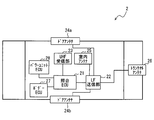
- FIG. 1 is a diagram showing an example of a schematic configuration of an authentication system
- FIG. 2 is a view showing an example of a schematic configuration of a vehicle side unit
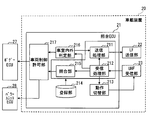
- FIG. 3 is a diagram showing an example of a schematic configuration of a verification ECU
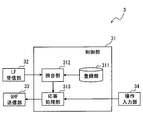
- FIG. 4 is a diagram showing an example of a schematic configuration of a portable device
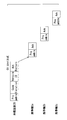
- FIG. 5 is a diagram for explaining an example of the response timing of the Ack signal to the Wake signal when the designation information designates the simultaneous method
- FIG. 6 is a diagram for explaining an example of the return timing of the Ack signal to the Wake signal when the designation information designates the slot system
- FIG. 1 is a diagram showing an example of a schematic configuration of an authentication system
- FIG. 2 is a view showing an example of a schematic configuration of a vehicle side unit
- FIG. 3 is a diagram showing an example of a schematic configuration of a verification ECU
- FIG. 4 is a diagram showing an example of a schematic configuration of a portable device
- FIG. 5 is a
- FIG. 7 is a flowchart showing an example of the flow of vehicle side authentication related processing in the on-vehicle apparatus;
- FIG. 8 is a flowchart showing an example of the flow of portable-side authentication related processing in the portable device,
- FIG. 9 is a diagram for describing an example of a sequence up to the matching establishment in the challenge / response method in the authentication system.
- the authentication system 1 includes a vehicle-side unit 2 used in a vehicle and a portable device 3 carried by a user. This vehicle corresponds to the authentication target.
- the verification is performed by the short distance wireless communication between the vehicle unit 2 and the portable device 3, and when the verification is established, for example, permission for locking and unlocking the vehicle door, and permission for starting the traveling drive source, It has functions of lighting various lights, opening a power slide door (hereinafter referred to as PSD), locking PSD and the like.
- PSD power slide door
- FIG. 2 is a view showing a schematic configuration of the vehicle side unit 2.
- the vehicle side unit 2 includes a matching ECU 21, an LF transmitter 22, a UHF receiver 23, door antennas 24 a to 24 b, an indoor antenna 25, an outside trunk antenna 26, a body ECU 27, and a power unit ECU 28. .
- the LF transmission unit 22 is a transmission circuit that transmits signals on the radio wave of the LF band to the portable device 3 via the LF antennas such as the door antennas 24a to 24b, the indoor antenna 25, and the antenna 26 outside the trunk.
- the LF transmitter 22 corresponds to the authentication target transmitter.
- the LF band is, for example, a frequency band of 30 kHz to 300 kHz.
- a communication range in which signals can be transmitted from an LF antenna by radio waves in the LF band corresponds to a short distance wireless communication area where short distance wireless communication can be performed.
- the door antenna 24a is provided near the vehicle door of the driver's seat, and the door antenna 24b is provided near the vehicle door on the passenger seat side. Further, the indoor antenna 25 is provided in the vehicle cabin, and the outside-trunk antenna 26 is provided in the vicinity of the trunk room door of the vehicle doors. Note that the LF antenna may be provided in part of the above-described components, or may be provided in other places.
- the short distance wireless communication area of the door antenna 24a is limited to the vicinity of the vehicle door of the driver's seat, and the short distance wireless communication area of the door antenna 24b is limited to the vicinity of the vehicle door on the passenger seat. Further, the short distance wireless communication area of the indoor antenna 25 is limited to the passenger compartment, and the short distance wireless communication area of the out-of-trunk antenna 26 is limited to the vicinity of the trunk room door. It is assumed that the short distance wireless communication areas of the door antennas 24a to 24b and the antenna outside the trunk 26 extend outside the vehicle. The door antennas 24a to 24b and the outside-trunk antenna 26 correspond to the antennas.
- the embodiment shown here is an embodiment and a modification corresponding to the area where left traffic is legalized, and in the area where right traffic is legalized, the driver's seat and the passenger seat are reversed. .
- the UHF receiver 23 has a UHF antenna, and is a receiving circuit that receives a signal transmitted from the portable device 3 on a UHF band radio wave with the UHF antenna.
- the UHF receiver 23 corresponds to the authentication target receiver.
- the UHF band is, for example, a frequency band of 300 MHz to 3 GHz.
- the body ECU 27 is an electronic control unit that controls lighting such as headlights, small lights, tail lights, interior lights, etc. and controls locking and unlocking of the door. For example, the body ECU 27 performs locking and unlocking of each vehicle door by outputting a drive signal for controlling locking and unlocking of each vehicle door to a door lock motor provided on each vehicle door. Further, a touch sensor provided on an outer door handle of each vehicle door is connected to the body ECU 27, and detects that the outer door handle of each vehicle door is touched by the user. In addition, a courtesy switch for each vehicle door is connected to the body ECU 27 to detect the opening and closing of each vehicle door, and a seating sensor is connected to detect the presence or absence of the occupant sitting on the seat. Do.
- the power unit ECU 28 is an electronic control unit that controls the internal combustion engine or motor generator of the vehicle, and when the start permission signal of the traveling drive source is acquired from the verification ECU 21, the internal combustion engine or motor generator of the vehicle can be started.
- the verification ECU 21 includes a processor, a memory, an I / O, and a bus connecting these, and executes a control program stored in the memory to execute various processes related to authentication in the vehicle.
- memory is a non-transitory tangible storage medium that non-temporarily stores computer readable programs and data.
- the non-transitional tangible storage medium is realized by a semiconductor memory or a magnetic disk.
- the verification ECU 21 includes a transmission processing unit 211, a reception processing unit 212, an operation switching unit 213, a registration unit 214, a verification unit 215, a vehicle interior determination unit 216, and a vehicle control permission unit 217.
- the on-vehicle device 20 including the verification ECU 21, the LF transmitter 22, and the UHF receiver 23 corresponds to the authentication target device.
- part or all of the functions executed by the verification ECU 21 may be configured as hardware by one or more ICs or the like. Further, some or all of the functional blocks included in the verification ECU 21 may be realized by a combination of software execution by a processor and hardware components.
- the transmission processing unit 211 transmits signals from the door antennas 24 a to 24 b, the indoor antenna 25, and the antenna outside the trunk 26 via the LF transmission unit 22.
- signals which the transmission processing unit 211 causes the LF transmission unit 22 to transmit there are a Wake signal, a Challenge signal, and the like.
- the Wake signal is a signal for shifting the portable device 3 in the sleep state to the wake-up state.
- the Challenge signal is a signal for encrypted communication and is a signal of a code composed of random numbers.
- the reception processing unit 212 acquires from the UHF receiving unit 23 the signal transmitted from the portable device 3 by the UHF band radio wave received by the UHF receiving unit 23.
- the transmission processing unit 211 transmits the Wake signal periodically before transmitting the Challenge signal and performing the collation by the collating unit 215, and transmits an Ack (Acknowledgement) signal from the portable device 3. Perform polling to wait for a reply.
- the parking of the vehicle may be specified from the vehicle speed detected by the vehicle speed sensor, the switch signal of the parking brake, the shift position detected by the shift position sensor, and the like.
- the Ack signal corresponds to a positive response from the portable device 3 to the reception of the Wake signal by the portable device 3.
- the polling cycle may be, for example, about 240 to 720 msec.
- the transmission processing unit 211 starts transmission of the Challenge signal when the UHF reception unit 23 can receive the Ack signal for the Wake signal.
- the transmission processing unit 211 uses different response timings to cause the portable device 3 to return the Ack signal in addition to the vehicle identification code that is a code for identifying the vehicle of the transmission source. Include the specified information to specify and send. Designation by the designation information is simultaneous with the slot method. The vehicle identification code corresponds to identification information.
- the slot method is a method in which the return timing is set such that the return timing of the Ack signal to the Wake signal is different for each of the plurality of regular portable devices 3 registered in the registration unit 214.
- the reply timing unique to the portable device 3 is stored in the registration unit 311 of the portable device 3 described later. Good.
- the response timing unique to each portable device 3 is set such that a difference of at least a predetermined time or more occurs for each portable device 3.
- the predetermined time refers to the Ack signal of each portable device 3 received by the UHF reception unit 23 when the Ack signal is sent back from a plurality of portable devices 3 present in the same communication range of the LF antenna. It may be set to a time corresponding to a time difference estimated that the waveforms do not overlap and the individual Ack signals can not be received correctly.
- the simultaneous method is a method in which the return timing of the Ack signal to the same Wake signal is uniformly set for each of the plurality of regular portable devices 3 registered in the registration unit 214.
- the same return timing uniformly for each portable device 3 need only be earlier than the latest response timing set in the slot system. For example, if the timing earlier than the second return timing set in the slot system is set, even if the number of the plurality of portable devices 3 registered in the registration unit 214 is two, the slot system is used.
- the timing earlier than the latest response timing set can be set.
- the transmission processing unit 211 When transmitting a Wake signal, the transmission processing unit 211 first causes the LF transmission unit 22 to transmit a Wake signal including designation information that designates a simultaneous method. When the radio wave is received by the UHF receiver 23 in response to the transmission of the wake signal, the LF transmitter 22 subsequently transmits a wake signal including designation information for designating the slot system.
- the term "some radio waves” as used herein means not only radio waves that can receive an Ack signal, but also includes radio waves that can not receive an Ack signal because the waveforms of Ack signals from a plurality of portable devices 3 overlap. If the radio wave intensity is equal to or less than the threshold, the radio wave may not be received, and the influence of noise may be suppressed.
- the reception processing unit 212 When the UHF reception unit 23 receives an Ack signal in response to the transmission of a Wake signal including designation information for specifying a slot system, the reception processing unit 212 also sends the return timing of each portable device 3 registered in the registration unit 214. In addition, it is specified which portable device 3 the Ack signal is from.
- the operation switching unit 213 switches the operation of the UHF reception unit 23.
- the operation switching unit 213 activates the UHF reception unit 23 every polling cycle. That is, when transmitting a Wake signal from the LF transmitter 22, the UHF receiver 23 is activated.
- the radio wave is received by the UHF receiver 23 in response to the transmission of the Wake signal including the designation information for designating the simultaneous system, the activation of the UHF receiver 23 is continued.
- the operation switching unit 213 stops the operation of the UHF reception unit 23 by turning off the power supply for supplying power to the UHF reception unit 23, while turning on the power supply for starting the UHF reception unit 23. It may be configured to
- the registration unit 214 is, for example, an electrically rewritable non-volatile memory, and stores an identifier (hereinafter referred to as a portable ID) for identifying a portable device registered as the authorized portable device 3.
- a portable ID an identifier
- the portable ID of a plurality of portable devices 3 is registered as the legitimate portable device 3.
- a response timing of an Ack signal to the Wake signal which is unique to each of the plurality of portable devices 3 registered as the regular portable device 3, is stored.
- the registration unit 214 stores a secret key used in the common key encryption method.
- the collation unit 215 uses the Response signal. Perform a match.
- the Response signal is an encrypted code obtained by encrypting the code of the Challenge signal transmitted from the LF transmission unit 22 with the secret key stored in the portable device 3 in common with the secret key stored in the registration unit 214. Signal.
- the collation unit 215 encrypts the code of the Challenge signal transmitted from the LF transmission unit 22 using the secret key stored in the registration unit 214, and the encryption code of the Response signal received from the portable device 3 Match.
- the indoor / outdoor determining unit 216 determines where the portable device 3 is located outside the vehicle interior. As an example, since the Ack signal is received from the portable device 3 when the wake signal is transmitted from the indoor antenna 25, it is determined that the portable device 3 is located in the vehicle interior. On the other hand, although the Ack signal is received from the portable device 3 when the wake signal is transmitted from any of the door antennas 24a to 24b and the antenna 26 outside the trunk, the portable device 3 is transmitted when the wake signal is transmitted from the indoor antenna 25. Since it did not receive the Ack signal, it is determined that the portable device 3 is located outside the vehicle.
- the vehicle control permission unit 217 determines that the portable device 3 is located outside the vehicle exterior by the vehicle interior / outside vehicle determination unit 216, and when the verification is established by the verification unit 215, that is, when the vehicle exterior verification is established.
- a signal for permitting locking and unlocking is sent to the body ECU 27.
- the body ECU 27 starts energization to the touch sensor provided on the outer door handle of each vehicle door, and enters a standby state in which the user can detect the door handle operation.
- the body ECU 27 detects that the user has touched the touch sensor, the body ECU 27 outputs a drive signal to the door lock motor to automatically lock and unlock each vehicle door.
- the body ECU 27 detects that the user touches the touch sensor while the PSD is closed, reservation for locking of each vehicle door is completed, and after the PSD is closed, locking of each vehicle door is automatically performed. May be performed automatically.
- the vehicle control permission unit 217 notifies the body ECU 27 that the external verification is established when the external verification is established, and the body ECU 27 automatically turns on the respective lights depending on whether the user gets on or off the vehicle. It may be configured to For example, each light such as a small lamp and an inner light may be automatically turned on at the time of boarding, and each light such as a headlight may be automatically turned on at the time of getting off and turned off after a predetermined time.
- the body ECU 27 may specify, for example, from the result of detection of presence / absence of seating of the occupant on the seat by the seating sensor, the result of detection of opening / closing of the vehicle door by the door courtesy switch, and the like.
- the body ECU 27 may specify, for example, the passenger's boarding by the establishment of the external verification after the locking of the vehicle door.
- the vehicle control permission unit 217 automatically releases the PSD for which the reservation setting has been performed, when the external device is verified and the reservation setting has been performed by the portable device 3.
- the reservation setting may be performed, for example, by the operation input unit 34 of the portable device 3 described later receiving an operation input for selecting a PSD to be automatically released.
- the verification ECU 21 for example, at the time of wireless communication between the portable device 3 for verification and the on-vehicle device 20, the reservation setting is performed by acquiring from the portable device 3 information indicating that the reservation setting is being performed. It should be a configuration to identify things.
- the vehicle control permission unit 217 determines that the portable device 3 is positioned in the vehicle compartment by the inside / outside vehicle interior determination unit 216 and the verification is established by the verification unit 215, that is, when the in-vehicle verification is established.
- a start permission signal of the drive source is sent to the power unit ECU.
- the power unit ECU 28 which has acquired the start permission signal, makes it possible to start the internal combustion engine or motor generator of the vehicle as described above.
- the portable device 3 includes a control unit 31, an LF reception unit 32, a UHF transmission unit 33, and an operation input unit 34.
- the portable device 3 may be, for example, an electronic key of a vehicle.
- the LF receiving unit 32 receives a signal transmitted from the in-vehicle device 20 on an electric wave of the LF band via the LF antenna.
- the LF receiver 32 corresponds to the portable receiver.
- the UHF transmission unit 33 places the signal output from the control unit 31 on radio waves in the UHF band and transmits the signal from the UHF antenna.
- the UHF transmission unit 33 corresponds to a portable transmission unit.
- the operation input unit 34 receives an operation input from the user. As an example, a switch or the like for receiving an operation input for the above-described reservation setting is included.
- the control unit 31 is an IC including a processor, a memory, and the like, a microcomputer, and the like, and executes various processes by executing a control program stored in the memory.
- memory is a non-transitory tangible storage medium that non-temporarily stores computer readable programs and data.
- the non-transitional tangible storage medium is realized by a semiconductor memory or the like. Details of the control unit 31 will be described later.
- the portable device 3 is in the sleep state until the wake signal is received.
- the control unit 31 is stopped by stopping the supply of the clock signal for operation, and only a part of ports for receiving the Wake signal are operating. It is a state.
- a clock signal for operation is supplied to the control unit 31 and the control unit 31 is activated.
- the portable device 3 may be configured to shift to the sleep state when the state in which transmission and reception are not performed continues for a predetermined time.
- control unit 31 includes a registration unit 311, a check unit 312, and a response processing unit 313 as functional blocks.
- part or all of the functions executed by the control unit 31 may be configured as hardware by one or more ICs or the like.
- some or all of the functional blocks included in the control unit 31 may be realized by a combination of software execution by a processor and a hardware member.
- the registration unit 311 is, for example, an electrically rewritable non-volatile memory, and stores a vehicle identification code of the vehicle. Further, in the registration unit 311, a secret key common to the secret key stored in the registration unit 214 of the in-vehicle apparatus 20 is stored. Besides, in the registration unit 311, the reply timing in the simultaneous mode and the reply timing specific to the own device in the slot mode are stored. The collation unit 312 collates the vehicle identification code included in the Wake signal received by the LF reception unit 32 with the vehicle identification code registered in the registration unit 311.
- the check unit 312 When the challenge signal is received by the LF reception unit 32, the check unit 312 also uses the secret key common to the on-vehicle device 20 stored in the registration unit 311 and the on-vehicle device 20 based on the received challenge signal.
- the encryption algorithm is used to perform encryption, and the generated encrypted code is sent to the response processing unit 313.
- the response processing unit 313 causes the UHF transmission unit 33 to transmit (that is, send back) an Ack signal when the collation unit 312 establishes a collation.
- the response processing unit 313 switches whether to respond in the simultaneous mode or in the slot mode, according to the designation information included in the Wake signal received by the LF receiving unit 32.
- the designation information designates the simultaneous method
- the reply timing in the simultaneous method registered in the registration unit 311 is set as the reply timing.
- an Ack signal is sent back at the reply timing in the simultaneous method.
- the reply timing in the slot system registered in the registration unit 311 is set as the reply timing.
- the Ack signal is sent back at a unique response timing to the own device in the slot system.
- FIG. 5 is an example of the case where the designation information designates the simultaneous system
- FIG. 6 is an example of the case where the designation information designates the slot system.
- FIGS. 5 and 6 the description will be made by taking as an example the case where there are three regular portable devices 3 (mobile devices 3a to 3c) within the communication range of the LF antenna of the vehicle side unit 2.
- Vehicle ID in FIG. 5 and FIG. 6 indicates a vehicle identification code
- Ack Pattern indicates designation information
- designation information for specifying the simultaneous method is a 2-bit code “00”
- the slot method The designation information for designating is assumed to be a 2-bit code "01".
- the portable units 3a to 3c when the portable units 3a to 3c receive the Wake signal including designation information for specifying the simultaneous method, transmitted from the on-vehicle device 20, the portable units 3a to 3c perform Ack in the simultaneous method. I will reply to the signal. Therefore, as shown in FIG. 5, the portable devices 3a to 3c receiving the wake signal return the Ack signal at the same return timing.
- the portable devices 3a to 3c when the portable devices 3a to 3c receive the Wake signal including designation information for specifying the slot method, transmitted from the on-vehicle device 20, the portable devices 3a to 3c use the slot method. Will send back an Ack signal. Therefore, as shown in FIG. 6, the portable devices 3a to 3c having received the Wake signal return the Ack signal at unique return timings different from one another. As a result, the on-vehicle apparatus 20 can receive the individual Ack signals of the portable devices 3a to 3c at timings when the waveforms do not overlap, and can more accurately receive the individual Ack signals. As a result, it can be specified from which portable device 3 there is a reply of the Ack signal based on the difference in reply timing.
- the frame of the Wake signal is different only in the number of the 2-bit code representing the designation information, so the frame length itself is the same length. It is.
- the vehicle identification code is a 16-bit code
- the vehicle identification code contained in the Wake signal is a 14-bit code.
- 2 bits which are a part of bit width for allocating a vehicle identification code in the conventional Wake signal are allocated to designation
- the response processing unit 313 transmits the encrypted code from the UHF transmission unit 33.
- vehicle-side authentication related processing related to authentication in the on-vehicle apparatus 20
- vehicle-side authentication related processing related to authentication in the on-vehicle apparatus 20
- the flowchart of FIG. 7 may be configured to start, for example, when the ignition power supply of the vehicle is turned off.
- the transmission processing unit 211 causes the Wake signal including designation information for designating the simultaneous method to be simultaneously transmitted toward a plurality of areas among the areas of each LF antenna of the vehicle side unit 2. Specifically, the transmission processing unit 211 causes the door antennas 24a to 24b, the indoor antenna 25, and the out-of-trunk antenna 26 to simultaneously transmit the Wake signal via the LF transmission unit 22. It should be noted that the wake signal may be transmitted from the indoor antenna 25 at the time of getting off depending on the time of getting on or off, but the wake signal may not be transmitted from the indoor antenna 25 at the time of getting on. The specification as to getting on or off may be performed in the same manner as described above. In addition, in S2, the operation switching unit 213 activates the UHF receiving unit 23.
- any radio wave is received by the UHF reception unit 23 in response to the transmission of the Wake signal including the designation information that designates the simultaneous system transmitted in S2 (YES in S3), the processing proceeds to S5.
- the radio wave is not received by the UHF reception unit 23 (NO in S3), the process proceeds to S4.
- the case where the radio wave is not received as mentioned here corresponds to the case where the radio wave is not received even if the time after transmitting the Wake signal in S2 exceeds the set time.
- setting time is time which can be set arbitrarily, as long as it is longer than the time estimated that it will take for a reply when the portable device 3 exists in the communication range of the LF antenna of the vehicle side unit 2.
- the operation switching unit 213 stops the operation of the UHF receiving unit 23, and then proceeds to S9.
- the transmission processing unit 211 causes the Wake signal including designation information for designating the slot system to be sequentially transmitted toward the area of each LF antenna of the vehicle side unit 2.
- the transmission processing unit 211 causes the door antenna 24a, the door antenna 24b, the indoor antenna 25, and the antenna outside the trunk 26 to transmit the Wake signal in order via the LF transmission unit 22.
- the wake signal may be transmitted from the indoor antenna 25 at the time of getting off depending on the time of getting on or off, but the wake signal may not be transmitted from the indoor antenna 25 at the time of getting on.
- the operation switching unit 213 continues the activation of the UHF receiving unit 23.
- the transmission processing unit 211 may shift to step S6 each time it transmits a wake signal from a different LF antenna.
- the transmission processing unit 211 causes the LF transmission unit 22 to transmit a Challenge signal specifying the portable device 3 that has received the Ack signal in S6.
- the LF antenna that transmits the Challenge signal may be the LF antenna that has transmitted the Wake signal corresponding to the Ack signal that has been received by the UHF receiver 23.
- the UHF reception unit 23 receives the Response signal returned from the portable device 3 in response to the transmission of the Challenge signal transmitted in S7.
- the collation unit 215 encrypts the code of the Challenge signal transmitted in S7 using the common secret key stored in the registration unit 214 and the encryption algorithm common to the portable device 3. Then, this encrypted encryption code is compared with the encryption code of the Response signal received from the portable device 3, and the process proceeds to S10.
- the process in the case where the matching in the matching unit 215 is established is as described above.
- the flowchart of FIG. 8 may be started when power supply to the control unit 31 of the portable device 3 is started, and may be ended when the power supply is not performed.
- the collation unit 312 collates the vehicle identification code included in the Wake signal received by the LF reception unit 32 with the vehicle identification code registered in the registration unit 311. Then, when the collation is established (YES in S23), the process proceeds to S24. On the other hand, if the collation is not established (NO in S23), the process proceeds to S31.
- the response processing unit 313 sets the reply timing in the simultaneous method registered in the registration unit 311 as the reply timing, and causes the UHF transmission unit 33 to return an Ack signal at the reply timing in the simultaneous method.
- the LF reception unit 32 receives the Wake signal transmitted from the in-vehicle apparatus 20 again (YES in S26)
- the process proceeds to S23.
- the wake signal is not received (NO in S26)
- the process of S26 is repeated.
- the response processing unit 313 sets the reply timing in the slot method registered in the registration unit 311 as the reply timing, and causes the UHF transmission unit 33 to send back the Ack signal at the reply timing specific to the own device in the slot method. .
- the collation unit 312 performs encryption using the common secret key stored in the registration unit 311 and the encryption algorithm common to the in-vehicle device 20.
- the response processing unit 313 causes the UHF transmission unit 33 to return the encrypted code encrypted in S30 as a Response signal.
- the LF antenna of the vehicle side unit 2 will be described as being only the door antenna 24a on the driver's seat side and the door antenna 24b on the passenger seat side.
- the portable device 3 the portable devices 3a and 3b registered in the registration unit 214 and portable devices of other vehicles not registered in the registration unit 214 (hereinafter referred to as unregistered portable devices) will be described as an example. .
- the UHF receiver 23 When the Ack signal is not sent back, the UHF receiver 23 does not receive a radio wave, and the operation switching unit 213 turns off the power of the UHF receiver 23 to stop the operation. Thereby, while reducing the dark current of the in-vehicle device 20, it is possible to collectively search for the regular portable device 3 around the vehicle.
- a Wake signal including designation information for designating the simultaneous method is simultaneously transmitted from both the door antenna 24a and the door antenna 24b.
- the power supply of the UHF receiving unit 23 is turned on, and the UHF receiving unit 23 is activated. Since the portable devices 3a and 3b exist within the communication range of the door antenna 24a, the portable devices 3a and 3b return an Ack signal at the same return timing.
- the unregistered portable devices do not send back the Ack signal because the collation using the vehicle identification code included in the Wake signal is not established.
- the UHF receiving unit 23 When the Ack signal is returned, the UHF receiving unit 23 receives a radio wave, and the operation switching unit 213 keeps the power of the UHF receiving unit 23 turned on and continues the operation. Even if the waveforms of the Ack signals sent back from the portable devices 3a and 3b overlap, the UHF receiver 23 can receive radio waves, so if the legitimate portable device 3 is present within the communication range, UHF reception will be performed. The operation of unit 23 will be continued.
- a wake signal including designation information for designating a slot system is transmitted in order from the door antenna 24a and the door antenna 24b.
- a Wake signal including designation information for designating a slot system is transmitted in the order of the door antenna 24a and the door antenna 24b until the AHF signal to be sent back is received by the UHF receiver 23.
- the portable devices 3a and 3b since the portable devices 3a and 3b also exist within the communication range of the door antenna 24a, the portable devices 3a and 3b are transmitted in response to the Wake signal including designation information for designating the slot system from the door antenna 24a.
- An Ack signal sent back from the portable devices 3a and 3b at a unique response timing is received by the UHF receiver 23 with a time difference.
- a challenge signal is transmitted by designating the portable device 3 from the door antenna 24a that has transmitted the Wake signal corresponding to the Ack signal that has been received by the UHF reception unit 23.
- a Challenge signal specifying the portable device 3a is transmitted.
- the portable device 3a sends back a Response signal to the transmission of the Challenge signal.
- the operation switching unit 213 turns off the power of the UHF reception unit 23 to stop the operation.
- the door antenna 24a transmits a Burst signal for measuring the RSSI (received radio field strength) on the portable device 3 side.
- the response signal may be sent back from the portable device 3 after that.
- the LF transmitter 22 transmits a Wake signal
- the Wake signal including the designation information for designating the portable device 3 to return the Ack signal in the simultaneous mode is transmitted;
- the UHF receiver 23 does not receive a radio wave, the operation of the UHF receiver 23 is stopped. Therefore, when the portable device 3 does not exist within the communication range of the LF transmission unit 22, it is assumed that the Ack signal return timing of all the portable devices 3 registered in the registration unit 214 returned in the slot system ends. It is possible to stop the operation of the UHF receiver 23 earlier than waiting.
- UHF reception unit 23 compared to the case where the operation of the UHF reception unit 23 is stopped after waiting for the end of the response timing of the Ack signal of all the portable devices 3 registered in the registration unit 214 which is returned in the slot system, UHF reception It is possible to shorten the period for operating the unit 23 and further reduce the current consumption.
- the Wake signal including the designation information for designating the portable device 3 to send back the Ack signal in the slot system is transmitted. Therefore, even when there are a plurality of portable units 3 in the communication range of the LF transmission unit 22, it is possible to prevent the waveforms of Ack signals sent back from the plurality of portable units 3 from overlapping, and more accurate in-vehicle Ack signals. It is possible to receive on the device 20 side. As a result, it is possible to further reduce the current consumption while securing the communication reliability.
- the Wake signal including the designation information for designating the simultaneous method is simultaneously transmitted toward a plurality of areas among the areas of each LF antenna of the vehicle side unit 2, so The period for operating the UHF receiver 23 can be further shortened and the current consumption can be further reduced, as compared with the case of individually transmitting.
- the frame length of the Wake signal is the same length.
- the present invention is not limited to this.
- the frame length of the Wake signal may be different.
- the transmission processing unit 211 simultaneously transmits the Wake signal including the designation information for designating the simultaneous method to a plurality of areas among the areas of each LF antenna of the vehicle unit 2.
- the transmission processing unit 211 may be configured to transmit the Wake signal including the designation information for designating the simultaneous method sequentially to the area of each LF antenna of the vehicle side unit 2.
- the transmission processing unit 211 may be configured to transmit the Wake signal including the designation information for designating the simultaneous method only to one of the areas of each LF antenna of the vehicle side unit 2.
- the Ack signals of all the portable devices 3 registered in the registration unit 214 returned in the slot system. It is possible to stop the operation of the UHF receiver 23 earlier than waiting for the end of the reply timing. Therefore, it is possible to further reduce current consumption while securing communication reliability.
- Embodiment 5 Although the above-mentioned embodiment showed composition which applies attestation system 1 to vehicles, it is good also as composition which applies attestation system 1 other than a vehicle.
- the present invention may be applied to a house, a facility, etc., and may be used for authentication of locking and unlocking of a door of a house, a facility, etc.
- each unit is expressed, for example, as S1.
- each part can be divided into a plurality of sub-parts, while a plurality of parts can be combined into one part.
- each part configured in this way can be referred to as a circuit, a device, a module, or a means.
- hardware unit e.g., computer
- hardware e.g., an integrated circuit, As part of hardwired logic, it may be implemented with or without the functionality of the associated device.
- the hardware part can also be configured inside the microcomputer.
Landscapes
- Engineering & Computer Science (AREA)
- Computer Networks & Wireless Communication (AREA)
- Signal Processing (AREA)
- Mechanical Engineering (AREA)
- Computer Security & Cryptography (AREA)
- Power Engineering (AREA)
- Lock And Its Accessories (AREA)
- Selective Calling Equipment (AREA)
Priority Applications (1)
| Application Number | Priority Date | Filing Date | Title |
|---|---|---|---|
| US16/828,012 US11066045B2 (en) | 2017-10-09 | 2020-03-24 | Authentication system and authentication target device |
Applications Claiming Priority (2)
| Application Number | Priority Date | Filing Date | Title |
|---|---|---|---|
| JP2017-196481 | 2017-10-09 | ||
| JP2017196481A JP6897476B2 (ja) | 2017-10-09 | 2017-10-09 | 認証システム及び認証対象装置 |
Related Child Applications (1)
| Application Number | Title | Priority Date | Filing Date |
|---|---|---|---|
| US16/828,012 Continuation US11066045B2 (en) | 2017-10-09 | 2020-03-24 | Authentication system and authentication target device |
Publications (1)
| Publication Number | Publication Date |
|---|---|
| WO2019073709A1 true WO2019073709A1 (ja) | 2019-04-18 |
Family
ID=66101366
Family Applications (1)
| Application Number | Title | Priority Date | Filing Date |
|---|---|---|---|
| PCT/JP2018/031805 Ceased WO2019073709A1 (ja) | 2017-10-09 | 2018-08-28 | 認証システム及び認証対象装置 |
Country Status (3)
| Country | Link |
|---|---|
| US (1) | US11066045B2 (https=) |
| JP (1) | JP6897476B2 (https=) |
| WO (1) | WO2019073709A1 (https=) |
Families Citing this family (3)
| Publication number | Priority date | Publication date | Assignee | Title |
|---|---|---|---|---|
| JP7414648B2 (ja) * | 2020-06-05 | 2024-01-16 | 株式会社東海理化電機製作所 | 制御装置および制御方法 |
| CN116204868A (zh) * | 2022-12-30 | 2023-06-02 | 支付宝(杭州)信息技术有限公司 | 一种安全验证设备以及安全验证方法、装置及介质 |
| US12377811B2 (en) | 2023-02-28 | 2025-08-05 | Honda Motor Co., Ltd. | Keyless dual power system control for electric motor vehicles |
Citations (1)
| Publication number | Priority date | Publication date | Assignee | Title |
|---|---|---|---|---|
| JP2016108826A (ja) * | 2014-12-08 | 2016-06-20 | 株式会社デンソー | 通信システム |
Family Cites Families (1)
| Publication number | Priority date | Publication date | Assignee | Title |
|---|---|---|---|---|
| JP2006070624A (ja) | 2004-09-03 | 2006-03-16 | Calsonic Kansei Corp | 車両用キーレス装置 |
-
2017
- 2017-10-09 JP JP2017196481A patent/JP6897476B2/ja active Active
-
2018
- 2018-08-28 WO PCT/JP2018/031805 patent/WO2019073709A1/ja not_active Ceased
-
2020
- 2020-03-24 US US16/828,012 patent/US11066045B2/en active Active
Patent Citations (1)
| Publication number | Priority date | Publication date | Assignee | Title |
|---|---|---|---|---|
| JP2016108826A (ja) * | 2014-12-08 | 2016-06-20 | 株式会社デンソー | 通信システム |
Also Published As
| Publication number | Publication date |
|---|---|
| JP2019070259A (ja) | 2019-05-09 |
| JP6897476B2 (ja) | 2021-06-30 |
| US11066045B2 (en) | 2021-07-20 |
| US20200223394A1 (en) | 2020-07-16 |
Similar Documents
| Publication | Publication Date | Title |
|---|---|---|
| JP6003938B2 (ja) | 電子キーシステム | |
| JP4535031B2 (ja) | 車載機器遠隔制御システム | |
| JP6292719B2 (ja) | 車両無線通信システム、車両制御装置、携帯機 | |
| WO2019150898A1 (ja) | 車両用認証システム及び車載装置 | |
| JP5556784B2 (ja) | 車両制御システムおよび携帯機 | |
| JP6958480B2 (ja) | 車両用認証装置 | |
| JP2004150124A (ja) | 車両の遠隔制御装置 | |
| JP6111935B2 (ja) | 車両システム、車載装置、及び携帯機 | |
| JP6790917B2 (ja) | キーシステムを用いた車載機器の制御方法およびキーシステム | |
| JP6323298B2 (ja) | 電子キーシステム及び携帯機 | |
| WO2016063476A1 (ja) | 車載装置 | |
| US11066045B2 (en) | Authentication system and authentication target device | |
| JP6347762B2 (ja) | 車両制御装置 | |
| US9889819B2 (en) | Smart key system | |
| JP2017203314A (ja) | 無線通信システム | |
| JP2016178617A (ja) | 車両制御装置 | |
| JP7080012B2 (ja) | 車両制御システム、車両制御装置 | |
| JP2014151846A (ja) | 車両用消費電力低減装置 | |
| JP7127503B2 (ja) | 送信制御装置、携帯機、車両システム、送信制御方法、制御方法、及び制御プログラム | |
| JP2010218153A (ja) | 通信システム | |
| JP7127502B2 (ja) | 送信制御装置、車両システム、送信制御方法、及び制御プログラム | |
| JP7275931B2 (ja) | 車両制御装置およびコンピュータプログラム | |
| JP2007138613A (ja) | 乗員接近検知装置、乗員接近検知システムおよび乗員接近検知方法 | |
| JP2018127830A (ja) | 車両制御システム、車両制御装置 | |
| JP6729488B2 (ja) | 通信システム、マスタノード、及び制御プログラム |
Legal Events
| Date | Code | Title | Description |
|---|---|---|---|
| 121 | Ep: the epo has been informed by wipo that ep was designated in this application |
Ref document number: 18865728 Country of ref document: EP Kind code of ref document: A1 |
|
| NENP | Non-entry into the national phase |
Ref country code: DE |
|
| 122 | Ep: pct application non-entry in european phase |
Ref document number: 18865728 Country of ref document: EP Kind code of ref document: A1 |