WO2018021028A1 - スパークプラグ電極用の材料 - Google Patents
スパークプラグ電極用の材料 Download PDFInfo
- Publication number
- WO2018021028A1 WO2018021028A1 PCT/JP2017/025398 JP2017025398W WO2018021028A1 WO 2018021028 A1 WO2018021028 A1 WO 2018021028A1 JP 2017025398 W JP2017025398 W JP 2017025398W WO 2018021028 A1 WO2018021028 A1 WO 2018021028A1
- Authority
- WO
- WIPO (PCT)
- Prior art keywords
- atomic
- alloy
- spark plug
- electrode material
- metal
- Prior art date
- Legal status (The legal status is an assumption and is not a legal conclusion. Google has not performed a legal analysis and makes no representation as to the accuracy of the status listed.)
- Ceased
Links
Images

Classifications
-
- C—CHEMISTRY; METALLURGY
- C22—METALLURGY; FERROUS OR NON-FERROUS ALLOYS; TREATMENT OF ALLOYS OR NON-FERROUS METALS
- C22C—ALLOYS
- C22C5/00—Alloys based on noble metals
- C22C5/04—Alloys based on a platinum group metal
-
- H—ELECTRICITY
- H01—ELECTRIC ELEMENTS
- H01T—SPARK GAPS; OVERVOLTAGE ARRESTERS USING SPARK GAPS; SPARKING PLUGS; CORONA DEVICES; GENERATING IONS TO BE INTRODUCED INTO NON-ENCLOSED GASES
- H01T13/00—Sparking plugs
- H01T13/20—Sparking plugs characterised by features of the electrodes or insulation
- H01T13/39—Selection of materials for electrodes
Definitions
- the present invention relates to a material constituting an electrode of a spark plug, and relates to a material made of an iridium alloy excellent in high temperature characteristics and wear resistance, particularly high temperature oxidation resistance.
- Spark plugs for internal combustion engines are required to have excellent wear resistance so that they can be used for a long time even in harsh environments in the combustion chamber. For this reason, noble metal materials such as Pt and Ir have been conventionally used as constituent materials for the electrodes (center electrode and ground electrode) that are the main members of the spark plug. These noble metal materials are known as materials constituting a part of the plug electrode (noble metal tip) or the whole.
- Ir has a high melting point (melting point: 2454 ° C.) and high hardness, and has characteristics suitable as an electrode material for a spark plug. On the other hand, it is a metal that produces volatile oxides and is somewhat inferior in high-temperature oxidation resistance.
- the above-described spark plug electrode material made of an Ir—Rh alloy is obtained by alloying Rh in order to solve the problem of oxidation volatilization while taking advantage of the high melting point and hardness of Ir.
- the spark plug electrode material made of this Ir—Rh alloy is excellent in high-temperature oxidation resistance and spark consumption resistance, and has been put into practical use.
- the Ir—Rh alloy has characteristics suitable as an electrode material for a spark plug.
- this type of material further improvements in high temperature characteristics are constantly being demanded.
- the internal atmosphere has become more complicated and severe due to the improvement of combustion efficiency and precise electronic control.
- the spark plug electrode material is also expected to have improved high-temperature oxidation resistance and spark consumption resistance.
- an object of the present invention is to provide a material having excellent high-temperature characteristics for this noble metal alloy, particularly a material having excellent high-temperature oxidation resistance, with reference to an Ir—Rh alloy as a material for a spark plug electrode.
- the inventors of the present application decided to focus on improving the high temperature oxidation resistance as a direction of improving the high temperature characteristics of the material for the spark plug electrode made of an Ir—Rh alloy.
- Ir is originally considered to be a metal having a high melting point
- the addition amount when the melting point of the alloy is increased by the addition of the third element, the addition amount must be a considerable amount. In this case, the merit inherent in the Ir—Rh alloy other than the spark consumption resistance may be lost.
- addition of an excessive third element also causes problems such as formation of an intermetallic compound. Therefore, even if the third element is added, the amount of addition is limited, so that the melting point of the alloy cannot be changed so much. In other words, with regard to the Ir—Rh alloy, it is considered that a great improvement in spark consumption resistance due to an increase in melting point cannot be expected.
- the present inventors decided to improve the high-temperature oxidation resistance as a direction for improving the high-temperature characteristics of the Ir—Rh alloy.
- the intention of this development does not include neglecting the resistance to spark consumption.
- Ir-Rh alloys that are originally excellent in spark wear resistance and difficult to significantly improve, it is thought that better materials can be obtained by improving the high temperature oxidation resistance while maintaining the spark wear resistance. It is.
- the improvement of the high temperature oxidation resistance is not aimed at preventing the Ir—Rh alloy from being oxidized in a high temperature oxidation atmosphere. This is because it is impossible to completely avoid the chemical reaction of oxidation, no matter how highly resistant the alloy is. For materials that are exposed to high temperature oxidizing atmospheres, such as spark plug electrodes, complete inhibition of oxidation is especially impossible.
- the high temperature oxidation resistance in the material for the spark plug electrode is related to the high stability of the oxide while forming the oxide. This is because if a highly stable oxide is formed and remains on the alloy surface, a new oxidation reaction is suppressed and material consumption stops. Based on this consideration, the present inventors have studied the alloying of an additive element that can improve the stability of the generated oxide in order to improve the high-temperature oxidation resistance of the Ir—Rh alloy.
- the present inventors are based on the oxides of Ir (IrO 2 , IrO 3 ), which are the main components of the alloy, and the oxides of various metals (M) (M a O b (a, b is an arbitrary integer)), and the physical properties such as melting point, vapor pressure, free energy of formation, etc. are compared and examined as additive metals (M) that can contribute to improvement of high-temperature oxidation resistance, such as W (tungsten), Nb (niobium) , Hf (hafnium), Mo (molybdenum) and V (vanadium) were found and the present invention was conceived.
- W tungsten
- Nb niobium
- Hf hafnium
- Mo mobdenum
- V vanadium
- the present invention relates to a spark plug electrode material made of an Ir—Rh—M alloy in which Rh, which is an essential additive element for Ir, and a metal M are added, and has an Rh of 5.5 atomic% to 45 atomic%.
- a plug electrode material that contains at least one of the following metals as the metal M, and is the remainder Ir. ⁇ W of 0.1 atomic% or more and 19.0 atomic% or less ⁇ Nb of 0.1 atomic% or more and 16.0 atomic% or less ⁇ Hf of 0.1 atomic% or more and 8.0 atomic% or less ⁇ Mo of 0.1 atomic% or more and 8.0 atomic% or less ⁇ V between 0.1 atomic% and 8.0 atomic%
- the spark plug electrode material according to the present invention includes W (tungsten), Nb (niobium), Hf (hafnium), Mo (molybdenum), V (in addition to Rh as an essential additive element for Ir. It is made of an Ir alloy to which at least one metal (M) of vanadium) is added.
- W tungsten
- Nb niobium
- Hf hafnium
- Mo mobdenum
- V in addition to Rh as an essential additive element for Ir. It is made of an Ir alloy to which at least one metal (M) of vanadium) is added.
- Ir—Rh alloy is still useful as a material excellent in high-temperature oxidation resistance and spark consumption resistance.
- Ir is a refractory metal, and is basically a metal having excellent resistance to spark consumption, and therefore is a main component of the alloy.
- Rh is an essential additive element added to cope with the problems of high temperature oxidation resistance and oxidation volatilization, which were weak points of Ir.
- the content of Rh is set to 5.5 atomic% or more and 45 atomic% or less Rh. Preferably, it is 9 atomic% or more and 32 atomic% or less.
- metal M is added as an essential additive element in addition to Rh.
- the metal M at least one of W, Nb, Hf, Mo, and V is selected.
- These five kinds of metal elements are selected in order to improve the high-temperature oxidation resistance by improving the stability of the Ir—Rh alloy oxide. That is, oxides of these five metal elements (WO 2 , WO 3 , NbO 2 , Nb 2 O 3 , HfO 2 , MoO 3 , V 2 O 5, etc.) are Ir, which is the main component of the Ir—Rh alloy.
- the oxides (IrO 2 , IrO 3 ) tend to have a high melting point and a low vapor pressure.
- oxides of W, Nb, Hf, Mo, and V are generated prior to the Ir oxide because they have lower standard free energy of formation than the Ir oxide. Therefore, by adding at least one of W, Nb, Hf, Mo, and V to the Ir—Rh alloy, a material excellent in high temperature oxidation resistance with little mass loss in a high temperature atmosphere can be obtained.
- the content of the metal M is slightly different depending on the additive element.
- a range not exceeding the solid solubility limit for Ir and Rh is set. This is because the addition exceeding the solid solubility limit may cause a precipitation phase or a separation phase of an intermetallic compound or the like in the alloy, thereby possibly deteriorating the high-temperature oxidation resistance.
- the specific addition amounts of W, Nb, Hf, Mo, and V are as follows: W is 0.1 atomic% or more and 19.0 atomic% or less, Nb is 0.1 atomic% or more and 16.0 atomic% or less, Hf Is 0.1 atomic% or more and 8.0 atomic% or less.
- the preferable addition amount of the metal M is as follows: W is 0.5 atomic% to 9.0 atomic%, Nb is 0.5 atomic% to 8.0 atomic%, and Hf is 0.5 atomic% to 4.0 atomic%. %, Mo is 0.5 atomic% or more and 4.0 atomic% or less, and V is 0.5 atomic% or more and 4.0 atomic% or less. More preferably, the added amount of any of W, Nb, Hf, Mo, and V is 0.5 atomic% or more and 5.0 atomic% or less.
- the metal M of W, Nb, Hf, Mo, and V any one or two or more and five or less of metals can be added.
- the total addition amount is preferably 1.0 atomic% or more and 10.0 atomic% or less, and is 0.5 atomic% or more and 5.0 atomic% or less. Is more preferable. It is because the melting point of the alloy is greatly lowered by excessive addition, and the spark consumption resistance may be deteriorated.
- the plug electrode material made of an Ir—Rh—M alloy according to the present invention can be added with other additional elements in addition to the metal M.
- This additional / optional additive element is intended to improve the workability of the alloy and the high temperature stability of the work structure.
- improvement in workability is particularly important for a spark plug electrode material that is processed from an ingot to a wire, and from a wire to a chip-like piece.
- either B (boron) or C (carbon) is applied as an optional additive element for improving workability. It is preferable to add at least one of these in an amount of 0.005 to 0.1 atomic%. If it is less than 0.005 atomic%, there is no effect, and if it exceeds 0.1 atomic%, borides and carbides are formed and workability is deteriorated. When adding both B and C, it is preferable to add 0.1 atomic% or less respectively.
- Zr (zirconium) or Ce (cerium) may be added as an optional additive element for improving the high temperature stability of the processed structure.
- Zr (zirconium) and Ce (cerium) are preferably added in an amount of 0.005 to 0.05 atomic%. When both Zr and Ce are added, 0.05 atomic% or less is preferably added.
- the spark plug electrode material made of the Ir—Rh—M alloy according to the present invention described above can be manufactured by mixing each constituent metal and performing melting and casting. Then, after the manufactured alloy ingot is processed into a plate or wire, it is cut into a desired length, processed into a noble metal tip, and joined to the electrode portion of the spark plug.
- the spark plug electrode material according to the present invention described above is based on an Ir—Rh alloy and is made of an Ir alloy to which at least one of W, Nb, and Hf is added as a metal M.
- the present invention aims to further improve the high-temperature oxidation resistance of an Ir—Rh alloy excellent in high-temperature oxidation resistance and spark consumption resistance. According to the present invention, it is possible to obtain a spark plug electrode material having a higher temperature characteristic than a conventional Ir—Rh alloy, and to improve the performance and wear resistance of the spark plug.
- the alloy according to the present invention has improved the high temperature characteristics by improving the high temperature oxidation resistance of the Ir—Rh alloy
- the alloy according to the present invention is not particularly inferior in terms of spark consumption resistance.
- W has a higher melting point than Ir
- Nb has a melting point almost equal to Ir.
- Hf has a higher melting point than Rh, which has a lower melting point than Ir.
- the alloy according to the present invention does not become lower than the melting point of the Ir—Rh alloy as a base. Therefore, it can be said that there is no difference in the spark consumption resistance.
- W, Nb, and Hf are selected from W, Nb, Hf, Mo, and V that are the metal M. Then, a ternary alloy obtained by adding 3.0 atomic% of W, Nb, and Hf to an Ir-14.78 atomic% Rh alloy was manufactured, and its high-temperature oxidation resistance was evaluated. For comparison, an alloy in which 3.0 atomic% of Re (rhenium: melting point 3182 ° C.), which is a metal having a higher melting point than Ir, was added to an Ir-14.78 atomic% Rh alloy was manufactured and evaluated.
- Re rhenium: melting point 3182 ° C.
- the Ir—Rh-M alloy was manufactured by manufacturing an alloy ingot adjusted to have a predetermined alloy composition by an arc melting furnace (size 15 mm width ⁇ 50 mm length ⁇ 10 mm height rod, weight 100.0 g). In this embodiment, an alloy having Rh of 14.78 atomic% and metal M of 3 atomic% (remainder Ir) was produced. In this embodiment, an IrRh alloy (Ir-14.78 atomic% Rh), which is a conventional example, was also produced.
- a cube-shaped sample having a side of 0.8 mm was cut out from the manufactured alloy ingot and evaluated for high temperature oxidation resistance.
- heating was performed at 1200 ° C. in the atmosphere for 20 hours, and the oxidation depletion rate was calculated by measuring the weight before and after the test.
- the oxidation depletion rate of each alloy with respect to the oxidation depletion rate of the conventional Ir—Rh alloy (the oxidation depletion rate of each alloy when the oxidation depletion rate of the Ir—Rh alloy is 100%) was calculated.
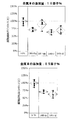
- FIG. 1 shows an alloy obtained by adding 3.0 atomic% of W, Nb, Hf, Re to an Ir—Rh alloy (Ir-14.78 atomic% Rh-3.0 atomic% (W, Nb, Hf, Re It is a figure which shows the oxidation depletion rate by the high temperature oxidation test of (alloy).
- the oxidation depletion rate of the alloy obtained by adding W, Nb, and Hf to the Ir—Rh alloy is about 58 to 70%, and the oxidation depletion rate is greatly reduced compared to the conventional Ir—Rh alloy. Confirmed to do.
- This improvement in high temperature oxidation resistance has the effect of greatly improving the durability of the spark plug.
- the oxidative depletion rate of an alloy obtained by adding Re, which is a refractory metal, to an Ir—Rh alloy was about 170%. From this result, it has been found that the addition of Re tends to worsen without improving the high-temperature oxidation resistance of the Ir—Rh alloy as a base. Re was selected in this embodiment because it focused on its high melting point. From this test result, even if a metal having a high melting point is simply added to the Ir—Rh alloy, high temperature oxidation resistance can be improved. Was confirmed not to be connected.
- an Ir—Rh—M alloy was manufactured by changing the addition amount of the additive metal M, and the high temperature oxidation resistance was evaluated.
- an Ir-14.78 atomic% Rh-1.0 atomic% M alloy obtained by adding 1.0 atomic% of W, Nb, Mo, and V to an Ir-Rh alloy, and 0.5 atomic% of W , Nb added Ir-14.78 atomic% Rh-0.5 atomic% M alloy was produced.
- an alloy ingot was manufactured while adjusting the alloy composition in an arc melting furnace, and a cube-shaped sample was cut out to evaluate high-temperature oxidation resistance.
- the evaluation method for high-temperature oxidation resistance was heated in the atmosphere at 1200 ° C. for 20 hours, and the oxidation depletion rate was calculated by measuring the weight before and after the test. Then, the oxidation depletion rate of each alloy with respect to the oxidation depletion rate of the conventional Ir—Rh alloy (Ir-14.78 atomic% Rh) was calculated.
- the present invention is a spark plug electrode material that has high resistance to high-temperature oxidation and excellent wear resistance.
- the present invention can be expected to be applied to a spark plug that is applied to an automobile engine that is in a harsh environment for improving fuel efficiency.
Landscapes
- Chemical & Material Sciences (AREA)
- Engineering & Computer Science (AREA)
- Materials Engineering (AREA)
- Mechanical Engineering (AREA)
- Metallurgy (AREA)
- Organic Chemistry (AREA)
- Spark Plugs (AREA)
Abstract
本発明は、Irに必須の添加元素であるRhと金属Mを添加したIr-Rh-M合金からなるスパークプラグ電極用材料であって、5.5原子%以上45.0原子%以下のRhを含み、金属Mとして、0.1原子%以上19.0原子%以下のW、0.1原子%以上16.0原子%以下のNb、0.1原子%以上8.0原子%以下のHf、0.1原子%以上8.0原子%以下のMo、0.1原子%以上8.0原子%以下のVのいずれかの金属を少なくとも1種含み、残部Irであるプラグ電極用材料である。このIr-Rh-M合金は、従来のIr-Rh合金に対して優れた高温酸化耐性を発揮できるスパークプラグ電極用の材料となる。
Description
本発明は、スパークプラグの電極を構成する材料に関し、高温特性、耐消耗性、特に、高温酸化耐性に優れるイリジウム合金からなる材料に関する。
内燃機関用のスパークプラグは、燃焼室内における過酷な環境においても長期間使用できるよう、耐消耗性に優れることが求められる。そのため、スパークプラグの主要部材である電極(中心電極及び接地電極)の構成材料として、従来から、Pt、Ir等の貴金属材料が用いられている。これらの貴金属材料は、プラグ電極の一部(貴金属チップ)又は全体を構成する材料として知られている。
ここで、スパークプラグの電極用材料の耐消耗性に関してより詳細に検討すると、高温酸化耐性と火花消耗耐性が重視される。即ち、高酸化雰囲気下でも酸化による消耗が少ない材料や、プラグ使用中に絶えず生じる火花による消耗(火花消耗)の少ない材料の開発が重視される。こうした観点から、スパークプラグ電極用の材料として、Ir(イリジウム)にRh(ロジウム)を添加したIr-Rh合金が好適な特性を有する材料として知られている(特許文献1)。
Irは、高融点(融点:2454℃)で硬度が高く、スパークプラグの電極用材料として好適な特性を有する。その一方で、揮発性を有する酸化物を生成し、高温酸化耐性においてやや劣る金属でもある。上記したIr-Rh合金からなるスパークプラグの電極用材料は、Irが有する高融点・高硬度というメリットを活かしつつ、酸化揮発の問題を解消するためにRhを合金化したものである。このIr-Rh合金からなるスパークプラグの電極用材料は、高温酸化耐性及び火花消耗耐性に優れており、実用化されてきた材料である。
Ir-Rh合金は、上記の通り、スパークプラグの電極用材料として好適な特性を有する。もっとも、この種の材料については、高温特性の更なる改善が絶えず要求されている。特に、近年の自動車用エンジンにおける、燃焼効率の向上や緻密な電子制御化等により、その内部雰囲気はより複雑・苛酷なものとなっている。こうした傾向に対応するため、スパークプラグ電極用材料にも、これまで以上の高温酸化耐性や火花消耗耐性の改善が期待されている。
そこで本発明は、スパークプラグ電極用の材料において、Ir-Rh合金を参照しつつ、この貴金属合金に対して高温特性に優れた材料、特に、高温酸化耐性に優れた材料を提供することを目的とする。
本願発明者等は、Ir-Rh合金からなるスパークプラグ電極用の材料の高温特性の改善の方向性として、高温酸化耐性の向上に注力することとした。
上記の通り、スパークプラグ電極用の材料の高温特性としては、高温酸化耐性だけではなく火花消耗耐性も改善項目として挙げられている。この点に関して、本発明者等によれば、火花消耗耐性の改善の指針としては、合金の融点を上昇させることが有用であることが知られている。合金の高融点化の手法として、Ir、Rhの少なくともいずれかよりも、融点が高い第3の元素を添加・合金化すれば良いので、火花消耗耐性の方が高温酸化耐性よりも容易に改善できる特性と思われる。
しかしながら、Irも本来は高融点の金属とされているので、第3元素の添加によってその合金の高融点化を図るとなると、その添加量は相当な量とせざるを得ない。そうなると、火花消耗耐性以外の、Ir-Rh合金が本来有するメリットが失われる可能性がある。また、過剰の第3元素の添加は、金属間化合物の形成等の問題をも生じさせる。よって、第3の元素を添加するとしても、その添加量には限界があるので、合金の融点をさほど変化させることはできない。つまり、Ir-Rh合金に関しては、融点上昇による火花消耗耐性の大きな改善は望めないと考えられる。
そこで、本発明者等は、Ir-Rh合金の高温特性の改善の方向性として、高温酸化耐性の向上を図ることとした。もっとも、この開発の意図には、火花消耗耐性を軽視することは含まれていない。もともと火花消耗耐性に優れ、その大幅な改善が難しいIr-Rh合金に対しては、火花消耗耐性を維持しつつ、高温酸化耐性の改善を図った方が好適な材料を得ることができると考えである。
また、高温酸化耐性の改善とは、高温酸化雰囲気中でIr-Rh合金が酸化しないようにすることを目指すことではない。如何に耐酸化性の高い合金であっても、酸化という化学反応を完全に回避することは不可能だからである。スパークプラグ電極のような高温酸化雰囲気に曝される材料にとって、酸化の完全な抑制はとりわけ不可能なことである。
ここで、スパークプラグ電極用の材料における高温酸化耐性とは、酸化物を形成しつつも、その酸化物の安定性の高さに関連するといえる。安定性の高い酸化物が形成され合金表面に残存すれば、新たな酸化反応は抑制され、材料消耗はストップするからである。この考察に基づき、本発明者等は、Ir-Rh合金の高温酸化耐性改善のため、生成する酸化物の安定性を向上させることのできる添加元素の合金化を検討することとした。
そして、この検討において、本発明者等は、合金の主成分であるIrの酸化物(IrO2、IrO3)を基準としつつ、各種金属(M)の酸化物(MaOb(a、bは任意の整数))について、融点、蒸気圧、生成自由エネルギー等の物性を対比・検討し、高温酸化耐性の向上に寄与できる添加金属(M)として、W(タングステン)、Nb(ニオブ)、Hf(ハフニウム)、Mo(モリブデン)、V(バナジウム)を見出し本発明に想到した。
即ち、本願発明は、Irに必須の添加元素であるRhと金属Mを添加したIr-Rh-M合金からなるスパークプラグ電極用材料であって、 5.5原子%以上45原子%以下のRhを含み、金属Mとして以下のいずれかの金属を少なくとも1種含み、残部Irであるプラグ電極用材料である。
・0.1原子%以上19.0原子%以下のW
・0.1原子%以上16.0原子%以下のNb
・0.1原子%以上8.0原子%以下のHf
・0.1原子%以上8.0原子%以下のMo
・0.1原子%以上8.0原子%以下のV
・0.1原子%以上19.0原子%以下のW
・0.1原子%以上16.0原子%以下のNb
・0.1原子%以上8.0原子%以下のHf
・0.1原子%以上8.0原子%以下のMo
・0.1原子%以上8.0原子%以下のV
上記の通り、本発明に係るスパークプラグ電極用材料は、Irに対する必須の添加元素として、Rhに加えて、W(タングステン)、Nb(ニオブ)、Hf(ハフニウム)、Mo(モリブデン)、V(バナジウム)の少なくともいずれかの金属(M)を添加したIr合金からなるものである。以下、本発明に係るスパークプラグ電極用材料を構成するIr-Rh-M合金について、その成分組成について説明する。
本願発明で、Ir-Rh合金をベースとしたのは、上記の通り、Ir-Rh合金は、高温酸化耐性及び火花消耗耐性に優れた材料として、現在においても有用だからである。Irは高融点金属であり、基本的に火花消耗耐性に優れる金属であることから合金の主成分となる。そして、Rhは、Irの弱点であった高温酸化耐性、酸化揮発の問題に対処するために添加される必須の添加元素である。Rhの含有量は、5.5原子%以上45原子%以下Rhとする。好ましくは、9原子%以上32原子%以下とする。
本発明では、Rhに加えて必須の添加元素として金属Mを添加する。この金属Mは、W、Nb、Hf、Mo、Vの少なくともいずれかが選択される。これらの5種の金属元素が選択されるのは、Ir-Rh合金の酸化物の安定性を向上させて、高温酸化耐性を改善するためである。つまり、これら5種の金属元素の酸化物(WO2、WO3、NbO2、Nb2O3、HfO2、MoO3、V2O5等)は、Ir-Rh合金の主成分であるIrの酸化物(IrO2、IrO3)に対して、高融点で低蒸気圧となる傾向がある。従って、高温環境下において、揮発性のあるIr酸化物よりも安定的に存在することができる。また、W、Nb、Hf、Mo、Vの酸化物は、Ir酸化物よりも標準生成自由エネルギーが低いことから、Ir酸化物に先んじて生成される。従って、Ir-Rh合金にW、Nb、Hf、Mo、Vの少なくともいずれかを添加することで、高温雰囲気における質量減の少ない高温酸化耐性に優れた材料を得ることができる。
ここで、金属Mの含有量は、添加元素によって多少相違する。添加量設定の指針としては、Ir及びRhに対する固溶限を超えない範囲とする。固溶限を超えた添加により、合金中に金属間化合物等の析出相や分離相が生じる可能性が生じ、それによって高温酸化耐性が却って悪化するおそれがあるからである。そして、W、Nb、Hf、Mo、Vの具体的な添加量は、Wは0.1原子%以上19.0原子%以下、Nbは0.1原子%以上16.0原子%以下、Hfは0.1原子%以上8.0原子%以下とする。
金属Mの好ましい添加量は、Wは0.5原子%以上9.0原子%以下、Nbは0.5原子%以上8.0原子%以下、Hfは0.5原子%以上4.0原子%以下、Moは0.5原子%以上4.0原子%以下、Vは0.5原子%以上4.0原子%以下とする。更に好ましくは、W、Nb、Hf、Mo、Vのいずれの金属の添加量も0.5原子%以上5.0原子%以下とする。
W、Nb、Hf、Mo、Vの金属Mは、いずれか1種又は2種以上5種以下の金属を添加することができる。但し、2種以上の金属を添加する場合、その合計添加量は、1.0原子%以上10.0原子%以下とすることが好ましく、0.5原子%以上5.0原子%以下にするのがより好ましい。過剰添加により、合金の融点が大きく低下し、火花消耗耐性が悪化するおそれがあるからである。
また、本発明に係るIr-Rh-M合金からなるプラグ電極用材料は、金属Mに加えて他の更なる添加元素を追加することもできる。この追加的・任意的な添加元素は、合金の加工性や加工組織の高温安定性を改善することを意図するものである。特に、加工性の改善は、インゴットから線材へ、線材からチップ状小片へ加工されるスパークプラグ電極用材料にとって特に重要である。
加工性改善のための任意的添加元素は、B(ホウ素)又はC(炭素)のいずれかが適用される。これらは、少なくともいずれかを0.005~0.1原子%添加するのが好ましい。0.005原子%未満では、効果がなく、また、0.1原子%を超えるとホウ化物、炭化物を形成し、加工性を悪化させることとなる。B、C双方を添加する場合、それぞれ0.1原子%以下添加することが好ましい。
また、加工組織の高温安定性改善のための任意的添加元素として、Zr(ジルコニウム)、Ce(セリウム)を添加しても良い。Zr(ジルコニウム)、Ce(セリウム)は、0.005~0.05原子%添加するのが好ましい。Zr、Ce双方を添加する場合、それぞれ0.05原子%以下添加することが好ましい。
以上説明した本発明に係るIr-Rh-M合金からなるスパークプラグ電極用材料は、各構成金属を混合し、溶解・鋳造を行うことで製造することができる。そして、製造された合金インゴットを板材や線材に加工した後、所望の長さに切断すること貴金属チップに加工し、スパークプラグの電極部分に接合して使用される。
以上説明した本発明に係るスパークプラグ電極用材料は、Ir-Rh合金をベースとしつつ、金属MとしてW、Nb、Hfの少なくともいずれかを添加したIr合金からなる。本発明は、高温酸化耐性及び火花消耗耐性に優れるIr-Rh合金について、高温酸化耐性の更なる改善を図っている。本発明によれば、従来のIr-Rh合金よりも高温特性に優れたスパークプラグ電極用材料を得ることができ、スパークプラグの高性能化、耐消耗性の向上を図ることができる。
本発明は、Ir-Rh合金の高温酸化耐性の向上により高温特性の改善を図ったが、本発明に係る合金は、火花消耗耐性について特段劣ることはない。WはIrよりも融点が高く、Nbの融点はIrとほぼ同等である。また、HfはIrより低融点ではあるRhよりも高融点である。そして、それらの添加量を考慮すれば、本発明に係る合金は、ベースになるIr-Rh合金の融点より低くなることないと考えられる。従って、火花消耗耐性についても差は生じないといえる。
第1実施形態: 以下、本発明の好適な実施例を説明する。本実施形態では、金属MとなるW、Nb、Hf、Mo、Vの中からW、Nb、Hfを選択した。そして、Ir-14.78原子%Rh合金に、W、Nb、Hfを3.0原子%それぞれ添加した3元系合金を製造し、その高温酸化耐性を評価した。また、比較のため、Ir-14.78原子%Rh合金に、Irより融点の高い金属であるRe(レニウム:融点3182℃)を3.0原子%添加した合金を製造して評価した。
Ir-Rh-M合金の製造は、アーク溶解炉により所定の合金組成となるよう調整した合金インゴットを製造した(寸法15mm幅×50mm長さ×10mm高さの棒状、重量100.0g)。本実施形態では、Rhが14.78原子%で金属Mが3原子%(残部Ir)の合金を製造した。また、本実施形態では、従来例であるIrRh合金(Ir-14.78原子%Rh)も製造した。
そして、製造した合金インゴットから1辺0.8mmのcube状の試料を切り出して高温酸化耐性を評価した。高温酸化耐性の評価方法は、大気中1200℃で20時間加熱し、試験前後の重量測定により酸化減耗率を算出した。そして、従来例であるIr-Rh合金の酸化減耗率に対する各合金の酸化減耗率(Ir-Rh合金の酸化減耗率を100%としたときの各合金の酸化減耗率)を算出した。
図1は、Ir-Rh合金に、3.0原子%のW、Nb、Hf、Reを添加した合金(Ir-14.78原子%Rh-3.0原子%(W、Nb、Hf、Re)合金)の高温酸化試験による酸化減耗率を示す図である。図1から、Ir-Rh合金にW、Nb、Hfを添加した合金の酸化減耗率は約58~70%となっており、従来例であるIr-Rh合金に対して酸化減耗率が大きく低減することが確認された。この高温酸化耐性の改善は、スパークプラグの耐久時間を大きく向上させることができる効果を有する。
一方、Ir-Rh合金に、高融点金属であるReを添加した合金(Ir-14.78原子%Rh-3.0原子%Re合金)の酸化減耗率は、約170%であった。この結果から、Reの添加はベースとなるIr-Rh合金の高温酸化耐性を改善することなく、逆に悪化させる傾向があることが分かった。本実施形態でReを選択したのは、その高い融点に着目したからであるが、この試験結果から、単純に融点が高い金属をIr-Rh合金に添加しても、高温酸化耐性の向上には繋がらないことが確認された。
第2実施形態:本実施形態では、添加金属Mの添加量を変更してIr-Rh-M合金を製造し、高温酸化耐性を評価した。ここでは、Ir-Rh合金に、1.0原子%のW、Nb、Mo、Vを添加したIr-14.78原子%Rh-1.0原子%M合金と、0.5原子%のW、Nbを添加したIr-14.78原子%Rh-0.5原子%M合金を製造した。
第1実施形態と同様に、アーク溶解炉で合金組成を調整しつつ合金インゴットを製造し、cube状の試料を切り出して高温酸化耐性を評価した。高温酸化耐性の評価方法は、第1実施形態と同じく、大気中1200℃で20時間加熱し、試験前後の重量測定により酸化減耗率を算出した。そして、従来例であるIr-Rh合金(Ir-14.78原子%Rh)の酸化減耗率に対する各合金の酸化減耗率を算出した。
この試験結果を図2に示す。本実施形態では、Ir-Rh合金への金属Mの添加量について、第1実施形態の添加量(3.0原子%)よりも低減した。この態様においても、Ir-Rh-M合金(M=W、Nb、Mo、V)は、従来技術(Ir-Rh合金)よりも酸化減耗率を大きく低減できることが確認された。そして、Nb、Wに関しては、添加量を0.5原子%と更に低減させても有効であることが確認できた。第1実施形態の結果と併せてみると、Wは特に有効な添加元素であり、いずれの添加量においても高温酸化耐性の改善を図ることができることが確認された。
本発明は、高温酸化耐性が高く耐消耗性に優れたスパークプラグ電極用材料である。本発明は、燃費向上等のため過酷な環境となる自動車用エンジンに適用されるスパークプラグへの適用が期待できる。
Claims (4)
- Irに必須の添加元素であるRhと金属Mを添加したIr-Rh-M合金からなるスパークプラグ電極用材料であって、
5.5原子%以上45原子%以下のRhを含み、
金属Mとして以下のいずれかの金属を少なくとも1種含み、残部Irであるプラグ電極用材料。
・0.1原子%以上19.0原子%以下のW
・0.1原子%以上16.0原子%以下のNb
・0.1原子%以上8.0原子%以下のHf
・0.1原子%以上8.0原子%以下のMo
・0.1原子%以上8.0原子%以下のV - 9原子%以上32原子%以下のRhを含み、金属Mとして以下のいずれかの金属を少なくとも1種含む請求項1記載のスパークプラグ電極用材料。
・0.5原子%以上9.0原子%以下のW
・0.5原子%以上8.0原子%以下のNb
・0.5原子%以上4.0原子%以下のHf
・0.5原子%以上4.0原子%以下のMo
・0.5原子%以上4.0原子%以下のV - 添加元素として、B、Cの少なくともいずれかを0.005原子%以上0.1原子%以下含む請求項1又は請求項2記載のスパークプラグ電極用材料。
- 添加元素として、更に、Zr、Ceの少なくともいずれかを0.005原子%以上0.05原子%以下含む請求項1~請求項3のいずれかに記載のスパークプラグ電極用材料。
Applications Claiming Priority (2)
| Application Number | Priority Date | Filing Date | Title |
|---|---|---|---|
| JP2016145168A JP2019189884A (ja) | 2016-07-25 | 2016-07-25 | スパークプラグ電極用の材料 |
| JP2016-145168 | 2016-07-25 |
Publications (1)
| Publication Number | Publication Date |
|---|---|
| WO2018021028A1 true WO2018021028A1 (ja) | 2018-02-01 |
Family
ID=61017111
Family Applications (1)
| Application Number | Title | Priority Date | Filing Date |
|---|---|---|---|
| PCT/JP2017/025398 Ceased WO2018021028A1 (ja) | 2016-07-25 | 2017-07-12 | スパークプラグ電極用の材料 |
Country Status (2)
| Country | Link |
|---|---|
| JP (1) | JP2019189884A (ja) |
| WO (1) | WO2018021028A1 (ja) |
Cited By (3)
| Publication number | Priority date | Publication date | Assignee | Title |
|---|---|---|---|---|
| WO2019124201A1 (ja) * | 2017-12-19 | 2019-06-27 | 株式会社デンソー | スパークプラグ用電極、及びスパークプラグ |
| JP2019110114A (ja) * | 2017-12-19 | 2019-07-04 | 株式会社デンソー | スパークプラグ用電極、及びスパークプラグ |
| JP2021038448A (ja) * | 2019-09-05 | 2021-03-11 | 石福金属興業株式会社 | 高強度Ir合金 |
Citations (6)
| Publication number | Priority date | Publication date | Assignee | Title |
|---|---|---|---|---|
| JPH10259435A (ja) * | 1996-05-10 | 1998-09-29 | Furuya Kinzoku:Kk | イリジウム基合金 |
| JP2001203060A (ja) * | 2000-01-17 | 2001-07-27 | Ngk Spark Plug Co Ltd | スパークプラグ |
| JP2005533924A (ja) * | 2002-07-13 | 2005-11-10 | ジョンソン、マッセイ、パブリック、リミテッド、カンパニー | 合金 |
| JP2008509531A (ja) * | 2004-08-03 | 2008-03-27 | フェデラル−モーグル コーポレイション | リフローされた点火先端部を有する点火装置およびその製造方法 |
| JP2010517248A (ja) * | 2007-01-31 | 2010-05-20 | ユラ・テック・カンパニー・リミテッド | 点火プラグ |
| JP2011505652A (ja) * | 2007-11-15 | 2011-02-24 | ハネウェル・インターナショナル・インコーポレーテッド | スパークプラグ電極のためのイリジウム合金 |
-
2016
- 2016-07-25 JP JP2016145168A patent/JP2019189884A/ja active Pending
-
2017
- 2017-07-12 WO PCT/JP2017/025398 patent/WO2018021028A1/ja not_active Ceased
Patent Citations (6)
| Publication number | Priority date | Publication date | Assignee | Title |
|---|---|---|---|---|
| JPH10259435A (ja) * | 1996-05-10 | 1998-09-29 | Furuya Kinzoku:Kk | イリジウム基合金 |
| JP2001203060A (ja) * | 2000-01-17 | 2001-07-27 | Ngk Spark Plug Co Ltd | スパークプラグ |
| JP2005533924A (ja) * | 2002-07-13 | 2005-11-10 | ジョンソン、マッセイ、パブリック、リミテッド、カンパニー | 合金 |
| JP2008509531A (ja) * | 2004-08-03 | 2008-03-27 | フェデラル−モーグル コーポレイション | リフローされた点火先端部を有する点火装置およびその製造方法 |
| JP2010517248A (ja) * | 2007-01-31 | 2010-05-20 | ユラ・テック・カンパニー・リミテッド | 点火プラグ |
| JP2011505652A (ja) * | 2007-11-15 | 2011-02-24 | ハネウェル・インターナショナル・インコーポレーテッド | スパークプラグ電極のためのイリジウム合金 |
Cited By (5)
| Publication number | Priority date | Publication date | Assignee | Title |
|---|---|---|---|---|
| WO2019124201A1 (ja) * | 2017-12-19 | 2019-06-27 | 株式会社デンソー | スパークプラグ用電極、及びスパークプラグ |
| JP2019110114A (ja) * | 2017-12-19 | 2019-07-04 | 株式会社デンソー | スパークプラグ用電極、及びスパークプラグ |
| US10938186B2 (en) | 2017-12-19 | 2021-03-02 | Denso Corporation | Spark plug electrode and spark plug |
| JP2021038448A (ja) * | 2019-09-05 | 2021-03-11 | 石福金属興業株式会社 | 高強度Ir合金 |
| JP7252621B2 (ja) | 2019-09-05 | 2023-04-05 | 石福金属興業株式会社 | 高強度Ir合金 |
Also Published As
| Publication number | Publication date |
|---|---|
| JP2019189884A (ja) | 2019-10-31 |
Similar Documents
| Publication | Publication Date | Title |
|---|---|---|
| US20130002121A1 (en) | Electrode material for a spark plug | |
| US9932656B2 (en) | Nickel-based alloy with silicon, aluminum, and chromium | |
| RU2518814C1 (ru) | Сплав на основе никеля | |
| US20040013560A1 (en) | Nickel-based alloy | |
| CN101622443B (zh) | 点火塞 | |
| JP2013512551A (ja) | スパークプラグ用電極材料 | |
| JP2019110114A (ja) | スパークプラグ用電極、及びスパークプラグ | |
| CN103229372A (zh) | 用于与火花塞一起使用的电极材料 | |
| US8274204B2 (en) | Spark plug with platinum-based electrode material | |
| US8471451B2 (en) | Ruthenium-based electrode material for a spark plug | |
| WO2018021028A1 (ja) | スパークプラグ電極用の材料 | |
| JPH1022052A (ja) | スパークプラグ | |
| JPH1197151A (ja) | スパークプラグ | |
| KR20120095928A (ko) | 안정된 체적의 전극 재료로 이루어진 스파크 플러그 | |
| WO2018117135A1 (ja) | 耐熱性Ir合金 | |
| CN103492595A (zh) | 火花塞电极材料和火花塞 | |
| WO2019124201A1 (ja) | スパークプラグ用電極、及びスパークプラグ | |
| JP2017531091A (ja) | ロジウム合金 | |
| JP5794890B2 (ja) | 点火プラグ電極用の材料 | |
| JP5521490B2 (ja) | 点火プラグ用電極材料 | |
| JP4223298B2 (ja) | スパークプラグ | |
| JP4735963B2 (ja) | 点火プラグ用電極材料 | |
| GB2557462A (en) | Rhodium alloys | |
| JPS63118039A (ja) | 点火プラグ用電極材料 | |
| JP4267802B2 (ja) | 電極材料 |
Legal Events
| Date | Code | Title | Description |
|---|---|---|---|
| 121 | Ep: the epo has been informed by wipo that ep was designated in this application |
Ref document number: 17834036 Country of ref document: EP Kind code of ref document: A1 |
|
| NENP | Non-entry into the national phase |
Ref country code: DE |
|
| 122 | Ep: pct application non-entry in european phase |
Ref document number: 17834036 Country of ref document: EP Kind code of ref document: A1 |
|
| NENP | Non-entry into the national phase |
Ref country code: JP |