WO2018020904A1 - セルロースエステルフィルム、偏光板および画像表示装置 - Google Patents
セルロースエステルフィルム、偏光板および画像表示装置 Download PDFInfo
- Publication number
- WO2018020904A1 WO2018020904A1 PCT/JP2017/022609 JP2017022609W WO2018020904A1 WO 2018020904 A1 WO2018020904 A1 WO 2018020904A1 JP 2017022609 W JP2017022609 W JP 2017022609W WO 2018020904 A1 WO2018020904 A1 WO 2018020904A1
- Authority
- WO
- WIPO (PCT)
- Prior art keywords
- group
- cellulose ester
- ester film
- general formula
- polarizing plate
- Prior art date
- Legal status (The legal status is an assumption and is not a legal conclusion. Google has not performed a legal analysis and makes no representation as to the accuracy of the status listed.)
- Ceased
Links
Images

Classifications
-
- C—CHEMISTRY; METALLURGY
- C08—ORGANIC MACROMOLECULAR COMPOUNDS; THEIR PREPARATION OR CHEMICAL WORKING-UP; COMPOSITIONS BASED THEREON
- C08J—WORKING-UP; GENERAL PROCESSES OF COMPOUNDING; AFTER-TREATMENT NOT COVERED BY SUBCLASSES C08B, C08C, C08F, C08G or C08H
- C08J5/00—Manufacture of articles or shaped materials containing macromolecular substances
- C08J5/18—Manufacture of films or sheets
-
- C—CHEMISTRY; METALLURGY
- C08—ORGANIC MACROMOLECULAR COMPOUNDS; THEIR PREPARATION OR CHEMICAL WORKING-UP; COMPOSITIONS BASED THEREON
- C08K—Use of inorganic or non-macromolecular organic substances as compounding ingredients
- C08K5/00—Use of organic ingredients
- C08K5/04—Oxygen-containing compounds
- C08K5/10—Esters; Ether-esters
- C08K5/101—Esters; Ether-esters of monocarboxylic acids
- C08K5/103—Esters; Ether-esters of monocarboxylic acids with polyalcohols
-
- C—CHEMISTRY; METALLURGY
- C08—ORGANIC MACROMOLECULAR COMPOUNDS; THEIR PREPARATION OR CHEMICAL WORKING-UP; COMPOSITIONS BASED THEREON
- C08K—Use of inorganic or non-macromolecular organic substances as compounding ingredients
- C08K5/00—Use of organic ingredients
- C08K5/04—Oxygen-containing compounds
- C08K5/10—Esters; Ether-esters
- C08K5/109—Esters; Ether-esters of carbonic acid, e.g. R-O-C(=O)-O-R
-
- C—CHEMISTRY; METALLURGY
- C08—ORGANIC MACROMOLECULAR COMPOUNDS; THEIR PREPARATION OR CHEMICAL WORKING-UP; COMPOSITIONS BASED THEREON
- C08K—Use of inorganic or non-macromolecular organic substances as compounding ingredients
- C08K5/00—Use of organic ingredients
- C08K5/16—Nitrogen-containing compounds
- C08K5/20—Carboxylic acid amides
-
- C—CHEMISTRY; METALLURGY
- C08—ORGANIC MACROMOLECULAR COMPOUNDS; THEIR PREPARATION OR CHEMICAL WORKING-UP; COMPOSITIONS BASED THEREON
- C08K—Use of inorganic or non-macromolecular organic substances as compounding ingredients
- C08K5/00—Use of organic ingredients
- C08K5/16—Nitrogen-containing compounds
- C08K5/21—Urea; Derivatives thereof, e.g. biuret
-
- C—CHEMISTRY; METALLURGY
- C08—ORGANIC MACROMOLECULAR COMPOUNDS; THEIR PREPARATION OR CHEMICAL WORKING-UP; COMPOSITIONS BASED THEREON
- C08L—COMPOSITIONS OF MACROMOLECULAR COMPOUNDS
- C08L1/00—Compositions of cellulose, modified cellulose or cellulose derivatives
- C08L1/08—Cellulose derivatives
- C08L1/10—Esters of organic acids, i.e. acylates
-
- G—PHYSICS
- G02—OPTICS
- G02B—OPTICAL ELEMENTS, SYSTEMS OR APPARATUS
- G02B5/00—Optical elements other than lenses
- G02B5/30—Polarising elements
-
- G—PHYSICS
- G02—OPTICS
- G02F—OPTICAL DEVICES OR ARRANGEMENTS FOR THE CONTROL OF LIGHT BY MODIFICATION OF THE OPTICAL PROPERTIES OF THE MEDIA OF THE ELEMENTS INVOLVED THEREIN; NON-LINEAR OPTICS; FREQUENCY-CHANGING OF LIGHT; OPTICAL LOGIC ELEMENTS; OPTICAL ANALOGUE/DIGITAL CONVERTERS
- G02F1/00—Devices or arrangements for the control of the intensity, colour, phase, polarisation or direction of light arriving from an independent light source, e.g. switching, gating or modulating; Non-linear optics
- G02F1/01—Devices or arrangements for the control of the intensity, colour, phase, polarisation or direction of light arriving from an independent light source, e.g. switching, gating or modulating; Non-linear optics for the control of the intensity, phase, polarisation or colour
- G02F1/13—Devices or arrangements for the control of the intensity, colour, phase, polarisation or direction of light arriving from an independent light source, e.g. switching, gating or modulating; Non-linear optics for the control of the intensity, phase, polarisation or colour based on liquid crystals, e.g. single liquid crystal display cells
- G02F1/133—Constructional arrangements; Operation of liquid crystal cells; Circuit arrangements
- G02F1/1333—Constructional arrangements; Manufacturing methods
- G02F1/1335—Structural association of cells with optical devices, e.g. polarisers or reflectors
-
- G—PHYSICS
- G09—EDUCATION; CRYPTOGRAPHY; DISPLAY; ADVERTISING; SEALS
- G09F—DISPLAYING; ADVERTISING; SIGNS; LABELS OR NAME-PLATES; SEALS
- G09F9/00—Indicating arrangements for variable information in which the information is built-up on a support by selection or combination of individual elements
Definitions
- the present invention relates to a cellulose ester film, a polarizing plate, and an image display device.
- the cellulose ester film is widely used as a film constituting an image display device. It has been conventionally studied to improve the performance of such cellulose ester films (see, for example, Patent Documents 1 and 2).
- the polarizing plate includes at least a polarizer, and usually a protective film (polarizing plate protective film) is laminated on one or both surfaces of the polarizer in order to prevent the polarizer from being damaged.
- the polarizing plate plays a role of selectively transmitting light having a polarization plane in a certain direction, and the function for this role is exhibited by the polarizer.
- the polarizing plate protective film can contribute to improving the durability of the polarizing plate.
- An object of the present invention is to provide a cellulose ester film that is a new means for improving the durability of a polarizing plate. Moreover, the objective of this invention is also providing the polarizing plate and image display apparatus containing the said cellulose-ester film.
- the total number contained in one molecule of a group represented by the following general formula A and selected from the group consisting of a methyl group and a chain methylene group is in the range of 0 to 2
- the present invention relates to a cellulose ester film containing a compound.
- R 1 represents an aryl group.
- R 2 represents an n-valent polycyclic alicyclic group.
- n represents an integer of 1 to 8.
- X 1 and X 2 each independently represent a single bond or any one or a combination of two or more selected from the group consisting of an oxygen atom, —NR 3 — and an alkylene group.
- R 3 represents a hydrogen atom, —CH 3 or —CH 2 CH 3 .
- n represents an integer of 2 to 8
- a plurality of R 1 , X 1 and X 2 may be the same or different.
- the n-valent polycyclic alicyclic group represented by R 2 in General Formula A is an n-valent polycyclic alicyclic hydrocarbon group.
- the polycyclic structure of the n-valent polycyclic alicyclic group represented by R 2 in the general formula A is a polycyclic structure selected from the group consisting of a bridged ring and a condensed ring.
- R 1 represents an aryl group selected from the group consisting of a phenyl group, a biphenyl group, and a naphthyl group.
- the partial structure represented by the following general formula (A-1) of the general formula A includes a bond selected from the group consisting of a urethane bond, a carbonate bond, and an ester bond.
- the partial structure represented by the general formula (A-1) includes a bond selected from the group consisting of a urethane bond and a carbonate bond.
- the total number of groups selected from the group consisting of a methyl group and a chained methylene group contained in one molecule is zero.
- n represents an integer of 2 to 4.
- the cellulose ester film contains a cellulose ester and contains 0.1 to 50.0 parts by mass of the compound represented by the general formula A with respect to 100.0 parts by mass of the cellulose ester.
- the further aspect of this invention is related with the polarizing plate containing the said cellulose-ester film and a polarizer.
- a further aspect of the present invention relates to an image display device including the polarizing plate.
- the image display device is a liquid crystal display device further including a liquid crystal cell.
- a cellulose ester film useful as a polarizing plate protective film a polarizing plate having excellent polarizing plate durability including the cellulose ester film, and an image display device including the polarizing plate.
- Substituent group T Alkyl groups (including straight-chain alkyl groups, branched alkyl groups and cycloalkyl groups; preferably those having 1 to 20 carbon atoms, more preferably 1 to 12 carbon atoms, still more preferably 1 to 8 carbon atoms such as methyl group, ethyl Group, isopropyl group, tert-butyl group, n-octyl group, n-decyl group, n-hexadecyl group, cyclopropyl group, cyclopentyl, cyclohexyl group, etc.), alkenyl group (preferably having 2 to 20 carbon atoms).
- Alkyl groups including straight-chain alkyl groups, branched alkyl groups and cycloalkyl groups; preferably those having 1 to 20 carbon atoms, more preferably 1 to 12 carbon atoms, still more preferably 1 to 8 carbon atoms such as methyl group, ethyl Group, iso
- Group preferably 6-30 carbon atoms, more preferably 6-20 carbon atoms, still more preferably 6-12 carbon atoms such as phenyl group, biphenyl group, naphthyl group, etc.
- amino group preferably carbon number 0 to 20, more preferably 0 to 10, still more preferably 0 to 6, and examples thereof include an amino group, a methylamino group, a dimethylamino group, a diethylamino group, and a dibenzylamino group
- an alkoxy group preferably Has 1 to 20 carbon atoms, more preferably 1 to 12 carbon atoms, still more preferably 1 to 8 carbon atoms, such as a methoxy group, an ethoxy group, and a butoxy group
- an aryloxy group preferably 6 to 20 carbon atoms.
- An acyl group Preferably it has 1 to 20 carbon atoms, more preferably 1 to 16 carbon atoms, still more preferably 1 to 12 carbon atoms such as acetyl group, benzoyl group, formyl group, pivaloyl group, etc.), alkoxycarbonyl group (preferably carbon 2-20, more preferably 2-16, and even more preferably 2-12, such as a methoxycarbonyl group, ethoxycarbonyl group, etc.), an aryloxycarbonyl group (preferably having a carbon number of 7-20, more Preferably, it is 7 to 16, more preferably 7 to 10, and examples thereof include a phenyloxycarbonyl group, etc.), an acyloxy group (preferably having 2 to 20 carbon atoms, more preferably 2 to 16, more preferably 2 to 10 such as an acetoxy group and
- An alkoxycarbonylamino group (preferably having a carbon number of 2 to 20, more preferably 2 to 16, more preferably 2 to 12, such as a methoxycarbonylamino group), an aryloxycarbonylamino group (preferably Has 7 to 20 carbon atoms, more preferably 7 to 16 carbon atoms, still more preferably 7 to 12 carbon atoms, such as a phenyloxycarbonylamino group, and a sulfonylamino group (preferably 1 to 20 carbon atoms, more preferably Is 1 to 16, more preferably 1 to 12, and examples thereof include a methanesulfonylamino group, a benzenesulfonylamino group, etc.), a sulfamoyl group (preferably having a carbon number of 0 to 20, more preferably 0 to 16, more preferably Preferably, it is 0 to 12, for example, sulfamoyl group, methylsulfamoyl group, dimethyl group
- An arylthio group (preferably having 6 to 20 carbon atoms, more preferably 6 to 16 carbon atoms, still more preferably 6 to 12 carbon atoms such as a phenylthio group), a sulfonyl group (preferably 1 to 1 carbon atom). 20, more preferably 1 to 16, still more preferably 1 to 12, such as a mesyl group, And sulfinyl group (preferably having 1 to 20 carbon atoms, more preferably 1 to 16 carbon atoms, still more preferably 1 to 12 carbon atoms such as methanesulfinyl group and benzenesulfinyl group).
- Urethane groups ureido groups (preferably having 1 to 20 carbon atoms, more preferably 1 to 16 carbon atoms, still more preferably 1 to 12 carbon atoms such as ureido group, methylureido group, and phenylureido group), phosphorus.
- An acid amide group (preferably having 1 to 20 carbon atoms, more preferably 1 to 16 carbon atoms, still more preferably 1 to 12 carbon atoms such as diethyl phosphoric acid amide group and phenyl phosphoric acid amide group), a hydroxy group, Mercapto group, halogen atom (eg fluorine atom, chlorine atom, bromine atom, iodine atom), cyano group, sulfo group, carboxy group , A nitro group, a hydroxamic acid group, a sulfino group, a hydrazino group, an imino group, a heterocyclic group (preferably having a carbon number of 1 to 30, more preferably 1 to 12, and examples of the hetero atom include a nitrogen atom, an oxygen atom, Sulfur atoms, specifically, for example, imidazolyl group, pyridyl group, quinolyl group, furyl group, piperidyl group, morpholino group, be
- a silyl group (preferably having 3 to 40 carbon atoms, more preferably 3 to 30 carbon atoms, still more preferably 3 to 24 carbon atoms such as a trimethylsilyl group and a triphenylsilyl group).
- substituents may be further substituted.
- the plurality of substituents may be the same or different. If possible, they may be linked together to form a ring.
- Cellulose ester film One embodiment of the present invention is a compound represented by the general formula A, wherein the total number of groups selected from the group consisting of a methyl group and a chained methylene group contained in one molecule is in the range of 0 to 2 Relates to a cellulose ester film containing
- the present inventor has found that the durability of the polarizing plate can be improved by using the cellulose ester film as a polarizing plate protective film.
- the reason is that the cellulose ester film is difficult to contain water (decrease in water content) and / or difficult to pass water (decrease in moisture permeability) due to the inclusion of the compound. I guess it is.
- the present inventor believes that reducing the moisture reaching the polarizer from the external atmosphere may lead to maintaining the performance of the polarizer, that is, improving the durability of the polarizing plate.
- the present inventor shows that the reason why the moisture content and / or moisture permeability of the cellulose ester film can be reduced by the above compound is represented by the following general formula (A-1) in the general formula A contained in the above compound.
- a structure for example, an ester bond, a hydroxy group, an ether bond in the main chain glucopyranose ring, etc.
- a structure for example, an ester bond, a hydroxy group, an ether bond in the main chain glucopyranose ring, etc.
- the interaction between molecules generally tends to be weakened or lost as the mobility of the compound forming the interaction increases.
- the mobility of the compound is usually easily increased at higher temperatures.
- the present inventor maintains that the above-mentioned compound tends not to increase its mobility at high temperatures, and thus maintains the interaction with the cellulose ester, which is considered to be caused by the partial structure, even in an environment higher in temperature than indoors. I believe you can. Thereby, it is guessed that the cellulose-ester film containing the said compound can contribute to preventing the performance fall of the polarizer in the environment at a temperature higher than indoor by using as a polarizing plate protective film.
- the present inventors infer that the durability of the polarizing plate can be improved.
- the R 2 part in the general formula A is an n-valent polycyclic alicyclic group, and the methyl group and chain contained in one molecule. This contributes to the total number of groups selected from the group consisting of a methylene group in the form of a compound (the more the number of these groups are included, the higher the mobility of the compound). The inventor thinks.
- compound A a compound represented by the general formula A and having a total number of groups selected from the group consisting of a methyl group and a chained methylene group contained in one molecule in the range of 0 to 2 is referred to as “compound A ”.
- Compound A is represented by Formula A.
- the total number of groups selected from the group consisting of a methyl group and a chained methylene group contained in one molecule of Compound A is in the range of 0-2.
- the “chain methylene group” means a methylene group other than a methylene group contained in a closed ring structure.
- a methylene group included in the linking group that connects the closed ring structure and the closed ring structure is included in a chain methylene group.
- the methyl group and the chain methylene group defined in the range of 0 to 2 in the total number contained in one molecule of Compound A may have a substituent or may be unsubstituted.
- the substituent that can substitute the methyl group does not include a linear alkyl group, a branched alkyl group, and a chained methylene group.
- a substituent capable of substituting a chain methylene group does not include a linear alkyl group, a branched alkyl group, or a chain methylene group.
- substituent capable of substituting the methyl group and the chain methylene group include a nitro group, a halogen atom (for example, a fluorine atom, a chlorine atom, a bromine atom, and an iodine atom), a carboxy group, a hydroxy group, and an amino group. , A cyano group, a cycloalkyl group (preferably having 3 to 15 carbon atoms), an aryl group (preferably having 6 to 14 carbon atoms), and the like.
- the compound A contains a methyl group
- the methyl group is preferably an unsubstituted methyl group (—CH 3 ).
- chain methylene group is preferably an unsubstituted methylene group (—CH 2 —).
- the total number of groups selected from the group consisting of a methyl group and a chain methylene group contained in one molecule is in the range of 0-2. This is one reason why the cellulose ester film containing the compound A can contribute to preventing deterioration of the performance of the polarizer in an environment at a temperature higher than indoor by using the polarizing plate protective film. I guess.
- the total number of groups selected from the group consisting of a methyl group and a chain-like methylene group contained in one molecule of Compound A is more preferably 0 or 1, more preferably 0. .
- R 1 represents an aryl group.
- the aryl group may be a monocyclic aromatic hydrocarbon group or a polycyclic aromatic hydrocarbon group, and may have a substituent or may be unsubstituted.
- polycyclic means having a polycyclic structure selected from the group consisting of a bridged ring, a condensed ring, a spiro ring, and a ring assembly.
- the “bridged ring” includes a bridged condensed ring. Therefore, “fused ring” refers to a fused ring having no bridged ring structure.
- Ring assembly refers to a structure in which a plurality of closed ring structures are linked through a single bond or a linking group.
- the linking group the following description of the ring assembly relating to the n-valent polycyclic alicyclic group represented by R 2 can be referred to.
- the closed ring structure included in the ring assembly may be a single ring or a polycyclic ring selected from the group consisting of a bridged ring, a condensed ring and a spiro ring.
- the substituent include the substituents described in Substituent Group T, such as a nitro group, a halogen atom (a fluorine atom, a chlorine atom, a bromine atom, Or iodine atom), carboxy group, hydroxy group, cyano group, alkoxy group (preferably having 2 or less carbon atoms), cycloalkyl group (preferably having 3 to 15 carbon atoms), aryl group (preferably having 6 to 14 carbon atoms), A substituent selected from the group consisting of an alkoxycarbonyl group (preferably having 2 to 7 carbon atoms) and an acyl group (preferably having 2 or less carbon atoms) is preferable.
- the aryl group represented by R 1 is a substituted aryl group, the number of substituents contained in the substituted aryl group is 1 or more, and preferably 1 to 5.
- the aryl group represented by R 1 can preferably be a phenyl group, a biphenyl group, a naphthyl group or an anthracenyl group, and these aryl groups may have a substituent and are unsubstituted. Also good.
- the aryl group represented by R 1 is more preferably a substituted or unsubstituted phenyl group, a substituted or unsubstituted biphenyl group, or a substituted or unsubstituted naphthyl group. More preferably, it is a biphenyl group or an unsubstituted naphthyl group.
- R 2 represents an n-valent polycyclic alicyclic group, and n represents an integer of 1 to 8. n is preferably 7 or less, more preferably 6 or less, still more preferably 5 or less, and still more preferably 4 or less. N is 1 or more, and more preferably 2 or more. More preferably, n is an integer of 2-4. In the case where n represents an integer of 2-8, in the general formula A, R 1 is more (i.e. n pieces) are present. In this case, a plurality of R 1 may be the same and different. The same applies to X 1 and X 2 .
- the n-valent polycyclic alicyclic group represented by R 2 may be a polycyclic alicyclic hydrocarbon group, It may be an alicyclic group containing an atom.
- the hetero atom include an oxygen atom, a nitrogen atom, and a sulfur atom.
- the polycyclic alicyclic group is an alicyclic group containing a heteroatom
- the number of heteroatoms contained in the alicyclic group is, for example, 1 to 3, and preferably 1 or 2.
- the polycyclic alicyclic group represented by R 2 is preferably a polycyclic alicyclic hydrocarbon group, that is, does not contain a hetero atom.
- the number of carbon atoms of the polycyclic alicyclic group represented by R 2 is, for example, in the range of 7 to 20, preferably in the range of 7 to 14, and more preferably in the range of 7 to 10.
- Polycyclic structure having polycyclic alicyclic group represented by R 2, bridged ring, condensed ring can be a polycyclic structure selected from the group consisting of spiro ring and ring assembly, bridged ring, fused
- a polycyclic structure selected from the group consisting of a ring and a ring assembly is preferred, and a polycyclic structure selected from the group consisting of a bridged ring and a condensed ring is more preferred.
- the polycyclic alicyclic group represented by R 2 is more preferably a bridged cyclic alicyclic hydrocarbon group or a condensed cyclic alicyclic hydrocarbon group.
- the bridged cyclic alicyclic hydrocarbon group means that the polycyclic structure contained in this group is a bridged ring.
- the condensed cyclic alicyclic hydrocarbon group means a group in which the polycyclic structure contained in this group is a condensed ring. As described above, the bridged condensed ring is included in the bridged ring, and the condensed ring refers to a condensed ring having no bridged ring structure.
- Examples of the bridging ring constituting the bridging cyclic alicyclic hydrocarbon group include a pinane ring, bornane ring, norpinane ring, norbornane ring, bicyclooctane ring (bicyclo [2.2.2] octane ring, bicyclo [3.2]. .1] 2 cyclic hydrocarbon ring octane ring) and the like, and homobledane ring ring, adamantane ring, a tricyclo [5.2.1.0 2, 6] decane ring, tricyclo [4.3.1.1 2, 5 ] tricyclic hydrocarbon ring such as undecane ring, tetracyclo [4.4.0.1 2,5 . And a tetracyclic hydrocarbon ring such as a 1 7,10 ] dodecane ring and a perhydro-1,4-methano-5,8-methanonaphthalene ring.
- Examples of the condensed ring constituting the condensed cyclic hydrocarbon group include perhydronaphthalene (decalin) ring, perhydroanthracene ring, perhydrophenanthrene ring, perhydroacenaphthene ring, perhydrofluorene ring, perhydroindene. And a condensed ring in which a plurality of 5- to 8-membered cycloalkane rings such as a perhydrophenalene ring are condensed.
- the ring assembly includes a plurality of closed ring structures selected from the group consisting of monocyclic and polycyclic,
- the closed ring structure is linked through a single bond or a linking group.
- the linking group is preferably an alkylene group having 2 or less carbon atoms, a carbonyl group, an oxygen atom (ie, —O—), a sulfur atom (ie, —S—), —NR 4 —, or a combination thereof.
- R 4 represents a hydrogen atom, —CH 3, or —CH 2 CH 3 .
- the closed ring structure included in the ring assembly is preferably a single ring.
- Examples of the monocyclic ring include cycloalkane rings having 3 to 12 carbon atoms such as cyclopentane ring, cyclohexane ring, cycloheptane ring and cyclooctane ring, and cycloalkene rings having 3 to 12 carbon atoms such as cyclohexene ring. Can do.
- polycyclic structure having polycyclic alicyclic group represented by R 2 include also polycyclic structure contained in the exemplified compounds described below.
- X 1 and X 2 are each independently a single bond or an oxygen atom (i.e., -O -), - NR 3 - and any one selected from the group consisting of alkylene or 2 R 3 represents one or more combinations, and R 3 represents a hydrogen atom, —CH 3 (unsubstituted methyl group) or —CH 2 CH 3 (unsubstituted ethyl group).
- —NR 3 — is preferably —NH—, that is, R 3 preferably represents a hydrogen atom.
- X 1 and / or X 2 is a combination of two or more selected from the group consisting of an oxygen atom, —NR 3 — and an alkylene group
- the group formed by such a combination includes an oxygen atom, —
- Two or three combinations selected from the group consisting of NR 3 — and an alkylene group are preferred, and two combinations are more preferred.
- the alkylene group a substituted or unsubstituted alkylene group having 1 to 3 carbon atoms is preferable, and an unsubstituted alkylene group having 1 or 2 carbon atoms is more preferable.
- the partial structure represented by the following general formula (A-1) in the general formula A preferably includes a bond selected from the group consisting of a urethane bond, a carbonate bond, and an ester bond.
- the partial structure represented by the general formula (A-1) is preferably a urethane bond, a carbonate bond or an ester bond.
- * represents a binding site.
- the case where the partial structure represented by the general formula (A-1) is a urethane bond is a case where one of X 1 and X 2 represents —NH— and the other represents an oxygen atom.
- the case where the partial structure is a carbonate bond is a case where both X 1 and X 2 represent an oxygen atom.
- the case where the partial structure represents an ester bond is a case where one of X 1 and X 2 represents an oxygen atom and the other represents a single bond.
- X 1 and X 2 more preferably none a single bond, and more preferably represents at least one of an oxygen atom.
- the partial structure further preferably includes a bond selected from the group consisting of a urethane bond and a carbonate bond, and more preferably a urethane bond or a carbonate bond.
- the molecular weight of Compound A is preferably 2000 or less, more preferably 1500 or less, and still more preferably 1000 or less, from the viewpoint of compatibility with the cellulose ester. Further, from the viewpoint of suppressing volatilization of the compound during film formation of the cellulose ester film (that is, from the viewpoint of low volatility), the molecular weight of Compound A is preferably 200 or more, and more preferably 300 or more. When the above compound is a polymer, the molecular weight means a weight average molecular weight unless otherwise specified.
- the average molecular weight refers to a value obtained by converting a value measured by gel permeation chromatography (GPC; Gel Permeation Chromatography) into polystyrene.
- GPC Gel Permeation Chromatography
- Examples of specific measurement conditions include the following measurement conditions.
- the average molecular weight shown in the below-mentioned Examples is a value obtained by converting a value measured under the following measurement conditions into polystyrene.
- GPC device HLC-8320 (manufactured by Tosoh Corporation) Column: TSK gel SuperHZM-H, TSK gel SuperHZ4000, TSK gel SuperHZ2000 combined use (manufactured by Tosoh Corporation, 4.6 mm ID (Inner diameter) x 15.0 cm) Eluent: Tetrahydrofuran (THF)
- Compound A described above can be synthesized by a known method.
- Compound A is a carbonyl compound having a carbonyl bond (C ⁇ O) between X 1 and X 2 in formula A.
- the carbonyl compounds are, for example, “4th edition Experimental Chemistry Course 20 Organic Synthesis II Alcohol / Amine”, “4th edition Experimental Chemistry Course 21 Organic Synthesis III Aldehyde / Ketone / Quinone”, “4th Edition Experimental Chemistry” It can be synthesized by the method described in “Course 22 Organic Synthesis IV Acid / Amino Acid / Peptide”. More specifically, the desired compound can be obtained by reacting a corresponding alcohol or amine with a reactive agent such as an acid halide or isocyanate.
- a reactive agent such as an acid halide or isocyanate.
- a compound having a urethane bond can be synthesized by a reaction between a corresponding alcohol and an isocyanate.
- a compound having a carbonate bond can be synthesized by a reaction between a corresponding alcohol and a halogenated formate.
- a compound having an ester bond can be synthesized by a reaction between a corresponding alcohol and an acid halide.
- the above method is merely an example, and as a method for synthesizing Compound A, a known method such as a method described in the literature can be employed without any limitation.
- Compound A contained in the cellulose ester film according to one embodiment of the present invention is not limited to the exemplified compounds.
- the cellulose ester film contains a cellulose ester, and preferably contains 0.1 to 50.0 parts by mass of Compound A with respect to 100.0 parts by mass of the cellulose ester, and 0.5 to 40.0 parts by mass.
- the content is more preferably 1.0 to 30.0 parts by mass, still more preferably 1.0 to 15.0% by mass.
- the above content refers to the total amount of the two or more compounds.
- the cellulose ester film contains cellulose ester together with compound A.
- the component (main component) occupying the most is preferably a cellulose ester.
- the cellulose ester content of the cellulose ester film can be, for example, about 50 to 95% by mass with respect to the total film mass of the cellulose ester film. However, it is not limited to the said range.
- cellulose ester a known cellulose ester used for producing a cellulose ester film can be used without any limitation.
- two or more types of cellulose esters having different substituents and / or substitution degrees may be used in combination, or cellulose composed of a plurality of layers containing different cellulose esters by a co-casting method described later.
- An ester film may be formed.
- the cellulose ester is preferably cellulose acylate.
- the degree of substitution of cellulose acylate means the ratio of acylation of three hydroxy groups present in the structural unit of cellulose (glucose having a ( ⁇ ) 1,4-glycoside bond).
- the degree of substitution also called the degree of acylation
- the degree of substitution can be calculated by measuring the amount of bound fatty acid (or bound carboxylic acid) per unit mass of cellulose.
- the degree of substitution of cellulose acylate is determined by measuring 13 C-NMR (nuclear magnetic resonance) spectrum by dissolving cellulose acylate in a solvent such as deuterated dimethyl sulfoxide, It can be determined from the peak intensity ratio of the carbonyl carbon in the acyl group.
- the substitution degree of cellulose acylate can be determined by 13 C-NMR measurement after substituting the remaining hydroxy group of cellulose acylate with another acyl group different from the acyl group possessed by cellulose acylate itself. Details of the measurement method are described in Tezuka et al. (Carbohydrate. Res., 273 (1995) 83-91).
- the degree of substitution of cellulose acylate is preferably 1.50 or more and 3.00 or less, more preferably 2.00 or more and 2.97 or less, and further preferably 2.30 or more and 2.97 or less. Preferably, it is 2.30 or more and 2.95 or less.
- the acyl group contained in the cellulose acylate is preferably an acyl group selected from the group consisting of an acetyl group, a propionyl group, and a butyryl group, and more preferably an acetyl group.
- the degree of substitution is preferably 2.00 or more and 3.00 or less, and 2.20 or more and 3.00 or less. Is more preferably 2.30 or more and 3.00 or less, further preferably 2.30 or more and 2.97 or less, and further preferably 2.30 or more and 2.95 or less. preferable.
- a mixed fatty acid ester containing two or more types of acyl groups can also be preferably used as the cellulose acylate.
- the acyl group is preferably an acetyl group and an acyl group having 3 to 4 carbon atoms.
- the degree of substitution is preferably less than 2.5, more preferably less than 1.9.
- the degree of substitution is preferably 0.10 or more and 1.5 or less, and 0.20 or more and 1.20 or less. More preferably, it is 0.50 or more and 1.10 or less.
- a mixed acid ester having a fatty acyl group and a substituted or unsubstituted aromatic acyl group described in paragraphs 0023 to 0038 of JP-A-2008-20896 can also be preferably used.
- the cellulose acylate preferably has a weight average polymerization degree of 250 to 800, more preferably 300 to 600.
- the cellulose acylate used in one embodiment of the present invention preferably has a number average molecular weight of 40000 to 230,000, more preferably a number average molecular weight of 60000 to 230,000, and a number average molecular weight of 75000 to 200000. Most preferred.
- Cellulose acylate can be synthesized using an acid anhydride and / or acid chloride as an acylating agent.
- an organic acid for example, acetic acid
- methylene chloride or the like is usually used as a reaction solvent.
- a protic catalyst such as sulfuric acid can be used as the catalyst.
- the acylating agent is an acid chloride
- a basic compound can be used as a catalyst.
- cellulose is an organic acid (acetic acid, propionic acid, butyric acid, etc.) or acid anhydrides (acetic anhydride, propionic anhydride, butyric anhydride) corresponding to acetyl group and other acyl groups.
- Etc. is esterified with a mixed organic acid component to synthesize cellulose acylate.
- cellulose such as cotton linter and wood pulp is activated with an organic acid such as acetic acid, and then esterified using a mixture of organic acid components as described above in the presence of a sulfuric acid catalyst.
- the organic acid anhydride component is generally used in excess relative to the amount of hydroxy groups present in the cellulose.
- a hydrolysis reaction depolymerization reaction
- the degree of polymerization of cellulose acylate may decrease, and the physical properties of the resulting cellulose ester film may decrease. Therefore, the reaction conditions such as the reaction temperature are preferably determined in consideration of the degree of polymerization, molecular weight, etc. of the cellulose acylate obtained.
- the cellulose ester film may contain other additives in addition to the compound A and the cellulose ester.
- the additive include known plasticizers, organic acids, dyes, polymers, retardation adjusting agents, ultraviolet absorbers, antioxidants, matting agents and the like. Regarding these, the description in paragraphs 0062 to 0097 of JP2012-155287A can be referred to, and the contents thereof are incorporated in the present specification.
- the additive include a peeling accelerator, an organic acid, a polyvalent carboxylic acid derivative, and the like. Regarding these, the description in paragraphs 0212 to 0219 of International Publication No.
- WO2015 / 005398 can be referred to, and the contents thereof are incorporated in the present specification.
- the content of the additive (when the cellulose ester film contains two or more additives, the total content thereof) is 50.0 parts by mass or less with respect to 100.0 parts by mass of the cellulose ester. Preferably, it is 30.0 parts by mass or less.
- plasticizer One preferred additive is a plasticizer.
- a plasticizer By adding a plasticizer, the hydrophobicity of the cellulose ester film can be increased.
- the molecular weight of the plasticizer is preferably 3000 or less, more preferably 1500 or less, and still more preferably 1000 or less, from the viewpoint of further increasing the hydrophobicity of the cellulose ester film by adding. Further, the molecular weight of the plasticizer can be, for example, 300 or more, preferably 350 or more, from the viewpoint of low volatility.
- the plasticizer for the polymer the molecular weight means the number average molecular weight.
- plasticizer examples include polyhydric alcohol polyhydric ester compounds, polycondensed ester compounds (hereinafter also referred to as “polycondensed ester plasticizers”), carbohydrate compounds, and the like.
- polyhydric ester compounds of polyhydric alcohol paragraphs 0081 to 0098 of JP-A-2014-077130, for polycondensed ester plasticizers, paragraphs 00099 to 0124 of the publication, and for carbohydrate compounds, paragraph 0125 of the publication. ⁇ 0140 can be referred to.
- the content of these plasticizers in the cellulose ester film is 1.0 to 20.0 parts by mass with respect to 100.0 parts by mass of the cellulose ester from the viewpoint of achieving both the effect of adding the plasticizer and suppressing the precipitation of the plasticizer.
- the content is 2.0 to 15.0 parts by mass, and more preferably 5.0 to 15.0 parts by mass.
- One preferable additive may include an antioxidant.
- the description of paragraphs 0143 to 0165 of International Publication No. WO2015 / 005398 can be referred to, and the contents thereof are incorporated herein.
- radical scavenger One preferred additive is a radical scavenger.
- the description in paragraphs 0166 to 0199 of International Publication No. WO2015 / 005398 can be referred to, and the contents thereof are incorporated herein.
- a deterioration preventing agent As one of preferable additives, a deterioration preventing agent can be mentioned. Regarding the deterioration preventing agent, the description in paragraphs 0205 to 0206 of International Publication No. WO2015 / 005398 can be referred to, and the contents thereof are incorporated in the present specification.
- the cellulose ester film may also contain a compound having a barbituric acid structure (barbituric acid compound).
- a barbituric acid compound is a compound which can express various functions to a cellulose-ester film by adding this compound.
- a barbituric acid compound is effective for improving the hardness of a cellulose ester film.
- the barbituric acid compound is also effective in improving the durability against light, heat, humidity, etc. of a polarizing plate provided with a cellulose ester film containing this compound.
- the barbituric acid compound that can be added to the cellulose ester film for example, the description of paragraphs 0029 to 0060 of International Publication No. WO2015 / 005398 can be referred to, and the contents thereof are incorporated herein.
- the method for producing the cellulose ester film is not particularly limited.
- a method for producing a cellulose ester film a melt film forming method or a solution film forming method (solvent cast method) is preferable, and a solution film forming method (solvent cast method) is more preferable in consideration of volatilization of additives and reduction of decomposition.
- solvent cast method a melt film forming method or a solution film forming method
- a solution film forming method solvent cast method
- Examples of the production of cellulose ester films using the solvent cast method are described in US Pat. No. 2,336,310, US Pat. No. 2,367,603, US Pat. No. 2,492,078, US Pat. 492,977, US Pat. No. 2,492,978, US Pat. No. 2,607,704, US Pat. No.
- a prepared solution (called “dope”) is uniformly extruded onto a metal support from a pressure die, and once cast on the metal support.
- a method of adjusting the thickness of the dope with a blade (doctor blade method), a method of adjusting with a reverse rotating roll (reverse roll coater method), etc.
- a method using a pressure die is preferable.
- the pressure die includes a coat hanger type and a T die type, and any of them can be preferably used.
- various conventionally known methods for casting a solution can be used, and various film forming conditions can be set in consideration of differences in the boiling point of the solvent contained in the solution. Can be set.
- a lamination casting method such as a co-casting method, a sequential casting method, or a coating method can also be used.
- the co-casting method also referred to as “simultaneous multilayer casting method”
- a cellulose ester solution (dope) for each layer is prepared.
- a casting dope for each layer is extruded from a casting die onto a casting support (band or drum), It is a casting method in which each layer is cast at the same time to form a cast film, and the film is peeled off from the support at an appropriate time and dried to form a film.
- the casting die can simultaneously extrude each casting dope from another slit or the like. For example, using a casting die, two types of skin layer (surface layer) dope and core layer dope having the same composition or different compositions are simultaneously extruded onto a casting support and cast. Can be formed.
- FIG. 1 is a schematic diagram showing an example of a casting die used in the co-casting method.
- the casting film 70 on which the dope is formed from the casting die 89 is formed on the traveling support body (band) 85 for traveling.
- Co-casting can be performed so as to have a three-layer structure of core layer / skin layer B.
- the core layer refers to a layer located in the center of a three-layer cast film, and the skin layer A and the skin layer B are layers located outside the core layer in a three-layer cast film. I mean.
- the skin layer A is located on the side opposite to the support, and the skin layer B is located on the support side.
- a casting dope for the first layer is first extruded from a casting die on a casting support, cast, dried, or dried without being dried.
- a dope for casting for two layers is extruded by casting from a casting die, and if necessary, the dope is successively cast to the third layer or more, laminated, peeled off from the support at an appropriate time, and dried.
- This is a casting method for forming In general, the core layer is formed into a film by a solution casting method, a coating solution is prepared to be applied to the surface layer, and the core layer is applied to each side or both sides simultaneously using an appropriate applicator. In this method, a liquid film is applied and dried to form a laminated film.
- the compound A can be contained in any one or more of the plurality of layers or in all the layers.
- the manufacturing method of a cellulose-ester film can also include a extending process after a film forming process.
- the stretching direction of the cellulose ester film is preferably any of the cellulose ester film transport direction (MD (Machine Direction) direction) and the direction orthogonal to the transport direction (TD (Transverse Direction) direction).
- MD Machine Direction
- TD Transport Direction
- the stretching direction of the cellulose ester film is particularly preferably a direction (TD direction) orthogonal to the cellulose ester film transport direction from the viewpoint of the subsequent polarizing plate processing process using the cellulose ester film.
- Methods for stretching in the TD direction are disclosed in, for example, JP-A-62-115035, JP-A-4-152125, JP-A-4-284221, JP-A-4-298310, JP-A-11-48271, and the like. Are listed.
- stretching in the MD direction for example, by adjusting the speed of the cellulose ester film conveyance roller and making the cellulose ester film take-up speed faster than the cellulose ester film stripping speed, the cellulose ester film is stretched.
- the cellulose ester film can be stretched by conveying while holding the width of the cellulose ester film with a tenter and gradually widening the width of the tenter. After the cellulose ester film is dried, it can be stretched using a stretching machine (preferably uniaxial stretching using a long stretching machine).
- the transmission axis of the polarizer and the slow axis of the cellulose ester film are arranged in parallel in order to suppress light leakage when the polarizing plate is viewed obliquely.
- Embodiments are also preferred. Since the transmission axis of the roll film polarizer produced continuously is generally parallel to the width direction of the roll film, the roll film polarizer and the roll film cellulose ester film (protective film) ) Is continuously bonded, the slow axis of the roll film-like protective film is preferably parallel to the width direction of the cellulose ester film. For this purpose, it is also preferable to stretch the cellulose ester film more in the TD direction.
- stretching in the TD direction it is preferably 5 to 100%, more preferably 5 to 80%, and still more preferably 5 to 40%.
- unstretched means that stretching is 0%.
- the thickness of the cellulose ester film can be appropriately determined according to the application, and is, for example, 5 to 100 ⁇ m. When the thickness is 5 ⁇ m or more, the handling property when producing a web-like film is improved, which is preferable. Moreover, by setting it as 100 micrometers or less, it becomes easy to respond to a humidity change and it becomes easy to maintain an optical characteristic.
- the thickness of the cellulose ester film is more preferably 8 to 80 ⁇ m, still more preferably 10 to 70 ⁇ m.
- the thickness of the core layer is preferably 3 to 70 ⁇ m, and more preferably 5 to 60 ⁇ m.
- the thickness of skin layer A and skin layer B is preferably 0.5 to 20 ⁇ m, and preferably 0.5 to 10 ⁇ m. More preferred is 0.5-3 ⁇ m.
- the width of the cellulose ester film is preferably 700 to 3000 mm, more preferably 1000 to 2800 mm, and still more preferably 1300 to 2500 mm.
- the cellulose ester film can be used as a polarizing plate protective film by imparting adhesion to a polarizer material such as polyvinyl alcohol by saponification treatment (alkali saponification treatment).
- a method for the saponification treatment for example, the method described in paragraphs 0211 to 0212 of JP-A-2007-86748 can be used.
- the saponification treatment for the cellulose ester film is preferably performed in a cycle in which the film surface is immersed in an alkaline solution, neutralized with an acidic solution, washed with water and dried.
- alkaline solution include potassium hydroxide solution and sodium hydroxide solution, and the concentration of hydroxide ions is preferably in the range of 0.1 to 5.0 mol / L, preferably 0.5 to 4.0 mol. More preferably, it is in the range of / L.
- the alkaline solution temperature is preferably in the range of room temperature (for example, 20 to 25 ° C.) to 90 ° C., more preferably in the range of 40 to 70 ° C.
- an easy adhesion process as described in JP-A-6-94915 or JP-A-6-118232 may be applied to the cellulose ester film.
- the polarizing plate concerning 1 aspect of this invention contains the said cellulose-ester film and polarizer.
- the polarizing plate includes a polarizer and one polarizing plate protective film protecting one side of the polarizer, or at least one cellulose ester film as a polarizing plate protective film.
- a liquid crystal display device that is one embodiment of an image display device usually has a configuration in which a liquid crystal cell is disposed between a viewing-side polarizing plate and a backlight-side polarizing plate.
- the polarizing plate protective film located between the polarizing plate and the liquid crystal cell is the inner side protective film
- the protective film located on the side opposite to the inner side is the outer side protective film.
- the said cellulose-ester film can be used as any protective film of the inner side of a visual recognition side polarizing plate, an outer side, the inner side of a backlight side polarizing plate, and an outer side. Therefore, in one aspect, the liquid crystal display device includes the cellulose ester film as an outer-side polarizing plate protective film positioned on a surface opposite to the surface facing the liquid crystal cell of the polarizer.
- the said cellulose-ester film is contained in a liquid crystal display device as an inner side polarizing plate protective film located between a polarizer and a liquid crystal cell. Since the present inventors speculate that the cellulose ester film can exhibit the action of reducing moisture reaching the polarizer from the outside atmosphere, from the viewpoint of effectively exhibiting such action, the viewing side polarized light It is preferably included as a protective film for the plate, and more preferably included as an outer protective film for the viewing side polarizing plate.
- film members can be used as a polarizing plate protective film together with the cellulose ester film.
- Other film members used in this case are not particularly limited, and various film members usually used as a polarizing plate protective film can be used.
- an iodine-containing (iodine dyeing) polyvinyl alcohol film can be used.
- a film obtained by immersing and stretching a polyvinyl alcohol film in an iodine solution can be used.
- the saponification-treated surface of the cellulose ester film can be directly bonded to at least one surface of the polarizer using an adhesive.
- the term “adhesive” is used to include an adhesive and a pressure-sensitive adhesive.
- an aqueous solution of polyvinyl alcohol or polyvinyl acetal for example, polyvinyl butyral
- latex of vinyl polymer for example, polybutyl acrylate
- an ultraviolet curable adhesive or the like
- a particularly preferred adhesive is an aqueous solution of fully saponified polyvinyl alcohol.
- the polarizing plate protective film is preferably bonded to the polarizer so that the transmission axis of the polarizer and the slow axis of the polarizing plate protective film are substantially parallel, orthogonal or 45 °.
- the slow axis can be measured by various known methods, for example, using a birefringence meter (KOBRADH manufactured by Oji Scientific Instruments).
- substantially parallel, orthogonal or 45 ° means that the deviation from a strict direction or angle is within 5 °, preferably within 1 °, preferably within 0.5 °. More preferably. If the deviation is within 1 °, the polarization degree performance under the polarizing plate crossed Nicol is unlikely to deteriorate, and light leakage is less likely to occur.
- the polarizing plate functions as an antireflection film, a brightness enhancement film, a hard coat layer, a forward scattering layer, an antiglare (antiglare) layer, etc. for improving the visibility of the image display device without departing from the spirit of the present invention. It can also be used as a functionalized polarizing plate combined with an optical film having a layer. For details of these, reference can be made to the descriptions in paragraphs 0229 to 0242, paragraphs 0249 to 0250, and paragraphs 0086 to 0103 in JP 2012-215812 A, and the like. Incorporated into.
- the hard coat layer will be described below.
- a hard coat layer may be provided on the cellulose ester film as desired.
- a hard-coat layer can be formed on a cellulose-ester film by apply
- the thickness of the hard coat layer is preferably in the range of 0.1 to 6 ⁇ m, and more preferably in the range of 3 to 6 ⁇ m. By having a hard coat layer having a thickness in such a range, it is possible to obtain a polarizing plate including a hard coat layer that is improved in physical properties such as brittleness improvement and curl suppression, weight reduction, and manufacturing cost reduction.
- the curable composition for forming the hard coat layer contains, for example, a monomer, oligomer or polymer for matrix forming binder and an organic solvent.
- a hard coat layer can be formed by curing the curable composition after coating. For curing, a crosslinking reaction or a polymerization reaction can be used. Regarding these details, the description in paragraphs 0088 to 0101 of JP2012-215812A can be referred to, and the contents thereof are incorporated in the present specification.
- the curable composition can be prepared, for example, by dissolving and / or dispersing the above components in an organic solvent.
- a curable composition suitable for forming the hard coat layer is a curable composition containing a (meth) acrylate compound.
- the “(meth) acrylate compound” includes an acrylic compound and a methacrylic compound.
- An image display device includes at least one polarizing plate according to one embodiment of the present invention.
- One embodiment of the image display device is a liquid crystal display device.
- the polarizing plate can be used as any polarizing plate of a viewing side polarizing plate and a backlight side polarizing plate. In one embodiment, it is preferable to use the polarizing plate as at least the viewing side polarizing plate.
- a circularly polarizing plate disposed as an antireflection application of a self-luminous element such as a reflective or transflective liquid crystal display device or an organic EL (Electro Luminescence), one embodiment of the present invention
- a self-luminous element such as a reflective or transflective liquid crystal display device or an organic EL (Electro Luminescence)
- a self-luminous element such as a reflective or transflective liquid crystal display device or an organic EL (Electro Luminescence)
- organic EL Electro Luminescence
- the cellulose ester film concerning 1 aspect of this invention can show
- Exemplified Compound 5 was prepared according to J.I. Org. It was synthesized by the method described in Chem, 1994, 59, 3695.
- the cellulose ester solution I was mixed in an amount of 100.0 parts by mass, and the matting agent dispersion was mixed in an amount such that the matting agent was 0.2 parts by mass with respect to the cellulose ester to prepare a dope for film formation.
- the prepared dope for film formation was cast using a band casting machine.
- the band was made of stainless steel (SUS; Steel Special Use Stainless).
- the web (film) obtained by the casting was peeled off from the band, and then dried for 20 minutes in a tenter device (temperature in the device: 100 ° C.) using a tenter device that holds and conveys both ends of the web with clips. . Thereafter, the web was further dried by carrying it through a drying zone at a drying temperature of 120 ° C. Thus, a cellulose ester film having a film thickness of 60 ⁇ m was obtained.
- a long polyvinyl alcohol film (9 ⁇ 75RS manufactured by Kuraray Co., Ltd.) having a thickness of 75 ⁇ m was continuously conveyed by a guide roll.
- the continuously conveyed film was immersed in a 30 ° C. water bath to swell 1.5 times and stretched at a stretch ratio of 2 times.
- the polyvinyl alcohol film is immersed in a dyeing bath (solution temperature 30 ° C.) containing iodine and potassium iodide and dyed (iodine dyeing) and stretched at a stretch ratio of 3 times, and then the boric acid and Crosslinking treatment was performed in an acidic bath (liquid temperature 60 ° C.) to which potassium iodide was added, and stretching treatment was performed at a draw ratio of 6.5 times. After that, the iodine-stained polyvinyl alcohol film was dried for 5 minutes in an atmosphere having an atmosphere temperature of 50 ° C. to obtain a polarizer having a thickness of 20 ⁇ m.
- a polyvinyl alcohol-based adhesive (about 10 ml) was dropped onto the saponified cellulose ester film.
- the surface of the cellulose ester film on which the polyvinyl alcohol-based adhesive was dropped and the one side of the polarizer prepared above were bonded together to obtain a laminate.
- the obtained laminate was placed on a cellulose ester film side surface with an SUS plate of 30 cm in length, 30 cm in width, and 1 cm in thickness and subjected to a load for 30 minutes in an oven at an ambient temperature of 50 ° C. Heated. After removing the laminate from the oven, the SUS plate was removed.
- the measurement was performed in the range of 380 nm to 780 nm using an automatic polarizing film measuring device VAP-7070 manufactured by JASCO Corporation, and the measured value at a wavelength of 410 nm, which is a wavelength at which the influence of the deterioration of the performance of the polarizer is likely to occur, was adopted. .
- the parallel transmittance was measured by the same method as the orthogonal transmittance except that the produced sample was rotated 90 °. From the values of the orthogonal transmittance and the parallel transmittance thus measured, the polarization degree of the polarizing plate was calculated by the following formula.
- Polarization degree (%) [(parallel transmittance ⁇ orthogonal transmittance) / (orthogonal transmittance + parallel transmittance)] 1/2 ⁇ 100
- the two samples were stored for 500 hours in an environment having an atmospheric temperature of 60 ° C. and a relative humidity of 95%.
- the degree of polarization was obtained for the two samples in the same manner as described above, and the value obtained by arithmetically averaging the calculated values of the two samples was defined as the degree of polarization after storage of the polarizing plate.
- the amount of change in the degree of polarization before and after storage was calculated by the following formula. Based on the calculated degree of polarization change, polarizing plate durability was evaluated according to the following evaluation criteria.
- Polarization degree change (%) [Polarization before storage (%) ⁇ Polarization after storage (%)]
- Polarizer durability evaluation criteria A +: Polarization degree change amount is less than 0.05% A: Polarization degree change amount is 0.05% or more and less than 2.0% B: Polarization degree change amount is 2.0% or more and less than 3.0% C: Polarization degree More than 3.0% change
- ⁇ Evaluation of polarizing plate durability (2)> The amount of change in polarization degree (%) is obtained by the same method as in the evaluation of the durability of the polarizing plate (1) except that the storage condition is storage for 500 hours in an environment of an ambient temperature of 85 ° C. and a relative humidity of 85%.
- the polarizing plate durability was evaluated according to the above evaluation criteria.
- the surface hardness (Knoop hardness) of each cellulose ester film of Examples and Comparative Examples was measured by the following method.
- the cellulose ester film subjected to the measurement is a film that has not been preserved as in the evaluation of the polarizing plate durability.
- Each cellulose ester film was fixed on a glass substrate.
- Fuchterscope H100Vp type hardness tester a Knoop indenter in which the direction of the short axis of the indenter is arranged in parallel to the transport direction (longitudinal direction) during film formation of the cellulose ester film is placed on the glass substrate.
- Knoop hardness of the fixed cellulose ester film surface was measured under conditions of a loading time of 10 sec, a creep time of 5 sec, an unloading time of 10 sec, and a maximum load of 50 mN. The hardness was calculated from the relationship between the contact area between the indenter and the cellulose ester film surface determined from the indentation depth and the maximum load, and the arithmetic average of these five points was taken as Knoop hardness. Knoop hardness was expressed in units of N / mm 2 , and the surface hardness of the cellulose ester film was evaluated according to the following evaluation criteria based on the determined Knoop hardness. The evaluation results are shown in Table 3.
- a + Knoop hardness 220 N / mm 2 or more A: Knoop Hardness 210N / mm 2 or more 220 N / mm 2 under B: Knoop hardness 200 N / mm 2 or more 210N / mm 2 lower than C: Knoop hardness 190 N / mm 2 or more 200 N / mm 2 less D: Knoop hardness 190 N / mm less than 2
- the polarizing plate on the viewing side of a commercially available liquid crystal television (Sony BRAVIA J5000) is peeled off, and the polarizing plate prepared in the above example is the outer side of the cellulose ester film (polarizing plate protective film) in each of the above examples.
- the image display device liquid crystal display device was obtained by pasting through an adhesive.
- the present invention is useful in the technical field of various image display devices such as liquid crystal display devices.
Landscapes
- Chemical & Material Sciences (AREA)
- Physics & Mathematics (AREA)
- Health & Medical Sciences (AREA)
- Chemical Kinetics & Catalysis (AREA)
- Medicinal Chemistry (AREA)
- Polymers & Plastics (AREA)
- Organic Chemistry (AREA)
- Engineering & Computer Science (AREA)
- General Physics & Mathematics (AREA)
- Manufacturing & Machinery (AREA)
- Optics & Photonics (AREA)
- Nonlinear Science (AREA)
- Theoretical Computer Science (AREA)
- Materials Engineering (AREA)
- Mathematical Physics (AREA)
- Crystallography & Structural Chemistry (AREA)
- Polarising Elements (AREA)
- Liquid Crystal (AREA)
- Compositions Of Macromolecular Compounds (AREA)
Abstract
偏光板の耐久性向上を可能にする新たな手段となるセルロースエステルフィルムを提供する。一般式Aで表され、かつ1分子中に含まれるメチル基および鎖状のメチレン基からなる群から選択される基の合計数が0~2個の範囲である化合物を含有するセルロースエステルフィルム、偏光板及び画像表示装置を提供する。一般式A中、R1はアリール基、R2はn価の多環式脂環基、nは1~8の整数、X1およびX2はそれぞれ独立に単結合または酸素原子、-NR3-およびアルキレン基からなる群から選択されるいずれか1つもしくは2つ以上の組み合わせ、R3は水素原子、-CH3または-CH2CH3を表す。nが2~8の整数を表す場合、複数存在するR1、X1およびX2は、それぞれ同一でも異なっていてもよい。
Description
本発明は、セルロースエステルフィルム、偏光板および画像表示装置に関する。
セルロースエステルフィルムは、画像表示装置を構成するフィルムとして広く用いられている。かかるセルロースエステルフィルムの性能を向上することが、従来検討されてきた(例えば特許文献1、2参照)。
セルロースエステルフィルムの適用が有用な用途として、偏光板保護フィルムとしての用途が挙げられる。偏光板は、少なくとも偏光子を含み、通常、偏光子の一方または両方の面に、偏光子に傷が付くことを防ぐために保護フィルム(偏光板保護フィルム)が積層されている。画像表示装置において、偏光板は、一定方向の偏波面を有する光を選択的に透過させる役割を担っており、この役割を果たすための機能は偏光子によって発揮される。
近年、画像表示装置は、屋内での使用のほかに、屋外で使用される機会(例えば、屋外に設置される大画面ディスプレイ、携帯デバイス等として使用される機会)が増加している。そのため、画像表示装置を構成する偏光板に関しては、屋内より過酷な環境下、中でも偏光子の機能低下が生じやすい傾向がある屋内より高温の環境で使用されたとしても、上記役割を良好に果たすことができる偏光板へのニーズが高まっている。即ち、耐久性に優れる偏光板が求められている。屋内より高温の環境とは、例えば、雰囲気温度50℃以上の環境である。
偏光板の耐久性向上のための手段としては、偏光子そのものの耐久性を高めることが考えられる。しかしながら、偏光子そのものの耐久性を向上するために偏光子に何らかの変更(組成の変更、製法の変更等)を加えることは、偏光子の性能の変化を引き起こす可能性がある。そのため、偏光子の性能を維持しつつ耐久性を向上することは容易ではない。この点からは、偏光板保護フィルムが偏光板の耐久性向上に寄与できることが望ましい。
本発明の目的は、偏光板の耐久性向上を可能にする新たな手段となるセルロースエステルフィルムを提供することにある。また、本発明の目的は、上記セルロースエステルフィルムを含む、偏光板及び画像表示装置を提供することでもある。
本発明の一態様は、下記一般式Aで表され、かつメチル基および鎖状のメチレン基からなる群から選択される基の1分子中に含まれる合計数が0~2個の範囲である化合物を含有するセルロースエステルフィルムに関する。

一般式A中、R1は、アリール基を表す。R2は、n価の多環式脂環基を表す。nは、1~8の整数を表す。X1およびX2は、それぞれ独立に、単結合、または、酸素原子、-NR3-およびアルキレン基からなる群から選択されるいずれか1つもしくは2つ以上の組み合わせを表す。R3は、水素原子、-CH3または-CH2CH3を表す。nが2~8の整数を表す場合、複数存在するR1、X1およびX2は、それぞれ同一でも異なっていてもよい。
一態様では、一般式A中、R2で表されるn価の多環式脂環基は、n価の多環式脂環炭化水素基である。
一態様では、一般式A中、R2で表されるn価の多環式脂環基が有する多環構造は、架橋環および縮合環からなる群から選択される多環構造である。
一態様では、一般式A中、R1は、フェニル基、ビフェニル基およびナフチル基からなる群から選択されるアリール基を表す。
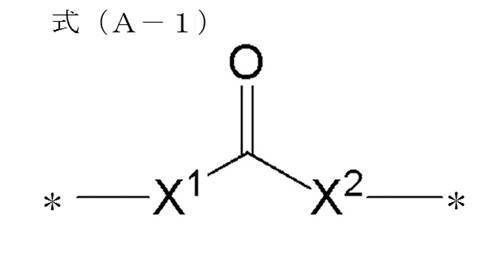
一態様では、一般式Aの下記一般式(A-1)で表される部分構造が、ウレタン結合、カーボネート結合およびエステル結合からなる群から選択される結合を含む。
一態様では、前記一般式(A-1)で表される部分構造が、ウレタン結合およびカーボネート結合からなる群から選択される結合を含む。
一態様では、一般式Aで表される化合物において、1分子中に含まれるメチル基および鎖状のメチレン基からなる群から選択される基の合計数は0個である。
一態様では、一般式A中、nが2~4の整数を表す。
一態様では、上記セルロースエステルフィルムは、セルロースエステルを含有し、一般式Aで表される化合物を、セルロースエステル100.0質量部に対して0.1~50.0質量部含有する。
本発明の更なる態様は、上記セルロースエステルフィルムと、偏光子と、を含む偏光板に関する。
本発明の更なる態様は、上記偏光板を含む画像表示装置に関する。
一態様では、上記画像表示装置は、更に液晶セルを含む液晶表示装置である。
本発明の一態様によれば、偏光板保護フィルムとして有用なセルロースエステルフィルム、このセルロースエステルフィルムを含む偏光板耐久性に優れる偏光板、およびこの偏光板を含む画像表示装置を提供することができる。
以下に、本発明について詳細に説明する。なお、本発明および本明細書において、「~」とは、その前後に記載される数値を下限値および上限値として含む意味で使用される。本発明および本明細書において、記載されている基は、特記しない限り、置換基を有していてもよいし、有していなくても(即ち無置換でも)よい。炭素数が特定されている基の場合、炭素数は、置換基が有する炭素数を含めた数を意味している。置換基としては、下記の置換基群Tに記載の各種置換基を例示することができる。
置換基群T:
アルキル基(直鎖アルキル基、分岐アルキル基およびシクロアルキル基を包含する;好ましくは炭素数1~20、より好ましくは1~12、更に好ましくは1~8のものであり、例えばメチル基、エチル基、イソプロピル基、tert-ブチル基、n-オクチル基、n-デシル基、n-ヘキサデシル基、シクロプロピル基、シクロペンチル、シクロヘキシル基等が挙げられる。)、アルケニル基(好ましくは炭素数2~20、より好ましくは2~12、更に好ましくは2~8であり、例えばビニル基、アリル基、2-ブテニル基、3-ペンテニル基等が挙げられる。)、アルキニル基(好ましくは炭素数2~20、より好ましくは2~12、更に好ましくは2~8であり、例えばプロパルギル基、3-ペンチニル基等が挙げられる。)、アリール基(好ましくは炭素数6~30、より好ましくは6~20、更に好ましくは6~12であり、例えばフェニル基、ビフェニル基、ナフチル基等が挙げられる。)、アミノ基(好ましくは炭素数0~20、より好ましくは0~10、更に好ましくは0~6であり、例えばアミノ基、メチルアミノ基、ジメチルアミノ基、ジエチルアミノ基、ジベンジルアミノ基等が挙げられる。)、アルコキシ基(好ましくは炭素数1~20、より好ましくは1~12、更に好ましくは1~8であり、例えばメトキシ基、エトキシ基、ブトキシ基等が挙げられる。)、アリールオキシ基(好ましくは炭素数6~20、より好ましくは6~16、更に好ましくは6~12であり、例えばフェニルオキシ基、2-ナフチルオキシ基等が挙げられる。)、アシル基(好ましくは炭素数1~20、より好ましくは1~16、更に好ましくは1~12であり、例えばアセチル基、ベンゾイル基、ホルミル基、ピバロイル基等が挙げられる。)、アルコキシカルボニル基(好ましくは炭素数2~20、より好ましくは2~16、更に好ましくは2~12であり、例えばメトキシカルボニル基、エトキシカルボニル基等が挙げられる。)、アリールオキシカルボニル基(好ましくは炭素数7~20、より好ましくは7~16、更に好ましくは7~10であり、例えばフェニルオキシカルボニル基等が挙げられる。)、アシルオキシ基(好ましくは炭素数2~20、より好ましくは2~16、更に好ましくは2~10であり、例えばアセトキシ基、ベンゾイルオキシ基等が挙げられる。)、アシルアミノ基(好ましくは炭素数2~20、より好ましくは2~16、更に好ましくは2~10であり、例えばアセチルアミノ基、ベンゾイルアミノ基等が挙げられる。)、アルコキシカルボニルアミノ基(好ましくは炭素数2~20、より好ましくは2~16、更に好ましくは2~12であり、例えばメトキシカルボニルアミノ基等が挙げられる。)、アリールオキシカルボニルアミノ基(好ましくは炭素数7~20、より好ましくは7~16、更に好ましくは7~12であり、例えばフェニルオキシカルボニルアミノ基等が挙げられる。)、スルホニルアミノ基(好ましくは炭素数1~20、より好ましくは1~16、更に好ましくは1~12であり、例えばメタンスルホニルアミノ基、ベンゼンスルホニルアミノ基等が挙げられる。)、スルファモイル基(好ましくは炭素数0~20、より好ましくは0~16、更に好ましくは0~12であり、例えばスルファモイル基、メチルスルファモイル基、ジメチルスルファモイル基、フェニルスルファモイル基等が挙げられる。)、カルバモイル基(好ましくは炭素数1~20、より好ましくは1~16、更に好ましくは1~12であり、例えばカルバモイル基、メチルカルバモイル基、ジエチルカルバモイル基、フェニルカルバモイル基等が挙げられる。)、アルキルチオ基(好ましくは炭素数1~20、より好ましくは1~16、更に好ましくは1~12であり、例えばメチルチオ基、エチルチオ基等が挙げられる。)、アリールチオ基(好ましくは炭素数6~20、より好ましくは6~16、更に好ましくは6~12であり、例えばフェニルチオ基等が挙げられる。)、スルホニル基(好ましくは炭素数1~20、より好ましくは1~16、更に好ましくは1~12であり、例えばメシル基、トシル基等が挙げられる。)、スルフィニル基(好ましくは炭素数1~20、より好ましくは1~16、更に好ましくは1~12であり、例えばメタンスルフィニル基、ベンゼンスルフィニル基等が挙げられる。)、ウレタン基、ウレイド基(好ましくは炭素数1~20、より好ましくは1~16、更に好ましくは1~12であり、例えばウレイド基、メチルウレイド基、フェニルウレイド基等が挙げられる。)、リン酸アミド基(好ましくは炭素数1~20、より好ましくは1~16、更に好ましくは1~12であり、例えばジエチルリン酸アミド基、フェニルリン酸アミド基等が挙げられる。)、ヒドロキシ基、メルカプト基、ハロゲン原子(例えばフッ素原子、塩素原子、臭素原子、ヨウ素原子等)、シアノ基、スルホ基、カルボキシ基、ニトロ基、ヒドロキサム酸基、スルフィノ基、ヒドラジノ基、イミノ基、ヘテロ環基(好ましくは炭素数1~30、より好ましくは1~12であり、ヘテロ原子としては、例えば窒素原子、酸素原子、硫黄原子、具体的には例えばイミダゾリル基、ピリジル基、キノリル基、フリル基、ピペリジル基、モルホリノ基、ベンゾオキサゾリル基、ベンズイミダゾリル基、ベンズチアゾリル基等が挙げられる。)、およびシリル基(好ましくは、炭素数3~40、より好ましくは3~30、更に好ましくは3~24であり、例えば、トリメチルシリル基、トリフェニルシリル基等が挙げられる)。
これらの置換基は更に置換されてもよい。また、ある基に複数の置換基が置換している場合、複数の置換基は同じでも異なってもよい。また、可能な場合には互いに連結して環を形成してもよい。
アルキル基(直鎖アルキル基、分岐アルキル基およびシクロアルキル基を包含する;好ましくは炭素数1~20、より好ましくは1~12、更に好ましくは1~8のものであり、例えばメチル基、エチル基、イソプロピル基、tert-ブチル基、n-オクチル基、n-デシル基、n-ヘキサデシル基、シクロプロピル基、シクロペンチル、シクロヘキシル基等が挙げられる。)、アルケニル基(好ましくは炭素数2~20、より好ましくは2~12、更に好ましくは2~8であり、例えばビニル基、アリル基、2-ブテニル基、3-ペンテニル基等が挙げられる。)、アルキニル基(好ましくは炭素数2~20、より好ましくは2~12、更に好ましくは2~8であり、例えばプロパルギル基、3-ペンチニル基等が挙げられる。)、アリール基(好ましくは炭素数6~30、より好ましくは6~20、更に好ましくは6~12であり、例えばフェニル基、ビフェニル基、ナフチル基等が挙げられる。)、アミノ基(好ましくは炭素数0~20、より好ましくは0~10、更に好ましくは0~6であり、例えばアミノ基、メチルアミノ基、ジメチルアミノ基、ジエチルアミノ基、ジベンジルアミノ基等が挙げられる。)、アルコキシ基(好ましくは炭素数1~20、より好ましくは1~12、更に好ましくは1~8であり、例えばメトキシ基、エトキシ基、ブトキシ基等が挙げられる。)、アリールオキシ基(好ましくは炭素数6~20、より好ましくは6~16、更に好ましくは6~12であり、例えばフェニルオキシ基、2-ナフチルオキシ基等が挙げられる。)、アシル基(好ましくは炭素数1~20、より好ましくは1~16、更に好ましくは1~12であり、例えばアセチル基、ベンゾイル基、ホルミル基、ピバロイル基等が挙げられる。)、アルコキシカルボニル基(好ましくは炭素数2~20、より好ましくは2~16、更に好ましくは2~12であり、例えばメトキシカルボニル基、エトキシカルボニル基等が挙げられる。)、アリールオキシカルボニル基(好ましくは炭素数7~20、より好ましくは7~16、更に好ましくは7~10であり、例えばフェニルオキシカルボニル基等が挙げられる。)、アシルオキシ基(好ましくは炭素数2~20、より好ましくは2~16、更に好ましくは2~10であり、例えばアセトキシ基、ベンゾイルオキシ基等が挙げられる。)、アシルアミノ基(好ましくは炭素数2~20、より好ましくは2~16、更に好ましくは2~10であり、例えばアセチルアミノ基、ベンゾイルアミノ基等が挙げられる。)、アルコキシカルボニルアミノ基(好ましくは炭素数2~20、より好ましくは2~16、更に好ましくは2~12であり、例えばメトキシカルボニルアミノ基等が挙げられる。)、アリールオキシカルボニルアミノ基(好ましくは炭素数7~20、より好ましくは7~16、更に好ましくは7~12であり、例えばフェニルオキシカルボニルアミノ基等が挙げられる。)、スルホニルアミノ基(好ましくは炭素数1~20、より好ましくは1~16、更に好ましくは1~12であり、例えばメタンスルホニルアミノ基、ベンゼンスルホニルアミノ基等が挙げられる。)、スルファモイル基(好ましくは炭素数0~20、より好ましくは0~16、更に好ましくは0~12であり、例えばスルファモイル基、メチルスルファモイル基、ジメチルスルファモイル基、フェニルスルファモイル基等が挙げられる。)、カルバモイル基(好ましくは炭素数1~20、より好ましくは1~16、更に好ましくは1~12であり、例えばカルバモイル基、メチルカルバモイル基、ジエチルカルバモイル基、フェニルカルバモイル基等が挙げられる。)、アルキルチオ基(好ましくは炭素数1~20、より好ましくは1~16、更に好ましくは1~12であり、例えばメチルチオ基、エチルチオ基等が挙げられる。)、アリールチオ基(好ましくは炭素数6~20、より好ましくは6~16、更に好ましくは6~12であり、例えばフェニルチオ基等が挙げられる。)、スルホニル基(好ましくは炭素数1~20、より好ましくは1~16、更に好ましくは1~12であり、例えばメシル基、トシル基等が挙げられる。)、スルフィニル基(好ましくは炭素数1~20、より好ましくは1~16、更に好ましくは1~12であり、例えばメタンスルフィニル基、ベンゼンスルフィニル基等が挙げられる。)、ウレタン基、ウレイド基(好ましくは炭素数1~20、より好ましくは1~16、更に好ましくは1~12であり、例えばウレイド基、メチルウレイド基、フェニルウレイド基等が挙げられる。)、リン酸アミド基(好ましくは炭素数1~20、より好ましくは1~16、更に好ましくは1~12であり、例えばジエチルリン酸アミド基、フェニルリン酸アミド基等が挙げられる。)、ヒドロキシ基、メルカプト基、ハロゲン原子(例えばフッ素原子、塩素原子、臭素原子、ヨウ素原子等)、シアノ基、スルホ基、カルボキシ基、ニトロ基、ヒドロキサム酸基、スルフィノ基、ヒドラジノ基、イミノ基、ヘテロ環基(好ましくは炭素数1~30、より好ましくは1~12であり、ヘテロ原子としては、例えば窒素原子、酸素原子、硫黄原子、具体的には例えばイミダゾリル基、ピリジル基、キノリル基、フリル基、ピペリジル基、モルホリノ基、ベンゾオキサゾリル基、ベンズイミダゾリル基、ベンズチアゾリル基等が挙げられる。)、およびシリル基(好ましくは、炭素数3~40、より好ましくは3~30、更に好ましくは3~24であり、例えば、トリメチルシリル基、トリフェニルシリル基等が挙げられる)。
これらの置換基は更に置換されてもよい。また、ある基に複数の置換基が置換している場合、複数の置換基は同じでも異なってもよい。また、可能な場合には互いに連結して環を形成してもよい。
[セルロースエステルフィルム]
本発明の一態様は、一般式Aで表され、かつ1分子中に含まれるメチル基および鎖状のメチレン基からなる群から選択される基の合計数が0~2個の範囲である化合物を含有するセルロースエステルフィルムに関する。
本発明の一態様は、一般式Aで表され、かつ1分子中に含まれるメチル基および鎖状のメチレン基からなる群から選択される基の合計数が0~2個の範囲である化合物を含有するセルロースエステルフィルムに関する。
本発明者は、上記セルロースエステルフィルムが偏光板保護フィルムとして用いられることにより偏光板の耐久性向上を可能にすることを見出した。その理由としては、セルロースエステルフィルムが、上記化合物が含まれることにより水を含み難くなること(含水率の低下)、および/または、水を通し難くなること(透湿度の低下)にあるのではないかと推察している。これにより外部雰囲気から偏光子に到達する水分を低減できることが、偏光子の性能維持、即ち偏光板の耐久性向上につながるのではないかと本発明者は考えている。更に本発明者は、上記化合物によりセルロースエステルフィルムの含水率および/または透湿度の低下が可能になる理由は、上記化合物に含まれる一般式A中の下記一般式(A-1)で表される部分構造の少なくとも一部が、セルロースエステルに含まれる構造(例えば、エステル結合、ヒドロキシ基、主鎖のグルコピラノース環におけるエーテル結合等)と相互作用する(例えば水素結合を形成する)ことにより、セルロースエステルフィルムが緻密になり含水および/または水分の透過が抑制されることにあるのではないかと推察している。

ところで、分子間の相互作用は、一般に、相互作用を形成する化合物の運動性が高まると弱くなるか、または失われる傾向がある。また、化合物の運動性は、通常、高温ほど高まりやすい。以上の点に関して本発明者は、上記化合物は、高温で運動性が高まり難い傾向があるため、上記部分構造によりもたらされると考えられるセルロースエステルとの相互作用を屋内より高温の環境でも良好に維持することができると考えている。これにより、上記化合物を含むセルロースエステルフィルムは、偏光板保護フィルムとして用いられることにより、屋内より高温での環境における偏光子の性能低下を防ぐことに寄与することができると推察している。その結果、偏光板の耐久性向上を可能にすることができると、本発明者は推察している。また、上記化合物が高温で運動性が高まり難いことについては、一般式A中のR2部がn価の多環式脂環基であること、ならびに、1分子中に含まれるメチル基および鎖状のメチレン基からなる群から選択される基(これらの基が多く含まれるほど化合物の運動性は高まると考えられる。)の合計数が0~2個の範囲であることが寄与していると、本発明者は考えている。
ただし、以上は推察であって、本発明を何ら限定するものではない。また、本明細書には、本発明者の推察が含まれる。かかる推察に、本発明は限定されるものではない。
以下に、上記セルロースエステルフィルムについて、更に詳細に説明する。以下において、一般式Aで表され、かつ1分子中に含まれるメチル基および鎖状のメチレン基からなる群から選択される基の合計数が0~2個の範囲である化合物を、「化合物A」と記載する。
<化合物A>
化合物Aは、一般式Aで表される。ただし、化合物Aの1分子中に含まれるメチル基および鎖状のメチレン基からなる群から選択される基の合計数は、0~2個の範囲である。本発明および本明細書において、「鎖状のメチレン基」とは、閉環構造の中に含まれるメチレン基以外のメチレン基を意味する。閉環構造と閉環構造とが連結基によって連結された環集合において、閉環構造と閉環構造とを連結する連結基に含まれるメチレン基は、鎖状のメチレン基に包含される。化合物Aの1分子中に含まれる合計数が0~2個の範囲に規定されるメチル基および鎖状のメチレン基は、置換基を有していてもよく無置換であってもよい。ただし、上記メチル基を置換基し得る置換基には、直鎖アルキル基、分岐アルキル基および鎖状のメチレン基は含まれないものとする。同様に、鎖状のメチレン基を置換し得る置換基には、直鎖アルキル基、分岐アルキル基および鎖状のメチレン基は含まれないものとする。上記メチル基および鎖状のメチレン基を置換し得る置換基の具体例としては、ニトロ基、ハロゲン原子(例えばフッ素原子、塩素原子、臭素原子、ヨウ素原子等)、カルボキシ基、ヒドロキシ基、アミノ基、シアノ基、シクロアルキル基(好ましくは炭素数3~15)、アリール基(好ましくは炭素数6~14)等が挙げられる。化合物Aにメチル基が含まれる場合、このメチル基は無置換のメチル基(-CH3)であることが好ましい。化合物Aに鎖状のメチレン基が含まれる場合、この鎖状のメチレン基は無置換のメチレン基(-CH2-)であることが好ましい。
化合物Aは、一般式Aで表される。ただし、化合物Aの1分子中に含まれるメチル基および鎖状のメチレン基からなる群から選択される基の合計数は、0~2個の範囲である。本発明および本明細書において、「鎖状のメチレン基」とは、閉環構造の中に含まれるメチレン基以外のメチレン基を意味する。閉環構造と閉環構造とが連結基によって連結された環集合において、閉環構造と閉環構造とを連結する連結基に含まれるメチレン基は、鎖状のメチレン基に包含される。化合物Aの1分子中に含まれる合計数が0~2個の範囲に規定されるメチル基および鎖状のメチレン基は、置換基を有していてもよく無置換であってもよい。ただし、上記メチル基を置換基し得る置換基には、直鎖アルキル基、分岐アルキル基および鎖状のメチレン基は含まれないものとする。同様に、鎖状のメチレン基を置換し得る置換基には、直鎖アルキル基、分岐アルキル基および鎖状のメチレン基は含まれないものとする。上記メチル基および鎖状のメチレン基を置換し得る置換基の具体例としては、ニトロ基、ハロゲン原子(例えばフッ素原子、塩素原子、臭素原子、ヨウ素原子等)、カルボキシ基、ヒドロキシ基、アミノ基、シアノ基、シクロアルキル基(好ましくは炭素数3~15)、アリール基(好ましくは炭素数6~14)等が挙げられる。化合物Aにメチル基が含まれる場合、このメチル基は無置換のメチル基(-CH3)であることが好ましい。化合物Aに鎖状のメチレン基が含まれる場合、この鎖状のメチレン基は無置換のメチレン基(-CH2-)であることが好ましい。
メチル基および鎖状のメチレン基については、1分子中にこれらの基が多く含まれるほど、化合物の運動性は高まると考えられる。これに対し、化合物Aにおいては、1分子中に含まれるメチル基および鎖状のメチレン基からなる群から選択される基の合計数が0~2個の範囲である。このことが、化合物Aを含む上記セルロースエステルフィルムが、偏光板保護フィルムとして用いられることにより、屋内より高温での環境における偏光子の性能低下を防ぐことに寄与できる理由の1つと本発明者は推察している。化合物Aの1分子中に含まれるメチル基および鎖状のメチレン基からなる群から選択される基の合計数は、0個または1個であることがより好ましく、0個であることが更に好ましい。
次に、一般式Aの詳細を説明する。
(一般式A)
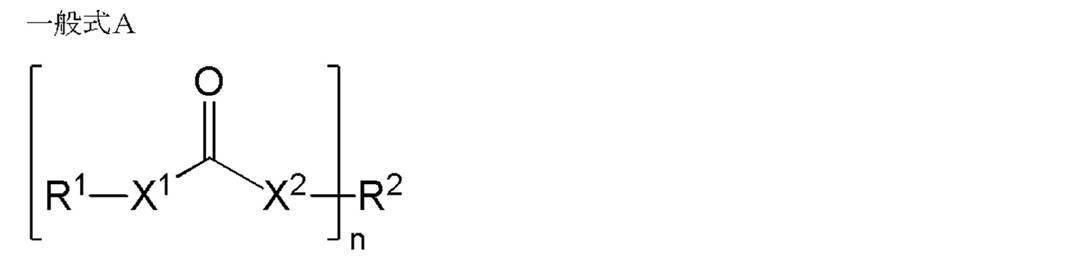
一般式A中、R1は、アリール基を表す。アリール基とは、単環式の芳香族炭化水素基であっても多環式の芳香族炭化水素基であってもよく、置換基を有していても無置換であってもよい。なお本発明および本明細書において、「多環式」とは、架橋環、縮合環、スピロ環および環集合からなる群から選択される多環構造を有することを意味する。「架橋環」には、架橋縮合環が包含されるものとする。したがって、「縮合環」とは、架橋環構造を持たない縮合環をいう。「環集合」とは、複数の閉環構造が単結合または連結基を介して連結している構造をいう。連結基については、R2で表されるn価の多環式脂環基に関する環集合についての後述の記載を参照できる。環集合に含まれる閉環構造は、単環であっても、架橋環、縮合環およびスピロ環からなる群から選択される多環であってもよい。
R1で表されるアリール基が置換基を有する場合、置換基としては、置換基群Tに記載の置換基を挙げることができ、ニトロ基、ハロゲン原子(フッ素原子、塩素原子、臭素原子、またはヨウ素原子)、カルボキシ基、ヒドロキシ基、シアノ基、アルコキシ基(好ましくは炭素数2以下)、シクロアルキル基(好ましくは炭素数3~15)、アリール基(好ましくは炭素数6~14)、アルコキシカルボニル基(好ましくは炭素数2~7)、およびアシル基(好ましくは炭素数2以下)からなる群から選択される置換基が好ましい。R1で表されるアリール基が置換アリール基である場合、置換アリール基に含まれる置換基の数は、1個以上であり、1~5個であることが好ましい。
R1で表されるアリール基は、好ましくは、フェニル基、ビフェニル基、ナフチル基またはアントラセニル基であることができ、これらのアリール基は置換基を有していてもよく、無置換であってもよい。R1で表されるアリール基は、置換もしくは無置換のフェニル基、置換もしくは無置換のビフェニル基、または置換もしくは無置換のナフチル基であることがより好ましく、無置換のフェニル基、無置換のビフェニル基または無置換のナフチル基であることが更に好ましい。
一般式A中、R2はn価の多環式脂環基を表し、nは1~8の整数を表す。nは、7以下であることが好ましく、6以下であることがより好ましく、5以下であることが更に好ましく、4以下であることが一層好ましい。また、nは1以上であり、2以上であることがより好ましい。より好ましくは、nは2~4の整数である。なおnが2~8の整数を表す場合、一般式A中、R1は複数(即ちn個)存在する。この場合、複数存在するR1は、それぞれ同一であって異なっていてもよい。この点は、X1およびX2についても同様である。
R2で表されるn価の多環式脂環基(以下、単に「多環式脂環基」とも記載する。)は、多環式の脂環炭化水素基であってもよく、ヘテロ原子を含む脂環基であってもよい。ヘテロ原子としては、酸素原子、窒素原子、硫黄原子等を挙げることができる。多環式脂環基がヘテロ原子を含む脂環基の場合、この脂環基に含まれるヘテロ原子の数は、例えば1~3個であり、1個または2個であることが好ましい。R2で表される多環式脂環基は、多環式脂環炭化水素基であること、即ちヘテロ原子を含まないことが好ましい。R2で表される多環式脂環基の炭素数は、例えば7~20の範囲であり、7~14の範囲であることが好ましく、7~10の範囲であることがより好ましい。
R2で表される多環式脂環基が有する多環構造は、架橋環、縮合環、スピロ環および環集合からなる群から選択される多環構造であることができ、架橋環、縮合環および環集合からなる群から選択される多環構造であることが好ましく、架橋環および縮合環からなる群から選択される多環構造であることがより好ましい。R2で表される多環式脂環基は、より好ましくは架橋環式脂環炭化水素基または縮合環式脂環炭化水素基である。架橋環式脂環炭化水素基とは、この基に含まれる多環構造が架橋環であるものをいう。縮合環式脂環炭化水素基とは、この基に含まれる多環構造が縮合環であるものをいう。先に記載したように、架橋縮合環は架橋環に包含され、縮合環は、架橋環構造を持たない縮合環をいう。
架橋環式脂環炭化水素基を構成する架橋環としては、例えば、ピナン環、ボルナン環、ノルピナン環、ノルボルナン環、ビシクロオクタン環(ビシクロ[2.2.2]オクタン環、ビシクロ[3.2.1]オクタン環等)等の2環式炭化水素環、およびホモブレダン環、アダマンタン環、トリシクロ[5.2.1.02,6]デカン環、トリシクロ[4.3.1.12,5]ウンデカン環等の3環式炭化水素環、テトラシクロ[4.4.0.12,5.17,10]ドデカン環、パーヒドロ-1,4-メタノ-5,8-メタノナフタレン環等の4環式炭化水素環等が挙げられる。
また、縮合環式炭化水素基を構成する縮合環としては、例えば、パーヒドロナフタレン(デカリン)環、パーヒドロアントラセン環、パーヒドロフェナントレン環、パーヒドロアセナフテン環、パーヒドロフルオレン環、パーヒドロインデン環、パーヒドロフェナレン環等の5~8員シクロアルカン環が複数縮合した縮合環が挙げられる。
一方、R2で表される多環式脂環基が有する多環構造が環集合である場合、この環集合は単環および多環からなる群から選択される閉環構造を複数含み、複数の閉環構造は単結合または連結基を介して連結されている。連結基としては、炭素数2以下のアルキレン基、カルボニル基、酸素原子(即ち-O-)、硫黄原子(即ち-S-)、-NR4-およびこれらの組み合わせからなる基が好ましい。ここでR4は、水素原子、-CH3、または-CH2CH3を表す。環集合に含まれる閉環構造は、単環であることが好ましい。単環としては、シクロペンタン環、シクロヘキサン環、シクロへプタン環、シクロオクタン環等の炭素数3~12のシクロアルカン環、シクロへキセン環等の炭素数3~12のシクロアルケン環を挙げることができる。
R2で表される多環式脂環基が有する多環構造の具体例としては、後述の例示化合物に含まれる多環構造も挙げられる。
一般式A中、X1およびX2は、それぞれ独立に、単結合、または、酸素原子(即ち-O-)、-NR3-およびアルキレン基からなる群から選択されるいずれか1つもしくは2つ以上の組み合わせを表し、R3は、水素原子、-CH3(無置換のメチル基)または-CH2CH3(無置換のエチル基)を表す。-NR3-は、-NH-であること、即ちR3が水素原子を表すことが好ましい。X1および/またはX2が酸素原子、-NR3-およびアルキレン基からなる群から選択される2つ以上の組み合わせである場合、そのような組み合わせにより形成される基としては、酸素原子、-NR3-およびアルキレン基からなる群から選択される2つまたは3つの組み合わせが好ましく、2つの組み合わせがより好ましい。アルキレン基としては、炭素数1~3の置換または無置換のアルキレン基が好ましく、炭素数1または2の無置換のアルキレン基がより好ましい。
一般式A中の下記一般式(A-1)で表される部分構造が、ウレタン結合、カーボネート結合およびエステル結合からなる群から選択される結合を含むことが好ましい。一般式(A-1)で表される部分構造は、ウレタン結合、カーボネート結合またはエステル結合であることが好ましい。一般式(A-1)中、*は結合部位を表す。一般式(A-1)で表される部分構造がウレタン結合である場合とは、X1およびX2の一方が-NH-を表し、他方が酸素原子を表す場合である。上記部分構造がカーボネート結合である場合とは、X1およびX2のいずれも酸素原子を表す場合である。上記部分構造がエステル結合を表す場合とは、X1およびX2の一方が酸素原子を表し、他方が単結合を表す場合である。X1およびX2は、いずれも単結合でないことがより好ましく、少なくとも一方が酸素原子を表すことがより好ましい。上記部分構造は、ウレタン結合およびカーボネート結合からなる群から選択される結合を含むことが更に好ましく、ウレタン結合またはカーボネート結合であることが一層好ましい。

化合物Aの分子量は、セルロースエステルとの相溶性の観点から、2000以下であることが好ましく、1500以下であることがより好ましく、1000以下であることが更に好ましい。また、セルロースエステルフィルム製膜時の化合物の揮散抑制の観点(即ち低揮散性の観点)からは、化合物Aの分子量は200以上であることが好ましく、300以上であることがより好ましい。
なお上記化合物が重合体である場合、分子量とは、特記しない限り、重量平均分子量をいうものとする。本発明および本明細書における平均分子量(重量平均分子量または数平均分子量)とは、ゲル浸透クロマトグラフィー(GPC;Gel Permeation Chromatography)により測定された値をポリスチレン換算して求められる値をいうものとする。具体的な測定条件の一例としては、以下の測定条件を挙げることができる。後述の実施例に示す平均分子量は、以下の測定条件下で測定された値をポリスチレン換算して求められた値である。
GPC装置:HLC-8320(東ソー社製)
カラム:TSK gel SuperHZM-H、TSK gel SuperHZ4000、TSK gel SuperHZ2000併用、(東ソー社製、4.6mmID(Inner diameter)×15.0cm)
溶離液:テトラヒドロフラン(THF)
なお上記化合物が重合体である場合、分子量とは、特記しない限り、重量平均分子量をいうものとする。本発明および本明細書における平均分子量(重量平均分子量または数平均分子量)とは、ゲル浸透クロマトグラフィー(GPC;Gel Permeation Chromatography)により測定された値をポリスチレン換算して求められる値をいうものとする。具体的な測定条件の一例としては、以下の測定条件を挙げることができる。後述の実施例に示す平均分子量は、以下の測定条件下で測定された値をポリスチレン換算して求められた値である。
GPC装置:HLC-8320(東ソー社製)
カラム:TSK gel SuperHZM-H、TSK gel SuperHZ4000、TSK gel SuperHZ2000併用、(東ソー社製、4.6mmID(Inner diameter)×15.0cm)
溶離液:テトラヒドロフラン(THF)
(合成方法)
以上説明した化合物Aは、既知の方法により合成することができる。化合物Aは、一般式A中のX1とX2との間にカルボニル結合(C=O)を有するカルボニル化合物である。カルボニル化合物は、例えば、日本化学会編「第4版 実験化学講座20 有機合成IIアルコール・アミン」、「第4版 実験化学講座21 有機合成III アルデヒド・ケトン・キノン」、「第4版 実験化学講座22 有機合成IV 酸・アミノ酸・ペプチド」等に記載の方法によって合成することができる。より具体的には、対応するアルコールまたはアミンに対して、酸ハロゲン化物、イソシアネート等の反応剤を作用させることによって目的の化合物を得ることができる。例えば、ウレタン結合を有する化合物は、対応するアルコールとイソシアネートとの反応によって合成することができる。カーボネート結合を有する化合物は、対応するアルコールとハロゲン化蟻酸エステルとの反応によって合成することができる。エステル結合を有する化合物は、対応するアルコールと酸ハロゲン化物との反応によって合成することができる。
ただし以上の方法は例示であって、化合物Aの合成方法としては、文献記載の方法等の既知の方法を何ら制限なく採用できる。
以上説明した化合物Aは、既知の方法により合成することができる。化合物Aは、一般式A中のX1とX2との間にカルボニル結合(C=O)を有するカルボニル化合物である。カルボニル化合物は、例えば、日本化学会編「第4版 実験化学講座20 有機合成IIアルコール・アミン」、「第4版 実験化学講座21 有機合成III アルデヒド・ケトン・キノン」、「第4版 実験化学講座22 有機合成IV 酸・アミノ酸・ペプチド」等に記載の方法によって合成することができる。より具体的には、対応するアルコールまたはアミンに対して、酸ハロゲン化物、イソシアネート等の反応剤を作用させることによって目的の化合物を得ることができる。例えば、ウレタン結合を有する化合物は、対応するアルコールとイソシアネートとの反応によって合成することができる。カーボネート結合を有する化合物は、対応するアルコールとハロゲン化蟻酸エステルとの反応によって合成することができる。エステル結合を有する化合物は、対応するアルコールと酸ハロゲン化物との反応によって合成することができる。
ただし以上の方法は例示であって、化合物Aの合成方法としては、文献記載の方法等の既知の方法を何ら制限なく採用できる。
以上説明した化合物Aの具体例としては、下記化合物を例示できる。ただし本発明の一態様にかかるセルロースエステルフィルムに含まれる化合物Aは、例示された化合物に限定されるものではない。
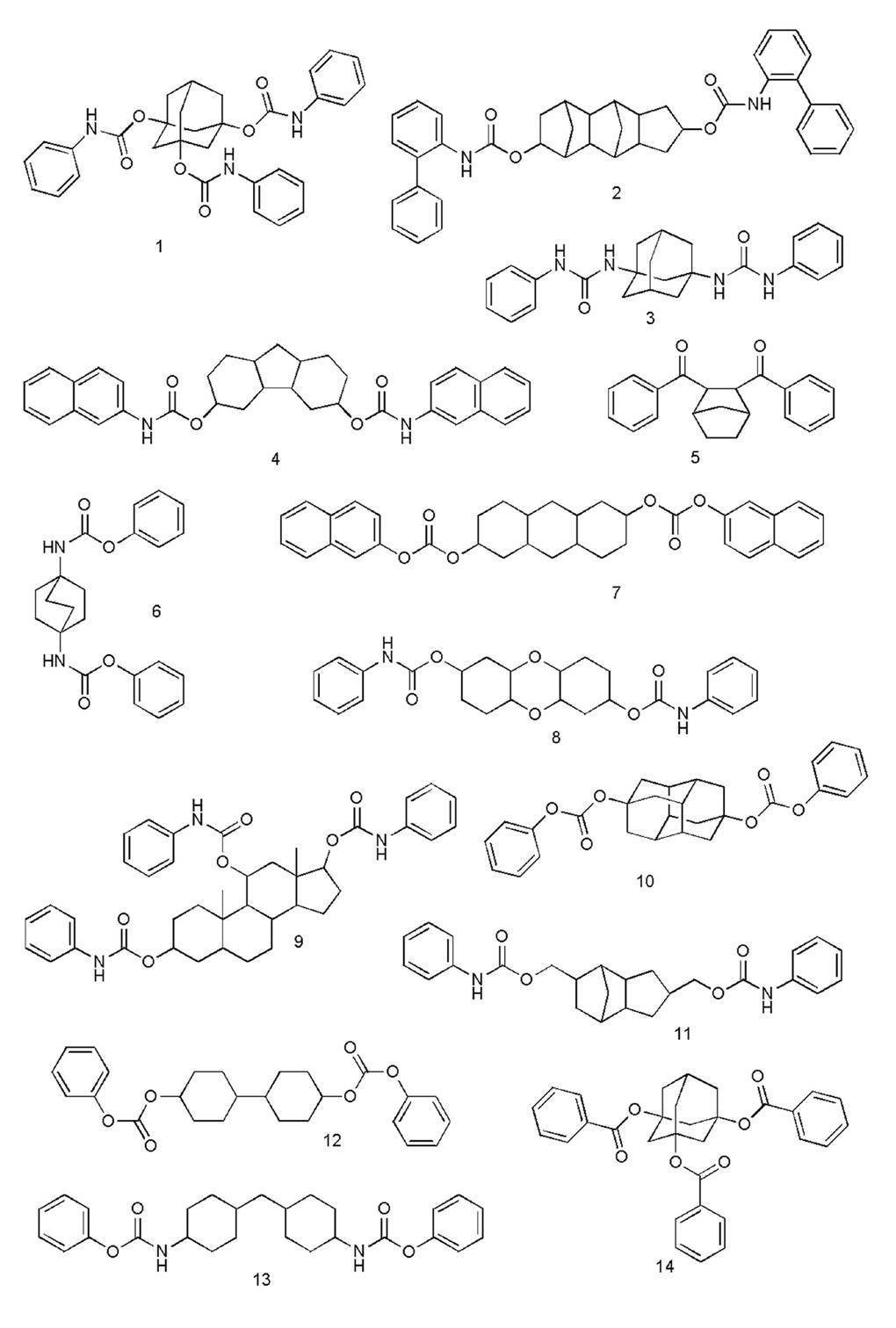
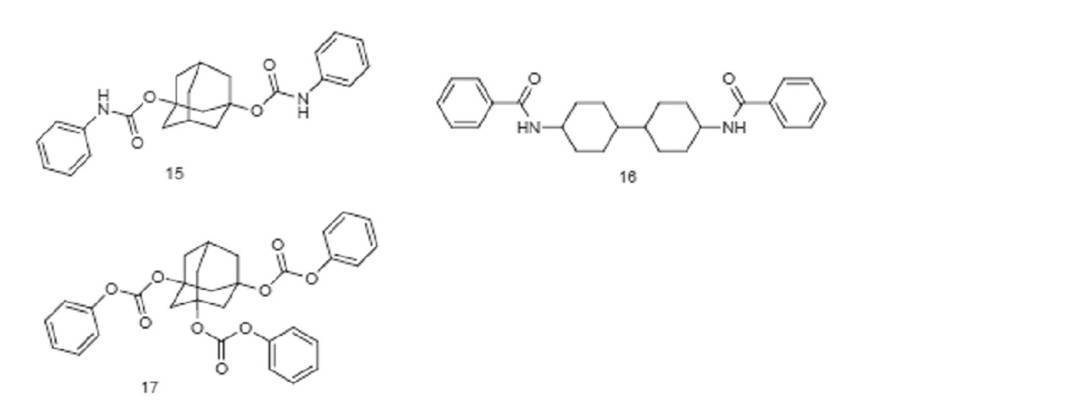
(含有量)
上記セルロースエステルフィルムは、セルロースエステルを含有し、化合物Aを、セルロースエステル100.0質量部に対して、0.1~50.0質量部含むことが好ましく、0.5~40.0質量部含むことがより好ましく、1.0~30.0質量部含むことが更に好ましく、1.0~15.0質量%がより特に好ましい。化合物Aとして二種以上の化合物を併用する態様については、上記の含有量は二種以上の化合物の合計量をいうものとする。
上記セルロースエステルフィルムは、セルロースエステルを含有し、化合物Aを、セルロースエステル100.0質量部に対して、0.1~50.0質量部含むことが好ましく、0.5~40.0質量部含むことがより好ましく、1.0~30.0質量部含むことが更に好ましく、1.0~15.0質量%がより特に好ましい。化合物Aとして二種以上の化合物を併用する態様については、上記の含有量は二種以上の化合物の合計量をいうものとする。
<セルロースエステル>
上記セルロースエステルフィルムは、化合物Aとともにセルロースエステルを含む。セルロースエステルフィルムにおいて、最も多くを占める成分(主成分)がセルロースエステルであることが好ましい。セルロースエステルフィルムのセルロースエステル含有量は、セルロースエステルフィルムのフィルム総質量に対して、例えば50~95質量%程度であることができる。ただし、上記範囲に限定されるものではない。
上記セルロースエステルフィルムは、化合物Aとともにセルロースエステルを含む。セルロースエステルフィルムにおいて、最も多くを占める成分(主成分)がセルロースエステルであることが好ましい。セルロースエステルフィルムのセルロースエステル含有量は、セルロースエステルフィルムのフィルム総質量に対して、例えば50~95質量%程度であることができる。ただし、上記範囲に限定されるものではない。
セルロースエステルとしては、セルロースエステルフィルムの製造に用いられる公知のセルロースエステルを何ら制限なく用いることができる。一態様では、置換基および置換度の一方または両方の異なる2種以上のセルロースエステルを併用してもよいし、後述の共流延法等により、異なるセルロースエステルを含む複数層から構成されるセルロースエステルフィルムを形成してもよい。
セルロースエステルは、好ましくはセルロースアシレートである。セルロースアシレートの置換度は、セルロースの構成単位((β)1,4-グリコシド結合しているグルコース)に存在している3つのヒドロキシ基がアシル化されている割合を意味する。置換度(アシル化度とも呼ばれる。)は、セルロースの構成単位質量あたりの結合脂肪酸(または結合カルボン酸)量を測定して算出することができる。本発明および本明細書において、セルロースアシレートの置換度は、重水素置換されたジメチルスルフォキシド等の溶媒にセルロースアシレートを溶解して13C-NMR(nuclear magnetic resonance)スペクトルを測定し、アシル基中のカルボニル炭素のピーク強度比から求めることができる。例えば、セルロースアシレートの置換度は、セルロースアシレートの残存ヒドロキシ基をセルロースアシレート自身が有するアシル基とは異なる他のアシル基に置換した後、13C-NMR測定により求めることができる。測定方法の詳細については、手塚他(Carbohydrate.Res.,273(1995)83-91)に記載がある。セルロースアシレートの置換度は、1.50以上3.00以下であることが好ましく、2.00以上2.97以下であることがより好ましく、2.30以上2.97以下であることが更に好ましく、2.30以上2.95以下であることが一層好ましい。セルロースアシレートに含まれるアシル基としては、アセチル基、プロピオニル基およびブチリル基からなる群から選択されるアシル基が好ましく、アセチル基がより好ましい。また、セルロースアシレートのアシル基としてアセチル基のみを含むセルロースアシレート、即ちセルロースアセテートにおいては、置換度は、2.00以上3.00以下であることが好ましく、2.20以上3.00以下であることがより好ましく、2.30以上3.00以下であることが更に好ましく、2.30以上2.97以下であることが更に好ましく、2.30以上2.95以下であることが一層好ましい。
一態様では、2種類以上のアシル基を含む混合脂肪酸エステルも、セルロースアシレートとして好ましく用いることができる。この場合、アシル基としては、アセチル基と炭素数3~4のアシル基が好ましい。また、セルロースアシレートとして、アセチル基を含む混合脂肪酸エステルを用いる場合、その置換度は2.5未満であることが好ましく、1.9未満であることが更に好ましい。一方、セルロースアシレートとして炭素数3~4のアシル基を含むセルロースアシレートを用いる場合、その置換度は0.10以上1.5以下であることが好ましく、0.20以上1.20以下であることがより好ましく、0.50以上1.10以下であることが更に好ましい。
更に、一態様では、特開2008-20896号公報の段落0023~0038に記載の脂肪酸アシル基と置換もしくは無置換の芳香族アシル基とを有する混合酸エステルも好ましく用いることができる。
セルロースアシレートは、250~800の重量平均重合度を有することが好ましく、300~600の重量平均重合度を有することが更に好ましい。また本発明の一態様で用いられるセルロースアシレートは、40000~230000の数平均分子量を有することが好ましく、60000~230000の数平均分子量を有することが更に好ましく、75000~200000の数平均分子量を有することが最も好ましい。
セルロースアシレートは、アシル化剤として酸無水物および/または酸塩化物を用いて合成できる。アシル化剤が酸無水物である場合、反応溶媒として有機酸(例えば、酢酸)、塩化メチレン等が通常使用される。また、触媒として、硫酸のようなプロトン性触媒を用いることができる。アシル化剤が酸塩化物である場合、触媒として塩基性化合物を用いることができる。工業的に最も一般的な合成方法では、セルロースをアセチル基および他のアシル基に対応する有機酸(酢酸、プロピオン酸、酪酸等)またはそれらの酸無水物(無水酢酸、無水プロピオン酸、無水酪酸等)を含む混合有機酸成分によりエステル化してセルロースアシレートが合成される。
以上の方法においては、綿花リンター、木材パルプ等のセルロースを、酢酸のような有機酸で活性化処理した後、硫酸触媒の存在下で、上記のような有機酸成分の混合液を用いてエステル化する場合が多い。有機酸無水物成分は、一般にセルロース中に存在するヒドロキシ基の量に対して過剰量で使用される。このエステル化では、エステル化反応に加えてセルロース主鎖((β)1,4-グリコシド結合)の加水分解反応(解重合反応)が進行する。主鎖の加水分解反応が進むとセルロースアシレートの重合度が低下し、得られるセルロースエステルフィルムの物性が低下する場合がある。そのため、反応温度のような反応条件は、得られるセルロースアシレートの重合度、分子量等を考慮して決定することが好ましい。
<セルロースエステルフィルムに任意に含まれ得る添加剤>
上記セルロースエステルフィルムは、化合物Aおよびセルロースエステルに加え、他の添加剤を含んでいてもよい。添加剤としては、公知の可塑剤、有機酸、色素、ポリマー、レターデーション調整剤、紫外線吸収剤、酸化防止剤、マット剤等を例示できる。これらについては、特開2012-155287号公報の段落0062~0097の記載を参酌でき、これらの内容は本明細書に組み込まれる。また、添加剤としては、剥離促進剤、有機酸、多価カルボン酸誘導体等を挙げることもできる。これらについては、国際公開公報WO2015/005398号の段落0212~0219の記載を参酌でき、これらの内容は本明細書に組み込まれる。
添加剤の含有量(上記セルロースエステルフィルムが二種以上の添加剤を含有する場合、それらの合計含有量)は、セルロースエステル100.0質量部に対して50.0質量部以下であることが好ましく、30.0質量部以下であることがより好ましい。
上記セルロースエステルフィルムは、化合物Aおよびセルロースエステルに加え、他の添加剤を含んでいてもよい。添加剤としては、公知の可塑剤、有機酸、色素、ポリマー、レターデーション調整剤、紫外線吸収剤、酸化防止剤、マット剤等を例示できる。これらについては、特開2012-155287号公報の段落0062~0097の記載を参酌でき、これらの内容は本明細書に組み込まれる。また、添加剤としては、剥離促進剤、有機酸、多価カルボン酸誘導体等を挙げることもできる。これらについては、国際公開公報WO2015/005398号の段落0212~0219の記載を参酌でき、これらの内容は本明細書に組み込まれる。
添加剤の含有量(上記セルロースエステルフィルムが二種以上の添加剤を含有する場合、それらの合計含有量)は、セルロースエステル100.0質量部に対して50.0質量部以下であることが好ましく、30.0質量部以下であることがより好ましい。
(可塑剤)
好ましい添加剤の1つとしては、可塑剤を挙げることができる。可塑剤の添加により、セルロースエステルフィルムの疎水性を高めることができる。可塑剤の分子量は、添加することによってセルロースエステルフィルムの疎水性をより高める観点からは、3000以下であることが好ましく、1500以下であることがより好ましく、1000以下であることが更に好ましい。また、可塑剤の分子量は、低揮散性の観点からは、例えば300以上であることができ、350以上であることが好ましい。なお重合体の可塑剤については、分子量とは、数平均分子量をいうものとする。
好ましい添加剤の1つとしては、可塑剤を挙げることができる。可塑剤の添加により、セルロースエステルフィルムの疎水性を高めることができる。可塑剤の分子量は、添加することによってセルロースエステルフィルムの疎水性をより高める観点からは、3000以下であることが好ましく、1500以下であることがより好ましく、1000以下であることが更に好ましい。また、可塑剤の分子量は、低揮散性の観点からは、例えば300以上であることができ、350以上であることが好ましい。なお重合体の可塑剤については、分子量とは、数平均分子量をいうものとする。
可塑剤としては、多価アルコールの多価エステル化合物、重縮合エステル化合物(以下、「重縮合エステル可塑剤」とも記載する。)、炭水化物化合物等を挙げることができる。多価アルコールの多価エステル化合物については、特開2014-077130号公報の段落0081~0098、重縮合エステル可塑剤については、同公報の段落0099~0124、炭水化物化合物については、同公報の段落0125~0140を参照できる。これらの可塑剤のセルロースエステルフィルムにおける含有量は、可塑剤の添加効果と可塑剤の析出抑制とを両立する観点から、セルロースエステル100.0質量部に対して1.0~20.0質量部とすることが好ましく、2.0~15.0質量部とすることがより好ましく、5.0~15.0質量部とすることが更に好ましい。
(酸化防止剤)
好ましい添加剤の1つとしては、酸化防止剤を挙げることもできる。酸化防止剤については、国際公開公報WO2015/005398号の段落0143~0165の記載も参酌でき、これらの内容は本明細書に組み込まれる。
好ましい添加剤の1つとしては、酸化防止剤を挙げることもできる。酸化防止剤については、国際公開公報WO2015/005398号の段落0143~0165の記載も参酌でき、これらの内容は本明細書に組み込まれる。
(ラジカル捕捉剤)
好ましい添加剤の1つとしては、ラジカル捕捉剤を挙げることもできる。ラジカル捕捉剤については、国際公開公報WO2015/005398号の段落0166~0199の記載を参酌でき、これらの内容は本明細書に組み込まれる。
好ましい添加剤の1つとしては、ラジカル捕捉剤を挙げることもできる。ラジカル捕捉剤については、国際公開公報WO2015/005398号の段落0166~0199の記載を参酌でき、これらの内容は本明細書に組み込まれる。
(劣化防止剤)
好ましい添加剤の1つとしては、劣化防止剤を挙げることもできる。劣化防止剤については、国際公開公報WO2015/005398号の段落0205~0206の記載を参酌でき、これらの内容は本明細書に組み込まれる。
好ましい添加剤の1つとしては、劣化防止剤を挙げることもできる。劣化防止剤については、国際公開公報WO2015/005398号の段落0205~0206の記載を参酌でき、これらの内容は本明細書に組み込まれる。
(バルビツール酸化合物)
上記セルロースエステルフィルムは、バルビツール酸構造を有する化合物(バルビツール酸化合物)を含有することもできる。バルビツール酸化合物は、この化合物を添加することにより、セルロースエステルフィルムに各種機能を発現させることができる化合物である。例えば、バルビツール酸化合物は、セルロースエステルフィルムの硬度向上に有効である。また、バルビツール酸化合物は、この化合物を含むセルロースエステルフィルムを備えた偏光板の光、熱、湿度等に対する耐久性の改良にも有効である。上記セルロースエステルフィルムに添加可能なバルビツール酸化合物については、例えば国際公開公報WO2015/005398号の段落0029~0060段落の記載を参酌でき、これらの内容は本明細書に組み込まれる。
上記セルロースエステルフィルムは、バルビツール酸構造を有する化合物(バルビツール酸化合物)を含有することもできる。バルビツール酸化合物は、この化合物を添加することにより、セルロースエステルフィルムに各種機能を発現させることができる化合物である。例えば、バルビツール酸化合物は、セルロースエステルフィルムの硬度向上に有効である。また、バルビツール酸化合物は、この化合物を含むセルロースエステルフィルムを備えた偏光板の光、熱、湿度等に対する耐久性の改良にも有効である。上記セルロースエステルフィルムに添加可能なバルビツール酸化合物については、例えば国際公開公報WO2015/005398号の段落0029~0060段落の記載を参酌でき、これらの内容は本明細書に組み込まれる。
<セルロースエステルフィルムの製造方法>
上記セルロースエステルフィルムの製造方法は、特に限定されるものではない。セルロースエステルフィルムの製造方法としては、溶融製膜法または溶液製膜法(ソルベントキャスト法)が好ましく、添加剤の揮散および分解の低減を考慮すると溶液製膜法(ソルベントキャスト法)がより好ましい。ソルベントキャスト法を利用したセルロースエステルフィルムの製造例については、米国特許第2,336,310号、米国特許第2,367,603号、米国特許第2,492,078号、米国特許第2,492,977号、米国特許第2,492,978号、米国特許第2,607,704号、米国特許第2,739,069号および米国特許第2,739,070号の各明細書、英国特許第640731号および英国特許第736892号の各明細書、ならびに特公昭45-4554号、特公昭49-5614号、特開昭60-176834号、特開昭60-203430号および特開昭62-115035号等の各公報を参考にすることができる。また、セルロースエステルフィルムには、延伸処理が施されていてもよい。
上記セルロースエステルフィルムの製造方法は、特に限定されるものではない。セルロースエステルフィルムの製造方法としては、溶融製膜法または溶液製膜法(ソルベントキャスト法)が好ましく、添加剤の揮散および分解の低減を考慮すると溶液製膜法(ソルベントキャスト法)がより好ましい。ソルベントキャスト法を利用したセルロースエステルフィルムの製造例については、米国特許第2,336,310号、米国特許第2,367,603号、米国特許第2,492,078号、米国特許第2,492,977号、米国特許第2,492,978号、米国特許第2,607,704号、米国特許第2,739,069号および米国特許第2,739,070号の各明細書、英国特許第640731号および英国特許第736892号の各明細書、ならびに特公昭45-4554号、特公昭49-5614号、特開昭60-176834号、特開昭60-203430号および特開昭62-115035号等の各公報を参考にすることができる。また、セルロースエステルフィルムには、延伸処理が施されていてもよい。
(流延方法)
溶液製膜法における溶液の流延方法としては、調製された溶液(「ドープ」と呼ばれる。)を加圧ダイから金属支持体上に均一に押し出す方法、金属支持体上に一旦流延されたドープの厚みをブレードにより調節する方法(ドクターブレード法)、逆回転するロールで調節する方法(リバースロールコーター法)等があり、加圧ダイを用いる方法が好ましい。加圧ダイにはコートハンガータイプ、Tダイタイプ等があり、いずれも好ましく用いることができる。また、上記例示した方法以外にも、溶液を流延製膜する従来知られている種々の方法を用いることができ、溶液に含まれる溶媒の沸点等の違いを考慮して各種製膜条件を設定することができる。
溶液製膜法における溶液の流延方法としては、調製された溶液(「ドープ」と呼ばれる。)を加圧ダイから金属支持体上に均一に押し出す方法、金属支持体上に一旦流延されたドープの厚みをブレードにより調節する方法(ドクターブレード法)、逆回転するロールで調節する方法(リバースロールコーター法)等があり、加圧ダイを用いる方法が好ましい。加圧ダイにはコートハンガータイプ、Tダイタイプ等があり、いずれも好ましく用いることができる。また、上記例示した方法以外にも、溶液を流延製膜する従来知られている種々の方法を用いることができ、溶液に含まれる溶媒の沸点等の違いを考慮して各種製膜条件を設定することができる。
(共流延)
セルロースエステルフィルムの製膜においては、共流延法、逐次流延法、塗布法等の積層流延法を用いることもできる。中でも共流延法(「同時多層流延法」ともいう。)を用いることが、安定製造および生産コスト低減の観点から好ましい。
セルロースエステルフィルムを共流延法または逐次流延法により製造する場合には、まず、各層用のセルロースエステル溶液(ドープ)を調製する。共流延法(同時多層流延法)は、流延用支持体(バンドまたはドラム)の上に、各層(2層または3層以上)各々の流延用ドープを流延ダイから押出して、各層同時に流延して流延膜を形成し、適当な時期に支持体から剥ぎ取って、乾燥しフィルムを成形する流延法である。流延ダイは、各々の流延用ドープを別のスリット等から同時に押出すことができる。例えば、流延ダイを用いて、流延用支持体の上に、同じ組成または異なる組成の2種のスキン層(表層)用ドープとコア層用ドープとを同時に押出して流延し流延膜を形成することができる。図1は、共流延法に用いる流延ダイの一例を示す模式図である。ドープを流延する際は、図1に示すように、走行する流延用支持体(バンド)85の上に、流延ダイ89からドープを、形成される流延膜70がスキン層A/コア層/スキン層Bの3層構成になるように共流延(同時多層流延)することができる。なおコア層とは、3層構成の流延膜において中心部に位置する層のことをいい、スキン層Aおよびスキン層Bとは3層構造の流延膜においてコア層より外側に位置する層のことをいう。スキン層Aは支持体とは反対側、スキン層Bは支持体側に位置する。
セルロースエステルフィルムの製膜においては、共流延法、逐次流延法、塗布法等の積層流延法を用いることもできる。中でも共流延法(「同時多層流延法」ともいう。)を用いることが、安定製造および生産コスト低減の観点から好ましい。
セルロースエステルフィルムを共流延法または逐次流延法により製造する場合には、まず、各層用のセルロースエステル溶液(ドープ)を調製する。共流延法(同時多層流延法)は、流延用支持体(バンドまたはドラム)の上に、各層(2層または3層以上)各々の流延用ドープを流延ダイから押出して、各層同時に流延して流延膜を形成し、適当な時期に支持体から剥ぎ取って、乾燥しフィルムを成形する流延法である。流延ダイは、各々の流延用ドープを別のスリット等から同時に押出すことができる。例えば、流延ダイを用いて、流延用支持体の上に、同じ組成または異なる組成の2種のスキン層(表層)用ドープとコア層用ドープとを同時に押出して流延し流延膜を形成することができる。図1は、共流延法に用いる流延ダイの一例を示す模式図である。ドープを流延する際は、図1に示すように、走行する流延用支持体(バンド)85の上に、流延ダイ89からドープを、形成される流延膜70がスキン層A/コア層/スキン層Bの3層構成になるように共流延(同時多層流延)することができる。なおコア層とは、3層構成の流延膜において中心部に位置する層のことをいい、スキン層Aおよびスキン層Bとは3層構造の流延膜においてコア層より外側に位置する層のことをいう。スキン層Aは支持体とは反対側、スキン層Bは支持体側に位置する。
逐次流延法は、流延用支持体の上に、まず第1層用の流延用ドープを流延ダイから押出して、流延し、乾燥し、または乾燥することなく、その上に第2層用の流延用ドープを流延ダイから押出して流延し、必要なら第3層以上までドープを逐次流延し積層して、適当な時期に支持体から剥ぎ取って乾燥し、フィルムを成形する流延法である。塗布法は、一般的には、コア層を溶液製膜法によりフィルム状に成形し、表層に塗布する塗布液を調製し、適当な塗布機を用いて、コア層の片面ずつまたは両面同時に塗布液を塗布し乾燥して積層構造のフィルムを成形する方法である。
本発明の一態様にかかるセルロースエステルフィルムが積層構造のフィルムの場合、化合物Aを、複数の層のいずれか一層以上またはすべての層に含有させることができる。
(延伸処理)
セルロースエステルフィルムの製造方法は、製膜工程後に延伸工程を含むこともできる。セルロースエステルフィルムの延伸方向は、セルロースエステルフィルム搬送方向(MD(Machine Direction)方向)と搬送方向に直交する方向(TD(Transverse Direction)方向)のいずれでも好ましい。セルロースエステルフィルムの延伸方向は、セルロースエステルフィルム搬送方向に直交する方向(TD方向)であることが、後に続くセルロースエステルフィルムを用いた偏光板加工プロセスの観点から特に好ましい。なお、2段階以上に分けて複数回の延伸処理を行ってもよい。
セルロースエステルフィルムの製造方法は、製膜工程後に延伸工程を含むこともできる。セルロースエステルフィルムの延伸方向は、セルロースエステルフィルム搬送方向(MD(Machine Direction)方向)と搬送方向に直交する方向(TD(Transverse Direction)方向)のいずれでも好ましい。セルロースエステルフィルムの延伸方向は、セルロースエステルフィルム搬送方向に直交する方向(TD方向)であることが、後に続くセルロースエステルフィルムを用いた偏光板加工プロセスの観点から特に好ましい。なお、2段階以上に分けて複数回の延伸処理を行ってもよい。
TD方向に延伸する方法は、例えば、特開昭62-115035号、特開平4-152125号、特開平4-284211号、特開平4-298310号、特開平11-48271号等の各公報に記載されている。MD方向に延伸する場合、例えば、セルロースエステルフィルムの搬送ローラーの速度を調節して、セルロースエステルフィルムの剥ぎ取り速度よりもセルロースエステルフィルムの巻き取り速度の方を速くすると、セルロースエステルフィルムは延伸される。TD方向に延伸する場合、セルロースエステルフィルムの幅をテンターで保持しながら搬送して、テンターの幅を徐々に広げることによってセルロースエステルフィルムを延伸できる。セルロースエステルフィルムの乾燥後、延伸機を用いて延伸すること(好ましくはロング延伸機を用いる一軸延伸)もできる。
セルロースエステルフィルムを偏光子の保護フィルムとして使用する場合には、偏光板を斜めから見たときの光漏れを抑制するため、偏光子の透過軸とセルロースエステルフィルムの遅相軸を平行に配置する態様も好ましい。連続的に製造されるロールフィルム状の偏光子の透過軸は、一般的に、ロールフィルムの幅方向に平行であるので、上記ロールフィルム状の偏光子とロールフィルム状のセルロースエステルフィルム(保護フィルム)を連続的に貼り合せるためには、ロールフィルム状の保護フィルムの遅相軸は、セルロースエステルフィルムの幅方向に平行であることが好ましい。このためには、セルロースエステルフィルムをTD方向により多く延伸することも好ましい。
TD方向に延伸する場合、5~100%延伸することが好ましく、より好ましくは5~80%、更に好ましくは5~40%である。なお、未延伸とは延伸が0%であることを意味する。延伸処理は製膜工程の途中で行ってもよいし、製膜して巻き取った原反を延伸処理してもよい。前者の場合には残留溶媒量を含んだ状態で延伸を行ってもよく、残留溶媒量=(残存揮発分質量/加熱処理後フィルム質量)×100%が0.05~50%で好ましく延伸することができる。残留溶媒量が0.05~5%の状態で5~80%延伸することが特に好ましい。
<セルロースエステルフィルムの物性>
(セルロースエステルフィルムの厚み)
セルロースエステルフィルムの厚みは、用途に応じ適宜定めることができ、例えば、5~100μmである。5μm以上とすることにより、ウェブ状のフィルムを作製する際のハンドリング性が向上し好ましい。また、100μm以下とすることにより、湿度変化に対応しやすく、光学特性を維持しやすくなる。セルロースエステルフィルムの厚みは、8~80μmがより好ましく、10~70μmが更に好ましい。
また、セルロースエステルフィルムが3層以上の積層構造を有する場合、コア層の厚みは3~70μmが好ましく、5~60μmがより好ましい。また、セルロースエステルフィルムがスキン層A/コア層/スキン層Bを有する3層構造の場合、スキン層Aおよびスキン層Bの厚みは、それぞれ0.5~20μmが好ましく、0.5~10μmがより好ましく、0.5~3μmが更に好ましい。
(セルロースエステルフィルムの厚み)
セルロースエステルフィルムの厚みは、用途に応じ適宜定めることができ、例えば、5~100μmである。5μm以上とすることにより、ウェブ状のフィルムを作製する際のハンドリング性が向上し好ましい。また、100μm以下とすることにより、湿度変化に対応しやすく、光学特性を維持しやすくなる。セルロースエステルフィルムの厚みは、8~80μmがより好ましく、10~70μmが更に好ましい。
また、セルロースエステルフィルムが3層以上の積層構造を有する場合、コア層の厚みは3~70μmが好ましく、5~60μmがより好ましい。また、セルロースエステルフィルムがスキン層A/コア層/スキン層Bを有する3層構造の場合、スキン層Aおよびスキン層Bの厚みは、それぞれ0.5~20μmが好ましく、0.5~10μmがより好ましく、0.5~3μmが更に好ましい。
(セルロースエステルフィルムの幅)
セルロースエステルフィルムの幅は、700~3000mmであることが好ましく、1000~2800mmであることがより好ましく、1300~2500mmであることが更に好ましい。
セルロースエステルフィルムの幅は、700~3000mmであることが好ましく、1000~2800mmであることがより好ましく、1300~2500mmであることが更に好ましい。
(鹸化処理)
セルロースエステルフィルムは、鹸化処理(アルカリ鹸化処理)することによりポリビニルアルコールのような偏光子の材料との密着性を付与して偏光板保護フィルムとして用いることができる。
鹸化処理の方法としては、例えば、特開2007-86748号公報の段落0211~0212に記載される方法を用いることができる。
セルロースエステルフィルムは、鹸化処理(アルカリ鹸化処理)することによりポリビニルアルコールのような偏光子の材料との密着性を付与して偏光板保護フィルムとして用いることができる。
鹸化処理の方法としては、例えば、特開2007-86748号公報の段落0211~0212に記載される方法を用いることができる。
例えば、セルロースエステルフィルムに対する鹸化処理は、フィルム表面をアルカリ溶液に浸漬した後、酸性溶液で中和し、水洗して乾燥するサイクルで行われることが好ましい。上記アルカリ溶液としては、水酸化カリウム溶液、水酸化ナトリウム溶液が挙げられ、水酸化物イオンの濃度は0.1~5.0mol/Lの範囲にあることが好ましく、0.5~4.0mol/Lの範囲にあることが更に好ましい。アルカリ溶液温度は、室温(例えば20~25℃)~90℃の範囲にあることが好ましく、40~70℃の範囲にあることが更に好ましい。
または、鹸化処理の代わりに、特開平6-94915号公報または特開平6-118232号公報に記載されているような易接着加工をセルロースエステルフィルムに施してもよい。
[偏光板]
(偏光板の構成)
本発明の一態様にかかる偏光板は、上記セルロースエステルフィルムと偏光子とを含む。
一態様では、偏光板は、偏光子と、その片面を保護する一枚またはその両面を保護する二枚の偏光板保護フィルムとを含み、上記セルロースエステルフィルムを少なくとも一枚、偏光板保護フィルムとして有することができる。
例えば、画像表示装置の一態様である液晶表示装置は、通常、視認側偏光板とバックライト側偏光板との間に、液晶セルが配置された構成を有する。視認側偏光板およびバックライト側偏光板において、偏光板と液晶セルとの間に位置する偏光板保護フィルムを、インナー側保護フィルム、インナー側とは反対側に位置する保護フィルムをアウター側保護フィルムと呼ぶと、上記セルロースエステルフィルムは、視認側偏光板のインナー側、アウター側、バックライト側偏光板のインナー側、アウター側のいずれの保護フィルムとしても用いることができる。
したがって、一態様では、液晶表示装置に、上記セルロースエステルフィルムが、偏光子の液晶セルと対向する面とは反対側の面上に位置するアウター側偏光板保護フィルムとして含まれる。
また、他の一態様では、液晶表示装置に、上記セルロースエステルフィルムが、偏光子と液晶セルとの間に位置するインナー側偏光板保護フィルムとして含まれる。
上記セルロースエステルフィルムは、外部雰囲気から偏光子に到達する水分を低減する作用を奏することができると本発明者は推察しているため、かかる作用を効果的に発揮する観点からは、視認側偏光板の保護フィルムとして含まれることが好ましく、視認側偏光板のアウター側保護フィルムとして含まれることがより好ましい。
(偏光板の構成)
本発明の一態様にかかる偏光板は、上記セルロースエステルフィルムと偏光子とを含む。
一態様では、偏光板は、偏光子と、その片面を保護する一枚またはその両面を保護する二枚の偏光板保護フィルムとを含み、上記セルロースエステルフィルムを少なくとも一枚、偏光板保護フィルムとして有することができる。
例えば、画像表示装置の一態様である液晶表示装置は、通常、視認側偏光板とバックライト側偏光板との間に、液晶セルが配置された構成を有する。視認側偏光板およびバックライト側偏光板において、偏光板と液晶セルとの間に位置する偏光板保護フィルムを、インナー側保護フィルム、インナー側とは反対側に位置する保護フィルムをアウター側保護フィルムと呼ぶと、上記セルロースエステルフィルムは、視認側偏光板のインナー側、アウター側、バックライト側偏光板のインナー側、アウター側のいずれの保護フィルムとしても用いることができる。
したがって、一態様では、液晶表示装置に、上記セルロースエステルフィルムが、偏光子の液晶セルと対向する面とは反対側の面上に位置するアウター側偏光板保護フィルムとして含まれる。
また、他の一態様では、液晶表示装置に、上記セルロースエステルフィルムが、偏光子と液晶セルとの間に位置するインナー側偏光板保護フィルムとして含まれる。
上記セルロースエステルフィルムは、外部雰囲気から偏光子に到達する水分を低減する作用を奏することができると本発明者は推察しているため、かかる作用を効果的に発揮する観点からは、視認側偏光板の保護フィルムとして含まれることが好ましく、視認側偏光板のアウター側保護フィルムとして含まれることがより好ましい。
上記セルロースエステルフィルムとともに、他のフィルム部材を偏光板保護フィルムとして用いることもできる。この場合に用いられる他のフィルム部材は特に限定されるものではなく、偏光板保護フィルムとして通常用いられる各種フィルム部材を用いることができる。
また、偏光子としては、例えば、ヨウ素含有(ヨウ素染色)ポリビニルアルコールフィルムを用いることができる。かかるフィルムとしては、例えば、ポリビニルアルコールフィルムをヨウ素溶液中に浸漬して延伸したもの等を用いることができる。ポリビニルアルコールフィルムをヨウ素溶液中に浸漬して延伸した偏光子を用いる場合、例えば、接着剤を用いて偏光子の少なくとも一方の面に上記セルロースエステルフィルムの鹸化処理面を直接貼り合わせることができる。なお本発明および本明細書において、接着剤との語は、接着剤と粘着剤とを包含する意味で用いるものとする。上記接着剤としては、ポリビニルアルコールまたはポリビニルアセタール(例えば、ポリビニルブチラール)の水溶液や、ビニル系ポリマー(例えば、ポリブチルアクリレート)のラテックス、紫外線硬化型の接着剤等を用いることができる。特に好ましい接着剤は、完全鹸化ポリビニルアルコールの水溶液である。
偏光板保護フィルムの偏光子への貼り合せは、偏光子の透過軸と偏光板保護フィルムの遅相軸が実質的に平行、直交または45°となるように貼り合せることが好ましい。遅相軸の測定は、公知の種々の方法で行うことができ、例えば、複屈折計(王子計測機器社製KOBRADH)を用いて行うことができる。
ここで、実質的に平行、直交または45°であるとは、厳密な方向または角度からのずれが5°以内であることをいい、1°以内であることが好ましく、0.5°以内であることがより好ましい。ずれが1°以内であれば、偏光板クロスニコル下での偏光度性能が低下しにくく、光抜けが生じにくく好ましい。
ここで、実質的に平行、直交または45°であるとは、厳密な方向または角度からのずれが5°以内であることをいい、1°以内であることが好ましく、0.5°以内であることがより好ましい。ずれが1°以内であれば、偏光板クロスニコル下での偏光度性能が低下しにくく、光抜けが生じにくく好ましい。
(偏光板の多機能化)
上記偏光板は、本発明の趣旨を逸脱しない範囲で、画像表示装置の視認性向上のための反射防止フィルム、輝度向上フィルム、ハードコート層、前方散乱層、アンチグレア(防眩)層等の機能層を有する光学フィルムと複合した機能化偏光板として用いることもできる。これらの詳細については、特開2012-082235号公報の段落0229~0242、段落0249~0250、特開2012-215812号公報の段落0086~0103等の記載を参酌でき、これらの内容は本明細書に組み込まれる。
上記偏光板は、本発明の趣旨を逸脱しない範囲で、画像表示装置の視認性向上のための反射防止フィルム、輝度向上フィルム、ハードコート層、前方散乱層、アンチグレア(防眩)層等の機能層を有する光学フィルムと複合した機能化偏光板として用いることもできる。これらの詳細については、特開2012-082235号公報の段落0229~0242、段落0249~0250、特開2012-215812号公報の段落0086~0103等の記載を参酌でき、これらの内容は本明細書に組み込まれる。
一例としてハードコート層について以下に説明する。
(ハードコート層)
セルロースエステルフィルム上には、所望によりハードコート層を設けることもできる。例えば、硬化性組成物をセルロースエステルフィルム上に塗布し、硬化させることによって、セルロースエステルフィルム上にハードコート層を形成することができる。ハードコート層にフィラー、添加剤等を加えることにより、機械的、電気的、光学的、物理的、および/または化学的な性能(例えば撥水性、撥油性等)をハードコート層に付与することもできる。ハードコート層の厚みは、0.1~6μmの範囲であることが好ましく、3~6μmの範囲であることがより好ましい。このような範囲の厚みを有するハードコート層を有することで、脆性改善、カール抑制等の物性改善、軽量化および製造コスト低減がなされたハードコート層を含む偏光板を得ることができる。
セルロースエステルフィルム上には、所望によりハードコート層を設けることもできる。例えば、硬化性組成物をセルロースエステルフィルム上に塗布し、硬化させることによって、セルロースエステルフィルム上にハードコート層を形成することができる。ハードコート層にフィラー、添加剤等を加えることにより、機械的、電気的、光学的、物理的、および/または化学的な性能(例えば撥水性、撥油性等)をハードコート層に付与することもできる。ハードコート層の厚みは、0.1~6μmの範囲であることが好ましく、3~6μmの範囲であることがより好ましい。このような範囲の厚みを有するハードコート層を有することで、脆性改善、カール抑制等の物性改善、軽量化および製造コスト低減がなされたハードコート層を含む偏光板を得ることができる。
ハードコート層形成用の硬化性組成物は、例えば、マトリックス形成バインダー用モノマー、オリゴマーまたはポリマーと有機溶媒を含有する。この硬化性組成物を塗布後に硬化することによりハードコート層を形成することができる。硬化には、架橋反応または重合反応を利用することができる。これらの詳細については、特開2012-215812号公報の段落0088~0101の記載を参酌でき、これらの内容は本明細書に組み込まれる。
硬化性組成物は、例えば、上記成分を有機溶媒に溶解および/または分散することにより調製することができる。ハードコート層の形成に好適な硬化性組成物は、(メタ)アクリレート系化合物を含有する硬化性組成物である。なお「(メタ)アクリレート系化合物」には、アクリル系化合物とメタクリル系化合物とが包含されるものとする。
[画像表示装置]
本発明の一態様にかかる画像表示装置は、本発明の一態様にかかる偏光板を少なくとも1枚含む。画像表示装置の一態様は、液晶表示装置である。液晶表示装置の詳細については、特開2012-082235号公報の段落0251~0260の記載を参酌でき、これらの内容は本明細書に組み込まれる。上記偏光板は、視認側偏光板およびバックライト側偏光板のいずれの偏光板としても用いることができる。一態様では、少なくとも視認側偏光板として、上記偏光板を用いることが好ましい。
本発明の一態様にかかる画像表示装置は、本発明の一態様にかかる偏光板を少なくとも1枚含む。画像表示装置の一態様は、液晶表示装置である。液晶表示装置の詳細については、特開2012-082235号公報の段落0251~0260の記載を参酌でき、これらの内容は本明細書に組み込まれる。上記偏光板は、視認側偏光板およびバックライト側偏光板のいずれの偏光板としても用いることができる。一態様では、少なくとも視認側偏光板として、上記偏光板を用いることが好ましい。
なお、他の構成として、反射型または半透過型の液晶表示装置、有機EL(Electro Luminescence)等の自発光素子の反射防止用途として配置される円偏光板の一部として、本発明の一態様にかかる偏光板を用いることもできる。
また、本発明の一態様にかかるセルロースエステルフィルムは、水分の影響を低減する作用を奏することができると推察されるため、偏光板保護フィルムに限らず、水分の影響を低減することが望ましい各種用途における保護フィルムとしても有用である。
以下に実施例を挙げて本発明を更に具体的に説明する。以下の実施例に示す材料、使用量、割合、処理内容、処理手順等は、本発明の趣旨を逸脱しない限り、適宜、変更することができる。従って、本発明の範囲は、以下に示す実施例に限定されるものではない。
合成したすべての化合物の同定は、1H-NMR(300MHz)を用いて行った。
一例として、下記合成例で合成された例示化合物1の1H-NMRスペクトルを図2に示す。
合成したすべての化合物の同定は、1H-NMR(300MHz)を用いて行った。
一例として、下記合成例で合成された例示化合物1の1H-NMRスペクトルを図2に示す。
先に示した例示化合物1~17、及び、X-1~X-5を、以下に記載の方法により合成した。
[化合物の合成例]
<例示化合物1~4、6~17、X-1~X-5の合成>
500mlの三口フラスコ中で、1,3,5-アダマンタントリオール15.0gをメチルエチルケトン100mlに溶解させた後、ジオクチル錫触媒(日東化成社製ネオスタンU-830)0.28gの存在下、液温を60℃に昇温してから反応剤としてフェニルイソシアネート30.6gを1時間かけて滴下した。その後、液温80℃で8時間攪拌した後、液温を60℃としてからメタノール2mlを加え室温まで冷却した。この反応液を濃縮し、得られた固体をカラムクロマトグラフィーで精製することにより化合物1を28.7g(収率65%)得た。
例示化合物2~4、6~17、および比較化合物X-1~X-5は、それぞれ以下の表に示すアルコールまたはアミンと反応剤とを表に記載の仕込み時の当量で用いた点以外、例示化合物1の合成と同様の合成方法にて合成した。各化合物の合成に用いたアルコールまたはアミンと反応剤の仕込み時の当量は、以下の表に示す値となるようにした。
<例示化合物1~4、6~17、X-1~X-5の合成>
500mlの三口フラスコ中で、1,3,5-アダマンタントリオール15.0gをメチルエチルケトン100mlに溶解させた後、ジオクチル錫触媒(日東化成社製ネオスタンU-830)0.28gの存在下、液温を60℃に昇温してから反応剤としてフェニルイソシアネート30.6gを1時間かけて滴下した。その後、液温80℃で8時間攪拌した後、液温を60℃としてからメタノール2mlを加え室温まで冷却した。この反応液を濃縮し、得られた固体をカラムクロマトグラフィーで精製することにより化合物1を28.7g(収率65%)得た。
例示化合物2~4、6~17、および比較化合物X-1~X-5は、それぞれ以下の表に示すアルコールまたはアミンと反応剤とを表に記載の仕込み時の当量で用いた点以外、例示化合物1の合成と同様の合成方法にて合成した。各化合物の合成に用いたアルコールまたはアミンと反応剤の仕込み時の当量は、以下の表に示す値となるようにした。
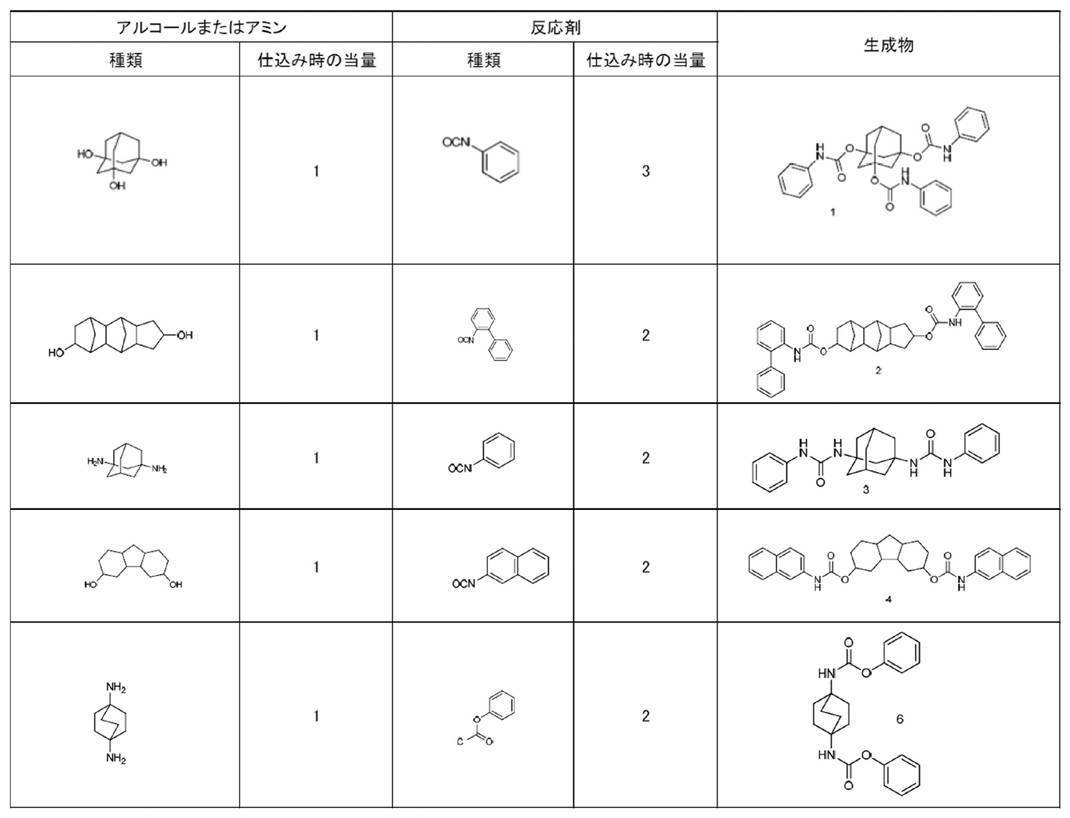
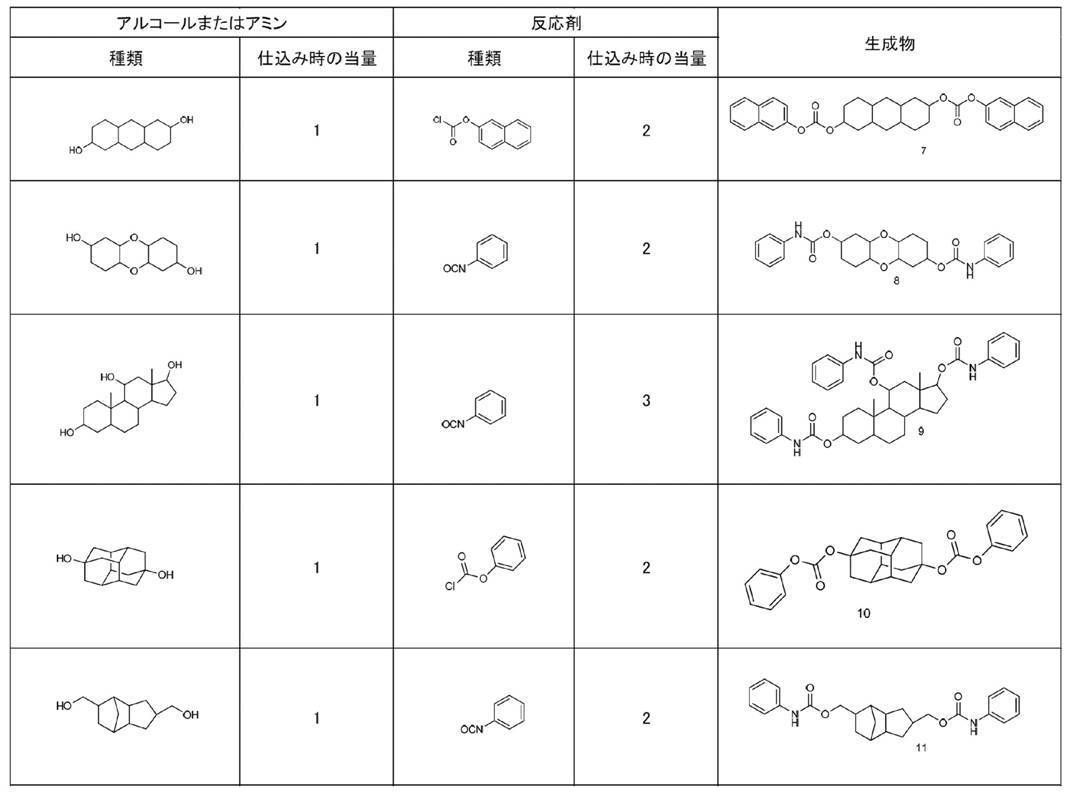


<例示化合物5の合成>
例示化合物5を、J.Org.Chem, 1994, 59, 3695に記載の方法により合成した。
例示化合物5を、J.Org.Chem, 1994, 59, 3695に記載の方法により合成した。

[実施例1~18、比較例1~5]
<セルロースエステルフィルム(セルロースアシレートフィルム)の製造>
(セルロースエステル溶液の調製)
下記の組成物をミキシングタンクに投入し、攪拌して各成分を溶解し、更に液温90℃で約10分間加熱した後、平均孔径34μmのろ紙および平均孔径10μmの焼結金属フィルターで順次ろ過し、セルロースエステル溶液Iを調製した。
<セルロースエステルフィルム(セルロースアシレートフィルム)の製造>
(セルロースエステル溶液の調製)
下記の組成物をミキシングタンクに投入し、攪拌して各成分を溶解し、更に液温90℃で約10分間加熱した後、平均孔径34μmのろ紙および平均孔径10μmの焼結金属フィルターで順次ろ過し、セルロースエステル溶液Iを調製した。
―セルロースエステル溶液Iの組成―
セルロースアシレート(置換度2.88、数平均分子量163000)・・・100.0質量部
下記表2に記載の化合物・・・下記表2参照
重縮合エステル可塑剤S3・・・3.0質量部
メチレンクロライド・・・451.0質量部
メタノール・・・39.0質量部
セルロースアシレート(置換度2.88、数平均分子量163000)・・・100.0質量部
下記表2に記載の化合物・・・下記表2参照
重縮合エステル可塑剤S3・・・3.0質量部
メチレンクロライド・・・451.0質量部
メタノール・・・39.0質量部
重縮合エステル可塑剤S3:アジピン酸:エタンジオール=100:100(モル比)の重縮合エステル化合物(末端封止なし、水酸基価112mgKOH/g、数平均分子量:1000)
(マット剤分散液の調製)
次に上記方法で作製したセルロースエステル溶液を含む下記組成物を分散機に投入し、マット剤分散液を調製した。
―マット剤分散液の組成―
マット剤(日本アエロジル社製アエロジル(登録商標)R972)・・・0.2質量部
メチレンクロライド・・・72.4質量部
メタノール・・・10.8質量部
セルロースエステル溶液I・・・10.3質量部
次に上記方法で作製したセルロースエステル溶液を含む下記組成物を分散機に投入し、マット剤分散液を調製した。
―マット剤分散液の組成―
マット剤(日本アエロジル社製アエロジル(登録商標)R972)・・・0.2質量部
メチレンクロライド・・・72.4質量部
メタノール・・・10.8質量部
セルロースエステル溶液I・・・10.3質量部
(製膜用ドープの調製)
上記セルロースエステル溶液Iを100.0質量部、上記マット剤分散液をセルロースエステルに対してマット剤が0.2質量部となる量で混合し、製膜用ドープを調製した。
上記セルロースエステル溶液Iを100.0質量部、上記マット剤分散液をセルロースエステルに対してマット剤が0.2質量部となる量で混合し、製膜用ドープを調製した。
(流延)
調製した製膜用ドープを、バンド流延機を用いて流延した。なお、バンドはステンレス鋼材(SUS;Steel Special Use Stainless)製であった。
調製した製膜用ドープを、バンド流延機を用いて流延した。なお、バンドはステンレス鋼材(SUS;Steel Special Use Stainless)製であった。
(乾燥)
上記流延により得られたウェブ(フィルム)を、バンドから剥離後、クリップでウェブの両端を留め搬送するテンター装置を用いてテンター装置内(装置内温度:100℃)にて、20分間乾燥した。
その後、更に乾燥温度120℃で乾燥ゾーン中を搬送させ、ウェブを乾燥させた。
こうして、膜厚60μmのセルロースエステルフィルムを得た。
上記流延により得られたウェブ(フィルム)を、バンドから剥離後、クリップでウェブの両端を留め搬送するテンター装置を用いてテンター装置内(装置内温度:100℃)にて、20分間乾燥した。
その後、更に乾燥温度120℃で乾燥ゾーン中を搬送させ、ウェブを乾燥させた。
こうして、膜厚60μmのセルロースエステルフィルムを得た。
<偏光板の作製>
(偏光板保護フィルムの鹸化処理)
実施例および比較例の各セルロースエステルフィルムを、2.3mol/Lの水酸化ナトリウム水溶液(液温55℃)に3分間浸漬した。室温の水洗浴槽中で洗浄し、液温30℃で0.05mol/Lの硫酸を用いて中和した。再度、室温の水洗浴槽中で洗浄し、更に100℃の温風で乾燥させた。このようにして、セルロースエステルフィルムの鹸化処理を行った。
(偏光板保護フィルムの鹸化処理)
実施例および比較例の各セルロースエステルフィルムを、2.3mol/Lの水酸化ナトリウム水溶液(液温55℃)に3分間浸漬した。室温の水洗浴槽中で洗浄し、液温30℃で0.05mol/Lの硫酸を用いて中和した。再度、室温の水洗浴槽中で洗浄し、更に100℃の温風で乾燥させた。このようにして、セルロースエステルフィルムの鹸化処理を行った。
(偏光子の作製)
厚さ75μmの長尺ポリビニルアルコールフィルム(クラレ社製9X75RS)をガイドロールにて連続搬送した。連続搬送したフィルムを30℃の水浴中に浸漬させて1.5倍に膨潤させ、かつ2倍の延伸倍率で延伸処理した。その後、上記ポリビニルアルコールフィルムをヨウ素とヨウ化カリウム配合の染色浴(液温30℃)に浸漬して染色処理(ヨウ素染色)するとともに3倍の延伸倍率で延伸処理し、次いでそれをホウ酸とヨウ化カリウムを添加した酸性浴(液温60℃)中で架橋処理するとともに6.5倍の延伸倍率で延伸処理した。その後、このようにしてヨウ素染色したポリビニルアルコールフィルムを雰囲気温度50℃の雰囲気中で5分間乾燥させて、厚み20μmの偏光子を得た。
厚さ75μmの長尺ポリビニルアルコールフィルム(クラレ社製9X75RS)をガイドロールにて連続搬送した。連続搬送したフィルムを30℃の水浴中に浸漬させて1.5倍に膨潤させ、かつ2倍の延伸倍率で延伸処理した。その後、上記ポリビニルアルコールフィルムをヨウ素とヨウ化カリウム配合の染色浴(液温30℃)に浸漬して染色処理(ヨウ素染色)するとともに3倍の延伸倍率で延伸処理し、次いでそれをホウ酸とヨウ化カリウムを添加した酸性浴(液温60℃)中で架橋処理するとともに6.5倍の延伸倍率で延伸処理した。その後、このようにしてヨウ素染色したポリビニルアルコールフィルムを雰囲気温度50℃の雰囲気中で5分間乾燥させて、厚み20μmの偏光子を得た。
(偏光子と偏光板保護フィルムとの貼り合わせ)
上記の鹸化処理したセルロースエステルフィルムに対して、ポリビニルアルコール系接着剤(約10ml)を滴下した。セルロースエステルフィルムのポリビニルアルコール系接着剤を滴下した面と、上記にて作製した偏光子の片面側とを貼り合わせて積層体を得た。
その後、得られた積層体を、セルロースエステルフィルム側の面上に、縦30cm×横30cm×厚さ1cmのSUS板を載せて荷重をかけた状態で、雰囲気温度50℃のオーブンにて30分加熱した。オーブンから積層体を取り出した後、上記SUS板を外した。
続いて、市販のセルローストリアセテートフィルム(富士フイルム社製フジタックTD80UF)に上記と同様の鹸化処理を行い、ポリビニルアルコール系接着剤を用いて、上記で作製した積層体の各セルロースエステルフィルムを貼り付けてある側とは反対側の偏光子の面に貼り付けた。
この際、偏光子の透過軸と得られたセルロースエステルフィルムの遅相軸が平行になるように配置した。また、偏光子の透過軸と市販のセルローストリアセテートフィルムの遅相軸が直交するように配置した。
このようにして、実施例および比較例の各偏光板を作製した。
上記の鹸化処理したセルロースエステルフィルムに対して、ポリビニルアルコール系接着剤(約10ml)を滴下した。セルロースエステルフィルムのポリビニルアルコール系接着剤を滴下した面と、上記にて作製した偏光子の片面側とを貼り合わせて積層体を得た。
その後、得られた積層体を、セルロースエステルフィルム側の面上に、縦30cm×横30cm×厚さ1cmのSUS板を載せて荷重をかけた状態で、雰囲気温度50℃のオーブンにて30分加熱した。オーブンから積層体を取り出した後、上記SUS板を外した。
続いて、市販のセルローストリアセテートフィルム(富士フイルム社製フジタックTD80UF)に上記と同様の鹸化処理を行い、ポリビニルアルコール系接着剤を用いて、上記で作製した積層体の各セルロースエステルフィルムを貼り付けてある側とは反対側の偏光子の面に貼り付けた。
この際、偏光子の透過軸と得られたセルロースエステルフィルムの遅相軸が平行になるように配置した。また、偏光子の透過軸と市販のセルローストリアセテートフィルムの遅相軸が直交するように配置した。
このようにして、実施例および比較例の各偏光板を作製した。
[評価方法]
<偏光板耐久性の評価(1)>
偏光板耐久性の評価を、実施例および比較例の各偏光板を、接着剤を用いてガラス板に貼り付けた形態で、以下の方法により行った。
実施例および比較例のそれぞれについて、実施例および比較例の各セルロースエステルフィルム側がガラス板との貼り合わせ側となるように、偏光板をガラス板の上に接着剤を用いて貼り付けたサンプル(5cm×5cm)を2つずつ作製した。これらサンプルのガラス板側を光源に向けてセットして直交透過率を測定した。測定は、日本分光社製自動偏光フィルム測定装置VAP-7070を用いて、380nm~780nmの範囲で行い、偏光子の性能低下の影響が顕著に出やすい波長である波長410nmにおける測定値を採用した。
平行透過率は、作製したサンプルを90°回転させた点以外、直交透過率と同じ方法で測定した。
こうして測定した直交透過率および平行透過率の値から、以下の式により偏光板の偏光度を算出した。実施例および比較例のそれぞれについて、作製した2つのサンプルについて偏光度を算出し、2つのサンプルの算出値を算術平均した値を偏光板の保存前偏光度とした。
偏光度(%)=[(平行透過率-直交透過率)/(直交透過率+平行透過率)]1/2×100
<偏光板耐久性の評価(1)>
偏光板耐久性の評価を、実施例および比較例の各偏光板を、接着剤を用いてガラス板に貼り付けた形態で、以下の方法により行った。
実施例および比較例のそれぞれについて、実施例および比較例の各セルロースエステルフィルム側がガラス板との貼り合わせ側となるように、偏光板をガラス板の上に接着剤を用いて貼り付けたサンプル(5cm×5cm)を2つずつ作製した。これらサンプルのガラス板側を光源に向けてセットして直交透過率を測定した。測定は、日本分光社製自動偏光フィルム測定装置VAP-7070を用いて、380nm~780nmの範囲で行い、偏光子の性能低下の影響が顕著に出やすい波長である波長410nmにおける測定値を採用した。
平行透過率は、作製したサンプルを90°回転させた点以外、直交透過率と同じ方法で測定した。
こうして測定した直交透過率および平行透過率の値から、以下の式により偏光板の偏光度を算出した。実施例および比較例のそれぞれについて、作製した2つのサンプルについて偏光度を算出し、2つのサンプルの算出値を算術平均した値を偏光板の保存前偏光度とした。
偏光度(%)=[(平行透過率-直交透過率)/(直交透過率+平行透過率)]1/2×100
その後、実施例および比較例のそれぞれについて、2つのサンプルを雰囲気温度60℃、相対湿度95%の環境下で500時間保存した。保存後、上記と同様にして2つのサンプルについて偏光度を求め、2つのサンプルの算出値を算術平均した値を偏光板の保存後偏光度とした。
実施例および比較例のそれぞれについて、保存前後の偏光度の変化量を、以下の式により算出した。算出された偏光度変化量に基づき、下記評価基準にしたがって偏光板耐久性を評価した。
偏光度変化量(%)=[上記保存前の偏光度(%)-上記保存後の偏光度(%)]
実施例および比較例のそれぞれについて、保存前後の偏光度の変化量を、以下の式により算出した。算出された偏光度変化量に基づき、下記評価基準にしたがって偏光板耐久性を評価した。
偏光度変化量(%)=[上記保存前の偏光度(%)-上記保存後の偏光度(%)]
偏光板耐久性評価基準:
A+:偏光度変化量が0.05%未満
A :偏光度変化量が0.05%以上2.0%未満
B :偏光度変化量が2.0%以上3.0%未満
C :偏光度変化量が3.0%以上
A+:偏光度変化量が0.05%未満
A :偏光度変化量が0.05%以上2.0%未満
B :偏光度変化量が2.0%以上3.0%未満
C :偏光度変化量が3.0%以上
<偏光板耐久性の評価(2)>
保存条件を、雰囲気温度85℃、相対湿度85%の環境下で500時間保存とした点以外、上記の偏光板耐久性の評価(1)と同様の方法により偏光度変化量(%)を求め、上記評価基準にしたがって偏光板耐久性を評価した。
保存条件を、雰囲気温度85℃、相対湿度85%の環境下で500時間保存とした点以外、上記の偏光板耐久性の評価(1)と同様の方法により偏光度変化量(%)を求め、上記評価基準にしたがって偏光板耐久性を評価した。
以上の結果を、表2に示す。表2に示す結果から、実施例の偏光板は、偏光板耐久性評価(1)および(2)の結果より、高温(雰囲気温度60℃または85℃)での保存後も偏光度の低下が少ないことが確認できる。この結果は、実施例のセルロースエステルフィルムによって高温環境における偏光子の性能低下が抑制されたことを示す結果と本発明者は考えている。
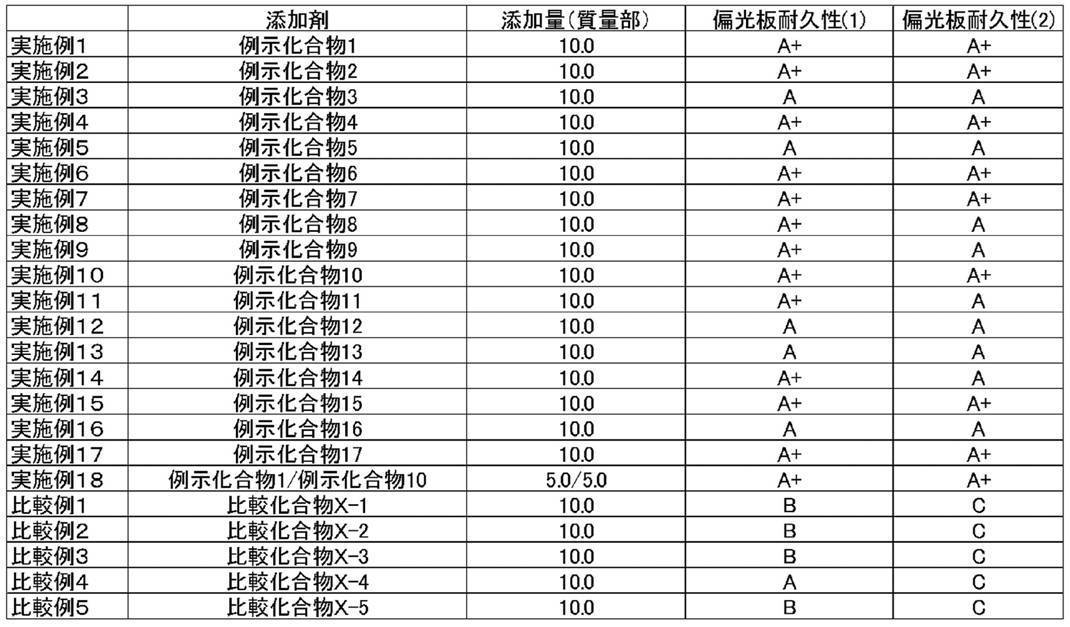
更に本発明者の鋭意検討の結果、化合物Aは、セルロースエステルフィルムの表面硬度向上にも寄与し得ることが判明した。この点に関して、以下に、実施例および比較例の各セルロースエステルフィルムの表面硬度の評価方法および評価結果を示す。なお表2および表3に示した実施例間の対比から、偏光板耐久性の評価結果がより良好な実施例は、表面硬度の評価結果もより良好な傾向が見られた。
<セルロースエステルフィルムの表面硬度の評価>
実施例および比較例の各セルロースエステルフィルムの表面硬度(ヌープ硬度)を、以下の方法によって測定した。測定に付したセルロースエステルフィルムは、上記の偏光板耐久性の評価で行ったような保存を経ていないフィルムである。
各セルロースエステルフィルムを、ガラス基板上に固定した。フィッシャーインスツルメンツ社製フッシャースコープH100Vp型硬度計を用いて、圧子の短軸の向きをセルロースエステルフィルム製膜時の搬送方向(長手方向)に対して平行に配置したヌープ圧子により、ガラス基板上に固定したセルロースエステルフィルム表面のヌープ硬度を、負荷時間10sec、クリープ時間5sec、除荷時間10sec、最大荷重50mNの条件で測定した。押し込み深さから求められる圧子とセルロースエステルフィルム表面との接触面積と最大荷重の関係より硬度を算出し、この5点の算術平均をヌープ硬度とした。ヌープ硬度は単位N/mm2で表し、求められたヌープ硬度に基づき、下記評価基準にしたがってセルロースエステルフィルムの表面硬度を評価した。評価結果を、表3に示す。
実施例および比較例の各セルロースエステルフィルムの表面硬度(ヌープ硬度)を、以下の方法によって測定した。測定に付したセルロースエステルフィルムは、上記の偏光板耐久性の評価で行ったような保存を経ていないフィルムである。
各セルロースエステルフィルムを、ガラス基板上に固定した。フィッシャーインスツルメンツ社製フッシャースコープH100Vp型硬度計を用いて、圧子の短軸の向きをセルロースエステルフィルム製膜時の搬送方向(長手方向)に対して平行に配置したヌープ圧子により、ガラス基板上に固定したセルロースエステルフィルム表面のヌープ硬度を、負荷時間10sec、クリープ時間5sec、除荷時間10sec、最大荷重50mNの条件で測定した。押し込み深さから求められる圧子とセルロースエステルフィルム表面との接触面積と最大荷重の関係より硬度を算出し、この5点の算術平均をヌープ硬度とした。ヌープ硬度は単位N/mm2で表し、求められたヌープ硬度に基づき、下記評価基準にしたがってセルロースエステルフィルムの表面硬度を評価した。評価結果を、表3に示す。
表面硬度評価基準:
A+:ヌープ硬度220N/mm2以上
A:ヌープ硬度210N/mm2以上220N/mm2未満
B:ヌープ硬度200N/mm2以上210N/mm2未満
C:ヌープ硬度190N/mm2以上200N/mm2未満
D:ヌープ硬度190N/mm2未満
A+:ヌープ硬度220N/mm2以上
A:ヌープ硬度210N/mm2以上220N/mm2未満
B:ヌープ硬度200N/mm2以上210N/mm2未満
C:ヌープ硬度190N/mm2以上200N/mm2未満
D:ヌープ硬度190N/mm2未満

[画像表示装置の作製]
市販の液晶テレビ(SONY社製ブラビアJ5000)の視認側の偏光板を剥がし、上記実施例で作製した各偏光板を、上記各実施例のセルロースエステルフィルム(偏光板保護フィルム)がアウター側となるように、接着剤を介して貼り付けて画像表示装置(液晶表示装置)を得た。
市販の液晶テレビ(SONY社製ブラビアJ5000)の視認側の偏光板を剥がし、上記実施例で作製した各偏光板を、上記各実施例のセルロースエステルフィルム(偏光板保護フィルム)がアウター側となるように、接着剤を介して貼り付けて画像表示装置(液晶表示装置)を得た。
本発明は、液晶表示装置等の各種画像表示装置の技術分野において有用である。
70 流延膜
85 流延用支持体(バンド)
89 流延ダイ
120 コア層用ドープ
121 スキン層A用ドープ
122 スキン層B用ドープ
120a コア層
121a スキン層A
122a スキン層B
85 流延用支持体(バンド)
89 流延ダイ
120 コア層用ドープ
121 スキン層A用ドープ
122 スキン層B用ドープ
120a コア層
121a スキン層A
122a スキン層B
Claims (12)
- 下記一般式Aで表され、かつメチル基および鎖状のメチレン基からなる群から選択される基の1分子中に含まれる合計数が0~2個の範囲である化合物を含有するセルロースエステルフィルム。

- 一般式A中、R2で表されるn価の多環式脂環基は、n価の多環式脂環炭化水素基である、請求項1に記載のセルロースエステルフィルム。
- 一般式A中、R2で表されるn価の多環式脂環基が有する多環構造は、架橋環および縮合環からなる群から選択される多環構造である、請求項1または2に記載のセルロースエステルフィルム。
- 一般式A中、R1は、フェニル基、ビフェニル基およびナフチル基からなる群から選択されるアリール基を表す、請求項1~3のいずれか1項に記載のセルロースエステルフィルム。
- 一般式A中の下記一般式(A-1)で表される部分構造が、ウレタン結合、カーボネート結合およびエステル結合からなる群から選択される結合を含む、請求項1~4のいずれか1項に記載のセルロースエステルフィルム。

一般式(A-1)中、*は結合部位を表す。 - 前記一般式(A-1)で表される部分構造が、ウレタン結合およびカーボネート結合からなる群から選択される結合を含む、請求項5に記載のセルロースエステルフィルム。
- 一般式Aで表される化合物において、1分子中に含まれるメチル基および鎖状のメチレン基からなる群から選択される基の合計数が0個である、請求項1~6のいずれか1項に記載のセルロースエステルフィルム。
- 一般式A中、nが2~4の整数を表す、請求項1~7のいずれか1項に記載のセルロースエステルフィルム。
- セルロースエステルを含有し、
一般式Aで表される化合物を、セルロースエステル100.0質量部に対して0.1~50.0質量部含有する、請求項1~8のいずれか1項に記載のセルロースエステルフィルム。 - 請求項1~9のいずれか1項に記載のセルロースエステルフィルムと、偏光子と、を含む偏光板。
- 請求項10に記載の偏光板を含む画像表示装置。
- 更に液晶セルを含む液晶表示装置である、請求項11に記載の画像表示装置。
Priority Applications (1)
| Application Number | Priority Date | Filing Date | Title |
|---|---|---|---|
| JP2018529442A JP6700393B2 (ja) | 2016-07-29 | 2017-06-20 | セルロースエステルフィルム、偏光板および画像表示装置 |
Applications Claiming Priority (2)
| Application Number | Priority Date | Filing Date | Title |
|---|---|---|---|
| JP2016149706 | 2016-07-29 | ||
| JP2016-149706 | 2016-07-29 |
Publications (1)
| Publication Number | Publication Date |
|---|---|
| WO2018020904A1 true WO2018020904A1 (ja) | 2018-02-01 |
Family
ID=61015838
Family Applications (1)
| Application Number | Title | Priority Date | Filing Date |
|---|---|---|---|
| PCT/JP2017/022609 Ceased WO2018020904A1 (ja) | 2016-07-29 | 2017-06-20 | セルロースエステルフィルム、偏光板および画像表示装置 |
Country Status (2)
| Country | Link |
|---|---|
| JP (1) | JP6700393B2 (ja) |
| WO (1) | WO2018020904A1 (ja) |
Citations (7)
| Publication number | Priority date | Publication date | Assignee | Title |
|---|---|---|---|---|
| JP2006193473A (ja) * | 2005-01-14 | 2006-07-27 | Daicel Chem Ind Ltd | カルボキシル基又は酸無水物基を有するアリールポリアダマンタン誘導体とその製造法 |
| JP2007297554A (ja) * | 2006-05-02 | 2007-11-15 | Fujifilm Corp | セルロース体フィルム、光学補償シート、偏光板、液晶表示装置 |
| JP2011207965A (ja) * | 2010-03-29 | 2011-10-20 | Fujifilm Corp | セルロース系フィルム、偏光板、液晶表示装置、及び化合物 |
| JP2013076943A (ja) * | 2011-09-30 | 2013-04-25 | Fujifilm Corp | セルロースアシレート系光学フィルム、偏光板及び液晶表示装置 |
| JP2013178464A (ja) * | 2012-01-31 | 2013-09-09 | Konica Minolta Advanced Layers Inc | 光学補償フィルムおよびその製造方法、偏光板および液晶表示装置 |
| JP2014126721A (ja) * | 2012-12-27 | 2014-07-07 | Konica Minolta Inc | 光学フィルム、円偏光板及び画像表示装置 |
| JP2014142421A (ja) * | 2013-01-22 | 2014-08-07 | Konica Minolta Inc | 光学フィルム、円偏光板および有機el表示装置 |
-
2017
- 2017-06-20 JP JP2018529442A patent/JP6700393B2/ja not_active Expired - Fee Related
- 2017-06-20 WO PCT/JP2017/022609 patent/WO2018020904A1/ja not_active Ceased
Patent Citations (7)
| Publication number | Priority date | Publication date | Assignee | Title |
|---|---|---|---|---|
| JP2006193473A (ja) * | 2005-01-14 | 2006-07-27 | Daicel Chem Ind Ltd | カルボキシル基又は酸無水物基を有するアリールポリアダマンタン誘導体とその製造法 |
| JP2007297554A (ja) * | 2006-05-02 | 2007-11-15 | Fujifilm Corp | セルロース体フィルム、光学補償シート、偏光板、液晶表示装置 |
| JP2011207965A (ja) * | 2010-03-29 | 2011-10-20 | Fujifilm Corp | セルロース系フィルム、偏光板、液晶表示装置、及び化合物 |
| JP2013076943A (ja) * | 2011-09-30 | 2013-04-25 | Fujifilm Corp | セルロースアシレート系光学フィルム、偏光板及び液晶表示装置 |
| JP2013178464A (ja) * | 2012-01-31 | 2013-09-09 | Konica Minolta Advanced Layers Inc | 光学補償フィルムおよびその製造方法、偏光板および液晶表示装置 |
| JP2014126721A (ja) * | 2012-12-27 | 2014-07-07 | Konica Minolta Inc | 光学フィルム、円偏光板及び画像表示装置 |
| JP2014142421A (ja) * | 2013-01-22 | 2014-08-07 | Konica Minolta Inc | 光学フィルム、円偏光板および有機el表示装置 |
Also Published As
| Publication number | Publication date |
|---|---|
| JPWO2018020904A1 (ja) | 2019-04-11 |
| JP6700393B2 (ja) | 2020-05-27 |
Similar Documents
| Publication | Publication Date | Title |
|---|---|---|
| JP5067369B2 (ja) | 偏光板保護フィルム、偏光板及び液晶表示装置 | |
| JP5507819B2 (ja) | セルロースエステルフィルム、偏光板および液晶表示装置 | |
| JP6383608B2 (ja) | 偏光板用組成物、偏光板保護フィルム、偏光子、偏光板および液晶表示装置 | |
| JP5707811B2 (ja) | 長尺状λ/4板、円偏光板、偏光板、OLED表示装置、及び立体画像表示装置 | |
| JP6193797B2 (ja) | 光学フィルム、偏光板および液晶表示装置 | |
| JP5324814B2 (ja) | セルロースアシレートフィルムおよび偏光板 | |
| JP2017149001A (ja) | 積層体、偏光板及び画像表示装置 | |
| JP4844064B2 (ja) | 位相差フィルム、位相差フィルムの製造方法及び偏光板、液晶表示装置 | |
| JPWO2015012407A1 (ja) | セルロースアシレートフィルム、新規化合物、偏光板および液晶表示装置 | |
| JP5373336B2 (ja) | セルロースエステルフィルム、偏光板および液晶表示装置 | |
| JP6700393B2 (ja) | セルロースエステルフィルム、偏光板および画像表示装置 | |
| JP2012098646A (ja) | 位相差フィルム、偏光板及び液晶表示装置 | |
| JP6001729B2 (ja) | セルロースエステルフィルム、偏光板および液晶表示装置 | |
| JP6339530B2 (ja) | ポリマーフィルム、偏光板および液晶表示装置 | |
| JP6574063B2 (ja) | 積層体、光学フィルム、偏光板保護フィルム、偏光板及び画像表示装置 | |
| JP6572081B2 (ja) | セルロースアシレートフィルム、偏光板および液晶表示装置 | |
| JP6607964B2 (ja) | 偏光板、画像表示装置及び偏光板保護フィルム | |
| JP6013870B2 (ja) | 光学フィルム及びその製造方法、偏光板並びに液晶表示装置 | |
| JP2013137357A (ja) | 広幅偏光板、広幅偏光板の製造方法及び液晶表示装置 | |
| JP6277095B2 (ja) | セルロースアシレートフィルム、偏光板および液晶表示装置 | |
| CN108885291A (zh) | 液晶显示装置 | |
| JP5957818B2 (ja) | 位相差フィルム、偏光板及び液晶表示装置 | |
| JP2017179273A (ja) | セルロースエステルフィルム、偏光板及び画像表示装置 | |
| JP6488230B2 (ja) | セルロースエステルフィルム、偏光板及び画像表示装置。 | |
| JP6595004B2 (ja) | 積層体、位相差フィルム、偏光板及び画像表示装置 |
Legal Events
| Date | Code | Title | Description |
|---|---|---|---|
| 121 | Ep: the epo has been informed by wipo that ep was designated in this application |
Ref document number: 17833914 Country of ref document: EP Kind code of ref document: A1 |
|
| ENP | Entry into the national phase |
Ref document number: 2018529442 Country of ref document: JP Kind code of ref document: A |
|
| NENP | Non-entry into the national phase |
Ref country code: DE |
|
| 122 | Ep: pct application non-entry in european phase |
Ref document number: 17833914 Country of ref document: EP Kind code of ref document: A1 |