WO2017169201A1 - インクジェットプリンタのための画像処理装置 - Google Patents
インクジェットプリンタのための画像処理装置 Download PDFInfo
- Publication number
- WO2017169201A1 WO2017169201A1 PCT/JP2017/005233 JP2017005233W WO2017169201A1 WO 2017169201 A1 WO2017169201 A1 WO 2017169201A1 JP 2017005233 W JP2017005233 W JP 2017005233W WO 2017169201 A1 WO2017169201 A1 WO 2017169201A1
- Authority
- WO
- WIPO (PCT)
- Prior art keywords
- ink
- color
- image data
- dropless
- colors
- Prior art date
- Legal status (The legal status is an assumption and is not a legal conclusion. Google has not performed a legal analysis and makes no representation as to the accuracy of the status listed.)
- Ceased
Links
Images




Classifications
-
- B—PERFORMING OPERATIONS; TRANSPORTING
- B41—PRINTING; LINING MACHINES; TYPEWRITERS; STAMPS
- B41J—TYPEWRITERS; SELECTIVE PRINTING MECHANISMS, i.e. MECHANISMS PRINTING OTHERWISE THAN FROM A FORME; CORRECTION OF TYPOGRAPHICAL ERRORS
- B41J2/00—Typewriters or selective printing mechanisms characterised by the printing or marking process for which they are designed
- B41J2/005—Typewriters or selective printing mechanisms characterised by the printing or marking process for which they are designed characterised by bringing liquid or particles selectively into contact with a printing material
- B41J2/01—Ink jet
- B41J2/21—Ink jet for multi-colour printing
- B41J2/2103—Features not dealing with the colouring process per se, e.g. construction of printers or heads, driving circuit adaptations
-
- B—PERFORMING OPERATIONS; TRANSPORTING
- B41—PRINTING; LINING MACHINES; TYPEWRITERS; STAMPS
- B41J—TYPEWRITERS; SELECTIVE PRINTING MECHANISMS, i.e. MECHANISMS PRINTING OTHERWISE THAN FROM A FORME; CORRECTION OF TYPOGRAPHICAL ERRORS
- B41J2/00—Typewriters or selective printing mechanisms characterised by the printing or marking process for which they are designed
- B41J2/005—Typewriters or selective printing mechanisms characterised by the printing or marking process for which they are designed characterised by bringing liquid or particles selectively into contact with a printing material
- B41J2/01—Ink jet
- B41J2/21—Ink jet for multi-colour printing
- B41J2/2132—Print quality control characterised by dot disposition, e.g. for reducing white stripes or banding
-
- H—ELECTRICITY
- H04—ELECTRIC COMMUNICATION TECHNIQUE
- H04N—PICTORIAL COMMUNICATION, e.g. TELEVISION
- H04N1/00—Scanning, transmission or reproduction of documents or the like, e.g. facsimile transmission; Details thereof
- H04N1/40—Picture signal circuits
- H04N1/40062—Discrimination between different image types, e.g. two-tone, continuous tone
-
- H—ELECTRICITY
- H04—ELECTRIC COMMUNICATION TECHNIQUE
- H04N—PICTORIAL COMMUNICATION, e.g. TELEVISION
- H04N1/00—Scanning, transmission or reproduction of documents or the like, e.g. facsimile transmission; Details thereof
- H04N1/40—Picture signal circuits
- H04N1/405—Halftoning, i.e. converting the picture signal of a continuous-tone original into a corresponding signal showing only two levels
-
- H—ELECTRICITY
- H04—ELECTRIC COMMUNICATION TECHNIQUE
- H04N—PICTORIAL COMMUNICATION, e.g. TELEVISION
- H04N1/00—Scanning, transmission or reproduction of documents or the like, e.g. facsimile transmission; Details thereof
- H04N1/46—Colour picture communication systems
- H04N1/52—Circuits or arrangements for halftone screening
-
- B—PERFORMING OPERATIONS; TRANSPORTING
- B41—PRINTING; LINING MACHINES; TYPEWRITERS; STAMPS
- B41J—TYPEWRITERS; SELECTIVE PRINTING MECHANISMS, i.e. MECHANISMS PRINTING OTHERWISE THAN FROM A FORME; CORRECTION OF TYPOGRAPHICAL ERRORS
- B41J2/00—Typewriters or selective printing mechanisms characterised by the printing or marking process for which they are designed
- B41J2/525—Arrangement for multi-colour printing, not covered by group B41J2/21, e.g. applicable to two or more kinds of printing or marking process
Definitions
- the present invention relates to an image processing apparatus that performs image processing for printing by an inkjet printer.
- One of the printing methods is an ink jet method in which ink droplets are ejected from nozzles of an ink jet head and landed on a sheet to form an image.
- Patent Document 1 discloses a multi-drop method capable of ejecting a plurality of ink droplets from one nozzle to one pixel among inkjet methods.
- gradation printing is performed in which the density is expressed by the number of ink droplets ejected to one pixel (the number of drops).
- the nozzle surface may be damaged. If the nozzle surface is scratched, ink ejection failure or ejection failure may occur. For this reason, in the ink jet printer, measures are taken so that the paper does not contact the nozzle surface. As one of them, the head gap is adjusted according to the thickness, type, etc. of the paper. The head gap is the distance between the paper and the nozzle surface. In an ink jet printer, the larger the head gap, the easier it is for ink landing deviation and mist formation to occur due to the influence of airflow and the like. This becomes more significant as the ink droplets are smaller.
- the ink droplets merge after ejection and fly as one ink droplet. That is, the size of the flying ink droplet is proportional to the number of ink drops ejected to one pixel. For this reason, in the multi-drop method, the smaller the number of drops of ink ejected to one pixel, the easier it is for ink landing deviation and misting to occur.
- the minimum number of drops per pixel substantially increases. For this reason, the graininess of the intermediate density portion from the highlight region in the printed image is lowered. Thereby, for example, the print quality of the photographic image is lowered.
- An image processing apparatus includes a processor and a memory including a command that causes the processor to perform the following processing when executed by the processor.
- the input image data is color-converted to generate image data of each color corresponding to each ink color of a multi-drop type ink jet printer that discharges a plurality of colors of ink, and the generated image data of each color And generating drop data for each ink color indicating the number of ink drops ejected to each pixel in the inkjet printer.
- the maximum number of drops per pixel for image data of each color corresponding to a part of ink colors including at least one color selected from the ones with higher lightness among all ink colors of the inkjet printer Performing dropless halftone processing in which the minimum number of drops per pixel is larger than normal halftone processing for generating drop data with the number of gradations corresponding to the ink, and inks other than the part of the ink colors Performing the normal halftone process on the image data of each color corresponding to another ink color.
- ink landing deviation and mist formation can be reduced by reducing the ejection of small drops such as one drop per pixel.
- printing by a normal halftone process is performed, so that a reduction in graininess of a printed image can be reduced. Accordingly, it is possible to reduce ink landing deviation and mist formation while reducing a decrease in graininess in a printed image.
- the plurality of colors of ink include four colors of cyan, magenta, yellow, and black, and at least one light-colored ink having a lightness higher than any of cyan, magenta, and black.
- the ink color may be yellow and the at least one light color, and the other ink colors may be cyan, magenta, and black.
- some ink colors which are ink colors for which dropless halftone processing is performed, are yellow and light colors. Further, other ink colors that are ink colors for which normal halftone processing is performed are cyan, magenta, and black.
- dropless halftone processing or normal halftone processing is performed according to the respective lightness, and the printed image.
- the processing may include determining a minimum number of drops per pixel in the dropless halftone processing according to the lightness of the ink color corresponding to the image data to be processed.
- the processing may include determining a minimum number of drops per pixel in the dropless halftone processing according to printing conditions in the inkjet printer.
- the processing includes an operation of performing the normal halftone processing on the image data of all colors, and the dropless compatible halftone processing on the image data of each color corresponding to the partial ink color. And performing the normal halftone process on the image data of each color corresponding to the other ink color according to printing conditions in the inkjet printer.
- the printing conditions include a head gap that is a distance between a sheet on a conveyance belt of the inkjet printer and a nozzle surface of the inkjet head, a conveyance speed of the sheet by the conveyance belt, and a belt of the conveyance belt by air suction. It may include at least one of the airflows of a fan for generating suction force in the holes and sucking and holding the paper on the transport surface of the transport belt.
- FIG. 1 is a block diagram illustrating a configuration of an inkjet printer according to an embodiment.
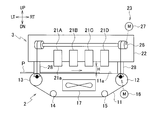
- FIG. 2 is a schematic configuration diagram of the conveyance unit and the printing unit of the inkjet printer shown in FIG.
- FIG. 3 is a flowchart for explaining the operation of the image processing unit.
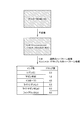
- FIG. 4A is an explanatory diagram illustrating an example of processing in the dropless mode compatible operation of the halftone processing unit.
- FIG. 4B is an explanatory diagram of another example of processing in the dropless mode compatible operation of the halftone processing unit.
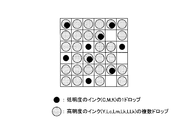
- FIG. 5A is a diagram illustrating an example of a dot image of a print image in the normal mode.
- FIG. 5B is a diagram illustrating an example of a dot image of a print image in the dropless mode.
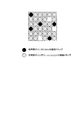
- FIG. 5C is a diagram illustrating a dot image of a print image in a case where printing is performed by performing a one-dropless halftone process for all colors according to a comparative example.
- the following embodiment exemplifies an apparatus or the like for embodying the technical idea of the present invention.
- the technical idea of the present invention is based on the material, shape, structure, arrangement, etc. of each component. It is not specified to the following.
- the technical idea of the present invention can be variously modified within the scope of the claims.
- FIG. 1 is a block diagram showing a configuration of an inkjet printer 1 provided with an image processing apparatus according to an embodiment of the present invention.
- FIG. 2 is a schematic configuration diagram of the transport unit 2 and the printing unit 3 of the inkjet printer 1 shown in FIG.
- the right direction, the left direction, the upward direction, and the downward direction are indicated by RT, LT, UP, and DN, respectively.
- the inkjet printer 1 includes a transport unit 2, a printing unit 3, a communication unit 4, and a control unit 5.
- the transport unit 2 transports the paper P that is a printing medium fed from a paper feed unit (not shown). The direction from the left to the right in FIG.
- the transport unit 2 includes a transport belt 11, a driving roller 12, driven rollers 13 to 15, a transport motor 16, and a fan 17.
- the transport belt 11 sucks and holds the paper P and transports it.
- the conveyor belt 11 is an annular belt that is stretched around the driving roller 12 and the driven rollers 13 to 15.
- a plurality of belt holes (not shown) that are through holes for attracting and holding the paper P are formed in the transport belt 11.
- the transport belt 11 sucks and holds the paper P on the transport surface (upper surface) 11 a by the suction force generated in the belt hole by air suction by the fan 17.
- the transport belt 11 rotates in the clockwise direction in FIG. 2 to transport the sucked and held paper P in the right direction.
- the driving roller 12 rotates the conveyor belt 11 in the clockwise direction in FIG.
- the driven rollers 13 to 15 support the conveying belt 11 together with the driving roller 12.
- the driven rollers 13 to 15 are driven to rotate by the driving roller 12 via the conveyor belt 11.
- the driven roller 13 has the same height as the driving roller 12 and is arranged on the left side of the driving roller 12.
- the driven rollers 14 and 15 are disposed below the drive roller 12 and the driven roller 13 and are spaced apart from each other in the left-right direction and at the same height.
- the conveyance motor 16 drives the drive roller 12 to rotate.
- the fan 17 generates a downward airflow. Accordingly, the fan 17 sucks air through the belt hole of the conveyance belt 11 to generate a negative pressure in the belt hole, and adsorbs the paper P on the conveyance surface 11 a of the conveyance belt 11.
- the fan 17 is disposed in a region surrounded by the conveyor belt 11.
- the printing unit 3 prints an image on the paper P conveyed by the conveyance unit 2.
- the printing unit 3 is disposed above the transport unit 2.
- the printing unit 3 includes inkjet heads 21A to 21D, a head holder 22, and a head gap adjusting unit 23.
- the alphabetic suffixes (A to D) in the reference numerals of the ink jet heads 21A to 21D may be omitted and collectively described.
- the inkjet head 21 discharges ink onto the paper P conveyed by the conveyance belt 11.
- the inkjet heads 21A to 21D are arranged in parallel along the sub-scanning direction (left-right direction) that is the conveyance direction of the paper P.
- Each of the ink jet heads 21A to 21D has two nozzle rows (not shown).
- the nozzle row is composed of a plurality of nozzles (not shown) arranged along the main scanning direction (front-rear direction) orthogonal to the sub-scanning direction.
- the nozzles open to the nozzle surface 21a, which is the lower surface of the inkjet head 21, and eject ink.
- the inkjet head 21 can eject different color inks from the nozzles for each nozzle row. That is, a total of eight colors of ink can be ejected from the inkjet heads 21A to 21D.
- cyan (C), magenta (M), yellow (Y), black (K), light cyan (Lc), light magenta (Lm), light black (Lk), light are printed by the inkjet heads 21A to 21D.
- Light black (LLk) ink is ejected.
- Lc is a color that brightens C
- Lm is a color that brightens M
- Lk is a color that brightens K
- LLk is a color that brightens Lk.
- the four color inks Lc, Lm, Lk, and LLk are all light-colored inks having higher lightness than any of the three color inks C, M, and K.
- the inkjet head 21 is a multi-drop type capable of ejecting a plurality of ink droplets from one nozzle to one pixel, and performs gradation printing that expresses the density by the number of ink droplets (number of drops).
- the head holder 22 holds the inkjet heads 21A to 21D.
- the head holder 22 is formed in a hollow rectangular parallelepiped shape.
- the head holder 22 is fixed at a predetermined position in a casing (not shown) of the inkjet printer 1.
- the head gap adjusting unit 23 adjusts the head gap H.
- the head gap H is the distance between the paper P on the transport belt 11 and the nozzle surface 21 a of the inkjet head 21.
- the head gap adjusting unit 23 includes an elevating mechanism unit 26, an elevating motor 27, and an adjusting member 28.
- the elevating mechanism 26 raises and lowers the transport unit 2.
- the elevating mechanism unit 26 includes a wire, a pulley, and the like, and supports the conveying unit 2 by suspending the wire.
- the elevating mechanism 26 raises and lowers the transport unit 2 by winding and unwinding the wire with a pulley that is rotated by the driving force of the elevating motor 27.
- the elevating motor 27 supplies a driving force for winding and unwinding the wire to the elevating mechanism unit 26.
- the adjusting member 28 is a member for adjusting the head gap H.
- the adjustment members 28 are erected at the four corners of the bottom surface of the head holder 22.
- the conveyance unit 2 is positioned by being abutted against the lower end of the adjustment member 28.
- the adjustment member 28 is configured to be adjustable in length.
- the communication unit 4 connects the inkjet printer 1 to the network 100. Thereby, the inkjet printer 1 can communicate with an external device such as the external terminal 101.
- the network 100 is composed of, for example, a LAN (Local Area Network).
- the external terminal 101 is composed of a personal computer, for example.
- the control unit 5 controls the operation of the entire inkjet printer 1.
- the control unit 5 includes a mechanical control unit 31, an image processing unit (image processing apparatus) 32, and a head control unit 33.
- Each unit of the control unit 5 can be realized by software or hardware by a storage unit including a CPU, a RAM, a ROM, a hard disk, a semiconductor memory, and the like.
- the storage unit stores a command that causes the processor to perform processing described below when executed by a processor such as a CPU.
- the mechanical control unit 31 controls the transport unit 2 to transport the paper P.
- the mechanical control unit 31 controls the head gap adjustment unit 23 to adjust the head gap H.
- the image processing unit 32 processes the print job data in the PDL format transmitted from the external terminal 101, and each color (C, M, Y, K, Lc, and Rc) corresponding to each ink color ejected by the inkjet heads 21A to 21D.
- Lm, Lk, LLk) drop data is generated.
- the drop data for each color is data indicating the number of ink drops for each pixel of each color.
- the image processing unit 32 includes a RIP (Raster Image Processor) processing unit 41, a color conversion unit 42, and a halftone processing unit 43.
- RIP Raster Image Processor
- the RIP processing unit 41 performs RIP processing on the print job data to generate R, G, and B image data.
- the R, G, and B image data is, for example, 256-gradation data in which each pixel is represented by 8 bits.
- the color conversion unit 42 performs color conversion on R, G, and B image data that is input image data from the RIP processing unit 41, and each color (C, M) corresponding to each ink color ejected by the inkjet heads 21A to 21D. , Y, K, Lc, Lm, Lk, LLk).
- the C, M, Y, K, Lc, Lm, Lk, and LLk image data is, for example, 256 gradation data in which each pixel is represented by 8 bits.
- the color conversion unit 42 converts R, G, and B image data into C, M, Y, K, Lc, Lm, Lk, and LLk image data using a color profile prepared in advance.
- the halftone processing unit 43 performs halftone processing on the image data of each color generated by the color conversion unit 42 to generate drop data for each ink color. As halftone processing, error diffusion processing or dither mask processing can be applied.
- the halftone processing unit 43 selectively performs a dropless mode compatible operation and a normal mode compatible operation according to the printing conditions in the inkjet printer 1. Specifically, the determination element of the printing condition is the head gap H.
- the halftone processing unit 43 performs a dropless mode compatible operation when the head gap H is greater than or equal to a predetermined head gap threshold, and performs a normal mode compatible operation when the head gap H is less than the head gap threshold.
- the dropless mode compatible operation is an operation for generating drop data of each color for printing in the dropless mode.
- the minimum number of drops per pixel for some ink colors, including at least one color selected from the lighter of all ink colors is the minimum drop per pixel by normal halftoning.
- printing is performed with a value larger than the number.
- the minimum number of drops per pixel of Y, Lc, Lm, Lk, and LLk which are high-lightness ink colors whose brightness per dot is equal to or higher than a predetermined brightness threshold.
- printing is performed with the number of drops larger than the minimum number of drops per pixel by halftone processing.
- the halftone processing unit 43 performs dropless compatible halftone processing on Y, Lc, Lm, Lk, and LLk image data, and performs C, M, and K image data. Perform normal halftoning.
- the normal halftone process in the operation corresponding to the dropless mode is a process of generating drop data having the number of gradations corresponding to the maximum number of drops per pixel from the image data. For example, when the maximum number of drops per pixel is 7 drops, the drop data generated by the normal halftone process is data expressing 8 gradations with 0 to 7 drops.
- the dropless-compatible halftone process is a halftone process that is performed by increasing the minimum number of drops per pixel as compared to the normal halftone process.
- the dropless halftone process is a halftone process in which the minimum number of drops per pixel is 2 drops or more. For example, when the maximum number of drops per pixel is 7 drops and the minimum number of drops is 2 drops, the drop data generated by the dropless halftone process is 0, 2 to 7 drops, 7th floor This is the data that represents the key.
- the normal mode compatible operation is an operation for generating drop data of each color for printing in the normal mode.
- the normal mode is a mode in which all ink colors of the inkjet printer 1 are printed with the number of gradations corresponding to the maximum number of drops per pixel.
- the halftone processing unit 43 performs normal halftone processing on image data of all colors (C, M, Y, K, Lc, Lm, Lk, LLk) in the normal mode compatible operation.
- the head control unit 33 drives the inkjet heads 21A to 21D to discharge ink based on the drop data of each color generated by the halftone processing unit 43.
- the inkjet printer 1 When the PDL format print job data transmitted from the external terminal 101 is received, the inkjet printer 1 performs an operation of generating drop data based on the print job data in the image processing unit 32.
- the operation of the image processing unit 32 will be described with reference to the flowchart of FIG. 3 is started when the image processing unit 32 acquires print job data received by the communication unit 4 via the network 100.
- the RIP processing unit 41 of the image processing unit 32 performs RIP processing on the print job data to generate R, G, and B image data.
- step S2 the color conversion unit 42 converts the R, G, B image data generated by the RIP processing unit 41 into C, M, Y, K, Lc, Lm, Lk, LLk image data. To do.
- step S3 the halftone processing unit 43 determines whether or not the printing condition at the time of printing with the current print job data is a printing condition corresponding to the dropless mode.
- the halftone processing unit 43 determines that the print condition corresponds to the dropless mode when the head gap H at the time of printing with the current print job data is equal to or greater than the head gap threshold.
- the head gap H is determined according to the paper type.
- the halftone processing unit 43 acquires paper type information acquired by the RIP processing unit 41 through the RIP processing from the RIP processing unit 41, and determines whether the head gap H is equal to or larger than the head gap threshold based on the paper type. To do.
- step S4 the halftone processing unit 43 performs the operation corresponding to the dropless mode. Do.
- the halftone processing unit 43 performs normal halftone processing on C, M, and K image data that are low brightness ink colors.
- C, M, K drop data for example, data in which the number of drops of each pixel is any one of 0 to 7 drops is generated.
- the halftone processing unit 43 performs dropless compatible halftone processing on image data of Y, Lc, Lm, Lk, and LLk, which are high brightness ink colors.
- the halftone processing unit 43 determines the minimum number of drops per pixel in the dropless-compatible halftone processing for Y, Lc, Lm, Lk, and LLk image data as Y, Lc, Lm, Lk, and LLk. Set (decide) according to the lightness of the ink color. More specifically, the ink color with higher lightness is less noticeable in the graininess of the printed image, so the minimum number of drops per pixel is increased. For example, the minimum number of drops of LLk having a higher brightness than Y, Lc, Lm, and Lk is made larger than the minimum number of drops of Y, Lc, Lm, and Lk.
- the halftone processing unit 43 sets (determines) the minimum number of drops per pixel in the dropless-compatible halftone processing according to the printing conditions during printing with the current print job data. Specifically, the halftone processing unit 43 increases the minimum number of drops per pixel as the head gap H during printing with the current print job data increases. As the head gap H is larger, ink landing deviation and mist are more likely to occur, and as the number of drops for one pixel is smaller, ink landing deviation and mist are more likely to occur. Increase the minimum number of drops.
- Drop data with a minimum number of drops of 2 or more is generated for each color of Y, Lc, Lm, Lk, and LLk by dropless halftone processing. For example, when the maximum number of drops per pixel is 7 drops and the color has a minimum number of drops set to 2 drops, drop data in which the number of drops for each pixel is 0, 2 to 7 drops Generated.
- the halftone processing unit 43 performs the dropless mode compatible operation.
- the halftone processing unit 43 performs normal halftone processing on C, M, and K image data, and Y, Lc, Lm, Lk, and LLk image data.
- a halftone process corresponding to dropless is performed.
- one-dropless halftone processing is performed as dropless-compatible halftone processing.
- the 1-dropless halftone process is a halftone process that does not use 1-drop ejection per pixel, that is, sets the minimum number of drops to 2 drops.
- LLk a two-dropless halftone process is performed as a dropless-compatible halftone process.
- the 2-dropless halftone process is a halftone process that does not use 1-drop ejection and 2-drop ejection per pixel, that is, the minimum number of drops is 3 drops.
- Lm, Lk, LLk) (0, 0, 217, 0, 26, 61, 8, 38) is obtained.
- C, M, and K since each pixel value is 0 in this example, halftone processing is not performed.
- Y, Lc, Lm, and Lk 1-dropless halftone processing is performed, and for LLk, 2-dropless halftone processing is performed.
- the number of drops for each pixel is 5 or 6 drops
- Lc, Lm, and Lk are 0 or 2 drops
- LLk is 0 or 3 drops, as shown in the lower part of FIG. 4A.
- Lm, Lk, LLk) (102, 41, 153, 0, 33, 51, 38, 0) is obtained.
- K and LLk since each pixel value is 0 in this example, halftone processing is not performed.
- a normal halftone process is performed for C and M, and a one-dropless halftone process is performed for Y, Lc, Lm, and Lk.
- the number of drops for each pixel is 2 or 3 drops for C, 1 or 2 drops for M, 4 or 5 drops for Y, and 0 or 2 drops for Lc, Lm, and Lk. The result is obtained.
- step S5 when it is determined in step S3 that the printing conditions at the time of printing with the current print job data are not the printing conditions corresponding to the dropless mode (step S3: NO), the halftone processing unit is determined in step S5. 43 performs an operation corresponding to the normal mode. Specifically, the halftone processing unit 43 performs normal halftone processing on image data of all colors (C, M, Y, K, Lc, Lm, Lk, and LLk). As a result, as the drop data of each color, for example, data in which the number of drops of each pixel is any one of 0 to 7 drops is generated.
- step S4 When drop data is generated in step S4 or step S5, a series of operations of the image processing unit 32 is completed.
- the head control unit 33 drives the ink jet heads 21A to 21D based on the drop data to eject ink onto the paper P conveyed by the conveyance unit 2.
- the mechanical control unit 31 adjusts the head gap H by the head gap adjustment unit 23.
- the mechanical control unit 31 acquires the paper type information acquired by the RIP processing unit 41 through the RIP processing from the RIP processing unit 41, and sets the head gap adjustment unit 23 to adjust the head gap H to a size corresponding to the paper type. Control.
- the mechanical control unit 31 starts driving the transport unit 2. Specifically, the mechanical control unit 31 starts driving the driving roller 12 and the fan 17.
- the paper P is fed from a paper feed unit (not shown) to the transport unit 2, the paper P is transported while being sucked and held on the transport surface 11a.
- ink is ejected from the ink jet heads 21A to 21D to print an image.
- printing in the normal mode or the dropless mode is performed.
- FIGS. 5A and 5B An example of the dot image of the print image in the normal mode and the dropless mode is shown in FIGS. 5A and 5B, respectively.
- 5A to 5C the smaller dot indicates that the dot is formed by one drop of ink, and the larger dot indicates that the dot is formed by a plurality of drops of ink.
- a black-filled dot indicates that the dot is one of C, M, and K inks having a low brightness ink color.
- a dot-hatched dot indicates that the dot is made of any of Y, Lc, Lm, Lk, and LLk, which are high brightness ink colors.
- the graininess in the high lightness ink color is lower than in the normal mode of FIG. 5A. Decreases. However, since the dot of the high brightness ink color has low visibility, the deterioration of the graininess is not noticeable. For a low-lightness ink color with high visibility, even in the dropless mode, since there is a dot by one drop as in the normal mode of FIG. 5A, the graininess is maintained. For this reason, in the dropless mode, the reduction in graininess is reduced as the entire image.
- FIG. 5C shows a dot image of a print image when printing is performed by performing a one-dropless halftone process for all colors.
- the ink color has a low brightness
- there is no ejection of one drop per pixel so that the ink landing deviation and mist formation can be reduced as compared with the dropless mode of FIG. 5B.
- the density of low brightness ink color dots with high visibility is lower than that in the normal mode in FIG. 5A and the dropless mode in FIG. 5B, and the graininess of the entire image is greatly reduced.
- the halftone processing unit 43 selects each color corresponding to a part of ink colors including at least one color selected from the ones with higher brightness among all ink colors. A halftone process corresponding to dropless is performed on the image data.
- the halftone processing unit 43 performs normal halftone processing on image data of each color corresponding to other ink colors other than some ink colors. As a result, for some ink colors, it is possible to reduce ink landing deviation and mist generation by reducing ink ejection of small drops such as one drop per pixel. In addition, for other ink colors, printing by normal halftone processing can be performed to reduce a decrease in graininess of a printed image. Therefore, according to the ink jet printer 1, it is possible to reduce the landing deviation of the ink and the mist formation while reducing the deterioration of the graininess in the printed image.
- the halftone processing unit 43 performs dropless-compatible halftone processing on image data of each color of Y and light colors (Lc, Lm, Lk, LLk), and performs C, M , K image data is subjected to normal halftone processing.
- dropless halftone processing or normal halftone processing corresponding to the respective lightness is performed to reduce the drop in graininess in the printed image, and ink landing deviation And mist can be reduced.
- the halftone processing unit 43 sets the minimum number of drops per pixel in the dropless halftone processing according to the lightness of the ink color corresponding to the image data to be processed. Specifically, the halftone processing unit 43 increases the minimum number of drops per pixel for an ink color with higher brightness. Accordingly, it is possible to further reduce ink landing deviation and mist formation while suppressing deterioration in graininess in the printed image.
- the halftone processing unit 43 sets the minimum number of drops per pixel in the dropless compatible halftone processing according to the printing conditions. Specifically, the halftone processing unit 43 sets the minimum number of drops per pixel in dropless compatible halftone processing according to the size of the head gap H. Thus, by setting the minimum number of drops according to conditions that affect ink landing deviation and mist formation, ink landing deviation and mist formation can be further reduced.
- the halftone processing unit 43 selectively performs the normal mode compatible operation and the dropless mode compatible operation according to the printing conditions. Specifically, the halftone processing unit 43 selects a normal mode-compatible operation or a dropless mode-compatible operation according to the size of the head gap H. Thereby, depending on printing conditions, the printing by the normal halftone process is performed for all colors, so that the reduction in graininess in the printed image can be further reduced.
- the ink colors ejected by the inkjet printer 1 are C, M, Y, K, Lc, Lm, Lk, and LLk.
- combinations of ink colors are not limited thereto.
- a combination in which at least one of light-color inks Lc, Lm, Lk, and LLk is omitted may be used.
- the ink jet printer only needs to eject ink of a plurality of colors.
- the determination element of the printing condition is the head gap H, but is not limited thereto.
- the printing condition may be determined by combining a plurality of elements.
- the minimum number of drops per pixel in dropless halftone processing may be increased.
- the halftone processing unit 43 selects the normal mode compatible operation or the dropless mode compatible operation according to the printing conditions, but may select it according to a user instruction. Further, printing in the normal mode and the operation corresponding to the normal mode of the halftone processing unit 43 for that purpose may be omitted.
- the present invention is not limited to the above-described embodiment as it is, and can be embodied by modifying the constituent elements without departing from the scope of the invention in the implementation stage.
- various inventions can be formed by appropriately combining a plurality of components disclosed in the embodiment. For example, some components may be deleted from all the components shown in the embodiment.
Landscapes
- Engineering & Computer Science (AREA)
- Multimedia (AREA)
- Signal Processing (AREA)
- Quality & Reliability (AREA)
- Ink Jet (AREA)
- Particle Formation And Scattering Control In Inkjet Printers (AREA)
- Color, Gradation (AREA)
- Facsimile Image Signal Circuits (AREA)
Abstract
画像処理装置(32)のハーフトーン処理が、インクジェットプリンタ(1)の全インク色(C,M,Y,K,Lc,Lm,Lk,LLk)のうち明度が高い方から選択される少なくとも1色を含む一部のインク色(Y,Lc,Lm,Lk,LLk)に対応する各色の画像データに対し、1画素あたりの最大ドロップ数に応じた階調数のドロップデータを生成する通常のハーフトーン処理よりも1画素あたりの最小ドロップ数を大きくしたドロップレス対応のハーフトーン処理を行うこと、及び、前記一部のインク色以外のインク色である他のインク色(C,M,K)に対応する各色の画像データに対し、前記通常のハーフトーン処理を行うことを含む。
Description
本発明は、インクジェットプリンタによる印刷のための画像処理を行う画像処理装置に関する。
インクジェットヘッドのノズルからインクの液滴を吐出して用紙に着弾させ、画像を形成するインクジェット方式が、印刷方式の1つとしてある。
インクジェット方式のなかで、1つのノズルから1つの画素に対して複数のインク滴を吐出可能なマルチドロップ方式が特許文献1に記載されている。マルチドロップ方式では、1つの画素に吐出するインク滴の数(ドロップ数)により濃度を表現する階調印刷を行う。
インクジェットプリンタにおいて、インクジェットヘッドのノズル面に用紙が接触すると、ノズル面に傷がつくことがある。ノズル面に傷がつくと、インクの不吐出や吐出異常が発生するおそれがある。このため、インクジェットプリンタでは、用紙とノズル面とが接触しないような措置がとられる。その1つとして、用紙の厚さ、種類等に応じてヘッドギャップを調整することが行われている。ヘッドギャップは、用紙とノズル面との間の距離である。インクジェットプリンタでは、ヘッドギャップが大きいほど、気流などの影響によるインクの着弾ずれやミスト化が生じやすくなる。これは、インクの液滴が小さいほど顕著になる。
マルチドロップ方式では、1つの画素に複数のインク滴が吐出された場合、それらのインク滴は吐出後に合体して1つのインク滴となって飛翔する。すなわち、飛翔するインク滴の大きさは、1つの画素に対して吐出されるインクのドロップ数に比例する。このため、マルチドロップ方式では、1つの画素に対して吐出されるインクのドロップ数が少ないほど、インクの着弾ずれやミスト化が生じやすくなる。
そこで、マルチドロップ方式において、ヘッドギャップが大きいときには、1画素あたりの最小ドロップ数である1ドロップのみの吐出は行わないようにする、いわゆる1ドロップレス処理を行うことで、インクの着弾ずれやミスト化を低減できる。これにより、インクの着弾ずれによる印刷画質の低下や、インクミストによる印刷物や印刷装置内の汚れを軽減できる。
ところで、上述した1ドロップレス処理を行うと、1画素あたりの最小ドロップ数が実質的に増加する。このため、印刷画像におけるハイライト領域から中間濃度部分の粒状性が低下する。これにより、例えば、写真画像の印刷画質が低下する。
本発明は、インクジェットプリンタによる印刷画像における粒状性の低下を軽減しつつ、インクの着弾ずれやミスト化を軽減できる画像処理装置を提供することを目的とする。
本発明の実施形態に係る画像処理装置は、プロセッサと、前記プロセッサにより実行されると前記プロセッサに以下の処理を行わせる指令を含むメモリとを備える。前記処理は、入力画像データを色変換して、複数色のインクを吐出するマルチドロップ方式のインクジェットプリンタの各インク色に対応する各色の画像データを生成することと、前記生成した各色の画像データをハーフトーン処理して、前記インクジェットプリンタにおいて各画素に対して吐出するインクのドロップ数を示すインク色ごとのドロップデータを生成することとを含む。前記ハーフトーン処理は、前記インクジェットプリンタの全インク色のうち明度が高い方から選択される少なくとも1色を含む一部のインク色に対応する各色の画像データに対し、1画素あたりの最大ドロップ数に応じた階調数のドロップデータを生成する通常のハーフトーン処理よりも1画素あたりの最小ドロップ数を大きくしたドロップレス対応のハーフトーン処理を行うことと、前記一部のインク色以外のインク色である他のインク色に対応する各色の画像データに対し、前記通常のハーフトーン処理を行うこととを含む。
上記構成によれば、一部のインク色については1画素あたり1ドロップ等の小ドロップのインク吐出を減らすことで、インクの着弾ずれやミスト化を軽減できる。また、他のインク色については通常のハーフトーン処理による印刷が行われることで、印刷画像の粒状性の低下を軽減できる。したがって、印刷画像における粒状性の低下を軽減しつつ、インクの着弾ずれやミスト化を軽減できる。
また、前記複数色のインクは、シアン、マゼンタ、イエロー、ブラックの4色のインクと、シアン、マゼンタ、ブラックのいずれよりも明度が高い少なくとも1色の淡色のインクとを含み、前記一部のインク色は、イエローおよび前記少なくとも1色の淡色であり、前記他のインク色は、シアン、マゼンタ、およびブラックであってもよい。
上記構成によれば、ドロップレス対応のハーフトーン処理が行われるインク色である一部のインク色は、イエローおよび淡色である。また、通常のハーフトーン処理が行われるインク色である他のインク色は、シアン、マゼンタ、およびブラックである。これにより、シアン、マゼンタ、イエロー、ブラック、および淡色のインクを吐出するインクジェットプリンタの各インク色について、それぞれの明度に応じたドロップレス対応のハーフトーン処理または通常のハーフトーン処理を行い、印刷画像における粒状性の低下を軽減しつつ、インクの着弾ずれやミスト化を軽減できる。
また、前記処理は、前記ドロップレス対応のハーフトーン処理における1画素あたりの最小ドロップ数を、処理対象の画像データに対応するインク色の明度に応じて決定することを含んでもよい。
上記構成によれば、印刷画像における粒状性の低下を抑えつつ、インクの着弾ずれやミスト化をより軽減できる。
また、前記処理は、前記ドロップレス対応のハーフトーン処理における1画素あたりの最小ドロップ数を、前記インクジェットプリンタにおける印刷条件に応じて決定することを含んでもよい。
上記構成によれば、インクの着弾ずれやミスト化に影響する条件に応じた最小ドロップ数を設定することで、インクの着弾ずれやミスト化をより軽減できる。
また、前記処理は、すべての色の画像データに対して前記通常のハーフトーン処理を行う動作と、前記一部のインク色に対応する各色の画像データに対して前記ドロップレス対応のハーフトーン処理を行い、前記他のインク色に対応する各色の画像データに対して前記通常のハーフトーン処理を行う動作とを前記インクジェットプリンタにおける印刷条件に応じて選択的に行うことを含んでもよい。
上記構成によれば、印刷条件によっては全色について通常のハーフトーン処理による印刷を行うことで、印刷画像における粒状性の低下をより軽減できる。
また、前記印刷条件は、前記インクジェットプリンタの搬送ベルト上の用紙とインクジェットヘッドのノズル面との間の距離であるヘッドギャップ、前記搬送ベルトによる前記用紙の搬送速度、エア吸引により前記搬送ベルトのベルト穴に吸着力を発生させて前記搬送ベルトの搬送面上に前記用紙を吸着保持するためのファンの風量のうち少なくとも1つを含んでもよい。
以下、本発明の実施形態について、図面を参照して説明する。各図面を通じて同一もしくは同等の部位や構成要素には、同一もしくは同等の符号を付している。
以下に示す実施形態は、この発明の技術的思想を具体化するための装置等を例示するものであって、この発明の技術的思想は、各構成部品の材質、形状、構造、配置等を下記のものに特定するものでない。この発明の技術的思想は、特許請求の範囲において、種々の変更を加えることができる。
図1は、本発明の実施形態に係る画像処理装置が設けられたインクジェットプリンタ1の構成を示すブロック図である。図2は、図1に示すインクジェットプリンタ1の搬送部2および印刷部3の概略構成図である。なお、図2において、右方向、左方向、上方向、下方向をそれぞれRT、LT、UP、DNで示す。また、図2の紙面に直交する方向を前後方向とする。
図1に示すように、インクジェットプリンタ1は、搬送部2と、印刷部3と、通信部4と、制御部5とを備える。
搬送部2は、図示しない給紙部から給紙された印刷媒体である用紙Pを搬送する。図2の左から右に向かう方向が、用紙Pの搬送方向である。搬送部2は、搬送ベルト11と、駆動ローラ12と、従動ローラ13~15と、搬送モータ16と、ファン17とを備える。
搬送ベルト11は、用紙Pを吸着保持して搬送する。搬送ベルト11は、駆動ローラ12および従動ローラ13~15に掛け渡される環状のベルトである。搬送ベルト11には、用紙Pを吸着保持するための貫通穴である複数のベルト穴(図示せず)が形成されている。搬送ベルト11は、ファン17によるエア吸引によりベルト穴に発生する吸着力により、搬送面(上面)11a上に用紙Pを吸着保持する。搬送ベルト11は、図2における時計回り方向に回転することで、吸着保持した用紙Pを右方向に搬送する。
駆動ローラ12は、搬送ベルト11を図2における時計回り方向に回転させる。
従動ローラ13~15は、駆動ローラ12とともに搬送ベルト11を支持する。従動ローラ13~15は、搬送ベルト11を介して駆動ローラ12に従動回転する。従動ローラ13は、駆動ローラ12と同じ高さで、駆動ローラ12の左方に配置されている。従動ローラ14,15は、駆動ローラ12および従動ローラ13より下方において、互いに左右方向に離間して、同じ高さに配置されている。
搬送モータ16は、駆動ローラ12を回転駆動させる。
ファン17は、下方向への気流を生じさせる。これにより、ファン17は、搬送ベルト11のベルト穴を介して空気を吸引してベルト穴に負圧を発生させ、用紙Pを搬送ベルト11の搬送面11a上に吸着させる。ファン17は、搬送ベルト11に囲まれた領域に配置されている。
印刷部3は、搬送部2により搬送される用紙Pに画像を印刷する。印刷部3は、搬送部2の上方に配置されている。印刷部3は、インクジェットヘッド21A~21Dと、ヘッドホルダ22と、ヘッドギャップ調整部23とを備える。なお、以下において、インクジェットヘッド21A~21Dの符号におけるアルファベットの添え字(A~D)を省略して総括的に表記することがある。
インクジェットヘッド21は、搬送ベルト11により搬送される用紙Pにインクを吐出する。インクジェットヘッド21A~21Dは、用紙Pの搬送方向である副走査方向(左右方向)に沿って並列して配置されている。インクジェットヘッド21A~21Dは、それぞれ2列のノズル列(図示せず)を有する。ノズル列は、副走査方向に直交する主走査方向(前後方向)に沿って配置された複数のノズル(図示せず)からなる。ノズルは、インクジェットヘッド21の下面であるノズル面21aに開口し、インクを吐出する。
インクジェットヘッド21は、ノズル列ごとに異なる色のインクをノズルから吐出可能である。すなわち、インクジェットヘッド21A~21Dから合計8色のインクを吐出可能である。本実施形態では、インクジェットヘッド21A~21Dにより、シアン(C)、マゼンタ(M)、イエロー(Y)、ブラック(K)、ライトシアン(Lc)、ライトマゼンタ(Lm)、ライトブラック(Lk)、ライトライトブラック(LLk)のインクを吐出する。
LcはCを明るくした色であり、LmはMを明るくした色である。LkはKを明るくした色であり、LLkはLkをさらに明るくした色である。Lc,Lm,Lk,LLkの4色のインクはいずれも、C,M,Kの3色のインクのいずれよりも明度が高い淡色のインクである。
インクジェットヘッド21は、1つのノズルから1つの画素に対して複数のインク滴を吐出可能なマルチドロップ方式のものであり、インク滴の数(ドロップ数)により濃度を表現する階調印刷を行う。
ヘッドホルダ22は、インクジェットヘッド21A~21Dを保持する。ヘッドホルダ22は、中空状の直方体形状に形成されている。ヘッドホルダ22は、インクジェットプリンタ1の筐体(図示せず)内の所定位置に固定されている。
ヘッドギャップ調整部23は、ヘッドギャップHを調整する。ヘッドギャップHは、搬送ベルト11上の用紙Pとインクジェットヘッド21のノズル面21aとの間の距離である。ヘッドギャップ調整部23は、昇降機構部26と、昇降モータ27と、調整部材28とを備える。
昇降機構部26は、搬送部2を昇降させる。昇降機構部26は、ワイヤ、プーリ等を有し、ワイヤにより搬送部2を吊り下げ支持している。昇降機構部26は、昇降モータ27の駆動力で回転するプーリによりワイヤの巻き取りおよび繰り出しを行うことで、搬送部2を昇降させる。
昇降モータ27は、昇降機構部26にワイヤの巻き取りおよび繰り出しを行うための駆動力を供給する。
調整部材28は、ヘッドギャップHを調整するための部材である。調整部材28は、ヘッドホルダ22の底面の四隅にそれぞれ立設されている。搬送部2が調整部材28の下端に突き当てられることで、搬送部2が位置決めされる。調整部材28は、長さを調整可能に構成されている。
通信部4は、インクジェットプリンタ1をネットワーク100に接続する。これにより、インクジェットプリンタ1が、外部端末101等の外部の装置と通信可能になっている。ネットワーク100は、例えば、LAN(Local Area Network)からなる。外部端末101は、例えば、パーソナルコンピュータからなる。
制御部5は、インクジェットプリンタ1全体の動作を制御する。制御部5は、メカ制御部31と、画像処理部(画像処理装置)32と、ヘッド制御部33とを備える。制御部5の各部は、CPU、RAM、ROM、ハードディスク、半導体メモリ等からなる記憶部等によってソフトウェア的またはハードウェア的に実現できる。記憶部は、CPU等のプロセッサにより実行されるとプロセッサに以下で説明する処理を行わせる指令を記憶している。
メカ制御部31は、搬送部2を制御して用紙Pを搬送させる。また、メカ制御部31は、ヘッドギャップ調整部23を制御してヘッドギャップHを調整させる。
画像処理部32は、外部端末101から送信されたPDL形式の印刷ジョブデータを処理して、インクジェットヘッド21A~21Dが吐出する各インク色に対応する各色(C,M,Y,K,Lc,Lm,Lk,LLk)のドロップデータを生成する。各色のドロップデータは、各色の画素ごとのインクのドロップ数を示すデータである。
画像処理部32は、RIP(Raster Image Processor)処理部41と、色変換部42と、ハーフトーン処理部43とを備える。
RIP処理部41は、印刷ジョブデータをRIP処理して、R,G,Bの画像データを生成する。このR,G,Bの画像データは、例えば、各画素が8ビットで表される256階調のデータである。
色変換部42は、RIP処理部41からの入力画像データであるR,G,Bの画像データを色変換して、インクジェットヘッド21A~21Dが吐出する各インク色に対応する各色(C,M,Y,K,Lc,Lm,Lk,LLk)の画像データを生成する。このC,M,Y,K,Lc,Lm,Lk,LLkの画像データは、例えば、各画素が8ビットで表される256階調のデータである。色変換部42は、予め用意されたカラープロファイルを用いて、R,G,Bの画像データをC,M,Y,K,Lc,Lm,Lk,LLkの画像データに変換する。
ハーフトーン処理部43は、色変換部42で生成された各色の画像データをハーフトーン処理してインク色ごとのドロップデータを生成する。ハーフトーン処理としては、誤差拡散処理やディザマスク処理を適用できる。
ハーフトーン処理部43は、ドロップレスモード対応動作と通常モード対応動作とを、インクジェットプリンタ1における印刷条件に応じて選択的に行う。印刷条件の判定要素は、具体的には、ヘッドギャップHである。ハーフトーン処理部43は、ヘッドギャップHが所定のヘッドギャップ閾値以上である場合、ドロップレスモード対応動作を行い、ヘッドギャップHがヘッドギャップ閾値未満である場合、通常モード対応動作を行う。
ドロップレスモード対応動作は、ドロップレスモードでの印刷を行うための各色のドロップデータを生成する動作である。ドロップレスモードは、全インク色のうち明度が高い方から選択される少なくとも1色を含む一部のインク色の1画素あたりの最小ドロップ数を、通常のハーフトーン処理による1画素あたりの最小ドロップ数よりも大きくして印刷するモードである。具体的には、ドロップレスモードは、1ドットあたりの明度が所定の明度閾値以上の高明度のインク色であるY,Lc,Lm,Lk,LLkの1画素あたりの最小ドロップ数を、通常のハーフトーン処理による1画素あたりの最小ドロップ数よりも大きくして印刷するモードである。
ハーフトーン処理部43は、ドロップレスモード対応動作では、Y,Lc,Lm,Lk,LLkの画像データに対してドロップレス対応のハーフトーン処理を行い、C,M,Kの画像データに対して通常のハーフトーン処理を行う。
ドロップレスモード対応動作における通常のハーフトーン処理は、画像データから、1画素あたりの最大ドロップ数に応じた階調数のドロップデータを生成する処理である。例えば、1画素あたりの最大ドロップ数が7ドロップである場合、通常のハーフトーン処理により生成されるドロップデータは、0~7ドロップで8階調が表現されるデータとなる。
ドロップレス対応のハーフトーン処理は、通常のハーフトーン処理よりも、1画素あたりの最小ドロップ数を大きくして行うハーフトーン処理である。具体的には、ドロップレス対応のハーフトーン処理は、1画素あたりの最小ドロップ数を2ドロップ以上として行うハーフトーン処理である。例えば、1画素あたりの最大ドロップ数が7ドロップである場合において、最小ドロップ数が2ドロップの場合、ドロップレス対応のハーフトーン処理により生成されるドロップデータは、0,2~7ドロップで7階調が表現されるデータとなる。
通常モード対応動作は、通常モードでの印刷を行うための各色のドロップデータを生成する動作である。通常モードは、インクジェットプリンタ1の全インク色を、1画素あたりの最大ドロップ数に応じた階調数で印刷するモードである。ハーフトーン処理部43は、通常モード対応動作では、全色(C,M,Y,K,Lc,Lm,Lk,LLk)の画像データに対して通常のハーフトーン処理を行う。
ヘッド制御部33は、ハーフトーン処理部43で生成された各色のドロップデータに基づき、インクジェットヘッド21A~21Dを駆動させてインクを吐出させる。
次に、インクジェットプリンタ1の動作について説明する。
外部端末101から送信されたPDL形式の印刷ジョブデータを受信すると、インクジェットプリンタ1は、画像処理部32において、印刷ジョブデータに基づきドロップデータを生成する動作を行う。この画像処理部32の動作について、図3のフローチャートを参照して説明する。図3のフローチャートの処理は、通信部4がネットワーク100を介して受信した印刷ジョブデータを、画像処理部32が取得することにより開始となる。
図3のステップS1において、画像処理部32のRIP処理部41は、印刷ジョブデータをRIP処理して、R,G,Bの画像データを生成する。
次いで、ステップS2において、色変換部42は、RIP処理部41で生成されたR,G,Bの画像データを、C,M,Y,K,Lc,Lm,Lk,LLkの画像データに変換する。
次いで、ステップS3において、ハーフトーン処理部43は、今回の印刷ジョブデータによる印刷時の印刷条件が、ドロップレスモードに対応する印刷条件であるか否かを判断する。本実施形態では、ハーフトーン処理部43は、今回の印刷ジョブデータによる印刷時のヘッドギャップHがヘッドギャップ閾値以上である場合、ドロップレスモードに対応する印刷条件であると判断する。
ここで、ヘッドギャップHは、用紙種類に応じて決まるものである。ハーフトーン処理部43は、RIP処理部41がRIP処理により取得する用紙種類情報をRIP処理部41から取得し、その用紙種類に基づき、ヘッドギャップHがヘッドギャップ閾値以上であるか否かを判断する。
今回の印刷ジョブデータによる印刷時の印刷条件がドロップレスモードに対応する印刷条件であると判断した場合(ステップS3:YES)、ステップS4において、ハーフトーン処理部43は、ドロップレスモード対応動作を行う。
具体的には、ハーフトーン処理部43は、低明度のインク色であるC,M,Kの画像データに対して通常のハーフトーン処理を行う。これにより、C,M,Kのドロップデータとして、例えば、各画素のドロップ数が0~7ドロップのいずれかとなるデータが生成される。
また、ハーフトーン処理部43は、高明度のインク色であるY,Lc,Lm,Lk,LLkの画像データに対してドロップレス対応のハーフトーン処理を行う。
ここで、ハーフトーン処理部43は、Y,Lc,Lm,Lk,LLkの画像データに対するドロップレス対応のハーフトーン処理における1画素あたりの最小ドロップ数を、Y,Lc,Lm,Lk,LLkのインク色の明度に応じて設定(決定)する。具体的には、明度が高いインク色ほど、印刷画像における粒状性の低下が目立ちにくいため、1画素あたりの最小ドロップ数を大きくする。例えば、Y,Lc,Lm,Lkの最小ドロップ数よりも、Y,Lc,Lm,Lkより明度が高いLLkの最小ドロップ数を大きくする。
また、ハーフトーン処理部43は、ドロップレス対応のハーフトーン処理における1画素あたりの最小ドロップ数を、今回の印刷ジョブデータによる印刷時の印刷条件に応じて設定(決定)する。具体的には、ハーフトーン処理部43は、今回の印刷ジョブデータによる印刷時のヘッドギャップHが大きいほど、1画素あたりの最小ドロップ数を大きくする。ヘッドギャップHが大きいほどインクの着弾ずれやミスト化が生じやすく、また、1つの画素に対するドロップ数が小さいほどインクの着弾ずれやミスト化が生じやすいため、ヘッドギャップHが大きいほど1画素あたりの最小ドロップ数を大きくする。
ドロップレス対応のハーフトーン処理により、Y,Lc,Lm,Lk,LLkの各色について、最小ドロップ数が2以上のドロップデータが生成される。例えば、1画素あたりの最大ドロップ数が7ドロップである場合において、最小ドロップ数が2ドロップに設定された色の場合、各画素のドロップ数が0,2~7ドロップのいずれかとなるドロップデータが生成される。
ここで、ハーフトーン処理部43でドロップレスモード対応動作が行われる場合における処理の具体例について、図4A、4Bを参照して説明する。前述のように、ドロップレスモード対応動作では、ハーフトーン処理部43は、C,M,Kの画像データに対して通常のハーフトーン処理を行い、Y,Lc,Lm,Lk,LLkの画像データに対してドロップレス対応のハーフトーン処理を行う。
また、ここでは、Y,Lc,Lm,Lkについては、ドロップレス対応のハーフトーン処理として、1ドロップレスのハーフトーン処理を行うものとする。1ドロップレスのハーフトーン処理は、1画素あたり1ドロップの吐出を使用しない、すなわち、最小ドロップ数を2ドロップとするハーフトーン処理である。LLkについては、ドロップレス対応のハーフトーン処理として、2ドロップレスのハーフトーン処理を行うものとする。2ドロップレスのハーフトーン処理は、1画素あたり1ドロップの吐出および2ドロップの吐出を使用しない、すなわち、最小ドロップ数を3ドロップとするハーフトーン処理である。
図4Aの例では、各画素が(R,G,B)=(255,200,30)で表される画像領域を色変換することで、各画素が(C,M,Y,K,Lc,Lm,Lk,LLk)=(0,0,217,0,26,61,8,38)で表される画像データが得られている。これに対し、C,M,Kについては、この例では各画素値が0であるため、ハーフトーン処理は行われない。Y,Lc,Lm,Lkについては1ドロップレスのハーフトーン処理が行われ、LLkについては2ドロップレスのハーフトーン処理が行われる。これにより、図4Aの下段に示すように、各画素に対するドロップ数が、Yは5または6ドロップ、Lc,Lm,Lkは0または2ドロップ、LLkは0または3ドロップという結果が得られる。
図4Bの例では、各画素が(R,G,B)=(90,180,100)で表される画像領域を色変換することで、各画素が(C,M,Y,K,Lc,Lm,Lk,LLk)=(102,41,153,0,33,51,38,0)で表される画像データが得られている。これに対し、K,LLkについては、この例では各画素値が0であるため、ハーフトーン処理は行われない。C,Mについては通常のハーフトーン処理が行われ、Y,Lc,Lm,Lkについては1ドロップレスのハーフトーン処理が行われる。これにより、図4Bの下段に示すように、各画素に対するドロップ数が、Cは2または3ドロップ、Mは1または2ドロップ、Yは4または5ドロップ、Lc,Lm,Lkは0または2ドロップという結果が得られる。
図3に戻り、ステップS3において、今回の印刷ジョブデータによる印刷時の印刷条件がドロップレスモードに対応する印刷条件ではないと判断した場合(ステップS3:NO)、ステップS5において、ハーフトーン処理部43は、通常モード対応動作を行う。具体的には、ハーフトーン処理部43は、全色(C,M,Y,K,Lc,Lm,Lk,LLk)の画像データに対して通常のハーフトーン処理を行う。これにより、各色のドロップデータとして、例えば、各画素のドロップ数が0~7ドロップのいずれかとなるデータが生成される。
ステップS4またはステップS5によりドロップデータが生成されると、画像処理部32の一連の動作が終了となる。
画像処理部32により各色のドロップデータが生成された後、ヘッド制御部33は、そのドロップデータに基づき、インクジェットヘッド21A~21Dを駆動させて、搬送部2により搬送される用紙Pにインクを吐出させる。
ここで、用紙搬送の開始に先立ち、メカ制御部31は、ヘッドギャップ調整部23によるヘッドギャップHの調整を行っている。メカ制御部31は、RIP処理部41がRIP処理により取得する用紙種類情報をRIP処理部41から取得し、ヘッドギャップHをその用紙種類に応じた大きさに調整するようヘッドギャップ調整部23を制御する。
ヘッドギャップHの調整が終了した後、メカ制御部31は、搬送部2の駆動を開始させる。具体的には、メカ制御部31は、駆動ローラ12およびファン17の駆動を開始させる。
この後、図示しない給紙部から用紙Pが搬送部2へ給紙されると、搬送面11a上に用紙Pが吸着保持されつつ搬送される。この搬送される用紙Pに対し、インクジェットヘッド21A~21Dからインクが吐出されて画像が印刷される。ヘッドギャップHの大きさに応じて、通常モードまたはドロップレスモードでの印刷が行われる。
通常モード、ドロップレスモードでの印刷画像のドットイメージの一例をそれぞれ図5A、5Bに示す。図5A~5Cにおいて、小さい方のドットは、1ドロップのインクによるドットであることを示し、大きい方のドットは、複数ドロップのインクによるドットであることを示す。また、黒の塗りつぶしのドットは、低明度のインク色であるC,M,Kのいずれかのインクによるドットであることを示す。点ハッチングされたドットは、高明度のインク色であるY,Lc,Lm,Lk,LLkのいずれかのインクによるドットであることを示す。
図5Bに示すように、ドロップレスモードでは、図5Aの通常モードとは異なり、高明度のインク色においては、1画素あたり1ドロップの吐出がないので、インクの着弾ずれやミスト化を軽減できる。
一方で、ドロップレスモードでは、高明度のインク色において、1画素あたり1ドロップの吐出がなく、ドットの密度が低くなるので、図5Aの通常モードに比べて、高明度のインク色における粒状性が低下する。しかし、高明度のインク色のドットは視認性が低いため、粒状性の低下は目立ちにくい。視認性が高い低明度のインク色については、ドロップレスモードでも、図5Aの通常モードと同様に1ドロップによるドットがあるため、粒状性は維持される。このため、ドロップレスモードでは、画像全体として、粒状性の低下が軽減される。
比較例として、全色について1ドロップレスのハーフトーン処理を行って印刷する場合の印刷画像のドットイメージを図5Cに示す。
この場合、低明度のインク色でも、1画素あたり1ドロップの吐出がないので、図5Bのドロップレスモードよりもインクの着弾ずれやミスト化を軽減できる。しかし、視認性が高い低明度のインク色のドットの密度が、図5Aの通常モードおよび図5Bのドロップレスモードに比べて低くなるため、画像全体として、粒状性が大きく低下する。
したがって、本実施形態のドロップレスモードでは、図5Cの比較例のように全色について1ドロップレスで印刷する場合よりも印刷画像の粒状性の低下を抑えつつ、通常モードで印刷する場合よりもインクの着弾ずれやミスト化を軽減できる。
以上説明したように、インクジェットプリンタ1では、ハーフトーン処理部43は、ドロップレスモードにおいて、全インク色のうち明度が高い方から選択される少なくとも1色を含む一部のインク色に対応する各色の画像データに対して、ドロップレス対応のハーフトーン処理を行う。一部のインク色以外のインク色である他のインク色に対応する各色の画像データに対しては、ハーフトーン処理部43は、通常のハーフトーン処理を行う。これにより、一部のインク色については1画素あたり1ドロップ等の小ドロップのインク吐出を減らすことで、インクの着弾ずれやミスト化を軽減できる。また、他のインク色については通常のハーフトーン処理による印刷を行うことで、印刷画像の粒状性の低下を軽減できる。したがって、インクジェットプリンタ1によれば、印刷画像における粒状性の低下を軽減しつつ、インクの着弾ずれやミスト化を軽減できる。
具体的には、ハーフトーン処理部43は、ドロップレスモードにおいて、Yおよび淡色(Lc,Lm,Lk,LLk)の各色の画像データに対してドロップレス対応のハーフトーン処理を行い、C,M,Kの画像データに対して通常のハーフトーン処理を行う。これにより、インクジェットプリンタ1の各インク色について、それぞれの明度に応じたドロップレス対応のハーフトーン処理または通常のハーフトーン処理を行い、印刷画像における粒状性の低下を軽減しつつ、インクの着弾ずれやミスト化を軽減できる。
また、ハーフトーン処理部43は、ドロップレス対応のハーフトーン処理における1画素あたりの最小ドロップ数を、処理対象の画像データに対応するインク色の明度に応じて設定する。具体的には、ハーフトーン処理部43は、明度が高いインク色ほど、1画素あたりの最小ドロップ数を大きくする。これにより、印刷画像における粒状性の低下を抑えつつ、インクの着弾ずれやミスト化をより軽減できる。
また、ハーフトーン処理部43は、ドロップレス対応のハーフトーン処理における1画素あたりの最小ドロップ数を、印刷条件に応じて設定する。具体的には、ハーフトーン処理部43は、ヘッドギャップHの大きさに応じて、ドロップレス対応のハーフトーン処理における1画素あたりの最小ドロップ数を設定する。これにより、インクの着弾ずれやミスト化に影響する条件に応じた最小ドロップ数を設定することで、インクの着弾ずれやミスト化をより軽減できる。
また、ハーフトーン処理部43は、通常モード対応動作とドロップレスモード対応動作とを、印刷条件に応じて選択的に行う。具体的には、ハーフトーン処理部43は、ヘッドギャップHの大きさに応じて、通常モード対応動作またはドロップレスモード対応動作を選択する。これにより、印刷条件によっては全色について通常のハーフトーン処理による印刷を行うことで、印刷画像における粒状性の低下をより軽減できる。
なお、上述した実施形態では、インクジェットプリンタ1が吐出するインク色がC,M,Y,K,Lc,Lm,Lk,LLkとしたが、インク色の組み合わせはこれに限らない。例えば、淡色インクであるLc,Lm,Lk,LLkの少なくともいずれかを省略した組み合わせでもよい。インクジェットプリンタは、複数色のインクを吐出するものであればよい。
また、上述した実施形態では、印刷条件の判定要素を、ヘッドギャップHであるとしたが、これに限らない。例えば、搬送部2(搬送ベルト11)による用紙搬送速度が速いほど、用紙搬送による気流が強くなり、インクの着弾ずれやミスト化が発生しやすいので、用紙搬送速度を印刷条件の判定要素として用いてもよい。また、ファン17の風量が大きいほど、ベルト穴へ吸引風量が大きくなり、インクの着弾ずれやミスト化が発生しやすいので、ファン17の風量を印刷条件の判定要素として用いてもよい。また、複数の要素を組み合わせて印刷条件を判定してもよい。
また、上述のように、用紙搬送速度が速いほど、インクの着弾ずれやミスト化が発生しやすいので、ドロップレス対応のハーフトーン処理における1画素あたりの最小ドロップ数を大きくしてもよい。また、上述のように、ファン17の風量が大きいほど、インクの着弾ずれやミスト化が発生しやすいので、ドロップレス対応のハーフトーン処理における1画素あたりの最小ドロップ数を大きくしてもよい。
また、上述した実施形態では、ハーフトーン処理部43は、通常モード対応動作またはドロップレスモード対応動作を、印刷条件に応じて選択したが、ユーザの指示に応じて選択するようにしてもよい。また、通常モードでの印刷およびそのためのハーフトーン処理部43の通常モード対応動作を省略してもよい。
本発明は、上記実施形態そのままに限定されるものではなく、実施段階ではその要旨を逸脱しない範囲で構成要素を変形して具体化できる。また、上記実施形態に開示されている複数の構成要素の適宜な組み合せにより、種々の発明を形成できる。例えば、実施形態に示される全構成要素から幾つかの構成要素を削除してもよい。
特願2016-070371号(出願日:2016年3月31日)の全内容は、ここに援用される。
Claims (7)
- プロセッサと、
前記プロセッサにより実行されると前記プロセッサに以下の処理を行わせる指令を含むメモリと、
を備え、
前記処理は、
入力画像データを色変換して、複数色のインクを吐出するマルチドロップ方式のインクジェットプリンタの各インク色に対応する各色の画像データを生成することと、
前記生成した各色の画像データをハーフトーン処理して、前記インクジェットプリンタにおいて各画素に対して吐出するインクのドロップ数を示すインク色ごとのドロップデータを生成することと、
を含み、
前記ハーフトーン処理は、
前記インクジェットプリンタの全インク色のうち明度が高い方から選択される少なくとも1色を含む一部のインク色に対応する各色の画像データに対し、1画素あたりの最大ドロップ数に応じた階調数のドロップデータを生成する通常のハーフトーン処理よりも1画素あたりの最小ドロップ数を大きくしたドロップレス対応のハーフトーン処理を行うことと、
前記一部のインク色以外のインク色である他のインク色に対応する各色の画像データに対し、前記通常のハーフトーン処理を行うことと、
を含む
画像処理装置。 - 前記複数色のインクは、
シアン、マゼンタ、イエロー、ブラックの4色のインクと、
シアン、マゼンタ、ブラックのいずれよりも明度が高い少なくとも1色の淡色のインクと、
を含み、
前記一部のインク色は、イエローおよび前記少なくとも1色の淡色であり、
前記他のインク色は、シアン、マゼンタ、およびブラックである
請求項1に記載の画像処理装置。 - 前記処理は、前記ドロップレス対応のハーフトーン処理における1画素あたりの最小ドロップ数を、処理対象の画像データに対応するインク色の明度に応じて決定することを含む
請求項1または2に記載の画像処理装置。 - 前記処理は、前記ドロップレス対応のハーフトーン処理における1画素あたりの最小ドロップ数を、前記インクジェットプリンタにおける印刷条件に応じて決定することを含む
請求項1乃至3のいずれか1項に記載の画像処理装置。 - 前記処理は、
すべての色の画像データに対して前記通常のハーフトーン処理を行う動作と、
前記一部のインク色に対応する各色の画像データに対して前記ドロップレス対応のハーフトーン処理を行い、前記他のインク色に対応する各色の画像データに対して前記通常のハーフトーン処理を行う動作と、
を前記インクジェットプリンタにおける印刷条件に応じて選択的に行うことを含む
請求項1乃至3のいずれか1項に記載の画像処理装置。 - 前記処理は、
すべての色の画像データに対して前記通常のハーフトーン処理を行う動作と、
前記一部のインク色に対応する各色の画像データに対して前記ドロップレス対応のハーフトーン処理を行い、前記他のインク色に対応する各色の画像データに対して前記通常のハーフトーン処理を行う動作と、
を前記印刷条件に応じて選択的に行うことを含む
請求項4に記載の画像処理装置。 - 前記印刷条件は、前記インクジェットプリンタの搬送ベルト上の用紙とインクジェットヘッドのノズル面との間の距離であるヘッドギャップ、前記搬送ベルトによる前記用紙の搬送速度、エア吸引により前記搬送ベルトのベルト穴に吸着力を発生させて前記搬送ベルトの搬送面上に前記用紙を吸着保持するためのファンの風量のうち少なくとも1つを含む
請求項4乃至6のいずれか1項に記載の画像処理装置。
Priority Applications (1)
| Application Number | Priority Date | Filing Date | Title |
|---|---|---|---|
| US16/088,958 US10513126B2 (en) | 2016-03-31 | 2017-02-14 | Image processing apparatus for ink jet printer |
Applications Claiming Priority (2)
| Application Number | Priority Date | Filing Date | Title |
|---|---|---|---|
| JP2016070371A JP6612669B2 (ja) | 2016-03-31 | 2016-03-31 | 画像処理装置 |
| JP2016-070371 | 2016-03-31 |
Publications (1)
| Publication Number | Publication Date |
|---|---|
| WO2017169201A1 true WO2017169201A1 (ja) | 2017-10-05 |
Family
ID=59962882
Family Applications (1)
| Application Number | Title | Priority Date | Filing Date |
|---|---|---|---|
| PCT/JP2017/005233 Ceased WO2017169201A1 (ja) | 2016-03-31 | 2017-02-14 | インクジェットプリンタのための画像処理装置 |
Country Status (3)
| Country | Link |
|---|---|
| US (1) | US10513126B2 (ja) |
| JP (1) | JP6612669B2 (ja) |
| WO (1) | WO2017169201A1 (ja) |
Families Citing this family (1)
| Publication number | Priority date | Publication date | Assignee | Title |
|---|---|---|---|---|
| JP7309455B2 (ja) * | 2019-05-29 | 2023-07-18 | 理想科学工業株式会社 | 画像処理装置 |
Citations (2)
| Publication number | Priority date | Publication date | Assignee | Title |
|---|---|---|---|---|
| JP2013063573A (ja) * | 2011-09-16 | 2013-04-11 | Riso Kagaku Corp | インクジェット印刷機 |
| JP2014148110A (ja) * | 2013-02-01 | 2014-08-21 | Seiko Epson Corp | 液体噴射装置、および、液体噴射装置の制御方法 |
Family Cites Families (7)
| Publication number | Priority date | Publication date | Assignee | Title |
|---|---|---|---|---|
| EP1088662B1 (en) * | 1999-09-30 | 2010-12-15 | Seiko Epson Corporation | Liquid jetting apparatus |
| JP2004174849A (ja) * | 2002-11-26 | 2004-06-24 | Toshiba Tec Corp | インクジェットヘッドの記録方法 |
| JP4546385B2 (ja) | 2005-11-14 | 2010-09-15 | 理想科学工業株式会社 | 画像処理方法および装置 |
| JP2011148287A (ja) * | 2009-12-24 | 2011-08-04 | Ricoh Co Ltd | 画像形成装置 |
| JP5891164B2 (ja) * | 2012-12-10 | 2016-03-22 | 株式会社東芝 | インクジェットヘッドの駆動装置及び駆動方法並びにインクジェット記録装置 |
| JP6144975B2 (ja) * | 2013-06-26 | 2017-06-07 | 理想科学工業株式会社 | インクジェット印刷装置 |
| JP6823957B2 (ja) * | 2016-07-20 | 2021-02-03 | 理想科学工業株式会社 | インクジェット印刷装置 |
-
2016
- 2016-03-31 JP JP2016070371A patent/JP6612669B2/ja active Active
-
2017
- 2017-02-14 US US16/088,958 patent/US10513126B2/en not_active Expired - Fee Related
- 2017-02-14 WO PCT/JP2017/005233 patent/WO2017169201A1/ja not_active Ceased
Patent Citations (2)
| Publication number | Priority date | Publication date | Assignee | Title |
|---|---|---|---|---|
| JP2013063573A (ja) * | 2011-09-16 | 2013-04-11 | Riso Kagaku Corp | インクジェット印刷機 |
| JP2014148110A (ja) * | 2013-02-01 | 2014-08-21 | Seiko Epson Corp | 液体噴射装置、および、液体噴射装置の制御方法 |
Also Published As
| Publication number | Publication date |
|---|---|
| US20190118548A1 (en) | 2019-04-25 |
| JP2017177638A (ja) | 2017-10-05 |
| US10513126B2 (en) | 2019-12-24 |
| JP6612669B2 (ja) | 2019-11-27 |
Similar Documents
| Publication | Publication Date | Title |
|---|---|---|
| US8215739B2 (en) | Ink jet printing method and mist-reduction-condition setting apparatus | |
| US11267265B2 (en) | Control device, non-transitory computer-readable medium, control method | |
| JP6688627B2 (ja) | インクジェット印刷装置 | |
| JP6144975B2 (ja) | インクジェット印刷装置 | |
| JP6823957B2 (ja) | インクジェット印刷装置 | |
| JP6612669B2 (ja) | 画像処理装置 | |
| JP2015030101A (ja) | インクジェット印刷装置 | |
| US9150009B1 (en) | Printing apparatus, printing method, and program | |
| JP2016101666A (ja) | インクジェット印刷装置 | |
| JP2018069603A (ja) | インクジェット印刷装置 | |
| JP7111507B2 (ja) | 画像処理装置およびインクジェット印刷装置 | |
| JP2019111745A (ja) | 画像処理装置 | |
| JP2020121426A (ja) | 画像処理装置およびインクジェット印刷装置 | |
| JP2016013645A (ja) | インクジェット印刷装置 | |
| JP6148583B2 (ja) | インクジェット印刷装置 | |
| JP2015016634A (ja) | インクジェットプリンタ | |
| JP6121340B2 (ja) | インクジェット印刷装置 | |
| JP6282815B2 (ja) | インクジェット印刷装置 | |
| JP2014037115A (ja) | インクジェット印刷装置 | |
| JP6705616B2 (ja) | インクジェット印刷装置 | |
| JP6399309B2 (ja) | 印刷制御装置および印刷制御方法 | |
| JP2014162180A (ja) | インクジェット印刷装置 | |
| JP7064837B2 (ja) | インクジェット印刷装置および搬送装置 | |
| JP6101462B2 (ja) | 画像形成装置 | |
| JP2022018259A (ja) | 印刷装置 |
Legal Events
| Date | Code | Title | Description |
|---|---|---|---|
| NENP | Non-entry into the national phase |
Ref country code: DE |
|
| 121 | Ep: the epo has been informed by wipo that ep was designated in this application |
Ref document number: 17773749 Country of ref document: EP Kind code of ref document: A1 |
|
| 122 | Ep: pct application non-entry in european phase |
Ref document number: 17773749 Country of ref document: EP Kind code of ref document: A1 |