WO2017110485A1 - 放射性アンチモン、放射性ヨウ素及び放射性ルテニウムの吸着剤、当該吸着剤を用いた放射性廃液の処理方法 - Google Patents
放射性アンチモン、放射性ヨウ素及び放射性ルテニウムの吸着剤、当該吸着剤を用いた放射性廃液の処理方法 Download PDFInfo
- Publication number
- WO2017110485A1 WO2017110485A1 PCT/JP2016/086485 JP2016086485W WO2017110485A1 WO 2017110485 A1 WO2017110485 A1 WO 2017110485A1 JP 2016086485 W JP2016086485 W JP 2016086485W WO 2017110485 A1 WO2017110485 A1 WO 2017110485A1
- Authority
- WO
- WIPO (PCT)
- Prior art keywords
- radioactive
- adsorbent
- ruthenium
- less
- antimony
- Prior art date
- Legal status (The legal status is an assumption and is not a legal conclusion. Google has not performed a legal analysis and makes no representation as to the accuracy of the status listed.)
- Ceased
Links
Images


Classifications
-
- B—PERFORMING OPERATIONS; TRANSPORTING
- B01—PHYSICAL OR CHEMICAL PROCESSES OR APPARATUS IN GENERAL
- B01J—CHEMICAL OR PHYSICAL PROCESSES, e.g. CATALYSIS OR COLLOID CHEMISTRY; THEIR RELEVANT APPARATUS
- B01J20/00—Solid sorbent compositions or filter aid compositions; Sorbents for chromatography; Processes for preparing, regenerating or reactivating thereof
- B01J20/02—Solid sorbent compositions or filter aid compositions; Sorbents for chromatography; Processes for preparing, regenerating or reactivating thereof comprising inorganic material
- B01J20/06—Solid sorbent compositions or filter aid compositions; Sorbents for chromatography; Processes for preparing, regenerating or reactivating thereof comprising inorganic material comprising oxides or hydroxides of metals not provided for in group B01J20/04
-
- B—PERFORMING OPERATIONS; TRANSPORTING
- B01—PHYSICAL OR CHEMICAL PROCESSES OR APPARATUS IN GENERAL
- B01J—CHEMICAL OR PHYSICAL PROCESSES, e.g. CATALYSIS OR COLLOID CHEMISTRY; THEIR RELEVANT APPARATUS
- B01J20/00—Solid sorbent compositions or filter aid compositions; Sorbents for chromatography; Processes for preparing, regenerating or reactivating thereof
- B01J20/02—Solid sorbent compositions or filter aid compositions; Sorbents for chromatography; Processes for preparing, regenerating or reactivating thereof comprising inorganic material
- B01J20/0203—Solid sorbent compositions or filter aid compositions; Sorbents for chromatography; Processes for preparing, regenerating or reactivating thereof comprising inorganic material comprising compounds of metals not provided for in B01J20/04
- B01J20/0233—Compounds of Cu, Ag, Au
-
- B—PERFORMING OPERATIONS; TRANSPORTING
- B01—PHYSICAL OR CHEMICAL PROCESSES OR APPARATUS IN GENERAL
- B01J—CHEMICAL OR PHYSICAL PROCESSES, e.g. CATALYSIS OR COLLOID CHEMISTRY; THEIR RELEVANT APPARATUS
- B01J20/00—Solid sorbent compositions or filter aid compositions; Sorbents for chromatography; Processes for preparing, regenerating or reactivating thereof
- B01J20/02—Solid sorbent compositions or filter aid compositions; Sorbents for chromatography; Processes for preparing, regenerating or reactivating thereof comprising inorganic material
- B01J20/0203—Solid sorbent compositions or filter aid compositions; Sorbents for chromatography; Processes for preparing, regenerating or reactivating thereof comprising inorganic material comprising compounds of metals not provided for in B01J20/04
- B01J20/0274—Solid sorbent compositions or filter aid compositions; Sorbents for chromatography; Processes for preparing, regenerating or reactivating thereof comprising inorganic material comprising compounds of metals not provided for in B01J20/04 characterised by the type of anion
- B01J20/0292—Phosphates of compounds other than those provided for in B01J20/048
-
- B—PERFORMING OPERATIONS; TRANSPORTING
- B01—PHYSICAL OR CHEMICAL PROCESSES OR APPARATUS IN GENERAL
- B01J—CHEMICAL OR PHYSICAL PROCESSES, e.g. CATALYSIS OR COLLOID CHEMISTRY; THEIR RELEVANT APPARATUS
- B01J20/00—Solid sorbent compositions or filter aid compositions; Sorbents for chromatography; Processes for preparing, regenerating or reactivating thereof
- B01J20/28—Solid sorbent compositions or filter aid compositions; Sorbents for chromatography; Processes for preparing, regenerating or reactivating thereof characterised by their form or physical properties
- B01J20/28002—Solid sorbent compositions or filter aid compositions; Sorbents for chromatography; Processes for preparing, regenerating or reactivating thereof characterised by their form or physical properties characterised by their physical properties
- B01J20/28004—Sorbent size or size distribution, e.g. particle size
-
- B—PERFORMING OPERATIONS; TRANSPORTING
- B01—PHYSICAL OR CHEMICAL PROCESSES OR APPARATUS IN GENERAL
- B01J—CHEMICAL OR PHYSICAL PROCESSES, e.g. CATALYSIS OR COLLOID CHEMISTRY; THEIR RELEVANT APPARATUS
- B01J20/00—Solid sorbent compositions or filter aid compositions; Sorbents for chromatography; Processes for preparing, regenerating or reactivating thereof
- B01J20/28—Solid sorbent compositions or filter aid compositions; Sorbents for chromatography; Processes for preparing, regenerating or reactivating thereof characterised by their form or physical properties
- B01J20/28002—Solid sorbent compositions or filter aid compositions; Sorbents for chromatography; Processes for preparing, regenerating or reactivating thereof characterised by their form or physical properties characterised by their physical properties
- B01J20/28011—Other properties, e.g. density, crush strength
-
- B—PERFORMING OPERATIONS; TRANSPORTING
- B01—PHYSICAL OR CHEMICAL PROCESSES OR APPARATUS IN GENERAL
- B01J—CHEMICAL OR PHYSICAL PROCESSES, e.g. CATALYSIS OR COLLOID CHEMISTRY; THEIR RELEVANT APPARATUS
- B01J20/00—Solid sorbent compositions or filter aid compositions; Sorbents for chromatography; Processes for preparing, regenerating or reactivating thereof
- B01J20/28—Solid sorbent compositions or filter aid compositions; Sorbents for chromatography; Processes for preparing, regenerating or reactivating thereof characterised by their form or physical properties
- B01J20/28014—Solid sorbent compositions or filter aid compositions; Sorbents for chromatography; Processes for preparing, regenerating or reactivating thereof characterised by their form or physical properties characterised by their form
- B01J20/28016—Particle form
-
- B—PERFORMING OPERATIONS; TRANSPORTING
- B01—PHYSICAL OR CHEMICAL PROCESSES OR APPARATUS IN GENERAL
- B01J—CHEMICAL OR PHYSICAL PROCESSES, e.g. CATALYSIS OR COLLOID CHEMISTRY; THEIR RELEVANT APPARATUS
- B01J20/00—Solid sorbent compositions or filter aid compositions; Sorbents for chromatography; Processes for preparing, regenerating or reactivating thereof
- B01J20/28—Solid sorbent compositions or filter aid compositions; Sorbents for chromatography; Processes for preparing, regenerating or reactivating thereof characterised by their form or physical properties
- B01J20/28014—Solid sorbent compositions or filter aid compositions; Sorbents for chromatography; Processes for preparing, regenerating or reactivating thereof characterised by their form or physical properties characterised by their form
- B01J20/28052—Several layers of identical or different sorbents stacked in a housing, e.g. in a column
-
- B—PERFORMING OPERATIONS; TRANSPORTING
- B01—PHYSICAL OR CHEMICAL PROCESSES OR APPARATUS IN GENERAL
- B01J—CHEMICAL OR PHYSICAL PROCESSES, e.g. CATALYSIS OR COLLOID CHEMISTRY; THEIR RELEVANT APPARATUS
- B01J20/00—Solid sorbent compositions or filter aid compositions; Sorbents for chromatography; Processes for preparing, regenerating or reactivating thereof
- B01J20/281—Sorbents specially adapted for preparative, analytical or investigative chromatography
-
- C—CHEMISTRY; METALLURGY
- C01—INORGANIC CHEMISTRY
- C01F—COMPOUNDS OF THE METALS BERYLLIUM, MAGNESIUM, ALUMINIUM, CALCIUM, STRONTIUM, BARIUM, RADIUM, THORIUM, OR OF THE RARE-EARTH METALS
- C01F17/00—Compounds of rare earth metals
- C01F17/20—Compounds containing only rare earth metals as the metal element
- C01F17/206—Compounds containing only rare earth metals as the metal element oxide or hydroxide being the only anion
- C01F17/224—Oxides or hydroxides of lanthanides
- C01F17/235—Cerium oxides or hydroxides
-
- C—CHEMISTRY; METALLURGY
- C02—TREATMENT OF WATER, WASTE WATER, SEWAGE, OR SLUDGE
- C02F—TREATMENT OF WATER, WASTE WATER, SEWAGE, OR SLUDGE
- C02F1/00—Treatment of water, waste water, or sewage
- C02F1/28—Treatment of water, waste water, or sewage by sorption
- C02F1/281—Treatment of water, waste water, or sewage by sorption using inorganic sorbents
-
- G—PHYSICS
- G21—NUCLEAR PHYSICS; NUCLEAR ENGINEERING
- G21F—PROTECTION AGAINST X-RADIATION, GAMMA RADIATION, CORPUSCULAR RADIATION OR PARTICLE BOMBARDMENT; TREATING RADIOACTIVELY CONTAMINATED MATERIAL; DECONTAMINATION ARRANGEMENTS THEREFOR
- G21F9/00—Treating radioactively contaminated material; Decontamination arrangements therefor
- G21F9/04—Treating liquids
- G21F9/06—Processing
- G21F9/12—Processing by absorption; by adsorption; by ion-exchange
-
- C—CHEMISTRY; METALLURGY
- C01—INORGANIC CHEMISTRY
- C01P—INDEXING SCHEME RELATING TO STRUCTURAL AND PHYSICAL ASPECTS OF SOLID INORGANIC COMPOUNDS
- C01P2002/00—Crystal-structural characteristics
- C01P2002/80—Crystal-structural characteristics defined by measured data other than those specified in group C01P2002/70
- C01P2002/82—Crystal-structural characteristics defined by measured data other than those specified in group C01P2002/70 by IR- or Raman-data
-
- C—CHEMISTRY; METALLURGY
- C01—INORGANIC CHEMISTRY
- C01P—INDEXING SCHEME RELATING TO STRUCTURAL AND PHYSICAL ASPECTS OF SOLID INORGANIC COMPOUNDS
- C01P2002/00—Crystal-structural characteristics
- C01P2002/80—Crystal-structural characteristics defined by measured data other than those specified in group C01P2002/70
- C01P2002/88—Crystal-structural characteristics defined by measured data other than those specified in group C01P2002/70 by thermal analysis data, e.g. TGA, DTA, DSC
-
- C—CHEMISTRY; METALLURGY
- C01—INORGANIC CHEMISTRY
- C01P—INDEXING SCHEME RELATING TO STRUCTURAL AND PHYSICAL ASPECTS OF SOLID INORGANIC COMPOUNDS
- C01P2004/00—Particle morphology
- C01P2004/60—Particles characterised by their size
- C01P2004/61—Micrometer sized, i.e. from 1-100 micrometer
-
- Y—GENERAL TAGGING OF NEW TECHNOLOGICAL DEVELOPMENTS; GENERAL TAGGING OF CROSS-SECTIONAL TECHNOLOGIES SPANNING OVER SEVERAL SECTIONS OF THE IPC; TECHNICAL SUBJECTS COVERED BY FORMER USPC CROSS-REFERENCE ART COLLECTIONS [XRACs] AND DIGESTS
- Y02—TECHNOLOGIES OR APPLICATIONS FOR MITIGATION OR ADAPTATION AGAINST CLIMATE CHANGE
- Y02E—REDUCTION OF GREENHOUSE GAS [GHG] EMISSIONS, RELATED TO ENERGY GENERATION, TRANSMISSION OR DISTRIBUTION
- Y02E30/00—Energy generation of nuclear origin
- Y02E30/30—Nuclear fission reactors
Definitions
- the present invention relates to a method for treating a radioactive liquid waste containing radioactive antimony, radioactive iodine and radioactive ruthenium, and is particularly contained in a radioactive liquid waste containing impurities such as Na ions, Ca ions and / or Mg ions generated in a nuclear power plant.
- the present invention relates to an adsorbent capable of removing radioactive antimony, radioactive iodine and radioactive ruthenium, and a method for treating the radioactive liquid waste.
- radioactive liquid waste containing radioactive antimony, radioactive iodine and radioactive ruthenium has been generated by the accident that occurred at the Fukushima Daiichi Nuclear Power Station due to the Great East Japan Earthquake on March 11, 2011.
- This radioactive liquid waste includes contaminated water generated by the reactor pressure vessel, containment vessel, and cooling water injected into the spent fuel pool, trench water remaining in the trench, and subdrains around the reactor building. There are sub-drain water, groundwater, seawater, etc. that are pumped up from wells (hereinafter referred to as “radioactive waste liquid”). Radioactive substances are removed from these radioactive waste liquids at a processing facility called Sally (SARRY, Simplified Active Water Retrieve and Recovery System (Cesium Removal System) or Alps (ALPS)). The treated water is collected in a tank.
- SARRY Simplified Active Water Retrieve and Recovery System
- ALPS Alps
- radioactive antimony is titanium oxide
- radioactive iodine is silver-impregnated activated carbon
- radioactive ruthenium is an ion exchange resin adsorbent, and the radioactive substance is removed.
- radioactive antimony, radioactive iodine and radioactive ruthenium have been detected at values exceeding the removal target value, and are not sufficiently removed.
- radioactive antimony can be adsorbed and removed by zirconium oxide (Patent Document 1)
- radioactive iodine can be adsorbed and removed by a porous inorganic oxide carrying a noble metal such as Pd, Pt, Rh and Ag (Patent Document 2).
- ruthenium can be adsorbed and removed by an ion exchange resin in combination with a pH adjuster or a redox agent (Patent Document 3).
- the adsorbents disclosed in Patent Documents 1 to 3 each adsorb and remove only a specific radioactive element, and no adsorbent that can adsorb and remove radioactive antimony, radioactive iodine and radioactive ruthenium simultaneously is known. .
- radioactive iodine contains iodide ions and iodate ions, and it is necessary to use two kinds of adsorbents only by adsorbing and removing only radioactive iodine.
- it is necessary to use an appropriate adsorbent for each radioactive material In order to decontaminate seawater contaminated with various radioactive materials, it is necessary to use an appropriate adsorbent for each radioactive material, and the cost of multiple adsorption towers and chemicals for using multiple types of adsorbents. There is a problem that becomes high.
- Patent Document 4 discloses that a rare earth element hydroxide is effective as an adsorbent for arsenic and anions, but does not disclose that radioactive antimony, radioactive iodine and radioactive ruthenium can be adsorbed and removed simultaneously. . Further, in the infrared absorption spectrum of cerium hydroxide disclosed in Patent Document 4, an absorption peak of 3270 cm ⁇ 1 or more and 3330 cm ⁇ 1 or less cannot be confirmed.
- Non-Patent Document 1 discloses that ceria-supported activated carbon has an antimony and iodate ion adsorption effect. However, it is not disclosed that ruthenium can be simultaneously adsorbed and removed in addition to antimony and iodate ions.
- Patent Documents 5 and 6 disclose that specific cerium hydroxide has an iodate ion adsorption effect. However, it is not disclosed that radioactive antimony, radioactive iodine and radioactive ruthenium can be simultaneously adsorbed and removed.
- An object of the present invention is to provide an adsorbent capable of simultaneously adsorbing and removing radioactive antimony, radioactive iodine and radioactive ruthenium.
- the object of the present invention is to easily remove radioactive antimony, radioactive iodine and radioactive ruthenium with high removal efficiency by a method of filling a column with one kind of adsorbent and passing water to be treated.
- An object of the present invention is to provide a processing method and a processing apparatus for radioactive liquid waste.
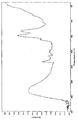
- Cerium (IV) hydroxide having the following characteristics: (1) The particles have a particle size of 250 ⁇ m or more and 1200 ⁇ m or less. (2) In thermogravimetric analysis, the weight reduction rate when the temperature rises from 200 ° C. to 600 ° C. is 4.0% or more and 10.0% or less. , and (3) when the infrared absorption spectrum analysis, 3270cm -1 or 3330cm -1 or less, the absorption peak is observed in the range of 1590 cm -1 or 1650 cm -1 or less and 1410 cm -1 or 1480 cm -1 or less An adsorbent capable of simultaneously adsorbing radioactive antimony, radioactive iodine and radioactive ruthenium.
- a radioactive waste solution containing radioactive antimony, radioactive iodine and radioactive ruthenium is passed through an adsorption tower packed with the adsorbent according to any one of [1] to [4] at a layer height of 10 cm to 300 cm. Including water-line flow velocity (LV) of 1 m / h or more and 40 m / h or less, space velocity (SV) of 200 h- 1 or less, and adsorbing radioactive antimony, radioactive iodine and radioactive ruthenium to the adsorbent.
- LV water-line flow velocity
- SV space velocity
- a method for treating radioactive liquid waste containing antimony, radioactive iodine and radioactive ruthenium [6] The processing method according to [5], wherein the radioactive liquid waste is a liquid waste containing Na ions, Ca ions and / or Mg ions.
- the adsorbent of the present invention can simultaneously adsorb and remove radioactive antimony, radioactive iodine and radioactive ruthenium.
- radioactive antimony, radioactive iodine and radioactive ruthenium can be easily removed with high removal efficiency by a method of filling the adsorption tower with one kind of adsorbent of the present invention and passing water to be treated.
- Example 2 is an infrared absorption spectrum of cerium hydroxide (IV) produced in Production Example 1.
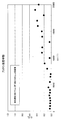
- 6 is a graph showing antimony adsorption / removal performance in Example 3.
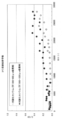
- 6 is a graph showing iodate ion adsorption removal performance in Example 4.
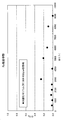
- 10 is a graph showing ruthenium adsorption / removal performance in Example 5. It is a graph which shows the iodate ion adsorption removal performance in Example 6.
- 6 is a graph showing iodide ion adsorption removal performance in Example 7.
- 10 is a graph showing ruthenium adsorption removal performance in Example 8.
- the present invention is (1) a powder or particles having a particle size of 250 ⁇ m or more and 1200 ⁇ m or less, preferably 300 ⁇ m or more and 800 ⁇ m or less, more preferably 300 ⁇ m or more and 600 ⁇ m or less, and (2) a temperature from 200 ° C. to 600 ° C. in thermogravimetric analysis.
- the weight loss rate when it rises is 4.0% or more and 10.0% or less, preferably 4.0% or more and 8.0% or less, and (3) 3270 cm ⁇ when infrared absorption spectrum analysis is performed.
- the particle size of the adsorbent of the present invention is finer than that of a commercially available general adsorbent (for example, zeolite adsorbent is a pellet having a particle size of about 1.5 mm), and the adsorption rate Is expensive.
- the powdered adsorbent flows out when the adsorption tower is filled and subjected to the water flow treatment.
- Known cerium (IV) hydroxide for example, stirring and mixing granulation, rolling granulation, extrusion granulation, crushing granulation, fluidized bed granulation, spray drying granulation (spray drying), compression granulation, melt granulation, etc.
- the granulation method can be used to form particles.
- a normal adsorbent uses a binder during granulation, but the adsorbent of the present invention does not use a binder.
- Adsorbents granulated without using a binder are preferable because the amount of adsorbent per volume increases, and in the treatment method of the present invention used by filling the adsorption tower, the throughput per volume of the same adsorption tower increases.
- cerium (IV) hydroxide may be pulverized into particles. After forming into particles, the particles can be classified using a sieve to obtain particles having a predetermined particle size range.
- the adsorbent formed into particles having a particle size in the predetermined range used in the present invention preferably has a strength of 0.1 N or more in a wet state, and the radioactive waste liquid to be treated is passed through. It does not disintegrate due to the pressure (generally 0.1 to 1.0 MPa) or water for a long time.
- the cerium (IV) hydroxide of the present invention has a weight reduction rate of 4.0% or more and 10.0% or less, preferably 4.0% or more and 8. It is desirable that it is 0% or less.
- the adsorbent of the present invention may use the cerium (IV) hydroxide as it is, or may be used as a mixture with additional components.
- cerium (IV) hydroxide is used as it is, the content of cerium (IV) hydroxide is preferably 99.0 wt% or more, and the remainder is unavoidable impurities.
- the adsorbent of the present invention has a cerium (IV) hydroxide content of 90.0 wt% or more and 99.5 wt% or less, and phosphoric acid. It is preferable to contain 0.5 to 10.0 wt% of silver.
- silver phosphate is contained, the adsorption ability for iodide ions is improved, and the adsorption ability of iodide ions can be controlled by adjusting the ratio of cerium (IV) hydroxide and silver phosphate.
- the adsorbent of the present invention has a cerium (IV) hydroxide content of 90.0 wt% or more and 99.0 wt% or less, further containing silver phosphate of 0.5 wt% or more and 5.0 wt% or less and manganese dioxide. It is preferable to contain 0.5 wt% or more and 5.0 wt% or less.
- silver phosphate and manganese dioxide are included, the adsorption ability of iodide ion and ruthenium ion is improved, and the adsorption ability of iodide ion and ruthenium ion is controlled by adjusting the ratio of silver phosphate and manganese dioxide. can do.
- the present invention also provides a treatment method in which the adsorbent is brought into contact with a waste liquid containing radioactive antimony, radioactive iodine and radioactive ruthenium.
- a radioactive waste liquid containing radioactive antimony, radioactive iodine and radioactive ruthenium is passed through an adsorption tower packed with the adsorbent at a layer height of 10 cm or more and 300 cm or less, and a water flow velocity (LV) of 1 m / h or more. Passing water at 40 m / h or less and a space velocity (SV) of 200 h ⁇ 1 or less to adsorb radioactive antimony, radioactive iodine and radioactive ruthenium to the adsorbent.
- LV water flow velocity
- the adsorbent is packed in an adsorption tower so as to have a layer height of 10 cm to 300 cm, preferably 20 cm to 250 cm, more preferably 50 cm to 200 cm. If the layer height is less than 10 cm, the adsorbent layer cannot be uniformly packed when the adsorbent is packed in the adsorption tower, causing a short pass during water flow, resulting in deterioration of the quality of treated water.
- a higher bed height is preferable because an appropriate water flow differential pressure can be realized, the treated water quality is stabilized, and the total amount of treated water is increased. However, when the bed height exceeds 300 cm, the water flow differential pressure becomes too large.
- LV water line flow velocity
- the water flow velocity exceeds 40 m / h, the water differential pressure increases, and if it is less than 1 m / h, the amount of treated water is small.
- Space velocity (SV) is 20h -1 or less used in a typical waste water treatment, in particular can be also obtained the effect of the adsorbent of the present invention at about 10h -1, waste liquid treatment using a conventional adsorbent 20h -
- the space velocity (SV) exceeds 1 , stable treated water quality cannot be realized, and the removal effect cannot be obtained.
- the water flow velocity and space velocity can be increased without increasing the size of the adsorption tower.
- the water line flow velocity is a value obtained by dividing the amount of water (m 3 / h) passing through the adsorption tower by the cross-sectional area (m 2 ) of the adsorption tower.
- the space velocity is a value obtained by dividing the volume of the adsorbent filled in the adsorption tower water (m 3 / h) which passed through the adsorption tower (m 3).
- the adsorbent, treatment method and treatment apparatus of the present invention are suitable for decontamination of waste liquid containing Na ions, Ca ions and / or Mg ions.
- FIG. 1 shows a thermal analysis spectrum of the obtained cerium (IV) hydroxide.
- This cerium hydroxide is pulverized, classified, and passed through a sieve having a nominal aperture of 600 ⁇ m in JIS Z8801 standard.
- the product passed through this sieve is passed through a sieve having a nominal aperture of 300 ⁇ m, and the particle size is 300 ⁇ m or more.
- a granular product of 600 ⁇ m or less was obtained, and an adsorbent A was prepared.
- ⁇ Preparation of adsorbent B> The cerium (IV) hydroxide obtained in Production Example 1 and the silver phosphate obtained above were placed in a 100 mL sealed glass bottle so that the total amount was 35 g. The blending ratio was 95 wt% cerium (IV) hydroxide and 5 wt% silver phosphate. Further, 50 g of ion-exchanged water and 60 g (40 mL) of 2 mm ⁇ glass beads were added to this sealed glass bottle and pulverized for 20 minutes with a paint shaker. It was 1.2 micrometers when the average particle diameter of the slurry after a grinding
- the dried solid was pulverized by mortar grinding.
- the obtained pulverized product is classified, passed through a sieve having a nominal opening of 600 ⁇ m in JIS Z8801 standard, and passed through the sieve having a nominal opening of 300 ⁇ m, so that the particle size is 300 ⁇ m or more and 600 ⁇ m or less. This was used as adsorbent B.
- Example 1 ⁇ Preparation of simulated contaminated seawater 1> Simulated contaminated water containing non-radioactive antimony, iodine and ruthenium simulating the contaminated water of the Fukushima Daiichi nuclear power plant was prepared by the following procedure.
- Antimony chloride, sodium iodate, and ruthenium chloride were added thereto to prepare simulated contaminated seawater 1 having an antimony ion concentration of 5.0 mg / L and an iodate ion and ruthenium ion concentration of 1.0 mg / L, respectively. did.
- a portion of the simulated contaminated seawater 1 was collected and analyzed by ICP-MS.
- the antimony ion concentration was 5.14 mg / L
- the iodate ion concentration was 0.90 mg / L
- the ruthenium ion concentration was 0.84 mg / L. Met.
- adsorbent A having a particle size of 300 ⁇ m or more and 600 ⁇ m or less prepared in Production Example 1 is filled into a 2 L beaker, 1000 ml of simulated contaminated seawater 1 is added, and the mixture is stirred and then simulated after 24 hours and 48 hours. A portion of the contaminated seawater 1 was collected and the concentrations of antimony ion, iodate ion and ruthenium ion were measured.
- the concentration of antimony ion after 24 hours was 0.42 mg / L, and the concentration of iodate ion was 0.59 mg / L, the ruthenium ion concentration became 0.00 mg / L, the antimony ion concentration after 48 hours was 0.21 mg / L, the iodate ion concentration was 0.42 mg / L, and the ruthenium ion concentration was 0.00 mg / L. .
- the removal rates were calculated from the concentrations of antimony ions, iodate ions and ruthenium ions for 24 hours and 48 hours with the adsorbent. The results are shown in Table 1. Antimony and ruthenium have achieved a removal rate of 90% or more after 24 hours of treatment, and can be treated in a short time. With regard to iodine, a removal rate of 50% or more was achieved by treatment for 48 hours, and it can be said that all of antimony, iodine and ruthenium can be removed by this adsorbent.
- Example 2 ⁇ Preparation of simulated contaminated seawater 2> Simulated contaminated water containing non-radioactive antimony, iodine and ruthenium simulating the contaminated water of the Fukushima Daiichi nuclear power plant was prepared by the following procedure.
- Marine Art SF-1 a chemical for artificial seawater production by Osaka Yakuken Co., Ltd.
- sodium chloride 22.1 g / L magnesium chloride hexahydrate 9.9 g / L, calcium chloride dihydrate 1.5 g / L
- Anhydrous sodium sulfate 3.9 g / L potassium chloride 0.61 g / L, sodium hydrogen carbonate 0.19 g / L, potassium bromide 96 mg / L, borax 78 mg / L, anhydrous strontium chloride 0.19 g / L, fluoride Sodium 3 mg / L, lithium chloride 1 mg / L, potassium iodide 81 ⁇ g / L, manganese chloride tetrahydrate 0.6 ⁇ g / L, cobalt chloride hexahydrate 2 ⁇ g / L, aluminum chloride hexahydrate 8 ⁇ g / L, Ferric chloride hexahydrate 5 ⁇ g / L, sodium tungstate dihydrate
- Antimony chloride, sodium iodate, sodium iodide and ruthenium chloride were added thereto, and antimony ion 5.0 mg / L, iodate ion (IO 3 ⁇ ), and iodide ion (I ⁇ ) concentrations were set to 0.
- Simulated contaminated seawater 2 having a concentration of 5 mg / L and a ruthenium ion concentration of 1.0 mg / L was prepared. A portion of the simulated contaminated seawater 2 was collected and analyzed by ICP-MS.
- the antimony ion concentration was 4.07 mg / L, the iodine concentration was 1.00 mg / L, and the ruthenium ion concentration was 0.82 mg / L. It was.
- concentration were added together and it was set as the iodine density
- adsorbent B having a particle diameter of 300 ⁇ m or more and 600 ⁇ m or less prepared in Production Example 2 is filled in a 2 L beaker, 1000 ml of simulated contaminated seawater 2 is added, and the mixture is stirred and then simulated after 24 hours and 48 hours. A part of the contaminated seawater 2 was sampled and the concentrations of antimony ion, iodate ion, iodide ion and ruthenium ion were measured. The concentration of antimony ion after 24 hours was 0.11 mg / L, and the iodine concentration was 0.00.
- the removal rate was calculated from the concentrations of antimony, iodine and ruthenium for 24 hours and 48 hours with the adsorbent.
- the results are shown in Table 2.
- Antimony and ruthenium achieved a removal rate of 97% or more in the 24-hour treatment
- iodine achieved a removal rate of 71% or more in the 24-hour treatment. Therefore, cerium (IV) hydroxide and silver phosphate were achieved. It can be said that the adsorbent containing can remove iodide ions in addition to iodate ions.
- an aqueous solution was prepared so that the salt concentration of common salt of Dia Salt Co., Ltd. was 1.0 wt%. Then, cesium chloride is added so that the cesium concentration becomes 1 mg / L, strontium chloride is added so that the strontium concentration becomes 10 mg / L, and calcium chloride is added so that the calcium concentration becomes 300 mg / L. Magnesium chloride is added so that the magnesium concentration becomes 400 mg / L, and antimony potassium tartrate is added so that the antimony concentration becomes 10 mg / L, and high-concentration chloride ions, cesium ions, strontium ions are added as coexisting ions. Simulated contaminated seawater 3 containing magnesium ions, calcium ions, and sodium ions was prepared. A part of the simulated contaminated seawater 3 was collected and analyzed by ICP-MS. As a result, the antimony ion concentration was 10.04 to 12.06 mg / L.
- the antimony removal performance is shown in FIG. In FIG. 2, the horizontal axis indicates how many times the simulated contaminated seawater has passed through the adsorbent volume. V. The vertical axis represents values obtained by dividing the antimony ion concentration (C) at the column outlet by the antimony concentration (C 0 ) at the column inlet, respectively.
- an aqueous solution was prepared so that the salt concentration of Dia Salt Co., Ltd. average salt would be 0.3 wt%. Then, cesium chloride is added so that the cesium concentration becomes 1 mg / L, strontium chloride is added so that the strontium concentration becomes 10 mg / L, and calcium chloride is added so that the calcium concentration becomes 400 mg / L. , Magnesium chloride is added so that the magnesium concentration becomes 400 mg / L, sodium iodate is added so that the iodate ion concentration becomes 1 mg / L, and high-concentration chloride ions, cesium ions, Simulated contaminated seawater 4 containing strontium ions, magnesium ions, calcium ions, and sodium ions was prepared. When a part of the simulated contaminated seawater 4 was collected and analyzed by ICP-MS, the iodate ion concentration was 0.99 to 1.58 mg / L.
- cerium (IV) hydroxide prepared in Production Example 1 is passed through a sieve having a nominal opening of JIS Z8801 of 1 mm (1000 ⁇ m), and then passed through a sieve having a nominal opening of 500 ⁇ m, and the particle diameter is 500 ⁇ m or more and 1000 ⁇ m or less.
- 20 ml of the classified adsorbent A ′ was packed in a glass column having an inner diameter of 16 mm so as to have a layer height of 10 cm, and the simulated contaminated seawater 4 was flowed at a flow rate of 67 ml / min (water flow velocity 20 m / h, space velocity). 200 h ⁇ 1 ), the outlet water was collected periodically, and the iodate ion concentration was measured.
- the removal performance of iodate ions is shown in FIG.
- the horizontal axis indicates how many times the amount of simulated contaminated seawater passed through the adsorbent volume.
- the vertical axis represents values obtained by dividing the iodate ion concentration (C) at the column outlet by the iodate ion concentration (C 0 ) at the column inlet, respectively.
- the adsorbent A ′ (indicated by “ ⁇ ” in FIG. 3) having a particle size of 300 ⁇ m or more and 600 ⁇ m or less is B.P. V. It is possible to adsorb and remove nearly 90% of iodate ions up to about 15000; V. Even if it is about 30000, about 60% can be adsorbed and removed, and adsorbent A ′ having a particle diameter of 500 ⁇ m or more and 1000 ⁇ m or less (indicated by “ ⁇ ” in FIG. V. It is possible to adsorb and remove nearly 90% of iodate ions up to about 10,000. V. It can be seen that about 60% can be removed by adsorption even at about 30000.
- an aqueous solution was prepared so that the salt concentration of Dia Salt Co., Ltd. average salt would be 0.3 wt%. Then, cesium chloride is added so that the cesium concentration becomes 1 mg / L, strontium chloride is added so that the strontium concentration becomes 10 mg / L, and calcium chloride is added so that the calcium concentration becomes 400 mg / L. Magnesium chloride is added so that the magnesium concentration becomes 400 mg / L, ruthenium chloride is added so that the ruthenium ion concentration becomes 1 mg / L, and high-concentration chloride ions, cesium ions, and strontium ions are present as coexisting ions.
- Simulated contaminated seawater 5 containing magnesium ions, calcium ions, and sodium ions was prepared.
- the ruthenium ion concentration was 0.54 to 0.87 mg / L.
- the removal performance of ruthenium ions is shown in FIG. 4, the horizontal axis indicates how many times the amount of simulated contaminated seawater has passed through the adsorbent volume. V.
- the vertical axis is the value obtained by dividing the ruthenium ion concentration (C) at the column outlet by the ruthenium ion concentration (C 0 ) at the column inlet.
- Ruthenium can be adsorbed and removed almost 100% up to about 2500; V. It can be seen that ruthenium can be adsorbed and removed by about 80% up to about 9000.
- an aqueous solution was prepared so that the salt concentration of Dia Salt Co., Ltd. average salt would be 0.3 wt%. Then, cesium chloride is added so that the cesium concentration becomes 1 mg / L, strontium chloride is added so that the strontium concentration becomes 10 mg / L, and calcium chloride is added so that the calcium concentration becomes 400 mg / L. , Magnesium chloride is added so that the magnesium concentration becomes 400 mg / L, sodium iodate is added so that the iodate ion concentration becomes 10 mg / L, and high-concentration chloride ions, cesium ions, Simulated contaminated seawater 6 containing strontium ions, magnesium ions, calcium ions, and sodium ions was prepared. When a part of the simulated contaminated seawater 6 was collected and analyzed by ICP-MS, the iodate ion concentration was 9.72 to 10.97 mg / L.
- the removal performance of iodate ions is shown in FIG.
- the horizontal axis indicates how many times the amount of simulated contaminated seawater passed through the adsorbent volume.
- the vertical axis represents values obtained by dividing the iodate ion concentration (C) at the column outlet by the iodate ion concentration (C 0 ) at the column inlet, respectively.
- FIG. 5 shows that the adsorbent containing 5 wt% of silver phosphate (indicated by “ ⁇ ” in FIG. V.
- Example 7 ⁇ Preparation of simulated contaminated seawater 7> Simulated contaminated water 7 containing non-radioactive iodide ions simulating the contaminated water of Fukushima Daiichi nuclear power plant was prepared by the following procedure.
- an aqueous solution was prepared so that the salt concentration of Dia Salt Co., Ltd. average salt would be 0.3 wt%.
- cesium chloride is added so that the cesium concentration becomes 1 mg / L
- strontium chloride is added so that the strontium concentration becomes 10 mg / L
- calcium chloride is added so that the calcium concentration becomes 400 mg / L.
- Magnesium chloride is added so that the magnesium concentration becomes 400 mg / L
- sodium iodide is added so that the iodide ion concentration becomes 10 mg / L
- a portion of the simulated contaminated seawater 7 was collected and analyzed by ICP-MS. As a result, the iodide ion concentration was 7.88 to 9.73 mg / L.
- 20 ml of adsorbents B and C having a particle size of 300 ⁇ m or more and 600 ⁇ m or less prepared in Production Example 2 and Production Example 3 are packed in separate glass columns with an inner diameter of 16 mm so that the layer height is 10 cm, and simulated contaminated seawater 6 is 67 ml. / Min flow rate (water flow velocity 20 m / h, space velocity 200 h ⁇ 1 ), the outlet water was collected periodically, and the iodide ion concentration was measured. As a result of analyzing the outlet water, the iodide ion concentration was 0.03 to 8.98 mg / L.
- the removal performance of iodide ions is shown in FIG. 6, the horizontal axis indicates how many times the amount of simulated contaminated seawater has passed through the adsorbent volume. V.
- the vertical axis represents values obtained by dividing the iodide ion concentration (C) at the column outlet by the iodide ion concentration (C 0 ) at the column inlet.
- FIG. 6 shows that the adsorbent B containing 5 wt% of silver phosphate (indicated by “ ⁇ ” in FIG. V.
- the adsorbent C (shown by “ ⁇ ” in FIG. 6) containing about 10% by weight of iodide ion and removing about 100% of iodide ions and containing 10 wt. V. It can be seen that almost 100% of the iodide ions can be adsorbed and removed up to about 5,000.
- Example 8 ⁇ Preparation of simulated contaminated seawater 8> In the following procedure, simulated contaminated water containing non-radioactive ruthenium ions simulating the contaminated water of the Fukushima Daiichi nuclear power plant was prepared.
- Marine Art SF-1 a chemical for artificial seawater production by Osaka Yakuken Co., Ltd.
- sodium chloride 22.1 g / L magnesium chloride hexahydrate 9.9 g / L, calcium chloride dihydrate 1.5 g / L
- Anhydrous sodium sulfate 3.9 g / L potassium chloride 0.61 g / L, sodium hydrogen carbonate 0.19 g / L, potassium bromide 96 mg / L, borax 78 mg / L, anhydrous strontium chloride 0.19 g / L, fluoride Sodium 3 mg / L, lithium chloride 1 mg / L, potassium iodide 81 ⁇ g / L, manganese chloride tetrahydrate 0.6 ⁇ g / L, cobalt chloride hexahydrate 2 ⁇ g / L, aluminum chloride hexahydrate 8 ⁇ g / L, Ferric chloride hexahydrate 5 ⁇ g / L, sodium tungstate dihydrate
- ruthenium chloride was added so that the ruthenium ion was 1 mg / L, and the pH was adjusted to 3 using hydrochloric acid to prepare simulated contaminated seawater 8. A portion of the simulated contaminated seawater 8 was collected and analyzed by ICP-MS. The ruthenium ion concentration was 0.90 to 1.09 mg / L.
- the removal performance of ruthenium ions is shown in FIG.
- the horizontal axis indicates how many times the simulated contaminated seawater has passed through the adsorbent volume.
- the vertical axis is the value obtained by dividing the ruthenium ion concentration (C) at the column outlet by the ruthenium ion concentration (C 0 ) at the column inlet.
- FIG. 7 shows that the adsorbent contains cerium hydroxide (V), silver phosphate 5 wt% and manganese dioxide 5 wt% as compared with the case of cerium hydroxide (V) alone (indicated by “ ⁇ ” in FIG. 7). It can be seen that the ruthenium adsorption performance of D (indicated by “ ⁇ ” in FIG. 7) is improved.
Landscapes
- Chemical & Material Sciences (AREA)
- Organic Chemistry (AREA)
- Analytical Chemistry (AREA)
- Chemical Kinetics & Catalysis (AREA)
- Inorganic Chemistry (AREA)
- Engineering & Computer Science (AREA)
- Life Sciences & Earth Sciences (AREA)
- Physics & Mathematics (AREA)
- General Engineering & Computer Science (AREA)
- High Energy & Nuclear Physics (AREA)
- Geology (AREA)
- Hydrology & Water Resources (AREA)
- Environmental & Geological Engineering (AREA)
- Water Supply & Treatment (AREA)
- Solid-Sorbent Or Filter-Aiding Compositions (AREA)
Priority Applications (3)
| Application Number | Priority Date | Filing Date | Title |
|---|---|---|---|
| EP16878377.7A EP3396677A4 (en) | 2015-12-24 | 2016-12-08 | ADSORPTION AGENT FOR RADIOACTIVE ANTIMON, RADIOACTIVE IOD AND RADIOACTIVE RUTHENIUM AND METHOD FOR PROCESSING RADIOACTIVE WASTE FLUID WITH USE OF THE ADSORPTION AGENT |
| CA3007617A CA3007617C (en) | 2015-12-24 | 2016-12-08 | Adsorbent for radioactive antimony, radioactive iodine and radioactive ruthenium, and treatment method of radioactive waste water using the adsorbent |
| US16/065,386 US11213799B2 (en) | 2015-12-24 | 2016-12-08 | Adsorbent for radioactive antimony, radioactive iodine and radioactive ruthenium, and treatment method of radioactive waste water using the adsorbent |
Applications Claiming Priority (2)
| Application Number | Priority Date | Filing Date | Title |
|---|---|---|---|
| JP2015252082A JP6716247B2 (ja) | 2015-12-24 | 2015-12-24 | 放射性アンチモン、放射性ヨウ素及び放射性ルテニウムの吸着剤、当該吸着剤を用いた放射性廃液の処理方法 |
| JP2015-252082 | 2015-12-24 |
Publications (1)
| Publication Number | Publication Date |
|---|---|
| WO2017110485A1 true WO2017110485A1 (ja) | 2017-06-29 |
Family
ID=59090011
Family Applications (1)
| Application Number | Title | Priority Date | Filing Date |
|---|---|---|---|
| PCT/JP2016/086485 Ceased WO2017110485A1 (ja) | 2015-12-24 | 2016-12-08 | 放射性アンチモン、放射性ヨウ素及び放射性ルテニウムの吸着剤、当該吸着剤を用いた放射性廃液の処理方法 |
Country Status (5)
| Country | Link |
|---|---|
| US (1) | US11213799B2 (enExample) |
| EP (1) | EP3396677A4 (enExample) |
| JP (1) | JP6716247B2 (enExample) |
| CA (1) | CA3007617C (enExample) |
| WO (1) | WO2017110485A1 (enExample) |
Families Citing this family (5)
| Publication number | Priority date | Publication date | Assignee | Title |
|---|---|---|---|---|
| JP7313922B2 (ja) * | 2019-06-20 | 2023-07-25 | 日本化学工業株式会社 | ヨウ化物イオン吸着剤及びその製造方法 |
| JPWO2021149731A1 (enExample) * | 2020-01-20 | 2021-07-29 | ||
| KR20210121562A (ko) * | 2020-03-30 | 2021-10-08 | 한국원자력연구원 | 방사성 폐기물의 선택적 전처리 방법 |
| US12555697B2 (en) | 2022-01-14 | 2026-02-17 | Dept of Atomic Energy Government of India | Method for the removal of radionuclides from aqueous radioactive waste |
| CN119409264B (zh) * | 2024-11-08 | 2025-10-03 | 杨凌核盛辐照技术有限公司 | 一种利用锆功能化吸附树脂去除锑的方法 |
Citations (15)
| Publication number | Priority date | Publication date | Assignee | Title |
|---|---|---|---|---|
| JPS50140799A (enExample) * | 1974-04-30 | 1975-11-12 | ||
| JPS6019035A (ja) * | 1983-07-13 | 1985-01-31 | Mitsui Mining & Smelting Co Ltd | 放射性ルテニウム廃液の吸着剤 |
| JPS60161598A (ja) * | 1983-12-15 | 1985-08-23 | 日本原子力研究所 | 放射性ルテニウムを含む放射性廃液の処理方法 |
| JPS61187931A (ja) | 1985-02-18 | 1986-08-21 | Asahi Chem Ind Co Ltd | 水溶液中の砒素の吸着剤 |
| JP2001133594A (ja) * | 1999-11-05 | 2001-05-18 | Jgc Corp | 原子炉冷却水からの放射性核種の除去方法 |
| JP2013104727A (ja) | 2011-11-11 | 2013-05-30 | Hitachi-Ge Nuclear Energy Ltd | 原子力設備の廃水処理装置及び廃水処理方法 |
| JP2013241312A (ja) * | 2012-05-22 | 2013-12-05 | Three M Innovative Properties Co | 焼成物、金属イオン吸着材、金属イオンの除去方法、及び金属イオン除去設備 |
| JP2014238407A (ja) | 2009-04-20 | 2014-12-18 | フォータム オサケ ユキチュア ユルキネンFortum Oyj | 新規吸着剤、その製造方法およびその使用 |
| JP2015505718A (ja) * | 2012-04-02 | 2015-02-26 | クラリアント・プロドゥクテ・(ドイチュラント)・ゲゼルシャフト・ミト・ベシュレンクテル・ハフツング | ヨウ化メチル吸着材、それらの使用及びヨウ化メチルの吸着方法 |
| JP2015045606A (ja) * | 2013-08-29 | 2015-03-12 | 水ing株式会社 | 放射性物質吸着剤の除染処理方法及び放射能汚染水の除染処理装置 |
| JP2015059852A (ja) | 2013-09-19 | 2015-03-30 | 日立Geニュークリア・エナジー株式会社 | 放射性廃液の処理方法及び放射性廃液処理装置 |
| JP2015059870A (ja) * | 2013-09-19 | 2015-03-30 | 日立Geニュークリア・エナジー株式会社 | 放射性廃液の処理方法及び放射性廃液処理装置 |
| JP5793230B1 (ja) | 2014-09-05 | 2015-10-14 | 日本化学工業株式会社 | ヨウ素酸イオン吸着剤及びその製造方法 |
| JP5793231B1 (ja) | 2014-09-05 | 2015-10-14 | 日本化学工業株式会社 | ヨウ素酸イオン吸着剤及びその製造方法 |
| JP2015181972A (ja) * | 2014-03-20 | 2015-10-22 | 株式会社化研 | 水溶液からヨウ素を除去するヨウ素除去剤、除去装置および除去方法 |
Family Cites Families (5)
| Publication number | Priority date | Publication date | Assignee | Title |
|---|---|---|---|---|
| JP3119755B2 (ja) * | 1993-01-18 | 2000-12-25 | 株式会社日立製作所 | オフガス処理設備及びヨウ素吸着材とその製造方法 |
| JP2007098362A (ja) * | 2005-10-07 | 2007-04-19 | Nippon Sheet Glass Co Ltd | カチオン吸着材とその製造方法 |
| US8436052B2 (en) * | 2010-01-07 | 2013-05-07 | Jack L. Collins | Formulation and method for preparing gels comprising hydrous cerium oxide |
| US9233863B2 (en) * | 2011-04-13 | 2016-01-12 | Molycorp Minerals, Llc | Rare earth removal of hydrated and hydroxyl species |
| WO2015025681A1 (ja) | 2013-08-23 | 2015-02-26 | 日立Geニュークリア・エナジー株式会社 | 放射性廃液の処理方法及び放射性廃液処理装置 |
-
2015
- 2015-12-24 JP JP2015252082A patent/JP6716247B2/ja not_active Expired - Fee Related
-
2016
- 2016-12-08 WO PCT/JP2016/086485 patent/WO2017110485A1/ja not_active Ceased
- 2016-12-08 EP EP16878377.7A patent/EP3396677A4/en not_active Withdrawn
- 2016-12-08 CA CA3007617A patent/CA3007617C/en active Active
- 2016-12-08 US US16/065,386 patent/US11213799B2/en not_active Expired - Fee Related
Patent Citations (15)
| Publication number | Priority date | Publication date | Assignee | Title |
|---|---|---|---|---|
| JPS50140799A (enExample) * | 1974-04-30 | 1975-11-12 | ||
| JPS6019035A (ja) * | 1983-07-13 | 1985-01-31 | Mitsui Mining & Smelting Co Ltd | 放射性ルテニウム廃液の吸着剤 |
| JPS60161598A (ja) * | 1983-12-15 | 1985-08-23 | 日本原子力研究所 | 放射性ルテニウムを含む放射性廃液の処理方法 |
| JPS61187931A (ja) | 1985-02-18 | 1986-08-21 | Asahi Chem Ind Co Ltd | 水溶液中の砒素の吸着剤 |
| JP2001133594A (ja) * | 1999-11-05 | 2001-05-18 | Jgc Corp | 原子炉冷却水からの放射性核種の除去方法 |
| JP2014238407A (ja) | 2009-04-20 | 2014-12-18 | フォータム オサケ ユキチュア ユルキネンFortum Oyj | 新規吸着剤、その製造方法およびその使用 |
| JP2013104727A (ja) | 2011-11-11 | 2013-05-30 | Hitachi-Ge Nuclear Energy Ltd | 原子力設備の廃水処理装置及び廃水処理方法 |
| JP2015505718A (ja) * | 2012-04-02 | 2015-02-26 | クラリアント・プロドゥクテ・(ドイチュラント)・ゲゼルシャフト・ミト・ベシュレンクテル・ハフツング | ヨウ化メチル吸着材、それらの使用及びヨウ化メチルの吸着方法 |
| JP2013241312A (ja) * | 2012-05-22 | 2013-12-05 | Three M Innovative Properties Co | 焼成物、金属イオン吸着材、金属イオンの除去方法、及び金属イオン除去設備 |
| JP2015045606A (ja) * | 2013-08-29 | 2015-03-12 | 水ing株式会社 | 放射性物質吸着剤の除染処理方法及び放射能汚染水の除染処理装置 |
| JP2015059852A (ja) | 2013-09-19 | 2015-03-30 | 日立Geニュークリア・エナジー株式会社 | 放射性廃液の処理方法及び放射性廃液処理装置 |
| JP2015059870A (ja) * | 2013-09-19 | 2015-03-30 | 日立Geニュークリア・エナジー株式会社 | 放射性廃液の処理方法及び放射性廃液処理装置 |
| JP2015181972A (ja) * | 2014-03-20 | 2015-10-22 | 株式会社化研 | 水溶液からヨウ素を除去するヨウ素除去剤、除去装置および除去方法 |
| JP5793230B1 (ja) | 2014-09-05 | 2015-10-14 | 日本化学工業株式会社 | ヨウ素酸イオン吸着剤及びその製造方法 |
| JP5793231B1 (ja) | 2014-09-05 | 2015-10-14 | 日本化学工業株式会社 | ヨウ素酸イオン吸着剤及びその製造方法 |
Non-Patent Citations (2)
| Title |
|---|
| See also references of EP3396677A4 |
| YUKO KOMATSUZAKI ET AL.: "N37 Development of wide-varied adsorbents for one through purification of multi-nuclides contaminated water (2) Sb and iodate ions absorption characteristics of an activated carbon impregnated with ceria", ABSTRACTS (CD-ROM) OF ''2013 FALL MEETING'' OF THE ATOMIC ENERGY SOCIETY OF JAPAN, ATOMIC ENERGY SOCIETY OF JAPAN, 2013, pages 648 |
Also Published As
| Publication number | Publication date |
|---|---|
| US11213799B2 (en) | 2022-01-04 |
| CA3007617A1 (en) | 2017-06-29 |
| EP3396677A4 (en) | 2019-07-24 |
| JP6716247B2 (ja) | 2020-07-01 |
| CA3007617C (en) | 2022-03-01 |
| JP2017116407A (ja) | 2017-06-29 |
| EP3396677A1 (en) | 2018-10-31 |
| US20190009245A1 (en) | 2019-01-10 |
Similar Documents
| Publication | Publication Date | Title |
|---|---|---|
| EP0118493B1 (en) | Fixation of anionic materials with a complexing agent | |
| JP6716247B2 (ja) | 放射性アンチモン、放射性ヨウ素及び放射性ルテニウムの吸着剤、当該吸着剤を用いた放射性廃液の処理方法 | |
| EP3789110A1 (en) | Radionuclide adsorbent, method of preparing the same and method of removing radionuclide using the same | |
| Dwivedi et al. | Preparation and characterization of potassium nickel hexacyanoferrate-loaded hydrogel beads for the removal of cesium ions | |
| WO2016195096A1 (ja) | ヨウ素化合物及び/又はアンチモンを吸着する吸着剤及びその製造方法並びに当該吸着剤を用いる放射性廃液の処理方法及び装置 | |
| Sadeghi et al. | Effective removal of radioactive 90Sr by CuO NPs/Ag-clinoptilolite zeolite composite adsorbent from water sample: Isotherm, kinetic and thermodynamic reactions study | |
| US11400432B2 (en) | Silicotitanate molded body, production method thereof, adsorbent for cesium and/or strontium comprising silicotitanate molded body, and decontamination method for radioactive waste solution by using adsorbent | |
| EP3231509A1 (en) | Adsorbent and method for producing same | |
| CA3007460C (en) | Treatment method of radioactive waste water containing radioactive cesium and radioactive strontium | |
| JP2016055212A (ja) | ヨウ素酸イオン吸着剤及びその製造方法 | |
| JP2020109369A (ja) | ヨウ素イオン及びヨウ素酸イオンの吸着剤及びその除去方法 | |
| JP6708663B2 (ja) | 放射性セシウム及び放射性ストロンチウムを含む放射性廃液の処理方法 | |
| Qadeer | Adsorption of neodymium ions on activated charcoal from aqeous solutions | |
| JP2019113484A (ja) | 放射性ヨウ素含有流体の除染方法 | |
| CA3014634C (en) | Treatment method of radioactive iodine-containing fluid | |
| US20160272509A1 (en) | Halogen oxyacid adsorbent, method for manufacturing the same, and method for treating halogen oxyacid-containing water | |
| Papynov et al. | Manganese oxide-based sorbent for Sr-90 radionuclide removal from seawater | |
| Vijayan et al. | Inorganic sorbents for radiostrontium removal from waste solutions: selectivity and role of calixarenes | |
| Saeed et al. | Adsorption and thermodynamic studies of Co (II) and Hg (II) on 2-nitroso-1-naphthol immobilized polyurethane foam using radiotracer technique |
Legal Events
| Date | Code | Title | Description |
|---|---|---|---|
| 121 | Ep: the epo has been informed by wipo that ep was designated in this application |
Ref document number: 16878377 Country of ref document: EP Kind code of ref document: A1 |
|
| ENP | Entry into the national phase |
Ref document number: 3007617 Country of ref document: CA |
|
| NENP | Non-entry into the national phase |
Ref country code: DE |
|
| WWE | Wipo information: entry into national phase |
Ref document number: 2016878377 Country of ref document: EP |
|
| ENP | Entry into the national phase |
Ref document number: 2016878377 Country of ref document: EP Effective date: 20180724 |