WO2017047351A1 - 通信装置 - Google Patents
通信装置 Download PDFInfo
- Publication number
- WO2017047351A1 WO2017047351A1 PCT/JP2016/074828 JP2016074828W WO2017047351A1 WO 2017047351 A1 WO2017047351 A1 WO 2017047351A1 JP 2016074828 W JP2016074828 W JP 2016074828W WO 2017047351 A1 WO2017047351 A1 WO 2017047351A1
- Authority
- WO
- WIPO (PCT)
- Prior art keywords
- communication
- unit
- vehicle
- communication unit
- communicable area
- Prior art date
- Legal status (The legal status is an assumption and is not a legal conclusion. Google has not performed a legal analysis and makes no representation as to the accuracy of the status listed.)
- Ceased
Links
Images



Classifications
-
- H—ELECTRICITY
- H04—ELECTRIC COMMUNICATION TECHNIQUE
- H04W—WIRELESS COMMUNICATION NETWORKS
- H04W4/00—Services specially adapted for wireless communication networks; Facilities therefor
- H04W4/30—Services specially adapted for particular environments, situations or purposes
- H04W4/40—Services specially adapted for particular environments, situations or purposes for vehicles, e.g. vehicle-to-pedestrians [V2P]
-
- H—ELECTRICITY
- H04—ELECTRIC COMMUNICATION TECHNIQUE
- H04L—TRANSMISSION OF DIGITAL INFORMATION, e.g. TELEGRAPHIC COMMUNICATION
- H04L12/00—Data switching networks
- H04L12/28—Data switching networks characterised by path configuration, e.g. LAN [Local Area Networks] or WAN [Wide Area Networks]
-
- H—ELECTRICITY
- H04—ELECTRIC COMMUNICATION TECHNIQUE
- H04L—TRANSMISSION OF DIGITAL INFORMATION, e.g. TELEGRAPHIC COMMUNICATION
- H04L12/00—Data switching networks
- H04L12/28—Data switching networks characterised by path configuration, e.g. LAN [Local Area Networks] or WAN [Wide Area Networks]
- H04L12/46—Interconnection of networks
- H04L12/4604—LAN interconnection over a backbone network, e.g. Internet, Frame Relay
- H04L12/462—LAN interconnection over a bridge based backbone
- H04L12/4625—Single bridge functionality, e.g. connection of two networks over a single bridge
-
- H—ELECTRICITY
- H04—ELECTRIC COMMUNICATION TECHNIQUE
- H04W—WIRELESS COMMUNICATION NETWORKS
- H04W4/00—Services specially adapted for wireless communication networks; Facilities therefor
- H04W4/02—Services making use of location information
- H04W4/024—Guidance services
-
- H—ELECTRICITY
- H04—ELECTRIC COMMUNICATION TECHNIQUE
- H04W—WIRELESS COMMUNICATION NETWORKS
- H04W4/00—Services specially adapted for wireless communication networks; Facilities therefor
- H04W4/02—Services making use of location information
- H04W4/025—Services making use of location information using location based information parameters
- H04W4/027—Services making use of location information using location based information parameters using movement velocity, acceleration information
-
- H—ELECTRICITY
- H04—ELECTRIC COMMUNICATION TECHNIQUE
- H04W—WIRELESS COMMUNICATION NETWORKS
- H04W4/00—Services specially adapted for wireless communication networks; Facilities therefor
- H04W4/30—Services specially adapted for particular environments, situations or purposes
- H04W4/40—Services specially adapted for particular environments, situations or purposes for vehicles, e.g. vehicle-to-pedestrians [V2P]
- H04W4/44—Services specially adapted for particular environments, situations or purposes for vehicles, e.g. vehicle-to-pedestrians [V2P] for communication between vehicles and infrastructures, e.g. vehicle-to-cloud [V2C] or vehicle-to-home [V2H]
-
- H—ELECTRICITY
- H04—ELECTRIC COMMUNICATION TECHNIQUE
- H04W—WIRELESS COMMUNICATION NETWORKS
- H04W48/00—Access restriction; Network selection; Access point selection
- H04W48/18—Selecting a network or a communication service
-
- H—ELECTRICITY
- H04—ELECTRIC COMMUNICATION TECHNIQUE
- H04W—WIRELESS COMMUNICATION NETWORKS
- H04W84/00—Network topologies
- H04W84/02—Hierarchically pre-organised networks, e.g. paging networks, cellular networks, WLAN [Wireless Local Area Network] or WLL [Wireless Local Loop]
- H04W84/10—Small scale networks; Flat hierarchical networks
- H04W84/12—WLAN [Wireless Local Area Networks]
-
- H—ELECTRICITY
- H04—ELECTRIC COMMUNICATION TECHNIQUE
- H04W—WIRELESS COMMUNICATION NETWORKS
- H04W88/00—Devices specially adapted for wireless communication networks, e.g. terminals, base stations or access point devices
- H04W88/02—Terminal devices
-
- H—ELECTRICITY
- H04—ELECTRIC COMMUNICATION TECHNIQUE
- H04W—WIRELESS COMMUNICATION NETWORKS
- H04W88/00—Devices specially adapted for wireless communication networks, e.g. terminals, base stations or access point devices
- H04W88/02—Terminal devices
- H04W88/06—Terminal devices adapted for operation in multiple networks or having at least two operational modes, e.g. multi-mode terminals
Definitions
- the present invention relates to a communication device.
- This application claims priority based on Japanese Patent Application No. 2015-181008 filed on September 14, 2015, and incorporates all the description content described in the above Japanese application.
- an information distribution system including a distribution server that distributes telematic information including traffic jam information to a communication device mounted on a vehicle is disclosed (see Patent Document 1).
- the communication device is a communication device mounted on a vehicle, and includes a plurality of communication units having different communication areas, a determination unit that determines a traveling state of the vehicle, and a determination result of the determination unit.
- a selection unit that selects at least one of the plurality of communication units, and a stop unit that stops the operation of the communication unit selected by the selection unit.
- Patent Literature 1 In a system such as Patent Literature 1, there are various types of communication devices mounted on a vehicle, and a plurality of wireless modules (communication units) are mounted on the inside and outside of the vehicle. For this reason, if all the wireless modules always perform communication operation, power consumption increases and heat generation may increase.
- the communication device is a communication device mounted on a vehicle, and includes a plurality of communication units having different communication areas, a determination unit that determines a traveling state of the vehicle, and a determination by the determination unit A selection unit that selects at least one of the plurality of communication units according to a result, and a stop unit that stops the operation of the communication unit selected by the selection unit.
- the determination unit determines the traveling state of the vehicle.
- the traveling state of the vehicle is, for example, whether the vehicle is traveling or stopped.
- the selection unit selects at least one of the plurality of communication units according to the determination result of the determination unit.
- the stop unit stops the operation of the communication unit selected by the selection unit. Since the operation of at least one communication unit is stopped according to the running state of the vehicle, power consumption can be reduced and the amount of heat generated can be reduced as compared with the case where all the communication units are operated.
- the determination unit determines the speed of the vehicle
- the selection unit includes a communication unit having a narrow communication area when the vehicle speed is equal to or lower than a predetermined speed threshold. select.
- the determination unit determines the speed of the vehicle.
- the selection unit selects a communication unit having a narrow communicable area when the vehicle speed is equal to or lower than a predetermined speed threshold value (for example, 0 km / h can be set).
- the communication unit with a narrow communication area performs communication using a wireless LAN, for example. That is, when the vehicle is stopped, communication with a narrow communicable area can be established. Therefore, a communication unit with a narrow communicable area is set in an operating state, and a communication unit with a wide communicable area is set in a stopped state. As a result, the power consumed by the communication unit can be reduced and the amount of heat generated can be reduced.
- the selection unit selects a communication unit having a wide communicable area when the speed of the vehicle exceeds the speed threshold.
- the selection unit selects a communication unit having a wide communicable area when the vehicle speed exceeds a speed threshold (for example, 0 km / h can be set).
- a communication unit having a wide communicable area performs communication using a mobile phone network, for example. That is, when the vehicle is running, it is difficult to establish communication with a narrow communicable area, so the communication unit with a narrow communicable area is stopped and the communication unit with a wide communicable area is in an operating state. As a result, the power consumed by the communication unit can be reduced and the amount of heat generated can be reduced.
- the communication device includes an acquisition unit that acquires a parking operation, and the selection unit further selects a communication unit with a narrow communicable area when the acquisition unit acquires the parking operation.
- the acquisition unit acquires a parking operation.
- the parking operation includes, for example, an operation of setting the shift lever to a parking position (for example, P range), an operation of applying a side brake, and the like.
- a selection part selects a communication part with a narrow communicable area
- FIG. 1 is a schematic diagram illustrating an example of a state of communication by the communication apparatus 100 according to the present embodiment.
- a communication device 100 according to the present embodiment is mounted on a vehicle 1 and can communicate with a roadside device 200 and a telematics server 300.
- the telematics server 300 is a server for delivering or providing telematic information to the vehicle 1.
- the telematics server 300 can collect probe information from the probe vehicle and transmit recommended route information or road traffic information in response to a request from the vehicle 1.
- a mobile phone network having a band of 800 MHz to 2 GHz (for example, LTE [Long Term Evolution], 4G, 3G, etc.) is used.
- Some wireless LANs (such as WiFi) are used.
- the roadside apparatus 200 is, for example, an apparatus related to ITS (Intelligent Transport System) radio, and communication between the vehicle 1 and the roadside apparatus 200 uses, for example, 5.9 GHz band ITS radio.
- ITS Intelligent Transport System
- FIG. 2 is a block diagram showing an example of the configuration of the communication apparatus 100 according to the present embodiment.
- the communication device 100 includes a control unit 10 that controls the entire device, a first communication unit 11, a second communication unit 12, a third communication unit 13, a determination unit 14, a selection unit 15, and a stop unit 16.
- the interface unit 17 is provided.
- a vehicle speed sensor 31, a side brake 32, and a shift lever 33 are connected to the interface unit 17.
- the first communication unit 11 has a function as a communication unit having a wide communicable area.
- the first communication unit 11 uses, for example, a mobile phone network (for example, LTE [Long] Term Evolution]) in a band of 800 MHz to 2 GHz.
- a mobile phone network for example, LTE [Long] Term Evolution]
- the 2nd communication part 12 has a function as a communication part with a narrow communicable area.
- the second communication unit 12 uses, for example, a 2.4 GHz band wireless LAN (for example, WiFi).
- the third communication unit 13 has a medium communicable area between the first communication unit 11 and the second communication unit 12, and uses, for example, an ITS radio in a band of 5.9 GHz.
- the interface unit 17 acquires vehicle speed information from the vehicle speed sensor 31.
- the interface unit 17 has a function as an acquisition unit that acquires a parking operation from at least one of the side brake 32 and the shift lever 33.
- the parking operation includes, for example, an operation of setting the shift lever 33 to a parking position (for example, P range), an operation of applying the side brake 32, and the like.
- the determination unit 14 determines the traveling state of the vehicle 1.
- the traveling state of the vehicle 1 is, for example, whether the vehicle 1 is traveling or stopped.
- the selection unit 15 selects at least one of the first communication unit 11 and the second communication unit 12 according to the determination result of the determination unit 14.
- the stop unit 16 stops at least one operation of the first communication unit 11 and the second communication unit 12 selected by the selection unit 15. Since the operation of at least one communication unit is stopped according to the traveling state of the vehicle 1, power consumption can be reduced and the amount of generated heat can be reduced as compared with the case where all the communication units are operated.
- the determination unit 14 determines the speed of the vehicle 1 based on the vehicle speed information acquired by the interface unit 17. And the selection part 15 selects the 2nd communication part 12 which is a communication part with a narrow communicable area
- a predetermined speed threshold value for example, it can be set to 0 km / h.
- the second communicator 12 that is a communicable part with a narrow communicable area is set in an operating state, and the communicable area
- the first communication unit 11 which is a wide communication unit, in a stopped state, the power consumed by the communication unit can be reduced and the amount of heat generated can be reduced.
- the first communication unit 11 to the stopped state and the second communication unit 12 to the operating state, for example, when communication is possible using a wireless LAN
- communication using the mobile phone network can be stopped.
- the amount of communication can be reduced by reducing the amount of data transferred using the cellular phone network.
- the selection unit 15 selects the first communication unit 11 having a wide communicable area.
- the second communication unit 12 with a narrow communicable area is stopped, and the second communicable area is wide.
- the power consumed by the communication unit can be reduced and the amount of heat generated can be reduced.
- the selection part 15 selects the 2nd communication part 12 with a narrow communicable area
- FIG. The stop unit 16 stops the operation of the selected first communication unit 11. By acquiring that the parking operation has been performed, it can be more reliably determined that the vehicle has stopped.
- communication with a narrow communicable area can be established, so the second communication unit 12 with a narrow communicable area is set in an operating state, and the first communication with a wide communicable area is established.
- the unit 11 By setting the unit 11 to the stop state, the power consumed by the communication unit can be reduced and the heat generation amount can be reduced.
- the communicable area of the second communication unit 12 is relatively narrow, so the vehicle 1 stops. It may happen that communication is not established at the location. In such a case, by setting the second communication unit 12 to the stopped state and the first communication unit 11 to the operating state, the power consumed by the communication unit can be reduced and the amount of heat generated can be reduced.
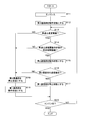
- FIG. 3 is a flowchart showing a first example of a processing procedure of the communication apparatus 100 according to the present embodiment.
- the processing entity will be described as the control unit 10 below.
- the control unit 10 puts the third communication unit into an operating state (S12).
- the controller 10 determines whether or not the vehicle speed ⁇ speed threshold (for example, 0 km / h) (S13). If the vehicle speed ⁇ speed threshold (YES in S13), the state of the vehicle speed ⁇ speed threshold is a predetermined time. It is determined whether or not to continue (for example, about 30 seconds) (S14). When the state of vehicle speed ⁇ speed threshold value continues for a predetermined time (YES in S14), the control unit 10 puts the second communication unit into an operating state. Note that the operation state means that the operation is started when the operation is stopped, and the operation is continued when the operation is in progress.
- the control unit 10 determines whether or not the communication of the second communication unit has been established (S16). If the communication has been established (YES in S16), the control unit 10 stops the first communication unit (S17). The process of S20 is performed. Note that the stop state means that the operation is stopped when it is operating, and the stop is continued when it is stopped.
- control unit 10 puts the second communication unit in a stopped state (S18), puts the first communication unit in an operating state (S19), and performs the process of step S20 described later.
- the control unit 10 determines whether or not the engine has been turned off (S20). If the engine has not been turned off (NO in S20), the processing from step S13 is continued. If the engine is off (YES in S20), the process is terminated.
- FIG. 4 is a flowchart showing a second example of the processing procedure of the communication apparatus 100 according to the present embodiment.
- the control unit 10 brings the third communication unit into an operating state (S32).
- the control unit 10 determines whether or not the vehicle speed ⁇ speed threshold (for example, 0 km / h) (S33). If the vehicle speed ⁇ speed threshold (YES in S33), the shift lever is in the P range (parking position). It is determined whether or not (S34). When the shift lever is not in the P range (NO in S34), the control unit 10 determines whether or not the vehicle speed ⁇ speed threshold state continues for a predetermined time (for example, about 30 seconds) (S35). When the vehicle speed ⁇ speed threshold state continues for a predetermined time (YES in S35), the control unit 10 puts the second communication unit into an operating state (S36).
- the vehicle speed ⁇ speed threshold for example, 0 km / h
- control unit 10 When the shift lever is in the P range (YES in S34), the control unit 10 performs the process of step S36 without performing the process of step S35.
- the control unit 10 determines whether or not the communication of the second communication unit has been established (S37). If the communication has been established (YES in S37), the control unit 10 stops the first communication unit (S38), and will be described later. The process of S41 is performed.
- control unit 10 sets the second communication unit to a stopped state (S39), sets the first communication unit to an operating state (S40), and performs the process of step S41 described later.
- the control unit 10 determines whether or not the engine is turned off (S41). If the engine is not turned off (NO in S41), the processing after step S33 is continued. If the engine is off (YES in S41), the process is terminated.
- the communication unit having a wide communicable area has been described as performing the communication of the mobile phone network, but the communication having the wide communicable area is not limited to the communication of the mobile phone network.
- the communication unit having a narrow communicable area has been described as performing a wireless LAN communication. However, the communication having a narrow communicable area is not limited to the wireless LAN communication.
Landscapes
- Engineering & Computer Science (AREA)
- Computer Networks & Wireless Communication (AREA)
- Signal Processing (AREA)
- Computer Security & Cryptography (AREA)
- Traffic Control Systems (AREA)
- Mobile Radio Communication Systems (AREA)
- Fittings On The Vehicle Exterior For Carrying Loads, And Devices For Holding Or Mounting Articles (AREA)
- Telephone Function (AREA)
Abstract
Description
本出願は、2015年9月14日出願の日本出願第2015-181008号に基づく優先権を主張し、前記日本出願に記載された全ての記載内容を援用するものである。
特許文献1のようなシステムにおいて、車両に搭載される通信装置は、車内外との無線通信系には様々な種類があり、複数の無線モジュール(通信部)を搭載している。このため、すべての無線モジュールが常時通信動作を行うと、消費電力が大きくなり、発熱も増加するおそれがある。
[本開示の効果]
本実施の形態に係る通信装置は、車両に搭載される通信装置であって、通信可能領域の広狭が異なる複数の通信部と、車両の走行状態を判定する判定部と、該判定部の判定結果に応じて前記複数の通信部の少なくとも1つを選択する選択部と、該選択部で選択した通信部の動作を停止させる停止部とを備える。
以下、本発明に係る通信装置の実施の形態を示す図面に基づいて説明する。図1は本実施の形態の通信装置100による通信の様子の一例を示す模式図である。図1に示すように、本実施の形態の通信装置100は、車両1に搭載され、路側装置200及びテレマティクスサーバ300との間で通信を行うことができる。
10 制御部
11 第1通信部
12 第2通信部
13 第3通信部
14 判定部
15 選択部
16 停止部
17 インタフェース部
31 車速センサ
32 サイドブレーキ
33 シフトレバー
100 通信装置
200 路側装置
300 テレマティスクサーバ
Claims (4)
- 車両に搭載される通信装置であって、
通信可能領域の広狭が異なる複数の通信部と、
車両の走行状態を判定する判定部と、
該判定部の判定結果に応じて前記複数の通信部の少なくとも1つを選択する選択部と、
該選択部で選択した通信部の動作を停止させる停止部と
を備える通信装置。 - 前記判定部は、
前記車両の速度を判定し、
前記選択部は、
前記車両の速度が所定の速度閾値以下である場合、通信可能領域が狭い通信部を選択する請求項1に記載の通信装置。 - 前記選択部は、
前記車両の速度が前記速度閾値を超えた場合、通信可能領域が広い通信部を選択する請求項2に記載の通信装置。 - 駐車操作を取得する取得部を備え、
前記選択部は、
さらに、前記取得部で駐車操作を取得した場合、通信可能領域が狭い通信部を選択する請求項1から請求項3のいずれか一項に記載の通信装置。
Priority Applications (4)
| Application Number | Priority Date | Filing Date | Title |
|---|---|---|---|
| US15/759,591 US11070960B2 (en) | 2015-09-14 | 2016-08-25 | Communication device |
| DE112016004145.4T DE112016004145T5 (de) | 2015-09-14 | 2016-08-25 | Kommunikationsvorrichtung |
| CN201680051502.4A CN108025681B (zh) | 2015-09-14 | 2016-08-25 | 通信装置 |
| JP2017539806A JP7101481B2 (ja) | 2015-09-14 | 2016-08-25 | 通信装置 |
Applications Claiming Priority (2)
| Application Number | Priority Date | Filing Date | Title |
|---|---|---|---|
| JP2015-181008 | 2015-09-14 | ||
| JP2015181008 | 2015-09-14 |
Publications (1)
| Publication Number | Publication Date |
|---|---|
| WO2017047351A1 true WO2017047351A1 (ja) | 2017-03-23 |
Family
ID=58289020
Family Applications (1)
| Application Number | Title | Priority Date | Filing Date |
|---|---|---|---|
| PCT/JP2016/074828 Ceased WO2017047351A1 (ja) | 2015-09-14 | 2016-08-25 | 通信装置 |
Country Status (5)
| Country | Link |
|---|---|
| US (1) | US11070960B2 (ja) |
| JP (1) | JP7101481B2 (ja) |
| CN (1) | CN108025681B (ja) |
| DE (1) | DE112016004145T5 (ja) |
| WO (1) | WO2017047351A1 (ja) |
Cited By (5)
| Publication number | Priority date | Publication date | Assignee | Title |
|---|---|---|---|---|
| JP2019176257A (ja) * | 2018-03-27 | 2019-10-10 | トヨタ自動車株式会社 | 通信システム |
| JP2022008216A (ja) * | 2020-06-26 | 2022-01-13 | ヒルシュマン カー コミュニケーション ゲゼルシャフト ミット ベシュレンクテル ハフツング | 受信機ユニットの動作方法 |
| US20220116863A1 (en) * | 2020-10-12 | 2022-04-14 | Toyota Jidosha Kabushiki Kaisha | Communications device, vehicle, control method, and control program |
| WO2022075166A1 (ja) * | 2020-10-08 | 2022-04-14 | 株式会社デンソー | 車両用無線通信装置、通信制御方法 |
| JP2023045320A (ja) * | 2021-09-21 | 2023-04-03 | トヨタ自動車株式会社 | 無線通信装置、情報処理装置、および、情報処理方法 |
Citations (4)
| Publication number | Priority date | Publication date | Assignee | Title |
|---|---|---|---|---|
| JPS60148236A (ja) * | 1984-01-13 | 1985-08-05 | Pioneer Electronic Corp | ダイバシテイ受信装置 |
| JP2001283379A (ja) * | 2000-03-29 | 2001-10-12 | Mitsubishi Electric Corp | Dsrc車載器 |
| JP2002261677A (ja) * | 2001-02-27 | 2002-09-13 | Matsushita Electric Ind Co Ltd | 車載用通信装置 |
| JP2014059652A (ja) * | 2012-09-14 | 2014-04-03 | Jvc Kenwood Corp | 車載装置、車載装置の制御方法及びプログラム |
Family Cites Families (18)
| Publication number | Priority date | Publication date | Assignee | Title |
|---|---|---|---|---|
| JP4078903B2 (ja) * | 2002-07-15 | 2008-04-23 | 日産自動車株式会社 | 車載情報提供装置 |
| WO2007049482A1 (ja) | 2005-10-26 | 2007-05-03 | Pioneer Corporation | 情報記録装置、情報記録方法、情報記録プログラムおよび記録媒体 |
| JP2009029376A (ja) * | 2007-07-30 | 2009-02-12 | Tokai Rika Co Ltd | 飲酒運転防止システム |
| JP2010245825A (ja) | 2009-04-06 | 2010-10-28 | Sharp Corp | 通信装置 |
| JP2011091617A (ja) * | 2009-10-22 | 2011-05-06 | Denso Corp | 車両用データ通信装置 |
| EP2523366B1 (en) * | 2010-01-06 | 2019-08-07 | Electronics and Telecommunications Research Institute | Machine type communication system |
| JP5327149B2 (ja) * | 2010-02-10 | 2013-10-30 | 株式会社デンソー | 車載通信装置 |
| US20110257834A1 (en) * | 2010-04-15 | 2011-10-20 | Ems Technologies, Inc. | Mobile Data Loader for Aircraft Wireless Data Communications |
| US8498771B2 (en) * | 2010-05-05 | 2013-07-30 | Ford Global Technologies, Llc | Wireless vehicle servicing |
| CN103493538B (zh) * | 2011-06-10 | 2017-03-01 | 三菱电机株式会社 | 无线通信装置 |
| JP2013017044A (ja) * | 2011-07-04 | 2013-01-24 | Denso Corp | 自動開閉制御システム |
| DE112012005932B4 (de) * | 2012-02-24 | 2020-08-13 | Mitsubishi Electric Corporation | Im Fahrzeug angeordnete Kommunikationsvorrichtung und Navigationsvorrichtung |
| JP5747863B2 (ja) * | 2012-05-11 | 2015-07-15 | トヨタ自動車株式会社 | 車両、受電装置、送電装置および非接触給電システム |
| JP5772862B2 (ja) * | 2013-04-10 | 2015-09-02 | 株式会社デンソー | 充電制御装置 |
| JP6284331B2 (ja) * | 2013-10-01 | 2018-02-28 | アルパイン株式会社 | 会話支援装置、会話支援方法及び会話支援プログラム |
| JP5818951B2 (ja) | 2014-07-16 | 2015-11-18 | クラリオン株式会社 | 車載情報端末、情報配信システム |
| US9585118B2 (en) * | 2014-09-24 | 2017-02-28 | Parellel Wireless, Inc. | Radio operation switch based on GPS mobility data |
| JP6028830B2 (ja) | 2015-04-21 | 2016-11-24 | 株式会社リコー | 遠隔管理装置、機器管理方法、及びプログラム |
-
2016
- 2016-08-25 JP JP2017539806A patent/JP7101481B2/ja active Active
- 2016-08-25 CN CN201680051502.4A patent/CN108025681B/zh active Active
- 2016-08-25 WO PCT/JP2016/074828 patent/WO2017047351A1/ja not_active Ceased
- 2016-08-25 DE DE112016004145.4T patent/DE112016004145T5/de not_active Withdrawn
- 2016-08-25 US US15/759,591 patent/US11070960B2/en active Active
Patent Citations (4)
| Publication number | Priority date | Publication date | Assignee | Title |
|---|---|---|---|---|
| JPS60148236A (ja) * | 1984-01-13 | 1985-08-05 | Pioneer Electronic Corp | ダイバシテイ受信装置 |
| JP2001283379A (ja) * | 2000-03-29 | 2001-10-12 | Mitsubishi Electric Corp | Dsrc車載器 |
| JP2002261677A (ja) * | 2001-02-27 | 2002-09-13 | Matsushita Electric Ind Co Ltd | 車載用通信装置 |
| JP2014059652A (ja) * | 2012-09-14 | 2014-04-03 | Jvc Kenwood Corp | 車載装置、車載装置の制御方法及びプログラム |
Cited By (14)
| Publication number | Priority date | Publication date | Assignee | Title |
|---|---|---|---|---|
| JP6992645B2 (ja) | 2018-03-27 | 2022-01-13 | トヨタ自動車株式会社 | 通信システム |
| JP2019176257A (ja) * | 2018-03-27 | 2019-10-10 | トヨタ自動車株式会社 | 通信システム |
| JP2022008216A (ja) * | 2020-06-26 | 2022-01-13 | ヒルシュマン カー コミュニケーション ゲゼルシャフト ミット ベシュレンクテル ハフツング | 受信機ユニットの動作方法 |
| JP7740820B2 (ja) | 2020-06-26 | 2025-09-17 | ヒルシュマン カー コミュニケーション ゲゼルシャフト ミット ベシュレンクテル ハフツング | 受信機ユニットの動作方法 |
| JP7400684B2 (ja) | 2020-10-08 | 2023-12-19 | 株式会社デンソー | 車両用無線通信装置、通信制御方法 |
| WO2022075166A1 (ja) * | 2020-10-08 | 2022-04-14 | 株式会社デンソー | 車両用無線通信装置、通信制御方法 |
| JP2022062548A (ja) * | 2020-10-08 | 2022-04-20 | 株式会社デンソー | 車両用無線通信装置、通信制御方法 |
| US20220116863A1 (en) * | 2020-10-12 | 2022-04-14 | Toyota Jidosha Kabushiki Kaisha | Communications device, vehicle, control method, and control program |
| JP7380510B2 (ja) | 2020-10-12 | 2023-11-15 | トヨタ自動車株式会社 | 通信装置、車両、制御方法、及び制御プログラム |
| US12028801B2 (en) | 2020-10-12 | 2024-07-02 | Toyota Jidosha Kabushiki Kaisha | Communications device, vehicle, control method, and control program |
| JP2022063776A (ja) * | 2020-10-12 | 2022-04-22 | トヨタ自動車株式会社 | 通信装置、車両、制御方法、及び制御プログラム |
| JP2023045320A (ja) * | 2021-09-21 | 2023-04-03 | トヨタ自動車株式会社 | 無線通信装置、情報処理装置、および、情報処理方法 |
| JP7690361B2 (ja) | 2021-09-21 | 2025-06-10 | トヨタ自動車株式会社 | 無線通信装置、情報処理装置、および、情報処理方法 |
| US12477434B2 (en) | 2021-09-21 | 2025-11-18 | Toyota Jidosha Kabushiki Kaisha | Wireless communication apparatus, information processing apparatus and information processing method |
Also Published As
| Publication number | Publication date |
|---|---|
| JP7101481B2 (ja) | 2022-07-15 |
| US11070960B2 (en) | 2021-07-20 |
| JPWO2017047351A1 (ja) | 2018-06-28 |
| CN108025681A (zh) | 2018-05-11 |
| US20180262886A1 (en) | 2018-09-13 |
| DE112016004145T5 (de) | 2018-05-24 |
| CN108025681B (zh) | 2022-04-29 |
Similar Documents
| Publication | Publication Date | Title |
|---|---|---|
| CN109624734B (zh) | 移动电动车辆无线充电 | |
| JP7101481B2 (ja) | 通信装置 | |
| US8660549B2 (en) | Avoiding battery depletion of a mobile device | |
| US20210086761A1 (en) | Waking-up parked vehicles for performing a cooperative parking maneuver with v2x communication | |
| US20100198459A1 (en) | In-vehicle communications apparatus | |
| US20200409678A1 (en) | Vehicle software update network | |
| US8913544B2 (en) | Communication control system with ad hoc wireless communication function | |
| US20150031372A1 (en) | Vehicle-based small cell base stations | |
| JP6326748B2 (ja) | 移動通信装置、マップ作成装置、リソース管理装置、無線局管理装置及び無線アクセスシステム | |
| US9578580B1 (en) | Cellular handoff by wireless devices | |
| JP5239714B2 (ja) | 車両用無線通信装置、通信方法 | |
| US10721686B2 (en) | Method for controlling a telematic control unit | |
| JP5300890B2 (ja) | 無線通信システム、車載無線通信装置、携帯端末及び無線通信の方法 | |
| CN108282787B (zh) | 用于集体检测移动无线电网中的数据的方法 | |
| US20220104200A1 (en) | Service Information for V2X Service Coordination in Other Frequency Spectrum | |
| CN116250286A (zh) | 车辆用无线通信装置、通信控制方法 | |
| CN110234064B (zh) | 确定车辆停放位置 | |
| KR20210014001A (ko) | 차량 통신 지원 장치 및 방법 | |
| CN104900083A (zh) | 车辆的信息传输方法及装置 | |
| CN116195279A (zh) | 数据发送装置、数据发送方法、以及数据发送程序 | |
| US10323951B2 (en) | Method of generating a navigation-based route for a vehicle | |
| JP2020042568A (ja) | センター装置、リプログデータの配信システム及びリプログデータの配信計画作成プログラム | |
| KR102025691B1 (ko) | 차량간 데이터 통신 방법과 이를 수행하기 위한 장치 및 시스템 | |
| JP7268138B2 (ja) | 通信装置、ユーザ端末、通信システム及びその制御方法並びにプログラム | |
| JP7434466B2 (ja) | 制御装置及びプログラム |
Legal Events
| Date | Code | Title | Description |
|---|---|---|---|
| 121 | Ep: the epo has been informed by wipo that ep was designated in this application |
Ref document number: 16846222 Country of ref document: EP Kind code of ref document: A1 |
|
| ENP | Entry into the national phase |
Ref document number: 2017539806 Country of ref document: JP Kind code of ref document: A |
|
| WWE | Wipo information: entry into national phase |
Ref document number: 15759591 Country of ref document: US |
|
| WWE | Wipo information: entry into national phase |
Ref document number: 112016004145 Country of ref document: DE |
|
| 122 | Ep: pct application non-entry in european phase |
Ref document number: 16846222 Country of ref document: EP Kind code of ref document: A1 |