WO2016185857A1 - 樹脂分散体、微粒子、及びそれらの製造方法 - Google Patents
樹脂分散体、微粒子、及びそれらの製造方法 Download PDFInfo
- Publication number
- WO2016185857A1 WO2016185857A1 PCT/JP2016/062353 JP2016062353W WO2016185857A1 WO 2016185857 A1 WO2016185857 A1 WO 2016185857A1 JP 2016062353 W JP2016062353 W JP 2016062353W WO 2016185857 A1 WO2016185857 A1 WO 2016185857A1
- Authority
- WO
- WIPO (PCT)
- Prior art keywords
- resin
- organic polymer
- containing organic
- cationic group
- dispersion
- Prior art date
- Legal status (The legal status is an assumption and is not a legal conclusion. Google has not performed a legal analysis and makes no representation as to the accuracy of the status listed.)
- Ceased
Links
Classifications
-
- C—CHEMISTRY; METALLURGY
- C08—ORGANIC MACROMOLECULAR COMPOUNDS; THEIR PREPARATION OR CHEMICAL WORKING-UP; COMPOSITIONS BASED THEREON
- C08J—WORKING-UP; GENERAL PROCESSES OF COMPOUNDING; AFTER-TREATMENT NOT COVERED BY SUBCLASSES C08B, C08C, C08F, C08G or C08H
- C08J3/00—Processes of treating or compounding macromolecular substances
- C08J3/02—Making solutions, dispersions, lattices or gels by other methods than by solution, emulsion or suspension polymerisation techniques
- C08J3/03—Making solutions, dispersions, lattices or gels by other methods than by solution, emulsion or suspension polymerisation techniques in aqueous media
- C08J3/07—Making solutions, dispersions, lattices or gels by other methods than by solution, emulsion or suspension polymerisation techniques in aqueous media from polymer solutions
-
- C—CHEMISTRY; METALLURGY
- C08—ORGANIC MACROMOLECULAR COMPOUNDS; THEIR PREPARATION OR CHEMICAL WORKING-UP; COMPOSITIONS BASED THEREON
- C08J—WORKING-UP; GENERAL PROCESSES OF COMPOUNDING; AFTER-TREATMENT NOT COVERED BY SUBCLASSES C08B, C08C, C08F, C08G or C08H
- C08J3/00—Processes of treating or compounding macromolecular substances
- C08J3/12—Powdering or granulating
- C08J3/16—Powdering or granulating by coagulating dispersions
-
- C—CHEMISTRY; METALLURGY
- C08—ORGANIC MACROMOLECULAR COMPOUNDS; THEIR PREPARATION OR CHEMICAL WORKING-UP; COMPOSITIONS BASED THEREON
- C08L—COMPOSITIONS OF MACROMOLECULAR COMPOUNDS
- C08L33/00—Compositions of homopolymers or copolymers of compounds having one or more unsaturated aliphatic radicals, each having only one carbon-to-carbon double bond, and only one being terminated by only one carboxyl radical, or of salts, anhydrides, esters, amides, imides or nitriles thereof; Compositions of derivatives of such polymers
- C08L33/04—Homopolymers or copolymers of esters
- C08L33/14—Homopolymers or copolymers of esters of esters containing halogen, nitrogen, sulfur, or oxygen atoms in addition to the carboxy oxygen
-
- C—CHEMISTRY; METALLURGY
- C08—ORGANIC MACROMOLECULAR COMPOUNDS; THEIR PREPARATION OR CHEMICAL WORKING-UP; COMPOSITIONS BASED THEREON
- C08L—COMPOSITIONS OF MACROMOLECULAR COMPOUNDS
- C08L71/00—Compositions of polyethers obtained by reactions forming an ether link in the main chain; Compositions of derivatives of such polymers
- C08L71/08—Polyethers derived from hydroxy compounds or from their metallic derivatives
- C08L71/10—Polyethers derived from hydroxy compounds or from their metallic derivatives from phenols
-
- C—CHEMISTRY; METALLURGY
- C08—ORGANIC MACROMOLECULAR COMPOUNDS; THEIR PREPARATION OR CHEMICAL WORKING-UP; COMPOSITIONS BASED THEREON
- C08L—COMPOSITIONS OF MACROMOLECULAR COMPOUNDS
- C08L75/00—Compositions of polyureas or polyurethanes; Compositions of derivatives of such polymers
- C08L75/04—Polyurethanes
-
- C—CHEMISTRY; METALLURGY
- C08—ORGANIC MACROMOLECULAR COMPOUNDS; THEIR PREPARATION OR CHEMICAL WORKING-UP; COMPOSITIONS BASED THEREON
- C08L—COMPOSITIONS OF MACROMOLECULAR COMPOUNDS
- C08L79/00—Compositions of macromolecular compounds obtained by reactions forming in the main chain of the macromolecule a linkage containing nitrogen with or without oxygen or carbon only, not provided for in groups C08L61/00 - C08L77/00
- C08L79/04—Polycondensates having nitrogen-containing heterocyclic rings in the main chain; Polyhydrazides; Polyamide acids or similar polyimide precursors
- C08L79/08—Polyimides; Polyester-imides; Polyamide-imides; Polyamide acids or similar polyimide precursors
-
- C—CHEMISTRY; METALLURGY
- C08—ORGANIC MACROMOLECULAR COMPOUNDS; THEIR PREPARATION OR CHEMICAL WORKING-UP; COMPOSITIONS BASED THEREON
- C08L—COMPOSITIONS OF MACROMOLECULAR COMPOUNDS
- C08L81/00—Compositions of macromolecular compounds obtained by reactions forming in the main chain of the macromolecule a linkage containing sulfur with or without nitrogen, oxygen or carbon only; Compositions of polysulfones; Compositions of derivatives of such polymers
- C08L81/06—Polysulfones; Polyethersulfones
-
- C—CHEMISTRY; METALLURGY
- C09—DYES; PAINTS; POLISHES; NATURAL RESINS; ADHESIVES; COMPOSITIONS NOT OTHERWISE PROVIDED FOR; APPLICATIONS OF MATERIALS NOT OTHERWISE PROVIDED FOR
- C09D—COATING COMPOSITIONS, e.g. PAINTS, VARNISHES OR LACQUERS; FILLING PASTES; CHEMICAL PAINT OR INK REMOVERS; INKS; CORRECTING FLUIDS; WOODSTAINS; PASTES OR SOLIDS FOR COLOURING OR PRINTING; USE OF MATERIALS THEREFOR
- C09D133/00—Coating compositions based on homopolymers or copolymers of compounds having one or more unsaturated aliphatic radicals, each having only one carbon-to-carbon double bond, and at least one being terminated by only one carboxyl radical, or of salts, anhydrides, esters, amides, imides, or nitriles thereof; Coating compositions based on derivatives of such polymers
- C09D133/04—Homopolymers or copolymers of esters
-
- C—CHEMISTRY; METALLURGY
- C09—DYES; PAINTS; POLISHES; NATURAL RESINS; ADHESIVES; COMPOSITIONS NOT OTHERWISE PROVIDED FOR; APPLICATIONS OF MATERIALS NOT OTHERWISE PROVIDED FOR
- C09D—COATING COMPOSITIONS, e.g. PAINTS, VARNISHES OR LACQUERS; FILLING PASTES; CHEMICAL PAINT OR INK REMOVERS; INKS; CORRECTING FLUIDS; WOODSTAINS; PASTES OR SOLIDS FOR COLOURING OR PRINTING; USE OF MATERIALS THEREFOR
- C09D171/00—Coating compositions based on polyethers obtained by reactions forming an ether link in the main chain; Coating compositions based on derivatives of such polymers
- C09D171/08—Polyethers derived from hydroxy compounds or from their metallic derivatives
- C09D171/10—Polyethers derived from hydroxy compounds or from their metallic derivatives from phenols
-
- C—CHEMISTRY; METALLURGY
- C09—DYES; PAINTS; POLISHES; NATURAL RESINS; ADHESIVES; COMPOSITIONS NOT OTHERWISE PROVIDED FOR; APPLICATIONS OF MATERIALS NOT OTHERWISE PROVIDED FOR
- C09D—COATING COMPOSITIONS, e.g. PAINTS, VARNISHES OR LACQUERS; FILLING PASTES; CHEMICAL PAINT OR INK REMOVERS; INKS; CORRECTING FLUIDS; WOODSTAINS; PASTES OR SOLIDS FOR COLOURING OR PRINTING; USE OF MATERIALS THEREFOR
- C09D175/00—Coating compositions based on polyureas or polyurethanes; Coating compositions based on derivatives of such polymers
- C09D175/04—Polyurethanes
-
- C—CHEMISTRY; METALLURGY
- C09—DYES; PAINTS; POLISHES; NATURAL RESINS; ADHESIVES; COMPOSITIONS NOT OTHERWISE PROVIDED FOR; APPLICATIONS OF MATERIALS NOT OTHERWISE PROVIDED FOR
- C09D—COATING COMPOSITIONS, e.g. PAINTS, VARNISHES OR LACQUERS; FILLING PASTES; CHEMICAL PAINT OR INK REMOVERS; INKS; CORRECTING FLUIDS; WOODSTAINS; PASTES OR SOLIDS FOR COLOURING OR PRINTING; USE OF MATERIALS THEREFOR
- C09D179/00—Coating compositions based on macromolecular compounds obtained by reactions forming in the main chain of the macromolecule a linkage containing nitrogen, with or without oxygen, or carbon only, not provided for in groups C09D161/00 - C09D177/00
- C09D179/04—Polycondensates having nitrogen-containing heterocyclic rings in the main chain; Polyhydrazides; Polyamide acids or similar polyimide precursors
- C09D179/08—Polyimides; Polyester-imides; Polyamide-imides; Polyamide acids or similar polyimide precursors
-
- C—CHEMISTRY; METALLURGY
- C09—DYES; PAINTS; POLISHES; NATURAL RESINS; ADHESIVES; COMPOSITIONS NOT OTHERWISE PROVIDED FOR; APPLICATIONS OF MATERIALS NOT OTHERWISE PROVIDED FOR
- C09D—COATING COMPOSITIONS, e.g. PAINTS, VARNISHES OR LACQUERS; FILLING PASTES; CHEMICAL PAINT OR INK REMOVERS; INKS; CORRECTING FLUIDS; WOODSTAINS; PASTES OR SOLIDS FOR COLOURING OR PRINTING; USE OF MATERIALS THEREFOR
- C09D181/00—Coating compositions based on macromolecular compounds obtained by reactions forming in the main chain of the macromolecule a linkage containing sulfur, with or without nitrogen, oxygen, or carbon only; Coating compositions based on polysulfones; Coating compositions based on derivatives of such polymers
- C09D181/06—Polysulfones; Polyethersulfones
-
- C—CHEMISTRY; METALLURGY
- C09—DYES; PAINTS; POLISHES; NATURAL RESINS; ADHESIVES; COMPOSITIONS NOT OTHERWISE PROVIDED FOR; APPLICATIONS OF MATERIALS NOT OTHERWISE PROVIDED FOR
- C09D—COATING COMPOSITIONS, e.g. PAINTS, VARNISHES OR LACQUERS; FILLING PASTES; CHEMICAL PAINT OR INK REMOVERS; INKS; CORRECTING FLUIDS; WOODSTAINS; PASTES OR SOLIDS FOR COLOURING OR PRINTING; USE OF MATERIALS THEREFOR
- C09D201/00—Coating compositions based on unspecified macromolecular compounds
- C09D201/02—Coating compositions based on unspecified macromolecular compounds characterised by the presence of specified groups, e.g. terminal or pendant functional groups
-
- C—CHEMISTRY; METALLURGY
- C09—DYES; PAINTS; POLISHES; NATURAL RESINS; ADHESIVES; COMPOSITIONS NOT OTHERWISE PROVIDED FOR; APPLICATIONS OF MATERIALS NOT OTHERWISE PROVIDED FOR
- C09D—COATING COMPOSITIONS, e.g. PAINTS, VARNISHES OR LACQUERS; FILLING PASTES; CHEMICAL PAINT OR INK REMOVERS; INKS; CORRECTING FLUIDS; WOODSTAINS; PASTES OR SOLIDS FOR COLOURING OR PRINTING; USE OF MATERIALS THEREFOR
- C09D7/00—Features of coating compositions, not provided for in group C09D5/00; Processes for incorporating ingredients in coating compositions
- C09D7/40—Additives
-
- C—CHEMISTRY; METALLURGY
- C25—ELECTROLYTIC OR ELECTROPHORETIC PROCESSES; APPARATUS THEREFOR
- C25D—PROCESSES FOR THE ELECTROLYTIC OR ELECTROPHORETIC PRODUCTION OF COATINGS; ELECTROFORMING; APPARATUS THEREFOR
- C25D13/00—Electrophoretic coating characterised by the process
- C25D13/04—Electrophoretic coating characterised by the process with organic material
- C25D13/06—Electrophoretic coating characterised by the process with organic material with polymers
Definitions
- the present invention relates to resin powder particles (fine particles) coated with a cationic group-containing organic polymer compound, a resin dispersion comprising the particles, and a method for producing them.
- Engineering plastics excel in heat resistance, mechanical strength, and wear resistance, replacing metal materials in core parts that require high performance, durability, and safety, such as mechanical parts, automotive parts, and electronic equipment parts. Realizes light weight and low cost.
- Patent Document 1 when a polymer A, a polymer B, and an organic solvent are dissolved and mixed, a system that phase-separates into two phases, a solution phase mainly composed of the polymer A and a solution phase mainly composed of the polymer B.
- a method for producing polymer fine particles in which an emulsion is formed and then contacted with a poor solvent for polymer A to precipitate polymer A is proposed. The method is characterized in that the emulsion is formed at a temperature of 100 ° C. or higher. Has been.
- Patent Document 2 a specific polysulfone is freeze-pulverized to 8 to 24 ⁇ m with an impact-type mechanical pulverizer, and then the pulverized polysulfone, pure water, and a surfactant are mixed, stirred and ultrasonically dispersed, and dispersed in water. Liquid has been proposed.
- Patent Document 2 water is dispersed from a paint using an organic solvent as a dispersion medium as described in Patent Document 1 from the viewpoint of improving the working environment at the time of preparation and coating, discarding the organic solvent, and reducing the recovery cost.
- a water-based paint as a medium is preferable, but engineering plastics are difficult to dissolve in water and are not easy to produce.
- Patent Document 2 in which an aqueous dispersion of a thermoplastic resin is produced, in this method, the resin is dispersed using a surfactant after mechanical pulverization. There is a problem that the particle size at the time of dispersion is large and is not sufficient from the viewpoint of maintaining dispersion stability.
- an object of the present invention is to provide an aqueous dispersion of engineering plastics, in which resin particles are less likely to settle for a longer period of time and have excellent dispersion stability.
- the present inventors achieved dispersion stability by coating particles of a specific resin classified as engineering plastic with a cationic group-containing organic polymer compound by a base precipitation method. A highly water-based resin dispersion was obtained, and it was found that the above problems could be solved, and the present invention was completed.
- the present invention [Section 1. Resin dispersion comprising at least one resin particle selected from the group consisting of resins having a glass transition temperature of 100 ° C. or higher, a cationic group-containing organic polymer compound, a base, and an aqueous medium
- the dispersion is characterized in that the resin particles are coated with a cationic group-containing organic polymer compound.
- Item 2 The main skeleton of the cationic group-containing organic polymer compound is (meth) acrylic ester resin, (meth) acrylic ester-styrene resin, (meth) acrylic ester-epoxy resin, vinyl resin, urethane resin, and polyamideimide.
- Item 2 The dispersion according to Item 1, which is at least one organic polymer compound selected from the group consisting of resins.
- Item 3. The dispersion according to Item 1 or 2, wherein the cationic group-containing organic polymer compound has an amine value of 40 to 300 mgKOH / g.
- the acid used for neutralizing the cationic group is at least one acid selected from the group consisting of inorganic acids, sulfonic acids, carboxylic acids, and vinylic carboxylic acids.
- Item 4. The dispersion according to Item 1.
- Item 5 The dispersion according to any one of Items 1 to 4, wherein the dispersion particle diameter of the resin particles in the dispersion is less than 1 ⁇ m.
- Item 6-1 Item 7. Powder particles (fine particles) obtained by drying the dispersion according to any one of Items 1 to 6.
- Item 6-2. 7. Powder particles (fine particles), which are a dried product of the dispersion according to any one of items 1 to 6.
- Item 6-3. A fine particle of a resin having a glass transition temperature of 100 ° C. or more, wherein the resin is coated with a cationic group-containing organic polymer compound.
- a dispersion comprising resin particles coated with a cationic group-containing organic polymer compound by reacting a resin particle wet cake coated with the water-containing cationic group-containing organic polymer obtained in step (C) and an acid.
- step (D) for obtaining a resin dispersion is
- a method for producing resin powder particles is
- a dispersion comprising resin particles coated with a cationic group-containing organic polymer compound obtained by reacting the resin particle wet cake coated with the water-containing cationic group-containing organic polymer obtained in the step (C) with a base.
- step (D) A step of drying the dispersion composed of the resin particles coated with the cationic group-containing organic polymer compound obtained in the step (D) to obtain resin powder particles coated with the cationic group-containing organic polymer (E2 And a method for producing resin powder particles.
- Item 10 The method for producing a resin dispersion according to Item 7, wherein after the step (A), the resin fine particle dispersion obtained in the step (A) is mechanically pulverized.
- Item 11 The method for producing resin powder particles according to Item 8 or 9, wherein, after the step (A), the resin fine particle dispersion obtained in the step (A) is mechanically pulverized.
- Item 12-1. 6 A paint comprising the dispersion according to any one of items 1 to 5.
- Item 12-2. 6. A coating film obtained using the polyarylene sulfide dispersion according to any one of items 1 to 5. About].
- the present invention also provides: [Section 13. Item 2. The dispersion according to Item 1, wherein the resin is at least one resin selected from the group consisting of polysulfone, polyetheretherketone, polyethersulfone, polycarbonate, polyphenylene ether, and polyphenylsulfone. Item 14. Item 2. The dispersion according to Item 1, wherein the resin is at least one resin selected from the group consisting of polysulfone, polyetheretherketone, polyethersulfone, and polyphenylsulfone. Item 15. Item 2.
- the dispersion according to Item 1, wherein the resin is at least one resin selected from the group consisting of polysulfone, polyethersulfone, and polyphenylsulfone.
- Item 16. The dispersion according to Item 1, wherein the resin is polyethersulfone.
- Item 17. The dispersion according to Item 1, wherein the resin is polyphenylsulfone. ] About.
- At least one resin particle selected from the group consisting of resins having a glass transition temperature of 100 ° C. or higher is coated with a cationic group-containing organic polymer compound, and has excellent dispersion over a long period of time.
- An aqueous dispersion of the resin exhibiting stability can be provided.
- the dispersion of the present invention can contain resin particles at a high concentration. The dispersion of the present invention having such an effect can be suitably used for coating applications.
- the particles contained in the resin dispersion of the present invention have a glass transition temperature of 100 ° C. or higher and are dispersed as fine particles in an aqueous medium using a cationic group-containing organic polymer compound. It is a thing. Details of the resin fine particle dispersion method will be described later.
- the aqueous medium may be water alone or a mixed solvent composed of water and a water-soluble solvent.
- the resin usable in the present invention is a resin having a glass transition temperature of 100 ° C. or higher (hereinafter sometimes referred to as “resin (X)”). These resins may be commercially available products or may be synthesized by a known method.
- Examples of such resin (X) include polysulfone (PSF), polyetheretherketone (PEEK), polyethersulfone (PES), polycarbonate, polyphenylene ether (PPE), polyphenylsulfone (PPSU), and the like. Of these, more preferred are polysulfone, polyetheretherketone, polyethersulfone, and polyphenylsulfone, and still more preferred are polysulfone, polyethersulfone, and polyphenylsulfone.
- PSF polysulfone
- PEEK polyetheretherketone
- PES polyethersulfone
- PPE polyphenylsulfone
- PPSU polyphenylsulfone
- Polysulfone has a sulfonyl group in the structural unit and has the following formula:
- Polyetheretherketone has a structural unit in which a benzene ring is connected via an ether bond and a ketone bond, and has the following formula:
- Polyethersulfone has a sulfonyl group in the structural unit and has the following formula:
- PES resin represented by these.
- Commercially available PES products include Udel (registered trademark) series P-1700 manufactured by Solvay Advanced Polymer, Radel A series (RADEL (registered trademark) A series) manufactured by Solvay Advanced Polymer, and Ultra Zone (registered by BASF).
- Trademarks) E series Ultrason E-1010 etc.
- Sumika Excel series manufactured by Sumitomo Chemical Co., Ltd. (Sumika Excel 5003P, Sumika Excel 4100P etc.) and the like.
- Polyphenylsulfone has a sulfonyl group in the structural unit and has the following formula:
- Polycarbonate has a carbonate group and has the following formula:
- polycarbonate products include Panlite (registered trademark) manufactured by Teijin Chemicals Ltd., Iupilon (registered trademark) manufactured by Mitsubishi Engineering Plastics Co., Ltd., SD Polyca (registered trademark) manufactured by Sumitomo Dow Co., Ltd., Dow Examples include Caliber (registered trademark) manufactured by Chemical Corporation.
- PPE Polyphenylene ether
- PPE can form a polymer alloy (modified PPE) with other resins, and m-PPE that is a polymer alloy with polystyrene can also be used in the present invention.
- modified PPE polymer alloy
- m-PPE polymer alloy with polystyrene
- Examples of commercially available PPE include Noryl (registered trademark, modified PPE) series such as Noryl N1250 manufactured by GE, and Zylon (registered trademark, modified PPE) X 9102 manufactured by Asahi Kasei.
- the resin dispersion in the present invention is a step (A) in which a resin solution in which the resin (X) is dissolved and an aqueous solution of a cationic group-containing organic polymer compound are mixed to form fine particles of the resin (X).
- step (B) baseing step of depositing and coating a cationic group-containing organic polymer compound on the surface of resin (X) fine particles with a base, and coating of a cationic group-containing organic polymer compound
- the obtained resin (X) particles are filtered off, washed with water to obtain a wet cationic group-containing organic polymer compound-coated resin (X) particle wet cake (C) (wet cake preparation step), and the obtained wet It is a resin (X) dispersion obtained by neutralizing a cake with a base and redispersing and adjusting (step (D): dispersion preparation step).
- Resin (X) used is one dissolved in a solvent.
- an inorganic salt described later may be added, but it may not be added in particular.
- the form of the resin (X) that can be used in the present invention is not particularly limited, and specific examples include powders, granules, pellets, fibers, films, molded products, and the like. From the viewpoint of shortening the time required for operability and dissolution, powders, granules and pellets are desirable. Among these, powder resin (X) is particularly preferably used. Usually, the resin (X) and the solvent are introduced into the container and then dissolved, but the order of introduction into the container is not limited.
- the atmosphere in the container may be either an air atmosphere or an inert gas atmosphere, but an inert atmosphere that reacts with the resin (X) or deteriorates the resin (X) itself should be avoided.
- a gas atmosphere is preferred.
- the inert gas includes nitrogen gas, carbon dioxide, helium gas, argon gas, neon gas, krypton gas, xenon gas, etc. Nitrogen gas, argon gas in consideration of economy and availability Carbon dioxide gas is desirable, and nitrogen gas or argon gas is more preferably used.
- chlorides, bromides, carbonates, sulfates, etc. such as an alkali metal, alkaline earth metal, and ammonia are used.
- chlorides such as sodium chloride, lithium chloride, potassium chloride, calcium chloride, magnesium chloride, ammonium chloride, sodium bromide, lithium bromide, potassium bromide, calcium bromide, magnesium bromide, ammonium bromide
- bromide such as sodium carbonate, potassium carbonate, lithium carbonate, calcium carbonate, magnesium carbonate, ammonium carbonate
- sulfate such as calcium sulfate, sodium sulfate, potassium sulfate, lithium sulfate, magnesium sulfate, ammonium sulfate, etc.
- the weight ratio of the inorganic salt to the resin (X) is in the range of 0.1 to 10 parts by mass, preferably in the range of 0.5 to 5 parts by mass with respect to 1 part by mass of the resin (X). It is.
- the solvent used in the present invention is not particularly limited as long as it dissolves the resin (X), and the dispersion of the present invention can be obtained.
- At least one solvent selected is at least one solvent selected from N-methyl-2-pyrrolidone, 1-chloronaphthalene, o-dichlorobenzene, and 1,3-dimethyl-2-imidazolidinone.
- N-methyl-2-pyrrolidone, 1-chloronaphthalene, and 1,3-dimethyl-2-imidazolidinone are preferably used in consideration of workability and water solubility.
- the weight ratio of the resin (X) to the solvent is not particularly limited as long as the resin (X) is dissolved in the solvent, but can be exemplified as a range of 0.1 to 20 parts by mass with respect to 100 parts by mass of the solvent.
- the amount is preferably 0.1 to 10 parts by mass, and more preferably 0.1 to 5 parts by mass.
- the mixed reaction solution can be heated.
- reaction solution may or may not be stirred, but it is preferable that the reaction solution is stirred, thereby shortening the time required for dissolution.
- Step A First, a cationic group-containing organic polymer compound aqueous solution is prepared in advance.
- the main skeleton of the cationic group-containing organic polymer compound includes (meth) acrylic ester resin, (meth) acrylic ester-styrene resin, (meth) acrylic ester-epoxy resin, vinyl resin, urethane resin, Polyamideimide resin.
- the acationic group-containing organic polymer compound used in the present invention may be a single substance or a mixture of one or more of the cationic group-containing organic polymer compounds, and if dissolved in an acidic state, It can be used for resin (X) dispersion and resin (X) powder particles.
- the cationic group-containing organic polymer compound is completely dissolved in an acidic aqueous solution.
- acids used here include inorganic acidic substances such as hydrochloric acid, sulfuric acid, nitric acid and phosphoric acid, sulfonic acids such as methanesulfonic acid, ethanesulfonic acid and p-toluenesulfonic acid, acetic acid, formic acid, oxalic acid and acrylic acid.
- Organic acid substances such as carboxylic acids such as methacrylic acid, ascorbic acid, and Meldrum's acid are preferred. These can be used alone or in combination of two or more.
- the acid amount for dissolving the cationic group-containing organic polymer compound is more preferably 70 to 300% with respect to the amine value of the cationic group-containing organic polymer compound in order to completely dissolve the resin.
- Such a cationic group-containing organic polymer compound may be synthesized and used by the method described in the production examples described later, or a commercially available product may be used. Specific examples of commercially available products include ACRICID WPL-430 (manufactured by DIC Corporation).
- the present invention even if a part or the entire surface of the resin (X) particles are coated with a cationic group-containing organic polymer compound, an effect on dispersion stability can be obtained. Therefore, it is preferable to use 1 part by mass to 200 parts by mass with respect to 100 parts by mass of the resin (X). Of these, the use of 5 parts by mass to 150 parts by mass is preferable because the dispersion stability is the highest.
- the resin (X) dispersion liquid (crystallization liquid) can be obtained by pouring the resin (X) solution prepared above into the prepared cationic group-containing organic polymer compound aqueous solution. At this time, it is different from the “dispersion of resin (X) particles coated with a cationic group-containing organic polymer compound” which is the object of the present invention.
- the particle state of the resin (X) in this crystallization step is as described later.
- the adjusted cationic group-containing organic polymer compound aqueous solution is preferably prepared as a water stream that is stirred at high speed with a stirrer such as a stirring blade. Either turbulent flow or laminar flow may be used, but higher peripheral speed is preferable because the crystallized particle size can be made finer.
- a water injection method there is a method in which water is directly injected into a solution obtained by strongly stirring the prepared cationic group-containing organic polymer compound solution.
- the stirring of the cationic group-containing organic polymer compound solution is preferably strong stirring in order to form fine resin particles.
- it can also pass through the process [dispersion process] which disperse
- the mechanical pulverization include a method using the apparatus described in the item of the mechanical pulverization apparatus described later.
- the particle state of the resin (X) in this crystallization process is considered not to be a state in which the cationic group-containing organic polymer compound is present on the surface layer of the resin (X) particles and is still firmly fixed. .
- a salt exchange reaction of the functional group of the cationic group-containing organic polymer compound is caused by a base in the baseing step in the subsequent step, and is fixed to the surface of the resin (X).
- Resin (X) particles in which the water-soluble resin obtained in the above step is present on the surface layer are base precipitated with a base, and a slurry in which resin (X) particles coated with a cationic group-containing organic polymer compound are precipitated. It is a manufacturing process.
- This step can also be performed by adding an inorganic salt.
- an inorganic salt the kind thereof is not particularly limited, but chlorides such as alkali metals, alkaline earth metals, ammonia, bromides, carbonates, sulfates and the like are usually used.
- chlorides such as sodium chloride, lithium chloride, potassium chloride, calcium chloride, magnesium chloride, ammonium chloride, sodium bromide, lithium bromide, potassium bromide, calcium bromide, magnesium bromide, ammonium bromide
- bromide such as sodium carbonate, potassium carbonate, lithium carbonate, calcium carbonate, magnesium carbonate, ammonium carbonate
- sulfate such as calcium sulfate, sodium sulfate, potassium sulfate, lithium sulfate, magnesium sulfate, ammonium sulfate, etc.
- chlorides such as sodium chloride, lithium chloride, potassium chloride, calcium chloride, magnesium chloride, and ammonium chloride are preferable.
- the weight ratio of the inorganic salt to the resin (X) can be, for example, in the range of 1 to 5 parts by mass with respect to 1 part by mass of the resin (X).
- Examples of the base used for base precipitation include potassium hydroxide, sodium hydroxide, lithium hydroxide and the like, and potassium hydroxide is particularly preferable.
- the base concentration depends on various cationic group-containing organic polymer compounds and various resins (X), it is necessary to set the number based on the number of terminal substituents of the cationic group-containing organic polymer compound. Adjust to ⁇ 13.
- the resin (X) particles coated with the cationic group-containing polymer compound are filtered from the slurry obtained by precipitating the resin (X) particles coated with the cationic group-containing polymer compound obtained in the basification step. And a wet cake process.
- any method may be used as long as particles and liquid can be separated, such as filtration and centrifugation.
- the moisture content in the filtered wet cake is preferably in the range of 15 to 55%. If the moisture content is too low, it becomes difficult to be loosened by redispersion in the subsequent process, and the redispersibility becomes poor. 20-45%.
- the wet cake is washed with ion-exchanged water, distilled water, pure water, tap water or the like in order to wash the remaining organic solvent and undeposited resin.
- the wet cake may be filtered and washed with a washing solvent, or the wet cake may be washed again by peptizing with a washing solvent.
- Step D The wet cake obtained in the above wet cake preparation process is re-peptized with water using a bead mill or an ultrasonic disperser, and the pH is adjusted to 3 to 6 with the inorganic acidic substance or organic acidic substance described above. Thus, a resin (X) dispersion can be obtained.
- the nonvolatile content in the resulting dispersion is 15 to 40%.
- the resin (X) powder particles in the present invention are obtained by removing moisture from the wet cake obtained in the above step C or the resin (X) dispersion obtained in the step D and then drying.
- Resin (X) powder particles coated with a cationic group-containing organic polymer compound After drying, it can be pulverized by various pulverizers and adjusted to a desired particle size for use.
- the resin (X) coarse particle suspension in which the resin (X) coarse particles are dispersed is mechanically pulverized until the dispersed particle size in the measurement method described below becomes less than 1 ⁇ m.
- mechanical pulverization is performed until the dispersed particle diameter is less than 500 nm.
- mechanical pulverizer include commercially available mechanical pulverizers.
- a ball mill apparatus suitable for efficiently dispersing and pulverizing resin (X) coarse particles and preparing a dispersion of resin (X) fine particles having a small particle diameter
- a ball mill apparatus suitable for efficiently dispersing and pulverizing resin (X) coarse particles and preparing a dispersion of resin (X) fine particles having a small particle diameter
- a ball mill apparatus suitable for efficiently dispersing and pulverizing resin (X) coarse particles and preparing a dispersion of resin (X) fine particles having a small particle diameter
- a ball mill apparatus suitable for efficiently dispersing and pulverizing resin (X) coarse particles and preparing a dispersion of resin (X) fine particles having a small particle diameter
- a ball mill apparatus suitable for efficiently dispersing and pulverizing resin (X) coarse particles and preparing a dispersion of resin (X) fine particles having a small particle diameter
- a ball mill apparatus for efficiently dispersing and pulverizing resin (X) coarse particles and preparing a dispersion
- a bead mill can be controlled by selecting the bead diameter and the bead amount and adjusting the peripheral speed.
- the resin (X) fine particle dispersion may also contain a precipitate in some cases.
- the precipitation part and the dispersion part may be used separately.
- the precipitation part and the dispersion part may be separated.
- decantation, filtration, or the like may be performed.
- centrifugation or the like is performed to completely settle the larger particle size, and decantation or filtration is performed to remove the precipitated portion.
- the fine particles and the cationic group-containing organic polymer compound aqueous solution are not separated even after standing for 24 hours.
- the resin (X) fine particle dispersion obtained in this way is a useful additive in the fields of paint, adhesion and polymer compounds because of its characteristics.
- the obtained resin dispersion was defined as D50 particle size measured using “MT-3300EXII” (Laser Doppler particle size distribution meter manufactured by Nikkiso Co., Ltd.) as the dispersed particle size.
- Example 1 [crystallization process] To a vigorously stirred aqueous solution of a cationic group-containing organic polymer compound (a mixture of 1.58 g of a cationic group-containing organic polymer compound (KR-1), 6.67 g of 2% hydrochloric acid, and 2500 g of water) (Ultrason P-3010 manufactured by BASF) 10 g of N-methyl-2-pyrrolidone dissolved in 500 g of PPSU solution was added at 180 ° C., and coarse particles were removed with a metal mesh (aperture 45 ⁇ m). A dispersion liquid (crystallization liquid) containing PPSU fine particles was obtained. This operation was repeated 5 times.
- a cationic group-containing organic polymer compound a mixture of 1.58 g of a cationic group-containing organic polymer compound (KR-1), 6.67 g of 2% hydrochloric acid, and 2500 g of water
- Ultrason P-3010 manufactured by BASF 10 g of N
- Step (D) [Fine particle dispersion preparation step]
- the slurry obtained by mixing 110 g of the wet cake obtained in the step (C), 4.13 g of 10% acetic acid and 40 g of water was subjected to ultrasonic irradiation for 60 minutes with an ultrasonic disperser (UP400S manufactured by Hielscher), A 31% PPSU dispersion was obtained.
- UPFS manufactured by Hielscher an ultrasonic disperser
- D 50 77 nm.
- the precipitation by visual observation was not seen (no solid-liquid separation).
- PES polyethersulfone
- Example 3 In place of PPSU used in Example 1, polysulfone (PSF) (Ultrason S-2010, manufactured by BASF) was used in the same manner as in Example 1 (as in Example 1). KR-1 was used as the polymer compound), and a PSF dispersion having a nonvolatile content of 30% was obtained.
- PSF polysulfone
- KR-1 was used as the polymer compound
- D 50 125 nm.
- the precipitation by visual observation was not seen (no solid-liquid separation).
- Example 1 In Example 1, the same operation as in Example 1 was carried out except that an aqueous solution obtained by mixing 6.67 g of 2% hydrochloric acid and 2500 g of water was used instead of the aqueous solution of the organic polymer compound containing a cationic group. However, base precipitation did not occur, and a cationic group-containing organic polymer compound-coated PPSU wet cake could not be produced. (PPSU dispersion cannot be produced)
- Example 2 (Comparative Example 2) In Example 1, instead of 1.58 g of the cationic group-containing organic polymer compound (KR-1), Surfynol 465 (produced by Air Products and Chemicals), which is an acetylene glycol-based nonionic surfactant, is 1 Except that 0.0 g was used, the same operation as in Example 1 was carried out. However, base precipitation did not occur, and a cationic group-containing organic polymer compound-coated PPSU wet cake could not be produced. (PPSU dispersion cannot be produced)
- Surfynol 465 produced by Air Products and Chemicals
- Example 3 In Example 2, the same operation as in Example 2 was performed except that an aqueous solution obtained by mixing 6.67 g of 2% hydrochloric acid and 2500 g of water was used instead of the aqueous solution of the organic polymer compound containing a cationic group. However, base precipitation did not occur, and a cationic group-containing organic polymer compound-coated PPSU wet cake could not be produced. (PES dispersion cannot be produced)
- Example 4 (Comparative Example 4) In Example 2, instead of 1.58 g of the cationic group-containing organic polymer compound (KR-1), Surfynol 465 (produced by Air Products and Chemicals), which is an acetylene glycol-based nonionic surfactant, is 1 Except for using 0.0 g, the same operation as in Example 2 was performed, but the base did not precipitate, and a cationic group-containing organic polymer compound-coated PPSU wet cake could not be produced. (PES dispersion cannot be produced)
- Electrodeposition coating evaluation The dispersion obtained in the present invention can be used in many applications. In the following, as an example, development into the coating field will be described. As an example in the coating field, electrodeposition coating evaluation was performed. Cationic electrodeposition is a kind of coating method that is excellent in corrosiveness because there is no elution of the object to be coated.
- the resin dispersion of the present invention is used as an electrodeposition liquid, the nonvolatile content can be appropriately adjusted with ion-exchanged water or the like, or various additives can be added as necessary. Electrodeposition liquids were prepared by preparing the resin fine particle dispersions obtained in Examples 1 to 3 with ion-exchanged water so as to have a nonvolatile content of 10%.
- the resin powder particles coated with the cationic group-containing organic polymer compound of the present invention and the dispersion comprising the particles are excellent in dispersion stability over a long period of time, and thus can be suitably used for coating applications.
Landscapes
- Chemical & Material Sciences (AREA)
- Organic Chemistry (AREA)
- Chemical Kinetics & Catalysis (AREA)
- Engineering & Computer Science (AREA)
- Materials Engineering (AREA)
- Medicinal Chemistry (AREA)
- Wood Science & Technology (AREA)
- Health & Medical Sciences (AREA)
- Life Sciences & Earth Sciences (AREA)
- Polymers & Plastics (AREA)
- Dispersion Chemistry (AREA)
- Electrochemistry (AREA)
- Metallurgy (AREA)
- Processes Of Treating Macromolecular Substances (AREA)
- Compositions Of Macromolecular Compounds (AREA)
- Paints Or Removers (AREA)
Abstract
ガラス転移温度が100℃以上であることを特徴とする樹脂からなる群より選ばれる少なくとも一種の樹脂の水分散体であって、樹脂粒子が、より長期にわたり沈降し難い分散体を提供することが本発明の課題である。 本発明は、塩基析法によって、ガラス転移温度が100℃以上であることを特徴とする樹脂からなる群より選ばれる少なくとも一種の樹脂粒子をカチオン性基含有有機高分子化合物により被覆することで、高濃度であっても分散安定性の高い該粒子からなる分散体、及びそれから得られる粉体粒子(微粒子)を提供することにより上記課題を解決するものである。
Description
本発明は、カチオン性基含有有機高分子化合物により被覆された樹脂粉体粒子(微粒子)及び該粒子からなる樹脂分散体、並びにそれらの製造方法に関する。
エンジニアリングプラスチックは、耐熱性、機械的強度、耐摩耗性に優れ、機械部品、自動車用部品、電子機器部品など、高性能と耐久性、安全性が求められる基幹部品においても金属材料を代替し、軽量化、低コスト化を実現している。
一方で、エンジニアリングプラスチックは、粉体塗料及び水性塗料用途としての展開が注目されており、樹脂微粒子、分散液を得る手段として、いくつかの手法が提案されている。
特許文献1では、ポリマーAとポリマーBと有機溶媒とを溶解混合した際に、ポリマーAを主成分とする溶液相と、ポリマーBを主成分とする溶液相の2相に相分離する系において、エマルションを形成させた後、ポリマーAの貧溶媒を接触させて、ポリマーAを析出させるポリマー微粒子の製造方法において、エマルションの形成を100℃以上の温度で実施することを特徴とする方法が提案されている。
特許文献2では、特定のポリスルホンを衝撃型機械粉砕機にて8~24μmに凍結粉砕し、その後、粉砕した該ポリスルホンと純水、界面活性剤を混合し攪拌及び超音波分散して、水分散液が提案されている。
しかしながら、塗料用途としては、調製時や塗工時の作業環境改善、有機溶剤の廃棄及び回収コスト削減の点から、前記特許文献1のような有機溶媒を分散媒とする塗料より、水を分散媒とする水性塗料が好ましいが、エンジニアリングプラスチックは水に溶解し難くその作製は容易でない。
また、いくつかの熱可塑性樹脂の水分散体を作製した例(前記特許文献2)があるものの、この方法では、樹脂を機械的粉砕後に、界面活性剤を使用して分散体化しているため、分散時の粒径が大きく、分散安定性の維持の観点から十分でないという問題があった。
さらに、これら塗料用途においては、分散体中の樹脂粒子を高濃度で含有する分散体を得ることが要求されている。
そこで、本発明の課題は、エンジニアリングプラスチックの水分散体であって、より長期に樹脂粒子が沈降し難い、分散安定性に優れた分散体を提供することにある。
また、いくつかの熱可塑性樹脂の水分散体を作製した例(前記特許文献2)があるものの、この方法では、樹脂を機械的粉砕後に、界面活性剤を使用して分散体化しているため、分散時の粒径が大きく、分散安定性の維持の観点から十分でないという問題があった。
さらに、これら塗料用途においては、分散体中の樹脂粒子を高濃度で含有する分散体を得ることが要求されている。
そこで、本発明の課題は、エンジニアリングプラスチックの水分散体であって、より長期に樹脂粒子が沈降し難い、分散安定性に優れた分散体を提供することにある。
本発明者らは上記課題を解決するために鋭意研究した結果、塩基析法により、エンジニアリングプラスチックに分類される特定の樹脂の粒子をカチオン性基含有有機高分子化合物により被覆することで、分散安定性の高い、水媒体の樹脂分散体が得られ、上記課題を解決できることを見出し、本発明を完成するに至った。
すなわち、本発明は、
『項1.ガラス転移温度が100℃以上であることを特徴とする樹脂からなる群より選ばれる少なくとも一種の樹脂粒子と、カチオン性基含有有機高分子化合物と、塩基と、水性媒体とを含んでなる樹脂分散体において、前記樹脂粒子がカチオン性基含有有機高分子化合物により被覆されていることを特徴とする分散体。
『項1.ガラス転移温度が100℃以上であることを特徴とする樹脂からなる群より選ばれる少なくとも一種の樹脂粒子と、カチオン性基含有有機高分子化合物と、塩基と、水性媒体とを含んでなる樹脂分散体において、前記樹脂粒子がカチオン性基含有有機高分子化合物により被覆されていることを特徴とする分散体。
項2.前記カチオン性基含有有機高分子化合物の主骨格が、(メタ)アクリル酸エステル樹脂、(メタ)アクリル酸エステル-スチレン樹脂、(メタ)アクリル酸エステル-エポキシ樹脂、ビニル樹脂、ウレタン樹脂及びポリアミドイミド樹脂からなる群より選ばれる少なくとも一種の有機高分子化合物であることを特徴とする項1に記載の分散体。
項3.前記カチオン性基含有有機高分子化合物のアミン価が40~300mgKOH/gであることを特徴とする項1又は項2に記載の分散体。
項4.前記カチオン性基含有有機高分子化合物において、カチオン性基の中和に用いられる酸が無機酸、スルホン酸、カルボン酸及びビニル性カルボン酸からなる群より選ばれる少なくとも一種の酸であることを特徴とする項1に記載の分散体。
項5.前記分散体中の樹脂粒子の分散粒径が1μm未満であることを特徴とする項1~項4いずれか一項に記載の分散体。
項6-1.前記項1~6いずれか一項に記載の分散体を、乾燥させて得られる粉体粒子(微粒子)。
項6-2.前記項1~6いずれか一項に記載の分散体の乾燥物である粉体粒子(微粒子)。
項6-3.ガラス転移温度が100℃以上である樹脂の微粒子であって、該樹脂がカチオン性基含有有機高分子化合物で被覆されていることを特徴とする粉体粒子(微粒子)。
項6-2.前記項1~6いずれか一項に記載の分散体の乾燥物である粉体粒子(微粒子)。
項6-3.ガラス転移温度が100℃以上である樹脂の微粒子であって、該樹脂がカチオン性基含有有機高分子化合物で被覆されていることを特徴とする粉体粒子(微粒子)。
項7.ガラス転移温度が100℃以上であることを特徴とする樹脂からなる群より選ばれる少なくとも一種の樹脂溶液とカチオン性基含有有機高分子化合物水溶液とを混合し、樹脂微粒子を形成させる工程(A)と、
工程(A)で得られた樹脂微粒子と塩基とを反応させて樹脂微粒子表面にカチオン性基含有有機高分子化合物を析出させてカチオン性基含有有機高分子により被覆された樹脂粒子を沈殿させる工程(B)と、
工程(B)で得られたカチオン性基含有有機高分子により被覆された樹脂粒子をろ別、洗浄し、含水カチオン性基含有有機高分子により被覆された樹脂粒子ウェットケーキを得る工程(C)と、
工程(C)で得られた含水カチオン性基含有有機高分子により被覆された樹脂粒子ウェットケーキと酸とを反応させてカチオン性基含有有機高分子化合物により被覆された樹脂粒子からなる分散体を得る工程(D)と、を含む樹脂分散体の製造方法。
工程(A)で得られた樹脂微粒子と塩基とを反応させて樹脂微粒子表面にカチオン性基含有有機高分子化合物を析出させてカチオン性基含有有機高分子により被覆された樹脂粒子を沈殿させる工程(B)と、
工程(B)で得られたカチオン性基含有有機高分子により被覆された樹脂粒子をろ別、洗浄し、含水カチオン性基含有有機高分子により被覆された樹脂粒子ウェットケーキを得る工程(C)と、
工程(C)で得られた含水カチオン性基含有有機高分子により被覆された樹脂粒子ウェットケーキと酸とを反応させてカチオン性基含有有機高分子化合物により被覆された樹脂粒子からなる分散体を得る工程(D)と、を含む樹脂分散体の製造方法。
項8.ガラス転移温度が100℃以上であることを特徴とする樹脂からなる群より選ばれる少なくとも一種の樹脂溶液とカチオン性基含有有機高分子化合物水溶液とを混合し、樹脂微粒子を形成させる工程(A)と、
工程(A)で得られた樹脂微粒子と塩基とを反応させて樹脂微粒子表面にカチオン性基含有有機高分子化合物を析出させてカチオン性基含有有機高分子により被覆された樹脂粒子を沈殿させる工程(B)と、
工程(B)で得られたカチオン性基含有有機高分子により被覆された樹脂粒子をろ別、洗浄し、含水カチオン性基含有有機高分子により被覆された樹脂粒子ウェットケーキを得る工程(C)と、
工程(C)で得られた含水カチオン性基含有有機高分子により被覆された樹脂粒子ウェットケーキを乾燥してカチオン性基含有有機高分子により被覆された樹脂粉体粒子を得る工程(E1)と、を含む樹脂粉体粒子の製造方法。
工程(A)で得られた樹脂微粒子と塩基とを反応させて樹脂微粒子表面にカチオン性基含有有機高分子化合物を析出させてカチオン性基含有有機高分子により被覆された樹脂粒子を沈殿させる工程(B)と、
工程(B)で得られたカチオン性基含有有機高分子により被覆された樹脂粒子をろ別、洗浄し、含水カチオン性基含有有機高分子により被覆された樹脂粒子ウェットケーキを得る工程(C)と、
工程(C)で得られた含水カチオン性基含有有機高分子により被覆された樹脂粒子ウェットケーキを乾燥してカチオン性基含有有機高分子により被覆された樹脂粉体粒子を得る工程(E1)と、を含む樹脂粉体粒子の製造方法。
項9.ガラス転移温度が100℃以上であることを特徴とする樹脂からなる群より選ばれる少なくとも一種の樹脂溶液とカチオン性基含有有機高分子化合物水溶液とを混合し、樹脂微粒子を形成させる工程(A)と、
工程(A)で得られた樹脂微粒子と塩基とを反応させて樹脂微粒子表面にカチオン性基含有有機高分子化合物を析出させてカチオン性基含有有機高分子により被覆された樹脂粒子を沈殿させる工程(B)と、
工程(B)で得られたカチオン性基含有有機高分子により被覆された樹脂粒子をろ別、洗浄し、含水カチオン性基含有有機高分子により被覆された樹脂粒子ウェットケーキを得る工程(C)と、
工程(C)で得られた含水カチオン性基含有有機高分子により被覆された樹脂粒子ウェットケーキと塩基とを反応させてカチオン性基含有有機高分子化合物により被覆された樹脂粒子からなる分散体を得る工程(D)と、
工程(D)で得られたカチオン性基含有有機高分子化合物により被覆された樹脂粒子からなる分散体を乾燥してカチオン性基含有有機高分子により被覆された樹脂粉体粒子を得る工程(E2)と、を含む樹脂粉体粒子の製造方法。
工程(A)で得られた樹脂微粒子と塩基とを反応させて樹脂微粒子表面にカチオン性基含有有機高分子化合物を析出させてカチオン性基含有有機高分子により被覆された樹脂粒子を沈殿させる工程(B)と、
工程(B)で得られたカチオン性基含有有機高分子により被覆された樹脂粒子をろ別、洗浄し、含水カチオン性基含有有機高分子により被覆された樹脂粒子ウェットケーキを得る工程(C)と、
工程(C)で得られた含水カチオン性基含有有機高分子により被覆された樹脂粒子ウェットケーキと塩基とを反応させてカチオン性基含有有機高分子化合物により被覆された樹脂粒子からなる分散体を得る工程(D)と、
工程(D)で得られたカチオン性基含有有機高分子化合物により被覆された樹脂粒子からなる分散体を乾燥してカチオン性基含有有機高分子により被覆された樹脂粉体粒子を得る工程(E2)と、を含む樹脂粉体粒子の製造方法。
項10.前記工程(A)の後に、工程(A)で得られた樹脂微粒子の分散液に対し、機械的粉砕を行うことを特徴とする項7に記載の樹脂分散体の製造方法。
項11.前記工程(A)の後に、工程(A)で得られた樹脂微粒子の分散液に対し、機械的粉砕を行うことを特徴とする項8又は項9に記載の樹脂粉体粒子の製造方法。
項12-1.前記項1~5いずれか一項に記載の分散体を用いてなる塗料。
項12-2.前記項1~5いずれか一項に記載のポリアリーレンスルフィド分散体を用いて得られた塗膜。』に関する。
項12-2.前記項1~5いずれか一項に記載のポリアリーレンスルフィド分散体を用いて得られた塗膜。』に関する。
また、本発明は、
『項13.前記樹脂が、ポリスルホン、ポリエーテルエーテルケトン、ポリエーテルスルホン、ポリカーボネート、ポリフェニレンエーテル及びポリフェニルスルホンからなる群から選ばれる少なくとも一種の樹脂である、前記項1に記載の分散体。
項14.前記樹脂が、ポリスルホン、ポリエーテルエーテルケトン、ポリエーテルスルホン及びポリフェニルスルホンからなる群から選ばれる少なくとも一種の樹脂である、前記項1に記載の分散体。
項15.前記樹脂が、ポリスルホン、ポリエーテルスルホン及びポリフェニルスルホンからなる群から選ばれる少なくとも一種の樹脂である、前記項1に記載の分散体。
項16.前記樹脂が、ポリエーテルスルホンである、前記項1に記載の分散体。
項17.前記樹脂が、ポリフェニルスルホンである、前記項1に記載の分散体。』
に関する。
『項13.前記樹脂が、ポリスルホン、ポリエーテルエーテルケトン、ポリエーテルスルホン、ポリカーボネート、ポリフェニレンエーテル及びポリフェニルスルホンからなる群から選ばれる少なくとも一種の樹脂である、前記項1に記載の分散体。
項14.前記樹脂が、ポリスルホン、ポリエーテルエーテルケトン、ポリエーテルスルホン及びポリフェニルスルホンからなる群から選ばれる少なくとも一種の樹脂である、前記項1に記載の分散体。
項15.前記樹脂が、ポリスルホン、ポリエーテルスルホン及びポリフェニルスルホンからなる群から選ばれる少なくとも一種の樹脂である、前記項1に記載の分散体。
項16.前記樹脂が、ポリエーテルスルホンである、前記項1に記載の分散体。
項17.前記樹脂が、ポリフェニルスルホンである、前記項1に記載の分散体。』
に関する。
本発明により、ガラス転移温度が100℃以上であることを特徴とする樹脂からなる群より選ばれる少なくとも一種の樹脂粒子がカチオン性基含有有機高分子化合物で被覆されており、長期に優れた分散安定性を示す前記樹脂の水分散体を提供することができる。
また、本発明の分散体は、樹脂粒子を高濃度で含有させることが可能である。
このような効果を有する本発明の分散体は、塗料用途として好適に用いることができる。
また、本発明の分散体は、樹脂粒子を高濃度で含有させることが可能である。
このような効果を有する本発明の分散体は、塗料用途として好適に用いることができる。
以下、本発明の実施の形態について詳細に説明する。
本発明の樹脂分散液に含有される粒子は、ガラス転移温度が100℃以上であることを特徴とする樹脂が、カチオン性基含有有機高分子化合物を用いて、水性媒体中に微粒子として分散されたものである。樹脂微粒子の分散方法の詳細については後述する。
ここで、水性媒体としては、水単独であってもよく、水と水溶性溶媒からなる混合溶媒でもよい。
本発明の樹脂分散液に含有される粒子は、ガラス転移温度が100℃以上であることを特徴とする樹脂が、カチオン性基含有有機高分子化合物を用いて、水性媒体中に微粒子として分散されたものである。樹脂微粒子の分散方法の詳細については後述する。
ここで、水性媒体としては、水単独であってもよく、水と水溶性溶媒からなる混合溶媒でもよい。
本発明に使用可能な樹脂は、ガラス転移温度が100℃以上であることを特徴とする樹脂(以下、樹脂(X)と表記する場合がある)である。これらの樹脂は、市販品を用いてもよいし、公知の方法で合成して用いてもよい。
このような樹脂(X)として、たとえば、ポリスルホン(PSF)、ポリエーテルエーテルケトン(PEEK)、ポリエーテルスルホン(PES)、ポリカーボネート、ポリフェニレンエーテル(PPE)、ポリフェニルスルホン(PPSU)などが挙げられる。なかでも、より好ましくは、ポリスルホン、ポリエーテルエーテルケトン、ポリエーテルスルホン、ポリフェニルスルホンが挙げられ、さらに好ましくは、ポリスルホン、ポリエーテルスルホン、ポリフェニルスルホンが挙げられる。
本発明を詳述するために、本発明で用いる樹脂の具体例を以下説明するが、これらの説明は、本発明を限定する目的で記載されるものではない。
ポリスルホン(PSF)は、構成単位中にスルホニル基を有し、下記式:

で表される樹脂である。PSFの市販品としては、BASF社製のウルトラゾーン(登録商標) S-2010(Ultrason S-2010)、ウルトラゾーン(登録商標) S-3010(Ultrason S-3010)、ウルトラゾーン(登録商標) S-6010(Ultrason S-6010)などが挙げられる。
ポリエーテルエーテルケトン(PEEK)は、ベンゼン環がエーテル結合とケトン結合を介して繋がる構成単位を有することを特徴とする、下記式:
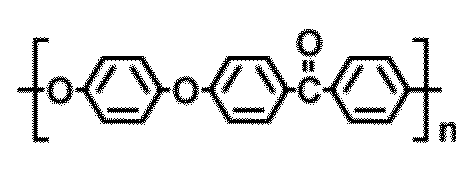
で表される樹脂である。PEEKの市販品としては、ビクトレックス社製のものなどが挙げられる。
ポリエーテルスルホン(PES)は、構成単位中にスルホニル基を有し、下記式:
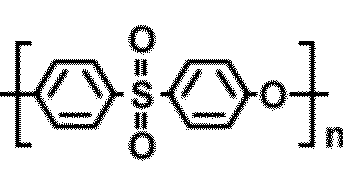
で表される樹脂である。PESの市販品としては、ソルベイアドバンストポリマー社製のユーデル(登録商標)シリーズ P-1700、ソルベイアドバンストポリマー社製のレーデルAシリーズ(RADEL(登録商標)Aシリーズ)、BASF社製のウルトラゾーン(登録商標) Eシリーズ(Ultrason E-1010など)、住友化学社製のスミカエクセルシリーズ(スミカエクセル5003P、スミカエクセル4100Pなど)などが挙げられる。
ポリフェニルスルホン(PPSU)は、構成単位中にスルホニル基を有し、下記式:
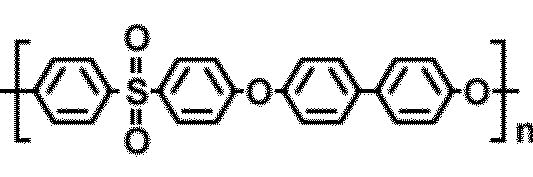
で表される樹脂である。PPSUの市販品としては、ソルベイアドバンストポリマー社製のレーデルRシリーズ(RADEL(登録商標)Rシリーズ)、BASF社製のウルトラゾーン(登録商標) P-3010(Ultrason P-3010)等が挙げられる。
ポリカーボネートは、カーボネート基を有し、下記式:
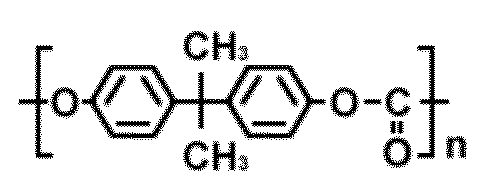
で表される樹脂である。ポリカーボネートの市販品としては、帝人化成(株)製のパンライト(登録商標)、三菱エンジニアリングプラスチック(株)製のユーピロン(登録商標)、住友ダウ(株)製のSDポリカ(登録商標)、ダウケミカル(株)製のカリバー(登録商標)等が挙げられる。
ポリフェニレンエーテル(PPE)は、下記式:
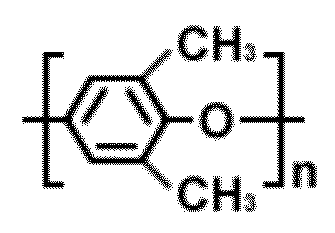
で表される樹脂である。PPEは他の樹脂とポリマーアロイを形成(変性PPE)することができ、本発明においてはポリスチレンとのポリマーアロイであるm-PPE等を用いることもできる。PPEの市販品としては、GE社製のノリル N1250等のノリル(登録商標、変性PPE)シリーズ、旭化成社製のザイロン(登録商標、変性PPE) X 9102等が挙げられる。
これらは、いずれもエンジニアリングプラスチックに分類される樹脂である。
[樹脂分散体の作製]
次に、本発明の樹脂分散体について詳細に説明する。本発明における樹脂分散体とは、上記樹脂(X)を溶解させた樹脂溶液と、カチオン性基含有有機高分子化合物の水溶液とを混合して樹脂(X)の微粒子を形成させる工程(A)(晶析工程)と、塩基によりカチオン性基含有有機高分子化合物を樹脂(X)微粒子の表面に析出させ被覆させる工程(B)(塩基析工程)と、カチオン性基含有有機高分子化合物被覆された樹脂(X)粒子をろ別し、水洗して含水カチオン性基含有有機高分子化合物被覆樹脂(X)粒子ウェットケーキを得る工程(C)(ウェットケーキ作製工程)と、得られたウェットケーキを塩基により中和して再分散、調整(工程(D):分散体作製工程)して得られる樹脂(X)分散体のことである。
次に、本発明の樹脂分散体について詳細に説明する。本発明における樹脂分散体とは、上記樹脂(X)を溶解させた樹脂溶液と、カチオン性基含有有機高分子化合物の水溶液とを混合して樹脂(X)の微粒子を形成させる工程(A)(晶析工程)と、塩基によりカチオン性基含有有機高分子化合物を樹脂(X)微粒子の表面に析出させ被覆させる工程(B)(塩基析工程)と、カチオン性基含有有機高分子化合物被覆された樹脂(X)粒子をろ別し、水洗して含水カチオン性基含有有機高分子化合物被覆樹脂(X)粒子ウェットケーキを得る工程(C)(ウェットケーキ作製工程)と、得られたウェットケーキを塩基により中和して再分散、調整(工程(D):分散体作製工程)して得られる樹脂(X)分散体のことである。
樹脂(X)は、溶媒に溶解させたものを用いる。ここで後述する無機塩を加える場合もあるが、特に加えなくても良い。本発明に用いることのできる樹脂(X)の形態は特に問わないが、具体的に例示するならば粉体、顆粒、ペレット、繊維、フィルム、成形品等が挙げられる。操作性及び溶解に要する時間を短縮させる観点から、粉末、顆粒、ペレットが望ましい。これらの中でも特に粉体の樹脂(X)が好ましく用いられる。通常、樹脂(X)、溶媒を容器中に投入した後、溶解を行うが、容器へ投入する順序は問わない。
容器は、高温下で使用する場合には、耐圧製容器を用いる方が好ましい。容器中の雰囲気は、空気雰囲気下、不活性ガス雰囲気下のいずれでも良いが、樹脂(X)と反応したり、樹脂(X)自身を劣化させるような雰囲気を避けるべきであるため、不活性ガス雰囲気下が好ましい。
ここでいう、不活性ガスとは、窒素ガス、二酸化炭素、ヘリウムガス、アルゴンガス、ネオンガス、クリプトンガス、キセノンガスなどが挙げられ、経済性、入手容易性を勘案して、窒素ガス、アルゴンガス、二酸化炭素ガスが望ましく、より好ましくは窒素ガス或いはアルゴンガスが用いられる。
ここでいう、不活性ガスとは、窒素ガス、二酸化炭素、ヘリウムガス、アルゴンガス、ネオンガス、クリプトンガス、キセノンガスなどが挙げられ、経済性、入手容易性を勘案して、窒素ガス、アルゴンガス、二酸化炭素ガスが望ましく、より好ましくは窒素ガス或いはアルゴンガスが用いられる。
無機塩として、特に制限はないが、通常、アルカリ金属、アルカリ土類金属、アンモニアなどの塩化物、臭化物、炭酸塩、硫酸塩等が用いられる。具体的には、塩化ナトリウム、塩化リチウム、塩化カリウム、塩化カルシウム、塩化マグネシウム、塩化アンモニウム等の塩化塩、臭化ナトリウム、臭化リチウム、臭化カリウム、臭化カルシウム、臭化マグネシウム、臭化アンモニウム等の臭化物、炭酸ナトリウム、炭酸カリウム、炭酸リチウム、炭酸カルシウム、炭酸マグネシウム、炭酸アンモニウム等の炭酸塩、硫酸カルシウム、硫酸ナトリウム、硫酸カリウム、硫酸リチウム、硫酸マグネシウム、硫酸アンモニウム等の硫酸塩等が用いられるが、塩化ナトリウム、塩化リチウム、塩化カリウム、塩化カルシウム、塩化マグネシウム、塩化アンモニウム等の塩化物が好ましい。これらは一種または二種以上で用いることができる。
無機塩を加える場合の樹脂(X)に対する無機塩の重量比率は、樹脂(X) 1質量部に対して0.1~10質量部の範囲、好ましくは、0.5~5質量部の範囲である。
無機塩を加える場合の樹脂(X)に対する無機塩の重量比率は、樹脂(X) 1質量部に対して0.1~10質量部の範囲、好ましくは、0.5~5質量部の範囲である。
本発明で用いられる溶媒としては、樹脂(X)を溶解するものであれば特に制限はなく本発明の分散体を得ることができる。例えば、クロロホルム、ブロモホルム、塩化メチレン、1,2-ジクロロエタン、1,1,1-トリクロロエタン、クロロベンゼン、o-ジクロロベンゼン、p-ジクロロベンゼン、2,6-ジクロロトルエン、1-クロロナフタレン、ヘキサフルオロイソプロパノール等のハロゲン系溶媒、N-メチル-2-ピロリジノン、N-エチル-2-ピロリジノン等のN-アルキルピロリジノン系溶媒、N-メチル-ε-カプロラクタム、N-エチル-ε-カプロラクタム等のN-アルキルカプロラクタム系溶媒、1,3-ジメチル-2-イミダゾリジノン、N、N-ジメチルアセトアミド、N,N-ジメチルホルムアミド、ヘキサメチルリン酸トリアミド、ジメチルスルホキシド、ジメチルスルホン、テトラメチレンスルホン等の極性溶媒の中から選ばれる少なくとも一種の溶媒が挙げられる。好ましくは、N-メチル-2-ピロリドン、1-クロロナフタレン、o-ジクロロベンゼン、1,3-ジメチル-2-イミダゾリジノンの中から選ばれる少なくとも一種の溶媒である。これらの中でも特に、作業性、水溶性を考慮するとN-メチル-2-ピロリドン、1-クロロナフタレン、1,3-ジメチル-2-イミダゾリジノンが好ましく用いられる。
溶媒に対する樹脂(X)の重量比率は、溶媒に樹脂(X)が溶解する限り特に制限はないが、溶媒100質量部に対して0.1~20質量部の範囲を例示することができ、好ましくは、0.1~10質量部であり、より好ましくは、0.1~5質量部である。ここで、樹脂(X)をより良く溶解させるために、混合した反応液を昇温させて行うこともできる。
また、反応液を攪拌してもしなくても良いが、好ましくは攪拌したほうが良く、これにより溶解に要する時間を短くすることができる。
次に上記で得られた樹脂(X)溶解液を基に、本発明である樹脂(X)分散体及びそれから得られる粉体粒子の製造方法を、製造工程順に詳細に説明する。
[晶析工程](工程A)
まず、予めカチオン性基含有有機高分子化合物水溶液を調整する。
まず、予めカチオン性基含有有機高分子化合物水溶液を調整する。
また、前記カチオン性基含有有機高分子化合物の主骨格は、(メタ)アクリル酸エステル樹脂、(メタ)アクリル酸エステル-スチレン樹脂、(メタ)アクリル酸エステル-エポキシ樹脂、ビニル樹脂、ウレタン樹脂、ポリアミドイミド樹脂である。また、本発明で使用されるアカチオン性基含有有機高分子化合物は、単体でも上記カチオン性基含有有機高分子化合物を1種類以上混合してもよく、酸性の状態で溶解すれば、本発明の樹脂(X)分散体、樹脂(X)粉体粒子に使用することができる。
カチオン性基含有有機高分子化合物は、酸性水溶液中で完全に溶解させる。ここで使用する酸としては、塩酸、硫酸、硝酸、リン酸等の無機の酸性物質、メタンスルホン酸、エタンスルホン酸、p-トルエンスルホン酸等のスルホン酸類、酢酸、ギ酸、シュウ酸、アクリル酸、メタクリル酸、アスコルビン酸、メルドラム酸等のカルボン酸類等の有機の酸性物質が好ましい。これらは一種または二種以上で用いることができる。また、カチオン性基含有有機高分子化合物を溶解するための酸量としては、樹脂を完全に溶解させるために、カチオン性基含有有機高分子化合物のアミン価に対して、70~300%がより好ましい。
また、カチオン性基含有有機高分子化合物のアミン価が40~300mgKOH/gのものを使用することが好ましい。
このようなカチオン性基含有有機高分子化合物は後述の製造例に記載の方法等で合成して用いても良いし、市販品を用いても良い。市販品の具体例としては、アクリディックWPL-430(DIC株式会社製)等が挙げられる。
また、カチオン性基含有有機高分子化合物のアミン価が40~300mgKOH/gのものを使用することが好ましい。
このようなカチオン性基含有有機高分子化合物は後述の製造例に記載の方法等で合成して用いても良いし、市販品を用いても良い。市販品の具体例としては、アクリディックWPL-430(DIC株式会社製)等が挙げられる。
さらに、本発明では、カチオン性基含有有機高分子化合物により、樹脂(X)の粒子の一部または表面全体を被覆しても、分散安定性に効果が得られる。そのため、樹脂(X)100質量部に対して、1質量部~200質量部を使用することが好ましい。中でも5質量部~150質量部になるように使用するのが、最も分散安定性が高くなるため好ましい。
次に、調整したカチオン性基含有有機高分子化合物水溶液に上記で調整した樹脂(X)溶解液を注ぐことで、樹脂(X)分散液(晶析液)を得ることができる。この時点では本発明の目的物である「カチオン性基含有有機高分子化合物により被覆された樹脂(X)粒子の分散体」とは異なるものである。この晶析工程にける樹脂(X)の粒子状態については後述の通りである。
調整したカチオン性基含有有機高分子化合物水溶液は、撹拌羽根等の撹拌機で高速撹拌された水流を作製することが好ましい。乱流、層流いずれでも構わないが、周速は速い方が晶析した粒子サイズを細かく出来るため好ましい。
樹脂(X)の溶解液の注水速度は、遅いほど細かい粒子を形成し得る上で好適である。注水方法としては、調整したカチオン性基含有有機高分子化合物溶液を強撹拌した溶液に、直接注水する方法がある。ここで、カチオン性基含有有機高分子化合物溶液の撹拌は、微細な樹脂粒子を形成するために、強撹拌が好ましい。
また、樹脂(X)の溶解液を注ぎ終えた後に得られた樹脂(X)分散液(晶析液)に対して機械的粉砕を行うことにより分散させる工程[分散工程]を経ることもできる。これにより、より良好な分散安定性を保持することができる。ここで、機械的粉砕としては、後述する機械的粉砕装置の項目で述べた装置を用いる方法などが挙げられる。
また、樹脂(X)の溶解液を注ぎ終えた後に得られた樹脂(X)分散液(晶析液)に対して機械的粉砕を行うことにより分散させる工程[分散工程]を経ることもできる。これにより、より良好な分散安定性を保持することができる。ここで、機械的粉砕としては、後述する機械的粉砕装置の項目で述べた装置を用いる方法などが挙げられる。
この晶析工程にける樹脂(X)の粒子状態は、カチオン性基含有有機高分子化合物が樹脂(X)粒子の表層に存在しており、まだ強固に固着している状態ではないと思われる。カチオン性基含有有機高分子化合物末端の塩基性基が酸性物質とのイオン結合状態であるため、柔軟に樹脂(X)粒子の表層上に存在していると推測されるためである。後工程の塩基析工程で塩基により、カチオン性基含有有機高分子化合物の官能基の塩交換反応がおき、樹脂(X)表面に固着されるものである。
[塩基析工程](工程B)
上記工程で得られた水溶性樹脂が表層に存在する樹脂(X)粒子を、塩基によって塩基析出させ、カチオン性基含有有機高分子化合物により被覆された樹脂(X)粒子を沈殿させたスラリーを作製する工程である。
本工程は、無機塩を加えて行うこともできる。無機塩を用いる場合には、その種類に特に制限はないが、通常、アルカリ金属、アルカリ土類金属、アンモニアなどの塩化物、臭化物、炭酸塩、硫酸塩等が用いられる。具体的には、塩化ナトリウム、塩化リチウム、塩化カリウム、塩化カルシウム、塩化マグネシウム、塩化アンモニウム等の塩化塩、臭化ナトリウム、臭化リチウム、臭化カリウム、臭化カルシウム、臭化マグネシウム、臭化アンモニウム等の臭化物、炭酸ナトリウム、炭酸カリウム、炭酸リチウム、炭酸カルシウム、炭酸マグネシウム、炭酸アンモニウム等の炭酸塩、硫酸カルシウム、硫酸ナトリウム、硫酸カリウム、硫酸リチウム、硫酸マグネシウム、硫酸アンモニウム等の硫酸塩等が用いられるが、塩化ナトリウム、塩化リチウム、塩化カリウム、塩化カルシウム、塩化マグネシウム、塩化アンモニウム等の塩化物が好ましい。これらは一種または二種以上で用いることができる。無機塩を用いる場合の樹脂(X)に対する無機塩の重量比率は、例えば、樹脂(X)1質量部に対して1~5質量部の範囲で用いることができる。
上記工程で得られた水溶性樹脂が表層に存在する樹脂(X)粒子を、塩基によって塩基析出させ、カチオン性基含有有機高分子化合物により被覆された樹脂(X)粒子を沈殿させたスラリーを作製する工程である。
本工程は、無機塩を加えて行うこともできる。無機塩を用いる場合には、その種類に特に制限はないが、通常、アルカリ金属、アルカリ土類金属、アンモニアなどの塩化物、臭化物、炭酸塩、硫酸塩等が用いられる。具体的には、塩化ナトリウム、塩化リチウム、塩化カリウム、塩化カルシウム、塩化マグネシウム、塩化アンモニウム等の塩化塩、臭化ナトリウム、臭化リチウム、臭化カリウム、臭化カルシウム、臭化マグネシウム、臭化アンモニウム等の臭化物、炭酸ナトリウム、炭酸カリウム、炭酸リチウム、炭酸カルシウム、炭酸マグネシウム、炭酸アンモニウム等の炭酸塩、硫酸カルシウム、硫酸ナトリウム、硫酸カリウム、硫酸リチウム、硫酸マグネシウム、硫酸アンモニウム等の硫酸塩等が用いられるが、塩化ナトリウム、塩化リチウム、塩化カリウム、塩化カルシウム、塩化マグネシウム、塩化アンモニウム等の塩化物が好ましい。これらは一種または二種以上で用いることができる。無機塩を用いる場合の樹脂(X)に対する無機塩の重量比率は、例えば、樹脂(X)1質量部に対して1~5質量部の範囲で用いることができる。
塩基析出に使用される塩基としては、水酸化カリウム、水酸化ナトリウム、水酸化リチウム等が挙げられ、中でも水酸化カリウムが好ましい。
塩基濃度は、各種カチオン性基含有有機高分子化合物、各種樹脂(X)にもよるが、カチオン性基含有有機高分子化合物の末端置換基数による設定が必要で、塩基により系内のpHを11~13に調整する。
[ウェットケーキ作製工程](工程C)
上記塩基析工程で得られたカチオン性基含有高分子化合物により被覆された樹脂(X)粒子を沈殿させたスラリーから、カチオン性基含有高分子化合物により被覆された樹脂(X)粒子をろ別し、ウェットケーキにする工程である。ろ別する方法としては、ろ過や遠心分離等、粒子と液体が分離可能であれば如何なる方法でも構わない。ろ別されたウェットケーキ中の水分量は、15~55%の範囲が好ましく、水分量が低すぎると後工程での再分散でほぐれにくくなり、再分散性が悪くなるため、好ましい水分量は、20~45%である。ウェットケーキは、残存する有機溶媒や、未析出の樹脂を洗浄するため、イオン交換水、蒸留水、純水、水道水等で洗浄を行う。洗浄方法は、ウェットケーキ上から、洗浄溶媒をかけてろ過洗浄してもよいし、ウェットケーキを洗浄溶媒に再解膠して洗浄してもよい。
上記塩基析工程で得られたカチオン性基含有高分子化合物により被覆された樹脂(X)粒子を沈殿させたスラリーから、カチオン性基含有高分子化合物により被覆された樹脂(X)粒子をろ別し、ウェットケーキにする工程である。ろ別する方法としては、ろ過や遠心分離等、粒子と液体が分離可能であれば如何なる方法でも構わない。ろ別されたウェットケーキ中の水分量は、15~55%の範囲が好ましく、水分量が低すぎると後工程での再分散でほぐれにくくなり、再分散性が悪くなるため、好ましい水分量は、20~45%である。ウェットケーキは、残存する有機溶媒や、未析出の樹脂を洗浄するため、イオン交換水、蒸留水、純水、水道水等で洗浄を行う。洗浄方法は、ウェットケーキ上から、洗浄溶媒をかけてろ過洗浄してもよいし、ウェットケーキを洗浄溶媒に再解膠して洗浄してもよい。
[分散体作製工程](工程D)
上記ウェットケーキ作製工程で得られたウェットケーキを水にビーズミルや超音波分散機等で、再解膠し、前述した、無機の酸性物質、有機の酸性物質等でpHを3~6に調整して、樹脂(X)分散体を得ることができる。得られる分散体中の不揮発分は、15~40%である。
上記ウェットケーキ作製工程で得られたウェットケーキを水にビーズミルや超音波分散機等で、再解膠し、前述した、無機の酸性物質、有機の酸性物質等でpHを3~6に調整して、樹脂(X)分散体を得ることができる。得られる分散体中の不揮発分は、15~40%である。
[樹脂(X)粉体粒子の作製](工程E1及び工程E2)
さらに、本発明における樹脂(X)粉体粒子とは、上記工程Cで得られたウェットケーキあるいは、工程Dで得られた樹脂(X)分散体から水分を除去し、その後乾燥して得られるカチオン性基含有有機高分子化合物で被覆された樹脂(X)粉体粒子のことである。乾燥した後、各種粉砕装置で粉砕して、所望の粒子サイズに調整して使用することが可能である。
さらに、本発明における樹脂(X)粉体粒子とは、上記工程Cで得られたウェットケーキあるいは、工程Dで得られた樹脂(X)分散体から水分を除去し、その後乾燥して得られるカチオン性基含有有機高分子化合物で被覆された樹脂(X)粉体粒子のことである。乾燥した後、各種粉砕装置で粉砕して、所望の粒子サイズに調整して使用することが可能である。
後述の測定方法における分散粒径が1μm未満になるまで上記樹脂(X)粗粒子を分散させた樹脂(X)粗粒子懸濁液の機械的粉砕を行う。好ましくは分散粒径が500nm未満となるまで機械的粉砕を行う。
[機械的粉砕装置]
機械的粉砕装置として、市販の機械的粉砕装置を挙げることができる。特に樹脂(X)粗粒子を効率よく分散、粉砕し、粒径の小さな樹脂(X)微粒子の分散液を作製するために好適な機械的粉砕装置として、ボールミル装置、ビーズミル装置、サンドミル装置、コロイドミル装置、ディスパー分散攪拌装置、湿式微粒化装置(例えば、スギノマシン製のアルティマイザー、Hielscher社製の超音波分散機等)が挙げられるが、なかでもボールミル装置、ビーズミル装置、サンドミル装置、湿式微粒化装置、から選択される装置が好ましい。機械的粉砕の際の粉砕の力は一般に大きくなるほど、また粉砕時間が長くなるほど得られる微粒子の分散粒径は、小さくなる方向にあるが、これらが過度になると凝集が生じやすくなるので、適切な範囲に制御される。例えばビーズミルではビーズ径やビーズ量の選択、周速の調整で、その制御が可能である。
[機械的粉砕装置]
機械的粉砕装置として、市販の機械的粉砕装置を挙げることができる。特に樹脂(X)粗粒子を効率よく分散、粉砕し、粒径の小さな樹脂(X)微粒子の分散液を作製するために好適な機械的粉砕装置として、ボールミル装置、ビーズミル装置、サンドミル装置、コロイドミル装置、ディスパー分散攪拌装置、湿式微粒化装置(例えば、スギノマシン製のアルティマイザー、Hielscher社製の超音波分散機等)が挙げられるが、なかでもボールミル装置、ビーズミル装置、サンドミル装置、湿式微粒化装置、から選択される装置が好ましい。機械的粉砕の際の粉砕の力は一般に大きくなるほど、また粉砕時間が長くなるほど得られる微粒子の分散粒径は、小さくなる方向にあるが、これらが過度になると凝集が生じやすくなるので、適切な範囲に制御される。例えばビーズミルではビーズ径やビーズ量の選択、周速の調整で、その制御が可能である。
樹脂(X)微粒子分散液においても、場合によっては沈殿物を含む場合もある。その際には、沈殿部と分散部を分離して利用してもよい。分散液のみを得る場合には、沈殿部と分散部の分離を行えばよく、そのためには、デカンテーション、ろ過などを行えば良い。また、より粒径の細かい粒子まで必要な場合には、遠心分離などを行い、粒径の大きなものを完全に沈降させ、デカンテーションやろ過を行い、沈殿部分を除去すればよい。
本発明で得られた樹脂(X)微粒子分散液は、通常24時間静置しても微粒子とカチオン性基含有有機高分子化合物水溶液とが分離しない。
このようにして得られた樹脂(X)微粒子分散液は、その特性から塗料、接着、ポリマーコンパウンド分野における有用な添加剤となる。
以下、実施例を挙げることにより、本発明をより詳細に説明する。しかし、本発明はこれらに限定されるものではない。
後記する実施例、比較実施例で得た樹脂分散体の分散粒径及び沈降性の測定方法を記載する。
[分散粒径の測定]
得られた樹脂分散液を、「MT-3300EXII」(日機装社製のレーザードップラー式粒度分布計)を用いて測定したD50粒径を分散粒径とした。
得られた樹脂分散液を、「MT-3300EXII」(日機装社製のレーザードップラー式粒度分布計)を用いて測定したD50粒径を分散粒径とした。
[目視による沈降の確認]
得られた樹脂分散体を24時間静置させた際の上澄みを確認した。上澄みが透明である場合は「沈降あり」、上澄みが確認されない場合は「沈降なし」と判断した。
得られた樹脂分散体を24時間静置させた際の上澄みを確認した。上澄みが透明である場合は「沈降あり」、上澄みが確認されない場合は「沈降なし」と判断した。
[カチオン性基含有有機高分子化合物の製造]
本明細書で用いられるカチオン性基含有有機高分子化合物の製造方法の一例を以下に記載するが、これら以外のカチオン性基含有有機高分子化合物についても同様の方法で製造することができる。
本明細書で用いられるカチオン性基含有有機高分子化合物の製造方法の一例を以下に記載するが、これら以外のカチオン性基含有有機高分子化合物についても同様の方法で製造することができる。
(製造例1)カチオン性基含有有機高分子化合物(KR-1)の製造
攪拌装置、モノマー専用滴下装置、開始剤専用滴下装置、温度センサー、および上部に窒素導入装置を有する還流装置を取り付けた反応容器を有する自動重合反応装置(重合試験機DSL-2AS型、轟産業(株)製)の反応容器にプロピレングリコールモノメチルエーテルアセテート(PGMAc)240部とイソブチルアルコール(iBuOH)240部を仕込み、攪拌しながら反応容器内を窒素置換した。反応容器内を窒素雰囲気に保ちながら80℃に昇温させた後、モノマー専用滴下装置より、スチレン240部、メタクリル酸メチル198.3部、メタクリル酸ジメチルアミノエチル360部、アクリル酸ブチル0.8部、アクリル酸イソブチル0.8部、メタクリル酸0.08部の混合液、および開始剤専用滴下装置より、「ABN-E(登録商標)」(有効成分2,2'-アゾビス(2-メチルブチロニトリル、(株)日本ファインケム製)40.0部とPGMAc312部の混合液を5時間かけて滴下した。滴下終了2時間後に「パーブチルO(登録商標)」(有効成分ペルオキシ2-エチルヘキサン酸t-ブチル、日油(株)製)1.6部とPGMAc8.0部の混合液を添加した。その後同温度で4時間反応を継続させた後、不揮発分を50%に調整し、カチオン性基含有有機高分子化合物(KR-1)のPGMAc/iBuOH溶液を得た(固形分アミン価160.8mgKOH/g)。
攪拌装置、モノマー専用滴下装置、開始剤専用滴下装置、温度センサー、および上部に窒素導入装置を有する還流装置を取り付けた反応容器を有する自動重合反応装置(重合試験機DSL-2AS型、轟産業(株)製)の反応容器にプロピレングリコールモノメチルエーテルアセテート(PGMAc)240部とイソブチルアルコール(iBuOH)240部を仕込み、攪拌しながら反応容器内を窒素置換した。反応容器内を窒素雰囲気に保ちながら80℃に昇温させた後、モノマー専用滴下装置より、スチレン240部、メタクリル酸メチル198.3部、メタクリル酸ジメチルアミノエチル360部、アクリル酸ブチル0.8部、アクリル酸イソブチル0.8部、メタクリル酸0.08部の混合液、および開始剤専用滴下装置より、「ABN-E(登録商標)」(有効成分2,2'-アゾビス(2-メチルブチロニトリル、(株)日本ファインケム製)40.0部とPGMAc312部の混合液を5時間かけて滴下した。滴下終了2時間後に「パーブチルO(登録商標)」(有効成分ペルオキシ2-エチルヘキサン酸t-ブチル、日油(株)製)1.6部とPGMAc8.0部の混合液を添加した。その後同温度で4時間反応を継続させた後、不揮発分を50%に調整し、カチオン性基含有有機高分子化合物(KR-1)のPGMAc/iBuOH溶液を得た(固形分アミン価160.8mgKOH/g)。
(実施例1)
・工程(A)[晶析工程]
激しく攪拌させたカチオン性基含有有機高分子化合物水溶液(カチオン性基含有有機高分子化合物(KR-1)1.58gと、2%塩酸 6.67gと、水 2500gを混合したもの)に、PPSU(BASF社製 Ultrason P-3010) 10gをN-メチル-2-ピロリドン 500gに180℃にて溶解させたPPSU溶液を投入し、金属メッシュ(目開き45μm)にて粗大粒子を除去することで、PPSU微粒子を含む分散液(晶析液)を得た。この操作を5回繰り返し行なった。
・工程(A)[晶析工程]
激しく攪拌させたカチオン性基含有有機高分子化合物水溶液(カチオン性基含有有機高分子化合物(KR-1)1.58gと、2%塩酸 6.67gと、水 2500gを混合したもの)に、PPSU(BASF社製 Ultrason P-3010) 10gをN-メチル-2-ピロリドン 500gに180℃にて溶解させたPPSU溶液を投入し、金属メッシュ(目開き45μm)にて粗大粒子を除去することで、PPSU微粒子を含む分散液(晶析液)を得た。この操作を5回繰り返し行なった。
・工程(B)[塩基析工程]
前記工程(A)で得られたPPSU微粒子分散液に5%水酸化カリウムを75.4g添加し、カチオン性基含有有機高分子化合物をPPSU粒子表面に析出させて、塩基析スラリー(PPSU微粒子-カチオン性樹脂粒子)を得た。
前記工程(A)で得られたPPSU微粒子分散液に5%水酸化カリウムを75.4g添加し、カチオン性基含有有機高分子化合物をPPSU粒子表面に析出させて、塩基析スラリー(PPSU微粒子-カチオン性樹脂粒子)を得た。
・工程(C)[ウェットケーキ作製工程]
前記工程(B)で得られた塩基析スラリーより水性媒体を吸引ろ過し、ろ集し、水洗・搾汁することで、不揮発分30%のカチオン性基含有有機高分子化合物被覆PPSUウェットケーキを得た。
前記工程(B)で得られた塩基析スラリーより水性媒体を吸引ろ過し、ろ集し、水洗・搾汁することで、不揮発分30%のカチオン性基含有有機高分子化合物被覆PPSUウェットケーキを得た。
・工程(D)[微粒子分散体作製工程]
前記工程(C)で得られたウェットケーキ110gと10%酢酸4.13gと水40gを混合して得たスラリーを超音波分散機(hielscher製 UP400S)にて60分間超音波照射し、不揮発分31%のPPSU分散体を得た。得られた分散体の分散粒径を、Microtrac-MT3300EX II(日機装株式会社製)で測定したところ、D50=77nmであった。また、一晩静置しても目視での沈殿はみられなかった(固液分離なし)。
前記工程(C)で得られたウェットケーキ110gと10%酢酸4.13gと水40gを混合して得たスラリーを超音波分散機(hielscher製 UP400S)にて60分間超音波照射し、不揮発分31%のPPSU分散体を得た。得られた分散体の分散粒径を、Microtrac-MT3300EX II(日機装株式会社製)で測定したところ、D50=77nmであった。また、一晩静置しても目視での沈殿はみられなかった(固液分離なし)。
(実施例2)
前記実施例1で用いたPPSUに代えて、ポリエーテルスルホン(PES)(BASF社製 Ultrason E-1010)を用いた以外は、実施例1と同様にして(実施例1と同様にカチオン性基含有有機高分子化合物としてはKR-1を使用)、不揮発分31%のPES分散体を得た。得られた分散体の分散粒径を、Microtrac-MT3300EX II(日機装株式会社製)で測定したところ、D50=78nmであった。また、一晩静置しても目視での沈殿はみられなかった(固液分離なし)。
前記実施例1で用いたPPSUに代えて、ポリエーテルスルホン(PES)(BASF社製 Ultrason E-1010)を用いた以外は、実施例1と同様にして(実施例1と同様にカチオン性基含有有機高分子化合物としてはKR-1を使用)、不揮発分31%のPES分散体を得た。得られた分散体の分散粒径を、Microtrac-MT3300EX II(日機装株式会社製)で測定したところ、D50=78nmであった。また、一晩静置しても目視での沈殿はみられなかった(固液分離なし)。
(実施例3)
前記実施例1で用いたPPSUに代えて、ポリスルホン(PSF)(BASF社製 Ultrason S-2010)を用いた以外は、実施例1と同様にして(実施例1と同様にカチオン性基含有有機高分子化合物としてはKR-1を使用)、不揮発分30%のPSF分散体を得た。得られた分散体の分散粒径を、Microtrac-MT3300EX II(日機装株式会社製)で測定したところ、D50=125nmであった。また、一晩静置しても目視での沈殿はみられなかった(固液分離なし)。
前記実施例1で用いたPPSUに代えて、ポリスルホン(PSF)(BASF社製 Ultrason S-2010)を用いた以外は、実施例1と同様にして(実施例1と同様にカチオン性基含有有機高分子化合物としてはKR-1を使用)、不揮発分30%のPSF分散体を得た。得られた分散体の分散粒径を、Microtrac-MT3300EX II(日機装株式会社製)で測定したところ、D50=125nmであった。また、一晩静置しても目視での沈殿はみられなかった(固液分離なし)。
(比較例1)
前記実施例1において、カチオン性基含有有機高分子化合物水溶液の代わりに、2%塩酸 6.67gと、水 2500gとを混合した水溶液を用いたこと以外は、実施例1と同様の操作を実施したが、塩基析出せず、カチオン性基含有有機高分子化合物被覆PPSUウェットケーキを作製することができなかった。(PPSU分散体作製不可能)
前記実施例1において、カチオン性基含有有機高分子化合物水溶液の代わりに、2%塩酸 6.67gと、水 2500gとを混合した水溶液を用いたこと以外は、実施例1と同様の操作を実施したが、塩基析出せず、カチオン性基含有有機高分子化合物被覆PPSUウェットケーキを作製することができなかった。(PPSU分散体作製不可能)
(比較例2)
前記実施例1において、カチオン性基含有有機高分子化合物(KR-1) 1.58gの代わりに、アセチレングリコール系非イオン性界面活性剤であるサーフィノール465(エアープロダクツアンドケミカルズ社製)を1.0g使用した以外は、実施例1と同様の操作を実施したが、塩基析出せず、カチオン性基含有有機高分子化合物被覆PPSUウェットケーキを作製することができなかった。(PPSU分散体作製不可能)
前記実施例1において、カチオン性基含有有機高分子化合物(KR-1) 1.58gの代わりに、アセチレングリコール系非イオン性界面活性剤であるサーフィノール465(エアープロダクツアンドケミカルズ社製)を1.0g使用した以外は、実施例1と同様の操作を実施したが、塩基析出せず、カチオン性基含有有機高分子化合物被覆PPSUウェットケーキを作製することができなかった。(PPSU分散体作製不可能)
(比較例3)
前記実施例2において、カチオン性基含有有機高分子化合物水溶液の代わりに、2%塩酸 6.67gと、水 2500gとを混合した水溶液を用いたこと以外は、実施例2と同様の操作を実施したが、塩基析出せず、カチオン性基含有有機高分子化合物被覆PPSUウェットケーキを作製することができなかった。(PES分散体作製不可能)
前記実施例2において、カチオン性基含有有機高分子化合物水溶液の代わりに、2%塩酸 6.67gと、水 2500gとを混合した水溶液を用いたこと以外は、実施例2と同様の操作を実施したが、塩基析出せず、カチオン性基含有有機高分子化合物被覆PPSUウェットケーキを作製することができなかった。(PES分散体作製不可能)
(比較例4)
前記実施例2において、カチオン性基含有有機高分子化合物(KR-1) 1.58gの代わりに、アセチレングリコール系非イオン性界面活性剤であるサーフィノール465(エアープロダクツアンドケミカルズ社製)を1.0g使用した以外は、実施例2と同様の操作を実施したが、塩基析出せず、カチオン性基含有有機高分子化合物被覆PPSUウェットケーキを作製することができなかった。(PES分散体作製不可能)
前記実施例2において、カチオン性基含有有機高分子化合物(KR-1) 1.58gの代わりに、アセチレングリコール系非イオン性界面活性剤であるサーフィノール465(エアープロダクツアンドケミカルズ社製)を1.0g使用した以外は、実施例2と同様の操作を実施したが、塩基析出せず、カチオン性基含有有機高分子化合物被覆PPSUウェットケーキを作製することができなかった。(PES分散体作製不可能)
[電着塗装評価]
本発明で得られる分散体は多くの用途展開が考えられる。以下では、その一例として、コーティング分野への展開ついて記載する。コーティング分野における一例として、電着塗装評価を行った。カチオン電着は、被塗物の溶出がないことから、腐食性に優れるコーティング方法の一種である。本発明の樹脂分散体を電着液として使用する場合、適宜、イオン交換水等で不揮発分を調整したり、必要に応じ各種添加剤を加えて使用したりすることができる。
実施例1~3で得た樹脂微粒子分散体をイオン交換水で不揮発分10%に調製した電着液をそれぞれ作製した。作製した電着液に陽極、陰極ともにアルミ板を浸して直流電源装置 PB80-1B(TEXIO社製)にて100Vで通電した結果、電着塗装が可能であることを確認した。
本発明で得られる分散体は多くの用途展開が考えられる。以下では、その一例として、コーティング分野への展開ついて記載する。コーティング分野における一例として、電着塗装評価を行った。カチオン電着は、被塗物の溶出がないことから、腐食性に優れるコーティング方法の一種である。本発明の樹脂分散体を電着液として使用する場合、適宜、イオン交換水等で不揮発分を調整したり、必要に応じ各種添加剤を加えて使用したりすることができる。
実施例1~3で得た樹脂微粒子分散体をイオン交換水で不揮発分10%に調製した電着液をそれぞれ作製した。作製した電着液に陽極、陰極ともにアルミ板を浸して直流電源装置 PB80-1B(TEXIO社製)にて100Vで通電した結果、電着塗装が可能であることを確認した。
本発明のカチオン性基含有有機高分子化合物で被覆された樹脂粉体粒子及び該粒子からなる分散体は、長期に分散安定性に優れることから、塗料用途などにおいて好適に利用可能である。
Claims (12)
- ガラス転移温度が100℃以上であることを特徴とする樹脂からなる群より選ばれる少なくとも一種の樹脂粒子と、カチオン性基含有有機高分子化合物と、塩基と、水性媒体とを含んでなる樹脂分散体において、前記樹脂粒子がカチオン性基含有有機高分子化合物により被覆されていることを特徴とする樹脂分散体。
- 前記カチオン性基含有有機高分子化合物の主骨格が、(メタ)アクリル酸エステル樹脂、(メタ)アクリル酸エステル-スチレン樹脂、(メタ)アクリル酸エステル-エポキシ樹脂、ビニル樹脂、ウレタン樹脂及びポリアミドイミド樹脂からなる群より選ばれる少なくとも一種の有機高分子化合物であることを特徴とする請求項1に記載の分散体。
- 前記カチオン性基含有有機高分子化合物のアミン価が40~300mgKOH/gであることを特徴とする請求項1又は2に記載の分散体。
- 前記カチオン性基含有有機高分子化合物において、カチオン性基の中和に用いられる酸が無機酸、スルホン酸、カルボン酸及びビニル性カルボン酸からなる群より選ばれる少なくとも一種の酸であることを特徴とする請求項1に記載の分散体。
- 前記分散体中の樹脂粒子の分散粒径が1μm未満であることを特徴とする請求項1~4いずれか一項に記載の分散体。
- ガラス転移温度が100℃以上である樹脂の微粒子であって、該微粒子がカチオン性基含有有機高分子化合物で被覆されていることを特徴とする微粒子。
- ガラス転移温度が100℃以上であることを特徴とする樹脂からなる群より選ばれる少なくとも一種の樹脂溶液とカチオン性基含有有機高分子化合物水溶液とを混合し、樹脂微粒子を形成させる工程(A)と、
工程(A)で得られた樹脂微粒子と塩基とを反応させて樹脂微粒子表面にカチオン性基含有有機高分子化合物を析出させてカチオン性基含有有機高分子により被覆された樹脂粒子を沈殿させる工程(B)と、
工程(B)で得られたカチオン性基含有有機高分子により被覆された樹脂粒子をろ別、洗浄し、含水カチオン性基含有有機高分子により被覆された樹脂粒子ウェットケーキを得る工程(C)と、
工程(C)で得られた含水カチオン性基含有有機高分子により被覆された樹脂粒子ウェットケーキと酸とを反応させてカチオン性基含有有機高分子化合物により被覆された樹脂粒子からなる分散体を得る工程(D)と、を含む樹脂分散体の製造方法。 - ガラス転移温度が100℃以上であることを特徴とする樹脂からなる群より選ばれる少なくとも一種の樹脂溶液とカチオン性基含有有機高分子化合物水溶液とを混合し、樹脂微粒子を形成させる工程(A)と、
工程(A)で得られた樹脂微粒子と塩基とを反応させて樹脂微粒子表面にカチオン性基含有有機高分子化合物を析出させてカチオン性基含有有機高分子により被覆された樹脂粒子を沈殿させる工程(B)と、
工程(B)で得られたカチオン性基含有有機高分子により被覆された樹脂粒子をろ別、洗浄し、含水カチオン性基含有有機高分子により被覆された樹脂粒子ウェットケーキを得る工程(C)と、
工程(C)で得られた含水カチオン性基含有有機高分子により被覆された樹脂粒子ウェットケーキを乾燥してカチオン性基含有有機高分子により被覆された樹脂粉体粒子を得る工程(E1)と、を含む樹脂粉体粒子の製造方法。 - ガラス転移温度が100℃以上であることを特徴とする樹脂からなる群より選ばれる少なくとも一種の樹脂溶液とカチオン性基含有有機高分子化合物水溶液とを混合し、樹脂微粒子を形成させる工程(A)と、
工程(A)で得られた樹脂微粒子と塩基とを反応させて樹脂微粒子表面にカチオン性基含有有機高分子化合物を析出させてカチオン性基含有有機高分子により被覆された樹脂粒子を沈殿させる工程(B)と、
工程(B)で得られたカチオン性基含有有機高分子により被覆された樹脂粒子をろ別、洗浄し、含水カチオン性基含有有機高分子により被覆された樹脂粒子ウェットケーキを得る工程(C)と、
工程(C)で得られた含水カチオン性基含有有機高分子により被覆された樹脂粒子ウェットケーキと塩基とを反応させてカチオン性基含有有機高分子化合物により被覆された樹脂粒子からなる分散体を得る工程(D)と、
工程(D)で得られたカチオン性基含有有機高分子化合物により被覆された樹脂粒子からなる分散体を乾燥してカチオン性基含有有機高分子により被覆された樹脂粉体粒子を得る工程(E2)と、を含む樹脂粉体粒子の製造方法。 - 前記工程(A)の後に、工程(A)で得られた樹脂微粒子の分散液に対し、機械的粉砕を行うことを特徴とする請求項7に記載の樹脂分散体の製造方法。
- 前記工程(A)の後に、工程(A)で得られた樹脂微粒子の分散液に対し、機械的粉砕を行うことを特徴とする請求項8又は9に記載の樹脂粉体粒子の製造方法。
- 請求項1~5いずれか一項に記載の分散体を用いてなる塗料。
Priority Applications (1)
| Application Number | Priority Date | Filing Date | Title |
|---|---|---|---|
| JP2017519083A JPWO2016185857A1 (ja) | 2015-05-15 | 2016-04-19 | 樹脂分散体、微粒子、及びそれらの製造方法 |
Applications Claiming Priority (6)
| Application Number | Priority Date | Filing Date | Title |
|---|---|---|---|
| JP2015100054 | 2015-05-15 | ||
| JP2015100053 | 2015-05-15 | ||
| JP2015-100053 | 2015-05-15 | ||
| JP2015-100054 | 2015-05-15 | ||
| JP2015227755 | 2015-11-20 | ||
| JP2015-227755 | 2015-11-20 |
Publications (1)
| Publication Number | Publication Date |
|---|---|
| WO2016185857A1 true WO2016185857A1 (ja) | 2016-11-24 |
Family
ID=57320272
Family Applications (1)
| Application Number | Title | Priority Date | Filing Date |
|---|---|---|---|
| PCT/JP2016/062353 Ceased WO2016185857A1 (ja) | 2015-05-15 | 2016-04-19 | 樹脂分散体、微粒子、及びそれらの製造方法 |
Country Status (2)
| Country | Link |
|---|---|
| JP (1) | JPWO2016185857A1 (ja) |
| WO (1) | WO2016185857A1 (ja) |
Citations (5)
| Publication number | Priority date | Publication date | Assignee | Title |
|---|---|---|---|---|
| JPS6137811A (ja) * | 1984-07-30 | 1986-02-22 | Goou Kagaku Kogyo Kk | 熱硬化性樹脂組成物 |
| JP2004075820A (ja) * | 2002-08-15 | 2004-03-11 | Dainippon Ink & Chem Inc | 水性顔料分散液、その製造方法及び水性記録液 |
| JP2010084137A (ja) * | 2008-09-02 | 2010-04-15 | Nippon Paper Chemicals Co Ltd | ブロック共重合体及びその用途 |
| JP2010209344A (ja) * | 1999-07-23 | 2010-09-24 | Nippon Paper Chemicals Co Ltd | 水性分散液およびその製造方法 |
| WO2015178105A1 (ja) * | 2014-05-22 | 2015-11-26 | Dic株式会社 | ポリアリーレンスルフィド分散体及び粉体粒子、並びにそれらの製造方法 |
Family Cites Families (2)
| Publication number | Priority date | Publication date | Assignee | Title |
|---|---|---|---|---|
| JPH0733448B2 (ja) * | 1988-02-18 | 1995-04-12 | 日立化成工業株式会社 | 発泡性スチレン系樹脂粒子組成物 |
| JP4623972B2 (ja) * | 2003-01-14 | 2011-02-02 | ナトコ株式会社 | 電気泳動性着色粒子および表示素子 |
-
2016
- 2016-04-19 JP JP2017519083A patent/JPWO2016185857A1/ja active Pending
- 2016-04-19 WO PCT/JP2016/062353 patent/WO2016185857A1/ja not_active Ceased
Patent Citations (5)
| Publication number | Priority date | Publication date | Assignee | Title |
|---|---|---|---|---|
| JPS6137811A (ja) * | 1984-07-30 | 1986-02-22 | Goou Kagaku Kogyo Kk | 熱硬化性樹脂組成物 |
| JP2010209344A (ja) * | 1999-07-23 | 2010-09-24 | Nippon Paper Chemicals Co Ltd | 水性分散液およびその製造方法 |
| JP2004075820A (ja) * | 2002-08-15 | 2004-03-11 | Dainippon Ink & Chem Inc | 水性顔料分散液、その製造方法及び水性記録液 |
| JP2010084137A (ja) * | 2008-09-02 | 2010-04-15 | Nippon Paper Chemicals Co Ltd | ブロック共重合体及びその用途 |
| WO2015178105A1 (ja) * | 2014-05-22 | 2015-11-26 | Dic株式会社 | ポリアリーレンスルフィド分散体及び粉体粒子、並びにそれらの製造方法 |
Also Published As
| Publication number | Publication date |
|---|---|
| JPWO2016185857A1 (ja) | 2018-03-08 |
Similar Documents
| Publication | Publication Date | Title |
|---|---|---|
| CN105683260B (zh) | 聚1,1-二氟乙烯树脂粒子及其制造方法 | |
| JP6090639B2 (ja) | ポリアリーレンスルフィド分散体及び粉体粒子、並びにそれらの製造方法 | |
| US8563681B2 (en) | Process for producing fine polyphenylene sulfide resin particles, fine polyphenylene sulfide resin particles, and dispersion thereof | |
| CN103298889B (zh) | 苯胺黑和使用该苯胺黑的树脂组合物以及水系、溶剂系分散体 | |
| TW201031484A (en) | Aqueous dispersions of silver particles | |
| WO2021132095A1 (ja) | 銀ナノワイヤ分散液の製造方法 | |
| JP5369645B2 (ja) | ポリフェニレンサルファイド微粒子、その分散液、およびそれらの製造方法 | |
| JP5156764B2 (ja) | 透明なピグメントバイオレット23の製造方法 | |
| TW201815988A (zh) | 金屬奈米粒子水分散液 | |
| JP5821213B2 (ja) | ポリフェニレンサルファイド樹脂微粒子分散液の製造方法 | |
| CN107001809A (zh) | 复合酞菁微粒及其制造方法 | |
| CN105949991A (zh) | 一种水溶性聚苯胺防静电涂料的制备方法 | |
| JP6274548B2 (ja) | ポリアリーレンスルフィド分散体及び微粒子、並びにそれらの製造方法 | |
| JP5481797B2 (ja) | ポリフェニレンサルファイド微粒子の製造方法 | |
| JPWO2016185857A1 (ja) | 樹脂分散体、微粒子、及びそれらの製造方法 | |
| JP5589373B2 (ja) | ポリフェニレンサルファイド樹脂微粒子分散液、およびその製造方法 | |
| JP5154808B2 (ja) | 有機顔料ナノ粒子分散物およびその製造方法 | |
| WO2016171121A1 (ja) | 樹脂分散体、微粒子、及びそれらの製造方法 | |
| JP2014005409A (ja) | ポリフェニレンサルファイド樹脂微粒子分散液の凝集方法 | |
| JP2017095563A (ja) | ポリアリーレンスルフィドと全芳香族リニアポリマーからなる複合粒子分散体、粉体粒子、及びそれらの製造方法 | |
| JP2000080329A (ja) | ポリエーテルスルホン水性分散液の製造方法 | |
| JP2017095564A (ja) | ポリアリーレンスルフィドと全芳香族リニアポリマーからなる複合粒子分散体、粉体粒子、及びそれらの製造方法 | |
| JP6977712B2 (ja) | ポリアリーレンスルフィド組成物、その製造方法及び塗膜 | |
| JP4233165B2 (ja) | 金属微粒子分散体の製造方法 | |
| JPWO2015111546A1 (ja) | ポリフェニレンスルフィド樹脂微粒子、その製造方法および分散液 |
Legal Events
| Date | Code | Title | Description |
|---|---|---|---|
| 121 | Ep: the epo has been informed by wipo that ep was designated in this application |
Ref document number: 16796251 Country of ref document: EP Kind code of ref document: A1 |
|
| ENP | Entry into the national phase |
Ref document number: 2017519083 Country of ref document: JP Kind code of ref document: A |
|
| NENP | Non-entry into the national phase |
Ref country code: DE |
|
| 122 | Ep: pct application non-entry in european phase |
Ref document number: 16796251 Country of ref document: EP Kind code of ref document: A1 |