WO2016158271A1 - 樹脂組成物及びそれを用いたパターン形成方法、並びに重合体の合成方法 - Google Patents
樹脂組成物及びそれを用いたパターン形成方法、並びに重合体の合成方法 Download PDFInfo
- Publication number
- WO2016158271A1 WO2016158271A1 PCT/JP2016/057426 JP2016057426W WO2016158271A1 WO 2016158271 A1 WO2016158271 A1 WO 2016158271A1 JP 2016057426 W JP2016057426 W JP 2016057426W WO 2016158271 A1 WO2016158271 A1 WO 2016158271A1
- Authority
- WO
- WIPO (PCT)
- Prior art keywords
- group
- formula
- resin composition
- represented
- following formula
- Prior art date
- Legal status (The legal status is an assumption and is not a legal conclusion. Google has not performed a legal analysis and makes no representation as to the accuracy of the status listed.)
- Ceased
Links
Classifications
-
- G—PHYSICS
- G03—PHOTOGRAPHY; CINEMATOGRAPHY; ANALOGOUS TECHNIQUES USING WAVES OTHER THAN OPTICAL WAVES; ELECTROGRAPHY; HOLOGRAPHY
- G03F—PHOTOMECHANICAL PRODUCTION OF TEXTURED OR PATTERNED SURFACES, e.g. FOR PRINTING, FOR PROCESSING OF SEMICONDUCTOR DEVICES; MATERIALS THEREFOR; ORIGINALS THEREFOR; APPARATUS SPECIALLY ADAPTED THEREFOR
- G03F7/00—Photomechanical, e.g. photolithographic, production of textured or patterned surfaces, e.g. printing surfaces; Materials therefor, e.g. comprising photoresists; Apparatus specially adapted therefor
- G03F7/004—Photosensitive materials
- G03F7/022—Quinonediazides
- G03F7/023—Macromolecular quinonediazides; Macromolecular additives, e.g. binders
- G03F7/0233—Macromolecular quinonediazides; Macromolecular additives, e.g. binders characterised by the polymeric binders or the macromolecular additives other than the macromolecular quinonediazides
-
- C—CHEMISTRY; METALLURGY
- C08—ORGANIC MACROMOLECULAR COMPOUNDS; THEIR PREPARATION OR CHEMICAL WORKING-UP; COMPOSITIONS BASED THEREON
- C08G—MACROMOLECULAR COMPOUNDS OBTAINED OTHERWISE THAN BY REACTIONS ONLY INVOLVING UNSATURATED CARBON-TO-CARBON BONDS
- C08G65/00—Macromolecular compounds obtained by reactions forming an ether link in the main chain of the macromolecule
- C08G65/34—Macromolecular compounds obtained by reactions forming an ether link in the main chain of the macromolecule from hydroxy compounds or their metallic derivatives
- C08G65/38—Macromolecular compounds obtained by reactions forming an ether link in the main chain of the macromolecule from hydroxy compounds or their metallic derivatives derived from phenols
- C08G65/40—Macromolecular compounds obtained by reactions forming an ether link in the main chain of the macromolecule from hydroxy compounds or their metallic derivatives derived from phenols from phenols (I) and other compounds (II), e.g. OH-Ar-OH + X-Ar-X, where X is halogen atom, i.e. leaving group
-
- C—CHEMISTRY; METALLURGY
- C08—ORGANIC MACROMOLECULAR COMPOUNDS; THEIR PREPARATION OR CHEMICAL WORKING-UP; COMPOSITIONS BASED THEREON
- C08G—MACROMOLECULAR COMPOUNDS OBTAINED OTHERWISE THAN BY REACTIONS ONLY INVOLVING UNSATURATED CARBON-TO-CARBON BONDS
- C08G65/00—Macromolecular compounds obtained by reactions forming an ether link in the main chain of the macromolecule
- C08G65/34—Macromolecular compounds obtained by reactions forming an ether link in the main chain of the macromolecule from hydroxy compounds or their metallic derivatives
- C08G65/48—Polymers modified by chemical after-treatment
-
- C—CHEMISTRY; METALLURGY
- C09—DYES; PAINTS; POLISHES; NATURAL RESINS; ADHESIVES; COMPOSITIONS NOT OTHERWISE PROVIDED FOR; APPLICATIONS OF MATERIALS NOT OTHERWISE PROVIDED FOR
- C09D—COATING COMPOSITIONS, e.g. PAINTS, VARNISHES OR LACQUERS; FILLING PASTES; CHEMICAL PAINT OR INK REMOVERS; INKS; CORRECTING FLUIDS; WOODSTAINS; PASTES OR SOLIDS FOR COLOURING OR PRINTING; USE OF MATERIALS THEREFOR
- C09D171/00—Coating compositions based on polyethers obtained by reactions forming an ether link in the main chain; Coating compositions based on derivatives of such polymers
-
- C—CHEMISTRY; METALLURGY
- C09—DYES; PAINTS; POLISHES; NATURAL RESINS; ADHESIVES; COMPOSITIONS NOT OTHERWISE PROVIDED FOR; APPLICATIONS OF MATERIALS NOT OTHERWISE PROVIDED FOR
- C09D—COATING COMPOSITIONS, e.g. PAINTS, VARNISHES OR LACQUERS; FILLING PASTES; CHEMICAL PAINT OR INK REMOVERS; INKS; CORRECTING FLUIDS; WOODSTAINS; PASTES OR SOLIDS FOR COLOURING OR PRINTING; USE OF MATERIALS THEREFOR
- C09D171/00—Coating compositions based on polyethers obtained by reactions forming an ether link in the main chain; Coating compositions based on derivatives of such polymers
- C09D171/08—Polyethers derived from hydroxy compounds or from their metallic derivatives
- C09D171/10—Polyethers derived from hydroxy compounds or from their metallic derivatives from phenols
-
- C—CHEMISTRY; METALLURGY
- C09—DYES; PAINTS; POLISHES; NATURAL RESINS; ADHESIVES; COMPOSITIONS NOT OTHERWISE PROVIDED FOR; APPLICATIONS OF MATERIALS NOT OTHERWISE PROVIDED FOR
- C09D—COATING COMPOSITIONS, e.g. PAINTS, VARNISHES OR LACQUERS; FILLING PASTES; CHEMICAL PAINT OR INK REMOVERS; INKS; CORRECTING FLUIDS; WOODSTAINS; PASTES OR SOLIDS FOR COLOURING OR PRINTING; USE OF MATERIALS THEREFOR
- C09D7/00—Features of coating compositions, not provided for in group C09D5/00; Processes for incorporating ingredients in coating compositions
- C09D7/40—Additives
-
- G—PHYSICS
- G03—PHOTOGRAPHY; CINEMATOGRAPHY; ANALOGOUS TECHNIQUES USING WAVES OTHER THAN OPTICAL WAVES; ELECTROGRAPHY; HOLOGRAPHY
- G03F—PHOTOMECHANICAL PRODUCTION OF TEXTURED OR PATTERNED SURFACES, e.g. FOR PRINTING, FOR PROCESSING OF SEMICONDUCTOR DEVICES; MATERIALS THEREFOR; ORIGINALS THEREFOR; APPARATUS SPECIALLY ADAPTED THEREFOR
- G03F7/00—Photomechanical, e.g. photolithographic, production of textured or patterned surfaces, e.g. printing surfaces; Materials therefor, e.g. comprising photoresists; Apparatus specially adapted therefor
- G03F7/004—Photosensitive materials
- G03F7/022—Quinonediazides
- G03F7/023—Macromolecular quinonediazides; Macromolecular additives, e.g. binders
-
- G—PHYSICS
- G03—PHOTOGRAPHY; CINEMATOGRAPHY; ANALOGOUS TECHNIQUES USING WAVES OTHER THAN OPTICAL WAVES; ELECTROGRAPHY; HOLOGRAPHY
- G03F—PHOTOMECHANICAL PRODUCTION OF TEXTURED OR PATTERNED SURFACES, e.g. FOR PRINTING, FOR PROCESSING OF SEMICONDUCTOR DEVICES; MATERIALS THEREFOR; ORIGINALS THEREFOR; APPARATUS SPECIALLY ADAPTED THEREFOR
- G03F7/00—Photomechanical, e.g. photolithographic, production of textured or patterned surfaces, e.g. printing surfaces; Materials therefor, e.g. comprising photoresists; Apparatus specially adapted therefor
- G03F7/004—Photosensitive materials
- G03F7/027—Non-macromolecular photopolymerisable compounds having carbon-to-carbon double bonds, e.g. ethylenic compounds
-
- G—PHYSICS
- G03—PHOTOGRAPHY; CINEMATOGRAPHY; ANALOGOUS TECHNIQUES USING WAVES OTHER THAN OPTICAL WAVES; ELECTROGRAPHY; HOLOGRAPHY
- G03F—PHOTOMECHANICAL PRODUCTION OF TEXTURED OR PATTERNED SURFACES, e.g. FOR PRINTING, FOR PROCESSING OF SEMICONDUCTOR DEVICES; MATERIALS THEREFOR; ORIGINALS THEREFOR; APPARATUS SPECIALLY ADAPTED THEREFOR
- G03F7/00—Photomechanical, e.g. photolithographic, production of textured or patterned surfaces, e.g. printing surfaces; Materials therefor, e.g. comprising photoresists; Apparatus specially adapted therefor
- G03F7/004—Photosensitive materials
- G03F7/038—Macromolecular compounds which are rendered insoluble or differentially wettable
-
- G—PHYSICS
- G03—PHOTOGRAPHY; CINEMATOGRAPHY; ANALOGOUS TECHNIQUES USING WAVES OTHER THAN OPTICAL WAVES; ELECTROGRAPHY; HOLOGRAPHY
- G03F—PHOTOMECHANICAL PRODUCTION OF TEXTURED OR PATTERNED SURFACES, e.g. FOR PRINTING, FOR PROCESSING OF SEMICONDUCTOR DEVICES; MATERIALS THEREFOR; ORIGINALS THEREFOR; APPARATUS SPECIALLY ADAPTED THEREFOR
- G03F7/00—Photomechanical, e.g. photolithographic, production of textured or patterned surfaces, e.g. printing surfaces; Materials therefor, e.g. comprising photoresists; Apparatus specially adapted therefor
- G03F7/004—Photosensitive materials
- G03F7/038—Macromolecular compounds which are rendered insoluble or differentially wettable
- G03F7/0388—Macromolecular compounds which are rendered insoluble or differentially wettable with ethylenic or acetylenic bands in the side chains of the photopolymer
-
- G—PHYSICS
- G03—PHOTOGRAPHY; CINEMATOGRAPHY; ANALOGOUS TECHNIQUES USING WAVES OTHER THAN OPTICAL WAVES; ELECTROGRAPHY; HOLOGRAPHY
- G03F—PHOTOMECHANICAL PRODUCTION OF TEXTURED OR PATTERNED SURFACES, e.g. FOR PRINTING, FOR PROCESSING OF SEMICONDUCTOR DEVICES; MATERIALS THEREFOR; ORIGINALS THEREFOR; APPARATUS SPECIALLY ADAPTED THEREFOR
- G03F7/00—Photomechanical, e.g. photolithographic, production of textured or patterned surfaces, e.g. printing surfaces; Materials therefor, e.g. comprising photoresists; Apparatus specially adapted therefor
- G03F7/004—Photosensitive materials
- G03F7/039—Macromolecular compounds which are photodegradable, e.g. positive electron resists
-
- G—PHYSICS
- G03—PHOTOGRAPHY; CINEMATOGRAPHY; ANALOGOUS TECHNIQUES USING WAVES OTHER THAN OPTICAL WAVES; ELECTROGRAPHY; HOLOGRAPHY
- G03F—PHOTOMECHANICAL PRODUCTION OF TEXTURED OR PATTERNED SURFACES, e.g. FOR PRINTING, FOR PROCESSING OF SEMICONDUCTOR DEVICES; MATERIALS THEREFOR; ORIGINALS THEREFOR; APPARATUS SPECIALLY ADAPTED THEREFOR
- G03F7/00—Photomechanical, e.g. photolithographic, production of textured or patterned surfaces, e.g. printing surfaces; Materials therefor, e.g. comprising photoresists; Apparatus specially adapted therefor
- G03F7/16—Coating processes; Apparatus therefor
- G03F7/162—Coating on a rotating support, e.g. using a whirler or a spinner
-
- G—PHYSICS
- G03—PHOTOGRAPHY; CINEMATOGRAPHY; ANALOGOUS TECHNIQUES USING WAVES OTHER THAN OPTICAL WAVES; ELECTROGRAPHY; HOLOGRAPHY
- G03F—PHOTOMECHANICAL PRODUCTION OF TEXTURED OR PATTERNED SURFACES, e.g. FOR PRINTING, FOR PROCESSING OF SEMICONDUCTOR DEVICES; MATERIALS THEREFOR; ORIGINALS THEREFOR; APPARATUS SPECIALLY ADAPTED THEREFOR
- G03F7/00—Photomechanical, e.g. photolithographic, production of textured or patterned surfaces, e.g. printing surfaces; Materials therefor, e.g. comprising photoresists; Apparatus specially adapted therefor
- G03F7/16—Coating processes; Apparatus therefor
- G03F7/168—Finishing the coated layer, e.g. drying, baking, soaking
-
- G—PHYSICS
- G03—PHOTOGRAPHY; CINEMATOGRAPHY; ANALOGOUS TECHNIQUES USING WAVES OTHER THAN OPTICAL WAVES; ELECTROGRAPHY; HOLOGRAPHY
- G03F—PHOTOMECHANICAL PRODUCTION OF TEXTURED OR PATTERNED SURFACES, e.g. FOR PRINTING, FOR PROCESSING OF SEMICONDUCTOR DEVICES; MATERIALS THEREFOR; ORIGINALS THEREFOR; APPARATUS SPECIALLY ADAPTED THEREFOR
- G03F7/00—Photomechanical, e.g. photolithographic, production of textured or patterned surfaces, e.g. printing surfaces; Materials therefor, e.g. comprising photoresists; Apparatus specially adapted therefor
- G03F7/20—Exposure; Apparatus therefor
- G03F7/2002—Exposure; Apparatus therefor with visible light or UV light, through an original having an opaque pattern on a transparent support, e.g. film printing, projection printing; by reflection of visible or UV light from an original such as a printed image
- G03F7/2004—Exposure; Apparatus therefor with visible light or UV light, through an original having an opaque pattern on a transparent support, e.g. film printing, projection printing; by reflection of visible or UV light from an original such as a printed image characterised by the use of a particular light source, e.g. fluorescent lamps or deep UV light
- G03F7/2006—Exposure; Apparatus therefor with visible light or UV light, through an original having an opaque pattern on a transparent support, e.g. film printing, projection printing; by reflection of visible or UV light from an original such as a printed image characterised by the use of a particular light source, e.g. fluorescent lamps or deep UV light using coherent light; using polarised light
-
- G—PHYSICS
- G03—PHOTOGRAPHY; CINEMATOGRAPHY; ANALOGOUS TECHNIQUES USING WAVES OTHER THAN OPTICAL WAVES; ELECTROGRAPHY; HOLOGRAPHY
- G03F—PHOTOMECHANICAL PRODUCTION OF TEXTURED OR PATTERNED SURFACES, e.g. FOR PRINTING, FOR PROCESSING OF SEMICONDUCTOR DEVICES; MATERIALS THEREFOR; ORIGINALS THEREFOR; APPARATUS SPECIALLY ADAPTED THEREFOR
- G03F7/00—Photomechanical, e.g. photolithographic, production of textured or patterned surfaces, e.g. printing surfaces; Materials therefor, e.g. comprising photoresists; Apparatus specially adapted therefor
- G03F7/26—Processing photosensitive materials; Apparatus therefor
- G03F7/30—Imagewise removal using liquid means
- G03F7/32—Liquid compositions therefor, e.g. developers
- G03F7/322—Aqueous alkaline compositions
-
- G—PHYSICS
- G03—PHOTOGRAPHY; CINEMATOGRAPHY; ANALOGOUS TECHNIQUES USING WAVES OTHER THAN OPTICAL WAVES; ELECTROGRAPHY; HOLOGRAPHY
- G03F—PHOTOMECHANICAL PRODUCTION OF TEXTURED OR PATTERNED SURFACES, e.g. FOR PRINTING, FOR PROCESSING OF SEMICONDUCTOR DEVICES; MATERIALS THEREFOR; ORIGINALS THEREFOR; APPARATUS SPECIALLY ADAPTED THEREFOR
- G03F7/00—Photomechanical, e.g. photolithographic, production of textured or patterned surfaces, e.g. printing surfaces; Materials therefor, e.g. comprising photoresists; Apparatus specially adapted therefor
- G03F7/26—Processing photosensitive materials; Apparatus therefor
- G03F7/30—Imagewise removal using liquid means
- G03F7/32—Liquid compositions therefor, e.g. developers
- G03F7/325—Non-aqueous compositions
-
- G—PHYSICS
- G03—PHOTOGRAPHY; CINEMATOGRAPHY; ANALOGOUS TECHNIQUES USING WAVES OTHER THAN OPTICAL WAVES; ELECTROGRAPHY; HOLOGRAPHY
- G03F—PHOTOMECHANICAL PRODUCTION OF TEXTURED OR PATTERNED SURFACES, e.g. FOR PRINTING, FOR PROCESSING OF SEMICONDUCTOR DEVICES; MATERIALS THEREFOR; ORIGINALS THEREFOR; APPARATUS SPECIALLY ADAPTED THEREFOR
- G03F7/00—Photomechanical, e.g. photolithographic, production of textured or patterned surfaces, e.g. printing surfaces; Materials therefor, e.g. comprising photoresists; Apparatus specially adapted therefor
- G03F7/26—Processing photosensitive materials; Apparatus therefor
- G03F7/40—Treatment after imagewise removal, e.g. baking
-
- G—PHYSICS
- G03—PHOTOGRAPHY; CINEMATOGRAPHY; ANALOGOUS TECHNIQUES USING WAVES OTHER THAN OPTICAL WAVES; ELECTROGRAPHY; HOLOGRAPHY
- G03F—PHOTOMECHANICAL PRODUCTION OF TEXTURED OR PATTERNED SURFACES, e.g. FOR PRINTING, FOR PROCESSING OF SEMICONDUCTOR DEVICES; MATERIALS THEREFOR; ORIGINALS THEREFOR; APPARATUS SPECIALLY ADAPTED THEREFOR
- G03F7/00—Photomechanical, e.g. photolithographic, production of textured or patterned surfaces, e.g. printing surfaces; Materials therefor, e.g. comprising photoresists; Apparatus specially adapted therefor
- G03F7/004—Photosensitive materials
- G03F7/075—Silicon-containing compounds
- G03F7/0757—Macromolecular compounds containing Si-O, Si-C or Si-N bonds
- G03F7/0758—Macromolecular compounds containing Si-O, Si-C or Si-N bonds with silicon- containing groups in the side chains
Definitions
- the present invention relates to a resin composition containing a novel polymer soluble in an alkaline aqueous solution, a pattern formation method using the resin composition, and a method for synthesizing the polymer.
- the present invention relates to a resin composition suitable as a surface protective film or an interlayer insulating film in a process of manufacturing a semiconductor device typified by an IC chip or the like, and as a planarizing film or an interlayer insulating film for a display device.
- a silicon wafer on which a semiconductor element is formed is bonded to a support substrate using a temporary adhesive or the like, and then the back surface of the silicon wafer is thinned and then anisotropic dry etching or the like is performed.
- TSV technology Thin Silicon Via
- a conductive material such as copper
- insulating film on the back surface of the silicon wafer on which the electrode is formed.
- the insulating film formed on the back surface of the silicon wafer has characteristics such as electric insulation such as current leakage between the electrodes and prevention of migration of the conductive material, solvent resistance, and heat resistance in the electrode bonding process. From the viewpoint of heat resistance, it is required to exhibit characteristics at a low temperature, for example, 250 ° C. or lower.
- an insulating film formed by spin coating such as polyimide, polybenzoxazole, and aromatic polyether can be given.
- an insulating film provided with photosensitivity can be easily formed by performing patterning with actinic rays, development, imidization treatment by heating, etc., so compared with non-photosensitive insulating film Thus, the process can be greatly shortened.
- the photosensitive insulating film needs to use a large amount of an organic solvent in a developing solution in the developing process, and countermeasures for removing an organic solvent are required due to the recent increase in environmental problems.
- photosensitive resin materials using photosensitive polyimide precursors and photosensitive polybenzoxazole precursors that can be developed with an alkaline aqueous solution have been disclosed (for example, patent documents). 1).
- a photosensitive resin composition using a photosensitive polyimide precursor or a photosensitive polybenzoxazole precursor has a high temperature of, for example, about 350 ° C. to 400 ° C. for a long time in order to exhibit good electrical insulation. It was necessary to perform baking and complete imidization by dehydration and ring closure, and use at a low temperature of about 250 ° C. was difficult.
- a photosensitive resin composition using polyimide or polybenzoxazole having an aliphatic chain structure is disclosed (for example, Patent Document 2).
- Patent Document 2 By making a flexible aliphatic main chain structure as described in Patent Document 2, the dehydration cyclization reaction can be reduced in temperature.
- the flexibility of the main chain skeleton decreases as the dehydration ring-closing reaction proceeds, it is still difficult to completely proceed with imidization.
- the photosensitive resin composition using the aromatic polyether which can be developed with alkaline aqueous solution is disclosed (for example, patent document 3 and patent document 4).
- Aromatic polyethers have the advantage of not requiring high-temperature baking in order to develop electrical insulation, compared to polyimide and polybenzoxazole.
- the aromatic polyether described in Patent Document 3 has an acidic group such as carboxylic acid in order to be dissolved in an alkaline aqueous solution, and the acidic group is contained in the resin even after pattern formation. There is a problem that is not enough.
- the aromatic polyether described in Patent Document 4 has an amic acid structure in the side chain, and imidization by dehydration ring closure reaction is not affected by the main chain skeleton, so that imidization proceeds at a low temperature. And electrical insulation is high.
- a high temperature is required for the synthesis of the aromatic polyether, hydrolysis and imidization of the amic acid proceeds during the synthesis, and thus it is difficult to express high solubility in an alkaline aqueous solution. .
- the present invention provides a resin composition containing a novel polymer that dissolves quickly in an alkaline aqueous solution and exhibits excellent electrical insulation at a low temperature of 250 ° C., a pattern formation method obtained from the resin composition, It is an object to provide a synthesis method of coalescence.
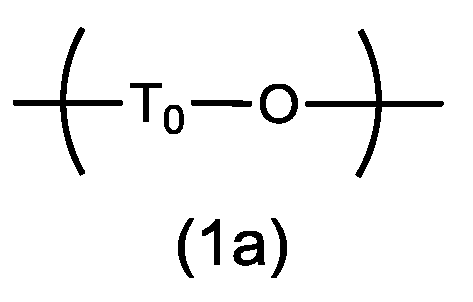
- the present invention is a resin composition for forming an insulating film, comprising a polymer having a structural unit represented by the following formula (1a) and a structural unit represented by the following formula (1b) and an organic solvent.
- T 0 represents a divalent organic group containing at least one arylene group in which at least one hydrogen atom is substituted with an amino group
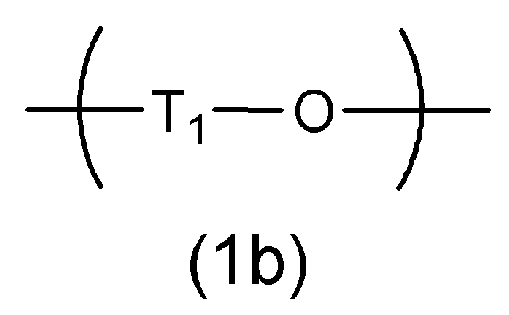
- T 1 represents at least one arylene group having at least one substituent.
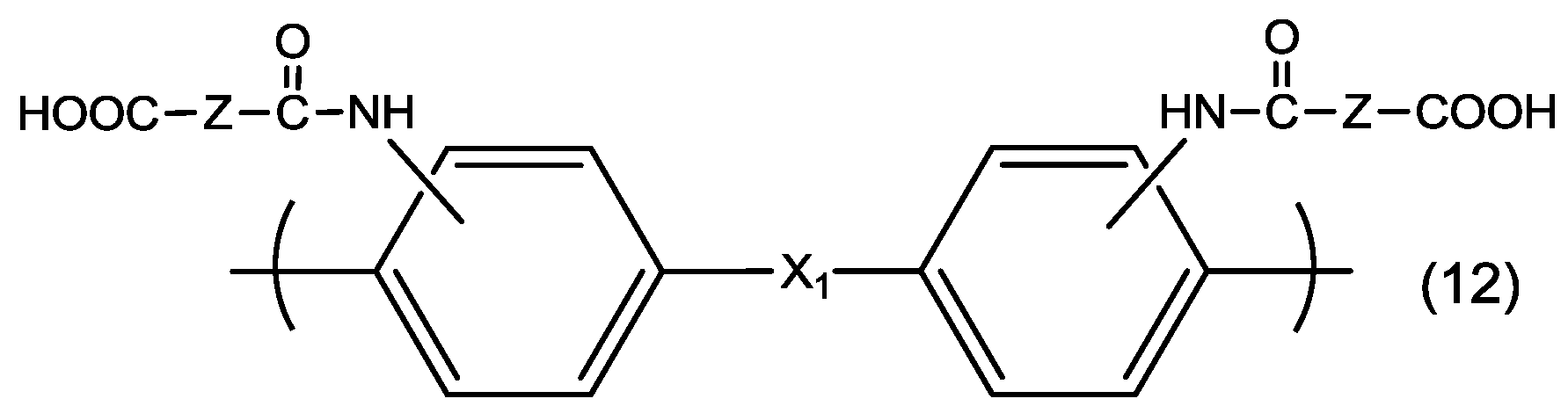
- the divalent organic group is represented by the following formula (2): (Wherein Z represents a divalent aliphatic hydrocarbon group or an alicyclic hydrocarbon group).
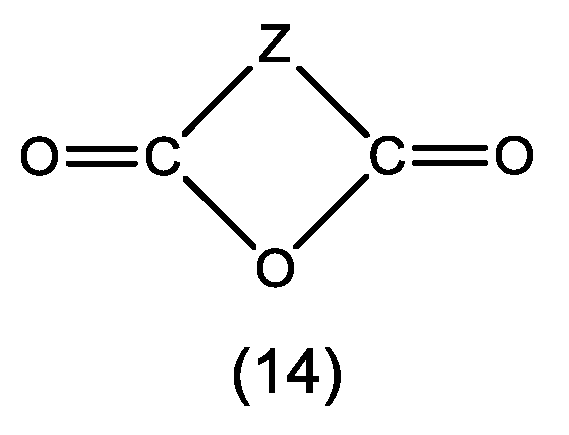
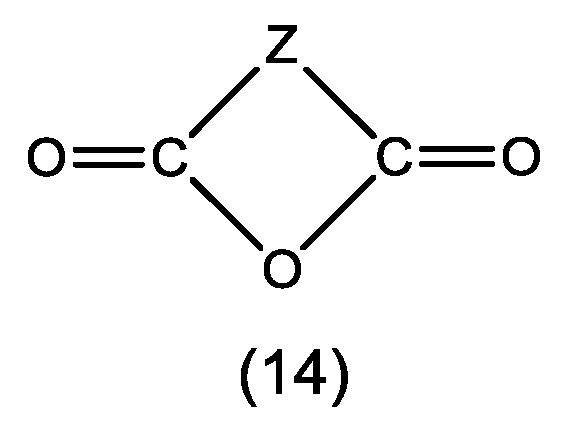
- the present invention also provides a polymer having a structural unit represented by the formula (1a) and the following formula (14): (Wherein Z represents a divalent aliphatic group, aromatic group or alicyclic group which may have a substituent) and a polymer obtained by reacting with a monomer represented by An insulating film-forming resin composition containing an organic solvent.
- the polymer having the structural unit represented by the formula (1a) does not include the structural unit represented by the formula (1b).
- the present invention also includes a step of applying a resin composition for forming an insulating film according to the present invention on a substrate and drying to form a coating film.
- the coating film is formed with g-line, h-line, i-line, and ghi-line broadband.
- the pattern forming method includes a step of exposing with a KrF excimer laser and a step of developing the exposed film with an alkaline aqueous solution or an organic solvent.
- the present invention also heats a polymer having a structural unit represented by the following formula (1a) and a solution obtained by dissolving a monomer represented by the following formula (14) in an organic solvent, A method for synthesizing a polymer having a structural unit represented by the following formula (1a) and a structural unit represented by the following formula (1b), characterized by reacting with a monomer.
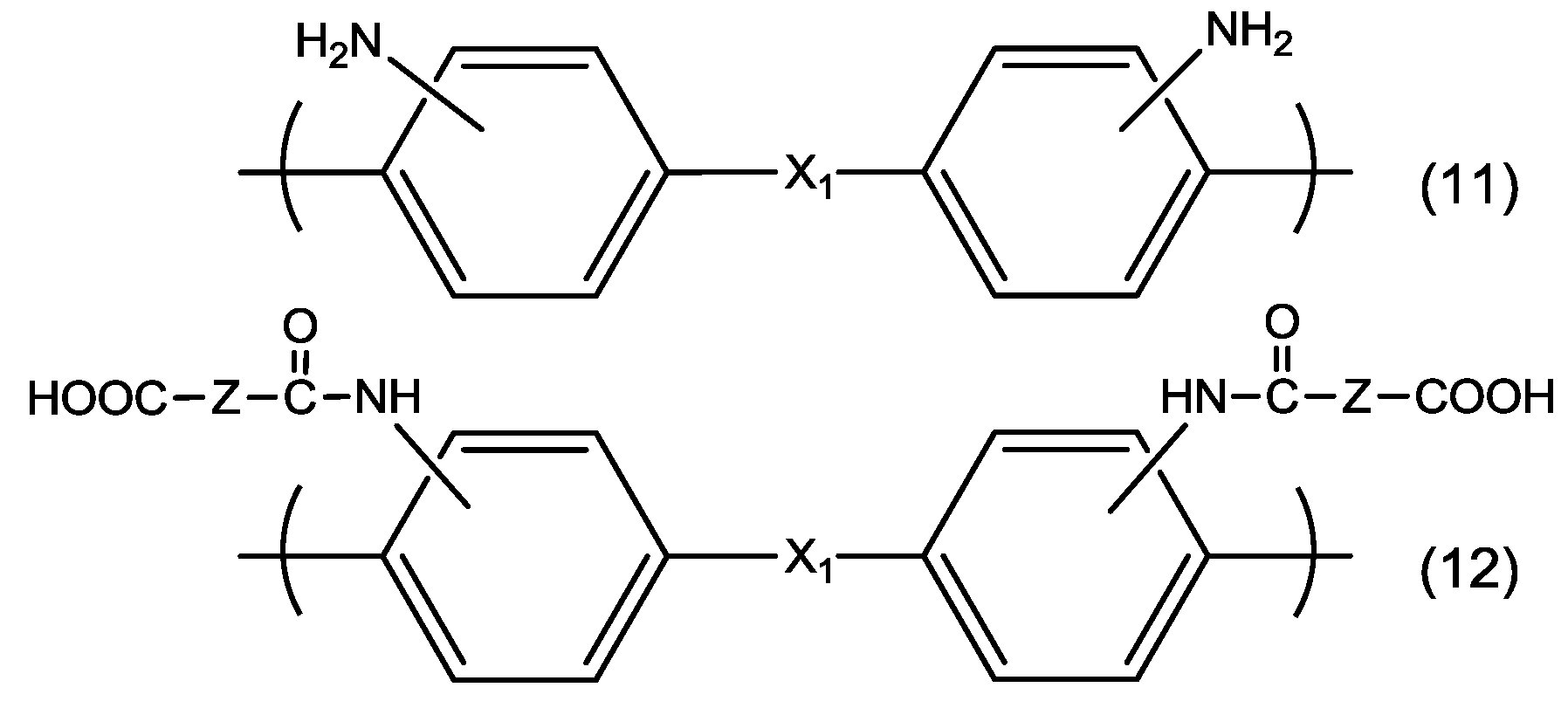
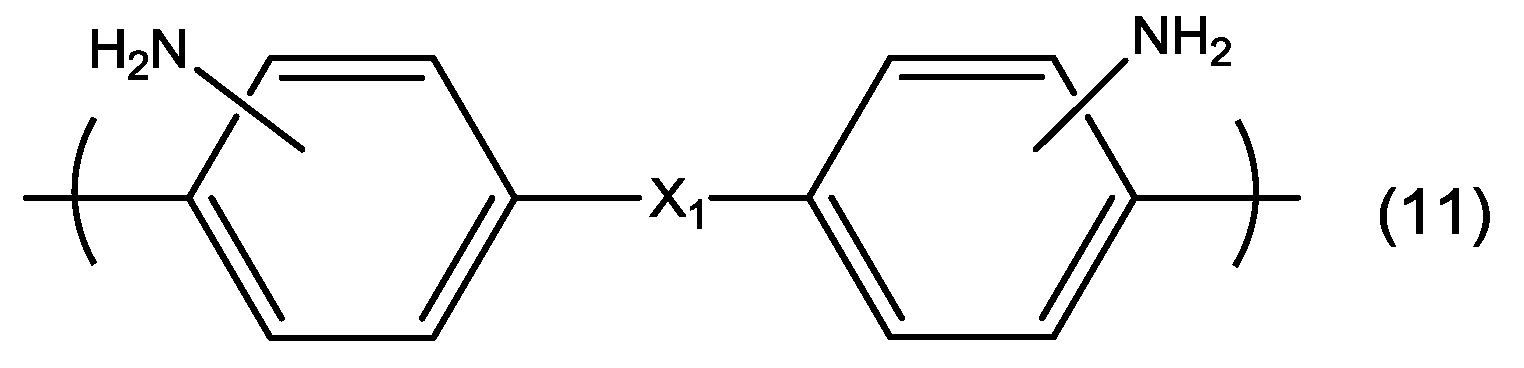
- T 0 represents a divalent organic group represented by the following formula (11).
- X 1 is a single bond, an alkylene group having 1 to 3 carbon atoms, a fluoroalkylene group having 1 to 3 carbon atoms, a phenylene group, an —O— group, an —S— group, a sulfonyl group, or a carbonyl group.
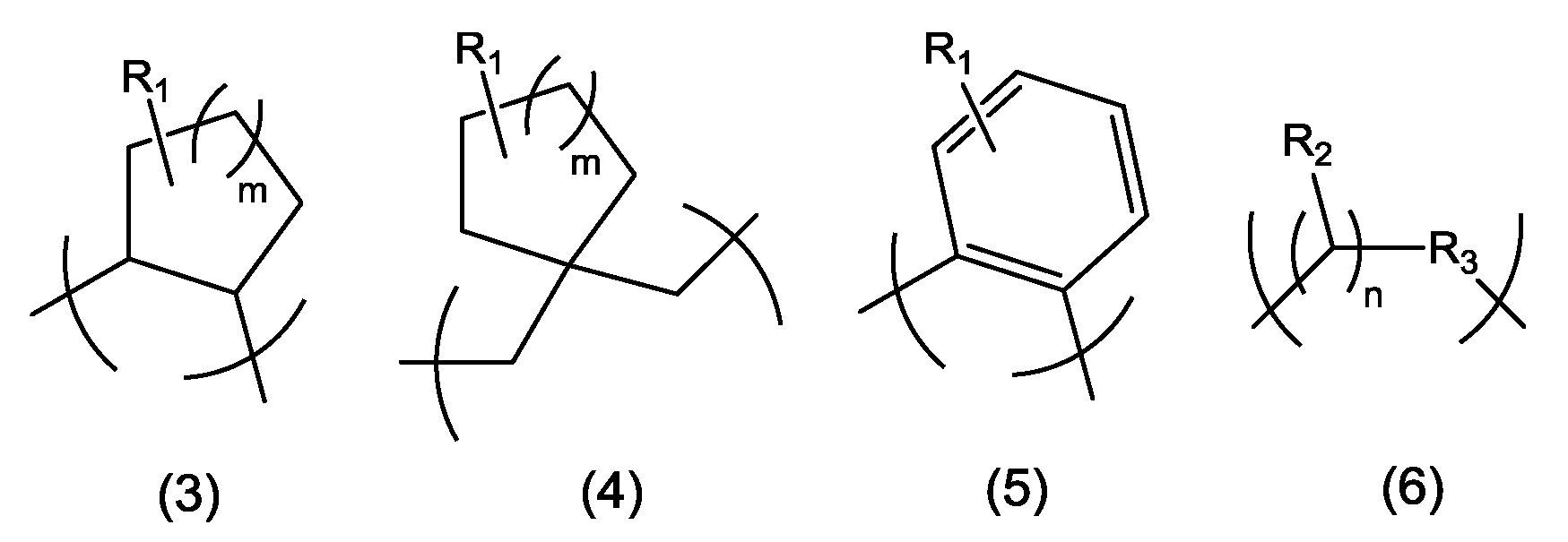
- Z represents the following formula (3), formula (4), formula (5) or formula (6):
- R 1 represents a hydrogen atom, an alkyl group having 1 to 18 carbon atoms, a hydroxy group, a carboxy group, or an alkoxysilyl group
- n represents 0 or 1
- R 2 Represents a hydrogen atom, an alkyl group having 1 to 18 carbon atoms, a vinyl group, an allyl group, a 2-buten-1-yl group, a 2-methyl-2-propenyl group, a 1-propenyl group or an alkoxysilyl group
- the alkyl group may have an alkoxysilyl group as a substituent
- R 3 represents a divalent group represented by a methylene group, an ethylene group, an ethylene group, an ethylene group,
- the film obtained from the resin composition for forming an insulating film of the present invention has a desired pattern through an exposure step and a development step because the polymer contained in the composition has a substituent represented by the formula (2). Can be formed. Moreover, the film obtained from the resin composition for forming an insulating film of the present invention can obtain high insulation by heating at a temperature not exceeding 250 ° C., for example, 200 ° C. to 250 ° C.
- the resin composition for forming an insulating film of the present invention includes a polymer having a structural unit represented by the formula (1a) and a structural unit represented by the formula (1b).
- T 1 represents a divalent organic group containing at least one arylene group having at least one substituent represented by the formula (2).
- the substituent represented by the formula (2) is dehydrated and closed by heating to form a group represented by the following formula (2 ′).
- the polymer having the structural unit represented by the formula (1a) and the structural unit represented by the formula (1b) contained in the resin composition for forming an insulating film of the present invention is represented by the formula (1a).
- a monomer represented by the formula (14) (wherein Z represents a divalent aliphatic group, aromatic group or alicyclic group which may have a substituent). )).
- a solution in which the polymer having the structural unit represented by the formula (1a) and the monomer represented by the formula (14) are dissolved in an organic solvent is maintained at a predetermined temperature, and the reaction is performed. Stir until complete.
- the amount of the monomer represented by the formula (14) with respect to the polymer having the structural unit represented by the formula (1a) is not particularly limited as long as the properties of the obtained polymer are not impaired.
- it is 10 mol% to 200 mol%, preferably 50 mol% to 150 mol%, more preferably 70 mol% to 120 mol%, or 80 mol% to 120 mol% with respect to the group.
- the solution temperature at the time of reaction is, for example, ⁇ 20 ° C. to 100 ° C., preferably 0 ° C. to 80 ° C.
- the reaction time is, for example, 1 hour to 48 hours, preferably 1 hour to 24 hours.
- the organic solvent an organic solvent having no hydroxy group is preferable.
- the monomer represented by the formula (14) reacts with the organic solvent during the reaction to produce a by-product, making it difficult to control the reaction. Further, organic solvents that can be used in the production process of semiconductor elements are more preferable.
- ketones such as cyclohexanone, methyl isoamyl ketone, 2-heptanone; ethylene glycol monoacetate, diethylene glycol monoacetate, propylene glycol monoacetate, dipropylene glycol monoester
- polyhydric alcohols such as monomethyl ether, monoethyl ether, monopropyl ether, monobutyl ether or monophenyl ether of acetate
- cyclic ethers such as dioxane
- methyl lactate, ethyl lactate, methyl acetate, ethyl acetate, butyl acetate Esters such as methyl pyruvate, ethyl pyruvate, methyl methoxypropionate, ethyl ethoxypropionate
- N-methyl-2-pyrrolidinone N, N-2-trimethyl
- amides such as lupropionamide.
- Examples of the monomer represented by the formula (14) include succinic anhydride, 2,2-dimethyl succinic anhydride, butyl succinic anhydride, n-octyl succinic anhydride, decyl succinic anhydride, dodecyl.
- Succinic anhydride tetradecyl succinic anhydride, hexadecyl succinic anhydride, octadecyl succinic anhydride, itaconic anhydride, allyl succinic anhydride, (2-methyl-2-propenyl) succinic anhydride, 2- Buten-1-yl succinic anhydride, 2-hexen-1-yl succinic anhydride, 2-octenyl succinic anhydride, (2,7-octadien-1-yl) succinic anhydride, 2-dodecene- 1-yl succinic anhydride, trimethoxysilyl succinic anhydride, triethoxysilyl succinic anhydride, trimethoxysilylpropyl succinic anhydride, Ethoxysilylpropyl succinic anhydride, cis-1,2-cyclohexanedicarboxylic anhydride, ( ⁇ )
- succinic anhydride succinic anhydride, itaconic anhydride, cis-1,2-cyclohexanedicarboxylic anhydride, 4-methylcyclohexane-1,2-dicarboxylic anhydride, cis-4-cyclohexene- 1,2-dicarboxylic acid anhydride, phthalic acid anhydride, 4-methylphthalic acid anhydride, trimellitic acid anhydride, and glutaric acid anhydride are preferable because they are easily available at a relatively low cost.
- the weight average molecular weight of the polymer is a standard polystyrene conversion value obtained by GPC analysis, and is, for example, 1,000 to 100,000, or 3,000 to 50,000.
- Z is, for example, the following formula (3), formula (4) ), Formula (5) or formula (6):
- m represents 1 or 2
- R 1 represents a hydrogen atom, an alkyl group having 1 to 18 carbon atoms, a hydroxy group, a carboxy group, or an alkoxysilyl group
- n represents 0 or 1
- R 2 Represents a hydrogen atom, an alkyl group having 1 to 18 carbon atoms, a vinyl group, an allyl group, a 2-buten-1-yl group, a 2-methyl-2-propenyl group, a 1-propenyl group or an alkoxysilyl group
- the alkyl group may have an alkoxysilyl group as a substituent
- R 3 represents a divalent group represented by a methylene group, an ethylene group, an ethene-1,2-diyl group,
- the polymer having the structural unit represented by the formula (1a) and the structural unit represented by the formula (1b), or the polymer having the structural unit represented by the formula (1a) is represented by the following formula (7 ): (In the formula, T 2 represents a divalent organic group containing at least one arylene group.) It may further contain a structural unit represented by
- T 0 represents, for example, a divalent organic group represented by the formula (11).
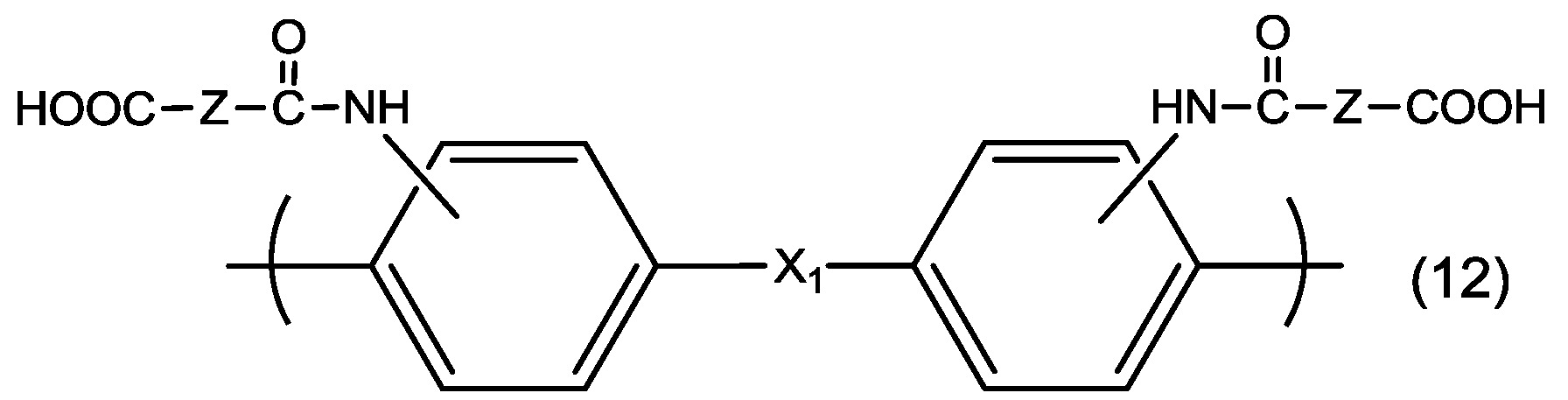
- T 1 represents For example, it represents a divalent organic group represented by the following formula (12).
- X 1 is a single bond, an alkylene group having 1 to 3 carbon atoms, a fluoroalkylene group having 1 to 3 carbon atoms, a phenylene group, -O Represents a group consisting of a — group, —S— group, sulfonyl group, carbonyl group, or a combination of the phenylene group and an alkylene group of 1 to 3 carbon atoms, —O— group or —S— group.
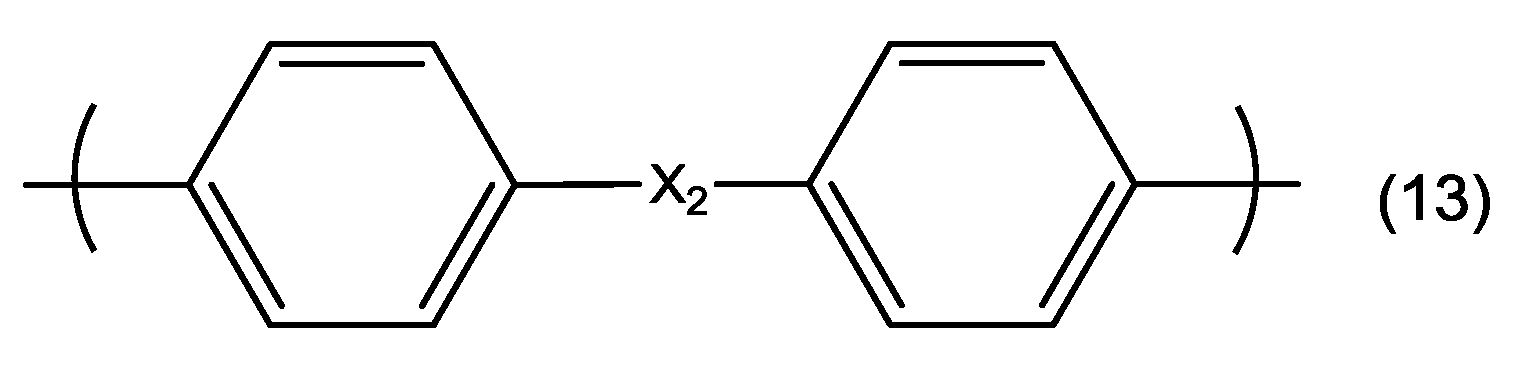
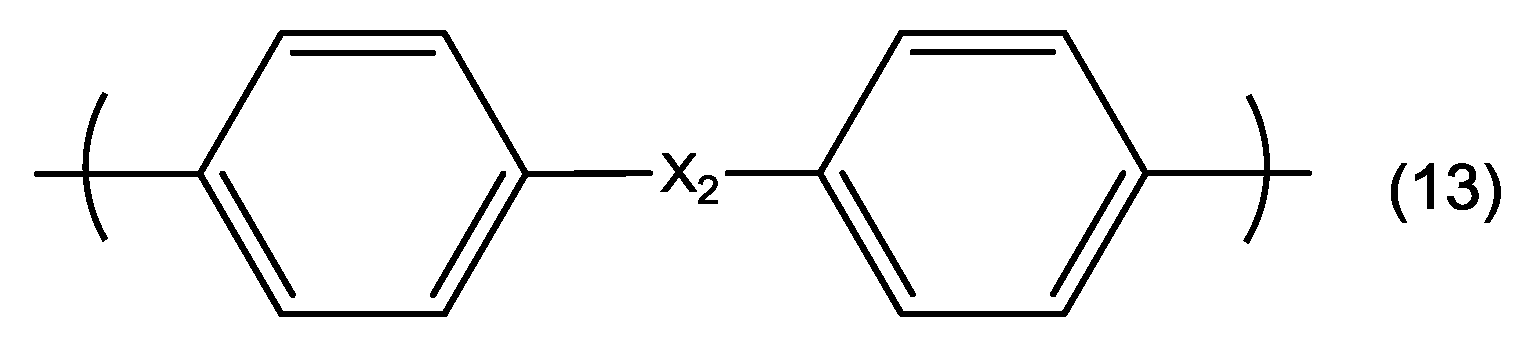
- T 2 represents, for example, a divalent organic group represented by the following formula (13).
- X 2 represents a single bond, an alkylene group having 1 to 3 carbon atoms, a fluoroalkylene group having 1 to 3 carbon atoms, a benzene ring or a cyclohexane ring and a divalent hydrocarbon having 6 to 13 carbon atoms. Represents a group, —O— group, —S— group, sulfonyl group or carbonyl group.
- the resin composition for forming an insulating film of the present invention may further contain a photosensitizer.
- a photosensitizer for example, a photo radical generator or a photo acid generator can be employed.
- photo radical generator examples include tert-butylperoxy-iso-butyrate, 2,5-dimethyl-2,5-bis (benzoyldioxy) hexane, 1,4-bis [ ⁇ - (tert-butyldioxy)- iso-propoxy] benzene, di-tert-butyl peroxide, 2,5-dimethyl-2,5-bis (tert-butyldioxy) hexene hydroperoxide, ⁇ - (iso-propylphenyl) -iso-propyl hydroperoxide, tert- Butyl hydroperoxide, 1,1-bis (tert-butyldioxy) -3,3,5-trimethylcyclohexane, butyl-4,4-bis (tert-butyldioxy) valerate, cyclohexanone peroxide, 2,2 ′, 5,5 ′ -Tetra (tert-butylper Oxycarbonyl)
- the photo radical generator can be obtained as a commercial product.
- IRGACURE registered trademark
- KAYACURE Registered Trademarks
- DETX MBP, DMBI, EPA, OA (above, manufactured by Nippon Kayaku Co., Ltd.), VISURE-10, 55 (above, manufactured by STAUFFER Co.
- the photoacid generator is not particularly limited as long as it is a compound that generates an acid by irradiating light, but preferably has a function of increasing the solubility of the light irradiated portion in an alkali developer.
- 1,2-naphthoquinonediazide compounds are preferred.
- the 1,2-naphthoquinonediazide compound is a compound having a hydroxy group, and among these hydroxy groups, 10 mol% to 100 mol%, preferably 20 mol% to 100 mol% is 1,2-naphtho.
- a quinonediazide sulfonate ester compound can be used.
- Examples of the compound having a hydroxy group include phenol, o-cresol, m-cresol, p-cresol, hydroquinone, resorcinol, catechol, methyl gallate, ethyl gallate, 1,3,3-tris (4-hydroxyphenyl).
- the content of the photosensitive agent in the composition for forming an insulating film of the present invention is, for example, 0.1 phr to 50 phr, or 1 phr to 30 phr with respect to the content of the polymer.
- phr represents the mass of the photosensitizer with respect to 100 g of the polymer.
- the resin composition for forming an insulating film of the present invention may further contain a crosslinking agent.
- the crosslinking agent is, for example, at least one selected from the group consisting of a crosslinking agent that reacts with heat or acid and a crosslinking agent that reacts with radicals.
- examples include phenol ether compounds, and compounds containing double bonds such as epoxy compounds, oxetane compounds, thioepoxy compounds, isocyanate compounds, azide compounds, or alkenyl ether groups. Of these compounds, an isocyanate compound is preferable from the viewpoint of heat resistance and insulation, and a blocked isocyanate compound is particularly preferable.
- These crosslinking agents that react with heat or acid can be used alone or in combination of two or more.
- the blocked isocyanate compound can be obtained as a commercial product.
- VESTANAT registered trademark
- VESTAGON registered trademark
- B1065 above, manufactured by Evonik Industries
- Takenate registered trademark
- B-882N Mitsubishi Chemicals, Inc.
- DURANATE registered trademark
- MF-K60X E402-B80B
- SBN-70D aboveve, manufactured by Asahi Kasei
- TRIXENEBI-7882 BI-7990
- BI-7990 Above, manufactured by Baxenden.
- a catalyst may be added.
- the catalyst include triethylamine, tributylamine, triethanolamine, tributanolamine, 1,8-diazabicyclo [5.4.0] -7-undecene, 1,5-diazabicyclo [4.3.0] -5.
- -Basic compounds such as nonene.
- acrylic compound examples include NK ester (registered trademark) A-9300, A-9300-1CL, A-GLY-9E, A-GLY-20E, A-TMM-3, A-TMM- 3L, A-TMM-3LN, A-TMPT, AD-TMP, ATM-35E, A-TMMT, A-9550, A-DPH (above, Shin-Nakamura Chemical Co., Ltd.) Is mentioned.
- NK ester registered trademark
- acrylic compounds can be used individually or in combination of 2 or more types.
- the content of the crosslinking agent in the composition for forming an insulating film of the present invention is, for example, 5 phr to 100 phr, preferably 10 phr to 100 phr, 5 phr to 50 phr, more preferably 10 phr to 40 phr, or 20 phr with respect to the content of the polymer. To 50 phr.
- the resin composition for forming an insulating film of the present invention may further contain other additives as necessary.
- the additive include a chain transfer agent, a pH adjuster, a surfactant, and a silane coupling agent.
- a polyfunctional thiol compound can be employed as the chain transfer agent.
- the polyfunctional thiol compound include pentaerythritol tetrakis (3-mercaptobutyrate), 1,4-bis (3-mercaptobutyryloxy) butane, 1,3,5-tris (3-mercaptobutyryloxyethyl).
- -1,3,5-triazine-2,4,6 (1H, 3H, 5H) -trione, trimethylolpropane tris (3-mercaptobutyrate), and trimethylolethane tris (3-mercaptobutyrate)
- trimethylolethane tris 3-mercaptobutyrate
- the said polyfunctional thiol compound can be obtained as a commercial item, for example, Karenz MT (trademark) PE1, BD1, NR1 (above, Showa Denko KK make) is mentioned. These polyfunctional thiol compounds can be used alone or in combination of two or more.
- the content thereof is, for example, 0.1 phr to 10 phr with respect to the content of the polymer.
- the pH adjuster is preferably a weakly acidic organic compound such as fumaric acid, maleic acid, succinic acid, oxalic acid, acetic acid, tartaric acid, octanoic acid, nonanoic acid, and decanoic acid.
- the content thereof is, for example, 0.1 phr to 10 phr with respect to the content of the polymer.
- surfactant examples include polyoxyethylene alkyl ethers such as polyoxyethylene lauryl ether, polyoxyethylene stearyl ether, polyoxyethylene cetyl ether, polyoxyethylene oleyl ether, polyoxyethylene octyl phenyl ether, polyoxyethylene Polyoxyethylene alkylaryl ethers such as nonylphenyl ether, polyoxyethylene / polyoxypropylene block copolymers, sorbitan monolaurate, sorbitan monopalmitate, sorbitan monostearate, sorbitan monooleate, sorbitan trioleate, sorbitan trioleate Sorbitan fatty acid esters such as stearate, polyoxyethylene sorbitan monolaurate, polyoxyethylene Sorbitan monopalmitate, polyoxyethylene sorbitan monostearate, polyoxyethylene sorbitan trioleate, nonionic surfactants of polyoxyethylene sorbitan fatty acid esters such as polyoxyethylene sorbitan tristea
- the surfactant is available as a commercial product.
- EFTOP registered trademark
- EF301 EF303
- EF352 manufactured by Mitsubishi Materials Electronic Chemicals Co., Ltd.
- Megafac registered trademark
- the content thereof is, for example, 0.001 phr to 1 phr with respect to the content of the polymer.
- silane coupling agent examples include phenyltrimethoxysilane, phenyltriethoxysilane, methyltrimethoxysilane, methyltriethoxysilane, ethyltrimethoxysilane, ethyltriethoxysilane, vinyltrimethoxysilane, vinyltriethoxysilane, 3 -Methacryloxypropyltriethoxysilane, 3-methacryloxypropyltrimethoxysilane, 3-glycidylpropyltrimethoxysilane, 3-glycidylpropyltriethoxysilane, 2- (3,4-epoxycyclohexyl) propyltrimethoxysilane, 2- (3,4-epoxycyclohexyl) propyltriethoxysilane, 2- (3,4-epoxycyclohexyl) ethyltrimethoxysilane, 2- (3,4-epoxycyclohe
- the content thereof is, for example, 0.1 phr to 5 phr with respect to the content of the polymer.
- the resin composition for forming an insulating film of the present invention contains an organic solvent as a viscosity modifier.
- the organic solvent is not particularly limited as long as it is a solvent that can be used in the production process of a semiconductor element.
- ketones such as cyclohexanone, methyl isoamyl ketone, and 2-heptanone; ethylene glycol, ethylene glycol monoacetate, diethylene glycol, diethylene glycol Polyacetates such as monoacetate, propylene glycol, propylene glycol monoacetate, dipropylene glycol or dipropylene glycol monoacetate, such as monomethyl ether, monoethyl ether, monopropyl ether, monobutyl ether or monophenyl ether and their derivatives; Cyclic ethers of methyl lactate, ethyl lactate, methyl acetate, ethyl acetate, butyl acetate, methyl pyruvate, ethyl pyruv
- excluding the said organic solvent from the resin composition for insulating film formation of this invention is 10 mass% thru
- amino group reaction rate The amino group reaction rate of the aromatic polyether obtained in the examples described below was calculated by measuring the total amine value before and after the reaction. The total amine value was measured by the method described in JIS K7237.
- Example 1 In a three-necked flask equipped with a stirrer, a thermometer, and a Dimroth condenser, 2.50 g of the aromatic polyether obtained in Synthesis Example 1 and 0.84 g of succinic anhydride are dissolved in 13.36 g of propylene glycol monomethyl ether acetate. The inside of the system was replaced with nitrogen.
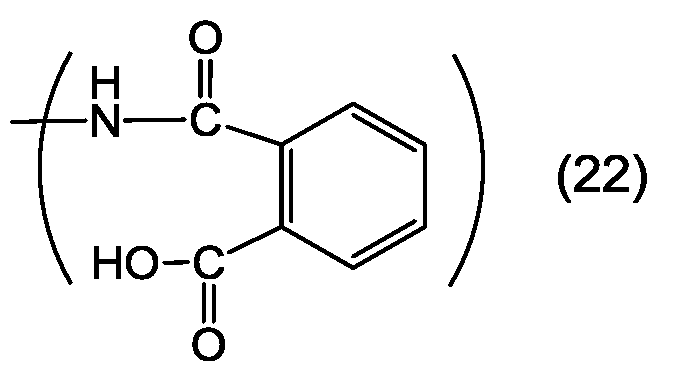
- Example 2 In a three-necked flask equipped with a stirrer, a thermometer, and a Dimroth condenser, 3.00 g of the aromatic polyether obtained in Synthesis Example 1 and 1.49 g of phthalic anhydride were dissolved in 17.96 g of propylene glycol monomethyl ether acetate, The system was replaced with nitrogen. Thereafter, the mixture is heated to 80 ° C., reacted for 1 hour, cooled to room temperature, filtered through a PTFE microfilter having a pore size of 1.0 ⁇ m, and an aromatic polysiloxane having a side chain structure represented by the following formula (22): A resin composition containing 20% by mass of ether was prepared. The amino group reaction rate of the obtained aromatic polyether was 91%.
- Example 3 In a three-necked flask equipped with a stirrer, a thermometer and a Dimroth condenser, 3.00 g of the aromatic polyether obtained in Synthesis Example 1 and 1.09 g of itaconic anhydride are dissolved in 16.37 g of propylene glycol monomethyl ether acetate. The inside of the system was replaced with nitrogen. Thereafter, the mixture is heated to 80 ° C., reacted for 1 hour, cooled to room temperature, filtered through a PTFE microfilter having a pore size of 1.0 ⁇ m, and an aromatic polyether having a side chain structure represented by the following formula (21) A resin composition containing 20% by mass was prepared. The amino group reaction rate of the obtained aromatic polyether was 95%.
- Example 4 In a three-necked flask equipped with a stirrer, a thermometer and a Dimroth condenser, 3.00 g of the aromatic polyether obtained in Synthesis Example 1 and 1.50 g of cis-cyclohexane-1,2-dicarboxylic acid anhydride were added to propylene glycol monomethyl. It was dissolved in 18.01 g of ether acetate, and the inside of the system was purged with nitrogen.
- Example 5 In a three-necked flask equipped with a stirrer, a thermometer and a Dimroth condenser, 3.00 g of the aromatic polyether obtained in Synthesis Example 1 and 1.64 g of 4-methylcyclohexane-1,2-dicarboxylic acid anhydride were added to propylene glycol. It was dissolved in 18.56 g of monomethyl ether acetate, and the inside of the system was purged with nitrogen.
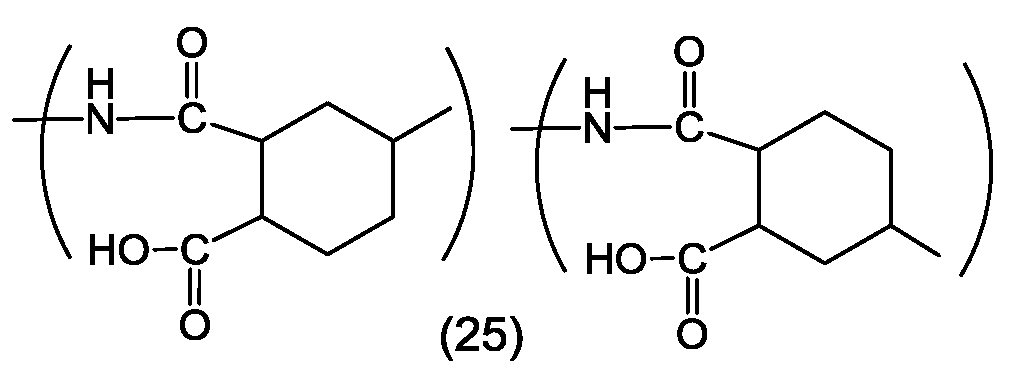
- the mixture is heated to 80 ° C., reacted for 1 hour, cooled to room temperature, filtered through a PTFE microfilter having a pore size of 1.0 ⁇ m, and an aromatic polyether having a side chain structure represented by the following formula (25)
- a resin composition containing 20% by mass was prepared.
- the amino group reaction rate of the obtained aromatic polyether was 95%.
- Example 6 In a three-necked flask equipped with a stirrer, a thermometer and a Dimroth condenser, 3.00 g of the aromatic polyether obtained in Synthesis Example 2 and 1.85 g of 4-methylcyclohexane-1,2-dicarboxylic anhydride were added to propylene glycol. It was dissolved in 19.41 g of monomethyl ether acetate, and the inside of the system was purged with nitrogen. Thereafter, the mixture is heated to 80 ° C., reacted for 1 hour, cooled to room temperature, filtered through a PTFE microfilter having a pore size of 1.0 ⁇ m, and an aromatic polyether having a side chain structure represented by the formula (22). A resin composition containing 20% by mass was prepared. The amino group reaction rate of the obtained aromatic polyether was 95%.
- Example 7 In a three-necked flask equipped with a stirrer, a thermometer, and a Dimroth condenser, 3.00 g of the aromatic polyether obtained in Synthesis Example 1 and 1.58 g of 1,1-cyclohexanediacetic anhydride were added at a mass ratio of 1: 1 was dissolved in 18.32 g of a mixed solution of propylene glycol monomethyl ether acetate and N, N-2-trimethylpropionamide, and the inside of the system was purged with nitrogen.
- Comparative Example 1 5.00 g of the aromatic polyether obtained in Comparative Synthesis Example 1 was dissolved in 20.00 g of propylene glycol monomethyl ether acetate and filtered using a PTFE microfilter having a pore size of 1.0 ⁇ m to obtain a resin solid content of 20 mass. % Containing resin composition was prepared.
- Comparative Example 2 5.00 g of the aromatic polyether obtained in Comparative Synthesis Example 2 was dissolved in 20.00 g of propylene glycol monomethyl ether acetate and filtered using a PTFE microfilter having a pore size of 1.0 ⁇ m to obtain a resin solid content of 20 mass. % Containing resin composition was prepared.
- Comparative Example 3 5.00 g of the polyimide precursor obtained in Comparative Synthesis Example 3 was dissolved in 20.00 g of N, N, 2-trimethylpropionamide and filtered using a PTFE microfilter having a pore size of 1.0 ⁇ m to obtain a resin solid content. A resin composition containing 20% by mass was prepared.
- the remaining film ratio was calculated by the following formula, and the case where the remaining film ratio was less than 1% was represented by ⁇ , and the case where it was 1% or more was represented by x. ⁇ (Film thickness before immersion) ⁇ (residual film thickness after immersion) ⁇ ⁇ (film thickness before immersion) ⁇ 100
- a leakage current value was measured when a voltage of 1 MV / cm, 2 MV / cm, and 3 MV / cm was applied using a mercury probe (CVmap92-B, manufactured by Four Dimensions). The results are shown in Table 1. Where the leakage current value is less than 1.0 ⁇ 10 -9 A / cm 2 ⁇ , 1.0 ⁇ 10 -9 A / cm 2 or more 1.0 ⁇ 10 -8 ⁇ the case of less than A / cm 2, The case of 1.0 ⁇ 10 ⁇ 8 A / cm 2 or more and less than 1.0 ⁇ 10 ⁇ 7 A / cm 2 was represented by ⁇ , and the case of 1.0 ⁇ 10 ⁇ 7 or more was represented by ⁇ .
- the films formed using the resin compositions of Examples 1 to 7 all have high solubility in alkaline aqueous solutions, and the resins of Examples 1 to 7 It can be seen that the film formed using the composition has excellent electrical insulation.
- the aromatic polyether contained in the resin composition of Comparative Example 1 is excellent in electrical insulation, but has no solubility in an alkaline aqueous solution.
- the aromatic polyether having an acidic group contained in the resin composition of Comparative Example 2 has good solubility in an alkaline aqueous solution, but poor electrical insulation.
- the polyimide precursor contained in the resin composition of Comparative Example 3 has good solubility in an alkaline aqueous solution, but sufficient electrical properties cannot be obtained by baking at 250 ° C. Furthermore, the aromatic polyether contained in the resin composition of Comparative Example 4 was exposed to a high temperature for a long time during the synthesis of the polymer, so that hydrolysis or imidization of the amic acid progressed and the solubility in an alkaline aqueous solution was remarkable. It got worse.
- a resin composition containing 30% by mass of an aromatic polyether having a molar ratio of the structural unit to the latter structural unit of 30:70 was prepared.
- the amino group reaction rate of the obtained aromatic polyether was 95%.
- To the obtained resin composition 60.00 g, 5.40 g of A-DPH (manufactured by Shin-Nakamura Chemical Co., Ltd.) as a radical crosslinking agent and Karenz MT-PE1 (manufactured by Showa Denko KK) as a chain transfer agent.
- the photosensitive resin composition obtained in Example 8 was applied onto a silicon wafer using a spin coater, and baked on a hot plate at 100 ° C. for 2 minutes to form a film having a thickness of 6 ⁇ m.
- This film was irradiated with i-line (365 nm) at 100 mJ / cm 2 (illuminance: 4.6 mW / cm 2 ) with a high-pressure mercury lamp, and then baked on a hot plate at 130 ° C. for 2 minutes. Then, it was immersed in a 2.38 mass% TMAH aqueous solution for 60 seconds, further washed with pure water for 30 seconds, and baked at 100 ° C.
- the pattern forming property was evaluated from the remaining film ratio before and after being immersed in the 2.38 mass% TMAH aqueous solution. The results are shown in Table 2. The case where the remaining film ratio was 90% or more was represented by ⁇ , and the case where it was less than 90% was represented by ⁇ .
- the photosensitive resin composition obtained in Example 8 was applied onto a silicon wafer using a spin coater, and baked on a hot plate at 100 ° C. for 2 minutes to form a film having a thickness of 6 ⁇ m.
- This film was irradiated with 100 mJ / cm 2 (illuminance: 4.6 mW / cm 2 ) of i-line (365 nm) through a quartz mask with a high-pressure mercury lamp, and then baked on a hot plate at 130 ° C. for 2 minutes. Thereafter, paddle development was performed with a 2.38 mass% TMAH aqueous solution for 60 seconds to dissolve the unexposed portion, followed by washing with pure water for 30 seconds, and baking on a hot plate at 100 ° C.
- the photosensitive resin composition obtained in Example 8 was applied onto a silicon wafer using a spin coater, baked on a hot plate at 100 ° C. for 2 minutes, and i-line (365 nm) was applied to 100 mJ with a high-pressure mercury lamp. After irradiation with / cm 2 (illuminance: 4.6 mW / cm 2 ), baking was performed at 130 ° C. for 2 minutes on a hot plate. Next, a film having a thickness of 5 ⁇ m was formed by baking at 250 ° C. for 1 hour in an oven purged with nitrogen.
- the solvent resistance of the formed film was immersed in propylene glycol monomethyl ether (PGME), propylene glycol monomethyl ether acetate (PGMEA), cyclohexanone (CYH), N-methyl-2-pyrrolidinone (NMP) at 23 ° C. for 1 minute. Evaluation was made from the remaining film rate. The results are shown in Table 2. The remaining film ratio was calculated by the above-described calculation formula, and the case where the remaining film ratio was 90% or more was represented by ⁇ , and the case where it was less than 90% was represented by ⁇ .
- the photosensitive resin composition obtained in Example 8 was diluted by adding propylene glycol monomethyl ether acetate so that the film thickness when the film was formed was 500 nm.
- This diluted solution was applied onto a silicon wafer using a spin coater, baked on a hot plate at 100 ° C. for 2 minutes, and irradiated with i-line (365 nm) at 100 mJ / cm 2 (illuminance: 4.6 mW) using a high-pressure mercury lamp. / Cm 2 ) and then baked on a hot plate at 130 ° C. for 2 minutes. Subsequently, it was baked in an oven purged with nitrogen at 250 ° C. for 1 hour to form a film.
- a leakage current value was measured when a voltage of 1 MV / cm, 2 MV / cm, and 3 MV / cm was applied using a mercury probe (CVmap92-B, manufactured by Four Dimensions).
- Table 3 The results are shown in Table 3.
- Example 9 In a three-necked flask equipped with a stirrer, a thermometer, and a Dimroth condenser, 10.00 g of the aromatic polyether obtained in Synthesis Example 1 and 5.39 g of 4-methylcyclohexane-1,2-dicarboxylic acid anhydride were added. It was dissolved in 28.58 g of propylene glycol monomethyl ether acetate, and the inside of the system was replaced with nitrogen.
- the mixture is heated to 80 ° C., reacted for 1 hour, cooled to room temperature, filtered through a PTFE microfilter having a pore size of 1.0 ⁇ m, and an aromatic polyether having a side chain structure represented by the above formula (25).
- a resin composition containing 35% by mass was prepared.
- the amino group reaction rate of the obtained aromatic polyether was 95%.
- thermosetting crosslinking agent VESTANAT B1358 / 100 (Evonik Industries Co., Ltd.) 2.10 g, as a viscosity modifier, 1.77 g of propylene glycol monomethyl ether acetate was added and stirred until uniform, then a PTFE microfilter with a pore size of 5.0 ⁇ m was used. And filtered to prepare a positive photosensitive resin composition.
- Example 10 In a three-necked flask equipped with a stirrer, a thermometer, and a Dimroth condenser, 30.00 g of the aromatic polyether obtained in Synthesis Example 1 and 15.79 g of 1,1-cyclohexanediacetic anhydride were added at a mass ratio of 1: 1 was dissolved in 85.04 g of a mixed solution of propylene glycol monomethyl ether acetate 1 and N, N-2-trimethylpropionamide, and the system was purged with nitrogen.
- the mixture is heated to 80 ° C., reacted for 1 hour, cooled to room temperature, filtered through a PTFE microfilter having a pore size of 1.0 ⁇ m, and an aromatic polyether having a side chain structure represented by the above formula (26).
- a resin composition containing 35% by mass was prepared.
- the amino group reaction rate of the obtained aromatic polyether was 89%.
- the pattern formability was evaluated from the remaining film ratio before and after immersion in a 2.38 mass% TMAH aqueous solution.
- the case where the remaining film ratio was less than 1% was represented by ⁇ , and the case where it was 1% or more was represented by x.
- the results are shown in Table 2.
- Example 9 and Example 10 and Comparative Example 5 The photosensitive resin composition obtained in Example 9 and Example 10 and Comparative Example 5 was applied onto a silicon wafer using a spin coater, and baked on a hot plate at 100 ° C. for 2 minutes. A 6 ⁇ m film was formed. This film was irradiated with 500 mJ / cm 2 (illuminance: 4.6 mW / cm 2 ) of i-line (365 nm) through a quartz mask with a high-pressure mercury lamp, and then developed with a 2.38 mass% TMAH aqueous solution for 60 seconds. Thus, the unexposed portion was dissolved, further washed with pure water for 30 seconds, and baked on a hot plate at 200 ° C. for 1 minute. In the evaluation of the resolution, the case where a 10 ⁇ m hole pattern is resolved on the silicon wafer is indicated by ⁇ , and the case where the hole pattern is not resolved is indicated by ⁇ . The results are shown in Table 2.
- a leakage current value was measured when a voltage of 1 MV / cm, 2 MV / cm, and 3 MV / cm was applied using a mercury probe (CVmap92-B, manufactured by Four Dimensions).
- Table 3 The results are shown in Table 3.
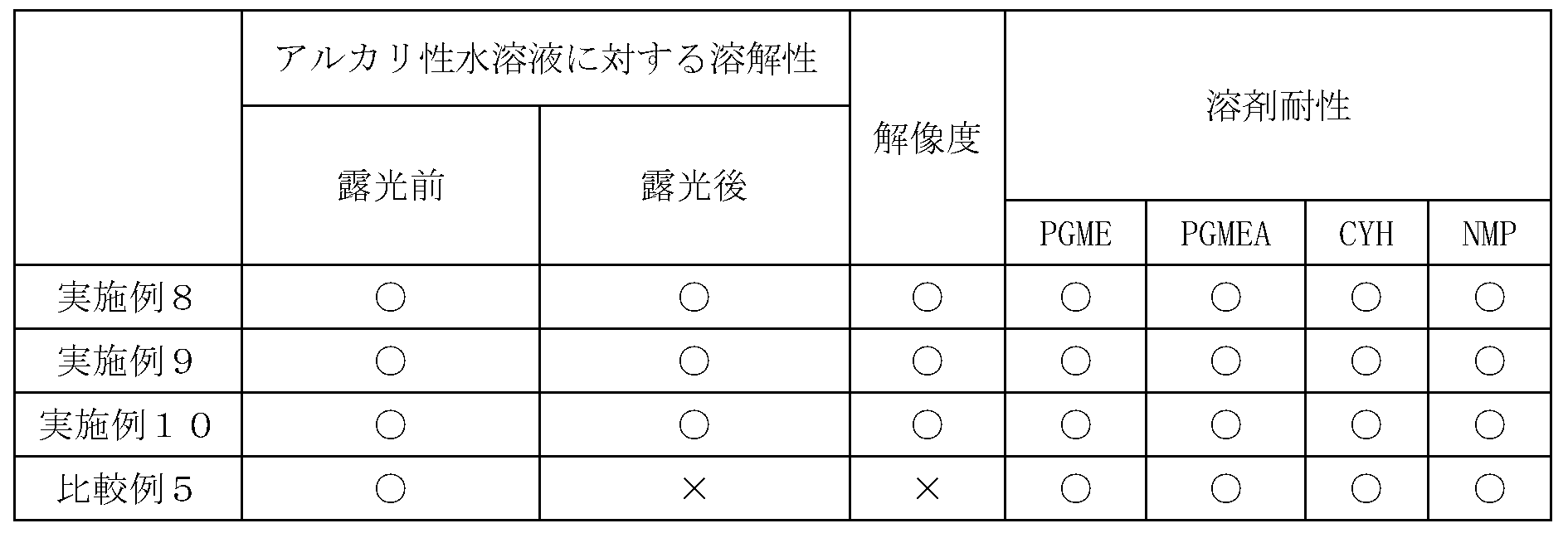
- films formed using the photosensitive resin compositions of Examples 8 to 10 can form a pattern with good resolution using an alkaline aqueous solution as a developer. Further, it can be seen that baking at 250 ° C. has excellent solvent resistance and electrical insulation.
Landscapes
- Physics & Mathematics (AREA)
- Chemical & Material Sciences (AREA)
- General Physics & Mathematics (AREA)
- Spectroscopy & Molecular Physics (AREA)
- Organic Chemistry (AREA)
- Chemical Kinetics & Catalysis (AREA)
- Engineering & Computer Science (AREA)
- Life Sciences & Earth Sciences (AREA)
- Materials Engineering (AREA)
- Wood Science & Technology (AREA)
- Health & Medical Sciences (AREA)
- Medicinal Chemistry (AREA)
- Polymers & Plastics (AREA)
- General Chemical & Material Sciences (AREA)
- Formation Of Insulating Films (AREA)
- Materials For Photolithography (AREA)
- Polyethers (AREA)
- Paints Or Removers (AREA)
- Addition Polymer Or Copolymer, Post-Treatments, Or Chemical Modifications (AREA)
- Architecture (AREA)
- Structural Engineering (AREA)
- Compositions Of Macromolecular Compounds (AREA)
Abstract
Description






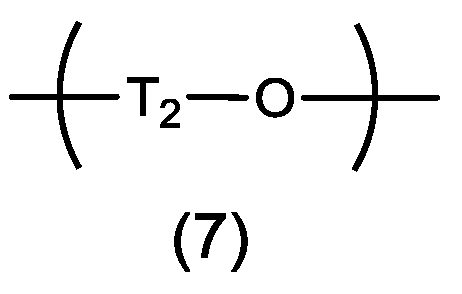
で表される構造単位をさらに含有してもよい。

以下に記載する合成例で得られたポリマーの重量平均分子量は、下記の装置を用いて測定される相対値で、測定条件は下記のとおりである。
装置:一体型高速GPCシステム HLC-8220GPC 東ソー(株)製
カラム:KF-G,KF803L,KF804L
カラム温度:40℃
溶媒:テトラヒドロフラン(THF)
流量:1.0mL/分
標準試料:ポリスチレン
ディテクター:RI
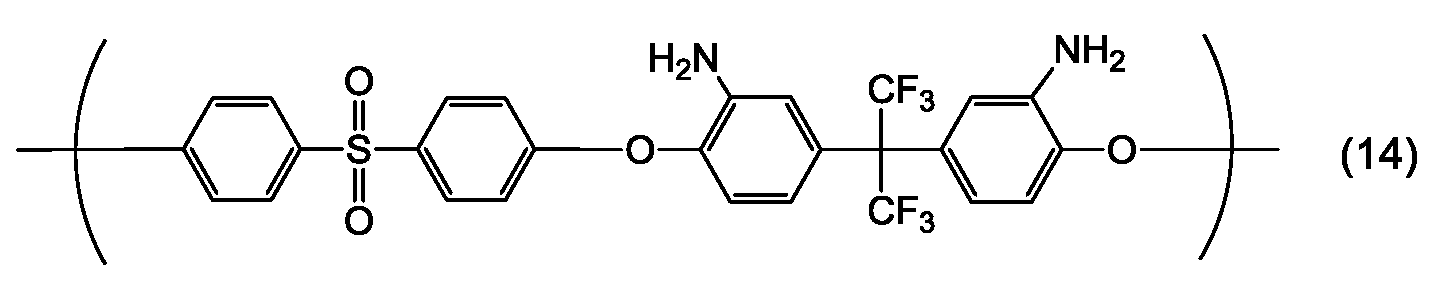
撹拌基、温度計、ジムロート冷却管を備えた三口フラスコにビス(4-フルオロフェニル)スルホン61.02gと、2,2-ビス(3-アミノ-4-ヒドロキシフェニル)ヘキサフルオロプロパン109.90gを1-メチル-2-ピロリジノン678.45gに溶解させ、炭酸カリウム83.18gを加え、系内を窒素置換した。その後140℃まで加熱し20時間反応させた。反応終了後、反応溶液を桐山ロートで吸引濾過し、得られたろ液に(2N-塩酸):(1-メチル-2-ピロリジノン)=1:9(体積比)の溶液を酸性になるまで加え、pH試験紙を用いて溶液が酸性条件であることを確認した。その後、得られた溶液を水:メタノール=3:7(体積比)の混合液に滴下し、再沈殿した。滴下後、ブフナーロートで吸引濾過し、前記水:メタノール=3:7の混合液で洗浄し、得られた粉体を70℃に加熱した減圧乾燥機で12時間乾燥させ、下記式(14)で表される構造単位を有する芳香族ポリエーテルを得た。得られた芳香族ポリエーテルのGPC分析を行ったところ、標準ポリスチレン換算にて重量平均分子量は6700であった。
撹拌基、温度計、ジムロート冷却管を備えた三口フラスコに4,4’-ジフルオロベンゾフェノン52.36gと、2,2-ビス(3-アミノ-4-ヒドロキシフェニル)ヘキサフルオロプロパン109.88gを1-メチル-2-ピロリジノン655.97gに溶解させ、炭酸カリウム83.04gを加え、系内を窒素置換した。140℃まで加熱し20時間反応させた。反応終了後、反応溶液を桐山ロートで吸引濾過し、得られたろ液に(2N-塩酸):(1-メチル-2-ピロリジノン)=1:9(体積比)の溶液を酸性になるまで加え、pH試験紙を用いて溶液が酸性条件であることを確認した。その後、得られた溶液を水:メタノール=3:7(体積比)の混合液に滴下し、再沈殿した。滴下後、ブフナーロートで吸引濾過し、前記水:メタノール=3:7の混合液で洗浄し、得られた粉体を70℃に加熱した減圧乾燥機で12時間乾燥させ、下記式(15)で表される構造単位を有する芳香族ポリエーテルを得た。得られた芳香族ポリエーテルのGPC分析を行ったところ、標準ポリスチレン換算にて重量平均分子量は8000であった。

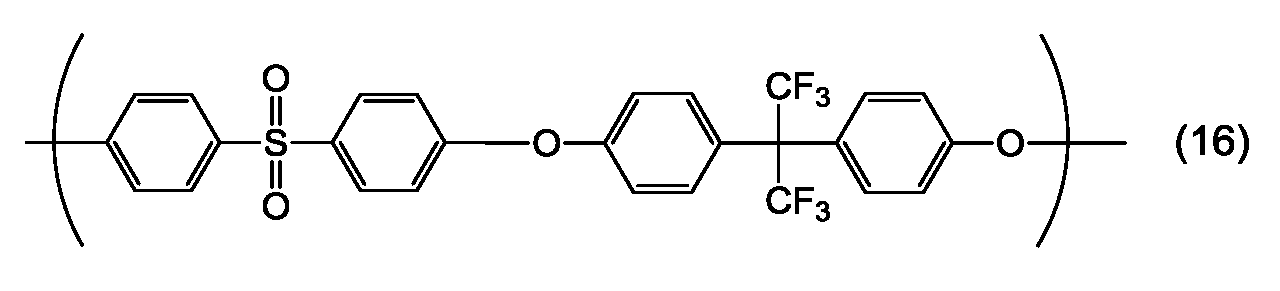
撹拌基、温度計、ジムロート冷却管を備えた三口フラスコにビス(4-フルオロフェニル)スルホン12.08gと、2,2-ビス(4-ヒドロキシフェニル)ヘキサフルオロプロパン16.81gを1-メチル-2-ピロリジノン115.55gに溶解させ、炭酸カリウム20.73gを加え、系内を窒素置換した。その後140℃まで加熱し20時間反応させた。反応終了後、反応溶液を桐山ロートで吸引濾過し、得られたろ液に2N-塩酸:1-メチル-2-ピロリジノン=1:9(体積比)の溶液を酸性になるまで加え、pH試験紙を用いて溶液が酸性条件であることを確認した。その後、得られた溶液をメタノールに滴下し、再沈殿した。滴下後、ブフナーロートで吸引濾過し、メタノールで洗浄し、得られた粉体を70℃に加熱した減圧乾燥機で12時間乾燥させ、下記式(16)で表される構造単位を有する芳香族ポリエーテルを得た。得られた芳香族ポリエーテルのGPC分析を行ったところ、標準ポリスチレン換算にて重量平均分子量は24000であった。
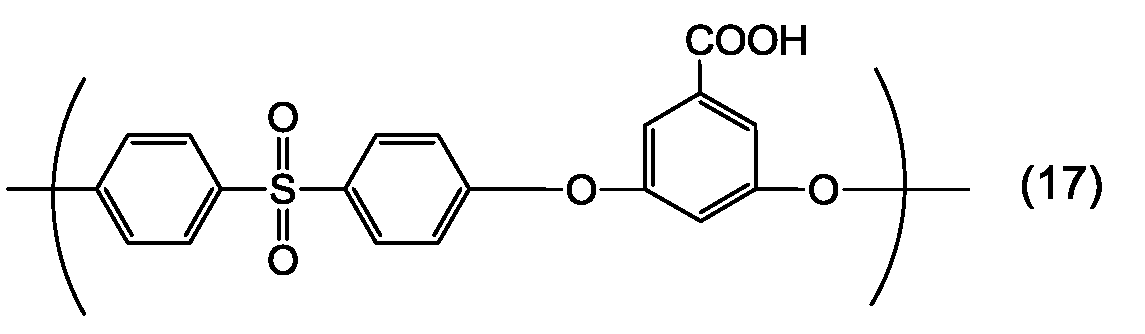
撹拌基、温度計、ジムロート冷却管を備えた三口フラスコにビス(4-フルオロフェニル)スルホン25.43gと、3,5-ジヒドロキシ安息香酸15.40gを1-メチル-2-ピロリジノン164.65gに溶解させ、炭酸カリウム41.46gを加え、系内を窒素置換した。その後140℃まで加熱し20時間反応させた。反応終了後、反応溶液を桐山ロートで吸引濾過し、得られたろ液に2N-塩酸:1-メチル-2-ピロリジノン=1:9(体積比)の溶液を酸性になるまで加え、pH試験紙を用いて溶液が酸性条件であることを確認した。その後、得られた溶液をメタノールに滴下し、再沈殿した。滴下後、ブフナーロートで吸引濾過し、メタノールで洗浄し、得られた粉体を70℃に加熱した減圧乾燥機で12時間乾燥させ、下記式(17)で表される構造単位を有する芳香族ポリエーテルを得た。得られた芳香族ポリエーテルのGPC分析を行ったところ、標準ポリスチレン換算にて重量平均分子量は12000であった。
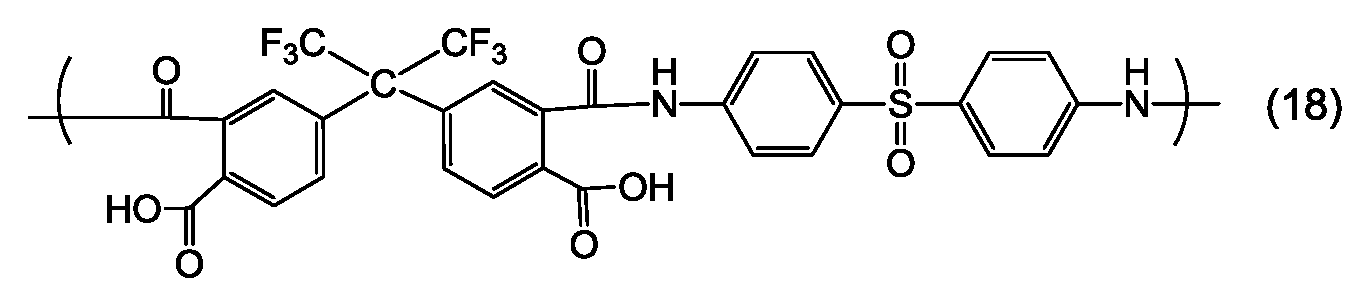
撹拌基、温度計、ジムロート冷却管を備えた三口フラスコに4, 4’-(ヘキサフルオロイソプロピリデン)ジフタル酸無水物8.88gとビス(4-アミノフェニル)スルホン4.72gをN,N,2-トリメチルプロピオンアミド54.48gに溶解させ、系内を窒素置換した。その後40℃まで加熱し24時間反応させた。反応終了後、得られた溶液を水:イソプロピルアルコール=1:9(体積比)の混合液に滴下し、再沈殿した。滴下後、ブフナーロートで吸引濾過し、前記水イソプロピルアルコール=1:9の混合液で洗浄し、得られた粉体を50℃に加熱した減圧乾燥機で12時間乾燥させ、下記式(18)で表される構造単位を有するポリイミド前駆体を得た。得られたポリイミド前駆体のGPC分析を行ったところ、標準ポリスチレン換算にて重量平均分子量は14000であった。
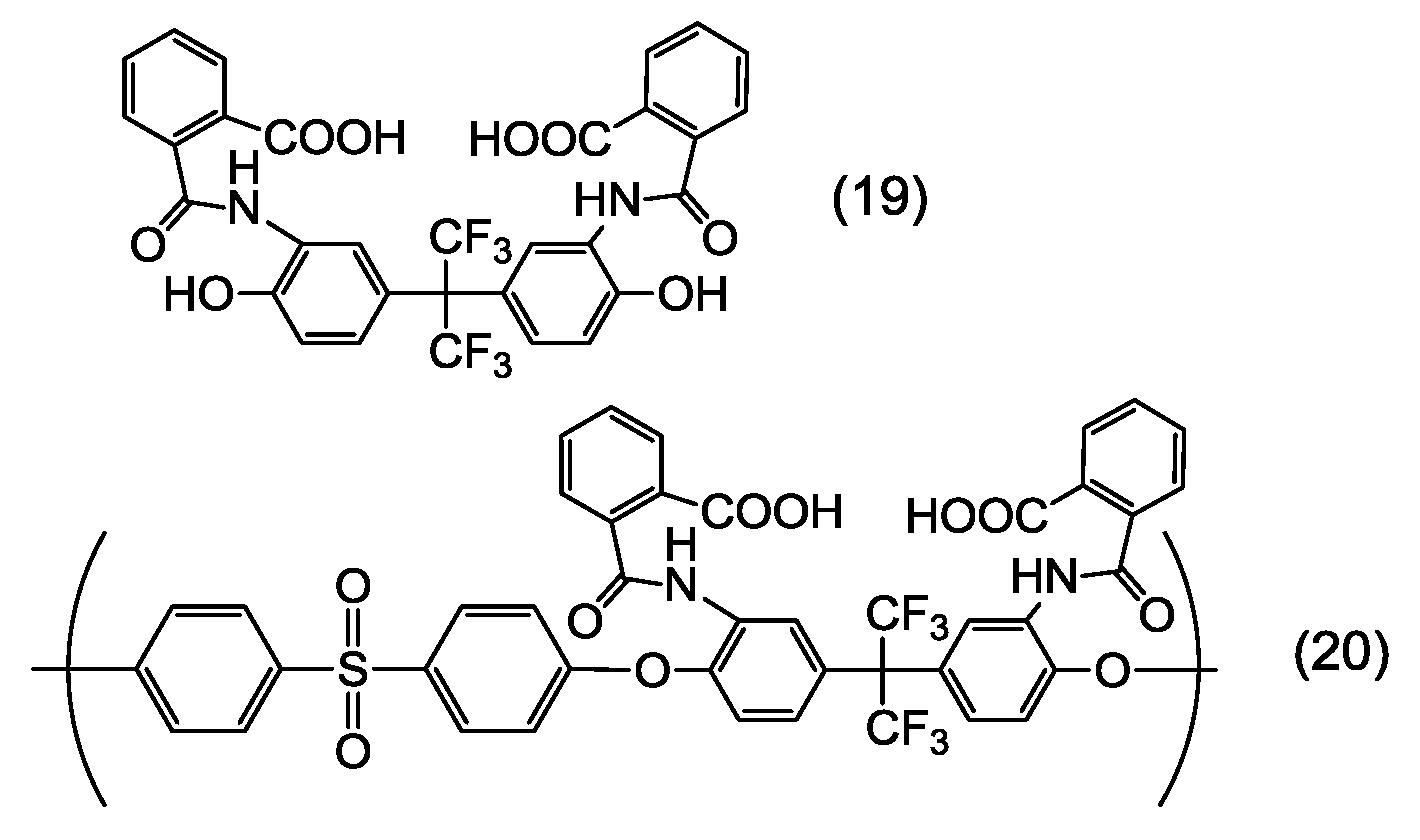
撹拌基、温度計、ジムロート冷却管を備えた三口フラスコにビス(4-フルオロフェニル)スルホン3.05gと、下記式(19)で表される化合物9.94gを1-メチル-2-ピロリジノン51.95gに溶解させ、炭酸カリウム4.15gを加え、系内を窒素置換した。その後140℃まで加熱し20時間反応させた。反応終了後、反応溶液を桐山ロートで吸引濾過し、得られたろ液に2N-塩酸:1-メチル-2-ピロリジノン=1:9(体積比)の溶液を酸性になるまで加え、pH試験紙を用いて溶液が酸性条件であることを確認した。その後、得られた溶液を水に滴下し、再沈殿した。滴下後、ブフナーロートで吸引濾過し、水で洗浄し、得られた粉体を50℃に加熱した減圧乾燥機で12時間乾燥させ、下記式(20)で表される構造単位を有する芳香族ポリエーテルを得た。得られた芳香族ポリエーテルのGPC分析を行ったところ、標準ポリスチレン換算にて重量平均分子量は5100であった。
〔アミノ基反応率〕
以下に記載する実施例で得られた芳香族ポリエーテルのアミノ基反応率は、反応前後における全アミン価測定を行うことで算出した。全アミン価測定は、JIS K7237に記載の方法で実施した。
撹拌機、温度計及びジムロート冷却管を備えた三口フラスコに、合成例1で得られた芳香族ポリエーテル2.50gとこはく酸無水物0.84gをプロピレングリコールモノメチルエーテルアセテート13.36gに溶解させ、系内を窒素置換した。その後80℃まで加熱し1時間反応させ、室温まで冷却後、孔径1.0μmのポリテトラフルオロエチレン(以下、PTFEと略称する。)製ミクロフィルターを用いてろ過して、下記式(21)で表される側鎖構造を有する芳香族ポリエーテルを20質量%含有する樹脂組成物を調製した。得られた芳香族ポリエーテルのアミノ基反応率は96%であった。

撹拌機、温度計、ジムロート冷却管を備えた三口フラスコに合成例1で得られた芳香族ポリエーテル3.00gとフタル酸無水物1.49gをプロピレングリコールモノメチルエーテルアセテート17.96gに溶解させ、系内を窒素置換した。その後80℃まで加熱し1時間反応させ、室温まで冷却後、孔径1.0μmのPTFE製ミクロフィルターを用いてろ過して、下記式(22)で表される側鎖構構造を有する芳香族ポリエーテルを20質量%含有する樹脂組成物を調製した。得られた芳香族ポリエーテルのアミノ基反応率は91%であった。
撹拌機、温度計及びジムロート冷却管を備えた三口フラスコに、合成例1で得られた芳香族ポリエーテル3.00gとイタコン酸無水物1.09gをプロピレングリコールモノメチルエーテルアセテート16.37gに溶解させ、系内を窒素置換した。その後80℃まで加熱し1時間反応させ、室温まで冷却後、孔径1.0μmのPTFE製ミクロフィルターを用いてろ過して、下記式(21)で表される側鎖構造を有する芳香族ポリエーテルを20質量%含有する樹脂組成物を調製した。得られた芳香族ポリエーテルのアミノ基反応率は95%であった。

撹拌機、温度計及びジムロート冷却管を備えた三口フラスコに、合成例1で得られた芳香族ポリエーテル3.00gとcis-シクロヘキサン-1,2-ジカルボン酸無水物1.50gをプロピレングリコールモノメチルエーテルアセテート18.01gに溶解させ、系内を窒素置換した。その後80℃まで加熱し1時間反応させ、室温まで冷却後、孔径1.0μmのPTFE製ミクロフィルターを用いてろ過して、下記式(24)で表される側鎖構造を有する芳香族ポリエーテルを20質量%含有する樹脂組成物を調製した。得られた芳香族ポリエーテルのアミノ基反応率は95%であった。

撹拌機、温度計及びジムロート冷却管を備えた三口フラスコに、合成例1で得られた芳香族ポリエーテル3.00gと4-メチルシクロヘキサン-1,2-ジカルボン酸無水物1.64gをプロピレングリコールモノメチルエーテルアセテート18.56gに溶解させ、系内を窒素置換した。その後80℃まで加熱し1時間反応させ、室温まで冷却後、孔径1.0μmのPTFE製ミクロフィルターを用いてろ過して、下記式(25)で表される側鎖構造を有する芳香族ポリエーテルを20質量%含有する樹脂組成物を調製した。得られた芳香族ポリエーテルのアミノ基反応率は95%であった。
撹拌機、温度計及びジムロート冷却管を備えた三口フラスコに、合成例2で得られた芳香族ポリエーテル3.00gと4-メチルシクロヘキサン-1,2-ジカルボン酸無水物1.85gをプロピレングリコールモノメチルエーテルアセテート19.41gに溶解させ、系内を窒素置換した。その後80℃まで加熱し1時間反応させ、室温まで冷却後、孔径1.0μmのPTFE製ミクロフィルターを用いてろ過して、前記式(22)で表される側鎖構造を有する芳香族ポリエーテルを20質量%含有する樹脂組成物を調製した。得られた芳香族ポリエーテルのアミノ基反応率は95%であった。
撹拌機、温度計及びジムロート冷却管を備えた三口フラスコに、合成例1で得られた芳香族ポリエーテル3.00gと1,1-シクロヘキサン二酢酸無水物1.58gを、質量比が1:1のプロピレングリコールモノメチルエーテルアセテートとN,N-2-トリメチルプロピオンアミドとの混合溶液18.32gに溶解させ、系内を窒素置換した。その後80℃まで加熱し1時間反応させ、室温まで冷却後、孔径1.0μmのPTFE製ミクロフィルターを用いてろ過して、下記式(26)で表される側鎖構造を有する芳香族ポリエーテルを20質量%含有する樹脂組成物を調製した。得られた芳香族ポリエーテルのアミノ基反応率は89%であった。

比較合成例1で得られた芳香族ポリエーテル5.00gをプロピレングリコールモノメチルエーテルアセテート20.00gに溶解させ、孔径1.0μmのPTFE製ミクロフィルターを用いてろ過して、樹脂固形分を20質量%含有する樹脂組成物を調製した。
比較合成例2で得られた芳香族ポリエーテル5.00gをプロピレングリコールモノメチルエーテルアセテート20.00gに溶解させ、孔径1.0μmのPTFE製ミクロフィルターを用いてろ過して、樹脂固形分を20質量%含有する樹脂組成物を調製した。
比較合成例3で得られたポリイミド前駆体5.00gをN,N,2-トリメチルプロピオンアミド20.00gに溶解させ、孔径1.0μmのPTFE製ミクロフィルターを用いてろ過して、樹脂固形分を20質量%含有する樹脂組成物を調製した。
比較合成例4で得られた芳香族ポリエーテル5.00gをプロピレングリコールモノメチルエーテルアセテート20.00gに溶解させ、孔径1.0μmのPTFE製ミクロフィルターを用いてろ過して、樹脂固形分を20質量%含有する樹脂組成物を調製した。
実施例1乃至実施例7、及び比較例1乃至比較例4で得られた樹脂組成物をシリコンウェハ上にスピンコーターを用いて塗布し、ホットプレート上において、100℃で2分間ベークを行い、膜厚1.0μmの膜を形成した。この膜を、2.38質量%の水酸化テトラメチルアンモニウム(以下、TMAHと略称する。)水溶液に1分間浸漬し、その後純水で洗浄し、ホットプレート上において、100℃で1分間ベークを行った後の残膜厚を測定することで、アルカリ水溶液への溶解性を評価した。その結果を表1に示す。以下に示す計算式により残膜率を算出し、その残膜率が1%未満の場合を○、1%以上の場合を×で表した。
{(浸漬前の膜厚)-(浸漬後の残膜厚)}÷(浸漬前の膜厚)×100
実施例1乃至実施例7、及び比較例1乃至比較例4で得られた樹脂組成物に、シリコンウェハ上にスピンコーターを用いて膜を形成した際に膜厚が500nmとなるよう、プロピレングリコールモノメチルエーテルアセテートを加えて希釈溶液を作製した。作製した希釈溶液をシリコンウェハ上にスピンコーターを用いて塗布し、ホットプレート上において、100℃で2分間ベークを行い、更に窒素置換されたオーブンにおいて250℃で1時間ベークして膜を形成した。この膜の絶縁性について、水銀プローバ(Four Dimensions社製、CVmap92-B)による1MV/cm、2MV/cm、3MV/cmの電圧をかけた際のリーク電流値を測定した。その結果を表1に示す。リーク電流値が1.0×10-9A/cm2未満の場合を◎、1.0×10-9A/cm2以上1.0×10-8A/cm2未満の場合を○、1.0×10-8A/cm2以上1.0×10-7A/cm2未満の場合を△、1.0×10-7以上の場合を×で表した。

(実施例8)
撹拌機、温度計及びジムロート冷却管を備えた三口フラスコに、合成例1で得られた芳香族ポリエーテル15.00gとイタコン酸無水物1.64gと4-メチルシクロヘキサン-1,2-ジカルボン酸無水物5.74gとをプロピレングリコール-1-モノメチルエーテル-2-アセタート52.22gに溶解させ、系内を窒素置換した。その後80℃まで加熱し1時間反応させ、前記式(21)で表される側鎖構造を有する構造単位と前記式(23)で表される側鎖構造を有する構造単位を有し、前者の構造単位と後者の構造単位のモル比が30:70である芳香族ポリエーテルを30質量%含有する樹脂組成物を調製した。得られた芳香族ポリエーテルのアミノ基反応率は95%であった。得られた樹脂組成物60.00gに、ラジカル架橋剤としてA-DPH(新中村化学工業(株)製)を5.40g、連鎖移動剤としてカレンズMT-PE1(昭和電工(株)製)を0.90g、光ラジカル発生剤としてIRGACURE OXE01を0.90g、熱硬化性架橋剤としてVESTANAT B1358/100(エボニックインダストリーズ社製)を3.60g、及び粘度調整剤としてプロピレングリコールモノメチルエーテルアセテートを1.20g加え、均一になるまで撹拌後、孔径5.0μmのPTFE製ミクロフィルターを用いてろ過して、ネガ型感光性樹脂組成物を調製した。
実施例8で得られた感光性樹脂組成物をシリコンウェハ上にスピンコーターを用いて塗布し、ホットプレート上において、100℃で2分間ベークを行い、膜厚6μmの膜を形成した。この膜を、2.38質量%のTMAH水溶液に60秒間浸漬し、その後純水30秒間で洗浄し、ホットプレート上において、100℃で1分間ベークを行った後の残膜厚を測定することで、アルカリ水溶液への溶解性を評価した。その結果を表2に示す。前述の計算式により残膜率を算出し、その残膜率が1%未満の場合を○、1%以上の場合を×で表した。
実施例8で得られた感光性樹脂組成物をシリコンウェハ上にスピンコーターを用いて塗布し、ホットプレート上において、100℃で2分間ベークを行い、膜厚6μmの膜を形成した。この膜に、高圧水銀灯によって、i線(365nm)を100mJ/cm2(照度:4.6mW/cm2)照射した後、ホットプレート上において130℃で2分間ベークを行った。その後、2.38質量%のTMAH水溶液にて60秒間浸漬し、更に純水で30秒間洗浄し、ホットプレート上において、100℃で1分間ベークを行った。パターン形成性は、2.38質量%のTMAH水溶液に浸漬前後の残膜率から評価を行った。その結果を表2に示す。残膜率が90%以上の場合を○、90%未満の場合を×で表した。
実施例8で得られた感光性樹脂組成物をシリコンウェハ上にスピンコーターを用いて塗布し、ホットプレート上において、100℃で2分間ベークを行い、膜厚6μmの膜を形成した。この膜に、石英マスクを通して高圧水銀灯によって、i線(365nm)を100mJ/cm2(照度:4.6mW/cm2)照射した後、ホットプレート上において130℃で2分間ベークを行った。その後、2.38質量%のTMAH水溶液にて60秒間パドル現像することで未露光部を溶解し、更に純水で30秒間洗浄し、ホットプレート上において、100℃で1分間ベークを行った。解像度の評価は、シリコンウェハ上に直径10μmのホールパターンが解像している場合を○、解像していない場合を×で表した。その結果を表2に示す。
実施例8で得られた感光性樹脂組成物をシリコンウェハ上にスピンコーターを用いて塗布し、ホットプレート上において、100℃で2分間ベークを行い、高圧水銀灯によって、i線(365nm)を100mJ/cm2(照度:4.6mW/cm2)照射した後、ホットプレート上において130℃で2分間ベークを行った。次いで、窒素置換されたオーブン中で、250℃で1時間ベークすることで、膜厚が5μmの膜を形成した。この形成した膜の溶剤耐性を、プロピレングリコールモノメチエルエーテル(PGME)、プロピレングリコールモノメチルエーテルアセテート(PGMEA)、シクロヘキサノン(CYH)、N-メチル-2-ピロリジノン(NMP)に23℃で1分間浸漬した後の残膜率から評価した。その結果を表2に示す。前述の計算式により残膜率を算出し、その残膜率が90%以上の場合を○、90%未満の場合を×で表した。
実施例8で得られた感光性樹脂組成物に、膜を形成した際の膜厚が500nmとなるよう、プロピレングリコールモノメチルエーテルアセテートを加えて希釈した。この希釈溶液をシリコンウェハ上にスピンコーターを用いて塗布し、ホットプレート上において、100℃で2分間ベークを行い、高圧水銀灯によって、i線(365nm)を100mJ/cm2(照度:4.6mW/cm2)照射した後、ホットプレート上において130℃で2分間ベークを行った。次いで、窒素置換されたオーブン中で、250℃で1時間ベークし膜を形成した。この膜の絶縁性について、水銀プローバ(Four Dimensions社製、CVmap92-B)による1MV/cm、2MV/cm、3MV/cmの電圧をかけた際のリーク電流値を測定した。リーク電流値が1.0×10-9A/cm2未満を◎、1.0×10-9A/cm2以上1.0×10-8A/cm2未満を○、1.0×10-8A/cm2以上1.0×10-7A/cm2未満を△、1.0×10-7以上を×とした。結果を表3に示す。
(実施例9)
撹拌機、温度計及びジムロート冷却管を備えた三口フラスコに、合成例1で得られた芳香族ポリエーテル10.00gと4-メチルシクロへキサン-1,2-ジカルボン酸無水物5.39gとをプロピレングリコールモノメチルエーテルアセテート28.58gに溶解させ、系内を窒素置換した。その後80℃まで加熱し1時間反応させ、室温まで冷却後、孔径1.0μmのPTFE製ミクロフィルターを用いてろ過して、前記式(25)で表される側鎖構造を有する芳香族ポリエーテルを35質量%含有する樹脂組成物を調製した。得られた芳香族ポリエーテルのアミノ基反応率は95%であった。得られた樹脂組成物30.00gに、下記式(27)で表され、Dが下記式(28)で表される基又は水素原子を表す光酸発生剤1.58g、熱硬化性架橋剤としてVESTANAT B1358/100(エボニックインダストリーズ社製)を2.10g、粘度調整剤として、プロピレングリコールモノメチルエーテルアセテートを1.77g加え、均一になるまで撹拌後、孔径5.0μmのPTFE製ミクロフィルターを用いてろ過して、ポジ型感光性樹脂組成物を調製した。
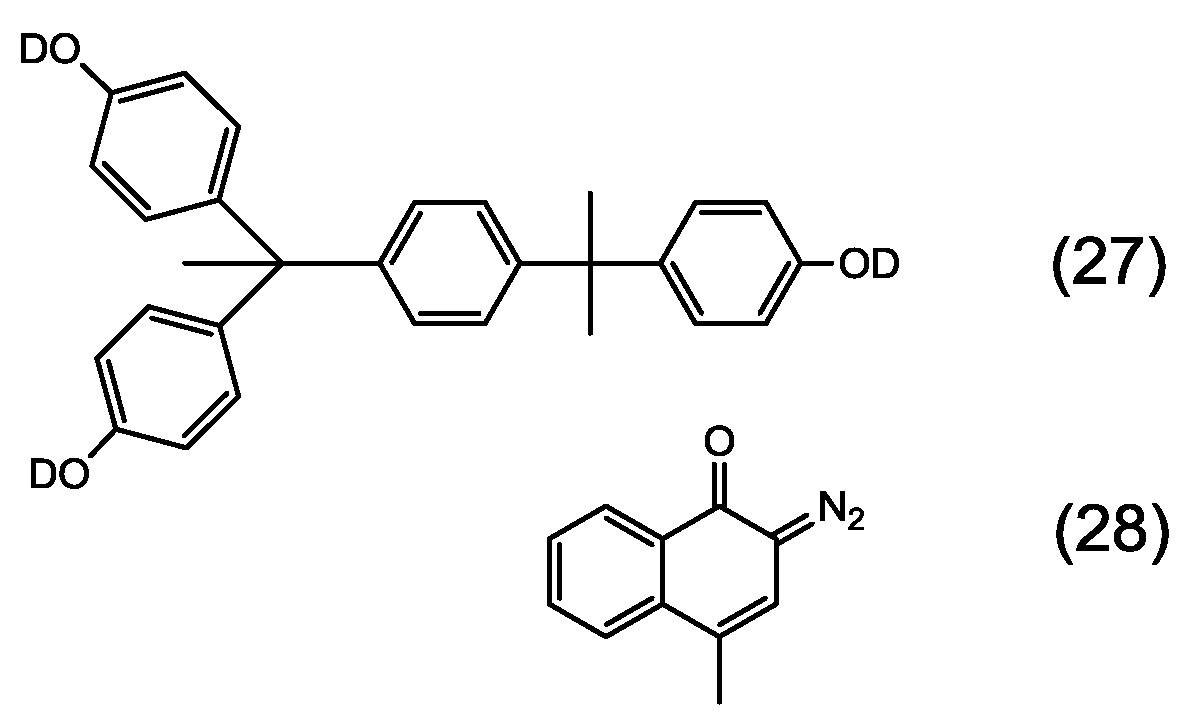
撹拌機、温度計及びジムロート冷却管を備えた三口フラスコに、合成例1で得られた芳香族ポリエーテル30.00gと1,1-シクロヘキサン二酢酸無水物15.79gを、質量比が1:1のプロピレングリコールモノメチルエーテルアセテートとN,N-2-トリメチルプロピオンアミドとの混合溶液85.04gに溶解させ、系内を窒素置換した。その後80℃まで加熱し1時間反応させ、室温まで冷却後、孔径1.0μmのPTFE製ミクロフィルターを用いてろ過して、前記式(26)で表される側鎖構造を有する芳香族ポリエーテルを35質量%含有する樹脂組成物を調製した。得られた芳香族ポリエーテルのアミノ基反応率は89%であった。得られた樹脂組成物30.00gに、前記式(27)で表され、Dが前記式(28)で表される基又は水素原子を表す光酸発生剤2.10g、熱硬化性架橋剤としてVESTANAT B1358/100(エボニックインダストリーズ社製)を4.20g、TRIXENEBI-7992(バクセンデン社製)1.05g、触媒として1,8-ジアザビシクロ[5.4.0]-7-ウンデセン0.21g、界面活性剤としてメガファック(登録商標)R-30-N(DIC(株)製)0.05g、シランカップリング剤として3-フェニルアミノプロピルトリメトキシシラン0.11g、pH調製剤としてマレイン酸0.32g、粘度調整剤として、質量比が1:1のプロピレングリコールモノメチルエーテルアセテートとN,N-2-トリメチルプロピオンアミドとの混合溶液8.22gを加え、均一になるまで撹拌後、孔径5.0μmのPTFE製ミクロフィルターを用いてろ過して、ポジ型感光性樹脂組成物を調製した。
比較合成例4で得られた芳香族ポリエーテル10.00g、前記式(27)で表され、Dが前記式(28)で表される基又は水素原子を表す光酸発生剤2.00g、熱硬化性架橋剤としてVESTANAT B1358/100(エボニックインダストリーズ社製)1.50gをプロピレングリコールモノメチルエーテルアセテート20.25gに加え、均一になるまで撹拌後、孔径5.0μmのPTFE製ミクロフィルターを用いてろ過して、ポジ型感光性樹脂組成物を調製した。
実施例9及び実施例10並びに比較例5で得られた感光性樹脂組成物をシリコンウェハ上にスピンコーターを用いて塗布し、ホットプレート上において、100℃で2分間ベークを行い、膜厚6μmの膜を形成した。この膜を、2.38質量%のTMAH水溶液に60秒間浸漬し、その後純水30秒間で洗浄し、ホットプレート上において、100℃で1分間ベークを行った後の残膜厚を測定することで、アルカリ水溶液への溶解性を評価した。前述の計算式により残膜率を算出し、その残膜率が90%以上の場合を○、90%未満の場合を×で表した。結果を表2に示す。
実施例9及び実施例10並びに比較例5で得られた感光性樹脂組成物をシリコンウェハ上にスピンコーターを用いて塗布し、ホットプレート上において、100℃で2分間ベークを行い、膜厚6μmの膜を形成した。この膜に、高圧水銀灯によって、i線(365nm)を500mJ/cm2(照度:4.6mW/cm2)照射した後、2.38質量%のTMAH水溶液にて60秒間浸漬し、更に純水で30秒間洗浄し、ホットプレート上において、100℃で1分間ベークを行った。パターン形成性は、2.38質量%のTMAH水溶液浸漬前後の残膜率から評価を行った。残膜率が1%未満の場合を○、1%以上の場合を×で表した。結果を表2に示す。
実施例9及び実施例10並びに及び比較例5で得られた感光性樹脂組成物をシリコンウェハ上にスピンコーターを用いて塗布し、ホットプレート上において、100℃で2分間ベークを行い、膜厚6μmの膜を形成した。この膜に、石英マスクを通して高圧水銀灯によって、i線(365nm)を500mJ/cm2(照度:4.6mW/cm2)照射した後、2.38質量%のTMAH水溶液にて60秒間パドル現像することで未露光部を溶解し、更に純水で30秒間洗浄し、ホットプレート上において、200℃で1分間ベークを行った。解像度の評価は、シリコンウェハ上に10μmのホールパターンが解像している場合を○、解像していない場合を×で表した。結果を表2に示す。
実施例9及び実施例10並びに及び比較例5で得られた感光性樹脂組成物をシリコンウェハ上にスピンコーターを用いて塗布し、ホットプレート上において、100℃で2分間ベークを行った。次いで、窒素置換されたオーブン中で、250℃で1時間ベークすることで、膜厚が5μmの膜を形成した。この形成した膜の溶剤耐性を、プロピレングリコールモノメチエルエーテル(PGME)、プロピレングリコールモノメチルエーテルアセテート(PGMEA)、シクロヘキサノン(CYH)、N-メチル-2-ピロリジノン(NMP)に23℃で1分間浸漬した後の残膜率から評価した。前述の計算式により残膜率を算出し、その残膜率が90%以上の場合を○、90%未満の場合を×で表した。結果を表2に示す。
実施例9及び実施例10並びに比較例5で得られた感光性樹脂組成物に、膜を形成した際の膜厚が500nmとなるよう、プロピレングリコールモノメチルエーテルアセテートを加えて希釈した。この希釈溶液をシリコンウェハ上にスピンコーターを用いて塗布し、ホットプレート上において、100℃で2分間ベークを行った。次いで、窒素置換されたオーブン中で、250℃で1時間ベークし膜を形成した。この膜の絶縁性について、水銀プローバ(Four Dimensions社製、CVmap92-B)による1MV/cm、2MV/cm、3MV/cmの電圧をかけた際のリーク電流値を測定した。リーク電流値が1.0×10-9A/cm2未満を◎、1.0×10-9A/cm2以上1.0×10-8A/cm2未満を○、1.0×10-8A/cm2以上1.0×10-7A/cm2未満を△、1.0×10-7以上を×で表した。結果を表3に示す。

Claims (13)
- 下記式(1a)で表される構造単位及び下記式(1b)で表される構造単位を有する重合体と有機溶剤とを含む、絶縁膜形成用樹脂組成物。


- 前記式(2)で表される置換基においてZは下記式(3)、式(4)、式(5)又は式(6):
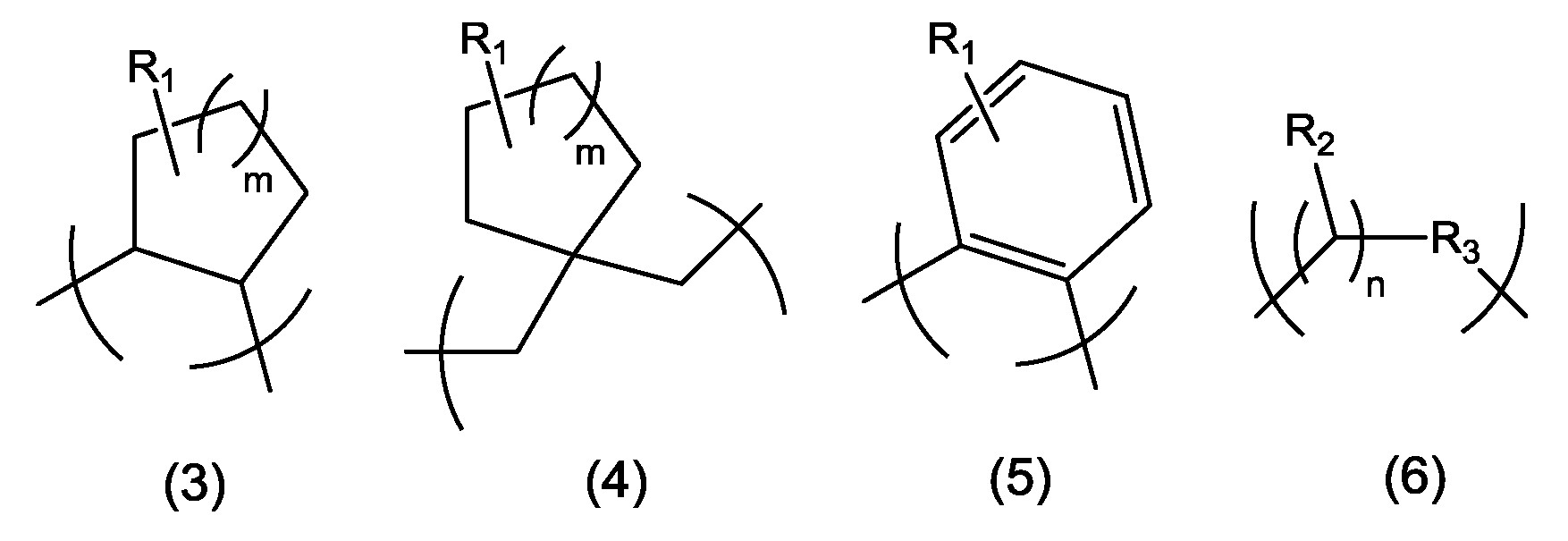
で表される二価の基を表す、請求項1に記載の絶縁膜形成用樹脂組成物。 - 前記重合体は、下記式(7):
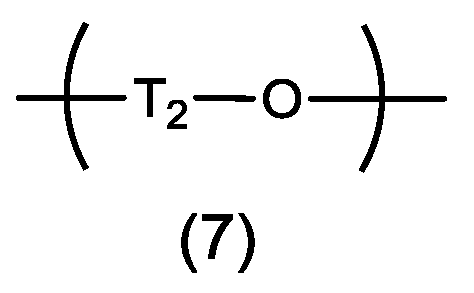
で表される構造単位をさらに含有する、請求項1に記載の絶縁膜形成用樹脂組成物。 - 前記式(1a)で表される構造単位においてT0は下記式(11)で表される二価の有機基を表し、前記式(1b)で表される構造単位においてT1は下記式(12)で表される二価の有機基を表す、請求項1に記載の絶縁膜形成用樹脂組成物。
- 前記式(7)で表される構造単位においてT2は下記式(13)で表される二価の有機基を表す、請求項3に記載の絶縁膜形成用樹脂組成物。
- 前記重合体の重量平均分子量は1,000乃至100,000である、請求項1乃至請求項5のいずれか一項に記載の絶縁膜形成用樹脂組成物。
- 感光剤をさらに含む、請求項1乃至請求項6のいずれか一項に記載の絶縁膜形成用樹脂組成物。
- 前記感光剤が光ラジカル発生剤又は光酸発生剤である、請求項7に記載の絶縁膜形成用樹脂組成物。
- 架橋剤をさらに含む、請求項1乃至請求項8のいずれか一項に記載の絶縁膜形成用樹脂組成物。
- 前記架橋剤は前記重合体に対し10phr乃至100phr含まれる、請求項9に記載の絶縁膜形成用樹脂組成物。
- 前記架橋剤は、熱又は酸によって反応する架橋剤及びラジカルによって反応する架橋剤からなる群から選ばれる少なくとも1種である、請求項9又は請求項10に記載の絶縁膜形成用樹脂組成物。
- 請求項1乃至請求項11のいずれか一項に記載の絶縁膜形成用樹脂組成物を、基板上に塗布し乾燥させて塗膜を形成する工程、前記塗膜をg線、h線、i線、ghi線ブロードバンド又はKrFエキシマレーザーで露光する工程、及び露光後の膜をアルカリ水溶液又は有機溶剤を用いて現像する工程を含むパターンの形成方法。
- 下記式(1a)で表される構造単位を有する重合体、及び下記式(14)で表されるモノマーを有機溶剤に溶解させた溶液を加熱して、前記重合体と前記モノマーとを反応させることを特徴とする、下記式(1a)で表される構造単位及び下記式(1b)で表される構造単位を有する重合体の合成方法。



Priority Applications (5)
| Application Number | Priority Date | Filing Date | Title |
|---|---|---|---|
| CN201680018918.6A CN107429109B (zh) | 2015-03-30 | 2016-03-09 | 树脂组合物和使用该树脂组合物的图案形成方法、以及聚合物的合成方法 |
| SG11201708076PA SG11201708076PA (en) | 2015-03-30 | 2016-03-09 | Resin composition, method for forming pattern using the same, and method for synthesizing polymer |
| KR1020177030876A KR102272721B1 (ko) | 2015-03-30 | 2016-03-09 | 수지 조성물 및 이것을 이용한 패턴 형성방법, 그리고 중합체의 합성방법 |
| US15/563,752 US10048585B2 (en) | 2015-03-30 | 2016-03-09 | Resin composition, method for forming pattern using the same, and method for synthesizing polymer |
| JP2017509479A JP6471879B2 (ja) | 2015-03-30 | 2016-03-09 | 樹脂組成物及びそれを用いたパターン形成方法、並びに重合体の合成方法 |
Applications Claiming Priority (2)
| Application Number | Priority Date | Filing Date | Title |
|---|---|---|---|
| JP2015069956 | 2015-03-30 | ||
| JP2015-069956 | 2015-03-30 |
Publications (1)
| Publication Number | Publication Date |
|---|---|
| WO2016158271A1 true WO2016158271A1 (ja) | 2016-10-06 |
Family
ID=57005615
Family Applications (1)
| Application Number | Title | Priority Date | Filing Date |
|---|---|---|---|
| PCT/JP2016/057426 Ceased WO2016158271A1 (ja) | 2015-03-30 | 2016-03-09 | 樹脂組成物及びそれを用いたパターン形成方法、並びに重合体の合成方法 |
Country Status (7)
| Country | Link |
|---|---|
| US (1) | US10048585B2 (ja) |
| JP (1) | JP6471879B2 (ja) |
| KR (1) | KR102272721B1 (ja) |
| CN (1) | CN107429109B (ja) |
| SG (1) | SG11201708076PA (ja) |
| TW (1) | TWI669343B (ja) |
| WO (1) | WO2016158271A1 (ja) |
Families Citing this family (2)
| Publication number | Priority date | Publication date | Assignee | Title |
|---|---|---|---|---|
| US10048585B2 (en) * | 2015-03-30 | 2018-08-14 | Nissan Chemical Industries, Ltd. | Resin composition, method for forming pattern using the same, and method for synthesizing polymer |
| TWI749351B (zh) * | 2019-08-08 | 2021-12-11 | 達興材料股份有限公司 | 暫時黏著組成物、暫時黏著膜、複合膜、暫時黏著被加工物之方法以及半導體晶圓封裝 |
Citations (3)
| Publication number | Priority date | Publication date | Assignee | Title |
|---|---|---|---|---|
| JP2000230142A (ja) * | 1999-02-10 | 2000-08-22 | Hitachi Chem Co Ltd | ポリキノリン樹脂誘導体を用いた絶縁膜樹脂組成物並びに半導体装置 |
| JP2009244801A (ja) * | 2008-03-31 | 2009-10-22 | Fujifilm Corp | 感光性樹脂組成物、高分子化合物、パターンの製造法および電子デバイス |
| WO2013118871A1 (ja) * | 2012-02-09 | 2013-08-15 | 日産化学工業株式会社 | 炭素と炭素の多重結合を有する樹脂を含むパッシベーション膜形成用組成物 |
Family Cites Families (14)
| Publication number | Priority date | Publication date | Assignee | Title |
|---|---|---|---|---|
| EP0483066A3 (en) * | 1990-10-26 | 1992-09-30 | Ciba-Geigy Ag | Soluble polyarylenethers |
| US5945253A (en) * | 1996-08-29 | 1999-08-31 | Xerox Corporation | High performance curable polymers and processes for the preparation thereof |
| KR100292800B1 (ko) * | 1998-11-26 | 2001-09-17 | 정선종 | 불소치환폴리아릴렌에테르공중합체및이를이용한폴리머광소자 |
| JP2004133088A (ja) | 2002-10-09 | 2004-04-30 | Toray Ind Inc | 電子部品用感光性耐熱性樹脂組成物および電子部品用感光性耐熱性樹脂前駆体組成物 |
| JP5386781B2 (ja) | 2007-03-12 | 2014-01-15 | 日立化成デュポンマイクロシステムズ株式会社 | 感光性樹脂組成物、該樹脂組成物を用いたパターン硬化膜の製造方法及び電子部品 |
| JP2009098681A (ja) | 2007-09-28 | 2009-05-07 | Fujifilm Corp | 感光性樹脂組成物、高分子化合物、パターンの製造法、および電子デバイス |
| US20100041837A1 (en) * | 2008-08-13 | 2010-02-18 | Gary William Yeager | Polyarylethers, blends and methods for making |
| KR101333693B1 (ko) * | 2009-12-10 | 2013-11-27 | 제일모직주식회사 | 포지티브형 감광성 수지 조성물 |
| KR20110065899A (ko) * | 2009-12-10 | 2011-06-16 | 엘지디스플레이 주식회사 | 액정표시장치 및 그 구동방법 |
| SG187778A1 (en) * | 2010-08-10 | 2013-03-28 | Nissan Chemical Ind Ltd | Adhesive composition containing resin having carbon-carbon multiple bond |
| WO2012160975A1 (ja) * | 2011-05-20 | 2012-11-29 | 日産化学工業株式会社 | 感光性樹脂組成物 |
| US9195137B2 (en) * | 2012-03-08 | 2015-11-24 | Nissan Chemical Industries, Ltd. | Composition for forming highly adhesive resist underlayer film |
| KR102426418B1 (ko) * | 2014-09-17 | 2022-07-28 | 닛산 가가쿠 가부시키가이샤 | 열경화성 수지를 포함하는 막형성 조성물 |
| US10048585B2 (en) * | 2015-03-30 | 2018-08-14 | Nissan Chemical Industries, Ltd. | Resin composition, method for forming pattern using the same, and method for synthesizing polymer |
-
2016
- 2016-03-09 US US15/563,752 patent/US10048585B2/en active Active
- 2016-03-09 JP JP2017509479A patent/JP6471879B2/ja active Active
- 2016-03-09 KR KR1020177030876A patent/KR102272721B1/ko active Active
- 2016-03-09 WO PCT/JP2016/057426 patent/WO2016158271A1/ja not_active Ceased
- 2016-03-09 SG SG11201708076PA patent/SG11201708076PA/en unknown
- 2016-03-09 CN CN201680018918.6A patent/CN107429109B/zh active Active
- 2016-03-18 TW TW105108543A patent/TWI669343B/zh active
Patent Citations (3)
| Publication number | Priority date | Publication date | Assignee | Title |
|---|---|---|---|---|
| JP2000230142A (ja) * | 1999-02-10 | 2000-08-22 | Hitachi Chem Co Ltd | ポリキノリン樹脂誘導体を用いた絶縁膜樹脂組成物並びに半導体装置 |
| JP2009244801A (ja) * | 2008-03-31 | 2009-10-22 | Fujifilm Corp | 感光性樹脂組成物、高分子化合物、パターンの製造法および電子デバイス |
| WO2013118871A1 (ja) * | 2012-02-09 | 2013-08-15 | 日産化学工業株式会社 | 炭素と炭素の多重結合を有する樹脂を含むパッシベーション膜形成用組成物 |
Also Published As
| Publication number | Publication date |
|---|---|
| TW201704338A (zh) | 2017-02-01 |
| JPWO2016158271A1 (ja) | 2018-01-25 |
| KR102272721B1 (ko) | 2021-07-05 |
| US20180081273A1 (en) | 2018-03-22 |
| TWI669343B (zh) | 2019-08-21 |
| US10048585B2 (en) | 2018-08-14 |
| KR20170132244A (ko) | 2017-12-01 |
| CN107429109B (zh) | 2019-10-11 |
| SG11201708076PA (en) | 2017-10-30 |
| JP6471879B2 (ja) | 2019-02-20 |
| CN107429109A (zh) | 2017-12-01 |
Similar Documents
| Publication | Publication Date | Title |
|---|---|---|
| KR102671323B1 (ko) | 감광성 수지 조성물, 패턴 경화막의 제조 방법, 경화막, 층간 절연막, 커버 코트층, 표면 보호막 및 전자 부품 | |
| US12601970B2 (en) | Photosensitive resin composition, method for manufacturing patterned cured product, cured product, interlayer insulating film, cover coat layer, surface protective film, and electronic component | |
| KR101584385B1 (ko) | 포지티브형 감광성 수지 조성물, 경화막, 보호막 및 절연막, 및 이를 이용한 반도체 장치 및 표시체 장치 | |
| JP6645424B2 (ja) | 感光性樹脂組成物、硬化膜、保護膜、絶縁膜および電子装置 | |
| JP2020056934A (ja) | パターン硬化膜の製造方法、感光性樹脂組成物、硬化膜、層間絶縁膜、カバーコート層、表面保護膜及び電子部品 | |
| CN113168092B (zh) | 感光性树脂组合物、图案固化物的制造方法、固化物、层间绝缘膜、覆盖涂层、表面保护膜及电子部件 | |
| WO2015141527A1 (ja) | 感光性樹脂組成物および電子装置 | |
| JP6555115B2 (ja) | 感光性樹脂材料 | |
| US20250362601A1 (en) | Photosensitive Resin Composition, Method Of Manufacturing Pattern Cured Film, Cured Film, Interlayer Insulating Film, Cover Coat Layer, Surface Protective Film, And Electronic Component | |
| JP2018146964A (ja) | 感光性樹脂組成物、パターン硬化物の製造方法、硬化物、層間絶縁膜、カバーコート層、表面保護膜及び電子部品 | |
| JP6471879B2 (ja) | 樹脂組成物及びそれを用いたパターン形成方法、並びに重合体の合成方法 | |
| KR101667787B1 (ko) | 포지티브형 감광성 수지 조성물, 및 이를 이용한 감광성 수지막 및 표시 소자 | |
| WO2020071422A1 (ja) | 感光性樹脂組成物、パターン硬化膜の製造方法、硬化膜、層間絶縁膜、カバーコート層、表面保護膜及び電子部品 | |
| JP6083557B2 (ja) | シルセスキオキサン誘導体、それを用いたネガ型感光性樹脂組成物 | |
| JPWO2018179330A1 (ja) | 感光性樹脂組成物、パターン硬化膜の製造方法、硬化物、層間絶縁膜、カバーコート層、表面保護膜、及び電子部品 | |
| CN115113484B (zh) | 正型感光性树脂组成物、正型感光性干薄膜及其制造方法、图案形成方法 | |
| JP2009175651A (ja) | ポジ型感光性樹脂組成物、硬化膜、保護膜、絶縁膜およびそれを用いた半導体装置、表示体装置。 | |
| JP7243233B2 (ja) | 感光性樹脂組成物、パターン硬化物の製造方法、硬化物、層間絶縁膜、カバーコート層、表面保護膜及び電子部品 | |
| JP2019148816A (ja) | 感光性樹脂材料 | |
| KR20260057555A (ko) | 감광성 수지 조성물, 패턴 경화물의 제조 방법, 경화물, 층간 절연막, 커버 코트층, 표면 보호막 및 전자 부품 | |
| KR20150045811A (ko) | 포지티브형 감광성 수지 조성물, 및 이를 이용한 감광성 수지막 및 표시 소자 |
Legal Events
| Date | Code | Title | Description |
|---|---|---|---|
| 121 | Ep: the epo has been informed by wipo that ep was designated in this application |
Ref document number: 16772155 Country of ref document: EP Kind code of ref document: A1 |
|
| ENP | Entry into the national phase |
Ref document number: 2017509479 Country of ref document: JP Kind code of ref document: A |
|
| WWE | Wipo information: entry into national phase |
Ref document number: 11201708076P Country of ref document: SG Ref document number: 15563752 Country of ref document: US |
|
| NENP | Non-entry into the national phase |
Ref country code: DE |
|
| ENP | Entry into the national phase |
Ref document number: 20177030876 Country of ref document: KR Kind code of ref document: A |
|
| 122 | Ep: pct application non-entry in european phase |
Ref document number: 16772155 Country of ref document: EP Kind code of ref document: A1 |