WO2016157778A1 - 車両制御システム、車両制御装置、及び携帯機 - Google Patents
車両制御システム、車両制御装置、及び携帯機 Download PDFInfo
- Publication number
- WO2016157778A1 WO2016157778A1 PCT/JP2016/001475 JP2016001475W WO2016157778A1 WO 2016157778 A1 WO2016157778 A1 WO 2016157778A1 JP 2016001475 W JP2016001475 W JP 2016001475W WO 2016157778 A1 WO2016157778 A1 WO 2016157778A1
- Authority
- WO
- WIPO (PCT)
- Prior art keywords
- vehicle control
- door
- portable device
- search
- control system
- Prior art date
- Legal status (The legal status is an assumption and is not a legal conclusion. Google has not performed a legal analysis and makes no representation as to the accuracy of the status listed.)
- Ceased
Links
Images







Classifications
-
- B—PERFORMING OPERATIONS; TRANSPORTING
- B60—VEHICLES IN GENERAL
- B60R—VEHICLES, VEHICLE FITTINGS, OR VEHICLE PARTS, NOT OTHERWISE PROVIDED FOR
- B60R25/00—Fittings or systems for preventing or indicating unauthorised use or theft of vehicles
- B60R25/01—Fittings or systems for preventing or indicating unauthorised use or theft of vehicles operating on vehicle systems or fittings, e.g. on doors, seats or windscreens
-
- B—PERFORMING OPERATIONS; TRANSPORTING
- B60—VEHICLES IN GENERAL
- B60R—VEHICLES, VEHICLE FITTINGS, OR VEHICLE PARTS, NOT OTHERWISE PROVIDED FOR
- B60R25/00—Fittings or systems for preventing or indicating unauthorised use or theft of vehicles
- B60R25/20—Means to switch the anti-theft system on or off
- B60R25/24—Means to switch the anti-theft system on or off using electronic identifiers containing a code not memorised by the user
-
- E—FIXED CONSTRUCTIONS
- E05—LOCKS; KEYS; WINDOW OR DOOR FITTINGS; SAFES
- E05B—LOCKS; ACCESSORIES THEREFOR; HANDCUFFS
- E05B49/00—Electric permutation locks; Circuits therefor ; Mechanical aspects of electronic locks; Mechanical keys therefor
Definitions
- the present disclosure relates to a vehicle control system that unlocks a vehicle door by connecting a portable device carried by a user to a vehicle control device mounted on the vehicle so as to be capable of wireless communication, and a vehicle control device that constructs the system. And related to portable devices.
- Patent Document 1 discloses a system that locks all doors when a portable device is separated from a vehicle by a predetermined range or more, and unlocks all doors when the portable device approaches a predetermined range from the vehicle.
- An object of the present invention is to provide a vehicle control system that unlocks a door according to a usage mode of a user, and to provide a vehicle control device and a portable device that construct the vehicle control system.
- a vehicle control system includes a portable device carried by a user, and a vehicle control device that is mounted on the vehicle and connected to the portable device so as to perform wireless communication.
- the vehicle control device unlocks the door of the vehicle when the portable device is connected to be wirelessly communicable.
- the vehicle control device includes a selection unit that selects a door to be unlocked among a plurality of doors included in the vehicle.
- FIG. 1 is a diagram schematically illustrating a configuration example of a vehicle control system according to the first embodiment of the present disclosure.
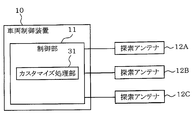
- FIG. 2 is a block diagram schematically showing a configuration example of the vehicle control device
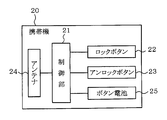
- FIG. 3 is a block diagram schematically showing a configuration example of a portable device.
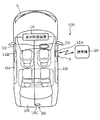
- FIG. 4 is a diagram illustrating an example of vehicle control by the vehicle control system.
- FIG. 5 is a block diagram schematically illustrating a configuration example of the vehicle control device according to the second embodiment of the present disclosure.
- FIG. 6 is a diagram illustrating an example of vehicle control by the vehicle control system.
- FIG. 1 is a diagram schematically illustrating a configuration example of a vehicle control system according to the first embodiment of the present disclosure.
- FIG. 2 is a block diagram schematically showing a configuration example of the vehicle control device
- FIG. 3 is a block diagram schematically showing a configuration example of a portable device.
- FIG. 4 is a diagram illustrating an example of vehicle control by the vehicle control system.
- FIG. 7 is a diagram illustrating an example of vehicle control by the vehicle control system according to the third embodiment of the present disclosure.
- FIG. 8 is a diagram schematically illustrating a configuration example of a vehicle control system according to the fourth embodiment of the present disclosure.
- FIG. 9 is a diagram schematically illustrating a configuration example of a vehicle control system according to the fifth embodiment of the present disclosure.
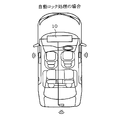
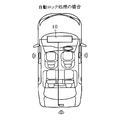
- FIG. 10A is a diagram illustrating an example of vehicle control in the case of automatic lock processing by the vehicle control system;
- FIG. 10B is a diagram illustrating an example of vehicle control in the case of manual lock processing by the vehicle control system;
- FIG. 11A is a diagram illustrating an example of vehicle control in the case of automatic lock processing by the vehicle control system according to the sixth embodiment of the present disclosure;
- FIG. 11B is a diagram illustrating an example of vehicle control in the case of manual lock processing by the vehicle control system according to the sixth embodiment of the present disclosure
- FIG. 12A is a diagram illustrating an example of vehicle control in the case of automatic lock processing by the vehicle control system according to the seventh embodiment of the present disclosure
- FIG. 12B is a diagram illustrating an example of vehicle control in the case of manual lock processing by the vehicle control system according to the seventh embodiment of the present disclosure
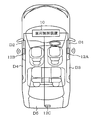
- FIG. 13 is a diagram illustrating an example of vehicle control by the vehicle control system according to the eighth embodiment of the present disclosure.
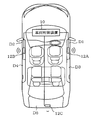
- FIG. 14 is a diagram illustrating an example of vehicle control by the vehicle control system according to the ninth embodiment of the present disclosure.
- a vehicle control system 100 illustrated in FIG. 1 is constructed by a vehicle control device 10 mounted on a vehicle V and a portable device 20 carried by a user.
- the vehicle V is a so-called five-door vehicle, and includes a driver door D1, a passenger door D2, rear doors D3 and D4, and a trunk door D5.
- the vehicle control device 10 has a configuration in which a plurality of search antennas 12 are connected to the control unit 11.
- the vehicle control device 10 includes a driver's seat search antenna 12A provided in the driver's seat door D1, a passenger's seat search antenna 12B provided in the passenger's seat door D2, and a trunk search antenna provided in the trunk door D5. 12C is provided.
- the control unit 11 is configured mainly with a microprocessor and controls the overall operation of the vehicle control device 10. Further, the control unit 11 virtually implements the customization processing unit 31 by software by executing a control program in the microprocessor.
- the customization processing unit 31 is an example of a selection unit, and selects a door to be unlocked when the portable device 20 approaches from among a plurality of doors D1 to D5 provided in the vehicle V.
- the vehicle control apparatus 10 is good also as a structure which implement
- the portable device 20 includes a control unit 21, a lock button 22, an unlock button 23, an antenna 24, and a button battery 25.
- the control unit 21 is configured mainly with a microprocessor and controls the overall operation of the portable device 20.
- the lock button 22 and the unlock button 23 are operated by the user.
- the control unit 21 outputs a locking command signal for locking the vehicle door from the antenna 24.
- the unlock button 23 is operated, the control unit 21 outputs an unlock command signal for unlocking the vehicle door from the antenna 24.
- the portable device 20 may include buttons other than the lock button 22 and the unlock button 23.
- the button battery 25 serves as a power source for the portable device 20.
- the vehicle control device 10 is configured to be able to execute a search process for searching for the portable device 20.
- the vehicle control device 10 starts this search process.
- the vehicle control device 10 transmits a search signal for searching for the portable device 20 from the search antenna 12.
- the vehicle control device 10 transmits a long wave LF (Low Frequency) as a search signal.
- LF Low Frequency
- the vehicle control device 10 transmits the long wave LF at a predetermined cycle.
- the vehicle control device 10 is configured to be able to change the cycle for transmitting the long wave LF.
- the vehicle control apparatus 10 transmits the long wave LF with a predetermined output.
- the vehicle control device 10 is configured to be able to change the range for searching for the portable device 20 by adjusting the output of the long wave LF. Further, the vehicle control device 10 is configured to be able to select an antenna that outputs a long wave LF among the plurality of search antennas 12A to 12C.
- the vehicle control device 10 transmits the call.
- the portable device 20 receives the long wave LF to be transmitted.
- the portable device 20 which received the long wave LF outputs high frequency RF (Radio Frequency).
- the vehicle control device 10 receives the high frequency RF from the portable device 20
- the vehicle control device 10 establishes a wireless communication line with the portable device 20.
- the portable device 20 is connected to the vehicle control device 10 so as to be capable of wireless communication, and the vehicle control device 10 automatically unlocks the door of the vehicle V. That is, the vehicle control device 10 executes an automatic unlocking process.
- the vehicle control device 10 does not uniformly unlock all the doors D1 to D5, but unlocks only the doors customized according to the use mode of the user, as will be described in detail later. It has become.
- the vehicle control device 10 Doors D1-D5 are automatically locked. That is, the vehicle control device 10 executes an automatic lock process.
- the communication form for connecting the vehicle control apparatus 10 and the portable device 20 so that wireless communication is possible is not limited to the LF band communication described above.
- the portable device 20 transmits the value of the radio wave intensity (RSS) of the long wave LF received from the vehicle control device 10 to the vehicle control device 10 by RF communication, and the vehicle control device 10 performs the portable device based on the radio wave strength.
- RSS radio wave intensity
- the vehicle control device 10 automatically unlocks the doors D1 to D5 of the vehicle V when the radio wave intensity received by the portable device 20 exceeds a predetermined value, and the doors D1 to D5 of the vehicle V when the intensity is below the predetermined value. Is automatically locked.
- the vehicle control device 10 starts a search process for the portable device 20. That is, the vehicle control device 10 searches the portable device 20 by outputting the long wave LF from the search antenna 12. Then, when the portable device 20 approaches and a wireless communication line is established between the vehicle control device 10 and the portable device 20, the vehicle control device 10 has the door closest to the portable device 20 at that time, in this case, the door D1 is selected as the door to be unlocked and unlocked. At this time, the vehicle control device 10 maintains the locked state for the doors D2 to D5 other than the door D1 closest to the portable device 20.
- the vehicle control device 10 selects a door to be unlocked when the portable device 20 approaches from among the plurality of doors D1 to D5 provided in the vehicle V.
- the vehicle control device 10 selects the door closest to the portable device 20 as the door to be unlocked. That is, the vehicle control device 10 customizes the door that is unlocked when the portable device 20 is connected so as to be wirelessly communicable to the door closest to the portable device 20.
- the vehicle control device 10 customizes the door that is unlocked when the portable device 20 is connected so as to be wirelessly communicable to the door closest to the portable device 20.
- the vehicle control device 10 further realizes the learning processing unit 32 virtually by software by executing a control program.
- the vehicle control apparatus 10 is good also as a structure which implement
- the learning processing unit 32 is an example of a storage unit, and stores a door opened and closed before the previous locking in a storage medium (not shown). That is, the doors D1 to D5 of the vehicle V are provided with opening / closing detection sensors (not shown) for detecting the opening / closing of the doors.
- the learning processing unit 32 stores the detection result of the open / close detection sensor in a storage medium (not shown). That is, the learning processing unit 32 accumulates the door opening / closing history.
- the learning processing unit 32 extracts and stores the latest opening / closing detection result stored in the storage medium at that time. Thereby, the learning process part 32 memorize
- the vehicle control device 10 starts a search process for the portable device 20.
- the vehicle control device 10 unlocks the door D1 closest to the portable device 20 at that time. Select as door to unlock.
- the vehicle control device 10 also selects and unlocks the door stored in the learning processing unit 32, in this case, the door D2 as the door to be unlocked.
- the vehicle control apparatus 10 maintains the locked state about doors other than the doors D1 and D2.
- the vehicle control device 10 has a learning function for storing a door opened and closed before the previous locking, and also unlocks the door stored by this learning function.
- the door opened and closed before the previous lock is highly likely to be opened and closed even after the current unlocking.
- the learning processing unit 32 stores a door corresponding to a seat in which a person is detected before the previous locking in a storage medium. That is, each seat of the vehicle V is provided with a seating sensor (not shown) for detecting that a person is seated. When a person is seated in each seat, the learning processing unit 32 stores the detection result of the seating sensor in a storage medium (not shown). That is, the learning processing unit 32 accumulates a person's seating history. When all the doors D1 to D5 are automatically locked, the learning processing unit 32 extracts and stores the latest seating detection result stored in the storage medium at that time. Thereby, the learning processing unit 32 specifies a seat where a person is detected before the previous locking, and stores a door corresponding to the specified seat.
- the vehicle control device 10 starts a search process for the portable device 20.
- the vehicle control device 10 unlocks the door D1 closest to the portable device 20 at that time. Select as door to unlock.
- the vehicle control device 10 also selects and unlocks the door stored in the learning processing unit 32, in this case, the door D2 and the door D4 as doors to be unlocked.
- the vehicle control apparatus 10 maintains the locked state about doors other than door D1, D2, D4.
- the vehicle control device 10 has a learning function for storing a door corresponding to a seat where a person is detected before the previous locking, and unlocks the door stored by this learning function. .
- the door corresponding to the seat in which a person was detected before the previous locking is highly likely to be opened and closed even after the current unlocking.
- touch buttons B1 to B5 are provided on the door handles of the doors D1 to D5 of the vehicle V, respectively.
- the vehicle control device 10 unlocks the door provided with the touch button.
- the door that is not selected as the door to be unlocked can be unlocked by the user individually operating the touch button. That is, the vehicle control system 100 according to the present embodiment includes means for individually unlocking doors that are not selected as doors to be unlocked. Therefore, doors that are not selected as doors to be unlocked with the approach of the portable device 20 can be unlocked as necessary.
- the vehicle control device 10 may be configured to collectively unlock all doors that are locked at that time when any of the touch buttons B1 to B5 is operated. Further, the vehicle control device 10 is provided with a touch button only on the door D1 corresponding to the driver's seat, for example, and when this touch button is operated, all the doors locked at that time are unlocked collectively. You may comprise.
- the vehicle control device 10 includes a lock switch S that is operated by a user.
- the lock switch S When the lock switch S is operated, the vehicle control device 10 locks all the doors D1 to D5 at once.
- the lock switch S is provided on the door D1 of the driver's seat.
- the lock switch S may be provided on the other doors D2 to D5. Further, the lock switch S may be provided in a portion other than the doors D1 to D5 of the vehicle V, such as a pillar or a door mirror.
- the vehicle control apparatus 10 locks all the doors D1 to D5 in response to the disconnection of the wireless communication line with the portable device 20, that is, when the automatic lock process is performed. Performs a search process for searching for the portable device 20 by transmitting a long wave LF from the search antenna 12.
- the vehicle control device 10 searches for all the doors D1 to D5 in accordance with the operation of the lock switch S by the user, that is, when manual locking is performed. Do not process. That is, the vehicle control device 10 does not transmit the long wave LF from any search antenna 12.
- the search process for performing the automatic unlock process is not performed.
- the unlocking process according to the user's intention that is, the intention to manually unlock the door can be provided.
- the search process since the search process is not performed, the power consumption of an in-vehicle battery (not shown) can be suppressed.
- the manual lock process may be a lock by operating the lock button 22 of the portable device 20, or may be a lock by a mechanical key member.
- the vehicle control device 10 performs the automatic locking process for all the doors D1 to D5 in response to the disconnection of the wireless communication line with the portable device 20. Performs a search process by transmitting a long wave LF from the search antenna 12. At this time, the vehicle control device 10 performs the search process with the transmission cycle of the long wave LF from the search antenna 12 as the first cycle. The first period can be changed and set as appropriate.
- the vehicle control device 10 sets the transmission cycle of the long wave LF when the manual lock processing is performed on all the doors D1 to D5 in accordance with the operation of the lock switch S by the user. Search processing is performed in two cycles. The second period can be appropriately changed and set as long as it is longer than the first period. As described above, when the manual control process is performed, the vehicle control device 10 weakens the output of the long wave LF by increasing the transmission period of the long wave LF in the search process.
- the output of the long wave LF in the search process is weakened, the accuracy of detecting the approach of the portable device 20 decreases, and the automatic unlock process may not be performed well.
- the door is manually locked, it is assumed that it is preferable to manually unlock the door. Therefore, if the door is manually locked, the output of the long wave LF in the search process may be weakened. And the power consumption of a vehicle-mounted battery can be suppressed by weakening the output of the long wave LF in search processing in this way.
- the vehicle control apparatus 10 performs the automatic lock process for all the doors D1 to D5 in response to the disconnection of the wireless communication line with the portable device 20. Performs a search process by transmitting a long wave LF from the search antenna 12. At this time, the vehicle control device 10 adjusts the output of the long wave LF from the search antenna 12 to perform the search process with the search range of the portable device 20 as the first range.
- the first range can be changed and set as appropriate.
- the vehicle control apparatus 10 when the vehicle control apparatus 10 performs the manual locking process for all the doors D1 to D5 in accordance with the operation of the lock switch S by the user, the long wave LF from the search antenna 12 is displayed.
- the search range of the portable device 20 is set to the second range, and the search process is performed.
- the second range can be appropriately changed and set as long as the second range is narrower than the first range.
- the vehicle control apparatus 10 weakens the output of the long wave LF by narrowing the search range in the search process. Thereby, the power consumption of a vehicle-mounted battery can be suppressed.
- the vehicle control device 10 performs a search process by driving only search antennas provided in a predetermined door, instead of all search antennas 12A to 12C.
- the vehicle control device 10 performs search processing by driving the search antenna 12A of the door D1 and the search antenna 12B of the door D2.
- the vehicle control apparatus 10 does not perform the search process by the search antenna 12C of the door D5.
- the doors D1 and D2 are doors selected as doors opened and closed before the previous locking, or doors corresponding to seats in which a person has been detected before the previous locking. That is, the doors D1 and D2 are doors that are highly likely to be opened and closed after unlocking.
- the predetermined door may be at least one of a door opened and closed before the previous locking and a door corresponding to a seat where a person is detected before the previous locking.
- the predetermined door can be appropriately changed and set as long as it can be determined that the door is highly likely to be opened and closed.
- the search process from the door that can be determined that the possibility of opening and closing is low even when unlocked is not performed. Therefore, power consumption required for the search process can be suppressed.
- the vehicle control device 10 weakens the output of the search antenna provided in the predetermined door to be less than the output of the search antenna provided in the other door, and performs search processing. I do.
- the vehicle control device 10 weakens the output of the search antenna 12C of the door D5 than the outputs of the search antennas 12A and 12B.
- the door D5 is a door other than the door opened and closed before the previous locking and the door corresponding to the seat where the person was detected before the previous locking. That is, the door D5 is a door that can be determined to have a low possibility of being opened and closed even when unlocked.
- the predetermined door can be appropriately changed and set as long as it can be determined that the possibility of opening and closing is low.
- the output of the search process from the door that can be determined to be less likely to be opened and closed even when unlocked is weakened. Therefore, power consumption required for the search process can be suppressed.
Landscapes
- Engineering & Computer Science (AREA)
- Mechanical Engineering (AREA)
- Lock And Its Accessories (AREA)
Abstract
車両制御システム(100)は、ユーザが携帯する携帯機(20)と、車両に搭載され、携帯機が無線通信可能に接続されることで車両のドアを開錠する車両制御装置(10)と、を備える。車両制御装置は、車両が備える複数のドアのうち開錠するドアを選択する選択部(31)を備える。この構成によれば、携帯機が無線通信可能に接続されることに応じて開錠するドアをカスタマイズすることができ、一律に全てのドアを開錠するのではなく、ユーザの使用態様に応じたドアのみを開錠することができる。
Description
本出願は、2015年3月30日に出願された日本特許出願番号2015-068821号に基づくもので、ここにその記載内容を援用する。
本開示は、車両に搭載される車両制御装置にユーザが携帯する携帯機が無線通信可能に接続されることで車両のドアを開錠する車両制御システム、並びに、このシステムを構築する車両制御装置および携帯機に関する。
近年の車両では、機械的なキーではなく、ユーザが携帯する携帯機により無線でドアの施錠や開錠の制御を行うシステムを搭載することが普及している。例えば特許文献1には、携帯機が車両から所定範囲以上離れたら全てのドアを施錠し、携帯機が車両から所定範囲内に近付いたら全てのドアを開錠するシステムが開示されている。
従来のシステムでは、携帯機が車両に近付くと全てのドアが開錠する。そのため、ユーザが開錠したくないと思っているドアまでも開錠されてしまい、使い勝手が悪く、場合によっては、ユーザの安心感が損なわれるおそれがある。
本開示は、上記点に鑑みてなされたものであり、車両に搭載される車両制御装置にユーザが携帯する携帯機が無線通信可能に接続されることで車両のドアを開錠する車両制御システムに関し、ユーザの使用態様に応じたドアを開錠するようにした車両制御システムを提供すること、並びに、この車両制御システムを構築する車両制御装置および携帯機を提供することを目的とする。
本開示一態様による車両制御システムは、ユーザが携帯する携帯機と、車両に搭載され、携帯機が無線通信可能に接続される車両制御装置と、を備える。車両制御装置は、携帯機が無線通信可能に接続されることで車両のドアを開錠する。そして、車両制御装置は、車両が備える複数のドアのうち開錠するドアを選択する選択部を備える。
この構成によれば、携帯機が無線通信可能に接続されることに応じて開錠するドアをカスタマイズすることができ、一律に全てのドアを開錠するのではなく、ユーザの使用態様に応じたドアのみを開錠することができる。
本開示についての上記目的およびその他の目的、特徴や利点は、添付の図面を参照しながら下記の詳細な記述により、より明確になる。その図面は、
図1は、本開示の第1実施形態に係る車両制御システムの構成例を概略的に示す図であり、
図2は、車両制御装置の構成例を概略的に示すブロック図であり、
図3は、携帯機の構成例を概略的に示すブロック図であり、
図4は、車両制御システムによる車両制御の一例を示す図であり、
図5は、本開示の第2実施形態に係る車両制御装置の構成例を概略的に示すブロック図であり、
図6は、車両制御システムによる車両制御の一例を示す図であり、
図7は、本開示の第3実施形態に係る車両制御システムによる車両制御の一例を示す図であり、
図8は、本開示の第4実施形態に係る車両制御システムの構成例を概略的に示す図であり、
図9は、本開示の第5実施形態に係る車両制御システムの構成例を概略的に示す図であり、
図10Aは、車両制御システムによる自動ロック処理の場合の車両制御の一例を示す図であり、
図10Bは、車両制御システムによる手動ロック処理の場合の車両制御の一例を示す図であり、
図11Aは、本開示の第6実施形態に係る車両制御システムによる自動ロック処理の場合の車両制御の一例を示す図であり、
図11Bは、本開示の第6実施形態に係る車両制御システムによる手動ロック処理の場合の車両制御の一例を示す図であり、
図12Aは、本開示の第7実施形態に係る車両制御システムによる自動ロック処理の場合の車両制御の一例を示す図であり、
図12Bは、本開示の第7実施形態に係る車両制御システムによる手動ロック処理の場合の車両制御の一例を示す図であり、
図13は、本開示の第8実施形態に係る車両制御システムによる車両制御の一例を示す図であり、
図14は、本開示の第9実施形態に係る車両制御システムによる車両制御の一例を示す図である。
以下、本開示の複数の実施形態について図面を参照しながら説明する。なお、各実施形態において実質的に同一の要素には同一の符号を付し、説明を省略する。
(第1実施形態)
図1に例示する車両制御システム100は、車両Vに搭載される車両制御装置10、および、ユーザが携帯する携帯機20により構築される。この場合、車両Vは、いわゆる5ドアの車両であり、運転席のドアD1、助手席のドアD2、後部座席のドアD3,D4、および、トランクのドアD5を備える。図2に例示するように、車両制御装置10は、制御部11に複数の探索アンテナ12が接続された構成である。この場合、車両制御装置10は、運転席のドアD1に備えられる運転席用探索アンテナ12A、助手席のドアD2に備えられる助手席用探索アンテナ12B、トランクのドアD5に備えられるトランク用探索アンテナ12Cを備える。なお、探索アンテナ12は、その他のドア、例えば後部座席のドアD3,D4に設けてもよい。
図1に例示する車両制御システム100は、車両Vに搭載される車両制御装置10、および、ユーザが携帯する携帯機20により構築される。この場合、車両Vは、いわゆる5ドアの車両であり、運転席のドアD1、助手席のドアD2、後部座席のドアD3,D4、および、トランクのドアD5を備える。図2に例示するように、車両制御装置10は、制御部11に複数の探索アンテナ12が接続された構成である。この場合、車両制御装置10は、運転席のドアD1に備えられる運転席用探索アンテナ12A、助手席のドアD2に備えられる助手席用探索アンテナ12B、トランクのドアD5に備えられるトランク用探索アンテナ12Cを備える。なお、探索アンテナ12は、その他のドア、例えば後部座席のドアD3,D4に設けてもよい。
制御部11は、マイクロプロセッサを主体として構成されており、車両制御装置10の動作全般を制御する。また、制御部11は、マイクロプロセッサにおいて制御プログラムを実行することにより、カスタマイズ処理部31をソフトウェアにより仮想的に実現する。カスタマイズ処理部31は、選択部の一例であり、車両Vが備える複数のドアD1~D5のうち、携帯機20が接近した場合に開錠するドアを選択する。なお、車両制御装置10は、カスタマイズ処理部31をハードウェアにより実現する構成としてもよい。
図3に例示するように、携帯機20は、制御部21、ロックボタン22、アンロックボタン23、アンテナ24、ボタン電池25を備える。制御部21は、マイクロプロセッサを主体として構成されており、携帯機20の動作全般を制御する。ロックボタン22およびアンロックボタン23は、ユーザによって操作される。ロックボタン22が操作されると、制御部21は、車両のドアを施錠するための施錠指令信号をアンテナ24から出力する。アンロックボタン23が操作されると、制御部21は、車両のドアを開錠するための開錠指令信号をアンテナ24から出力する。なお、携帯機20は、ロックボタン22およびアンロックボタン23以外のボタンを備えてもよい。ボタン電池25は、携帯機20の電源となるものである。
車両制御装置10は、携帯機20を探索する探索処理を実行可能に構成されている。車両制御装置10は、車両VのドアD1~D5が全て施錠されると、この探索処理を開始する。この探索処理では、車両制御装置10は、携帯機20を探索するための探索信号を探索アンテナ12から発信する。この場合、車両制御装置10は、長波LF(Low Frequency)を探索信号として発信する。
車両制御装置10は、長波LFを所定の周期で発信する。車両制御装置10は、長波LFを発信する周期を変更可能に構成されている。また、車両制御装置10は、長波LFを所定の出力で発信する。車両制御装置10は、長波LFの出力を調整することで、携帯機20を探索する範囲を変更可能に構成されている。また、車両制御装置10は、複数の探索アンテナ12A~12Cのうち長波LFを出力するアンテナを選択可能に構成されている。
このような車両制御システム100によれば、携帯機20を携帯するユーザが車両Vに近付き、車両制御装置10と携帯機20との間の距離が所定距離以内となると、車両制御装置10が発信する長波LFを携帯機20が受信する。そして、長波LFを受信した携帯機20は、高周波RF(Radio Frequency)を出力する。そして、車両制御装置10は、携
帯機20から高周波RFを受信すると、携帯機20との間に無線の通信回線を確立する。これにより、車両制御装置10に携帯機20が無線通信可能に接続され、車両制御装置10は、車両Vのドアを自動的に開錠する。即ち、車両制御装置10は、自動アンロック処理を実行する。このとき、車両制御装置10は、一律に全てのドアD1~D5を開錠するのではなく、詳しくは後述するように、ユーザの使用態様に応じてカスタマイズされたドアのみを開錠するようになっている。
帯機20から高周波RFを受信すると、携帯機20との間に無線の通信回線を確立する。これにより、車両制御装置10に携帯機20が無線通信可能に接続され、車両制御装置10は、車両Vのドアを自動的に開錠する。即ち、車両制御装置10は、自動アンロック処理を実行する。このとき、車両制御装置10は、一律に全てのドアD1~D5を開錠するのではなく、詳しくは後述するように、ユーザの使用態様に応じてカスタマイズされたドアのみを開錠するようになっている。
一方、携帯機20を携帯するユーザが車両Vから遠ざかり、車両制御装置10と携帯機20との間に確立されている通信回線が切断されると、車両制御装置10は、車両Vの全てのドアD1~D5を自動的に施錠する。即ち、車両制御装置10は、自動ロック処理を実行する。なお、車両制御装置10と携帯機20とを無線通信可能に接続するための通信形態は、上述したLF帯通信に限られない。
また、携帯機20は、車両制御装置10から受信した長波LFの電波強度(RSS)の値を車両制御装置10にRF通信により送信し、車両制御装置10は、その電波強度に基づいて携帯機20が近付いたか否か、および、遠ざかったか否かを判断するように構成してもよい。この場合、車両制御装置10は、携帯機20が受信する電波強度が所定値を上回ると車両VのドアD1~D5を自動的に開錠し、所定値を下回ると車両VのドアD1~D5を自動的に施錠する。
次に、車両制御システム100による車両制御の一例について説明する。図4に例示するように、車両制御装置10は、車両Vの全てのドアD1~D5を自動的に施錠すると、携帯機20の探索処理を開始する。即ち、車両制御装置10は、探索アンテナ12から長波LFを出力して携帯機20を探索する。そして、携帯機20が近付いて車両制御装置10と携帯機20との間に無線通信回線が確立されると、車両制御装置10は、その時点において携帯機20に最も近いドア、この場合、ドアD1を、開錠するドアとして選択し開錠する。このとき、車両制御装置10は、携帯機20に最も近いドアD1以外のドアD2~D5については、施錠した状態を維持する。
本実施形態によれば、車両制御装置10は、車両Vが備える複数のドアD1~D5のうち、携帯機20が接近したときに開錠するドアを選択する。そして、本実施形態では、車両制御装置10は、携帯機20に最も近いドアを、開錠するドアとして選択する。即ち、車両制御装置10は、携帯機20が無線通信可能に接続されることに応じて開錠するドアを、携帯機20に最も近いドアにカスタマイズする。携帯機20を携帯するユーザが車両Vに近付いた場合、通常は、自身に最も近いドアを開くことが想定される。よって、一律に全てのドアを開錠するのではなく、ユーザに最も近いドアのみを開錠するようにした本実施形態によれば、ユーザの使用態様に応じたドアのみを開錠することができる。
(第2実施形態)
図5に例示するように、本実施形態では、車両制御装置10は、制御プログラムを実行することにより、さらに学習処理部32をソフトウェアにより仮想的に実現する。なお、車両制御装置10は、学習処理部32をハードウェアにより実現する構成としてもよい。
図5に例示するように、本実施形態では、車両制御装置10は、制御プログラムを実行することにより、さらに学習処理部32をソフトウェアにより仮想的に実現する。なお、車両制御装置10は、学習処理部32をハードウェアにより実現する構成としてもよい。
学習処理部32は、記憶部の一例であり、前回の施錠前に開閉されたドアを図示しない記憶媒体に記憶する。即ち、車両VのドアD1~D5には、ドアの開閉を検知するための図示しない開閉検知センサが備えられている。そして、ドアが開閉されると、学習処理部32は、開閉検知センサの検知結果を図示しない記憶媒体に記憶する。即ち、学習処理部32は、ドアの開閉履歴を蓄積する。学習処理部32は、自動的に全てのドアD1~D5が施錠されると、その時点において記憶媒体に記憶されている直近の開閉検知結果を抽出して記憶する。これにより、学習処理部32は、前回の施錠前に開閉されたドアを記憶するようになっている。
次に、本実施形態に係る車両制御の一例について説明する。図6に例示するように、車両制御装置10は、車両Vの全てのドアD1~D5を自動的に施錠すると、携帯機20の探索処理を開始する。そして、携帯機20が近付いて車両制御装置10と携帯機20との間に無線通信回線が確立されると、車両制御装置10は、その時点において携帯機20に最も近いドアD1を、開錠するドアとして選択し開錠する。また、車両制御装置10は、学習処理部32が記憶しているドア、この場合、ドアD2も、開錠するドアとして選択し開錠する。なお、車両制御装置10は、ドアD1,D2以外のドアについては、施錠した状態を維持する。
本実施形態によれば、車両制御装置10は、前回の施錠前に開閉されたドアを記憶する学習機能を備えており、この学習機能により記憶されたドアも開錠する。前回の施錠前に開閉されたドアは、今回の開錠後においても開閉される可能性が高い。本実施形態によれば、携帯機20に最も近いドアに加えて、さらに、開閉される可能性が高いドアも開錠することができ、ユーザの使用態様に応じたドアを開錠することができる。
(第3実施形態)
本実施形態では、学習処理部32は、前回の施錠前に人が検知された座席に対応するドアを記憶媒体に記憶する。即ち、車両Vの各座席には、人が着座したことを検知するための図示しない着座センサが備えられている。そして、各座席に人が着座すると、学習処理部32は、着座センサの検知結果を図示しない記憶媒体に記憶する。即ち、学習処理部32は、人の着座履歴を蓄積する。学習処理部32は、自動的に全てのドアD1~D5が施錠されると、その時点において記憶媒体に記憶されている直近の着座検知結果を抽出して記憶する。これにより、学習処理部32は、前回の施錠前に人が検知された座席を特定し、特定した座席に対応するドアを記憶するようになっている。
本実施形態では、学習処理部32は、前回の施錠前に人が検知された座席に対応するドアを記憶媒体に記憶する。即ち、車両Vの各座席には、人が着座したことを検知するための図示しない着座センサが備えられている。そして、各座席に人が着座すると、学習処理部32は、着座センサの検知結果を図示しない記憶媒体に記憶する。即ち、学習処理部32は、人の着座履歴を蓄積する。学習処理部32は、自動的に全てのドアD1~D5が施錠されると、その時点において記憶媒体に記憶されている直近の着座検知結果を抽出して記憶する。これにより、学習処理部32は、前回の施錠前に人が検知された座席を特定し、特定した座席に対応するドアを記憶するようになっている。
次に、本実施形態に係る車両制御の一例について説明する。図7に例示するように、車両制御装置10は、車両Vの全てのドアD1~D5を自動的に施錠すると、携帯機20の探索処理を開始する。そして、携帯機20が近付いて車両制御装置10と携帯機20との間に無線通信回線が確立されると、車両制御装置10は、その時点において携帯機20に最も近いドアD1を、開錠するドアとして選択し開錠する。また、車両制御装置10は、学習処理部32が記憶しているドア、この場合、ドアD2およびドアD4も、開錠するドアとして選択し開錠する。なお、車両制御装置10は、ドアD1,D2,D4以外のドアについては、施錠した状態を維持する。
本実施形態によれば、車両制御装置10は、前回の施錠前に人が検知された座席に対応するドアを記憶する学習機能を備えており、この学習機能により記憶されたドアも開錠する。前回の施錠前に人が検知された座席に対応するドアは、今回の開錠後においても開閉される可能性が高い。本実施形態によれば、携帯機20に最も近いドアに加えて、さらに、開閉される可能性が高いドアも開錠することができ、ユーザの使用態様に応じたドアを開錠することができる。
(第4実施形態)
図8に例示するように、本実施形態では、車両Vの各ドアD1~D5のドアハンドルに、それぞれタッチボタンB1~B5が設けられている。そして、車両制御装置10は、タッチボタンが操作されると、そのタッチボタンが備えられているドアを開錠するようになっている。
図8に例示するように、本実施形態では、車両Vの各ドアD1~D5のドアハンドルに、それぞれタッチボタンB1~B5が設けられている。そして、車両制御装置10は、タッチボタンが操作されると、そのタッチボタンが備えられているドアを開錠するようになっている。
本実施形態によれば、開錠するドアとして選択されていないドアについては、ユーザが個別にタッチボタンを操作することで開錠することができる。即ち、本実施形態に係る車両制御システム100は、開錠するドアとして選択されなかったドアを個別に開錠するための手段を備えている。従って、携帯機20の接近に伴い開錠するドアとして選択されないドアについても、必要に応じて開錠することができる。
なお、車両制御装置10は、何れかのタッチボタンB1~B5が操作されると、その時点で施錠されている全てのドアを一括して開錠するように構成してもよい。また、車両制御装置10は、例えば運転席に対応するドアD1のみにタッチボタンを設け、このタッチボタンが操作されると、その時点で施錠されている全てのドアを一括して開錠するように構成してもよい。
(第5実施形態)
図9に例示するように、本実施形態では、車両制御装置10は、ユーザにより操作されるロックスイッチSを備えている。このロックスイッチSが操作されると、車両制御装置10は、全てのドアD1~D5を一括して施錠する。この場合、ロックスイッチSは、運転席のドアD1に設けられている。なお、ロックスイッチSは、他のドアD2~D5に設けてもよい。また、ロックスイッチSは、車両VのドアD1~D5以外の部分、例えばピラーやドアミラーなどに設けてもよい。
図9に例示するように、本実施形態では、車両制御装置10は、ユーザにより操作されるロックスイッチSを備えている。このロックスイッチSが操作されると、車両制御装置10は、全てのドアD1~D5を一括して施錠する。この場合、ロックスイッチSは、運転席のドアD1に設けられている。なお、ロックスイッチSは、他のドアD2~D5に設けてもよい。また、ロックスイッチSは、車両VのドアD1~D5以外の部分、例えばピラーやドアミラーなどに設けてもよい。
図10Aに例示するように、車両制御装置10は、携帯機20との無線通信回線が切断されたことに応じて全てのドアD1~D5を施錠した場合、つまり自動ロック処理を行った場合には、探索アンテナ12から長波LFを発信して、携帯機20を探索する探索処理を行う。一方、図10Bに例示するように、車両制御装置10は、ユーザによるロックスイッチSの操作に応じて全てのドアD1~D5を施錠した場合、つまり手動によるロック処理を行った場合には、探索処理を行わない。即ち、車両制御装置10は、何れの探索アンテナ12からも長波LFを発信しない。
手動によりドアをロックするユーザは、自動的にドアが開錠される自動アンロック処理を好まず、手動によりドアを開錠することを好むことが想定される。本実施形態によれば、手動によりドアがロックされた場合には、自動アンロック処理を行うための探索処理を行わない。これにより、ユーザの意思、つまり、手動によりドアを開錠したいという意思に応じたアンロック処理を提供することができる。また、探索処理を行わない分、図示しない車載バッテリの電力消費を抑えることができる。
なお、手動によるロック処理は、携帯機20のロックボタン22の操作によるロックであってもよいし、機械的なキー部材によるロックであってもよい。
(第6実施形態)
図11Aに例示するように、本実施形態では、車両制御装置10は、携帯機20との無線通信回線が切断されたことに応じて全てのドアD1~D5について自動ロック処理を行った場合には、探索アンテナ12から長波LFを発信して探索処理を行う。このとき、車両制御装置10は、探索アンテナ12からの長波LFの発信周期を第1周期にして探索処理を行う。第1周期は、適宜変更して設定することができる。
図11Aに例示するように、本実施形態では、車両制御装置10は、携帯機20との無線通信回線が切断されたことに応じて全てのドアD1~D5について自動ロック処理を行った場合には、探索アンテナ12から長波LFを発信して探索処理を行う。このとき、車両制御装置10は、探索アンテナ12からの長波LFの発信周期を第1周期にして探索処理を行う。第1周期は、適宜変更して設定することができる。
一方、図11Bに例示するように、車両制御装置10は、ユーザによるロックスイッチSの操作に応じて全てのドアD1~D5について手動ロック処理を行った場合には、長波LFの発信周期を第2周期にして探索処理を行う。第2周期は、第1周期よりも長い周期であれば、適宜変更して設定することができる。このように、車両制御装置10は、手動ロック処理を行った場合には、探索処理における長波LFの発信周期を長くすることで、長波LFの出力を弱める。
探索処理における長波LFの出力を弱めると、携帯機20の接近を検知する精度が低下し、自動アンロック処理が上手く行われない可能性が生じる。しかし、手動によりドアがロックされた場合には、手動によりドアを開錠することが好まれることが想定される。そのため、手動によりドアがロックされたのであれば、探索処理における長波LFの出力を弱めても構わない。そして、このように探索処理における長波LFの出力を弱めることで、車載バッテリの電力消費を抑えることができる。
(第7実施形態)
図12Aに例示するように、本実施形態では、車両制御装置10は、携帯機20との無線通信回線が切断されたことに応じて全てのドアD1~D5について自動ロック処理を行った場合には、探索アンテナ12から長波LFを発信して探索処理を行う。このとき、車両制御装置10は、探索アンテナ12からの長波LFの出力を調整することで、携帯機20の探索範囲を第1範囲にして探索処理を行う。第1範囲は、適宜変更して設定することができる。
図12Aに例示するように、本実施形態では、車両制御装置10は、携帯機20との無線通信回線が切断されたことに応じて全てのドアD1~D5について自動ロック処理を行った場合には、探索アンテナ12から長波LFを発信して探索処理を行う。このとき、車両制御装置10は、探索アンテナ12からの長波LFの出力を調整することで、携帯機20の探索範囲を第1範囲にして探索処理を行う。第1範囲は、適宜変更して設定することができる。
一方、図12Bに例示するように、車両制御装置10は、ユーザによるロックスイッチSの操作に応じて全てのドアD1~D5について手動ロック処理を行った場合には、探索アンテナ12からの長波LFの出力を調整することで、携帯機20の探索範囲を第2範囲にして探索処理を行う。第2範囲は、第1範囲よりも狭い範囲であれば、適宜変更して設定することができる。このように、車両制御装置10は、手動ロック処理を行った場合には、探索処理における探索範囲を狭くすることで、長波LFの出力を弱める。これにより、車載バッテリの電力消費を抑えることができる。
(第8実施形態)
図13に例示するように、本実施形態では、車両制御装置10は、全ての探索アンテナ12A~12Cではなく、所定のドアに備えられている探索アンテナのみを駆動して探索処理を行う。この場合、車両制御装置10は、ドアD1の探索アンテナ12AおよびドアD2の探索アンテナ12Bを駆動して探索処理を行う。そして、車両制御装置10は、ドアD5の探索アンテナ12Cによる探索処理を行わない。ドアD1,D2は、前回の施錠前に開閉されたドアとして、または、前回の施錠前に人が検知された座席に対応するドアとして選択されているドアである。即ち、ドアD1,D2は、開錠後に開閉される可能性が高いドアである。なお、所定のドアは、前回の施錠前に開閉されたドアおよび前回の施錠前に人が検知された座席に対応するドアのうち少なくとも何れか一方のドアであればよい。その他、所定のドアは、開閉される可能性が高いと判定できるドアであれば、適宜変更して設定することができる。
図13に例示するように、本実施形態では、車両制御装置10は、全ての探索アンテナ12A~12Cではなく、所定のドアに備えられている探索アンテナのみを駆動して探索処理を行う。この場合、車両制御装置10は、ドアD1の探索アンテナ12AおよびドアD2の探索アンテナ12Bを駆動して探索処理を行う。そして、車両制御装置10は、ドアD5の探索アンテナ12Cによる探索処理を行わない。ドアD1,D2は、前回の施錠前に開閉されたドアとして、または、前回の施錠前に人が検知された座席に対応するドアとして選択されているドアである。即ち、ドアD1,D2は、開錠後に開閉される可能性が高いドアである。なお、所定のドアは、前回の施錠前に開閉されたドアおよび前回の施錠前に人が検知された座席に対応するドアのうち少なくとも何れか一方のドアであればよい。その他、所定のドアは、開閉される可能性が高いと判定できるドアであれば、適宜変更して設定することができる。
本実施形態によれば、開錠したとしても開閉される可能性が低いと判定できるドアからの探索処理を行わないようにした。従って、探索処理に要する電力消費を抑えることができる。
(第9実施形態)
図14に例示するように、本実施形態では、車両制御装置10は、所定のドアに備えられている探索アンテナの出力を他のドアに備えられている探索アンテナの出力よりも弱めて探索処理を行う。この場合、車両制御装置10は、ドアD5の探索アンテナ12Cの出力を探索アンテナ12A,12Bの出力よりも弱める。ドアD5は、前回の施錠前に開閉されたドアおよび前回の施錠前に人が検知された座席に対応するドア以外のドアである。即ち、ドアD5は、開錠したとしても開閉される可能性が低いと判定できるドアである。なお、所定のドアは、開閉される可能性が低いと判定できるドアであれば、適宜変更して設定することができる。
図14に例示するように、本実施形態では、車両制御装置10は、所定のドアに備えられている探索アンテナの出力を他のドアに備えられている探索アンテナの出力よりも弱めて探索処理を行う。この場合、車両制御装置10は、ドアD5の探索アンテナ12Cの出力を探索アンテナ12A,12Bの出力よりも弱める。ドアD5は、前回の施錠前に開閉されたドアおよび前回の施錠前に人が検知された座席に対応するドア以外のドアである。即ち、ドアD5は、開錠したとしても開閉される可能性が低いと判定できるドアである。なお、所定のドアは、開閉される可能性が低いと判定できるドアであれば、適宜変更して設定することができる。
本実施形態によれば、開錠したとしても開閉される可能性が低いと判定できるドアからの探索処理の出力を弱めるようにした。従って、探索処理に要する電力消費を抑えることができる。
本開示は、実施例に準拠して記述されたが、本開示は当該実施例や構造に限定されるものではないと理解される。本開示は、様々な変形例や均等範囲内の変形をも包含する。加えて、様々な組み合わせや形態、さらには、それらに一要素のみ、それ以上、あるいはそれ以下、を含む他の組み合わせや形態をも、本開示の範畴や思想範囲に入るものである。
Claims (15)
- ユーザが携帯する携帯機(20)と、
車両に搭載され、前記携帯機が無線通信可能に接続されることで前記車両のドアを開錠する車両制御装置(10)と、を備える車両制御システムであって、
前記車両制御装置は、前記車両が備える複数のドアのうち開錠するドアを選択する選択部(31)を備える車両制御システム。 - 前記選択部は、前記携帯機に最も近いドアを、開錠するドアとして選択する請求項1に記載の車両制御システム。
- 前回の施錠前に開閉されたドアを記憶する記憶部(32)を備え、
前記選択部は、前記記憶部が記憶しているドアを、開錠するドアとして選択する請求項1または2に記載の車両制御システム。 - 前回の施錠前に人が検知された座席に対応するドアを記憶する記憶部(32)を備え、
前記選択部は、前記記憶部が記憶しているドアを、開錠するドアとして選択する請求項1から3の何れか1項に記載の車両制御システム。 - 前記選択部により選択されていないドアは、それぞれユーザによる所定操作により開錠される請求項1から4の何れか1項に記載の車両制御システム。
- 前記選択部により選択されていない全てのドアは、ユーザによる所定操作により開錠される請求項1から5の何れか1項に記載の車両制御システム。
- 前記車両制御装置は、前記携帯機との無線通信回線が切断されたことに応じてドアを施錠した場合には前記携帯機を探索する探索処理を行い、ユーザによる所定操作に応じてドアを施錠した場合には前記探索処理を行わない請求項1から6の何れか1項に記載の車両制御システム。
- 前記車両制御装置は、前記携帯機との無線通信回線が切断されたことに応じてドアを施錠した場合には前記携帯機を探索する探索処理において探索信号を第1周期で出力して探索を行い、ユーザによる所定操作に応じてドアを施錠した場合には前記探索処理において探索信号を前記第1周期よりも長い第2周期で出力して探索を行う請求項1から6の何れか1項に記載の車両制御システム。
- 前記車両制御装置は、前記携帯機との無線通信回線が切断されたことに応じてドアを施錠した場合には前記携帯機を探索する探索処理において探索範囲を第1範囲にして探索を行い、ユーザによる所定操作に応じてドアを施錠した場合には前記探索処理における探索範囲を前記第1範囲よりも狭い第2範囲にして探索を行う請求項1から6の何れか1項に記載の車両制御システム。
- 前記車両制御装置は、前記携帯機を探索する探索アンテナを複数のドアにそれぞれ備えており、所定のドアに備えられている前記探索アンテナを駆動することにより前記携帯機を探索する探索処理を行う請求項1から9の何れか1項に記載の車両制御システム。
- 前記所定のドアは、前回の施錠前に開閉されたドアおよび前回の施錠前に人が検知された座席に対応するドアのうち少なくとも何れか一方のドアである請求項10に記載の車両制御システム。
- 前記車両制御装置は、前記携帯機を探索する探索アンテナを複数のドアにそれぞれ備えており、所定のドアに備えられている前記探索アンテナの出力を他のドアに備えられている前記探索アンテナの出力よりも弱める請求項1から9の何れか1項に記載の車両制御システム。
- 前記所定のドアは、前回の施錠前に開閉されたドアおよび前回の施錠前に人が検知された座席に対応するドア以外のドアである請求項12に記載の車両制御システム。
- 請求項1から13の何れか1項に記載の車両制御システムを構築する車両制御装置。
- 請求項1から13の何れか1項に記載の車両制御システムを構築する携帯機。
Priority Applications (1)
| Application Number | Priority Date | Filing Date | Title |
|---|---|---|---|
| KR1020177029812A KR101944209B1 (ko) | 2015-03-30 | 2016-03-15 | 차량 제어 시스템, 차량 제어 장치, 및 휴대기 |
Applications Claiming Priority (2)
| Application Number | Priority Date | Filing Date | Title |
|---|---|---|---|
| JP2015068821A JP6565267B2 (ja) | 2015-03-30 | 2015-03-30 | 車両制御システム、車両制御装置 |
| JP2015-068821 | 2015-03-30 |
Publications (1)
| Publication Number | Publication Date |
|---|---|
| WO2016157778A1 true WO2016157778A1 (ja) | 2016-10-06 |
Family
ID=57005906
Family Applications (1)
| Application Number | Title | Priority Date | Filing Date |
|---|---|---|---|
| PCT/JP2016/001475 Ceased WO2016157778A1 (ja) | 2015-03-30 | 2016-03-15 | 車両制御システム、車両制御装置、及び携帯機 |
Country Status (3)
| Country | Link |
|---|---|
| JP (1) | JP6565267B2 (ja) |
| KR (1) | KR101944209B1 (ja) |
| WO (1) | WO2016157778A1 (ja) |
Families Citing this family (5)
| Publication number | Priority date | Publication date | Assignee | Title |
|---|---|---|---|---|
| JP6867650B2 (ja) * | 2017-10-24 | 2021-05-12 | 株式会社東洋ボデー | トラック荷台用扉の錠システム及びトラック荷台 |
| JP2019105056A (ja) * | 2017-12-11 | 2019-06-27 | 株式会社オートネットワーク技術研究所 | 車両ドアロックシステム、車載通信装置、通信端末装置、コンピュータプログラム及び車両ドアロック制御方法 |
| DE102019114917A1 (de) | 2019-06-04 | 2020-12-10 | U-Shin Deutschland Zugangssysteme Gmbh | Verfahren zur Zugangssteuerung für ein Kraftfahrzeug und Zugangssteuerungssystem |
| DE102019135130B3 (de) * | 2019-12-19 | 2020-11-05 | U-Shin Deutschland Zugangssysteme Gmbh | Verfahren zur Zugangssteuerung für ein Kraftfahrzeug und Zugangssteuerungssystem |
| DE102019135665B4 (de) | 2019-12-23 | 2023-02-16 | U-Shin Deutschland Zugangssysteme Gmbh | Verfahren zur Kalibrierung einer Positionserfassung eines tragbaren Schüsselelements und Zugangssteuerungssystem |
Citations (5)
| Publication number | Priority date | Publication date | Assignee | Title |
|---|---|---|---|---|
| JPH09317288A (ja) * | 1996-05-29 | 1997-12-09 | Tokai Rika Co Ltd | 車両用ワイヤレスドアロック解除システム |
| JP2000073635A (ja) * | 1998-06-18 | 2000-03-07 | Toyota Motor Corp | 車両制御システム |
| JP2004092062A (ja) * | 2002-08-29 | 2004-03-25 | Tokai Rika Co Ltd | 車両用施解錠制御装置 |
| JP2007100349A (ja) * | 2005-10-03 | 2007-04-19 | Tokai Rika Co Ltd | 作動制御装置及び電子キーシステム |
| JP2014114569A (ja) * | 2012-12-07 | 2014-06-26 | Auto Network Gijutsu Kenkyusho:Kk | 車輌錠制御装置 |
Family Cites Families (4)
| Publication number | Priority date | Publication date | Assignee | Title |
|---|---|---|---|---|
| JP3809934B2 (ja) | 1999-08-09 | 2006-08-16 | 本田技研工業株式会社 | 車両の遠隔制御システム |
| JP2006118148A (ja) * | 2004-10-19 | 2006-05-11 | Sanyo Electric Co Ltd | 通信管理システム、通信管理システムの通信管理方法、通信管理装置、通信装置 |
| JP2008150897A (ja) * | 2006-12-19 | 2008-07-03 | Matsushita Electric Ind Co Ltd | ドア錠制御装置 |
| JP5985915B2 (ja) * | 2012-07-25 | 2016-09-06 | 株式会社東海理化電機製作所 | 電子キーシステム |
-
2015
- 2015-03-30 JP JP2015068821A patent/JP6565267B2/ja active Active
-
2016
- 2016-03-15 WO PCT/JP2016/001475 patent/WO2016157778A1/ja not_active Ceased
- 2016-03-15 KR KR1020177029812A patent/KR101944209B1/ko not_active Expired - Fee Related
Patent Citations (5)
| Publication number | Priority date | Publication date | Assignee | Title |
|---|---|---|---|---|
| JPH09317288A (ja) * | 1996-05-29 | 1997-12-09 | Tokai Rika Co Ltd | 車両用ワイヤレスドアロック解除システム |
| JP2000073635A (ja) * | 1998-06-18 | 2000-03-07 | Toyota Motor Corp | 車両制御システム |
| JP2004092062A (ja) * | 2002-08-29 | 2004-03-25 | Tokai Rika Co Ltd | 車両用施解錠制御装置 |
| JP2007100349A (ja) * | 2005-10-03 | 2007-04-19 | Tokai Rika Co Ltd | 作動制御装置及び電子キーシステム |
| JP2014114569A (ja) * | 2012-12-07 | 2014-06-26 | Auto Network Gijutsu Kenkyusho:Kk | 車輌錠制御装置 |
Also Published As
| Publication number | Publication date |
|---|---|
| KR20170130480A (ko) | 2017-11-28 |
| KR101944209B1 (ko) | 2019-01-30 |
| JP2016188499A (ja) | 2016-11-04 |
| JP6565267B2 (ja) | 2019-08-28 |
Similar Documents
| Publication | Publication Date | Title |
|---|---|---|
| US11029840B2 (en) | Vehicle manipulation device, vehicle system, vehicle manipulation method, and storage medium | |
| US10999718B2 (en) | Vehicle function control device and vehicle function control system | |
| CN108307294A (zh) | 用于确定移动设备相对于车厢的位置的系统和方法 | |
| JP6565267B2 (ja) | 車両制御システム、車両制御装置 | |
| US20170253216A1 (en) | Vehicle control system | |
| JP6043335B2 (ja) | 遠隔エンジン始動システム | |
| JP6100181B2 (ja) | ドアロックシステム | |
| JP4708957B2 (ja) | 車両用通信制御システム | |
| JP2008008111A (ja) | 車載機器遠隔制御システム | |
| JP2019078040A (ja) | キーユニットおよび制御システム | |
| US20160055691A1 (en) | Smart key control system and method for vehicle | |
| JP2008179980A (ja) | 車両用ドアロック装置 | |
| JP2019059405A (ja) | 端末、車両制御システム、及び車両制御方法 | |
| JP2018003447A (ja) | 車両用制御装置 | |
| JP5311218B2 (ja) | 車両機器制御システム | |
| JP2009167638A (ja) | 車両のキーレスエントリシステム | |
| US20170292291A1 (en) | Smart entry system | |
| WO2016132707A1 (ja) | 車両用制御システム | |
| US20150022317A1 (en) | Systems and methods for unlock with security mode | |
| JP2018021422A (ja) | 電子キーシステムおよび電子キー | |
| US20170350183A1 (en) | System and Method for Selectively Controlling a Window of a Power Window System of a Vehicle | |
| KR101480619B1 (ko) | 스마트 키 위치 안내 시스템 | |
| US9821764B2 (en) | Smart entry system | |
| KR20110105470A (ko) | 듀얼 경보 스마트키 시스템 및 그 방법 | |
| JP5211896B2 (ja) | 車載機器制御システム |
Legal Events
| Date | Code | Title | Description |
|---|---|---|---|
| 121 | Ep: the epo has been informed by wipo that ep was designated in this application |
Ref document number: 16771672 Country of ref document: EP Kind code of ref document: A1 |
|
| NENP | Non-entry into the national phase |
Ref country code: DE |
|
| ENP | Entry into the national phase |
Ref document number: 20177029812 Country of ref document: KR Kind code of ref document: A |
|
| 122 | Ep: pct application non-entry in european phase |
Ref document number: 16771672 Country of ref document: EP Kind code of ref document: A1 |