WO2016132802A1 - sulfane sulfur選択的蛍光プローブ - Google Patents
sulfane sulfur選択的蛍光プローブ Download PDFInfo
- Publication number
- WO2016132802A1 WO2016132802A1 PCT/JP2016/051702 JP2016051702W WO2016132802A1 WO 2016132802 A1 WO2016132802 A1 WO 2016132802A1 JP 2016051702 W JP2016051702 W JP 2016051702W WO 2016132802 A1 WO2016132802 A1 WO 2016132802A1
- Authority
- WO
- WIPO (PCT)
- Prior art keywords
- group
- compound
- atom
- alkyl
- carbon atoms
- Prior art date
- Legal status (The legal status is an assumption and is not a legal conclusion. Google has not performed a legal analysis and makes no representation as to the accuracy of the status listed.)
- Ceased
Links
Images


Classifications
-
- G—PHYSICS
- G01—MEASURING; TESTING
- G01N—INVESTIGATING OR ANALYSING MATERIALS BY DETERMINING THEIR CHEMICAL OR PHYSICAL PROPERTIES
- G01N21/00—Investigating or analysing materials by the use of optical means, i.e. using sub-millimetre waves, infrared, visible or ultraviolet light
- G01N21/62—Systems in which the material investigated is excited whereby it emits light or causes a change in wavelength of the incident light
- G01N21/63—Systems in which the material investigated is excited whereby it emits light or causes a change in wavelength of the incident light optically excited
- G01N21/64—Fluorescence; Phosphorescence
- G01N21/6428—Measuring fluorescence of fluorescent products of reactions or of fluorochrome labelled reactive substances, e.g. measuring quenching effects, using measuring "optrodes"
-
- C—CHEMISTRY; METALLURGY
- C09—DYES; PAINTS; POLISHES; NATURAL RESINS; ADHESIVES; COMPOSITIONS NOT OTHERWISE PROVIDED FOR; APPLICATIONS OF MATERIALS NOT OTHERWISE PROVIDED FOR
- C09B—ORGANIC DYES OR CLOSELY-RELATED COMPOUNDS FOR PRODUCING DYES, e.g. PIGMENTS; MORDANTS; LAKES
- C09B11/00—Diaryl- or thriarylmethane dyes
- C09B11/28—Pyronines ; Xanthon, thioxanthon, selenoxanthan, telluroxanthon dyes
-
- C—CHEMISTRY; METALLURGY
- C09—DYES; PAINTS; POLISHES; NATURAL RESINS; ADHESIVES; COMPOSITIONS NOT OTHERWISE PROVIDED FOR; APPLICATIONS OF MATERIALS NOT OTHERWISE PROVIDED FOR
- C09B—ORGANIC DYES OR CLOSELY-RELATED COMPOUNDS FOR PRODUCING DYES, e.g. PIGMENTS; MORDANTS; LAKES
- C09B11/00—Diaryl- or thriarylmethane dyes
- C09B11/04—Diaryl- or thriarylmethane dyes derived from triarylmethanes, i.e. central C-atom is substituted by amino, cyano, alkyl
- C09B11/06—Hydroxy derivatives of triarylmethanes in which at least one OH group is bound to an aryl nucleus and their ethers or esters
- C09B11/08—Phthaleins; Phenolphthaleins; Fluorescein
-
- C—CHEMISTRY; METALLURGY
- C09—DYES; PAINTS; POLISHES; NATURAL RESINS; ADHESIVES; COMPOSITIONS NOT OTHERWISE PROVIDED FOR; APPLICATIONS OF MATERIALS NOT OTHERWISE PROVIDED FOR
- C09B—ORGANIC DYES OR CLOSELY-RELATED COMPOUNDS FOR PRODUCING DYES, e.g. PIGMENTS; MORDANTS; LAKES
- C09B11/00—Diaryl- or thriarylmethane dyes
- C09B11/04—Diaryl- or thriarylmethane dyes derived from triarylmethanes, i.e. central C-atom is substituted by amino, cyano, alkyl
- C09B11/10—Amino derivatives of triarylmethanes
- C09B11/24—Phthaleins containing amino groups ; Phthalanes; Fluoranes; Phthalides; Rhodamine dyes; Phthaleins having heterocyclic aryl rings; Lactone or lactame forms of triarylmethane dyes
-
- C—CHEMISTRY; METALLURGY
- C09—DYES; PAINTS; POLISHES; NATURAL RESINS; ADHESIVES; COMPOSITIONS NOT OTHERWISE PROVIDED FOR; APPLICATIONS OF MATERIALS NOT OTHERWISE PROVIDED FOR
- C09B—ORGANIC DYES OR CLOSELY-RELATED COMPOUNDS FOR PRODUCING DYES, e.g. PIGMENTS; MORDANTS; LAKES
- C09B57/00—Other synthetic dyes of known constitution
- C09B57/02—Coumarine dyes
-
- G—PHYSICS
- G01—MEASURING; TESTING
- G01N—INVESTIGATING OR ANALYSING MATERIALS BY DETERMINING THEIR CHEMICAL OR PHYSICAL PROPERTIES
- G01N33/00—Investigating or analysing materials by specific methods not covered by groups G01N1/00 - G01N31/00
- G01N33/48—Biological material, e.g. blood, urine; Haemocytometers
- G01N33/50—Chemical analysis of biological material, e.g. blood, urine; Testing involving biospecific ligand binding methods; Immunological testing
- G01N33/5005—Chemical analysis of biological material, e.g. blood, urine; Testing involving biospecific ligand binding methods; Immunological testing involving human or animal cells
-
- G—PHYSICS
- G01—MEASURING; TESTING
- G01N—INVESTIGATING OR ANALYSING MATERIALS BY DETERMINING THEIR CHEMICAL OR PHYSICAL PROPERTIES
- G01N33/00—Investigating or analysing materials by specific methods not covered by groups G01N1/00 - G01N31/00
- G01N33/48—Biological material, e.g. blood, urine; Haemocytometers
- G01N33/50—Chemical analysis of biological material, e.g. blood, urine; Testing involving biospecific ligand binding methods; Immunological testing
- G01N33/58—Chemical analysis of biological material, e.g. blood, urine; Testing involving biospecific ligand binding methods; Immunological testing involving labelled substances
-
- G—PHYSICS
- G01—MEASURING; TESTING
- G01N—INVESTIGATING OR ANALYSING MATERIALS BY DETERMINING THEIR CHEMICAL OR PHYSICAL PROPERTIES
- G01N33/00—Investigating or analysing materials by specific methods not covered by groups G01N1/00 - G01N31/00
- G01N33/48—Biological material, e.g. blood, urine; Haemocytometers
- G01N33/50—Chemical analysis of biological material, e.g. blood, urine; Testing involving biospecific ligand binding methods; Immunological testing
- G01N33/58—Chemical analysis of biological material, e.g. blood, urine; Testing involving biospecific ligand binding methods; Immunological testing involving labelled substances
- G01N33/582—Chemical analysis of biological material, e.g. blood, urine; Testing involving biospecific ligand binding methods; Immunological testing involving labelled substances with fluorescent label
-
- G—PHYSICS
- G01—MEASURING; TESTING
- G01N—INVESTIGATING OR ANALYSING MATERIALS BY DETERMINING THEIR CHEMICAL OR PHYSICAL PROPERTIES
- G01N33/00—Investigating or analysing materials by specific methods not covered by groups G01N1/00 - G01N31/00
- G01N33/48—Biological material, e.g. blood, urine; Haemocytometers
- G01N33/50—Chemical analysis of biological material, e.g. blood, urine; Testing involving biospecific ligand binding methods; Immunological testing
- G01N33/84—Chemical analysis of biological material, e.g. blood, urine; Testing involving biospecific ligand binding methods; Immunological testing involving inorganic compounds or pH
-
- G—PHYSICS
- G01—MEASURING; TESTING
- G01N—INVESTIGATING OR ANALYSING MATERIALS BY DETERMINING THEIR CHEMICAL OR PHYSICAL PROPERTIES
- G01N21/00—Investigating or analysing materials by the use of optical means, i.e. using sub-millimetre waves, infrared, visible or ultraviolet light
- G01N21/17—Systems in which incident light is modified in accordance with the properties of the material investigated
- G01N21/25—Colour; Spectral properties, i.e. comparison of effect of material on the light at two or more different wavelengths or wavelength bands
- G01N21/31—Investigating relative effect of material at wavelengths characteristic of specific elements or molecules, e.g. atomic absorption spectrometry
- G01N21/314—Investigating relative effect of material at wavelengths characteristic of specific elements or molecules, e.g. atomic absorption spectrometry with comparison of measurements at specific and non-specific wavelengths
- G01N2021/3155—Measuring in two spectral ranges, e.g. UV and visible
-
- G—PHYSICS
- G01—MEASURING; TESTING
- G01N—INVESTIGATING OR ANALYSING MATERIALS BY DETERMINING THEIR CHEMICAL OR PHYSICAL PROPERTIES
- G01N21/00—Investigating or analysing materials by the use of optical means, i.e. using sub-millimetre waves, infrared, visible or ultraviolet light
- G01N21/62—Systems in which the material investigated is excited whereby it emits light or causes a change in wavelength of the incident light
- G01N21/63—Systems in which the material investigated is excited whereby it emits light or causes a change in wavelength of the incident light optically excited
- G01N21/64—Fluorescence; Phosphorescence
- G01N21/6428—Measuring fluorescence of fluorescent products of reactions or of fluorochrome labelled reactive substances, e.g. measuring quenching effects, using measuring "optrodes"
- G01N2021/6439—Measuring fluorescence of fluorescent products of reactions or of fluorochrome labelled reactive substances, e.g. measuring quenching effects, using measuring "optrodes" with indicators, stains, dyes, tags, labels, marks
-
- G—PHYSICS
- G01—MEASURING; TESTING
- G01N—INVESTIGATING OR ANALYSING MATERIALS BY DETERMINING THEIR CHEMICAL OR PHYSICAL PROPERTIES
- G01N21/00—Investigating or analysing materials by the use of optical means, i.e. using sub-millimetre waves, infrared, visible or ultraviolet light
- G01N21/17—Systems in which incident light is modified in accordance with the properties of the material investigated
- G01N21/25—Colour; Spectral properties, i.e. comparison of effect of material on the light at two or more different wavelengths or wavelength bands
- G01N21/31—Investigating relative effect of material at wavelengths characteristic of specific elements or molecules, e.g. atomic absorption spectrometry
- G01N21/314—Investigating relative effect of material at wavelengths characteristic of specific elements or molecules, e.g. atomic absorption spectrometry with comparison of measurements at specific and non-specific wavelengths
- G01N21/3151—Investigating relative effect of material at wavelengths characteristic of specific elements or molecules, e.g. atomic absorption spectrometry with comparison of measurements at specific and non-specific wavelengths using two sources of radiation of different wavelengths
-
- Y—GENERAL TAGGING OF NEW TECHNOLOGICAL DEVELOPMENTS; GENERAL TAGGING OF CROSS-SECTIONAL TECHNOLOGIES SPANNING OVER SEVERAL SECTIONS OF THE IPC; TECHNICAL SUBJECTS COVERED BY FORMER USPC CROSS-REFERENCE ART COLLECTIONS [XRACs] AND DIGESTS
- Y10—TECHNICAL SUBJECTS COVERED BY FORMER USPC
- Y10T—TECHNICAL SUBJECTS COVERED BY FORMER US CLASSIFICATION
- Y10T436/00—Chemistry: analytical and immunological testing
- Y10T436/18—Sulfur containing
Definitions
- the present invention relates to a novel fluorescent probe capable of selectively detecting sulfone sulfur.
- the active sulfur molecule means a molecule having a highly reactive sulfur atom such as hydrogen sulfide (H 2 S) or a zero-valent sulfur atom (S 0 , sulfone sulfur). Since around 1990, H 2 S has attracted attention as an active sulfur molecule and has been studied. (Non-patent Documents 1 and 2) Further, in recent years, in addition to H 2 S, a zero-valent sulfur atom (S 0 , sulfone sulfur) has attracted attention as a more reactive sulfur atom (Non-patent Document 3). .
- H 2 S hydrogen sulfide
- S 0 zero-valent sulfur atom
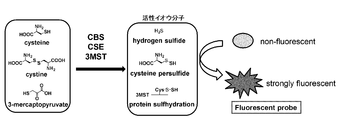
- Examples of enzymes that produce active sulfur molecules in vivo include cystathionine ⁇ -synthase (CBS), cystathionine ⁇ -lyase (CSE), and 3-mercaptopyruvate sulfurtransferase (3MST) (see FIG. 1).
- CBS cystathionine ⁇ -synthase
- CSE cystathionine ⁇ -lyase
- 3MST 3-mercaptopyruvate sulfurtransferase
- Non-Patent Document 4 For this reason, attention has recently been focused on a technique for detecting intracellular sulfur in a cell.
- Absorption method is a method of quantifying thiocyanate produced from cyanide and sulfuresulfur with Fe 3+ , and sulfuresulfur is detected by the following scheme.
- the low sensitivity of the absorption method is a problem.
- Monobromobiman method The detection method using monobromobiman is a method of analyzing the reaction product of monobromobiman, which is an electrophilic fluorescent reagent, and active sulfur molecules by LC-MS (Scheme 2). Although this method has the advantage of being able to quantitatively determine how much active sulfur molecules are present at the same time, it is not suitable for real-time measurement because it requires invasive procedures such as homogenization as in the case of absorption methods. It is.
- the fluorescent imaging method using a fluorescent probe is excellent in that a cell can be measured with high sensitivity and simple spatiotemporal resolution in a living state, and is a widely used method.
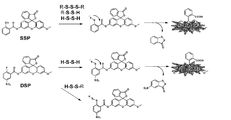
- Sulfurane sulfur-selective fluorescent probe both of which have been reported by the Ming group (see FIG. 2).
- Non-Patent Documents 5 and 6 (1) SSP Persulfide is generated by the electrophilic reaction of Sulfane sulfur, and a fluorophore is released by nucleophilic attack on the nearby ester structure.
- DSP This probe utilizes the nucleophilic reaction of Hydrogen persulfide (HS—S n —SH).
- Persulfide is generated by the nucleophilic substitution reaction, and the fluorophore is released by nucleophilic attack on the nearby ester structure.
- DSP does not respond to molecules with a terminal end of the sulfur atom modified (R—S—S n —S—R, R—S—S n —H) and does not respond to a hydrogen persulfide with no end of the sulfur atom modified A fluorescent probe that selectively responds.
- An object of the present invention is to provide a new fluorescent probe that exhibits sufficient water solubility and that detects sulfuresulfur in vivo.
- the inventors of the present invention bound a dye molecule as a donor capable of causing FRET (Fluorescence resonance energy transfer) to a fluorescent dye having a xanthene skeleton as a mother nucleus, and further, sulfone sulfur.
- FRET Fluorescence resonance energy transfer
- the present inventors studied diligently for the purpose of designing a novel fluorescent dye having a structure that does not emit fluorescence.
- the present inventors have found that the problems can be solved and completed the present invention.
- R 1 represents a hydrogen atom or the same or different monovalent substituent present on the benzene ring
- R 2 is SH or S—S—R
- R 3 and R 4 each independently represents a hydrogen atom, an alkyl group having 1 to 6 carbon atoms or a halogen atom
- R 5 and R 6 each independently represent a hydrogen atom, an alkyl group having 1 to 6 carbon atoms or a halogen atom
- R 7 and R 8 if present, each independently represent 1 to 6 carbon atoms.
- R 9 and R 10 are (I) each independently selected from NH 2 , a monoalkylamino group or a dialkylamino group, or (ii) each independently selected from a hydroxyl group or an alkoxy group;
- X represents an oxygen atom, a silicon atom, a tin atom, a germanium atom or a phosphorus atom;
- Y represents a bonding group a to L;
- L represents a linker;
- Z represents a bonding group b with L;
- D represents fluorescein, fluorescein derivative, coumarin, coumarin derivative, rhodamine or rhodamine derivative;
- m is an integer of 0 to 3
- n is an integer of 1 to 4, and
- m + n 4.
- R 11 and R 12 each independently represents a hydrogen atom or an alkyl group having 1 to 6 carbon atoms, R 11 or R 12 together with R 3 or R 5 may form a 5- to 7-membered heterocyclyl or heteroaryl containing the nitrogen atom to which R 11 or R 12 is attached, It may contain 1 to 3 further heteroatoms selected from the group consisting of an oxygen atom, a nitrogen atom and a sulfur atom as a member, and the heterocyclyl or heteroaryl has 1 to 6 carbon atoms.
- Alkyl, alkenyl having 2 to 6 carbons, or alkynyl having 2 to 6 carbons, aralkyl having 6 to 10 carbons, and alkyl-substituted alkenyl having 6 to 10 carbons may be substituted:
- R 13 and R 14 each independently represents a hydrogen atom or an alkyl group having 1 to 6 carbon atoms
- R 13 or R 14 together with R 4 or R 6 may form a 5- to 7-membered heterocyclyl or heteroaryl containing the nitrogen atom to which R 13 or R 14 is attached, It may contain 1 to 3 further heteroatoms selected from the group consisting of an oxygen atom, a nitrogen atom and a sulfur atom as a member, and the heterocyclyl or heteroaryl has 1 to 6 carbon atoms.
- the linking group a is a carbonyl group, alkylcarbonyl group, ester group, alkyl ester group, amino group, alkylamino group, amide group, alkylamide group, isothiocyanate group, sulfonyl chloride group, haloalkyl group, haloacetamide group.
- the linking group b is a carbonyl group, alkylcarbonyl group, ester group, alkyl ester group, amino group, alkylamino group, amide group, alkylamide group, isothiocyanate group, sulfonyl chloride group, haloalkyl group, haloacetamide group.
- a fluorescent probe comprising the compound or salt thereof according to any one of [1] to [6].
- [8] A method for detecting a sulfone sulfur in a cell, (A) introducing the compound or salt thereof according to any one of [1] to [6] into a cell; and (b) measuring fluorescence emitted from the compound or salt thereof in the cell. Including methods. Is provided.
- the fluorescent probe that exhibits sufficient water solubility and detects sulfone sulfur in vivo.
- fluorescence from the donor dye molecule is not emitted by the FRET effect before the reaction with the sulfone sulfur, whereas strong fluorescence derived from the donor dye molecule is emitted after the reaction.
- the fluorescent probe of the present invention does not emit fluorescence from the donor dye molecule before the reaction with the sulfone sulfur, but emits strong fluorescence derived from the donor dye molecule after the reaction. It can also be used for ratio measurement in combination with a decrease in fluorescence of a fluorescent dye having a xanthene skeleton as an acceptor as a host nucleus.
- FIG. 1 Schematic diagram of the production and selective detection of reactive sulfur species by enzymes.
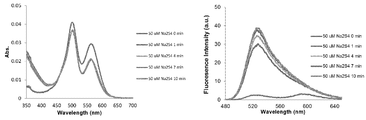
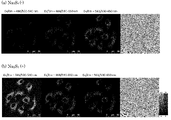
- Schematic diagram of conventional fluorescence imaging method Measurement results of absorption spectrum and fluorescence spectrum after adding Na 2 S 4 to compound 8 (SSip-1) Measurement results of absorption spectrum and fluorescence spectrum of 1 ⁇ M SSip-1 in 0.1 M sodium phosphate buffer in the presence of 5 mM GSH after addition of 50 ⁇ M Na 2 S 4 Results of examining selectivity of SSip-1 with H 2 S Results of imaging live cells (A549 cells) with SSip-1 Measurement results of absorption spectrum and fluorescence spectrum before and after adding Na 2 S 4 to compound a1 Measurement results of absorption spectrum and fluorescence spectrum before and after adding Na 2 S 4 to compound a2 Measurement results of absorption spectrum and fluorescence spectrum before and after adding Na 2 S 4 to compound 25 Confocal microscopic image of live A549 cells using SSip-1 supplemented with 250 ⁇ M Na 2 S 4 Observation results of
- an “alkyl group” or an alkyl part of a substituent containing an alkyl part (such as an alkoxy group), for example, unless otherwise specified, has, for example, 1 to 6 carbon atoms, preferably 1 to 4 carbon atoms, More preferably, it means an alkyl group composed of straight, branched, cyclic, or a combination thereof having about 1 to 3 carbon atoms.
- alkyl group for example, methyl group, ethyl group, n-propyl group, isopropyl group, cyclopropyl group, n-butyl group, sec-butyl group, isobutyl group, tert-butyl group, cyclopropyl
- methyl group, an n-pentyl group, an n-hexyl group and the like can be mentioned.
- halogen atom may be any of a fluorine atom, a chlorine atom, a bromine atom, or an iodine atom, preferably a fluorine atom, a chlorine atom, or a bromine atom.
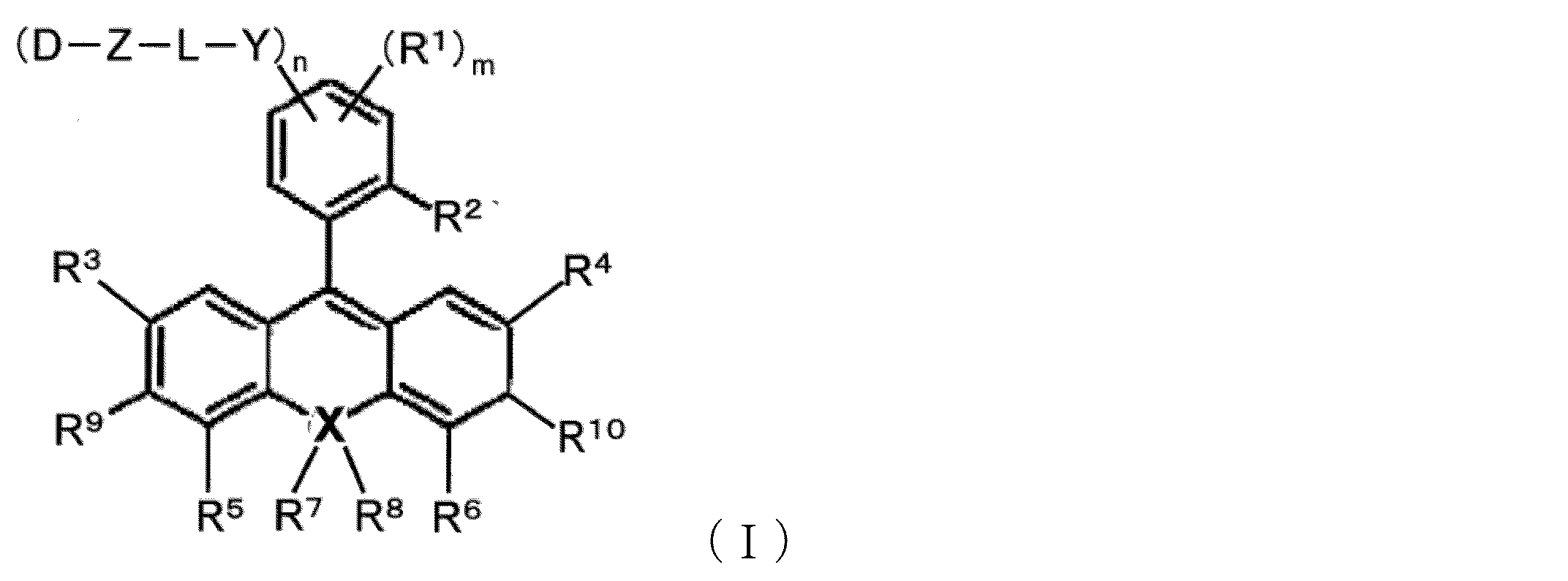
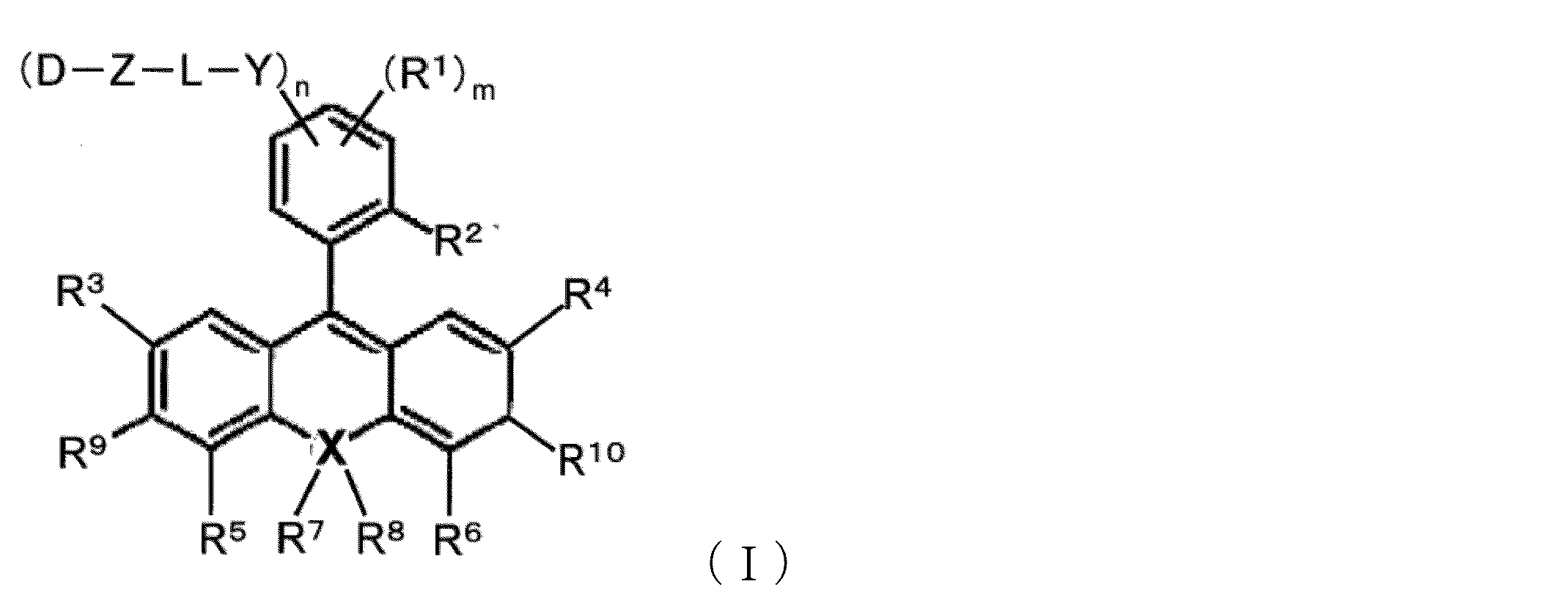
- One embodiment of the present invention is a compound represented by the following general formula (I) or a salt thereof.
- R 1 represents a hydrogen atom or the same or different monovalent substituent present on the benzene ring.
- R 1 represents a monovalent substituent present on the benzene ring, it is preferable that about 1 to 2 substituents which are the same or different exist on the benzene ring.
- R 1 represents one or more monovalent substituents, the substituent can be substituted at any position on the benzene ring.
- all of R 1 are hydrogen atoms, or one of R 1 is a monovalent substituent, and the other R 1 is a hydrogen atom.
- the type of monovalent substituent represented by R 1 is not particularly limited, and examples thereof include alkyl groups having 1 to 6 carbon atoms, alkenyl groups having 1 to 6 carbon atoms, alkynyl groups having 1 to 6 carbon atoms, carbon It is preferably selected from the group consisting of several to six alkoxy groups, hydroxyl groups, carboxy groups, sulfonyl groups, alkoxycarbonyl groups, halogen atoms, or amino groups. These monovalent substituents may further have one or more arbitrary substituents.
- the alkyl group represented by R 1 may have one or more halogen atoms, carboxy groups, sulfonyl groups, hydroxyl groups, amino groups, alkoxy groups, and the like.
- the alkyl group represented by R 1 is a halogen atom.
- An alkyl group, a hydroxyalkyl group, a carboxyalkyl group, or an aminoalkyl group may be used.
- the amino group represented by R 1 may be present one or two alkyl groups, an amino group represented by R 1 may be a monoalkylamino group or a dialkylamino group.
- examples of the case where the alkoxy group represented by R 1 has a substituent include a carboxy-substituted alkoxy group or an alkoxycarbonyl-substituted alkoxy group, and more specifically, a 4-carboxybutoxy group or 4-acetoxymethyloxy group.
- a carbonyl butoxy group etc. can be mentioned.
- R 1 is a monovalent substituent such as an alkyl group having 1 to 6 carbon atoms, and the substituent is present at the 3-position to the 6-position on the benzene ring.
- R 2 is SH or S—S—R (R represents an alkyl group having 1 to 6, preferably 1 to 2 carbon atoms).
- R 2 represents an alkyl group having 1 to 6, preferably 1 to 2 carbon atoms.
- R 3 and R 4 each independently represent a hydrogen atom, an alkyl group having 1 to 6 carbon atoms, or a halogen atom.
- the alkyl group may contain one or more halogen atoms, carboxy groups, sulfonyl groups, hydroxyl groups, amino groups, alkoxy groups,
- the alkyl group represented by R 3 or R 4 may be a halogenated alkyl group, a hydroxyalkyl group, a carboxyalkyl group, or the like.
- R 3 and R 4 are each independently preferably a hydrogen atom or a halogen atom. When R 3 and R 4 are both hydrogen atoms, or R 3 and R 4 are both fluorine atoms or chlorine atoms. More preferred.
- R 5 and R 6 each independently represent a hydrogen atom, an alkyl group having 1 to 6 carbon atoms, or a halogen atom, and are the same as those described for R 3 and R 4. is there.
- R 5 and R 6 are preferably both hydrogen atoms, both chlorine atoms, or both fluorine atoms.
- R 7 and R 8 each independently represent an alkyl group or aryl group having 1 to 6 carbon atoms, but R 7 and R 8 are each independently An alkyl group having 1 to 3 carbon atoms is preferred, and R 7 and R 8 are both preferably methyl groups.
- the alkyl group represented by R 7 and R 8 may contain one or more halogen atoms, carboxy groups, sulfonyl groups, hydroxyl groups, amino groups, alkoxy groups, and the like, for example, R 7 or R 8 represents The alkyl group may be a halogenated alkyl group, a hydroxyalkyl group, a carboxyalkyl group, or the like.
- the aryl group may be either a monocyclic aromatic group or a condensed aromatic group, and the aryl ring is one or more ring-constituting heteroatoms. (For example, a nitrogen atom, an oxygen atom, or a sulfur atom) may be contained.
- the aryl group is preferably a phenyl group.
- One or more substituents may be present on the aryl ring. As the substituent, for example, one or two or more halogen atoms, carboxy groups, sulfonyl groups, hydroxyl groups, amino groups, alkoxy groups and the like may be present.
- R 7 and R 8 do not exist.
- X is a phosphorus atom
- one of —R 7 and —R 8 may be ⁇ O.
- one of —R 5 and —R 6 is ⁇ O, and the other represents an alkyl group or aryl group having 1 to 6 carbon atoms.
- R 9 and R 10 are each selected from (i) an embodiment independently selected from NH 2 , a monoalkylamino group or a dialkylamino group, or (ii) each independently selected from a hydroxyl group or an alkoxy group
- the monoalkylamino group and dialkylamino group preferably have a substituted or unsubstituted alkyl group having 1 to 6 carbon atoms. Examples of the substituent include a methyl group, an ethyl group, and an ethylcarboxy group.
- the alkoxy group is preferably an alkoxy group having 1 to 6 carbon atoms, more preferably a methoxy group or an ethoxy group.
- R 9 and R 10 when at least one of R 9 and R 10 is a monoalkylamino group or a dialkylamino group, the monoalkylamino group or the dialkylamino group is combined with any one of R 4 to R 6.
- heterocyclyl or heteroaryl containing a nitrogen atom of a monoalkylamino group or a dialkylamino group
- the ring member is selected from the group consisting of an oxygen atom, a nitrogen atom and a sulfur atom 1 to 3 further heteroatoms may be contained
- the heterocyclyl or heteroaryl may be alkyl having 1 to 6 carbon atoms, alkenyl having 2 to 6 carbon atoms, or 2 to 2 carbon atoms. It may be substituted with 6 alkynyls, an aralkyl group having 6 to 10 carbon atoms, or an alkyl-substituted alkenyl group having 6 to 10 carbon atoms.
- X represents an oxygen atom, a silicon atom, a tin atom, a germanium atom or a phosphorus atom. In a preferred embodiment of the present invention, X is an oxygen atom.
- Y represents a linking group a for linking the benzene ring and L.
- the bonding group a a carbonyl group, an alkylcarbonyl group, an ester group, an alkyl ester group, an amino group, an alkylamino group, an amide group, an alkylamide group, an isothiocyanate group, a sulfonyl chloride group, a haloalkyl group, a haloacetamide group, an azide Group, alkynyl group, and the like, and a carbonyl group, an amide group, and an alkylamide group are particularly preferable.
- L represents a linker.
- the linker is selected from a structurally hard structure that prevents a fluorescent dye having a xanthene skeleton as a nucleus and a dye molecule as a donor capable of causing FRET from approaching.
- the linker is preferably a cycloalkyl group or an aryl group.
- the cycloalkyl group is preferably a trans-cyclohexyl group.
- a phenyl group is preferable.
- Z represents a linking group b that links L and D together.
- bonding group b carbonyl group, alkylcarbonyl group, ester group, alkyl ester group, amino group, alkylamino group, amide group, alkylamide group, isothiocyanate group, sulfonyl chloride group, haloalkyl group, haloacetamide group, azide Group, alkynyl group, and the like, and a carbonyl group, an amide group, and an alkylamide group are particularly preferable.
- D represents a donor dye that causes a FRET phenomenon with respect to a xanthene dye as a mother nucleus.
- a fluorescein, a fluorescein derivative, a coumarin, a coumarin derivative, a rhodamine, a rhodamine derivative is mentioned.
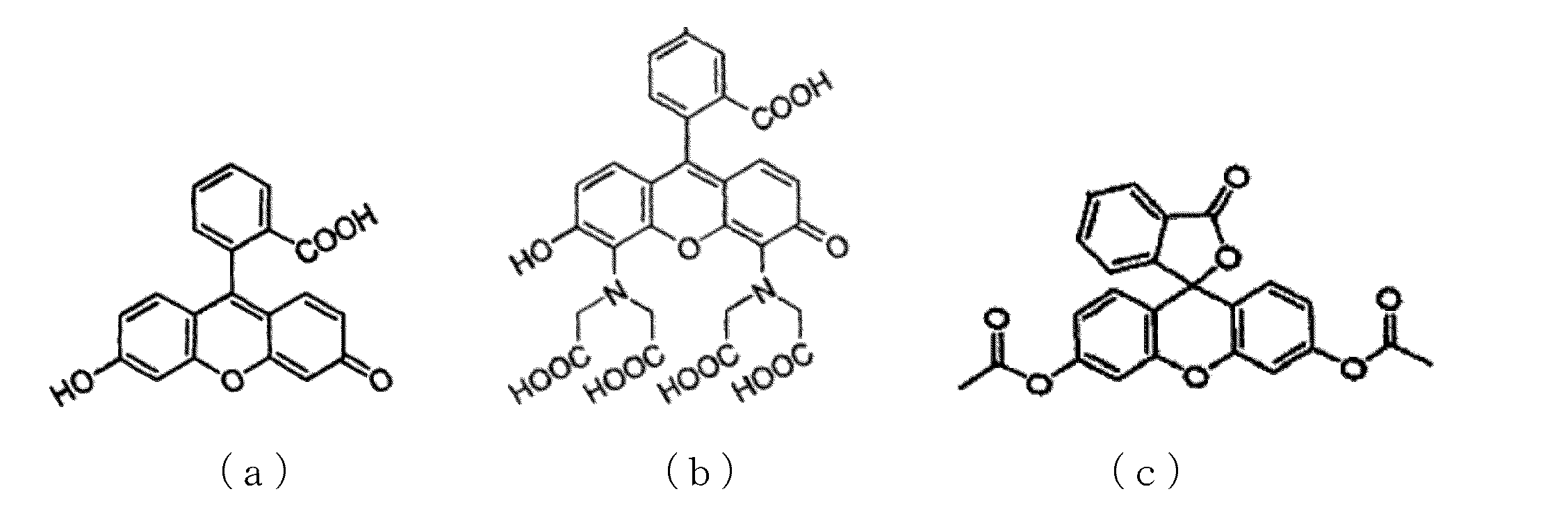
- fluorescein derivative examples include a fluorescein having a substituent, a fluorescein derivative in which the hydroxyl group of the xanthene skeleton is acetylated (the derivative may have other substituents), and a COOH on the phenyl group bonded to the xanthene skeleton. Fluorescein derivatives that form a closed ring structure with a xanthene skeleton (the derivatives may have other substituents) and the like.
- an alkylamine having a carboxyl group an alkylamine having a carboxyester group (for example, —COOCH 2 OCOCH 3 ), a chloro group, a fluoro group, and a methyl group are preferable.
- the introduction position of the substituent is not particularly limited, but the xanthene ring 2-position, 4-position, 5-position, and 7-position are preferred.
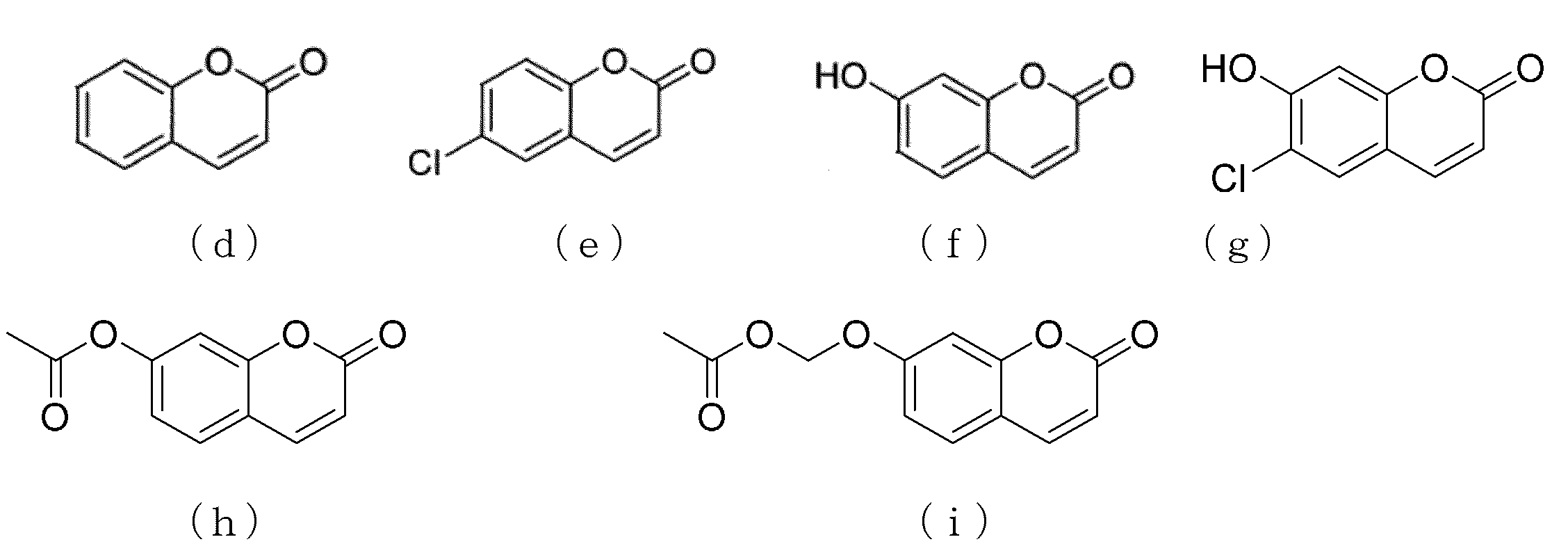
- the coumarin derivative is a coumarin having a substituent, and the substituent is preferably a hydroxy group, a chlorine atom, an acetoxy group, an alkoxy group having an acetoxy group, a trifluoromethyl group, or the like.
- the rhodamine derivative examples include a rhodamine having a substituent, a rhodamine derivative in which the amino group of the xanthene skeleton is alkylated (the derivative may have other substituents), a COOH on the phenyl group bonded to the xanthene skeleton.
- a rhodamine derivative having a closed ring structure with a xanthene skeleton the derivative may have other substituents.
- a chloro group, a fluoro group and the like are preferable.
- fluorescein and fluorescein derivatives include:
- Non-limiting examples of coumarin and coumarin derivatives include the following.
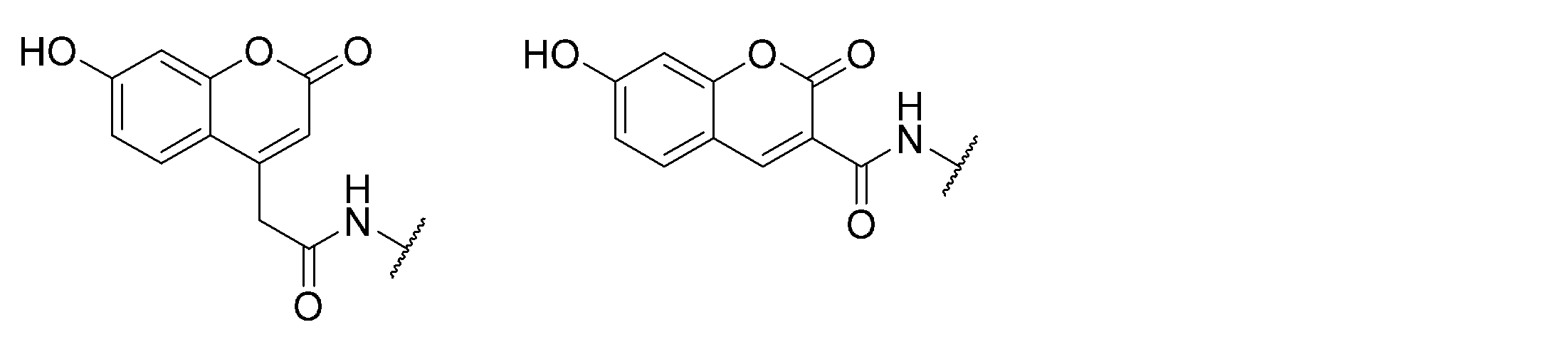
- the linking group b is preferably introduced at the 4-position or 5-position on the phenyl group bonded to the xanthene skeleton of the fluorescein or fluorescein derivative.
- the linking group b is preferably introduced at the 3-position or 4-position of the coumarin or coumarin derivative. Non-limiting examples of coupling a coumarin derivative to a linker are shown below.
- n is an integer of 1 to 4
- m + n 4.
- m is 3 and n is 1.
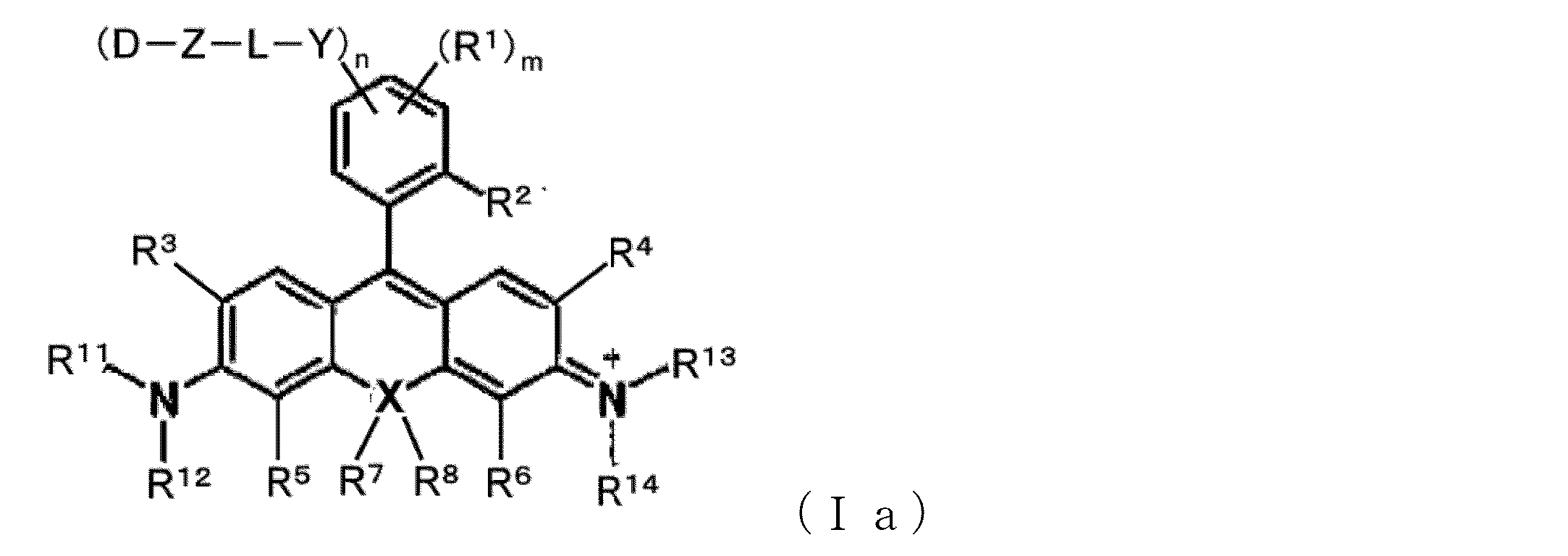
- One aspect of the present invention is a compound represented by the following general formula (Ia) or a salt thereof.
- R 1 to R 8 , X, Y, L, Z, D, m, and n are as defined in the general formula (I).
- R 11 and R 12 each independently represent a hydrogen atom or an alkyl group having 1 to 6 carbon atoms.
- R 11 or R 12 together with R 3 or R 5 may form a 5- to 7-membered heterocyclyl or heteroaryl containing the nitrogen atom to which R 11 or R 12 is attached, It may contain 1 to 3 further heteroatoms selected from the group consisting of an oxygen atom, a nitrogen atom and a sulfur atom as a member, and the heterocyclyl or heteroaryl has 1 to 6 carbon atoms.
- Alkyl, alkenyl having 2 to 6 carbons, or alkynyl having 2 to 6 carbons, aralkyl having 6 to 10 carbons, and alkyl-substituted alkenyl having 6 to 10 carbons may be substituted.
- R 11 and R 12 are each independently a hydrogen atom, a methyl group, or an ethyl group.
- R 13 and R 14 each independently represent a hydrogen atom or an alkyl group having 1 to 6 carbon atoms.
- R 13 or R 14 together with R 4 or R 6 may form a 5- to 7-membered heterocyclyl or heteroaryl containing the nitrogen atom to which R 13 or R 14 is attached, It may contain 1 to 3 further heteroatoms selected from the group consisting of an oxygen atom, a nitrogen atom and a sulfur atom as a member, and the heterocyclyl or heteroaryl has 1 to 6 carbon atoms.
- Alkyl, alkenyl having 2 to 6 carbons, or alkynyl having 2 to 6 carbons, aralkyl having 6 to 10 carbons, and alkyl-substituted alkenyl having 6 to 10 carbons may be substituted.
- R 13 and R 14 are each independently a hydrogen atom, a methyl group, or an ethyl group.
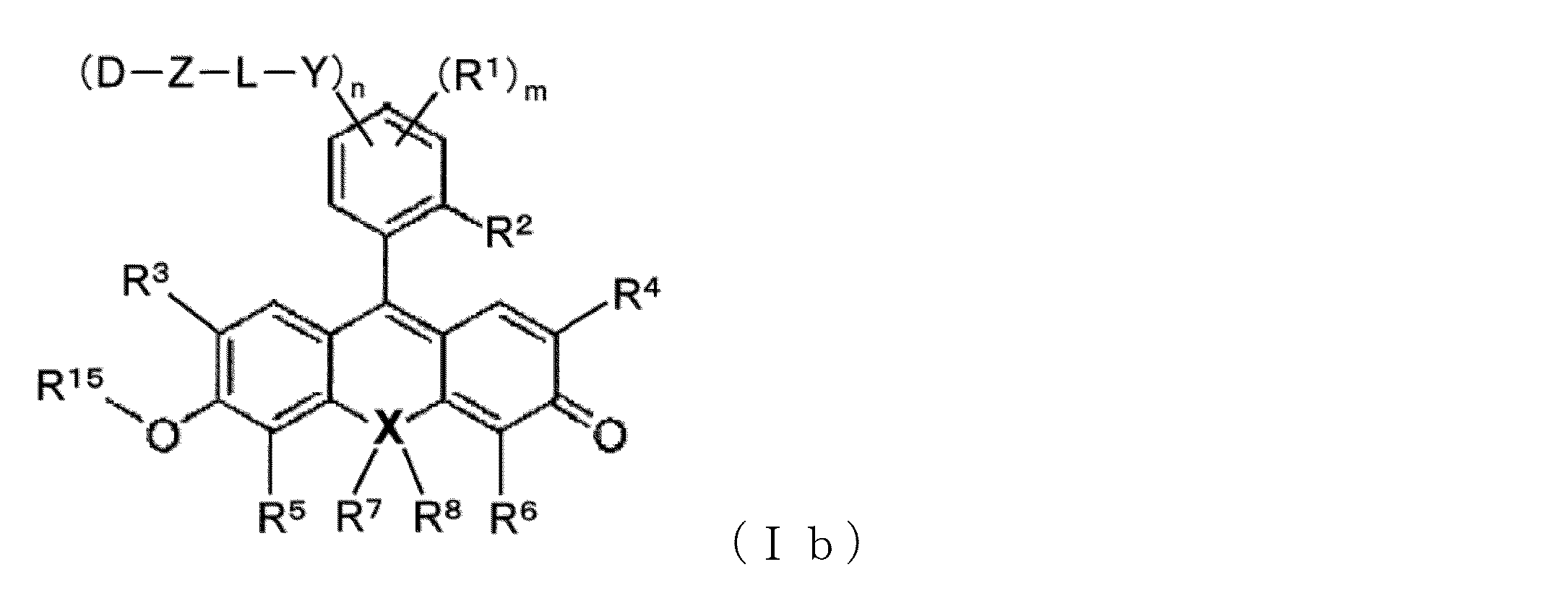
- One aspect of the present invention is a compound represented by the following general formula (Ib) or a salt thereof.
- R 1 to R 8 , X, Y, L, Z, D, m, and n are as defined in the general formula (I).
- R 15 represents a hydrogen atom or an alkyl group having 1 to 6 carbon atoms.
- R 15 is a hydrogen atom, a methyl group, or an ethyl group.
- Non-limiting examples of compounds included in general formula (I), (Ia) or (Ib) are shown below.
- the compounds of the present invention represented by the formulas (I), (Ia) and (Ib) can exist as acid addition salts or base addition salts.
- the acid addition salt include mineral acid salts such as hydrochloride, sulfate, and nitrate, or organic acid salts such as methanesulfonate, p-toluenesulfonate, oxalate, citrate, and tartrate.
- the base addition salt include metal salts such as sodium salt, potassium salt, calcium salt, and magnesium salt, organic amine salts such as ammonium salt, and triethylamine salt.
- a salt with an amino acid such as glycine may be formed.
- the compounds of the present invention or salts thereof may exist as hydrates or solvates, and these substances are also within the scope of the present invention.
- the compounds represented by the formulas (I), (Ia) and (Ib) of the present invention may have one or more asymmetric carbons depending on the type of substituent, but one or two
- stereoisomers such as optically active substances based on the above asymmetric carbons and diastereoisomers based on two or more asymmetric carbons, any mixture of stereoisomers, racemates, etc. Included in the range.
- the compound of the present invention represented by the formulas (I), (Ia) and (Ib) of the present invention is useful as a fluorescent probe for detecting intracellular sulfur. That is, another aspect of the present invention is a fluorescent probe containing a compound represented by formula (I) or a salt thereof. Another aspect of the present invention is a method for detecting intracellular sulfone sulfur, wherein (a) a compound represented by the formula (I), (Ia) or (Ib) or a salt thereof is introduced intracellularly. And (b) a method of measuring fluorescence emitted from the compound or a salt thereof in a cell.
- the compound of the present invention represented by the formulas (I), (Ia) and (Ib) or a salt thereof is substantially non-fluorescent or has only weak fluorescence in an environment free of sulfone sulfur. It has the feature of emitting strong fluorescence derived from the Donau dye in a certain environment. Therefore, the compound of the present invention represented by the formulas (I), (Ia) and (Ib) or a salt thereof has excellent OFF / ON type fluorescence for detecting intracellular sulfur under physiological conditions. This is extremely useful in that a probe can be provided.
- the method of using the fluorescent probe of the present invention is not particularly limited, and can be used in the same manner as conventionally known fluorescent probes.
- an aqueous medium such as physiological saline or a buffer, or a mixture of an aqueous medium such as ethanol, acetone, ethylene glycol, dimethyl sulfoxide, and dimethylformamide and an aqueous medium is used in the above formula (I), ( The compound represented by Ia) and (Ib) or a salt thereof is dissolved, and this solution is added to an appropriate buffer containing cells and tissues, and the fluorescence spectrum is measured.
- the fluorescent probe of the present invention may be used in the form of a composition in combination with appropriate additives. For example, it can be combined with additives such as a buffer, a solubilizing agent and a pH adjuster.
- the crudely purified compound was dissolved in dehydrated THF (5 mL), and 3,4-dihydro-2H-pyran (6 mg, 0.07 mmol) and boron trifluoride-ethyl ether complex (10 mg, 0.07 mmol) were added thereto. The mixture was further stirred at room temperature for 6 hours.
- Example 1 Na 2 S 4 was added to the compound 8 synthesized above, and an absorption spectrum (UV-1650PC, SHIMADZU) and a fluorescence spectrum (F-4500, HITACHI) were measured.
- the left figure of FIG. 3 shows 0.1 M sodium phosphate buffer (pH 7.4) in the presence of 300 ⁇ M GSH after addition of 50 ⁇ M Na 2 S 4 (containing 0.1% DMSO and 1 mg / ml BSA as a co-solvent). 3) shows the measurement result of the absorption spectrum of 1 ⁇ M SSip-1, and the right figure of FIG. 3 shows the measurement result of the fluorescence spectrum under the same conditions.
- the excitation wavelength is 470 nm.
- SSip-1 became an off / on type fluorescent probe after 50 ⁇ M Na 2 S 4 was added, with a decrease in absorbance on the rhodamine side and an increase in fluorescence derived from fluorescein.
- GSSH glutathione persulfide
- FIG. 4 shows 0.1 M sodium phosphate buffer (pH 7.4) in the presence of 5 mM GSH after addition of 50 ⁇ M Na 2 S 4 (containing 0.1% DMSO and 1 mg / ml BSA as a co-solvent). ) Shows the measurement result of the absorption spectrum of 1 ⁇ M SSip-1, and the right figure of FIG. 4 shows the measurement result of the fluorescence spectrum under the same conditions.
- the excitation wavelength is 470 nm.
- FIG. 5 shows in 0.1M sodium phosphate buffer (pH 7.4) in the presence of 300 ⁇ M GSH after addition of 50 ⁇ M NaHS (containing 0.1% DMSO and 1 mg / ml BSA as a co-solvent).
- the measurement result of the absorption spectrum of 0.1 ⁇ M SSip-1, and the right figure of FIG. 3 shows the measurement result of the fluorescence spectrum under the same conditions.
- the excitation wavelength is 470 nm.
- SSip-1 showed an excellent response to sulfone sulfur, and thus cell imaging of SSip-1 was performed. Since SSip-1 has a fluorescein structure, it was considered that it might not have cell membrane permeability. Therefore, the diacetate (DA) form used to convert fluorescein into a cell membrane permeable type was applied to SSip-1, and SSip-1 DA was synthesized according to the following scheme.
- DA diacetate
- SSip-1 DA was introduced into A549 cells, and 500 ⁇ M Na 2 S 4 was added extracellularly under the microscope. A549 cells were incubated for 3 hours with 10 ⁇ M SSip-1 DA (containing 0.0003% purulonic and 1% DMSO as co-solvent). The excitation wavelength was 488 nm and the emission wavelengths were 500-570 nm and 590-650 nm. As a result, the fluorescence intensity increased, and SSip-1 was able to detect sulfone sulfur in living cells (FIG. 6). During the introduction of the probe, the surfactant pururonic was used to prevent probe aggregation.
- the fluorescence wavelength region derived from fluorescein 500-570 nm
- the fluorescence wavelength region derived from rhodamine 590-650 nm
- the intensity of the fluorescence wavelength region derived from fluorescein increases
- the intensity of the fluorescence wavelength region derived from rhodamine decreased slightly. Therefore, under this measurement, SSip-1 was considered to be capable of ratio measurement as well as imaging for changing fluorescence intensity from fluorescein in cell imaging.
- the mixture was extracted with dichloromethane, the organic layer was washed with brine, dried over Na 2 SO 4 and the solvent was distilled off under reduced pressure.
- the crude product was dissolved in dichloromethane (5 mL), piperidine (0.50 mL) was added, and the mixture was stirred at room temperature for 1 hr. 1N HClaq. The reaction was stopped at.
- the mixture was extracted with dichloromethane, the organic layer was washed with brine, dried over Na 2 SO 4 and the solvent was distilled off under reduced pressure.
- Methyl methanethiosulfate (7.9 mg, 63 ⁇ mol) was dissolved in methanol (3 mL), a solution obtained by dissolving the roughly purified compound in methanol (2 mL) was added little by little, and the mixture was stirred at room temperature for 15 minutes.
- Example 2 Na 2 S 4 was added to the deprotected compound 25 of the synthesized compound a1, compound a2, and compound a4, and absorption and fluorescence spectra were measured.
- the left figure of FIG. 7 shows in 0.1 M NaPi buffer (pH 7.4) in the presence of 1 mM GSH before and after addition of 50 ⁇ M Na 2 S 4 (containing 0.1% DMSO and 1 mg / ml BSA as a co-solvent).
- the measurement result of the absorption spectrum of 1 ⁇ M compound a1 shows the measurement result of the fluorescence spectrum under the same conditions.
- the excitation wavelength is 470 nm.
- the left figure of FIG. 8 shows 0.1 M NaPi buffer (pH 7.4) in the presence of 2.5 mM GSH before and after the addition of 50 ⁇ M Na 2 S 4 (containing 0.1% DMSO and 1 mg / ml BSA as a co-solvent). ) Shows the measurement result of the absorption spectrum of 1 ⁇ M compound a2, and the right figure in FIG. 8 shows the measurement result of the fluorescence spectrum under the same conditions.
- the excitation wavelength is 470 nm.
- the middle figure of FIG. 9 shows 0.1 M NaPi buffer (pH 7.4) in the presence of 1 mM GSH before and after the addition of 50 ⁇ M Na 2 S 4 (containing 0.1% DMSO and 1 mg / ml BSA as a co-solvent).
- 9 shows the measurement result of the absorption spectrum of 1 ⁇ M compound 25, and the right figure in FIG. 9 shows the measurement result of the fluorescence spectrum under the same conditions.
- the excitation wavelength is 470 nm.
- Example 3 Live cell imaging of compound a3 Compound a3 was applied to live cell imaging.
- Compound a3 is a compound in which the thiol group is protected with disulfide in order to improve the stability of SSip-1 DA, and is deprotected in an intracellular reducing environment.
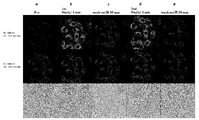
- FIG. 10 is a confocal microscope image of viable A549 cells using SSip-1 supplemented with 250 ⁇ M Na 2 S 4 .
- A549 cells were incubated for 3 hours with 10 ⁇ M SSip-1 DA (containing 0.03% purulonic and 0.1% DMSO as co-solvent).
- the excitation wavelength is 488 nm. (Laser intensity 20%) / 500-540 nm (PMT1000) and 590-650 nm (HyD100) An increase in fluorescence intensity derived from fluorescein was shown after Na 2 S 4 was added.
- the fluorescence intensity is increased even in the fluorescence wavelength region derived from rhodamine, it is considered that the fluorescence derived from fluorescein leaks out.
- fluorescence imaging images were acquired at the rhodamine excitation and fluorescence wavelengths (561 nm / 590-650 nm), the fluorescence intensity decreased.
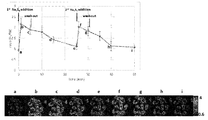
- FIG. 11 is a confocal micrograph of A549 cells with SSIP-1 with the addition of Na 2 S 4 of 250 [mu] M, was added Na 2 S 4, and washout, then, the Na 2 S 4 again The confocal microscope image at the time of adding and washout is shown.
- the conditions for incubation and measurement of A549 cells are the same as those shown in FIG.
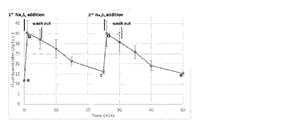
- FIG. 12 also shows the change in fluorescence intensity of live A549 cells incubated with SSip-1 after repeated addition of 250 ⁇ M Na 2 S 4 .
- FIGS. 11 and 12 show that the fluorescence increased within 1 minute after the addition of Na 2 S 4 and decreased after about 20 minutes after the washout.
- ratio imaging is also possible.
- Top view of FIG. 13 the change in the ratio of A549 cells incubated in SSIP-1 after addition repeated Na 2 S 4 of 250 ⁇ M (FL / RB), and the upper drawing shows the ratio image.
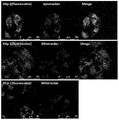
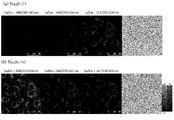
- FIG. 14 shows the results of co-staining of SSip-1 with Lysotracker or Mitotracker.
- Cells were incubated in DMEM (containing 0.03% pluronic and 0.1% DMSO as a co-solvent) for 1 hour with 10 ⁇ M compound a3 at 50 nM Lysotracker Deep red or 200 nM Mitotracker Deep red.
- Example 4 Live cell imaging of compound a4 Compound a4 was applied to live cell imaging. Compound a4 is obtained by changing the fluorescein site of SSip-1 to rhodamine green, and is considered to improve photobleaching resistance.
- FIG. 15 is a confocal microscope image of viable A549 cells using Compound a4 supplemented with 250 ⁇ M Na 2 S 4 .
- A549 cells were incubated for 1 hour with 10 ⁇ M compound a4 (containing 0.03% purulonic and 0.1% DMSO as co-solvent).
- the excitation wavelength is 488 nm. (Laser intensity 20%) / 500-540 nm (PMT1000) and 590-650 nm (HyD100)
- Compound a4 showed an increase in the fluorescence intensity derived from rhodamine green and a decrease in the fluorescence intensity derived from rhodamine B after addition of Na 2 S 4 .
Landscapes
- Health & Medical Sciences (AREA)
- Life Sciences & Earth Sciences (AREA)
- Chemical & Material Sciences (AREA)
- Engineering & Computer Science (AREA)
- Immunology (AREA)
- Molecular Biology (AREA)
- Urology & Nephrology (AREA)
- Hematology (AREA)
- Biomedical Technology (AREA)
- Physics & Mathematics (AREA)
- Organic Chemistry (AREA)
- General Health & Medical Sciences (AREA)
- Biochemistry (AREA)
- Analytical Chemistry (AREA)
- General Physics & Mathematics (AREA)
- Pathology (AREA)
- Microbiology (AREA)
- Biotechnology (AREA)
- Cell Biology (AREA)
- Food Science & Technology (AREA)
- Medicinal Chemistry (AREA)
- Inorganic Chemistry (AREA)
- Nuclear Medicine, Radiotherapy & Molecular Imaging (AREA)
- Optics & Photonics (AREA)
- Tropical Medicine & Parasitology (AREA)
- Chemical Kinetics & Catalysis (AREA)
- Investigating Or Analysing Materials By The Use Of Chemical Reactions (AREA)
- Zoology (AREA)
- Wood Science & Technology (AREA)
- Proteomics, Peptides & Aminoacids (AREA)
- Bioinformatics & Cheminformatics (AREA)
- General Engineering & Computer Science (AREA)
- Genetics & Genomics (AREA)
- Biophysics (AREA)
- Measuring Or Testing Involving Enzymes Or Micro-Organisms (AREA)
- Investigating Or Analysing Biological Materials (AREA)
- Investigating, Analyzing Materials By Fluorescence Or Luminescence (AREA)
Abstract
Description
1990年頃からH2Sが活性イオウ分子として注目を集め、研究が行われてきた。(非特許文献1及び2)さらに近年、H2Sに加えて、0価の硫黄原子(S0、sulfane sulfur)がより反応性の高い硫黄原子として注目を集めている(非特許文献3)。生体内で活性イオウ分子を産生する酵素はcystathionine β-synthase(CBS)、cystathionine γ-lyase(CSE)、3-mercaptopyruvate sulfurtransferase(3MST)などが報告されている(図1参照)。生体内でH2Sとsulfane sulfurのどちらがどの程度重要なのか、そしてこれら酵素が生体内でH2Sとsulfane sulfurをそれぞれどの程度産生するのかは未だ議論の渦中である。そのため、生体内で活性イオウ分子を選択的かつ感度良く検出する技術などの研究用ツールの開発は本研究分野の進展に極めて重要である。
吸光法は、cyanideとsulfane sulfurから産生されるチオシアネートをFe3+で定量する方法であり、以下のスキームによりsulfane sulfurが検出される。吸光法は感度の低さが問題となる。

モノブロモビマンによる検出法は、親電子性の蛍光試薬であるモノブロモビマンと活性イオウ分子との反応産物をLC-MSにより解析する手法である(スキーム2)。この手法は、どのような活性イオウ分子がどの程度存在するかを同時に感度良く定量できる利点があるものの、吸光法と同様にホモジナイズなどの侵襲的な操作が必要であるため、リアルタイム測定には不向きである。

蛍光プローブを用いた蛍光イメージング法は、細胞を生きたままの状態で感度良く簡便に時空間分解能高く測定することができる点で優れており、汎用されている方法である。これまでSulfane sulfur選択的な蛍光プローブについて以下の2種類の報告があり、いずれもMingらのグループが報告している(図2参照)。(非特許文献5及び6)
(1)SSP
Sulfane sulfurの求電子反応でpersulfideが生成し、近傍のエステル構造に求核攻撃することで蛍光団が放出される。
(2)DSP
Hydrogen persulfide(H-S-Sn-S-H)の求核反応を利用したプローブである。求核置換反応によりpersulfideが生成し、近傍のエステル構造に求核攻撃することで蛍光団が放出される。DSPは硫黄原子の末端が修飾された分子(R-S-Sn-S-R、R-S-Sn-H)には応答せず、硫黄原子の末端が修飾されていないhydrogen persulfideに選択的に応答する蛍光プローブである。
本発明は、十分な水溶性を示し、かつ生体内でsulfane sulfurを検出する新たな蛍光プローブを提供することを目的とするものである。
[1]以下の一般式(I):
R1は、水素原子を示すか、又はベンゼン環上に存在する同一又は異なる一価の置換基を示し;
R2は、SH又はS-S-R(Rは、炭素数1~6のアルキル基を示し;
R3及びR4は、それぞれ独立に、水素原子、炭素数1~6個のアルキル基又はハロゲン原子を示し;
R5及びR6は、それぞれ独立に、水素原子、炭素数1~6個のアルキル基又はハロゲン原子を示し
R7及びR8は、存在する場合は、それぞれ独立に、炭素数1~6個のアルキル基又はアリール基を示し、
ここで、Xが酸素原子の場合は、R7及びR8は存在せず、
Xがリン原子の場合は、-R7及び-R8の一方は、=Oであってもよい;
R9及びR10は、
(i)それぞれ独立に、NH2、モノアルキルアミノ基又はジアルキルアミノ基から選択され、又は
(ii)それぞれ独立に、ヒドロキシル基又はアルコキシ基から選択され;
Xは、酸素原子、珪素原子、錫原子、ゲルマニウム原子又はリン原子を示し;
Yは、Lとの結合基aを示し;
Lは、リンカーを示し;
Zは、Lとの結合基bを示し;
Dは、フルオレセイン、フルオレセイン誘導体、クマリン、クマリン誘導体、ローダミン又はローダミン誘導体を示し;
mは、0~3の整数であり、nは、1~4の整数であり、m+n=4である。)
で表される化合物又はその塩。
[2]以下の一般式(Ia):

R1~R8、X、Y、L、Z、D、m及びnは、一般式(I)で定義した通りであり;
R11及びR12は、それぞれ独立に、水素原子又は炭素数1~6個のアルキル基を示し、
R11又はR12は、R3又はR5と一緒になって、R11又はR12が結合している窒素原子を含む5~7員のヘテロシクリル又はヘテロアリールを形成していてもよく、環構成員として酸素原子、窒素原子及び硫黄原子からなる群から選択される1~3個の更なるヘテロ原子を含有していてもよく、更に該ヘテロシクリル又はヘテロアリールは、炭素数1~6個のアルキル、炭素数2~6個のアルケニル、又は炭素数2~6個のアルキニル、炭素数6~10個のアラルキル基、炭素数6~10個のアルキル置換アルケニル基で置換されていてもよい:
R13及びR14は、それぞれ独立に、水素原子又は炭素数1~6個のアルキル基を示し、
R13又はR14は、R4又はR6と一緒になって、R13又はR14が結合している窒素原子を含む5~7員のヘテロシクリル又はヘテロアリールを形成していてもよく、環構成員として酸素原子、窒素原子及び硫黄原子からなる群から選択される1~3個の更なるヘテロ原子を含有していてもよく、更に該ヘテロシクリル又はヘテロアリールは、炭素数1~6個のアルキル、炭素数2~6個のアルケニル、又は炭素数2~6個のアルキニル、炭素数6~10個のアラルキル基、炭素数6~10個のアルキル置換アルケニル基で置換されていてもよい。)
で表される、[1]に記載の化合物又はその塩。
[3]以下の一般式(Ib):
R1~R8、X、Y、L、Z、D、m及びnは、一般式(I)で定義した通りであり;
R15は、水素原子又は炭素数1~6個のアルキル基を示す。)
で表される、[1]に記載の化合物又はその塩。
[4]前記リンカーは、シクロアルキル基又はアリール基から選択される、[1]~[3]のいずれか1項に記載の化合物又はその塩。
[5]結合基aは、カルボニル基、アルキルカルボニル基、エステル基、アルキルエステル基、アミノ基、アルキルアミノ基、アミド基、アルキルアミド基、イソチオシアネート基、塩化スルホニル基、ハロアルキル基、ハロアセトアミド基、アジド基又はアルキニル基から選択される、[1]~[4]のいずれか1項に記載の化合物又はその塩。
[6]結合基bは、カルボニル基、アルキルカルボニル基、エステル基、アルキルエステル基、アミノ基、アルキルアミノ基、アミド基、アルキルアミド基、イソチオシアネート基、塩化スルホニル基、ハロアルキル基、ハロアセトアミド基、アジド基又はアルキニル基から選択される、[1]~[5]のいずれか1項に記載の化合物又はその塩。
[7][1]~[6]のいずれか1項に記載の化合物又はその塩を含む蛍光プローブ。
[8]細胞内のsulfane sulfurを検出する方法であって、
(a)[1]~[6]のいずれか1項に記載の化合物又はその塩を細胞内に導入する工程、及び
(b)当該化合物又はその塩が細胞内で発する蛍光を測定する工程
を含む方法。
を、提供するものである。
特に、本発明により、sulfane sulfurとの反応前は、FRET効果によりドナーの色素分子からは蛍光が発せられないのに対して、反応後は、ドナーの色素分子由来の強い蛍光が発せられることから、優れたOFF/ON型の蛍光プローブを提供することが可能である。
また、本発明の蛍光プローブは、sulfane sulfurとの反応前は、ドナーの色素分子からは蛍光が発せられないのに対して、反応後は、ドナーの色素分子由来の強い蛍光が発せられることから、アクセプターとなるキサンテン骨格を母核とする蛍光色素の蛍光が減少することと組み合わせて、レシオ測定にも用いることができる。
R1がベンゼン環上に存在する一価の置換基を示す場合には、ベンゼン環上に同一又は異なる置換基が1ないし2個程度存在していることが好ましい。R1が1個又は2個以上の一価の置換基を示す場合には、該置換基はベンゼン環上の任意の位置に置換することができる。好ましくは、R1の全てが水素原子であるか、R1の1つが一価の置換基であり、それ以外のR1は水素原子である。
理論に拘束されることを意図するものではないが、一般式(I)の化合物においては、DとしてFRETを起こすことができるドナーの色素分子が導入されていることから、sulfane sulfur添加前は、ドナー色素に由来する蛍光は発せられないが、sulfane sulfurを添加すると、sulfane sulfurとR2のSH又はS-S-Rが反応して閉環構造を形成することにより、FRETが起こらないため、Dに由来する蛍光強度が上昇することで、OFF/ON型のプローブを提供することができる。従って、一般式(I)の化合物において、R2の位置にSH又はS-S-Rが導入されていることが重要である。
モノアルキルアミノ基及びジアルキルアミノ基は、炭素数1~6の置換又は無置換のアルキル基を有することが好ましい。置換基としては、メチル基、エチル基、エチルカルボキシ基などが挙げられる。
アルコキシ基は、炭素数1~6のアルコキシ基が好ましく、メトキシ基、エトキシ基がより好ましい。
また、リンカーとして、シクロアルキル基、アリール基が好ましい。
シクロアルキル基としてはトランスーシクロヘキシル基が好ましい。アリール基としては、フェニル基が好ましい。
クマリン誘導体としては、置換基を有するクマリンであり、置換基としては、ヒドロキシ基、塩素原子、アセトキシ基、アセトキシ基を有するアルコキシ基、トリフルオロメチル基等が好ましい。置換基の導入位置としては、クマリン3位、4位、6位が好ましい。
ローダミン誘導体としては、置換基を有するローダミン、キサンテン骨格のアミノ基がアルキル化されたローダミン誘導体(当該誘導体はその他の置換基を有していてもよい)、キサンテン骨格に結合したフェニル基上のCOOHがキサンテン骨格と閉環構造を形成したローダミン誘導体(当該誘導体はその他の置換基を有していてもよい)等が挙げられる。置換基としては、クロロ基、フルオロ基等が好ましい。
クマリン又はクマリン誘導体を連結基bを介してリンカーにつなげる場合、連結基bはクマリン又はクマリン誘導体の3位又は4位に導入するのが好ましい。
クマリン誘導体をリンカーにつなげる場合の非限定的例を以下に示す。
本発明の好ましい態様において、mが3であり、nは1である。
R11又はR12は、R3又はR5と一緒になって、R11又はR12が結合している窒素原子を含む5~7員のヘテロシクリル又はヘテロアリールを形成していてもよく、環構成員として酸素原子、窒素原子及び硫黄原子からなる群から選択される1~3個の更なるヘテロ原子を含有していてもよく、更に該ヘテロシクリル又はヘテロアリールは、炭素数1~6個のアルキル、炭素数2~6個のアルケニル、又は炭素数2~6個のアルキニル、炭素数6~10個のアラルキル基、炭素数6~10個のアルキル置換アルケニル基で置換されていてもよい。
好ましくは、R11及びR12は、それぞれ独立に、水素原子、メチル基、エチル基である。
R13又はR14は、R4又はR6と一緒になって、R13又はR14が結合している窒素原子を含む5~7員のヘテロシクリル又はヘテロアリールを形成していてもよく、環構成員として酸素原子、窒素原子及び硫黄原子からなる群から選択される1~3個の更なるヘテロ原子を含有していてもよく、更に該ヘテロシクリル又はヘテロアリールは、炭素数1~6個のアルキル、炭素数2~6個のアルケニル、又は炭素数2~6個のアルキニル、炭素数6~10個のアラルキル基、炭素数6~10個のアルキル置換アルケニル基で置換されていてもよい。
好ましくは、R13及びR14は、どれぞれ独立に、水素原子、メチル基、エチル基である。

好ましくは、R15は、水素原子、メチル基、エチル基である。
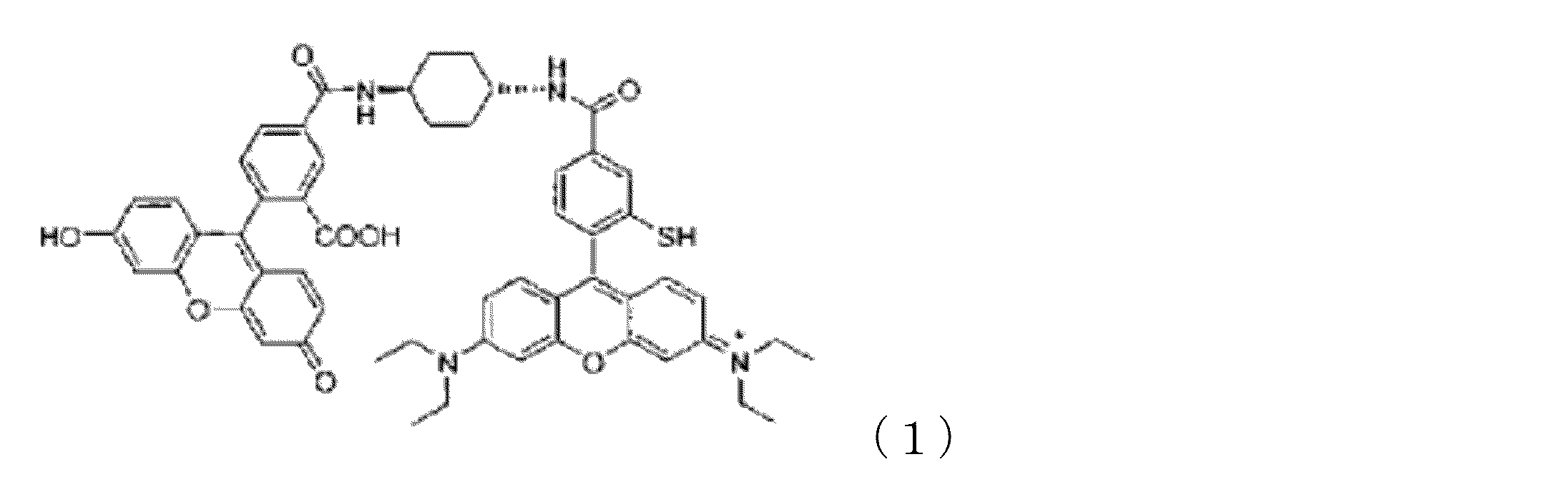


即ち、本発明のもう1つの態様は、式(I)で表される化合物又はその塩を含む蛍光プローブである。
また、本発明のもう1つの態様は、細胞内のsulfane sulfurを検出する方法であって、(a)式(I)、(Ia)又は(Ib)で表される化合物又はその塩を細胞内に導入する工程、及び(b)当該化合物又はその塩が細胞内で発する蛍光を測定する工程を含む方法、である。
式(I)、(Ia)及び(Ib)で表される本発明の化合物又はその塩は、sulfane sulfurのない環境において実質的に無蛍光であるか、弱い蛍光のみを有するが、sulfane sulfurのある環境においてドノー色素に由来する強い蛍光を発する特徴を有する。従って、式(I)、(Ia)及び(Ib)で表される本発明の化合物又はその塩は、細胞内でのsulfane sulfurを生理条件下で検出するための優れたOFF/ON型の蛍光プローブを提供できる点で極めて有用である。
本発明の化合物8(SSip-1)の合成
以下のスキーム1により、本発明の化合物8を合成するのに用いる合成中間体を合成した。

フラスコに4-ブロモ安息香酸(5.06g、25.3mmol)を入れ、クロロスルホン酸(12mL)をゆっくりと滴下した。140°Cで6時間加熱還流した。室温まで冷却後、反応溶液を氷水へゆっくりと滴下した。そのときに目的物の沈殿を生じた。ブフナー漏斗で沈殿をろ取、漏斗上でH2Oにて洗浄し、4-ブロモ-3-クロロスルホニル安息香酸(化合物1、6.17g、20.7mmol、収率82%)を得た。
1H NMR (400 MHz, Acetone-d6): δ 8.23 (d, 1H, J = 8.3 Hz), 8.33 (dd, 1H, J = 8.3, 2.0 Hz), 8.74 (d, 1H, J = 2.0 Hz). 13C NMR (100 MHz, Acetone-d6): δ 125.8, 132.1, 132.2, 137.8, 138.4, 143.8, 165.0.
HRMS (ESI-): Calcd. for [M-H]- 298.8604, Found 298.8589 (-1.5 mmu)
4-ブロモ-3-クロロスルホニル安息香酸(化合物1、6.17g、20.7mmol)を酢酸(60mL)に溶解させ、そこへ10N HCl aq.(25mL)に溶解させた塩化スズ(II)(27.8gm、123.6mmol)を加え、アルゴン下で80°Cで2時間撹拌した。室温まで冷却後、生じた目的物の沈殿をブフナー漏斗でろ取、漏斗上でH2Oにて洗浄し4-ブロモ-3-メルカプト安息香酸(化合物2、4.03g、17.0mmol、収率84%)を得た。
1H NMR (400 MHz, Acetone-d6): δ 5.04 (1H, s), 7.66 (dd, 1H, J = 8.3, 2.0 Hz), 7.72 (d, 1H, J = 8.3 Hz), 8.14 (d, 1H, J = 2.0 Hz). 13C NMR (100 MHz, Acetone-d6): δ 126.7, 128.2, 131.4, 131.5, 134.0, 136.7, 166.5.
HRMS (ESI-): Calcd. for [M-H]- 232.9095, Found 232.9139 (-4.4 mmu).
4-ブロモ-3-メルカプト安息香酸(化合物2、500mg、2.20mmol)と3,4-ジヒドロ-2H-ピラン(360mg、4.3mmol)を脱水テトラヒドロフラン(20mL)に溶解させ、アルゴン下で0°Cで冷却した。そこへ、三フッ化ホウ素-エチルエーテル錯体(312mg、2.20mmol)を加え、室温で12時間撹拌した。溶媒を減圧留去した後に残渣に水を加え、この混合物を酢酸エチルで抽出し、食塩水で洗浄した。有機層をNa2SO4で乾燥して溶媒を減圧留去した後、カラムクロマトグラフィー(シリカゲル、酢酸エチル/n-ヘキサン)で一部の副生成物を除いた。
粗精製した化合物をtert-ブチルアルコール(15mL)に溶解させ、4-ジメチルアミノピリジン(38mg、0.31mmol)とdi-tert-ブチルジ炭酸塩(239mg、1.10mmol)を加え、アルゴン下で40°Cで12時間撹拌した。溶媒を減圧留去した後に残渣に水を加え、この混合物を酢酸エチルで抽出し、食塩水で洗浄した。有機層をNa2SO4で乾燥して溶媒を減圧留去した後、カラムクロマトグラフィー(シリカゲル、ジクロロメタン/n-ヘキサン)でtert-ブチル 4-ブロモ-3-(テトラヒドロピラン-2-イルチオ)ベンゾエート(化合物3、338mg、0.91mmol、収率42%)を得た。
1H NMR (300 MHz, CDCl3): δ 1.59 (s, 9H), 1.64-1.77 (m, 3H), 1.87-1.98 (m, 2H), 2.05-2.13 (m, 1H), 3.63-3.71 (m, 1H), 4.13-4.20 (m, 1H), 5.35-5.38 (m, 1H), 7.56 (d, 1H, J = 8.1 Hz), 7.62 (dd, 1H, J = 1.8, 8.4 Hz), 8.19 (d, 1H, J = 1.5 Hz). 13C NMR (75 MHz,CDCl3): δ 21.5, 25.2, 28.0, 31.0, 64.6, 81.3, 83.6, 127.5, 128.0, 130.2, 131.6, 132.4, 137.6, 164.6.
乾燥させアルゴン置換したフラスコにtert-ブチル 4-ブロモ-3-(テトラヒドロピラン-2-イルチオ)ベンゾエート(化合物3、600mg、1.61mmol)と脱水テトラヒドロフラン(15mL)を加えた。-78°Cに冷却後、1M sec-ブチルリチウム(1.0mL、1.0mmol)を加え、20分間攪拌した。そのままの温度で3,6-ビス(ジエチルアミノ)キサントン(100mg、0.30mmol)を脱水テトラヒドロフラン(5mL)に溶解してゆっくりと加え、室温に戻して1時間攪拌した。2N HCl aq.で反応を停止させた。この混合物をジクロロメタンで抽出して食塩水で洗浄し、有機層をNa2SO4で乾燥させた後に溶媒を減圧留去した後、残渣をHPLC(溶離液、20%アセトニトリル/0.1%トリフルオロ酢酸/水(0分)から80%アセトニトリル/0.1%TFA/水(15分);流速=25.0mL/min)で精製し、2-S-THP-4-tert-ブトキシカルボニル-テトラエチルローダミン(化合物4、190mg、0.30mmol、quant.)を得た。
1H NMR (400 MHz, CD3OD): δ 1.32 (t, 12H, J = 6.8 Hz), 1.43-1.62 (m, 4H), 1.65 (s, 1H), 1.82-1.85 (m, 2H), 3.47-3.52 (m, 1H), 3.68-3.72 (m, 8H), 3.86-3.89 (m, 1H), 5.27-5.29 (m, 1H), 7.00 (d, 2H, J = 2.4 Hz), 7.06-7.09 (m, 2H), 7.15 (dd, 1H, J = 2.2, 9.5 Hz), 7.42 (d, 1H, J = 7.8 Hz), 8.05 (dd, 1H, J = 1.7, 8.1 Hz), 8.48 (d, 1H, J = 1.5 Hz). 13C NMR (75 MHz,CD3OD): δ 12.8, 22.4, 26.4, 28.4, 32.4, 46.9, 65.6, 83.2, 86.4, 97.4, 114.4, 115.7, 128.5, 131.0, 132.5, 132.9, 135.3, 137.7, 138.4, 156.7, 157.4, 159.4, 166.1. HRMS (ESI+): Calcd. for [M]+ 615.3257, Found 615.3223 (-3.4 mmu).
化合物4(20mg、0.033mmol)にTFA(3mL)とトリエチルシラン(20μL)を加え、室温で3時間撹拌した。溶媒を減圧留去した後に、残渣をHPLC(溶離液、20%アセトニトリル/0.1%トリフルオロ酢酸/水(0分)から80%アセトニトリル/0.1%TFA/水(15分);流速=25.0mL/min)で一部の副生成物を除いた。
粗精製した化合物を脱水THF(5mL)に溶解させ、そこへ、3,4-ジヒドロ-2H-ピラン(6mg、0.07mmol)と三フッ化ホウ素-エチルエーテル錯体(10mg、0.07mmol)を加え、室温で6時間撹拌した。溶媒を減圧留去した後に、残渣をHPLC(溶離液、20%アセトニトリル/0.1%トリフルオロ酢酸/水(0分)から80%アセトニトリル/0.1%TFA/水(15分);流速=25.0mL/min)で精製し、2-S-THP-4-カルボキシテトラエチルローダミン(化合物5、3.3mg、0.0059mmol、収率18%)を得た。
1H NMR(300 MHz, CD3OD): δ 1.32 (t, 12H, J = 7.0 Hz), 1.49-1.58 (m, 5H), 1.86-1.99 (m, 1H), 3.45-3.53 (m, 1H), 3.70 (q, 8H, J = 6.8 Hz), 3.84-3.88 (m, 1H), 5.33 (t, 1H, J = 4.4 Hz), 7.01 (d, 2H, J = 3.0 Hz), 7.08 (d, 2H, J = 10.2 Hz), 7.17 (dd, 1H, J = 3.6, 9.6 Hz), 7.44 (d, 1H, J = 8.1 Hz), 8.12 (dd, 1H, J = 1.5, 8.1 Hz), 8.53 (d, 1H, J = 1.5 Hz). 13C NMR (100 MHz,CD3OD): δ 12.8, 22.2, 26.4, 32.5, 46.9, 65.3, 86.5, 97.5, 114.6, 115.7, 128.9, 131.1, 132.8, 133.4, 134.4, 137.7, 138.8, 156.7, 157.4, 159.4, 168.4. HRMS (ESI+): Calcd. For [M+H]+ 559.2631, Found 559.2593 (-3.8 mmu).
5-カルボキシ フルオレセイン(36mg、0.096mmol)とN-Boc-trans-1,4-シクロヘキサンジアミン(36mg、0.17mmol)とN,N-ジイソプロピルエチルアミン(65mg、0.50mmol)と1H-ベンゾトリアゾール-1-イルオキシトリピロリジノホスホニウム ヘキサフルオロホスフェート(60mg、0.12mmol)を脱水DMF(5mL)に溶解させ、室温で14時間撹拌させた。2N HClaq.で反応を停止させた。この混合物をジクロロメタンで抽出して食塩水で洗浄し、有機層をNa2SO4で乾燥させた後に溶媒を減圧留去した後、残渣をHPLC(溶離液、20%アセトニトリル/0.1%トリフルオロ酢酸/水(0分)から80%アセトニトリル/0.1%TFA/水(15分);流速=25.0mL/min)で一部の副生成物を除いた。
粗精製した化合物にTFA(4mL)とトリエチルシラン(100μL)を加え、室温で4時間撹拌した。溶媒を減圧留去した後に、残渣をHPLC(溶離液、20%アセトニトリル/0.1%トリフルオロ酢酸/水(0分)から80%アセトニトリル/0.1%TFA/水(15分);流速=25.0mL/min)で精製し、5-アミノシクロヘキシルアミド-フルオレセイン(化合物6、12.4mg、0.026mmol、収率27%)を得た。
1H NMR (400 MHz, CD3OD): δ 1.51-1.63 (m, 4H), 2.13-2.18 (m, 4H), 3.10-3.19 (m, 1H), 3.89-3.96 (m, 1H), 6.59 (dd, 2H, J = 2.4, 8.8 Hz), 6.66 (d, 1H, J = 8.8 Hz), 6.75 (d, 1H, J = 2.4 Hz), 7.33 (d, 1H, J = 8.3 Hz), 8.20 (dd, 1H, J = 1.5, 8.3 Hz), 8.45 (d, 1H, J = 1.5 Hz). 13C NMR (75 MHz, DMSO-d6): δ 29.2, 29.7, 47.5, 48.6, 102.2, 109.0, 112.6, 123.3, 124.1, 126.4, 129.0, 134.7, 136.3, 151.8, 154.6, 157.9, 159.6, 163.9, 168.1. HRMS (ESI+): Calcd. for [M+H]+ 473.1713, Found 473.1699 (-1.4 mmu).

化合物5(10mg、0.018mmol)とN-ヒドロキシスクシンイミド(16.1mg、0.14mmol)と1-(3-ジメチルアミノプロピル)-3-エチルカルボジイミド塩酸塩(13.5mg、0.07mmol)を脱水DMF(4mL)に溶解させ、アルゴン下で室温で12時間撹拌させた。0.1N HClaq.で反応を停止させた。この混合物をジクロロメタンで抽出して食塩水で洗浄し、有機層をNa2SO4で乾燥させた後に溶媒を減圧留去した後、残渣をHPLC(溶離液、20%アセトニトリル/0.1%トリフルオロ酢酸/水(0分)から80%アセトニトリル/0.1%TFA/水(15分);流速=25.0mL/min)で一部の副生成物を除いた。
粗精製した化合物と化合物6(14mg、0.030mmol)とN,N-ジイソプロピルエチルアミン(22mg、0.17mmol)を脱水DMF(5mL)に溶解させ、アルゴン下で30°Cで6時間撹拌した。0.1N HClaq.で反応を停止させた。この混合物をジクロロメタンで抽出して食塩水で洗浄し、有機層をNa2SO4で乾燥させた後に溶媒を減圧留去した後、残渣をHPLC(溶離液、20%アセトニトリル/0.1%トリフルオロ酢酸/水(0分)から80%アセトニトリル/0.1%TFA/水(15分);流速=5.0mL/min)で精製し、S-pyran SSip-1(化合物7、4.0mg、0.0039mmol、収率22%)を得た。
1H NMR (400 MHz, CD3OD): δ 1.31 (t, 12H, J = 6.4 Hz), 1.45-1.58 (m, 5H), 1.65-1.69 (m, 4H), 1.83-1.84 (m, 1H), 2.16- 2.18 (m, 4H), 3.42-3.43(m, 1H), 3.69 (q, 8H, J =4.0 Hz), 3.76-3.78 (m, 1H), 4.00-4.07 (m, 2H), 5.32-5.34 (m, 1H), 6.52-6.54 (m, 2H), 6.62 (d, 2H, J = 8.8 Hz), 6.71 (d, 2H, J = 2.4 Hz), 6.98 (d, 2H, J = 2.0 Hz), 7.03-7.06 (m, 2H), 7.14-7.16 (m, 2H), 7.30-7.40 (m, 2H), 7.94 (dd, 1H, J = 8.1, 1.7 Hz), 8.23 (dd, 1H, J = 7.8, 1.5 Hz). 13C NMR(100 MHz,CD3OD); δ 12.8, 22.1, 26.4, 32.3, 32.5, 46.9, 50.1, 50.2, 65.2, 86.7, 97.4, 103.7, 111.1, 113.8, 114.8, 115.7, 125.1, 125.8, 126.9, 128.7, 130.2, 131.1, 132.6, 132.9, 135.5, 137.4, 137.8, 138.2, 138.4, 154.2, 156.9, 157.3, 157.4, 159.4, 159.5, 167.9, 168.3, 170.5. HRMS (ESI+): Calcd. for [M]+ : 1013.4159, Found 1013.4137 (-2.2 mmu).
S-pyran SSip-1(化合物7、4.0mg、0.0039mmol)にTFA(2mL)とトリエチルシラン(20μL)を加え、室温で2時間撹拌した。溶媒を減圧留去した後に、残渣をHPLC(溶離液、20%アセトニトリル/0.1%トリフルオロ酢酸/水(0分)から80%アセトニトリル/0.1%TFA/水(15分);流速=5.0mL/min)で精製し、SSip-1(1.8mg、0.0019mmol、収率50%)を得た。
1H NMR(400 MHz, CD3OD): δ 1.33 (t, 12H, J = 7.1 Hz), 1.64-1.68 (m, 4H), 2.13-2.19 (m, 4H), 3.71 (q, 8H, J =7.0 Hz), 4.00-4.06 (m, 2H), 6.96-7.05 (m, 4H), 7.10 (dd, 2H, J = 2.4, 9.6 Hz), 7.17-7.30 (m, 6H), 7.42 (d, 2H, J = 8.3 Hz), 7.53 (d, 2H, J = 7.8 Hz), 7.86 (dd, 1H, J = 1.7, 8.1 Hz), 8.11 (d, 1H, J = 1.5 Hz), 8.31 (dd, 1H, J = 1.5, 7.8 Hz), 8.73 (m, 1H). HRMS (ESI+): Calcd. for [M]+ 929.3584, Found 929.3554 (-3.0 mmu). ;
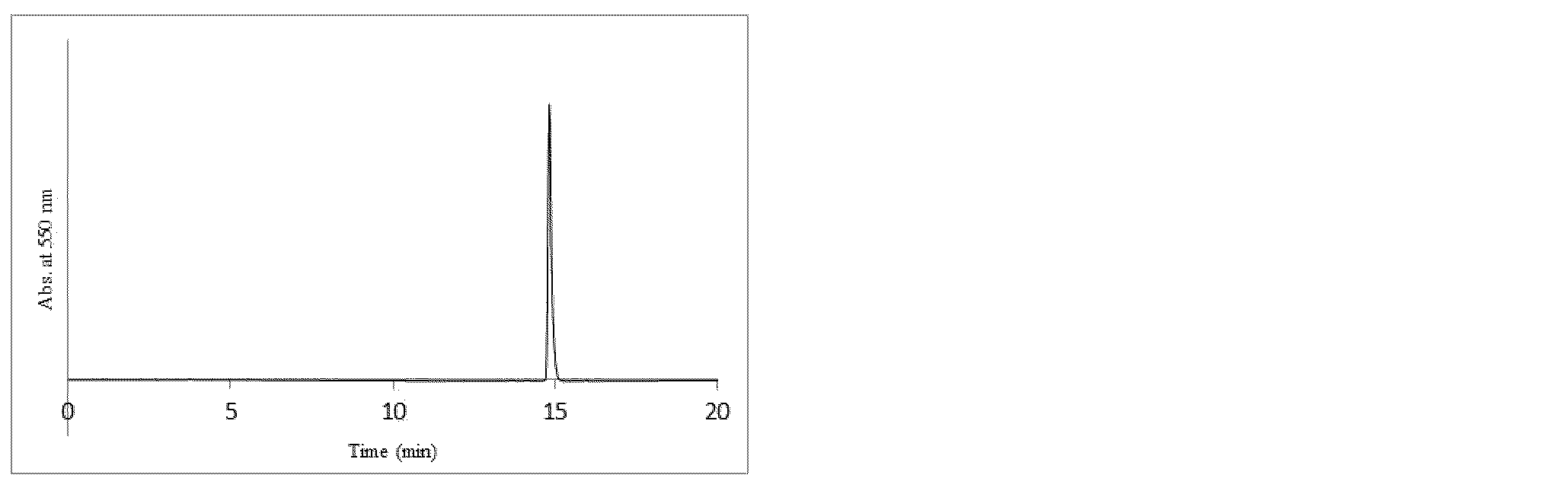
精製後のHPLCクロマトグラム(20%アセトニトリル/0.1%トリフルオロ酢酸/水から80%アセトニトリル/0.1%トリフルオロ酢酸/水(流速=1.0mL/min)のリニアグラディエント,Abs.300nm)では17分に単一ピークを認めた。
上記で合成した化合物8にNa2S4を添加し、吸収スペクトル(UV-1650PC、SHIMADZU)および蛍光スペクトル(F-4500、HITACHI)を測定した。
図3の左図は、50μMのNa2S4(共溶媒として0.1%DMSO及び1mg/mlBSA含有)添加後における、300μMのGSH存在下での0.1Mナトリウムリン酸バッファー(pH7.4)中における1μM SSip-1の吸収スペクトルの測定結果を、図3の右図は同じ条件での蛍光スペクトルの測定結果示す。励起波長は470nmである。
細胞内のGSH濃度である、5mM GSH存在下においてsulfane sulfurに応答するかを調べた(図4)。
図4の左図は、50μMのNa2S4(共溶媒として0.1%DMSO及び1mg/mlBSA含有)添加後における、5mMのGSH存在下での0.1Mナトリウムリン酸バッファー(pH7.4)中における1μM SSip-1の吸収スペクトルの測定結果を、図4の右図は同じ条件での蛍光スペクトルの測定結果示す。励起波長は470nmである。
その結果、5mMのGSH存在下において、Na2S4添加後、一度蛍光が上昇した後、経時的に蛍光強度が減少した。そこへ再びNa2S4を添加すると再び蛍光強度が上昇し、可逆性を示した。
SSip-1のH2Sとの選択性を調べた結果を図5に示す。図5の左図は、50μMのNaHS(共溶媒として0.1%DMSO及び1mg/mlBSA含有)添加後における、300μMのGSH存在下での0.1Mナトリウムリン酸バッファー(pH7.4)中における0.1μM SSip-1の吸収スペクトルの測定結果を、図3の右図は同じ条件での蛍光スペクトルの測定結果示す。励起波長は470nmである。
図5から分かるように、H2Sドナーである50μM NaHSを添加しても、蛍光強度の上昇はほとんど見られず、選択性を示した。
In vitroにおいて、SSip-1はsulfane sulfurに対し優れた応答を示したため、SSip-1の細胞イメージングを行った。SSip-1はフルオレセイン構造を持つため、細胞膜透過性を有していない可能性が考えられた。そこで、フルオレセインを細胞膜透過型にする際に用いられるジアセテート(DA)体をSSip-1に適用し、以下のスキームによりSSip-1 DAの合成を行った。

S-pyran SSip-1(化合物7、10mg、0.0099mmol)を脱水アセトニトリル(5mL)に溶解させ、無水酢酸(1mL)とピリジン(80mg、1.01mmol)を加え、アルゴン下で40°Cで6時間撹拌させた。溶媒を減圧留去した後に、残渣をHPLC(溶離液、20%アセトニトリル/0.1%トリフルオロ酢酸/水(0分)から80%アセトニトリル/0.1%TFA/水(15分);流速=5.0mL/min)で精製し、一部の副生成物を除いた。
粗精製した化合物にTFA(1mL)とトリエチルシラン(10μL)に溶解させ、室温で1時間撹拌した。溶媒を減圧留去した後に、残渣をHPLC(溶離液、20%アセトニトリル/0.1%トリフルオロ酢酸/水(0分)から80%アセトニトリル/0.1%TFA/水(15分);流速=5.0mL/min)で精製し、SSip-1 DA(1.8mg、0.0018mmol、収率18%)を得た。
1H NMR (400 MHz, CD3OD): δ 1.32 (t, 12H, J = 6.8 Hz), 1.60-1.63 (m, 4H), 2.13- 2.15 (m, 4H), 2.30 (s, 6H), 3.71 (q, 8H, J =6.7 Hz), 3.94-4.02 (m, 2H), 6.85-6.94 (m, 4H), 7.01 (d, 2H, J = 2.4 Hz), 7.10 (dd, 2H, J = 2.2, 9.5 Hz), 7.17-7.18 (m, 2H), 7.20-7.21 (m, 2H), 7.34-7.42 (m, 2H), 7.85 (dd, 1H, J = 7.8, 2.0 Hz), 8.09 (m, 1H), 8.22-8.24 (m, 1H), 8.47-8.48 (m, 1H). HRMS (ESI+): Calcd. for [M]+ 1013.3795, Found 1013.3764 (-3.1 mmu).
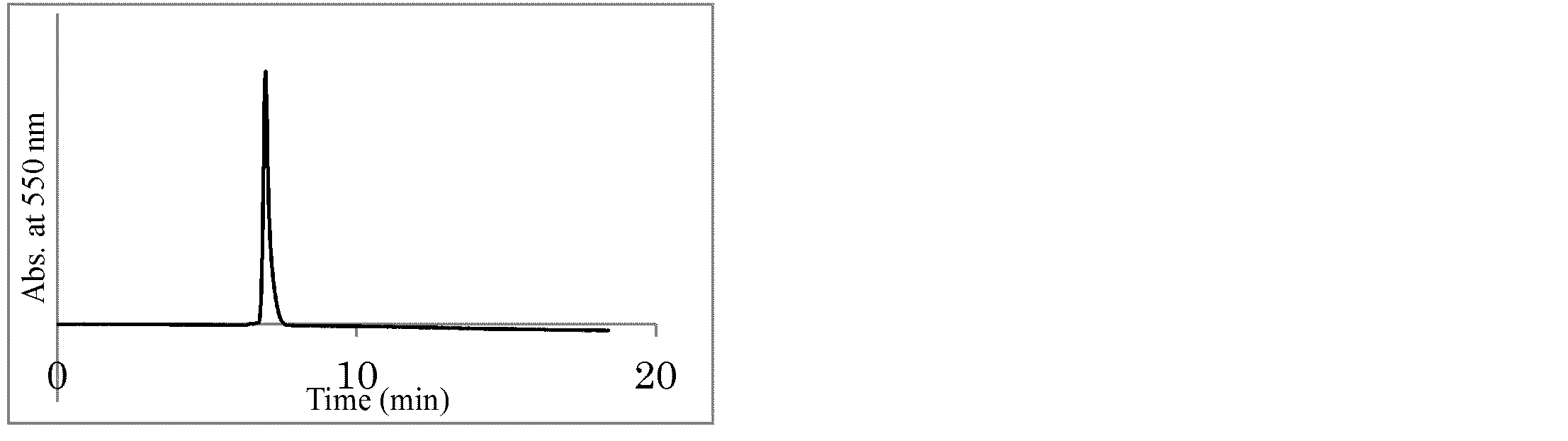
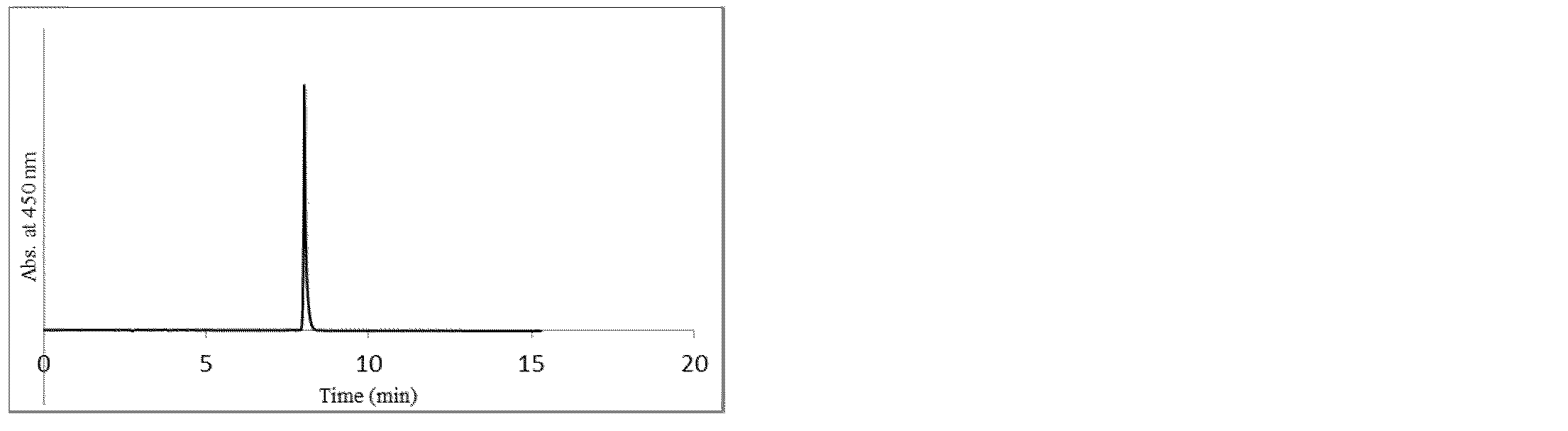
精製後のHPLCクロマトグラム(80%アセトニトリル/0.1%トリフルオロ酢酸/水から20%アセトニトリル/0.1%トリフルオロ酢酸/水(流速=1.0mL/min)のリニアグラディエント、Abs.550nm)では8分に単一ピークを認めた。
その結果、蛍光強度が上昇し、SSip-1は生細胞内でsulfane sulfurを検出できた(図6)。なお、プローブの導入の際に、界面活性剤であるpurulonicを使用し、プローブの凝集を防いだ。また、フルオレセイン由来の蛍光波長の領域(500-570nm)とローダミン由来の蛍光波長の領域(590-650nm)の2つの波長の蛍光強度を算出すると、フルオレセイン由来の蛍光波長領域の強度は増加し、ローダミン由来の蛍光波長領域の強度はわずかに減少した。そのため、本測定下ではSSip-1は細胞イメージングにおいて、フルオレセインからの蛍光強度の変化にするイメージングだけでなく、レシオ測定も可能であると考えられた。
本発明の化合物a1(6-フルオレセインーSSip-1)の合成
以下のスキーム4により、本発明の化合物a1を合成した。

6-カルボキシフルオレセイン(200mg、0.53mmol)とN-Boc-trans-1,4-シクロヘキサンジアミン(285mg、1.33mmol)とN,N-ジイソプロピルエチルアミン(686mg、5.32mmol)とO-(7-アザベンゾトリアゾール-1-イル)-N,N,N‘,N’-テトラメチルウロニウム ヘキサフルオロフォスフェート(HATU)(403mg、1.06mmol)を脱水DMF(5mL)に溶解させ、室温で3時間撹拌した。1N HClaq.で反応を停止させた。この混合物をジクロロメタンで抽出して、有機層をbrineで洗浄し、Na2SO4で乾燥させた後に溶媒を減圧留去した。その後、残渣をHPLC(溶離液、20%アセトニトリル/0.1%トリフルオロ酢酸/水(0分)から80%アセトニトリル/0.1%TFA/水(15分);流速=5.0mL/min)で一部の副生成物および試薬残渣を除いた。
粗精製した化合物にTFA(4mL)とトリエチルシラン(100μL)を加え、室温で1時間撹拌した。溶媒を減圧留去した後に、残渣をHPLC(溶離液、20%アセトニトリル/0.1%トリフルオロ酢酸/水(0分)から80%アセトニトリル/0.1%TFA/水(15分);流速=25.0mL/min)で精製し、6-アミノシクロヘキシルアミド-フルオレセイン(化合物9、98.3mg、0.21mmol、収率39%)を得た。
1H NMR (300 MHz, CD3OD): δ 1.45-1.52 (4H, m), 2.00-2.07 (4H, m), 3.07 (1H, br m), 3.82 (1H, br m), 6.62 (2H, dd, J = 8.8, 2.2 Hz), 6.71 (2H, d, J = 8.8 Hz), 6.78 (2H, d, J = 2.2 Hz), 7.64 (1H, d, J = 1.5 Hz), 8.11 (1H, d, J = 8.1 Hz), 8.15(1H, dd, J = 8.1, 1.5 Hz)
13C NMR (75 MHz, DMSO-d6): δ 29.14, 29.61, 47.59, 48.60, 102.26, 109.13, 112.77, 122.16, 124.78, 128.25, 129.23, 129.58, 140.65, 151.82, 152.56, 157.32, 159.65, 163.76, 168.00
HRMS (ESI+): calcd for [M+H]+, 473.1713, found, 473.1680 (-3.3 mmu)
化合物5(20.0mg、0.036mmol)とN-ヒドロキシスクシンイミド(37.0mg、0.32mmol)と1-(3-ジメチルアミノプロピル)-3-エチルカルボジイミド塩酸塩(31.0mg、0.16mmol)を脱水DMF(4mL)に溶解させ、室温で11時間撹拌した。溶媒を減圧留去した後、残渣をHPLC(溶離液、20%アセトニトリル/0.1%トリフルオロ酢酸/水(0分)から80%アセトニトリル/0.1%TFA/水(15分);流速=5.0mL/min)で粗精製した。
粗精製した化合物と化合物9(14mg、0.030mmol)とN,N-ジイソプロピルエチルアミン(22mg、0.17mmol)を脱水DMF(5mL)に溶解させ、室温で30時間撹拌した。0.1N HClaq.で反応を停止させた。この混合物をジクロロメタンで抽出して有機層をbrineで洗浄し、Na2SO4で乾燥させた後に溶媒を減圧留去した。残渣にトリフルオロ酢酸(1mL)、トリエチルシラン(10μL)を加え、室温で3時間撹拌した。溶媒を減圧留去した後に、残渣をHPLC(溶離液、20%アセトニトリル/0.1%トリフルオロ酢酸/水(0分)から80%アセトニトリル/0.1%TFA/水(15分);流速=5.0mL/min)で精製し、化合物a1(4.3mg、4.62μmol、3工程での収率61%)を得た。
1H NMR (400 MHz, CD3OD): δ 1.30 (12H, t, J = 7.1 Hz), 1.50-1.52 (4H, m), 2.02-2.03 (4H, m), 3.68 (8H, q, J = 7.3 Hz), 3.88 (2H, br), 6.53-6.56 (4H, m), 6.60-6.62 (2H, m), 6.69-6.70 (2H, m), 6.88 (2H, d, J = 9.2 Hz), 6.93-6.97 (4H, m), 7.43 (1H, d, J = 7.8 Hz), 7.63 (1H, br), 7.99 (1H, dd, J = 8.1, 1.7 Hz), 8.06 (1H, d, J = 7.8 Hz), 8.12-8.14 (1H, m), 8.22 (1H, d, J = 1.5 Hz)
HRMS (ESI+): calcd for [M]2+, 1857.7045, found, 1857.7021 (-2.4 mmu)
The HPLC chromatogram after purification was as follows. The solution was done with a liner gradient from 20% CH3CN/0.1% TFA aq. (0 min) to 80% CH3CN/0.1% TFA aq. (15 min) (flow rate = 1.0 mL/min).

本発明の化合物a2(5-アミド-SSip-1)の合成
以下のスキーム5により、本発明の化合物a2を合成した。
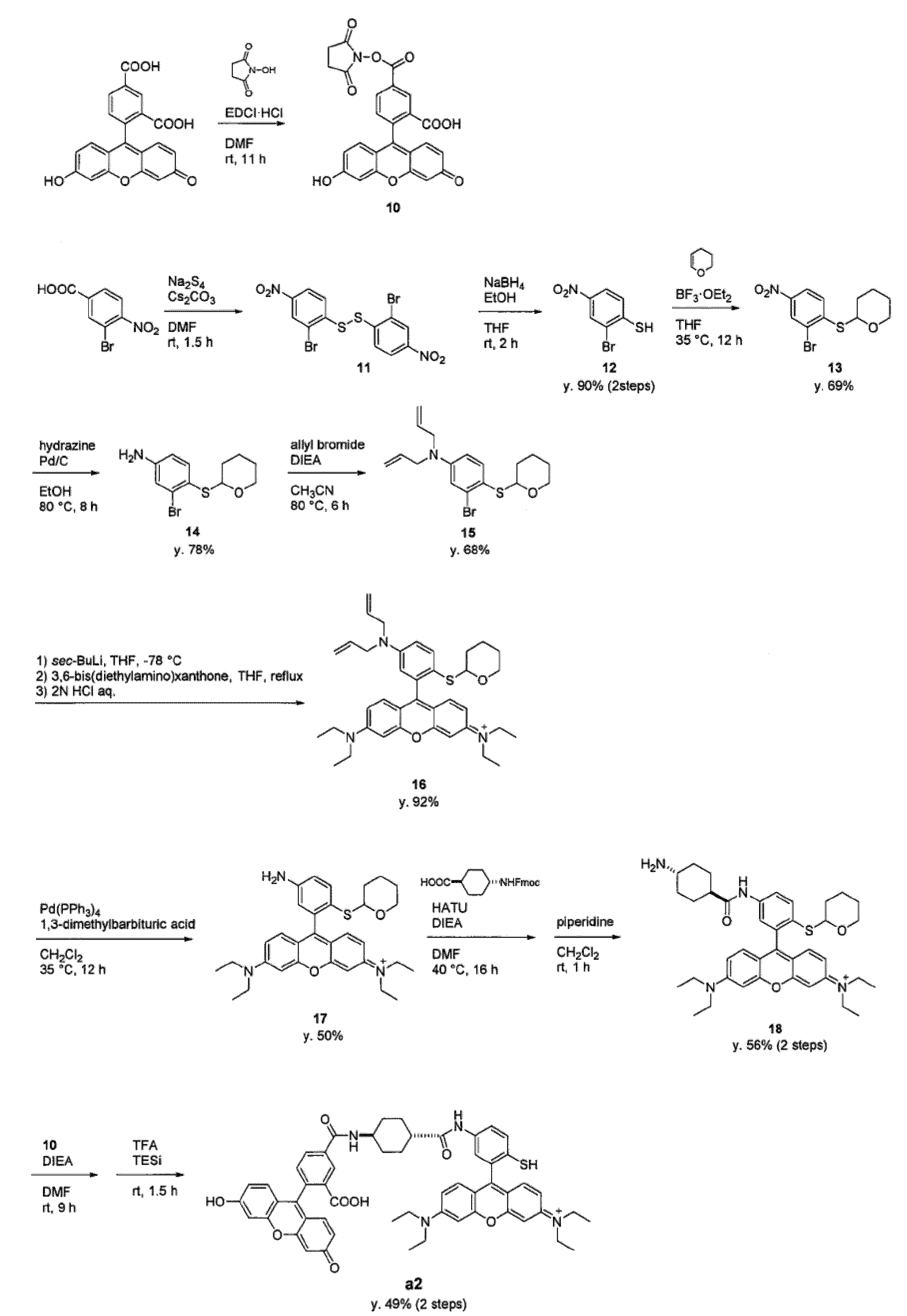
四硫化ナトリウム(Na2S4、4.37g、25.1mmol)を脱水DMFに溶解し、2-ブロモ-1-フルオロ-4-ニトロベンゼン(5.0g、22.8mmol)を加えて、室温で1.5時間撹拌した。反応溶液を0°Cに冷やし、2N HClaq.を加えて反応を停止させた。この混合物にジクロロメタンを加えた後、桐山漏斗でろ過して不溶物を取り除いた。ろ液をジクロロメタンで抽出して、有機層を水、brineで洗浄し、Na2SO4で乾燥させた後にDMF以外の溶媒を減圧留去した。 残渣を桐山漏斗でろ過し、DMFに溶解しない固体を取り除いた。ろ液を減圧留去し、残渣をジクロロメタンで洗浄し、粗精製の化合物11を得た。化合物11をTHF(60mL)、エタノール(20mL)の混合溶媒に溶解させ、0°Cに冷却し、水素化ホウ素ナトリウム(489mg、12.9mmol)を加えて室温で2時間撹拌した。反応溶液を0°Cに冷却し、2N HClaq.を加えて反応を停止させた。有機溶媒を減圧留去した後、析出した固体を桐山漏斗でろ取し、水で洗浄し、2-ブロモ-4-ニトロベンゼンチオール(化合物12、4.8g、20.5mmol、2工程での収率90%)を得た。
1H NMR (300 MHz, CDCl3): δ 4.37 (1H, s), 7.49 (1H, d, J = 8.8 Hz), 8.04 (1H, dd, J = 8.4, 2.6 Hz), 8.42 (1H, d, J = 2.2 Hz)
13C NMR (75 MHz, CDCl3): δ 121.16, 122.57, 127.99, 128.71, 144.51
HRMS (ESI-): calcd for [M-H]-, 231.9068, found, 231.9064 (-0.4 mmu)
化合物12(1.36g、5.81mmol)を脱水THF(30mL)に溶解し、3,4-ジヒドロ-2H-ピラン(4.88g、58.1mmol)を加えて、アルゴン下で0°Cに冷却した。そこへ、トリフッ化ボロン-エチルエーテル錯体(826mg、5.81mmol)を加え、35°Cで12時間撹拌した。反応溶液を室温に戻した後、飽和炭酸水素ナトリウム水溶液を加えて反応を停止した。この混合物を酢酸エチルで抽出し、有機層をbrineで洗浄し、Na2SO4で乾燥して溶媒を減圧留去した。残渣をカラムクロマトグラフィー(シリカゲル、酢酸エチル/n-ヘキサン)で精製し、2-((2-ブロモ-4-ニトロフェニル)チオ)テトラヒドロ-2H-ピラン(化合物13、1.28g、4.03mmol、収率69%)を得た。
1H NMR (300 MHz, CDCl3): δ 1.67-1.82 (3H, m), 1.92-1.97 (2H, m), 2.14-2.18 (1H, m), 3.66-3.73 (1H, m), 4.09-4.13 (1H, m), 5.53 (1H, m), 7.70 (1H, d, J = 8.8 Hz), 8.11 (1H, dd, J = 8.8, 2.9 Hz), 8.37 (1H, d, J = 2.9 Hz)
13C NMR (75 MHz, CDCl3): δ20.84, 25.27, 30.96, 63.90, 82.98, 121.32, 122.51, 127.14, 127.26, 127.46, 145.09, 148.10
アルゴン下で化合物13(1.28g、4.03mmol)をエタノール(40mL)に溶解し、palladium10% on carbon(128mg)を加えた。そこへ、エタノール(10mL)に溶解したヒドラジン水和物(H2O中50%、644mg、20.1mmol)を滴下し、80°Cで8時間撹拌した。反応溶液を室温まで冷却した後、セライトろ過し、パラジウムを取り除いた。ろ液を減圧留去した後、カラムクロマトグラフィー(シリカゲル、n-ヘキサン/ジクロロメタン)で精製し、3-ブロモ-4-((テトラヒドロ-2H-ピラン-2-イル)チオ)アニリン(化合物14、0.90g、3.13mmol、収率78%)を得た。
1H NMR (300 MHz, CDCl3): δ 1.57-1.67 (3H, m), 1.83-1.88 (2H, m), 2.01-2.04 (1H, m), 3.52-3.59 (1H, m), 3.75 (2H, s), 4.14-4.22 (1H, m), 5.13 (1H, m), 6.56 (1H, dd, J = 8.4, 2.6 Hz), 6.93 (1H, d, J = 2.9 Hz), 7.40 (1H, d, J = 8.1 Hz)
13C NMR (75 MHz, CDCl3): δ 21.27, 25.55, 31.23, 64.23, 85.62, 114.65, 119.04, 122.91, 128.77, 135.65, 147.17
HRMS (ESI+): calcd for [M+H]+, 288.0058, found, 288.0049 (-0.9 mmu)
化合物14(0.80mg、2.78mmol)を脱水アセトニトリル(15mL)に溶解し、N,N-ジイソプロピルエチルアミン(3.59g、27.8mmol)、臭化アリル(1.68g、13.9mmol)を加えて、アルゴン下80°Cで6時間撹拌した。反応溶液を室温まで冷却した後、水を加え、この混合物をジクロロメタンで抽出し、有機層を1N HClaq.およびbrineで洗浄し、Na2SO4で乾燥させた後に溶媒を減圧留去した。残渣をカラムクロマトグラフィー(シリカゲル、n-ヘキサン/ジクロロメタン)で精製し、N,N-ジアリル-3-ブロモ-4-((テトラヒドロ-2H-ピラン-2-イル)チオ)アニリン(化合物15、0.69g、1.87mmol、収率68%)を得た。
1H NMR (300 MHz, acetone-d6): δ 1.57-1.63 (3H, m), 1.69-1.85 (2H, m), 1.94-1.99 (1H, m), 3.46-3.53 (1H, m), 3.97-3.98 (4H, m), 4.07-4.14 (1H, m), 5.11-5.17 (4H, m), 5.20 (1H, m), 5.81-5.93 (2H, m), 6.67 (1H, dd, J = 8.8, 2.9 Hz), 6.93 (1H, d, J = 2.9 Hz), 7.40 (1H, d, J = 8.8 Hz)
13C NMR (75 MHz, CDCl3): δ 21.27, 25.59, 31.25, 52.61, 64.19, 85.82, 111.87, 116.22, 116.40, 120.02, 129.55, 132.90, 135.80, 149.22
HRMS (ESI+): calcd for [M+H]+, 368.0684, found, 368.0683 (-0.1 mmu)
乾燥させアルゴン置換したフラスコに化合物15(229mg、0.62mmol)を加え、脱水テトラヒドロフラン(10mL)に溶解させた。-78°Cに冷却後、1Msec-ブチルリチウム(620μL、0.62mmol)を加え、20分間攪拌した。そのままの温度で3,6-ビス(ジエチルアミノ)キサントン(30mg、0.089mmol)を脱水テトラヒドロフラン(5mL)に溶解してゆっくりと加え、室温に戻した後、70°Cで1時間攪拌した。室温まで冷却した後、2N HClaq.で反応を停止させた。この混合物をジクロロメタンで抽出して、有機層をbrineで洗浄しNa2SO4で乾燥させた後に溶媒を減圧留去した。残渣をカラムクロマトグラフィー(シリカゲル、ジクロロメタン/メタノール)で精製し、5-N-ジアリル-2-S-THP-テトラエチルローダミン(化合物16、50mg、0.082mmol、収率92%)を得た。
1H NMR (300 MHz, acetone-d6): δ 1.33 (12H, t, J = 7.0 Hz), 1.39-1.54 (5H, m), 1.65-1.69 (1H, m), 3.14-3.21 (1H, m), 3.60-3.67 (1H, m), 3.77 (8H, q, J = 7.1 Hz), 4.04 (4H, d, J = 5.1 Hz), 4.83 (1H, m), 5.15-5.19 (4H, m), 5.83-5.91 (2H, m), 6.71 (1H, d, J = 2.9 Hz), 6.94-6.96 (2H, m), 6.99 (2H, dd, J = 8.8, 2.9 Hz), 7.14-7.20 (2H, m), 7.28 (1H, d, J = 9.5 Hz), 7.30 (1H, d, J = 9.5 Hz), 7.64 (1H, d, J = 8.8 Hz)
13C NMR (75 MHz, acetone-d6): δ 12.77, 21.91, 26.08, 32.28, 46.51, 53.41, 64.46, 87.77, 96.70, 96.81, 114.04, 114.64, 114.72, 114.85, 115.04, 115.11, 116.60, 119.25, 132.96, 133.47, 134.31, 137.54, 137.55, 137.85, 149.05, 156.57, 156.69, 158.70, 158.89, 159.25
HRMS (ESI+): calcd for [M]+, 610.3467, found, 610.3449 (-1.8 mmu)
アルゴン置換したフラスコに1,3-ジメチルバルビツール酸(74mg、0.48mmol)、テトラキス(トリフェニルホスフィン)パラジウム(0)(11mg、9.5μmol)を加え、脱水ジクロロメタン(15mL)に溶解させた化合物16(58mg、0.095mmol)を加えて、35°Cで12時間攪拌した。室温まで冷却した後、反応溶液を飽和炭酸ナトリウム水溶液、brineで洗浄しNa2SO4で乾燥させた後に溶媒を減圧留去した。残渣をカラムクロマトグラフィー(シリカゲル、ジクロロメタン/メタノール)で精製し、5-アミノ-2-S-THP-テトラエチルローダミン(化合物17、25mg、0.047mmol、収率50%)を得た。
1H NMR (300 MHz, acetone-d6): δ 1.33 (12H, t, J = 7.0 Hz), 1.45-1.62 (6H, m), 3.15-3.19 (1H, m), 3.59-3.66 (1H, m), 3.77 (8H, q, J = 7.1 Hz), 4.76 (1H, m), 5.61 (2H, s), 6.73 (1H, d, J = 2.2 Hz), 6.96 (3H, m), 6.99 (3H, m), 7.18 (1H, dd, J = 9.5, 2.2 Hz), 7.20 (1H, dd, J = 9.5, 2.2 Hz), 7.30 (1H, d, J = 9.5 Hz), 7.33 (1H, d, J = 9.5 Hz), 7.52 (1H, d, J = 8.1 Hz)
13C NMR (75 MHz, acetone-d6): δ 12.80, 22.02, 26.08, 32.31, 46.50, 64.60, 87.92, 96.72, 96.82, 114.60, 114.67, 114.88, 115.06, 115.54, 117.13, 118.61, 132.98, 133.49, 137.97, 138.14, 150.35, 156.55, 156.67, 158.66, 158.84, 159.38
HRMS (ESI+): calcd for [M]+, 530.2841, found, 530.2830 (-1.0 mmu)
化合物17(10mg、19μmol)、N-Fmoc-trans-1,4-シクロヘキサンジアミン(21mg、57μmol)、N,N-ジイソプロピルエチルアミン(25mg、0.19mmol)、O-(7-アザベンゾトリアゾール-1-イル)-N,N,N’,N’-テトラメチルウロニウム ヘキサフルオロホスフェート(HATU)(22mg、57μmol)を脱水DMF(3mL)に溶解させ、40°Cで16時間攪拌した。反応溶液を室温まで冷却した後、1N HClaq.で反応を停止させた。この混合物をジクロロメタンで抽出し、有機層をbrineで洗浄し、Na2SO4で乾燥させた後に溶媒を減圧留去した。粗精製物をジクロロメタン(5mL)に溶解し、ピペリジン(0.50mL)を加えて室温で1時間撹拌した。1N HClaq.で反応を停止させた。この混合物をジクロロメタンで抽出し、有機層をbrineで洗浄し、Na2SO4で乾燥させた後に溶媒を減圧留去した。残渣をHPLC(溶離液、20%アセトニトリル/0.1%トリフルオロ酢酸/水(0分)から80%アセトニトリル/0.1%TFA/水(20分);流速=5.0mL/min)で精製し、5-アミノシクロヘキシルアミド-2-S-THP-テトラエチルローダミン(化合物18、6.0mg、11μmol、2工程での収率56%)を得た。
1H NMR (300 MHz, CD3OD): δ 1.31 (12H, t, J = 7.0 Hz), 1.48-1.59 (9H, m), 1.76-1.79 (1H, m), 1.94-1.98 (4H, m), 2.34-2.38 (1H, m), 2.72-2.76 (1H, m), 3.55 (1H, m), 3.63 (1H, m), 3.69 (8H, q, J = 7.1 Hz), 5.08-5.09 (1H, m), 6.98-6.99 (2H, m), 7.06-7.08 (2H, m), 7.21 (1H, d, J = 7.3 Hz), 7.24 (1H, d, J = 7.3 Hz), 7.69-7.71 (2H, m), 7.82 (1H, d, J = 8.1 Hz).
HRMS (ESI+): calcd for [M]+, 571.3107, found, 571.3117 (+1.0 mmu)
The HPLC chromatogram after purification was as follows. The solution was done with a liner gradient from 20% CH3CN/0.1% TFA aq. (0 min) to 80% CH3CN/0.1% TFA aq. (15 min) (flow rate = 1.0 mL/min).

5-カルボキシフルオレセイン(50.0mg、0.13mmol)とN-ヒドロシキスクシンイミド(76.0mg、0.66mmol)と1-(3-ジメチルアミノプロピル)-3-エチルカルボジイミド塩酸塩(77.0mg、0.40mmol)を脱水DMF(5mL)に溶解させ、室温で11時間撹拌した。溶媒を減圧留去した後、残渣をHPLC(溶離液、20%アセトニトリル/0.1%トリフルオロ酢酸/水(0分)から80%アセトニトリル/0.1%TFA/水(15分);流速=5.0mL/min)によって、粗精製した化合物10を得た。化合物18(3.0mg、4.6μmol)と化合物10(6.5mg、14μmol)、N,N-ジイソプロピルエチルアミン(5.9mg、46μmol)を脱水DMF(5mL)に溶解させ、室温で9時間撹拌した。溶媒を減圧留去した後、残渣にトリフルオロ酢酸(TFA)0.50mL、トリエチルシラン(10μL)を加え、室温で1.5時間撹拌した。溶媒を減圧留去した後に、残渣をHPLC(溶離液、20%アセトニトリル/0.1%トリフルオロ酢酸/水(0分)から80%アセトニトリル/0.1%TFA/水(15分);流速=5.0mL/min)で精製し、化合物a2(2.1mg、2.2μmol、2工程での収率49%)を得た。
1H NMR (400 MHz, CD3OD): δ 1.30 (12H, t, J = 6.8 Hz), 1.50-1.56 (2H, m), 1.71-1.74 (2H, m), 2.03-2.04 (2H, m), 2.15-2.16 (2H, m), 2.45 (1H, br m), 3.68 (8H, q, J = 7.0 Hz), 3.94 (1H, br m), 6.53 (2H, dd, J = 8.8, 2.4 Hz), 6.58 (2H, d, J = 8.8 Hz), 6.69 (2H, d, J = 2.4 Hz), 6.88 (2H, dd, J = 9.3, 2.0 Hz), 6.93 (2H, d, J = 9.7 Hz), 6.98 (1H, d, J = 2.0 Hz), 7.29 (1H, d, J = 7.8 Hz), 7.66 (1H, d, J = 2.0 Hz), 7.72 (1H, d, J = 8.2 Hz), 7.83 (1H, dd, J = 8.8, 2.4 Hz), 8.19 (1H, dd, J = 8.1, 1.2 Hz), 8.41 (1H, d, J = 1.5 Hz)
HRMS (ESI+): calcd for [M]2+, 1857.7045, found, 1857.6998 (-4.7 mmu)
The HPLC chromatogram after purification was as follows. The solution was done with a liner gradient from 20% CH3CN/0.1% TFA aq. (0 min) to 80% CH3CN/0.1% TFA aq. (15 min) (flow rate = 1.0 mL/min).

本発明の化合物a3(S-メチルジスルファニル-SSip-1 DA)の合成
以下のスキーム6により、本発明の化合物a3を合成した。
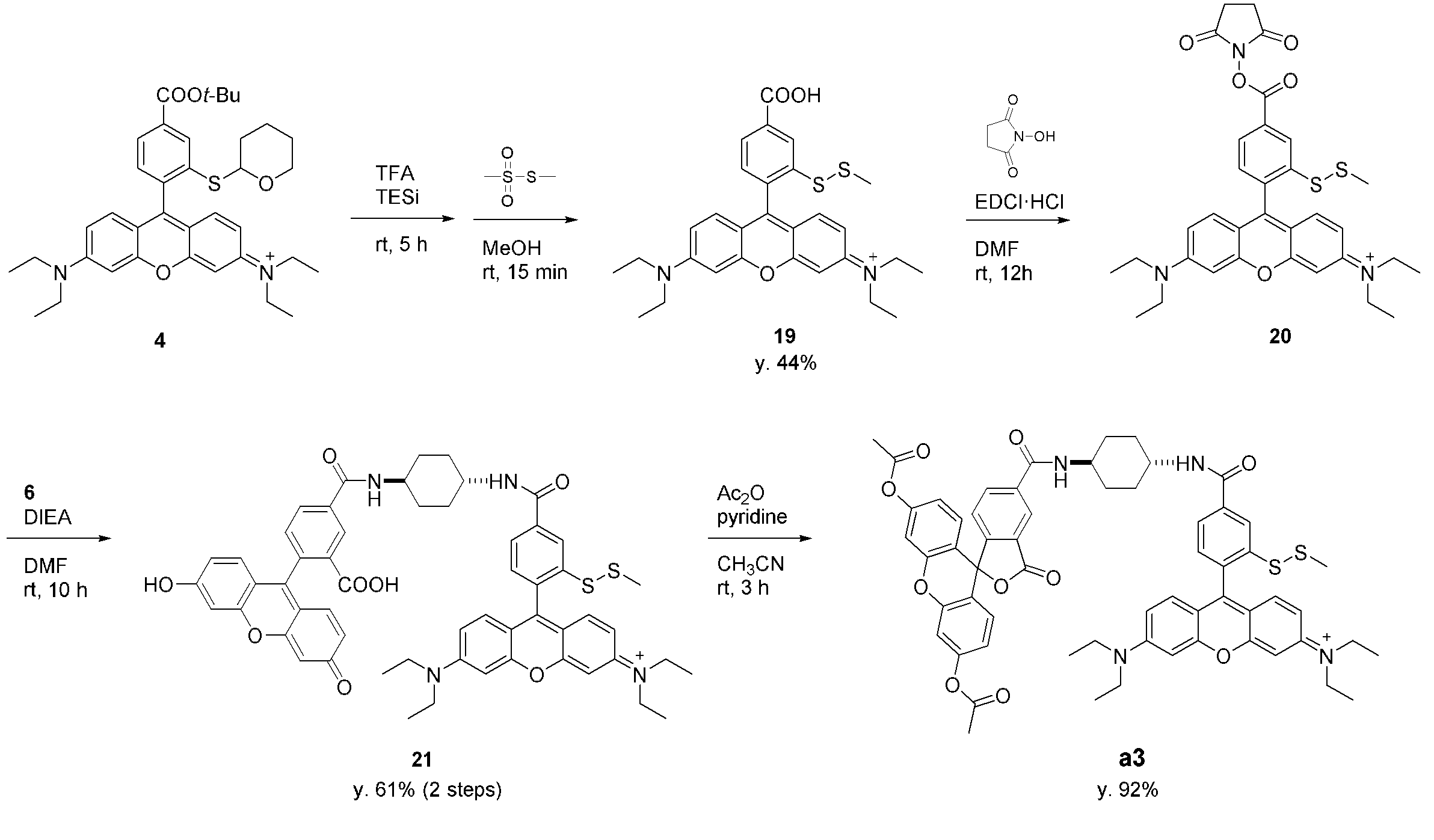
化合物4(12.9mg、20.9μmol)にトリフルオロ酢酸(0.50mL)、トリエチルシラン(10μL)を加え、室温で5時間撹拌した。溶媒を減圧留去した後に、残渣をHPLC(溶離液、20%アセトニトリル/0.1%トリフルオロ酢酸/水(0分)から80%アセトニトリル/0.1%TFA/水(15分);流速=5.0mL/min)で粗精製した。メチルメタンチオスルフェート(7.9mg、63μmol)をメタノール(3mL)に溶解し、そこに粗精製した化合物をメタノール(2mL)に溶解したものを少しずつ加え、室温で15分撹拌した。溶媒を減圧留去した後に、残渣をHPLC(溶離液、20%アセトニトリル/0.1%トリフルオロ酢酸/水(0分)から80%アセトニトリル/0.1%TFA/水(15分);流速=5.0mL/min)で精製し、2-メチルジスルファニル-4-カルボキシテトラエチルローダミン(化合物19、4.8mg、9.21μmol、収率44%)を得た。
1H NMR (300 MHz, CD3OD): δ 1.32 (12H, t, J = 7.0 Hz), 2.38 (3H, s), 3.70 (8H, q, J = 7.1 Hz), 7.01 (2H, d, J = 2.2 Hz), 7.09 (2H, dd, J = 9.5, 2.2 Hz), 7.15 (2H, d, J = 9.5 Hz), 7.48 (1H, d, J = 8.1 Hz), 8.16 (1H, dd, J = 8.1, 1.5 Hz), 8.71 (1H, d, J = 1.5 Hz)
13C NMR (100 MHz, CD3OD): δ12.80, 23.30, 46.98, 97.61, 114.43, 115.94, 129.40, 130.13, 131.61, 132.42, 134.84, 136.95, 138.71, 155.12, 157.51, 159.38, 168.33
HRMS (ESI+): calcd for [M]+ , 521.1933, found, 521.1895 (-3.8 mmu)
化合物19(4.8mg、9.21μmol)とN-ヒドロキシスクシンイミド(9.5mg、0.083mmol)と1-(3-ジメチルアミノプロピル)-3-エチルカルボジイミド塩酸塩(8.0mg、0.041mmol)を脱水DMF(4mL)に溶解させ、室温で12時間撹拌した。溶媒を減圧留去した後、残渣からHPLC(溶離液、20%アセトニトリル/0.1%トリフルオロ酢酸/水(0分)から80%アセトニトリル/0.1%TFA/水(15分);流速=5.0mL/min)によって、粗精製した化合物20を得た。
粗精製した化合物20と化合物6(13.1mg、0.028mmol)、N,N-ジイソプロピルエチルアミン(12mg、0.092mmol)を脱水DMF(5mL)に溶解させ、室温で10時間撹拌した。その後、0.1N HClaq.で反応を停止させた。この混合物をジクロロメタンで抽出して、有機層をbrineで洗浄し、Na2SO4で乾燥させた後に溶媒を減圧留去した。残渣をHPLC(溶離液、20%アセトニトリル/0.1%トリフルオロ酢酸/水(0分)から80%アセトニトリル/0.1%TFA/水(15分);流速=5.0mL/min)で精製し、S-メチルジスルファニル-SSip-1(化合物21、4.3mg、4.62μmol、2工程での収率61%)を得た。
1H NMR (400 MHz, CD3OD): δ 1.32 (12H, t, J = 6.8 Hz), 1.70-1.72 (4H, m), 2.18-2.20 (4H, m), 2.37 (3H, s), 3.69 (8H, q, J = 7.0 Hz), 4.06-4.08 (2H, br), 6.62 (2H, dd, J = 8.8, 2.0 Hz), 6.72 (2H, d, J = 8.8 Hz), 6.79 (2H, d, J = 2.0 Hz), 6.99 (2H, d, J = 2.0 Hz), 7.05 (2H, dd, J = 9.8, 2.4 Hz), 7.14 (2H, d, J = 9.8 Hz), 7.33 (1H, d, J = 7.8 Hz), 7.98 (1H, dd, J = 7.8, 1.5 Hz), 8.24 (1H, dd, J = 7.8, 1.5 Hz), 8.52-8.53 (2H, m)
HRMS (ESI+): calcd for [M]+ , 975.3461, found, 975.3444 (-1.7 mmu)
The HPLC chromatogram after purification was as follows. The solution was done with a liner gradient from 20% CH3CN/0.1% TFA aq. (0 min) to 80% CH3CN/0.1% TFA aq. (15 min) (flow rate = 1.0 mL/min).

化合物21(1.8mg、1.85μmol)を脱水アセトニトリル(5mL)に溶解させ、無水酢酸(15μL)とピリジン(29mg、0.037mmol)を加え、室温で3時間撹拌した。溶媒を減圧留去した後に、残渣をHPLC(溶離液、20%アセトニトリル/0.1%トリフルオロ酢酸/水(0分)から80%アセトニトリル/0.1%TFA/水(15分);流速=5.0mL/min)で精製し、化合物a3(1.8mg、170μmol、収率92%)を得た。
1H NMR (300 MHz, CD3OD): δ 1.32 (12H, t, J = 7.0 Hz), 1.63-1.67 (4H, m), 2.15-2.17 (4H, m), 2.30 (6H, s), 2.38 (3H, s), 3.71 (8H, q, J = 6.8 Hz), 4.03 (2H, br), 6.91-6.93 (4H, m), 7.01 (2H, d, J = 2.2 Hz), 7.09 (2H, dd, J = 9.5, 2.2 Hz), 7.16 (2H, d, J = 9.5 Hz), 7.21 (2H, d, J = 2.2 Hz), 7.38 (1H, d, J = 8.1 Hz), 7.46 (1H, d, J = 8.1 Hz), 7.97 (1H, dd, J = 8.1, 1.5 Hz), 8.24 (1H, dd, J = 8.1, 1.5 Hz), 8.49 (1H, d, J = 1.5 Hz), 8.53 (1H, d, J = 1.5 Hz)
HRMS (ESI+): calcd for [M]+ , 1059.3673, found, 1059.3629 (-4.4 mmu)
The HPLC chromatogram after purification was as follows. The solution was done with a liner gradient from 20% CH3CN/0.1% TFA aq. (0 min) to 80% CH3CN/0.1% TFA aq. (15 min) (flow rate = 1.0 mL/min).
本発明の化合物a4(2―thio―テトラエチルローダミン-ローダミングリーン)の合成
以下のスキーム7により、本発明の化合物a4を合成した。

4-ブロモイソフタル酸(2.45g、10mmol)をTHF(50mL)に溶解させ、4-ジメチルアミノピリジン(488mg、4.0mmol)とdi-tert-ブチルジカーボネート(8.72g、40mmol)を加え、アルゴン下で80℃で8時間撹拌した。溶媒を減圧留去した後に残渣にbrineを加え、この混合物を酢酸エチルで抽出し、有機層を飽和炭酸水素ナトリウム水溶液、brineで洗浄し、Na2SO4で乾燥して溶媒を減圧留去した。残渣をカラムクロマトグラフィー(シリカゲル、ジクロロメタン/n-ヘキサン)で精製し、ジ-tert-ブチル-4-ブロモイソフタル酸(化合物22、2.01g、5.63mmol、収率56%)を得た。
1H NMR (300 MHz, CDCl3): δ 1.59 (9H, s), 1.61 (9H, s), 7.66 (1H, d, J = 8.1 Hz), 7.85 (1H, dd, J = 8.1, 2.2 Hz), 8.24 (1H, d, J = 2.2 Hz)
13C NMR (75 MHz, CDCl3): δ 27.86, 28.09, 81.90, 83.01, 125.64, 131.12, 131.55, 132.19, 134.05, 134.43, 164.30, 165.07
乾燥させアルゴン置換したフラスコに化合物22(257mg、0.72mmol)を加え、脱水THF(10mL)に溶解させた。-78°Cに冷却後、1Msec-ブチルリチウム(540μL、0.54mmol)を加え、2分間攪拌した。そのままの温度で3,6-ビス(ジフェニルメチレンアミノ)キサントン(20mg、0.036mmol)を脱水テトラヒドロフラン(5mL)に溶解してゆっくりと加え、室温に戻して1時間攪拌した。2N HClaq.で反応を停止させた。この混合物をジクロロメタンで抽出して有機層をbrineで洗浄し、Na2SO4で乾燥させた後に溶媒を減圧留去した。残渣にトリフルオロ酢酸(5.0mL)、トリエチルシラン(100μL)を加え、室温で5時間撹拌した。溶媒を減圧留去した後、HPLC(溶離液、20%アセトニトリル/0.1%トリフルオロ酢酸/水(0分)から56%アセトニトリル/0.1%TFA/水(15分);流速=5.0mL/min)で精製し、2,4-ジカルボキシローダミングリーン(化合物23、8.5mg、0.023mmol、2工程での収率63%)を得た。
1H NMR (300 MHz, CD3OD): δ 6.80-6.81 (4H, m), 7.04 (2H, d, J = 9.5 Hz), 7.53 (1H, d, J = 8.1 Hz), 8.43 (1H, dd, J = 8.1, 1.5 Hz), 8.91 (1H, d, J = 1.5 Hz)
HRMS (ESI+): calcd for [M]+ , 375.0981, found, 375.0958 (-2.3 mmu)
The HPLC chromatogram after purification was as follows. The solution was done with a liner gradient from 20% CH3CN/0.1% TFA aq. (0 min) to 80% CH3CN/0.1% TFA aq. (15 min) (flow rate = 1.0 mL/min).
化合物23(10mg、27μmol)とN-Boc-trans-1,4-シクロヘキサンジアミン(17mg、80μmol)とN,N-ジイソプロピルエチルアミン(35mg、0.027mmol)と1H-ベンゾトリアゾール-1-イル-オキシトリピロリジノホスホニウム ヘキサフルオロホスフェート(PyBOP)(28mg、54μmol)を脱水DMF(5mL)に溶解させ、室温で10時間撹拌した。その後、1N HClaq.で反応を停止させた。この混合物をジクロロメタンで抽出して有機層をbrineで洗浄し、Na2SO4で乾燥させた後に溶媒を減圧留去した。残渣にTFA(2mL)加え、室温で2時間撹拌した。溶媒を減圧留去した後に、残渣をHPLC(溶離液、20%アセトニトリル/0.1%トリフルオロ酢酸/水(0分)から56%アセトニトリル/0.1%TFA/水(15分);流速=5.0mL/min)で精製し、2-カルボキシ-4-アミノシクロヘキシルアミド-ローダミングリーン(化合物24、4.0mg、8.5μmol、2工程での収率31%)を得た。
1H NMR (300 MHz, CD3OD): δ 1.57-1.61 (4H, m), 2.15-2.18 (4H, m), 3.11-3.15 (1H, m), 3.94-3.98 (1H, m), 6.79-6.81 (4H, m), 7.03 (2H, d, J = 8.8 Hz), 7.47 (1H, d, J = 8.1 Hz), 8.23 (1H, dd, J = 8.1, 1.5 Hz), 8.74 (1H, d, J = 1.5 Hz)
HRMS (ESI+): calcd for [M]+, 471.2032 , found, 471.2001 (-3.1 mmu)
The HPLC chromatogram after purification was as follows. The solution was done with a liner gradient from 20% CH3CN/0.1% TFA aq. (0 min) to 80% CH3CN/0.1% TFA aq. (15 min) (flow rate = 1.0 mL/min).

化合物20(2.2mg、3.5μmol)と化合物24(2.0mg、4.2μmol)とN,N-ジイソプロピルエチルアミン(4.5mg、35μmol)を脱水DMF(1.5mL)に溶解させ、室温で3時間撹拌した。その後、0.1N HClaq.で反応を停止させた。この混合物をジクロロメタンで抽出して有機層をbrineで洗浄し、Na2SO4で乾燥させた後に溶媒を減圧留去した。残渣をHPLC(溶離液、20%アセトニトリル/0.1%トリフルオロ酢酸/水(0分)から80%アセトニトリル/0.1%TFA/水(15分);流速=5.0mL/min)で精製し、化合物a4(3.2mg、3.29μmol、収率94%)を得た。
1H NMR (300 MHz, CD3OD): δ 1.32 (12H, t, J = 7.0 Hz), 1.66-1.69 (4H, m), 2.16-2.18 (4H, m), 2.39 (3H, s), 3.71 (8H, q, J = 7.1 Hz), 4.05 (2H, br s), 6.80-6.82 (4H, m), 7.03-7.10 (6H, m), 7.16 (2H, d, J = 9.5 Hz), 7.47 (1H, d, J = 7.3 Hz), 7.51 (1H, d, J = 8.1 Hz), 7.98 (1H, dd, J = 7.3, 1.5 Hz), 8.25 (1H, dd, J = 8.1, 2.2 Hz), 8.54 (1H, d, J = 1.5 Hz), 8.76 (1H, d, J = 2.2 Hz)
HRMS (ESI+): calcd for [M]2+, 974.3859, found, 974.3873 (+1.4 mmu)
The HPLC chromatogram after purification was as follows. The solution was done with a liner gradient from 20% CH3CN/0.1% TFA aq. (0 min) to 80% CH3CN/0.1% TFA aq. (15 min) (flow rate = 1.0 mL/min).
合成した化合物a1、化合物a2、及び化合物a4の脱保護の化合物25にNa2S4を添加し、吸収および蛍光スペクトルを測定した。
化合物a3の生細胞イメージング
化合物a3を生細胞イメージングへと応用した。化合物a3はSSip-1 DAの安定性を向上させるため、チオール基をジスルフィドで保護したものであり、細胞内の還元環境下で脱保護される。
Na2S4添加後にフルオレセイン由来の蛍光強度の上昇を示した。ローダミン由来の蛍光波長領域でも蛍光強度が上昇しているが、フルオレセイン由来の蛍光が漏れ出しているためであると考えられる。ローダミンの励起波長および蛍光波長(561nm/590-650nm)で蛍光イメージング画像を取得すると、蛍光強度は減少していた。
図11は、250μMのNa2S4を添加したSSip-1を用いたA549生細胞の共焦点顕微鏡像であり、Na2S4を添加した後、washoutし、その後、再度Na2S4を添加しwashoutした場合の共焦点顕微鏡像を示す。A549細胞のインキュベーションの条件及び測定の条件は図10で示した測定と同じである。
また、図12は、250μMのNa2S4を繰り返し添加した後のSSip-1でインキュベートしたA549生細胞の蛍光強度の変化を示す。
図11及び12から、Na2S4添加後1分以内に蛍光が上昇し、washout後は20分程度で蛍光は減少したことが示される。
SSip-1はLysotrackerおよびMitotrackerとmergeしなかったが、2つの共染色条件でSSip-1の分布が異なっていた。SSip-1のみをロードしたときの局在と比較すると、SSip-1はミトコンドリアに局在しているといえる。また、Mitotrackerによる追い出しによって、SSip-1を細胞質にとどまらせることも可能であり、細胞質のsulfane sulfurのイメージングも可能であると考えられる。
化合物a4の生細胞イメージング
化合物a4を生細胞イメージングへと応用した。化合物a4はSSip-1のフルオレセイン部位をローダミングリーンに変えたものであり、光退色耐性が向上すると考えられる。
化合物a4は、Na2S4添加後にローダミングリーン由来の蛍光強度の上昇およびローダミンB由来の蛍光強度の減少を示した。
Claims (8)
- 以下の一般式(I):
(式中、
R1は、水素原子を示すか、又はベンゼン環上に存在する同一又は異なる一価の置換基を示し;
R2は、SH又はS-S-R(Rは、炭素数1~6のアルキル基を示し;
R3及びR4は、それぞれ独立に、水素原子、炭素数1~6個のアルキル基又はハロゲン原子を示し;
R5及びR6は、それぞれ独立に、水素原子、炭素数1~6個のアルキル基又はハロゲン原子を示し
R7及びR8は、存在する場合は、それぞれ独立に、炭素数1~6個のアルキル基又はアリール基を示し、
ここで、Xが酸素原子の場合は、R7及びR8は存在せず、
Xがリン原子の場合は、-R7及び-R8の一方は、=Oであってもよい;
R9及びR10は、
(i)それぞれ独立に、NH2、モノアルキルアミノ基又はジアルキルアミノ基から選択され、又は
(ii)それぞれ独立に、ヒドロキシル基又はアルコキシ基から選択され;
Xは、酸素原子、珪素原子、錫原子、ゲルマニウム原子又はリン原子を示し;
Yは、Lとの結合基aを示し;
Lは、リンカーを示し;
Zは、Lとの結合基bを示し;
Dは、フルオレセイン、フルオレセイン誘導体、クマリン、クマリン誘導体、ローダミン又はローダミン誘導体を示し;
mは、0~3の整数であり、nは、1~4の整数であり、m+n=4である。)
で表される化合物又はその塩。 - 以下の一般式(Ia):
(式中、
R1~R8、X、Y、L、Z、D、m及びnは、一般式(I)で定義した通りであり;
R11及びR12は、それぞれ独立に、水素原子又は炭素数1~6個のアルキル基を示し、
R11又はR12は、R3又はR5と一緒になって、R11又はR12が結合している窒素原子を含む5~7員のヘテロシクリル又はヘテロアリールを形成していてもよく、環構成員として酸素原子、窒素原子及び硫黄原子からなる群から選択される1~3個の更なるヘテロ原子を含有していてもよく、更に該ヘテロシクリル又はヘテロアリールは、炭素数1~6個のアルキル、炭素数2~6個のアルケニル、又は炭素数2~6個のアルキニル、炭素数6~10個のアラルキル基、炭素数6~10個のアルキル置換アルケニル基で置換されていてもよい:
R13及びR14は、それぞれ独立に、水素原子又は炭素数1~6個のアルキル基を示し、
R13又はR14は、R4又はR6と一緒になって、R13又はR14が結合している窒素原子を含む5~7員のヘテロシクリル又はヘテロアリールを形成していてもよく、環構成員として酸素原子、窒素原子及び硫黄原子からなる群から選択される1~3個の更なるヘテロ原子を含有していてもよく、更に該ヘテロシクリル又はヘテロアリールは、炭素数1~6個のアルキル、炭素数2~6個のアルケニル、又は炭素数2~6個のアルキニル、炭素数6~10個のアラルキル基、炭素数6~10個のアルキル置換アルケニル基で置換されていてもよい。)
で表される、請求項1に記載の化合物又はその塩。 - 以下の一般式(Ib):
(式中、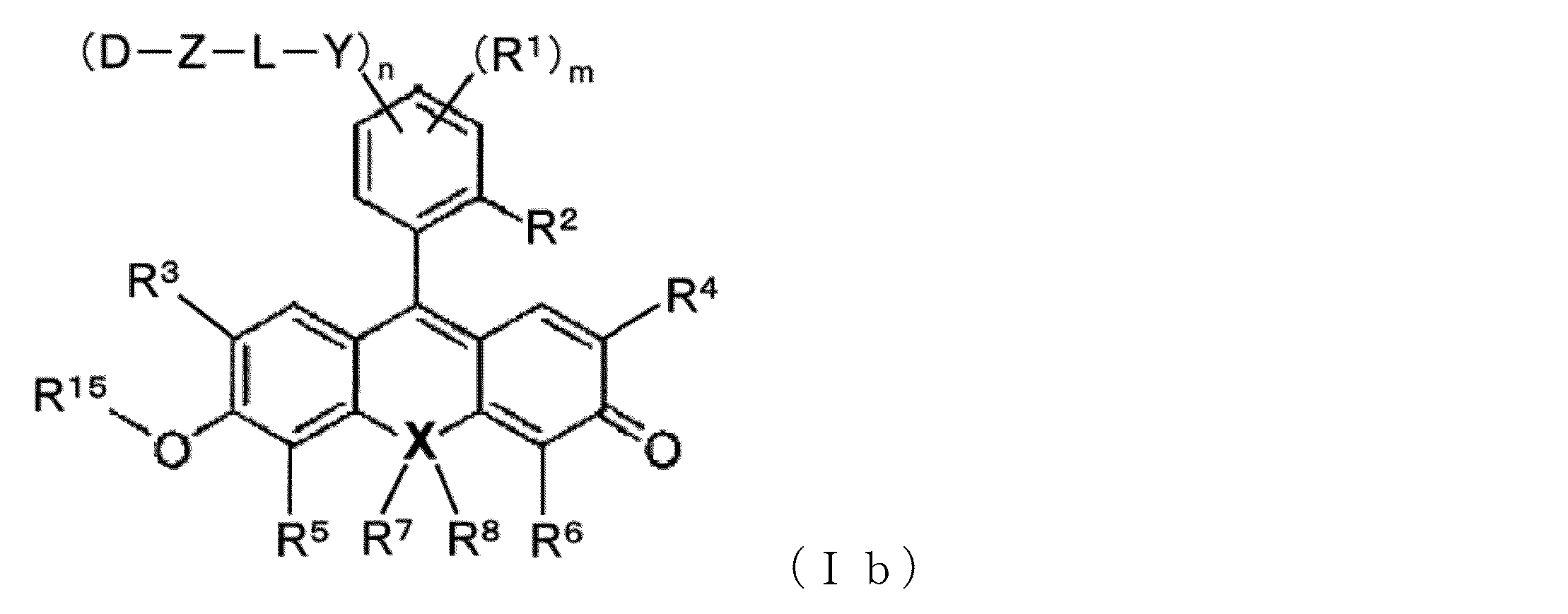
R1~R8、X、Y、L、Z、D、m及びnは、一般式(I)で定義した通りであり;
R15は、水素原子又は炭素数1~6個のアルキル基を示す。)
で表される、請求項1に記載の化合物又はその塩。 - 前記リンカーは、シクロアルキル基又はアリール基から選択される、請求項1~3のいずれか1項に記載の化合物又はその塩。
- 結合基aは、カルボニル基、アルキルカルボニル基、エステル基、アルキルエステル基、アミノ基、アルキルアミノ基、アミド基、アルキルアミド基、イソチオシアネート基、塩化スルホニル基、ハロアルキル基、ハロアセトアミド基、アジド基又はアルキニル基から選択される、請求項1~4のいずれか1項に記載の化合物又はその塩。
- 結合基bは、カルボニル基、アルキルカルボニル基、エステル基、アルキルエステル基、アミノ基、アルキルアミノ基、アミド基、アルキルアミド基、イソチオシアネート基、塩化スルホニル基、ハロアルキル基、ハロアセトアミド基、アジド基又はアルキニル基から選択される、請求項1~5のいずれか1項に記載の化合物又はその塩。
- 請求項1~6のいずれか1項に記載の化合物又はその塩を含む蛍光プローブ。
- 細胞内のsulfane sulfurを検出する方法であって、
(a)請求項1~6のいずれか1項に記載の化合物又はその塩を細胞内に導入する工程、及び
(b)当該化合物又はその塩が細胞内で発する蛍光を測定する工程
を含む方法。
Priority Applications (2)
| Application Number | Priority Date | Filing Date | Title |
|---|---|---|---|
| JP2017500556A JPWO2016132802A1 (ja) | 2015-02-20 | 2016-01-21 | sulfane sulfur選択的蛍光プローブ |
| US15/552,175 US20180052105A1 (en) | 2015-02-20 | 2016-01-21 | Sulfane sulfur-selective fluorescent probe |
Applications Claiming Priority (2)
| Application Number | Priority Date | Filing Date | Title |
|---|---|---|---|
| US201562118558P | 2015-02-20 | 2015-02-20 | |
| US62/118,558 | 2015-02-20 |
Publications (1)
| Publication Number | Publication Date |
|---|---|
| WO2016132802A1 true WO2016132802A1 (ja) | 2016-08-25 |
Family
ID=56688926
Family Applications (1)
| Application Number | Title | Priority Date | Filing Date |
|---|---|---|---|
| PCT/JP2016/051702 Ceased WO2016132802A1 (ja) | 2015-02-20 | 2016-01-21 | sulfane sulfur選択的蛍光プローブ |
Country Status (3)
| Country | Link |
|---|---|
| US (1) | US20180052105A1 (ja) |
| JP (1) | JPWO2016132802A1 (ja) |
| WO (1) | WO2016132802A1 (ja) |
Cited By (3)
| Publication number | Priority date | Publication date | Assignee | Title |
|---|---|---|---|---|
| WO2018043579A1 (ja) * | 2016-08-31 | 2018-03-08 | 国立大学法人名古屋大学 | ホスファローダミン化合物若しくはその塩、並びにそれを用いた蛍光色素 |
| CN111606919A (zh) * | 2020-05-22 | 2020-09-01 | 北京诺康达医药科技股份有限公司 | 一种羧基荧光素琥珀酰亚胺酯的溶剂化物及其制备方法 |
| CN112876460A (zh) * | 2021-02-05 | 2021-06-01 | 山西大学 | 7-二乙胺基-3-乙酰基香豆素衍生物及其合成方法和应用 |
Families Citing this family (1)
| Publication number | Priority date | Publication date | Assignee | Title |
|---|---|---|---|---|
| CN119874581B (zh) * | 2025-03-27 | 2025-06-24 | 上海屹锂新能源科技有限公司 | 一种用于锂硫电池正极材料的有机硫小分子化合物及其制备方法、应用 |
Citations (4)
| Publication number | Priority date | Publication date | Assignee | Title |
|---|---|---|---|---|
| US20070238884A1 (en) * | 2004-04-06 | 2007-10-11 | Smith Gerald A | Fluorescent Dyes and Complexes |
| JP2009513753A (ja) * | 2005-10-03 | 2009-04-02 | チバ ホールディング インコーポレーテッド | キサンテン染料 |
| US20090192298A1 (en) * | 2007-11-13 | 2009-07-30 | Kevin Burgess | Through-bond energy transfer cassettes, systems and methods |
| JP2013064099A (ja) * | 2011-08-30 | 2013-04-11 | Fujifilm Corp | キサンテン誘導体の多量体構造を有する新規化合物、着色組成物、インクジェット記録用インク、インクジェット記録方法、カラーフィルター、及びカラートナー |
-
2016
- 2016-01-21 US US15/552,175 patent/US20180052105A1/en not_active Abandoned
- 2016-01-21 JP JP2017500556A patent/JPWO2016132802A1/ja not_active Ceased
- 2016-01-21 WO PCT/JP2016/051702 patent/WO2016132802A1/ja not_active Ceased
Patent Citations (4)
| Publication number | Priority date | Publication date | Assignee | Title |
|---|---|---|---|---|
| US20070238884A1 (en) * | 2004-04-06 | 2007-10-11 | Smith Gerald A | Fluorescent Dyes and Complexes |
| JP2009513753A (ja) * | 2005-10-03 | 2009-04-02 | チバ ホールディング インコーポレーテッド | キサンテン染料 |
| US20090192298A1 (en) * | 2007-11-13 | 2009-07-30 | Kevin Burgess | Through-bond energy transfer cassettes, systems and methods |
| JP2013064099A (ja) * | 2011-08-30 | 2013-04-11 | Fujifilm Corp | キサンテン誘導体の多量体構造を有する新規化合物、着色組成物、インクジェット記録用インク、インクジェット記録方法、カラーフィルター、及びカラートナー |
Cited By (7)
| Publication number | Priority date | Publication date | Assignee | Title |
|---|---|---|---|---|
| WO2018043579A1 (ja) * | 2016-08-31 | 2018-03-08 | 国立大学法人名古屋大学 | ホスファローダミン化合物若しくはその塩、並びにそれを用いた蛍光色素 |
| JPWO2018043579A1 (ja) * | 2016-08-31 | 2019-06-24 | 国立大学法人名古屋大学 | ホスファローダミン化合物若しくはその塩、並びにそれを用いた蛍光色素 |
| JP7013024B2 (ja) | 2016-08-31 | 2022-01-31 | 国立大学法人東海国立大学機構 | ホスファローダミン化合物若しくはその塩、並びにそれを用いた蛍光色素 |
| CN111606919A (zh) * | 2020-05-22 | 2020-09-01 | 北京诺康达医药科技股份有限公司 | 一种羧基荧光素琥珀酰亚胺酯的溶剂化物及其制备方法 |
| CN111606919B (zh) * | 2020-05-22 | 2021-10-15 | 北京诺康达医药科技股份有限公司 | 一种羧基荧光素琥珀酰亚胺酯的溶剂化物及其制备方法 |
| CN112876460A (zh) * | 2021-02-05 | 2021-06-01 | 山西大学 | 7-二乙胺基-3-乙酰基香豆素衍生物及其合成方法和应用 |
| CN112876460B (zh) * | 2021-02-05 | 2022-05-31 | 山西大学 | 7-二乙胺基-3-乙酰基香豆素衍生物及其合成方法和应用 |
Also Published As
| Publication number | Publication date |
|---|---|
| JPWO2016132802A1 (ja) | 2018-01-18 |
| US20180052105A1 (en) | 2018-02-22 |
Similar Documents
| Publication | Publication Date | Title |
|---|---|---|
| JP6351511B2 (ja) | 非対称Siローダミン及びロドールの合成 | |
| JP6090934B2 (ja) | 酸性環境検出蛍光プローブ | |
| EP3219712B1 (en) | Coumarin dyes and conjugates thereof | |
| JPWO2016132802A1 (ja) | sulfane sulfur選択的蛍光プローブ | |
| CN112940709B (zh) | 一类自闪烁罗丹明螺硫酯荧光染料及其合成方法和在超分辨成像领域的应用 | |
| WO2012144654A1 (ja) | 硫化水素測定用蛍光プローブ | |
| CN110396304A (zh) | 五甲川菁染料及其制备方法 | |
| JPWO2016157937A1 (ja) | pH感受性蛍光プローブ | |
| CN113416196B (zh) | 一种苯并噻二唑-tb类化合物及其合成方法和应用 | |
| WO2014136781A1 (ja) | 蛍光プローブ | |
| JP6849983B2 (ja) | 酵素特異的な細胞内滞留性赤色蛍光プローブ。 | |
| JP6456592B2 (ja) | 蛍光寿命イメージングプローブ | |
| CN104327537A (zh) | 一种具有生物膜透性潜能的氧杂蒽类荧光染料及其制备方法 | |
| CN102807588B (zh) | 一种原位检测生物体内相邻巯基蛋白质的化合物及其方法 | |
| WO2015083799A1 (ja) | 近赤外線消光団 | |
| WO2013122189A1 (ja) | 蛍光プローブ | |
| JP6883332B2 (ja) | タグ標識可能なカルシウムイオン検出蛍光プローブ | |
| JP7628233B2 (ja) | Enpp活性検出用蛍光プローブ | |
| JP6675125B2 (ja) | pH依存性蛍光化合物 | |
| JP2018145126A (ja) | カルボキシペプチダーゼ活性検出用蛍光プローブ | |
| CN105348268A (zh) | 取代的咔唑-吲哚磺酸盐衍生物及其制备方法和用途 | |
| WO2020186483A1 (zh) | 五甲川菁染料及其制备方法 | |
| JP7410567B2 (ja) | 新規無蛍光性ローダミン類 | |
| CN113583033A (zh) | 一种苯并噻二唑-tb-氟硼络合物及其合成方法和应用 | |
| CN106478449A (zh) | 一种γ‑谷氨酸转移酶荧光探针及其制备与应用 |
Legal Events
| Date | Code | Title | Description |
|---|---|---|---|
| 121 | Ep: the epo has been informed by wipo that ep was designated in this application |
Ref document number: 16752191 Country of ref document: EP Kind code of ref document: A1 |
|
| ENP | Entry into the national phase |
Ref document number: 2017500556 Country of ref document: JP Kind code of ref document: A |
|
| WWE | Wipo information: entry into national phase |
Ref document number: 15552175 Country of ref document: US |
|
| NENP | Non-entry into the national phase |
Ref country code: DE |
|
| 122 | Ep: pct application non-entry in european phase |
Ref document number: 16752191 Country of ref document: EP Kind code of ref document: A1 |