WO2016121539A1 - 耐水耐有機溶媒性組成物 - Google Patents
耐水耐有機溶媒性組成物 Download PDFInfo
- Publication number
- WO2016121539A1 WO2016121539A1 PCT/JP2016/051173 JP2016051173W WO2016121539A1 WO 2016121539 A1 WO2016121539 A1 WO 2016121539A1 JP 2016051173 W JP2016051173 W JP 2016051173W WO 2016121539 A1 WO2016121539 A1 WO 2016121539A1
- Authority
- WO
- WIPO (PCT)
- Prior art keywords
- pga
- decalinium
- glutamic acid
- antibacterial
- water
- Prior art date
- Legal status (The legal status is an assumption and is not a legal conclusion. Google has not performed a legal analysis and makes no representation as to the accuracy of the status listed.)
- Ceased
Links
Images

Classifications
-
- C—CHEMISTRY; METALLURGY
- C08—ORGANIC MACROMOLECULAR COMPOUNDS; THEIR PREPARATION OR CHEMICAL WORKING-UP; COMPOSITIONS BASED THEREON
- C08K—Use of inorganic or non-macromolecular organic substances as compounding ingredients
- C08K5/00—Use of organic ingredients
- C08K5/16—Nitrogen-containing compounds
- C08K5/17—Amines; Quaternary ammonium compounds
- C08K5/19—Quaternary ammonium compounds
-
- C—CHEMISTRY; METALLURGY
- C08—ORGANIC MACROMOLECULAR COMPOUNDS; THEIR PREPARATION OR CHEMICAL WORKING-UP; COMPOSITIONS BASED THEREON
- C08L—COMPOSITIONS OF MACROMOLECULAR COMPOUNDS
- C08L77/00—Compositions of polyamides obtained by reactions forming a carboxylic amide link in the main chain; Compositions of derivatives of such polymers
- C08L77/04—Polyamides derived from alpha-amino carboxylic acids
-
- C—CHEMISTRY; METALLURGY
- C09—DYES; PAINTS; POLISHES; NATURAL RESINS; ADHESIVES; COMPOSITIONS NOT OTHERWISE PROVIDED FOR; APPLICATIONS OF MATERIALS NOT OTHERWISE PROVIDED FOR
- C09D—COATING COMPOSITIONS, e.g. PAINTS, VARNISHES OR LACQUERS; FILLING PASTES; CHEMICAL PAINT OR INK REMOVERS; INKS; CORRECTING FLUIDS; WOODSTAINS; PASTES OR SOLIDS FOR COLOURING OR PRINTING; USE OF MATERIALS THEREFOR
- C09D177/00—Coating compositions based on polyamides obtained by reactions forming a carboxylic amide link in the main chain; Coating compositions based on derivatives of such polymers
- C09D177/04—Polyamides derived from alpha-amino carboxylic acids
Definitions
- the present invention relates to an antibacterial composition excellent in water resistance and organic solvent resistance.
- imparting antibacterial properties to equipment used in food processing and medical settings is carried out by spraying and applying an antibacterial agent to the equipment surface.
- general antibacterial agents often have an antibacterial effect that is not stably maintained because the antibacterial component gradually deteriorates or is washed away by an external environment such as moisture or water.
- Antibacterial agents used for antibacterial materials are roughly classified into inorganic antibacterial agents, organic antibacterial agents, and natural antibacterial agents.
- inorganic antibacterial agents metal ions such as silver, copper and zinc have been known for a long time.
- silver ions have a long antibacterial effect and are excellent in heat resistance, and are therefore suitable for molding when blended with plastics.
- silver ions have a drawback that their inhibitory effect on fungi is weak.
- Organic antibacterial agents include chemical synthetic products such as nitrogen-containing antibacterial agents, sulfur-containing antibacterial agents, and phosphorus-containing antibacterial agents, and are used for industrial materials such as building materials, agricultural chemicals, and fisheries. Among them, quaternary ammonium salts are used mainly in hygiene fields such as medical care and food because they are safer. However, since these antibacterial agents have high water solubility, their adhesion to the substrate is poor, surface coating, blending and compounding are difficult, and workability is greatly inferior compared to inorganic antibacterial agents. . That is, even if an organic antibacterial agent is blended in the base material, the antibacterial component is eluted with water, and the antibacterial property is not maintained.
- Patent Document 1 discloses a composition containing octadecyldimethyl (3-triethoxysilylpropyl) ammonium chloride.
- the present invention is a technique for fixing octadecyldimethyl (3-triethoxysilylpropyl) ammonium chloride to a substrate containing an oxygen functional group such as glass or cellulose. That is, the 3-triethoxysilyl group in the molecule is chemically bonded to and bonded to the oxygen functional group on the substrate surface.
- the chloride ion which is the counter anion of the present compound, exhibits strong corrosiveness to the iron-containing base material, so that corrosion resistance becomes a problem.
- antibacterial materials have sufficient antibacterial properties, high antibacterial sustainability, high safety such as safety to the human body, low environmental load, simple processability, and low corrosiveness. desired.
- Patent Document 2 describes an ion complex formed from poly- ⁇ -glutamate ions and quaternary ammonium ions (hereinafter sometimes referred to as “PGAIC”). ing.
- the ion complex is a polymer that is insoluble in water, has antibacterial properties and safety equivalent to those of organic antibacterial agents, has high adhesion to the base material, and can be surface painted, blended, and compounded. Excellent workability.
- the ion complex itself has physical properties that can be molded into plastics, films, fibers, and the like.
- the patent document describes that a film formed from an ion complex also has utility as a material having antibacterial properties.
- Poly- ⁇ -glutamic acid (hereinafter sometimes referred to as “PGA”) is a bio-based polymer produced by microorganisms, and the ⁇ -amino group and ⁇ -carboxy group of glutamic acid are linked by an amide bond. Polyamino acids. PGA has come to be known as the main component of stringing of natto, but it has both biodegradability and adhesiveness as its attractive characteristics. Furthermore, it is a natural moisturizing ingredient used in cosmetics, and has high safety to the skin.
- PGAIC formed from PGA and hexadecylpyridinium (hereinafter also referred to as “HDP + ”) described in Patent Document 3 is formed by non-covalent ionic bonds, but is insoluble in water. Therefore, it is possible to form an antibacterial polymer film on the substrate surface by spraying or applying an alcohol solution of PGAIC to the substrate. That is, the polymer film containing the PGAIC has practicality because it has strong adhesion and adhesion to the substrate and high water resistance.
- lower alcohols such as ethanol and isopropyl alcohol are widely used as disinfectants and wiping agents for equipment at food processing sites, medical equipment at medical sites, medical instruments, linen, tableware and the like.
- antibacterial materials used in food processing and medical sites must have not only water resistance but also durability against organic solvents such as lower alcohols.
- antibacterial materials used for sanitary facilities have organic solvent resistance against lower alcohols in addition to water resistance, and it is strongly desired to improve performance in order to keep antibacterial properties stable for a long period of time. It is. Furthermore, creation of environmentally friendly materials with biodegradability is also desired.
- the present inventors only form a salt with a double-headed quaternary ammonium salt called decalinium chloride and PGA so as to insolubilize in water. It is also found that decalinium also has a function of cross-linking PGA molecules, so that it will be resistant to organic solvents such as lower alcohols used for disinfection. Succeeded in developing “Decalinium”. That is, the PGA decalinium according to the present invention was found to be excellent not only in water resistance but also in organic solvent resistance against lower alcohols and the like, and further stably exhibiting sufficient antibacterial action as an antibacterial coating substrate, etc. It came to do.
- a composition comprising poly- ⁇ -glutamic acid and decalinium.
- a coating agent comprising a solution containing at least poly- ⁇ -glutamic acid and a solution containing at least decalinium.
- a coating method comprising a step of applying a solution containing poly- ⁇ -glutamic acid to a substrate, and a step of applying a solution containing decalinium to the substrate.
- the composition according to the present invention is not only insoluble in water and exhibits water resistance, but also has high resistance to organic solvents against lower alcohols used as disinfectants and the like. Furthermore, since it has suitable adhesive properties for the substrate, it is possible to form a coating on the substrate surface. Moreover, this invention composition shows the outstanding antimicrobial property derived from decalinium. That is, according to the present invention, since a highly durable antibacterial coating can be formed on the surface of the substrate, it has excellent characteristics as an antibacterial material used in food processing, medical field, etc. Materials that can be used in the industrial field can be provided.
- FIG. 1 is a solid state NMR ( 13 C-NMR) chart of PGA decalinium according to the present invention.
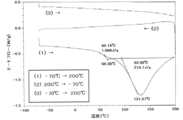
- FIG. 2 is a chart of differential scanning calorimetry (DSC) of PGA decalinium according to the present invention.
- composition according to the present invention comprises poly- ⁇ -glutamic acid (PGA) and decalinium.
- Poly- ⁇ -glutamic acid is a polyamino acid in which ⁇ -amino group and ⁇ -carboxy group of glutamic acid are amide-bonded.
- the type of PGA is not particularly limited. For example, there are those consisting only of L-glutamic acid, those consisting only of D-glutamic acid, and those containing both, any of which can be used. However, the higher one ratio is, the better the stereoregularity, the higher the strength, etc., and the better the melting point (about 150 ° C.) when dried. This melting point becomes clearer by using an ion complex.
- PGA having a L-glutamic acid content of 90% or more, and more preferably substantially consisting of L-glutamic acid.
- PGA substantially consisting only of L-glutamic acid refers to PGA in which only L-glutamic acid is detected and D-glutamic acid is not detected when hydrolyzed under conditions without racemization.
- the molecular size of the PGA used is not particularly limited, but those having an average molecular mass of 10 kD or more are suitable. In general, the larger the molecular size, the higher the performance such as strength. On the other hand, a PGA with an excessively large molecular size is expensive to manufacture and may be technically difficult to manufacture, so it is usually set to 1,000 kD or less.
- PGA poly- ⁇ -glutamic acid is obtained when glutamic acid is polymerized under normal conditions, it is preferably biosynthesized using a microorganism.
- microorganisms that produce PGA include Bacillus subtilis var. Natto (Bacillus natto), Bacillus subtilis subsp. There are chungkookjang (Sengoku soy sauce), Bacillus megaterium, Bacillus anthracis, Bacillus halodurans, Naturalba aegypticaca, Hydra and the like.
- Bacillus subtilis which is a Bacillus subtilis
- Naturalba aegyptica which is a hyperhalophilic archaea.
- it is preferable to use PGA produced by Naturalba aegyiaca which is a microorganism that produces PGA consisting only of L-glutamic acid.
- Decalinium contained in the composition according to the present invention has the following chemical structural formula, and is an antibacterial agent that has been used in medical settings and at home as a disinfectant for symptoms such as stomatitis and pharyngitis.
- the composition according to the present invention it is not always clear what state PGA and decalinium are in, but the ⁇ -carboxy group of glutamic acid constituting PGA and the quaternary ammonium cation of decalinium are electrostatically bonded. Conceivable. Decalinium has two quaternary ammonium cations in the molecule, so that it can be electrostatically bonded to two ⁇ -carboxy groups in one molecule of PGA chain and bridge between two molecules of PGA chain. It is thought that. As a result, it is considered that the composition according to the present invention has higher chemical stability than conventional non-crosslinked PGAIC and exhibits insolubility and resistance not only to water but also to organic solvents such as lower alcohols.
- the composite of PGA and decalinium which is the main component of the composition according to the present invention may be referred to as “PGA decalinium”.
- decalinium can be used at a half mole, approximately a half mole, or an arbitrary molar ratio with respect to the glutamic acid unit constituting the PGA.
- the proportion of decalinium in the PGA decalinium is preferably 0.1 times mol or more, more preferably 0.2 times mol or more with respect to the glutamic acid unit constituting the PGA. It is more preferably 3 times mol or more, and still more preferably 0.45 times mol or more.
- a completely crosslinked structure containing 0.5 times or more moles of decalinium with respect to the glutamic acid unit constituting PGA is preferable.
- the upper limit of the above ratio is not particularly limited, but for the same reason, it is preferably 1 mol or less, more preferably 0.8 mol or less, still more preferably 0.6 mol or less, particularly 0.55 mol or less. preferable.
- composition according to the present invention can be produced very easily only by mixing a salt of PGA and decalinium in a solvent.
- water is suitable. This is because the raw material PGA can be dissolved well, and the target compound PGA decalinium is insoluble in water, which is convenient for isolation and purification of the target product after the reaction.
- a water-soluble organic solvent such as an alcohol solvent such as methanol or ethanol; an ether solvent such as THF; an amide solvent such as dimethylformamide or dimethylacetamide may be added to the reaction solution.
- an alcohol solvent such as methanol or ethanol
- an ether solvent such as THF
- an amide solvent such as dimethylformamide or dimethylacetamide
- the salt may be used as PGA as a raw material.
- the salt include alkali metal salts such as sodium salt and potassium salt; alkaline earth metal salts such as calcium salt and magnesium salt. Further, even when a salt is used, it is not necessary that all carboxy groups are salts, and only a part thereof may be a salt. However, since polyvalent metal salts such as alkaline earth metal salts may have low solubility in water, a PGA free body or a monovalent metal salt of PGA is preferably used.
- the salt of decalinium which is a raw material, usually exists as a halide salt. Therefore, in the present invention, the decalinium salt may be added directly to the reaction solution, or may be added after dissolving the salt in an aqueous solvent. Since the salt of decalinium sufficiently modifies PGA, it is preferable to use a sufficient amount with respect to PGA.
- the concentration of each component in the reaction solution is not particularly limited.
- the concentration of PGA in the reaction solution can be about 0.5 w / v% or more and about 10 w / v% or less
- the concentration of decalinium can be about 1.0 w / v% or more and about 10 w / v% or less.
- the reaction solution is preferably heated moderately in order to promote the formation of a crosslinked structure.
- the heating temperature can be, for example, about 40 ° C. or higher and 80 ° C. or lower.
- the reaction time may be appropriately adjusted, but can usually be about 30 minutes or longer and about 20 hours or shorter.
- the PGA decalinium of the present invention is insoluble in water and an organic solvent, it can be easily separated from an aqueous solvent and an organic solvent by filtration or centrifugation. Further, the separated PGA decalinium can be washed with water or an organic solvent to remove excess PGA or decalinium salt and other salts. The aqueous solvent can be easily removed by washing with acetone or ethanol.
- the PGA decalinium of the present invention has excellent durability against water and organic solvents.
- the organic solvents shown here are C 1-4 alcohols such as methanol and ethanol; ether solvents such as diethyl ether and THF; amide solvents such as dimethylformamide and dimethylacetamide; ketone organic solvents such as acetone and methyl ethyl ketone; pentane Hydrocarbon organic solvents such as hexane, heptane, benzene, toluene and xylene; halogen organic solvents such as methylene chloride, chloroform, carbon tetrachloride and trichloroethylene.
- the PGA decalinium of the present invention not only exhibits an excellent antibacterial effect against both gram positive and gram negative bacteria, but also exhibits an excellent antibacterial effect against fungi at the same time. Therefore, it can be used as an antibacterial agent and / or an antifungal agent that can be widely used in fields where antibacterial and antifungal properties are required.
- Gram-positive bacteria in which the PGA decalinium of the present invention exhibits an antibacterial effect include Staphylococcus genus, Streptococcus genus, Corynebacterium genus, Bacillus genus, Listeria genus, Clostridium genus, and Lactobacillus genus.
- Examples of gram-negative bacteria in which the PGA decalinium of the present invention exhibits an antibacterial effect include Escherichia, Pseudomonas, Salmonella, Enterobacter, Neisseria, Xanthomonas, Serratia, and Campylobacter.
- fungi for which the PGA decalinium of the present invention exhibits antibacterial effects include zygomycetes such as the genus Absidia, Mucor, Rhizopus; Aspergillus, Neurospora, Penicillium, Trichoderma, Neosartoria, Candida, Ascomycota such as Saccharomyces; Basidiomycetes such as Trametes and Cryptococcus; Incomplete fungi such as Alternaria, Fusarium, Cladosporium, Curvularia, and Aureobasidium
- the PGA decalinium of the present invention exhibits biodegradability and does not exhibit water solubility or excessive water absorption. Moreover, since it has a clear melting point near 60 ° C. and the melting point and the thermal decomposition starting point (near 260 ° C.) are sufficiently separated, thermoforming is possible. Therefore, it can be used as a biodegradable plastic material, and can replace conventional chemical synthetic materials derived from petroleum.
- the PGA decalinium of the present invention can also be used as an antibacterial active ingredient of an antibacterial material.
- Examples of the utilization form of the antibacterial material containing the PGA decalinium of the present invention as an active ingredient include powder coating on a polymer resin, compositing by masterbatch blending, and the like.
- the type of the polymer resin is not particularly limited, and can be freely selected according to the use of the resin composition.
- resins include, for example, vinyl chloride polymers, urethane polymers, acrylic polymers, olefin polymers, ethylene polymers, propylene polymers, amide polymers, ethylene-vinyl acetate copolymers, chlorides.
- Examples include vinylidene polymers, styrene polymers, ester polymers, nylon polymers, cellulose derivatives, carbonate polymers, fluorine resins, silicone resins, vinyl alcohol polymers, vinyl ester polymers, synthetic rubbers, natural rubbers, etc. .
- a plasticizer, a filler, a colorant (dye, pigment, etc.), an ultraviolet absorber and the like may be appropriately blended as necessary.
- the above resin composition can be processed into various forms according to its use.
- the resin composition of the present invention is formed into a film shape, a sheet shape, a plate shape, a fiber shape, or a three-dimensional shape by a resin processing method known per se such as extrusion molding, injection molding, solution casting method, and spinning method. can do.
- a resin processing method known per se such as extrusion molding, injection molding, solution casting method, and spinning method. can do.
- it can be used for interior materials, floor materials, textile products, paper products, home appliances, and the like.
- the composition containing poly- ⁇ -glutamic acid and decalinium according to the present invention includes, for example, a step of applying a solution containing poly- ⁇ -glutamic acid to a substrate, and a step of applying a solution containing decalinium to the substrate.
- a step of applying a solution containing poly- ⁇ -glutamic acid to a substrate and a step of applying a solution containing decalinium to the substrate.
- the composition according to the present invention When the composition according to the present invention is coated on the material surface, it can be processed by a layer-by-layer method (alternate lamination method). That is, by coating the surface of the material with a solution containing at least PGA and subsequently coating the solution containing at least decalinium, a cross-linked complex can be formed on the material surface and processed.
- the PGA decalinium of the present invention forms a polymer film on the substrate surface, is insoluble in water and organic solvents, and exhibits antifungal and antibacterial properties as described above. Therefore, the coating agent of the present invention can form a coating film or a film showing both continuous antifungal and antibacterial properties on a substrate or the like by the layer-by-layer method.
- the coating agent according to the present invention separately includes a solution containing at least poly- ⁇ -glutamic acid and a solution containing at least decalinium.
- the PGA decalinium of the present invention has adhesiveness with a base material and is insoluble in water or an organic solvent.
- PGA decalinium is preferably contained in an amount of 0.1% by mass or more, and more preferably 0.5% by mass or more. If it is less than 0.1% by mass, the antibacterial effect may not be sufficiently exhibited.
- the upper limit is not particularly limited, and the film may be formed of 100% by mass of PGA decalinium, that is, substantially only PGA decalinium.
- the coating agent of the present invention can be used as an antifungal antibacterial spray agent in which a PGA solution and a decalinium solution are alternately sprayed.
- the generation of bacteria and mold can be prevented by spraying directly on bathrooms, sinks, sanitary equipment, etc. in a residence, hospital, public facility, or the like.
- the antifungal agent can be transferred indirectly to the surface of the molded plastic, preventing the generation of bacteria and mold on the wall surface and plastic surface for a long time. be able to.
- examples of the base material that can be applied include pulp, ceramics, metals, metal oxides, plastics, rubbers, ores, and wood.
- examples of ceramics include glass, ceramics, cement, refractory bricks, and firewood.
- metals include simple metals such as iron, aluminum, zinc, magnesium, gold, silver, chromium, germanium, molybdenum, nickel, lead, platinum, silicon, titanium, thorium, tungsten, carbon steel, nickel steel,
- Examples of the alloy include chromium steel, chromium molybdenum steel, stainless steel, aluminum alloy, brass, and bronze.
- metal oxide examples include alumina, silica, magnesia, tria, zirconia, iron sesquioxide, iron tetroxide, titanium oxide, calcium oxide, zinc oxide, lead oxide and the like.
- plastics include general-purpose plastics such as polyvinyl chloride, polyethylene, polypropylene, polystyrene, polyethylene terephthalate, and polyvinyl alcohol; engineering plastics such as polyamide, polycarbonate, polyacetal, polyvinylidene fluoride, polyethersulfone, and polyamideimide; phenol resin And thermosetting resins such as epoxy resin, silicon resin, and polyurethane.
- ores examples include marble and granite.
- the PGA decalinium of the present invention can be spun by a melt spinning method or a charged spinning method and used as a fiber structure such as a woven or knitted fabric or a nonwoven fabric.
- Example 1 Production of PGA decalinium Poly- ⁇ -L-glutamic acid sodium salt (hereinafter abbreviated as “PGA”) having an average molecular weight of 1000 kD derived from the hyperhalophilic archaeon Natrialva Ediptiacaa (hereinafter abbreviated as “PGA”) in purified water. Dissolved to give a 2 w / v% solution.
- PGA Poly- ⁇ -L-glutamic acid sodium salt
- DEQ decalinium chloride
- the obtained water-insoluble material was collected by filtration and then washed 3 times with purified water heated to 60 ° C. Furthermore, it dehydrated by washing
- PGA decalinium was confirmed by 13 C-NMR method (CP / MAS method).
- the 13 C-NMR spectrum of PGA decalinium is shown in FIG. In the NMR spectrum of FIG. 1, 13 C peaks derived from PGA and decalinium were observed, suggesting the formation of PGA decalinium.
- DSC measurement of PGA decalinium was performed using a differential scanning calorimeter (“DSC7020” manufactured by Hitachi, Ltd.). The result is shown in FIG. As shown in FIG. 2, a melting point of PGA decalinium that was not found in the DSC chart of PGA alone and DEQ alone was observed around 60 ° C.
- Comparative Example 1 Production of non-crosslinked PGAIC (PGA / HDP) A non-crosslinked PGAIC (PGA / HDP) was produced with reference to Japanese Patent Application Laid-Open No. 2010-22496 (Patent Document 2). Poly- ⁇ -L-glutamic acid sodium salt (PGA, 40 g) having an average molecular weight of 1000 kD derived from the hyperhalophilic archaeon Natrialva edipitiaca (PGA, 40 g) was dissolved in purified water to obtain a 2 w / v% solution. To the solution, a 0.2M aqueous solution (1551 g) of hexadecylpyridinium bromide (HDP) kept at 60 ° C. was added.
- HDP hexadecylpyridinium bromide
- Test Example 1 Solvent resistance test of PGA decalinium Durability test of PGA decalinium obtained in Example 1 with respect to general solvents was performed. For comparison, the solubility of the non-crosslinked PGAIC (PGA / HDP) produced in Comparative Example 1 and the raw materials PGA and decalinium chloride (DEQ) was also tested. Water, ethanol, dimethyl sulfoxide (DMSO), chloroform, acetone, N-methylpyrrolidone (NMP), dimethylacetamide (DMAC), and hexane so that each solid sample is theoretically 1 wt% when completely dissolved. The solution after stirring for 24 hours or more at room temperature was visually judged. The results of the solubility test are shown in Table 1.
- PGA decalinium according to the present invention is insoluble in polar organic solvents and nonpolar organic solvents used for dissolving general chemical plastics in addition to water, and has high stability. It was confirmed to have water resistance and organic solvent resistance. It was also confirmed that the organic solvent resistance was excellent even when compared with non-crosslinked PGAIC and raw materials (PGA alone and DEQ alone).
- Example 2 Production of coated paper with PGA decalinium PGA decalinium was formed by a layer-by-layer method. Specifically, first, poly- ⁇ -L-glutamic acid sodium salt having an average molecular weight of 1000 kD derived from the hyperhalophilic archaeon Natrialva Edipticia is dissolved in purified water, and a 2 w / v% PGA aqueous solution and did. Separately, decalinium chloride (DEQ) was dissolved in purified water at 80 ° C. to prepare a 1 w / v% DEQ aqueous solution.
- DEQ decalinium chloride
- Example 3 Antibacterial test of PGA decalinium-coated paper
- the Escherichia coli JM109 standard strain was used as an indicator fungus for the antibacterial test.
- About 10 8 of the indicator cells were applied to the surface of an LB agar medium (diameter: about 9 cm) and cultured at 37 ° C. for up to one week.
- the coated paper of Example 2 was placed in the center, and antibacterial properties were evaluated from the presence or absence of a growth inhibition zone (halo) formed around the adhesive surface (based on JIS L1902).
- halo growth inhibition zone
- each coated paper sample is immersed in ethanol (10 mL), dimethyl sulfoxide (DMSO, 5 mL) or chloroform (5 mL) for 30 minutes, and then transferred to a container containing each fresh solvent. The process of further dipping was repeated 3 times. Finally, the immersion solvent was evaporated with a dry-heater to obtain an experimental sample. Antibacterial properties were evaluated in the same manner as described above using the obtained experimental samples. The results are shown in Table 2. In Table 2, “+” indicates that there is antibacterial activity, “ ⁇ ” indicates that there is no antibacterial activity, and “ ⁇ ” indicates that a growth inhibition zone was slightly observed.
Landscapes
- Chemical & Material Sciences (AREA)
- Organic Chemistry (AREA)
- Chemical Kinetics & Catalysis (AREA)
- Polymers & Plastics (AREA)
- Health & Medical Sciences (AREA)
- Medicinal Chemistry (AREA)
- Materials Engineering (AREA)
- Wood Science & Technology (AREA)
- Engineering & Computer Science (AREA)
- Life Sciences & Earth Sciences (AREA)
- Compositions Of Macromolecular Compounds (AREA)
- Paints Or Removers (AREA)
- Agricultural Chemicals And Associated Chemicals (AREA)
Abstract
衛生設備などへ使用する抗菌素材には、耐水性に加えて低級アルコールなどに対する有機溶媒耐性を有し、抗菌性を長期間、安定的に保つための高性能化が強く望まれる。さらには、生分解性を備えた環境調和型の素材の創出も望まれる。本発明に係る組成物は、ポリ-γ-グルタミン酸とデカリニウムを含むことを特徴とする。
Description
本発明は、耐水性と耐有機溶媒性に優れる抗菌性組成物に関するものである。
近年、我が国での高齢化社会や世界的人口増加が見込まれる中、健康で安全な生活を過すためには、食品・医療などのライフサイエンス分野において、衛生環境の改善が求められている。介護現場や医療現場など、食品を扱う現場では、度々、食中毒やウイルス感染症が発生、蔓延することがあり、年々、従事者の衛生に対する関心が高まりつつある。このような背景の下、食中毒や感染症などの原因となる病原性の微生物を予防的に抑制する目的で、抗菌材料の高機能化が強く要望されている。
一般的に、食品加工や医療の現場での使用設備への抗菌性の付与は、設備表面へ抗菌剤を噴霧、塗布することで実施されている。しかしながら、一般的な抗菌剤は、湿気や水などの外部環境によって抗菌成分が除々に劣化したり流失するため、抗菌効果が安定的に持続しないものが多い。
抗菌材料に使用される抗菌剤は、無機系抗菌剤、有機系抗菌剤、天然系抗菌剤に大別される。無機系抗菌剤としては、銀、銅、亜鉛などの金属イオンが古くから知られている。特に銀イオンは、抗菌効果の持続性が高く耐熱性にも優れているので、プラスチック等に配合する際の成形加工に適している。しかし銀イオンは、真菌類に対する抑制効果が弱いことが欠点である。
有機系抗菌剤としては、含窒素系抗菌剤、含硫黄系抗菌剤、含リン系抗菌剤などの化学合成品が挙げられ、建材、農薬、水産などの産業用資材に使用される。その中でも第四級アンモニウム塩は、より安全性が高いため、医療や食品などの衛生分野を中心に使用されている。しかし、これらの抗菌剤は高い水溶性を有するために基材への接着性が悪く、表面塗装、配合、複合化が困難であり、無機系抗菌剤と比べて加工性が大きく劣るものである。即ち、基材へ有機系抗菌剤を配合しても、抗菌成分が水により溶出してしまい、抗菌性が持続しない。一方、キトサン、カテキン、ヒノキチオールといった天然系抗菌剤は高い安全性を有し、使用者に安心を与えるものであるが、化学合成品よりも製造コストが高く、耐熱性や加工性が悪い点でも依然として課題が残る。
上記の問題を解決するため、基材へ第四級アンモニウム塩を固定化する技術が知られている。例えば特許文献1には、オクタデシルジメチル(3-トリエトキシシリルプロピル)アンモニウムクロライドを含む組成物が開示されている。当該発明は、ガラスやセルロースなど酸素官能基を含む基材に対し、オクタデシルジメチル(3-トリエトキシシリルプロピル)アンモニウムクロライドを固着させる技術である。即ち、分子中の3-トリエトキシシリル基が基材表面の酸素官能基と化学的に結合し、接着するものである。しかし、本化合物の対アニオンである塩化物イオンは、鉄を含有する基材に対して強い腐食性を示すため、防腐食性が課題となる。
かかる現状を鑑みると、抗菌材料としては、十分な抗菌性を有し、さらに、抗菌持続性が高く、人体への安全性、低環境負荷、簡便な加工性、低腐食性といった高機能化が望まれる。
上記の問題を解決する抗菌剤として、特許文献2には、ポリ-γ-グルタミン酸イオンと第四級アンモニウムイオンから形成されるイオンコンプレックス(以下、「PGAIC」と記載することもある)が記載されている。当該イオンコンプレックスは水に不溶性のポリマーであり、有機系抗菌剤と同等の抗菌性や安全性を有し、基材との接着性が高く、表面塗装、配合、複合化が可能であるため、加工性に優れるものである。また、腐食性を有するハロゲンを含まないため、低腐食性に優れた素材である。さらには、当該イオンコンプレックスは、それ自体、プラスチック、フィルム、繊維などへ成型可能な物性を有している。当該特許文献には、イオンコンプレックスから成形されたフィルムが、抗菌性をも有する材料としての有用性も有することが記載されている。
尚、ポリ-γ-グルタミン酸(以下、「PGA」と記載することもある)は、微生物より産生されるバイオベースポリマーであり、グルタミン酸のα-アミノ基とγ-カルボキシ基がアミド結合で結ばれたポリアミノ酸である。PGAは納豆の糸引きの主成分として知られるようになったが、その魅力的な特性として、生分解性と接着性を兼ね備えている。さらには、化粧品に使用される天然保湿剤成分であり、皮膚への高い安全性を有している。
特許文献3に記載のPGAとヘキサデシルピリジニウム(以下、「HDP+」と記載することもある)から形成されるPGAICは、非共有結合であるイオン結合で形成されながらも、水不溶性である一方でアルコールに対する溶解性が高いため、PGAICのアルコール溶液を基材へ噴霧または塗布することにより、基材表面上に抗菌性の高分子被膜を形成することが可能である。即ち、当該PGAICを含有する高分子被膜は、基材との密着性と接着性が強く、さらに耐水性が高いため実用性を有している。一方、エタノールやイソプロピルアルコール等の低級アルコールは、食品加工現場での設備、医療現場での医療機器、医用器具、リネン、食器などの消毒剤や清拭剤として多用されている。これらの設備にて従来のPGAICを使用する場合、低級アルコールの影響によりPGAICが溶出して抗菌持続性が低下する可能性が懸念される。そのため、食品加工や医療の現場で使用される抗菌材料は、耐水性だけではなく、低級アルコール等の有機溶媒に対する耐久性をも備えねばならない。
上述したように、衛生設備などへ使用する抗菌素材には、耐水性に加えて低級アルコール等に対する有機溶媒耐性を有し、抗菌性を長期間、安定的に保つための高性能化が強く望まれる。さらには、生分解性を備えた環境調和型の素材の創出も望まれる。
本発明者らは、上記課題を解決するために鋭意研究を重ねた結果、塩化デカリニウムと呼ばれる二頭型第四級アンモニウム塩とPGAとで塩を形成することにより、水に対して不溶化するのみならず、おそらくはデカリニウムがPGA分子を架橋する作用も有することから、消毒などに用いられる低級アルコールなどの有機溶媒に対しても耐性を示すようになることを見出し、抗菌性新素材である「PGAデカリニウム」の開発に成功した。即ち、本発明に係るPGAデカリニウムが耐水性のみならず低級アルコール等に対する耐有機溶媒性に優れ、さらには抗菌被膜基材などとして十分な抗菌作用を安定的に示すことを見出し、本発明を完成するに至った。
以下、本発明を示す。
[1] ポリ-γ-グルタミン酸とデカリニウムを含むことを特徴とする組成物。
[2] ポリ-γ-グルタミン酸を構成するグルタミン酸のうちL-グルタミン酸の占める割合が90%以上である上記[1]に記載の組成物。
[3] ポリ-γ-グルタミン酸を構成するグルタミン酸がL-グルタミン酸からなる上記[1]または[2]に記載の組成物。
[4] 水に不溶性である上記[1]~[3]のいずれかに記載の組成物。
[5] 有機溶媒に不溶性である上記[1]~[4]のいずれかに記載の組成物。
[6] 少なくともポリ-γ-グルタミン酸を含有する溶液、および、少なくともデカリニウムを含有する溶液とを含むことを特徴とするコーティング剤。
[7] ポリ-γ-グルタミン酸を含む溶液を基材に塗布する工程、および、デカリニウムを含む溶液を基材に塗布する工程を含むことを特徴とするコーティング方法。
[8] ポリ-γ-グルタミン酸を含む溶液を基材に塗布した後、デカリニウムを含む溶液を基材に塗布する上記[7]に記載のコーティング方法。
[9] ポリ-γ-グルタミン酸を構成するグルタミン酸のうちL-グルタミン酸の占める割合が90%以上である上記[7]または[8]に記載のコーティング方法。
[10] ポリ-γ-グルタミン酸を構成するグルタミン酸がL-グルタミン酸からなる上記[7]または[8]に記載のコーティング方法。
本発明に係る組成物は、水に対して不溶であり耐水性を示すのみならず、消毒剤などとして用いられる低級アルコール等に対する耐有機溶媒性も高い。さらには基材に対しても適度な接着特性を有することから基材表面への被膜形成が可能である。また、本発明組成物は、デカリニウム由来の優れた抗菌性を示す。即ち、本発明によって、耐久性の高い抗菌性被膜を基材表面に形成可能であることから、食品加工や医療の現場などで使用される抗菌材料として優れた特性を有しており、広範囲の産業分野で利用可能な材料を提供することができる。
本発明に係る組成物は、ポリ-γ-グルタミン酸(PGA)とデカリニウムとを含むことを特徴とする。
ポリ-γ-グルタミン酸(PGA)とは、グルタミン酸のα-アミノ基とγ-カルボキシ基とがアミド結合したポリアミノ酸である。PGAの種類は、特に制限されない。例えば、L-グルタミン酸のみからなるもの、D-グルタミン酸のみからなるもの、両方を含むものがあるが、何れも用いることができる。但し、一方の割合がより多い方が立体規則性に優れ、強度なども高くなり、また、よく乾燥すれば融点(約150℃)をも示す様になる。この融点は、イオンコンプレックスとすることで、より明確となる。さらに、L-グルタミン酸からなるものの方が生分解性に優れるので、L-グルタミン酸の含有割合が90%以上であるPGAを用いることが好ましく、実質的にL-グルタミン酸のみからなるものがより好ましい。ここで「実質的にL-グルタミン酸のみからなるPGA」とは、ラセミ化を伴わない条件で加水分解した場合、L-グルタミン酸のみが検出され、D-グルタミン酸が検出されないPGAをいう。
使用するPGAの分子サイズも特に制限されないが、平均分子質量で10kD以上のものが好適である。一般的に、分子サイズが大きいほど強度などの性能が高くなる。一方、分子サイズが過剰に大きなPGAは製造コストが大きく、また、製造が技術的に難しい場合もあるので、通常は1,000kD以下とする。
PGAは、市販されているものがあればそれを用いてもよいし、別途製造してもよい。但し、通常の条件でグルタミン酸を重合するとポリ-α-グルタミン酸が得られるので、微生物を使って生合成させることが好ましい。PGAを生産する微生物としては、Bacillus subtilis var. natto(納豆菌)、Bacillus subtilis subsp. chungkookjang(戦国醤菌)、Bacillus megaterium、Bacillus anthracis、Bacillus halodurans、Natrialba aegyptiaca、Hydraなどがある。分子サイズの大きいPGAを製造できる微生物としては、枯草菌であるBacillus subtilisや超好塩古細菌であるNatrialba aegyptiacaがある。この中でも、L-グルタミン酸のみからなるPGAを生産する微生物であるNatrialba aegytiacaによって生産されたPGAを用いることが好ましい。
本発明に係る組成物に含まれるデカリニウムは、下記化学構造式を有し、口内炎や咽頭炎などの症状における消毒剤として、医療現場や家庭での使用実績のある抗菌剤である。

本発明に係る組成物において、PGAとデカリニウムがいかなる状態にあるかは必ずしも明らかではないが、PGAを構成するグルタミン酸のα-カルボキシ基とデカリニウムの第四級アンモニウムカチオンが静電結合していると考えられる。また、デカリニウムは分子内に2つの第四級アンモニウムカチオンを有することから、1分子のPGA鎖における2つのα-カルボキシ基と静電結合する可能性の他、2分子のPGA鎖間を架橋していると考えられる。その結果、本発明に係る組成物は、従来の非架橋PGAICよりも化学的安定性が高く、水のみならず、低級アルコール等の有機溶媒に対しても不溶性や耐性を示すと考えられる。以下、本発明に係る組成物の主成分であるPGAとデカリニウムの複合体を「PGAデカリニウム」という場合がある。
本発明に係るPGAデカリニウムにおいては、PGAを構成するグルタミン酸単位に対して半モルもしくは略半モルあるいは任意のモル比のデカリニウムを用いることができるが、過剰な親水性などPGAの有する材料としての欠点を克服するために、デカリニウムにより十分に改質されているものが好適である。より具体的には、PGAデカリニウムにおけるデカリニウムの割合が、PGAを構成するグルタミン酸単位に対して0.1倍モル以上であることが好ましく、0.2倍モル以上であることがより好ましく、0.3倍モル以上であることがさらに好ましく、0.45倍モル以上であることがよりさらに好ましい。特に、PGAを構成するグルタミン酸単位に対して0.5倍モル以上のデカリニウムを含む完全架橋構造のものが好適である。上記割合の上限は特に制限されないが、同様の理由から1倍モル以下が好ましく、0.8倍モル以下がより好ましく、0.6倍モル以下がよりさらに好ましく、0.55倍モル以下が特に好ましい。
本発明に係る組成物は、溶媒中、PGAとデカリニウムの塩を混合するのみで、極めて容易に製造できる。
ここで使用する溶媒としては、水が好適である。原料であるPGAを良好に溶解できるからであり、また、目的化合物であるPGAデカリニウムは水に対して不溶性であることから、反応後における目的物の単離精製に好都合なためである。但し、メタノールやエタノールなどのアルコール系溶媒;THFなどのエーテル系溶媒;ジメチルホルムアミドやジメチルアセトアミドなどのアミド系溶媒などの水溶性有機溶媒を反応液に添加してもよい。しかし、反応終了後におけるPGAデカリニウムの分離を考慮すれば、溶媒としては水のみを用いることが好ましい。
原料であるPGAとしては、その塩を用いてもよい。当該塩としては、ナトリウム塩やカリウム塩などのアルカリ金属塩;カルシウム塩やマグネシウム塩などのアルカリ土類金属塩などを挙げることができる。また、塩を用いる場合であっても全てのカルボキシ基が塩となっている必要はなく、その一部のみが塩となっていてもよい。但し、アルカリ土類金属塩などの多価金属塩は、水に対する溶解性が低い場合があり得るので、好適にはPGAのフリー体またはPGAの一価金属塩を用いる。
原料であるデカリニウムの塩は、通常、ハロゲン化物塩として存在する。よって、本発明においては、反応液へデカリニウムの塩を直接添加、或いは当該塩を水溶媒に溶解した上で添加すればよい。デカリニウムの塩はPGAを十分に改質するため、PGAに対して十分量用いることが好ましい。
本発明のPGAデカリニウムは水不溶性であることから、水溶媒から容易に分離できるため、反応液における各成分の濃度は特に制限されない。例えば、反応液におけるPGAの濃度を0.5w/v%以上、10w/v%以下程度、デカリニウムの濃度を1.0w/v%以上、10w/v%以下程度とすることができる。
反応液は、架橋構造の形成を促進するために適度に加熱することが好ましい。加熱温度は、例えば40℃以上、80℃以下程度とすることができる。反応時間は適宜調整すればよいが、通常、30分間以上、20時間以下程度とすることができる。
本発明のPGAデカリニウムは、水や有機溶媒に不溶であることから、濾過や遠心分離などにより水溶媒および有機溶媒から容易に分離することができる。また、分離したPGAデカリニウムは、水または有機溶媒で洗浄することにより、過剰に用いたPGAまたはデカリニウムの塩、その他の塩を除去することも可能である。また、水溶媒は、アセトンやエタノールなどで洗浄することにより簡便に除去できる。
本発明のPGAデカリニウムは、水と有機溶媒に対して優れた耐久性を有する。ここで示す有機溶媒は、メタノールやエタノールなどのC1-4アルコール;ジエチルエーテルやTHFなどのエーテル系溶媒;ジメチルホルムアミドやジメチルアセトアミドなどのアミド系溶媒;アセトン、メチルエチルケトンなどのケトン系有機溶媒;ペンタン、ヘキサン、ヘプタン、ベンゼン、トルエン、キシレンなどの炭化水素系有機溶媒;塩化メチレン、クロロホルム、四塩化炭素、トリクロロエチレンなどのハロゲン系有機溶媒などが挙げられる。
本発明のPGAデカリニウムは、グラム陽性およびグラム陰性のいずれの細菌類に対しても優れた抗菌効果を発揮するのみならず、同時に真菌類に対しても優れた抗菌効果を示し、健康・衛生面で抗細菌性や抗真菌性が要求される分野で広範囲に利用することができる抗細菌剤および/または抗真菌剤として利用できる。
本発明のPGAデカリニウムが抗菌効果を示すグラム陽性細菌の例としては、Staphylococcus属、Streptococcus属、Corynebacterium属、Bacillus属、Listeria属、Clostridium属、Lactobacillus属などが挙げられる。
本発明のPGAデカリニウムが抗菌効果を示すグラム陰性細菌の例としては、Escherichia属、Pseudomonas属、Salmonella属、Enterobacter属、Neisseria属、Xanthomonas属、Serratia属、Campylobacter属などが挙げられる。
本発明のPGAデカリニウムが抗菌効果を示す真菌の例としては、Absidia属、Mucor属、Rhizopus属などの接合菌門;Aspergillus属、Neurospora属、Penicillium属、Trichoderma属、Neosartorya属、Candida属、Pichia属、Saccharomyces属などの子嚢菌門;Trametes属、Cryptococcusなどの担子菌門;Alternaria属、Fusarium属、Cladosporium属、Curvularia属、Aureobasidium属などの不完全菌類などが挙げられる。
本発明のPGAデカリニウムは、生分解性を示す上に、水溶性や過剰な吸水性を示さない。また、60℃付近に明確な融点を有し、且つ融点と熱分解開始点(260℃付近)が十分に離れていることから加熱成形が可能である。よって、生分解性のプラスチック材料としても利用することが可能であり、従来の石油由来の化学合成材料にとって代わり得るものである。
本発明のPGAデカリニウムは、抗菌性材料の抗菌性有効成分として用いることもできる。本発明のPGAデカリニウムを有効成分として含む抗菌性材料の利用形態としては、高分子樹脂への粉体塗装、マスターバッチブレンドによる複合化などが挙げられる。
本発明のPGAデカリニウムを高分子樹脂に配合した抗菌材料として使用する場合、高分子樹脂の種類には特に制約はなく、樹脂組成物の用途などに応じて自由に選ぶことができる。使用し得る樹脂の具体例としては、例えば、塩化ビニル系ポリマー、ウレタン系ポリマー、アクリル系ポリマー、オレフィン系ポリマー、エチレン系ポリマー、プロピレン系ポリマー、アミド系ポリマー、エチレン-酢酸ビニル共重合体、塩化ビニリデン系ポリマー、スチレン系ポリマー、エステル系ポリマー、ナイロン系ポリマー、セルロース誘導体、カーボネート系ポリマー、フッ素系樹脂、シリコーン系樹脂、ビニルアルコール系ポリマー、ビニルエステル系ポリマー、合成ゴム、天然ゴムなどが挙げられる。樹脂組成物には、必要に応じて、可塑剤、充填剤、着色剤(染料、顔料など)、紫外線吸収剤などを適宜配合してもよい。
上記の樹脂組成物は、その用途などに応じて種々の形態に加工することができる。例えば、本発明の樹脂組成物は、押出成形、射出成形、溶液流延法、紡糸法など、それ自体既知の樹脂加工法によって、フィルム状、シート状、板状、繊維状、立体状に成形することができる。例えば、内装材、床材、繊維製品、紙製品、家電製品などに利用することができる。
本発明に係るポリ-γ-グルタミン酸とデカリニウムを含む組成物は、例えば、ポリ-γ-グルタミン酸を含む溶液を基材に塗布する工程、および、デカリニウムを含む溶液を基材に塗布する工程を含む方法により、基材上に抗菌性被膜として形成することが可能である。
本発明に係る組成物を材料表面へコーティング加工する場合、レイヤー・バイ・レイヤー法(交互積層法)により加工することができる。即ち、少なくともPGAを含有する溶液で材料表面をコーティングし、続いて、少なくともデカリニウムを含有する溶液をコーティングすることで、材料表面上で架橋型コンプレックスを形成させて加工することができる。本発明のPGAデカリニウムは基材表面上に高分子被膜を形成し、また、水や有機溶剤に不溶である上に、上記のとおり抗真菌性と抗細菌性を示す。よって、本発明のコーティング剤は、レイヤー・バイ・レイヤー法により、持続的な抗真菌性と抗細菌性の両方を示す塗膜や被膜を基材などに形成することが可能になる。即ち、本発明に係るコーティング剤は、少なくともポリ-γ-グルタミン酸を含有する溶液と、少なくともデカリニウムを含有する溶液とを別々に含む。本発明のPGAデカリニウムは基材との接着性を有し、水や有機溶媒に不溶性を示すため、抗菌成分の溶出による消失がなく、持続性の高い抗菌剤として利用できる。
PGAデカリニウムは被膜中に0.1質量%以上含まれていることが好ましく、0.5質量%以上含まれていることがより好ましい。0.1質量%より少ないと抗菌効果が十分に発揮されない恐れがある。一方、上限は特に制限されず、100質量%のPGAデカリニウム、即ち実質的にPGAデカリニウムのみで被膜を形成してもよい。
さらに、本発明のコーティング剤は、PGA溶液およびデカリニウム溶液を交互に噴霧する抗真菌抗細菌用噴霧剤として使用することができる。具体的には、住居、病院、公共施設などにおける浴室、流し、衛生機器類などに直接噴霧塗布することにより、細菌やカビの発生を防止することができる。或いは、プラスチック射出成型機の金型内面に噴霧塗布することにより、成型されたプラスチックの表面に間接的に抗真菌剤を転写させ、長期間、壁面やプラスチック表面の細菌やカビの発生を防止することができる。
この場合、塗布しうる基材として、パルプ、セラミックス、金属、金属酸化物、プラスチック、ゴム類、鉱石類、木材などを挙げることができる。具体的には、セラミックスの例として、ガラス、陶磁器、セメント、耐火煉瓦、琺瑯などを挙げることができる。金属の例としては、鉄、アルミニウム、亜鉛、マグネシウム、金、銀、クロム、ゲルマニウム、モリブデン、ニッケル、鉛、白金、ケイ素、チタン、トリウム、タングステンのような単体金属や、炭素鋼、ニッケル鋼、クロム鋼、クロムモリブデン鋼、ステンレス鋼、アルミニウム合金、黄銅、青銅などの合金を挙げることができる。金属酸化物の例としては、アルミナ、シリカ、マグネシア、トリア、ジルコニア、三二酸化鉄、四三酸化鉄、酸化チタン、酸化カルシウム、酸化亜鉛、酸化鉛などを挙げることができる。プラスチックの例としては、ポリ塩化ビニル、ポリエチレン、ポリプロピレン、ポリスチレン、ポリエチレンテレフタレート、ポリビニルアルコール等の汎用プラスチック;ポリアミド、ポリカーボネート、ポリアセタール、ポリフッ化ビニリデン、ポリエーテルサルフォン、ポリアミドイミド等のエンジニアプラスチック;フェノール樹脂、エポキシ樹脂、シリコン樹脂、ポリウレタンなどの熱硬化性樹脂などを挙げることができる。鉱石類としては、大理石、花崗岩などを挙げることができる。
本発明のPGAデカリニウムを溶融紡糸法や荷電紡糸法などによって紡糸し、織編物または不織布などの繊維構造体として使用することができる。
本願は、2015年1月26日に出願された日本国特許出願第2015-12087号に基づく優先権の利益を主張するものである。2015年1月26日に出願された日本国特許出願第2015-12087号の明細書の全内容が、本願に参考のため援用される。
以下の実施例により、本発明を更に詳細に説明するが、本発明は、これらに何ら限定されるものではない。
実施例1: PGAデカリニウムの製造
超好塩古細菌ナトリアルバ・エジプチアキア(N.aegyptiaca)由来の平均分子量1000kDのポリ-γ-L-グルタミン酸ナトリウム塩(以下、「PGA」と略記する)を精製水に溶解し、2w/v%の溶液とした。当該溶液へ、PGAを構成するL-グルタミン酸のカルボキシ基のモル数に対して0.5倍モルの塩化デカリニウム(和光純薬工業社製,以下、「DEQ」と略記する)と精製水から80℃で加温して作製した1w/v%DEQ水溶液を添加した。その後、60℃で1時間攪拌した結果、水不溶性材料が生じた。
超好塩古細菌ナトリアルバ・エジプチアキア(N.aegyptiaca)由来の平均分子量1000kDのポリ-γ-L-グルタミン酸ナトリウム塩(以下、「PGA」と略記する)を精製水に溶解し、2w/v%の溶液とした。当該溶液へ、PGAを構成するL-グルタミン酸のカルボキシ基のモル数に対して0.5倍モルの塩化デカリニウム(和光純薬工業社製,以下、「DEQ」と略記する)と精製水から80℃で加温して作製した1w/v%DEQ水溶液を添加した。その後、60℃で1時間攪拌した結果、水不溶性材料が生じた。
得られた水不溶性材料を濾別回収した後、60℃に加温した精製水で計3回洗浄した。さらに95%エタノールで洗浄することにより脱水した後、真空乾燥し、粉末としてPGAデカリニウムを回収した。
PGAデカリニウムの生成は、13C-NMR法(CP/MAS法)により確認した。PGAデカリニウムの13C-NMRスペクトルを図1に示す。図1のNMRスペクトルでは、PGAとデカリニウム由来の13Cピークが観測され、PGAデカリニウムの形成が示唆された。また、示差走査熱量計(日立製作所社製「DSC7020」)を用い、PGAデカリニウムのDSC測定を行った。その結果を図2に示す。図2のとおり、60℃付近に、PGA単独とDEQ単独のDSCチャートには見られない、PGAデカリニウムの溶融点が観測された。
比較例1: 非架橋型PGAIC(PGA/HDP)の製造
特開2010-222496号公報(特許文献2)を参考にして、非架橋型PGAIC(PGA/HDP)を製造した。超好塩古細菌ナトリアルバ・エジプチアキア(N.aegyptiaca)由来の平均分子量1000kDのポリ-γ-L-グルタミン酸ナトリウム塩(PGA,40g)を精製水に溶解し、2w/v%の溶液とした。当該溶液へ、60℃に保温したヘキサデシルピリジニウムブロマイド(HDP)の0.2M水溶液(1551g)を加えた。原料であるPGAの水溶液から、HDP添加直後に水不溶性材料が形成されることを確認した後、さらに60℃で4時間保温した。得られた水不溶性材料を濾別回収した後、1000mLの精製水で計3回洗浄した。さらにアセトンで洗浄することにより脱水した後、真空乾燥し、粉末としてPGAIC(PGA/HDP,93g)を回収した。
特開2010-222496号公報(特許文献2)を参考にして、非架橋型PGAIC(PGA/HDP)を製造した。超好塩古細菌ナトリアルバ・エジプチアキア(N.aegyptiaca)由来の平均分子量1000kDのポリ-γ-L-グルタミン酸ナトリウム塩(PGA,40g)を精製水に溶解し、2w/v%の溶液とした。当該溶液へ、60℃に保温したヘキサデシルピリジニウムブロマイド(HDP)の0.2M水溶液(1551g)を加えた。原料であるPGAの水溶液から、HDP添加直後に水不溶性材料が形成されることを確認した後、さらに60℃で4時間保温した。得られた水不溶性材料を濾別回収した後、1000mLの精製水で計3回洗浄した。さらにアセトンで洗浄することにより脱水した後、真空乾燥し、粉末としてPGAIC(PGA/HDP,93g)を回収した。
試験例1: PGAデカリニウムの耐溶媒耐性試験
上記実施例1で得られたPGAデカリニウムの一般的な溶媒に対する耐久性試験を実施した。比較のため、上記比較例1で製造した非架橋PGAIC(PGA/HDP)、および原料であるPGAと塩化デカリニウム(DEQ)の溶解性も試験した。各固形試料が完全溶解した際に理論上1wt%になるように、水、エタノール、ジメチルスルホキシド(DMSO)、クロロホルム、アセトン、N-メチルピロリドン(NMP)、ジメチルアセトアミド(DMAC)、ヘキサンの各溶媒を加え、室温で24時間以上攪拌した後の溶状を目視で判定した。溶解性試験の結果を表1に示す。
上記実施例1で得られたPGAデカリニウムの一般的な溶媒に対する耐久性試験を実施した。比較のため、上記比較例1で製造した非架橋PGAIC(PGA/HDP)、および原料であるPGAと塩化デカリニウム(DEQ)の溶解性も試験した。各固形試料が完全溶解した際に理論上1wt%になるように、水、エタノール、ジメチルスルホキシド(DMSO)、クロロホルム、アセトン、N-メチルピロリドン(NMP)、ジメチルアセトアミド(DMAC)、ヘキサンの各溶媒を加え、室温で24時間以上攪拌した後の溶状を目視で判定した。溶解性試験の結果を表1に示す。

表1に示す結果のとおり、本発明に係るPGAデカリニウムは、水の他、一般的な化成プラスチック類の溶解に使用される極性有機溶媒や非極性有機溶媒に対し不溶性であり、高い安定性と耐水性および耐有機溶媒性を有していることが確認された。また、非架橋型のPGAICや原料(PGA単独とDEQ単独)と比較しても、有機溶媒耐性に優れていることも確認された。
実施例2: PGAデカリニウムによる被膜加工紙の作製
PGAデカリニウムの被膜形成は、レイヤー・バイ・レイヤー法により実施した。具体的には、まず、超好塩古細菌ナトリアルバ・エジプチアキア(N.aegyptiaca)由来の平均分子量1000kDのポリ-γ-L-グルタミン酸ナトリウム塩を精製水に溶解し、2w/v%のPGA水溶液とした。別途、塩化デカリニウム(DEQ)を精製水に80℃で溶解し、1w/v%のDEQ水溶液とした。上記PGA水溶液(500μL)に、1cm×1cmに切断した市販のハンドタオル(日本製紙クレシア社製「クレシアEFハンドタオル」,n=8の平均重量:2.0mg)を室温で10分間浸漬し、60℃で1時間乾燥させた(浸漬乾燥後の平均重量増加量(n=8):0.26mg)。続いて、上記DEQ水溶液(400μL)に80℃で1分間浸漬させ、取り出した後、60℃で1時間乾燥させた(浸漬乾燥後の平均重量増加量(n=8):0.47mg)。
PGAデカリニウムの被膜形成は、レイヤー・バイ・レイヤー法により実施した。具体的には、まず、超好塩古細菌ナトリアルバ・エジプチアキア(N.aegyptiaca)由来の平均分子量1000kDのポリ-γ-L-グルタミン酸ナトリウム塩を精製水に溶解し、2w/v%のPGA水溶液とした。別途、塩化デカリニウム(DEQ)を精製水に80℃で溶解し、1w/v%のDEQ水溶液とした。上記PGA水溶液(500μL)に、1cm×1cmに切断した市販のハンドタオル(日本製紙クレシア社製「クレシアEFハンドタオル」,n=8の平均重量:2.0mg)を室温で10分間浸漬し、60℃で1時間乾燥させた(浸漬乾燥後の平均重量増加量(n=8):0.26mg)。続いて、上記DEQ水溶液(400μL)に80℃で1分間浸漬させ、取り出した後、60℃で1時間乾燥させた(浸漬乾燥後の平均重量増加量(n=8):0.47mg)。
実施例3: PGAデカリニウムの被膜加工紙の抗菌性試験
抗菌性試験の指標菌として大腸菌JM109標準株を用いた。約108個の該指標菌体をLB寒天培地(直径約9cm)の表面に塗布し、37℃で最長1週間まで培養した。また、その中央には上記実施例2の被膜加工紙を載置し、かかる接着面と周囲に形成される生育阻止帯(ハロー)の有無から抗菌性を評価した(JIS L1902に準拠)。比較のため、無処理のハンドタオル自体(表2中「なし」)、PGA水溶液のみに浸漬したもの(表2中「PGA」)、DEQ水溶液のみに浸漬したもの(表2中「DEQ」)、上記比較例1で作製したPGA/HDPのエタノール溶液に浸漬したもの(浸漬乾燥後の平均重量増加量(n=5):0.6mg)を用いて同様に試験した。
抗菌性試験の指標菌として大腸菌JM109標準株を用いた。約108個の該指標菌体をLB寒天培地(直径約9cm)の表面に塗布し、37℃で最長1週間まで培養した。また、その中央には上記実施例2の被膜加工紙を載置し、かかる接着面と周囲に形成される生育阻止帯(ハロー)の有無から抗菌性を評価した(JIS L1902に準拠)。比較のため、無処理のハンドタオル自体(表2中「なし」)、PGA水溶液のみに浸漬したもの(表2中「PGA」)、DEQ水溶液のみに浸漬したもの(表2中「DEQ」)、上記比較例1で作製したPGA/HDPのエタノール溶液に浸漬したもの(浸漬乾燥後の平均重量増加量(n=5):0.6mg)を用いて同様に試験した。
また、以下の条件で各被膜加工紙の耐有機溶媒性を試験した。無処理のハンドタオルまたは各被膜加工紙の試料を、エタノール(10mL)、ジメチルスルホキシド(DMSO,5mL)またはクロロホルム(5mL)に各試料を30分間浸漬後、フレッシュな各溶媒の入った容器に移してさらに浸漬を続けるという工程を3回繰り返した。最後に乾熱器で浸漬溶媒を蒸発させ、実験試料を得た。得られた実験試料を用い、上記と同様にして抗菌性を評価した。結果を表2に示す。表2中、「+」は抗菌性ありを示し、「-」は抗菌性なしを示し、「±」は生育阻止帯が僅かに認められたことを示す。
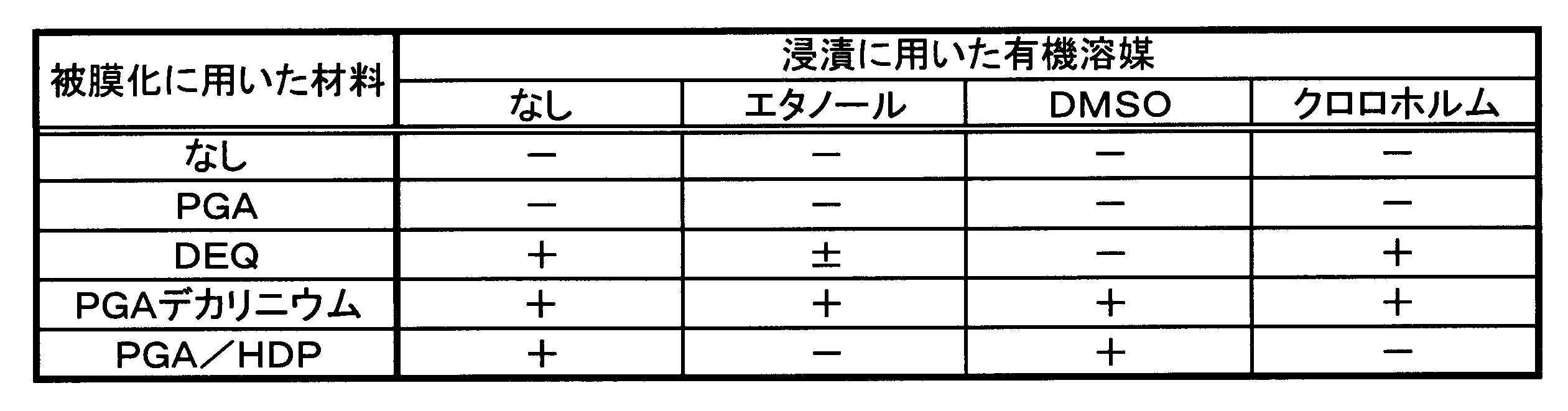
表2に示す結果のとおり、PGAデカリニウムによる被膜加工紙は、有機溶媒に暴露されても、抗菌性が安定的に維持されることが認められた。
Claims (10)
- ポリ-γ-グルタミン酸とデカリニウムを含むことを特徴とする組成物。
- ポリ-γ-グルタミン酸を構成するグルタミン酸のうちL-グルタミン酸の占める割合が90%以上である請求項1に記載の組成物。
- ポリ-γ-グルタミン酸を構成するグルタミン酸がL-グルタミン酸からなる請求項1または2に記載の組成物。
- 水に不溶性である請求項1~3のいずれかに記載の組成物。
- 有機溶媒に不溶性である請求項1~4のいずれかに記載の組成物。
- 少なくともポリ-γ-グルタミン酸を含有する溶液、および、少なくともデカリニウムを含有する溶液とを含むことを特徴とするコーティング剤。
- ポリ-γ-グルタミン酸を含む溶液を基材に塗布する工程、および、デカリニウムを含む溶液を基材に塗布する工程を含むことを特徴とするコーティング方法。
- ポリ-γ-グルタミン酸を含む溶液を基材に塗布した後、デカリニウムを含む溶液を基材に塗布する請求項7に記載のコーティング方法。
- ポリ-γ-グルタミン酸を構成するグルタミン酸のうちL-グルタミン酸の占める割合が90%以上である請求項7または8に記載のコーティング方法。
- ポリ-γ-グルタミン酸を構成するグルタミン酸がL-グルタミン酸からなる請求項7または8に記載のコーティング方法。
Priority Applications (1)
| Application Number | Priority Date | Filing Date | Title |
|---|---|---|---|
| JP2016571941A JP6638955B2 (ja) | 2015-01-26 | 2016-01-15 | 耐水耐有機溶媒性組成物 |
Applications Claiming Priority (2)
| Application Number | Priority Date | Filing Date | Title |
|---|---|---|---|
| JP2015012087 | 2015-01-26 | ||
| JP2015-012087 | 2015-01-26 |
Publications (1)
| Publication Number | Publication Date |
|---|---|
| WO2016121539A1 true WO2016121539A1 (ja) | 2016-08-04 |
Family
ID=56543158
Family Applications (1)
| Application Number | Title | Priority Date | Filing Date |
|---|---|---|---|
| PCT/JP2016/051173 Ceased WO2016121539A1 (ja) | 2015-01-26 | 2016-01-15 | 耐水耐有機溶媒性組成物 |
Country Status (2)
| Country | Link |
|---|---|
| JP (1) | JP6638955B2 (ja) |
| WO (1) | WO2016121539A1 (ja) |
Cited By (4)
| Publication number | Priority date | Publication date | Assignee | Title |
|---|---|---|---|---|
| WO2022210576A1 (ja) * | 2021-03-31 | 2022-10-06 | 国立大学法人高知大学 | 接着剤と接着方法 |
| JP2023151060A (ja) * | 2022-03-31 | 2023-10-16 | 東洋濾紙株式会社 | ポリ-γ-グルタミン酸イオンコンプレックスの製造方法 |
| JP7492204B1 (ja) | 2023-05-03 | 2024-05-29 | 株式会社タケナカダンボール | 複合構造材料 |
| JP2025514048A (ja) * | 2022-04-14 | 2025-05-02 | エルジー エレクトロニクス インコーポレイティド | 抗菌フィルタ用樹脂組成物、その製造方法、及びこれを用いた抗菌フィルタ |
Citations (4)
| Publication number | Priority date | Publication date | Assignee | Title |
|---|---|---|---|---|
| JPS5029750A (ja) * | 1973-05-10 | 1975-03-25 | ||
| JP2010222496A (ja) * | 2009-03-24 | 2010-10-07 | Kochi Univ | Pgaイオンコンプレックス |
| JP2012201607A (ja) * | 2011-03-24 | 2012-10-22 | Lion Corp | 口腔用組成物 |
| JP2014122203A (ja) * | 2012-11-21 | 2014-07-03 | Toyobo Co Ltd | 抗真菌剤およびコーティング剤 |
-
2016
- 2016-01-15 WO PCT/JP2016/051173 patent/WO2016121539A1/ja not_active Ceased
- 2016-01-15 JP JP2016571941A patent/JP6638955B2/ja active Active
Patent Citations (4)
| Publication number | Priority date | Publication date | Assignee | Title |
|---|---|---|---|---|
| JPS5029750A (ja) * | 1973-05-10 | 1975-03-25 | ||
| JP2010222496A (ja) * | 2009-03-24 | 2010-10-07 | Kochi Univ | Pgaイオンコンプレックス |
| JP2012201607A (ja) * | 2011-03-24 | 2012-10-22 | Lion Corp | 口腔用組成物 |
| JP2014122203A (ja) * | 2012-11-21 | 2014-07-03 | Toyobo Co Ltd | 抗真菌剤およびコーティング剤 |
Cited By (8)
| Publication number | Priority date | Publication date | Assignee | Title |
|---|---|---|---|---|
| WO2022210576A1 (ja) * | 2021-03-31 | 2022-10-06 | 国立大学法人高知大学 | 接着剤と接着方法 |
| JPWO2022210576A1 (ja) * | 2021-03-31 | 2022-10-06 | ||
| JP7839566B2 (ja) | 2021-03-31 | 2026-04-02 | 国立大学法人高知大学 | 接着剤と接着方法 |
| JP2023151060A (ja) * | 2022-03-31 | 2023-10-16 | 東洋濾紙株式会社 | ポリ-γ-グルタミン酸イオンコンプレックスの製造方法 |
| JP2025514048A (ja) * | 2022-04-14 | 2025-05-02 | エルジー エレクトロニクス インコーポレイティド | 抗菌フィルタ用樹脂組成物、その製造方法、及びこれを用いた抗菌フィルタ |
| JP7835888B2 (ja) | 2022-04-14 | 2026-03-25 | エルジー エレクトロニクス インコーポレイティド | 抗菌フィルタ用樹脂組成物、その製造方法、及びこれを用いた抗菌フィルタ |
| JP7492204B1 (ja) | 2023-05-03 | 2024-05-29 | 株式会社タケナカダンボール | 複合構造材料 |
| JP2024160883A (ja) * | 2023-05-03 | 2024-11-15 | 株式会社タケナカダンボール | 複合構造材料 |
Also Published As
| Publication number | Publication date |
|---|---|
| JPWO2016121539A1 (ja) | 2017-11-02 |
| JP6638955B2 (ja) | 2020-02-05 |
Similar Documents
| Publication | Publication Date | Title |
|---|---|---|
| JP6638955B2 (ja) | 耐水耐有機溶媒性組成物 | |
| JP6488473B2 (ja) | 抗真菌剤およびコーティング剤 | |
| Dickerson et al. | Keratin-based antimicrobial textiles, films, and nanofibers | |
| JP6154275B2 (ja) | 抗菌・抗ウィルス性塗料及び抗菌・抗ウィルス性塗膜の形成方法 | |
| CA3001921C (en) | Compounds, polymers and coating formulations that comprise at least one n-halamine precursor, a cationic center and a coating incorporation group | |
| Ashiuchi et al. | Development of antimicrobial thermoplastic material from archaeal poly-γ-L-glutamate and its nanofabrication | |
| TWI568809B (zh) | 病毒不活化劑 | |
| CN101123953B (zh) | 常规的、商业上重要的聚合物转化成耐久的、可再补充的抗菌聚合物材料的方法 | |
| Zhang et al. | Preparation of rechargeable antibacterial polypropylene/N-halamine materials based on melt blending and surface segregation | |
| JPWO2015001997A1 (ja) | 衛生用品 | |
| JP5563594B2 (ja) | ビニルアミン−ビニルアルコールコポリマーの誘導体化により得られる、表面コーティングのための抗菌コポリマー | |
| JP6341358B2 (ja) | 抗ウイルス性ポリ塩化ビニル系樹脂組成物及び抗ウイルス性ポリ塩化ビニル系樹脂成形体 | |
| JP2022504411A (ja) | 抗菌性ポリマーおよびその調製方法 | |
| JP6497613B2 (ja) | ポリ(メタ)アクリル酸イオンコンプレックス | |
| CN107099031B (zh) | 一种耐高温改性聚六亚甲基胍及其制备方法和用途 | |
| JP6606831B2 (ja) | 農業用資材の製造方法 | |
| JP3752710B2 (ja) | 樹脂組成物、抗菌方法および抗カビ方法 | |
| JP2002338481A (ja) | 銀系抗菌剤 | |
| JPH09324070A (ja) | 抗菌性組成物 | |
| JP2013227258A (ja) | 抗菌性ポリマー | |
| JPWO2015156164A1 (ja) | イオンコンプレックスを含有する藻類抑制剤 | |
| JPH09143010A (ja) | 抗菌剤 | |
| CN103910804B (zh) | 一种纤维素复合龙脑的抗菌材料 | |
| Bisquera et al. | Regenerable antimicrobial polyurethane coating based on N-hydroxymethylated hydantoin | |
| JP2025076302A (ja) | 樹脂配合用防カビ剤組成物、防カビ性樹脂組成物及び防カビ性樹脂成形体 |
Legal Events
| Date | Code | Title | Description |
|---|---|---|---|
| 121 | Ep: the epo has been informed by wipo that ep was designated in this application |
Ref document number: 16743143 Country of ref document: EP Kind code of ref document: A1 |
|
| ENP | Entry into the national phase |
Ref document number: 2016571941 Country of ref document: JP Kind code of ref document: A |
|
| NENP | Non-entry into the national phase |
Ref country code: DE |
|
| 122 | Ep: pct application non-entry in european phase |
Ref document number: 16743143 Country of ref document: EP Kind code of ref document: A1 |