WO2016013627A1 - 多層ポリイミドフィルム、多層ポリイミドフィルムの製造方法、それを用いたポリイミド積層体、及びそれらに用いられる共重合ポリイミド - Google Patents
多層ポリイミドフィルム、多層ポリイミドフィルムの製造方法、それを用いたポリイミド積層体、及びそれらに用いられる共重合ポリイミド Download PDFInfo
- Publication number
- WO2016013627A1 WO2016013627A1 PCT/JP2015/071012 JP2015071012W WO2016013627A1 WO 2016013627 A1 WO2016013627 A1 WO 2016013627A1 JP 2015071012 W JP2015071012 W JP 2015071012W WO 2016013627 A1 WO2016013627 A1 WO 2016013627A1
- Authority
- WO
- WIPO (PCT)
- Prior art keywords
- polyimide
- layer
- film
- general formula
- multilayer
- Prior art date
- Legal status (The legal status is an assumption and is not a legal conclusion. Google has not performed a legal analysis and makes no representation as to the accuracy of the status listed.)
- Ceased
Links
- 0 CCC(C*C*(C)N(C(C)=O)C(C)=O)N(C(C)=O)C(C)=O Chemical compound CCC(C*C*(C)N(C(C)=O)C(C)=O)N(C(C)=O)C(C)=O 0.000 description 3
- OQCZSGOBJDJBGA-UHFFFAOYSA-N CCC(CC)N(C(C)=O)C(C)=O Chemical compound CCC(CC)N(C(C)=O)C(C)=O OQCZSGOBJDJBGA-UHFFFAOYSA-N 0.000 description 1
Images


Classifications
-
- C—CHEMISTRY; METALLURGY
- C09—DYES; PAINTS; POLISHES; NATURAL RESINS; ADHESIVES; COMPOSITIONS NOT OTHERWISE PROVIDED FOR; APPLICATIONS OF MATERIALS NOT OTHERWISE PROVIDED FOR
- C09J—ADHESIVES; NON-MECHANICAL ASPECTS OF ADHESIVE PROCESSES IN GENERAL; ADHESIVE PROCESSES NOT PROVIDED FOR ELSEWHERE; USE OF MATERIALS AS ADHESIVES
- C09J7/00—Adhesives in the form of films or foils
- C09J7/30—Adhesives in the form of films or foils characterised by the adhesive composition
- C09J7/35—Heat-activated
-
- B—PERFORMING OPERATIONS; TRANSPORTING
- B32—LAYERED PRODUCTS
- B32B—LAYERED PRODUCTS, i.e. PRODUCTS BUILT-UP OF STRATA OF FLAT OR NON-FLAT, e.g. CELLULAR OR HONEYCOMB, FORM
- B32B27/00—Layered products comprising a layer of synthetic resin
- B32B27/34—Layered products comprising a layer of synthetic resin comprising polyamides
-
- C—CHEMISTRY; METALLURGY
- C08—ORGANIC MACROMOLECULAR COMPOUNDS; THEIR PREPARATION OR CHEMICAL WORKING-UP; COMPOSITIONS BASED THEREON
- C08G—MACROMOLECULAR COMPOUNDS OBTAINED OTHERWISE THAN BY REACTIONS ONLY INVOLVING UNSATURATED CARBON-TO-CARBON BONDS
- C08G73/00—Macromolecular compounds obtained by reactions forming a linkage containing nitrogen with or without oxygen or carbon in the main chain of the macromolecule, not provided for in groups C08G12/00 - C08G71/00
- C08G73/06—Polycondensates having nitrogen-containing heterocyclic rings in the main chain of the macromolecule
- C08G73/10—Polyimides; Polyester-imides; Polyamide-imides; Polyamide acids or similar polyimide precursors
-
- C—CHEMISTRY; METALLURGY
- C09—DYES; PAINTS; POLISHES; NATURAL RESINS; ADHESIVES; COMPOSITIONS NOT OTHERWISE PROVIDED FOR; APPLICATIONS OF MATERIALS NOT OTHERWISE PROVIDED FOR
- C09J—ADHESIVES; NON-MECHANICAL ASPECTS OF ADHESIVE PROCESSES IN GENERAL; ADHESIVE PROCESSES NOT PROVIDED FOR ELSEWHERE; USE OF MATERIALS AS ADHESIVES
- C09J179/00—Adhesives based on macromolecular compounds obtained by reactions forming in the main chain of the macromolecule a linkage containing nitrogen, with or without oxygen, or carbon only, not provided for in groups C09J161/00 - C09J177/00
- C09J179/04—Polycondensates having nitrogen-containing heterocyclic rings in the main chain; Polyhydrazides; Polyamide acids or similar polyimide precursors
- C09J179/08—Polyimides; Polyester-imides; Polyamide-imides; Polyamide acids or similar polyimide precursors
-
- H—ELECTRICITY
- H05—ELECTRIC TECHNIQUES NOT OTHERWISE PROVIDED FOR
- H05K—PRINTED CIRCUITS; CASINGS OR CONSTRUCTIONAL DETAILS OF ELECTRIC APPARATUS; MANUFACTURE OF ASSEMBLAGES OF ELECTRICAL COMPONENTS
- H05K1/00—Printed circuits
- H05K1/02—Details
- H05K1/03—Use of materials for the substrate
- H05K1/0313—Organic insulating material
- H05K1/0353—Organic insulating material consisting of two or more materials, e.g. two or more polymers, polymer + filler, + reinforcement
- H05K1/036—Multilayers with layers of different types
-
- H—ELECTRICITY
- H10—SEMICONDUCTOR DEVICES; ELECTRIC SOLID-STATE DEVICES NOT OTHERWISE PROVIDED FOR
- H10W—GENERIC PACKAGES, INTERCONNECTIONS, CONNECTORS OR OTHER CONSTRUCTIONAL DETAILS OF DEVICES COVERED BY CLASS H10
- H10W74/00—Encapsulations, e.g. protective coatings
- H10W74/40—Encapsulations, e.g. protective coatings characterised by their materials
- H10W74/47—Encapsulations, e.g. protective coatings characterised by their materials comprising organic materials, e.g. plastics or resins
- H10W74/473—Encapsulations, e.g. protective coatings characterised by their materials comprising organic materials, e.g. plastics or resins containing a filler
-
- C—CHEMISTRY; METALLURGY
- C09—DYES; PAINTS; POLISHES; NATURAL RESINS; ADHESIVES; COMPOSITIONS NOT OTHERWISE PROVIDED FOR; APPLICATIONS OF MATERIALS NOT OTHERWISE PROVIDED FOR
- C09J—ADHESIVES; NON-MECHANICAL ASPECTS OF ADHESIVE PROCESSES IN GENERAL; ADHESIVE PROCESSES NOT PROVIDED FOR ELSEWHERE; USE OF MATERIALS AS ADHESIVES
- C09J2203/00—Applications of adhesives in processes or use of adhesives in the form of films or foils
- C09J2203/326—Applications of adhesives in processes or use of adhesives in the form of films or foils for bonding electronic components such as wafers, chips or semiconductors
-
- C—CHEMISTRY; METALLURGY
- C09—DYES; PAINTS; POLISHES; NATURAL RESINS; ADHESIVES; COMPOSITIONS NOT OTHERWISE PROVIDED FOR; APPLICATIONS OF MATERIALS NOT OTHERWISE PROVIDED FOR
- C09J—ADHESIVES; NON-MECHANICAL ASPECTS OF ADHESIVE PROCESSES IN GENERAL; ADHESIVE PROCESSES NOT PROVIDED FOR ELSEWHERE; USE OF MATERIALS AS ADHESIVES
- C09J2400/00—Presence of inorganic and organic materials
- C09J2400/10—Presence of inorganic materials
- C09J2400/16—Metal
- C09J2400/163—Metal in the substrate
-
- C—CHEMISTRY; METALLURGY
- C09—DYES; PAINTS; POLISHES; NATURAL RESINS; ADHESIVES; COMPOSITIONS NOT OTHERWISE PROVIDED FOR; APPLICATIONS OF MATERIALS NOT OTHERWISE PROVIDED FOR
- C09J—ADHESIVES; NON-MECHANICAL ASPECTS OF ADHESIVE PROCESSES IN GENERAL; ADHESIVE PROCESSES NOT PROVIDED FOR ELSEWHERE; USE OF MATERIALS AS ADHESIVES
- C09J2479/00—Presence of polyamine or polyimide
- C09J2479/08—Presence of polyamine or polyimide polyimide
-
- H—ELECTRICITY
- H05—ELECTRIC TECHNIQUES NOT OTHERWISE PROVIDED FOR
- H05K—PRINTED CIRCUITS; CASINGS OR CONSTRUCTIONAL DETAILS OF ELECTRIC APPARATUS; MANUFACTURE OF ASSEMBLAGES OF ELECTRICAL COMPONENTS
- H05K1/00—Printed circuits
- H05K1/02—Details
- H05K1/03—Use of materials for the substrate
- H05K1/0313—Organic insulating material
- H05K1/032—Organic insulating material consisting of one material
- H05K1/0346—Organic insulating material consisting of one material containing N
-
- H—ELECTRICITY
- H05—ELECTRIC TECHNIQUES NOT OTHERWISE PROVIDED FOR
- H05K—PRINTED CIRCUITS; CASINGS OR CONSTRUCTIONAL DETAILS OF ELECTRIC APPARATUS; MANUFACTURE OF ASSEMBLAGES OF ELECTRICAL COMPONENTS
- H05K1/00—Printed circuits
- H05K1/02—Details
- H05K1/03—Use of materials for the substrate
- H05K1/0393—Flexible materials
-
- H—ELECTRICITY
- H05—ELECTRIC TECHNIQUES NOT OTHERWISE PROVIDED FOR
- H05K—PRINTED CIRCUITS; CASINGS OR CONSTRUCTIONAL DETAILS OF ELECTRIC APPARATUS; MANUFACTURE OF ASSEMBLAGES OF ELECTRICAL COMPONENTS
- H05K2201/00—Indexing scheme relating to printed circuits covered by H05K1/00
- H05K2201/01—Dielectrics
- H05K2201/0137—Materials
- H05K2201/0154—Polyimide
-
- H—ELECTRICITY
- H05—ELECTRIC TECHNIQUES NOT OTHERWISE PROVIDED FOR
- H05K—PRINTED CIRCUITS; CASINGS OR CONSTRUCTIONAL DETAILS OF ELECTRIC APPARATUS; MANUFACTURE OF ASSEMBLAGES OF ELECTRICAL COMPONENTS
- H05K3/00—Apparatus or processes for manufacturing printed circuits
- H05K3/46—Manufacturing multilayer circuits
- H05K3/4644—Manufacturing multilayer circuits by building the multilayer layer by layer, i.e. build-up multilayer circuits
- H05K3/4682—Manufacture of core-less build-up multilayer circuits on a temporary carrier or on a metal foil
Definitions
- the present invention can be easily obtained by a conventional polyimide film manufacturing method, can be bonded at a low temperature and in a short time, and provides a new multilayer polyimide film that realizes high heat resistance and high adhesive strength, a method for manufacturing a multilayer polyimide film, and
- the present invention relates to a polyimide laminate using the same.
- Patent Document 1 discloses 4,4 ′-(4,4′-isopropylidenediphenoxy) bis (phthalic anhydride) (BPADA) and 1,3-bis. Polyimides obtained from specific diamines including (3-aminophenoxy) benzene (APB) have been reported. Similarly, Patent Documents 3 and 4 report polyimides obtained from BPADA and APB.
- Patent Document 2 4,4 ′-(4,4′-isopropylidenediphenoxy) bis (phthalic anhydride) (BPADA) and oxydianiline (ODA) are applied to the surface layer of the low linear expansion polyimide layer.
- BPADA phthalic anhydride
- ODA oxydianiline
- the polyimide composed of BPADA and APB described in Patent Document 1 and Patent Documents 3 and 4 has a low glass transition temperature of about 175 ° C., in a continuous film manufacturing process involving heat treatment of 250 ° C. or higher, a smooth film is formed. It is difficult to get.
- a polyimide film having excellent flatness can be obtained, but the glass transition temperature of thermoplastic polyimide is 200 ° C. or higher, and heating at 300 to 350 ° C. is required for bonding. Met.
- the present invention can be easily obtained by a conventional polyimide film manufacturing method, can be bonded at a low temperature and in a short time, and provides a new multilayer polyimide film that realizes high heat resistance and high adhesive strength, a method for manufacturing a multilayer polyimide film, and It aims at providing the polyimide laminated body using the same. It is also preferable to have low dielectric properties.
- thermoplastic polyimide layer (A) a polyimide mainly composed of BPADA and APB as the thermoplastic polyimide layer (A), and further formed a multilayer polyimide with a heat-resistant polyimide layer (B).
- the present invention relates to the following matters.
- a multilayer polyimide film comprising a layer (A) containing a thermoplastic polyimide (A) having a glass transition temperature of less than 240 ° C. and a layer (B) containing a heat-resistant polyimide (B) having a glass transition temperature of 240 ° C. or higher. Because A multilayer polyimide film, wherein the thermoplastic polyimide (A) is a polyimide having a repeating unit represented by the general formula (1).
- X 1 is a tetracarboxylic acid residue selected from the group represented by the general formula (2).
- R 1 to R 20 each independently represents hydrogen, an alkyl group or halogen.
- thermoplastic polyimide (A) has a glass transition temperature of less than 200 ° C.
- thermoplastic polyimide (A) is a copolymerized polyimide having a repeating unit represented by the general formula (1) and a repeating structure represented by the general formula (3).
- thermoplastic polyimide (A) is a copolymerized polyimide having a repeating unit represented by the general formula (1) and a repeating structure represented by the general formula (3).
- the heat-resistant polyimide (B) has a tetracarboxylic acid residue and a diamine residue constituting the polyimide, 3,3 ′, 4,4′-biphenyltetracarboxylic dianhydride, pyromellitic dianhydride, and 1,4-hydroquinone dibenzoate-3,3 ′, 4,4′-tetracarboxylic dianhydride
- the multilayer polyimide film according to any one of the above items 1 to 5, which is a polyimide comprising a
- thermoplastic polyimide layer A
- heat-resistant polyimide layer B
- thermoplastic polyimide layer A
- a production method for obtaining a multilayer polyimide film comprising a thermoplastic polyimide layer (A) and a heat-resistant polyimide layer (B), At least, a layer of a thermoplastic polyimide precursor (a) which is a precursor of a thermoplastic polyimide (A) having a repeating unit represented by the general formula (1), and a heat resistant polyimide which is a precursor of a heat resistant polyimide (B)
- [X 1 in the formula is a residue of a tetracarboxylic acid selected from the group represented by the general formula (2). ]
- R 1 to R 20 each independently represents hydrogen, an alkyl group or halogen.
- thermoplastic polyimide precursor (a) solution is applied to the layer of the heat resistant polyimide precursor (b), or the heat resistant polyimide precursor (a) is applied to the layer of the thermoplastic polyimide precursor (a).
- the glass transition temperature of the polyimide film having the layer (B) containing the heat-resistant polyimide (B) having a glass transition temperature of 240 ° C. or higher and the polyimide having the repeating unit represented by the general formula (1) is less than 240 ° C.
- the manufacturing method of the multilayer polyimide film characterized by coating the solution of the thermoplastic polyimide precursor (a) which is a precursor of the thermoplastic polyimide (A), and imidizing.
- [X 1 in the formula is a residue of a tetracarboxylic acid selected from the group represented by the general formula (2). ]
- R 1 to R 20 each independently represents hydrogen, an alkyl group or halogen.
- [X 1 in the formula is a residue of a tetracarboxylic acid selected from the group represented by the general formula (2). ]
- R 1 to R 20 each independently represents hydrogen, an alkyl group or halogen.
- a circuit pattern of a conductor on one side or both sides of a polyimide film (B ′) containing a layer (B ′) containing a heat-resistant polyimide (B ′) having a glass transition temperature of 240 ° C. or higher; and 2) A polyimide film (A ′) comprising at least one layer (A ′) containing a polyimide film (B ′) on which this circuit pattern is formed and a thermoplastic polyimide (A ′) having a glass transition temperature of less than 240 ° C. And a step of thermocompression bonding at a temperature of 240 ° C. or lower, and a method for manufacturing a flexible printed circuit or a coreless multilayer circuit.
- Item 15 The method for producing a flexible printed circuit or a coreless multilayer circuit according to Item 14, wherein the thermoplastic polyimide (A ') is the thermoplastic polyimide (A) defined in Item 1 above.
- Item 16 The method for producing a flexible printed circuit or a coreless multilayer circuit according to Item 14 or 15, wherein the thermoplastic polyimide (A ') is a copolymerized polyimide defined in Item 3 above.
- Item 17 The flexible printed circuit or the coreless multilayer circuit according to any one of Items 14 to 16, wherein the heat-resistant polyimide (B ′) is the heat-resistant polyimide (B) defined in Item 6 above. Manufacturing method.
- X 1 is a residue of a tetracarboxylic acid selected from the group represented by the general formula (2)
- X 2 is a residue of a tetracarboxylic acid excluding the group represented by the general formula (2) .
- R 1 to R 20 each independently represents hydrogen, an alkyl group or halogen.
- Item 21 The copolymerized polyimide according to any one of Items 18 to 20, wherein the weight average molecular weight determined by GPC is 5,000 to 1,000,000.
- Item 18 above is characterized in that the temperature at which the storage elastic modulus is 5 ⁇ 10 6 Pa or less in a dynamic viscoelasticity measurement measured with a film having a thickness of 5 to 150 ⁇ m made of copolymerized polyimide is 210 ° C. or less.
- 26 The copolymerized polyimide according to any one of the above items 18 to 25, wherein the relative dielectric constant at a frequency of 1 kHz to 10 GHz is 3.4 or less and the dielectric loss tangent is 0.010 or less.
- a heat-resistant adhesive comprising the copolymerized polyimide according to any one of the above items 18 to 27.
- a heat-resistant adhesive film comprising the copolymerized polyimide according to any one of Items 18 to 27.
- a metal foil with an adhesive having an adhesive layer containing the copolymerized polyimide according to any one of the above items 18 to 27.
- a polyimide laminate obtained by laminating any one of an inorganic layer, an organic layer, and a metal layer and an adhesive layer containing the copolymerized polyimide according to any one of Items 18 to 27 above.
- An electronic circuit comprising an insulating layer containing the copolymerized polyimide according to any one of items 18 to 27.
- a method for producing a copolymerized polyimide laminate comprising a step of casting or applying a copolymerized polyimide precursor solution to any one of an inorganic layer, an organic layer, and a metal layer, followed by heat treatment,
- the copolymerized polyimide is a copolymerized polyimide having a repeating unit represented by the general formula (1) and a repeating structure represented by the general formula (3), the number of moles of the general formula (1) / [general formula The value calculated by (number of moles of (1) + number of moles of general formula (3)] is 0.50 or more and less than 1.00.
- X 1 is a residue of a tetracarboxylic acid selected from the group represented by the general formula (2)
- X 2 is a residue of a tetracarboxylic acid excluding the group represented by the general formula (2) .
- R 1 to R 20 each independently represents hydrogen, an alkyl group, or halogen.
- 35 A method for producing a heat-resistant adhesive film obtained by peeling off any one of the inorganic layer, the organic layer and the metal layer from the copolymerized polyimide laminate obtained by the method described in Item 34 above.
- the copolymerized polyimide laminate obtained by the method of Item 34 or the heat-resistant adhesive film obtained by the method of Item 35 is further overlapped with an inorganic layer, an organic layer or a metal layer, and the temperature is adjusted to 240 ° C. or lower.
- a new multilayer polyimide film that can be easily obtained by a conventional polyimide film manufacturing method, can be bonded at a low temperature in a short time, and realizes high heat resistance, high adhesive strength, and low dielectric properties, and multilayer polyimide A film production method and a polyimide metal laminate using the same can be provided.
- the present invention it is possible to provide a new copolymer polyimide that has high heat resistance, can be bonded even at a relatively low temperature, and has high adhesive strength. Furthermore, in a different aspect of the present invention, a method for easily producing the polyimide, a heat-resistant adhesive using the same, and the like are provided.
- the copolymerized polyimide of the present invention also has an effect of low dielectric properties.
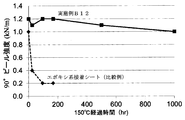
- Example A13 It is an electron micrograph of the cross section of the electronic circuit created in Example A13. It is a graph which shows the result of the reliability test of the electronic circuit created by Example A13 and the comparative example. It is a graph which shows the viscoelastic property of copolymerization polyimide (Example B1). It is a graph which shows the viscoelastic characteristic of the conventional polyimide (comparative example B1). It is a graph which shows the result of the peel strength test of the copper foil with an adhesive agent produced in Example B12 and the comparative example.
- the layer (A) containing the thermoplastic polyimide (A) and the layer (B) containing the heat-resistant polyimide (B) are simplified for the sake of simplicity, respectively, the thermoplastic polyimide layer (A) and the heat-resistant polyimide.
- layer (B) the layer (A ′) containing the thermoplastic polyimide (A ′) and the layer (B ′) containing the heat-resistant polyimide (B ′) are respectively represented by the thermoplastic polyimide layer (A ′) for simplicity.
- a heat-resistant polyimide layer (B ′) is sometimes referred to as a heat-resistant polyimide layer (B ′).
- thermoplastic polyimide layer (A) the thermoplastic polyimide (A) is preferably 80% by mass or more, more preferably 90% by mass or more, particularly preferably 98% by mass or more (100% by mass) based on the resin component. May be included).
- the heat-resistant polyimide layer (B) is preferably 80% by mass or more, more preferably 90% by mass or more, particularly preferably 98% by mass or more (100% by mass) based on the resin component. May be contained).
- the tetracarboxylic acid residue means a tetravalent group obtained by removing four carboxyl groups (—COOH) from tetracarboxylic acid.
- the diamine residue means a divalent group obtained by removing two amino groups (—NH 2 ) from a diamine.
- the tetracarboxylic acid component means a carboxylic acid compound such as tetracarboxylic dianhydride or tetracarboxylic acid which is a raw material for polyimide
- the diamine component means a diamine compound which is a raw material for polyimide.
- thermoplastic is used to represent a property having “thermal fusion” and “thermocompression”.
- the present invention broadly relates to an aspect related to a multilayer polyimide film and an aspect related to the multilayer polyimide film and a copolymerized polyimide suitable for other applications.
- the multilayer polyimide film and its application will be described, and then the copolymerized polyimide and its application will be described.
- Multilayer polyimide film First, the multilayer polyimide film will be described.
- the multilayer polyimide film of the present invention comprises a layer (A) containing a thermoplastic polyimide (A) having a glass transition temperature of less than 240 ° C and a layer containing a heat-resistant polyimide (B) having a glass transition temperature of 240 ° C or higher ( B) a multilayer polyimide film comprising:
- the thermoplastic polyimide layer (A) is a polyimide having a repeating unit represented by the general formula (1).
- [X 1 in the formula is a residue of a tetracarboxylic acid selected from the group represented by the general formula (2). ]
- R 1 to R 20 each independently represents hydrogen, an alkyl group or halogen.
- the “multilayer polyimide film” here includes at least a layer (A) and a layer (B) having different compositions, and the components have a clear interface between the layers. It may be separated by having a concentration distribution in the film thickness direction (gradient composition).
- the thermoplastic polyimide here shows the polyimide whose glass transition temperature is less than 240 degreeC, and a heat resistant polyimide layer shows the polyimide whose glass transition temperature is 240 degreeC or more.
- the tetracarboxylic acid residue having two ether bonds represented by the general formula (2) is not particularly limited, but the tetracarboxylic acid residue containing a bisphenol skeleton represented by the following formula (5) is used. It is preferably selected from a group, a tetracarboxylic acid residue containing a biphenol skeleton represented by the formula (6), a hydroquinone represented by the formula (7), and a tetracarboxylic acid residue containing a resorcinol skeleton.
- the tetracarboxylic acid residue containing the bisphenol skeleton mentioned by Formula (5) is more preferable, and since the dielectric loss is small, the tetracarboxylic acid residue represented by the following formula (a) is Particularly preferred.
- thermoplastic polyimide (A) (the same applies to the thermoplastic polyimide layer (A)) is not particularly limited, but from the peak of tan ⁇ of dynamic viscoelasticity measured with a film having a thickness of 5 to 150 ⁇ m.
- the glass transition temperature obtained is less than 240 ° C., preferably less than 205 ° C., more preferably less than 200 ° C., still more preferably 150 to 190 ° C., and particularly preferably 150 to 180 ° C.
- the glass transition temperature here is, for example, a film of only a thermoplastic polyimide layer or a multilayer polyimide film, dynamic viscoelasticity measurement (DMS), thermomechanical analysis (TMA), differential scanning calorimetry (DSC), Any glass transition temperature obtained by differential thermal analysis (DTA) and using known conditions and analysis methods may be adopted. If it is this range, since it can adhere
- thermoplastic polyimide (A) (the same applies to the thermoplastic polyimide layer (A)) is not particularly limited, but the storage elastic modulus in the dynamic viscoelasticity measurement measured with a film having a thickness of 5 to 150 ⁇ m is not limited.
- the temperature at which 5 ⁇ 10 6 Pa or less is preferably 210 ° C. or less, more preferably 100 to 200 ° C., still more preferably 150 to 195 ° C., and particularly preferably 170 to 190 ° C.
- the temperature at which the storage elastic modulus becomes 10 6 Pa or less is preferably 280 ° C. or less, more preferably 100 to 250 ° C., still more preferably 150 to 230 ° C., and particularly preferably 170 to 220 ° C.
- the temperature at which the storage elastic modulus becomes 5 ⁇ 10 5 Pa or less is preferably 300 ° C. or less, more preferably 100 to 280 ° C., still more preferably 150 to 260 ° C., and particularly preferably 170 to 240 ° C. Furthermore, the temperature at which the storage elastic modulus becomes 10 5 Pa or less is preferably 350 ° C. or less, more preferably 100 to 300 ° C., still more preferably 150 to 280 ° C., and particularly preferably 170 to 260 ° C. This range is preferable because it can be bonded at a relatively low pressing temperature of 240 ° C. or lower.
- the thermoplastic polyimide (A) (the same applies to the thermoplastic polyimide layer (A)) is not particularly limited, but in the dynamic viscoelasticity measurement measured with a film having a thickness of 5 to 150 ⁇ m,
- the storage elastic modulus is preferably 6 ⁇ 10 6 Pa or less, more preferably 1 ⁇ 10 5 to 5 ⁇ 10 6 Pa, and particularly preferably 5 ⁇ 10 5 to 4 ⁇ 10 6 Pa.
- the storage elastic modulus at 210 ° C. is preferably 5 ⁇ 10 6 Pa or less, more preferably 0.1 ⁇ 10 5 to 4.5 ⁇ 10 6 Pa, particularly preferably 1 ⁇ 10 5 to 3 ⁇ 10 6 Pa. is there.
- ⁇ 10 6 Pa is preferably 4 ⁇ 10 6 Pa or less, more preferably 0.1 ⁇ 10 5 to 2 ⁇ 10 6 Pa, and particularly preferably 1 ⁇ 10 5 to 1 ⁇ 10 6 Pa. This range is preferable because it can be bonded at a relatively low pressing temperature of 240 ° C. or lower.
- the thermoplastic polyimide (A) (the same applies to the thermoplastic polyimide layer (A)) is not limited, but has a heat resistance that enables the production simultaneously with the heat-resistant polyimide film layer.
- the 1% weight loss temperature determined by analysis (TGA) is preferably 400 ° C. or higher, more preferably 450 ° C. or higher, and particularly preferably 460 ° C. or higher.
- the TGA measurement is performed in a nitrogen stream at a temperature increase rate of 10 ° C./min from 25 ° C. to 600 ° C., and the 1% weight loss temperature obtained from the obtained weight curve is It can be suitably employed.
- the multilayer polyimide film of this invention is not specifically limited, It is a multilayer polyimide film containing the layer (A) containing a thermoplastic polyimide (A), and the layer (B) containing a heat resistant polyimide (B), , It is preferable that the thermoplastic polyimide (A) is a copolymerized polyimide having a repeating unit represented by the general formula (1) and a repeating structure represented by the general formula (3).
- thermoplastic polyimide (A) is not particularly limited, but is a polyimide obtained by reacting a tetracarboxylic acid component and a diamine component, and the total number of moles of the tetracarboxylic acid component is that of the diamine component.
- the total number of moles is preferably 0.5 to 10 mole% excess, more preferably 1 to 7 mole% excess, and particularly preferably 1 to 5 mole% excess. If it is this range, since adhesiveness at low temperature and heat resistance can be made compatible, it is preferable.
- the resulting polyimide contains a tetracarboxylic acid residue based on the tetracarboxylic acid component used as a raw material and a diamine residue based on the diamine component in a proportion corresponding to the charged molar ratio.
- thermoplastic polyimide (A) preferably has a weight average molecular weight determined by GPC of 5,000 to 1,000,000, and 10,000 to 500,000 because of excellent adhesiveness. Is more preferable, and 50,000 to 500,000 is particularly preferable because of excellent heat resistance.
- thermoplastic polyimide (A) is not limited, it has a heat resistance that enables production simultaneously with the heat-resistant polyimide film layer, so that the 1% weight loss temperature determined by thermogravimetric analysis (TGA) is It is preferably 400 ° C. or higher, more preferably 450 ° C. or higher, and particularly preferably 460 ° C. or higher.
- TGA thermogravimetric analysis
- the TGA measurement is performed in a nitrogen stream at a temperature increase rate of 10 ° C./min from 25 ° C. to 600 ° C., and the 1% weight loss temperature obtained from the obtained weight curve is It can be suitably employed.
- thermoplastic polyimide (A) is not limited, it has a low dielectric loss. Therefore, it is preferable that the water absorption obtained by immersion in water for 24 hours at ASTM D570 23 ° C. is 1.4% or less. Preferably it is 1.0%, Most preferably, it is 0.8% or less.
- the thermoplastic polyimide (A) of the present invention is not limited, but the relative dielectric constant at 1 kHz to 10 GHz is preferably 3.4 or less, more preferably 3.2 or less, particularly preferably 3.1 or less.
- the dielectric loss tangent is preferably 0.010 or less, more preferably 0.005 or less, and particularly preferably 0.003 or less. If it is this range, it can use suitably as an insulating material for high frequency circuits, and an adhesive agent.
- a relative dielectric constant and a dielectric loss tangent measured in a normal state (C-96 / 20/65) can be suitably employed based on JIS C6481.
- a well-known thing can be used suitably for a measuring apparatus and a method.
- the thermoplastic polyimide layer (A) includes components other than the thermoplastic polyimide (A), such as epoxy resin, phenol resin, acrylic resin, cyanate resin, BT resin, inorganic filler, pigment, dye, oxidation An inhibitor, a plasticizer, a solvent, etc. can be added suitably.
- the thermoplastic polyimide layer (A) does not contain a material that plasticizes the layer, such as a plasticizer or a solvent, and can be bonded at a low temperature in a short time (thermal fusion property, It is preferable not to contain additives such as plasticizers and solvents.
- the heat resistant polyimide (B) is not particularly limited as long as it has a glass transition temperature of 240 ° C. or higher, but is preferably 280 ° C. or higher, more preferably 300 ° C. or higher, and particularly preferably 320 ° C. or higher.
- the heat-resistant polyimide layer (B) may have a multilayer structure. In the case of the heat-resistant polyimide layer (B) having a multilayer structure, the glass transition temperature of the polyimide layer having the highest glass transition temperature is set. The glass transition temperature of the heat-resistant polyimide layer (B) can be suitably used.
- a heat resistant polyimide For example, From 3,3 ′, 4,4′-biphenyltetracarboxylic dianhydride, pyromellitic dianhydride and 1,4-hydroquinone dibenzoate-3,3 ′, 4,4′-tetracarboxylic dianhydride An acid component containing at least one selected component, preferably a tetracarboxylic acid component containing at least 70 mol%, more preferably 80 mol% or more, more preferably 90 mol% or more of these acid components; Diamine component containing at least one component selected from p-phenylenediamine, 4,4′-diaminodiphenyl ether, 3,4′-diaminodiphenyl ether, m-tolidine and 4,4′-diaminobenzanilide, preferably these diamines Examples thereof include a polyimide obtained from a diamine component containing at least 70 mol% or more,
- the tetracarboxylic acid residue preferably contains a residue based on the tetracarboxylic acid compound in the above-described proportion, and the diamine residue is the above diamine. Residues based on the compound are preferably contained in the above proportions.
- Examples of the combination of the tetracarboxylic acid component and the diamine component from which the heat-resistant polyimide can be obtained include the following.
- a combination comprising 3,3 ′, 4,4′-biphenyltetracarboxylic dianhydride (s-BPDA), p-phenylenediamine (PPD), and, if necessary, 4,4-diaminodiphenyl ether (DADE) .
- s-BPDA 4,4′-biphenyltetracarboxylic dianhydride
- PPD p-phenylenediamine
- DADE 4,4-diaminodiphenyl ether
- s-BPDA 3,3 ′, 4,4′-biphenyltetracarboxylic dianhydride
- PMDA pyromellitic dianhydride
- PPD p-phenylenediamine
- DADE 4-diaminodiphenyl ether
- PMDA pyromellitic dianhydride
- PPD p-phenylenediamine
- DADE 4,4-diaminodiphenyl ether
- s-BPDA 4,4′-biphenyltetracarboxylic dianhydride
- PPD p-phenylenediamine
- the combination of (1) is preferable because of excellent heat resistance.
- tetracarboxylic acid containing 3,3 ′, 4,4′-biphenyltetracarboxylic dianhydride as a main component for example, 70 mol% or more, preferably 80 mol% or more, more preferably 90 mol% or more.
- a heat-resistant polyimide obtained from a dianhydride component and a diamine component containing paraphenylenediamine as a main component (for example, 70 mol% or more, preferably 80 mol% or more, more preferably 90 mol% or more).
- a thermoplastic polyimide film excellent in low linear expansion coefficient, high elastic modulus and dimensional stability can be obtained.
- the tetracarboxylic acid component from which the heat-resistant polyimide (B) can be obtained includes, in addition to the above-mentioned acid component, other tetracarboxylic dianhydride components and / or other diamines as long as the desired properties are not impaired. Components can be used in combination.
- tetracarboxylic dianhydride components include 3,3 ′, 4,4′-benzophenone tetracarboxylic dianhydride, bis (3,4-dicarboxyphenyl) ether dianhydride, bis (3,4) -Dicarboxyphenyl) sulfide dianhydride, bis (3,4-dicarboxyphenyl) sulfone dianhydride, bis (3,4-dicarboxyphenyl) methane dianhydride, 2,2-bis (3,4- Dicarboxyphenyl) propane dianhydride, 2,2-bis (3,4-dicarboxyphenyl) -1,1,1,3,3,3-hexafluoropropane dianhydride, 2,2-bis [( 3,4-dicarboxyphenoxy) phenyl] propane dianhydride and the like.
- diamine components include m-phenylenediamine, 2,4-toluenediamine, 3,3'-diaminodiphenyl sulfide, 3,4'-diaminodiphenyl sulfide, 4,4'-diaminodiphenyl sulfide, 3,3 ' -Diaminodiphenyl sulfone, 3,4'-diaminodiphenyl sulfone, 4,4'-diaminodiphenyl sulfone, 3,3'-diaminobenzophenone, 4,4'-diaminobenzophenone, 3,4'-diaminobenzophenone, 3,3 '-Diaminodiphenylmethane, 4,4'-diaminodiphenylmethane, 3,4'-diaminodiphenylmethane, 2,2-di (3-aminophenyl) propane, 2,2-di (4-aminoph
- the heat-resistant polyimide layer (B) is substantially composed of a heat-resistant polyimide (B) from the viewpoint of heat resistance and mechanical properties, that is, the resin component is substantially only the heat-resistant polyimide (B). Is preferred.
- the multilayer polyimide film of the present invention is not particularly limited, but the thickness of the heat-resistant polyimide layer (B) is preferably 3 to 125 ⁇ m, more preferably 5 to 100 ⁇ m, and 5 to 75. It is particularly preferred.
- the thickness of the thermoplastic polyimide layer (A) is preferably 0.1 to 100 ⁇ m, more preferably 0.5 to 50 ⁇ m, and particularly preferably 1 to 25 ⁇ m.
- thermoplastic polyimide layer (A) of the present invention a multilayer polyimide film having a thermoplastic polyimide layer (A) on one or both sides of the heat-resistant polyimide layer (B) A manufacturing method will be described.
- the multilayer polyimide film is a polyimide precursor that gives a thermoplastic polyimide layer (A) on one or both sides of a self-supporting film obtained from a polyimide precursor (b) solution (polyamic acid solution) that gives a heat-resistant polyimide layer (B). It can be obtained by coating the body (a) solution (polyamic acid solution) and imidizing by heating and drying the obtained multilayer self-supporting film.
- the polyimide precursor (a) solution that gives the thermoplastic polyimide layer (A) is a tetracarboxylic acid component containing at least a tetracarboxylic acid compound (preferably dianhydride) that gives the general formula (1). And a reaction with a diamine component.
- the tetracarboxylic acid component further contains a tetracarboxylic acid compound (tetracarboxylic dianhydride, tetracarboxylic acid, etc.) that gives the general formula (3).
- the synthesis of the copolymerized polyimide will be described later.
- the polyimide precursor (a) solution that gives the thermoplastic polyimide layer (A) and the polyimide precursor (b) solution that gives the heat-resistant polyimide layer (B) may be interchanged. That is, the polyimide precursor (b) solution is applied to one or both sides of the self-supporting film obtained from the polyimide precursor (a) solution, and the resulting multilayer self-supporting film is heated and dried to obtain an imide. May also be performed.
- the self-supporting film obtained from the polyimide precursor (b) solution that provides the heat-resistant polyimide layer (B) has a tetracarboxylic acid component and a diamine component substantially equimolar, or one of these components slightly in excess. Then, a polyamic acid solution [polyimide precursor (b) solution] obtained by reacting in an organic solvent can be cast on a support and heated and dried.
- the polyimide precursor (a) solution that gives the thermoplastic polyimide layer (A) also has a tetracarboxylic acid component and a diamine component that are substantially equimolar, or a slight excess of either component in an organic solvent. It is obtained by reacting with
- Examples of the organic solvent for producing the polyimide precursor solution include N-methyl-2-pyrrolidone, N, N-dimethylacetamide, N, N-diethylacetamide, N, N-dimethylformamide, N, N-diethylformamide, Examples thereof include amides such as hexamethylphosphoramide, sulfoxides such as dimethyl sulfoxide and diethyl sulfoxide, and sulfones such as dimethyl sulfone and diethyl sulfone. These solvents may be used alone or in combination.
- the concentration of all monomers in the organic solvent when carrying out the polymerization reaction of the polyimide precursor can be appropriately selected according to the purpose of use.
- the concentration of all monomers in the organic solvent is preferably 1 to 50% by mass, particularly preferably 5 to 40%
- the polyimide precursor (b) solution is The concentration of all monomers in the organic solvent is preferably 5 to 40% by mass, more preferably 6 to 35% by mass, and particularly preferably 10 to 30% by mass.
- a tetracarboxylic acid component and a diamine component are substantially equimolar, or either component (acid component or diamine).
- Component) is mixed in a slight excess, and reacted for about 0.2 to 60 hours at a reaction temperature of 100 ° C. or lower, preferably 80 ° C. or lower (usually 0 ° C. or higher, preferably 15 ° C. or higher).
- a precursor) solution can be obtained.
- the solution viscosity of the polyimide precursor (a) solution and the polyimide precursor (b) solution can be appropriately selected depending on the purpose of use (coating, casting, etc.).
- the rotational viscosity measured at 30 ° C. is about 100 from the viewpoint of workability in handling the polyimide precursor solution. It is preferably ⁇ 5000 poise, more preferably 500 to 4,000 poise, and particularly preferably about 1000 to 3,000 poise.
- polyimide precursor is 1 to 100 centipoise from the viewpoint of workability in handling the polyimide precursor solution. It is preferably 3 to 50 centipoise, more preferably 5 to 20 centipoise. Therefore, it is desirable to carry out the polymerization reaction to such an extent that the produced polyamic acid (polyimide precursor) exhibits the above viscosity.
- the polyimide precursor (b) solution self-supporting film that becomes the heat-resistant polyimide layer (B) is prepared by, for example, using a polyimide precursor (b) solution as a suitable support (for example, a metal, ceramic, plastic roll, or Cast on the surface of a metal belt or the like to form a film with a uniform thickness, and then heated to 50 to 210 ° C., particularly 60 to 200 ° C. using a heat source such as hot air or infrared rays.
- the solvent can be obtained by gradually removing the solvent and drying it until it becomes self-supporting (for example, to the extent that it can be peeled off from the support).
- the polyimide precursor (a) solution which gives a thermoplastic polyimide layer (A) is applied to the single side
- the polyimide precursor (a) solution may be applied to the self-supporting film peeled from the support, or may be applied to the self-supporting film on the support before peeling from the support.
- the polyimide precursor (a) solution can be applied to a self-supporting film of the polyimide precursor (b) solution, for example, gravure coating method, spin coating method, silk screen method, dip coating method, spray coating method. , Known coating methods such as bar coating, knife coating, roll coating, blade coating and die coating.
- the self-supporting film preferably has a surface on which the polyimide precursor (a) solution can be applied uniformly.
- the self-supporting film of the polyimide precursor (b) solution preferably has a loss on heating in the range of 20 to 40% by mass, and preferably has an imidization ratio in the range of 8 to 40%. If the heating weight loss and imidization rate are within the above ranges, the mechanical properties of the self-supporting film will be sufficient, and it will be easier to cleanly apply the polyimide precursor (a) solution on the upper surface of the self-supporting film. Generation
- production of a foam, a crack, a craze, a crack, crack, etc. is not observed in the polyimide film obtained later, and the adhesive strength of a heat resistant polyimide layer and a thermoplastic polyimide layer becomes enough.
- a fine inorganic or organic filler can be mix
- inorganic additives include particulate or flat inorganic fillers, such as particulate titanium dioxide powder, silicon dioxide (silica) powder, magnesium oxide powder, aluminum oxide (alumina) powder, and zinc oxide powder.
- inorganic oxide powder such as, inorganic nitride powder such as particulate silicon nitride powder and titanium nitride powder, inorganic carbide powder such as silicon carbide powder, inorganic such as particulate calcium carbonate powder, calcium sulfate powder and barium sulfate powder Mention may be made of salt powder.
- organic additive examples include polyimide particles and thermosetting resin particles. These additives may be used in combination of two or more. About the usage-amount and shape (size, aspect ratio) of an additive, it is preferable to select according to a use purpose. Moreover, in order to disperse these additives uniformly, a means known per se can be applied.
- the maximum heating temperature of the heat treatment for imidation is preferably from 300 ° C to 600 ° C, more preferably from 320 to 500 ° C, particularly preferably from 340 to 500 ° C.
- the heat treatment for imidization is preferably performed in stages, and first, after first heat treatment at a temperature of 150 ° C. to 200 ° C. for 1 minute to 60 minutes, a temperature of 200 ° C. to less than 300 ° C. for 1 minute to It is desirable that the second heat treatment is performed for 60 minutes, and then the third heat treatment is performed at a maximum heating temperature of 300 to 600 ° C., preferably 320 to 550 ° C., more preferably 340 to 500 ° C. for 1 minute to 30 minutes.
- This heat treatment can be performed using a known apparatus such as a hot air furnace or an infrared heating furnace.
- this heat treatment is preferably performed by fixing the self-supporting film of the polyimide precursor solution (b) coated with the polyimide precursor (a) solution with a pin tenter, a clip or the like.
- the polyimide precursor (a) solution and / or the polyimide precursor (b) solution is used for the purpose of limiting the gelation of polyamic acid (polyimide precursor).
- Phenyl and the like can be added in the range of 0.01 to 1% with respect to the solid content (polymer) concentration during polyamic acid polymerization.
- a basic organic compound can be added to the polyimide precursor (a) solution and / or the polyimide precursor (b) solution for the purpose of promoting imidization.
- imidazole, 2-methylimidazole, 1,2-dimethylimidazole, 2-phenylimidazole, benzimidazole, isoquinoline, substituted pyridine and the like are added in an amount of 0.0005 to 0.1 with respect to 100 parts by mass of polyamic acid (polyimide precursor). It can be added at a ratio of parts by mass, particularly 0.001 to 0.02 parts by mass. These can be used to avoid insufficient imidization to form polyimide films at relatively low temperatures.
- the multilayer polyimide film of the present invention is obtained by a co-extrusion-casting film forming method (also simply called co-extrusion method), a polyimide precursor (b) solution of heat-resistant polyimide (B) (hereinafter referred to as a dope solution (b)).
- a polyamic acid solution (b)) and a polyimide precursor (a) solution of the thermoplastic polyimide (A) are laminated, dried, It can also manufacture by the method of imidating and obtaining a multilayer polyimide film.
- a coextrusion method for example, a method described in JP-A-3-180343 (Japanese Patent Publication No. 7-102661) can be used.
- this co-extrusion method uses an extrusion molding machine having two or more layers of extrusion dies, and the dope solution of the heat-resistant polyimide layer and the dope of the thermoplastic polyimide layer from the discharge port of the die.
- the liquid is continuously extruded onto a thin, smooth support of at least two layers.
- the thin film on the support is dried to form a multilayer self-supporting film, then the multilayer self-supporting film is peeled off from the support, and finally the multilayer self-supporting film is heat-treated. It is to do.
- the drying temperature of the thin film cast is 140 ° C. or higher, preferably 145 ° C. or higher. Thereby, the peeling strength of the polyimide metal laminated body mentioned later improves.
- a dope solution supply port is provided, and a dope solution passage is formed from each supply port toward each manifold, and a flow path at the bottom of the manifold is formed.
- the gap between the lip portions can be adjusted by a lip adjustment bolt.
- the distance between the gaps of the flow path is adjusted by each choke bar.
- Each of the manifolds preferably has a hanger coat type shape.
- the double-layer extrusion die has respective dope supply ports on the left and right sides of the upper portion of the die, and the dope solution passages are immediately joined at the junction where the partition plate is provided.
- a dope solution flow path communicates from the junction to the manifold, and a dope solution passage (lip portion) at the bottom of the manifold communicates with the slit-like discharge port.
- a structure feed block type double-layer die or single manifold type double-layer die in which the dope solution is discharged on the support in the form of a groove film from the discharge port may be used.
- a multilayer extrusion polyimide film can be produced by a molding method similar to the two-layer extrusion molding by using three or more dies for extrusion molding. That is, a two-layer multilayer polyimide film can be obtained by using a heat-resistant polyimide layer dope and a thermoplastic polyimide layer dope.
- a multilayer multilayer polyimide film can be obtained by using a heat-resistant polyimide layer dope and a thermoplastic polyimide layer dope.
- a three-layer multilayer polyimide film is formed. It can also be obtained.
- the multilayer polyimide film of this invention can also be manufactured by bonding together the polyimide film which has the said thermoplastic polyimide layer (A), and the polyimide film which has the said heat resistant polyimide layer (B).
- this method using a known method, after obtaining a polyimide film having the thermoplastic polyimide layer (A) and a polyimide film having the heat-resistant polyimide layer (B), they are directly used (other adhesives).
- a multilayer polyimide film can be suitably obtained by bonding (without using).
- the method of bonding is not particularly limited, but hot press, vacuum hot press, roll lamination, RTM molding, vacuum bag molding, and the like can be suitably used.
- the lamination can be carried out under relatively low temperature, low pressure, and short time conditions. Therefore, the lamination temperature is preferably 150 to 240 ° C, more preferably 180 ° C to 220 ° C. ° C, particularly preferably 180 ° C to 200 ° C, the pressure is preferably 0.01 to 10 MPa, more preferably 0.1 to 5 MPa, particularly preferably 0.5 to 3 MPa, and the pressure bonding time is preferably Is 30 minutes or less, more preferably 10 minutes or less, and particularly preferably 10 seconds to 1 minute.
- the polyimide film having the heat-resistant polyimide layer (B) here a film obtained by forming the heat-resistant polyimide film composition by a known method or a commercially available polyimide film can be used.
- Examples of commercially available heat-resistant polyimide films include Upilex (registered trademark) manufactured by Ube Industries, Kapton EN (registered trademark) manufactured by Toray DuPont, Apical NPI (registered trademark) manufactured by Kaneka Corporation, and the like. .
- thermoplastic polyimide film in order to increase the adhesive strength between the heat-resistant polyimide film and the thermoplastic polyimide film, it is desirable to surface-treat the heat-resistant polyimide film before coating.
- the surface treatment method include corona treatment, plasma treatment, alkali treatment, etching treatment, coupling agent treatment, or a combination thereof.
- a heat-resistant polyimide film having a multilayer structure can also be suitably used.
- the multilayer polyimide film obtained by this production method is not particularly limited, but the interlayer adhesion strength of the polyimide film having the thermoplastic polyimide layer (A) and the polyimide film having the heat-resistant polyimide layer (B) is
- the peel strength measured by the method of JIS C6471 is 0.3 kN / m or more, preferably 0.5 kN / m or more, more preferably 0.7 kN / m or more.
- the multilayer polyimide film of the present invention is obtained by applying a polyamic acid solution (a) of a thermoplastic polyimide (A) to a heat-resistant polyimide film, heating and drying to imidize the coating layer. You can also get.
- a film obtained by forming the heat resistant polyimide film composition by a known method or a commercially available polyimide film can be used. Examples of commercially available heat-resistant polyimide films include Upilex (registered trademark) manufactured by Ube Industries, Kapton EN (registered trademark) manufactured by Toray DuPont, Apical NPI (registered trademark) manufactured by Kaneka Corporation, and the like.
- the amic acid solution (a) of the thermoplastic polyimide (A) to be applied and the drying conditions can be carried out in the same manner as in the application to the self-supporting film.
- thermoplastic polyimide layer (A) it is desirable to surface-treat the heat-resistant polyimide film before coating.
- the surface treatment method include corona treatment, plasma treatment, alkali treatment, etching treatment, coupling agent treatment, or a combination thereof.
- a heat-resistant polyimide film having a multilayer structure can also be suitably used.
- the multilayer polyimide film of the present invention can be easily obtained by a conventional polyimide film manufacturing method, can be bonded even at a relatively low temperature, and can achieve high heat resistance, high adhesive strength, and low dielectric properties. Can be suitably used as the adhesive. Specifically, coverlays, interphase adhesives for multilayer substrates, bonding sheets for multilayer substrates, embedded resins for component-embedded substrates, sealing resins, underfills, adhesive layers for copper-clad laminates, adhesive layers for TAB tape, etc. is there.
- the polyimide laminate of the present invention is formed by laminating one of a metal layer, an inorganic layer, and an organic layer on the thermoplastic polyimide layer (A) of the multilayer polyimide film of the present invention.
- stacking here may be double-sided or single-sided, and may laminate
- the polyimide laminated body of this invention may laminate
- the thermoplastic polyimide layer (A) and the metal layer, inorganic layer, or organic layer are directly bonded without any other adhesive.
- the polyimide laminate of the present invention can be obtained by laminating and laminating a multilayer polyimide film with any one of a metal layer, an inorganic layer (glass layer, ceramic layer, etc.) and an organic layer (resin layer etc.).
- the method of bonding is not particularly limited, but hot press, vacuum hot press, roll lamination, RTM molding, vacuum bag molding, and the like can be suitably used.
- the bonding temperature is preferably 150 to 240 ° C., more preferably 180 ° C. to 220 ° C.
- the pressure is preferably 0.01 to 10 MPa, more preferably 0.1 to 5 MPa, particularly preferably 0.5 to 3 MPa, and the pressure bonding time is preferably Is 30 minutes or less, more preferably 10 minutes or less, and particularly preferably 10 seconds to 1 minute.
- the metal layer is preferably a metal foil.
- various metal foils such as copper, aluminum, gold, or an alloy of these alloys can be used.
- copper foil is preferably used.
- Specific examples of the copper foil include rolled copper foil and electrolytic copper foil.
- stacking a metal layer on both surfaces of a multilayer polyimide film the same kind or different kind of metal can be used.
- the thickness of the metal foil is not particularly limited, but is preferably 2 to 35 ⁇ m, particularly 5 to 18 ⁇ m.
- a metal foil with a carrier for example, a copper foil with an aluminum foil carrier can be used.
- a polyimide metal laminate in which a metal layer (metal foil or the like) is laminated on both sides of a multilayer polyimide film and the multilayer polyimide film and the metal layer are thermocompression bonded to each other so that the metal layer is laminated on both sides of the multilayer polyimide film.
- a polyimide metal laminate in which a metal layer is laminated on one side of a multilayer polyimide film by thermocompression bonding the thermoplastic polyimide film and the metal layer with a metal layer (metal foil, etc.) overlaid on one side of the multilayer polyimide film.
- the pressure member examples include a pair of pressure-bonding metal rolls (the pressure-bonding portion may be made of metal or ceramic sprayed metal), a double belt press, and a hot press, and particularly capable of thermocompression bonding and cooling under pressure.
- a hydraulic double belt press is particularly preferred.
- a polyimide metal laminate can be easily obtained by roll lamination using a pair of crimped metal rolls.
- the pressure member for example, a metal roll, preferably a double belt press is used, and a thermoplastic polyimide film, a metal foil and a reinforcing material are overlapped and continuously pressed under heating.
- a long polyimide metal laminate can be produced.
- thermoplastic polyimide film and the metal foil are used in a rolled state, and are continuously supplied to the pressure members, respectively, so that the polyimide metal laminate is obtained in a rolled state.
- the peel strength between the polyimide film and the metal foil measured by the method of JIS C6471 is 0.3 kN / m or more, preferably 0.5 kN / m or more, more preferably 0.7 kN / m or more.
- a polyimide metal laminate can be obtained.
- the peeled state is the peel strength of the surface with weaker adhesive force.
- a known method such as the method of JIS C6471 can be employed. Specific examples include the methods described in the examples.
- the polyimide metal laminate of the present invention has good moldability and can be directly subjected to drilling, bending, drawing, metal wiring formation, and the like.
- the thermoplastic polyimide film of the present invention can be used for thermocompression bonding of an electronic circuit onto a wiring.
- the multilayer polyimide film and the polyimide metal laminate of the present invention can be used as materials for electronic parts and electronic devices such as printed wiring boards, flexible printed boards, COF, and TAB tapes.
- the thermoplastic polyimide film of the present invention includes a tab lead sealing material such as a lithium ion battery, a polymer battery, and an electric double layer capacitor using an aluminum laminate film as an outer bag, a cover lay of a flexible printed circuit board, a ceramic package and a cap. It can be suitably used as an adhesive sheet that requires high temperature reliability, such as a bonding material.
- the method for producing a flexible printed circuit or a coreless multilayer circuit of the present invention includes: 1) forming a circuit pattern of a conductor on one side or both sides of a polyimide film (B ′) containing a layer (B ′) containing a heat-resistant polyimide (B ′) having a glass transition temperature of 240 ° C. or higher; and 2) A polyimide film (A ′) comprising at least one layer (A ′) containing a polyimide film (B ′) on which this circuit pattern is formed and a thermoplastic polyimide (A ′) having a glass transition temperature of less than 240 ° C. And a step of thermocompression bonding at a temperature of 240 ° C. or lower.
- the flexible printed circuit here and the coreless multilayer circuit indicate a circuit that does not include a glass cloth.
- a flexible printed circuit since it is excellent in flexibility, even when it is bent to a diameter of 1 cm, it is preferable that there is no abnormality such as cracking or peeling, and it is more preferable that the insulating layer does not contain an epoxy resin. More preferably, it is 1% by weight or less.
- a coreless multilayer circuit since it is excellent in transmission characteristics at high frequency, it is preferable not to contain glass cloth, more preferably 1% by weight or less of inorganic components such as filler, and particularly preferably not containing epoxy resin.
- the steps 1) and 2) can be repeated to multi-layer, and necessary layers are aligned in advance (temporarily pasting if necessary), Multiple layers can be formed by thermocompression bonding.
- a polyimide film (B ′) containing a heat-resistant polyimide layer (B ′) having a glass transition temperature of 240 ° C. or higher includes dimensions if the heat-resistant polyimide layer (B ′) having a glass transition temperature of 240 ° C. or higher is included. Since it is excellent in stability, it can be suitably used, but preferably has a glass transition temperature of 300 ° C. or higher, more preferably 340 ° C.
- the linear expansion coefficient (average thermal linear expansion coefficient at 25 ° C.
- a heat-resistant polyimide layer (B ′) is preferably the above-mentioned heat-resistant polyimide layer (B), and a preferable range thereof is also the same.
- the polyimide film (B ′) may be a single layer of the heat-resistant polyimide layer (B ′), but other polyimide layers may be formed in addition to the heat-resistant polyimide layer (B ′), In addition, these layers may have a clear interface or may have an inclined layer.
- Ubex VT manufactured by Ube Industries, Ltd. may be mentioned.
- a known method can be suitably used. For example, using the above polyimide film, a conductor (such as copper) is laminated by sputtering, laminating, or direct metalizing to obtain a flexible copper-clad laminate, and then a circuit pattern is obtained by subtractive or semi-additive methods. And a method of forming a circuit pattern directly on a polyimide film by a full additive method.
- the flexible printed circuit or the coreless multilayer circuit of the present invention is formed of all polyimide, it has excellent insulation reliability and excellent fluidity of the thermoplastic polyimide layer (A ′).
- a circuit having a pitch can be formed, and the line width and space width are preferably 100 ⁇ m or less, more preferably 50 ⁇ m or less, still more preferably 20 ⁇ m or less, and particularly preferably 1 to 10 ⁇ m. This range is preferable because long-term insulation reliability can be obtained.
- step 2) will be described in detail below. If the polyimide film (A ′) containing the thermoplastic polyimide layer (A ′) having a glass transition temperature of less than 240 ° C. includes the thermoplastic polyimide layer (A ′) having a glass transition temperature of less than 240 ° C., the temperature Since thermocompression bonding can be performed at 240 ° C. or lower, it can be suitably used, but the glass transition temperature is preferably 200 ° C. or lower, more preferably 180 ° C. or lower. Such a thermoplastic polyimide layer (A ′) is preferably the above-mentioned thermoplastic polyimide layer (A), and the preferred range is also the same.
- the polyimide film (A ′) may be a single layer of the thermoplastic polyimide layer (A ′), but other polyimide layers may be formed in addition to the thermoplastic polyimide layer (A ′), In addition, these layers may have a clear interface or may have an inclined layer. As said other polyimide layer, the said heat resistant polyimide (B) is mentioned.
- thermocompression bonding As a method of laminating the polyimide film (A ′) including the thermoplastic polyimide layer (A ′) and the polyimide film (B ′) including the heat-resistant polyimide layer (B ′) on which the circuit pattern is formed, heating is performed. Any method can be used as long as it can be pressure-bonded. For example, a heat press, a heat roll laminate, a heat double belt press or the like is preferable, and an atmospheric pressure, a reduced pressure, or an inert gas (for example, nitrogen) atmosphere. It is preferable to perform thermocompression bonding under. The maximum temperature during thermocompression bonding is 240 ° C. or lower, preferably 200 ° C. or lower, more preferably 190 ° C. or lower, and even more preferably 180 ° C. or lower because of excellent fluidity during heating of the insulating layer.
- thermoplastic polyimide layer (A ′) is preferably the thermoplastic polyimide layer (A), and the preferred range is also the same. Since it is excellent in the fluidity
- the heat-resistant polyimide layer (B ′) is preferably the heat-resistant polyimide layer (B) as described above, and the preferred range is also the same. Due to its excellent dimensional stability, for example, 3,3 ′, 4,4′-biphenyltetracarboxylic dianhydride, pyromellitic dianhydride, and 1,4-hydroquinone dibenzoate-3,3 ′, 4 , 4′-tetracarboxylic dianhydride, a tetracarboxylic acid component containing at least one component selected from p-phenylenediamine, 4,4′-diaminodiphenyl ether, 3,4′-diaminodiphenyl ether, 2,2- It preferably comprises a diamine component containing at least one component selected from bis [4- (4-aminophenoxy) phenyl] propane, m-tolidine and 4,4′-diaminobenzanilide, A combination of 4′-bi
- polyimide composed of BPADA and APB has a high storage elastic modulus even at 300 ° C. or higher, and it is necessary to improve the resin flowability for a wide range of applications. For example, at the time of heating and pressing, under a relatively low temperature condition, there is a problem that the circuit pattern cannot be embedded well at the time of lamination, and bubbles are generated along the circuit pattern.
- Patent Document 3 proposes a method of ensuring workability by leaving 1 to 20% of a volatile solvent.
- Patent Document 4 describes a method for improving workability without using a volatile solvent.
- it since it is necessary to strictly adjust the molecular weight in this method, it is necessary to carry out an imidization reaction in the presence of a dehydrating agent and a catalyst, and furthermore, to remove these, it is necessary to carry out washing with a solvent. It was inferior to.
- the polyimide itself has high heat resistance, can be bonded even at relatively low temperatures, and has high adhesion.
- a new polyimide having strength and the like is required. It is also required to have an effect of low dielectric properties.
- the copolymerized polyimide according to one embodiment of the present invention is a new copolymerized polyimide that has high heat resistance, can be bonded even at a relatively low temperature, and has high adhesive strength. Moreover, in the different aspect of this invention, the method of manufacturing the polyimide easily, a heat resistant adhesive using the same, etc. are provided.
- the copolymerized polyimide preferably further has an effect of low dielectric properties.
- the copolymerized polyimide of the present invention is a mole of the general formula (1) among the copolymerized polyimides having a repeating unit represented by the general formula (1) and a repeating structure represented by the general formula (3).
- the value calculated by the number / [number of moles of general formula (1) + number of moles of general formula (3)] is 0.50 or more and less than 1.00.
- X 1 is a tetracarboxylic acid residue selected from the group represented by the general formula (2)
- X 2 is a tetracarboxylic acid residue excluding the general formula (2).
- R 1 to R 20 each independently represents hydrogen, an alkyl group or halogen.
- the residue of the tetracarboxylic acid which has two ether bonds represented by General formula (2) is not specifically limited,
- the tetracarboxylic acid containing the bisphenol skeleton mentioned by following formula (5) A tetracarboxylic acid residue containing a residue, a biphenol skeleton represented by formula (6), a hydroquinone represented by formula (7), or a tetracarboxylic acid residue containing a resorcinol skeleton is preferred.
- the tetracarboxylic acid residue containing the bisphenol skeleton mentioned by Formula (5) is more preferable, and since the dielectric loss is small, the tetracarboxylic acid residue represented by the following formula (a) is Particularly preferred.
- X 2 in the general formula (3) of the copolymerized polyimide of the present invention is not particularly limited as long as it is a residue of a tetracarboxylic acid excluding the general formula (2), but the tetra represented by the general formula (4) Any of the carboxylic acid residues or a mixture thereof is preferable, and the tetracarboxylic acid residue having no ether bond has a relatively rigid structure. Is more preferable because the fluidity at the glass transition temperature or higher is excellent. Furthermore, compared with tetracarboxylic acid anhydrides having an ether bond, these tetracarboxylic acid anhydrides are excellent in reactivity, so that a copolymerized polyimide can be easily obtained.
- the residue of the tetracarboxylic acid which does not have a ketone bond a ketone bond produces a crosslinking reaction at the time of a heating, and the fluidity
- the residue of biphenyltetracarboxylic acid and the residue of pyromellitic acid are more preferable because they can achieve the above-described object in a small amount, and the residue of biphenyltetracarboxylic acid is preferable because it can be achieved in a smaller amount.
- the number of moles of the formula + the number of moles of the general formula (3)] is not particularly limited as long as the value is 0.50 or more and less than 1.00, but the glass transition temperature is low. 99 is preferred, and 0.72 to 0.98 is more preferred because of excellent adhesion, and 0.95 to 0.98 is particularly preferred because of excellent adhesion particularly at low temperatures.
- the copolymer polyimide of the present invention preferably has a weight average molecular weight determined by GPC of 5,000 to 1,000,000, and is excellent in adhesion, and is 10,000 to 500,000. Is more preferable, and 50,000 to 500,000 is particularly preferable because of excellent heat resistance.
- the copolymerized polyimide of the present invention is not particularly limited, but preferably has a glass transition temperature of less than 240 ° C. obtained from a tan ⁇ peak of dynamic viscoelasticity measurement measured with a film having a thickness of 5 to 150 ⁇ m. Is less than 205 ° C, more preferably less than 200 ° C, still more preferably 150 to 190 ° C, and particularly preferably 150 to 180 ° C.
- the glass transition temperature here is, for example, a film of only a thermoplastic polyimide layer or a multilayer polyimide film, dynamic viscoelasticity measurement (DMS), thermomechanical analysis (TMA), differential scanning calorimetry (DSC), Any glass transition temperature obtained by differential thermal analysis (DTA) and using known conditions and analysis methods may be adopted. If it is this range, since it can adhere
- the copolymerized polyimide of the present invention is not particularly limited, but preferably has a temperature at which the storage elastic modulus in a dynamic viscoelasticity measurement measured with a film having a thickness of 5 to 150 ⁇ m is 5 ⁇ 10 6 Pa or less. It is 210 ° C. or less, more preferably 100 to 200 ° C., further preferably 150 to 195 ° C., and particularly preferably 170 to 190 ° C.
- the temperature at which the storage elastic modulus becomes 10 6 Pa or less is preferably 280 ° C. or less, more preferably 100 to 250 ° C., still more preferably 150 to 230 ° C., and particularly preferably 170 to 220 ° C.
- the temperature at which the storage elastic modulus becomes 5 ⁇ 10 5 Pa or less is preferably 300 ° C. or less, more preferably 100 to 280 ° C., still more preferably 150 to 260 ° C., and particularly preferably 170 to 240 ° C. Furthermore, the temperature at which the storage elastic modulus becomes 10 5 Pa or less is preferably 350 ° C. or less, more preferably 100 to 300 ° C., still more preferably 150 to 280 ° C., and particularly preferably 170 to 260 ° C. This range is preferable because it can be bonded at a relatively low pressing temperature of 240 ° C. or lower.
- the copolymerized polyimide of the present invention is not particularly limited, but in the dynamic viscoelasticity measurement measured with a film having a thickness of 5 to 150 ⁇ m, the storage elastic modulus at 200 ° C. is preferably 6 ⁇ 10 6 Pa or less, More preferably, it is 1 ⁇ 10 5 to 5 ⁇ 10 6 Pa, and particularly preferably 5 ⁇ 10 5 to 4 ⁇ 10 6 Pa.
- the storage elastic modulus at 210 ° C. is preferably 5 ⁇ 10 6 Pa or less, more preferably 0.1 ⁇ 10 5 to 4.5 ⁇ 10 6 Pa, particularly preferably 1 ⁇ 10 5 to 3 ⁇ 10 6 Pa. is there.
- ⁇ 10 6 Pa is preferably 4 ⁇ 10 6 Pa or less, more preferably 0.1 ⁇ 10 5 to 2 ⁇ 10 6 Pa, and particularly preferably 1 ⁇ 10 5 to 1 ⁇ 10 6 Pa. This range is preferable because it can be bonded at a relatively low pressing temperature of 240 ° C. or lower.
- the viscoelasticity of the copolymerized polyimide of the present invention is stored in a high temperature range from around 200 ° C. as compared to the viscoelasticity of a conventional polyimide (FIG. 4), as shown in FIG. A significant decrease in elastic modulus was confirmed. Therefore, it has been clarified that the copolymerized polyimide of the present invention can have significantly different characteristics in the high temperature range from around 200 ° C. compared to the conventional polyimide.
- the copolymerized polyimide of the present invention has a heat resistance that enables production at the same time as the production of a conventional polyimide film, so that the 1% weight loss temperature obtained by thermogravimetric analysis (TGA) is 1%. It is preferably 400 ° C. or higher, more preferably 450 ° C. or higher, and particularly preferably 460 ° C. or higher.
- TGA thermogravimetric analysis
- the TGA measurement is performed in a nitrogen stream at a temperature increase rate of 10 ° C./min from 25 ° C. to 600 ° C., and the 1% weight loss temperature obtained from the obtained weight curve is It can be suitably employed.
- the copolymerized polyimide of the present invention is not limited, but preferably has a relative dielectric constant of 1 to 10 GHz, preferably 3.4 or less, more preferably 3.2 or less, particularly preferably 3.1 or less.
- the tangent is preferably 0.010 or less, more preferably 0.005 or less, and particularly preferably 0.003 or less. If it is this range, it can use suitably as an insulating material for high frequency circuits, and an adhesive agent.
- a relative dielectric constant and a dielectric loss tangent measured in a normal state (C-96 / 20/65) can be suitably employed based on JIS C6481.
- a well-known thing can be used suitably for a measuring apparatus and a method.
- the copolymerized polyimide of the present invention is not particularly limited, but is a polyimide obtained by reacting a tetracarboxylic acid component and a diamine component, and the total number of moles of the tetracarboxylic acid component is the total number of moles of the diamine component. More preferably, it is 0.5 to 10 mol% excess, more preferably 1 to 7 mol% excess, and particularly preferably 1 to 5 mol% excess. If it is this range, since adhesiveness at low temperature and heat resistance can be made compatible, it is preferable.
- the resulting polyimide contains a tetracarboxylic acid residue based on the tetracarboxylic acid component used as a raw material and a diamine residue based on the diamine component in a proportion corresponding to the charged molar ratio.
- the copolymerized polyimide of the present invention is not limited, it is preferable that the water absorption obtained by immersion in water for 24 hours at ASTM D570 23 ° C. is 1.4% or less because of low dielectric loss. Preferably it is 1.0%, Most preferably, it is 0.8% or less.
- the copolymerized polyimide of the present invention can be used for various applications.
- One of the preferable uses is the above-mentioned multilayer polyimide film (that is, a layer (A) containing a thermoplastic polyimide (A) having a glass transition temperature of less than 240 ° C., and a heat-resistant polyimide having a glass transition temperature of 240 ° C. or more ( And a layer (B) containing B), and can be suitably used as the thermoplastic polyimide (A) of this multilayer polyimide film.
- the heat-resistant adhesive of the present invention contains the above-mentioned copolymerized polyimide.
- the copolymer polyimide of the present invention is preferably 30% by mass or more and more preferably 50% by mass in the heat-resistant adhesive because of excellent heat resistance.
- 80 mass% is preferable, 90 mass% or more is more preferable, and 95 mass% or more is especially preferable.
- epoxy resin for this heat-resistant adhesive (the heat-resistant adhesive film, metal foil with adhesive, resin film with adhesive, and laminated body described later), epoxy resin, phenol resin, acrylic resin, cyanate resin, BT resin, etc.
- thermosetting resins inorganic fillers, pigments, dyes, antioxidants, plasticizers, solvents and the like can be suitably added.
- the copolymerized polyimide does not contain a material that plasticizes the layer such as a plasticizer or a solvent, and can be bonded at a low temperature in a short time (thermo-adhesiveness, thermocompression bonding). Therefore, additives such as a plasticizer and a solvent may not be contained.
- the heat-resistant adhesive of the present invention (the heat-resistant adhesive film, metal foil with adhesive, resin film with adhesive, laminate, and circuit described later) can retain its adhesiveness even when exposed to high temperatures.
- the half-life time of 90 ° peel strength in the 150 ° C. heat resistance test is preferably 100 hours. As mentioned above, More preferably, it is 1000 hours or more, More preferably, it is 3000 hours or more.
- the heat resistant adhesive film of the present invention is characterized by being an adhesive film having a film thickness of 1 to 250 ⁇ m containing the copolymerized polyimide of the present invention.
- the film thickness is more preferably 5 to 150 ⁇ m because of excellent productivity, and the film thickness is particularly preferably 10 to 150 ⁇ m because of excellent embedding.
- the metal foil with an adhesive of the present invention is characterized in that the adhesive layer contains the copolymerized polyimide of the present invention.
- the metal foil used here may be various metal foils such as copper, aluminum, gold, nickel foil and alloy foil such as stainless steel. it can. Among these, copper foil is preferably used. Specific examples of the copper foil include rolled copper foil and electrolytic copper foil. As the metal foil, any surface roughness can be used, but those having a surface roughness Rz of 0.5 ⁇ m or more are preferable. Further, it is preferable that the surface roughness Rz of the metal foil is 7 ⁇ m or less, particularly 5 ⁇ m or less.
- Such metal foils such as copper foils, are known as VLP, LP (or HTE).
- the thickness of the metal foil is not particularly limited, but is preferably 2 to 35 ⁇ m, particularly 5 to 18 ⁇ m.
- a metal foil with a carrier for example, a copper foil with an aluminum foil carrier can be used.
- the film thickness of the adhesive used for the metal foil with adhesive is more preferably 1 to 150 ⁇ m because of excellent productivity, and 3 to 150 ⁇ m is particularly preferable because of excellent embedding.
- the resin film with an adhesive of the present invention is characterized in that the adhesive layer contains the copolymerized polyimide of the present invention.
- a polyimide film, a PET film, a PEN film, a COP film, a polycarbonate film, and the like can be suitably used as the resin film used here, and a polyimide film is particularly preferable because of excellent heat resistance.
- the adhesive used for the resin film with adhesive is formed on one or both sides of the film, and the film thickness is preferably 1 to 150 ⁇ m because of excellent productivity, and the film thickness is excellent because it has excellent embedding properties. 3 to 150 ⁇ m is particularly preferable.
- the polyimide laminate using the copolymer of the present invention is a laminate in which an inorganic layer such as a glass layer or a ceramic layer, an organic layer such as a resin layer, or a metal layer and an adhesive layer containing the copolymerized polyimide of the present invention are laminated. Is the body.
- the thickness of the laminate adhesive is more preferably 1 to 150 ⁇ m because of excellent productivity, and 3 to 150 ⁇ m is particularly preferable because of excellent embedding.
- the electronic circuit of the present invention is characterized by using an insulating layer containing the copolymerized polyimide.
- an insulating layer containing the copolymerized polyimide Although not limited in particular, because of its excellent electrical insulation and dielectric properties, it is suitable for rigid printed circuits using glass / epoxy substrates, flexible printed circuits using resin film substrates such as polyimide, and ceramic circuits using inorganic substrates. It can be used suitably. In particular, since it has excellent insulation reliability, it can be used for an insulating layer of a fine pitch circuit.
- the line width and the space width are preferably 100 ⁇ m or less, more preferably 50 ⁇ m or less, still more preferably 20 ⁇ m or less, and particularly preferably 1 to 10 ⁇ m. This range is preferable because long-term insulation reliability can be obtained.
- the electronic circuit of the present invention is excellent in fluidity at the time of heating the insulating layer containing the copolymerized polyimide, and is preferably 200 ° C. or less, more preferably 190 ° C. or less, and particularly preferably 180 ° C. or less. Can be glued. Furthermore, it is possible to embed a fine pitch wiring pattern at the above temperature, preferably the line width and space width are similarly 100 ⁇ m or less, more preferably 50 ⁇ m or less, still more preferably 20 ⁇ m or less, particularly preferably 1 to 10 ⁇ m. It is.
- the copolymerized polyimide of the present invention can be easily obtained by a conventional polyimide manufacturing method, can be bonded even at a relatively low temperature, and can achieve high heat resistance, high adhesive strength and low dielectric properties, so that heat resistant adhesion for electronic materials can be achieved. It can be suitably used as an agent. Specifically, coverlays, interphase adhesives for multilayer substrates, bonding sheets for multilayer substrates, embedded resins for component-embedded substrates, sealing resins, underfills, adhesive layers for copper-clad laminates, adhesive layers for TAB tape, etc. is there.
- the method for producing a copolymerized polyimide according to the present invention can be produced by various production methods known to those skilled in the art, and is generally obtained by dehydrating and ring-closing polyamic acid, which is a corresponding polyimide precursor.
- a polyamic acid is obtained by reacting a tetracarboxylic acid component with a diamine component.
- diamine component 1,3-bis (3-aminophenoxy) benzene (APB) is used.
- APB 1,3-bis (3-aminophenoxy) benzene
- Other diamine compounds may be contained as long as the object of the present invention is not impaired, but preferably 20 mol% or less, more preferably 10 mol% or less, and 0% (APB only) is also preferable.
- the tetracarboxylic acid component that gives the repeating unit represented by the general formula (1) is X 1 , that is, the tetracarboxylic acid component (tetracarboxylic dianhydride, tetracarboxylic acid) from which the residue represented by the general formula (2) is derived. Acid).
- the tetracarboxylic acid component that gives the repeating unit represented by the general formula (3) is a tetracarboxylic acid component (tetracarboxylic dianhydride, tetracarboxylic acid) from which a residue other than the formula (2) is derived.
- a tetracarboxylic acid component giving the general formula (1) and a tetracarboxylic acid component giving the general formula (3) are used in combination.
- the molar ratio of the combination, the preferred tetracarboxylic acid component, and the like correspond to the above description of the tetracarboxylic acid residue and the polyimide structure.
- a diamine component is dissolved or dispersed in an organic polar solvent, and then a tetracarboxylic dianhydride component is added to obtain a polyamic acid solution.
- a tetracarboxylic dianhydride component is added to obtain a polyamic acid solution.
- the addition order of each monomer is not particularly limited, it is preferable to add diamine to the organic polar solvent first and add tetracarboxylic dianhydride while adjusting the viscosity of the solution. At this time, when diamine is an excess amount, it is preferable to add tetracarboxylic acid and make it equimolar.
- the number of moles of the tetracarboxylic acid component is preferably more than the number of moles of the diamine component.
- the amount of the tetracarboxylic dianhydride is equal to the amount of the diamine component, Excess tetracarboxylic acid component may be tetracarboxylic acid. It is preferable to react an equimolar amount of tetracarboxylic dianhydride and diamine, and then add tetracarboxylic acid at the end.
- dissolution refers to the case where the solute is uniformly dispersed in the solvent and substantially dissolved in addition to the case where the solvent completely dissolves the solute.
- organic polar solvent used in the polymerization reaction of polyamic acid include sulfoxide solvents such as dimethyl sulfoxide and diethyl sulfoxide, formamide solvents such as N, N-dimethylformamide and N, N-diethylformamide, N, N— Acetamide solvents such as dimethylacetamide and N, N-diethylacetamide, pyrrolidone solvents such as N-methyl-2-pyrrolidone, phenols such as phenol, o-, m- or p-cresol, xylenol, halogenated phenol and catechol
- the solvent include hexamethylphosphoramide and ⁇ -butyrolactone.
- the polyamic acid solution obtained above is dehydrated and cyclized by a thermal or chemical method to obtain a thermoplastic polyimide.
- the polyamic acid solution is thermally dehydrated by heat treatment, and dehydrated using a dehydrating agent. Any of the methods are used. Moreover, the method of imidating by heating under reduced pressure can also be used. Each method will be described below.
- Examples of a method for thermally dehydrating and cyclizing include a method in which the polyamic acid solution is subjected to an imidization reaction by heat treatment, and at the same time, the solvent is evaporated. By this method, a solid polyimide resin can be obtained.
- the heating conditions are not particularly limited, but it is preferable to perform the heating at a temperature of 200 ° C. or less at a temperature of 3 minutes to 120 minutes and then at a temperature of 400 ° C. or less for a time range of 1 minute to 200 minutes. .
- a method of chemically dehydrating and cyclizing a method of performing a dehydration reaction and evaporating an organic solvent by adding a dehydrating agent and a catalyst having a stoichiometric amount or more to the polyamic acid solution can be exemplified. Thereby, a solid thermoplastic polyimide resin can be obtained.
- the dehydrating agent by a chemical method include aliphatic acid anhydrides such as acetic anhydride and aromatic acid anhydrides such as benzoic anhydride.
- the catalyst examples include aliphatic tertiary amines such as triethylamine, aromatic tertiary amines such as dimethylaniline, and heterocyclic tertiary amines such as pyridine, ⁇ -picoline, ⁇ -picoline, ⁇ -picoline, and isoquinoline. And tertiary amines.
- the conditions for chemically dehydrating and cyclizing are preferably temperatures of 100 ° C. or lower, and the organic solvent is preferably evaporated at temperatures of 200 ° C. or lower for a time period of about 5 minutes to 120 minutes.
- thermoplastic polyimide resin As another method for obtaining the thermoplastic polyimide resin, there is a method in which the solvent is not evaporated in the thermal or chemical dehydration ring closure method. Specifically, a thermoplastic polyimide resin solution obtained by performing a thermal imidization treatment or a chemical imidization treatment with a dehydrating agent in a solvent is put into a poor solvent to precipitate the thermoplastic polyimide resin. In this method, the reaction monomer is removed and purified and dried to obtain a solid thermoplastic polyimide resin. As the poor solvent, a solvent that is well mixed with the solvent but is difficult to dissolve the thermoplastic polyimide is exemplified. Examples thereof include acetone, methanol, ethanol, isopropanol, benzene, methyl cellosolve, and methyl ethyl ketone. It is not limited to.
- a method of imidizing by heating under reduced pressure can be mentioned.
- this imidization method water generated by imidization can be positively removed from the system, so that hydrolysis of polyamic acid can be suppressed and a high molecular weight thermoplastic polyimide can be obtained.
- one-sided or both-side ring-opened products existing as impurities in the raw material tetracarboxylic dianhydride are re-closed, so that further improvement in molecular weight can be expected.
- the heating condition of the method of heating imidization under reduced pressure is preferably 80 to 400 ° C., more preferably 100 ° C. or more, more preferably 120 ° C. or more, in which imidization is efficiently performed and water is efficiently removed. .
- the maximum temperature is preferably equal to or lower than the thermal decomposition temperature of the target thermoplastic polyimide, and a normal imidization completion temperature, that is, about 250 to 350 ° C. is usually applied.
- the pressure for reducing pressure is preferably low pressure, but specifically 0.9 to 0.001 atm, preferably 0.8 to 0.001 atm, and more preferably 0.7 to 0.01 atm. .
- the method for producing a laminate including the copolymerized polyimide according to the present invention is obtained by casting or applying a polyamic acid solution to any one of a glass layer, a resin layer, a ceramic layer, and a metal layer, A method for producing a laminate comprising a copolymerized polyimide by heat treatment, Among the copolymerized polyimides having the repeating unit represented by the general formula (1) and the repeating structure represented by the general formula (3), the copolymerized polyimide is represented by the number of moles of the general formula (1) / [general formula ( The number of moles of 1) + the number of moles of the general formula (3)] is 0.50 or more.
- X 1 in the formula is a residue of a tetracarboxylic acid selected from the group represented by the general formula (2), and X 2 is a residue of a tetracarboxylic acid excluding the general formula (2).
- R 1 to R 20 each independently represents hydrogen, an alkyl group or halogen.
- Glass layer, inorganic layer such as ceramic layer used here, organic layer such as resin layer, and metal layer are not particularly limited, but those having excellent heat resistance are suitable, such as resin layer such as glass layer and polyimide film, Metal layers such as copper foil and stainless steel foil are more preferable.
- the temperature of the heat treatment is not particularly limited, but after the organic solvent is removed at a temperature of 200 ° C. or lower for a time range of 3 minutes to 120 minutes, it is performed at a temperature of 400 ° C. or lower for a time range of 1 minute to 200 minutes. Is preferred.
- the method for producing a heat-resistant adhesive film of the present invention is obtained by peeling off any one of a glass layer, a resin layer, a ceramic layer, and a metal layer from the method for producing a laminate containing the copolymerized polyimide. It is characterized by being able to.
- the peeling method is not particularly limited, but it is preferable to apply a treatment with a release agent to the carrier layer in advance, and it is preferable to add an internal release agent or the like to the copolymerized polyimide.
- the method for producing a multilayer polyimide laminate of the present invention comprises the copolymerized polyimide laminate obtained by the above method or a heat-resistant adhesive film, an inorganic layer such as a glass layer and a ceramic layer, and an organic layer such as a resin layer. Or by overlapping and bonding with a metal layer.
- the method of bonding is not particularly limited, but hot press, vacuum hot press, roll lamination, RTM molding, vacuum bag molding, and the like can be suitably used. Since the copolymerized polyimide of the present invention is excellent in moldability and can be bonded under relatively low temperature, low pressure and short time conditions, the bonding temperature is preferably 150 to 240 ° C, more preferably 180 ° C to 220 ° C.
- the pressure is preferably 0.01 to 10 MPa, more preferably 0.1 to 5 MPa, particularly preferably 0.5 to 3 MPa, and the pressure bonding time is preferably Is 30 minutes or less, more preferably 10 minutes or less, and particularly preferably 10 seconds to 1 minute.
- Polyimide substrate A substrate in which the copper foil of Upicell N manufactured by Ube Eximo Co., Ltd. was etched and the surface thereof was polyimide was used.
- Copper foil used was a 3EC-VLP (thickness 18 ⁇ m) manufactured by Mitsui Kinzoku Co., Ltd., washed by a known method.
- a polyimide film having a film thickness of about 25 ⁇ m is cut into a strip to obtain a test piece, which is measured under the following conditions using a dynamic viscoelasticity measuring device RSA-G2 manufactured by TA Instruments, and has a storage elastic modulus (E ′) and a loss elastic modulus.
- the glass transition temperature was determined from the peak of (E ′′) and tan ⁇ .
- Measurement mode Pull mode SWEEP TYPE: Temperature step 3 ° C / min Soak time 0.5 min Frequency: 1 Hz (6.28 rad / sec) Strain: 0.2-2% Temperature range: 25 ° C to the measurement limit Atmosphere: In air flow [Thermomechanical properties (TMA): Glass transition temperature] A polyimide film having a thickness of about 25 ⁇ m is cut into a strip with a width of 4 mm to make a test piece, and the temperature is raised to 300 ° C. using a Shimadzu TMA-50 with a length between chucks of 15 mm, a load of 2 g, and a heating rate of 20 ° C./min did.
- TMA Thermomechanical properties
- the glass transition temperature was determined from the inflection point of the obtained TMA curve.
- [1% thermal weight loss temperature, amount of volatile solvent] Using a polyimide film with a film thickness of 25 ⁇ m as a test piece, and using a differential thermothermal gravimetric simultaneous measurement device (TG / DTA6300) manufactured by SII Nanotechnology, from 25 ° C. to 600 ° C. at a temperature rising rate of 10 ° C./min. The temperature rose. From the obtained weight curve, a 1% thermal weight reduction temperature (temperature at which the weight was reduced by 1% based on 100 ° C.) was determined. The amount of volatile solvent was determined from the weight loss% between 100 and 300 ° C.
- a sample was prepared by dissolving a polyimide film in the same solvent as the mobile phase (N-methylpyrrolidone containing 0.05M lithium bromide) at a concentration of 0.5%, and gel permeation chromatography (GPC, column temperature 40 ° C, Standard material: polystyrene) was used, and the weight average molecular weight was measured.
- the mobile phase N-methylpyrrolidone containing 0.05M lithium bromide
- test piece was formed by stacking about 20 polyimide films having a film thickness of about 25 ⁇ m, and the measurement was performed using an impedance analyzer capacitance method (RF impedance / material analyzer HP4291B, HP16453A (manufactured by Agilent Technologies)). C., 65% RH, 96 hours pretreated were used.
- impedance analyzer capacitance method RF impedance / material analyzer HP4291B, HP16453A (manufactured by Agilent Technologies)
- Multilayer polyimide film The multilayer polyimide film obtained in each example and a polyimide substrate are overlapped (in this case, the multilayer polyimide film has a direction in which the thermoplastic polyimide layer (A) is in contact with the polyimide substrate), set in a heat press machine, and predetermined While maintaining the temperature, pressing was performed at a pressure of 3 MPa for 1 minute. The laminate was measured for 90 ° peel strength according to JIS C6481 (normal peel strength).
- Example A1 In the reaction vessel, 100 molar equivalents of APB (0.15 mol, 43.85 g) were added, and DMAc was dissolved in an amount (264.70 g) at which the concentration of the diamine component and the tetracarboxylic acid component was 30% by mass. This solution was heated to 50 ° C., and 75 molar equivalents (58.55 g) of BPADA and 25 molar equivalents (11.03 g) of s-BPDA were gradually added and stirred for 8 hours.
- the obtained polyimide precursor (a1) solution was applied to a glass substrate and continued on the substrate at 120 ° C. for 12 minutes, followed by 150 ° C., 180 ° C., 210 ° C., 240 ° C., 270 ° C. and 300 ° C. for 2 minutes each. Then, finally, the temperature was continuously raised to 340 ° C. and imidization was performed thermally to obtain a thermoplastic polyimide layer (A) / glass laminate. Next, the obtained polyimide / glass laminate was immersed in a hot water bath and then peeled to obtain a thermoplastic polyimide layer (A) having a film thickness of about 25 ⁇ m. The results of measuring the properties of this polyimide film are shown in Table 1.
- thermoplastic polyimide layer (A) and the polyimide film having the heat-resistant polyimide layer (B) are stacked, set in a hot press, and pressed at a pressure of 3 MPa for 1 minute while maintaining the temperature shown in Table 1, heat resistance A multilayer polyimide film in which a polyimide layer and a thermoplastic polyimide layer were laminated was obtained.
- the results of the interphase adhesive strength of this multilayer polyimide are shown in Table 1.
- Examples A2 to 8 and Comparative Example A1 A polyimide film having a thermoplastic polyimide layer was produced in the same manner as in Example A1 except that the diamine component and the tetracarboxylic acid component were changed to those described in Table 1, and a multilayer polyimide film was obtained in the same manner.
- Table 1 shows the results of the characteristics of the polyimide film and the interphase adhesive strength of the multilayer polyimide.
- the polyimides of Examples A1 to A8 can be bonded even at a relatively low temperature of 230 ° C. or lower. It was confirmed that the temperature can be lowered. Moreover, although it bonded together at low temperature, it was confirmed that the interlayer adhesive strength of this multilayer polyimide film is high.
- the molar ratio of PPD and DADE was 60:40, and the molar ratio of s-BPDA and PMDA was 30:70.
- the glass transition temperature (measured from dynamic viscoelasticity measurement) of the polyimide film obtained from this polyimide precursor solution was 381 ° C.
- the glass transition temperature (measured from dynamic viscoelasticity measurement) of the polyimide film obtained from this polyimide precursor solution was 378 ° C.
- Example A9 The polyimide precursor solution (b1) that gives the heat-resistant polyimide layer obtained in Synthesis Example 1 is applied to a glass substrate with a film thickness of about 150 ⁇ m using a bar coater, and heated at 120 ° C. for 12 minutes to give a heat-resistant polyimide layer. A polyimide precursor (b1) layer was formed. Subsequently, the polyimide precursor (a1) solution that gives the thermoplastic polyimide layer obtained in Synthesis Example 1 is used with a film thickness of about 30 ⁇ m using a bar coater on the polyimide precursor (b1) layer that gives the heat-resistant polyimide layer. The film was applied and heated at 120 ° C.
- multilayer polyimide precursor film in which a heat-resistant (b1) layer and a thermoplastic (a1) layer were laminated on a glass substrate.
- the film is peeled off from the glass substrate, fixed to a pin tenter, heated continuously at 150 ° C., 200 ° C., 250 ° C., and 340 ° C. for 2 minutes each to thermally imidize, heat resistant polyimide layer and heat
- a multilayer polyimide film on which a plastic polyimide layer was laminated was obtained.
- the results of measuring the peel strength using this film are shown in Table 2.
- the polyimide precursor (b1) solution giving the heat-resistant polyimide layer is the polyimide precursor (b1-3) solution shown in Table 2
- the polyimide precursor (a1) solution giving the thermoplastic polyimide layer is the polyimide precursor solution shown in Table 2.
- a multilayer polyimide film was obtained in the same manner as in Example A1 except for changing to (a1 to 2). The results of measuring the peel strength using this film are shown in Table 2.
- Example A2 A multilayer polyimide film was obtained in the same manner as in Example A1, except that the polyimide precursor solution (a1) that gave the thermoplastic polyimide layer was changed to the polyimide precursor solution (a10) shown in Table 2. The results of measuring the peel strength using this film are shown in Table 2.
- the multilayer polyimide film of the present invention is excellent in the heat resistance of the thermoplastic polyimide layer, it can be cured at a high temperature required for the production of the heat resistant polyimide film and has a heat resistant polyimide layer.
- the carrier material required for the method for producing the plastic polyimide layer is unnecessary (manufacturing by carrierless conveyance) is possible, and it is easily produced. (In the conventional polyimide film manufacturing process, an adhesive layer can also be manufactured.) Further, as can be seen from the results shown in Table 2, since high adhesiveness can be obtained even at a relatively low temperature press of 200 ° C. or lower, It became clear that it was excellent in workability compared with the plastic polyimide film.
- Example A13 Production of flexible printed circuit and coreless multilayer circuit
- the polyimide precursor solution (a2) obtained in Example A2 was used as the heat-resistant polyimide film (B) (3,3 ', 4,4'-biphenyltetracarboxylic acid).
- Acid, p-phenylenediamine polyimide film having a thickness of 50 ⁇ m) and then directly on the heat-resistant polyimide film (B) at 120 ° C. for 12 minutes, followed by 150 ° C., 180 ° C. and 210 ° C. for 2 minutes, Then, finally, the temperature was continuously raised at 240 ° C. for 20 minutes to thermally imidize to obtain a multilayer film of thermoplastic polyimide (A ′) / heat-resistant polyimide film (B).
- the amount of volatile solvent of this multilayer film was ⁇ 0.1%.
- thermoplastic polyimide layer (A ′) surface of the multilayer film overlaps on both sides of the substrate on which the circuit pattern is formed, set in a hot press machine, and press for 2 minutes at a temperature of 200 ° C. and a pressure of 3 MPa, A printed circuit using a thermoplastic polyimide layer (A ′) as an insulating layer (a flexible printed circuit, which can be used as a coreless multilayer circuit) was obtained.
- the structure of the multilayer substrate here is as follows: substrate having a circuit pattern including heat resistant polyimide film (B) / thermoplastic polyimide layer (A ′) / heat resistant polyimide layer (B ′) / thermoplastic polyimide layer (A ′) / Heat resistant polyimide film (B ').
- An electron micrograph of a cross section of the electronic circuit from which the outermost heat-resistant polyimide film (B) has been peeled is shown in FIG.
- an electronic circuit in which a comb-like pattern of line / space 20/20 ⁇ m was formed by the same method.
- the electrical insulation reliability of this electronic circuit was measured at a temperature of 85 ° C., a humidity of 85% Rh, and an applied voltage of 50V.
- the results (relationship between test time and insulation resistance) are shown in FIG.
- Example B1 In the reaction vessel, 100 molar equivalents of APB (0.15 mol, 43.85 g) were added, and DMAc was dissolved in an amount (264.70 g) at which the concentration of the diamine component and the tetracarboxylic acid component was 30% by mass. This solution was heated to 50 ° C., and 75 molar equivalents (58.55 g) of BPADA and 25 molar equivalents (11.03 g) of s-BPDA were gradually added and stirred for 8 hours. Thereafter, 4 molar equivalents (2.20 g) of s-BPTA (dihydrate thereof) was dissolved to obtain a uniform and viscous copolymer polyimide precursor solution (solid content: 30% by mass).
- the obtained polyimide precursor solution was applied to a glass substrate, and then directly on the substrate at 120 ° C. for 12 minutes, followed by 150 ° C., 180 ° C., 210 ° C., 240 ° C., 270 ° C., 300 ° C. for 2 minutes each, and finally In particular, the temperature was continuously raised to 340 ° C. and imidization was performed thermally to obtain a copolymerized polyimide / glass laminate. Subsequently, the obtained copolymerized polyimide / glass laminate was immersed in a hot water bath and then peeled to obtain a copolymerized polyimide (film) having a film thickness of about 25 ⁇ m. Table 3 shows the results of measuring the properties of the copolymerized polyimide. Table 4 shows the results of dielectric characteristics.
- Examples B2 to 6 A copolymerized polyimide (film) was obtained in the same manner as in Example B1 except that the diamine component and the tetracarboxylic acid component were changed to those described in Table 3. Table 3 shows the results of measuring the properties of the copolymerized polyimide.
- the copolymer polyimide of the present invention has a high 1% weight loss temperature, so it has excellent heat resistance and can be bonded even at relatively low press temperatures of 200 ° C and 210 ° C. Therefore, it was confirmed that the processability was also excellent. This is considered to be because the temperature at which the storage elastic modulus becomes a predetermined value or lower is low, that is, the storage elastic modulus at 200 to 230 ° C., which is the press temperature, is lower than the predetermined value.
- the polyimides of Comparative Example B2 and Comparative Example B3 in which the ratio of the general formula (1) was 0.5 or less could not be bonded at a press temperature of 200 ° C.
- the polyimide of Comparative Example B1 in which the ratio of the general formula (1) is 1.0 did not exhibit adhesiveness even though the glass transition temperature was low. This is considered because it is outside the predetermined range.
- the viscoelasticity of the copolymerized polyimide of Example B1 is significantly higher than that of the polyimide of Comparative Example B1 (FIG. 4). A significant decrease was confirmed. Therefore, the copolymerized polyimide of the present invention exhibited significantly different characteristics compared with the polyimide of Comparative Example B1 in a high temperature range from around 200 ° C.
- the copolymerized polyimide of the present invention is considered to be excellent in workability because it has different characteristics from conventional polyimide.
- Example B7 The polyimide precursor solution obtained in Example B2 was applied to a heat-resistant polyimide film (Iupilex 50S), and then on the heat-resistant polyimide film as it was at 120 ° C. for 12 minutes, 150 ° C., 180 ° C., 210 ° C. Minutes, and finally, the temperature was continuously raised at 240 ° C. for 20 minutes to thermally imidize to obtain a copolymerized polyimide / heat-resistant polyimide film laminate. Next, the copolymerized polyimide was peeled from the obtained laminate to obtain a copolymerized polyimide (film) having a film thickness of about 25 ⁇ m. The volatile solvent content of this film was ⁇ 0.1%. When the adhesiveness of this copolymerized polyimide was measured by the above method, the peel strength of the copper foil was 0.80 kN / m, and the peel strength with the polyimide substrate was 1.5 kN / m or more.
- Example B8 In the reaction vessel, 100 molar equivalents of APB (0.15 mol, 43.85 g) were added, and DMAc was dissolved in an amount (273.77 g) at which the concentration of the diamine component and the tetracarboxylic acid component was 30% by mass. The solution was heated to 50 ° C., 80 molar equivalents of BPADA (0.12 mol, 62.45 g) were added, and then 20 molar equivalents of the a-BPDA component (0.03 mol, 8.83 g) while confirming the viscosity. Further, 4 molar equivalents (0.006 mol, 2.20 g) of the a-BPTA component were gradually added and stirred for 8 hours. Thereafter, the mixture was cooled to obtain a uniform and viscous copolymer polyimide precursor solution.
- the obtained polyimide precursor solution was applied to a copper foil (rough surface), and then directly on the copper foil in an inert oven at 120 ° C. for 12 minutes, followed by 150 ° C., 180 ° C., 210 ° C., 240 ° C., 270 ° C. , Copper foil with adhesive on which a polyimide film having a film thickness of about 25 ⁇ m is formed on the surface by continuously heating up to 300 ° C. for 2 minutes each and then finally heating up to 340 ° C. for thermal imidization. Got.
- the adhesiveness of this copper foil with adhesive was measured by the same method as described above except that the adhesive layer surface of the copper foil with adhesive and the glossy surface of the copper foil or the polyimide substrate were overlapped.
- the peel strength of the copper foil was 0.93 kN / m
- the peel strength of the polyimide substrate was 1.5 kN / m or more.
- Example B9 The polyimide precursor solution composition obtained in Example B1 was applied to a copper foil (rough surface), and directly on the copper foil in an inert oven at 120 ° C. for 12 minutes, followed by 150 ° C., 180 ° C., 210 ° C. 240 ° C., 270 ° C., 300 ° C. for 2 minutes each, and then finally the temperature is continuously raised to 340 ° C. to thermally imidize to form a copolymer polyimide having a film thickness of about 25 ⁇ m on the surface.
- a copper foil with adhesive was obtained. When the adhesiveness of this copper foil with an adhesive was measured by the method described in Example B8, the peel strength of the copper foil was 0.53 kN / m and the peel strength with polyimide was 1.5 kN / m or more.
- Adhesive film with copolymerized polyimide on the surface layer of heat-resistant polyimide [Synthesis Example 1] Dimethylacetamide (DMAc) is added to a reaction vessel equipped with a stirrer and a nitrogen introduction tube, and paraphenylenediamine (PPD) and 3,3 ′, 4,4′-biphenyltetracarboxylic dianhydride (s-BPDA) are added. To obtain a polyimide precursor solution (b1) having a solid content concentration of 18% by weight and a solution viscosity at 30 ° C. of 120 Pa ⁇ sec.
- DMAc dimethylacetamide
- PPD paraphenylenediamine
- s-BPDA 4,4′-biphenyltetracarboxylic dianhydride
- Example B10 The polyimide precursor solution obtained in Synthesis Example 1 was applied to a glass substrate with a film thickness of about 150 ⁇ m and heated on the substrate as it was at 120 ° C. for 12 minutes. Subsequently, the copolymerized polyimide precursor solution obtained in Example B2 was coated on the polyimide precursor film obtained in Synthesis Example 1 with a film thickness of about 30 ⁇ m and heated at 120 ° C. for 5 minutes. This film is peeled from the glass substrate, stretched on a pin tenter, and heated continuously at 150 ° C, 200 ° C, 250 ° C, and 340 ° C for 2 minutes each to thermally imidize, and copolymer polyimide is disposed on the surface. Film was obtained. The volatile solvent content of this film was ⁇ 0.1%. The peel strength was measured using this film. The results are shown in Table 5.
- Example B11 Except having changed the copolymerization polyimide precursor solution into the copolymerization polyimide precursor solution obtained in Example B2, the film which arranged the copolymerization polyimide on the surface was obtained like Example B10. The peel strength was measured using this film. The results are shown in Table 5.
- the copolymerized polyimide of the present invention can be bonded even at 200 ° C. or lower, and therefore has significantly better processability than conventional polyimide. And since it does not require special processes, such as chemical imidation and washing
- Example B12 Using the copolymerized polyimide (film) obtained in Example B7 as a heat-resistant adhesive (heat-resistant adhesive film), a copper foil with an adhesive was produced by the method described in the evaluation of the polyimide laminate. After the obtained sample was exposed to 150 ° C. for a predetermined time, the 90 ° peel strength between the copper foil / copolymerized polyimide film layers was measured according to JIS C6481 (normal peel strength). The result is shown in FIG.
- Example B7 instead of the copolymerized polyimide (film) obtained in Example B7, a commercially available adhesive sheet for an electronic circuit board (epoxy adhesive sheet) used for a printed circuit is used. Manufactured. The result evaluated by the same method is shown in FIG.
- a new multilayer polyimide film that can be easily obtained by a conventional polyimide film manufacturing method, can be bonded at a low temperature in a short time, and realizes high heat resistance and high adhesive strength, a method for manufacturing a multilayer polyimide film, and A polyimide metal laminate using the same can be provided.
- the multilayer polyimide film and polyimide metal laminate of the present invention can be used as materials for electronic parts and electronic devices such as printed wiring boards, flexible printed boards, COF, and TAB tapes.
- thermoplastic polyimide film of the present invention includes a tab lead sealing material such as a lithium ion battery, a polymer battery, and an electric double layer capacitor using an aluminum laminate film as an outer bag, a cover lay of a flexible printed circuit board, a ceramic package and a cap. It can be suitably used as an adhesive sheet that requires high temperature reliability, such as a bonding material.
- the copolymerized polyimide of the present invention is a multilayer polyimide film, an inorganic layer such as a glass layer and a ceramic layer, an organic layer such as a resin layer, or a laminate with a metal layer, and is used as a material for electronic parts and electronic devices.
- a material for electronic parts and electronic devices can be suitably used.
- it can be used as a heat resistant adhesive containing a copolymerized polyimide, a heat resistant adhesive film, a copper foil with an adhesive, or a resin film with an adhesive.
Landscapes
- Chemical & Material Sciences (AREA)
- Organic Chemistry (AREA)
- Chemical Kinetics & Catalysis (AREA)
- Health & Medical Sciences (AREA)
- Medicinal Chemistry (AREA)
- Polymers & Plastics (AREA)
- Engineering & Computer Science (AREA)
- Microelectronics & Electronic Packaging (AREA)
- Laminated Bodies (AREA)
- Macromolecular Compounds Obtained By Forming Nitrogen-Containing Linkages In General (AREA)
- Adhesive Tapes (AREA)
- Adhesives Or Adhesive Processes (AREA)
Abstract
ガラス転移温度が240℃未満の熱可塑性ポリイミド(A)を含有する層(A)と、ガラス転移温度が240℃以上の耐熱性ポリイミド(B)を含有する層(B)とを含む多層ポリイミドフィルムであって、熱可塑性ポリイミド(A)が、一般式(1)で表される繰り返し単位を有するポリイミドであることを特徴とする多層ポリイミドフィルムが開示される。〔式中、X1は、一般式(2)で示される基から選ばれるテトラカルボン酸の残基である。〕〔式中のR1~R20は、それぞれ独立に水素、アルキル基またはハロゲンを表す。〕
Description
本発明は、従来のポリイミドフィルム製造方法により容易に得られ、低温・短時間で接着可能であり、高耐熱性及び高接着強度を実現する新たな多層ポリイミドフィルム、多層ポリイミドフィルムの製造方法、及びそれを用いたポリイミド積層体に関する。
近年、電子機器の高機能化、高性能化、小型化が進んでおり、それらに伴って用いられる電子部品に対する小型化、軽量化が求められてきている。そのため半導体素子パッケージ方法やそれらを実装する配線材料または配線部品も、より高密度、高機能、かつ、高性能なものが求められるようになってきた。特に、半導体パッケージ等の高密度実装材料や多層FPC等のプリント配線板材料として好適に用いることのできる、良好な接着性を示す材料が求められている。また、電子デバイスの高周波化に伴い、回路基板、特に回路を形成する金属と隣接する絶縁層の低誘電正接化が強く求められている。
従来、半導体パッケージやその他実装材料において、良好な耐熱性、接着性を示すエポキシ系樹脂が広く用いられていたが、誘電正接が大きく、高周波化への対応が困難となってきていた。一方、誘電正接が小さい樹脂として、例えば、特許文献1には、4,4’-(4,4’-イソプロピリデンジフェノキシ)ビス(フタル酸無水物)(BPADA)と、1,3-ビス(3-アミノフェノキシ)ベンゼン(APB)をはじめとする特定のジアミンから得られるポリイミドが報告されている。同様に、特許文献3、4にもBPADAとAPBから得られるポリイミドが報告されている。特許文献2には、低線膨張性ポリイミド層の表層に、4,4’-(4,4’-イソプロピリデンジフェノキシ)ビス(フタル酸無水物)(BPADA)、オキシジアニリン(ODA)を主成分とした熱可塑ポリイミド層を配したポリイミドフィルムとその積層体が開示されている。
特許文献1および、特許文献3、4記載のBPADAとAPBからなるポリイミドは、ガラス転移温度が175℃程度と低いため、250℃以上の熱処理を伴う連続的なフィルム製造プロセスでは、平滑なフィルムを得ることは困難である。一方、特許文献2記載の技術では、平面性に優れるポリイミドフィルムは得られるものの、熱可塑ポリイミドのガラス転移温度は、200℃以上であり、貼り合せを行うには300~350℃の加熱が必要であった。
これらのことから、従来のポリイミドフィルム製造方法により容易に得られ、低温・短時間で接着可能であり、高耐熱性及び高接着強度を実現する新たな多層ポリイミドフィルムが必要とされていた。
本発明は、従来のポリイミドフィルム製造方法により容易に得られ、低温・短時間で接着可能であり、高耐熱性及び高接着強度を実現する新たな多層ポリイミドフィルム、多層ポリイミドフィルムの製造方法、及びそれを用いたポリイミド積層体を提供することを目的とする。また低誘電特性があることも好ましい。
そこで、本発明者らは、鋭意研究を行った結果、熱可塑性ポリイミド層(A)にBPADAとAPB等を主成分とするポリイミドを用い、さらに耐熱性ポリイミド層(B)との多層ポリイミドとすることで、上記課題を解決できることを見出し、本発明に至った。
すなわち、本発明は、以下の事項に関する。
1. ガラス転移温度が240℃未満の熱可塑性ポリイミド(A)を含有する層(A)と、ガラス転移温度が240℃以上の耐熱性ポリイミド(B)を含有する層(B)とを含む多層ポリイミドフィルムであって、
熱可塑性ポリイミド(A)が、一般式(1)で表される繰り返し単位を有するポリイミドであることを特徴とする多層ポリイミドフィルム。
熱可塑性ポリイミド(A)が、一般式(1)で表される繰り返し単位を有するポリイミドであることを特徴とする多層ポリイミドフィルム。
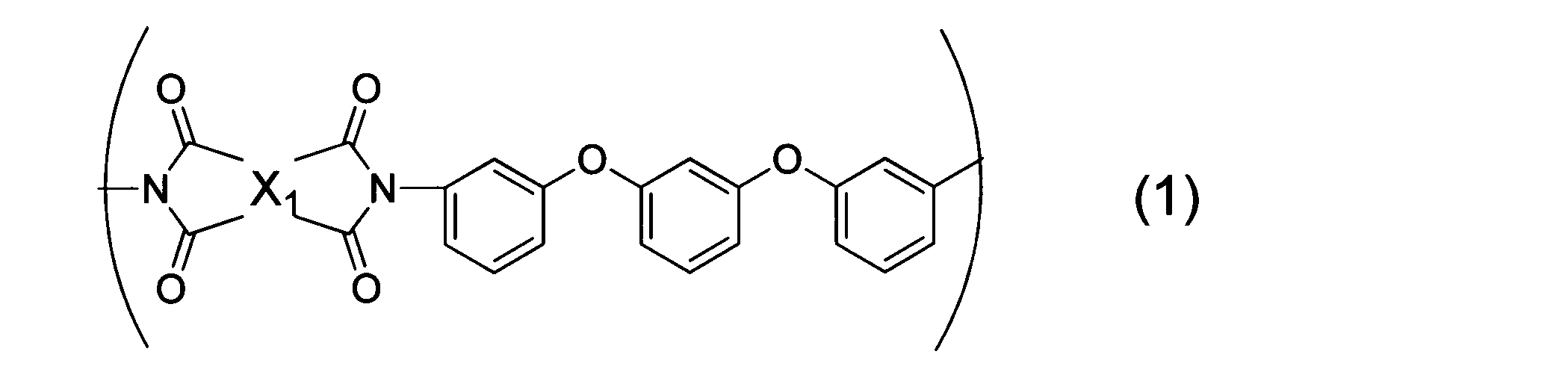
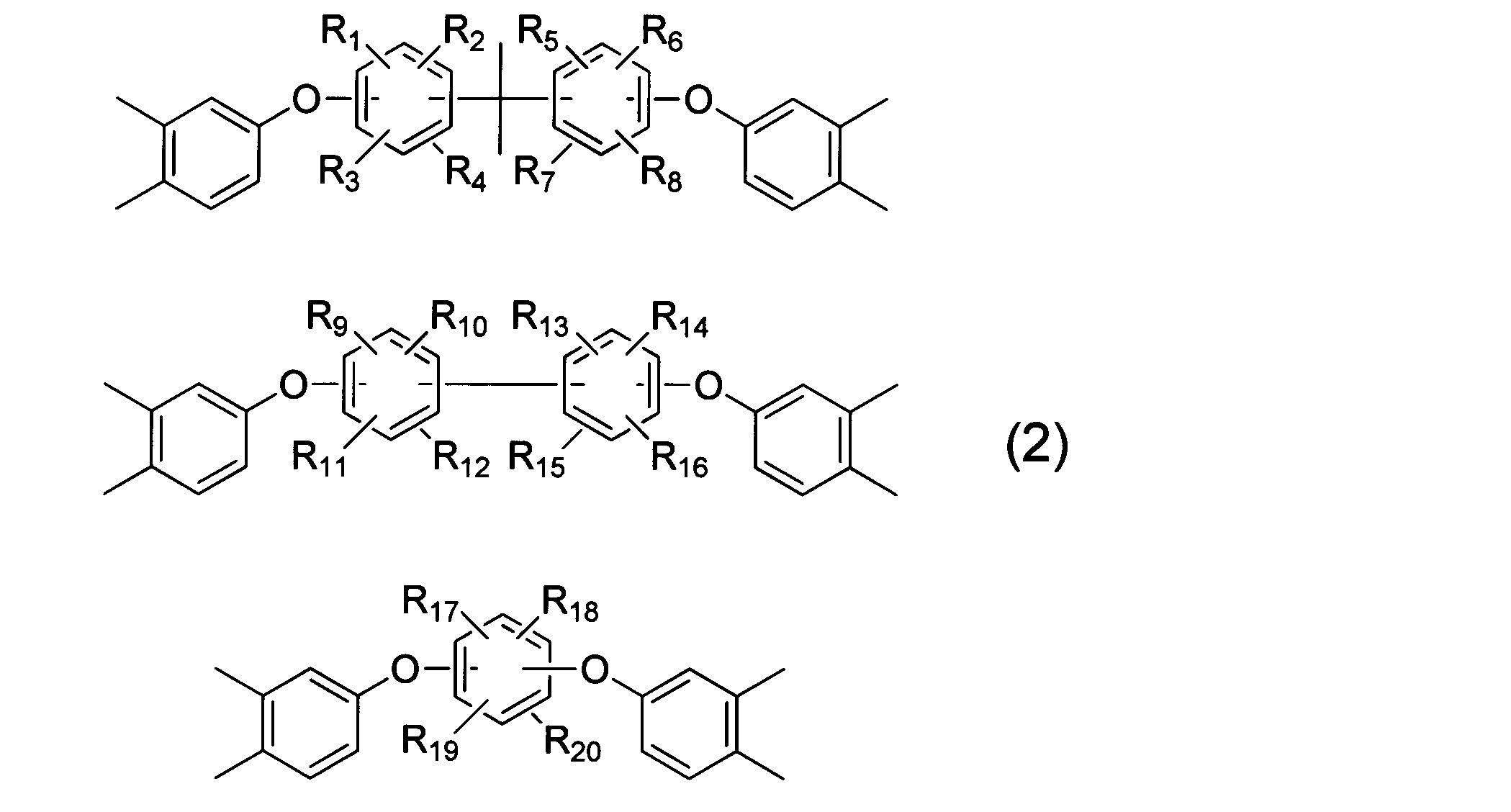
2. 前記熱可塑性ポリイミド(A)のガラス転移温度が200℃未満であることを特徴とする上記項1に記載の多層ポリイミドフィルム。
3. 前記熱可塑性ポリイミド(A)が、前記の一般式(1)で表される繰り返し単位と一般式(3)で表される繰り返し構造を有する共重合ポリイミドであることを特徴とする上記項1又は2に記載の多層ポリイミドフィルム。
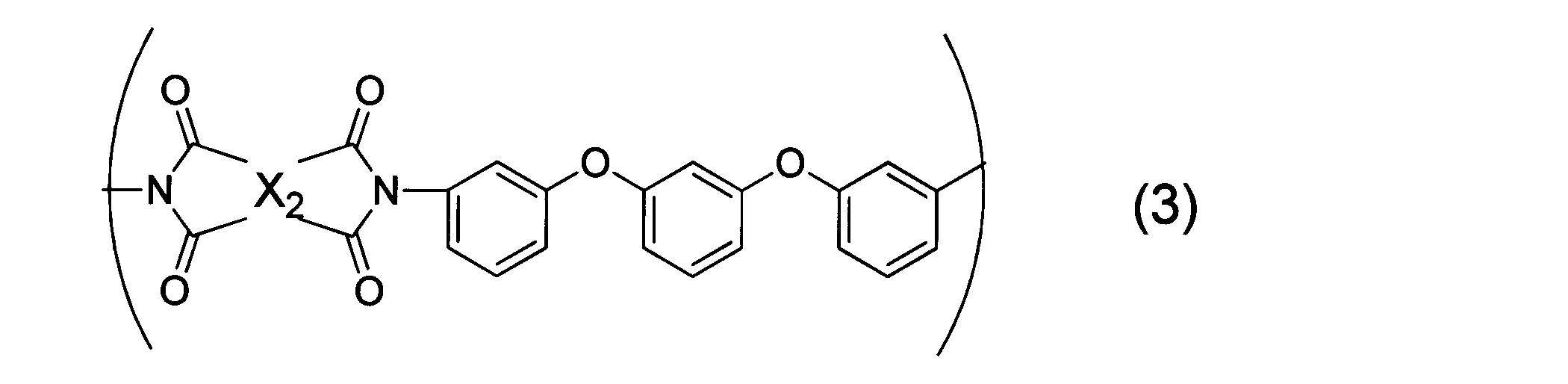
4. 前記一般式(3)のX2が一般式(4)で示される基から選ばれるテトラカルボン酸の残基であることを特徴とする上記項3に記載の多層ポリイミドフィルム。
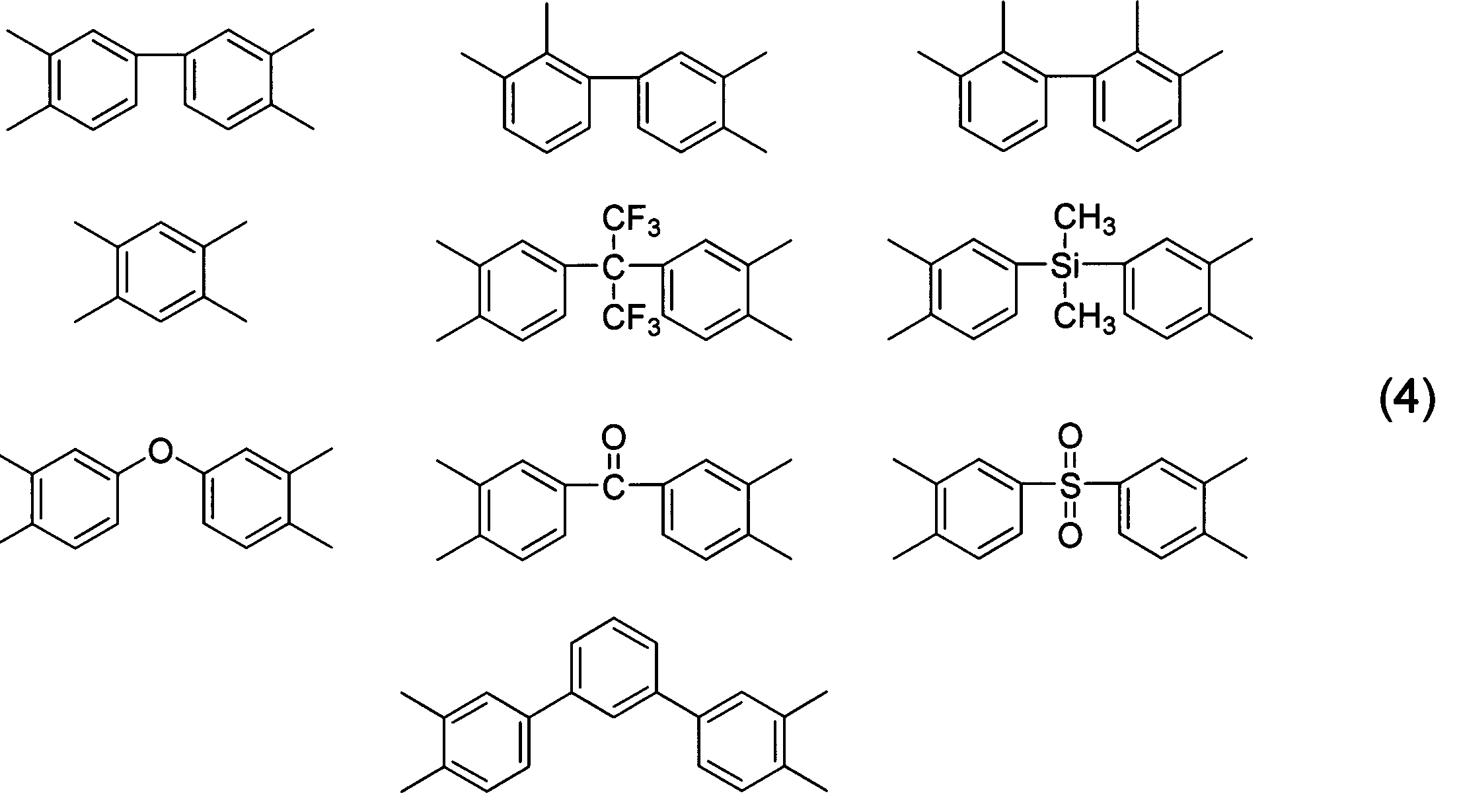
5. 式:
一般式(1)のモル数/(一般式(1)のモル数 + 一般式(3)のモル数)
で計算される値が0.50以上、1.00未満である上記項3又は4に記載の多層ポリイミドフィルム。
一般式(1)のモル数/(一般式(1)のモル数 + 一般式(3)のモル数)
で計算される値が0.50以上、1.00未満である上記項3又は4に記載の多層ポリイミドフィルム。
6. 前記耐熱性ポリイミド(B)は、ポリイミドを構成するテトラカルボン酸残基とジアミン残基が、
3,3’,4,4’-ビフェニルテトラカルボン酸二無水物、ピロメリット酸二無水物、及び1,4-ヒドロキノンジベンゾエート-3,3’,4,4’-テトラカルボン酸二無水物より選ばれる少なくとも1種含むテトラカルボン酸成分に基づくテトラカルボン酸残基と、
p-フェニレンジアミン、4,4’-ジアミノジフェニルエーテル、3,4’-ジアミノジフェニルエーテル、2,2-ビス[4-(4-アミノフェノキシ)フェニル]プロパン、m-トリジン及び4,4’-ジアミノベンズアニリドより選ばれる成分を少なくとも1種含むジアミン成分に基づくジアミン残基と
からなるポリイミドであることを特徴とする上記項1~5のいずれか1項に記載の多層ポリイミドフィルム。
3,3’,4,4’-ビフェニルテトラカルボン酸二無水物、ピロメリット酸二無水物、及び1,4-ヒドロキノンジベンゾエート-3,3’,4,4’-テトラカルボン酸二無水物より選ばれる少なくとも1種含むテトラカルボン酸成分に基づくテトラカルボン酸残基と、
p-フェニレンジアミン、4,4’-ジアミノジフェニルエーテル、3,4’-ジアミノジフェニルエーテル、2,2-ビス[4-(4-アミノフェノキシ)フェニル]プロパン、m-トリジン及び4,4’-ジアミノベンズアニリドより選ばれる成分を少なくとも1種含むジアミン成分に基づくジアミン残基と
からなるポリイミドであることを特徴とする上記項1~5のいずれか1項に記載の多層ポリイミドフィルム。
7. 多層ポリイミドフィルムの層構成として、熱可塑性ポリイミド層(A)、耐熱性ポリイミド層(B)、熱可塑性ポリイミド層(A)の順で積層された構成を有することを特徴とする上記項1~6のいずれか1項に記載の多層ポリイミドフィルム。
8. 熱可塑性ポリイミド層(A)と、耐熱性ポリイミド層(B)とを含む多層ポリイミドフィルムを得る製造方法であって、
すくなくとも、一般式(1)で表される繰り返し単位を有する熱可塑性ポリイミド(A)の前駆体にあたる熱可塑性ポリイミド前駆体(a)の層と、耐熱性ポリイミド(B)の前駆体にあたる耐熱性ポリイミド前駆体(b)の層を有する多層ポリイミド前駆体フィルムをイミド化して製造することを特徴とする多層ポリイミドフィルムの製造方法。
すくなくとも、一般式(1)で表される繰り返し単位を有する熱可塑性ポリイミド(A)の前駆体にあたる熱可塑性ポリイミド前駆体(a)の層と、耐熱性ポリイミド(B)の前駆体にあたる耐熱性ポリイミド前駆体(b)の層を有する多層ポリイミド前駆体フィルムをイミド化して製造することを特徴とする多層ポリイミドフィルムの製造方法。
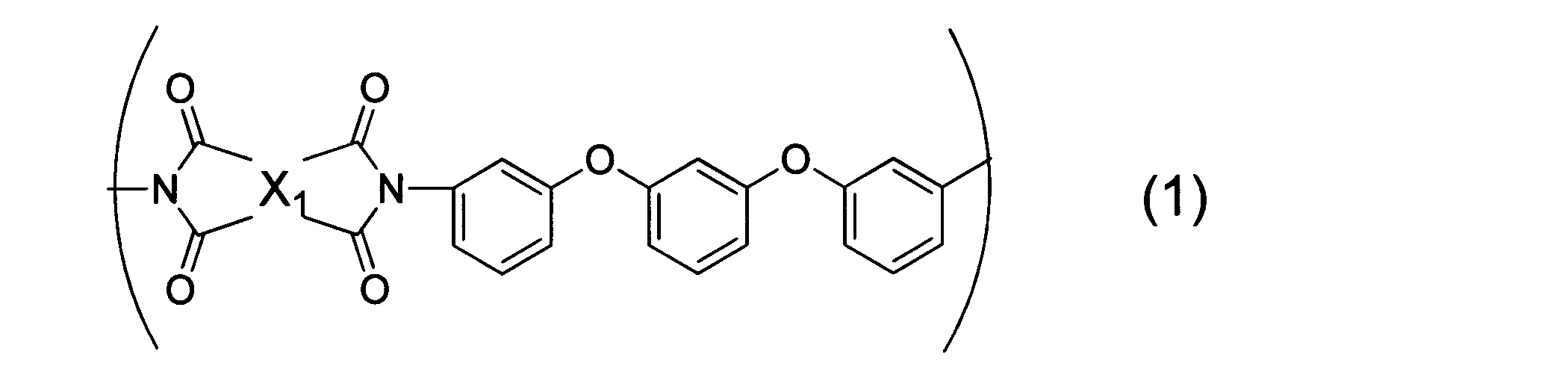
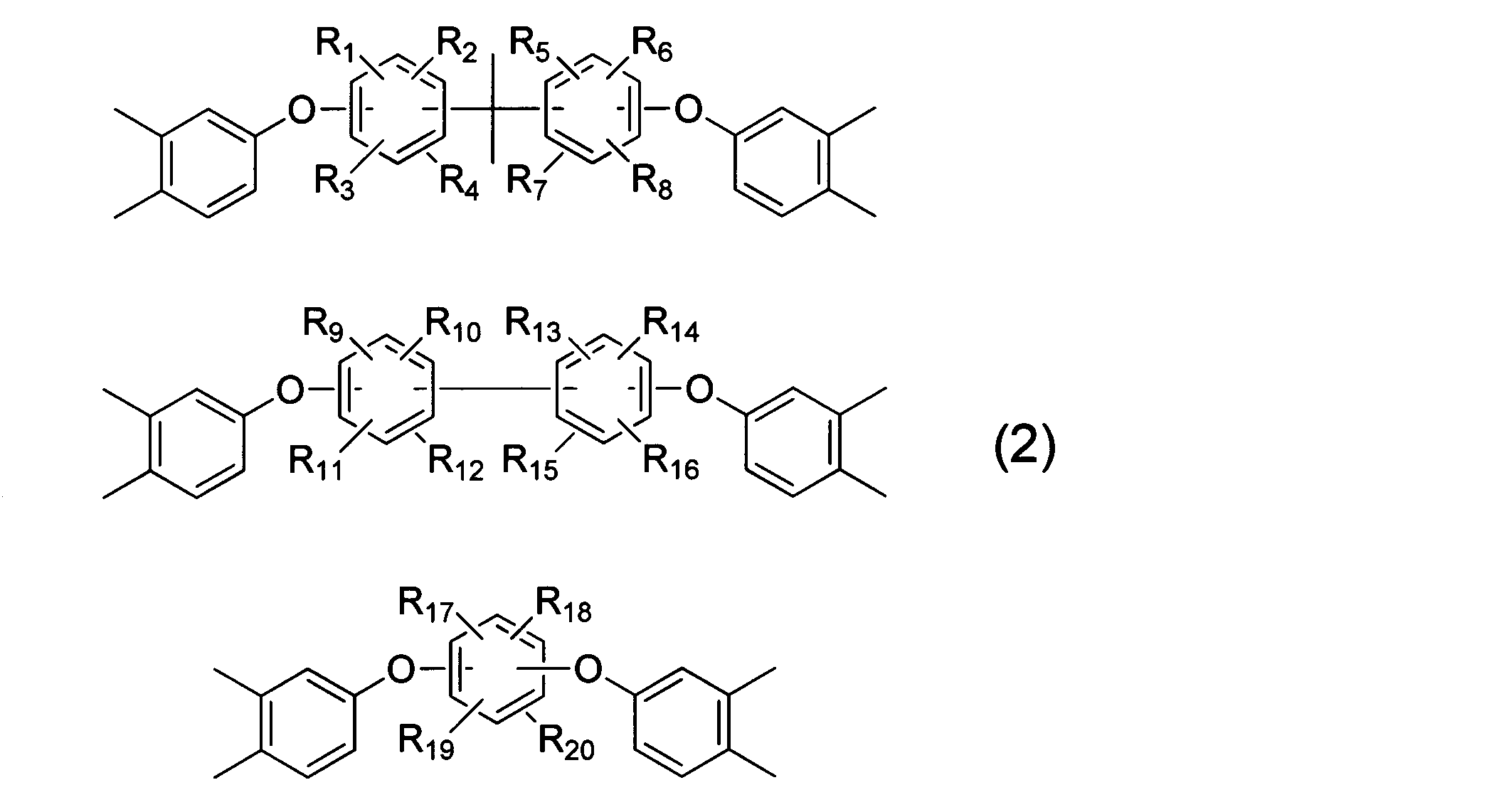
9. 前記耐熱性ポリイミド前駆体(b)の層に、前記熱可塑性ポリイミド前駆体(a)の溶液を塗工し、あるいは前記熱可塑性ポリイミド前駆体(a)の層に、前記耐熱性ポリイミド前駆体(b)の溶液を塗工し、多層ポリイミド前駆体フィルム得ることを特徴とする上記項8に記載の多層ポリイミドフィルムの製造方法。
10. 前記熱可塑性ポリイミド前駆体(a)の溶液と、前記耐熱性ポリイミド前駆体(b)の溶液を多層に押し出すことを特徴とする上記項8に記載の多層ポリイミドフィルムの製造方法。
11. ガラス転移温度が240℃以上の耐熱性ポリイミド(B)を含有する層(B)を有するポリイミドフィルムに、一般式(1)で表される繰り返し単位を有するポリイミドを含むガラス転移温度が240℃未満の熱可塑性ポリイミド(A)の前駆体にあたる熱可塑性ポリイミド前駆体(a)の溶液を塗工し、イミド化することを特徴とする多層ポリイミドフィルムの製造方法。


12. 一般式(1)で表される繰り返し単位を有するガラス転移温度が240℃未満の熱可塑性ポリイミド(A)を含有する層(A)を有するポリイミドフィルムと、ガラス転移温度が240℃以上の耐熱性ポリイミド(B)を含有する層(B)を有するポリイミドフィルムを貼り合せることを特徴とする多層ポリイミドフィルムの製造方法。

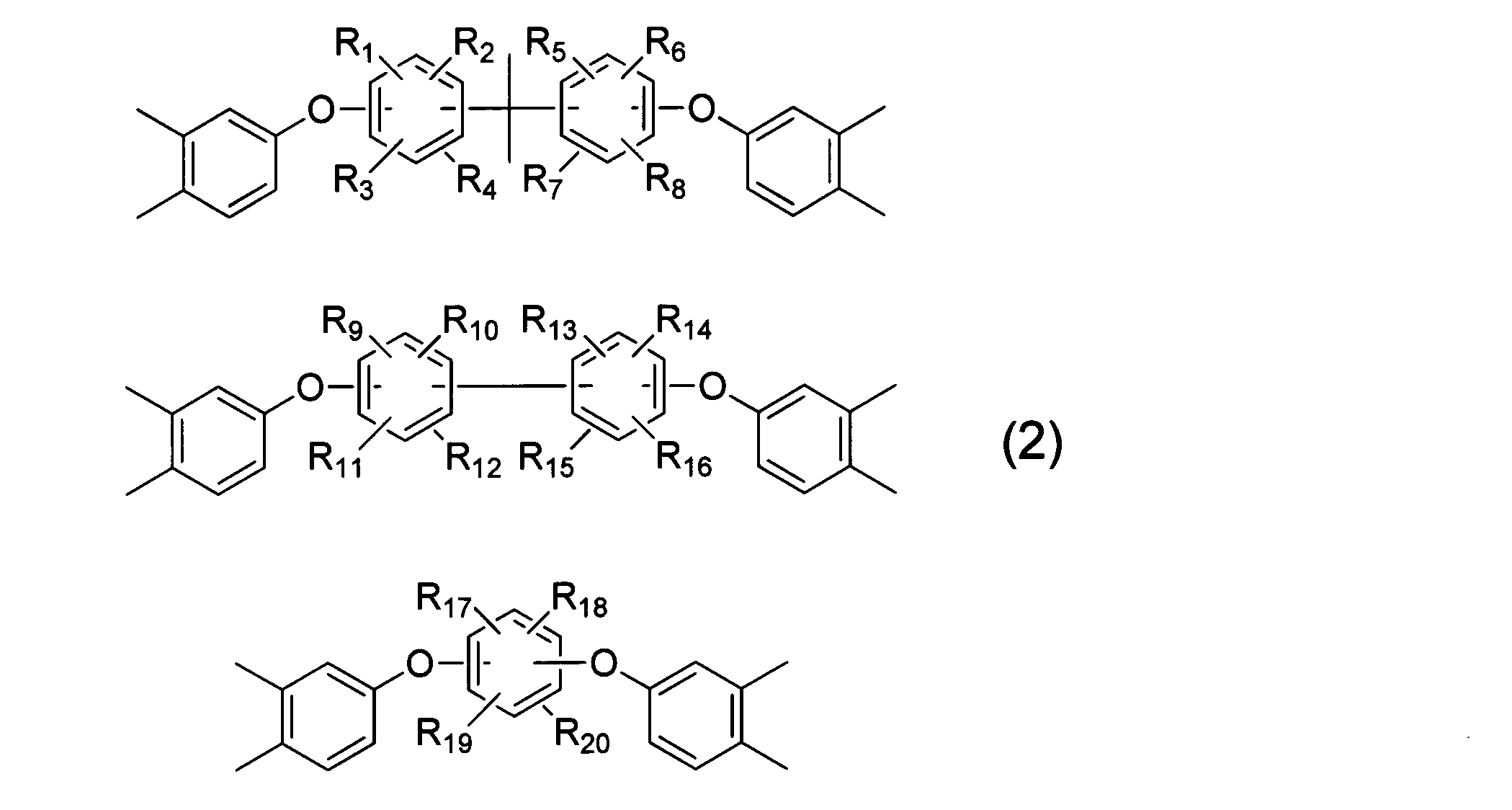
13. 上記項1~7のいずれかに記載の多層ポリイミドフィルム又は上記項8~12のいずれかに記載の製造方法で製造される多層ポリイミドフィルムの片面または両面に、金属層、無機層、有機層のいずれかが積層されたことを特徴とするポリイミド積層体。
14. 1) ガラス転移温度が240℃以上の耐熱性ポリイミド(B’)を含有する層(B’)を含むポリイミドフィルム(B’)の片面、または両面に、導体の回路パターンを形成する工程、および
2) この回路パターンが形成されたポリイミドフィルム(B’)と、ガラス転移温度が240℃未満の熱可塑性ポリイミド(A’)を含有する層(A’)を少なくとも1層含むポリイミドフィルム(A’)と、を重ね、温度240℃以下で加熱圧着する工程
含むことを特徴とするフレキシブルプリント回路またはコアレス多層回路の製造方法。
2) この回路パターンが形成されたポリイミドフィルム(B’)と、ガラス転移温度が240℃未満の熱可塑性ポリイミド(A’)を含有する層(A’)を少なくとも1層含むポリイミドフィルム(A’)と、を重ね、温度240℃以下で加熱圧着する工程
含むことを特徴とするフレキシブルプリント回路またはコアレス多層回路の製造方法。
15. 前記熱可塑性ポリイミド(A’)が、上記項1において定義される熱可塑性ポリイミド(A)であることを特徴とする上記項14記載のフレキシブルプリント回路またはコアレス多層回路の製造方法。
16. 前記熱可塑性ポリイミド(A’)が、上記項3において定義される共重合ポリイミドであることを特徴とする上記項14または15に記載のフレキシブルプリント回路またはコアレス多層回路の製造方法。
17. 前記耐熱性ポリイミド(B’)が、上記項6において定義される耐熱性ポリイミド(B)であることを特徴とする上記項14~16のいずれか1項に記載のフレキシブルプリント回路またはコアレス多層回路の製造方法。
18. 一般式(1)で表される繰り返し単位と一般式(3)で表される繰り返し構造を有する共重合ポリイミドであって、一般式(1)のモル数/[一般式(1)のモル数 + 一般式(3)のモル数]で計算される値が0.50以上~1.00未満であることを特徴とする共重合ポリイミド。
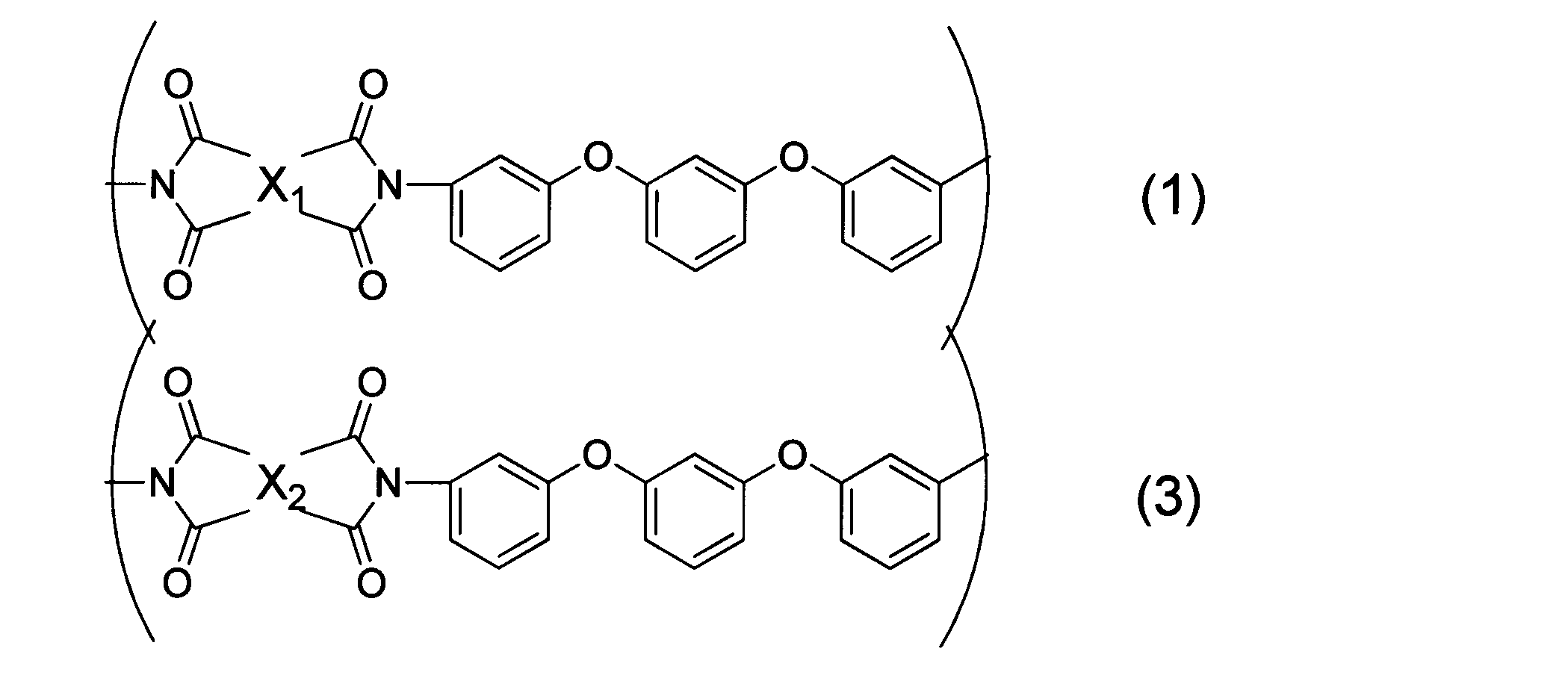
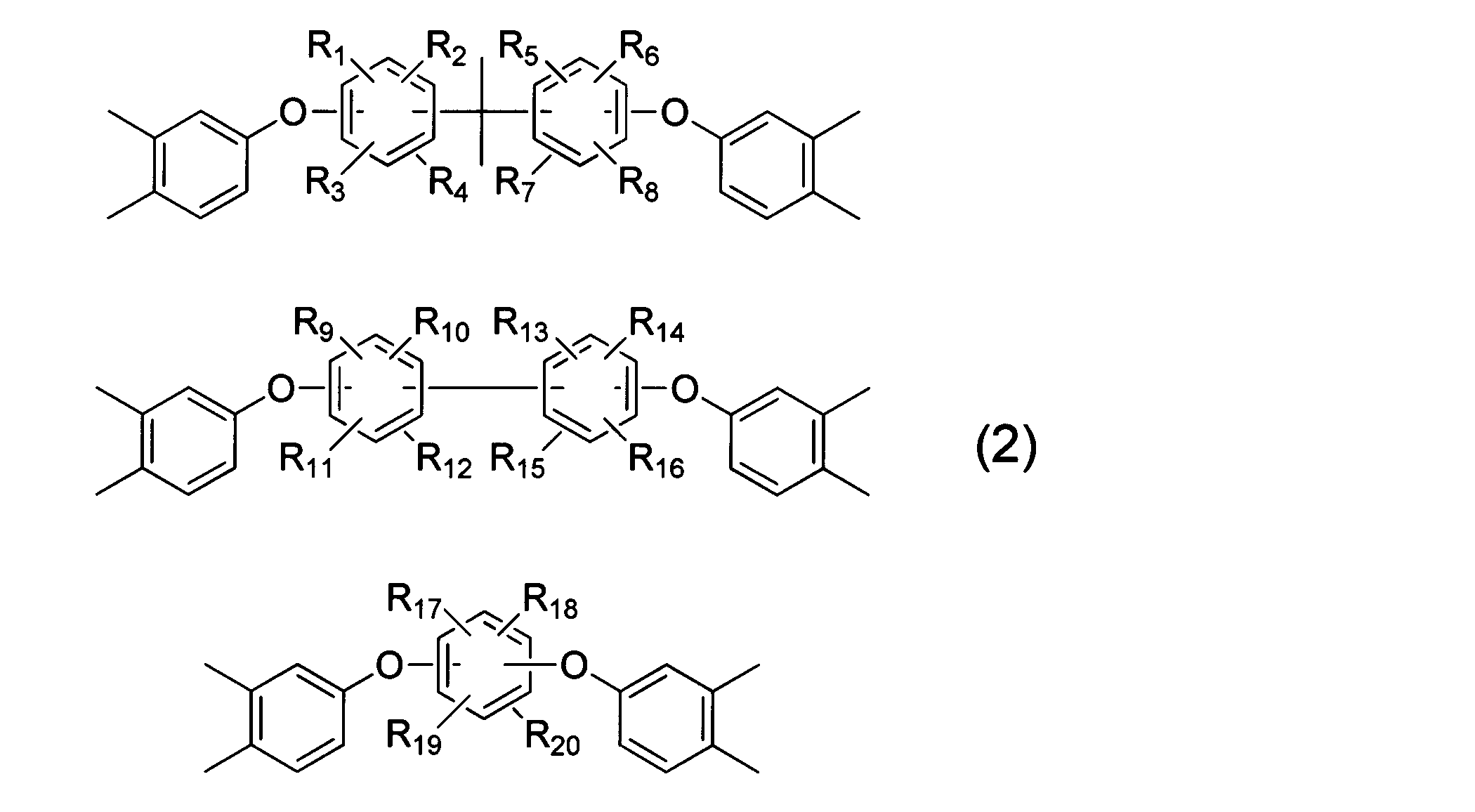
19. 前記のX2が一般式(4)で示される基から選ばれるテトラカルボン酸の残基であることを特徴とする上記項18に記載の共重合ポリイミド。
20. 一般式(1)で表される単位構造と一般式(3)で表される単位構造を有する共重合ポリイミドであって、一般式(1)のモル数/[一般式(1)のモル数 + 一般式(3)のモル数]で計算される値が0.72~0.99であることを特徴とする上記項18又は19に記載の共重合ポリイミド。
21. GPCより求められる重量平均分子量が、5,000~1,000,000であることを特徴とする上記項18~20のいずれか1項に記載の共重合ポリイミド。
22. 共重合ポリイミドで作成した膜厚5~150μmのフィルムで測定した動的粘弾性測定のtanδから得られるガラス転移温度が240℃未満であることを特徴とする上記項18~21のいずれか1項に記載の共重合ポリイミド。
23. 共重合ポリイミドで作成した膜厚5~150μmのフィルムで測定した動的粘弾性測定における貯蔵弾性率が5×10⁶Pa以下となる温度が、210℃以下であることを特徴とする上記項18~22のいずれか1項に記載の共重合ポリイミド。
24. 共重合ポリイミドで作成した膜厚5~150μmのフィルムで測定した動的粘弾性測定の200℃における貯蔵弾性率が6×10⁶Pa以下であることを特徴とする上記項18~23のいずれか1項に記載の共重合ポリイミド。
25. 熱重量分析(TGA)で求めた1%重量減少温度が、400℃以上であることを特徴とする上記項18~24のいずれか1項に記載の共重合ポリイミド。
26. 1kHz~10GHzいずれかの周波数における比誘電率が3.4以下、誘電正接が0.010以下であることを特徴とする上記項18~25のいずれか1項に記載の共重合ポリイミド。
27. 共重合ポリイミド中に含まれる全テトラカルボン酸残基の数が、全ジアミン残基の数より、0.5~10%過剰であることを特徴とする上記項18~26のいずれか1項に記載の共重合ポリイミド。
28. 上記項18~27のいずれか1項に記載の共重合ポリイミドを含むことを特徴とする耐熱性接着剤。
29. 上記項18~27のいずれか1項に記載の共重合ポリイミドを含むことを特徴とする耐熱性接着フィルム。
30. 上記項18~27のいずれか1項に記載の共重合ポリイミドを含む接着層を有することを特徴とする接着剤付金属箔。
31. 上記項18~27のいずれか1項に記載の共重合ポリイミドを含む接着層を有することを特徴とする接着剤付樹脂フィルム
32. 無機層、有機層または金属層のいずれかと、上記項18~27のいずれか1項に記載の共重合ポリイミドを含む接着層とを積層したポリイミド積層体。
33. 上記項18~27のいずれか1項に記載の共重合ポリイミドを含む絶縁層を用いることを特徴とする電子回路。
34. 共重合ポリイミド前駆体溶液を無機層、有機層または金属層のいずれかの層に流延または塗布し、熱処理する工程を含む、共重合ポリイミド積層体の製造方法であって、
前記共重合ポリイミドが、一般式(1)で表される繰り返し単位と一般式(3)で表される繰り返し構造を有する共重合ポリイミドであって、一般式(1)のモル数/[一般式(1)のモル数 + 一般式(3)のモル数]で計算される値が0.50以上、1.00未満であることを特徴とする共重合ポリイミド積層体の製造方法。
前記共重合ポリイミドが、一般式(1)で表される繰り返し単位と一般式(3)で表される繰り返し構造を有する共重合ポリイミドであって、一般式(1)のモル数/[一般式(1)のモル数 + 一般式(3)のモル数]で計算される値が0.50以上、1.00未満であることを特徴とする共重合ポリイミド積層体の製造方法。


35. 上記項34に記載の方法で得られた共重合ポリイミド積層体より、前記の無機層、有機層または金属層のいずれかのひとつの層を剥離して、得られる耐熱性接着フィルムの製造方法。
36. 上記項34に記載の方法で得られた共重合ポリイミド積層体もしくは、上記項35記載の方法で得られた耐熱性接着フィルムを、さらに無機層、有機層または金属層と重ね、240℃以下に加熱し、貼り合わせることで得られる多層のポリイミド積層体の製造方法。
本発明によれば、従来のポリイミドフィルム製造方法により容易に得られ、低温・短時間で接着可能であり、高耐熱性、高接着強度及び低誘電特性を実現する新たな多層ポリイミドフィルム、多層ポリイミドフィルムの製造方法、及びそれを用いたポリイミド金属積層体を提供することができる。
本発明の異なる一態様によれば、高耐熱性を有し、さらに比較的低温でも接着可能で、かつ高い接着強度を有することを実現する新たな共重合ポリイミドを提供することができる。さらに本発明の異なる態様においては、そのポリイミドを容易に製造する方法、及びそれを用いた耐熱性接着剤等を提供する。本発明の共重合ポリイミドは、低誘電特性の効果も有する。
本明細書において、熱可塑性ポリイミド(A)を含有する層(A)および耐熱性ポリイミド(B)を含有する層(B)を、簡略のため、それぞれ熱可塑性ポリイミド層(A)、耐熱性ポリイミド層(B)という場合がある。同様に、熱可塑性ポリイミド(A’)を含有する層(A’)および耐熱性ポリイミド(B’)を含有する層(B’)を、簡略のため、それぞれ熱可塑性ポリイミド層(A’)、耐熱性ポリイミド層(B’)という場合がある。
熱可塑性ポリイミド層(A)は、熱可塑性ポリイミド(A)を、樹脂成分を基準に、好ましくは80質量%以上、より好ましくは90質量%以上、特に好ましくは98質量%以上(100質量%であってよい)の割合で含有する。耐熱性ポリイミド層(B)は耐熱性ポリイミド(B)を、樹脂成分を基準に、好ましくは80質量%以上、より好ましくは90質量%以上、特に好ましくは98質量%以上(100質量%であってよい)の割合で含有する。
また、テトラカルボン酸の残基(またはテトラカルボン酸残基)とは、テトラカルボン酸から4つのカルボキシル基(-COOH)を除いた4価の基を意味する。ジアミンの残基(またはジアミン残基)とは、ジアミンから2つのアミノ基(-NH2)を除いた2価の基を意味する。また、テトラカルボン酸成分は、ポリイミドの原料となるテトラカルボン酸二無水物、テトラカルボン酸等のカルボン酸化合物を意味し、ジアミン成分は、ポリイミドの原料となるジアミン化合物を意味する。
テトラカルボン酸成分とジアミン成分を、所定の工程において反応させてポリイミドを合成したとき、原料化合物に由来するテトラカルボン酸残基およびジアミン残基を有するポリイミドが得られる。本件明細書において、ポリイミドやその前駆体であるポリアミック酸の化学構造を特定する場合に、構造を化学式で直接的に示す代わりに、テトラカルボン酸成分およびジアミン成分を説明することにより、化学構造の説明とする場合がある。
また、本明細書において、用語「熱可塑性」は、「熱融着性」および「熱圧着性」を有する性質を表すものとして使用される。
本発明は、大別すると、多層ポリイミドフィルムに関する態様と、この多層ポリイミドフィルムやその他の用途に適した共重合ポリイミドに関する態様に関する。最初に多層ポリイミドフィルムおよびその応用について説明し、次に共重合ポリイミドおよびその応用について説明する。
<<多層ポリイミドフィルム>>
最初に多層ポリイミドフィルムについて説明する。
最初に多層ポリイミドフィルムについて説明する。
本発明の多層ポリイミドフィルムは、ガラス転移温度が240℃未満の熱可塑性ポリイミド(A)を含有する層(A)と、ガラス転移温度が240℃以上の耐熱性ポリイミド(B)を含有する層(B)とを含む多層ポリイミドフィルムであって、
熱可塑性ポリイミド層(A)が、一般式(1)で表される繰り返し単位を有するポリイミドであることを特徴とする。
熱可塑性ポリイミド層(A)が、一般式(1)で表される繰り返し単位を有するポリイミドであることを特徴とする。
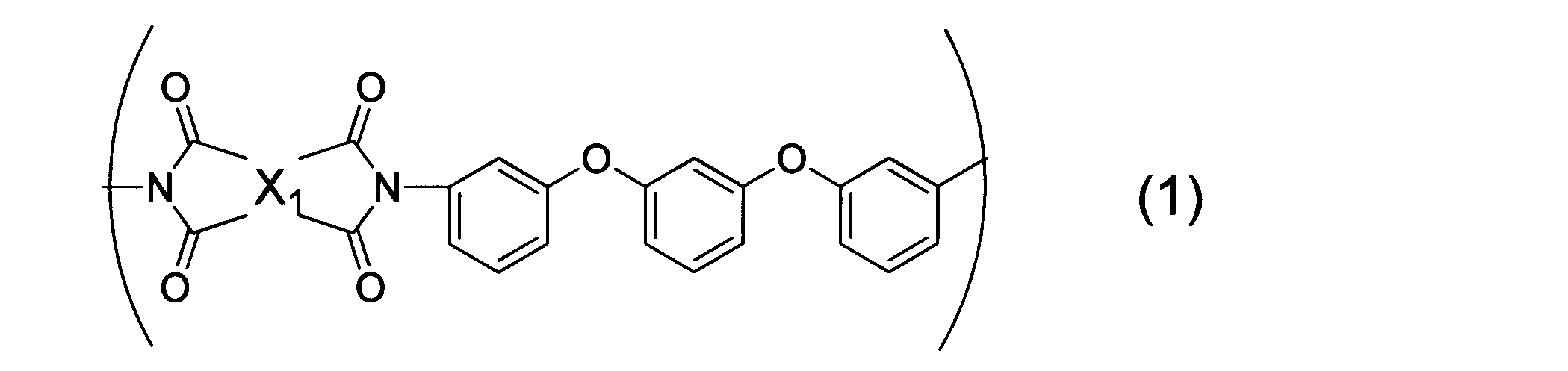

特に限定されるわけではないが、ここでの「多層ポリイミドフィルム」は、少なくも、異なる組成を有する層(A)と層(B)が積層されており、層間において成分が、明確な界面を有して分離されていてもよく、膜厚方向に濃度分布を有している状態(傾斜組成)でもよい。また、ここでの熱可塑性ポリイミドとは、ガラス転移温度が240℃未満のポリイミドを示し、耐熱性ポリイミド層とは、ガラス転移温度が240℃以上のポリイミドを示す。
また、一般式(2)で表されるエーテル結合を2つ有するテトラカルボン酸の残基は、特に限定されるものではないが、下記式(5)で挙げられるビスフェノール骨格を含むテトラカルボン酸残基、式(6)で表されるビフェノール骨格を含むテトラカルボン酸残基、式(7)で表されるヒドロキノン、レゾルシノール骨格を含むテトラカルボン酸残基から選ばれることが好ましい。また、耐熱性に優れるため、式(5)で挙げられるビスフェノール骨格を含むテトラカルボン酸残基がより好ましく、誘電損失が小さいことから、下記式(a)で表されるテトラカルボン酸残基が特に好ましい。


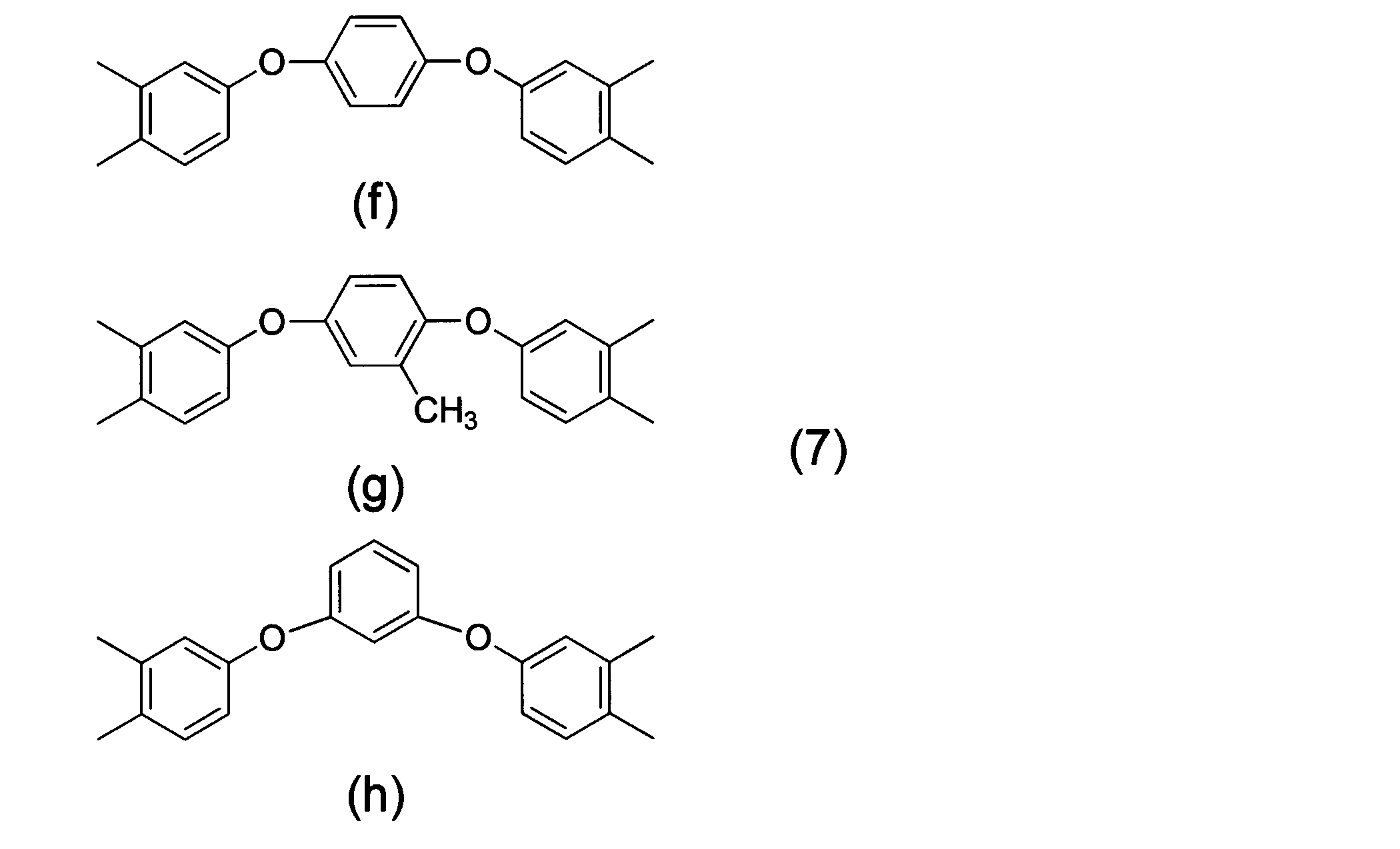
熱可塑性ポリイミド(A)(熱可塑性ポリイミド層(A)についても同じ。)は、特に限定されるわけではないが、膜厚5~150μmのフィルムで測定した動的粘弾性測定のtanδのピークから得られるガラス転移温度が240℃未満であり、好ましくは205℃未満、より好ましくは200℃未満、更に好ましくは、150~190℃、特に好ましくは150~180℃である。ここでのガラス転移温度とは、例えば、熱可塑性ポリイミド層のみのフィルムや多層ポリイミドフィルムを用い、動的粘弾性測定(DMS)や、熱機械分析(TMA)、示差走査熱量測定(DSC)、示差熱分析(DTA)より求められ公知の条件、解析方法を用いたいずれのガラス転移温度を採用してもよい。この範囲であれば、240℃以下の比較的低いプレス温度で接着できることから好ましい。
熱可塑性ポリイミド(A)(熱可塑性ポリイミド層(A)についても同じ。)は、特に限定されるわけではないが、膜厚5~150μmのフィルムで測定した動的粘弾性測定における貯蔵弾性率が5×10⁶Pa以下となる温度が、好ましくは210℃以下、より好ましくは100~200℃、更に好ましくは150~195℃、特に好ましくは170~190℃である。また、貯蔵弾性率が106Pa以下となる温度が、好ましくは280℃以下、より好ましくは100~250℃、更に好ましくは150~230℃、特に好ましくは170~220℃である。そして、貯蔵弾性率が5×10⁵Pa以下となる温度が、好ましくは300℃以下、より好ましくは100~280℃、更に好ましくは150~260℃、特に好ましくは170~240℃である。更に、貯蔵弾性率が105Pa以下となる温度が、好ましくは350℃以下、より好ましくは100~300℃、更に好ましくは150~280℃、特に好ましくは170~260℃である。この範囲であると、240℃以下の比較的低いプレス温度で接着できるため、好適である。
熱可塑性ポリイミド(A)(熱可塑性ポリイミド層(A)についても同じ。)は、特に限定されるわけではないが、膜厚5~150μmのフィルムで測定した動的粘弾性測定において、200℃における貯蔵弾性率が好ましくは6×10⁶Pa以下、より好ましくは1×10⁵~5×10⁶Pa、特に好ましくは5×10⁵~4×10⁶Paである。また、210℃における貯蔵弾性率が好ましくは5×10⁶Pa以下、より好ましくは0.1×10⁵~4.5×10⁶Pa、特に好ましくは1×10⁵~3×10⁶Paである。そして、220℃における貯蔵弾性率が好ましくは4×10⁶Pa以下、より好ましくは0.1×10⁵~2×10⁶Pa、特に好ましくは1×10⁵~1×10⁶Paである。この範囲であると、240℃以下の比較的低いプレス温度で接着できるため、好適である。
熱可塑性ポリイミド(A)(熱可塑性ポリイミド層(A)についても同じ。)は、限定されるわけではないが、耐熱性ポリイミドフィルム層と同時に製造を可能とする耐熱性を有することから、熱重量分析(TGA)で求めた1%重量減少温度が、400℃以上であることが好ましく、より好ましくは450℃以上、特に好ましくは、460℃以上である。特に限定されるわけではないが、TGAの測定は、窒素気流中、昇温速度10℃/minで25℃から600℃まで昇温し、得られた重量曲線から求めた1%重量減少温度が好適に採用できる。
本発明の多層ポリイミドフィルムは、特に限定されないが、熱可塑性ポリイミド(A)を含有する層(A)と、耐熱性ポリイミド(B)を含有する層(B)とを含む多層ポリイミドフィルムであって、
前記熱可塑性ポリイミド(A)が、前記の一般式(1)で表される繰り返し単位と一般式(3)で表される繰り返し構造を有する共重合ポリイミドであることが好ましい。
前記熱可塑性ポリイミド(A)が、前記の一般式(1)で表される繰り返し単位と一般式(3)で表される繰り返し構造を有する共重合ポリイミドであることが好ましい。
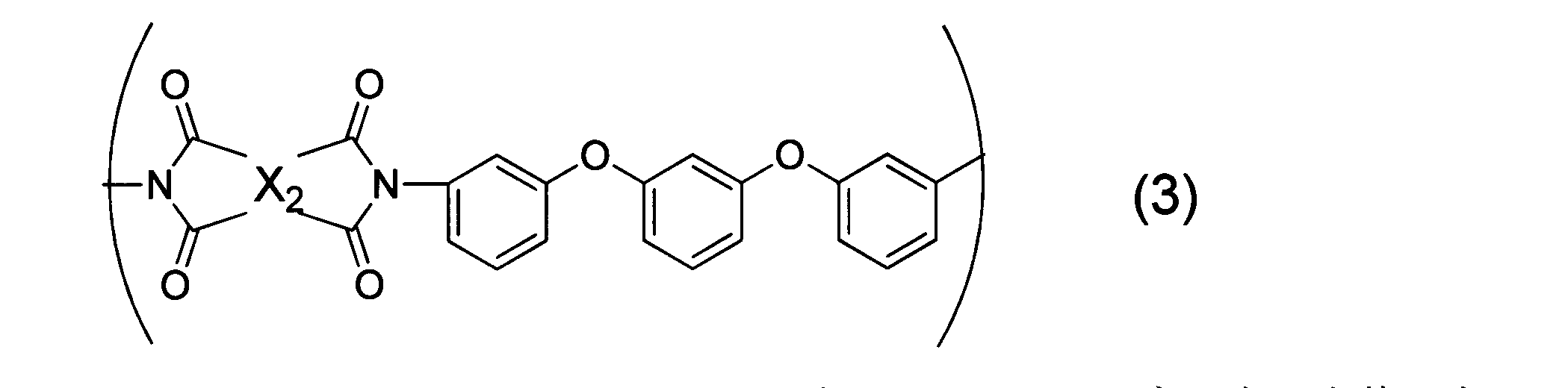
この共重合ポリイミドは、本態様の多層ポリイミドフィルム用途以外の用途もあるので、その詳細については、別の項にて詳述する。
さらに、熱可塑性ポリイミド(A)は、特に限定されるわけではないが、テトラカルボン酸成分と、ジアミン成分を反応させて得られるポリイミドであり、テトラカルボン酸成分の総モル数が、ジアミン成分の総モル数より、好ましくは、0.5~10モル%過剰、より好ましくは、1~7モル%過剰、特に好ましくは、1~5モル%過剰である。この範囲であれば、低温での接着性と耐熱性を両立できることから好ましい。得られるポリイミドは、原料として使用したテトラカルボン酸成分に基づくテトラカルボン酸残基およびジアミン成分に基づくジアミン残基を、仕込みモル比に対応する割合で含有する。
また、熱可塑性ポリイミド(A)は、GPCより求められる重量平均分子量が、5,000~1,000,000であることが好ましく、接着性に優れるため、10,000~500,000であることがより好ましく、耐熱性に優れるため、50,000~500,000であることが特に好ましい。
熱可塑性ポリイミド(A)は、限定されるわけではないが、耐熱性ポリイミドフィルム層と同時に製造を可能とする耐熱性を有することから、熱重量分析(TGA)で求めた1%重量減少温度が、400℃以上であることが好ましく、より好ましくは450℃以上、特に好ましくは、460℃以上である。特に限定されるわけではないが、TGAの測定は、窒素気流中、昇温速度10℃/minで25℃から600℃まで昇温し、得られた重量曲線から求めた1%重量減少温度が好適に採用できる。
熱可塑性ポリイミド(A)は、限定されるわけではないが、低誘電損失であることから、ASTM D570 23℃ 24時間水中浸漬で求めた吸水率が1.4%以下であることが好ましく、より好ましくは1.0%、特に好ましくは、0.8%以下である。
本発明の熱可塑性ポリイミド(A)は、限定されるわけではないが、1kHz~10GHzにおける比誘電率が好ましくは3.4以下、より好ましくは3.2以下、特に好ましくは3.1以下であり、誘電正接が好ましくは0.010以下、より好ましくは0.005以下、特に好ましくは0.003以下である。この範囲であれば、高周波回路向けの絶縁材、接着剤として好適に用いることができる。特に限定されるわけではないが、JIS C6481に基づき、常態(C-96/20/65)で測定した比誘電率、誘電正接が好適に採用できる。また、測定装置、方法は、公知のものを好適に用いることができる。
熱可塑性ポリイミド層(A)は、熱可塑性ポリイミド(A)以外の成分として、エポキシ樹脂、フェノール樹脂、アクリル樹脂、シアネート樹脂、BTレジン等の熱硬化性樹脂や、無機フィラー、顔料、染料、酸化防止剤、可塑剤、溶剤などを好適に添加することができる。しかし、本発明において、熱可塑性ポリイミド層(A)は、可塑剤や溶剤などの層を可塑化する物質を含有しなくても、低温、短時間で接着可能な熱可塑性(熱融着性、熱圧着性)を有することから、可塑剤や溶剤などの添加剤を含有しないことが好ましい。また、耐久性や機械的特性の観点から、熱硬化性樹脂や熱可塑性樹脂を含有しないオールポリイミドの組成とすることも好ましい。
耐熱性ポリイミド(B)としては、ガラス転移温度が240℃以上のポリイミドであれば特に限定されないが、好ましくは280℃以上、より好ましくは300℃以上、特に好ましくは320℃以上である。また、この耐熱性ポリイミド層(B)は、多層構造を形成していても良く、多層構造有する耐熱性ポリイミド層(B)の場合は、もっとも高いガラス転移温度を有するポリイミド層のガラス転移温度を、耐熱性ポリイミド層(B)のガラス転移温度として、好適に採用できる。
耐熱性ポリイミド(B)としては、特に限定されるものではないが、例えば、
3,3’,4,4’-ビフェニルテトラカルボン酸二無水物、ピロメリット酸二無水物及び1,4-ヒドロキノンジベンゾエート-3,3’,4,4’-テトラカルボン酸二無水物より選ばれる成分を少なくとも1種含む酸成分、好ましくはこれらの酸成分を少なくとも70モル%以上、さらに好ましくは80モル%以上、より好ましくは90モル%以上含むテトラカルボン酸成分と、
p-フェニレンジアミン、4,4’-ジアミノジフェニルエーテル、3,4’-ジアミノジフェニルエーテル、m-トリジン及び4,4’-ジアミノベンズアニリドより選ばれる成分を少なくとも1種含むジアミン成分、好ましくはこれらのジアミン成分を少なくとも70モル%以上、さらに好ましくは80モル%以上、より好ましくは90モル%以上含むジアミン成分、とから得られるポリイミドなどが挙げられる。得られるポリイミド構成するテトラカルボン酸残基とジアミン残基について、テトラカルボン酸残基は、上記テトラカルボン酸化合物に基づく残基を好ましくは上記載の割合で含有し、ジアミン残基は、上記ジアミン化合物に基づく残基を好ましくは上記の割合で含有する。
3,3’,4,4’-ビフェニルテトラカルボン酸二無水物、ピロメリット酸二無水物及び1,4-ヒドロキノンジベンゾエート-3,3’,4,4’-テトラカルボン酸二無水物より選ばれる成分を少なくとも1種含む酸成分、好ましくはこれらの酸成分を少なくとも70モル%以上、さらに好ましくは80モル%以上、より好ましくは90モル%以上含むテトラカルボン酸成分と、
p-フェニレンジアミン、4,4’-ジアミノジフェニルエーテル、3,4’-ジアミノジフェニルエーテル、m-トリジン及び4,4’-ジアミノベンズアニリドより選ばれる成分を少なくとも1種含むジアミン成分、好ましくはこれらのジアミン成分を少なくとも70モル%以上、さらに好ましくは80モル%以上、より好ましくは90モル%以上含むジアミン成分、とから得られるポリイミドなどが挙げられる。得られるポリイミド構成するテトラカルボン酸残基とジアミン残基について、テトラカルボン酸残基は、上記テトラカルボン酸化合物に基づく残基を好ましくは上記載の割合で含有し、ジアミン残基は、上記ジアミン化合物に基づく残基を好ましくは上記の割合で含有する。
前記耐熱性ポリイミドを得ることができるテトラカルボン酸成分とジアミン成分との組み合わせとしては、例えば、次のものが挙げられる。
(1)3,3’,4,4’-ビフェニルテトラカルボン酸二無水物(s-BPDA)と、p-フェニレンジアミン(PPD)と、必要により4,4-ジアミノジフェニルエーテル(DADE)を含む組み合わせ。この場合、PPD/DADE(モル比)は100/0~85/15であることが好ましい。
(2)3,3’,4,4’-ビフェニルテトラカルボン酸二無水物(s-BPDA)及びピロメリット酸二無水物(PMDA)と、p-フェニレンジアミン(PPD)と、必要により4,4-ジアミノジフェニルエーテル(DADE)を含む組み合わせ。この場合、s-BPDA/PMDA(モル比)は0/100~90/10であることが好ましい。PPDとDADEを併用する場合、PPD/DADE(モル比)は、例えば90/10~10/90が好ましい。
(3)ピロメリット酸二無水物(PMDA)と、p-フェニレンジアミン(PPD)及び4,4-ジアミノジフェニルエーテル(DADE)の組み合わせ。この場合、DADE/PPD(モル比)は90/10~10/90であることが好ましい。
(4)3,3’,4,4’-ビフェニルテトラカルボン酸二無水物(s-BPDA)とp-フェニレンジアミン(PPD)とを主成分(合計100モル%中の50モル%以上)として得られるもの。
(1)3,3’,4,4’-ビフェニルテトラカルボン酸二無水物(s-BPDA)と、p-フェニレンジアミン(PPD)と、必要により4,4-ジアミノジフェニルエーテル(DADE)を含む組み合わせ。この場合、PPD/DADE(モル比)は100/0~85/15であることが好ましい。
(2)3,3’,4,4’-ビフェニルテトラカルボン酸二無水物(s-BPDA)及びピロメリット酸二無水物(PMDA)と、p-フェニレンジアミン(PPD)と、必要により4,4-ジアミノジフェニルエーテル(DADE)を含む組み合わせ。この場合、s-BPDA/PMDA(モル比)は0/100~90/10であることが好ましい。PPDとDADEを併用する場合、PPD/DADE(モル比)は、例えば90/10~10/90が好ましい。
(3)ピロメリット酸二無水物(PMDA)と、p-フェニレンジアミン(PPD)及び4,4-ジアミノジフェニルエーテル(DADE)の組み合わせ。この場合、DADE/PPD(モル比)は90/10~10/90であることが好ましい。
(4)3,3’,4,4’-ビフェニルテトラカルボン酸二無水物(s-BPDA)とp-フェニレンジアミン(PPD)とを主成分(合計100モル%中の50モル%以上)として得られるもの。
上記(1)~(3)において、4,4-ジアミノジフェニルエーテル(DADE)の一部または全部を、目的に応じて3,4’-ジアミノジフェニルエーテルまたは、2,2-ビス[4-(4-アミノフェノキシ)フェニル]プロパンに置き換えることもできる。また、上記(1)~(4)において、3,3’,4,4’-ビフェニルテトラカルボン酸二無水物の一部または全部を、目的に応じて3,3’,4,4’-ベンゾフェノンテトラカルボン酸二無水物に置き換えることもできる。
上記(1)の組み合わせは、耐熱性に優れるために好ましい。さらに、3,3’,4,4’-ビフェニルテトラカルボン酸二無水物を主成分(例えば、70モル%以上、好ましくは80モル%以上、より好ましくは90モル%以上)として含むテトラカルボン酸二無水物成分と、パラフェニレンジアミンを主成分(例えば、70モル%以上、好ましくは80モル%以上、より好ましくは90モル%以上含む)として含むジアミン成分とから得られる耐熱性ポリイミドを用いることにより、低い線膨張係数、高い弾性率、寸法安定性に優れた熱可塑性ポリイミドフィルムを得ることができる。
前記耐熱性ポリイミド(B)を得ることができるテトラカルボン酸成分は、上記の酸成分の他に、目的の特性を損なわない範囲で、他のテトラカルボン酸二無水物成分および/または他のジアミン成分を併用することができる。他のテトラカルボン酸二無水物成分としては、3,3’,4,4’-ベンゾフェノンテトラカルボン酸二無水物、ビス(3,4-ジカルボキシフェニル)エーテル二無水物、ビス(3,4-ジカルボキシフェニル)スルフィド二無水物、ビス(3,4-ジカルボキシフェニル)スルホン二無水物、ビス(3,4-ジカルボキシフェニル)メタン二無水物、2,2-ビス(3,4-ジカルボキシフェニル)プロパン二無水物、2,2-ビス(3,4-ジカルボキシフェニル)-1,1,1,3,3,3-ヘキサフルオロプロパン二無水物、2,2-ビス[(3,4-ジカルボキシフェノキシ)フェニル]プロパン二無水物などが挙げられる。他のジアミン成分としては、m-フェニレンジアミン、2,4-トルエンジアミン、3,3’-ジアミノジフェニルスルフィド、3,4’-ジアミノジフェニルスルフィド、4,4’-ジアミノジフェニルスルフィド、3,3’-ジアミノジフェニルスルホン、3,4’-ジアミノジフェニルスルホン、4,4’-ジアミノジフェニルスルホン、3,3’-ジアミノベンゾフェノン、4,4’-ジアミノベンゾフェノン、3,4’-ジアミノベンゾフェノン、3,3’-ジアミノジフェニルメタン、4,4’-ジアミノジフェニルメタン、3,4’-ジアミノジフェニルメタン、2,2-ジ(3-アミノフェニル)プロパン、2,2-ジ(4-アミノフェニル)プロパン、1,3-ビス(4-アミノフェノキシ)ベンゼン、1,4-ビス(4-アミノフェノキシ)ベンゼン、1,3-ビス(3-アミノフェノキシ)ベンゼン、1,4-ビス(3-アミノフェノキシ)ベンゼンなどのビス(アミノフェノキシ)ベンゼン類、2,2-ビス[4-(4-アミノフェノキシ)フェニル]プロパン、4,4’-ビス(4-アミノフェノキシ)ビフェニルなどが挙げられる。
耐熱性ポリイミド層(B)は、耐熱性および機械的性質の観点から、実質的に耐熱性ポリイミド(B)からなること、即ち、樹脂成分が実質的に耐熱性ポリイミド(B)のみであることが好ましい。
本発明の多層ポリイミドフィルムは、特に限定されるわけではないが、耐熱性ポリイミド層(B)の厚みは3~125μmであることが好ましく、5~100μmであることがより好ましく、5~75であることが特に好ましい。熱可塑ポリイミド層(A)の厚みは0.1~100μmであることが好ましく、0.5~50μmであることがより好ましく、1~25μmであることが特に好ましい。
[多層ポリイミドフィルムの製造方法]
次に、本発明の熱可塑性ポリイミド層(A)を含む多層ポリイミドフィルムの製造方法の一例として、耐熱性ポリイミド層(B)の片面または両面に熱可塑性ポリイミド層(A)を有する多層ポリイミドフィルムの製造方法について説明する。
次に、本発明の熱可塑性ポリイミド層(A)を含む多層ポリイミドフィルムの製造方法の一例として、耐熱性ポリイミド層(B)の片面または両面に熱可塑性ポリイミド層(A)を有する多層ポリイミドフィルムの製造方法について説明する。
[塗工法による多層ポリイミドフィルムの製造方法]
多層ポリイミドフィルムは、耐熱性ポリイミド層(B)を与えるポリイミド前駆体(b)溶液(ポリアミック酸溶液)から得られる自己支持性フィルムの片面または両面に、熱可塑性ポリイミド層(A)を与えるポリイミド前駆体(a)溶液(ポリアミック酸溶液)を塗工し、得られた多層の自己支持性フィルムを加熱、乾燥してイミド化を行うことにより、得ることができる。ここで、熱可塑性ポリイミド層(A)を与えるポリイミド前駆体(a)溶液は、前記の一般式(1)を与えるテトラカルボン酸化合物(好適には二無水物)を少なくとも含有するテトラカルボン酸成分と、ジアミン成分との反応により好適に得られる。共重合ポリイミドの場合は、テトラカルボン酸成分は、さらに一般式(3)を与えるテトラカルボン酸化合物(テトラカルボン酸二無水物、テトラカルボン酸等)を含有する。共重合ポリイミドの合成については、後述する。
多層ポリイミドフィルムは、耐熱性ポリイミド層(B)を与えるポリイミド前駆体(b)溶液(ポリアミック酸溶液)から得られる自己支持性フィルムの片面または両面に、熱可塑性ポリイミド層(A)を与えるポリイミド前駆体(a)溶液(ポリアミック酸溶液)を塗工し、得られた多層の自己支持性フィルムを加熱、乾燥してイミド化を行うことにより、得ることができる。ここで、熱可塑性ポリイミド層(A)を与えるポリイミド前駆体(a)溶液は、前記の一般式(1)を与えるテトラカルボン酸化合物(好適には二無水物)を少なくとも含有するテトラカルボン酸成分と、ジアミン成分との反応により好適に得られる。共重合ポリイミドの場合は、テトラカルボン酸成分は、さらに一般式(3)を与えるテトラカルボン酸化合物(テトラカルボン酸二無水物、テトラカルボン酸等)を含有する。共重合ポリイミドの合成については、後述する。
また、この製造方法は、熱可塑性ポリイミド層(A)を与えるポリイミド前駆体(a)溶液と、耐熱性ポリイミド層(B)を与えるポリイミド前駆体(b)溶液を入れ替えてもよい。即ち、ポリイミド前駆体(a)溶液から得られる自己支持性フィルムの片面または両面に、ポリイミド前駆体(b)溶液を塗工し、得られた多層の自己支持性フィルムを加熱、乾燥してイミド化を行ってもよい。
耐熱性ポリイミド層(B)を与えるポリイミド前駆体(b)溶液から得られる自己支持性フィルムは、テトラカルボン酸成分とジアミン成分とを、実質的に等モル、またはどちらかの成分を少し過剰にして、有機溶媒中で反応させて得られるポリアミック酸溶液[ポリイミド前駆体(b)溶液]を支持体上に流延し、これを加熱乾燥して得ることができる。
一方、熱可塑性ポリイミド層(A)を与えるポリイミド前駆体(a)溶液も、テトラカルボン酸成分とジアミン成分とを、実質的に等モル、またはどちらかの成分を少し過剰にして、有機溶媒中で反応させることにより得られる。
ポリイミド前駆体溶液を製造するための有機溶媒としては、N-メチル-2-ピロリドン、N,N-ジメチルアセトアミド、N,N-ジエチルアセトアミド、N,N-ジメチルホルムアミド、N,N-ジエチルホルムアミド、ヘキサメチルホスホルアミドなどのアミド類、ジメチルスルホキシド、ジエチルスルホキシドなどのスルホキシド類、ジメチルスルホン、ジエチルスルホンなどのスルホン類を挙げることができる。これらの溶媒は単独で用いてもよく、混合して用いてもよい。
ポリイミド前駆体の重合反応を実施する際の有機溶媒中の全モノマーの濃度は、使用する目的に応じて適宜選択することができる。例えば、ポリイミド前駆体(a)溶液は、有機溶媒中の全モノマーの濃度が1~50質量%であることが好ましく、5~40%であることが特に好ましく、ポリイミド前駆体(b)溶液は、有機溶媒中の全モノマーの濃度が5~40質量%であることが好ましく、6~35質量%であることがより好ましく、10~30質量%であることが特に好ましい。
ポリイミド前駆体(a)溶液およびポリイミド前駆体(b)溶液の製造例の一例として、例えば、テトラカルボン酸成分とジアミン成分とを実質的に等モル、またはどちらかの成分(酸成分、またはジアミン成分)を少し過剰にして混合し、反応温度100℃以下、好ましくは80℃以下(通常、0℃以上、好ましくは15℃以上)で約0.2~60時間反応させることによりポリアミック酸(ポリイミド前駆体)溶液を得ることができる。
ポリイミド前駆体(a)溶液およびポリイミド前駆体(b)溶液の溶液粘度は、使用する目的(塗工、流延など)などに応じて適宜選択することができる。例えば、ポリイミド前駆体(a)溶液およびポリイミド前駆体(b)溶液は、流延に使用する場合、このポリイミド前駆体溶液を取り扱う作業性の面からは、30℃で測定した回転粘度が約100~5000ポイズであることが好ましく、500~4000ポイズであることがより好ましく、1000~3000ポイズ程度であることが特に好ましい。また、ポリイミド前駆体(a)溶液およびポリイミド前駆体(b)溶液を塗工に使用する場合、ポリイミド前駆体溶液を取り扱う作業性の面からは、30℃で測定した回転粘度が1~100センチポイズであることが好ましく、3~50センチポイズであることがより好ましく、5~20センチポイズであることが特に好ましい。したがって、前記の重合反応は、生成するポリアミック酸(ポリイミド前駆体)が上記のような粘度を示す程度にまで実施することが望ましい。
耐熱性ポリイミド層(B)となるポリイミド前駆体(b)溶液の自己支持性フィルムは、例えば、ポリイミド前駆体(b)溶液を適当な支持体(例えば、金属、セラミック、プラスチック製のロール、または金属ベルト等)の表面上に流延して、均一な厚さの膜状態に形成し、次いで、熱風、赤外線等の熱源を利用して50~210℃、特に60~200℃に加熱して、溶媒を徐々に除去し、自己支持性になるまで(例えば、支持体上より剥離することができる程度にまで)乾燥することによって得ることができる。
本発明においては、このようにして得られたポリイミド前駆体(b)溶液の自己支持性フィルムの片面または両面に、熱可塑性ポリイミド層(A)を与えるポリイミド前駆体(a)溶液を塗工する。ポリイミド前駆体(a)溶液は、支持体より剥離した自己支持性フィルムに塗工してもよく、支持体より剥離する前に、支持体上の自己支持性フィルムに塗工してもよい。
ポリイミド前駆体(a)溶液は、ポリイミド前駆体(b)溶液の自己支持性フィルムに塗工することができ、例えば、グラビアコート法、スピンコート法、シルクスクリーン法、ディップコート法、スプレーコート法、バーコート法、ナイフコート法、ロールコート法、ブレードコート法、ダイコート法などの公知の塗工方法を挙げることができる。
本発明においては、ポリイミド前駆体(b)溶液の自己支持性フィルムの片面または両面に、ポリイミド前駆体(a)溶液を均一に塗工することが好ましい。したがって、自己支持性フィルムは、ポリイミド前駆体(a)溶液を均質に塗工できる表面を有することが好ましい。
ポリイミド前駆体(b)溶液の自己支持性フィルムは、その加熱減量が20~40質量%の範囲にあることが好ましく、イミド化率が8~40%の範囲にあることが好ましい。加熱減量およびイミド化率が上記範囲内であれば、自己支持性フィルムの力学的性質が十分となり、自己支持性フィルムの上面にポリイミド前駆体(a)溶液をきれいに塗工しやすくなり、イミド化後に得られるポリイミドフィルムに発泡、亀裂、クレーズ、クラック、ひびワレなどの発生が観察されず、また、耐熱性ポリイミド層と熱可塑性ポリイミド層との接着強度が十分となる。
なお、自己支持性フィルムの加熱減量とは、測定対象のフィルムを400℃で30分間乾燥し、乾燥前の重量(W1)と乾燥後の重量(W2)とから次式によって求めた値である。
加熱減量(質量%)={(W1-W2)/W1}×100
加熱減量(質量%)={(W1-W2)/W1}×100
なお、熱可塑性ポリイミド層(A)と、耐熱性ポリイミド層(B)には、必要に応じて、微細な無機または有機フィラー(添加剤)を配合することができる。無機の添加剤としては、粒子状あるいは偏平状などの無機フィラーを挙げることができ、微粒子状の二酸化チタン粉末、二酸化ケイ素(シリカ)粉末、酸化マグネシウム粉末、酸化アルミニウム(アルミナ)粉末、酸化亜鉛粉末などの無機酸化物粉末、微粒子状の窒化ケイ素粉末、窒化チタン粉末などの無機窒化物粉末、炭化ケイ素粉末などの無機炭化物粉末、微粒子状の炭酸カルシウム粉末、硫酸カルシウム粉末、硫酸バリウム粉末などの無機塩粉末を挙げることができる。有機の添加剤としては、ポリイミド粒子、熱硬化性樹脂の粒子などを挙げることができる。これらの添加剤は2種以上を組み合わせて使用してもよい。添加剤の使用量および形状(大きさ、アスペクト比)については、使用目的に応じて選択することが好ましい。また、これらの添加剤を均一に分散させるために、それ自体公知の手段を適用することができる。
ポリイミド前駆体(b)溶液の自己支持性フィルムにポリイミド前駆体(a)溶液を塗工した後、次いで、これを加熱・イミド化して多層ポリイミドフィルムを得ることができる。イミド化のための熱処理の最高加熱温度は300℃~600℃が好ましく、320~500℃がより好ましく、340~500℃が特に好ましい。
イミド化のための加熱処理は段階的に行うことが好ましく、まず150℃~200℃の温度で1分~60分間第一次加熱処理した後に、200℃以上300℃未満の温度で1分~60分間第二次加熱処理し、その後、最高加熱温度300℃~600℃、好ましくは320~550℃、より好ましくは340~500℃で1分~30分間第三次加熱処理することが望ましい。この加熱処理は、熱風炉、赤外線加熱炉などの公知の装置を使用して行うことができる。
また、この加熱処理は、ポリイミド前駆体(a)溶液を塗工したポリイミド前駆体溶液(b)の自己支持性フィルムをピンテンター、クリップなどで固定して行うことが好ましい。
ポリイミド前駆体(a)溶液および/またはポリイミド前駆体(b)溶液は、ポリアミック酸(ポリイミド前駆体)のゲル化を制限する目的で、リン系安定剤、例えば亜リン酸トリフェニル、リン酸トリフェニル等をポリアミック酸重合時に固形分(ポリマー)濃度に対して0.01~1%の範囲で添加することができる。
また、ポリイミド前駆体(a)溶液および/またはポリイミド前駆体(b)溶液は、イミド化を促進する目的で、塩基性有機化合物を添加することができる。例えば、イミダゾール、2-メチルイミダゾール、1,2-ジメチルイミダゾール、2-フェニルイミダゾール、ベンズイミダゾール、イソキノリン、置換ピリジン等をポリアミック酸(ポリイミド前駆体)100質量部に対して0.0005~0.1質量部、特に0.001~0.02質量部の割合で添加することができる。これらは、比較的低温でポリイミドフィルムを形成するためにイミド化が不十分となることを避けるために使用することができる。
[共押出し-流延製膜法による多層ポリイミドフィルムの製造方法]
本発明の多層ポリイミドフィルムは、共押出し-流延製膜法(単に、共押出法ともいう。)によって、耐熱性ポリイミド(B)のポリイミド前駆体(b)溶液(以下、ドープ液(b)、ポリアミック酸溶液(b)ともいう)と、熱可塑性ポリイミド(A)のポリイミド前駆体(a)溶液(以下、ドープ液(a)、ポリアミック酸溶液(a)ともいう)とを積層、乾燥、イミド化して多層ポリイミドフィルムを得る方法で製造することもできる。この共押出法は、例えば、特開平3-180343号公報(特公平7-102661号公報)に記載されている方法を用いることができる。
本発明の多層ポリイミドフィルムは、共押出し-流延製膜法(単に、共押出法ともいう。)によって、耐熱性ポリイミド(B)のポリイミド前駆体(b)溶液(以下、ドープ液(b)、ポリアミック酸溶液(b)ともいう)と、熱可塑性ポリイミド(A)のポリイミド前駆体(a)溶液(以下、ドープ液(a)、ポリアミック酸溶液(a)ともいう)とを積層、乾燥、イミド化して多層ポリイミドフィルムを得る方法で製造することもできる。この共押出法は、例えば、特開平3-180343号公報(特公平7-102661号公報)に記載されている方法を用いることができる。
より具体的に説明すると、この共押出法は、二層以上の押出成形用ダイスを有する押出成形機を使用し、前記ダイスの吐出口から耐熱性ポリイミド層のドープ液と熱可塑性ポリイミド層のドープ液とを少なくとも二層の薄膜状で平滑な支持体上に連続して押し出す。そして、前記支持体上の薄膜状体を乾燥し多層の自己支持性フィルムを形成し、次いで、支持体上から多層の自己支持性フィルムを剥離し、最後に多層の自己支持性フィルムを加熱処理するというものである。この際、薄膜状の流延物の乾燥温度は、140℃以上、好ましくは145℃以上である。これにより、後述するポリイミド金属積層体の剥離強度が向上する。
二層押出成形用ダイスとしては、例えば、ドープ液の供給口を有し、ドープ液の通路が、その各供給口から各マニホールドに向かってそれぞれ形成されており、そのマニホールドの底部の流路が合流点で合流して、その合流した後のドープ液の通路(リップ部)がスリット状の吐出口に連通していて、この吐出口からドープ液が薄膜状に支持体上に吐出される構造(マルチマニホールド型二層ダイス)になっているものを挙げることができる。前記リップ部は、リップ調整ボルトによって、その間隔を調整できるようになっている。また、各マニホールドの底部(合流点に近い箇所)は、各チョークバーによってその流路の空隙部の間隔が調節される。前記の各マニホールドは、ハンガーコートタイプの形状を有していることが好ましい。また、二層押出成形用ダイスとしては、ダイス上部の左右に各ドープ液の供給口を有し、ドープ液の通路が、仕切り板を備えた合流点で直ちに合流するようになっている。その合流点からマニホールドにドープ液の流路が連通していて、そのマニホールドの底部のドープ液の通路(リップ部)がスリット状の吐出口に連通している。この吐出口からドープ液が溝膜状に支持体上に吐出される構造(フィードブロック型二層ダイスまたはシングルマニホールド型二層ダイス)になっているものであってもよい。尚、共押出し-流延製膜法における支持体上に連続して押し出す操作以降の乾燥条件や加熱条件等の形態ついては、前記「塗工法による多層ポリイミドフィルムの製造方法」の記載内容をそのまま適用できる。
上記二層押出に加えて、三層以上押出成形用ダイスを使用することにより、二層押出成形と同様の成形方法で、多層押出ポリイミドフィルムを製造することもできる。すなわち、耐熱性ポリイミド層のドープ液と熱可塑性ポリイミド層のドープ液とを使用すれば、二層の多層ポリイミドフィルムを得ることができる。また、熱可塑性ポリイミド層のドープ液(a)-耐熱性ポリイミド層のドープ液(b)-熱可塑性ポリイミド層のドープ液(a)の層構成とした場合には、3層の多層ポリイミドフィルムを得ることもできる。
[貼り合せによる多層ポリイミドフィルムの製造方法]
本発明の多層ポリイミドフィルムは、前記熱可塑性ポリイミド層(A)を有するポリイミドフィルムと、前記耐熱性ポリイミド層(B)を有するポリイミドフィルムを貼り合せることにより製造することもできる。この方法では、公知の方法を用い、前記熱可塑性ポリイミド層(A)を有するポリイミドフィルムと、前記耐熱性ポリイミド層(B)を有するポリイミドフィルムを得た後、それらを直接(他の接着剤を用いることなく)貼り合せることで多層ポリイミドフィルムを好適に得ることができる。貼り合せの方法は、特に限定されないが、熱プレス、真空熱プレス、ロール式ラミネート、RTM成形、真空バッグ成形などを好適に用いることができる。本発明の貼り合せによる多層ポリイミドフィルムの製造方法では、比較的低温、低圧、短時間の条件で貼り合せできるため、貼り合せの温度は、好ましくは150~240℃、より好ましくは180℃~220℃、特に好ましくは180℃~200℃であり、圧力は、好ましくは0.01~10MPa、より好ましくは0.1~5MPa、特に好ましくは、0.5~3MPaであり、圧着時間は、好ましくは30分以下、より好ましくは10分以下、特に好ましくは、10秒~1分である。
本発明の多層ポリイミドフィルムは、前記熱可塑性ポリイミド層(A)を有するポリイミドフィルムと、前記耐熱性ポリイミド層(B)を有するポリイミドフィルムを貼り合せることにより製造することもできる。この方法では、公知の方法を用い、前記熱可塑性ポリイミド層(A)を有するポリイミドフィルムと、前記耐熱性ポリイミド層(B)を有するポリイミドフィルムを得た後、それらを直接(他の接着剤を用いることなく)貼り合せることで多層ポリイミドフィルムを好適に得ることができる。貼り合せの方法は、特に限定されないが、熱プレス、真空熱プレス、ロール式ラミネート、RTM成形、真空バッグ成形などを好適に用いることができる。本発明の貼り合せによる多層ポリイミドフィルムの製造方法では、比較的低温、低圧、短時間の条件で貼り合せできるため、貼り合せの温度は、好ましくは150~240℃、より好ましくは180℃~220℃、特に好ましくは180℃~200℃であり、圧力は、好ましくは0.01~10MPa、より好ましくは0.1~5MPa、特に好ましくは、0.5~3MPaであり、圧着時間は、好ましくは30分以下、より好ましくは10分以下、特に好ましくは、10秒~1分である。
ここでの耐熱性ポリイミド層(B)を有するポリイミドフィルムは、前記耐熱性ポリイミドフィルム組成のものを公知の方法で製膜したものや、市販のポリイミドフィルムが使用できる。市販の耐熱性ポリイミドフィルムとしては、例えば、宇部興産製のユーピレックス(登録商標)、東レ・デュポン社製のカプトンEN(登録商標)、株式会社カネカ社製のアピカルNPI(登録商標)などが挙げられる。
また、耐熱性ポリイミドフィルムと熱可塑性ポリイミドフィルムとの接着強度を上げるために、塗工前に耐熱性ポリイミドフィルムを表面処理することが望ましい。表面処理方法としては、例えば、コロナ処理、プラズマ処理、アルカリ処理、エッチング処理、カップリング剤処理、あるいはこれらの組み合わせが挙げられる。また、同様の理由で、多層構造を有する耐熱性ポリイミドフィルムも好適に用いることができる。
この製造方法で得られる多層ポリイミドフィルムは、特に限定されるわけではないが、熱可塑性ポリイミド層(A)を有するポリイミドフィルムと、耐熱性ポリイミド層(B)を有するポリイミドフィルムの層間接着強度は、JIS C6471の方法で測定した剥離強度が0.3kN/m以上、好ましくは0.5kN/m以上、さらに好ましくは0.7kN/m以上である。
[多層ポリイミドフィルムの製造方法のその他の変形例]
また、本発明の多層のポリイミドフィルムは、耐熱性ポリイミドフィルムに、熱可塑性ポリイミド(A)のポリアミック酸溶液(a)を塗工し、加熱、乾燥して塗工層のイミド化を行うことにより、得ることもできる。耐熱性ポリイミドフィルムは、前記耐熱性ポリイミドフィルム組成のものを公知の方法で製膜したものや、市販のポリイミドフィルムが使用できる。市販の耐熱性ポリイミドフィルムとしては、例えば、宇部興産製のユーピレックス(登録商標)、東レ・デュポン社製のカプトンEN(登録商標)、株式会社カネカ社製のアピカルNPI(登録商標)などが挙げられる。塗工する熱可塑性ポリイミド(A)のアミック酸溶液(a)や、乾燥条件は、前記、自己支持性フィルムへの塗工と同様な方法で行うことができる。
また、本発明の多層のポリイミドフィルムは、耐熱性ポリイミドフィルムに、熱可塑性ポリイミド(A)のポリアミック酸溶液(a)を塗工し、加熱、乾燥して塗工層のイミド化を行うことにより、得ることもできる。耐熱性ポリイミドフィルムは、前記耐熱性ポリイミドフィルム組成のものを公知の方法で製膜したものや、市販のポリイミドフィルムが使用できる。市販の耐熱性ポリイミドフィルムとしては、例えば、宇部興産製のユーピレックス(登録商標)、東レ・デュポン社製のカプトンEN(登録商標)、株式会社カネカ社製のアピカルNPI(登録商標)などが挙げられる。塗工する熱可塑性ポリイミド(A)のアミック酸溶液(a)や、乾燥条件は、前記、自己支持性フィルムへの塗工と同様な方法で行うことができる。
また、耐熱性ポリイミドフィルムと熱可塑性ポリイミド層(A)との接着強度を上げるために、塗工前に耐熱性ポリイミドフィルムを表面処理することが望ましい。表面処理方法としては、例えば、コロナ処理、プラズマ処理、アルカリ処理、エッチング処理、カップリング剤処理、あるいはこれらの組み合わせが挙げられる。また、同様の理由で、多層構造を有する耐熱性ポリイミドフィルムも好適に用いることができる。
本発明の多層ポリイミドフィルムは、従来のポリイミドフィルムの製造方法により容易に得られ、比較的低温でも接着可能であり、高耐熱性、高接着強度及び低誘電特性を達成できるため、電子材料向け耐熱性接着剤として好適に用いることができる。具体的には、カバーレイ、多層基板の相間接着剤、多層基板のボンディングシート、部品内蔵基板の埋め込み樹脂、封止樹脂、アンダーフィル、銅張積層板の接着層、TABテープの接着層などである。
[ポリイミド積層体]
次に、本発明のポリイミド積層体について説明する。本発明のポリイミド積層体は、本発明の多層ポリイミドフィルムの熱可塑性ポリイミド層(A)上に金属層、無機層、有機層のいずれかを積層してなる。ここでの積層は、両面もしくは片面でも良く、全面また部分的に積層されていても良い。また、本発明のポリイミド積層体は、最外層の片面または両面に前記熱可塑性ポリイミド層を有する前記多層ポリイミドフィルムを積層しても良い。ここで、熱可塑性ポリイミド層(A)と金属層、無機層または有機層とは、他の接着剤を介することなく、直接接着される。
次に、本発明のポリイミド積層体について説明する。本発明のポリイミド積層体は、本発明の多層ポリイミドフィルムの熱可塑性ポリイミド層(A)上に金属層、無機層、有機層のいずれかを積層してなる。ここでの積層は、両面もしくは片面でも良く、全面また部分的に積層されていても良い。また、本発明のポリイミド積層体は、最外層の片面または両面に前記熱可塑性ポリイミド層を有する前記多層ポリイミドフィルムを積層しても良い。ここで、熱可塑性ポリイミド層(A)と金属層、無機層または有機層とは、他の接着剤を介することなく、直接接着される。
本発明のポリイミド積層体は、多層ポリイミドフィルムを、金属層、無機層(ガラス層、セラミック層等)、有機層(樹脂層等)のいずれかの層を重ね、貼り合せることで得られる。貼り合せの方法は、特に限定されないが、熱プレス、真空熱プレス、ロール式ラミネート、RTM成形、真空バッグ成形などを好適に用いることができる。本発明の多層ポリイミドフィルムは、成形性に優れるため、比較的低温、低圧、短時間の条件で貼り合せできるため、貼り合せの温度は、好ましくは150~240℃、より好ましくは180℃~220℃、特に好ましくは180℃~200℃であり、圧力は、好ましくは0.01~10MPa、より好ましくは0.1~5MPa、特に好ましくは、0.5~3MPaであり、圧着時間は、好ましくは30分以下、より好ましくは10分以下、特に好ましくは、10秒~1分である。
金属層は、金属箔が好ましい。金属箔としては、銅、アルミニウム、金、またはこれらの合金の箔など各種金属箔を用いることができる。この中で、銅箔が好ましく使用される。銅箔の具体例としては、圧延銅箔、電解銅箔などが挙げられる。また、多層ポリイミドフィルムの両面に金属層を積層する場合には、同種または異種の金属を用いることができる。
金属箔の厚さは特に制限はないが、2~35μm、特に5~18μmであるものが好ましい。金属箔の厚みが5μm以下のものは、キャリア付き金属箔、例えばアルミニウム箔キャリア付き銅箔が使用できる。
本発明においては、多層ポリイミドフィルムの両面に金属層(金属箔など)を重ねて多層ポリイミドフィルムと金属層とを熱圧着することにより、多層ポリイミドフィルムの両面に金属層が積層されたポリイミド金属積層体を得ることができる。また、多層ポリイミドフィルムの片面に金属層(金属箔など)を重ねて熱可塑性ポリイミドフィルムと金属層とを熱圧着することにより、多層ポリイミドフィルムの片面に金属層が積層されたポリイミド金属積層体を得ることができる。
加圧部材としては、一対の圧着金属ロール(圧着部は金属製、セラミック溶射金属製のいずれでもよい)、ダブルベルトプレスおよびホットプレスが挙げられ、特に加圧下に熱圧着および冷却できるものであって、その中でも特に液圧式のダブルベルトプレスを好適に挙げることができる。また、一対の圧着金属ロールによるロールラミネートでも、簡便にポリイミド金属積層体を得ることができる。
本発明においては、前記の加圧部材、例えば金属ロール、好適にはダブルベルトプレスを使用し、熱可塑性ポリイミドフィルムと金属箔と補強材とを重ね合わせて、連続的に加熱下に圧着して、長尺状のポリイミド金属積層体を製造することができる。
また、熱可塑性ポリイミドフィルムおよび金属箔が、ロール巻きの状態で用いられ、加圧部材にそれぞれ連続的に供給され、ポリイミド金属積層体をロール巻きの状態で得られる場合に特に好適である。
本発明のポリイミド金属積層体は、多層ポリイミドフィルムおよび金属箔が強固に積層される。本発明によれば、例えば、JIS C6471の方法で測定したポリイミドフィルムと金属箔との剥離強度が0.3kN/m以上、好ましくは0.5kN/m以上、さらに好ましくは0.7kN/m以上であるポリイミド金属積層体を得ることができる。尚、耐熱性ポリイミド層の両面に熱可塑性ポリイミド層が積層された三層の熱可塑性ポリイドフィルムのうち、熱可塑性ポリイミド層に金属層が積層されたポリイミド金属積層体においては、剥離の状態(剥離モード)は、耐熱性ポリイミド層と熱可塑性ポリイミドフィルムの界面で剥離するケース、熱可塑性ポリイミド層と金属層の界面で剥離するケースなどがある。従って、測定された剥離強度は、より接着力の弱い面の剥離強度である。剥離強度の測定方法は、例えばJIS C6471の方法など公知の方法を採用することができる。具体的には実施例記載の方法があげられる。
本発明のポリイミド金属積層体は、成形加工性が良好で、そのまま穴あけ加工、折り曲げ加工や絞り加工、金属配線形成などを行うことができる。また、本発明の熱可塑性ポリイミドフィルムは、配線上への電子回路の熱圧着に使用することができる。本発明の多層ポリイミドフィルムおよびポリイミド金属積層体は、プリント配線板、フレキシブルプリント基板、COF、TABテープ等の電子部品や電子機器類の素材として用いることができる。さらに、本発明の熱可塑性ポリイミドフィルムは、アルミラミネートフィルムを外装袋として使用するリチウムイオン電池、ポリマー電池、電気二重層キャパシタ等のタブリードの封止材、フレキシブルプリント基板のカバーレイ、セラミックパッケージとキャップとの接合材など、高温下での信頼性が要求される接着性シートとして好適に使用することができる。
[フレキシブルプリント回路およびコアレス多層回路の製造方法]
本発明のフレキシブルプリント回路またはコアレス多層回路の製造方法は、
1) ガラス転移温度が240℃以上の耐熱性ポリイミド(B’)を含有する層(B’)を含むポリイミドフィルム(B’)の片面、または両面に、導体の回路パターンを形成する工程、および
2) この回路パターンが形成されたポリイミドフィルム(B’)と、ガラス転移温度が240℃未満の熱可塑性ポリイミド(A’)を含有する層(A’)を少なくとも1層含むポリイミドフィルム(A’)と、を重ね、温度240℃以下で加熱圧着する工程
を含むことを特徴とする。
1) ガラス転移温度が240℃以上の耐熱性ポリイミド(B’)を含有する層(B’)を含むポリイミドフィルム(B’)の片面、または両面に、導体の回路パターンを形成する工程、および
2) この回路パターンが形成されたポリイミドフィルム(B’)と、ガラス転移温度が240℃未満の熱可塑性ポリイミド(A’)を含有する層(A’)を少なくとも1層含むポリイミドフィルム(A’)と、を重ね、温度240℃以下で加熱圧着する工程
を含むことを特徴とする。
なお、ここでのフレキシブルプリント回路および、コアレス多層回路とは、ガラスクロスを含まない回路を示す。フレキシブルプリント回路では、柔軟に優れるため、直径1cmに折り曲げた場合でも、クラックや剥離等の異常がないことが好ましく、絶縁層にはエポキシ樹脂を含まないことがより好ましく、フィラーなどの無機成分が1重量%以下であることがさらに好ましい。コアレス多層回路では、高周波で伝送特性に優れるため、ガラスクロスを含まないことが好ましく、フィラーなどの無機成分が1重量%以下であることがより好ましく、エポキシ樹脂を含まないことが特に好ましい。
また、多層化する際には、1)の工程、2)の工程を繰り返して多層化することもできるし、必要な層を予め位置合わせ(必要であれば仮貼り等をおこなう)をおこない、一括で加熱圧着して、多層化することもできる。
1)の工程について、以下で詳細に説明する。
ガラス転移温度が240℃以上の耐熱性ポリイミド層(B’)を含むポリイミドフィルム(B’)は、ガラス転移温度が240℃以上の耐熱性ポリイミド層(B’)が含まれていれば、寸法安定性に優れるため、好適に用いることができるが、好ましくはガラス転移温度が300℃以上、より好ましくは340℃である。また、線膨張係数(25℃~200℃の平均熱線膨張係数)は、好ましくは0~40ppm/K、より好ましくは0~30ppm/K、さらに好ましくは0~20ppm/Kである。このような耐熱性ポリイミド層(B’)は、好ましくは前記の耐熱性ポリイミド層(B)であり、好ましい範囲も同様となる。また、ポリイミドフィルム(B’)は、耐熱性ポリイミド層(B’)の単一層であってもよいが、耐熱性ポリイミド層(B’)以外に他のポリイミド層が形成されていても良く、また、それらの層が明確な界面を有していても、傾斜層を有していても良い。このようなポリイミドフィルムとしては、宇部興産株式会社製ユーピレックスVTが挙げられる。
ガラス転移温度が240℃以上の耐熱性ポリイミド層(B’)を含むポリイミドフィルム(B’)は、ガラス転移温度が240℃以上の耐熱性ポリイミド層(B’)が含まれていれば、寸法安定性に優れるため、好適に用いることができるが、好ましくはガラス転移温度が300℃以上、より好ましくは340℃である。また、線膨張係数(25℃~200℃の平均熱線膨張係数)は、好ましくは0~40ppm/K、より好ましくは0~30ppm/K、さらに好ましくは0~20ppm/Kである。このような耐熱性ポリイミド層(B’)は、好ましくは前記の耐熱性ポリイミド層(B)であり、好ましい範囲も同様となる。また、ポリイミドフィルム(B’)は、耐熱性ポリイミド層(B’)の単一層であってもよいが、耐熱性ポリイミド層(B’)以外に他のポリイミド層が形成されていても良く、また、それらの層が明確な界面を有していても、傾斜層を有していても良い。このようなポリイミドフィルムとしては、宇部興産株式会社製ユーピレックスVTが挙げられる。
回路パターンを形成する方法としては、公知の方法を好適に利用することができる。例えば、前記のポリイミドフィルムを用い、スパッタリング法、ラミネート法、ダイレクトメタライジング法により導体(銅など)を積層し、フレキシブル銅張積層板を得た後、サブトラクティブ法、セミアディティブ法により、回路パターンを形成する方法や、ポリイミドフィルムに直接、フルアディティブ法により、回路パターンを形成する方法が挙げられる。特に、本発明のフレキシブルプリント回路または、コアレス多層回路は、オールポリイミドで形成されることから、絶縁信頼性に優れ、また、熱可塑性ポリイミド層(A’)の流動性にも優れることから、ファインピッチな回路を形成でき、好ましくはライン幅とスペース幅は、同様に100μm以下、より好ましくは50μm以下、更に好ましくは20μm以下、特に好ましくは、1~10μmである。この範囲であれば、長期の絶縁信頼性が得られることから好ましい。
つぎに、2)の工程について、以下で詳細に説明する。
ガラス転移温度が240℃未満の熱可塑性ポリイミド層(A’)を含むポリイミドフィルム(A’)は、ガラス転移温度が240℃未満の熱可塑性ポリイミド層(A’)が含まれていれば、温度240℃以下で加熱圧着することが可能となるため、好適に用いることができるが、好ましくはガラス転移温度が200℃以下、より好ましくは180℃以下である。このような熱可塑性ポリイミド層(A’)は、好ましくは前記の熱可塑性ポリイミド層(A)であり、好ましい範囲も同様となる。また、ポリイミドフィルム(A’)は、熱可塑性ポリイミド層(A’)の単一層であってもよいが、熱可塑性ポリイミド層(A’)以外に他のポリイミド層が形成されていても良く、また、それらの層が明確な界面を有していても、傾斜層を有していても良い。他のポリイミド層としては、前記の耐熱性ポリイミド(B)が挙げられる。
ガラス転移温度が240℃未満の熱可塑性ポリイミド層(A’)を含むポリイミドフィルム(A’)は、ガラス転移温度が240℃未満の熱可塑性ポリイミド層(A’)が含まれていれば、温度240℃以下で加熱圧着することが可能となるため、好適に用いることができるが、好ましくはガラス転移温度が200℃以下、より好ましくは180℃以下である。このような熱可塑性ポリイミド層(A’)は、好ましくは前記の熱可塑性ポリイミド層(A)であり、好ましい範囲も同様となる。また、ポリイミドフィルム(A’)は、熱可塑性ポリイミド層(A’)の単一層であってもよいが、熱可塑性ポリイミド層(A’)以外に他のポリイミド層が形成されていても良く、また、それらの層が明確な界面を有していても、傾斜層を有していても良い。他のポリイミド層としては、前記の耐熱性ポリイミド(B)が挙げられる。
また、熱可塑性ポリイミド層(A’)を含むポリイミドフィルム(A’)と、回路パターンが形成された耐熱性ポリイミド層(B’)を含むポリイミドフィルム(B’)を積層する方法としては、加熱圧着することができれば、どのような方法でも差し支えないが、例えば、熱プレス、熱ロールラミネート、熱ダブルベルトプレスなどが好適であり、また常圧、減圧下もしくは、不活性ガス(例えば窒素)雰囲気下で加熱圧着されることが好ましい。加熱圧着時の最高温度としては、絶縁層の加熱時の流動性に優れることから、240℃以下、好ましくは200℃以下、より好ましくは190℃以下、更に好ましくは180℃以下である。
熱可塑性ポリイミド層(A’)は、前述のとおり、好ましくは前記の熱可塑性ポリイミド層(A)であり、好ましい範囲も同様である。加熱圧着時の流動性に優れることから、前記の一般式(1)で表される繰り返し単位と一般式(3)で表される繰り返し構造を有する共重合ポリイミドであることが好ましい。好ましい共重合ポリイミドについては後述する。
耐熱性ポリイミド層(B’)は、前述のとおり、好ましくは前記の耐熱性ポリイミド層(B)であり、好ましい範囲も同様である。寸法安定性に優れることから、例えば、3,3’,4,4’-ビフェニルテトラカルボン酸二無水物、ピロメリット酸二無水物、及び1,4-ヒドロキノンジベンゾエート-3,3’,4,4’-テトラカルボン酸二無水物より選ばれる成分を少なくとも1種含むテトラカルボン酸成分と、p-フェニレンジアミン、4,4’-ジアミノジフェニルエーテル、3,4’-ジアミノジフェニルエーテル、2,2-ビス[4-(4-アミノフェノキシ)フェニル]プロパン、m-トリジン及び4,4’-ジアミノベンズアニリドより選ばれる成分を少なくとも1種含むジアミン成分からなることが好ましく、3,3’,4,4’-ビフェニルテトラカルボン酸二無水物とp-フェニレンジアミンの組合せがより好ましい。
<<共重合ポリイミド>>
次に、高耐熱性を有し、さらに比較的低温でも接着可能で、かつ高い接着強度を有する新たな共重合ポリイミドについて説明する。
次に、高耐熱性を有し、さらに比較的低温でも接着可能で、かつ高い接着強度を有する新たな共重合ポリイミドについて説明する。
背景技術の項で説明したように、4,4’-(4,4’-イソプロピリデンジフェノキシ)ビス(フタル酸無水物)(BPADA)と、1,3-ビス(3-アミノフェノキシ)ベンゼン(APB)から得られるポリイミドは公知である。しかしながら、BPADAとAPBからなるポリイミドは、300℃以上でも貯蔵弾性率が高く、広い用途のためには樹脂の流れ性の改善が必要である。例えば、加熱加圧の際に、比較的低温条件では、積層時に回路パターンを良好に埋め込めず、回路パターンに沿って気泡が生じるという問題を有している。
一方で、ポリイミドにエポキシ樹脂やポリマレイミドを混合した樹脂組成物から得られる接着フィルムを用い、ポリイミドフィルム等の基材と銅箔とを接着させるFPCの製造方法が提案されている。しかし、これらのポリイミドと熱硬化性樹脂からなる接着剤は、溶融流動性を改善して接着剤としての利用を可能としているが、耐熱性や低い誘電正接などのポリイミドの特長を十分に生かすことができず、また接着に高温・長時間を要し、加工性に問題があった。これを解決する方法として、特許文献3には、揮発性溶媒を1~20%を残存させ、加工性を確保する方法が提案されている。しかしながら、通常、接着剤として用いる場合、接着剤に存在する揮発溶媒は膨れなどを引き起こすため、限りなく少なくすることが求められる。一方、特許文献4には、揮発性溶剤を使用することなく、加工性を改善する方法が記載されている。しかしながら、この方法では分子量を厳密に調節する必要があるため、脱水剤、触媒の存在下でイミド化反応をおこない、さらには、これらを取り除くため、溶剤を用い洗浄をおこなう必要があり、経済性に劣っていた。
これらのことから、溶剤等の特別な添加成分や洗浄等の煩雑な製造方法が必要とせず、ポリイミド自身の特性として、高耐熱性を有し、さらに比較的低温でも接着可能で、かつ高い接着強度等を有する新たなポリイミドが必要とされる。またさらに低誘電特性の効果も有することも求められる。
本発明の一態様の共重合ポリイミドは、高耐熱性を有し、さらに比較的低温でも接着可能で、かつ高い接着強度を有することを実現する新たな共重合ポリイミドである。また、本発明の異なる態様においては、そのポリイミドを容易に製造する方法、及びそれを用いた耐熱性接着剤等を提供する。共重合ポリイミドは、さらに低誘電特性の効果も有することも好ましい。
本発明の共重合ポリイミドは、前述のとおり、一般式(1)で表される繰り返し単位と一般式(3)で表される繰り返し構造を有する共重合ポリイミドのうち、一般式(1)のモル数/[一般式(1)のモル数 + 一般式(3)のモル数]で計算される値が0.50以上~1.00未満であることを特徴とする。
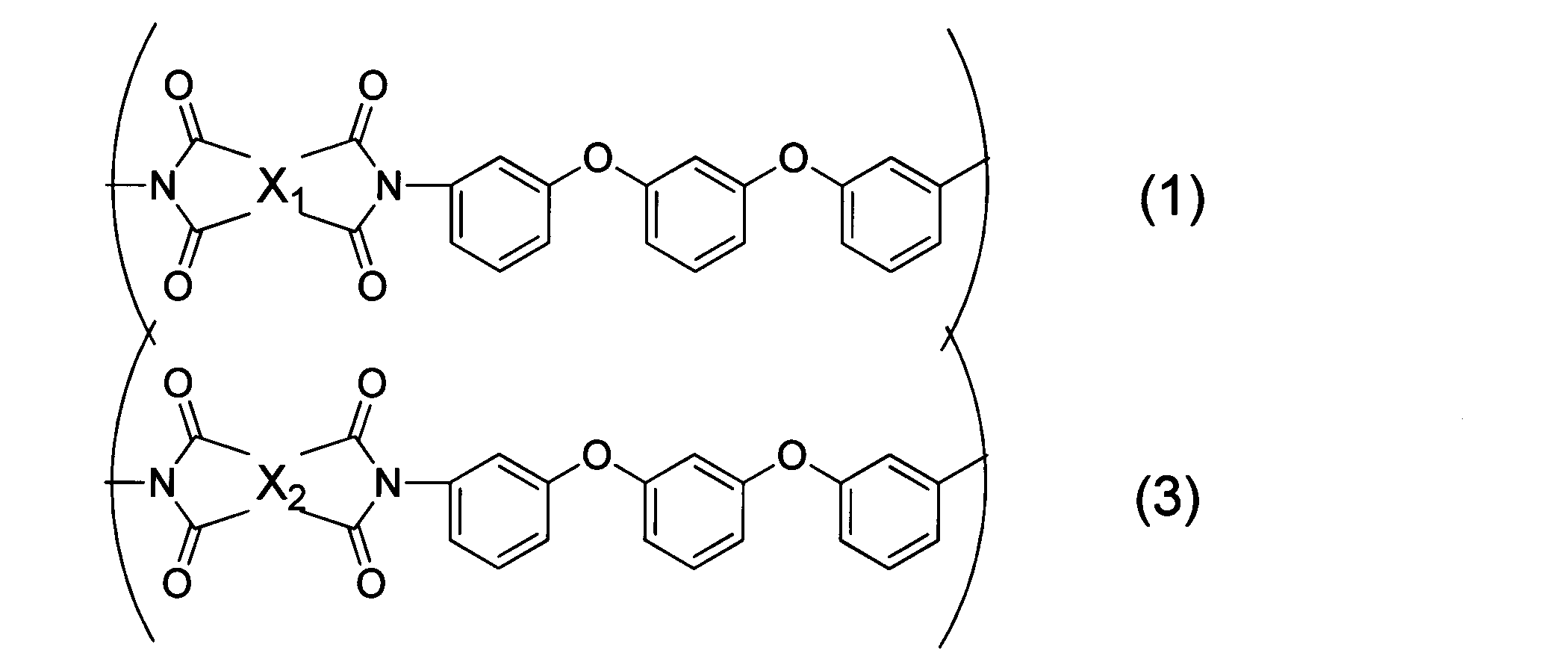
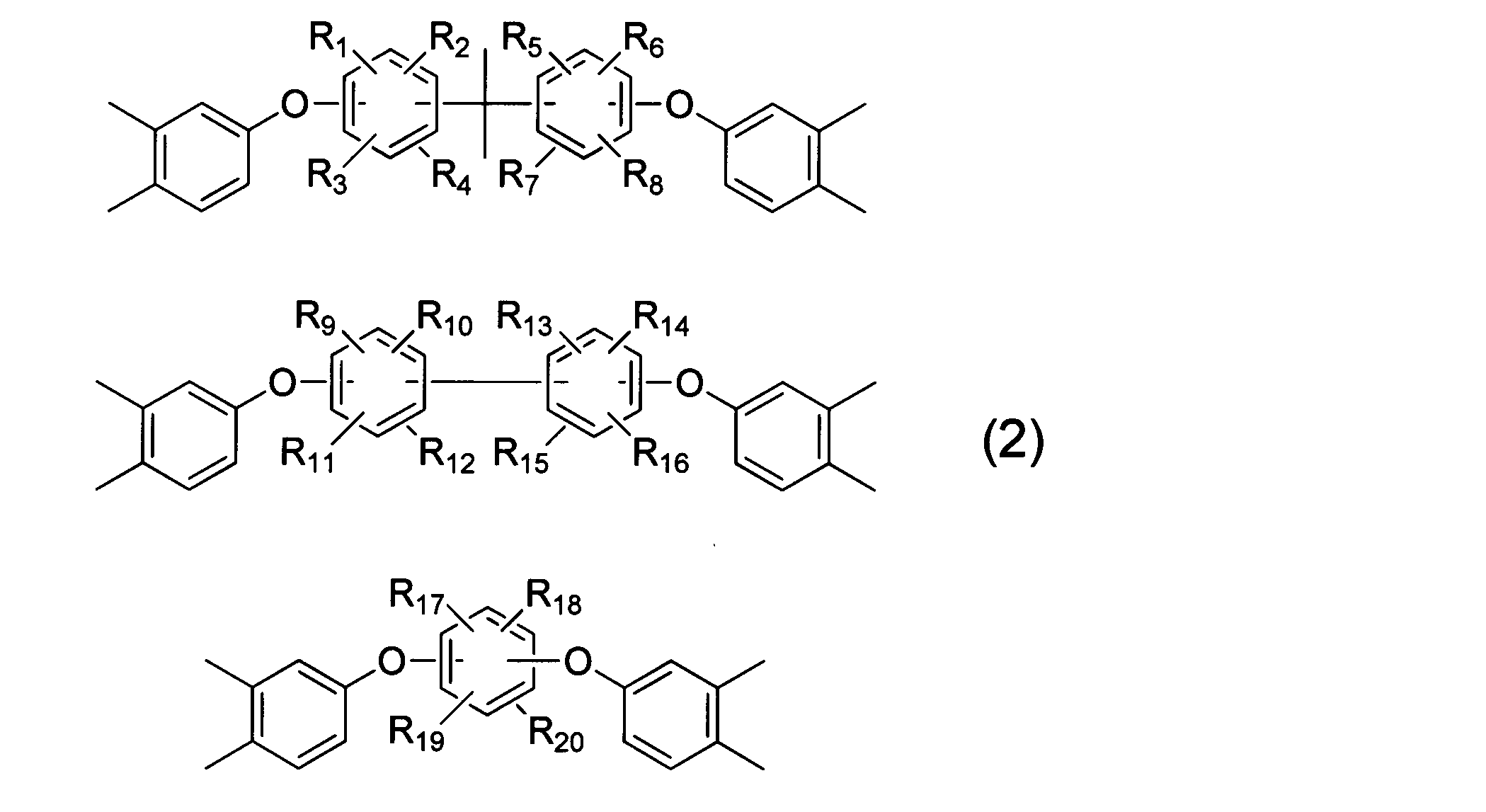
ここで、一般式(2)で表されるエーテル結合を2つ有するテトラカルボン酸の残基は、特に限定されるものではないが、下記式(5)で挙げられるビスフェノール骨格を含むテトラカルボン酸残基、式(6)で表されるビフェノール骨格を含むテトラカルボン酸残基、式(7)で表されるヒドロキノン、レゾルシノール骨格を含むテトラカルボン酸残基が好ましい。また、耐熱性に優れるため、式(5)で挙げられるビスフェノール骨格を含むテトラカルボン酸残基がより好ましく、誘電損失が小さいことから、下記式(a)で表されるテトラカルボン酸残基が特に好ましい。


本発明の共重合ポリイミドの一般式(3)中のX2は、前記一般式(2)を除くテトラカルボン酸の残基であれば特に限定されないが、一般式(4)で表されるテトラカルボン酸の残基のいずれか或いはそれらの混合物であることが好ましく、エーテル結合を有さないテトラカルボン酸の残基は、比較的剛直な構造であるため、ポリイミドとした場合、高分子鎖間の絡み合いが低減するため、ガラス転移温度以上での流動性に優れることからより好ましい。更にエーテル結合を有するテトラカルボン酸無水物に比べ、これらのテトラカルボン酸無水物は反応性に優れるため、容易に共重合ポリイミドを得ることができる。また、ケトン結合を有さないテトラカルボン酸の残基であることが好ましく、ケトン結合は加熱時に架橋反応が生じ、ポリイミドの流動性が低下する。特に、ビフェニルテトラカルボン酸の残基や、ピロメリット酸の残基は、上記の目的を少量で達成できるため、より好ましく、更に少ない量で達成できるため、ビフェニルテトラカルボン酸の残基が好ましい。
本発明では、一般式(1)で表される繰り返し単位と一般式(3)で表される繰り返し構造を有する共重合ポリイミドのうち、一般式(1)のモル数/[一般式(1)のモル数 + 一般式(3)のモル数]で計算される値が0.50以上~1.00未満であれば、特に限定されないが、ガラス転移温度が低いため、0.72~0.99が好ましく、接着性に優れるため、0.72~0.98がより好ましくは、特に低温での接着性に優れるため、0.95~0.98が特に好ましい。
また、本発明の共重合ポリイミドは、GPCより求められる重量平均分子量が、5,000~1,000,000であることが好ましく、接着性に優れるため、10,000~500,000であることがより好ましく、耐熱性に優れるため、50,000~500,000であることが特に好ましい。
本発明の共重合ポリイミドは、特に限定されるわけではないが、膜厚5~150μmのフィルムで測定した動的粘弾性測定のtanδのピークから得られるガラス転移温度が240℃未満であり、好ましくは205℃未満、より好ましくは200℃未満、更に好ましくは、150~190℃、特に好ましくは150~180℃である。ここでのガラス転移温度とは、例えば、熱可塑性ポリイミド層のみのフィルムや多層ポリイミドフィルムを用い、動的粘弾性測定(DMS)や、熱機械分析(TMA)、示差走査熱量測定(DSC)、示差熱分析(DTA)より求められ公知の条件、解析方法を用いたいずれのガラス転移温度を採用してもよい。この範囲であれば、240℃以下の比較的低いプレス温度で接着できることから好ましい。
本発明の共重合ポリイミドは、特に限定されるわけではないが、膜厚5~150μmのフィルムで測定した動的粘弾性測定における貯蔵弾性率が5×10⁶Pa以下となる温度が、好ましくは210℃以下、より好ましくは100~200℃、更に好ましくは150~195℃、特に好ましくは170~190℃である。また、貯蔵弾性率が106Pa以下となる温度が、好ましくは280℃以下、より好ましくは100~250℃、更に好ましくは150~230℃、特に好ましくは170~220℃である。そして、貯蔵弾性率が5×10⁵Pa以下となる温度が、好ましくは300℃以下、より好ましくは100~280℃、更に好ましくは150~260℃、特に好ましくは170~240℃である。更に、貯蔵弾性率が105Pa以下となる温度が、好ましくは350℃以下、より好ましくは100~300℃、更に好ましくは150~280℃、特に好ましくは170~260℃である。この範囲であると、240℃以下の比較的低いプレス温度で接着できため、好適である。
本発明の共重合ポリイミドは、特に限定されるわけではないが、膜厚5~150μmのフィルムで測定した動的粘弾性測定において、200℃における貯蔵弾性率が好ましくは6×10⁶Pa以下、より好ましくは1×10⁵~5×10⁶Pa、特に好ましくは5×10⁵~4×10⁶Paである。また、210℃における貯蔵弾性率が好ましくは5×10⁶Pa以下、より好ましくは0.1×10⁵~4.5×10⁶Pa、特に好ましくは1×10⁵~3×10⁶Paである。そして、220℃における貯蔵弾性率が好ましくは4×10⁶Pa以下、より好ましくは0.1×10⁵~2×10⁶Pa、特に好ましくは1×10⁵~1×10⁶Paである。この範囲であると、240℃以下の比較的低いプレス温度で接着できため、好適である。
特に限定されるわけではないが、本発明の共重合ポリイミドの粘弾性は、図3に示されるように、従来のポリイミドの粘弾性(図4)と比べ、200℃付近からの高温域において貯蔵弾性率の顕著な低下が確認された。したがって、本発明の共重合ポリイミドは、200℃付近からの高温域において、従来のポリイミドに比べ大きく異なる特性が得られることが明らかとなった。
本発明の共重合ポリイミドは、限定されるわけではないが、従来のポリイミドフィルム製造と同時に製造を可能とする耐熱性を有することから、熱重量分析(TGA)で求めた1%重量減少温度が、400℃以上であることが好ましく、より好ましくは450℃以上、特に好ましくは、460℃以上である。特に限定されるわけではないが、TGAの測定は、窒素気流中、昇温速度10℃/minで25℃から600℃まで昇温し、得られた重量曲線から求めた1%重量減少温度が好適に採用できる。
本発明の共重合ポリイミドは、限定されるわけではないが、1kHz~10GHzにおける比誘電率が好ましくは3.4以下、より好ましくは3.2以下、特に好ましくは3.1以下であり、誘電正接が好ましくは0.010以下、より好ましくは0.005以下、特に好ましくは0.003以下である。この範囲であれば、高周波回路向けの絶縁材、接着剤として好適に用いることができる。特に限定されるわけではないが、JIS C6481に基づき、常態(C-96/20/65)で測定した比誘電率、誘電正接が好適に採用できる。また、測定装置、方法は、公知のものを好適に用いることができる。
本発明の共重合ポリイミドは、特に限定されるわけではないが、テトラカルボン酸成分と、ジアミン成分を反応させて得られるポリイミドであり、テトラカルボン酸成分の総モル数が、ジアミン成分の総モル数より、好ましくは、0.5~10モル%過剰、より好ましくは、1~7モル%過剰、特に好ましくは、1~5モル%過剰である。この範囲であれば、低温での接着性と耐熱性を両立できることから好ましい。これは、ポリイミド分子量を調整する目的であり、一般式(4)で表されるテトラカルボン酸の残基を用いることと併せて、高分子鎖間の絡み合いが低減するため、接着性向上に効果がある。得られるポリイミドは、原料として使用したテトラカルボン酸成分に基づくテトラカルボン酸残基およびジアミン成分に基づくジアミン残基を、仕込みモル比に対応する割合で含有する。
本発明の共重合ポリイミドは、限定されるわけではないが、低誘電損失であることから、ASTM D570 23℃ 24時間水中浸漬で求めた吸水率が1.4%以下であることが好ましく、より好ましくは1.0%、特に好ましくは、0.8%以下である。
[共重合ポリイミドの応用]
本発明の共重合ポリイミドは種々の用途に使用することができる。好ましい用途の一つは、前述の多層ポリイミドフィルム(即ち、ガラス転移温度が240℃未満の熱可塑性ポリイミド(A)を含有する層(A)と、ガラス転移温度が240℃以上の耐熱性ポリイミド(B)を含有する層(B)とを含む多層ポリイミドフィルム)であり、この多層ポリイミドフィルムの熱可塑性ポリイミド(A)として好適に使用することができる。
本発明の共重合ポリイミドは種々の用途に使用することができる。好ましい用途の一つは、前述の多層ポリイミドフィルム(即ち、ガラス転移温度が240℃未満の熱可塑性ポリイミド(A)を含有する層(A)と、ガラス転移温度が240℃以上の耐熱性ポリイミド(B)を含有する層(B)とを含む多層ポリイミドフィルム)であり、この多層ポリイミドフィルムの熱可塑性ポリイミド(A)として好適に使用することができる。
本発明の耐熱性接着剤(後記の耐熱性接着フィルム、接着剤付金属箔、接着剤付樹脂フィルム、積層体、回路も同様)は、前記の共重合ポリイミドを含むことを特徴とする。特に限定されないが、耐熱性に優れるため、耐熱性接着剤中に本発明の共重合ポリイミドが、30質量%以上が好ましく、50質量%がより好ましい。さらに電率損失が小さいことから、80質量%が好ましく、90質量%以上がより好ましく、95質量%以上が特に好ましい。また、この耐熱性接着剤(後記の耐熱性接着フィルム、接着剤付金属箔、接着剤付樹脂フィルム、積層体も同様)には、エポキシ樹脂、フェノール樹脂、アクリル樹脂、シアネート樹脂、BTレジン等の熱硬化性樹脂や、無機フィラー、顔料、染料、酸化防止剤、可塑剤、溶剤などを好適に添加することができる。しかし、本発明において、共重合ポリイミドは、可塑剤や溶剤などの層を可塑化する物質を含有しなくても、低温、短時間で接着可能な熱可塑性(熱融着性、熱圧着性)を有することから、可塑剤や溶剤などの添加剤を含有しなくてもよい。また、耐久性や機械的特性の観点から、熱硬化性樹脂や熱可塑性樹脂を含有しないオールポリイミドの組成とすることも好ましい。
本発明の耐熱性接着剤(後記の耐熱性接着フィルム、接着剤付金属箔、接着剤付樹脂フィルム、積層体、回路も同様)は、高温に晒された場合も接着性が保持可能である。特に限定されるわけではないが、150℃耐熱試験での90°ピール強度の半減時間(試験前のピール強度を1とした場合、0.5以上である最大の時間)は、好ましくは100時間以上、より好ましくは1000時間以上、更に好ましくは3000時間以上である。
本発明の耐熱接着フィルムは、本発明の共重合ポリイミドを含み、膜厚1~250μmの接着フィルムであること特徴とする。膜厚は、生産性に優れるため、膜厚5~150μmがより好ましく、埋め込み性に優れるため、膜厚10~150μmが特に好ましい。
本発明の接着剤付金属箔は、接着層に本発明の共重合ポリイミドを含んでいることを特徴とする。特に限定されないが、ここで用いられる金属箔(後記の積層体も同様)は、金属箔としては、銅、アルミニウム、金、ニッケルの箔やステンレスなどの合金の箔など各種金属箔を用いることができる。この中で、銅箔が好ましく使用される。銅箔の具体例としては、圧延銅箔、電解銅箔などが挙げられる。金属箔としては、どのような表面粗さでも用いることができるが、表面粗さRzが0.5μm以上であるものが好ましい。また、金属箔の表面粗さRzが7μm以下、特に5μm以下であるものが好ましい。このような金属箔、例えば銅箔はVLP、LP(またはHTE)として知られている。金属箔の厚さは特に制限はないが、2~35μm、特に5~18μmであるものが好ましい。金属箔の厚みが5μm以下のものは、キャリア付き金属箔、例えばアルミニウム箔キャリア付き銅箔が使用できる。
一方、接着剤付金属箔に用いる接着剤の膜厚は、生産性に優れるため、膜厚1~150μmがより好ましく、埋め込み性に優れるため、膜厚3~150μmが特に好ましい。
本発明の接着剤付樹脂フィルムは、接着層に本発明の共重合ポリイミドを含んでいることを特徴とする。特に限定されないが、ここで用いられる樹脂フィルムは、ポリイミドフィルム、PETフィルム、PENフィルム、COPフィルム、ポリカーボネートフィルムなどが好適に用いることができ、特に耐熱性に優れるため、ポリイミドフィルムが好ましい。一方、接着剤付樹脂フィルムに用いる接着剤は、フィルムの片面もしくは両面に形成され、その膜厚は、生産性に優れるため、膜厚1~150μmがより好ましく、埋め込み性に優れるため、膜厚3~150μmが特に好ましい。
本発明の共重合体を用いたポリイミド積層体は、ガラス層、セラミック層等の無機層、樹脂層等の有機層、または金属層と、本発明の共重合ポリイミドを含む接着層と積層した積層体である。この積層体接着剤の膜厚は、生産性に優れるため、膜厚1~150μmがより好ましく、埋め込み性に優れるため、膜厚3~150μmが特に好ましい。
本発明の電子回路は、前記共重合ポリイミドを含む絶縁層を用いることを特徴とする。特に限定されるわけではないが、電気絶縁性、誘電特性に優れるため、ガラス・エポキシ基板を用いるリジッドプリント回路、ポリイミドをはじめとする樹脂フィルム基板を用いるフレキシブルプリント回路、無機基板を用いるセラミック回路に好適に用いることができる。特に絶縁信頼性に優れることから、ファインピッチな回路の絶縁層に用いることができる。好ましくはライン幅とスペース幅は同様に、100μm以下、より好ましくは50μm以下、更に好ましくは20μm以下、特に好ましくは、1~10μmである。この範囲であれば、長期の絶縁信頼性が得られることから好ましい。
本発明の電子回路は、前記共重合ポリイミドを含む絶縁層の加熱時の流動性に優れることから、好ましくは200℃以下、より好ましくは190℃以下、特に好ましくは180℃以下でのプレス温度で接着可能である。さらに、前記温度でファインピッチな配線パターンを埋め込むことが可能であり、好ましくはライン幅とスペース幅は同様に 100μm以下、より好ましくは50μm以下、更に好ましくは20μm以下、特に好ましくは、1~10μmである。
本発明の共重合ポリイミドは、従来のポリイミド製造方法により容易に得られ、比較的低温でも接着可能であり、高耐熱性、高接着強度及び低誘電特性を達成できるため、電子材料向け耐熱性接着剤として好適に用いることができる。具体的には、カバーレイ、多層基板の相間接着剤、多層基板のボンディングシート、部品内蔵基板の埋め込み樹脂、封止樹脂、アンダーフィル、銅張積層板の接着層、TABテープの接着層などである。
(共重合ポリイミドの製造)
本発明の共重合ポリイミドの製造方法は、当業者に公知の様々な製造方法により製造できるが、一般に対応するポリイミド前駆体であるポリアミック酸を脱水閉環して得られる。ポリアミック酸は、テトラカルボン酸成分とジアミン成分とを反応させて得られる。
本発明の共重合ポリイミドの製造方法は、当業者に公知の様々な製造方法により製造できるが、一般に対応するポリイミド前駆体であるポリアミック酸を脱水閉環して得られる。ポリアミック酸は、テトラカルボン酸成分とジアミン成分とを反応させて得られる。
ジアミン成分としては、1,3-ビス(3-アミノフェノキシ)ベンゼン(APB)が用いられる。本発明の目的を損なわない範囲で、その他のジアミン化合物を含有してもよいが、好ましくは20モル%以下、より好ましくは10モル%以下であり、0%(APBのみ)も好ましい。
一般式(1)で表される繰り返し単位を与えるテトラカルボン酸成分は、X1、即ち一般式(2)で示される残基が導かれるテトラカルボン酸成分(テトラカルボン酸二無水物、テトラカルボン酸)である。一般式(3)で表される繰り返し単位を与えるテトラカルボン酸成分は、式(2)以外の残基が導かれるテトラカルボン酸成分(テトラカルボン酸二無水物、テトラカルボン酸)である。本発明の共重合ポリイミドを製造するに当たっては、一般式(1)を与えるテトラカルボン酸成分と一般式(3)を与えるテトラカルボン酸成分とを組み合わせて使用する。組み合わせのモル比、好ましいテトラカルボン酸成分等については、テトラカルボン酸残基およびポリイミド構造についての前述の説明に対応する。
反応の代表的な手順として、ジアミン成分を有機極性溶剤に溶解または分散させ、その後、テトラカルボン酸二無水物成分を添加しポリアミック酸溶液を得る方法が挙げられる。各モノマーの添加順序は特に限定されないが、ジアミンを有機極性溶媒に先に加えておき、溶液の粘度調整しながら、テトラカルボン酸二無水物を添加することが好ましい。このとき、ジアミンが過剰量である場合、テトラカルボン酸を添加し、等モルとすることが好ましい。
また、前述のとおり、テトラカルボン酸成分のモル数がジアミン成分のモル数より過剰であることも好ましく、この場合、テトラカルボン酸二無水物の量をジアミン成分と等モル量とし、ジアミン成分より過剰のテトラカルボン酸成分をテトラカルボン酸としてもよい。等モルのテトラカルボン酸二無水物とジアミンとを反応させ、その後の最後にテトラカルボン酸を添加することが好ましい。
なお、ここでいう「溶解」とは、溶媒が溶質を完全に溶解する場合の他に、溶質が溶媒中に均一に分散されて実質的に溶解しているのと同様の状態になる場合を含む。ポリアミック酸の重合反応に用いられる有機極性溶媒としては、例えば、ジメチルスルホキシド、ジエチルスルホキシド等のスルホキシド系溶媒、N,N-ジメチルホルムアミド、N,N-ジエチルホルムアミド等のホルムアミド系溶媒、N,N-ジメチルアセトアミド、N,N-ジエチルアセトアミド等のアセトアミド系溶媒、N-メチル-2-ピロリドン等のピロリドン系溶媒、フェノール、o-、m-またはp-クレゾール、キシレノール、ハロゲン化フェノール、カテコール等のフェノール系溶媒、あるいはヘキサメチルホスホルアミド、γ-ブチロラクトン等を挙げることができる。更に必要に応じて、これらの有機極性溶媒とキシレンあるいはトルエン等の芳香族炭化水素とを組み合わせて用いることもできる。
上記で得られたポリアミック酸溶液を、熱的または化学的方法により脱水閉環し、熱可塑性ポリイミドを得るが、ポリアミック酸溶液を熱処理して脱水する熱的方法、脱水剤を用いて脱水する化学的方法のいずれも用いられる。また、減圧下で加熱してイミド化する方法も用いることができる。以下に各方法について説明する。
熱的に脱水閉環する方法として、上記ポリアミック酸溶液を加熱処理によりイミド化反応を進行させると同時に、溶媒を蒸発させる等により行う方法を例示することができる。この方法により、固形のポリイミド樹脂を得ることができる。加熱の条件は特に限定されないが、200℃以下の温度で3分~120分の時間範囲で有機溶媒を除去した後、400℃以下の温度で1分~200分の時間範囲で行うのが好ましく。
また化学的に脱水閉環する方法として、上記ポリアミック酸溶液に化学量論以上の脱水剤と触媒を加えることで脱水反応と有機溶媒を蒸発させる等により行う方法を例示することができる。これにより、固形の熱可塑性ポリイミド樹脂を得ることができる。化学的方法による脱水剤としては、例えば無水酢酸等の脂肪族酸無水物、無水安息香酸等の芳香族酸無水物などが挙げられる。また触媒としては、例えばトリエチルアミンなどの脂肪族第3級アミン類、ジメチルアニリン等の芳香族第3級アミン類、ピリジン、α-ピコリン、β-ピコリン、γ-ピコリン、イソキノリン等の複素環式第3級アミン類などが挙げられる。化学的に脱水閉環する際の条件は100℃以下の温度が好ましく、有機溶媒の蒸発は、200℃以下の温度で約5分~120分の時間の範囲で行うのが好ましい。
また、熱可塑性ポリイミド樹脂を得るための別の方法として、上記の熱的または化学的に脱水閉環する方法において溶媒の蒸発を行わない方法もある。具体的には、溶媒中で熱的イミド化処理または脱水剤による化学的イミド化処理を行って得られる熱可塑性ポリイミド樹脂溶液を貧溶媒中に投入して、熱可塑性ポリイミド樹脂を析出させ、未反応モノマーを取り除いて精製、乾燥させ固形の熱可塑性ポリイミド樹脂を得る方法である。貧溶媒としては、溶媒とは良好に混合するが熱可塑性ポリイミドは溶解しにくい性質のものを選択し、例示すると、アセトン、メタノール、エタノール、イソプロパノール、ベンゼン、メチルセロソルブ、メチルエチルケトン等が挙げられるがこれに限定されない。
また、減圧下で加熱してイミド化する方法も挙げられる。このイミド化の方法によれば、イミド化によって生成する水を積極的に系外に除去できるので、ポリアミック酸の加水分解を抑えることが可能で高分子量の熱可塑性ポリイミドが得られる。またこの方法によれば、原料のテトラカルボン酸二無水物中に不純物として存在する片側または両側開環物が再閉環するので、より一層の分子量の向上効果が期待できる。
減圧下で加熱イミド化する方法の加熱条件は80~400℃が好ましいが、イミド化が効率よく行われ、しかも水が効率よく除かれる100℃以上がより好ましく、さらに好ましくは120℃以上である。最高温度は目的とする熱可塑性ポリイミドの熱分解温度以下が好ましく、通常のイミド化の完結温度すなわち250~350℃程度が通常適用される。減圧する圧力の条件は、低圧条件が好ましいが、具体的には0.9~0.001気圧、好ましくは0.8~0.001気圧、より好ましくは0.7~0.01気圧である。
(共重合ポリイミドを含む積層体の製造方法)
本発明の共重合ポリイミドを含む積層体の製造方法は、ポリアミック酸溶液をガラス層、樹脂層、セラミック層、金属層のいずれかの層に流延または塗布し、
熱処理することにより、共重合ポリイミドを含む積層体の製造方法であって、
その共重合ポリイミドが、一般式(1)で表される繰り返し単位と一般式(3)で表される繰り返し構造を有する共重合ポリイミドのうち、一般式(1)のモル数/[一般式(1)のモル数 + 一般式(3)のモル数]で計算される値が0.50以上であることを特徴とする。
本発明の共重合ポリイミドを含む積層体の製造方法は、ポリアミック酸溶液をガラス層、樹脂層、セラミック層、金属層のいずれかの層に流延または塗布し、
熱処理することにより、共重合ポリイミドを含む積層体の製造方法であって、
その共重合ポリイミドが、一般式(1)で表される繰り返し単位と一般式(3)で表される繰り返し構造を有する共重合ポリイミドのうち、一般式(1)のモル数/[一般式(1)のモル数 + 一般式(3)のモル数]で計算される値が0.50以上であることを特徴とする。

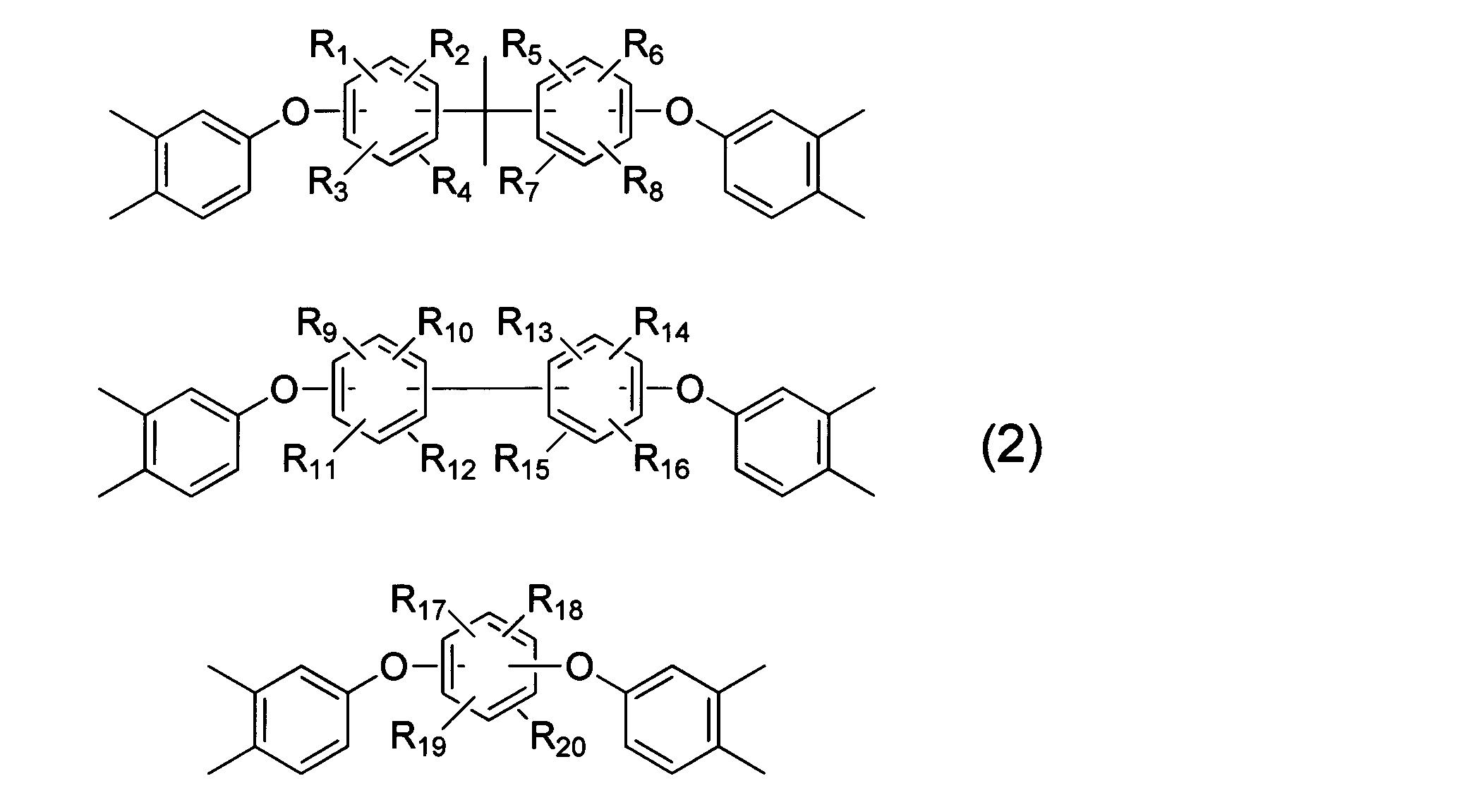
ここで使用するガラス層、セラミック層等の無機層、樹脂層等の有機層、金属層は、特に限定されないが、耐熱性に優れるものが好適であり、ガラス層、ポリイミドフィルムなどの樹脂層、銅箔やステンレス箔などの金属層がより好ましい。一方、熱処理の温度は、特に限定されないが、200℃以下の温度で3分~120分の時間範囲で有機溶媒を除去した後、400℃以下の温度で1分~200分の時間範囲で行うのが好ましい。
本発明の耐熱性接着フィルムの製造方法は、前記の共重合ポリイミドを含む積層体の製造方法より、ガラス層、樹脂層、セラミック層、金属層のいずれかのひとつの層を剥離して、得られることを特徴とする。剥離の方法は特に限定されないが、予めキャリア層に剥離剤による処理を施すことが好ましく、また、共重合ポリイミドへ内部剥離剤などを添加することが好ましい。
本発明の多層のポリイミド積層体の製造方法は、前記の方法で得られた共重合ポリイミド積層体もしくは、耐熱性接着フィルムを、さらにガラス層、セラミック層等の無機層、樹脂層等の有機層、または金属層と重ね、貼り合せることで得られる。貼り合せの方法は、特に限定されないが、熱プレス、真空熱プレス、ロール式ラミネート、RTM成形、真空バッグ成形などを好適に用いることができる。本発明の共重合ポリイミドは、成形性に優れるため、比較的低温、低圧、短時間の条件で貼り合せできるため、貼り合せの温度は、好ましくは150~240℃、より好ましくは180℃~220℃、特に好ましくは180℃~200℃であり、圧力は、好ましくは0.01~10MPa、より好ましくは0.1~5MPa、特に好ましくは、0.5~3MPaであり、圧着時間は、好ましくは30分以下、より好ましくは10分以下、特に好ましくは、10秒~1分である。
以下、実施例及び比較例によって本発明を更に説明する。尚、本発明は以下の実施例に限定されるものではない。
以下の各例で使用した原材料は、次のとおりである。
[一般式(1)で用いるテトラカルボン酸成分]
4,4’-(4,4’-イソプロピリデンジフェノキシ)ビス(フタル酸無水物):BPADA
4,4’-(p-フェニレンジオキシ)ビス(フタル酸無水物):HQDA
[一般式(3)で用いるテトラカルボン酸成分]
3,3’,4,4’-ビフェニルテトラカルボン酸二無水物:s-BPDA
3,3’,4,4’-ビフェニルテトラカルボン酸:s-BPTA
2,3,3’,4’-ビフェニルテトラカルボン酸二無水物:a-BPDA
2,3,3’,4’-ビフェニルテトラカルボン酸:a-BPTA
[その他のテトラカルボン酸成分]
ピロメリット酸無水物:PMDA
[ジアミン成分]
1,3-ビス(3-アミノフェノキシ)ベンゼン:APB
パラフェニレンジアミン:PPD
4,4’-ジアミノジフェニルエーテル:DADE
2,2-ビス[4-(4-アミノフェノキシ)フェニル]プロパン:BAPP
[溶剤]
N,N-ジメチルアセトアミド:DMAc
[その他]
耐熱性ポリイミド層(B’)を有するポリイミドフィルム:このポリイミドフィルムの動的粘弾性測定より求めた高温側のガラス転移温度は、342℃であった。
[一般式(1)で用いるテトラカルボン酸成分]
4,4’-(4,4’-イソプロピリデンジフェノキシ)ビス(フタル酸無水物):BPADA
4,4’-(p-フェニレンジオキシ)ビス(フタル酸無水物):HQDA
[一般式(3)で用いるテトラカルボン酸成分]
3,3’,4,4’-ビフェニルテトラカルボン酸二無水物:s-BPDA
3,3’,4,4’-ビフェニルテトラカルボン酸:s-BPTA
2,3,3’,4’-ビフェニルテトラカルボン酸二無水物:a-BPDA
2,3,3’,4’-ビフェニルテトラカルボン酸:a-BPTA
[その他のテトラカルボン酸成分]
ピロメリット酸無水物:PMDA
[ジアミン成分]
1,3-ビス(3-アミノフェノキシ)ベンゼン:APB
パラフェニレンジアミン:PPD
4,4’-ジアミノジフェニルエーテル:DADE
2,2-ビス[4-(4-アミノフェノキシ)フェニル]プロパン:BAPP
[溶剤]
N,N-ジメチルアセトアミド:DMAc
[その他]
耐熱性ポリイミド層(B’)を有するポリイミドフィルム:このポリイミドフィルムの動的粘弾性測定より求めた高温側のガラス転移温度は、342℃であった。
ポリイミド基板:宇部エクシモ(株)製ユピセルNの銅箔をエッチングし、表面をポリイミドとした基板を用いた。
銅箔:三井金属株式会社製3EC-VLP(厚み18μm)を公知の方法で洗浄したものを用いた。
以下の各例において評価は次の方法で行った。
[回転粘度]
東機産業製TV-22 E型回転粘度計を用い、温度30℃ せん断速度2sec-1でのポリイミド前駆体溶液の粘度を求めた。
[ワニス固形分]
アルミシャーレにポリイミド前駆体溶液1gを量り取り、200℃の熱風循環オーブン中で2時間加熱して固形分以外を除去し、その残分の質量よりワニス固形分(加熱残分 質量%)を求めた。
東機産業製TV-22 E型回転粘度計を用い、温度30℃ せん断速度2sec-1でのポリイミド前駆体溶液の粘度を求めた。
[ワニス固形分]
アルミシャーレにポリイミド前駆体溶液1gを量り取り、200℃の熱風循環オーブン中で2時間加熱して固形分以外を除去し、その残分の質量よりワニス固形分(加熱残分 質量%)を求めた。
ポリイミドフィルムの評価
[動的粘弾性測定:貯蔵弾性率(E’)、損失弾性率(E”)、ガラス転移温度]
膜厚約25μmのポリイミド膜を短冊状に切り取って試験片とし、TA Instruments社製動的粘弾性測定装置 RSA-G2を用い以下の条件で測定し、貯蔵弾性率(E’)、損失弾性率(E”)、tanδのピークよりガラス転移温度を求めた。
[動的粘弾性測定:貯蔵弾性率(E’)、損失弾性率(E”)、ガラス転移温度]
膜厚約25μmのポリイミド膜を短冊状に切り取って試験片とし、TA Instruments社製動的粘弾性測定装置 RSA-G2を用い以下の条件で測定し、貯蔵弾性率(E’)、損失弾性率(E”)、tanδのピークよりガラス転移温度を求めた。
測定モード: 引っ張りモード
SWEEP TYPE: 温度ステップ 3℃/min Soak時間 0.5min
周波数: 1Hz (6.28rad/sec)
ひずみ: 0.2~2%
温度範囲: 25℃~測定限界まで
雰囲気: 空気気流中
[熱機械特性(TMA):ガラス転移温度]
膜厚約25μmのポリイミド膜を幅4mmの短冊状に切り取って試験片とし、島津製作所製TMA-50を用い、チャック間長15mm、荷重2g、昇温速度20℃/minで300℃まで昇温した。得られたTMA曲線の変曲点から、ガラス転移温度を求めた。
[1%熱重量減少温度、揮発性溶媒量]
膜厚25μmのポリイミドフィルムを試験片とし、エスアイアイ・ナノテクノロジー製 示差熱熱重量同時測定装置(TG/DTA6300)を用い、窒素気流中、昇温速度10℃/minで25℃から600℃まで昇温した。得られた重量曲線から、1%熱重量減少温度(100℃を基準とし、重量が1%減少した温度)を求めた。なお、揮発性溶媒量は、100~300℃間の減量%より求めた。
[重量平均分子量]
ポリイミドフィルムを移動相(臭化リチウムを0.05M含むN―メチルピロリドン)と同じ溶媒に、濃度0.5%に溶解したサンプルを作成し、ゲルパーミエーションクロマトグラフィー(GPC、カラム温度40℃、標準物質:ポリスチレン)を用い、重量平均分子量を測定した。
[誘電特性(比誘電率、誘電正接)]
膜厚約25μmのポリイミド膜を20枚程度重ねたものを試験片とし、インピーダンスアナライザの容量法(RF impedance/material analyzer HP4291B, HP16453A(アジレント・テクノロジー製)にて測定した。なお、試験片は20℃,65%RH,96時間前処理したものを用いた。
[層間接着強度(ピール強度)](多層ポリイミドフィルムについて)
多層ポリイミドフィルムの貼り合せ面の層間接着強度を測定するため、得られた多層ポリイミドフィルムより、耐熱性ポリイミド層(B)を有するポリイミドフィルムのみを引き出し、層間接着強度(90°ピール強度)を測定した。その他条件は、JIS C6481に従った。
SWEEP TYPE: 温度ステップ 3℃/min Soak時間 0.5min
周波数: 1Hz (6.28rad/sec)
ひずみ: 0.2~2%
温度範囲: 25℃~測定限界まで
雰囲気: 空気気流中
[熱機械特性(TMA):ガラス転移温度]
膜厚約25μmのポリイミド膜を幅4mmの短冊状に切り取って試験片とし、島津製作所製TMA-50を用い、チャック間長15mm、荷重2g、昇温速度20℃/minで300℃まで昇温した。得られたTMA曲線の変曲点から、ガラス転移温度を求めた。
[1%熱重量減少温度、揮発性溶媒量]
膜厚25μmのポリイミドフィルムを試験片とし、エスアイアイ・ナノテクノロジー製 示差熱熱重量同時測定装置(TG/DTA6300)を用い、窒素気流中、昇温速度10℃/minで25℃から600℃まで昇温した。得られた重量曲線から、1%熱重量減少温度(100℃を基準とし、重量が1%減少した温度)を求めた。なお、揮発性溶媒量は、100~300℃間の減量%より求めた。
[重量平均分子量]
ポリイミドフィルムを移動相(臭化リチウムを0.05M含むN―メチルピロリドン)と同じ溶媒に、濃度0.5%に溶解したサンプルを作成し、ゲルパーミエーションクロマトグラフィー(GPC、カラム温度40℃、標準物質:ポリスチレン)を用い、重量平均分子量を測定した。
[誘電特性(比誘電率、誘電正接)]
膜厚約25μmのポリイミド膜を20枚程度重ねたものを試験片とし、インピーダンスアナライザの容量法(RF impedance/material analyzer HP4291B, HP16453A(アジレント・テクノロジー製)にて測定した。なお、試験片は20℃,65%RH,96時間前処理したものを用いた。
[層間接着強度(ピール強度)](多層ポリイミドフィルムについて)
多層ポリイミドフィルムの貼り合せ面の層間接着強度を測定するため、得られた多層ポリイミドフィルムより、耐熱性ポリイミド層(B)を有するポリイミドフィルムのみを引き出し、層間接着強度(90°ピール強度)を測定した。その他条件は、JIS C6481に従った。
ポリイミド積層体の評価
[銅箔とのピール強度](多層ポリイミドフィルムの場合)
各例で得られた多層ポリイミドフィルムと、銅箔を重ね(このとき、多層ポリイミドフィルムは熱可塑性ポリイミド層(A)が、銅箔は光沢面が接する向きとする。)、熱プレス機にセットし、所定温度を保ちつつ、圧力3MPaで1分間プレスした。この積層体を90°ピール強度をJIS C6481(常態での引き剥がし強さ)に従い測定した。
[銅箔とのピール強度](共重合ポリイミドフィルムの場合)
各例で得られた膜厚約25μmの共重合ポリイミドフィルムを、銅箔、共重合ポリイミドフィルム、銅箔の順で(このとき、2枚それぞれの銅箔は、光沢面が共重合ポリイミドフィルム接する向きとする。)重ね、熱プレス機にセットし、所定温度を保ちつつ、圧力3MPaで1分間プレスし、ポリイミド積層体を作成した。この積層体の銅箔/共重合ポリイミドフィルム層間の90°ピール強度をJIS C6481(常態での引き剥がし強さ)に従い測定した。
[ポリイミド基板とのピール強度](多層ポリイミドフィルムの場合)
各例で得られた多層ポリイミドフィルムと、ポリイミド基板を重ね(このとき、多層ポリイミドフィルムは熱可塑性ポリイミド層(A)が、ポリイミド基板と接する向きとする。)、熱プレス機にセットし、所定温度を保ちつつ、圧力3MPaで1分間プレスした。この積層体を90°ピール強度をJIS C6481(常態での引き剥がし強さ)に従い測定した。
[ポリイミド基板とのピール強度](共重合ポリイミドフィルムの場合)
各例で得られた膜厚約25μmの共重合ポリイミドフィルムを、ポリイミド基板、共重合ポリイミドフィルム、ポリイミド基板の順となるよう重ね、熱プレスにセットし、所定温度を保ちつつ、圧力3MPaで1分間プレスし、ポリイミド積層体を作成した。この積層体のポリイミド基板/共重合ポリイミドフィルム層間の90°ピール強度(引き剥がし強さ)をJIS C6481に従い測定した。
[銅箔とのピール強度](多層ポリイミドフィルムの場合)
各例で得られた多層ポリイミドフィルムと、銅箔を重ね(このとき、多層ポリイミドフィルムは熱可塑性ポリイミド層(A)が、銅箔は光沢面が接する向きとする。)、熱プレス機にセットし、所定温度を保ちつつ、圧力3MPaで1分間プレスした。この積層体を90°ピール強度をJIS C6481(常態での引き剥がし強さ)に従い測定した。
[銅箔とのピール強度](共重合ポリイミドフィルムの場合)
各例で得られた膜厚約25μmの共重合ポリイミドフィルムを、銅箔、共重合ポリイミドフィルム、銅箔の順で(このとき、2枚それぞれの銅箔は、光沢面が共重合ポリイミドフィルム接する向きとする。)重ね、熱プレス機にセットし、所定温度を保ちつつ、圧力3MPaで1分間プレスし、ポリイミド積層体を作成した。この積層体の銅箔/共重合ポリイミドフィルム層間の90°ピール強度をJIS C6481(常態での引き剥がし強さ)に従い測定した。
[ポリイミド基板とのピール強度](多層ポリイミドフィルムの場合)
各例で得られた多層ポリイミドフィルムと、ポリイミド基板を重ね(このとき、多層ポリイミドフィルムは熱可塑性ポリイミド層(A)が、ポリイミド基板と接する向きとする。)、熱プレス機にセットし、所定温度を保ちつつ、圧力3MPaで1分間プレスした。この積層体を90°ピール強度をJIS C6481(常態での引き剥がし強さ)に従い測定した。
[ポリイミド基板とのピール強度](共重合ポリイミドフィルムの場合)
各例で得られた膜厚約25μmの共重合ポリイミドフィルムを、ポリイミド基板、共重合ポリイミドフィルム、ポリイミド基板の順となるよう重ね、熱プレスにセットし、所定温度を保ちつつ、圧力3MPaで1分間プレスし、ポリイミド積層体を作成した。この積層体のポリイミド基板/共重合ポリイミドフィルム層間の90°ピール強度(引き剥がし強さ)をJIS C6481に従い測定した。
〔実施例A1〕
反応容器中にAPB 100モル当量(0.15モル、43.85g)を入れ、DMAcをジアミン成分とテトラカルボン酸成分が濃度 30質量%となる量(264.70g)に溶解した。この溶液を50℃に加熱し、BPADA 75モル当量(58.55g)とs-BPDA 25モル当量(11.03g)を徐々に加え、8時間撹拌した。その後、s-BPTA(の2水和物) 4モル当量(2.20g)を溶解し、均一で粘稠な熱可塑性ポリイミド層を与えるポリイミド前駆体(a1)溶液(固形分30質量%)を得た。
反応容器中にAPB 100モル当量(0.15モル、43.85g)を入れ、DMAcをジアミン成分とテトラカルボン酸成分が濃度 30質量%となる量(264.70g)に溶解した。この溶液を50℃に加熱し、BPADA 75モル当量(58.55g)とs-BPDA 25モル当量(11.03g)を徐々に加え、8時間撹拌した。その後、s-BPTA(の2水和物) 4モル当量(2.20g)を溶解し、均一で粘稠な熱可塑性ポリイミド層を与えるポリイミド前駆体(a1)溶液(固形分30質量%)を得た。
得られたポリイミド前駆体(a1)溶液をガラス基板に塗布し、そのまま基板上で、120℃12分続いて、150℃、180℃、210℃、240℃、270℃、300℃で各2分、次いで最終的に340℃まで連続的に昇温して熱的にイミド化を行なって、熱可塑性ポリイミド層(A)/ガラス積層体を得た。次いで、得られたポリイミド/ガラス積層体を湯浴に浸漬した後剥離し、膜厚が約25μmの熱可塑性ポリイミド層(A)を得た。このポリイミドフィルムの特性を測定した結果を表1に示す。
前記の熱可塑性ポリイミド層(A)と、耐熱性ポリイミド層(B)を有するポリイミドフィルムを重ね、熱プレスにセットし、表1記載の温度を保ちつつ、圧力3MPaで1分間プレスし、耐熱性ポリイミド層と熱可塑性ポリイミド層が積層された多層ポリイミドフィルムを得た。この多層ポリイミドの相間接着強度の結果を表1に示す。
〔実施例A2~8および比較例A1〕
ジアミン成分、テトラカルボン酸成分を表1記載へ変更した以外は、実施例A1と同様にして熱可塑性ポリイミド層を有するポリイミドフィルム作製し、そして、同様の方法で、多層ポリイミドフィルムを得た。ポリイミドフィルムの特性及び、この多層ポリイミドの相間接着強度の結果を表1に示す。
ジアミン成分、テトラカルボン酸成分を表1記載へ変更した以外は、実施例A1と同様にして熱可塑性ポリイミド層を有するポリイミドフィルム作製し、そして、同様の方法で、多層ポリイミドフィルムを得た。ポリイミドフィルムの特性及び、この多層ポリイミドの相間接着強度の結果を表1に示す。
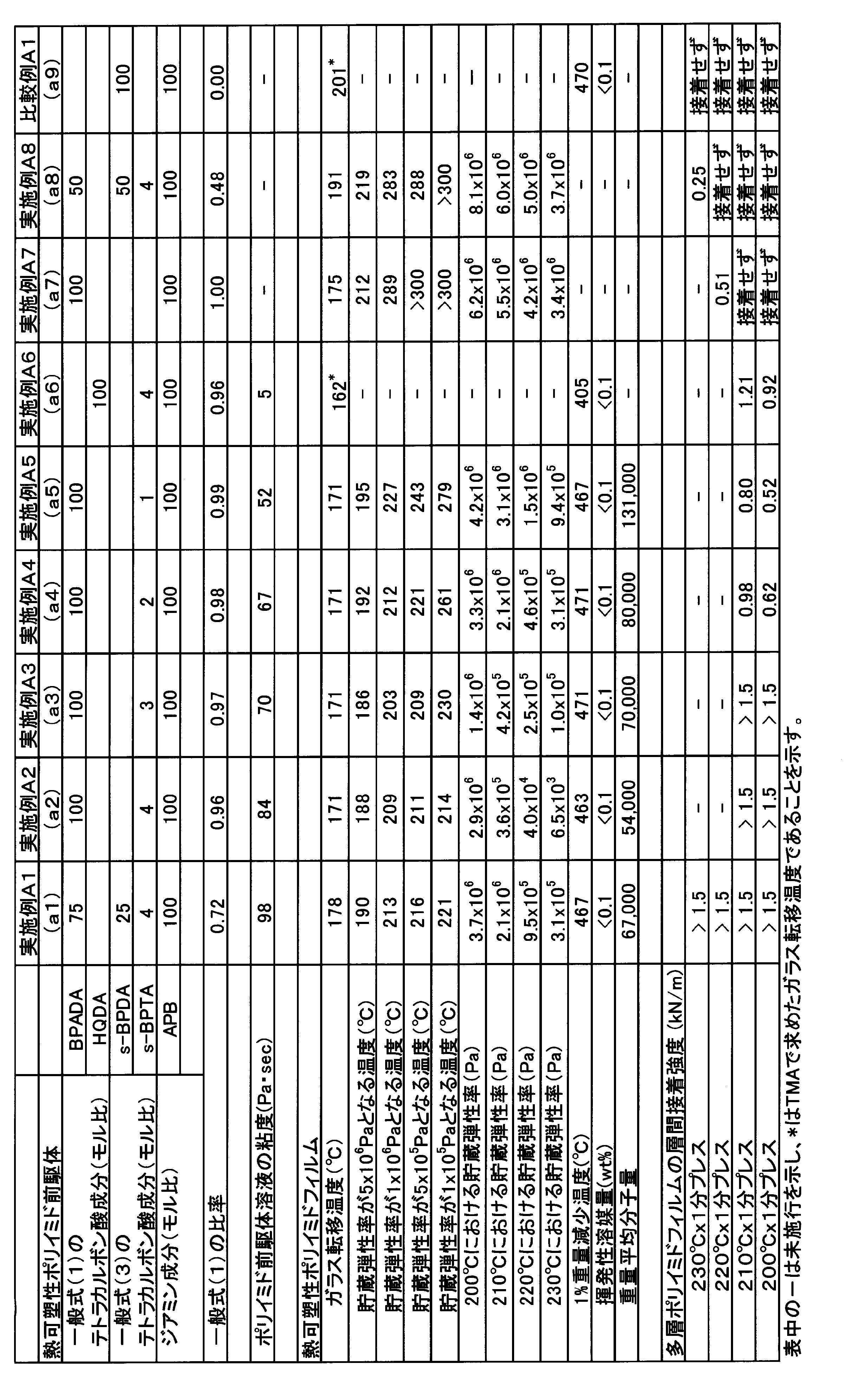
表1に示した結果から分かるとおり、実施例A1~8のポリイミドは、230℃以下の比較的低温でも貼り合せが可能であることから、従来のポリイミドフィルムの多層化に比べ、格段に加工プロセスが低温化できることが確認された。また、低温で貼り合せたにも関わらず、この多層ポリイミドフィルムの相間接着強度が高いことが確認された。
〔合成例1〕 耐熱性ポリイミド層を与えるポリイミド前駆体溶液(b1)の製造
攪拌機、窒素導入管を備えた反応容器に、ジメチルアセトアミド(DMAc)を加え、さらに、パラフェニレンジアミン(PPD)と3,3’,4,4’-ビフェニルテトラカルボン酸二無水物(s-BPDA)とを該等モル反応させ、固形分濃度が18重量%、30℃における溶液粘度が120Pa・secのポリイミド前駆体溶液(b1)を得た。このポリイミド前駆体溶液から得られたポリイミドフィルムのガラス転移温度(動的粘弾性測定より測定)は、340℃であった。
攪拌機、窒素導入管を備えた反応容器に、ジメチルアセトアミド(DMAc)を加え、さらに、パラフェニレンジアミン(PPD)と3,3’,4,4’-ビフェニルテトラカルボン酸二無水物(s-BPDA)とを該等モル反応させ、固形分濃度が18重量%、30℃における溶液粘度が120Pa・secのポリイミド前駆体溶液(b1)を得た。このポリイミド前駆体溶液から得られたポリイミドフィルムのガラス転移温度(動的粘弾性測定より測定)は、340℃であった。
〔合成例2〕 耐熱性ポリイミド層を与えるポリイミド前駆体溶液(b2)の製造
攪拌機、窒素導入管を備えた反応容器に、DMAcを加え、さらに、ジアミン成分としてのPPDおよび4,4-ジアミノジフェニルエーテル(DADE)と、テトラカルボン酸二無水物成分としてのs-BPDAおよびピロメリット酸二無水物(PMDA)とを供給し、テトラカルボン酸二無水物成分とジアミン成分とを反応させ、固形分濃度が18重量%、30℃における溶液粘度が115Pa・secのポリイミド前駆体溶液(b2)を得た。ここでは、PPDとDADEのモル比は、60:40また、s-BPDAとPMDAのモル比は30:70とした。このポリイミド前駆体溶液から得られたポリイミドフィルムのガラス転移温度(動的粘弾性測定より測定)は、381℃であった。
攪拌機、窒素導入管を備えた反応容器に、DMAcを加え、さらに、ジアミン成分としてのPPDおよび4,4-ジアミノジフェニルエーテル(DADE)と、テトラカルボン酸二無水物成分としてのs-BPDAおよびピロメリット酸二無水物(PMDA)とを供給し、テトラカルボン酸二無水物成分とジアミン成分とを反応させ、固形分濃度が18重量%、30℃における溶液粘度が115Pa・secのポリイミド前駆体溶液(b2)を得た。ここでは、PPDとDADEのモル比は、60:40また、s-BPDAとPMDAのモル比は30:70とした。このポリイミド前駆体溶液から得られたポリイミドフィルムのガラス転移温度(動的粘弾性測定より測定)は、381℃であった。
〔合成例3〕 耐熱性ポリイミド層を与えるポリイミド前駆体溶液(b3)の製造
攪拌機、窒素導入管を備えた反応容器に、DMAcを加え、さらに、ジアミン成分としてのPPD)、4,4-ジアミノジフェニルエーテル(DADE)および2,2-ビス[4-(4-アミノフェノキシ)フェニル]プロパン(BAPP)と、テトラカルボン酸二無水物成分としてのs-BPDAおよびピロメリット酸二無水物(PMDA)とを供給し、テトラカルボン酸二無水物成分とジアミン成分とを反応させ、固形分濃度が18重量%、30℃における溶液粘度が118Pa・secのポリイミド前駆体溶液(b3)を得た。PPD、DADEおよびBAPPのモル比は、50:30:20であった。また、s-BPDAとPMDAのモル比は20:80であった。このポリイミド前駆体溶液から得られたポリイミドフィルムのガラス転移温度(動的粘弾性測定より測定)は、378℃であった。
攪拌機、窒素導入管を備えた反応容器に、DMAcを加え、さらに、ジアミン成分としてのPPD)、4,4-ジアミノジフェニルエーテル(DADE)および2,2-ビス[4-(4-アミノフェノキシ)フェニル]プロパン(BAPP)と、テトラカルボン酸二無水物成分としてのs-BPDAおよびピロメリット酸二無水物(PMDA)とを供給し、テトラカルボン酸二無水物成分とジアミン成分とを反応させ、固形分濃度が18重量%、30℃における溶液粘度が118Pa・secのポリイミド前駆体溶液(b3)を得た。PPD、DADEおよびBAPPのモル比は、50:30:20であった。また、s-BPDAとPMDAのモル比は20:80であった。このポリイミド前駆体溶液から得られたポリイミドフィルムのガラス転移温度(動的粘弾性測定より測定)は、378℃であった。
〔実施例A9〕
合成例1で得られた耐熱性ポリイミド層を与えるポリイミド前駆体溶液(b1)をガラス基板にバーコーターを使用し膜厚約150μmで塗布し、120℃12分加熱し、耐熱性ポリイミド層を与えるポリイミド前駆体(b1)層を形成した。続いて合成例1で得られた熱可塑性ポリイミド層を与えるポリイミド前駆体(a1)溶液を、耐熱性ポリイミド層を与えるポリイミド前駆体(b1)層の上にバーコーターを使用し膜厚約30μmで塗工し、120℃5分加熱し、ガラス基板上に耐熱性(b1)層と熱可塑性(a1)層が積層された自己支持性フィルム(多層ポリイミド前駆体フィルム)を得た。このフィルムをガラス基板から剥離し、ピンテンターに固定し、150℃、200℃、250℃、340℃で各2分連続的に加熱して、熱的にイミド化をおこない、耐熱性ポリイミド層と熱可塑性ポリイミド層が積層された多層ポリイミドフィルムを得た。このフィルムを用いピール強度を測定した結果を表2に示す。
合成例1で得られた耐熱性ポリイミド層を与えるポリイミド前駆体溶液(b1)をガラス基板にバーコーターを使用し膜厚約150μmで塗布し、120℃12分加熱し、耐熱性ポリイミド層を与えるポリイミド前駆体(b1)層を形成した。続いて合成例1で得られた熱可塑性ポリイミド層を与えるポリイミド前駆体(a1)溶液を、耐熱性ポリイミド層を与えるポリイミド前駆体(b1)層の上にバーコーターを使用し膜厚約30μmで塗工し、120℃5分加熱し、ガラス基板上に耐熱性(b1)層と熱可塑性(a1)層が積層された自己支持性フィルム(多層ポリイミド前駆体フィルム)を得た。このフィルムをガラス基板から剥離し、ピンテンターに固定し、150℃、200℃、250℃、340℃で各2分連続的に加熱して、熱的にイミド化をおこない、耐熱性ポリイミド層と熱可塑性ポリイミド層が積層された多層ポリイミドフィルムを得た。このフィルムを用いピール強度を測定した結果を表2に示す。
〔実施例A10~12〕
耐熱性ポリイミド層を与えるポリイミド前駆体(b1)溶液を表2記載のポリイミド前駆体(b1~3)溶液、熱可塑ポリイミド層を与えるポリイミド前駆体(a1)溶液を表2記載のポリイミド前駆体溶液(a1~2)へ変更した以外は、実施例A1と同様にして多層ポリイミドフィルムを得た。このフィルムを用いピール強度を測定した結果を表2に示す。
耐熱性ポリイミド層を与えるポリイミド前駆体(b1)溶液を表2記載のポリイミド前駆体(b1~3)溶液、熱可塑ポリイミド層を与えるポリイミド前駆体(a1)溶液を表2記載のポリイミド前駆体溶液(a1~2)へ変更した以外は、実施例A1と同様にして多層ポリイミドフィルムを得た。このフィルムを用いピール強度を測定した結果を表2に示す。
〔比較例A2〕
熱可塑ポリイミド層を与えるポリイミド前駆体(a1)溶液を表2記載のポリイミド前駆体溶液(a10)へ変更した以外は、実施例A1と同様にして多層ポリイミドフィルムを得た。このフィルムを用いピール強度を測定した結果を表2に示す。
熱可塑ポリイミド層を与えるポリイミド前駆体(a1)溶液を表2記載のポリイミド前駆体溶液(a10)へ変更した以外は、実施例A1と同様にして多層ポリイミドフィルムを得た。このフィルムを用いピール強度を測定した結果を表2に示す。

本発明の多層ポリイミドフィルムは、熱可塑性ポリイミド層の耐熱性に優れることから、耐熱性ポリイミドフィルムの製造に必要とされる高温キュアが可能であり、且つ、耐熱性ポリイミド層を有することから、熱可塑性ポリイミド層の製造方法に必要とされるキャリア材が不要(キャリアレス搬送による製造が可能)となり、容易に製造される。(従来のポリイミドフィルム製造プロセスで、接着層も製造可能となる。)さらに表2に示した結果から分かるとおり、200℃以下の比較的低温プレスでも高い接着性が得られることから、従来の熱可塑性ポリイミドフィルムに比べ、加工性に優れることが明らかとなった。
フレキシブルプリント回路、コアレス多層回路の製造
〔実施例A13〕フレキシブルプリント回路、コアレス多層回路の製造
実施例A2で得られたポリイミド前駆体溶液(a2)を耐熱性ポリイミドフィルム(B)(3,3’,4,4’-ビフェニルテトラカルボン酸、p-フェニレンジアミンからなる厚さ50μmのポリイミドフィルム)に塗布し、そのまま耐熱性ポリイミドフィルム(B)上で、120℃12分続いて、150℃、180℃、210℃で各2分、次いで最終的に240℃で20分、連続的に昇温して熱的にイミド化を行なって、熱可塑性ポリイミド(A’)/耐熱性ポリイミドフィルム(B)の多層フィルムを得た。この多層フィルムの揮発性溶媒量は、<0.1%であった。
実施例A2で得られたポリイミド前駆体溶液(a2)を耐熱性ポリイミドフィルム(B)(3,3’,4,4’-ビフェニルテトラカルボン酸、p-フェニレンジアミンからなる厚さ50μmのポリイミドフィルム)に塗布し、そのまま耐熱性ポリイミドフィルム(B)上で、120℃12分続いて、150℃、180℃、210℃で各2分、次いで最終的に240℃で20分、連続的に昇温して熱的にイミド化を行なって、熱可塑性ポリイミド(A’)/耐熱性ポリイミドフィルム(B)の多層フィルムを得た。この多層フィルムの揮発性溶媒量は、<0.1%であった。
テトラカルボン酸成分として、ビフェニルテトラカルボン酸、ジアミン成分として、p-フェニレンジアミンからなる耐熱性ポリイミド層(B’)を含むポリイミドフィルムの両面に銅箔を積層したフレキシブル銅張積層板として、宇部エクシモ株式会社製ユピセルNを用い、耐熱性ポリイミド層(B’)を含むポリイミドフィルムの両面に公知のパターニング法により導体の回路パターン(ライン/スペース=20/20μm~1000/1000μm)を形成した。
回路パターンを形成した基板の両面に、前記の多層フィルムの熱可塑性ポリイミド層(A’)面が重なるように積層し、熱プレス機にセットし、温度200℃、圧力3MPaで2分間プレスし、熱可塑性ポリイミド層(A’)を絶縁層として用いたプリント回路(フレキシブルプリント回路、コアレス多層回路として用いることができる)を得た。ここでの多層基板の構成は、耐熱ポリイミドフィルム(B)/熱可塑性ポリイミド層(A’)/耐熱性ポリイミド層(B’)を含む回路パターンを形成した基板/熱可塑性ポリイミド層(A’)/耐熱ポリイミドフィルム(B’)となる。最外層の耐熱ポリイミドフィルム(B)を剥離した電子回路断面の電子顕微鏡写真を図1に示す。また、同様の方法にて、ライン/スペース=20/20μmの櫛状パターンを形成した電子回路を作成した。この電子回路の電気絶縁信頼性を温度85℃、湿度85%Rh、印加電圧50Vで測定した。その結果(試験時間と絶縁抵抗の関係)を図2に示す。
また、比較例として、同様に回路パターン(ライン/スペース=20/20μm)を形成した基板の両面に、プリント回路に用いられる市販のカバーレイ(接着層はエポキシ樹脂)を積層し、同様にして電子回路を作成した。同条件で行った評価結果を図2に示す。
〔実施例B1〕
反応容器中にAPB 100モル当量(0.15モル、43.85g)を入れ、DMAcをジアミン成分とテトラカルボン酸成分が濃度 30質量%となる量(264.70g)に溶解した。この溶液を50℃に加熱し、BPADA 75モル当量(58.55g)とs-BPDA 25モル当量(11.03g)を徐々に加え、8時間撹拌した。その後、s-BPTA(の2水和物) 4モル当量(2.20g)を溶解し、均一で粘稠な共重合ポリイミド前駆体溶液(固形分30質量%)を得た。
反応容器中にAPB 100モル当量(0.15モル、43.85g)を入れ、DMAcをジアミン成分とテトラカルボン酸成分が濃度 30質量%となる量(264.70g)に溶解した。この溶液を50℃に加熱し、BPADA 75モル当量(58.55g)とs-BPDA 25モル当量(11.03g)を徐々に加え、8時間撹拌した。その後、s-BPTA(の2水和物) 4モル当量(2.20g)を溶解し、均一で粘稠な共重合ポリイミド前駆体溶液(固形分30質量%)を得た。
得られたポリイミド前駆体溶液をガラス基板に塗布し、そのまま基板上で、120℃12分続いて、150℃、180℃、210℃、240℃、270℃、300℃で各2分、次いで最終的に340℃まで連続的に昇温して熱的にイミド化を行なって、共重合ポリイミド/ガラス積層体を得た。次いで、得られた共重合ポリイミド/ガラス積層体を湯浴に浸漬した後剥離し、膜厚が約25μmの共重合ポリイミド(フィルム)を得た。この共重合ポリイミドの特性を測定した結果を表3に示す。また、誘電特性の結果を表4に示す。
〔実施例B2~6〕
ジアミン成分、テトラカルボン酸成分を表3記載へ変更した以外は、実施例B1と同様にして共重合ポリイミド(フィルム)を得た。この共重合ポリイミドの特性を測定した結果を表3に示す。
ジアミン成分、テトラカルボン酸成分を表3記載へ変更した以外は、実施例B1と同様にして共重合ポリイミド(フィルム)を得た。この共重合ポリイミドの特性を測定した結果を表3に示す。
〔比較例B1~3〕
ジアミン成分、テトラカルボン酸成分を表3記載へ変更した以外は、実施例B1と同様にして共重合ポリイミド(フィルム)を得た。この共重合ポリイミドの特性を測定した結果を表3に示す。
ジアミン成分、テトラカルボン酸成分を表3記載へ変更した以外は、実施例B1と同様にして共重合ポリイミド(フィルム)を得た。この共重合ポリイミドの特性を測定した結果を表3に示す。

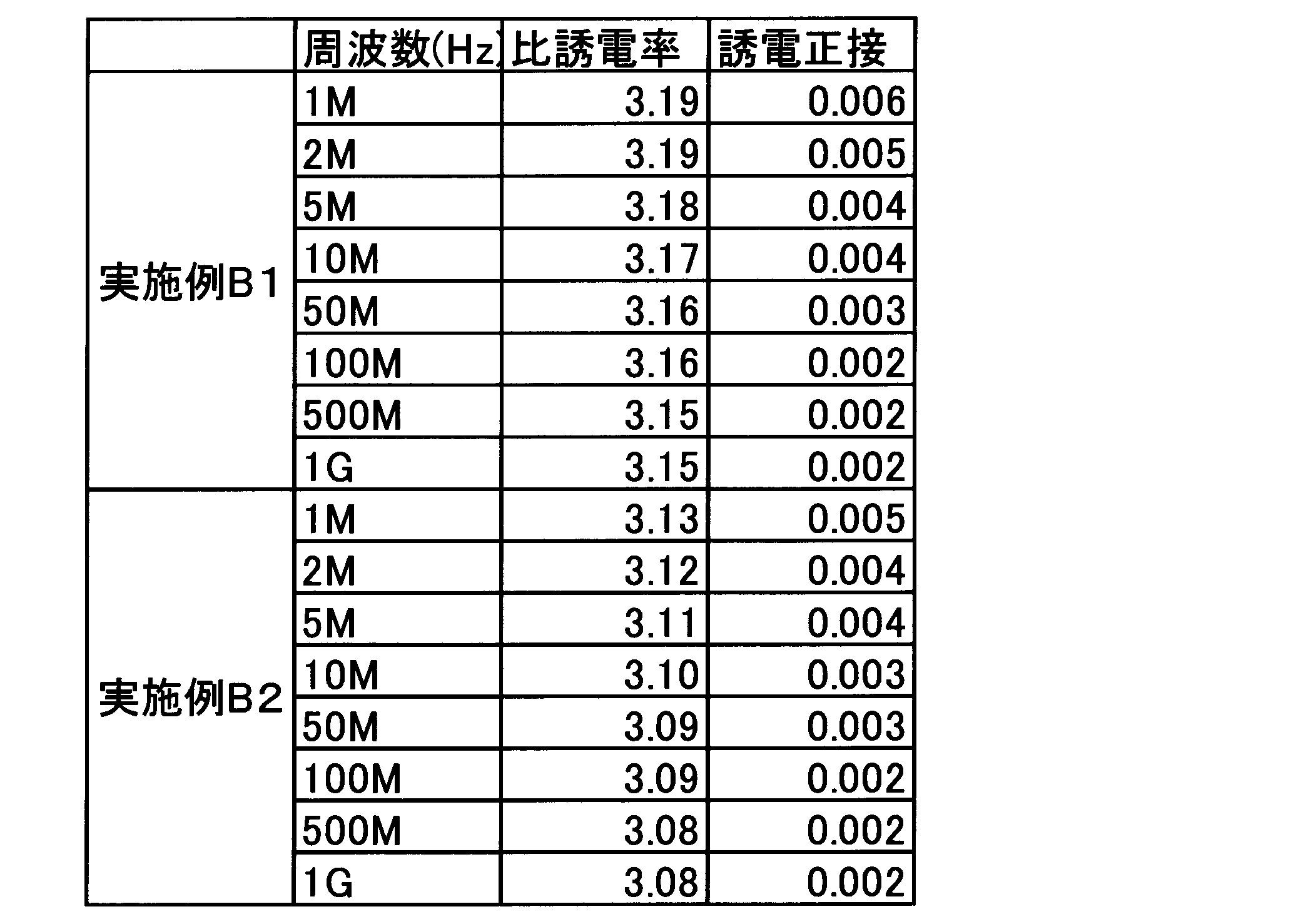
表3に示した結果から分かるとおり、本発明の共重合ポリイミドは、1%重量減少温度が高いことから耐熱性に優れ、更には、200℃、210℃という比較的低いプレス温度でも接着が可能であることから、加工性にも優れることが確認された。これは、貯蔵弾性率が所定の値以下となる温度が低く、つまりプレス温度である200~230℃における貯蔵弾性率が所定の値より低いため、加工(プレス)温度が低下できたと考えられる。
一方、一般式(1)の比率が0.5以下である比較例B2や比較例B3のポリイミドでは、プレス温度 200℃では接着できなかった。また、一般式(1)の比率が1.0である比較例B1のポリイミドでは、ガラス転移温度は低いにも関わらず、接着性を示さなかった。これは、前記の所定の範囲外となっているためと考えられる。
さらに、実施例B1の共重合ポリイミドの粘弾性は、図3に示されるように、比較例B1のポリイミドの粘弾性(図4)と比べ、200℃付近からの高温域において貯蔵弾性率の顕著な低下が確認された。したがって、本発明の共重合ポリイミドは、200℃付近からの高温域において、比較例B1のポリイミドに比べ大きく異なる特性が発現していた。
以上のことより、本発明の共重合ポリイミドは、従来のポリイミドとは異なる特性を有するため、加工性に優れると考えられる。
〔実施例B7〕
実施例B2で得られたポリイミド前駆体溶液を耐熱性ポリイミドフィルム(ユーピレックス50S)に塗布し、そのまま耐熱性ポリイミドフィルム上で、120℃12分続いて、150℃、180℃、210℃で各2分、次いで最終的に240℃で20分、連続的に昇温して熱的にイミド化を行なって、共重合ポリイミド/耐熱性ポリイミドフィルム積層体を得た。次いで、得られた積層体より、共重合ポリイミドを剥離し、膜厚が約25μmの共重合ポリイミド(フィルム)を得た。このフィルムの揮発性溶媒量は、<0.1%であった。この共重合ポリイミドの接着性を前記の方法で測定したところ、銅箔のピール強度は0.80kN/m、ポリイミド基板とのピール強度は1.5kN/m以上であった。
実施例B2で得られたポリイミド前駆体溶液を耐熱性ポリイミドフィルム(ユーピレックス50S)に塗布し、そのまま耐熱性ポリイミドフィルム上で、120℃12分続いて、150℃、180℃、210℃で各2分、次いで最終的に240℃で20分、連続的に昇温して熱的にイミド化を行なって、共重合ポリイミド/耐熱性ポリイミドフィルム積層体を得た。次いで、得られた積層体より、共重合ポリイミドを剥離し、膜厚が約25μmの共重合ポリイミド(フィルム)を得た。このフィルムの揮発性溶媒量は、<0.1%であった。この共重合ポリイミドの接着性を前記の方法で測定したところ、銅箔のピール強度は0.80kN/m、ポリイミド基板とのピール強度は1.5kN/m以上であった。
〔実施例B8〕
反応容器中にAPB 100モル当量(0.15モル、43.85g)を入れ、DMAcをジアミン成分とテトラカルボン酸成分が濃度 30質量%となる量(273.77g)に溶解した。この溶液を50℃に加熱し、BPADA 80モル当量(0.12モル、62.45g)を加え、その後粘度を確認しながら、a-BPDA成分 20モル当量(0.03モル、8.83g)さらにa-BPTA成分 4モル当量(0.006モル、2.20g)を徐々に加え、8時間撹拌した。その後冷却し、均一で粘稠な共重合ポリイミド前駆体溶液を得た。
反応容器中にAPB 100モル当量(0.15モル、43.85g)を入れ、DMAcをジアミン成分とテトラカルボン酸成分が濃度 30質量%となる量(273.77g)に溶解した。この溶液を50℃に加熱し、BPADA 80モル当量(0.12モル、62.45g)を加え、その後粘度を確認しながら、a-BPDA成分 20モル当量(0.03モル、8.83g)さらにa-BPTA成分 4モル当量(0.006モル、2.20g)を徐々に加え、8時間撹拌した。その後冷却し、均一で粘稠な共重合ポリイミド前駆体溶液を得た。
得られたポリイミド前駆体溶液を銅箔(粗面)に塗布し、そのまま銅箔上で、イナートオーブン中で、120℃12分続いて、150℃、180℃、210℃、240℃、270℃、300℃で各2分、次いで最終的に340℃まで連続的に昇温して熱的にイミド化を行なって、膜厚約25μmの共重合ポリイミドが表面に形成された接着剤付銅箔を得た。この接着剤付銅箔の接着性は、接着剤付銅箔の接着層面と、銅箔の光沢面あるいはポリイミド基板を重ねる以外は、前記と同様の方法で測定した。銅箔(接着層と銅箔光沢面)のピール強度は0.93kN/m、ポリイミド基板(接着層とポリイミド基板)とのピール強度は1.5kN/m以上であった。
〔実施例B9〕
実施例B1で得られたポリイミド前駆体溶液組成物を銅箔(粗面)に塗布し、そのまま銅箔上で、イナートオーブン中で、120℃12分続いて、150℃、180℃、210℃、240℃、270℃、300℃で各2分、次いで最終的に340℃まで連続的に昇温して熱的にイミド化を行なって、膜厚約25μmの共重合ポリイミドが表面に形成された接着剤付銅箔を得た。この接着剤付銅箔の接着性を実施例B8記載の方法で測定したところ、銅箔のピール強度は0.53kN/m、ポリイミドとのピール強度は1.5kN/m以上であった。
実施例B1で得られたポリイミド前駆体溶液組成物を銅箔(粗面)に塗布し、そのまま銅箔上で、イナートオーブン中で、120℃12分続いて、150℃、180℃、210℃、240℃、270℃、300℃で各2分、次いで最終的に340℃まで連続的に昇温して熱的にイミド化を行なって、膜厚約25μmの共重合ポリイミドが表面に形成された接着剤付銅箔を得た。この接着剤付銅箔の接着性を実施例B8記載の方法で測定したところ、銅箔のピール強度は0.53kN/m、ポリイミドとのピール強度は1.5kN/m以上であった。
耐熱性ポリイミドの表面層に共重合ポリイミドを配した接着フィルム
〔合成例1〕
攪拌機、窒素導入管を備えた反応容器に、ジメチルアセトアミド(DMAc)を加え、さらに、パラフェニレンジアミン(PPD)と3,3’,4,4’-ビフェニルテトラカルボン酸二無水物(s-BPDA)とを該等モル反応させ、固形分濃度が18重量%、30℃における溶液粘度が120Pa・secのポリイミド前駆体溶液(b1)を得た。
〔合成例1〕
攪拌機、窒素導入管を備えた反応容器に、ジメチルアセトアミド(DMAc)を加え、さらに、パラフェニレンジアミン(PPD)と3,3’,4,4’-ビフェニルテトラカルボン酸二無水物(s-BPDA)とを該等モル反応させ、固形分濃度が18重量%、30℃における溶液粘度が120Pa・secのポリイミド前駆体溶液(b1)を得た。
〔合成例2〕
攪拌機、窒素導入管を備えた反応容器に、DMAcを加え、さらに、ジアミン成分としてのPPDおよび4,4-ジアミノジフェニルエーテル(DADE)と、テトラカルボン酸二無水物成分としてのs-BPDAおよびピロメリット酸二無水物(PMDA)とを供給し、テトラカルボン酸二無水物成分とジアミン成分とを反応させ、固形分濃度が18重量%、30℃における溶液粘度が115Pa・secのポリイミド前駆体溶液(b2)を得た。PPDとDADEのモル比は、60:40であった。また、s-BPDAとPMDAのモル比は30:70であった。
攪拌機、窒素導入管を備えた反応容器に、DMAcを加え、さらに、ジアミン成分としてのPPDおよび4,4-ジアミノジフェニルエーテル(DADE)と、テトラカルボン酸二無水物成分としてのs-BPDAおよびピロメリット酸二無水物(PMDA)とを供給し、テトラカルボン酸二無水物成分とジアミン成分とを反応させ、固形分濃度が18重量%、30℃における溶液粘度が115Pa・secのポリイミド前駆体溶液(b2)を得た。PPDとDADEのモル比は、60:40であった。また、s-BPDAとPMDAのモル比は30:70であった。
〔実施例B10〕
合成例1で得られたポリイミド前駆体溶液をガラス基板に膜厚約150μmで塗布し、そのまま基板上で、120℃12分加熱した、続いて実施例B2で得られた共重合ポリイミド前駆体溶液を合成例1で得られたポリイミド前駆体膜上に膜厚約30μmで塗工し、120℃5分加熱した。この皮膜をガラス基板から剥離し、ピンテンターに張り、150℃、200℃、250℃、340℃で各2分連続的に加熱して、熱的にイミド化をおこない、表面に共重合ポリイミドを配したフィルムを得た。このフィルムの揮発性溶媒量は、<0.1%であった。このフィルムを用いピール強度を測定した。その結果を表5に示す。
合成例1で得られたポリイミド前駆体溶液をガラス基板に膜厚約150μmで塗布し、そのまま基板上で、120℃12分加熱した、続いて実施例B2で得られた共重合ポリイミド前駆体溶液を合成例1で得られたポリイミド前駆体膜上に膜厚約30μmで塗工し、120℃5分加熱した。この皮膜をガラス基板から剥離し、ピンテンターに張り、150℃、200℃、250℃、340℃で各2分連続的に加熱して、熱的にイミド化をおこない、表面に共重合ポリイミドを配したフィルムを得た。このフィルムの揮発性溶媒量は、<0.1%であった。このフィルムを用いピール強度を測定した。その結果を表5に示す。
〔実施例B11〕
共重合ポリイミド前駆体溶液を実施例B2で得られた共重合ポリイミド前駆体溶液へ変更した以外は、実施例B10と同様にして表面に共重合ポリイミドを配したフィルムを得た。このフィルムを用いピール強度を測定した。その結果を表5に示す。
共重合ポリイミド前駆体溶液を実施例B2で得られた共重合ポリイミド前駆体溶液へ変更した以外は、実施例B10と同様にして表面に共重合ポリイミドを配したフィルムを得た。このフィルムを用いピール強度を測定した。その結果を表5に示す。
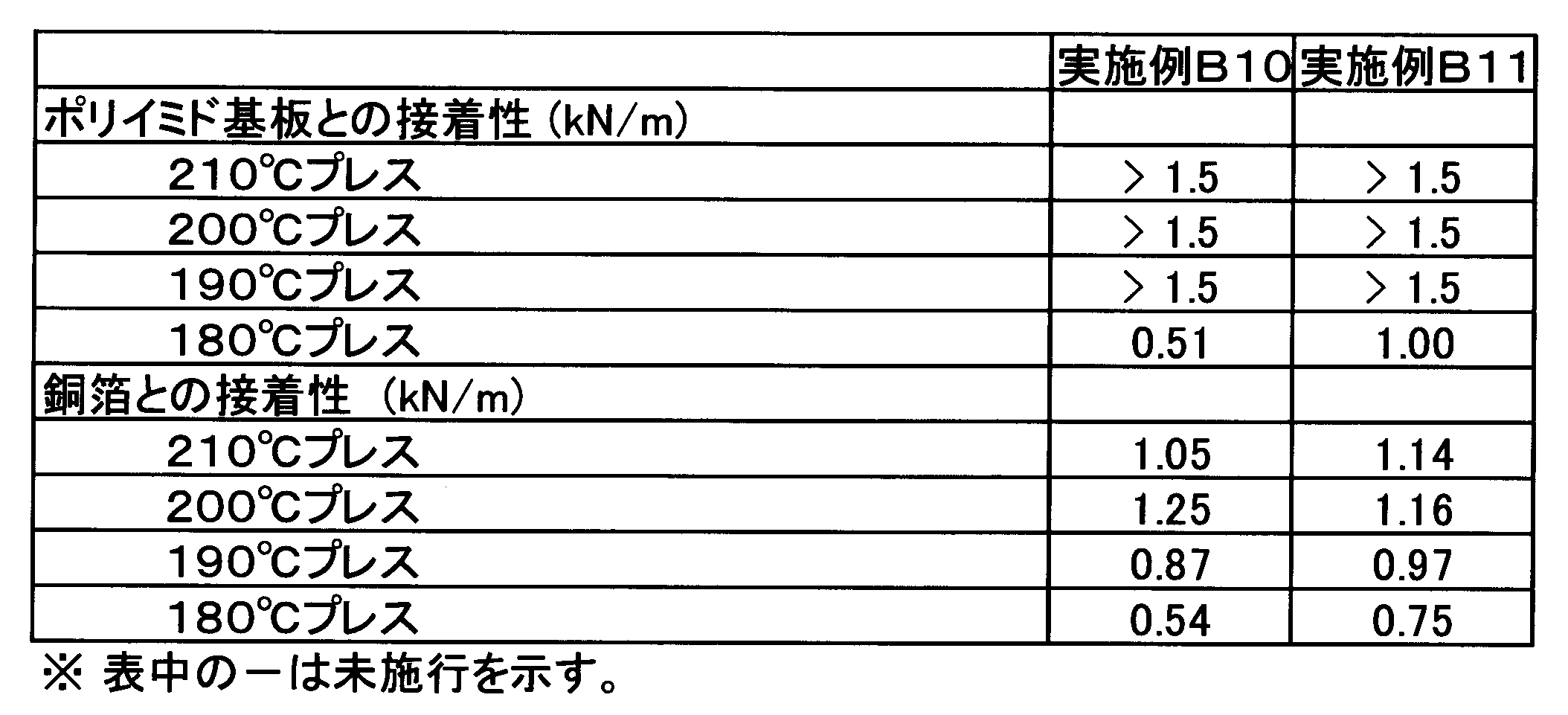
表5に示した結果から分かるとおり、本発明の共重合ポリイミドは、200℃以下でも接着が可能であることから、従来のポリイミドに比べ、格段に加工性が優れる。そして、化学イミド化や洗浄などの特殊な工程を必要とせず、ガラス転移温度が300℃を超える耐熱性ポリイミドフィルム製造と同時に接着層も製造することができることから、経済性にも優れている。
〔実施例B12〕
実施例B7で得られた共重合ポリイミド(フィルム)を耐熱性接着剤(耐熱性接着フィルム)として用い、前記のポリイミド積層体の評価記載の方法で、接着剤付銅箔を製造した。得られたサンプルを150℃に所定時間晒した後、銅箔/共重合ポリイミドフィルム層間の90°ピール強度をJIS C6481(常態での引き剥がし強さ)に従い測定した。その結果を図5に示す。
実施例B7で得られた共重合ポリイミド(フィルム)を耐熱性接着剤(耐熱性接着フィルム)として用い、前記のポリイミド積層体の評価記載の方法で、接着剤付銅箔を製造した。得られたサンプルを150℃に所定時間晒した後、銅箔/共重合ポリイミドフィルム層間の90°ピール強度をJIS C6481(常態での引き剥がし強さ)に従い測定した。その結果を図5に示す。
また、比較例として、実施例B7で得られた共重合ポリイミド(フィルム)の代わりに、プリント回路に用いられる市販の電子回路基板用接着シート(エポキシ系接着シート)を用いて接着剤付銅箔を製造した。同様の方法で評価した結果を、図5に示す。
本発明によって、従来のポリイミドフィルム製造方法により容易に得られ、低温・短時間で接着可能であり、高耐熱性及び高接着強度を実現する新たな多層ポリイミドフィルム、多層ポリイミドフィルムの製造方法、及びそれを用いたポリイミド金属積層体を提供することができる。また、本発明の多層ポリイミドフィルムおよびポリイミド金属積層体は、プリント配線板、フレキシブルプリント基板、COF、TABテープ等の電子部品や電子機器類の素材として用いることができる。さらに、本発明の熱可塑性ポリイミドフィルムは、アルミラミネートフィルムを外装袋として使用するリチウムイオン電池、ポリマー電池、電気二重層キャパシタ等のタブリードの封止材、フレキシブルプリント基板のカバーレイ、セラミックパッケージとキャップとの接合材など、高温下での信頼性が要求される接着性シートとして好適に使用することができる。
また、本発明の共重合ポリイミドは、多層ポリイミドフィルムの他、ガラス層、セラミック層等の無機層、樹脂層等の有機層、または金属層との積層体として、電子部品、電子機器類の材料として好適に使用することができる。例えば、共重合ポリイミドを含む耐熱性接着剤、耐熱性接着フィルム、接着剤付銅箔、接着剤付樹脂フィルムとして使用することができる。
Claims (36)
- ガラス転移温度が240℃未満の熱可塑性ポリイミド(A)を含有する層(A)と、ガラス転移温度が240℃以上の耐熱性ポリイミド(B)を含有する層(B)とを含む多層ポリイミドフィルムであって、
熱可塑性ポリイミド(A)が、一般式(1)で表される繰り返し単位を有するポリイミドであることを特徴とする多層ポリイミドフィルム。

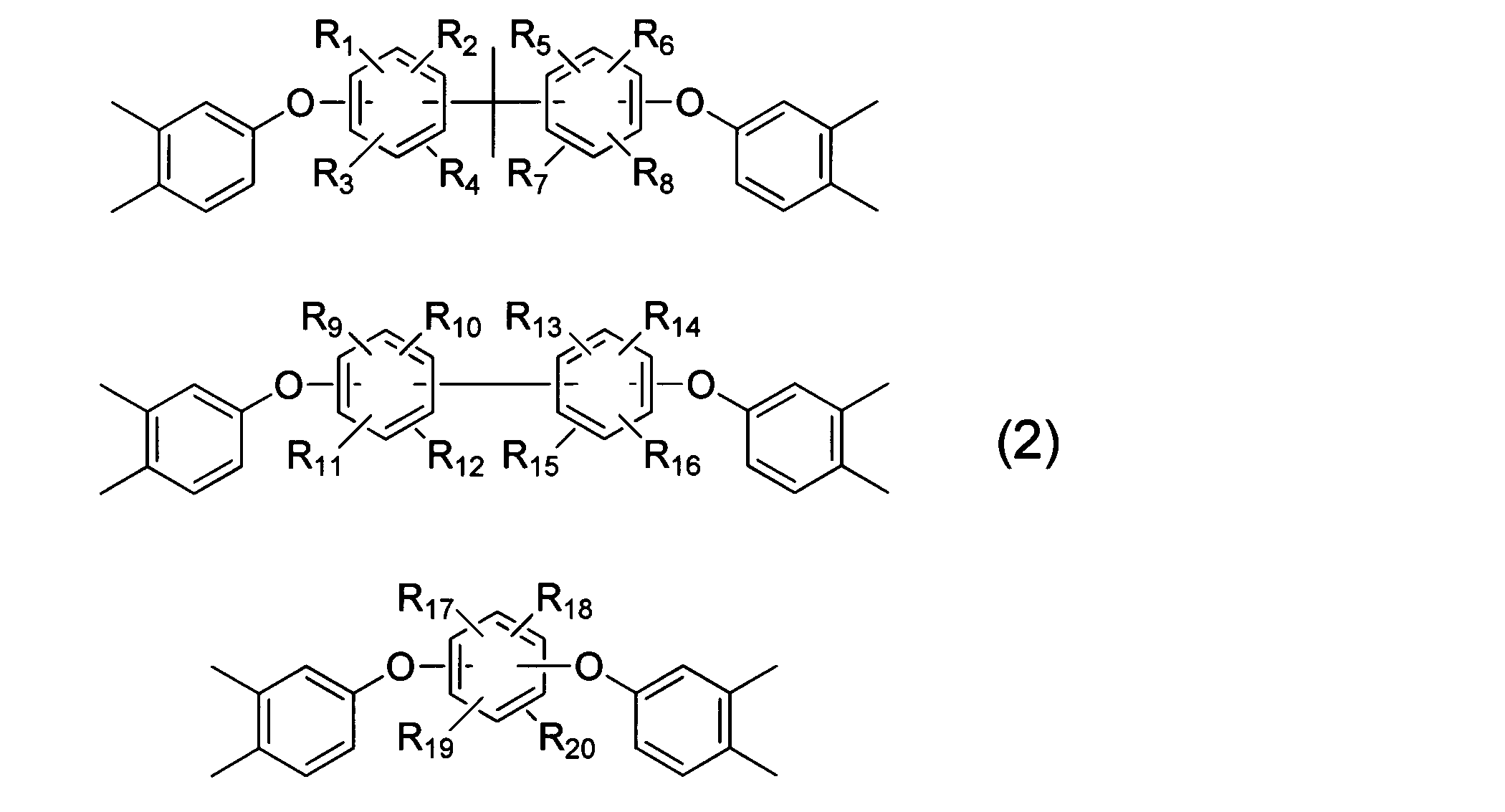
- 前記熱可塑性ポリイミド(A)のガラス転移温度が200℃未満であることを特徴とする請求項1に記載の多層ポリイミドフィルム。
- 前記熱可塑性ポリイミド(A)が、前記の一般式(1)で表される繰り返し単位と一般式(3)で表される繰り返し構造を有する共重合ポリイミドであることを特徴とする請求項1又は2に記載の多層ポリイミドフィルム。
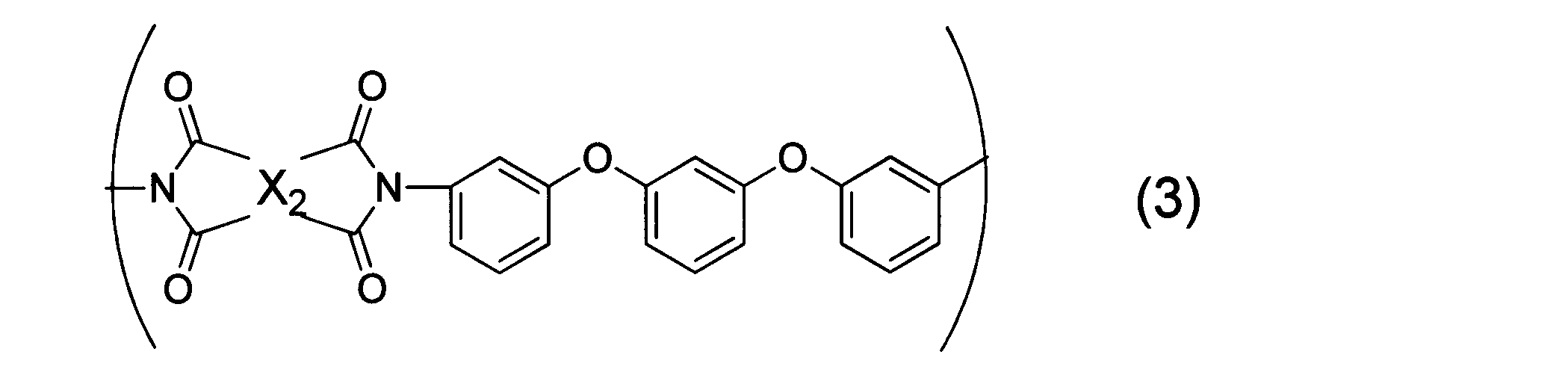
- 前記一般式(3)のX2が一般式(4)で示される基から選ばれるテトラカルボン酸の残基であることを特徴とする請求項3に記載の多層ポリイミドフィルム。

- 式:
一般式(1)のモル数/(一般式(1)のモル数 + 一般式(3)のモル数)
で計算される値が0.50以上、1.00未満である請求項3又は4に記載の多層ポリイミドフィルム。 - 前記耐熱性ポリイミド(B)は、ポリイミドを構成するテトラカルボン酸残基とジアミン残基が、
3,3’,4,4’-ビフェニルテトラカルボン酸二無水物、ピロメリット酸二無水物、及び1,4-ヒドロキノンジベンゾエート-3,3’,4,4’-テトラカルボン酸二無水物より選ばれる少なくとも1種含むテトラカルボン酸成分に基づくテトラカルボン酸残基と、
p-フェニレンジアミン、4,4’-ジアミノジフェニルエーテル、3,4’-ジアミノジフェニルエーテル、2,2-ビス[4-(4-アミノフェノキシ)フェニル]プロパン、m-トリジン及び4,4’-ジアミノベンズアニリドより選ばれる成分を少なくとも1種含むジアミン成分に基づくジアミン残基と
からなるポリイミドであることを特徴とする請求項1~5のいずれか1項に記載の多層ポリイミドフィルム。 - 多層ポリイミドフィルムの層構成として、熱可塑性ポリイミド層(A)、耐熱性ポリイミド層(B)、熱可塑性ポリイミド層(A)の順で積層された構成を有することを特徴とする請求項1~6のいずれか1項に記載の多層ポリイミドフィルム。
- 熱可塑性ポリイミド層(A)と、耐熱性ポリイミド層(B)とを含む多層ポリイミドフィルムを得る製造方法であって、
すくなくとも、一般式(1)で表される繰り返し単位を有する熱可塑性ポリイミド(A)の前駆体にあたる熱可塑性ポリイミド前駆体(a)の層と、耐熱性ポリイミド(B)の前駆体にあたる耐熱性ポリイミド前駆体(b)の層を有する多層ポリイミド前駆体フィルムをイミド化して製造することを特徴とする多層ポリイミドフィルムの製造方法。
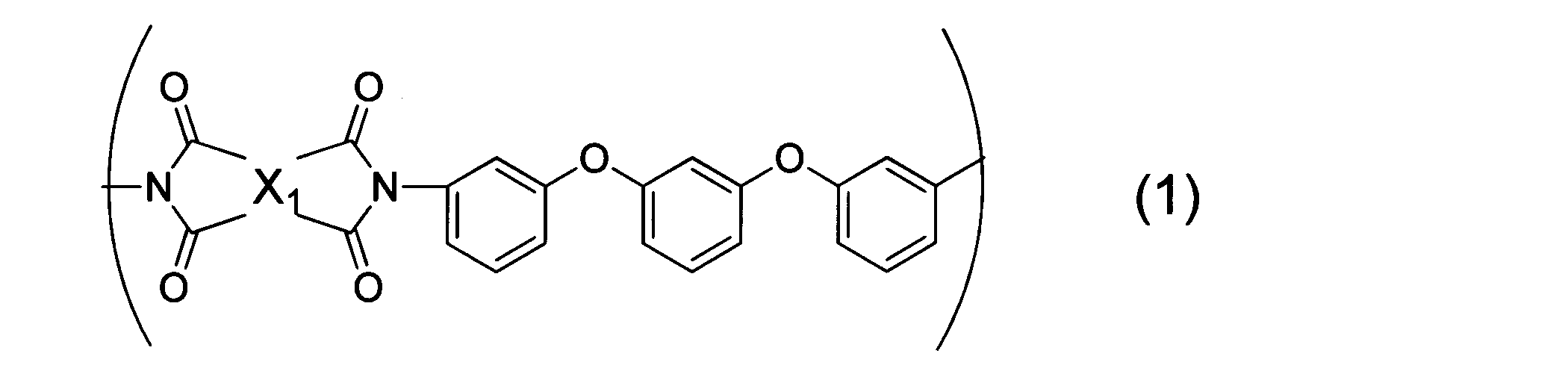
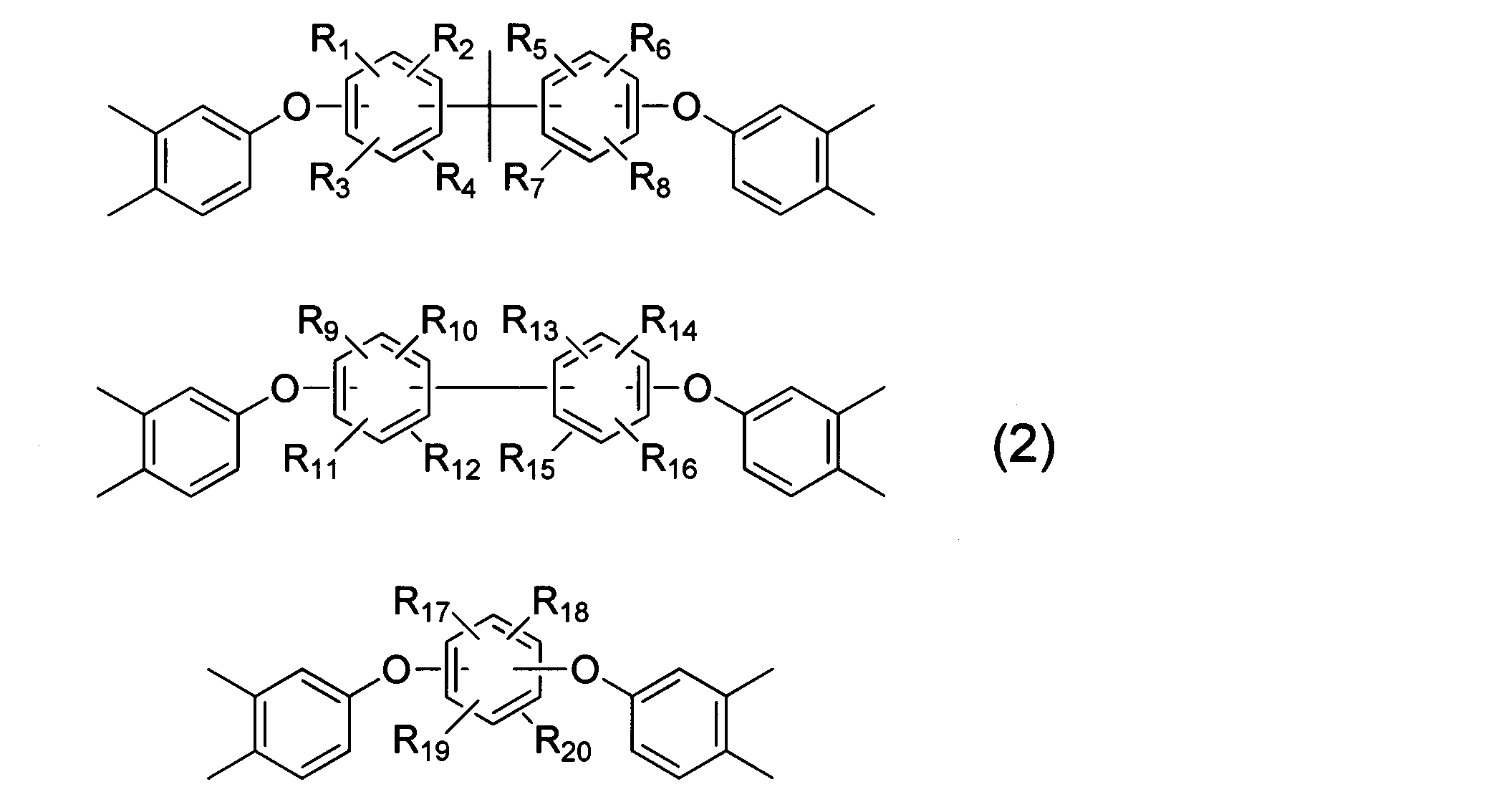
- 前記耐熱性ポリイミド前駆体(b)の層に、前記熱可塑性ポリイミド前駆体(a)の溶液を塗工し、あるいは前記熱可塑性ポリイミド前駆体(a)の層に、前記耐熱性ポリイミド前駆体(b)の溶液を塗工し、多層ポリイミド前駆体フィルム得ることを特徴とする請求項8に記載の多層ポリイミドフィルムの製造方法。
- 前記熱可塑性ポリイミド前駆体(a)の溶液と、前記耐熱性ポリイミド前駆体(b)の溶液を多層に押し出すことを特徴とする請求項8に記載の多層ポリイミドフィルムの製造方法。
- ガラス転移温度が240℃以上の耐熱性ポリイミド(B)を含有する層(B)を有するポリイミドフィルムに、一般式(1)で表される繰り返し単位を有するポリイミドを含むガラス転移温度が240℃未満の熱可塑性ポリイミド(A)の前駆体にあたる熱可塑性ポリイミド前駆体(a)の溶液を塗工し、イミド化することを特徴とする多層ポリイミドフィルムの製造方法。
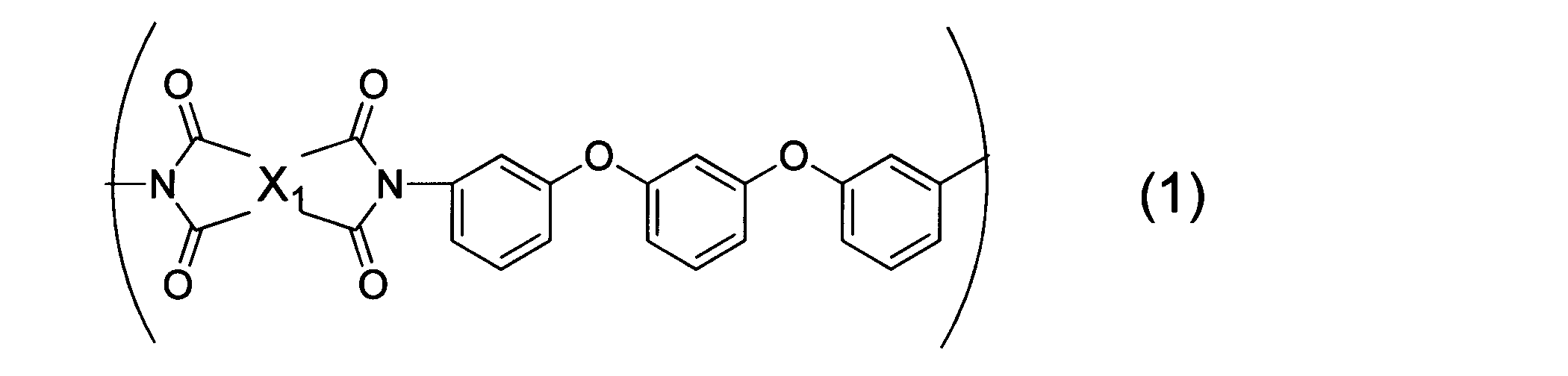

- 一般式(1)で表される繰り返し単位を有するガラス転移温度が240℃未満の熱可塑性ポリイミド(A)を含有する層(A)を有するポリイミドフィルムと、ガラス転移温度が240℃以上の耐熱性ポリイミド(B)を含有する層(B)を有するポリイミドフィルムを貼り合せることを特徴とする多層ポリイミドフィルムの製造方法。

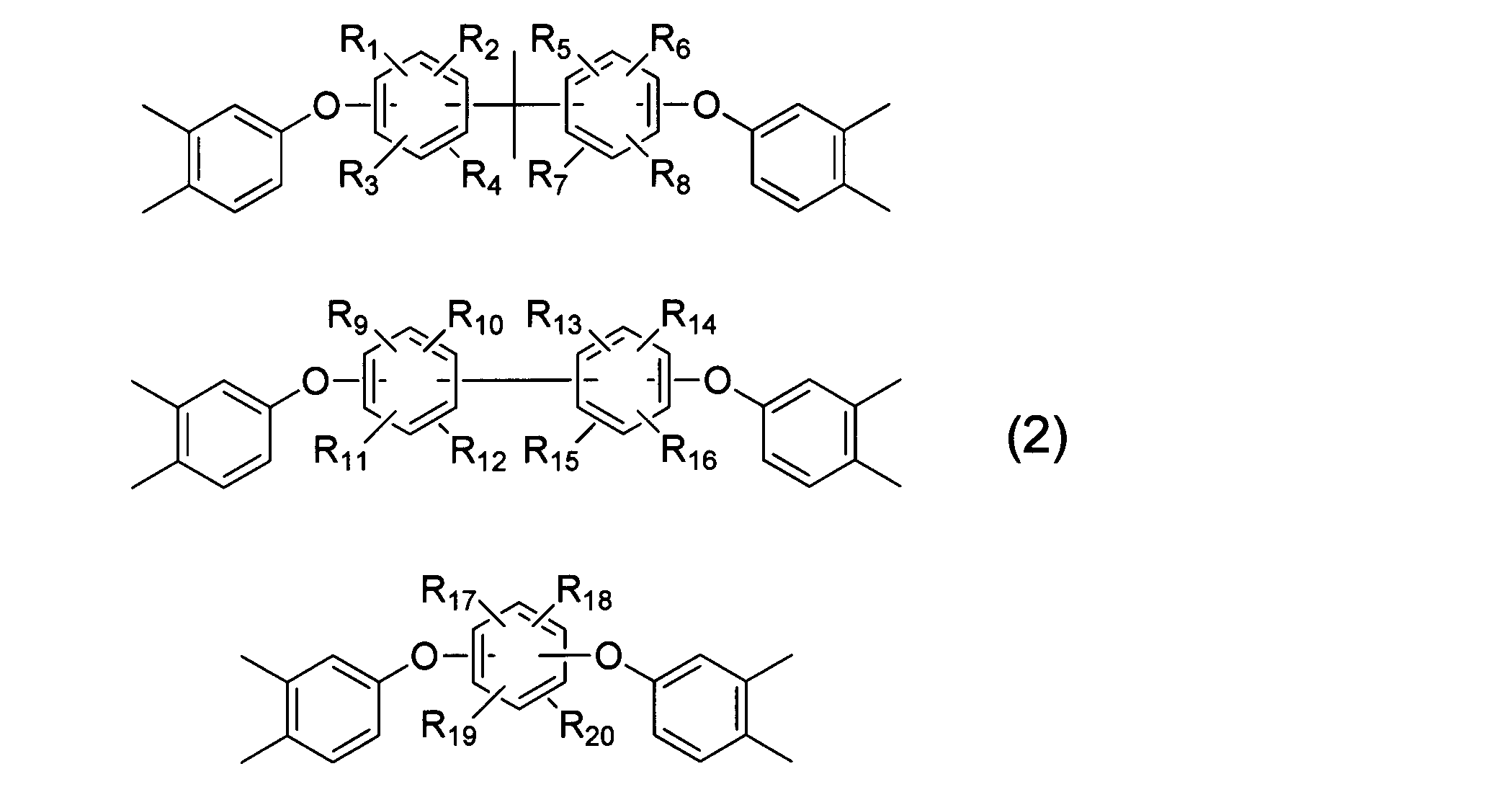
- 請求項1~7のいずれかに記載の多層ポリイミドフィルム又は請求項8~12のいずれかに記載の製造方法で製造される多層ポリイミドフィルムの片面または両面に、金属層、無機層、有機層のいずれかが積層されたことを特徴とするポリイミド積層体。
- 1) ガラス転移温度が240℃以上の耐熱性ポリイミド(B’)を含有する層(B’)を含むポリイミドフィルム(B’)の片面、または両面に、導体の回路パターンを形成する工程、および
2) この回路パターンが形成されたポリイミドフィルム(B’)と、ガラス転移温度が240℃未満の熱可塑性ポリイミド(A’)を含有する層(A’)を少なくとも1層含むポリイミドフィルム(A’)と、を重ね、温度240℃以下で加熱圧着する工程
含むことを特徴とするフレキシブルプリント回路またはコアレス多層回路の製造方法。 - 前記熱可塑性ポリイミド(A’)が、請求項1において定義される熱可塑性ポリイミド(A)であることを特徴とする請求項14記載のフレキシブルプリント回路またはコアレス多層回路の製造方法。
- 前記熱可塑性ポリイミド(A’)が、請求項3において定義される共重合ポリイミドであることを特徴とする請求項14または15に記載のフレキシブルプリント回路またはコアレス多層回路の製造方法。
- 前記耐熱性ポリイミド(B’)が、請求項6において定義される耐熱性ポリイミド(B)であることを特徴とする請求項14~16のいずれか1項に記載のフレキシブルプリント回路またはコアレス多層回路の製造方法。
- 一般式(1)で表される繰り返し単位と一般式(3)で表される繰り返し構造を有する共重合ポリイミドであって、一般式(1)のモル数/[一般式(1)のモル数 + 一般式(3)のモル数]で計算される値が0.50以上~1.00未満であることを特徴とする共重合ポリイミド。


- 前記のX2が一般式(4)で示される基から選ばれるテトラカルボン酸の残基であることを特徴とする請求項18に記載の共重合ポリイミド。
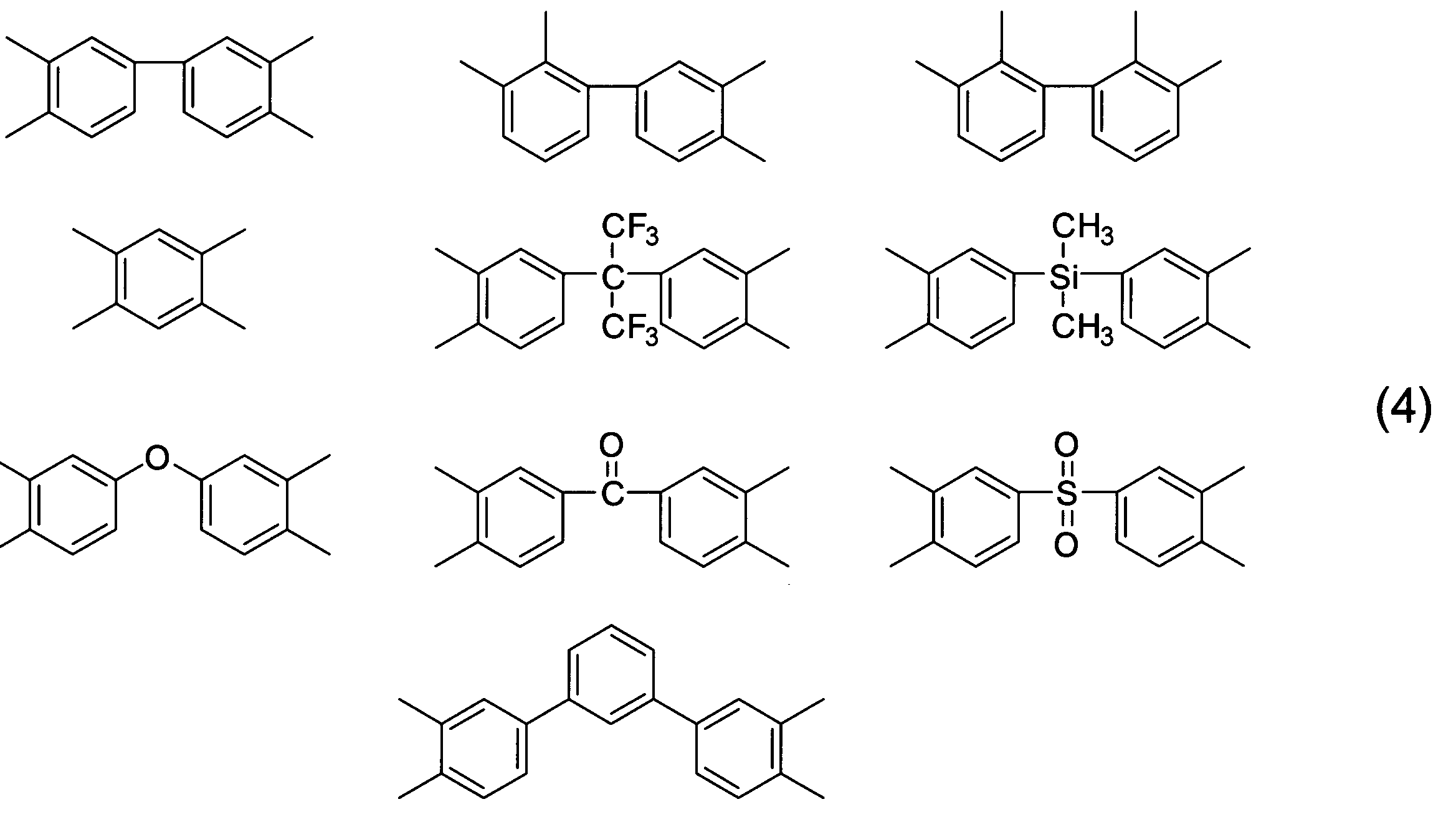
- 一般式(1)で表される単位構造と一般式(3)で表される単位構造を有する共重合ポリイミドであって、一般式(1)のモル数/[一般式(1)のモル数 + 一般式(3)のモル数]で計算される値が0.72~0.99であることを特徴とする請求項18又は19に記載の共重合ポリイミド。
- GPCより求められる重量平均分子量が、5,000~1,000,000であることを特徴とする請求項18~20のいずれか1項に記載の共重合ポリイミド。
- 共重合ポリイミドで作成した膜厚5~150μmのフィルムで測定した動的粘弾性測定のtanδから得られるガラス転移温度が240℃未満であることを特徴とする請求項18~21のいずれか1項に記載の共重合ポリイミド。
- 共重合ポリイミドで作成した膜厚5~150μmのフィルムで測定した動的粘弾性測定における貯蔵弾性率が5×10⁶Pa以下となる温度が、210℃以下であることを特徴とする請求項18~22のいずれか1項に記載の共重合ポリイミド。
- 共重合ポリイミドで作成した膜厚5~150μmのフィルムで測定した動的粘弾性測定の200℃における貯蔵弾性率が6×10⁶Pa以下であることを特徴とする請求項18~23のいずれか1項に記載の共重合ポリイミド。
- 熱重量分析(TGA)で求めた1%重量減少温度が、400℃以上であることを特徴とする請求項18~24のいずれか1項に記載の共重合ポリイミド。
- 1kHz~10GHzいずれかの周波数における比誘電率が3.4以下、誘電正接が0.010以下であることを特徴とする請求項18~25のいずれか1項に記載の共重合ポリイミド。
- 共重合ポリイミド中に含まれる全テトラカルボン酸残基の数が、全ジアミン残基の数より、0.5~10%過剰であることを特徴とする請求項18~26のいずれか1項に記載の共重合ポリイミド。
- 請求項18~27のいずれか1項に記載の共重合ポリイミドを含むことを特徴とする耐熱性接着剤。
- 請求項18~27のいずれか1項に記載の共重合ポリイミドを含むことを特徴とする耐熱性接着フィルム。
- 請求項18~27のいずれか1項に記載の共重合ポリイミドを含む接着層を有することを特徴とする接着剤付金属箔。
- 請求項18~27のいずれか1項に記載の共重合ポリイミドを含む接着層を有することを特徴とする接着剤付樹脂フィルム
- 無機層、有機層または金属層のいずれかと、請求項18~27のいずれか1項に記載の共重合ポリイミドを含む接着層とを積層したポリイミド積層体。
- 請求項18~27のいずれか1項に記載の共重合ポリイミドを含む絶縁層を用いることを特徴とする電子回路。
- 共重合ポリイミド前駆体溶液を無機層、有機層または金属層のいずれかの層に流延または塗布し、熱処理する工程を含む、共重合ポリイミド積層体の製造方法であって、
前記共重合ポリイミドが、一般式(1)で表される繰り返し単位と一般式(3)で表される繰り返し構造を有する共重合ポリイミドであって、一般式(1)のモル数/[一般式(1)のモル数 + 一般式(3)のモル数]で計算される値が0.50以上、1.00未満であることを特徴とする共重合ポリイミド積層体の製造方法。
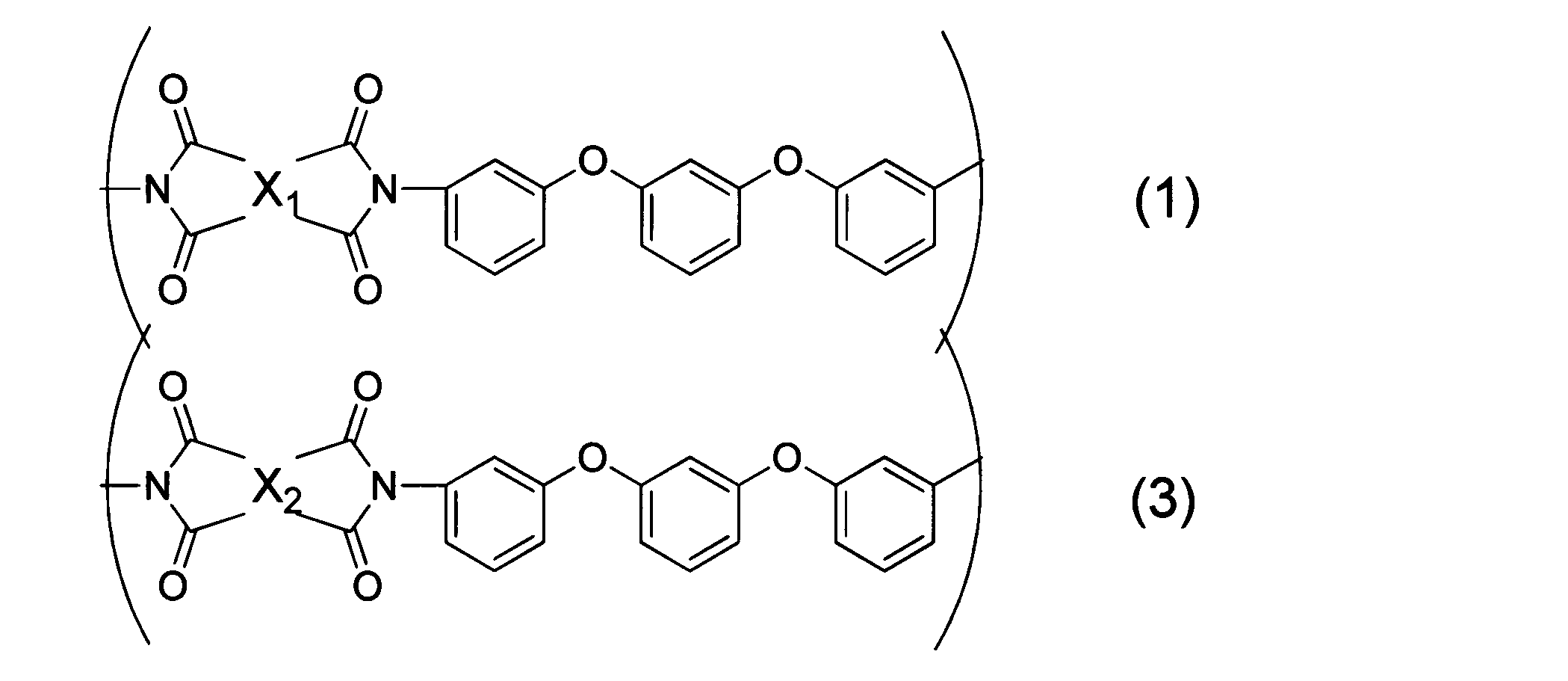

- 請求項34に記載の方法で得られた共重合ポリイミド積層体より、前記の無機層、有機層または金属層のいずれかのひとつの層を剥離して、得られる耐熱性接着フィルムの製造方法。
- 請求項34に記載の方法で得られた共重合ポリイミド積層体もしくは、請求項35記載の方法で得られた耐熱性接着フィルムを、さらに無機層、有機層または金属層と重ね、240℃以下に加熱し、貼り合わせることで得られる多層のポリイミド積層体の製造方法。
Priority Applications (1)
| Application Number | Priority Date | Filing Date | Title |
|---|---|---|---|
| JP2016535974A JP6743697B2 (ja) | 2014-07-24 | 2015-07-23 | 多層ポリイミドフィルム、多層ポリイミドフィルムの製造方法、それを用いたポリイミド積層体、及びそれらに用いられる共重合ポリイミド |
Applications Claiming Priority (4)
| Application Number | Priority Date | Filing Date | Title |
|---|---|---|---|
| JP2014-150322 | 2014-07-24 | ||
| JP2014150318 | 2014-07-24 | ||
| JP2014-150318 | 2014-07-24 | ||
| JP2014150322 | 2014-07-24 |
Publications (1)
| Publication Number | Publication Date |
|---|---|
| WO2016013627A1 true WO2016013627A1 (ja) | 2016-01-28 |
Family
ID=55163151
Family Applications (1)
| Application Number | Title | Priority Date | Filing Date |
|---|---|---|---|
| PCT/JP2015/071012 Ceased WO2016013627A1 (ja) | 2014-07-24 | 2015-07-23 | 多層ポリイミドフィルム、多層ポリイミドフィルムの製造方法、それを用いたポリイミド積層体、及びそれらに用いられる共重合ポリイミド |
Country Status (3)
| Country | Link |
|---|---|
| JP (1) | JP6743697B2 (ja) |
| TW (1) | TW201609867A (ja) |
| WO (1) | WO2016013627A1 (ja) |
Cited By (7)
| Publication number | Priority date | Publication date | Assignee | Title |
|---|---|---|---|---|
| JP2017145344A (ja) * | 2016-02-18 | 2017-08-24 | 新日鉄住金化学株式会社 | ポリイミド、ポリイミド溶液、樹脂フィルム、ポリイミド組成物、架橋ポリイミド、カバーレイフィルム及び回路基板 |
| WO2018016561A1 (ja) * | 2016-07-22 | 2018-01-25 | 三井化学株式会社 | 医療用フィルム及びその製造方法、医療用コーティング組成物、医療用具及びその製造方法 |
| WO2020066595A1 (ja) * | 2018-09-28 | 2020-04-02 | 日鉄ケミカル&マテリアル株式会社 | 金属張積層板の製造方法及び回路基板の製造方法 |
| JP2020110972A (ja) * | 2019-01-11 | 2020-07-27 | エルジー・ケム・リミテッド | フィルム、金属張積層板、フレキシブル基板、フィルムの製造方法、金属張積層板の製造方法、及びフレキシブル基板の製造方法 |
| WO2021025454A1 (ko) * | 2019-08-05 | 2021-02-11 | 피아이첨단소재 주식회사 | 그라파이트 시트용 다층 폴리이미드 필름, 이의 제조방법 및 이로부터 제조된 그라파이트 시트 |
| KR20220116397A (ko) * | 2019-08-05 | 2022-08-23 | 피아이첨단소재 주식회사 | 그라파이트 시트용 다층 폴리이미드 필름, 이의 제조방법 및 이로부터 제조된 그라파이트 시트 |
| CN116478436A (zh) * | 2023-03-16 | 2023-07-25 | 广东粤港澳大湾区黄埔材料研究院 | 多层复合聚酰亚胺材料及其制备方法和应用 |
Families Citing this family (1)
| Publication number | Priority date | Publication date | Assignee | Title |
|---|---|---|---|---|
| TWI695053B (zh) * | 2018-06-28 | 2020-06-01 | 亞洲電材股份有限公司 | 一種高頻高速黏結片及其製法 |
Citations (4)
| Publication number | Priority date | Publication date | Assignee | Title |
|---|---|---|---|---|
| JP2003306649A (ja) * | 2002-04-12 | 2003-10-31 | Kanegafuchi Chem Ind Co Ltd | 接着シート及びプリント配線板 |
| JP2004155911A (ja) * | 2002-11-06 | 2004-06-03 | Kanegafuchi Chem Ind Co Ltd | 熱可塑ポリイミド樹脂、樹脂組成物、絶縁接着シートおよびプリント配線基板 |
| JP2011173423A (ja) * | 2005-04-04 | 2011-09-08 | Ube Industries Ltd | 銅張り積層基板 |
| JP5019874B2 (ja) * | 2004-04-19 | 2012-09-05 | 株式会社カネカ | 熱硬化性樹脂組成物、及びそれを用いてなる積層体、回路基板 |
-
2015
- 2015-07-23 JP JP2016535974A patent/JP6743697B2/ja active Active
- 2015-07-23 WO PCT/JP2015/071012 patent/WO2016013627A1/ja not_active Ceased
- 2015-07-24 TW TW104123971A patent/TW201609867A/zh unknown
Patent Citations (4)
| Publication number | Priority date | Publication date | Assignee | Title |
|---|---|---|---|---|
| JP2003306649A (ja) * | 2002-04-12 | 2003-10-31 | Kanegafuchi Chem Ind Co Ltd | 接着シート及びプリント配線板 |
| JP2004155911A (ja) * | 2002-11-06 | 2004-06-03 | Kanegafuchi Chem Ind Co Ltd | 熱可塑ポリイミド樹脂、樹脂組成物、絶縁接着シートおよびプリント配線基板 |
| JP5019874B2 (ja) * | 2004-04-19 | 2012-09-05 | 株式会社カネカ | 熱硬化性樹脂組成物、及びそれを用いてなる積層体、回路基板 |
| JP2011173423A (ja) * | 2005-04-04 | 2011-09-08 | Ube Industries Ltd | 銅張り積層基板 |
Cited By (16)
| Publication number | Priority date | Publication date | Assignee | Title |
|---|---|---|---|---|
| JP2017145344A (ja) * | 2016-02-18 | 2017-08-24 | 新日鉄住金化学株式会社 | ポリイミド、ポリイミド溶液、樹脂フィルム、ポリイミド組成物、架橋ポリイミド、カバーレイフィルム及び回路基板 |
| KR102249571B1 (ko) * | 2016-07-22 | 2021-05-07 | 미쓰이 가가쿠 가부시키가이샤 | 의료용 필름 및 그의 제조 방법, 의료용 코팅 조성물, 의료 용구 및 그의 제조 방법 |
| KR20190022674A (ko) * | 2016-07-22 | 2019-03-06 | 미쓰이 가가쿠 가부시키가이샤 | 의료용 필름 및 그의 제조 방법, 의료용 코팅 조성물, 의료 용구 및 그의 제조 방법 |
| JPWO2018016561A1 (ja) * | 2016-07-22 | 2019-03-14 | 三井化学株式会社 | 医療用フィルム及びその製造方法、医療用コーティング組成物、医療用具及びその製造方法 |
| CN109563282A (zh) * | 2016-07-22 | 2019-04-02 | 三井化学株式会社 | 医疗用膜及其制造方法、医疗用涂覆组合物、医疗用具及其制造方法 |
| US11198280B2 (en) | 2016-07-22 | 2021-12-14 | Mitsui Chemicals, Inc. | Medical film and method for producing same, medical coating composition, medical device and method for producing same |
| WO2018016561A1 (ja) * | 2016-07-22 | 2018-01-25 | 三井化学株式会社 | 医療用フィルム及びその製造方法、医療用コーティング組成物、医療用具及びその製造方法 |
| WO2020066595A1 (ja) * | 2018-09-28 | 2020-04-02 | 日鉄ケミカル&マテリアル株式会社 | 金属張積層板の製造方法及び回路基板の製造方法 |
| CN115971017A (zh) * | 2018-09-28 | 2023-04-18 | 日铁化学材料株式会社 | 聚酰亚胺膜的制造方法、覆金属层叠板的制造方法及电路基板的制造方法 |
| CN115971017B (zh) * | 2018-09-28 | 2024-01-16 | 日铁化学材料株式会社 | 聚酰亚胺膜的制造方法、覆金属层叠板的制造方法及电路基板的制造方法 |
| JP7195530B2 (ja) | 2019-01-11 | 2022-12-26 | エルジー・ケム・リミテッド | フィルム、金属張積層板、フレキシブル基板、フィルムの製造方法、金属張積層板の製造方法、及びフレキシブル基板の製造方法 |
| JP2020110972A (ja) * | 2019-01-11 | 2020-07-27 | エルジー・ケム・リミテッド | フィルム、金属張積層板、フレキシブル基板、フィルムの製造方法、金属張積層板の製造方法、及びフレキシブル基板の製造方法 |
| WO2021025454A1 (ko) * | 2019-08-05 | 2021-02-11 | 피아이첨단소재 주식회사 | 그라파이트 시트용 다층 폴리이미드 필름, 이의 제조방법 및 이로부터 제조된 그라파이트 시트 |
| KR20220116397A (ko) * | 2019-08-05 | 2022-08-23 | 피아이첨단소재 주식회사 | 그라파이트 시트용 다층 폴리이미드 필름, 이의 제조방법 및 이로부터 제조된 그라파이트 시트 |
| KR102583900B1 (ko) * | 2019-08-05 | 2023-10-04 | 피아이첨단소재 주식회사 | 그라파이트 시트용 다층 폴리이미드 필름, 이의 제조방법 및 이로부터 제조된 그라파이트 시트 |
| CN116478436A (zh) * | 2023-03-16 | 2023-07-25 | 广东粤港澳大湾区黄埔材料研究院 | 多层复合聚酰亚胺材料及其制备方法和应用 |
Also Published As
| Publication number | Publication date |
|---|---|
| TW201609867A (zh) | 2016-03-16 |
| JPWO2016013627A1 (ja) | 2017-06-08 |
| JP6743697B2 (ja) | 2020-08-19 |
Similar Documents
| Publication | Publication Date | Title |
|---|---|---|
| CN104119533B (zh) | 聚酰亚胺膜、含它的聚酰亚胺层压体和含它的聚酰亚胺金属层压体 | |
| JP6743697B2 (ja) | 多層ポリイミドフィルム、多層ポリイミドフィルムの製造方法、それを用いたポリイミド積層体、及びそれらに用いられる共重合ポリイミド | |
| CN103282180B (zh) | 三层共挤压式聚酰亚胺膜的制造方法 | |
| JP2001072781A (ja) | ポリイミドフィルムおよびそれを用いた電気・電子機器用基板 | |
| JP2017165909A (ja) | ポリイミド、樹脂フィルム及び金属張積層板 | |
| CN101163734B (zh) | 新型聚酰亚胺膜及其利用 | |
| JP2019014062A (ja) | 積層体、フレキシブル金属張積層板、およびフレキシブルプリント回路基板 | |
| CN107249877B (zh) | 覆铜层叠板的制造方法 | |
| JP2011143678A (ja) | 多層ポリイミドフィルム及びそれを用いたフレキシブル金属張積層板 | |
| JP5574704B2 (ja) | フィルムならびにフレキシブル金属張積層板 | |
| JP6496812B2 (ja) | ポリイミド積層フィルム、ポリイミド積層フィルムの製造方法、熱可塑性ポリイミドの製造方法、およびフレキシブル金属張積層体の製造方法 | |
| WO2013157565A1 (ja) | 熱融着性ポリイミドフィルム、熱融着性ポリイミドフィルムの製造方法及び熱融着性ポリイミドフィルムを用いたポリイミド金属積層体 | |
| WO2013027663A1 (ja) | 熱融着性ポリイミドフィルム及びその製造方法、熱融着性ポリイミドフィルムを用いたポリイミド金属積層体 | |
| JPWO2009063742A1 (ja) | 金属積層体 | |
| JP2015129200A (ja) | 熱融着性ポリイミドフィルム、及びそれを用いたポリイミド金属積層体 | |
| JP4360025B2 (ja) | 補強材を有するポリイミド片面積層体およびその製造法 | |
| JP2004315601A (ja) | 接着性の改良されたポリイミドフィルム、その製造法および積層体 | |
| JP7715313B1 (ja) | 多層ポリイミドフィルムおよびポリイミド金属積層体 | |
| JP2006218767A (ja) | ポリイミド系多層フィルムの製造方法およびその利用 | |
| JP2004285103A (ja) | 熱可塑性ポリイミド及びそれを含有する接着剤 | |
| JP7492702B2 (ja) | ポリイミド、ポリイミドフィルム、ポリアミド酸、多層ポリイミドフィルム及びその製造方法、ポリイミド積層体 | |
| JP2006137114A (ja) | フレキシブル金属張積層板の製造方法、およびそれにより得られるフレキシブル金属張積層板 | |
| JP4398839B2 (ja) | 多層フィルムの製造方法およびこれにより得られる多層フィルム | |
| JP2007313854A (ja) | 銅張積層板 | |
| JP5355993B2 (ja) | 接着フィルム |
Legal Events
| Date | Code | Title | Description |
|---|---|---|---|
| 121 | Ep: the epo has been informed by wipo that ep was designated in this application |
Ref document number: 15824587 Country of ref document: EP Kind code of ref document: A1 |
|
| ENP | Entry into the national phase |
Ref document number: 2016535974 Country of ref document: JP Kind code of ref document: A |
|
| NENP | Non-entry into the national phase |
Ref country code: DE |
|
| 122 | Ep: pct application non-entry in european phase |
Ref document number: 15824587 Country of ref document: EP Kind code of ref document: A1 |