WO2016002722A1 - 硬化膜形成組成物、配向材および位相差材 - Google Patents
硬化膜形成組成物、配向材および位相差材 Download PDFInfo
- Publication number
- WO2016002722A1 WO2016002722A1 PCT/JP2015/068694 JP2015068694W WO2016002722A1 WO 2016002722 A1 WO2016002722 A1 WO 2016002722A1 JP 2015068694 W JP2015068694 W JP 2015068694W WO 2016002722 A1 WO2016002722 A1 WO 2016002722A1
- Authority
- WO
- WIPO (PCT)
- Prior art keywords
- group
- component
- polymer
- cured film
- methyl
- Prior art date
- Legal status (The legal status is an assumption and is not a legal conclusion. Google has not performed a legal analysis and makes no representation as to the accuracy of the status listed.)
- Ceased
Links
- 0 CS(ON(CC1C2C3C=CC1C3)*2=O)(=O)=O Chemical compound CS(ON(CC1C2C3C=CC1C3)*2=O)(=O)=O 0.000 description 4
- OHXLLWAUXFJFPY-UHFFFAOYSA-N CC(C)(C1CC2)C2(C)CC1C=O Chemical compound CC(C)(C1CC2)C2(C)CC1C=O OHXLLWAUXFJFPY-UHFFFAOYSA-N 0.000 description 2
- WSVTZPZZMMXPLU-UHFFFAOYSA-N CC(C)(C1CC2)C2(CS(O[N+](Cc2cccc3cccc4c23)(C4=O)[O-])(=O)=O)CC1C=O Chemical compound CC(C)(C1CC2)C2(CS(O[N+](Cc2cccc3cccc4c23)(C4=O)[O-])(=O)=O)CC1C=O WSVTZPZZMMXPLU-UHFFFAOYSA-N 0.000 description 1
- VSMIPBLWTFEIGM-UHFFFAOYSA-N CC1(C=CC(C(C(COS(C2(C)C=CC(C)=CC2)(=O)=O)(c(cc2)ccc2SC)O)=O)=CC1)SC Chemical compound CC1(C=CC(C(C(COS(C2(C)C=CC(C)=CC2)(=O)=O)(c(cc2)ccc2SC)O)=O)=CC1)SC VSMIPBLWTFEIGM-UHFFFAOYSA-N 0.000 description 1
- UPGGDUHLJKFMIY-UHFFFAOYSA-N CS(O[N+](CCC1)(C1=O)[O-])(=O)=O Chemical compound CS(O[N+](CCC1)(C1=O)[O-])(=O)=O UPGGDUHLJKFMIY-UHFFFAOYSA-N 0.000 description 1
- DLDWUFCUUXXYTB-UHFFFAOYSA-N Cc(cc1)ccc1S(OC(C(c1ccccc1)=O)c1ccccc1)(=O)=O Chemical compound Cc(cc1)ccc1S(OC(C(c1ccccc1)=O)c1ccccc1)(=O)=O DLDWUFCUUXXYTB-UHFFFAOYSA-N 0.000 description 1
- FPMIJUYCZBHAJA-UHFFFAOYSA-N Cc(cc1)ccc1S(OCC(C(c(cc1)ccc1OC)=O)(c(cc1)ccc1OC)O)(=O)=O Chemical compound Cc(cc1)ccc1S(OCC(C(c(cc1)ccc1OC)=O)(c(cc1)ccc1OC)O)(=O)=O FPMIJUYCZBHAJA-UHFFFAOYSA-N 0.000 description 1
- HICWNOWYQQKBME-UHFFFAOYSA-N Cc(cc1)ccc1S(OCC(C(c1ccccc1)=O)(c1ccccc1)O)(=O)=O Chemical compound Cc(cc1)ccc1S(OCC(C(c1ccccc1)=O)(c1ccccc1)O)(=O)=O HICWNOWYQQKBME-UHFFFAOYSA-N 0.000 description 1
- OMCLBIFHLFHJSF-UHFFFAOYSA-N Cc1c(CS(C)c(cc2)ccc2O)cccc1 Chemical compound Cc1c(CS(C)c(cc2)ccc2O)cccc1 OMCLBIFHLFHJSF-UHFFFAOYSA-N 0.000 description 1
Classifications
-
- C—CHEMISTRY; METALLURGY
- C08—ORGANIC MACROMOLECULAR COMPOUNDS; THEIR PREPARATION OR CHEMICAL WORKING-UP; COMPOSITIONS BASED THEREON
- C08F—MACROMOLECULAR COMPOUNDS OBTAINED BY REACTIONS ONLY INVOLVING CARBON-TO-CARBON UNSATURATED BONDS
- C08F290/00—Macromolecular compounds obtained by polymerising monomers on to polymers modified by introduction of aliphatic unsaturated end or side groups
- C08F290/08—Macromolecular compounds obtained by polymerising monomers on to polymers modified by introduction of aliphatic unsaturated end or side groups on to polymers modified by introduction of unsaturated side groups
- C08F290/12—Polymers provided for in subclasses C08C or C08F
-
- G—PHYSICS
- G02—OPTICS
- G02B—OPTICAL ELEMENTS, SYSTEMS OR APPARATUS
- G02B5/00—Optical elements other than lenses
- G02B5/30—Polarising elements
-
- G—PHYSICS
- G02—OPTICS
- G02F—OPTICAL DEVICES OR ARRANGEMENTS FOR THE CONTROL OF LIGHT BY MODIFICATION OF THE OPTICAL PROPERTIES OF THE MEDIA OF THE ELEMENTS INVOLVED THEREIN; NON-LINEAR OPTICS; FREQUENCY-CHANGING OF LIGHT; OPTICAL LOGIC ELEMENTS; OPTICAL ANALOGUE/DIGITAL CONVERTERS
- G02F1/00—Devices or arrangements for the control of the intensity, colour, phase, polarisation or direction of light arriving from an independent light source, e.g. switching, gating or modulating; Non-linear optics
- G02F1/01—Devices or arrangements for the control of the intensity, colour, phase, polarisation or direction of light arriving from an independent light source, e.g. switching, gating or modulating; Non-linear optics for the control of the intensity, phase, polarisation or colour
- G02F1/13—Devices or arrangements for the control of the intensity, colour, phase, polarisation or direction of light arriving from an independent light source, e.g. switching, gating or modulating; Non-linear optics for the control of the intensity, phase, polarisation or colour based on liquid crystals, e.g. single liquid crystal display cells
- G02F1/133—Constructional arrangements; Operation of liquid crystal cells; Circuit arrangements
- G02F1/1333—Constructional arrangements; Manufacturing methods
- G02F1/1337—Surface-induced orientation of the liquid crystal molecules, e.g. by alignment layers
Definitions
- the present invention relates to a cured film forming composition, an alignment material, and a retardation material.
- a right-eye image is visually recognized by an observer's right eye
- a left-eye image is visually recognized by an observer's left eye, whereby a stereoscopic image can be displayed.
- a retardation material is usually disposed on a display element such as a liquid crystal panel.
- a retardation material a plurality of two kinds of retardation regions having different retardation characteristics are regularly arranged, and a patterned retardation material is formed.
- a retardation material patterned so as to arrange a plurality of retardation regions having different retardation characteristics is referred to as a patterned retardation material.
- the patterned retardation material can be produced, for example, by optically patterning a retardation material made of a polymerizable liquid crystal as disclosed in Patent Document 2.
- Optical patterning of a retardation material made of a polymerizable liquid crystal utilizes a photo-alignment technique known for forming an alignment material for a liquid crystal panel. That is, a coating film made of a photo-alignment material is provided on a substrate, and two types of polarized light having different polarization directions are irradiated on the coating film. Then, a photo-alignment film is obtained as an alignment material in which two types of liquid crystal alignment regions having different liquid crystal alignment control directions are formed.
- a solution-like retardation material containing a polymerizable liquid crystal is applied on the photo-alignment film to realize the alignment of the polymerizable liquid crystal. Thereafter, the aligned polymerizable liquid crystal is cured to form a patterned retardation material.
- acrylic resins and polyimide resins having photodimerization sites such as cinnamoyl groups and chalcone groups in the side chain are known as usable photo-alignment materials.
- These resins have been reported to exhibit the ability to control the alignment of liquid crystals (hereinafter also referred to as liquid crystal alignment) by irradiation with polarized UV light (see Patent Documents 3 to 5).
- the patterned retardation material is configured by laminating a cured polymerizable liquid crystal layer on a photo-alignment film that is an alignment material.
- the patterned phase difference material which has such a laminated structure can be used for the structure of 3D display with the laminated state.
- the 3D display is sometimes used as a home television, and is required to have high reliability, particularly durability over a long period of time. For this reason, durability is also required for components of 3D displays. Accordingly, the patterned phase difference agent also has long-term durability as well as being subjected to optical patterning with high accuracy and having high light transmission characteristics.
- the conventional patterned retardation material has a problem in the adhesion between the photo-alignment film and the polymerizable liquid crystal layer.
- the photo-alignment film and the polymerizable liquid crystal layer it is easy to peel off from the initial stage of formation, or it is excellent in adhesiveness at the initial stage of formation, but the adhesiveness is likely to deteriorate with the passage of time and easily peel off. There was something to be.
- peeling between the photo-alignment film and the polymerizable liquid crystal layer which occurs with the passage of time, becomes a defect in a 3D display that is actually used and causes the display quality of the 3D display to deteriorate.
- a patterned phase difference material that is capable of high-precision optical patterning, has excellent light transmission characteristics, and has excellent durability.
- adhesion between the photo-alignment film at the initial stage of formation and the polymerizable liquid crystal layer is excellent, and the durability for maintaining the excellent adhesion for a long period of time (hereinafter referred to as adhesion durability in the present specification).
- adhesion durability hereinafter referred to as adhesion durability in the present specification.
- a patterned retardation material comprising:
- an object of the present invention is to provide a cured film forming composition suitable for forming a cured film having excellent liquid crystal orientation and light transmission characteristics and excellent adhesion durability.
- a cured film forming composition suitable for forming a cured film having excellent liquid crystal orientation and light transmission characteristics and excellent adhesion durability.
- it when it is used as an alignment material and a polymerizable liquid crystal layer is disposed thereon, it exhibits excellent liquid crystal alignment and light transmission properties, and has a long adhesion with the polymerizable liquid crystal layer.
- An object of the present invention is to provide an alignment material that is excellent in liquid crystal alignment and light transmission characteristics and excellent in adhesion durability.
- An object of the present invention is to provide a retardation material capable of high-precision optical patterning and having excellent durability.
- the first aspect of the present invention is: (A) at least one compound having a photo-alignable group and a thermally crosslinkable group, and (B) a repeating unit having an N-alkoxymethyl group and a repeating unit having a side chain containing a polymerizable C ⁇ C double bond
- the present invention relates to a cured film forming composition containing a polymer comprising
- the photoalignable group of the component (A) is preferably a functional group having a structure that undergoes photodimerization or photoisomerization.
- the photoalignable group of the component (A) is preferably a cinnamoyl group or an azobenzene structure group.
- (C) (C-1): a polymer having at least one substituent selected from the group consisting of a hydroxy group, a carboxyl group, an amide group, an amino group, and an alkoxysilyl group; (C-2): containing at least one polymer selected from the group consisting of a polymer having a substituent capable of thermally reacting with component (A) and capable of self-crosslinking, and (C-3): melamine formaldehyde resin It is preferable to do.
- (D) a crosslinking catalyst is further contained.
- (E) a crosslinking agent is further contained.
- the proportion of the repeating unit having an N-alkoxymethyl group in the polymer of component (B) is 40 mol% to 90 mol% per 100 mol of all repeating units of the polymer.
- the proportion of the repeating unit having a side chain containing a polymerizable C ⁇ C double bond is preferably 10 mol% to 60 mol% per 100 mol of all repeating units of the polymer.
- WHEREIN It is preferable that content ratio of (A) component and (B) component is 5:95 thru
- WHEREIN The said cured film forming composition contains 5 mass parts thru
- the second aspect of the present invention relates to an alignment material characterized by being obtained using the thermosetting film forming composition of the first aspect of the present invention.
- 3rd aspect of this invention is related with the phase difference material formed using the cured film obtained from the cured film formation composition of the 1st aspect of this invention.
- a cured film forming composition for providing an alignment material having excellent photoreaction efficiency and solvent resistance and capable of aligning a polymerizable liquid crystal with high sensitivity even on a resin film. Things can be provided.
- the second aspect of the present invention it is possible to provide an alignment material having excellent photoreaction efficiency and solvent resistance and capable of aligning a polymerizable liquid crystal with high sensitivity even on a resin film.
- the third aspect of the present invention it is possible to provide a retardation material that can be formed on a resin film with high efficiency and can be subjected to optical patterning.
- an alignment material excellent in adhesion durability in particular, an alignment excellent in adhesion durability with a cured polymerizable liquid crystal layer, in order to produce a patterned retardation material having excellent durability.
- the cured film formation composition suitable for formation of the orientation material of such a performance is calculated
- a cured film obtained from a cured film-forming composition having a specific composition is excellent in light transmittance, and has a liquid crystal orientation by polarization exposure. It has been found that it can be used as an alignment material by showing liquid crystal alignment to be regulated.
- the present inventor shows excellent adhesion durability between the cured film obtained from the cured film-forming composition having the specific composition and the polymerizable liquid crystal layer polymerized and cured thereon. I found out. That is, the cured film obtained from the cured film-forming composition having a specific composition of the present invention can constitute a photo-alignment film having excellent adhesion durability with the polymerizable liquid crystal layer.
- the cured film forming composition of the present invention will be described in detail with specific examples of components and the like.
- the cured film and alignment material of the present invention using the cured film forming composition of the present invention, the retardation material formed using the alignment material, the liquid crystal display element, and the like will be described.
- the cured film forming composition of the present invention comprises (A) at least one compound having a photo-alignment group and a thermally crosslinkable group, (B) a repeating unit having an N-alkoxymethyl group, and a polymerizable C ⁇ C double bond.
- component (C) (C-1): at least one substitution selected from the group consisting of a hydroxy group, a carboxyl group, an amide group, an amino group and an alkoxysilyl group A polymer having a group, (C-2): a polymer having a substituent capable of thermally reacting with the component (A) and capable of self-crosslinking, and (C-3): a melamine formaldehyde resin.
- a kind of polymer and a crosslinking catalyst may be contained as the component (D).
- a crosslinking agent can be contained as (E) component.
- other additives can be contained as long as the effects of the present invention are not impaired.
- a solvent can be contained.
- [(A) component] (A) component in the cured film formation composition of this invention is at least 1 type of the compound which has a photo-alignment group and a heat crosslinkable group.
- a polymer can be used as a component, compounds other than a polymer can also be used.
- the compound other than the polymer specifically means a compound having no repeating unit in the molecule, and is usually a low-molecular compound.
- the component (A) includes at least one kind of a polymer having a photoalignable group and a thermally crosslinkable group, at least one kind of a compound other than the polymer having a photoalignable group and a heat crosslinkable group, or a photoalignable group and It may be a mixture of a polymer having a thermally crosslinkable group and a compound other than the polymer having a photoalignable group and a thermally crosslinkable group.
- (A) component is a component which provides photo-alignment property to the cured film obtained from the cured film formation composition of this invention, and (A) component is also called a photo-alignment component in this specification.
- component (A) is a compound other than a polymer
- it is usually a photo-alignment component having a low molecular weight as compared with the later-described polymer (B) as a base.
- the component (A) when the component (A) is a compound other than a polymer, the component (A) is a compound having a photo-alignment group, and further a hydroxy group, carboxyl group, amide group, amino And a compound having one group selected from the group consisting of a group and an alkoxysilyl group.
- the photo-alignment group generally refers to a functional group that exhibits the property of being aligned by light irradiation, and typically refers to a functional group at a structural site that undergoes photodimerization or photoisomerization.
- photo-alignment groups examples include a functional group that causes a photofleece rearrangement reaction (example compound: benzoate ester compound), a group that causes a photodecomposition reaction (example compound: cyclobutane ring, etc.), and the like.
- the photo-dimerizing structural moiety that the compound other than the polymer of component (A) can have as a photo-alignment group is a moiety that forms a dimer by light irradiation.
- Specific examples thereof include a cinnamoyl group, a chalcone Group, coumarin group, anthracene group and the like. Of these, a cinnamoyl group is preferred because of its high transparency in the visible light region and high photodimerization reactivity.
- the photoisomerizable structural moiety that a compound other than the polymer of component (A) can have as a photoalignable group refers to a structural moiety that changes into a cis isomer and a trans isomer by light irradiation. May be a site comprising an azobenzene structure, a stilbene structure, or the like. Of these, an azobenzene structure is preferred because of its high reactivity.
- the compound other than the polymer having a photo-alignment group and one group selected from the group consisting of a hydroxy group, a carboxyl group, an amide group, an amino group, and an alkoxysilyl group is, for example, a compound represented by the following formula.
- a 1 and A 2 each independently represent a hydrogen atom or a methyl group.
- X 11 represents a single bond, an ether bond, an ester bond, an amide bond, a urea bond, a urethane bond, an amino bond, a carbonyl, or a combination thereof, or one or two or more of them.
- 1 to 3 substituents selected from alkylene having 1 to 18 carbon atoms, phenylene, biphenylene, or a combination thereof are bonded via a bond, and each of the substituents is bonded via the bond.
- a structure in which a plurality are connected may be used.
- X 12 represents a hydrogen atom, a halogen atom, a cyano group, an alkyl group having 1 to 18 carbon atoms, a phenyl group, a biphenyl group, or a cyclohexyl group.
- an alkyl group having 1 to 18 carbon atoms, a phenyl group, a biphenyl group, and a cyclohexyl group may be bonded to two or more groups via a covalent bond, an ether bond, an ester bond, an amide bond, or a urea bond. Good.
- X 13 represents a hydroxy group, a mercapto group, an alkoxy group having 1 to 10 carbon atoms, an alkylthio group having 1 to 10 carbon atoms, a phenoxy group, a biphenyloxy group, or a phenyl group.
- X 14 represents a single bond, an alkylene group having 1 to 20 carbon atoms, a divalent aromatic ring group, or a divalent aliphatic ring group.
- the alkylene group having 1 to 20 carbon atoms may be branched or linear.
- X 15 represents a hydroxy group, a carboxyl group, an amide group, an amino group or an alkoxysilyl group. However, when X 14 is a single bond, X 15 is a hydroxy group or an amino group.
- X represents a single bond, an oxygen atom or a sulfur atom. However, when X 14 is a single bond, X is also a single bond.
- the benzene ring when these substituents include a benzene ring, the benzene ring includes an alkyl group having 1 to 4 carbon atoms, an alkoxy group having 1 to 4 carbon atoms, a halogen atom, a trifluoromethyl group, and a cyano group. It may be substituted with one or a plurality of substituents which are the same or different.
- R 11 , R 12 , R 13 , R 14 , R 15 , R 16 , R 17 and R 18 are each independently a hydrogen atom, an alkyl group having 1 to 4 carbon atoms, or 1 carbon atom.
- a halogen atom, a trifluoromethyl group or a cyano group examples include, for example, methyl, ethyl, n-propyl, isopropyl, n-butyl, isobutyl, sec-butyl, tert, -Butyl group, n-pentyl group, 1-methyl-n-butyl group, 2-methyl-n-butyl group, 3-methyl-n-butyl group, 1,1-dimethyl-n-propyl group, 1,2 -Dimethyl-n-propyl group, 2,2-dimethyl-n-propyl group, 1-ethyl-
- examples of the alkyl group having 1 to 4 carbon atoms include groups having the corresponding number of carbon atoms among the groups listed above.
- examples of the alkoxy group having 1 to 10 carbon atoms, the alkoxy group having 1 to 4 carbon atoms, and the alkylthio group having 1 to 10 carbon atoms include groups obtained by oxidizing or thiolating the above-described alkyl groups. Among them, groups having the corresponding number of carbon atoms are mentioned.
- the alkylene group having 1 to 20 carbon atoms is a divalent group obtained by removing one hydrogen atom from the above alkyl group or an alkyl group having 1 to 20 carbon atoms such as n-nonadecyl group and n-eicosyl group. Is mentioned.
- the compound other than the polymer having a photo-alignable group and a hydroxy group as the component (A) include, for example, the compounds represented by the above formulas [A11] to [A15] and the compounds other than the formula, for example, 4- (8-hydroxyoctyloxy) cinnamic acid methyl ester, 4- (6-hydroxyhexyloxy) cinnamic acid methyl ester, 4- (4-hydroxybutyloxy) cinnamic acid methyl ester, 4- (3- Hydroxypropyloxy) cinnamic acid methyl ester, 4- (2-hydroxyethyloxy) cinnamic acid methyl ester, 4-hydroxymethyloxy cinnamic acid methyl ester, 4-hydroxycinnamic acid methyl ester, 4- (8- Hydroxyoctyloxy) cinnamic acid ethyl ester, 4- (6-hydroxyhexyloxy) cinnamic acid Chill ester, 4- (4-(-
- the compound (A) other than the polymer having a photo-alignable group and a carboxyl group include cinnamic acid, ferulic acid, 4-methoxycinnamic acid, 4-ethoxycinnamic acid, 4-n -Propyloxycinnamic acid, 3,4-dimethoxycinnamic acid, coumarin-3-carboxylic acid, 4- (N, N-dimethylamino) cinnamic acid and the like.
- the compound (A) other than the polymer having a photoalignable group and an amide group include cinnamic acid amide, 4-methylcinnamic acid amide, 4-ethyl cinnamic acid amide, 4-methoxy. Examples thereof include cinnamic acid amide and 4-ethoxycinnamic acid amide.
- Specific examples of the compound (A) other than the polymer having a photo-alignable group and an amino group include 4-aminocinnamic acid methyl ester, 4-aminocinnamic acid ethyl ester, and 3-amino cinnamic acid. Examples include methyl ester and 3-aminocinnamic acid ethyl ester.
- Specific examples of the compound (A) other than the polymer having a photo-alignment group and an alkoxysilyl group include 4- (3-trimethoxysilylpropyloxy) cinnamic acid methyl ester, 4- (3- Triethoxysilylpropyloxy) cinnamic acid methyl ester, 4- (3-trimethoxysilylpropyloxy) cinnamic acid ethyl ester, 4- (3-triethoxysilylpropyloxy) cinnamic acid ethyl ester, 4- (3 -Trimethoxysilylhexyloxy) cinnamic acid methyl ester, 4- (3-triethoxysilylhexyloxy) cinnamic acid methyl ester, 4- (3-trimethoxysilylhexyloxy) cinnamic acid ethyl ester and 4- ( And 3-triethoxysilylhexyloxy) cin
- the component (A) is preferably a compound other than a polymer in which a polymerizable group is bonded via a spacer to a group in which a photo-alignment site and a thermally reactive site represented by the following formula (1) are bonded.
- R 101 represents a hydroxy group, an amino group, a hydroxyphenoxy group, a carboxylphenoxy group, an aminophenoxy group, an aminocarbonylphenoxy group, a phenylamino group, a hydroxyphenylamino group, a carboxylphenylamino group, an aminophenylamino group, a hydroxy group, Represents an alkylamino group or a bis (hydroxyalkyl) amino group, X 101 represents a phenylene group, and the benzene ring in the definition of these substituents may be substituted with a substituent.
- the substituent include an alkyl group such as a methyl group, an ethyl group, a propyl group, a butyl group, and an isobutyl group; a haloalkyl group such as a trifluoromethyl group; a methoxy group, Examples thereof include alkoxy groups such as ethoxy group; halogen atoms such as iodine, bromine, chlorine and fluorine; cyano group; nitro group and the like.
- a hydroxy group and an amino group are preferable, and a hydroxy group is particularly preferable.
- the spacer represents a divalent group selected from linear alkylene, branched alkylene, cyclic alkylene and phenylene, or a group formed by bonding a plurality of such divalent groups.
- the bond between the divalent groups constituting the spacer, the bond between the spacer and the group represented by the above formula (1), and the bond between the spacer and the polymerizable group include a single bond, an ester bond, and an amide bond. , Urea bonds or ether bonds.
- the divalent groups may be the same or different, and when there are a plurality of the bonds, the bonds may be the same or different.
- the monomer in which a polymerizable group is bonded to a group in which a photo-alignment site and a heat-reactive site are combined as the component (A) include 4- (6-methacryloxyhexyl-1-oxy).
- Examples of the photo-alignment component of the compound other than the polymer as the component (A) can include the above specific examples, but are not limited thereto.
- component (A) is a polymer, that is, a high molecular weight polymer will be described below.
- the component (A) contained in the cured film forming composition of the present invention is a polymer having a high molecular weight
- the component (A) is a polymer having a photoalignment group, that is, as a photoalignment group.
- a polymer having a functional group at a structural site to be quantified or photoisomerized, particularly an acrylic copolymer having at least a photodimerization site is preferable.
- an acrylic having one group selected from the group consisting of a hydroxy group, a carboxyl group, an amide group, an amino group, and an alkoxysilyl group hereinafter also referred to as a thermal crosslinking site.
- a copolymer is desirable.
- the acrylic copolymer refers to a copolymer obtained by polymerizing a monomer having an unsaturated double bond such as an acrylic ester, a methacrylic ester or styrene.
- the acrylic copolymer having a photodimerization site and a thermal crosslinking site (A) as the component may be an acrylic copolymer having such a structure.
- A thermal crosslinking site
- Examples of the photodimerization site include a cinnamoyl group, a chalcone group, a coumarin group, and an anthracene group. Of these, a cinnamoyl group is preferred because of its high transparency in the visible light region and high photodimerization reactivity. More preferred examples of the cinnamoyl group and the substituent containing a cinnamoyl structure include structures represented by the following formula [1] or [2].
- a group in which the benzene ring in the cinnamoyl group is a naphthalene ring is also included in the “cinnamoyl group” and the “substituent containing a cinnamoyl structure”.
- X 1 represents a hydrogen atom, an alkyl group having 1 to 18 carbon atoms, a phenyl group or a biphenyl group.
- the phenyl group and the biphenyl group may be substituted by either a halogen atom or a cyano group.
- the alkyl group having 1 to 18 carbon atoms include the same groups as those exemplified above as the alkyl group having 1 to 18 carbon atoms.
- X 2 represents a hydrogen atom, a cyano group, an alkyl group having 1 to 18 carbon atoms, a phenyl group, a biphenyl group, or a cyclohexyl group.
- alkyl group having 1 to 18 carbon atoms include the same groups as those exemplified above as the alkyl group having 1 to 18 carbon atoms.
- the alkyl group having 1 to 18 carbon atoms, the phenyl group, the biphenyl group, and the cyclohexyl group may be formed from a covalent bond, an ether bond, an ester bond, an amide bond, a urea bond, a urethane bond, an amino bond, a carbonyl, or a combination thereof.
- Plural types may be bonded through one or two or more selected bonds.
- A represents one of formula [A1], formula [A2], formula [A3], formula [A4], formula [A5] and formula [A6].
- R 31 , R 32 , R 33 , R 34 , R 35 , R 36 , R 37 and R 38 each independently represents a hydrogen atom, an alkyl group having 1 to 4 carbon atoms, an alkoxy group having 1 to 4 carbon atoms, a halogen atom, a trifluoromethyl group, or a cyano group.
- the thermal crosslinking site is a site that binds to the component (B) by heating, and specific examples thereof include a hydroxy group, a carboxyl group, an amide group, an amino group, and an alkoxysilyl group.
- the component (A) acrylic copolymer preferably has a weight average molecular weight of 3,000 to 200,000. If the weight average molecular weight is over 200,000, the solubility in the solvent may be lowered and the handling property may be lowered. On the other hand, the weight average molecular weight is less than 3,000 and is too small. In some cases, the heat resistance may cause insufficient curing, resulting in a decrease in solvent resistance or a decrease in heat resistance.
- the method for synthesizing the acrylic copolymer having a photodimerization site and a thermal crosslinking site as the component (A) is a simple method of copolymerizing a monomer having a photodimerization site and a monomer having a thermal crosslinking site.
- Examples of the monomer having a photodimerization site include monomers having a cinnamoyl group, a chalcone group, a coumarin group, an anthracene group, and the like.
- a monomer having a cinnamoyl group is particularly preferable because of its high transparency in the visible light region and high photodimerization reactivity.
- a cinnamoyl group having a structure represented by the above formula [1] or [2] and a monomer having a substituent containing a cinnamoyl structure are more preferable.
- a monomer having a substituent containing a cinnamoyl structure are more preferable.
- it is a monomer represented by the following formula [3] or formula [4].
- X 1 represents a hydrogen atom, an alkyl group having 1 to 18 carbon atoms, a phenyl group or a biphenyl group.
- the phenyl group and the biphenyl group may be substituted by either a halogen atom or a cyano group.
- Examples of the alkyl group having 1 to 18 carbon atoms include the same groups as those exemplified above as the alkyl group having 1 to 18 carbon atoms.
- L 1 and L 2 each independently represent a covalent bond, an ether bond, an ester bond, an amide bond, a urea bond or a urethane bond.
- X 2 represents a hydrogen atom, a cyano group, an alkyl group having 1 to 18 carbon atoms, a phenyl group, a biphenyl group, or a cyclohexyl group.
- alkyl group having 1 to 18 carbon atoms include the same groups as those exemplified above as the alkyl group having 1 to 18 carbon atoms.
- the alkyl group having 1 to 18 carbon atoms, the phenyl group, the biphenyl group, and the cyclohexyl group may be bonded via a covalent bond, an ether bond, an ester bond, an amide bond, or a urea bond.
- X 3 and X 5 each independently represent a single bond, an alkylene group having 1 to 20 carbon atoms, a divalent aromatic ring, or a divalent aliphatic ring.
- the alkylene group having 1 to 20 carbon atoms may be branched or linear.
- Examples of the alkylene group having 1 to 20 carbon atoms include the same groups as those defined above as the alkylene group having 1 to 20 carbon atoms.
- X 4 and X 6 represent a polymerizable group.
- the polymerizable group include an acryloyl group, a methacryloyl group, a styrene group, a maleimide group, an acrylamide group, and a methacrylamide group.
- A is any of Formula [A1], Formula [A2], Formula [A3], Formula [A4], Formula [A5], and Formula [A6] as described above. Represents.
- Examples of the monomer having a thermal crosslinking site include 2-hydroxyethyl acrylate, 2-hydroxyethyl methacrylate, 2-hydroxypropyl acrylate, 2-hydroxypropyl methacrylate, 4-hydroxybutyl acrylate, 4-hydroxybutyl methacrylate, 2,3 -Dihydroxypropyl acrylate, 2,3-dihydroxypropyl methacrylate, diethylene glycol monoacrylate, diethylene glycol monomethacrylate, caprolactone 2- (acryloyloxy) ethyl ester, caprolactone 2- (methacryloyloxy) ethyl ester, poly (ethylene glycol) ethyl ether acrylate, Poly (ethylene glycol) ethyl ether methacrylate, 5-acryloyl Monomers having a hydroxy group such as cis-6-hydroxynorbornene-2-carboxyl-6-lactone, 5-methacryloyloxy-6-hydroxynorbornene-2-carboxy
- the amount of the monomer having a photodimerization site and the monomer having a thermal crosslinking site used for obtaining the specific copolymer is determined based on the total amount of all monomers used for obtaining the specific copolymer. It is preferable that the monomer having 40% by mass to 95% by mass and the monomer having a thermal crosslinking site be 5% by mass to 60% by mass.
- the content of the monomer having a photodimerization site to 40% by mass or more, high sensitivity and good liquid crystal orientation can be imparted.
- it to 95% by mass or less sufficient thermosetting property can be imparted, and high liquid crystal orientation can be maintained with high sensitivity.
- a monomer copolymerizable with a monomer having a photodimerization site and a thermal crosslinking site (hereinafter also referred to as a specific functional group) when obtaining a specific copolymer ( (Hereinafter also referred to as a monomer having a non-reactive functional group) can be used in combination.
- Such monomers include acrylic acid ester compounds, methacrylic acid ester compounds, maleimide compounds, acrylamide compounds, acrylonitrile, maleic anhydride, styrene compounds and vinyl compounds.
- acrylic acid ester compounds methacrylic acid ester compounds
- maleimide compounds maleimide compounds
- acrylamide compounds acrylonitrile
- maleic anhydride maleic anhydride
- styrene compounds vinyl compounds.
- acrylic ester compound described above examples include methyl acrylate, ethyl acrylate, isopropyl acrylate, benzyl acrylate, naphthyl acrylate, anthryl acrylate, anthryl methyl acrylate, phenyl acrylate, glycidyl acrylate, 2,2,2-trifluoroethyl.
- methacrylic acid ester compounds described above include methyl methacrylate, ethyl methacrylate, isopropyl methacrylate, benzyl methacrylate, naphthyl methacrylate, anthryl methacrylate, anthryl methyl methacrylate, phenyl methacrylate, glycidyl methacrylate, 2,2,2-trifluoroethyl.
- Examples of the vinyl compound include methyl vinyl ether, benzyl vinyl ether, vinyl naphthalene, vinyl carbazole, allyl glycidyl ether, 3-ethenyl-7-oxabicyclo [4.1.0] heptane, and 1,2-epoxy-5. Examples include hexene and 1,7-octadiene monoepoxide.
- styrene compound described above examples include styrene, methylstyrene, chlorostyrene, and bromostyrene.
- maleimide compound described above examples include maleimide, N-methylmaleimide, N-phenylmaleimide, and N-cyclohexylmaleimide.
- the method for obtaining the specific copolymer used in the cured film-forming composition of the present invention is not particularly limited.
- a monomer having a specific functional group a monomer having a photodimerization site and a monomer having a thermal cross-linking site
- non-specific if desired. It can be obtained by carrying out a polymerization reaction at a temperature of 50 ° C. to 110 ° C. in a solvent in which a monomer having a reactive functional group and a polymerization initiator coexist.
- the solvent used will not be specifically limited if it dissolves the monomer which has a specific functional group, the monomer which has a non-reactive functional group used depending on necessity, a polymerization initiator, etc. Specific examples include solvents described in Solvents described below.
- the specific copolymer thus obtained is usually in the form of a solution dissolved in a solvent and can be used as it is as the solution of component (A) in the present invention.
- the solution of the specific copolymer obtained as described above is re-precipitated by stirring with stirring such as diethyl ether or water, and the generated precipitate is filtered and washed, and then under normal pressure or reduced pressure.
- the powder of the specific copolymer can be obtained by drying at room temperature or by heating. By such an operation, the polymerization initiator and unreacted monomer coexisting with the specific copolymer can be removed, and as a result, a purified powder of the specific copolymer can be obtained. If sufficient purification cannot be achieved by one operation, the obtained powder may be redissolved in a solvent and the above operation may be repeated.
- the powder of the specific copolymer may be used as it is as the component (A), or the powder is re-dissolved in, for example, a solvent described later to form a solution. It may be used.
- the acrylic copolymer as the component (A) may be a mixture of a plurality of types of specific copolymers.
- a low molecular weight compound or a high molecular weight specific copolymer can be used as the component (A).
- the component (A) may be a mixture of one or more low molecular weight compounds and a high molecular weight specific copolymer.
- Component (B) The component (B) contained in the cured film-forming composition of the present invention is a polymer containing a repeating unit having an N-alkoxymethyl group and a repeating unit having a side chain containing a polymerizable C ⁇ C double bond (hereinafter referred to as a “polymer”). Also referred to as specific copolymer 2.
- N of N-alkoxymethyl group that is, nitrogen atom is adjacent to amide nitrogen atom, thioamide nitrogen atom, urea nitrogen atom, thiourea nitrogen atom, urethane nitrogen atom, nitrogen atom of nitrogen-containing heterocycle And a nitrogen atom bonded to. Therefore, the N-alkoxymethyl group includes an amide nitrogen atom, a thioamide nitrogen atom, a urea nitrogen atom, a thiourea nitrogen atom, a urethane nitrogen atom, and a nitrogen bonded to the adjacent position of the nitrogen atom of the nitrogen-containing heterocyclic ring. Examples include a structure in which an alkoxymethyl group is bonded to a nitrogen atom selected from atoms and the like.
- the monomer that gives a repeating unit having an N-alkoxymethyl group (hereinafter also referred to as the specific monomer X1) is not particularly limited as long as it is a monomer having the above-mentioned group, but is preferably represented by the following formula (b1), for example.
- the compound which is made is mentioned.
- R 1 represents a hydrogen atom or a methyl group
- R 2 represents a hydrogen atom or a linear or branched alkyl group having 1 to 10 carbon atoms.
- alkyl group examples include methyl group, ethyl group, n-propyl group, isopropyl group, n-butyl group, isobutyl group, sec-butyl group, tert-butyl group, n-pentyl group, and 1-methyl-n.
- Such monomers include hydroxymethyl groups such as N-hydroxymethyl (meth) acrylamide, N-methoxymethyl (meth) acrylamide, N-ethoxymethyl (meth) acrylamide, and N-butoxymethyl (meth) acrylamide.
- hydroxymethyl groups such as N-hydroxymethyl (meth) acrylamide, N-methoxymethyl (meth) acrylamide, N-ethoxymethyl (meth) acrylamide, and N-butoxymethyl (meth) acrylamide.
- acrylamide compound or the methacrylamide compound substituted by the alkoxymethyl group is mentioned.
- (Meth) acrylamide means both methacrylamide and acrylamide.
- Examples of the group containing a polymerizable C ⁇ C double bond include an acryl group, a methacryl group, a vinyl group, an allyl group, and a maleimide group.
- the specific side chain in the repeating unit having a side chain containing a polymerizable C ⁇ C double bond as the component (B) has 3 to 16 carbon atoms and has an unsaturated bond at the terminal.
- the specific side chain represented by the formula (b2) is particularly preferable.
- the specific side chain represented by the formula (b2) binds to the ester bond portion of the acrylic polymer as shown in the formula (b2-1).
- R 51 has 1 to 14 carbon atoms and is an organic group selected from the group consisting of an aliphatic group, an aliphatic group containing a cyclic structure, and an aromatic group, or from this group An organic group comprising a combination of a plurality of organic groups selected.
- R 51 may contain an ester bond, an ether bond, an amide bond, a urethane bond, or the like.
- R 52 is a hydrogen atom or a methyl group, and a specific side chain in which R 52 is a hydrogen atom is preferable, and more preferably a specific side chain in which the terminal is an acryloyl group, a methacryloyl group, or a styryl group. is there.
- R 53 represents a hydrogen atom or a methyl group.
- the method for obtaining the polymer having the specific side chain as described above is not particularly limited.
- an acrylic polymer having a specific functional group is generated in advance by a polymerization method such as radical polymerization.
- a specific compound a compound having an unsaturated bond at the terminal
- the polymer as the component (B) is polymerizable.
- Side chains containing C ⁇ C double bonds can be introduced.
- the specific functional group refers to a functional group such as a carboxyl group, a glycidyl group, a hydroxy group, an amino group having active hydrogen, a phenolic hydroxy group or an isocyanate group, or a plurality of types of functional groups selected from these functional groups. .
- the preferred combination of the specific functional group and the functional group of the specific compound that is involved in the reaction is a carboxyl group and an epoxy group, a hydroxy group and an isocyanate group, or a phenolic group.
- a more preferable combination is a carboxyl group and glycidyl methacrylate, or a hydroxy group and isocyanate ethyl methacrylate.
- the polymer having the specific functional group is a monomer having a functional group (specific functional group) for reacting with the specific compound in addition to the specific monomer X1, that is, a carboxyl group.
- a copolymer obtained by using, as an essential component, a monomer having a glycidyl group, a hydroxy group, an amino group having active hydrogen, a phenolic hydroxy group or an isocyanate group (hereinafter also referred to as a specific monomer X2), and its number average The molecular weight is 2,000 to 25,000.
- the monomer having the specific functional group used for the polymerization may be used alone, or a plurality of types may be used in combination as long as the combination does not react during the polymerization.
- Examples of the monomer having a carboxyl group include acrylic acid, methacrylic acid, crotonic acid, mono- (2- (acryloyloxy) ethyl) phthalate, mono- (2- (methacryloyloxy) ethyl) phthalate, and N- (carboxyphenyl).
- Examples of the monomer having a glycidyl group include glycidyl methacrylate, glycidyl acrylate, allyl glycidyl ether, 3-ethenyl-7-oxabicyclo [4.1.0] heptane, 1,2-epoxy-5-hexene and 1,7. -Octadiene monoepoxide.
- Examples of the monomer having a hydroxy group include 2-hydroxyethyl acrylate, 2-hydroxyethyl methacrylate, 2-hydroxypropyl acrylate, 2-hydroxypropyl methacrylate, 4-hydroxybutyl acrylate, 4-hydroxybutyl methacrylate, 2,3- Dihydroxypropyl acrylate, 2,3-dihydroxypropyl methacrylate, diethylene glycol monoacrylate, diethylene glycol monomethacrylate, caprolactone 2- (acryloyloxy) ethyl ester, caprolactone 2- (methacryloyloxy) ethyl ester, poly (ethylene glycol) ethyl ether acrylate, poly (Ethylene glycol) ethyl ether methacrylate, 5-acryloyl Carboxymethyl-6-hydroxy-norbornene-2-carboxylic-6-lactone and 5-methacryloyloxy such acryloyloxy-6-hydroxy-norbornene-2-carboxylic
- Examples of the monomer having an amino group include 2-aminoethyl acrylate and 2-aminomethyl methacrylate.
- Examples of the monomer having a phenolic hydroxy group include hydroxystyrene, N- (hydroxyphenyl) acrylamide, N- (hydroxyphenyl) methacrylamide and N- (hydroxyphenyl) maleimide.
- Examples of the monomer having an isocyanate group include acryloylethyl isocyanate, methacryloylethyl isocyanate, and m-tetramethylxylene isocyanate.
- R 51 include the following formulas (B-1) to (B-11).
- Such monomers include the specific monomer X1 and the acrylic acid ester compound or methacrylic acid ester compound, maleimide compound, acrylamide compound, acrylonitrile, maleic anhydride, styrene compound having a structure different from that of the specific monomer X2. And vinyl compounds.
- the acrylate compound having a structure different from that of the specific monomer X1 and the like include, for example, methyl acrylate, ethyl acrylate, n-propyl acrylate, isopropyl acrylate, n-butyl acrylate, isobutyl acrylate, t-butyl acrylate, benzyl acrylate, Naphthyl acrylate, anthryl acrylate, anthryl methyl acrylate, phenyl acrylate, glycidyl acrylate, 2,2,2-trifluoroethyl acrylate, cyclohexyl acrylate, isobornyl acrylate, 2-methoxyethyl acrylate, methoxytriethylene glycol acrylate, 2 -Ethoxyethyl acrylate, tetrahydrofurfuryl acrylate, 3-
- Examples of the methacrylic acid ester compound having a structure different from that of the specific monomer X1 include, for example, methyl methacrylate, ethyl methacrylate, n-propyl methacrylate, isopropyl methacrylate, n-butyl methacrylate, isobutyl methacrylate, t-butyl methacrylate, benzyl methacrylate, Naphthyl methacrylate, anthryl methacrylate, anthryl methyl methacrylate, phenyl methacrylate, glycidyl methacrylate, 2,2,2-trifluoroethyl methacrylate, cyclohexyl methacrylate, isobornyl methacrylate, 2-methoxyethyl methacrylate, methoxytriethylene glycol methacrylate, 2 -Ethoxyethyl methacrylate, tetrahydrofurfurylme Chryrate, 3-me
- vinyl compound examples include methyl vinyl ether, benzyl vinyl ether, vinyl naphthalene, vinyl carbazole, allyl glycidyl ether, 3-ethenyl-7-oxabicyclo [4.1.0] heptane, 1,2-epoxy-5-hexene. And 1,7-octadiene monoepoxide.
- styrene compound examples include styrene, methyl styrene, chlorostyrene, and bromostyrene.
- maleimide compound examples include maleimide, N-methylmaleimide, N-phenylmaleimide, and N-cyclohexylmaleimide.
- the proportion of the repeating unit having an N-alkoxymethyl group is preferably 40 mol% to 90 mol% per 100 mol of all the repeating units of the polymer, preferably 50 mol% to 85 mol. More preferred is mol%.
- the use amount of the specific monomer X1 used for obtaining the specific copolymer 2 as the component (B) is based on the total amount of all monomers used for obtaining the specific copolymer 2 as the component (B). Thus, it is preferably 40 mol% to 90 mol%, more preferably 50 mol% to 85 mol%. When the total is less than 40 mol%, curing by thermal crosslinking with the component (A) may be insufficient, and when it is more than 90 mol%, the adhesion to the substrate is adversely affected. There is.
- the abundance of repeating units having a side chain containing a polymerizable C ⁇ C double bond is 10 mol% to 60 mol% per 100 mol of all repeating units of the polymer. And more preferably 15 to 50 mol%.
- the usage amount of the specific monomer X2 used for obtaining the specific copolymer 2 as the component (B) is based on the total amount of all monomers used for obtaining the specific copolymer 2 as the component (B).
- it is preferably 10 mol% to 60 mol%, more preferably 15 mol% to 50 mol%.
- the total is less than 10 mol%, the adhesion with the liquid crystal layer may be insufficient, and when it is more than 60 mol%, the curing by thermal crosslinking with the component (A) is insufficient. There is a case.
- the method for obtaining the specific copolymer 2 which is an example of the component (B) is not particularly limited.
- the specific monomer X1, the specific monomer X2, and, if desired, other monomers and a polymerization initiator are allowed to coexist. It can be obtained by a polymerization reaction in a solvent at a temperature of 50 ° C. to 110 ° C. In that case, the solvent used will not be specifically limited if it can melt
- the acrylic polymer which is an example of the component (B) obtained by the above method is usually in a solution state dissolved in a solvent, and can be used as it is as the solution of the component (B) in the present invention.
- the acrylic polymer solution which is an example of the component (B) obtained by the above method, is re-precipitated by adding it to diethyl ether or water under stirring, and the generated precipitate is filtered and washed.
- the powder Under normal pressure or reduced pressure, the powder can be dried at room temperature or heated to obtain a powder of the specific copolymer 2 as the component (B).
- the polymerization initiator and unreacted monomer coexisting with the specific copolymer 2 of the component (B) can be removed, and as a result, the specific copolymer which is an example of the purified component (B) 2 powder is obtained.
- the obtained powder may be redissolved in a solvent and the above operation may be repeated.
- the specific copolymer 2 of the component (B) is used in a powder form or in a solution form in which purified powder is redissolved in a solvent described later. May be.
- the component (B) may be a mixture of plural kinds of the specific copolymer 2 shown as an example of the component (B).
- the weight average molecular weight of such a polymer is 1,000 to 500,000, preferably 2,000 to 200,000, more preferably 3,000 to 150,000, and even more preferably 3 , 50,000 to 50,000.
- These polymers can be used alone or in combination of two or more.
- the content of the component (B) in the cured film forming composition of the present invention is preferably such that the content ratio of the component (A) and the component (B) is 5:95 to 60:40 in terms of mass ratio.
- the content of the component (B) polymer is too small, the solvent resistance and heat resistance of the cured film obtained from the cured film forming composition are lowered, and the orientation sensitivity during photo-alignment is lowered.
- the photo-alignment property and the storage stability may be lowered.
- Component (C) contained in the composition of the present invention includes (C-1): a polymer having at least one substituent selected from the group consisting of a hydroxy group, a carboxyl group, an amide group, an amino group, and an alkoxysilyl group (C-2): at least one polymer selected from the group consisting of (C-2): a polymer having a substituent capable of thermally reacting with the component (A) and capable of self-crosslinking; or (C-3): melamine formaldehyde resin. is there.
- C-1 a polymer having at least one substituent selected from the group consisting of a hydroxy group, a carboxyl group, an amide group, an amino group, and an alkoxysilyl group
- C-2 at least one polymer selected from the group consisting of (C-2): a polymer having a substituent capable of thermally reacting with the component (A) and capable of self-crosslinking
- C-3 melamine formaldehy
- Component (C-1) is a polymer having at least one substituent selected from the group consisting of a hydroxy group, a carboxyl group, an amide group, an amino group and an alkoxysilyl group (hereinafter also referred to as a specific (co) polymer 1). ).
- Examples of the polymer as component (C-1) include acrylic polymer, urethane-modified acrylic polymer, polyamic acid, polyimide, polyvinyl alcohol, polyester, polyester polycarboxylic acid, polyether polyol, polyester polyol, polycarbonate polyol, and polycaprolactone.
- Examples include polyols, polyalkylenimines, polyallylamines, celluloses (cellulose or derivatives thereof), polymers having a linear or branched structure such as phenol novolac resins, and cyclic polymers such as cyclodextrins.
- acrylic polymer a polymer obtained by polymerizing a monomer having an unsaturated double bond such as acrylic acid ester, methacrylic acid ester, and styrene can be applied.
- the acrylic polymer as an example of the component (C-1), a monomer having at least one substituent selected from the group consisting of a hydroxy group, a carboxyl group, an amide group, an amino group, and an alkoxysilyl group; If desired, a method of (co) polymerizing with other monomers is convenient.
- Examples of the monomer having at least one substituent selected from the group consisting of a hydroxy group, a carboxyl group, an amide group, an amino group, and an alkoxysilyl group include 2-hydroxyethyl acrylate, 2-hydroxyethyl methacrylate, 2-hydroxypropyl Acrylate, 2-hydroxypropyl methacrylate, 4-hydroxybutyl acrylate, 4-hydroxybutyl methacrylate, 2,3-dihydroxypropyl acrylate, 2,3-dihydroxypropyl methacrylate, diethylene glycol monoacrylate, diethylene glycol monomethacrylate, caprolactone 2- (acryloyloxy) ) Ethyl ester, caprolactone 2- (methacryloyloxy) ethyl ester, poly (ethylene glycol) ) Ethyl ether acrylate, poly (ethylene glycol) ethyl ether methacrylate, 5-acryloyloxy-6-hydroxynorbornene-2-carboxylic-6
- an acrylic polymer as an example of the component (C-1)
- a monomer having no substituent selected from the group consisting of a hydroxy group, a carboxyl group, an amide group, an amino group and an alkoxysilyl group which can be copolymerized with the monomer, can be used in combination. .
- Such monomers include acrylic acid ester compounds, methacrylic acid ester compounds, maleimide compounds, acrylonitrile, maleic anhydride, styrene compounds and vinyl compounds.
- acrylic ester compound examples include methyl acrylate, ethyl acrylate, propyl acrylate, isopropyl acrylate, butyl acrylate, isobutyl acrylate, t-butyl acrylate, benzyl acrylate, naphthyl acrylate, anthryl acrylate, anthryl methyl acrylate, and phenyl acrylate.
- methacrylic acid ester compound examples include methyl methacrylate, ethyl methacrylate, propyl methacrylate, isopropyl methacrylate, butyl methacrylate, isobutyl methacrylate, t-butyl methacrylate, benzyl methacrylate, naphthyl methacrylate, anthryl methacrylate, anthryl methyl methacrylate, and phenyl methacrylate.
- maleimide compound examples include maleimide, N-methylmaleimide, N-phenylmaleimide, and N-cyclohexylmaleimide.
- styrene compound examples include styrene, methyl styrene, chlorostyrene, and bromostyrene.
- vinyl compound examples include methyl vinyl ether, benzyl vinyl ether, vinyl naphthalene, vinyl carbazole, allyl glycidyl ether, 3-ethenyl-7-oxabicyclo [4.1.0] heptane, 1,2-epoxy-5-hexene. And 1,7-octadiene monoepoxide.
- (C-1) Amount of monomer having at least one substituent selected from the group consisting of a hydroxy group, a carboxyl group, an amide group, an amino group and an alkoxysilyl group used to obtain an acrylic polymer as an example of the component (C-1) Is preferably 5 mol% to 100 mol% based on the total amount of all monomers used to obtain the acrylic polymer as an example of the component (C-1).
- the method for obtaining the acrylic polymer as an example of the component (C-1) is not particularly limited, but for example, at least one substituent selected from the group consisting of a hydroxy group, a carboxyl group, an amide group, an amino group, and an alkoxysilyl group.
- the solvent used is a monomer having at least one substituent selected from the group consisting of a hydroxy group, a carboxyl group, an amide group, an amino group and an alkoxysilyl group, and optionally a hydroxy group, a carboxyl group, an amide group, It is not particularly limited as long as it dissolves a monomer having no substituent selected from the group consisting of an amino group and an alkoxysilyl group, a polymerization initiator, and the like. Specific examples are described in the section of [Solvent] described later.
- the acrylic polymer as an example of the component (C-1) obtained by the above method is usually in a solution state dissolved in a solvent.
- the acrylic polymer solution which is an example of the component (C-1) obtained by the above method, was added to diethyl ether or water under stirring to cause reprecipitation, and the generated precipitate was filtered and washed. Thereafter, it can be dried at normal temperature or under reduced pressure at room temperature or by heating to obtain an acrylic polymer powder as an example of the component (C-1).
- the polymerization initiator and unreacted monomer coexisting with the acrylic polymer which is an example of the component (C-1) can be removed.
- the acrylic which is an example of the purified component (B) A polymer powder is obtained. If sufficient purification cannot be achieved by a single operation, the obtained powder may be redissolved in a solvent and the above operation may be repeated.
- the acrylic polymer as an example of the component (C-1) has a weight average molecular weight of preferably 3000 to 200000, more preferably 4000 to 150,000, and still more preferably 5000 to 100,000. If the weight average molecular weight exceeds 200,000, the solvent solubility may decrease and handling may decrease. If the weight average molecular weight is less than 3,000, the curing may be insufficient during thermal curing. The solvent resistance and heat resistance may be reduced.
- the weight average molecular weight is a value obtained by using gel as a standard material by gel permeation chromatography (GPC).
- GPC gel permeation chromatography
- polyether polyol which is a preferred example of the specific (co) polymer 1 of the component (C-1)
- polyhydric alcohols such as polyethylene glycol, polypropylene glycol, propylene glycol, bisphenol A, triethylene glycol and sorbitol are used.
- propylene oxide polyethylene glycol, polypropylene glycol and the like.
- polyether polyols include ADEKA Adeka Polyether P Series, G Series, EDP Series, BPX Series, FC Series, CM Series, NOF UNIOX (registered trademark) HC-40, HC-60, ST- 30E, ST-40E, G-450, G-750, Uniol (registered trademark) TG-330, TG-1000, TG-3000, TG-4000, HS-1600D, DA-400, DA-700, DB-400 Nonion (registered trademark) LT-221, ST-221, OT-221 and the like.
- Polyester polyol which is a preferred example of the specific (co) polymer of component includes polyvalent carboxylic acid such as adipic acid, sebacic acid, isophthalic acid, ethylene glycol, propylene glycol, butylene glycol, polyethylene glycol, What reacted with diols, such as polypropylene glycol, is mentioned.
- polyester polyol examples include DIC polylite (registered trademark) OD-X-286, OD-X-102, OD-X-355, OD-X-2330, OD-X-240, OD-X-668, OD-X-2108, OD-X-2376, OD-X-2044, OD-X-688, OD-X-2068, OD-X-2547, OD-X-2420, OD-X-2523, OD- X-2555, OD-X-2560, Kuraray polyols P-510, P-1010, P-2010, P-3010, P-4010, P-5010, P-6010, F-510, F-1010, F -2010, F-3010, P-1011, P-2011, P-2013, P-2030, N-2010, PNNA-2016 and the like.
- DIC polylite registered trademark
- the polycaprolactone polyol which is a preferred example of the specific (co) polymer of the component (C-1) is one obtained by ring-opening polymerization of ⁇ -caprolactone using a polyhydric alcohol such as trimethylolpropane or ethylene glycol as an initiator. Can be mentioned.
- Specific examples of the polycaprolactone polyol include DIC's Polylite (registered trademark) OD-X-2155, OD-X-640, OD-X-2568, Daicel Chemical's Plaxel (registered trademark) 205, L205AL, 205U, 208, 210 212, L212AL, 220, 230, 240, 303, 305, 308, 312, 320, and the like.
- the polycarbonate polyol which is a preferred example of the specific (co) polymer of the component (C-1) is obtained by reacting a polyhydric alcohol such as trimethylolpropane or ethylene glycol with diethyl carbonate, diphenyl carbonate, ethylene carbonate or the like. Can be mentioned.
- Specific examples of the polycarbonate polyol include Placel (registered trademark) CD205, CD205PL, CD210, CD220 manufactured by Daicel Chemical Industries, and C-590, C-1050, C-2050, C-2090, C-3090 manufactured by Kuraray, and the like.
- cellulose examples include hydroxyalkyl celluloses such as hydroxyethyl cellulose and hydroxypropyl cellulose, hydroxyalkyl methylcellulose, hydroxypropylmethylcellulose, hydroxyethylethylcellulose and the like. Examples include alkylalkyl celluloses and celluloses, and hydroxyalkyl celluloses such as hydroxyethyl cellulose and hydroxypropyl cellulose are preferable.
- cyclodextrin which is a preferred (co) polymer 1
- cyclodextrins such as ⁇ -cyclodextrin, ⁇ -cyclodextrin and ⁇ cyclodextrin, methyl- ⁇ -cyclodextrin, methyl -Methylated cyclodextrins such as ⁇ -cyclodextrin and methyl- ⁇ -cyclodextrin, hydroxymethyl- ⁇ -cyclodextrin, hydroxymethyl- ⁇ -cyclodextrin, hydroxymethyl- ⁇ -cyclodextrin, 2-hydroxyethyl- ⁇ - Cyclodextrin, 2-hydroxyethyl- ⁇ -cyclodextrin, 2-hydroxyethyl- ⁇ -cyclodextrin, 2-hydroxypropyl- ⁇ -cyclodextrin, 2-hydroxypropyl- ⁇ -cyclodextrin, 2- Hydroxypropyl- ⁇ -cyclodextrin, 2- Hydroxypropyl- ⁇ -
- urethane-modified acrylic polymer which is a preferred example of the specific (co) polymer 1 of the component (C-1), ACRIT (registered trademark) 8UA-017, 8UA-239, 8UA-239H manufactured by Taisei Fine Chemical, 8UA-140, 8UA-146, 8UA-585H, 8UA-301, 8UA-318, 8UA-347A, 8UA-347H, 8UA-366 and the like.
- Examples of the phenol novolak resin which is a preferred example of the specific (co) polymer 1 of the component (C-1) include a phenol-formaldehyde polycondensate.
- the polymer of the component (C-1) may be used in a powder form or a solution form in which a purified powder is redissolved in a solvent described later.
- the component (C-1) may be a mixture of a plurality of polymers exemplified as the component (C-1).
- the component (C-2) has a substituent capable of thermally reacting with the component (A) and is a self-crosslinkable polymer (hereinafter also referred to as a specific (co) polymer 2). ).
- the specific (co) polymer 2 undergoes a thermal reaction and a self-crosslinking reaction with the component (A) and reacts at a temperature lower than the sublimation temperature of the component (A) (hereinafter, crosslinkable).
- a polymer having a substituent and a hydroxy group, a carboxyl group, an amino group, an amide group, and an alkoxysilyl group are also referred to as a specific functional group.
- Sublimation of the component (A) can be suppressed by the thermal reaction between the component (A) and the component (C-2).
- the cured film formation composition of this Embodiment can form the orientation material with high photoreaction efficiency as above-mentioned as a cured film.
- Preferred examples of the crosslinkable substituent contained in the polymer of component (C-2) include an alkoxymethylamide group and an alkoxysilyl group.
- the content of the crosslinkable substituent is preferably 0.5 to 1 per repeating unit of the component (C-2). From the viewpoint of solvent resistance of the alignment material, 0.8 to 1 More preferably.
- the polymer of component (C-2) is, for example, substituted with a hydroxymethyl group or an alkoxymethyl group such as N-hydroxymethylacrylamide, N-methoxymethylmethacrylamide, N-ethoxymethylacrylamide, N-butoxymethylmethacrylamide and the like. Polymers produced using acrylamide compounds or methacrylamide compounds can be used.
- Examples of such a polymer include poly (N-butoxymethylacrylamide), a copolymer of N-butoxymethylacrylamide and styrene, a copolymer of N-hydroxymethylmethacrylamide and methylmethacrylate, and N-ethoxymethyl.
- Examples thereof include a copolymer of methacrylamide and benzyl methacrylate, and a copolymer of N-butoxymethylacrylamide, benzyl methacrylate and 2-hydroxypropyl methacrylate.
- a polymer produced using a compound having an alkoxysilyl group can also be used.
- examples of such a polymer include poly (3-methacryloxypropyltrimethoxysilane), a copolymer of 3-methacryloxypropyltrimethoxysilane and styrene, poly (3-acryloxypropyltrimethoxysilane), 3 -A copolymer of acryloxypropyltrimethoxysilane and methyl methacrylate.
- the monomer (henceforth the monomer which has a non-reactive functional group) copolymerizable with the monomer which has a specific functional group is used. Can be used together.
- Such monomers include acrylic acid ester compounds, methacrylic acid ester compounds, maleimide compounds, acrylonitrile, maleic anhydride, styrene compounds and vinyl compounds. Specific examples of the monomer are as described for the component (C-1).
- the method for obtaining the specific (co) polymer 2 used in the cured film-forming composition of the present embodiment is not particularly limited.
- a monomer having a specific functional group, a monomer having a non-reactive functional group if desired, and polymerization initiation It is obtained by carrying out a polymerization reaction at a temperature of 50 ° C. to 110 ° C. in a solvent in which an agent or the like is present.
- the solvent used will not be specifically limited if the monomer which has a specific functional group, the monomer which has a non-reactive functional group used depending on necessity, a polymerization initiator, etc. are dissolved.
- Specific examples include solvents described in Solvents described below.
- the specific (co) polymer 2 thus obtained is usually in the state of a solution dissolved in a solvent.
- the solution of the specific (co) polymer 2 obtained as described above is re-precipitated by stirring with stirring such as diethyl ether or water, and the generated precipitate is filtered and washed.
- it can be set as the powder of the specific (co) polymer 2 by carrying out normal temperature or heat drying under reduced pressure. By such an operation, the polymerization initiator and unreacted monomer coexisting with the specific (co) polymer 2 can be removed, and as a result, a purified powder of the specific (co) polymer 2 is obtained. If sufficient purification cannot be achieved by a single operation, the obtained powder may be redissolved in a solvent and the above operation may be repeated.
- the powder of the specific (co) polymer 2 may be used as it is, or the powder is redissolved in, for example, a solvent described later to form a solution state. It may be used.
- the polymer of the component (C-2) may be a mixture of a plurality of types of specific (co) polymers 2.
- the weight average molecular weight of such a polymer is 1000 to 500000, preferably 1000 to 200000, more preferably 1000 to 100,000, and still more preferably 2000 to 50000. These polymers can be used alone or in combination of two or more. [(C-3) component]
- the (C-3) component melamine formaldehyde resin is a resin obtained by polycondensation of melamine and formaldehyde, and is represented by the following formula.
- R 21 represents a hydrogen atom or an alkyl group having 1 to 4 carbon atoms
- n is a natural number representing the number of repeating units.
- alkyl group having 1 to 4 carbon atoms include groups having the corresponding number of carbon atoms among the alkyl groups listed above.
- the methylol group generated during the polycondensation of melamine and formaldehyde is alkylated from the viewpoint of storage stability.
- the method for obtaining the melamine formaldehyde resin as the component (C-3) is not particularly limited, but in general, melamine and formaldehyde are mixed and made weakly alkaline using sodium carbonate, ammonia, etc., and then at 60 ° C. to 100 ° C. Synthesized by heating. Further, the methylol group can be alkoxylated by reacting with alcohol.
- the melamine formaldehyde resin as component (C-3) preferably has a weight average molecular weight of 250 to 5000, more preferably 300 to 4000, and even more preferably 350 to 3500. If the weight average molecular weight exceeds 5,000, the solubility in the solvent may decrease and handling may decrease. If the weight average molecular weight is less than 250, the curing may be insufficient during thermal curing. Therefore, the effect of improving solvent resistance and heat resistance may not be sufficiently exhibited.
- the melamine formaldehyde resin as the component (C-3) may be used in a liquid form or a solution form in which a purified liquid is redissolved in a solvent described later.
- the component (C) may be a mixture of plural kinds of polymers selected from the group consisting of (C-1), (C-2) and (C-3). .
- the content of the component (C) in the cured film forming composition of the present invention is 5 parts by mass to 500 parts by mass based on 100 parts by mass of the total amount of the components (A) and (B).
- the content of the component (C) polymer is too small, the solvent resistance and heat resistance of the cured film obtained from the cured film-forming composition are reduced, and the alignment sensitivity during photo-alignment is decreased.
- the content is excessive, the photo-alignment property and the storage stability may be lowered.
- the composition for forming the cured film on the surface of the optical film of the present invention can further contain a crosslinking catalyst as the component (D) in addition to the components (A), (B) and (C) described above.
- a crosslinking catalyst which is (D) component an acid or a thermal acid generator is mentioned, for example.
- This component (D) is effective in promoting a thermosetting reaction in the formation of a cured film using a composition for forming a cured film on the surface of the optical film of the present invention.
- the component (D) is a sulfonic acid group-containing compound, hydrochloric acid or a salt thereof, a compound that generates an acid by thermal decomposition during pre-baking or post-baking, that is, a temperature of 80
- the compound is not particularly limited as long as it is a compound which generates an acid by thermal decomposition at a temperature of from 250 to 250 ° C.
- Examples of such compounds include hydrochloric acid, methanesulfonic acid, ethanesulfonic acid, propanesulfonic acid, butanesulfonic acid, pentanesulfonic acid, octanesulfonic acid, benzenesulfonic acid, p-toluenesulfonic acid, camphorsulfonic acid, trifluoro.
- L-methanesulfonic acid L-methanesulfonic acid, p-phenolsulfonic acid, 2-naphthalenesulfonic acid, mesitylenesulfonic acid, p-xylene-2-sulfonic acid, m-xylene-2-sulfonic acid, 4-ethylbenzenesulfonic acid, 1H, 1H, 2H, Sulfonic acids such as 2H-perfluorooctane sulfonic acid, perfluoro (2-ethoxyethane) sulfonic acid, pentafluoroethane sulfonic acid, nonafluorobutane-1-sulfonic acid, dodecylbenzene sulfonic acid, or hydrates and salts thereof Is mentioned.
- Examples of the compound that generates an acid by heat include bis (tosyloxy) ethane, bis (tosyloxy) propane, bis (tosyloxy) butane, p-nitrobenzyl tosylate, o-nitrobenzyl tosylate, 1,2, 3-phenylene tris (methyl sulfonate), p-toluenesulfonic acid pyridinium salt, p-toluenesulfonic acid morphonium salt, p-toluenesulfonic acid ethyl ester, p-toluenesulfonic acid propyl ester, p-toluenesulfonic acid butyl ester, p-toluenesulfonic acid isobutyl ester, p-toluenesulfonic acid methyl ester, p-toluenesulfonic acid phenethyl ester, cyanomethyl p-
- Content of (D) component in the cured film formation composition of embodiment of this invention is at least 1 type of the compound which has the photo-alignment group which is (A) component, and a thermal crosslinkable group,
- the polymer which is (B) component With respect to 100 parts by weight of the total amount of the polymer as component (C), 0.01 parts by weight to 20 parts by weight, preferably 0.01 parts by weight to 10 parts by weight, more preferably 0.05 parts by weight. -8 parts by mass, more preferably 0.1-6 parts by mass.
- the cured film forming composition of this embodiment contains a crosslinking agent as (E) component as needed. More specifically, the component (E) is a crosslinking agent that reacts with the components (A) and (C) described above.
- Component (E) is a substituent selected from the hydroxy group, carboxyl group, amide group, amino group, and trialkoxysilyl group of the compound that is component (A), hydroxy group, carboxyl group, amino group included in component (C) And a substituent selected from a trialkoxysilyl group.
- the cured film formation composition of this Embodiment can form alignment material with high photoreaction efficiency as a cured film.
- crosslinking agent as component (E) examples include compounds such as epoxy compounds, methylol compounds and isocyanate compounds, with methylol compounds being preferred.
- methylol compound described above examples include compounds such as alkoxymethylated glycoluril, alkoxymethylated benzoguanamine, and alkoxymethylated melamine.
- alkoxymethylated glycoluril examples include, for example, 1,3,4,6-tetrakis (methoxymethyl) glycoluril, 1,3,4,6-tetrakis (butoxymethyl) glycoluril, 1,3,4 , 6-tetrakis (hydroxymethyl) glycoluril, 1,3-bis (hydroxymethyl) urea, 1,1,3,3-tetrakis (butoxymethyl) urea, 1,1,3,3-tetrakis (methoxymethyl) Examples include urea, 1,3-bis (hydroxymethyl) -4,5-dihydroxy-2-imidazolinone, and 1,3-bis (methoxymethyl) -4,5-dimethoxy-2-imidazolinone.
- glycoluril compounds (trade names: Cymel (registered trademark) 1170, Powderlink (registered trademark) 1174) manufactured by Mitsui Cytec Co., Ltd., methylated urea resins (trade name: UFR (registered trademark) 65) ), Butylated urea resin (trade names: UFR (registered trademark) 300, U-VAN10S60, U-VAN10R, U-VAN11HV), urea / formaldehyde resin (high condensation type, commercial product) manufactured by Dainippon Ink & Chemicals, Inc. Name: Beccamine (registered trademark) J-300S, P-955, N) and the like.
- alkoxymethylated benzoguanamine examples include, for example, tetramethoxymethylbenzoguanamine.
- Commercially available products manufactured by Mitsui Cytec Co., Ltd. (trade name: Cymel (registered trademark) 1123), manufactured by Sanwa Chemical Co., Ltd. (trade names: Nicalac (registered trademark) BX-4000, BX-37, BL- 60, BX-55H) and the like.
- alkoxymethylated melamine examples include, for example, hexamethoxymethylmelamine.
- methoxymethyl type melamine compounds (trade names: Cymel (registered trademark) 300, 301, 303, 350) manufactured by Mitsui Cytec Co., Ltd., butoxymethyl type melamine compounds (trade name: My Coat (registered trademark)) 506, 508), Sanwa Chemical's methoxymethyl-type melamine compound (trade names: Nicalak (registered trademark) MW-30, MW-22, MW-11, MS-001, MX-002, MX-730, MX-750, MX-035), butoxymethyl type melamine compounds (trade names: Nicalac (registered trademark) MX-45, MX-410, MX-302) and the like.
- it may be a compound obtained by condensing a melamine compound, urea compound, glycoluril compound and benzoguanamine compound in which the hydrogen atom of the amino group is substituted with a methylol group or an alkoxymethyl group.
- a melamine compound urea compound, glycoluril compound and benzoguanamine compound in which the hydrogen atom of the amino group is substituted with a methylol group or an alkoxymethyl group.
- the high molecular weight compound manufactured from the melamine compound and the benzoguanamine compound which are described in US Patent 6,323,310 is mentioned.
- Examples of commercially available products of the melamine compound include trade name: Cymel (registered trademark) 303 (manufactured by Mitsui Cytec Co., Ltd.).
- Examples of commercially available products of the benzoguanamine compound include product name: Cymel (registered trademark) 1123 ( Mitsui Cytec Co., Ltd.).
- cross-linking agents can be used alone or in combination of two or more.
- the content of the crosslinking agent of component (E) in the cured film forming composition of the present embodiment is the total amount of the compound that is component (A), the polymer that is component (B), and the polymer that is component (C). It is preferable that it is 50 mass parts or less based on 100 mass parts, More preferably, it is 30 mass parts or less. When the content of the crosslinking agent is excessive, the photo-alignment property and the storage stability may be lowered.
- the cured film forming composition of the embodiment of the present invention can contain other additives as long as the effects of the present invention are not impaired.
- a sensitizer can be contained.
- the sensitizer is effective in promoting the photoreaction when forming the cured film on the surface of the optical film of the present invention.
- Sensitizers include derivatives such as benzophenone, anthracene, anthraquinone and thioxanthone, and nitrophenyl compounds.
- N, N-diethylaminobenzophenone which is a benzophenone derivative
- 2-nitrofluorene, 2-nitrofluorenone, 5-nitroacenaphthene, 4-nitrobiphenyl, 4-nitrocinnamic acid which are nitrophenyl compounds, 4 -Nitrostilbene, 4-nitrobenzophenone, 5-nitroindole are particularly preferred.
- sensitizers are not particularly limited to those described above. These can be used alone or in combination of two or more compounds.
- the proportion of the sensitizer used is preferably 0.1 parts by mass to 20 parts by mass, more preferably 0.2 parts by mass to 100 parts by mass of the component (A). 10 parts by mass. If this ratio is too small, the effect as a sensitizer may not be sufficiently obtained. If it is too large, the transmittance of the formed cured film may be reduced or the coating film may be roughened. There are things to do.
- the cured film forming composition according to the embodiment of the present invention includes, as other additives, silane coupling agents, surfactants, rheology modifiers, pigments, dyes, storage stability, as long as the effects of the present invention are not impaired. Agents, antifoaming agents, antioxidants, and the like.
- the cured film forming composition of the embodiment of the present invention is often used in a solution state dissolved in a solvent.
- the solvent used in that case is one that dissolves the component (A) and the component (B), and optionally the component (C), the component (D), the component (E), and / or other additives,
- the type and structure of the solvent are not particularly limited as long as the solvent has such solubility.
- the solvent include, for example, ethylene glycol monomethyl ether, ethylene glycol monoethyl ether, methyl cellosolve acetate, ethyl cellosolve acetate, diethylene glycol monomethyl ether, diethylene glycol monoethyl ether, propylene glycol, propylene glycol monomethyl ether, propylene glycol monomethyl ether Acetate, propylene glycol propyl ether, propylene glycol propyl ether acetate, cyclopentyl methyl ether, toluene, xylene, methyl ethyl ketone, cyclopentanone, cyclohexanone, 2-butanone, 3-methyl-2-pentanone, 2-pentanone, 2-heptanone, ⁇ -Butyrolactone, 2-hydroxypropio Ethyl acetate, ethyl 2-hydroxy-2-methylpropionate, ethyl ethoxyacetate, ethyrolact
- solvents can be used singly or in combination of two or more.
- propylene glycol monomethyl ether propylene glycol monomethyl ether acetate, methyl ethyl ketone, cyclohexanone, 2-heptanone, propylene glycol propyl ether, propylene glycol propyl ether acetate, ethyl acetate, ethyl lactate, butyl lactate, methyl 3-methoxypropionate , Ethyl 3-methoxypropionate, ethyl 3-ethoxypropionate and methyl 3-ethoxypropionate are more preferred because of good film-forming properties and high safety.
- the cured film forming composition of the embodiment of the present invention is a thermosetting cured film forming composition having photo-alignment properties.
- the cured film forming composition of the present embodiment includes at least one compound having a photo-alignable group and a thermally crosslinkable group as component (A), and an N-alkoxymethyl group as component (B).
- a crosslinking agent can be contained as (E) component as needed. And as long as the effect of this invention is not impaired, another additive can be contained and a solvent can be contained further.
- Preferred examples of the cured film forming composition of the present embodiment are as follows.
- the blending ratio with the polymer containing a repeating unit having a side chain containing a bond is 5:95 to 60:40 in terms of mass ratio, and the sum of at least one of the compounds as component (A) and the polymer as component (B) (C-1) component (C-1) of 5 parts by weight to 500 parts by weight based on 100 parts by weight of the amount: at least selected from the group consisting of hydroxy group, carboxyl group, amide group, amino group and alkoxysilyl group
- (C-3) a melamine formaldehyde resin.
- the blending ratio of the component (A) and the component (B) is 5:95 to 60:40 in terms of mass ratio, and 100 of the total amount of the compound as the component (A) and the polymer of the component (B). Based on 100 parts by mass of the total amount of 5 parts by mass to 500 parts by mass of component (C) and the compound (A), the polymer (B) and the polymer (C) A cured film forming composition containing 0.1 to 40 parts by mass of a crosslinking catalyst and a solvent as component (D).
- the blending ratio of the component (A) and the component (B) is 5:95 to 60:40 in terms of mass ratio, and is 100 of the total amount of the compound as the component (A) and the polymer of the component (B). Based on 100 parts by mass of the total amount of 5 parts by mass to 500 parts by mass of the component (C), the compound (A), the polymer (B), and the polymer (C). 0.1 parts by weight to 40 parts by weight of component (D) and 100 parts by weight of the total amount of the compound (A), the polymer (B) and the polymer (C) A cured film forming composition containing 0.01 parts by mass to 10 parts by mass of component (E) and a solvent.
- the ratio of the solid content in the cured film forming composition of the present embodiment is not particularly limited as long as each component is uniformly dissolved in the solvent, but is 1% by mass to 80% by mass, preferably It is 2% by mass to 60% by mass, and more preferably 3% by mass to 40% by mass.
- solid content means what remove
- the method for preparing the cured film forming composition of the present embodiment is not particularly limited.
- a preparation method for example, the (A) component, the (C) component, the (D) component, and the (E) component are mixed in a predetermined ratio to the solution of the (B) component dissolved in the solvent to obtain a uniform solution. Or a method in which other additives are further added and mixed as necessary at an appropriate stage of the preparation method.
- a solution of a specific copolymer obtained by a polymerization reaction in a solvent can be used as it is.
- the (A) component, the (C) component, the (D) component, and the (E) component are added to the solution prepared from the (B) component acrylic polymer to obtain a uniform solution.
- a solvent may be further added for the purpose of adjusting the concentration.
- the solvent used in the preparation process of the component (B) and the solvent used for adjusting the concentration of the cured film forming composition may be the same or different.
- the prepared cured film-forming composition solution is preferably used after being filtered using a filter having a pore size of about 0.2 ⁇ m.
- the cured film forming composition of the present embodiment of the present invention includes at least one compound having a photoalignable group and a thermally crosslinkable group as component (A), and N-alkoxy as component (B).
- the photo-alignment group constitutes a hydrophobic photoreactive portion, and at least one substituent selected from a hydroxy group, a carboxyl group, an amino group and a trialkoxysilyl group is a hydrophilic heat.
- the reaction part is configured.
- At least one substituent selected from a hydroxy group, a carboxyl group, an amino group, and a trialkoxysilyl group of the component (C) polymer is also hydrophilic.
- the cured film formed from the cured film forming composition of the present embodiment is formed with hydrophilic inside due to the nature of the component (C) so that the film structure is stabilized.
- the compound of the (A) component in a cured film comes to be unevenly distributed in the surface vicinity of a cured film.
- the compound of component (A) has a structure in which the hydrophilic thermal reaction part faces the inner side of the cured film and the hydrophobic photoreactive part faces the surface side, and the vicinity of the surface of the cured film. Is unevenly distributed.
- the cured film of the present embodiment realizes a structure in which the ratio of the photoreactive group of the component (A) existing near the surface is increased.
- the efficiency of the photoreaction for photo-alignment can be improved and it can have the outstanding orientation sensitivity. Furthermore, it becomes an orientation material suitable for formation of a patterned phase difference material, and the patterned phase difference material manufactured using this can have the outstanding pattern formation property.
- the cured film forming composition of the present embodiment has a repeating unit having a repeating unit having an N-alkoxymethyl group and a side chain containing a polymerizable C ⁇ C double bond as component (B). Contains a polymer containing units. Therefore, in the cured film obtained from the cured film forming composition of the present embodiment, before the photoreaction by the photo-alignment group of the compound of (A) component, the crosslinking reaction by thermal reaction with (B) component It can be performed. As a result, when used as an alignment material, it is possible to improve the resistance to the polymerizable liquid crystal applied thereon and its solvent.
- the polymer as the component (B) includes a cured polymerizable liquid crystal layer formed thereon when a cured film obtained from the cured film forming composition of the present embodiment is used as an alignment material. Functions to reinforce the adhesion between the two.
- a solution of the cured film forming composition according to the present embodiment is applied to a substrate (for example, a silicon / silicon dioxide-coated substrate, a silicon nitride substrate, a substrate coated with a metal such as aluminum, molybdenum, or chromium, a glass substrate, or a quartz substrate.
- a substrate for example, a silicon / silicon dioxide-coated substrate, a silicon nitride substrate, a substrate coated with a metal such as aluminum, molybdenum, or chromium, a glass substrate, or a quartz substrate.
- a cured film can be formed by coating by slit coating, spin coating following the slit, inkjet coating, printing, or the like to form a coating film, followed by heat drying with a hot plate or oven.
- TAC triacetyl cellulose
- cycloolefin polymer film polyethylene terephthalate film
- resin film such as acrylic film
- bar coating spin coating
- flow coating roll coating
- a cured film can be formed by coating by slit coating, spin coating following the slit, inkjet coating, printing, or the like to form a coating film, followed by heat drying with a hot plate or oven.
- the heating and drying conditions may be such that the curing reaction proceeds to such an extent that the components of the alignment material formed from the cured film do not elute into the polymerizable liquid crystal solution applied thereon, for example, a temperature of 60 ° C. to 200 ° C.
- the heating temperature and the heating time appropriately selected from the range of 0.4 minutes to 60 minutes are employed.
- the heating temperature and the heating time are preferably 70 to 160 ° C. and 0.5 to 10 minutes.
- the film thickness of the cured film formed using the curable composition of the present embodiment is, for example, 0.05 ⁇ m to 5 ⁇ m, and is appropriately selected in consideration of the level difference of the substrate to be used and optical and electrical properties. be able to.
- the cured film thus formed can function as an alignment material, that is, a member for aligning a liquid crystalline compound including a polymerizable liquid crystal by performing polarized UV irradiation.
- ultraviolet light to visible light having a wavelength of 150 nm to 450 nm is usually used, and it is performed by irradiating linearly polarized light from a vertical or oblique direction at room temperature or in a heated state.
- the alignment material formed from the cured film composition of the present embodiment has solvent resistance and heat resistance, after applying a retardation material comprising a polymerizable liquid crystal solution on the alignment material, the liquid crystal The phase difference material is brought into a liquid crystal state by heating up to the phase transition temperature, and aligned on the alignment material. Then, the retardation material in a desired orientation state is cured as it is, and a retardation material having a layer having optical anisotropy can be formed.
- the retardation material for example, a liquid crystal monomer having a polymerizable group and a composition containing the same are used. And when the board
- the phase difference material that forms such a phase difference material is in a liquid crystal state and has an alignment state such as horizontal alignment, cholesteric alignment, vertical alignment, hybrid alignment, etc. on the alignment material. It can be used properly according to the phase difference characteristic.
- the patterned phase difference material used for 3D display it is predetermined
- the polymerizable liquid crystal in a liquid crystal state is aligned on an alignment material on which two types of liquid crystal alignment regions are formed, and forms an alignment state corresponding to each liquid crystal alignment region. Then, the retardation material in which such an orientation state is realized is cured as it is, the above-described orientation state is fixed, and a plurality of two kinds of retardation regions having different retardation characteristics are regularly arranged. A phase difference material can be obtained.
- the alignment material formed from the cured film composition of this embodiment can also be used as a liquid crystal alignment film of a liquid crystal display element.
- the alignment materials on both the substrates are bonded to each other via a spacer, and then between the substrates.
- a liquid crystal display element in which liquid crystal is aligned can be manufactured by injecting liquid crystal into the liquid crystal. Therefore, the cured film forming composition of this Embodiment can be used suitably for manufacture of various retardation materials (retardation film), a liquid crystal display element, etc.
- compositional components used in Examples and their abbreviations Each composition component used in the following examples and comparative examples is as follows.
- PEPO Polyester polyol polymer (Adipic acid / diethylene glycol copolymer having the following structural units. Molecular weight 4,800)
- HMM Melamine crosslinking agent represented by the following structural formula [CYMEL (registered trademark) 303 (Mitsui Cytec Co., Ltd.)]
- Each phase difference material formation composition of an Example and a comparative example contained a solvent, and propylene glycol monomethyl ether (PM), butyl acetate (BA), methyl ethyl ketone (MEK), and cyclohexanone (CHN) were used as the solvent.
- PM propylene glycol monomethyl ether
- BA butyl acetate
- MEK methyl ethyl ketone
- CHN cyclohexanone
- the obtained acrylic copolymer had Mn of 7,000 and Mw of 20,000.
- BMAA 28.0g, HEMA 12.0g, and AIBN 0.8g as a polymerization catalyst were dissolved in tetrahydrofuran 204.0g and reacted at 60 ° C for 20 hours to obtain an acrylic copolymer solution.
- the acrylic copolymer solution was gradually added dropwise to 1000.0 g of hexane to precipitate a solid, which was filtered and dried under reduced pressure to obtain an acrylic copolymer (PB-2).
- Mn of the obtained acrylic copolymer was 8,300 and Mw was 25,000.
- Mn of the obtained acrylic copolymer was 9,800 and Mw was 35,000.
- the acrylic copolymer solution was gradually added dropwise to 1000.0 g of hexane to precipitate a solid, which was filtered and dried under reduced pressure to obtain an acrylic copolymer (PB-4).
- Mn of the obtained acrylic copolymer was 7,000 and Mw was 18,000.
- the acrylic polymer solution was gradually added dropwise to 1000 g of hexane to precipitate a solid, which was filtered and dried under reduced pressure to obtain an acrylic polymer (PB-5).
- the obtained acrylic polymer had Mn of 8,000 and Mw of 20,000.
- ⁇ Synthesis Example 7 10.0 g of the acrylic copolymer (PB-5) obtained in Polymerization Example 6; 2.0 g of acrylic acid; 0.2 g of dibutylhydroxytoluene; 10 mg of benzyltriethylammonium chloride as a reaction catalyst were dissolved in 60 g of PM, and 20 ° C. at 90 ° C. Reacted for hours. This solution was gradually added dropwise to 500 g of hexane to precipitate a solid, which was filtered and dried under reduced pressure to obtain an acrylic copolymer (PB-12) having an acryloyl group. 1 H-NMR analysis was conducted to confirm that the acrylic copolymer (PB-12) had an acroyl group.
- the acrylic film used as the substrate can be prepared, for example, by the following method. That is, raw material pellets made of a copolymer containing methyl methacrylate as a main component are melted by an extruder at 250 ° C., passed through a T-die, passed through a casting roll, a drying roll, etc., and an acrylic film having a thickness of 40 ⁇ m is formed. Can be created.
- Examples and comparative examples Each cured film forming composition of an Example and a comparative example was prepared with the composition shown in Table 1. Next, a cured film was formed using each phase difference material formation composition, and orientation and adhesion nature were evaluated about each obtained cured film.
- the coating film on this substrate was exposed at 300 mJ / cm 2 to produce a retardation material.
- the phase difference material on the prepared substrate is sandwiched between a pair of polarizing plates, the state of the phase difference characteristic in the phase difference material is observed, ⁇ if the phase difference is expressed without defects, and no phase difference is expressed The thing was described as "x" in the column of "orientation".
- the coating film on this substrate was exposed at 300 mJ / cm 2 to produce a retardation material.
- This phase difference material was cut with a cutter knife so as to be 10 ⁇ 10 squares at intervals of 1 mm in length and width.
- a cellophane tape peeling test was performed on the cut using a scotch tape. The evaluation result was “initial”, and the case where all 100 squares were not peeled off was marked with ⁇ , and the case where even one square was peeled was marked with ⁇ .
- the evaluation results are summarized in Table 2 later.
- the cured films obtained using the retardation material forming compositions of Examples 1 to 17 and Comparative Examples 1 and 2 were capable of forming a retardation material with a low exposure amount of 20 mJ / cm 2 .
- the cured film obtained using each retardation material forming composition of Comparative Example 3 did not have orientation.
- the cured films obtained using the respective retardation material forming compositions of Examples 1 to 17 maintained high adhesion even after the initial and high-temperature and high-humidity treatments, and exhibited excellent adhesion.
- the composition for forming a retardation material of the present invention is very useful as an alignment material for forming a liquid crystal alignment film of a liquid crystal display element and an optically anisotropic film provided inside or outside the liquid crystal display element, In particular, it is suitable as a material for forming a patterned retardation material for a 3D display. Furthermore, a material for forming a cured film such as a protective film, a flat film and an insulating film in various displays such as a thin film transistor (TFT) type liquid crystal display element and an organic EL element, particularly an interlayer insulating film of a TFT type liquid crystal display element, a color filter It is also suitable as a material for forming a protective film or an insulating film of an organic EL element.
- TFT thin film transistor
Landscapes
- Physics & Mathematics (AREA)
- Chemical & Material Sciences (AREA)
- Nonlinear Science (AREA)
- Optics & Photonics (AREA)
- General Physics & Mathematics (AREA)
- Health & Medical Sciences (AREA)
- Crystallography & Structural Chemistry (AREA)
- Mathematical Physics (AREA)
- Spectroscopy & Molecular Physics (AREA)
- Chemical Kinetics & Catalysis (AREA)
- Medicinal Chemistry (AREA)
- Polymers & Plastics (AREA)
- Organic Chemistry (AREA)
- Liquid Crystal (AREA)
- Polarising Elements (AREA)
- Macromonomer-Based Addition Polymer (AREA)
- Addition Polymer Or Copolymer, Post-Treatments, Or Chemical Modifications (AREA)
- Manufacture Of Macromolecular Shaped Articles (AREA)
Abstract
Description
そして、観察者がメガネを着用して3D画像を観察するディスプレイの方式の1つとしては、円偏光メガネ方式等が知られている(例えば、特許文献1を参照。)。
(A)光配向性基及び熱架橋性基を有する化合物の少なくとも一種、並びに
(B)N-アルコキシメチル基を有する繰り返し単位及び重合性のC=C二重結合を含む側鎖を有する繰り返し単位を含むポリマー
を含有する硬化膜形成組成物に関する。
本発明の第1の態様において、(A)成分の光配向性基は光二量化又は光異性化する構造の官能基であることが好ましい。
本発明の第1の態様において、(A)成分の光配向性基はシンナモイル基又はアゾベンゼン構造の基であることが好ましい。
本発明の第1の態様において、さらに、(C)(C-1):ヒドロキシ基、カルボキシル基、アミド基、アミノ基およびアルコキシシリル基からなる群から選ばれる少なくとも一つの置換基を有するポリマー、(C-2):(A)成分と熱反応可能な置換基を有し、自己架橋可能なポリマー、及び(C-3):メラミンホルムアルデヒド樹脂、からなる群から選ばれる少なくとも一種のポリマーを含有することが好ましい。
本発明の第1の態様において、さらに、(D)架橋触媒を含有することが好ましい。
本発明の第1の態様において、さらに、(E)架橋剤を含有することが好ましい。
本発明の第1の態様において、(B)成分のポリマー中の、N-アルコキシメチル基を有する繰り返し単位の存在割合が、該ポリマーの全繰り返し単位100モルあたり40モル%乃至90モル%であり、重合性のC=C二重結合を含む側鎖を有する繰り返し単位の存在割合が、該ポリマーの全繰り返し単位100モルあたり10モル%乃至60モル%であることが好ましい。
本発明の第1の態様において、(A)成分と(B)成分の含有量比が質量比で5:95乃至60:40であることが好ましい。
本発明の第1の態様において、前記硬化膜形成組成物は、(A)成分及び(B)成分の合計量100質量部に基づいて、5質量部乃至500質量部の(C)成分を含有することが好ましい。
本発明の硬化膜形成組成物は、(A)光配向性基及び熱架橋性基を有する化合物の少なくとも一種、(B)N-アルコキシメチル基を有する繰り返し単位及び重合性のC=C二重結合を含む側鎖を有する繰り返し単位を含むポリマー、(C)成分である(C-1):ヒドロキシ基、カルボキシル基、アミド基、アミノ基およびアルコキシシリル基からなる群から選ばれる少なくとも一つの置換基を有するポリマー、(C-2):(A)成分と熱反応可能な置換基を有し、自己架橋可能なポリマー、及び(C-3):メラミンホルムアルデヒド樹脂、からなる群から選ばれる少なくとも一種のポリマー、並びに(D)成分として架橋触媒を含有し得る。また、(E)成分として架橋剤を含有することができる。さらに、本発明の効果を損なわない限りにおいて、その他の添加剤を含有することができる。さらに、溶剤を含有することができる。
以下、各成分の詳細を説明する。
本発明の硬化膜形成組成物における(A)成分は、光配向性基及び熱架橋性基を有する化合物の少なくとも一種である。(A)成分として、ポリマーを使用することができるが、ポリマー以外の化合物を使用することもできる。ここで、ポリマー以外の化合物とは、具体的には、分子中に繰り返し単位を有さない化合物を意味し、通常、低分子の化合物となる。そのため、(A)成分は、光配向性基及び熱架橋性基を有するポリマーの少なくとも一種、光配向性基及び熱架橋性基を有するポリマー以外の化合物の少なくとも一種、又は、光配向性基及び熱架橋性基を有するポリマーと光配向性基及び熱架橋性基を有するポリマー以外の化合物との混合物であり得る。
(A)成分は、本発明の硬化膜形成組成物から得られる硬化膜に光配向性を付与する成分であり、本明細書において、(A)成分を光配向成分とも称する。
(A)成分がポリマー以外の化合物である場合、通常、ベースとなる後述の(B)成分のポリマーに比べて低分子量の光配向成分となる。
尚、本発明において、光配向性基とは、一般に光照射によって配向する性質を発揮する官能基を指し、代表的には光二量化又は光異性化する構造部位の官能基を言う。その他の光配向性基としては、たとえば光フリース転位反応を起こす官能基(例示化合物:安息香酸エステル化合物など)、光分解反応を起こす基(例示化合物;シクロブタン環など)などが挙げられる。

また、上記で定義された、炭素原子数1乃至18のアルキル基としては、例えば、メチル基、エチル基、n-プロピル基、イソプロピル基、n-ブチル基、イソブチル基、sec-ブチル基、tert-ブチル基、n-ペンチル基、1-メチル-n-ブチル基、2-メチル-n-ブチル基、3-メチル-n-ブチル基、1,1-ジメチル-n-プロピル基、1,2-ジメチル-n-プロピル基、2,2-ジメチル-n-プロピル基、1-エチル-n-プロピル基、n-ヘキシル基、1-メチル-n-ペンチル基、2-メチル-n-ペンチル基、3-メチル-n-ペンチル基、4-メチル-n-ペンチル基、1,1-ジメチル-n-ブチル基、1,2-ジメチル-n-ブチル基、1,3-ジメチル-n-ブチル基、2,2-ジメチル-n-ブチル基、2,3-ジメチル-n-ブチル基、3,3-ジメチル-n-ブチル基、1-エチル-n-ブチル基、2-エチル-n-ブチル基、1,1,2-トリメチル-n-プロピル基、1,2,2-トリメチル-n-プロピル基、1-エチル-1-メチル-n-プロピル基、1-エチル-2-メチル-n-プロピル基、n-ヘプチル基、1-メチル-n-ヘキシル基、2-メチル-n-ヘキシル基、3-メチル-n-ヘキシル基、1,1-ジメチル-n-ペンチル基、1,2-ジメチル-n-ペンチル基、1,3-ジメチル-n-ペンチル基、2,2-ジメチル-n-ペンチル基、2,3-ジメチル-n-ペンチル基、3,3-ジメチル-n-ペンチル基、1-エチル-n-ペンチル基、2-エチル-n-ペンチル基、3-エチル-n-ペンチル基、1-メチル-1-エチル-n-ブチル基、1-メチル-2-エチル-n-ブチル基、1-エチル-2-メチル-n-ブチル基、2-メチル-2-エチル-n-ブチル基、2-エチル-3-メチル-n-ブチル基、n-オクチル基、1-メチル-n-ヘプチル基、2-メチル-n-ヘプチル基、3-メチル-n-ヘプチル基、1,1-ジメチル-n-ヘキシル基、1,2-ジメチル-n-ヘキシル基、1,3-ジメチル-n-ヘキシル基、2,2-ジメチル-n-ヘキシル基、2,3-ジメチル-n-ヘキシル基、3,3-ジメチル-n-ヘキシル基、1-エチル-n-ヘキシル基、2-エチル-n-ヘキシル基、3-エチル-n-ヘキシル基、1-メチル-1-エチル-n-ペンチル基、1-メチル-2-エチル-n-ペンチル基、1-メチル-3-エチル-n-ペンチル基、2-メチル-2-エチル-n-ペンチル基、2-メチル-3-エチル-n-ペンチル基、3-メチル-3-エチル-n-ペンチル基、n-ノニル基、n-デシル基、n-ウンデシル基、n-ドデシル基、n-トリデシル基、n-テトラデシル基、n-ペンタデシル基、n-ヘキサデシル基、n-ヘプタデシル基及びn-オクタデシル基等が挙げられる。同様に炭素原子数1乃至4のアルキル基としては、上記に挙げられた基のうち該当する炭素原子数の基が挙げられる。また、炭素原子数1乃至10のアルコキシ基、炭素原子数1乃至4のアルコキシ基、炭素原子数1乃至10のアルキルチオ基としては、上記に挙げられたアルキル基をオキシ化またはチオ化した基のうち該当する炭素原子数の基が挙げられる。更に炭素原子数1乃至20のアルキレン基としては、上記アルキル基並びにn-ノナデシル基、n-エイコシル基等の炭素原子数1乃至20のアルキル基から1個の水素原子を取り去った二価の基が挙げられる。

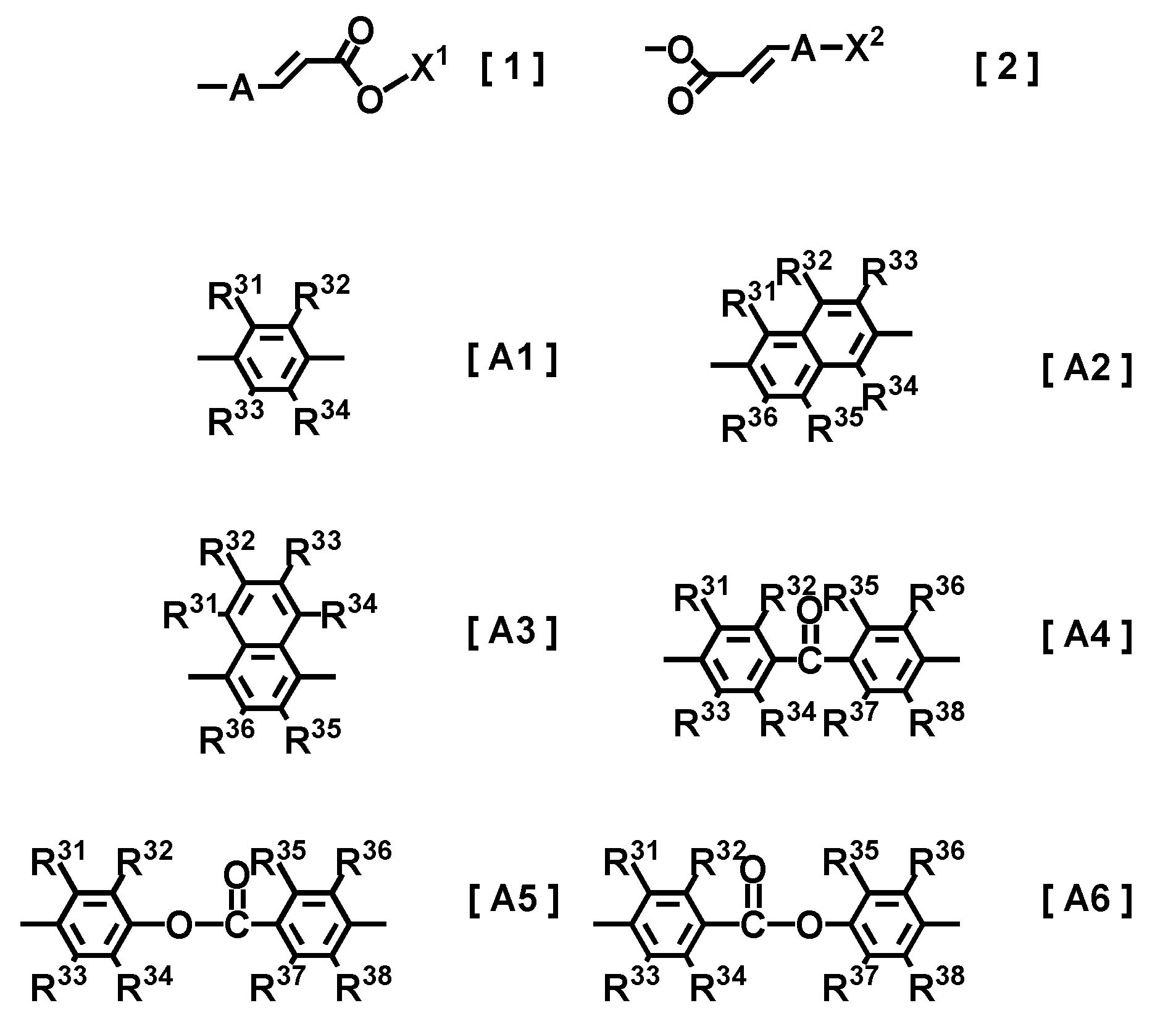

L1及びL2は、それぞれ独立に共有結合、エーテル結合、エステル結合、アミド結合、尿素結合又はウレタン結合を表す。
以下、上記モノマーの具体例を挙げるが、本発明は、これらに限定されるものではない。
本発明の硬化膜形成組成物に含有される(B)成分は、N-アルコキシメチル基を有する繰り返し単位及び重合性のC=C二重結合を含む側鎖を有する繰り返し単位を含むポリマー(以下特定共重合体2ともいう)である。


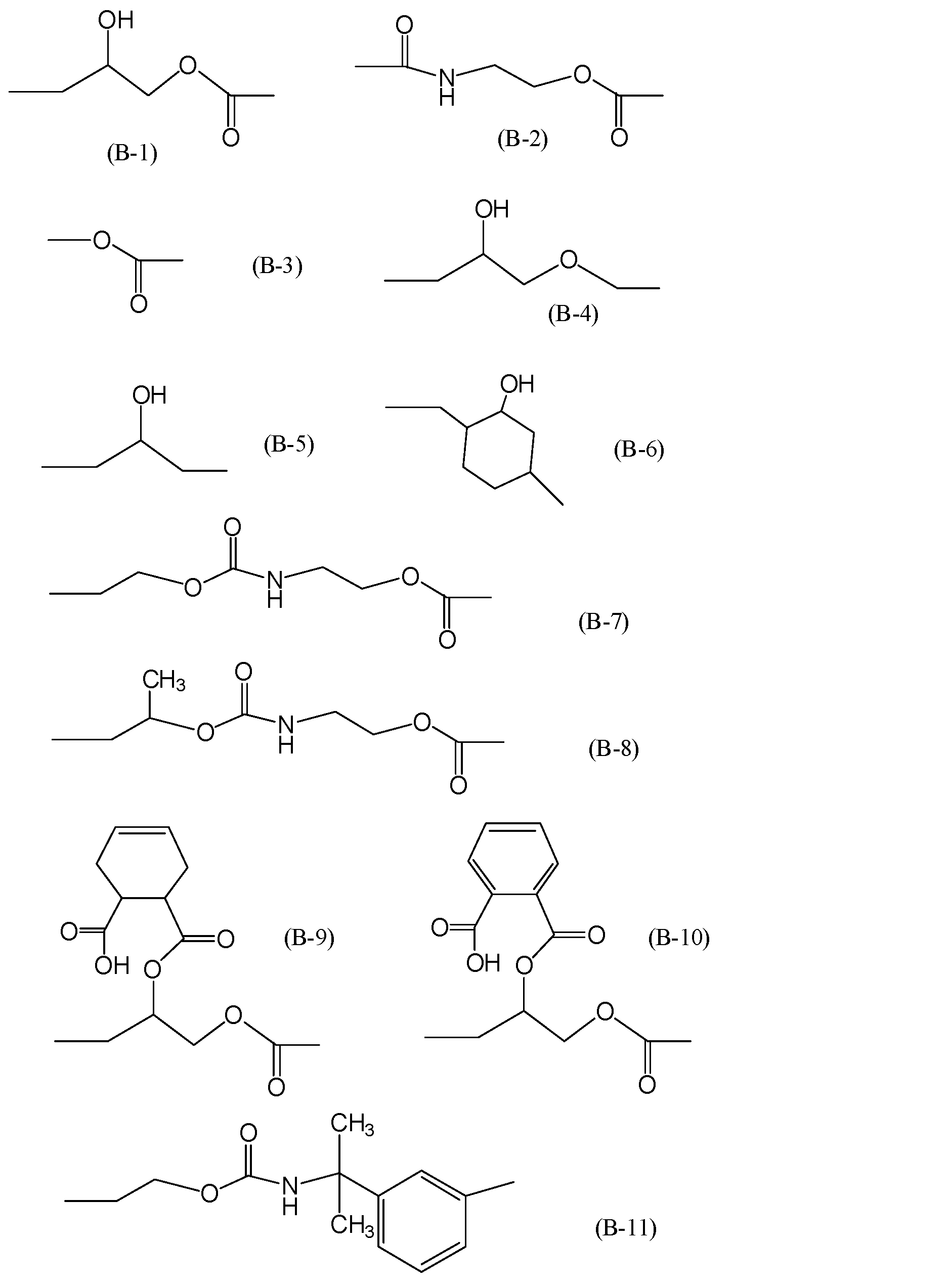
前記特定モノマーX1等とは異なる構造を有するアクリル酸エステル化合物としては、例えば、メチルアクリレート、エチルアクリレート、n-プロピルアクリレート、イソプロピルアクリレート、n-ブチルアクリレート、イソブチルアクリレート、t-ブチルアクリレート、ベンジルアクリレート、ナフチルアクリレート、アントリルアクリレート、アントリルメチルアクリレート、フェニルアクリレート、グリシジルアクリレート、2,2,2-トリフルオロエチルアクリレート、シクロヘキシルアクリレート、イソボルニルアクリレート、2-メトキシエチルアクリレート、メトキシトリエチレングリコールアクリレート、2-エトキシエチルアクリレート、テトラヒドロフルフリルアクリレート、3-メトキシブチルアクリレート、2-メチル-2-アダマンチルアクリレート、2-プロピル-2-アダマンチルアクリレート、8-メチル-8-トリシクロデシルアクリレート、及び、8-エチル-8-トリシクロデシルアクリレート等が挙げられる。
合計が40モル%未満である場合は(A)成分との熱架橋による硬化が不十分となる場合があり、90モル%より過大である場合は、基材との密着性に悪影響を与える場合がある。
合計が10モル%未満である場合は、液晶層との密着性が不十分となる場合があり、60モル%より過大である場合は、(A)成分との熱架橋による硬化が不十分となる場合がある。
本発明の組成物に含有される(C)成分は、(C-1):ヒドロキシ基、カルボキシル基、アミド基、アミノ基およびアルコキシシリル基からなる群から選ばれる少なくとも一つの置換基を有するポリマー、(C-2):(A)成分と熱反応可能な置換基を有し、自己架橋可能なポリマー、または(C-3):メラミンホルムアルデヒド樹脂、からなる群から選ばれる少なくとも一種のポリマーである。以下、各成分について詳細に述べる。
(C-1)成分は、ヒドロキシ基、カルボキシル基、アミド基、アミノ基およびアルコキシシリル基からなる群から選ばれる少なくとも一つの置換基を有するポリマー(以下、特定(共)重合体1とも言う。)である。
前記アクリル酸エステル化合物としては、例えば、メチルアクリレート、エチルアクリレート、プロピルアクリレート、イソプロピルアクリレート、ブチルアクリレート、イソブチルアクリレート、t-ブチルアクリレート、ベンジルアクリレート、ナフチルアクリレート、アントリルアクリレート、アントリルメチルアクリレート、フェニルアクリレート、グリシジルアクリレート、2,2,2-トリフルオロエチルアクリレート、シクロヘキシルアクリレート、イソボルニルアクリレート、2-メトキシエチルアクリレート、メトキシトリエチレングリコールアクリレート、2-エトキシエチルアクリレート、2-アミノエチルアクリレート、テトラヒドロフルフリルアクリレート、3-メトキシブチルアクリレート、2-メチル-2-アダマンチルアクリレート、2-プロピル-2-アダマンチルアクリレート、8-メチル-8-トリシクロデシルアクリレート、及び、8-エチル-8-トリシクロデシルアクリレート等が挙げられる。
本実施の形態の硬化膜形成組成物において、(C-2)成分は(A)成分と熱反応可能な置換基を有し、自己架橋可能なポリマー(以下特定(共)重合体2ともいう)とすることもできる。
そのようなポリマーとしては、例えば、ポリ(3-メタクリロキシプロピルトリメトキシシラン)、3-メタクリロキシプロピルトリメトキシシランとスチレンとの共重合体、ポリ(3-アクリロキシプロピルトリメトキシシラン)、3-アクリロキシプロピルトリメトキシシランとメチルメタクリレートとの共重合体等が挙げられる。
上記モノマーの具体例は、(C-1)成分のところで記載した通りである。
このようにして得られる特定(共)重合体2は、通常、溶剤に溶解した溶液の状態である。
これらのポリマーは、単独でまたは2種以上を組み合わせて使用することができる。
[(C-3)成分]

本発明の光学フィルムにおける表面の硬化膜を形成する組成物は、上述した(A)成分及び(B)成分及び(C)成分に加え、さらに(D)成分として架橋触媒を含有することができる。
(D)成分である架橋触媒としては、例えば、酸又は熱酸発生剤が挙げられる。この(D)成分は、本発明の光学フィルムにおける表面の硬化膜を形成する組成物を用いた硬化膜の形成において、熱硬化反応の促進に有効となる。

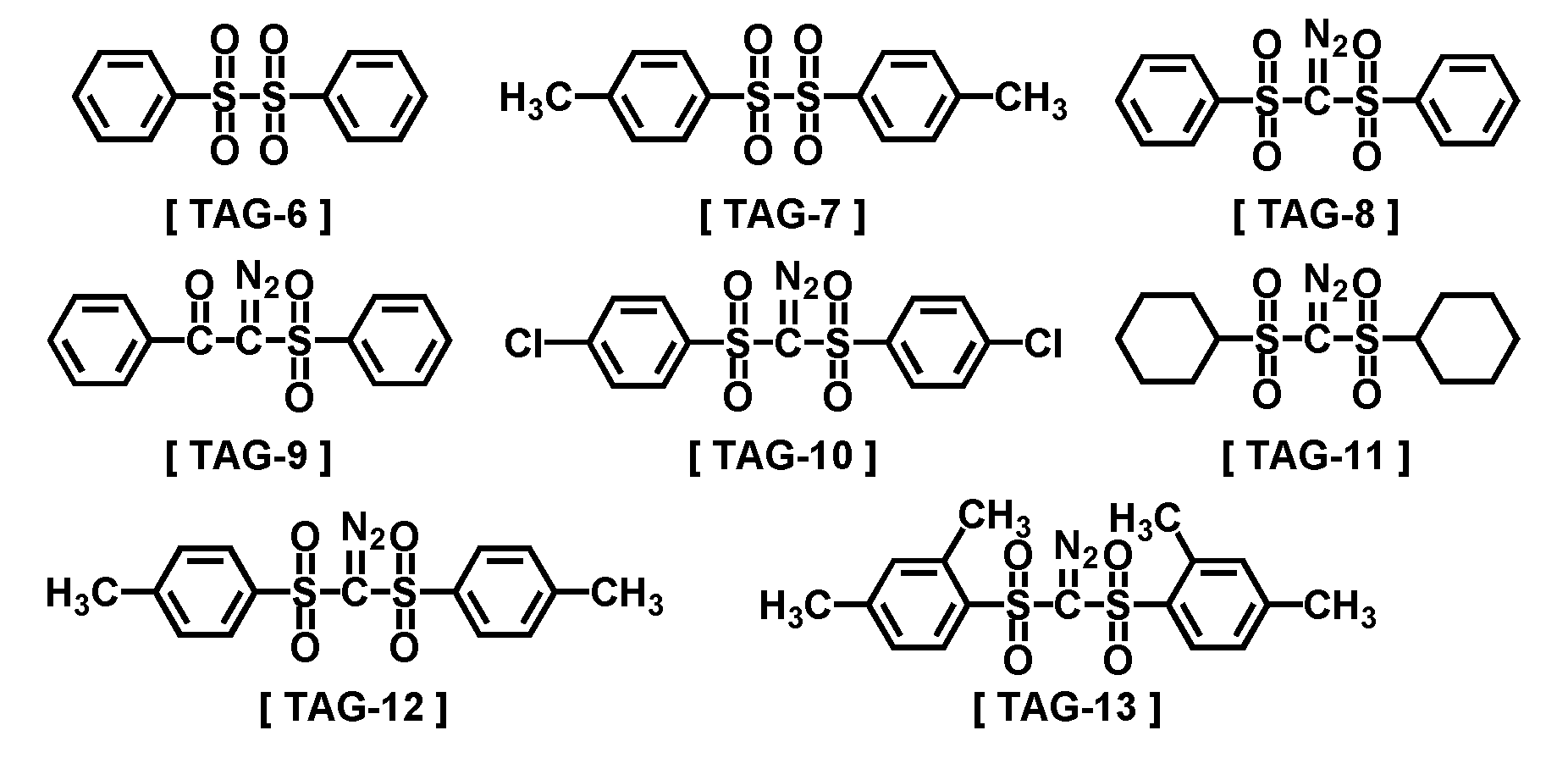

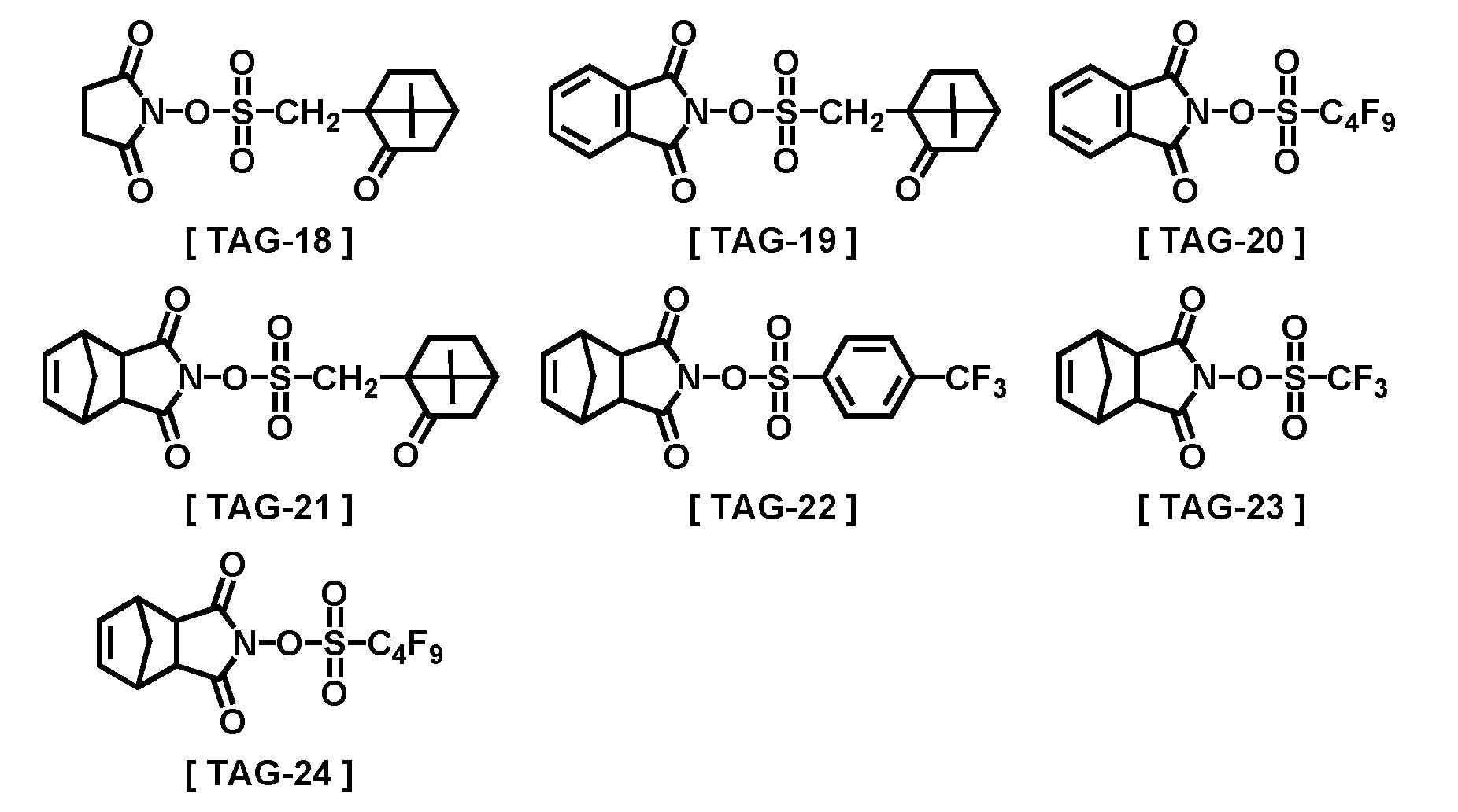


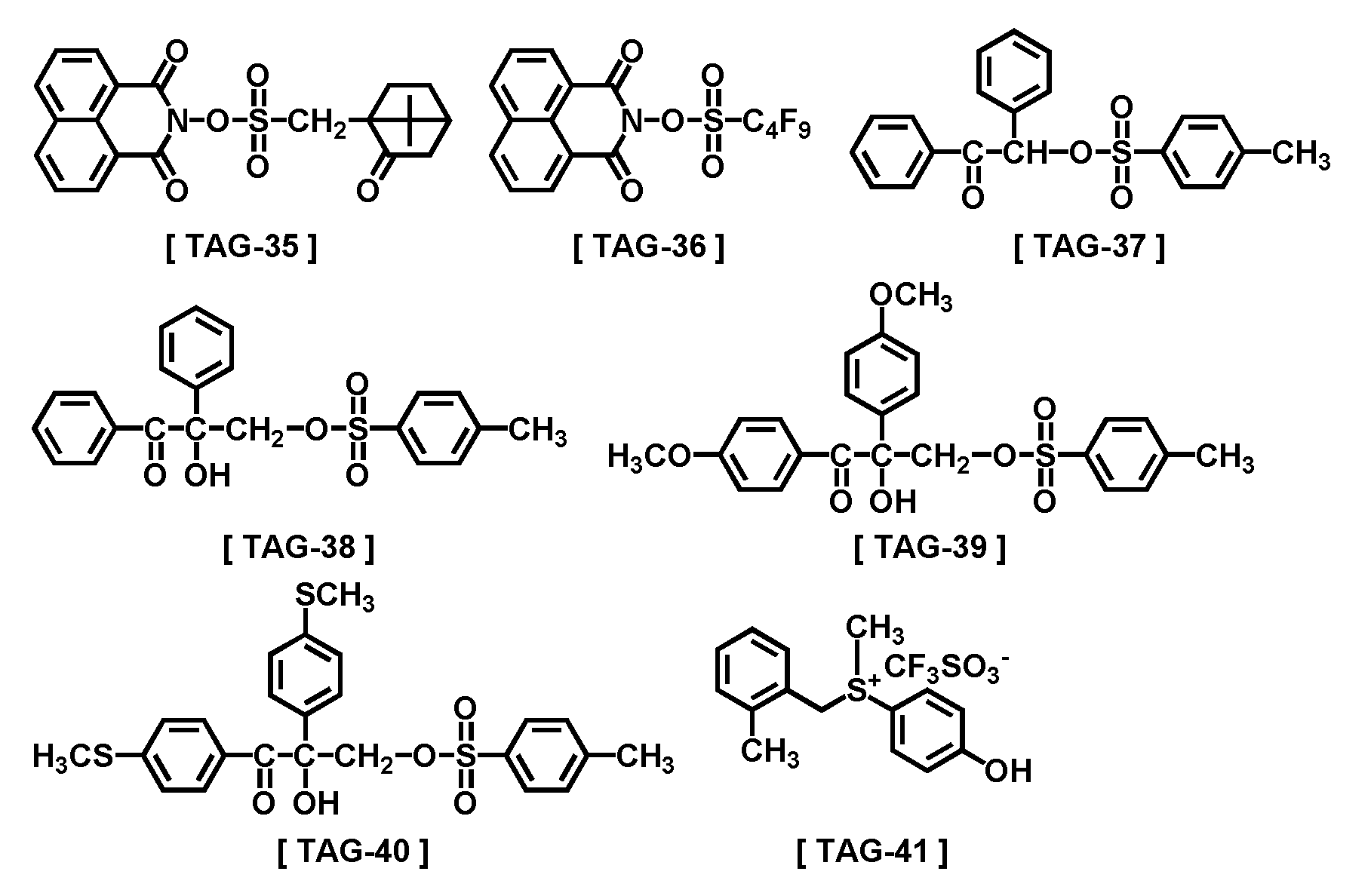
本実施形態の硬化膜形成組成物は、必要に応じて、(E)成分として架橋剤を含有する。 より詳しくは、(E)成分は、上述の(A)成分および(C)成分と反応する架橋剤である。(E)成分は、(A)成分である化合物のヒドロキシ基、カルボキシル基、アミド基、アミノ基及びトリアルコキシシリル基から選ばれる置換基、(C)成分に含まれるヒドロキシ基、カルボキシル基、アミノ基及びトリアルコキシシリル基から選ばれる置換基と結合する。そして、本実施の形態の硬化膜形成組成物は、硬化膜として、光反応効率の高い配向材を形成することができる。
本発明の実施形態の硬化膜形成組成物は、本発明の効果を損なわない限りにおいて、その他の添加剤を含有することができる。
その他の添加剤としては、例えば、増感剤を含有することができる。増感剤は、本発明の光学フィルムにおける表面の硬化膜を形成するに際し、その光反応を促進することにおいて有効となる。
本発明の実施形態の硬化膜形成組成物は、溶剤に溶解した溶液状態で用いられることが多い。その際に用いられる溶剤は、(A)成分及び(B)成分、所望により(C)成分、(D)成分、(E)成分、及び/又は、その他の添加剤を溶解するものであり、そのような溶解能を有する溶剤であれば、その種類及び構造などは特に限定されるものでない。
本発明の実施形態の硬化膜形成組成物は、光配向性を有する熱硬化性の硬化膜形成組成物である。本実施形態の硬化膜形成組成物は、上述したように、(A)成分である光配向性基及び熱架橋性基を有する化合物の少なくとも一種、(B)成分であるN-アルコキシメチル基を有する繰り返し単位及び重合性のC=C二重結合を含む側鎖を有する繰り返し単位を含むポリマー、必要に応じて、(C)成分である(C-1):ヒドロキシ基、カルボキシル基、アミド基、アミノ基およびアルコキシシリル基からなる群から選ばれる少なくとも一つの置換基を有するポリマー、(C-2):(A)成分と熱反応可能な置換基を有し、自己架橋可能なポリマー、及び(C-3):メラミンホルムアルデヒド樹脂、からなる群から選ばれる少なくとも一種のポリマーを含有し、必要に応じて、(D)成分として架橋触媒を含有する。また、必要に応じて、(E)成分として架橋剤を含有することができる。そして、本発明の効果を損なわない限りにおいて、その他の添加剤を含有することができ、さらに、溶剤を含有することができる。
本実施の形態の硬化膜形成組成物の溶液を基板(例えば、シリコン/二酸化シリコン被覆基板、シリコンナイトライド基板、金属、例えば、アルミニウム、モリブデン、クロム等が被覆された基板、ガラス基板、石英基板、ITO基板等)やフィルム(例えば、トリアセチルセルロース(TAC)フィルム、シクロオレフィンポリマーフィルム、ポリエチレンテレフタレートフィルム、アクリルフィルム等の樹脂フィルム)等の上に、バーコート、回転塗布、流し塗布、ロール塗布、スリット塗布、スリットに続いた回転塗布、インクジェット塗布、印刷などによって塗布して塗膜を形成し、その後、ホットプレートまたはオーブン等で加熱乾燥することにより、硬化膜を形成することができる。
そのため、本実施の形態の硬化膜形成組成物は、各種位相差材(位相差フィルム)や液晶表示素子等の製造に好適に用いることができる。
以下の実施例および比較例で用いられる各組成成分は、次のとおりである。
CIN1:4-(6-メタクリルオキシヘキシル-1-オキシ)けい皮酸





PEPO:ポリエステルポリオール重合体(下記構造単位を有するアジピン酸/ジエチレングリコール共重合体。分子量4,800。)

<成分(D)>
PTSA:パラトルエンスルホン酸

HMM:下記の構造式で表されるメラミン架橋剤[サイメル(CYMEL)(登録商標)303(三井サイテック(株)製)]

CIN1:4-(6-メタクリルオキシヘキシル-1-オキシ)けい皮酸
HEMA:2-ヒドロキシエチルメタクリレート
MMA:メタクリル酸メチル
BMAA:N-ブトキシメチルアクリルアミド
AIBN:α、α’-アゾビスイソブチロニトリル
実施例及び比較例の各位相差材形成組成物は溶剤を含有し、その溶剤として、プロピレングリコールモノメチルエーテル(PM)、酢酸ブチル(BA)、メチルエチルケトン(MEK)、シクロヘキサノン(CHN)を用いた。
合成例におけるポリイミド、ポリアミック酸又はアクリルポリマーの分子量は、(株)Shodex社製常温ゲル浸透クロマトグラフィー(GPC)装置(GPC-101)、Shodex社製カラム(KD―803、KD-805)を用い以下のようにして測定した。
カラム温度:50℃
溶離液:N,N-ジメチルホルムアミド(添加剤として、臭化リチウム-水和物(LiBr・H2O)が30mmol/L、リン酸・無水結晶(o―リン酸)が30mmol/L、テトラヒドロフラン(THF)が10mL/L)
流速:1.0mL/分
検量線作成用標準サンプル:東ソー社製 TSK 標準ポリエチレンオキサイド(分子量 約900,000、150,000、100,000、30,000)、及び、ポリマーラボラトリー社製 ポリエチレングリコール(分子量 約12,000、4,000、1,000)。
1H-NMR分析に用いた分析装置及び分析条件は、下記の通りである。
核磁気共鳴装置:Varian NMR System 400 NB(400 MHz)
測定溶媒:DMSO-d6
基準物質:テトラメチルシラン(TMS)(δ0.0 ppm for 1H)
M6CA 4.0g、スチレン 4.0g、HEMA 2.0g、重合触媒としてAIBN 0.1gをPM 90.9gに溶解し、80℃にて20時間反応させる事によりアクリル共重合体溶液(固形分濃度10質量%)(CIN6)を得た。得られたアクリル共重合体のMnは20,000、Mwは55,000であった。
BMAA32.0g、HEMA8.0g、重合触媒としてAIBN 0.8gをテトラヒドロフラン204.0gに溶解し、60℃にて20時間反応させることによりアクリル共重合体溶液を得た。アクリル共重合体溶液をヘキサン1000.0gに徐々に滴下して固体を析出させ、ろ過および減圧乾燥することでアクリル共重合体(PB-1)を得た。得られたアクリル共重合体のMnは7,000、Mwは20,000であった。
BMAA28.0g、HEMA12.0g、重合触媒としてAIBN 0.8gをテトラヒドロフラン204.0gに溶解し、60℃にて20時間反応させることによりアクリル共重合体溶液を得た。アクリル共重合体溶液をヘキサン1000.0gに徐々に滴下して固体を析出させ、ろ過および減圧乾燥することでアクリル共重合体(PB-2)を得た。得られたアクリル共重合体のMnは8,300、Mwは25,000であった。
BMAA24.0g、HEMA16.0g、重合触媒としてAIBN 0.8gをテトラヒドロフラン204.0gに溶解し、60℃にて20時間反応させることによりアクリル共重合体溶液を得た。アクリル共重合体溶液をヘキサン1000.0gに徐々に滴下して固体を析出させ、ろ過および減圧乾燥することでアクリル共重合体(PB-3)を得た。得られたアクリル共重合体のMnは9,800、Mwは35,000であった。
BMAA32.0g、GMA8.0g、重合触媒としてAIBN 0.8gをテトラヒドロフラン204.0gに溶解し、60℃にて20時間反応させることによりアクリル共重合体溶液を得た。アクリル共重合体溶液をヘキサン1000.0gに徐々に滴下して固体を析出させ、ろ過および減圧乾燥することでアクリル共重合体(PB-4)を得た。得られたアクリル共重合体のMnは7,000、Mwは18,000であった。
GMA40.0g、重合触媒としてAIBN 0.8gをテトラヒドロフラン204.0gに溶解し、60℃にて20時間反応させることによりアクリル重合体溶液を得た。アクリル重合体溶液をヘキサン1000gに徐々に滴下して固体を析出させ、ろ過および減圧乾燥することでアクリル重合体(PB-5)を得た。得られたアクリル重合体のMnは8,000、Mwは20,000であった。
MMA 100.0g、HEMA11.1g、重合触媒としてAIBN 5.6gをPM 450.0gに溶解し、80℃にて20時間反応させることによりアクリル共重合体溶液(固形分濃度20質量%)(PC-1)を得た。得られたアクリル共重合体のMnは4,200、Mwは7,600であった。
BMAA100.0g、重合触媒としてAIBN 4.2gをPM 193.5gに溶解し、90℃にて20時間反応させることによりアクリル重合体溶液(固形分濃度35質量%)(PC-2)を得た。得られたアクリル共重合体のMnは2,700、Mwは3,900であった。
重合例2で得たアクリル共重合体(PB-1)10.0g、2-アクリロイルオキシエチルイソシアナート4.3g、ジブチルヒドロキシトルエン0.4g、反応触媒としてジブチルスズジラウレート10mgをテトラヒドロフラン60gに溶解させ、60℃で5時間反応させた。この溶液をヘキサン500gに徐々に滴下して固体を析出させ、ろ過および減圧乾燥することで、アクロイル基を有するアクリル共重合体(PB-6)を得た。1H-NMR分析を行い、アクリル共重合体(PB-6)がアクロイル基を有することを確認した。
重合例2で得たアクリル共重合体(PB-1)10.0g、2-メタクリロイルオキシエチルイソシアナート4.3g、ジブチルヒドロキシトルエン0.4g、反応触媒としてジブチルスズジラウレート10mgをテトラヒドロフラン60gに溶解させ、60℃で5時間反応させた。この溶液をヘキサン500gに徐々に滴下して固体を析出させ、ろ過および減圧乾燥することで、メタクロイル基を有するアクリル共重合体(PB-7)を得た。1H-NMR分析を行い、アクリル共重合体(PB-7)がメタクロイル基を有することを確認した。
重合例3で得たアクリル共重合体(PB-2)10.0g、2-アクリロイルオキシエチルイソシアナート6.5g、ジブチルヒドロキシトルエン0.6g、反応触媒としてジブチルスズジラウレート10mgをテトラヒドロフラン60gに溶解させ、60℃で5時間反応させた。この溶液をヘキサン500gに徐々に滴下して固体を析出させ、ろ過および減圧乾燥することで、アクロイル基を有するアクリル共重合体(PB-8)を得た。1H-NMR分析を行い、アクリル共重合体(PB-8)がアクロイル基を有することを確認した。
重合例4で得たアクリル共重合体(PB-3)10.0g、2-アクリロイルオキシエチルイソシアナート8.7g、ジブチルヒドロキシトルエン0.9g、反応触媒としてジブチルスズジラウレート10mgをテトラヒドロフラン60gに溶解させ、60℃で5時間反応させた。この溶液をヘキサン500gに徐々に滴下して固体を析出させ、ろ過および減圧乾燥することで、アクロイル基を有するアクリル共重合体(PB-9)を得た。1H-NMR分析を行い、アクリル共重合体(PB-9)がアクロイル基を有することを確認した。
重合例5で得たアクリル共重合体(PB-4)10.0g、アクリル酸2.2g、ジブチルヒドロキシトルエン0.2g、反応触媒としてベンジルトリエチルアンモニウムクロリド10mgをPM60gに溶解させ、90℃で20時間反応させた。この溶液をヘキサン500gに徐々に滴下して固体を析出させ、ろ過および減圧乾燥することで、アクロイル基を有するアクリル共重合体(PB-10)を得た。1H-NMR分析を行い、アクリル共重合体(PB-10)がアクロイル基を有することを確認した。
重合例5で得たアクリル共重合体(PB-4)10.0g、メタクリル酸2.2g、ジブチルヒドロキシトルエン0.2g、反応触媒としてベンジルトリエチルアンモニウムクロリド10mgをPM60gに溶解させ、90℃で20時間反応させた。この溶液をヘキサン500gに徐々に滴下して固体を析出させ、ろ過および減圧乾燥することで、メタクロイル基を有するアクリル共重合体(PB-11)を得た。1H-NMR分析を行い、アクリル共重合体(PB-11)がメタクロイル基を有することを確認した。
重合例6で得たアクリル共重合体(PB-5)10.0g、アクリル酸2.0g、ジブチルヒドロキシトルエン0.2g、反応触媒としてベンジルトリエチルアンモニウムクロリド10mgをPM60gに溶解させ、90℃で20時間反応させた。この溶液をヘキサン500gに徐々に滴下して固体を析出させ、ろ過および減圧乾燥することで、アクロイル基を有するアクリル共重合体(PB-12)を得た。1H-NMR分析を行い、アクリル共重合体(PB-12)がアクロイル基を有することを確認した。
基材として用いるアクリルフィルムは、例えば以下の方法で作成することができる。即ち、メチルメタクリレートを主成分とした共重合体等からなる原料ペレットを250℃にて押出機で溶融、T-ダイに通過させ、キャスティングロールおよび乾燥ロールなどを経て、厚さ40μmのアクリルフィルムを作成することができる。
表1に示す組成にて実施例及び比較例の各硬化膜形成組成物を調製した。次に、各位相差材形成組成物を用いて硬化膜を形成し、得られた硬化膜それぞれについて、配向性および密着性の評価を行った。

実施例および比較例の各硬化膜形成組成物をフィルム上にバーコータを用いて塗布した後、温度100℃で2分間、熱循環式オーブン中で加熱乾燥を行い、硬化膜を形成した。この各硬化膜に313nmの直線偏光を20mJ/cm2露光量で垂直に照射し、配向材を形成した。基板上の配向材の上に、水平配向用重合性液晶溶液を、バーコータを用いて塗布し、次いで、70℃で60秒間ホットプレート上においてプリベークを行い、膜厚1.0μmの塗膜を形成した。この基板上の塗膜を300mJ/cm2で露光し、位相差材を作製した。作製した基板上の位相差材を一対の偏光板で挟み込み、位相差材における位相差特性の発現状況を観察し、位相差が欠陥なく発現しているものを○、位相差が発現していないものを×として「配向性」の欄に記載した。
実施例および比較例の各硬化膜形成組成物をフィルム上にバーコータを用いて塗布した後、温度100℃で2分間、熱循環式オーブン中で加熱乾燥を行い、硬化膜を形成した。この各硬化膜に313nmの直線偏光を20mJ/cm2露光量で垂直に照射し、配向材を形成した。基板上の配向材の上に、水平配向用重合性液晶溶液を、バーコータを用いて塗布し、次いで、70℃で60秒間ホットプレート上においてプリベークを行い、膜厚1.0μmの塗膜を形成した。この基板上の塗膜を300mJ/cm2で露光し、位相差材を作製した。この位相差材に縦横1mm間隔で10×10マスとなるようカッターナイフで切込みをつけた。この切り込みの上にスコッチテープを用いてセロハンテープ剥離試験を行った。評価結果は「初期」とし、100マス全て剥がれずに残っているものを○、1マスでも剥がれているものを×とした。評価結果は、後に表2にまとめて示す。
上述の密着性の評価と同様に方法で作製したフィルム上の位相差材を、温度80℃湿度90%に設定されたオーブンに入れ、72時間以上静置した。その後、位相差材を取り出し、上述の密着性の評価と同様の方法で、密着性を評価した。評価結果は、「耐久」として表2にまとめて示す。
以上の評価を行った結果を、上述したように、表2に示す。

Claims (16)
- (A)光配向性基及び熱架橋性基を有する化合物の少なくとも一種、並びに
(B)N-アルコキシメチル基を有する繰り返し単位及び重合性のC=C二重結合を含む側鎖を有する繰り返し単位を含むポリマー
を含有する硬化膜形成組成物。 - (A)成分の光配向性基が光二量化又は光異性化する構造の官能基である、請求項1に記載の硬化膜形成組成物。
- (A)成分の光配向性基がシンナモイル基である、請求項1又は請求項2に記載の硬化膜形成組成物。
- (A)成分の光配向性基がアゾベンゼン構造の基である、請求項1又は請求項2に記載の硬化膜形成組成物。
- さらに、 (C)(C-1):ヒドロキシ基、カルボキシル基、アミド基、アミノ基およびアルコキシシリル基からなる群から選ばれる少なくとも一つの置換基を有するポリマー、(C-2):(A)成分と熱反応可能な置換基を有し、自己架橋可能なポリマー、及び(C-3):メラミンホルムアルデヒド樹脂、からなる群から選ばれる少なくとも一種のポリマーを含有する請求項1乃至4のいずれか1項に記載の硬化膜形成組成物。
- さらに、(D)架橋触媒を含有する請求項1乃至5のいずれか1項に記載の硬化膜形成組成物。
- さらに、(E)架橋剤を含有する請求項1乃至6のいずれか1項に記載の硬化膜形成組成物。
- (B)成分のポリマー中の、N-アルコキシメチル基を有する繰り返し単位の存在割合が、該ポリマーの全繰り返し単位100モルあたり40モル%乃至90モル%であり、重合性のC=C二重結合を含む側鎖を有する繰り返し単位の存在割合が、該ポリマーの全繰り返し単位100モルあたり10モル%乃至60モル%である、請求項1乃至請求項7のうちいずれか一項に記載の硬化膜形成組成物。
- (A)成分と(B)成分の含有量比が質量比で5:95乃至60:40である、請求項1乃至請求項8のいずれか一項に記載の硬化膜形成組成物。
- (A)成分及び(B)成分の合計量100質量部に基づいて、5質量部乃至500質量部の(C)成分を含有する、請求項5乃至請求項9のうちいずれか一項に記載の硬化膜形成組成物。
- 請求項1乃至請求項10のうちいずれか一項に記載の硬化膜形成組成物から得られる光学フィルム。
- 請求項11に記載の光学フィルムを使用して形成される液晶配向材。
- 請求項11に記載の光学フィルムを使用して形成される位相差材。
- 請求項11に記載の光学フィルムを製造するための成分として使用するための(B)N-アルコキシメチル基を有する繰り返し単位及び重合性のC=C二重結合を含む側鎖を有する繰り返し単位を含むポリマー。
- 請求項12に記載の液晶配向材を製造するための成分として使用するための(B)N-アルコキシメチル基を有する繰り返し単位及び重合性のC=C二重結合を含む側鎖を有する繰り返し単位を含むポリマー。
- 請求項13に記載の位相差材を製造するための成分として使用するための(B)N-アルコキシメチル基を有する繰り返し単位及び重合性のC=C二重結合を含む側鎖を有する繰り返し単位を含むポリマー。
Priority Applications (3)
| Application Number | Priority Date | Filing Date | Title |
|---|---|---|---|
| CN201580034050.4A CN106459324B (zh) | 2014-06-30 | 2015-06-29 | 固化膜形成用组合物、取向材料和相位差材料 |
| JP2016531361A JP6604483B2 (ja) | 2014-06-30 | 2015-06-29 | 硬化膜形成組成物、配向材および位相差材 |
| KR1020167035852A KR102318651B1 (ko) | 2014-06-30 | 2015-06-29 | 경화막 형성 조성물, 배향재 및 위상차재 |
Applications Claiming Priority (2)
| Application Number | Priority Date | Filing Date | Title |
|---|---|---|---|
| JP2014-134035 | 2014-06-30 | ||
| JP2014134035 | 2014-06-30 |
Publications (1)
| Publication Number | Publication Date |
|---|---|
| WO2016002722A1 true WO2016002722A1 (ja) | 2016-01-07 |
Family
ID=55019254
Family Applications (1)
| Application Number | Title | Priority Date | Filing Date |
|---|---|---|---|
| PCT/JP2015/068694 Ceased WO2016002722A1 (ja) | 2014-06-30 | 2015-06-29 | 硬化膜形成組成物、配向材および位相差材 |
Country Status (5)
| Country | Link |
|---|---|
| JP (2) | JP6604483B2 (ja) |
| KR (1) | KR102318651B1 (ja) |
| CN (2) | CN110408159B (ja) |
| TW (1) | TWI678389B (ja) |
| WO (1) | WO2016002722A1 (ja) |
Cited By (6)
| Publication number | Priority date | Publication date | Assignee | Title |
|---|---|---|---|---|
| JP2017187600A (ja) * | 2016-04-05 | 2017-10-12 | Jsr株式会社 | 液晶配向剤、保護膜形成用重合体組成物、保護膜及びその製造方法、並びに液晶素子 |
| WO2018181364A1 (ja) * | 2017-03-27 | 2018-10-04 | 日産化学株式会社 | 硬化膜形成組成物、配向材および位相差材 |
| WO2019189193A1 (ja) * | 2018-03-27 | 2019-10-03 | 日産化学株式会社 | 硬化膜形成組成物、配向材および位相差材 |
| WO2020026632A1 (ja) * | 2018-08-02 | 2020-02-06 | 林テレンプ株式会社 | 位相差フィルムおよびその製造方法 |
| CN112041713A (zh) * | 2018-03-27 | 2020-12-04 | 日产化学株式会社 | 固化膜形成用组合物、取向材及相位差材 |
| WO2021106858A1 (ja) * | 2019-11-25 | 2021-06-03 | 日産化学株式会社 | 硬化膜形成組成物、配向材および位相差材 |
Families Citing this family (5)
| Publication number | Priority date | Publication date | Assignee | Title |
|---|---|---|---|---|
| WO2018181350A1 (ja) * | 2017-03-27 | 2018-10-04 | 日産化学株式会社 | 硬化膜形成組成物、配向材および位相差材 |
| TWI868144B (zh) * | 2019-05-27 | 2025-01-01 | 日商日產化學股份有限公司 | 硬化膜形成組成物、配向材料及相位差材料 |
| CN115466425B (zh) * | 2022-07-12 | 2024-01-30 | 苏州大学 | 一种手性苯酯聚合物交联薄膜及其制备方法与应用 |
| WO2025170007A1 (ja) * | 2024-02-07 | 2025-08-14 | 日産化学株式会社 | 硬化膜形成組成物、配向材および位相差材 |
| CN120406044A (zh) * | 2024-12-31 | 2025-08-01 | 苏州凯芯半导体材料有限公司 | 化学放大型正性光刻胶及其应用 |
Citations (9)
| Publication number | Priority date | Publication date | Assignee | Title |
|---|---|---|---|---|
| JPS5649759A (en) * | 1979-09-29 | 1981-05-06 | Kansai Paint Co Ltd | Water-dispersed coating composition |
| JPH03258873A (ja) * | 1990-03-08 | 1991-11-19 | Mitsubishi Rayon Co Ltd | 熱硬化性被覆用組成物 |
| JPH11158434A (ja) * | 1997-11-28 | 1999-06-15 | Kansai Paint Co Ltd | 親水化処理用組成物及び親水化処理方法 |
| WO2002010280A1 (en) * | 2000-07-28 | 2002-02-07 | Sekisui Chemical Co., Ltd. | Colored resin emulsion, ink for ink-jet printing, electrocoating fluid and color filter |
| JP2008116809A (ja) * | 2006-11-07 | 2008-05-22 | Nissan Chem Ind Ltd | 液晶配向層形成用樹脂組成物 |
| JP2009058584A (ja) * | 2007-08-30 | 2009-03-19 | Jsr Corp | 液晶配向剤および液晶配向膜の形成方法 |
| JP2010018807A (ja) * | 2002-05-31 | 2010-01-28 | Elsicon Inc | 液晶配向層用ハイブリッドポリマー材料 |
| WO2010061490A1 (ja) * | 2008-11-27 | 2010-06-03 | シャープ株式会社 | 液晶表示装置及びその製造方法 |
| WO2012002511A1 (ja) * | 2010-06-30 | 2012-01-05 | 日産化学工業株式会社 | 液晶配向剤、液晶配向膜、液晶表示素子及び液晶表示素子の製造方法 |
Family Cites Families (21)
| Publication number | Priority date | Publication date | Assignee | Title |
|---|---|---|---|---|
| US4329266A (en) * | 1979-09-29 | 1982-05-11 | Kansai Paint Co., Ltd. | Water-dispersed coating composition comprising an acrylic graft polymer containing carboxyl groups, hydroxyl and/or amide groups |
| JPS5764229A (en) * | 1980-10-06 | 1982-04-19 | Tatatomi Nishikubo | Self-sensitizig type photosensitive material |
| DE59408097D1 (de) | 1993-02-17 | 1999-05-20 | Rolic Ag | Orientierungsschicht für Flüssigkristalle |
| JPH10204326A (ja) * | 1997-01-21 | 1998-08-04 | Kansai Paint Co Ltd | 活性エネルギー線硬化型樹脂組成物及びそれを使用した被膜形成方法 |
| JP3767962B2 (ja) | 1997-02-19 | 2006-04-19 | シャープ株式会社 | 映像表示システム |
| EP1021479B1 (en) | 1997-09-25 | 2002-07-17 | Rolic AG | Photocrosslinkable polyimides |
| JP2005049865A (ja) | 2003-07-17 | 2005-02-24 | Arisawa Mfg Co Ltd | 光学位相差素子の製造方法 |
| CN101223198B (zh) * | 2005-07-19 | 2011-12-28 | 东洋油墨制造株式会社 | 固化性组合物、固化膜及层叠体 |
| KR101472070B1 (ko) * | 2007-10-19 | 2014-12-15 | 닛산 가가쿠 고교 가부시키 가이샤 | 열경화막 형성용 폴리에스테르 수지 용액 |
| EP2447769B1 (en) * | 2009-06-23 | 2015-03-25 | Nissan Chemical Industries, Ltd. | Composition for forming thermoset film having photo alignment properties |
| JP5748061B2 (ja) * | 2009-07-21 | 2015-07-15 | 日産化学工業株式会社 | 光配向性を有する熱硬化膜形成組成物 |
| JP5471376B2 (ja) * | 2009-12-04 | 2014-04-16 | 東レ株式会社 | 有機−無機複合導電性パターン形成用感光性ペーストおよび有機−無機複合導電性パターンの製造方法 |
| JP5566160B2 (ja) * | 2010-03-31 | 2014-08-06 | 富士フイルム株式会社 | 液晶性化合物、液晶性組成物、光吸収異方性膜、及び液晶表示装置 |
| KR20130045856A (ko) * | 2010-04-08 | 2013-05-06 | 닛산 가가쿠 고교 가부시키 가이샤 | 광배향성을 가지는 열경화막 형성 조성물 |
| WO2011126022A1 (ja) * | 2010-04-08 | 2011-10-13 | 日産化学工業株式会社 | 光配向性を有する熱硬化膜形成組成物 |
| CN105219000B (zh) * | 2010-08-11 | 2017-10-27 | 日产化学工业株式会社 | 树脂组合物、液晶取向材料及相位差材料 |
| JP5831248B2 (ja) * | 2011-02-17 | 2015-12-09 | 東亞合成株式会社 | フッ素系グラフト共重合体及びその用途 |
| JP6041512B2 (ja) * | 2011-04-22 | 2016-12-07 | 日本合成化学工業株式会社 | アクリル系樹脂組成物を用いた用途 |
| JP5760844B2 (ja) * | 2011-08-22 | 2015-08-12 | コニカミノルタ株式会社 | 光学フィルム |
| JP2013177561A (ja) * | 2012-02-03 | 2013-09-09 | Jnc Corp | 光配向性基を有する高分子組成物、該高分子組成物から形成される液晶配向膜及び該液晶配向膜から形成される位相差板を備えた液晶表示素子 |
| CN102819190A (zh) * | 2012-08-24 | 2012-12-12 | 深圳市容大感光科技股份有限公司 | 一种抗蚀刻组合物及涂有该组合物的基材 |
-
2015
- 2015-06-29 WO PCT/JP2015/068694 patent/WO2016002722A1/ja not_active Ceased
- 2015-06-29 JP JP2016531361A patent/JP6604483B2/ja active Active
- 2015-06-29 CN CN201910805963.1A patent/CN110408159B/zh active Active
- 2015-06-29 KR KR1020167035852A patent/KR102318651B1/ko active Active
- 2015-06-29 CN CN201580034050.4A patent/CN106459324B/zh active Active
- 2015-06-30 TW TW104121156A patent/TWI678389B/zh active
-
2019
- 2019-10-15 JP JP2019188932A patent/JP6823295B2/ja active Active
Patent Citations (9)
| Publication number | Priority date | Publication date | Assignee | Title |
|---|---|---|---|---|
| JPS5649759A (en) * | 1979-09-29 | 1981-05-06 | Kansai Paint Co Ltd | Water-dispersed coating composition |
| JPH03258873A (ja) * | 1990-03-08 | 1991-11-19 | Mitsubishi Rayon Co Ltd | 熱硬化性被覆用組成物 |
| JPH11158434A (ja) * | 1997-11-28 | 1999-06-15 | Kansai Paint Co Ltd | 親水化処理用組成物及び親水化処理方法 |
| WO2002010280A1 (en) * | 2000-07-28 | 2002-02-07 | Sekisui Chemical Co., Ltd. | Colored resin emulsion, ink for ink-jet printing, electrocoating fluid and color filter |
| JP2010018807A (ja) * | 2002-05-31 | 2010-01-28 | Elsicon Inc | 液晶配向層用ハイブリッドポリマー材料 |
| JP2008116809A (ja) * | 2006-11-07 | 2008-05-22 | Nissan Chem Ind Ltd | 液晶配向層形成用樹脂組成物 |
| JP2009058584A (ja) * | 2007-08-30 | 2009-03-19 | Jsr Corp | 液晶配向剤および液晶配向膜の形成方法 |
| WO2010061490A1 (ja) * | 2008-11-27 | 2010-06-03 | シャープ株式会社 | 液晶表示装置及びその製造方法 |
| WO2012002511A1 (ja) * | 2010-06-30 | 2012-01-05 | 日産化学工業株式会社 | 液晶配向剤、液晶配向膜、液晶表示素子及び液晶表示素子の製造方法 |
Cited By (19)
| Publication number | Priority date | Publication date | Assignee | Title |
|---|---|---|---|---|
| JP2017187600A (ja) * | 2016-04-05 | 2017-10-12 | Jsr株式会社 | 液晶配向剤、保護膜形成用重合体組成物、保護膜及びその製造方法、並びに液晶素子 |
| WO2018181364A1 (ja) * | 2017-03-27 | 2018-10-04 | 日産化学株式会社 | 硬化膜形成組成物、配向材および位相差材 |
| KR102635863B1 (ko) | 2017-03-27 | 2024-02-13 | 닛산 가가쿠 가부시키가이샤 | 경화막 형성 조성물, 배향재 및 위상차재 |
| KR20190130583A (ko) * | 2017-03-27 | 2019-11-22 | 닛산 가가쿠 가부시키가이샤 | 경화막 형성 조성물, 배향재 및 위상차재 |
| JPWO2018181364A1 (ja) * | 2017-03-27 | 2020-02-06 | 日産化学株式会社 | 硬化膜形成組成物、配向材および位相差材 |
| JP7260853B2 (ja) | 2017-03-27 | 2023-04-19 | 日産化学株式会社 | 硬化膜形成組成物、配向材および位相差材 |
| JP2023052367A (ja) * | 2017-03-27 | 2023-04-11 | 日産化学株式会社 | 硬化膜形成組成物、配向材および位相差材 |
| JPWO2019189193A1 (ja) * | 2018-03-27 | 2021-04-15 | 日産化学株式会社 | 硬化膜形成組成物、配向材および位相差材 |
| CN112041713A (zh) * | 2018-03-27 | 2020-12-04 | 日产化学株式会社 | 固化膜形成用组合物、取向材及相位差材 |
| CN112020663A (zh) * | 2018-03-27 | 2020-12-01 | 日产化学株式会社 | 固化膜形成用组合物、取向材及相位差材 |
| WO2019189193A1 (ja) * | 2018-03-27 | 2019-10-03 | 日産化学株式会社 | 硬化膜形成組成物、配向材および位相差材 |
| JPWO2020026632A1 (ja) * | 2018-08-02 | 2021-08-26 | 林テレンプ株式会社 | 位相差フィルムおよびその製造方法 |
| WO2020026632A1 (ja) * | 2018-08-02 | 2020-02-06 | 林テレンプ株式会社 | 位相差フィルムおよびその製造方法 |
| JP7349990B2 (ja) | 2018-08-02 | 2023-09-25 | 林テレンプ株式会社 | 位相差フィルムおよびその製造方法 |
| WO2021106858A1 (ja) * | 2019-11-25 | 2021-06-03 | 日産化学株式会社 | 硬化膜形成組成物、配向材および位相差材 |
| JPWO2021106858A1 (ja) * | 2019-11-25 | 2021-06-03 | ||
| CN114746512A (zh) * | 2019-11-25 | 2022-07-12 | 日产化学株式会社 | 固化膜形成用组合物、取向材料及相位差材 |
| CN114746512B (zh) * | 2019-11-25 | 2023-09-22 | 日产化学株式会社 | 固化膜形成用组合物、取向材料及相位差材 |
| JP7694391B2 (ja) | 2019-11-25 | 2025-06-18 | 日産化学株式会社 | 硬化膜形成組成物、配向材および位相差材 |
Also Published As
| Publication number | Publication date |
|---|---|
| JP6604483B2 (ja) | 2019-11-13 |
| TW201615715A (zh) | 2016-05-01 |
| CN110408159A (zh) | 2019-11-05 |
| JP6823295B2 (ja) | 2021-02-03 |
| JPWO2016002722A1 (ja) | 2017-04-27 |
| CN106459324B (zh) | 2019-09-27 |
| TWI678389B (zh) | 2019-12-01 |
| CN110408159B (zh) | 2022-02-08 |
| KR102318651B1 (ko) | 2021-10-28 |
| JP2020019964A (ja) | 2020-02-06 |
| KR20170023840A (ko) | 2017-03-06 |
| CN106459324A (zh) | 2017-02-22 |
Similar Documents
| Publication | Publication Date | Title |
|---|---|---|
| JP6604483B2 (ja) | 硬化膜形成組成物、配向材および位相差材 | |
| JP6429030B2 (ja) | 硬化膜形成組成物、配向材および位相差材 | |
| JP6734563B2 (ja) | 硬化膜形成組成物、配向材および位相差材 | |
| JP2022164706A (ja) | 位相差材形成用樹脂組成物、配向材および位相差材 | |
| US9529132B2 (en) | Cured film formation composition, orientation material, and retardation material | |
| JP6274442B2 (ja) | 硬化膜形成組成物、配向材および位相差材 | |
| JP7260853B2 (ja) | 硬化膜形成組成物、配向材および位相差材 | |
| WO2013191251A1 (ja) | 硬化膜形成組成物、配向材および位相差材 | |
| WO2014073658A1 (ja) | 硬化膜を形成したフィルム、配向材および位相差材 | |
| JP6700609B2 (ja) | 硬化膜形成組成物、配向材および位相差材 | |
| KR20200135968A (ko) | 경화막 형성 조성물, 배향재 및 위상차재 | |
| KR102662084B1 (ko) | 경화막 형성 조성물, 배향재 및 위상차재 | |
| KR102812140B1 (ko) | 경화막 형성 조성물, 배향재 및 위상차재 | |
| KR20240155876A (ko) | 열경화성 광배향막용 수지 조성물 |
Legal Events
| Date | Code | Title | Description |
|---|---|---|---|
| 121 | Ep: the epo has been informed by wipo that ep was designated in this application |
Ref document number: 15814997 Country of ref document: EP Kind code of ref document: A1 |
|
| ENP | Entry into the national phase |
Ref document number: 2016531361 Country of ref document: JP Kind code of ref document: A |
|
| ENP | Entry into the national phase |
Ref document number: 20167035852 Country of ref document: KR Kind code of ref document: A |
|
| NENP | Non-entry into the national phase |
Ref country code: DE |
|
| 122 | Ep: pct application non-entry in european phase |
Ref document number: 15814997 Country of ref document: EP Kind code of ref document: A1 |