WO2016002352A1 - 銅合金、冷間圧延板材およびその製造方法 - Google Patents
銅合金、冷間圧延板材およびその製造方法 Download PDFInfo
- Publication number
- WO2016002352A1 WO2016002352A1 PCT/JP2015/063756 JP2015063756W WO2016002352A1 WO 2016002352 A1 WO2016002352 A1 WO 2016002352A1 JP 2015063756 W JP2015063756 W JP 2015063756W WO 2016002352 A1 WO2016002352 A1 WO 2016002352A1
- Authority
- WO
- WIPO (PCT)
- Prior art keywords
- mass
- copper alloy
- cold
- less
- rolled
- Prior art date
- Legal status (The legal status is an assumption and is not a legal conclusion. Google has not performed a legal analysis and makes no representation as to the accuracy of the status listed.)
- Ceased
Links
Classifications
-
- C—CHEMISTRY; METALLURGY
- C22—METALLURGY; FERROUS OR NON-FERROUS ALLOYS; TREATMENT OF ALLOYS OR NON-FERROUS METALS
- C22C—ALLOYS
- C22C9/00—Alloys based on copper
-
- C—CHEMISTRY; METALLURGY
- C22—METALLURGY; FERROUS OR NON-FERROUS ALLOYS; TREATMENT OF ALLOYS OR NON-FERROUS METALS
- C22C—ALLOYS
- C22C9/00—Alloys based on copper
- C22C9/01—Alloys based on copper with aluminium as the next major constituent
-
- C—CHEMISTRY; METALLURGY
- C22—METALLURGY; FERROUS OR NON-FERROUS ALLOYS; TREATMENT OF ALLOYS OR NON-FERROUS METALS
- C22C—ALLOYS
- C22C9/00—Alloys based on copper
- C22C9/06—Alloys based on copper with nickel or cobalt as the next major constituent
-
- C—CHEMISTRY; METALLURGY
- C22—METALLURGY; FERROUS OR NON-FERROUS ALLOYS; TREATMENT OF ALLOYS OR NON-FERROUS METALS
- C22F—CHANGING THE PHYSICAL STRUCTURE OF NON-FERROUS METALS AND NON-FERROUS ALLOYS
- C22F1/00—Changing the physical structure of non-ferrous metals or alloys by heat treatment or by hot or cold working
- C22F1/08—Changing the physical structure of non-ferrous metals or alloys by heat treatment or by hot or cold working of copper or alloys based thereon
-
- C—CHEMISTRY; METALLURGY
- C22—METALLURGY; FERROUS OR NON-FERROUS ALLOYS; TREATMENT OF ALLOYS OR NON-FERROUS METALS
- C22F—CHANGING THE PHYSICAL STRUCTURE OF NON-FERROUS METALS AND NON-FERROUS ALLOYS
- C22F1/00—Changing the physical structure of non-ferrous metals or alloys by heat treatment or by hot or cold working
Definitions
- the present invention relates to a copper alloy mainly composed of copper, a cold-rolled plate material made of a copper alloy, and a method for producing a cold-rolled plate material.
- Copper alloys have been used in a wide range of fields such as electronic parts, ornaments, and corrosion-resistant members, taking advantage of their excellent strength, thermal conductivity, electrical conductivity, corrosion resistance, wear resistance, etc.
- a Cu—Al—Ni-based copper alloy called aluminum bronze is known for its high strength and good corrosion resistance and wear resistance.
- Patent Document 1 discloses a high-strength copper alloy that is a high-strength copper alloy that is used as a material for spacers and the like used in transmission gears and motor rotors of automobile transmission mechanisms, and that requires wear resistance.
- As an alloy 4 to 8 wt% Al, 0.5 to 5 wt% Ni, 0.5 to 5 wt% Fe, 0.01 to 0.5 wt% Cr, 0.01 to 0.5
- a wear-resistant high-strength copper alloy has been proposed that contains wt.% Mn and 0.1-5 wt.% Zn, with the balance being Cu and inevitable impurities.
- Patent Document 2 as a copper alloy having good conductivity, excellent corrosion resistance and mechanical strength, 1 to 7% by weight of Al, 1.5 to 6% by weight of Ni, and 0.5 to 5% by weight of Fe are disclosed.
- a precipitation hardening type copper alloy comprising 0.1 to 2.5 wt% Mn, 0.001 to 0.05 wt% B, 0.5 to 8 wt% Zn and the balance Cu has been proposed.
- Patent Document 3 as aluminum bronze for decoration, in addition to 5 to 7% by weight of Al, 0.2 to 1.5% by weight of Ni, 0.2 to 1.0% by weight of Fe, 0.05% Two or more of ⁇ 0.1 wt% Mn, 0.01 ⁇ 0.05 wt% Cr, 0.002 ⁇ 0.005 wt% Ge, 0.002 ⁇ 0.005 wt% Ti
- the aluminum bronze containing the balance Cu is also 5 to 7% by weight Al, 0.2 to 1.5% by weight Ni, 0.01 to 0.05% by weight Cr, 0.0025 to 0.
- An aluminum bronze composed of 005 wt% Si, 0.002 to 0.005 wt% Ti and the balance Cu has been proposed.
- Patent Document 4 as aluminum bronze excellent in corrosion resistance, discoloration resistance, castability, and spreadability, 5 to 9 wt% Al, 0.2 to 4 wt% Ni, 0.01 to 0.2 wt% % Cr, 0.1 to 0.5 wt% Fe, 0.0025 to 0.2 wt% Be, 0.001 to 0.01 wt% Ti, 0.0025 to 0.2
- Aluminum bronze has been proposed that contains two or more of the weight percent Ge, with the balance being essentially Cu.
- Patent Document 5 discloses 5 to 9% by weight of Al and 1 to 4% by weight of Ni as an alloy having discoloration resistance and suitable for arts and crafts, jewelry, tableware, wrought material, castings, and the like.
- 0.005-0.3 wt% In 0.1-0.5 wt% Mn, 0.001-0.01 wt% Co, 0.0025-0.2 wt% Be, 0.001 to 0.01 wt% Ti, 0.05 to 0.2 wt% Cr, 0.001 to 0.5 wt% Si, 0.005 to 0.5 wt% Zu,
- Patent Document 1 An attempt is made to improve workability by adding 0.01 to 0.5% by mass of Cr and 0.1 to 5% by mass of Zn in a Cu—Al—Ni based copper alloy. However, the processability is not sufficient. Also in Patent Document 2, Cu—Al—Ni based copper alloy contains B in a range of 0.001 to 0.05 mass% and Zn in a range of 0.5 to 8 mass%.
- Cu-Al-Ni-based copper alloys are often used as thick materials such as cast articles and forged products, and are used as strips and thin plate materials obtained by cold working. In reality, the upper limit is actually set.
- the present invention has been made in view of such problems, and improves the cold workability of a Cu-Al-Ni-based copper alloy, which has been considered difficult to cold work, and is made thin and striped. It is an object of the present invention to provide a Cu—Al—Ni based copper alloy, a cold rolled sheet material made of the alloy, and a method for producing the cold rolled sheet material.
- the copper alloy of the present invention contains 1 to 7% by mass of Al, 2 to 4% by mass of Fe, 0.8 to 4% by mass of Ni, and 0.5% by mass or less.
- This copper alloy has a composition comprising Mn and the balance of Cu and inevitable impurities.
- the copper alloy may further contain 0.1% by mass or less of Zn.
- Another aspect of the present invention is a cold-rolled sheet material, which includes 1 to 7% by mass of Al, 2 to 4% by mass of Fe, and 0.8 to 4% by mass of Ni.
- the copper alloy may further contain 0.1% by mass or less of Zn.
- Another aspect of the present invention is a method for manufacturing a cold-rolled sheet material, which includes 1 to 7 mass% Al, 2 to 4 mass% Fe, and 0.8 to 4 mass%.
- a hot rolling process for heating the chunk and hot rolling to obtain a rolled material, an annealing process for annealing the rolled material, and cold rolling after the annealing process to obtain a cold rolled material by cold rolling A method for producing a cold-rolled sheet material.
- the copper alloy may further contain 0.1% by mass or less of Zn.
- the workability can be improved while maintaining the strength and corrosion resistance levels of the conventional materials. Therefore, the thin plate and the strip can be easily formed, and a wide range of strength, corrosion resistance, and wear resistance is required. It becomes possible to apply to the field. As a result, a copper alloy having excellent workability by cold rolling can be provided. Moreover, the cold-rolled board
- [Al] Al is an element that reinforces the parent phase of the copper alloy mainly by solid solution strengthening and improves the corrosion resistance.
- the Al content in the copper alloy is less than 1% by mass, the effect of improving the strength and the corrosion resistance cannot be expected.
- the Al content exceeds 7% by mass, the strength of the copper alloy is improved, but the toughness and ductility are lowered, and particularly the cold workability is deteriorated. Therefore, in the present invention, the content of Al in the copper alloy is set to 1 to 7% by mass.
- the lower limit of the Al content is desirably 4% by mass and the upper limit is 7% by mass, the lower limit is 5% by mass, and the upper limit is 6% by mass. Is more desirable.
- [Fe] Fe is important for refining the structure of the copper alloy.
- the strength, wear resistance, fatigue strength and the like of the copper alloy can be improved.
- the effect of refining the structure can be expected to some extent during casting.
- the Fe content is less than 2% by mass, effects such as improvement in strength, wear resistance and fatigue strength cannot be obtained sufficiently.
- the Fe content exceeds 4% by mass, the cold workability deteriorates. Therefore, the Fe content is determined to be 2 to 4% by mass.
- Ni When Ni is added together with Fe, the solubility of Fe in the copper alloy is increased, and the effect obtained by adding Fe is enhanced. Ni improves the proof stress of the copper alloy, but improves the wear resistance particularly at high temperatures. When the Ni content is less than 0.8% by mass, such an effect is insufficient. On the other hand, when the Ni content exceeds 4% by mass, the ductility is lowered, so that the workability is lowered. Invite. Therefore, the Ni content is determined to be 0.8 to 4% by mass.
- [Mn] Mn can stabilize the ⁇ phase.
- the content of Mn exceeds 0.5% by mass, it is disadvantageous from the viewpoint of not the workability but the corrosion resistance of the thin plate. For this reason, the content of Mn is determined to be 0.5% by mass or less.
- Mn is dissolved in the ⁇ phase and contributes to the improvement of strength and wear resistance.
- the effect cannot be obtained at 0.01% by mass or less, whereas if it exceeds 0.5% by mass, the corrosion resistance is deteriorated. Therefore, the content of Mn is preferably 0.01% by mass at the lower limit and 0.5% by mass at the upper limit.
- [Zn] Zn like Mn, dissolves in the ⁇ phase and contributes to improvement in strength and wear resistance. Therefore, when further improving the strength and wear resistance of the copper alloy, it can be added as necessary. If the Zn content exceeds 0.1% by mass, the toughness and corrosion resistance are lowered, so the Zn content is 0.1% by mass or less.
- the lower limit of the Zn content is preferably 0.01% by mass in which the effect of addition is recognized.
- the thickness of the cold-rolled sheet material made of a copper alloy having the composition of the above alloy components may be 1 to 2 mm.
- the cold-rolled sheet material of the present invention is excellent in mechanical properties, has a tensile strength of 350 to 690 MPa, a proof stress of 230 to 440 MPa, and an elongation of 25 to 40%.
- the manufacturing method of the cold rolled sheet material of the present invention includes at least a hot forging process, a hot rolling process, an annealing process, and a cold rolling process.
- the hot forging step includes 1 to 7% by mass of Al, 2 to 4% by mass of Fe, 0.8 to 4% by mass of Ni, 0.5% by mass or less of Mn, the balance being Cu and This is a step of hot forging a copper alloy ingot having a composition composed of inevitable impurities into a thick plate-like ingot.
- the hot rolling step is a step of heating the piece and hot rolling to obtain a rolled material.
- the annealing step is a step of annealing the rolled material.
- the cold rolling step is a step of cold rolling after the annealing step to obtain a cold rolled material.
- the manufacturing method of the cold rolled sheet material of the present invention may further include a final annealing step in the cold rolled material in addition to the above steps.
- Cu, Al, Fe, Ni, Mn and Zn were blended so as to have a predetermined component composition, which was melted in a melting furnace to obtain a molten metal.
- This molten metal was cast using a mold to produce a cylindrical copper alloy ingot having a diameter of about 70 mm and a height of about 80 mm.
- Table 1 shows the component composition of the copper alloy ingot of the present invention.
- raw material components were blended so as to have a predetermined component composition, and a molten metal melted in a melting furnace was cast to produce a copper alloy ingot having a component composition of a comparative example shown in Table 2.
- the cold workability of a Cu—Al—Ni-based copper alloy which has been considered difficult to cold work, is improved, and the mechanical properties comparable to conventional materials are achieved. Since the copper alloy provided can be provided, it is possible to reduce the thickness and length of the strip, thereby enabling expansion and advancement in a wider range of fields.
Landscapes
- Chemical & Material Sciences (AREA)
- Engineering & Computer Science (AREA)
- Materials Engineering (AREA)
- Mechanical Engineering (AREA)
- Metallurgy (AREA)
- Organic Chemistry (AREA)
- Physics & Mathematics (AREA)
- Thermal Sciences (AREA)
- Crystallography & Structural Chemistry (AREA)
- Conductive Materials (AREA)
Abstract
すぐれた加工性を有し、薄板化及び条材化を可能としたCu-Al-Ni系の銅合金を提供する。 1~7質量%のAlと、2~4質量%のFeと、0.8~4質量%のNiと、0.5質量%以下のMnと、残部がCu及び不可避不純物からなる組成を有する銅合金。
Description
本発明は銅を主成分とする銅合金、銅合金からなる冷間圧延板材および冷間圧延板材の製造方法に関するものである。
銅合金は、従来から、そのすぐれた強度、熱伝導性、導電性、耐食性、耐摩耗性等を生かし、電子部品、装飾品、耐食部材等の幅広い分野で利用されているが、この中でも、アルミニウム青銅と呼ばれるCu-Al-Ni系の銅合金は、高強度で、耐食性及び耐摩耗性が良いことで知られている。
例えば、特許文献1には、自動車のトランスミッション機構のミッションギアー及びモーター回転子等に使用されるスペーサ等の素材として使用される高力銅合金であって、耐摩耗性が要求される高力銅合金として、4~8重量%のAl、0.5~5重量%のNi、0.5~5重量%のFe、0.01~0.5重量%のCr、0.01~0.5重量%のMn及び0.1~5重量%のZnを含有し、残部がCu及び不可避的不純物からなる、耐摩耗性高力銅合金が提案されている。
特許文献2には、良伝導性とすぐれた耐食性、機械的強度を備える銅合金として、1~7重量%のAl、1.5~6重量%のNi、0.5~5重量%のFe、0.1~2.5重量%のMn、0.001~0.05重量%のB、0.5~8重量%のZn、残部Cuからなる析出硬化型銅合金が提案されている。
特許文献3には、装飾用アルミ青銅として、5~7重量%のAl、0.2~1.5重量%のNi、0.2~1.0重量%のFeの他に、0.05~0.1重量%のMn、0.01~0.05重量%のCr、0.002~0.005重量%のGe、0.002~0.005重量%のTiのうち2種以上を含有し残部Cuからなるアルミニウム青銅が、また、5~7重量%のAl、0.2~1.5重量%のNi、0.01~0.05重量%のCr、0.0025~0.005重量%のSi、0.002~0.005重量%のTi、残部Cuからなるアルミニウム青銅が提案されている。
特許文献4には、耐食性、耐変色性、鋳造性、展延性に優れたアルミニウム青銅として、5~9重量%のAl、0.2~4重量%のNi、0.01~0.2重量%のCrの他に、0.1~0.5重量%のFe、0.0025~0.2重量%のBe、0.001~0.01重量%のTi、0.0025~0.2重量%のGeのうちの2種以上を含有し、残部が実質的にCuからなるアルミニウム青銅が提案されている。
特許文献5には、耐変色性を有し、美術工芸品、装身具、食器類、展伸材、鋳造品等として好適な合金として、5~9重量%のAl、1~4重量%のNi、0.005~0.3重量%のInの他に、0.1~0.5重量%のMn、0.001~0.01重量%のCo、0.0025~0.2重量%のBe、0.001~0.01重量%のTi、0.05~0.2重量%のCr、0.001~0.5重量%のSi、0.005~0.5重量%のZu、0.003~0.4重量%のSn、0.0025~0.2重量%のGeのうちの一種又は二種を含有し、残部Cuからなる銅合金が提案されている。
上記従来のCu-Al-Ni系の銅合金は、強度、熱伝導性、導電性、耐食性、耐摩耗性等には優れるものの、冷間加工することが困難であったため、熱間加工による厚物の製造が主流であって、冷間加工によって得られる条材又は薄板の量産は、限定的に行われているのみであった。
なお、上記特許文献1では、Cu-Al-Ni系の銅合金に、0.01~0.5質量%のCr、0.1~5質量%のZnを含有させ、加工性を改善する試みもなされているが、加工性が十分であるとはいえない。
また、上記特許文献2においても、Cu-Al-Ni系の銅合金に、Bを0.001~0.05質量%、およびZnを0.5~8質量%の範囲内で含有させることによって、析出硬化を図るとともに、加工性の改善を図る試みもなされているが、加工性が向上する効果が、十分であるとはいえない。
このため、Cu-Al-Ni系の銅合金の用途は、鋳物品及び鍛造品等の厚物材料として利用されることが多く、冷間加工によって得られる条材及び薄板材料としての利用は、実際上限られているのが現状である。
なお、上記特許文献1では、Cu-Al-Ni系の銅合金に、0.01~0.5質量%のCr、0.1~5質量%のZnを含有させ、加工性を改善する試みもなされているが、加工性が十分であるとはいえない。
また、上記特許文献2においても、Cu-Al-Ni系の銅合金に、Bを0.001~0.05質量%、およびZnを0.5~8質量%の範囲内で含有させることによって、析出硬化を図るとともに、加工性の改善を図る試みもなされているが、加工性が向上する効果が、十分であるとはいえない。
このため、Cu-Al-Ni系の銅合金の用途は、鋳物品及び鍛造品等の厚物材料として利用されることが多く、冷間加工によって得られる条材及び薄板材料としての利用は、実際上限られているのが現状である。
本発明はかかる問題点に鑑みてなされたものであって、冷間加工が難しいとされていたCu-Al-Ni系の銅合金の冷間加工性を向上させ、その薄板化及び条材化を容易としたCu-Al-Ni系の銅合金、当該合金からなる冷間圧延板材および当該冷間圧延板材の製造方法を提供することを目的とする。
前記目的を達成するために、本発明の銅合金は、1~7質量%のAlと、2~4質量%のFeと、0.8~4質量%のNiと、0.5質量%以下のMnと残部がCu及び不可避不純物からなる組成を有する銅合金である。当該銅合金は、0.1質量%以下のZnを更に含んでも良い。
本発明は、別の側面で、冷間圧延板材であり、当該冷間圧延板材は、1~7質量%のAlと、2~4質量%のFeと、0.8~4質量%のNiと、0.5質量%以下のMnと、残部がCu及び不可避不純物からなる組成を有する銅合金からなり、厚みが1~2mmの冷間圧延板材である。前記銅合金は、0.1質量%以下のZnを更に含んでも良い。
本発明は、別の側面で、冷間圧延板材の製造方法であり、当該製造方法は、1~7質量%のAlと、2~4質量%のFeと、0.8~4質量%のNiと、0.5質量%以下のMnと、残部がCu及び不可避不純物からなる組成を有する銅合金の鋳塊を熱間鍛造して厚板状の分塊とする熱間鍛造工程と、前記分塊を加熱して熱間圧延して圧延材を得る熱間圧延工程と、前記圧延材を焼鈍する焼鈍工程と、前記焼鈍工程後、冷間圧延して冷間圧延材を得る冷間圧延工程と、を少なくとも含む、冷間圧延板材の製造方法である。前記銅合金は、0.1質量%以下のZnを更に含んでも良い。
本発明によれば、従来材の強度、耐食性の水準を維持しつつ加工性を向上させることができるため、その薄板化及び条材化を容易とし、強度、耐食性、耐摩耗性が求められる幅広い分野に適用することが可能となる。結果として、冷間圧延による加工性に優れた銅合金を提供することができる。また、優れた機械特性を有する冷間圧延板材を提供することができる。
以下に、本発明の銅合金を構成する合金成分を添加する理由及びその添加量の範囲について説明する。
[Al]
Alは、主に固溶強化により銅合金の母相を強化すると共に、耐食性を向上させる元素である。銅合金中のAlの含有量が1質量%未満の場合には、強度と耐食性の向上効果を期待することはできない。一方、Alの含有量が7質量%を超えると、銅合金の強度は向上するものの、靭性および延性が低下し、特に冷間加工性が悪くなる。このため、本発明では、銅合金中のAlの含有量を1~7質量%と定めた。なお、強度を低下させることなく加工性を高めるという観点からは、Alの含有量の下限を4質量%、上限を7質量%とすることが望ましく、下限を5質量%、上限を6質量%とすることがさらに望ましい。
Alは、主に固溶強化により銅合金の母相を強化すると共に、耐食性を向上させる元素である。銅合金中のAlの含有量が1質量%未満の場合には、強度と耐食性の向上効果を期待することはできない。一方、Alの含有量が7質量%を超えると、銅合金の強度は向上するものの、靭性および延性が低下し、特に冷間加工性が悪くなる。このため、本発明では、銅合金中のAlの含有量を1~7質量%と定めた。なお、強度を低下させることなく加工性を高めるという観点からは、Alの含有量の下限を4質量%、上限を7質量%とすることが望ましく、下限を5質量%、上限を6質量%とすることがさらに望ましい。
[Fe]
Feは、銅合金の組織を微細化する上で重要である。組織を微細化する結果として、銅合金の強度及び耐摩耗性や疲労強度などを向上させることができる。また、鋳造時にも組織を微細化させる効果が、ある程度期待できる。同時に添加するNiの量に影響を受けるものの、Feの含有量が2質量%未満の場合は、強度および耐摩耗性や疲労強度の向上といった効果が十分に得られない。また、Feの含有量が4質量%を超える場合は、かえって冷間加工性が悪くなる。このため、Feの含有量は2~4質量%と定めた。
Feは、銅合金の組織を微細化する上で重要である。組織を微細化する結果として、銅合金の強度及び耐摩耗性や疲労強度などを向上させることができる。また、鋳造時にも組織を微細化させる効果が、ある程度期待できる。同時に添加するNiの量に影響を受けるものの、Feの含有量が2質量%未満の場合は、強度および耐摩耗性や疲労強度の向上といった効果が十分に得られない。また、Feの含有量が4質量%を超える場合は、かえって冷間加工性が悪くなる。このため、Feの含有量は2~4質量%と定めた。
[Ni]
Niは、Feと共に添加することで銅合金へのFeの溶解度を増加し、Feを添加することにより得られる効果を高める。また、Niは銅合金の耐力を向上させるが、特に高温での耐摩耗性を向上させる。Niの含有量が0.8質量%未満の場合は、このような効果が不十分であり、一方、Niの含有量が4質量%を超える場合は、延性が低下するため加工性の低下を招く。したがって、Niの含有量を0.8~4質量%と定めた。
Niは、Feと共に添加することで銅合金へのFeの溶解度を増加し、Feを添加することにより得られる効果を高める。また、Niは銅合金の耐力を向上させるが、特に高温での耐摩耗性を向上させる。Niの含有量が0.8質量%未満の場合は、このような効果が不十分であり、一方、Niの含有量が4質量%を超える場合は、延性が低下するため加工性の低下を招く。したがって、Niの含有量を0.8~4質量%と定めた。
[Mn]
Mnはβ相を安定化させることができる。Mnの含有量が0.5質量%を超える場合は加工性ではなく薄板の耐食性の観点で不利となる。このため、Mnの含有量は0.5質量%以下と定めた。また、Mnはα相に固溶し、強度及び耐摩耗性の向上に寄与するが、0.01質量%以下ではその効果が得られず、一方0.5質量%を超えると耐食性能の低下を招くことから、Mnの含有量は、下限が0.01質量%、上限が0.5質量%であることが好ましい。
Mnはβ相を安定化させることができる。Mnの含有量が0.5質量%を超える場合は加工性ではなく薄板の耐食性の観点で不利となる。このため、Mnの含有量は0.5質量%以下と定めた。また、Mnはα相に固溶し、強度及び耐摩耗性の向上に寄与するが、0.01質量%以下ではその効果が得られず、一方0.5質量%を超えると耐食性能の低下を招くことから、Mnの含有量は、下限が0.01質量%、上限が0.5質量%であることが好ましい。
[Zn]
ZnもMnと同様、α相に固溶し、強度及び耐摩耗性の向上に寄与する。そのため、より一層、銅合金の強度及び耐摩耗性の向上をはかる場合は、必要に応じて添加することができる。Znの含有量が0.1質量%を超えると、靭性及び耐食性を低下させることから、Znの含有量は0.1質量%以下とする。Znの含有量の下限は、添加の効果が認められる0.01質量%であることが好ましい。
ZnもMnと同様、α相に固溶し、強度及び耐摩耗性の向上に寄与する。そのため、より一層、銅合金の強度及び耐摩耗性の向上をはかる場合は、必要に応じて添加することができる。Znの含有量が0.1質量%を超えると、靭性及び耐食性を低下させることから、Znの含有量は0.1質量%以下とする。Znの含有量の下限は、添加の効果が認められる0.01質量%であることが好ましい。
上記合金成分の組成から成る銅合金からなる冷間圧延板材は、その厚みが1~2mmであればよい。本発明の冷間圧延板材は、機械特性に優れ、引張強さが350~690MPa、耐力が230~440MPa、および伸びが25~40%である。
本発明の冷間圧延板材の製造方法は、熱間鍛造工程と、熱間圧延工程と、焼鈍工程と、冷間圧延工程と、を少なくとも含む。前記熱間鍛造工程は、1~7質量%のAlと、2~4質量%のFeと、0.8~4質量%のNiと、0.5質量%以下のMnと、残部がCu及び不可避不純物からなる組成を有する銅合金の鋳塊を熱間鍛造して厚板状の分塊とする工程である。前記熱間圧延工程は、前記分塊を加熱して熱間圧延して圧延材を得る工程である。前記焼鈍工程は、前記圧延材を焼鈍する工程である。前記冷間圧延工程は、前記焼鈍工程後、冷間圧延して冷間圧延材を得る工程である。本発明の冷間圧延板材の製造方法は、上記工程の他、前記冷間圧延材に更に最終焼鈍工程を含むことができる。
以下に、実施例に基づいて、本発明を詳細に説明する。ただし、本発明は、以下の実施例によって限定されるものではない。
所定の成分組成となるようにCu、Al、Fe、Ni、Mn及びZnを配合し、これを溶解炉で溶解して溶湯を得た。この溶湯を、鋳型を用いて鋳造して、直径約70mm、高さ約80mm程度の円柱状の銅合金鋳塊を製造した。表1に、本発明の銅合金鋳塊の成分組成を示す。
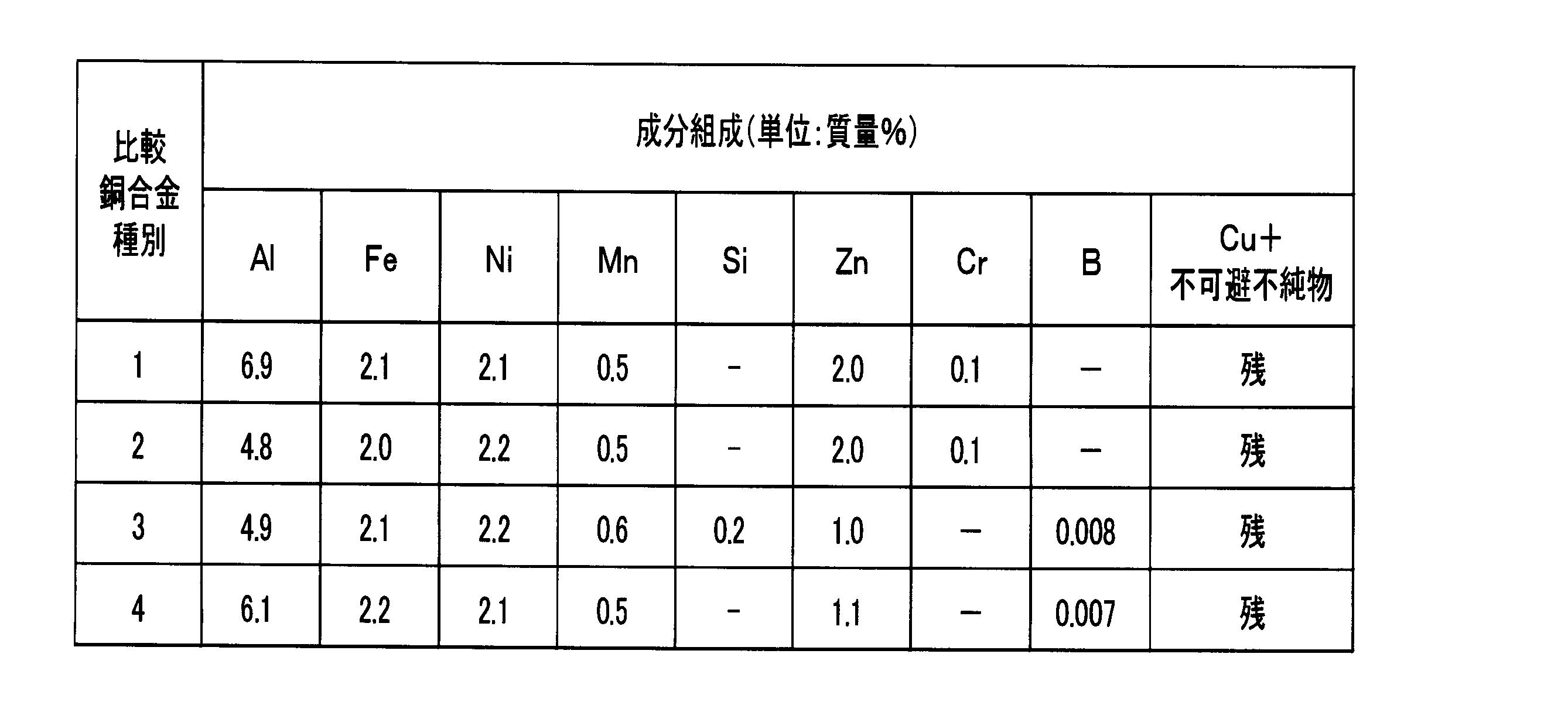
また、比較のため、所定の成分組成となるように原料成分を配合し、溶解炉で溶解した溶湯を鋳造して、表2に示す比較例の成分組成の銅合金鋳塊を製造した。
また、比較のため、所定の成分組成となるように原料成分を配合し、溶解炉で溶解した溶湯を鋳造して、表2に示す比較例の成分組成の銅合金鋳塊を製造した。

次いで、これらの鋳塊を熱間鍛造することにより、厚さが約10mmの厚板状の分塊を製造した。
この厚板状の分塊を、900℃に加熱後、約4mmの厚さになるまで熱間圧延した。そして、さらに900℃で1時間加熱する中間焼鈍を施した。
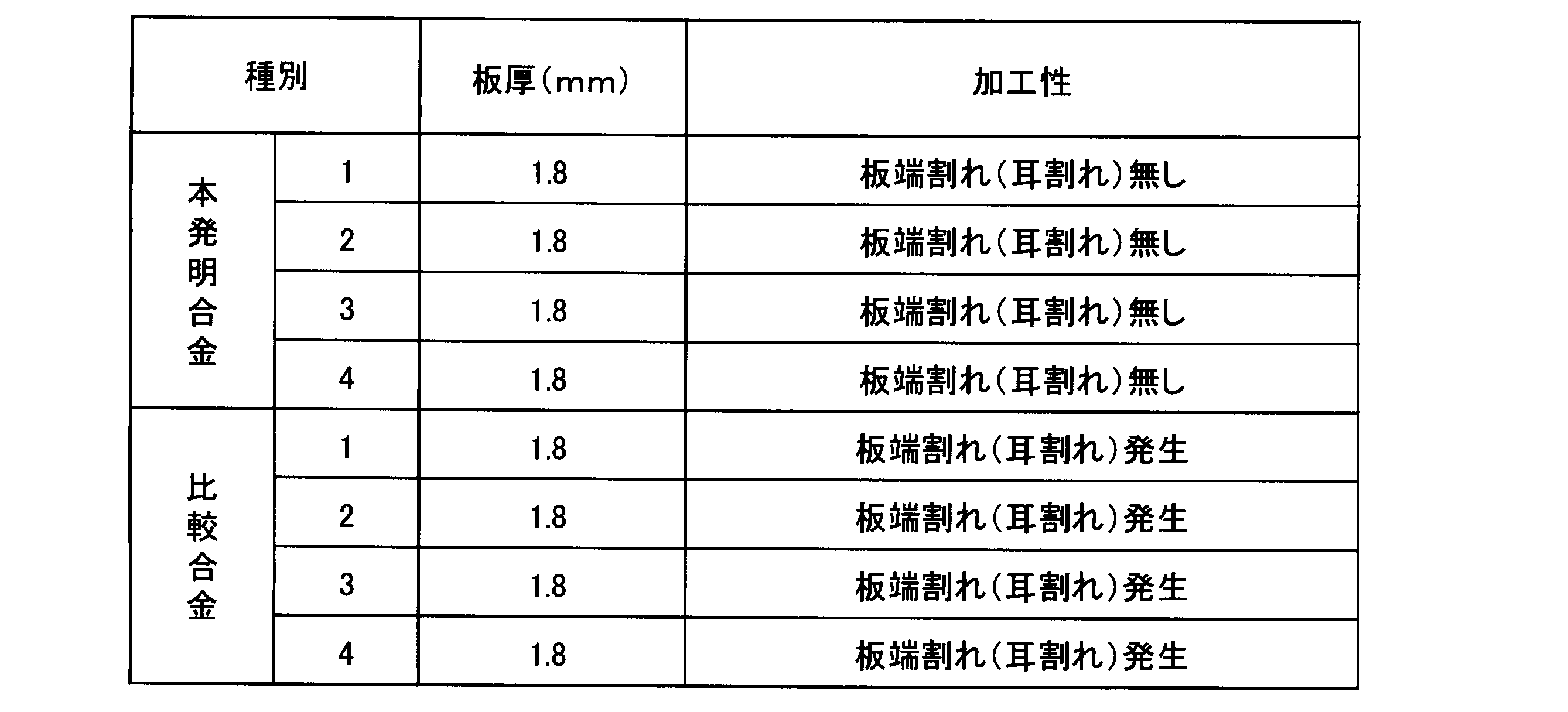
最後に、約50%の冷間圧延を施して、最終的に厚さが1.8mmの冷間圧延板材を得た。表3に、冷間圧延板材の最終板厚と、冷間圧延加工をした際の加工性の良否を示す。なお、圧延途中で、板端割れ(耳割れ)が発生したものについては、その旨を表3に記した。
その後、これらの冷間圧延板材に880℃で0.1時間加熱する最終焼鈍を施した。次いで、最終焼鈍を施した冷間圧延板材を試験材として、各試験材から圧延方向に平行に切り出したJIS Z 2241 5号試験片を使用して引張試験を行い、引張強さ、耐力及び伸びを測定した。表4に、引張試験の結果を示す。
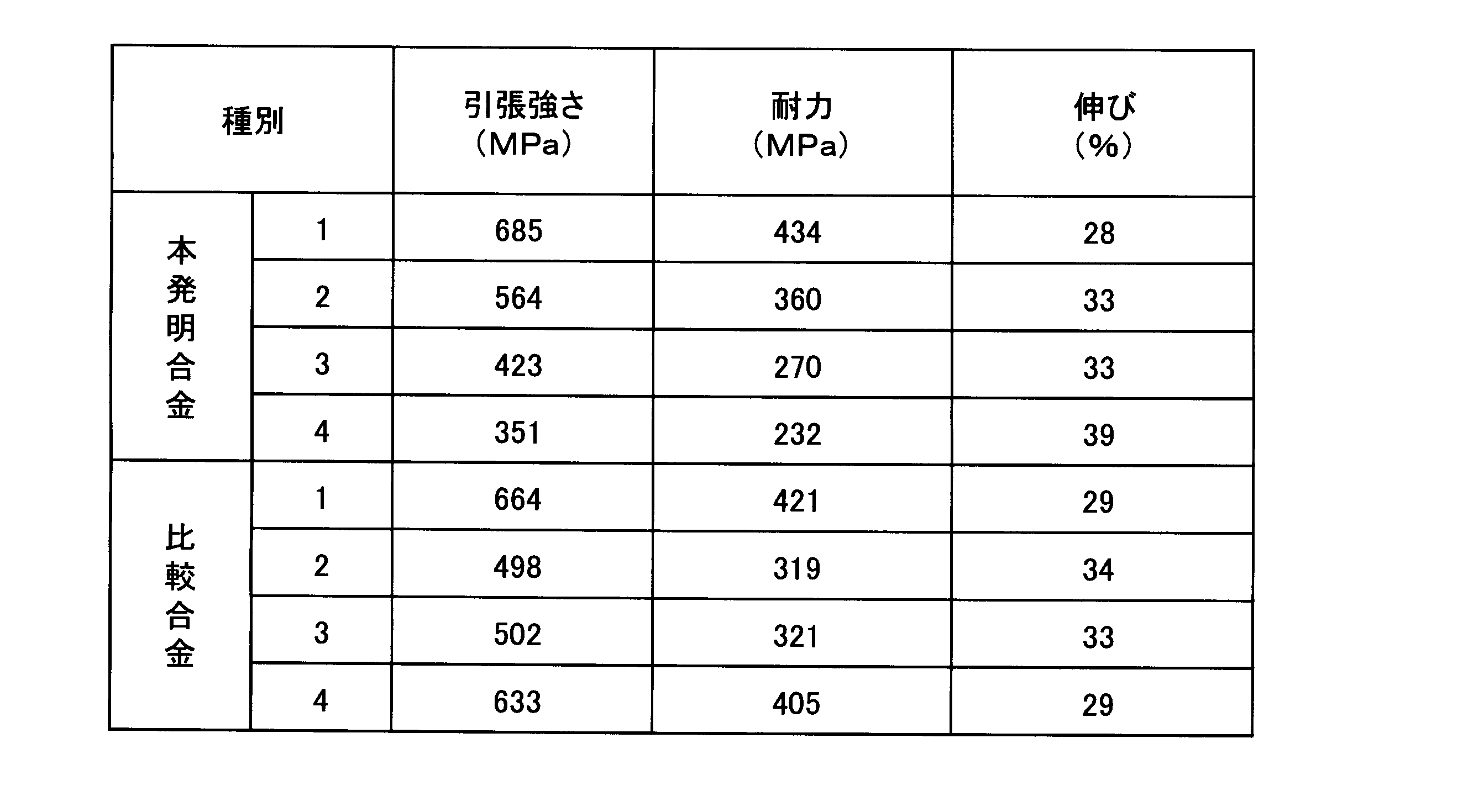
表3、表4に示す結果から明らかなように、比較銅合金1~4は、いずれも、冷間圧延時に板端割れが発生した。一方、本発明に係る銅合金1~4は、いずれも、板端割れ発生を生じずに加工することが可能であり、冷間圧延加工において、加工性に優れることが分かった。また、本発明に係る銅合金1~4は、引張試験において比較銅合金1~4と同程度の機械的特性を示すことを確認した。
以上説明したように、本発明によれば、冷間加工が難しいとされていたCu-Al-Ni系の銅合金の冷間加工性を向上させ、しかも、従来材と遜色のない機械特性を備える銅合金を提供できることから、その薄板化及び条材化を可能とし、これによりさらに幅広い分野への展開および進出が可能となる。
Claims (7)
- 1~7質量%のAlと、2~4質量%のFeと、0.8~4質量%のNiと、0.5質量%以下のMnと、残部がCu及び不可避不純物からなる組成を有する銅合金。
- 前記銅合金は、0.1質量%以下のZnを更に含む請求項1に記載の銅合金。
- 1~7質量%のAlと、2~4質量%のFeと、0.8~4質量%のNiと、0.5質量%以下のMnと、残部がCu及び不可避不純物からなる組成を有する銅合金からなり、厚みが1~2mmの冷間圧延板材。
- 前記銅合金は、0.1質量%以下のZnを更に含む請求項4に記載の冷間圧延板材。
- 引張強さが350~690MPa、耐力が230~440MPa、および伸びが25~40%である機械特性を有する請求項3または4に記載の冷間圧延板材。
- 1~7質量%のAlと、2~4質量%のFeと、0.8~4質量%のNiと、0.5質量%以下のMnと、残部がCu及び不可避不純物からなる組成を有する銅合金の鋳塊を熱間鍛造して厚板状の分塊とする熱間鍛造工程と、
前記分塊を加熱して熱間圧延して圧延材を得る熱間圧延工程と、
前記圧延材を焼鈍する焼鈍工程と、
前記焼鈍工程後、冷間圧延して冷間圧延材を得る冷間圧延工程と、
を少なくとも含む、冷間圧延板材の製造方法。 - 前記銅合金は、0.1質量%以下のZnを更に含む請求項6に記載の冷間圧延板材の製造方法。
Priority Applications (1)
| Application Number | Priority Date | Filing Date | Title |
|---|---|---|---|
| CN201580035508.8A CN106471144B (zh) | 2014-06-30 | 2015-05-13 | 铜合金、冷轧板材以及其的制造方法 |
Applications Claiming Priority (2)
| Application Number | Priority Date | Filing Date | Title |
|---|---|---|---|
| JP2014134565 | 2014-06-30 | ||
| JP2014-134565 | 2014-06-30 |
Publications (1)
| Publication Number | Publication Date |
|---|---|
| WO2016002352A1 true WO2016002352A1 (ja) | 2016-01-07 |
Family
ID=55018907
Family Applications (1)
| Application Number | Title | Priority Date | Filing Date |
|---|---|---|---|
| PCT/JP2015/063756 Ceased WO2016002352A1 (ja) | 2014-06-30 | 2015-05-13 | 銅合金、冷間圧延板材およびその製造方法 |
Country Status (3)
| Country | Link |
|---|---|
| JP (1) | JP5887449B2 (ja) |
| CN (1) | CN106471144B (ja) |
| WO (1) | WO2016002352A1 (ja) |
Cited By (1)
| Publication number | Priority date | Publication date | Assignee | Title |
|---|---|---|---|---|
| CN114717435A (zh) * | 2022-04-29 | 2022-07-08 | 中国铝业股份有限公司 | 一种高强度电磁屏蔽铜合金及其制备方法 |
Families Citing this family (2)
| Publication number | Priority date | Publication date | Assignee | Title |
|---|---|---|---|---|
| JP7126359B2 (ja) * | 2018-02-28 | 2022-08-26 | 株式会社神戸製鋼所 | アルミニウムへの耐接触腐食性に優れた銅合金材及び端子 |
| CN110512166B (zh) * | 2019-10-11 | 2020-10-27 | 北京矿冶科技集团有限公司 | 一种耐海洋腐蚀可磨耗材料、涂层及其制备方法 |
Citations (7)
| Publication number | Priority date | Publication date | Assignee | Title |
|---|---|---|---|---|
| JPS5341096B1 (ja) * | 1967-12-21 | 1978-10-31 | ||
| JPS55161040A (en) * | 1979-06-04 | 1980-12-15 | Olin Mathieson | Corossion resistant monophase alloy and method |
| JPS62142735A (ja) * | 1985-11-28 | 1987-06-26 | Mitsubishi Metal Corp | 耐食性Cu合金 |
| JPH05311286A (ja) * | 1992-05-11 | 1993-11-22 | Kobe Steel Ltd | 耐摩耗性が優れた高力銅合金及びその製造方法 |
| JPH06240387A (ja) * | 1993-02-18 | 1994-08-30 | Kobe Steel Ltd | 火口材料用銅合金及びその製造方法 |
| JPH10298678A (ja) * | 1997-04-18 | 1998-11-10 | Kansai Shindo Kogyo Kk | 析出硬化型特殊銅合金 |
| JP2005206861A (ja) * | 2004-01-21 | 2005-08-04 | Chuetsu Metal Works Co Ltd | 無鉛銅合金製重錘 |
Family Cites Families (7)
| Publication number | Priority date | Publication date | Assignee | Title |
|---|---|---|---|---|
| GB2056486A (en) * | 1979-05-23 | 1981-03-18 | Olin Corp | Corrosion Resistant Copper Base Alloys for Heat Exchanger Tube |
| JP2004143574A (ja) * | 2002-10-24 | 2004-05-20 | Yasunori Suzuki | アルミニウム銅合金 |
| EP1918390B1 (en) * | 2005-07-07 | 2012-01-18 | Kabushiki Kaisha Kobe Seiko Sho | Process for producing copper alloy plate with high strength and excellent processability in bending |
| CN100455403C (zh) * | 2007-02-15 | 2009-01-28 | 上海核威实业有限公司 | 铝青铜-钢双金属轴承材料的制造工艺 |
| JP2009179864A (ja) * | 2008-01-31 | 2009-08-13 | Kobe Steel Ltd | 耐応力緩和特性に優れた銅合金板 |
| CN103194640B (zh) * | 2013-04-07 | 2015-08-26 | 宁波博威合金材料股份有限公司 | 铝青铜及其制备方法 |
| CN103421980B (zh) * | 2013-07-21 | 2015-08-12 | 中南大学 | 一种高强弹性黄铜及其制备方法 |
-
2015
- 2015-05-13 WO PCT/JP2015/063756 patent/WO2016002352A1/ja not_active Ceased
- 2015-05-13 CN CN201580035508.8A patent/CN106471144B/zh not_active Expired - Fee Related
- 2015-05-28 JP JP2015108703A patent/JP5887449B2/ja not_active Expired - Fee Related
Patent Citations (7)
| Publication number | Priority date | Publication date | Assignee | Title |
|---|---|---|---|---|
| JPS5341096B1 (ja) * | 1967-12-21 | 1978-10-31 | ||
| JPS55161040A (en) * | 1979-06-04 | 1980-12-15 | Olin Mathieson | Corossion resistant monophase alloy and method |
| JPS62142735A (ja) * | 1985-11-28 | 1987-06-26 | Mitsubishi Metal Corp | 耐食性Cu合金 |
| JPH05311286A (ja) * | 1992-05-11 | 1993-11-22 | Kobe Steel Ltd | 耐摩耗性が優れた高力銅合金及びその製造方法 |
| JPH06240387A (ja) * | 1993-02-18 | 1994-08-30 | Kobe Steel Ltd | 火口材料用銅合金及びその製造方法 |
| JPH10298678A (ja) * | 1997-04-18 | 1998-11-10 | Kansai Shindo Kogyo Kk | 析出硬化型特殊銅合金 |
| JP2005206861A (ja) * | 2004-01-21 | 2005-08-04 | Chuetsu Metal Works Co Ltd | 無鉛銅合金製重錘 |
Cited By (2)
| Publication number | Priority date | Publication date | Assignee | Title |
|---|---|---|---|---|
| CN114717435A (zh) * | 2022-04-29 | 2022-07-08 | 中国铝业股份有限公司 | 一种高强度电磁屏蔽铜合金及其制备方法 |
| CN114717435B (zh) * | 2022-04-29 | 2023-01-20 | 中国铝业股份有限公司 | 一种高强度电磁屏蔽铜合金及其制备方法 |
Also Published As
| Publication number | Publication date |
|---|---|
| CN106471144A (zh) | 2017-03-01 |
| CN106471144B (zh) | 2019-04-12 |
| JP5887449B2 (ja) | 2016-03-16 |
| JP2016027193A (ja) | 2016-02-18 |
Similar Documents
| Publication | Publication Date | Title |
|---|---|---|
| JP6492057B2 (ja) | 高い強度を有する銅―ニッケル―錫合金 | |
| RU2425164C1 (ru) | Вторичный титановый сплав и способ его изготовления | |
| US20150354031A1 (en) | Nickel-cobalt alloy | |
| EP3085799B1 (en) | Copper alloy and method for manufacturing the same | |
| JP2011202283A (ja) | アルミニウム合金、アルミニウム合金箔および容器とアルミニウム合金箔の製造方法 | |
| CN112626383A (zh) | 铝合金板 | |
| CN105745345A (zh) | 无钛合金 | |
| US10072321B2 (en) | Copper nickel alloy | |
| JP5887449B2 (ja) | 銅合金、冷間圧延板材およびその製造方法 | |
| JP4780600B2 (ja) | 深絞り性に優れたマグネシウム合金板およびその製造方法 | |
| JP7664298B2 (ja) | 銅合金の使用 | |
| JP4201745B2 (ja) | 塗装焼付け硬化性に優れた超塑性成形用6000系アルミニウム合金板およびその製造方法 | |
| JP5555154B2 (ja) | 電気・電子部品用銅合金およびその製造方法 | |
| JP2007056365A (ja) | 銅−亜鉛−錫合金及びその製造方法 | |
| JP2019019373A (ja) | コンプレッサーのアルミニウム合金製ピストンの製造方法及び前記ピストン用アルミニウム合金 | |
| JP5688744B2 (ja) | 高強度高靱性銅合金鍛造材 | |
| JP2007126739A (ja) | 電子材料用銅合金 | |
| JP2007070672A (ja) | 疲労特性に優れたアルミニウム合金厚板の製造方法 | |
| CN114616352A (zh) | 铜合金 | |
| CN108699635B (zh) | 热锻性优异的高强度高耐腐蚀性Ni基合金 | |
| JP5522692B2 (ja) | 高強度銅合金鍛造材 | |
| JP6805583B2 (ja) | 析出型耐熱Ni基合金の製造方法 | |
| JP6345016B2 (ja) | 熱間成形用アルミニウム合金板及びその製造方法 | |
| JPH0314896B2 (ja) | ||
| US20100092334A1 (en) | Metal Alloy |
Legal Events
| Date | Code | Title | Description |
|---|---|---|---|
| 121 | Ep: the epo has been informed by wipo that ep was designated in this application |
Ref document number: 15814083 Country of ref document: EP Kind code of ref document: A1 |
|
| NENP | Non-entry into the national phase |
Ref country code: DE |
|
| 122 | Ep: pct application non-entry in european phase |
Ref document number: 15814083 Country of ref document: EP Kind code of ref document: A1 |