WO2015163090A1 - アルコキシド化合物、薄膜形成用原料、薄膜の製造方法及びアルコール化合物 - Google Patents
アルコキシド化合物、薄膜形成用原料、薄膜の製造方法及びアルコール化合物 Download PDFInfo
- Publication number
- WO2015163090A1 WO2015163090A1 PCT/JP2015/059903 JP2015059903W WO2015163090A1 WO 2015163090 A1 WO2015163090 A1 WO 2015163090A1 JP 2015059903 W JP2015059903 W JP 2015059903W WO 2015163090 A1 WO2015163090 A1 WO 2015163090A1
- Authority
- WO
- WIPO (PCT)
- Prior art keywords
- group
- carbon atoms
- thin film
- hydrocarbon group
- represented
- Prior art date
- Legal status (The legal status is an assumption and is not a legal conclusion. Google has not performed a legal analysis and makes no representation as to the accuracy of the status listed.)
- Ceased
Links
Images


Classifications
-
- C—CHEMISTRY; METALLURGY
- C07—ORGANIC CHEMISTRY
- C07C—ACYCLIC OR CARBOCYCLIC COMPOUNDS
- C07C251/00—Compounds containing nitrogen atoms doubly-bound to a carbon skeleton
- C07C251/02—Compounds containing nitrogen atoms doubly-bound to a carbon skeleton containing imino groups
- C07C251/04—Compounds containing nitrogen atoms doubly-bound to a carbon skeleton containing imino groups having carbon atoms of imino groups bound to hydrogen atoms or to acyclic carbon atoms
- C07C251/06—Compounds containing nitrogen atoms doubly-bound to a carbon skeleton containing imino groups having carbon atoms of imino groups bound to hydrogen atoms or to acyclic carbon atoms to carbon atoms of a saturated carbon skeleton
- C07C251/08—Compounds containing nitrogen atoms doubly-bound to a carbon skeleton containing imino groups having carbon atoms of imino groups bound to hydrogen atoms or to acyclic carbon atoms to carbon atoms of a saturated carbon skeleton being acyclic
-
- C—CHEMISTRY; METALLURGY
- C07—ORGANIC CHEMISTRY
- C07C—ACYCLIC OR CARBOCYCLIC COMPOUNDS
- C07C251/00—Compounds containing nitrogen atoms doubly-bound to a carbon skeleton
- C07C251/02—Compounds containing nitrogen atoms doubly-bound to a carbon skeleton containing imino groups
- C07C251/04—Compounds containing nitrogen atoms doubly-bound to a carbon skeleton containing imino groups having carbon atoms of imino groups bound to hydrogen atoms or to acyclic carbon atoms
- C07C251/10—Compounds containing nitrogen atoms doubly-bound to a carbon skeleton containing imino groups having carbon atoms of imino groups bound to hydrogen atoms or to acyclic carbon atoms to carbon atoms of an unsaturated carbon skeleton
- C07C251/12—Compounds containing nitrogen atoms doubly-bound to a carbon skeleton containing imino groups having carbon atoms of imino groups bound to hydrogen atoms or to acyclic carbon atoms to carbon atoms of an unsaturated carbon skeleton being acyclic
-
- C—CHEMISTRY; METALLURGY
- C07—ORGANIC CHEMISTRY
- C07C—ACYCLIC OR CARBOCYCLIC COMPOUNDS
- C07C251/00—Compounds containing nitrogen atoms doubly-bound to a carbon skeleton
- C07C251/72—Hydrazones
- C07C251/74—Hydrazones having doubly-bound carbon atoms of hydrazone groups bound to hydrogen atoms or to acyclic carbon atoms
- C07C251/76—Hydrazones having doubly-bound carbon atoms of hydrazone groups bound to hydrogen atoms or to acyclic carbon atoms to carbon atoms of a saturated carbon skeleton
-
- C—CHEMISTRY; METALLURGY
- C07—ORGANIC CHEMISTRY
- C07C—ACYCLIC OR CARBOCYCLIC COMPOUNDS
- C07C251/00—Compounds containing nitrogen atoms doubly-bound to a carbon skeleton
- C07C251/72—Hydrazones
- C07C251/74—Hydrazones having doubly-bound carbon atoms of hydrazone groups bound to hydrogen atoms or to acyclic carbon atoms
- C07C251/78—Hydrazones having doubly-bound carbon atoms of hydrazone groups bound to hydrogen atoms or to acyclic carbon atoms to carbon atoms of an unsaturated carbon skeleton
-
- C—CHEMISTRY; METALLURGY
- C07—ORGANIC CHEMISTRY
- C07C—ACYCLIC OR CARBOCYCLIC COMPOUNDS
- C07C257/00—Compounds containing carboxyl groups, the doubly-bound oxygen atom of a carboxyl group being replaced by a doubly-bound nitrogen atom, this nitrogen atom not being further bound to an oxygen atom, e.g. imino-ethers, amidines
- C07C257/10—Compounds containing carboxyl groups, the doubly-bound oxygen atom of a carboxyl group being replaced by a doubly-bound nitrogen atom, this nitrogen atom not being further bound to an oxygen atom, e.g. imino-ethers, amidines with replacement of the other oxygen atom of the carboxyl group by nitrogen atoms, e.g. amidines
- C07C257/14—Compounds containing carboxyl groups, the doubly-bound oxygen atom of a carboxyl group being replaced by a doubly-bound nitrogen atom, this nitrogen atom not being further bound to an oxygen atom, e.g. imino-ethers, amidines with replacement of the other oxygen atom of the carboxyl group by nitrogen atoms, e.g. amidines having carbon atoms of amidino groups bound to acyclic carbon atoms
-
- C—CHEMISTRY; METALLURGY
- C07—ORGANIC CHEMISTRY
- C07F—ACYCLIC, CARBOCYCLIC OR HETEROCYCLIC COMPOUNDS CONTAINING ELEMENTS OTHER THAN CARBON, HYDROGEN, HALOGEN, OXYGEN, NITROGEN, SULFUR, SELENIUM OR TELLURIUM
- C07F15/00—Compounds containing elements of Groups 8, 9, 10 or 18 of the Periodic Table
- C07F15/06—Cobalt compounds
-
- C—CHEMISTRY; METALLURGY
- C07—ORGANIC CHEMISTRY
- C07F—ACYCLIC, CARBOCYCLIC OR HETEROCYCLIC COMPOUNDS CONTAINING ELEMENTS OTHER THAN CARBON, HYDROGEN, HALOGEN, OXYGEN, NITROGEN, SULFUR, SELENIUM OR TELLURIUM
- C07F19/00—Metal compounds according to more than one of main groups C07F1/00 - C07F17/00
-
- C—CHEMISTRY; METALLURGY
- C07—ORGANIC CHEMISTRY
- C07F—ACYCLIC, CARBOCYCLIC OR HETEROCYCLIC COMPOUNDS CONTAINING ELEMENTS OTHER THAN CARBON, HYDROGEN, HALOGEN, OXYGEN, NITROGEN, SULFUR, SELENIUM OR TELLURIUM
- C07F7/00—Compounds containing elements of Groups 4 or 14 of the Periodic Table
- C07F7/02—Silicon compounds
- C07F7/08—Compounds having one or more C—Si linkages
- C07F7/0803—Compounds with Si-C or Si-Si linkages
- C07F7/081—Compounds with Si-C or Si-Si linkages comprising at least one atom selected from the elements N, O, halogen, S, Se or Te
-
- C—CHEMISTRY; METALLURGY
- C23—COATING METALLIC MATERIAL; COATING MATERIAL WITH METALLIC MATERIAL; CHEMICAL SURFACE TREATMENT; DIFFUSION TREATMENT OF METALLIC MATERIAL; COATING BY VACUUM EVAPORATION, BY SPUTTERING, BY ION IMPLANTATION OR BY CHEMICAL VAPOUR DEPOSITION, IN GENERAL; INHIBITING CORROSION OF METALLIC MATERIAL OR INCRUSTATION IN GENERAL
- C23C—COATING METALLIC MATERIAL; COATING MATERIAL WITH METALLIC MATERIAL; SURFACE TREATMENT OF METALLIC MATERIAL BY DIFFUSION INTO THE SURFACE, BY CHEMICAL CONVERSION OR SUBSTITUTION; COATING BY VACUUM EVAPORATION, BY SPUTTERING, BY ION IMPLANTATION OR BY CHEMICAL VAPOUR DEPOSITION, IN GENERAL
- C23C16/00—Chemical coating by decomposition of gaseous compounds, without leaving reaction products of surface material in the coating, i.e. chemical vapour deposition [CVD] processes
- C23C16/06—Chemical coating by decomposition of gaseous compounds, without leaving reaction products of surface material in the coating, i.e. chemical vapour deposition [CVD] processes characterised by the deposition of metallic material
- C23C16/18—Chemical coating by decomposition of gaseous compounds, without leaving reaction products of surface material in the coating, i.e. chemical vapour deposition [CVD] processes characterised by the deposition of metallic material from metallo-organic compounds
-
- C—CHEMISTRY; METALLURGY
- C23—COATING METALLIC MATERIAL; COATING MATERIAL WITH METALLIC MATERIAL; CHEMICAL SURFACE TREATMENT; DIFFUSION TREATMENT OF METALLIC MATERIAL; COATING BY VACUUM EVAPORATION, BY SPUTTERING, BY ION IMPLANTATION OR BY CHEMICAL VAPOUR DEPOSITION, IN GENERAL; INHIBITING CORROSION OF METALLIC MATERIAL OR INCRUSTATION IN GENERAL
- C23C—COATING METALLIC MATERIAL; COATING MATERIAL WITH METALLIC MATERIAL; SURFACE TREATMENT OF METALLIC MATERIAL BY DIFFUSION INTO THE SURFACE, BY CHEMICAL CONVERSION OR SUBSTITUTION; COATING BY VACUUM EVAPORATION, BY SPUTTERING, BY ION IMPLANTATION OR BY CHEMICAL VAPOUR DEPOSITION, IN GENERAL
- C23C16/00—Chemical coating by decomposition of gaseous compounds, without leaving reaction products of surface material in the coating, i.e. chemical vapour deposition [CVD] processes
- C23C16/44—Chemical coating by decomposition of gaseous compounds, without leaving reaction products of surface material in the coating, i.e. chemical vapour deposition [CVD] processes characterised by the method of coating
- C23C16/455—Chemical coating by decomposition of gaseous compounds, without leaving reaction products of surface material in the coating, i.e. chemical vapour deposition [CVD] processes characterised by the method of coating characterised by the method used for introducing gases into reaction chamber or for modifying gas flows in reaction chamber
- C23C16/45523—Pulsed gas flow or change of composition over time
- C23C16/45525—Atomic layer deposition [ALD]
- C23C16/45553—Atomic layer deposition [ALD] characterized by the use of precursors specially adapted for ALD
-
- H—ELECTRICITY
- H10—SEMICONDUCTOR DEVICES; ELECTRIC SOLID-STATE DEVICES NOT OTHERWISE PROVIDED FOR
- H10D—INORGANIC ELECTRIC SEMICONDUCTOR DEVICES
- H10D64/00—Electrodes of devices having potential barriers
- H10D64/01—Manufacture or treatment
- H10D64/011—Manufacture or treatment of electrodes ohmically coupled to a semiconductor
-
- H—ELECTRICITY
- H10—SEMICONDUCTOR DEVICES; ELECTRIC SOLID-STATE DEVICES NOT OTHERWISE PROVIDED FOR
- H10P—GENERIC PROCESSES OR APPARATUS FOR THE MANUFACTURE OR TREATMENT OF DEVICES COVERED BY CLASS H10
- H10P14/00—Formation of materials, e.g. in the shape of layers or pillars
- H10P14/40—Formation of materials, e.g. in the shape of layers or pillars of conductive or resistive materials
- H10P14/418—Formation of materials, e.g. in the shape of layers or pillars of conductive or resistive materials the conductive layers comprising transition metals
-
- H—ELECTRICITY
- H10—SEMICONDUCTOR DEVICES; ELECTRIC SOLID-STATE DEVICES NOT OTHERWISE PROVIDED FOR
- H10P—GENERIC PROCESSES OR APPARATUS FOR THE MANUFACTURE OR TREATMENT OF DEVICES COVERED BY CLASS H10
- H10P14/00—Formation of materials, e.g. in the shape of layers or pillars
- H10P14/40—Formation of materials, e.g. in the shape of layers or pillars of conductive or resistive materials
- H10P14/42—Formation of materials, e.g. in the shape of layers or pillars of conductive or resistive materials using a gas or vapour
-
- H—ELECTRICITY
- H10—SEMICONDUCTOR DEVICES; ELECTRIC SOLID-STATE DEVICES NOT OTHERWISE PROVIDED FOR
- H10P—GENERIC PROCESSES OR APPARATUS FOR THE MANUFACTURE OR TREATMENT OF DEVICES COVERED BY CLASS H10
- H10P14/00—Formation of materials, e.g. in the shape of layers or pillars
- H10P14/40—Formation of materials, e.g. in the shape of layers or pillars of conductive or resistive materials
- H10P14/42—Formation of materials, e.g. in the shape of layers or pillars of conductive or resistive materials using a gas or vapour
- H10P14/43—Chemical deposition, e.g. chemical vapour deposition [CVD]
Definitions
- the present invention relates to a novel alkoxide compound, a raw material for forming a thin film containing the compound, a method for producing a thin film using the raw material for forming a thin film, and a novel alcohol compound.
- Thin film materials containing metal elements are applied to various applications because they exhibit electrical characteristics and optical characteristics.
- copper and copper-containing thin films are applied as LSI wiring materials because of their high conductivity, high electromigration resistance, and high melting point.
- Nickel and nickel-containing thin films are mainly used for members of electronic parts such as resistance films and barrier films, members for recording media such as magnetic films, and members for thin film solar cells such as electrodes.
- Cobalt and cobalt-containing thin films are used for electrode films, resistance films, adhesive films, magnetic tapes, carbide tool members, and the like.
- Examples of the method for producing the thin film include a sputtering method, an ion plating method, a MOD method such as a coating pyrolysis method and a sol-gel method, a chemical vapor deposition method, etc., but has excellent composition controllability and step coverage. Since it has many advantages such as being suitable for mass production and being capable of hybrid integration, chemical vapor deposition (hereinafter sometimes simply referred to as CVD) method including ALD (Atomic Layer Deposition) method Is the optimal manufacturing process.
- CVD chemical vapor deposition
- ALD Atomic Layer Deposition
- Patent Document 1 discloses a third grade of nickel that can be used as a raw material for forming a nickel-containing thin film by MOCVD. Amino alkoxide compounds are disclosed. Patent Document 2 discloses a tertiary aminoalkoxide compound of cobalt that can be used as a raw material for forming a cobalt-containing thin film by MOCVD. Furthermore, Patent Document 3 discloses a tertiary aminoalkoxide compound of copper that can be used as a raw material for forming a copper-containing thin film by a chemical vapor deposition method. Further, Non-Patent Document 1 discloses a tertiary imide alkoxide compound of copper, nickel, cobalt, iron, manganese and chromium.
- JP 2008-537947 A Korean Registered Patent No. 10-0675983 JP 2006-328019 A
- the properties required for a compound (precursor) suitable for the raw material are that there is no pyrophoric property and high thermal stability.
- the high thermal stability of the precursor is extremely important. None of the conventional alkoxide compounds can be satisfactorily satisfied in terms of thermal stability.
- the present invention provides an alkoxide compound represented by the following general formula (I), a raw material for forming a thin film containing the alkoxide compound, and a method for producing a thin film using the raw material.
- an alkoxide compound represented by the following general formula (I) a raw material for forming a thin film containing the alkoxide compound, and a method for producing a thin film using the raw material.
- R 4 represents a group represented by the formula
- R 1 ⁇ R 3 are each independently hydrogen, a hydrocarbon group or the following general formula -C 1 ⁇ 12 (X-1) ⁇
- X-8 Represents a hydrocarbon group having 1 to 12 carbon atoms or a group represented by the following general formulas (X-1) to (X-8), provided that R 1 is a methyl group and R 2 is a methyl group or
- R 3 is hydrogen, a hydrocarbon group having 4 to 12 carbon atoms, or a group represented by the following general formulas (X-1) to (X-8):
- L represents hydrogen, halogen, hydroxyl group, amino group, azide group, phosphide group, nitrile group, carbonyl group, hydrocarbon group having 1 to 12 carbon atoms, or the following general formulas (L-1) to (L-13)
- M represents a metal atom or a silicon atom
- n represents an integer of 1 or more
- m represents an integer of 0 or
- R X1 to R X12 each independently represents hydrogen or a hydrocarbon group having 1 to 12 carbon atoms, and A 1 to A 3 each represents an alkanediyl group having 1 to 6 carbon atoms.
- R L1 to R L31 each independently represents hydrogen or a hydrocarbon group having 1 to 12 carbon atoms, and A 4 to A 7 each represents an alkanediyl group having 1 to 6 carbon atoms.
- the present invention also provides an alcohol compound represented by the following general formula (II).
- R 5 to R 7 each independently represents hydrogen, a hydrocarbon group having 1 to 12 carbon atoms, or a group represented by the following general formulas (Y-1) to (Y-8):
- R 8 Represents a hydrocarbon group having 1 to 12 carbon atoms or a group represented by the following general formulas (Y-1) to (Y-8), provided that R 5 is a methyl group and R 6 is a methyl group or
- R 7 is hydrogen, a hydrocarbon group having 4 to 12 carbon atoms, or a group represented by the following general formulas (Y-1) to (Y-8).
- R Y1 to R Y12 each independently represents hydrogen or a hydrocarbon group having 1 to 12 carbon atoms, and A 8 to A 10 each represents an alkanediyl group having 1 to 6 carbon atoms.
- an alkoxide compound that is not pyrophoric and has high thermal stability can be obtained.
- a novel alcohol compound can be provided.
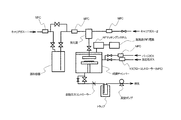
- FIG. 1 is a schematic view showing an example of an apparatus for chemical vapor deposition used in the method for producing a thin film containing a metal according to the present invention.
- FIG. 2 is a schematic diagram showing another example of an apparatus for chemical vapor deposition used in the method for producing a metal-containing thin film according to the present invention.
- FIG. 3 is a schematic diagram showing another example of an apparatus for chemical vapor deposition used in the method for producing a thin film containing a metal according to the present invention.
- FIG. 4 is a schematic view showing another example of a chemical vapor deposition apparatus used in the method for producing a thin film containing a metal according to the present invention.
- the alkoxide compound of the present invention is represented by the above general formula (I), is suitable as a precursor for a thin film production method having a vaporization step such as a CVD method, and is particularly ALD because of its high thermal stability. It is suitable as a precursor used in the law.
- R 1 to R 3 are each independently represented by hydrogen, a hydrocarbon group having 1 to 12 carbon atoms, or the general formulas (X-1) to (X-8). Represents a group.
- Examples of the hydrocarbon group having 1 to 12 carbon atoms represented by R 1 to R 3 include alkyl, alkenyl, cycloalkyl, aryl, cyclopentadienyl, and the like.
- alkyl examples include methyl, ethyl, propyl, isopropyl, butyl, isobutyl, sec-butyl, sec-butyl, pentyl, isopentyl, hexyl, heptyl, isoheptyl, octyl, isooctyl, 2-ethylhexyl, nonyl, isononyl, decyl , Dodecyl and the like.
- alkenyl examples include vinyl, 1-methylethenyl, 2-methylethenyl, propenyl, butenyl, isobutenyl, pentenyl, hexenyl, heptenyl, octenyl, decenyl and the like.
- cycloalkyl examples include cyclohexyl, cyclopentyl, cycloheptyl, methylcyclopentyl, methylcyclohexyl, methylcycloheptyl, cyclopentenyl, cyclohexenyl, cycloheptenyl, methylcyclopentenyl, methylcyclohexenyl, methylcycloheptenyl, and the like.
- aryl examples include phenyl, naphthyl, 2-methylphenyl, 3-methylphenyl, 4-methylphenyl, 4-vinylphenyl, 3-isopropylphenyl, 4-isopropylphenyl, 4-butylphenyl, and 4-isobutylphenyl. 4-tert-butylphenyl, 4-hexylphenyl, 4-cyclohexylphenyl and the like.
- cyclopentadienyl examples include cyclopentadienyl, methylcyclopentadienyl, ethylcyclopentadienyl, propylcyclopentadienyl, isopropylcyclopentadienyl, butylcyclopentadienyl, and secondary butylcyclopenta Examples include dienyl, isobutylcyclopentadienyl, tertiary butylcyclopentadienyl, dimethylcyclopentadienyl, tetramethylcyclopentadienyl, and the like.
- R 4 represents a hydrocarbon group having 1 to 12 carbon atoms or a group represented by the above general formulas (X-1) to (X-8).
- hydrocarbon group having 1 to 12 carbon atoms represented by R 4 include the groups exemplified as the hydrocarbon group having 1 to 12 carbon atoms represented by R 1 to R 3 described above. The same example can be given.
- R X1 to R X12 each independently represent hydrogen or a hydrocarbon group having 1 to 12 carbon atoms, and A 1 to A 3 represent 1 carbon atom. Represents an alkanediyl group of ⁇ 6.
- hydrocarbon group having 1 to 12 carbon atoms represented by R X1 to R X12 include the groups exemplified as the hydrocarbon group having 1 to 12 carbon atoms represented by R 1 to R 3 The same example can be given.
- Examples of the alkanediyl group having 1 to 6 carbon atoms represented by A 1 to A 3 include methylene, ethylene, propylene, butylene and the like.
- Examples of the group represented by the general formula (X-1) include dimethylaminomethyl, ethylmethylaminomethyl, diethylaminomethyl, dimethylaminoethyl, ethylmethylaminoethyl, diethylaminoethyl and the like.
- Examples of the group represented by the general formula (X-2) include methylamino, ethylamino, propylamino, isopropylamino, butylamino, secondary butylamino, tertiary butylamino, isobutylamino and the like.
- Examples of the group represented by the general formula (X-3) include dimethylamino, diethylamino, dipropylamino, diisopropylamino, dibutylamino, disecondary butylamino, ditertiarybutylamino, ethylmethylamino, propyl. Examples thereof include methylamino and isopropylmethylamino.
- Examples of the compound giving the group represented by the general formula (X-4) include ethylenediamino, hexamethylenediamino, N, N-dimethylethylenediamino and the like.
- Examples of the group represented by the general formula (X-5) include di (trimethylsilyl) amino, di (triethylsilyl) amino and the like.
- Examples of the group represented by the general formula (X-6) include trimethylsilyl, triethylsilyl and the like.
- Examples of the group represented by the general formula (X-7) include methoxy, ethoxy, propoxy, isopropoxy, butoxy, second butoxy, isobutoxy, third butoxy, pentoxy, isopentoxy, third pentoxy and the like. .
- Examples of the group represented by the general formula (X-8) include hydroxymethyl, hydroxyethyl, hydroxypropyl, hydroxyisopropyl, hydroxybutyl and the like.
- R 1 is a methyl group
- R 2 is a methyl group or an ethyl group
- R 4 is a methyl group
- R 3 is hydrogen or a hydrocarbon having 4 to 12 carbon atoms.
- X-1 is a methyl group
- X-8 is a group represented by the above general formulas (X-1) to (X-8).
- hydrocarbon group having 4 to 12 carbon atoms examples include alkyl having 4 to 12 carbon atoms, alkenyl having 4 to 12 carbon atoms, cycloalkyl having 6 to 12 carbon atoms, and 6 to 12 carbon atoms. Can be used.
- alkyl having 4 to 12 carbon atoms examples include butyl, isobutyl, secondary butyl, tertiary butyl, pentyl, isopentyl, hexyl, heptyl, isoheptyl, octyl, isooctyl, 2-ethylhexyl, nonyl, isononyl, decyl, And dodecyl.
- alkenyl having 4 to 12 carbon atoms examples include butenyl, isobutenyl, pentenyl, hexenyl, heptenyl, octenyl, decenyl and the like.
- Examples of the cycloalkyl having 6 to 12 carbon atoms include cyclohexyl, cyclopentyl, cycloheptyl, methylcyclopentyl, methylcyclohexyl, methylcycloheptyl, cyclopentenyl, cyclohexenyl, cycloheptenyl, methylcyclopentenyl, methylcyclohexenyl, methylcyclohexyl And heptenyl.
- aryl having 6 to 12 carbon atoms examples include phenyl, naphthyl, 2-methylphenyl, 3-methylphenyl, 4-methylphenyl, 4-vinylphenyl, 3-isopropylphenyl, 4-isopropylphenyl, 4- Examples thereof include butylphenyl, 4-isobutylphenyl, 4-tertiarybutylphenyl, 4-hexylphenyl, 4-cyclohexylphenyl and the like.
- R 1 , R 2 , R 3 and R 4 have a high vapor pressure and a high thermal decomposition temperature when used in a method for producing a thin film having a step of vaporizing a compound.
- R 1 and R 2 are each independently hydrogen, a hydrocarbon group having 1 to 12 carbon atoms, or a group represented by (X-5) because of high vapor pressure.
- R 1 and R 2 when at least one of R 1 and R 2 is alkyl having 1 to 5 carbon atoms, di (trimethylsilyl) amino or di (triethylsilyl) amino, the vapor pressure is particularly high, and R 1 and R 2 At least one of which is alkyl having 1 to 5 carbon atoms, di (trimethylsilyl) amino or di (triethylsilyl) amino, and at least one of R 3 and R 4 is alkyl having 1 to 5 carbon atoms, di (trimethylsilyl) ) Amino or di (triethylsilyl) amino is most preferred because of its particularly high vapor pressure.
- R 4 is a hydrocarbon group having 1 to 12 carbon atoms, a group represented by (X-3) or a group represented by (X-5), it is preferable because of high thermal stability, Of these, when R 4 is an alkenyl group, alkyl, di (trimethylsilyl) amino or di (triethylsilyl) amino, it is particularly preferable because of high thermal stability.
- R 1 , R 2 , R 3 and R 4 can be arbitrarily selected depending on the solubility in the solvent used, the thin film formation reaction, and the like. it can.
- L represents hydrogen, halogen, hydroxyl group, amino group, azide group, phosphide group, nitrile group, carbonyl group, hydrocarbon group having 1 to 12 carbon atoms or the above general formula (L -1) to (L-13).
- R L1 to R L31 each independently represent hydrogen or a hydrocarbon group having 1 to 12 carbon atoms
- a 4 to A 7 represent 1 to carbon atoms.
- R L1 to R L31 in the general formulas (L-1) to (L-13) are hydrocarbon groups having 1 to 12 carbon atoms, the hydrogen atoms in the hydrocarbon groups are substituted with halogen atoms or amino groups May be.
- hydrocarbon group having 1 to 12 carbon atoms represented by R L1 to R L31 include the groups exemplified as the hydrocarbon group having 1 to 12 carbon atoms represented by R 1 to R 3 The same example can be given.
- alkanediyl group having 1 to 6 carbon atoms represented by A 4 to A 7 are exemplified as the alkanediyl group having 1 to 6 carbon atoms represented by A 1 to A 3 .
- the same examples as the group can be given.
- Examples of the group represented by the general formula (L-1) include dimethylaminomethyl, ethylmethylaminomethyl, diethylaminomethyl, dimethylaminoethyl, ethylmethylaminoethyl, diethylaminoethyl and the like.
- Examples of the group represented by the general formula (L-2) include methylamino, ethylamino, propylamino, isopropylamino, butylamino, secondary butylamino, tertiary butylamino, isobutylamino and the like.
- Examples of the group represented by the general formula (L-3) include dimethylamino, diethylamino, dipropylamino, diisopropylamino, dibutylamino, disecondary butylamino, ditertiarybutylamino, ethylmethylamino, propyl. Examples thereof include methylamino and isopropylmethylamino.
- Examples of the compound giving the group represented by the general formula (L-4) include ethylenediamino, hexamethylenediamino, N, N-dimethylethylenediamino and the like.
- Examples of the group represented by the general formula (L-5) include di (trimethylsilyl) amino, di (triethylsilyl) amino and the like.
- Examples of the group represented by the general formula (L-6) include trimethylsilyl, triethylsilyl and the like.
- Examples of the group represented by the general formula (L-7) include methoxy, ethoxy, propoxy, isopropoxy, butoxy, second butoxy, isobutoxy, third butoxy, pentoxy, isopentoxy, third pentoxy and the like. .
- Examples of the group represented by the general formula (L-8) include hydroxymethyl, hydroxyethyl, hydroxypropyl, hydroxyisopropyl, hydroxybutyl and the like.
- Examples of the group represented by the general formula (L-9) include dimethylaminoethoxy, diethylaminoethoxy, dimethylaminopropoxy, ethylmethylaminopropoxy and diethylaminopropoxy.
- Examples of the group represented by the general formula (L-10) include the following chemical formula No. And groups represented by (L-10-1) to (L-10-5).
- the following chemical formula No. In (L-10-1) to (L-10-5) “Me” represents methyl, “Et” represents ethyl, “iPr” represents isopropyl, and “tBu” represents tertiary butyl.
- Examples of the organic compound that gives the group represented by the general formula (L-10) include acetylacetone, hexane-2,4-dione, 5-methylhexane-2,4-dione, heptane-2,4-dione, -Methylheptane-3,5-dione, 2,6-dimethylheptane-3,5-dione, 1,1,1-trifluoropentane-2,4-dione, 1,1,1-trifluoro-5, 5-dimethylhexane-2,4-dione, 1,1,1,5,5,5-hexafluoropentane-2,4-dione, 1,3-diperfluorohexylpropane-1,3-dione, , 1,5,5-tetramethyl-1-methoxyhexane-2,4-dione, 2,2,6,6-tetramethyl-1-methoxyheptane-3,5-dione, 2,2,6,6 -T
- Examples of the group represented by the general formula (L-11) include chemical formula No. And groups represented by (L-11-1) to (L-11-3).
- the following chemical formula No. In (L-11-1) to (L-11-3) “Me” represents methyl, “iPr” represents isopropyl, and “tBu” represents tertiary butyl.
- Examples of the organic compound that gives the group represented by the general formula (L-11) include N, N′-diisopropylacetamidinate, N, N′-di-t-butylacetamidinate, N, N'-diisopropyl-2-t-butylamidinate and the like.
- Examples of the group represented by the general formula (L-12) include the following chemical formula No. And groups represented by (L-12-1) to (L-12-8). In addition, the following chemical formula No. In (L-12-1) to (L-12-8), “Me” represents methyl, “iPr” represents isopropyl, and “tBu” represents tertiary butyl.
- Examples of the organic compound giving the group represented by the general formula (L-12) include acetylacetone, hexane-2,4-dione, 5-methylhexane-2,4-dione, heptane-2,4-dione.
- Examples of the group represented by the general formula (L-13) include the following chemical formula No. And groups represented by (L-13-1) to (L-13-8). In addition, the following chemical formula No. In (L-13-1) to (L-13-8), “Me” represents methyl, “iPr” represents isopropyl, and “tBu” represents tertiary butyl.
- Examples of the organic compound that provides the group represented by the general formula (L-13) include N-isopropyl-4- (isopropylimino) pent-2-en-2-amine, N-isopropyl-4- (isopropyl). Imino) -3-methylpent-2-en-2-amine, N- (tert-butyl) -4- (tert-butylimino) pent-2-en-2-amine, N- (tert-butyl) -4- (Tert-Butylimino) -3-methylpent-2-en-2-amine, N-isopropyl-5- (isopropylimino) -2,6-dimethylhept-3-en-3-amine, N-isopropyl-5- ( Isopropylimino) -2,4,6-trimethylhept-3-en-3-amine, N- (tert-butyl) -5- (tert-butylimino) -2 2,6,6-tetramethylhept
- L is a cyclopentadienyl group represented by cyclopentadienyl, methylcyclopentadienyl, ethylcyclopentadienyl, and pentamethylcyclopentadienyl. In some cases or when it is a group represented by (L-11), it is particularly preferred because of its high thermal stability and high vapor pressure. In the general formula (I) of the present invention, when m is 2 or more, L may be the same or different.
- M represents a metal atom or a silicon atom.
- the metal atom is not particularly limited.
- n represents an integer of 1 or more
- m represents an integer of 0 or more
- n + m represents a valence of a metal atom or a silicon atom.
- the alkoxide compound represented by the general formula (I) may have optical activity
- the alkoxide compound of the present invention is not particularly distinguished by the R-form and the S-form. It may be a mixture in any proportion with the S form.
- the racemate is inexpensive to manufacture.
- the case where the terminal donor group in the ligand is coordinated to a metal atom or a silicon atom to form a ring structure is represented by the following general formula (IA).
- the alkoxide compound of the present invention is represented by the above general formula (I), but is not distinguished from the following general formula (IA) and is a concept including both.
- R 4 represents a group represented by the formula
- R 1 ⁇ R 3 are each independently hydrogen, a hydrocarbon group or the following general formula -C 1 ⁇ 12 (X-1) ⁇
- X-8 Represents a hydrocarbon group having 1 to 12 carbon atoms or a group represented by the following general formulas (X-1) to (X-8), provided that R 1 is a methyl group and R 2 is a methyl group or
- R 3 is hydrogen, a hydrocarbon group having 4 to 12 carbon atoms, or a group represented by the following general formulas (X-1) to (X-8):
- L represents hydrogen, halogen, hydroxyl group, amino group, azide group, phosphide group, nitrile group, carbonyl group, hydrocarbon group having 1 to 12 carbon atoms, or the following general formulas (L-1) to (L-13)
- M represents a metal atom or a silicon atom
- n represents an integer of 1 or more
- m represents an integer of 0 or
- R X1 to R X12 each independently represents hydrogen or a hydrocarbon group having 1 to 12 carbon atoms, and A 1 to A 3 each represents an alkanediyl group having 1 to 6 carbon atoms.
- R L1 to R L31 each independently represents hydrogen or a hydrocarbon group having 1 to 12 carbon atoms, and A 4 to A 7 each represents an alkanediyl group having 1 to 6 carbon atoms.
- the alkoxide compound represented by the general formula (I) for example, when M is cobalt, the following chemical formula No. 1-No. And a compound represented by 300.
- the alkoxide compound of the present invention is not particularly limited by its production method, and is produced by applying a known reaction.
- a cobalt alkoxide compound for example, an inorganic salt such as cobalt halide or nitrate, or a hydrate thereof, and the corresponding alcohol compound, a base such as sodium, sodium hydride, sodium amide, sodium hydroxide, sodium methylate, ammonia or amine
- a method of reacting in the presence of cobalt a method of reacting an inorganic salt such as a halide of cobalt, nitrate, or a hydrate thereof with an alkali metal alkoxide such as sodium alkoxide, lithium alkoxide or potassium alkoxide of the corresponding alcohol compound, cobalt Of methoxide
- Low-molecular-weight alcohol alkoxide compounds such as xoxide, isopropoxide and butoxide are exchanged with the corresponding alcohol compounds, cobalt halides and inorganic salts such as nitrates are reacted with derivatives that give reactive intermediates.
- the reactive intermediate examples include bis (dialkylamino) cobalt, bis (bis (trimethylsilyl) amino) cobalt, and an amide compound of cobalt.
- the alkoxide compound whose m in general formula (I) is 1 or more the alkoxide compound whose m in general formula (I) is 0, the organic compound which gives a desired ligand, or its alkali metal salt And a method of reacting with.
- the raw material for forming a thin film of the present invention is a thin film precursor made of the alkoxide compound of the present invention described above, and its form varies depending on the manufacturing process to which the raw material for forming a thin film is applied. For example, when manufacturing a thin film containing only one kind of metal or silicon, the raw material for forming a thin film of the present invention does not contain a metal compound and a semi-metal compound other than the alkoxide compound. On the other hand, when producing a thin film containing two or more kinds of metals and / or metalloids, the raw material for forming a thin film of the present invention is a compound containing a desired metal and / or metalloid in addition to the alkoxide compound.
- the thin film forming raw material of the present invention may further contain an organic solvent and / or a nucleophilic reagent.
- the raw material for forming a thin film of the present invention is suitable for chemical vapor deposition (hereinafter, referred to as CVD raw material) because the physical properties of the precursor alkoxide compound are suitable for CVD and ALD methods. ) Is useful.
- the raw material for forming a thin film of the present invention is a raw material for chemical vapor deposition
- the form is appropriately selected depending on the method such as the transport and supply method of the CVD method used.
- the raw material for CVD is vaporized by heating and / or depressurizing in a container in which the raw material is stored (hereinafter sometimes simply referred to as a raw material container), and is necessary.
- a carrier gas such as argon, nitrogen, helium or the like
- the alkoxide compound itself represented by the above general formula (I) can be used as a raw material for CVD.
- the alkoxide compound represented by the above general formula (I) itself or a solution obtained by dissolving the compound in an organic solvent can be used as a raw material for CVD.
- These CVD raw materials may further contain other precursors, nucleophilic reagents, and the like.
- the CVD raw material is vaporized and supplied independently for each component (hereinafter sometimes referred to as a single source method), and the multi-component raw material is mixed in advance with a desired composition.
- a method of vaporizing and supplying a mixed raw material hereinafter, sometimes referred to as a cocktail sauce method.
- a cocktail sauce method a mixture of the alkoxide compound of the present invention and another precursor or a mixed solution obtained by dissolving the mixture in an organic solvent can be used as a raw material for CVD.
- This mixture or mixed solution may further contain a nucleophilic reagent and the like.
- the CVD raw material containing the R body and the CVD raw material containing the S body may be vaporized separately. Or you may vaporize the raw material for CVD containing the mixture of R body and S body.
- the organic solvent is not particularly limited and a known general organic solvent can be used.
- the organic solvent include acetates such as ethyl acetate, butyl acetate and methoxyethyl acetate; ethers such as tetrahydrofuran, tetrahydropyran, ethylene glycol dimethyl ether, diethylene glycol dimethyl ether, triethylene glycol dimethyl ether, dibutyl ether and dioxane; Ketones such as butyl ketone, methyl isobutyl ketone, ethyl butyl ketone, dipropyl ketone, diisobutyl ketone, methyl pentyl ketone, cyclohexanone, methylcyclohexanone; hexane, cyclohexane, methylcyclohexane, dimethylcyclohexane, ethylcyclohexane, heptane, oct
- the total amount of the precursor in the CVD raw material which is a solution obtained by dissolving the precursor in the organic solvent, is 0.01 to 2.0 mol / liter, particularly 0.05 to 1.0 mol / liter. It is preferable to make it liter.
- the amount of the entire precursor is the amount of the alkoxide compound of the present invention when the thin film forming raw material of the present invention does not contain a metal compound and a semimetal compound other than the alkoxide compound of the present invention.
- the forming raw material contains a compound containing another metal and / or a compound containing a metalloid in addition to the alkoxide compound, this is the total amount of the alkoxide compound of the present invention and another precursor.
- hydrides hydroxides, halides, azides, alkyls, alkenyls, cycloalkyls, aryls, alkynyls, aminos, dialkylaminoalkyls, monoalkylaminos, dialkylaminos, diamines, di (silyls) -Alkyl) amino, di (alkyl-silyl) amino, disilylamino, alkoxy, alkoxyalkyl, hydrazide, phosphide, nitrile, dialkylaminoalkoxy, alkoxyalkyldialkylamino, siloxy, diketonate, cyclopentadienyl, silyl, pyrazolate, guanidinate, A group consisting of compounds having phosphoguanidinate, amidinate, phosphoamidinate, ketoiminate, diketiminate, carbonyl and phosphoamidinate as ligands Compounds of one kind or two kinds
- the precursor metal species include magnesium, calcium, strontium, barium, radium, scandium, yttrium, titanium, zirconium, hafnium, vanadium, niobium, tantalum, chromium, molybdenum, tungsten, manganese, iron, osmium, cobalt, rhodium, iridium.
- precursors described above are known in the art, and their manufacturing methods are also known.
- the inorganic salt of metal or its hydrate described above is reacted with the alkali metal alkoxide of the alcohol compound.
- a precursor can be manufactured.
- the metal inorganic salt or hydrate include metal halides and nitrates
- examples of the alkali metal alkoxide include sodium alkoxide, lithium alkoxide, and potassium alkoxide.
- the other precursor described above is preferably a compound having similar thermal and / or oxidative decomposition behavior to that of the alkoxide compound of the present invention, and in the case of the cocktail source method, heat and / or oxidation. In addition to being similar in decomposition behavior, those that do not undergo alteration due to chemical reaction or the like during mixing are preferred.
- examples of the precursor containing titanium, zirconium or hafnium include compounds represented by the following formulas (II-1) to (II-5).
- M 1 represents titanium, zirconium or hafnium, and R a and R b each independently may be substituted with a halogen atom, and may have an oxygen atom in the chain.
- R c represents an alkyl group having 1 to 8 carbon atoms
- R d represents an alkylene group having 2 to 18 carbon atoms which may be branched
- R e and R f each independently represents a hydrogen atom.
- each of R g , R h , R k and R j independently represents a hydrogen atom or an alkyl group having 1 to 4 carbon atoms, and p represents an integer of 0 to 4 Q represents 0 or 2, r represents an integer of 0 to 3, s represents an integer of 0 to 4, and t represents an integer of 1 to 4.
- an alkyl having 1 to 20 carbon atoms which may be substituted with a halogen atom and may contain an oxygen atom in the chain represented by R a and R b
- the groups include methyl, ethyl, propyl, isopropyl, butyl, sec-butyl, sec-butyl, isobutyl, pentyl, isopentyl, neopentyl, tertiary pentyl, hexyl, cyclohexyl, 1-methylcyclohexyl, heptyl, 3-heptyl, isoheptyl , Tertiary heptyl, n-octyl, isooctyl, tertiary octyl, 2-ethylhexyl, trifluoromethyl, perfluorohexyl, 2-methoxyethyl, 2-ethoxye
- Examples of the alkyl group having 1 to 8 carbon atoms represented by R c include methyl, ethyl, propyl, isopropyl, butyl, secondary butyl, tertiary butyl, isobutyl, pentyl, isopentyl, neopentyl, tertiary pentyl, and hexyl.
- the alkylene group having 2 to 18 carbon atoms which may be branched and represented by R d is a group given by glycol, and examples of the glycol include 1,2-ethanediol, 1,2- Propanediol, 1,3-propanediol, 1,3-butanediol, 2,4-hexanediol, 2,2-dimethyl-1,3-propanediol, 2,2-diethyl-1,3-propanediol, 2,2-diethyl-1,3-butanediol, 2-ethyl-2-butyl-1,3-propanediol, 2,4-pentanediol, 2-methyl-1,3-propanediol, 1-methyl- 2,4-pentanediol and the like can be mentioned.
- Examples of the alkyl group having 1 to 3 carbon atoms represented by R e and R f include methyl, ethyl, propyl, 2-propyl and the like, represented by R g , R h , R j and R k.
- Examples of the alkyl group having 1 to 4 carbon atoms include methyl, ethyl, propyl, isopropyl, butyl, secondary butyl, tertiary butyl, and isobutyl.
- Examples of the precursor containing rare earth elements include compounds represented by the following formulas (III-1) to (III to 3).
- R a and R b each independently represents an alkyl group having 1 to 20 carbon atoms which may be substituted with a halogen atom and may contain an oxygen atom in the chain
- R c represents an alkyl group having 1 to 8 carbon atoms
- R e and R f each independently represents a hydrogen atom or an alkyl group having 1 to 3 carbon atoms
- R g and R j each independently represent (It represents an alkyl group having 1 to 4 carbon atoms, p ′ represents an integer of 0 to 3, and r ′ represents an integer of 0 to 2.
- the rare earth atom represented by M 2 includes scandium, yttrium, lanthanum, cerium, praseodymium, neodymium, promethium, samarium, europium, gadolinium, terbium, dysprosium, holmium, erbium, thulium, Examples thereof include ytterbium and lutetium, and examples of the group represented by R a , R b , R c , R e , R f , R g, and R j include the groups exemplified for the precursor containing titanium.
- the raw material for forming a thin film of the present invention may contain a nucleophilic reagent as needed to impart stability of the alkoxide compound of the present invention and other precursors.
- the nucleophilic reagent include ethylene glycol ethers such as glyme, diglyme, triglyme and tetraglyme, 18-crown-6, dicyclohexyl-18-crown-6, 24-crown-8, dicyclohexyl-24-crown-8.
- Crown ethers such as dibenzo-24-crown-8, ethylenediamine, N, N′-tetramethylethylenediamine, diethylenetriamine, triethylenetetramine, tetraethylenepentamine, pentaethylenehexamine, 1,1,4,7,7- Polyamines such as pentamethyldiethylenetriamine, 1,1,4,7,10,10-hexamethyltriethylenetetramine and triethoxytriethyleneamine, cyclic polyamines such as cyclam and cyclen, pyridine, pyrrolidine and pipette Heterocyclic compounds such as gin, morpholine, N-methylpyrrolidine, N-methylpiperidine, N-methylmorpholine, tetrahydrofuran, tetrahydropyran, 1,4-dioxane, oxazole, thiazole, oxathiolane, methyl acetoacetate, ethyl acetoacetate, ⁇ -ketoest
- the raw material for forming a thin film according to the present invention should contain as little impurities metal elements as possible, impurities halogen such as impurity chlorine, and impurities organic components as much as possible.
- the impurity metal element content is preferably 100 ppb or less for each element, more preferably 10 ppb or less, and the total amount is preferably 1 ppm or less, more preferably 100 ppb or less.
- the impurity halogen content is preferably 100 ppm or less, more preferably 10 ppm or less, and most preferably 1 ppm or less.
- the impurity organic content is preferably 500 ppm or less in total, more preferably 50 ppm or less, and most preferably 10 ppm or less.
- metal compounds, organic solvents, and nucleophilic reagents are used to reduce their respective moisture content. In addition, it is better to remove moisture as much as possible before use.
- the water content of each of the metal compound, organic solvent and nucleophilic reagent is preferably 10 ppm or less, more preferably 1 ppm or less.
- the raw material for forming a thin film of the present invention contains as few particles as possible in order to reduce or prevent particle contamination of the formed thin film.
- the number of particles larger than 0.3 ⁇ m is preferably 100 or less in 1 ml of the liquid phase, and larger than 0.2 ⁇ m.
- the number of particles is more preferably 1000 or less in 1 ml of the liquid phase, and the number of particles larger than 0.2 ⁇ m is most preferably 100 or less in 1 ml of the liquid phase.
- a vapor obtained by vaporizing the thin film forming raw material of the present invention and a reactive gas used as necessary are used as a substrate.
- the film is introduced into a film forming chamber in which is deposited, and then a precursor is decomposed and / or chemically reacted on the substrate to grow and deposit a metal-containing thin film on the surface of the substrate.
- a precursor is decomposed and / or chemically reacted on the substrate to grow and deposit a metal-containing thin film on the surface of the substrate.
- Examples of the reactive gas used as necessary include oxygen, ozone, nitrogen dioxide, nitric oxide, water vapor, hydrogen peroxide, formic acid, acetic acid, acetic anhydride, etc.
- Examples of reducing substances include hydrogen, and examples of nitrides that can be used include organic amine compounds such as monoalkylamines, dialkylamines, trialkylamines, and alkylenediamines, hydrazine, and ammonia. Can be used alone or in combination of two or more.
- examples of the transport and supply method include the gas transport method, the liquid transport method, the single source method, and the cocktail sauce method described above.
- the above deposition methods include thermal CVD in which a raw material gas or a raw material gas and a reactive gas are reacted only by heat to deposit a thin film, plasma CVD using heat and plasma, photo CVD using heat and light, In addition, optical plasma CVD using light and plasma, and ALD in which the deposition reaction of CVD is divided into elementary processes and deposition is performed stepwise at the molecular level.
- Examples of the material of the substrate include silicon; ceramics such as silicon nitride, titanium nitride, tantalum nitride, titanium oxide, titanium nitride, ruthenium oxide, zirconium oxide, hafnium oxide, and lanthanum oxide; glass; metals such as metal ruthenium.
- Examples of the shape of the substrate include a plate shape, a spherical shape, a fiber shape, and a scale shape, and the surface of the substrate may be a flat surface or a three-dimensional structure such as a trench structure.
- reaction temperature base
- reaction pressure a deposition rate, etc.
- the reaction temperature is preferably 100 ° C. or higher, which is the temperature at which the alkoxide compound of the present invention sufficiently reacts, and more preferably 150 ° C. to 400 ° C.
- the reaction pressure is preferably atmospheric pressure to 10 Pa in the case of thermal CVD or photo CVD, and preferably 2000 Pa to 10 Pa in the case of using plasma.
- the deposition rate can be controlled by the raw material supply conditions (vaporization temperature, vaporization pressure), reaction temperature, and reaction pressure. When the deposition rate is large, the properties of the obtained thin film may be deteriorated. When the deposition rate is small, productivity may be problematic. Therefore, 0.01 to 100 nm / min is preferable, and 1 to 50 nm / min is more preferable. In the case of the ALD method, the number of cycles is controlled so as to obtain a desired film thickness.
- the above production conditions include temperature and pressure at which the thin film forming raw material is vaporized into steam.
- the step of vaporizing the raw material for forming a thin film to form a vapor may be performed in a raw material container or in a vaporization chamber.
- the thin film forming raw material of the present invention is preferably evaporated at 0 to 150 ° C.
- the pressure in the raw material container and the pressure in the vaporizing chamber are both preferably 1 to 10,000 Pa.
- the thin film production method of the present invention employs the ALD method, and in addition to the raw material introduction step of vaporizing the thin film forming raw material into vapor by the above transport and supply method, and introducing the vapor into the film forming chamber, A precursor thin film forming step for forming a precursor thin film on the surface of the substrate by the alkoxide compound in the vapor, an exhausting step for exhausting unreacted alkoxide compound gas, and the precursor thin film as a reactive gas and a chemistry
- substrate may have the metal containing thin film formation process of making it react and forming the thin film containing the said metal on the surface of this base
- substrate a precursor thin film formation process for making it react and forming the thin film containing the said metal on the surface of this base
- substrate a precursor thin film formation process for making it react and forming the thin film containing the said metal on the surface of this base
- the metal oxide thin film is formed by the ALD method
- the raw material introduction step described above is performed.
- Preferred temperatures and pressures when the thin film forming raw material is steam are the same as those described above.
- a precursor thin film is formed on the substrate surface by the alkoxide compound introduced into the deposition reaction part (precursor thin film forming step). At this time, heat may be applied by heating the substrate or heating the deposition reaction part.
- the precursor thin film formed in this step is a metal oxide thin film or a thin film formed by decomposition and / or reaction of a part of the alkoxide compound, and has a composition different from that of the target metal oxide thin film.
- the substrate temperature when this step is performed is preferably from room temperature to 500 ° C, more preferably from 150 to 350 ° C.
- the pressure of the system (in the film forming chamber) when this step is performed is preferably 1 to 10,000 Pa, and more preferably 10 to 1000 Pa.
- unreacted alkoxide compound gas and by-product gas are exhausted from the deposition reaction part (exhaust process).
- exhaust process Ideally, unreacted alkoxide compound gas and by-produced gas are completely exhausted from the deposition reaction part, but it is not always necessary to exhaust completely.
- the exhaust method include a method of purging the system with an inert gas such as nitrogen, helium, and argon, a method of exhausting by reducing the pressure in the system, and a method combining these.
- the degree of pressure reduction is preferably 0.01 to 300 Pa, more preferably 0.01 to 100 Pa.
- an oxidizing gas is introduced into the deposition reaction part, and a metal oxide thin film is formed from the precursor thin film obtained in the precursor thin film forming step by the action of the oxidizing gas or the action of the oxidizing gas and heat.
- Form (metal oxide-containing thin film forming step) The temperature when heat is applied in this step is preferably room temperature to 500 ° C., more preferably 150 to 350 ° C.
- the pressure of the system (in the film forming chamber) when this step is performed is preferably 1 to 10,000 Pa, and more preferably 10 to 1000 Pa.
- the alkoxide compound of the present invention has good reactivity with an oxidizing gas, and a metal oxide thin film can be obtained.
- the method for producing a thin film of the present invention when the ALD method is employed as described above, a series of operations including the above-described raw material introduction step, precursor thin film formation step, exhaust step, and metal oxide-containing thin film formation step
- the thin film deposition according to 1 may be set as one cycle, and this cycle may be repeated a plurality of times until a thin film having a required film thickness is obtained.
- the unreacted alkoxide compound gas and reactive gas oxidizing gas in the case of forming a metal oxide thin film
- After exhausting the gas it is preferable to perform the next one cycle.
- the metal oxide thin film by the ALD method energy such as plasma, light, or voltage may be applied, or a catalyst may be used.
- the timing of applying the energy and the timing of using the catalyst are not particularly limited. For example, when the alkoxide compound gas is introduced in the raw material introducing step, the precursor thin film forming step or the metal oxide-containing thin film forming step is heated, It may be at the time of exhausting the system in the exhaust process, at the time of introducing the oxidizing gas in the metal oxide-containing thin film forming process, or between the above processes.
- annealing may be performed in an inert atmosphere, an oxidizing atmosphere, or a reducing atmosphere in order to obtain better electrical characteristics.
- a reflow process may be provided.
- the temperature in this case is 200 to 1000 ° C., preferably 250 to 500 ° C.
- a known chemical vapor deposition apparatus can be used as the apparatus for producing a thin film using the thin film forming raw material of the present invention.
- the apparatus include an apparatus that can perform a precursor as shown in FIG. 1 by bubbling supply, and an apparatus that has a vaporization chamber as shown in FIG.
- an apparatus capable of performing plasma treatment on a reactive gas can be used.
- the present invention is not limited to the single-wafer type apparatus as shown in FIGS. 1 to 4, and an apparatus capable of simultaneously processing a large number of sheets using a batch furnace can also be used.
- a thin film manufactured using the raw material for forming a thin film of the present invention can be selected from other precursors, reactive gases, and manufacturing conditions as appropriate, so that a desired type of metal, oxide ceramics, nitride ceramics, glass, etc. It can be a thin film.
- the thin film is known to exhibit various electrical characteristics and optical characteristics, and is applied to various applications.
- copper and copper-containing thin films are applied as LSI wiring materials because of their high conductivity, high electromigration resistance, and high melting point.
- Nickel and nickel-containing thin films are mainly used for members of electronic parts such as resistance films and barrier films, members for recording media such as magnetic films, and members for thin film solar cells such as electrodes.
- Cobalt and cobalt-containing thin films are used for electrode films, resistance films, adhesive films, magnetic tapes, carbide tool members, and the like.
- the alcohol compound of the present invention is represented by the following general formula (II), and is a particularly suitable compound as a ligand used as a compound suitable as a precursor for a thin film production method having a vaporization step such as a CVD method. is there.
- R 5 to R 7 each independently represents hydrogen, a hydrocarbon group having 1 to 12 carbon atoms, or a group represented by the following general formulas (Y-1) to (Y-8):
- R 8 Represents a hydrocarbon group having 1 to 12 carbon atoms or a group represented by the following general formulas (Y-1) to (Y-8), provided that R 5 is a methyl group and R 6 is a methyl group or
- R 7 is hydrogen, a hydrocarbon group having 4 to 12 carbon atoms, or a group represented by the following general formulas (Y-1) to (Y-8).
- R Y1 to R Y12 each independently represents hydrogen or a hydrocarbon group having 1 to 12 carbon atoms, and A 8 to A 10 each represents an alkanediyl group having 1 to 6 carbon atoms.
- R 5 to R 7 are each independently represented by hydrogen, a hydrocarbon group having 1 to 12 carbon atoms, or the following general formulas (Y-1) to (Y-8). Represents a group.
- Examples of the hydrocarbon group having 1 to 12 carbon atoms represented by R 5 to R 7 include alkyl, alkenyl, cycloalkyl, aryl, cyclopentadienyl, and the like.
- alkyl examples include methyl, ethyl, propyl, isopropyl, butyl, isobutyl, sec-butyl, sec-butyl, pentyl, isopentyl, hexyl, heptyl, isoheptyl, octyl, isooctyl, 2-ethylhexyl, nonyl, isononyl, decyl , Dodecyl and the like.
- alkenyl examples include vinyl, 1-methylethenyl, 2-methylethenyl, propenyl, butenyl, isobutenyl, pentenyl, hexenyl, heptenyl, octenyl, decenyl and the like.
- cycloalkyl examples include cyclohexyl, cyclopentyl, cycloheptyl, methylcyclopentyl, methylcyclohexyl, methylcycloheptyl, cyclopentenyl, cyclohexenyl, cycloheptenyl, methylcyclopentenyl, methylcyclohexenyl, methylcycloheptenyl, and the like.
- aryl examples include phenyl, naphthyl, 2-methylphenyl, 3-methylphenyl, 4-methylphenyl, 4-vinylphenyl, 3-isopropylphenyl, 4-isopropylphenyl, 4-butylphenyl, and 4-isobutylphenyl. 4-tert-butylphenyl, 4-hexylphenyl, 4-cyclohexylphenyl and the like.
- cyclopentadienyl examples include cyclopentadienyl, methylcyclopentadienyl, ethylcyclopentadienyl, propylcyclopentadienyl, isopropylcyclopentadienyl, butylcyclopentadienyl, and secondary butylcyclopenta Examples include dienyl, isobutylcyclopentadienyl, tertiary butylcyclopentadienyl, dimethylcyclopentadienyl, tetramethylcyclopentadienyl, and the like.
- R 8 represents a hydrocarbon group having 1 to 12 carbon atoms or a group represented by the general formulas (Y-1) to (Y-8).
- hydrocarbon group having 1 to 12 carbon atoms represented by R 8 include the groups exemplified as the hydrocarbon group having 1 to 12 carbon atoms represented by R 5 to R 7 described above. The same example can be given.
- R 5 is a methyl group
- R 6 is a methyl group or an ethyl group
- R 8 is a methyl group
- R 7 is hydrogen and has 4 to 12 carbon atoms.
- Y-1 is a group represented by the above general formulas (Y-1) to (Y-8).
- hydrocarbon group having 4 to 12 carbon atoms examples include alkyl having 4 to 12 carbon atoms, alkenyl having 4 to 12 carbon atoms, cycloalkyl having 6 to 12 carbon atoms, and 6 to 12 carbon atoms. Can be used.
- alkyl having 4 to 12 carbon atoms examples include butyl, isobutyl, secondary butyl, tertiary butyl, pentyl, isopentyl, hexyl, heptyl, isoheptyl, octyl, isooctyl, 2-ethylhexyl, nonyl, isononyl, decyl, And dodecyl.
- alkenyl having 4 to 12 carbon atoms examples include butenyl, isobutenyl, pentenyl, hexenyl, heptenyl, octenyl, decenyl and the like.
- Examples of the cycloalkyl having 6 to 12 carbon atoms include cyclohexyl, cyclopentyl, cycloheptyl, methylcyclopentyl, methylcyclohexyl, methylcycloheptyl, cyclopentenyl, cyclohexenyl, cycloheptenyl, methylcyclopentenyl, methylcyclohexenyl, methylcyclohexyl And heptenyl.
- aryl having 6 to 12 carbon atoms examples include phenyl, naphthyl, 2-methylphenyl, 3-methylphenyl, 4-methylphenyl, 4-vinylphenyl, 3-isopropylphenyl, 4-isopropylphenyl, 4- Examples thereof include butylphenyl, 4-isobutylphenyl, 4-tertiarybutylphenyl, 4-hexylphenyl, 4-cyclohexylphenyl and the like.
- hydrocarbon group having 1 to 12 carbon atoms represented by R Y1 to R Y12 include the groups exemplified as the hydrocarbon group having 1 to 12 carbon atoms represented by R 5 to R 7 The same example can be given.
- Examples of the alkanediyl group having 1 to 6 carbon atoms represented by A 8 to A 10 include methylene, ethylene, propylene, butylene and the like.
- Examples of the group represented by the general formula (Y-1) include dimethylaminomethyl, ethylmethylaminomethyl, diethylaminomethyl, dimethylaminoethyl, ethylmethylaminoethyl, diethylaminoethyl and the like.
- Examples of the group represented by the general formula (Y-2) include methylamino, ethylamino, propylamino, isopropylamino, butylamino, secondary butylamino, tertiary butylamino, isobutylamino and the like.
- Examples of the group represented by the general formula (Y-3) include dimethylamino, diethylamino, dipropylamino, diisopropylamino, dibutylamino, disecondary butylamino, ditertiarybutylamino, ethylmethylamino, propyl. Examples thereof include methylamino and isopropylmethylamino.
- Examples of the compound giving the group represented by the general formula (Y-4) include ethylenediamino, hexamethylenediamino, N, N-dimethylethylenediamino and the like.
- Examples of the group represented by the general formula (Y-5) include di (trimethylsilyl) amino, di (triethylsilyl) amino and the like.
- Examples of the group represented by the general formula (Y-6) include trimethylsilyl, triethylsilyl and the like.
- Examples of the group represented by the general formula (Y-7) include methoxy, ethoxy, propoxy, isopropoxy, butoxy, second butoxy, isobutoxy, third butoxy, pentoxy, isopentoxy, third pentoxy and the like. .
- Examples of the group represented by the general formula (Y-8) include hydroxymethyl, hydroxyethyl, hydroxypropyl, hydroxyisopropyl, hydroxybutyl and the like.
- the alcohol compound of the present invention may have an optical isomer, but is not distinguished by the optical isomerism.
- Preferred examples of the alcohol compound represented by the general formula (II) include, for example, the following chemical formula No. 301-No. And a compound represented by 588.
- “Me” represents methyl
- “Et” represents ethyl
- “iPr” represents isopropyl.
- the alcohol compound of the present invention is not particularly limited by its production method, and can be produced by applying a known reaction.
- a reaction formula (1) an alkyl compound and an alkoxycarboxylate alkyl compound are subjected to a Grignard reaction using magnesium as a catalyst, and a product obtained by further reacting an alkylamine is extracted with an appropriate solvent and dehydrated.
- reaction formula (2) an alkyl compound and an alkoxyketone alkyl compound are subjected to a Grignard reaction using magnesium as a catalyst, and an alkylamine reaction product is extracted with an appropriate solvent, followed by dehydration.
- the method obtained by the treatment or the reaction of alkylamine and dialkyl diketone compound using magnesium as a catalyst and the reaction of alkylamine are extracted with an appropriate solvent as shown in the following reaction formula (3). And a method obtained by dehydration treatment.
- R z represents an alkyl group.
- the alcohol compound of the present invention can be used as a ligand for a metal compound used as a raw material for forming a thin film.
- the alcohol compound of the present invention can also be used for applications such as solvents, fragrances, agricultural chemicals, pharmaceuticals, synthetic raw materials such as various polymers.
- Example 1 Compound No. Synthesis of 343] To the reaction flask were added 8.69 g of magnesium and 253 g of tetrahydrofuran, and the mixture was stirred at room temperature. To this solution, 40.45 g of bromoethane was added dropwise over 1 hour and stirred for 2 hours. Thereafter, this solution was ice-cooled, and 25.04 g of methyl 2,2-dimethoxypropionate was added dropwise over 30 minutes to carry out a Grignard reaction. Thereafter, the temperature was returned to room temperature and the reaction was performed for 15 hours. The reaction solution was ice-cooled, 119 g of a 23% hydrochloric acid solution was added dropwise, and the mixture was stirred for 3 hours.
- Example 2 Compound No. Synthesis of 349] To the reaction flask, 8.62 g of magnesium and 244 g of tetrahydrofuran were added and stirred at room temperature. To this solution, 41.4 g of bromoethane was added dropwise over 1 hour and stirred for 3 hours. Thereafter, this solution was ice-cooled, and 25.03 g of methyl 2,2-dimethoxypropionate was added dropwise over 30 minutes to carry out a Grignard reaction. Thereafter, the temperature was returned to room temperature and the reaction was performed for 20 hours. The reaction solution was ice-cooled, and 103 g of 22% hydrochloric acid solution was added dropwise and stirred for 2 hours.
- Example 3 Compound No. Synthesis of 43] A 200 ml four-necked flask was charged with 7.01 g of cobalt (II) chloride and 25.5 g of tetrahydrofuran and stirred at room temperature. A solution obtained by diluting 17.3 g of a sodium alkoxide prepared from the alcohol (3-ethyl-2-methylimino-3-pentanol) synthesized in Example 1 with 20.7 g of tetrahydrofuran was cooled under ice cooling. It was dripped. After completion of dropping, the mixture was stirred at room temperature for 15 hours and filtered. Tetrahydrofuran was removed from the obtained filtrate, and the residue was sublimated under conditions of 46 Pa and 100 ° C. to obtain the desired product in a yield of 8.22 g and a yield of 37.8%.
- cobalt (II) chloride 25.5 g of tetrahydrofuran
- Example 4 Compound No. 49) A 100 ml three-necked flask was charged with 3.65 g of cobalt (II) chloride and 13.7 g of tetrahydrofuran, and stirred at room temperature. A solution obtained by diluting 9.86 g of a sodium alkoxide prepared from the alcohol (2-ethylimino-3-ethyl-3-pentanol) synthesized in Example 2 with 19.4 g of tetrahydrofuran was cooled under ice cooling. It was dripped. After completion of dropping, the mixture was stirred at room temperature for 15 hours and filtered.
- cobalt (II) chloride 13.7 g of tetrahydrofuran
- Tetrahydrofuran was removed from the obtained filtrate, and the residue was distilled under the conditions of 58 Pa, bath temperature 150 ° C., tower top temperature 108 ° C. to obtain the desired product in a yield of 7.05 g and a yield of 68.4%.
- Example 5 Production of metallic cobalt thin film by ALD method
- Compound No. A metal cobalt thin film was produced on a silicon wafer by ALD using the apparatus shown in FIG. The obtained thin film was measured for film thickness by X-ray reflectivity method, confirmed by X-ray diffraction method and X-ray photoelectron spectroscopy, and the film structure and composition were confirmed to be 4-7 nm. Is metallic cobalt (confirmed by Co2p peak by XPS analysis), and the carbon content was less than 0.1 atom% which is the lower limit of detection. The film thickness obtained per cycle was 0.08 to 0.14 nm.
- Reaction temperature (substrate temperature); 300-350 ° C, reactive gas; hydrogen gas (process)
- Vaporization chamber temperature: 140 ° C. vapor of a chemical vapor deposition raw material vaporized under the conditions of a vaporization chamber pressure of 100 Pa is introduced, and deposited for 30 seconds at a system pressure of 100 Pa.
- Unreacted raw materials are removed by argon purging for 5 seconds.
- a reactive gas is introduced and reacted at a system pressure of 100 Pa for 30 seconds.
- Unreacted raw materials are removed by argon purging for 5 seconds.
- Example 6 Production of metallic cobalt thin film by ALD method
- Compound No. 49 was used as a chemical vapor deposition raw material, and a metal cobalt thin film was produced on a silicon wafer by the ALD method under the following conditions using the apparatus shown in FIG.
- the obtained thin film was measured for film thickness by X-ray reflectivity method, confirmed by X-ray diffraction method and X-ray photoelectron spectroscopy, and the film structure and composition were confirmed to be 2 to 5 nm.
- Is metallic cobalt confirmeded by Co2p peak by XPS analysis
- the carbon content was less than 0.1 atom% which is the lower limit of detection.
- the film thickness obtained per cycle was 0.04 to 0.1 nm.
Landscapes
- Chemical & Material Sciences (AREA)
- Organic Chemistry (AREA)
- General Chemical & Material Sciences (AREA)
- Chemical Kinetics & Catalysis (AREA)
- Engineering & Computer Science (AREA)
- Materials Engineering (AREA)
- Mechanical Engineering (AREA)
- Metallurgy (AREA)
- Chemical Vapour Deposition (AREA)
- Organic Low-Molecular-Weight Compounds And Preparation Thereof (AREA)
- Crystallography & Structural Chemistry (AREA)
- Electrodes Of Semiconductors (AREA)
Priority Applications (4)
| Application Number | Priority Date | Filing Date | Title |
|---|---|---|---|
| KR1020167029729A KR102375179B1 (ko) | 2014-04-21 | 2015-03-30 | 알콕사이드 화합물, 박막 형성용 원료, 박막의 제조방법 및 알코올 화합물 |
| EP15782391.5A EP3135664B1 (en) | 2014-04-21 | 2015-03-30 | Alkoxide compound, raw material for forming thin film, method for producing thin film, and alcohol compound |
| US15/303,845 US10351584B2 (en) | 2014-04-21 | 2015-03-30 | Alkoxide compound, raw material for forming thin film, method for manufacturing thin film, and alcohol compound |
| IL248335A IL248335B (en) | 2014-04-21 | 2016-10-13 | Alkoxide compound, raw material for forming thin film, method for manufacturing thin film, and alcohol compound |
Applications Claiming Priority (2)
| Application Number | Priority Date | Filing Date | Title |
|---|---|---|---|
| JP2014087310A JP6343481B2 (ja) | 2014-04-21 | 2014-04-21 | 薄膜形成用原料、薄膜の製造方法及びアルコール化合物 |
| JP2014-087310 | 2014-04-21 |
Publications (1)
| Publication Number | Publication Date |
|---|---|
| WO2015163090A1 true WO2015163090A1 (ja) | 2015-10-29 |
Family
ID=54332259
Family Applications (1)
| Application Number | Title | Priority Date | Filing Date |
|---|---|---|---|
| PCT/JP2015/059903 Ceased WO2015163090A1 (ja) | 2014-04-21 | 2015-03-30 | アルコキシド化合物、薄膜形成用原料、薄膜の製造方法及びアルコール化合物 |
Country Status (7)
| Country | Link |
|---|---|
| US (1) | US10351584B2 (https=) |
| EP (1) | EP3135664B1 (https=) |
| JP (1) | JP6343481B2 (https=) |
| KR (1) | KR102375179B1 (https=) |
| IL (1) | IL248335B (https=) |
| TW (1) | TWI652274B (https=) |
| WO (1) | WO2015163090A1 (https=) |
Cited By (1)
| Publication number | Priority date | Publication date | Assignee | Title |
|---|---|---|---|---|
| WO2018235530A1 (ja) * | 2017-06-21 | 2018-12-27 | 株式会社Adeka | 金属アルコキシド化合物、薄膜形成用原料及び薄膜の製造方法 |
Families Citing this family (3)
| Publication number | Priority date | Publication date | Assignee | Title |
|---|---|---|---|---|
| KR102592325B1 (ko) * | 2016-07-14 | 2023-10-20 | 삼성전자주식회사 | 알루미늄 화합물과 이를 이용한 박막 형성 방법 및 집적회로 소자의 제조 방법 |
| WO2019118845A1 (en) * | 2017-12-17 | 2019-06-20 | Applied Materials, Inc. | Silicide films through selective deposition |
| US12371778B2 (en) * | 2021-07-12 | 2025-07-29 | Adeka Corporation | Cobalt compound, thin-film forming raw material, thin-film, and method of producing thin-film |
Citations (4)
| Publication number | Priority date | Publication date | Assignee | Title |
|---|---|---|---|---|
| WO2013188377A1 (en) * | 2012-06-11 | 2013-12-19 | Wayne State University | Precursors for atomic layer deposition |
| CN103664803A (zh) * | 2012-09-17 | 2014-03-26 | 王天桃 | 2,3,5,6-四甲基吡嗪新的合成方法 |
| WO2014077089A1 (ja) * | 2012-11-13 | 2014-05-22 | 株式会社Adeka | 金属アルコキシド化合物、薄膜形成用原料、薄膜の製造方法及びアルコール化合物 |
| US20140227444A1 (en) * | 2013-02-13 | 2014-08-14 | Wayne State University | Synthesis And Characterization Of First Row Transition Metal Complexes Containing a-Imino Alkoxides As Precursors For Deposition Of Metal Films |
Family Cites Families (5)
| Publication number | Priority date | Publication date | Assignee | Title |
|---|---|---|---|---|
| WO2006057503A1 (en) * | 2004-11-25 | 2006-06-01 | Lg Life Sciences, Ltd. | NOVEL COMPOUNDS AS AGONIST FOR PPARϜ AND PPARα, METHOD FOR PREPARATION OF THE SAME, AND PHARMACEUTICAL COMPOSITION CONTAINING THE SAME |
| US7462732B2 (en) | 2005-04-07 | 2008-12-09 | Korea Research Institute Of Chemical Technology | Volatile nickel aminoalkoxide complex and deposition of nickel thin film using same |
| JP4781012B2 (ja) | 2005-05-30 | 2011-09-28 | 株式会社Adeka | アルコール化合物を配位子とした金属化合物及び薄膜形成用原料並びに薄膜の製造方法 |
| KR100675983B1 (ko) | 2006-03-06 | 2007-01-30 | 한국화학연구원 | 신규의 코발트 아미노알콕사이드 화합물 및 그 제조 방법 |
| JP5690684B2 (ja) | 2011-08-02 | 2015-03-25 | 株式会社Adeka | アルコキシド化合物 |
-
2014
- 2014-04-21 JP JP2014087310A patent/JP6343481B2/ja active Active
-
2015
- 2015-03-30 EP EP15782391.5A patent/EP3135664B1/en active Active
- 2015-03-30 US US15/303,845 patent/US10351584B2/en active Active
- 2015-03-30 KR KR1020167029729A patent/KR102375179B1/ko active Active
- 2015-03-30 WO PCT/JP2015/059903 patent/WO2015163090A1/ja not_active Ceased
- 2015-04-08 TW TW104111262A patent/TWI652274B/zh active
-
2016
- 2016-10-13 IL IL248335A patent/IL248335B/en active IP Right Grant
Patent Citations (4)
| Publication number | Priority date | Publication date | Assignee | Title |
|---|---|---|---|---|
| WO2013188377A1 (en) * | 2012-06-11 | 2013-12-19 | Wayne State University | Precursors for atomic layer deposition |
| CN103664803A (zh) * | 2012-09-17 | 2014-03-26 | 王天桃 | 2,3,5,6-四甲基吡嗪新的合成方法 |
| WO2014077089A1 (ja) * | 2012-11-13 | 2014-05-22 | 株式会社Adeka | 金属アルコキシド化合物、薄膜形成用原料、薄膜の製造方法及びアルコール化合物 |
| US20140227444A1 (en) * | 2013-02-13 | 2014-08-14 | Wayne State University | Synthesis And Characterization Of First Row Transition Metal Complexes Containing a-Imino Alkoxides As Precursors For Deposition Of Metal Films |
Non-Patent Citations (16)
Cited By (2)
| Publication number | Priority date | Publication date | Assignee | Title |
|---|---|---|---|---|
| WO2018235530A1 (ja) * | 2017-06-21 | 2018-12-27 | 株式会社Adeka | 金属アルコキシド化合物、薄膜形成用原料及び薄膜の製造方法 |
| JPWO2018235530A1 (ja) * | 2017-06-21 | 2020-04-23 | 株式会社Adeka | 金属アルコキシド化合物、薄膜形成用原料及び薄膜の製造方法 |
Also Published As
| Publication number | Publication date |
|---|---|
| EP3135664B1 (en) | 2019-10-23 |
| US20170121358A1 (en) | 2017-05-04 |
| TW201609762A (zh) | 2016-03-16 |
| JP2015205837A (ja) | 2015-11-19 |
| KR102375179B1 (ko) | 2022-03-15 |
| TWI652274B (zh) | 2019-03-01 |
| IL248335B (en) | 2019-12-31 |
| KR20160148542A (ko) | 2016-12-26 |
| JP6343481B2 (ja) | 2018-06-13 |
| IL248335A0 (en) | 2016-11-30 |
| EP3135664A1 (en) | 2017-03-01 |
| US10351584B2 (en) | 2019-07-16 |
| EP3135664A4 (en) | 2017-11-01 |
Similar Documents
| Publication | Publication Date | Title |
|---|---|---|
| JP6465699B2 (ja) | ジアザジエニル化合物、薄膜形成用原料、薄膜の製造方法及びジアザジエン化合物 | |
| JP6184030B2 (ja) | アルミニウム化合物、薄膜形成用原料及び薄膜の製造方法 | |
| EP3476827B1 (en) | Vanadium compound, starting material for thin film formation, and method for producing thin film | |
| KR102541122B1 (ko) | 신규 화합물, 박막 형성용 원료 및 박막의 제조 방법 | |
| WO2014077089A1 (ja) | 金属アルコキシド化合物、薄膜形成用原料、薄膜の製造方法及びアルコール化合物 | |
| US11618762B2 (en) | Compound, raw material for forming thin film, method for manufacturing thin film, and amidine compound | |
| JP6343481B2 (ja) | 薄膜形成用原料、薄膜の製造方法及びアルコール化合物 | |
| JP6662779B2 (ja) | アルコキシド化合物、薄膜形成用原料、薄膜の形成方法及びアルコール化合物 | |
| JP6408178B2 (ja) | アルコキシド化合物 | |
| JP2018035072A (ja) | ジアザジエニル化合物、薄膜形成用原料及び薄膜の製造方法 |
Legal Events
| Date | Code | Title | Description |
|---|---|---|---|
| 121 | Ep: the epo has been informed by wipo that ep was designated in this application |
Ref document number: 15782391 Country of ref document: EP Kind code of ref document: A1 |
|
| WWE | Wipo information: entry into national phase |
Ref document number: 15303845 Country of ref document: US Ref document number: 248335 Country of ref document: IL |
|
| NENP | Non-entry into the national phase |
Ref country code: DE |
|
| ENP | Entry into the national phase |
Ref document number: 20167029729 Country of ref document: KR Kind code of ref document: A |
|
| REEP | Request for entry into the european phase |
Ref document number: 2015782391 Country of ref document: EP |
|
| WWE | Wipo information: entry into national phase |
Ref document number: 2015782391 Country of ref document: EP |