WO2014175218A1 - 有価金属回収方法 - Google Patents
有価金属回収方法 Download PDFInfo
- Publication number
- WO2014175218A1 WO2014175218A1 PCT/JP2014/061177 JP2014061177W WO2014175218A1 WO 2014175218 A1 WO2014175218 A1 WO 2014175218A1 JP 2014061177 W JP2014061177 W JP 2014061177W WO 2014175218 A1 WO2014175218 A1 WO 2014175218A1
- Authority
- WO
- WIPO (PCT)
- Prior art keywords
- cyan
- valuable metal
- waste liquid
- carbonate
- metal
- Prior art date
- Legal status (The legal status is an assumption and is not a legal conclusion. Google has not performed a legal analysis and makes no representation as to the accuracy of the status listed.)
- Ceased
Links
Images
Classifications
-
- C—CHEMISTRY; METALLURGY
- C22—METALLURGY; FERROUS OR NON-FERROUS ALLOYS; TREATMENT OF ALLOYS OR NON-FERROUS METALS
- C22B—PRODUCTION AND REFINING OF METALS; PRETREATMENT OF RAW MATERIALS
- C22B7/00—Working up raw materials other than ores, e.g. scrap, to produce non-ferrous metals and compounds thereof; Methods of a general interest or applied to the winning of more than two metals
- C22B7/001—Dry processes
-
- Y—GENERAL TAGGING OF NEW TECHNOLOGICAL DEVELOPMENTS; GENERAL TAGGING OF CROSS-SECTIONAL TECHNOLOGIES SPANNING OVER SEVERAL SECTIONS OF THE IPC; TECHNICAL SUBJECTS COVERED BY FORMER USPC CROSS-REFERENCE ART COLLECTIONS [XRACs] AND DIGESTS
- Y02—TECHNOLOGIES OR APPLICATIONS FOR MITIGATION OR ADAPTATION AGAINST CLIMATE CHANGE
- Y02P—CLIMATE CHANGE MITIGATION TECHNOLOGIES IN THE PRODUCTION OR PROCESSING OF GOODS
- Y02P10/00—Technologies related to metal processing
- Y02P10/20—Recycling
Definitions
- the present invention relates to a valuable metal recovery method.
- So-called valuable metals such as precious metals, rare earth elements, and other metals are industrially very useful materials and are used in a wide range of fields.
- the electroplating method using gold and the electroless plating method are widely known, and as the plating solution, a cyan-based gold plating solution having excellent stability in the solution has been used as a gold supply source. Yes.
- cyanide compounds are highly toxic, and the plating solution as described above generally has a medium to high concentration of cyanide compound. Therefore, it is necessary to ensure the complete treatment of the waste solution after plating. On the other hand, valuable metals that are expensive materials are required to be recovered from the waste liquid after plating as much as possible and reused.
- an in-furnace spray method is known as a treatment method for a waste liquid containing a cyanide compound at a medium to high concentration (medium to high concentration cyan waste liquid).
- the medium concentration means that the concentration of the cyanide compound in the waste liquid is, for example, 100 mg / L or more and less than 1000 mg / L.
- the high concentration means that the concentration of the cyanide compound in the waste liquid is, for example, 1000 mg / L or more.
- the in-furnace spraying method is a method of spraying the waste liquid into a high-temperature furnace exceeding 1000 ° C. to decompose the cyanide compound.
- this method is expensive, and inorganic carbonates, which are hot-melt salts, such as alkali metal carbonates or alkaline earth metal carbonates melt and adhere to the furnace and damage the furnace. There are problems such as being unable to collect.
- a method of treating a waste liquid containing a cyanide compound at a low concentration is also known.
- the low concentration means that the concentration of the cyanide compound is less than 100 mg / L, for example.
- Patent Document 1 discloses an alkali chlorine method in which sodium hydroxide is added to a low-concentration cyan waste liquid, sodium hypochlorite is added while adjusting the pH to 10 to 11, and the cyanide compound is decomposed to nitrogen. ing.
- sodium hypochlorite is added while adjusting the pH to 10 to 11
- the cyanide compound is decomposed to nitrogen.
- the alkali chlorine method when recovering valuable metals from medium to high-concentration cyanide waste liquor by the alkali chlorine method, a large amount of chemicals are required, and the volume sum with the treatment waste liquor increases. There are problems such as generation of harmful chlorine.
- Patent Document 2 a method of thermal hydrolysis under high temperature and high pressure (for example, see Patent Document 2), an ozone oxidation method using the oxidizing power of ozone gas (for example, see Patent Document 3), and the like are known.
- the former method has a problem that the cyan compound cannot be sufficiently decomposed, and the latter method is expensive.
- an object of the present invention is to treat, for example, medium-to-high concentration cyan waste liquid at low cost and easily, and to treat so-called valuable metals such as precious metals, rare earth elements, and other metals remaining in the waste liquid in a furnace.
- An object of the present invention is to provide a metal recovery method that can be sufficiently recovered without causing corrosion.
- the present inventor is able to solve the above-mentioned problems by subjecting a concentrate of a waste liquid containing a cyanide compound, an inorganic carbonate and a valuable metal to a relatively low temperature and separating the waste liquid from cyan as a cyan gas.
- the headline and the present invention were completed.
- the present invention is as follows. 1. A waste solution concentrate containing a cyanide compound, an inorganic carbonate and a valuable metal is calcined at 400 to 650 ° C. and separated from the waste liquid concentrate using cyan as a cyan gas, and then the valuable metal is recovered from the calcined residue. Metal recovery method. 2. 2. The valuable metal recovery method according to 1 above, comprising a step of recovering the valuable metal in a liquid phase. 3. 3. The valuable metal recovery method according to 1 or 2, wherein the inorganic carbonate is an alkali metal carbonate and / or an alkaline earth metal carbonate. 4).
- the waste compound concentrate containing cyanide, inorganic carbonate and valuable metal is baked at a relatively low temperature of 400 to 650 ° C. to separate the cyanide as cyan gas, Certain inorganic carbonates do not melt in the furnace and do not corrode the furnace. Moreover, generation
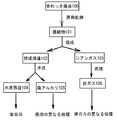
- FIG. 1 is a process diagram for explaining a preferred embodiment of the present invention.
- the waste liquid used in the present invention contains a cyanide compound, an inorganic carbonate and a valuable metal.
- the waste liquid include gold (Au), silver (Ag), platinum (Pt), palladium (Pd), rhodium (Rh), iridium (Ir) and ruthenium (Ru) which are noble metals, and scandium (Sc) which is a rare earth metal.
- liquid waste containing valuable metals such as beam (Ga), preferably liquid waste containing a noble metal, more preferably liquid waste containing gold.
- Examples include those derived from a plating solution in an electroplating method and an electroless plating method using a noble metal.
- plating solutions such as Au—Ni, Pd—Ni, and Au—Pd—Ni.
- the waste liquid in this invention is not limited to the said form,
- the following description will be made with reference to an example of a plating solution waste solution containing gold (hereinafter referred to as a gold plating waste solution).
- the concentration of cyanide compounds in the gold plating waste liquid is generally medium to high, and as described above, if the gold plating waste liquid is treated by using the conventional in-furnace spray method, high temperature heating is required, resulting in high cost. There are problems such as damage to the furnace due to adhesion of molten inorganic carbonate (heat-meltable salt), and inability to recover gold.
- the inorganic carbonate in the gold plating waste solution is derived from an additive that is appropriately added to the plating solution; a part of CN is anodized and decomposed into carbonate ions during the electroplating operation; For example, carbon is absorbed and carbonate ions build up; and the concentration thereof is, for example, 1 to 100 g / L as carbonate ions.
- the above-mentioned problem is achieved by a step of firing a concentrate of a waste liquid containing a cyanide compound, an inorganic carbonate and a valuable metal at a relatively low temperature of 400 to 650 ° C. and separating the cyanide compound as cyan gas. It has been solved.
- a concentrate of waste liquid containing a cyanide compound, an inorganic carbonate and a valuable metal is prepared.
- the method for concentrating the waste liquid include a method of evaporating and drying at 100 to 110 ° C., and a method of heating in an evaporating dish or natural air drying. It is preferable to concentrate the waste liquid to a solid such as a powder or a lump by these various means because subsequent processing operations are facilitated.
- the concentration of the cyanide compound in the waste liquid concentrate is 2 g / kg or more, it is possible to efficiently separate the cyanide compound as cyan gas, preferably 2 to 200 g / kg, more preferably It can be carried out at 5 to 200 g / kg.
- the inorganic carbonate can be preferably used in a waste liquid concentrate containing an alkali carbonate carbonate and / or an alkaline earth carbonate carbonate, and more preferably a waste concentrate containing an alkali carbonate carbonate having a melting point of 700 to 1000 ° C. Will be implemented.
- the inorganic carbonate in the waste liquid concentrate can efficiently separate the cyanide compound as cyan gas even if the concentration in terms of carbonate ion is as high as 20 g / kg or more, and is 20 g / kg or more. Preferably in the range of less than 1000 g / kg.
- the concentration of valuable metals in the waste liquid concentrate is 1000 mg / kg or less, the cyanide compound can be efficiently separated as cyan gas and valuable metals can be efficiently recovered. 10 mg / kg This can be preferably implemented.
- the concentrate is fired at 400 to 650 ° C.
- Calcination can be performed under sealed conditions, at atmospheric pressure or under pressure, or under reduced pressure (for example, under ⁇ 60 to ⁇ 10 Pa).
- the temperature rising rate is, for example, 1 to 10 ° C./min, and preferably 1 to 5 ° C./min.
- the high temperature holding time for firing is, for example, 30 to 120 minutes.
- Separation as cyan gas in the present invention means separation by release of cyan gas generated by decomposition of the cyan compound described above from waste liquid concentrate, or waste liquid concentrate as carbon dioxide and nitrogen by pyrolysis or combustion of the generated cyan gas. Including separation by release from.
- the decomposition of cyanide is started at about 600 to 850 ° C., but in the present invention, the concentrate is calcined at a relatively low temperature to generate cyan gas and to remove cyanide from the concentrate. it can.
- NaCN or KCN usually contained in the gold plating waste liquid easily reacts with light, heat, or CO 2 to generate HCN.
- these reactions are promoted and the production of HCN is increased.
- the inorganic carbonate after separating from the waste liquid concentrate using cyan as cyan gas, the inorganic carbonate is not hard sintered by heat melting, but recovers the valuable metal from the soft and porous firing residue in the liquid phase.
- the firing residue is highly soluble in water and excellent in liquid permeability, and the inorganic carbonate is washed with water.
- the liquid phase recovery method of valuable metals include a method of dissolving aqua regia and reducing with a reducing agent.
- the cyan gas in the separated exhaust gas 106 can be collected by alkali and treated by oxidative decomposition such as a known alkali chlorine method, ozone, electrolysis method, or high temperature of 800 ° C. or higher.
- oxidative decomposition such as a known alkali chlorine method, ozone, electrolysis method, or high temperature of 800 ° C. or higher.
- the combustion temperature is preferably 800 to 950 ° C., for example.
- the rate of temperature rise is, for example, preferably 1 ° C./min to 10 ° C./min, more preferably 1 ° C./min to 5 ° C./min.
- the burning time is, for example, preferably 30 to 120 minutes after reaching the specified temperature.
- FIG. 1 is a process diagram for explaining a preferred embodiment of the present invention.
- the gold plating waste liquid 100 is evaporated and dried to obtain a concentrate 101.
- the obtained concentrate 101 is baked at 400 to 650 ° C. and separated into a baking residue 102 and a cyan gas 103.
- the baking residue 102 is washed with water and separated into a washing residue and a waste alkali 105.
- the washing with water at this time is performed by a method such as putting water, preferably warm water, about 5 to 10 times by mass of the baking residue 102 into a washing bath and stirring them.
- the obtained washing residue 104 is baked at 500 to 800 ° C. for 1 to 4 hours as necessary, and then gold is recovered by the method exemplified above. Since the waste alkali 105 has a low cyanide concentration, it can be rendered harmless by a conventional alkali chlorine method, for example.
- the cyan gas 103 is introduced into the combustion furnace and burned as described above to become the exhaust gas 106.
- the exhaust gas 106 is detoxified by a method such as cooling with a saturated water vapor quenching tower or a complete evaporation quenching tower using caustic alkaline water, and collecting with an electric dust collector, etc., and is discharged into the atmosphere.
- Example 1 A gold plating waste solution having the following composition was prepared. Table 1 below shows the measurement results of the composition in the gold plating waste liquid.
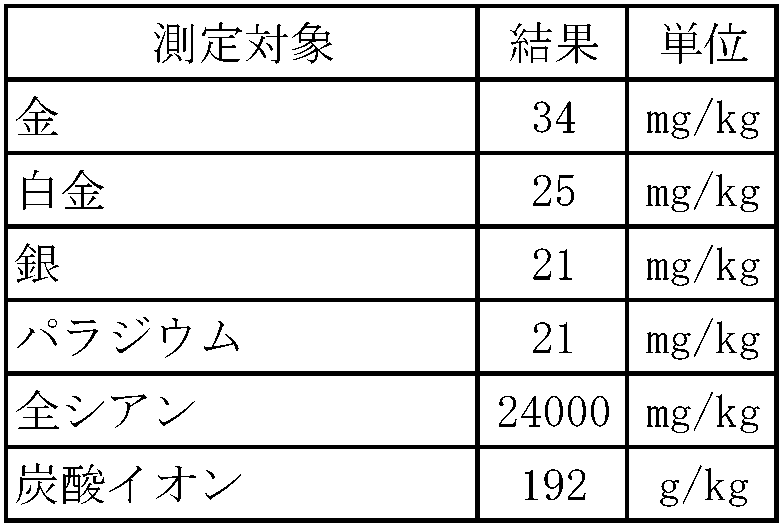
- the gold plating waste liquid was treated by the process shown in FIG. First, the gold plating waste liquid 100 was evaporated and dried at 110 ° C. using a rotary disk evaporation concentrator as an apparatus to obtain a concentrate 101. The concentrate 101 was quantitatively analyzed. The results are shown in Table 2 below.
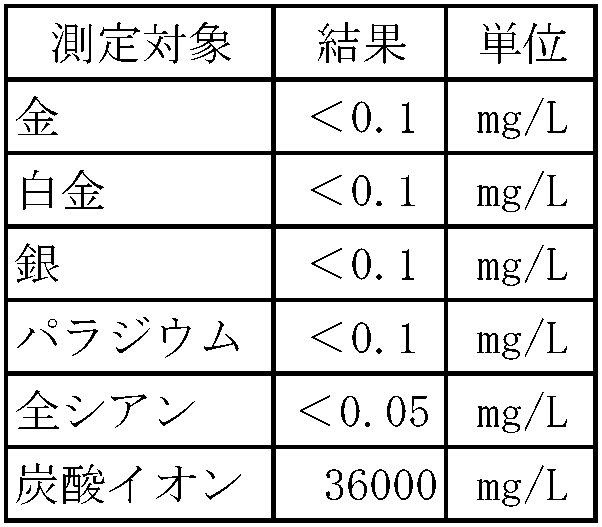
- T-CN represents the total CN amount of the complex cyanide compound and free cyanide compound in the waste alkali 105.
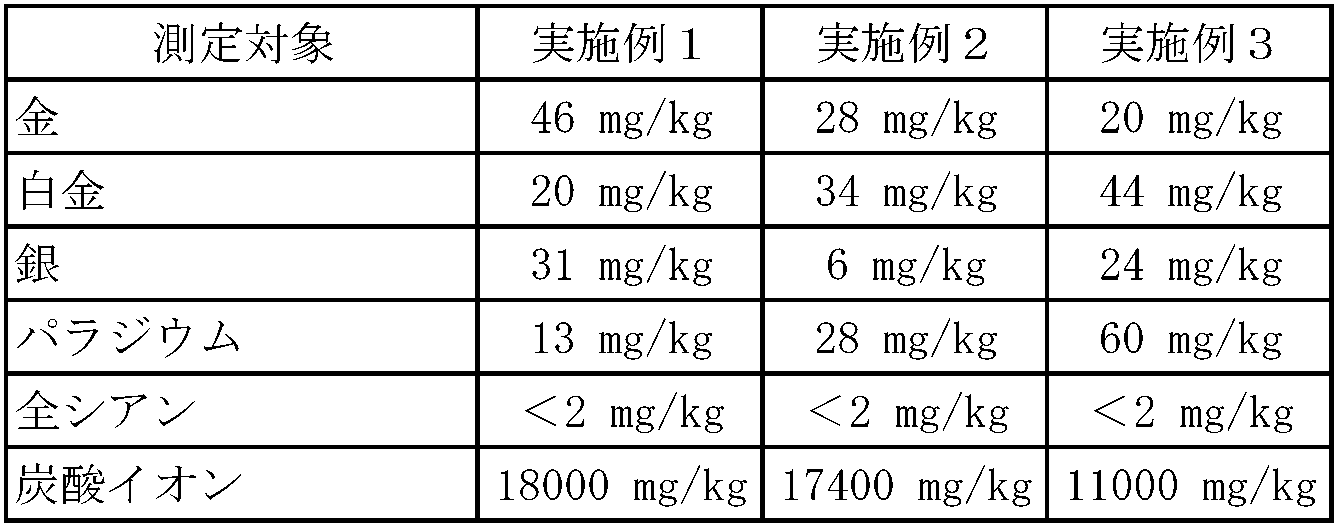
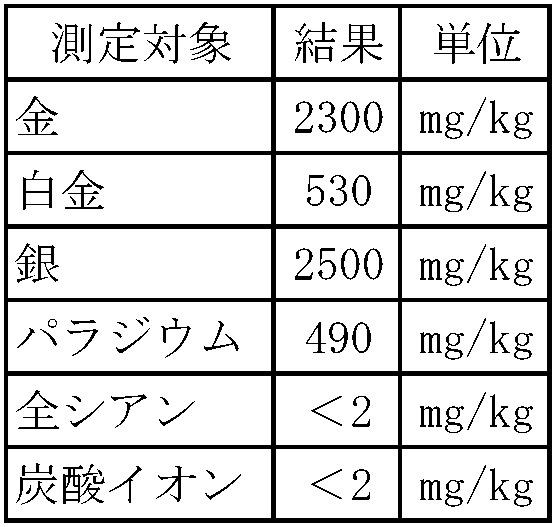
- Example 2 Except for the firing conditions, the same procedure as in Example 1 was performed until washing with water. Firing was performed under reduced pressure at 400 ° C., the rate of temperature increase was 3 ° C./min, and the firing time was 120 minutes after reaching 400 ° C. The obtained baked residue 102 was quantitatively analyzed. The results are shown in Table 3.
- Example 3 Except for the firing conditions, the same procedure as in Example 1 was carried out before washing with water. Firing was performed under reduced pressure at 650 ° C., the rate of temperature increase was 3 ° C./min, and the firing time was 60 minutes after reaching 650 ° C. The obtained baked residue 102 was quantitatively analyzed. The results are shown in Table 3.
- Example 2 The gold plating waste liquid concentrate 101 used in Example 1 was introduced into a firing furnace and fired at 800 ° C. Firing was performed under reduced pressure, the rate of temperature increase was 3 ° C./min, and the firing time was 30 minutes after reaching 800 ° C.
- the alkali metal carbonate melts and adheres to the wall surface of the furnace in a glassy state and corrodes the furnace.
Landscapes
- Engineering & Computer Science (AREA)
- Chemical & Material Sciences (AREA)
- Manufacturing & Machinery (AREA)
- Materials Engineering (AREA)
- Mechanical Engineering (AREA)
- Metallurgy (AREA)
- Organic Chemistry (AREA)
- Life Sciences & Earth Sciences (AREA)
- Environmental & Geological Engineering (AREA)
- General Life Sciences & Earth Sciences (AREA)
- Geology (AREA)
- Manufacture And Refinement Of Metals (AREA)
Abstract
本発明は、中~高濃度シアン廃液を低コストかつ簡単に処理することができ、かつ、廃液に残存する貴金属、希土類元素、その他の金属類等の所謂有価金属を、炉を腐食させることなく十分に回収可能な有価金属回収方法を提供する。 本発明は、シアン化合物、無機炭酸塩および有価金属を含有する廃液100の濃縮物101を400~650℃で焼成し、シアンをシアンガス103として前記廃液100の濃縮物から分離した後に焼成残渣102から有価金属を回収する有価金属回収方法に関する。
Description
本発明は、有価金属回収方法に関する。
貴金属、希土類元素、その他の金属類等の所謂有価金属は、工業的に非常に有用な材料が多く、幅広い分野で利用されている。例えば、金を用いた電解めっき法や無電解めっき法が広く知られており、そのめっき液としては、金供給源として液中での安定性に優れるシアン系金めっき液が従来から用いられている。
しかし、シアン化合物は強い毒性を有するとともに、前記のようなめっき液はシアン化合物の濃度が一般的に中~高濃度であることから、めっき後の廃液の処理には万全を期す必要がある。一方で、高価な材料である有価金属は、めっき後の廃液から可能な限り回収して再利用することが求められる。
従来、中~高濃度でシアン化合物を含有する廃液(中~高濃度シアン廃液)の処理方法としては、例えば、炉内噴霧法が知られている。ここで中濃度とは、廃液中のシアン化合物の濃度が例えば100mg/L以上1000mg/L未満であることを意味する。また、高濃度とは、廃液中のシアン化合物の濃度が例えば1000mg/L以上であることを意味する。
炉内噴霧方法は、1000℃を超える高温の炉内に該廃液を噴霧し、シアン化合物を分解する方法である。しかしこの方法は、高コストであること、熱溶融性塩である無機炭酸塩、例えば炭酸アルカリ金属塩や炭酸アルカリ土類金属塩が溶融し炉内に付着し炉を破損させること、有価金属を回収できない、等の問題点がある。
なお、低濃度でシアン化合物を含有する廃液(低濃度シアン廃液)を処理する方法も知られている。ここで低濃度とは、シアン化合物の濃度が例えば100mg/L未満であることを意味する。
例えば、特許文献1には、低濃度シアン廃液に水酸化ナトリウムを添加し、pHを10~11に調整しながら次亜塩素酸ナトリウムを加え、シアン化合物を窒素まで分解するアルカリ塩素法が開示されている。しかし、アルカリ塩素法によって中~高濃度シアン廃液から有価金属を回収しようとすると、使用する薬品が多量に必要であり処理廃液との体積和が大きくなる、反応熱による顕著な発熱を伴う、自体に有害な塩素が発生する、等の問題点がある。
その他、高温高圧下で熱加水分解する方法(例えば特許文献2参照)、オゾンガスの酸化力を利用するオゾン酸化法(例えば特許文献3参照)等が知られている。前者の方法はシアン化合物を十分に分解できず、後者の方法は高コストであるという問題点がある。
したがって本発明の目的は、例えば中~高濃度シアン廃液を低コストかつ簡単に処理することができ、かつ、廃液に残存する貴金属、希土類元素、その他の金属類等の所謂有価金属を、炉を腐食させることなく十分に回収可能な金属回収方法を提供することにある。
本発明者は、シアン化合物、無機炭酸塩および有価金属を含有する廃液の濃縮物を比較的低温で焼成し、シアンをシアンガスとして前記廃液から分離する工程を経ることにより、上記課題を解決できることを見出し、本発明を完成した。
すなわち本発明は、以下の通りである。
1.シアン化合物、無機炭酸塩および有価金属を含有する廃液の濃縮物を400~650℃で焼成し、シアンをシアンガスとして前記廃液の濃縮物から分離した後に焼成残渣から有価金属を回収する工程を含む有価金属回収方法。
2.有価金属を液相回収する工程を含む前記1に記載の有価金属回収方法。
3.前記無機炭酸塩は炭酸アルカリ金属塩および/または炭酸アルカリ土類金属塩である前記1または2に記載の有価金属回収方法。
4.前記シアン化合物の濃度および無機炭酸塩の炭酸イオン換算濃度が、前記廃液の濃縮物中で夫々2~200g/kg、20g/kg以上であって1000g/kg未満である前記1~3のいずれか1項に記載の有価金属回収方法。
1.シアン化合物、無機炭酸塩および有価金属を含有する廃液の濃縮物を400~650℃で焼成し、シアンをシアンガスとして前記廃液の濃縮物から分離した後に焼成残渣から有価金属を回収する工程を含む有価金属回収方法。
2.有価金属を液相回収する工程を含む前記1に記載の有価金属回収方法。
3.前記無機炭酸塩は炭酸アルカリ金属塩および/または炭酸アルカリ土類金属塩である前記1または2に記載の有価金属回収方法。
4.前記シアン化合物の濃度および無機炭酸塩の炭酸イオン換算濃度が、前記廃液の濃縮物中で夫々2~200g/kg、20g/kg以上であって1000g/kg未満である前記1~3のいずれか1項に記載の有価金属回収方法。
本発明では、シアン化合物、無機炭酸塩および有価金属を含有する廃液の濃縮物を400~650℃という比較的低温で焼成することにより、シアン化合物がシアンガスとして分離されるとともに、熱溶融性塩である無機炭酸塩が炉内で溶融せず、炉を腐食させることがない。またアルカリヒュームの発生も防止され、安全性が高まる。さらに焼成温度が低いことにより、低コストが達成される。シアン化合物が分離された焼成残渣は、毒性が低く、その後の金属回収が容易となる。また、分離されたシアンガスをさらに燃焼する形態によれば、シアンガスを水、二酸化炭素および窒素に分解でき、排ガスの更なる処理が容易となる。
以下、本発明をさらに詳しく説明する。
本発明で使用される廃液は、シアン化合物、無機炭酸塩および有価金属を含有するものである。該廃液としては、貴金属である金(Au)、銀(Ag)、白金(Pt)、パラジウム(Pd)、ロジウム(Rh)、イリジウム(Ir)及びルテニウム(Ru)、希土類金属であるスカンジウム(Sc)、イットリウム(Y)、ランタン(La)、セリウム(Ce)、プラセオジウム(Pr)、ネオジム(Nd)、プロメチウム(Pm)、サマリウム(Sm)、ユウロピウム(Eu)、ガドリニウム(Gd)、テルビウム(Tb)、ジスプロシウム(Dy)、ホルミウム(Ho)、エルビウム(Er)、ツリウム(Tm)、イッテルビウム(Yb)及びルテチウム(Lu)、その他金属類であるスズ(Sn)、鉛(Pb)、亜鉛(Zn)、銅(Cu)、ニッケル(Ni)、コバルト(Co)、タリウム(TI)、インジウム(In)またはガリウム(Ga)等の有価金属を含む廃液が挙げられ、好ましくは貴金属を含有する廃液、より好ましくは金を含有する廃液である。
例えば、貴金属を用いた電解めっき法および無電解めっき法におけるめっき液を由来とするものが挙げられる。例えば、Au-Ni系、Pd-Ni系およびAu-Pd-Ni系等の公知のめっき液がある。
なお本発明における廃液は当該形態に限定されるものではなく、例えば、貴金属回収業、表面処理業、電気・電子部品製造業および医薬品・農薬製造業等により発生するシアン廃液が挙げられる。以下は、金を含有するめっき液の廃液(以下、金めっき廃液という)を例にとり説明する。
金めっき廃液におけるシアン化合物の濃度は、一般的に中~高濃度であり、前述のように従来の炉内噴霧法を採用して金めっき廃液を処理すると、高温加熱を必要とするため高コストであったり、溶融した無機炭酸塩(熱溶融性塩)の付着により炉を破損させたり、金の回収が不可となる等の問題点があった。
なお、金めっき廃液中の無機炭酸塩は、めっき液に適宜添加される添加剤を由来とする;電気めっきの作業時にCNの一部が陽極酸化され炭酸イオンに分解される;空気中の二酸化炭素が吸収され、炭酸イオンがビルドアップする;等の理由により存在し、その濃度は例えば炭酸イオンとして1~100g/Lである。
そこで本発明では、シアン化合物、無機炭酸塩および有価金属を含有する廃液の濃縮物を400~650℃という比較的低温で焼成し、シアン化合物をシアンガスとして分離する工程を経ることにより、前記課題を解決したものである。
まず、本発明では、シアン化合物、無機炭酸塩および有価金属を含有する廃液の濃縮物を調製する。該廃液を濃縮する方法としては、例えば、100~110℃で蒸発乾燥させる方法、および蒸発皿で加熱または自然風乾する方法が挙げられる。これら各種手段によって廃液を粉末状または塊状などの固形物になるまで濃縮すれば、その後の処理操作が容易となるため好ましい。
本発明では、廃液濃縮物中のシアン化合物の濃度が2g/kg以上であってもシアン化合物をシアンガスとして効率的に分離することが可能であり、好ましくは2~200g/kgで、より好ましくは5~200g/kgで実施できる。
また、無機炭酸塩は、炭酸アルカリ金属塩および/または炭酸アルカリ土類金属塩を含む廃液濃縮物で好ましく実施でき、より好ましくは融点が700~1000℃である炭酸アルカリ金属塩を含む廃液濃縮物で実施される。
廃液濃縮物中の無機炭酸塩は、炭酸イオン換算の濃度が、20g/kg以上の高濃度であってもシアン化合物をシアンガスとして効率的に分離することが可能であり、20g/kg以上であって1000g/kg未満の範囲で好ましく実施できる。
また、廃液濃縮物中の有価金属の濃度は1000mg/kg以下の中濃度以下であってもシアン化合物をシアンガスとして効率的に分離し有価金属を効率よく回収することが可能であり、10mg/kg以上で好ましく実施できる。
次に、濃縮物を400~650℃で焼成する。焼成は、密閉条件、大気圧下または加圧下または減圧下(例えば-60~-10Pa下)で行うことができる。昇温速度は、例えば1~10℃/分であり、好ましくは1~5℃/分である。焼成の高温保持時間は例えば30~120分である。
この焼成により廃液中に含まれる有機物が燃焼して二酸化炭素と水を発生する。シアン化合物はこの二酸化炭素および水と反応し、例えば次の反応式(1)によりシアンガスとして分離される。また、金などの有価金属とシアンとの錯体を形成している場合は、その一部または全部が熱分解により有価金属とシアンガスに分解し分離される。
金などの有価金属とシアンとが錯体を形成している場合は、低温では分解が困難なため、400℃未満では金などの有価金属とシアンとの錯体は分解せずに、シアンガスとして分離することが困難である。650℃を超える場合は、炭酸アルカリ金属塩が溶融し炉内に付着し炉を破損させる、有価金属を回収できない、等の問題点がある。
本発明におけるシアンガスとしての分離とは、既述のシアン化合物の分解により生成したシアンガスの廃液濃縮物からの放出による分離、または生成したシアンガスの熱分解若しくは燃焼による二酸化炭素及び窒素としての廃液濃縮物からの放出による分離を含む。
2NaCN+CO2+H2O→Na2CO3+2HCN ↑ (1)
一般的に、シアンの分解は約600~850℃で開始されるが、本発明では比較的低い温度で濃縮物を焼成することにより、シアンガスを生成せしめ、濃縮物からシアン化合物を除去することができる。
上記反応式(1)において、金めっき廃液に通常含まれるNaCNまたはKCNは、光、熱、またはCO2により容易に反応しHCNを生成する。前記の焼成温度範囲において、これらの反応が促進され、HCNの生成が増大する。
続いて本発明では、シアンをシアンガスとして前記廃液の濃縮物から分離した後に、無機炭酸塩が熱溶融による硬い焼結ではなく、柔らかでポーラス状の焼成残渣から有価金属を液相回収する。この際、焼成残渣は無機炭酸塩が熱溶融による焼結が無く細かい粉末状態となっているため、無機炭酸塩の水への溶解性が高く通液性に優れており、無機炭酸塩を水洗除去した後の残渣からの有価金属の液相回収に適切である。有価金属の液相回収方法としては、例えば、王水溶解し、還元剤で還元する方法が挙げられる。
なお、分離された排ガス106中のシアンガスは、アルカリで捕集し、公知のアルカリ塩素法・オゾン・電解法などの酸化分解法、または800℃以上の高温で燃焼させ処理することができる。本発明では、前述の400~650℃での焼成する工程の後シアンガスを完全に燃焼させる為に800℃以上の高温で燃焼する工程を更に含むことが好ましい。
燃焼温度は、例えば、好ましくは800~950℃である。昇温速度は、例えば、好ましくは1℃/分~10℃/分であり、より好ましくは1℃/分~5℃/分である。燃焼時間は、例えば、好ましくは指定温度に達してから30~120分である。この工程により、シアンガスは例えば下記反応式(2)によって水、二酸化炭素および窒素に分解され、排ガスの更なる処理が容易となる。
4HCN+5O2→2H2O+4CO2+2N2 (2)
図1は、本発明の好ましい形態を説明するための工程図である。図1において、金めっき廃液100は、蒸発乾燥され、濃縮物101が得られる。得られた濃縮物101は、400~650℃で焼成され、焼成残渣102とシアンガス103とに分離される。
焼成残渣102は、水洗され、水洗残渣と廃アルカリ105とに分離される。このときの水洗は、水洗浴に焼成残渣102の5~10質量倍程度の、水、好ましくは温水を入れ、両者を攪拌する等の方法により行われる。
得られた水洗残渣104は、必要に応じて500~800℃で1~4時間焼成後、上記で例示したような方法により、金が回収される。廃アルカリ105は、シアン化合物濃度が低濃度となっているため、従来の例えばアルカリ塩素法により無害化することができる。
一方、シアンガス103は、燃焼炉に導入され、前記のように燃焼され、排ガス106となる。排ガス106は、苛性アルカリ水による飽和水蒸気型急冷塔または完全蒸発型急冷塔で冷却し、電気集塵機で集塵する方法等により無害化され、大気中に放出される。
以下、本発明を実施例によりさらに説明するが、本発明は下記例に制限されるものではない。
[実施例1]
下記組成を有する金めっき廃液を準備した。下記表1に金めっき廃液中の組成の測定結果を示す。
下記組成を有する金めっき廃液を準備した。下記表1に金めっき廃液中の組成の測定結果を示す。
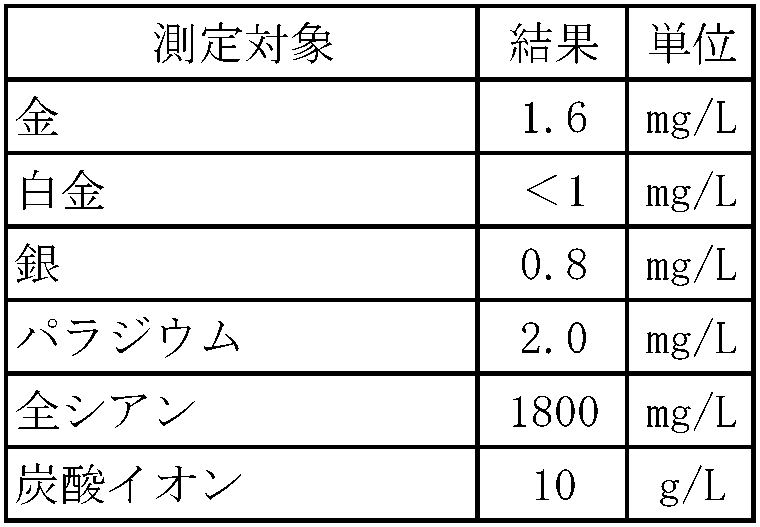
前記金めっき廃液を、図1に示す工程により処理した。まず、金めっき廃液100を、装置として回転円盤式蒸発濃縮装置を用い、110℃で蒸発乾燥させ、濃縮物101を得た。濃縮物101について、定量分析を行なった。その結果を下記表2に示す。
続いて、前記濃縮物101の10kgを矩形の焼成用容器中に厚さ10cmとして入れ、焼成炉に導入し、500℃で焼成した。焼成は、減圧下で行い、昇温速度は3℃/分、焼成時間は500℃に達してから30分とした。得られた焼成残渣102について、定量分析を行なった。その結果を下記表3に示す。
次に、得られた焼成残渣102から200gを採取し、1リットルの水とともに水洗浴に入れ、両者を攪拌することにより水洗を行なった。不溶分として得られた水洗残渣104について600℃、減圧下(-10Pa)にて高温保持時間1時間にて焼成後、定量分析を行なった。その結果を下記表4に示す。
続いて、得られた水洗残渣104に対して、王水溶解し、還元剤で還元する方法により、9mgの金を液相回収した。なお、金以外のその他の有価金属についても、必要に応じて常法により回収が可能となる。
また、廃アルカリ105についても定量分析を行なった。その結果を下記表5に示す。なお下記表5において、T-CNは廃アルカリ105中の錯体シアン化合物と遊離シアン化合物のCN量の合計を示している。
[実施例2]
焼成条件以外は、水洗前まで実施例1と同様に実施した。焼成は、400℃減圧下で行い、昇温速度は3℃/分、焼成時間は400℃に達してから120分とした。得られた焼成残渣102について、定量分析を行なった。その結果を表3に示す。
焼成条件以外は、水洗前まで実施例1と同様に実施した。焼成は、400℃減圧下で行い、昇温速度は3℃/分、焼成時間は400℃に達してから120分とした。得られた焼成残渣102について、定量分析を行なった。その結果を表3に示す。
[実施例3]
焼成条件以外は、水洗前まで実施例1と同様に実施した。焼成は、650℃減圧下で行い、昇温速度は3℃/分、焼成時間は650℃に達してから60分とした。得られた焼成残渣102について、定量分析を行なった。その結果を表3に示す。
焼成条件以外は、水洗前まで実施例1と同様に実施した。焼成は、650℃減圧下で行い、昇温速度は3℃/分、焼成時間は650℃に達してから60分とした。得られた焼成残渣102について、定量分析を行なった。その結果を表3に示す。
[比較例]
前記実施例1で使用した金めっき廃液の濃縮物101を焼成炉に導入し、800℃で焼成した。焼成は、減圧下で行い、昇温速度は3℃/分、焼成時間は800℃に達してから30分とした。
前記実施例1で使用した金めっき廃液の濃縮物101を焼成炉に導入し、800℃で焼成した。焼成は、減圧下で行い、昇温速度は3℃/分、焼成時間は800℃に達してから30分とした。
その結果、炭酸アルカリ金属塩が溶融し炉の壁面にガラス状に付着し、炉を腐食させてしまうことが確認された。
なお上記実施例では、金の回収方法について説明したが、その他の貴金属、希土類元素等の所謂有価金属も回収可能であることは勿論である。
本発明を特定の態様を用いて詳細に説明したが、本発明の意図と範囲を離れることなく様々な変更および変形が可能であることは、当業者にとって明らかである。なお本出願は、2013年4月24日付で出願された日本特許出願(特願2013-091266)に基づいており、その全体が引用により援用される。
Claims (4)
- シアン化合物、無機炭酸塩および有価金属を含有する廃液の濃縮物を400~650℃で焼成し、シアンをシアンガスとして前記廃液の濃縮物から分離した後に焼成残渣から有価金属を回収する工程を含む有価金属回収方法。
- 有価金属を液相回収する工程を含む請求項1に記載の有価金属回収方法。
- 前記無機炭酸塩は炭酸アルカリ金属塩および/または炭酸アルカリ土類金属塩である請求項1または2に記載の有価金属回収方法。
- 前記シアン化合物の濃度および無機炭酸塩の炭酸イオン換算濃度が、前記廃液の濃縮物中で夫々2~200g/kg、20g/kg以上であって1000g/kg未満である請求項1~3のいずれか1項に記載の有価金属回収方法。
Priority Applications (2)
| Application Number | Priority Date | Filing Date | Title |
|---|---|---|---|
| KR1020157030341A KR101721354B1 (ko) | 2013-04-24 | 2014-04-21 | 유가 금속 회수 방법 |
| CN201480020981.4A CN105121676B (zh) | 2013-04-24 | 2014-04-21 | 有价金属回收方法 |
Applications Claiming Priority (2)
| Application Number | Priority Date | Filing Date | Title |
|---|---|---|---|
| JP2013-091266 | 2013-04-24 | ||
| JP2013091266A JP6093232B2 (ja) | 2013-04-24 | 2013-04-24 | 有価金属回収方法 |
Publications (1)
| Publication Number | Publication Date |
|---|---|
| WO2014175218A1 true WO2014175218A1 (ja) | 2014-10-30 |
Family
ID=51791792
Family Applications (1)
| Application Number | Title | Priority Date | Filing Date |
|---|---|---|---|
| PCT/JP2014/061177 Ceased WO2014175218A1 (ja) | 2013-04-24 | 2014-04-21 | 有価金属回収方法 |
Country Status (5)
| Country | Link |
|---|---|
| JP (1) | JP6093232B2 (ja) |
| KR (1) | KR101721354B1 (ja) |
| CN (1) | CN105121676B (ja) |
| TW (1) | TWI621714B (ja) |
| WO (1) | WO2014175218A1 (ja) |
Citations (4)
| Publication number | Priority date | Publication date | Assignee | Title |
|---|---|---|---|---|
| JPH06158191A (ja) * | 1992-11-16 | 1994-06-07 | Mitsui Kinzoku Shigen Kaihatsu Kk | 金、銀の回収方法 |
| JPH09268329A (ja) * | 1996-04-04 | 1997-10-14 | Nippon Parkerizing Co Ltd | 貴金属及び重金属含有液から貴金属を回収する方法 |
| JP2001026827A (ja) * | 1999-07-13 | 2001-01-30 | Dowa Mining Co Ltd | 金属元素含有水溶液の処理方法 |
| JP2006522873A (ja) * | 2003-04-11 | 2006-10-05 | ロンミン・パブリック・リミテッド・カンパニー | 白金族金属の回収 |
Family Cites Families (9)
| Publication number | Priority date | Publication date | Assignee | Title |
|---|---|---|---|---|
| JPS516018B2 (ja) * | 1972-10-11 | 1976-02-24 | ||
| JPS50118962A (ja) | 1974-03-05 | 1975-09-18 | ||
| JPH0779999B2 (ja) * | 1988-01-26 | 1995-08-30 | 日本パーカライジング株式会社 | シアン含有液の処理方法 |
| CN1172009C (zh) * | 2001-11-09 | 2004-10-20 | 清华大学 | 一种以氰化提金废渣再提金的工艺方法 |
| AUPS167402A0 (en) * | 2002-04-11 | 2002-05-16 | Platinum Australia Limited | Method for extracting pgms |
| JP2006341229A (ja) | 2005-06-10 | 2006-12-21 | Sumitomo Precision Prod Co Ltd | シアン化合物含有排水の高度処理方法 |
| CN101139660A (zh) * | 2007-10-08 | 2008-03-12 | 郑满秀 | 一种从金精矿酸化焙烧烧渣中提取铁铅和金银的方法 |
| CN101893247A (zh) * | 2010-08-16 | 2010-11-24 | 林向东 | 金精矿焙烧冶炼厂含氰污水处理方法 |
| CN102367587B (zh) * | 2011-11-15 | 2014-06-04 | 陕西科技大学 | 一种含氰镀金溶液过量碳酸盐的处理方法 |
-
2013
- 2013-04-24 JP JP2013091266A patent/JP6093232B2/ja active Active
-
2014
- 2014-04-21 KR KR1020157030341A patent/KR101721354B1/ko active Active
- 2014-04-21 CN CN201480020981.4A patent/CN105121676B/zh active Active
- 2014-04-21 WO PCT/JP2014/061177 patent/WO2014175218A1/ja not_active Ceased
- 2014-04-23 TW TW103114640A patent/TWI621714B/zh active
Patent Citations (4)
| Publication number | Priority date | Publication date | Assignee | Title |
|---|---|---|---|---|
| JPH06158191A (ja) * | 1992-11-16 | 1994-06-07 | Mitsui Kinzoku Shigen Kaihatsu Kk | 金、銀の回収方法 |
| JPH09268329A (ja) * | 1996-04-04 | 1997-10-14 | Nippon Parkerizing Co Ltd | 貴金属及び重金属含有液から貴金属を回収する方法 |
| JP2001026827A (ja) * | 1999-07-13 | 2001-01-30 | Dowa Mining Co Ltd | 金属元素含有水溶液の処理方法 |
| JP2006522873A (ja) * | 2003-04-11 | 2006-10-05 | ロンミン・パブリック・リミテッド・カンパニー | 白金族金属の回収 |
Also Published As
| Publication number | Publication date |
|---|---|
| KR101721354B1 (ko) | 2017-03-29 |
| JP2014214333A (ja) | 2014-11-17 |
| JP6093232B2 (ja) | 2017-03-08 |
| CN105121676B (zh) | 2017-03-22 |
| TWI621714B (zh) | 2018-04-21 |
| KR20150131394A (ko) | 2015-11-24 |
| TW201446968A (zh) | 2014-12-16 |
| CN105121676A (zh) | 2015-12-02 |
Similar Documents
| Publication | Publication Date | Title |
|---|---|---|
| CN101445872B (zh) | 一种从含钌、铱、钛、锡、锆或钯的混合氧化物中提取贵金属铱的方法 | |
| CN102277497B (zh) | 一种从废旧电路板中回收金、钯、铂、银的方法 | |
| KR101640462B1 (ko) | 폐기물로부터 금속을 회수하기 위한 습식 제련 공정 및 장치 | |
| TW201910522A (zh) | 鋰化合物之溶解方法及碳酸鋰之製造方法、以及自鋰離子二次電池廢料回收鋰之方法 | |
| JPS6344810B2 (ja) | ||
| KR100888040B1 (ko) | 폐촉매로부터 백금족 금속을 회수하는 방법 | |
| CN105256147A (zh) | 超临界流体回收废弃线路板中钯的工艺 | |
| JP5652765B2 (ja) | 金属成分回収剤及び金属成分の回収方法 | |
| JP6093232B2 (ja) | 有価金属回収方法 | |
| JP6218121B2 (ja) | 塩化コバルト水溶液の精製方法 | |
| JP2009102722A (ja) | 貴金属及び貴金属以外の金属を含む強酸性の廃液から貴金属を得る方法 | |
| US6337056B1 (en) | Process for refining noble metals from auriferous mines | |
| KR101616174B1 (ko) | 순환형 침출제를 이용한 중금속 오염토양 복원방법 | |
| JP6159297B2 (ja) | 銀の回収方法 | |
| JPS6326184B2 (ja) | ||
| CN104340999B (zh) | 一种氧化铝的提纯方法 | |
| KR101579498B1 (ko) | 팔라듐함유 폐 페이스트로부터 팔라듐의 회수방법 | |
| KR101539431B1 (ko) | Mo-cvd 공정에서 발생하는 폐기물로부터 갈륨의 회수 방법 | |
| CN110699552B (zh) | 从scr催化剂中选择性提取高纯金属钛的方法 | |
| CN104928488A (zh) | 一种含金王水提金方法 | |
| JPS63166937A (ja) | 燃料電池の電極廃材等からの貴金属回収方法 | |
| KR100367710B1 (ko) | 폐카본 촉매로부터 백금족 금속의 회수방법 | |
| JP2011062644A (ja) | 処理品からの有価物回収方法 | |
| KR101779347B1 (ko) | 붕소 화합물을 통한 귀금속 농축 회수방법 및 시멘트용 슬래그 제조방법 | |
| TWI585238B (zh) | 利用鹽酸回收印刷電路板中金屬之方法 |
Legal Events
| Date | Code | Title | Description |
|---|---|---|---|
| 121 | Ep: the epo has been informed by wipo that ep was designated in this application |
Ref document number: 14788237 Country of ref document: EP Kind code of ref document: A1 |
|
| ENP | Entry into the national phase |
Ref document number: 20157030341 Country of ref document: KR Kind code of ref document: A |
|
| NENP | Non-entry into the national phase |
Ref country code: DE |
|
| 122 | Ep: pct application non-entry in european phase |
Ref document number: 14788237 Country of ref document: EP Kind code of ref document: A1 |