WO2014073664A1 - アルデヒド化合物の製造方法 - Google Patents
アルデヒド化合物の製造方法 Download PDFInfo
- Publication number
- WO2014073664A1 WO2014073664A1 PCT/JP2013/080317 JP2013080317W WO2014073664A1 WO 2014073664 A1 WO2014073664 A1 WO 2014073664A1 JP 2013080317 W JP2013080317 W JP 2013080317W WO 2014073664 A1 WO2014073664 A1 WO 2014073664A1
- Authority
- WO
- WIPO (PCT)
- Prior art keywords
- compound
- mol
- reaction
- metal
- producing
- Prior art date
- Legal status (The legal status is an assumption and is not a legal conclusion. Google has not performed a legal analysis and makes no representation as to the accuracy of the status listed.)
- Ceased
Links
- UMRZSTCPUPJPOJ-UHFFFAOYSA-N C(C1)C2CC1CC2 Chemical compound C(C1)C2CC1CC2 UMRZSTCPUPJPOJ-UHFFFAOYSA-N 0.000 description 1
Images


Classifications
-
- C—CHEMISTRY; METALLURGY
- C07—ORGANIC CHEMISTRY
- C07C—ACYCLIC OR CARBOCYCLIC COMPOUNDS
- C07C255/00—Carboxylic acid nitriles
- C07C255/45—Carboxylic acid nitriles having cyano groups bound to carbon atoms of rings other than six-membered aromatic rings
- C07C255/47—Carboxylic acid nitriles having cyano groups bound to carbon atoms of rings other than six-membered aromatic rings to carbon atoms of rings being part of condensed ring systems
-
- B—PERFORMING OPERATIONS; TRANSPORTING
- B01—PHYSICAL OR CHEMICAL PROCESSES OR APPARATUS IN GENERAL
- B01J—CHEMICAL OR PHYSICAL PROCESSES, e.g. CATALYSIS OR COLLOID CHEMISTRY; THEIR RELEVANT APPARATUS
- B01J31/00—Catalysts comprising hydrides, coordination complexes or organic compounds
- B01J31/16—Catalysts comprising hydrides, coordination complexes or organic compounds containing coordination complexes
- B01J31/24—Phosphines, i.e. phosphorus bonded to only carbon atoms, or to both carbon and hydrogen atoms, including e.g. sp2-hybridised phosphorus compounds such as phosphabenzene, phosphole or anionic phospholide ligands
-
- C—CHEMISTRY; METALLURGY
- C07—ORGANIC CHEMISTRY
- C07C—ACYCLIC OR CARBOCYCLIC COMPOUNDS
- C07C211/00—Compounds containing amino groups bound to a carbon skeleton
- C07C211/01—Compounds containing amino groups bound to a carbon skeleton having amino groups bound to acyclic carbon atoms
- C07C211/16—Compounds containing amino groups bound to a carbon skeleton having amino groups bound to acyclic carbon atoms of a saturated carbon skeleton containing rings other than six-membered aromatic rings
- C07C211/19—Compounds containing amino groups bound to a carbon skeleton having amino groups bound to acyclic carbon atoms of a saturated carbon skeleton containing rings other than six-membered aromatic rings containing condensed ring systems
-
- C—CHEMISTRY; METALLURGY
- C07—ORGANIC CHEMISTRY
- C07C—ACYCLIC OR CARBOCYCLIC COMPOUNDS
- C07C211/00—Compounds containing amino groups bound to a carbon skeleton
- C07C211/33—Compounds containing amino groups bound to a carbon skeleton having amino groups bound to carbon atoms of rings other than six-membered aromatic rings
- C07C211/34—Compounds containing amino groups bound to a carbon skeleton having amino groups bound to carbon atoms of rings other than six-membered aromatic rings of a saturated carbon skeleton
- C07C211/38—Compounds containing amino groups bound to a carbon skeleton having amino groups bound to carbon atoms of rings other than six-membered aromatic rings of a saturated carbon skeleton containing condensed ring systems
-
- C—CHEMISTRY; METALLURGY
- C07—ORGANIC CHEMISTRY
- C07C—ACYCLIC OR CARBOCYCLIC COMPOUNDS
- C07C265/00—Derivatives of isocyanic acid
- C07C265/14—Derivatives of isocyanic acid containing at least two isocyanate groups bound to the same carbon skeleton
-
- B—PERFORMING OPERATIONS; TRANSPORTING
- B01—PHYSICAL OR CHEMICAL PROCESSES OR APPARATUS IN GENERAL
- B01J—CHEMICAL OR PHYSICAL PROCESSES, e.g. CATALYSIS OR COLLOID CHEMISTRY; THEIR RELEVANT APPARATUS
- B01J2231/00—Catalytic reactions performed with catalysts classified in B01J31/00
- B01J2231/30—Addition reactions at carbon centres, i.e. to either C-C or C-X multiple bonds
- B01J2231/32—Addition reactions to C=C or C-C triple bonds
- B01J2231/321—Hydroformylation, metalformylation, carbonylation or hydroaminomethylation
-
- B—PERFORMING OPERATIONS; TRANSPORTING
- B01—PHYSICAL OR CHEMICAL PROCESSES OR APPARATUS IN GENERAL
- B01J—CHEMICAL OR PHYSICAL PROCESSES, e.g. CATALYSIS OR COLLOID CHEMISTRY; THEIR RELEVANT APPARATUS
- B01J2531/00—Additional information regarding catalytic systems classified in B01J31/00
- B01J2531/80—Complexes comprising metals of Group VIII as the central metal
- B01J2531/82—Metals of the platinum group
- B01J2531/821—Ruthenium
-
- B—PERFORMING OPERATIONS; TRANSPORTING
- B01—PHYSICAL OR CHEMICAL PROCESSES OR APPARATUS IN GENERAL
- B01J—CHEMICAL OR PHYSICAL PROCESSES, e.g. CATALYSIS OR COLLOID CHEMISTRY; THEIR RELEVANT APPARATUS
- B01J2531/00—Additional information regarding catalytic systems classified in B01J31/00
- B01J2531/80—Complexes comprising metals of Group VIII as the central metal
- B01J2531/82—Metals of the platinum group
- B01J2531/822—Rhodium
-
- B—PERFORMING OPERATIONS; TRANSPORTING
- B01—PHYSICAL OR CHEMICAL PROCESSES OR APPARATUS IN GENERAL
- B01J—CHEMICAL OR PHYSICAL PROCESSES, e.g. CATALYSIS OR COLLOID CHEMISTRY; THEIR RELEVANT APPARATUS
- B01J2531/00—Additional information regarding catalytic systems classified in B01J31/00
- B01J2531/80—Complexes comprising metals of Group VIII as the central metal
- B01J2531/84—Metals of the iron group
- B01J2531/842—Iron
-
- B—PERFORMING OPERATIONS; TRANSPORTING
- B01—PHYSICAL OR CHEMICAL PROCESSES OR APPARATUS IN GENERAL
- B01J—CHEMICAL OR PHYSICAL PROCESSES, e.g. CATALYSIS OR COLLOID CHEMISTRY; THEIR RELEVANT APPARATUS
- B01J2531/00—Additional information regarding catalytic systems classified in B01J31/00
- B01J2531/80—Complexes comprising metals of Group VIII as the central metal
- B01J2531/84—Metals of the iron group
- B01J2531/845—Cobalt
-
- B—PERFORMING OPERATIONS; TRANSPORTING
- B01—PHYSICAL OR CHEMICAL PROCESSES OR APPARATUS IN GENERAL
- B01J—CHEMICAL OR PHYSICAL PROCESSES, e.g. CATALYSIS OR COLLOID CHEMISTRY; THEIR RELEVANT APPARATUS
- B01J31/00—Catalysts comprising hydrides, coordination complexes or organic compounds
- B01J31/16—Catalysts comprising hydrides, coordination complexes or organic compounds containing coordination complexes
- B01J31/20—Carbonyls
-
- B—PERFORMING OPERATIONS; TRANSPORTING
- B01—PHYSICAL OR CHEMICAL PROCESSES OR APPARATUS IN GENERAL
- B01J—CHEMICAL OR PHYSICAL PROCESSES, e.g. CATALYSIS OR COLLOID CHEMISTRY; THEIR RELEVANT APPARATUS
- B01J31/00—Catalysts comprising hydrides, coordination complexes or organic compounds
- B01J31/16—Catalysts comprising hydrides, coordination complexes or organic compounds containing coordination complexes
- B01J31/22—Organic complexes
- B01J31/2204—Organic complexes the ligands containing oxygen or sulfur as complexing atoms
- B01J31/2208—Oxygen, e.g. acetylacetonates
- B01J31/2226—Anionic ligands, i.e. the overall ligand carries at least one formal negative charge
- B01J31/223—At least two oxygen atoms present in one at least bidentate or bridging ligand
- B01J31/2234—Beta-dicarbonyl ligands, e.g. acetylacetonates
-
- B—PERFORMING OPERATIONS; TRANSPORTING
- B01—PHYSICAL OR CHEMICAL PROCESSES OR APPARATUS IN GENERAL
- B01J—CHEMICAL OR PHYSICAL PROCESSES, e.g. CATALYSIS OR COLLOID CHEMISTRY; THEIR RELEVANT APPARATUS
- B01J31/00—Catalysts comprising hydrides, coordination complexes or organic compounds
- B01J31/16—Catalysts comprising hydrides, coordination complexes or organic compounds containing coordination complexes
- B01J31/24—Phosphines, i.e. phosphorus bonded to only carbon atoms, or to both carbon and hydrogen atoms, including e.g. sp2-hybridised phosphorus compounds such as phosphabenzene, phosphole or anionic phospholide ligands
- B01J31/2404—Cyclic ligands, including e.g. non-condensed polycyclic ligands, the phosphine-P atom being a ring member or a substituent on the ring
-
- C—CHEMISTRY; METALLURGY
- C07—ORGANIC CHEMISTRY
- C07C—ACYCLIC OR CARBOCYCLIC COMPOUNDS
- C07C2602/00—Systems containing two condensed rings
- C07C2602/36—Systems containing two condensed rings the rings having more than two atoms in common
- C07C2602/40—Systems containing two condensed rings the rings having more than two atoms in common the bicyclo ring system containing six carbon atoms
-
- C—CHEMISTRY; METALLURGY
- C07—ORGANIC CHEMISTRY
- C07C—ACYCLIC OR CARBOCYCLIC COMPOUNDS
- C07C2602/00—Systems containing two condensed rings
- C07C2602/36—Systems containing two condensed rings the rings having more than two atoms in common
- C07C2602/42—Systems containing two condensed rings the rings having more than two atoms in common the bicyclo ring system containing seven carbon atoms
Definitions
- the present invention relates to a method for producing an aldehyde compound, a method for producing an amine compound and a method for producing an isocyanate compound using the aldehyde compound obtained by the production method.
- Patent Documents 1 to 3 As a method for producing an aldehyde compound using a norbornene compound, for example, methods described in Patent Documents 1 to 3 are known.
- Patent Documents 1 to 3 disclose a process for producing formylcyanorbornane by hydroformylating cyanorbornene using a H 2 / CO mixed gas in the presence of a catalyst.
- Patent Documents 1 and 2 disclose examples using a metal compound as a catalyst.
- a rhodium complex is preferably used as the catalyst because the target compound can be obtained with high selectivity and the reaction pressure can be suppressed low.
- Patent Document 1 describes that the catalyst can be 0.1 to 10% by weight with respect to cyannorbornene.
- Patent Document 2 describes that the catalyst concentration is 0.5 to 10 mmol / l, and triarylphosphine can be used in the range of 3 to 300 mol with respect to 1 mol of rhodium.
- Patent Document 4 discloses a method for hydroformylating an olefinic compound using a H 2 / CO mixed gas in the presence of a transition metal catalyst and a trivalent phosphorus compound.
- the content of the metal catalyst is described as a free metal content of 10 to 1000 ppm based on the weight or volume of the catalyst composition.
- Patent Document 5 describes a metal ligand complex catalyst, and mentions rhodium as a metal and an organic phosphorus ligand as a ligand. The amounts used are described as a metal concentration in the range of about 1 ppm to 10,000 ppm and a ligand: metal molar ratio of 1: 1 to 200: 1, calculated as free metal.
- Patent Document 6 discloses a method for producing an aldehyde compound by hydroformylating a chain olefin compound.
- Patent Document 6 describes an example in which 7-octenal is hydroformylated in the presence of a rhodium catalyst and a bisphosphite. It is described that rhodium is used in an amount of about 3 ppm mol with respect to 1 mol of 7-octenal, and the rhodium atom / phosphorus atom is 1/20 in molar ratio. On the other hand, paragraph 0084 of Patent Document 6 describes that 2 to 1000 mol in terms of phosphorus atom is preferable with respect to 1 mol of metal, and that the reaction rate tends to be extremely low when it exceeds 1000 mol.
- the present invention has been made in view of the above problems, and in producing an aldehyde by reducing the amount of a metal that is an expensive catalyst, even if the amount of the metal is reduced, it is possible to suppress a decrease in the reaction rate. It is to provide an industrially advantageous method that can be performed.
- the present inventor diligently studied the cause of the decrease in the reaction rate, and found that the reaction rate decreased when acrylonitrile was present in the reaction system.
- the inventors have found that by controlling the amount of acrylonitrile, an aldehyde can be produced without a decrease in reaction rate, and the present invention has been achieved.
- the present invention can be described below.
- An amine compound comprising a step of reacting an aldehyde compound obtained by the production method according to any one of [1] to [6] with ammonia and with hydrogen in the presence of a catalyst.
- Production method. [8] A method for producing an isocyanate compound, comprising a step of reacting the amine compound obtained by the production method according to [7] with a carbonylating agent.
- the “phosphorus compound” in the present invention means a phosphorus compound capable of forming a complex with a Group 8-10 metal.
- the amount of the substance B is expressed as 1 ppm mol.
- an industrially advantageous aldehyde compound can be produced by suppressing a decrease in the reaction rate that occurs when the amount of metal as a catalyst is reduced. Since the method for producing an amine compound and the method for producing an isocyanate compound of the present invention include the method for producing an aldehyde compound as one step, the present invention provides an effect that the productivity and yield of the isocyanate compound and the amine compound are also excellent.
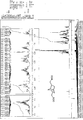
- FIG. 2 is a 1 H-NMR chart of the compound obtained in Example 1.
- FIG. 2 is a 1 H-NMR chart of the compound obtained in Example 2.
- FIG. 2 is a 1 H-NMR chart of the compound obtained in Example 3.
- compound (a1) used in the method for producing an aldehyde compound of the present embodiment is synthesized by Diels-Alder reaction of acrylonitrile and a compound having a conjugated double bond. Can be obtained.
- n 0, 1 or 2, preferably 0 or 1, and more preferably 1.
- compound (a1) may be either an endo isomer or an exo isomer, and may be a mixture containing these in an arbitrary ratio.
- Examples of the compound having a conjugated double bond include butadiene, cyclopentadiene, and 1,3-cyclohexadiene.
- the starting material cyclopentadiene exists as dimeric dicyclopentadiene under normal temperature and normal pressure conditions, and this dicyclopentadiene decomposes under reaction conditions to produce cyclopentadiene.
- Dicyclopentadiene is used for. In this embodiment, it is preferable to use dicyclopentadiene.
- This step can be performed under the conditions of a reaction temperature of 100 to 250 ° C. and a reaction time of 0.1 to 10 hours.
- Acrylonitrile contained in the compound (a1) is an unreacted product in the production process. Specifically, the unreacted acrylonitrile is contained in the reaction solution obtained after synthesizing the compound (a1).
- the amount of acrylonitrile in the step of synthesizing the aldehyde compound described later is 200 times mol or less, preferably 140 times mol or less, more preferably 50 times mol or less with respect to 1 mol of the Group 8-10 metal.
- the amount of acrylonitrile is adjusted.
- a lower limit is not specifically limited, It is preferable that it is 0.05 times mole or more. If the lower limit is the above value, the step of reducing the amount of acrylonitrile is not complicated, and it is preferable because it does not affect the productivity.
- the upper limit value and the lower limit value can be appropriately combined.
- a method of adjusting the above reaction conditions and the amount of acrylonitrile as a raw material so that the amount of acrylonitrile contained in the reaction solution after the synthesis of compound (a1) is the amount, or a compound (a1) is synthesized examples thereof include a method of reducing the amount of acrylonitrile contained in the reaction solution after the adjustment and adjusting the amount of acrylonitrile to the amount.
- Examples of the method for reducing the amount of acrylonitrile include distillation under reduced pressure or purification with a column, but are not particularly limited.
- compound (a1) containing acrylonitrile in a predetermined range is added in the presence of 0.01 to 10 ppm mol of “metal compound containing Group 8 to 10 metal” and phosphorus compound with respect to 1 mol of compound (a1). React with hydrogen and carbon monoxide. Specifically, the compound (a1) in which the amount of acrylonitrile is adjusted can be reacted in a state where the amount of acrylonitrile in the reaction system is adjusted in the above range.
- n 1 in the compound (a1).
- the compound is specifically represented by the following chemical formula (1).
- the compound represented by the chemical formula (1) may be either an endo isomer or an exo isomer, and may be a mixture containing these at an arbitrary ratio.
- the metal compound containing a Group 8-10 metal used in the reaction of this embodiment is a rhodium compound, a cobalt compound, a ruthenium compound, or an iron compound.
- rhodium compounds examples include Rh (acac) (CO) 2 , Rh (acac) 3 , RhCl (CO) (PPh 3 ) 2 , RhCl (PPh 3 ) 3 , RhBr (CO) (PPh 3 ) 2 , Rh 2. (CO) 8 , Rh 4 (CO) 12 , Rh 6 (CO) 16 and the like.
- cobalt compound examples include HCo (CO) 3 , HCo (CO) 4 , Co 2 (CO) 8 , HCo 3 (CO) 9, and the like.
- Examples of the ruthenium compound include Ru (CO) 3 (PPh 3 ) 2 , RuCl 2 (PPh 3 ) 3 , RuCl 3 (PPh 3 ) 3 , Ru 3 (CO) 12 and the like.
- As the iron compounds for example, Fe (CO) 5, Fe ( CO) 4 PPh 3, Fe (CO) 4 (PPh 3) 2 and the like.
- “Acac” means acetylacetonate.
- the rhodium compound used in the reaction of the present embodiment is not particularly limited as long as it is a compound containing a monovalent rhodium metal, but dicarbonylacetylacetonatodium (Rh (acac) (CO) 2 ), dodecacarbonyltetrarhodium.
- examples include rhodium carbonyl catalysts such as (Rh 4 (CO) 12 ), hexadecacarbonyl hexarhodium (Rh 6 (CO) 16 ), and octacarbonyl dirhodium (Rh 2 (CO) 8 ); rhodium chloride.
- R 1 and R 2 may be the same or different and each represents an optionally substituted alkyl group having 1 to 16 carbon atoms or an aryl group having 6 to 16 carbon atoms.
- phosphorus compounds include triphenyl phosphite, triphenylphosphine, trimethylphosphine, triethylphosphine, tripropylphosphine, tri (methylbenzene) phosphine, tri (ethylbenzene) phosphine, 1,2-bis (diphenylphosphino ) Ethylene, 1,3-bis (diphenylphosphino) propane, 2,2-bis (diphenylphosphino) -1,1-binaphthyl, trimethoxy phosphite, triethoxy phosphite, tripropoxy phosphite, triisopropoxy Examples thereof include trivalent phosphorus compounds such as phosphite, trimethylphenyl phosphite, and tris (2,4-ditertiarybutylphenyl) phosphite.
- the amount of Group 8-10 metal used is 0.01-10 ppm mol, preferably 1-10 ppm mol, relative to 1 mol of compound (a1). More preferably, it is 1 to 5 ppm mol. If it is the said numerical range, advancing of smooth reaction can be ensured, without using an expensive catalyst excessively.
- the amount of the phosphorus compound used is 100 times mol or more, more preferably 100 times mol or more and 10000 times mol or less with respect to the Group 8 to 10 metal.
- said numerical range can be combined arbitrarily.
- the synthesis of the aldehyde compound can be performed as follows. First, a rhodium compound, a phosphorus compound, and a raw material compound (a1) are inserted into a container. While supplying hydrogen and carbon monoxide gas, the reaction can be performed at a temperature of 30 to 120 ° C., a pressure of 0.1 to 1.0 MPa, and a reaction time of 1 to 8 hours.
- the hydroformylation reaction can be carried out by appropriately selecting a homogeneous reaction system comprising only an oil phase or a two-layer reaction system comprising an aqueous layer and an oil layer. Thereby, the compound (a1) is hydroformylated to synthesize an aldehyde compound.
- the hydroformylation reaction can also be performed in a solvent-free manner, and a substituted or unsubstituted aromatic compound, a substituted or unsubstituted aliphatic hydrocarbon compound, and an alcohol can be used.
- a substituted or unsubstituted aromatic compound a substituted or unsubstituted aliphatic hydrocarbon compound, and an alcohol
- toluene, benzene, hexane It can also be carried out in a solvent such as octane, acetonitrile, benzonitrile, orthodichlorobenzene, ethanol, pentanol, octanol. Since the hydroformylation reaction in this embodiment is also excellent in reactivity at a high concentration, the hydroformylation reaction can be performed in the absence of a solvent.
- an aldehyde compound represented by the following general formula (b1) is synthesized from the compound of the general formula (a1).
- the compound represented by the general formula (b1) is “a compound in which 2-position and 5-position are substituted with a predetermined group (hereinafter, 2,5-body)” or “2-position” It can be obtained as any of “compounds substituted at the 6-position with a predetermined group (hereinafter, 2,6)” or a mixture containing these in an arbitrary ratio.
- the 2,5 and 2,6 isomers can be obtained as either an endo-endo isomer, an endo-exo isomer, or an exo-exo isomer depending on the configuration of substituents, or at least two of these. It can also be obtained as a mixture containing seeds in any proportion.
- the compound represented by the general formula (b1) can be obtained as either a cis type or a trans type, and can also be obtained as a mixture containing these at an arbitrary ratio.
- n is synonymous with general formula (a1).
- a compound represented by the general formula (b1) is preferably obtained, and examples of the compound include a compound represented by the following chemical formula (2).
- the aldehyde compound represented by the chemical formula (2) is “a compound in which the 2-position of bicyclo [2.2.1] heptane is substituted with a cyano group and the 5-position is substituted with an aldehyde group (hereinafter 2,5). ) ”
- the 2,5 and 2,6 isomers can be obtained as either an endo-endo isomer, an endo-exo isomer, or an exo-exo isomer depending on the configuration of substituents, or at least two of these. It can also be obtained as a mixture containing seeds in any proportion.
- a predetermined purification step can be performed to obtain the target aldehyde compound.
- the manufacturing method of the amine compound of this embodiment includes the manufacturing method of the above-mentioned aldehyde compound as a process (a). Therefore, in the step (a), since the aldehyde compound can be produced by an industrially advantageous method by the method of the present invention, the productivity and yield of the amine compound as the target compound are improved. In addition, since the process (a) is the same as the process in the above “method for producing an aldehyde compound”, the description thereof is omitted.
- step (b) the aldehyde compound represented by the general formula (b1) obtained in the step (a) is reacted with ammonia to iminate, and hydrogenated in the presence of a catalyst to form an amine.
- a compound is synthesized.
- a metal catalyst such as nickel, platinum, palladium, ruthenium or the like can be used.
- a metal catalyst such as nickel, platinum, palladium, ruthenium or the like.
- the aldehyde group of the aldehyde compound becomes an amino group by imination, and the cyano group also becomes an amino group by hydrogen reduction. Therefore, in the following general formula (c1) having two amino groups, The amine compound represented is synthesized.
- n is synonymous with general formula (a1).
- the compound represented by the general formula (c1) is “a compound in which 2-position and 5-position are substituted with a predetermined group (hereinafter, 2,5-body)” or “2-position” It can be obtained as any of “compounds substituted at the 6-position with a predetermined group (hereinafter, 2,6)” or a mixture containing these in an arbitrary ratio.
- the 2,5 and 2,6 isomers can be obtained as either an endo-endo isomer, an endo-exo isomer, or an exo-exo isomer depending on the configuration of substituents, or at least two of these. It can also be obtained as a mixture containing seeds in any proportion.
- the compound represented by the general formula (c1) can be obtained as either a cis type or a trans type, and can also be obtained as a mixture containing these at an arbitrary ratio.
- a compound of the general formula (c1) is preferably obtained, and examples of the compound include compounds of the following chemical formula (3) in which n is 1.
- the amine compound represented by the chemical formula (3) is “a compound in which the 2- and 5-positions of bicyclo [2.2.1] heptane are substituted with aminomethyl groups (hereinafter, 2,5)”, or Any of “compounds substituted with aminomethyl groups at the 2-position and 6-position” (hereinafter, 2,6 compounds), or a mixture containing these in an arbitrary ratio can be obtained.
- the 2,5 and 2,6 isomers can be obtained as either an endo-endo isomer, an endo-exo isomer, or an exo-exo isomer depending on the configuration of substituents, or at least two of these. It can also be obtained as a mixture containing seeds in any proportion.
- the above imination and hydrogenation reaction can be performed as follows. First, an aldehyde compound, a solvent, and a catalyst are charged into a reaction vessel, and ammonia gas is blown into the reaction vessel. Then, hydrogen is injected to a pressure of about 1 MPa, the temperature is raised to about 100 ° C., and the reaction is performed for about 1 to 10 hours under the temperature and pressure while supplying hydrogen.
- the solvent for example, alcohol having 1 to 8 carbon atoms, water and the like are preferably used.
- the target amine compound can be obtained by performing normal catalyst filtration, solvent removal, purification steps, and the like after completion of the reaction.
- the manufacturing method of the isocyanate compound of this embodiment includes the manufacturing method of the above-mentioned aldehyde compound as a process (a). Therefore, in the step (a), since the aldehyde compound can be produced by an industrially advantageous method by the method of the present invention, the productivity and yield of the isocyanate compound as the target compound are also excellent.
- step (a) is the same as the step in the “method for producing an aldehyde compound”, and the step (b) is the same as the step in the “method for producing an amine compound”.
- the amine compound represented by the general formula (c1) obtained in the step (b) is reacted with a carbonylating agent under predetermined conditions, thereby being represented by the following general formula (d1).
- a carbonylating agent phosgene, urea derivatives, carbonate derivatives, carbon monoxide and the like can be used.
- n is synonymous with general formula (a1).
- the compound represented by the general formula (d1) is “a compound in which 2-position and 5-position are substituted with a predetermined group (hereinafter, 2,5-body)” or “2-position” It can be obtained as any of “compounds substituted at the 6-position with a predetermined group (hereinafter, 2,6)” or a mixture containing these in an arbitrary ratio.
- the 2,5 and 2,6 isomers can be obtained as either an endo-endo isomer, an endo-exo isomer, or an exo-exo isomer depending on the configuration of substituents, or at least two of these. It can also be obtained as a mixture containing seeds in any proportion.
- the compound represented by the general formula (d1) can be obtained as either a cis type or a trans type, and can also be obtained as a mixture containing these at an arbitrary ratio.
- a compound of the general formula (d1) is preferably obtained, and examples of the compound include compounds of the following chemical formula (4) in which n is 1.
- the isocyanate compound represented by the chemical formula (4) is “a compound in which 2- and 5-positions of bicyclo [2.2.1] heptane are substituted with an isocyanatomethyl group (hereinafter, 2,5)”, Alternatively, it can be obtained as any one of “compounds substituted with isocyanatomethyl groups at the 2nd and 6th positions (hereinafter, 2,6)”, or a mixture containing these in an arbitrary ratio.
- the 2,5 and 2,6 isomers can be obtained as either an endo-endo isomer, an endo-exo isomer, or an exo-exo isomer depending on the configuration of substituents, or at least two of these. It can also be obtained as a mixture containing seeds in any proportion.
- step (c) when phosgene is used as the carbonylating agent, specifically, a method in which an amine compound and a solvent are first charged in a reaction vessel and hydrochloric acid is converted to hydrochloric acid with hydrochloric acid and then reacted with phosgene, Examples thereof include a method in which a carbamoyl chloride compound is obtained by direct reaction with phosgene and then thermally decomposed. Furthermore, the target isocyanate compound can be obtained by performing a normal purification process after the reaction is completed.
- the reaction solvent in the case of using phosgene as the carbonylating agent is not particularly limited, but has a high solubility in hydrochloric acid during the salt formation reaction, a high solubility of phosgene in the phosgenation reaction, and a low solubility in hydrochloric acid. It is preferable to use an organic aromatic compound or an ester compound.
- Examples of high-boiling organic aromatic compounds include 1,2-diethylbenzene, 1,3-diethylbenzene, 1,4-diethylbenzene, isopropylbenzene, 1,2,4-trimethylbenzene, amylbenzene, diamylbenzene, triamylbenzene, Examples include dodecylbenzene, p-cymene, cumene methylphenyl ether, ethylphenyl ether, diisoamyl ether, n-hexyl ether, orthodichlorobenzene, parachlorotoluene, bromobenzene, 1,2,4-trichlorobenzene and the like.
- the ester compound is not particularly limited, but is preferably an acetate such as isoamyl acetate or isooctyl acetate. Among these exemplified solvents, aromatic solvents are particularly preferred for carrying out the present invention.
- the isocyanate compound obtained by this embodiment can be used as a raw material for optical materials and a paint.
- the amine compound obtained by this embodiment can also be used as a raw material for paints and curing agents.
- the obtained reaction solution containing bicyclo [2.2.1] -5-heptene-2-carbonitrile was 355.6 g, and analysis showed that bicyclo [2.2.1] -5-heptene-2- It contained 331.2 g (2.78 mol) of carbonitrile. There were obtained 352.4 g of a reaction solution containing 328.2 g (2.75 mol) of the obtained bicyclo [2.2.1] -5-heptene-2-carbonitrile.
- the acrylonitrile contained in the bicyclo [2.2.1] -5-heptene-2-carbonitrile at this time was measured by the following analytical method, and as a result, it was found to contain 0.1 ppm (0.0004 mmol). This amount corresponds to 0.05 times mol of 1 mol of rhodium. Rhodium usage amount: 5 ppm mol per 1 mol of bicyclo [2.2.1] -5-heptene-2-carbonitrile
- Raney cobalt catalyst obtained by developing a cobalt-aluminum alloy containing 89.5 g (0.6 mol) of heptane, 89.5 g of methanol, and manganese (94% by mass of cobalt, 3.5% by mass of aluminum, Manganese (2.1% by mass) 4.5 g (dry mass) was charged and ammonia gas 24.5 g (1.44 mol) was blown. Then, after sufficiently replacing with nitrogen, it was subsequently replaced with hydrogen. And after injecting hydrogen until the pressure in an autoclave became 1.2 MPaG, it heated up to 100 degreeC under stirring and started reaction. Since the pressure in the autoclave decreases with the progress of the reaction, hydrogen is continuously supplied to keep the pressure at 1.2 MPaG, and the liquid temperature is kept at 100 ° C., and the hydrogenation reaction is performed for 6 hours. Carried out.
- Example 3 [Synthesis of 2,5-bisisocyanatomethyl-bicyclo [2.2.1] heptane and 2,6-bisisocyanatomethyl-bicyclo [2.2.1] heptane] 958 g of orthodichlorobenzene was charged into a 2-liter 5-neck reaction flask equipped with a reflux condenser, a stirring blade, a thermometer, a gas blowing tube, and a raw material charging tube, and obtained in Example 2 in the raw material tank.
- aging was performed for 1 hour while charging hydrochloric acid gas at 20 g / hr.
- hydrochloride reaction mass was then heated to 160 ° C., and then phosgene was blown from the phosgene blowing tube at 100 g / hr (1.0 mol / hr) and reacted for 6 hours while maintaining the temperature.
- the system was purged with nitrogen with unreacted phosgene and hydrochloric acid gas, and the solvent was removed, followed by 2,5-bisisocyanatomethyl-bicyclo [2.2.1] heptane and 2,6-bisisocyanate.
- Rhodium usage amount 5 ppm mol of rhodium with respect to 1 mol of bicyclo [2.2.1] -5-heptene-2-carbonitrile
- Example 5 [Synthesis of 2-cyano-5-formylbicyclo [2.2.1] heptane and 2-cyano-6-formylbicyclo [2.2.1] heptane] After preparing a catalyst master solution in the same manner as in Example 1, 0.81 mg (0.009 mmol in terms of Rh) of the catalyst master solution was obtained in a SUS316L electromagnetic stirring autoclave having an internal volume of 0.5 liter by the method of Reference Example. The reaction solution was distilled under reduced pressure to obtain 218.4 g (1.8 mol) of bicyclo [2.2.1] -5-heptene-2-carbonitrile obtained as a main fraction, and 5.656 g of triphenyl phosphite.
- the hydroformylation reaction was carried out for 5.8 hours under the same reaction conditions as in Example 4. After completion of the reaction, the mixed gas in the system was purged with nitrogen, and 2-cyano-5-formylbicyclo [2.2.1] heptane and 2-cyano-6-formylbicyclo [2.2.1] heptane were added. A reaction solution containing 274.0 g was obtained. When the reaction liquid was analyzed, the compound was found to contain 262.9 g (1.76 mol). The reaction yield was 97.8 mol%. The results are shown in Table 1.
- Rhodium usage amount 5 ppm mol per 1 mol of bicyclo [2.2.1] -5-heptene-2-carbonitrile
- the hydroformylation reaction was carried out for 5.6 hours under the same reaction conditions as in Example 4. After completion of the reaction, the mixed gas in the system was purged with nitrogen, and 2-cyano-5-formylbicyclo [2.2.1] heptane and 2-cyano-6-formylbicyclo [2.2.1] heptane were added. A reaction solution containing 274.0 g was obtained. When the reaction solution was analyzed, the compound contained 261.2 g (1.75 mol). The reaction yield was 97.2 mol%. The results are shown in Table 1.
- Example 7 [Synthesis of 2-cyano-5-formylbicyclo [2.2.1] heptane and 2-cyano-6-formylbicyclo [2.2.1] heptane]
- 0.81 mg (0.009 mmol in terms of Rh) of the catalyst master solution was obtained in a SUS316L electromagnetic stirring autoclave having an internal volume of 0.5 liter by the method of Reference Example.
- the reaction solution was distilled under reduced pressure to obtain 218.4 g (1.8 mol) of bicyclo [2.2.1] -5-heptene-2-carbonitrile obtained as a main fraction, and 5.656 g of triphenyl phosphite.
- Rhodium usage amount 5 ppm mol per 1 mol of bicyclo [2.2.1] -5-heptene-2-carbonitrile
- the hydroformylation reaction was carried out for 6.7 hours under the same reaction conditions as in Example 4. After completion of the reaction, the mixed gas in the system was purged with nitrogen, and 2-cyano-5-formylbicyclo [2.2.1] heptane and 2-cyano-6-formylbicyclo [2.2.1] heptane were added. A reaction solution containing 276.0 g was obtained. When the reaction solution was analyzed, the compound contained 258.3 g (1.73 mol). The reaction yield was 96.3 mol%. The results are shown in Table 1.
- Example 8 [Synthesis of 2-cyano-5-formylbicyclo [2.2.1] heptane and 2-cyano-6-formylbicyclo [2.2.1] heptane] After preparing a catalyst master solution in the same manner as in Example 1, 0.81 mg (0.009 mmol in terms of Rh) of the catalyst master solution was obtained in a SUS316L electromagnetic stirring autoclave having an internal volume of 0.5 liter by the method of Reference Example. The reaction solution was distilled under reduced pressure to obtain 218.4 g (1.8 mol) of bicyclo [2.2.1] -5-heptene-2-carbonitrile obtained as a main fraction, and 5.656 g of triphenyl phosphite.
- Rhodium usage amount 5 ppm mol per 1 mol of bicyclo [2.2.1] -5-heptene-2-carbonitrile
- the hydroformylation reaction was carried out for 6.8 hours under the same reaction conditions as in Example 4. After completion of the reaction, the mixed gas in the system was purged with nitrogen, and 2-cyano-5-formylbicyclo [2.2.1] heptane and 2-cyano-6-formylbicyclo [2.2.1] heptane were added. A reaction solution containing 278.3 g was obtained. When the reaction solution was analyzed, the compound contained 259.6 g (1.74 mol). The reaction yield was 96.4 mol%. The results are shown in Table 1.
- Rhodium usage amount 5 ppm mol per 1 mol of bicyclo [2.2.1] -5-heptene-2-carbonitrile
- the hydroformylation reaction was carried out for 5.0 hours under the same reaction conditions as in Example 4. After completion of the reaction, the mixed gas in the system was purged with nitrogen, and 2-cyano-5-formylbicyclo [2.2.1] heptane and 2-cyano-6-formylbicyclo [2.2.1] heptane were added. A reaction solution containing 258.8 g was obtained. When the reaction solution was analyzed, 190.6 g (1.28 mol) of the compound was contained. The reaction yield was 71 mol%. The results are shown in Table 1.
- Example 1 In Example 1 and Examples 4 to 8, a high yield of 90% or more can be achieved in the reaction time of 4 to 7 hours, whereas in Comparative Example 1, the yield was 71% during the reaction for 5 hours. .
Landscapes
- Chemical & Material Sciences (AREA)
- Organic Chemistry (AREA)
- Chemical Kinetics & Catalysis (AREA)
- Inorganic Chemistry (AREA)
- Engineering & Computer Science (AREA)
- Materials Engineering (AREA)
- Organic Low-Molecular-Weight Compounds And Preparation Thereof (AREA)
- Low-Molecular Organic Synthesis Reactions Using Catalysts (AREA)
Priority Applications (6)
| Application Number | Priority Date | Filing Date | Title |
|---|---|---|---|
| EP13854059.6A EP2918576B1 (en) | 2012-11-09 | 2013-11-08 | Method for producing aldehyde compound |
| CN201380057758.2A CN104768923B (zh) | 2012-11-09 | 2013-11-08 | 醛化合物的制造方法 |
| US14/440,992 US9487475B2 (en) | 2012-11-09 | 2013-11-08 | Preparation method of aldehyde compound with limited amount of acrylonitrile |
| IN3892DEN2015 IN2015DN03892A (enExample) | 2012-11-09 | 2013-11-08 | |
| JP2014545780A JP5841676B2 (ja) | 2012-11-09 | 2013-11-08 | アルデヒド化合物の製造方法 |
| KR1020157011038A KR101730278B1 (ko) | 2012-11-09 | 2013-11-08 | 알데하이드 화합물의 제조 방법 |
Applications Claiming Priority (2)
| Application Number | Priority Date | Filing Date | Title |
|---|---|---|---|
| JP2012-247510 | 2012-11-09 | ||
| JP2012247510 | 2012-11-09 |
Publications (1)
| Publication Number | Publication Date |
|---|---|
| WO2014073664A1 true WO2014073664A1 (ja) | 2014-05-15 |
Family
ID=50684755
Family Applications (1)
| Application Number | Title | Priority Date | Filing Date |
|---|---|---|---|
| PCT/JP2013/080317 Ceased WO2014073664A1 (ja) | 2012-11-09 | 2013-11-08 | アルデヒド化合物の製造方法 |
Country Status (7)
| Country | Link |
|---|---|
| US (1) | US9487475B2 (enExample) |
| EP (1) | EP2918576B1 (enExample) |
| JP (1) | JP5841676B2 (enExample) |
| KR (1) | KR101730278B1 (enExample) |
| CN (1) | CN104768923B (enExample) |
| IN (1) | IN2015DN03892A (enExample) |
| WO (1) | WO2014073664A1 (enExample) |
Cited By (1)
| Publication number | Priority date | Publication date | Assignee | Title |
|---|---|---|---|---|
| WO2019026664A1 (ja) | 2017-07-31 | 2019-02-07 | 三井化学株式会社 | シアノノルボルネンの製造方法 |
Citations (9)
| Publication number | Priority date | Publication date | Assignee | Title |
|---|---|---|---|---|
| US3143570A (en) | 1960-07-01 | 1964-08-04 | Eastman Kodak Co | Method for preparing alicyclic diamines |
| JPS57193438A (en) | 1981-05-19 | 1982-11-27 | Hoechst Ag | Manufacture of formylcyan norbornane |
| JPS6072844A (ja) | 1983-09-29 | 1985-04-24 | Mitsubishi Petrochem Co Ltd | 極性官能基含有ホルミルノルボルナンの製造方法 |
| JPS6440434A (en) * | 1987-08-05 | 1989-02-10 | Kuraray Co | Hydroformylation of vinyl compound |
| JPH0717909A (ja) * | 1993-06-29 | 1995-01-20 | Daicel Chem Ind Ltd | メタクリル酸メチルの製造方法 |
| JP2001261660A (ja) * | 2000-03-21 | 2001-09-26 | Mitsui Chemicals Inc | 着色の少ないイソシアヌレート環含有ポリイソシアナートの製造方法 |
| JP2003505438A (ja) | 1999-07-27 | 2003-02-12 | ユニオン・カーバイド・ケミカルズ・アンド・プラスティックス・テクノロジー・コーポレイション | 改良された金属リガンド錯体触媒プロセス |
| JP2008031125A (ja) | 2006-07-31 | 2008-02-14 | Kuraray Co Ltd | アルデヒドの製造方法 |
| JP2010538818A (ja) | 2007-09-14 | 2010-12-16 | エルジー・ケム・リミテッド | リンを含む触媒組成物およびそれを用いたヒドロホルミル化方法 |
Family Cites Families (8)
| Publication number | Priority date | Publication date | Assignee | Title |
|---|---|---|---|---|
| DE2359101A1 (de) | 1972-12-04 | 1974-06-06 | Piero Prof Dr Pino | Verfahren zur asymmetrischen hydroformylierung |
| US4642395A (en) | 1985-11-18 | 1987-02-10 | The Dow Chemical Company | Poisoning of resin supported catalyst |
| US4960949A (en) | 1988-12-22 | 1990-10-02 | Eastman Kodak Company | Low pressure rhodium catalyzed hydroformylation of olefins |
| US5360938A (en) | 1991-08-21 | 1994-11-01 | Union Carbide Chemicals & Plastics Technology Corporation | Asymmetric syntheses |
| US5312996A (en) | 1992-06-29 | 1994-05-17 | Union Carbide Chemicals & Plastics Technology Corporation | Hydroformylation process for producing 1,6-hexanedials |
| JP2002348271A (ja) * | 2001-05-25 | 2002-12-04 | Mitsui Chemicals Inc | シアノノルボルネンの製造方法 |
| DE102007043650A1 (de) | 2007-09-13 | 2009-04-02 | Siemens Ag | Verfahren zur Verbesserung der Eigenschaften von Beschichtungen |
| CN103582623B (zh) | 2011-05-09 | 2016-05-18 | 三井化学株式会社 | 醛化合物的制造方法 |
-
2013
- 2013-11-08 US US14/440,992 patent/US9487475B2/en active Active
- 2013-11-08 KR KR1020157011038A patent/KR101730278B1/ko active Active
- 2013-11-08 EP EP13854059.6A patent/EP2918576B1/en active Active
- 2013-11-08 CN CN201380057758.2A patent/CN104768923B/zh active Active
- 2013-11-08 JP JP2014545780A patent/JP5841676B2/ja active Active
- 2013-11-08 WO PCT/JP2013/080317 patent/WO2014073664A1/ja not_active Ceased
- 2013-11-08 IN IN3892DEN2015 patent/IN2015DN03892A/en unknown
Patent Citations (9)
| Publication number | Priority date | Publication date | Assignee | Title |
|---|---|---|---|---|
| US3143570A (en) | 1960-07-01 | 1964-08-04 | Eastman Kodak Co | Method for preparing alicyclic diamines |
| JPS57193438A (en) | 1981-05-19 | 1982-11-27 | Hoechst Ag | Manufacture of formylcyan norbornane |
| JPS6072844A (ja) | 1983-09-29 | 1985-04-24 | Mitsubishi Petrochem Co Ltd | 極性官能基含有ホルミルノルボルナンの製造方法 |
| JPS6440434A (en) * | 1987-08-05 | 1989-02-10 | Kuraray Co | Hydroformylation of vinyl compound |
| JPH0717909A (ja) * | 1993-06-29 | 1995-01-20 | Daicel Chem Ind Ltd | メタクリル酸メチルの製造方法 |
| JP2003505438A (ja) | 1999-07-27 | 2003-02-12 | ユニオン・カーバイド・ケミカルズ・アンド・プラスティックス・テクノロジー・コーポレイション | 改良された金属リガンド錯体触媒プロセス |
| JP2001261660A (ja) * | 2000-03-21 | 2001-09-26 | Mitsui Chemicals Inc | 着色の少ないイソシアヌレート環含有ポリイソシアナートの製造方法 |
| JP2008031125A (ja) | 2006-07-31 | 2008-02-14 | Kuraray Co Ltd | アルデヒドの製造方法 |
| JP2010538818A (ja) | 2007-09-14 | 2010-12-16 | エルジー・ケム・リミテッド | リンを含む触媒組成物およびそれを用いたヒドロホルミル化方法 |
Cited By (4)
| Publication number | Priority date | Publication date | Assignee | Title |
|---|---|---|---|---|
| WO2019026664A1 (ja) | 2017-07-31 | 2019-02-07 | 三井化学株式会社 | シアノノルボルネンの製造方法 |
| JPWO2019026664A1 (ja) * | 2017-07-31 | 2020-01-09 | 三井化学株式会社 | シアノノルボルネンの製造方法 |
| KR20200020880A (ko) | 2017-07-31 | 2020-02-26 | 미쯔이가가꾸가부시끼가이샤 | 시아노노르보르넨의 제조 방법 |
| US10774038B2 (en) | 2017-07-31 | 2020-09-15 | Mitsui Chemicals, Inc. | Process for producing cyanonorbornene |
Also Published As
| Publication number | Publication date |
|---|---|
| US9487475B2 (en) | 2016-11-08 |
| CN104768923A (zh) | 2015-07-08 |
| EP2918576B1 (en) | 2018-10-10 |
| EP2918576A4 (en) | 2016-06-08 |
| EP2918576A1 (en) | 2015-09-16 |
| US20150299109A1 (en) | 2015-10-22 |
| KR101730278B1 (ko) | 2017-04-25 |
| JPWO2014073664A1 (ja) | 2016-09-08 |
| KR20150063495A (ko) | 2015-06-09 |
| CN104768923B (zh) | 2019-01-08 |
| IN2015DN03892A (enExample) | 2015-10-02 |
| JP5841676B2 (ja) | 2016-01-13 |
Similar Documents
| Publication | Publication Date | Title |
|---|---|---|
| JP5719021B2 (ja) | アルデヒド化合物の製造方法 | |
| JP5840801B2 (ja) | アルデヒド化合物の製造方法 | |
| JP5841676B2 (ja) | アルデヒド化合物の製造方法 | |
| US10399929B2 (en) | Purification method of aldehyde compound | |
| JP6778327B2 (ja) | シアノノルボルネンの製造方法 | |
| EP2848604B1 (en) | Method for producing branched chain aldehyde |
Legal Events
| Date | Code | Title | Description |
|---|---|---|---|
| 121 | Ep: the epo has been informed by wipo that ep was designated in this application |
Ref document number: 13854059 Country of ref document: EP Kind code of ref document: A1 |
|
| ENP | Entry into the national phase |
Ref document number: 2014545780 Country of ref document: JP Kind code of ref document: A |
|
| ENP | Entry into the national phase |
Ref document number: 20157011038 Country of ref document: KR Kind code of ref document: A |
|
| WWE | Wipo information: entry into national phase |
Ref document number: 2013854059 Country of ref document: EP |
|
| WWE | Wipo information: entry into national phase |
Ref document number: 14440992 Country of ref document: US |
|
| NENP | Non-entry into the national phase |
Ref country code: DE |