US9487475B2 - Preparation method of aldehyde compound with limited amount of acrylonitrile - Google Patents
Preparation method of aldehyde compound with limited amount of acrylonitrile Download PDFInfo
- Publication number
- US9487475B2 US9487475B2 US14/440,992 US201314440992A US9487475B2 US 9487475 B2 US9487475 B2 US 9487475B2 US 201314440992 A US201314440992 A US 201314440992A US 9487475 B2 US9487475 B2 US 9487475B2
- Authority
- US
- United States
- Prior art keywords
- compound
- reaction
- bicyclo
- preparation
- mole
- Prior art date
- Legal status (The legal status is an assumption and is not a legal conclusion. Google has not performed a legal analysis and makes no representation as to the accuracy of the status listed.)
- Active
Links
- -1 aldehyde compound Chemical class 0.000 title claims abstract description 100
- 238000002360 preparation method Methods 0.000 title claims abstract description 45
- NLHHRLWOUZZQLW-UHFFFAOYSA-N Acrylonitrile Chemical compound C=CC#N NLHHRLWOUZZQLW-UHFFFAOYSA-N 0.000 title claims abstract description 32
- 150000001875 compounds Chemical class 0.000 claims abstract description 101
- 229910052751 metal Inorganic materials 0.000 claims abstract description 35
- 239000002184 metal Substances 0.000 claims abstract description 35
- UFHFLCQGNIYNRP-UHFFFAOYSA-N Hydrogen Chemical compound [H][H] UFHFLCQGNIYNRP-UHFFFAOYSA-N 0.000 claims abstract description 19
- 239000001257 hydrogen Substances 0.000 claims abstract description 19
- 229910052739 hydrogen Inorganic materials 0.000 claims abstract description 19
- 229910052698 phosphorus Inorganic materials 0.000 claims abstract description 18
- 239000011574 phosphorus Substances 0.000 claims abstract description 17
- 150000002736 metal compounds Chemical class 0.000 claims abstract description 13
- UGFAIRIUMAVXCW-UHFFFAOYSA-N Carbon monoxide Chemical compound [O+]#[C-] UGFAIRIUMAVXCW-UHFFFAOYSA-N 0.000 claims abstract description 10
- 229910002091 carbon monoxide Inorganic materials 0.000 claims abstract description 10
- 238000006243 chemical reaction Methods 0.000 claims description 65
- 239000000126 substance Substances 0.000 claims description 10
- 150000003284 rhodium compounds Chemical class 0.000 claims description 8
- 150000001869 cobalt compounds Chemical class 0.000 claims description 4
- 150000002506 iron compounds Chemical class 0.000 claims description 4
- 150000003304 ruthenium compounds Chemical class 0.000 claims description 4
- 239000003054 catalyst Substances 0.000 description 46
- 239000010948 rhodium Substances 0.000 description 44
- 239000000203 mixture Substances 0.000 description 37
- BMAXQTDMWYDIJX-UHFFFAOYSA-N bicyclo[2.2.1]hept-2-ene-5-carbonitrile Chemical compound C1C2C(C#N)CC1C=C2 BMAXQTDMWYDIJX-UHFFFAOYSA-N 0.000 description 32
- 239000012295 chemical reaction liquid Substances 0.000 description 28
- IJGRMHOSHXDMSA-UHFFFAOYSA-N Atomic nitrogen Chemical compound N#N IJGRMHOSHXDMSA-UHFFFAOYSA-N 0.000 description 24
- 239000007788 liquid Substances 0.000 description 24
- 229910052703 rhodium Inorganic materials 0.000 description 23
- HVLLSGMXQDNUAL-UHFFFAOYSA-N triphenyl phosphite Chemical compound C=1C=CC=CC=1OP(OC=1C=CC=CC=1)OC1=CC=CC=C1 HVLLSGMXQDNUAL-UHFFFAOYSA-N 0.000 description 22
- 238000000034 method Methods 0.000 description 21
- MHOVAHRLVXNVSD-UHFFFAOYSA-N rhodium atom Chemical compound [Rh] MHOVAHRLVXNVSD-UHFFFAOYSA-N 0.000 description 21
- ADBHRKSAERMERV-UHFFFAOYSA-N 5-formylbicyclo[2.2.1]heptane-2-carbonitrile Chemical compound C1C2C(C=O)CC1C(C#N)C2 ADBHRKSAERMERV-UHFFFAOYSA-N 0.000 description 18
- IAVFMULQJJBATH-UHFFFAOYSA-N 5-formylbicyclo[2.2.1]heptane-3-carbonitrile Chemical compound C1C(C#N)C2C(C=O)CC1C2 IAVFMULQJJBATH-UHFFFAOYSA-N 0.000 description 18
- 230000003247 decreasing effect Effects 0.000 description 17
- 239000007789 gas Substances 0.000 description 17
- 238000004458 analytical method Methods 0.000 description 16
- 238000007037 hydroformylation reaction Methods 0.000 description 16
- 238000003756 stirring Methods 0.000 description 15
- 239000012948 isocyanate Substances 0.000 description 13
- RIOQSEWOXXDEQQ-UHFFFAOYSA-N triphenylphosphine Chemical compound C1=CC=CC=C1P(C=1C=CC=CC=1)C1=CC=CC=C1 RIOQSEWOXXDEQQ-UHFFFAOYSA-N 0.000 description 13
- QGZKDVFQNNGYKY-UHFFFAOYSA-N Ammonia Chemical compound N QGZKDVFQNNGYKY-UHFFFAOYSA-N 0.000 description 12
- VEXZGXHMUGYJMC-UHFFFAOYSA-N Hydrochloric acid Chemical compound Cl VEXZGXHMUGYJMC-UHFFFAOYSA-N 0.000 description 12
- 230000015572 biosynthetic process Effects 0.000 description 12
- 229910052757 nitrogen Inorganic materials 0.000 description 12
- 238000003786 synthesis reaction Methods 0.000 description 12
- 239000002994 raw material Substances 0.000 description 10
- 239000002904 solvent Substances 0.000 description 10
- YGYAWVDWMABLBF-UHFFFAOYSA-N Phosgene Chemical compound ClC(Cl)=O YGYAWVDWMABLBF-UHFFFAOYSA-N 0.000 description 9
- RFFLAFLAYFXFSW-UHFFFAOYSA-N 1,2-dichlorobenzene Chemical compound ClC1=CC=CC=C1Cl RFFLAFLAYFXFSW-UHFFFAOYSA-N 0.000 description 8
- 239000000243 solution Substances 0.000 description 8
- 125000001424 substituent group Chemical group 0.000 description 8
- 239000003795 chemical substances by application Substances 0.000 description 7
- 238000005160 1H NMR spectroscopy Methods 0.000 description 6
- OKKJLVBELUTLKV-UHFFFAOYSA-N Methanol Chemical compound OC OKKJLVBELUTLKV-UHFFFAOYSA-N 0.000 description 6
- KEUCYUPOICDBOG-UHFFFAOYSA-N [2-(aminomethyl)-5-bicyclo[2.2.1]heptanyl]methanamine Chemical compound C1C2C(CN)CC1C(CN)C2 KEUCYUPOICDBOG-UHFFFAOYSA-N 0.000 description 6
- OTKFKCIRTBTDKK-UHFFFAOYSA-N [3-(aminomethyl)-5-bicyclo[2.2.1]heptanyl]methanamine Chemical compound C1C(CN)C2C(CN)CC1C2 OTKFKCIRTBTDKK-UHFFFAOYSA-N 0.000 description 6
- ZSWFCLXCOIISFI-UHFFFAOYSA-N cyclopentadiene Chemical compound C1C=CC=C1 ZSWFCLXCOIISFI-UHFFFAOYSA-N 0.000 description 6
- HECLRDQVFMWTQS-RGOKHQFPSA-N 1755-01-7 Chemical compound C1[C@H]2[C@@H]3CC=C[C@@H]3[C@@H]1C=C2 HECLRDQVFMWTQS-RGOKHQFPSA-N 0.000 description 5
- LFQSCWFLJHTTHZ-UHFFFAOYSA-N Ethanol Chemical compound CCO LFQSCWFLJHTTHZ-UHFFFAOYSA-N 0.000 description 5
- YXFVVABEGXRONW-UHFFFAOYSA-N Toluene Chemical compound CC1=CC=CC=C1 YXFVVABEGXRONW-UHFFFAOYSA-N 0.000 description 5
- 229910021529 ammonia Inorganic materials 0.000 description 5
- 238000004821 distillation Methods 0.000 description 5
- 239000000463 material Substances 0.000 description 5
- XYFCBTPGUUZFHI-UHFFFAOYSA-N Phosphine Chemical compound P XYFCBTPGUUZFHI-UHFFFAOYSA-N 0.000 description 4
- RWGFKTVRMDUZSP-UHFFFAOYSA-N cumene Chemical compound CC(C)C1=CC=CC=C1 RWGFKTVRMDUZSP-UHFFFAOYSA-N 0.000 description 4
- 125000004093 cyano group Chemical group *C#N 0.000 description 4
- 239000003446 ligand Substances 0.000 description 4
- LIINGNMKNRSOGW-UHFFFAOYSA-N oct-7-enal Chemical compound C=CCCCCCC=O LIINGNMKNRSOGW-UHFFFAOYSA-N 0.000 description 4
- 238000000746 purification Methods 0.000 description 4
- PBKONEOXTCPAFI-UHFFFAOYSA-N 1,2,4-trichlorobenzene Chemical compound ClC1=CC=C(Cl)C(Cl)=C1 PBKONEOXTCPAFI-UHFFFAOYSA-N 0.000 description 3
- LEAAXJONQWQISB-UHFFFAOYSA-N 2,5-bis(isocyanatomethyl)bicyclo[2.2.1]heptane Chemical compound C1C2C(CN=C=O)CC1C(CN=C=O)C2 LEAAXJONQWQISB-UHFFFAOYSA-N 0.000 description 3
- FOLVZNOYNJFEBK-UHFFFAOYSA-N 3,5-bis(isocyanatomethyl)bicyclo[2.2.1]heptane Chemical compound C1C(CN=C=O)C2C(CN=C=O)CC1C2 FOLVZNOYNJFEBK-UHFFFAOYSA-N 0.000 description 3
- WEVYAHXRMPXWCK-UHFFFAOYSA-N Acetonitrile Chemical compound CC#N WEVYAHXRMPXWCK-UHFFFAOYSA-N 0.000 description 3
- UHOVQNZJYSORNB-UHFFFAOYSA-N Benzene Chemical compound C1=CC=CC=C1 UHOVQNZJYSORNB-UHFFFAOYSA-N 0.000 description 3
- 125000003172 aldehyde group Chemical group 0.000 description 3
- 125000003277 amino group Chemical group 0.000 description 3
- 150000001491 aromatic compounds Chemical class 0.000 description 3
- JFDZBHWFFUWGJE-UHFFFAOYSA-N benzonitrile Chemical compound N#CC1=CC=CC=C1 JFDZBHWFFUWGJE-UHFFFAOYSA-N 0.000 description 3
- 238000007664 blowing Methods 0.000 description 3
- 125000004432 carbon atom Chemical group C* 0.000 description 3
- GGRQQHADVSXBQN-FGSKAQBVSA-N carbon monoxide;(z)-4-hydroxypent-3-en-2-one;rhodium Chemical compound [Rh].[O+]#[C-].[O+]#[C-].C\C(O)=C\C(C)=O GGRQQHADVSXBQN-FGSKAQBVSA-N 0.000 description 3
- 229910017052 cobalt Inorganic materials 0.000 description 3
- 239000010941 cobalt Substances 0.000 description 3
- GUTLYIVDDKVIGB-UHFFFAOYSA-N cobalt atom Chemical compound [Co] GUTLYIVDDKVIGB-UHFFFAOYSA-N 0.000 description 3
- 230000000052 comparative effect Effects 0.000 description 3
- 238000005984 hydrogenation reaction Methods 0.000 description 3
- 238000007866 imination reaction Methods 0.000 description 3
- VLKZOEOYAKHREP-UHFFFAOYSA-N n-Hexane Chemical compound CCCCCC VLKZOEOYAKHREP-UHFFFAOYSA-N 0.000 description 3
- UMRZSTCPUPJPOJ-KNVOCYPGSA-N norbornane Chemical group C1C[C@H]2CC[C@@H]1C2 UMRZSTCPUPJPOJ-KNVOCYPGSA-N 0.000 description 3
- JFNLZVQOOSMTJK-KNVOCYPGSA-N norbornene Chemical compound C1[C@@H]2CC[C@H]1C=C2 JFNLZVQOOSMTJK-KNVOCYPGSA-N 0.000 description 3
- 150000003018 phosphorus compounds Chemical class 0.000 description 3
- 230000002194 synthesizing effect Effects 0.000 description 3
- XLYOFNOQVPJJNP-UHFFFAOYSA-N water Substances O XLYOFNOQVPJJNP-UHFFFAOYSA-N 0.000 description 3
- GWHJZXXIDMPWGX-UHFFFAOYSA-N 1,2,4-trimethylbenzene Chemical compound CC1=CC=C(C)C(C)=C1 GWHJZXXIDMPWGX-UHFFFAOYSA-N 0.000 description 2
- KVNYFPKFSJIPBJ-UHFFFAOYSA-N 1,2-diethylbenzene Chemical compound CCC1=CC=CC=C1CC KVNYFPKFSJIPBJ-UHFFFAOYSA-N 0.000 description 2
- LVEYOSJUKRVCCF-UHFFFAOYSA-N 1,3-bis(diphenylphosphino)propane Chemical compound C=1C=CC=CC=1P(C=1C=CC=CC=1)CCCP(C=1C=CC=CC=1)C1=CC=CC=C1 LVEYOSJUKRVCCF-UHFFFAOYSA-N 0.000 description 2
- AFZZYIJIWUTJFO-UHFFFAOYSA-N 1,3-diethylbenzene Chemical compound CCC1=CC=CC(CC)=C1 AFZZYIJIWUTJFO-UHFFFAOYSA-N 0.000 description 2
- DSNHSQKRULAAEI-UHFFFAOYSA-N 1,4-Diethylbenzene Chemical compound CCC1=CC=C(CC)C=C1 DSNHSQKRULAAEI-UHFFFAOYSA-N 0.000 description 2
- KBPLFHHGFOOTCA-UHFFFAOYSA-N 1-Octanol Chemical compound CCCCCCCCO KBPLFHHGFOOTCA-UHFFFAOYSA-N 0.000 description 2
- NPDACUSDTOMAMK-UHFFFAOYSA-N 4-Chlorotoluene Chemical compound CC1=CC=C(Cl)C=C1 NPDACUSDTOMAMK-UHFFFAOYSA-N 0.000 description 2
- KAKZBPTYRLMSJV-UHFFFAOYSA-N Butadiene Chemical compound C=CC=C KAKZBPTYRLMSJV-UHFFFAOYSA-N 0.000 description 2
- IPKBYGJAFLHEGJ-UHFFFAOYSA-N CC.NCC1CC2CCC1C2 Chemical compound CC.NCC1CC2CCC1C2 IPKBYGJAFLHEGJ-UHFFFAOYSA-N 0.000 description 2
- KPAWLCQKNXNUAL-UHFFFAOYSA-N COC#CN.O=C=NCC1CC2CCC1C2 Chemical compound COC#CN.O=C=NCC1CC2CCC1C2 KPAWLCQKNXNUAL-UHFFFAOYSA-N 0.000 description 2
- HHHQUSZAMZWXTJ-UHFFFAOYSA-N COC.N#CC1CC2CCC1C2 Chemical compound COC.N#CC1CC2CCC1C2 HHHQUSZAMZWXTJ-UHFFFAOYSA-N 0.000 description 2
- CKDWPUIZGOQOOM-UHFFFAOYSA-N Carbamyl chloride Chemical compound NC(Cl)=O CKDWPUIZGOQOOM-UHFFFAOYSA-N 0.000 description 2
- YNQLUTRBYVCPMQ-UHFFFAOYSA-N Ethylbenzene Chemical compound CCC1=CC=CC=C1 YNQLUTRBYVCPMQ-UHFFFAOYSA-N 0.000 description 2
- PWHULOQIROXLJO-UHFFFAOYSA-N Manganese Chemical compound [Mn] PWHULOQIROXLJO-UHFFFAOYSA-N 0.000 description 2
- AMQJEAYHLZJPGS-UHFFFAOYSA-N N-Pentanol Chemical compound CCCCCO AMQJEAYHLZJPGS-UHFFFAOYSA-N 0.000 description 2
- PXHVJJICTQNCMI-UHFFFAOYSA-N Nickel Chemical compound [Ni] PXHVJJICTQNCMI-UHFFFAOYSA-N 0.000 description 2
- KDLHZDBZIXYQEI-UHFFFAOYSA-N Palladium Chemical compound [Pd] KDLHZDBZIXYQEI-UHFFFAOYSA-N 0.000 description 2
- PWATWSYOIIXYMA-UHFFFAOYSA-N Pentylbenzene Chemical compound CCCCCC1=CC=CC=C1 PWATWSYOIIXYMA-UHFFFAOYSA-N 0.000 description 2
- 150000001299 aldehydes Chemical class 0.000 description 2
- 125000004202 aminomethyl group Chemical group [H]N([H])C([H])([H])* 0.000 description 2
- RDOXTESZEPMUJZ-UHFFFAOYSA-N anisole Chemical compound COC1=CC=CC=C1 RDOXTESZEPMUJZ-UHFFFAOYSA-N 0.000 description 2
- 238000009835 boiling Methods 0.000 description 2
- QARVLSVVCXYDNA-UHFFFAOYSA-N bromobenzene Chemical compound BrC1=CC=CC=C1 QARVLSVVCXYDNA-UHFFFAOYSA-N 0.000 description 2
- LVGLLYVYRZMJIN-UHFFFAOYSA-N carbon monoxide;rhodium Chemical compound [Rh].[Rh].[Rh].[Rh].[O+]#[C-].[O+]#[C-].[O+]#[C-].[O+]#[C-].[O+]#[C-].[O+]#[C-].[O+]#[C-].[O+]#[C-].[O+]#[C-].[O+]#[C-].[O+]#[C-].[O+]#[C-] LVGLLYVYRZMJIN-UHFFFAOYSA-N 0.000 description 2
- MGNZXYYWBUKAII-UHFFFAOYSA-N cyclohexa-1,3-diene Chemical compound C1CC=CC=C1 MGNZXYYWBUKAII-UHFFFAOYSA-N 0.000 description 2
- 238000001914 filtration Methods 0.000 description 2
- MLFHJEHSLIIPHL-UHFFFAOYSA-N isoamyl acetate Chemical compound CC(C)CCOC(C)=O MLFHJEHSLIIPHL-UHFFFAOYSA-N 0.000 description 2
- 229910052748 manganese Inorganic materials 0.000 description 2
- 239000011572 manganese Substances 0.000 description 2
- 238000004519 manufacturing process Methods 0.000 description 2
- JRZJOMJEPLMPRA-UHFFFAOYSA-N olefin Natural products CCCCCCCC=C JRZJOMJEPLMPRA-UHFFFAOYSA-N 0.000 description 2
- HFPZCAJZSCWRBC-UHFFFAOYSA-N p-cymene Chemical compound CC(C)C1=CC=C(C)C=C1 HFPZCAJZSCWRBC-UHFFFAOYSA-N 0.000 description 2
- 239000003973 paint Substances 0.000 description 2
- OJMIONKXNSYLSR-UHFFFAOYSA-N phosphorous acid Chemical compound OP(O)O OJMIONKXNSYLSR-UHFFFAOYSA-N 0.000 description 2
- 125000004437 phosphorous atom Chemical group 0.000 description 2
- 229910000073 phosphorus hydride Inorganic materials 0.000 description 2
- BASFCYQUMIYNBI-UHFFFAOYSA-N platinum Chemical compound [Pt] BASFCYQUMIYNBI-UHFFFAOYSA-N 0.000 description 2
- 230000035484 reaction time Effects 0.000 description 2
- 230000009467 reduction Effects 0.000 description 2
- 238000010992 reflux Methods 0.000 description 2
- YWWDBCBWQNCYNR-UHFFFAOYSA-N trimethylphosphine Chemical compound CP(C)C YWWDBCBWQNCYNR-UHFFFAOYSA-N 0.000 description 2
- YUYQHJUMEAITFR-UHFFFAOYSA-N (2,3,4-trimethylphenyl) dihydrogen phosphite Chemical compound CC1=CC=C(OP(O)O)C(C)=C1C YUYQHJUMEAITFR-UHFFFAOYSA-N 0.000 description 1
- SYSFTTYJTWPOOR-UHFFFAOYSA-N (2-diphenylphosphanyl-1-naphthalen-1-yl-3h-naphthalen-2-yl)-diphenylphosphane Chemical group C1C=C2C=CC=CC2=C(C=2C3=CC=CC=C3C=CC=2)C1(P(C=1C=CC=CC=1)C=1C=CC=CC=1)P(C=1C=CC=CC=1)C1=CC=CC=C1 SYSFTTYJTWPOOR-UHFFFAOYSA-N 0.000 description 1
- MBVAQOHBPXKYMF-LNTINUHCSA-N (z)-4-hydroxypent-3-en-2-one;rhodium Chemical compound [Rh].C\C(O)=C\C(C)=O.C\C(O)=C\C(C)=O.C\C(O)=C\C(C)=O MBVAQOHBPXKYMF-LNTINUHCSA-N 0.000 description 1
- FQYVVSNFPLKMNU-UHFFFAOYSA-N 1,2-dipentylbenzene Chemical compound CCCCCC1=CC=CC=C1CCCCC FQYVVSNFPLKMNU-UHFFFAOYSA-N 0.000 description 1
- BPIUIOXAFBGMNB-UHFFFAOYSA-N 1-hexoxyhexane Chemical compound CCCCCCOCCCCCC BPIUIOXAFBGMNB-UHFFFAOYSA-N 0.000 description 1
- 229910000838 Al alloy Inorganic materials 0.000 description 1
- PCBPVYHMZBWMAZ-UHFFFAOYSA-N CC1CC2C=CC1C2 Chemical compound CC1CC2C=CC1C2 PCBPVYHMZBWMAZ-UHFFFAOYSA-N 0.000 description 1
- JSHULRVCOZLSLW-UHFFFAOYSA-N CC1CC2CCC1C2.COC Chemical compound CC1CC2CCC1C2.COC JSHULRVCOZLSLW-UHFFFAOYSA-N 0.000 description 1
- 235000008733 Citrus aurantifolia Nutrition 0.000 description 1
- 238000005698 Diels-Alder reaction Methods 0.000 description 1
- AQZGPSLYZOOYQP-UHFFFAOYSA-N Diisoamyl ether Chemical compound CC(C)CCOCCC(C)C AQZGPSLYZOOYQP-UHFFFAOYSA-N 0.000 description 1
- 229910017147 Fe(CO)5 Inorganic materials 0.000 description 1
- DICUPLXUNISGAQ-UHFFFAOYSA-N Isooctyl acetate Chemical compound CC(C)CCCCCOC(C)=O DICUPLXUNISGAQ-UHFFFAOYSA-N 0.000 description 1
- UBUCNCOMADRQHX-UHFFFAOYSA-N N-Nitrosodiphenylamine Chemical compound C=1C=CC=CC=1N(N=O)C1=CC=CC=C1 UBUCNCOMADRQHX-UHFFFAOYSA-N 0.000 description 1
- JKIJEFPNVSHHEI-UHFFFAOYSA-N Phenol, 2,4-bis(1,1-dimethylethyl)-, phosphite (3:1) Chemical compound CC(C)(C)C1=CC(C(C)(C)C)=CC=C1OP(OC=1C(=CC(=CC=1)C(C)(C)C)C(C)(C)C)OC1=CC=C(C(C)(C)C)C=C1C(C)(C)C JKIJEFPNVSHHEI-UHFFFAOYSA-N 0.000 description 1
- OAICVXFJPJFONN-UHFFFAOYSA-N Phosphorus Chemical compound [P] OAICVXFJPJFONN-UHFFFAOYSA-N 0.000 description 1
- 229910019891 RuCl3 Inorganic materials 0.000 description 1
- KJTLSVCANCCWHF-UHFFFAOYSA-N Ruthenium Chemical compound [Ru] KJTLSVCANCCWHF-UHFFFAOYSA-N 0.000 description 1
- 235000011941 Tilia x europaea Nutrition 0.000 description 1
- NCKJIJSEWKIXAT-DQRAZIAOSA-N [(z)-2-diphenylphosphanylethenyl]-diphenylphosphane Chemical group C=1C=CC=CC=1P(C=1C=CC=CC=1)/C=C\P(C=1C=CC=CC=1)C1=CC=CC=C1 NCKJIJSEWKIXAT-DQRAZIAOSA-N 0.000 description 1
- CUJRVFIICFDLGR-UHFFFAOYSA-N acetylacetonate Chemical compound CC(=O)[CH-]C(C)=O CUJRVFIICFDLGR-UHFFFAOYSA-N 0.000 description 1
- 125000005595 acetylacetonate group Chemical group 0.000 description 1
- 230000032683 aging Effects 0.000 description 1
- 150000001338 aliphatic hydrocarbons Chemical class 0.000 description 1
- 150000001336 alkenes Chemical class 0.000 description 1
- 125000000217 alkyl group Chemical group 0.000 description 1
- BLJNPOIVYYWHMA-UHFFFAOYSA-N alumane;cobalt Chemical compound [AlH3].[Co] BLJNPOIVYYWHMA-UHFFFAOYSA-N 0.000 description 1
- 229910052782 aluminium Inorganic materials 0.000 description 1
- XAGFODPZIPBFFR-UHFFFAOYSA-N aluminium Chemical compound [Al] XAGFODPZIPBFFR-UHFFFAOYSA-N 0.000 description 1
- 150000001412 amines Chemical class 0.000 description 1
- 125000003118 aryl group Chemical group 0.000 description 1
- KOKLYLSZOGGBHE-UHFFFAOYSA-N bicyclo[2.2.1]hept-2-ene-4-carbonitrile Chemical compound C1CC2C=CC1(C#N)C2 KOKLYLSZOGGBHE-UHFFFAOYSA-N 0.000 description 1
- SZQABOJVTZVBHE-UHFFFAOYSA-N carbon monoxide;rhodium Chemical compound [Rh].[Rh].[Rh].[Rh].[Rh].[Rh].[O+]#[C-].[O+]#[C-].[O+]#[C-].[O+]#[C-].[O+]#[C-].[O+]#[C-].[O+]#[C-].[O+]#[C-].[O+]#[C-].[O+]#[C-].[O+]#[C-].[O+]#[C-].[O+]#[C-].[O+]#[C-].[O+]#[C-].[O+]#[C-] SZQABOJVTZVBHE-UHFFFAOYSA-N 0.000 description 1
- NQZFAUXPNWSLBI-UHFFFAOYSA-N carbon monoxide;ruthenium Chemical compound [Ru].[Ru].[Ru].[O+]#[C-].[O+]#[C-].[O+]#[C-].[O+]#[C-].[O+]#[C-].[O+]#[C-].[O+]#[C-].[O+]#[C-].[O+]#[C-].[O+]#[C-].[O+]#[C-].[O+]#[C-] NQZFAUXPNWSLBI-UHFFFAOYSA-N 0.000 description 1
- FMJNZRCLIZWWJP-UHFFFAOYSA-N carbon monoxide;ruthenium;triphenylphosphane Chemical compound [Ru].[O+]#[C-].[O+]#[C-].[O+]#[C-].C1=CC=CC=C1P(C=1C=CC=CC=1)C1=CC=CC=C1.C1=CC=CC=C1P(C=1C=CC=CC=1)C1=CC=CC=C1 FMJNZRCLIZWWJP-UHFFFAOYSA-N 0.000 description 1
- 150000004649 carbonic acid derivatives Chemical class 0.000 description 1
- 239000012159 carrier gas Substances 0.000 description 1
- 239000007810 chemical reaction solvent Substances 0.000 description 1
- HGCIXCUEYOPUTN-UHFFFAOYSA-N cis-cyclohexene Natural products C1CCC=CC1 HGCIXCUEYOPUTN-UHFFFAOYSA-N 0.000 description 1
- 238000001816 cooling Methods 0.000 description 1
- 238000011161 development Methods 0.000 description 1
- 230000018109 developmental process Effects 0.000 description 1
- WIWBLJMBLGWSIN-UHFFFAOYSA-L dichlorotris(triphenylphosphine)ruthenium(ii) Chemical compound [Cl-].[Cl-].[Ru+2].C1=CC=CC=C1P(C=1C=CC=CC=1)C1=CC=CC=C1.C1=CC=CC=C1P(C=1C=CC=CC=1)C1=CC=CC=C1.C1=CC=CC=C1P(C=1C=CC=CC=1)C1=CC=CC=C1 WIWBLJMBLGWSIN-UHFFFAOYSA-L 0.000 description 1
- 239000000539 dimer Substances 0.000 description 1
- KWKXNDCHNDYVRT-UHFFFAOYSA-N dodecylbenzene Chemical compound CCCCCCCCCCCCC1=CC=CC=C1 KWKXNDCHNDYVRT-UHFFFAOYSA-N 0.000 description 1
- 230000000694 effects Effects 0.000 description 1
- 235000019439 ethyl acetate Nutrition 0.000 description 1
- 238000005755 formation reaction Methods 0.000 description 1
- 125000002485 formyl group Chemical group [H]C(*)=O 0.000 description 1
- 239000011521 glass Substances 0.000 description 1
- 238000007038 hydrochlorination reaction Methods 0.000 description 1
- 230000007062 hydrolysis Effects 0.000 description 1
- 238000006460 hydrolysis reaction Methods 0.000 description 1
- 230000006872 improvement Effects 0.000 description 1
- 238000009776 industrial production Methods 0.000 description 1
- 238000002347 injection Methods 0.000 description 1
- 239000007924 injection Substances 0.000 description 1
- XEEYBQQBJWHFJM-UHFFFAOYSA-N iron Substances [Fe] XEEYBQQBJWHFJM-UHFFFAOYSA-N 0.000 description 1
- DBLMXLQJTBGLMP-UHFFFAOYSA-N iron tetracarbonyl hydride Chemical compound [Fe].[O+]#[C-].[O+]#[C-].[O+]#[C-].[O+]#[C-] DBLMXLQJTBGLMP-UHFFFAOYSA-N 0.000 description 1
- 229940117955 isoamyl acetate Drugs 0.000 description 1
- 239000004571 lime Substances 0.000 description 1
- 150000002739 metals Chemical class 0.000 description 1
- UZKWTJUDCOPSNM-UHFFFAOYSA-N methoxybenzene Substances CCCCOC=C UZKWTJUDCOPSNM-UHFFFAOYSA-N 0.000 description 1
- 229910052759 nickel Inorganic materials 0.000 description 1
- TVMXDCGIABBOFY-UHFFFAOYSA-N octane Chemical compound CCCCCCCC TVMXDCGIABBOFY-UHFFFAOYSA-N 0.000 description 1
- 230000003287 optical effect Effects 0.000 description 1
- 229910052763 palladium Inorganic materials 0.000 description 1
- DLRJIFUOBPOJNS-UHFFFAOYSA-N phenetole Chemical compound CCOC1=CC=CC=C1 DLRJIFUOBPOJNS-UHFFFAOYSA-N 0.000 description 1
- 229910052697 platinum Inorganic materials 0.000 description 1
- 229910000028 potassium bicarbonate Inorganic materials 0.000 description 1
- 235000015497 potassium bicarbonate Nutrition 0.000 description 1
- 239000011736 potassium bicarbonate Substances 0.000 description 1
- TYJJADVDDVDEDZ-UHFFFAOYSA-M potassium hydrogencarbonate Chemical compound [K+].OC([O-])=O TYJJADVDDVDEDZ-UHFFFAOYSA-M 0.000 description 1
- 229940086066 potassium hydrogencarbonate Drugs 0.000 description 1
- 238000004445 quantitative analysis Methods 0.000 description 1
- 230000009257 reactivity Effects 0.000 description 1
- SONJTKJMTWTJCT-UHFFFAOYSA-K rhodium(iii) chloride Chemical compound [Cl-].[Cl-].[Cl-].[Rh+3] SONJTKJMTWTJCT-UHFFFAOYSA-K 0.000 description 1
- 230000000630 rising effect Effects 0.000 description 1
- 229910052707 ruthenium Inorganic materials 0.000 description 1
- YBCAZPLXEGKKFM-UHFFFAOYSA-K ruthenium(iii) chloride Chemical compound [Cl-].[Cl-].[Cl-].[Ru+3] YBCAZPLXEGKKFM-UHFFFAOYSA-K 0.000 description 1
- 150000003839 salts Chemical class 0.000 description 1
- 239000010935 stainless steel Substances 0.000 description 1
- 229910001220 stainless steel Inorganic materials 0.000 description 1
- 238000005979 thermal decomposition reaction Methods 0.000 description 1
- AYEKOFBPNLCAJY-UHFFFAOYSA-O thiamine pyrophosphate Chemical compound CC1=C(CCOP(O)(=O)OP(O)(O)=O)SC=[N+]1CC1=CN=C(C)N=C1N AYEKOFBPNLCAJY-UHFFFAOYSA-O 0.000 description 1
- 229910052723 transition metal Inorganic materials 0.000 description 1
- 150000003624 transition metals Chemical class 0.000 description 1
- WKALCYAZQNVDNE-UHFFFAOYSA-N triethoxy phosphite Chemical compound CCOOP(OOCC)OOCC WKALCYAZQNVDNE-UHFFFAOYSA-N 0.000 description 1
- RXJKFRMDXUJTEX-UHFFFAOYSA-N triethylphosphine Chemical compound CCP(CC)CC RXJKFRMDXUJTEX-UHFFFAOYSA-N 0.000 description 1
- WCQYHKQWAYQAPR-UHFFFAOYSA-N trimethoxy phosphite Chemical compound COOP(OOC)OOC WCQYHKQWAYQAPR-UHFFFAOYSA-N 0.000 description 1
- KCTAHLRCZMOTKM-UHFFFAOYSA-N tripropylphosphane Chemical compound CCCP(CCC)CCC KCTAHLRCZMOTKM-UHFFFAOYSA-N 0.000 description 1
- 150000003672 ureas Chemical class 0.000 description 1
Images



Classifications
-
- C—CHEMISTRY; METALLURGY
- C07—ORGANIC CHEMISTRY
- C07C—ACYCLIC OR CARBOCYCLIC COMPOUNDS
- C07C255/00—Carboxylic acid nitriles
- C07C255/45—Carboxylic acid nitriles having cyano groups bound to carbon atoms of rings other than six-membered aromatic rings
- C07C255/47—Carboxylic acid nitriles having cyano groups bound to carbon atoms of rings other than six-membered aromatic rings to carbon atoms of rings being part of condensed ring systems
-
- B—PERFORMING OPERATIONS; TRANSPORTING
- B01—PHYSICAL OR CHEMICAL PROCESSES OR APPARATUS IN GENERAL
- B01J—CHEMICAL OR PHYSICAL PROCESSES, e.g. CATALYSIS OR COLLOID CHEMISTRY; THEIR RELEVANT APPARATUS
- B01J31/00—Catalysts comprising hydrides, coordination complexes or organic compounds
- B01J31/16—Catalysts comprising hydrides, coordination complexes or organic compounds containing coordination complexes
- B01J31/24—Phosphines, i.e. phosphorus bonded to only carbon atoms, or to both carbon and hydrogen atoms, including e.g. sp2-hybridised phosphorus compounds such as phosphabenzene, phosphole or anionic phospholide ligands
-
- C—CHEMISTRY; METALLURGY
- C07—ORGANIC CHEMISTRY
- C07C—ACYCLIC OR CARBOCYCLIC COMPOUNDS
- C07C211/00—Compounds containing amino groups bound to a carbon skeleton
- C07C211/01—Compounds containing amino groups bound to a carbon skeleton having amino groups bound to acyclic carbon atoms
- C07C211/16—Compounds containing amino groups bound to a carbon skeleton having amino groups bound to acyclic carbon atoms of a saturated carbon skeleton containing rings other than six-membered aromatic rings
- C07C211/19—Compounds containing amino groups bound to a carbon skeleton having amino groups bound to acyclic carbon atoms of a saturated carbon skeleton containing rings other than six-membered aromatic rings containing condensed ring systems
-
- C—CHEMISTRY; METALLURGY
- C07—ORGANIC CHEMISTRY
- C07C—ACYCLIC OR CARBOCYCLIC COMPOUNDS
- C07C211/00—Compounds containing amino groups bound to a carbon skeleton
- C07C211/33—Compounds containing amino groups bound to a carbon skeleton having amino groups bound to carbon atoms of rings other than six-membered aromatic rings
- C07C211/34—Compounds containing amino groups bound to a carbon skeleton having amino groups bound to carbon atoms of rings other than six-membered aromatic rings of a saturated carbon skeleton
- C07C211/38—Compounds containing amino groups bound to a carbon skeleton having amino groups bound to carbon atoms of rings other than six-membered aromatic rings of a saturated carbon skeleton containing condensed ring systems
-
- C—CHEMISTRY; METALLURGY
- C07—ORGANIC CHEMISTRY
- C07C—ACYCLIC OR CARBOCYCLIC COMPOUNDS
- C07C265/00—Derivatives of isocyanic acid
- C07C265/14—Derivatives of isocyanic acid containing at least two isocyanate groups bound to the same carbon skeleton
-
- B—PERFORMING OPERATIONS; TRANSPORTING
- B01—PHYSICAL OR CHEMICAL PROCESSES OR APPARATUS IN GENERAL
- B01J—CHEMICAL OR PHYSICAL PROCESSES, e.g. CATALYSIS OR COLLOID CHEMISTRY; THEIR RELEVANT APPARATUS
- B01J2231/00—Catalytic reactions performed with catalysts classified in B01J31/00
- B01J2231/30—Addition reactions at carbon centres, i.e. to either C-C or C-X multiple bonds
- B01J2231/32—Addition reactions to C=C or C-C triple bonds
- B01J2231/321—Hydroformylation, metalformylation, carbonylation or hydroaminomethylation
-
- B—PERFORMING OPERATIONS; TRANSPORTING
- B01—PHYSICAL OR CHEMICAL PROCESSES OR APPARATUS IN GENERAL
- B01J—CHEMICAL OR PHYSICAL PROCESSES, e.g. CATALYSIS OR COLLOID CHEMISTRY; THEIR RELEVANT APPARATUS
- B01J2531/00—Additional information regarding catalytic systems classified in B01J31/00
- B01J2531/80—Complexes comprising metals of Group VIII as the central metal
- B01J2531/82—Metals of the platinum group
- B01J2531/821—Ruthenium
-
- B—PERFORMING OPERATIONS; TRANSPORTING
- B01—PHYSICAL OR CHEMICAL PROCESSES OR APPARATUS IN GENERAL
- B01J—CHEMICAL OR PHYSICAL PROCESSES, e.g. CATALYSIS OR COLLOID CHEMISTRY; THEIR RELEVANT APPARATUS
- B01J2531/00—Additional information regarding catalytic systems classified in B01J31/00
- B01J2531/80—Complexes comprising metals of Group VIII as the central metal
- B01J2531/82—Metals of the platinum group
- B01J2531/822—Rhodium
-
- B—PERFORMING OPERATIONS; TRANSPORTING
- B01—PHYSICAL OR CHEMICAL PROCESSES OR APPARATUS IN GENERAL
- B01J—CHEMICAL OR PHYSICAL PROCESSES, e.g. CATALYSIS OR COLLOID CHEMISTRY; THEIR RELEVANT APPARATUS
- B01J2531/00—Additional information regarding catalytic systems classified in B01J31/00
- B01J2531/80—Complexes comprising metals of Group VIII as the central metal
- B01J2531/84—Metals of the iron group
- B01J2531/842—Iron
-
- B—PERFORMING OPERATIONS; TRANSPORTING
- B01—PHYSICAL OR CHEMICAL PROCESSES OR APPARATUS IN GENERAL
- B01J—CHEMICAL OR PHYSICAL PROCESSES, e.g. CATALYSIS OR COLLOID CHEMISTRY; THEIR RELEVANT APPARATUS
- B01J2531/00—Additional information regarding catalytic systems classified in B01J31/00
- B01J2531/80—Complexes comprising metals of Group VIII as the central metal
- B01J2531/84—Metals of the iron group
- B01J2531/845—Cobalt
-
- B—PERFORMING OPERATIONS; TRANSPORTING
- B01—PHYSICAL OR CHEMICAL PROCESSES OR APPARATUS IN GENERAL
- B01J—CHEMICAL OR PHYSICAL PROCESSES, e.g. CATALYSIS OR COLLOID CHEMISTRY; THEIR RELEVANT APPARATUS
- B01J31/00—Catalysts comprising hydrides, coordination complexes or organic compounds
- B01J31/16—Catalysts comprising hydrides, coordination complexes or organic compounds containing coordination complexes
- B01J31/20—Carbonyls
-
- B—PERFORMING OPERATIONS; TRANSPORTING
- B01—PHYSICAL OR CHEMICAL PROCESSES OR APPARATUS IN GENERAL
- B01J—CHEMICAL OR PHYSICAL PROCESSES, e.g. CATALYSIS OR COLLOID CHEMISTRY; THEIR RELEVANT APPARATUS
- B01J31/00—Catalysts comprising hydrides, coordination complexes or organic compounds
- B01J31/16—Catalysts comprising hydrides, coordination complexes or organic compounds containing coordination complexes
- B01J31/22—Organic complexes
- B01J31/2204—Organic complexes the ligands containing oxygen or sulfur as complexing atoms
- B01J31/2208—Oxygen, e.g. acetylacetonates
- B01J31/2226—Anionic ligands, i.e. the overall ligand carries at least one formal negative charge
- B01J31/223—At least two oxygen atoms present in one at least bidentate or bridging ligand
- B01J31/2234—Beta-dicarbonyl ligands, e.g. acetylacetonates
-
- B—PERFORMING OPERATIONS; TRANSPORTING
- B01—PHYSICAL OR CHEMICAL PROCESSES OR APPARATUS IN GENERAL
- B01J—CHEMICAL OR PHYSICAL PROCESSES, e.g. CATALYSIS OR COLLOID CHEMISTRY; THEIR RELEVANT APPARATUS
- B01J31/00—Catalysts comprising hydrides, coordination complexes or organic compounds
- B01J31/16—Catalysts comprising hydrides, coordination complexes or organic compounds containing coordination complexes
- B01J31/24—Phosphines, i.e. phosphorus bonded to only carbon atoms, or to both carbon and hydrogen atoms, including e.g. sp2-hybridised phosphorus compounds such as phosphabenzene, phosphole or anionic phospholide ligands
- B01J31/2404—Cyclic ligands, including e.g. non-condensed polycyclic ligands, the phosphine-P atom being a ring member or a substituent on the ring
-
- C07C2102/40—
-
- C07C2102/42—
-
- C—CHEMISTRY; METALLURGY
- C07—ORGANIC CHEMISTRY
- C07C—ACYCLIC OR CARBOCYCLIC COMPOUNDS
- C07C2602/00—Systems containing two condensed rings
- C07C2602/36—Systems containing two condensed rings the rings having more than two atoms in common
- C07C2602/40—Systems containing two condensed rings the rings having more than two atoms in common the bicyclo ring system containing six carbon atoms
-
- C—CHEMISTRY; METALLURGY
- C07—ORGANIC CHEMISTRY
- C07C—ACYCLIC OR CARBOCYCLIC COMPOUNDS
- C07C2602/00—Systems containing two condensed rings
- C07C2602/36—Systems containing two condensed rings the rings having more than two atoms in common
- C07C2602/42—Systems containing two condensed rings the rings having more than two atoms in common the bicyclo ring system containing seven carbon atoms
Definitions
- the present invention relates to a preparation method of an aldehyde compound, a preparation method of an amine compound and a preparation method of an isocyanate compound using the aldehyde compound obtained by the preparation method.
- Patent Documents 1 to 3 disclose methods for preparing formyl cyan norbornene by hydroformylating cyan norbornene using a mixed H 2 /CO gas in the presence of a catalyst.
- Patent Documents 1 and 2 disclose an example using a metal compound as a catalyst.
- a rhodium complex is preferably used as the catalyst.
- Patent Document 1 describes that the catalyst may be used at 0.1% by weight to 10% by weight with respect to cyan norbornene.
- Patent Document 2 describes that with the catalyst concentration of 0.5 mmol/1 to 10 mmol/l, triarylphosphine can be used in a range of 3 moles to 300 moles with respect to 1 mole of rhodium.
- Patent Document 4 discloses a method of hydroformylating an olefin-based compound using a mixed H 2 /CO gas in the presence of a transition metal catalyst and a trivalent phosphorus compound. Furthermore, it is described that as the content of the metal catalyst, a free metal content is 10 ppm to 1,000 ppm based on the weight or volume of the catalyst composition.
- Patent Document 5 describes a metal ligand complex catalyst, and exemplifies rhodium as a metal and an organic phosphorus ligand as a ligand.
- the amount of these used in a case of calculating as a free metal, is a metal concentration in a range of about 1 ppm to 10,000 ppm, and a molar ratio of ligand:metal is 1:1 to 200:1.
- Patent Document 6 discloses a method of preparing an aldehyde compound by hydroformylating a linear olefin compound.
- Patent Document 6 an example of hydroformylating 7-octenal in the presence of a rhodium catalyst and bisphosphite is described. In addition, it is described that about 3 ppmmol of rhodium is used with respect to 1 mole of 7-octenal, and rhodium atoms/phosphorus atoms is 1/20 as a molar ratio. On the other hand, in paragraph 0084 of Patent Document 6, it is described that 2 moles to 1,000 moles in terms of phosphorus atom is preferable with respect to 1 mole of a metal, and in a case of exceeding 1,000 moles, the reaction rate tends to be extremely low.
- Patent Document 1 Japanese Laid-open Patent Publication No. 57-193438
- Patent Document 2 Japanese Laid-open Patent Publication No. 60-72844
- Patent Document 3 U.S. Pat. No. 3,143,570
- Patent Document 4 Japanese Translation of PCT International Application No. 2010-538818
- Patent Document 5 Japanese Translation of PCT International Application No. 2003-505438
- Patent Document 6 Japanese Laid-open Patent Publication No. 2008-031125
- the present invention has been made in consideration of the above problems, and an object of the present invention is to provide an industrially advantageous method in which the amount of a metal which is an expensive catalyst is reduced, and which can suppress decrease in the reaction rate even in a case where the amount of the metal is reduced when aldehyde is prepared.
- the present inventor found that when acrylonitrile is present in the reaction system, the reaction rate is decreased. Furthermore, the present inventor found that by controlling the amount of the acrylonitrile, it is possible to prepare aldehyde without a decrease in the reaction rate, and made the present invention.
- the present invention can be described as follows.
- n 0, 1, or 2.
- a preparation method of an amine compound including a step of reacting the aldehyde compound obtained by the preparation method according to any one of [1] to [6] with ammonia, and with hydrogen in the presence of a catalyst.
- a preparation method of an isocyanate compound including a step of reacting the amine compound obtained by the preparation method according to [7] with a carbonylating agent.
- the “phosphorous compound” in the present invention means a phosphorous compound capable of forming a complex with a metal belonging to Groups 8 to 10.
- the amount of the material B is indicated as 1 ppmmol.
- the preparation method of an aldehyde compound of the present invention According to the preparation method of an aldehyde compound of the present invention, a decrease in the reaction rate generated when the amount of metal which is a catalyst is reduced is suppressed, and industrially advantageous preparation of an aldehyde compound can be achieved. Since the preparation method of an amine compound and the preparation method of an isocyanate compound of the present invention include the preparation method of an aldehyde compound as one step, according to the present invention, the effect is exhibited that productivity and yield of the isocyanate compound and the amine compound also are excellent.
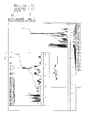
- FIG. 1 is a 1 H-NMR chart of the compound obtained in Example 1.
- FIG. 2 is a 1 H-NMR chart of the compound obtained in Example 2.
- FIG. 3 is a 1 H-NMR chart of the compound obtained in Example 3.
- the compound represented by the following general formula (a1) (hereinafter, referred to as the compound (a1)) used in the preparation method of an aldehyde compound of the present embodiment is synthesized through a Diels-Alder reaction of acrylonitrile and a compound having a conjugated double bond.
- n 0, 1, or 2
- 0 or 1 is preferable, and 1 is more preferable.
- the compound (a1) may be an endo compound or an exo compound, and may be a mixture including these in arbitrary proportions.
- Examples of the compound having a conjugated double bond include butadiene, cyclopentadiene, and 1,3-cyclohexadiene.
- cyclopentadiene which is a raw material is present as dicyclopentadiene which is a dimer under the conditions of room temperature and atmospheric pressure, and the dicyclopentadiene is decomposed under the reaction conditions, producing cyclopentadiene, in general, dicyclopentadiene is used in the reaction.
- dicyclopentadiene is preferably used.
- This step can be performed under the conditions of a reaction temperature of 100° C. to 250° C. and a reaction time of 0.1 hours to 10 hours.
- Acrylonitrile included in the compound (a1) is an unreacted material in the preparation step. Specifically, an unreacted acrylonitrile is included in the reaction liquid obtained after synthesizing the compound (a1).
- the amount of acrylonitrile is adjusted such that the amount of acrylonitrile in the synthesis step of an aldehyde compound described below becomes equal to or less than 200-fold by mole, preferably equal to or less than 140-fold by mole, and more preferably equal to or less than 50-fold by mole with respect to 1 mole of the metal belonging to Groups 8 to 10.
- the lower limit value is not particularly limited, the lower limit value is preferably equal to or greater than 0.05-fold by mole.
- the step of reducing the amount of acrylonitrile is simple and does not influence productivity, and thus, it is preferable.
- the upper limit value and the lower limit value can be suitably combined.
- a method of adjusting the above reaction conditions or the amount of acrylonitrile as a raw material such that the amount of acrylonitrile included in the reaction liquid after synthesizing the compound (a1) becomes the above amount, or a method of adjusting the amount of acrylonitrile to the above amount by reducing the amount of acrylonitrile included in the reaction liquid after synthesizing the compound (a1) can be exemplified.
- the method of reducing the amount of acrylonitrile distillation under decreased pressure, purification using a column, or the like can be exemplified, however, the method is not particularly limited.
- the compound (a1) including acrylonitrile in a predetermined range is allowed to react with hydrogen and carbon monoxide in the presence of “a metal compound including a metal belonging to Groups 8 to 10” in 0.01 ppmmol to 10 ppmmol with respect to 1 mole of the compound (a1) and a phosphorus compound.
- the above reaction can be performed on the compound (a1) in which the amount of acrylonitrile is adjusted, in a state in which the amount of acrylonitrile in the reaction system is adjusted to the amount in the above range.
- n of the compound (a1) is more preferably 1.
- the compound is represented by the following chemical formula (1).
- the compound represented by the chemical formula (1) may be an endo compound or an exo compound, and may be a mixture including these in arbitrary proportions.
- the metal compound including a metal belonging to Groups 8 to 10 used in the reaction of the present embodiment is a rhodium compound, a cobalt compound, a ruthenium compound, or an iron compound.
- Examples of the rhodium compound include Rh(acac)(CO) 2 , Rh(acac) 3 , RhCl(CO)(PPh 3 ) 2 , RhCl(PPh 3 ) 3 , RhBr(CO)(PPh 3 ) 2 , Rh 2 (CO) 8 , Rh 4 (CO) 12 , and Rh 6 (CO) 16 .
- Examples of the cobalt compound include HCo(CO) 3 , HCo(CO) 4 , CO 2 (CO) 8 , and HCo 3 (CO) 9 .
- Examples of the ruthenium compound include Ru(CO) 3 (PPh 3 ) 2 , RuCl 2 (PPh 3 ) 3 , RuCl 3 (PPh 3 ) 3 , and Ru 3 (CO) 12 .
- examples of the iron compound include Fe(CO) 5 , Fe(CO) 4 PPh 3 , and Fe(CO) 4 (PPh 3 ) 2 .
- acac means acetylacetonato.
- the rhodium compound used in the reaction of the present embodiment is not particularly limited as long as it is a compound including monovalent rhodium metal, and rhodium carbonyl catalysts such as dicarbonylacetylacetonato rhodium (Rh(acac)(CO) 2 ) dodecacarbonyl tetrarhodium (Rh 4 (CO) 12 ), hexadecacarbonyl hexarhodium (Rh 6 (CO) 16 ), and octacarbonyl dirhodium (Rh 2 (CO) 8 ); and rhodium chloride can be exemplified.
- rhodium carbonyl catalysts such as dicarbonylacetylacetonato rhodium (Rh(acac)(CO) 2 ) dodecacarbonyl tetrarhodium (Rh 4 (CO) 12 ), hexadecacarbonyl hexarhodium (
- the phosphorus compound used in the reaction of the present embodiment is not particularly limited as long as it is a trivalent phosphorus compound, and the compound represented by the following formula is preferably used.
- (R 1 ) 3 P (R 2 O) 3 P In the above formula, R 1 and R 2 may be the same as or different from each other, and each of R 1 and R 2 represents an alkyl group having 1 to 16 carbon atoms or an aryl group having 6 to 16 carbon atoms which may have a substituent.
- trivalent phosphorus compounds such as triphenyl phosphite, triphenyl phosphine, trimethyl phosphine, triethyl phosphine, tripropyl phosphine, tri(methyl benzene)phosphine, tri(ethyl benzene)phosphine, 1,2-bis(diphenyl phosphino)ethylene, 1,3-bis(diphenyl phosphino)propane, 2,2-bis(diphenyl phosphino)-1,1-binaphthyl, trimethoxy phosphite, triethoxy phosphite, tripropoxy phosphite, triisopropoxy phosphite, trimethylphenyl phosphite, and tris(2,4-di-tert-butylphenyl)phosphite can be exemplified.
- the amount of metal belonging to Groups 8 to 10 to be used is 0.01 ppmmol to 10 ppmmol, and preferably 1 ppmmol to 10 ppmmol, and more preferably 1 ppmmol to 5 ppmmol with respect to 1 mole of the compound (a1).
- the amount is in the above numerical range, it is possible to ensure smooth progress of the reaction without excessively using an expensive catalyst.
- the amount of phosphorus compound used is preferably equal to or greater than 100-fold by mole, and more preferably equal to or greater than 100-fold by mole and equal to or less than 10,000-fold by mole with respect to the metal belonging to Groups 8 to 10.
- Synthesis of the aldehyde compound can be performed in the following manner.
- a rhodium compound, a phosphorus compound, and a compound (a1) which is a raw material are put in a reactor. While supplying ng hydrogen and a carbon monoxide gas thereto, the mixture is allowed to react at a temperature of 30° C. to 120° C. and a pressure of 0.1 MPa to 1.0 MPa for 1 hour to 8 hours.
- the hydroformylation reaction can be performed by suitably selecting a homogeneous reaction system configured of only an oil phase or a two-layer reaction system configured of a water layer and an oil layer.
- the compound (a1) is hydroformylated, whereby an aldehyde compound is synthesized.
- the hydroformylation reaction can also be performed without a solvent, or can be performed using a substituted or unsubstituted aromatic compound, a substituted or unsubstituted aliphatic hydrocarbon compound, or alcohol, and for example, the hydroformylation reaction can also be performed in a solvent such as toluene, benzene, hexane, octane, acetonitrile, benzonitrile, ortho-dichlorobenzene, ethanol, pentanol, or octanol.
- the hydroformylation reaction in the present embodiment is also excellent in reactivity at a high concentration, and thus, the hydroformylation reaction can be performed without a solvent. As a result, since a step of distilling off a solvent or the like is not required, the step becomes simple, the volume efficiency also is improved, and the production efficiency also is excellent.
- the aldehyde compound represented by the following general formula (b1) is synthesized from the compound of the general formula (a1) by the preparation method of the present embodiment.
- the compound represented by the general formula (b1) can be obtained as any one of “a compound in which the 2-position and the 5-position are substituted with predetermined groups (hereinafter, referred to as a 2,5-isomer)” and “a compound in which the 2-position and the 6-position are substituted with predetermined groups (hereinafter, referred to as a 2,6-isomer)”, or can be obtained as a mixture including these in arbitrary proportions.
- each of the 2,5-isomer and the 2,6-isomer can be obtained as any one of an endo-endo compound, an endo-exo compound, and an exo-exo compound depending on a steric configuration of the substituent, or can be obtained as a mixture including at least two types of these in arbitrary proportions.
- the compound represented by the general formula (b1) can be obtained as any one of a cis-type and a trans-type, or can also be obtained as a mixture including these in arbitrary proportions.
- n is the same as that in the general formula (a1).
- the compound represented by the general formula (b1) is preferably obtained, and as the compound, the compound represented by the following chemical formula (2) can be exemplified.
- the aldehyde compound represented by the chemical formula (2) can be obtained as any one of “a compound in which the 2-position of bicyclo[2.2.1]heptane is substituted with a cyano group and the 5-position is substituted with an aldehyde group (hereinafter, referred to as a 2,5-isomer)” and “a compound in which the 2-position is substituted with a cyano group and the 6-position is substituted with an aldehyde group (hereinafter, referred to as a 2,6-isomer)”, or can be obtained as a mixture including these in arbitrary proportions.
- each of the 2,5-isomer and the 2,6-isomer can be obtained as any one of an endo-endo compound, an endo-exo compound, and an exo-exo compound depending on a steric configuration of the substituent, or can be obtained as a mixture including at least two types of these in arbitrary proportions.
- a target aldehyde compound can be obtained by performing a predetermined purification step.
- the preparation method of an amine compound of the present embodiment includes the following steps.
- the preparation method of an amine compound of the present embodiment includes the preparation method of an aldehyde compound described above as the step (a). Therefore, in the step (a), the aldehyde compound can be industrially advantageously prepared by the method in the present invention, and thus, improvement in the productivity and yield of the amine compound which is a target compound becomes excellent.
- step (a) is the same as the step in the above-described “the preparation method of an aldehyde compound”, the description thereof will not be repeated.
- step (b) by performing imination by reacting the aldehyde compound obtained in the step (a) and represented by the general formula (b1) with ammonia and hydrogenation in the presence of a catalyst, an amine compound is synthesized.
- metal catalysts such as nickel, platinum, palladium, and ruthenium can be used.
- the aldehyde compound has a cyano group as a substituent, a —CH 2 —NH 2 group is produced by hydrogen reduction.
- the aldehyde group of the aldehyde compound becomes an amino group by imination, and the cyano group also becomes an amino group by hydrogen reduction, and thus, the amine compound represented by the following general formula (c1) having two amino groups is synthesized.
- n is the same as that in the general formula (a1).
- the compound represented by the general formula (c1) can be obtained as any one of “a compound in which the 2-position and the 5-position are substituted with predetermined groups (hereinafter, referred to as a 2,5-isomer)” and “a compound in which the 2-position and the 6-position are substituted with predetermined groups (hereinafter, referred to as a 2,6-isomer)”, or can be obtained as a mixture including these in arbitrary proportions.
- each of the 2,5-isomer and the 2,6-isomer can be obtained as any one of an endo-endo compound, an endo-exo compound, and an exo-exo compound depending on a steric configuration of the substituent, or can be obtained as a mixture including at least two types of these in arbitrary proportions.
- the compound represented by the general formula (c1) can be obtained as any one of a cis-type and a trans type, or can also be obtained as a mixture including these at an arbitrary proportion.
- the compound of the general formula (c1) is preferably obtained, and as the compound, the compound represented by the following chemical formula (3) in which n is 1 can be exemplified.
- the amine compound represented by the chemical formula (3) can be obtained as any one of “a compound in which the 2-position and the 5-position of bicyclo[2.2.1]heptane are substituted with aminomethyl groups (hereinafter, referred to as a 2,5-isomer)” and “a compound in which the 2-position and the 6-position are substituted with aminomethyl groups (hereinafter, referred to as a 2,6-isomer)”, or can be obtained as a mixture including these in arbitrary proportions.
- each of the 2,5-isomer and the 2,6-isomer can be obtained as any one of an endo-endo compound, an endo-exo compound, and an exo-exo compound depending on a steric configuration of the substituent, or can be obtained as a mixture including at least two types of these in arbitrary proportions.
- the above imination and hydrogenation reaction can be performed in the following manner. First, an aldehyde compound, a solvent, and a catalyst are introduced into a reactor, and an ammonia gas is blown thereinto. Furthermore, hydrogen is injected at a pressure until the pressure in the reactor becomes about 1 MPa, then, the temperature is raised to about 100° C., and the reaction is allowed to proceed for about 1 hour to 10 hours at this temperature and pressure while supplying hydrogen.
- the solvent for example, an alcohol having 1 to 8 carbon atoms or water is preferably used.
- the preparation method of an isocyanate compound of the present embodiment includes the following steps.
- the preparation method of an isocyanate compound of the present embodiment includes the preparation method of an aldehyde compound described above as the step (a). Therefore, in the step (a), the aldehyde compound can be industrially advantageously prepared by the method in the present invention, and thus, the productivity and yield of the isocyanate compound which is a target compound also become excellent.
- step (a) is the same as the step in the above-described “the preparation method of an aldehyde compound”
- the step (b) is the same as the step in the above-described “the preparation method of an amine compound”
- the description thereof will not be repeated.
- step (c) by reacting the amine compound obtained in the step (b) represented by the general formula (c1) with a carbonylating agent under predetermined conditions, an isocyanate compound represented by the following general formula (d1) is synthesized.
- a carbonylating agent phosgene, urea derivatives, carbonate derivatives, or carbon monoxide can be used.
- n is the same as that in the general formula (a1).
- the compound represented by the general formula (d1) can be obtained as any one of “a compound in which the 2-position and the 5-position are substituted with predetermined groups (hereinafter, referred to as a 2,5-isomer)” and “a compound in which the 2-position and the 6-position are substituted with predetermined groups (hereinafter, referred to as a 2,6-isomer)”, or can be obtained as a mixture including these in arbitrary proportions.
- each of the 2,5-isomer and the 2,6-isomer can be obtained as any one of an endo-endo compound, an endo-exo compound, and an exo-exo compound depending on a steric configuration of the substituent, or can be obtained as a mixture including at least two types of these in arbitrary proportions.
- the compound represented by the general formula (d1) can be obtained as any one of a cis-type and a trans-type, or can also be obtained as a mixture including these in arbitrary proportions.
- the compound of the general formula (d1) is preferably obtained, and as the compound, the compound represented by the following chemical formula (4) in which n is 1 can be exemplified.
- the isocyanate compound represented by the chemical formula (4) can be obtained as any one of “a compound in which the 2-position and the 5-position of bicyclo[2.2.1]heptane are substituted with isocyanatomethyl groups (hereinafter, referred to as a 2,5-isomer)” and “a compound in which the 2-position and the 6-position are substituted with isocyanatomethyl groups (hereinafter, referred to as a 2,6-isomer)”, or can be obtained as a mixture including these in arbitrary proportions.
- each of the 2,5-isomer and the 2,6-isomer can be obtained as any one of an endo-endo compound, an endo-exo compound, and an exo-exo compound depending on a steric configuration of the substituent, or can be obtained as a mixture including at least two types of these in arbitrary proportions.
- step (c) specifically, a method in which first, an amine compound and a solvent are introduced into a reactor, then, the mixture is subjected to a hydrochlorination reaction using hydrochloric acid then, and reacted with phosgene or a method in which a carbamoyl chloride compound is obtained by directly reacting with phosgene, and the obtained carbamoyl chloride compound is subjected to a thermal decomposition can be exemplified. Furthermore, after the reaction is finished, a general purification step is performed, whereby a target isocyanate compound can be obtained.
- reaction solvent in a case of using phosgene as a carbonylating agent is not particularly limited, an organic aromatic compound having a high boiling point or an ester compound which has a high solubility of hydrochloric acid at the time of a salt formation reaction and a high solubility of phosgene and a low solubility of hydrochloric acid at the time of a phosgenation reaction are preferably used.
- Examples of the organic aromatic compound having a high boiling point include 1,2-diethylbenzene, 1,3-diethylbenzene, 1,4-diethylbenzene, isopropylbenzene, 1,2,4-trimethylbenzene, amylbenzene, diamylbenzene, triamylbenzene, dodecylbenzene, p-cymene, cumene methylphenyl ether, ethylphenyl ether, diisoamyl ether, n-hexyl ether, ortho-dichlorobenzene, para-chlorotoluene, bromobenzene, and 1,2,4-trichlorobenzene.
- ester compound is not particularly limited, acetic esters such as isoamyl acetate and isooctyl acetate are preferable.
- a particularly preferred solvent for performing the present invention is an aromatic halogen compound.
- the isocyanate compound obtained by the present embodiment can be used as a raw material of optical materials or paint. Moreover, the amine compound obtained by the present embodiment can be used as paint or a raw material for a curing agent.
- reaction liquid including bicyclo[2.2.1]-5-heptene-2-carbonitrile was obtained, and when analysis of the reaction liquid was performed, 331.2 g (2.78 mol) of bicyclo[2.2.1]-5-heptene-2-carbonitrile was found to be contained therein. 352.4 g of a reaction liquid including 328.2 g (2.75 mol) of the obtained bicyclo[2.2.1]-5-heptene-2-carbonitrile was obtained.
- the Raney cobalt catalyst was removed by filtration, and ammonia and methanol were distilled off at 4 kPa and 60° C., whereby 102.0 g of a solution including 2,5-bisaminomethyl-bicyclo[2.2.1]heptane and 2,6-bisaminomethyl-bicyclo[2.2.1]heptane was obtained.
- the 1 H-NMR chart of the mixture is shown in FIG. 2 .
- the same operation was repeated two times, whereby 158 g of a purified mixture of 2,5-bisaminomethyl-bicyclo[2.2.1]heptane and 2,6-bisaminomethyl-bicyclo[2.2.1]heptane was obtained.
- a hydroformylation reaction was performed for 5.8 hours under the same reaction conditions as in Example 4. After the reaction was finished, the mixed gas in the system was purged with nitrogen, whereby 274.0 g of a reaction liquid including 2-cyano-5-formyl bicyclo[2.2.1]heptane and 2-cyano-6-formyl bicyclo[2.2.1]heptane was obtained. When analysis of the reaction liquid was performed, 262.9 g (1.76 mol) of the compounds was found to be contained therein. The reaction yield was 97.8 mol %. The results are shown in Table 1.
- a hydroformylation reaction was performed for 5.6 hours under the same reaction conditions as in Example 4. After the reaction was finished, the mixed gas in the system was purged with nitrogen, whereby 274.0 g of a reaction liquid including 2-cyano-5-formyl bicyclo[2.2.1]heptane and 2-cyano-6-formyl bicyclo[2.2.1]heptane was obtained. When analysis of the reaction liquid was performed, 261.2 g (1.75 mol) of the compounds was found to be contained therein. The reaction yield was 97.2 mol %. The results are shown in Table 1.
- a hydroformylation reaction was performed for 6.7 hours under the same reaction conditions as in Example 4. After the reaction was finished, the mixed gas in the system was purged with nitrogen, whereby 276.0 g of a reaction liquid including 2-cyano-5-formyl bicyclo[2.2.1]heptane and 2-cyano-6-formyl bicyclo[2.2.1]heptane was obtained. When analysis of the reaction liquid was performed, 258.3 g (1.73 mol) of the compounds was found to be contained therein. The reaction yield was 96.3 mol %. The results are shown in Table 1.
- a hydroformylation reaction was performed for 6.8 hours under the same reaction conditions as in Example 4. After the reaction was finished, the mixed gas in the system was purged with nitrogen, whereby 278.3 g of a reaction liquid including 2-cyano-5-formyl bicyclo[2.2.1]heptane and 2-cyano-6-formyl bicyclo[2.2.1]heptane was obtained. When analysis of the reaction liquid was performed, 259.6 g (1.74 mol) of the compounds was found to be contained therein. The reaction yield was 96.4 mol %. The results are shown in Table 1.
- a hydroformylation reaction was performed for 5.0 hours under the same reaction conditions as in Example 4. After the reaction was finished, the mixed gas in the system was purged with nitrogen, whereby 258.8 g of a reaction liquid including 2-cyano-5-formyl bicyclo[2.2.1]heptane and 2-cyano-6-formyl bicyclo[2.2.1]heptane was obtained. When analysis of the reaction liquid was performed, 190.6 g (1.28 mol) of the compounds was found to be contained therein. The reaction yield was 71 mol %. The results are shown in Table 1.
Landscapes
- Chemical & Material Sciences (AREA)
- Organic Chemistry (AREA)
- Chemical Kinetics & Catalysis (AREA)
- Inorganic Chemistry (AREA)
- Engineering & Computer Science (AREA)
- Materials Engineering (AREA)
- Organic Low-Molecular-Weight Compounds And Preparation Thereof (AREA)
- Low-Molecular Organic Synthesis Reactions Using Catalysts (AREA)
Applications Claiming Priority (3)
| Application Number | Priority Date | Filing Date | Title |
|---|---|---|---|
| JP2012-247510 | 2012-11-09 | ||
| JP2012247510 | 2012-11-09 | ||
| PCT/JP2013/080317 WO2014073664A1 (ja) | 2012-11-09 | 2013-11-08 | アルデヒド化合物の製造方法 |
Publications (2)
| Publication Number | Publication Date |
|---|---|
| US20150299109A1 US20150299109A1 (en) | 2015-10-22 |
| US9487475B2 true US9487475B2 (en) | 2016-11-08 |
Family
ID=50684755
Family Applications (1)
| Application Number | Title | Priority Date | Filing Date |
|---|---|---|---|
| US14/440,992 Active US9487475B2 (en) | 2012-11-09 | 2013-11-08 | Preparation method of aldehyde compound with limited amount of acrylonitrile |
Country Status (7)
| Country | Link |
|---|---|
| US (1) | US9487475B2 (enExample) |
| EP (1) | EP2918576B1 (enExample) |
| JP (1) | JP5841676B2 (enExample) |
| KR (1) | KR101730278B1 (enExample) |
| CN (1) | CN104768923B (enExample) |
| IN (1) | IN2015DN03892A (enExample) |
| WO (1) | WO2014073664A1 (enExample) |
Cited By (1)
| Publication number | Priority date | Publication date | Assignee | Title |
|---|---|---|---|---|
| US10774038B2 (en) | 2017-07-31 | 2020-09-15 | Mitsui Chemicals, Inc. | Process for producing cyanonorbornene |
Families Citing this family (3)
| Publication number | Priority date | Publication date | Assignee | Title |
|---|---|---|---|---|
| WO2026105643A1 (ja) * | 2024-11-13 | 2026-05-21 | 三井化学株式会社 | イソシアネート組成物、重合性組成物、樹脂、成形体、光学素子およびレンズ |
| WO2026105644A1 (ja) * | 2024-11-13 | 2026-05-21 | 三井化学株式会社 | イソシアネート組成物、重合性組成物、樹脂、成形体、光学素子およびレンズ |
| WO2026160278A1 (ja) * | 2025-01-24 | 2026-07-30 | 三井化学株式会社 | イソシアネート組成物、重合性組成物、樹脂、成形体、光学素子およびレンズ |
Citations (17)
| Publication number | Priority date | Publication date | Assignee | Title |
|---|---|---|---|---|
| US3143570A (en) | 1960-07-01 | 1964-08-04 | Eastman Kodak Co | Method for preparing alicyclic diamines |
| GB1402832A (en) | 1972-12-04 | 1975-08-13 | Pino P | Asymmetric hydroformylation |
| EP0065294A1 (de) | 1981-05-19 | 1982-11-24 | Hoechst Aktiengesellschaft | Verfahren zur Herstellung von Formylcyannorbornan |
| JPS6072844A (ja) | 1983-09-29 | 1985-04-24 | Mitsubishi Petrochem Co Ltd | 極性官能基含有ホルミルノルボルナンの製造方法 |
| US4642395A (en) | 1985-11-18 | 1987-02-10 | The Dow Chemical Company | Poisoning of resin supported catalyst |
| JPS6440434A (en) | 1987-08-05 | 1989-02-10 | Kuraray Co | Hydroformylation of vinyl compound |
| WO1990006810A1 (en) | 1988-12-22 | 1990-06-28 | Eastman Kodak Company | Low pressure rhodium catalyzed hydroformylation of olefins |
| WO1993003839A1 (en) | 1991-08-21 | 1993-03-04 | Union Carbide Chemicals & Plastics Technology Corporation | Asymmetric syntheses |
| US5312996A (en) | 1992-06-29 | 1994-05-17 | Union Carbide Chemicals & Plastics Technology Corporation | Hydroformylation process for producing 1,6-hexanedials |
| JPH0717909A (ja) | 1993-06-29 | 1995-01-20 | Daicel Chem Ind Ltd | メタクリル酸メチルの製造方法 |
| WO2001007382A2 (en) * | 1999-07-27 | 2001-02-01 | Union Carbide Chemicals & Plastics Technology Corporation | Improved metal-ligand complex catalyzed processes |
| JP2001261660A (ja) | 2000-03-21 | 2001-09-26 | Mitsui Chemicals Inc | 着色の少ないイソシアヌレート環含有ポリイソシアナートの製造方法 |
| JP2002348271A (ja) | 2001-05-25 | 2002-12-04 | Mitsui Chemicals Inc | シアノノルボルネンの製造方法 |
| JP2008031125A (ja) | 2006-07-31 | 2008-02-14 | Kuraray Co Ltd | アルデヒドの製造方法 |
| WO2009035204A1 (en) | 2007-09-14 | 2009-03-19 | Lg Chem, Ltd. | Phosphorus-containing catalyst composition and hydroformylation process using the same |
| JP2010538816A (ja) | 2007-09-13 | 2010-12-16 | シーメンス アクチエンゲゼルシヤフト | 基体を大気圧でプラズマで透明コーティングする方法 |
| WO2012153509A1 (ja) | 2011-05-09 | 2012-11-15 | 三井化学株式会社 | アルデヒド化合物の製造方法 |
-
2013
- 2013-11-08 WO PCT/JP2013/080317 patent/WO2014073664A1/ja not_active Ceased
- 2013-11-08 US US14/440,992 patent/US9487475B2/en active Active
- 2013-11-08 EP EP13854059.6A patent/EP2918576B1/en active Active
- 2013-11-08 KR KR1020157011038A patent/KR101730278B1/ko active Active
- 2013-11-08 JP JP2014545780A patent/JP5841676B2/ja active Active
- 2013-11-08 CN CN201380057758.2A patent/CN104768923B/zh active Active
- 2013-11-08 IN IN3892DEN2015 patent/IN2015DN03892A/en unknown
Patent Citations (24)
| Publication number | Priority date | Publication date | Assignee | Title |
|---|---|---|---|---|
| US3143570A (en) | 1960-07-01 | 1964-08-04 | Eastman Kodak Co | Method for preparing alicyclic diamines |
| GB1402832A (en) | 1972-12-04 | 1975-08-13 | Pino P | Asymmetric hydroformylation |
| EP0065294A1 (de) | 1981-05-19 | 1982-11-24 | Hoechst Aktiengesellschaft | Verfahren zur Herstellung von Formylcyannorbornan |
| JPS6072844A (ja) | 1983-09-29 | 1985-04-24 | Mitsubishi Petrochem Co Ltd | 極性官能基含有ホルミルノルボルナンの製造方法 |
| US4642395A (en) | 1985-11-18 | 1987-02-10 | The Dow Chemical Company | Poisoning of resin supported catalyst |
| JPS6440434A (en) | 1987-08-05 | 1989-02-10 | Kuraray Co | Hydroformylation of vinyl compound |
| WO1990006810A1 (en) | 1988-12-22 | 1990-06-28 | Eastman Kodak Company | Low pressure rhodium catalyzed hydroformylation of olefins |
| US4960949A (en) | 1988-12-22 | 1990-10-02 | Eastman Kodak Company | Low pressure rhodium catalyzed hydroformylation of olefins |
| US5004823A (en) | 1988-12-22 | 1991-04-02 | Eastman Kodak Company | Low pressure rhodium catalyzed hydroformylation of olefins |
| JPH04502463A (ja) | 1988-12-22 | 1992-05-07 | イーストマン ケミカル カンパニー | オレフィンの低圧ロジウム接触ヒドロホルミル化 |
| WO1993003839A1 (en) | 1991-08-21 | 1993-03-04 | Union Carbide Chemicals & Plastics Technology Corporation | Asymmetric syntheses |
| JPH06184036A (ja) | 1992-06-29 | 1994-07-05 | Union Carbide Chem & Plast Technol Corp | 1,6−ヘキサンジアール類を製造するためのヒドロホルミル化法 |
| US5312996A (en) | 1992-06-29 | 1994-05-17 | Union Carbide Chemicals & Plastics Technology Corporation | Hydroformylation process for producing 1,6-hexanedials |
| JPH0717909A (ja) | 1993-06-29 | 1995-01-20 | Daicel Chem Ind Ltd | メタクリル酸メチルの製造方法 |
| WO2001007382A2 (en) * | 1999-07-27 | 2001-02-01 | Union Carbide Chemicals & Plastics Technology Corporation | Improved metal-ligand complex catalyzed processes |
| JP2003505438A (ja) | 1999-07-27 | 2003-02-12 | ユニオン・カーバイド・ケミカルズ・アンド・プラスティックス・テクノロジー・コーポレイション | 改良された金属リガンド錯体触媒プロセス |
| JP2001261660A (ja) | 2000-03-21 | 2001-09-26 | Mitsui Chemicals Inc | 着色の少ないイソシアヌレート環含有ポリイソシアナートの製造方法 |
| JP2002348271A (ja) | 2001-05-25 | 2002-12-04 | Mitsui Chemicals Inc | シアノノルボルネンの製造方法 |
| JP2008031125A (ja) | 2006-07-31 | 2008-02-14 | Kuraray Co Ltd | アルデヒドの製造方法 |
| JP2010538816A (ja) | 2007-09-13 | 2010-12-16 | シーメンス アクチエンゲゼルシヤフト | 基体を大気圧でプラズマで透明コーティングする方法 |
| WO2009035204A1 (en) | 2007-09-14 | 2009-03-19 | Lg Chem, Ltd. | Phosphorus-containing catalyst composition and hydroformylation process using the same |
| US20100324339A1 (en) | 2007-09-14 | 2010-12-23 | Lg Chem, Ltd. | Phosphorus-containing catalyst composition and hydroformylation process using the same |
| WO2012153509A1 (ja) | 2011-05-09 | 2012-11-15 | 三井化学株式会社 | アルデヒド化合物の製造方法 |
| EP2708527A1 (en) | 2011-05-09 | 2014-03-19 | Mitsui Chemicals, Inc. | Aldehyde compound production method |
Non-Patent Citations (7)
| Title |
|---|
| Extended Search Report issued by the European Patent Office in corresponding European Patent Application No. 13854059.6 on May 9, 2016 (8 pages). |
| Extended Search Report issued by the European Patent Office in related European Patent Application No. 13853896.2 on Jun. 13, 2016 (9 pages). |
| Fermann et al.: "Umlagerungen von 5- und 6-Cyan-2-norbornyl-Kationen," Chemische Berichte, vol. 122, No. 5, May 1, 1989, pp. 975-984. |
| Fukada-JP 2002/348271 raw machine translation-: PD: Dec. 4, 2002. * |
| International Search Report (PCT/ISA/210) mailed on Feb. 4, 2014, by the Japanese Patent Office as the International Searching Authority for International Application No. PCT/JP2013/080317. |
| International Search Report (PCT/ISA/210) mailed on Feb. 4, 2014, by the Japanese Patent Office as the International Searching Authority for International Application No. PCT/JP2013/080344. |
| Yanagi, Yoshio-JP 60-072844-translation-PD: Apr. 24, 1985. * |
Cited By (1)
| Publication number | Priority date | Publication date | Assignee | Title |
|---|---|---|---|---|
| US10774038B2 (en) | 2017-07-31 | 2020-09-15 | Mitsui Chemicals, Inc. | Process for producing cyanonorbornene |
Also Published As
| Publication number | Publication date |
|---|---|
| US20150299109A1 (en) | 2015-10-22 |
| JP5841676B2 (ja) | 2016-01-13 |
| CN104768923B (zh) | 2019-01-08 |
| CN104768923A (zh) | 2015-07-08 |
| JPWO2014073664A1 (ja) | 2016-09-08 |
| KR20150063495A (ko) | 2015-06-09 |
| KR101730278B1 (ko) | 2017-04-25 |
| EP2918576A4 (en) | 2016-06-08 |
| EP2918576B1 (en) | 2018-10-10 |
| WO2014073664A1 (ja) | 2014-05-15 |
| IN2015DN03892A (enExample) | 2015-10-02 |
| EP2918576A1 (en) | 2015-09-16 |
Similar Documents
| Publication | Publication Date | Title |
|---|---|---|
| EP2708527B1 (en) | Aldehyde compound production method | |
| US9475760B2 (en) | Preparation method of aldehyde compound using a metal compound and a phosphorus compound | |
| US20150299109A1 (en) | Preparation method of aldehyde compound | |
| US10399929B2 (en) | Purification method of aldehyde compound | |
| US10774038B2 (en) | Process for producing cyanonorbornene | |
| EP2848604B1 (en) | Method for producing branched chain aldehyde |
Legal Events
| Date | Code | Title | Description |
|---|---|---|---|
| AS | Assignment |
Owner name: MITSUI CHEMICALS, INC., JAPAN Free format text: ASSIGNMENT OF ASSIGNORS INTEREST;ASSIGNORS:TOKUNAGA, KOICHI;KAKINUMA, NAOYUKI;KUMA, SHIGETOSHI;SIGNING DATES FROM 20150309 TO 20150310;REEL/FRAME:035576/0219 |
|
| STCF | Information on status: patent grant |
Free format text: PATENTED CASE |
|
| MAFP | Maintenance fee payment |
Free format text: PAYMENT OF MAINTENANCE FEE, 4TH YEAR, LARGE ENTITY (ORIGINAL EVENT CODE: M1551); ENTITY STATUS OF PATENT OWNER: LARGE ENTITY Year of fee payment: 4 |
|
| MAFP | Maintenance fee payment |
Free format text: PAYMENT OF MAINTENANCE FEE, 8TH YEAR, LARGE ENTITY (ORIGINAL EVENT CODE: M1552); ENTITY STATUS OF PATENT OWNER: LARGE ENTITY Year of fee payment: 8 |