WO2013018378A1 - 太陽電池裏面保護シートならびに太陽電池モジュール - Google Patents
太陽電池裏面保護シートならびに太陽電池モジュール Download PDFInfo
- Publication number
- WO2013018378A1 WO2013018378A1 PCT/JP2012/004949 JP2012004949W WO2013018378A1 WO 2013018378 A1 WO2013018378 A1 WO 2013018378A1 JP 2012004949 W JP2012004949 W JP 2012004949W WO 2013018378 A1 WO2013018378 A1 WO 2013018378A1
- Authority
- WO
- WIPO (PCT)
- Prior art keywords
- solar cell
- flame retardant
- weather
- resin
- back surface
- Prior art date
- Legal status (The legal status is an assumption and is not a legal conclusion. Google has not performed a legal analysis and makes no representation as to the accuracy of the status listed.)
- Ceased
Links
Images


Classifications
-
- B—PERFORMING OPERATIONS; TRANSPORTING
- B32—LAYERED PRODUCTS
- B32B—LAYERED PRODUCTS, i.e. PRODUCTS BUILT-UP OF STRATA OF FLAT OR NON-FLAT, e.g. CELLULAR OR HONEYCOMB, FORM
- B32B27/00—Layered products comprising a layer of synthetic resin
- B32B27/18—Layered products comprising a layer of synthetic resin characterised by the use of special additives
-
- B—PERFORMING OPERATIONS; TRANSPORTING
- B32—LAYERED PRODUCTS
- B32B—LAYERED PRODUCTS, i.e. PRODUCTS BUILT-UP OF STRATA OF FLAT OR NON-FLAT, e.g. CELLULAR OR HONEYCOMB, FORM
- B32B27/00—Layered products comprising a layer of synthetic resin
- B32B27/06—Layered products comprising a layer of synthetic resin as the main or only constituent of a layer, which is next to another layer of the same or of a different material
- B32B27/08—Layered products comprising a layer of synthetic resin as the main or only constituent of a layer, which is next to another layer of the same or of a different material of synthetic resin
-
- H—ELECTRICITY
- H10—SEMICONDUCTOR DEVICES; ELECTRIC SOLID-STATE DEVICES NOT OTHERWISE PROVIDED FOR
- H10F—INORGANIC SEMICONDUCTOR DEVICES SENSITIVE TO INFRARED RADIATION, LIGHT, ELECTROMAGNETIC RADIATION OF SHORTER WAVELENGTH OR CORPUSCULAR RADIATION
- H10F19/00—Integrated devices, or assemblies of multiple devices, comprising at least one photovoltaic cell covered by group H10F10/00, e.g. photovoltaic modules
- H10F19/80—Encapsulations or containers for integrated devices, or assemblies of multiple devices, having photovoltaic cells
- H10F19/85—Protective back sheets
-
- B—PERFORMING OPERATIONS; TRANSPORTING
- B32—LAYERED PRODUCTS
- B32B—LAYERED PRODUCTS, i.e. PRODUCTS BUILT-UP OF STRATA OF FLAT OR NON-FLAT, e.g. CELLULAR OR HONEYCOMB, FORM
- B32B2307/00—Properties of the layers or laminate
- B32B2307/30—Properties of the layers or laminate having particular thermal properties
- B32B2307/306—Resistant to heat
- B32B2307/3065—Flame resistant or retardant, fire resistant or retardant
-
- B—PERFORMING OPERATIONS; TRANSPORTING
- B32—LAYERED PRODUCTS
- B32B—LAYERED PRODUCTS, i.e. PRODUCTS BUILT-UP OF STRATA OF FLAT OR NON-FLAT, e.g. CELLULAR OR HONEYCOMB, FORM
- B32B2457/00—Electrical equipment
- B32B2457/12—Photovoltaic modules
-
- Y—GENERAL TAGGING OF NEW TECHNOLOGICAL DEVELOPMENTS; GENERAL TAGGING OF CROSS-SECTIONAL TECHNOLOGIES SPANNING OVER SEVERAL SECTIONS OF THE IPC; TECHNICAL SUBJECTS COVERED BY FORMER USPC CROSS-REFERENCE ART COLLECTIONS [XRACs] AND DIGESTS
- Y02—TECHNOLOGIES OR APPLICATIONS FOR MITIGATION OR ADAPTATION AGAINST CLIMATE CHANGE
- Y02E—REDUCTION OF GREENHOUSE GAS [GHG] EMISSIONS, RELATED TO ENERGY GENERATION, TRANSMISSION OR DISTRIBUTION
- Y02E10/00—Energy generation through renewable energy sources
- Y02E10/50—Photovoltaic [PV] energy
Definitions
- the present invention relates to a solar cell back surface protective sheet comprising a weather resistant flame retardant resin layer, an easy adhesive layer and a plastic film. Furthermore, this invention relates to the solar cell module which uses the said solar cell back surface protection sheet.
- solar cells have been attracting attention as a clean energy source free from environmental pollution due to increasing awareness of environmental problems, and earnestly researched and put into practical use in terms of the use of solar energy as a useful energy resource.
- solar cell elements include a crystalline silicon solar cell element, a polycrystalline silicon solar cell element, an amorphous silicon solar cell element, a copper indium selenide solar cell element, and a compound semiconductor solar. Battery elements and the like are known.
- a simple one of the solar cell modules has a configuration in which a filler and a glass plate are sequentially laminated on both sides of the solar cell element. Since a glass plate is excellent in transparency, weather resistance, and scratch resistance, it is still generally used as a sealing sheet on the solar light receiving surface side. However, on the non-light-receiving surface side that does not require transparency, solar cell back surface protection sheets other than glass plates (hereinafter also referred to as “back surface protection sheets”) have been developed by various companies in terms of cost, safety, and workability. It is being replaced by a glass plate.
- a back surface protection sheet a single layer film such as a polyester film, a sheet provided with a vapor deposition layer of a metal oxide or a non-metal oxide on a polyester film, a polyester film, a fluorine film, an olefin film, an aluminum foil, etc.
- a single layer film such as a polyester film, a sheet provided with a vapor deposition layer of a metal oxide or a non-metal oxide on a polyester film, a polyester film, a fluorine film, an olefin film, an aluminum foil, etc.
- Examples include multilayer films in which films are laminated (Patent Documents 1 to 3).
- Patent Document 4 proposes a back surface protection sheet made of a fluororesin sheet having a specific structure with a thickness of 30 ⁇ m or less.
- Patent Document 5 proposes a back surface protection sheet in which a gas barrier layer made of silicon nitride and a fluororesin layer are laminated on a base material sheet.
- Patent Document 6 discloses a sheet obtained by forming an adhesive resin layer containing an azidinylyl group on a film formed from a fluorine-containing resin having a specific structure and a fluorine-free resin. Is disclosed.
- Patent Document 7 proposes a back surface protection sheet using an amorphous fluoropolymer in order to achieve weather resistance, heat resistance, color retention, adhesion between a layer and an encapsulant, and scratch resistance. Yes.
- Patent Document 8 is formed from a resin composition containing a plastic film substrate, an adhesive layer, a water vapor barrier layer, a vinyl copolymer (A), a polyisocyanate compound (B), and a polyester (C).
- a back surface protection sheet in which a light-resistant resin layer is laminated has been proposed.
- Patent Document 9 proposes a laminated sheet in which an outer layer sheet (back surface protective sheet or front sheet) and a sealing resin layer are laminated and integrated. It is described that by using a polyphenylene ether-based resin layer as an outer layer sheet, it is excellent in durability, flame retardancy, and dimensional stability, can maintain good adhesion with the sealing resin layer, and can further improve handling properties. Has been.
- Patent Document 15 discloses a configuration of a sealing material disposed between a power generation element that satisfies the flame retardancy described in No. 1 of Article 109 of the Building Standards Law Enforcement Ordinance 109 and a back protective sheet. Specifically, a sealing material formed using a sealing material composition containing a polyolefin resin and flame retardant particles in the range of 0.1 wt% to 10 wt% is disclosed. Patent Document 16 discloses that a phosphazene compound having a predetermined structure is formed on a solar cell sealing film containing an ethylene vinyl acetate copolymer and an organic peroxide as a configuration satisfying the UL-94 HB standard.
- a configuration containing 0.1 to 30 parts by mass with respect to 100 parts by mass of the copolymer is disclosed. Furthermore, in Patent Document 17, an insulating layer, an insulating intermediate layer, a solar cell, and an organic resin intermediate layer that is a covering material are laminated in this order as a configuration that satisfies the flame retardancy based on the fire prevention and disaster prevention regulations of the Building Standard Law.
- a solar cell module is further disclosed in which a fluororesin layer that covers an insulating intermediate layer, a solar cell, and an organic resin intermediate layer is further laminated.
- Japanese Patent Laid-Open No. 2004-200322 JP 2004-223925 A Japanese Patent Laid-Open No. 2001-119051 JP 2003-347570 A JP 2010-219196 A JP 2004-352966 A Special table 2010-519742 JP 2008-098592 A JP 2011-146671 A JP 2009-179037 A JP 2010-89334 A JP 2010-120321 A JP 2010-149447 A JP 2010-234741 A JP 2011-134986 A JP 2011-114118 A Japanese Patent Laid-Open No. 06-196742 JP 2011-162598 A
- the flammability of general polymer materials is evaluated by the time from ignition until extinction by the HB test or V (VTM) test specified in UL-94. Also in the conventional example, a laminated film satisfying the flame retardance level equivalent to HB and V-2 according to UL-94 is proposed.
- the standards of flammability of the solar cell module and the solar cell back surface protection sheet are defined in IEC 61730-1, IEC 61730-2 and UL-1703, which are standard standards for solar cells.
- the market demands that the flame propagation test (radiant panel test, ASTM E162) specified in UL-1703 be satisfied. The flame propagation test is based on (i) combustion temperature ( ⁇ heat release coefficient) and (ii) flame propagation speed ( ⁇ flame diffusion coefficient). Yes, it is different from the HB test and V (VTM) test that are evaluated by the time from ignition to extinction.
- the solar cell module In order to enhance the flame retardancy, a method using a glass plate as a back surface protection member is effective, but as described above, materials other than the glass plate are being replaced in terms of cost, safety, and workability. Accordingly, it is an important issue to provide a back surface protection sheet satisfying UL-1703 in the solar cell back surface protection sheet.
- the solar cell module In addition to flame retardancy, the solar cell module is required to be excellent in long-term wet heat resistance and long-term outdoor weather resistance that can withstand harsh outdoor conditions. Furthermore, in order to accelerate the spread of solar cell modules, it is important to provide them at low cost.
- the present invention has been made in view of the above background, and its object is to have flame retardancy satisfying the characteristics of the flame propagation test specified in UL-1703, and to have long-term wet heat resistance and long-term resistance. It is providing the solar cell back surface protection sheet which is excellent in outdoor weather resistance, and can be provided more inexpensively, and a solar cell module using the solar cell back surface protection sheet.
- the solar cell back surface protective sheet of the present invention comprises a weather resistant flame retardant resin layer (1) having a film thickness t ( ⁇ m), a plastic film (2), and an easy adhesive layer (3).
- a protection sheet Comprising:
- the said weather-resistant flame-retardant resin layer (1) comprises one surface of the said solar cell back surface protection sheet, and the other surface of the said solar cell back surface protection sheet is the said easily adhesive layer (3).
- the said flame-resistant flame retardant resin layer (1) is a phosphorus flame retardant (A) chosen from the group which consists of a phosphazene compound, a phosphinic acid compound, and (poly) phosphate melamine, a fluorine resin, and a urethane resin
- a weather resistant resin (B) selected from the group consisting of polyester resins and the film thickness t of the weather resistant flame retardant resin layer (1) is 2.
- the total film thickness of the solar cell back surface protective sheet. 5 to 20%, and the total phosphorus concentration derived from the phosphorus-based flame retardant (A) in the weather-resistant flame-retardant resin layer (1) is 2.1 to 14.2% by weight.
- the phosphorus flame retardant (A) in the weather resistant flame retardant resin layer (1) is preferably contained in an amount of 20 to 50% by weight.
- the total phosphorus concentration derived from the phosphorus flame retardant (A) in the weather resistant flame retardant resin layer (1) is preferably 3 to 10% by weight.
- the weather resistant resin (B) is a fluorine resin or a low oligomer polyester resin having an intrinsic viscosity of 0.6 (dl / g) or more and a cyclic trimer content of 1% by weight or less. Is preferred.
- the solar cell module of the present invention includes a solar cell surface sealing sheet (I) positioned on the light receiving surface side of the solar cell, a sealing material layer (II) positioned on the light receiving surface side of the solar cell, and a solar cell element (III ), A sealing agent layer (IV) located on the non-light-receiving surface side of the solar cell, and the solar cell back surface protective sheet (V) in contact with the non-light-receiving surface side sealing agent layer (IV).
- the weather-resistant flame retardant resin layer (1) constituting the solar cell back surface protective sheet is located farthest from the solar cell surface sealing sheet (I).
- a solar cell back surface protective sheet that has flame retardancy satisfying the characteristics of flame propagation test specified in UL-1703, is excellent in long-term wet heat resistance and long-term outdoor weather resistance, and can be provided at low cost And it has the outstanding effect that the solar cell module which uses this solar cell back surface protection sheet can be provided.
- any number A to any number B means a range larger than the numbers A and A but smaller than the numbers B and B.
- the solar cell back surface protection sheet is required to satisfy the flame propagation test specified in UL-1703. Further, the lifetime of the solar cell module is currently required to be long-term guaranteed for 15 to 25 years, and the solar cell back surface protection sheet is also required to have long-term weather resistance and long-term wet heat resistance. Furthermore, the solar cell back surface protection sheet is also required to satisfy voltage resistance.
- the film thickness of the solar cell back surface protective sheet may vary depending on the thickness of the constituent material and the sealing material, but is preferably 250 ⁇ m or more. Moreover, it is preferable to set it as the thickness of 400 micrometers or less from a viewpoint of the softness
- the thickness of the plastic film (2) is preferably in the range of 125 to 250 ⁇ m.
- the raw material of the plastic film (2) is not particularly limited, but a thermoplastic resin such as a polyester film or an olefin film is suitable from the viewpoint of providing at a low cost.
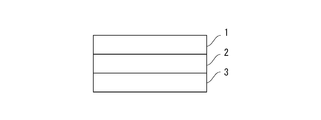
- the solar cell back surface protective sheet of the present invention comprises a weather-resistant flame-retardant resin layer (1), a plastic film (2) and an easy-adhesive layer (3) having a film thickness t ( ⁇ m). To do.
- the outermost layer disposed on the solar cell element side is an easy-adhesive layer (3), and the other outermost layer is a weather-resistant flame-retardant resin layer (1).
- a weather resistant resin (B) selected from the group consisting of polyester resins.
- the film thickness t of the weather resistant flame retardant resin layer (1) is set to 2.5 to 20% of the total film thickness of the solar cell back surface protective sheet.
- the total phosphorus concentration derived from the phosphorus flame retardant (A) in the weather-resistant flame retardant resin layer (1) is 2.1 to 14.2% by weight.
- the solar cell back surface protective sheet of the present invention by satisfying (i) to (iii), it provides weather resistance and flame retardancy, provides it at low cost, and has good adhesion in the solar cell module. Can be kept in.
- a method for imparting flame retardancy a method of adding a flame retardant to the entire solar cell back surface protective sheet, a method of separately providing a flame retardant layer and a weather resistant layer, or a method of adding a flame retardant to an intermediate layer are also conceivable.
- this invention employ
- the weather-resistant flame retardant resin layer (1) protects the inside of the solar cell back surface protection sheet and further the solar cell module from external factors such as ultraviolet rays and physical impact. Thereby, output degradation of a solar cell element can be suppressed and adhesiveness with the inner layer of a solar cell back surface protection sheet can be improved. As a result, the effect of flame retardancy can be made more certain.
- a flame retardant generally used a phosphorus flame retardant, a nitrogen flame retardant, a silicon flame retardant, an inorganic flame retardant, and the like can be given.
- Phosphorus flame retardants include melamine phosphate, melamine polyphosphate, guanidine phosphate, guanidine polyphosphate, ammonium phosphate, ammonium polyphosphate, ammonium amidophosphate, ammonium polyphosphate, carbamate phosphate, carbamate polyphosphate, etc.
- Examples thereof include phosphate compounds, polyphosphate compounds, red phosphorus, organic phosphate ester compounds, phosphazene compounds, phosphonic acid compounds, phosphinic acid compounds, phosphine oxide compounds, phospholane compounds, and phosphoramide compounds.
- the nitrogen-based flame retardant include triazine compounds such as melamine, melam, melem, melon, and melamine cyanurate, cyanuric acid compounds, isocyanuric acid compounds, triazole compounds, tetrazole compounds, diazo compounds, urea, and the like.
- Examples of silicon flame retardants include silicone compounds and silane compounds.
- halogen-based flame retardant examples include low-molecular halogen-containing compounds such as halogenated bisphenol A, halogenated epoxy compounds, and halogenated phenoxy compounds, and halogenated oligomers and polymers.
- Inorganic flame retardants include metal hydroxides such as aluminum hydroxide, magnesium hydroxide, zirconium hydroxide, barium hydroxide, calcium hydroxide, tin oxide, aluminum oxide, magnesium oxide, zirconium oxide, zinc oxide, oxidation Examples include molybdenum, antimony oxide, nickel oxide, zinc carbonate, magnesium carbonate, calcium carbonate, barium carbonate, zinc borate, and hydrated glass.
- the phosphorus-based flame retardant (A) of (iii) phosphazene compound, phosphinic acid compound, or (poly) phosphate melamine is useful. I understood it.
- Nitrogen-based flame retardants and inorganic flame retardants need to increase the amount of flame retardant added in order to exert a flame-retardant effect.
- the halogen-based flame retardant is repelled in appearance because the weather-resistant flame retardant resin layer is greatly yellowed by a wet heat resistance test and a weather resistance test.
- the phosphorus-based flame retardant is suitable in that it can exhibit flame retardancy with a relatively small addition amount.
- Acid carbamate is not preferable because it gradually decomposes to generate phosphoric acid, which is a strong acid, with the passage of time in the heat and humidity resistance test.
- the generated phosphoric acid serves as a catalyst for hydrolysis of the weather resistant resin (B) and greatly deteriorates the weather resistant flame retardant resin layer (1). Therefore, even if it is a phosphorus-type flame retardant, the flame retardant which hydrolyzes and generate
- the phosphorus-based flame retardant (A) of the present invention can effectively exhibit flame retardancy with a small addition amount that does not affect weather resistance and moist heat resistance. Moreover, it is excellent in that no acid is generated by hydrolysis. Moreover, the phosphorus flame retardant (A) itself has high heat and humidity resistance, and hardly hydrolyzes with time of wet heat. Therefore, it is possible to effectively prevent a decrease in adhesion of the weather-resistant flame-retardant resin layer (1) to the inner layer such as the plastic film (2).
- the heat and humidity resistance is improved compared to the case of the weather resistant resin (B) alone, and the adhesion over time is kept good, in addition to the effect of the flame retardant. Therefore, it is considered that it effectively contributed to (i) a decrease in combustion temperature ( ⁇ heat release coefficient) and (ii) a decrease in combustion speed ( ⁇ flame diffusion coefficient).
- phosphazene compounds and phosphinic acid compounds are filler-like compounds having extremely high hydrophobicity.
- the hydrophobicity of the weather-resistant flame retardant resin layer (1) The sex can be increased more effectively. That is, higher heat and heat resistance can be achieved than when the light-resistant resin (B) is used alone. Therefore, it is extremely suitable as a flame retardant for a solar cell back surface protective sheet.
- phosphazene compound As a phosphazene compound, the phosphazene oligomer illustrated by the following general formula (1) or (2) is mentioned.
- R 1 and R 2 are each a hydrogen atom or a monovalent organic group containing no halogen, and the monovalent organic groups of R 1 and R 2
- the group represents a phenyl group, an alkyl group, an amino group, or an allyl group, and the phenyl group and the like may further have a halogen-free substituent.
- the substituent can be appropriately selected from the group consisting of a hydroxyl group, an amino group, a cyano group, and a nitro group.
- n is an integer of 3 to 10.
- Cyclophosphazene in which R 1 or R 2 is a phenyl group or an alkyl group is preferable, and cyclophosphazene is more preferably tricyclophosphazene.
- Specific examples include hexaalkoxytricyclophosphazene and hexaphenoxytricyclophosphazene, and hexaphenoxytricyclophosphazene is preferable.
- Examples of the hexaalkoxytricyclophosphazene include hexamethoxytricyclophosphazene, hexaethoxytricyclophosphazene, hexapropoxytricyclophosphazene and the like.
- hexaphenoxytricyclophosphazene examples include unsubstituted hexaphenoxytricyclophosphazene and hexaphenoxytricyclophosphazene having a substituent such as a hydroxyl group or a cyano group.
- Examples of the phosphinic acid compound include phosphinic acid salts exemplified by the following general formula (3).
- R1 and R2 are the same or different and represent a linear or branched alkyl group having 1 to 6 carbon atoms or an aryl group
- M is Mg, Ca
- Al represents at least one metal selected from the group consisting of Sb, Sn, Ge, Ti, Zn, Fe, Zr, Ce, Bi, Sr, Mn, Li, Na, K, and n is an integer of 1 to 4 is there.
- More preferable compounds include phosphinates in which M is Mg, Ca, and Al, and aluminum phosphinates in which M is Al are particularly preferable.
- trisdialkylphosphinic acid aluminum salt in which R1 and R2 are alkyl groups and n 3 is preferable.
- Examples of the (poly) melamine phosphate include compounds exemplified by the following general formula (4), in which phosphoric acid and melamine are in a salt state.
- n is preferably 1 to 10, and the case where n is 2 or more is referred to as “melamine polyphosphate”.
- the above-mentioned phosphorus-based flame retardant (A) may be used alone, may be combined in plural within each compound group, or may be arbitrarily combined from a plurality of compound groups.
- the weather-resistant resin (B) prevents the influence of deterioration due to ultraviolet rays or physical impacts, and the phosphorus-based flame retardant (A) is uniformly present in the weather-resistant flame retardant resin layer (1) without aggregation. It plays a role as a binder.
- the weather resistant resin (B) is suitably selected from the group consisting of a fluorine resin, a urethane resin, and a polyester resin.
- the urethane resin include polyester polyurethane resins, polyether polyurethane resins, polycarbonate polyurethane resins, and urethane resins other than the polyester polyurethane resins.
- Urethane urea resins having a urea bond in addition to the various urethane resins described above can also be mentioned as urethane resins.
- the weather resistant resin (B) may be combined with an ultraviolet absorber, a light stabilizer, an antioxidant, etc., or the weather resistant resin (B) may be combined with an ultraviolet absorber, a light stabilizer. An antioxidant or the like may be added.
- a fluorine-based resin suitable as the weather resistant resin (B) is a monomer component (hereinafter also referred to as a fluorine-containing monomer) in which fluorine is bonded to a portion directly bonded to carbon of the main chain in a resin of 50 mol% or more and 100 mol. % Or less.
- a block copolymer in which a block containing no fluorine-containing monomer component exists is not preferable even if the fluorine-containing monomer is copolymerized in an amount of 50 mol% or more as a whole.
- a monomer in which fluorine is bonded to a portion directly bonded to carbon of the main chain is randomly copolymerized, a monomer in which a fluorine-containing monomer and a non-fluorine-containing monomer are alternately copolymerized, or a plurality of fluorine-containing monomers
- a polymer of a single fluorine-containing monomer correspond to the fluororesin of the present invention.
- Fluorine resins suitable for the weather resistant resin (B) include polytetrafluoroethylene (PTFE), polychlorotrifluoroethylene (PCTFE), polyvinylidene fluoride (PVDF), polyvinyl fluoride (PVF), and perfluoroalkoxy fluorine.
- Resin (PFA) tetrafluoroethylene / hexafluoropropylene copolymer (FEP), ethylene / tetrafluoroethylene copolymer (ETFE), ethylene / chlorotrifluoroethylene copolymer (ECTFE), etc. .
- the fluororesin is excellent in weather resistance and chemical resistance, and is suitable as a weather resistant resin (B). Since the fluorine-based resin composed of the fluorine-containing monomer does not have a urethane bond or an ester bond that may be hydrolyzed in the main chain, a small amount of acid generated from the phosphorus flame retardant (A) serves as a catalyst. It does not cause hydrolysis for a long time. Therefore, it is more preferable than urethane resin and polyester resin. When, for example, ammonium phosphate is used for urethane resin or polyester resin, ammonium phosphate is decomposed in a heat and humidity resistance test, and phosphoric acid, which is a strong acid, is generated. And since the generated phosphoric acid will decompose
- a polyester resin suitable for the weather resistant resin (B) is obtained by reacting a carboxylic acid component having a carboxylic acid group with a hydroxyl group component having a hydroxyl group.
- the carboxylic acid component include benzoic acid, p-tert-butylbenzoic acid, phthalic anhydride, isophthalic acid, terephthalic acid, succinic anhydride, adipic acid, azelaic acid, tetrehydrophthalic anhydride, hexahydrophthalic anhydride, maleic anhydride
- Examples thereof include acid, fumaric acid, itaconic acid, tetrachlorophthalic anhydride, 1,4-cyclohexanedicarboxylic acid, trimellitic anhydride, methylcyclohexenticarboxylic anhydride, pyromellitic anhydride, ⁇ -caprolactone, and fatty acid.
- hydroxyl component examples include ethylene glycol, propylene glycol, 1,3-butylene glycol, 1,6-hexanediol, diethylene glycol, dipropylene glycol, neopentyl glycol, triethylene glycol, 3-methylpentanediol, 1,4-
- diol components such as cyclohexanedimethanol
- polyfunctional alcohols such as glycerin, trimethylolethane, trimethylolpropane, trishydroxymethylaminomethane, pentaerythritol, and dipentaerythritol can be exemplified.
- a carboxylic acid component and a hydroxyl component are polymerized to obtain a predetermined polyester resin, which can be used as the weather resistant resin (B).
- the polyester resin is more preferably a low oligomer polyester resin from the viewpoint of satisfying the combustion test (UL-1703, UL-94), weather resistance, and wet heat resistance.
- the low oligomer polyester resin is one having an intrinsic viscosity of 0.6 (dl / g) or more and a cyclic trimer content of 1% by weight or less.
- the intrinsic viscosity is preferably 0.6 to 1.2 (dl / g).
- ⁇ 0 is the viscosity of the solvent
- c (g / mL) is the concentration of the resin in the solvent
- ⁇ is the viscosity of the resin solution at c (g / mL)
- sp is the ratio of the viscosity of the resin solution to the viscosity of the solvent.
- the cyclic trimer content of the polyester resin is determined by a method in which 100 mg of the polyester resin is dissolved in 2 mL of orthochlorophenol and the weight percentage is measured by liquid chromatography.
- the urethane resin suitable for the weather resistant resin (B) is obtained by reacting a hydroxyl group component other than the polyester resin having a hydroxyl group with an isocyanate compound.
- the hydroxyl component include polyethylene glycol, polypropylene glycol, polymer polyols such as polyether polyols added with ethylene oxide or propylene oxide, acrylic polyols, and polybutadiene polyols.
- isocyanate compound the thing similar to the polyisocyanate compound (C) mentioned later can be illustrated.
- MDI Trimethylene diisocyanate
- IPDI 3-isocyanate methyl-3,5,5-trimethylcyclohexyl isocyanate
- XDI xylylene diisocyanate
- trimethylolpropane adducts of these diisocyanates isocyanurates that are trimers of these diisocyanates, burette conjugates of these di
- a functional group capable of reacting in the side chain of the weather resistant resin (B) in order to obtain a higher crosslinking density may be introduced and crosslinked with a general crosslinking agent.
- the crosslinking agent include polyisocyanate compounds, polyglycidyl compounds, and polyaziridyl compounds.
- an isocyanate compound is preferred as the curing agent having a functional group capable of reacting with a polyester-based or urethane-based resin having a hydroxyl group and an isocyanate hydroxyl group. Furthermore, a polyisocyanate compound is preferable from the viewpoint of improving durability.
- the polyisocyanate compound is a weather resistant resin that crosslinks the weather resistant resins (B) to each other and has toughness, extensibility, flexibility, molding processability, scratch resistance, long term weather resistance, long term wet heat resistance, and chemical resistance. Used to form a layer. In order to prevent the resulting weather-resistant resin layer from changing from yellow to brown over time, it is preferable to use only an alicyclic or aliphatic compound.
- Examples of the alicyclic polyisocyanate compound include isophorone diisocyanate, hydrogenated tolylene diisocyanate, hydrogenated 4,4′-diphenylmethane diisocyanate, and the like.
- Examples of the aliphatic polyisocyanate compound include trimethylhexamethylene diisocyanate, hexamethylene diisocyanate, and lysine diisocyanate.
- aromatic polyisocyanate compound examples include diphenylmethane diisocyanate, toluylene diisocyanate, naphthylene-1,5-diisocyanate, o-xylene diisocyanate, m-xylene diisocyanate, p-xylene diisocyanate, triphenylmethane triisocyanate, polymethylene polyphenyl.
- An isocyanate etc. are mentioned.
- polyisocyanate compound a double-ended isocyanate adduct, biuret-modified, or isocyanurate-modified, which is a reaction product of the above-mentioned compound and glycols or diamines, may be used.
- the polyisocyanate compound contains an isocyanurate-modified product, particularly an isocyanurate ring-containing triisocyanate, it is preferable because a weather-resistant resin layer having toughness and extensibility can be obtained.
- isocyanurate ring-containing triisocyanate examples include isocyanurate-modified isophorone diisocyanate (for example, Desmodur Z4470 manufactured by Sumitomo Bayer Urethane Co., Ltd.), isocyanurate-modified hexamethylene diisocyanate (for example, Sumidur N3300 manufactured by Sumitomo Bayer Urethane Co., Ltd.). And isocyanurate-modified toluylene diisocyanate (for example, Sumidur FL-2, FL-3, FL-4, HL BA manufactured by Sumitomo Bayer Urethane Co., Ltd.).
- isocyanurate-modified isophorone diisocyanate for example, Desmodur Z4470 manufactured by Sumitomo Bayer Urethane Co., Ltd.
- isocyanurate-modified hexamethylene diisocyanate for example, Sumidur N3300 manufactured by Sumitomo Bayer Urethane
- the isocyanate group in one molecule may be increased by reacting with a polyester (c) having two or more functional groups capable of further reacting an isocyanurate ring, or the generated urethane bond and one equivalent of an isocyanate group. May be reacted to form an allophanate to further increase the isocyanate group in one molecule.
- a polyester (c) having two or more functional groups capable of reacting with an isocyanate group a known polyester resin can be used.
- the isocyanate group of the polyisocyanate compound is, for example, methanol, ethanol, n-pentanol, ethylene chlorohydrin, isopropyl alcohol, phenol, p-nitrophenol, m-cresol, acetylacetone, ethyl acetoacetate, ⁇ -caprolactam. You may use the block modified body which made it react with blocking agents, such as, and was made into a block.
- a polyester (d) having two or more functional groups capable of reacting with an isocyanate group and a diisocyanate compound (e) having an isocyanate group at both ends are reacted with a both-end isocyanate prepolymer. May be used.
- the polyisocyanate compound contains the above-mentioned both-end isocyanate prepolymers, extensibility can be obtained in a small amount, and the toughness of the coating film is not impaired.
- a polyisocyanate compound can be used 1 type or in combination of 2 or more types.
- polyester (d) having two or more functional groups capable of reacting with an isocyanate group a known polyester resin can be used.
- diisocyanate compound (e) having isocyanate groups at both ends include, for example, toluylene diisocyanate, naphthylene-1,5-diisocyanate, o-toluylene isocyanate, diphenylmethane diisocyanate, trimethylhexamethylene diisocyanate, isophorone diisocyanate, 4,4 ′.
- the number of isocyanate groups of the polyisocyanate compound relative to the total number of functional groups (functional groups capable of reacting with isocyanate groups) of the weather resistant resin (B) is 0.1 with respect to the weather resistant resin (B). It is preferably ⁇ 5 times, more preferably 1 to 3 times. If it is less than 0.1 times, the crosslinking density is too low, solvent resistance, scratch resistance, weather resistance is not sufficient, and if it is more than 5 times, the isocyanate is left over and reacts with moisture in the air, It becomes a factor that physical properties change according to the season.
- oxazoline compounds such as 2,5-dimethyl-2-oxazoline, 2,2- (1,4-butylene) -bis (2-oxazoline) or hydrazide
- compounds such as isophthalic acid dihydrazide, sebacic acid dihydrazide, adipic acid dihydrazide can be included.
- the aromatic ring content in the weather resistant resin (B) is at most 50% by weight, preferably 10% by weight or less, and preferably contains no aromatic ring as much as possible. If the aromatic ring content in the weather resistant resin (B) exceeds 50% by weight, it absorbs ultraviolet rays and causes yellowing of the weather resistant flame retardant resin layer (1) and deterioration of the coating film, resulting in a decrease in weather resistance. It's easy to do.
- the weather resistant flame retardant resin layer (1) may contain inorganic fine particles or organic fine particles in order to improve surface slipperiness and blocking properties.
- the inorganic fine particles include inorganic substances containing silica, glass fiber, glass powder, glass beads, clay, wollastonite, iron oxide, antimony oxide, lithopone, pumice powder, aluminum sulfate, zirconium silicate, dolomite, iron sand and the like. System particles.
- the inorganic fine particles may contain impurities to such an extent that the characteristics are not impaired.
- the shape of the particles may be any shape such as powder, granule, granule, true sphere, flat plate, and fiber.
- the organic fine particles include polymer particles such as polyolefin wax, polymethyl methacrylate resin, polystyrene resin, nylon resin, melamine resin, guanamine resin, phenol resin, urea resin, silicone resin, methacrylate resin, and acrylate resin.
- cellulose powder, nitrocellulose powder, wood powder, waste paper powder, rice husk powder, starch and the like can be mentioned.
- the organic fine particles can be obtained by a polymerization method such as an emulsion polymerization method, a suspension polymerization method, a dispersion polymerization method, a soap-free polymerization method, a seed polymerization method, or a microsuspension polymerization method.
- the organic particles may contain impurities to the extent that the characteristics are not impaired.
- the shape of the particles may be any shape such as powder, granule, granule, flat plate, and fiber.
- the weather resistant flame retardant resin layer (1) has various heats other than the weather resistant resin (B) as long as the effects of the present invention are not hindered in order to increase the strength of the obtained weather resistant flame retardant resin layer.
- a plastic resin may be contained.
- the thermoplastic resin include polypropylene, polyethylene, ethylene-vinyl acetate copolymer, polyisobutylene, polybutadiene, polystyrene, polycarbonate, polymethylpentene, ionomer, acrylonitrile-butadiene-styrene resin, polyvinyl alcohol, polyamide resin, polyacetal, An epoxy resin etc. are mentioned.
- the amount of the thermoplastic resin added is preferably 50 parts by weight or less, and more preferably 30 parts by weight or less, with respect to 100 parts by weight of the weather resistant resin (B). If it exceeds 50 parts by weight, the compatibility with other components may decrease.
- a pigment may be added to the weather resistant flame retardant resin layer (1) for the purpose of coloring.
- the pigment conventionally known pigments can be used, and inorganic pigments such as carbon black, titanium oxide, zinc oxide, lead oxide, zinc sulfide, and lithobon, and various organic pigments can be used.
- the phosphorus-based flame retardant (A), particles, and pigment are preferably mixed with a light-resistant resin (B) after preparing a dispersion resin and, if necessary, a paste mixed with a dispersant.
- a light-resistant resin (B) As the dispersion resin, it is preferable to use the weather resistant resin (B) itself, but there is no particular limitation, and a polar group excellent in pigment dispersibility, such as a hydroxyl group, a carboxyl group, a thiol group, an amino group, an amide group, and a ketone group.
- An acrylic resin, a polyurethane resin, a polyurea resin, a polyester resin, or the like can be used.
- the dispersant examples include pigment derivatives, anionic surfactants, amphoteric surfactants, nonionic surfactants, titanium coupling agents, and silane coupling agents.
- the pigment surface can be modified by metal chelate, resin coating, or the like.
- the weather resistant flame retardant resin layer (1) of the present invention satisfies the above (iv) and (v). That is, the film thickness t of the weather resistant flame retardant resin layer (1) is 2.5 to 20% of the total film thickness of the solar cell back surface protective sheet. For example, in the case of a solar cell back surface protective sheet having a film thickness of 300 ⁇ m, the film thickness t of the weather resistant flame retardant resin layer (1) is in the range of 7.5 to 60 ⁇ m. Further, the total phosphorus concentration derived from the phosphorus-based flame retardant (A) in the weather-resistant flame-retardant resin layer (1) is set to 2.1 to 14.2% by weight.
- a solar cell back surface protective sheet excellent in flame retardancy and economy can be provided.
- Plastic which is the main constituent member of the solar cell back surface protection sheet in terms of thickness by setting the film thickness t of the weather resistant flame retardant resin layer (1) to 2.5% or more of the total film thickness of the solar cell back surface protection sheet The combustion of the film (2) can be suppressed and the flame propagation test of UL-1703 can be satisfied.
- the film thickness t of the weather resistant flame retardant resin layer (1) is 20% or more of the total film thickness of the solar cell back surface protective sheet, it becomes difficult to form a uniform layer, and there is a cost disadvantage.
- the total phosphorus concentration derived from the phosphorus flame retardant (A) in the weather resistant flame retardant resin layer (1) is 2.1% or more, not only the flame retardancy of the coating film itself is kept good. A sufficient carbonized film can be formed and combustion of the plastic film (2) and the like can be effectively suppressed. As a result, the standard value of the flame propagation test can be satisfied. Moreover, weather resistance and heat-and-moisture resistance can be kept favorable by setting the total phosphorus concentration to 14.2% or less. A more preferable range of the total phosphorus concentration derived from the phosphorus flame retardant (A) in the weather resistant flame retardant resin layer (1) is 3 to 10% by weight.
- the weight of the phosphorus flame retardant (A) in the weather resistant flame retardant resin layer (1) is preferably 10% by weight or more, more preferably 15% by weight or more, and 20% by weight or more. More preferably.
- the weight of the phosphorus-based flame retardant (A) in the weather resistant flame retardant resin layer (1) is preferably 60% by weight or less, and more preferably 50% by weight or less.
- the phosphorus-based flame retardant (A) selected from the phosphazene compounds, phosphinic acid compounds and (poly) phosphate melamine used in the present invention hardly hydrolyzes in the heat and humidity resistance test.
- A phosphorus-based flame retardant selected from the phosphazene compounds, phosphinic acid compounds and (poly) phosphate melamine used in the present invention
- a very small amount of acid generated as a result of slight hydrolysis acts as a catalyst for a very long period of time, promoting the hydrolysis of the weather resistant resin (B), and thus the weather resistant flame retardant resin layer.
- the weather resistant resin (B) does not contain a hydrolyzable site in the main chain of the resin.
- plastic film (2) used in the present invention examples include polyester resin films such as polyethylene terephthalate, polybutylene terephthalate and polynaphthalene terephthalate, olefin films such as polyethylene, polypropylene and polycyclopentadiene, polyvinyl fluoride, and polyvinylidene fluoride. Fluorine-based films such as films, polytetrafluoroethylene films, ethylene-tetrafluoroethylene copolymer films, acrylic films, and triacetyl cellulose films can be used. A polyester resin film is preferable from the viewpoint of film rigidity and cost, and a polyethylene terephthalate film is preferable.
- the plastic film (2) may have a single layer or a multilayer structure of two or more layers.
- These plastic films (2) may be colorless or may contain coloring components such as pigments or dyes.
- Examples of the method of containing the coloring component include a method of kneading the coloring component in advance at the time of film formation, a method of printing the coloring component on a colorless transparent film substrate, and the like. Further, a colored film and a colorless transparent film may be bonded together.
- the easy-adhesive layer (3) used in the present invention is a layer for improving the adhesion between the plastic film (2) and the non-light-receiving surface side sealing material (IV), on one side of the solar cell back surface protective sheet. It is a resin layer provided on the outermost surface. And when forming a solar cell module, non-light-receiving surface side sealing material (IV) and the solar cell back surface protection sheet (V) of this invention are stuck so that an easily adhesive layer (3) may contact
- the easy-adhesive layer (3) used in the present invention can be formed from general adhesives containing various resins.
- resins Preferable examples include polyester resins, urethane resins, and acrylic resins. A single resin or two or more resins can be used. Further, a composite of these resins can be used.
- the polyester resin suitable as the easy-adhesive layer (3) includes a polyester resin obtained by reacting a carboxylic acid component and a hydroxyl component (esterification reaction, transesterification reaction), and further adding an isocyanate compound to the polyester resin having a hydroxyl group.
- a polyester polyurethane resin obtained by reaction and a polyester polyurethane polyurea resin obtained by reacting a diamine component are also included.
- the carboxylic acid component constituting the polyester resin of the easy-adhesive layer (3) includes benzoic acid, p-tert-butylbenzoic acid, phthalic anhydride, isophthalic acid, terephthalic acid, succinic anhydride, adipic acid, azelaic acid Tetrehydrophthalic anhydride, hexahydrophthalic anhydride, maleic anhydride, fumaric acid, itaconic acid, tetrachlorophthalic anhydride, 1,4-cyclohexanedicarboxylic acid, trimellitic anhydride, methylcyclohexeric carboxylic anhydride, pyromellitic anhydride , ⁇ -caprolactone, and fatty acid.
- Examples of the hydroxyl component constituting the polyester resin of the easy-adhesive layer (3) include ethylene glycol, propylene glycol, 1,3-butylene glycol, 1,6-hexanediol, diethylene glycol, dipropylene glycol, neopentyl glycol, tri Polyfunctional alcohols such as glycerin, trimethylolethane, trimethylolpropane, trishydroxymethylaminomethane, pentaerythritol, dipentaerythritol, in addition to diol components such as ethylene glycol, 3-methylpentanediol, 1,4-cyclohexanedimethanol Can be illustrated.
- a carboxylic acid component and a hydroxyl component can be polymerized to give a predetermined polyester resin, which can be used as the easy-adhesive layer (3).
- the urethane-based resin of the easy-adhesive layer (3) is obtained by reacting a hydroxyl component other than the polyester resin having a hydroxyl group with an isocyanate compound.
- the hydroxyl component include polyethylene glycol, polypropylene glycol, polymer polyols such as polyether polyols added with ethylene oxide or propylene oxide, acrylic polyols, and polybutadiene polyols.
- isocyanate compound the thing similar to the polyisocyanate compound (C) mentioned later can be illustrated.
- MDI Trimethylene diisocyanate
- IPDI 3-isocyanate methyl-3,5,5-trimethylcyclohexyl isocyanate
- XDI xylylene diisocyanate
- trimethylolpropane adducts of these diisocyanates isocyanurates that are trimers of these diisocyanates, burette conjugates of these di
- the monomer constituting the acrylic resin of the easy-adhesive layer (3) the general formula (a) CH 2 ⁇ CR 1 —CO—OR 2 (R 1 is a hydrogen atom or a methyl group, R 2 is a hydroxyl group or carbon)
- R 1 is a hydrogen atom or a methyl group
- R 2 is a hydroxyl group or carbon
- acrylamide, methacrylamide, acrylonitrile, methacrylonitrile, N-methylol acrylamide, N-alkylol acrylamide, diacetone acrylamide, diacetone methacrylamide, acrolein, methacrolein, glycidyl methacrylate and the like can be exemplified as reactive monomers.
- Those obtained by copolymerizing these monomers according to a conventional method to obtain a predetermined acrylic resin can be used in the present invention.
- an adhesive containing a crosslinking agent is used, and the non-light-receiving surface side sealing material (IV) and the present invention are used.
- the cross-linking agent-containing easy-adhesive layer (3) on the outermost surface of the solar cell back surface protective sheet (V) is cross-linked. Is preferred.
- the resin when the polyester resin, the urethane resin, and the acrylic resin exemplified above are used for the easy-adhesive layer (3), the resin includes a hydroxyl group, a carboxyl group, a sulfonyl group, a phosphonyl group, an isocyanate group, and an epoxy group. It is preferable to have a reaction point such as
- crosslinking agent examples include polyisocyanate compounds, polyglycidyl compounds, and polyaziridyl compounds.
- an isocyanate compound is preferred as the curing agent having a functional group capable of reacting with a polyester-based or urethane-based resin having a hydroxyl group and an isocyanate hydroxyl group.
- a polyisocyanate compound is preferable from the viewpoint of improving durability.
- a blocked polyisocyanate compound may also be used.
- a polyisocyanate compound the thing similar to the polyisocyanate compound illustrated as a crosslinking agent of a weather resistant resin (B) can be used.
- crosslinking agent in addition to the polyisocyanate compound, known oxazoline compounds such as 2,5-dimethyl-2-oxazoline, 2,2- (1,4-butylene) -bis (2-oxazoline) or hydrazide are used. Compounds such as isophthalic acid dihydrazide, sebacic acid dihydrazide, adipic acid dihydrazide can be included.
- the solar cell back surface protective sheet can be provided with a water vapor barrier layer in order to impart moisture resistance.
- steam barrier layer The vapor deposition layer of metal foil or a metal oxide or a nonmetallic inorganic oxide is mentioned.
- the metal foil aluminum foil, iron foil, zinc plywood and the like can be used, and among these, aluminum foil is preferable from the viewpoint of corrosion resistance, and the thickness is preferably 10 ⁇ m to 100 ⁇ m, The thickness is preferably 20 ⁇ m to 50 ⁇ m.
- Conventionally known various adhesives can be used for the lamination of the two.
- the said vapor deposition layer is provided in one surface of a plastic film (2).
- a laminate in which single-side vapor-deposited polyester films are laminated via an interlayer adhesive layer, or a laminate in which a single-side vapor-deposited polyester film and another vapor-deposited film are laminated via an interlayer adhesive layer can also be used.
- the metal oxide or non-metal inorganic oxide to be deposited include oxides such as silicon, aluminum, magnesium, calcium, potassium, tin, sodium, boron, titanium, lead, zirconium, and yttrium.
- Alkali metal and alkaline earth metal fluorides can also be used. These can be used alone or in combination.
- metal oxides or non-metal inorganic oxides can be deposited using a conventionally known PVD method such as vacuum deposition, ion plating, sputtering, or the like, or a CVD method such as plasma CVD or microwave CVD.
- PVD method such as vacuum deposition, ion plating, sputtering, or the like
- CVD method such as plasma CVD or microwave CVD.
- the water vapor barrier layer may be a laminate in which two or more of the above barrier layers are laminated in accordance with required electrical insulation properties and water vapor barrier properties.
- a roll knife coater As a method of providing the weather-resistant flame retardant resin layer (1) or the easy-adhesive layer (3) on the plastic film (2) or the water vapor barrier layer, a roll knife coater, a die coater, a roll coater, a bar coater, a gravure roll coater
- the weather-resistant flame-retardant resin composition (1 ′) or the easy-adhesive composition (3 ′) by a conventionally known coating method such as reverse roll coater, dipping, blade coater, gravure coater, micro gravure coater, comma coater, etc.
- a film formed from a coating method or a weather-resistant flame retardant resin composition (1 ′) or an easy-adhesive composition (3 ′) is formed by a conventionally known laminating method such as dry lamination, extrusion lamination, or thermal lamination. Bonding with plastic film (2) or water vapor barrier layer The method of letting it go is mentioned.
- FIG. 2A is a schematic cross-sectional view showing an example of the solar cell back surface protective sheet of the present invention in which a weather-resistant flame-retardant resin layer (1), a plastic film (2), and an easy-adhesive layer (3) are laminated. is there.
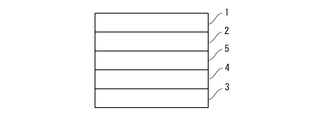
- the solar cell back surface protective sheet of the present invention may have other layers such as a water vapor barrier layer (4) and an interlayer adhesive layer (5).
- FIG. 2B is formed by laminating a weather resistant flame retardant resin layer (1), a water vapor barrier layer (4), an interlayer adhesive layer (5), a plastic film (2), and an easy adhesive layer (3).
- FIG. 2C is formed by laminating a weather resistant flame retardant resin layer (1), a plastic film (2), an interlayer adhesive layer (5), a water vapor barrier layer (4), and an easy adhesive layer (3). It is typical sectional drawing of the solar cell back surface protection sheet of this invention.
- the solar cell module of the present invention includes a solar cell surface sealing sheet (I) positioned on the light receiving surface side of the solar cell, a sealing material layer (II) positioned on the light receiving surface side of the solar cell, and a solar cell element (III ),
- the sealing material layer (IV) positioned on the non-light-receiving surface side of the solar cell, and the solar cell back surface protective sheet of the present invention described in detail as essential constituent layers, and the solar cell back surface protective sheet of the present invention It can obtain by laminating
- the solar cell back surface sealing sheet so that the non-light receiving surface side sealing material layer (IV) is in contact with the easy adhesive layer (3) constituting the solar cell back surface protective sheet of the present invention.
- the solar cell module of the present invention can be obtained.
- laminating the non-light-receiving surface side sealing material layer (IV) and the solar cell back surface protective sheet they may be brought into contact with each other under reduced pressure and then superposed under heating and pressure.
- the easy-adhesive layer (3) is thermosetting, after returning to normal pressure, the easy-adhesive layer (3) can be further cured by placing it under high temperature conditions.
- Phosphorus flame retardant A1 Exolit OP935 (aluminum trisdiethylphosphinate, manufactured by Clariant)
- Phosphorus flame retardant A2 Exolit OP1230 (aluminum trisdiethylphosphinate, manufactured by Clariant)
- Phosphorus flame retardant A3 Exolit OP1312 (mixture of aluminum trisdiethylphosphinate and melamine phosphate, manufactured by Clariant)
- Phosphorus flame retardant A4 SPB-100 (phenoxycyclotriphosphazene, manufactured by Otsuka Chemical Co., Ltd.)
- Phosphorus flame retardant A5 SPH-100 (4-hydroxyphenoxycyclotriphosphazene, manufactured by Otsuka Chemical Co., Ltd.)
- Taipei CR-97 Titanium oxide for white pigment manufactured by Ishihara Sangyo Co., Ltd.
- the above weather-resistant flame retardant resin solution (1-14, 101-102, 23, 25-31) was applied onto polyethylene terephthalate (hereinafter referred to as Sepa PET) that had been subjected to release treatment by an applicator, and the solvent was stripped to remove 30 ⁇ m.
- Sepa PET polyethylene terephthalate
- a coating film was obtained and peeled from Sepa PET to prepare a weather resistant flame retardant film.
- Preparation of weather-resistant flame retardant film (15-22, 103-108, 32, 34-39)> Phosphorus flame retardant (A), weather resistant resin (B), and pigment (C) were mixed in the compositions shown in Tables 1B and 1C, and premixed using a tumbler (SKS50, manufactured by Shinei Koki Sangyo Co., Ltd.). Next, after kneading and extruding using a twin screw extruder (manufactured by Nippon Placon Co., Ltd.), it was cut with a pelletizer to obtain a pellet-shaped resin composition. The resin composition thus obtained was extruded into a sheet using a T-die extruder to produce a weather resistant flame retardant film having a thickness of 30 ⁇ m.
- Phosphorus flame retardant (A), weather resistant resin (B), and pigment (C) were mixed in the compositions shown in Tables 1B and 1C, and premixed using a tumbler (SKS50, manufactured by Shin
- ⁇ Flammability measurement UL test> A weather resistant flame retardant film (1 to 23, 25 to 32, 34 to 39, 101 to 108) having a thickness of 30 ⁇ m was evaluated according to the HB standard or V standard defined in UL-94.
- ⁇ HB Standard This is a test in which a strip-shaped test piece is placed horizontally, burned by applying a burner flame to one end, and a pass / fail judgment is made at the speed at which the combustion proceeds.
- a burning rate of 40 mm / min or less or 75 mm / min or less is regarded as “pass” for the HB test.
- ⁇ V standard Five test pieces are used.
- a burner flame is applied to the lower end of the strip-shaped test piece supported vertically and held for 10 seconds. Then, the burner flame is released from the test piece. When the flame disappears, the burner flame is applied for another 10 seconds and then the burner flame is released.
- the flaming combustion duration after the first and second flame contact, the flaming combustion duration and the non-flame burning duration after the second flame contact, and the flammable combustion time of the five test pieces Judgment is based on the total and the presence or absence of combustion drops (drip). In particular, V-0: There is no burning fallen (drip), the flaming combustion duration after the end of flame contact is within 10 seconds in both the first and second times, and the second flaming combustion duration and flameless combustion time Within 30 seconds.
- the total flammable burning time of 5 test pieces is within 50 seconds.
- V-1 There is no burning fallen object (drip), the flaming combustion duration after the end of flame contact is within 30 seconds in both the first and second times, and the second flaming combustion duration and flameless combustion time Within 60 seconds. In addition, the total flammable burning time of five test pieces is within 250 seconds.
- V-2 Same as V-1, except that there are burning fallen objects (drip). Since the HB standard and the V standard are different standards, direct comparison is not possible. However, the V standard is stricter than the HB standard, and even if it passes the HB standard, the V standard V- Sometimes less than 2 levels. Therefore, the order of good or bad flame retardancy is better as shown on the left. >V-0>V-1>V-2> HB pass> HB pass The results are shown in Table 2.
- vapor-deposited surface of vapor-deposited PET (manufactured by Mitsubishi Plastics, Tech Barrier LX, thickness 12 ⁇ m) was superposed on this interlayer adhesive layer. Thereafter, aging treatment was performed at 50 ° C. for 4 days to cure the interlayer adhesive layer, and a polyester film-deposited PET laminate was produced.
- the vapor deposition PET used is vapor deposition PET which produced silica by vacuum vapor deposition.
- the weather resistant flame retardant resin solution 1 described in Table 1A is applied to the polyester film surface of the polyester film-deposited PET laminate, the solvent is dried, and a weather resistant flame retardant resin layer having a film thickness of about 15 ⁇ m is formed. Provided. Thereafter, aging treatment was performed at 40 ° C. for 3 days to cure the weather-resistant flame-retardant resin layer, and a weather-resistant flame-retardant resin layer-polyester film-deposited PET laminate was produced.
- a polyester adhesive “Dyna Leo VA-3020 / HD-701” is applied to the vapor-deposited PET surface by a gravure coater, and the solvent is dried to form an easy adhesive layer having a coating amount of 5 g / m 2 (film thickness: 5 ⁇ m).
- the solar cell back surface protective sheet 1 was prepared.
- a polyester adhesive “Dyna Leo VA-3020 / HD-701” is applied to the polyester film surface of the polyester film-deposited PET laminate with a gravure coater, the solvent is dried, and the interlayer adhesion is 10 g / m 2 .
- An agent layer was provided.
- a weather-resistant flame retardant film (film thickness: 30 ⁇ m) described in Table 1B was overlaid on this interlayer adhesive layer.
- aging treatment was performed at 50 ° C. for 4 days to cure the weather-resistant flame-retardant resin layer, and a weather-resistant flame-retardant resin layer-polyester film-deposited PET laminate was produced.
- a polyester adhesive “Dyna Leo VA-3020 / HD-701” is applied to the vapor-deposited PET surface by a gravure coater, the solvent is dried, and an easy adhesive layer having a coating amount of 5 g / m 2 (film thickness: 5 ⁇ m) is formed.
- the solar cell back surface protection sheet 15 was prepared.
- the solar cell back surface protective sheets 16-22, 103-108, 32, 34-39 are formed using the weather resistant flame retardant films 16 to 22, 103 to 108, 32, and 34 to 39 shown in Table 1B and Table 1C. -108, 32, 34-39 were produced.
- a weather resistant flame retardant film having the same composition and the same composition as the weather resistant flame retardant film 15 and having a film thickness of 5 ⁇ m is prepared.
- a solar cell back surface protective sheet 40 having a layer structure of polyester film-deposited PET-adhesive layer was prepared.
- a solar cell back surface protective sheet 41 having a layer structure of polyester film-deposited PET-adhesive layer was prepared by the same manufacturing method as that of the solar cell back surface protective sheet 15 except that the weather-resistant flame retardant resin layer was not provided. .
- Example 1 Using the solar cell back surface protective sheet 1, cross-cut adhesion, combustibility, moist heat resistance, and weather resistance were evaluated by the methods described below.
- RP test Radiant panel (RP) test>
- a flame propagation test (radiant panel test) was performed in accordance with ASTM-E162, a flame diffusion coefficient was calculated from the combustion speed, and a heat release coefficient was calculated from the combustion temperature, and the product was used as a flame propagation index.
- the flame propagation test is to ignite the solar cell backside protection sheet in the presence of a 600 ° C radiant panel, and to determine the flame diffusion coefficient from the burning rate of the solar cell backside protection sheet and the heat release coefficient from the combustion temperature, Is an evaluation method for calculating
- the standard value of UL-1703 is 100 or less, and if it exceeds 100, it is rejected.
- XX 150 or more
- Moisture and heat resistance test Moisture and heat resistance is measured using a pressure cooker tester under conditions of a temperature of 105 ° C., a relative humidity of 100% RH, and 2 atmospheres for 96 hours, 192 hours, and 288 hours after cross-cut adhesion, yellowing, and flame. The propagation index was measured. Cross-cut adhesion was evaluated by the same method and standard as described above.
- ⁇ Weather resistance test> The weather resistance was evaluated by using an i-super UV tester (manufactured by Iwasaki Electric Co., Ltd.) under the following conditions in terms of cross-cut adhesion, yellowing degree, and film loss after 10 cycles (that is, after 120 hours).
- Weight resistance test conditions 1) 63 ° C 70% 90mW / cm 2 irradiation 4h 2) 70 ° C 90% standing 4h 3) shower 10 seconds ⁇ condensation 4h ⁇ shower 10 seconds 4) The above 1), 2) and 3) are repeated 10 cycles (1 cycle, 12 hours.
- ⁇ Film reduction> A part of the surface of the weather-resistant flame-retardant resin layer of each test piece is protected with a weather-resistant tape, and the level difference between the protected part and the unprotected part after 10 cycles is measured and evaluated according to the following criteria: did.
- Examples 2 to 14, 101, 102] [Comparative Examples 1, 3 to 9]
- the solar cell back surface protection sheets 2 to 14, 101, 102, and 23, and 25 to 31 were used to evaluate cross-cut adhesion, combustibility, moist heat resistance, and weather resistance. The above results are shown in Table 3.
- Example 15 Using the solar cell back surface protective sheet 15, evaluation of combustibility, moist heat resistance and weather resistance was performed in the same manner as in Example 1. In addition, since the solar cell back surface protection sheet 15 using a weather-resistant flame-retardant film cannot evaluate crosscut adhesiveness, the toughness of a weather-resistant resin layer was evaluated by the method mentioned later instead.
- the solar cell back surface protection sheet 15 was cut into a 15 mm wide rectangle to obtain a test piece.
- Each test piece was subjected to a T-peeling test between a weather resistant flame retardant resin layer (ie, weather resistant flame retardant film) and a polyester film at a load speed of 100 mm / min using a tensile tester. Evaluation was performed based on the load when the flame-retardant flame retardant film breaks.
- ⁇ Less than 0.5 N / 15 mm
- the weather-resistant flame-retardant resin layer (1) becomes brittle and cannot be evaluated.
- Example 16 to 22 [Comparative Examples 10, 12 to 19]
- the solar cell back surface protective sheets 16 to 22 and 32 and 34 to 41 were used, and the toughness, moist heat resistance and weather resistance of the weather resistant flame retardant resin layer, and the flammability of the solar cell back surface protective sheet were evaluated. Evaluation was performed. The results are shown in Table 4.
- Examples 1 to 22, 101 to 108 weather resistant flame retardant resin solutions 1 to 14, 101 to 102 or weather resistant flame retardant resin films 15 to 22, 103 to 108 were used.
- the solar cell back surface protective sheet as a whole was confirmed to meet the requirements of UL-1703.
- the solar cell back surface protective sheets of Examples 1 to 22 and the like are satisfactory solar cell back surface protective sheets.
- Examples 1 to 3, 5 to 8, 15 to 16 and the like using aluminum phosphinate or phosphazene increase the hydrophobicity of the weather resistant flame retardant resin layer (1).
- Comparative Examples 1, 3 and 10, 12 do not have a phosphorus-based flame retardant, so the flame retardancy is poor and does not satisfy the UL-1703 standard.
- the weather resistant flame retardant resin film corresponding to Comparative Example 1 and Comparative Example 10 (using the weather resistant flame retardant resin solution 23 or the weather resistant flame retardant film 32) is a general flame retardant as shown in Table 2.
- the weather resistant flame retardant film does not have a function of suppressing the flammability of the plastic film (2) which is another layer constituting the back protective sheet for solar cells, that is, the polyester film in the comparative example. There is no effect.
- Tables 3 and 4 when the flammability as a solar cell back surface protection sheet is evaluated in the flame propagation test defined in ASTM E162, the standard of UL-1703 is not satisfied.
- Comparative Examples 4, 6, and 14 using the weather-resistant flame retardant resin solutions 26 and 28 or the weather-resistant flame retardant film 36) were prepared by using ammonium polyphosphate as a phosphorus-based flame retardant, and Comparative Examples 5, 13, and 15 (weather resistance).
- the flame retardant resin solution 27 or the weather resistant flame retardant resin films 35 and 37) use triphenyl phosphate as the phosphorus flame retardant, respectively. Therefore, in the flammability evaluation by the flame propagation test, the flame retardant effect is It can be seen. However, significant degradation is seen in the wet heat test.
- phosphoric acid which is a strong acid generated by hydrolysis of ammonium polyphosphate and triphenyl phosphate during the wet heat test, deteriorates and embrittles the weather resistant flame retardant resin layer (1) and the plastic film (2). I understand.
- Comparative Examples 7, 8, and 16 (using the weather-resistant flame retardant resin solution 29, 30 or the weather-resistant flame retardant film 38) use melamine cyanurate or aluminum hydroxide as a flame retardant, and are resistant to weather and moisture. There is no big problem with heat. However, unlike phosphorus-based flame retardants that form a carbonized film to exhibit flame retardancy, melamine cyanurate and aluminum hydroxide do not form a carbonized film, and thus the flame-retardant effect is insufficient. In addition, when the blending amount of these flame retardants is increased in order to improve the flame retardancy, the weather resistant resin (1) is relatively reduced, making it difficult to produce the weather resistant flame retardant resin layer (1) itself, and weather resistance. It can be predicted that it will have a significant effect on the heat resistance and wet heat resistance.
- Comparative Example 9 (using the weather resistant flame retardant resin solution 31) contains benzotriazole as the weather resistant resin (B) and uses an acrylic resin having a hydroxyl value of 38, the weather resistance is excellent.
- phosphinates with excellent flame retardancy are used, the initial properties are excellent.
- the plastic film (2) is flaked and peeled, so the phosphinate has excellent moisture and heat resistance. Even if is used, the weather-resistant flame-retardant resin layer (1) peels off, and the flame retardancy after the wet heat test cannot be maintained.
- Comparative Example 17 uses decabromodiphenyl ether which is a halogenated flame retardant as a flame retardant, and there is no major problem with respect to flame retardant. However, since it yellows significantly after a weather resistance test or a wet heat test, it is unsuitable for use as a member of a solar cell module that is constantly exposed to light or wet heat.
- the film thickness t of the weather resistant flame retardant resin layer (1) is too thin as compared with the total film thickness of the solar cell back surface protective sheet. There is no effect.
- Comparative Example 19 (using the weather resistant flame retardant resin film 41) does not have the weather resistant flame retardant resin layer (1), so that the plastic film (2) is exposed on the surface and the weather resistance is significantly inferior, The flammability is also bad.
- Example 9 uses a weather-resistant flame retardant resin solution 9) has a low total phosphorus concentration, it is slightly inferior in flame retardancy in a flame propagation test.
- Examples 10 and 18 weather-resistant flame retardant resin solution 10 Or using the weather-resistant flame retardant film 18
- the amount of the phosphorus-based flame retardant (A) added is large, and the total amount of the weather-resistant resin (B) is relatively reduced. It is done.
- Examples 101-104 using weather-resistant flame retardant resin solution 101-104) are slightly inferior in flame retardancy in the flame propagation test because the amount of phosphorus-based flame retardant added is small.
- Examples 11 to 14 using weather resistant flame retardant resin solutions 11 to 14
- urethane resin was used as the weather resistant resin (B)
- Examples 19 to 22 weather resistant flame retardant resin films 19 to 22 were used.
- Examples 11, 12, 19, and 20 using aluminum phosphinate and phosphazene increase the hydrophobicity of the weather-resistant flame-retardant resin layer (1), and therefore, Examples 13 using melamine phosphate in heat and moisture resistance. , 14, 21 and 22.
- Examples 105 to 108 (using weather resistant flame retardant resin films 105 to 108) are polyester resins having an intrinsic viscosity of 0.67 (dl / g) and a cyclic trimer content of 0.5% by weight. Therefore, it is superior in weather resistance and moist heat resistance than general polyester resins, and is excellent as a weather resistant flame retardant resin layer.
Landscapes
- Laminated Bodies (AREA)
- Photovoltaic Devices (AREA)
- Compositions Of Macromolecular Compounds (AREA)
Abstract
UL-1703に規定される火炎伝播試験の特性を満足する難燃性を有し、長期耐湿熱性および長期屋外耐候性に優れ、さらに安価な太陽電池裏面保護シートを提供する。 本発明の太陽電池裏面保護シートは、膜厚tの耐候性難燃樹脂層(1)、プラスチックフィルム(2)及び易接着剤層(3)を具備してなり、太陽電池裏面保護シートの一方の面を耐候性難燃樹脂層(1)、他方の面を易接着剤層(3)が構成する。耐候性難燃樹脂層(1)が、ホスファゼン化合物、ホスフィン酸化合物、及び(ポリ)リン酸メラミンからなる群より選ばれるリン系難燃剤(A)と、フッ素系樹脂、ウレタン系樹脂、及びポリエステル系樹脂からなる群より選ばれる耐候性樹脂(B)とを含有する。耐候性難燃樹脂層(1)の膜厚tは総膜厚の2.5~20%とし、かつ、耐候性難燃樹脂層(1)中のリン系難燃剤(A)由来の総リン濃度を2.1~14.2重量%とする。
Description
本発明は、耐候性難燃樹脂層、易接着剤層およびプラスチックフィルムを具備する太陽電池裏面保護シートに関する。さらに本発明は、前記太陽電池裏面保護シートを用いてなる太陽電池モジュールに関する。
近年、環境問題に対する意識の高まりから、環境汚染がなくクリーンなエネルギー源として太陽電池が注目され、有用なエネルギー資源としての太陽エネルギー利用の面から鋭意研究され実用化が進んでいる。太陽電池素子には様々な形態があり、その代表的なものとして、結晶シリコン太陽電池素子、多結晶シリコン太陽電池素子、非晶質シリコン太陽電池素子、銅インジウムセレナイド太陽電池素子、化合物半導体太陽電池素子等が知られている。
太陽電池モジュールのうち、単純なものは、太陽電池素子の両面に充填剤、ガラス板を、順に積層した構成形態を呈する。ガラス板は、透明性、耐候性、耐擦傷性に優れることから、太陽の受光面側の封止シートとして、現在も一般的に用いられている。しかし、透明性を必要としない非受光面側においては、コストや安全性、加工性の面から、ガラス板以外の太陽電池裏面保護シート(以下、「裏面保護シート」ともいう)が各社により開発され、ガラス板に置き換わりつつある。
裏面保護シートとしては、ポリエステルフィルム等の単層フィルムや、ポリエステルフィルム等に金属酸化物や非金属酸化物の蒸着層を設けたシートや、ポリエステルフィルム、フッ素系フィルム、オレフィンフィルム、アルミニウム箔などのフィルムを積層した多層フィルムが挙げられる(特許文献1~3)。
寸法安定性を高めるために、特許文献4においては、厚さ30μm以下の特定の構造を有するフッ素系樹脂シートからなる裏面保護シートが提案されている。また、水蒸気バリア性が高く、耐屈曲性を得るために、特許文献5には、基材シートに窒化ケイ素からなるガスバリア層、フッ素樹脂層を積層した裏面保護シートが提案されている。フッ素系樹脂シートを用いる他の例としては、特定構造のフッ素含有樹脂と、フッ素非含有樹脂から成形されたフィルムにアジニジリル基を含有した接着性樹脂層を形成させて得られるシートが特許文献6に開示されている。また、特許文献7には、耐候性、耐熱性、保色性、層と封入材との接着性、耐引掻正を実現するために、アモルファスフルオロポリマーを用いた裏面保護シートが提案されている。
特許文献8には、プラスチックフィルム基材と、接着剤層と、水蒸気バリア層と、ビニル系共重合体(A)、ポリイソシアネート化合物(B)、ポリエステル(C)を含む樹脂組成物から形成された耐光性樹脂層とが積層されてなる裏面保護シートが提案されている。さらに、特許文献9には、外層シート(裏面保護シート、又はフロントシート)と、封止樹脂層を積層一体化した積層シートが提案されている。外層シートとしてポリフェニレンエーテル系樹脂層を用いることにより、耐久性、難燃性、及び寸法安定性に優れ、かつ、封止樹脂層との接着力を良好に保ち、さらにハンドリング性を向上できることが記載されている。
また、難燃性を有さない熱可塑性樹脂フィルムにリン系や無機系の難燃剤を含有したコーティング層を設けることで、米国UNDERWRITERS LABORATORIES社規格(以下、ULと略す)のUL-94に規定されたHB、V-2相当の難燃レベルを有する積層フィルムが提案され、太陽電池という用途も提案されている(特許文献10~14)。
特許文献15には、建築基準法施行令109条の第1号の記載の難燃性を満足する発電素子と裏面保護シートの間に配設される封止材の構成が開示されている。具体的には、ポリオレフィン樹脂と、0.1重量%から10重量%の範囲の難燃性の粒子とを含有する封止材料組成物を用いて形成する封止材が開示されている。また、特許文献16には、UL-94 HB規格を満たす構成として、エチレン酢酸ビニル共重合体、及び有機過酸化物を含む太陽電池封止膜に、所定の構造を有するホスファゼン化合物をエチレン酢酸ビニル共重合体100質量部に対して0.1~30質量部含む構成が開示されている。さらに、特許文献17には、建築基準法の防火・防災規定に基づく難燃性を満たす構成として、絶縁体層、絶縁性中間層、太陽電池、被覆材である有機樹脂中間層がこの順に積層され、絶縁性中間層、太陽電池、有機樹脂中間層を被覆するフッ素樹脂層がさらに積層された太陽電池モジュールが開示されている。そして、被覆材をフッ素樹脂に比べて可燃性である有機樹脂中に溶剤可溶性フッ素樹脂を配合した材料で構成し、ホスファゼン化合物を配合する例が開示されている。
なお、優先権の基礎となる先の出願後に公開された特許文献であるが、太陽電池裏面保護シートに難燃性を付与するためのコーティング剤として、フッ素系樹脂に、無機顔料及び難燃剤を含有するコーティング剤が提案され、UL-94のHB規格を満たすことが記載されている(特許文献18)。
太陽電池モジュールの高性能化を目指し、これまで種々の提案がなされてきた。難燃化を実現するアプローチとして、封止材や裏面保護シート等の部材にフッ素系樹脂を用いる方法や、熱可塑性樹脂フィルムに難燃剤を含有させたフィルムが提案されてきた。
一般的な高分子材料の燃焼性は、上述したUL-94に定められたHB試験またはV(VTM)試験により、着火後から消炎するまでの時間により評価を行っている。上記従来例においても、UL-94の規定によるHB、V-2相当の難燃性レベルを満たす積層フィルムが提案されている。しかしながら、太陽電池モジュール並びに太陽電池裏面保護シートの燃焼性の規格は、太陽電池の基準規格となるIEC61730-1、IEC61730-2及びUL-1703に定められており、中でも太陽電池裏面保護シートについては、UL-1703に規定される火炎伝播試験(ラジアントパネル試験、ASTM E162)を満たすことが市場から要求されている。火炎伝播試験は、(i)燃焼温度(≒熱放出係数)、(ii)燃焼速度(≒炎拡散係数)とから求められる火炎の伝わりかた、つまり火炎伝播係数を評価の基準とするものであり、着火後から消炎するまでの時間により評価するHB試験やV(VTM)試験とは異なるものである。
難燃性を高めるためには、裏面保護部材としてガラス板を用いる方法が有効であるが、前述したように、コスト性、安全性、加工性の面からガラス板以外の材料に置き換わりつつある。そこで、太陽電池裏面保護シートにおいてUL-1703を満たす裏面保護シートを提供することが重要な課題となっている。また、太陽電池モジュールにおいては、難燃性の他にも、屋外の過酷な条件下に耐え得る長期耐湿熱性および長期屋外耐候性に優れることが求められる。さらに、太陽電池モジュールの普及を加速化させるためには、安価で提供することが重要となる。
本発明は上記背景に鑑みてなされたものであり、その目的とするところは、UL-1703に規定される火炎伝播試験の特性を満足する難燃性を有し、かつ、長期耐湿熱性および長期屋外耐候性に優れ、さらに安価に提供可能な太陽電池裏面保護シート、及び該太陽電池裏面保護シートを用いてなる太陽電池モジュールを提供することである。
上記目的を達成すべく本発明者らが鋭意検討を重ねた結果、以下の態様において、本発明の課題を解決できることを見出し、本発明を完成するに至った。即ち、本発明の太陽電池裏面保護シートは、膜厚t(μm)の耐候性難燃樹脂層(1)、プラスチックフィルム(2)及び易接着剤層(3)を具備してなる太陽電池裏面保護シートであって、前記太陽電池裏面保護シートの一方の面を前記耐候性難燃樹脂層(1)が構成し、前記太陽電池裏面保護シートの他方の面を前記易接着剤層(3)が構成する。そして、前記耐候性難燃樹脂層(1)が、ホスファゼン化合物、ホスフィン酸化合物、及び(ポリ)リン酸メラミンからなる群より選ばれるリン系難燃剤(A)と、フッ素系樹脂、ウレタン系樹脂、及びポリエステル系樹脂からなる群より選ばれる耐候性樹脂(B)とを含有し、前記耐候性難燃樹脂層(1)の膜厚tが、太陽電池裏面保護シートの総膜厚の2.5~20%であり、前記耐候性難燃樹脂層(1)中の前記リン系難燃剤(A)由来の総リン濃度を2.1~14.2重量%とする。
前記耐候性難燃樹脂層(1)中のリン系難燃剤(A)は、20~50重量%含むことが好ましい。前記耐候性難燃樹脂層(1)中の前記リン系難燃剤(A)由来の総リン濃度は3~10重量%とすることが好ましい。前記耐候性樹脂(B)はフッ素系樹脂、又は固有粘度が0.6(dl/g)以上で、かつ、環状三量体含有量が1重量%以下である低オリゴマーポリエステル系樹脂であることが好ましい。
本発明の太陽電池モジュールは、太陽電池の受光面側に位置する太陽電池表面封止シート(I)、前記太陽電池の受光面側に位置する封止材層(II)、太陽電池素子(III)、前記太陽電池の非受光面側に位置する封止剤層(IV)、及び前記非受光面側封止剤層(IV)に接してなる、上記太陽電池裏面保護シート(V)を具備してなる太陽電池モジュールであって、前記太陽電池裏面保護シートを構成する耐候性難燃樹脂層(1)が、前記太陽電池表面封止シート(I)から最も遠くに位置するものである。
本発明により、UL-1703に規定される火炎伝播試験の特性を満足する難燃性を有し、かつ、長期耐湿熱性および長期屋外耐候性に優れ、さらに安価に提供可能な太陽電池裏面保護シート、及び該太陽電池裏面保護シートを用いてなる太陽電池モジュールを提供することができるという優れた効果を有する。
以下、本発明について詳細に説明する。なお、本発明の趣旨に合致する限り、他の実施形態も本発明の範疇に属し得ることは言うまでもない。また、本明細書において「任意の数A~任意の数B」なる記載は、数A及び数Aより大きい範囲であって、数B及び数Bより小さい範囲を意味する。
太陽電池裏面保護シートは、前述したように、UL-1703に規定される火炎伝搬試験を満たすことが求められている。また、太陽電池モジュールの寿命は、現在、15~25年の長期保証が求められており、太陽電池裏面保護シートにも長期耐候性、長期耐湿熱性が必要とされている。さらに、太陽電池裏面保護シートには、耐電圧性を満足することも求められている。
耐電圧性を確保する観点からは、太陽電池裏面保護シートの膜厚は、構成する素材や封止材の厚みに応じて変動し得るが250μm以上とすることが好ましい。また、太陽電池裏面保護シートの柔軟性、生産性、コストの観点からは、400μm以下の厚さとすることが好ましい。また、太陽電池裏面保護シートを安価に提供することも重要となる。そこで、太陽電池裏面保護シートを構成する主たる部材であるプラスチックフィルム(2)の厚みの割合を多くしつつ、太陽電池裏面保護シート全体の燃焼拡大を防ぎ、防炎性や消炎性を実現することが理想的である。当該観点から、太陽電池裏面保護シートの厚みを250~400μmの範囲とした場合には、プラスチックフィルム(2)の厚みを125~250μmの範囲とすることが好ましい。また、プラスチックフィルム(2)の素材は特に限定されないが、安価に提供する観点からポリエステル系フィルムやオレフィン系フィルムのような熱可塑性樹脂が好適である。
本発明者らが鋭意検討を重ねた結果、以下の(i)~(v)構成を全て満たすことにより、驚くべきことにUL-1703に規定される火炎伝播試験の特性を満足する難燃性を有し、かつ、長期耐湿熱性及び長期屋外耐候性に優れ、かつ、耐電圧性に優れ、さらに安価に提供可能な太陽電池裏面保護シートを提供することができることを突き止めた。
(i)本発明の太陽電池裏面保護シートは、膜厚t(μm)の耐候性難燃樹脂層(1)、プラスチックフィルム(2)及び易接着剤層(3)を具備してなるものとする。
(ii)太陽電池裏面保護シートのうち、太陽電池素子側に配設される最外層を易接着剤層(3)、他方の最外層を耐候性難燃樹脂層(1)とする。
(iii)耐候性難燃樹脂層(1)が、ホスファゼン化合物、ホスフィン酸化合物、及び(ポリ)リン酸メラミンからなる群より選ばれるリン系難燃剤(A)と、フッ素系樹脂、ウレタン系樹脂、及びポリエステル系樹脂からなる群より選ばれる耐候性樹脂(B)とを含有するものとする。
(iv)耐候性難燃樹脂層(1)の膜厚tを太陽電池裏面保護シートの総膜厚の2.5~20%とする。
(v)耐候性難燃樹脂層(1)中のリン系難燃剤(A)由来の総リン濃度が2.1~14.2重量%とする。
以下、上記(i)~(v)について詳述する。
(i)本発明の太陽電池裏面保護シートは、膜厚t(μm)の耐候性難燃樹脂層(1)、プラスチックフィルム(2)及び易接着剤層(3)を具備してなるものとする。
(ii)太陽電池裏面保護シートのうち、太陽電池素子側に配設される最外層を易接着剤層(3)、他方の最外層を耐候性難燃樹脂層(1)とする。
(iii)耐候性難燃樹脂層(1)が、ホスファゼン化合物、ホスフィン酸化合物、及び(ポリ)リン酸メラミンからなる群より選ばれるリン系難燃剤(A)と、フッ素系樹脂、ウレタン系樹脂、及びポリエステル系樹脂からなる群より選ばれる耐候性樹脂(B)とを含有するものとする。
(iv)耐候性難燃樹脂層(1)の膜厚tを太陽電池裏面保護シートの総膜厚の2.5~20%とする。
(v)耐候性難燃樹脂層(1)中のリン系難燃剤(A)由来の総リン濃度が2.1~14.2重量%とする。
以下、上記(i)~(v)について詳述する。
本発明の太陽電池裏面保護シートにおいて、(i)~(iii)を満たすことにより、耐候性・難燃性を実現しつつ、安価に提供し、かつ、太陽電池モジュール内での密着性を良好に保つことができる。難燃性を付与する方法としては、太陽電池裏面保護シート全体に難燃剤を添加する方法や、難燃層と耐候性層を別々に設けたり、中間層に難燃剤を添加する方法も考えられるが、本発明は、太陽電池素子から最も離間した最外層に耐候性樹脂を配設し、これに難燃剤を添加する態様を採用する。耐候性難燃樹脂層(1)は、太陽電池裏面保護シートの内部、さらには太陽電池モジュールを紫外線や物理的衝撃等の外的要因から保護する。これにより、太陽電池素子の出力劣化を抑制し、太陽電池裏面保護シートの内部層との密着性を高めることができる。その結果、難燃性の効果をより確かなものとすることができる。
ところで、一般的に用いられている難燃剤としては、リン系難燃剤、窒素系難燃剤、ケイ素系難燃剤、無機系難燃剤などが挙げられる。
リン系難燃剤としては、 リン酸メラミン、ポリリン酸メラミン、リン酸グアニジン、ポリリン酸グアニジン、リン酸アンモニウム、ポリリン酸アンモニウム、リン酸アミドアンモニウム、ポリリン酸アミドアンモニウム、リン酸カルバメート、ポリリン酸カルバメートなどのリン酸塩系化合物やポリリン酸塩系化合物、赤リン、有機リン酸エステル化合物、ホスファゼン化合物、ホスホン酸化合物、ホスフィン酸化合物、ホスフィンオキシド化合物、ホスホラン化合物、ホスホルアミド化合物などが挙げられる。
窒素系難燃剤としては、メラミン、メラム、メレム、メロン、メラミンシアヌレートなどのトリアジン系化合物、シアヌル酸化合物、イソシアヌル酸化合物、トリアゾール系化合物、テトラゾール化合物、ジアゾ化合物、尿素などが挙げられる。
ケイ素系難燃剤としては、シリコーン化合物やシラン化合物などが挙げられる。
ハロゲン系難燃剤としては、ハロゲン化ビスフェノールA、ハロゲン化エポキシ化合物、ハロゲン化フェノキシ化合物などの低分子ハロゲン含有化合物、ハロゲン化されたオリゴマーやポリマーなど挙げられる。
無機系難燃剤としては、水酸化アルミニウム、水酸化マグネシウム、水酸化ジルコニウム、水酸化バリウム、水酸化カルシウムなどの金属水酸化物や、酸化スズ、酸化アルミニウム、酸化マグネシウム、酸化ジルコニウム、酸化亜鉛、酸化モリブデン、酸化アンチモン、酸化ニッケル、炭酸亜鉛、炭酸マグネシウム、炭酸カルシウム、炭酸バリウム、ホウ酸亜鉛、水和ガラスなどが挙げられる。
リン系難燃剤としては、 リン酸メラミン、ポリリン酸メラミン、リン酸グアニジン、ポリリン酸グアニジン、リン酸アンモニウム、ポリリン酸アンモニウム、リン酸アミドアンモニウム、ポリリン酸アミドアンモニウム、リン酸カルバメート、ポリリン酸カルバメートなどのリン酸塩系化合物やポリリン酸塩系化合物、赤リン、有機リン酸エステル化合物、ホスファゼン化合物、ホスホン酸化合物、ホスフィン酸化合物、ホスフィンオキシド化合物、ホスホラン化合物、ホスホルアミド化合物などが挙げられる。
窒素系難燃剤としては、メラミン、メラム、メレム、メロン、メラミンシアヌレートなどのトリアジン系化合物、シアヌル酸化合物、イソシアヌル酸化合物、トリアゾール系化合物、テトラゾール化合物、ジアゾ化合物、尿素などが挙げられる。
ケイ素系難燃剤としては、シリコーン化合物やシラン化合物などが挙げられる。
ハロゲン系難燃剤としては、ハロゲン化ビスフェノールA、ハロゲン化エポキシ化合物、ハロゲン化フェノキシ化合物などの低分子ハロゲン含有化合物、ハロゲン化されたオリゴマーやポリマーなど挙げられる。
無機系難燃剤としては、水酸化アルミニウム、水酸化マグネシウム、水酸化ジルコニウム、水酸化バリウム、水酸化カルシウムなどの金属水酸化物や、酸化スズ、酸化アルミニウム、酸化マグネシウム、酸化ジルコニウム、酸化亜鉛、酸化モリブデン、酸化アンチモン、酸化ニッケル、炭酸亜鉛、炭酸マグネシウム、炭酸カルシウム、炭酸バリウム、ホウ酸亜鉛、水和ガラスなどが挙げられる。
上記一例に示したように難燃剤の種類は多数ある。多数の難燃剤の中で本発明者らが検討を重ねた結果、(iii)のホスファゼン化合物、ホスフィン酸化合物、(ポリ)リン酸メラミンのいずれかのリン系難燃剤(A)が有用であることがわかった。
まず、上記(iii)以外の難燃剤が不適切な理由について説明する。窒素系難燃剤や無機系難燃剤は、難燃性効果を発揮させるためには難燃剤の添加量を多くする必要がある。それに伴って耐候性難燃樹脂層(1)の耐候性や耐湿熱性が大きく低下するという問題が生じる。また、ハロゲン系難燃剤は、耐湿熱試験や耐候性試験により、耐候性難燃樹脂層が大きく黄変するため外観上忌避される。また、耐候性試験で難燃剤が耐候性樹脂(B)の劣化を促進するという問題がある。
また、リン系難燃剤は、比較的少ない添加量で難燃性を発現できるという点で好適であるが、例えば、フレキシブルプリント基板等に用いられている(ポリ)リン酸アンモニウムや(ポリ)リン酸カルバメートは、耐湿熱試験の時間の経過に伴い、徐々に分解して強酸であるリン酸を発生するため好ましくない。発生したリン酸は、耐候性樹脂(B)の加水分解の触媒となり、耐候性難燃樹脂層(1)を大きく劣化させる。従って、リン系難燃剤であっても耐湿熱試験において加水分解して酸を発生する難燃剤は好ましくない。
本発明のリン系難燃剤(A)は、耐候性や耐湿熱性に影響を及ぼさない程度の少ない添加量で効果的に難燃性を発現できる。また、加水分解により酸を発生しない点において優れている。また、リン系難燃剤(A)自身が高い耐湿熱性を有しており、湿熱経時で加水分解することがほとんどない。そのため、耐候性難燃樹脂層(1)のプラスチックフィルム(2)等の内部層に対する密着性低下が生じることを効果的に防止できる。即ち、本発明のリン系難燃剤(A)を用いることにより、耐候性樹脂(B)単体の時よりも耐湿熱性を高め、経時の密着性を良好に保つことで、難燃剤の効果に加えて、効果的に(i)燃焼温度(≒熱放出係数)の低下、(ii)燃焼速度(≒炎拡散係数)の低下に寄与したものと考察している。
リン系難燃剤(A)のうち特にホスファゼン化合物およびホスフィン酸化合物は、疎水性が極めて高いフィラー状の化合物であるため、これらの化合物を用いることにより、耐候性難燃樹脂層(1)の疎水性をより効果的に高めることができる。即ち、耐光性樹脂(B)単体の時よりもさらに高い耐湿熱性を発現できる。そのため、太陽電池裏面保護シート用の難燃剤として極めて適している。
ホスファゼン化合物としては、次の一般式(1)又は(2)に例示されるホスファゼンオリゴマーが挙げられる。

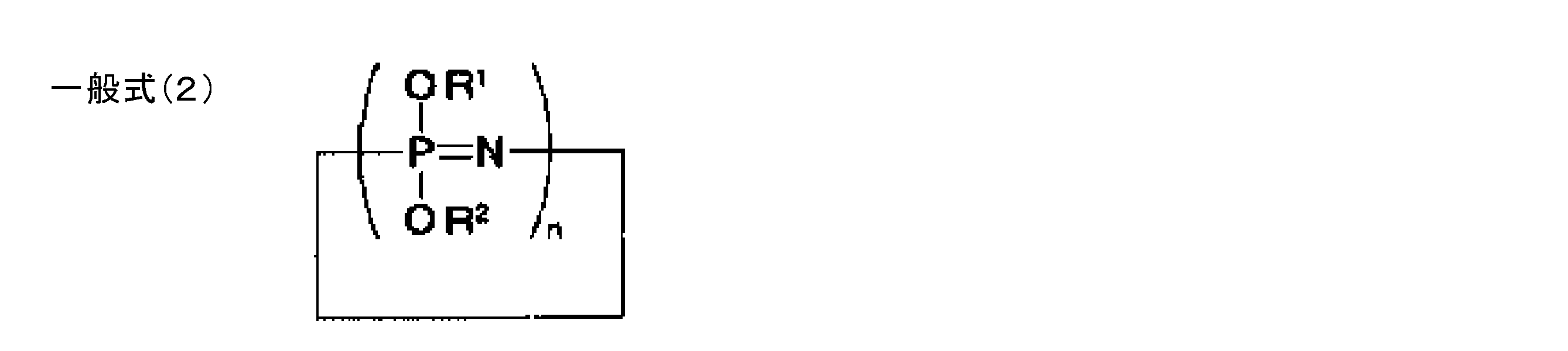
但し、一般式(1)又は(2)において、R1及びR2は、それぞれ水素原子であるか、又はハロゲンを含まない1価の有機基であり、R1及びR2の1価の有機基は、フェニル基、アルキル基、アミノ基、アリル基を表わし、前記フェニル基等はそれぞれハロゲンを含まない置換基をさらに有することができる。置換基としては、水酸基、アミノ基、シアノ基、ニトロ基、からなる群より適宜選択することができる。nは3~10の整数である。
前記R1やR2がフェニル基やアルキル基である、シクロホスファゼンが好ましく、シクロホスファゼンはトリシクロホスファゼンであることがより好ましい。具体的には、ヘキサアルコキシトリシクロホスファゼンやヘキサフェノキシトリシクロホスファゼンが挙げられ、ヘキサフェノキシトリシクロホスファゼンが好ましい。
ヘキサアルコキシトリシクロホスファゼンとしては、ヘキサメトキシトリシクロホスファゼン、ヘキサエトキシトリシクロホスファゼン、ヘキサプロポキシトリシクロホスファゼン等が挙げられる。
ヘキサフェノキシトリシクロホスファゼンとしては、無置換のヘキサフェノキシトリシクロホスファゼンの他、水酸基やシアノ基等の置換基を有するヘキサフェノキシトリシクロホスファゼンが挙げられる。
前記R1やR2がフェニル基やアルキル基である、シクロホスファゼンが好ましく、シクロホスファゼンはトリシクロホスファゼンであることがより好ましい。具体的には、ヘキサアルコキシトリシクロホスファゼンやヘキサフェノキシトリシクロホスファゼンが挙げられ、ヘキサフェノキシトリシクロホスファゼンが好ましい。
ヘキサアルコキシトリシクロホスファゼンとしては、ヘキサメトキシトリシクロホスファゼン、ヘキサエトキシトリシクロホスファゼン、ヘキサプロポキシトリシクロホスファゼン等が挙げられる。
ヘキサフェノキシトリシクロホスファゼンとしては、無置換のヘキサフェノキシトリシクロホスファゼンの他、水酸基やシアノ基等の置換基を有するヘキサフェノキシトリシクロホスファゼンが挙げられる。
ホスフィン酸化合物としては、次の一般式(3)に例示されるホスフィン酸塩が挙げられる。

但し、一般式(3)において、R1、R2は、同一か又は異なり、直鎖状もしくは分枝状の炭素数1~6のアルキル基、又はアリール基を示し、Mは、Mg、Ca、Al、Sb、Sn、Ge、Ti、Zn、Fe、Zr、Ce、Bi、Sr、Mn、Li、Na、Kから成る群より選択される少なくとも一種の金属を示し、nは1~4の整数である。より好ましい化合物としては、MがMg、Ca、Alであるホスフィン酸塩が挙げられ、MがAlであるホスフィン酸アルミニウム塩が特に好ましい。具体的には、R1及びR2がアルキル基、n=3のトリスジアルキルホスフィン酸アルミニウム塩が好ましい。
(ポリ)リン酸メラミンとしては、次の一般式(4)に例示される、リン酸とメラミンが塩の状態を呈する化合物が挙げられる。下記一般式(4)においてnは1~10であることが好ましく、nが2以上の場合を「ポリリン酸メラミン」と称する。
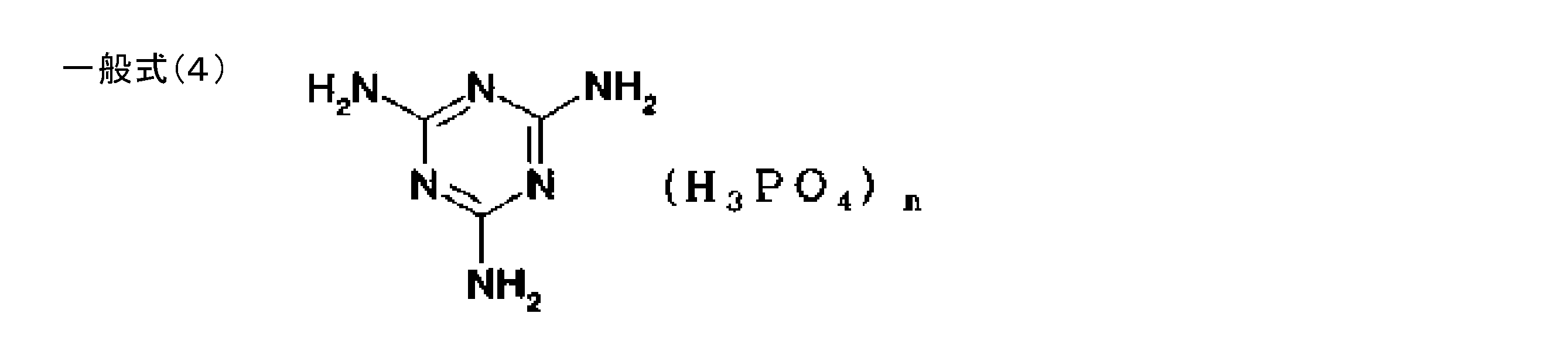
上記のリン系難燃剤(A)は、単独で用いても、各化合物群内で複数を組み合わせても、複数の化合物群から任意に組み合わせてもよい。
耐候性樹脂(B)は、紫外線や物理的衝撃等による劣化の影響を防ぎ、なおかつ、リン系難燃剤(A)が耐候性難燃樹脂層(1)中に凝集しないで均一に存在するためのバインダーとしての役割を担っている。
耐候性樹脂(B)は、フッ素系樹脂、ウレタン系樹脂、及びポリエステル系樹脂からなる群より選ばれるものが適切である。ウレタン系樹脂には、ポリエステルポリウレタン樹脂、ポリエーテルポリウレタン樹脂、ポリカーボネートポリウレタン樹脂や、前記ポリエステルポリウレタン樹脂以外のウレタン樹脂が挙げられる。前記した種々のウレタン樹脂にさらにウレア結合を有する、ウレタンウレア樹脂もウレタン樹脂として挙げることができる。耐候性を向上するため、耐候性樹脂(B)に紫外線吸収剤、光安定化剤、酸化防止剤等を結合してもよいし、耐候性樹脂(B)に紫外線吸収剤、光安定化剤、酸化防止剤等を添加してもよい。
耐候性樹脂(B)として好適なフッ素系樹脂は、主鎖の炭素に直結する部位にフッ素が結合されたモノマー(以下、フッ素含有モノマーともいう)成分を樹脂中に50モル%以上、100モル%以下含むものである。但し、フッ素含有モノマー成分が含まれていないブロックが存在するブロック共重合体は、フッ素含有モノマーが全体として50モル%以上共重合されていたとしても好ましくない。換言すると、主鎖の炭素に直結する部位にフッ素が結合されたモノマーがランダム共重合されているもの、フッ素含有モノマーと非フッ素含有モノマーが交互共重合されたもの、若しくは、複数のフッ素含有モノマーの共重合体や、単一のフッ素含有モノマーの重合体が本発明のフッ素系樹脂に該当する。
フッ素含有モノマーの好ましい例としては、CHF=CH2、CF2=CH2、CHF=CHF,CF2=CHF 、CF2=CF2 、CFCl=CF2 、CF2=CF-CF3 、CF2=CF-CF2CF3 、CF2=CF-O-(CF2CF2)n-CF3等が例示できる。
耐候性樹脂(B)に好適なフッ素系樹脂としては、ポリテトラフルオロエチレン(PTFE)、ポリクロロトリフルオロエチレン(PCTFE)、ポリフッ化ビニリデン(PVDF)、ポリフッ化ビニル(PVF)、パーフルオロアルコキシフッ素樹脂(PFA)、四フッ化エチレン・六フッ化プロピレン共重合体(FEP)、エチレン・四フッ化エチレン共重合体(ETFE)、エチレン・クロロトリフルオロエチレン共重合体(ECTFE)などが挙げられる。
フッ素系樹脂は、耐候性や耐薬品性にも優れており、耐候性樹脂(B)として好適である。前記フッ素含有モノマーからなるフッ素系樹脂は、主鎖に加水分解のおそれがあるウレタン結合やエステル結合等を有していないため、リン系難燃剤(A)から発生する微量の酸が触媒となって長期の間に加水分解を起こしたりすることがない。従って、ウレタン系樹脂やポリエステル系樹脂よりも好ましい。なお、ウレタン系樹脂やポリエステル系樹脂に対し、例えばリン酸アンモニウムを用いた場合、耐湿熱試験においてリン酸アンモニウムが分解し、強酸であるリン酸が発生する。そして、発生したリン酸がウレタン系樹脂やポリエステル系樹脂を分解してしまうので、リン酸アンモニウムのような難燃剤は太陽電池裏面保護シートには適しない。
耐候性樹脂(B)に好適なポリエステル系樹脂は、カルボン酸基を有するカルボン酸成分と水酸基を有する水酸基成分を反応させてなるものである。
上記カルボン酸成分としては、安息香酸、p-tert-ブチル安息香酸、無水フタル酸、イソフタル酸、テレフタル酸、無水コハク酸、アジピン酸、アゼライン酸、テトレヒドロ無水フタル酸、ヘキサヒドロ無水フタル酸、無水マレイン酸、フマル酸、イタコン酸、テトラクロル無水フタル酸、1,4-シクロヘキサンジカルボン酸、無水トリメリット酸、メチルシクロヘキセントリカルボン酸無水物、無水ピロメリット酸、ε-カプロラクトン、脂肪酸が例示できる。
上記水酸基成分としては、エチレングリコール、プロピレングリコール、1,3-ブチレングリコール、1,6-ヘキサンジオール、ジエチレングリコール、ジプロピレングリコール、ネオペンチルグリコール、トリエチレングリコール、3-メチルペンタンジオール、1,4-シクロヘキサンジメタノール等のジオール成分の他、グリセリン、トリメチロールエタン、トリメチロールプロパン、トリスヒドロキシメチルアミノメタン、ペンタエリスリトール、ジペンタエリスリトールなどの多官能アルコールが例示できる。
常法に従い、カルボン酸成分と水酸基成分とを重合させて所定のポリエステル樹脂としたものを耐候性樹脂(B)として使用できる。ポリエステル系樹脂は、燃焼試験(UL-1703、UL-94)を満たす観点、耐候性、耐湿熱性の観点から、低オリゴマーポリエステル系樹脂であることがより好ましい。
上記カルボン酸成分としては、安息香酸、p-tert-ブチル安息香酸、無水フタル酸、イソフタル酸、テレフタル酸、無水コハク酸、アジピン酸、アゼライン酸、テトレヒドロ無水フタル酸、ヘキサヒドロ無水フタル酸、無水マレイン酸、フマル酸、イタコン酸、テトラクロル無水フタル酸、1,4-シクロヘキサンジカルボン酸、無水トリメリット酸、メチルシクロヘキセントリカルボン酸無水物、無水ピロメリット酸、ε-カプロラクトン、脂肪酸が例示できる。
上記水酸基成分としては、エチレングリコール、プロピレングリコール、1,3-ブチレングリコール、1,6-ヘキサンジオール、ジエチレングリコール、ジプロピレングリコール、ネオペンチルグリコール、トリエチレングリコール、3-メチルペンタンジオール、1,4-シクロヘキサンジメタノール等のジオール成分の他、グリセリン、トリメチロールエタン、トリメチロールプロパン、トリスヒドロキシメチルアミノメタン、ペンタエリスリトール、ジペンタエリスリトールなどの多官能アルコールが例示できる。
常法に従い、カルボン酸成分と水酸基成分とを重合させて所定のポリエステル樹脂としたものを耐候性樹脂(B)として使用できる。ポリエステル系樹脂は、燃焼試験(UL-1703、UL-94)を満たす観点、耐候性、耐湿熱性の観点から、低オリゴマーポリエステル系樹脂であることがより好ましい。
低オリゴマーポリエステル系樹脂は、固有粘度が0.6(dl/g)以上で、かつ、環状三量体含有量が1重量%以下のものをいう。固有粘度は、0.6~1.2(dl/g)であることが好ましい。ポリエステル系樹脂の固有粘度は比粘度(ηsp=(η/η0)-1)を溶媒中の樹脂の濃度c(g/mL)で除したηsp/cを、濃度0へ外挿することにより求められる。なお、η0は溶媒の粘度、c(g/mL)は溶媒中の樹脂の濃度、ηはc(g/mL)における樹脂溶液の粘度、spは樹脂溶液の粘度と溶媒の粘度の比である。
ポリエステル系樹脂の環状三量体含有量は、少なければ少ないほど良いが、0.5重量%以下であることがより好ましい。ポリエステル系樹脂の環状三量体含有量は、ポリエステル系樹脂100mgをオルトクロロフェノール2mLに溶解し、液体クロマトグラフィーにて重量%を測定する方法で求められる。
耐候性樹脂(B)に好適なウレタン系樹脂は、水酸基を有するポリエステル樹脂以外の水酸基成分とイソシアネート化合物を反応させてなるものである。
上記水酸基成分としては、ポリエチレングリコール、ポリプロピレングリコール、エチレンオキサイドやプロピレンオキサイドを付加したポリエーテル系ポリオール、アクリルポリオール、ポリブタジエン系ポリオールなどのポリマーポリオールなどが使用できる。
上記イソシアネート化合物としては、後述するポリイソシアネート化合物(C)と同様のものを例示できる。トリメチレンジイソシアネート(TDI)、ヘキサメチレンジイソシアネート(HDI)、メチレンビス(4,1-フェニレン)=ジイソシアネート(MDI)、3-イソシアネートメチル-3,5,5-トリメチルシクロヘキシルイソシアネート(IPDI)、キシリレンジイソシアネート(XDI)等のジイソシアネートや、これらジイソシアネートのトリメチロールプロパンアダクト体、これらジイソシアネートの三量体であるイソシアヌレート体、これらジイソシアネートのビューレット結合体、ポリメリックジイソシアネートなどが例示できる。
上記水酸基成分としては、ポリエチレングリコール、ポリプロピレングリコール、エチレンオキサイドやプロピレンオキサイドを付加したポリエーテル系ポリオール、アクリルポリオール、ポリブタジエン系ポリオールなどのポリマーポリオールなどが使用できる。
上記イソシアネート化合物としては、後述するポリイソシアネート化合物(C)と同様のものを例示できる。トリメチレンジイソシアネート(TDI)、ヘキサメチレンジイソシアネート(HDI)、メチレンビス(4,1-フェニレン)=ジイソシアネート(MDI)、3-イソシアネートメチル-3,5,5-トリメチルシクロヘキシルイソシアネート(IPDI)、キシリレンジイソシアネート(XDI)等のジイソシアネートや、これらジイソシアネートのトリメチロールプロパンアダクト体、これらジイソシアネートの三量体であるイソシアヌレート体、これらジイソシアネートのビューレット結合体、ポリメリックジイソシアネートなどが例示できる。
また、耐候性樹脂(B)により高い強靭性、耐候性、耐湿熱性を必要とする場合には、より高い架橋密度を得る為に、耐候性樹脂(B)の側鎖中に反応可能な官能基を導入し、一般的な架橋剤で架橋しても良い。架橋剤としては、ポリイソシアナート化合物、ポリグリシジル化合物、ポリアジリジル化合物などが挙げられる。
耐久性や塗液安定性の点から、水酸基を有するポリエステル系またはウレタン系樹脂とイソシアナート水酸基と反応し得る官能基を有する硬化剤としては、イソシアネート化合物が好ましい。さらに耐久性の向上の点から、ポリイソシアネート化合物が好ましい。
ポリイソシアネート化合物は、耐候性樹脂(B)同士を互いに架橋させ、強靱で且つ伸張性、柔軟性、成形加工性、耐擦傷性、長期耐候性、長期耐湿熱性、耐薬品性を有する耐候性樹脂層を形成するために用いられる。得られる耐候性樹脂層が経時で黄色から褐色に変色することを防ぐために、脂環族または脂肪族の化合物のみを用いることが好ましい。
脂環族ポリイソシアネート化合物としては、例えば、イソホロンジイソシアネート、水添トリレンジイソシアネート、水添4,4'-ジフェニルメタンジイソシアネートなどが挙げられる。
脂肪族ポリイソシアネート化合物としては、例えば、トリメチルヘキサメチレンジイソシアネート、ヘキサメチレンジイソシアネート、リジンジイソシアネートなどが挙げられる。
芳香族ポリイソシアネート化合物としては、例えば、ジフェニルメタンジイソシアネート、トルイレンジイソシアネート、ナフチレン-1,5-ジイソシアネート、o-キシレンジイソシアネート、m-キシレンジイソシアネート、p-キシレンジイソシアネート、トリフェニルメタントリイソシアネート、ポリメチレンポリフェニルイソシアネートなどが挙げられる。
脂肪族ポリイソシアネート化合物としては、例えば、トリメチルヘキサメチレンジイソシアネート、ヘキサメチレンジイソシアネート、リジンジイソシアネートなどが挙げられる。
芳香族ポリイソシアネート化合物としては、例えば、ジフェニルメタンジイソシアネート、トルイレンジイソシアネート、ナフチレン-1,5-ジイソシアネート、o-キシレンジイソシアネート、m-キシレンジイソシアネート、p-キシレンジイソシアネート、トリフェニルメタントリイソシアネート、ポリメチレンポリフェニルイソシアネートなどが挙げられる。
ポリイソシアネート化合物としては、上記化合物とグリコール類またはジアミン類との反応生成物である両末端イソシアネートアダクト体、ビウレット変性体、イソシアヌレート変性体を用いても構わない。
特に、ポリイソシアネート化合物がイソシアヌレート変性体、特にイソシアヌレート環含有トリイソシアネートを含む場合には、より強靱、且つ伸張性を有する耐候性樹脂層を得ることができるため好ましい。イソシアヌレート環含有トリイソシアネートとして具体的には、イソシアヌレート変性イソホロンジイソシアネート(例えば、住友バイエルウレタン社製のデスモジュールZ4470)、イソシアヌレート変性ヘキサメチレンジイソシアネート(例えば、住友バイエルウレタン社製のスミジュールN3300)、イソシアヌレート変性トルイレンジイソシアネート(例えば、住友バイエルウレタン社製のスミジュールFL-2、FL-3、FL-4、HL BA)が挙げられる。また、イソシアヌレート環をさらに反応可能な官能基を2個以上有するポリエステル(c)と反応させて、1分子中のイソシアネート基を増やしても良いし、生成したウレタン結合とさらに1当量のイソシアネート基を反応させてアロファネート化して、さらに1分子中のイソシアネート基を増やしても良い。イソシアネート基と反応可能な官能基を2個以上有するポリエステル(c)としては、周知のポリエステル樹脂を用いることができる。
特に、ポリイソシアネート化合物がイソシアヌレート変性体、特にイソシアヌレート環含有トリイソシアネートを含む場合には、より強靱、且つ伸張性を有する耐候性樹脂層を得ることができるため好ましい。イソシアヌレート環含有トリイソシアネートとして具体的には、イソシアヌレート変性イソホロンジイソシアネート(例えば、住友バイエルウレタン社製のデスモジュールZ4470)、イソシアヌレート変性ヘキサメチレンジイソシアネート(例えば、住友バイエルウレタン社製のスミジュールN3300)、イソシアヌレート変性トルイレンジイソシアネート(例えば、住友バイエルウレタン社製のスミジュールFL-2、FL-3、FL-4、HL BA)が挙げられる。また、イソシアヌレート環をさらに反応可能な官能基を2個以上有するポリエステル(c)と反応させて、1分子中のイソシアネート基を増やしても良いし、生成したウレタン結合とさらに1当量のイソシアネート基を反応させてアロファネート化して、さらに1分子中のイソシアネート基を増やしても良い。イソシアネート基と反応可能な官能基を2個以上有するポリエステル(c)としては、周知のポリエステル樹脂を用いることができる。
また、上記ポリイソシアネート化合物のイソシアネート基を、例えば、メタノール、エタノール、n-ペンタノール、エチレンクロルヒドリン、イソプロピルアルコール、フェノール、p-ニトロフェノール、m-クレゾール、アセチルアセトン、アセト酢酸エチル、ε-カプロラクタムなどのブロック剤と反応させてブロック化した、ブロック変性体を用いても構わない。
更に、ポリイソシアネート化合物として、イソシアネート基と反応可能な官能基を2個以上有するポリエステル(d)と、両末端にイソシアネート基を有するジイソシアネート化合物(e)とを反応させてなる、両末端イソシアネートプレポリマーを用いても構わない。ポリイソシアネート化合物が上記両末端イソシアネートプレポリマーを含む場合には、少量で伸張性が得られ、塗膜の強靱性も損なわれない。ポリイソシアネート化合物は、1種、もしくは2種以上を組み合わせて使用することができる。
イソシアネート基と反応可能な官能基を2個以上有するポリエステル(d)としては、周知のポリエステル樹脂を用いることができる。両末端にイソシアネート基を有するジイソシアネート化合物(e)としては、例えば、トルイレンジイソシアネート、ナフチレン-1,5-ジイソシアネート、o-トルイレンイソシアネート、ジフェニルメタンジイソシアネート、トリメチルヘキサメチレンジイソシアネート、イソホロンジイソシアネート、4,4'-ジフェニルメタンジイソシアネート、ヘキサメチレンジイソシアネート、m-キシレンジイソシアネート、p-キシレンジイソシアネート、リジンジイソシアネート、水添4,4'-ジフェニルメタンジイソシアネート、水添トリレンジイソシアネート等が挙げられる。
ポリイソシアネート化合物は、耐候性樹脂(B)に対して、耐候性樹脂(B)が有する官能基(イソシアネート基と反応可能な官能基)の総数に対するポリイソシアネート化合物のイソシアネート基の数が0.1~5倍であることが好ましく、更には1~3倍であることが好ましい。0.1倍より少ないと、架橋密度が低すぎて、耐溶剤性、耐擦傷性、耐候性が十分でなく、5倍より多いとイソシアネートが余ってしまい、空気中の水分と反応して、季節により物性が変化する要因となる。
硬化剤としては、上記ポリイソシアネート化合物の他に、周知のオキサゾリン化合物、例えば、2,5-ジメチル-2-オキサゾリン、2,2-(1,4-ブチレン)-ビス(2-オキサゾリン)又はヒドラジド化合物、例えば、イソフタル酸ジヒドラジド、セバシン酸ジヒドラジド、アジピン酸ジヒドラジドを含むことができる。
耐候性樹脂(B)中の芳香環含有量は、最大でも50重量%であり、10重量%以下であることが好ましく、できるだけ芳香環は含有しないことが好ましい。耐候性樹脂(B)中の芳香環含有量が50重量%を超えると、紫外線を吸収して、耐候性難燃樹脂層(1)の黄変および塗膜劣化の原因となり、耐候性が低下しやすい。
また、耐候性難燃樹脂層(1)は、表面のすべり性やブロッキング性を向上させるために、無機微粒子や有機微粒子を添加しても良い。
上記無機微粒子の具体例としては、シリカ、ガラス繊維、ガラス粉末、ガラスビーズ、クレー、ワラスナイト、酸化鉄、酸化アンチモン、リトポン、軽石粉、硫酸アルミニウム、ケイ酸ジルコニウム、ドロマイト、砂鉄などを含有する無機系粒子が挙げられる。また、前記無機微粒子は、その特性を損なわない程度に不純物を含んでいてもよい。また、粒子の形状は、粉末状、粒状、顆粒状、真球状、平板状、繊維状など、どのような形状であってもよい。
上記有機系微粒子の具体例としては、ポリオレフィン系ワックス、ポリメチルメタアクリレート樹脂、ポリスチレン樹脂、ナイロン樹脂、メラミン樹脂、グアナミン樹脂、フェノール樹脂、尿素樹脂、シリコーン樹脂、メタクリレート樹脂、アクリレート樹脂などのポリマー粒子、あるいは、セルロースパウダー、ニトロセルロースパウダー、木粉、古紙粉、籾殻粉、澱粉などが挙げられる。前記有機系微粒子は、乳化重合法、懸濁重合法、分散重合法、ソープフリー重合法、シード重合法、マイクロサスペンジョン重合法などの重合法により得ることができる。また、前記有機系粒子は、その特性を損なわない程度に不純物を含んでいてもよい。また、粒子の形状は、粉末状、粒状、顆粒状、平板状、繊維状など、どのような形状であってもよい。
また、耐候性難燃樹脂層(1)には、得られる耐候性難燃樹脂層の強度を上げるために、本発明の効果を妨げない範囲で、耐候性樹脂(B)以外の各種の熱可塑性樹脂を含有させてもよい。熱可塑性樹脂としては、例えば、ポリプロピレン、ポリエチレン、エチレン-酢酸ビニル共重合体、ポリイソブチレン、ポリブタジエン、ポリスチレン、ポリカーボネート、ポリメチルペンテン、アイオノマー、アクリロニトリル-ブタジエン-スチレン樹脂、ポリビニルアルコール、ポリアミド樹脂、ポリアセタール、エポキシ樹脂等が挙げられる。
上記の熱可塑性樹脂の添加量は、耐候性樹脂(B)の合計100重量部に対して、50重量部以下が好ましく、30重量部以下が更に好ましい。50重量部を超えると、他成分との相溶性が低下する場合がある。
耐候性難燃樹脂層(1)には、着色する目的で顔料を添加しても良い。顔料としては、従来公知のものを用いることができ、カーボンブラック、酸化チタン、酸化亜鉛、酸化鉛、硫化亜鉛、リトボンのような無機顔料や種々の有機顔料を用いることができる。
リン系難燃剤(A)や、粒子、顔料は、分散樹脂、必要に応じて分散剤を混合したペーストを作製した後、耐光性樹脂(B)等と混合するのが好ましい。分散樹脂としては、耐候性樹脂(B)そのものを用いるのが好ましいが、特に限定はなく、顔料分散性に優れた極性基、例えば水酸基、カルボキシル基、チオール基、アミノ基、アミド基、ケトン基等を有する、アクリル樹脂、ポリウレタン樹脂、ポリウレア樹脂、ポリエステル樹脂等を用いることができる。分散剤としては、例えば、顔料誘導体、アニオン系界面活性剤、両性界面活性剤、ノニオン系界面活性剤、チタンカップリング剤、シランカップリング剤等が挙げられる。また、金属キレート、樹脂コートなどにより、顔料表面の改質を行うこともできる。
本発明の耐候性難燃樹脂層(1)は、上記(iv)(v)を満たすものである。即ち、耐候性難燃樹脂層(1)の膜厚tは太陽電池裏面保護シートの総膜厚の2.5~20%とする。例えば、膜厚が300μmの太陽電池裏面保護シートの場合、耐候性難燃樹脂層(1)の膜厚tは7.5~60μmの範囲とする。また、耐候性難燃樹脂層(1)中のリン系難燃剤(A)由来の総リン濃度を2.1~14.2重量%とする。耐候性難燃樹脂層(1)の膜厚tを上記範囲とし、かつ、総リン濃度を特定の範囲とすることによって、難燃性、経済性に優れる太陽電池裏面保護シートを提供できる。
耐候性難燃樹脂層(1)の膜厚tを太陽電池裏面保護シートの総膜厚の2.5%以上とすることにより、厚みの点で太陽電池裏面保護シートの主たる構成部材であるプラスチックフィルム(2)の燃焼を抑え、UL-1703の火炎伝搬性試験を満たすことができる。一方、耐候性難燃樹脂層(1)の膜厚tが太陽電池裏面保護シートの総膜厚が20%以上であると均一な層を形成することが困難となったり、コスト的なデメリットが大きくなったりする。
また、耐候性難燃樹脂層(1)中のリン系難燃剤(A)由来の総リン濃度を2.1%以上とすることにより、塗膜自体の難燃性を良好に保つのみならず、十分な炭化被膜を形成し、プラスチックフィルム(2)等の燃焼を効果的に抑えることができる。その結果、火炎伝播試験の規格値を満たすことができる。また、総リン濃度を14.2%以下とすることにより、耐候性、耐湿熱性を良好に保つことができる。耐候性難燃樹脂層(1)中のリン系難燃剤(A)由来の総リン濃度のより好ましい範囲は3~10重量%である。
耐候性難燃樹脂層(1)の膜厚tを太陽電池裏面保護シートの総膜厚の2.5%以上とすることにより、厚みの点で太陽電池裏面保護シートの主たる構成部材であるプラスチックフィルム(2)の燃焼を抑え、UL-1703の火炎伝搬性試験を満たすことができる。一方、耐候性難燃樹脂層(1)の膜厚tが太陽電池裏面保護シートの総膜厚が20%以上であると均一な層を形成することが困難となったり、コスト的なデメリットが大きくなったりする。
また、耐候性難燃樹脂層(1)中のリン系難燃剤(A)由来の総リン濃度を2.1%以上とすることにより、塗膜自体の難燃性を良好に保つのみならず、十分な炭化被膜を形成し、プラスチックフィルム(2)等の燃焼を効果的に抑えることができる。その結果、火炎伝播試験の規格値を満たすことができる。また、総リン濃度を14.2%以下とすることにより、耐候性、耐湿熱性を良好に保つことができる。耐候性難燃樹脂層(1)中のリン系難燃剤(A)由来の総リン濃度のより好ましい範囲は3~10重量%である。
耐候性難燃樹脂層(1)中のリン系難燃剤(A)の重量は、10重量%以上であることが好しく、15重量%以上であることがより好ましく、20重量%以上であることがさらに好ましい。また、耐候性難燃樹脂層(1)中のリン系難燃剤(A)の重量は、60重量%以下であることが好ましく、50重量%以下であることがより好ましい。リン系難燃剤(A)の量を10重量%以上、60重量%以下の範囲に含めることによって、難燃性、耐候性、耐湿熱性をバランスよく満たすことができる。特に、20重量%以上にすることにより難燃性を効果的に高めることができる。また、50重量%以下とすることにより、耐候性樹脂(B)の配合量を適切に保ち、耐候性、耐湿熱性をより良好に保つことができる。
本発明に用いられるホスファゼン化合物、ホスフィン酸化合物及び(ポリ)リン酸メラミンから選ばれるリン系難燃剤(A)は、耐湿熱試験においてほとんど加水分解しない。しかし、わずかな加水分解の結果生じたごく微量の酸でも、極めて長期の間にはその酸が触媒となり、耐候性樹脂(B)の加水分解を促進し、しいては耐候性難燃樹脂層(1)の劣化が進むおそれがある。そのため、耐候性樹脂(B)としては樹脂の主鎖に加水分解性の部位を含まないことが好ましい。
次に、本発明に用いるプラスチックフィルム(2)に関して説明する。本発明で用いるプラスチックフィルム(2)としては、例えば、ポリエチレンテレフタレート、ポリブチレンテレフタレート、ポリナフタレンテレフタレートなどのポリエステル系樹脂フィルム、ポリエチレン、ポリプロピレン、ポリシクロペンタジエンなどのオレフィンフィルム、ポリフッ化ビニル、ポリフッ化ビニリデンフィルム、ポリテトラフルオロエチレンフィルム、エチレン‐テトラフルオロエチレン共重合体フィルムなどのフッ素系フィルム、アクリルフィルム、トリアセチルセルロースフィルムを用いることができる。フィルム剛性、コストの観点からポリエステル系樹脂フィルムであることが好ましく、ポリエチレンテレフタレートフィルムであることが好ましい。プラスチックフィルム(2)は、1層でも、2層以上の複層構造でも構わない。
これらプラスチックフィルム(2)は無色であってもよいし、顔料もしくは染料などの着色成分が含有されていても良い。着色成分を含有させる方法としては、例えば、フィルムの製膜時にあらかじめ着色成分を練りこんでおく方法、無色透明フィルム基材上に着色成分を印刷する方法等がある。また、着色フィルムと無色透明フィルムとを貼り合わせて使用してもよい。
次に、本発明に用いる易接着剤層(3)に関して説明する。本発明における易接着剤層(3)は、プラスチックフィルム(2)と非受光面側封止材(IV)との接着性を向上するための層として、太陽電池裏面保護シートの一方の側の最表面に設けられた樹脂層である。そして、太陽電池モジュールを形成する際、非受光面側封止材(IV)と本発明の太陽電池裏面保護シート(V)とを、易接着剤層(3)とが接するようにして貼着することによって、太陽電池モジュールに太陽電池裏面保護シートが装着される。
本発明において用いられる易接着剤層(3)は、種々の樹脂を含有する一般的な接着剤から形成することができる。好適な例としては、ポリエステル系樹脂、ウレタン系樹脂、アクリル系樹脂が挙げられる。樹脂は単独または2種以上を使用できる。さらにこれらの樹脂が複合化したものも使用できる。
易接着剤層(3)として好適なポリエステル系樹脂は、カルボン酸成分と水酸基成分とを反応(エステル化反応、エステル交換反応)させたポリエステル樹脂の他、水酸基を有するポリエステル樹脂にさらにイソシアネート化合物を反応させてなるポリエステルポリウレタン樹脂、さらにジアミン成分を反応させてなるポリエステルポリウレタンポリウレア樹脂などをも含む。
易接着剤層(3)のポリエステル系樹脂を構成するカルボン酸成分としては、安息香酸、p-tert-ブチル安息香酸、無水フタル酸、イソフタル酸、テレフタル酸、無水コハク酸、アジピン酸、アゼライン酸、テトレヒドロ無水フタル酸、ヘキサヒドロ無水フタル酸、無水マレイン酸、フマル酸、イタコン酸、テトラクロル無水フタル酸、1,4-シクロヘキサンジカルボン酸、無水トリメリット酸、メチルシクロヘキセントリカルボン酸無水物、無水ピロメリット酸、ε-カプロラクトン、脂肪酸が例示できる。
易接着剤層(3)のポリエステル系樹脂を構成する水酸基成分としては、エチレングリコール、プロピレングリコール、1,3-ブチレングリコール、1,6-ヘキサンジオール、ジエチレングリコール、ジプロピレングリコール、ネオペンチルグリコール、トリエチレングリコール、3-メチルペンタンジオール、1,4-シクロヘキサンジメタノール等のジオール成分の他、グリセリン、トリメチロールエタン、トリメチロールプロパン、トリスヒドロキシメチルアミノメタン、ペンタエリスリトール、ジペンタエリスリトールなどの多官能アルコールが例示できる。
常法に従い、カルボン酸成分と水酸基成分とを重合させて所定のポリエステル樹脂としたものを易接着剤層(3)として使用できる。
易接着剤層(3)のポリエステル系樹脂を構成する水酸基成分としては、エチレングリコール、プロピレングリコール、1,3-ブチレングリコール、1,6-ヘキサンジオール、ジエチレングリコール、ジプロピレングリコール、ネオペンチルグリコール、トリエチレングリコール、3-メチルペンタンジオール、1,4-シクロヘキサンジメタノール等のジオール成分の他、グリセリン、トリメチロールエタン、トリメチロールプロパン、トリスヒドロキシメチルアミノメタン、ペンタエリスリトール、ジペンタエリスリトールなどの多官能アルコールが例示できる。
常法に従い、カルボン酸成分と水酸基成分とを重合させて所定のポリエステル樹脂としたものを易接着剤層(3)として使用できる。
易接着剤層(3)のウレタン系樹脂は、水酸基を有するポリエステル樹脂以外の水酸基成分とイソシアネート化合物を反応させてなるものである。
上記水酸基成分としては、ポリエチレングリコール、ポリプロピレングリコール、エチレンオキサイドやプロピレンオキサイドを付加したポリエーテル系ポリオール、アクリルポリオール、ポリブタジエン系ポリオールなどのポリマーポリオールなどが使用できる。
上記イソシアネート化合物としては、後述するポリイソシアネート化合物(C)と同様のものを例示できる。トリメチレンジイソシアネート(TDI)、ヘキサメチレンジイソシアネート(HDI)、メチレンビス(4,1-フェニレン)=ジイソシアネート(MDI)、3-イソシアネートメチル-3,5,5-トリメチルシクロヘキシルイソシアネート(IPDI)、キシリレンジイソシアネート(XDI)等のジイソシアネートや、これらジイソシアネートのトリメチロールプロパンアダクト体、これらジイソシアネートの三量体であるイソシアヌレート体、これらジイソシアネートのビューレット結合体、ポリメリックジイソシアネートなどが例示できる。
上記水酸基成分としては、ポリエチレングリコール、ポリプロピレングリコール、エチレンオキサイドやプロピレンオキサイドを付加したポリエーテル系ポリオール、アクリルポリオール、ポリブタジエン系ポリオールなどのポリマーポリオールなどが使用できる。
上記イソシアネート化合物としては、後述するポリイソシアネート化合物(C)と同様のものを例示できる。トリメチレンジイソシアネート(TDI)、ヘキサメチレンジイソシアネート(HDI)、メチレンビス(4,1-フェニレン)=ジイソシアネート(MDI)、3-イソシアネートメチル-3,5,5-トリメチルシクロヘキシルイソシアネート(IPDI)、キシリレンジイソシアネート(XDI)等のジイソシアネートや、これらジイソシアネートのトリメチロールプロパンアダクト体、これらジイソシアネートの三量体であるイソシアヌレート体、これらジイソシアネートのビューレット結合体、ポリメリックジイソシアネートなどが例示できる。
易接着剤層(3)のアクリル系樹脂を構成するモノマーとしては、一般式(a)CH2=CR1-CO-OR2(R1は水素原子、もしくはメチル基、R2は水酸基もしくは炭素数1乃至20の置換基を有する炭化水素基を示す)で表されるアクリル酸、メタクリル酸、アクリル酸メチル、アクリル酸エチル、アクリル酸イソプロピル、アクリル酸n-ヘキシル、アクリル酸ブチル、アクリル酸-2-エチルヘキシル、アクリル酸-4-ヒドロキシブチル、アクリル酸ヒドロキシプロピル、メタクリル酸メチル、メタクリル酸エチル、メタクリル酸イソプロピル、メタクリル酸ブチル、メタクリル酸n-ヘキシル、メタクリル酸ラウリル、メタクリル酸-2-ヒドロキシエチル、メタクリル酸-4-ヒドロキシブチル、メタクリル酸ヒドロキシプロピル等が例示できる。更にはアクリルアミド、メタアクリルアミド、アクリルニトリル、メタアクリルニトリル、N-メチロールアクリルアミド、N-アルキロールアクリルアミド、ジアセトンアクリルアミド、ジアセトンメタクリルアミド、アクロレイン、メタアクロレイン、グリシジルメタクリレートなども反応性モノマーとして例示できる。常法に従いこれらのモノマーを共重合させて所定のアクリル樹脂としたものが本発明で使用できる。
易接着剤層(3)の強靭性、伸縮性、耐熱性、耐湿熱性、耐候性を向上させるため、架橋剤を含む接着剤を用い、非受光面側封止材(IV)と本発明の太陽電池裏面保護シート(V)とを重ね、貼り合わせて、太陽電池モジュールを形成する際、太陽電池裏面保護シート(V)最表面の架橋剤含有の易接着剤層(3)を架橋させることが好ましい。例えば、先に例示したポリエステル系樹脂、ウレタン系樹脂、アクリル系樹脂を易接着剤層(3)に用いる場合、前記樹脂は、水酸基、カルボキシル基、スルホニル基、ホスフォニル基、イソシアナート基、エポキシ基などの反応点を持つことが好ましい。
架橋剤としては、ポリイソシアナート化合物、ポリグリシジル化合物、ポリアジリジル化合物などが挙げられる。
耐久性や塗液安定性の点から、水酸基を有するポリエステル系またはウレタン系樹脂とイソシアナート水酸基と反応し得る官能基を有する硬化剤としては、イソシアネート化合物が好ましい。さらに耐久性の向上の点から、ポリイソシアネート化合物が好ましい。また、ブロック化ポリイソシアネート化合物を用いても良い。ポリイソシアネート化合物としては、耐候性樹脂(B)の架橋剤として例示したポリイソシアネート化合物と同様のものを使うことができる。
架橋剤としては、上記ポリイソシアネート化合物の他に、周知のオキサゾリン化合物、例えば、2,5-ジメチル-2-オキサゾリン、2,2-(1,4-ブチレン)-ビス(2-オキサゾリン)又はヒドラジド化合物、例えば、イソフタル酸ジヒドラジド、セバシン酸ジヒドラジド、アジピン酸ジヒドラジドを含むことができる。
太陽電池裏面保護シートは、防湿性を付与するために水蒸気バリア層を具備することができる。水蒸気バリア層としては、特に限定されないが、金属箔、あるいは金属酸化物もしくは非金属無機酸化物の蒸着層が挙げられる。
上記金属箔としては、アルミニウム箔、鉄箔、亜鉛合板などを使用することができ、これらの中でも、耐腐食性の観点から、アルミニウム箔が好ましく、厚みは10μmから100μmであることが好ましく、更に好ましくは20μmから50μmであることが好ましい。両者の積層には、従来公知の種々の接着剤を用いることができる。
上記蒸着層は、プラスチックフィルム(2)の一方の面に設けられる。層間接着剤層を介して片面蒸着ポリエステルフィルム同士を積層したものや、あるいは片面蒸着ポリエステルフィルムと他の蒸着フィルムとを層間接着剤層を介して積層したものも用いることができる。
蒸着される金属酸化物もしくは非金属無機酸化物としては、例えば、ケイ素、アルミニウム、マグネシウム、カルシウム、カリウム、スズ、ナトリウム、ホウ素、チタン、鉛、ジルコニウム、イットリウムなどの酸化物が使用できる。また、アルカリ金属、アルカリ土類金属のフッ化物なども使用することができる。これらは単独もしくは組み合わせて使用することができる。これらの金属酸化物もしくは非金属無機酸化物は、従来公知の真空蒸着、イオンプレーティング、スパッタリングなどのPVD方式や、プラズマCVD、マイクロウェーブCVDなどのCVD方式を用いて蒸着することができる。
上記金属箔としては、アルミニウム箔、鉄箔、亜鉛合板などを使用することができ、これらの中でも、耐腐食性の観点から、アルミニウム箔が好ましく、厚みは10μmから100μmであることが好ましく、更に好ましくは20μmから50μmであることが好ましい。両者の積層には、従来公知の種々の接着剤を用いることができる。
上記蒸着層は、プラスチックフィルム(2)の一方の面に設けられる。層間接着剤層を介して片面蒸着ポリエステルフィルム同士を積層したものや、あるいは片面蒸着ポリエステルフィルムと他の蒸着フィルムとを層間接着剤層を介して積層したものも用いることができる。
蒸着される金属酸化物もしくは非金属無機酸化物としては、例えば、ケイ素、アルミニウム、マグネシウム、カルシウム、カリウム、スズ、ナトリウム、ホウ素、チタン、鉛、ジルコニウム、イットリウムなどの酸化物が使用できる。また、アルカリ金属、アルカリ土類金属のフッ化物なども使用することができる。これらは単独もしくは組み合わせて使用することができる。これらの金属酸化物もしくは非金属無機酸化物は、従来公知の真空蒸着、イオンプレーティング、スパッタリングなどのPVD方式や、プラズマCVD、マイクロウェーブCVDなどのCVD方式を用いて蒸着することができる。
水蒸気バリア層は、必要とされる電気絶縁性や水蒸気バリア性に応じて、上記バリア層を2層以上積層した積層体であってもよい。
耐候性難燃樹脂層(1)又は易接着剤層(3)をプラスチックフィルム(2)や水蒸気バリア層上に設ける方法としては、ロールナイフコーター、ダイコーター、ロールコーター、バーコーター、グラビアロールコーター、リバースロールコーター、ディッピング、ブレードコーター、グラビアコーター、マイクログラビアコーター、コンマコーターなどの従来公知のコーティング方式によって、耐候性難燃樹脂組成物(1')又は易接着剤組成物(3')をコーティングする方法や、耐候性難燃樹脂組成物(1')又は易接着剤組成物(3')から形成されるフィルムを、ドライラミネート、エクストルージョンラミネート、サーマルラミネート法など従来公知のラミネート方法でプラスチックフィルム(2)あるいは水蒸気バリア層と貼り合わせる方法が挙げられる。
次に、本発明の太陽電池裏面保護シートの製造方法について説明する。図2Aは、耐候性難燃樹脂層(1)、プラスチックフィルム(2)、易接着剤層(3)が積層されてなる、本発明の太陽電池裏面保護シートの一例を示す模式的断面図である。本発明の太陽電池裏面保護シートは、その他に水蒸気バリア層(4)、層間接着剤層(5)等の層を有していてもよい。例えば、図2Bは、耐候性難燃樹脂層(1)、水蒸気バリア層(4)、層間接着剤層(5)、プラスチックフィルム(2)、易接着剤層(3)が積層されてなる、本発明の太陽電池裏面保護シートの模式的断面図である。また、図2Cは、耐候性難燃樹脂層(1)、プラスチックフィルム(2)、層間接着剤層(5)、水蒸気バリア層(4)、易接着剤層(3)が積層されてなる、本発明の太陽電池裏面保護シートの模式的断面図である。
次に、本発明の太陽電池モジュールの製造方法について説明する。本発明の太陽電池モジュールは、太陽電池の受光面側に位置する太陽電池表面封止シート(I)と、太陽電池の受光面側に位置する封止材層(II)、太陽電池素子(III)と、太陽電池の非受光面側に位置する封止材層(IV)と、詳述した本発明の太陽電池裏面保護シートを必須の構成層とし、本発明の太陽電池裏面保護シートを構成する耐候性難燃樹脂層(1)が、前記太陽電池表面封止シート(I)から最も遠くに位置するように積層することによって、得ることができる。言い換えると、非受光面側封止材層(IV)に、本発明の太陽電池裏面保護シートを構成する易接着剤層(3)が接するように、太陽電池裏面封止シートを積層することによって、本発明の太陽電池モジュールを得ることができる。非受光面側封止材層(IV)と太陽電池裏面保護シートとを積層する際、減圧下に両者を接触させ、次いで加熱・加圧下で重ね合わせればよい。易接着剤層(3)が熱硬化性の場合、常圧に戻した後、さらに高温条件下に置いて、易接着剤層(3)の硬化を進行させることもできる。
[実施例]
[実施例]
以下、実施例により、本発明をさらに詳細に説明する。なお、実施例中、部は重量部を、%は重量%をそれぞれ示す。また、表中、各記号は以下の通りである。
リン系難燃剤A1:Exolit OP935(トリスジエチルホスフィン酸アルミニウム、クラリアント社製)
リン系難燃剤A2:Exolit OP1230(トリスジエチルホスフィン酸アルミニウム、クラリアント社製)
リン系難燃剤A3:Exolit OP1312(トリスジエチルホスフィン酸アルミニウムとリン酸メラミンの混合物、クラリアント社製)
リン系難燃剤A4:SPB-100(フェノキシシクロトリホスファゼン、大塚化学社製)
リン系難燃剤A5:SPH-100(4-ヒドロキシフェノキシシクロトリホスファゼン、大塚化学社製)
リン系難燃剤A6:FP-300(4-シアノフェノキシシクロトリホスファゼン、伏見製薬所社製)
リン系難燃剤A7:ホスメル100(リン酸メラミン、日立化成社製)
リン系難燃剤A8:ホスメル200(リン酸メラミン二量体、日立化成社製)
リン系難燃剤A9:ポリリン酸アンモニウム
リン系難燃剤A10:トリフェニルホスフェート(大八化学工業社製)
非リン系難燃剤A11:STABIACE MC-55(メラミンシアヌレート、堺化学工業社製)
非リン系難燃剤A12:水酸化アルミニウム
ハロゲン系難燃剤A13:ファイアカット FCP-83D(デカブロモジフェニルオキサイド、鈴裕化学社製)
フッ素系樹脂B1:PVDFエマルジョン溶液(アルケマ社製)
フッ素系樹脂B2:PVDFペレット(アルケマ社製、KYNAR)
ウレタン系樹脂B3:ウレタン樹脂溶液(三洋化成社製、サンプレン)
ポリエステル系樹脂B4:ポリエステル樹脂ペレット(東洋紡社製、バイロン、固有粘度が0.52(dl/g)、環状三量体含有量が1.5重量%)
ポリエステル系樹脂B5:ポリエステル樹脂ペレット(東洋紡社製、バイロン)をソックスレー抽出機で低オリゴマー成分を除去したもの(固有粘度が0.67(dl/g)、環状三量体含有量が0.5重量%)。
アクリル系樹脂B6:ベンゾトリアゾール及び水酸基含有アクリル系樹脂(日本触媒社製 ハルスハイブリッドUV-G720T溶液、水酸基価=38)
タイペークCR-97:石原産業社製 白色顔料用酸化チタン
リン系難燃剤A1:Exolit OP935(トリスジエチルホスフィン酸アルミニウム、クラリアント社製)
リン系難燃剤A2:Exolit OP1230(トリスジエチルホスフィン酸アルミニウム、クラリアント社製)
リン系難燃剤A3:Exolit OP1312(トリスジエチルホスフィン酸アルミニウムとリン酸メラミンの混合物、クラリアント社製)
リン系難燃剤A4:SPB-100(フェノキシシクロトリホスファゼン、大塚化学社製)
リン系難燃剤A5:SPH-100(4-ヒドロキシフェノキシシクロトリホスファゼン、大塚化学社製)
リン系難燃剤A6:FP-300(4-シアノフェノキシシクロトリホスファゼン、伏見製薬所社製)
リン系難燃剤A7:ホスメル100(リン酸メラミン、日立化成社製)
リン系難燃剤A8:ホスメル200(リン酸メラミン二量体、日立化成社製)
リン系難燃剤A9:ポリリン酸アンモニウム
リン系難燃剤A10:トリフェニルホスフェート(大八化学工業社製)
非リン系難燃剤A11:STABIACE MC-55(メラミンシアヌレート、堺化学工業社製)
非リン系難燃剤A12:水酸化アルミニウム
ハロゲン系難燃剤A13:ファイアカット FCP-83D(デカブロモジフェニルオキサイド、鈴裕化学社製)
フッ素系樹脂B1:PVDFエマルジョン溶液(アルケマ社製)
フッ素系樹脂B2:PVDFペレット(アルケマ社製、KYNAR)
ウレタン系樹脂B3:ウレタン樹脂溶液(三洋化成社製、サンプレン)
ポリエステル系樹脂B4:ポリエステル樹脂ペレット(東洋紡社製、バイロン、固有粘度が0.52(dl/g)、環状三量体含有量が1.5重量%)
ポリエステル系樹脂B5:ポリエステル樹脂ペレット(東洋紡社製、バイロン)をソックスレー抽出機で低オリゴマー成分を除去したもの(固有粘度が0.67(dl/g)、環状三量体含有量が0.5重量%)。
アクリル系樹脂B6:ベンゾトリアゾール及び水酸基含有アクリル系樹脂(日本触媒社製 ハルスハイブリッドUV-G720T溶液、水酸基価=38)
タイペークCR-97:石原産業社製 白色顔料用酸化チタン
<耐候性難燃フィルム(1~14、101~102、23、25~31)の作製>
リン系難燃剤(A)、耐候性樹脂(B)、顔料(C)を表1A、表1Cに示す固形分組成比で混合し、さらにトルエン/酢酸エチルの50/50混合溶剤に固形分50%になるように溶解させた。さらに、ペイントシェーカーで分散した後、耐候性難燃樹脂溶液(1~14、101~102、23、25~31)を得た。
剥離処理したポリエチレンテレフタレート(以下、セパPETという)上にアプリケーターによって、上記耐候性難燃樹脂溶液(1~14、101~102、23、25~31)を塗布し、溶剤を揮散させて30μmの塗膜を得、セパPETから剥がして耐候性難燃フィルムを作製した。
リン系難燃剤(A)、耐候性樹脂(B)、顔料(C)を表1A、表1Cに示す固形分組成比で混合し、さらにトルエン/酢酸エチルの50/50混合溶剤に固形分50%になるように溶解させた。さらに、ペイントシェーカーで分散した後、耐候性難燃樹脂溶液(1~14、101~102、23、25~31)を得た。
剥離処理したポリエチレンテレフタレート(以下、セパPETという)上にアプリケーターによって、上記耐候性難燃樹脂溶液(1~14、101~102、23、25~31)を塗布し、溶剤を揮散させて30μmの塗膜を得、セパPETから剥がして耐候性難燃フィルムを作製した。
<耐候性難燃フィルム(15~22、103~108、32、34~39)の作製>
リン系難燃剤(A)、耐候性樹脂(B)、顔料(C)を表1B、1Cに示す組成にて混合し、タンブラー(新栄工機産業社製、SKS50)を用いプレミックスした。次いで、二軸押出機(日本プラコン社製)を用い、混練・押出した後、ペレタイザーでカットし、ペレット状の樹脂組成物を得た。このようにして得られた樹脂組成物を、T-ダイ押出機を用いてシート状に押出し成形し、厚さ30μmの耐候性難燃フィルムを作製した。
リン系難燃剤(A)、耐候性樹脂(B)、顔料(C)を表1B、1Cに示す組成にて混合し、タンブラー(新栄工機産業社製、SKS50)を用いプレミックスした。次いで、二軸押出機(日本プラコン社製)を用い、混練・押出した後、ペレタイザーでカットし、ペレット状の樹脂組成物を得た。このようにして得られた樹脂組成物を、T-ダイ押出機を用いてシート状に押出し成形し、厚さ30μmの耐候性難燃フィルムを作製した。
<燃焼性測定:UL試験>
厚さ30μmの耐候性難燃フィルム(1~23、25~32、34~39、101~108)をUL-94に定められたHB規格またはV規格により、評価した。
<<HB規格>> 短冊状の試験片を水平に置いて、一方の端部にバーナー炎をあてて燃焼させ、その燃焼が進む速度で合否判定する試験である。厚さ30μmの耐候性難燃フィルムの場合、燃焼速度が40mm/分以下、又は75mm/分以下をHB試験「合格」とする。
<<V規格>> 5本の試験片を用いる。垂直に支持した短冊状の試験片の下端にバーナー炎をあてて、10秒間保ち、その後バーナー炎を試験片から離し、炎が消えれば直ちにバーナー炎を更に10秒間あてたのちバーナー炎を離す。
1回目と2回目の接炎終了後の有炎燃焼持続時間、2回目の接炎終了後の有炎 燃焼持続時間及び無炎燃焼持続時間の合計、5本の試験片の有炎燃焼時間の合計、並びに燃焼滴下物 (ドリップ)の有無で判定する。具体的には、
V-0:燃焼落下物(ドリップ)がなく、1回目、2回目ともに接炎終了後の有炎燃焼持続時間が10秒以内であり、更に2回目の有炎燃焼持続時間と無炎燃焼時間の合計が30秒以内。更に5本の試験片の有炎燃焼時間の合計が50秒以内。
V-1:燃焼落下物(ドリップ)がなく、1回目、2回目ともに接炎終了後の有炎燃焼持続時間が30秒以内であり、更に2回目の有炎燃焼持続時間と無炎燃焼時間の合計が60秒以内。更に5本の試験片の有炎燃焼時間の合計が250秒以内。
V-2:燃焼落下物(ドリップ)があることを除き、V-1と同様。
なお、HB規格とV規格とは異なる規格であるので、直接対比はできないが、V規格の方がHB規格に比して厳しい規格であり、HB規格で合格しても、V規格のV-2レベルに満たないこともある。従って、難燃性の良し悪しの序列は以下のように、左に示すものほど良好となる。
>V-0>V-1>V-2>HB合格>HB不合格
その結果を表2に示す
厚さ30μmの耐候性難燃フィルム(1~23、25~32、34~39、101~108)をUL-94に定められたHB規格またはV規格により、評価した。
<<HB規格>> 短冊状の試験片を水平に置いて、一方の端部にバーナー炎をあてて燃焼させ、その燃焼が進む速度で合否判定する試験である。厚さ30μmの耐候性難燃フィルムの場合、燃焼速度が40mm/分以下、又は75mm/分以下をHB試験「合格」とする。
<<V規格>> 5本の試験片を用いる。垂直に支持した短冊状の試験片の下端にバーナー炎をあてて、10秒間保ち、その後バーナー炎を試験片から離し、炎が消えれば直ちにバーナー炎を更に10秒間あてたのちバーナー炎を離す。
1回目と2回目の接炎終了後の有炎燃焼持続時間、2回目の接炎終了後の有炎 燃焼持続時間及び無炎燃焼持続時間の合計、5本の試験片の有炎燃焼時間の合計、並びに燃焼滴下物 (ドリップ)の有無で判定する。具体的には、
V-0:燃焼落下物(ドリップ)がなく、1回目、2回目ともに接炎終了後の有炎燃焼持続時間が10秒以内であり、更に2回目の有炎燃焼持続時間と無炎燃焼時間の合計が30秒以内。更に5本の試験片の有炎燃焼時間の合計が50秒以内。
V-1:燃焼落下物(ドリップ)がなく、1回目、2回目ともに接炎終了後の有炎燃焼持続時間が30秒以内であり、更に2回目の有炎燃焼持続時間と無炎燃焼時間の合計が60秒以内。更に5本の試験片の有炎燃焼時間の合計が250秒以内。
V-2:燃焼落下物(ドリップ)があることを除き、V-1と同様。
なお、HB規格とV規格とは異なる規格であるので、直接対比はできないが、V規格の方がHB規格に比して厳しい規格であり、HB規格で合格しても、V規格のV-2レベルに満たないこともある。従って、難燃性の良し悪しの序列は以下のように、左に示すものほど良好となる。
>V-0>V-1>V-2>HB合格>HB不合格
その結果を表2に示す
<太陽電池裏面保護シート1の作製>
ポリエステルフィルム(帝人社製、テトロンS、厚み188μm、以下「透明基材A」という)の両面にコロナ処理し、一方の面にポリエステル接着剤「ダイナレオVA-3020/HD-701」(東洋インキホールディングス社製、配合比100/7、以下同)をグラビアコーターによって塗布し、溶剤を乾燥させ、塗布量が10g/m2の層間接着剤層を設けた。この層間接着剤層に、蒸着PET(三菱樹脂社製、テックバリアLX、厚み12μm)の蒸着面を重ね合わせた。その後、50℃、4日間、エージング処理し、前記層間接着剤層を硬化させ、ポリエステルフィルム-蒸着PET積層体を作製した。なお、用いた蒸着PETは、シリカを真空蒸着で作製した蒸着PETである。
ポリエステルフィルム(帝人社製、テトロンS、厚み188μm、以下「透明基材A」という)の両面にコロナ処理し、一方の面にポリエステル接着剤「ダイナレオVA-3020/HD-701」(東洋インキホールディングス社製、配合比100/7、以下同)をグラビアコーターによって塗布し、溶剤を乾燥させ、塗布量が10g/m2の層間接着剤層を設けた。この層間接着剤層に、蒸着PET(三菱樹脂社製、テックバリアLX、厚み12μm)の蒸着面を重ね合わせた。その後、50℃、4日間、エージング処理し、前記層間接着剤層を硬化させ、ポリエステルフィルム-蒸着PET積層体を作製した。なお、用いた蒸着PETは、シリカを真空蒸着で作製した蒸着PETである。
次いで、ポリエステルフィルム-蒸着PET積層体のポリエステルフィルム面に、表1Aに記載される耐候性難燃樹脂溶液1を塗布し、溶剤を乾燥させ、膜厚が約15μmの耐候性難燃樹脂層を設けた。その後、40℃、3日間、エージング処理し、前記耐候性難燃樹脂層を硬化させ、耐候性難燃樹脂層-ポリエステルフィルム-蒸着PET積層体を作製した。そして、蒸着PET面にポリエステル接着剤「ダイナレオVA-3020/HD-701」をグラビアコーターによって塗布して溶剤を乾燥させ、塗布量が5g/m2(膜厚:5μm)の易接着剤層を設け、太陽電池裏面保護シート1を作製した。
<太陽電池裏面保護シート2~14、101~102、23、25~31の作製>
太陽電池裏面保護シート1と同様にして、表1A、表1Cに示す耐候性難燃樹脂溶液2~14、101~102、23、25~31を用いて、太陽電池裏面保護シート2~14、101~102、23、25~31を作製した。
太陽電池裏面保護シート1と同様にして、表1A、表1Cに示す耐候性難燃樹脂溶液2~14、101~102、23、25~31を用いて、太陽電池裏面保護シート2~14、101~102、23、25~31を作製した。
<太陽電池裏面保護シート15の作製>
太陽電池裏面保護シート1の場合と同様にして、まずポリエステルフィルム-蒸着PET積層体を作製した。
太陽電池裏面保護シート1の場合と同様にして、まずポリエステルフィルム-蒸着PET積層体を作製した。
次いで、ポリエステルフィルム-蒸着PET積層体のポリエステルフィルム面に、ポリエステル接着剤「ダイナレオVA-3020/HD-701」をグラビアコーターによって塗布し、溶剤を乾燥させ、塗布量が10g/m2の層間接着剤層を設けた。この層間接着剤層に、表1Bに記載される耐候性難燃フィルム(膜厚:30μm)を重ね合わせた。その後、50℃、4日間、エージング処理し、前記耐候性難燃樹脂層を硬化させ、耐候性難燃樹脂層-ポリエステルフィルム-蒸着PET積層体を作製した。そして、蒸着PET面にポリエステル接着剤「ダイナレオVA-3020/HD-701」をグラビアコーターによって塗布し、溶剤を乾燥させ、塗布量が5g/m2(膜厚:5μm)の易接着剤層を設け、太陽電池裏面保護シート15を作製した。
<太陽電池裏面保護シート16~22、103~108、32、34~39の作製>
太陽電池裏面保護シート15と同様にして、表1B、表1Cに示す耐候性難燃フィルム16~22、103~108、32、34~39を用いて、太陽電池裏面保護シート16~22、103~108、32、34~39を作製した。
太陽電池裏面保護シート15と同様にして、表1B、表1Cに示す耐候性難燃フィルム16~22、103~108、32、34~39を用いて、太陽電池裏面保護シート16~22、103~108、32、34~39を作製した。
<太陽電池裏面保護シート40の作製>
耐候性難燃フィルム15と同様の作製方法、同じ組成で、膜厚が5μmの耐候性難燃フィルムを作製し、太陽電池裏面保護シート15と同様の作製方法で、耐候性難燃樹脂層、ポリエステルフィルム-蒸着PET-易接着剤層の層構成となる太陽電池裏面保護シート40を作製した。
耐候性難燃フィルム15と同様の作製方法、同じ組成で、膜厚が5μmの耐候性難燃フィルムを作製し、太陽電池裏面保護シート15と同様の作製方法で、耐候性難燃樹脂層、ポリエステルフィルム-蒸着PET-易接着剤層の層構成となる太陽電池裏面保護シート40を作製した。
<太陽電池裏面保護シート41の作製>
耐候性難燃樹脂層を設けないことを除き、太陽電池裏面保護シート15と同様の作製方法で、ポリエステルフィルム-蒸着PET-易接着剤層の層構成となる太陽電池裏面保護シート41を作製した。
耐候性難燃樹脂層を設けないことを除き、太陽電池裏面保護シート15と同様の作製方法で、ポリエステルフィルム-蒸着PET-易接着剤層の層構成となる太陽電池裏面保護シート41を作製した。
[実施例1]
太陽電池裏面保護シート1を用い、後述する方法でクロスカット密着性、燃焼性、耐湿熱性、耐候性の評価を行った。
太陽電池裏面保護シート1を用い、後述する方法でクロスカット密着性、燃焼性、耐湿熱性、耐候性の評価を行った。
<クロスカット密着性測定>
クロスカット密着性は、太陽電池裏面保護シート1の耐候性難燃樹脂層にカッターでクロス状に傷をつけ、セロハンテープ剥離試験を行い、セロハンテープ剥離後の残存塗膜の様子を目視で観察して、耐候性難燃樹脂層のポリエステルフィルムに対する密着性を評価した。
○:傷の周辺部分が剥がれない。
△:傷の周辺部分にやや剥離の傾向が見られる。
×:傷の周辺部分に明確な剥離が見られる。
クロスカット密着性は、太陽電池裏面保護シート1の耐候性難燃樹脂層にカッターでクロス状に傷をつけ、セロハンテープ剥離試験を行い、セロハンテープ剥離後の残存塗膜の様子を目視で観察して、耐候性難燃樹脂層のポリエステルフィルムに対する密着性を評価した。
○:傷の周辺部分が剥がれない。
△:傷の周辺部分にやや剥離の傾向が見られる。
×:傷の周辺部分に明確な剥離が見られる。
<燃焼性測定:ラジアントパネル(RP)試験>
燃焼性は、ASTM-E162に準拠し、火炎伝播試験(ラジアントパネル試験)を行い、燃焼速度から炎拡散係数、燃焼温度から熱放出係数を算出し、その積を火炎伝播指数とした。
火炎伝播試験とは、600℃のラジアントパネル存在下で太陽電池裏面保護シートに着火させ、太陽電池裏面保護シートの燃焼速度から炎拡散係数を、燃焼温度から熱放出係数を求めて、火炎伝播指数を算出する評価方法である。UL-1703の規格値は100以下であり、100を超えると不合格となる。
○:50未満
△:50以上~100未満
×:100以上~150未満
××:150以上
燃焼性は、ASTM-E162に準拠し、火炎伝播試験(ラジアントパネル試験)を行い、燃焼速度から炎拡散係数、燃焼温度から熱放出係数を算出し、その積を火炎伝播指数とした。
火炎伝播試験とは、600℃のラジアントパネル存在下で太陽電池裏面保護シートに着火させ、太陽電池裏面保護シートの燃焼速度から炎拡散係数を、燃焼温度から熱放出係数を求めて、火炎伝播指数を算出する評価方法である。UL-1703の規格値は100以下であり、100を超えると不合格となる。
○:50未満
△:50以上~100未満
×:100以上~150未満
××:150以上
<耐湿熱性試験>
耐湿熱性は、プレッシャークッカー試験機を用いて、温度105℃、相対湿度100%RH、2気圧の条件下で、96時間、192時間、288時間放置後のクロスカット密着性と黄変度と火炎伝播指数を測定した。クロスカット密着性は、前記と同様の方法、基準にて評価した。黄変度は、JIS-Z8722記載の方法に従って、色彩色差計CR-300(コニカミノルタ社製)を用いて、太陽電池裏面保護シート1の耐候性難燃樹脂層側から測定し、L*a*b*表色系で表したときのΔb値で評価した。
○:Δb値2未満
△:Δb値2以上4未満
×:Δb値4以上10未満
××:Δb値10以上
耐湿熱性は、プレッシャークッカー試験機を用いて、温度105℃、相対湿度100%RH、2気圧の条件下で、96時間、192時間、288時間放置後のクロスカット密着性と黄変度と火炎伝播指数を測定した。クロスカット密着性は、前記と同様の方法、基準にて評価した。黄変度は、JIS-Z8722記載の方法に従って、色彩色差計CR-300(コニカミノルタ社製)を用いて、太陽電池裏面保護シート1の耐候性難燃樹脂層側から測定し、L*a*b*表色系で表したときのΔb値で評価した。
○:Δb値2未満
△:Δb値2以上4未満
×:Δb値4以上10未満
××:Δb値10以上
<耐候性試験>
耐候性は、アイスーパーUVテスター(岩崎電気社製)を用いて、以下の条件にて、10サイクル(即ち、120h後)のクロスカット密着性、黄変度、膜減りにて評価した。
(耐候性試験条件)
1)63℃ 70% 90mW/cm2 照射4h
2)70℃ 90% 静置4h
3)シャワー10秒→結露4h→シャワー10秒
4)上記1)、2)、3)を1サイクルとして10サイクル繰り返す(1サイクル、12時間。10サイクルで計120時間。)
<膜減り> 各試験片の耐候性難燃樹脂層の表面の一部を耐候テープで保護し、10サイクル後の前記保護部分と未保護の部分の段差を測定し、以下の基準にて評価した。
○:膜減りが1μm未満
△:膜減りが1μm以上5μm未満
×:膜減りが5μm以上10μm未満
××:膜減りが10μm以上
耐候性は、アイスーパーUVテスター(岩崎電気社製)を用いて、以下の条件にて、10サイクル(即ち、120h後)のクロスカット密着性、黄変度、膜減りにて評価した。
(耐候性試験条件)
1)63℃ 70% 90mW/cm2 照射4h
2)70℃ 90% 静置4h
3)シャワー10秒→結露4h→シャワー10秒
4)上記1)、2)、3)を1サイクルとして10サイクル繰り返す(1サイクル、12時間。10サイクルで計120時間。)
<膜減り> 各試験片の耐候性難燃樹脂層の表面の一部を耐候テープで保護し、10サイクル後の前記保護部分と未保護の部分の段差を測定し、以下の基準にて評価した。
○:膜減りが1μm未満
△:膜減りが1μm以上5μm未満
×:膜減りが5μm以上10μm未満
××:膜減りが10μm以上
[実施例2~14、101、102]、[比較例1、3~9]
実施例1と同様にして、太陽電池裏面保護シート2~14、101、102及び23、25~31を用い、クロスカット密着性、燃焼性、耐湿熱性、耐候性の評価を行った。以上の結果を表3に示す。
実施例1と同様にして、太陽電池裏面保護シート2~14、101、102及び23、25~31を用い、クロスカット密着性、燃焼性、耐湿熱性、耐候性の評価を行った。以上の結果を表3に示す。
[実施例15]
太陽電池裏面保護シート15を用い、実施例1と同様にして、燃焼性、耐湿熱性、耐候性の評価を行った。なお、耐候性難燃フィルムを用いた太陽電池裏面保護シート15は、クロスカット密着性の評価はできないので、代わりに後述する方法で耐候性樹脂層の強靭性の評価を行った。
太陽電池裏面保護シート15を用い、実施例1と同様にして、燃焼性、耐湿熱性、耐候性の評価を行った。なお、耐候性難燃フィルムを用いた太陽電池裏面保護シート15は、クロスカット密着性の評価はできないので、代わりに後述する方法で耐候性樹脂層の強靭性の評価を行った。
<強靭性測定>
太陽電池裏面保護シート15を15mm幅の長方形にカットし、試験片とした。各試験片について、引っ張り試験機を用い、荷重速度100mm/minで、耐候性難燃樹脂層(即ち、耐候性難燃フィルム)とポリエステルフィルムとの間で、T字剥離試験を行い、前記耐候性難燃フィルムが破断する時の荷重で評価を行った。
○:3N/15mm以上
△:0.5N/15mm以上~3N/15mm未満
×:0.5N/15mm未満
××:耐候性難燃樹脂層(1)が脆化して、試験評価できず。
太陽電池裏面保護シート15を15mm幅の長方形にカットし、試験片とした。各試験片について、引っ張り試験機を用い、荷重速度100mm/minで、耐候性難燃樹脂層(即ち、耐候性難燃フィルム)とポリエステルフィルムとの間で、T字剥離試験を行い、前記耐候性難燃フィルムが破断する時の荷重で評価を行った。
○:3N/15mm以上
△:0.5N/15mm以上~3N/15mm未満
×:0.5N/15mm未満
××:耐候性難燃樹脂層(1)が脆化して、試験評価できず。
[実施例16~22]、[比較例10、12~19]
実施例15と同様にして、太陽電池裏面保護シート16~22及び32、34~41を用い、耐候性難燃樹脂層の強靭性・耐湿熱性・耐候性、太陽電池裏面保護シートの燃焼性の評価を行った。以上の結果を表4に示す。
実施例15と同様にして、太陽電池裏面保護シート16~22及び32、34~41を用い、耐候性難燃樹脂層の強靭性・耐湿熱性・耐候性、太陽電池裏面保護シートの燃焼性の評価を行った。以上の結果を表4に示す。

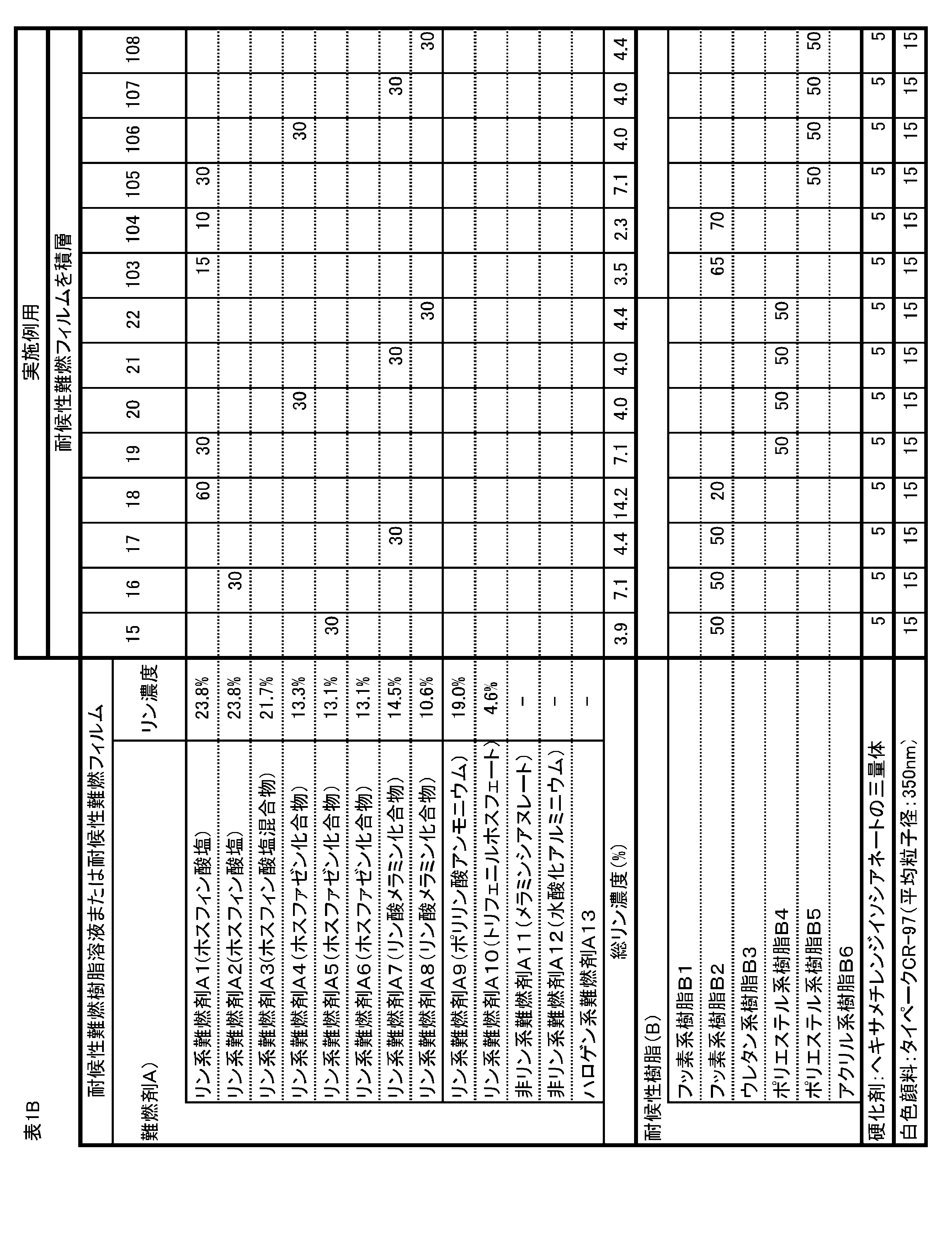
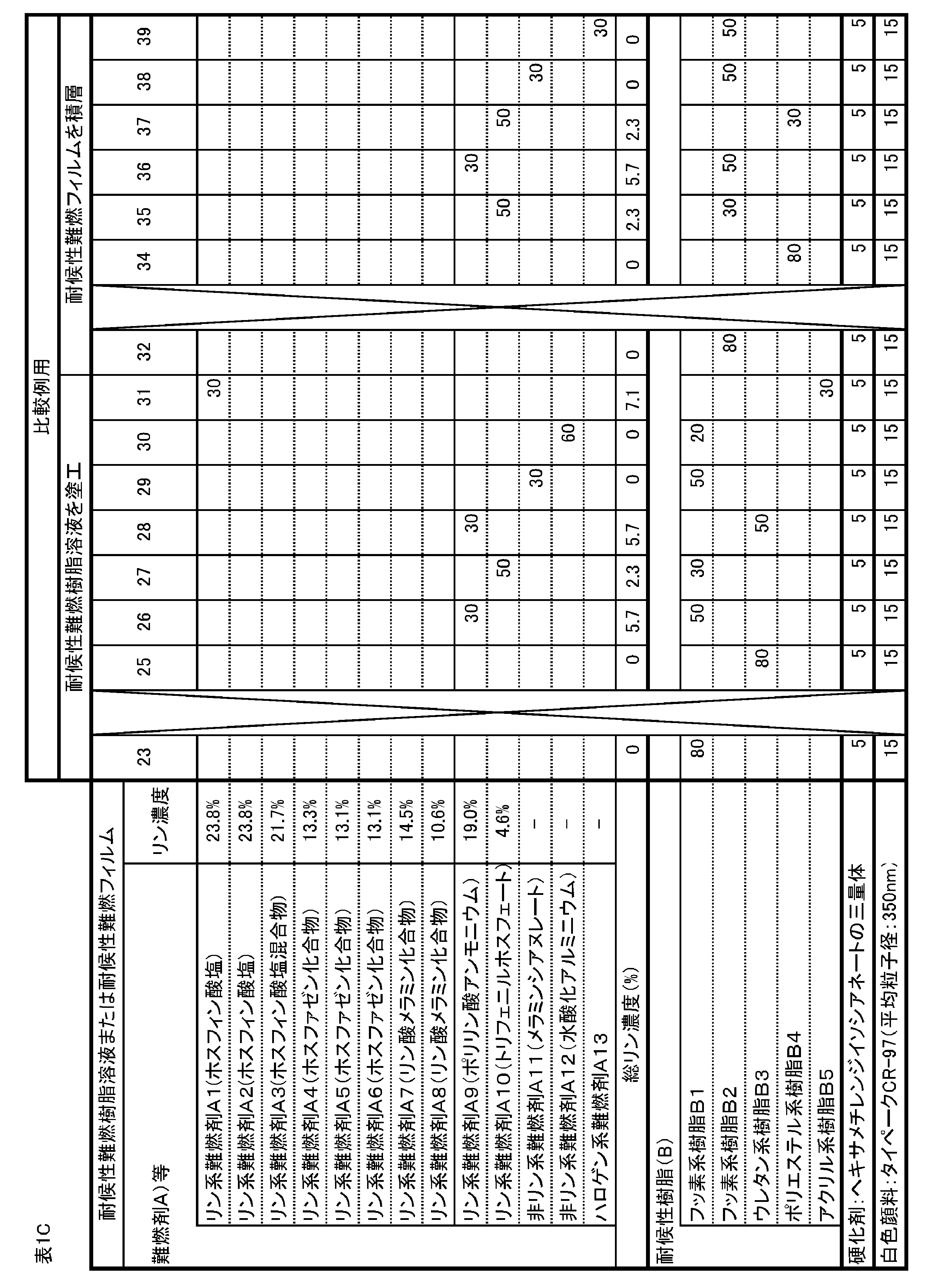
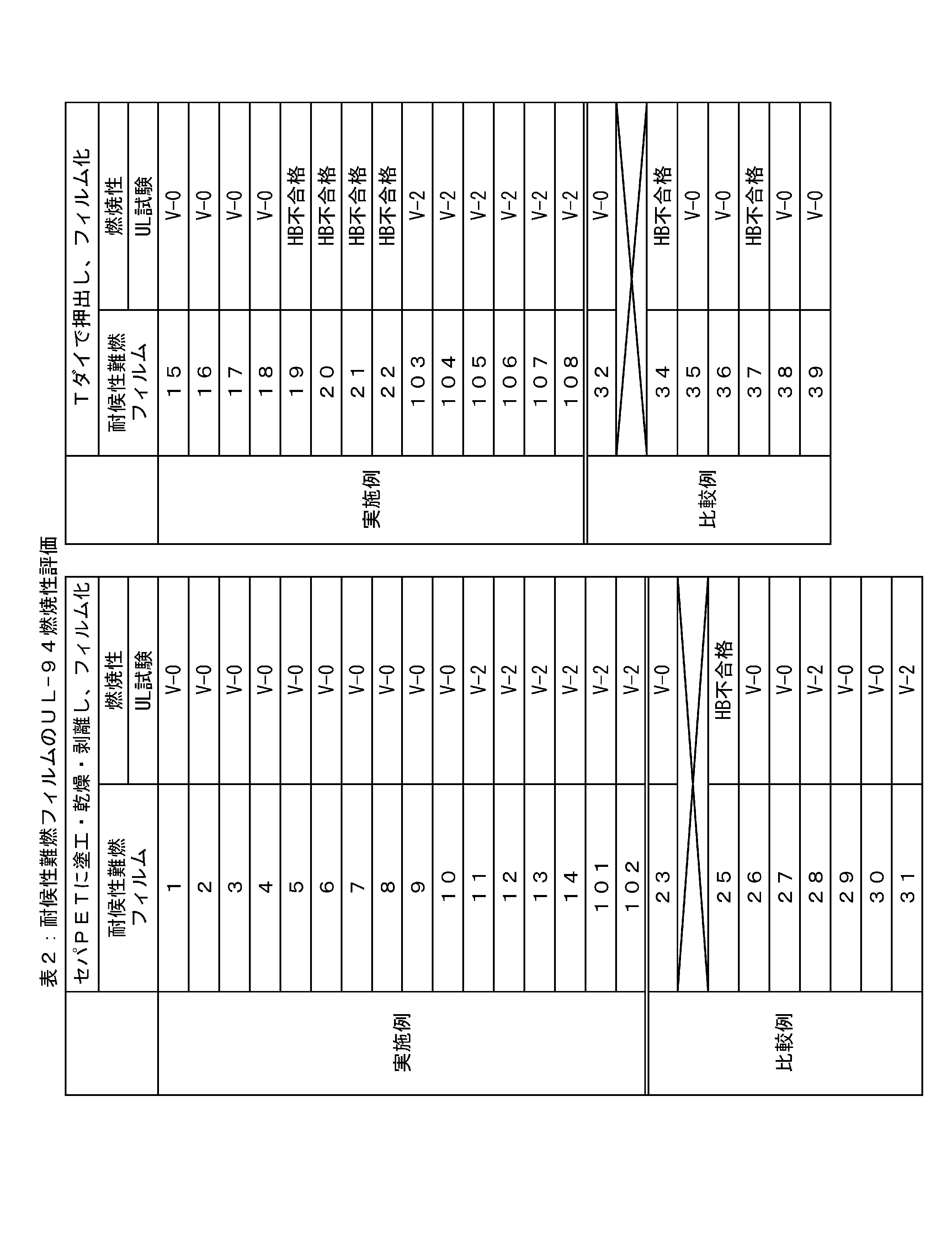
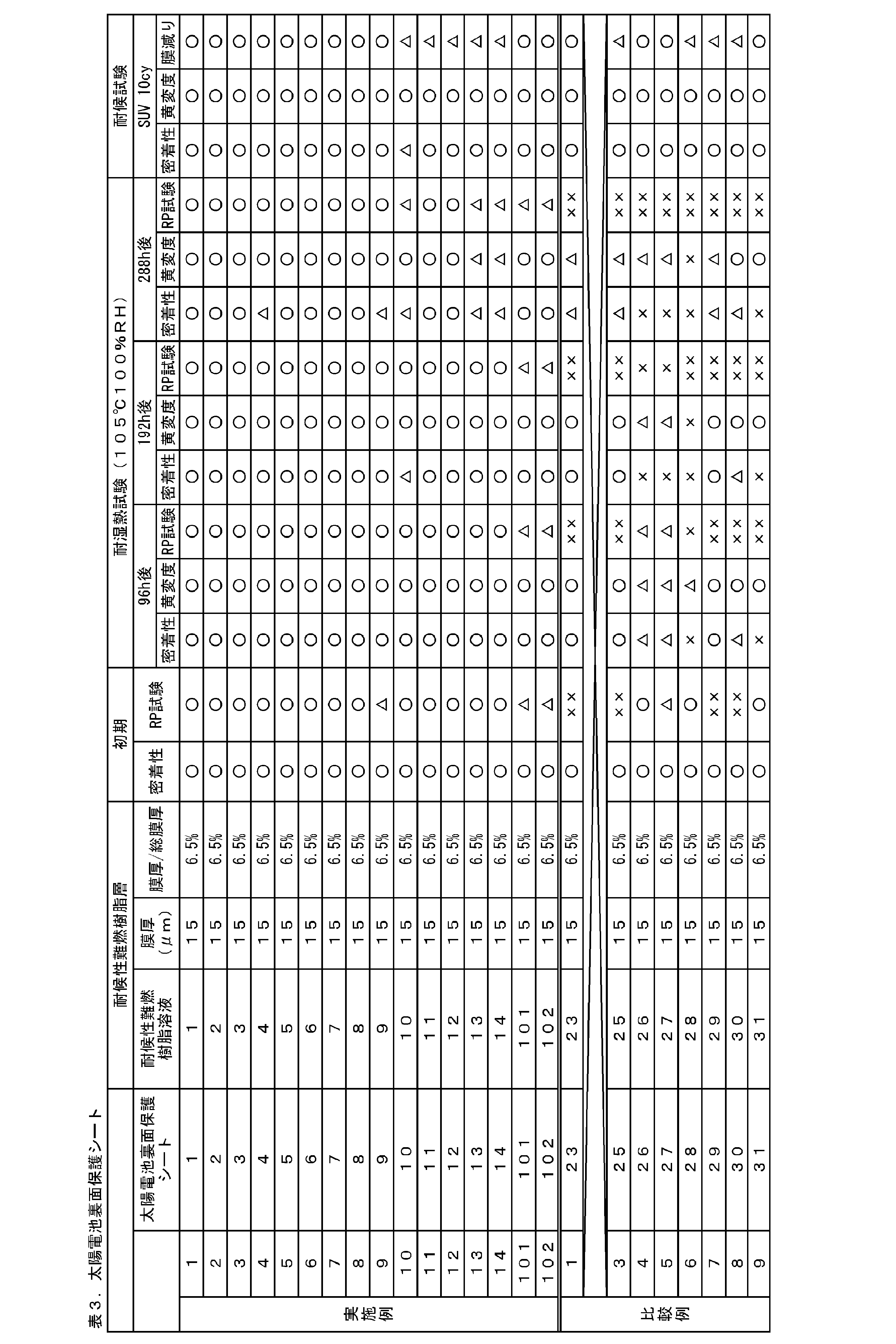
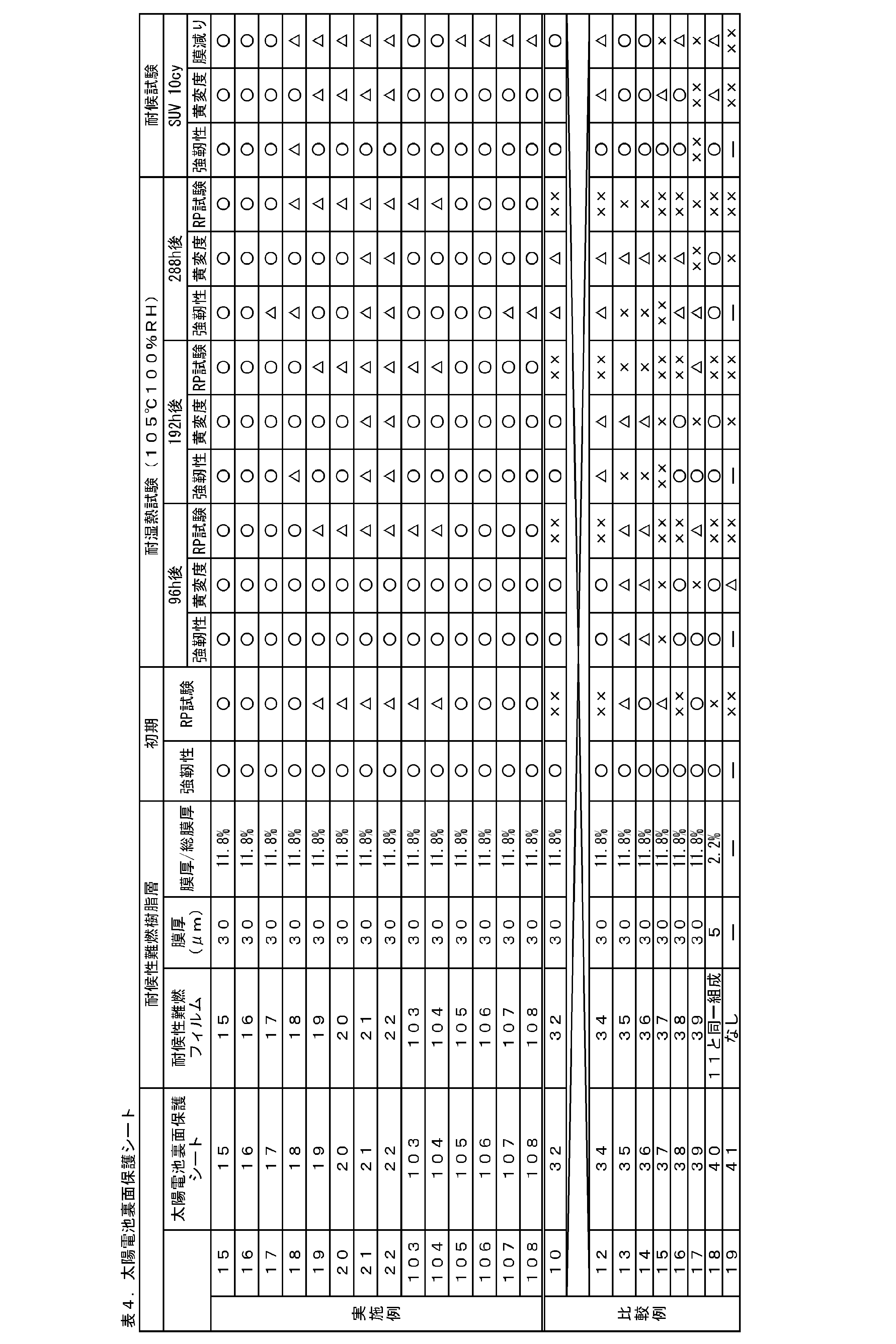
表3、表4に示されるように、実施例1~22、101~108(耐候性難燃樹脂溶液1~14、101~102又は耐候性難燃樹脂フィルム15~22、103~108を用いた場合)は、火炎伝播試験による燃焼性試験でも優れた難燃性を示した。即ち、本実施例によれば、太陽電池裏面保護シートの1/5以下の厚みの耐候性難燃樹脂層(1)が、主たる構成部材であるプラスチックフィルム(2)の燃焼(延焼)を抑え、太陽電池裏面保護シート全体として、UL-1703の規定を満たすことを確認した。また、耐湿熱性試験や耐候性試験の前後において優れた密着性を示し、耐湿熱性試験や耐候性試験を経ても黄変しにくく、耐候性試験を経ても塗膜やフィルムの厚みも減りにくい。即ち、実施例1~22等の太陽電池用裏面保護シートは、申し分のない太陽電池用裏面保護シートである。
特に、ホスフィン酸アルミニウム又はホスファゼンを用いた実施例1~3、5~8、15~16等は、耐候性難燃樹脂層(1)の疎水性が高まるため、リン系難燃剤(A)が全く添加されていない比較例1、3及び10、12(耐候性難燃樹脂溶液23、25又は耐候性難燃フィルム32、34を用いた場合)よりも、耐湿熱性において顕著な向上が見られる。
なお、表2に示されるように、実施例1~18、101~108に対応する耐候性樹脂フィルム1~18、101~108は、UL-94に定められた難燃性試験でも優れた結果を示す。
特に、ホスフィン酸アルミニウム又はホスファゼンを用いた実施例1~3、5~8、15~16等は、耐候性難燃樹脂層(1)の疎水性が高まるため、リン系難燃剤(A)が全く添加されていない比較例1、3及び10、12(耐候性難燃樹脂溶液23、25又は耐候性難燃フィルム32、34を用いた場合)よりも、耐湿熱性において顕著な向上が見られる。
なお、表2に示されるように、実施例1~18、101~108に対応する耐候性樹脂フィルム1~18、101~108は、UL-94に定められた難燃性試験でも優れた結果を示す。
一方、比較例1、3及び10、12は、リン系難燃剤を有していないので難燃性が悪く、UL-1703の規格を満たさない。特に、比較例1及び比較例10(耐候性難燃樹脂溶液23又は耐候性難燃フィルム32を使用)に対応する耐候性難燃樹脂フィルムは、表2に示すように一般的な難燃性の指標であるUL-94の試験においてV-0の結果を呈し、優れた結果となっている。しかし、耐候性難燃フィルムには、太陽電池用裏面保護シートを構成する他の層であるプラスチックフィルム(2)、即ち比較例におけるポリエステルフィルムの燃焼性を抑制する機能は無く、防炎または消炎の効果が無い。その結果、表3、4に示すようにASTM E162に定める火炎伝播試験にて、太陽電池裏面保護シートとしての燃焼性を評価した場合、UL-1703の規格を満たさない。
また、比較例4、6、14(耐候性難燃樹脂溶液26、28又は耐候性難燃フィルム36を使用)はリン系難燃剤としてポリリン酸アンモニウムを、比較例5、13、15(耐候性難燃樹脂溶液27又は耐候性難燃樹脂フィルム35、37を使用)はリン系難燃剤としてトリフェニルホスフェートを、それぞれ用いているため、火炎伝播試験による燃焼性評価では、難燃性の効果は見られる。しかし、湿熱試験において大きな劣化が見られる。即ち、湿熱試験時にポリリン酸アンモニウムやトリフェニルホスフェートが加水分解して発生した強酸であるリン酸が、耐候性難燃樹脂層(1)やプラスチックフィルム(2)を劣化、脆化させていることがわかる。
また、比較例7、8、16(耐候性難燃樹脂溶液29、30又は耐候性難燃フィルム38を使用)は、難燃剤としてメラミンシアヌレート又は水酸化アルミニウムを用いており、耐候性、耐湿熱性についてはそれほど大きな問題はない。しかし、リン系難燃剤が炭化被膜を形成して難燃性を発現するのとは異なり、メラミンシアヌレート及び水酸化アルミニウムは炭化被膜を形成しないので、難燃効果が不十分である。なお、難燃性を向上すべくこれら難燃剤の配合量を増やすと耐候性樹脂(1)が相対的に少なくなり、耐候性難燃樹脂層(1)自体の作製が困難になる他、耐候性、耐湿熱性などに大きな影響を及ぼすことが予測できる。
また、比較例9(耐候性難燃樹脂溶液31を使用)は、耐候性樹脂(B)としてベンゾトリアゾールを含有し、水酸基価=38のアクリル系樹脂を用いているため、耐候性は優れており、なおかつ難燃性に優れたホスフィン酸塩を用いているので初期は優れた物性を示すが、湿熱試験後にプラスチックフィルム(2)からウキやハガレが生じるため、耐湿熱性に優れたホスフィン酸塩を用いていても耐候性難燃樹脂層(1)が剥離し、湿熱試験後の難燃性を保持することができない。
また、比較例17(耐候性難燃フィルム39を使用)は、難燃剤としてハロゲン化難燃剤であるデカブロモジフェニルエーテルを用いており、難燃性については大きな問題はない。しかし、耐候試験や湿熱試験を経ると著しく黄変するので、太陽電池モジュールの部材として、常に光や湿熱に曝される用途には不向きである。
比較例18(耐候性難燃フィルム40を使用)は、耐候性難燃樹脂層(1)の膜厚tが、太陽電池裏面保護シートの総膜厚と比較して薄すぎるため、難燃の効果が出ない。
比較例19(耐候性難燃樹脂フィルム41を使用)は、耐候性難燃樹脂層(1)を有していないため、プラスチックフィルム(2)が表面に露出し、耐候性が著しく劣る他、燃焼性も悪い。
なお、実施例9(耐候性難燃樹脂溶液9を使用)は、総リン濃度が少ない為、火炎伝播試験での難燃性にやや劣り、実施例10、18(耐候性難燃樹脂溶液10又は耐候性難燃フィルム18を使用)は、リン系難燃剤(A)の添加量が多く、相対的に耐候性樹脂(B)の総量が減少するため、耐候性や耐湿熱性に低下が見られる。また、実施例101-104(耐候性難燃樹脂溶液101-104を使用)は、リン系難燃剤の添加量が少ない為、火炎伝播試験での難燃性にやや劣る。
また、実施例11~14(耐候性難燃樹脂溶液11~14を使用)は耐候性樹脂(B)としてウレタン系樹脂を、実施例19~22(耐候性難燃樹脂フィルム19~22を使用)はポリエステル系樹脂を用いているため、フッ素系樹脂を用いた時よりは、耐湿熱性や耐候性にやや劣る。しかしながら、ホスフィン酸アルミニウムやホスファゼンを用いた実施例11、12、19、20は、耐候性難燃樹脂層(1)の疎水性が高まるため、耐湿熱性において、リン酸メラミンを用いた実施例13、14、21、22よりも優れる。また、実施例105~108(耐候性難燃樹脂フィルム105~108を使用)は、固有粘度が0.67(dl/g)、環状三量体含有量が0.5重量%のポリエステル系樹脂を用いているため、一般的なポリエステル系樹脂よりも耐候性、耐湿熱性に優れ、耐候性難燃樹脂層として優れている。
この出願は、2011年8月3日に出願された日本出願特願2011-170505、2012年4月20日に出願された日本出願特願2012-096935を基礎とする優先権を主張し、その開示の全てをここに取り込む。
I:太陽電池の受光面側に位置する太陽電池表面封止シート
II:太陽電池の受光面側に位置する封止材層
III:太陽電池素子
IV:太陽電池の非受光面側に位置する封止剤層
V:太陽電池裏面保護シート
1:耐候性難燃樹脂層
2:プラスチックフィルム
3:接着剤層
4:水蒸気バリア層
5:層間接着剤層
II:太陽電池の受光面側に位置する封止材層
III:太陽電池素子
IV:太陽電池の非受光面側に位置する封止剤層
V:太陽電池裏面保護シート
1:耐候性難燃樹脂層
2:プラスチックフィルム
3:接着剤層
4:水蒸気バリア層
5:層間接着剤層
Claims (5)
- 膜厚t(μm)の耐候性難燃樹脂層(1)、プラスチックフィルム(2)及び易接着剤層(3)を具備してなる太陽電池裏面保護シートであって、
前記太陽電池裏面保護シートの一方の面を前記耐候性難燃樹脂層(1)が構成し、前記太陽電池裏面保護シートの他方の面を前記易接着剤層(3)が構成し、
前記耐候性難燃樹脂層(1)が、ホスファゼン化合物、ホスフィン酸化合物、及び(ポリ)リン酸メラミンからなる群より選ばれるリン系難燃剤(A)と、フッ素系樹脂、ウレタン系樹脂、及びポリエステル系樹脂からなる群より選ばれる耐候性樹脂(B)とを含有し、
前記耐候性難燃樹脂層(1)の膜厚tが、前記太陽電池裏面保護シートの総膜厚の2.5~20%であり、
前記耐候性難燃樹脂層(1)中の前記リン系難燃剤(A)由来の総リン濃度が2.1~14.2重量%である太陽電池裏面保護シート。 - 前記耐候性難燃樹脂層(1)が前記リン系難燃剤(A)を20~50重量%含むことを特徴とする請求項1記載の太陽電池裏面保護シート。
- 前記耐候性難燃樹脂層(1)中の前記リン系難燃剤(A)由来の総リン濃度が3~10重量%であることを特徴とする請求項1又は2記載の太陽電池裏面保護シート。
- 前記耐候性樹脂(B)がフッ素系樹脂、又は固有粘度が0.6(dl/g)以上で、かつ、環状三量体含有量が1重量%以下である低オリゴマーポリエステル系樹脂であることを特徴とする請求項1又は2に記載の太陽電池裏面保護シート。
- 太陽電池の受光面側に位置する太陽電池表面封止シート(I)、前記太陽電池の受光面側に位置する封止材層(II)、太陽電池素子(III)、前記太陽電池の非受光面側に位置する封止剤層(IV)、及び前記非受光面側封止剤層(IV)に接してなる請求項1乃至4いずれか記載の太陽電池裏面保護シート(V)を具備してなる太陽電池モジュールであって、
前記太陽電池裏面保護シートを構成する耐候性難燃樹脂層(1)が、前記太陽電池表面封止シート(I)から最も遠くに位置する太陽電池モジュール。
Priority Applications (2)
| Application Number | Priority Date | Filing Date | Title |
|---|---|---|---|
| CN201280037212.6A CN103843151B (zh) | 2011-08-03 | 2012-08-03 | 太阳能电池背面保护片及太阳能电池模块 |
| KR1020147004347A KR101426858B1 (ko) | 2011-08-03 | 2012-08-03 | 태양 전지 이면 보호 시트 및 태양 전지 모듈 |
Applications Claiming Priority (4)
| Application Number | Priority Date | Filing Date | Title |
|---|---|---|---|
| JP2011-170505 | 2011-08-03 | ||
| JP2011170505 | 2011-08-03 | ||
| JP2012096935A JP5352703B2 (ja) | 2011-08-03 | 2012-04-20 | 太陽電池裏面保護シートならびに太陽電池モジュール |
| JP2012-096935 | 2012-04-20 |
Publications (1)
| Publication Number | Publication Date |
|---|---|
| WO2013018378A1 true WO2013018378A1 (ja) | 2013-02-07 |
Family
ID=47628924
Family Applications (1)
| Application Number | Title | Priority Date | Filing Date |
|---|---|---|---|
| PCT/JP2012/004949 Ceased WO2013018378A1 (ja) | 2011-08-03 | 2012-08-03 | 太陽電池裏面保護シートならびに太陽電池モジュール |
Country Status (5)
| Country | Link |
|---|---|
| JP (1) | JP5352703B2 (ja) |
| KR (1) | KR101426858B1 (ja) |
| CN (1) | CN103843151B (ja) |
| TW (1) | TWI565088B (ja) |
| WO (1) | WO2013018378A1 (ja) |
Cited By (2)
| Publication number | Priority date | Publication date | Assignee | Title |
|---|---|---|---|---|
| US11807739B2 (en) | 2021-02-19 | 2023-11-07 | Saudi Arabian Oil Company | Fibrous nanoparticle-filled poly (methyl methacrylate) composites and methods of fabrication |
| US11939454B2 (en) | 2021-02-19 | 2024-03-26 | Saudi Arabian Oil Company | Dendritic fibrous materials-based poly(methyl methacrylate) and methods of preparation |
Families Citing this family (8)
| Publication number | Priority date | Publication date | Assignee | Title |
|---|---|---|---|---|
| KR101508685B1 (ko) * | 2013-04-02 | 2015-04-16 | 세계화학공업(주) | 폴리에틸렌 기재의 난연성 표면 보호용 점착테이프 |
| CN106463558B (zh) | 2014-05-28 | 2019-07-12 | 东丽株式会社 | 太阳能电池背板用聚酯膜 |
| CN104538473B (zh) * | 2014-12-25 | 2017-02-01 | 杭州福斯特光伏材料股份有限公司 | 一种太阳能电池组件用阻燃背板 |
| CN105743440B (zh) * | 2016-03-31 | 2018-06-15 | 张家港协鑫集成科技有限公司 | 光伏阻燃检测方法 |
| EP3276636B1 (en) * | 2016-07-25 | 2023-06-07 | KYOCERA Document Solutions Inc. | Electronic device |
| JPWO2021079808A1 (ja) * | 2019-10-21 | 2021-04-29 | ||
| JPWO2024204490A1 (ja) * | 2023-03-28 | 2024-10-03 | ||
| CN120441203B (zh) * | 2025-05-16 | 2026-02-24 | 江苏东极新材料科技有限公司 | 一种镀膜光伏玻璃及其制备方法 |
Citations (7)
| Publication number | Priority date | Publication date | Assignee | Title |
|---|---|---|---|---|
| JPH06196742A (ja) * | 1992-12-24 | 1994-07-15 | Canon Inc | 太陽電池モジュール |
| JP2010114118A (ja) * | 2008-11-04 | 2010-05-20 | Bridgestone Corp | 太陽電池用封止膜、及びこれを用いた太陽電池 |
| JP2010149447A (ja) * | 2008-12-26 | 2010-07-08 | Toray Ind Inc | 積層フィルム |
| JP2010219196A (ja) * | 2009-03-16 | 2010-09-30 | Lintec Corp | 太陽電池モジュール用裏面保護シート及び太陽電池モジュール |
| JP2010234741A (ja) * | 2009-03-31 | 2010-10-21 | Techno Polymer Co Ltd | 積層シート及びそれを備える太陽電池モジュール |
| JP2011134986A (ja) * | 2009-12-25 | 2011-07-07 | Fuji Electric Co Ltd | 太陽電池モジュール用難燃化封止材およびこれを用いた太陽電池モジュール |
| JP2011146671A (ja) * | 2009-12-15 | 2011-07-28 | Mitsubishi Plastics Inc | 太陽電池用積層シート及び太陽電池モジュール |
Family Cites Families (6)
| Publication number | Priority date | Publication date | Assignee | Title |
|---|---|---|---|---|
| WO2010126088A1 (ja) * | 2009-04-30 | 2010-11-04 | 三菱樹脂株式会社 | 太陽電池用シート及び太陽電池モジュール |
| KR101700989B1 (ko) * | 2009-06-24 | 2017-01-31 | 미쓰비시 가가꾸 가부시키가이샤 | 유기 전자 디바이스 및 그 제조 방법 |
| JP2011014559A (ja) * | 2009-06-30 | 2011-01-20 | Dainippon Printing Co Ltd | 太陽電池モジュール用保護フィルム及び該保護フィルムを使用した太陽電池モジュール |
| CN101805578B (zh) * | 2010-03-19 | 2012-07-25 | 苏州赛伍应用技术有限公司 | 一种太阳能电池背面保护膜 |
| JP5531748B2 (ja) | 2010-04-16 | 2014-06-25 | 東洋インキScホールディングス株式会社 | 太陽電池裏面保護シートならびに太陽電池モジュール |
| JP5538094B2 (ja) * | 2010-06-29 | 2014-07-02 | 日本ポリエチレン株式会社 | 太陽電池モジュール、それに用いる太陽電池封止材用組成物および太陽電池封止材 |
-
2012
- 2012-04-20 JP JP2012096935A patent/JP5352703B2/ja not_active Expired - Fee Related
- 2012-08-03 TW TW101127989A patent/TWI565088B/zh not_active IP Right Cessation
- 2012-08-03 WO PCT/JP2012/004949 patent/WO2013018378A1/ja not_active Ceased
- 2012-08-03 CN CN201280037212.6A patent/CN103843151B/zh not_active Expired - Fee Related
- 2012-08-03 KR KR1020147004347A patent/KR101426858B1/ko not_active Expired - Fee Related
Patent Citations (7)
| Publication number | Priority date | Publication date | Assignee | Title |
|---|---|---|---|---|
| JPH06196742A (ja) * | 1992-12-24 | 1994-07-15 | Canon Inc | 太陽電池モジュール |
| JP2010114118A (ja) * | 2008-11-04 | 2010-05-20 | Bridgestone Corp | 太陽電池用封止膜、及びこれを用いた太陽電池 |
| JP2010149447A (ja) * | 2008-12-26 | 2010-07-08 | Toray Ind Inc | 積層フィルム |
| JP2010219196A (ja) * | 2009-03-16 | 2010-09-30 | Lintec Corp | 太陽電池モジュール用裏面保護シート及び太陽電池モジュール |
| JP2010234741A (ja) * | 2009-03-31 | 2010-10-21 | Techno Polymer Co Ltd | 積層シート及びそれを備える太陽電池モジュール |
| JP2011146671A (ja) * | 2009-12-15 | 2011-07-28 | Mitsubishi Plastics Inc | 太陽電池用積層シート及び太陽電池モジュール |
| JP2011134986A (ja) * | 2009-12-25 | 2011-07-07 | Fuji Electric Co Ltd | 太陽電池モジュール用難燃化封止材およびこれを用いた太陽電池モジュール |
Cited By (2)
| Publication number | Priority date | Publication date | Assignee | Title |
|---|---|---|---|---|
| US11807739B2 (en) | 2021-02-19 | 2023-11-07 | Saudi Arabian Oil Company | Fibrous nanoparticle-filled poly (methyl methacrylate) composites and methods of fabrication |
| US11939454B2 (en) | 2021-02-19 | 2024-03-26 | Saudi Arabian Oil Company | Dendritic fibrous materials-based poly(methyl methacrylate) and methods of preparation |
Also Published As
| Publication number | Publication date |
|---|---|
| KR20140031406A (ko) | 2014-03-12 |
| TWI565088B (zh) | 2017-01-01 |
| CN103843151B (zh) | 2015-07-01 |
| CN103843151A (zh) | 2014-06-04 |
| JP5352703B2 (ja) | 2013-11-27 |
| KR101426858B1 (ko) | 2014-08-06 |
| TW201314934A (zh) | 2013-04-01 |
| JP2013051395A (ja) | 2013-03-14 |
Similar Documents
| Publication | Publication Date | Title |
|---|---|---|
| JP5352703B2 (ja) | 太陽電池裏面保護シートならびに太陽電池モジュール | |
| KR101426856B1 (ko) | 태양 전지 이면 보호 시트 및 태양 전지 모듈 | |
| CN102414838B (zh) | 太阳能电池用片及太阳能电池组件 | |
| CN101909768B (zh) | 用于光伏组件的背板 | |
| CN101605657B (zh) | 光伏组件的背板以及维修该背板的方法 | |
| EP1898470B1 (en) | Use of a back sheet for photovoltaic modules and resulting photovoltaic module | |
| CA2658010C (en) | Sheet for sealing rear surface of solar cell | |
| CN102051138B (zh) | 太阳电池模块背面保护用黏着片及使用其的太阳电池模块 | |
| CN102859716B (zh) | 太阳能电池背面保护材料用叠层聚酯膜 | |
| KR20110118170A (ko) | 코팅된 백색 폴리에스테르 필름, 그 제조방법 및 태양광 모듈의 후면 커버로서의 용도 | |
| KR20110034665A (ko) | 태양 전지용 백시트 | |
| JP2009289945A (ja) | 太陽電池バックシート及び太陽電池モジュール | |
| WO2012133748A1 (ja) | 易接着性裏面保護シート及びそれを用いた太陽電池モジュール | |
| TW201712088A (zh) | 太陽電池用背面保護片及太陽電池模組 | |
| JP2023029451A (ja) | 太陽電池モジュール用の透明保護シートの製造方法 | |
| JP6135060B2 (ja) | 太陽電池モジュール用裏面保護シート | |
| JP5692706B2 (ja) | 太陽電池裏面封止シート用フィルム | |
| JP5636850B2 (ja) | 太陽電池モジュール用積層部材 | |
| JP5516294B2 (ja) | 太陽電池モジュール用保護シート | |
| JP2011056701A (ja) | 太陽電池用シート及び太陽電池モジュール | |
| JP2011044690A (ja) | 太陽電池用シート及び太陽電池モジュール | |
| JP2015196761A (ja) | 太陽電池モジュール用透明保護シート | |
| WO2012057292A1 (ja) | ポリフェニレンエーテル系積層フィルム、太陽電池用シート及び太陽電池モジュール |
Legal Events
| Date | Code | Title | Description |
|---|---|---|---|
| 121 | Ep: the epo has been informed by wipo that ep was designated in this application |
Ref document number: 12820582 Country of ref document: EP Kind code of ref document: A1 |
|
| NENP | Non-entry into the national phase |
Ref country code: DE |
|
| ENP | Entry into the national phase |
Ref document number: 20147004347 Country of ref document: KR Kind code of ref document: A |
|
| 122 | Ep: pct application non-entry in european phase |
Ref document number: 12820582 Country of ref document: EP Kind code of ref document: A1 |