WO2012114995A1 - 嚥下・咀嚼困難者用食品の摂食補助用オルガノゲル及び嚥下・咀嚼困難者用食品 - Google Patents
嚥下・咀嚼困難者用食品の摂食補助用オルガノゲル及び嚥下・咀嚼困難者用食品 Download PDFInfo
- Publication number
- WO2012114995A1 WO2012114995A1 PCT/JP2012/053780 JP2012053780W WO2012114995A1 WO 2012114995 A1 WO2012114995 A1 WO 2012114995A1 JP 2012053780 W JP2012053780 W JP 2012053780W WO 2012114995 A1 WO2012114995 A1 WO 2012114995A1
- Authority
- WO
- WIPO (PCT)
- Prior art keywords
- food
- organogel
- swallowing
- chewing
- difficulty
- Prior art date
- Legal status (The legal status is an assumption and is not a legal conclusion. Google has not performed a legal analysis and makes no representation as to the accuracy of the status listed.)
- Ceased
Links
Classifications
-
- A—HUMAN NECESSITIES
- A23—FOODS OR FOODSTUFFS; TREATMENT THEREOF, NOT COVERED BY OTHER CLASSES
- A23D—EDIBLE OILS OR FATS, e.g. MARGARINES, SHORTENINGS OR COOKING OILS
- A23D9/00—Other edible oils or fats, e.g. shortenings or cooking oils
- A23D9/007—Other edible oils or fats, e.g. shortenings or cooking oils characterised by ingredients other than fatty acid triglycerides
-
- A—HUMAN NECESSITIES
- A23—FOODS OR FOODSTUFFS; TREATMENT THEREOF, NOT COVERED BY OTHER CLASSES
- A23D—EDIBLE OILS OR FATS, e.g. MARGARINES, SHORTENINGS OR COOKING OILS
- A23D7/00—Edible oil or fat compositions containing an aqueous phase, e.g. margarines
- A23D7/02—Edible oil or fat compositions containing an aqueous phase, e.g. margarines characterised by the production or working-up
-
- A—HUMAN NECESSITIES
- A23—FOODS OR FOODSTUFFS; TREATMENT THEREOF, NOT COVERED BY OTHER CLASSES
- A23D—EDIBLE OILS OR FATS, e.g. MARGARINES, SHORTENINGS OR COOKING OILS
- A23D7/00—Edible oil or fat compositions containing an aqueous phase, e.g. margarines
- A23D7/005—Edible oil or fat compositions containing an aqueous phase, e.g. margarines characterised by ingredients other than fatty acid triglycerides
- A23D7/0053—Compositions other than spreads
-
- A—HUMAN NECESSITIES
- A23—FOODS OR FOODSTUFFS; TREATMENT THEREOF, NOT COVERED BY OTHER CLASSES
- A23D—EDIBLE OILS OR FATS, e.g. MARGARINES, SHORTENINGS OR COOKING OILS
- A23D7/00—Edible oil or fat compositions containing an aqueous phase, e.g. margarines
- A23D7/005—Edible oil or fat compositions containing an aqueous phase, e.g. margarines characterised by ingredients other than fatty acid triglycerides
- A23D7/0056—Spread compositions
-
- A—HUMAN NECESSITIES
- A23—FOODS OR FOODSTUFFS; TREATMENT THEREOF, NOT COVERED BY OTHER CLASSES
- A23L—FOODS, FOODSTUFFS OR NON-ALCOHOLIC BEVERAGES, NOT OTHERWISE PROVIDED FOR; PREPARATION OR TREATMENT THEREOF
- A23L33/00—Modifying nutritive qualities of foods; Dietetic products; Preparation or treatment thereof
-
- A—HUMAN NECESSITIES
- A23—FOODS OR FOODSTUFFS; TREATMENT THEREOF, NOT COVERED BY OTHER CLASSES
- A23L—FOODS, FOODSTUFFS OR NON-ALCOHOLIC BEVERAGES, NOT OTHERWISE PROVIDED FOR; PREPARATION OR TREATMENT THEREOF
- A23L33/00—Modifying nutritive qualities of foods; Dietetic products; Preparation or treatment thereof
- A23L33/40—Complete food formulations for specific consumer groups or specific purposes, e.g. infant formula
Definitions
- the present invention relates to an organogel for feeding assistance of foods for persons with difficulty in swallowing and chewing, and foods for persons with difficulty in swallowing and chewing using the same.
- This application claims priority based on Japanese Patent Application No. 2011-038344 filed in Japan on February 24, 2011, and Japanese Patent Application No. 2011-188878 filed in Japan on August 31, 2011, The contents are incorporated here.
- “Mixed Diet” is a product that is easy to swallow without chewing by cutting the ingredients into a shape that has already been chewed, taking into account those who have problems with the chewing function. It is.
- the kizami food is widely provided to elderly people with reduced swallowing and chewing functions in nursing homes and the like.
- the diet of kisami increases the risk of developing aspiration pneumonia.
- the number of chewing cycles increased rather than the normal diet. As described above, it has recently been found that a kisami meal is not always easier to swallow than a normal meal.
- Soft food is a food that is easy to chew even for people with eating / swallowing disorders and that is easy to swallow and easy to swallow, while being in the form of a normal meal. Specifically, the hardness and the degree of aggregation are adjusted to be in a certain range.
- soft food for elderly people is limited in the ingredients (materials) themselves in order to adjust the hardness and cohesion of the food, and it is necessary to devise cooking from the material stage, There is also a fundamental change.
- the soft food for the elderly has a problem that it takes much more time for cooking than the kizami food.
- special equipment may be required. For this reason, it is not easy from the viewpoint of budget and capital investment to introduce soft foods for the elderly in place of care meals in nursing care facilities.
- Non-Patent Document 2 As a problem of foods provided to those who have difficulty swallowing and chewing, there is a decrease in calorie intake (see, for example, Non-Patent Document 2).
- a large amount of water such as dashi juice is mixed, and thus the capacity often increases due to water.
- the capacity increases by chopping, and it is often difficult to put the same weight on a plate as ingesting a normal meal, and again there is a problem that the calorie intake is reduced. .
- a gel having both viscosity and elasticity is used as a food substrate.
- a gel is a gel in which a small amount of a solid component absorbs a large amount of a liquid component that is a continuous phase and expands to a certain volume, and behaves as an elastic solid rather than a liquid.
- the solid component is called a gelling agent, and a liquid is included by a three-dimensional network structure formed by the gelling agent.
- a continuous phase liquid component is water or an aqueous solution is called a hydrogel.
- organogels those in which the continuous phase is a liquid oil or an organic solvent are referred to as organogels.
- the storage elastic modulus of the gel is the ability to retain the stress stored inside the gel and indicates the elasticity of the gel during dynamic behavior.
- the loss elastic modulus of the gel is the ability to release the energy applied to the gel as heat, and indicates the viscosity of the gel during dynamic behavior as the disappearance energy.
- the meal of kizami is not suitable as a food form for those having difficulty swallowing and chewing.
- the present condition is that it is necessary to provide the meal with the meal because the alternative to the meal is not easy because the meal has already become a standard at the cooking site.
- the present invention is an organogel that can easily produce a food that can be easily ingested by persons with difficulty in swallowing and chewing, that is, chopped and crushed pieces of ingestible food are not scattered, and there is a sense of unity.
- An object is to provide an organogel capable of producing food.
- swallowing that is a food that uses the organogel and that can prevent reduction of calorie intake even when it is a paste food that has been hydrated and does not disperse in the mouth when shredded or crushed. ⁇
- the present inventors have found an organogel containing an oil and fat and an oil gelling agent and having a storage elastic modulus at 0 ° C. or higher and 40 ° C. or lower of 1,000 Pa to 100,000 Pa.
- the present invention has been completed by finding that mixing with a meal or paste meal can improve the meal or paste meal into a food that can be easily taken by persons with difficulty in swallowing and chewing.
- the present invention (1) An organogel containing an oil and fat and an oil gelling agent, wherein the storage elastic modulus at 0 ° C. or more and 40 ° C. or less is 1,000 Pa or more and 100,000 Pa or less, for those having difficulty in swallowing and chewing Organogel for food supplementation, (2) The organogel for feeding assistance of foods for persons with difficulty in swallowing / chewing according to (1), wherein the loss elastic modulus at 0 ° C. or more and 40 ° C.
- the said fats and oils are 1 type, or 2 or more types of fats and oils which are liquid at 20 degreeC
- the said oil-fat gelling agent has a behenic acid composition of 45% or more and 55% or less, and melting
- An organogel for feeding assistance of foods for persons with difficulty in swallowing and chewing according to (1) or (2) characterized in that it is one or more types of oil and fat gelling agents selected from the group; (4) The feeding-supporting organogel for foods for persons with difficulty in swallowing and chewing according to any one of (1) to (3) above, and shredded or crushed foods that can be eaten Food for people with difficulty swallowing and chewing, (5) The food for persons with difficulty in swallowing / chewing according to (4), further comprising water, (6) One or two selected from the group consisting of the processed meat food, processed fish food, vegetables, fruits, noodles, rice, porridge, bread, and seaweed The food for a person with difficulty in swallowing / chewing according to (4) or (5) above, (7) An organogel for feeding aids for foods for persons with difficulty in swallowing and chewing, comprising a fat and oil and a fat gelling agent and having a storage elastic modulus at 0 ° C.
- a method for producing a food for persons with difficulty in swallowing and chewing characterized by mixing shredded products or crushed food products; (8) The method for producing a food for persons with difficulty in swallowing / chewing according to (7), further comprising crushing after the mixing, (9)
- An organogel for feeding aids for foods for people with difficulty in swallowing and chewing comprising a fat and oil and a fat gelling agent and having a storage elastic modulus at 0 ° C. to 40 ° C.
- An organogel for feeding aids for foods for people with difficulty in swallowing and chewing which contains fats and oils and a fat gelling agent and has a storage elastic modulus at 0 ° C. or higher and 40 ° C. or lower of 1,000 Pa to 100,000 Pa, A method for facilitating ingestion of food for those who have difficulty in swallowing and chewing, characterized by mixing shredded products or crushed products of edible food, and further crushing the mixture; (11)
- the feeding-supporting organogel is used by being mixed with shredded or crushed food products that can be eaten. Organogels for feeding aids for foods for those with difficulty in swallowing and chewing, Is to provide.
- ⁇ / RTI> By using the organogel for feeding assistance of the food for persons with difficulty in swallowing / chewing according to the present invention, a food with a sense of cohesion can be obtained without chopping or crushed food products. For this reason, by mixing the organogel for feeding aids of the food for persons with difficulty in swallowing and chewing according to the present invention and the conventional meal food, paste food, etc., it can be easily carried to the mouth without spilling, and It is possible to produce a food for a person with difficulty in swallowing / chewing that can be easily ingested by a person with difficulty in swallowing / chewing because the shredded product or crushed material is not dispersed in the oral cavity. Furthermore, by using the organogel for feeding assistance of the food for persons with difficulty in swallowing / chewing according to the present invention, reduction in calorie intake can be prevented even with a hydrolyzed paste meal.
- organogel for feeding assistance of the present invention is used as shredded or crushed foods.
- organogel for feeding assistance of the present invention is used as shredded or crushed foods.
- each solid content is agglomerated appropriately, and it is gathered without scattering.
- a food with a feeling of feeling that is, a food that can be easily ingested by those who have difficulty swallowing or chewing can be obtained.
- the dietary supplement organogel of the present invention is mainly composed of fats and oils, the amount of calories ingested when mixed with a conventional diet or paste food that tends to reduce solids intake compared to normal foods. Reduction can be prevented.
- “food that can be eaten” means food that can be eaten without further cooking, and cooked food such as heat treatment and seasoning. And any food that can be eaten raw, such as fruit.
- a shredded or crushed product of food that can be eaten means a product obtained by chopping or loosening, crushing or crushing a solid content in a food that can be eaten. Although the magnitude
- “Eatable food shredded or crushed material” includes food that has been chopped with a knife or cutter, food that has been loosened, food that can be consumed Crushed with a cutter mixer or the like, and crushed food that can be eaten.
- the method for crushing food is not particularly limited, and may be any processing method that is normally used for reducing the solid content.
- food can be crushed by using a crusher such as a cutter mixer.
- the feeding-support organogel of the present invention is an organogel containing an oil and fat and an oil gelling agent, and has a storage elastic modulus of 1,000 Pa to 100,000 Pa at 0 ° C to 40 ° C. It is characterized by that.
- the storage elastic modulus of the organogel for feeding assistance of the present invention at 0 ° C. or more and 40 ° C. or less is preferably 1,000 Pa or more and 50,000 Pa or less, more preferably 2,000 Pa or more and 50,000 Pa or less, More preferably, it is 2,000 Pa or more and 30,000 Pa or less.
- the storage elastic modulus in the range of 0 ° C. or more and 40 ° C. or less is less than 1,000 Pa, the fluidity of the organogel for feeding support becomes excessive, the hardness is insufficient, and shredded food such as savory food is collected. There is a risk that it will not be possible.
- the storage elastic modulus in the range of 0 ° C. or higher and 40 ° C. or lower is more than 100,000 Pa, the feeding aid organogel becomes too hard and may be difficult to mix with the solid content.
- the organogel for feeding assistance of the present invention preferably has a relatively small difference between the storage elastic modulus at 20 ° C. and the storage elastic modulus at 40 ° C.
- the difference between the storage elastic modulus at 20 ° C. (near room temperature) and the storage elastic modulus at 40 ° C. (temperature close to the oral cavity) is not so large that the food mixed with the feeding aid organogel is more dispersed in the oral cavity. It is hard to stick and sticky in the mouth.
- the difference between the storage elastic modulus at 20 ° C. and the storage elastic modulus at 40 ° C. is preferably 0% or more and 50% or less of the storage elastic modulus at 20 ° C., 0% It is more preferably 30% or less and further preferably 0% or more and 20% or less.
- the loss elastic modulus at 0 ° C. or more and 40 ° C. or less of the feeding support organogel of the present invention is preferably 100 Pa or more and 10,000 Pa or less, more preferably 100 Pa or more and 5,000 Pa or less, and 200 Pa or more and 5,5 or less. More preferably, it is 000 Pa or less, and most preferably 200 Pa or more and 3,000 Pa or less.
- the loss elastic modulus in the range of 0 ° C. or higher and 40 ° C. or lower is in the range of 100 Pa or more and 10,000 Pa or less, it is easy to mix with edible foods or shredded or crushed food products. Moreover, the foodstuff with a feeling of unity from which the shredded material and crushed material in the said foodstuff are not scattered can be obtained.
- the loss elastic modulus in the range of 0 ° C. or higher and 40 ° C. or lower is less than 100 Pa, the fluidity of the feeding-assisting organogel becomes excessive, the hardness is insufficient, and shredded foods such as chopped foods can be collected. It may not be possible.
- the loss elastic modulus in the range of 0 ° C. or higher and 40 ° C. or lower is more than 10,000 Pa, the feeding-assisting organogel becomes too hard and may be difficult to mix with the solid content.
- the organogel for feeding assistance of the present invention preferably has a relatively small difference between the loss elastic modulus at 20 ° C. and the loss elastic modulus at 40 ° C.
- the difference between the loss elastic modulus at 20 ° C. (near room temperature) and the loss elastic modulus at 40 ° C. (temperature close to the oral cavity) is not so large that the food mixed with the feeding aid organogel is more dispersed in the oral cavity. It is hard to stick and sticky in the mouth.
- the difference between the loss elastic modulus at 20 ° C. and the loss elastic modulus at 40 ° C. is preferably 0% to 50% of the loss elastic modulus at 20 ° C. It is more preferably 30% or less and further preferably 0% or more and 20% or less.
- the storage elastic modulus and loss elastic modulus of the organogel for feeding assistance of this invention can be measured by a conventional method using a viscoelasticity measuring apparatus.
- the feeding-supporting organogel of the present invention is formed by mixing an oil and fat that is liquid at room temperature (hereinafter sometimes simply referred to as “liquid oil and fat”) and an oil and fat gelling agent having a melting point higher than that of the liquid oil and fat.
- the liquid fat that is the raw material of the organogel for feeding assistance of the present invention is not particularly limited as long as it is an edible fat that is liquid at room temperature. In this invention, normal temperature means 15 degreeC or more and 25 degrees C or less.
- the fats and oils contained in the organogel for feeding assistance of this invention may be one type, and multiple types may be sufficient as it.
- the fats and oils which are liquid at 20 degreeC As a raw material of the organogel for feeding assistance of this invention, it is preferable to use the fats and oils which are liquid at 20 degreeC.
- the fats and oils which are liquid at 20 degreeC When using multiple types of fats and oils, it is preferable that at least 1 type of fats and oils are liquids and fats which are liquid at 20 degreeC, and it is more preferable that all the fats and oils are liquids and fats which are liquid at 20 degreeC.
- the oil and fat that is liquid at 20 ° C. to be contained in the organogel for feeding assistance of the present invention is preferably vegetable oil that is liquid at 20 ° C.
- vegetable oils that are liquid at 20 ° C. include rapeseed oil, olive oil, rice oil, sesame oil, cottonseed oil, peanut oil, corn oil, soybean oil, sunflower oil, safflower oil, medium chain carbon number 8 and / or 10
- Medium chain triglycerides having fatty acids as constituent fatty acids triglycerides having medium chain fatty acids having 8 and / or 10 carbon atoms and long chain fatty acids having 12 to 24 carbon atoms as constituent fatty acids, palm fractionated oil, and mixed oils thereof, etc. Is mentioned.
- palm fractionated oil examples include palm olein (palm super olein) which is a two-stage fractionated oil.
- palm olein palm super olein
- limiting in particular in the method of fractionating palm oil You may use any method of solvent fractionation, dry-type fractionation, and emulsification fractionation.
- oil / fat liquid at 20 ° C. contained in the organogel for feeding assistance of the present invention one of these may be used, or an oil / fat in which two or more are arbitrarily mixed may be used.
- the oil / fat gelling agent to be included in the organogel for feeding assistance of the present invention is not particularly limited as long as it forms a three-dimensional network structure and can include liquid oil / fat inside the structure. It can be used by appropriately selecting from known substances having chemical ability in consideration of the type of liquid oil.
- the oil gelling agent examples include an extremely hardened oil having a melting point higher than that of liquid oil, an emulsifier, a mixture of lecithin and sorbitan tristearate (for example, see Non-Patent Document 3), rice bran wax (for example, Non-Patent Document 4 or 5), carnauba wax (for example, see non-patent document 4), candelilla wax (for example, refer to non-patent document 5 or 8), a mixture of sterol and ⁇ -oryzanol (for example, refer to non-patent document 6 or 7).
- the eating support organogel of the present invention may contain one type of oil gelling agent, or may contain two or more types of oil gelling agents in appropriate combination.
- the oil gelling agent contained in the feeding assistance organogel of the present invention has a melting point higher by 10 ° C. or more than the melting point of the liquid fat.
- an oil gelling agent having a melting point of 50 ° C. or higher is more preferable.
- the extremely hardened oil having a melting point higher than that of the liquid fat used as the fat gelling agent is preferably one having a melting point of 50 ° C. or higher.
- the extremely hardened oil preferably has a melting point of 50 ° C. or higher and 80 ° C. or lower, more preferably 55 ° C. or higher and 80 ° C. or lower, and further preferably 55 ° C. or higher and 75 ° C. or lower.
- the emulsifier used as the oil gelling agent those having a melting point of 50 ° C. or higher are preferable. Specifically, it is preferable that the emulsifier has a melting point of 50 ° C. or higher and 85 ° C. or lower.
- emulsifier examples include DES-70V (manufactured by Riken Vitamin Co., Ltd., glycerin monofatty acid ester, melting point: 60 ° C.), Poem B-100 (manufactured by Riken Vitamin Co., Ltd., glycerin mono fatty acid ester, melting point: 69-75 ° C.) Poem B-200 (manufactured by Riken Vitamin Co., Ltd., glycerin mono fatty acid ester, melting point: 75 to 85 ° C.), Riquemar PB-100 (manufactured by Riken Vitamin Co., Ltd., propylene glycol fatty acid ester, melting point: 54 to 60 ° C.), etc. Can be mentioned.
- DES-70V manufactured by Riken Vitamin Co., Ltd., glycerin monofatty acid ester, melting point: 60 ° C.
- Poem B-100 manufactured by Riken Vitamin Co., Ltd., glycerin mono fatty
- the organogel for feeding aid of the present invention is an oil gelling agent, an extremely hardened oil having a behenic acid composition of 45% to 55% and a melting point of 50 ° C. or higher, rice bran wax, candelilla wax, , Containing one or more substances selected from the group consisting of carnauba wax, emulsifier having a melting point of 50 ° C. or higher, a mixture of sterol and ⁇ -oryzanol, and a mixture of lecithin and sorbitan tristearate It is preferable to do.
- the storage elastic modulus and loss elastic modulus of the feeding assistance organogel of the present invention can be adjusted within a desired range.
- the content of the oil gelling agent in the dietary supplement organogel of the present invention is preferably 1% by mass or more and 15% by mass or less, and more preferably 5% by mass or more and 10% by mass or less with respect to the liquid oil. preferable.
- the feeding aid organogel of the present invention includes, as necessary, emulsifiers, skim milk powder, and soybeans that are generally used in foods as long as the functions of the present invention are not impaired. Proteins, sugars, starches, modified starches, dextrins, tocopherols, antioxidants such as vitamin C, coloring agents, fragrances, thickeners and the like can be blended.
- thickeners examples include guar gum, locust bean gum, carrageenan, gum arabic, alginic acids, pectin, xanthan gum, pullulan, tamarind seed gum, psyllium seed gum, crystalline cellulose, carboxymethylcellulose, methylcellulose, agar, glucomannan, gelatin Etc.
- the organogel for feeding aid of the present invention can be formed by mixing fat and oil gelling agent. Depending on the type of oil gelling agent to be used, in order to uniformly mix them, it is preferable to heat the mixture of fat and oil gelling agent, melt and mix the oil gelling agent, and then cool. In addition, you may mix the fats and oils gelatinizer heat-melted with the heated fats and oils.
- the temperature at which the mixture of the oil and fat gelling agent is heated and melted can be appropriately determined in consideration of the melting point of the oil and fat gelling agent, but it is preferably heated to 50 ° C or higher and 100 ° C or lower, preferably 60 ° C or higher and 90 ° C. It is more preferable to heat to below °C.
- the heat-melted mixture of fat and oil gelling agent may be allowed to cool gradually or rapidly. In the case where gelation is possible by rapid cooling and kneading, it is preferable to rapidly cool and knead the mixture of the oil and fat that has been melted by heating and the oil and gelling agent. If the gel does not gel when rapidly kneaded, it is preferably left to cool gradually.
- the quenching and kneading treatment can be usually performed in the same manner as when manufacturing margarine or seaning.
- the cooling condition can be ⁇ 0.5 ° C./min or more, preferably ⁇ 5 ° C./min or more.
- the quenching and kneading treatment can be performed by using a quenching and kneading machine that is usually used when manufacturing margarine and seaning, and may contain a gas such as air or nitrogen as necessary. it can.
- a quenching and kneading machine that is usually used when manufacturing margarine and seaning, and may contain a gas such as air or nitrogen as necessary. it can.
- a closed continuous tube cooler such as a botator, a combinator, a perfector, an onlator, etc. used as a margarine manufacturing machine, a plate heat exchanger, etc.
- a rapid cooling and kneading treatment can be performed.
- a combination of an open-type diacooler and a compressor can be used for the rapid cooling and kneading process.
- the food for persons with difficulty in swallowing and chewing according to the present invention contains the organogel for feeding assistance of the present invention and shredded or crushed food products.
- Examples of food that can be consumed include livestock such as beef, pork, chicken, lamb, and horse meat, and fish such as horse mackerel, mackerel, saury, sheila, crow flounder, skipjack, yellowfin tuna, swordfish, salmon, cod, hake, etc.
- Vegetables such as cabbage, carrot, onion, potato, spinach, lettuce, tomato, fruits such as apple, tangerine, pear, pineapple, strawberry, strawberries, watermelon, melon, seaweed such as wakame, kelp, hijiki, rice, rice
- Examples include foods made from rice cakes, bread, udon, soba and pasta.
- Foods that can be eaten raw, such as fruits, tomatoes, and fish for sashimi, are also included in the foods that can be consumed.
- the foods that can be eaten include cooked processed foods such as processed meat products processed from meat such as hamburgs, and processed fish products processed from fish such as tuna flakes and tsunami.
- the food for persons having difficulty in swallowing and chewing according to the present invention is one kind selected from the group consisting of processed meat foods, processed fish foods, vegetables, fruits, noodles, rice, rice cakes, breads, and seaweeds, or It is preferable to contain two or more kinds of foods or crushed materials thereof and the organogel for feeding assistance of the present invention.
- the food for persons with difficulty in swallowing / chewing according to the present invention is a food with a sense of unity because small solids in the food are not dispersed. This is because foods whose solid content has been reduced by shredding or crushing and the feeding-supporting organogel of the present invention are mixed together so that the solids are appropriately aggregated and the food is easily collected. That is, it is because the sense of unity of food can be improved. For this reason, the food for persons with difficulty in swallowing / chewing according to the present invention can be easily carried into the mouth without spilling when eating the food, and the solid content is difficult to disperse even in the mouth, forming a bolus. It is easy to swallow even for those who have difficulty swallowing and chewing. Furthermore, even if the paste food is hydrated, it is possible to prevent a reduction in calorie intake.
- the food for persons with difficulty in swallowing / chewing according to the present invention can be produced by mixing the small solid content of the food with the organogel for feeding assistance of the present invention.
- the food for people with difficulty in swallowing / chewing of the present invention is produced by mixing the organogel for feeding support of the present invention with food that has been finely chopped in advance or crushed using a crusher such as a cutter mixer. Can do.
- the food for a person with difficulty in swallowing and chewing according to the present invention is also produced by mixing the food having a large solid content before the crushing treatment with the organogel for feeding support of the present invention and then performing the crushing treatment with a cutter mixer or the like. be able to.
- after mixing the food whose solid content has been reduced in advance with the organogel for feeding support of the present invention it may be further crushed by a mixer or the like.
- the foods for persons with difficulty in swallowing and chewing according to the present invention can be roughly classified into paste foods and batch foods when roughly classified by the shape of the food.
- the “paste food” refers to a highly fluid food obtained by crushing a shredded product or a crushed product of a hydrated food product with a cutter mixer or the like.
- aggregated food refers to foods that contain shredded or crushed foods that are ingestible, have no fluidity or low fluidity, and are difficult to disperse solids.
- paste food is a mixture of foods that can be eaten, preferably foods with finely chopped solids (so-called savory meals), an organogel for feeding assistance of the present invention, and a mixture of water such as broth.
- the composition of the paste food can be adjusted as appropriate depending on the degree of fluidity of the paste food, the type of food used as a raw material, the oil content and moisture contained therein, and the like. For example, 100 parts by mass of shredded or crushed food products, 1 to 100 parts by mass (preferably 1 to 50 parts by mass), and 200 water 200 Examples of the blending are not less than 1000 parts by mass and not more than 1000 parts by mass.
- the food processor As a paste food production method, for example, in the case of a hamburger paste food, after adding the dietary support organogel of the present invention and broth to cooked hamburger cut into blocks, the food processor is used for 10 seconds to 1 minute. It can be produced by crushing and mixing.
- a batch food can be produced by mixing a food finely chopped with solids (so-called kizami food) and the feeding-supporting organogel of the present invention. If necessary, the food processor may crush and mix after mixing.
- the batch food can also be produced by mixing a food that can be consumed and the organogel for feeding support of the present invention, and crushing and mixing the mixture with a food processor. The fluidity of the resulting food can be adjusted by appropriately adding water.
- the composition of the batch food can be adjusted as appropriate according to the type of food used as a raw material, the oil content and moisture contained therein, and the like.
- edible food shredded product or crushed material 100 parts by weight
- feeding aid organogel for food for persons with difficulty in swallowing and chewing 5 to 100 parts by weight (preferably 5 to 50 parts by weight)
- water such as soup stock can be added.
- the organogel for feeding support of the present invention is added to a boiled chicken fillet and then crushed and mixed in a food processor for 10 seconds to 1 minute.
- a cabbage batch meal it can be produced by chopping boiled cabbage into a size of about 5 mm or less, and then adding and mixing the feeding support organogel of the present invention.
- the foods for persons with difficulty in swallowing and chewing according to the present invention can be added to antioxidants such as tocopherol and vitamin C, salts and sugars that are generally added to foods as long as they do not impair the functions of the present invention.
- antioxidants such as tocopherol and vitamin C
- salts and sugars that are generally added to foods as long as they do not impair the functions of the present invention.
- seasonings, thickeners and the like can be blended.
- the thickener those listed above can be used.
- Rapeseed oil (Nisshin Oillio Group, trade name: Nissin Oil Seed Salad Oil (S)) and extremely hardened oil with a behenic acid composition of 45-55% and a melting point of 50 ° C. or higher are in a mass ratio.
- rapeseed oil: extremely hardened oil 9: 1, heated and dissolved at 80 ° C, and mixed. Thereafter, the container was placed in ice water and kneaded to obtain 50 g of an organogel (Example 1) that had been rapidly kneaded.
- a cone-shaped plate having a diameter of 3.5 cm was used as a sensor, and each sample was first placed on a measuring instrument plate maintained at 0 ° C. Next, after adjusting the gap width to 0.105 mm, the sample was held at 0 ° C. for 2 minutes. Thereafter, the storage elastic modulus (G ′) and loss elastic modulus (G ′′) from 0 ° C. to 40 ° C. were measured while raising the temperature at 10 ° C./min.
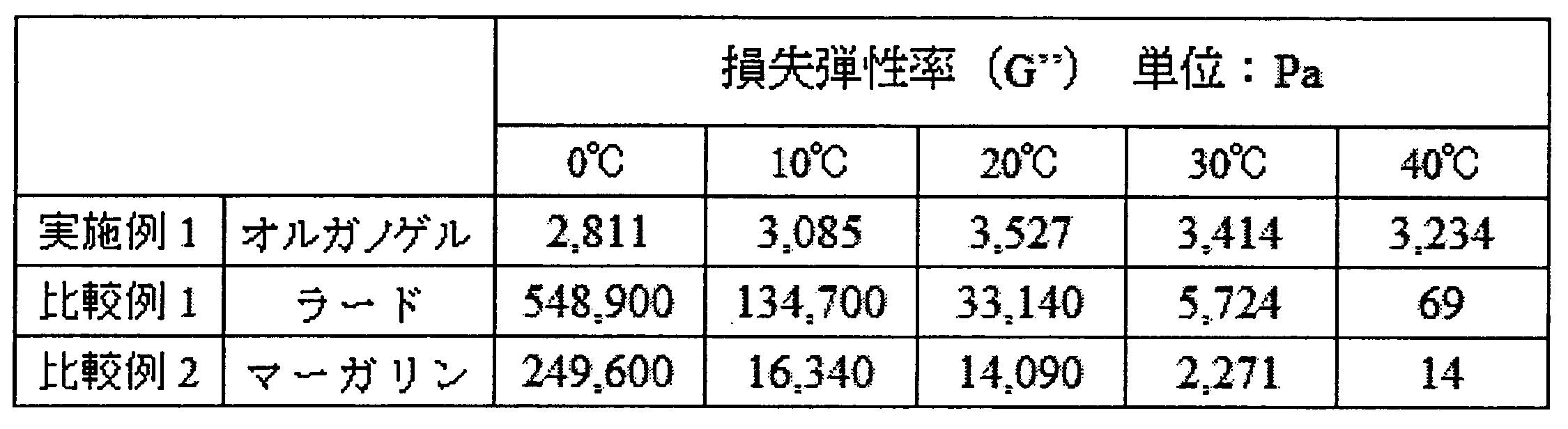
- the measurement results of the storage elastic modulus (G ′) are shown in Table 1, and the measurement results of the loss elastic modulus (G ′′) are shown in Table 2.
- the change rate of the storage elastic modulus from 20 ° C. to 40 ° C. (the absolute value of the difference between the storage elastic modulus at 20 ° C. and the storage elastic modulus at 40 ° C. relative to the storage elastic modulus at 20 ° C.) Example 1) was 6.2% and was very small.
- Lard (Comparative Example 1) was 99.6%
- Margarine (Comparative Example 2) was 99.99%, which was very large.
- organogel (Example) 1) was 8.3%, which was very small.
- Lard Comparative Example 1 was 99.8% and margarine (Comparative Example 2) was 99.9%, which was very large.
- organogel ⁇ Manufacture and evaluation of lump sum meal using organogel (Example 1)>
- the organogel produced in the above (Example 1) and koji were pulverized and mixed to produce a koji food and evaluated. Specifically, after adding 30 g of organogel (Example 1) to 180 g of candy (Kibun Co., Ltd., trade name: mellow-prepared sashimi candy white), crush and mix in a food processor for 3 minutes. Thus, a mass meal of salmon was produced. Appearance and texture were evaluated for the resultant meal of the koji. As a result, the lump food prepared using the organogel (Example 1) had good appearance and texture. Specifically, it was a unity that was not scattered.
- Example 2 ⁇ Manufacture and evaluation of lump sum meal using organogel (Example 2)> The organogel produced in the above (Example 2) and koji were pulverized and mixed to produce a koji food and evaluated. Specifically, after adding 30 g of organogel (Example 2) to 180 g of candy (Kibun Co., Ltd., trade name: mellow-prepared sashimi candy white), crush and mix in a food processor for 3 minutes. Thus, a mass meal of salmon was produced. Appearance and texture were evaluated for the resultant meal of the koji. As a result, the lump food prepared using the organogel (Example 2) was good in both appearance and texture. Specifically, it was a unity that was not scattered.
- Example 3 ⁇ Manufacture and evaluation of lump sum meal using organogel (Example 3)> The organogel produced in the above (Example 3) and koji were pulverized and mixed to produce and evaluate a koji batch food. Specifically, after adding 30 g of organogel (Example 3) to 180 g of candy (Kibun Co., Ltd., trade name: mellow-prepared sashimi candy white), crush and mix in a food processor for 3 minutes. Thus, a mass meal of salmon was produced. Appearance and texture were evaluated for the resultant meal of the koji. As a result, the lump food prepared using the organogel (Example 3) had good appearance and texture. Specifically, it was a unity that was not scattered.
- Example 5 was 53.2%
- Example 6 was 38.8%
- Example 7 was 4.8%
- Example 8 was 18.8%
- the change rate of the loss elastic modulus from 20 ° C. to 40 ° C. (the absolute value of the ratio of the difference between the storage elastic modulus at 20 ° C. and the storage elastic modulus at 40 ° C. relative to the loss elastic modulus at 20 ° C.) It was 27.5%
- Example 5 was 34.8%
- Example 6 was 10.9%
- Example 7 was 27.2%
- Example 8 was 1.8%.
- Examples 4 to 8 ⁇ Manufacture and evaluation of mash meal using organogel (Examples 4 to 8)>
- the organogel produced in the above (Examples 4 to 8) and the koji were pulverized and mixed to produce a koji package and evaluated.
- 30 g of the organogel of any one of Examples 4 to 8 was added to 180 g of strawberry (made by Kibun Co., Ltd., trade name: Maroyaka brewed sashimi candy white), and then 3 minutes in a food processor By crushing and mixing, a batch meal of straw containing the organogel of any of Examples 4 to 8 was produced. Appearance and texture were evaluated for the resultant meal of the koji.
- the packaged meal of the koji produced using the organogel had good appearance and texture. Specifically, it was a unity that was not scattered. Also, when I ate it, the feeling of unity persisted in my mouth, there was no stickiness, the taste increased, and it was delicious.
- the organogel for feeding support of foods for persons with difficulty in swallowing / chewing according to the present invention, foods that can be easily eaten by persons with difficulty in swallowing / chewing can be easily produced.
- the organogel for feeding assistance of the food for a person with difficulty in swallowing / chewing of the present invention can be used mainly in the field of manufacturing food for the person having difficulty in swallowing / chewing and the field of care / medicine.
Landscapes
- Chemical & Material Sciences (AREA)
- Life Sciences & Earth Sciences (AREA)
- Engineering & Computer Science (AREA)
- Food Science & Technology (AREA)
- Polymers & Plastics (AREA)
- Oil, Petroleum & Natural Gas (AREA)
- Health & Medical Sciences (AREA)
- Mycology (AREA)
- Nutrition Science (AREA)
- Pediatric Medicine (AREA)
- Coloring Foods And Improving Nutritive Qualities (AREA)
- Jellies, Jams, And Syrups (AREA)
- Edible Oils And Fats (AREA)
Abstract
Description
本願は、2011年2月24日に、日本に出願された特願2011-038344号、2011年8月31日に、日本に出願された特願2011-188878号に基づき優先権を主張し、その内容をここに援用する。
(1) 油脂及び油脂ゲル化剤を含有するオルガノゲルであって、0℃以上40℃以下における貯蔵弾性率が1,000Pa以上100,000Pa以下であることを特徴とする、嚥下・咀嚼困難者用食品の摂食補助用オルガノゲル、
(2) 0℃以上40℃以下における損失弾性率が100Pa以上10,000Pa以下であることを特徴とする前記(1)に記載の嚥下・咀嚼困難者用食品の摂食補助用オルガノゲル、
(3) 前記油脂が、1種又は2種以上の20℃で液状である油脂であり、前記油脂ゲル化剤が、ベヘン酸組成が45%以上55%以下であり、かつ融点が50℃以上である極度硬化油と、米糠ワックスと、カルナウバワックスと、キャンデリラワックスと、融点が50℃以上の乳化剤と、ステロール及びγ-オリザノールの混合物と、レシチン及びソルビタントリステアレートの混合物とからなる群より選択される1種又は2種以上の油脂ゲル化剤であることを特徴とする前記(1)又は(2)に記載の嚥下・咀嚼困難者用食品の摂食補助用オルガノゲル、
(4) 前記(1)~(3)のいずれか一つに記載の嚥下・咀嚼困難者用食品の摂食補助用オルガノゲルと、摂食可能な食品の細断物又は破砕物とを含有することを特徴とする嚥下・咀嚼困難者用食品、
(5) さらに、水を含有することを特徴とする前記(4)に記載の嚥下・咀嚼困難者用食品、
(6) 前記摂食可能な食品が、畜肉加工食品、魚肉加工食品、野菜類、果実類、麺類、ご飯、お粥、パン類、及び海藻類からなる群より選択される1種又は2種以上であることを特徴とする前記(4)又は(5)に記載の嚥下・咀嚼困難者用食品、
(7) 油脂及び油脂ゲル化剤を含有し、0℃以上40℃以下における貯蔵弾性率が1,000Pa以上100,000Pa以下である嚥下・咀嚼困難者用食品の摂食補助用オルガノゲルと、摂食可能な食品の細断物又は破砕物とを混合することを特徴とする嚥下・咀嚼困難者用食品の製造方法、
(8) 前記混合の後、さらに破砕処理を行うことを特徴とする前記(7)に記載の嚥下・咀嚼困難者用食品の製造方法、
(9) 油脂及び油脂ゲル化剤を含有し、0℃以上40℃以下における貯蔵弾性率が1,000Pa以上100,000Pa以下である嚥下・咀嚼困難者用食品の摂食補助用オルガノゲルと、摂食可能な食品の細断物又は破砕物とを混合し、さらに破砕処理を行うことを特徴とする、嚥下・咀嚼困難者用食品のまとまり感の改善方法、
(10) 油脂及び油脂ゲル化剤を含有し、0℃以上40℃以下における貯蔵弾性率が1,000Pa以上100,000Pa以下である嚥下・咀嚼困難者用食品の摂食補助用オルガノゲルと、摂食可能な食品の細断物又は破砕物とを混合し、さらに破砕処理を行うことを特徴とする、嚥下・咀嚼困難者の食品の摂取を容易にする方法、
(11) 前記摂食補助用オルガノゲルが、摂食可能な食品の細断物又は破砕物と混合して使用されることを特徴とする、前記(1)~(3)のいずれか一つに記載の嚥下・咀嚼困難者用食品の摂食補助用オルガノゲル、
を提供するものである。
本発明の嚥下・咀嚼困難者用食品の摂食補助用オルガノゲル(以下、「本発明の摂食補助用オルガノゲル」ということがある。)は、摂食可能な食品の細断物又は破砕物に混合して使用することにより、嚥下困難者や咀嚼困難者が、前記食品の摂取を容易にするもの(摂取を補助するもの)である。従来のキザミ食においては、食品の細断物がほぐれやすく、口腔内で食塊を形成しにくいことが、誤嚥が惹起される大きな要因と考えられる。本発明の摂食補助用オルガノゲルを、従来のキザミ食やペースト食等の細断物や破砕物を含有する食品と混合することにより、各固形分が適度に凝集し、ばらけることなく、まとまり感が付与された食品、つまり、嚥下・咀嚼困難者が摂取しやすい食品を得ることができる。
また、本発明の摂食補助用オルガノゲルに含まれる油脂は、1種類であってもよく、複数種類であってもよい。本発明の摂食補助用オルガノゲルの原料としては、20℃で液状である油脂を用いることが好ましい。複数種類の油脂を用いる場合には、少なくとも1種類の油脂が20℃で液状である油脂であることが好ましく、全ての油脂が20℃で液状である油脂であることがより好ましい。
本発明の嚥下・咀嚼困難者用食品は、本発明の摂食補助用オルガノゲルと、摂食可能な食品の細断物又は破砕物とを含有することを特徴とする。
ここで、「ペースト食(Paste Food)」とは、加水した摂食可能な食品の細断物又は破砕物をカッターミキサー等で破砕した、流動性の高い食品のことをいう。一方、「まとめ食(Aggregated Food)」とは、摂食可能な食品の細断物又は破砕物を含有し、流動性を有さず又は流動性が低く、固形分がばらけにくい食品のことをいう。
ペースト食の配合は、どの程度の流動性のペースト食にするか、また、原料として使用する食品の種類や、含有する油分や水分等により、適宜調整することができる。例えば、摂食可能な食品の細断物又は破砕物100質量部、本発明の摂食補助用オルガノゲル1質量部以上100質量部以下(好ましくは1質量部以上50質量部以下)、及び水200質量部以上1000質量部以下という配合を例示することができる。
また、キャベツのまとめ食の場合、湯通しをしたキャベツを約5mm以下の大きさに刻んだ後、本発明の摂食補助用オルガノゲルを加え、混合することにより製造することができる。
次に実施例を示して本発明をさらに詳細に説明するが、本発明は以下の実施例に限定されるものではない。
菜種油(日清オイリオグループ株式会社製、商品名:日清菜種サラダ油(S))と、ベヘン酸組成が45~55%であり、かつ融点が50℃以上である極度硬化油とを、質量比が菜種油:極度硬化油脂=9:1となるように容器に入れ、80℃で加熱溶解し、混合した。その後、前記容器を氷水中へ入れて混捏することにより、急冷混捏処理したオルガノゲル(実施例1)を50g得た。
上記で製造したオルガノゲル(実施例1)の貯蔵弾性率及び損失弾性率を測定した。比較対象として、ラード(ベル食品株式会社製、商品名:ラード)(比較例1)及びマーガリン(雪印株式会社製、商品名:ネオソフト)(比較例2)の貯蔵弾性率及び損失弾性率も測定した。
貯蔵弾性率[G’(ジープライム)]及び損失弾性率[G’’(ジーダブルプライム)]は、ストレス制御式レオメーターであるレオストレスRS1(HAKKE社製)を用いて測定した。具体的には、センサーに直径3.5cmのコーン型プレートを使用し、まず、0℃に保持された測定器のプレート上に、各サンプルを乗せた。次に、ギャップ幅0.105mmに調整した後、0℃でサンプルを2分間保持した。その後、10℃/分で昇温しながら、0℃から40℃の貯蔵弾性率(G’)及び損失弾性率(G’’)を測定した。
この結果、20℃から40℃における貯蔵弾性率の変化率(20℃における貯蔵弾性率に対する、20℃における貯蔵弾性率と40℃における貯蔵弾性率の差の割合の絶対値)は、オルガノゲル(実施例1)は6.2%であり、非常に小さかった。しかし、ラード(比較例1)は99.6%、マーガリン(比較例2)は99.99%と非常に大きかった。
一方、20℃から40℃における損失弾性率の変化率(20℃における損失弾性率に対する、20℃における損失弾性率と40℃における損失弾性率の差の割合の絶対値)は、オルガノゲル(実施例1)は8.3%であり、非常に小さかった。しかし、ラード(比較例1)は99.8%、マーガリン(比較例2)は99.9%と非常に大きかった。

上記で製造したオルガノゲル(実施例1)と蒲鉾を粉砕混合し、蒲鉾のまとめ食を製造し、評価した。
具体的には、蒲鉾(紀文株式会社製、商品名:まろやか仕込み 鯛入りお造り蒲鉾 白)180gに、オルガノゲル(実施例1)を30g加えた後、フードプロセッサーで3分間、破砕・混合することにより、蒲鉾のまとめ食を製造した。得られた蒲鉾のまとめ食について、外観及び食感を評価した。
この結果、オルガノゲル(実施例1)を用いて製造した蒲鉾のまとめ食は、外観と食感がともに良好なものであった。具体的には、ばらけない、まとまり感のあるものであった。また、食してみると、口の中でまとまり感が持続し、べとつきもないものであり、味の点でもコクが増し、おいしいものであった。
さらに、前記蒲鉾のまとめ食は、60℃の恒温配膳車中で1時間保存した後の外観も良好であり、食してみると、口の中でまとまり感が持続し、べとつきもないものであった。
対照として、オルガノゲル(実施例1)を添加せず、蒲鉾(紀文株式会社製、商品名:まろやか仕込み 鯛入りお造り蒲鉾 白)180gをそのままフードプロセッサーで3分間、破砕・混合することにより、蒲鉾の破砕食を製造した。
この結果、得られた蒲鉾破砕食は、ばらけてまとまり感のないものであった。また、得られた蒲鉾破砕食を食してみると、口の中でばらけた。
蒲鉾(紀文株式会社製、商品名:まろやか仕込み 鯛入りお造り蒲鉾 白)180gに、ラード(比較例1)を30g加えた後、フードプロセッサーで3分間、破砕・混合することにより、蒲鉾のまとめ食(蒲鉾のラード和え)を製造した。
得られた蒲鉾のラード和えは、ばらけない、まとまり感のあるものであった。しかし、得られた蒲鉾のラード和えを食してみると、口の中でまとまり感が持続せず、油っぽさを感じるものであった。
また、蒲鉾のラード和えを60℃の恒温配膳車中で1時間保存した後の外観を観察したところ、油がしみ出ていた。また、食してみると、口の中でまとまり感が持続せず、油っぽさを感じるものであった。
蒲鉾(紀文株式会社製、商品名:まろやか仕込み 鯛入りお造り蒲鉾 白)180gに、マーガリン(比較例2)を30g加えた後、フードプロセッサーで3分間、破砕・混合することにより、蒲鉾のまとめ食(蒲鉾のマーガリン和え)を製造した。
得られた蒲鉾のマーガリン和えは、ばらけない、まとまり感のあるものであった。しかし、得られた蒲鉾のマーガリン和えを食してみると、口の中でまとまり感が持続せず、油っぽさを感じるものであった。
また、蒲鉾のマーガリン和えを60℃の恒温配膳車中で1時間保存した後の外観を観察したところ、油がしみ出ていた。また、食してみると、口の中でまとまり感が持続せず、油っぽさを感じるものであった。
<摂食補助用オルガノゲルの製造>
菜種油(日清オイリオグループ株式会社製、商品名:日清菜種サラダ油(S))と米糠ワックス(東亜化成株式会社製、商品名:TOWAX-3F9、融点80.9℃)とを、質量比が菜種油:米糠ワックス=97:3となるように容器に入れ、100℃で加熱溶解し、混合した。その後、放冷することにより、オルガノゲル(実施例2)を50g得た。
菜種油(日清オイリオグループ株式会社製、商品名:日清菜種サラダ油(S))とキャンデリラワックス(東亜化成株式会社製、商品名:TOWAX-4F2、融点72.0℃)とを、質量比が菜種油:米糠ワックス=97:3となるように容器に入れ、80℃で加熱溶解し、混合した。その後、放冷することにより、オルガノゲル(実施例3)を50g得た。
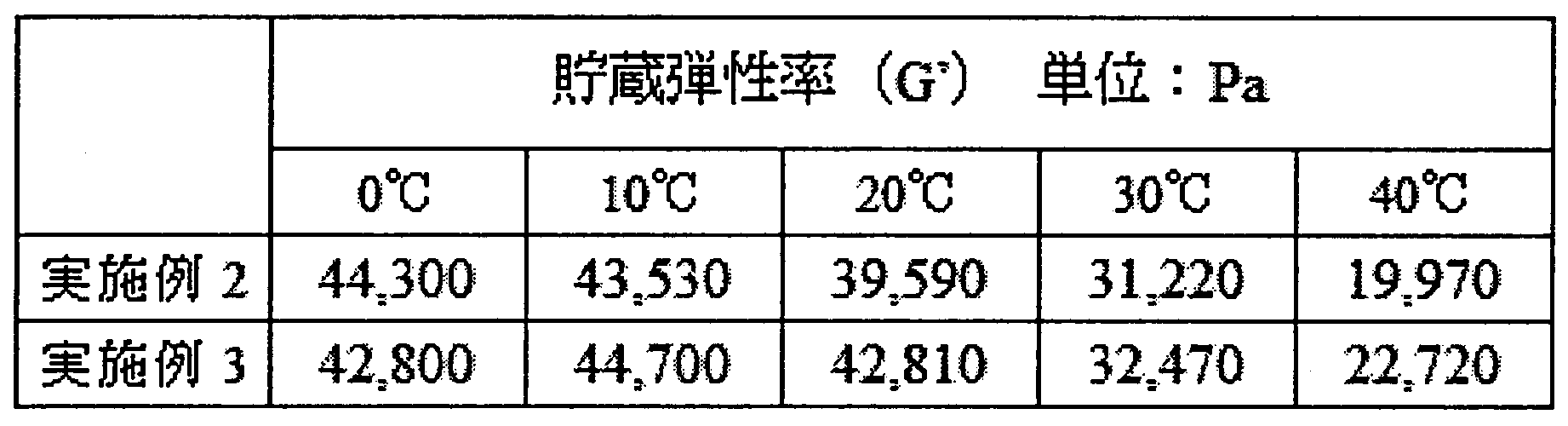
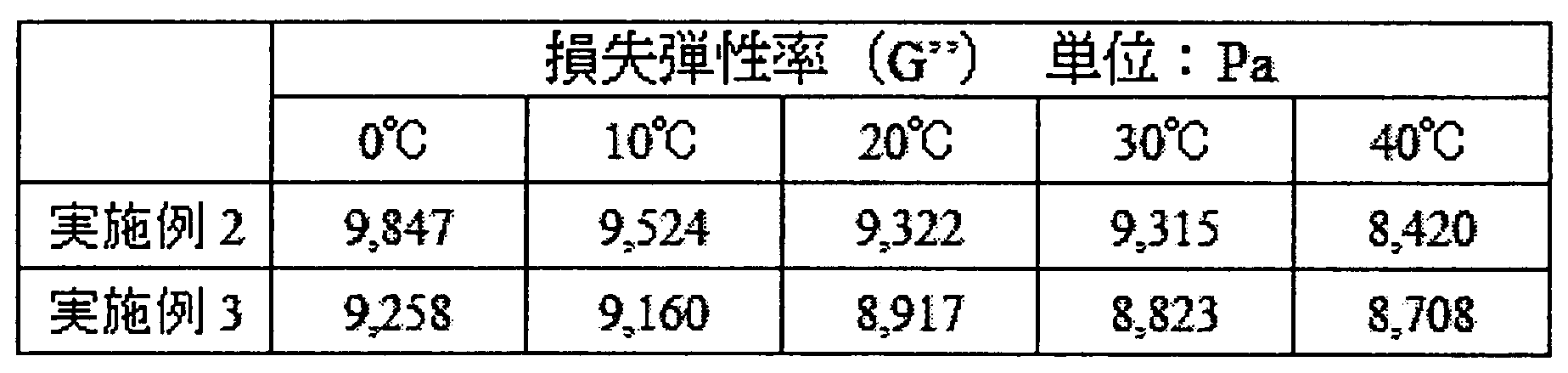
実施例1のオルガノゲルと同様にして、実施例2~3のオルガノゲルの貯蔵弾性率及び損失弾性率を測定した。貯蔵弾性率(G’)の測定結果を表3に、損失弾性率(G’’)の測定結果を表4に、それぞれ示す。
この結果、20℃から40℃における貯蔵弾性率の変化率は、オルガノゲル(実施例2)では49.6%、オルガノゲル(実施例3)では46.9%であった。一方、20℃から40℃における損失弾性率の変化率は、オルガノゲル(実施例2)では9.7%、オルガノゲル(実施例3)では2.3%あり、非常に小さかった。
上記で製造したオルガノゲル(実施例2)と蒲鉾を粉砕混合し、蒲鉾のまとめ食を製造し、評価した。
具体的には、蒲鉾(紀文株式会社製、商品名:まろやか仕込み 鯛入りお造り蒲鉾 白)180gに、オルガノゲル(実施例2)を30g加えた後、フードプロセッサーで3分間、破砕・混合することにより、蒲鉾のまとめ食を製造した。得られた蒲鉾のまとめ食について、外観及び食感を評価した。
この結果、オルガノゲル(実施例2)を用いて製造した蒲鉾のまとめ食は、外観と食感がともに良好なものであった。具体的には、ばらけない、まとまり感のあるものであった。また、食してみると、口の中でまとまり感が持続し、べとつきもないものであり、味の点でもコクが増し、おいしいものであった。
さらに、前記蒲鉾のまとめ食は、60℃の恒温配膳車中で1時間保存した後の外観も良好であり、食してみると、口の中でまとまり感が持続し、べとつきもないものであった。
上記で製造したオルガノゲル(実施例3)と蒲鉾を粉砕混合し、蒲鉾のまとめ食を製造し、評価した。
具体的には、蒲鉾(紀文株式会社製、商品名:まろやか仕込み 鯛入りお造り蒲鉾 白)180gに、オルガノゲル(実施例3)を30g加えた後、フードプロセッサーで3分間、破砕・混合することにより、蒲鉾のまとめ食を製造した。得られた蒲鉾のまとめ食について、外観及び食感を評価した。
この結果、オルガノゲル(実施例3)を用いて製造した蒲鉾のまとめ食は、外観と食感がともに良好なものであった。具体的には、ばらけない、まとまり感のあるものであった。また、食してみると、口の中でまとまり感が持続し、べとつきもないものであり、味の点でもコクが増し、おいしいものであった。
さらに、前記蒲鉾のまとめ食は、60℃の恒温配膳車中で1時間保存した後の外観も良好であり、食してみると、口の中でまとまり感が持続し、べとつきもないものであった。
<摂食補助用オルガノゲルの製造>
菜種油(日清オイリオグループ株式会社製、商品名:日清菜種サラダ油(S))と融点が50℃以上の乳化剤(太陽化学株式会社製、商品名:TAISET26、ベヘン酸グリセリルを20%、オクタステアリン酸グリセリルを20%、及び硬化パーム油を60%含む)とを、質量比が菜種油:乳化剤=95:5となるように容器に入れ、80℃で加熱溶解し、混合した。その後、放冷することでオルガノゲル(実施例4)を50g得た。
菜種油(日清オイリオグループ株式会社製、商品名:日清菜種サラダ油(S))と融点が50℃以上の乳化剤(太陽化学株式会社製、商品名:TAISET26、ベヘン酸グリセリルを20%、オクタステアリン酸グリセリルを20%、及び硬化パーム油を60%含む)とを、質量比が菜種油:乳化剤=93:7となるように容器に入れ、80℃で加熱溶解し、混合した。その後、放冷することでオルガノゲル(実施例5)を50g得た。
菜種油(日清オイリオグループ株式会社製、商品名:日清菜種サラダ油(S))と融点が50℃以上の乳化剤(太陽化学株式会社製、商品名:TAISET26、ベヘン酸グリセリルを20%、オクタステアリン酸グリセリルを20%、及び硬化パーム油を60%含む)とを、質量比が菜種油:乳化剤=90:10となるように容器に入れ、80℃で加熱溶解し、混合した。その後、放冷することでオルガノゲル(実施例6)を50g得た。
菜種油(日清オイリオグループ株式会社製、商品名:日清菜種サラダ油(S))と融点が50℃以上の乳化剤(太陽化学株式会社製、商品名:TAISET50、ベヘン酸グリセリルを50%及びオクタステアリン酸グリセリルを50%含む)とを、質量比が菜種油:乳化剤=95:5となるように容器に入れ、80℃で加熱溶解し、混合した。その後、放冷することでオルガノゲル(実施例7)を50g得た。
菜種油(日清オイリオグループ株式会社製、商品名:日清菜種サラダ油(S))と融点が50℃以上の乳化剤(太陽化学株式会社製、商品名:TAISET50、ベヘン酸グリセリルを50%及びオクタステアリン酸グリセリルを50%含む)とを、質量比が菜種油:乳化剤=93:7となるように容器に入れ、80℃で加熱溶解し、混合した。その後、放冷することでオルガノゲル(実施例8)を50g得た。
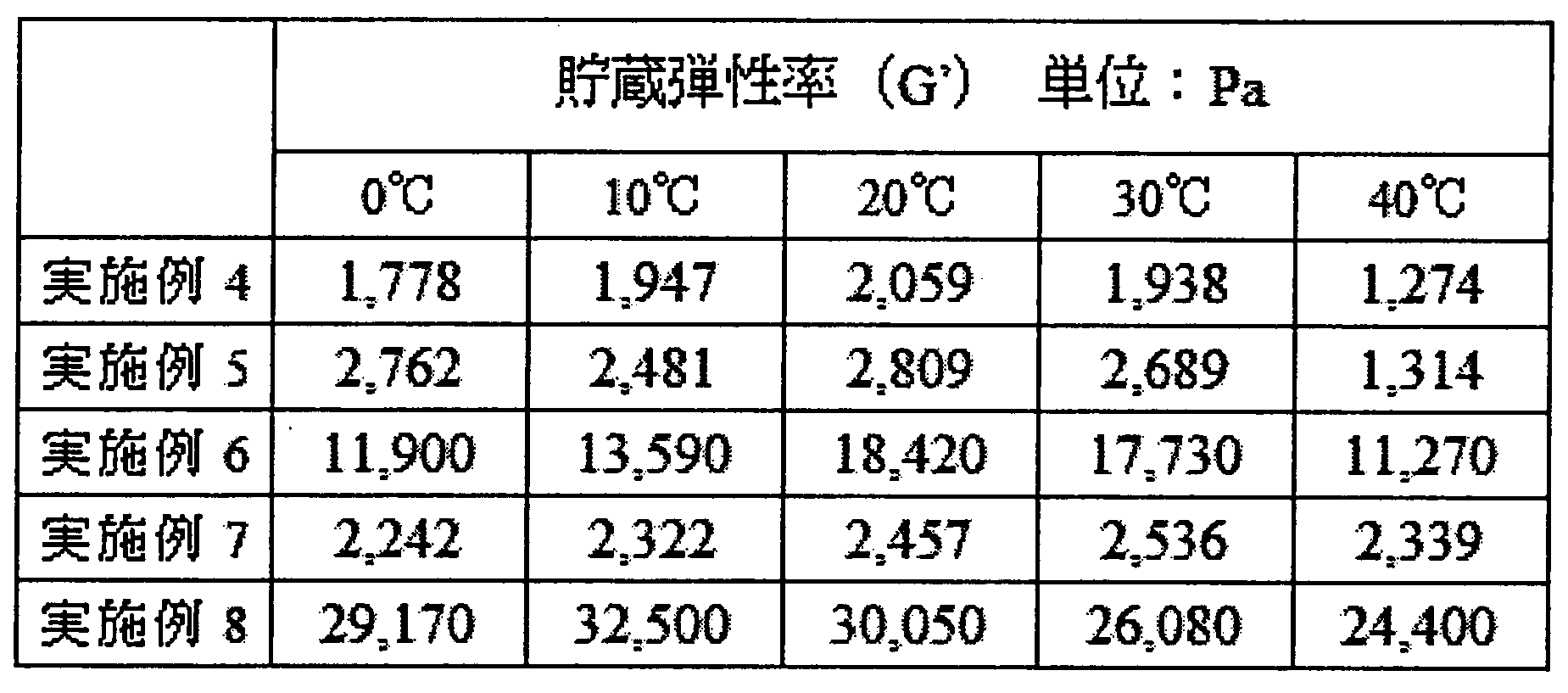
実施例1のオルガノゲルと同様にして、実施例4~8のオルガノゲルの貯蔵弾性率及び損失弾性率を測定した。貯蔵弾性率[G’(ジープライム)]の測定結果を表5に、損失弾性率[G’’(ジーダブルプライム)]の測定結果を表6に、それぞれ示す。
この結果、20℃から40℃における貯蔵弾性率の変化率(20℃における損失弾性率に対する、20℃における貯蔵弾性率と40℃における貯蔵弾性率の差の割合の絶対値)は、実施例4では38.1%、実施例5では53.2%、実施例6では38.8%、実施例7では4.8%、実施例8では18.8%であった。一方、20℃から40℃における損失弾性率の変化率(20℃における損失弾性率に対する、20℃における貯蔵弾性率と40℃における貯蔵弾性率の差の割合の絶対値)は、実施例4では27.5%、実施例5では34.8%、実施例6では10.9%、実施例7では27.2%、実施例8では1.8%であった。
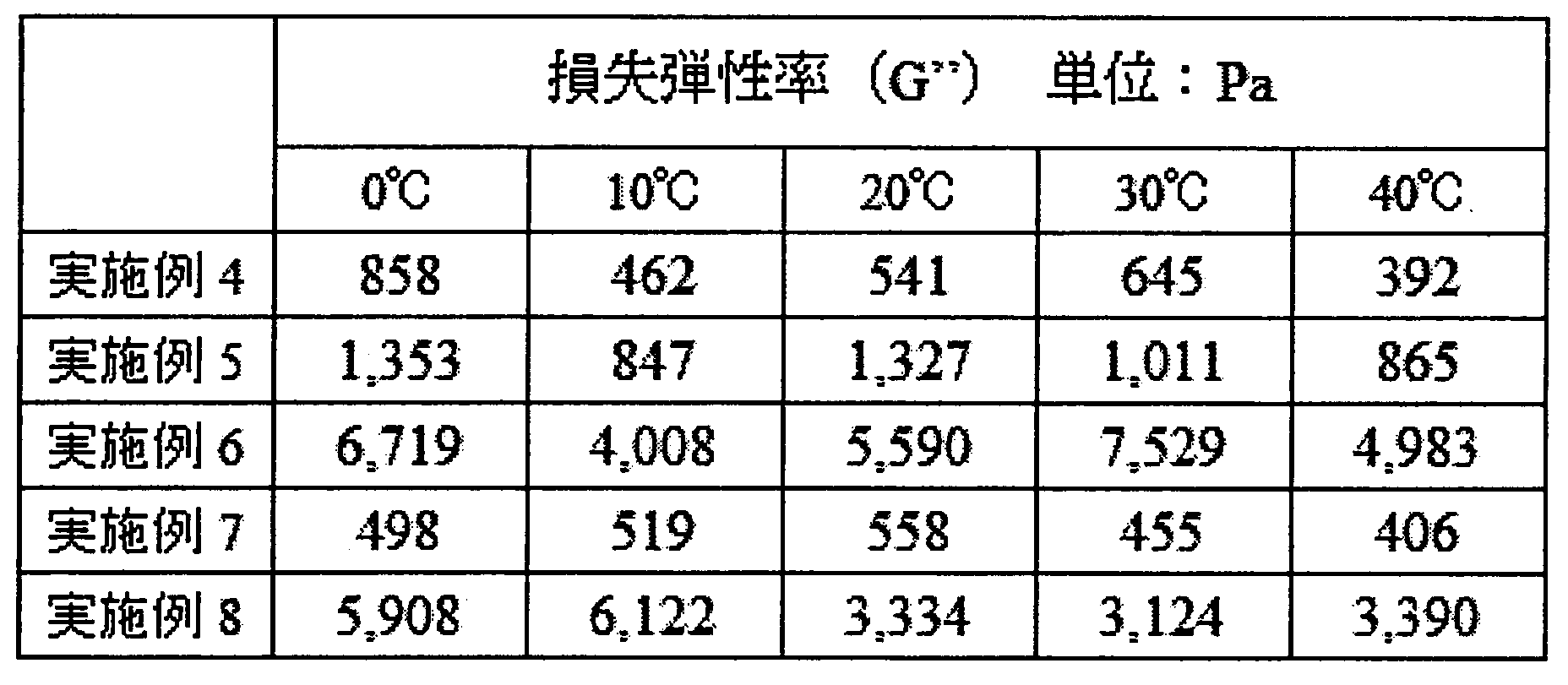
上記で製造したオルガノゲル(実施例4~実施例8)と蒲鉾を粉砕混合し、蒲鉾のまとめ食を製造し、評価した。
具体的には、蒲鉾(紀文株式会社製、商品名:まろやか仕込み 鯛入りお造り蒲鉾 白)180gに、実施例4~実施例8のいずれかのオルガノゲルを30g加えた後、フードプロセッサーで3分間、破砕・混合することにより、実施例4~実施例8のいずれかのオルガノゲルを含有する蒲鉾のまとめ食を製造した。得られた蒲鉾のまとめ食について、外観及び食感を評価した。
この結果、オルガノゲル(実施例4~実施例8)を用いて製造した蒲鉾のまとめ食は、外観と食感がともに良好なものであった。具体的には、ばらけない、まとまり感のあるものであった。また、食してみると、口の中でまとまり感が持続し、べとつきもないものであり、味の点でもコクが増し、おいしいものであった。
Claims (11)
- 油脂及び油脂ゲル化剤を含有するオルガノゲルであって、
0℃以上40℃以下における貯蔵弾性率が1,000Pa以上100,000Pa以下であることを特徴とする、嚥下・咀嚼困難者用食品の摂食補助用オルガノゲル。 - 0℃以上40℃以下における損失弾性率が100Pa以上10,000Pa以下であることを特徴とする請求項1に記載の嚥下・咀嚼困難者用食品の摂食補助用オルガノゲル。
- 前記油脂が、1種又は2種以上の20℃で液状である油脂であり、
前記油脂ゲル化剤が、ベヘン酸組成が45%以上55%以下であり、かつ融点が50℃以上である極度硬化油と、米糠ワックスと、カルナウバワックスと、キャンデリラワックスと、融点が50℃以上の乳化剤と、ステロール及びγ-オリザノールの混合物と、レシチン及びソルビタントリステアレートの混合物とからなる群より選択される1種又は2種以上の油脂ゲル化剤であることを特徴とする請求項1又は2に記載の嚥下・咀嚼困難者用食品の摂食補助用オルガノゲル。 - 請求項1~3のいずれか一項に記載の嚥下・咀嚼困難者用食品の摂食補助用オルガノゲルと、摂食可能な食品の細断物又は破砕物とを含有することを特徴とする嚥下・咀嚼困難者用食品。
- さらに、水を含有することを特徴とする請求項4に記載の嚥下・咀嚼困難者用食品。
- 前記摂食可能な食品が、畜肉加工食品、魚肉加工食品、野菜類、果実類、麺類、ご飯、お粥、パン類、及び海藻類からなる群より選択される1種又は2種以上であることを特徴とする請求項4又は5に記載の嚥下・咀嚼困難者用食品。
- 油脂及び油脂ゲル化剤を含有し、0℃以上40℃以下における貯蔵弾性率が1,000Pa以上100,000Pa以下である嚥下・咀嚼困難者用食品の摂食補助用オルガノゲルと、摂食可能な食品の細断物又は破砕物とを混合することを特徴とする嚥下・咀嚼困難者用食品の製造方法。
- 前記混合の後、さらに破砕処理を行うことを特徴とする請求項7に記載の嚥下・咀嚼困難者用食品の製造方法。
- 油脂及び油脂ゲル化剤を含有し、0℃以上40℃以下における貯蔵弾性率が1,000Pa以上100,000Pa以下である嚥下・咀嚼困難者用食品の摂食補助用オルガノゲルと、摂食可能な食品の細断物又は破砕物とを混合し、さらに破砕処理を行うことを特徴とする、嚥下・咀嚼困難者用食品のまとまり感の改善方法。
- 油脂及び油脂ゲル化剤を含有し、0℃以上40℃以下における貯蔵弾性率が1,000Pa以上100,000Pa以下である嚥下・咀嚼困難者用食品の摂食補助用オルガノゲルと、摂食可能な食品の細断物又は破砕物とを混合し、さらに破砕処理を行うことを特徴とする、嚥下・咀嚼困難者の食品の摂取を容易にする方法。
- 前記摂食補助用オルガノゲルが、摂食可能な食品の細断物又は破砕物と混合して使用されることを特徴とする請求項1~3のいずれか1項に記載の嚥下・咀嚼困難者用食品の摂食補助用オルガノゲル。
Priority Applications (3)
| Application Number | Priority Date | Filing Date | Title |
|---|---|---|---|
| JP2013500999A JP5901075B2 (ja) | 2011-02-24 | 2012-02-17 | 嚥下・咀嚼困難者用食品の摂食補助用オルガノゲル及び嚥下・咀嚼困難者用食品 |
| CN201280009827.8A CN103391721B (zh) | 2011-02-24 | 2012-02-17 | 吞咽、咀嚼困难者用食品的辅助摄食用有机凝胶以及吞咽、咀嚼困难者用食品 |
| KR1020137021045A KR101916490B1 (ko) | 2011-02-24 | 2012-02-17 | 연하·저작곤란자용 식품의 섭식보조용 오르가노겔 및 연하·저작곤란자용 식품 |
Applications Claiming Priority (4)
| Application Number | Priority Date | Filing Date | Title |
|---|---|---|---|
| JP2011-038344 | 2011-02-24 | ||
| JP2011038344 | 2011-02-24 | ||
| JP2011-188878 | 2011-08-31 | ||
| JP2011188878 | 2011-08-31 |
Publications (1)
| Publication Number | Publication Date |
|---|---|
| WO2012114995A1 true WO2012114995A1 (ja) | 2012-08-30 |
Family
ID=46720776
Family Applications (1)
| Application Number | Title | Priority Date | Filing Date |
|---|---|---|---|
| PCT/JP2012/053780 Ceased WO2012114995A1 (ja) | 2011-02-24 | 2012-02-17 | 嚥下・咀嚼困難者用食品の摂食補助用オルガノゲル及び嚥下・咀嚼困難者用食品 |
Country Status (5)
| Country | Link |
|---|---|
| JP (1) | JP5901075B2 (ja) |
| KR (1) | KR101916490B1 (ja) |
| CN (1) | CN103391721B (ja) |
| TW (1) | TWI578916B (ja) |
| WO (1) | WO2012114995A1 (ja) |
Cited By (8)
| Publication number | Priority date | Publication date | Assignee | Title |
|---|---|---|---|---|
| WO2018079847A1 (ja) * | 2016-10-31 | 2018-05-03 | 株式会社明治 | 液体油および粉末原料の混合可食性組成物、並びにその製造方法 |
| JP2019170181A (ja) * | 2018-03-27 | 2019-10-10 | ユニテックフーズ株式会社 | シロキクラゲ多糖体及びメチルセルロースを有効成分として含む剤 |
| WO2021059435A1 (ja) * | 2019-09-26 | 2021-04-01 | 昭和産業株式会社 | 可塑性油脂組成物およびその製造方法 |
| JP2021168620A (ja) * | 2020-04-16 | 2021-10-28 | 昭和産業株式会社 | 可塑性油脂組成物およびその製造方法 |
| WO2023054589A1 (ja) | 2021-09-29 | 2023-04-06 | 三菱ケミカル株式会社 | 食品用油脂組成物、これを含む食品及び植物肉、オレオゲルの食感改善剤、並びに食品用油脂組成物の製造方法 |
| WO2023210637A1 (ja) * | 2022-04-26 | 2023-11-02 | 三菱ケミカル株式会社 | 肉様食品用改質剤及び肉様食品 |
| JP2024508889A (ja) * | 2021-03-03 | 2024-02-28 | パラゴン フレイバーズ、インコーポレイテッド | プラントベースの肉類似物のためのオレオゲル組成物及びフレーバーデリバリーシステム |
| JP7805491B1 (ja) * | 2025-01-07 | 2026-01-23 | キユーピー株式会社 | 嚥下困難者用容器詰め雑炊及びその製造方法 |
Families Citing this family (1)
| Publication number | Priority date | Publication date | Assignee | Title |
|---|---|---|---|---|
| CN116210913B (zh) * | 2023-01-17 | 2025-04-25 | 江南大学 | 一种辅助吞咽的凝胶的制备方法 |
Citations (3)
| Publication number | Priority date | Publication date | Assignee | Title |
|---|---|---|---|---|
| JP2001128646A (ja) * | 1999-11-05 | 2001-05-15 | Nippon Meat Packers Inc | 咀嚼・嚥下困難者向け非加熱食肉製品とその製造法 |
| JP2003506061A (ja) * | 1999-08-04 | 2003-02-18 | ユニリーバー・ナームローゼ・ベンノートシヤープ | 低脂肪のスプーンですくえるか又は塗り広げられる食品生成物 |
| JP2007252341A (ja) * | 2006-03-24 | 2007-10-04 | Well Haamonii:Kk | 粉末嚥下補助食品 |
Family Cites Families (1)
| Publication number | Priority date | Publication date | Assignee | Title |
|---|---|---|---|---|
| JP3648597B2 (ja) * | 1998-01-08 | 2005-05-18 | 大塚食品株式会社 | ゲル状食品及びその製造方法 |
-
2012
- 2012-02-17 CN CN201280009827.8A patent/CN103391721B/zh not_active Expired - Fee Related
- 2012-02-17 WO PCT/JP2012/053780 patent/WO2012114995A1/ja not_active Ceased
- 2012-02-17 KR KR1020137021045A patent/KR101916490B1/ko not_active Expired - Fee Related
- 2012-02-17 JP JP2013500999A patent/JP5901075B2/ja active Active
- 2012-02-20 TW TW101105453A patent/TWI578916B/zh not_active IP Right Cessation
Patent Citations (3)
| Publication number | Priority date | Publication date | Assignee | Title |
|---|---|---|---|---|
| JP2003506061A (ja) * | 1999-08-04 | 2003-02-18 | ユニリーバー・ナームローゼ・ベンノートシヤープ | 低脂肪のスプーンですくえるか又は塗り広げられる食品生成物 |
| JP2001128646A (ja) * | 1999-11-05 | 2001-05-15 | Nippon Meat Packers Inc | 咀嚼・嚥下困難者向け非加熱食肉製品とその製造法 |
| JP2007252341A (ja) * | 2006-03-24 | 2007-10-04 | Well Haamonii:Kk | 粉末嚥下補助食品 |
Cited By (10)
| Publication number | Priority date | Publication date | Assignee | Title |
|---|---|---|---|---|
| WO2018079847A1 (ja) * | 2016-10-31 | 2018-05-03 | 株式会社明治 | 液体油および粉末原料の混合可食性組成物、並びにその製造方法 |
| JPWO2018079847A1 (ja) * | 2016-10-31 | 2019-09-19 | 株式会社明治 | 液体油および粉末原料の混合可食性組成物、並びにその製造方法 |
| JP7016810B2 (ja) | 2016-10-31 | 2022-02-07 | 株式会社明治 | 液体油および粉末原料の混合可食性組成物、並びにその製造方法 |
| JP2019170181A (ja) * | 2018-03-27 | 2019-10-10 | ユニテックフーズ株式会社 | シロキクラゲ多糖体及びメチルセルロースを有効成分として含む剤 |
| WO2021059435A1 (ja) * | 2019-09-26 | 2021-04-01 | 昭和産業株式会社 | 可塑性油脂組成物およびその製造方法 |
| JP2021168620A (ja) * | 2020-04-16 | 2021-10-28 | 昭和産業株式会社 | 可塑性油脂組成物およびその製造方法 |
| JP2024508889A (ja) * | 2021-03-03 | 2024-02-28 | パラゴン フレイバーズ、インコーポレイテッド | プラントベースの肉類似物のためのオレオゲル組成物及びフレーバーデリバリーシステム |
| WO2023054589A1 (ja) | 2021-09-29 | 2023-04-06 | 三菱ケミカル株式会社 | 食品用油脂組成物、これを含む食品及び植物肉、オレオゲルの食感改善剤、並びに食品用油脂組成物の製造方法 |
| WO2023210637A1 (ja) * | 2022-04-26 | 2023-11-02 | 三菱ケミカル株式会社 | 肉様食品用改質剤及び肉様食品 |
| JP7805491B1 (ja) * | 2025-01-07 | 2026-01-23 | キユーピー株式会社 | 嚥下困難者用容器詰め雑炊及びその製造方法 |
Also Published As
| Publication number | Publication date |
|---|---|
| JP5901075B2 (ja) | 2016-04-06 |
| TWI578916B (zh) | 2017-04-21 |
| JPWO2012114995A1 (ja) | 2014-07-07 |
| CN103391721B (zh) | 2017-02-15 |
| KR101916490B1 (ko) | 2018-11-07 |
| TW201238498A (en) | 2012-10-01 |
| KR20140046396A (ko) | 2014-04-18 |
| CN103391721A (zh) | 2013-11-13 |
Similar Documents
| Publication | Publication Date | Title |
|---|---|---|
| JP5901075B2 (ja) | 嚥下・咀嚼困難者用食品の摂食補助用オルガノゲル及び嚥下・咀嚼困難者用食品 | |
| JP7588634B2 (ja) | 脂肪送達システム、脂肪送達方法および脂肪送達システムを含有する食料品 | |
| JP4982628B2 (ja) | 嚥下・咀嚼困難者用食品の製造方法、嚥下・咀嚼困難者用食品の摂食補助用油脂組成物、及び嚥下・咀嚼困難者用食品 | |
| JP5938161B2 (ja) | 嚥下・咀嚼困難者用食品の摂食補助用油脂組成物及び嚥下・咀嚼困難者用食品 | |
| EP3045053B1 (en) | Food composition for patients having mastication and swallowing difficulties | |
| JP6265121B2 (ja) | 水中油型乳化物ゲル食品 | |
| CN101340819A (zh) | 含有甘油三酯重结晶的非酯化植物甾醇的营养强化剂和预制食品 | |
| Chappalwar et al. | Development of functional chicken patties with incorporation of mango peel powder as fat replacer | |
| WO2012094397A1 (en) | Ground beef or processed meats with improved health and rheological characteristics | |
| WO2016010008A1 (ja) | 嚥下・咀嚼困難者用食品の摂食補助用油脂組成物、及び嚥下・咀嚼困難者用食品 | |
| JP3649945B2 (ja) | 栄養粥 | |
| WO2024150750A1 (ja) | 脂肪組織様食品 | |
| CN120569127A (zh) | 咀嚼和/或吞咽困难者用油性食品、以及油性食品的吞咽性的改善方法 | |
| JP5131862B2 (ja) | おからペーストを使用した冷凍カルボナーラソース | |
| WO2024096094A1 (ja) | ミキサー食用水中油型乳化物及びミキサー食の製造方法 | |
| Quiles et al. | Clean Label Foods with Reduced Fat Content | |
| JP2022074614A (ja) | 嚥下困難者用食品組成物の製造方法 | |
| JP2012034634A (ja) | ソース、咀嚼・嚥下困難者用食品、及び咀嚼・嚥下困難者用食事の提供方法 | |
| WO2023161812A1 (en) | Plant-only fat replacement system for foods | |
| JP2012050364A (ja) | 嚥下・咀嚼困難者向け摂食補助用油脂組成物及び嚥下・咀嚼困難者用食品 | |
| RO131180A0 (ro) | Produs vegetal tartinabil şi procedeu de obţinere a acestuia |
Legal Events
| Date | Code | Title | Description |
|---|---|---|---|
| 121 | Ep: the epo has been informed by wipo that ep was designated in this application |
Ref document number: 12750133 Country of ref document: EP Kind code of ref document: A1 |
|
| ENP | Entry into the national phase |
Ref document number: 2013500999 Country of ref document: JP Kind code of ref document: A |
|
| ENP | Entry into the national phase |
Ref document number: 20137021045 Country of ref document: KR Kind code of ref document: A |
|
| NENP | Non-entry into the national phase |
Ref country code: DE |
|
| 122 | Ep: pct application non-entry in european phase |
Ref document number: 12750133 Country of ref document: EP Kind code of ref document: A1 |