WO2011046205A1 - 誘電体セラミック形成用組成物及び誘電体セラミック材料 - Google Patents
誘電体セラミック形成用組成物及び誘電体セラミック材料 Download PDFInfo
- Publication number
- WO2011046205A1 WO2011046205A1 PCT/JP2010/068169 JP2010068169W WO2011046205A1 WO 2011046205 A1 WO2011046205 A1 WO 2011046205A1 JP 2010068169 W JP2010068169 W JP 2010068169W WO 2011046205 A1 WO2011046205 A1 WO 2011046205A1
- Authority
- WO
- WIPO (PCT)
- Prior art keywords
- dielectric ceramic
- glass powder
- powder
- composition
- dielectric
- Prior art date
- Legal status (The legal status is an assumption and is not a legal conclusion. Google has not performed a legal analysis and makes no representation as to the accuracy of the status listed.)
- Ceased
Links
Classifications
-
- H—ELECTRICITY
- H01—ELECTRIC ELEMENTS
- H01G—CAPACITORS; CAPACITORS, RECTIFIERS, DETECTORS, SWITCHING DEVICES, LIGHT-SENSITIVE OR TEMPERATURE-SENSITIVE DEVICES OF THE ELECTROLYTIC TYPE
- H01G4/00—Fixed capacitors; Processes of their manufacture
- H01G4/002—Details
- H01G4/018—Dielectrics
- H01G4/06—Solid dielectrics
- H01G4/08—Inorganic dielectrics
- H01G4/12—Ceramic dielectrics
- H01G4/1209—Ceramic dielectrics characterised by the ceramic dielectric material
- H01G4/1218—Ceramic dielectrics characterised by the ceramic dielectric material based on titanium oxides or titanates
- H01G4/1227—Ceramic dielectrics characterised by the ceramic dielectric material based on titanium oxides or titanates based on alkaline earth titanates
-
- C—CHEMISTRY; METALLURGY
- C03—GLASS; MINERAL OR SLAG WOOL
- C03C—CHEMICAL COMPOSITION OF GLASSES, GLAZES OR VITREOUS ENAMELS; SURFACE TREATMENT OF GLASS; SURFACE TREATMENT OF FIBRES OR FILAMENTS MADE FROM GLASS, MINERALS OR SLAGS; JOINING GLASS TO GLASS OR OTHER MATERIALS
- C03C12/00—Powdered glass; Bead compositions
-
- C—CHEMISTRY; METALLURGY
- C03—GLASS; MINERAL OR SLAG WOOL
- C03C—CHEMICAL COMPOSITION OF GLASSES, GLAZES OR VITREOUS ENAMELS; SURFACE TREATMENT OF GLASS; SURFACE TREATMENT OF FIBRES OR FILAMENTS MADE FROM GLASS, MINERALS OR SLAGS; JOINING GLASS TO GLASS OR OTHER MATERIALS
- C03C14/00—Glass compositions containing a non-glass component, e.g. compositions containing fibres, filaments, whiskers, platelets, or the like, dispersed in a glass matrix
- C03C14/004—Glass compositions containing a non-glass component, e.g. compositions containing fibres, filaments, whiskers, platelets, or the like, dispersed in a glass matrix the non-glass component being in the form of particles or flakes
-
- C—CHEMISTRY; METALLURGY
- C03—GLASS; MINERAL OR SLAG WOOL
- C03C—CHEMICAL COMPOSITION OF GLASSES, GLAZES OR VITREOUS ENAMELS; SURFACE TREATMENT OF GLASS; SURFACE TREATMENT OF FIBRES OR FILAMENTS MADE FROM GLASS, MINERALS OR SLAGS; JOINING GLASS TO GLASS OR OTHER MATERIALS
- C03C3/00—Glass compositions
- C03C3/04—Glass compositions containing silica
- C03C3/062—Glass compositions containing silica with less than 40% silica by weight
- C03C3/064—Glass compositions containing silica with less than 40% silica by weight containing boron
- C03C3/066—Glass compositions containing silica with less than 40% silica by weight containing boron containing zinc
-
- C—CHEMISTRY; METALLURGY
- C03—GLASS; MINERAL OR SLAG WOOL
- C03C—CHEMICAL COMPOSITION OF GLASSES, GLAZES OR VITREOUS ENAMELS; SURFACE TREATMENT OF GLASS; SURFACE TREATMENT OF FIBRES OR FILAMENTS MADE FROM GLASS, MINERALS OR SLAGS; JOINING GLASS TO GLASS OR OTHER MATERIALS
- C03C8/00—Enamels; Glazes; Fusion seal compositions being frit compositions having non-frit additions
- C03C8/22—Enamels; Glazes; Fusion seal compositions being frit compositions having non-frit additions containing two or more distinct frits having different compositions
-
- C—CHEMISTRY; METALLURGY
- C04—CEMENTS; CONCRETE; ARTIFICIAL STONE; CERAMICS; REFRACTORIES
- C04B—LIME, MAGNESIA; SLAG; CEMENTS; COMPOSITIONS THEREOF, e.g. MORTARS, CONCRETE OR LIKE BUILDING MATERIALS; ARTIFICIAL STONE; CERAMICS; REFRACTORIES; TREATMENT OF NATURAL STONE
- C04B35/00—Shaped ceramic products characterised by their composition; Ceramics compositions; Processing powders of inorganic compounds preparatory to the manufacturing of ceramic products
- C04B35/01—Shaped ceramic products characterised by their composition; Ceramics compositions; Processing powders of inorganic compounds preparatory to the manufacturing of ceramic products based on oxide ceramics
- C04B35/46—Shaped ceramic products characterised by their composition; Ceramics compositions; Processing powders of inorganic compounds preparatory to the manufacturing of ceramic products based on oxide ceramics based on titanium oxides or titanates
- C04B35/462—Shaped ceramic products characterised by their composition; Ceramics compositions; Processing powders of inorganic compounds preparatory to the manufacturing of ceramic products based on oxide ceramics based on titanium oxides or titanates based on titanates
- C04B35/465—Shaped ceramic products characterised by their composition; Ceramics compositions; Processing powders of inorganic compounds preparatory to the manufacturing of ceramic products based on oxide ceramics based on titanium oxides or titanates based on titanates based on alkaline earth metal titanates
-
- C—CHEMISTRY; METALLURGY
- C04—CEMENTS; CONCRETE; ARTIFICIAL STONE; CERAMICS; REFRACTORIES
- C04B—LIME, MAGNESIA; SLAG; CEMENTS; COMPOSITIONS THEREOF, e.g. MORTARS, CONCRETE OR LIKE BUILDING MATERIALS; ARTIFICIAL STONE; CERAMICS; REFRACTORIES; TREATMENT OF NATURAL STONE
- C04B35/00—Shaped ceramic products characterised by their composition; Ceramics compositions; Processing powders of inorganic compounds preparatory to the manufacturing of ceramic products
- C04B35/01—Shaped ceramic products characterised by their composition; Ceramics compositions; Processing powders of inorganic compounds preparatory to the manufacturing of ceramic products based on oxide ceramics
- C04B35/46—Shaped ceramic products characterised by their composition; Ceramics compositions; Processing powders of inorganic compounds preparatory to the manufacturing of ceramic products based on oxide ceramics based on titanium oxides or titanates
- C04B35/462—Shaped ceramic products characterised by their composition; Ceramics compositions; Processing powders of inorganic compounds preparatory to the manufacturing of ceramic products based on oxide ceramics based on titanium oxides or titanates based on titanates
- C04B35/465—Shaped ceramic products characterised by their composition; Ceramics compositions; Processing powders of inorganic compounds preparatory to the manufacturing of ceramic products based on oxide ceramics based on titanium oxides or titanates based on titanates based on alkaline earth metal titanates
- C04B35/468—Shaped ceramic products characterised by their composition; Ceramics compositions; Processing powders of inorganic compounds preparatory to the manufacturing of ceramic products based on oxide ceramics based on titanium oxides or titanates based on titanates based on alkaline earth metal titanates based on barium titanates
- C04B35/4682—Shaped ceramic products characterised by their composition; Ceramics compositions; Processing powders of inorganic compounds preparatory to the manufacturing of ceramic products based on oxide ceramics based on titanium oxides or titanates based on titanates based on alkaline earth metal titanates based on barium titanates based on BaTiO3 perovskite phase
-
- C—CHEMISTRY; METALLURGY
- C04—CEMENTS; CONCRETE; ARTIFICIAL STONE; CERAMICS; REFRACTORIES
- C04B—LIME, MAGNESIA; SLAG; CEMENTS; COMPOSITIONS THEREOF, e.g. MORTARS, CONCRETE OR LIKE BUILDING MATERIALS; ARTIFICIAL STONE; CERAMICS; REFRACTORIES; TREATMENT OF NATURAL STONE
- C04B35/00—Shaped ceramic products characterised by their composition; Ceramics compositions; Processing powders of inorganic compounds preparatory to the manufacturing of ceramic products
- C04B35/01—Shaped ceramic products characterised by their composition; Ceramics compositions; Processing powders of inorganic compounds preparatory to the manufacturing of ceramic products based on oxide ceramics
- C04B35/48—Shaped ceramic products characterised by their composition; Ceramics compositions; Processing powders of inorganic compounds preparatory to the manufacturing of ceramic products based on oxide ceramics based on zirconium or hafnium oxides, zirconates, zircon or hafnates
- C04B35/486—Fine ceramics
-
- C—CHEMISTRY; METALLURGY
- C04—CEMENTS; CONCRETE; ARTIFICIAL STONE; CERAMICS; REFRACTORIES
- C04B—LIME, MAGNESIA; SLAG; CEMENTS; COMPOSITIONS THEREOF, e.g. MORTARS, CONCRETE OR LIKE BUILDING MATERIALS; ARTIFICIAL STONE; CERAMICS; REFRACTORIES; TREATMENT OF NATURAL STONE
- C04B35/00—Shaped ceramic products characterised by their composition; Ceramics compositions; Processing powders of inorganic compounds preparatory to the manufacturing of ceramic products
- C04B35/01—Shaped ceramic products characterised by their composition; Ceramics compositions; Processing powders of inorganic compounds preparatory to the manufacturing of ceramic products based on oxide ceramics
- C04B35/48—Shaped ceramic products characterised by their composition; Ceramics compositions; Processing powders of inorganic compounds preparatory to the manufacturing of ceramic products based on oxide ceramics based on zirconium or hafnium oxides, zirconates, zircon or hafnates
- C04B35/49—Shaped ceramic products characterised by their composition; Ceramics compositions; Processing powders of inorganic compounds preparatory to the manufacturing of ceramic products based on oxide ceramics based on zirconium or hafnium oxides, zirconates, zircon or hafnates containing also titanium oxides or titanates
-
- C—CHEMISTRY; METALLURGY
- C04—CEMENTS; CONCRETE; ARTIFICIAL STONE; CERAMICS; REFRACTORIES
- C04B—LIME, MAGNESIA; SLAG; CEMENTS; COMPOSITIONS THEREOF, e.g. MORTARS, CONCRETE OR LIKE BUILDING MATERIALS; ARTIFICIAL STONE; CERAMICS; REFRACTORIES; TREATMENT OF NATURAL STONE
- C04B35/00—Shaped ceramic products characterised by their composition; Ceramics compositions; Processing powders of inorganic compounds preparatory to the manufacturing of ceramic products
- C04B35/622—Forming processes; Processing powders of inorganic compounds preparatory to the manufacturing of ceramic products
- C04B35/626—Preparing or treating the powders individually or as batches ; preparing or treating macroscopic reinforcing agents for ceramic products, e.g. fibres; mechanical aspects section B
- C04B35/62605—Treating the starting powders individually or as mixtures
- C04B35/6261—Milling
-
- C—CHEMISTRY; METALLURGY
- C04—CEMENTS; CONCRETE; ARTIFICIAL STONE; CERAMICS; REFRACTORIES
- C04B—LIME, MAGNESIA; SLAG; CEMENTS; COMPOSITIONS THEREOF, e.g. MORTARS, CONCRETE OR LIKE BUILDING MATERIALS; ARTIFICIAL STONE; CERAMICS; REFRACTORIES; TREATMENT OF NATURAL STONE
- C04B35/00—Shaped ceramic products characterised by their composition; Ceramics compositions; Processing powders of inorganic compounds preparatory to the manufacturing of ceramic products
- C04B35/622—Forming processes; Processing powders of inorganic compounds preparatory to the manufacturing of ceramic products
- C04B35/626—Preparing or treating the powders individually or as batches ; preparing or treating macroscopic reinforcing agents for ceramic products, e.g. fibres; mechanical aspects section B
- C04B35/62605—Treating the starting powders individually or as mixtures
- C04B35/62625—Wet mixtures
- C04B35/6264—Mixing media, e.g. organic solvents
-
- H—ELECTRICITY
- H01—ELECTRIC ELEMENTS
- H01B—CABLES; CONDUCTORS; INSULATORS; SELECTION OF MATERIALS FOR THEIR CONDUCTIVE, INSULATING OR DIELECTRIC PROPERTIES
- H01B3/00—Insulators or insulating bodies characterised by the insulating materials; Selection of materials for their insulating or dielectric properties
- H01B3/02—Insulators or insulating bodies characterised by the insulating materials; Selection of materials for their insulating or dielectric properties mainly consisting of inorganic substances
- H01B3/12—Insulators or insulating bodies characterised by the insulating materials; Selection of materials for their insulating or dielectric properties mainly consisting of inorganic substances ceramics
-
- C—CHEMISTRY; METALLURGY
- C04—CEMENTS; CONCRETE; ARTIFICIAL STONE; CERAMICS; REFRACTORIES
- C04B—LIME, MAGNESIA; SLAG; CEMENTS; COMPOSITIONS THEREOF, e.g. MORTARS, CONCRETE OR LIKE BUILDING MATERIALS; ARTIFICIAL STONE; CERAMICS; REFRACTORIES; TREATMENT OF NATURAL STONE
- C04B2235/00—Aspects relating to ceramic starting mixtures or sintered ceramic products
- C04B2235/02—Composition of constituents of the starting material or of secondary phases of the final product
- C04B2235/30—Constituents and secondary phases not being of a fibrous nature
- C04B2235/32—Metal oxides, mixed metal oxides, or oxide-forming salts thereof, e.g. carbonates, nitrates, (oxy)hydroxides, chlorides
- C04B2235/3224—Rare earth oxide or oxide forming salts thereof, e.g. scandium oxide
-
- C—CHEMISTRY; METALLURGY
- C04—CEMENTS; CONCRETE; ARTIFICIAL STONE; CERAMICS; REFRACTORIES
- C04B—LIME, MAGNESIA; SLAG; CEMENTS; COMPOSITIONS THEREOF, e.g. MORTARS, CONCRETE OR LIKE BUILDING MATERIALS; ARTIFICIAL STONE; CERAMICS; REFRACTORIES; TREATMENT OF NATURAL STONE
- C04B2235/00—Aspects relating to ceramic starting mixtures or sintered ceramic products
- C04B2235/02—Composition of constituents of the starting material or of secondary phases of the final product
- C04B2235/30—Constituents and secondary phases not being of a fibrous nature
- C04B2235/32—Metal oxides, mixed metal oxides, or oxide-forming salts thereof, e.g. carbonates, nitrates, (oxy)hydroxides, chlorides
- C04B2235/3224—Rare earth oxide or oxide forming salts thereof, e.g. scandium oxide
- C04B2235/3227—Lanthanum oxide or oxide-forming salts thereof
-
- C—CHEMISTRY; METALLURGY
- C04—CEMENTS; CONCRETE; ARTIFICIAL STONE; CERAMICS; REFRACTORIES
- C04B—LIME, MAGNESIA; SLAG; CEMENTS; COMPOSITIONS THEREOF, e.g. MORTARS, CONCRETE OR LIKE BUILDING MATERIALS; ARTIFICIAL STONE; CERAMICS; REFRACTORIES; TREATMENT OF NATURAL STONE
- C04B2235/00—Aspects relating to ceramic starting mixtures or sintered ceramic products
- C04B2235/02—Composition of constituents of the starting material or of secondary phases of the final product
- C04B2235/30—Constituents and secondary phases not being of a fibrous nature
- C04B2235/32—Metal oxides, mixed metal oxides, or oxide-forming salts thereof, e.g. carbonates, nitrates, (oxy)hydroxides, chlorides
- C04B2235/3262—Manganese oxides, manganates, rhenium oxides or oxide-forming salts thereof, e.g. MnO
-
- C—CHEMISTRY; METALLURGY
- C04—CEMENTS; CONCRETE; ARTIFICIAL STONE; CERAMICS; REFRACTORIES
- C04B—LIME, MAGNESIA; SLAG; CEMENTS; COMPOSITIONS THEREOF, e.g. MORTARS, CONCRETE OR LIKE BUILDING MATERIALS; ARTIFICIAL STONE; CERAMICS; REFRACTORIES; TREATMENT OF NATURAL STONE
- C04B2235/00—Aspects relating to ceramic starting mixtures or sintered ceramic products
- C04B2235/02—Composition of constituents of the starting material or of secondary phases of the final product
- C04B2235/30—Constituents and secondary phases not being of a fibrous nature
- C04B2235/36—Glass starting materials for making ceramics, e.g. silica glass
- C04B2235/365—Borosilicate glass
-
- C—CHEMISTRY; METALLURGY
- C04—CEMENTS; CONCRETE; ARTIFICIAL STONE; CERAMICS; REFRACTORIES
- C04B—LIME, MAGNESIA; SLAG; CEMENTS; COMPOSITIONS THEREOF, e.g. MORTARS, CONCRETE OR LIKE BUILDING MATERIALS; ARTIFICIAL STONE; CERAMICS; REFRACTORIES; TREATMENT OF NATURAL STONE
- C04B2235/00—Aspects relating to ceramic starting mixtures or sintered ceramic products
- C04B2235/02—Composition of constituents of the starting material or of secondary phases of the final product
- C04B2235/50—Constituents or additives of the starting mixture chosen for their shape or used because of their shape or their physical appearance
- C04B2235/54—Particle size related information
- C04B2235/5409—Particle size related information expressed by specific surface values
-
- C—CHEMISTRY; METALLURGY
- C04—CEMENTS; CONCRETE; ARTIFICIAL STONE; CERAMICS; REFRACTORIES
- C04B—LIME, MAGNESIA; SLAG; CEMENTS; COMPOSITIONS THEREOF, e.g. MORTARS, CONCRETE OR LIKE BUILDING MATERIALS; ARTIFICIAL STONE; CERAMICS; REFRACTORIES; TREATMENT OF NATURAL STONE
- C04B2235/00—Aspects relating to ceramic starting mixtures or sintered ceramic products
- C04B2235/02—Composition of constituents of the starting material or of secondary phases of the final product
- C04B2235/50—Constituents or additives of the starting mixture chosen for their shape or used because of their shape or their physical appearance
- C04B2235/54—Particle size related information
- C04B2235/5418—Particle size related information expressed by the size of the particles or aggregates thereof
- C04B2235/5436—Particle size related information expressed by the size of the particles or aggregates thereof micrometer sized, i.e. from 1 to 100 micron
-
- C—CHEMISTRY; METALLURGY
- C04—CEMENTS; CONCRETE; ARTIFICIAL STONE; CERAMICS; REFRACTORIES
- C04B—LIME, MAGNESIA; SLAG; CEMENTS; COMPOSITIONS THEREOF, e.g. MORTARS, CONCRETE OR LIKE BUILDING MATERIALS; ARTIFICIAL STONE; CERAMICS; REFRACTORIES; TREATMENT OF NATURAL STONE
- C04B2235/00—Aspects relating to ceramic starting mixtures or sintered ceramic products
- C04B2235/02—Composition of constituents of the starting material or of secondary phases of the final product
- C04B2235/50—Constituents or additives of the starting mixture chosen for their shape or used because of their shape or their physical appearance
- C04B2235/54—Particle size related information
- C04B2235/5418—Particle size related information expressed by the size of the particles or aggregates thereof
- C04B2235/5445—Particle size related information expressed by the size of the particles or aggregates thereof submicron sized, i.e. from 0,1 to 1 micron
-
- C—CHEMISTRY; METALLURGY
- C04—CEMENTS; CONCRETE; ARTIFICIAL STONE; CERAMICS; REFRACTORIES
- C04B—LIME, MAGNESIA; SLAG; CEMENTS; COMPOSITIONS THEREOF, e.g. MORTARS, CONCRETE OR LIKE BUILDING MATERIALS; ARTIFICIAL STONE; CERAMICS; REFRACTORIES; TREATMENT OF NATURAL STONE
- C04B2235/00—Aspects relating to ceramic starting mixtures or sintered ceramic products
- C04B2235/70—Aspects relating to sintered or melt-casted ceramic products
- C04B2235/74—Physical characteristics
- C04B2235/76—Crystal structural characteristics, e.g. symmetry
- C04B2235/768—Perovskite structure ABO3
-
- C—CHEMISTRY; METALLURGY
- C04—CEMENTS; CONCRETE; ARTIFICIAL STONE; CERAMICS; REFRACTORIES
- C04B—LIME, MAGNESIA; SLAG; CEMENTS; COMPOSITIONS THEREOF, e.g. MORTARS, CONCRETE OR LIKE BUILDING MATERIALS; ARTIFICIAL STONE; CERAMICS; REFRACTORIES; TREATMENT OF NATURAL STONE
- C04B2235/00—Aspects relating to ceramic starting mixtures or sintered ceramic products
- C04B2235/70—Aspects relating to sintered or melt-casted ceramic products
- C04B2235/74—Physical characteristics
- C04B2235/77—Density
-
- C—CHEMISTRY; METALLURGY
- C04—CEMENTS; CONCRETE; ARTIFICIAL STONE; CERAMICS; REFRACTORIES
- C04B—LIME, MAGNESIA; SLAG; CEMENTS; COMPOSITIONS THEREOF, e.g. MORTARS, CONCRETE OR LIKE BUILDING MATERIALS; ARTIFICIAL STONE; CERAMICS; REFRACTORIES; TREATMENT OF NATURAL STONE
- C04B2235/00—Aspects relating to ceramic starting mixtures or sintered ceramic products
- C04B2235/70—Aspects relating to sintered or melt-casted ceramic products
- C04B2235/96—Properties of ceramic products, e.g. mechanical properties such as strength, toughness, wear resistance
- C04B2235/9607—Thermal properties, e.g. thermal expansion coefficient
- C04B2235/9615—Linear firing shrinkage
Definitions
- the present invention relates to a dielectric ceramic forming composition capable of low-temperature sintering and a dielectric ceramic material obtained by firing the composition.
- Perovskite ceramics are used as dielectric materials such as multilayer capacitors, and electronic materials such as piezoelectric materials and semiconductors.
- barium titanate is well known.
- the dielectric ceramic sintered body constituting the electronic components has been made thinner.
- crystal grains grow when sintered at a high temperature. For this reason, raw material powders such as barium titanate are strongly required to be sintered at a low temperature.
- a solid phase method in which a homogeneous mixture of a titanium oxide powder and a barium carbonate powder is heated to a high temperature of 1300 ° C. or higher to cause a solid phase reaction.
- the solid phase method has the disadvantages that uniform fine particles are difficult to obtain and that it is difficult to sinter at low temperatures.
- the wet method has characteristics that it is easy to obtain uniform fine particles, and the obtained barium titanate powder is easy to sinter at low temperature, compared with the solid phase method. It is expected as a method for producing powder.
- the barium titanate powder obtained by these wet methods can lower the sintering temperature somewhat than the powder obtained by the solid phase method, the sintering temperature is a high temperature of 1200 ° C. or higher. There has been a problem that the above low-temperature sintering is difficult. Therefore, various methods for obtaining a perovskite ceramic that can be fired at a lower temperature have been proposed.
- Patent Document 1 those containing 95 wt% to 99.0 wt% barium titanate and 1.0 wt% to 5.0 wt% lithium fluoride (see, for example, Patent Document 1), Components containing an alkali metal component and at least one of a niobium component, an alkaline earth metal component, a bismuth component, a zinc component, a copper component, a zirconium component, a silicon component, a boron component and a cobalt component (for example, patents) Reference 2), a perovskite (ABO 3 ) ceramic raw material powder having an average particle size of 0.01 to 0.5 ⁇ m and a glass powder having an average particle size of 0.1 to 5 ⁇ m, A blending amount of 3% to 12% by weight (see Patent Document 3) has been proposed. However, development of a material that can be fired at a lower temperature and has a high dielectric constant is desired. It was.
- an object of the present invention is to provide a composition for forming a dielectric ceramic that can be fired at a lower temperature than before and can be a dielectric ceramic material having a high relative dielectric constant, and a dielectric ceramic material using the same. It is to provide.
- perovskite (ABO 3 ) -based ceramic raw material powder contains Bi, Zn, B, Si, alkali metal and alkaline earth metal at a specific ratio.
- Dielectric ceramics containing a specific amount of glass powder containing glass are easily sintered even at a low temperature of about 650 ° C. to 900 ° C., and have a high relative dielectric constant even when sintered at such a low temperature. As a result, the present invention has been completed.
- the composition for forming a dielectric ceramic according to the present invention comprises a perovskite (ABO 3 ) ceramic raw material powder, 35 wt% to 90 wt% Bi 2 O 3 , 2.5 wt% to 20 wt% in terms of oxide.
- the dielectric ceramic material according to the present invention is obtained by firing the above-described dielectric ceramic forming composition.
- the dielectric ceramic forming composition according to the present invention can obtain a dielectric ceramic material having a high relative dielectric constant even when sintered at a lower temperature than conventional.
- the obtained dielectric ceramic material can be used, for example, as a dielectric material of a thin layer ceramic capacitor, as well as a printed wiring board, a multilayer printed wiring board, an electrode ceramic circuit board, a glass ceramic circuit board, a circuit peripheral material, It can also be suitably used as a dielectric material for electronic components such as inorganic EL and plasma displays.
- the present invention will be described based on preferred embodiments thereof.
- the A site element is at least one metal element selected from the group consisting of Ca, Sr and Ba
- the B site element is at least one selected from the group consisting of Ti and Zr from the viewpoint of obtaining a dielectric ceramic material having a high relative dielectric constant.
- Such preferred perovskite (ABO 3 ) based ceramics include barium titanate, calcium titanate, strontium titanate, barium calcium titanate zirconate, barium titanate zirconate, barium strontium titanate, barium zirconate, calcium zirconate, Examples include strontium zirconate, barium calcium zirconate, barium strontium zirconate and calcium strontium zirconate. These may be used individually by 1 type and may be used in combination of 2 or more type. Among these, it is most preferable to use barium titanate in that a dielectric ceramic material having a higher relative dielectric constant is obtained by low-temperature firing.
- the average particle size of the perovskite ceramic raw material powder is preferably 0.1 ⁇ m to 2 ⁇ m, more preferably 0.2 ⁇ m to 1.5 ⁇ m. It is preferable that the average particle diameter of the perovskite-based ceramic raw material powder is in this range since the original electrical characteristics, sintering characteristics, and handling characteristics of the particles are good.
- the average particle diameter of the perovskite ceramic raw material powder in the present invention is a value obtained from the D50 particle diameter in volume distribution measurement by a laser diffraction method.
- the BET specific surface area of the perovskite ceramic raw material powder is preferably 1.0 m 2 / g or more, more preferably 1.0 m 2 / g to 10 m 2 / g.
- the BET specific surface area is in this range, the sinterability and handling properties are improved, and a stable dielectric ceramic material is obtained, which is preferable.
- two or more perovskite ceramic raw material powders having different physical properties such as average particle diameter and BET specific surface area may be used.
- the method for preparing the perovskite ceramic raw material powder is not particularly limited, and examples thereof include a wet method such as a coprecipitation method, a hydrolysis method, a hydrothermal synthesis method, an atmospheric pressure heating reaction method, or a solid phase method. .
- a commercially available perovskite ceramic raw material powder may also be used.
- the glass powder used in the dielectric ceramic forming composition of the present invention has one characteristic in its composition. That is, the composition of the glass powder is 35% to 90% by weight in terms of oxide, preferably 40% to 80% by weight Bi 2 O 3 , 2.5% to 20% by weight, preferably 5% by weight.
- wt% ZnO 1 wt% to 20 wt%, preferably 5 wt% to 15 wt% B 2 O 3 , 0.5 wt% to 15 wt%, preferably 1 wt% to 10 wt% SiO 2 , 0.5 wt% to 15 wt%, preferably 1 wt% to 12 wt% of one or more alkali metal oxides selected from the group consisting of Li, Na and K, and 0.1 wt% It is an oxide of one or more alkaline earth metals selected from the group consisting of Mg, Ca, Sr and Ba in an amount of ⁇ 35 wt%, preferably 3 wt% to 25 wt%.
- a glass powder having a composition in such a range By adding and mixing a glass powder having a composition in such a range to a perovskite (ABO 3 ) -based ceramic raw material powder, it can be fired even at a low temperature, particularly about 700 ° C., and has a high relative dielectric constant. It can be a dielectric ceramic material. Furthermore, in the present invention, the above glass powder further contains 0.1 to 5% by weight, preferably 0.2 to 2% by weight of CuO in terms of oxide, so that the temperature becomes lower. A dielectric ceramic material that can be fired and has a high relative dielectric constant can be obtained.
- the glass powder in the present invention may contain a small amount of components that do not impair the effects of the present invention in addition to the components described above.
- components of such glass powder include oxides composed of elements such as Al, Ga, Ge, Sn, P, Se, Te, and rare earth elements.
- the glass powder in the present invention is also characterized by not using Pb and Cd oxides. Needless to say, this is in consideration of the toxicity and harmfulness of Pb and Cd.
- Pb and Cd oxides there is no advantage in using Pb and Cd oxides.
- the use of powders has the advantage of the present invention.
- the amount of the glass powder described above is 1% by weight to 15% by weight, preferably 2% by weight to 10% by weight, based on the amount of the target dielectric ceramic forming composition. This is because if the blending amount of the glass powder is less than 1% by weight, sufficient sinterability cannot be obtained, while if it exceeds 15% by weight, the electrical property deterioration due to excessive glass becomes remarkable.
- a mixture of two or more kinds of glass powders having different compositions may be used.
- the first glass powder contains Bi 2 O 3 and ZnO as components, and is preferably 70% by weight to 95% by weight, more preferably, in terms of oxide, in that the relative permittivity inhibition is less.
- the first glass powder may contain an alkali metal oxide, an alkaline earth metal oxide, B 2 O 3 , TiO 2 , carbon, CuO, or the like as a component other than Bi 2 O 3 and ZnO.
- the use of the first glass powder containing CuO is preferable because sintering can be performed even at a low temperature of about 700 ° C. and the dielectric constant of the obtained dielectric ceramic material is high.
- the average particle size of the first glass powder is preferably 0.1 ⁇ m to 10 ⁇ m, more preferably 0.2 ⁇ m to 6.5 ⁇ m. It is preferable that the average particle diameter of the first glass powder is in the above range because homogeneous mixing with the dielectric powder, formability, and sinterability are improved.
- the average particle diameter of the 1st glass powder in this invention is the value calculated
- the BET specific surface area of the first glass powder is preferably 0.2 m 2 / g to 20 m 2 / g, more preferably 0.2 m 2 / g to 15 m 2 / g.
- the BET specific surface area of the first glass powder is in this range, because homogeneous mixing with the dielectric powder, moldability, and sinterability are improved.
- the glass transition temperature of the first glass powder is preferably 450 ° C. or lower, more preferably 300 ° C. to 400 ° C.
- the glass softening temperature is preferably 500 ° C. Or less, more preferably 350 ° C. to 450 ° C.
- the second glass powder contains B 2 O 3 , SiO 2 , an alkali metal oxide and an alkaline earth metal oxide as components, and is more excellent in volume shrinkage during firing.
- B 2 O 3 preferably 15-27% by weight B 2 O 3 , preferably 5-25% by weight, more preferably 10-20% by weight SiO 2
- 10 wt% to 30 wt% more preferably 15 wt% to 25 wt%, one or more alkali metal oxides selected from the group consisting of Li, Na and K, and preferably 30 wt% to 50 wt%.
- the second glass powder preferably contains B 2 O 3 , SiO 2 , Li 2 O, BaO and CaO as components from the viewpoint of stable production as a glass powder, and is 15% to 25% by weight.
- the second glass powder may contain Al 2 O 3 or the like as a component other than B 2 O 3 , SiO 2 , an alkali metal oxide and an alkaline earth metal oxide.
- the average particle diameter of the second glass powder is preferably 0.1 ⁇ m to 10 ⁇ m, more preferably 0.2 ⁇ m to 2 ⁇ m. It is preferable that the average particle diameter of the second glass powder is in the above range because homogeneous mixing with the dielectric powder, formability, and sinterability are improved.
- the average particle diameter of the 2nd glass powder in this invention is the value calculated
- the BET specific surface area of the second glass powder is preferably 1 m 2 / g to 50 m 2 / g, more preferably 2 m 2 / g to 20 m 2 / g.
- the BET specific surface area of the second glass powder is in this range, since homogeneous mixing with the dielectric powder, formability, and sinterability are improved.
- the glass transition temperature of the second glass powder is preferably 450 ° C. or lower, more preferably 300 ° C. to 400 ° C.
- the glass softening temperature is preferably 500 ° C. Or less, more preferably 350 ° C. to 450 ° C.
- the weight ratio of the first glass powder to the second glass powder is preferably in the range of 20: 1 to 1: 1, more preferably in the range of 10: 1 to 1: 1.
- the weight ratio of the first glass powder to the second glass powder is preferably in the range of 20: 1 to 1: 1, more preferably in the range of 10: 1 to 1: 1.
- the glass powder such as the first glass powder and the second glass powder as described above.
- the dielectric ceramic-forming composition of the present invention is Sc, Y, La, Ce, Pr, for the purpose of correcting electrical characteristics and temperature characteristics.
- the dielectric ceramic-forming composition of the present invention is Sc, Y, La, Ce, Pr, for the purpose of correcting electrical characteristics and temperature characteristics.
- From rare earth elements consisting of Nd, Sm, Eu, Gd, Tb, Dy, Ho, Er, Tm, Yb and Lu, Mg, Ca, Sr, Zr, Hf, V, Nb, Ta, Mn, Cr, Mo and W A subcomponent element-containing compound powder containing at least one subcomponent element selected from the group consisting of the above can be contained.
- subcomponent element-containing compound examples include oxides, hydroxides, carbonates, sulfates, nitrates, chlorides, carboxylates, ammonium salts and organic acid salts containing subcomponent elements. These may be used individually by 1 type and may be used in combination of 2 or more type.
- Nd-containing compounds such as Nd (OH) 3 and Nd 2 O 3 and Pr-containing compounds such as Pr (OH) 3 and Pr 6 O 11 in terms of flattening temperature characteristics and reducing dielectric loss.
- La-containing compounds such as La (OH) 3 and La 2 O 3
- Sm-containing compounds such as Sm (OH) 3 and Sm 2 O 3
- Eu-containing compounds such as Eu (OH) 3 and Eu 2 O 3, etc. preferable.
- the average particle size of the subcomponent element-containing compound powder is preferably 0.01 ⁇ m to 5 ⁇ m, more preferably 0.02 ⁇ m to 3 ⁇ m. It is preferable that the average particle size of the subcomponent element-containing compound powder is in this range, since homogeneous blending with the dielectric powder and the glass powder can be improved and the sinterability can be improved.
- the average particle diameter of the subcomponent element-containing compound powder in the present invention is a value obtained from the D50 particle diameter in volume distribution measurement by a laser diffraction method.
- the BET specific surface area of the subcomponent element-containing compound powder is preferably 2 m 2 / g to 200 m 2 / g, more preferably 2 m 2 / g to 100 m 2 / g. It is preferable that the BET specific surface area of the subcomponent element-containing compound powder is in the above range, since the homogeneous blendability and the sintering property of the dielectric powder and the glass powder can be improved.
- the blending amount of the above-mentioned subcomponent element-containing compound powder is preferably 0.1 mol% to 5 mol% as subcomponent elements with respect to the amount of perovskite (ABO 3 ) -based ceramic raw material powder used in terms of mole. More preferably, it is 1 mol% to 3 mol%. It is preferable that the blending amount of the subcomponent element-containing compound powder is in this range since a sintering composition having a good balance between sinterability and electrical characteristics can be obtained. In this case, the amount of the perovskite (ABO 3 ) -based ceramic raw material powder actually used is adjusted to 100 mol% together with the amount of the subcomponent element-containing compound powder to be blended.
- the composition for forming a dielectric ceramic of the present invention is prepared by mixing a perovskite (ABO 3 ) -based ceramic raw material powder, a glass powder, and an auxiliary component element-containing compound powder used as necessary to obtain a desired blending ratio. Is done.
- the mixing method is not particularly limited, and examples thereof include a wet method and a dry method.
- known devices such as a ball mill, a bead mill, a disperser, a homogenizer, a vibration mill, a sand grind mill, an attritor, and a powerful stirrer can be used.
- the dielectric ceramic forming composition of the present invention is preferably prepared by a wet method from the viewpoint of obtaining a dielectric ceramic material having a more uniform mixture and a higher dielectric constant.
- the solvent used for the wet mixing include water, methanol, ethanol, propanol, butanol, toluene, xylene, acetone, methylene chloride, ethyl acetate, dimethylformamide, diethyl ether and the like.
- an alcohol such as methanol, ethanol, propanol, or butanol is used, one having a small change in composition can be obtained, so that the dielectric constant of the obtained dielectric ceramic material can be further improved.
- the dielectric ceramic material of the present invention is obtained by firing the above-described dielectric ceramic forming composition.
- the firing temperature is not particularly limited as long as the composition for dielectric ceramic formation can be sintered, but considering the advantages of the present invention, it is 1000 ° C. or less, preferably 650 ° C. to 970 ° C., more preferably Is 700 ° C. to 950 ° C.
- the firing time is usually 1 hour or longer, preferably 1 to 2 hours. Firing may be performed in an air atmosphere, an oxygen atmosphere, or an inert atmosphere, and is not particularly limited. Moreover, you may perform baking several times as needed.
- the dielectric ceramic material of the present invention is prepared by mixing the above-mentioned dielectric ceramic forming composition with a binder resin and granulating the granulated material, and then using the granulated product with a hand press, a tableting machine, a briquette machine, a roller compactor, etc. It may be obtained by press molding and firing the molded product.
- the dielectric ceramic material of the present invention is a slurry (or paste) obtained by blending the above-described dielectric ceramic forming composition with a resin, a solvent, a plasticizer, a dispersing agent, etc., as known in the art. The slurry (or paste) may be applied on a desired substrate, dried and fired.
- a method of preparing by the green sheet method will be described.
- This slurry was formed into a sheet by a method such as a doctor blade method on a base material such as polyethylene terephthalate (PET) film, polyethylene film, polypropylene film, polyester film, polyimide film, aramid, kapton, polymethylpentene, etc. Dry to remove the solvent to obtain a green sheet.
- a base material such as polyethylene terephthalate (PET) film, polyethylene film, polypropylene film, polyester film, polyimide film, aramid, kapton, polymethylpentene, etc. Dry to remove the solvent to obtain a green sheet.
- PET polyethylene terephthalate
- PET polyethylene terephthalate
- polyethylene film polypropylene film
- polyester film polyimide film
- aramid kapton
- polymethylpentene etc.
- the substrate is not limited to a plastic substrate, and may be a metal foil, a glass plate used for a plasma display panel, or the like.
- the dielectric ceramic material of the present invention is sintered at a low temperature of 1000 ° C. or less, preferably 650 ° C. to 970 ° C., more preferably 700 ° C. to 950 ° C., it is preferable at a frequency of 1 kHz. 500 or more, more preferably 900 or more, more preferably 1000 or more, most preferably 2000 or more, and has a high relative dielectric constant of 1% or more, preferably 5% or less, more preferably 3.5% or less, most preferably at a frequency of 1 kHz.
- the dielectric material Since it preferably has a low dielectric loss of 2.5% or less, it can be used not only as a dielectric material for thin-layer ceramic capacitors, but also for printed wiring boards, multilayer printed wiring boards, electrode ceramic circuit boards, glass ceramics, etc. Electronic components such as circuit boards, circuit peripheral materials, inorganic EL, and plasma displays It can be suitably used as a dielectric material.
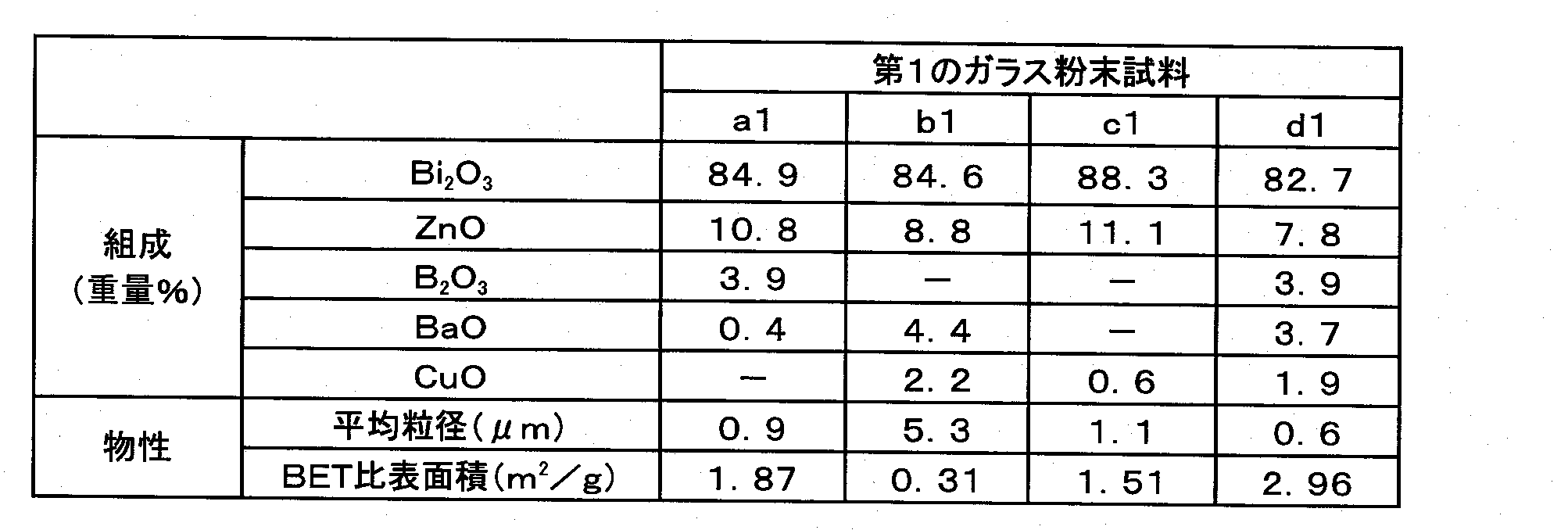
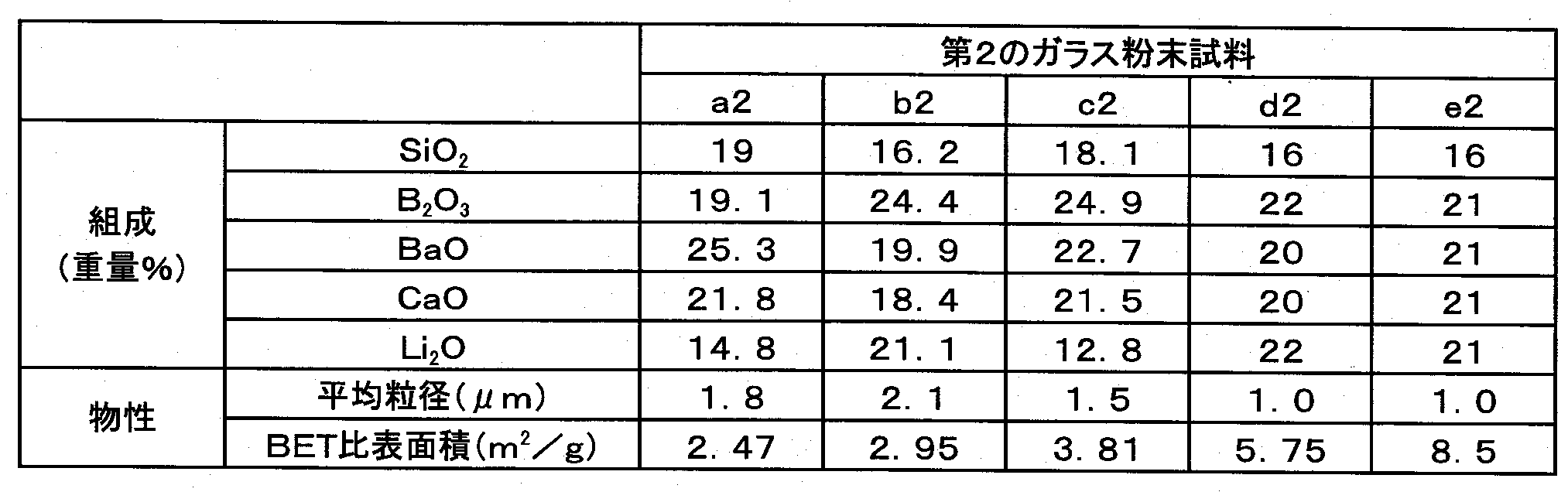
- ⁇ Glass powder sample> Commercial glass powders having the physical properties shown in Table 2 and Table 3 were used as the first glass powder and the second glass powder.
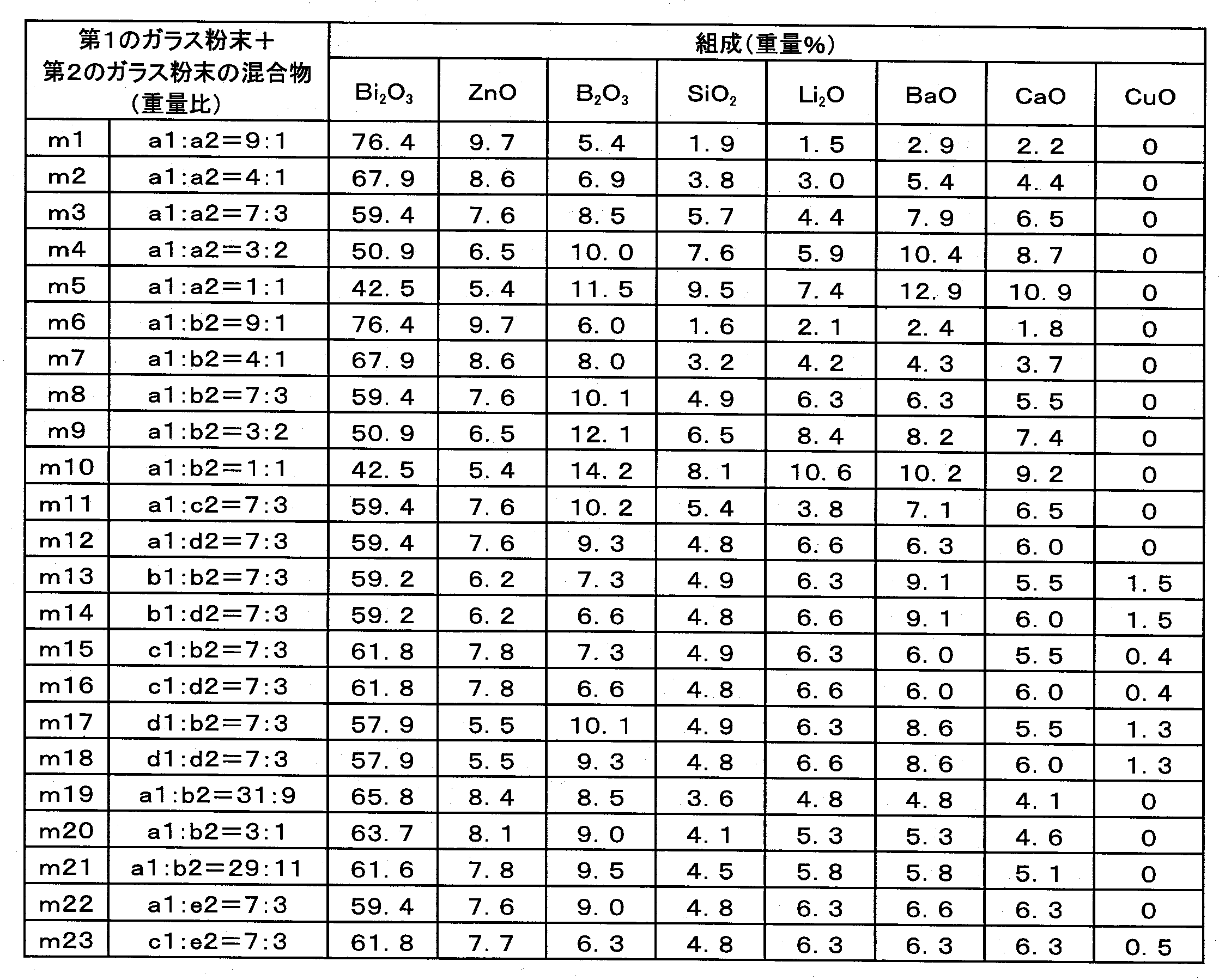
- Table 4 shows the composition of the first glass powder and the second glass powder mixed at a predetermined weight ratio.
- Examples 1 to 21 and Comparative Examples 1 to 4 A nylon pot having a capacity of 700 ml was charged with a total of 60 g of 1150 g of ZrO 2 balls (diameter 5 mm), ceramic raw material powder and glass powder so as to have the blending ratio shown in Table 6, and then 95 g of ethanol. The pot mill was rotated at 80 rpm for 2 hours to obtain a slurry, and then the ZrO 2 balls were separated from the slurry, and then the entire amount of the slurry was dried to obtain a sample for forming a dielectric ceramic.
- the change rate (change rate) of the relative dielectric constant at each measurement temperature was obtained by the following formula.
- Percentage change in relative permittivity at measurement temperature (change rate) [(relative permittivity at measurement temperature) ⁇ (relative permittivity at reference temperature)] / (relative permittivity at reference temperature) ⁇ 100 From the obtained change rate, the temperature characteristics were evaluated according to the following standards.
- X7R All change rates are within -15% to 15% within the temperature range of -55 ° C to 125 ° C.
- X8R All change rates are within -15% to 15% within the temperature range of -55 ° C to 150 ° C.
- Examples 22 to 49 and Comparative Examples 5 to 6 A nylon pot having a capacity of 700 ml was charged with a total of 60 g of 1150 g of ZrO 2 balls (diameter 5 mm), ceramic raw material powder and glass powder so as to have the blending ratio shown in Table 8, and then 95 g of ethanol. The pot mill was rotated at 80 rpm for 2 hours to obtain a slurry, and then the ZrO 2 balls were separated from the slurry, and then the entire amount of the slurry was dried to obtain a sample for forming a dielectric ceramic.
- Examples 50 to 87 A nylon pot having a capacity of 700 ml was charged with a total of 60 g of 1150 g of ZrO 2 balls (diameter 5 mm), ceramic raw material powder and glass powder so as to have the blending ratio shown in Table 10, and then 95 g of ethanol. The pot mill was rotated at 80 rpm for 2 hours to obtain a slurry, and then the ZrO 2 balls were separated from the slurry, and then the entire amount of the slurry was dried to obtain a sample for forming a dielectric ceramic.
- Example 88 to 94 A nylon pot having a capacity of 700 ml was charged with a total of 60 g of 1150 g of ZrO 2 balls (diameter 5 mm), ceramic raw material powder and glass powder so as to have the blending ratio shown in Table 12, and then 95 g of ethanol. The pot mill was rotated at 80 rpm for 2 hours to obtain a slurry, and then the ZrO 2 balls were separated from the slurry, and then the entire amount of the slurry was dried to obtain a sample for forming a dielectric ceramic.
- Example 95 to 121 In a nylon pot with a capacity of 700 ml, 1150 g of ZrO 2 balls (diameter 5 mm), ceramic raw material powder, glass powder and subcomponent element-containing compound (Nd (OH) 3 ) powder are mixed in the proportions shown in Table 14. A total of 60 g was charged, followed by 95 g of ethanol. The pot mill was rotated at 80 rpm for 2 hours to obtain a slurry, and then the ZrO 2 balls were separated from the slurry, and then the entire amount of the slurry was dried to obtain a sample for forming a dielectric ceramic.
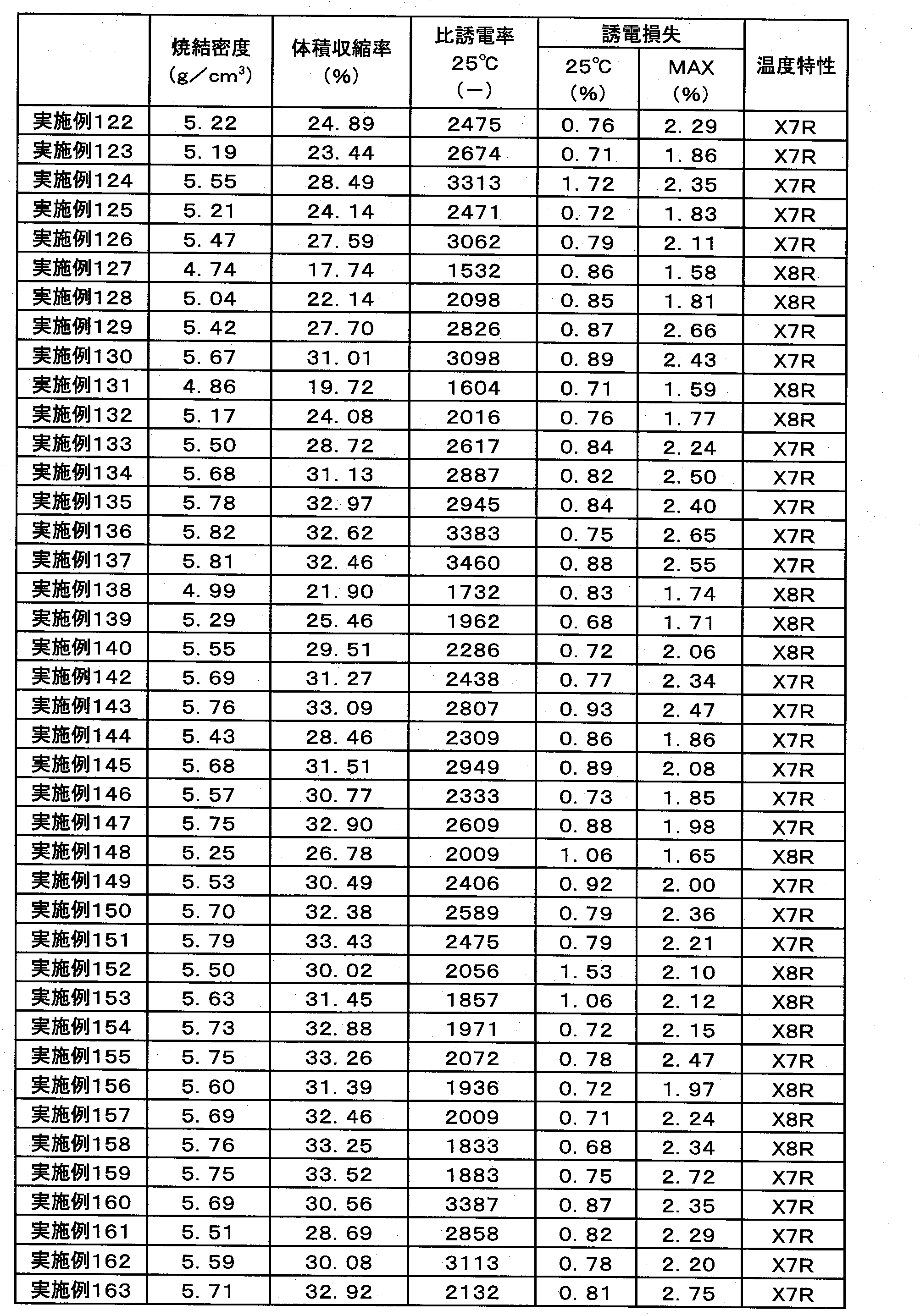
- Example 122 to 163 A nylon pot having a capacity of 700 ml is charged with 1150 g of ZrO 2 balls (diameter 5 mm), ceramic raw material powder, glass powder and auxiliary component element-containing compound powder in a total proportion of 60 g, and then 95 g. Of ethanol. The pot mill was rotated at 80 rpm for 2 hours to obtain a slurry, and then the ZrO 2 balls were separated from the slurry, and then the entire amount of the slurry was dried to obtain a sample for forming a dielectric ceramic.
- the dielectric ceramic forming composition according to the present invention can obtain a dielectric ceramic material having a high relative dielectric constant even when sintered at a lower temperature than conventional, the obtained dielectric ceramic material is In addition to being used as a dielectric material for thin-layer ceramic capacitors, as a dielectric material for electronic components such as printed wiring boards, multilayer printed wiring boards, electrode ceramic circuit boards, glass ceramic circuit boards, circuit peripheral materials, inorganic EL, and plasma displays Can also be suitably used.
Landscapes
- Chemical & Material Sciences (AREA)
- Engineering & Computer Science (AREA)
- Ceramic Engineering (AREA)
- Materials Engineering (AREA)
- Organic Chemistry (AREA)
- Manufacturing & Machinery (AREA)
- Structural Engineering (AREA)
- Life Sciences & Earth Sciences (AREA)
- Chemical Kinetics & Catalysis (AREA)
- General Chemical & Material Sciences (AREA)
- Geochemistry & Mineralogy (AREA)
- Inorganic Chemistry (AREA)
- Power Engineering (AREA)
- Composite Materials (AREA)
- Microelectronics & Electronic Packaging (AREA)
- Dispersion Chemistry (AREA)
- Compositions Of Oxide Ceramics (AREA)
- Inorganic Insulating Materials (AREA)
Abstract
Description
近年、電子部品の小型化に対する要求が高まっており、それに伴い、電子部品を構成する誘電体セラミック焼結体層の薄層化が進んでいる。焼結体層の厚みを薄くするには、誘電体セラミック焼結体層中の結晶粒子の粒径を小さくすることが必要となる。通常、高温で焼結すると結晶粒子が成長してしまう。このため、チタン酸バリウム等の原料粉末には低温で焼結可能であることが強く要求される。
そのため、更に低温焼成可能なペロブスカイト型セラミックを得る方法が種々提案されている。例えば、95重量%~99.0重量%のチタン酸バリウム及び1.0重量%~5.0重量%のフッ化リチウムを含有するもの(例えば、特許文献1を参照)、チタン酸バリウムに副成分としてアルカリ金属成分と、ニオブ成分、アルカリ土類金属成分、ビスマス成分、亜鉛成分、銅成分、ジルコニウム成分、ケイ素成分、ホウ素成分及びコバルト成分の少なくとも1種とを含有させたもの(例えば、特許文献2を参照)、平均粒径が0.01~0.5μmのペロブスカイト(ABO3)系セラミック原料粉末と平均粒径が0.1~5μmのガラス粉末とを含有し、且つ前記ガラス粉末の配合量を3重量%~12重量%にしたもの(特許文献3参照)等が提案されているが、更なる低温焼成化が可能で、且つ誘電率の高い材料の開発が望まれていた。
即ち、本発明に係る誘電体セラミック形成用組成物は、ペロブスカイト(ABO3)系セラミック原料粉末と、酸化物換算で35重量%~90重量%のBi2O3、2.5重量%~20重量%のZnO、1重量%~20重量%のB2O3、0.5重量%~15重量%のSiO2、0.5重量%~15重量%のアルカリ金属酸化物及び0.1重量%~35重量%のアルカリ土類金属酸化物を含有するガラス粉末とを含む誘電体セラミック形成用組成物であって、該ガラス粉末が、該誘電体セラミック形成用組成物に対して1重量%~15重量%配合されていることを特徴とする。
本発明に係る誘電体セラミック材料は、上記した誘電体セラミック形成用組成物を焼成して得られるものである。
本発明の誘電体セラミック形成用組成物に用いられるペロブスカイト(ABO3)系セラミック原料粉末としては、Aサイト元素が、Ca、Sr及びBaからなる群から選ばれる金属元素の少なくとも1種であり、且つBサイト元素が、Ti及びZrからなる群から選ばれる少なくとも1種であるものが、高い比誘電率を有する誘電体セラミック材料を得る点で好ましい。このような好ましいペロブスカイト(ABO3)系セラミックとしては、チタン酸バリウム、チタン酸カルシウム、チタン酸ストロンチウム、チタンジルコン酸バリウムカルシウム、チタンジルコン酸バリウム、チタン酸バリウムストロンチウム、ジルコン酸バリウム、ジルコン酸カルシウム、ジルコン酸ストロンチウム、ジルコン酸バリウムカルシウム、ジルコン酸バリウムストロンチウム及びジルコン酸カルシウムストロンチウムが挙げられる。これらは、1種単独で使用してもよいし、2種以上を組み合わせて使用してもよい。これらの中でも、低温焼成でより高い比誘電率を有する誘電体セラミック材料を得るという点で、チタン酸バリウムを用いることが最も好ましい。
また、ペロブスカイト系セラミック原料粉末の平均粒径は、好ましくは0.1μm~2μmであり、より好ましくは0.2μm~1.5μmである。ペロブスカイト系セラミック原料粉末の平均粒径が当該範囲にあると、粒子本来の電気的特性、焼結諸特性、ハンドリング特性が良好であるので好ましい。なお、本発明におけるペロブスカイト系セラミック原料粉末の平均粒径は、レーザー回折法による体積分布計測におけるD50粒径により求めた値である。
また、ペロブスカイト系セラミック原料粉末のBET比表面積は、好ましくは1.0m2/g以上であり、より好ましくは1.0m2/g~10m2/gである。BET比表面積が当該範囲にあると、焼結性及びハンドリング性が良好となり、安定した品質の誘電体セラミック材料が得られるので好ましい。
本発明では、平均粒径やBET比表面積等の物性の異なる2種以上のペロブスカイト系セラミック原料粉末を用いてもよい。
ペロブスカイト系セラミック原料粉末の調製方法は、特に限定されるものではなく、例えば、共沈法、加水分解法、水熱合成法、常圧加熱反応法等の湿式法、或いは固相法が挙げられる。また、市販のペロブスカイト系セラミック原料粉末を用いてもよい。
即ち、ガラス粉末の組成は、酸化物換算で35重量%~90重量%、好ましくは40重量%~80重量%のBi2O3、2.5重量%~20重量%、好ましくは5重量%~10重量%のZnO、1重量%~20重量%、好ましくは5重量%~15重量%のB2O3、0.5重量%~15重量%、好ましくは1重量%~10重量%のSiO2、0.5重量%~15重量%、好ましくは1重量%~12重量%のLi、Na及びKからなる群から選ばれる1種以上のアルカリ金属の酸化物、並びに0.1重量%~35重量%、好ましくは3重量%~25重量%のMg、Ca、Sr及びBaからなる群から選ばれる1種以上のアルカリ土類金属の酸化物である。このような範囲の組成を有するガラス粉末をペロブスカイト(ABO3)系セラミック原料粉末に添加及び混合することにより、低温、特に700℃程度であっても焼成可能であり、且つ高い比誘電率を有する誘電体セラミック材料とすることができる。
更に、本発明において、上記したガラス粉末が、酸化物換算で0.1重量%~5重量%、好ましくは0.2重量%~2重量%のCuOを更に含有するものであると、より低温焼成可能で、且つ高い比誘電率を有する誘電体セラミック材料とすることができる。
第1のガラス粉末は、Bi2O3及びZnOを成分として含有するものであり、比誘電率阻害がより少ないという点で、酸化物換算で、好ましくは70重量%~95重量%、より好ましくは75重量%~90重量%のBi2O3及び好ましくは2.5重量%~20重量%、より好ましくは5重量%~15重量%のZnOを含む。
第1のガラス粉末は、Bi2O3及びZnO以外の成分として、アルカリ金属の酸化物、アルカリ土類金属の酸化物、B2O3、TiO2、炭素、CuO等を含んでもよい。特に、CuOを含有する第1のガラス粉末を用いると、700℃程度の低温であっても焼結を行うことができ、得られる誘電体セラミック材料の比誘電率が高いので好ましい。
また、第1のガラス粉末のBET比表面積は、好ましくは0.2m2/g~20m2/gであり、より好ましくは0.2m2/g~15m2/gである。第1のガラス粉末のBET比表面積が当該範囲にあると、誘電体粉末との均質混合、成形性、焼結性が向上するので好ましい。
また、より低温からの焼結性向上という点で、第1のガラス粉末のガラス転移温度は、好ましくは450℃以下、より好ましくは300℃~400℃であり、ガラス軟化温度は、好ましくは500℃以下、より好ましくは350℃~450℃である。
中でも、第2のガラス粉末としては、ガラス粉末としての安定作製という点で、B2O3、SiO2、Li2O、BaO及びCaOを成分として含有するものが好ましく、15%~25重量%のB2O3、10重量%~20重量%のSiO2、15重量%~25重量%のLi2O、15重量%~25重量%のBaO及び15重量%~25重量%のCaOを含有するものがより好ましい。
第2のガラス粉末は、B2O3、SiO2、アルカリ金属の酸化物及びアルカリ土類金属の酸化物以外の成分として、Al2O3等を含んでもよい。
また、第2のガラス粉末のBET比表面積は、好ましくは1m2/g~50m2/gであり、より好ましくは2m2/g~20m2/gである。第2のガラス粉末のBET比表面積が当該範囲にあると、誘電体粉末との均質混合、成形性、焼結性が向上するので好ましい。
また、より低温からの焼結性向上という点で、第2のガラス粉末のガラス転移温度は、好ましくは450℃以下、より好ましくは300℃~400℃であり、ガラス軟化温度は、好ましくは500℃以下、より好ましくは350℃~450℃である。
また、副成分元素含有化合物粉末のBET比表面積は、好ましくは2m2/g~200m2/gであり、より好ましくは2m2/g~100m2/gである。副成分元素含有化合物粉末のBET比表面積が当該範囲にあると、誘電体粉末及びガラス粉末の均質配合性向上、焼結性向上が図れるので好ましい。
湿式法には、ボールミル、ビーズミル、ディスパーミル、ホモジナイザー、振動ミル、サンドグラインドミル、アトライター、強力撹拌機等の公知の装置を用いることができる。また、乾式法には、ハイスピードミキサー、スーパーミキサー、ターボスフェアミキサー、ヘンシェルミキサー、ナウターミキサー、リボンブレンダー等の公知の装置を用いることができる。
より均一な混合物とし、より高い誘電率を有する誘電体セラミック材料を得るという点で、本発明の誘電体セラミック形成用組成物は湿式法により調製することが好ましい。湿式混合に用いる溶媒としては、例えば、水、メタノール、エタノール、プロパノール、ブタノール、トルエン、キシレン、アセトン、塩化メチレン、酢酸エチル、ジメチルホルムアミド、ジエチルエーテル等が挙げられる。これらの中でも、メタノール、エタノール、プロパノール、ブタノール等のアルコールを用いると、組成変化が少ないものが得られるので、得られる誘電体セラミック材料の誘電率をより向上させることができる。
<ペロブスカイト(ABO3)系セラミック原料粉末試料>
シュウ酸塩法により調製された表1に示す物性を有する市販のチタン酸バリウムをペロブスカイト(ABO3)系セラミック原料粉末として使用した。

表2及び表3に示す物性を有する市販のガラス粉末を第1のガラス粉末及び第2のガラス粉末として使用した。また、第1のガラス粉末及び第2のガラス粉末を所定の重量比で混合したものの組成を表4に示す。
市販の表5に示す物性を有する化合物を副成分元素含有化合物として使用した。

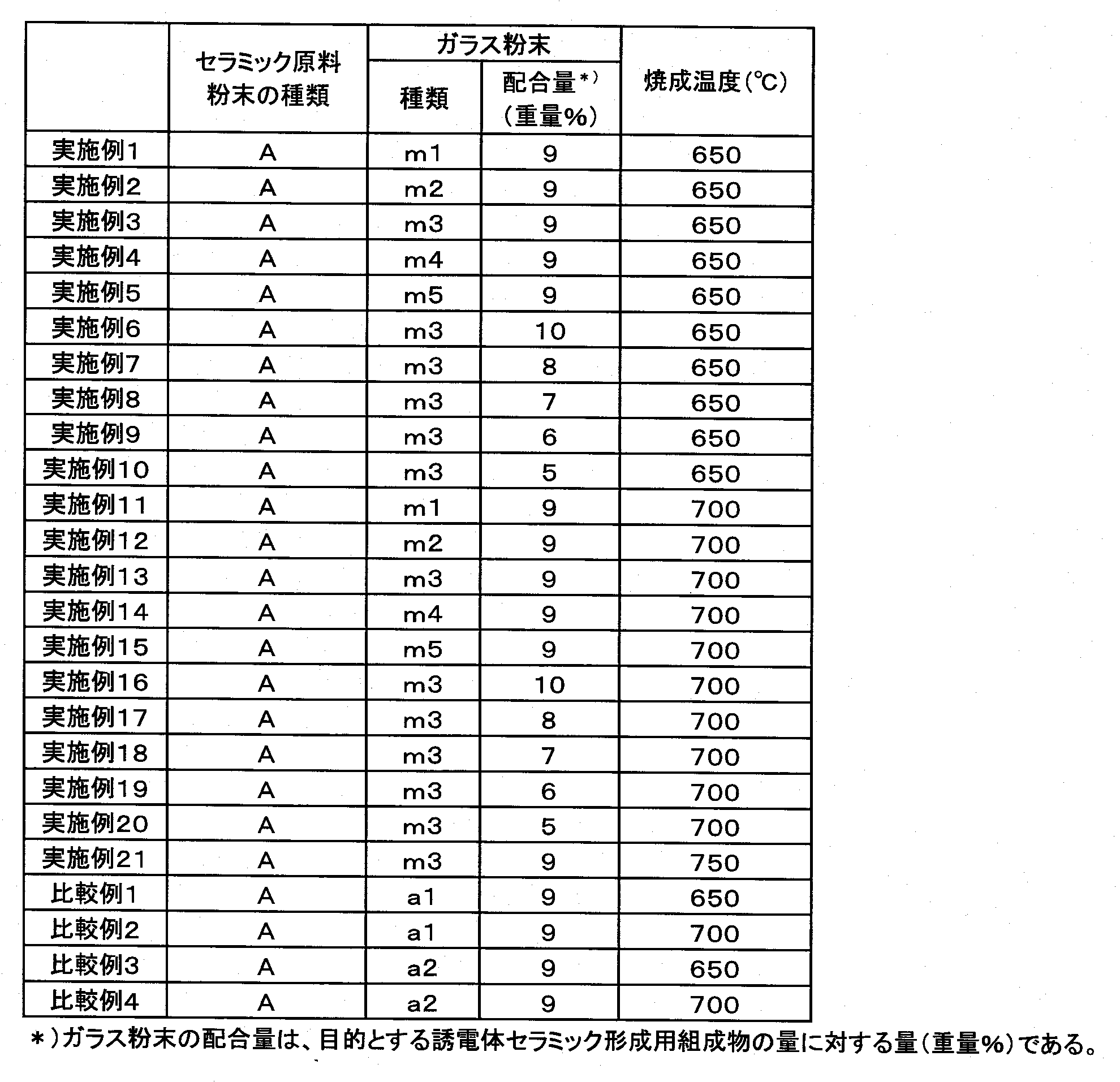
容量700mlのナイロン製ポットに、1150gのZrO2ボール(直径5mm)と、セラミック原料粉末及びガラス粉末を表6に示す配合割合となるように合計60gを仕込み、次いで95gのエタノールを仕込んだ。ポットミルの回転数を80rpmとして2時間運転し、スラリーを得た後、スラリーからZrO2ボールを分離し、次いで、全量のスラリーを乾燥して、誘電体セラミック形成用試料を得た。
得られた誘電体セラミック形成用試料10gを秤量し、ポリビニルアセタール樹脂の5重量%溶液(トルエン:n-ブタノール=6:4混合溶媒)を1.3g添加し、乳鉢中で十分に混合し造粒物を得た。得られた造粒物を目開き150μmのナイロン製篩いにて裏ごしした後、80℃で1時間乾燥し、乾燥品を得た。
次いで、得られた乾燥品を11.5mmφの超硬製金型を用いて470MPaの圧力にて一軸加圧成形を行い、ディスク状の成形体を得た。
最後に、得られたディスク状の成形体を、大気雰囲気中で、表6に示す焼成温度まで毎時200°で昇温し、そのまま2時間保持した後、冷却して誘電体セラミック試料を得た。
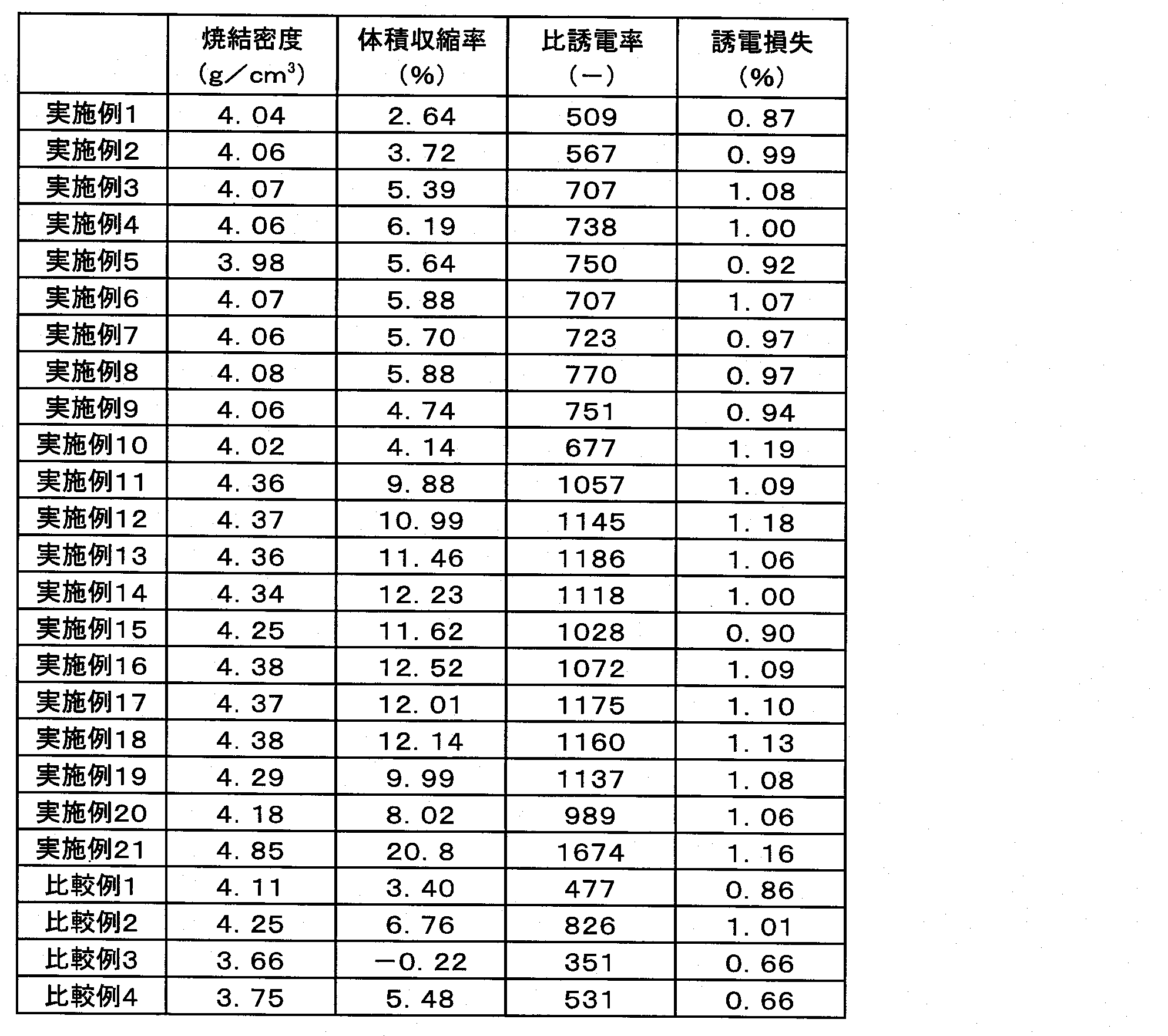
得られた誘電体セラミック試料について、焼結密度、体積収縮率、比誘電率及び誘電損失をそれぞれ評価した。評価結果を表7に示す。
(1)焼結密度の評価
誘電体セラミック試料の重量、厚み及び直径を計測し、これらの値から焼結密度を求めた。
(2)体積収縮率の評価
ディスク状の成形体の厚み及び直径を計測して求めた焼成前体積と、誘電体セラミック試料の厚み及び直径を計測して求めた焼成後体積とから、体積収縮率(%)=(焼成前体積-焼成後体積)/焼成前体積×100を求めた。
(3)電気特性(比誘電率及び誘電損失)の評価
誘電体セラミック試料の両面に、蒸着法にて厚さ20nmの白金膜を電極として形成した後、LCRメーター(アジレントテクノロジー株式会社製 4284A)にて、周波数1kHz、印加電圧1Vにおける比誘電率及び誘電損失の計測を行った。また、温度特性を評価する場合は、恒温槽を用いて、-55℃から150℃の範囲において5℃刻みで比誘電率及び誘電損失を計測し、基準温度(25℃)における比誘電率を基準値として、各測定温度における比誘電率の変化割合(変化率)を下記の式で求めた。
測定温度における比誘電率の変化割合(変化率)=[(測定温度の比誘電率)-(基準温度の比誘電率)]/(基準温度の比誘電率)×100
求めた変化率から、温度特性を以下の規格に従って評価した。
X7R:-55℃~125℃の温度範囲において、全ての変化率が-15%~15%以内
X8R:-55℃~150℃の温度範囲において、全ての変化率が-15%~15%以内
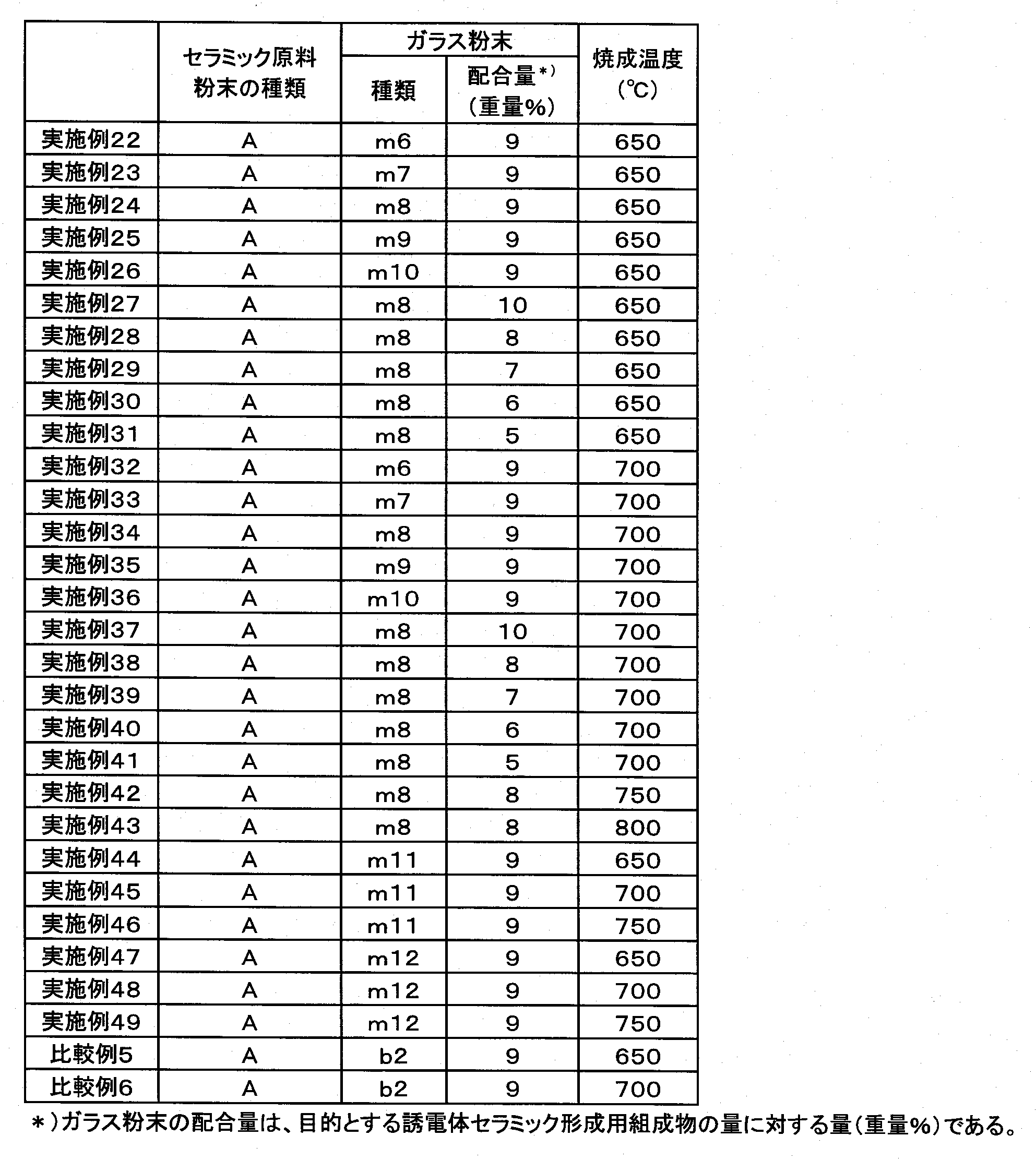
容量700mlのナイロン製ポットに、1150gのZrO2ボール(直径5mm)と、セラミック原料粉末及びガラス粉末を表8に示す配合割合となるように合計60gを仕込み、次いで95gのエタノールを仕込んだ。ポットミルの回転数を80rpmとして2時間運転し、スラリーを得た後、スラリーからZrO2ボールを分離し、次いで、全量のスラリーを乾燥して、誘電体セラミック形成用試料を得た。
得られた誘電体セラミック形成用試料10gを秤量し、ポリビニルアセタール樹脂の5重量%溶液(トルエン:n-ブタノール=6:4混合溶媒)を1.3g添加し、乳鉢中で十分に混合し造粒物を得た。得られた造粒物を目開き150μmのナイロン製篩いにて裏ごしした後、80℃で1時間乾燥し、乾燥品を得た。
次いで、得られた乾燥品を11.5mmφの超硬製金型を用いて470MPaの圧力にて一軸加圧成形を行い、ディスク状の成形体を得た。
最後に、得られたディスク状の成形体を、大気雰囲気中で、表8に示す焼成温度まで毎時200°で昇温し、そのまま2時間保持した後、冷却して誘電体セラミック試料を得た。
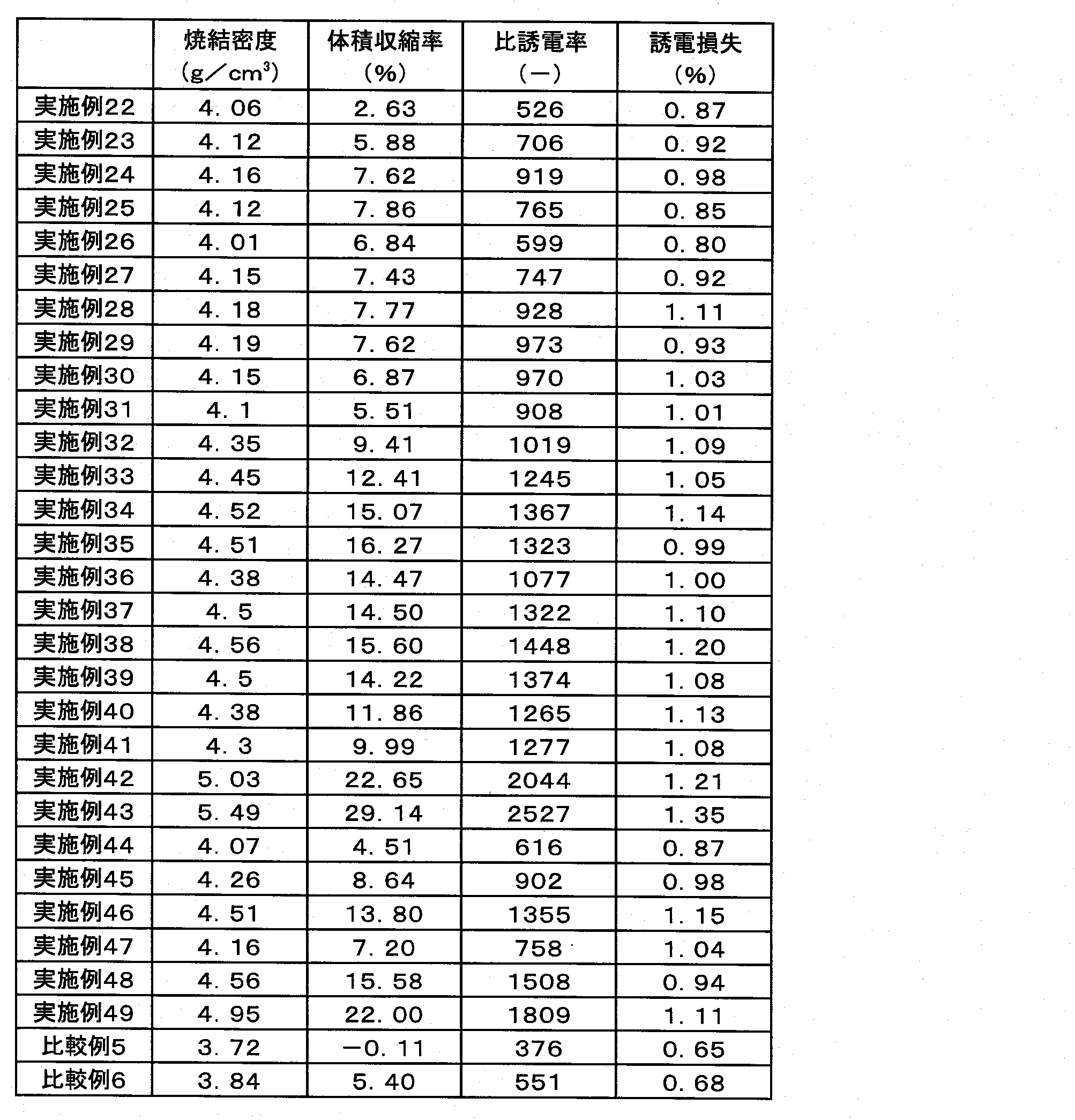
実施例1~21と同様にして、得られた誘電体セラミック試料について、焼結密度、体積収縮率、比誘電率及び誘電損失を求めた。結果を表9に示す。
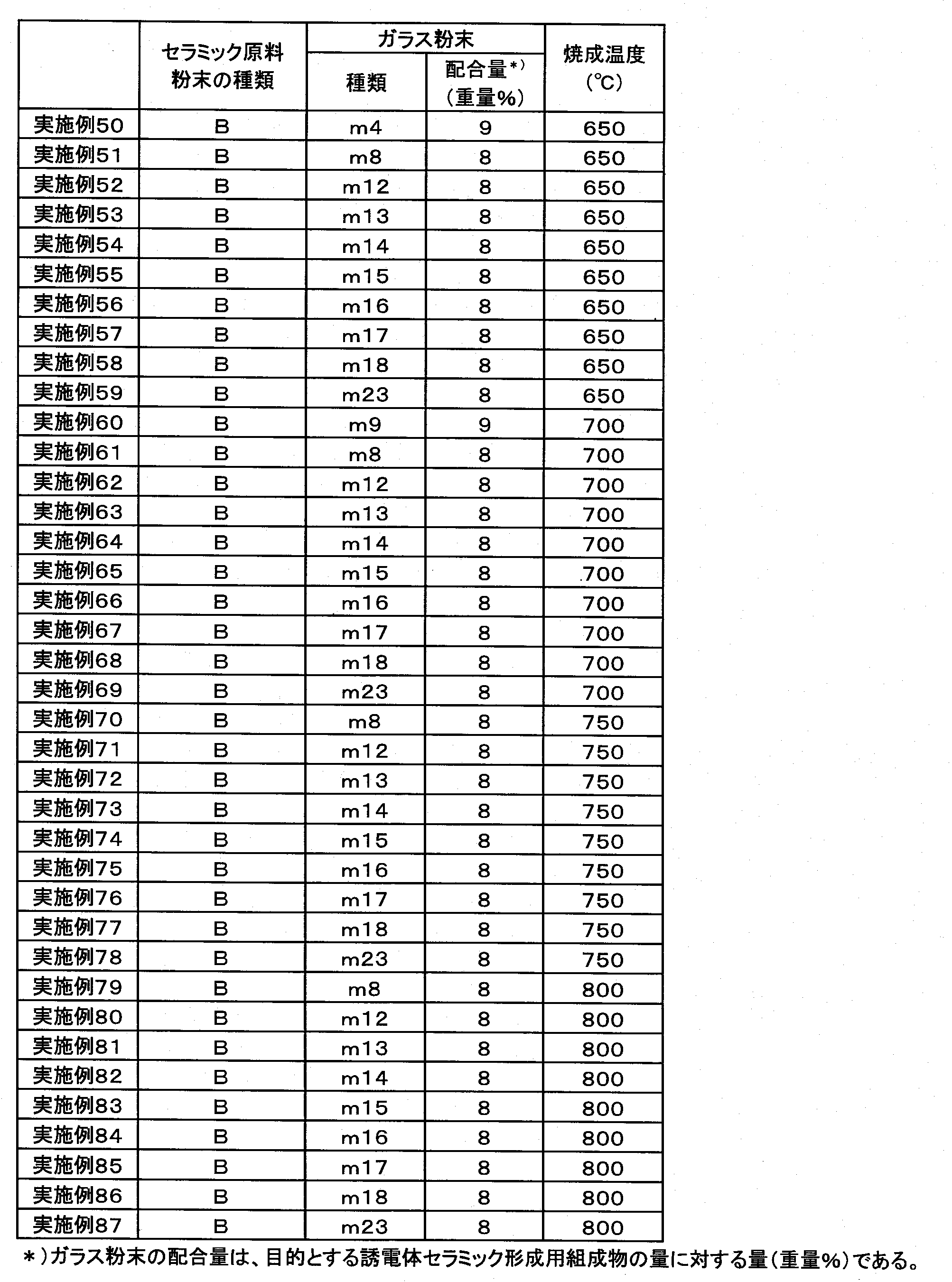
容量700mlのナイロン製ポットに、1150gのZrO2ボール(直径5mm)と、セラミック原料粉末及びガラス粉末を表10に示す配合割合となるように合計60gを仕込み、次いで95gのエタノールを仕込んだ。ポットミルの回転数を80rpmとして2時間運転し、スラリーを得た後、スラリーからZrO2ボールを分離し、次いで、全量のスラリーを乾燥して、誘電体セラミック形成用試料を得た。
得られた誘電体セラミック形成用試料10gを秤量し、ポリビニルアセタール樹脂の5重量%溶液(トルエン:n-ブタノール=6:4混合溶媒)を1.3g添加し、乳鉢中で十分に混合し造粒物を得た。得られた造粒物を目開き150μmのナイロン製篩いにて裏ごしした後、80℃で1時間乾燥し、乾燥品を得た。
次いで、得られた乾燥品を11.5mmφの超硬製金型を用いて470MPaの圧力にて一軸加圧成形を行い、ディスク状の成形体を得た。
最後に、得られたディスク状の成形体を、大気雰囲気中で、表10に示す焼成温度まで毎時200°で昇温し、そのまま2時間保持した後、冷却して誘電体セラミック試料を得た。
実施例1~21と同様にして、得られた誘電体セラミック試料について、焼結密度、体積収縮率、比誘電率及び誘電損失を求めた。結果を表11に示す。

容量700mlのナイロン製ポットに、1150gのZrO2ボール(直径5mm)と、セラミック原料粉末及びガラス粉末を表12に示す配合割合となるように合計60gを仕込み、次いで95gのエタノールを仕込んだ。ポットミルの回転数を80rpmとして2時間運転し、スラリーを得た後、スラリーからZrO2ボールを分離し、次いで、全量のスラリーを乾燥して、誘電体セラミック形成用試料を得た。
得られた誘電体セラミック形成用試料10gを秤量し、ポリビニルアセタール樹脂の5重量%溶液(トルエン:n-ブタノール=6:4混合溶媒)を1.3g添加し、乳鉢中で十分に混合し造粒物を得た。得られた造粒物を目開き150μmのナイロン製篩いにて裏ごしした後、80℃で1時間乾燥し、乾燥品を得た。
次いで、得られた乾燥品を11.5mmφの超硬製金型を用いて470MPaの圧力にて一軸加圧成形を行い、ディスク状の成形体を得た。
最後に、得られたディスク状の成形体を、大気雰囲気中で、表12に示す焼成温度まで毎時200°で昇温し、そのまま2時間保持した後、冷却して誘電体セラミック試料を得た。
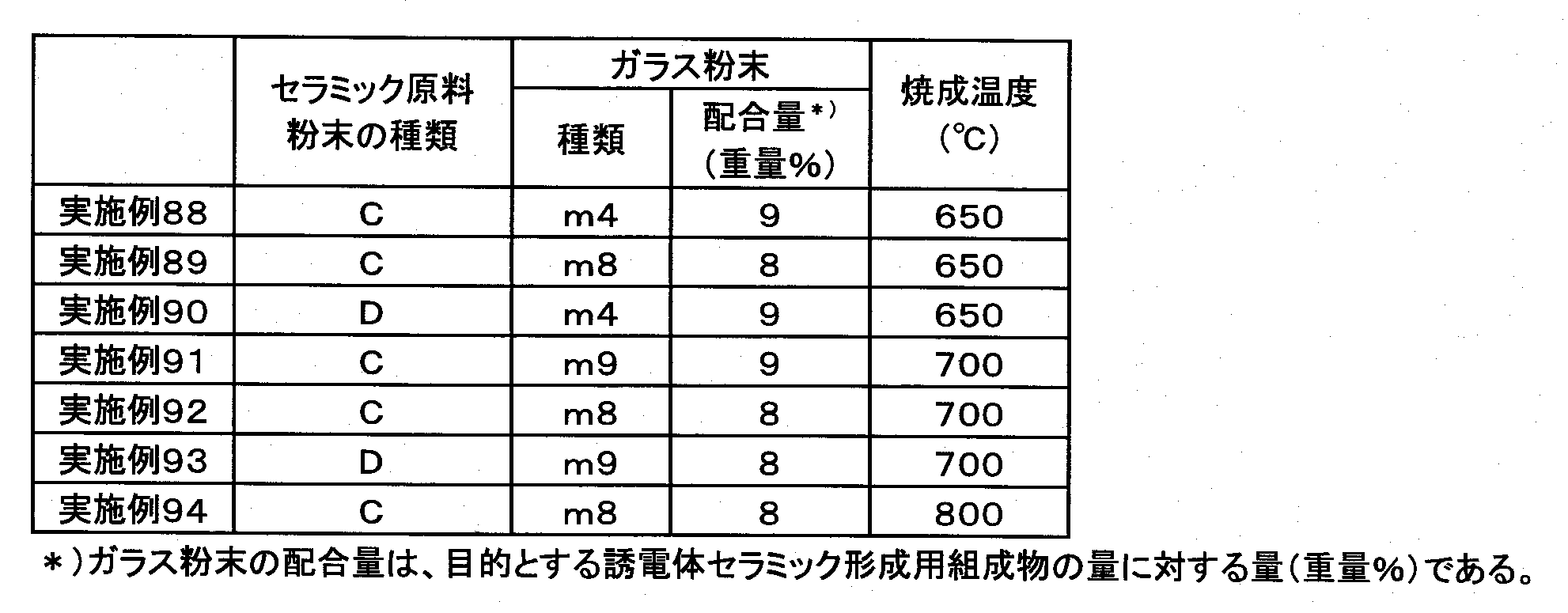
実施例1~21と同様にして、得られた誘電体セラミック試料について、焼結密度、体積収縮率、比誘電率及び誘電損失を求めた。結果を表13に示す。

容量700mlのナイロン製ポットに、1150gのZrO2ボール(直径5mm)と、セラミック原料粉末、ガラス粉末及び副成分元素含有化合物(Nd(OH)3)粉末を表14に示す配合割合となるように合計60gを仕込み、次いで95gのエタノールを仕込んだ。ポットミルの回転数を80rpmとして2時間運転し、スラリーを得た後、スラリーからZrO2ボールを分離し、次いで、全量のスラリーを乾燥して、誘電体セラミック形成用試料を得た。
得られた誘電体セラミック形成用試料10gを秤量し、ポリビニルアセタール樹脂の5重量%溶液(トルエン:n-ブタノール=6:4混合溶媒)を1.3g添加し、乳鉢中で十分に混合し造粒物を得た。得られた造粒物を目開き150μmのナイロン製篩いにて裏ごしした後、80℃で1時間乾燥し、乾燥品を得た。
次いで、得られた乾燥品を11.5mmφの超硬製金型を用いて470MPaの圧力にて一軸加圧成形を行い、ディスク状の成形体を得た。
最後に、得られたディスク状の成形体を、大気雰囲気中で、表14に示す焼成温度まで毎時200°で昇温し、そのまま2時間保持した後、冷却して誘電体セラミック試料を得た。

実施例1~21と同様にして、得られた誘電体セラミック試料について、焼結密度、体積収縮率、比誘電率、誘電損失及び温度特性を求めた。結果を表15に示す。

容量700mlのナイロン製ポットに、1150gのZrO2ボール(直径5mm)と、セラミック原料粉末、ガラス粉末及び副成分元素含有化合物粉末を表16に示す配合割合となるように合計60gを仕込み、次いで95gのエタノールを仕込んだ。ポットミルの回転数を80rpmとして2時間運転し、スラリーを得た後、スラリーからZrO2ボールを分離し、次いで、全量のスラリーを乾燥して、誘電体セラミック形成用試料を得た。
得られた誘電体セラミック形成用試料10gを秤量し、ポリビニルアセタール樹脂の5重量%溶液(トルエン:n-ブタノール=6:4混合溶媒)を1.3g添加し、乳鉢中で十分に混合し造粒物を得た。得られた造粒物を目開き150μmのナイロン製篩いにて裏ごしした後、80℃で1時間乾燥し、乾燥品を得た。
次いで、得られた乾燥品を11.5mmφの超硬製金型を用いて470MPaの圧力にて一軸加圧成形を行い、ディスク状の成形体を得た。
最後に、得られたディスク状の成形体を、大気雰囲気中で、表16に示す焼成温度まで毎時200°で昇温し、そのまま2時間保持した後、冷却して誘電体セラミック試料を得た。

実施例1~21と同様にして、得られた誘電体セラミック試料について、焼結密度、体積収縮率、比誘電率、誘電損失及び温度特性を求めた。結果を表17に示す。
Claims (14)
- ペロブスカイト(ABO3)系セラミック原料粉末と、酸化物換算で35重量%~90重量%のBi2O3、2.5重量%~20重量%のZnO、1重量%~20重量%のB2O3、0.5重量%~15重量%のSiO2、0.5重量%~15重量%のアルカリ金属酸化物及び0.1重量%~35重量%のアルカリ土類金属酸化物を含有するガラス粉末とを含む誘電体セラミック形成用組成物であって、該ガラス粉末が、該誘電体セラミック形成用組成物に対して1重量%~15重量%配合されていることを特徴とする誘電体セラミック形成用組成物。
- 前記ペロブスカイト(ABO3)系セラミック原料粉末の平均粒径が、0.1μm~2μmであることを特徴とする請求項1に記載の誘電体セラミック形成用組成物。
- 前記ペロブスカイト(ABO3)系セラミック原料粉末のBET比表面積が、1.0m2/g以上であることを特徴とする請求項1に記載の誘電体セラミック形成用組成物。
- 前記ガラス粉末が、酸化物換算で0.1重量%~5重量%のCuOを更に含有することを特徴とする請求項1に記載の誘電体セラミック形成用組成物。
- 前記ガラス粉末が、Bi2O3及びZnOを成分として含有する第1のガラス粉末と、B2O3、SiO2、アルカリ金属酸化物及びアルカリ土類金属酸化物を成分として含有する第2のガラス粉末との混合物であることを特徴とする請求項1に記載の誘電体セラミック形成用組成物。
- 前記第2のガラス粉末が、B2O3、SiO2、Li2O、BaO及びCaOを成分として含有することを特徴とする請求項5に記載の誘電体セラミック形成用組成物。
- 前記第1のガラス粉末と前記第2のガラス粉末との重量比が、20:1~1:1の範囲であることを特徴とする請求項5又は6に記載の誘電体セラミック形成用組成物。
- 前記ペロブスカイト(ABO3)系セラミック原料粉末のAサイト元素がBa、Ca及びSrからなる群から選ばれる少なくとも1種であり、且つBサイト元素がTi及びZrからなる群から選ばれる少なくとも1種であることを特徴とする請求項1に記載の誘電体セラミック形成用組成物。
- 前記ペロブスカイト(ABO3)系セラミック原料粉末が、チタン酸バリウムであることを特徴とする請求項1に記載の誘電体セラミック形成用組成物。
- Sc、Y、La、Ce、Pr、Nd、Sm、Eu、Gd、Tb、Dy、Ho、Er、Tm、Yb及びLuからなる希土類元素、Mg、Ca、Sr、Zr、Hf、V、Nb、Ta、Mn、Cr、Mo及びWからなる群から選ばれる少なくとも1種の副成分元素を含有する副成分元素含有化合物粉末を更に含むことを特徴とする請求項1に記載の誘電体セラミック形成用組成物。
- 請求項1~10の何れか1項に記載の誘電体セラミック形成用組成物を焼成して得られることを特徴とする誘電体セラミック材料。
- 前記焼成は1000℃以下で行われることを特徴とする請求項11に記載の誘電体セラミック材料。
- 周波数1kHzにおける比誘電率が500以上であることを特徴とする請求項11又は12に記載の誘電体セラミック材料。
- 周波数1kHzにおける誘電損失が5%以下であることを特徴とする請求項11又は12に記載の誘電体セラミック材料。
Priority Applications (3)
| Application Number | Priority Date | Filing Date | Title |
|---|---|---|---|
| JP2011536193A JP5657558B2 (ja) | 2009-10-16 | 2010-10-15 | 誘電体セラミック形成用組成物及び誘電体セラミック材料 |
| US13/501,832 US20120270720A1 (en) | 2009-10-16 | 2010-10-15 | Dielectric ceramic-forming composition and dielectric ceramic material |
| CN2010800572195A CN102656127A (zh) | 2009-10-16 | 2010-10-15 | 电介质陶瓷形成用组合物以及电介质陶瓷材料 |
Applications Claiming Priority (2)
| Application Number | Priority Date | Filing Date | Title |
|---|---|---|---|
| JP2009239495 | 2009-10-16 | ||
| JP2009-239495 | 2009-10-16 |
Publications (1)
| Publication Number | Publication Date |
|---|---|
| WO2011046205A1 true WO2011046205A1 (ja) | 2011-04-21 |
Family
ID=43876254
Family Applications (1)
| Application Number | Title | Priority Date | Filing Date |
|---|---|---|---|
| PCT/JP2010/068169 Ceased WO2011046205A1 (ja) | 2009-10-16 | 2010-10-15 | 誘電体セラミック形成用組成物及び誘電体セラミック材料 |
Country Status (6)
| Country | Link |
|---|---|
| US (1) | US20120270720A1 (ja) |
| JP (1) | JP5657558B2 (ja) |
| KR (1) | KR20120093915A (ja) |
| CN (1) | CN102656127A (ja) |
| TW (1) | TW201119974A (ja) |
| WO (1) | WO2011046205A1 (ja) |
Cited By (3)
| Publication number | Priority date | Publication date | Assignee | Title |
|---|---|---|---|---|
| JP2014239226A (ja) * | 2011-03-18 | 2014-12-18 | 株式会社村田製作所 | 積層セラミックコンデンサ、誘電体セラミックおよび積層セラミックコンデンサの製造方法 |
| CN114956808A (zh) * | 2022-06-15 | 2022-08-30 | 无锡市高宇晟新材料科技有限公司 | Mlcc陶瓷介质材料及其制备方法、高温稳定型的mlcc陶瓷及其制备方法、应用 |
| WO2022239744A1 (ja) * | 2021-05-13 | 2022-11-17 | 日本化学工業株式会社 | 誘電体セラミック形成用組成物及び誘電体セラミック材料 |
Families Citing this family (25)
| Publication number | Priority date | Publication date | Assignee | Title |
|---|---|---|---|---|
| TWI557096B (zh) * | 2011-09-28 | 2016-11-11 | 可樂麗股份有限公司 | 漿料組成物、陶瓷坯片及積層陶瓷電容器 |
| CN102810343A (zh) * | 2012-07-06 | 2012-12-05 | 苏州开元民生科技股份有限公司 | 晶硅太阳能电池背面电极银浆及其制备方法 |
| JP2015137194A (ja) * | 2014-01-21 | 2015-07-30 | エプコス アクチエンゲゼルシャフトEpcos Ag | 誘電体磁器組成物、誘電体素子、電子部品および積層電子部品 |
| KR101973414B1 (ko) * | 2014-02-04 | 2019-04-29 | 삼성전기주식회사 | 저온 소성용 유전체 조성물, 이를 포함하는 적층 세라믹 전자 부품 및 적층 세라믹 전자 부품의 제조 방법 |
| GB2524721B (en) * | 2014-02-21 | 2016-02-24 | Syfer Technology Ltd | Dielectric material and capacitor comprising the dielectric material |
| KR101973417B1 (ko) * | 2014-08-22 | 2019-04-29 | 삼성전기주식회사 | 저온 소성용 유전체 조성물, 이를 포함하는 적층 세라믹 전자 부품 및 적층 세라믹 전자 부품의 제조 방법 |
| WO2016189003A1 (en) * | 2015-05-27 | 2016-12-01 | Epcos Ag | Bismuth sodium strontium titanate-based dielectric composition, dielectric element, electronic component and laminated electronic component thereof |
| CN106187131A (zh) * | 2016-07-13 | 2016-12-07 | 吴迪 | 一种高致密性压电陶瓷材料的制备方法 |
| CN106542821A (zh) * | 2016-10-18 | 2017-03-29 | 陕西科技大学 | 一种Bi2O3‑B2O3‑ZnO玻璃添加Ba0.4Sr0.6TiO3基储能陶瓷及其制备方法 |
| KR102392041B1 (ko) * | 2017-03-10 | 2022-04-27 | 삼성전자주식회사 | 유전체, 그 제조 방법, 이를 포함하는 유전체 소자 및 전자 소자 |
| KR102325821B1 (ko) | 2017-03-31 | 2021-11-11 | 삼성전자주식회사 | 2차원 페로브스카이트 소재, 이를 포함하는 유전체 및 적층형 커패시터 |
| CN107200576A (zh) * | 2017-06-29 | 2017-09-26 | 陕西科技大学 | 一种高介电常数铕和铌共掺二氧化钛陶瓷及其制备方法 |
| JP6938345B2 (ja) | 2017-11-17 | 2021-09-22 | キヤノン株式会社 | トナー |
| CN108516825B (zh) * | 2018-05-11 | 2020-03-20 | 深圳顺络电子股份有限公司 | 一种低介电微波介质陶瓷材料及其制备方法 |
| TWI766181B (zh) * | 2019-08-16 | 2022-06-01 | 興勤電子工業股份有限公司 | 陶瓷組成物用於熱敏電阻之用途、陶瓷燒結體用於熱敏電阻之用途、熱敏電阻及其製法 |
| CN112408975B (zh) * | 2019-08-23 | 2022-11-04 | 兴勤电子工业股份有限公司 | 陶瓷组成物、陶瓷烧结体、叠层型陶瓷电子元件及其制法 |
| CN110498603B (zh) * | 2019-09-25 | 2021-11-23 | 山东国瓷功能材料股份有限公司 | 玻璃粉及其制备方法、压电陶瓷及其制备方法、压电陶瓷器件 |
| CN111943668B (zh) * | 2020-07-03 | 2022-09-13 | 成都宏科电子科技有限公司 | 一种中温烧结的高介低损耗负温度补偿型瓷料及其制备方法 |
| CN114763304B (zh) * | 2021-01-14 | 2023-05-05 | 东莞华科电子有限公司 | 陶瓷组成物、陶瓷烧结体、电容与电容制法 |
| CN113754427A (zh) * | 2021-08-10 | 2021-12-07 | 渭南师范学院 | 一种高介电常数x8r型钛酸钡基介电材料及其制备方法 |
| CN114560693B (zh) * | 2022-03-30 | 2023-04-25 | 南京卡巴卡电子科技有限公司 | 一种氟化锂改性的钛酸钡基介质薄膜及其制备方法 |
| CN114685163B (zh) * | 2022-04-22 | 2023-11-10 | 李金凤 | 一种介电陶瓷的制备方法及其产品 |
| KR20240155612A (ko) * | 2023-04-20 | 2024-10-29 | 삼성전기주식회사 | 적층형 전자 부품 |
| CN116813341B (zh) * | 2023-06-27 | 2024-04-16 | 安徽大学 | 一种中介电低损耗低温共烧陶瓷材料及其制备方法 |
| CN117088688A (zh) * | 2023-08-23 | 2023-11-21 | 高安常莹新型材料有限公司 | 一种低温烧成陶瓷坯体及其制备方法 |
Citations (3)
| Publication number | Priority date | Publication date | Assignee | Title |
|---|---|---|---|---|
| JP2006265003A (ja) * | 2005-03-22 | 2006-10-05 | Nippon Chem Ind Co Ltd | 誘電体セラミック形成用組成物および誘電体セラミック材料 |
| JP2008189542A (ja) * | 2007-01-09 | 2008-08-21 | Mitsubishi Electric Corp | 誘電体ペースト、コンデンサ及びコンデンサ内蔵多層セラミック基板 |
| JP2009132606A (ja) * | 2007-11-29 | 2009-06-18 | Samsung Electro Mech Co Ltd | 誘電体組成物及びこれを用いた積層セラミックキャパシタ内蔵型低温同時焼成セラミック基板 |
Family Cites Families (5)
| Publication number | Priority date | Publication date | Assignee | Title |
|---|---|---|---|---|
| JP2002173368A (ja) * | 2000-02-15 | 2002-06-21 | Ngk Spark Plug Co Ltd | 誘電体磁器組成物 |
| JP2001348270A (ja) * | 2000-05-31 | 2001-12-18 | Philips Japan Ltd | 誘電体磁器組成物 |
| EP1518841A1 (en) * | 2003-09-24 | 2005-03-30 | Yageo Corporation | Ultralow firing temperature compensating ceramic composition for pure silver eletrode, sintering flux and laminated ceramic element obtained therefrom |
| CN1275901C (zh) * | 2003-10-23 | 2006-09-20 | 浙江大学 | 一种中介电常数低温烧结微波介质陶瓷及其制备方法 |
| JP2007055828A (ja) * | 2005-08-23 | 2007-03-08 | Namics Corp | 誘電体磁器組成物及びそれを用いて作製される電子部品 |
-
2010
- 2010-10-13 TW TW099134918A patent/TW201119974A/zh unknown
- 2010-10-15 JP JP2011536193A patent/JP5657558B2/ja not_active Expired - Fee Related
- 2010-10-15 WO PCT/JP2010/068169 patent/WO2011046205A1/ja not_active Ceased
- 2010-10-15 CN CN2010800572195A patent/CN102656127A/zh active Pending
- 2010-10-15 US US13/501,832 patent/US20120270720A1/en not_active Abandoned
- 2010-10-15 KR KR1020127011322A patent/KR20120093915A/ko not_active Ceased
Patent Citations (3)
| Publication number | Priority date | Publication date | Assignee | Title |
|---|---|---|---|---|
| JP2006265003A (ja) * | 2005-03-22 | 2006-10-05 | Nippon Chem Ind Co Ltd | 誘電体セラミック形成用組成物および誘電体セラミック材料 |
| JP2008189542A (ja) * | 2007-01-09 | 2008-08-21 | Mitsubishi Electric Corp | 誘電体ペースト、コンデンサ及びコンデンサ内蔵多層セラミック基板 |
| JP2009132606A (ja) * | 2007-11-29 | 2009-06-18 | Samsung Electro Mech Co Ltd | 誘電体組成物及びこれを用いた積層セラミックキャパシタ内蔵型低温同時焼成セラミック基板 |
Cited By (7)
| Publication number | Priority date | Publication date | Assignee | Title |
|---|---|---|---|---|
| JP2014239226A (ja) * | 2011-03-18 | 2014-12-18 | 株式会社村田製作所 | 積層セラミックコンデンサ、誘電体セラミックおよび積層セラミックコンデンサの製造方法 |
| US9275797B2 (en) | 2011-03-18 | 2016-03-01 | Murata Manufacturing Co., Ltd. | Multilayer ceramic capacitor, dielectric ceramic, multilayer ceramic electronic component, and method for manufacturing multilayer ceramic capacitor |
| WO2022239744A1 (ja) * | 2021-05-13 | 2022-11-17 | 日本化学工業株式会社 | 誘電体セラミック形成用組成物及び誘電体セラミック材料 |
| JP2022175238A (ja) * | 2021-05-13 | 2022-11-25 | 日本化学工業株式会社 | 誘電体セラミック形成用組成物及び誘電体セラミック材料 |
| JP7524129B2 (ja) | 2021-05-13 | 2024-07-29 | 日本化学工業株式会社 | 誘電体セラミック形成用組成物及び誘電体セラミック材料 |
| CN114956808A (zh) * | 2022-06-15 | 2022-08-30 | 无锡市高宇晟新材料科技有限公司 | Mlcc陶瓷介质材料及其制备方法、高温稳定型的mlcc陶瓷及其制备方法、应用 |
| CN114956808B (zh) * | 2022-06-15 | 2023-05-23 | 无锡市高宇晟新材料科技有限公司 | Mlcc陶瓷介质材料及其制备方法、高温稳定型的mlcc陶瓷及其制备方法、应用 |
Also Published As
| Publication number | Publication date |
|---|---|
| KR20120093915A (ko) | 2012-08-23 |
| CN102656127A (zh) | 2012-09-05 |
| TW201119974A (en) | 2011-06-16 |
| US20120270720A1 (en) | 2012-10-25 |
| JP5657558B2 (ja) | 2015-01-21 |
| JPWO2011046205A1 (ja) | 2013-03-07 |
Similar Documents
| Publication | Publication Date | Title |
|---|---|---|
| JP5657558B2 (ja) | 誘電体セラミック形成用組成物及び誘電体セラミック材料 | |
| CN101595074B (zh) | 电介体瓷器及电容器 | |
| JP2023114296A (ja) | 誘電体組成物および電子部品 | |
| JP5668632B2 (ja) | 誘電体磁器組成物、および電子部品 | |
| JP2004244300A (ja) | 圧電磁器組成物及びその製造方法,並びに圧電素子及び誘電素子 | |
| CN102557615A (zh) | 电介质陶瓷组合物和其制造方法以及陶瓷电子部件 | |
| CN105934419B (zh) | 介电组合物、介电元件、电子部件和层压电子部件 | |
| JP6651351B2 (ja) | 誘電体磁器組成物およびそれを含むセラミック電子部品 | |
| US7767608B2 (en) | Dielectric ceramic-forming composition | |
| JP5760890B2 (ja) | 誘電体磁器組成物および電子部品 | |
| JP2005179105A (ja) | 誘電体磁器組成物、電子部品及びこれらの製造方法 | |
| KR101751790B1 (ko) | 유전체 자기 조성물 및 전자 부품 | |
| KR20100100654A (ko) | 옥살산바륨티타닐의 제조 방법 및 티탄산바륨의 제조 방법 | |
| JP5207675B2 (ja) | 誘電体磁器およびこれを用いた積層セラミックコンデンサ | |
| JP4954135B2 (ja) | 誘電体磁器組成物、その製造方法、及び誘電体磁器コンデンサ | |
| JP4959634B2 (ja) | 誘電体磁器およびコンデンサ | |
| JP5128783B2 (ja) | 高周波用誘電体材料 | |
| JP2006306632A (ja) | チタン酸バリウム粉末の製法、チタン酸バリウム粉末、およびチタン酸バリウム焼結体 | |
| US11565975B2 (en) | Dielectric ceramic composition and electronic component | |
| CN115910604A (zh) | 电介质组成物和电子部件 | |
| JP5834674B2 (ja) | 誘電体磁器組成物および電子部品 | |
| CN113563073A (zh) | 一种高稳定的无铅压电陶瓷及其制备方法 | |
| JP5289239B2 (ja) | 誘電体磁器およびコンデンサ | |
| WO2021010368A1 (ja) | Me元素置換有機酸バリウムチタニル、その製造方法及びチタン系ペロブスカイト型セラミック原料粉末の製造方法 | |
| JP2019112243A (ja) | 二チタン酸バリウム系セラミックスおよび圧電素子 |
Legal Events
| Date | Code | Title | Description |
|---|---|---|---|
| WWE | Wipo information: entry into national phase |
Ref document number: 201080057219.5 Country of ref document: CN |
|
| 121 | Ep: the epo has been informed by wipo that ep was designated in this application |
Ref document number: 10823473 Country of ref document: EP Kind code of ref document: A1 |
|
| WWE | Wipo information: entry into national phase |
Ref document number: 2011536193 Country of ref document: JP |
|
| NENP | Non-entry into the national phase |
Ref country code: DE |
|
| ENP | Entry into the national phase |
Ref document number: 20127011322 Country of ref document: KR Kind code of ref document: A |
|
| WWE | Wipo information: entry into national phase |
Ref document number: 13501832 Country of ref document: US |
|
| 122 | Ep: pct application non-entry in european phase |
Ref document number: 10823473 Country of ref document: EP Kind code of ref document: A1 |