WO2010122980A1 - 新規甲状腺ホルモンβ受容体作動薬 - Google Patents
新規甲状腺ホルモンβ受容体作動薬 Download PDFInfo
- Publication number
- WO2010122980A1 WO2010122980A1 PCT/JP2010/056936 JP2010056936W WO2010122980A1 WO 2010122980 A1 WO2010122980 A1 WO 2010122980A1 JP 2010056936 W JP2010056936 W JP 2010056936W WO 2010122980 A1 WO2010122980 A1 WO 2010122980A1
- Authority
- WO
- WIPO (PCT)
- Prior art keywords
- compound
- mmol
- optionally substituted
- mixture
- added
- Prior art date
- Legal status (The legal status is an assumption and is not a legal conclusion. Google has not performed a legal analysis and makes no representation as to the accuracy of the status listed.)
- Ceased
Links
- 0 C*C1=CC=C(Cc(c(C)c2C)c(C)cc2O)NC1C1OCCC1 Chemical compound C*C1=CC=C(Cc(c(C)c2C)c(C)cc2O)NC1C1OCCC1 0.000 description 16
- PGBCCYSAAPECMH-UHFFFAOYSA-N CCC(C1)C=CC=C1c1nc(Cc(c(C)c2F)c(CC)cc2OCC(N=C)=N)ccc1O Chemical compound CCC(C1)C=CC=C1c1nc(Cc(c(C)c2F)c(CC)cc2OCC(N=C)=N)ccc1O PGBCCYSAAPECMH-UHFFFAOYSA-N 0.000 description 1
- WOOIORCYTYOUFT-UHFFFAOYSA-N CCOCOc1ccc(Cc(c(C)c2)c(C)c(C)c2OCc2ccccc2)nc1-c1ccc[o]1 Chemical compound CCOCOc1ccc(Cc(c(C)c2)c(C)c(C)c2OCc2ccccc2)nc1-c1ccc[o]1 WOOIORCYTYOUFT-UHFFFAOYSA-N 0.000 description 1
- HSBMWJCOMYFGFP-UHFFFAOYSA-N CCOc(cc(C)c(Cc1ccc(COC)c(-c2ccccc2)n1)c1Br)c1F Chemical compound CCOc(cc(C)c(Cc1ccc(COC)c(-c2ccccc2)n1)c1Br)c1F HSBMWJCOMYFGFP-UHFFFAOYSA-N 0.000 description 1
- YWMGPCPBGBCHQK-UHFFFAOYSA-N CCc1c(C)c(Cc(nc2C3CCCCC3)ccc2O)c(C)cc1OCC(O)=O Chemical compound CCc1c(C)c(Cc(nc2C3CCCCC3)ccc2O)c(C)cc1OCC(O)=O YWMGPCPBGBCHQK-UHFFFAOYSA-N 0.000 description 1
- FKZLRLBHQHFIFE-UHFFFAOYSA-N CCc1c(C)c(Cc(nc2C3CCCCC3)ccc2OCOCC)c(C)cc1OCC=O Chemical compound CCc1c(C)c(Cc(nc2C3CCCCC3)ccc2OCOCC)c(C)cc1OCC=O FKZLRLBHQHFIFE-UHFFFAOYSA-N 0.000 description 1
- UTQXCBMZTDCHEH-UHFFFAOYSA-N COCOc(cc1)c(-c2ccccc2)nc1I Chemical compound COCOc(cc1)c(-c2ccccc2)nc1I UTQXCBMZTDCHEH-UHFFFAOYSA-N 0.000 description 1
- PWMDDKOBCRQALP-UHFFFAOYSA-N Cc1c(Cc(nc2C(CC3)CCC3(F)F)ccc2O)c(C)c(C)c(OCC(O)O)c1 Chemical compound Cc1c(Cc(nc2C(CC3)CCC3(F)F)ccc2O)c(C)c(C)c(OCC(O)O)c1 PWMDDKOBCRQALP-UHFFFAOYSA-N 0.000 description 1
- VAMBOSBTNLECNT-UHFFFAOYSA-N Cc1c(Cc(nc2C3OCCC3)ccc2O)c(C)c(C)c(OCC(OC)=O)c1 Chemical compound Cc1c(Cc(nc2C3OCCC3)ccc2O)c(C)c(C)c(OCC(OC)=O)c1 VAMBOSBTNLECNT-UHFFFAOYSA-N 0.000 description 1
- KFKZYZDHPCCXPA-UHFFFAOYSA-N Cc1c(Cc(nc2I)ccc2OCOC)c(C)c(C)c(OCc2ccccc2)c1 Chemical compound Cc1c(Cc(nc2I)ccc2OCOC)c(C)c(C)c(OCc2ccccc2)c1 KFKZYZDHPCCXPA-UHFFFAOYSA-N 0.000 description 1
- XZTRUNMQQZWPOY-UHFFFAOYSA-N Cc1cc(OCC(N2)=NOC2=O)c(C)c(C)c1Cc(cc1)nc(C2OCCC2)c1O Chemical compound Cc1cc(OCC(N2)=NOC2=O)c(C)c(C)c1Cc(cc1)nc(C2OCCC2)c1O XZTRUNMQQZWPOY-UHFFFAOYSA-N 0.000 description 1
- ADEDYWJKGUODPI-UHFFFAOYSA-N Cc1cc(OCc2ccccc2)c(C)c(C)c1CC(C=C1)=NCC2(CCCCC2)C=C1OCOC Chemical compound Cc1cc(OCc2ccccc2)c(C)c(C)c1CC(C=C1)=NCC2(CCCCC2)C=C1OCOC ADEDYWJKGUODPI-UHFFFAOYSA-N 0.000 description 1
Classifications
-
- C—CHEMISTRY; METALLURGY
- C07—ORGANIC CHEMISTRY
- C07D—HETEROCYCLIC COMPOUNDS
- C07D213/00—Heterocyclic compounds containing six-membered rings, not condensed with other rings, with one nitrogen atom as the only ring hetero atom and three or more double bonds between ring members or between ring members and non-ring members
- C07D213/02—Heterocyclic compounds containing six-membered rings, not condensed with other rings, with one nitrogen atom as the only ring hetero atom and three or more double bonds between ring members or between ring members and non-ring members having three double bonds between ring members or between ring members and non-ring members
- C07D213/04—Heterocyclic compounds containing six-membered rings, not condensed with other rings, with one nitrogen atom as the only ring hetero atom and three or more double bonds between ring members or between ring members and non-ring members having three double bonds between ring members or between ring members and non-ring members having no bond between the ring nitrogen atom and a non-ring member or having only hydrogen or carbon atoms directly attached to the ring nitrogen atom
- C07D213/60—Heterocyclic compounds containing six-membered rings, not condensed with other rings, with one nitrogen atom as the only ring hetero atom and three or more double bonds between ring members or between ring members and non-ring members having three double bonds between ring members or between ring members and non-ring members having no bond between the ring nitrogen atom and a non-ring member or having only hydrogen or carbon atoms directly attached to the ring nitrogen atom with hetero atoms or with carbon atoms having three bonds to hetero atoms with at the most one bond to halogen, e.g. ester or nitrile radicals, directly attached to ring carbon atoms
- C07D213/62—Oxygen or sulfur atoms
- C07D213/63—One oxygen atom
- C07D213/65—One oxygen atom attached in position 3 or 5
-
- A—HUMAN NECESSITIES
- A61—MEDICAL OR VETERINARY SCIENCE; HYGIENE
- A61K—PREPARATIONS FOR MEDICAL, DENTAL OR TOILETRY PURPOSES
- A61K31/00—Medicinal preparations containing organic active ingredients
- A61K31/33—Heterocyclic compounds
- A61K31/395—Heterocyclic compounds having nitrogen as a ring hetero atom, e.g. guanethidine or rifamycins
- A61K31/435—Heterocyclic compounds having nitrogen as a ring hetero atom, e.g. guanethidine or rifamycins having six-membered rings with one nitrogen as the only ring hetero atom
- A61K31/44—Non condensed pyridines; Hydrogenated derivatives thereof
-
- A—HUMAN NECESSITIES
- A61—MEDICAL OR VETERINARY SCIENCE; HYGIENE
- A61K—PREPARATIONS FOR MEDICAL, DENTAL OR TOILETRY PURPOSES
- A61K31/00—Medicinal preparations containing organic active ingredients
- A61K31/33—Heterocyclic compounds
- A61K31/395—Heterocyclic compounds having nitrogen as a ring hetero atom, e.g. guanethidine or rifamycins
- A61K31/435—Heterocyclic compounds having nitrogen as a ring hetero atom, e.g. guanethidine or rifamycins having six-membered rings with one nitrogen as the only ring hetero atom
- A61K31/44—Non condensed pyridines; Hydrogenated derivatives thereof
- A61K31/4418—Non condensed pyridines; Hydrogenated derivatives thereof having a carbocyclic group directly attached to the heterocyclic ring, e.g. cyproheptadine
-
- A—HUMAN NECESSITIES
- A61—MEDICAL OR VETERINARY SCIENCE; HYGIENE
- A61K—PREPARATIONS FOR MEDICAL, DENTAL OR TOILETRY PURPOSES
- A61K31/00—Medicinal preparations containing organic active ingredients
- A61K31/33—Heterocyclic compounds
- A61K31/395—Heterocyclic compounds having nitrogen as a ring hetero atom, e.g. guanethidine or rifamycins
- A61K31/435—Heterocyclic compounds having nitrogen as a ring hetero atom, e.g. guanethidine or rifamycins having six-membered rings with one nitrogen as the only ring hetero atom
- A61K31/44—Non condensed pyridines; Hydrogenated derivatives thereof
- A61K31/4427—Non condensed pyridines; Hydrogenated derivatives thereof containing further heterocyclic ring systems
- A61K31/443—Non condensed pyridines; Hydrogenated derivatives thereof containing further heterocyclic ring systems containing a five-membered ring with oxygen as a ring hetero atom
-
- A—HUMAN NECESSITIES
- A61—MEDICAL OR VETERINARY SCIENCE; HYGIENE
- A61K—PREPARATIONS FOR MEDICAL, DENTAL OR TOILETRY PURPOSES
- A61K31/00—Medicinal preparations containing organic active ingredients
- A61K31/33—Heterocyclic compounds
- A61K31/395—Heterocyclic compounds having nitrogen as a ring hetero atom, e.g. guanethidine or rifamycins
- A61K31/435—Heterocyclic compounds having nitrogen as a ring hetero atom, e.g. guanethidine or rifamycins having six-membered rings with one nitrogen as the only ring hetero atom
- A61K31/44—Non condensed pyridines; Hydrogenated derivatives thereof
- A61K31/4427—Non condensed pyridines; Hydrogenated derivatives thereof containing further heterocyclic ring systems
- A61K31/4433—Non condensed pyridines; Hydrogenated derivatives thereof containing further heterocyclic ring systems containing a six-membered ring with oxygen as a ring hetero atom
-
- A—HUMAN NECESSITIES
- A61—MEDICAL OR VETERINARY SCIENCE; HYGIENE
- A61K—PREPARATIONS FOR MEDICAL, DENTAL OR TOILETRY PURPOSES
- A61K31/00—Medicinal preparations containing organic active ingredients
- A61K31/33—Heterocyclic compounds
- A61K31/395—Heterocyclic compounds having nitrogen as a ring hetero atom, e.g. guanethidine or rifamycins
- A61K31/435—Heterocyclic compounds having nitrogen as a ring hetero atom, e.g. guanethidine or rifamycins having six-membered rings with one nitrogen as the only ring hetero atom
- A61K31/44—Non condensed pyridines; Hydrogenated derivatives thereof
- A61K31/4427—Non condensed pyridines; Hydrogenated derivatives thereof containing further heterocyclic ring systems
- A61K31/4439—Non condensed pyridines; Hydrogenated derivatives thereof containing further heterocyclic ring systems containing a five-membered ring with nitrogen as a ring hetero atom, e.g. omeprazole
-
- A—HUMAN NECESSITIES
- A61—MEDICAL OR VETERINARY SCIENCE; HYGIENE
- A61P—SPECIFIC THERAPEUTIC ACTIVITY OF CHEMICAL COMPOUNDS OR MEDICINAL PREPARATIONS
- A61P1/00—Drugs for disorders of the alimentary tract or the digestive system
- A61P1/16—Drugs for disorders of the alimentary tract or the digestive system for liver or gallbladder disorders, e.g. hepatoprotective agents, cholagogues, litholytics
-
- A—HUMAN NECESSITIES
- A61—MEDICAL OR VETERINARY SCIENCE; HYGIENE
- A61P—SPECIFIC THERAPEUTIC ACTIVITY OF CHEMICAL COMPOUNDS OR MEDICINAL PREPARATIONS
- A61P17/00—Drugs for dermatological disorders
-
- A—HUMAN NECESSITIES
- A61—MEDICAL OR VETERINARY SCIENCE; HYGIENE
- A61P—SPECIFIC THERAPEUTIC ACTIVITY OF CHEMICAL COMPOUNDS OR MEDICINAL PREPARATIONS
- A61P25/00—Drugs for disorders of the nervous system
- A61P25/24—Antidepressants
-
- A—HUMAN NECESSITIES
- A61—MEDICAL OR VETERINARY SCIENCE; HYGIENE
- A61P—SPECIFIC THERAPEUTIC ACTIVITY OF CHEMICAL COMPOUNDS OR MEDICINAL PREPARATIONS
- A61P3/00—Drugs for disorders of the metabolism
-
- A—HUMAN NECESSITIES
- A61—MEDICAL OR VETERINARY SCIENCE; HYGIENE
- A61P—SPECIFIC THERAPEUTIC ACTIVITY OF CHEMICAL COMPOUNDS OR MEDICINAL PREPARATIONS
- A61P3/00—Drugs for disorders of the metabolism
- A61P3/04—Anorexiants; Antiobesity agents
-
- A—HUMAN NECESSITIES
- A61—MEDICAL OR VETERINARY SCIENCE; HYGIENE
- A61P—SPECIFIC THERAPEUTIC ACTIVITY OF CHEMICAL COMPOUNDS OR MEDICINAL PREPARATIONS
- A61P3/00—Drugs for disorders of the metabolism
- A61P3/06—Antihyperlipidemics
-
- A—HUMAN NECESSITIES
- A61—MEDICAL OR VETERINARY SCIENCE; HYGIENE
- A61P—SPECIFIC THERAPEUTIC ACTIVITY OF CHEMICAL COMPOUNDS OR MEDICINAL PREPARATIONS
- A61P3/00—Drugs for disorders of the metabolism
- A61P3/08—Drugs for disorders of the metabolism for glucose homeostasis
- A61P3/10—Drugs for disorders of the metabolism for glucose homeostasis for hyperglycaemia, e.g. antidiabetics
-
- A—HUMAN NECESSITIES
- A61—MEDICAL OR VETERINARY SCIENCE; HYGIENE
- A61P—SPECIFIC THERAPEUTIC ACTIVITY OF CHEMICAL COMPOUNDS OR MEDICINAL PREPARATIONS
- A61P43/00—Drugs for specific purposes, not provided for in groups A61P1/00-A61P41/00
-
- A—HUMAN NECESSITIES
- A61—MEDICAL OR VETERINARY SCIENCE; HYGIENE
- A61P—SPECIFIC THERAPEUTIC ACTIVITY OF CHEMICAL COMPOUNDS OR MEDICINAL PREPARATIONS
- A61P5/00—Drugs for disorders of the endocrine system
- A61P5/14—Drugs for disorders of the endocrine system of the thyroid hormones, e.g. T3, T4
-
- A—HUMAN NECESSITIES
- A61—MEDICAL OR VETERINARY SCIENCE; HYGIENE
- A61P—SPECIFIC THERAPEUTIC ACTIVITY OF CHEMICAL COMPOUNDS OR MEDICINAL PREPARATIONS
- A61P7/00—Drugs for disorders of the blood or the extracellular fluid
-
- A—HUMAN NECESSITIES
- A61—MEDICAL OR VETERINARY SCIENCE; HYGIENE
- A61P—SPECIFIC THERAPEUTIC ACTIVITY OF CHEMICAL COMPOUNDS OR MEDICINAL PREPARATIONS
- A61P9/00—Drugs for disorders of the cardiovascular system
-
- A—HUMAN NECESSITIES
- A61—MEDICAL OR VETERINARY SCIENCE; HYGIENE
- A61P—SPECIFIC THERAPEUTIC ACTIVITY OF CHEMICAL COMPOUNDS OR MEDICINAL PREPARATIONS
- A61P9/00—Drugs for disorders of the cardiovascular system
- A61P9/04—Inotropic agents, i.e. stimulants of cardiac contraction; Drugs for heart failure
-
- A—HUMAN NECESSITIES
- A61—MEDICAL OR VETERINARY SCIENCE; HYGIENE
- A61P—SPECIFIC THERAPEUTIC ACTIVITY OF CHEMICAL COMPOUNDS OR MEDICINAL PREPARATIONS
- A61P9/00—Drugs for disorders of the cardiovascular system
- A61P9/10—Drugs for disorders of the cardiovascular system for treating ischaemic or atherosclerotic diseases, e.g. antianginal drugs, coronary vasodilators, drugs for myocardial infarction, retinopathy, cerebrovascula insufficiency, renal arteriosclerosis
-
- C—CHEMISTRY; METALLURGY
- C07—ORGANIC CHEMISTRY
- C07D—HETEROCYCLIC COMPOUNDS
- C07D213/00—Heterocyclic compounds containing six-membered rings, not condensed with other rings, with one nitrogen atom as the only ring hetero atom and three or more double bonds between ring members or between ring members and non-ring members
- C07D213/02—Heterocyclic compounds containing six-membered rings, not condensed with other rings, with one nitrogen atom as the only ring hetero atom and three or more double bonds between ring members or between ring members and non-ring members having three double bonds between ring members or between ring members and non-ring members
- C07D213/04—Heterocyclic compounds containing six-membered rings, not condensed with other rings, with one nitrogen atom as the only ring hetero atom and three or more double bonds between ring members or between ring members and non-ring members having three double bonds between ring members or between ring members and non-ring members having no bond between the ring nitrogen atom and a non-ring member or having only hydrogen or carbon atoms directly attached to the ring nitrogen atom
- C07D213/60—Heterocyclic compounds containing six-membered rings, not condensed with other rings, with one nitrogen atom as the only ring hetero atom and three or more double bonds between ring members or between ring members and non-ring members having three double bonds between ring members or between ring members and non-ring members having no bond between the ring nitrogen atom and a non-ring member or having only hydrogen or carbon atoms directly attached to the ring nitrogen atom with hetero atoms or with carbon atoms having three bonds to hetero atoms with at the most one bond to halogen, e.g. ester or nitrile radicals, directly attached to ring carbon atoms
- C07D213/72—Nitrogen atoms
- C07D213/74—Amino or imino radicals substituted by hydrocarbon or substituted hydrocarbon radicals
-
- C—CHEMISTRY; METALLURGY
- C07—ORGANIC CHEMISTRY
- C07D—HETEROCYCLIC COMPOUNDS
- C07D213/00—Heterocyclic compounds containing six-membered rings, not condensed with other rings, with one nitrogen atom as the only ring hetero atom and three or more double bonds between ring members or between ring members and non-ring members
- C07D213/02—Heterocyclic compounds containing six-membered rings, not condensed with other rings, with one nitrogen atom as the only ring hetero atom and three or more double bonds between ring members or between ring members and non-ring members having three double bonds between ring members or between ring members and non-ring members
- C07D213/04—Heterocyclic compounds containing six-membered rings, not condensed with other rings, with one nitrogen atom as the only ring hetero atom and three or more double bonds between ring members or between ring members and non-ring members having three double bonds between ring members or between ring members and non-ring members having no bond between the ring nitrogen atom and a non-ring member or having only hydrogen or carbon atoms directly attached to the ring nitrogen atom
- C07D213/60—Heterocyclic compounds containing six-membered rings, not condensed with other rings, with one nitrogen atom as the only ring hetero atom and three or more double bonds between ring members or between ring members and non-ring members having three double bonds between ring members or between ring members and non-ring members having no bond between the ring nitrogen atom and a non-ring member or having only hydrogen or carbon atoms directly attached to the ring nitrogen atom with hetero atoms or with carbon atoms having three bonds to hetero atoms with at the most one bond to halogen, e.g. ester or nitrile radicals, directly attached to ring carbon atoms
- C07D213/72—Nitrogen atoms
- C07D213/75—Amino or imino radicals, acylated by carboxylic or carbonic acids, or by sulfur or nitrogen analogues thereof, e.g. carbamates
-
- C—CHEMISTRY; METALLURGY
- C07—ORGANIC CHEMISTRY
- C07D—HETEROCYCLIC COMPOUNDS
- C07D213/00—Heterocyclic compounds containing six-membered rings, not condensed with other rings, with one nitrogen atom as the only ring hetero atom and three or more double bonds between ring members or between ring members and non-ring members
- C07D213/02—Heterocyclic compounds containing six-membered rings, not condensed with other rings, with one nitrogen atom as the only ring hetero atom and three or more double bonds between ring members or between ring members and non-ring members having three double bonds between ring members or between ring members and non-ring members
- C07D213/04—Heterocyclic compounds containing six-membered rings, not condensed with other rings, with one nitrogen atom as the only ring hetero atom and three or more double bonds between ring members or between ring members and non-ring members having three double bonds between ring members or between ring members and non-ring members having no bond between the ring nitrogen atom and a non-ring member or having only hydrogen or carbon atoms directly attached to the ring nitrogen atom
- C07D213/60—Heterocyclic compounds containing six-membered rings, not condensed with other rings, with one nitrogen atom as the only ring hetero atom and three or more double bonds between ring members or between ring members and non-ring members having three double bonds between ring members or between ring members and non-ring members having no bond between the ring nitrogen atom and a non-ring member or having only hydrogen or carbon atoms directly attached to the ring nitrogen atom with hetero atoms or with carbon atoms having three bonds to hetero atoms with at the most one bond to halogen, e.g. ester or nitrile radicals, directly attached to ring carbon atoms
- C07D213/78—Carbon atoms having three bonds to hetero atoms, with at the most one bond to halogen, e.g. ester or nitrile radicals
- C07D213/81—Amides; Imides
-
- C—CHEMISTRY; METALLURGY
- C07—ORGANIC CHEMISTRY
- C07D—HETEROCYCLIC COMPOUNDS
- C07D401/00—Heterocyclic compounds containing two or more hetero rings, having nitrogen atoms as the only ring hetero atoms, at least one ring being a six-membered ring with only one nitrogen atom
- C07D401/02—Heterocyclic compounds containing two or more hetero rings, having nitrogen atoms as the only ring hetero atoms, at least one ring being a six-membered ring with only one nitrogen atom containing two hetero rings
- C07D401/10—Heterocyclic compounds containing two or more hetero rings, having nitrogen atoms as the only ring hetero atoms, at least one ring being a six-membered ring with only one nitrogen atom containing two hetero rings linked by a carbon chain containing aromatic rings
-
- C—CHEMISTRY; METALLURGY
- C07—ORGANIC CHEMISTRY
- C07D—HETEROCYCLIC COMPOUNDS
- C07D405/00—Heterocyclic compounds containing both one or more hetero rings having oxygen atoms as the only ring hetero atoms, and one or more rings having nitrogen as the only ring hetero atom
- C07D405/02—Heterocyclic compounds containing both one or more hetero rings having oxygen atoms as the only ring hetero atoms, and one or more rings having nitrogen as the only ring hetero atom containing two hetero rings
- C07D405/04—Heterocyclic compounds containing both one or more hetero rings having oxygen atoms as the only ring hetero atoms, and one or more rings having nitrogen as the only ring hetero atom containing two hetero rings directly linked by a ring-member-to-ring-member bond
-
- C—CHEMISTRY; METALLURGY
- C07—ORGANIC CHEMISTRY
- C07D—HETEROCYCLIC COMPOUNDS
- C07D413/00—Heterocyclic compounds containing two or more hetero rings, at least one ring having nitrogen and oxygen atoms as the only ring hetero atoms
- C07D413/02—Heterocyclic compounds containing two or more hetero rings, at least one ring having nitrogen and oxygen atoms as the only ring hetero atoms containing two hetero rings
- C07D413/12—Heterocyclic compounds containing two or more hetero rings, at least one ring having nitrogen and oxygen atoms as the only ring hetero atoms containing two hetero rings linked by a chain containing hetero atoms as chain links
-
- C—CHEMISTRY; METALLURGY
- C07—ORGANIC CHEMISTRY
- C07D—HETEROCYCLIC COMPOUNDS
- C07D413/00—Heterocyclic compounds containing two or more hetero rings, at least one ring having nitrogen and oxygen atoms as the only ring hetero atoms
- C07D413/14—Heterocyclic compounds containing two or more hetero rings, at least one ring having nitrogen and oxygen atoms as the only ring hetero atoms containing three or more hetero rings
Definitions
- the present invention relates to a novel heterocyclic compound, and hypercholesterolemia, hyperlipidemia, hypertriglyceridemia, familial hypercholesterolemia, dyslipidemia, atherosclerosis comprising the compound as an active ingredient
- the present invention relates to a novel thyroid hormone ⁇ receptor agonist useful for symptom, hypothyroidism, and / or latent hypothyroidism.
- Thyroid hormone is synthesized in the form of an inactive form of thyroxine (T4) in the body, released into the blood, and converted into an active form of triiodothyrone (T3) in each target tissue to become a nuclear receptor.
- T4 thyroxine
- T3 triiodothyrone
- T3 After binding to the ⁇ receptor (TR ⁇ ) and ⁇ receptor (TR ⁇ ) of the classified thyroid hormone receptors (TR), it functions as a transcription factor in the cell nucleus and brings about a characteristic physiological action in each target organ.
- T3 undergoes metabolism in the target organ and is mainly excreted in bile.
- the physiological action of thyroid hormone in mammals plays a very important role in maintaining vital functions such as control of heart rate, blood cholesterol and triglyceride concentration, systemic metabolic rate and body weight in addition to growth and differentiation.
- hyperthyroidism such as Graves' disease (hyperthyroidism) includes tachycardia, arrhythmia, congestive heart failure, fatigue, respiratory rate, skeletal muscle loss, osteoporosis, etc.
- Non-Patent Document 1 Non-patent document 2
- hypothyroid deficiency of thyroid hormone
- pituitary disorder or congenital dysfunction causes a decrease in heart rate, an increase in blood cholesterol, and an increase in weight.
- Non-patent Documents 3 and 4 Aimed at specific accumulation of compounds in the liver, assuming the specific manifestation of beneficial aspects of thyroid hormone, such as lowering blood cholesterol or increasing basal metabolism by avoiding adverse events such as increased heart rate Attempts have been made to develop species of thyroid hormone analogs. However, as a result, mainly the influence on the circulatory system cannot be avoided, and their development has not progressed (Non-Patent Document 5).
- thyroid hormone receptors have receptor subtypes of TR ⁇ and TR ⁇ (5 types including TR ⁇ 1, TR ⁇ 2, TR ⁇ 1, TR ⁇ 2, and TR ⁇ 3 when splice variants are included), and each receptor has a different tissue distribution. That is, both TR ⁇ and TR ⁇ coexist in the liver, but 70-80% is occupied by TR ⁇ , and in the heart, TR ⁇ receptors are involved in increased heart rate and increased cardiac output in the heart. (Non-patent document 6, Non-patent document 7).
- Patent Documents 1 to 13 As agonists of TR ⁇ (Thyromimetics), diphenylmethane derivatives and diaryl ether derivatives (Patent Documents 1 to 13), pyridazine derivatives (Patent Document 14), pyridine derivatives (Patent Document 15), and indole derivatives (Patent Document 16) have been reported. ing. However, they have a structure different from that of the present invention.
- the present invention relates to a novel heterocyclic compound, and hypercholesterolemia, hyperlipidemia, hypertriglyceridemia, familial hypercholesterolemia, dyslipidemia, atherosclerosis comprising the compound as an active ingredient
- the present invention relates to a novel thyroid hormone ⁇ receptor agonist useful for symptom, hypothyroidism, and / or latent hypothyroidism.
- the present invention relates to the following heterocyclic derivatives or pharmacologically acceptable salts thereof, and uses thereof.
- the present invention includes the following specific embodiments.
- A represents an optionally substituted alkyl, an optionally substituted carbocyclic group, an optionally substituted aryl, an optionally substituted heterocyclic group, an optionally substituted heteroaryl, Represents an optionally substituted amino, or an optionally substituted carbamoyl
- X represents an optionally substituted methylene, —O—, or —S—
- Q represents N or CR 4
- L 1 represents a single bond, methylene, —CH ⁇ CH—, —O—, —CO—, —NR 11 —, —NR 11 CO—, —CONR 11 —, —CH 2 NR 11 — or —S—.
- L 2 represents a single bond, —CR 6 R 7 —, or a divalent heterocyclic group
- R 1 and R 2 are the same or different and each represents hydrogen, alkyl, alkenyl or halogen
- R 3 and R 4 are the same or different and each represents hydrogen, alkyl, alkoxy, cyano, or halogen
- R 1 and R 3 may combine to form a carbocyclic or heterocyclic ring
- R 5 represents a carboxyl group, an alkoxycarbonyl group, or a bioequivalent group of a carboxyl group
- R 6 and R 7 are the same or different and each represents hydrogen, optionally substituted alkyl, or halogen
- R 6 and R 7 may combine to form a cycloalkane or a heterocycle
- R 8 represents hydroxy, alkanoylamino, or alkylsulfonylamino
- R 9 and R 10 are the same or different and each represents hydrogen, alkyl, or halogen
- the optionally substituted alkyl substituents of A are the same or different from 1 to 3,
- Aryl optionally substituted with 1 to 3 groups selected from alkyl, halogen, alkoxy, alkanoyl, and cyano;
- a heterocyclic group optionally substituted by 1 to 3 groups selected from alkyl, halogen, alkoxy, alkanoyl, and cyano;
- Heteroaryl optionally substituted with 1 to 3 groups selected from alkyl, halogen, alkoxy, alkanoyl, and cyano;
- Cycloalkyl optionally substituted with 1 to 3 groups selected from alkyl, halogen, alkoxy, alkanoyl, and cyano; Hydroxy; Alkoxy; halogen;
- An amino group optionally substituted by 1 or 2 alkyl; and a group selected from oxo;
- A may be substituted alkyl, optionally substituted carbocyclic group, optionally substituted aryl, optionally substituted heterocyclic group, or optionally substituted Good heteroaryl
- Q is CR 4 and R 1 and R 2 are the same or different and are alkyl or halogen
- R 3 and R 4 are the same or different and are hydrogen, alkyl, or halogen
- X is methylene, —O—, or —S—
- R 5 is a carboxyl group, an alkoxycarbonyl group, or a bioequivalent group of a carboxyl group
- L 1 is a single bond, methylene, —CH ⁇ CH—, —O—, —NH—, —NHCO— or —S—
- L 2 is a single bond, —CR 6 R 7 —, or a divalent heterocyclic group
- R 6 and R 7 may be the same or different and each may be hydrogen, alkyl, or halogen, or R 6 and R 7
- a medicament comprising the compound according to any one of (1) to (15) or a pharmaceutically acceptable salt thereof as an active ingredient.
- Hypercholesterolemia, hyperlipidemia, hypertriglyceridemia, familial hypercholesterolemia, dyslipidemia, atherosclerosis, hypothyroidism, and / or latent hypothyroidism The medicament according to (16), which is a therapeutic or prophylactic agent.
- Z 1 and Z 2 are the same or different and each represents —O—PG (PG represents a protecting group); Z 3 represents A or halogen, X a is oxygen, sulfur, or
- R X represents hydroxy, which may be protected by a protecting group
- R X represents hydroxy, which may be protected by a protecting group
- the heterocyclic derivative of the present invention represented by the formula [I] exhibits a thyroid hormone ⁇ receptor agonistic action, and is a drug effective for the prevention or treatment of diseases involved in the action, such as hypercholesterolemia, hyperlipidemia , Hypertriglyceridemia, familial hypercholesterolemia, dyslipidemia, hypothyroidism, latent hypothyroidism, atherosclerosis, metabolic syndrome, obesity, diabetes, cardiovascular disorder, coronary artery disease , Myocardial infarction, ventricular dysfunction, congestive heart failure, fatty liver, cirrhosis, nonalcoholic steatohepatitis (NASH), nonalcoholic fatty liver disease (NAFLD), depression, dementia, osteoporosis, alopecia, nail disease, Skin diseases, kidney diseases, chronic renal failure, and / or cancer, etc., especially hypercholesterolemia, hyperlipidemia, hypertriglyceridemia, familial hypercholesterol Ruchisho, dyslipidemia, atherosclerosis, hypothyroidism, and /
- Alkyl includes, for example, C 1-6 , preferably C 1-4 linear or branched alkyl, specifically, methyl, ethyl, propyl, isopropyl, butyl, isobutyl, -Methylpropyl, pentyl, hexyl and the like.
- alkoxy and “alkoxy” in “alkoxycarbonyl” include C 1-6 , preferably C 1-4 linear or branched alkoxy, and specifically include methoxy, ethoxy, propoxy, Examples include isopropoxy, butoxy, isobutoxy, tert-butoxy, pentyloxy, hexyloxy and the like.
- Halogen includes fluorine atom, chlorine atom, bromine atom and iodine atom.
- Alkanoyl includes, for example, C 1-6 , preferably C 1-4 linear or branched alkanoyl. Specific examples include formyl, acetyl, propionyl, butyryl, pentanoyl, hexanoyl and the like. Can be mentioned.
- Alkenyl includes, for example, C 2-6 , preferably C 2-4 linear or branched alkenyl, specifically vinyl, allyl, 1-methyl-2-propenyl, 3- Examples include butenyl, 2-pentenyl, 3-hexenyl and the like.
- cycloalkyl and “cycloalkyl” in “cycloalkyloxy” include C 3-8 , preferably C 3-6 cycloalkyl, and specific examples include cyclopropyl, cyclobutyl, cyclopentyl, cyclohexyl and the like. .
- cycloalkane examples include C 3-8 , preferably C 3-6 cycloalkane, and specific examples include cyclopropane, cyclobutane, cyclopentane, and cyclohexane.
- cycloalkene examples include C 3-8 , preferably C 3-6 cycloalkene, and specific examples include cyclopropene, cyclobutene, cyclopentene, cyclohexene and the like.
- Carbocycle includes C 6-14 , preferably C 6-10 monocyclic, bicyclic or tricyclic non-aromatic carbocycles, which may be partially or fully saturated. .
- Carbocyclic group means a C 3-14 , preferably C 5-10 monocyclic, bicyclic or tricyclic non-aromatic carbocyclic which may be partially or fully saturated. Groups.
- aromatic ring includes, for example, a C 6-14 monocyclic, bicyclic or tricyclic aromatic ring, preferably a C 6-10 monocyclic or bicyclic aromatic ring, Specific examples include benzene, naphthalene, phenanthrene, anthracene and the like.
- Heterocycle includes, for example, 1 to 4 heteroatoms selected from phosphorus atom, nitrogen atom, oxygen atom and sulfur atom (especially nitrogen atom, oxygen atom and sulfur atom). Examples thereof include monocyclic or bicyclic non-aromatic heterocycles in which part or all of 12 members may be saturated.
- the monocyclic heterocycle includes 1 to 4 hetero atoms selected from a nitrogen atom, an oxygen atom and a sulfur atom, and a heterocyclic ring which may be partially or entirely saturated as a whole of 5 to 7 members. Is a preferred example.
- Examples of the monocyclic heterocycle include 1 to 4 heteroatoms selected from a nitrogen atom, an oxygen atom, and a sulfur atom, and a 5-7-membered heterocycle may be saturated as a whole. Is a preferred example. Specific examples include oxazoline, pyrrolidine, piperidine, piperazine, morpholine, tetrahydropyran, tetrahydrofuran, imidazolidine, oxazolidine and the like.
- Bicyclic heterocycles include bicyclic heterocycles fused with the same or different monocyclic heterocycles, bicyclic heterocycles with benzene rings, monocyclic heteroaromatic rings or cycloalkanes.
- bicyclic heterocycle in which a monocyclic heteroaromatic ring and a cycloalkane are condensed.
- the bicyclic heterocycle include indoline, isoindoline, tetrahydroquinoline, tetrahydrobenzofuran, tetrahydrobenzopyran and the like.
- heterocyclic group may contain, for example, 1 to 4 heteroatoms selected from a nitrogen atom, an oxygen atom and a sulfur atom, and a part or all of the 5 to 12 members as a whole may be saturated.
- Monocyclic or bicyclic non-aromatic heterocyclic groups may be mentioned.
- the monocyclic heterocyclic group includes 1 to 4 heteroatoms selected from a nitrogen atom, an oxygen atom and a sulfur atom.
- a cyclic group is a preferred example. Specific examples include oxazolyl, pyrrolidinyl, piperidyl, piperazinyl, morpholyl, tetrahydropyranyl, tetrahydrofuryl, imidazolidinyl, oxazolidinyl and the like.
- Bicyclic heterocyclic groups include 8- to 12-membered bicyclic heterocyclic groups condensed with the same or different monocyclic heterocycles, monocyclic heterocycles, benzene rings, and monocyclic heteroaromatic rings.
- an 8- to 12-membered bicyclic heterocyclic group condensed with a cycloalkane and an 8- to 12-membered bicyclic heterocyclic group condensed with a monocyclic heteroaromatic ring and a cycloalkane can be mentioned.
- Specific examples of the bicyclic heterocyclic group include indolyl, isoindolyl, tetrahydroquinolyl, tetrahydrobenzofuranyl, tetrahydrobenzopyranyl and the like.
- heteromatic ring is an aromatic ring having at least one heteroatom (nitrogen, oxygen or sulfur) and a carbon atom, and is a 5- to 6-membered monocyclic heteroaromatic ring, the same or different Examples thereof include an 8- to 10-membered bicyclic heteroaromatic ring in which a monocyclic heteroaromatic ring is condensed, and an 8- to 10-membered bicyclic heteroaromatic ring in which a monocyclic heteroaromatic ring and benzene are condensed.
- heteroaromatic rings include furan, thiophene, pyrrole, imidazole, pyrazole, triazole, tetrazole, oxazole, thiazole, isoxazole, isothiazole, oxadiazole, thiadiazole, furazane, pyridine, pyrazine, pyrimidine, pyridazine, triazine, indole , Indazole, benzimidazole, purine, quinoline, isoquinoline, phthalazine, quinoxaline, quinazoline, sinoline, benzofuran, benzothiophene, benzoxazole, benzothiazole, benzoisoxazole, benzoisothiazole and the like.
- Heteroaryl is an aromatic cyclic group having at least one heteroatom (nitrogen, oxygen or sulfur) and a carbon atom, a 5- to 6-membered monocyclic compound, the same or different monocyclic compounds. It includes an 8- to 10-membered bicyclic group in which a cyclic heteroaromatic ring is condensed, and an 8- to 10-membered bicyclic group in which a monocyclic heteroaromatic ring and benzene are condensed.
- heteroaryl groups include furyl, thienyl, pyrrolyl, imidazolyl, pyrazolyl, triazolyl, tetrazolyl, oxazolyl, thiazolyl, isoxazolyl, isothiazolyl, oxadiazolyl, thiadiazolyl, furazanyl, pyridyl, pyrazinyl, pyrimidyl, pyridazinyl, triazinyl, indolyl, indazolyl, Benzimidazolyl, purinyl, quinolyl, isoquinolyl, phthalazinyl, quinoxalinyl, quinazolinyl, cinolinyl, benzofuranyl, benzothienyl, benzoxazolyl, benzothiazolyl, benzoisoxazolyl, benzoisothiazolyl and the like.
- Bio equivalent group of carboxyl group includes, for example, phosphoric acid, phosphoric ester, and the following formula
- R 51 and R 52 are the same or different and each represents an alkyl optionally substituted with alkanoyloxy or alkoxycarbonyl, or hydrogen, and R 51 and R 52 are bonded and substituted with halogen.
- a heterocyclic ring which may be substituted with an optionally substituted aryl may be formed, and R 53 and R 54 are the same or different and each represents alkyl or hydrogen (preferably hydrogen). The group shown by these is mentioned.
- the “optionally substituted alkyl” of A may be substituted with 1 to 5, preferably 1 to 3, and examples of the substituent include (1) alkyl, halogen, alkoxy, Aralkyl optionally substituted with 1 to 3 groups selected from alkanoyl and cyano, (2) Heterocyclic optionally substituted with 1 to 3 groups selected from alkyl, halogen, alkoxy, alkanoyl and cyano A cyclic group, (3) heteroaryl optionally substituted with 1 to 3 groups selected from alkyl, halogen, alkoxy, alkanoyl and cyano, (4) selected from alkyl, halogen, alkoxy, alkanoyl and cyano Optionally substituted cycloalkyl, (5) hydroxy, (6) alkoxy, (7) halogen, (8) 1 or 2 Alkyl optionally substituted amino group, and (9) an oxo is.
- the “alkyl” of A is preferably 2-propyl, 2-methyl-1-propyl, 2-methyl-2-propyl, 2-butyl, 3-pentyl, 2-methyl-2-butyl and the like. And more preferably, 2-propyl, 2-methyl-2-propyl, 2-butyl, 3-pentyl, and the alkyl of “substituted alkyl” of A is preferably methyl, ethyl, 1- And propyl and 2-methyl-1-propyl.
- the substituent of “optionally substituted alkyl” of A is preferably (1) aryl optionally substituted with 1 to 3 groups selected from alkyl, halogen, alkoxy, alkanoyl, and cyano ( Specifically, 4-fluorophenyl), (2) a heterocyclic group optionally substituted with 1 to 3 groups selected from alkyl, halogen, alkoxy, alkanoyl and cyano, (3) alkyl, halogen Substituted with 1 to 3 groups selected from alkyl, halogen, alkoxy, alkanoyl and cyano, optionally substituted with 1 to 3 groups selected from alkoxy, alkanoyl and cyano Cycloalkyl, (5) hydroxy, which may be the same or different, and is 1 to 3, preferably 1 to 2. It may be substituted in.
- a “substituted alkyl” in A is preferably of the formula:
- a 1 is (1) aryl optionally substituted with 1 to 3 groups selected from alkyl, halogen, alkoxy, alkanoyl, and cyano (specifically, 4-fluorophenyl), (2 ) A heterocyclic group which may be substituted with 1 to 3 groups selected from alkyl, halogen, alkoxy, alkanoyl and cyano; (3) 1 to 3 selected from alkyl, halogen, alkoxy, alkanoyl and cyano Selected from heteroaryl optionally substituted with (4) alkyl, halogen, alkoxy, alkanoyl, and cycloalkyl optionally substituted with 1 to 3 groups selected from cyano, and (5) alkyl group Represents any group.
- carbocyclic group of the “optionally substituted carbocyclic group” of A a bicyclic group in which an aromatic ring and a cycloalkane are condensed (specifically, tetrahydronaphthyl), And cycloalkyl, and cycloalkyl is particularly preferable.
- C5-C7 cycloalkyl is preferable, and cyclohexyl and cycloheptyl are particularly preferable.
- aryl of “optionally substituted aryl” and “optionally substituted arylcarbonyl” of A preferably includes naphthyl and phenyl.
- the heterocyclic group of the “optionally substituted heterocyclic group” for A is preferably a 5- to 6-membered ring having 1 to 3 heteroatoms (nitrogen, oxygen or sulfur) and a carbon atom.
- heteroaryl of the “optionally substituted heteroaryl” of A is preferably a 5- to 6-membered aromatic monocyclic group having 1 to 3 heteroatoms (oxygen or sulfur) and carbon atoms.
- Optionally substituted aryl may have the same or different 1 to 3 substituents, and examples of the substituent include (1) hydroxy, alkoxy, cycloalkyl, or halogen.
- alkyl (2) alkenyl optionally substituted by alkoxy or cycloalkyl, (3) cycloalkyl optionally substituted by alkyl, alkoxy or cycloalkyl, (4) substituted by alkoxy, cycloalkyl or halogen Optionally substituted with alkoxy, (5) alkyl, alkoxy or cycloalkyl Which may cycloalkyloxy, (6) halogen, (7) cyano, (8) hydroxy, (9) oxo (10) heterocyclic group, (11) alkylsulfonyl (12) such as mono- or di-alkylcarbamoyl and the like.
- substituent of “optionally substituted aryl”, “optionally substituted arylcarbonyl”, and “optionally substituted heteroaryl” of A it is preferably substituted with alkoxy or halogen.
- alkyl, optionally substituted with halogen, alkoxy, heterocyclic group, mono- or dialkylcarbamoyl, alkylsulfonyl, cyano, and halogen specifically, methyl, ethyl, isopropyl, trifluoromethyl, methoxy Examples thereof include methyl, methoxy, ethoxy, n-propoxy, isopropoxy, trifluoromethoxy, pyrrolidinyl, dimethylcarbamoyl, methanesulfonyl, cyano and halogen, preferably halogen, methyl, ethyl, methoxy, ethoxy and cyano.
- the aryl and heteroaryl may be the same or different and may be substituted with 1 to
- the substituent of the “optionally substituted carbocyclic group” or “optionally substituted heterocyclic group” of A is preferably halogen; hydroxy, alkoxy or halogen optionally substituted Alkyl; alkoxy; cyano; and hydroxy, specifically, halogen, hydroxy, methyl, ethyl, hydroxymethyl, methoxymethyl, methoxy, ethoxy, and cyano.
- the carbocyclic group and heterocyclic group may be the same or different and may be substituted with 1 to 3, preferably 1 to 2.
- alkyl which may be substituted with alkoxy, cycloalkyl or halogen
- alkenyl which may be substituted with alkoxy or cycloalkyl
- Cycloalkyl optionally substituted with alkyl, alkoxy or cycloalkyl
- alkanoyl optionally substituted with alkoxy, cycloalkyl or halogen
- alkoxy or cycloalkyl optionally substituted with alkyl, alkoxy or cycloalkyl
- Good aryl is mentioned, Preferably, alkyl, cycloalkyl and aryl are mentioned, and specifically, methyl, cyclohexyl and phenyl are mentioned.
- the amino may be the same or different and may be substituted with 1 to 2 groups.
- substituent of “optionally substituted carbamoyl” of A examples include alkyl optionally substituted with aryl, and specific examples include 2-phenylethyl and 2-phenyl-1-propyl. .
- the carbamoyl may be the same or different and may be substituted with 1 to 2 groups.
- R 1 and R 2 include methyl and ethyl.
- alkenyl for R 1 and R 2 , vinyl is particularly preferable.
- alkyl for R 3 and R 4 , methyl and ethyl are particularly preferable.
- alkoxy for R 3 and R 4 , methoxy is particularly preferable.
- R 1 and R 2 are preferably the same.
- One of R 3 and R 4 is preferably hydrogen, and the other is alkyl or halogen.
- the carbocycle formed by combining R 1 and R 3 includes, for example, a non-aromatic carbocycle, preferably a 5- to 6-membered cycloalkane or a 5- to 6-membered cycloalkene. Particularly preferred is cyclopentane.
- the heterocyclic ring formed by combining R 1 and R 3 include a 5- to 6-membered non-aromatic heterocyclic ring having 1 to 2 heteroatoms selected from oxygen, nitrogen, or sulfur.
- a 5-membered non-aromatic heterocycle having 1 heteroatom selected from oxygen, nitrogen, or sulfur is used, and tetrahydrofuran is particularly preferable.
- R 1 and R 3 combine to form a carbocyclic or heterocyclic ring:
- R 5 is preferably a carboxyl group or 5-oxo-4,5-di- [1,2,4] oxadiazol-3-yl.
- Alkyl of “optionally substituted alkyl” of R 6 and R 7 is particularly preferably methyl, and examples of the substituent include alkoxy, hydroxy, and halogen.
- the cycloalkane formed by combining R 6 and R 7 is particularly preferably a C 3-5 cycloalkane (particularly cyclopropane).
- the heterocycle formed by combining R 6 and R 7 is preferably a C 3-7 heterocycle, particularly preferably a C 3-5 heterocycle, and examples thereof include tetrahydropyran and tetrahydrofuran.
- alkanoylamino for R 8 examples include acetylamino, formylamino and the like.
- alkylsulfonylamino in R 8 examples include methanesulfonylamino, ethanesulfonylamino, isopropylsulfonylamino, n-propylsulfonylamino and the like.
- R 8 is preferably hydroxy.
- R 9 is preferably hydrogen or halogen (especially fluorine), particularly preferably hydrogen.
- R 10 is preferably hydrogen or halogen (especially fluorine), particularly preferably hydrogen.
- alkyl of R 11 examples include methyl and ethyl.
- L 1 is preferably —O—.
- the “divalent heterocyclic group” for L 2 is preferably a divalent monocyclic heterocyclic group containing one or more nitrogen atoms, such as pyrrolidinediyl, morpholinediyl, piperidinediyl and the like. It is done.
- -L 1 -L 2 -R 5 is preferably R 5 (both L 1 and L 2 are single bonds) or the following formula:
- X is preferably methylene which may be substituted, particularly preferably methylene.
- substituent of “optionally substituted methylene” for X include alkoxy and hydroxy.
- Q is preferably C—R 4 .
- Examples of the compound of the formula [I] or a pharmacologically acceptable salt thereof include the compounds described in the examples or a pharmacologically acceptable salt thereof, preferably (4- ⁇ [5-hydroxy -6- (2-naphthyl) pyridin-2-yl] methyl ⁇ -3,5-dimethylphenoxy) acetic acid (Example 3); ⁇ 4-[(6-Cyclopentyl-5-hydroxypyridin-2-yl) methyl] -2,3,5-trimethylphenoxy ⁇ acetic acid (Example 5); ⁇ 4-[(6-cyclohexyl-5-hydroxypyridin-2-yl) methyl] -2,3,5-trimethylphenoxy ⁇ acetic acid (Example 7); ⁇ 2-Bromo-4-[(6-cyclohexyl-5-hydroxypyridin-2-yl) methyl] -3,5-dimethylphenoxy ⁇ acetic acid (Example 13); 3-( ⁇ 4-[(
- Xa is preferably of the formula:
- hydroxy protecting group for R X examples include protecting groups usually used for protecting hydroxy, such as those described in Protective Groups in Organic Synthesis Third Edition (Theodora W. Green and Peter G. Wuts). Can be mentioned. Specific examples include alkanoyl, trialkylsilyl, and alkyl.
- Z 1 and Z 2 —O—PG PG include protecting groups commonly used for phenolic hydroxy, and are described in, for example, Protective Groups in Organic Synthesis Edition (Theodora W. Green and Peter G. Wuts). And the hydroxy protecting group. Specific examples include methoxymethyl, ethoxymethyl, ethoxyethyl, benzyl, allyl, triisopropylsilyl and the like. In -O-PG of Z 1 and Z 2, PG of Z 1 and Z 2 is preferably a different protecting group.
- an acid addition salt or a base addition salt can be used, but the type of the salt is not particularly limited as long as it is physiologically acceptable.
- a pharmacologically acceptable salt when it has a basic group, for example, an inorganic acid salt such as hydrochloride, sulfate, phosphate or hydrobromide, acetate, fumarate, shu And organic acid salts such as acid salts, citrate salts, methanesulfonate salts, benzenesulfonate salts, tosylate salts, and maleate salts.
- an acidic group as this salt, salts with bases, such as alkali metal salts, such as sodium salt or potassium salt, or alkaline-earth metal salts, such as calcium salt, are mentioned, for example.
- an optically active compound of the general formula [I] or a salt thereof may be synthesized using an optically pure starting material or a compound having a known configuration.
- One or more of the compounds of the formula [I] of the present invention or a salt thereof may be administered to a patient as they are, but preferably an active ingredient and a pharmacologically and pharmaceutically acceptable additive.
- it can be provided as a formulation in a form well known to those skilled in the art.
- the compound of the present invention is prepared in an appropriate dosage form (powder, injection, tablet, capsule, topical preparation, etc.) together with appropriate diluents and other additives that are usually used, and then, depending on the dosage form. It can be administered to humans or animals by an appropriate administration method (for example, intravenous administration, oral administration, transdermal administration, topical administration, etc.).
- excipients As pharmacologically and pharmaceutically acceptable additives, excipients, disintegrants, binders, lubricants, coating agents, dyes, diluents, bases, tonicity agents, etc. should be used. I can do it.
- preparations suitable for oral administration include tablets, capsules, powders, fine granules, granules, solutions, syrups, etc.
- preparations suitable for parenteral administration include injections and infusions. Or a suppository.
- an excipient in a preparation suitable for oral administration, an excipient, a disintegrant, a binder, a lubricant, a coating agent, a base, or the like can be used as an additive.
- the administration route of the medicament of the present invention is not particularly limited, and can be administered orally or parenterally. Dosage depends on age, weight, general health, sex, diet, administration time, administration method, excretion rate, combination of drugs, patient's condition being treated at the time, or other factors. It is decided in consideration.
- the compound of the present invention, optical isomers thereof or pharmaceutically acceptable salts thereof can be safely used with low toxicity, and the daily dose thereof depends on the patient's condition and body weight, type of compound, route of administration, etc.
- parenterally subcutaneously, intravenously, intramuscularly or rectally about 0.0001 to 1000 mg / person / day, preferably about 0.001 to 1000 mg / person / day, particularly preferably It is desirable to administer 0.01 to 500 mg / person / day and orally about 0.0001 to 1000 mg / person / day, preferably 0.01 to 500 mg / person / day.
- the compound of general formula [II] can be produced according to the following method. Manufacturing method 1
- Step 1 Compound (3) is obtained by reacting Compound (2) with an organometallic reagent such as a normal butyl lithium reagent, for example, after performing halogen metal exchange, then Angew. Chem. Int. Ed. 2002, 41, 1062. Can be obtained by adding the compound (1) obtained with reference to. This reaction suitably proceeds at ⁇ 78 ° C.
- organometallic reagent such as a normal butyl lithium reagent
- PG 1 and PG 2 may be selected from protective groups that can be selectively deprotected.
- PG 1 is a methoxymethyl group
- PG 2 is a 1-ethoxy-1-ethyl group
- a benzyl group and the like are preferable.
- Compound (3) can be reacted with a reagent for introducing a protective group such as acetic anhydride without isolation.
- Compound (5) can be produced by reacting compound (3) with compound (4) in the presence of a base and a palladium-based catalyst.
- a palladium-based catalyst for example, a zero-valent or divalent palladium-based catalyst such as tetrakis (triphenylphosphine) palladium (0), bis (triphenylphosphine) palladium (II), or palladium (II) acetate is preferably used.
- the base for example, an inorganic base such as alkali metal carbonate, alkali metal hydroxide, alkali metal phosphate, or alkali metal fluoride, or an organic base such as triethylamine can be preferably used.
- This reaction can be carried out in a suitable solvent or without a solvent.
- the solvent is not particularly limited as long as it does not adversely affect the reaction.
- dimethoxyethane, tetrahydrofuran, dimethylformamide, methanol, ethanol, toluene, benzene, chloroform, or a mixed solvent thereof can be appropriately used.
- This reaction suitably proceeds at 60 to 150 ° C., particularly 80 to 120 ° C.
- boric acid and its ester such as A a —B (OH) 2
- tin reagent such as A a —SnBu 4
- magnesium reagent such as A a —MgBr
- a a A zinc reagent such as -ZnBr
- Step 3 The compound in which R X1 is acetoxy in the compound (6) can be produced by acetylating and reducing the compound (5). Acetylation can be obtained by a method usually used, for example, by reacting with acetic anhydride in pyridine at room temperature.
- the compound in which R X1 is halogen in compound (6) can be produced by halogenating compound (5).
- the halogenation reaction is not particularly limited as long as it is a commonly used method. For example, in the presence of a base such as triethylamine or N, N-dimethylaminopyridine, a chlorinating agent such as methanesulfonyl chloride or thionyl chloride is used.
- a salt such as lithium chloride may be used, and in an inert solvent (for example, an ester solvent such as ethyl acetate, a halogen solvent such as dichloromethane, a hydrocarbon solvent such as toluene).
- an inert solvent for example, an ester solvent such as ethyl acetate, a halogen solvent such as dichloromethane, a hydrocarbon solvent such as toluene.
- chlorination proceeds suitably at room temperature.
- Step 4 Compound (7) can be produced by reducing compound (6).
- the reduction proceeds satisfactorily by a catalytic hydrogenation reaction in the presence of a palladium catalyst in a hydrogen atmosphere, or by reduction using a trialkylsilane in the presence of an acid catalyst.
- the catalytic hydrogenation reaction is carried out at a pressure of 1 to 3 atm in a solvent inert to the reaction (for example, an ester solvent such as ethyl acetate, an alcohol solvent such as ethanol, an ether solvent such as tetrahydrofuran). It proceeds suitably at room temperature in a hydrogen atmosphere.
- Reduction using a trialkylsilane is carried out in an inert solvent (for example, methylene chloride) in the presence of an acid catalyst such as BF 3 .Et 2 O, trifluoroacetic acid, or silver trifluoromethanesulfonate in an ice-cooled state.
- an acid catalyst such as BF 3 .Et 2 O, trifluoroacetic acid, or silver trifluoromethanesulfonate in an ice-cooled state.
- Step 1 Compound (10) can be produced by treating compound (8) with an alkyllithium reagent or alkylmagnesium reagent to carry out a halogen-metal exchange reaction and then reacting with compound (9).
- This reaction can be carried out in a suitable solvent.
- the solvent is not particularly limited as long as it does not adversely affect the reaction.
- an ether solvent such as tetrahydrofuran or a hydrocarbon solvent such as toluene can be appropriately used.
- This reaction can be preferably carried out at ⁇ 78 ° C. to room temperature.
- a compound in which R x is protected hydroxy can also be produced by reacting with compound (9) and then reacting with a reagent for introducing a protecting group such as acetic anhydride without isolation.
- Manufacturing method 3
- Step 1 Compound (12) can be produced by reacting compound (8) and compound (11) in the presence of a transition metal catalyst such as copper (I) iodide and a base.
- a transition metal catalyst such as copper (I) iodide
- a base for example, an inorganic salt such as potassium carbonate or cesium carbonate can be suitably used.
- This reaction can be carried out in a suitable solvent.
- the solvent is not particularly limited as long as it does not adversely affect the reaction.
- dimethyl sulfoxide can be used as appropriate. This reaction suitably proceeds at 60 to 150 ° C., particularly 80 to 120 ° C. Manufacturing method 4
- Step 1a Compound (16) is a catalytic hydrogen that reduces Compound (15), which can be produced from Compound (13) and Compound (14), in the same manner as in Step 2 of Production Method 1 in the presence of a palladium catalyst in a hydrogen atmosphere. It can manufacture by performing a chemical reaction.
- the catalytic hydrogenation reaction is carried out at a pressure of 1 to 3 atm in a solvent inert to the reaction (for example, an ester solvent such as ethyl acetate, an alcohol solvent such as ethanol, an ether solvent such as tetrahydrofuran). It proceeds suitably at room temperature in a hydrogen atmosphere.
- a solvent inert for example, an ester solvent such as ethyl acetate, an alcohol solvent such as ethanol, an ether solvent such as tetrahydrofuran.
- Z represents a cycloalkenyl or heterocyclic group optionally condensed with an optionally substituted aromatic ring
- it can manufacture also using a boric acid reagent, a boric acid ester, a tin reagent, a magnesium reagent, and a zinc reagent corresponding to a compound (14) and a compound (19).
- Compound (17) can be produced by reacting compound (13) in the presence of carbon monoxide, an amine (NHR c R d ), a base, and a palladium-based catalyst.
- a zero-valent or divalent palladium-based catalyst such as tetrakis (triphenylphosphine) palladium (0), bis (triphenylphosphine) palladium (II), or palladium (II) acetate is preferably used.
- the base for example, an inorganic base such as alkali metal carbonate, alkali metal hydroxide, alkali metal phosphate, or alkali metal fluoride, or an organic base such as triethylamine can be preferably used.
- alcohol, methanol, ethanol, etc. can be used suitably, for example.
- Molybdenum hexacarbonyl or the like can be used instead of carbon monoxide.
- This reaction can be carried out in a suitable solvent or without a solvent.
- the solvent is not particularly limited as long as it does not adversely affect the reaction.
- dimethoxyethane, tetrahydrofuran, dimethylformamide, methanol, ethanol, toluene, benzene, chloroform, or a mixed solvent thereof can be appropriately used.
- This reaction suitably proceeds at 60 to 150 ° C., particularly 80 to 120 ° C.
- Step 1c Compound (18) can be produced by reacting compound (13) with an amine (NHR c R d ).
- a palladium-based catalyst or a base may be used.
- a palladium-based catalyst for example, a combination of tris (benzylideneacetone) dipalladium (0), 4,5-bis (diphenylphosphino) -9,9-dimethylxanthene, tert-butoxy sodium and the like is used. it can.
- an inorganic base such as alkali metal carbonate, alkali metal hydroxide, alkali metal phosphate, or alkali metal fluoride, or an organic base such as triethylamine
- an organic base such as triethylamine
- This reaction can be carried out in a suitable solvent or without a solvent.
- the solvent is not particularly limited as long as it does not adversely affect the reaction.
- dimethoxyethane, tetrahydrofuran, dimethyl sulfoxide, or a mixed solvent thereof can be appropriately used. This reaction suitably proceeds at 60 to 150 ° C., particularly 80 to 120 ° C. Manufacturing method 5
- Step 1 The compound (20) is obtained by treating the compound (13) with an alkyllithium reagent or a mixed reagent of alkyllithium and alkylmagnesium halide to perform a halogen-metal exchange reaction, and then an electrophile (for example, ketone: R f C ( ⁇ O) R e and the like).
- an alkyllithium reagent or a mixed reagent of alkyllithium and alkylmagnesium halide to perform a halogen-metal exchange reaction, and then an electrophile (for example, ketone: R f C ( ⁇ O) R e and the like).
- the halogen-metal exchange reaction can be performed in a solvent inert to the reaction (for example, an ether solvent such as tetrahydrofuran). This reaction can be preferably carried out at ⁇ 78 ° C. to room temperature. Manufacturing method 6
- Compound (22) can be produced by dehalogenating compound (21) by an ordinary method and then alkenylating by an ordinary method.
- This reaction can be carried out in a suitable solvent.
- the solvent is not particularly limited as long as it does not adversely influence the reaction.
- an ether solvent such as tetrahydrofuran, an amide solvent such as N, N-dimethylformamide, and a mixed solvent thereof may be used. it can.
- Compound (23) can be produced by heating compound (22) in the presence of a base.
- a base for example, sodium acetate can be preferably used as the base, and acetic anhydride can be preferably used as the solvent. This reaction suitably proceeds at 160 ° C. to 240 ° C., and proceeds favorably by microwave irradiation.
- the compound represented by the formula [I] can be produced from the compound represented by the formula [II] by the following method. Manufacturing method 7
- R 5a represents a carboxyl group which may be protected by a protecting group or a biological equivalent group which may be protected by a protecting group
- LG represents a leaving group (such as halogen, tosyloxy, etc.).
- Arylsulfonyloxy, alkylsulfonyloxy, etc.), and other symbols have the same meaning as described above.
- This reaction can be carried out in a solvent inert to the reaction (for example, an ester solvent such as acetonitrile or ethyl acetate, an ether solvent such as tetrahydrofuran, an amide solvent such as dimethylformamide, etc.)
- a solvent inert for example, an ester solvent such as acetonitrile or ethyl acetate, an ether solvent such as tetrahydrofuran, an amide solvent such as dimethylformamide, etc.
- an inorganic base such as cesium carbonate or potassium carbonate can be suitably used. This reaction suitably proceeds at 0 to 80 ° C., particularly at room temperature to 60 ° C.
- Step 2 Compound (27) can be produced by deprotecting compound (26) by a conventional method. Manufacturing method 8
- Compound (30) can be produced by reacting compound (29) with sodium hydrogen carbonate and hydroxyamine hydrochloride, and reacting the resulting compound with 1,1-carbonyldiimidazole (CDI).
- the reaction with hydroxyamine can be carried out in a solvent inert to the reaction (for example, an alcohol solvent such as methanol), and preferably proceeds at 60 to 100 ° C.
- the reaction with CDI can be carried out in a solvent inert to the reaction (for example, an ether solvent such as 1,4-dioxane), and preferably proceeds at 80 to 120 ° C.
- Step 3 Compound (31) can be produced by deprotecting PG 1 of compound (30) by a conventional method. Manufacturing method 9
- Step 1 Compound (32) can be produced by reacting compound (24) with trifluoromethanesulfonic anhydride in the presence of a base. This step suitably proceeds in a solvent inert to the reaction (for example, methylene chloride) in the presence of a base such as 2,6-lutidine or diisopropylethylamine under ice cooling.
- a solvent inert for example, methylene chloride
- a base such as 2,6-lutidine or diisopropylethylamine under ice cooling.
- Compound (33) can be produced by reacting compound (32) with trimethylsilylacetylene in the presence of a base, copper (I) iodide and a palladium-based catalyst.
- a palladium catalyst for example, tetravalent (triphenylphosphine) palladium (0), bis (triphenylphosphine) palladium (II) chloride, palladium acetate (II), etc.
- a catalyst can be suitably used.
- an inorganic base such as alkali metal carbonate, alkali metal hydroxide, alkali metal phosphate, or alkali metal fluoride, or an organic base such as triethylamine
- an organic base such as triethylamine
- This reaction can be carried out in a suitable solvent or without a solvent.
- the solvent is not particularly limited as long as it does not adversely affect the reaction.
- dimethoxyethane, tetrahydrofuran, dimethylformamide, methanol, ethanol, toluene, benzene, chloroform, or a mixed solvent thereof can be appropriately used.
- This reaction suitably proceeds at 60 to 150 ° C., particularly 80 to 120 ° C.
- Compound (34) can be produced by treating compound (33) with a base (for example, an inorganic base such as potassium carbonate) in a suitable solvent.
- a base for example, an inorganic base such as potassium carbonate
- This reaction can be carried out in a suitable solvent.
- the solvent is not particularly limited as long as it does not adversely affect the reaction.
- an alcohol solvent such as methanol can be used. This reaction suitably proceeds at 0 ° C. to room temperature.
- Step 4 Compound (35) is obtained by treating compound (34) with a base (for example, a metal amide such as lithium diisopropylamide or lithium hexamethyldisilazide, or an alkyl metal such as butyllithium) in a suitable solvent, and then reacting with halo. It can be produced by treatment with alkyl carbonate. This reaction can be carried out in a suitable solvent.
- the solvent is not particularly limited as long as it does not adversely affect the reaction.
- an ether solvent such as tetrahydrofuran can be used. This reaction suitably proceeds at ⁇ 78 ° C. to room temperature.
- Compound (36) can be produced by reacting compound (35) with hydroxyamine hydrochloride. This reaction can be carried out in a suitable solvent.
- the solvent is not particularly limited as long as it does not adversely affect the reaction.
- a 10% aqueous sodium hydroxide solution, an alcohol solvent such as ethanol, an aprotic solvent such as methylene chloride, or a mixed solvent thereof is used.
- This reaction suitably proceeds at 0 ° C. to 80 ° C., particularly 0 ° C. to 60 ° C.
- Step 6 Compound (37) can be produced by deprotecting PG 1 of compound (36) by a conventional method. Manufacturing method 10
- Compound (39) can be produced by reacting in the presence of compound (32), compound (38), and a palladium-based catalyst.
- a palladium-based catalyst for example, a zero-valent or divalent palladium-based catalyst such as tetrakis (triphenylphosphine) palladium (0), bis (triphenylphosphine) palladium (II), or palladium (II) acetate is preferably used. be able to.
- additives for example, lithium chloride, triethylammonium chloride, cesium fluoride, copper (I) iodide and the like may be added.
- This reaction can be carried out in a suitable solvent or without a solvent.
- the solvent is not particularly limited as long as it does not adversely affect the reaction.
- dimethoxyethane, tetrahydrofuran, dimethylformamide, methanol, ethanol, toluene, benzene, chloroform, or a mixed solvent thereof can be appropriately used.
- This reaction suitably proceeds at 60 to 150 ° C., particularly 80 to 120 ° C.
- Step 3 Compound (40) can be produced by deprotecting PG 1 of compound (39) by a conventional method. Manufacturing method 11
- Step 1 Compound (41) can be produced by reacting compound (32) with benzophenone imine in the presence of a palladium-based catalyst.
- a palladium-based catalyst for example, a combination of palladium (II) acetate, BINAP, and cesium carbonate can be used.
- the base for example, an inorganic base such as alkali metal carbonate, alkali metal hydroxide, alkali metal phosphate, or alkali metal fluoride, or an organic base such as triethylamine can be preferably used.
- This reaction can be carried out in a suitable solvent or without a solvent.
- the solvent is not particularly limited as long as it does not adversely affect the reaction. For example, dimethoxyethane, tetrahydrofuran, or a mixed solvent thereof can be appropriately used.
- This reaction suitably proceeds at 60 to 150 ° C., particularly 80 to 120 ° C.
- Compound (42) can be produced by subjecting compound (41) to debenzophenone by a conventional method.
- Debenzophenone can be carried out, for example, by reacting compound (41) with hydroxyamine hydrochloride in the presence of sodium acetate in a suitable solvent at room temperature.
- the solvent is not particularly limited as long as it does not adversely affect the reaction.
- an alcohol solvent can be appropriately used.
- Compound (44) can be produced by acylating compound (42) and compound (43) by a conventional method and then hydrolyzing.
- Step 4 Compound (45) can be produced by deprotecting PG 1 of compound (44) by a conventional method. Manufacturing method 12
- Compound (46) can be produced by reacting compound (32) in the presence of carbon monoxide, alcohol (ROH: R represents alkyl), a base, and a palladium-based catalyst.
- a palladium-based catalyst for example, a zero-valent or divalent palladium-based catalyst such as tetrakis (triphenylphosphine) palladium (0), bis (triphenylphosphine) palladium (II), or palladium (II) acetate is preferably used. be able to.
- an inorganic base such as alkali metal carbonate, alkali metal hydroxide, alkali metal phosphate, or alkali metal fluoride, or an organic base such as triethylamine
- an organic base such as triethylamine
- alcohol methanol, ethanol, etc.
- Molybdenum hexacarbonyl or the like can be used instead of carbon monoxide.
- This reaction can be carried out in a suitable solvent or without a solvent.
- the solvent is not particularly limited as long as it does not adversely affect the reaction.
- dimethoxyethane, tetrahydrofuran, dimethylformamide, methanol, ethanol, toluene, benzene, chloroform, or a mixed solvent thereof can be appropriately used.
- This reaction suitably proceeds at 60 to 150 ° C., particularly 80 to 120 ° C.
- Step 2 Compound (47) can be produced by deprotecting PG 1 of compound (46) by a conventional method. Manufacturing method 13
- Step 1 Compound (49) can be produced by selectively deprotecting PG 1 of compound (48) using a conventional method and reacting with trifluoromethanesulfonic anhydride in the presence of a base.
- the reaction with trifluoromethanesulfonic anhydride proceeds suitably in a solvent inert to the reaction (for example, methylene chloride) in the presence of a base such as 2,6-lutidine under ice cooling.
- Step 2 Compound (50) can be produced in the same manner as in production method 11, step 1 and step 2.
- Compound (51) can be produced by subjecting compound (50) to alkanoylation or alkylsulfonylation by a commonly used method.
- Manufacturing method 14 The functional group of the compound of the present invention, the synthetic intermediate, or the raw material compound can be converted by a commonly used technique such as the following method.
- an amide can be produced by using any conventional method for amide formation that is usually used in peptide synthesis or the like. Examples thereof include a method of reacting with a carboxylic acid in the presence of a condensing agent and a method of reacting with an acid halide or acid anhydride.
- the solvent water, methanol, isopropanol, ethanol, methylene chloride, THF, dioxane, DMF, dimethylacetamide, chloroform and the like can be suitably used as a single or mixed solvent.
- This reaction preferably proceeds at ⁇ 78 ° C. to 100 ° C., more preferably at ⁇ 25 ° C. to 25 ° C.
- an inorganic base such as potassium carbonate, sodium carbonate or sodium hydrogen carbonate or an organic base such as triethylamine, diisopropylethylamine, N-methylmorpholine, pyridine, N, N-dimethylaminopyridine, picoline or lutidine is added as an additive.
- N-hydroxysuccinimide, 3-hydroxy-3,4-dihydro-4-oxo-1,2,3-benzotriazole, N, N-dimethylaminopyridine, N-hydroxybenzotriazole, etc. Can be promoted.
- methylene chloride, chloroform, THF, DMF or the like can be suitably used as a single or mixed solvent. This reaction preferably proceeds at ⁇ 78 ° C. to 100 ° C., more preferably at ⁇ 25 ° C. to 25 ° C.
- This reaction proceeds in the presence of a base such as pyridine, triethylamine, N, N-dimethylaminopyridine, diisopropylethylamine and the like, preferably at ⁇ 78 ° C. to 100 ° C., more preferably at ⁇ 25 ° C. to 25 ° C.
- a base such as pyridine, triethylamine, N, N-dimethylaminopyridine, diisopropylethylamine and the like, preferably at ⁇ 78 ° C. to 100 ° C., more preferably at ⁇ 25 ° C. to 25 ° C.
- Any of methylene chloride, chloroform, THF, DMF and the like can be suitably used as a single or mixed solvent.
- the corresponding sulfone can be obtained by treating with an alkali (sodium hydroxide, potassium hydroxide, etc.) in an alcohol (methanol, ethanol, etc.) It can be converted to an amide salt (sodium salt, potassium salt, etc.).
- an alkali sodium hydroxide, potassium hydroxide, etc.
- an alcohol methanol, ethanol, etc.
- amide salt sodium salt, potassium salt, etc.
- condensing agents include N-ethyl-N ′-(3-diethylaminopropyl) carbodiimide, N, N′-dicyclohexylcarbodiimide, 1-methyl-2-bromopyridinium iodide, N, N′-carbonyldiimidazole, diphenyl Phosphoryl azide, benzotriazol-1-yloxytris (dimethylamino) phosphonium hexafluorophosphate, 4- (4,6-dimethoxy-1,3,5-triazin-2-yl) -4-methylmorpholinium chloride, Fluoro-N, N, N ′, N′-tetramethylformamidinium hexafluorophosphate or the like can be preferably used.
- the compounds [I] and [II] of the present invention include a mixture of stereoisomers or each stereoisomer in a pure or substantially pure form.
- the compounds [I] and [II] may exist in enantiomers or diastereomers or mixtures thereof.
- the compound of the present invention includes an isomer or a mixture thereof.
- geometric isomers cis isomers, trans isomers
- the compounds [I] and [II] of the present invention are present.
- an unsaturated bond such as carbonyl
- tautomers can exist, but the compound of the present invention includes all these isomers or a mixture thereof.
- Example 1 ⁇ 4-[(5-Hydroxy-6-isopropylpyridin-2-yl) methyl] -3,5-dimethylphenoxy ⁇ acetic acid
- Dissolve compound 3 (508 mg, 1.28 mmol) in dimethoxyethane (5 mL), add water (0.5 mL), cesium carbonate (1.25 g, 3.85 mmol), isopropenylboronic acid pinacol ester (539 mg, 3.20 mmol). And replaced with argon. Tetrakistriphenylphosphine palladium (0) (44 mg, 0.038 mmol) was added, and the mixture was heated to 90 ° C. After stirring for 11 hours, the mixture was allowed to cool to room temperature, water was added, and the mixture was extracted with chloroform.
- the mixture was heated to 60 ° C., 2.5 hours later, allowed to cool to room temperature, and neutralized with 2N hydrochloric acid.
- the mixture was extracted with an ethyl acetate-tetrahydrofuran mixed solvent and dried over anhydrous magnesium sulfate. After filtration, the residue obtained by concentration was suspended and washed with a mixed solvent of hexane-diethyl ether to obtain Compound 13 (145 mg, 95%).
- the obtained residue was dissolved in methanol (3 mL), and 2N sodium hydroxide (0.4 mL) was added. The mixture was heated to 40 ° C., and after 5 hours, allowed to cool to room temperature and neutralized with 1N hydrochloric acid. Water and saturated brine were added, and the mixture was extracted with a mixed solvent of ethyl acetate-tetrahydrofuran. Dried over anhydrous magnesium sulfate, filtered and concentrated. The obtained residue was suspended and washed in a hexane-diethyl ether mixed solvent to give compound 5 (73 mg, 73%).
- the obtained residue was dissolved in methanol (3 mL), and 2N sodium hydroxide (0.4 mL) was added. The mixture was heated to 40 ° C., and after 5 hours, allowed to cool to room temperature and neutralized with 1N hydrochloric acid. Water and saturated brine were added, and the mixture was extracted with a mixed solvent of ethyl acetate-tetrahydrofuran. Dried over anhydrous magnesium sulfate, filtered and concentrated. The obtained residue was suspended and washed in a hexane-diethyl ether mixed solvent to give compound 5 (106 mg, 99%).
- trimethylboroxine (3.22 g, 25.6 mmol) was added, and after further stirring for 1 hour, trimethylboroxine (3.22 g, 25.6 mmol) was added.
- trimethylboroxine (3.22 g, 25.6 mmol) and [1,1′-bis (diphenylphosphino) ferrocene] dichloropalladium (II) methylene chloride complex (1.39 g, 1.71 mmol) were added.
- trimethylboroxine (4.29 g, 34.2 mmol) was added, and after further stirring for 3 hours, trimethylboroxine (4.29 g, 34.2 mmol) was added.
- the compound was synthesized from compound 3 of Example 7 by a method similar to that in Example 16. MS m / z 410 [MH]-, ESI (-) This compound can produce hydrobromide, hydrochloride, p-toluenesulfonate, methanesulfonate, benzenesulfonate, maleate, and the like through a normal salt formation step.
- the compound was synthesized from compound 3 of Example 7 by a method similar to that in Example 21. MS m / z 409 [MH]-, ESI (-) This compound can produce hydrobromide, hydrochloride, p-toluenesulfonate, methanesulfonate, benzenesulfonate, maleate, and the like through a normal salt formation step.
- the compound was synthesized from compound 3 of Example 7 by a method similar to that in Example 27. MS m / z 422 [MH]-, ESI (-) This compound can produce hydrobromide, hydrochloride, p-toluenesulfonate, methanesulfonate, benzenesulfonate, maleate, and the like through a normal salt formation step.
- the compound was synthesized from compound 5 of Example 9 by a method similar to that in Example 27. MS m / z 384 [MH]-, ESI (-) This compound can produce hydrobromide, hydrochloride, p-toluenesulfonate, methanesulfonate, benzenesulfonate, maleate, and the like through a normal salt formation step.
- the compound was synthesized from compound 5 of Example 11 by a method similar to that in Example 27. MS m / z 386 [MH]-, ESI (-) This compound can produce hydrobromide, hydrochloride, p-toluenesulfonate, methanesulfonate, benzenesulfonate, maleate, and the like through a normal salt formation step.
- Dissolve compound 1 (1.00 g, 1.75 mmol) in degassed 1,4-dioxane (18 mL), water (18 mL), potassium hydroxide (216 mg, 3.85 mmol), 2-di-tert-butylphosphine Fino-2 ′, 4 ′, 6′-triisopropylbiphenyl (60.0 mg, 0.141 mmol) was added, and the atmosphere was replaced with argon.
- Tris (dibenzylideneacetone) dipalladium (0) (32.0 mg, 0.0350 mmol) was added, and the mixture was heated to reflux overnight. The mixture was allowed to cool to room temperature, water was added, and the mixture was extracted with ethyl acetate.
- 1,1′-carbonyldiimidazole (88 mg, 0.54 mmol) was added. After stirring at room temperature for 1 hour, the mixture was heated to reflux for 2.5 hours. The mixture was allowed to cool to room temperature, ethyl acetate and water were added, and the mixture was neutralized with 5% hydrochloric acid. The mixture was extracted with ethyl acetate, and the organic layer was washed with water and saturated brine, and dried over anhydrous sodium sulfate. Filtration and concentration were performed, and the residue was purified by silica gel column chromatography to obtain compound 5 (163 mg, 91%). MS m / z 496 [MH]-, ESI (-)
- the obtained solid was mixed, 6N hydrochloric acid (9.7 mL) was added, and the mixture was heated to reflux. After stirring for 30 minutes, the mixture was adjusted to basic with 4N aqueous sodium hydroxide solution, and the aqueous layer was washed with ethyl acetate. The mixture was neutralized with 1N hydrochloric acid and cooled on ice. After standing for 30 minutes, the precipitated solid was collected by filtration and washed with ice water to obtain Compound 3 (32.5 mg, 11%).
- 1,1′-carbonyldiimidazole (70 mg, 0.43 mmol) was added. After stirring at room temperature for 1 hour, the mixture was heated to reflux for 2.5 hours. The mixture was allowed to cool to room temperature, ethyl acetate and water were added, and the mixture was neutralized with 5% hydrochloric acid. The mixture was extracted with ethyl acetate, and the organic layer was washed with water and saturated brine, and dried over anhydrous sodium sulfate. The mixture was filtered and concentrated, and the residue was purified by silica gel column chromatography to give compound 4 (124 mg, 85%). MS m / z 508 [MH]-, ESI (-)
- Methyltriphenylphosphine bromide (759 mg, 2.1 mmol) and tert-butoxypotassium (238 mg, 2.1 mmol) were suspended in toluene (12 mL), and the mixture was heated and stirred at 100 ° C. in an argon atmosphere. 6 mL was taken after standing_to_cool to room temperature, and it added to the toluene (3 mL) solution of the compound 4 (100 mg, 0.21 mmol), and stirred for 30 minutes. Water was added and extracted with ethyl acetate. The organic layer was washed with saturated brine and dried over anhydrous sodium sulfate. The mixture was filtered and concentrated, and the residue was purified by silica gel column chromatography to give compound 5 (89 mg, 90%). MS m / z 472 [M + H] + , APCI (+)
- the compounds of Examples 80 to 300 were produced according to Production Methods 1 to 14, the above Examples and Reference Examples.
- the compounds of Examples 80 to 300 were subjected to a normal salt formation step, so that hydrobromide, hydrochloride, paratoluenesulfonate, methanesulfonate, benzenesulfonate, maleate, etc. Can be manufactured.
- the compounds represented by the formula [I] include the following compounds, which can be produced according to Production Methods 1 to 14, the above Examples and Reference Examples.
- Examples 2-1 to 2-17 were produced according to Production Methods 1 to 14, the above Examples and Reference Examples.
- Reference Example 9 to Reference Example 27 were produced according to Production Methods 1 to 14, Examples, and Reference Examples.
- T 3 3,3 ′, 5-triiodo-L-thyronine (T 3 ), which is an in vivo ligand, was used.
- Transcriptional activation activity TR ⁇ 1 and TR ⁇ 1 compounds was expressed as the The EC 50 values and the maximum luciferase activity value when the maximum luciferase activity value of T 3 is 100. The results are shown in the table below.
- the heterocyclic derivative of the present invention exhibits a thyroid hormone ⁇ receptor agonistic action and can be an effective drug for the prevention or treatment of a disease involved in the action.
Landscapes
- Health & Medical Sciences (AREA)
- Chemical & Material Sciences (AREA)
- Organic Chemistry (AREA)
- Pharmacology & Pharmacy (AREA)
- Veterinary Medicine (AREA)
- Medicinal Chemistry (AREA)
- Public Health (AREA)
- Life Sciences & Earth Sciences (AREA)
- Animal Behavior & Ethology (AREA)
- General Health & Medical Sciences (AREA)
- Bioinformatics & Cheminformatics (AREA)
- Engineering & Computer Science (AREA)
- Chemical Kinetics & Catalysis (AREA)
- General Chemical & Material Sciences (AREA)
- Nuclear Medicine, Radiotherapy & Molecular Imaging (AREA)
- Epidemiology (AREA)
- Diabetes (AREA)
- Hematology (AREA)
- Cardiology (AREA)
- Obesity (AREA)
- Heart & Thoracic Surgery (AREA)
- Endocrinology (AREA)
- Emergency Medicine (AREA)
- Neurosurgery (AREA)
- Urology & Nephrology (AREA)
- Pain & Pain Management (AREA)
- Psychiatry (AREA)
- Biomedical Technology (AREA)
- Neurology (AREA)
- Vascular Medicine (AREA)
- Child & Adolescent Psychology (AREA)
- Gastroenterology & Hepatology (AREA)
- Hospice & Palliative Care (AREA)
- Dermatology (AREA)
- Pharmaceuticals Containing Other Organic And Inorganic Compounds (AREA)
- Plural Heterocyclic Compounds (AREA)
- Pyridine Compounds (AREA)
- Thiazole And Isothizaole Compounds (AREA)
Abstract
Description
本発明は、下記の複素環誘導体又はその薬理学的に許容できる塩、およびそれらの用途に関する。
本発明は、次の具体的態様を含む。
(1)一般式[I]:
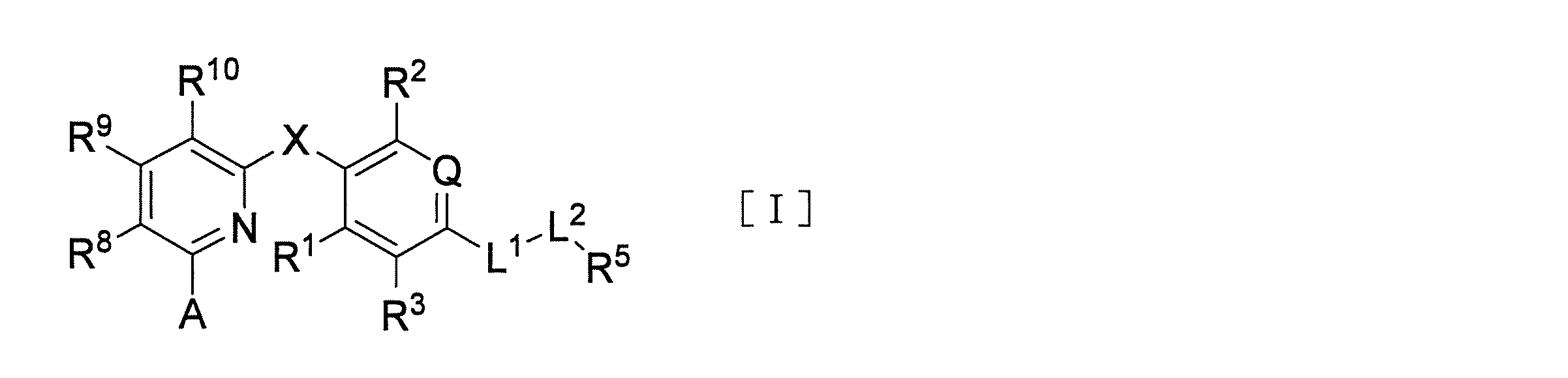
Aは、置換されていてもよいアルキル、置換されていてもよい炭素環式基、置換されていてもよいアリール、置換されていてもよい複素環式基、置換されていてもよいヘテロアリール、置換されていてもよいアミノ、又は置換されていてもよいカルバモイルをあらわし、
Xは、置換されていてもよいメチレン、-O-、または-S-をあらわし、
Qは、NまたはC-R4をあらわし、
L1は単結合、メチレン、-CH=CH-、-O-、-CO-、-NR11-、-NR11CO-、-CONR11-、-CH2NR11-又は-S-をあらわし、
L2は単結合、-CR6R7-、又は2価の複素環式基を表し、
R1およびR2は、同一又は異なって、水素、アルキル、アルケニルまたはハロゲンをあらわし、
R3およびR4は、同一又は異なって、水素、アルキル、アルコキシ、シアノ、またはハロゲンをあらわし、
R1とR3とが結合して、炭素環または複素環を形成してもよく、
R5は、カルボキシル基、アルコキシカルボニル基、又はカルボキシル基の生物学的等価基をあらわし、
R6およびR7は、同一又は異なって、水素、置換されていてもよいアルキル、またはハロゲンをあらわし、
R6とR7とが結合して、シクロアルカン若しくは複素環を形成してもよく、
R8は、ヒドロキシ、アルカノイルアミノ、若しくはアルキルスルホニルアミノをあらわし、
R9およびR10は、同一又は異なって、水素、アルキル、またはハロゲンをあらわし、
R11は、水素またはアルキルをあらわす。)
で示される化合物、またはその薬理学的に許容できる塩。
アルキル、ハロゲン、アルコキシ、アルカノイル、及びシアノから選ばれる1~3の基に置換されていてもよいアリール;
アルキル、ハロゲン、アルコキシ、アルカノイル、及びシアノから選ばれる1~3の基に置換されていてもよい複素環式基;
アルキル、ハロゲン、アルコキシ、アルカノイル、及びシアノから選ばれる1~3の基に置換されていてもよいヘテロアリール;
アルキル、ハロゲン、アルコキシ、アルカノイル、及びシアノから選ばれる1~3の基に置換されていてもよいシクロアルキル;
ヒドロキシ;
アルコキシ;
ハロゲン;
1又は2のアルキルに置換されていてもよいアミノ基;並びに
オキソ
から選ばれる基であり、
Aの置換されていてもよいアリール、置換されていてもよい炭素環式基、置換されていてもよい複素環式基及び、置換されていてもよいヘテロアリールの置換基が、それぞれ同一又は異なる1~3の、
ヒドロキシ、アルコキシ、シクロアルキル若しくはハロゲンに置換されていてもよいアルキル;
アルコキシ若しくはシクロアルキルに置換されていてもよいアルケニル;
アルキル、アルコキシ若しくはシクロアルキルに置換されていてもよいシクロアルキル;
アルコキシ、シクロアルキル若しくはハロゲンに置換されていてもよいアルコキシ;
アルキル、アルコキシ若しくはシクロアルキルに置換されていてもよいシクロアルキルオキシ;
ハロゲン;
シアノ;
ヒドロキシ;
オキソ;
複素環;
アルキルスルホニル;及び
モノ若しくはジアルキルカルバモイル
から選ばれる基であり、
Aの置換されていてもよいアミノの置換基が、それぞれ同一又は異なる1または2の、
アルコキシ、シクロアルキル若しくはハロゲンに置換されていてもよいアルキル;
アルコキシ若しくはシクロアルキルに置換されていてもよいアルケニル;
アルキル、アルコキシ若しくはシクロアルキルに置換されていてもよいシクロアルキル;
アルコキシ、シクロアルキル若しくはハロゲンに置換されていてもよいアルカノイル;又は
アルキル、アルコキシ若しくはシクロアルキルに置換されていてもよいアリールであり、
Aの置換されていてもよいカルバモイルの置換基が、それぞれ同一又は異なる1または2の、アリールに置換されていてもよいアルキルであり、
R6とR7の置換されていてもよいアルキルの置換基が、アルコキシ、ヒドロキシ、またはハロゲンであり、
Xの置換されていてもよいメチレンの置換基が、アルコキシ、またはヒドロキシである(1)記載の化合物、またはその薬理学的に許容できる塩。
Qが、C-R4であり、
R1およびR2が、同一又は異なって、アルキル、またはハロゲンであり、
R3およびR4が、同一又は異なって、水素、アルキル、またはハロゲンであり、
Xが、メチレン、-O-、または-S-であり、
R5が、カルボキシル基、アルコキシカルボニル基、又はカルボキシル基の生物学的等価基であり、
L1が単結合、メチレン、-CH=CH-、-O-、-NH-、-NHCO-又は-S-であり、
L2が単結合、-CR6R7-、又は2価の複素環式基であり、
R6およびR7が、同一又は異なって、水素、アルキル、またはハロゲンであるか、R6とR7が隣接する炭素とともにシクロアルカン若しくは複素環を形成してもよく、
R8がヒドロキシであり、
R9およびR10が水素である、(1)または(2)記載の化合物、またはその薬理学的に許容できる塩。
(5)Aが、置換されていてもよいアリールである(1)~(3)のいずれか記載の化合物、またはその薬理学的に許容できる塩。
(6)置換されていてもよい炭素環式基が、置換されていてもよいシクロアルキルである(4)記載の化合物、またはその薬理学的に許容できる塩。
(7)Aが、置換されていてもよいアルキルである(1)~(3)のいずれか記載の化合物、またはその薬理学的に許容できる塩。
(8)Aが、置換されていてもよい複素環基である(1)~(3)のいずれか記載の化合物、またはその薬理学的に許容できる塩。
(9)Aが、置換されていてもよいヘテロアリールである(1)~(3)のいずれか記載の化合物、またはその薬理学的に許容できる塩。
(10)Xが、メチレンである(1)~(9)のいずれか記載の化合物、またはその薬理学的に許容できる塩。
(11)R1およびR2が、同一の基である、(1)~(10)のいずれか記載の化合物、またはその薬理学的に許容できる塩。
(12)R1およびR2が、同一または異なってアルキルである、(1)~(11)のいずれか記載の化合物、またはその薬理学的に許容できる塩。
(13)R1とR3とが結合して、炭素環または複素環を形成している、(1)~(12)のいずれか記載の化合物、またはその薬理学的に許容できる塩。
(14)R8がヒドロキシである(1)~(13)のいずれか記載の化合物、またはその薬理学的に許容できる塩。
{4-[(6-シクロペンチル-5-ヒドロキシピリジン-2-イル)メチル]-2,3,5-トリメチルフェノキシ}酢酸(実施例5);
{4-[(6-シクロヘキシル-5-ヒドロキシピリジン-2-イル)メチル]-2,3,5-トリメチルフェノキシ}酢酸(実施例7);
{2-ブロモ-4-[(6-シクロヘキシル-5-ヒドロキシピリジン-2-イル)メチル]-3,5-ジメチルフェノキシ}酢酸(実施例13);
3-({4-[(5-ヒドロキシ-6-フェニルピリジン-2-イル)メチル]-3,5-ジメチルフェニル}アミノ)-3-オキソプロパン酸(実施例22);
3-({4-[(6-シクロヘキシル-5-ヒドロキシピリジン-2-イル)メチル]-3,5-ジメチルフェニル}アミノ)-3-オキソプロパン酸(実施例23);
3-[(4-{[5-ヒドロキシ-6-(2-ナフチル)ピリジン-2-イル]メチル}-3,5-ジメチルフェノキシ)メチル]-1,2,4-オキサジアゾール-5(4H)-オン(実施例29);
3-[(4-{[5-ヒドロキシ-6-(5,6,7,8-テトラヒドロナフタレン-2-イル)ピリジン-2-イル]メチル}-3,5-ジメチルフェノキシ)メチル]-1,2,4-オキサジアゾール-5(4H)-オン(実施例30);
({5-[(6-シクロヘキシル-5-ヒドロキシピリジン-2-イル)メチル]-3,4,6-トリメチルピリジン-2-イル}オキシ)酢酸(実施例45);
3-({4-[(6-シクロへプチル-5-ヒドロキシピリジン-2-イル)メチル]-3,5-ジメチルフェニル}アミノ)-3-オキソプロパン酸(実施例52);
N-[2-クロロ-4-(6-シクロヘキシル-5-ヒドロキシ-ピリジン-2-イルメチル)-3,5-ジメチル-フェニル]アミノ-3-オキソプロパン酸(実施例54);
3-[(2-フルオロ-4-{[6-(2-フルオロ-3-メチルフェニル)-5-ヒドロキシピリジン-2-イル]メチル}-3,5-ジメチルフェノキシ)メチル]-1,2,4-オキサジアゾール-5(4H)-オン(実施例60);
{4-[(6-シクロヘキシル-4-フルオロ-5-ヒドロキシピリジン-2-イル)メチル]-2,3,5-トリメチルフェノキシ}酢酸(実施例65);
{4-[(6-シクロヘキシル-3-フルオロ-5-ヒドロキシピリジン-2-イル)メチル]-2,3,5-トリメチルフェノキシ}酢酸(実施例73);
{4-[(6-シクロへプチル-5-ヒドロキシピリジン-2-イル)メチル]-2,3,5-トリメチルフェノキシ}酢酸(実施例92);
3-({4-[(6-シクロへプチル-5-ヒドロキシピリジン-2-イル)メチル]-2-フルオロ-3,5-ジメチルフェニル}アミノ)-3-オキソプロパン酸(実施例131);
{4-[6-(3-フルオロ-フェニルl)-5-ヒドロキシ-ピリジン-2-イルメチル]-2,3,5-トリメチル-フェノキシ}酢酸(実施例171);
(4-{[6-(3-クロロフェニル)-5-ヒドロキシピリジン-2-イル]メチル}-2,3,5-トリメチルフェノキシ)酢酸(実施例173);
3-{2-フルオロ-4-[5-ヒドロキシ-6-(2,3,4-トリフルオロ-フェニル)-ピリジン-2-イルメチル]-3,5-ジメチル-フェノキシメチル}-1,2,4-オキサジアゾール-5(4H)-オン(実施例191);
3-[(2-フルオロ-4-{[5-ヒドロキシ-6-(3-ピロリジン-1-イルフェニル)ピリジン-2-イル]メチル}-3,5-ジメチルフェノキシ)メチル]-1,2,4-オキサジアゾール-5(4H)-オン(実施例206);
2-{4-[(5-ヒドロキシ-6-フェニルピリジン-2-イル)メチル]-3,5-ジメチルフェニル}-3,5-ジオキソ-2,3,4,5-テトラヒドロ-1,2,4-トリアジン-6-カルボニトリル(実施例216);
3-{2-フルオロ-4-[5-ヒドロキシ-6-(3-プロポキシ-フェニル)-ピリジン-2-イルメチル]-3,5-ジメチル-フェノキシメチル}-1,2,4-オキサジアゾール-5(4H)-オン(実施例236);
[3,5-ジブロモ-2-フルオロ-4-(5-ヒドロキシ-6-フェニル-ピリジン-2-イルメチル)-フェノキシ]酢酸(実施例256);及び
(5-エチル-4-{[6-(3-フルオロフェニル)-5-ヒドロキシピリジン-2-イル]メチル}-2,3-ジメチルフェノキシ)酢酸(実施例269)、またはその薬理学的に許容できる塩。
(17)甲状腺ホルモンβ受容体作動薬である、(16)記載の医薬。
(18)高コレステロール血症、高脂血症、高トリグリセリド血症、家族性高コレステロール血症、脂質異常症、アテローム性動脈硬化症、甲状腺機能低下症、及び/又は潜在性甲状腺機能低下症の治療又は予防薬である、(16)記載の医薬。
(19)甲状腺ホルモンβ受容体を作動させることによって改善する疾患の治療又は予防のための医薬の製造のための、(1)~(15)のいずれか記載の化合物の使用。
(20)(1)~(15)のいずれか記載の化合物を投与する工程を含む、甲状腺ホルモンβ受容体を作動させることによって改善する疾患の治療又は予防方法。
(21)一般式[II]:

Z3は、Aまたはハロゲンを表し、
Xaは、酸素、硫黄、又は

で示される基を表し、
その他の記号は前記と同じ)
で示される化合物、またはその塩。
式[II]で示される本発明の化合物は、式[I]で示される本発明の複素環誘導体の製造中間体として有用である。
「アルキル」としては、例えばC1-6、好ましくはC1-4の直鎖または分枝鎖状のアルキルが挙げられ、具体的には、メチル、エチル、プロピル、イソプロピル、ブチル、イソブチル、1-メチルプロピル、ペンチル、ヘキシル等が挙げられる。
単環式複素環としては、窒素原子、酸素原子および硫黄原子から選ばれる1~4個の異項原子を含む、全体として5~7員の一部または全部が飽和していてもよい複素環が好ましい例として挙げられる。当該単環式複素環としては、窒素原子、酸素原子および硫黄原子から選ばれる1~4個のヘテロ原子を含む、全体として5~7員の一部または全部が飽和していてもよい複素環が好ましい例として挙げられる。具体例としては、オキサゾリン、ピロリジン、ピペリジン、ピペラジン、モルホリン、テトラヒドロピラン、テトラヒドロフラン、イミダゾリジン、オキサゾリジン等が挙げられる。
二環式複素環としては、同一または異なる上記単環式複素環が縮合した二環式複素環、上記単環式複素環とベンゼン環、単環式複素芳香環若しくはシクロアルカンと縮合した二環式複素環、あるいは、単環式複素芳香環とシクロアルカンが縮合した二環式複素環が挙げられる。当該二環式複素環としては、具体例としてはインドリン、イソインドリン、テトラヒドロキノリン、テトラヒドロベンゾフラン、テトラヒドロベンゾピラン等が挙げられる。
複素芳香環の具体例として、フラン、チオフェン、ピロール、イミダゾール、ピラゾール、トリアゾール、テトラゾール、オキサゾール、チアゾール、イソキサゾール、イソチアゾール、オキサジアゾール、チアジアゾール、フラザン、ピリジン、ピラジン、ピリミジン、ピリダジン、トリアジン、インドール、インダゾール、ベンゾイミダゾール、プリン、キノリン、イソキノリン、フタラジン、キノキサリン、キナゾリン、シノリン、ベンゾフラン、ベンゾチオフェン、ベンゾオキサゾール、ベンゾチアゾール、ベンゾイソキサゾール、ベンゾイソチアゾール等が挙げられる。
ヘテロアリール基の具体例として、フリル、チエニル、ピロリル、イミダゾリル、ピラゾリル、トリアゾリル、テトラゾリル、オキサゾリル、チアゾリル、イソキサゾリル、イソチアゾリル、オキサジアゾリル、チアジアゾリル、フラザニル、ピリジル、ピラジニル、ピリミジル、ピリダジニル、トリアジニル、インドリル、インダゾリル、ベンゾイミダゾリル、プリニル、キノリル、イソキノリル、フタラジニル、キノキサリニル、キナゾリニル、シノリニル、ベンゾフラニル、ベンゾチエニル、ベンゾオキサゾリル、ベンゾチアゾリル、ベンゾイソキサゾリル、ベンゾイソチアゾリル等が挙げられる。
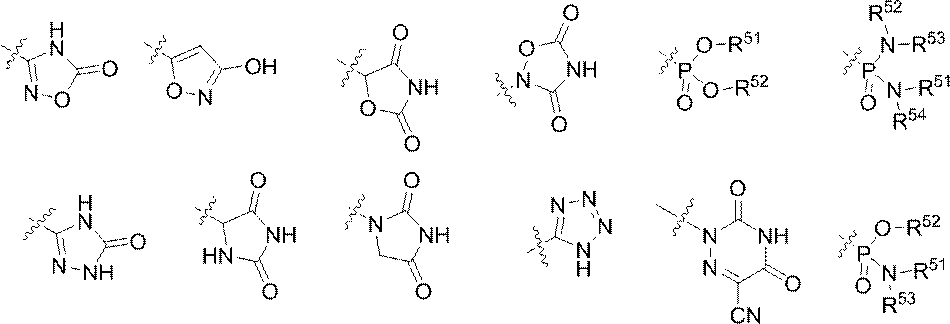
で示される基が挙げられる。
Aの「置換されていてもよいアルキル」は、1~5の、好ましくは1~3の置換基に置換されていてもよく、置換基としては、例えば、(1)アルキル、ハロゲン、アルコキシ、アルカノイル、及びシアノから選ばれる1~3の基に置換されていてもよいアリール、(2)アルキル、ハロゲン、アルコキシ、アルカノイル、及びシアノから選ばれる1~3の基に置換されていてもよい複素環式基、(3)アルキル、ハロゲン、アルコキシ、アルカノイル、及びシアノから選ばれる1~3の基に置換されていてもよいヘテロアリール、(4)アルキル、ハロゲン、アルコキシ、アルカノイル、及びシアノから選ばれる1~3の基に置換されていてもよいシクロアルキル、(5)ヒドロキシ、(6)アルコキシ、(7)ハロゲン、(8)1又は2のアルキルに置換されていてもよいアミノ基、並びに(9)オキソが挙げられる。

で示される基が挙げられ、特に好ましくは
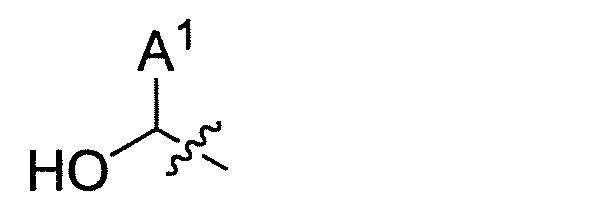
R1およびR2の「アルケニル」としては、特に好ましくは、ビニルが挙げられる。
R3およびR4の「アルキル」としては、特に好ましくは、メチル、及びエチルが挙げられる。
R3およびR4の「アルコキシ」としては、特に好ましくは、メトキシが挙げられる。
R1およびR2は、好ましくは同一である。
R3およびR4は、好ましくは一方が水素であり、他方がアルキル、またはハロゲンである。
R1とR3とが結合して形成する、炭素環としては、たとえば、非芳香族性の炭素環が挙げられ、好ましくは5~6員のシクロアルカン若しくは5~6員のシクロアルケンが挙げられ、特に好ましくはシクロペンタンが挙げられる。
R1とR3とが結合して形成する、複素環としては、たとえば、酸素、窒素、若しくは硫黄から選ばれる1~2のヘテロ原子を有する5~6員の非芳香族性の複素環が挙げられ、好ましくは、酸素、窒素、若しくは硫黄から選ばれる1のヘテロ原子を有する5員の非芳香族性の複素環が挙げられ、特に好ましくはテトラヒドロフランが挙げられる。
R1とR3とが結合して、炭素環または複素環を形成する場合の、式:
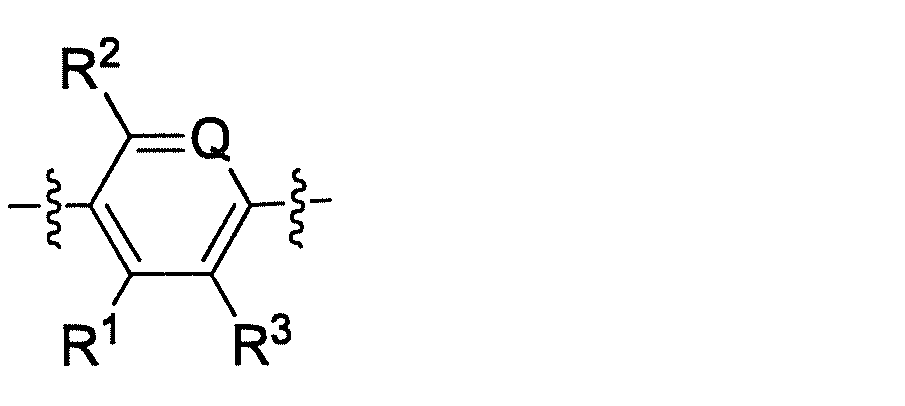
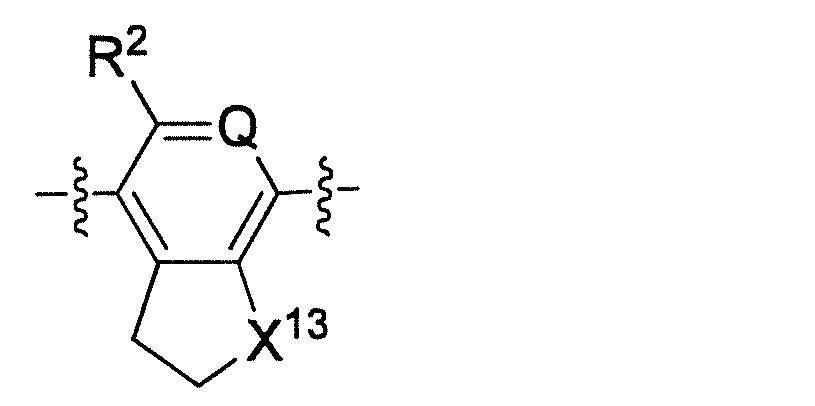
が挙げられる。
R6とR7の「置換されていてもよいアルキル」のアルキルとしては、特に好ましくはメチルが挙げられ、その置換基としては、例えば、アルコキシ、ヒドロキシ、又はハロゲンが挙げられる。
R6とR7とが結合して形成するシクロアルカンとして、特に好ましくはC3-5のシクロアルカン(とりわけ、シクロプロパン)が挙げられる。
R6とR7とが結合して形成する複素環として、好ましくはC3-7の、特に好ましくはC3-5の複素環が挙げられ、例えば、テトラヒドロピラン、テトラヒドロフランなどが挙げられる。
R8におけるアルキルスルホニルアミノは、たとえば、メタンスルホニルアミノ、エタンスルホニルアミノ、イソプロピルスルホニルアミノ、及びn-プロピルスルホニルアミノなどが挙げられる。
R8は、好ましくは、ヒドロキシである。
R9は、好ましくは、水素、又はハロゲン(とりわけフッ素)であり、特に好ましくは水素である。
R10は、好ましくは、水素、又はハロゲン(とりわけフッ素)であり、特に好ましくは水素である。
R11のアルキルとしては、たとえば、メチル、及びエチルが挙げられる。
L2の「2価の複素環式基」としては、好ましくは窒素原子を1以上含む2価の単環式複素環式基が挙げられ、例えば、ピロリジンジイル、モルホリンジイル、ピペリジンジイルなどが挙げられる。
-L1-L2-R5は、好ましくは、R5(L1およびL2がともに単結合)又は以下の式:


Xは、好ましくは、置換されていてもよいメチレンが挙げられ、特に好ましくはメチレンである。
Xの「置換されていてもよいメチレン」の置換基としては、例えば、アルコキシ、ヒドロキシが挙げられる。
Qは、好ましくはC-R4が挙げられる。
(4-{[5-ヒドロキシ-6-(2-ナフチル)ピリジン-2-イル]メチル}-3,5-ジメチルフェノキシ)酢酸(実施例3);
{4-[(6-シクロペンチル-5-ヒドロキシピリジン-2-イル)メチル]-2,3,5-トリメチルフェノキシ}酢酸(実施例5);
{4-[(6-シクロヘキシル-5-ヒドロキシピリジン-2-イル)メチル]-2,3,5-トリメチルフェノキシ}酢酸(実施例7);
{2-ブロモ-4-[(6-シクロヘキシル-5-ヒドロキシピリジン-2-イル)メチル]-3,5-ジメチルフェノキシ}酢酸(実施例13);
3-({4-[(5-ヒドロキシ-6-フェニルピリジン-2-イル)メチル]-3,5-ジメチルフェニル}アミノ)-3-オキソプロパン酸(実施例22);
3-({4-[(6-シクロヘキシル-5-ヒドロキシピリジン-2-イル)メチル]-3,5-ジメチルフェニル}アミノ)-3-オキソプロパン酸(実施例23);
3-[(4-{[5-ヒドロキシ-6-(2-ナフチル)ピリジン-2-イル]メチル}-3,5-ジメチルフェノキシ)メチル]-1,2,4-オキサジアゾール-5(4H)-オン(実施例29);
3-[(4-{[5-ヒドロキシ-6-(5,6,7,8-テトラヒドロナフタレン-2-イル)ピリジン-2-イル]メチル}-3,5-ジメチルフェノキシ)メチル]-1,2,4-オキサジアゾール-5(4H)-オン(実施例30);
{4-[(6-シクロヘキシル-5-ヒドロキシピリジン-2-イル)メチル]-2,3,5-トリメチルフェニル}酢酸(実施例41);
({5-[(6-シクロヘキシル-5-ヒドロキシピリジン-2-イル)メチル]-3,4,6-トリメチルピリジン-2-イル}オキシ)酢酸(実施例45);
3-({4-[(6-シクロへプチル-5-ヒドロキシピリジン-2-イル)メチル]-3,5-ジメチルフェニル}アミノ)-3-オキソプロパン酸(実施例52);
3-[(2-フルオロ-4-{[6-(2-フルオロ-3-メチルフェニル)-5-ヒドロキシピリジン-2-イル]メチル}-3,5-ジメチルフェノキシ)メチル]-1,2,4-オキサジアゾール-5(4H)-オン(実施例60);
N-{4-[(6-シクロヘキシル-5-ヒドロキシピリジン-2-イル)メチル]-2,3,5-トリメチルフェニル}グリシン(実施例62);
{4-[(6-シクロヘキシル-4-フルオロ-5-ヒドロキシピリジン-2-イル)メチル]-2,3,5-トリメチルフェノキシ}酢酸(実施例65);
3-[(4-{[6-(3-エトキシフェニル)-5-ヒドロキシピリジン-2-イル]メチル}-2-フルオロ-3,5-ジメチルフェノキシ)メチル]-1,2,4-オキサジアゾール-5(4H)-オン(実施例66);
3-({5-エチル-2-フルオロ-4-[(5-ヒドロキシ-6-フェニルピリジン-2-イル)メチル]-3-メチルフェノキシ}メチル)-1,2,4-オキサジアゾール-5(4H)-オン(実施例72);
{4-[(6-シクロヘキシル-3-フルオロ-5-ヒドロキシピリジン-2-イル)メチル]-2,3,5-トリメチルフェノキシ}酢酸(実施例73);
6-[4-(3-ヒドロキシイソキサゾール-5-イル)-2,3,6-トリメチルベンジル]-2-イソプロピルピリジン-3-オール(実施例81);
{4-[(6-シクロへプチル-5-ヒドロキシピリジン-2-イル)メチル]-2-フルオロ-3,5-ジメチルフェノキシ}酢酸(実施例83);
3-[(2-フルオロ-4-{[5-ヒドロキシ-6-(2-ナフチル)ピリジン-2-イル]メチル}-3,5-ジメチルフェノキシ)メチル]-1,2,4-オキサジアゾール-5(4H)-オン(実施例87);
{4-[(6-シクロへプチル-5-ヒドロキシピリジン-2-イル)メチル]-2,3,5-トリメチルフェノキシ}酢酸(実施例92);
3-({4-[(6-シクロヘキシル-5-ヒドロキシピリジン-2-イル)メチル]-2-フルオロ-3,5-ジメチルフェニル}アミノ)-3-オキソプロパン酸(実施例98);
3-({4-[(6-シクロヘキシル-5-ヒドロキシピリジン-2-イル)メチル]-2-メトキシ-3,5-ジメチルフェノキシ}メチル)-1,2,4-オキサジアゾール-5(4H)-オン(実施例107);
3-[({4-[(6-シクロヘキシル-5-ヒドロキシピリジン-2-イル)メチル]-5-メチル-2,3-ジヒドロ-1-ベンゾフラン-7-イル}オキシ)メチル]-1,2,4-オキサジアゾール-5(4H)-オン(実施例117);
3-({2-フルオロ-4-[(5-ヒドロキシ-6-ピペリジン-1-イルピリジン-2-イル)メチル]-3,5-ジメチルフェノキシ}メチル)-1,2,4-オキサジアゾール-5(4H)-オン(実施例118);
(4-{[6-(3,4-ジフルオロフェニル)-5-ヒドロキシピリジン-2-イル]メチル}-2,3,5-トリメチルフェノキシ)酢酸(実施例120);
(4-{[5-ヒドロキシ-6-(3-メチルフェニル)ピリジン-2-イル]メチル}-2,3,5-トリメチルフェノキシ)酢酸(実施例122);
3-({4-[(6-シクロへプチル-5-ヒドロキシピリジン-2-イル)メチル]-2-フルオロ-3,5-ジメチルフェニル}アミノ)-3-オキソプロパン酸(実施例131);
3-{4-[(6-シクロヘキシル-5-ヒドロキシピリジン-2-イル)メチル]-2,3,5-トリメチルフェニル}-2-フルオロプロパン酸(実施例136);
3-{[2-フルオロ-4-({5-ヒドロキシ-6-[2-(トリフルオロメチル)フェニル]ピリジン-2-イル}メチル)-3,5-ジメチルフェノキシ]メチル}-1,2,4-オキサジアゾール-5(4H)-オン(実施例148);
({7-[(6-シクロヘキシル-5-ヒドロキシピリジン-2-イル)メチル]-6-メチル-2,3-ジヒドロ-1H-インデン-4-イル}オキシ)酢酸(実施例152);
(4-{[6-(3-クロロフェニル)-5-ヒドロキシピリジン-2-イル]メチル}-2,3,5-トリメチルフェノキシ)酢酸(実施例173);
(4-{[6-(3-エチルフェニル)-5-ヒドロキシピリジン-2-イル]メチル}-2,3,5-トリメチルフェノキシ)酢酸(実施例176);
3-{[2-フルオロ-4-({6-[4-フルオロ-3-(トリフルオロメチル)フェニル]-5-ヒドロキシピリジン-2-イル}メチル)-3,5-ジメチルフェノキシ]メチル}-1,2,4-オキサジアゾール-5(4H)-オン(実施例189);
3-[(2-フルオロ-4-{[5-ヒドロキシ-6-(3-ピロリジン-1-イルフェニル)ピリジン-2-イル]メチル}-3,5-ジメチルフェノキシ)メチル]-1,2,4-オキサジアゾール-5(4H)-オン(実施例206);
2-{4-[(5-ヒドロキシ-6-フェニルピリジン-2-イル)メチル]-3,5-ジメチルフェニル}-3,5-ジオキソ-2,3,4,5-テトラヒドロ-1,2,4-トリアジン-6-カルボニトリル(実施例216);
3-[(4-{[6-(3-エチル-2-フルオロフェニル)-5-ヒドロキシピリジン-2-イル]メチル}-2-フルオロ-3,5-ジメチルフェノキシ)メチル]-1,2,4-オキサジアゾール-5(4H)-オン(実施例249);
3-[(4-{[6-(3-エチル-4-フルオロフェニル)-5-ヒドロキシピリジン-2-イル]メチル}-2-フルオロ-3,5-ジメチルフェノキシ)メチル]-1,2,4-オキサジアゾール-5(4H)-オン(実施例250);
3-{[2-フルオロ-4-({5-ヒドロキシ-6-[1-(メトキシメチル)シクロヘキシル]ピリジン-2-イル}メチル)-3,5-ジメチルフェノキシ]メチル}-1,2,4-オキサジアゾール-5(4H)-オン(実施例268);
(5-エチル-4-{[6-(3-フルオロフェニル)-5-ヒドロキシピリジン-2-イル]メチル}-2,3-ジメチルフェノキシ)酢酸(実施例269);
(5-エチル-4-{[5-ヒドロキシ-6-(3-メチルフェニル)ピリジン-2-イル]メチル}-2,3-ジメチルフェノキシ)酢酸(実施例270);及び
(4-{[6-(3-クロロフェニル)-5-ヒドロキシピリジン-2-イル]メチル}-5-エチル-2,3-ジメチルフェノキシ)酢酸(実施例271)、またはその薬理学的に許容できる塩が挙げられる。
Xaは、好ましくは、式:

で示される基が挙げられる。
RXのヒドロキシの保護基としては、通常ヒドロキシの保護に用いられる保護基が挙げられ、例えばProtective Groups in Organic Synthesis Third Edition(Theodora W.Green and Peter G.Wuts)に記載のヒドロキシの保護基が挙げられる。具体的には、アルカノイル、トリアルキルシリル、及び、アルキルなどが挙げられる。
特に記載がない限り、製造方法、実施例、及び参考例において、以下の記号は下記の意味を表す。
APCI:大気圧化学イオン化
Ac:アセチル
BINAP:2,2’-ビス(ジフェニルホスフィノ)-1,1’-ビナフチル
Bn:ベンジル
Boc:ターシャリーブトキシカルボニル
Bu:ブチル
ESI:エレクトロスプレーイオン化
Et:エチル
Me:メチル
MOM:メトキシメチル
Ms:メタンスルホニル
Ph:フェニル
Tf:トリフルオロメタンスルホニル
TMS:トリメチルシリル
Ts:p-トルエンスルホニル
製造方法1
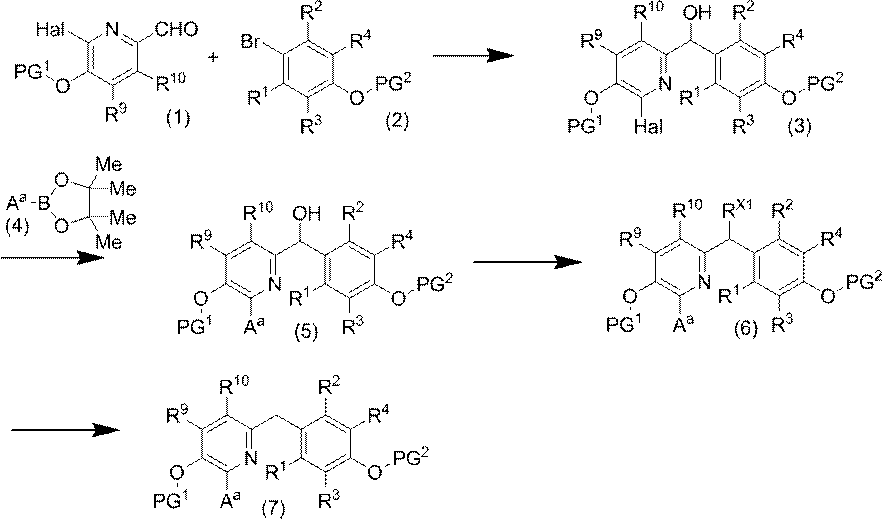
[工程1]
化合物(3)は、化合物(2)を例えば、ノルマルブチルリチウム試薬のような有機金属試薬と反応させることによって、ハロゲンメタル交換を行った後、Angew.Chem.Int.Ed.2002,41,1062.を参考に得られる化合物(1)を加えることによって得ることが出来る。本反応は、反応に不活性な溶媒中(たとえばテトラヒドロフラン、ジエチルエーテル等のエーテル系溶媒あるいはトルエン等の炭化水素系溶媒)中で、-78℃~室温にて好適に進行する。
なお、PG1およびPG2はそれぞれ選択的に脱保護が可能な保護基を選択すればよく、PG1としては、たとえばメトキシメチル基が、PG2としては、1-エトキシ-1-エチル基、ベンジル基などが好ましい。
また、化合物(3)は、単離することなく、無水酢酸などの保護基を導入するための試薬と反応させることができる。
化合物(5)は、化合物(3)と、化合物(4)を、塩基および、パラジウム系触媒の存在下に、反応させて製造することができる。パラジウム系触媒としては、例えばテトラキス(トリフェニルホスフィン)パラジウム(0)、塩化ビス(トリフェニルホスフィン)パラジウム(II)、酢酸パラジウム(II)等の0価又は2価のパラジウム系触媒を好適に用いることができる。塩基としては、例えば炭酸アルカリ金属、水酸化アルカリ金属、リン酸アルカリ金属、フッ化アルカリ金属等の無機塩基やトリエチルアミン等の有機塩基等を好適に用いることができる。
本反応は、適当な溶媒中又は無溶媒で実施することができる。溶媒としては、反応に悪影響を及ぼさない限り、特に限定されず、例えばジメトキシエタン、テトラヒドロフラン、ジメチルホルムアミド、メタノール、エタノール、トルエン、ベンゼン、クロロホルム又はこれらの混合溶媒を適宜用いることができる。本反応は、60~150℃、とりわけ80~120℃で好適に進行する。
なお、化合物(4)の代わりに、Aa-B(OH)2のようなホウ酸及びそのエステル、Aa-SnBu4のようなスズ試薬、Aa-MgBrのようなマグネシウム試薬、Aa-ZnBrのような亜鉛試薬を用いることができる。
化合物(6)においてRX1がアセトキシである化合物は、化合物(5)をアセチル化し、還元することによって製造できる。アセチル化は、通常用いられる方法、例えば、室温下のピリジン中で、無水酢酸と反応させることによって得ることができる。
化合物(6)においてRX1がハロゲンである化合物は、化合物(5)をハロゲン化することによって製造できる。ハロゲン化反応は、通常用いられる方法であれば特に限定されないが、例えば、トリエチルアミンやN,N-ジメチルアミノピリジンのような塩基存在下、メタンスルホニルクロリドやチオニルクロリドのようなクロル化剤を用いて、塩化リチウムのような塩を用いてもよく、反応に不活性な溶媒中(たとえば酢酸エチルのようなエステル系溶媒や、ジクロロメタンのようなハロゲン系溶媒、トルエンのような炭化水素系溶媒など)で、室温にて好適にクロル化が進行する。
化合物(7)は、化合物(6)を、還元することによって製造できる。還元は、パラジウム触媒の存在下、水素雰囲気下で反応させる接触水素化反応や、酸触媒存在下、トリアルキルシランを用いた還元によって、良好に進行する。接触水素化反応は、反応に不活性な溶媒中(たとえば酢酸エチルのようなエステル系溶媒や、エタノールのようなアルコール系溶媒、テトラヒドロフランのようなエーテル系溶媒など)中で、1~3気圧の水素雰囲気下室温にて好適に進行する。トリアルキルシランを用いた還元は、反応に不活性な溶媒中(たとえば塩化メチレン)中で、BF3・Et2Oやトリフルオロ酢酸、トリフルオロメタンスルホン酸銀のような酸触媒存在下、氷冷下にて好適に進行する。
なお、トリアルキルシランを用いた還元方法を行うことによって、工程2の前に工程3を行い、その後工程2を行うことが出来る。
製造方法2

[工程1]
化合物(10)は、化合物(8)を、アルキルリチウム試薬やアルキルマグネシウム試薬で処理することにより、ハロゲン-メタル交換反応を行った後、化合物(9)と反応させることによって製造できる。本反応は、適当な溶媒中で実施することができる。溶媒としては、反応に悪影響を及ぼさない限り、特に限定されず、たとえばテトラヒドロフランのようなエーテル系溶媒あるいはトルエン等の炭化水素系溶媒などを適宜用いることができる。本反応は、-78℃~室温で好適に実施できる。
Rxが保護されたヒドロキシである化合物は、化合物(9)と反応させたのち、単離することなく、無水酢酸などの保護基を導入するための試薬と反応させることによっても、製造できる。
製造方法3

[工程1]
化合物(12)は、化合物(8)と化合物(11)を、ヨウ化銅(I)等の遷移金属触媒、及び塩基存在下反応させることによって製造できる。塩基としては、例えば炭酸カリウム、炭酸セシウム等の無機塩を好適に用いることができる。本反応は、適当な溶媒中で実施することができる。溶媒としては、反応に悪影響を及ぼさない限り、特に限定されず、たとえばジメチルスルホキシドなどを適宜用いることができる。本反応は、60~150℃、とりわけ80~120℃で好適に進行する。
製造方法4
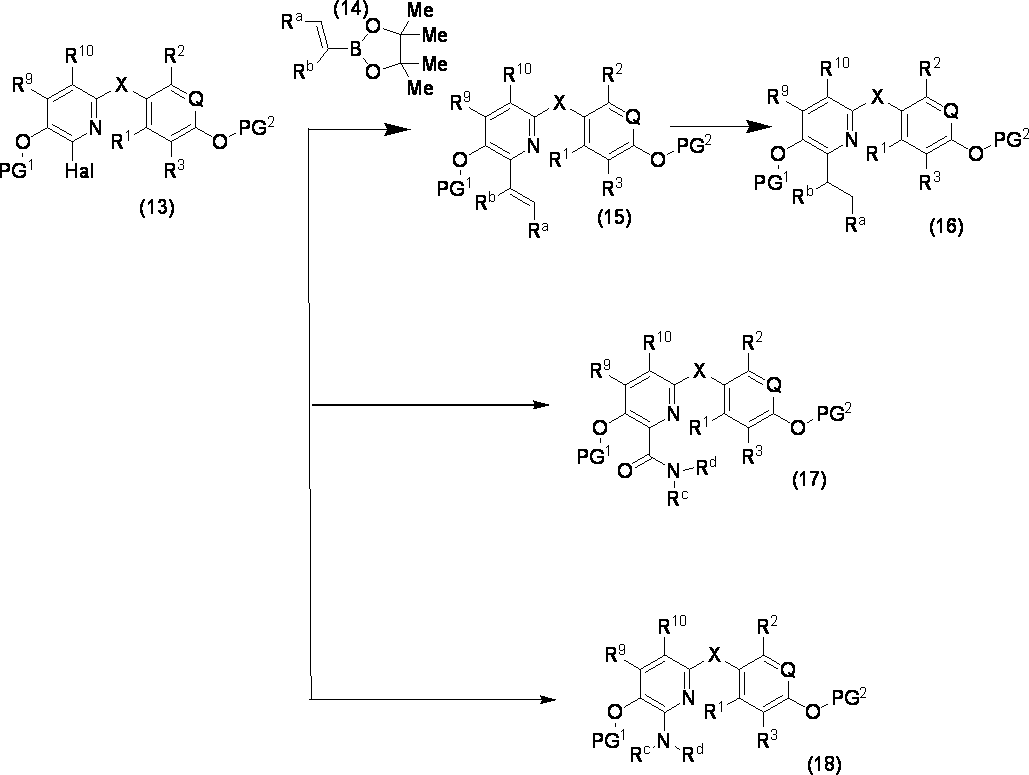
[工程1a]
化合物(16)は、製造方法1の工程2と同様の方法によって化合物(13)と化合物(14)とから製造できる化合物(15)を、パラジウム触媒の存在下、水素雰囲気下で還元する接触水素化反応を行うことによって製造できる。接触水素化反応は、反応に不活性な溶媒中(たとえば酢酸エチルのようなエステル系溶媒や、エタノールのようなアルコール系溶媒、テトラヒドロフランのようなエーテル系溶媒など)中で、1~3気圧の水素雰囲気下室温にて好適に進行する。
化合物(14)の代わりに、下記化合物(19)を用いることによって、Aが芳香環と縮環していてもよいシクロアルキル若しくは複素環式基である一般式[1]で示される化合物も合成できる。
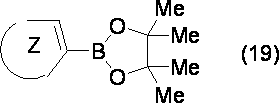
なお、化合物(14)や化合物(19)に対応する、ホウ酸試薬、ホウ酸エステル、スズ試薬、マグネシウム試薬、及び亜鉛試薬を用いても製造できる。
[工程1b]
化合物(17)は、化合物(13)を、一酸化炭素、アミン(NHRcRd)、塩基および、パラジウム系触媒の存在下に、反応させて製造することができる。パラジウム系触媒としては、例えばテトラキス(トリフェニルホスフィン)パラジウム(0)、塩化ビス(トリフェニルホスフィン)パラジウム(II)、酢酸パラジウム(II)等の0価又は2価のパラジウム系触媒を好適に用いることができる。塩基としては、例えば炭酸アルカリ金属、水酸化アルカリ金属、リン酸アルカリ金属、フッ化アルカリ金属等の無機塩基やトリエチルアミン等の有機塩基等を好適に用いることができる。アルコールとしては、例えばメタノール、エタノール等を好適に用いることができる。一酸化炭素の代わりにモリブデンヘキサカルボニル等を用いることができる。
本反応は、適当な溶媒中又は無溶媒で実施することができる。溶媒としては、反応に悪影響を及ぼさない限り、特に限定されず、例えばジメトキシエタン、テトラヒドロフラン、ジメチルホルムアミド、メタノール、エタノール、トルエン、ベンゼン、クロロホルム又はこれらの混合溶媒を適宜用いることができる。本反応は、60~150℃、とりわけ80~120℃で好適に進行する。
化合物(18)は、化合物(13)を、アミン(NHRcRd)と反応させて製造することができる。パラジウム系触媒や塩基を用いても良い。パラジウム系触媒を用いる反応としては、例えばトリス(ベンジリデンアセトン)ジパラジウム(0)、4,5-ビス(ジフェニルホスフィノ)-9,9-ジメチルキサンテン、tert-ブトキシナトリウム等の組み合わせを用いることができる。塩基としては、例えば炭酸アルカリ金属、水酸化アルカリ金属、リン酸アルカリ金属、フッ化アルカリ金属等の無機塩基やトリエチルアミン等の有機塩基等を好適に用いることができる。本反応は、適当な溶媒中又は無溶媒で実施することができる。溶媒としては、反応に悪影響を及ぼさない限り、特に限定されず、例えばジメトキシエタン、テトラヒドロフラン、ジメチルスルホキシド又はこれらの混合溶媒を適宜用いることができる。本反応は、60~150℃、とりわけ80~120℃で好適に進行する。
製造方法5

[工程1]
化合物(20)は、化合物(13)を、アルキルリチウム試薬、若しくはアルキルリチウム、アルキルマグネシウムハライド混合試薬で処理することにより、ハロゲン-メタル交換反応を行った後、求電子試薬(例えば、ケトン:RfC(=O)Reなど)と反応させることによって製造できる。
ハロゲン-メタル交換反応は、反応に不活性な溶媒中(たとえばテトラヒドロフランのようなエーテル系溶媒など)中で行うことができる。本反応は、-78℃~室温で好適に実施できる。
製造方法6

[工程1]
化合物(22)は、化合物(21)を通常の方法によって脱ハロゲン化したのち、通常の方法でアルケニル化することによって、製造できる。本反応は、適当な溶媒中で実施することができる。溶媒としては、反応に悪影響を及ぼさない限り、特に限定されず、例えば、テトラヒドロフランのようなエーテル系溶媒、N,N-ジメチルホルムアミドのようなアミド系溶媒および、これらとの混合溶媒を用いることができる。
化合物(23)は、化合物(22)を塩基存在下、加熱することによって製造できる。塩基としては、例えば、酢酸ナトリウムを好適に用いることができ、溶媒としては、無水酢酸を好適に用いることができる。本反応は160℃~240℃で、好適に進行し、また、マイクロウェーブ照射により、好適に進行する。
製造方法7

[工程1]
化合物(26)は、塩基存在下、化合物(24)と化合物(25)を反応させることによって製造できる。本反応は、反応に不活性な溶媒中(たとえばアセトニトリル、酢酸エチルのようなエステル系溶媒や、テトラヒドロフランのようなエーテル系溶媒、ジメチルホルムアミドのようなアミド系溶媒など)で、行うことができ、塩基としては、例えば炭酸セシウム、炭酸カリウム等の無機塩基等を好適に用いることができる。本反応は、0℃~80℃、とりわけ室温~60℃で好適に進行する。
化合物(27)は、通常の手法によって、化合物(26)を脱保護することによって製造できる。
製造方法8

[工程1]
化合物(29)は、化合物(24)と化合物(28)より、製造方法7の工程1と同様の手法により、製造できる。
化合物(30)は、化合物(29)を、炭酸水素ナトリウム、ヒドロキシアミン塩酸塩と反応させ、得られた化合物を、1,1-カルボニルジイミダゾール(CDI)と反応させることによって製造できる。
ヒドロキシアミンとの反応は、反応に不活性な溶媒中(たとえばメタノールのようなアルコール系溶媒など)中で、行うことができ、60℃~100℃で好適に進行する。
CDIとの反応は、反応に不活性な溶媒中(たとえば1,4-ジオキサンのようなエーテル系溶媒など)中で、行うことができ、80℃~120℃で好適に進行する。
化合物(31)は、化合物(30)のPG1を通常の方法で脱保護することによって製造できる。
製造方法9

[工程1]
化合物(32)は、化合物(24)を、塩基存在下、無水トリフルオロメタンスルホン酸と反応させることによって製造できる。本工程は、反応に不活性な溶媒中(たとえば塩化メチレン)中で、2,6-ルチジンやジイソプロピルエチルアミン等の塩基存在下、氷冷下にて好適に進行する。
化合物(33)は、化合物(32)とトリメチルシリルアセチレンと、塩基、ヨウ化銅(I)及び、パラジウム系触媒の存在下に、反応させて製造することができる。(薗頭反応)パラジウム系触媒としては、例えばテトラキス(トリフェニルホスフィン)パラジウム(0)、塩化ビス(トリフェニルホスフィン)パラジウム(II)、酢酸パラジウム(II)等の0価又は2価のパラジウム系触媒を好適に用いることができる。塩基としては、例えば炭酸アルカリ金属、水酸化アルカリ金属、リン酸アルカリ金属、フッ化アルカリ金属等の無機塩基やトリエチルアミン等の有機塩基等を好適に用いることができる。
本反応は、適当な溶媒中又は無溶媒で実施することができる。溶媒としては、反応に悪影響を及ぼさない限り、特に限定されず、例えばジメトキシエタン、テトラヒドロフラン、ジメチルホルムアミド、メタノール、エタノール、トルエン、ベンゼン、クロロホルム又はこれらの混合溶媒を適宜用いることができる。本反応は、60~150℃、とりわけ80~120℃で好適に進行する。
化合物(34)は、化合物(33)を適当な溶媒中で、塩基(例えば炭酸カリウムのような無機塩基)で処理することによって製造できる。本反応は、適当な溶媒中で実施することができる。溶媒としては、反応に悪影響を及ぼさない限り、特に限定されず、例えばメタノールのようなアルコール系溶媒などを用いることができる。本反応は、0℃~室温で好適に進行する。
化合物(35)は、化合物(34)を、適当な溶媒中、塩基(例えばリチウムジイソプロピルアミド、リチウムヘキサメチルジシラジド等の金属アミド、ブチルリチウムなどのようなアルキル金属)で処理したのち、ハロ炭酸アルキルで処理することによって製造できる。本反応は、適当な溶媒中で実施することができる。溶媒としては、反応に悪影響を及ぼさない限り、特に限定されず、例えばテトラヒドロフランのようなエーテル系溶媒を用いることができる。本反応は、-78℃~室温で好適に進行する。
化合物(36)は、化合物(35)を、ヒドロキシアミン塩酸塩と反応させることによって製造できる。本反応は、適当な溶媒中で実施することができる。溶媒としては、反応に悪影響を及ぼさない限り、特に限定されず、例えば、10%水酸化ナトリウム水溶液、エタノールのようなアルコール系溶媒、及び塩化メチレンのような非プロトン性溶媒またはこれらの混合溶媒を用いることができる。本反応は、0℃~80℃で、とりわけ、0℃~60℃で好適に進行する。
化合物(37)は、化合物(36)のPG1を通常の方法で脱保護することによって製造できる。
製造方法10

化合物(39)は、化合物(32)と化合物(38)、及び、パラジウム系触媒の存在下に、反応させて製造することができる。パラジウム系触媒としては、例えばテトラキス(トリフェニルホスフィン)パラジウム(0)、塩化ビス(トリフェニルホスフィン)パラジウム(II)、酢酸パラジウム(II)等の0価又は2価のパラジウム系触媒を好適に用いることができる。添加物として、例えば塩化リチウム、トリエチルアンモニウムクロリド、フッ化セシウム、ヨウ化銅(I)等を加えても良い。
本反応は、適当な溶媒中又は無溶媒で実施することができる。溶媒としては、反応に悪影響を及ぼさない限り、特に限定されず、例えばジメトキシエタン、テトラヒドロフラン、ジメチルホルムアミド、メタノール、エタノール、トルエン、ベンゼン、クロロホルム又はこれらの混合溶媒を適宜用いることができる。本反応は、60~150℃、とりわけ80~120℃で好適に進行する。
化合物(40)は、化合物(39)のPG1を通常の方法で脱保護することによって製造できる。
製造方法11
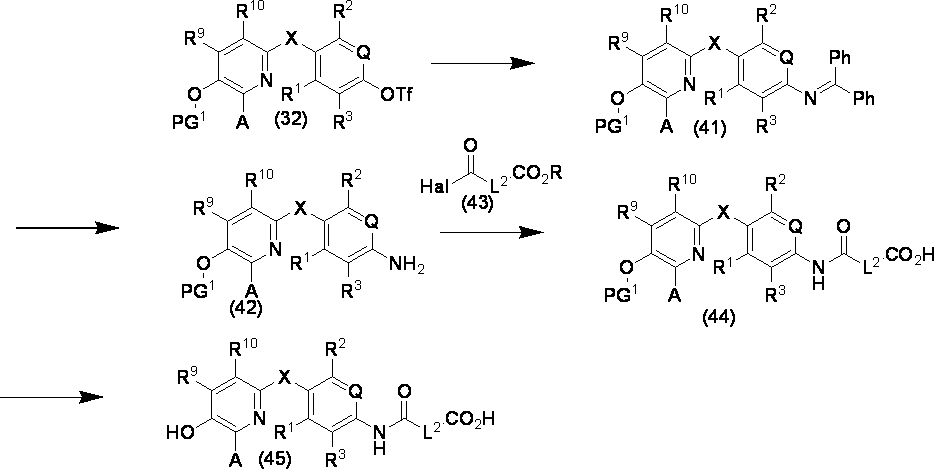
[工程1]
化合物(41)は、化合物(32)を、ベンゾフェノンイミンと、パラジウム系触媒の存在下に、反応させて製造することができる。パラジウム系触媒としては、例えば酢酸パラジウム(II)、BINAP、炭酸セシウムの組み合わせを用いることができる。塩基としては、例えば炭酸アルカリ金属、水酸化アルカリ金属、リン酸アルカリ金属、フッ化アルカリ金属等の無機塩基やトリエチルアミン等の有機塩基等を好適に用いることができる。本反応は、適当な溶媒中又は無溶媒で実施することができる。溶媒としては、反応に悪影響を及ぼさない限り、特に限定されず、例えばジメトキシエタン、テトラヒドロフラン、又はこれらの混合溶媒を適宜用いることができる。本反応は、60~150℃、とりわけ80~120℃で好適に進行する。
化合物(42)は、化合物(41)を通常の方法で脱ベンゾフェノンを行うことによって製造できる。脱ベンゾフェノンは、たとえば、化合物(41)を、適当な溶媒中、酢酸ナトリウム存在下、ヒドロキシアミン塩酸塩と室温下にて反応させることによって実施できる。溶媒としては、反応に悪影響を及ぼさない限り、特に限定されず、例えばアルコール系溶媒を適宜用いることができる。
化合物(44)は、化合物(42)と化合物(43)とを通常の方法でアシル化した後加水分解することによって製造できる。
化合物(45)は、化合物(44)のPG1を通常の方法で脱保護することによって製造できる。
製造方法12

化合物(46)は、化合物(32)を、一酸化炭素、アルコール(ROH:Rはアルキルを表す)、塩基および、パラジウム系触媒の存在下に、反応させて製造することができる。パラジウム系触媒としては、例えばテトラキス(トリフェニルホスフィン)パラジウム(0)、塩化ビス(トリフェニルホスフィン)パラジウム(II)、酢酸パラジウム(II)等の0価又は2価のパラジウム系触媒を好適に用いることができる。塩基としては、例えば炭酸アルカリ金属、水酸化アルカリ金属、リン酸アルカリ金属、フッ化アルカリ金属等の無機塩基やトリエチルアミン等の有機塩基等を好適に用いることができる。アルコールとしては、例えばメタノール、エタノール等を好適に用いることができる。一酸化炭素の代わりにモリブデンヘキサカルボニル等を用いることができる。
本反応は、適当な溶媒中又は無溶媒で実施することができる。溶媒としては、反応に悪影響を及ぼさない限り、特に限定されず、例えばジメトキシエタン、テトラヒドロフラン、ジメチルホルムアミド、メタノール、エタノール、トルエン、ベンゼン、クロロホルム又はこれらの混合溶媒を適宜用いることができる。本反応は、60~150℃、とりわけ80~120℃で好適に進行する。
化合物(47)は、化合物(46)のPG1を通常の方法で脱保護することによって製造できる。
製造方法13

[工程1]
化合物(49)は、化合物(48)のPG1を通常の方法を用い選択的に脱保護し、塩基存在下、無水トリフルオロメタンスルホン酸と反応させることによって製造できる。無水トリフルオロメタンスルホン酸との反応は、反応に不活性な溶媒中(たとえば塩化メチレン)中で、2,6-ルチジンのような塩基存在下、氷冷下にて好適に進行する。
化合物(50)は、製造方法11の工程1及び工程2と同様にして製造できる。
化合物(51)は、通常用いられる方法で化合物(50)をアルカノイル化、若しくはアルキルスルホニル化することによって製造できる。
本発明化合物、合成中間体、又は原料化合物が有する官能基は、通常用いられる技術、たとえば以下の手法などによって変換することができる。
実施例1
{4-[(5-ヒドロキシ-6-イソプロピルピリジン-2-イル)メチル]-3,5-ジメチルフェノキシ}酢酸
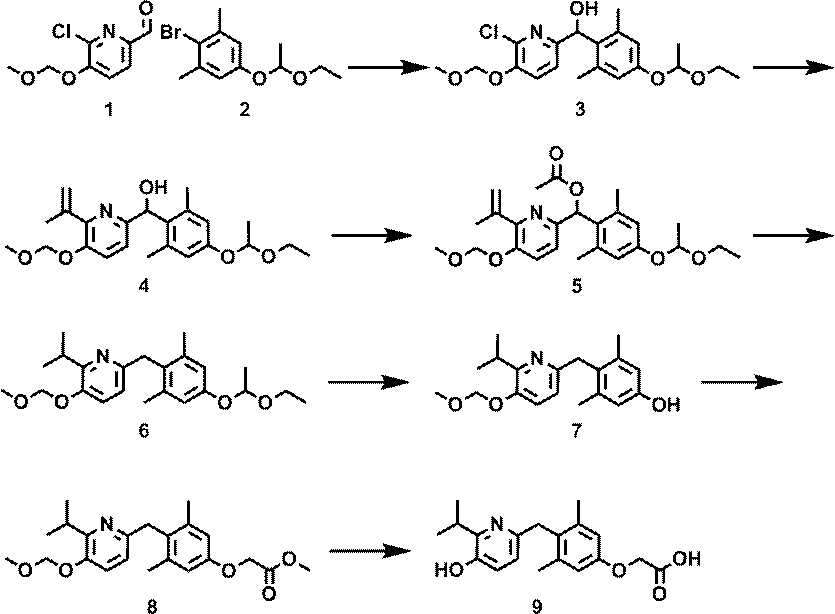
MS m/z 396/398 [M+H]+, APCI(+)
MS m/z 402 [M+H]+, APCI(+)
MS m/z 444 [M+H]+, APCI(+)
MS m/z 388 [M+H]+, APCI(+)
MS m/z 316 [M+H]+, APCI(+)
MS m/z 328 [M-H]-, ESI(-)
本化合物は、通常の造塩工程を経ることにより、臭化水素酸塩、塩酸塩、パラトルエンスルホン酸塩、メタンスルホン酸塩、ベンゼンスルホン酸塩、マレイン酸塩などを製造することができる。
{4-[(6-シクロヘキシル-5-ヒドロキシピリジン-2-イル)メチル]-3,5-ジメチルフェノキシ}酢酸
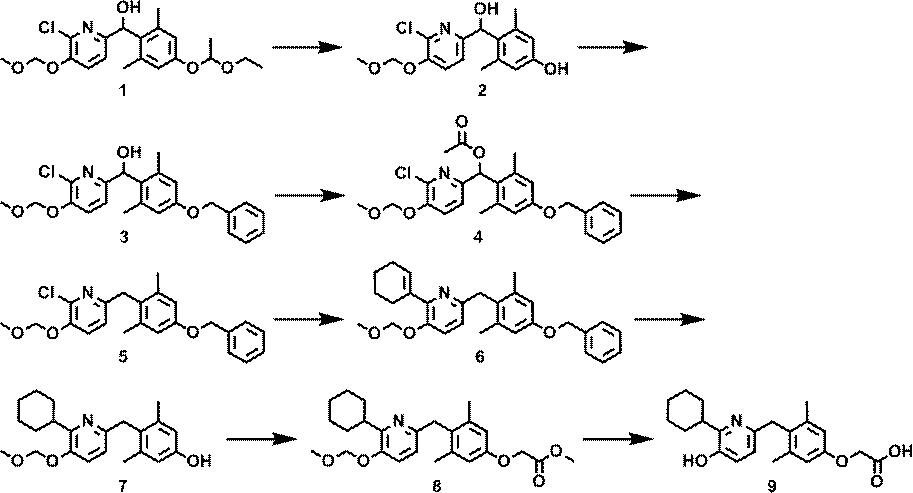
MS m/z324/326 [M+H]+, APCI(+)
MS m/z 414/416 [M+H]+, APCI(+)
MS m/z 428/430 [M-OCOCH3+CH3OH]+, APCI(+)
MS m/z 398/400 [M+H]+, APCI(+)
MS m/z 444 [M+H]+, ESI(+)
MS m/z 428 [M+H]+, APCI(+)
MS m/z 368 [M-H]-, ESI(-)
本化合物は、通常の造塩工程を経ることにより、臭化水素酸塩、塩酸塩、パラトルエンスルホン酸塩、メタンスルホン酸塩、ベンゼンスルホン酸塩、マレイン酸塩などを製造することができる。
(4-{[5-ヒドロキシ-6-(2-ナフチル)ピリジン-2-イル]メチル}-3,5-ジメチルフェノキシ)酢酸

MS m/z 488 [M+H]+, APCI(+)
MS m/z 530 [M+H]+, APCI(+)
MS m/z 400 [M+H]+, APCI(+)
MS m/z 428 [M+H]+, APCI(+)
MS m/z 412 [M-H]-, ESI(-)
本化合物は、通常の造塩工程を経ることにより、臭化水素酸塩、塩酸塩、パラトルエンスルホン酸塩、メタンスルホン酸塩、ベンゼンスルホン酸塩、マレイン酸塩などを製造することができる。
{4-[(5-ヒドロキシ-6-イソプロピルピリジン-2-イル)メチル]- 2,3,5-トリメチルフェノキシ}酢酸

MS m/z 213/215 [M-H]-, ESI(-)
MS m/z 304/306 [M+NH4]+, APCI(+)
MS m/z 410/412 [M+H]+, APCI(+)
MS m/z 338/340 [M+H]+, APCI(+)
MS m/z 428/430 [M+H]+, APCI(+)
MS m/z 442/444 [M-CH3COO+CH3OH]+, APCI(+)
MS m/z 412/414 [M+H]+, APCI(+)
MS m/z 418 [M+H]+, APCI(+)
MS m/z 330 [M+H]+, APCI(+)
MS m/z 402 [M+H]+, APCI(+)
MS m/z 342 [M-H]-, ESI(-)
本化合物は、通常の造塩工程を経ることにより、臭化水素酸塩、塩酸塩、パラトルエンスルホン酸塩、メタンスルホン酸塩、ベンゼンスルホン酸塩、マレイン酸塩などを製造することができる。
{4-[(6-シクロペンチル-5-ヒドロキシピリジン-2-イル)メチル]-2,3,5-トリメチルフェノキシ}酢酸
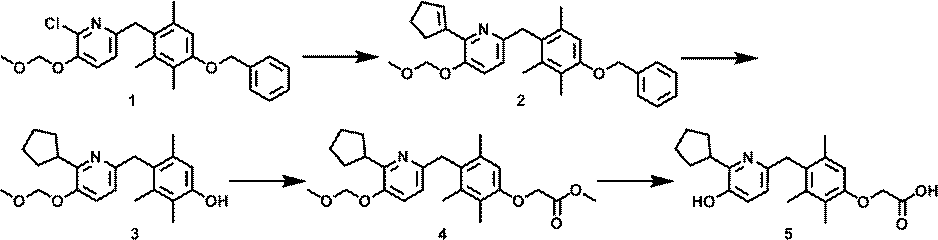
MS m/z 444 [M+H]+, APCI(+)
MS m/z 356 [M+H]+, APCI(+)
MS m/z 428 [M+H]+, APCI(+)
MS m/z 368 [M-H]-, ESI(-)
本化合物は、通常の造塩工程を経ることにより、臭化水素酸塩、塩酸塩、パラトルエンスルホン酸塩、メタンスルホン酸塩、ベンゼンスルホン酸塩、マレイン酸塩などを製造することができる。
(4-{[5-ヒドロキシ-6-(テトラヒドロフラン-2-イル)ピリジン-2-イル]メチル}-2,3,5-トリメチルフェノキシ)酢酸

MS m/z 444 [M+H]+, APCI(+)
MS m/z 358 [M+H]+, APCI(+)
MS m/z 430 [M+H]+, APCI(+)
MS m/z 370 [M-H]-, ESI(-)
本化合物は、通常の造塩工程を経ることにより、臭化水素酸塩、塩酸塩、パラトルエンスルホン酸塩、メタンスルホン酸塩、ベンゼンスルホン酸塩、マレイン酸塩などを製造することができる。
{4-[(6-シクロヘキシル-5-ヒドロキシピリジン-2-イル)メチル]-2,3,5-トリメチルフェノキシ}酢酸

MS m/z 474 [M+NH4]+, APCI(+)
MS m/z 370 [M+H]+, APCI(+)
MS m/z 442 [M+H]+, APCI(+)
MS m/z 382 [M-H]-, ESI(-)
本化合物は、通常の造塩工程を経ることにより、臭化水素酸塩、塩酸塩、パラトルエンスルホン酸塩、メタンスルホン酸塩、ベンゼンスルホン酸塩、マレイン酸塩などを製造することができる。
(4-{[5-ヒドロキシ-6-(テトラヒドロ-2H-ピラン-2-イル)ピリジン-2-イル]メチル}-2,3,5-トリメチルフェノキシ)酢酸
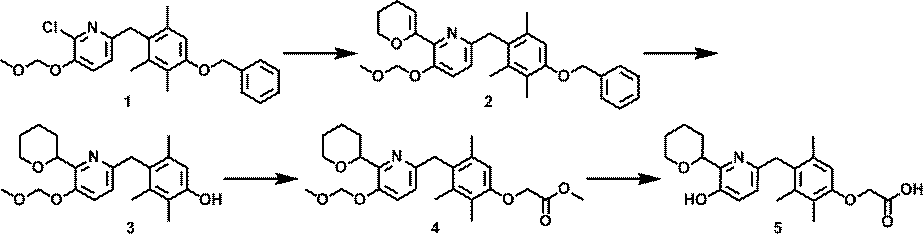
MS m/z 460 [M+H]+, APCI(+)
MS m/z 372 [M+H]+, APCI(+)
MS m/z 444 [M+H]+, APCI(+)
MS m/z 384 [M-H]-, ESI(-)
本化合物は、通常の造塩工程を経ることにより、臭化水素酸塩、塩酸塩、パラトルエンスルホン酸塩、メタンスルホン酸塩、ベンゼンスルホン酸塩、マレイン酸塩などを製造することができる。
{4-[(5-ヒドロキシ-6-イソプロピルピリジン-2-イル)オキシ]-2,3,5-トリメチルフェノキシ}酢酸

MS m/z 414/416 [M+H]+, APCI(+)
MS m/z 420 [M+H]+, APCI(+)
MS m/z 404 [M+H]+, APCI(+)
MS m/z 344 [M-H]-, ESI(-)
本化合物は、通常の造塩工程を経ることにより、臭化水素酸塩、塩酸塩、パラトルエンスルホン酸塩、メタンスルホン酸塩、ベンゼンスルホン酸塩、マレイン酸塩などを製造することができる。
{4-[(6-シクロヘキシル-5-ヒドロキシピリジン-2-イル)オキシ]-2,3,5-トリメチルフェノキシ}酢酸
MS m/z 384 [M-H]-, ESI(-)
本化合物は、通常の造塩工程を経ることにより、臭化水素酸塩、塩酸塩、パラトルエンスルホン酸塩、メタンスルホン酸塩、ベンゼンスルホン酸塩、マレイン酸塩などを製造することができる。
{2-フルオロ-4-[(5-ヒドロキシ-6-イソプロピルピリジン-2-イル)メチル]-3,5-ジメチルフェノキシ}酢酸

MS m/z 406 [M+H]+, APCI(+)
MS m/z 532 [M+H]+, APCI(+)
MS m/z 424 [M+H]+, APCI(+)
MS m/z 406 [M+H]+, APCI(+)
MS m/z 346 [M-H]-, ESI(-)
本化合物は、通常の造塩工程を経ることにより、臭化水素酸塩、塩酸塩、パラトルエンスルホン酸塩、メタンスルホン酸塩、ベンゼンスルホン酸塩、マレイン酸塩などを製造することができる。
{4-[(6-シクロヘキシル-5-ヒドロキシピリジン-2-イル)メチル]-2-フルオロ-3,5-ジメチルフェノキシ}酢酸
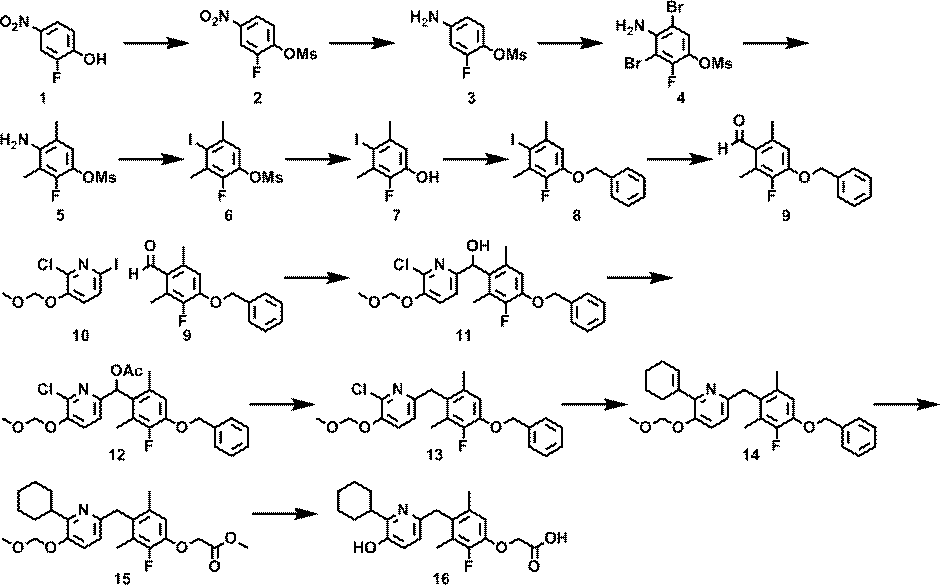
MS m/z 253 [M+NH4]+, APCI(+)
MS m/z 206 [M+H]+, APCI(+)
MS m/z360/362/364 [M-H]-, ESI(-)
MS m/z 234 [M+H]+, APCI(+)
MS m/z 362 [M+NH4]+, APCI(+)
MS m/z 265 [M-H]-, ESI(-)
MS m/z 357 [M+H]+, APCI(+)
MS m/z 259 [M+H]+, APCI(+)
MS m/z 432/434 [M+H]+, APCI(+)
MS m/z 414/416 [M+H-CH3CO2H]+, ESI(+)
MS m/z 416/418 [M+H]+, APCI(+)
MS m/z 462 [M+H]+, APCI(+)
MS m/z 446 [M+H]+, APCI(+)
MS m/z 386 [M-H]-, ESI(-)
本化合物は、通常の造塩工程を経ることにより、臭化水素酸塩、塩酸塩、パラトルエンスルホン酸塩、メタンスルホン酸塩、ベンゼンスルホン酸塩、マレイン酸塩などを製造することができる。
{2-ブロモ-4-[(6-シクロヘキシル-5-ヒドロキシピリジン-2-イル)メチル]-3,5-ジメチルフェノキシ}酢酸
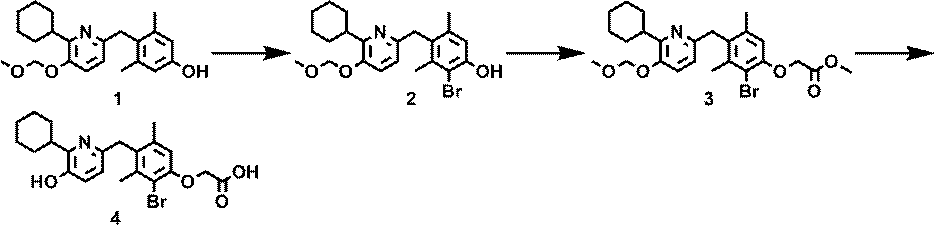
MS m/z 434/436 [M+H]+, APCI(+)
MS m/z446/448 [M-H]-, ESI(-)
本化合物は、通常の造塩工程を経ることにより、臭化水素酸塩、塩酸塩、パラトルエンスルホン酸塩、メタンスルホン酸塩、ベンゼンスルホン酸塩、マレイン酸塩などを製造することができる。
2-{4-[(6-シクロヘキシル-5-ヒドロキシピリジン-2-イル)メチル]-3,5-ジメチルフェノキシ}プロパン酸

MS m/z 456 [M+H]+, APCI(+)
MS m/z 382 [M-H]-, ESI(-)
本化合物は、通常の造塩工程を経ることにより、臭化水素酸塩、塩酸塩、パラトルエンスルホン酸塩、メタンスルホン酸塩、ベンゼンスルホン酸塩、マレイン酸塩などを製造することができる。
2-{4-[(6-シクロヘキシル-5-ヒドロキシピリジン-2-イル)メチル]-2,3,5-トリメチルフェノキシ}プロパン酸
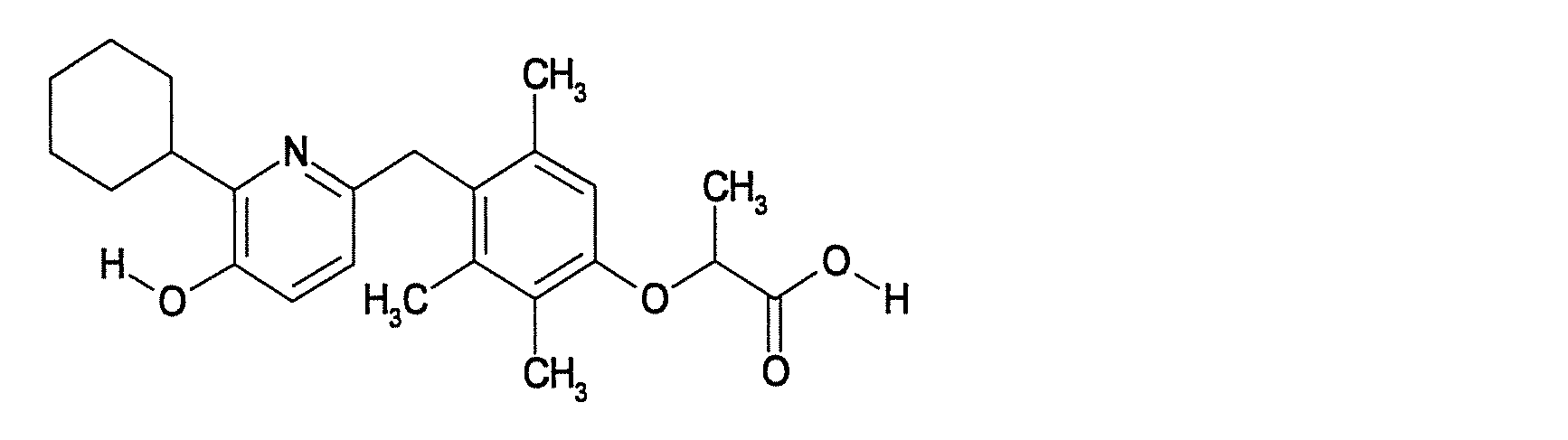
MS m/z 396 [M-H]-, ESI(-)
本化合物は、通常の造塩工程を経ることにより、臭化水素酸塩、塩酸塩、パラトルエンスルホン酸塩、メタンスルホン酸塩、ベンゼンスルホン酸塩、マレイン酸塩などを製造することができる。
2-{4-[(6-シクロヘキシル-5-ヒドロキシピリジン-2-イル)メチル]-3,5-ジメチルフェノキシ}-2-メチルプロパン酸

MS m/z 470 [M+H]+, APCI(+)
MS m/z 396 [M-H]-, ESI(-)
本化合物は、通常の造塩工程を経ることにより、臭化水素酸塩、塩酸塩、パラトルエンスルホン酸塩、メタンスルホン酸塩、ベンゼンスルホン酸塩、マレイン酸塩などを製造することができる。
2-{4-[(6-シクロヘキシル-5-ヒドロキシピリジン-2-イル)メチル]-2,3,5-トリメチルフェノキシ}-2-メチルプロパン酸
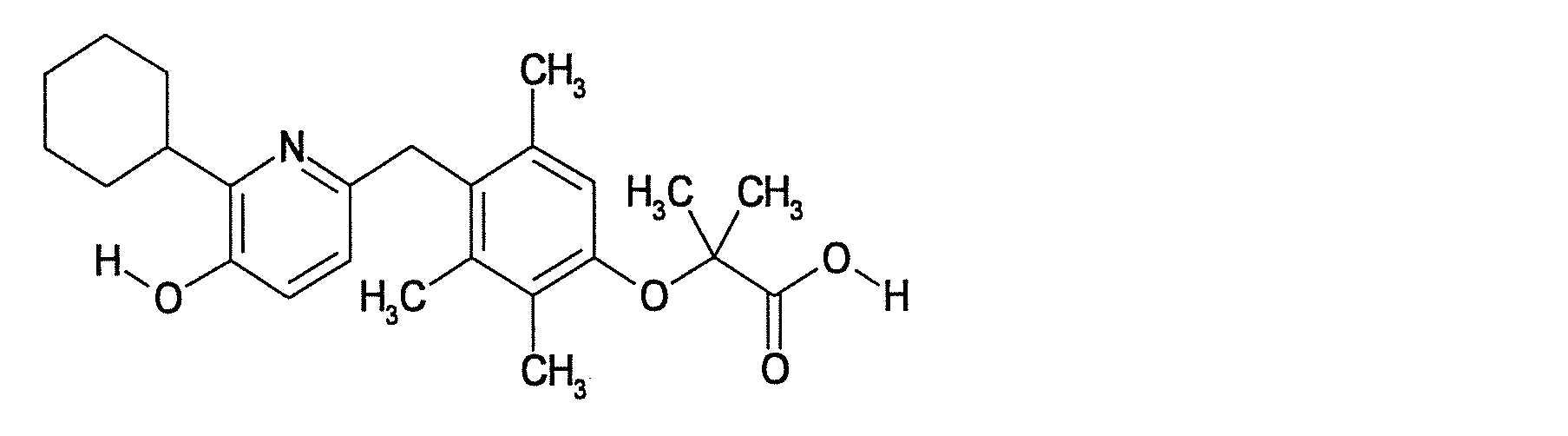
MS m/z 410 [M-H]-, ESI(-)
本化合物は、通常の造塩工程を経ることにより、臭化水素酸塩、塩酸塩、パラトルエンスルホン酸塩、メタンスルホン酸塩、ベンゼンスルホン酸塩、マレイン酸塩などを製造することができる。
1-{4-[(6-シクロヘキシル-5-ヒドロキシピリジン-2-イル)メチル]-3,5-ジメチルフェノキシ}シクロプロパンカルボン酸
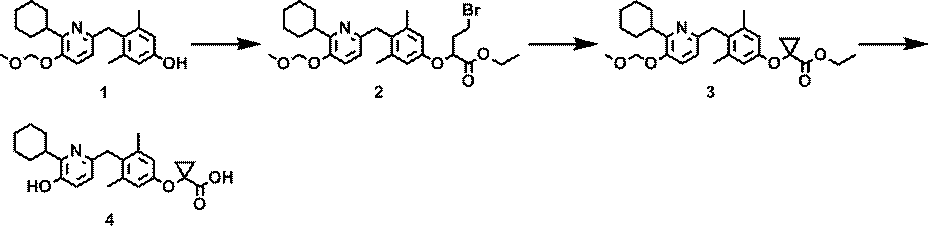
MS m/z 548/550 [M+H]+, APCI(+)
MS m/z 468 [M+H]+, APCI(+)
MS m/z 394 [M-H]-, ESI(-)
本化合物は、通常の造塩工程を経ることにより、臭化水素酸塩、塩酸塩、パラトルエンスルホン酸塩、メタンスルホン酸塩、ベンゼンスルホン酸塩、マレイン酸塩などを製造することができる。
({4-[(6-シクロヘキシル-5-ヒドロキシピリジン-2-イル)メチル]-3,5-ジメチルフェニル}アミノ)(オキソ)酢酸
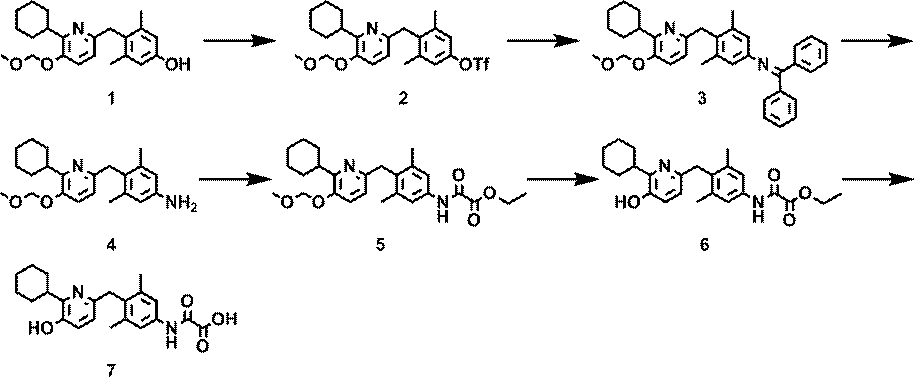
MS m/z 488 [M+H]+, APCI(+)
MS m/z 519 [M+H]+, APCI(+)
MS m/z 355 [M+H]+, APCI(+)
MS m/z 455 [M+H]+, APCI(+)
MS m/z 411 [M+H]+, APCI(+)
MS m/z 381 [M-H]-, ESI(-)
本化合物は、通常の造塩工程を経ることにより、臭化水素酸塩、塩酸塩、パラトルエンスルホン酸塩、メタンスルホン酸塩、ベンゼンスルホン酸塩、マレイン酸塩などを製造することができる。
({4-[(6-シクロヘキシル-5-ヒドロキシピリジン-2-イル)メチル]-2,3,5-トリメチルフェニル}アミノ)(オキソ)酢酸
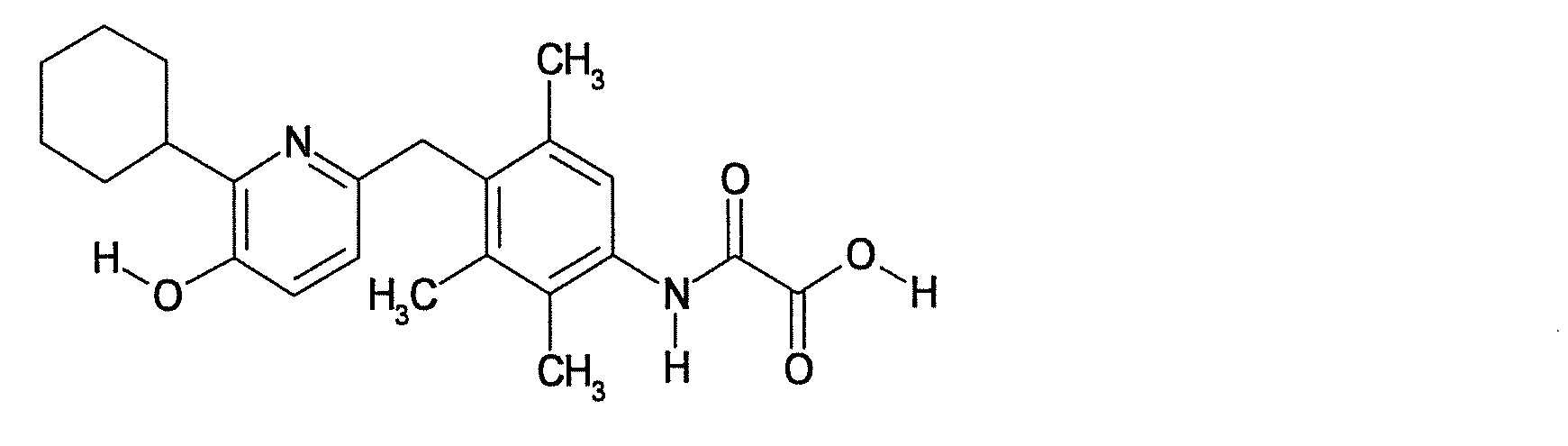
MS m/z 395 [M-H]-, ESI(-)
本化合物は、通常の造塩工程を経ることにより、臭化水素酸塩、塩酸塩、パラトルエンスルホン酸塩、メタンスルホン酸塩、ベンゼンスルホン酸塩、マレイン酸塩などを製造することができる。
3-({4-[(5-ヒドロキシ-6-イソプロピルピリジン-2-イル)メチル]-3,5-ジメチルフェニル}アミノ)-3-オキソプロパン酸
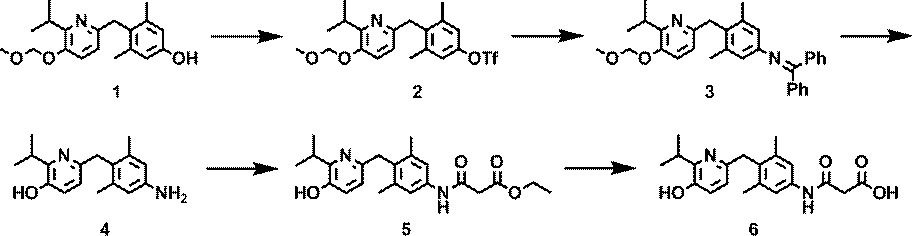
MS m/z 448 [M+H]+, APCI(+)
MS m/z 479 [M+H]+, APCI(+)
MS m/z 355 [M-H]-, ESI(-)
本化合物は、通常の造塩工程を経ることにより、臭化水素酸塩、塩酸塩、パラトルエンスルホン酸塩、メタンスルホン酸塩、ベンゼンスルホン酸塩、マレイン酸塩などを製造することができる。
3-({4-[(5-ヒドロキシ-6-フェニルピリジン-2-イル)メチル]-3,5-ジメチルフェニル}アミノ)-3-オキソプロパン酸
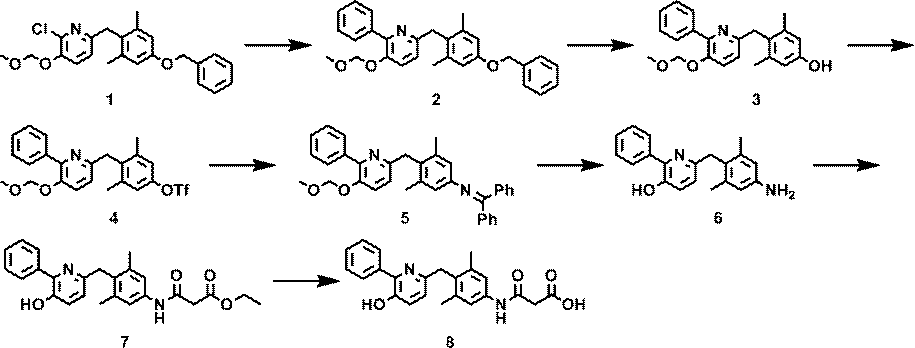
化合物8は、化合物3から実施例21と同様な方法で合成した。
MS m/z 389 [M-H]-, ESI(-)
本化合物は、通常の造塩工程を経ることにより、臭化水素酸塩、塩酸塩、パラトルエンスルホン酸塩、メタンスルホン酸塩、ベンゼンスルホン酸塩、マレイン酸塩などを製造することができる。
3-({4-[(6-シクロヘキシル-5-ヒドロキシピリジン-2-イル)メチル]-3,5-ジメチルフェニル}アミノ)-3-オキソプロパン酸

MS m/z 395 [M-H]-, ESI(-)
本化合物は、通常の造塩工程を経ることにより、臭化水素酸塩、塩酸塩、パラトルエンスルホン酸塩、メタンスルホン酸塩、ベンゼンスルホン酸塩、マレイン酸塩などを製造することができる。
3-({4-[(6-シクロヘキシル-5-ヒドロキシピリジン-2-イル)メチル]-2,3,5-トリメチルフェニル}アミノ)-3-オキソプロパン酸
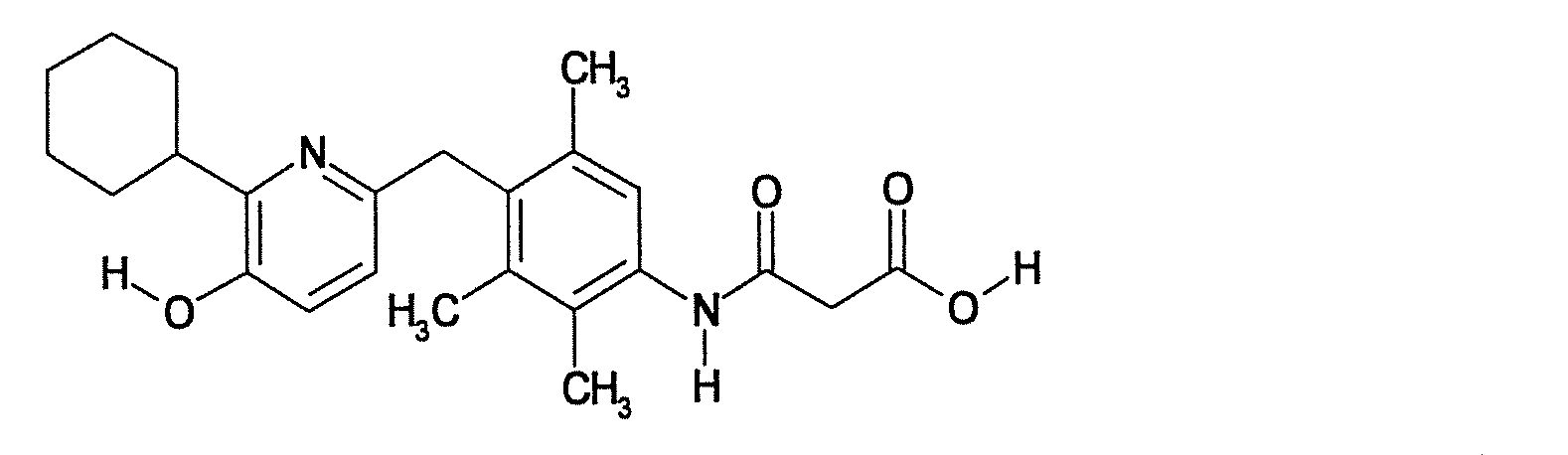
MS m/z 409 [M-H]-, ESI(-)
本化合物は、通常の造塩工程を経ることにより、臭化水素酸塩、塩酸塩、パラトルエンスルホン酸塩、メタンスルホン酸塩、ベンゼンスルホン酸塩、マレイン酸塩などを製造することができる。
(2E)-3-{4-[(6-シクロヘキシル-5-ヒドロキシピリジン-2-イル)メチル]-2,3,5-トリメチルフェニル}アクリル酸

MS m/z 438 [M+H]+, APCI(+)
MS m/z 378 [M-H]-, ESI(-)
本化合物は、通常の造塩工程を経ることにより、臭化水素酸塩、塩酸塩、パラトルエンスルホン酸塩、メタンスルホン酸塩、ベンゼンスルホン酸塩、マレイン酸塩などを製造することができる。
3-{4-[(6-シクロヘキシル-5-ヒドロキシピリジン-2-イル)メチル]-2,3,5-トリメチルフェニル}プロパン酸

MS m/z 440 [M+H]+, APCI(+)
MS m/z 380 [M-H]-, ESI(-)
本化合物は、通常の造塩工程を経ることにより、臭化水素酸塩、塩酸塩、パラトルエンスルホン酸塩、メタンスルホン酸塩、ベンゼンスルホン酸塩、マレイン酸塩などを製造することができる。
3-({4-[(5-ヒドロキシ-6-イソプロピルピリジン-2-イル)メチル]-3,5-ジメチルフェノキシ}メチル)-1,2,4-オキサジアゾール-5(4H)-オン
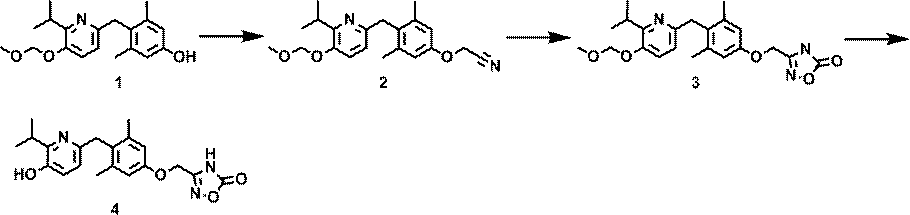
MS m/z 355 [M+H]+, APCI(+)
MS m/z 412 [M-H]-, ESI(-)
MS m/z 368 [M-H]-, ESI(-)
本化合物は、通常の造塩工程を経ることにより、臭化水素酸塩、塩酸塩、パラトルエンスルホン酸塩、メタンスルホン酸塩、ベンゼンスルホン酸塩、マレイン酸塩などを製造することができる。
3-({4-[(6-シクロヘキシル-5-ヒドロキシピリジン-2-イル)メチル]-3,5-ジメチルフェノキシ}メチル)-1,2,4-オキサジアゾール-5(4H)-オン
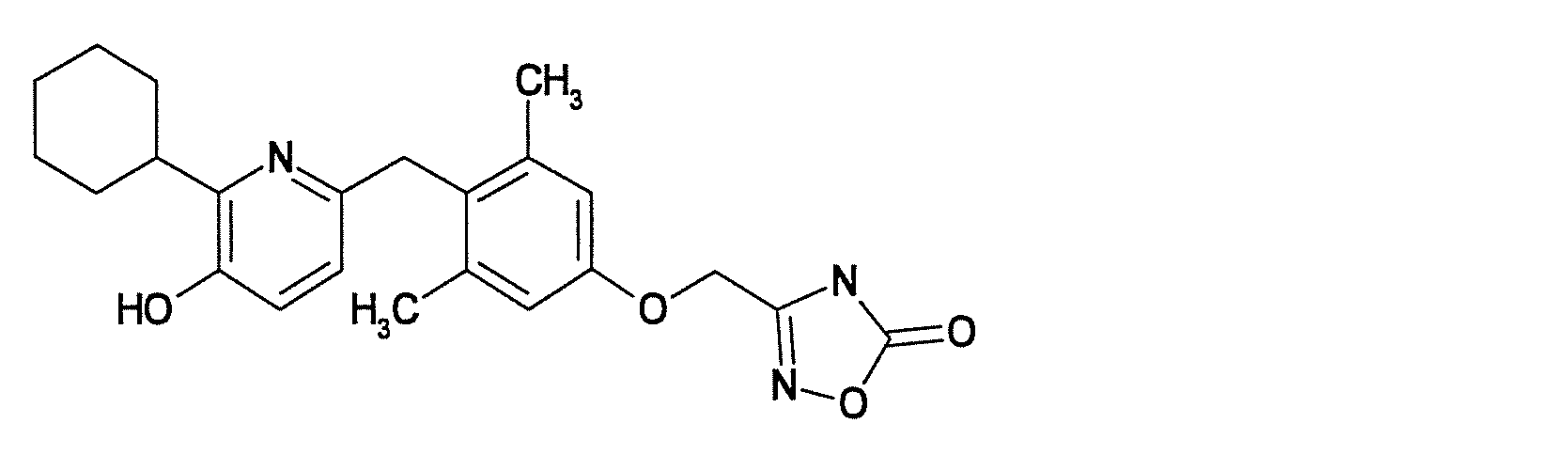
MS m/z 408 [M-H]-, ESI(-)
本化合物は、通常の造塩工程を経ることにより、臭化水素酸塩、塩酸塩、パラトルエンスルホン酸塩、メタンスルホン酸塩、ベンゼンスルホン酸塩、マレイン酸塩などを製造することができる。
3-[(4-{[5-ヒドロキシ-6-(2-ナフチル)ピリジン-2-イル]メチル}-3,5-ジメチルフェノキシ)メチル]-1,2,4-オキサジアゾール-5(4H)-オン
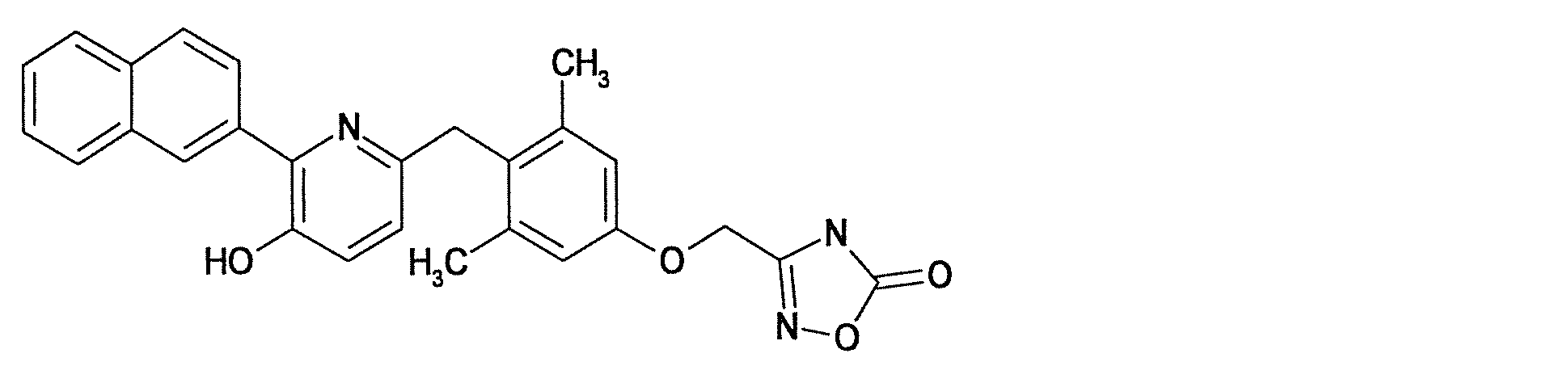
MS m/z 452 [M-H]-, ESI(-)
本化合物は、通常の造塩工程を経ることにより、臭化水素酸塩、塩酸塩、パラトルエンスルホン酸塩、メタンスルホン酸塩、ベンゼンスルホン酸塩、マレイン酸塩などを製造することができる。
3-[(4-{[5-ヒドロキシ-6-(5,6,7,8-テトラヒドロナフタレン-2-イル)ピリジン-2-イル]メチル}-3,5-ジメチルフェノキシ)メチル]-1,2,4-オキサジアゾール-5(4H)-オン
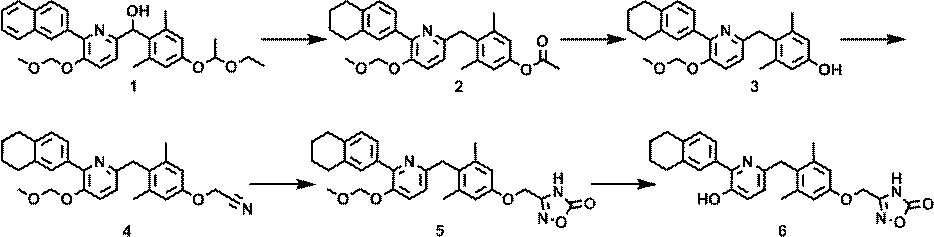
MS m/z 446 [M+H]+, APCI(+)
MS m/z 404 [M+H]+, APCI(+)
化合物6は、化合物3から実施例27と同様な方法で合成した。
MS m/z 456 [M-H]-, ESI(-)
本化合物は、通常の造塩工程を経ることにより、臭化水素酸塩、塩酸塩、パラトルエンスルホン酸塩、メタンスルホン酸塩、ベンゼンスルホン酸塩、マレイン酸塩などを製造することができる。
3-({4-[(5-ヒドロキシ-6-イソプロピルピリジン-2-イル)メチル]-2,3,5-トリメチルフェノキシ}メチル)-1,2,4-オキサジアゾール-5(4H)-オン

MS m/z 382 [M-H]-, ESI(-)
本化合物は、通常の造塩工程を経ることにより、臭化水素酸塩、塩酸塩、パラトルエンスルホン酸塩、メタンスルホン酸塩、ベンゼンスルホン酸塩、マレイン酸塩などを製造することができる。
3-({4-[(6-シクロペンチル-5-ヒドロキシピリジン-2-イル)メチル]-2,3,5-トリメチルフェノキシ}メチル)-1,2,4-オキサジアゾール-5(4H)-オン
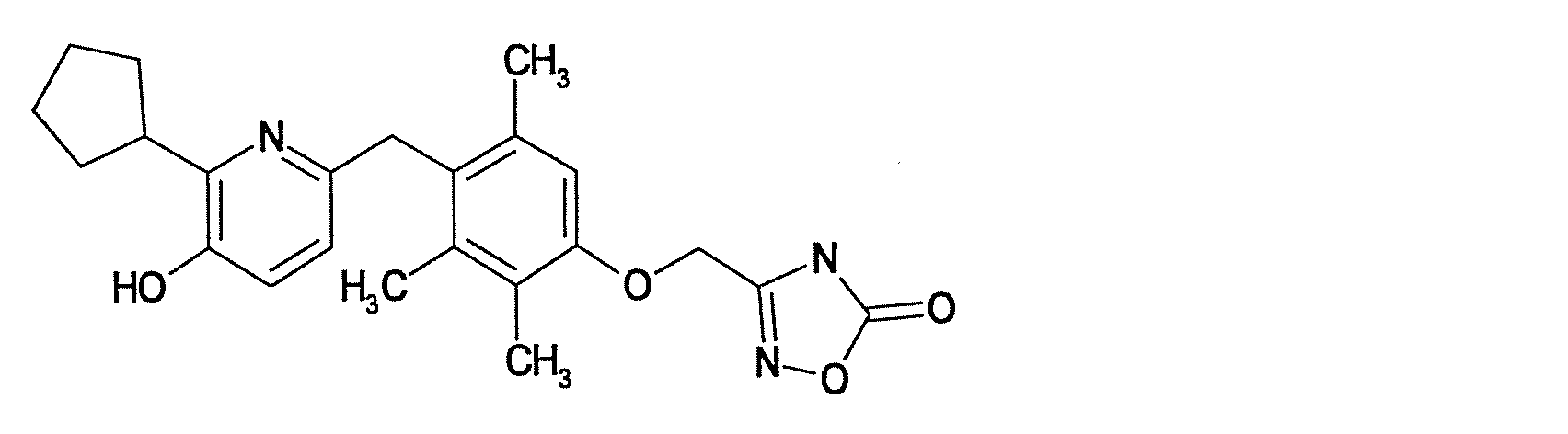
MS m/z 408 [M-H]-, ESI(-)
本化合物は、通常の造塩工程を経ることにより、臭化水素酸塩、塩酸塩、パラトルエンスルホン酸塩、メタンスルホン酸塩、ベンゼンスルホン酸塩、マレイン酸塩などを製造することができる。
3-[(4-{[5-ヒドロキシ-6-(テトラヒドロフラン-2-イル)ピリジン-2-イル]メチル}-2,3,5-トリメチルフェノキシ)メチル]-1,2,4-オキサジアゾール-5(4H)-オン

MS m/z 410 [M-H]-, ESI(-)
本化合物は、通常の造塩工程を経ることにより、臭化水素酸塩、塩酸塩、パラトルエンスルホン酸塩、メタンスルホン酸塩、ベンゼンスルホン酸塩、マレイン酸塩などを製造することができる。
3-({4-[(6-シクロヘキシル-5-ヒドロキシピリジン-2-イル)メチル]-2,3,5-トリメチルフェノキシ}メチル)-1,2,4-オキサジアゾール-5(4H)-オン

MS m/z 422 [M-H]-, ESI(-)
本化合物は、通常の造塩工程を経ることにより、臭化水素酸塩、塩酸塩、パラトルエンスルホン酸塩、メタンスルホン酸塩、ベンゼンスルホン酸塩、マレイン酸塩などを製造することができる。
3-[(4-{[5-ヒドロキシ-6-(テトラヒドロ-2H-ピラン-2-イル)ピリジン-2-イル]メチル}-2,3,5-トリメチルフェノキシ)メチル]-1,2,4-オキサジアゾール-5(4H)-オン
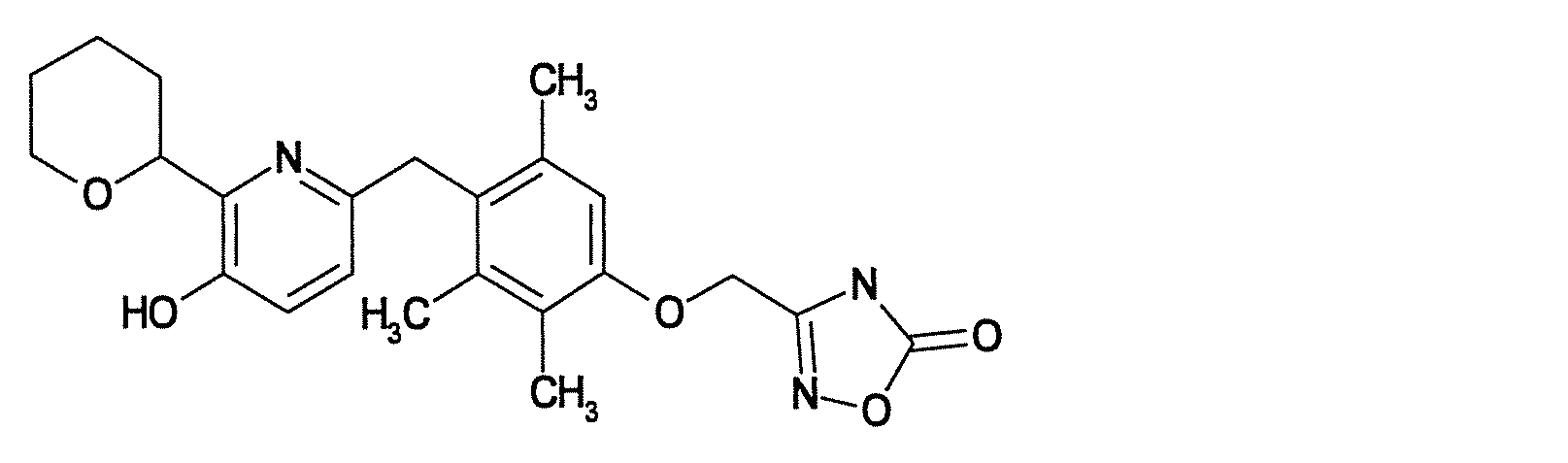
MS m/z 424 [M-H]-, ESI(-)
本化合物は、通常の造塩工程を経ることにより、臭化水素酸塩、塩酸塩、パラトルエンスルホン酸塩、メタンスルホン酸塩、ベンゼンスルホン酸塩、マレイン酸塩などを製造することができる。
3-({4-[(5-ヒドロキシ-6-イソプロピルピリジン-2-イル)オキシ]-2,3,5-トリメチルフェノキシ}メチル)-1,2,4-オキサジアゾール-5(4H)-オン
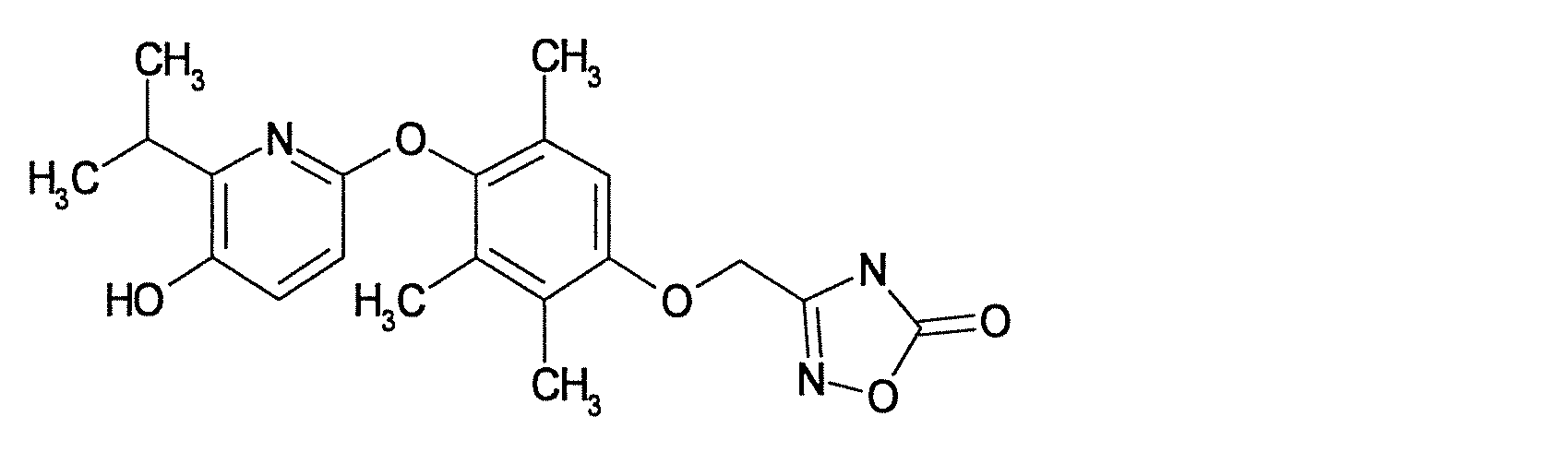
MS m/z 384 [M-H]-, ESI(-)
本化合物は、通常の造塩工程を経ることにより、臭化水素酸塩、塩酸塩、パラトルエンスルホン酸塩、メタンスルホン酸塩、ベンゼンスルホン酸塩、マレイン酸塩などを製造することができる。
3-({2-フルオロ-4-[(5-ヒドロキシ-6-イソプロピルピリジン-2-イル)メチル]-3,5-ジメチルフェノキシ}メチル)-1,2,4-オキサジアゾール-5(4H)-オン
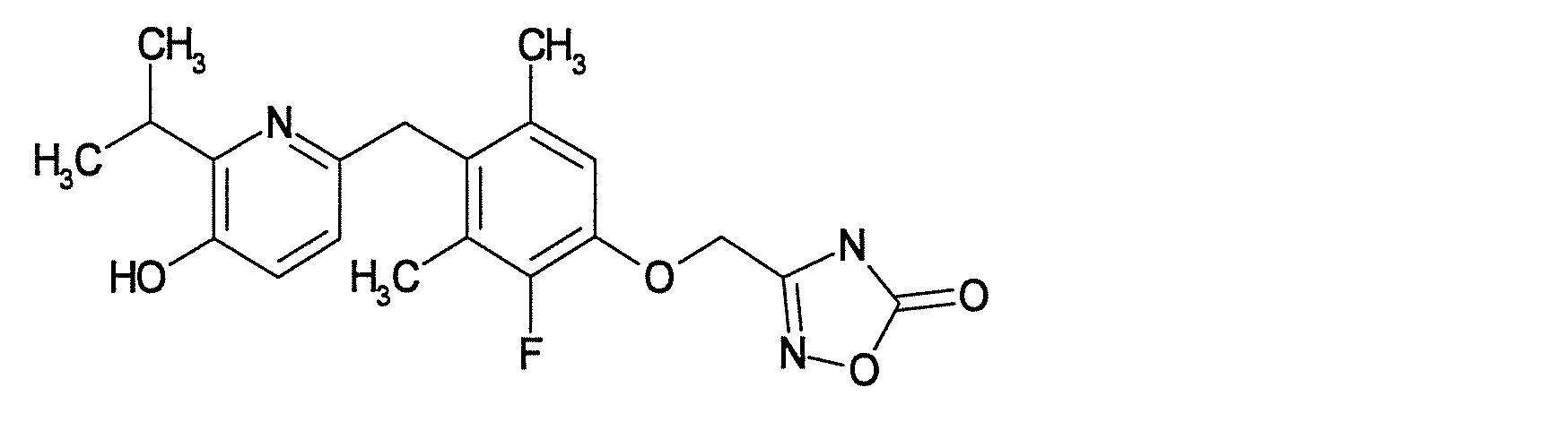
MS m/z 386 [M-H]-, ESI(-)
本化合物は、通常の造塩工程を経ることにより、臭化水素酸塩、塩酸塩、パラトルエンスルホン酸塩、メタンスルホン酸塩、ベンゼンスルホン酸塩、マレイン酸塩などを製造することができる。
(4-{[5-ヒドロキシ-6-({[(2R)-2-フェニルプロピル]アミノ}カルボニル)ピリジン-2-イル]メチル}-2,3,5-トリメチルフェノキシ)酢酸
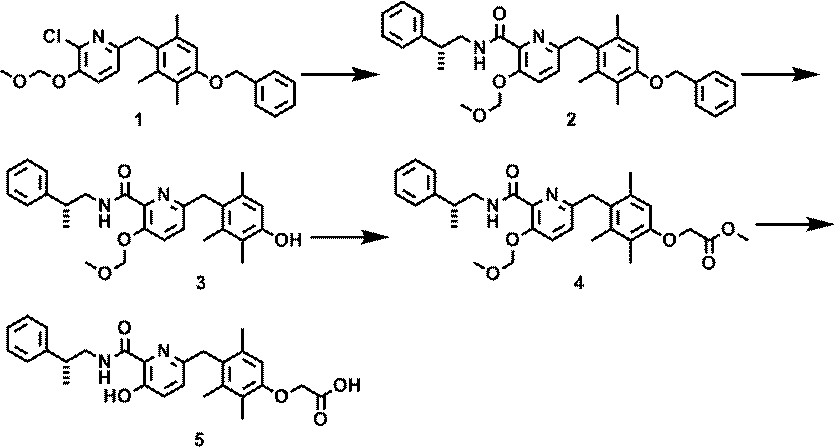
MS m/z 539 [M+H]+, APCI(+)
MS m/z 449 [M+H]+, APCI(+)
化合物4は実施例4の化合物12と同様な方法で合成した。
MS m/z 521 [M+H]+, APCI(+)
化合物5は実施例4の化合物13と同様な方法で合成した。
MS m/z 461 [M-H]-, ESI(-)
本化合物は、通常の造塩工程を経ることにより、臭化水素酸塩、塩酸塩、パラトルエンスルホン酸塩、メタンスルホン酸塩、ベンゼンスルホン酸塩、マレイン酸塩などを製造することができる。
2-シクロヘキシル-6-[4-(3-ヒドロキシイソキサゾール-5-イル)-2,3,6-トリメチルベンジル]ピリジン-3-オール
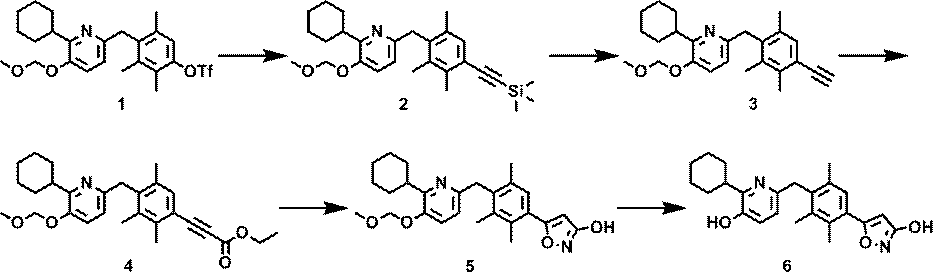
MS m/z 450 [M+H]+, APCI(+)
MS m/z 378 [M+H]+, APCI(+)
MS m/z 450 [M+H]+, APCI(+)
MS m/z 435 [M-H]-, ESI(-)
MS m/z 391 [M-H]-, ESI(-)
本化合物は、通常の造塩工程を経ることにより、臭化水素酸塩、塩酸塩、パラトルエンスルホン酸塩、メタンスルホン酸塩、ベンゼンスルホン酸塩、マレイン酸塩などを製造することができる。
{4-[(5-ヒドロキシ-6-ピロリジン-1-イルピリジン-2-イル)メチル]-2,3,5-トリメチルフェノキシ}酢酸
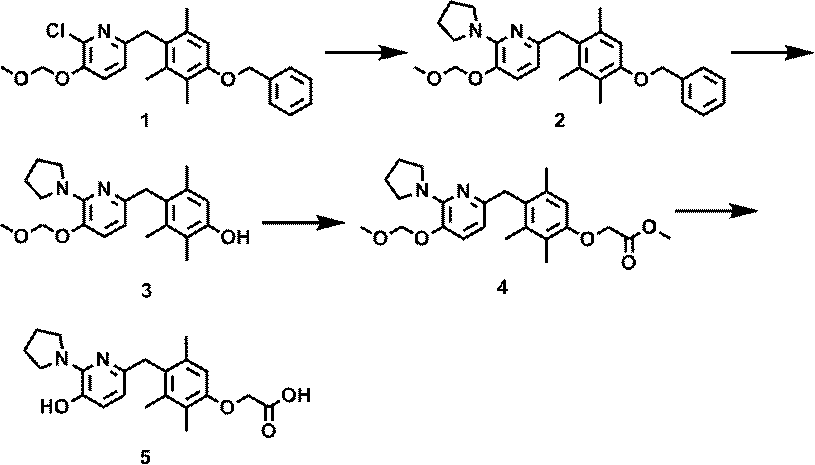
MS m/z 447 [M+H]+, APCI(+)
MS m/z 357 [M+H]+, APCI(+)
化合物4は実施例4の化合物12と同様な方法で合成した。
MS m/z 429 [M+H]+, APCI(+)
化合物5は実施例4の化合物13と同様な方法で合成した。
MS m/z 371 [M+H]+, APCI(+)
本化合物は、通常の造塩工程を経ることにより、臭化水素酸塩、塩酸塩、パラトルエンスルホン酸塩、メタンスルホン酸塩、ベンゼンスルホン酸塩、マレイン酸塩などを製造することができる。
{4-[(6-シクロヘキシル-5-ヒドロキシピリジン-2-イル)メチル]-2,3,5-トリメチルフェニル}酢酸

MS m/z 410 [M-H]-, ESI(-)
MS m/z 366 [M-H]-, ESI(-)
本化合物は、通常の造塩工程を経ることにより、臭化水素酸塩、塩酸塩、パラトルエンスルホン酸塩、メタンスルホン酸塩、ベンゼンスルホン酸塩、マレイン酸塩などを製造することができる。
4-[(6-シクロヘキシル-5-ヒドロキシピリジン-2-イル)メチル]-2,3,5-トリメチル安息香酸

MS m/z 396 [M-H]-, ESI(-)
MS m/z 352 [M-H]-, ESI(-)
本化合物は、通常の造塩工程を経ることにより、臭化水素酸塩、塩酸塩、パラトルエンスルホン酸塩、メタンスルホン酸塩、ベンゼンスルホン酸塩、マレイン酸塩などを製造することができる。
{2-クロロ-4-[(6-シクロヘキシル-5-ヒドロキシピリジン-2-イル)メチル]-3,5-ジメチルフェノキシ}酢酸

MS m/z 390/392 [M+H]+, APCI(+)
MS m/z 462/464 [M+H]+, APCI(+)
MS m/z 402/404 [M-H]-, ESI(-)
本化合物は、通常の造塩工程を経ることにより、臭化水素酸塩、塩酸塩、パラトルエンスルホン酸塩、メタンスルホン酸塩、ベンゼンスルホン酸塩、マレイン酸塩などを製造することができる。
{2-シアノ-4-[(6-シクロヘキシル-5-ヒドロキシピリジン-2-イル)メチル]-3,5-ジメチルフェノキシ}酢酸
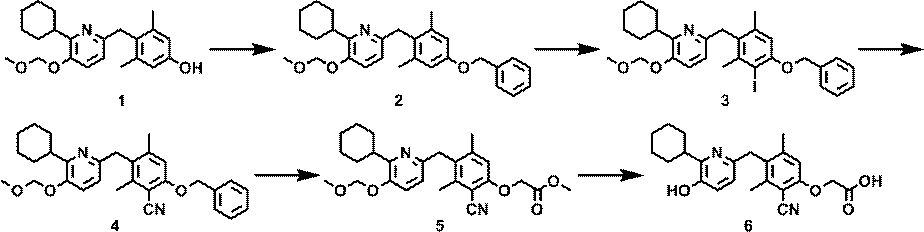
MS m/z 471 [M+H]+, APCI(+)
MS m/z 572 [M+H]+, APCI(+)
MS m/z 471 [M+H]+, APCI(+)
MS m/z 453 [M+H]+, APCI(+)
化合物6は実施例4の化合物13と同様な方法で合成した。
MS m/z 393 [M-H]-, ESI(-)
本化合物は、通常の造塩工程を経ることにより、臭化水素酸塩、塩酸塩、パラトルエンスルホン酸塩、メタンスルホン酸塩、ベンゼンスルホン酸塩、マレイン酸塩などを製造することができる。
({5-[(6-シクロヘキシル-5-ヒドロキシピリジン-2-イル)メチル]-3,4,6-トリメチルピリジン-2-イル}オキシ)酢酸
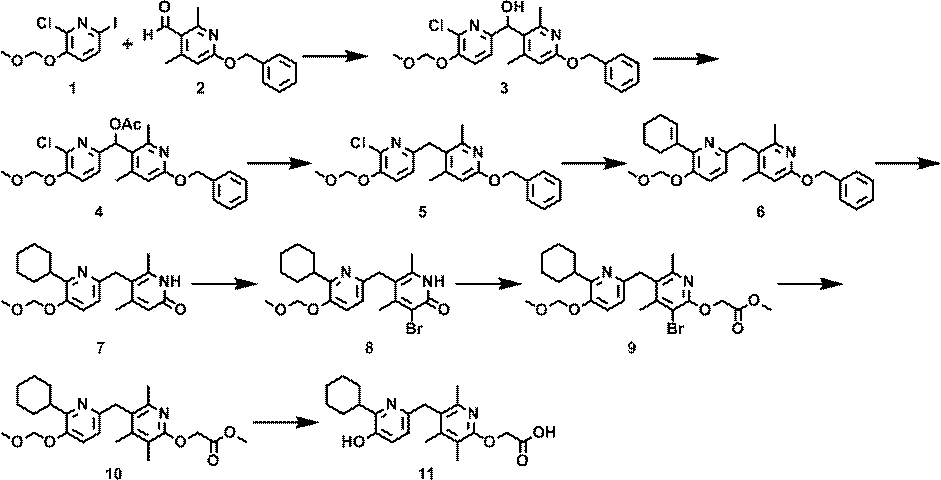
MS m/z 415/417 [M+H]+, APCI(+)
MS m/z 457/459 [M+H]+, APCI(+)
MS m/z 399/401 [M+H]+, APCI(+)
MS m/z 445 [M+H]+, APCI(+)
MS m/z 357 [M+H]+, APCI(+)
MS m/z 435/437 [M+H]+, APCI(+)
MS m/z 507/509 [M+H]+, APCI(+)
MS m/z 443 [M+H]+, APCI(+)
MS m/z 383 [M-H]-, ESI(-)
本化合物は、通常の造塩工程を経ることにより、臭化水素酸塩、塩酸塩、パラトルエンスルホン酸塩、メタンスルホン酸塩、ベンゼンスルホン酸塩、マレイン酸塩などを製造することができる。
3-[({5-[(6-シクロヘキシル-5-ヒドロキシピリジン-2-イル)メチル]-3,4,6-トリメチルピリジン-2-イル}オキシ)メチル]-1,2,4-オキサジアゾール-5(4H)-オン

MS m/z 474/476 [M+H]+, APCI(+)
MS m/z 410 [M+H]+, APCI(+)
MS m/z 423 [M-H]-, ESI(-)
本化合物は、通常の造塩工程を経ることにより、臭化水素酸塩、塩酸塩、パラトルエンスルホン酸塩、メタンスルホン酸塩、ベンゼンスルホン酸塩、マレイン酸塩などを製造することができる。
(4-{[6-シクロヘキシル-5-(ホルミルアミノ)ピリジン-2-イル]メチル}-2,3,5-トリメチルフェノキシ)酢酸

MS m/z 456 [M+H]+, APCI(+)
MS m/z 412 [M+H]+, APCI(+)
MS m/z 544 [M+H]+, APCI(+)
MS m/z 411 [M+H]+, APCI(+)
MS m/z 439 [M+H]+, APCI(+)
MS m/z 409 [M-H]-, ESI(-)
本化合物は、通常の造塩工程を経ることにより、臭化水素酸塩、塩酸塩、パラトルエンスルホン酸塩、メタンスルホン酸塩、ベンゼンスルホン酸塩、マレイン酸塩などを製造することができる。
[4-({6-シクロヘキシル-5-[(メチルスルホニル)アミノ]ピリジン-2-イル}メチル)-2,3,5-トリメチルフェノキシ]酢酸

MS m/z 459 [M-H]-, ESI(-)
本化合物は、通常の造塩工程を経ることにより、臭化水素酸塩、塩酸塩、パラトルエンスルホン酸塩、メタンスルホン酸塩、ベンゼンスルホン酸塩、マレイン酸塩などを製造することができる。
{4-[(6-シクロヘキシル-5-ヒドロキシピリジン-2-イル)メチル]-2-エチル-3,5-ジメチルフェノキシ}酢酸
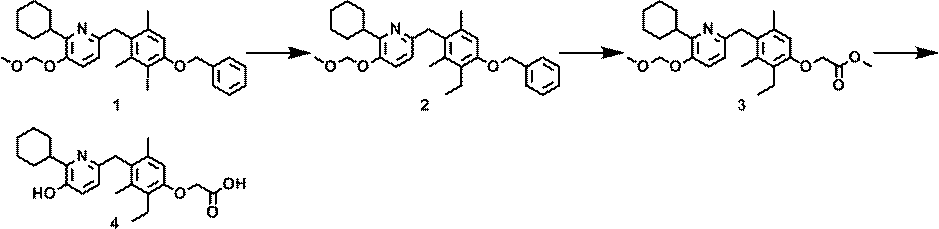
MS m/z 474 [M+H]+, APCI(+)
MS m/z 456 [M+H]+, APCI(+)
化合物4は実施例4の化合物13と同様な方法で合成した。
MS m/z 396 [M-H]-, ESI(-)
本化合物は、通常の造塩工程を経ることにより、臭化水素酸塩、塩酸塩、パラトルエンスルホン酸塩、メタンスルホン酸塩、ベンゼンスルホン酸塩、マレイン酸塩などを製造することができる。
3-[{4-[(6-シクロヘキシル-5-ヒドロキシピリジン-2-イル)メチル]-3,5-ジメチルフェニル}(メチル)アミノ]-3-オキソプロパン酸

MS m/z 451 [M+H]+, APCI(+)
MS m/z 465 [M+H]+, APCI(+)
MS m/z 369 [M+H]+, APCI(+)
MS m/z 483 [M+H]+, APCI(+)
MS m/z 409 [M-H]-, ESI(-)
本化合物は、通常の造塩工程を経ることにより、臭化水素酸塩、塩酸塩、パラトルエンスルホン酸塩、メタンスルホン酸塩、ベンゼンスルホン酸塩、マレイン酸塩などを製造することができる。
{4-[(6-シクロヘキシル-5-ヒドロキシピリジン-2-イル)メチル]-2-メトキシ-3,5-ジメチルフェノキシ}酢酸
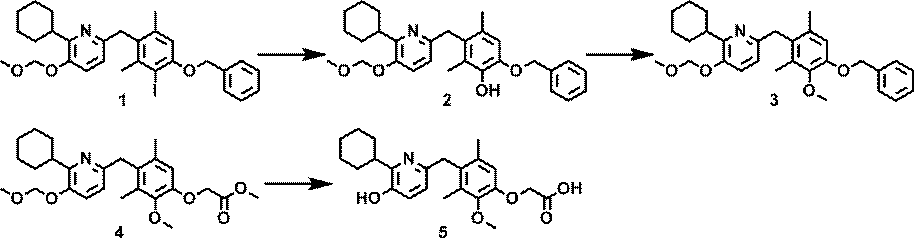
MS m/z 462 [M+H]+, APCI(+)
MS m/z 476 [M+H]+, APCI(+)
MS m/z 458 [M+H]+, APCI(+)
化合物5は実施例4の化合物13と同様な方法で合成した。
MS m/z 398 [M-H]-, ESI(-)
本化合物は、通常の造塩工程を経ることにより、臭化水素酸塩、塩酸塩、パラトルエンスルホン酸塩、メタンスルホン酸塩、ベンゼンスルホン酸塩、マレイン酸塩などを製造することができる。
3-({4-[(6-シクロへプチル-5-ヒドロキシピリジン-2-イル)メチル]-3,5-ジメチルフェニル}アミノ)-3-オキソプロパン酸
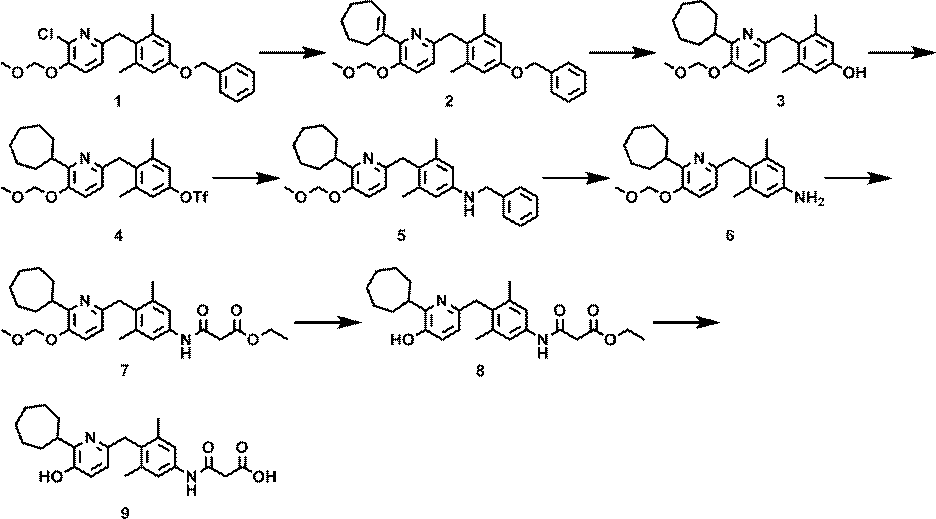
MS m/z 458 [M+H]+, APCI(+)
化合物3は実施例4の化合物11と同様な方法で合成した。
MS m/z 370 [M+H]+, APCI(+)
化合物4は実施例21の化合物2と同様な方法で合成した。
MS m/z 502 [M+H]+, APCI(+)
MS m/z 459 [M+H]+, APCI(+)
MS m/z 369 [M+H]+, APCI(+)
MS m/z 483 [M+H]+, APCI(+)
MS m/z 439 [M+H]+, APCI(+)
MS m/z 409 [M-H]-, ESI(-)
本化合物は、通常の造塩工程を経ることにより、臭化水素酸塩、塩酸塩、パラトルエンスルホン酸塩、メタンスルホン酸塩、ベンゼンスルホン酸塩、マレイン酸塩などを製造することができる。
3-({4-[(6-シクロヘキシル-5-ヒドロキシピリジン-2-イル)メチル]-2,6-ジフルオロ-3,5-ジメチルフェノキシ}メチル)-1,2,4-オキサジアゾール-5(4H)-オン
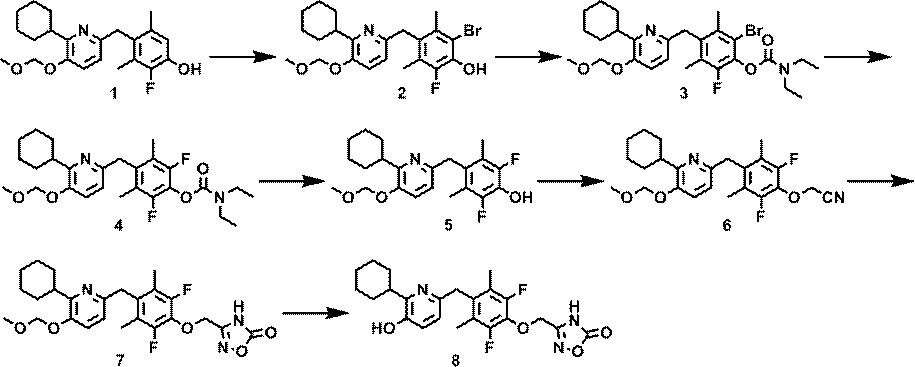
MS m/z 452/454 [M+H]+, APCI(+)
MS m/z 551/553 [M+H]+, APCI(+)
MS m/z 491 [M+H]+, APCI(+)
MS m/z 392 [M+H]+, APCI(+)
MS m/z 431 [M+H]+, APCI(+)
化合物7は実施例27の化合物3と同様な方法で合成した。
MS m/z 488 [M-H]-, ESI(-)
化合物8は実施例27の化合物4と同様な方法で合成した。
MS m/z 444 [M-H]-, ESI(-)
本化合物は、通常の造塩工程を経ることにより、臭化水素酸塩、塩酸塩、パラトルエンスルホン酸塩、メタンスルホン酸塩、ベンゼンスルホン酸塩、マレイン酸塩などを製造することができる。
3-({2-クロロ-4-[(6-シクロヘキシル-5-ヒドロキシピリジン-2-イル)メチル]-3,5-ジメチルフェニル}アミノ)-3-オキソプロパン酸

MS m/z 389/391 [M+H]+, APCI(+)
MS m/z 503/505 [M+H]+, APCI(+)
化合物4は実施例52の化合物8と同様な方法で合成した。
MS m/z 459/461 [M+H]+, APCI(+)
化合物5は実施例52の化合物9と同様な方法で合成した。
MS m/z 429/431 [M-H]-, ESI(-)
本化合物は、通常の造塩工程を経ることにより、臭化水素酸塩、塩酸塩、パラトルエンスルホン酸塩、メタンスルホン酸塩、ベンゼンスルホン酸塩、マレイン酸塩などを製造することができる。
3-({2-ブロモ-4-[(6-シクロヘキシル-5-ヒドロキシピリジン-2-イル)メチル]-3,5-ジメチルフェニル}アミノ)-3-オキソプロパン酸
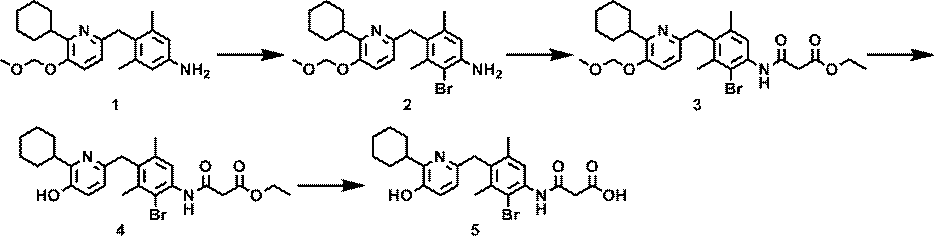
MS m/z 433/435 [M+H]+, APCI(+)
MS m/z 547/549 [M+H]+, APCI(+)
化合物4は実施例52の化合物8と同様な方法で合成した。
MS m/z 503/505 [M+H]+, APCI(+)
化合物5は実施例52の化合物9と同様な方法で合成した。
MS m/z 473/475 [M-H]-, ESI(-)
本化合物は、通常の造塩工程を経ることにより、臭化水素酸塩、塩酸塩、パラトルエンスルホン酸塩、メタンスルホン酸塩、ベンゼンスルホン酸塩、マレイン酸塩などを製造することができる。
3-({4-[(6-sec-ブチル-5-ヒドロキシピリジン-2-イル)メチル]-2-フルオロ-3,5-ジメチルフェノキシ}メチル)-1,2,4-オキサジアゾール-5(4H)-オン
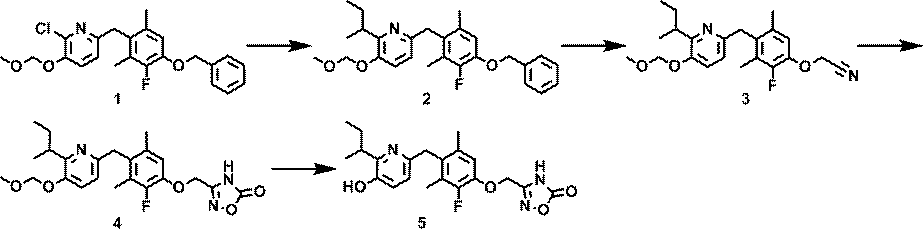
MS m/z 438 [M+H]+, APCI(+)
MS m/z 387 [M+H]+, APCI(+)
化合物4は実施例27の化合物3と同様な方法で合成した。
MS m/z 444 [M-H]-, ESI(-)
化合物5は実施例27の化合物4と同様な方法で合成した。
MS m/z 400 [M-H]-, ESI(-)
本化合物は、通常の造塩工程を経ることにより、臭化水素酸塩、塩酸塩、パラトルエンスルホン酸塩、メタンスルホン酸塩、ベンゼンスルホン酸塩、マレイン酸塩などを製造することができる。
3-{[2-フルオロ-4-({5-ヒドロキシ-6-[メチル(フェニル)アミノ]ピリジン-2-イル}メチル)-3,5-ジメチルフェノキシ]メチル}-1,2,4-オキサジアゾール-5(4H)-オン

MS m/z 487 [M+H]+, APCI(+)
MS m/z 397 [M+H]+, APCI(+)
化合物4は実施例27の化合物2と同様な方法で合成した。
MS m/z 436 [M+H]+, APCI(+)
化合物5は実施例27の化合物3と同様な方法で合成した。
MS m/z 493 [M-H]-, ESI(-)
化合物6は実施例27の化合物4と同様な方法で合成した。
MS m/z 449 [M-H]-, ESI(-)
本化合物は、通常の造塩工程を経ることにより、臭化水素酸塩、塩酸塩、パラトルエンスルホン酸塩、メタンスルホン酸塩、ベンゼンスルホン酸塩、マレイン酸塩などを製造することができる。
3-({3,5-ジクロロ-4-[(6-シクロヘキシル-5-ヒドロキシピリジン-2-イル)オキシ]フェニル}アミノ)-3-オキソプロパン酸
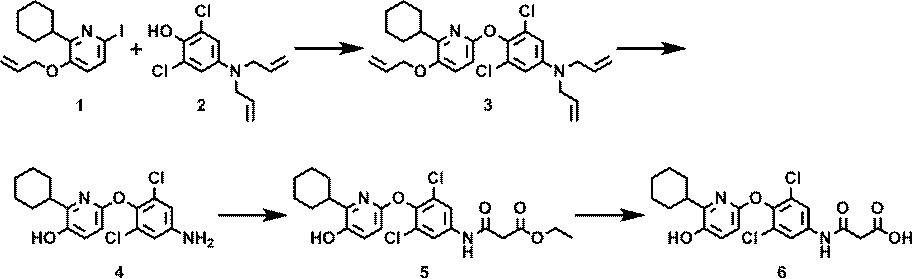
MS m/z 473/475 [M+H]+, APCI(+)
MS m/z 353/355 [M+H]+, APCI(+)
MS m/z 467/469 [M+H]+, APCI(+)
MS m/z 437/439 [M-H]-, ESI(-)
本化合物は、通常の造塩工程を経ることにより、臭化水素酸塩、塩酸塩、パラトルエンスルホン酸塩、メタンスルホン酸塩、ベンゼンスルホン酸塩、マレイン酸塩などを製造することができる。
2-{4-[(6-シクロヘキシル-5-ヒドロキシピリジン-2-イル)メチル]-3,5-ジメチルフェニル}-3,5-ジオキソ-2,3,4,5-テトラヒドロ-1,2,4-トリアジン-6-カルボニトリル
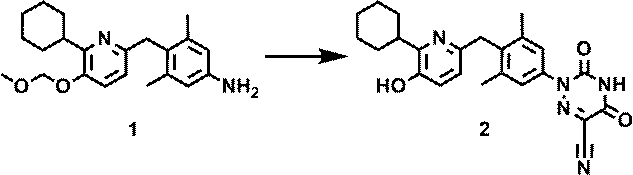
MS m/z 432 [M+H]+, APCI(+)
本化合物は、通常の造塩工程を経ることにより、臭化水素酸塩、塩酸塩、パラトルエンスルホン酸塩、メタンスルホン酸塩、ベンゼンスルホン酸塩、マレイン酸塩などを製造することができる。
3-[(2-フルオロ-4-{[6-(2-フルオロ-3-メチルフェニル)-5-ヒドロキシピリジン-2-イル]メチル}-3,5-ジメチルフェノキシ)メチル]-1,2,4-オキサジアゾール-5(4H)-オン

MS m/z 490 [M+H]+, APCI(+)
MS m/z 400 [M+H]+, APCI(+)
MS m/z 439 [M+H]+, APCI(+)
MS m/z 496 [M-H]-, ESI(-)
MS m/z 452 [M-H]-, ESI(-)
本化合物は、通常の造塩工程を経ることにより、臭化水素酸塩、塩酸塩、パラトルエンスルホン酸塩、メタンスルホン酸塩、ベンゼンスルホン酸塩、マレイン酸塩などを製造することができる。
3-[(4-{[6-(4,4-ジフルオロ-1-ヒドロキシシクロヘキシル)-5-ヒドロキシピリジン-2-イル]メチル}-2-フルオロ-3,5-ジメチルフェノキシ)メチル]-1,2,4-オキサジアゾール-5(4H)-オン
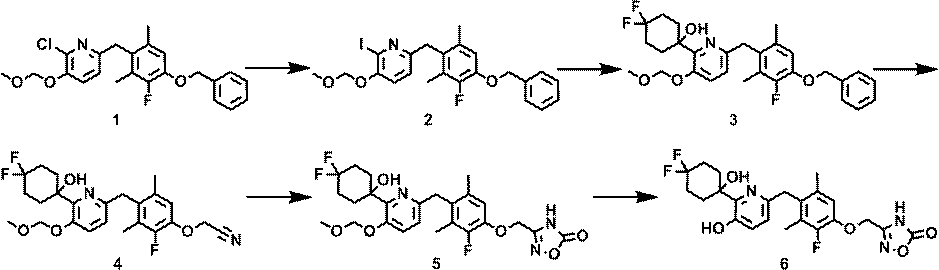
MS m/z 508 [M+H]+, APCI(+)
MS m/z 516 [M+H]+, APCI(+)
MS m/z 465 [M+H]+, APCI(+)
化合物5は実施例27の化合物3と同様な方法で合成した。
MS m/z 522 [M-H]-, ESI(-)
化合物6は実施例27の化合物4と同様な方法で合成した。
MS m/z 478 [M-H]-, ESI(-)
本化合物は、通常の造塩工程を経ることにより、臭化水素酸塩、塩酸塩、パラトルエンスルホン酸塩、メタンスルホン酸塩、ベンゼンスルホン酸塩、マレイン酸塩などを製造することができる。
N-{4-[(6-シクロヘキシル-5-ヒドロキシピリジン-2-イル)メチル]-2,3,5-トリメチルフェニル}グリシン
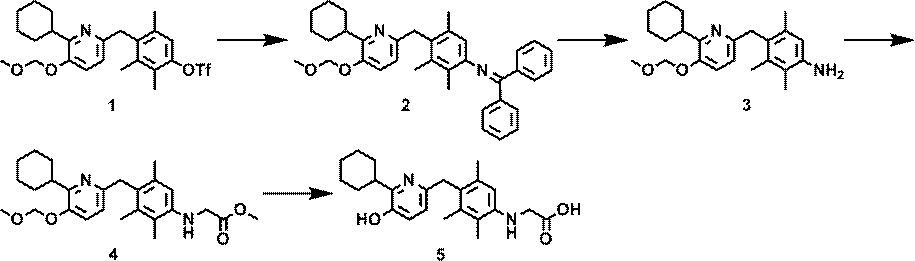
MS m/z 533 [M+H]+, APCI(+)
MS m/z 369 [M+H]+, APCI(+)
MS m/z 441 [M+H]+, APCI(+)
MS m/z 381 [M-H]-, ESI(-)
本化合物は、通常の造塩工程を経ることにより、臭化水素酸塩、塩酸塩、パラトルエンスルホン酸塩、メタンスルホン酸塩、ベンゼンスルホン酸塩、マレイン酸塩などを製造することができる。
({4-[(6-シクロヘキシル-5-ヒドロキシピリジン-2-イル)メチル]-3,5-ジメチルフェノキシ}メチル)ホスホン酸

MS m/z 506 [M+H]+, APCI(+)
MS m/z 404 [M-H]-, ESI(-)
本化合物は、通常の造塩工程を経ることにより、臭化水素酸塩、塩酸塩、パラトルエンスルホン酸塩、メタンスルホン酸塩、ベンゼンスルホン酸塩、マレイン酸塩などを製造することができる。
N-{4-[(6-シクロヘキシル-5-ヒドロキシピリジン-2-イル)メチル]-3,5-ジメチルベンゾイル}グリシン

MS m/z 398 [M+H]+, APCI(+)
MS m/z 338 [M-H]-, ESI(-)
MS m/z 411 [M+H]+, APCI(+)
MS m/z 395 [M-H]-, ESI(-)
本化合物は、通常の造塩工程を経ることにより、臭化水素酸塩、塩酸塩、パラトルエンスルホン酸塩、メタンスルホン酸塩、ベンゼンスルホン酸塩、マレイン酸塩などを製造することができる。
{4-[(6-シクロヘキシル-4-フルオロ-5-ヒドロキシピリジン-2-イル)メチル]-2,3,5-トリメチルフェノキシ}酢酸
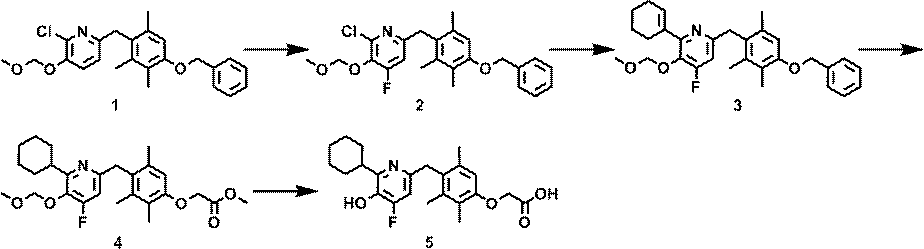
MS m/z 430/432 [M+H] +, APCI(+)
MS m/z 476 [M+H]+, APCI(+)
化合物4は実施例2の化合物8と同様な方法で合成した。
MS m/z 460 [M+H]+, APCI(+)
化合物5は実施例4の化合物13と同様な方法で合成した。
MS m/z 400 [M-H]-, ESI(-)
本化合物は、通常の造塩工程を経ることにより、臭化水素酸塩、塩酸塩、パラトルエンスルホン酸塩、メタンスルホン酸塩、ベンゼンスルホン酸塩、マレイン酸塩などを製造することができる。
3-[(4-{[6-(3-エトキシフェニル)-5-ヒドロキシピリジン-2-イル]メチル}-2-フルオロ-3,5-ジメチルフェノキシ)メチル]-1,2,4-オキサジアゾール-5(4H)-オン

MS m/z 365/367 [M+H]+, APCI(+)
MS m/z 451 [M+H]+, APCI(+)
MS m/z 508 [M-H]-, ESI(-)
MS m/z 464 [M-H]-, ESI(-)
本化合物は、通常の造塩工程を経ることにより、臭化水素酸塩、塩酸塩、パラトルエンスルホン酸塩、メタンスルホン酸塩、ベンゼンスルホン酸塩、マレイン酸塩などを製造することができる。
N-{4-[(6-シクロヘキシル-5-ヒドロキシピリジン-2-イル)メチル]-3,5-ジメチルベンジル}グリシン
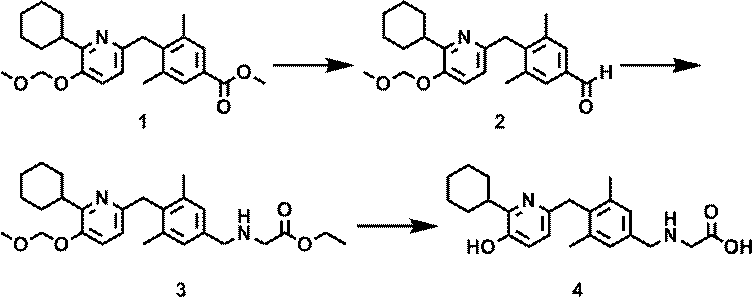
MS m/z368 [M+H]+, APCI(+)
MS m/z 455 [M+H]+, APCI(+)
MS m/z 381 [M-H]+, APCI(+)
本化合物は、通常の造塩工程を経ることにより、臭化水素酸塩、塩酸塩、パラトルエンスルホン酸塩、メタンスルホン酸塩、ベンゼンスルホン酸塩、マレイン酸塩などを製造することができる。
3-[({4-[(5-ヒドロキシ-6-フェニルピリジン-2-イル)(メトキシ)メチル]-5-メチル-2,3-ジヒドロ-1-ベンゾフラン-7-イル}オキシ)メチル]-1,2,4-オキサジアゾール-5(4H)-オン

MS m/z 442/444 [M+H]+, APCI(+)
MS m/z 484 [M+H]+, APCI(+)
MS m/z 498 [M+H]+, APCI(+)
MS m/z 408 [M+H]+, APCI(+)
化合物7は実施例27の化合物2と同様な方法で合成した。
MS m/z 447 [M+H]+, APCI(+)
化合物8は実施例27の化合物3と同様な方法で合成した。
MS m/z 504 [M-H]-, ESI(-)
化合物9は実施例27の化合物4と同様な方法で合成した。
MS m/z 460 [M-H]-, ESI(-)
本化合物は、通常の造塩工程を経ることにより、臭化水素酸塩、塩酸塩、パラトルエンスルホン酸塩、メタンスルホン酸塩、ベンゼンスルホン酸塩、マレイン酸塩などを製造することができる。
3-[({4-[[6-(2-フルオロ-3-メチルフェニル)-5-ヒドロキシピリジン-2-イル](ヒドロキシ)メチル]-5-メチル-2,3-ジヒドロ-1-ベンゾフラン-7-イル}オキシ)メチル]-1,2,4-オキサジアゾール-5(4H)-オン
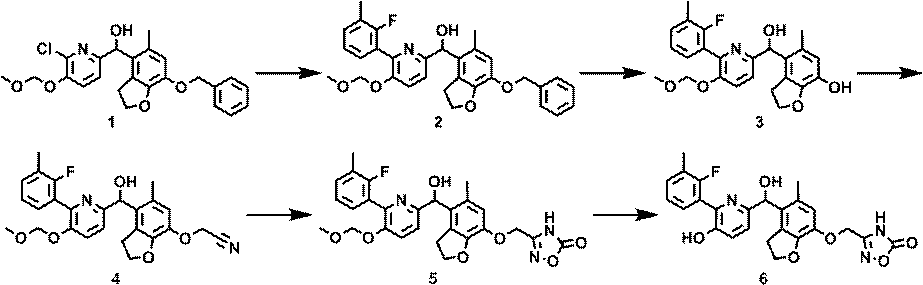
MS m/z 516 [M+H]+, APCI(+)
MS m/z 426 [M+H]+, APCI(+)
化合物4は実施例27の化合物2と同様な方法で合成した。
MS m/z 465 [M+H]+, APCI(+)
化合物5は実施例27の化合物3と同様な方法で合成した。
MS m/z 522 [M-H]-, ESI(-)
化合物6は実施例27の化合物4と同様な方法で合成した。
MS m/z 478 [M-H]-, ESI(-)
本化合物は、通常の造塩工程を経ることにより、臭化水素酸塩、塩酸塩、パラトルエンスルホン酸塩、メタンスルホン酸塩、ベンゼンスルホン酸塩、マレイン酸塩などを製造することができる。
{3-ブロモ-2-フルオロ-4-[(5-ヒドロキシ-6-フェニルピリジン-2-イル)メチル]-5-メチルフェノキシ}酢酸

MS m/z 488/490 [M+H]+, APCI(+)
MS m/z 472/474 [M+H]+, APCI(+)
MS m/z 432/434 [M+H]+, APCI(+)
MS m/z 504/506 [M+H]+, APCI(+)
化合物7は実施例4の化合物13と同様な方法で合成した。
MS m/z 444/446 [M-H]-, ESI(-)
本化合物は、通常の造塩工程を経ることにより、臭化水素酸塩、塩酸塩、パラトルエンスルホン酸塩、メタンスルホン酸塩、ベンゼンスルホン酸塩、マレイン酸塩などを製造することができる。
3-[(4-{[6-(3,3-ジフルオロシクロヘキシル)-5-ヒドロキシピリジン-2-イル]メチル}-2-フルオロ-3,5-ジメチルフェノキシ)メチル]-1,2,4-オキサジアゾール-5(4H)-オン

MS m/z 514 [M+H]+, APCI(+)
MS m/z 594 [M+H]+, APCI(+)
MS m/z 498 [M+H]+, APCI(+)
MS m/z 449 [M+H]+, ESI(+)
化合物6は実施例27の化合物3と同様な方法で合成した。
MS m/z 506 [M-H]-, ESI(-)
化合物7は実施例27の化合物4と同様な方法で合成した。
MS m/z 462 [M-H]-, ESI(-)
本化合物は、通常の造塩工程を経ることにより、臭化水素酸塩、塩酸塩、パラトルエンスルホン酸塩、メタンスルホン酸塩、ベンゼンスルホン酸塩、マレイン酸塩などを製造することができる。
3-({5-エチル-2-フルオロ-4-[(5-ヒドロキシ-6-フェニルピリジン-2-イル)メチル]-3-メチルフェノキシ}メチル)-1,2,4-オキサジアゾール-5(4H)-オン

MS m/z 472/474 [M+H]+, APCI(+)
MS m/z 432/434 [M+H]+, APCI(+)
MS m/z 522/524 [M+H]+, APCI(+)
MS m/z 470 [M+H]+, APCI(+)
MS m/z 382 [M+H]+, APCI(+)
化合物7は実施例27の化合物2と同様な方法で合成した。
MS m/z 421 [M+H]+, APCI(+)
化合物8は実施例27の化合物3と同様な方法で合成した。
MS m/z 478 [M-H]+, APCI(+)
化合物9は実施例27の化合物4と同様な方法で合成した。
MS m/z 434 [M+H]+, APCI(+)
本化合物は、通常の造塩工程を経ることにより、臭化水素酸塩、塩酸塩、パラトルエンスルホン酸塩、メタンスルホン酸塩、ベンゼンスルホン酸塩、マレイン酸塩などを製造することができる。
{4-[(6-シクロヘキシル-3-フルオロ-5-ヒドロキシピリジン-2-イル)メチル]-2,3,5-トリメチルフェノキシ}酢酸

MS m/z 148/150 [M+H]+, APCI(+)
MS m/z 272/274 [M-H]-, ESI(-)
MS m/z 318/320 [M+H]+, APCI(+)
MS m/z428/430 [M+H-H2O]+, APCI(+)
MS m/z 492 [M+H]+, APCI(+)
MS m/z 388 [M+H]+, APCI(+)
MS m/z 460 [M+H]+, APCI(+)
化合物10は実施例4の化合物13と同様な方法で合成した。
MS m/z 400 [M-H]-, ESI(-)
本化合物は、通常の造塩工程を経ることにより、臭化水素酸塩、塩酸塩、パラトルエンスルホン酸塩、メタンスルホン酸塩、ベンゼンスルホン酸塩、マレイン酸塩などを製造することができる。
3-[(5-エチル-4-{[6-(3-エチルフェニル)-5-ヒドロキシピリジン-2-イル]メチル}-2-フルオロ-3-メチルフェノキシ)メチル]-1,2,4-オキサジアゾール-5(4H)-オン

MS m/z 514 [M+H]+, APCI(+)
MS m/z 410 [M+H]+, APCI(+)
MS m/z 449 [M+H]+, APCI(+)
化合物5は実施例27の化合物3と同様な方法で合成した。
MS m/z 506 [M-H]-, ESI(-)
化合物6は実施例27の化合物4と同様な方法で合成した。
MS m/z 462 [M-H]-, ESI(-)
本化合物は、通常の造塩工程を経ることにより、臭化水素酸塩、塩酸塩、パラトルエンスルホン酸塩、メタンスルホン酸塩、ベンゼンスルホン酸塩、マレイン酸塩などを製造することができる。
[2-フルオロ-4-({5-ヒドロキシ-6-[1-(メトキシメチル)シクロヘキシル]ピリジン-2-イル}メチル)-3,5-ジメチルフェノキシ]酢酸

MS m/z 382 [M+H]+, APCI(+)
MS m/z 338 [M+H]+, APCI(+)
MS m/z 446 [M+H]+, APCI(+)
MS m/z 484 [M+H]+, APCI(+)
MS m/z 446 [M+H]+, APCI(+)
MS m/z 490 [M+H]+, APCI(+)
MS m/z 492 [M+H]+, APCI(+)
MS m/z 494 [M+H]+, APCI(+)
MS m/z 508 [M+H]+, APCI(+)
MS m/z 418 [M+H]+, APCI(+)
化合物12は実施例4の化合物12と同様な方法で合成した。
MS m/z 490 [M+H]+, APCI(+)
化合物13は実施例4の化合物13と同様な方法で合成した。
MS m/z 430 [M-H]-, ESI(-)
本化合物は、通常の造塩工程を経ることにより、臭化水素酸塩、塩酸塩、パラトルエンスルホン酸塩、メタンスルホン酸塩、ベンゼンスルホン酸塩、マレイン酸塩などを製造することができる。
(4-{[6-(4,4-ジフルオロシクロヘキシル)-5-ヒドロキシピリジン-2-イル]メチル}-2,3,5-トリメチルフェノキシ)酢酸
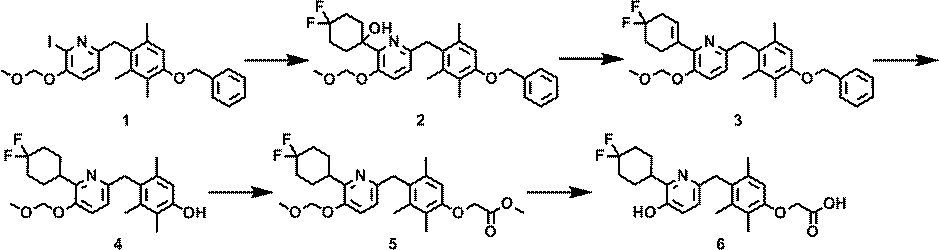
MS m/z 512 [M+H]+, APCI(+)
MS m/z 494 [M+H]+, APCI(+)
MS m/z 406[M+H]+, APCI(+)
MS m/z 478 [M+H]+, APCI(+)
化合物6は実施例4の化合物13と同様な方法で合成した。
MS m/z 418 [M-H]-, ESI(-)
本化合物は、通常の造塩工程を経ることにより、臭化水素酸塩、塩酸塩、パラトルエンスルホン酸塩、メタンスルホン酸塩、ベンゼンスルホン酸塩、マレイン酸塩などを製造することができる。
(2-フルオロ-4-{[5-ヒドロキシ-6-(1-ヒドロキシエチル)ピリジン-2-イル]メチル}-3,5-ジメチルフェノキシ)酢酸
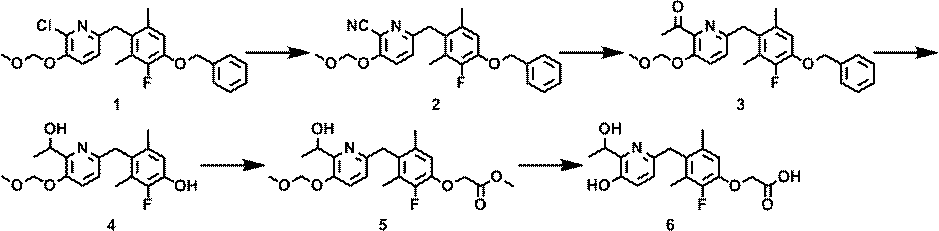
MS m/z 407 [M+H]+, APCI(+)
MS m/z 424 [M+H]+, APCI(+)
MS m/z 336 [M+H]+, APCI(+)
MS m/z 408 [M+H]+, APCI(+)
化合物6は実施例4の化合物13と同様な方法で合成した。
MS m/z 348 [M-H]-, ESI(-)
本化合物は、通常の造塩工程を経ることにより、臭化水素酸塩、塩酸塩、パラトルエンスルホン酸塩、メタンスルホン酸塩、ベンゼンスルホン酸塩、マレイン酸塩などを製造することができる。
(4-{[5-ヒドロキシ-6-(3-メチルシクロヘキシル)-ピリジン-2-イル]メチル}-2,3,5-トリメチルフェノキシ)酢酸
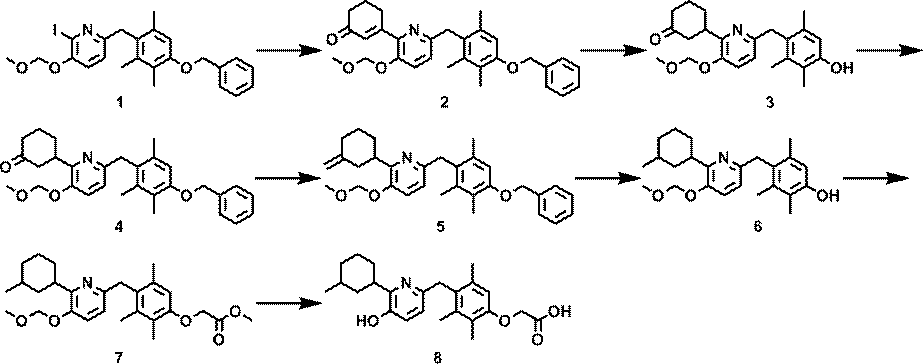
MS m/z 472 [M+H]+, APCI(+)
MS m/z 384 [M+H]+, APCI(+)
化合物4は実施例2の化合物3と同様な方法で合成した。
MS m/z 474 [M+H]+, APCI(+)
MS m/z 472 [M+H]+, APCI(+)
MS m/z 384 [M+H]+, APCI(+)
化合物7は実施例4の化合物12と同様な方法で合成した。
MS m/z 456 [M+H]+, APCI(+)
化合物8は実施例4の化合物13と同様な方法で合成した。
MS m/z 396 [M-H]-, ESI(-)
本化合物は、通常の造塩工程を経ることにより、臭化水素酸塩、塩酸塩、パラトルエンスルホン酸塩、メタンスルホン酸塩、ベンゼンスルホン酸塩、マレイン酸塩などを製造することができる。
(4-{[5-ヒドロキシ-6-(3-メトキシシクロヘキシル)-ピリジン-2-イル]メチル}-2,3,5-トリメチルフェノキシ)酢酸

MS m/z476 [M+H]+, APCI(+)
MS m/z 490 [M+H]+, APCI(+)
MS m/z 400 [M+H]+, APCI(+)
化合物5は実施例4の化合物12と同様な方法で合成した。
MS m/z 472 [M+H]+, APCI(+)
化合物6は実施例4の化合物13と同様な方法で合成した。
MS m/z 412 [M-H]-, ESI(-)
本化合物は、通常の造塩工程を経ることにより、臭化水素酸塩、塩酸塩、パラトルエンスルホン酸塩、メタンスルホン酸塩、ベンゼンスルホン酸塩、マレイン酸塩などを製造することができる。

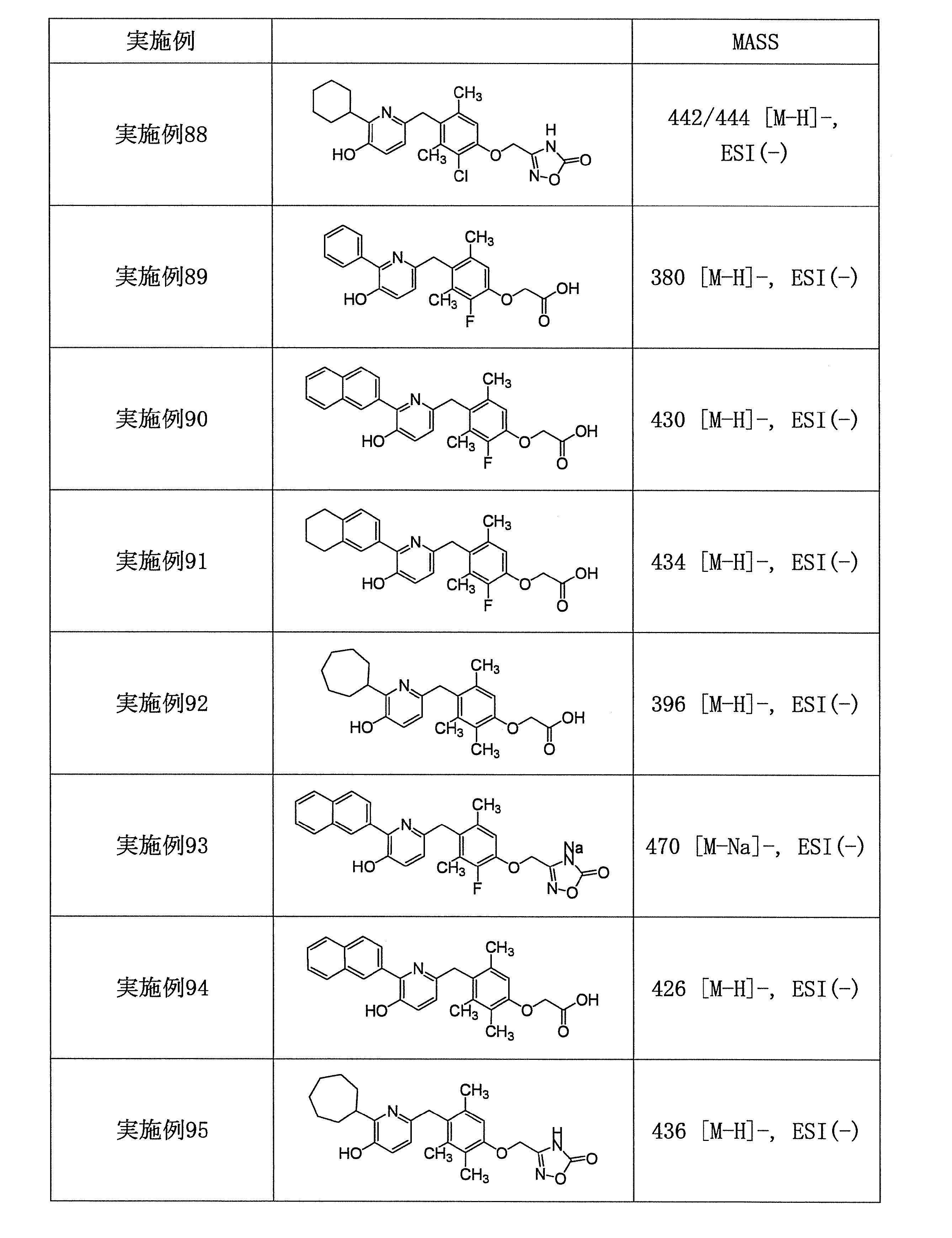


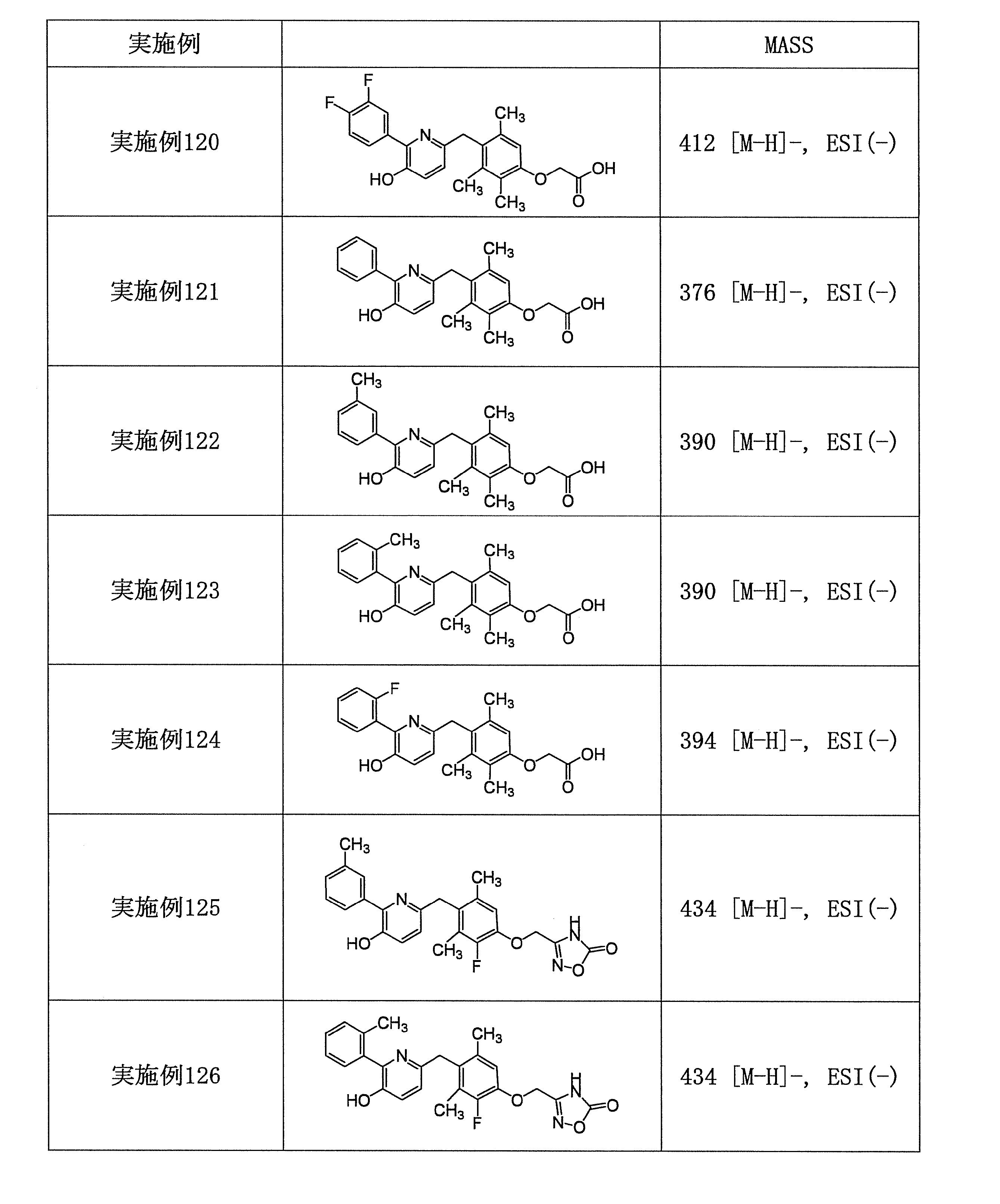
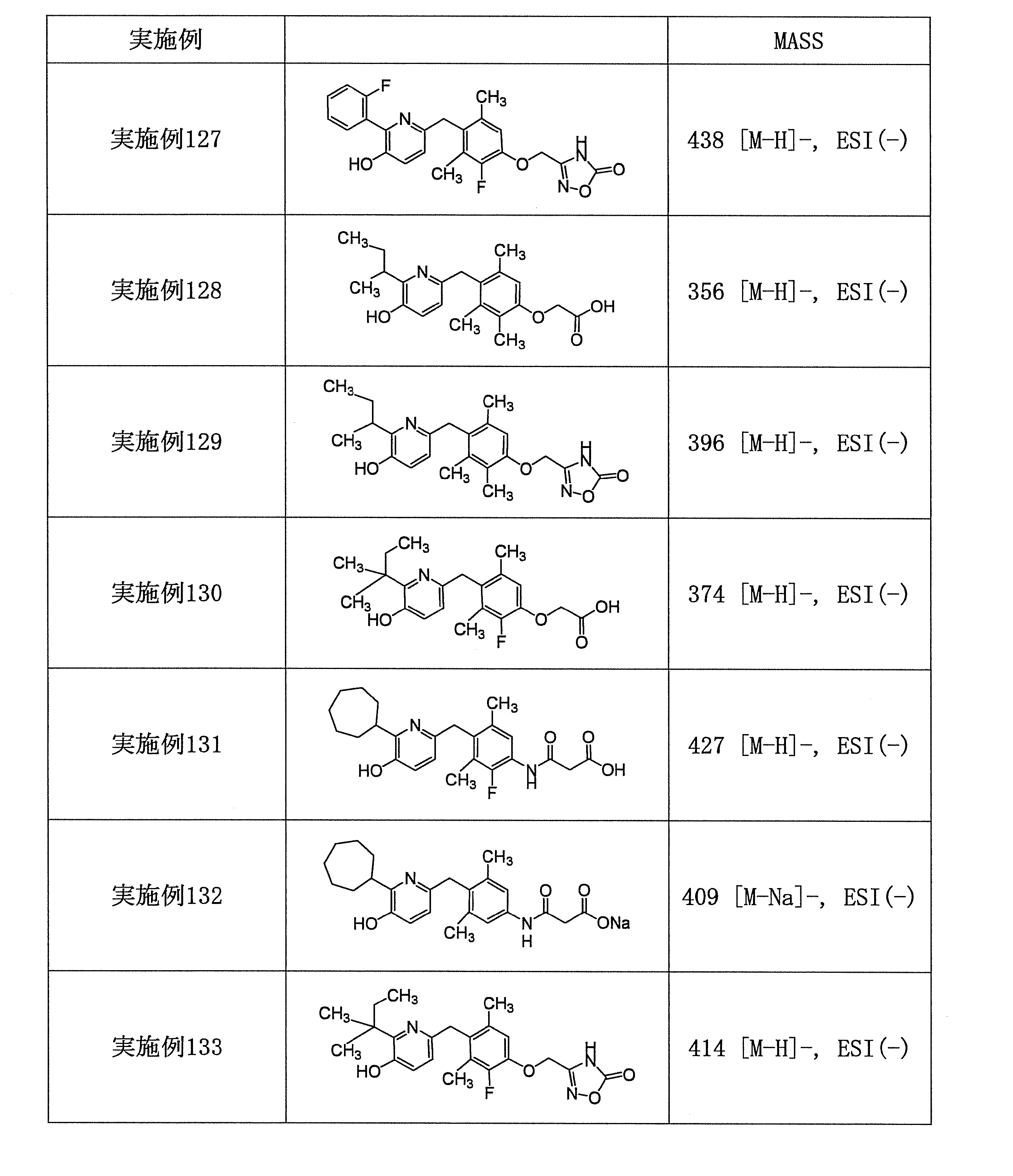
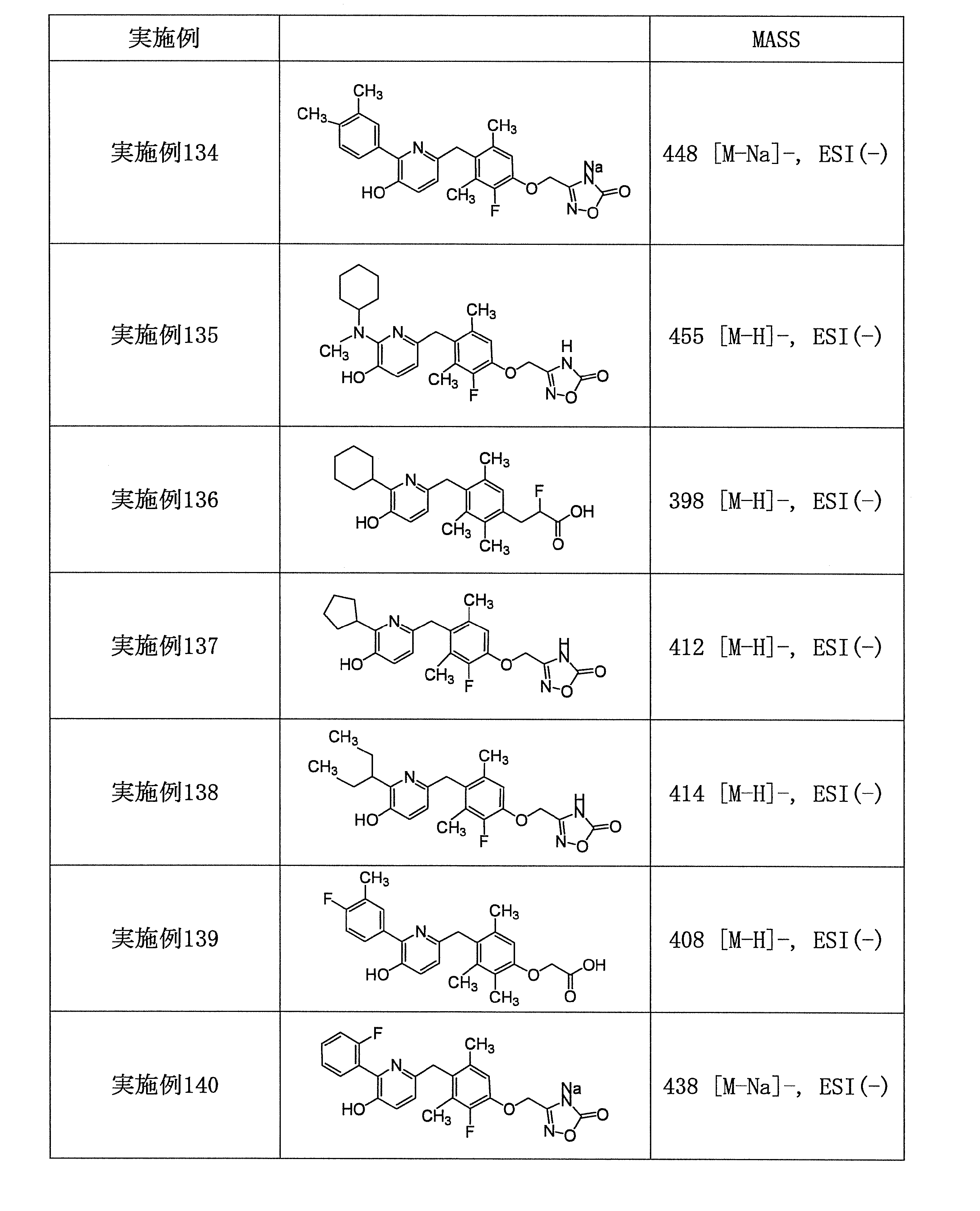
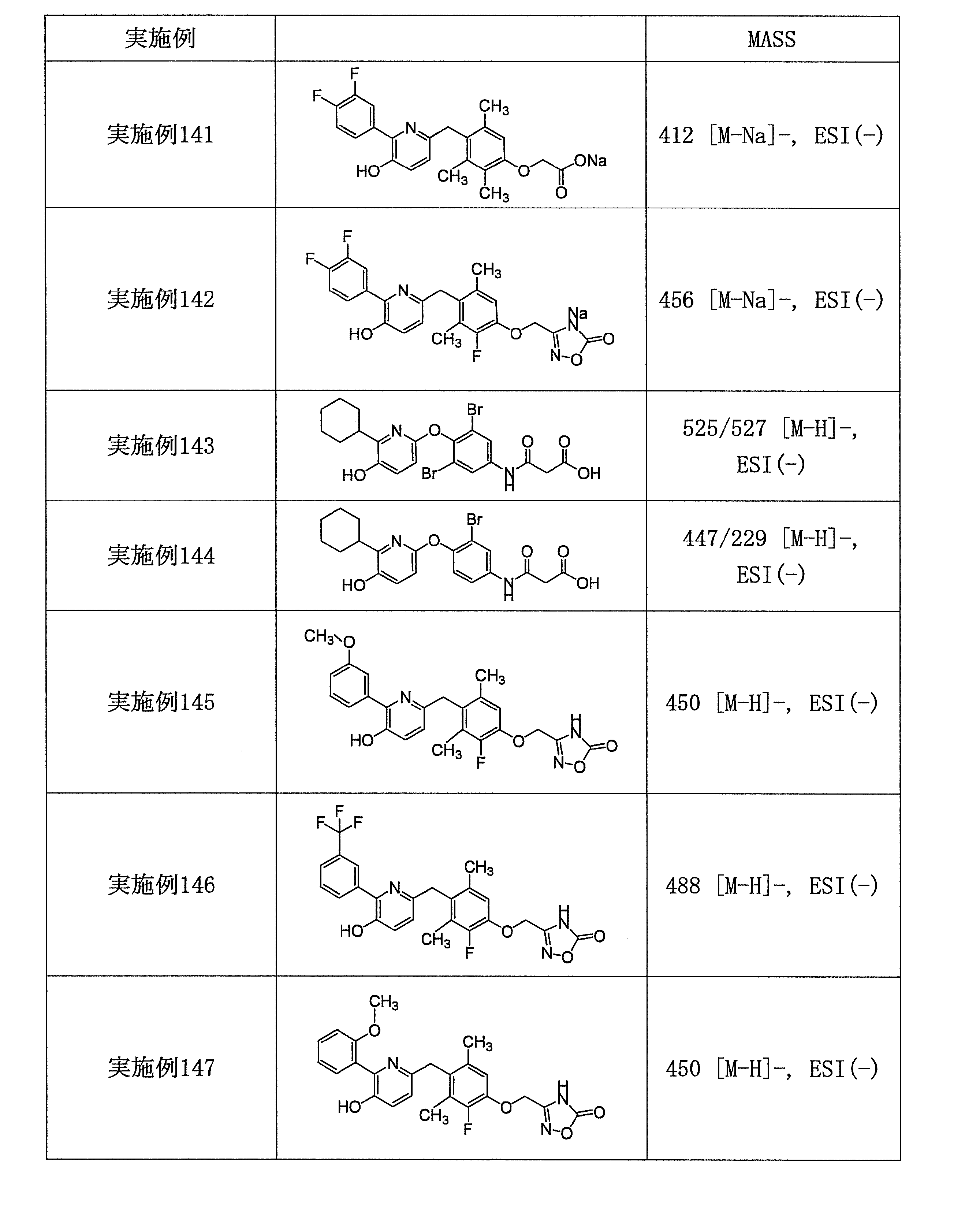
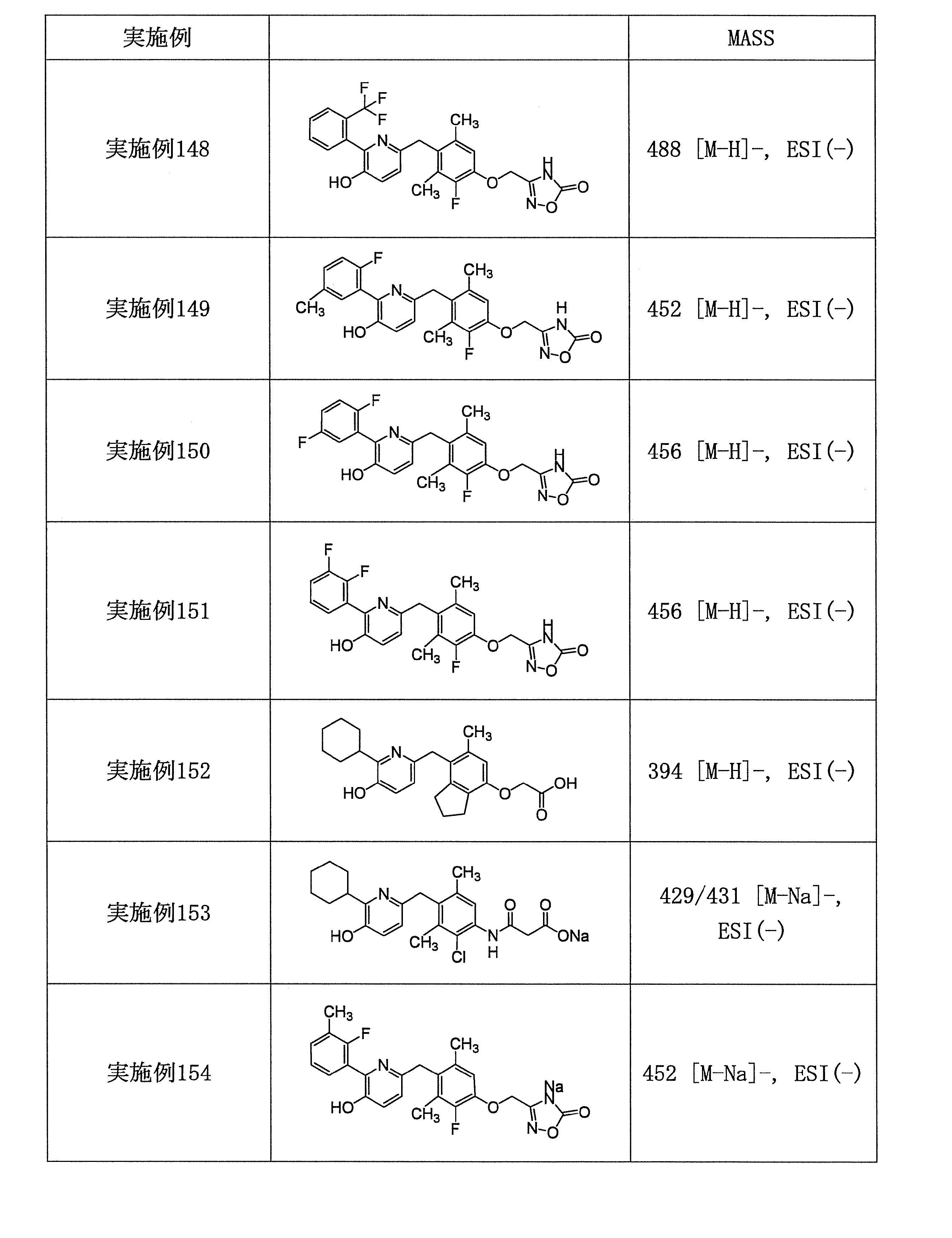
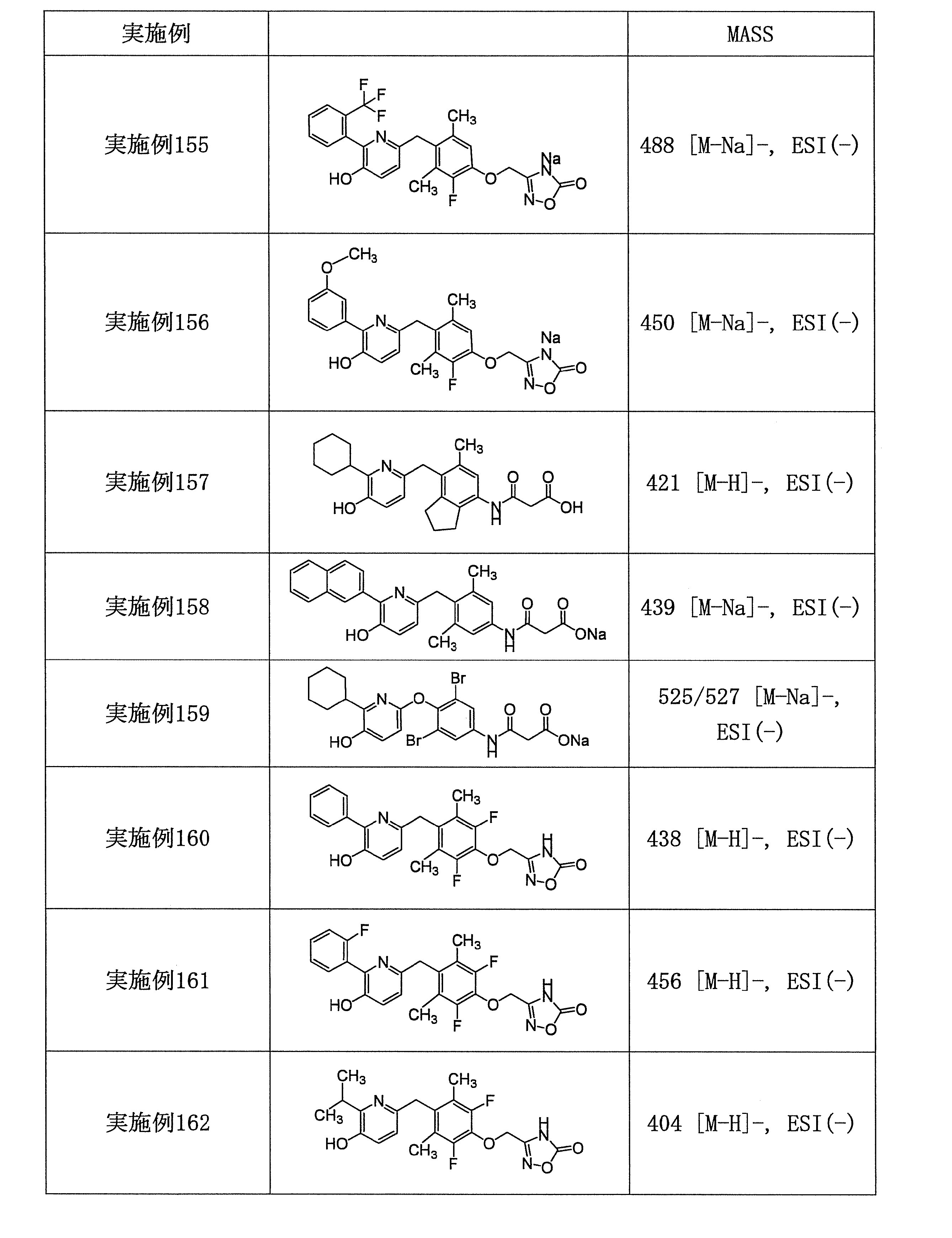
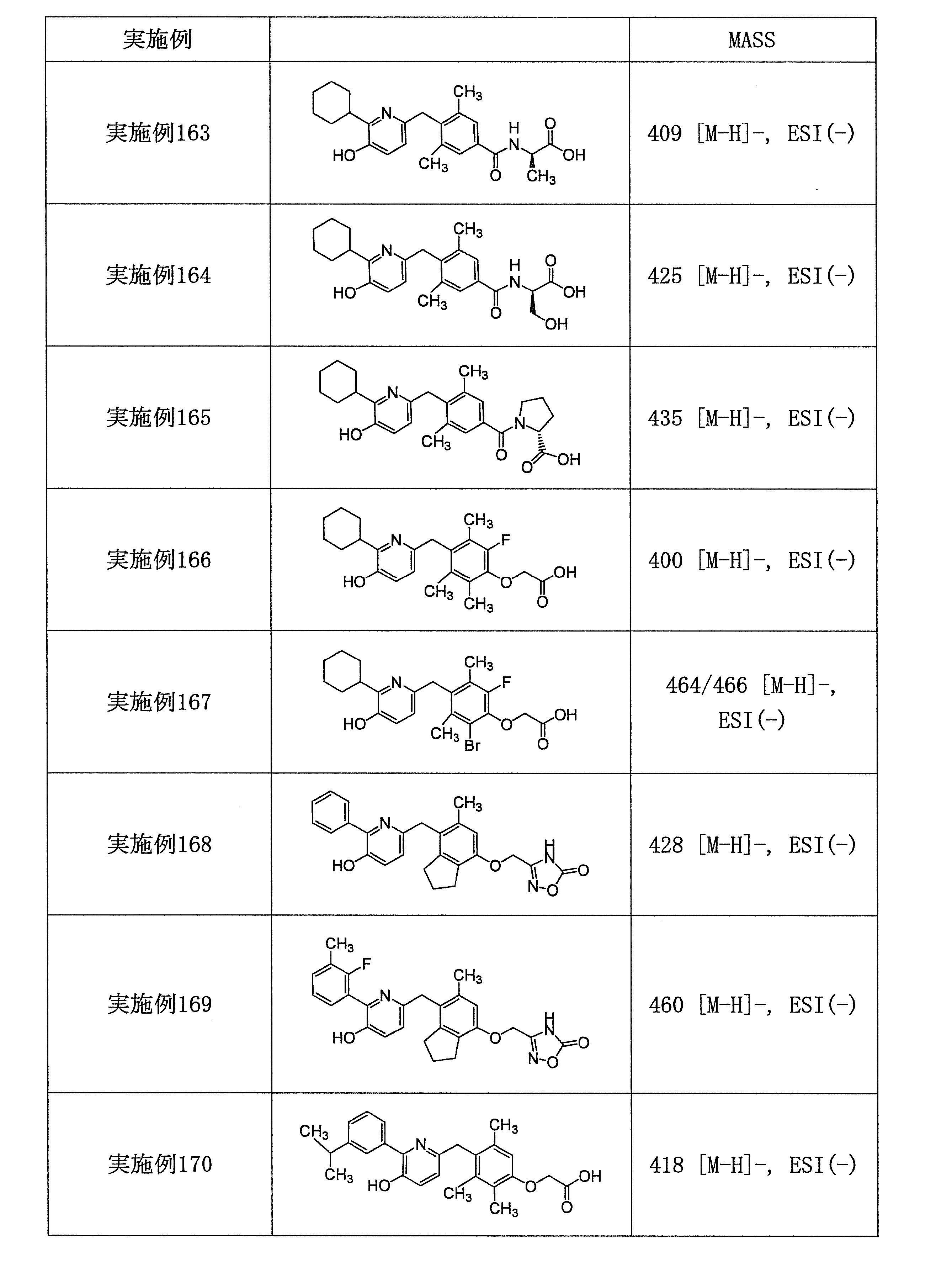


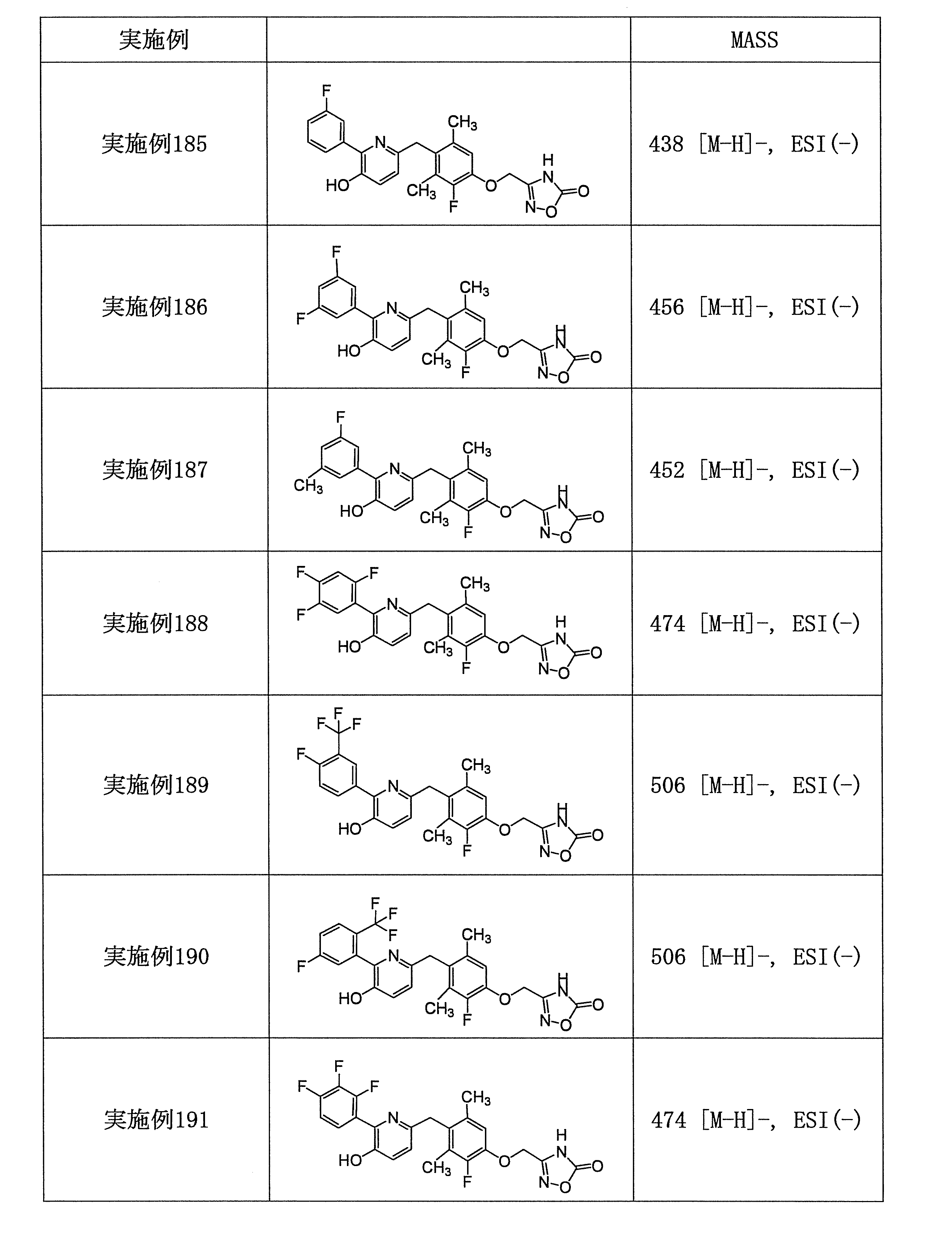
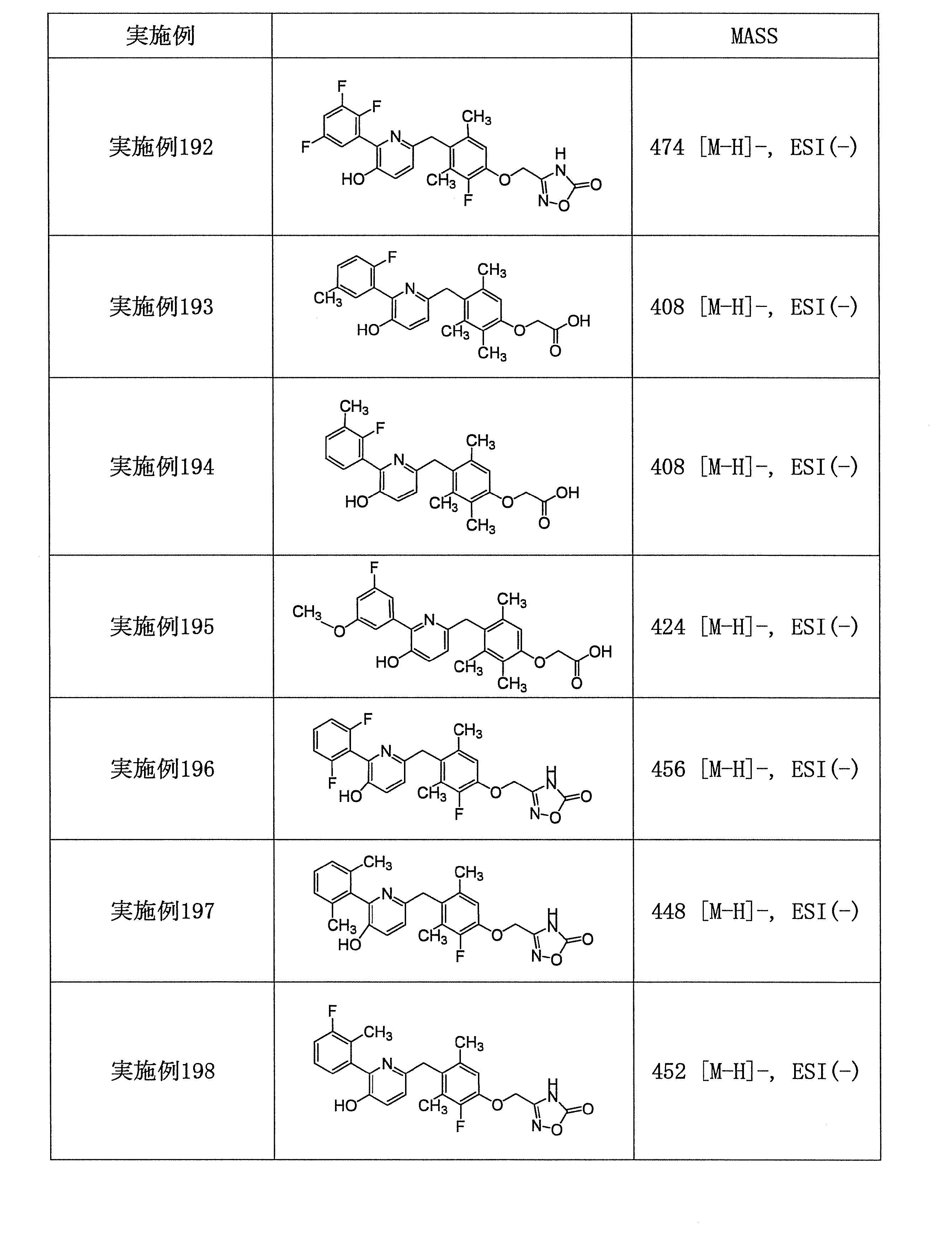
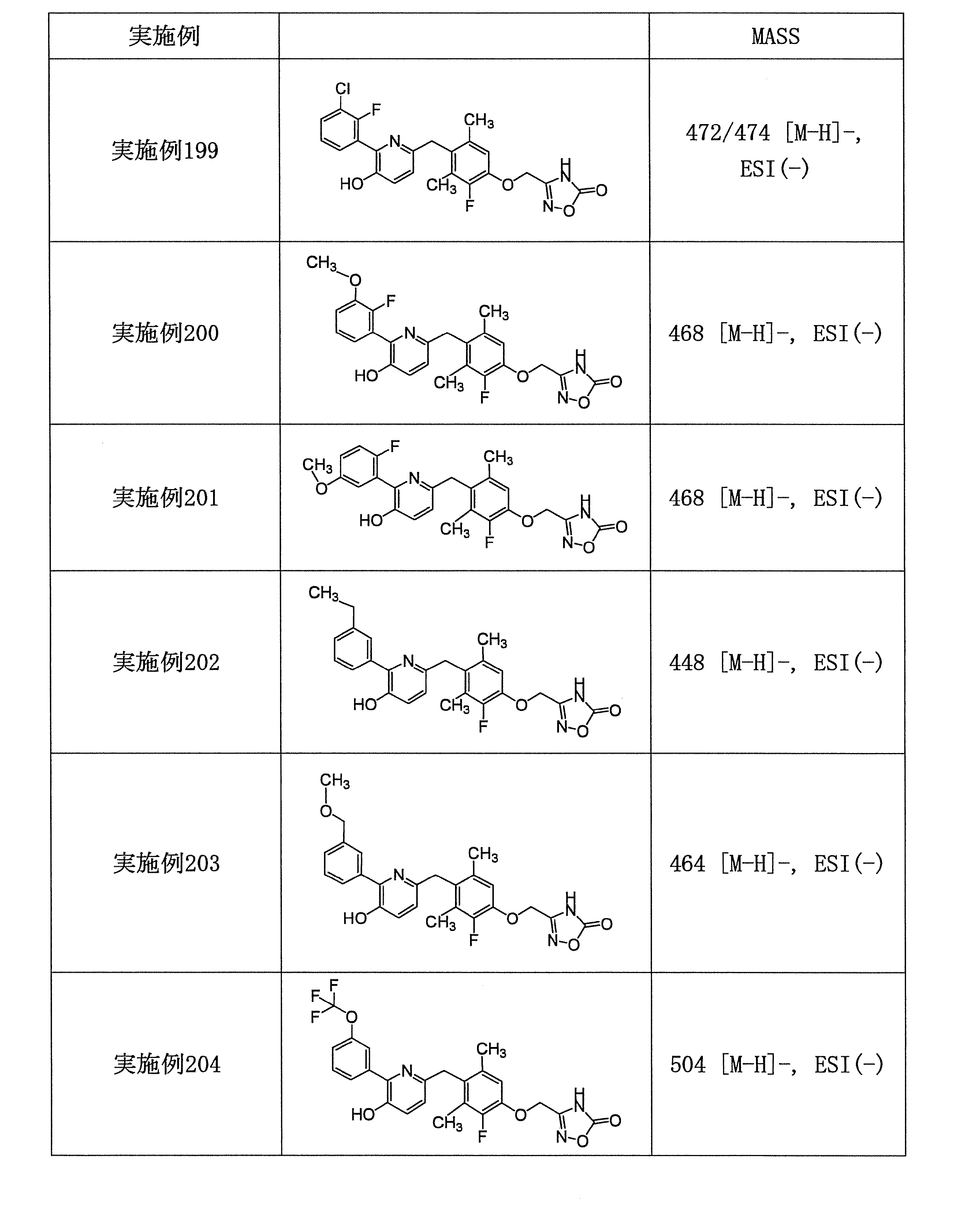


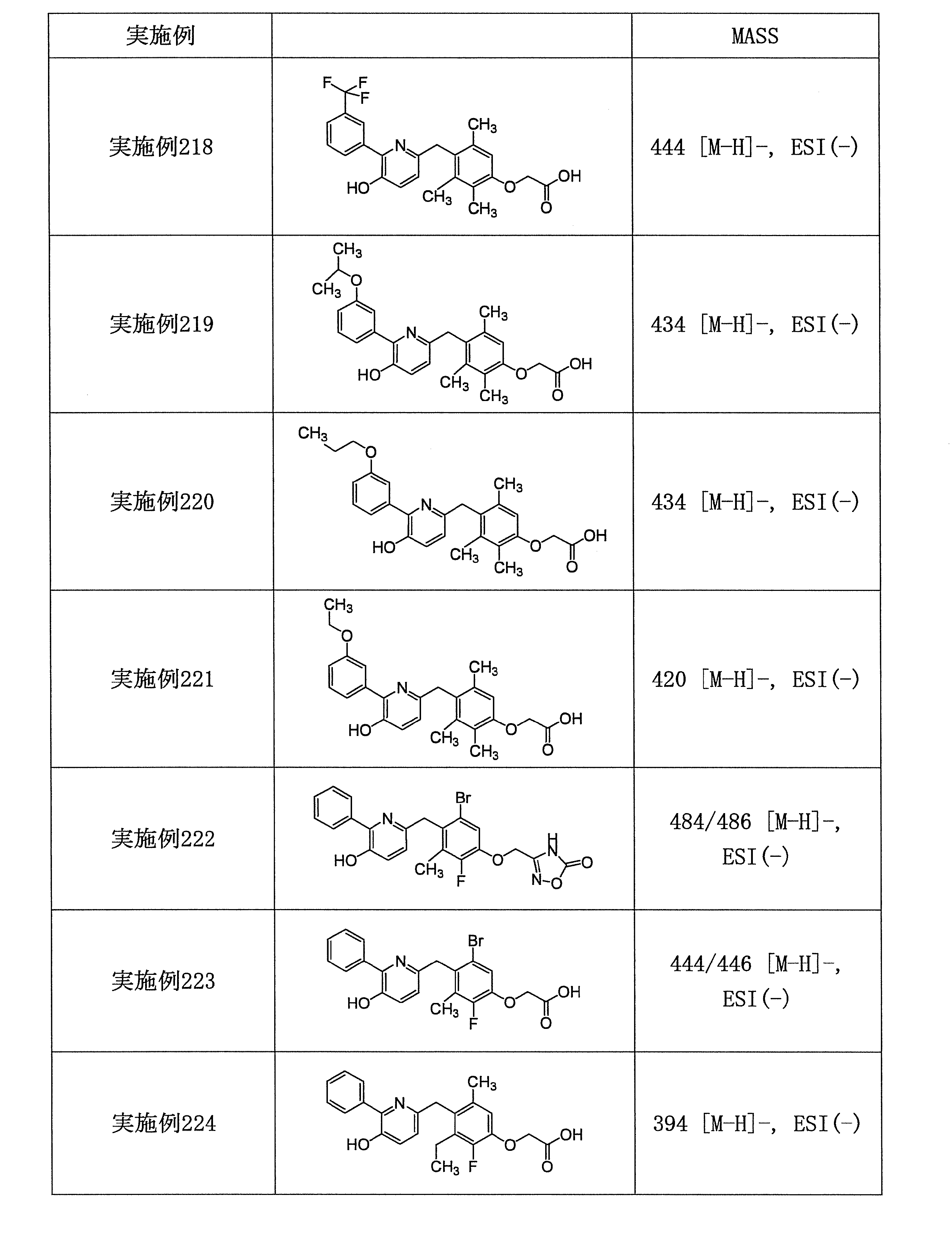
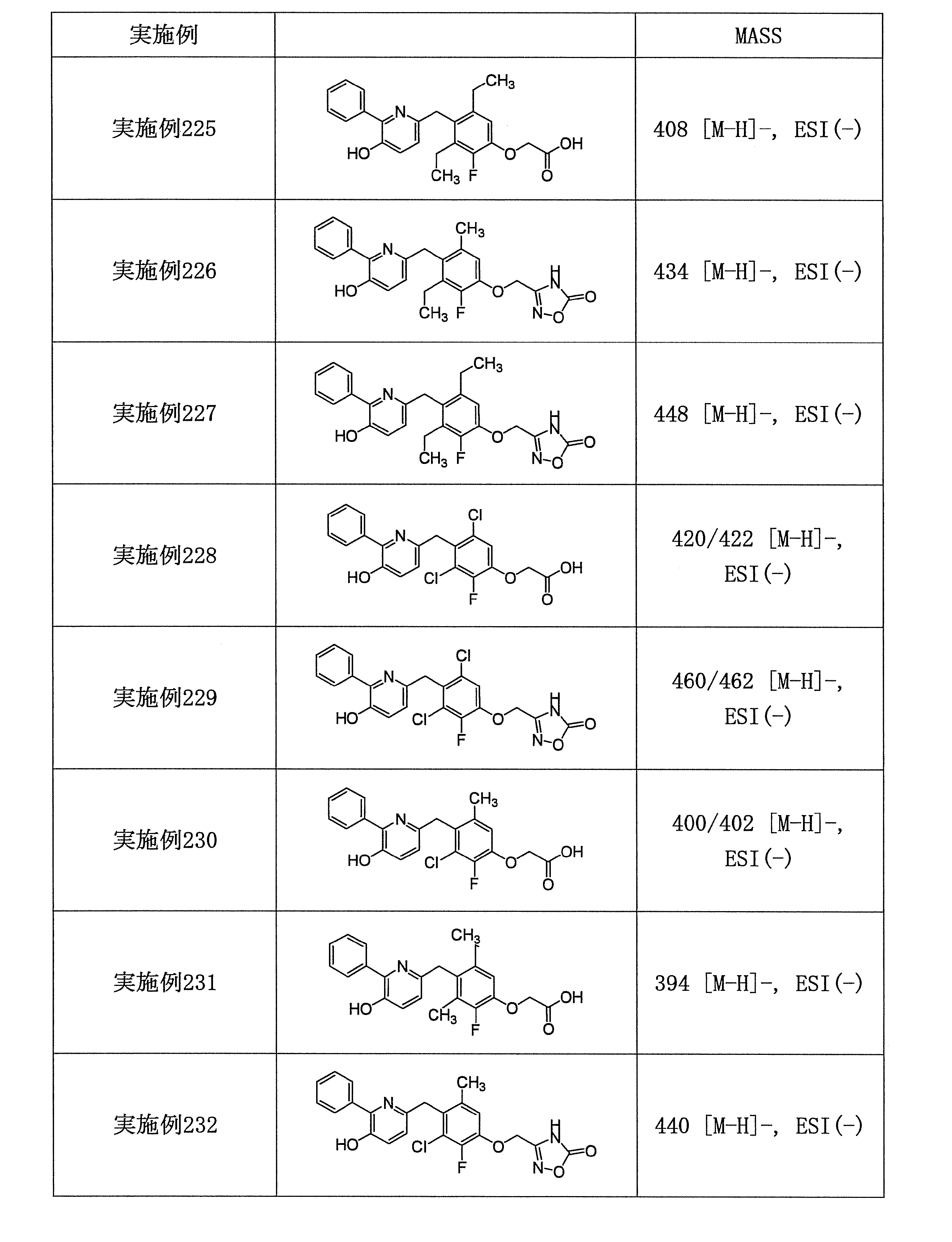


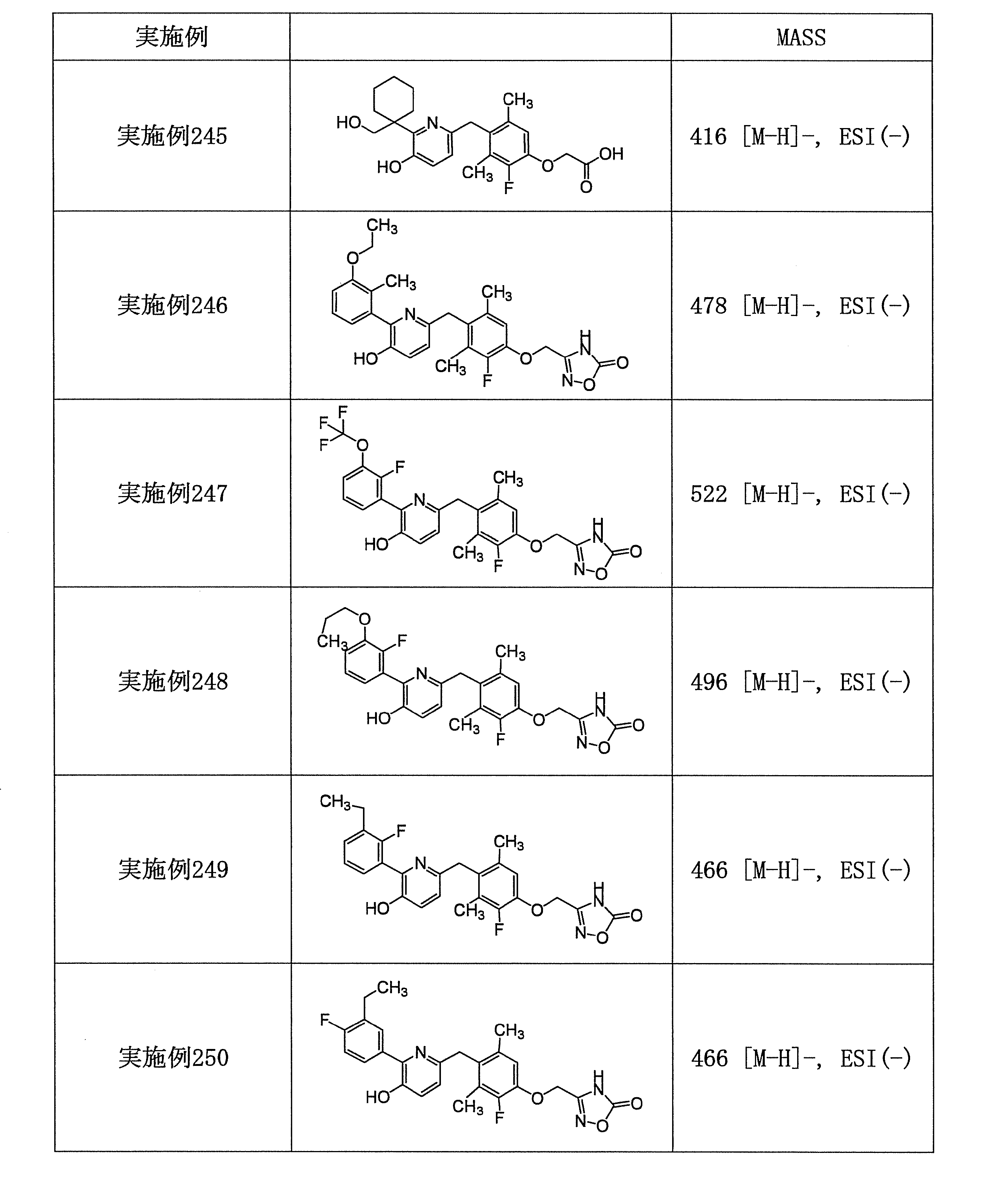
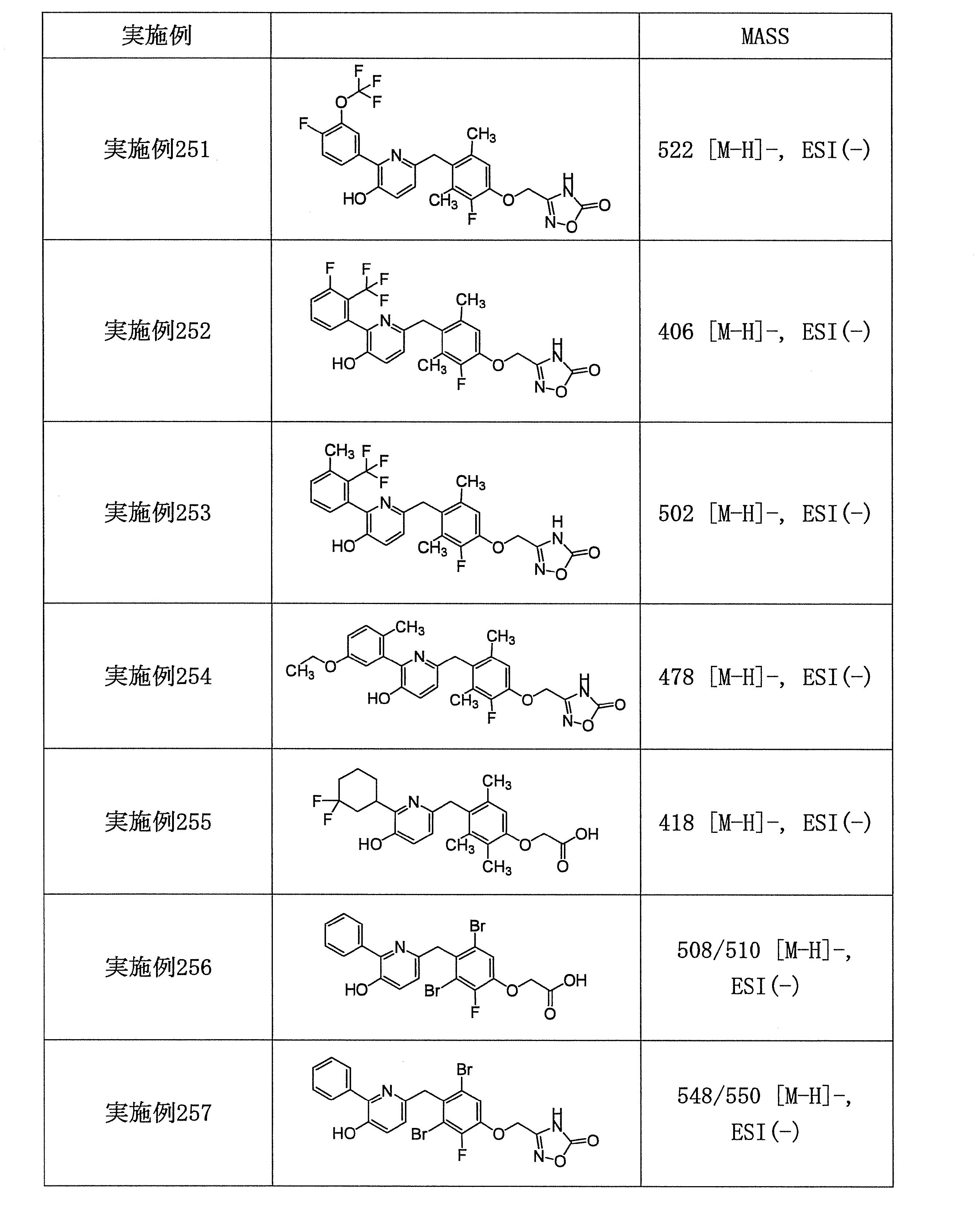

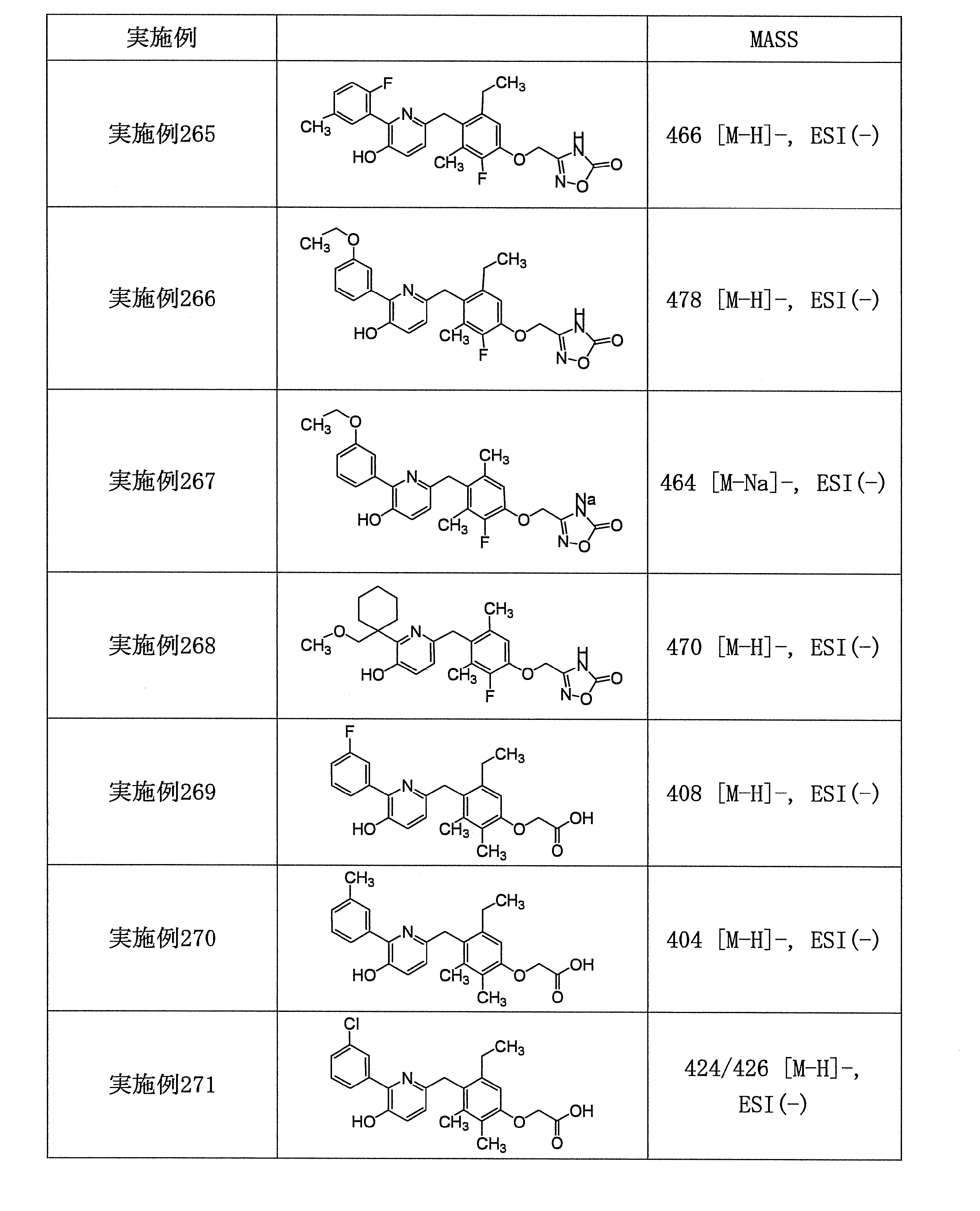
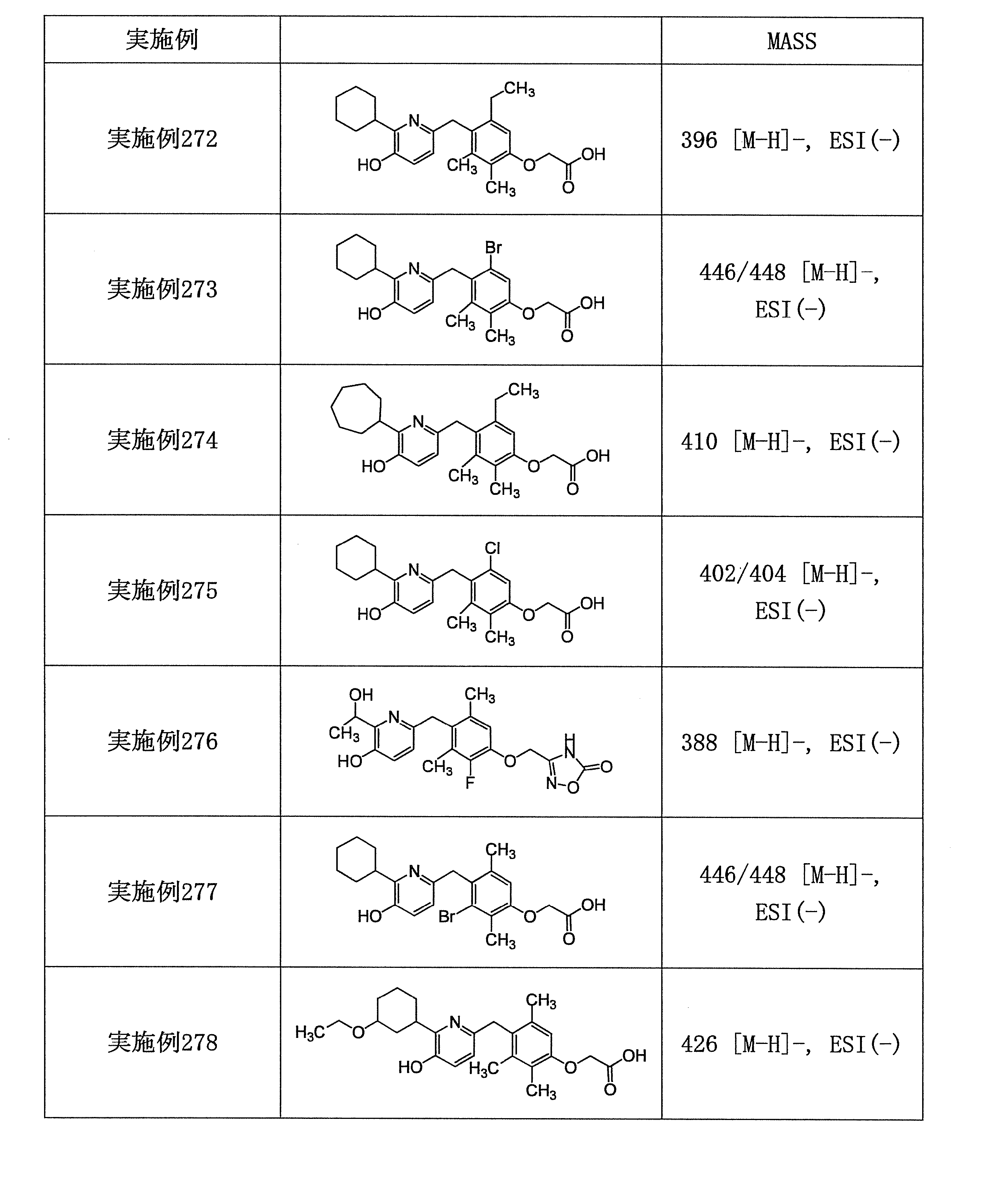


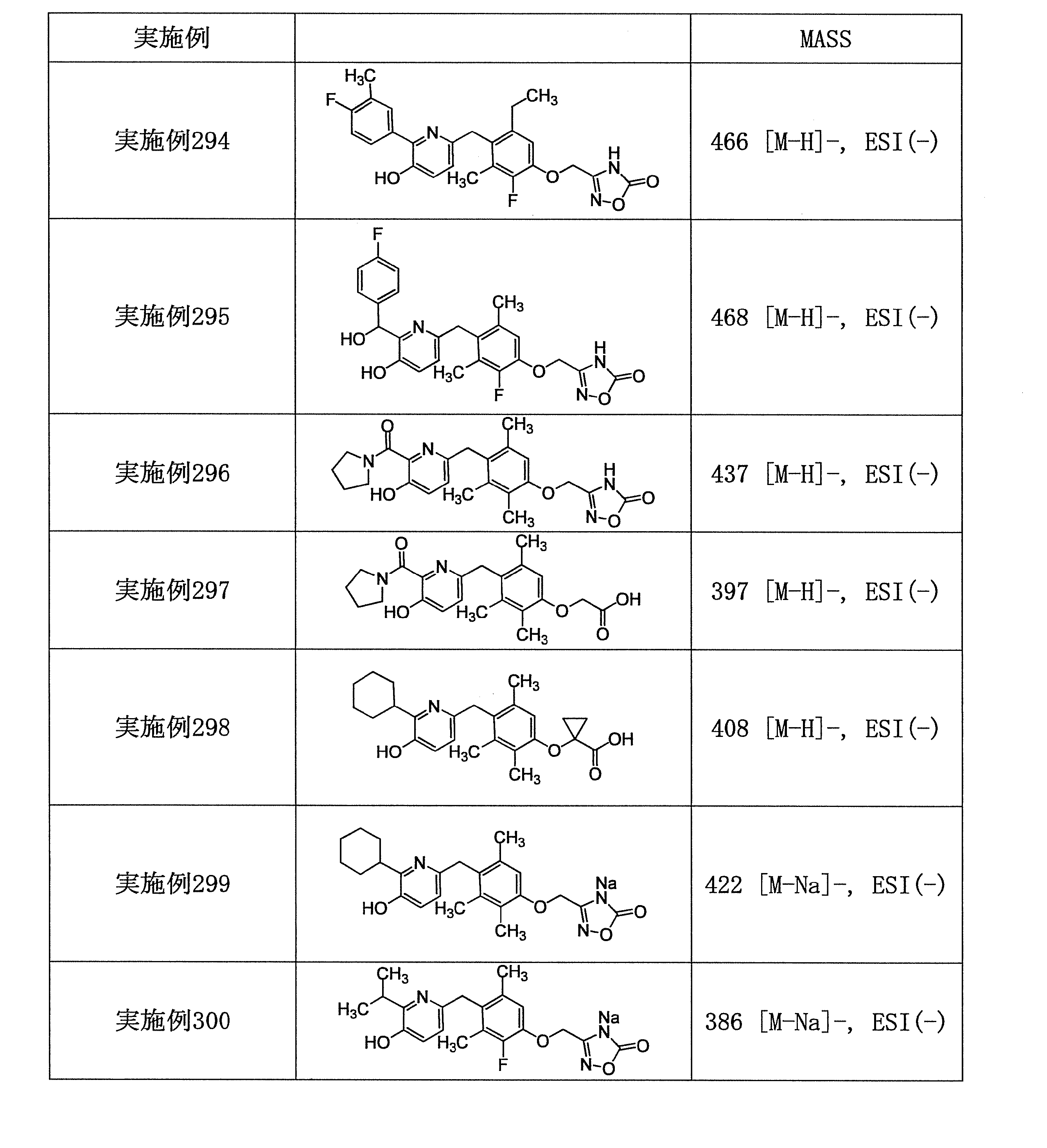
ジ[(2,2-ジメチルプロパノイルオキシ)メチル]({4-[(5-ヒドロキシ-6-イソプロピルピリジン-2-イル)メチル]-3,5-ジメチルフェノキシ}メチル) ホスホネート;
ジ[(2,2-ジメチルプロパノイルオキシ)メチル]({4-[(6-シクロヘキシル-5-ヒドロキシピリジン-2-イル)メチル]-3,5-ジメチルフェノキシ}メチル) ホスホネート;
ジ[(2,2-ジメチルプロパノイルオキシ)メチル]({4-[(6-シクロへプチル-5-ヒドロキシピリジン-2-イル)メチル]-3,5-ジメチルフェノキシ}メチル) ホスホネート;
ジ[(2,2-ジメチルプロパノイルオキシ)メチル]({4-[(5-ヒドロキシ-6-イソプロピルピリジン-2-イル)メチル]-2,3,5-トリメチルフェノキシ}メチル) ホスホネート;
ジ[(2,2-ジメチルプロパノイルオキシ)メチル]({4-[(6-シクロヘキシル-5-ヒドロキシピリジン-2-イル)メチル]-2,3,5-トリメチルフェノキシ}メチル) ホスホネート;
ジ[(2,2-ジメチルプロパノイルオキシ)メチル]({4-[(6-シクロへプチル-5-ヒドロキシピリジン-2-イル)メチル]-2,3,5-トリメチルフェノキシ}メチル) ホスホネート;
ジ[(2,2-ジメチルプロパノイルオキシ)メチル]({2-フルオロ-4-[(5-ヒドロキシ-6-イソプロピルピリジン-2-イル)メチル]-3,5-ジメチルフェノキシ}メチル) ホスホネート;
ジ[(2,2-ジメチルプロパノイルオキシ)メチル]({4-[(6-シクロヘキシル-5-ヒドロキシピリジン-2-イル)メチル]-2-フルオロ-3,5-ジメチルフェノキシ}メチル) ホスホネート;
ジ[(2,2-ジメチルプロパノイルオキシ)メチル]({4-[(6-シクロへプチル-5-ヒドロキシピリジン-2-イル)メチル]-2-フルオロ-3,5-ジメチルフェノキシ}メチル) ホスホネート;
N,N'-ビス[(エトキシカルボニル)メチル]({4-[(5-ヒドロキシ-6-イソプロピルピリジン-2-イル)メチル]-3,5-ジメチルフェノキシ}メチル) ホスホン酸ジアミド;
N,N'-ビス[(エトキシカルボニル)メチル]({4-[(6-シクロヘキシル-5-ヒドロキシピリジン-2-イル)メチル]-3,5-ジメチルフェノキシ}メチル) ホスホン酸ジアミド;
N,N'-ビス[(エトキシカルボニル)メチル]({4-[(6-シクロへプチル-5-ヒドロキシピリジン-2-イル)メチル]-3,5-ジメチルフェノキシ}メチル) ホスホン酸ジアミド;
N,N'-ビス[(エトキシカルボニル)メチル]({4-[(5-ヒドロキシ-6-イソプロピルピリジン-2-イル)メチル]-2,3,5-トリメチルフェノキシ}メチル) ホスホン酸ジアミド;
N,N'-ビス[(エトキシカルボニル)メチル]({4-[(6-シクロヘキシル-5-ヒドロキシピリジン-2-イル)メチル]-2,3,5-トリメチルフェノキシ}メチル) ホスホン酸ジアミド;
N,N'-ビス[(エトキシカルボニル)メチル]({4-[(6-シクロへプチル-5-ヒドロキシピリジン-2-イル)メチル]-2,3,5-トリメチルフェノキシ}メチル) ホスホン酸ジアミド;
N,N'-ビス[(エトキシカルボニル)メチル]({2-フルオロ-4-[(5-ヒドロキシ-6-イソプロピルピリジン-2-イル)メチル]-3,5-ジメチルフェノキシ}メチル) ホスホン酸ジアミド;
N,N'-ビス[(エトキシカルボニル)メチル]({4-[(6-シクロヘキシル-5-ヒドロキシピリジン-2-イル)メチル]-2-フルオロ-3,5-ジメチルフェノキシ}メチル) ホスホン酸ジアミド;
N,N'-ビス[(エトキシカルボニル)メチル]({4-[(6-シクロへプチル-5-ヒドロキシピリジン-2-イル)メチル]-2-フルオロ-3,5-ジメチルフェノキシ}メチル) ホスホン酸ジアミド;
6-(4-{[4-(3-クロロフェニル)-2-オキシド-1,3,2-ジオキサホスフィナン-2-イル]メトキシ}-2,6-ジメチルベンジル)-2-イソプロピルピリジン-3-オール;
6-(4-{[4-(3-クロロフェニル)-2-オキシド-1,3,2-ジオキサホスフィナン-2-イル]メトキシ}-2,6-ジメチルベンジル)-2-シクロヘキシルピリジン-3-オール;
6-(4-{[4-(3-クロロフェニル)-2-オキシド-1,3,2-ジオキサホスフィナン-2-イル]メトキシ}-2,6-ジメチルベンジル)-2-シクロへプチルピリジン-3-オール;
6-(4-{[4-(3-クロロフェニル)-2-オキシド-1,3,2-ジオキサホスフィナン-2-イル]メトキシ}-2,3,6-トリメチルベンジル)-2-イソプロピルピリジン-3-オール;
6-(4-{[4-(3-クロロフェニル)-2-オキシド-1,3,2-ジオキサホスフィナン-2-イル]メトキシ}-2,3,6-トリメチルベンジル)-2-シクロヘキシルピリジン-3-オール;
6-(4-{[4-(3-クロロフェニル)-2-オキシド-1,3,2-ジオキサホスフィナン-2-イル]メトキシ}-2,3,6-トリメチルベンジル)-2-シクロへプチルピリジン-3-オール;
6-(4-{[4-(3-クロロフェニル)-2-オキシド-1,3,2-ジオキサホスフィナン-2-イル]メトキシ}-3-フルオロ-2,6-ジメチルベンジル)-2-イソプロピルピリジン-3-オール;
6-(4-{[4-(3-クロロフェニル)-2-オキシド-1,3,2-ジオキサホスフィナン-2-イル]メトキシ}-3-フルオロ-2,6-ジメチルベンジル)-2-シクロヘキシルピリジン-3-オール;
6-(4-{[4-(3-クロロフェニル)-2-オキシド-1,3,2-ジオキサホスフィナン-2-イル]メトキシ}-3-フルオロ-2,6-ジメチルベンジル)-2-シクロへプチルピリジン-3-オール;
3-{[4-({6-[(4-フルオロフェニル)(ヒドロキシ)メチル]-5-ヒドロキシピリジン-2-イル}メチル)-3,5-ジメチルフェニル]アミノ}-3-オキソプロパン酸;
3-{[4-({6-[(4-フルオロフェニル)(ヒドロキシ)メチル]-5-ヒドロキシピリジン-2-イル}メチル)-2,3,5-トリメチルフェニル]アミノ}-3-オキソプロパン酸;
3-{[2-フルオロ-4-({6-[(4-フルオロフェニル)(ヒドロキシ)メチル]-5-ヒドロキシピリジン-2-イル}メチル)-3,5-ジメチルフェニル]アミノ}-3-オキソプロパン酸;
{[4-({6-[(4-フルオロフェニル)(ヒドロキシ)メチル]-5-ヒドロキシピリジン-2-イル}メチル)-3,5-ジメチルフェニル]アミノ}(オキソ)酢酸;
{[4-({6-[(4-フルオロフェニル)(ヒドロキシ)メチル]-5-ヒドロキシピリジン-2-イル}メチル)-2,3,5-トリメチルフェニル]アミノ}(オキソ)酢酸;
{[2-フルオロ-4-({6-[(4-フルオロフェニル)(ヒドロキシ)メチル]-5-ヒドロキシピリジン-2-イル}メチル)-3,5-ジメチルフェニル]アミノ}(オキソ)酢酸;
2-{4-[(5-ヒドロキシ-6-イソプロピルピリジン-2-イル)メチル]-3,5-ジメチルフェニル}-3,5-ジオキソ-2,3,4,5-テトラヒドロ-1,2,4-トリアジン-6-カルボニトリル;
2-{4-[(6-シクロへプチル-5-ヒドロキシピリジン-2-イル)メチル]-3,5-ジメチルフェニル}-3,5-ジオキソ-2,3,4,5-テトラヒドロ-1,2,4-トリアジン-6-カルボニトリル;
2-{4-[(5-ヒドロキシ-6-イソプロピルピリジン-2-イル)メチル]-2,3,5-トリメチルフェニル}-3,5-ジオキソ-2,3,4,5-テトラヒドロ-1,2,4-トリアジン-6-カルボニトリル;
2-{4-[(6-シクロへキシル-5-ヒドロキシピリジン-2-イル)メチル]-2,3,5-トリメチルフェニル}-3,5-ジオキソ-2,3,4,5-テトラヒドロ-1,2,4-トリアジン-6-カルボニトリル;
2-{4-[(6-シクロへプチル-5-ヒドロキシピリジン-2-イル)メチル]-2,3,5-トリメチルフェニル}-3,5-ジオキソ-2,3,4,5-テトラヒドロ-1,2,4-トリアジン-6-カルボニトリル;
2-{2-フルオロ-4-[(5-ヒドロキシ-6-イソプロピルピリジン-2-イル)メチル]-3,5-ジメチルフェニル}-3,5-ジオキソ-2,3,4,5-テトラヒドロ-1,2,4-トリアジン-6-カルボニトリル;
2-{4-[(6-シクロへキシル-5-ヒドロキシピリジン-2-イル)メチル]-2-フルオロ-3,5-ジメチルフェニル}-3,5-ジオキソ-2,3,4,5-テトラヒドロ-1,2,4-トリアジン-6-カルボニトリル;
2-{4-[(6-シクロへプチル-5-ヒドロキシピリジン-2-イル)メチル]-2-フルオロ-3,5-ジメチルフェニル}-3,5-ジオキソ-2,3,4,5-テトラヒドロ-1,2,4-トリアジン-6-カルボニトリル。


6-[(4-ベンジルオキシ-2,6-ジメチル)フェニルヒドロキシメチル]-2-クロロ-3-メトキシメトキシピリジン

MS m/z 414/416 [M+H]+, APCI(+)
4-ベンジルオキシ-3-フルオロ-2,6-ジメチルベンズアルデヒド
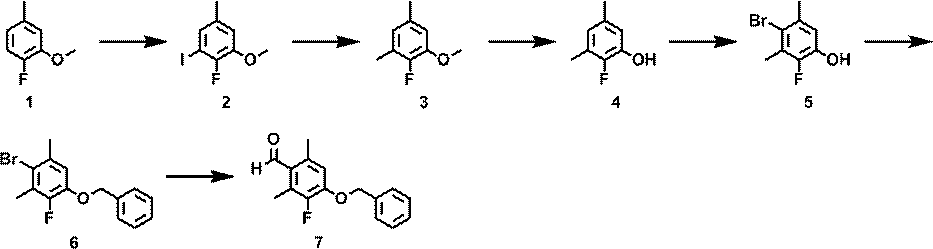
MS m/z 155 [M+H]+, APCI(+)
MS m/z 139 [M-H]-, ESI(-)
MS m/z 217/219 [M-H]-, ESI(-)
MS m/z 326/328 [M+NH4]+, APCI(+)
MS m/z 259 [M+H]+, APCI(+)
6-(ベンジルオキシ)-2,4-ジメチルニコチンアルデヒド

MS m/z 292/294 [M+H]+, APCI(+)
MS m/z 242 [M+H]+, APCI(+)
2,6-ジクロロ-4-(ジアリルアミノ)フェノール

MS m/z 332/334 [M+H]+, APCI(+)
MS m/z 412/414 [M+H]+, APCI(+)
MS m/z 258/260 [M+H]+, APCI(+)
4-(アリルオキシ)-2,6-ジブロモ-3-フルオロベンズアルデヒド
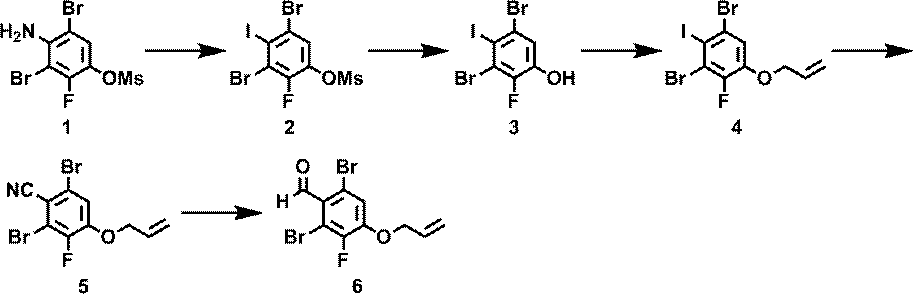
MS m/z490/492/494 [M+NH4]+, APCI(+)
MS m/z393/395/397 [M-H]-, ESI(-)
MS m/z351/353/355 [M+H+MeOH-H2O]+, APCI(+)
2-シクロヘキシル-6-ヨード-3-(メトキシメトキシ)ピリジン
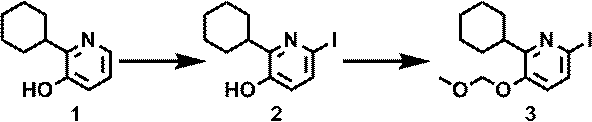
MS m/z 304 [M+H]+, APCI(+)
MS m/z 348 [M+H]+, APCI(+)
4-(アリルオキシ)-2,6-ジクロロ-3-フルオロベンズアルデヒド

MS m/z274/276/278 [M+H]+, APCI(+)
MS m/z 305/307 [M-H]-, ESI(-)
MS m/z263/265 [M+H+MeOH-H2O]+, APCI(+)
4-(ベンジルオキシ)-2,6-ジエチル-3-フルオロベンズアルデヒド
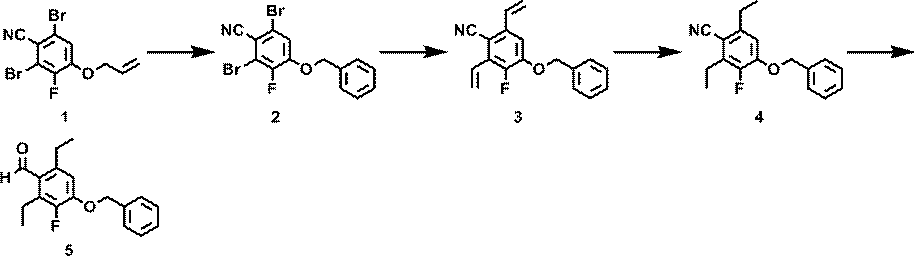
MS m/z 280 [M+H]+, APCI(+)
MS m/z 284 [M+H]+, APCI(+)
MS m/z 287 [M+H]+, APCI(+)


ヒト甲状腺ホルモン受容体(Thyroid hormone receptor)α1(TRα1)及びβ1(TRβ1)に対する転写活性化試験
活性炭/デキストラン処理牛胎児血清(FBS)を10%含むダルベッコ変法イーグル培地(DMEM)にて培養した293T細胞に、ヒト肝由来細胞からクローニングしたTR α1またはβ1を発現するpcDNA3.1ベクター(invitrogen社製)およびレポーターとなる甲状腺ホルモン応答配列を有するホタルルシフェラーゼ発現ベクターpDR4-Luc(stratagene社製)をリポフェクトアミン2000(invitrogen社製)を用いてトランスフェクションした。16時間後、細胞を96ウェルプレートに播き直し、0.1% 活性炭/デキストラン処理FBSを含むDMEMに置換した。さらに3時間後、ジメチルスルホキシド溶液で希釈した化合物を添加し、24時間後のルシフェラーゼ活性を測定した。
陽性対照として、生体内リガンドである3,3',5-トリヨード-L-サイロニン(T3)を用いた。化合物のTRα1およびTRβ1に対する転写活性化作用は、T3の最大ルシフェラーゼ活性値を100とした時の各EC50値および最大ルシフェラーゼ活性値で表した。結果を下表に示す。


A:5<(TRα/TRβ)
B:2<(TRα/TRβ)<5
C:2>(TRα/TRβ)
Claims (21)
- 一般式[I]:

(式中、
Aは、置換されていてもよいアルキル、置換されていてもよい炭素環式基、置換されていてもよいアリール、置換されていてもよい複素環式基、置換されていてもよいヘテロアリール、置換されていてもよいアミノ、又は置換されていてもよいカルバモイルをあらわし、
Xは、置換されていてもよいメチレン、-O-、または-S-をあらわし、
Qは、NまたはC-R4をあらわし、
L1は単結合、メチレン、-CH=CH-、-O-、-CO-、-NR11-、-NR11CO-、-CONR11-、-CH2NR11-又は-S-をあらわし、
L2は単結合、-CR6R7-、又は2価の複素環式基を表し、
R1およびR2は、同一又は異なって、水素、アルキル、アルケニルまたはハロゲンをあらわし、
R3およびR4は、同一又は異なって、水素、アルキル、アルコキシ、シアノ、またはハロゲンをあらわし、
R1とR3とが結合して、炭素環または複素環を形成してもよく、
R5は、カルボキシル基、アルコキシカルボニル基、又はカルボキシル基の生物学的等価基をあらわし、
R6およびR7は、同一又は異なって、水素、置換されていてもよいアルキル、またはハロゲンをあらわし、
R6とR7とが結合して、シクロアルカン若しくは複素環を形成してもよく、
R8は、ヒドロキシ、アルカノイルアミノ、若しくはアルキルスルホニルアミノをあらわし、
R9およびR10は、同一又は異なって、水素、アルキル、またはハロゲンをあらわし、
R11は、水素またはアルキルをあらわす。)
で示される化合物、またはその薬理学的に許容できる塩。 - Aの置換されていてもよいアルキルの置換基が、それぞれ同一又は異なる1~3の、
アルキル、ハロゲン、アルコキシ、アルカノイル、及びシアノから選ばれる1~3の基に置換されていてもよいアリール;
アルキル、ハロゲン、アルコキシ、アルカノイル、及びシアノから選ばれる1~3の基に置換されていてもよい複素環式基;
アルキル、ハロゲン、アルコキシ、アルカノイル、及びシアノから選ばれる1~3の基に置換されていてもよいヘテロアリール;
アルキル、ハロゲン、アルコキシ、アルカノイル、及びシアノから選ばれる1~3の基に置換されていてもよいシクロアルキル;並びに、
ヒドロキシ;
アルコキシ;
ハロゲン;
1又は2のアルキルに置換されていてもよいアミノ基;並びに
オキソ
から選ばれる基であり、
Aの置換されていてもよいアリール、置換されていてもよい炭素環式基、置換されていてもよい複素環式基及び、置換されていてもよいヘテロアリール基の置換基が、それぞれ同一又は異なる1~3の、
ヒドロキシ、アルコキシ、シクロアルキル若しくはハロゲンに置換されていてもよいアルキル;
アルコキシ若しくはシクロアルキルに置換されていてもよいアルケニル;
アルキル、アルコキシ若しくはシクロアルキルに置換されていてもよいシクロアルキル;
アルコキシ、シクロアルキル若しくはハロゲンに置換されていてもよいアルコキシ;
アルキル、アルコキシ若しくはシクロアルキルに置換されていてもよいシクロアルキルオキシ;
ハロゲン;
シアノ;
ヒドロキシ;
オキソ;
複素環;
アルキルスルホニル;及び
モノ若しくはジアルキルカルバモイル
から選ばれる基であり、
Aの置換されていてもよいアミノの置換基が、それぞれ同一又は異なる1または2の、
アルコキシ、シクロアルキル若しくはハロゲンに置換されていてもよいアルキル;
アルコキシ若しくはシクロアルキルに置換されていてもよいアルケニル;
アルキル、アルコキシ若しくはシクロアルキルに置換されていてもよいシクロアルキル;
アルコキシ、シクロアルキル若しくはハロゲンに置換されていてもよいアルカノイル;又は
アルキル、アルコキシ若しくはシクロアルキルに置換されていてもよいアリールであり、
Aの置換されていてもよいカルバモイルの置換基が、それぞれ同一又は異なる1または2の、アリールに置換されていてもよいアルキルであり、
R6とR7の置換されていてもよいアルキルの置換基が、アルコキシ、ヒドロキシ、またはハロゲンであり、
Xの置換されていてもよいメチレンの置換基が、アルコキシ、またはヒドロキシである請求項1記載の化合物、またはその薬理学的に許容できる塩。 - Aが、置換されていてもよいアルキル、置換されていてもよい炭素環式基、置換されていてもよいアリール、置換されていてもよい複素環式基又は、置換されていてもよいヘテロアリールであり、
Qが、C-R4であり、
R1およびR2が、同一又は異なって、アルキル、またはハロゲンであり、
R3およびR4が、同一又は異なって、水素、アルキル、またはハロゲンであり、
Xが、メチレン、-O-、または-S-であり、
R5が、カルボキシル基、アルコキシカルボニル基、又はカルボキシル基の生物学的等価基であり、
L1が単結合、メチレン、-CH=CH-、-O-、-NH-、-NHCO-又は-S-であり、
L2が単結合、-CR6R7-、又は2価の複素環式基であり、
R6およびR7が、同一又は異なって、水素、アルキル、またはハロゲンであるか、R6とR7が隣接する炭素とともにシクロアルカン若しくは複素環を形成してもよく、
R8がヒドロキシであり、
R9およびR10が水素である、請求項1または2記載の化合物、またはその薬理学的に許容できる塩。 - Aが、置換されていてもよい炭素環式基である請求項1~3のいずれか記載の化合物、またはその薬理学的に許容できる塩。
- Aが、置換されていてもよいアリールである請求項1~3のいずれか記載の化合物、またはその薬理学的に許容できる塩。
- 置換されていてもよい炭素環式基が、置換されていてもよいシクロアルキルである、請求項4記載の化合物、またはその薬理学的に許容できる塩。
- Aが、置換されていてもよいアルキルである、請求項1~3のいずれか記載の化合物、またはその薬理学的に許容できる塩。
- Aが、置換されていてもよい複素環基である、請求項1~3のいずれか記載の化合物、またはその薬理学的に許容できる塩。
- Aが、置換されていてもよいヘテロアリールである、請求項1~3のいずれか記載の化合物、またはその薬理学的に許容できる塩。
- Xが、メチレンである、請求項1~9のいずれか記載の化合物、またはその薬理学的に許容できる塩。
- R1およびR2が、同一の基である、請求項1~10のいずれか記載の化合物、またはその薬理学的に許容できる塩。
- R1およびR2が、同一または異なってアルキルである、請求項1~11のいずれか記載の化合物、またはその薬理学的に許容できる塩。
- R1とR3とが結合して、炭素環または複素環を形成している、請求項1~10のいずれか記載の化合物、またはその薬理学的に許容できる塩。
- R8がヒドロキシである請求項1~13のいずれか記載の化合物、またはその薬理学的に許容できる塩。
- (4-{[5-ヒドロキシ-6-(2-ナフチル)ピリジン-2-イル]メチル}-3,5-ジメチルフェノキシ)酢酸;
{4-[(6-シクロペンチル-5-ヒドロキシピリジン-2-イル)メチル]-2,3,5-トリメチルフェノキシ}酢酸;
{4-[(6-シクロヘキシル-5-ヒドロキシピリジン-2-イル)メチル]-2,3,5-トリメチルフェノキシ}酢酸;
{2-ブロモ-4-[(6-シクロヘキシル-5-ヒドロキシピリジン-2-イル)メチル]-3,5-ジメチルフェノキシ}酢酸;
3-({4-[(5-ヒドロキシ-6-フェニルピリジン-2-イル)メチル]-3,5-ジメチルフェニル}アミノ)-3-オキソプロパン酸;
3-({4-[(6-シクロヘキシル-5-ヒドロキシピリジン-2-イル)メチル]-3,5-ジメチルフェニル}アミノ)-3-オキソプロパン酸;
3-[(4-{[5-ヒドロキシ-6-(2-ナフチル)ピリジン-2-イル]メチル}-3,5-ジメチルフェノキシ)メチル]-1,2,4-オキサジアゾール-5(4H)-オン;
3-[(4-{[5-ヒドロキシ-6-(5,6,7,8-テトラヒドロナフタレン-2-イル)ピリジン-2-イル]メチル}-3,5-ジメチルフェノキシ)メチル]-1,2,4-オキサジアゾール-5(4H)-オン;
({5-[(6-シクロヘキシル-5-ヒドロキシピリジン-2-イル)メチル]-3,4,6-トリメチルピリジン-2-イル}オキシ)酢酸;
3-({4-[(6-シクロへプチル-5-ヒドロキシピリジン-2-イル)メチル]-3,5-ジメチルフェニル}アミノ)-3-オキソプロパン酸;
N-[2-クロロ-4-(6-シクロヘキシル-5-ヒドロキシ-ピリジン-2-イルメチル)-3,5-ジメチル-フェニル]アミノ-3-オキソプロパン酸;
3-[(2-フルオロ-4-{[6-(2-フルオロ-3-メチルフェニル)-5-ヒドロキシピリジン-2-イル]メチル}-3,5-ジメチルフェノキシ)メチル]-1,2,4-オキサジアゾール-5(4H)-オン;
{4-[(6-シクロヘキシル-4-フルオロ-5-ヒドロキシピリジン-2-イル)メチル]-2,3,5-トリメチルフェノキシ}酢酸;
{4-[(6-シクロヘキシル-3-フルオロ-5-ヒドロキシピリジン-2-イル)メチル]-2,3,5-トリメチルフェノキシ}酢酸;
{4-[(6-シクロへプチル-5-ヒドロキシピリジン-2-イル)メチル]-2,3,5-トリメチルフェノキシ}酢酸;
3-({4-[(6-シクロへプチル-5-ヒドロキシピリジン-2-イル)メチル]-2-フルオロ-3,5-ジメチルフェニル}アミノ)-3-オキソプロパン酸;
{4-[6-(3-フルオロ-フェニルl)-5-ヒドロキシ-ピリジン-2-イルメチル]-2,3,5-トリメチル-フェノキシ}酢酸;
(4-{[6-(3-クロロフェニル)-5-ヒドロキシピリジン-2-イル]メチル}-2,3,5-トリメチルフェノキシ)酢酸;
3-{2-フルオロ-4-[5-ヒドロキシ-6-(2,3,4-トリフルオロ-フェニル)-ピリジン-2-イルメチル]-3,5-ジメチル-フェノキシメチル}-1,2,4-オキサジアゾール-5(4H)-オン;
3-[(2-フルオロ-4-{[5-ヒドロキシ-6-(3-ピロリジン-1-イルフェニル)ピリジン-2-イル]メチル}-3,5-ジメチルフェノキシ)メチル]-1,2,4-オキサジアゾール-5(4H)-オン;
2-{4-[(5-ヒドロキシ-6-フェニルピリジン-2-イル)メチル]-3,5-ジメチルフェニル}-3,5-ジオキソ-2,3,4,5-テトラヒドロ-1,2,4-トリアジン-6-カルボニトリル;
3-{2-フルオロ-4-[5-ヒドロキシ-6-(3-プロポキシ-フェニル)-ピリジン-2-イルメチル]-3,5-ジメチル-フェノキシメチル}-1,2,4-オキサジアゾール-5(4H)-オン;
[3,5-ジブロモ-2-フルオロ-4-(5-ヒドロキシ-6-フェニル-ピリジン-2-イルメチル)-フェノキシ]酢酸;及び
(5-エチル-4-{[6-(3-フルオロフェニル)-5-ヒドロキシピリジン-2-イル]メチル}-2,3-ジメチルフェノキシ)酢酸、またはその薬理学的に許容できる塩。 - 有効成分として請求項1~15のいずれか記載の化合物、またはその薬理学的に許容できる塩を含有する医薬。
- 甲状腺ホルモンβ受容体作動薬である、請求項16記載の医薬。
- 高コレステロール血症、高脂血症、高トリグリセリド血症、家族性高コレステロール血症、脂質異常症、アテローム性動脈硬化症、甲状腺機能低下症、及び/又は潜在性甲状腺機能低下症の治療又は予防薬である、請求項16記載の医薬。
- 甲状腺ホルモンβ受容体を作動させることによって改善する疾患の治療又は予防のための医薬の製造のための、請求項1~15のいずれか記載の化合物の使用。
- 請求項1~15のいずれか記載の化合物を投与する工程を含む、甲状腺ホルモンβ受容体を作動させることによって改善する疾患の治療又は予防方法。
- 一般式[II]:
(式中、Z1及びZ2は、それぞれ同一又は異なって-O-PG(PGは保護基を表す)を表し、
Z3は、Aまたはハロゲンを表し、
Xaは、酸素、硫黄、又は
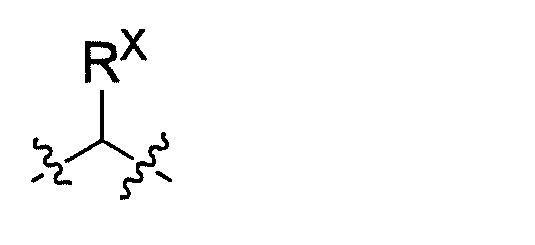
(式中、RXはヒドロキシを表し、該ヒドロキシは保護基によって保護されていてもよい)
で示される基を表し、
その他の記号は請求項1と同じ)
で示される化合物、またはその塩。
Priority Applications (10)
| Application Number | Priority Date | Filing Date | Title |
|---|---|---|---|
| EP10767037.4A EP2423194B1 (en) | 2009-04-20 | 2010-04-19 | Novel thyroid hormone beta receptor agonist |
| JP2011510313A JP5487202B2 (ja) | 2009-04-20 | 2010-04-19 | 新規甲状腺ホルモンβ受容体作動薬 |
| KR1020117027460A KR101396606B1 (ko) | 2009-04-20 | 2010-04-19 | 신규 갑상선 호르몬 β 수용체 작동약 |
| RU2011147069/04A RU2527948C2 (ru) | 2009-04-20 | 2010-04-19 | Новый агонист бета рецептора тиреоидного гормона |
| BRPI1015096A BRPI1015096A2 (pt) | 2009-04-20 | 2010-04-19 | agonista de receptor beta de hormônio tireoideano |
| CN201080027655.8A CN102459185B (zh) | 2009-04-20 | 2010-04-19 | 新型甲状腺激素β受体激动剂 |
| CA2758894A CA2758894C (en) | 2009-04-20 | 2010-04-19 | Novel thyroid hormone .beta. receptor agonist |
| US13/265,137 US8791266B2 (en) | 2009-04-20 | 2010-04-19 | Thyroid hormone β receptor agonist |
| AU2010240200A AU2010240200B2 (en) | 2009-04-20 | 2010-04-19 | Novel thyroid hormone beta receptor agonist |
| MX2011011028A MX2011011028A (es) | 2009-04-20 | 2010-04-19 | Agonista del receptor beta de hormona tiroidea novedoso. |
Applications Claiming Priority (2)
| Application Number | Priority Date | Filing Date | Title |
|---|---|---|---|
| JP2009102259 | 2009-04-20 | ||
| JP2009-102259 | 2009-04-20 |
Publications (2)
| Publication Number | Publication Date |
|---|---|
| WO2010122980A1 true WO2010122980A1 (ja) | 2010-10-28 |
| WO2010122980A8 WO2010122980A8 (ja) | 2011-02-17 |
Family
ID=43011097
Family Applications (1)
| Application Number | Title | Priority Date | Filing Date |
|---|---|---|---|
| PCT/JP2010/056936 Ceased WO2010122980A1 (ja) | 2009-04-20 | 2010-04-19 | 新規甲状腺ホルモンβ受容体作動薬 |
Country Status (12)
| Country | Link |
|---|---|
| US (1) | US8791266B2 (ja) |
| EP (1) | EP2423194B1 (ja) |
| JP (1) | JP5487202B2 (ja) |
| KR (1) | KR101396606B1 (ja) |
| CN (1) | CN102459185B (ja) |
| AU (1) | AU2010240200B2 (ja) |
| BR (1) | BRPI1015096A2 (ja) |
| CA (1) | CA2758894C (ja) |
| MX (1) | MX2011011028A (ja) |
| RU (1) | RU2527948C2 (ja) |
| TW (1) | TWI534144B (ja) |
| WO (1) | WO2010122980A1 (ja) |
Cited By (21)
| Publication number | Priority date | Publication date | Assignee | Title |
|---|---|---|---|---|
| WO2011088549A1 (en) * | 2010-01-22 | 2011-07-28 | Ambrilia Biopharma Inc. | Derivatives of pyridoxine for inhibiting hiv integrase |
| JP2012106996A (ja) * | 2010-10-19 | 2012-06-07 | Mitsubishi Tanabe Pharma Corp | 新規甲状腺ホルモンβ受容体作動薬 |
| WO2019054514A1 (ja) | 2017-09-14 | 2019-03-21 | 国立研究開発法人理化学研究所 | 網膜組織の製造方法 |
| WO2020123827A1 (en) | 2018-12-13 | 2020-06-18 | Terns, Inc. | Thrβ receptor agonist compound and preparation method and use thereof |
| WO2020169069A1 (en) | 2019-02-21 | 2020-08-27 | Nanjing Ruijie Pharma Co., Ltd. | Novel compounds and their uses as thyroid hormone receptor agonists |
| WO2020184720A1 (ja) | 2019-03-13 | 2020-09-17 | 大日本住友製薬株式会社 | 移植用神経網膜の品質を評価する方法及び移植用神経網膜シート |
| WO2020227549A1 (en) | 2019-05-08 | 2020-11-12 | Aligos Therapeutics, Inc. | MODULATORS OF THR-β AND METHODS OF USE THEREOF |
| WO2021032218A1 (zh) | 2019-08-19 | 2021-02-25 | 苏州闻天医药科技有限公司 | 一种并环THRβ受体激动剂化合物及其制备方法和用途 |
| WO2021104288A1 (zh) | 2019-11-26 | 2021-06-03 | 昆药集团股份有限公司 | 1,2,4-三嗪-3,5-二酮类化合物及其制备方法和应用 |
| US11203587B2 (en) | 2018-10-12 | 2021-12-21 | Terns, Inc. | Thyroid hormone receptor beta agonist compounds |
| WO2022054924A1 (ja) | 2020-09-11 | 2022-03-17 | 大日本住友製薬株式会社 | 移植用組織のための媒体 |
| WO2022054925A1 (ja) | 2020-09-11 | 2022-03-17 | 国立研究開発法人理化学研究所 | 神経網膜を含む細胞凝集体とマトリクスとを含む複合体及びその製造方法 |
| WO2022143574A1 (zh) | 2020-12-30 | 2022-07-07 | 昆药集团股份有限公司 | 2-吡啶酮类衍生物及其制备方法和在医药上的应用 |
| JP2022544714A (ja) * | 2019-08-23 | 2022-10-20 | ターンズ・ファーマシューティカルズ・インコーポレイテッド | 甲状腺ホルモン受容体ベータアゴニスト化合物 |
| WO2023090427A1 (ja) | 2021-11-19 | 2023-05-25 | 国立研究開発法人理化学研究所 | シート状網膜組織の製造方法 |
| JP2023528637A (ja) * | 2020-06-02 | 2023-07-05 | 成都康弘▲葯▼▲業▼集▲團▼股▲フン▼有限公司 | 新規甲状腺ホルモンβ受容体アゴニスト |
| US11780825B2 (en) | 2020-01-13 | 2023-10-10 | Eccogene (Shanghai) Co., Ltd. | Thyroid hormone receptor agonists and use thereof |
| WO2024120426A1 (zh) | 2022-12-07 | 2024-06-13 | 昆药集团股份有限公司 | 一种甲状腺激素β受体激动剂、晶型、制备方法和用途 |
| US12398127B2 (en) | 2019-09-12 | 2025-08-26 | Terns Pharmaceuticals, Inc. | Thyroid hormone receptor beta agonist compounds |
| US12485118B2 (en) | 2023-04-07 | 2025-12-02 | Terns Pharmaceuticals, Inc. | Combinations of GLP-1R and THRβ agonists and methods of use thereof |
| EP4775207A2 (en) | 2018-12-05 | 2026-07-15 | Viking Therapeutics, Inc. | Compositions for the treatment of fibrosis |
Families Citing this family (12)
| Publication number | Priority date | Publication date | Assignee | Title |
|---|---|---|---|---|
| JP2013505262A (ja) * | 2009-09-17 | 2013-02-14 | バンダービルト ユニバーシティー | mGluR5ネガティブアロステリックモジュレータとしての置換ヘテロアリールアミンカルボキサミド類似体、ならびに、その形成方法および使用方法 |
| US9533982B2 (en) | 2014-03-20 | 2017-01-03 | Vanderbilt University | Substituted bicyclic heteroaryl carboxamide analogs as mGluR5 negative allosteric modulators |
| CN104109157B (zh) * | 2014-08-04 | 2016-05-25 | 山东康美乐医药科技有限公司 | 卡格列净的制备方法 |
| US9550778B2 (en) | 2014-10-03 | 2017-01-24 | Vanderbilt University | Substituted 6-aryl-imidazopyridine and 6-aryl-triazolopyridine carboxamide analogs as negative allosteric modulators of mGluR5 |
| CN105541696B (zh) * | 2016-02-19 | 2018-06-26 | 上海市第十人民医院 | 一种抗肿瘤的化合物及其制备方法和应用 |
| CN108299390B (zh) * | 2018-02-09 | 2020-11-10 | 上海市第十人民医院 | 抗肿瘤化合物dcz0415及其制备方法和应用 |
| CN112442013B (zh) * | 2019-09-04 | 2022-07-26 | 广东东阳光药业有限公司 | 一种作为甲状腺激素β受体激动剂的化合物及其用途 |
| CN113278013B (zh) * | 2020-02-20 | 2022-09-23 | 昆药集团股份有限公司 | 2,6-二取代的1,2,4-三嗪-3,5-二酮化合物及其制备方法和应用 |
| CN116063296B (zh) * | 2021-11-02 | 2025-08-19 | 凯思凯迪(上海)医药科技有限公司 | 一种作为甲状腺激素β受体激动剂的化合物及其用途 |
| CN113979963B (zh) * | 2021-12-24 | 2022-03-11 | 凯思凯旭(上海)医药科技有限公司 | 一种作为甲状腺激素β受体激动剂的化合物及其用途 |
| CN117417387A (zh) * | 2023-09-13 | 2024-01-19 | 苏州翔实医药发展有限公司 | 一种核苷类似物的合成方法 |
| CN118754816B (zh) * | 2024-09-09 | 2024-12-20 | 世华合创生物技术开发(山东)有限公司 | 一种双氯芬酸钠的制备方法 |
Citations (20)
| Publication number | Priority date | Publication date | Assignee | Title |
|---|---|---|---|---|
| WO1997021993A2 (en) | 1995-12-13 | 1997-06-19 | The Regents Of The University Of California | Nuclear receptor ligands and ligand binding domains |
| WO2000039077A2 (en) | 1998-12-24 | 2000-07-06 | Karo Bio Ab | Thyroid receptor ligands |
| JP2000256190A (ja) | 1999-03-01 | 2000-09-19 | Pfizer Prod Inc | 甲状腺類似の抗肥満薬 |
| WO2001002359A1 (en) * | 1999-07-01 | 2001-01-11 | Ajinomoto Co., Inc. | Heterocyclic compounds and medicinal use thereof |
| WO2001098256A1 (en) | 2000-06-21 | 2001-12-27 | Karo Bio Ab | Thyroid receptor ligands, pharmaceutical compositions comprising them and their use in the treatment of disorders influenced by thyroid hormones |
| JP2002053564A (ja) | 2000-04-21 | 2002-02-19 | Pfizer Prod Inc | 甲状腺受容体リガンド |
| WO2002051805A1 (de) | 2000-12-27 | 2002-07-04 | Bayer Aktiengesellschaft | Indol-derivate |
| WO2002094319A1 (en) | 2001-05-18 | 2002-11-28 | Kissei Pharmaceutical Co., Ltd. | Preventive or recurrence-suppressive agents for liver cancer |
| JP2002370978A (ja) | 2001-05-31 | 2002-12-24 | Pfizer Prod Inc | サイロミメティック化合物を用いる脱毛の治療方法 |
| WO2003018515A2 (en) | 2001-08-24 | 2003-03-06 | Karo Bio Ab | Prime ring substituted thyroid receptor antagonists for the treatment of cardiac and metabolic disorders |
| WO2003064369A1 (en) | 2002-01-30 | 2003-08-07 | Kissei Pharmaceutical Co., Ltd. | Novel thyroid hormone receptor ligand, medicinal compositions containing the same and use thereof |
| WO2003084915A1 (en) | 2002-04-11 | 2003-10-16 | Karo Bio Ab | Novel thyroid receptor ligands |
| WO2003094845A2 (en) | 2002-05-08 | 2003-11-20 | Bristol-Myers Squibb Company | Pyridine-based thyroid receptor ligands |
| WO2004066929A2 (en) | 2003-01-24 | 2004-08-12 | Bristol-Myers Squibb Company | Cycloalkyl containing anilide ligands for the thyroid receptor |
| WO2004093799A2 (en) | 2003-04-18 | 2004-11-04 | Bristol-Myers Squibb Company | Thyroid receptor ligands |
| WO2004103289A2 (en) * | 2003-05-14 | 2004-12-02 | New York University | Driverse thyroid hormone receptor antagonists and uses thereof |
| WO2007009913A1 (en) | 2005-07-21 | 2007-01-25 | F. Hoffmann-La Roche Ag | Pyridazinone derivatives as thyroid hormone receptor agonists |
| WO2007066784A2 (en) * | 2005-12-05 | 2007-06-14 | Otsuka Pharmaceutical Co., Ltd. | Diarylether derivatives as antitumor agents |
| WO2007132475A1 (en) | 2006-05-15 | 2007-11-22 | Cadila Healthcare Limited | Selective tr-beta 1 agonist |
| JP2009102259A (ja) | 2007-10-23 | 2009-05-14 | Shiseido Co Ltd | 香料含有ワックス可溶化組成物 |
Family Cites Families (7)
| Publication number | Priority date | Publication date | Assignee | Title |
|---|---|---|---|---|
| US6266622B1 (en) | 1995-12-13 | 2001-07-24 | Regents Of The University Of California | Nuclear receptor ligands and ligand binding domains |
| TW544448B (en) | 1997-07-11 | 2003-08-01 | Novartis Ag | Pyridine derivatives |
| US6620830B2 (en) | 2000-04-21 | 2003-09-16 | Pfizer, Inc. | Thyroid receptor ligands |
| US6395784B1 (en) * | 2000-06-07 | 2002-05-28 | Bristol-Myers Squibb Company | Benzamide ligands for the thyroid receptor |
| NL1021141C2 (nl) * | 2002-07-24 | 2004-01-27 | Profextru B V | Beschoeiingsysteem omvattende een schoeipaal en een geprofileerd schoeideel. |
| JP2009502783A (ja) | 2005-07-20 | 2009-01-29 | メルク エンド カムパニー インコーポレーテッド | 抗糖尿病性オキサゾリジンジオン及びチアゾリジンジオン |
| JP5142513B2 (ja) * | 2005-12-05 | 2013-02-13 | 大塚製薬株式会社 | 医薬 |
-
2010
- 2010-04-19 KR KR1020117027460A patent/KR101396606B1/ko not_active Expired - Fee Related
- 2010-04-19 CA CA2758894A patent/CA2758894C/en not_active Expired - Fee Related
- 2010-04-19 RU RU2011147069/04A patent/RU2527948C2/ru not_active IP Right Cessation
- 2010-04-19 TW TW099112150A patent/TWI534144B/zh not_active IP Right Cessation
- 2010-04-19 US US13/265,137 patent/US8791266B2/en active Active
- 2010-04-19 JP JP2011510313A patent/JP5487202B2/ja not_active Expired - Fee Related
- 2010-04-19 CN CN201080027655.8A patent/CN102459185B/zh not_active Expired - Fee Related
- 2010-04-19 MX MX2011011028A patent/MX2011011028A/es active IP Right Grant
- 2010-04-19 WO PCT/JP2010/056936 patent/WO2010122980A1/ja not_active Ceased
- 2010-04-19 EP EP10767037.4A patent/EP2423194B1/en not_active Not-in-force
- 2010-04-19 BR BRPI1015096A patent/BRPI1015096A2/pt not_active IP Right Cessation
- 2010-04-19 AU AU2010240200A patent/AU2010240200B2/en not_active Ceased
Patent Citations (20)
| Publication number | Priority date | Publication date | Assignee | Title |
|---|---|---|---|---|
| WO1997021993A2 (en) | 1995-12-13 | 1997-06-19 | The Regents Of The University Of California | Nuclear receptor ligands and ligand binding domains |
| WO2000039077A2 (en) | 1998-12-24 | 2000-07-06 | Karo Bio Ab | Thyroid receptor ligands |
| JP2000256190A (ja) | 1999-03-01 | 2000-09-19 | Pfizer Prod Inc | 甲状腺類似の抗肥満薬 |
| WO2001002359A1 (en) * | 1999-07-01 | 2001-01-11 | Ajinomoto Co., Inc. | Heterocyclic compounds and medicinal use thereof |
| JP2002053564A (ja) | 2000-04-21 | 2002-02-19 | Pfizer Prod Inc | 甲状腺受容体リガンド |
| WO2001098256A1 (en) | 2000-06-21 | 2001-12-27 | Karo Bio Ab | Thyroid receptor ligands, pharmaceutical compositions comprising them and their use in the treatment of disorders influenced by thyroid hormones |
| WO2002051805A1 (de) | 2000-12-27 | 2002-07-04 | Bayer Aktiengesellschaft | Indol-derivate |
| WO2002094319A1 (en) | 2001-05-18 | 2002-11-28 | Kissei Pharmaceutical Co., Ltd. | Preventive or recurrence-suppressive agents for liver cancer |
| JP2002370978A (ja) | 2001-05-31 | 2002-12-24 | Pfizer Prod Inc | サイロミメティック化合物を用いる脱毛の治療方法 |
| WO2003018515A2 (en) | 2001-08-24 | 2003-03-06 | Karo Bio Ab | Prime ring substituted thyroid receptor antagonists for the treatment of cardiac and metabolic disorders |
| WO2003064369A1 (en) | 2002-01-30 | 2003-08-07 | Kissei Pharmaceutical Co., Ltd. | Novel thyroid hormone receptor ligand, medicinal compositions containing the same and use thereof |
| WO2003084915A1 (en) | 2002-04-11 | 2003-10-16 | Karo Bio Ab | Novel thyroid receptor ligands |
| WO2003094845A2 (en) | 2002-05-08 | 2003-11-20 | Bristol-Myers Squibb Company | Pyridine-based thyroid receptor ligands |
| WO2004066929A2 (en) | 2003-01-24 | 2004-08-12 | Bristol-Myers Squibb Company | Cycloalkyl containing anilide ligands for the thyroid receptor |
| WO2004093799A2 (en) | 2003-04-18 | 2004-11-04 | Bristol-Myers Squibb Company | Thyroid receptor ligands |
| WO2004103289A2 (en) * | 2003-05-14 | 2004-12-02 | New York University | Driverse thyroid hormone receptor antagonists and uses thereof |
| WO2007009913A1 (en) | 2005-07-21 | 2007-01-25 | F. Hoffmann-La Roche Ag | Pyridazinone derivatives as thyroid hormone receptor agonists |
| WO2007066784A2 (en) * | 2005-12-05 | 2007-06-14 | Otsuka Pharmaceutical Co., Ltd. | Diarylether derivatives as antitumor agents |
| WO2007132475A1 (en) | 2006-05-15 | 2007-11-22 | Cadila Healthcare Limited | Selective tr-beta 1 agonist |
| JP2009102259A (ja) | 2007-10-23 | 2009-05-14 | Shiseido Co Ltd | 香料含有ワックス可溶化組成物 |
Non-Patent Citations (17)
| Title |
|---|
| ANGEW. CHEM. INT. ED., vol. 41, 2002, pages 1062 |
| CARDIOVASCULAR DRUG REVIEWS, vol. 23, 2005, pages 133 |
| CURR. TOP MED. CHEM., vol. 3, 2003, pages 1601 |
| ENDOCRINOLOGY, vol. 142, 2001, pages 544 |
| EUR. J. MED. CHEM., vol. 36, 2001, pages 31 |
| J. BIOL. CHEM., vol. 267, 1992, pages 11794 |
| J. HETEROCYCLIC. CHEM., vol. 23, 1986, pages 881 |
| J. MED. CHEM., vol. 26, 1983, pages 96 |
| J. MED. CHEM., vol. 45, 2002, pages 1518 |
| NATURE, vol. 324, 1986, pages 425 |
| PHYSIOL. REV., vol. 81, 2001, pages 1097 |
| See also references of EP2423194A4 |
| STEROID. BIOCHEM. MOL. BIOL., vol. 76, 2001, pages 31 |
| TETRAHEDRON LETT., vol. 27, 1986, pages 1477 |
| TETRAHEDRON, 2002, pages 2041 - 2075 |
| THEODORA W. GREEN; PETER G. WUTS: "Protective Groups in Organic Synthesis Third Edition" |
| THEODORA W. GREEN; PETER G. WUTS: "Protective Groups in Organic Synthesis" |
Cited By (44)
| Publication number | Priority date | Publication date | Assignee | Title |
|---|---|---|---|---|
| US8283366B2 (en) | 2010-01-22 | 2012-10-09 | Ambrilia Biopharma, Inc. | Derivatives of pyridoxine for inhibiting HIV integrase |
| US8664248B2 (en) | 2010-01-22 | 2014-03-04 | Taimed Biologics, Inc. | Derivatives of pyridoxine for inhibiting HIV integrase |
| WO2011088549A1 (en) * | 2010-01-22 | 2011-07-28 | Ambrilia Biopharma Inc. | Derivatives of pyridoxine for inhibiting hiv integrase |
| JP2012106996A (ja) * | 2010-10-19 | 2012-06-07 | Mitsubishi Tanabe Pharma Corp | 新規甲状腺ホルモンβ受容体作動薬 |
| WO2019054514A1 (ja) | 2017-09-14 | 2019-03-21 | 国立研究開発法人理化学研究所 | 網膜組織の製造方法 |
| US11203587B2 (en) | 2018-10-12 | 2021-12-21 | Terns, Inc. | Thyroid hormone receptor beta agonist compounds |
| EP4775207A2 (en) | 2018-12-05 | 2026-07-15 | Viking Therapeutics, Inc. | Compositions for the treatment of fibrosis |
| EP4574821A1 (en) | 2018-12-13 | 2025-06-25 | Terns, Inc. | Thrb receptor agonist compound and preparation method and use thereof |
| EP4529954A2 (en) | 2018-12-13 | 2025-04-02 | Terns, Inc. | Thrb receptor agonist compound and preparation method and use thereof |
| WO2020123827A1 (en) | 2018-12-13 | 2020-06-18 | Terns, Inc. | Thrβ receptor agonist compound and preparation method and use thereof |
| US12459926B2 (en) | 2018-12-13 | 2025-11-04 | Terns, Inc. | THRβ receptor agonist compound and preparation method and use thereof |
| US11034676B2 (en) | 2018-12-13 | 2021-06-15 | Terns, Inc. | THRB receptor agonist compound and preparation method and use thereof |
| US11084802B2 (en) | 2018-12-13 | 2021-08-10 | Terns, Inc. | THRβ receptor agonist compound and preparation method and use thereof |
| US12365669B2 (en) | 2018-12-13 | 2025-07-22 | Terns, Inc. | THRβ receptor agonist compound and preparation method and use thereof |
| US12338232B2 (en) | 2018-12-13 | 2025-06-24 | Terns, Inc. | THRβ receptor agonist compound and preparation method and use thereof |
| WO2020169069A1 (en) | 2019-02-21 | 2020-08-27 | Nanjing Ruijie Pharma Co., Ltd. | Novel compounds and their uses as thyroid hormone receptor agonists |
| US12338206B2 (en) | 2019-02-21 | 2025-06-24 | Nanjing Ruijie Pharma Co., Ltd. | Compounds and their uses as thyroid hormone receptor agonists |
| WO2020184720A1 (ja) | 2019-03-13 | 2020-09-17 | 大日本住友製薬株式会社 | 移植用神経網膜の品質を評価する方法及び移植用神経網膜シート |
| JP2025011262A (ja) * | 2019-05-08 | 2025-01-23 | アリゴス セラピューティクス,インコーポレーテッド | THR-βの調節物質およびその使用方法 |
| EP4523692A2 (en) | 2019-05-08 | 2025-03-19 | Aligos Therapeutics, Inc. | Modulators of thr-ss and methods of use thereof |
| US11091467B2 (en) | 2019-05-08 | 2021-08-17 | Aligos Therapeutics, Inc. | Modulators of THR-β and methods of use thereof |
| JP7844578B2 (ja) | 2019-05-08 | 2026-04-13 | アリゴス セラピューティクス,インコーポレーテッド | THR-βの調節物質およびその使用方法 |
| JP2022532706A (ja) * | 2019-05-08 | 2022-07-19 | アリゴス セラピューティクス,インコーポレーテッド | THR-βの調節物質およびその使用方法 |
| WO2020227549A1 (en) | 2019-05-08 | 2020-11-12 | Aligos Therapeutics, Inc. | MODULATORS OF THR-β AND METHODS OF USE THEREOF |
| JP7574223B2 (ja) | 2019-05-08 | 2024-10-28 | アリゴス セラピューティクス,インコーポレーテッド | THR-βの調節物質およびその使用方法 |
| US12180192B2 (en) | 2019-05-08 | 2024-12-31 | Aligos Therapeutics, Inc. | Modulators of THR-β and methods of use thereof |
| US12378268B2 (en) | 2019-08-19 | 2025-08-05 | Hepagene Therapeutics (HK) Limited | Heterocyclic THR-β receptor agonist compound and preparation method and use therefor |
| WO2021032218A1 (zh) | 2019-08-19 | 2021-02-25 | 苏州闻天医药科技有限公司 | 一种并环THRβ受体激动剂化合物及其制备方法和用途 |
| JP2022544714A (ja) * | 2019-08-23 | 2022-10-20 | ターンズ・ファーマシューティカルズ・インコーポレイテッド | 甲状腺ホルモン受容体ベータアゴニスト化合物 |
| JP7646632B2 (ja) | 2019-08-23 | 2025-03-17 | ターンズ・ファーマシューティカルズ・インコーポレイテッド | 甲状腺ホルモン受容体ベータアゴニスト化合物 |
| JP2025106242A (ja) * | 2019-08-23 | 2025-07-15 | ターンズ・ファーマシューティカルズ・インコーポレイテッド | 甲状腺ホルモン受容体ベータアゴニスト化合物 |
| US12528791B2 (en) | 2019-08-23 | 2026-01-20 | Terns Pharmaceuticals, Inc. | Thyroid hormone receptor beta agonist compounds |
| US12398127B2 (en) | 2019-09-12 | 2025-08-26 | Terns Pharmaceuticals, Inc. | Thyroid hormone receptor beta agonist compounds |
| WO2021104288A1 (zh) | 2019-11-26 | 2021-06-03 | 昆药集团股份有限公司 | 1,2,4-三嗪-3,5-二酮类化合物及其制备方法和应用 |
| US12291518B2 (en) | 2020-01-13 | 2025-05-06 | Eccogene Inc. | Thyroid hormone receptor agonists and use thereof |
| US11780825B2 (en) | 2020-01-13 | 2023-10-10 | Eccogene (Shanghai) Co., Ltd. | Thyroid hormone receptor agonists and use thereof |
| JP2023528637A (ja) * | 2020-06-02 | 2023-07-05 | 成都康弘▲葯▼▲業▼集▲團▼股▲フン▼有限公司 | 新規甲状腺ホルモンβ受容体アゴニスト |
| WO2022054924A1 (ja) | 2020-09-11 | 2022-03-17 | 大日本住友製薬株式会社 | 移植用組織のための媒体 |
| WO2022054925A1 (ja) | 2020-09-11 | 2022-03-17 | 国立研究開発法人理化学研究所 | 神経網膜を含む細胞凝集体とマトリクスとを含む複合体及びその製造方法 |
| WO2022143574A1 (zh) | 2020-12-30 | 2022-07-07 | 昆药集团股份有限公司 | 2-吡啶酮类衍生物及其制备方法和在医药上的应用 |
| WO2023090427A1 (ja) | 2021-11-19 | 2023-05-25 | 国立研究開発法人理化学研究所 | シート状網膜組織の製造方法 |
| WO2024120426A1 (zh) | 2022-12-07 | 2024-06-13 | 昆药集团股份有限公司 | 一种甲状腺激素β受体激动剂、晶型、制备方法和用途 |
| EP4631943A1 (en) | 2022-12-07 | 2025-10-15 | Kpc Pharmaceuticals, Inc | THYROID HORMONE ß RECEPTOR AGONIST, CRYSTAL FORM, PREPARATION METHOD AND USE |
| US12485118B2 (en) | 2023-04-07 | 2025-12-02 | Terns Pharmaceuticals, Inc. | Combinations of GLP-1R and THRβ agonists and methods of use thereof |
Also Published As
| Publication number | Publication date |
|---|---|
| AU2010240200B2 (en) | 2014-03-13 |
| TWI534144B (zh) | 2016-05-21 |
| BRPI1015096A2 (pt) | 2016-05-03 |
| RU2527948C2 (ru) | 2014-09-10 |
| KR20120003941A (ko) | 2012-01-11 |
| MX2011011028A (es) | 2011-11-02 |
| CN102459185A (zh) | 2012-05-16 |
| KR101396606B1 (ko) | 2014-05-16 |
| CN102459185B (zh) | 2015-06-03 |
| EP2423194B1 (en) | 2014-04-16 |
| EP2423194A4 (en) | 2012-10-24 |
| US8791266B2 (en) | 2014-07-29 |
| CA2758894A1 (en) | 2010-10-28 |
| AU2010240200A1 (en) | 2011-11-17 |
| JP5487202B2 (ja) | 2014-05-07 |
| WO2010122980A8 (ja) | 2011-02-17 |
| EP2423194A1 (en) | 2012-02-29 |
| RU2011147069A (ru) | 2013-05-27 |
| CA2758894C (en) | 2013-09-10 |
| JPWO2010122980A1 (ja) | 2012-10-25 |
| US20120129812A1 (en) | 2012-05-24 |
| TW201041881A (en) | 2010-12-01 |
Similar Documents
| Publication | Publication Date | Title |
|---|---|---|
| JP5487202B2 (ja) | 新規甲状腺ホルモンβ受容体作動薬 | |
| JP5847533B2 (ja) | 新規甲状腺ホルモンβ受容体作動薬 | |
| EP2358371B1 (en) | P2x3, receptor antagonists for treatment of pain | |
| EP2215049B1 (en) | P2x3, receptor antagonists for treatment of pain | |
| JP6862033B2 (ja) | Gpr120アゴニストとしてのビアリール誘導体 | |
| JP6892922B2 (ja) | 新規フェニルプロピオン酸誘導体及びその用途 | |
| JP6632532B2 (ja) | オートタキシン阻害活性を有するピリミジノン誘導体 | |
| WO2011117254A1 (en) | Piperidine amides as modulators of the ghrelin receptor | |
| JP2007504229A (ja) | 代謝調節型グルタミン酸受容体−5のモジュレーターとしてのビピリジルアミン類およびエーテル類 | |
| JP2023516714A (ja) | 新規ep4拮抗薬の合成及びその癌及び炎症における使用 | |
| JP6310931B2 (ja) | Gpr120アゴニストとしてのチオアリール誘導体 | |
| JP2011516445A (ja) | Hdl−コレステロール上昇剤としての3−トリフルオロメチル−ピラジン−2−カルボン酸アミド誘導体 | |
| AU2017301113B2 (en) | Compositions for the treatment of pulmonary fibrosis | |
| WO2016104451A1 (ja) | 新規複素環誘導体 | |
| TW201920107A (zh) | 作為ttx-s阻斷劑之雙芳氧基衍生物 | |
| JP6119081B2 (ja) | Gpr119に対するフロ[2,3−c]ピリジン活性物質 |
Legal Events
| Date | Code | Title | Description |
|---|---|---|---|
| WWE | Wipo information: entry into national phase |
Ref document number: 201080027655.8 Country of ref document: CN |
|
| 121 | Ep: the epo has been informed by wipo that ep was designated in this application |
Ref document number: 10767037 Country of ref document: EP Kind code of ref document: A1 |
|
| ENP | Entry into the national phase |
Ref document number: 2011510313 Country of ref document: JP Kind code of ref document: A |
|
| WWE | Wipo information: entry into national phase |
Ref document number: 2758894 Country of ref document: CA |
|
| WWE | Wipo information: entry into national phase |
Ref document number: MX/A/2011/011028 Country of ref document: MX |
|
| NENP | Non-entry into the national phase |
Ref country code: DE |
|
| WWE | Wipo information: entry into national phase |
Ref document number: 8351/CHENP/2011 Country of ref document: IN |
|
| ENP | Entry into the national phase |
Ref document number: 2010240200 Country of ref document: AU Date of ref document: 20100419 Kind code of ref document: A |
|
| WWE | Wipo information: entry into national phase |
Ref document number: 2010767037 Country of ref document: EP |
|
| ENP | Entry into the national phase |
Ref document number: 20117027460 Country of ref document: KR Kind code of ref document: A |
|
| ENP | Entry into the national phase |
Ref document number: 2011147069 Country of ref document: RU Kind code of ref document: A |
|
| WWE | Wipo information: entry into national phase |
Ref document number: 13265137 Country of ref document: US |
|
| REG | Reference to national code |
Ref country code: BR Ref legal event code: B01A Ref document number: PI1015096 Country of ref document: BR |
|
| ENP | Entry into the national phase |
Ref document number: PI1015096 Country of ref document: BR Kind code of ref document: A2 Effective date: 20111020 |