WO2010067658A1 - ゲーム機及びゲームプログラム - Google Patents
ゲーム機及びゲームプログラム Download PDFInfo
- Publication number
- WO2010067658A1 WO2010067658A1 PCT/JP2009/067656 JP2009067656W WO2010067658A1 WO 2010067658 A1 WO2010067658 A1 WO 2010067658A1 JP 2009067656 W JP2009067656 W JP 2009067656W WO 2010067658 A1 WO2010067658 A1 WO 2010067658A1
- Authority
- WO
- WIPO (PCT)
- Prior art keywords
- movement
- player
- unit
- game
- aggregate
- Prior art date
- Legal status (The legal status is an assumption and is not a legal conclusion. Google has not performed a legal analysis and makes no representation as to the accuracy of the status listed.)
- Ceased
Links
Images













Classifications
-
- A—HUMAN NECESSITIES
- A63—SPORTS; GAMES; AMUSEMENTS
- A63F—CARD, BOARD, OR ROULETTE GAMES; INDOOR GAMES USING SMALL MOVING PLAYING BODIES; VIDEO GAMES; GAMES NOT OTHERWISE PROVIDED FOR
- A63F13/00—Video games, i.e. games using an electronically generated display having two or more dimensions
- A63F13/40—Processing input control signals of video game devices, e.g. signals generated by the player or derived from the environment
- A63F13/42—Processing input control signals of video game devices, e.g. signals generated by the player or derived from the environment by mapping the input signals into game commands, e.g. mapping the displacement of a stylus on a touch screen to the steering angle of a virtual vehicle
-
- A63F13/10—
-
- A63F13/12—
-
- A—HUMAN NECESSITIES
- A63—SPORTS; GAMES; AMUSEMENTS
- A63F—CARD, BOARD, OR ROULETTE GAMES; INDOOR GAMES USING SMALL MOVING PLAYING BODIES; VIDEO GAMES; GAMES NOT OTHERWISE PROVIDED FOR
- A63F13/00—Video games, i.e. games using an electronically generated display having two or more dimensions
- A63F13/30—Interconnection arrangements between game servers and game devices; Interconnection arrangements between game devices; Interconnection arrangements between game servers
-
- A—HUMAN NECESSITIES
- A63—SPORTS; GAMES; AMUSEMENTS
- A63F—CARD, BOARD, OR ROULETTE GAMES; INDOOR GAMES USING SMALL MOVING PLAYING BODIES; VIDEO GAMES; GAMES NOT OTHERWISE PROVIDED FOR
- A63F13/00—Video games, i.e. games using an electronically generated display having two or more dimensions
- A63F13/45—Controlling the progress of the video game
-
- A—HUMAN NECESSITIES
- A63—SPORTS; GAMES; AMUSEMENTS
- A63F—CARD, BOARD, OR ROULETTE GAMES; INDOOR GAMES USING SMALL MOVING PLAYING BODIES; VIDEO GAMES; GAMES NOT OTHERWISE PROVIDED FOR
- A63F13/00—Video games, i.e. games using an electronically generated display having two or more dimensions
- A63F13/80—Special adaptations for executing a specific game genre or game mode
- A63F13/812—Ball games, e.g. soccer or baseball
-
- A—HUMAN NECESSITIES
- A63—SPORTS; GAMES; AMUSEMENTS
- A63F—CARD, BOARD, OR ROULETTE GAMES; INDOOR GAMES USING SMALL MOVING PLAYING BODIES; VIDEO GAMES; GAMES NOT OTHERWISE PROVIDED FOR
- A63F2300/00—Features of games using an electronically generated display having two or more dimensions, e.g. on a television screen, showing representations related to the game
- A63F2300/40—Features of games using an electronically generated display having two or more dimensions, e.g. on a television screen, showing representations related to the game characterised by details of platform network
- A63F2300/404—Features of games using an electronically generated display having two or more dimensions, e.g. on a television screen, showing representations related to the game characterised by details of platform network characterized by a local network connection
- A63F2300/405—Features of games using an electronically generated display having two or more dimensions, e.g. on a television screen, showing representations related to the game characterised by details of platform network characterized by a local network connection being a wireless ad hoc network, e.g. Bluetooth®, Wi-Fi®, piconet
-
- A—HUMAN NECESSITIES
- A63—SPORTS; GAMES; AMUSEMENTS
- A63F—CARD, BOARD, OR ROULETTE GAMES; INDOOR GAMES USING SMALL MOVING PLAYING BODIES; VIDEO GAMES; GAMES NOT OTHERWISE PROVIDED FOR
- A63F2300/00—Features of games using an electronically generated display having two or more dimensions, e.g. on a television screen, showing representations related to the game
- A63F2300/80—Features of games using an electronically generated display having two or more dimensions, e.g. on a television screen, showing representations related to the game specially adapted for executing a specific type of game
- A63F2300/8011—Ball
Definitions
- the present invention relates to a game machine and a game program in which a puzzle game based on a plurality of components is performed.
- a so-called falling object puzzle game is known in which a plurality of falling objects are dropped on a game screen and stacked as a component, and a score is given according to the state of the stacked component (see, for example, Patent Document 1).
- the player can determine the falling position of the falling object, and there are few elements controlled by the operation of the player.
- each player when playing against other players, each player operates a plurality of components given to him and competes for game results. There is no puzzle game in which a player's operation performed on his / her structure affects other players' structures.
- a game machine and a game program are provided in which more elements are determined by the operation of the player and the action property is improved.
- an operation input unit that receives an operation of a player, a display unit that displays a game screen, and the display unit displays the state of an assembly formed by a plurality of types of components.
- a game machine having a game control unit for proceeding with a game to be changed according to the operation of the game, wherein the game control unit includes a plurality of columns in which the plurality of types of structures are arranged in a column direction and a row direction, and a plurality of columns
- An assembly display unit that displays the assembly formed by the row on the display unit, and a game control unit that progresses a game in which the state of the assembly displayed on the display unit is changed according to a player's operation
- the game control unit includes: a movement line determination unit that determines a movement line to be moved among a plurality of lines of the assembly; and a movement amount determination operation performed by the player.
- a movement amount determination unit that determines a movement amount for moving a movement, and when the movement amount is determined by the movement amount determination unit, the aggregate displayed on the display unit is A movement execution unit that moves a plurality of constituents in the row direction according to the amount of movement, and a plurality of types of constituents that constitute the aggregate with respect to the state of the aggregate after movement by the movement execution unit Is a state determination unit that determines whether or not to constitute a predetermined state with respect to the type, and when it is determined that the predetermined state has been reached, Each of a plurality of constituents constituting a state is extinguished to form an extinguished part in the aggregate, and on the column of the extinguished constituents so as to fill the formed extinguished part An eraser that moves the arrayed structures in the column direction. And the rear moving portion, by providing, to solve the above problem.
- the movement amount determination unit can cause the player to determine the movement amount of the movement line.
- the movement line determined according to the determined movement amount is moved by the movement execution unit and there are a plurality of constituents that constitute a predetermined state with respect to the type, the plurality of constituents disappear, and the disappearing part
- the structure located in the column direction is moved in the column direction so as to fill in.
- an operation for determining the movement amount of the moving line is required from the player.
- it is configured so that speed is required for the operation it is possible to improve the action, and if it is configured so that the operation cannot be re-executed, a game that requires high operability from the player. Can be provided.
- the moving line determination operation may be determined sequentially or at random by the game control unit, or may be determined by an operation by the player.
- the operation by the player includes a case where the player selects a key corresponding to a desired line from keys corresponding to each line, a case where a line number of a desired line is input, and the like.
- the movement amount determination operation includes, for example, selecting a key corresponding to a desired movement amount from keys corresponding to each movement amount, inputting a desired movement amount, and the like.
- the row direction is a direction in which a row is formed
- the column direction is a direction in which a column is formed, and includes a case where the row direction and the column direction are orthogonal and a case where the column is not orthogonal.
- the plurality of constituents constituting the aggregate of the present invention need only be arranged in two directions, the row direction and the column direction.
- Each of the column direction and the row direction includes two directions opposite to each other.
- the column direction and the row direction may be configured to be moved in any one direction or may be appropriately changed. .
- “Constituting a predetermined state with respect to the type” means that a predetermined number of the same type of constituents form a predetermined shape, or each type of the predetermined number of constituents has a predetermined arrangement. is there.
- the types of components include the case where the shape is the same and the color and pattern are different, and the case where the shape is different.
- a score may be obtained every time a constituent is extinguished, or a score is obtained when all constituents of an aggregate are extinguished within a predetermined time. You may comprise as follows.
- the movement amount determination unit may determine the movement amount according to the amount of the movement amount determination operation.
- the movement amount determination operation may be configured such that the movement amount is determined in proportion to the pressing time of a predetermined key in the operation input unit, or moved according to the number of times the predetermined key is pressed. You may comprise so that quantity may be determined in steps.
- a movement amount presentation unit that can visually recognize a change in the movement amount according to the amount of movement amount determination operation is displayed on the game screen.
- the movement amount determination unit increases the movement amount every time the movement amount determination operation is within a predetermined time after the movement row determination operation, and there is no movement amount determination operation within the predetermined time
- the movement amount may be determined as a movement amount for moving the determined row.
- the player performs the desired number of movement amount determination operations continuously, the player can move the movement line by the desired movement amount. If the movement line determination operation is not performed within a predetermined time, the movement amount at that time is determined as the final movement amount, so that the movement amount determination operation requires speed, and a game with high action characteristics is provided. .
- the moving line determination unit sequentially indicates a specific line in each of the plurality of lines displayed on the game screen, and determines the specific line as a line to be moved when a movement amount determination operation is performed by the player. May be. Thereby, the player can further determine the moving line.
- the order in which the specific rows are shown includes a case where the specific rows are indicated in order from the end and a case where the specific rows are indicated in a predetermined order. In the case of being displayed in a predetermined order, it is possible to cause the player to infer the order, and it is possible to require a high speed operation for the operation according to the speed at which the specific lines are sequentially displayed.
- the means for indicating the specific line includes a case where the specific line is displayed in a different manner from the other lines and a case where an index indicating the specific line is displayed.
- the movement execution unit After a plurality of constituents constituting the predetermined state disappears by the constituent extinction unit, constituents located in the column direction of the extinguished constituents move by the post-extinction moving unit. In the meantime, if there is a continuous movement operation by the player, the plurality of constituents on the moving row are further moved in the row direction by a predetermined movement amount with respect to the aggregate in which the plurality of constituents have disappeared. You may let them. Thereby, even after the plurality of constituents constituting the predetermined state disappear, the moving row can be further moved in the row direction before the movement in the column direction is started. That is, the moving row can be moved further in the state of the original structure.
- the moving line in this case is a moving line determined by the previous moving line determination operation, and a predetermined movement amount is set as the movement amount.
- the predetermined movement amount may be set in advance as a certain movement amount, or may be a movement amount determined by a previous movement amount determination operation.
- the state determination unit may determine whether or not a plurality of types of constituents constitute the predetermined state in the aggregate after the movement after the movement by the moving unit after disappearance. . Accordingly, when the state determination unit determines that a plurality of types of constituents further constitute a predetermined state in the aggregate after being moved by the post-annihilation moving unit, the post-extinction moving unit further arranges the constituents. It can be moved in the direction, and a chain of movement can be realized.
- the movement execution unit moves the constituents arranged on the column at the blank position in the column direction so as to fill the blank position where the constituent disappears due to the movement in the row direction
- the state determination unit may determine whether or not the predetermined state is configured with respect to the state of the aggregate after moving in the row direction and the column direction regarding the moving row. As a result, it is possible to cause the state determination unit to make a determination in a state where the blank position that has become blank due to the movement of the moving line is filled.
- the assembly display unit includes: In the blank position where the structure disappears due to the movement in the column direction, the type of the structure set for the column corresponding to the blank position may be sequentially supplemented and displayed according to the display order. As a result, new structures are replenished in the column direction, so that the number of structures arranged in the column direction of the aggregate, that is, the number of rows of the aggregate displayed on the game screen, is constant until there is no structure information. can do.
- the game end condition is that all the constituents constituting the aggregate disappear, the game duration can be controlled according to the information amount of the constituent information.
- At least one component that protrudes from the predetermined shape, that is, protrudes may be eliminated by moving the moving row in the row direction.
- the number of structures arranged in the row direction, that is, the number of columns in the aggregate can also be kept constant.
- the row direction may be one of the left and right directions
- the column direction may be one of the up and down directions.
- the game control unit further includes a character display unit that displays a character corresponding to the player on either side of the display unit with respect to the row direction of the assembly, and the character display unit is operated by the movement execution unit.
- the character may be displayed on the display unit so that the moving line moves by the action of the character.
- the moving line moves based on the character's movement.
- the moving line is pulled by the character.
- the character may be pushed to move the moving line.
- the character itself may be displayed so as to move the moving line, or may be displayed so as to be moved by a tool such as a ball, a stick, or a string.
- the game control unit of the game machine has a play order determination unit that determines whether the play order of the player or the play order of another player, and the movement line determination unit determines the movement line in the play order of the player.
- the movement amount determination unit determines whether the play order of the player or the play order of another player.
- the movement execution unit determines whether the play order of the player or the play order of another player.
- the movement line determination unit determines the movement line in the play order of the player.
- the movement line indicated by the operation information is moved in another direction with respect to the line direction according to the movement amount indicated by the other operation information, and the state determination unit and the component are based on the movement of the movement execution unit.
- the extinction unit and the post-extinction moving unit may function to evaluate the play results of the other players. Thereby, the battle
- the game machine further includes a communication unit capable of communicating with another game machine operated by the other player, and the game control unit transmits the operation information via the communication unit in a play order of the player.
- the operation information transmission unit to be transmitted to the other game machine and the play order of the other player, other operation information according to the operation of the other player is received from the other game machine by the communication unit.
- Another operation information receiving unit may be further provided.
- an operation input unit that receives a player's operation
- a display unit that displays a game screen
- the display unit allows the player to change the state of an assembly formed by a plurality of types of components.
- an aggregate display unit that displays the aggregate formed by a plurality of lines on the display unit, a moving line determination unit that determines a moving line to be moved among the plurality of lines of the aggregate, and movement by the player
- a movement amount determination unit that determines a movement amount for moving the moving row by the amount determination operation, and when the movement amount is determined by the movement amount determination unit, the display unit displays the movement amount.
- a movement execution unit that moves a plurality of components on the moving row in the row direction according to the movement amount, and a state of the aggregate after movement by the movement execution unit
- a plurality of types of constituents constituting the aggregate A plurality of types of constituents constituting the aggregate, a state determination unit for determining whether or not to form a predetermined state with respect to the type, and if it is determined that the predetermined state has been reached, the movement A structure annihilation part that forms an annihilation part in the aggregate by annihilating each of a plurality of constituents constituting the predetermined state with respect to a state of the later aggregate, and the formed annihilation part
- the above-described problem is solved by causing the constituents arranged on the column of the extinguished constituents to function as post-annihilation moving units that move in the column direction.
- a second game machine of the present invention is a game machine having an operation input unit that receives an operation of a player, a game control unit that controls a game, and a display unit that displays a game screen of the game,
- the game control unit sets one of the two aggregates formed by a plurality of columns and a plurality of rows in which a plurality of types of components are arranged in a row direction and a column direction as the aggregate of the player,
- An aggregate setting unit that sets one as an aggregate of opponents, an aggregate display unit that displays the aggregate of the players and the aggregate of the opponents on the game screen so as to be adjacent to each other in the row direction;
- a plurality of constituents arranged in a predetermined movement line are moved in the direction of the opponent assembly by a predetermined movement amount, and Movement that moves a plurality of constituents arranged in the opponent movement line existing in the movement direction of the movement line in the movement direction by the predetermined movement amount in the movement direction so as to be pushed out by the movement
- the assembly display unit displays the player assembly and the opponent assembly on the game screen so as to be adjacent to each other.
- Each aggregate is composed of a plurality of columns and a plurality of rows in which a plurality of types of constructs are arranged.
- the movement processing unit moves the moving line in the player's collective according to the operation of the player, and the opponent's moving line also moves in the moving object's collective. Then, the movement result processing unit performs processing related to the respective scores of the player and the opponent based on the situation of each aggregate after the movement row has moved.
- the constituent that has moved into the opponent's aggregate affects the opponent's score as a constituent constituting the opponent's aggregate. Therefore, the operation of the player can be influenced not only on the player's aggregate but also on the opponent's aggregate, and the result of the influence can be reflected in the score of the opponent.
- each aggregate by the aggregate setting unit may be performed at the start of the game, or may be performed for each turn (operation order) when the game is executed in a turn system.
- the assembly setting unit uses the player permitted to operate in each turn as a player of the present invention, and other players as opponents. It may be configured to be set as
- the movement line and the movement amount may be determined based on a player's operation, may be determined based on a factor unrelated to the player's operation related to movement of the movement line, or may be set in advance uniformly.
- the row direction and the column direction include a case where the line is perpendicular and a case where the line is not perpendicular.
- the number of constituents in the row direction and the number of constituents in the column direction constituting the aggregate include the same case and different cases.
- the movement processing unit includes a movement line determination unit that determines the predetermined movement line by a position determination operation of the player, and the plurality of constituents arranged in the determined movement line are converted into the predetermined movement amount. It may be moved only. Thereby, a player can set a desired line as a moving line. Specifically, for example, the moving line determination unit displays a position specifying index on the game screen while indicating each of a plurality of lines constituting the player assembly, and the position determination operation by the player is performed. If there is, the line indicated by the position designation index may be determined as the moving line.
- the movement processing unit further includes a movement amount determination unit that determines the predetermined movement amount related to the at least one movement row determined by the movement row determination unit by a movement amount determination operation of the player.
- the determined movement line may be moved by the determined movement amount. Thereby, it is possible to cause the player to set a movement amount of a desired movement line.
- the movement amount determination unit may determine the movement amount according to the number of times each movement amount determination operation is performed within a predetermined interval.
- the communication device further includes a communication unit capable of transmitting and receiving data to and from another game machine operated by the opponent, and the assembly setting unit determines the player assembly and the opponent assembly at the start of the game.
- the game control unit includes movement line information indicating the at least one movement line determined by the movement line determination unit, and movement amount information indicating the movement amount determined by the movement amount determination unit.
- a movement information processing unit that transmits movement information including the movement information to the other game machine and obtains movement information of the opponent from the other game machine.
- the movement indicated by the movement amount information in the direction of the player's group moves a plurality of components arranged in the movement line indicated by the movement line information in the opponent's group.
- Move by amount Causes a plurality of constructs which are arranged in rows that are present in the moving direction of the moving line in the collection of the player may be moved by the moving amount.
- the movement result processing unit deletes the structure forming the specific state when the structure forming the predetermined specific state occurs in each aggregate after the movement of the moving row, and the deleted position To move the arrangements arranged in the column direction of the erased components, and give the player or the opponent a score based on the specific state generated in each of the aggregates. Also good.
- the score may include a positive score and a negative score, and the specific state may be a positive score, or the specific state may be a negative score.
- a storage unit for storing supply structure information that is information on the structure to be supplied to the player's assembly and supply structure information that is information on the structure to be supplied to the opponent's assembly;
- Each of the supply structure information is set in the order in which the types of the structures are supplied with respect to each column of the corresponding assembly, and the assembly display unit is located at a position where a blank has occurred in the player assembly.
- the constituents are supplied in the order of supply set in the player's supply constituent information, and at the position where a blank has occurred in the opponent's aggregate, the supply order set in the opponent's supply constituent information. You may supply the said structure.
- the game control unit further includes an operation order specifying unit that sequentially specifies a user in an operation order among the plurality of users as the player, and the assembly display unit includes an assembly corresponding to each of the plurality of users. Displayed on the game screen so as to be adjacent to each other in the column direction or the row direction, and the aggregate setting unit selects aggregates corresponding to the users in the operation order among aggregates corresponding to the plurality of users.
- a set of players is set, a set adjacent to the set of players is set as a set of opponents, and the movement processing unit determines whether the set of players and the set of opponents are When adjacent to each other in the column direction, the column direction is regarded as the row direction in the process when the player's aggregate and the opponent's aggregate are adjacent in the row direction.
- the opponent movement line is moved, and the movement result processing unit determines each of the column direction and the row direction in the process when the player aggregate and the opponent aggregate are adjacent to each other in the column direction.
- the player's score and the opponent's score may be processed as if each of the player's score and the opponent's set are adjacent to each other in the row direction. Good.
- a battle game can be realized by adjoining a group corresponding to each user in the column direction or the row direction. Even when the player's aggregate and the opponent's aggregate are adjacent to each other in the column direction, the column direction is regarded as the row direction when adjacent to the row direction. What is necessary is just to process.
- the number of aggregates adjacent to each aggregate can be up to three, and which aggregate is set as the opponent's aggregate may be set based on a predetermined condition or based on a random number. .
- the association between each user and the aggregate may be stored in a predetermined storage area.
- the movement processing unit includes a movement line determination unit that determines the predetermined movement line by a position determination operation of the player, and the plurality of constituents arranged in the determined movement line are converted into the predetermined movement amount. It may be moved only. Thereby, a moving line can be determined based on operation of a player (user of operation order).
- the movement processing unit further includes a movement amount determination unit that determines the predetermined movement amount related to the movement row determined by the movement row determination unit by a movement amount determination operation of the player.
- the moving line may be moved by the determined movement amount. Thereby, a moving line can be determined based on operation of a player (user of operation order).
- the game control unit further includes a communication unit capable of transmitting / receiving data to / from at least one other game machine, and when the user operating the own device is specified as the player, the game control unit
- the movement information including the movement line information indicating the movement line determined in the above and the movement amount information indicating the movement amount determined by the movement amount determination unit is transferred to the at least one other game machine.
- a movement information processing unit (10e) that acquires the movement information of the specified user from the other game machine when the user who operates and operates any one of the other game machines is specified as the player. You may prepare. Thereby, a battle
- the aggregate display unit displays the plurality of aggregates so that they are continuously arranged in a predetermined direction, and the operation order specifying unit corresponds to each aggregate in the order in which the plurality of aggregates are arranged.
- the user is specified as the player, and the assembly setting unit sets an assembly adjacent to the player assembly in the predetermined direction among the plurality of assemblies as the opponent assembly. May be. Thereby, since there is one aggregate adjacent to the player aggregate in the predetermined direction, when the player is identified, the opponent can also be identified automatically.
- a game program of the present invention operates the game control unit of a game machine having an operation input unit that receives an operation of a player, a game control unit that controls a game, and a display unit that displays a game screen of the game. It is a game program, and the game control unit is configured such that any one of two aggregates formed by a plurality of columns and a plurality of rows in which a plurality of types of constituents are arranged in a row direction and a column direction is An assembly setting unit that sets a player's aggregate and the other as an opponent's aggregate, and displays the player's aggregate and the opponent's aggregate on the game screen so as to be adjacent to each other in the row direction.
- An assembly display unit for causing a plurality of constituents arranged in a predetermined movement line to correspond to the set of opponents in the player assembly in response to an operation of the player; And moving a plurality of components arranged in the opponent movement row existing in the movement direction of the movement row in the opponent's assembly to the movement row.
- a movement processing unit that moves the movement direction by the predetermined movement amount, and after the movement line and the opponent movement line move, a process related to the score of the player is performed based on the state of the player's aggregate.
- a movement result for performing processing related to the score of the opponent based on the situation of the opponent's aggregate including the constituent moved to the opponent's aggregate among the constituents arranged in the moving row.
- a movement line determination unit that determines a movement line to be moved among a plurality of lines of an assembly composed of a plurality of types of structures, and a movement amount determination operation performed by a player.
- a movement amount determination unit that determines a movement amount for moving a row; and a movement execution unit that moves a plurality of components on the movement row with respect to the aggregate in the row direction according to the movement amount;
- the first game with enhanced action characteristics A machine etc. can be provided.
- an assembly display unit that displays two assemblies in which a plurality of types of components B are arranged in a matrix on the game screen so as to be adjacent to each other in the row direction, and one of the two assemblies is displayed by the player.
- An aggregate setting unit that aggregates and sets the other as an aggregate of the opponent, and moves the movement line of the player's aggregate in the direction of the opponent's aggregate according to the operation of the player
- a movement processing unit that moves the opponent movement line of the opponent's aggregate along with the movement, and after moving the movement line, calculates the player's score based on the situation of the player's aggregate, and sets the opponent's
- the operation of the player is only the player's own component . It is possible to provide a second game machine, which is configured to affect on the configuration of the opponent.
- the figure which shows the position determination screen in one form of the game performed in the 1st game machine of this invention The figure which shows the shoot screen in one form of the game performed in the 1st game machine of this invention.
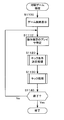
- the flowchart which shows the flow of the process performed in a game process The figure which shows the flow of the process performed in a chute process.
- the figure which shows an example of the hardware constitutions of the 1st game machine in which a battle game with another game machine is possible.
- competition game The flowchart which shows the flow of the process performed in a battle
- competition game is performed by one 2nd game machine in a 1st form.
- the flowchart which shows the flow of the process performed in the battle
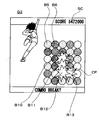
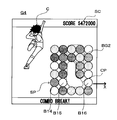
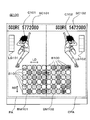
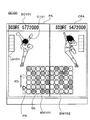
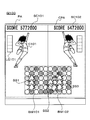
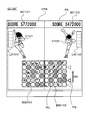
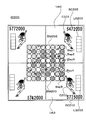
- FIGS. 1 to 4 are examples of game screens G1 to G4 of a game performed on the first game machine of the present invention (hereinafter referred to as “game machine” in this section).
- game machine when it is not necessary to distinguish the game screens G1 to G4, they are referred to as “game screen G”.
- the game of the present invention is a so-called falling object puzzle game, and by causing a character C to shoot a soccer ball SB toward a ball mountain BM composed of 5 rows ⁇ 6 rows of balls B, a row of shoot positions SP (hereinafter referred to as “shooting position SP”).
- the ball group CP satisfying the ball annihilation condition is extinguished and the ball group BG2 above the ball group CP is moved downward in the ball mountain BM after the shoot line is moved.
- the ball mountain BM is destroyed.
- Three colors are prepared for the ball B of this embodiment as a plurality of types, and the annihilation condition is formation of a straight line or an L shape by three consecutive balls B of the same color.
- a score is obtained by the disappearance of the ball group CP, and the score SC of the player displayed at the top of the game screen G is added.
- a direction parallel to the row of ball hills BM is referred to as a row direction rd.
- the row direction rd is a vertical direction (vertical direction) with respect to the game screen G.
- a direction parallel to the line of the ball mountain BM is referred to as a row direction ld.
- the row direction ld is a horizontal direction (left-right direction) with respect to the game screen G.
- the ball B is set to move downward in the column direction rd and to move right in the row direction ld.
- the player is caused to determine the line of the shooting position SP, that is, the shooting line.
- the position determination screen G1 the ball mountain BM and the character C on the left side are displayed, and further, a position specifying symbol PS is displayed on the character C side with respect to the ball mountain BM.
- the position specifying symbol PS reciprocates at a predetermined speed in the column direction rd while indicating the first to sixth rows of the ball mountain BM.
- the position determination operation may be a pressing operation of a predetermined position determination key, for example. In this embodiment, a case where the fifth line is determined as the chute position SP will be described.
- the character C kicks the soccer ball SB, and the soccer ball SB is shot on the shooting line.
- a message appears.
- the soccer ball SB is shot, the balls B arranged in the shooting line move in the shooting direction X parallel to the line direction ld.
- the shooting operation may be a pressing operation of a predetermined shooting determination key.
- the shooting power can be changed in five levels from 1 level to 5 levels according to the number of times the shooting operation is performed. For example, when the shoot operation is performed once, the shoot power is set to level 1, the movement amount of the shoot line is one ball, and when the shoot operation is performed twice, the shoot power is set to level 2. Thus, the amount of movement of the shooting line is equal to two balls. Changes in levels 1 to 5 corresponding to the number of shooting operations are displayed on the level gauge LG.
- the power of the shoot is set to level 2, and the five balls B arranged in the shoot line move in the shoot direction X by two balls.
- the two balls B1 and B2 arranged on the non-shooting side with respect to the shooting line are pushed out of the ball mountain BM and disappear.
- the portion where the ball B3 and the ball B4 on the side to be shot are arranged becomes a blank portion due to the movement of the shoot line, so that the ball group BG stacked above the blank portion is filled so as to fill the blank portion. Fall.
- the new ball B5 and the ball B6 are replenished in each portion (first row, first column, first row, second column) that has become blank due to the drop of the ball group BG. Is done.
- the character C continues on the shooting line with the soccer ball SB. You can shoot.
- the balls B14 to B15 remaining in the shooting line can be moved further one by one in the shooting direction X.
- the continuous shoot operation may be performed by pressing a predetermined continuous shoot determination key.
- the shooting power of the continuous shooting in this embodiment is a constant level (for example, level 1).
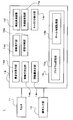
- the hardware configuration of the game machine 1 controls a monitor 11 that displays a game screen G, an operation input unit 12 that includes various keys for receiving player operations, and the progress of the game.
- the game control unit 14 is configured.
- the game control unit 14 includes a CPU, a storage area 15 such as RAM and ROM necessary for its operation, and various timers.
- the storage area 15 stores a program storage unit 15a in which a game program for operating the game machine 1 as a game machine of the present invention is stored, and ball information in which information about the ball B constituting the ball mountain BM is set.
- the recorded ball information storage unit 15b is included.
- the game control unit 14 is mainly operated by the game program stored in the program storage unit 15a, so that the aggregate display unit 14a, the movement line determination unit 14b, the movement amount determination unit 14c, the movement execution unit 14d, the state determination unit 14e, It functions as a structure disappearing part 14f, a moving part 14g after disappearance, and a character display part 14i.
- the functions of the units 14a to 14i will be described later.
- the ball information storage unit 15b stores ball information in which the color of the ball B to appear and the appearance order as the order displayed on the monitor 11 are set for each column of the ball mountain BM.
- the collective display unit 14a places the ball B whose appearance order is set to No. 1 to No. 6 in the ball information in each row of the first to sixth rows in each column of the ball mountain BM.
- the balls B of the color according to the appearance order are sequentially replenished in the upper part of the column where the constituents have dropped to restore the 6-row ⁇ 5-column ball pile BM. .
- step S100 the position determination screen G1 is displayed on the monitor 11, and in step S110, the player enters a position determination operation waiting state.
- step S110 the player enters a position determination operation waiting state.
- the ball mountain BM composed of 5 ⁇ 6 components is displayed, and the character C is displayed on the left side of the ball mountain BM.
- the ball mountain BM is displayed by referring to the ball information relating to each of the columns 1 to 5 to identify the colors having the appearance order of 1 to 6 and arranging the ball B of the specified color in each row of each column. Good.
- the game control unit 14 functions as the aggregate display unit 14a and the character display unit 14i.
- step S110 the position specifying symbol PS is displayed on the character C side with respect to the ball mountain BM and moved in the column direction rd.
- step S110 the process proceeds to step S120, and the line indicated by the position specifying symbol PS when the operation is performed is determined as the chute position SP.
- the game control unit 14 functions as the moving line determination unit 14b.
- the character display unit 14i preferably causes the character C to hold a shot.
- step S130 determines whether or not the level determination time has elapsed.
- the level determination time is the maximum time (0.5 seconds in this embodiment) for receiving a shooting operation as an operation for determining the level of shooting power.
- timing of a level determination timer that measures the level determination time is started and is determined by the timer.
- an affirmative determination is made in step S130, it means that the shooting operation as an operation for determining the level was not performed at the maximum time, and the power of the shooting is determined to the level at that time, and the process proceeds to step S170.
- the shoot process is performed. Thereby, the game control unit 14 functions as the movement amount determination unit 14c. In the shooting process, a process is performed from the shooting of the soccer ball SB until the shooting result is reflected in the score. Details of the chute process will be described later.
- step S130 When a negative determination is made in step S130, the process proceeds to step S140, and the presence / absence of a shooting operation is determined. If a negative determination is made in step S140, the process returns to step S130. If an affirmative determination is made in step S140, the process proceeds to step S150, and the shooting power is increased by one level.
- the display of the level gauge LG is also updated according to the level up. In this way, the interval between each shooting operation is made within 0.5 seconds, that is, the level is determined in accordance with the number of shooting operations by causing the player to continuously perform shooting operations. Although the maximum is level 5, the player can set a desired level according to the state of the ball mountain BM. Note that the initial value of the level of shoot power is zero.
- step S160 it is determined whether or not the shooting power has reached level 5. If a negative determination is made in step S160, the process returns to step S130 to determine whether or not the level determination time has elapsed. The level determination time after the shoot operation is performed is counted every time the shoot operation is performed. If an affirmative determination is made in step S160, it means that the current shooting power is the maximum and the level will not increase any more, and the flow proceeds to the shooting process in step S170. Details of the chute process will be described later. After the shooting process, the game process is terminated.
- step S200 a shoot screen G2 is displayed.
- the character display unit 14i displays a state where the character C shoots the soccer ball SB toward the shoot position SP.
- step S210 a shoot row moving process is performed in step S210.
- the ball B in the shoot row is moved in the shoot direction X by a movement amount corresponding to the level of the shoot power. For example, when the shooting power is level 2, the ball is moved by two balls.
- the game control unit 14 functions as the movement execution unit 14d.
- B1 and B2 jumping out from the ball mountain BM disappear from the shot screen G2.
- step S220 a drop process is performed on the blank portion of the shoot line caused by the movement of the ball B.
- the ball group BG1 stacked above the blank portion is moved downward so as to fill the blank portion.
- New balls B5 and B6 are dropped from the upper side of the game screen G to the top row of the ball mountain BM where a blank is generated due to the fall.
- the game control unit 14 functions as the aggregate display unit 14a.
- the color of the ball B that should appear next is identified by referring to the ball information relating to each of the first column and the second column, and the columns B5 and B6 of the identified color correspond respectively. Display to be refilled.
- step S230 it is determined whether or not there is a clear portion CP. Thereby, the game control unit 14 functions as the state determination part 14e.
- step S230 the process proceeds to step S290, and when an affirmative determination is made, the process proceeds to step S240.
- step S240 the blinking screen G3 is displayed by blinking the clear portion CP. Thereafter, the process proceeds to step S250, in which the plurality of balls B constituting the clear portion CP are extinguished to display the ball extinction screen G4, and the continuation timer starts counting. Thereby, the game control unit 14 functions as the constituent disappearance unit 14f.
- the continuation timer is a timer that measures a continuation time that is a time for receiving a continuation shot.
- step S260 it is determined whether or not there is a continuous shot. If an affirmative determination is made in step S260, the process returns to step S200, and if a negative determination is made, the process proceeds to step S270. In step S270, it is determined whether or not the continuation time has ended. If a negative determination is made, the process returns to step S260.
- step S270 When an affirmative determination is made in step S270, the process proceeds to step S280, and a drop process relating to the clear portion CP that is blank is performed.
- the ball group BG2 disposed above the clear portion CP is moved downward so as to fill the blank of the clear portion CP.
- the game control unit 14 functions as the after-disappearance moving part 14g.
- a new ball is replenished from the upper part of the game screen G to the blank portion at the top of the ball mountain BM generated by the fall, and the shape of the ball mountain BM of 5 columns ⁇ 6 lines is restored.
- Each new ball identifies the color of the ball B that should appear in each column according to the appearance order by referring to the ball information relating to each of the third column and the fourth column, and the ball B of the identified color is played in the game What is necessary is just to replenish from the upper part of the screen G.
- the game control unit 14 functions as the aggregate display unit 14a.
- step S290 score processing is performed.
- a score corresponding to the clear portion CP generated in the turn or a score corresponding to the operation is added to the score SC of the player. After the scoring process, the shooting process is terminated.
- the present invention is not limited to the above-described form and may be implemented in various forms.
- the character C is positioned on the left side with respect to the ball mountain BM, but may be configured to be positioned on the right side and shot from the right side of the ball mountain BM.
- the game process in this case is the same as the above-described game process, but the character action, the display position of the specific position symbol PS, and the shooting direction in the shooting process are symmetrical to the above-described form.
- the character C may be appropriately arranged on the left side or the right side by the operation of the player, and may be configured to be able to shoot from both sides of the ball mountain BM.
- the column direction rd and the row direction ld of the ball mountain BM may not be orthogonal to each other.
- the ball mountain BM does not need to be configured by the ball B, and may be an aggregate formed by a plurality of constituent bodies that form a plurality of columns and a plurality of rows.
- the character C may be arranged on the movement destination side of the shooting line, and the character C may pull the shooting line.
- a predetermined key may be pressed for a long time, and the movement amount may be determined according to the pressing time.
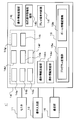
- the game machine 1 ′ of the present invention may further include a communication unit 16 that enables data transmission / reception with another game machine 1 ′.
- a communication unit 16 that enables data transmission / reception with another game machine 1 ′.
- the game control unit 14 of the game machine 1 ′ includes an operation information processing unit 14j, another operation information processing unit 14k, a play order determination unit 14l, operation information, in addition to the units 14a to 14i of the game control unit 14 of the game machine 1. It functions as a transmitter 14m and an operation information receiver 14n. Processing performed in each unit will be described later.
- an opponent character C ′, level gauge LG ′, and score SC ′ corresponding to the player character C, level gauge LG, and score SC are displayed on the match screen G5 that is a game screen in the battle game.
- the ball mountain BM is displayed symmetrically.
- the player can cause the character C to shoot in the shooting direction X from the left side of the ball mountain BM by the above-described game processing in the turn of the player.
- the opponent can cause the character C ′ to shoot in the shooting direction Y from the right side of the ball mountain by a game process performed in the opponent's turn.
- the character C and the character C ′ are also moved symmetrically when shooting.
- FIG. 9 shows a state where the character C ′ shoots in the shooting direction Y on the battle screen G5.
- the game machine 1 ′ provides a battle game in which the same ball mountain BM is shot from both sides to obtain a score.
- the same screen as the battle screen G5 is also displayed on the monitor 11 of the opponent game machine 1 '. That is, in the example of FIG. 9, the character C ′ corresponding to the opponent is displayed on the right side on the opponent monitor 11.
- the game control unit 14 may appropriately determine which of the two players is on which side.
- step S300 a battle screen G5 is displayed.
- the player character C or the like is displayed on the left side of one ball mountain BM, and the opponent character C 'or the like is displayed on the right side.
- the opponent character C ′ may be the same as the player character C, or may be, for example, a character C ′ based on an image of the character C ′ transmitted from the opponent.
- step S305 it is determined whether or not it is a player's turn.
- the game control unit 14 functions as the play order determination unit 141.
- step S310 the process proceeds to step S310, and the above-described game process is performed to cause the character C to shoot.
- step S170 in the battle process an operation information transmission process for transmitting the operation information to another game machine 1 'via the communication unit 16 is performed simultaneously with the shooting process.
- the operation information includes the determined shoot position SP and shoot power level.
- the game control unit 14 functions as the operation information processing unit 14j and the operation information transmission unit 14m.
- step S320 it is determined whether or not the battle game is over. When all the balls B in the ball mountain BM have disappeared, or when there is no more soccer ball possessed by any player, it is determined to end. When a positive determination is made in step S320, the battle process is terminated. If a negative determination is made in step S320, the process returns to step S305.
- step S305 If a negative determination is made in step S305, it means that it is an opponent's turn, and the operation information of the opponent transmitted from the opponent's game machine 1 'in step S330 is received by the communication unit 16. . Thereby, the game control unit 14 functions as the operation information receiving unit 14n. Then, it progresses to step S340 and a shoot process is performed based on the received operation information of the opponent. In the shooting process in step S340, the action of the character C ′ and the shooting direction Y are symmetric with respect to the movement of the character C and the shooting direction X, and the score obtained in step S290 is added to the score SC ′ of the opponent. May be the same processing as the above-described chute processing. Thereby, the game control unit 14 functions as another operation information processing unit 14k. Note that the battle game of the present invention may be configured such that the battle process is performed in one game machine 1 ′ without transmitting / receiving operation information.
- FIG. 11 shows a game system GS1 constituted by the second game machines GM1 and GM2 (hereinafter referred to as “game machines GM1 and GM2” in this section) of the present invention. It is a figure which shows an example as a 1st form.
- the game machine GM1 is operated by the player P, and the game machine GM2 is operated by the opponent COP.
- the game machine GM1 and the game machine GM2 of this embodiment directly transmit and receive data using, for example, infrared rays as a carrier wave, but may be configured to transmit and receive data via a predetermined network.
- the connection format may be wireless or wired.
- the game machines GM1 and GM2 of the present embodiment are mobile phones having a key unit KY provided with a monitor MT for displaying a game screen and a plurality of keys for receiving data input from the player P or the opponent CO.
- a key unit KY provided with a monitor MT for displaying a game screen
- a plurality of keys for receiving data input from the player P or the opponent CO.
- game machine GM when there is no need to distinguish between the game machine GM1 and the game machine GM2, it is referred to as “game machine GM”.
- the game machine GM of the present invention may be a portable or fixed computer instead of a portable phone.
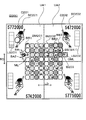
- the game screen GI100 includes a left half player area PA and a right half opponent area CPA.
- a configuration associated with the player P is displayed in the player area PA.
- a ball mountain BM101 as an aggregate of the player P
- a character C101 a score SC101
- a level gauge LG101 indicating force is displayed in the opponent area CPA.
- the opponent area CPA a configuration associated with the opponent COP is displayed.
- the ball mountain BM102 as an aggregate of the opponent COP, a character C102, a score SC102, and a kick force described later. Is displayed as a level gauge LG102.
- ball mountain BM100 when it is not necessary to distinguish between the ball mountain BM101 and the ball mountain BM102, it is referred to as “ball mountain BM100”, and when it is not necessary to distinguish between the character C101 and the character C102, it is referred to as “character C100”, and the score SC101 and the score SC102.
- level gauge LG100 When it is not necessary to distinguish between the level gauge LG101 and the level gauge LG102, it is referred to as “level gauge LG100”.
- the ball mountain BM101 of the player P and the ball mountain BM102 of the opponent COP are arranged so as to be adjacent to each other in the row direction LD, and each ball mountain BM100 is constituted by a plurality of types of balls B100 as a plurality of types of structures.
- a plurality of types of balls B100 of the ball mountain BM100 are arranged in a matrix of five in the row direction LD and six in the column direction RD.
- Each ball B100 has the same shape and size, and the type is identified by the pattern and color. It is configured to be.
- the configuration relating to the player P and the configuration of the opponent COP corresponding to the configuration are displayed symmetrically.
- This game is a battle game in which the character C100 kicks the soccer ball on the above-described game screen GI100, the ball mountain BM100 is destroyed by the kicked soccer ball, and the scores SC101 and SC102 are competed.
- this game is a turn-based game, that is, the operation of the player P and the operation of the opponent COP are performed alternately.
- the position designation index PS is displayed on the side surface of the ball mountain BM101 on the character C101 side on the game screen GI100 as the kick condition determination screen as shown in FIG.
- the position designation index PS reciprocates at a predetermined speed in the column direction RD while showing the first to sixth rows along the side surface of the ball mountain BM101.
- the position designation index PS is stopped according to the operation, and the line indicated by the stopped position designation index PS is determined as the moving line ML. .
- the moving line ML is determined, a message indicating that the character C101 performs a backswing for kicking is displayed.
- a plurality of moving lines including the line indicated by the position designation index PS may be set as the movement line ML, or another line having a predetermined relationship with the line indicated by the position designation index PS is set as the movement line ML. May be.
- the kick force is determined.
- Five levels of kick power are prepared. In this embodiment, the kick power is determined by the number of times the kick power determination operation is performed.
- the level gauge LG101 displays a level indicating the determined kick force.
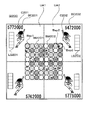
- the kick force is determined, as shown in FIG. 14, the soccer ball SB is kicked by the character C101, and the kicked soccer ball SB is displayed so as to hit the ball B101 at the end of the moving line ML on the character C101 side.
- the movement line ML hit by the soccer ball SB moves in the opponent direction (right direction in this embodiment) by a movement amount corresponding to the determined kick force.
- the line corresponding to the moving line ML in the ball mountain BM102 of the opponent COP, that is, the opponent moving line CML in the moving direction of the moving line ML also moves so as to be pushed out by the moving line ML.
- the moving line ML and the ball B100 constituting the opponent moving line CML adjacent to the moving line in the row direction LD move in the opponent direction by a moving amount corresponding to the kick force.
- the moving line ML and the opponent moving line CML are equal to one ball. Shows movement in the direction of the opponent.
- the ball B102 at the end on the opponent side of the movement line ML of the player P moves into the opponent's ball mountain BM102, and is thereafter treated as the ball B100 constituting the ball mountain BM102. Further, the ball B103 pushed out from the ball mountain BM102 is erased.
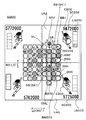
- FIG. 15 shows that the specific state SS1 occurs in the ball mountain BM101 and the specific state SS2 and the specific state SS3 occur in the ball mountain BM102.
- specific states SS when it is not necessary to distinguish between the specific states SS1, SS2, and SS3, they are referred to as “specific states SS”.
- a score is calculated according to the generated specific state SS, and the scores SC101 and SC102 of the player P and the opponent COP are updated.
- the ball B constituting the specific state SS flashes and then is erased. Thereby, the area where the specific state SS has occurred becomes a blank area.
- the balls B arranged above the blank area in the column direction RD move downward so as to fill the blank area.
- the supply ball B100 is newly supplied so as to fill the blank area generated in the upper part of the ball mountain BM100 by the movement.
- the supply ball B100 may be supplied from the upper side of the game screen GI100, although the supply ball B100 may be supplied to the blank area.
- the ball mountain BM100 is maintained in a state in which the balls B100 of 6 rows and 5 columns are arranged until the balls B100 disappear.
- the number of balls B100 corresponding to each of the player P and the opponent COP is constant, and the order in which the supply balls B100 are supplied and the types are set in advance.
- ML can be further moved by the soccer ball SB.
- the movement amount of the moving line ML in the continuous kick may be the same as the movement amount of the first kick, or the same movement amount may be set in advance as the movement amount of the continuous kick.
- the opponent COP is the player P, and the same position determination operation and kick force determination operation as those performed by the player P on the game machine GM1 are performed on the game machine GM2.
- the game machine GM1 obtains movement information including the movement line ML and kick force (movement amount) determined by the opponent COP
- the movement line ML indicated by the movement information is set as the opponent movement line CML of the ball mountain BM102.
- a process related to the movement of the opponent movement line CML is performed using the kick force indicated by the movement information as the movement amount of the opponent movement line CML.
- the opponent ML of the ball mountain BM101 corresponding to the opponent moving line CML is pushed out by the opponent moving line CML and moves to the left together with the opponent moving line CML.
- the character C102 is caused to kick the soccer ball SB, and the kicked soccer ball SB hits the ball B100 arranged on the character C102 side of the opponent moving line CML.
- the moving line CML is displayed on the game screen GI100.
- the process after the movement of the ball B100 is the same as the process in the operation order of the player P.
- the game machine GM includes a key unit KY as an operation input unit and a monitor MT as a display unit, a communication unit 111 for transmitting / receiving data to / from other game machines GM, and a game program for realizing the present invention. And a storage unit 112 that stores various data, and a game control unit 110 that performs various controls for executing the above-described game.
- the game control unit 110 includes a CPU, various storage areas necessary for its operation, and various timers, and functions as a computer.
- the game control unit 110 By running the game program stored in the storage unit 112, the game control unit 110 mainly performs the aggregate display unit 110a, the aggregate setting unit 110b, the movement processing unit 110c, the movement result processing unit 110d, and the movement information processing unit 110e. And it functions as the operation order specifying unit 110f. The functions of the units 110a to 110f will be described later.
- the storage unit 112 stores player information 120 and opponent information 130.
- the player information 120 is information related to the player P. As shown in FIG. 17A, the player P score 121, the ball mountain information 122 indicating the situation of the player P's ball mountain BM101, and the ball B100 supplied to the ball mountain BM101. The supply ball information 123 regarding is included.
- the score 121 is displayed as the score SC101 on the game screen GI100.
- the ball mountain information 122 is information indicating the type and position of each of the plurality of balls B100 constituting the current ball mountain BM101.
- the information of the ball mountain information 122 and the display of the ball B100 in the ball mountain BM101 are linked. When the information of each ball B100 in the ball mountain information 122 changes by the game control unit 10, the ball of the ball mountain BM101 is changed accordingly.
- the display of B changes.
- the supply ball information 123 is information set in the order in which the type of the ball B100 is supplied to each column (hereinafter referred to as “supply sequence”) for each of the first to fifth columns of the ball mountain BM101.
- supply sequence the order in which the type of the ball B100 is supplied to each column
- the first to sixth balls B100 are supplied with respect to each row, thereby forming the ball mountain BM101 at the start of the game.
- a predetermined type of ball B100 is supplied to the ball mountain BM101 in the supply order set in the supply ball information 123.
- the information 121 to 123 constituting the player information 120 may be associated with the identification information of the player P, for example, and may not physically form one record.
- the opponent information 130 is information on the opponent COP. As shown in FIG. 17B, the score 131 of the opponent COP, the ball mountain information 132 indicating the situation of the ball mountain BM102 of the opponent COP, and the ball mountain BM102 are supplied. Supply ball information 133 concerning the ball 100 to be played is included. The score 131 is displayed on the game screen GI100 as the score SC102.
- the ball mountain information 132 is information indicating the type and position of each of the plurality of balls B100 constituting the current ball mountain BM102. The information of the ball mountain information 132 and the display of the ball B100 in the ball mountain BM102 are linked. When the information of each ball B100 in the ball mountain information 132 is changed by the game control unit 110, the ball of the ball mountain BM102 is changed accordingly. The display of B100 changes.
- the supply ball information 133 is information set in the order in which the type of the ball B100 is supplied to each row (hereinafter referred to as “supply order”) for each of the first to fifth columns of the ball mountain BM102.
- supply order the order in which the type of the ball B100 is supplied to each row
- the first to sixth balls B100 are supplied with respect to each row, thereby forming the ball mountain BM102 at the start of the game.
- a predetermined type of ball B100 is supplied to the ball mountain BM102 in the supply order set in the supply ball information 133.
- step S1100 the player P's ball mountain BM100 is set as the ball mountain BM101, and the opponent COP's ball mountain BM100 is set as the ball mountain BM102.
- a game screen GI100 showing the ball mountain BM101 and the ball mountain BM102 adjacent to the LD is displayed on the monitor MT.
- the game control unit 110 functions as an aggregate display unit 110a and an aggregate setting unit 110b.
- the type of the ball B100 constituting each ball mountain BM100 is determined based on the ball mountain information 122 and 132.
- step S1110 it is determined whether or not the operation order of the player P is present.
- the game control unit 110 functions as the operation order specifying unit 110f. Since the game of this embodiment is turn-based, the operation order of the player P or the opponent COP is set alternately. If it is determined in step S1110 that the operation order of the player P is present, the process proceeds to step S1120.
- step S1120 kick condition determination processing is performed. In the kick condition determination process, the movement line ML and the kick force as the movement amount are determined based on the operation of the player P. Details of the kick condition determination process will be described later.
- step S1130 kick processing is performed.
- the movement line ML of the ball mountain BM101 is moved based on the determined kick condition, that is, the determined movement line ML and kick force, and based on the situation of the ball mountain BM101 and the ball mountain BM102 after the movement. To score. Details of the kick process will be described later.
- step S1140 it is determined whether or not the game is over. For example, when a predetermined time elapses after the game starts, it is determined that the game is over.
- the game may be determined to end when either the player mountain P BM101 of the player P or the ball mountain BM 102 of the opponent COP enters a predetermined state. When it is determined that the game has ended, the game ends. When it is not determined that the game has ended, the process returns to step S1110.
- step S1110 when it is determined in step S1110 that it is not the operation order of the player P, it is the operation order of the opponent COP, and the process proceeds to step S1150.
- step S1150 movement information of the opponent COP is acquired from the game machine GM2.
- the movement line ML and kick force of the opponent COP determined based on the operation of the opponent COP are set. If movement information is acquired, it will progress to step S1160 and a kick process will be performed based on the movement line ML and kick force which were set to movement information.
- the kick process in step S1160 the same process is performed with the moving line ML in the kick process in step S1130 described above as the opponent moving line CML. Details of the kick process related to the opponent COP will be described later. After the kick process ends, the process proceeds to step S1140.
- step S1200 the position designation index PS is displayed on the game screen GI100. As described above, the position designation index PS moves in the column direction RD while showing each row of the ball mountain BM101. Then, it progresses to step S1210 and will be in the position determination operation waiting state.
- step S1220 the position designation index PS is stopped at a timing according to the position determination operation, and the line indicated by the stopped position designation index PS is determined as the moving line ML.
- step S1230 to start timing the level determination time, and it is determined in step S1240 whether the level determination time has elapsed.
- the level determination time in this embodiment is 0.5 seconds, for example. If it is determined that the level determination time has elapsed, the process proceeds to step S1280. On the other hand, it is determined in step S1250 whether or not there is a kick operation by the player P within the level determination time. For example, when a predetermined kick operation key is pressed in the key portion KY, it is determined as a key operation. If it is determined that there is no kick operation, the process returns to step S1240. If it is determined that there is a kick operation, the process proceeds to step S1260, and the level of the kick force is increased by one.
- the display of the level gauge LG101 is also changed according to the change in level.
- step S1270 it is determined whether or not the kick force has reached the level 5. If the kick power has reached the level 5, the process proceeds to a step S1280, and if not, the process returns to the step S1230.
- the kick force can be set up to level 5 in accordance with the number of kick operations. However, it is necessary that the next kick operation after the kick operation is performed within the level determination time.
- step S1280 movement information including the determined kick condition, that is, the determined movement line ML and the determined kick force is generated, and the generated movement information is transmitted to the game machine GM2. Thereby, the game control part 110 functions as the movement information processing part 110e. When the movement information is transmitted, the kick condition determination process ends.
- the game control unit 110 changes the setting information of the ball mountain information 122 and 132, so that the display of the ball mountain BM100 is changed based on the change. To do.
- the kick process is performed both in the operation order of the player P and in the operation order of the opponent COP. First, the kick process performed in the operation order of the player P will be described.
- step S1300 a kick screen is displayed on the monitor MT.
- the character C101 kicks the soccer ball SB
- the kicked soccer ball SB is displayed on the character C101 side of the moving line ML.
- the process proceeds to step S1310, and a movement process is performed.
- the game control unit 110 functions as the movement processing unit 110c.
- the ball B100 constituting the movement line ML is moved in the direction of the opponent according to the level of the kick force.
- the opponent movement line CML is also moved so as to be pushed to the movement line ML.
- the kick power is level 1
- the moving line ML and the opponent moving line CML move by one ball.
- a blank area for one ball B100 is generated on the character C101 side of the moving line ML, and one ball B100 located on the character C102 side of the opponent moving line CML is pushed out and erased.
- step S1320 it is determined whether or not a specific state SS has occurred in the ball mountain BM101, BM102 after the movement of the moving line ML and the opponent moving line CML.
- step S1370 the process proceeds to step S1370.
- step S1330 the ball B100 constituting the specific state SS is blinked.
- step S1340 the blinking ball B100 is erased and the continuation timer is started.
- the continuation timer is a timer that counts the continuation time for allowing the continuation kick.
- step S1350 it is determined whether there is a continuous kick. When a predetermined continuous kick operation key in the key portion KY is pressed by the player P, it is determined that there is a continuous kick.
- step S1350 If it is determined in step S1350 that a continuous kick has been made, continuation information indicating that a continuous kick has been made is transmitted to the game machine GM2 in step S1355, and then the process returns to step S1300 to perform processing related to the continuous kick. Is called.
- the movement amount of the moving row ML in step S1310 regarding the continuous kick may be, for example, the same as the movement amount of the immediately preceding kick, or may be a movement amount set in advance as the movement amount of the continuous kick.
- step S1360 the process proceeds to step S1360, and it is determined whether the continuous time has ended.
- step S1360 When it is determined in step S1360 that the continuous time has not ended, the process returns to step S1350 to enter a continuous kick waiting state, and when it is determined that the continuous time has ended, the process proceeds to step S1370.
- step S1370 score processing is performed.
- the scores of the player P and the opponent COP are calculated based on the occurrence of the specific state SS, the scores 121 and 131 are updated, and the scores SC101 and SC102 of the game screen GI100 are displayed along with the update. Is updated.
- a negative score may be set when no specific state SS has occurred.
- step S1380 the falling process of the ball B100 is performed on each blank area generated by the movement of the specific state SS and the moving line ML so as to fill the blank area.
- the ball B100 positioned above the blank area in the column direction RD falls so as to fill the blank area. Due to the fall, a blank area is generated above the ball hills BM101 and BM102. Therefore, a new supply ball B100 is supplied so as to fill the blank area generated above the ball hill BM100.
- the order of the types of the balls B100 supplied to the respective rows of the ball mountains BM101 and BM102 is determined based on the supply ball information 123 and 133.
- the kick process ends.
- the game control unit 110 functions as the movement result processing unit 110d through steps S1320 to S1370 of the kick process, and the game control unit 110 functions as the aggregate display unit 110a through step S1380.
- a kick process that is executed in the operation order of the opponent COP in the game machine GM1 of the player P will be described.
- the kick process in this case, it waits for the movement information transmitted from the game machine GM2, treats the movement line ML set in the acquired movement information as the opponent movement line CML, and sets the kick power set in the movement information. Is treated as a kick force that moves the opponent movement line CML.
- the display relating to the movement of the opponent movement line CML in the operation order of the opponent COP is displayed symmetrically with respect to the center part of the game screen from the display relating to the movement of the movement line ML in the operation order of the player P.
- step S1300 the kick screen displays that the character C102 kicks the soccer ball SB and the kicked soccer ball SB hits the opponent movement line CML from the character C102 side. Is done.
- step S1310 the opponent movement line CML is moved in the direction of the player area PA (hereinafter referred to as “player direction”) in accordance with the kick force of the opponent COP, and the opponent movement line CML is associated with the movement.
- the movement line ML of the ball mountain BM101 at the position corresponding to is moved so as to be pushed out to the opponent movement line CML.
- step S1320 to step S1380 are the same as those described above.
- the presence / absence of a continuous kick in step 1350 determines that there is a continuous kick when the continuous information is acquired from the game machine GM2, and transmission of the continuous information in step S1355 is unnecessary.
- the game screen GI100 'displayed on the monitor MT of the game machine GM2 is the same as the game screen GI100 displayed on the monitor MT of the game machine GM1.
- an opponent COP that operates the game machine GM2 is a player P (hereinafter referred to as “player P ′”)
- a player P that operates the game machine GM1 is an opponent COP (hereinafter referred to as “opponent COP ′”).
- the right half of the game screen GI100 ′ is the player area PA, and the player area PA includes the character C102, the ball mountain BM102, the score SC102, and the level related to the player P ′.
- the gauge LG102 is displayed.
- the left half of the game screen GI100 ' is an opponent area CPA, and a character C101, a ball mountain BM101, a score SC101, and a level gauge LG101 related to the opponent COP' are displayed in the opponent area CPA.
- the process related to the character C101, the ball mountain BM101, the score SC101, and the level gauge LG101 in the battle game process of the game machine GM1 is performed as the process related to the character C102, the ball mountain BM102, the score SC102, and the level gauge LG102 in the battle game process of the game machine GM2. Just do it.
- the position designation index PS displayed on the character C102 side of the ball mountain BM102 on the game screen GI100 ′ is symmetrical to the position designation index PS displayed on the game machine GM1, as shown in FIG. Is displayed. Further, as shown in FIG. 23, the movement direction of the movement line ML and the opponent movement line CML moved by the operation of the player P ′ is also the movement direction of the movement line ML and the movement direction of the opponent movement line CML in the game machine GM1. And symmetrical with respect to the center of the game screen GI100 ′.
- the present invention is not limited to the above-described form, but may be implemented in various forms as the first form.
- you may comprise so that it may operate with the two players P1 and P2 which fight one game machine GM.
- the game screen GIot displayed on the monitor MT is configured by a player area PA1 and a player area PA2 corresponding to each player.
- the same score SC101, character C101, ball mountain BM101, and level gauge LG101 as in the player area PA of the game screen GI100 displayed on the monitor MT of the game machine GM1 described above are displayed.
- the player area PA2 includes a score SC102 and a character SC102 corresponding to the score SC102, the character C102, the ball mountain BM102, and the level gauge LG102 of the player area PA on the game screen GI100 ′ displayed on the monitor MT of the game machine GM2.
- C102, ball mountain BM102, and level gauge LG102 are displayed.
- step S1100 the above-described game screen GIot is displayed on the monitor MT.
- step S1110 ' the player in the operation order is identified among the players P1 and P2.
- the kick condition determination process in step S1120 and the kick process in step S1130 are performed.
- the processing related to the player P1 is the same as the kick condition determination processing and kick processing related to the player P in the game machine GM1, and the processing related to the player P2 is similar to the kick condition determination processing and kick processing related to the player P ′ in the game machine GM2. It only needs to be processed. However, transmission of movement information in the kick condition determination process (step S1280) and continuation information transmission in the kick process (step S1355) are unnecessary.
- FIG. 26 is a diagram showing an example of a game system GS2 including the game machines GM101 to GM104 of the present invention as the second form. Each of the four game machines GM101 to GM104 is operated by each of four users U1 to U4.
- Each of game machine GM101 to game machine GM104 is a portable phone having a monitor MT and a key unit KY, and is configured to transmit and receive data to and from each other via network N.
- game machine GM100 when it is not necessary to distinguish between the game machines GM101 to GM104, it is referred to as “game machine GM100”, and when it is not necessary to distinguish between the users U1 to U4, it is referred to as “user U”.
- the game executed on the game machine GM100 (hereinafter referred to as “main game”) is a so-called fallen game similar to the game executed on the game machine GM of the first form.
- a basic configuration of the game screen GI200 displayed in this game will be described with reference to FIG.
- the game screen GI200 is composed of four areas, a user area UA1 to a user area UA4.
- Each user area UA1 to user area UA4 is an area corresponding to each user U1 to user U4, and each user area UA1 to user area UA4 displays information related to the corresponding user U1 to user U4.
- a ball mountain BM201, a character C201, a score SC201, and a level gauge LG201 are displayed as information related to the user U1.
- user area UA when it is not necessary to distinguish between the user areas UA1 to UA4, it is referred to as “user area UA”, and when it is not necessary to distinguish between the ball mountain BM201 to ball mountain BM204, it is referred to as “ball mountain BM200”, and the character C201.
- character C200 When it is not necessary to distinguish the character C204, it is referred to as “character C200”.
- score SC200 When it is not necessary to distinguish between the score SC201 to the score SC204, it is referred to as “score SC200”, and it is necessary to distinguish between the level gauge LG201 to the level gauge LG204. When there is not, it is called “level gauge LG200”.
- the ball mountain BM201 to the ball mountain BM204 are arranged so as to be adjacent to the row direction LD or the column direction RD continuously to the circumferential direction CD of the game screen GI200.
- Each ball mountain BM200 is composed of a plurality of types of balls B200 as a plurality of types of structures.
- the plurality of balls B200 in each ball mountain BM200 are arranged in a matrix of four in the row direction LD and four in the column direction RD.
- Each ball B200 has the same shape and size, and the type is identified by the pattern and color.
- the game screen GI200 displayed on each of the game machines GM101 to GM104 may be configured such that the same screen is displayed on all the game machines GM100, or the user area of the user U who operates the own machine You may comprise so that UA may be set to the user area UA of the screen upper left. This form demonstrates the case where the same game screen GI200 is displayed in each game machine GM100.
- This game is a battle game in which the character C200 kicks the soccer ball SB, breaks the ball mountain BM200 with the kicked soccer ball SB, and competes for the score SC200, similarly to the game in the first embodiment.
- This game is a turn-based game, and the operation order of each of the users U1 to U4 is sequentially specified.
- the game screen GI200 when the user U1 is specified as the user in the operation order (hereinafter referred to as “operation user”) will be described with reference to FIGS.
- the operating user is the user U1
- the user U1 corresponds to the player P in the first form
- the user area UA1 corresponds to the player area PA in the first form.
- the position designation index PS is displayed as in the first embodiment, and the moving line ML and the kick force are determined according to the operation of the user U1.
- the ball mountain BM200 and the user area UA2 adjacent to the ball mountain BM201 of the user U1 and the circumferential direction CD respectively correspond to the ball mountain BM100 and the opponent area CPA of the opponent COP of the first form.
- the user U corresponding to the ball mountain BM200 adjacent to the operation user's ball mountain BM200 in the circumferential direction CD is referred to as "adjacent opponent", and the opponent other than the adjacent opponent is sometimes referred to as "other opponent”.
- the relationship between the operating user and the adjacent opponent in the second mode corresponds to the relationship between the player P and the opponent COP in the first mode.
- FIG. 28 corresponds to the kick screen in the first mode, and shows the movement line ML and the opponent movement line CML moving in the line direction LD by the kick force of one ball.
- the balls B203 arranged on the moving direction side of the opponent movement line CML jump out of the ball mountain BM202 and are then erased.
- processing similar to that in the first embodiment is performed according to the situation of the ball mountain BM201 of the operating user U1 and the ball mountain BM202 of the adjacent opponent U2 after the movement. Finally, the scores SC201 and 202 of the operation user U1 and the adjacent opponent U2 are calculated.
- the specific state SS is generated by the movement line ML and the opponent movement line CML moving in the line direction LD, the three balls B200 constituting the specific state SS are erased. Thereby, the area where the specific state SS has occurred becomes the blank area SA1. Also, a blank area SA2 is generated on the side of the moving line ML that has been hit by the soccer ball SB. In each of the generated blank areas SA1 and SA2, the ball groups BB1 to BB3 arranged in the column direction RD of the blank areas SA1 and SA2 drop and move in the column direction RD so as to fill the blank areas SA1 and SA2.
- FIG. 29 shows a state where the supply ball groups Bsp1 to Bsp3 are supplied to the blank area generated in the upper part of each of the ball hills BM201 and 202.
- the adjacent opponent in this case is specified by the user U3.
- the ball mountain BM202 of the operating user U2 and the ball mountain BM203 of the adjacent opponent U3 are adjacent to each other in the column direction RD.
- each of the column direction RD and the row direction LD is changed to the row direction LD and the column in the processing (described above) when the two ball peaks BM200 are adjacent to the row direction LD. What is necessary is just to process considering each of the directions RD.
- the column direction RD is assumed to be the assumed row direction LD ′
- the row direction LD is assumed to be the assumed column direction RD ′
- the left-right direction is assumed to be the up-down direction
- the same processing as that in the case where the two ball peaks BM200 are adjacent to the row direction LD Can be done.
- the position designation index PS is displayed on the character C202 side of the operation user U2, and the moving line ML 'and the kick force are determined by the operation of the operation user U2.
- the moving row ML ′ is determined, the moving row ML ′ and the opponent moving row CML ′ pushed by the moving row ML move in the row direction LD ′ according to the kick force.
- FIG. 30 corresponds to the kick screen in the first mode, and shows that the moving line ML ′ and the opponent moving line CML ′ move in the deemed line direction LD ′ in accordance with the kick force for one ball. Due to the movement of the opponent movement line CML ′, the ball B203 arranged on the movement direction side of the opponent movement line CML ′ jumps out of the ball mountain BM203 and is then erased.
- Ball groups BB1 to BB5 positioned in the column direction RD ′ are arranged in the blank areas SA1 and SA2 so as to fill the blank area SA1 generated based on the specific area SS and the blank area SA2 generated based on the movement of the moving row ML. Move in direction RD ′.
- a blank area is generated above each ball mountain BM202, BM203, that is, on the right side. Therefore, supply ball groups Bsp1 to Bsp5 are supplied so as to fill the generated blank area.
- the supply ball groups Bsp1 to Bsp5 may be supplied to the corresponding blank area, but it is preferable that the supply ball groups Bsp1 to Bsp5 are supplied by moving from the upper side of each user area UA2, UA3, that is, from the right side toward the blank area.
- FIG. 31 shows a state where the supply ball groups Bsp1 to Bsp5 are supplied to the blank area generated in the upper part (right side) of the ball hills BM202 and BM203. Thereby, the shape of the ball crest BM200 by the balls B200 arranged in a 4 ⁇ 4 matrix is maintained.
- the adjacent opponent is set as the user U4, and the game screen GI200 displays a symmetrical image with the game screen GI200 when the operating user is the user U1.
- the adjacent opponent is set as the user U1, and the game screen GI200 in this case has an image that is vertically symmetrical with the game screen GI200 when the operating user is the user U2. Is displayed.
- the hardware configuration of the game machine GM100 is the same as the hardware configuration of the game machine GM shown in FIG.
- player information 120 is stored as information related to the user U who operates the player
- opponent information 130 corresponding to each user U is stored as information related to each of the other three users U. ing.
- the player information 120 and each opponent information 130 are identified by the identification information of each user U.
- the position where each ball mountain GM200 is arranged is also set. The position is set as an area number unique to the area, for example.
- step S1100 each of the ball mountains BM201 to BM204 is set for each of the users U1 to U4, and the ball mountains BM201 to BM204 are made adjacent to each other in the column direction RD or the row direction LD.
- the displayed game screen GI200 is displayed.
- the game control unit 110 functions as an aggregate display unit 110a and an aggregate setting unit 110b.
- the type of the ball B200 constituting each ball mountain BM200 is determined based on the ball mountain information 122 and 132 of each user U.
- step S1110 it is determined whether or not the operation order of the player U, that is, the user U who operates the own device. If a positive determination is made in step S1110, the process proceeds to step S1120.
- step S1120 kick condition determination processing is performed. In the kick condition determination process, the movement line ML and the kick force as the movement amount are determined based on the operation of the player P, that is, the user U who operates the player's own machine. Details of the kick condition determination process will be described later.
- step S1130 kick processing is performed.
- the moving line ML (ML ′) of the ball mountain BM200 of the operating user U and the opponent of the ball mountain BM200 of the adjacent opponent are determined based on the determined kick condition, that is, the determined moving line ML and kick force.
- the moving line CML (CML ′) is moved, and a score is obtained based on the situation of each ball mountain BM200 after the movement. Details of the kick process will be described later.
- step S1140 it is determined whether or not the game is over. For example, when a predetermined time elapses after the game starts, it is determined that the game is over.
- step S1150 the movement information of the user U in the operation order, that is, the operation user is acquired from the game machine GM100 operated by the operation user.
- a movement line ML (ML ′) and a kick force determined based on the operation of the operating user are set. If movement information is acquired, it will progress to step S1160 and will perform a kick process based on the movement line ML (ML ') and kick force which were set to movement information.
- the kick process in step S1160 the same process as the kick process in step S1130 described above is performed. Details of the kick process will be described later. After the kick process ends, the process proceeds to step S1140.
- the kick condition determination process in the second form is the same as in the first form.
- the position designation index PS is shown in step S1200 while indicating each column of the ball mountain GM200 of the player P (user U who operates the player's own machine).
- Move in the row direction LD (deemed column direction RD ′).
- movement information including movement line ML (ML ') determined based on the operation of player P, kick power, and information for identifying player P is generated. It is transmitted to the three game machines GM100.
- a kick screen is displayed.
- an operating user and an adjacent opponent of the operating user are specified.
- the operating user is the user U1
- the user U2 corresponding to the user area UA2 adjacent to the user area UA1 in the circumferential direction CD is specified as the adjacent opponent.
- the same process as the kick process relating to the player P in the first embodiment may be performed with the operating user as the player P in the first form and the adjacent opponent as the opponent COP in the first form.
- the column direction RD in the first embodiment is regarded as the column direction RD ′
- the first The row direction LD in the above form may be regarded as the assumed row direction LD ′
- the left and right direction in the first form may be regarded as the up and down direction.
- the present invention is not limited to the above-described form and may be implemented in various forms as the second form.
- the user area UA of the user U who operates the player may be configured to be displayed on the upper left of the game screen GI200.
- the user area UA of each other user U is set so that the relative positional relationship is common among the game machines GM100 from the position of the user area UA of the user U who operates the machine.
- the position of the corresponding user area UA may be set in the player information 120 of each user U and the ball mountain information 122, 132 of each opponent information 130.
- the movement information acquired from the other game machine GM100 may specify the ball mountain BM200 to be processed with the user corresponding to the movement information as the operation user.
- the user U may be configured to change the position of his / her area UA as appropriate. In this case, what is necessary is just to comprise so that the user area UA of the user U can be set to a desired position so that the relative positional relationship of each user area UA may be maintained.
- the number of the balls B200 in the column direction RD and the row direction LD of the ball mountain BM200 is not limited to four. Further, the number of balls B200 in the column direction RD and the number of balls B200 in the row direction LD may be different.
- the direction in which the plurality of aggregates BM200 are continuous is not limited to the circumferential direction, and may be continuously arranged in a predetermined direction so as to be adjacent in the column direction or the row direction.
Landscapes
- Engineering & Computer Science (AREA)
- Multimedia (AREA)
- Human Computer Interaction (AREA)
- User Interface Of Digital Computer (AREA)
- Processing Or Creating Images (AREA)
Abstract
ゲーム画面上に積み上げられた複数の構成体の状態に応じて得点が得られるゲームにおいて、アクション性を高めたゲーム機を提供する。 プレイヤによる移動行決定操作により、複数のボールB、B100で構成されるボール山BM、BM100の複数の行のうち移動させるシュート行を決定し、プレイヤによる移動量決定操作により、移動行MLを移動させる移動量を決定する。ボール山BM、BM100に対して、決定された移動行上の複数のボールB、B100を、決定された移動量に応じて行方向に関して移動させ、移動行の移動後のボール山BMにおける複数のボールB、B100が所定の状態を構成する場合に、その複数のボールB、B100を消滅させ、消滅した各ボールB、B100の列上に配列されたボールB、B100を列方向に移動させる。
Description
本発明は、複数の構成体に基づいたパズルゲームが行われるゲーム機及びゲームプログラムに関する。
ゲーム画面上にて複数の落下物を落下させて構成体として積み上げ、その積み上げられた構成体の状態に応じて得点を与えるいわゆる落ち物パズルゲームは周知である(例えば特許文献1参照)。
しかし、周知の落ち物パズルゲームにおいては、プレイヤは落下物の落下位置を決定できる程度で、プレイヤの操作によって制御される要素は少ない。また、周知の落ち物パズルゲームにおいては、他のプレイヤと対戦する場合、各プレイヤは自分に与えられた複数の構成体に対してそれぞれ操作し、ゲーム結果を競う構成は知られているが、自分の構成体に対して行ったプレイヤの操作が他のプレイヤの構成体にも影響するパズルゲームは存在しない。
そこで、ゲーム画面上に積み上げられた複数の構成体の状態に応じて得点が得られるゲームにおいて、プレイヤの操作によってより多くの要素が決定され、アクション性を高めたゲーム機及びゲームプログラムを提供することを目的とする。また、上記ゲームにおいて、プレイヤの操作が自分の構成体だけでなく、対戦相手の構成体にも影響を与えるように構成されたゲーム機及びゲームプログラムを提供することを目的とする。
本発明の第1のゲーム機は、プレイヤの操作を受け付ける操作入力部と、ゲーム画面を表示する表示部と、前記表示部にて、複数種類の構成体によって形成される集合体の状態をプレイヤの操作に応じて変化させるゲームを進行するゲーム制御部を有するゲーム機であって、前記ゲーム制御部は、前記複数種類の構成体が列方向及び行方向に配列された複数の列及び複数の行によって形成された前記集合体を前記表示部に表示させる集合体表示部と、前記表示部に表示された前記集合体の状態を、プレイヤの操作に応じて変化させるゲームを進行するゲーム制御部を有するゲーム機であって、前記ゲーム制御部は、前記集合体の複数の行のうち移動させる移動行を決定する移動行決定部と、前記プレイヤによる移動量決定操作により、前記移動行を移動させる移動量を決定する移動量決定部と、前記移動量決定部にて前記移動量が決定されると、前記表示部に表示された集合体に対して、前記移動行上の複数の構成体を、前記移動量に応じて行方向に関して移動させる移動実行部と、前記移動実行部による移動後の前記集合体の状態に対して、前記集合体を構成する複数種類の構成体が、前記種類に関して所定の状態を構成するか否かを判断する状態判断部と、前記所定の状態になったと判断された場合は、前記移動後の集合体の状態に対して、その所定の状態を構成する複数の構成体のそれぞれを消滅させて、前記集合体に消滅部分を形成する構成体消滅部と、前記形成された消滅部分を埋めるように、前記消滅した構成体の列上に配列された構成体を、列方向に移動させる消滅後移動部と、を備えることにより、上記の課題を解決する。
本発明の第1のゲーム機によれば、移動量決定部によりプレイヤに移動行の移動量を決定させることができる。移動実行部により、決定された移動量に応じて決定された移動行が移動され、種類に関して所定の状態を構成する複数の構成体がある場合に、当該複数の構成体が消滅し、消滅部分を埋めるように列方向に位置する構成体を列方向に移動させる。集合体を形成する全ての集合体を消滅させることを目的とするゲームや構成体の消滅によって得点が得られるゲームにおいて、移動行の移動量を決定するための操作がプレイヤに要求される。特に、当該操作にスピードが要求されるように構成するように構成すればアクション性を高めることができ、更に、操作のやり直しができないように構成すれば、プレイヤに高い操作性を要求するゲームを提供することができる。
移動行決定操作には、ゲーム制御部が順次またはアットランダムに決定してもよいし、プレイヤによる操作により決定してもよい。プレイヤによる操作には、各行に対応するキーから所望の行に対応するキーをプレイヤに選択させる場合、所望の行の行番号を入力させる場合等が含まれる。また、移動量決定操作には、例えば、各移動量に対応するキーから所望の移動量に対応するキーを選択させる場合、所望の移動量を入力させる場合等が含まれる。本発明において、行方向とは行が形成される方向であり、列方向は列が形成される方向であり、行方向と列方向は直行している場合と直行していない場合とを含む。本発明の集合体を構成する複数の構成体は、行方向と列方向の2つの方向に配列されていればよい。なお、列方向及び行方向のそれぞれには互いに逆方向の2方向が含まれるが、いずれか一方向に移動されるように構成してもよいし、適宜変更されるように構成してもよい。
「種類に関して所定の状態を構成する」とは、所定数の同じ種類の構成体が所定の形状を形成する場合や、所定数の構成体のそれぞれの種類が所定の配列となった場合等がある。また、構成体の種類には、形状が同じで色や柄が異なる場合と、形状の種類が異なる場合とを含む。本発明のゲームにおいては、例えば、構成体が消滅されるたびに得点が得られるように構成してもよいし、所定時間内にて集合体の構成体が全て消滅されると得点が得られるように構成してもよい。
前記移動量決定部は、前記移動量決定操作がされた量に応じて前記移動量を決定してもよい。これにより、例えば、移動量決定操作として、操作入力部における所定のキーの押下時間に比例して移動量が決定されるように構成してもよいし、所定のキーの押下回数に応じて移動量が段階的に決定されるように構成してもよい。なお、移動量決定操作がされた量に伴って移動量の変化が視認できる移動量提示部がゲーム画面に表示されることが望ましい。
前記移動量決定部は、前記移動行決定操作があった後、前記移動量決定操作が所定時間内にある毎に前記移動量を増加させ、前記所定時間内に前記移動量決定操作がない場合は、前記移動量を前記決定された行を移動させる移動量として決定してもよい。これにより、プレイヤは所望の回数の移動量決定操作を連続して行えば、移動行を所望の移動量だけ移動させることができる。所定時間内に移動行決定操作を行わないと、その時点の移動量が最終的な移動量として決定してしまうので、移動量決定操作にスピードが求められ、アクション性が高いゲームが提供される。
前記移動行決定部は、前記ゲーム画面に表示されている前記複数の行のそれぞれにおいて特定行を順次示し、前記プレイヤによる移動量決定操作があった時の前記特定行を前記移動させる行として決定してもよい。これにより、更にプレイヤに移動行を決定させることができる。特定行が示される順番は、端から順番に示される場合と所定の順番で示される場合とを含む。所定の順番で示される場合は、プレイヤに当該順番を推理させることができ、また、特定行を順次示すスピードに応じて、操作に高いスピード性を要求するように構成することもできる。また、特定行を示す手段としては、特定行を他の行と異なる態様で表示する場合と、特定行を示す指標を表示する場合とを含む。
前記移動実行部は、前記構成体消滅部により前記所定の状態を構成する複数の構成体が消滅した後、前記消滅後移動部により前記消滅した構成体の列方向に位置する構成体が移動するまでの間に、前記プレイヤにより継続移動操作があると、前記複数の構成体が消滅した集合体に対して、前記移動行上の複数の構成体を、所定の移動量で行方向に関して更に移動させてもよい。これにより、所定の状態を構成する複数の構成体が消滅した後であっても、列方向の移動が開始される前に、更に移動行を行方向に移動させることができる。即ち、元の構成体の状態で更に移動行を移動させることができる。なお、この場合の移動行は先の移動行決定操作にて決定された移動行であり、移動量は所定の移動量が設定されている。所定の移動量は、一定の移動量が予め設定されていてもよいし、先の移動量決定操作により決定された移動量であってもよい。
前記状態判断部は、前記消滅後移動部による移動がされた後、更に、移動後の前記集合体において、複数種類の構成体が前記所定の状態を構成するか否かを判断してもよい。これにより、状態判断部にて、消滅後移動部による移動後の集合体において、複数種類の構成体が所定の状態を更に構成すると判断された場合、消滅後移動部によって、構成体を更に列方向に移動させることができ、移動の連鎖を実現することができる。
前記移動実行部は、前記移動行において、前記行方向の移動により前記構成体が消滅した空白位置を埋めるように、前記空白位置の列上に配列された構成体を列方向に移動させ、前記状態判断部は、前記移動行に関する行方向及び列方向の移動後の集合体の状態に対して、前記所定の状態を構成するか否かを判断してもよい。これにより、移動行の移動により空白となった空白位置を埋めた状態で、状態判断部に判断させることができる。
前記複数の列のそれぞれに対して、前記構成体の種類が前記表示部に表示される順序に設定された構成体情報を記憶する構成体情報記憶部を有し、前記集合体表示部は、前記列方向の移動により前記構成体が消滅した空白位置に、前記空白位置に対応する列に関して設定された種類の構成体を、前記表示される順序に従って順次補充して表示してもよい。これにより、列方向に新しい構成体が補充されるため、構成体情報がなくなるまで集合体の列方向に配列された構成体の個数、即ちゲーム画面に表示される集合体の行数を一定にすることができる。また、集合体を構成する全ての構成体が消滅することがゲーム終了条件である場合、構成体情報の情報量に応じてゲーム持続時間を制御することができる。更に、移動行の行方向の移動により、所定の形状から突出、即ちはみ出た少なくとも1つの構成体を消滅させてもよい。これにより、行方向に配列された構成体の個数、即ち集合体の列数も一定に保つことができる。
前記行方向は左右方向のうち一方向、前記列方向は上下方向のうち一方向であってもよい。これにより、構成体が移動する方向が一定しているので、移動後の状態を予測しやすくなり、攻略し易くなる。
前記ゲーム制御部は、プレイヤに対応するキャラクタを、前記表示部において、前記集合体の行方向に関していずれか一方側に表示させるキャラクタ表示部を更に備え、前記キャラクタ表示部は、前記移動実行部によって前記移動行が移動する際に、前記キャラクタの動作により、前記移動行が移動するように前記キャラクタを前記表示部に表示してもよい。
これにより、キャラクタの動作に基づいて移動行が移動するゲームを提供することができる。「キャラクタの動作により前記移動行が移動するように・・・表示する」の態様には、例えば、キャラクタを集合体に関して移動行の移動方向の側に配置する場合は、キャラクタに移動行を引っ張るような動作をさせ、キャラクタを移動方向と反対側に配置する場合は、キャラクタに移動行を押し出すような動作をさせればよい。キャラクタ自体が移動行を移動させるように表示してもよいし、ボール、スティック、ヒモ等の道具によって移動させるように表示してもよい。
前記ゲーム機のゲーム制御部は、前記プレイヤのプレイ順序か他のプレイヤのプレイ順序かを判断するプレイ順序判断部と、前記プレイヤのプレイ順序において、前記移動行決定部によって前記移動行が決定され、前記移動量決定部によって前記移動量が決定されると、前記移動行及び前記移動量を示す操作情報に基づいて、前記移動実行部、前記状態判断部、前記構成消滅部及び前記消滅後移動部を機能させ、前記プレイヤのプレイ結果を評価する操作情報処理部と、前記他のプレイヤのプレイ順序において、前記他のプレイヤの操作に応じた前記移動行及び前記移動量を示す他の操作情報に基づいた処理を行う他の操作情報処理部とを更に備え、前記他の操作情報処理部は、前記他の操作情報を受信すると、前記移動実行部に、前記他の操作情報が示す移動行を、前記他の操作情報が示す移動量に応じて、前記行方向に関して他の方向に移動させ、前記移動実行部の移動に基づいて、前記状態判断部、前記構成体消滅部及び前記消滅後移動部を機能させ、前記他のプレイヤのプレイ結果を評価してもよい。これにより、他のプレイヤを対戦相手とする対戦ゲームを実現することができる。
前記ゲーム機は、前記他のプレイヤが操作する他のゲーム機と通信可能な通信部を更に有し、前記ゲーム制御部は、前記プレイヤのプレイ順序において、前記操作情報を前記通信部を介して前記他のゲーム機へ送信する操作情報送信部と、前記他のプレイヤのプレイ順序では、前記他のゲーム機から前記他のプレイヤの操作に応じた他の操作情報を前記通信部にて受信する他の操作情報受信部とを更に備えてもよい。これにより、通信部を介して、他のゲーム機を操作する他のプレイヤを対戦相手とする対戦ゲームを実現することができる。
本発明のゲームプログラムは、プレイヤの操作を受け付ける操作入力部と、ゲーム画面を表示する表示部と、前記表示部にて、複数種類の構成体によって形成される集合体の状態をプレイヤの操作に応じて変化させるゲームを進行するゲーム制御部を有するゲーム機において実行されるゲームプログラムであって、前記ゲーム制御部を、前記複数種類の構成体が列方向及び行方向に配列された複数の列及び複数の行によって形成された前記集合体を前記表示部に表示させる集合体表示部と、前記集合体の複数の行のうち移動させる移動行を決定する移動行決定部と、前記プレイヤによる移動量決定操作により、前記移動行を移動させる移動量を決定する移動量決定部と、前記移動量決定部にて前記移動量が決定されると、前記表示部に表示された集合体に対して、前記移動行上の複数の構成体を、前記移動量に応じて行方向に関して移動させる移動実行部と、前記移動実行部による移動後の前記集合体の状態に対して、前記集合体を構成する複数種類の構成体が、前記種類に関して所定の状態を構成するか否かを判断する状態判断部と、前記所定の状態になったと判断された場合は、前記移動後の集合体の状態に対して、その所定の状態を構成する複数の構成体のそれぞれを消滅させて、前記集合体に消滅部分を形成する構成体消滅部と、前記形成された消滅部分を埋めるように、前記消滅した構成体の列上に配列された構成体を、列方向に移動させる消滅後移動部と、して機能させることにより、上記の課題を解決する。本発明のプログラムをゲーム機のコンピュータに実行させることにより、本発明の第1のゲーム機を実現することができる。
本発明の第2のゲーム機は、プレイヤの操作を受け付ける操作入力部と、ゲームを制御するゲーム制御部と、前記ゲームのゲーム画面を表示する表示部と、を有するゲーム機であって、前記ゲーム制御部は、複数種類の構成体が行方向及び列方向に配列された複数の列及び複数の行によって形成される2つの集合体のうちいずれか一方を前記プレイヤの集合体とし、他の一方を対戦相手の集合体として設定する集合体設定部と、前記プレイヤの集合体及び前記対戦相手の集合体を、互いに行方向に隣接するように前記ゲーム画面に表示する集合体表示部と、前記プレイヤの操作に応じて、前記プレイヤの集合体において、所定の移動行に配列された複数の構成体を、前記対戦相手の集合体の方向へ所定の移動量だけ移動させると共に、前記対戦相手の集合体において前記移動行の移動方向に存在する対戦相手移動行に配列された複数の構成体を、前記移動行に押し出されるように前記移動方向に前記所定の移動量だけ移動させる移動処理部と、前記移動行及び前記対戦相手移動行の移動後、前記プレイヤの集合体の状況に基づいて、前記プレイヤのスコアに関する処理を行なうと共に、前記移動行に配列された構成体のうち、前記対戦相手の集合体内へ移動した構成体を含む前記対戦相手の集合体の状況に基づいて、前記対戦相手のスコアに関する処理を行う移動結果処理部と、を備えることにより、上記の課題を解決する。
本発明の第2のゲーム機によれば、集合体表示部により、プレイヤの集合体と対戦相手の集合体を互いに隣接するようにゲーム画面に表示する。各集合体は、複数種類の構成体が配列された複数の列及び複数の行で構成される。移動処理部により、プレイヤの操作に応じてプレイヤの集合体における移動行が移動するとともに、移動体の集合体においても対戦相相手移動行が移動する。そして、移動結果処理部によって、移動行の移動後の各集合体の状況に基づいて、プレイヤ及び対戦相手のそれぞれのスコアに関する処理が行われる。この移動によって、プレイヤの集合体の移動行に配列された構成体のうち、対戦相手の集合体内へ移動した構成体は対戦相手の集合体を構成する構成体として対戦相手のスコアに影響する。従って、プレイヤの操作をプレイヤの集合体だけでなく、対戦相手の集合体へも影響させることができ、その影響の結果を対戦相手のスコアに反映させることができる。
また、集合体設定部による各集合体の設定は、ゲームの開始時に行われてもよいし、ゲームがターン制で実行される場合にターン(操作順序)毎に行われてもよい。例えば、1台のゲーム機を対戦する2人のプレイヤが交代で操作する場合、集合体設定部を、各ターンにて操作が許可されるプレイヤを本発明のプレイヤとし、他のプレイヤを対戦相手として設定するように構成すればよい。移動行及び移動量は、プレイヤの操作に基づいて決定される場合、移動行の移動に関するプレイヤの操作とは関係ない要因に基づいて決定される場合、又は予め一律に設定されている場合がある。また、行方向及び列方向は直行している場合と直行していない場合とを含む。集合体を構成する行方向の構成体の数及び列方向の構成体の数は同じである場合と異なる場合とを含む。
前記移動処理部は、前記所定の移動行を前記プレイヤの位置決定操作によって決定する移動行決定部を有し、決定された前記移動行に配列された複数の構成体を、前記所定の移動量だけ移動させてもよい。これにより、プレイヤに所望の行を移動行として設定させることができる。具体的には、例えば、移動行決定部は、前記プレイヤの集合体を構成する複数の行のそれぞれを示しながら移動する位置指定指標を前記ゲーム画面に表示し、前記プレイヤによる前記位置決定操作があった時に前記位置指定指標が示す行を前記移動行として決定してもよい。
また、前記移動処理部は、前記移動行決定部にて決定された前記少なくとも1つの移動行に関する前記所定の移動量を、前記プレイヤの移動量決定操作によって決定する移動量決定部を更に有し、前記決定された移動行を、前記決定された移動量だけ移動させてもよい。これにより、プレイヤに所望の移動行の移動量を設定させることができる。具体的には、例えば、移動量決定部は、前記各移動量決定操作が所定の間隔内で行われた回数に応じて、前記移動量を決定してもよい。
前記対戦相手が操作する他のゲーム機とデータの送受信可能な通信部を更に有し、前記集合体設定部は、前記ゲームの開始時に前記プレイヤの集合体及び前記対戦相手の集合体を決定し、前記ゲーム制御部は、前記移動行決定部にて決定された前記少なくとも1つの移動行を示す移動行情報と、前記移動量決定部にて決定された前記移動量を示す移動量情報とを含む移動情報を、前記他のゲーム機へ送信し、かつ、前記対戦相手の移動情報を前記他のゲーム機から取得する移動情報処理部を備え、前記移動処理部は、前記他のゲーム機から前記対戦相手の移動情報を取得すると、前記対戦相手の集合体において前記移動行情報が示す移動行に配列された複数の構成体を、前記プレイヤの集合体の方向へ前記移動量情報が示す移動量だけ移動させると共に、前記プレイヤの集合体において前記移動行の移動方向に存在する行に配列された複数の構成体を、前記移動量だけ移動させてもよい。
これにより、ゲーム機間のデータの送受信が可能となり、他のゲーム機を操作するプレイヤを対戦相手とする、対戦ゲームを提供することができる。
前記移動結果処理部は、前記移動行の移動後の前記各集合体において、所定の特定状態を形成する構成体が発生すると、前記特定状態を形成する構成体を消去し、その消去された位置を埋めるように、前記消去された各構成体の列方向に配列された構成体を移動させ、前記各集合体において前記発生した特定状態に基づいて、前記プレイヤ又は前記対戦相手に得点を与えてもよい。
これにより、移動行の移動後の集合体において、特定状態が発生した構成体を消去していくゲームを提供することができる。得点にはプラス得点とマイナス得点が含まれ、特定状態がプラス得点となるように構成してもよいし、特定状態がマイナス得点となるように構成してもよい。
前記プレイヤの集合体に供給する前記構成体の情報である供給構成体情報と、前記対戦相手の集合体に供給する前記構成体の情報である供給構成体情報とを記憶する記憶部を備え、前記各供給構成体情報は、対応する前記集合体の各列に関して前記構成体の種類が供給される順に設定され、前記集合体表示部は、前記プレイヤの集合体において空白が発生した位置に、前記プレイヤの供給構成体情報に設定された供給順に前記構成体を供給し、かつ、前記対戦相手の集合体において空白が発生した位置に、前記対戦相手の供給構成体情報に設定された供給順に前記構成体を供給してもよい。
これにより、構成体の消去に基づいて空白となった場所に、新しい構成体が供給されるので、各集合体の形状を一定に保つことができる。
前記ゲーム制御部は、複数のユーザのうち操作順序のユーザを前記プレイヤとして順次特定する操作順序特定部を更に備え、前記集合体表示部は、前記複数のユーザのそれぞれに対応する集合体を、互いに列方向又は行方向に隣接するように前記ゲーム画面に表示し、前記集合体設定部は、前記複数のユーザのそれぞれに対応する集合体のうち、前記操作順序のユーザに対応する集合体を前記プレイヤの集合体として設定し、前記プレイヤの集合体に隣接する集合体を前記対戦相手の集合体として設定し、前記移動処理部は、前記プレイヤの集合体と前記対戦相手の集合体とが列方向に隣接する場合は、前記列方向を、前記プレイヤの集合体及び前記対戦相手の集合体が行方向に隣接する場合の処理における行方向とみなして、前記移動行及び前記対戦相手移動行を移動させ、前記移動結果処理部は、前記プレイヤの集合体及び前記対戦相手の集合体が列方向に隣接する場合の処理における列方向及び行方向のそれぞれを、前記プレイヤの集合体及び前記対戦相手の集合体が行方向に隣接する場合の処理における行方向及び列方向のそれぞれとみなして、前記プレイヤのスコアに関する処理及び前記対戦相手のスコアに関する処理をそれぞれ行ってもよい。
これにより、3人以上のユーザが存在する場合であっても、各ユーザに対応する集合体を列方向又は行方向に隣接させることにより、対戦ゲームを実現することができる。プレイヤの集合体と対戦相手の集合体とが列方向に隣接する場合であっても、当該列方向を行方向に隣接する場合の行方向とみなすことにより、行方向に隣接する場合と同様の処理を行えばよい。各集合体に隣接する集合体の数は最大3つまで可能であり、いずれの集合体を対戦相手の集合体として設定するかは、所定の条件に基づいて又は乱数に基づいて設定すればよい。なお、各ユーザと集合体との対応付けは所定の記憶域に記憶しておけばよい。
前記移動処理部は、前記所定の移動行を前記プレイヤの位置決定操作によって決定する移動行決定部を有し、決定された前記移動行に配列された複数の構成体を、前記所定の移動量だけ移動させてもよい。これにより、プレイヤ(操作順序のユーザ)の操作に基づいて移動行を決定することができる。
前記移動処理部は、前記移動行決定部にて決定された前記移動行に関する前記所定の移動量を、前記プレイヤの移動量決定操作によって決定する移動量決定部を更に有し、前記決定された移動行を、前記決定された移動量だけ移動させてもよい。これにより、プレイヤ(操作順序のユーザ)の操作に基づいて移動行を決定することができる。
少なくとも1つ以上の他のゲーム機とデータの送受信可能な通信部を更に有し、前記ゲーム制御部は、前記自機を操作するユーザが前記プレイヤとして特定された時、前記移動行決定部にて決定された前記移動行を示す移動行情報と、前記移動量決定部にて決定された前記移動量を示す移動量情報とを含む移動情報を、前記少なくとも1つ以上の他のゲーム機へ送信し、いずれか1つの前記他のゲーム機を操作するユーザが前記プレイヤとして特定された時、前記特定されたユーザの移動情報を前記他のゲーム機から取得する移動情報処理部(10e)を備えてもよい。これにより、他のゲーム機を操作する複数のユーザと対戦ゲームを実行することができる。
前記集合体表示部は、前記複数の集合体が所定方向に連続して配列されるように表示し、前記操作順序特定部は、前記複数の集合体が配列された順に各集合体に対応するユーザを前記プレイヤとして特定し、前記集合体設定部は、前記複数の集合体のうち、前記プレイヤの集合体に対して前記所定方向に隣接する集合体を、前記対戦相手の集合体として設定してもよい。これにより、プレイヤの集合体に対して所定方向に隣接する集合体は1つなので、プレイヤが特定されると、対戦相手も自動的に特定することができる。
本発明のゲームプログラムは、プレイヤの操作を受け付ける操作入力部と、ゲームを制御するゲーム制御部と、前記ゲームのゲーム画面を表示する表示部と、を有するゲーム機の前記ゲーム制御部を動作させるゲームプログラムであって、前記ゲーム制御部を、複数種類の構成体が行方向及び列方向に配列された複数の列及び複数の行によって形成される2つの集合体のうち、いずれか一方を前記プレイヤの集合体とし、他の一方を対戦相手の集合体として設定する集合体設定部、前記プレイヤの集合体及び前記対戦相手の集合体を、互いに行方向に隣接するように前記ゲーム画面に表示させる集合体表示部、前記プレイヤの操作に応じて、前記プレイヤの集合体において、所定の移動行に配列された複数の構成体を、前記対戦相手の集合体の方向へ所定の移動量だけ移動させると共に、前記対戦相手の集合体において前記移動行の移動方向に存在する対戦相手移動行に配列された複数の構成体を、前記移動行に押し出されるように前記移動方向に前記所定の移動量だけ移動させる移動処理部、並びに、前記移動行及び前記対戦相手移動行の移動後、前記プレイヤの集合体の状況に基づいて、前記プレイヤのスコアに関する処理を行なうと共に、前記移動行に配列された構成体のうち、前記対戦相手の集合体内へ移動した構成体を含む前記対戦相手の集合体の状況に基づいて、前記対戦相手のスコアに関する処理を行う移動結果処理部、として動作させることにより、上記の課題を解決する。本発明のゲームプログラムを稼働することにより、本発明の第2のゲーム機として機能させることができる。
上述したように、本発明によれば、複数種類の構成体で構成される集合体の複数の行のうち移動させる移動行を決定する移動行決定部と、プレイヤによる移動量決定操作により、移動行を移動させる移動量を決定する移動量決定部と、集合体に対して、前記移動行上の複数の構成体を、前記移動量に応じて行方向に関して移動させる移動実行部とを備え、移動後の集合体における複数の構成体が所定の状態を構成する場合に、その複数の構成体を消滅させ、消滅した各構成体の列上に配列された構成体を列方向に移動させる。集合体における移動場所及び移動量がプレイヤ操作により決定されるので、ゲーム画面上に積み上げられた複数種類の構成体の状態に応じて得点が得られるゲームにおいて、アクション性を高めた第1のゲーム機等を提供することができる。
また、複数種類の構成体Bがマトリックス状に配列された2つの集合体を、互いに行方向に隣接するようにゲーム画面に表示する集合体表示部と、2つの集合体のうち一方をプレイヤの集合体し、他の一方を対戦相手の集合体として設定する集合体設定部と、プレイヤの操作に応じて、プレイヤの集合体の移動行を対戦相手の集合体の方向へ移動させると共に、当該移動に伴って対戦相手の集合体の対戦相手移動行を移動させる移動処理部と、移動行の移動後、プレイヤの集合体の状況に基づいてプレイヤのスコアを算出し、かつ、対戦相手の集合体の状況に基づいて対戦相手のスコアを算出する移動結果処理部とにより、複数の構成体が積み上げられた状態に応じて得点が得られるゲームにおいて、プレイヤの操作が自分の構成体だけでなく、対戦相手の構成体にも影響を与えるように構成された第2のゲーム機等を提供することができる。
また、複数種類の構成体Bがマトリックス状に配列された2つの集合体を、互いに行方向に隣接するようにゲーム画面に表示する集合体表示部と、2つの集合体のうち一方をプレイヤの集合体し、他の一方を対戦相手の集合体として設定する集合体設定部と、プレイヤの操作に応じて、プレイヤの集合体の移動行を対戦相手の集合体の方向へ移動させると共に、当該移動に伴って対戦相手の集合体の対戦相手移動行を移動させる移動処理部と、移動行の移動後、プレイヤの集合体の状況に基づいてプレイヤのスコアを算出し、かつ、対戦相手の集合体の状況に基づいて対戦相手のスコアを算出する移動結果処理部とにより、複数の構成体が積み上げられた状態に応じて得点が得られるゲームにおいて、プレイヤの操作が自分の構成体だけでなく、対戦相手の構成体にも影響を与えるように構成された第2のゲーム機等を提供することができる。
1.第1のゲーム機
図1~図4は本願発明の第1のゲーム機(以下、この項において「ゲーム機」という。)において行われるゲームのゲーム画面G1~G4の一例である。以下、ゲーム画面G1~G4を区別する必要のない時は、「ゲーム画面G」という。本願発明のゲームはいわゆる落ち物パズルゲームであり、5列×6行のボールBで構成されるボール山BMに向かってキャラクタCにサッカーボールSBをシュートさせることにより、シュート位置SPの行(以下「シュート行」という。)を移動させ、シュート行が移動した後のボール山BMにおいて、ボール消滅条件を満たすボール群CPを消滅させ、ボール群CPの上部にあるボール群BG2を下方へ移動させることにより、ボール山BMを崩す。本形態のボールBには複数種類として3色用意され、消滅条件は、連続した3個の同じ色のボールBによる直線又はL字の形成である。ボール群CPの消滅により得点が得られ、ゲーム画面Gの上部に表示されるプレイヤのスコアSCが加点される。
図1~図4は本願発明の第1のゲーム機(以下、この項において「ゲーム機」という。)において行われるゲームのゲーム画面G1~G4の一例である。以下、ゲーム画面G1~G4を区別する必要のない時は、「ゲーム画面G」という。本願発明のゲームはいわゆる落ち物パズルゲームであり、5列×6行のボールBで構成されるボール山BMに向かってキャラクタCにサッカーボールSBをシュートさせることにより、シュート位置SPの行(以下「シュート行」という。)を移動させ、シュート行が移動した後のボール山BMにおいて、ボール消滅条件を満たすボール群CPを消滅させ、ボール群CPの上部にあるボール群BG2を下方へ移動させることにより、ボール山BMを崩す。本形態のボールBには複数種類として3色用意され、消滅条件は、連続した3個の同じ色のボールBによる直線又はL字の形成である。ボール群CPの消滅により得点が得られ、ゲーム画面Gの上部に表示されるプレイヤのスコアSCが加点される。
以下、ゲームの構成について具体的に説明する。なお、ボール山BMの列と平行な方向を列方向rdといい、本形態では、列方向rdはゲーム画面Gに対して垂直方向(上下方向)である。また、ボール山BMの行と平行な方向を行方向ldといい、本形態では、行方向ldはゲーム画面Gに対して水平方向(左右方向)である。ボールBは列方向rdに関しては下方方向に移動し、行方向ldに関しては右方向に移動するように設定されている。
まず、位置決定画面G1(図1)では、プレイヤにシュート位置SPの行、即ち、シュート行を決定させる。位置決定画面G1には、ボール山BMと、その左側にキャラクタCとが表示され、更に、ボール山BMに関してキャラクタC側に位置特定シンボルPSが表示される。位置特定シンボルPSは、ボール山BMの1行目~6行目の各行を示しながら列方向rdに所定速度で往復移動する。そして、プレイヤにより位置決定操作があった時に、位置特定シンボルPSが示している行がシュート位置SPとして決定される。位置決定操作は、例えば、所定の位置決定キーの押下操作でよい。本形態では、5行目がシュート位置SPとして決定された場合について説明する。
シュート位置の決定後、続いて、プレイヤによりシュート操作がされると、シュート画面G2(図2)に示すように、キャラクタCがサッカーボールSBを蹴り、そのサッカーボールSBがシュート行にシュートされるようすが表示される。サッカーボールSBがシュートされることにより、シュート行に配列されたボールBは行方向ldに平行なシュート方向Xに移動する。シュート操作は所定のシュート決定キーの押下操作でよく、本形態では、シュート操作がされた回数に応じて、シュート威力を1レベル~5レベルの5段階で変化させることができる。例えば、シュート操作が1回された時は、シュート威力はレベル1と設定され、シュート行の移動量はボール1個分となり、シュート操作が2回された時は、シュート威力はレベル2と設定され、シュート行の移動量はボール2つ分となる。シュート操作の回数に応じたレベル1~5の変化は、レベルゲージLGに表示される。
本形態では、シュート操作が2回された場合について説明する。これにより、シュートの威力はレベル2に設定され、シュート行に配置されている5つのボールBはボール2個分、シュート方向Xに移動する。この場合、シュート行に関してシュートされる側ではない側に配置された2つのボールB1及びボールB2は、ボール山BMから押し出されて消滅する。シュートされる側のボールB3及びボールB4が配置されていた部分は、シュート行の移動により空白部分となるので、当該空白部分を埋めるように、空白部分の上部に積み上げられているボール群BGが落下する。なお、ボール群BGの落下により、空白化した各部分(1行1列目、1行2列目)には、点滅画面G3(図3)に示すように、新ボールB5及びボールB6が補充される。
この状態において、ボールBの消滅条件が成立しているか否かが判断され、消滅条件が成立しているボール群B10~B13が点滅する。以下、消滅条件が成立している状態を「クリア状態」といい、クリア状態である複数のボールBを「クリア部分CP」という。クリア部分CPの点滅後、ボール消滅画面G4(図4)に示すように、クリア部分CPの各ボールB10~B13は消滅し、クリア部分CPは空白となる。その後、空白化したクリア部分CPの上部に積み上げられたボール群BG2がクリア部分CPを埋めるように下方へ移動、即ち落下する。
なお、本形態では、クリア状態の各ボールB10~B13の点滅後、ボール群BG2が落下する前に、プレイヤにより継続シュート操作があると、キャラクタCにサッカーボールSBにてシュート行に対して継続シュートをさせることができる。この継続シュートにより、シュート行に残っているボールB14~B15を、更にシュート方向Xに1つずつ移動させることができる。継続シュートがされた後、クリア状態となった各ボールBの点滅、点滅後の消滅、及び継続シュートの受付が繰り返される。そして、クリア状態がない場合又は継続シュートがされない場合に、シュート位置SPの決定から開始されたシュートに関する1つのターンが終了となる。なお、継続シュート操作は、所定の継続シュート決定キーを押下すればよい。また、本形態における継続シュートのシュート威力は一定レベル(例えば、レベル1)である。
1ターンが終了すると、ボール山BMを6行×5列の状態に復元すべく、新ボールBが上から補充され、次のターンのシュートのための位置決定操作の受け付けが開始される。以後、ターン内の処理が繰り返される。そして、キャラクタCの所持するサッカーボールSBを全て使用した場合(本形態では100個)、又は、ボール山BMに補充される新しいボールBがなくなりボール山BMのボールBが全て消滅した場合にゲーム終了となる。
以下、上述したゲームを実現する本発明のゲーム機1の具体的な構成及び処理内容について説明する。本形態のゲーム機1のハードウェア構成は、図5に示すように、ゲーム画面Gを表示するモニタ11、プレイヤの操作を受け付ける各種キーで構成される操作入力部12、ゲームの進行を制御するゲーム制御ユニット14で構成される。ゲーム制御ユニット14は、CPU及びその動作に必要なRAM、ROM等の記憶域15や各種タイマにて構成される。記憶域15には、ゲーム機1を本願発明のゲーム機として動作させるためのゲームプログラムが記憶されたプログラム記憶部15a、及びボール山BMを構成するボールBに関する情報が設定されたボール情報が記憶されたボール情報記憶部15bが含まれる。
ゲーム制御ユニット14は、プログラム記憶部15aのゲームプログラムが稼働することにより、主に、集合体表示部14a、移動行決定部14b、移動量決定部14c、移動実行部14d、状態判断部14e、構成体消滅部14f、消滅後移動部14g、及びキャラクタ表示部14iとして機能する。各部14a~14iの機能については後述する。
ボール情報記憶部15bには、ボール山BMの各列に対して、出現させるボールBの色、及びモニタ11に表示される順序としての出現順序とが設定されたボール情報が記憶されている。ゲームの開始時には、集合体表示部14aにより、ボール山BMの各列における1行目~6行目の各行に、ボール情報において出現順序が1番~6番に設定されたボールBが配置される。以後、いずれかの列において構成体が落下すると、6行×5列のボール山BMを復元すべく、構成体が落下した列の上部に出現順序に従った色のボールBが順次補充される。
ゲーム制御ユニット14によって制御されるゲーム処理について図5及び図6のフローチャートに従って説明する。ゲーム処理はゲームにおける各ターンが開始される毎に行われる。まず、ステップS100にて、位置決定画面G1がモニタ11に表示されると共に、ステップS110にて、プレイヤによる位置決定操作待ち状態となる。位置決定画面G1では、上述したように、5列×6列の構成体で構成されたボール山BMが表示され、ボール山BMの左側にキャラクタCが表示される。ボール山BMの表示は、各列1~5に関するボール情報を参照することにより、出現順序が1~6の色を特定し、各列の各行に、特定された色のボールBを配置すればよい。これにより、ゲーム制御ユニット14は集合体表示部14a及びキャラクタ表示部14iとして機能する。
また、位置特定シンボルPSをボール山BMに関してキャラクタC側に表示し、列方向rdに移動させる。ステップS110にて肯定判断された場合は、ステップS120へ進み、当該操作のあった時に位置特定シンボルPSが示している行を、シュート位置SPとして決定する。これにより、ゲーム制御ユニット14は移動行決定部14bとして機能する。なお、位置決定画面G1では、キャラクタ表示部14iによりキャラクタCにシュートの構えをさせることが好ましい。
続いて、ステップS130に進み、レベル決定時間が経過したか否かが判断される。レベル決定時間とは、シュート威力のレベルを決定するための操作としてのシュート操作を受け付ける最大時間(本形態では、0.5秒)である。シュート位置決定後、レベル決定時間を計時するレベル決定タイマの計時が開始され、当該タイマによって判断される。ステップS130にて肯定判断された時は、レベルを決定するための操作としてのシュート操作が上記最大時間になかったことを意味し、シュートの威力がその時点のレベルに決定され、ステップS170に進んでシュート処理が行われる。これにより、ゲーム制御ユニット14は移動量決定部14cとして機能する。シュート処理では、サッカーボールSBのシュートからシュート結果がスコアに反映されるまでの処理が行われる。シュート処理の詳細については後述する。
ステップS130にて否定判断された時は、ステップS140に進み、シュート操作の有無が判断される。ステップS140にて否定判断された時はステップS130に戻り、ステップS140にて肯定判断された時はステップS150に進み、シュート威力が1つレベルアップされる。当該レベルアップに応じて、レベルゲージLGの表示も更新される。このように、プレイヤに各シュート操作の間隔が0.5秒以内でされる、即ち、連続してシュート操作をさせることにより、シュート操作の回数に応じてレベルが決定される。最大はレベル5であるが、プレイヤはボール山BMの状態に応じて所望のレベルを設定することができる。なお、シュート威力のレベルの初期値は0である。
次に、ステップS160に進み、シュート威力がレベル5に達したか否かが判断される。ステップS160にて、否定判断された時はステップS130へ戻り、レベル決定時間が経過したか否かが判断される。なお、シュート操作された後のレベル決定時間は、シュート操作がされた毎に計時される。ステップS160にて、肯定判断された時は、現在のシュート威力が最大でありこれ以上レベルはアップしないことを意味し、ステップS170のシュート処理に進む。シュート処理の詳細については後述する。シュート処理後、ゲーム処理を終了する。
シュート処理において行われる処理について、図7のフローチャートに従って説明する。まず、ステップS200にて、シュート画面G2が表示される。シュート画面G2では、キャラクタ表示部14iにより、キャラクタCがサッカーボールSBをシュート位置SPに向かってシュートするようすが表示される。続いて、ステップS210にてシュート行移動処理が行われる。シュート行移動処理では、シュート行のボールBをシュート威力のレベルに応じた移動量でシュート方向Xへ移動させる。例えば、シュート威力がレベル2の場合は、ボール2個分移動させる。これにより、ゲーム制御ユニット14は移動実行部14dとして機能する。当該移動により、ボール山BMから飛び出したB1、B2はシュート画面G2から消滅させる。
次に、ステップS220にて、ボールBの移動により生じたシュート行の空白部分に対して落下処理が行われる。落下処理では、空白部分を埋めるように空白部分の上部に積み上げられているボール群BG1を下方に移動させる。当該落下により、空白が生じたボール山BMの最上行には、新ボールB5、B6をゲーム画面Gの上方から落下させて補充する。これにより、ゲーム制御ユニット14は集合体表示部14aとして機能する。本形態の場合、1列目及び2列目のそれぞれに関するボール情報を参照することにより、次に出現すべきボールBの色を特定し、特定された色のボールB5及びB6がそれぞれ対応する列に補充されるように表示する。次に、ステップS230にて、クリア部分CPがあるか否かが判断される。これにより、ゲーム制御ユニット14は状態判断部14eとして機能する。ステップS230にて、否定判断された時はステップS290に進み、肯定判断された時はステップS240に進む。
ステップS240では、クリア部分CPを点滅させることにより点滅画面G3を表示する。その後、ステップS250に進み、クリア部分CPを構成する複数のボールBを消滅させてボール消滅画面G4を表示すると共に、継続タイマの計時を開始する。これにより、ゲーム制御ユニット14は構成体消滅部14fとして機能する。継続タイマは、継続シュートを受け付ける時間である継続タイムを計時するタイマである。続いて、ステップS260にて、継続シュートの有無が判断される。ステップS260にて、肯定判断された時はステップS200に戻り、否定判断された時はステップS270に進む。ステップS270では、継続タイム終了か否かが判断され、否定判断された時はステップS260に戻る。
ステップS270にて肯定判断された時は、ステップS280に進み、空白となっているクリア部分CPに関する落下処理が行われる。当該落下処理では、クリア部分CPの上部に配置されているボール群BG2をクリア部分CPの空白を埋めるように下方に移動させる。これにより、ゲーム制御ユニット14は消滅後移動部14gとして機能する。当該落下により生じたボール山BMの上部の空白部分には、新ボールがゲーム画面Gの上部から補充され、5列×6行のボール山BMの形状が復元される。各新ボールは、3列目及び4列目のそれぞれに関するボール情報を参照することにより、各列について出現すべきボールBの色を出現順序に従って特定し、当該特定された色のボールBをゲーム画面Gの上部から補充すればよい。これにより、ゲーム制御ユニット14は集合体表示部14aとして機能する。
次に、ステップS290に進み、得点処理が行われる。得点処理では、当該ターンにて発生したクリア部分CPに応じた得点や操作に応じた得点がプレイヤのスコアSCに加点される。得点処理後、シュート処理を終了する。
本発明は上述の形態に限らず種々の形態にて実施されてよい。例えば、上述の形態では、キャラクタCはボール山BMに対して左側に位置しているが、右側に位置させてボール山BMの右側からシュートさせるように構成してもよい。その場合のゲーム処理も上述のゲーム処理と同様であるが、キャラクタの動作、特定位置シンボルPSの表示位置及びシュート処理におけるシュート方向が上述した形態と左右対称になる。また、ゲーム中に、プレイヤの操作により、キャラクタCを左側または右側に適宜配置できるように構成し、ボール山BMの両側からシュートできるように構成してもよい。
また、ボール山BMの列方向rd及び行方向ldは直交していなくてもよい。また、ボール山BMはボールBで構成される必要はなく、複数の列と複数の行を構成する複数の構成体によって形成される集合体であればよい。キャラクタCをシュート行の移動先側に配置し、キャラクタCがシュート行を引っ張るようすを表示してもよい。移動量決定操作として、所定のキーを長押しさせ、押下時間に応じて移動量を決定するように構成してもよい。
更に、本発明のゲーム機1’は、図8に示すようにゲーム機1の構成に加えて、更に、他のゲーム機1’とデータ送受信を可能にする通信部16を設けてもよい。これにより、例えば、他のプレイヤ(以下「対戦相手」という。)と1ターンを交替でプレイする対戦ゲームを実行することができる。ゲーム機1'のゲーム制御ユニット14は、ゲーム機1のゲーム制御ユニット14の各部14a~14iに加えて、操作情報処理部14j、他の操作情報処理部14k、プレイ順序判断部14l、操作情報送信部14m及び操作情報受信部14nとして機能する。各部において行われる処理については後述する。
対戦ゲームにおけるゲーム画面である対戦画面G5には、図9に示すように、プレイヤのキャラクタC、レベルゲージLG及びスコアSCに対応する対戦相手のキャラクタC’、レベルゲージLG’及びスコアSC’がボール山BMを挟んでとが左右対称に表示される。プレイヤはプレイヤのターンにおいて、上述したゲーム処理により、キャラクタCにボール山BMの左側からシュート方向Xにシュートさせることができる。一方、対戦相手は対戦相手のターンにおいて行われるゲーム処理により、キャラクタC’にボール山の右側からシュート方向Yにシュートさせることができる。キャラクタC及びキャラクタC’はシュートする際の動作も左右対称に動作させる。
図9は、対戦画面G5において、キャラクタC’によってシュート方向Yにシュートされるようすを示す。このように、ゲーム機1’は、同じボール山BMを両側からシュートして得点を獲得する対戦ゲームを提供する。なお、対戦相手のゲーム機1’のモニタ11にも、対戦画面G5と同じ画面が表示される。即ち、図9の例では、対戦相手のモニタ11には対戦相手に対応するキャラクタC’は右側に表示される。2人のプレイヤのうちいずれのプレイヤが、いずれの側になるかはゲーム制御ユニット14が適宜決定すればよい。
対戦ゲームにおいてゲーム機1’のゲーム制御ユニット14にて行われる対戦処理について図10のフローチャートを用いて、図9のキャラクタCがプレイヤに対応するキャラクタである場合に、ゲーム機1のゲーム制御ユニット14にて行われる対戦処理について説明する。まず、ステップS300にて、対戦画面G5を表示する。対戦画面G5では上述したように、1つのボール山BMに関して左側にプレイヤのキャラクタC等が表示され、右側に対戦相手のキャラクタC’等が表示される。対戦相手のキャラクタC'は、プレイヤのキャラクタCと同じであってもよいし、例えば対戦相手からキャラクタC’の画像を送信させ、当該画像に基づくキャラクタC’であってもよい。
次にステップS305にて、プレイヤのターンか否かが判断される。これにより、ゲーム制御ユニット14は、プレイ順序判断部14lとして機能する。ステップS305が肯定判断された時は、ステップS310へ進み、キャラクタCにシュートさせるべく上述したゲーム処理が行われる。但し、対戦処理におけるステップS170では、シュート処理と同時に、操作情報を他のゲーム機1’へ通信部16を介して送信する操作情報送信処理が行われる。
操作情報には決定されたシュート位置SPとシュート威力のレベルが含まれる。これにより、ゲーム制御ユニット14は、操作情報処理部14j及び操作情報送信部14mとして機能する。続いて、ステップS320にて対戦ゲームが終了か否かが判断される。ボール山BMのボールBが全て消滅した場合、又はいずれかのプレイヤが所持するサッカーボールがなくなった場合に終了と判断される。ステップS320にて肯定判断された時は、対戦処理を終了する。ステップS320にて否定判断された時は、ステップS305に戻る。
ステップS305にて否定判断された時は、対戦相手のターンであることを意味し、ステップS330にて対戦相手のゲーム機1’から送信された対戦相手の操作情報を通信部16にて受信する。これにより、ゲーム制御ユニット14は操作情報受信部14nとして機能する。続いて、ステップS340に進み、受信した対戦相手の操作情報に基づいてシュート処理が行われる。ステップS340におけるシュート処理は、キャラクタC'の動作及びシュート方向YがキャラクタCの動作及びシュート方向Xと左右対称になり、ステップS290て得られた得点は対戦相手のスコアSC’に加点される他は、上述したシュート処理と同様の処理でよい。これにより、ゲーム制御ユニット14は他の操作情報処理部14kとして機能する。なお、本発明の対戦ゲームは、操作情報を送受信せずに、1つのゲーム機1’内にて対戦処理が行われるように構成してもよい。
2.第2のゲーム機の第1の形態
図11は、本発明の第2のゲーム機GM1、GM2(以下、この項において「ゲーム機GM1、GM2」という。)にて構成されるゲームシステムGS1の一例を、第1の形態として示す図である。ゲーム機GM1はプレイヤPによって操作され、ゲーム機GM2は対戦相手COPによって操作される。本形態のゲーム機GM1及びゲーム機GM2は、例えば赤外線を搬送波にしてデータを直接送受信するが、所定のネットワークを介してデータの送受信が行われるように構成してもよい。なお、接続形式は無線でも有線でもよい。本形態のゲーム機GM1、GM2は、ゲーム画面を表示するモニタMT及びプレイヤP又は対戦相手COのデータ入力を受け付ける複数のキーが設けられたキー部KYを有する携帯型電話である。以下、ゲーム機GM1とゲーム機GM2を区別する必要がない時は「ゲーム機GM」という。なお、本発明のゲーム機GMは携帯型電話でなく、携帯型又は固定型のコンピュータであってもよい。
図11は、本発明の第2のゲーム機GM1、GM2(以下、この項において「ゲーム機GM1、GM2」という。)にて構成されるゲームシステムGS1の一例を、第1の形態として示す図である。ゲーム機GM1はプレイヤPによって操作され、ゲーム機GM2は対戦相手COPによって操作される。本形態のゲーム機GM1及びゲーム機GM2は、例えば赤外線を搬送波にしてデータを直接送受信するが、所定のネットワークを介してデータの送受信が行われるように構成してもよい。なお、接続形式は無線でも有線でもよい。本形態のゲーム機GM1、GM2は、ゲーム画面を表示するモニタMT及びプレイヤP又は対戦相手COのデータ入力を受け付ける複数のキーが設けられたキー部KYを有する携帯型電話である。以下、ゲーム機GM1とゲーム機GM2を区別する必要がない時は「ゲーム機GM」という。なお、本発明のゲーム機GMは携帯型電話でなく、携帯型又は固定型のコンピュータであってもよい。
ゲーム機GMにて行われるゲーム(以下「本ゲーム」という。)について図12~図15を用いて説明する。まず、本ゲームのゲーム画面GI100本的な構成について、ゲーム機GM1のモニタMTに表示されるゲーム画面GI100の場合を例にして説明する。ゲーム画面GI100は左半分のプレイヤ領域PAと右半分の対戦相手領域CPAとで構成される。プレイヤ領域PAには、プレイヤPに関連付けられた構成が表示され、本形態では図12に示すように、プレイヤPの集合体としてのボール山BM101と、キャラクタC101と、スコアSC101と、後述するキック力を示すレベルゲージLG101とが表示される。そして、対戦相手領域CPAには、対戦相手COPに関連付けられた構成が表示され、本形態では、対戦相手COPの集合体としてのボール山BM102と、キャラクタC102と、スコアSC102と、後述するキック力を示すレベルゲージLG102とが表示される。
以下、ボール山BM101及びボール山BM102を区別する必要のない時は「ボール山BM100」といい、キャラクタC101及びキャラクタC102を区別する必要がない時は「キャラクタC100」といい、スコアSC101及びスコアSC102を区別する必要がない時は「スコアSC100」といい、レベルゲージLG101及びレベルゲージLG102を区別する必要のない時は「レベルゲージLG100」という。
プレイヤPのボール山BM101及び対戦相手COPのボール山BM102のそれぞれは、互いに行方向LDに隣接するように配置され、各ボール山BM100は、複数種類の構成体としての複数種類のボールB100によって構成されている。ボール山BM100の複数種類のボールB100は、行方向LDに5個、列方向RDに6個のマトリックス状に配列され、各ボールB100は形状や大きさは同じで、柄や色によって種類が識別されるように構成されている。なお、ゲーム画面GI100において、プレイヤPに関する構成と、当該構成に対応する対戦相手COPの構成とは、左右対称に表示されることが望ましい。
本ゲームは、上述したゲーム画面GI100において、キャラクタC100にサッカーボールをキックさせ、キックされたサッカーボールによってボール山BM100を崩していき、スコアSC101、SC102を競う対戦ゲームである。なお、本ゲームはターン制ゲームであり、即ちプレイヤPの操作と対戦相手COPの操作は交代で行われる。プレイヤPの操作順序の時、キック条件決定画面としてのゲーム画面GI100に、図13に示すように、キャラクタC101側のボール山BM101の側面に、位置指定指標PSが表示される。位置指定指標PSは、ボール山BM101の側面に沿って1行目から6行目を示しながら列方向RDに所定速度で往復移動する。プレイヤPによりゲーム機GM1に対して所定の位置決定操作が行われると、当該操作に応じて位置指定指標PSはストップし、そのストップした位置指定指標PSが示す行が移動行MLとして決定される。移動行MLが決定される際には、キャラクタC101がキックをするためのバックスイングするようすが表示される。なお、位置指定指標PSが示す行を含む複数の移動行を移動行MLとして設定してもよいし、位置指定指標PSが示す行と所定の関係にある他の行を移動行MLとして設定してもよい。
次に、プレイヤPによってゲーム機GM1に対して移動量としてのキック力を決定するためのキック力決定操作が行われると、キック力が決定される。キック力には5段階のレベルが用意され、本形態ではキック力決定操作が行われた回数によって決定される。レベルゲージLG101には決定されたキック力を示すレベルが表示される。キック力が決定されると、図14に示すように、サッカーボールSBがキャラクタC101によってキックされ、キックされたサッカーボールSBが移動行MLのキャラクタC101側の端にあるボールB101に当たるようすが表示される。サッカーボールSBが当たった移動行MLは、決定されたキック力に応じた移動量で、対戦相手方向(本形態では右方向)へ移動する。
対戦相手COPのボール山BM102において移動行MLに対応する行、即ち移動行MLの移動方向にある対戦相手移動行CMLも、移動行MLによって押し出されるように移動する。結果として、移動行MLとその移動行に行方向LDに隣接する対戦相手移動行CMLを構成するボールB100が、キック力に応じた移動量で対戦相手方向に移動する。図14は、移動行MLはボール山BM101の5行目に決定され、かつキック力がボール1つ分のレベルに決定された場合、移動行ML及び対戦相手移動行CMLが、ボール1つ分対戦相手方向に移動するようすを示す。これにより、プレイヤPの移動行MLの対戦相手側の端にあるボールB102は対戦相手のボール山BM102内へ移動し、以後、ボール山BM102を構成するボールB100として扱われる。また、ボール山BM102から押し出されたボールB103は消去される。
移動行ML及び対戦相手移動行CMLの移動後、各ボール山BM101、BM102において、特定状態が発生したか否かが判断される。本形態では、同じ種類の3つのボールB100が連続して、列方向RD、行方向LD又はL字形に並んだ状態を特定状態とする。図15では、ボール山BM101において特定状態SS1が発生し、ボール山BM102において、特定状態SS2及び特定状態SS3が発生したようすを示す。以下、特定状態SS1、SS2、SS3を区別する必要がない時は「特定状態SS」という。プレイヤP及び対戦相手COPのそれぞれに対して、発生した特定状態SSに応じて得点が算出され、プレイヤP及び対戦相手COPのそれぞれのスコアSC101,SC102が更新される。
特定状態SSが発生すると特定状態SSを構成するボールBは点滅し、その後消去される。これにより、特定状態SSが発生した領域は空白領域となる。空白領域には空白領域の列方向RD上方に配列されたボールBが空白領域を埋めるように下方に移動する。そして、当該移動により、ボール山BM100の上部に発生した空白領域を埋めるように、新たに供給ボールB100が供給される。供給ボールB100が空白領域に供給される態様は問わないが、ゲーム画面GI100の上方から供給されることが望ましい。これにより、ボール山BM100は、ボールB100がなくなるまで6行5列のボールB100が配列された状態が維持される。なお、プレイヤP及び対戦相手COPのそれぞれに対応するボールB100の数は一定であり、供給ボールB100が供給される列と種類の順序は予め設定されている。
また、本形態では、特定状態SSを構成するボールB100の点滅時から空白領域を埋めるためのボールB100が移動を開始するまでの間、プレイヤPによって所定の継続キック操作があると、同じ移動行MLを更にサッカーボールSBによって移動させることができる。継続キックにおける移動行MLの移動量は最初のキックの移動量と同じであってもよいし、継続キックの移動量として同じ移動量が予め設定されていていもよい。
一方、対戦相手COPの操作順序の時は、対戦相手COPがプレイヤPとして、プレイヤPがゲーム機GM1に対して行った操作と同様の位置決定操作及びキック力決定操作を、ゲーム機GM2に対して行う。対戦相手COPによって決定された移動行ML及びキック力(移動量)を含む移動情報をゲーム機GM1が取得すると、移動情報にて示される移動行MLをボール山BM102の対戦相手移動行CMLとし、移動情報にて示されるキック力を対戦相手移動行CMLの移動量として、対戦相手移動行CMLの移動に関する処理が行われる。なお、対戦相手移動行CMLに対応するボール山BM101の対戦相手MLは、対戦相手移動行CMLに押し出されて対戦相手移動行CMLと共に左方向に移動する。
なお、ゲーム機GM1が移動情報を取得すると、キャラクタC102にサッカーボールSBをキックさせ、キックされたサッカーボールSBが対戦相手移動行CMLのキャラクタC102側に配列されたボールB100に当たることにより、対戦相手移動行CMLが移動するようすがゲーム画面GI100に表示される。ボールB100の移動後の処理は、プレイヤPの操作順序における処理と同様である。
上述したゲーム機GMにおけるゲームを実現するための構成について説明する。まず、ゲーム機GMのハードウェア構成の概略について図16を用いて説明する。ゲーム機GMは、操作入力部としてのキー部KYと表示部としてのモニタMTの他、他のゲーム機GMとデータの送受信を行うための通信部111と、本発明を実現するためのゲームプログラムや各種データが記憶された記憶部112と、上述したゲームを実行するための各種制御を行うゲーム制御部110とで構成される。ゲーム制御部110は、CPU及びその動作に必要な各種記憶域及び各種タイマにて構成されコンピュータとして機能する。記憶部112に記憶されたゲームプログラムを稼働させることにより、ゲーム制御部110は主に集合体表示部110a、集合体設定部110b、移動処理部110c、移動結果処理部110d、移動情報処理部110e及び操作順序特定部110fとして機能する。各部110a~110fの機能については後述する。
記憶部112に記憶されたデータについて説明する。記憶部112にはプレイヤ情報120及び対戦相手情報130とが記憶される。プレイヤ情報120はプレイヤPに関する情報であり、図17Aに示すように、プレイヤPのスコア121と、プレイヤPのボール山BM101の状況を示すボール山情報122と、ボール山BM101に供給されるボールB100に関する供給ボール情報123が含まれる。スコア121はスコアSC101としてゲーム画面GI100に表示される。ボール山情報122は、現在のボール山BM101を構成する複数のボールB100のそれぞれの種類と位置を示す情報である。ボール山情報122の情報とボール山BM101におけるボールB100の表示はリンクしており、ゲーム制御部10によってボール山情報122における各ボールB100の情報が変化すると、その変化に応じてボール山BM101のボールBの表示が変化する。
供給ボール情報123は、ボール山BM101の1列目~5列の各列に関して、ボールB100の種類が各列に供給される順(以下「供給順」という。)に設定された情報である。例えば、ゲーム開始時には各列に関して1番目から6番目までのボールB100が供給されることによって、ゲーム開始時のボール山BM101が構成される。以後、各列に対して、供給ボール情報123にて設定された供給順に、所定の種類のボールB100がボール山BM101に供給される。なお、プレイヤ情報120を構成する各情報121~123は、例えばプレイヤPの識別情報によって対応付けられていればよく、物理的に1つのレコードを形成しなくてもよい。
対戦相手情報130は対戦相手COPに関する情報であり、図17Bに示すように、対戦相手COPのスコア131と、対戦相手COPのボール山BM102の状況を示すボール山情報132と、ボール山BM102に供給されるボール100に関する供給ボール情報133が含まれる。スコア131はスコアSC102としてゲーム画面GI100に表示される。ボール山情報132は、現在のボール山BM102を構成する複数のボールB100のそれぞれの種類と位置を示す情報である。ボール山情報132の情報とボール山BM102におけるボールB100の表示はリンクしており、ゲーム制御部110によってボール山情報132における各ボールB100の情報が変化すると、その変化に応じてボール山BM102のボールB100の表示が変化する。
供給ボール情報133は、ボール山BM102の1列目~5列の各列に関して、ボールB100の種類が各列に供給される順(以下「供給順」という。)に設定された情報である。例えば、ゲーム開始時には各列に関して1番目から6番目までのボールB100が供給されることによって、ゲーム開始時のボール山BM102が構成される。以後、各列に対して、供給ボール情報133にて設定された供給順に、所定の種類のボールB100がボール山BM102に供給される。
次に、ゲーム機GM1とゲーム機GM2においてゲームが実行されるためにゲーム機GM1で行われる処理である対戦ゲーム処理について、図18のフローチャートに従って説明する。対戦ゲーム処理はゲーム制御部110によって制御される。ゲームが開始されると、まず、ステップS1100にて、プレイヤPのボール山BM100をボール山BM101と設定し、対戦相手COPのボール山BM100をボール山BM102として設定し、上述したように、行方向LDに隣接するボール山BM101とボール山BM102とを示すゲーム画面GI100がモニタMTに表示される。これにより、ゲーム制御部110は、集合体表示部110a及び集合体設定部110bとして機能する。なお、各ボール山BM100を構成するボールB100の種類はボール山情報122、132に基づいて決定される。
次に、ステップS1110にて、プレイヤPの操作順序か否かが判断される。これにより、ゲーム制御部110は操作順序特定部110fとして機能する。本形態のゲームはターン制であるため、プレイヤP又は対戦相手COPの操作順序は交互に設定される。ステップS1110にて、プレイヤPの操作順序であると判断された時はステップS1120へ進む。ステップS1120ではキック条件決定処理が行われる。キック条件決定処理では、プレイヤPの操作に基づいて移動行ML及び移動量としてのキック力が決定される。キック条件決定処理の詳細については後述する。
キック条件が決定されると、ステップS1130に進み、キック処理が行われる。キック処理では、決定されたキック条件、即ち決定された移動行ML及びキック力に基づいて、ボール山BM101の移動行MLを移動させ、当該移動後のボール山BM101及びボール山BM102の状況に基づいて得点を求める。キック処理の詳細については後述する。キック処理後、ステップS1140へ進み、ゲーム終了か否かが判断される。例えば、ゲーム開始後、所定時間が経過するとゲーム終了と判断される。あるいは、プレイヤPのボール山BM101又は対戦相手COPのボール山BM102のいずれかが所定の状態になるとゲーム終了と判断されるように構成してもよい。終了と判断された時はゲームを終了し、終了と判断されない時はステップS1110へ戻る。
一方、ステップS1110にて、プレイヤPの操作順序でないと判断された時は、対戦相手COPの操作順序であり、ステップS1150へ進む。ステップS1150では、対戦相手COPの移動情報をゲーム機GM2から取得する。移動情報には、対戦相手COPの操作に基づいて決定された対戦相手COPの移動行ML及びキック力が設定されている。移動情報を取得すると、ステップS1160へ進み、移動情報に設定された移動行ML及びキック力に基づいてキック処理が行われる。ステップS1160のキック処理では、上述したステップS1130のキック処理における移動行MLを対戦相手移動行CMLとして同様の処理行われる。対戦相手COPに関するキック処理の詳細については後述する。キック処理の終了後、ステップS1140へ進む。
キック条件決定処理について、図19のフローチャートに従って説明する。まず、ステップS1200にて、位置指定指標PSがゲーム画面GI100に表示される。位置指定指標PSは上述したように、ボール山BM101の各行を示しながら列方向RDに移動する。続いて、ステップS1210に進み、位置決定操作待ち状態となる。プレイヤPにより位置決定操作があった時は、ステップS1220へ進み、位置決定操作に応じたタイミングで位置指定指標PSをストップさせ、ストップした位置指定指標PSの示す行を移動行MLとして決定する。
続いて、ステップS1230に進み、レベル決定時間の計時が開始され、続くステップS1240にてレベル決定時間が経過したか否かが判断される。本形態のレベル決定時間は例えば0.5秒である。レベル決定時間が経過したと判断された場合は、ステップS1280へ進む。一方、レベル決定時間内には、プレイヤPによるキック操作が有るか否かがステップS1250にて判断される。例えば、キー部KYにおける所定のキック操作キーの押下があるとキー操作として判断される。キック操作がないと判断された場合は、ステップS1240へ戻る。キック操作があると判断された場合は、ステップS1260へ進み、キック力のレベルが1つアップする。レベルの変化に応じて、レベルゲージLG101の表示も変化させる。
続いて、ステップS1270にて、キック力がレベル5に達したか否か判断され、レベル5に達した場合はステップS1280へ進み、レベル5に達していない場合はステップS1230に戻る。以上のように、キック操作の回数に応じてキック力をレベル5まで設定することができる。但し、キック操作がされた後の次のキック操作はレベル決定時間内に行われることが必要である。ステップS1280では、決定されたキック条件、即ち、決定された移動行ML、及び決定されたキック力を含む移動情報が生成され、生成された移動情報がゲーム機GM2へ送信される。これにより、ゲーム制御部110は移動情報処理部110eとして機能する。移動情報が送信されると、キック条件決定処理は終了する。
キック処理にて行われる処理について図20に示すフローチャートに従って説明する。以下に説明するキック処理におけるボール山BM100を構成するボールの表示は、ゲーム制御部110がボール山情報122,132の設定情報を変化させることにより、当該変化に基づいたボール山BM100の表示が変化する。キック処理は、プレイヤPの操作順序においても対戦相手COPの操作順序においても行われる。まず、プレイヤPの操作順序において行われるキック処理について説明する。
ステップS1300にて、キック画面をモニタMTに表示する。キック画面では、キャラクタC101がサッカーボールSBをキックし、キックされたサッカーボールSBが移動行MLのキャラクタC101側に当たるようすが表示される。キック画面の表示後、ステップS1310へ進み、移動処理が行われる。これにより、ゲーム制御部110は移動処理部110cとして機能する。移動処理では、キック力のレベルに応じて移動行MLを構成するボールB100を対戦相手方向に移動させる。
移動行MLの移動に伴って、移動行MLに押し出されるように対戦相手移動行CMLも移動させる。例えば、キック力がレベル1の場合は移動行ML及び対戦相手移動行CMLはボール1つ分移動する。これにより、移動行MLのキャラクタC101側にはボールB100の1つ分の空白領域が発生し、対戦相手移動行CMLのキャラクタC102側に位置するボールB100が1つ分押し出されて消去される。
次に、ステップS1320へ進み、移動行ML及び対戦相手移動行CMLの移動後のボール山BM101、BM102において、特定状態SSが発生したか否かが判断される。特定状態SSが発生していない時はステップS1370へ進む。特定状態SSが発生している時は、ステップS1330へ進み、特定状態SSを構成するボールB100を点滅させる。続いて、ステップS1340にて、点滅させたボールB100を消去すると共に、継続タイマの計時を開始する。継続タイマとは継続キックを許可する継続タイムを計時するタイマである。次に、ステップS1350にて、継続キックが有るか否か判断される。キー部KYにおける所定の継続キック操作キーがプレイヤPによって押下された場合に継続キックが有ったと判断される。
ステップS1350にて、継続キックがされたと判断された場合は、ステップS1355にて継続キックがされたことを示す継続情報をゲーム機GM2へ送信した後、ステップS1300に戻り、継続キックに関する処理が行われる。継続キックに関するステップS1310における移動行MLの移動量は、例えば直前のキックによる移動量と同じであってもよいし、継続キックの移動量として予め設定された移動量であってもよい。一方、ステップS1350にて継続キックがないと判断された場合はステップS1360に進み継続タイムが終了したか否かが判断される。
ステップS1360にて継続タイムが終了していないと判断された時はステップS1350へ戻って継続キック待ち状態となり、継続タイムが終了したと判断された時はステップS1370へ進む。ステップS1370では得点処理が行われる。得点処理では、特定状態SSの発生に基づいて、プレイヤPと対戦相手COPのそれぞれの得点が算出され、スコア121、131が更新され、当該更新に伴ってゲーム画面GI100のスコアSC101、SC102の表示が更新される。得点処理においては、特定状態SSが1つも発生しなかった場合にマイナス得点を設定するように構成してもよい。
得点処理後、ステップS1380へ進み、特定状態SS及び移動行MLの移動により発生した各空白領域に対して、当該空白領域を埋めるようにボールB100の落下処理が行われる。落下処理では、空白領域の列方向RDの上方に位置するボールB100が空白領域を埋めるように落下する。当該落下により、ボール山BM101、BM102の上部に空白領域が発生するため、ボール山BM100の上部に発生した空白領域を埋めるように新たな供給ボールB100が供給される。各ボール山BM101、BM102の各列に供給されるボールB100の種類の順番は、上述したように供給ボール情報123、133に基づいて決定される。空白領域の落下処理が終了するとキック処理は終了する。キック処理のステップS1320~ステップS1370により、ゲーム制御部110は移動結果処理部110dとして機能し、ステップS1380によりゲーム制御部110は集合体表示部110aとして機能する。
プレイヤPのゲーム機GM1において、対戦相手COPの操作順序において実行されるキック処理について説明する。この場合のキック処理においては、ゲーム機GM2から送信される移動情報を待ち、取得した移動情報に設定されている移動行MLを対戦相手移動行CMLとして扱い、移動情報に設定されているキック力を対戦相手移動行CMLを移動させるキック力として扱う。対戦相手COPの操作順序における対戦相手移動行CMLの移動に関する表示は、プレイヤPの操作順序における移動行MLの移動に関する表示とはゲーム画面中央部に関して左右対称に表示される。
まず、ステップS1300では、キック画面として、図21に示すように、キャラクタC102がサッカーボールSBをキックして、キックされたサッカーボールSBが、対戦相手移動行CMLにキャラクタC102側から当たるようすが表示される。続いてステップS1310では、対戦相手COPのキック力に応じて対戦相手移動行CMLをプレイヤ領域PAの方向(以下「プレイヤ方向」という。)に移動させ、当該移動に伴って、対戦相手移動行CMLに対応する位置にあるボール山BM101の移動行MLを、対戦相手移動行CMLに押し出されるように移動させる。以下、ステップS1320~ステップS1380は上述した処理と同様である。但し、ステップ1350における継続キックの有無は、継続情報をゲーム機GM2から取得した時に継続キックがあったと判断し、ステップS1355の継続情報の送信は不要である。
次に、対戦相手COPのゲーム機GM2における処理について説明する。ゲーム機GM2においては、対戦相手COPをプレイヤPとし、ゲーム機GM1を操作するプレイヤPを対戦相手COPとして、上述した対戦ゲーム処理が行われる。ゲーム機GM2のモニタMTに表示されるゲーム画面GI100’は、ゲーム機GM1のモニタMTに表示されるゲーム画面GI100と同様である。但し、ゲーム機GM2を操作する対戦相手COPをプレイヤP(以下「プレイヤP’」という。)とし、ゲーム機GM1を操作するプレイヤPを対戦相手COP(以下「対戦相手COP’」という。)として処理されるため、図22及び図23に示すように、ゲーム画面GI100’の右半分がプレイヤ領域PAとなり、プレイヤ領域PAには、プレイヤP’に関するキャラクタC102、ボール山BM102、スコアSC102、及びレベルゲージLG102が表示される。
一方、ゲーム画面GI100’の左半分は対戦相手領域CPAとなり、対戦相手領域CPAには、対戦相手COP’に関するキャラクタC101、ボール山BM101、スコアSC101、及びレベルゲージLG101が表示される。ゲーム機GM1の対戦ゲーム処理におけるキャラクタC101、ボール山BM101、スコアSC101及びレベルゲージLG101に関する処理を、ゲーム機GM2の対戦ゲーム処理におけるキャラクタC102、ボール山BM102、スコアSC102及びレベルゲージLG102に関する処理として行えばよい。そして、ゲーム機GM1の対戦ゲーム処理におけるキャラクタC102、ボール山BM102、スコアSC102及びレベルゲージLG102に関する処理を、ゲーム機GM2の対戦ゲーム処理におけるキャラクタC101、ボール山BM101、スコアSC101及びレベルゲージLG101に関する処理として行えばよい。
なお、ゲーム画面GI100’にて、ボール山BM102のキャラクタC102側に表示される位置指定指標PSは、図22に示すように、ゲーム機GM1にて表示される位置指定指標PSと左右対称の位置に表示される。また、プレイヤP’の操作によって移動する移動行ML及び対戦相手移動行CMLの移動方向も、図23に示すように、ゲーム機GM1における移動行MLの移動方向及び対戦相手移動行CMLの移動方向と、ゲーム画面GI100’中央部に関して左右対称となる。
本発明は、第1の形態として、上述の形態に限らず種々の形態にて実施されてよい。例えば、1台のゲーム機GMを対戦する2人のプレイヤP1、P2で操作するように構成してもよい。モニタMTに表示されるゲーム画面GIotは、図24に示すように、各プレイヤに対応するプレイヤ領域PA1とプレイヤ領域PA2とで構成される。プレイヤ領域PA1には、上述したゲーム機GM1のモニタMTに表示されるゲーム画面GI100のプレイヤ領域PAと同様のスコアSC101、キャラクタC101、ボール山BM101、及びレベルゲージLG101が表示される。プレイヤ領域PA2には、上述したゲーム機GM2のモニタMTに表示されるゲーム画面GI100’のプレイヤ領域PAのスコアSC102、キャラクタC102、ボール山BM102、及びレベルゲージLG102のそれぞれに対応するスコアSC102、キャラクタC102、ボール山BM102、及びレベルゲージLG102が表示される。
1台のゲーム機GMにて構成する場合において、「対戦ゲーム処理」にて行われる処理について、図25に示すフローチャ-トに従って説明する。ステップS1100のゲーム画面表示では、上述したゲーム画面GIotがモニタMTに表示される。次のステップS1110’では、プレイヤP1又はプレイヤP2のうち、操作順序のプレイヤを特定する。操作順序のプレイヤに関して、ステップS1120のキック条件決定処理及びステップS1130のキック処理が行われる。
プレイヤP1に関する処理はゲーム機GM1におけるプレイヤPに関するキック条件決定処理及びキック処理と同様の処理がされ、プレイヤP2に関する処理は、ゲーム機GM2におけるプレイヤP’に関するキック条件決定処理及びキック処理と同様の処理がされればよい。但し、キック条件決定処理における移動情報の送信(ステップS1280)、キック処理における継続情報送信(ステップS1355)は不要である。
3.第2のゲーム機の第2の形態
第1の形態では、2人で対戦する形態の一例について説明したが、第2の形態では4人で対戦する形態について説明する。以下、主に第1の形態と異なる点について説明する。なお、第1の形態と同じ符号の構成及びステップは第1の形態における構成及びステップを準用すればよいことを示す。図26は、本発明のゲーム機GM101~GM104で構成されるゲームシステムGS2の一例を、第2の形態として示す図である。4台のゲーム機GM101~ゲーム機GM104のそれぞれは、4人のユーザU1~ユーザU4のそれぞれによって操作される。ゲーム機GM101~ゲーム機GM104のそれぞれは、モニタMT及びキー部KYを有する携帯型電話であり、ネットワークNを介して互いにデータの送受信が行われるように構成されている。以下、ゲーム機GM101~ゲーム機GM104を区別する必要がない時は「ゲーム機GM100」といい、ユーザU1~ユーザU4を区別する必要のない時は「ユーザU」という。
第1の形態では、2人で対戦する形態の一例について説明したが、第2の形態では4人で対戦する形態について説明する。以下、主に第1の形態と異なる点について説明する。なお、第1の形態と同じ符号の構成及びステップは第1の形態における構成及びステップを準用すればよいことを示す。図26は、本発明のゲーム機GM101~GM104で構成されるゲームシステムGS2の一例を、第2の形態として示す図である。4台のゲーム機GM101~ゲーム機GM104のそれぞれは、4人のユーザU1~ユーザU4のそれぞれによって操作される。ゲーム機GM101~ゲーム機GM104のそれぞれは、モニタMT及びキー部KYを有する携帯型電話であり、ネットワークNを介して互いにデータの送受信が行われるように構成されている。以下、ゲーム機GM101~ゲーム機GM104を区別する必要がない時は「ゲーム機GM100」といい、ユーザU1~ユーザU4を区別する必要のない時は「ユーザU」という。
ゲーム機GM100にて行われるゲーム(以下、「本ゲーム」という。)は、第1の形態のゲーム機GMにて実行されるゲームと同様のいわゆる落ち物ゲームである。本ゲームにて表示されるゲーム画面GI200の基本的な構成について、図27を用いて説明する。ゲーム画面GI200は、ユーザ領域UA1~ユーザ領域UA4の4つの領域で構成される。各ユーザ領域UA1~ユーザ領域UA4は、各ユーザU1~ユーザU4に対応する領域であり、各ユーザ領域UA1~ユーザ領域UA4には、対応するユーザU1~ユーザU4に関する情報が表示される。例えば、ユーザU1のユーザ領域UA1には、ユーザU1に関する情報として、ボール山BM201、キャラクタC201、スコアSC201、及びレベルゲージLG201とが表示される。
以下、ユーザ領域UA1~ユーザ領域UA4を区別する必要のない時は「ユーザ領域UA」といい、ボール山BM201~ボール山BM204を区別する必要のない時は「ボール山BM200」といい、キャラクタC201~キャラクタC204を区別する必要がない時は「キャラクタC200」といい、スコアSC201~スコアSC204を区別する必要がない時は「スコアSC200」といい、レベルゲージLG201~レベルゲージLG204を区別する必要のない時は「レベルゲージLG200」という。
ボール山BM201~ボール山BM204は、ゲーム画面GI200の周方向CDに連続して行方向LD又は列方向RDに隣接するように配置されている。各ボール山BM200は、複数種類の構成体としての複数種類のボールB200で構成される。各ボール山BM200における複数のボールB200は、行方向LDに4個、列方向RDに4個のマトリックス状に配列されている。各ボールB200の形状や大きさは同じで、柄や色によって種類が識別される。なお、各ゲーム機GM101~ゲーム機GM104に表示されるゲーム画面GI200は、全てのゲーム機GM100において同じ画面が表示されるように構成してもよいし、自機を操作するユーザUのユーザ領域UAが画面左上のユーザ領域UAに設定されるように構成してもよい。本形態は、各ゲーム機GM100にて同じゲーム画面GI200が表示される場合について説明する。
本ゲームは、第1の形態におけるゲームと同様に、キャラクタC200にサッカーボールSBをキックさせ、キックされたサッカーボールSBによってボール山BM200を崩していき、スコアSC200を競う対戦ゲームである。本ゲームはターン制ゲームであり、各ユーザU1~ユーザU4の操作順序は順次特定される。例えば、操作順序のユーザ(以下、「操作ユーザ」という。)としてユーザU1が特定された場合のゲーム画面GI200について、図28及び図29を用いて説明する。操作ユーザがユーザU1の場合、ユーザU1は第1の形態のプレイヤPに対応し、ユーザ領域UA1は第1の形態のプレイヤ領域PAに対応する。ユーザ領域UA1には、第1の形態と同様に位置指定指標PSが表示され、ユーザU1の操作に応じて、移動行ML及びキック力が決定される。
ユーザU1のボール山BM201と周方向CDに隣接するボール山BM200及びユーザ領域UA2はそれぞれ、第1の形態の対戦相手COPのボール山BM100及び対戦相手領域CPAに対応する。以下、操作ユーザのボール山BM200に周方向CDに隣接するボール山BM200に対応するユーザUを「隣接対戦相手」といい、隣接対戦相手以外の対戦相手を「他の対戦相手」という時がある。第2の形態における操作ユーザと隣接対戦相手との関係は、第1の形態におけるプレイヤPと対戦相手COPの関係に対応する。
操作ユーザの操作によって決定された移動行ML及びキック力に基づいて、操作ユーザU1のボール山BM201における移動行MLが行方向LDにキック力に応じた移動量で移動すると、移動する移動行MLによって押される対戦相手移動行CMLも、移動行MLによって押し出されるように移動する。図28は第1の形態におけるキック画面に対応し、ボール1つ分のキック力によって移動行ML及び対戦相手移動行CMLが、行方向LDに移動したようすを示す。対戦相手移動行CMLの移動方向側に配列されたボールB203は、ボール山BM202から飛び出してその後消去される。移動行ML及び対戦相手移動行CMLが移動した後、その移動後の操作ユーザU1のボール山BM201と隣接対戦相手U2のボール山BM202の状況に応じて、第1の形態と同様の処理が行われ、最後に操作ユーザU1及び隣接対戦相手U2のスコアSC201、202が算出される。
具体的には、移動行ML及び対戦相手移動行CMLが行方向LDに関して移動することにより、特定状態SSが発生すると、特定状態SSを構成する3つのボールB200は消去される。これにより、特定状態SSが発生した領域は空白領域SA1となる。また、移動行MLのサッカーボールSBが当たった側にも空白領域SA2が発生する。発生した各空白領域SA1、SA2には、各空白領域SA1、SA2の列方向RDに配列されているボール群BB1~BB3が空白領域SA1、SA2を埋めるように列方向RDに落下移動する。
当該落下移動により、各ボール山BM201、BM202の上部に空白領域が発生するので、当該空白領域を埋めるように供給ボール群Bsp1~Bsp3が供給される。各供給ボール群Bsp1~Bsp3が対応する空白領域に供給される態様は問わないが、各ユーザ領域UA1、UA2の上部から空白領域に向かって落下することにより供給されることが望ましい。図29には、各ボール山BM201、202の上部に発生した空白領域に、供給ボール群Bsp1~Bsp3が供給された状態を示す。これにより、4×4のマトリックス状にボールBが配列されたボール山BM200の形状を維持する。
次に、ユーザU2が操作ユーザに特定された場合について、図30及び図31を用いて説明する。この場合の隣接対戦相手はユーザU3に特定される。この場合、操作ユーザU2のボール山BM202と隣接対戦相手U3のボール山BM203は列方向RDに隣接する。列方向RDに隣接するボール山BM200の場合の処理では、列方向RD及び行方向LDのそれぞれを、2つのボール山BM200が行方向LDに隣接する場合の処理(上述)における行方向LD及び列方向RDのそれぞれとみなして処理すればよい。即ち、列方向RDをみなし行方向LD’とし、行方向LDをみなし列方向RD’とし、左右方向を上下方向として、2つのボール山BM200が行方向LDに隣接する場合の処理と同様の処理を行えばよい。
列方向RDに隣接する2つのボール山BM202、BM203に関する処理について、具体的に説明する。まず、位置指定指標PSが操作ユーザU2のキャラクタC202側に表示され、操作ユーザU2の操作によって移動行ML’及びキック力が決定される。移動行ML’が決定すると、移動行ML’及び移動行MLに押される対戦相手移動行CML’が、行方向LD’にキック力に応じて移動する。図30は第1の形態におけるキック画面に対応し、ボール1つ分のキック力に応じて移動行ML’及び対戦相手移動行CML’が、みなし行方向LD’に移動したようすを示す。対戦相手移動行CML’の移動により対戦相手移動行CML’の移動方向側に配置されているボールB203はボール山BM203から飛び出し、その後消去される。
当該移動により、特定領域SSが発生した場合は、特定領域SSを構成するボールB200は消去され、これにより空白領域SA1が発生する。特定領域SSに基づいて発生する空白領域SA1及び移動行MLの移動に基づいて発生する空白領域SA2を埋めるように、空白領域SA1,SA2に列方向RD’に位置するボール群BB1~BB5が列方向RD’に移動する。これにより、各ボール山BM202、BM203の上部、即ち右側に空白領域が発生するため、当該発生した空白領域を埋めるように供給ボール群Bsp1~Bsp5が供給される。各供給ボール群Bsp1~Bsp5が対応する空白領域に供給される態様は問わないが、各ユーザ領域UA2、UA3の上部、即ち右側から空白領域に向かって移動することにより供給されることが望ましい。図31は、ボール山BM202、BM203の上部(右側)に発生した空白領域に供給ボール群Bsp1~Bsp5が供給された様子を示す。これにより、4×4のマトリックス状に配列されたボールB200によるボール山BM200の形状を維持する。
操作ユーザがユーザU3に特定された場合は、隣接対戦相手はユーザU4に設定され、ゲーム画面GI200には、操作ユーザがユーザU1の場合のゲーム画面GI200と左右対称の画像が表示される。また、操作ユーザがユーザU4に特定された場合は、隣接対戦相手はユーザU1に設定され、この場合のゲーム画面GI200には、操作ユーザがユーザU2の場合のゲーム画面GI200と上下対称の画像が表示される。
次に、本形態のゲームシステムGS2を実現するために、各ゲーム機GM100にて行われる処理について説明する。ゲーム機GM100のハードウェア構成は図16に示すゲーム機GMのハードウェア構成と同様である。但し、記憶部112には、自機を操作するユーザUに関する情報としてプレイヤ情報120が記憶され、他の3人のユーザUのそれぞれに関する情報として各ユーザUに対応する対戦相手情報130が記憶されている。例えば、プレイヤ情報120及び各対戦相手情報130は各ユーザUの識別情報によって識別される。また、ボール山情報122、132には、各ボール山GM200が配置されている位置も設定される。当該位置は例えば領域に固有の領域番号として設定される。
次に、ゲーム機GM100にて実行される対戦ゲーム処理について、図18のフローチャートに従って説明する。本形態では、例えばユーザU1が操作するゲーム機GM101にて実行される対戦ゲーム処理において、プレイヤPはユーザU1に対応し、対戦相手COPは全ての他のユーザU2~4に対応する。ゲームが開始されると、まず、ステップS1100にて、各ユーザU1~U4に対して各ボール山BM201~ボール山BM204を設定し、ボール山BM201~BM204を列方向RD又は行方向LDに隣接させたゲーム画面GI200を表示する。これにより、ゲーム制御部110は、集合体表示部110a及び集合体設定部110bとして機能する。なお、各ボール山BM200を構成するボールB200の種類は各ユーザUのボール山情報122、132に基づいて決定される。
次に、ステップS1110にて、プレイヤP、即ち自機を操作するユーザUの操作順序か否かが判断される。ステップS1110が肯定判断された時はステップS1120へ進む。ステップS1120ではキック条件決定処理が行われる。キック条件決定処理では、プレイヤP、即ち自機を操作するユーザUの操作に基づいて、移動行ML及び移動量としてのキック力が決定される。キック条件決定処理の詳細については後述する。
キック条件が決定されると、ステップS1130に進み、キック処理が行われる。キック処理では、決定されたキック条件、即ち決定された移動行ML及びキック力に基づいて、操作ユーザUのボール山BM200の移動行ML(ML’)及び隣接対戦相手のボール山BM200の対戦相手移動行CML(CML’)を移動させ、移動後の各ボール山BM200の状況に基づいて得点を求める。キック処理の詳細については後述する。キック処理後、ステップS1140へ進み、ゲーム終了か否かが判断される。例えば、ゲーム開始後、所定時間が経過するとゲーム終了と判断される。あるいは、いずれかのユーザUのボール山BM200が所定の状態になるとゲーム終了と判断されるように構成してもよい。終了と判断された時はゲームを終了し、終了と判断されない時はステップS1110へ戻る。
一方、ステップS1110にて否定判断された時は他のゲーム機GM100を操作するユーザUの操作順序であり、ステップS1150へ進む。ステップS1150では、操作順序のユーザU、即ち操作ユーザの移動情報を、その操作ユーザが操作するゲーム機GM100から取得する。移動情報には、操作ユーザの操作に基づいて決定された移動行ML(ML’)及びキック力が設定されている。移動情報を取得すると、ステップS1160へ進み、移動情報に設定された移動行ML(ML’)及びキック力に基づいてキック処理が行われる。ステップS1160のキック処理では、上述したステップS1130のキック処理と同様の処理が行われる。キック処理の詳細については後述する。キック処理の終了後、ステップS1140へ進む。
第2の形態におけるキック条件決定処理は、第1の形態と同様である。但し、隣接対戦相手のボール山GM100が列方向RDに隣接する場合は、ステップS1200にて位置指定指標PSを、プレイヤP(自機を操作するユーザU)のボール山GM200の各列を示しながら行方向LD(みなし列方向RD’)に移動させる。また、ステップS1280では、プレイヤPの操作に基づいて決定された移動行ML(ML’)、キック力及び当該プレイヤPを識別するための情報を含む移動情報が生成され、自機以外の他の3つのゲーム機GM100に送信される。
第2の形態におけるキック処理について説明する。まず、ステップS1300にて、キック画面を表示する。当該キック画面を表示する際には、まず、操作ユーザとその操作ユーザの隣接対戦相手を特定する。例えば、操作ユーザがユーザU1の場合は、ユーザ領域UA1と周方向CDに隣接するユーザ領域UA2に対応するユーザU2が隣接対戦相手として特定される。以下、操作ユーザを第1の形態のプレイヤP、隣接対戦相手を第1の形態の対戦相手COPとして、第1の形態におけるプレイヤPに関するキック処理と同様の処理を行えばよい。なお、操作ユーザのボール山BM200と隣接対戦相手のボール山BM200とが列方向RDに隣接する時は、上述したように、第1の形態における列方向RDをみなし列方向RD’とし、第1の形態における行方向LDをみなし行方向LD’とし、第1の形態における左右方向をみなし上下方向として処理すればよい。
本発明は、第2の形態として、上述の形態に限らず種々の形態にて実施されてよい。例えば、各ゲーム機GM100にて、自機を操作するユーザUのユーザ領域UAがゲーム画面GI200の左上に表示されるように構成してもよい。この場合は、各ゲーム機GM100において、自機を操作するユーザUのユーザ領域UAの位置から相対的な位置関係がゲーム機GM100間にて共通するように、他の各ユーザUのユーザ領域UAの位置を設定し、各ユーザUのプレイヤ情報120及び各対戦相手情報130のボール山情報122、132に、対応するユーザ領域UAの位置を設定すればよい。他のゲーム機GM100から取得した移動情報は、当該移動情報に対応するユーザを操作ユーザとして、処理対象のボール山BM200を特定すればよい。
また、ユーザUによって自分の領域UAの位置を適宜変更できるように構成してもよい。この場合は、各ユーザ領域UAの相対的な位置関係を保つように、ユーザUのユーザ領域UAを所望の位置に設定できるように構成すればよい。更に、ボール山BM200の列方向RD及び行方向LDのボールB200の数は4つに限らない。また、列方向RDのボールB200の数と行方向LDのボールB200の数は異なってもよい。更に、複数の集合体BM200が連続する方向は、周方向に限らず、列方向又は行方向に隣接するように所定の方向に連続して配列されていればよい。
Claims (28)
- プレイヤの操作を受け付ける操作入力部と、
ゲーム画面を表示する表示部と、
前記表示部にて複数種類の構成体によって形成される集合体の状態を、プレイヤの操作に応じて変化させるゲームを進行するゲーム制御部を有するゲーム機であって、
前記ゲーム制御部は、
前記複数種類の構成体が列方向及び行方向に配列された複数の列及び複数の行によって形成された前記集合体を前記表示部に表示させる集合体表示部と、
前記集合体の複数の行のうち移動させる移動行を決定する移動行決定部と、
前記プレイヤによる移動量決定操作により、前記移動行を移動させる移動量を決定する移動量決定部と、
前記移動量決定部にて前記移動量が決定されると、前記表示部に表示された集合体に対して、前記移動行上の複数の構成体を、前記移動量に応じて行方向に関して移動させる移動実行部と、
前記移動実行部による移動後の前記集合体の状態に対して、前記集合体を構成する複数種類の構成体が、前記種類に関して所定の状態を構成するか否かを判断する状態判断部と、
前記所定の状態になったと判断された場合は、前記移動後の集合体の状態に対して、その所定の状態を構成する複数の構成体のそれぞれを消滅させて、前記集合体に消滅部分を形成する構成体消滅部と、
前記形成された消滅部分を埋めるように、前記消滅した構成体の列上に配列された構成体を、列方向に移動させる消滅後移動部と、を備えたゲーム機。 - 前記移動量決定部は、前記移動量決定操作がされた量に応じて前記移動量を決定する請求項1に記載のゲーム機。
- 前記移動量決定部は、前記移動行決定操作があった後、前記移動量決定操作が所定時間内にある毎に前記移動量を増加させ、前記所定時間内に前記移動量決定操作がない場合は、前記移動量を前記決定された行を移動させる移動量として決定する請求項2に記載のゲーム機。
- 前記移動行決定部は、前記ゲーム画面に表示されている前記複数の行のそれぞれにおいて特定行を順次示し、前記プレイヤによる移動量決定操作があった時の前記特定行を前記移動させる行として決定する請求項1~3のいずれか1項に記載のゲーム機。
- 前記移動実行部は、
前記構成体消滅部により前記所定の状態を構成する複数の構成体が消滅した後、前記消滅後移動部により前記消滅した構成体の列方向に位置する構成体が移動するまでの間に、前記プレイヤにより継続移動操作があると、
前記複数の構成体が消滅した集合体に対して、前記移動行上の複数の構成体を、所定の移動量で行方向に関して更に移動させる請求項1~4のいずれか1項に記載のゲーム機。 - 前記状態判断部は、前記消滅後移動部による移動がされた後、更に、移動後の前記集合体において、複数種類の構成体が前記所定の状態を構成するか否かを判断する請求項1~5のいずれか1項に記載のゲーム機。
- 前記移動実行部は、前記移動行において、前記行方向の移動により前記構成体がなくなった空白位置を埋めるように、前記空白位置の列上に配列された構成体を列方向に移動させ、
前記状態判断部は、前記移動行に関する行方向及び列方向の移動後の集合体の状態に対して、前記所定の状態を構成するか否かを判断する請求項1~6のいずれか1項に記載のゲーム機。 - 前記複数の列のそれぞれに対して、前記構成体の種類が前記表示部に表示される順序に設定された構成体情報を記憶する構成体情報記憶部を有し、
前記集合体表示部は、
前記列方向の移動により前記構成体が消滅した空白位置に、前記空白位置に対応する列に関して設定された種類の構成体を、前記表示される順序に従って順次補充して表示する請求項1~7のいずれか1項に記載のゲーム機。 - 前記移動実行部は、前記移動行の行方向の移動により、前記所定の形状から突出した少なくとも1つの構成体を消滅させる請求項8に記載のゲーム機。
- 前記行方向は左右方向のうち一方向、前記列方向は上下方向のうち一方向である請求項1~9のいずれか1項に記載のゲーム機。
- 前記ゲーム制御部は、
プレイヤに対応するキャラクタを、前記表示部において、前記集合体の行方向に関していずれか一方側に表示させるキャラクタ表示部を更に備え、
前記キャラクタ表示部は、
前記移動実行部によって前記移動行が移動する際に、前記キャラクタの動作により、前記移動行が移動するように前記キャラクタを前記表示部に表示する請求項10に記載のゲーム機。 - 前記ゲーム機のゲーム制御部は、
前記プレイヤのプレイ順序か他のプレイヤのプレイ順序かを判断するプレイ順序判断部と、
前記プレイヤのプレイ順序において、前記移動行決定部によって前記移動行が決定され、前記移動量決定部によって前記移動量が決定されると、前記移動行及び前記移動量を示す操作情報に基づいて、前記移動実行部、前記状態判断部、前記構成消滅部及び前記消滅後移動部を機能させ、前記プレイヤのプレイ結果を評価する操作情報処理部と、
前記他のプレイヤのプレイ順序において、前記他のプレイヤの操作に応じた前記移動行及び前記移動量を示す他の操作情報に基づいた処理を行う他の操作情報処理部とを更に備え、
前記他の操作情報処理部は、
前記他の操作情報を受信すると、前記移動実行部に、前記他の操作情報が示す移動行を、前記他の操作情報が示す移動量に応じて、前記行方向に関して他の方向に移動させ、
前記移動実行部の移動に基づいて、前記状態判断部、前記構成体消滅部及び前記消滅後移動部を機能させ、前記他のプレイヤのプレイ結果を評価する請求項10に記載のゲーム機。 - 前記ゲーム機は、
前記他のプレイヤが操作する他のゲーム機と通信可能な通信部を更に有し、
前記ゲーム制御部は、
前記プレイヤのプレイ順序において、前記操作情報を前記通信部を介して前記他のゲーム機へ送信する操作情報送信部と、
前記他のプレイヤのプレイ順序では、前記他のゲーム機から前記他のプレイヤの操作に応じた他の操作情報を前記通信部にて受信する他の操作情報受信部とを更に備える請求項12に記載のゲーム機。 - プレイヤの操作を受け付ける操作入力部と、
ゲーム画面を表示する表示部と、
前記表示部にて、複数種類の構成体によって形成される集合体の状態をプレイヤの操作に応じて変化させるゲームを進行するゲーム制御部を有するゲーム機において実行されるゲームプログラムであって、
前記ゲーム制御部を
前記複数種類の構成体が列方向及び行方向に配列された複数の列及び複数の行によって形成された前記集合体を前記表示部に表示させる集合体表示部と、
前記表示部に表示された前記集合体の状態を、プレイヤの操作に応じて変化させるゲームを進行するゲーム制御部とを有するゲーム機における前記ゲーム制御部を、
前記集合体の複数の行のうち移動させる移動行を決定する移動行決定部と、
前記プレイヤによる移動量決定操作により、前記移動行を移動させる移動量を決定する移動量決定部と、
前記移動量決定部にて前記移動量が決定されると、前記表示部に表示された集合体に対して、前記移動行上の複数の構成体を、前記移動量に応じて行方向に関して移動させる移動実行部と、
前記移動実行部による移動後の前記集合体の状態に対して、前記集合体を構成する複数種類の構成体が、前記種類に関して所定の状態を構成するか否かを判断する状態判断部と、
前記所定の状態になったと判断された場合は、前記移動後の集合体の状態に対して、その所定の状態を構成する複数の構成体のそれぞれを消滅させて、前記集合体に消滅部分を形成する構成体消滅部と、
前記形成された消滅部分を埋めるように、前記消滅した構成体の列上に配列された構成体を、列方向に移動させる消滅後移動部と、して機能させるゲームプログラム。 - プレイヤの操作を受け付ける操作入力部と、
ゲームを制御するゲーム制御部と、
前記ゲームのゲーム画面を表示する表示部と、を有するゲーム機であって、
前記ゲーム制御部は、
複数種類の構成体が行方向及び列方向に配列された複数の列及び複数の行によって形成される2つの集合体のうち、いずれか一方を前記プレイヤの集合体とし、他の一方を対戦相手の集合体として設定する集合体設定部と、
前記プレイヤの集合体及び前記対戦相手の集合体を、互いに行方向に隣接するように前記ゲーム画面に表示する集合体表示部と、
前記プレイヤの操作に応じて、前記プレイヤの集合体において、所定の移動行に配列された複数の構成体を、前記対戦相手の集合体の方向へ所定の移動量だけ移動させると共に、前記対戦相手の集合体において前記移動行の移動方向に存在する対戦相手移動行に配列された複数の構成体を、前記移動行に押し出されるように前記移動方向に前記所定の移動量だけ移動させる移動処理部と、
前記移動行及び前記対戦相手移動行の移動後、前記プレイヤの集合体の状況に基づいて、前記プレイヤのスコアに関する処理を行なうと共に、前記移動行に配列された構成体のうち、前記対戦相手の集合体内へ移動した構成体を含む前記対戦相手の集合体の状況に基づいて、前記対戦相手のスコアに関する処理を行う移動結果処理部と、
を備えるゲーム機。 - 前記移動処理部は、
前記所定の移動行を前記プレイヤの位置決定操作によって決定する移動行決定部を有し、
決定された前記移動行に配列された複数の構成体を、前記所定の移動量だけ移動させる請求項15に記載のゲーム機。 - 前記移動行決定部は、前記プレイヤの集合体を構成する複数の行のそれぞれを示しながら移動する位置指定指標を前記ゲーム画面に表示し、前記プレイヤによる前記位置決定操作があった時に前記位置指定指標が示す行を前記移動行として決定する請求項16に記載のゲーム機。
- 前記移動処理部は、
前記移動行決定部にて決定された前記移動行に関する前記所定の移動量を、前記プレイヤの移動量決定操作によって決定する移動量決定部を更に有し、
前記決定された移動行を、前記決定された移動量だけ移動させる請求項16又は17に記載のゲーム機。 - 前記移動量決定部は、前記各移動量決定操作が所定の間隔内で行われた回数に応じて、前記移動量を決定する、請求項18に記載のゲーム機。
- 前記対戦相手が操作する他のゲーム機とデータの送受信可能な通信部を更に有し、
前記集合体設定部は、前記ゲームの開始時に前記プレイヤの集合体及び前記対戦相手の
集合体を決定し、
前記ゲーム制御部は、
前記移動行決定部にて決定された前記少なくとも1つの移動行を示す移動行情報と、前記移動量決定部にて決定された前記移動量を示す移動量情報とを含む移動情報を、前記他のゲーム機へ送信し、かつ、前記対戦相手の移動情報を前記他のゲーム機から取得する移動情報処理部を備え、
前記移動処理部は、前記他のゲーム機から前記対戦相手の移動情報を取得すると、前記対戦相手の集合体において前記移動行情報が示す移動行に配列された複数の構成体を、前記プレイヤの集合体の方向へ前記移動量情報が示す移動量だけ移動させると共に、前記プレイヤの集合体において前記移動行の移動方向に存在する行に配列された複数の構成体を、前記移動量だけ移動させる請求項18に記載のゲーム機。 - 前記移動結果処理部は、
前記移動行の移動後の前記各集合体において、所定の特定状態を形成する構成体が発生すると、前記特定状態を形成する構成体を消去し、その消去された位置を埋めるように、前記消去された各構成体の列方向に配列された構成体を移動させ、前記各集合体において前記発生した特定状態に基づいて、前記プレイヤ又は前記対戦相手に得点を与える請求項15~20のいずれか1項に記載のゲーム機。 - 前記プレイヤの集合体に供給する前記構成体の情報である供給構成体情報と、前記対戦相手の集合体に供給する前記構成体の情報である供給構成体情報とを記憶する記憶部を備え、
前記各供給構成体情報は、対応する前記集合体の各列に関して前記構成体の種類が供給される順に設定され、
前記集合体表示部は、前記プレイヤの集合体において空白が発生した位置に、前記プレイヤの供給構成体情報に設定された供給順に前記構成体を供給し、かつ、前記対戦相手の集合体において空白が発生した位置に、前記対戦相手の供給構成体情報に設定された供給順に前記構成体を供給する請求項21に記載のゲーム機。 - 前記ゲーム制御部は、複数のユーザのうち操作順序のユーザを前記プレイヤとして順次特定する操作順序特定部を更に備え、
前記集合体表示部は、前記複数のユーザのそれぞれに対応する集合体を、互いに列方向又は行方向に隣接するように前記ゲーム画面に表示し、
前記集合体設定部は、前記複数のユーザのそれぞれに対応する集合体のうち、前記操作順序のユーザに対応する集合体を前記プレイヤの集合体として設定し、前記プレイヤの集合体に隣接する集合体を前記対戦相手の集合体として設定し、
前記移動処理部は、前記プレイヤの集合体と前記対戦相手の集合体とが列方向に隣接する場合は、前記列方向を、前記プレイヤの集合体及び前記対戦相手の集合体が行方向に隣接する場合の処理における行方向とみなして、前記移動行及び前記対戦相手移動行を移動させ、
前記移動結果処理部は、前記プレイヤの集合体及び前記対戦相手の集合体が列方向に隣接する場合の処理における列方向及び行方向のそれぞれを、前記プレイヤの集合体及び前記対戦相手の集合体が行方向に隣接する場合の処理における行方向及び列方向のそれぞれとみなして、前記プレイヤのスコアに関する処理及び前記対戦相手のスコアに関する処理をそれぞれ行う請求項15に記載のゲーム機。 - 前記移動処理部は、
前記所定の移動行を前記プレイヤの位置決定操作によって決定する移動行決定部を有し、
決定された前記移動行に配列された複数の構成体を、前記所定の移動量だけ移動させる、ことを特徴とする請求項23に記載のゲーム機。 - 前記移動処理部は、
前記移動行決定部にて決定された前記移動行に関する前記所定の移動量を、前記プレイヤの移動量決定操作によって決定する移動量決定部を更に有し、
前記決定された移動行を、前記決定された移動量だけ移動させる請求項24に記載のゲーム機。 - 少なくとも1つ以上の他のゲーム機とデータの送受信可能な通信部を更に有し
前記ゲーム制御部は、
前記自機を操作するユーザが前記プレイヤとして特定された時、前記移動行決定部にて決定された前記移動行を示す移動行情報と、前記移動量決定部にて決定された前記移動量を示す移動量情報とを含む移動情報を、前記少なくとも1つ以上の他のゲーム機へ送信し、いずれか1つの前記他のゲーム機を操作するユーザが前記プレイヤとして特定された時、前記特定されたユーザの移動情報を前記他のゲーム機から取得する移動情報処理部を備える請求項25に記載のゲーム機。 - 前記集合体表示部は、前記複数の集合体が所定方向に連続して配列されるように表示し、
前記操作順序特定部は、前記複数の集合体が配列された順に各集合体に対応するユーザを前記プレイヤとして特定し、
前記集合体設定部は、前記複数の集合体のうち、前記プレイヤの集合体に対して前記所定方向に隣接する集合体を、前記対戦相手の集合体として設定する請求項26に記載のゲーム機。 - プレイヤの操作を受け付ける操作入力部と、
ゲームを制御するゲーム制御部と、
前記ゲームのゲーム画面を表示する表示部と、
を有するゲーム機の前記ゲーム制御部を動作させるゲームプログラムであって、
前記ゲーム制御部を、
複数種類の構成体が行方向及び列方向に配列された複数の列及び複数の行によって形成される2つの集合体のうち、いずれか一方を前記プレイヤの集合体とし、他の一方を対戦相手の集合体として設定する集合体設定部、
前記プレイヤの集合体及び前記対戦相手の集合体を、互いに行方向に隣接するように前記ゲーム画面に表示させる集合体表示部、
前記プレイヤの操作に応じて、前記プレイヤの集合体において、所定の移動行に配列された複数の構成体を、前記対戦相手の集合体の方向へ所定の移動量だけ移動させると共に、前記対戦相手の集合体において前記移動行の移動方向に存在する対戦相手移動行に配列された複数の構成体を、前記移動行に押し出されるように前記移動方向に前記所定の移動量だけ移動させる移動処理部、並びに、
前記移動行及び前記対戦相手移動行の移動後、前記プレイヤの集合体の状況に基づいて、前記プレイヤのスコアに関する処理を行なうと共に、前記移動行に配列された構成体のうち、前記対戦相手の集合体内へ移動した構成体を含む前記対戦相手の集合体の状況に基づいて、前記対戦相手のスコアに関する処理を行う移動結果処理部、として動作させるゲームプログラム。
Priority Applications (1)
| Application Number | Priority Date | Filing Date | Title |
|---|---|---|---|
| US13/124,361 US20110218041A1 (en) | 2008-12-11 | 2009-10-09 | Game machine and computer game program |
Applications Claiming Priority (4)
| Application Number | Priority Date | Filing Date | Title |
|---|---|---|---|
| JP2008-315714 | 2008-12-11 | ||
| JP2008315714A JP4480781B1 (ja) | 2008-12-11 | 2008-12-11 | ゲーム機及びゲームプログラム |
| JP2009-033896 | 2009-02-17 | ||
| JP2009033896A JP4480784B1 (ja) | 2009-02-17 | 2009-02-17 | ゲーム機およびゲームプログラム |
Publications (1)
| Publication Number | Publication Date |
|---|---|
| WO2010067658A1 true WO2010067658A1 (ja) | 2010-06-17 |
Family
ID=42242650
Family Applications (1)
| Application Number | Title | Priority Date | Filing Date |
|---|---|---|---|
| PCT/JP2009/067656 Ceased WO2010067658A1 (ja) | 2008-12-11 | 2009-10-09 | ゲーム機及びゲームプログラム |
Country Status (3)
| Country | Link |
|---|---|
| US (1) | US20110218041A1 (ja) |
| TW (1) | TWI402091B (ja) |
| WO (1) | WO2010067658A1 (ja) |
Cited By (2)
| Publication number | Priority date | Publication date | Assignee | Title |
|---|---|---|---|---|
| JP2014108126A (ja) * | 2012-11-30 | 2014-06-12 | Gree Inc | サーバ装置、プログラム及びゲーム制御方法 |
| JP2016010465A (ja) * | 2014-06-27 | 2016-01-21 | グリー株式会社 | ゲームプログラム、コンピュータの制御方法、およびコンピュータ |
Families Citing this family (3)
| Publication number | Priority date | Publication date | Assignee | Title |
|---|---|---|---|---|
| JP6043672B2 (ja) * | 2013-03-29 | 2016-12-14 | グリー株式会社 | 制御プログラム、制御方法及びサーバ装置 |
| US11141661B2 (en) * | 2018-08-08 | 2021-10-12 | Yacht Club Games, LLC | Systems and methods for providing video game gameplay having falling puzzle mechanics influenced by character movements within a puzzle space |
| JP6731536B1 (ja) * | 2019-10-31 | 2020-07-29 | グリー株式会社 | ゲーム装置、制御方法、及び制御プログラム |
Citations (6)
| Publication number | Priority date | Publication date | Assignee | Title |
|---|---|---|---|---|
| JPH11226263A (ja) * | 1998-02-18 | 1999-08-24 | Konami Co Ltd | ゲームシステムおよびゲーム用プログラムを記憶したコンピュータ読み取り可能な記録媒体 |
| JP2001038054A (ja) * | 1999-07-30 | 2001-02-13 | Nintendo Co Ltd | 立体表示ゲーム装置及び立体表示ゲーム用記憶媒体 |
| JP2004113619A (ja) * | 2002-09-27 | 2004-04-15 | Konami Computer Entertainment Studios Inc | 画像表示制御プログラム、画像表示制御方法、ビデオゲーム装置 |
| JP2005334356A (ja) * | 2004-05-27 | 2005-12-08 | Bandai Co Ltd | ゲーム装置、その制御方法およびコンピュータプログラム |
| JP2006102275A (ja) * | 2004-10-06 | 2006-04-20 | Namco Ltd | ゲームシステム、プログラム及び情報記憶媒体 |
| JP2008237710A (ja) * | 2007-03-28 | 2008-10-09 | Sony Computer Entertainment Inc | ゲーム装置、ゲーム制御方法、及びゲーム制御プログラム |
Family Cites Families (10)
| Publication number | Priority date | Publication date | Assignee | Title |
|---|---|---|---|---|
| US5423556A (en) * | 1993-07-15 | 1995-06-13 | World Epsilon Enterprise Inc. | Interactive computer game |
| US5423566A (en) * | 1993-08-26 | 1995-06-13 | Bruce D. Warrington | Adjustable trailer hitch |
| JPH1066784A (ja) * | 1996-06-18 | 1998-03-10 | Konami Co Ltd | 連続的につながった同種の物体が消去されるゲームにおける物体の移動方法、ゲーム装置、ゲームシステム及びゲームプログラムデータが記録されたコンピュータ可読可能な記録媒体 |
| US8025567B2 (en) * | 2004-05-07 | 2011-09-27 | Gamelogic Inc. | Method and apparatus for conducting a game of chance |
| JP4756631B2 (ja) * | 2005-05-09 | 2011-08-24 | 任天堂株式会社 | ゲームプログラムおよびゲーム装置 |
| JP2006314694A (ja) * | 2005-05-16 | 2006-11-24 | Nintendo Co Ltd | 対戦ゲームプログラム |
| JP4773159B2 (ja) * | 2005-08-19 | 2011-09-14 | 任天堂株式会社 | ゲームプログラム、ゲーム装置およびゲーム制御方法 |
| JP5037842B2 (ja) * | 2006-03-28 | 2012-10-03 | 任天堂株式会社 | 情報処理装置およびプログラム |
| WO2008100439A2 (en) * | 2007-02-09 | 2008-08-21 | Jose Manuel Cabrera | Linking puzzle game and method |
| JP4989595B2 (ja) * | 2008-09-16 | 2012-08-01 | 株式会社スクウェア・エニックス | ゲーム装置 |
-
2009
- 2009-10-09 US US13/124,361 patent/US20110218041A1/en not_active Abandoned
- 2009-10-09 WO PCT/JP2009/067656 patent/WO2010067658A1/ja not_active Ceased
- 2009-12-10 TW TW098142299A patent/TWI402091B/zh active
Patent Citations (6)
| Publication number | Priority date | Publication date | Assignee | Title |
|---|---|---|---|---|
| JPH11226263A (ja) * | 1998-02-18 | 1999-08-24 | Konami Co Ltd | ゲームシステムおよびゲーム用プログラムを記憶したコンピュータ読み取り可能な記録媒体 |
| JP2001038054A (ja) * | 1999-07-30 | 2001-02-13 | Nintendo Co Ltd | 立体表示ゲーム装置及び立体表示ゲーム用記憶媒体 |
| JP2004113619A (ja) * | 2002-09-27 | 2004-04-15 | Konami Computer Entertainment Studios Inc | 画像表示制御プログラム、画像表示制御方法、ビデオゲーム装置 |
| JP2005334356A (ja) * | 2004-05-27 | 2005-12-08 | Bandai Co Ltd | ゲーム装置、その制御方法およびコンピュータプログラム |
| JP2006102275A (ja) * | 2004-10-06 | 2006-04-20 | Namco Ltd | ゲームシステム、プログラム及び情報記憶媒体 |
| JP2008237710A (ja) * | 2007-03-28 | 2008-10-09 | Sony Computer Entertainment Inc | ゲーム装置、ゲーム制御方法、及びゲーム制御プログラム |
Non-Patent Citations (1)
| Title |
|---|
| "Puyopuyo SUN", GEKKAN AMUSEMENT SANGYO HEISEI 9 NEN 1 GATSUGO, vol. 26, 26 December 1996 (1996-12-26), pages 230 * |
Cited By (2)
| Publication number | Priority date | Publication date | Assignee | Title |
|---|---|---|---|---|
| JP2014108126A (ja) * | 2012-11-30 | 2014-06-12 | Gree Inc | サーバ装置、プログラム及びゲーム制御方法 |
| JP2016010465A (ja) * | 2014-06-27 | 2016-01-21 | グリー株式会社 | ゲームプログラム、コンピュータの制御方法、およびコンピュータ |
Also Published As
| Publication number | Publication date |
|---|---|
| TW201021885A (en) | 2010-06-16 |
| TWI402091B (zh) | 2013-07-21 |
| US20110218041A1 (en) | 2011-09-08 |
Similar Documents
| Publication | Publication Date | Title |
|---|---|---|
| US9409091B2 (en) | Baseball videogame having pitching meter, hero mode and user customization features | |
| US7270601B2 (en) | Game apparatus and recording medium having game program recorded therein | |
| JP5121743B2 (ja) | 育成ゲームプログラム、育成ゲーム制御方法及び育成ゲーム装置 | |
| US20120058829A1 (en) | Game device, control method for game device, and information storage medium | |
| CN106488789A (zh) | 游戏系统、游戏控制装置、程序以及信息存储介质 | |
| JP2002210239A (ja) | アクションゲームプログラムを記録したコンピュータ読み取り可能な記録媒体、アクションゲーム制御装置および方法、アクションゲームプログラム | |
| CN101001680B (zh) | 游戏装置、游戏装置的控制方法和信息存储介质 | |
| WO2010067658A1 (ja) | ゲーム機及びゲームプログラム | |
| JP5323881B2 (ja) | ゲーム装置及びゲーム制御プログラム | |
| JP4990301B2 (ja) | 育成ゲームプログラム、育成ゲーム制御方法及び育成ゲーム装置 | |
| JP4602745B2 (ja) | プログラム、情報記憶媒体及びゲーム装置 | |
| JP4480784B1 (ja) | ゲーム機およびゲームプログラム | |
| JP5229836B2 (ja) | ゲームシステム、ゲームシステムの制御方法、及びプログラム | |
| JP2012249918A (ja) | ゲーム装置、ゲーム装置の制御方法、及びプログラム | |
| JP4320352B2 (ja) | ゲーム装置、ゲーム制御プログラム、およびこれを記録した記録媒体 | |
| WO2019176735A1 (ja) | ゲームシステム、ゲーム制御装置、及びプログラム | |
| JP2003190636A (ja) | ビデオゲームプログラム、ビデオゲームプログラムを記録した可読記録媒体、方法、及びビデオゲーム装置 | |
| JP4480781B1 (ja) | ゲーム機及びゲームプログラム | |
| JP2021137176A (ja) | プログラム、ゲーム制御方法、ゲーム装置およびゲームシステム | |
| KR101472345B1 (ko) | 스크린 야구 타자 게임의 유저 인터페이스를 구현하는 장치 | |
| JP2022160988A (ja) | 情報処理システム、情報処理プログラム、情報処理装置、および情報処理方法 | |
| JP2006230582A (ja) | プログラム、情報記憶媒体及びゲーム装置 | |
| JP4122037B2 (ja) | ゲームプログラム、ゲーム装置及びゲーム制御方法 | |
| JP4935773B2 (ja) | コンピュータプログラム | |
| WO2017170028A1 (ja) | ゲーム方法およびゲームプログラム |
Legal Events
| Date | Code | Title | Description |
|---|---|---|---|
| 121 | Ep: the epo has been informed by wipo that ep was designated in this application |
Ref document number: 09831764 Country of ref document: EP Kind code of ref document: A1 |
|
| WWE | Wipo information: entry into national phase |
Ref document number: 13124361 Country of ref document: US |
|
| NENP | Non-entry into the national phase |
Ref country code: DE |
|
| 122 | Ep: pct application non-entry in european phase |
Ref document number: 09831764 Country of ref document: EP Kind code of ref document: A1 |