WO2006070896A1 - 高分子化合物およびそれを用いた素子 - Google Patents
高分子化合物およびそれを用いた素子 Download PDFInfo
- Publication number
- WO2006070896A1 WO2006070896A1 PCT/JP2005/024162 JP2005024162W WO2006070896A1 WO 2006070896 A1 WO2006070896 A1 WO 2006070896A1 JP 2005024162 W JP2005024162 W JP 2005024162W WO 2006070896 A1 WO2006070896 A1 WO 2006070896A1
- Authority
- WO
- WIPO (PCT)
- Prior art keywords
- group
- ring
- polymer
- metal complex
- metal
- Prior art date
- Legal status (The legal status is an assumption and is not a legal conclusion. Google has not performed a legal analysis and makes no representation as to the accuracy of the status listed.)
- Ceased
Links
Classifications
-
- C—CHEMISTRY; METALLURGY
- C07—ORGANIC CHEMISTRY
- C07F—ACYCLIC, CARBOCYCLIC OR HETEROCYCLIC COMPOUNDS CONTAINING ELEMENTS OTHER THAN CARBON, HYDROGEN, HALOGEN, OXYGEN, NITROGEN, SULFUR, SELENIUM OR TELLURIUM
- C07F1/00—Compounds containing elements of Groups 1 or 11 of the Periodic Table
-
- H—ELECTRICITY
- H10—SEMICONDUCTOR DEVICES; ELECTRIC SOLID-STATE DEVICES NOT OTHERWISE PROVIDED FOR
- H10K—ORGANIC ELECTRIC SOLID-STATE DEVICES
- H10K85/00—Organic materials used in the body or electrodes of devices covered by this subclass
- H10K85/40—Organosilicon compounds, e.g. TIPS pentacene
-
- C—CHEMISTRY; METALLURGY
- C07—ORGANIC CHEMISTRY
- C07F—ACYCLIC, CARBOCYCLIC OR HETEROCYCLIC COMPOUNDS CONTAINING ELEMENTS OTHER THAN CARBON, HYDROGEN, HALOGEN, OXYGEN, NITROGEN, SULFUR, SELENIUM OR TELLURIUM
- C07F1/00—Compounds containing elements of Groups 1 or 11 of the Periodic Table
- C07F1/12—Gold compounds
-
- C—CHEMISTRY; METALLURGY
- C08—ORGANIC MACROMOLECULAR COMPOUNDS; THEIR PREPARATION OR CHEMICAL WORKING-UP; COMPOSITIONS BASED THEREON
- C08G—MACROMOLECULAR COMPOUNDS OBTAINED OTHERWISE THAN BY REACTIONS ONLY INVOLVING UNSATURATED CARBON-TO-CARBON BONDS
- C08G61/00—Macromolecular compounds obtained by reactions forming a carbon-to-carbon link in the main chain of the macromolecule
- C08G61/12—Macromolecular compounds containing atoms other than carbon in the main chain of the macromolecule
-
- C—CHEMISTRY; METALLURGY
- C08—ORGANIC MACROMOLECULAR COMPOUNDS; THEIR PREPARATION OR CHEMICAL WORKING-UP; COMPOSITIONS BASED THEREON
- C08L—COMPOSITIONS OF MACROMOLECULAR COMPOUNDS
- C08L65/00—Compositions of macromolecular compounds obtained by reactions forming a carbon-to-carbon link in the main chain; Compositions of derivatives of such polymers
-
- C—CHEMISTRY; METALLURGY
- C09—DYES; PAINTS; POLISHES; NATURAL RESINS; ADHESIVES; COMPOSITIONS NOT OTHERWISE PROVIDED FOR; APPLICATIONS OF MATERIALS NOT OTHERWISE PROVIDED FOR
- C09D—COATING COMPOSITIONS, e.g. PAINTS, VARNISHES OR LACQUERS; FILLING PASTES; CHEMICAL PAINT OR INK REMOVERS; INKS; CORRECTING FLUIDS; WOODSTAINS; PASTES OR SOLIDS FOR COLOURING OR PRINTING; USE OF MATERIALS THEREFOR
- C09D11/00—Inks
-
- C—CHEMISTRY; METALLURGY
- C09—DYES; PAINTS; POLISHES; NATURAL RESINS; ADHESIVES; COMPOSITIONS NOT OTHERWISE PROVIDED FOR; APPLICATIONS OF MATERIALS NOT OTHERWISE PROVIDED FOR
- C09D—COATING COMPOSITIONS, e.g. PAINTS, VARNISHES OR LACQUERS; FILLING PASTES; CHEMICAL PAINT OR INK REMOVERS; INKS; CORRECTING FLUIDS; WOODSTAINS; PASTES OR SOLIDS FOR COLOURING OR PRINTING; USE OF MATERIALS THEREFOR
- C09D11/00—Inks
- C09D11/30—Inkjet printing inks
-
- C—CHEMISTRY; METALLURGY
- C09—DYES; PAINTS; POLISHES; NATURAL RESINS; ADHESIVES; COMPOSITIONS NOT OTHERWISE PROVIDED FOR; APPLICATIONS OF MATERIALS NOT OTHERWISE PROVIDED FOR
- C09D—COATING COMPOSITIONS, e.g. PAINTS, VARNISHES OR LACQUERS; FILLING PASTES; CHEMICAL PAINT OR INK REMOVERS; INKS; CORRECTING FLUIDS; WOODSTAINS; PASTES OR SOLIDS FOR COLOURING OR PRINTING; USE OF MATERIALS THEREFOR
- C09D11/00—Inks
- C09D11/50—Sympathetic, colour changing or similar inks
-
- C—CHEMISTRY; METALLURGY
- C09—DYES; PAINTS; POLISHES; NATURAL RESINS; ADHESIVES; COMPOSITIONS NOT OTHERWISE PROVIDED FOR; APPLICATIONS OF MATERIALS NOT OTHERWISE PROVIDED FOR
- C09K—MATERIALS FOR MISCELLANEOUS APPLICATIONS, NOT PROVIDED FOR ELSEWHERE
- C09K11/00—Luminescent materials, e.g. electroluminescent or chemiluminescent
- C09K11/06—Luminescent materials, e.g. electroluminescent or chemiluminescent containing organic luminescent materials
-
- H—ELECTRICITY
- H05—ELECTRIC TECHNIQUES NOT OTHERWISE PROVIDED FOR
- H05B—ELECTRIC HEATING; ELECTRIC LIGHT SOURCES NOT OTHERWISE PROVIDED FOR; CIRCUIT ARRANGEMENTS FOR ELECTRIC LIGHT SOURCES, IN GENERAL
- H05B33/00—Electroluminescent light sources
- H05B33/12—Light sources with substantially two-dimensional [2D] radiating surfaces
- H05B33/14—Light sources with substantially two-dimensional [2D] radiating surfaces characterised by the chemical or physical composition or the arrangement of the electroluminescent material, or by the simultaneous addition of the electroluminescent material in or onto the light source
-
- H—ELECTRICITY
- H10—SEMICONDUCTOR DEVICES; ELECTRIC SOLID-STATE DEVICES NOT OTHERWISE PROVIDED FOR
- H10D—INORGANIC ELECTRIC SEMICONDUCTOR DEVICES
- H10D30/00—Field-effect transistors [FET]
- H10D30/60—Insulated-gate field-effect transistors [IGFET]
- H10D30/67—Thin-film transistors [TFT]
-
- H—ELECTRICITY
- H10—SEMICONDUCTOR DEVICES; ELECTRIC SOLID-STATE DEVICES NOT OTHERWISE PROVIDED FOR
- H10K—ORGANIC ELECTRIC SOLID-STATE DEVICES
- H10K10/00—Organic devices specially adapted for rectifying, amplifying, oscillating or switching; Organic capacitors or resistors having potential barriers
-
- H—ELECTRICITY
- H10—SEMICONDUCTOR DEVICES; ELECTRIC SOLID-STATE DEVICES NOT OTHERWISE PROVIDED FOR
- H10K—ORGANIC ELECTRIC SOLID-STATE DEVICES
- H10K50/00—Organic light-emitting devices
- H10K50/10—OLEDs or polymer light-emitting diodes [PLED]
- H10K50/11—OLEDs or polymer light-emitting diodes [PLED] characterised by the electroluminescent [EL] layers
-
- H—ELECTRICITY
- H10—SEMICONDUCTOR DEVICES; ELECTRIC SOLID-STATE DEVICES NOT OTHERWISE PROVIDED FOR
- H10K—ORGANIC ELECTRIC SOLID-STATE DEVICES
- H10K71/00—Manufacture or treatment specially adapted for the organic devices covered by this subclass
- H10K71/10—Deposition of organic active material
- H10K71/12—Deposition of organic active material using liquid deposition, e.g. spin coating
- H10K71/13—Deposition of organic active material using liquid deposition, e.g. spin coating using printing techniques, e.g. ink-jet printing or screen printing
- H10K71/135—Deposition of organic active material using liquid deposition, e.g. spin coating using printing techniques, e.g. ink-jet printing or screen printing using ink-jet printing
-
- H—ELECTRICITY
- H10—SEMICONDUCTOR DEVICES; ELECTRIC SOLID-STATE DEVICES NOT OTHERWISE PROVIDED FOR
- H10K—ORGANIC ELECTRIC SOLID-STATE DEVICES
- H10K85/00—Organic materials used in the body or electrodes of devices covered by this subclass
-
- H—ELECTRICITY
- H10—SEMICONDUCTOR DEVICES; ELECTRIC SOLID-STATE DEVICES NOT OTHERWISE PROVIDED FOR
- H10K—ORGANIC ELECTRIC SOLID-STATE DEVICES
- H10K85/00—Organic materials used in the body or electrodes of devices covered by this subclass
- H10K85/10—Organic polymers or oligomers
- H10K85/111—Organic polymers or oligomers comprising aromatic, heteroaromatic, or aryl chains, e.g. polyaniline, polyphenylene or polyphenylene vinylene
-
- H—ELECTRICITY
- H10—SEMICONDUCTOR DEVICES; ELECTRIC SOLID-STATE DEVICES NOT OTHERWISE PROVIDED FOR
- H10K—ORGANIC ELECTRIC SOLID-STATE DEVICES
- H10K85/00—Organic materials used in the body or electrodes of devices covered by this subclass
- H10K85/10—Organic polymers or oligomers
- H10K85/111—Organic polymers or oligomers comprising aromatic, heteroaromatic, or aryl chains, e.g. polyaniline, polyphenylene or polyphenylene vinylene
- H10K85/113—Heteroaromatic compounds comprising sulfur or selene, e.g. polythiophene
-
- H—ELECTRICITY
- H10—SEMICONDUCTOR DEVICES; ELECTRIC SOLID-STATE DEVICES NOT OTHERWISE PROVIDED FOR
- H10K—ORGANIC ELECTRIC SOLID-STATE DEVICES
- H10K85/00—Organic materials used in the body or electrodes of devices covered by this subclass
- H10K85/10—Organic polymers or oligomers
- H10K85/151—Copolymers
-
- H—ELECTRICITY
- H10—SEMICONDUCTOR DEVICES; ELECTRIC SOLID-STATE DEVICES NOT OTHERWISE PROVIDED FOR
- H10K—ORGANIC ELECTRIC SOLID-STATE DEVICES
- H10K85/00—Organic materials used in the body or electrodes of devices covered by this subclass
- H10K85/30—Coordination compounds
- H10K85/341—Transition metal complexes, e.g. Ru(II)polypyridine complexes
-
- H—ELECTRICITY
- H10—SEMICONDUCTOR DEVICES; ELECTRIC SOLID-STATE DEVICES NOT OTHERWISE PROVIDED FOR
- H10K—ORGANIC ELECTRIC SOLID-STATE DEVICES
- H10K85/00—Organic materials used in the body or electrodes of devices covered by this subclass
- H10K85/60—Organic compounds having low molecular weight
- H10K85/615—Polycyclic condensed aromatic hydrocarbons, e.g. anthracene
- H10K85/626—Polycyclic condensed aromatic hydrocarbons, e.g. anthracene containing more than one polycyclic condensed aromatic rings, e.g. bis-anthracene
-
- H—ELECTRICITY
- H10—SEMICONDUCTOR DEVICES; ELECTRIC SOLID-STATE DEVICES NOT OTHERWISE PROVIDED FOR
- H10K—ORGANIC ELECTRIC SOLID-STATE DEVICES
- H10K85/00—Organic materials used in the body or electrodes of devices covered by this subclass
- H10K85/60—Organic compounds having low molecular weight
- H10K85/649—Aromatic compounds comprising a hetero atom
- H10K85/656—Aromatic compounds comprising a hetero atom comprising two or more different heteroatoms per ring
- H10K85/6565—Oxadiazole compounds
-
- H—ELECTRICITY
- H10—SEMICONDUCTOR DEVICES; ELECTRIC SOLID-STATE DEVICES NOT OTHERWISE PROVIDED FOR
- H10K—ORGANIC ELECTRIC SOLID-STATE DEVICES
- H10K85/00—Organic materials used in the body or electrodes of devices covered by this subclass
- H10K85/60—Organic compounds having low molecular weight
- H10K85/649—Aromatic compounds comprising a hetero atom
- H10K85/657—Polycyclic condensed heteroaromatic hydrocarbons
-
- C—CHEMISTRY; METALLURGY
- C07—ORGANIC CHEMISTRY
- C07B—GENERAL METHODS OF ORGANIC CHEMISTRY; APPARATUS THEREFOR
- C07B2200/00—Indexing scheme relating to specific properties of organic compounds
- C07B2200/11—Compounds covalently bound to a solid support
-
- C—CHEMISTRY; METALLURGY
- C09—DYES; PAINTS; POLISHES; NATURAL RESINS; ADHESIVES; COMPOSITIONS NOT OTHERWISE PROVIDED FOR; APPLICATIONS OF MATERIALS NOT OTHERWISE PROVIDED FOR
- C09K—MATERIALS FOR MISCELLANEOUS APPLICATIONS, NOT PROVIDED FOR ELSEWHERE
- C09K2211/00—Chemical nature of organic luminescent or tenebrescent compounds
- C09K2211/10—Non-macromolecular compounds
- C09K2211/1003—Carbocyclic compounds
- C09K2211/1007—Non-condensed systems
-
- C—CHEMISTRY; METALLURGY
- C09—DYES; PAINTS; POLISHES; NATURAL RESINS; ADHESIVES; COMPOSITIONS NOT OTHERWISE PROVIDED FOR; APPLICATIONS OF MATERIALS NOT OTHERWISE PROVIDED FOR
- C09K—MATERIALS FOR MISCELLANEOUS APPLICATIONS, NOT PROVIDED FOR ELSEWHERE
- C09K2211/00—Chemical nature of organic luminescent or tenebrescent compounds
- C09K2211/10—Non-macromolecular compounds
- C09K2211/1003—Carbocyclic compounds
- C09K2211/1011—Condensed systems
-
- C—CHEMISTRY; METALLURGY
- C09—DYES; PAINTS; POLISHES; NATURAL RESINS; ADHESIVES; COMPOSITIONS NOT OTHERWISE PROVIDED FOR; APPLICATIONS OF MATERIALS NOT OTHERWISE PROVIDED FOR
- C09K—MATERIALS FOR MISCELLANEOUS APPLICATIONS, NOT PROVIDED FOR ELSEWHERE
- C09K2211/00—Chemical nature of organic luminescent or tenebrescent compounds
- C09K2211/10—Non-macromolecular compounds
- C09K2211/1018—Heterocyclic compounds
- C09K2211/1025—Heterocyclic compounds characterised by ligands
- C09K2211/1029—Heterocyclic compounds characterised by ligands containing one nitrogen atom as the heteroatom
-
- C—CHEMISTRY; METALLURGY
- C09—DYES; PAINTS; POLISHES; NATURAL RESINS; ADHESIVES; COMPOSITIONS NOT OTHERWISE PROVIDED FOR; APPLICATIONS OF MATERIALS NOT OTHERWISE PROVIDED FOR
- C09K—MATERIALS FOR MISCELLANEOUS APPLICATIONS, NOT PROVIDED FOR ELSEWHERE
- C09K2211/00—Chemical nature of organic luminescent or tenebrescent compounds
- C09K2211/10—Non-macromolecular compounds
- C09K2211/1018—Heterocyclic compounds
- C09K2211/1025—Heterocyclic compounds characterised by ligands
- C09K2211/1044—Heterocyclic compounds characterised by ligands containing two nitrogen atoms as heteroatoms
-
- C—CHEMISTRY; METALLURGY
- C09—DYES; PAINTS; POLISHES; NATURAL RESINS; ADHESIVES; COMPOSITIONS NOT OTHERWISE PROVIDED FOR; APPLICATIONS OF MATERIALS NOT OTHERWISE PROVIDED FOR
- C09K—MATERIALS FOR MISCELLANEOUS APPLICATIONS, NOT PROVIDED FOR ELSEWHERE
- C09K2211/00—Chemical nature of organic luminescent or tenebrescent compounds
- C09K2211/10—Non-macromolecular compounds
- C09K2211/1018—Heterocyclic compounds
- C09K2211/1025—Heterocyclic compounds characterised by ligands
- C09K2211/1059—Heterocyclic compounds characterised by ligands containing three nitrogen atoms as heteroatoms
-
- C—CHEMISTRY; METALLURGY
- C09—DYES; PAINTS; POLISHES; NATURAL RESINS; ADHESIVES; COMPOSITIONS NOT OTHERWISE PROVIDED FOR; APPLICATIONS OF MATERIALS NOT OTHERWISE PROVIDED FOR
- C09K—MATERIALS FOR MISCELLANEOUS APPLICATIONS, NOT PROVIDED FOR ELSEWHERE
- C09K2211/00—Chemical nature of organic luminescent or tenebrescent compounds
- C09K2211/10—Non-macromolecular compounds
- C09K2211/1018—Heterocyclic compounds
- C09K2211/1025—Heterocyclic compounds characterised by ligands
- C09K2211/1088—Heterocyclic compounds characterised by ligands containing oxygen as the only heteroatom
-
- C—CHEMISTRY; METALLURGY
- C09—DYES; PAINTS; POLISHES; NATURAL RESINS; ADHESIVES; COMPOSITIONS NOT OTHERWISE PROVIDED FOR; APPLICATIONS OF MATERIALS NOT OTHERWISE PROVIDED FOR
- C09K—MATERIALS FOR MISCELLANEOUS APPLICATIONS, NOT PROVIDED FOR ELSEWHERE
- C09K2211/00—Chemical nature of organic luminescent or tenebrescent compounds
- C09K2211/10—Non-macromolecular compounds
- C09K2211/1018—Heterocyclic compounds
- C09K2211/1025—Heterocyclic compounds characterised by ligands
- C09K2211/1092—Heterocyclic compounds characterised by ligands containing sulfur as the only heteroatom
-
- C—CHEMISTRY; METALLURGY
- C09—DYES; PAINTS; POLISHES; NATURAL RESINS; ADHESIVES; COMPOSITIONS NOT OTHERWISE PROVIDED FOR; APPLICATIONS OF MATERIALS NOT OTHERWISE PROVIDED FOR
- C09K—MATERIALS FOR MISCELLANEOUS APPLICATIONS, NOT PROVIDED FOR ELSEWHERE
- C09K2211/00—Chemical nature of organic luminescent or tenebrescent compounds
- C09K2211/10—Non-macromolecular compounds
- C09K2211/1018—Heterocyclic compounds
- C09K2211/1025—Heterocyclic compounds characterised by ligands
- C09K2211/1096—Heterocyclic compounds characterised by ligands containing other heteroatoms
-
- C—CHEMISTRY; METALLURGY
- C09—DYES; PAINTS; POLISHES; NATURAL RESINS; ADHESIVES; COMPOSITIONS NOT OTHERWISE PROVIDED FOR; APPLICATIONS OF MATERIALS NOT OTHERWISE PROVIDED FOR
- C09K—MATERIALS FOR MISCELLANEOUS APPLICATIONS, NOT PROVIDED FOR ELSEWHERE
- C09K2211/00—Chemical nature of organic luminescent or tenebrescent compounds
- C09K2211/18—Metal complexes
- C09K2211/188—Metal complexes of other metals not provided for in one of the previous groups
-
- H—ELECTRICITY
- H10—SEMICONDUCTOR DEVICES; ELECTRIC SOLID-STATE DEVICES NOT OTHERWISE PROVIDED FOR
- H10K—ORGANIC ELECTRIC SOLID-STATE DEVICES
- H10K2101/00—Properties of the organic materials covered by group H10K85/00
- H10K2101/10—Triplet emission
-
- H—ELECTRICITY
- H10—SEMICONDUCTOR DEVICES; ELECTRIC SOLID-STATE DEVICES NOT OTHERWISE PROVIDED FOR
- H10K—ORGANIC ELECTRIC SOLID-STATE DEVICES
- H10K85/00—Organic materials used in the body or electrodes of devices covered by this subclass
- H10K85/30—Coordination compounds
- H10K85/341—Transition metal complexes, e.g. Ru(II)polypyridine complexes
- H10K85/342—Transition metal complexes, e.g. Ru(II)polypyridine complexes comprising iridium
-
- H—ELECTRICITY
- H10—SEMICONDUCTOR DEVICES; ELECTRIC SOLID-STATE DEVICES NOT OTHERWISE PROVIDED FOR
- H10K—ORGANIC ELECTRIC SOLID-STATE DEVICES
- H10K85/00—Organic materials used in the body or electrodes of devices covered by this subclass
- H10K85/60—Organic compounds having low molecular weight
- H10K85/649—Aromatic compounds comprising a hetero atom
- H10K85/657—Polycyclic condensed heteroaromatic hydrocarbons
- H10K85/6572—Polycyclic condensed heteroaromatic hydrocarbons comprising only nitrogen in the heteroaromatic polycondensed ring system, e.g. phenanthroline or carbazole
Definitions
- the present invention relates to a polymer compound and a device using the same.
- polymer LED As a material for a polymer light emitting device (polymer LED), a polymer compound having a conjugated polymer structure and a metal complex structure in the same molecule is known. (Joun a 1of A me r i c an Chem i c a l So c i e t y, vo l. 125, p 636 (2 003); WO03 / 102109A1)
- the structure of the metal complex possessed by the polymer compound described above is that the ligand is a bidentate ligand such as phenylpyridine and the central metal is iridium (atomic number 77). Molecular LEDs have not been able to be used practically due to insufficient luminous efficiency, etc.
- the purpose of the present invention is to have a conjugated polymer structure and a metal complex structure in the same molecule.
- An object of the present invention is to provide a metal complex and a polymer compound that can provide a light-emitting element that is a high-molecular compound and can be driven with high efficiency and low voltage when used in a light-emitting element.
- the present invention relates to the structure of the conjugated polymer (A) and the structure of the metal complex (B) having one or more tridentate ligands and the atomic number of the central metal being 21 or more. It is intended to provide a polymer compound having
- the polymer compound of the present invention comprises a structure of a conjugated polymer (A) and a structure of a metal complex (B) having at least one tridentate ligand and having a central metal atomic number of 21 or more. Within the same molecule.
- Examples of the polymer compound of the present invention include a polymer compound having the structure of the metal complex (B) in the main chain of the conjugated polymer (A); the metal complex (B) at the terminal of the conjugated polymer (A).
- ET A is the lowest excited triplet state energy level of the conjugated polymer (A)
- ES B migrateis the metal complex (B).
- the energy level of the ground state, ET B represents the energy level of the lowest excited triplet state of the metal complex (B).
- ET A , ES A0 , ET B , ES B () have the same meaning as described above.
- conjugated polymer (A) the energy level ET A of the lowest excited triplet state
- metal complex of (B) the energy level ET B of the lowest excited triplet state
- the lowest excited singlet level ES A1 of the conjugated polymer (A) and the lowest excited singlet level ES BI of the metal complex (B) are
- the computational science method used to find the energy difference between the vacuum level and L UM 0 above For example, molecular orbital methods and density functional methods based on semi-empirical and non-empirical methods are known. For example, the Hartree-Fock (HF) method or the density functional method may be used to obtain the excitation energy.
- HF Hartree-Fock
- the energy difference between the ground state of the triplet light-emitting compound and the conjugated polymer and the lowest excited triplet state (hereinafter referred to as the lowest excited triplet energy ⁇ 1)
- the energy difference between the ground state and the lowest excited singlet state (hereinafter referred to as the lowest excited singlet energy), the HOMO energy level of the ground state, and the LUMO energy level of the ground state were obtained.
- the repeating unit of a conjugated polymer contains a side chain with a long chain length
- the chemical structure to be calculated is simplified with the side chain portion as the smallest unit (for example, side chain As an octyl group, the side chain can be calculated as a methyl group).
- the minimum unit that can be considered from the copolymerization ratio is used as the unit, and the calculation method is the same as in the above-mentioned homopolymer. Can do.
- the conjugated polymer (A) in the polymer compound of the present invention will be described.
- Conjugated polymers are molecules in which multiple bonds and single bonds are connected repeatedly for a long time, as described in, for example, “The story of organic EL” (Katsumi Yoshino, Nikkan Kogyo Shimbun)
- a typical example is a polymer containing a repeating structure having the following structure or a structure obtained by appropriately combining the following structures.
- Conjugated polymers (A) include those that do not contain an aromatic ring in the main chain (for example, polyenes and polyins), those that contain an aromatic ring in the main chain (including copolymers such as phenylethenyl and phenylethynyl). It can be said.
- a divalent arylene group which may have a substituent, or an oxygen atom, a nitrogen atom, a key atom, a germanium atom, a tin
- a divalent heterocyclic group having one or more atoms selected from the group consisting of an atom, a phosphorus atom, a boron atom, a sulfur atom, a selenium atom and a tellurium atom, or a repeating unit represented by the following formula (A-1), It is preferable in terms of high luminous efficiency.
- P ring and Q ring each independently represent an aromatic ring, but P ring may or may not exist. Two bonds are present on the P ring and / or Q ring, respectively, when the P ring is present, and on the 5-membered ring and / or Q ring containing Y, respectively, when the P ring is absent. Exists. Further, it may have a substituent on the aromatic ring and / or on the 5-membered ring containing Y.
- R 31 is a hydrogen atom, an alkyl group , Alkoxy group, alkylthio group, aryl group, aryloxy group, arylalkyl group, arylalkyl group, arylalkyl group, arylalkylthio group, arylalkenyl group, arylalkynyl group, amino group, substituted amino group, silyl group group, a substituted Lil group, shea Riruokishi or substituted Shiriruok
- the alkyl group may be linear, branched or cyclic.
- the number of carbon atoms is usually about 1 to 20 and preferably 3 to 20 carbon atoms.
- methyl group ethyl group, propyl group, i-propyl group, butyl group, i-butyl group, t-butyl group, pentyl group, hexyl group, cyclohexyl group, heptyl group, octyl group, 2-Ethylhexyl group, Nonyl group, Decyl group, 3,7-Dimethyloctyl group, Lauryl group, ⁇ Rifluor ⁇ Methyl group, Pentafluoroethyl group, Perfluorobutyl group, Perfluorinated hexyl group, Perfluorooctyl group A pentyl group, a hexyl group, an octyl group, a 2-ethylhexy
- the alkoxy group may be linear, branched or cyclic.
- the carbon number is usually about 1 to 20 carbon atoms, preferably 3 to 20 carbon atoms.
- the alkylthio group may be linear, branched or cyclic.
- the carbon number is usually about 1 to 20 and preferably 3 to 20 carbon atoms.
- the aryl group usually has about 6 to 60 carbon atoms, preferably 7 to 48.
- a phenyl group, ⁇ alkoxyphenyl group (C 1 , ⁇ C 1 2 indicates a carbon number of .1 to 1 2.
- a 12 alkylphenyl group is preferred.
- the aryl group is an atomic group obtained by removing one hydrogen atom from an aromatic hydrocarbon.
- aromatic hydrocarbons include those having a condensed ring, and those having two or more independent benzene rings or condensed rings bonded directly or via a group such as pinylene.
- ⁇ 0 1 2 alkoxy examples include methoxy, ethoxy, propyloxy, i-propyloxy, butoxy, i-butoxy, t-butoxy, pentyloxy, hexyloxy, cyclohexyloxy, heptyloxy, octyloxy, 2-ethylhexyl Examples include siloxy, nonyloxy, decyloxy, 3,7-dimethyloctyloxy, lauryloxy and the like.
- alkylphenyl groups include methylphenyl, ethenylphenyl, dimethylphenyl, propylphenyl, mesityl, methylethylphenyl, i-propylphenyl, butylphenyl, i-butylphenyl, t Examples include -butylphenyl group, pentylphenyl group, isoamylphenyl group, hexylphenyl group, heptylphenyl group, octylphenyl group, nonylphenyl group, decylphenyl group, dodecylphenyl group and the like.
- the aryloxy group usually has about 6 to 60 carbon atoms, preferably? ⁇ 4 8.
- a phenoxy group examples include ⁇ alkoxyphenoxy group, ⁇ ⁇ dialkylphenoxy group, 1-naphthyloxy group, 2-naphthyloxy group, pentafluorophenyl group, etc., C, ⁇ C 1 2 alkoxyphenoxy group, C, ⁇ C 1 2 An alkylphenoxy group is preferred.
- alkoxy examples include methoxy, ethoxy, propyloxy, i-propyloxy, butoxy, i-butoxy, t-butoxy, pentyloxy, hexyloxy, cyclohexyloxy, heptyloxy, octyloxy, 2-ethylhexyloxy, nonyloxy , Decyloxy, 3,7-Dimethyloctyloxy, Lauryl Examples are oxy and the like.
- alkylphenoxy group examples include methylphenoxy group, engineered phenphenoxy group, dimethylphenoxy group, propylphenoxy group, 1,3,5-trimethylphenoxy group, methylethylphenoxy group Si group, i-propylphenoxy group, ptylph: ⁇ noxy group, i-butylphenoxy group, t-butylphenoxy group, pentylphenoxy group, isoamylphenoxy group, hexylphenoxy group, heptylphenoxy group, octylphenoxy group And nonylphenoxy group, decylphenoxy group, dodecylphenoxy group and the like.
- the arylthio group usually has about 6 to 60 carbon atoms, preferably 7 to 48 carbon atoms. Specific examples include a phenylthio group, ⁇ ⁇ 12 alkoxyphenylthio group, C, -C, 2 alkylphenylthio group, 1-naphthylthio group, 2-naphthylthio group, pentafluorophenylthio group, etc. And an O, ⁇ O 12 alkoxyphenylthio group and a C, ⁇ C 12 alkylphenylthio group are preferred.
- the arylalkyl group usually has about 7 to 60 carbon atoms, preferably 7 to 48 carbon atoms.
- Hue two Lou Ci ⁇ C 12 alkyl group ⁇ ⁇ . ⁇ Alkoxyphenyl-C, ⁇ C I 2 alkyl group, ⁇ , ⁇ ⁇
- the aryloxy group usually has about 7 to 60 carbon atoms, preferably 7 to 48 charcoal.
- phenyl-C, ⁇ C I such as phenylmethoxy group, phenylethoxy group, phenylbutoxy group, phenylpentyloxy group, phenylhexyloxy group, phenylheptyloxy group, phenyloctyloxy group, etc. 2 alkoxy group, C, -C, 2 alkoxy Shifue two Roux C, -C, 2 alkoxy groups, ⁇ C, 2 Arukirufue two Roux C, -C, 2 alkoxy groups, 1-naphthyl -! C C alkoxy group, 2 Nafuchiru ⁇ , ⁇ 12 an alkoxy group and the like, ⁇ Ji ⁇ Turkey hydroxyphenyl over ⁇ ⁇ Ji Arukokishi group,
- the arylalkylthio group usually has about 7 to 60 carbon atoms, preferably 7 carbon atoms. ⁇ 48. Specifically, Hueniru ⁇ ⁇ .
- the aryl alkenyl group usually has about 7 to 60 carbon atoms, preferably 7 to 48 carbon atoms.
- alkenyl groups are exemplified, C, ⁇ C 12 alkoxy phenylalanine -! C 2 ⁇ C 12 Arugeniru group, C 2 -C 12 ⁇ Rukirufue two Lou C ⁇ C I2 alkenyl groups are preferred.
- the aryl alkynyl group usually has about 7 to 60 carbon atoms, preferably 7 to 48 carbon atoms.
- C] -C 12 alkoxyphenyl—C 2 -C 12 alkynyl group, C, C 12 7 Rukiruphenyl—C 2 -C, 2 alkynyl groups are preferred.
- the substituted amino group means an amino group substituted with one or two groups selected from an alkyl group, an aryl group, an aryl alkyl group or a monovalent heterocyclic group, and the alkyl group, aryl group, aryl
- the alkyl group or monovalent heterocyclic group may have a substituent.
- the carbon number is usually about 1 to 60, preferably 2 to 48, not including the carbon number of the substituent.
- Examples thereof include C 2 , 2 alkylamino groups.
- the substituted silyl group is a silyl group substituted with 1, 2 or 3 groups selected from an alkyl group, aryl group, arylalkyl group or monovalent heterocyclic group, and usually has 1 carbon atom. About 60, preferably 3 to 48 carbon atoms.
- the alkyl group, aryl group, aryl alkyl group or monovalent heterocyclic group may have a substituent.
- the substituted silyloxy group includes an alkyl group, an aryl group, an aryl alkyl group or And 1, 2 or 3 S-substituted silyloxy groups selected from monovalent heterocyclic groups (H 3 Si 0-), and the number of carbons is usually about 1 to 60, preferably carbon The number 3 to 30.
- the alkyl group, aryl group, arylalkyl group or monovalent heterocyclic group may have a substituent.
- trimethylsilyloxy ⁇ triethylsilyloxy group, tri- ⁇ -propylsilyloxy group, tri-i-propylsilyloxy group, t-butylsilyldimethylsilyloxy group, triphenylsilyloxy group
- tri-p-xylylsilyloxy group tribenzylsilyloxy group, diphenylmethylsilyloxy group, t-butyldiphenylsilyloxy group, dimethylphenylsilyloxy group and the like.
- halogen atom examples include a fluorine atom, a chlorine atom, a bromine atom, and an iodine atom.
- the monovalent heterocyclic group means a remaining atomic group obtained by removing one hydrogen atom from a heterocyclic compound, and usually has about 4 to 60 carbon atoms, preferably 4 to 20 carbon atoms.
- the carbon number of the heterocyclic group does not include the carbon number of the substituent.
- a heterocyclic compound is an organic compound having a cyclic structure in which not only carbon atoms but also hetero atoms such as oxygen, sulfur, nitrogen, phosphorus and boron are included in the ring. The thing included in.
- thienyl group ⁇ ⁇ ⁇ 1 2 Al Kirucheniru group, a pyrrolyl group, a furyl group, a pyridyl group, C, -C 1 2 alkyl pyridyl group, piperidyl group, quinolyl group, isoquinolyl group and the like, thienyl Group, C, ⁇ C,
- a 2 alkyl enyl group, a pyridyl group and a c 1 ⁇ c 1 2 alkyl pyridyl group are preferred.
- the group containing an alkyl chain may be linear, branched or cyclic, or a combination thereof, and when not linear, for example, an isoamyl group, 2-ethylhexyl Group, 3,7-dimethyloctyl group, cyclohexyl group, 41-C 1 , to C 1 2 alkylcyclohexyl group, and the like.
- the ends of two alkyl chains may be connected to form a ring.
- some methyl groups or methylene groups in the alkyl chain may be replaced with groups containing hetero atoms or methyl groups substituted with one or more fluorine atoms or methylene groups. Examples include oxygen atoms, sulfur atoms, and nitrogen atoms.
- substituents if they contain an aryl group or heterocyclic group, May further have one or more substituents.
- examples of the aromatic ring include aromatic hydrocarbon rings such as benzene ring and naphthalene ring; pyridine ring, bipyridine ring, phenanthrine ring, quinoline ring, isoquinoline ring, thiophene ring, furan ring. And heteroaromatic rings such as a pyrrole ring.
- the repeating unit represented by the above formula (A-1) is substituted with an alkyl group, an alkoxy group, an alkylthio group, an aryl group, an aryloxy group, an arylthio group, an arylalkyl group, an arylalkyl alkoxy group.
- a ring, B ring, and C ring each independently represent an aromatic ring.
- 1-2) and (A-1-3) are alkyl group, alkoxy group, alkylthio group, aryl group, aryloxy group, 7 arylthio group, aryl alkyl group, aryl alkyl group, aryl Alkylthio group, aryl alkenyl group, 7 reel alkynyl group, amino group, substituted amino group, silyl group, substituted silyl group, halogen atom, acyl group, acyl group, imine residue, amide group, acid imide group, 1 It may have a substituent selected from the group consisting of a valent heterocyclic group, a strong lpoxyl group, a substituting force lpoxyl group and a cyano group. Y represents the same meaning as described above. ] ⁇
- D ring, E ring, F ring and G ring each independently represent an aromatic ring.
- D ring, E ring, F ring and G ring are each independently alkyl 3 ⁇ 4, alkoxy group, alkylthio group, aryl group, aryl group, 7 arylthio group, 7 reel alkyl group, aryl group alkoxy group.
- Arylalkylthio aryl alkenyl, aryl alkynyl, amino, substituted amino, silyl, substituted silyl, halogen atom, acyl, acyloxy, imine residue, amide, acid imide
- An aromatic ring which may have a substituent selected from the group consisting of a group, a monovalent heterocyclic group, a strong lpoxyl group, a substitution force lpoxyl group and a cyano group.
- Y represents the same meaning as described above.
- Y is preferably 1 S—, 1 O—, 1 C (R,) (R 2 ) — from the viewpoint of obtaining high luminous efficiency, and more preferably Y is 1 S—, 10 1 It is.
- R 1 5 R 2 represents the same meaning as described above.
- the acyl group usually has about 2 to 20 carbon atoms, preferably 2 to 18 carbon atoms. Specific examples include a acetyl group, propionyl group, petityl group, isoptylyl group, pivalol group, benzoyl group, trifluoroacetyl group, pentafluorobenzoyl group and the like.
- the acyloxy group usually has about 2 to 20 carbon atoms, preferably 2 to 18 carbon atoms. Specific examples include acetoxy group, propionyloxy group, butylyloxy group, isobutyryloxy group, piperoxy group, benzoyloxy group, trifluoroacetyloxy group, and pentafluorobenzoyloxy group. ⁇
- arginine, ketimine, and hydrogen atoms on these N are alkyl groups, etc.
- a residue obtained by removing one hydrogen atom from the compound usually having about 2 to 20 carbon atoms, preferably 2 to 18 carbon atoms.
- Examples include groups represented by the following structural formulas.
- the amide group usually has about 2 to 20 carbon atoms, preferably 2 to 18 carbon atoms.
- Examples include fluoracetamide group, dipentafluorobenzamide group, and the like.
- Examples of the acid imide group include residues obtained by removing the hydrogen atom bonded to the nitrogen atom from the acid imide, usually having about 2 to 60 carbon atoms, preferably 2 to 48 carbon atoms. . Specific examples include the following groups.
- the substitution force lpoxyl group usually has about 2 to 60 carbon atoms, preferably 2 to 48 carbon atoms. This refers to a strong lpoxyl group substituted with an alkyl group, an aryl group, an arylalkyl group or a monovalent heterocyclic group, such as a methoxycarbonyl group, an ethoxycarbonyl group, a poxycarbonyl group, an i-propoxycarbonyl group, a butoxy group.
- the alkyl group, aryl group, arylalkyl group or monovalent heterocyclic group may have a substituent.
- the carbon number of the substituent lpoxyl group does not include the carbon number of the substituent.
- the above formulas (A— 1— 1), (A— 1— 2), (A—l— 3), (A— 1— 4), (A— 1-5) Aromatic ring in A ring, B ring, C ring, D ring, E ring, F ring and G ring in benzene ring, naphthalene ring, anthracene ring, tetracene ring, pentacene ring, pyrene ring, Aromatic hydrocarbon rings such as phenanthrene ring; heteroaromatic rings such as pyridine ring, bipyridine ring, phenanthral ring, quinoline ring, isoquinoline ring, thiophene ring, furan ring and pyrrole ring.
- the repeating unit represented by the above formula (A-1-1), (A-1-2), (A-1-3), (A-1-4), (A-1-5) is used as a substituent.
- 1 ⁇ to 18 are each independently a hydrogen atom, a halogen atom, Alkyl group, alkyloxy group, alkylthio group, aryl group, aryloxy group, arylalkyl group, arylalkyl group, arylalkyloxy group, arylalkylthio group, acyl group, acyloxy group, amide group, acid imide group , Imine residue, amino group, substituted amino group, substituted silyl group, substituted silyloxy group, substituted silylthio group, substituted silylamino group, monovalent heterocyclic group, heteroaryloxy group, heteroarylthio, aryl Represents a rualkenyl group, an arylalkynyl group, a strong loxyl group or a cyano group.
- R 1 and R 2 , R 3 and R 4 may be bonded to each other to form a ring.
- these aromatic hydrocarbon groups or groups further having a substituent on the heterocyclic ring are preferred from the viewpoint of improving the solubility.
- Substituents include halogen atoms, alkyl groups, alkyloxy groups, alkylthio groups, aryl groups, aryloxy groups, arylthio groups, arylalkyl groups, arylalkyloxy groups, arylalkylthio groups, Acyl group, acyloxy group, amide group, acid imide group, imine residue, amino group, substituted amino group, substituted silyl group, substituted silyloxy group, substituted silylthio group, substituted silylamino group, monovalent heterocyclic group, hetero Examples include an aryloxy group, a heteroarylthio group, an arylalkenyl group, an arylruethynyl group, a strong lpoxyl group, or
- R 5 Oyopi 11 6 each independently represent an alkyl group, an alkoxy group, an alkylthio group, Ariru group, Ariruokishi group, ⁇ Li one thio group, ⁇ reel alkyl group, Ariru alkoxy group, ⁇ reel alkylthio Group, aryl alkenyl group, aryl alkynyl group, amino group, substituted amino group, silyl group, substituted silyl group, acyloxy group, imine residue Represents an amide group, an acid imide group, a monovalent heterocyclic group, a strong lpoxyl group, a substituted lpoxyl group or a halogen atom.
- a and b each independently represent an integer of 0 to 3. When there are a plurality of R 5 and R 6 s , they may be the same or different. Y represents the same meaning as described above. ]
- Y is preferably —S—, 10—, 1 C (R,) (R 2 ), more preferably , Y is one S— or one O—.
- a + b is preferably 1 or more.
- the P ring, Q ring, A ring, B ring, C ring, D ring, E ring in the above formulas (A-1), (A-1-1) to (A-1-15) , F ring and G ring are preferably aromatic hydrocarbon rings.
- the polymer compound conjugated polymer of the present invention may further have a repeating unit represented by the following formula (2), formula (3), formula (4) or formula (5). -A r,-(2)
- 5 Oyobi 1 16 each independently represent a hydrogen atom, an alkyl group, Ariru group, monovalent heterocyclic group, a force Rupokishiru group, a substituted force Rupokishiru group or Shiano group '.
- R l7, R I8 and R l9 are each independently a hydrogen atom, an alkyl group, Ariru group, monovalent heterocyclic group, a group containing a ⁇ reel alkyl group or a substituted amino group.
- Ff represents 1 or 2.
- Di represents an integer of 1 to 12.
- the arylene group is an atomic group obtained by removing two hydrogen atoms from an aromatic hydrocarbon, and usually has about 6 to 60 carbon atoms, preferably 6 to 20 carbon atoms.
- the aromatic hydrocarbon includes those having a condensed ring and those having two or more independent benzene rings or condensed rings bonded directly or via a group such as vinylene.
- the arylene group includes a phenylene group (for example, formulas 1 to 3 in the figure below), a naphthenyl group (formulas 4 to 13 in the figure below), a biphenyl-zyl group (formulas 20 to 25 in the figure below), Two-lugyl group (formula 26-28 in the figure below), condensed ring compound group (formula 29-35 in the figure below), stilbene diyl (formula 201-204 in the figure below), distilbene diyl (formula 2 05, 206 in the figure below), etc.
- a phenyl group, a biphenylene group, and a stilbene benzyl group are preferable.
- the divalent heterocyclic group means a remaining atomic group obtained by removing two hydrogen atoms from a heterocyclic compound, and usually has about 3 to 60 carbon atoms.
- the heterocyclic arsenic compound is an organic compound having a cyclic structure, and the elements constituting the ring are not only carbon atoms, but also heteroatoms such as oxygen, sulfur, nitrogen, phosphorus, boron, and arsenic. Is included in the ring.
- divalent heterocyclic group examples include the following.
- Divalent heterocyclic group containing nitrogen as a heteroatom Divalent heterocyclic group containing nitrogen as a heteroatom; pyridine monodyl group (formula 39-44 in the figure below), diazaphenylene group (formula 45-48 in the figure below), quinolinyl group (formula 49-63 in the figure below) Quinoxaline diyl group (formula 64 to 68 in the figure below), acridine diyl group (formula 69 to 72 in the figure below), bipyridyl diyl group (formula 73 to 75 in the figure below), phenanthroline diyl group (formula 76 to 78 in the figure below), etc.
- a group containing silicon, nitrogen, selenium, etc. as a hetero atom and having a fluorene structure Formmula 79-93 in the figure below).
- Examples include groups in which a 5-membered condensed heterocyclic group containing oxygen, nitrogen, sulfur, etc. as a hetero atom is substituted with a phenyl group, a furyl group, or a cenyl group (formulas 120 to 125 in the following figure).
- each R is independently a hydrogen atom, an alkyl group, an alkoxy group, an alkylthio group, an aryl group, an aryloxy group, an arylthio group, an arylalkyl group, an arylalkyl group.
- Arylalkylthio group, arylalkenyl group, arylalkynyl group, amino group, substituted amino group, silyl group, substituted silyl group, halogen atom, acyl group, acyloxy group, imine residue, amide group, acid imide group Represents a monovalent heterocyclic group, a strong ruposyl group, a substituted rupoxyl group or a cyano group.
- the carbon atom of the group of formulas 1 to 1 25 may be replaced with a nitrogen atom, an oxygen atom or a sulfur atom, and the hydrogen atom may be replaced with a fluorine atom.
- a r have A r have A r 3, A r 4 is an alkyl group with a cyclic or long chain to one or more preferred Rukoto which have a substituent, an alkoxy group are preferably included, cyclopentyl group, cyclohexyl group, pentyl group, isoamyl group, hexyl group, octyl group, 2-ethylhexyl group, decyl group, 3,7-dimethyloctyl group, pentyloxy group, Examples thereof include isoamyloxy group, hexyloxy group, octyloxy group, 2-ethylhexyloxy group, decyloxy group, and 3,7-dimethyloctyloxy group.
- Two substituents may be linked to form a ring.
- some carbon atoms of the alkyl chain may be replaced with a group containing a hetero atom, and examples of the hetero atom include an oxygen atom, a sulfur atom, and a nitrogen atom.
- Examples of the repeating unit represented by the above formula (3) include the repeating units represented by the following formulas (7), (9), (10), (11), (12), (13), or (14). .
- L in the formula: 1: 15 and 8]: 16 each independently represents a trivalent aromatic hydrocarbon group or a trivalent heterocyclic group
- R 40 represents an alkyl group, an alkoxy group, an alkylthio group, An alkylsilyl group, an alkylamino group, an aryl group or a monovalent heterocyclic group which may have a substituent
- X represents a single bond or the following group.
- R 4 1 is independently a hydrogen atom, an alkyl group, an alkoxy group, an alkylthio group,
- Aryl group, aryloxy group, arylthio group, arylalkyl group, arylalkyloxy group, arylalkylthio group, arylalkenyl group, arylalkynyl group, amino group, substituted amino group, silyl group Represents a substituted silyl group, a halogen atom, an acyl group, an acyloxy group, an imino group, an amide group, an imide group, a monovalent heterocyclic group, a strong lpoxyl group, a substituted lpoxyl group or a cyano group. Represents. If there are multiple R 4 1s, they may be the same or different)]
- R 20 is an alkyl group, an alkoxy group, an alkylthio group, an aryl group, an aryloxy group, a 7 arylthio group, an aryl alkyl group, an aryl alkoxy group, an arylalkylthio group, an aryl group.
- n represents an integer of 0 to 4.
- R 2 When there are multiple, they may be the same or different.
- R 2 1 and R 2 2 each independently represent an alkyl group, an alkoxy group, an alkylthio group, Ariru group, Ariruokishi group, Ariruchio group, ⁇ reel alkyl group, Ariru alkoxy group, ⁇ reel alkyl thio group, Ariru Alkenyl group, aryl alkynyl group, amino group, substituted amino group, silyl group, substituted silyl group, halogen atom, acyl group, 7 siloxy group, imine residue, amide group, acid imide group, monovalent heterocyclic group, A strong lpoxyl group, a substituted lpoxyl group or a cyano group; 0 and p each independently represent an integer of 0 to 3. If there are multiple R 2 1 and R 2 2 each, they are the same or different Also good. ]
- ⁇ R 2 3 and R 26 are each independently an alkyl group, an alkoxy group, an alkylthio group, an aryl group, an aryloxy group, an arylthio group, an arylalkyl group, an aryloxy group, an arylalkylthio group, Aryl group, aryl group, amino group, substituted amino group, silyl group, substituted silyl group, halogen atom, acyl group, acyloxy group, imine residue, amide group, acid imide group, monovalent heterocyclic ring A group, a strong lpoxyl group, a substituted lpoxyl group or a cyano group; q and r each independently represents an integer of 0 to 4.
- R 2 4 and R 2 5 each independently represent a hydrogen atom, an alkyl group, Ariru group, monovalent heterocyclic group, a force Rupokishiru group, a substituted force Rupokishiru group or Shiano group.
- R 2 3 and R 2 6 may be the same or different.
- R quizrepresents an alkyl group, an alkoxy group, an alkylthio group, an aryl group, an aryloxy group, an arylthio group, an arylalkyl group, an arylalkyl group, an arylalkylthio group, an arylalkenyl group, Aryl alkynyl group, amino group, substituted amino group, silyl group, substituted silyl group, halogen atom, acyl group, acyloxy group, imine residue, amide group, acid imide group, monovalent heterocyclic group, force loxyl group, S represents an integer of 0 to 2.
- a r 13 and A r 14 each independently have an arylene group, a divalent heterocyclic group or a metal complex structure represents a divalent group.
- ss and tt each independently represent 0 or 1.
- X 4 are ⁇ , S, SO, S_ ⁇ 2, S e or. shows a T e when the R "there are a plurality, , That May be the same or different. ]
- R 28 and R 29 are each independently an alkyl group, an alkoxy group, an alkylthio group, an aryl group, an aryloxy group, an arylthio group, an arylalkyl group, an arylalkylthio group, an arylalkylthio group, an alkyl group, Reel alkenyl group, aryl alkynyl group, amino group, substituted amino group, silyl group, substituted silyl group, halogen atom, acyl group, acyloxy group, imine residue, amide group, acid imide group, monovalent heterocyclic group , A strong lpoxyl group, a substituted lpoxyl group or a cyano group.
- t and u each independently represents an integer of 0 to 4.
- X 5 is ⁇ , S, S_ ⁇ 2, S e, Te, N- R 3.
- S i R 31 R 32 X 6 and X 7 each independently represent N or C—R 33 .
- R 3 ", R 3 ,, R 32 and R 3 3 are each independently a hydrogen atom, an alkyl group, an Ariru group, ⁇ reel alkyl group or monovalent heterocyclic group., R 28, R 29 and R 33 When there are multiple of each, they may be the same or different.]
- R 34 and R are each independently an alkyl group, an alkoxy group, an alkylthio group, an aryl group, an aryloxy group, an arylthio group, an aryl alkyl group, an aryl alkoxy group, an aryl alkylthio group, an aryl alkenyl group.
- R 35 , R 36 , R 37 and R 38 each independently represent a hydrogen atom, an alkyl group, Re Represents a diol group, a monovalent heterocyclic group, a strong lpoxyl group, a substituted lpoxyl group or a cyano group.
- a r 5 represents an arylene group, a divalent heterocyclic group or a divalent group having a metal complex structure.
- R 34 and R 39 may be the same or different.
- a repeating unit represented by the above formula (3) a repeating unit represented by the following formula '(8) is exemplified. It is done.
- Ar 6 , Ar 7 , A r 8 and A r 9 each independently represent an arylene group or a divalent heterocyclic group.
- Ar, Air, and Ar, 2 each independently represent an aryl group or a monovalent heterocyclic group.
- Ar 6 , Ar 7 , Ar 8 , Ar 9 , and A r,. May have a substituent.
- X and y each independently represent 0 or 1, and 0 ⁇ x + y ⁇ l.
- the structure represented by the following formula (15) is preferable among the structures represented by the above formula (8).
- R 22 , R 23 and R 24 are each independently an alkyl group, an alkoxy group, an alkylthio group, an aryl group, an aryloxy group, an arylthio group, an arylalkyl group, an arylalkylthio group or an arylalkylthio group.
- X and y each independently represents an integer of 0 to 4.
- z represents an integer of 1 to 2.
- aa represents an integer of 0 to 5.
- R 24 in the above formula (15) is preferably an alkyl group, an alkoxy group, an aryl group, an aryloxy group, an aryl alkyl group, an aryl alkyl group, or a substituted amino group.
- a diphenylamino group is more preferable.
- the preferred combination varies depending on the metal complex to be combined with the polymer, but the above formula (A-1—4-1) and the above formula (7), (8) or (9) are preferable and more preferable. Is a combination of Eqs. (A-1-4-4-1) and Eqs.
- Y is an S atom and 0 atom.
- the terminal group of the polymer compound of the present invention may decrease the light emission characteristics and life when it is used as a device. Therefore, even if it is protected with a stable group. good.
- Those having a conjugated bond continuous with the conjugated structure of the main chain are preferable, and examples thereof include a structure bonded to an aryl group or a heterocyclic group via a carbon-carbon bond.
- substituents described in Chemical formula 10 of JP-A-9-45478 are exemplified.
- the polymer compound of the present invention may be a random, block or graft copolymer, or a polymer having an intermediate structure thereof, for example, a random copolymer having a block property.
- a random copolymer having a blocking property or a block or graft copolymer is preferable to a completely random copolymer. If the main chain is branched and there are 3 or more ends, dendrimers are included.
- the polymer compound of the present invention preferably has a polystyrene-equivalent number average molecular weight of 10 3 to: L 0 8 . More preferably, it is 10 4 to 10 7 . '
- the polymer compound of the present invention is prepared by dissolving a compound having a plurality of reactive substituents, which is a monomer, in an organic solvent as necessary.
- a compound having a plurality of reactive substituents which is a monomer
- the melting point of the organic solvent It can be produced at a boiling point or higher.
- the condensation polymerization can be carried out by using a known condensation reaction.
- a method described in JP-A-5-202355 can be mentioned. That is, polymerization by a Wittig reaction of a compound having a formyl group and a compound having a phosphonium methyl group, or a compound having a formyl group and a phosphonium methyl group, and a compound having a pinyl group and an eight-rogen atom.
- the polymer compound of the present invention forms a triple bond in the main chain by condensation polymerization, for example, a Heck reaction can be used.
- a method of polymerizing from a corresponding monomer by a Suzki coupling reaction for example, a method of polymerizing from a corresponding monomer by a Suzki coupling reaction, a method of polymerizing by a Grignard reaction, a method of polymerizing by a Ni (0) complex, Fe a method of polymerization with an oxidizer such as C 1 3, electrochemically methods oxidative polymerization, a method by decomposition of an intermediate polymer having a suitable leaving group, are exemplified.
- the reactive substituent of the raw material monomer of the polymer compound of the present invention is a halogen atom, an alkyl sulfonate group, an aryl sulfonate group or an aryl alkyl sulfonate group, a nickel zero-valent complex
- a production method in which condensation polymerization is carried out in the presence is preferred.
- dihalogenated compounds bis (alkyl sulfonate) compounds, bis (aryl sulfonate) compounds, bis (aryl alkyl sulfonate) compounds or octalogen monoalkyl sulfonate compounds, halogen aryl sulfonate compounds, Examples thereof include halogen-aryl alkyl sulfonate compounds, alkyl sulfonate primary aryl sulfonate compounds, alkyl sulfonate-aryl alkyl sulfonate compounds, and 7 aryl sulfonate aryl alkyl sulfonate compounds.
- the reactive substituent of the raw material monomer of the polymer compound of the present invention is a halogen atom, an alkyl sulfonate group, an aryl sulfonate group, an aryl alkyl sulfonate group, a boric acid group, or a boric acid ester group
- the ratio of the total number of moles of halogen atoms, alkyl sulfonate groups, aryl sulfonate groups and aryl sulfonate groups to the total number of moles of boric acid groups and boric acid ester groups is substantially 1 (usually 0. 7 to 1.2), and a production method in which condensation polymerization is performed using a nickel catalyst or a palladium catalyst is preferable.
- raw material compounds include dihalogen compounds, bis (alkyl sulfonate) compounds, bis (aryl sulfonate) compounds or bis (aryl alkyl sulfonate) compounds and diboric acid compounds or diboric acid ester compounds. Can be mentioned.
- halogen monoboric acid compounds octalogen-boric acid ester compounds, alkylsulfone monotoboric acid compounds, alkylsulfonate-boric acid ester compounds, arylene sulfonate-boric acid compounds, arylone sulfone monoboric acid ester compounds, aryl alkyls
- examples thereof include sulfonate monoborate compounds, arylalkyl sulfonate-boric acid compounds, and 7 alkyl sulfonate-borate ester compounds.
- the organic solvent varies depending on the compound used and the reaction, but generally suppresses side reactions. Therefore, it is preferable that the solvent to be used is sufficiently deoxygenated and the reaction proceeds in an inert atmosphere. Similarly, it is preferable to perform a dehydration treatment. However, this is not the case in the case of a two-phase reaction with water, such as the Suzuki force pulling reaction.
- an alkali and a suitable catalyst are added suitably. These may be selected according to the reaction used.
- the alkali or catalyst is preferably one that is sufficiently dissolved in the solvent used in the reaction.
- the reaction solution is slowly added under stirring in an inert atmosphere such as argon or nitrogen, and the solution of the catalyst or catalyst is added slowly.
- the method of adding the reaction solution slowly is exemplified.
- the polymer compound of the present invention is used in a device such as a polymer LED, the purity affects the performance of the device such as light emission characteristics. Therefore, the monomer before polymerization is distilled, sublimated, purified, recrystallized, etc. It is preferable to polymerize after purification by the method. Further, after the polymerization, it is preferable to carry out a purification treatment such as reprecipitation purification and fractionation by chromatography.
- the metal complex (B) has one or more tridentate ligands and the central metal atom number is 21 or more.
- the tridentate ligand includes a ligand coordinated to one metal atom or metal ion through three independent atoms in the same molecule.
- the tridentate ligand preferably contains at least one aromatic ring, and more preferably contains a condensed ring from the viewpoint of obtaining high luminous efficiency.
- the atom coordinated with the metal is preferably carbon, nitrogen, oxygen, xio, or phosphorus.
- tridentate ligand examples include the following.
- R represents the same meaning as above, and R in the same molecule may be the same or different.
- the ligand other than the tridentate ligand is not particularly limited, but depending on the valence that the central metal used can appropriately become a monodentate ligand or a bidentate ligand, and has two tridentate ligands. You may do it.
- Ligands other than tridentate ligands also preferably contain at least one aromatic ring, and more preferably contain a condensed ring from the viewpoint of obtaining high luminous efficiency.
- the atom coordinated with the metal is preferably carbon, nitrogen, oxygen, xio, or phosphorus, and more preferably carbon, nitrogen, or phosphorus.
- the ligand may have a substituent from the viewpoint of improving solubility.
- ligands other than tridentate ligands include the following.
- the combination of the tridentate ligand and the other ligand is not particularly limited, but a preferable combination can be selected as appropriate depending on the valence of the central metal. From the viewpoint of adjusting the emission color to the visible range, Combination with at least one monodentate ligand is preferred.
- the central metal is an atom having an atomic number of 21 or more, preferably a metal having spin-orbit interaction in the complex and capable of causing an intersystem crossing between a singlet state and a triplet state.
- 4th and 5th transition metals W, ⁇ s, Ir, Au, lanthanoids, Re, Sc, Pt, Ru, etc.
- Ru, Rh, W, ⁇ s, Ir, Au, Eu, and Tb are preferred, W, Os, Ir, and Au are more preferred, and W and Au are preferred.
- a u is most preferable.
- a light-emitting metal complex is preferable, and a metal complex that emits light from a triplet excited state is more preferable.
- Examples of the metal complex exhibiting light emission from the triplet excited state include phosphorescence emission and compounds in which fluorescence emission is observed in addition to the phosphorescence emission. .
- Specific examples of the structure of the metal complex (B) in the polymer compound include the following structures (B-1) to (B-5).
- the amount of the metal complex (B) in the polymer compound of the present invention is the conjugated polymer to be combined. Since it varies depending on the type of (A) and the characteristics to be optimized, it is not particularly limited. However, when the amount of the polymer (A) is 10.0 parts by weight, usually 0.01 to 80 parts by weight, preferably 0.1. ⁇ 60 parts by weight.
- the conjugated polymer (A) has a metal complex (B) as a partial structure in the molecule, and the form thereof is a ligand of the metal complex (B). And conjugated high molecules are bound.
- Examples include a repeating unit represented by the general formula (A-1), a polystyrene-equivalent number average molecular weight of 10 3 to 10 8 , and a metal complex at the side chain, main chain, and Z or terminal. Those having the structure (B) are mentioned.
- the polymer compound having the structure of the metal complex (B) in the side chain of the conjugated polymer (A) includes, for example, a repeating unit represented by the following formula.
- a r 18 is a divalent aromatic ring, or an oxygen atom, a nitrogen atom, a key atom, a germanium atom, a tin atom, a phosphorus atom, a boron atom, a sulfur atom, a selenium atom and a tellurium atom.
- Ar 18 has 1 to 4 groups represented by 1 L 1 X, and X includes a metal complex represents a monovalent group, L is a single bond, one hundred and one, -S-, one CO-, one C_ ⁇ 2 - one SO-, - S0 2 - -S i R 68 R 69 -, NR 7 .
- —BR 71 —, — PR 72 —, — P ( 0) (R 73 ) —, an optionally substituted alkylene group, an optionally substituted alkenylene group, an optionally substituted alkynylene.
- a group, an optionally substituted arylene group, or an optionally substituted Represents a divalent heterocyclic group, the alkylene group, the Aruke two lens groups, the alkynylene groups are - CH 2 - if it contains groups contained in the alkylene group - CH 2 - group one or more, the alkenylene one CH 2 included in the emission group - group one or more one CH 2 contained in the alkynylene group - one or more respective groups, one 0-one S-, one CO-, - C0 2 -, -S0-, - S_ ⁇ 2 -, - S i R 74 R 75 -, NR 76 -, -BR 77 -, -PR 78 -, one P ( ⁇ ) (R 79) - selected from Tona Ru group It may be replaced with a group.
- R 68 , R 69 , R 7 °, R 71 , R 72 , R 73 , R 74 , R 75 , R 76 , R 77 , R 78 , R 79 are each independently a hydrogen atom, an alkyl group, an aryl group, A group selected from the group consisting of a monovalent heterocyclic group and a cyano group is shown.
- Ar 18 is an alkyl group, an alkoxy group, an alkylthio group, an aryl group, an aryloxy group, a arylthio group, an aryl alkyl group, an aryl alkoxy group, an aryl alkylthio group in addition to the group represented by L-X.
- a r 18 has a plurality of substituents, they may be the same or different from each other.
- examples of the divalent aromatic ring include phenylene, naphthylene, or a ring represented by the above general formula (A-1).
- the polymer compound having the structure of the metal complex (B) in the main chain of the conjugated polymer (A) includes, for example, a repeating unit represented by the following formula. '
- the polymer compound having the structure of the metal complex (B) at the terminal of the conjugated polymer (A) includes, for example, the structure represented by the following formula.
- L 3 represents a monovalent group including a metal complex, and the monovalent bonding group has a ligand of the metal complex: X is bonded to X.
- X represents a single bond, an alkenylene group which may be substituted, an alkynylene group which may be substituted, an arylene group which may be substituted, or a divalent heterocyclic group which may be substituted.
- the polymer compound having a metal complex structure in the side chain, main chain, and terminal can be produced by using the above-described method, for example, using a monomer having a metal complex structure as one of the raw materials. it can .
- the present invention relates to a light emitting material containing the above polymer rich compound.
- the metal complex is preferably a luminescent metal complex.
- the manufacturing method of the metal complex used by this invention is demonstrated. Since the polymer compound of the present invention contains a metal complex structure in the same molecule as the polymer, it is necessary to produce a metal complex having a reactive group that can be incorporated into the polymer.
- a metal complex having a reactive group is brominated with a general bromine agent such as bromine or N-prosuccinimide, and the complex is used as a complex monomer.
- a general bromine agent such as bromine or N-prosuccinimide
- the complex is used as a complex monomer.
- a polymer compound incorporating a tridentate ligand site or other coordination site is synthesized in advance, and a complex structure is introduced here to produce a polymer compound used in the present invention. It is also possible to do this.
- the polymer compound of the present invention other low molecular organic compounds, and Z or bulk molecular compounds. You may use as a polymer composition which mixed.
- the polymer composition of the present invention contains at least one polymer compound of the present invention. Further, in addition to the polymer compound of the present invention, it contains at least one material selected from a hole transport material, an electron transport material and a light emitting material.
- the low molecular organic compound and the high molecular compound to be combined are not particularly limited, but those having hole injection / transport properties (hole transport material) and electron injection / transport properties (electron transport material) are preferably used.
- examples of the low molecular weight organic compound include triphenylamine, tetraphenyldiamine, bis-force rubazolylbiphenyl, and derivatives thereof, and the polymer compound includes polypinylcarbazole or a derivative thereof, polysilane.
- a derivative thereof a polysiloxane derivative having an aromatic amine compound group in the side chain or main chain, polyaline or a derivative thereof, polythiophene or a derivative thereof, poly (p-phenylene divinylene) or a derivative thereof, or a poly (2 , 5-Chenylenepinylene) or its derivatives. That.
- the gold S is a transition metal of the fourth and fifth periods, a metal selected from W, Os, Ir, Au, and a lanthanoid, a monodentate ligand, and one or more. And a tridentate ligand containing three coordination atoms in the ring structure, and providing a metal complex ( ⁇ ') that emits light in the visible light region at 10 ° C or higher It is.
- the present invention provides a metal selected from the transition metals of the 4th and 5th periods of the complex structure (,) and W, Os, Ir, Au and lanthanoids, a monodentate ligand having an aromatic ring,
- a metal complex ( ⁇ ′ ′) having a tridentate ligand containing one or more aromatic rings and containing three coordination atoms in the ring structure is provided.
- the metals possessed by the metal complexes ( ⁇ ') and ( ⁇ ' ') are transition metals in the 4th and 5th periods, as well as metals selected from W, Os, Ir, Au, and lanthanoids.
- S c, T i, Cr, Mn, Fe, Co, Ni, Cu, Zn, Y, Z r, Nb, Mo, Tc, Ru, Rh, Pd, Ag, Hf, Ta, W, ⁇ s, Ir, AuLa, Ce, Pr, Nd, Pm, Sm, Eu, Gd, Tb, Dy, Ho, Er, Tm, Yb, Lu are examples, and high efficiency is obtained.
- Ru, Rh, W, Os, Ir, Au, Eu, and Tb are preferable, W, Os, Ir, and Au are more preferable, W and Au are more preferable, and A u is Most preferred.
- Examples of monodentate ligands possessed by the metal complex ( ⁇ ′) include a hydrogen atom, an alkyl group, an alkoxy group, an alkylthio group, an aryl group, an aryloxy group, an aryl group, an acyl group, an amid group, an acid imide group, an amino group, Silyl group, strong loxyl group, heterocyclic ligand, carbonyl Ligand, Alkene ligand, Alkyne ligand, Amine ligand, Imine ligand, Isonitrile ligand, Sphine ligand, Phosphine oxide ligand, Phosphite ligand, Examples include ether ligands, sulfone ligands, sulfoxide ligands or sulfide ligands. Any ligand may be substituted with a halogen atom such as fluorine or chlorine.
- the alkyl group, alkoxy group, alkylthio group, aryl group, aryloxy group, arylthio group, acyl group, amide group and acid imide group are the same groups as described above.
- the heterocyclic ligand may be zero-valent or monovalent, and examples of zero-valent ligands are 2, 2, -bipyridyl, 1, 10-phenantine phosphorus, 2- (4-thiophene 2-yl ) Pyridine, 2- (benzothiophene-2-yl) pyridine and the like, and monovalent ones include, for example, phenylpyridine, 2- (paraphenylphenyl) pyridine, 7-bromoben'zo [h] Quinoline, 2- (4-phenylthiophene-2-yl) pyridine, 2-phenylbenzoxazole, 2- (paraphenylphenyl) benzoxazole, 2-phenylbenzothiazol, 2- (paraphenyl) Examples
- strong ligands include carbon monoxide, acetone, ketones such as benzophenone, diketones such as acetylacetone and acenaphthoquinone, acetylacetonate, dibenzomethylate, tenoyltrifluoro Acetate ligands such as acetonate are exemplified.
- the alkene ligand is not particularly limited, and examples thereof include ethylene, propylene, butene, hexene, and decene.
- alkyne ligand For example, acetylene, a phenyl acetylene, a diphenyl acetylene, etc. are mentioned.
- amine ligand For example, a triethylamine, a triptylamine, etc. are mentioned.
- an imine ligand For example, a benzophenone imine or methyl edyl ketone imine etc. are mentioned.
- the iso: tolyl ligand is not particularly limited, and examples thereof include t-butylisonitrile and phenyl isonitrile. Although it does not specifically limit as a phosphine ligand, For example, a triphenyl phosphine, a tolyl phosphine, a tricyclohexyl phosphine, or a triptyl phosphine etc. are mentioned.
- phosphine oxide ligand Although it does not specifically limit as a phosphine oxide ligand, For example, a tributyl phosphine oxide, a triphenyl phosphine oxide, etc. are mentioned.
- the phosphite ligand is not particularly limited, and examples thereof include triphenyl phosphite, tolyl phosphite, tributyl phosphite, and triethyl phosphate.
- the ether ligand is not particularly limited, and examples thereof include dimethyl ether, jetyl ether, and tetrahydrofuran.
- the sulfone ligand is not particularly limited, and examples thereof include dimethyl sulfone and dibutyl sulfone.
- the sulfoxide ligand is not particularly limited, and examples thereof include dimethyl sulfoxide and dibutyl sulfoxide.
- a sulfide ligand for example, an ethyl sulfide, a ptyl sulfide, etc. are mentioned.
- Examples of monodentate ligands possessed by metal complexes ( ⁇ '') include aryl, aryloxy, arylthio, arylalkylthio, arylalkylthio, arylalkenyl, aryl alkenyl, or heteroaryl.
- An example is a cyclic group. Any ligand may be substituted with a halogen atom such as fluorine or chlorine.
- the monodentate ligand preferably has an aromatic ring, and more preferably, the coordination atom in the aromatic ring is carbon or nitrogen, or the aromatic ring is a condensed ring.
- the monodentate ligand in which the coordination atom in the aromatic ring is carbon or nitrogen is preferably a group or compound containing a structure represented by the following formula (S-1).
- S-1 * represents an atom coordinated to a metal
- R represents the same group as described above.
- the monodentate ligand which is a condensed ring is preferably a group or a compound containing a structure represented by the following formula (S-2).
- R is preferably a hydrogen atom, an alkyl group, an alkoxy group or a halogen atom.
- the monodentate ligand when the tridentate ligand represented by the following formulas ( ⁇ ′-1) to ( ⁇ ′-3) does not contain a condensed ring, the monodentate ligand preferably has a condensed ring.
- Metal complexes ( ⁇ ') and ( ⁇ ' ') have the structure represented by the following general formula ( ⁇ ' — 1), ( ⁇ '— 2) or ( ⁇ ' — 3) and a monodentate ligand:
- the metal complex having is preferable.
- ⁇ ⁇ represents a transition metal of the fourth and fifth periods and a metal selected from W, ⁇ s, Ir, Au and lanthanoids, and the H ring, the I ring and the ring each independently represents an aromatic ring.
- X and Z which are present in each ring structure, each independently represent a coordination atom to the metal M.
- J 1 and J 2 are each independently an alkylene group having 1 to 6 carbon atoms, carbon Represents an alkenylene group having 2 to 6 carbon atoms or an alkynylene group having 2 to 6 carbon atoms, wherein carbon atoms of the alkylene group, the alkkenylene group and the alkynylene group are each substituted with an oxygen atom or a sulfur atom. May be.
- j 1 and j 2 each independently represents 0 or 1.
- M represents a transition metal of the fourth and fifth periods and a metal selected from W, ⁇ s, Ir, Au, and a lanthanoid
- the K ring and the L ring each independently represent an aromatic ring.
- X 2 , Y 2 and Z 2 present in each ring structure each independently represent a coordination atom to metal M
- J 3 represents an alkylene group having 1 to 6 carbon atoms
- carbon number Re represents a 2-6 alkkenylene group or an alkynylene group having 2-6 carbon atoms
- the alkylene group, the alkkenylene group and the alkynylene group may be substituted with an oxygen atom or a sulfur atom, respectively.
- j3 represents 0 or 1
- ⁇ represents the transition metal of the 4th and 5th period and a metal selected from W, Os, Ir, Au and lanthanoid
- 0 ring represents an aromatic ring
- X 3 exists in the ring structure.
- Y 3 and ⁇ 3 each independently represent a coordination atom to metal ⁇ .
- ⁇ is the transition metal of the 4th and 5th periods and a metal selected from W, ⁇ s, Ir, Au and lanthanoids.
- a metal selected from W, ⁇ s, Ir, Au and lanthanoids include S c, T i, Cr, Mn, Fe, Co, Ni, Cu, Zn, Y, Zr, Nb, Mo, Tc, Ru, Rh, Pd, Ag> Hf, Ta, W, Os, Ir, Au
- Examples include La, Ce, Pr, Nd, Pm, Sm, Eu, Gd, Tb, Dy, Ho, Er, Tm, Yb, and Lu. From the viewpoint of obtaining high efficiency, Ru, R, W, Os, Ir, Au, Eu, and Tb are preferable, W, Os, Ir, and Au are more preferable, and W and Au are more preferable. Yes, Au is most preferred.
- the ⁇ ring, I ring and J ring each independently represent an aromatic ring.
- aromatic rings include aromatic hydrocarbon rings and heteroaromatic rings.
- the aromatic ring may be a single ring or a condensed ring.
- An example of the monocyclic aromatic hydrocarbon ring is benzene.
- Examples of the condensed aromatic hydrocarbon ring include naphthalene, anthracene, and phenanthrene.
- monocyclic heteroaromatic rings examples include pyridine, pyrimidine, pyridazine, quinoline and the like.
- condensed heteroaromatic ring examples include quinoxaline, phenanthorin, carpazole, dibenzofuran, dibenzothiophene, and dibenzosilole.
- ⁇ of the ⁇ ring, X 2 of the I ring, and ⁇ 3 of the J ring are coordination atoms to the metal ( ⁇ ) contained in each ring structure.
- Coordination atoms include carbon atoms, nitrogen atoms, oxygen atoms, silicon atoms, sulfur atoms, phosphorus atoms, arsenic atoms, and selenium atoms. Carbon atoms, nitrogen atoms, oxygen atoms, silicon atoms, sulfur atoms, phosphorus atoms Are preferred, with carbon, nitrogen, oxygen and sulfur atoms being more preferred.
- ring I examples include the following aromatic hydrocarbon rings.
- R in the above represents the same meaning as described above, and a plurality of R may be the same or different.
- * indicates a site that binds to the central metal M.
- ring I examples include the following heteroaromatic rings (113-162).
- H ring and the J ring include groups in which one of the bonds in each of the above I ring specific examples is substituted with the substituent R.
- j 1 and j 2 each independently represent 0 or 1
- J 1 and J 2 each independently represent an alkylene group having 1 to 6 carbon atoms, and an alkenile having 2 to 6 carbon atoms.
- An alkylene group, an alkynylene group having 2 to 6 carbon atoms, and carbon atoms of the alkylene group, the alkkenylene group, and the alkynylene group may be substituted with an oxygen atom or a sulfur atom, respectively.
- Examples of the alkylene group having 1 to 6 carbon atoms include 1 C3 ⁇ 41, 1 C 2 —, 1 C 3 H 6 —, and 1 C 4 3 ⁇ 4—.
- Examples of carbon atoms (part of which) are substituted with oxygen include 10 C3 ⁇ 41, 1 C3 ⁇ 40C 2 3 ⁇ 4—, and carbon atoms (part of) are substituted with sulfur.
- Examples of the alkenylene group having 2 to 6 carbon atoms include —CH ⁇ CH—C3 ⁇ 4—, one CH ⁇ CH—C 2 H 4 —, and one C3 ⁇ 4 one CH ⁇ CH—C 2 H 4 —.
- An example of a carbon atom (part) substituted with oxygen is —CH ⁇ CH—CH 2 0—, and a carbon atom (part) is substituted with sulfur.
- One CH CH—C3 ⁇ 4S—.
- alkynylene group having 2 to 6 carbon atoms examples include one C ⁇ C—CH 2 —, one C ⁇ C—C 2 H 4 —, one C3 ⁇ 4—C ⁇ C and one C 2 —.
- One CH ⁇ CH—C3 ⁇ 40— is a carbon atom (part) of which is substituted with oxygen, and carbon atom (part) is substituted with sulfur:
- the H ring, I ring, and J ring are preferably monocyclic aromatic hydrocarbon rings or monocyclic heterocycles.
- ⁇ is the transition metal of the fourth and fifth periods and a metal selected from W, ⁇ s, I r, Au and lanthanoids.
- a metal selected from W, ⁇ s, I r, Au and lanthanoids include S c, T i , Cr, Mn, Fe, Co, Ni, Cu, Zn, Y, Zr, Nb, Mo, Tc, Ru, Rh, Pd, Ag, Hf, Ta, W, Os, Ir, Au, La, Ce, Pr, Nd, Pm, Sm, Eu, Gd, Tb, Dy, Ho, Er, Tm, Yb, Lu are examples. From the viewpoint of obtaining high efficiency, Ru, Rh, W, Os, Ir, Au, Eu, and Tb are preferred, W, Os, Ir, and Au are more preferred, W and Au are more preferred, and Au is most preferred.
- the ⁇ ring and the L ring each independently represent an aromatic ring
- ⁇ 2 , ⁇ 2 and ⁇ 2 present in each ring structure are each independently a metal ⁇ A coordinating atom
- J 3 represents an alkylene group having 1 to 6 carbon atoms, an alkenylene group having 2 to 6 carbon atoms or an alkynylene group having 2 to 6 carbon atoms, the alkylene group, the alkkenylene And the carbon atom of the alkylene group may be substituted with an oxygen atom or a sulfur atom, respectively
- j 3 represents 0 or 1.
- an aromatic ring an alkylene group having 1 to 6 carbon atoms, an alkkenylene group having 2 to 6 carbon atoms, or an alkynylene group having 2 to 6 carbon atoms, a specific example is represented by the formula ( ⁇ '-1) Their definitions and specific examples are the same.
- Examples of the ring include the following, but a condensed ring is preferable from the viewpoint of the stability of the complex.
- R and * represent the same meaning as described above.
- L ring examples include a group in which one of the above-mentioned bonds of I 1 to 16 2 is substituted with a substituent R. From the viewpoint of synthesis, a monocyclic aromatic hydrocarbon ring or A monocyclic heterocyclic ring is preferred.
- ⁇ is a transition metal of the fourth and fifth periods and a metal selected from W, Os, I r, Au and lanthanoid, and specific examples thereof include Sc, T i, Cr, Mn, Fe, Co, N.i, Cu, Zn, Y, Zr, Nb, Mo, Tc, Ru, Rh, Pd, Ag, Hf, Ta, W, ⁇ s, Ir, Au, La, Ce Pr, Nd, Pm, Sm, Eu, Gd, Tb, Dy, Ho, Er, Tm, Yb, Lu are examples. From the viewpoint of obtaining high efficiency, Ru, R, W, O, Ir, Au, Eu and Tb are preferable, W, Os, Ir and Au are more preferable, W and Au are more preferable, and Au is most preferable.
- the O ring represents an aromatic ring
- X 3 , Y 3 and Z 3 present in each ring structure each independently represent a coordination atom to the metal M.
- ring that is, the tridentate ligand of the above formula ( ⁇ ′-3) include the following, but from the viewpoint of the stability of the complex, a condensed ring is preferred.
- the 3 ⁇ 4 metal complex compound having the structure of the above formulas ( ⁇ '-1) to ( ⁇ '-3) may have two tridentate ligands, or one tridentate ligand and You may have a bidentate ligand in addition to the monodentate ligand.
- the bidentate ligand is not particularly limited. For example, it may be substituted with an alkyl group or an octalogen atom, such as phenylpyrrolidine, phenanthorin, and phenylquinoline, as described in JP 2003-515897. And bidentate ligands.
- Light emission from the metal complex of the present invention is not particularly limited, but ML CT excited state '(Me ta It is preferable from the viewpoint of obtaining high efficiency that light emission from a 1 to L igand d tran tr sfer excited state) is included.
- M (L,) (L 2 ) M (L,) (L 2 ), which is an intermediate, by a metal salt-derived halogen ion) reaction.
- L 2 represents a halogen derived from a metal salt.
- the method described in Non-Patent Document 3 can be exemplified as a synthesis method.
- the same reaction can be applied not only to metal halides but also to common metal salts such as acetates, nitrates, sulfates and perchlorates.
- M (L,) (L 2 ) is n
- M (L (Z) is converted by an oxidative addition reaction using (n-2) -valent metal M ′ and -Z.
- the metal M ′ may have a substitution active ligand such as phosphine or force ligand
- Z represents a substituent which is easily oxidatively added such as bromine and iodine.
- L is substituted at the position of bonding to the metal on Z. Since Z is a substitution active ligand similar to L 2 above, the obtained M ′ (L,) (Z) is also It can be used as an intermediate in the present invention.
- Hydrocarbon solvents such as hexane, toluene, xylene, ester solvents such as ethyl acetate, propionic acid methyl ester, halogen solvents such as dichloromethane, 'chloroform, 1,2-dichloroethane, acetone, methyl Ketone solvents such as isoptyl ketone and jetyl ketone, alcohol solvents such as ethanol, puynol, ethylene glycol and glycerin are used.
- the amount of the solvent to be used is not particularly limited, but is usually 10 to 10% by weight with respect to the total weight of the starting complex and ligand. About 500 times.
- reaction temperature is not particularly limited, it can usually be reacted between the melting point and the boiling point of the solvent, preferably from ⁇ 78 ° C. to the boiling point of the solvent.
- the reaction time is not particularly limited, but is usually about 30 minutes to 30 hours.
- a solvent is put into a flask and stirred, and after degassing with an inert gas, for example, nitrogen gas or argon gas, by piling or the like, a complex and a ligand are added. While stirring, the temperature is raised to the temperature at which the ligand is exchanged in an inert gas atmosphere, and the mixture is kept warm.
- an inert gas for example, nitrogen gas or argon gas, by piling or the like
- the end point of the reaction can be determined by stopping the decrease of the raw material by TLC monitor or high performance liquid chromatography, or by disappearance of either raw material.
- the extraction and purification of the target product from the reaction mixture varies depending on the complex, and the usual complex purification method is used.
- 1N aqueous hydrochloric acid which is a poor solvent for the complex, is added to precipitate the complex, which is filtered off and dissolved in an organic solvent such as dichloromethane or chloroform. This solution is filtered to remove insolubles and concentrated again. Purification by silica gel force ram chromatography (eluting with dichloromethane) collects the fractionated solution of the target product. For example, an appropriate amount of methanol (poor solvent) is added and concentrated. The target complex is then precipitated, filtered and dried to obtain the complex.
- Identification and analysis of compounds can be performed by C HN elemental analysis and NMR.
- composition of the present invention includes the metal complex of the present invention and an organic compound.
- composition of the present invention represents a mixture of other organic compounds as a host compound, for example.
- Examples of the host compound include conventionally known low molecular weight host compounds for metal complex phosphorescent compounds and polymers.
- low molecular weight host compound examples include the following compounds.
- a polymer can also be used as the host compound.
- the polymer include non-conjugated polymers and conjugated polymers (A).
- non-conjugated polymers include polyvinyl carbazole.
- the conjugated polymer has the same meaning as described above.
- the polymer used as the host may be a polymer in which the conjugated polymer (A) has a metal complex ( ⁇ ′) or ( ⁇ ′ ′) partial structure in the molecule, or a polymer composition.
- Conjugated polymer ( ⁇ ) has a metal complex ( ⁇ ') or ( ⁇ ' ') partial structure in the molecule. Conjugated polymer ( ⁇ ) has a metal complex ( ⁇ ) in the molecule. It is the same as the one having the partial structure.
- the number average molecular weight in terms of polystyrene of the polymer used in the composition of the present invention is preferably from 10 3 to 10 8 , more preferably from 10 4 to 10 6 .
- the weight average molecular weight in terms of polystyrene is 10 3 to: L 0 8 , preferably 5 to 10 4 to 5 to 10 6 .
- metal complex of the present invention may be incorporated as a partial structure in the polymer.
- the present invention relates to a polymer metal complex containing in its molecule the structure of the metal complex of the present invention.
- the polymer into which the metal complex is incorporated include the polymers described above as the polymer used as the composition of the present invention.
- the amount of the metal complex in the composition of the present invention varies depending on the type of organic compound to be combined and the property to be optimized, and is not particularly limited. However, when the amount of the organic compound is 100 parts by weight, it is usually 0 1 -80 parts by weight, preferably 0.1-60 parts by weight. Further, two or more kinds of metal complexes may be included.
- composition of the present invention may further contain at least one material selected from a hole transport material, an electron transport material and a light emitting material.
- hole transport materials include aromatic amines, strong rubazole derivatives, polyparaphenylene derivatives, and the like that have been used as hole transport materials in organic EL devices.
- an oxadiazole derivative anthraquinodimethane or a derivative thereof benzoquinone or a derivative thereof, naphthoquinone or a derivative thereof, anthraquinone, which has been used as an electron transport material in an organic EL device.
- the luminescent material known materials can be used.
- low molecular weight compounds for example, naphthalene derivatives, anthracene or derivatives thereof, perylene or derivatives thereof, polymethines, xanthenes, coumarins, cyanines and other pigments, metal complexes of 8-hydroxyquinoline or derivatives thereof, aromatic
- the group amine, tetraphenylcyclopentene or a derivative thereof, or tetraphenylbutadiene or a derivative thereof can be used.
- the polymer compound, polymer composition, metal complex, or composition used in the present invention can be used not only as a light-emitting material, but also as an organic semiconductor material, an optical material, or a conductive material by doping. it can.
- the device of the present invention is characterized by having a shoulder containing the polymer compound, polymer composition, metal complex or composition of the present invention between electrodes composed of an anode and a cathode.
- Examples of the element of the present invention include a light emitting element and a photoelectric element.
- the layer containing the polymer compound, polymer composition, metal complex or composition of the present invention is an organic layer, and is preferably a light-emitting layer, that is, a light-emitting thin film. Good.
- the polymer LED of the present invention includes a polymer LED having an electron transport layer provided between a cathode and a light emitting layer, a polymer LED having a hole transport layer provided between an anode and a light emitting layer, Examples include a high molecular weight LED in which an electron transport layer is provided between the cathode and the light emitting layer, and a hole transport layer is provided between the anode and the light emitting layer.
- a polymer LED comprising a layer containing a conductive polymer adjacent to the electrode between the at least one electrode and the light emitting layer; adjacent to the electrode between the at least one electrode and the light emitting layer.
- the light emitting layer is a layer having a function of emitting light
- the hole transport layer is a hole. It is a layer having a function of transporting
- the electron transport layer is a layer having a function of transporting electrons.
- the electron transport layer and the hole transport layer are collectively referred to as a charge transport layer.
- Two or more light emitting layers, hole transport layers, and electron transport layers may be used independently.
- charge injection layer hole injection Layer, electron injection layer
- the above-described charge injection layer or an insulating layer having a thickness of 2 nm or less may be provided adjacent to the electrode.
- a thin buffer layer may be inserted at the interface between the charge transport layer and the light emitting layer.
- a hole blocking layer may be inserted at the interface with the light emitting layer in order to transport electrons and confine holes.
- the order and number of layers to be laminated, and the thickness of each layer can be appropriately used in consideration of light emission efficiency and element lifetime.
- a polymer LED provided with a charge injection layer includes a polymer LED provided with a charge injection layer adjacent to the cathode, and a load injection adjacent to the anode.
- a polymer LED provided with a layer includes a polymer LED provided with a charge injection layer adjacent to the cathode, and a load injection adjacent to the anode.
- Anode / charge injection layer No-hole transport layer Z light-emitting layer / electron transport layer Z charge-injection layer Cathode Layer containing a material having ionization potential at an intermediate value from the hole transport material contained in the charge injection layer As a specific example, a layer containing a conductive polymer, provided between an anode and a hole transport layer, provided between an anode material and a hole transport layer, a cathode and an electron transport layer, a cathode Examples thereof include a layer containing a material having an electron affinity with an intermediate value between the material and the electron transport material contained in the electron transport layer.
- the electrical conductivity of the conductive polymer is preferably 10 " 5 SZcm or more and 10 3 S / cm or less, and a leakage current between light emitting pixels for the smaller is 10 5, more preferably less than 10 2 S / cm SZcm, 10- 5 SZcm least 10 1 SZcm less is more preferred.
- a suitable amount of ions are doped into the conducting polymer.
- the kind of ions to be doped is an anion for a hole injection layer and a cation for an electron injection layer.
- anions include polystyrene sulfonate ions, alkylbenzene sulfonate ions, camphor sulfonate ions, etc.
- cations include lithium ions, sodium ions, potassium ions, tetraptyl ammonium ions, etc. Is exemplified.
- the film thickness of the charge injection layer is, for example, 1 nm to 100 nm, and 2 nm to 50 nm. preferable.
- the material used for the charge injection layer may be appropriately selected in relation to the material of the electrode and the adjacent layer, and polyaniline and its derivatives, polythiophene and its derivatives, polypyrrole and its derivatives, polyphenylene pinylene and its Derivatives, Polyethylene vinylene and its derivatives, Polyquinoline and its derivatives, Polyquinoxaline and its derivatives, Conductive polymers such as polymers containing an aromatic amine structure in the main chain or side chain, Metal phthalocyanine (copper phthalocyanine, etc. ), For example.
- An insulating layer having a thickness of 2 nm or less has a function of facilitating charge injection.
- the material for the insulating layer include metal fluorides, metal oxides, and organic insulating materials.
- a polymer LED with an insulating layer with a thickness of 2 nm or less is a polymer LED with an insulating layer with a thickness of 2 nm or less adjacent to the cathode, or a film with a thickness of 2 nm or less adjacent to the anode.
- polymer LEDs with an insulating layer is a polymer LED with an insulating layer with a thickness of 2 nm or less adjacent to the cathode, or a film with a thickness of 2 nm or less adjacent to the anode.
- the hole blocking layer has a function of transporting electrons and confining holes transported from the anode.
- the hole blocking layer is provided at the cathode side interface of the light emitting layer and is ionized larger than the ionization potential of the light emitting layer. It is composed of a material having potential, for example, a metal complex of pasocproin, 8-hydroxyquinoline or a derivative thereof.
- the thickness of the hole blocking layer is, for example, 1 nm to 100 nm, and preferably 2 nm to 50 nm.
- Anode Charge injection layer Light emitting layer / hole blocking layer / electron transport layer No charge injection layer / cathode a 1) Anode / charge injection layer No hole transport layer Z light emitting layer / hole blocking layer No charge transport layer / cathode am) Anode Anode Transport Layer No Light Emission Layer / Hole Blocking Layer / Electron Transport Layer Z Charge Injection Layer Cathode an) Anode Anode Charge Injection Layer Hole Transport Layer Z Light Emission Layer Z Hole Blocking Layer No Electron Transport Layer / Charge Injection Layer / cathode
- Film formation methods from solution include spin coating method, casting method, micro gravure: 3-to method, gravure coating method, part coating method, roll coating method, wire bar coating method, dip coating method, spray coating Application methods such as a printing method, a screen printing method, a flexographic printing method, an offset printing method, and an inkjet printing method can be used.
- an ink composition for example, used as a solution in a printing method or the like
- the ink composition usually contains a solvent in addition to the polymer material of the present invention, and also controls a hole transport material, an electron transport material, a light emitting material, a stabilizer, a viscosity and / or a surface tension. It may contain additives such as additives and antioxidants.
- the proportion of the polymer material of the present invention in the ink composition is usually 2 Owt% to 10 Owt%, preferably 40 wt% to 100 wt%, based on the total weight of the ink composition excluding the solvent. It is.
- the ratio of the solvent in the ink composition is 1 wt% to 99.99 wt%, preferably 60 wt% to 99.9 wt%, more preferably 90 wt% with respect to the total weight of the ink composition. ⁇ 99.8 wt%.
- the viscosity of the ink composition varies depending on the printing method, the range is 0.5 to 500 mPa ⁇ s at 25 ° C, preferably 1 to 10 OmPa ⁇ s. In the case of passing through, it is preferable that the viscosity is in the range of 1 to 2 OmPa ⁇ s at 25 ° C in order to prevent clogging and flight bending at the time of discharge.
- the solvent used in the ink composition those capable of dissolving or uniformly dispersing the polymer compound, polymer composition, metal complex or composition of the present invention are preferable.
- the solvent include chloro solvents such as chloroform, methylene chloride, 1,2-dichloroethane, 1,1,2-trichloroethane, chlorobenzene, o-dichlorobenzene, and ether solvents such as tetrahydrofuran and dioxane.
- Aromatic hydrocarbon solvents such as toluene, xylene, trimethylbenzene, mesitylene, cyclohexane, methylcyclohexane, n-pentane, n-hexane, n-heptane, n-octane, n-nonane, n-decane
- Aliphatic hydrocarbon solvents such as acetone, methyl ethyl ketone, ketone solvents such as cyclohexanone, 'ester solvents such as ethyl acetate, butyl acetate, methyl benzoate, ethyl cellsol acetate, Ethylene glycol, ethylene glycol monobutyl ether, ethylene glycol monoethyl ether Ether, ethylene glycol monomethyl ether, dimethyl Bok Kishetan, profile propylene glycol, jet alkoxy methane, triethylene glycol monomethyl E chill ether Gly
- organic solvents can be used alone or in combination.
- Solvent types include aromatic hydrocarbons from the viewpoints of solubility of the polymer compound, polymer composition, metal complex or composition of the present invention in organic solvents, uniformity during film formation, viscosity characteristics, and the like.
- Solvents, aliphatic hydrocarbon solvents, ester solvents, ketone solvents are preferred, toluene, xylene, ethylbenzene, jetylbenzene, trimethylbenzene, mesitylene, n-propylbenzene, i-propylbenzene, n-butylbenzene , I-Ptylbenzene, s-Butylbenzene, Anisol, Ethoxybenzene, 1-Methylnaphthalene, Cyclohexane, Cyclohexanone, Cyclohexylbenzene, Bicyclohexyl, Cyclohexenylcyclohexanone, n— Heptylcyclohexane,
- the type of solvent for the ink composition is preferably two or more, more preferably two to three, and even more preferably two, from the viewpoints of film forming properties and device characteristics. preferable.
- one of the solvents may be in a solid state at 25 ° C.
- one type of solvent is preferably a solvent having a boiling point of 180 ° C or higher
- the other one type of solvent is preferably a solvent having a boiling point of 180 ° C or lower. More preferably, the solvent is a solvent having a boiling point of 20 ° C. or higher, and the other one solvent is a solvent having a boiling point of 180 ° C. or lower.
- both of the two types of solvents are 60 ° C ' It is preferable that 0.2 wt% or more of the polymer compound, polymer composition, metal complex or composition of the present invention is dissolved, and one of the two solvents contains 25 ° C. In C, 0.2 wt% or more of the polymer compound, polymer composition, metal complex or composition of the present invention is preferably dissolved.
- the ink composition contains three types of solvents, one or two of them may be in a solid state at 25 ° C.
- at least one of the three solvents is a solvent having a boiling point of 180 ° C or higher, and at least one solvent has a boiling point of 180 ° C or lower.
- at least one of the three solvents is a solvent having a boiling point of 20 ° C. or higher and 30 ° C. or lower, and at least one of the solvents has a boiling point of 180 ° More preferably, the solvent is C or lower.
- two of the three solvents include 0.2 wt% or more of the polymer compound, high molecular composition, metal complex or composition of the present invention at 60 ° C. It is preferable that one of the three kinds of solvents is 0.2% by weight or more of the polymer compound, polymer composition, metal complex or It is preferred that the composition dissolves.
- the solvent having the highest boiling point is 40 to 90 wt% of the total solvent weight of the ink composition from the viewpoint of viscosity and film formability. More preferably, it is more preferably from 50 to 90 wt%, and even more preferably from 65 to 85 wt%.
- the ink composition of the present invention includes, from the viewpoint of viscosity and film formability, a composition comprising anisole and bicyclohexyl, a composition comprising anisol and cyclohexylbenzene, xylene and bicyclohexyl.
- compositions, compositions consisting of xylene and cyclohexylbenzene, compositions consisting of mesitylene and methylbenzoate are preferred.
- the hole transport material polypinylcarbazol or a derivative thereof, polysilane or a derivative thereof, an aromatic group in the side chain or main chain is used.
- electron transport materials include oxadiazole derivatives, anthraquinodimethane or derivatives thereof, benzoquinone or derivatives thereof, naphthoquinone or derivatives thereof, anthraquinone or derivatives thereof, tetracyananthraquinodimethane or derivatives thereof, and fluorenone derivatives. , Diphenyldicyanoethylene or a derivative thereof, diphenoquinone derivative, or a metal complex of 8-hydroxyquinoline or a derivative thereof, polyquinoline or a derivative thereof, polyquinoxaline or a derivative thereof, polyfluorene or a derivative thereof.
- luminescent materials include naphthalene derivatives, anthracene or derivatives thereof, perylene or derivatives thereof, polymethines, xanthenes, coumarins, cyanines, and the like, 8-hydroxyquinoline or metal complexes of derivatives thereof, aromatic amines, Examples thereof include tetraphenylcyclopentagen or a derivative thereof, tetraphenylbutadiene or a derivative thereof.
- Stabilizers include phenolic antioxidants and phosphorus antioxidants.
- Additives for adjusting viscosity and / or surface tension include high molecular weight polymer compounds (thickeners) to increase viscosity, poor solvents, low molecular weight compounds to lower viscosity, surface tension What is necessary is just to use combining surfactants for lowering etc. suitably.
- the high molecular weight polymer compound may be any compound that is soluble in the same solvent as the polymer material of the present invention and does not inhibit light emission or charge transport.
- high molecular weight polystyrene, polymethyl methacrylate, or a polymer compound of the present invention having a high molecular weight can be used.
- the weight average molecular weight is preferably 500,000 or more, more preferably 100000 or more.
- a poor solvent can also be used as a thickener. That is, the viscosity can be increased by adding a small amount of a poor solvent for the solid content in the solution. When this poor solvent is added by itself, the type and amount of the solvent should be selected as long as the solid content in the solution does not precipitate.
- the amount of the poor solvent is preferably not more than 50 1;%, more preferably not more than 3 O wt% with respect to the whole solution.
- antioxidant it is soluble in the same solvent as the polymer material of the present invention, and emits light or charges.
- Any non-inhibiting agent may be used, and examples thereof include phenolic acid inhibitors and phosphorus antioxidants.
- an anti-oxidation agent By using an anti-oxidation agent, the storage stability of the polymer material and the solvent of the present invention can be improved.
- the difference between the solubility parameter of the solvent and the solubility parameter of the polymer compound is preferably 10 or less, and 7 or less. It is more preferable that
- solubility parameter of the solvent and the solubility parameter of the polymer material of the present invention can be determined by the method described in “Solvent Handbook (published by Kodansha, 1966)”.
- the polymer compound, polymer composition, metal complex or composition of the present invention contained in the ink composition may be one type or two or more types, and the polymer compound or high polymer of the present invention may be used as long as the device characteristics are not impaired.
- a polymer compound other than the molecular composition may be contained.
- the film thickness of the light emitting layer varies depending on the material used, and may be selected so that the drive voltage and the light emission efficiency are appropriate.
- the thickness is 1 nm to 1 zm, preferably 2 nm to 5 nm. 0 nm, more preferably 5 nm to 200 nm.
- a light emitting material other than the light emitting material of the present invention may be mixed and used in the light emitting layer.
- a light emitting layer containing a light emitting material other than the present invention may be laminated with a light emitting layer containing the light emitting material of the present invention.
- the light emitting material known materials can be used.
- low molecular weight compounds for example, naphthalene derivatives, anthracene or derivatives thereof, perylene or derivatives thereof, dyes such as borime, tin, xanthene, coumarin, and cyanine, metals of 8-hydroxyquinoline or its derivatives A complex, an aromatic amine, tetraphenylcyclopentene or a derivative thereof, or tetraphenylbutagen or a derivative thereof can be used.
- the positive transport material used is polyvinyl carbazol or a derivative thereof, polysilane or a derivative thereof, a poly having an aromatic amine in the side chain or the main chain.
- JP-A-6 3-7 0 2 5 7, 6- 1 7 5 8 6 0, JP-A 2 1 3 5 3 5 9 Gazette, 2-1-3 5 3 6 1, Gazette 2-2 0 9 9 8 8, Gazette 3-3 7 9 9 2, Gazette 3-1 5 2 1 8 4, Gazette Examples are shown here.
- a hole transporting material used for the hole transporting layer polyvinylcarbazole or a derivative thereof, polysilane or a derivative thereof, a polysiloxane derivative having an aromatic amine compound group in a side chain or main binding, polyaniline Or a polymer hole transport material such as a derivative thereof, polythiophene or a derivative thereof, poly (p-phenylenepinylene) or a derivative thereof, or poly (2,5-diethylenevinylene) or a derivative thereof, Polyvinylcarbazole or derivatives thereof, polysilane or derivatives thereof, and polysiloxane derivatives having an aromatic amine in the side chain or main chain are preferred.
- a low-molecular hole transport material it is preferable to use it by dispersing it in a high ⁇ binder.
- Polyvinylcarbazol or a derivative thereof can be obtained, for example, from a vinyl monomer by cation polymerization or radical polymerization.
- Polysilane or its derivatives include Chemical Review (Chem. Rev.) Vol. 8 9, 1 3 5 9 (1 9 8 9), British Patent GB 2 3 0 0 1 9 6 Examples of the compounds described in the published specification are disclosed. Although the methods described in these can be used as the synthesis method, the Kipping method is particularly preferably used.
- polysiloxane or a derivative thereof has almost no hole transport property in the siloxane skeleton structure
- those having the structure of the low molecular hole transport material in the side chain or main chain are preferably used.
- those having a hole transporting aromatic amine in the side chain or main chain are exemplified.
- There is no limitation on the method of forming the hole transport layer but in the case of a low molecular hole transport material, a polymer binder is used.
- a method by film formation from a mixed solution with- is exemplified.
- a method of film formation from a solution is exemplified.
- the solvent used for film formation from a solution is not particularly restricted providing it can dissolve a hole transport material.
- the solvent include chlorine solvents such as chloroform, methylene chloride and dichloroethane, ether solvents such as tetrahydrofuran, aromatic hydrocarbon solvents such as toluene and xylene, and ketones such as acetone and methyl ethyl ketone.
- the solvent include ester solvents such as solvent, ethyl acetate, butyl acetate, and ethyl cellulose sorbate.
- Film deposition methods from solution include spin coating from solution, casting method, micro gravure coating method, gravure coating method, bar coating method, roll coating method, wire bar coating method, dip coating method, spray coating Coating methods such as printing method, screen printing method, flexographic printing method, offset printing method, ink jet printing method, etc.
- the polymer binder to be mixed those that do not extremely impede charge transport are preferable. Those that do not absorb strongly are preferably used.
- the polymer binder include polycarbonate, polyacrylate, polymethyl acrylate, polymethyl methacrylate, polystyrene, polyphenyl chloride, polysiloxane and the like.
- the film thickness of the hole transport layer varies depending on the material used, and it may be selected so that the drive voltage and the light emission efficiency are appropriate, but at least a thickness that does not cause pinholes is required. If the thickness is too thick, the drive voltage of the element increases, which is not preferable. Therefore, the film thickness of the hole transport layer is, for example, 1 nm to 1, preferably 2 nm to 500 nm, and more preferably 5 nm to 200 nm.
- known electron transport materials can be used, such as oxadiazole derivatives, anthraquinodimethane or derivatives thereof, benzoquinones or derivatives thereof, naphthoquinones or Its derivative, anthraquinone or its derivative, tetracyananthraquinodimethane or its derivative, fluorenone derivative, diphenyldisianoethylene or its derivative, diphenoquinone derivative, or metal complex of 8-hydroxyquinoline or its derivative Polyquinoline or its derivative, polyquinoxaline or its derivative, polyfluorene Or derivatives thereof. -
- Examples include those described in 3-3 7 9 9 2 and 3-1 5 2 1 8 4.
- oxadiazole derivatives benzoquinone or derivatives thereof, anthraquinone or derivatives thereof, or metal complexes of 8-hydroxyquinoline or derivatives thereof, polyquinoline or derivatives thereof, polyquinoxaline or derivatives thereof, polyfluorene or derivatives thereof are preferred.
- 2- (4-Phiphenylyl) -5- (4-t-butylphenyl) — 1,3,4-oxadiazol, benzoquinone, anthraquinone, tris (8-quinolinol) aluminum, and polyquinoline are more preferable.
- the method for forming the electron transport layer there are no particular restrictions on the method for forming the electron transport layer, but for low molecular weight electron transport materials, the vacuum deposition method from powder, or by film formation from a solution or molten state, the polymer electron transport material may be solution or Each method is exemplified by film formation from a molten state.
- a polymer binder When forming a film from a solution or a molten state, a polymer binder may be used in combination.
- the solvent used for film formation from a solution is not particularly limited as long as it can dissolve an electron transport material and Z or a polymer binder.
- the solvent include chlorine solvents such as chloroform, methyl chloride and dichloroethane, ether solvents such as tetrahydrofuran, aromatic hydrocarbon solvents such as toluene and xylene, and ketones such as acetone and methyl ethyl ketone.
- Examples include solvents, ester solvents such as ethyl acetate, butyl acetate, and ethyl cellosolve acetate.
- the film-forming method from a solution or a molten state includes spin coating method, casting method, micro gravure coating method, gravure coating method, bar coating method, mouth coating method, wire-per coating method, dip coating method, spray coating method, Application methods such as screen printing, flexographic printing, offset printing, and ink jet printing can be used.
- polymer binder to be mixed those not extremely disturbing charge transport are preferable, and those that do not strongly absorb visible light are suitably used.
- the polymer binder and Poly (N-vinylcarpazole), polyaniline or a derivative thereof, polythiophene or a derivative thereof, poly (p-phenylenepinylene) or a derivative thereof, poly (2,5-Chenylenevinylene) or a derivative thereof Examples include derivatives, polycarbonates, polyacrylates, polymethyl acrylates, polymethyl methacrylates, polystyrenes, polychlorinated pinyl chlorides, or polysiloxanes.
- the film thickness of the electron transport layer differs depending on the material used and may be selected so that the drive voltage and the light emission efficiency are appropriate, but at least a thickness that does not cause pinholes is required. Yes, if it is too thick, the drive voltage of the element increases, which is not preferable. Therefore, the thickness of the electron transport layer is, for example, 1 nm to 1 m, preferably 2 nm to 500 nm, and more preferably 5 ⁇ ! ⁇ 200 nm '.
- the substrate for forming the polymer LED of the present invention may be any substrate that does not change when forming electrodes and forming each layer of the polymer LED, such as glass, plastic, polymer film, silicon substrate, etc. Is exemplified.
- the opposite electrode is preferably transparent or translucent.
- At least one of the electrode composed of the anode and the cathode is transparent or translucent, and that the anode side is transparent or translucent.
- a conductive metal oxide film, a translucent metal thin film, or the like is used as the material of the anode.
- a film made of conductive glass made of indium oxide, zinc oxide, tin oxide, and their composites such as indium tin oxide (ITO), indium zinc zinc oxide, etc. (NESA, etc.), gold, platinum, silver, copper, etc. are used, and ITO, zinc / zinc / oxide, and tin oxide are preferred.
- the production method include vacuum deposition, sputtering, ion plating, and plating.
- an organic transparent conductive film such as polyaniline or a derivative thereof, polythiophene or an derivative thereof may be used as the anode.
- the film thickness of the anode can be appropriately selected in consideration of light transmittance and electric conductivity.
- the film thickness is 10 nm to 10 / im, preferably 20 nm to 1 m. More preferably, it is 50 nm to 500 nm.
- phthalocyanine derivatives in order to facilitate the charge injection, phthalocyanine derivatives, conductive high A layer made of silicon, carbon or the like, or a layer made of metal oxide, metal fluoride, organic insulating material or the like having an average film thickness of 2 nm or less may be provided.
- the material of the cathode used in the polymer LED of the present invention is preferably a material having a low work function.
- a material having a low work function For example, lithium, sodium, potassium, rubidium, cesium, beryllium, magnesium, calcium, strontium, barium, aluminum, scandium.
- Metals such as vanadium, zinc, yttrium, indium, cerium, samarium, europium, terbium, ytterbium, and alloys of two or more of them, or one or more of them, gold, silver, platinum, An alloy with one or more of copper, manganese, titanium, cobalt, niger, tungsten, tin, graphite, or a graphite intercalation compound is used.
- the cathode may have a laminated structure of two or more layers.
- the film thickness of the cathode can be appropriately selected in consideration of electric conductivity and durability, for example, from 10 nm to 10 m, preferably It is 20 nm to l / zm, more preferably 50 nm to 500 nm.
- a vacuum deposition method, a sputtering method, a laminating method in which a metal thin film is thermocompression-bonded, or the like is used.
- a layer made of a conductive polymer or a layer made of a metal oxide, a metal fluoride, an organic insulating material or the like having an average film thickness of 2 nm or less may be provided between the cathode and the organic layer.
- a protective layer for protecting the polymer LED may be attached after the cathode is produced. In order to stably use the polymer LED for a long period of time, it is preferable to attach a protective layer and / or a protective cover in order to protect the device from the outside.
- a polymer compound, a metal oxide, a metal fluoride, a metal fluoride, or the like can be used.
- a glass plate, a plastic plate having a surface subjected to low water permeability treatment, or the like can be used, and the cover is attached to the element substrate with a heat effect resin or a photo-curing resin and sealed.
- a space is maintained using a spacer, it is easy to prevent the element from being scratched.
- nitrogen or argon in the space If an inert gas is sealed, the cathode can be prevented from being oxidized, and moisture adsorbed in the manufacturing process can be damaged by installing a desiccant such as parium oxide in the space. It becomes easy to suppress. Of these, it is preferable to take one or more measures.
- the polymer light emitting device of the present invention can be used for a backlight of a planar light source, a segment display device, a dot matrix display device or a liquid crystal display device.
- the planar anode and cathode may be arranged so as to overlap each other.
- a method of installing a mask provided with a patterned window on the surface of the planar light emitting element an organic material layer of a non-light emitting portion is formed extremely thick and substantially
- a method of non-light emission a method of forming either the anode or the cathode, or both electrodes in a pattern.
- both the anode and the cathode may be formed in a stripe shape and arranged so as to be orthogonal to each other. Partial power error display and multi-power error display are possible by applying different types of light emitting materials with different emission colors or by using a color filter or a light emission conversion filter.
- the dot matrix element can be driven passively or may be driven actively in combination with TFT or the like.
- These display elements can be used as display devices such as computers, televisions, portable terminals, cellular phones, carna pigation, and video camera pure finders.
- planar light-emitting element is a self-luminous thin type and can be suitably used as a planar light source for a backlight of a liquid crystal display device or a planar illumination light source. If a flexible substrate is used, it can also be used as a curved light source or display device.
- the polymer compound, polymer composition, metal complex or composition of the present invention can also be used as a conductive tt material or a semiconductor material.
- a conductive thin film or an organic semiconductor thin film can be formed into an element by a method similar to the method for manufacturing a light-emitting element described above, and the semiconductor thin film has either electron mobility or hole mobility. The larger value is preferably 1 ( ⁇ 5 cm 2 / V / sec or more.
- the organic semiconductor thin film can be used as an organic solar cell material or an organic transistor material.
- the photoelectric element for example, there is a photoelectric conversion element, an element in which a layer containing the polymer compound or polymer composition of the present invention is sandwiched between two sets of electrodes, at least one of which is transparent or semi-transparent, or a substrate
- a photoelectric conversion element an element in which a layer containing the polymer compound or polymer composition of the present invention is sandwiched between two sets of electrodes, at least one of which is transparent or semi-transparent, or a substrate
- Examples include a device having a comb-shaped electrode formed on a layer containing the polymer compound or polymer composition of the present invention formed thereon. In order to improve the characteristics, fullerene, carbon nanotube, or the like may be mixed.
- the method described in Japanese Patent No. 3146296 is exemplified. Specifically, a method of forming a polymer thin film on a substrate having a first electrode and forming a second electrode thereon, a polymer thin film on a pair of comb-shaped electrodes formed on the substrate The method of forming is illustrated.
- One of the first and second electrodes is transparent or translucent.
- the method for forming the polymer thin film and the method for mixing fullerene or carbon nanotube are not particularly limited, but those exemplified for the light-emitting element can be suitably used.
- EXAMPLES Examples will be shown below for illustrating the present invention in more detail, but the present invention is not limited to these examples.
- the number average molecular weight in terms of polystyrene was determined by gel permeation chromatography (GPC: HLC-8220 GPC, manufactured by Tosoh or SCL-10A, manufactured by Shimadzu Corporation) using tetrahydrofuran as a solvent.
- Penufluorophenylmagnesium bromide was prepared by reacting magnesium and bromopentafuran benzene in THF in an argon atmosphere and used as it was.
- compound (M-1) 40 Omg, 0. 86 mmo 1
- dehydrated THF 40 ml
- the above-mentioned pentaph) reo mouth phenyl magnesium promide THF solution (1M, 1.3 ml, 1.3 mm 01) was added dropwise with a syringe. After dropping, the solution was stirred at room temperature for 1 hour, and became a colorless solution.
- a 0.8 wt% black mouth form solution of a mixture obtained by adding 2 wt% of the compound (M-2) to the following compound (M-4) was prepared.
- a glass substrate with a 150 nm thick ITO film formed by a sputtering method is spin-coated with a solution of poly (ethylene diaminominophene) polystyrene sulfonate (Bayer, Bay tr on P) by spin coating. And dried on a hot plate at 200 ° C. for 10 minutes. Next, a film was formed at a rotational speed of 3000 rpm by spin coating using the Kuroguchi form solution prepared above. The film thickness was about 10 Onm. Furthermore, after drying this at 80 ° C. under reduced pressure for 1 hour, as a cathode buffer layer, 1?
- a 0.6 wt% chloroform solution of a mixture obtained by adding 5 wt% of the compound (M-3) to the polymer compound (P-1) was prepared, and an EL device was prepared in the same manner as described in Example 3 using this solution. Produced.
- the emission spectrum was 580 ⁇ EL emission having a peak at m was obtained.
- the EL characteristics were measured with OLED TEST SYSTEM (manufactured by Tokyo System Development Co., Ltd.).
- Polymer compound (P-1) (Comparative Example 1)
- a 0.6 wt% THF solution of a mixture obtained by adding 5 wt% of the compound (M-1) to the polymer compound (P-1) was prepared.
- a glass substrate with a 150 nm thick ITO film formed by sputtering is spin-coated with a solution of poly (ethylene dioxythiophene) Z polystyrene sulfonic acid (Peier, Baytro nP) by spin coating. And dried on a hot plate at 200 ° C. for 10 minutes. Next, a film was formed at a rotational speed of 2000 rpm by spin coating using the THF solution prepared above. The film thickness was about 70 nm.
- sodium hydride (6 Owt% in mineral oil, 87 mg, 2.17 mmo 1) was weighed into a 10 OmL three-necked flask, washed with hexane, and the supernatant was removed by decantation. Here dehydrated THF (200ml), then 2 , 7-Dibu mouth mocarbazole (704 mg, 2.17 mmo 1) was added and stirred at room temperature for 30 minutes. The generation of hydrogen was confirmed by visual observation, and the compound (M-l) (1.0 g, 2 '. 17 mmo 1) was added and stirred at room temperature. It is suspended at the start of the reaction, but after about 1 hour it becomes an orange solution.
- the reaction was performed in a nitrogen gas atmosphere. After the reaction, the solution was cooled, poured into a mixed solution of methanol 15 ml 1 ion-exchanged water 15 ml 1 25% aqueous ammonia 2.5 ml, and stirred for about 2 hours. Next, the produced precipitate was recovered by filtration. The precipitate was dried under reduced pressure and then dissolved in toluene. This solution is filtered to remove insoluble materials, and then this solution is passed through a column packed with alumina. It was purified by.
- This polymer had a polystyrene-equivalent number average molecular weight of 2.6 ⁇ 10 4 and a polystyrene-equivalent weight average molecular weight of 4.5 ⁇ 10 4 .
- This polymer had a polystyrene equivalent number average molecular weight of 3.0 ⁇ 10 4 and a polystyrene equivalent weight average molecular weight of 4.8 ⁇ 10 4 .
- a 2 wt% toluene solution of the polymer compound (P-3) was prepared.
- a glass substrate with a 150 nm-thick ITO film formed by the sputtering method is spin-coated with a solution of poly (ethylene dioxythiophene) / polystyrene sulfonic acid (Peier, Baytro nP) by spin coating. And dried on a hot plate at 200 ° C. for 1 Q minutes.
- a film was formed at a rotation speed of 600 rpm by spin coating using a 2 wt% toluene solution of the polymer compound (P-3) prepared above.
- the film thickness was about 8 O nm.
- a glass substrate with an ITO film with a thickness of 150 nm formed by sputtering is spin-coated with a solution of poly (ethylene dioxythiophene) / polystyrenesulfonic acid (Bayer, Bay tr on P) at 80 nm. And dried on a hot plate at 200 ° C for 10 minutes.
- a film was formed by spin coating using a 1.7 wt% toluene solution of the polymer compound (P-3) at a rotation speed of 2800 rpm. The film thickness was about 80 nm. Further, this was dried at 80 ° C. under reduced pressure for 1 hour, and then, about 100 nm of Au was deposited as a cathode buffer layer to produce a device. After the degree of vacuum reached 1 X 10 Pa or less, metal deposition was started.
- the current density at the time of applying a voltage of 5V and 10V in fabricated devices are each 2. 0X10 one 5 A / cm 2, it was 4. 4X 10- 5 A / cm 2 .
- the current density was measured using a Picoammeter 4140 B (manufactured by Yokogawa Hewlett-Packard Company).
- a light emitting device using the polymer compound of the present invention for a light emitting layer is excellent in practicality, such as being able to be driven with high efficiency and low voltage.
Landscapes
- Chemical & Material Sciences (AREA)
- Engineering & Computer Science (AREA)
- Materials Engineering (AREA)
- Organic Chemistry (AREA)
- Life Sciences & Earth Sciences (AREA)
- Wood Science & Technology (AREA)
- Medicinal Chemistry (AREA)
- Polymers & Plastics (AREA)
- Health & Medical Sciences (AREA)
- Chemical Kinetics & Catalysis (AREA)
- Physics & Mathematics (AREA)
- Crystallography & Structural Chemistry (AREA)
- Spectroscopy & Molecular Physics (AREA)
- Inorganic Chemistry (AREA)
- Optics & Photonics (AREA)
- Manufacturing & Machinery (AREA)
- Electroluminescent Light Sources (AREA)
- Other Resins Obtained By Reactions Not Involving Carbon-To-Carbon Unsaturated Bonds (AREA)
- Polyoxymethylene Polymers And Polymers With Carbon-To-Carbon Bonds (AREA)
- Polymers With Sulfur, Phosphorus Or Metals In The Main Chain (AREA)
Abstract
Description


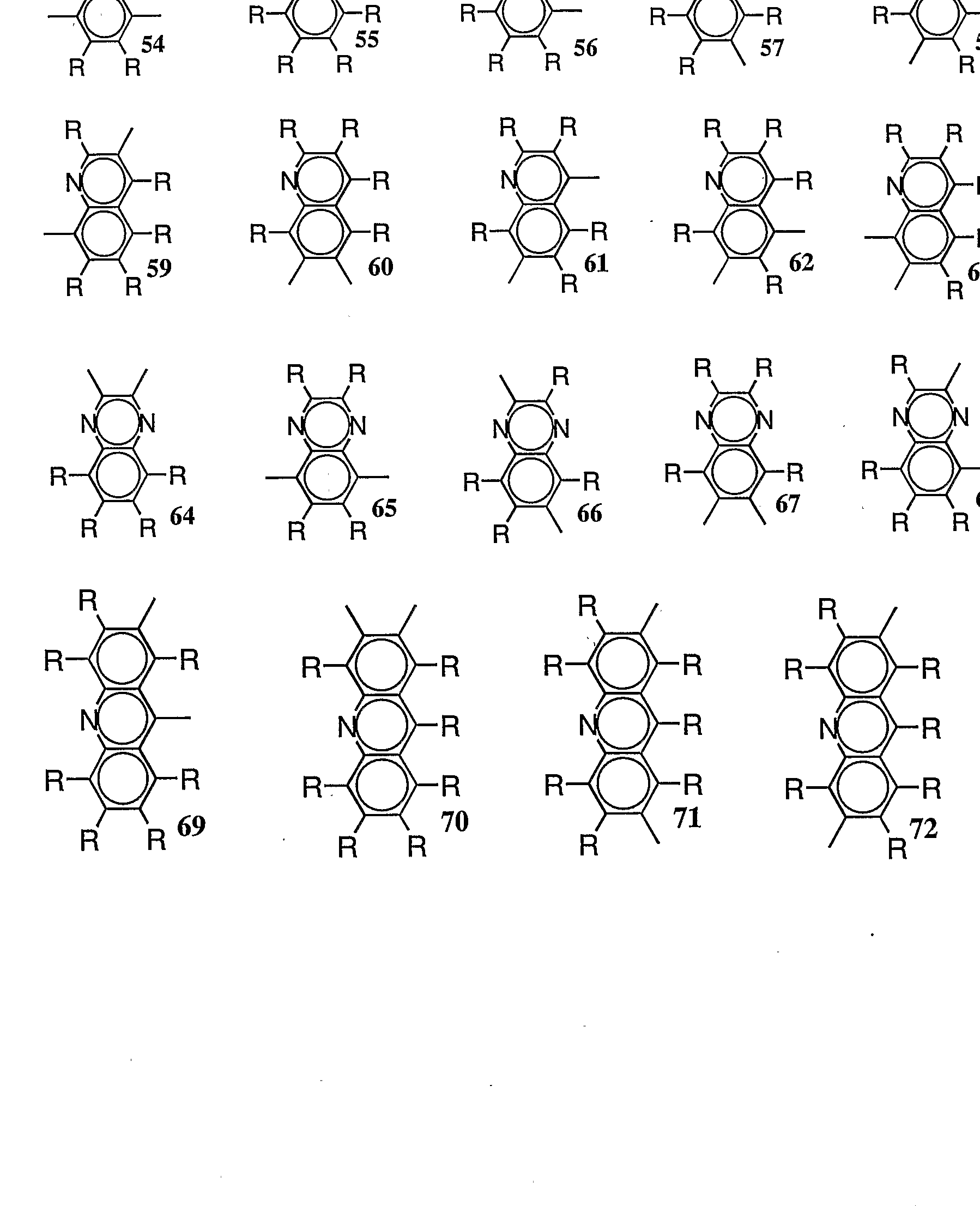


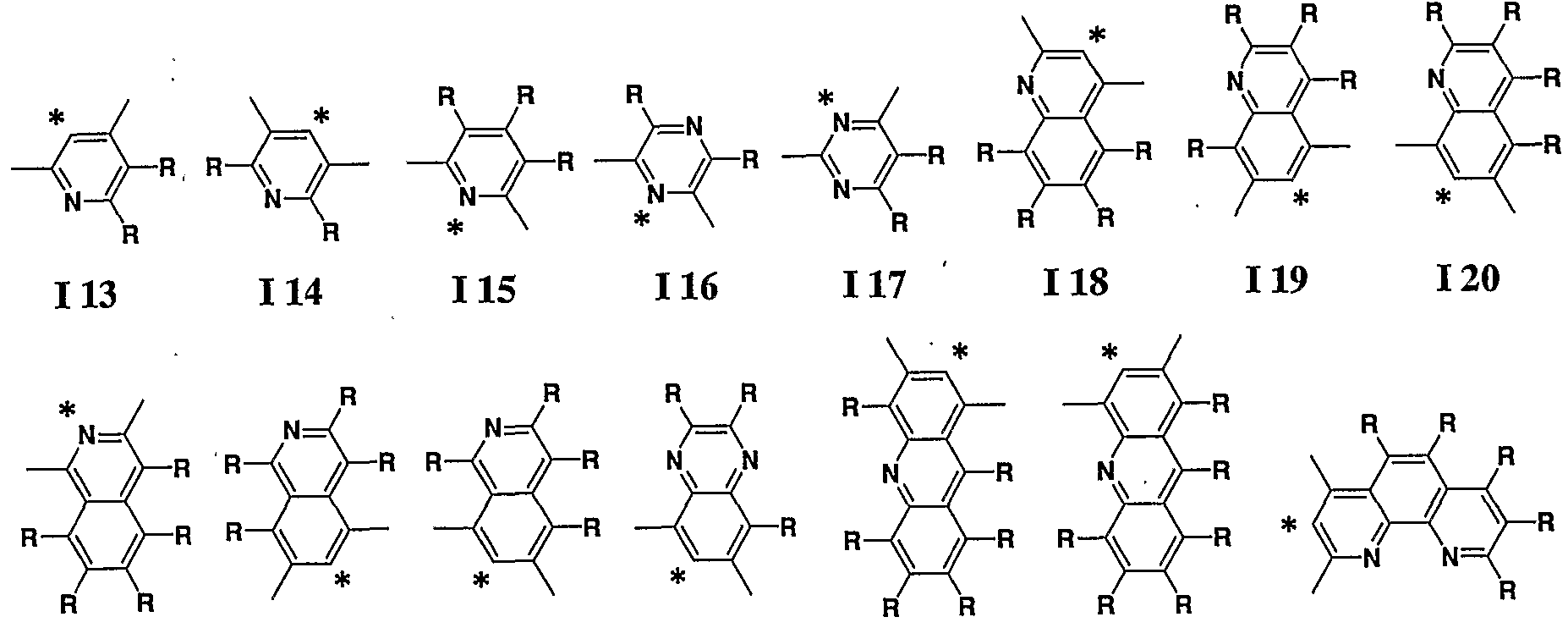


Claims


Priority Applications (4)
| Application Number | Priority Date | Filing Date | Title |
|---|---|---|---|
| US11/722,361 US20080114151A1 (en) | 2004-12-28 | 2005-12-22 | Polymer Compound And Device Using The Same |
| CN2005800487219A CN101128507B (zh) | 2004-12-28 | 2005-12-22 | 高分子化合物及使用该高分子化合物的元件 |
| DE200511003290 DE112005003290T5 (de) | 2004-12-28 | 2005-12-22 | Polymerverbindung und Vorrichtung unter Verwendung derselben |
| GB0714557A GB2436775B (en) | 2004-12-28 | 2005-12-22 | Polymer compound and device using the same |
Applications Claiming Priority (4)
| Application Number | Priority Date | Filing Date | Title |
|---|---|---|---|
| JP2004378519 | 2004-12-28 | ||
| JP2004-378519 | 2004-12-28 | ||
| JP2005007565 | 2005-01-14 | ||
| JP2005-007565 | 2005-01-14 |
Publications (1)
| Publication Number | Publication Date |
|---|---|
| WO2006070896A1 true WO2006070896A1 (ja) | 2006-07-06 |
Family
ID=36615007
Family Applications (1)
| Application Number | Title | Priority Date | Filing Date |
|---|---|---|---|
| PCT/JP2005/024162 Ceased WO2006070896A1 (ja) | 2004-12-28 | 2005-12-22 | 高分子化合物およびそれを用いた素子 |
Country Status (8)
| Country | Link |
|---|---|
| US (1) | US20080114151A1 (ja) |
| JP (1) | JP4788334B2 (ja) |
| KR (1) | KR20070100332A (ja) |
| CN (2) | CN102617614A (ja) |
| DE (1) | DE112005003290T5 (ja) |
| GB (1) | GB2436775B (ja) |
| TW (1) | TW200634128A (ja) |
| WO (1) | WO2006070896A1 (ja) |
Families Citing this family (21)
| Publication number | Priority date | Publication date | Assignee | Title |
|---|---|---|---|---|
| JP5124942B2 (ja) * | 2005-01-14 | 2013-01-23 | 住友化学株式会社 | 金属錯体および素子 |
| JPWO2006092943A1 (ja) * | 2005-03-02 | 2008-08-07 | コニカミノルタホールディングス株式会社 | 有機エレクトロルミネッセンス素子、表示装置及び照明装置 |
| TWI415920B (zh) | 2005-08-12 | 2013-11-21 | Sumitomo Chemical Co | 高分子材料及使用該高分子材料之元件 |
| JP4796802B2 (ja) * | 2005-08-15 | 2011-10-19 | 富士フイルム株式会社 | 有機電界発光素子 |
| CN101454372B (zh) * | 2006-05-31 | 2012-05-02 | 住友化学株式会社 | 高分子化合物和高分子发光元件 |
| US20100243960A1 (en) * | 2007-11-16 | 2010-09-30 | Sumitomo Chemical Company, Limited | Coating solution for application method of discharging coating solution through slit-like discharge port |
| JP5609022B2 (ja) * | 2008-06-23 | 2014-10-22 | 住友化学株式会社 | 金属錯体の残基を含む高分子化合物及びそれを用いた素子 |
| JP5556063B2 (ja) | 2008-06-23 | 2014-07-23 | 住友化学株式会社 | 組成物及び該組成物を用いてなる発光素子 |
| DE102011001368B4 (de) * | 2011-03-17 | 2013-01-31 | Bundesanstalt für Materialforschung und -Prüfung (BAM) | Lanthanoid-Chelate enthaltende Partikel, deren Herstellung sowie deren Verwendung in der Bioanalytik |
| CN103141158B (zh) | 2011-09-28 | 2016-06-22 | 株式会社日本有机雷特显示器 | 有机发光元件的制造方法、有机发光元件、有机显示装置、有机发光装置、功能层的形成方法、功能性部件、显示装置以及发光装置 |
| US9023239B2 (en) | 2011-09-28 | 2015-05-05 | Joled Inc. | Ink for organic light-emitting element and a method for producing the same |
| JP6225413B2 (ja) * | 2012-11-16 | 2017-11-08 | セイコーエプソン株式会社 | 機能層形成用インク、インク容器、吐出装置、機能層の形成方法、有機el素子の製造方法 |
| KR102623039B1 (ko) * | 2015-05-15 | 2024-01-08 | 가부시키가이샤 한도오따이 에네루기 켄큐쇼 | 발광 소자, 발광 장치, 전자 기기 및 조명 장치 |
| DE102016111062A1 (de) | 2016-06-16 | 2017-12-21 | Merck Patent Gmbh | Vernetzende p-Dotanden zur p-Dotierung organischer Lochleiter |
| JP6833388B2 (ja) | 2016-08-01 | 2021-02-24 | 株式会社Joled | 有機el用インク |
| WO2018064974A1 (en) * | 2016-10-04 | 2018-04-12 | The University Of Hong Kong | Luminescent cyclometalating tridentate ligand-containing gold (iii) compounds with aryl auxiliary ligands for organic light-emitting devices and their preparation thereof |
| WO2018113782A1 (zh) * | 2016-12-22 | 2018-06-28 | 广州华睿光电材料有限公司 | 金属有机配合物、高聚物、混合物、组合物及有机电子器件 |
| CN110294967A (zh) * | 2018-03-21 | 2019-10-01 | Tcl集团股份有限公司 | 墨水及其制备方法 |
| CN112745485B (zh) * | 2020-01-16 | 2021-11-26 | 厦门大学 | 一种含锇共轭聚合物及其制备方法与应用 |
| US12043762B2 (en) * | 2020-12-21 | 2024-07-23 | The Boeing Company | Compositions and methods thereof |
| CN116103037A (zh) * | 2023-02-07 | 2023-05-12 | 武汉大学深圳研究院 | 基于三价金配合物的激基复合物、薄膜的制备方法及其在有机电致发光器件中的应用 |
Citations (4)
| Publication number | Priority date | Publication date | Assignee | Title |
|---|---|---|---|---|
| JPH061832A (ja) * | 1992-06-18 | 1994-01-11 | Nissan Motor Co Ltd | 導電性高分子金属錯体とその製造法 |
| JP2003332075A (ja) * | 2002-05-16 | 2003-11-21 | Tokyo Inst Of Technol | 高分子材料を用いた光電子素子 |
| JP2004002755A (ja) * | 2002-03-26 | 2004-01-08 | Sumitomo Chem Co Ltd | 高分子発光体およびそれを用いた高分子発光素子 |
| JP2004323823A (ja) * | 2003-04-08 | 2004-11-18 | Jsr Corp | 有機エレクトロルミネッセンス素子形成用重合体材料および重合体組成物並びに有機エレクトロルミネッセンス素子 |
Family Cites Families (11)
| Publication number | Priority date | Publication date | Assignee | Title |
|---|---|---|---|---|
| JPS601832A (ja) * | 1983-06-20 | 1985-01-08 | Nec Corp | 処理装置 |
| US8206838B2 (en) * | 2000-06-12 | 2012-06-26 | Sumitomo Chemical Co., Ltd. | Polymer matrix electroluminescent materials and devices |
| TWI243197B (en) * | 2001-03-08 | 2005-11-11 | Univ Hong Kong | Organometallic light-emitting material |
| JP2003073479A (ja) * | 2001-09-04 | 2003-03-12 | Canon Inc | 高分子化合物及び有機発光素子 |
| AU2002349587A1 (en) * | 2001-11-30 | 2003-06-10 | National Institute Of Advanced Industrial Science And Technology | Electroluminescent element |
| TWI277617B (en) * | 2002-03-26 | 2007-04-01 | Sumitomo Chemical Co | Metal complexes and organic electro luminescence elements |
| JP4321110B2 (ja) * | 2002-06-05 | 2009-08-26 | 住友化学株式会社 | 高分子化合物およびそれを用いた高分子発光素子 |
| US7038373B2 (en) * | 2002-07-16 | 2006-05-02 | Eastman Kodak Company | Organic light emitting diode display |
| US6916902B2 (en) * | 2002-12-19 | 2005-07-12 | Dow Global Technologies Inc. | Tricyclic arylamine containing polymers and electronic devices therefrom |
| WO2005105746A1 (ja) * | 2004-04-30 | 2005-11-10 | Fuji Photo Film Co., Ltd. | 有機金属錯体、発光性固体、有機el素子及び有機elディスプレイ |
| US7572912B2 (en) * | 2004-10-29 | 2009-08-11 | University Of Hong Kong | Luminescent gold (III) compounds, their preparation, and light-emitting devices containing same |
-
2005
- 2005-12-22 CN CN2012100263421A patent/CN102617614A/zh active Pending
- 2005-12-22 US US11/722,361 patent/US20080114151A1/en not_active Abandoned
- 2005-12-22 CN CN2005800487219A patent/CN101128507B/zh not_active Expired - Fee Related
- 2005-12-22 DE DE200511003290 patent/DE112005003290T5/de not_active Withdrawn
- 2005-12-22 TW TW094145833A patent/TW200634128A/zh unknown
- 2005-12-22 KR KR20077017131A patent/KR20070100332A/ko not_active Ceased
- 2005-12-22 GB GB0714557A patent/GB2436775B/en not_active Expired - Fee Related
- 2005-12-22 WO PCT/JP2005/024162 patent/WO2006070896A1/ja not_active Ceased
- 2005-12-27 JP JP2005374248A patent/JP4788334B2/ja not_active Expired - Fee Related
Patent Citations (4)
| Publication number | Priority date | Publication date | Assignee | Title |
|---|---|---|---|---|
| JPH061832A (ja) * | 1992-06-18 | 1994-01-11 | Nissan Motor Co Ltd | 導電性高分子金属錯体とその製造法 |
| JP2004002755A (ja) * | 2002-03-26 | 2004-01-08 | Sumitomo Chem Co Ltd | 高分子発光体およびそれを用いた高分子発光素子 |
| JP2003332075A (ja) * | 2002-05-16 | 2003-11-21 | Tokyo Inst Of Technol | 高分子材料を用いた光電子素子 |
| JP2004323823A (ja) * | 2003-04-08 | 2004-11-18 | Jsr Corp | 有機エレクトロルミネッセンス素子形成用重合体材料および重合体組成物並びに有機エレクトロルミネッセンス素子 |
Also Published As
| Publication number | Publication date |
|---|---|
| US20080114151A1 (en) | 2008-05-15 |
| JP4788334B2 (ja) | 2011-10-05 |
| GB2436775A (en) | 2007-10-03 |
| KR20070100332A (ko) | 2007-10-10 |
| GB2436775B (en) | 2009-10-14 |
| JP2006219663A (ja) | 2006-08-24 |
| CN102617614A (zh) | 2012-08-01 |
| CN101128507B (zh) | 2012-03-28 |
| CN101128507A (zh) | 2008-02-20 |
| GB0714557D0 (en) | 2007-09-05 |
| TW200634128A (en) | 2006-10-01 |
| DE112005003290T5 (de) | 2007-11-22 |
Similar Documents
| Publication | Publication Date | Title |
|---|---|---|
| JP5867489B2 (ja) | 高分子材料およびそれを用いた素子 | |
| JP5454527B2 (ja) | 白色発光素子 | |
| JP4321110B2 (ja) | 高分子化合物およびそれを用いた高分子発光素子 | |
| WO2007043495A1 (ja) | 共重合体およびそれを用いた高分子発光素子 | |
| CN101128507B (zh) | 高分子化合物及使用该高分子化合物的元件 | |
| WO2006118345A1 (ja) | 高分子化合物およびそれを用いた高分子発光素子 | |
| JP2004002703A (ja) | 高分子化合物およびそれを用いた高分子発光素子 | |
| WO2007102350A1 (ja) | 金属錯体、高分子化合物及びこれらを含む素子 | |
| JP2007119763A (ja) | 高分子材料及び高分子発光素子 | |
| WO2005082969A1 (ja) | 高分子化合物およびそれを用いた高分子発光素子 | |
| WO2005026289A1 (ja) | 発光材料およびそれを用いた発光素子 | |
| JP4626235B2 (ja) | 高分子錯体化合物およびそれを用いた高分子発光素子 | |
| JP2007106990A (ja) | 高分子化合物、発光材料及び発光素子 | |
| JP5211448B2 (ja) | 高分子材料およびそれを用いた素子 | |
| JP5274754B2 (ja) | 高分子材料及び高分子発光素子 | |
| WO2004101682A1 (ja) | 組成物および高分子発光素子 | |
| JP5124942B2 (ja) | 金属錯体および素子 | |
| JP5239116B2 (ja) | 高分子発光体組成物および高分子発光素子 | |
| JP2009091559A (ja) | 金属錯体を含む組成物及びそれを用いた素子 | |
| JP4957669B2 (ja) | 高分子化合物およびそれを用いた高分子発光素子 | |
| JP5274755B2 (ja) | 高分子材料及び高分子発光素子 | |
| JP4724440B2 (ja) | 高分子化合物及びそれを用いた高分子発光素子 | |
| JP2007211237A (ja) | ブロック共重合体 | |
| JP4956896B2 (ja) | 高分子化合物およびそれを用いた高分子発光素子 | |
| JP2009091560A (ja) | 金属錯体残基を含む共役系高分子化合物及びそれを用いた素子 |
Legal Events
| Date | Code | Title | Description |
|---|---|---|---|
| 121 | Ep: the epo has been informed by wipo that ep was designated in this application | ||
| WWE | Wipo information: entry into national phase |
Ref document number: 11722361 Country of ref document: US |
|
| WWE | Wipo information: entry into national phase |
Ref document number: 1120050032906 Country of ref document: DE |
|
| ENP | Entry into the national phase |
Ref document number: 0714557 Country of ref document: GB Kind code of ref document: A Free format text: PCT FILING DATE = 20051222 |
|
| WWE | Wipo information: entry into national phase |
Ref document number: 0714557.6 Country of ref document: GB Ref document number: 1020077017131 Country of ref document: KR |
|
| WWE | Wipo information: entry into national phase |
Ref document number: 200580048721.9 Country of ref document: CN |
|
| REG | Reference to national code |
Ref country code: GB Ref legal event code: 789A Ref document number: 0714557 Country of ref document: GB |
|
| REG | Reference to national code |
Ref country code: GB Ref legal event code: 789A Ref document number: 0714557 Country of ref document: GB |
|
| RET | De translation (de og part 6b) |
Ref document number: 112005003290 Country of ref document: DE Date of ref document: 20071122 Kind code of ref document: P |
|
| 122 | Ep: pct application non-entry in european phase |
Ref document number: 05822654 Country of ref document: EP Kind code of ref document: A1 |
|
| WWP | Wipo information: published in national office |
Ref document number: 11722361 Country of ref document: US |