WO2000034278A1 - Triazolo derivatives and chemokine inhibitors containing the same as the active ingredient - Google Patents
Triazolo derivatives and chemokine inhibitors containing the same as the active ingredient Download PDFInfo
- Publication number
- WO2000034278A1 WO2000034278A1 PCT/JP1999/006792 JP9906792W WO0034278A1 WO 2000034278 A1 WO2000034278 A1 WO 2000034278A1 JP 9906792 W JP9906792 W JP 9906792W WO 0034278 A1 WO0034278 A1 WO 0034278A1
- Authority
- WO
- WIPO (PCT)
- Prior art keywords
- group
- propyl
- carbon atoms
- phenyl
- diphenylmethyl
- Prior art date
- Legal status (The legal status is an assumption and is not a legal conclusion. Google has not performed a legal analysis and makes no representation as to the accuracy of the status listed.)
- Ceased
Links
Classifications
-
- A—HUMAN NECESSITIES
- A61—MEDICAL OR VETERINARY SCIENCE; HYGIENE
- A61K—PREPARATIONS FOR MEDICAL, DENTAL OR TOILETRY PURPOSES
- A61K31/00—Medicinal preparations containing organic active ingredients
- A61K31/33—Heterocyclic compounds
- A61K31/395—Heterocyclic compounds having nitrogen as a ring hetero atom, e.g. guanethidine or rifamycins
- A61K31/435—Heterocyclic compounds having nitrogen as a ring hetero atom, e.g. guanethidine or rifamycins having six-membered rings with one nitrogen as the only ring hetero atom
- A61K31/4353—Heterocyclic compounds having nitrogen as a ring hetero atom, e.g. guanethidine or rifamycins having six-membered rings with one nitrogen as the only ring hetero atom ortho- or peri-condensed with heterocyclic ring systems
- A61K31/437—Heterocyclic compounds having nitrogen as a ring hetero atom, e.g. guanethidine or rifamycins having six-membered rings with one nitrogen as the only ring hetero atom ortho- or peri-condensed with heterocyclic ring systems the heterocyclic ring system containing a five-membered ring having nitrogen as a ring hetero atom, e.g. indolizine, beta-carboline
-
- A—HUMAN NECESSITIES
- A61—MEDICAL OR VETERINARY SCIENCE; HYGIENE
- A61K—PREPARATIONS FOR MEDICAL, DENTAL OR TOILETRY PURPOSES
- A61K31/00—Medicinal preparations containing organic active ingredients
- A61K31/33—Heterocyclic compounds
- A61K31/395—Heterocyclic compounds having nitrogen as a ring hetero atom, e.g. guanethidine or rifamycins
- A61K31/435—Heterocyclic compounds having nitrogen as a ring hetero atom, e.g. guanethidine or rifamycins having six-membered rings with one nitrogen as the only ring hetero atom
- A61K31/44—Non condensed pyridines; Hydrogenated derivatives thereof
- A61K31/445—Non condensed piperidines, e.g. piperocaine
- A61K31/4523—Non condensed piperidines, e.g. piperocaine containing further heterocyclic ring systems
- A61K31/4545—Non condensed piperidines, e.g. piperocaine containing further heterocyclic ring systems containing a six-membered ring with nitrogen as a ring hetero atom, e.g. pipamperone, anabasine
-
- A—HUMAN NECESSITIES
- A61—MEDICAL OR VETERINARY SCIENCE; HYGIENE
- A61K—PREPARATIONS FOR MEDICAL, DENTAL OR TOILETRY PURPOSES
- A61K31/00—Medicinal preparations containing organic active ingredients
- A61K31/33—Heterocyclic compounds
- A61K31/395—Heterocyclic compounds having nitrogen as a ring hetero atom, e.g. guanethidine or rifamycins
- A61K31/495—Heterocyclic compounds having nitrogen as a ring hetero atom, e.g. guanethidine or rifamycins having six-membered rings with two or more nitrogen atoms as the only ring heteroatoms, e.g. piperazine or tetrazines
- A61K31/4965—Non-condensed pyrazines
- A61K31/497—Non-condensed pyrazines containing further heterocyclic rings
-
- A—HUMAN NECESSITIES
- A61—MEDICAL OR VETERINARY SCIENCE; HYGIENE
- A61P—SPECIFIC THERAPEUTIC ACTIVITY OF CHEMICAL COMPOUNDS OR MEDICINAL PREPARATIONS
- A61P29/00—Non-central analgesic, antipyretic or antiinflammatory agents, e.g. antirheumatic agents; Non-steroidal antiinflammatory drugs [NSAID]
-
- A—HUMAN NECESSITIES
- A61—MEDICAL OR VETERINARY SCIENCE; HYGIENE
- A61P—SPECIFIC THERAPEUTIC ACTIVITY OF CHEMICAL COMPOUNDS OR MEDICINAL PREPARATIONS
- A61P43/00—Drugs for specific purposes, not provided for in groups A61P1/00-A61P41/00
-
- C—CHEMISTRY; METALLURGY
- C07—ORGANIC CHEMISTRY
- C07D—HETEROCYCLIC COMPOUNDS
- C07D471/00—Heterocyclic compounds containing nitrogen atoms as the only ring hetero atoms in the condensed system, at least one ring being a six-membered ring with one nitrogen atom, not provided for by groups C07D451/00 - C07D463/00
- C07D471/02—Heterocyclic compounds containing nitrogen atoms as the only ring hetero atoms in the condensed system, at least one ring being a six-membered ring with one nitrogen atom, not provided for by groups C07D451/00 - C07D463/00 in which the condensed system contains two hetero rings
- C07D471/04—Ortho-condensed systems
-
- Y—GENERAL TAGGING OF NEW TECHNOLOGICAL DEVELOPMENTS; GENERAL TAGGING OF CROSS-SECTIONAL TECHNOLOGIES SPANNING OVER SEVERAL SECTIONS OF THE IPC; TECHNICAL SUBJECTS COVERED BY FORMER USPC CROSS-REFERENCE ART COLLECTIONS [XRACs] AND DIGESTS
- Y02—TECHNOLOGIES OR APPLICATIONS FOR MITIGATION OR ADAPTATION AGAINST CLIMATE CHANGE
- Y02P—CLIMATE CHANGE MITIGATION TECHNOLOGIES IN THE PRODUCTION OR PROCESSING OF GOODS
- Y02P20/00—Technologies relating to chemical industry
- Y02P20/50—Improvements relating to the production of bulk chemicals
- Y02P20/582—Recycling of unreacted starting or intermediate materials
Definitions
- the present invention relates to a novel triazolo derivative or a pharmacologically acceptable salt thereof, a chemokine inhibitor containing the same as an active ingredient, and more particularly to a CG chemokine inhibitor.
- chemokines known as migratory cytokins, induce not only such leukocyte infiltration, but also leukocyte degranulation, active oxygen production or adhesion reaction, and play a central role in their migration and activation. (E.g., The New England and Journal of Medicine, Vol. 338, pp. 436-445, 1998).
- Chemokines are divided into four subgroups based on their amino acid sequence characteristics. That is, C chemokines, CC chemokines, CXC chemokines, and GXXXC chemokines (eg, Blood 90, 909-928, 1997). Lymphotactin, which belongs to the G chemokine, exhibits chemotactic activity on T lymphocytes, whereas CC chemokines, other than neutrophils, such as monocytes, lymphocytes, eosinophils, basophils, or NK cells It is known to induce migration activity on leukocytes.
- CXC chemokine shows chemotactic activity mainly on neutrophils
- CXXXG chemokine shows chemotactic activity mainly on NK cells (for example, The New England and Journal of Medicine Vol. 338, 436-445). P., 1998).
- GC chemokines among these subgroups of chemokines are allergic diseases such as bronchial asthma with eosinophil, monocyte and lymphocyte tissue accumulation, atopic dermatitis, rheumatoid arthritis, Sarcoidosis, pulmonary fibrosis, bacterial pneumonia, nephritis, atherosclerosis, ulcerative colitis, psoriasis, It is suggested that it plays an important role in diseases such as dilated meningitis and AIDS.
- MIP-1 ⁇ one of the CC chemokines, pneumonia induced by influenza virus infection is mild (Science Vol. 269, pp. 1583-1585, 1995).
- knockout mice with CCR1 one of the receptors for CG chemokines
- the delayed type hypersensitivity reaction and the response of helper type 1 T cells are reduced.
- Investigation 3 ⁇ 4 100 ⁇ , 2 552-2561, 1997
- knockout mice of eotaxin one of the CC chemokines
- eotaxinophils are known to suppress tissue accumulation of eosinophils, which play an important role as effective cells in allergic diseases (The Journal of Experi mental Medicine Vol. 185, pp. 785-790, 1997).
- CC chemokine receptors CGR5 and CGR3 act as cofactors in AIDS virus infection, while the CC chemokines RANTES, MIP-1 and MIP-1 can protect against AIDS virus infection. (Eg, Annual Review of Immunology, Vol. 15, pp. 675-705, 1997).
- CCRs CG chemokine receptors
- the problem to be solved by the present invention is to find a substance that suppresses the action of chemokines, especially CG chemokines, and thereby to develop monocytes, lymphocytes, eosinophils, basophils, and the like. Is to enable the prevention and treatment of inflammatory diseases caused by leukocyte infiltration of NK cells.
- a specific novel triazolo derivative or a pharmacologically acceptable salt thereof has an activity of inhibiting the action of chemokines, particularly CC chemokines.
- the present invention has been completed.
- W represents a carbon atom or a nitrogen atom
- X is a straight-chain alkyl group having 2 to 6 carbon atoms, a branched alkyl group having 3 to 8 carbon atoms, and a fluorinated alkyl group having 2 to 6 carbon atoms.
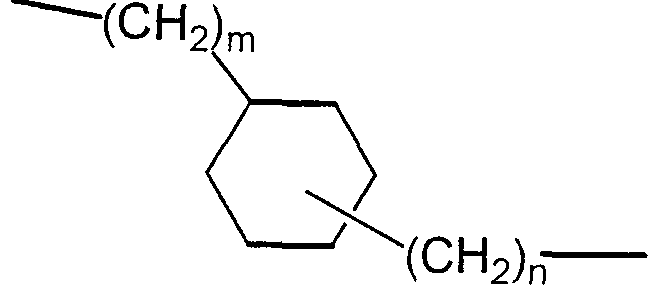
- m and n are numbers from 0 to 6, and-(CH 2 ) n -is attached to any of the 2, 3, and 4 positions of the cyclohexane ring.
- Y represents a carbon atom or a nitrogen atom,... 'represents a single bond or a double bond, and Z, Z. May or may not be present at the same time, and has 6 to 18 carbon atoms.
- Q and R 6 may or may not be present, and when Q is present, Q is selected from an oxygen atom, a zeolite atom, and a nitrogen atom, and R 6 is present
- R 6 represents hydrogen or a hydroxyl group
- R 7 and R 8 may be the same or different, and include hydrogen, a linear alkyl group having 1 to 6 carbon atoms, or a branched alkyl group having 3 to 8 carbon
- V represents a carbon or nitrogen atom
- R 2 and R 3 may or may not be present, may be the same or different, having 1 to 6 carbon atoms, respectively Linear alkyl group, linear alkoxy group having 1 to 6 carbon atoms, branched alkyl group having 3 to 8 carbon atoms, branched alkoxy group having 3 to 8 carbon atoms, hydroxyl group, chloro group, bromo group, fluorine group, amino group A monoalkylamino group having 1 to 6 carbon atoms in an alkyl group, a dialkylamino group having 2 to 6 carbon atoms in each alkyl group, a trifluoromethyl group, and a nitro group, wherein V and W are carbon atoms, and V When the bond between W and W is a double bond, R 4 does not exist, and R 5 is
- V is a nitrogen atom
- W is a carbon atom
- R 4 and R 5 do not exist together
- V is a carbon atom
- W is nitrogen
- R 4 and R 5 are taken together to represent a carboxy group
- the substituent in the substituted cycloalkyl group is a straight-chain alkyl group having 1 to 5 carbon atoms, a branched alkyl group having 3 to 6 carbon atoms, a phenyl group, a phenoxy group, a naphthyl group, a cyclopentyl group.
- the present invention also provides a chemokine inhibitor comprising the above triazolo derivative of the present invention or a pharmacologically acceptable salt thereof as an active ingredient.
- the triazolo derivative of the present invention or a pharmacologically acceptable salt thereof exerts the effects of chemokines, particularly CC chemokines, via chemokine receptors such as CGR1, CCR2 and CCR3. Inhibit. Accordingly, the triazolo derivative of the present invention or a pharmacologically acceptable salt thereof is used as a therapeutic agent for allergic diseases such as bronchial asthma and atopic dermatitis, a therapeutic agent for inflammatory diseases such as rheumatoid arthritis, and nephritis. It is effective for the prevention and treatment of remedies for autoimmune diseases such as ulcerative colitis, anti-AIDS drugs, and various other diseases that are considered to involve chemokines.
- W represents a carbon atom or a nitrogen atom.
- X is a straight-chain alkyl group having 2 to 6 carbon atoms such as an ethyl group, an n-propyl group, an n-butyl group, an n-pentyl group and an n-hexyl group; or a 1-methylethyl group, a 2-methylethyl group, 1,1-dimethylethyl group, 1,2-dimethylethyl group, 2,2-dimethylethyl group, 1-methylpropyl group, 2-methylpropyl group, 3-methylpropyl group, 1,1-dimethylpropyl group, 2, 2-dimethylpropyl, 3,3-dimethylpropyl, 1,2-dimethylpropyl, 1,3-dimethylpropyl, 1-methylbutyl, 2-methylbutyl, 3-methylbutyl, 4-methylbutyl
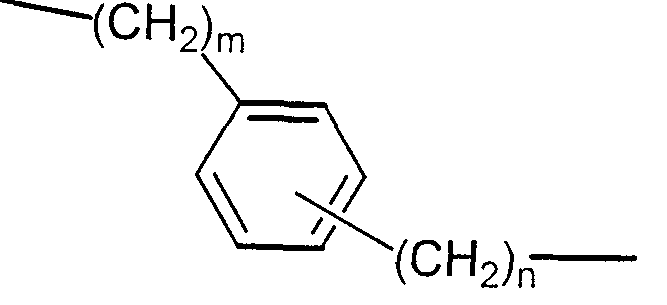
- n and n are each a number from 0 to 6, and-(GH 2 ) n -is bonded to any of the 2, 3, and 4 positions of the benzene ring.
- Y represents a carbon atom or a nitrogen atom.
- ⁇ ' ⁇ represents a single bond or a double bond.
- Z 1 S Z 2 may or may not be present simultaneously, and may be cyclohexyl, 2-methylcyclohexyl, 3-methylcyclohexyl, 4-methylcyclohexyl, 2,2-dimethyl Cyclohexyl, 3,3-dimethylcyclohexyl, 4,4-dimethylcyclohexyl, 2,3-dimethylcyclohexyl, 2,4-dimethylcyclohexyl, 2-phenylcyclohexyl Xyl group, 3-phenylcyclohexyl group, 4_phenylcyclohexyl group, 2-naphthylcyclohexyl group, 3-naphthylcyclohexyl group, 4-naphthylcyclohexyl group, 2-phenyloxycyclohexyl group, A substituted or unsubstituted cyclohexyl group having 6 to 18 carbon atoms, such as a 3-phenoxycyclohe
- V represents a carbon atom or a nitrogen atom.
- R 2 and R 3 may or may not be present, may be the same or different, and each represents a methyl group, an ethyl group, an n-propyl group, an n-butyl group, an n-pentyl group, or an n-hexyl group.
- R 4 does not exist and R 5 Is hydrogen, or a straight-chain alkyl group having 6 to 6 carbon atoms such as a methyl group, an ethyl group, an n-propyl group, an n-butyl group, an n-pentyltyl group and a ⁇ -hexyl group; or a methoxy group or an ethoxy group , n- Puropiruokishi group, n- Buchiruokishi group, n- Penchiruokishi group, n - the straight-chain alkoxy group having 1 to 6 carbon atoms Kishiruokishi group; or 1-Mechiruechiru group, 2-Mechiruechiru group, 1, 1-Jimechiruechiru group , 1,2-dimethylethyl, 2,2-dimethylethyl, 1-methylpropyl, 2-methylpropyl,
- a branched alkyl group having 3 to 8 carbon atoms such as a 3,5-dimethylhexyl group, a 3,6-dimethylhexyl group, a 4,5-dimethylhexyl group, a 5,6-dimethylhexyl group; or 2- Methyl ethoxy, 2, 2-dimethylethoxy, 2-methylpropyloxy, 3-methyl Propoxy, 2,2-dimethylpropyloxy, 3,3-dimethylpropyloxy, 2,3-dimethylpropyloxy, 2-methylbutyloxy, 3-methylbutyloxy, 4-methyl Butyloxy, 2,2-dimethylbutyloxy, 3,3-dimethylbutyloxy, 4,4-dimethylbutyloxy, 2,3-dimethylbutyloxy, 2,4-dimethylbutyl Oxidi, 2-methylpentyloxy, 3-methylpentyloxy, 4-methylpentyloxy, 5-methylpentyloxy, 2,2-dimethylpent
- Substituted or unsubstituted phenyl group having 6 to 16 carbon atoms or naphthyl group, naphthylmethyl group, naphthylethyl group, naphthylpropyl group, naphthylbutyl group, naphthylpentyl group, naphthylhexyl group, 2-methylnaphthyl group, 2-- Methylnaphthylmethyl group, 2- (2-methylnaphthyl) ethyl group, 3- (2-methylnaphthyl) propyl group, 4- (2-methylnaphthyl) butyl group, 5_ (2-methylnaphthyl) pentyl Group, 6- (2-methylnaphthyl) hexyl group, 3-methyl Lunaphthyl group, 3-methylnaphthylmethyl group, 2- (3-methylnaphthyl) ethyl group, 3- (3
- V is a nitrogen atom
- W is a carbon atom
- both R 4 and R 5 are absent, or V is a carbon atom and W is a nitrogen atom or a carbon atom.
- R 4 and R 5 together represent a carbonyl group.
- the substituents in the substituted phenyl group, the substituted naphthyl group, and the substituted cycloalkyl group are 1 to 5 straight-chain alkyl groups having 1 to 6 carbon atoms, 3 to 6 branched alkyl groups, phenyl groups, phenoxy groups, cyclopentyl groups, and cyclohexyl groups.
- absent or abent of a group means “not described in the structural formula", and when there is no actual atom and when there is a hydrogen atom Both cases are included.
- in Formula I when does not exist, it means that one or two hydrogen atoms are bonded to Y because z, which is bonded to Y, is not described in the structural formula.
- R 4 when V and W are double bonds, R 4 does not exist and hydrogen atom does not exist. Either one can be easily and clearly understood according to common chemical knowledge.
- V is a carbon atom
- the bond between W and V is a single bond
- R 5 is a carbonyl group
- A represents a chloro group, a bromo group, a mesyl group, or a tosyl group, and W, X, R, R 2 , and R 3 are the same as defined above.
- Step 1 is a step of reacting isatoic anhydride IX with NH-X-OH (X is the same as defined above). This step can be performed at 0 ° C to 50 ° C, but a sufficient reaction rate can be obtained even at room temperature.
- a reaction solvent an ether solvent such as tetrahydrofuran or dimethyloxetane is usually used, but other solvents can also be used.
- the reaction time is appropriately selected depending on the reaction temperature and the like, but is usually about 1 to 24 hours.
- Step 2 is a reaction in which X is reacted with an excess of carbon disulfide in an alcoholic solvent such as methanol or ethanol to obtain XI.
- the base used in this step is sodium hydroxide, potassium hydroxide, pyridine, or triethylamine, but other bases can also be used.
- the reaction temperature 60-80 ° C is selected, but the reaction can be carried out at other temperatures.
- the reaction time is appropriately selected according to the reaction temperature and the like, but is usually about 2 to 96 hours.
- Step 3 can be accomplished by the action of hydrazine hydrate, followed by ( ⁇ 0 [3 ⁇ 4 9) 3.
- triethyl orthoacetate is generally used, but is not limited thereto.
- an alcohol-based solvent such as methanol or ethanol is usually used in the step of reacting with hydrazine, but a non-polar solvent such as benzene, toluene, or xylene, tetrahydrofuran, or dimethylformamide is used. Polar solvents can also be used.
- the reaction proceeds even without solvent.
- the reaction can be carried out at a temperature from room temperature to 200 ° C, but the reaction is generally carried out at around 100 ° C.
- the mixing ratio of XI and hydrazine hydrate at the start of the reaction is not particularly limited, but a molar ratio of about 1:10 to 1: 100 is generally appropriate.
- the reaction time may be a force appropriately selected depending on the reaction temperature and the like, and is usually about 2 to 96 hours.
- the next reaction using 0 (0 [3 ⁇ 4 9 ) 3 is performed in an alcoholic solvent such as methanol or ethanol, or without a solvent.
- an alcoholic solvent such as methanol or ethanol, or without a solvent.
- Ability to carry out this reaction at 60 to 150 ° C Preferably, 100 to 120 ° C is selected.
- the mixing ratio of the reaction product of the first stage that put at the beginning of the reaction and 0 (013 ⁇ 4 9) 3 of the second stage is not particularly limited, in the usual molar ratio of 1: 2 to 1: 3 0 degree is suitable It is.
- the reaction time is appropriately selected according to the reaction temperature and the like, but is usually about 1 to 8 hours.
- Step 4 is a step of converting a hydroxyl group into a chloro group, a bromo group, a tosyl group, and a mesyl group.
- Chlorinating reagents such as thionyl chloride, concentrated hydrochloric acid, and carbon tetrachloride-triphenylphosphine are used to convert the hydroxyl group to a chloro group, but other chlorinating reagents can also be used.
- To convert a hydroxyl group to a bromo group use Brominating reagents such as phenyl, hydrobromic acid, carbon tetrabromide-triphenylphosphine are used, but other brominating reagents can be used.
- Conversion of a hydroxyl group to a tosyl group or a mesyl group can be achieved by reacting methanesulfonyl chloride and p-toluenesulfonyl chloride under basic conditions such as pyridine and triethylamine, respectively.
- the reaction is usually performed at ⁇ 20 ° C. to room temperature, but is preferably performed under ice cooling.
- a halogen-based solvent such as methylene chloride or chloroform is used, and pyridine or the like can be used as the solvent.
- the mixing ratio of XII and a reagent such as a chromatizing reagent, a brominating reagent or a sulfonyl chloride in the reaction mixture is not particularly limited, but is usually 1: 1 to 1: 5 in a molar ratio. is there.
- the reaction time is appropriately selected according to the reaction temperature and the like, but is usually about 124 hours.
- XI can also be produced by the following steps.
- Step 1 is a step of condensing 0-nitrobenzoic acid derivative with H 2 N—X—OH (where X is the same as defined above).
- the condensing agent a condensing agent for condensing amino acids such as DCC BOP and PyBOP is generally used, but is not limited thereto.
- a reaction solvent dimethylformamide, methylene chloride, or the like is used. The reaction is preferably carried out under ice cooling to room temperature, but can be carried out at other temperatures.
- the mixing ratio of XIVH 2 NX-0H and the condensing agent at the start of the reaction is not particularly limited, but the molar ratio is usually about :: 1: 1 to 1: 3: 3.
- the reaction time is appropriately selected according to the reaction temperature and the like, but is usually about 3 to 24 hours.
- Step 2 is a step of reducing a nitro group to an amino group.
- a hydrogenation method is used, but other reduction methods can also be used.
- a metal catalyst such as palladium / carbon, palladium hydroxide, or platinum dioxide is usually used in an alcoholic solvent such as methanol or ethanol, but other metal catalysts can also be used.
- the reaction temperature is not particularly limited, and usually may be 10 to 30 ° C.
- the reaction time is appropriately selected according to the reaction temperature and the like, but is usually about 2 to 24 hours.
- Step 3 is a step in which XVI is reacted with an excess of carbon disulfide in an alcoholic solvent such as methanol or ethanol.
- Bases used in this step include sodium hydroxide, potassium hydroxide, pyridine, and triethylamine.
- the reaction is carried out at room temperature to 100 ° C, preferably at 60 ° C to 80 ° C.
- the mixing ratio of XV to carbon disulfide and the base at the start of the reaction is not particularly limited, but is usually 1: 3: ⁇ ! About 1: 10: 3 is appropriate.
- the reaction time is appropriately selected according to the reaction temperature and the like, but is usually about 2 to 96 hours.
- Y is a carbon atom, no Z 2, and Y is a double bond, but is represented by QCR 6 R 7 R S, no Q and R 6, R 7, R 8 is XX are both phenyl group, a Contact and Y is carbon atom, no Z 2, and Y is a single bond, Z, but is represented by QCR 6 R 7 R 8, Q without, R 6 is hydrogen XXI I, in which R 7 and R 8 are both phenyl groups, is produced by the following production method.
- R 10 represents a methyl group or an ethyl group, and represents an acetyl group, a Boc group, or a benzyl group.
- Step 1 is a step of reacting XVII with a phenyl metal reagent.
- the phenyl metal reagent include, but are not limited to, Grignard reagents such as phenylmagnesium bromide, and phenyllithium.
- the reaction proceeds at ⁇ 20 ° C. to 50 ° C., but is preferably performed under ice cooling to room temperature.
- an ether solvent such as tetrahydrofuran or dimethoxetane is usually used.
- the mixing ratio of XVII and the phenyl metal reagent at the start of the reaction is not particularly limited, but is usually about 1 : 2 to 1: 4 in molar ratio.
- the reaction time is appropriately selected according to the reaction temperature and the like, but is usually about 2 to 24 hours.
- Step 2 can be achieved by heating at reflux in acetic anhydride or by treatment with a dilute mineral acid such as dilute hydrochloric acid or dilute sulfuric acid in an alcoholic solvent such as methanol or ethanol.
- Organic acids such as formic acid / acetic acid can also be used.
- the mixing ratio between XVIII and the acid at the start of the reaction is not particularly limited, but a molar ratio of usually about 1: 0.1 to 1:10 is appropriate.
- the reaction time is usually about 5 to 24 hours.
- Step 3 is a step of removing the protecting group on the nitrogen atom.
- an alcoholic solvent such as methanol or ethanol
- the mixing ratio of XIX and the base at the start of the reaction is not particularly limited, but a molar ratio of usually about 1: 1 to 1: 5 is appropriate.
- the reaction time may usually be about 5 to 20 hours.
- XX can be obtained by treating with an organic acid such as trifluoroacetic acid or a dilute mineral acid such as dilute hydrochloric acid in a halogenated solvent such as chloroform or methylene chloride.
- This reaction can be carried out at ⁇ 20 ° C. to 50 ° C., but is usually carried out at room temperature.
- the mixing ratio of XIX and the acid at the start of the reaction is not particularly limited, but a molar ratio of usually about 1: 0.1 to 1:10 is appropriate.
- the reaction time may usually be about 3 to 24 hours.
- the benzyl group can be removed by the action of sodium and lithium in liquid ammonia.
- the mixing ratio between XIX and the alkali metal at the start of the reaction is not particularly limited, but is usually about 1: 1 to 1: 5 in molar ratio.
- the reaction time may usually be about 1 to 10 hours.
- Step 4 uses an alcoholic solvent such as methanol or ethanol, a polar solvent such as ethyl acetate, tetrahydrofuran or dioxane, a palladium-based catalyst such as palladium / carbon or palladium hydroxide, or a platinum-based catalyst such as platinum dioxide.
- alcoholic solvent such as methanol or ethanol
- polar solvent such as ethyl acetate, tetrahydrofuran or dioxane
- a palladium-based catalyst such as palladium / carbon or palladium hydroxide
- platinum-based catalyst such as platinum dioxide.
- This can be achieved by hydrogenation.
- the reaction temperature is not particularly limited. Force Usually, about 10 to 30 ° C is appropriate. The reaction time may usually be about 3 to 48 hours.
- step 4 gives XXI I at once.
- Step 5 can be performed in the same manner as step 3.
- Y is a carbon atom, no, a Z 2 and the carbon atom is a double bond, with Z 2 force QCR 6 R 7 R 8, Q and R 6 power "without, R 7 , R 8 forces are both phenylene Honoré group XXI I was and Y carbon atoms, Z, no a single bond Z 2 and carbon atoms, Z 2 is represented by QCR 6 R 7 R 8, Q is not XXIV wherein R 6 is hydrogen and R 7 and R 8 are both phenyl groups can be produced in the same manner as in the production of XX and XXI I, respectively, using XXV as a starting material.
- VI I Y is a carbon atom, no Z 2, gamma and Z, but a single bond, Ri but QCR 6 R 7 R 8 der, Q is an oxygen atom, R 6 is hydrogen, R 7, R 8 XXVI II is a phenyl group is produced by the following method.
- Step 1 is a step in which diphenylmethoxy N-methylbiperidine XXVI is reacted with alkyl chloroformate in a non-polar solvent such as benzene or toluene to convert it into XXVI I.
- a sufficient reaction rate can be obtained at 60 ° C. to 80 ° C., but the reaction can be performed at other temperatures.
- the mixing ratio of XXVI and alkyl chloroformate at the start of the reaction is not particularly limited, but a molar ratio of usually about 1 : 1 to 1: 3 is appropriate.
- the reaction time is appropriately selected depending on the reaction temperature and the like, but is usually about 10 to 24 hours.
- Step 2 can be achieved by heating and refluxing in an alcoholic solvent such as methanol or ethanol under basic conditions.
- the base is preferably an aqueous solution of sodium hydroxide or potassium hydroxide, but is not limited thereto.
- the mixing ratio of XXVI I and the base at the start of the reaction is not particularly limited, but is usually about 1: 2 to 1: 5 in molar ratio.
- the reaction time is usually about 10 to 40 hours.
- Y is a nitrogen atom
- Z 2 is absent
- Q is absent
- Re is hydrogen
- R 6 , R XXXI in which 7 is both hydrogen can be produced from a piperazine derivative XXIX and a substituted or unsubstituted aldehyde.
- azeotropic dehydration using a Dean-Stark apparatus in a solvent such as benzene-toluene, or using a Lewis acid such as trifluoroboron can be achieved.
- the reaction temperature is not particularly limited, but usually about 20 to 30 ° C is appropriate.
- the mixing ratio between XXIX and Lewis acid at the start of the reaction is not particularly limited, but is usually about 1: 0.1 to 1: 1 in molar ratio.
- the reaction time may usually be about 1 to 10 hours.
- reduction with a reducing agent such as sodium borohydride in an alcoholic solvent such as methanol yields XXX.
- a substituted or unsubstituted aldehyde may coexist with a piperazine derivative in an alcoholic solvent such as methanol and treated with a reducing agent such as sodium triacetyl borohydride or sodium cyanoborohydride.
- a reducing agent such as sodium triacetyl borohydride or sodium cyanoborohydride.
- the reaction is preferably carried out at ⁇ 20 ° C. to room temperature, but the reaction can be carried out at other temperatures.
- the acid used in this reaction acetic acid, hydrochloric acid and the like are generally used, but are not limited thereto.
- the mixing ratio of the piperazine derivative to the substituted or unsubstituted aldehyde, the reducing agent and the acid at the start of the reaction is not particularly limited, but is usually about 1: 1: 1: 1-1: 1: 3: 2 in molar ratio. Appropriate.
- the reaction time may usually be about 2 to 10 hours.
- Step 2 can be carried out in the same manner as in step 3 of production of XX.
- a compound in which Y is a nitrogen atom, Z 2 is absent, Y and Z, are a single bond, and is a substituted or unsubstituted cyclohexyl group having 6 to 18 carbon atoms is as described above. It can be manufactured in a similar manner.
- Step 1 is a step of condensing isatoic anhydride IX with XXXIV represented by the following formula.
- a reaction solvent an ether solvent such as tetrahydrofuran or dimethoxetane is usually used, but other solvents can also be used.
- This reaction can be carried out at 0 ° C to 50 ° C, but a sufficient reaction rate can be obtained even at room temperature.
- the mixing ratio of IX and XXXIV at the start of the reaction is not particularly limited, but a molar ratio of usually about 1: 1 to 1: 2 is appropriate.
- the reaction time is appropriately selected according to the reaction temperature and the like, but is usually about 1 to 24 hours.
- Step 2 is a reaction in which XXXII is reacted with an excess of carbon disulfide in an alcoholic solvent such as methanol or ethanol to obtain XXXII.
- an alcoholic solvent such as methanol or ethanol
- 2 to 4 equivalents of carbon disulfide are usually used, but it is possible to further reduce the equivalent.
- As the base sodium hydroxide, potassium hydroxide, pyridine, triethylamine and the like are usually used, but other bases can also be used.
- a reaction temperature of 60 to 80 ° C is selected, but the reaction can be carried out at other temperatures.
- the mixing ratio of XXXI I to the base at the start of the reaction is not particularly limited, but a molar ratio of usually about 1: 1 to 1: 3 is appropriate.
- the reaction time is appropriately selected according to the reaction temperature and the like, but is usually about 2 to 96 hours.
- Formula XXXIV is obtained by combining NC-X-A (A is the same as defined above) and VII in a polar solvent such as acetate nitrile-dimethylformamide under basic conditions, at room temperature to 100 ° C, preferably. Can be produced by reacting at 70 to 80 ° C. and then reducing the cyano group.
- the base other bases usually used such as potassium carbonate can also be used.
- the mixing ratio of NC-X-A, VII, and the base at the start of the reaction is not particularly limited, but a molar ratio of usually about 1: 1: 1 to 1: 2: 4 is appropriate.
- the reaction time is appropriately selected according to the reaction temperature and the like, but is usually about 2 to 48 hours.
- the reduction of the cyano group is performed by using a reducing agent such as lithium aluminum hydride in an ether solvent such as tetrahydrofuran or dimethoxetane, or by hydrogenation using a metal catalyst such as palladium / carbon, palladium hydroxide, or platinum dioxide.
- a reducing agent such as lithium aluminum hydride in an ether solvent such as tetrahydrofuran or dimethoxetane
- a metal catalyst such as palladium / carbon, palladium hydroxide, or platinum dioxide.
- other reducing conditions can be used.
- the step of reacting VI and VI I obtained as described above to obtain IV can be carried out as follows. This step can be achieved by heating to 50 to 100 ° C. in a polar solvent such as dimethylformamide, acetonitrile, and dimethylsulfoxide.
- a polar solvent such as dimethylformamide, acetonitrile, and dimethylsulfoxide.
- the mixing ratio of VI and VII in the reaction mixture at the start of the reaction is not particularly limited, but is usually about 1: 1 to 1: 3 in a molar ratio.
- the reaction time is appropriately selected according to the reaction temperature and the like, but is usually about 2 to 24 hours.
- the step of reacting hydrazine with the formula VI M followed by 0 (( ⁇ 9 ) 3 (wherein is the same as defined above.
- R 9 represents a methyl group, an ethyl group or a propyl group) It can be performed in the same manner as in step 3 of the manufacturing process.
- W and V is a carbon atom
- X the n - propyl group, no R 4
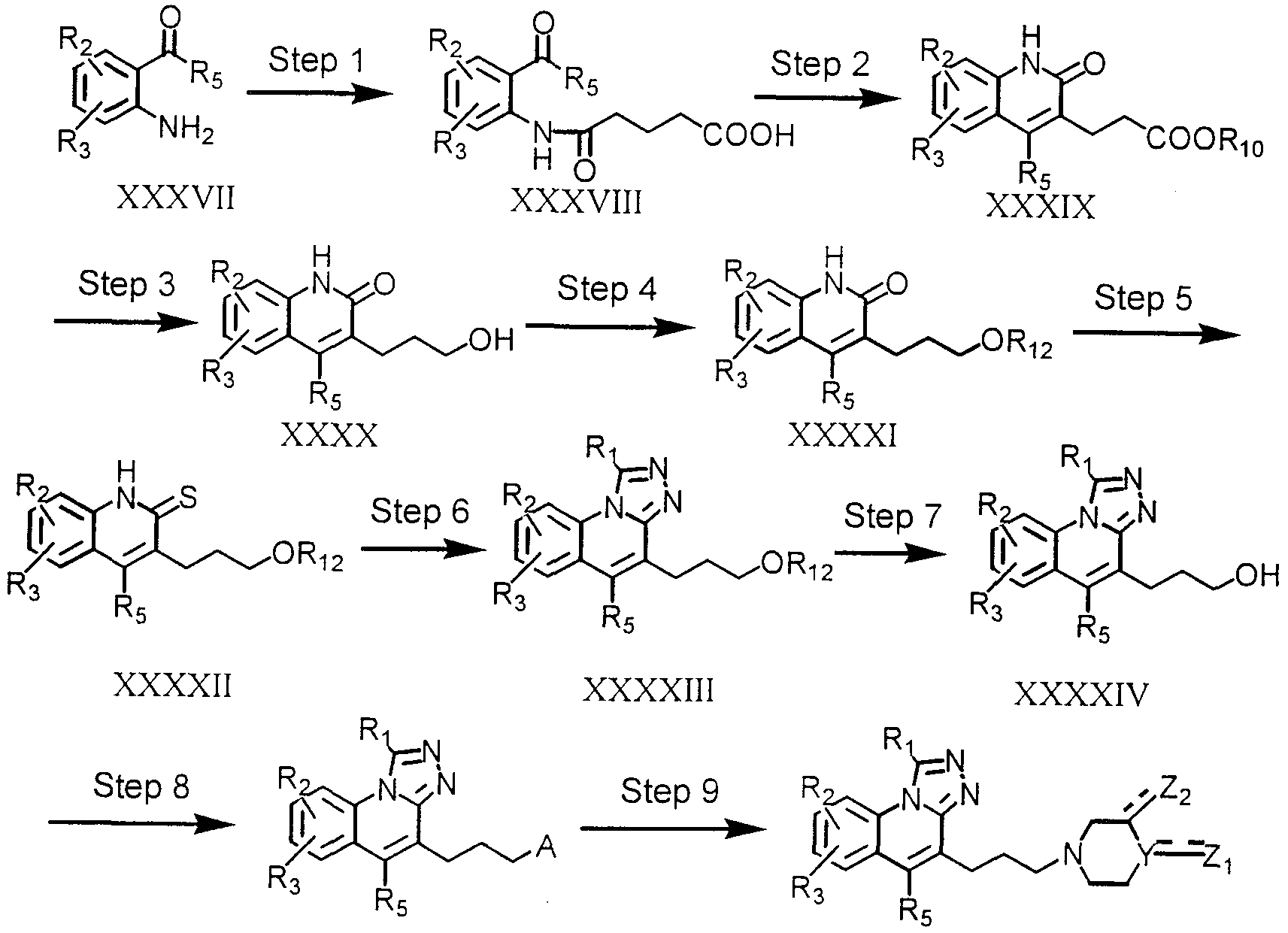
- R 5 is hydrogen, straight-chain alkyl group having 1 to 6 carbon atoms, carbon A branched alkyl group having 3 to 8 carbon atoms or a substituted or unsubstituted phenyl group having 6 to 22 carbon atoms, a substituted or unsubstituted cycloalkyl group having 6 to 22 carbon atoms
- the bond between W and V is a double bond XXXV
- W and V are carbon atoms
- X is an n-propyl group
- R 4 is hydrogen
- R 5 is hydrogen, a linear alkyl group having 1 to 6 carbon atoms, 3 to 8 carbon atoms XXXVI, in which the bond between W and V is a single bond in a substituted or unsubstituted cycloalkyl group having 6 to 22 carbon atoms or a substituted or unsubstitute
- R 12 is a benzyl group, a tetrapyranyl group, a methoxymethyl group, a t-butyldiphenylsilyl group, a t-butyldimethylsilyl group Represents a trimethylsilyl group.
- Step 1 involves converting XXXVI I to glutaric acid in a non-polar solvent such as benzene or toluene.
- XXXV III is obtained by reacting with water.
- the reaction is carried out under heated reflux, but the reaction proceeds at other temperatures.
- the mixing ratio of XXXVII and glutaric anhydride at the start of the reaction is not particularly limited, but is usually about 1: 1 to 1: 2 in molar ratio.
- the reaction time is usually about 4 to 12 hours.
- the cyclized product is obtained by heating and refluxing in an aqueous solution of hydroxylic power or sodium hydroxide, and then heated and refluxed in methanol or ethanol under acidic conditions such as hydrochloric acid and sulfuric acid.
- an aqueous solution of potassium hydroxide or an aqueous solution of sodium hydroxide is generally used, but a base such as potassium t-butoxide in an ether solvent such as tetrahydrofuran or dimethoxetane can also be used.
- the mixing ratio of XXXVIII and the base at the start of the first-stage reaction is not particularly limited, but is usually about 1: 1 to 1: 5 in molar ratio.
- the reaction time is usually about 4 to 12 hours.
- the reaction time of the second step may be usually about 3 to 8 hours.
- Step 3 is a step of reducing the ester group.
- a reducing agent aluminum lithium hydride diisobutyl aluminum hydride is used, but other reducing agents can be used.
- an ether-based solvent such as tetrahydrofuran or dimethoxyethane is used.
- the reaction temperature is not particularly limited, but is usually about 10 to 30 ° C.
- the mixing ratio of XXXIX and the reducing agent at the start of the reaction is not particularly limited, but is usually about 1: 1 to 1: 3 in molar ratio.
- the reaction time may usually be about 2 to 6 hours.
- Step 4 is a step of protecting the alcohol.
- 2 is a t-butyldiphenylsilyl group
- it can be usually achieved by reacting t_butyldiphenylsilyl chloride in dimethylformamide with imidazole as a base.
- R 2 is a 1: -butyldimethylsilyl group
- t-butyldimethylsilyl chloride is generally allowed to act in a polar solvent such as dimethylformamide or tetrahydrofuran using imidazolyl morpholine or the like as a base.
- R M is trimethylsilyl group
- typically halogen-based solvent such as methylene chloride
- it forces the other methods is achieved by the action of trimethyl silyl chloride
- Li de pyridine as base used can be used.
- 2 is a benzyl group
- it is generally achieved by reacting with benzyl bromide using a base such as sodium hydrogen hydride or t-butoxide in an ether solvent such as tetrahydrofuran or dimethoxyethane. it can.
- Other methods can also be used.
- 2 is a tetrahydrobiranyl group
- the reaction can be carried out by reacting with dihydropyran in a halogen-based solvent such as methylene chloride under acidic conditions.
- P-toluenesulfonic acid is used as the acid, but is not limited thereto.
- R 12 is a methoxymethyl group
- this can be achieved by reacting chloromethyl methyl ether with diisopropylethylamine as a base in a halogen-based solvent such as methylene chloride, but other methods can also be used.
- the reaction temperature is not particularly limited, but usually about 0 to 30 ° C is appropriate.
- the mixing ratio between XXXX and the base or acid at the start of the reaction is not particularly limited, but a molar ratio of usually about 1: 1 to 1: 3 is appropriate.
- the reaction time is appropriately selected according to the reaction temperature and the like, but is usually about 1 to 24 hours.
- Step 5 is a reaction in which XXXXI is reacted with an excess of diphosphorus pentasulfide or Lawesson's reagent to obtain XXXXII.
- diphosphorus pentasulfide pyridine, triethylamine, sodium bicarbonate and the like can be used as a base in an ether solvent such as tetrahydrofuran dimethoxetane. Other bases can also be used.
- As the reaction temperature 50 to 100 ° C. is selected, but the reaction can be carried out at other temperatures.
- XXXXII can be obtained by heating at room temperature to 100 ° C in a non-polar solvent such as toluene or an ether-based solvent such as dimethoxetane.
- the reaction time may be appropriately selected depending on the reaction temperature and the like, but may be usually about 20 to 200 hours for diphosphorus pentasulfide and about 2 to 10 hours for Lawson's reagent.
- Step 6 can be achieved by the action of hydrazine hydrate, followed by ⁇ CWRg) 3 . f ⁇ G COR g) 3
- a methyl group triethyl orthoacetate is generally used, but is not limited thereto.
- the step of reacting with hydrazine is usually performed using an alcohol such as methanol or ethanol.
- a non-polar solvent such as benzene, toluene and xylene, and a polar solvent such as tetrahydrofuran and dimethylformamide can also be used.
- the reaction proceeds even without solvent.
- the reaction can be carried out at a temperature from room temperature to 200 ° C, but the reaction is generally carried out at around 100 ° C.
- the mixing ratio of XXXXII and hydrazine hydrate at the start of the reaction is not particularly limited, but is usually about 1:10 to 1: 1100 by molar ratio.
- the reaction time is appropriately selected according to the reaction temperature and the like, but is usually about 20 to 150 hours.
- the reaction using 3 is performed in an alcoholic solvent such as methanol or ethanol or without a solvent.
- the reaction can be carried out at 60 to 150 ° C, but preferably at 100 to 120 ° C.
- the mixing ratio of the reaction product of the first step that put at the start of the reaction and the f ⁇ C ODR s) 3 of the second stage is not particularly limited, usually a molar ratio of 1: 2 to about 1: 3 0 Appropriate.
- the reaction time is appropriately selected according to the reaction temperature and the like, but is usually about 1 to 8 hours.
- Step 7 is a step of removing a protecting group for a hydroxyl group.
- R 1 2 is Jifuwenirumechiru silyl group, t-heptyl dimethylsilyl group in the case of trimethylsilyl groups, typically a polar solvent such as di-methyl formamidine, tetra n at room temperature - or to apply a Petit Ruan monitor ⁇ Muhu Ruori de, as tetrahydrofuran It is carried out by treating with acetic acid at room temperature to 60 ° C in a mixed solvent such as water. Other reaction conditions can be used.
- the mixing ratio of XXXXIII and tetra-n_butylammonium fluoride at the start of the reaction is not particularly limited, but a molar ratio of usually about 1: 1 to 1: 3 is appropriate.
- the reaction time is appropriately selected according to the reaction temperature and the like, but is usually about 2 to 12 hours.
- the mixing ratio of XXXXIII and acetic acid at the start of the reaction is not particularly limited, but a molar ratio of usually about 1: 0.1 to 1: 3 is appropriate.
- the reaction time is appropriately selected according to the reaction temperature and the like, but is usually about 1 to 10 hours.
- R and 2 are benzyl groups
- a palladium catalyst such as palladium / carbon, palladium hydroxide or the like
- an alcohol solvent such as methanol or ethanol
- a polar solvent such as ethyl acetate, tetrahydrofuran or dioxane.
- reaction temperature is not particularly limited, but usually about 10 to 30 ° C is appropriate.
- reaction time is appropriately selected according to the reaction temperature and the like, but is usually about 2 to 12 hours.
- reaction temperature is preferably under ice-cooling to room temperature, but is not limited thereto.
- the mixing ratio of XXXXI11 and the organic acid at the start of the reaction is not particularly limited, but is usually about 1: 0.1 to 1: 1 in molar ratio.
- the reaction time is appropriately selected according to the reaction temperature and the like, but is usually about 1 to 10 hours.
- reaction temperature is not particularly limited, but usually about 10 to 60 ° C is appropriate.
- Mixing ratio of the XXXX III and an organic acid at the start of the reaction, usually 1 with a force molar ratio is not particularly limited:. 0 1 to 1: 1 about 0 is appropriate.
- the reaction time is appropriately selected according to the reaction temperature and the like, but is usually about 1 to 10 hours.
- Step 8 is a step of converting a hydroxyl group into a chloro group, a bromo group, a tosyl group, and a mesyl group.
- a chromophore such as thionyl chloride, concentrated hydrochloric acid, or carbon tetrachloride-triphenylphosphine can be used.
- Other chromophores can also be used.
- a brominating reagent such as thionyl bromide, hydrobromic acid, carbon tetrabromide-triphenylphosphine is used, but other brominating reagents can also be used.
- methanesulfonyl chloride and p-toluenesulfonyl chloride are allowed to act under basic conditions such as pyridine and triethylamine, respectively. This reaction is usually performed at ⁇ 20 ° C. to room temperature, but is preferably performed under ice cooling.
- a halogen-based solvent such as methylene chloride or chloroform is used, and pyridine or the like can be used as the solvent.
- the mixing ratio of the XXXX IV to the reagent such as a chromatizing reagent, a brominating reagent or a sulfonyl chloride is not particularly limited, but is usually appropriate in a molar ratio of “!: 1 to 1: 3. Although it is appropriately selected according to the reaction temperature and the like, it is usually about 2 to 30 hours.
- Step 9 is a step of reacting XXXXV and VII at room temperature to 100 ° C, preferably 70 to 80 ° C, in a polar solvent such as acetonitrile-dimethylformamide under basic conditions. .
- a polar solvent such as acetonitrile-dimethylformamide under basic conditions.
- potassium carbonate is used as the base, but other bases can also be used.
- the mixing ratio between XXXXV and VIII in the reaction mixture at the start of the reaction is not particularly limited, but is usually from 1: 1 to 1: 2 in a molar ratio.
- the reaction time is appropriately selected according to the reaction temperature and the like, but is usually about 2 to 48 hours.
- Step 10 is a step of reducing a double bond.
- reaction temperature is not particularly limited, but is usually about 10 to 30 ° C.
- reaction time is appropriately selected according to the reaction temperature and the like, but is usually about 2 to 40 hours.
- novel triazolo derivative used in the present invention has one or more asymmetric carbon atoms, racemic forms, diastereoisomers and individual optical isomers can exist, but the present invention does not cover all of them. Can be used.
- Pharmaceutically acceptable salts of the compounds of formula I include inorganic salts such as hydrochloride, hydrobromide, sulfate, borate, phosphate, acetate, maleate and the like.
- Organic acid salts such as acid salts, fumarate salts, tartrate salts, succinate salts, malate salts, lactates, quaternates, malonates, benzoates, para-toluenesulfonates, methanesulfonates, and lysine Glycine, phenylalanine, asparagine, and glutamate addition salts.
- the triazolo derivative represented by the formula I or a pharmacologically acceptable salt thereof is, as specifically shown in the following examples, a chemokine receptor such as CCR1, CCR2, and CCR3. It can be used for treatment of various diseases utilizing inhibition of the action of chemokines via the body, particularly CC chemokines.
- the triazolo derivative of the present invention or a pharmacologically acceptable salt thereof is used as a therapeutic agent for allergic diseases such as bronchial asthma and atopic dermatitis, a therapeutic agent for inflammatory diseases such as rheumatoid arthritis, and nephritis. It is useful as a therapeutic drug for autoimmune diseases such as ulcerative colitis, and an anti-AIDS drug. It can be used as a prophylactic and therapeutic agent for various diseases in which chemokines are considered to be involved.
- the compound represented by the formula I and the acid addition salt thereof can be orally or parenterally administered to mammals as a powder as it is or as a pharmaceutical composition in an appropriate dosage form (for example, transdermal administration, intravenous administration). , Rectal administration, etc.).
- Specific dosage forms for administration include tablets, powders, pills, capsules, granules, syrups, solutions, injections, emulsions, suspensions, suppositories and the like.
- Such a dosage form is produced by a method known per se and contains various carriers usually used in the field of pharmaceuticals. Examples include excipients, lubricants, binders, and disintegrants in solid preparations; solvents, dissolution aids, suspending agents, and soothing agents in liquid preparations. If necessary, additives such as preservatives, antioxidants, coloring agents, sweeteners, adsorbents, and wetting agents can be used.
- Excipients include, for example, lactose, sucrose, D-mannitol, starch, sucrose, corn starch, crystalline cellulose, light caffeic anhydride and the like.
- examples of the lubricant include magnesium stearate, calcium stearate, talc, colloid silica and the like.
- examples of binders include crystalline cellulose, sucrose, and D-manni! Examples include cellulose, dextrin, hydroxypropylcellulose, hydroxypropylmethylcellulose, polyvinylpyrrolidone, starch, sucrose, gelatin, methylcellulose, and sodium carboxymethylcellulose.
- disintegrant examples include starch, carboxymethyl cellulose, calcium carboxymethyl cellulose, croscarmellose sodium, sodium carboxymethyl starch, L-hydroxypropyl cellulose, and the like.
- Solvents include, for example, water for injection, alcohol, propylene glycol, macrogo Oil, sesame oil, corn oil and the like.
- dissolution aids for example, polyethylene glycol, propylene glycol, D-manni! Benzyl, benzyl benzoate, ethanol, cholesterol, triethanolamine, sodium carbonate, sodium citrate and the like.
- suspending agent examples include surfactants such as stearyltriethanolamine, sodium lauryl sulfate, laurylaminopropionic acid, lecithin, benzalkonium chloride, benzethonium chloride, and glyceryl monostearate; and polyvinyl alcohol; Examples include hydrophilic polymers such as polyvinylpyrrolidone, methylcellulose, hydroxymethylcellulose, hydroxyethylcellulose, and hydroxypropylcellulose. Tonicity agents include, for example, glucose, sodium chloride, D-solubi! ⁇ , D-Manni! And the like. Examples of the buffer include buffers such as phosphate, acetate, carbonate, and citrate.
- Examples of the soothing agent include benzyl alcohol.
- Examples of preservatives include paraoxybenzoic acid esters, chlorobutanol, benzyl alcohol, phenethyl alcohol, dehydroacetic acid, sorbic acid and the like.
- Examples of the antioxidant include sulfite, ascorbic acid and the like.
- the effective dose and frequency of administration of the compound of formula I, or a pharmaceutically acceptable salt thereof, will also depend on the dosage form, the age and weight of the patient, the nature or severity of the condition to be treated. Usually, 0.1 to 1000 mg, preferably 1 to 200 mg per day for an adult can be administered once or in several divided doses.
- Each of the above-mentioned dosage forms may contain an active ingredient for other treatments as long as an unfavorable interaction is not caused by combination with the compound represented by the formula I or a salt thereof.
- an active ingredient for other treatments as long as an unfavorable interaction is not caused by combination with the compound represented by the formula I or a salt thereof.
- steroids non-steroid anti-inflammatory agents, lipoxygenase inhibitors, leukotriene antagonists, bronchodilators, thromboxane synthesis inhibitors, thromboxane antagonists, histamine antagonists, histamine release inhibitors, blood plate plate activation Factor (PAF) antagonists, serotonin antagonists, adenosine receptor antagonists, adrenaline ⁇ receptor antagonists, immunosuppressants, immunomodulators, and the like.
- PAF blood plate plate activation Factor
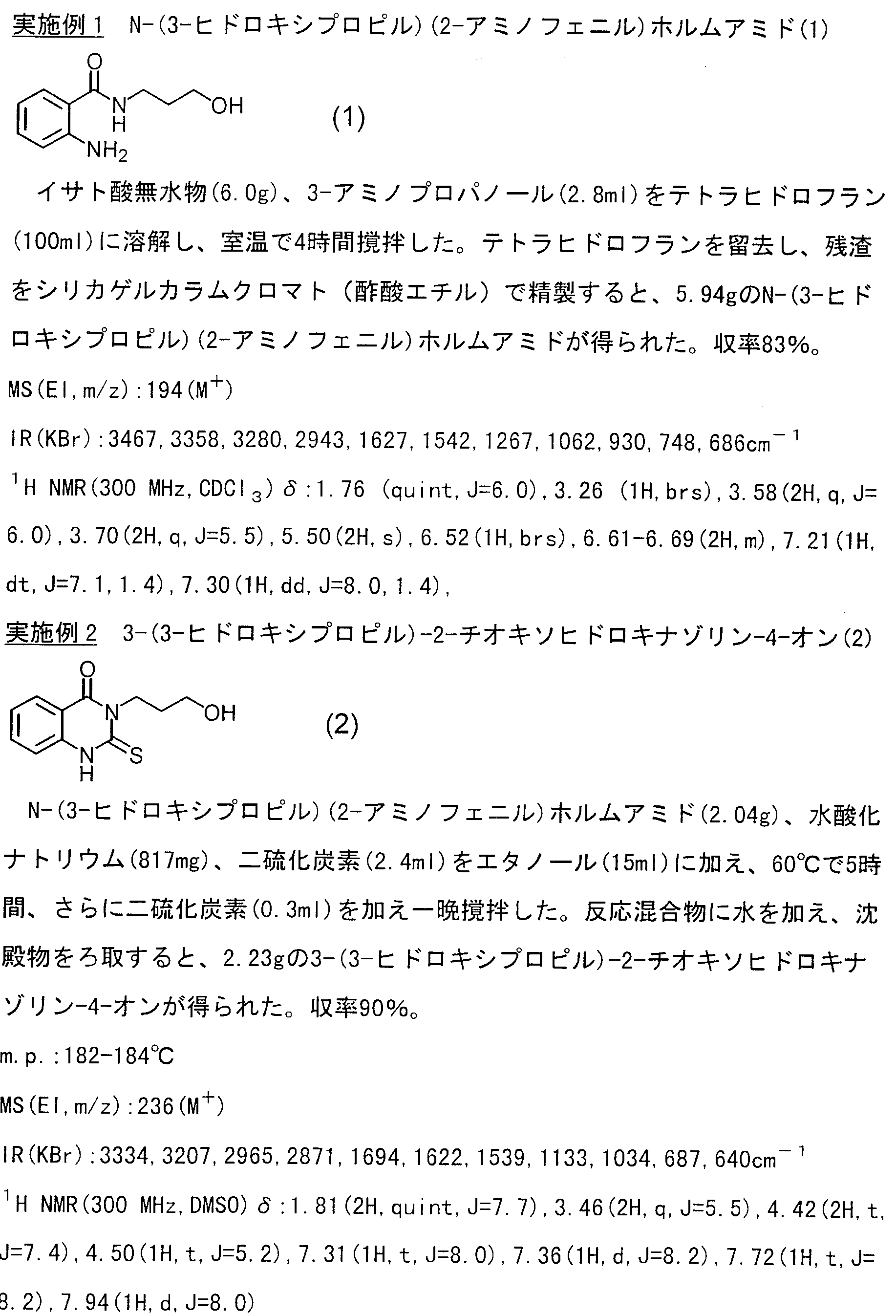
- N- (3- (4- (diphenylmethyl) piperazinyl) propyl) (2-aminophenyl) formamide (2.29 g), sodium hydroxide (380 mg), carbon disulfide (0.7 ml) were added to ethanol (10 ml).
- the mixture was refluxed at room temperature for 2 hours and further for 4 hours.
- Dilute hydrochloric acid was added to the reaction solution, and the precipitate was collected by filtration. 2.28 g of this was added to ethanol (20 ml) and hydrazine hydrate (14 ml), and the mixture was heated under reflux for 3 hours.
- N- (3- (4-Indole-3-ylpiperidyl) ethyl) (2-aminophenyl) formamide (656 mg), sodium hydroxide (196 mg) and carbon disulfide (1 ml) were added to ethanol (5 ml). The mixture was heated and refluxed at room temperature for 1.5 hours and further for 3.5 hours. Water was added to the reaction solution, and the precipitate was collected by filtration and recrystallized from acetone-ethyl acetate to give 541 mg of 3- (2- (4-indole-3-ylpiperidyl) ethyl) -2-thioxohydroquinazoline- 4-ON was obtained. Yield 74%.
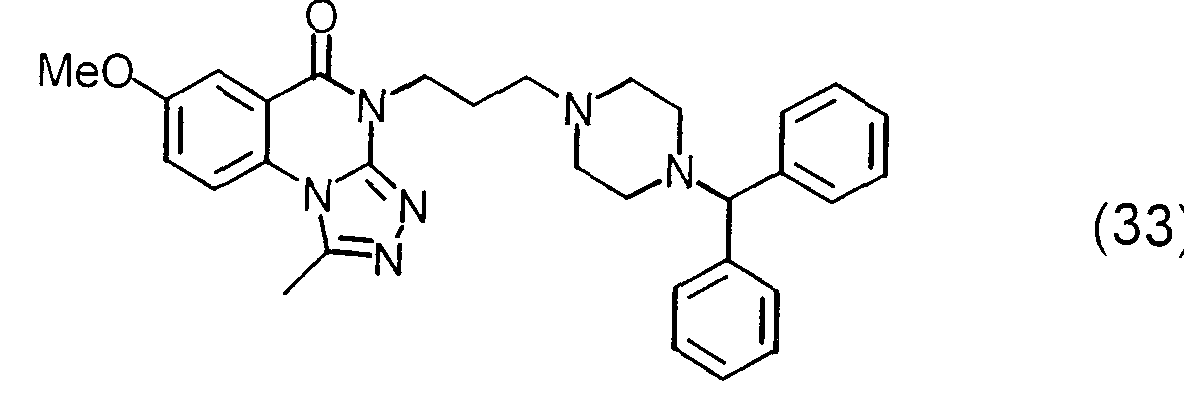
- 6-Methoxy-3- (3- (4- (diphenylmethyl) piperazinyl) propyl) -2-thioxohydroquinazolin-4-one (1.0 g) was added to ethanol (10 ml) and hydrazine hydrate (8 ml). The mixture was stirred at 80 to 100 ° C for 6 hours. Ethanol and hydrazine were distilled off, and n-butanol (15 ml) and triethyl orthoacetate (2 ml) were added to the residue, followed by stirring at 110 ° C for 3 hours.
- 6-Chloro-3- (3- (4- (diphenylmethyl) piperazinyl) propyl) -2-thioxohydroquinazolin-4-one (1.47 g) was added to ethanol (18 ml) and hydrazine hydrate (7 ml). The mixture was stirred at 100 to 110 ° C for 4 hours. Ethanol and hydrazine were distilled off, and n-butanol (30 ml) and triethyl orthoacetate (3 ml) were added to the residue, followed by stirring at 110 for 3 hours.
- 6-Hydroxy-3- (3_ (4- (diphenylmethyl) piperazinyl) propyl) -2-thioxohydroquinazolin-4-one (586 mg) was added to ethanol (10 m, hydrazine hydrate (5 ml)) and the mixture was heated to 80 ° C. Ethanol and hydrazine were distilled off, and n-butanol (15 ml) and triethyl orthoacetate (2 ml) were added to the residue, followed by stirring at 110 ° C for 3 hours.
- 6-Dimethylamino-3- (3_ (4- (diphenylmethyl) piperazinyl) propyl) -2- 2-thioxohydroquinazolin-4-one (384 mg) was dissolved in ethanol (6 ml) and hydrazine hydrate (5 ml). Stirred at ⁇ 105 ° C for 4 hours. Ethanol and hydrazine were distilled off, and n-butanol (10 ml) and triethyl orthoacetate (2 ml) were added to the residue, followed by stirring at 110 ° C for 3 hours.
- Torideca-1 (13), 3,5,9 (10), 11-pentaen-8_one (355mg), diphenylmethylbiperazine (320mg), potassium carbonate (170mg) in dimethylformamide (15ml)
- the mixture was stirred at 70 to 90 ° C for 20 hours.
- Dimethylformamide was distilled off, water was added to the residue, and the mixture was extracted with dichloromethane. The organic layers were combined and dried over anhydrous sodium sulfate.
- Trideca_1 (13), 3,5,9 (10), 11-pentaen-8-one (462mg), potassium carbonate (548mg) and acetonitrile (6ml) were added. Stirred for 82.5 hours. The reaction mixture was filtered, and the filtrate was concentrated.
- Lithium aluminum hydride (998 mg) was suspended in anhydrous THF (20 ml), and then dissolved in anhydrous tetrahydrofuran (20 ml) under ice-cooling.
- An aqueous solution of saturated sodium sulfate was added dropwise under ice cooling, and anhydrous sodium sulfate was added, followed by filtration.
- N- (3- (4- (diphenylmethyl) piperazyl) propyl) (2-aminophenyl) formamide (4.5 g) is dissolved in ethanol, and sodium hydroxide (660 mg) and carbon disulfide (3 ml) are added. Heated to reflux for an hour. Water was added to the reaction solution, and the deposited precipitate was collected by filtration. Of this precipitate, 722 mg was dissolved in ethanol (25 ml), hydrazine hydrate (10 ml) was added, and the mixture was heated under reflux for 7 hours.
- reaction mixture was concentrated, and toluene (20 ml), pyridine (20 ml) and benzoyl chloride (0.85 ml) were added to the residue, and the mixture was heated to reflux for 2 hours. Toluene and pyridine were distilled off, water was added to the residue, and the mixture was extracted three times with ethyl acetate. The organic phases were combined, washed with a saturated saline solution, dried over anhydrous sodium sulfate, and concentrated.
- N- (2-((1,1,2,2-tetramethyl-1-silapropoxy) methyl) phenyl) (2-aminophenol) formamide (1.65 g) was dissolved in ethanol (20 ml), Sodium hydroxide (276 mg) and carbon disulfide (1.5 ml) were added, and the mixture was stirred at 60 ° C for 9 hours.
- ⁇ -NR 300MHz, CDCI 3 , c5 ppm: 1.21 -1.43 (2H, m), 1.60—1 ⁇ 70 (2H, m), 2.18—2.33 (1H, m), 2.60-2.76 (2H, m) , 3.50-3.65 (3H, m), 6.18-6.40 (3H, m), 6.98-7.10 (1 H, m), 7.15-7.22 (1H, m), 7.23--7.38 (9H, m)
- H- hide (300MHz, CDC 1 3, ⁇ ppm): 1.30-1.49 (1H, m), 1.50-1.75 (3H, m), 2.20-2.35 (1H, m), 2.67-2.82 (2Hm), 3.51 -3.59 (1 H, m), 3.62-3.71 (2H, m), 5.46 (1H, brs), 6.65-6.80 (2H, m), 6.92-7.01 (1 H, m), 7.13-7.38 (13H, m), 7.42—7.46 (1 H, m),
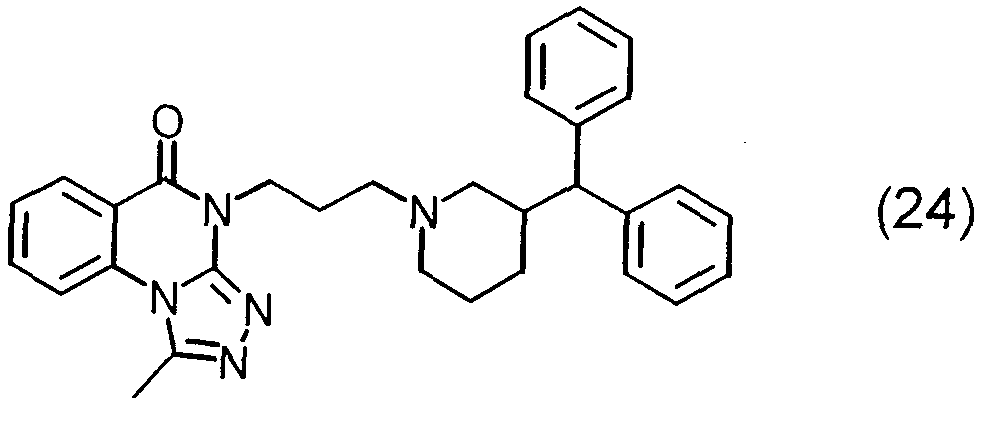
- ⁇ -(3- (4-Diphenylmethyl) piperidyl) (2-aminophenyl) formamide 700 mg was dissolved in ethanol (18 ml), and sodium hydroxide (90 mg) and carbon disulfide (1 ml) were added. And stirred at 60 ° C. for 30 hours. Water was added to the reaction solution, and the precipitate was collected by filtration. 630 mg of this precipitate was dissolved in ethanol (30 ml), hydrazine hydrate (6 ml) was added, the mixture was stirred at 80 ° C for 4 hours, and concentrated.
- N-Butanol (30 ml) and triethyl orthoacetate (2 ml) were added to the residue, and the mixture was stirred at 110 ° C for 3 hours, and then n-butanol was distilled off. Water was added to the residue and extracted three times with dichloromethane. The organic phases were combined, washed with brine, dried over anhydrous sodium sulfate and concentrated.
- ⁇ -NR 300MHz, CDCI 3 , ⁇ ppm: 1.05 (2H, m), 1.59 (2H, m), 2.31 (1 H, m), 2.40-2.60 (3H, m), 2.62-2.83 ( 2H, m), 2.94 (1 H, m), 3.44 (1 H, m), 3.97 (1 H, m), 4.50
- Lithium aluminum hydride (12 mg) was suspended in anhydrous THF (3 ml) and dissolved in anhydrous THF (3 ml) under ice cooling.
- 3_ (3-oxo_3_ (4- (diphenylmethyl) piperidyl) propyl)- 4-Phenylhydroquinolin-2-one (0.15 g) was added dropwise, and the mixture was stirred at room temperature for 23 hours. Under ice-cooling, a saturated aqueous sodium sulfate solution was added to the reaction mixture, and the solid was filtered. Water was added to the filtrate and extracted with ethyl acetate.
- Lithium aluminum hydride (390 mg) was suspended in anhydrous THF (30 ml), and a residue (2.21 g) dissolved in anhydrous THF (30 ml) was added dropwise under ice cooling. The mixture was stirred at G for 3 hours. Under ice-cooling, a saturated aqueous solution of sodium sulfate was added dropwise to the reaction mixture, and anhydrous sodium sulfate was added. The mixture was stirred at room temperature for 30 minutes, and then filtered. The filtrate was concentrated and the residue was recrystallized from chloroform to give 1.1 g of 3- (3-hydroxypropyl) -4-methylhydroquinolin-2-one as colorless crystals (yield 53%). LR-MS (m / z): 217 (M + )
- CGR receptor inhibitory action of the compound represented by the formula I will be described. CGR receptor inhibitory effects were examined using human eosinophils or human monocyte cell lines (THP-1).
- the cells were suspended in the measurement buffer so as to be 1 ⁇ 10 b cells / ml, and stored in a dark place until the measurement.
- the intracellular calcium concentration was measured using CAF100 manufactured by Nihon Kohden. That is, 490 I of the cell suspension loaded with Fura-2 is placed in a special cuvette and set in CAF100. After the fluorescence intensities at the excitation wavelengths of 340 nm and 380 nm and their ratios were stabilized, 10 I of a 250 / M solution of each test compound was injected.
- the change in intracellular calcium concentration for one minute after stimulation was measured by the ratio of the excitation wavelength of 340 nm to 380 nm (F340 / F380), and the peak was used as the intracellular calcium concentration induced by stimulation.
- the cells were exposed to the test compound, its 1 minute after eota X i n (5ng / ml ), RANTE S (40ng / ml), MCP - were stimulated at 1 (10ng / ml).
- the response of THP-1 to RANTES and MCP-1 is considered to be CCR1 and CCR2, respectively, and the response of eosinophils to eotaxin is considered to be a response via CCR3.
- Table 1 shows the results of the inhibitory effect of the test compound.
- Numerical values indicate IG 50 (M) values. NE indicates that no inhibitory activity was observed at 160 M or more.
- the compound represented by the formula I or a salt thereof has a CCR inhibitory action.
Landscapes
- Health & Medical Sciences (AREA)
- Chemical & Material Sciences (AREA)
- General Health & Medical Sciences (AREA)
- Life Sciences & Earth Sciences (AREA)
- Veterinary Medicine (AREA)
- Public Health (AREA)
- Medicinal Chemistry (AREA)
- Animal Behavior & Ethology (AREA)
- Organic Chemistry (AREA)
- Pharmacology & Pharmacy (AREA)
- Epidemiology (AREA)
- Nuclear Medicine, Radiotherapy & Molecular Imaging (AREA)
- General Chemical & Material Sciences (AREA)
- Chemical Kinetics & Catalysis (AREA)
- Engineering & Computer Science (AREA)
- Bioinformatics & Cheminformatics (AREA)
- Pain & Pain Management (AREA)
- Rheumatology (AREA)
- Pharmaceuticals Containing Other Organic And Inorganic Compounds (AREA)
Description















Claims


Priority Applications (3)
| Application Number | Priority Date | Filing Date | Title |
|---|---|---|---|
| EP99957410A EP1067130A4 (en) | 1998-12-04 | 1999-12-03 | TRIAZOLO DERIVATIVES, AND CHIMIOKIN INHIBITORS CONTAINING THESE DERIVATIVES AS ACTIVE INGREDIENT |
| US09/601,620 US6492364B1 (en) | 1998-12-04 | 1999-12-03 | Triazolo and derivatives as chemokine inhibitors |
| CA002319435A CA2319435A1 (en) | 1998-12-04 | 1999-12-03 | Triazolo derivatives and chemokine inhibitors containing the same as effective component |
Applications Claiming Priority (2)
| Application Number | Priority Date | Filing Date | Title |
|---|---|---|---|
| JP10/361862 | 1998-12-04 | ||
| JP36186298 | 1998-12-04 |
Publications (1)
| Publication Number | Publication Date |
|---|---|
| WO2000034278A1 true WO2000034278A1 (en) | 2000-06-15 |
Family
ID=18475111
Family Applications (1)
| Application Number | Title | Priority Date | Filing Date |
|---|---|---|---|
| PCT/JP1999/006792 Ceased WO2000034278A1 (en) | 1998-12-04 | 1999-12-03 | Triazolo derivatives and chemokine inhibitors containing the same as the active ingredient |
Country Status (5)
| Country | Link |
|---|---|
| US (1) | US6492364B1 (ja) |
| EP (1) | EP1067130A4 (ja) |
| CN (1) | CN1149214C (ja) |
| CA (1) | CA2319435A1 (ja) |
| WO (1) | WO2000034278A1 (ja) |
Cited By (20)
| Publication number | Priority date | Publication date | Assignee | Title |
|---|---|---|---|---|
| WO2001053288A1 (en) * | 2000-01-20 | 2001-07-26 | Eisai Co., Ltd. | Novel piperidine compounds and drugs containing the same |
| JP2004051600A (ja) * | 2002-07-24 | 2004-02-19 | Iyaku Bunshi Sekkei Kenkyusho:Kk | 造血器型プロスタグランジンd2合成酵素阻害剤 |
| WO2005030792A3 (en) * | 2003-09-23 | 2005-06-02 | Merck & Co Inc | Quinoline potassium channel inhibitors |
| WO2006028284A1 (ja) | 2004-09-08 | 2006-03-16 | Mitsubishi Pharma Corporation | モルホリン化合物 |
| JP2006515002A (ja) * | 2003-02-12 | 2006-05-18 | ベーリンガー インゲルハイム インターナショナル ゲゼルシャフト ミット ベシュレンクテル ハフツング | ピロリジノヒドロチナゾリン |
| US7101882B2 (en) | 2000-09-29 | 2006-09-05 | Glaxo Group Limited | Morpholin-acetamide derivatives for the treatment of inflammatory diseases |
| US7115635B2 (en) | 2001-04-27 | 2006-10-03 | Mitsubishi Pharma Corporation | Benzylpiperidine compound |
| WO2006129679A1 (ja) | 2005-05-31 | 2006-12-07 | Ono Pharmaceutical Co., Ltd. | スピロピペリジン化合物およびその医薬用途 |
| WO2007049771A1 (ja) | 2005-10-28 | 2007-05-03 | Ono Pharmaceutical Co., Ltd. | 塩基性基を含有する化合物およびその用途 |
| WO2007058322A1 (ja) | 2005-11-18 | 2007-05-24 | Ono Pharmaceutical Co., Ltd. | 塩基性基を含有する化合物およびその用途 |
| WO2007105637A1 (ja) | 2006-03-10 | 2007-09-20 | Ono Pharmaceutical Co., Ltd. | 含窒素複素環誘導体およびそれらを有効成分とする薬剤 |
| WO2007132846A1 (ja) | 2006-05-16 | 2007-11-22 | Ono Pharmaceutical Co., Ltd. | 保護されていてもよい酸性基を含有する化合物およびその用途 |
| WO2008016006A1 (fr) | 2006-07-31 | 2008-02-07 | Ono Pharmaceutical Co., Ltd. | Composé auquel un groupe cyclique est lié par une liaison spiro et son utilisation |
| EP2364982A1 (en) | 2003-04-18 | 2011-09-14 | ONO Pharmaceutical Co., Ltd. | Spiro-piperidine compounds as chemokine receptor antagonists and medicinal use thereof |
| EP2385040A1 (en) | 2003-03-14 | 2011-11-09 | ONO Pharmaceutical Co., Ltd. | Nitrogen-containing heterocyclic derivatives and drugs containing the same as the active ingredient |
| EP2546234A1 (en) | 2004-09-13 | 2013-01-16 | Ono Pharmaceutical Co., Ltd. | Nitrogeneous heterocyclic derivative and medicine containing the same as an active ingredient |
| EP2886120A1 (en) | 2010-10-29 | 2015-06-24 | Emory University | Quinazoline derivatives, compositions and uses related thereto |
| JPWO2015159938A1 (ja) * | 2014-04-18 | 2017-04-13 | 武田薬品工業株式会社 | 複素環化合物 |
| US10045989B2 (en) | 2012-05-31 | 2018-08-14 | Emory University | Quinazoline derivatives, compositions, and uses related thereto |
| US10117931B2 (en) | 2009-04-28 | 2018-11-06 | Kameran Lashkari | Methods for treatment of age-related macular degeneration |
Families Citing this family (7)
| Publication number | Priority date | Publication date | Assignee | Title |
|---|---|---|---|---|
| EP1285922A1 (en) * | 2001-08-13 | 2003-02-26 | Warner-Lambert Company | 1-Alkyl or 1-cycloalkyltriazolo[4,3-a]quinazolin-5-ones as phosphodiesterase inhibitors |
| CN100436429C (zh) * | 2003-02-20 | 2008-11-26 | 味之素株式会社 | 具有喹唑二酮骨架的苯丙氨酸衍生物的制造方法及制造中间体 |
| WO2004096794A1 (en) * | 2003-05-01 | 2004-11-11 | Vernalis Research Limited | Azetidinecarboxamide derivatives and their use in the treatment of cb1 receptor mediated disordrs |
| GT200500375A (es) * | 2004-12-20 | 2006-11-28 | Derivados de piperidina y su uso como agentes antiinflamatorios | |
| ATE531706T1 (de) * | 2005-04-30 | 2011-11-15 | Boehringer Ingelheim Int | Neue piperidin-substituierte indole und ihre verwendung als ccr-3-modulatoren |
| CN102260217B (zh) * | 2011-06-01 | 2014-03-05 | 淮海工学院 | 2-硫代喹唑啉衍生物及其合成方法 |
| US20240199608A1 (en) * | 2022-11-15 | 2024-06-20 | Eli Lilly And Company | Ahr agonists |
Citations (6)
| Publication number | Priority date | Publication date | Assignee | Title |
|---|---|---|---|---|
| US4316022A (en) * | 1979-04-11 | 1982-02-16 | Egyt Gyogyszervegyeszeti Gyar | Benzo-as-triazine derivatives |
| EP0076199A2 (fr) * | 1981-09-24 | 1983-04-06 | Roussel-Uclaf | Nouvelles triazoloquinazolones et leurs sels, procédé et intermédiaires de préparation, leur application comme médicaments et les compositions les renfermant |
| EP0536419A1 (en) * | 1991-04-23 | 1993-04-14 | Toray Industries, Inc. | Tricyclic triazole derivative, production thereof, and use thereof |
| EP0617961A1 (en) * | 1992-10-20 | 1994-10-05 | Toray Industries, Inc. | Eosinophil infiltration inhibitor |
| JPH09328484A (ja) * | 1996-06-07 | 1997-12-22 | Toray Ind Inc | トリアゾロキノキサリン誘導体の製造方法 |
| WO1999024434A1 (en) * | 1997-11-11 | 1999-05-20 | Ono Pharmaceutical Co., Ltd. | Fused pyrazine compounds |
Family Cites Families (2)
| Publication number | Priority date | Publication date | Assignee | Title |
|---|---|---|---|---|
| US5683998A (en) * | 1991-04-23 | 1997-11-04 | Toray Industries, Inc. | Tricyclic triazolo derivatives, processes for producing the same and the uses of the same |
| JPH09249566A (ja) | 1996-03-19 | 1997-09-22 | Takeda Chem Ind Ltd | ピペリジン化合物含有ケモカイン受容体拮抗剤 |
-
1999
- 1999-12-03 CN CNB998040347A patent/CN1149214C/zh not_active Expired - Fee Related
- 1999-12-03 EP EP99957410A patent/EP1067130A4/en not_active Withdrawn
- 1999-12-03 CA CA002319435A patent/CA2319435A1/en not_active Abandoned
- 1999-12-03 US US09/601,620 patent/US6492364B1/en not_active Expired - Fee Related
- 1999-12-03 WO PCT/JP1999/006792 patent/WO2000034278A1/ja not_active Ceased
Patent Citations (6)
| Publication number | Priority date | Publication date | Assignee | Title |
|---|---|---|---|---|
| US4316022A (en) * | 1979-04-11 | 1982-02-16 | Egyt Gyogyszervegyeszeti Gyar | Benzo-as-triazine derivatives |
| EP0076199A2 (fr) * | 1981-09-24 | 1983-04-06 | Roussel-Uclaf | Nouvelles triazoloquinazolones et leurs sels, procédé et intermédiaires de préparation, leur application comme médicaments et les compositions les renfermant |
| EP0536419A1 (en) * | 1991-04-23 | 1993-04-14 | Toray Industries, Inc. | Tricyclic triazole derivative, production thereof, and use thereof |
| EP0617961A1 (en) * | 1992-10-20 | 1994-10-05 | Toray Industries, Inc. | Eosinophil infiltration inhibitor |
| JPH09328484A (ja) * | 1996-06-07 | 1997-12-22 | Toray Ind Inc | トリアゾロキノキサリン誘導体の製造方法 |
| WO1999024434A1 (en) * | 1997-11-11 | 1999-05-20 | Ono Pharmaceutical Co., Ltd. | Fused pyrazine compounds |
Non-Patent Citations (1)
| Title |
|---|
| SHOJIRO YURUGI ET AL.: "Studies of N-Heterocyclic Compounds. XVI. On the Reaction of Fused s-Triazolo-Derivatives", J. TAKEDA RES. LAB.,, vol. 32, no. 2, 1973, pages 111 - 117, XP002921964 * |
Cited By (25)
| Publication number | Priority date | Publication date | Assignee | Title |
|---|---|---|---|---|
| US6784192B2 (en) | 2000-01-20 | 2004-08-31 | Eisai Co., Ltd. | Piperidine compound and pharmaceutical composition thereof |
| WO2001053288A1 (en) * | 2000-01-20 | 2001-07-26 | Eisai Co., Ltd. | Novel piperidine compounds and drugs containing the same |
| US7560548B2 (en) | 2000-09-29 | 2009-07-14 | Glaxo Group Limited | Morpholin-acetamide derivatives for the treatment of inflammatory diseases |
| US7101882B2 (en) | 2000-09-29 | 2006-09-05 | Glaxo Group Limited | Morpholin-acetamide derivatives for the treatment of inflammatory diseases |
| US7115635B2 (en) | 2001-04-27 | 2006-10-03 | Mitsubishi Pharma Corporation | Benzylpiperidine compound |
| JP2004051600A (ja) * | 2002-07-24 | 2004-02-19 | Iyaku Bunshi Sekkei Kenkyusho:Kk | 造血器型プロスタグランジンd2合成酵素阻害剤 |
| JP2006515002A (ja) * | 2003-02-12 | 2006-05-18 | ベーリンガー インゲルハイム インターナショナル ゲゼルシャフト ミット ベシュレンクテル ハフツング | ピロリジノヒドロチナゾリン |
| EP2385040A1 (en) | 2003-03-14 | 2011-11-09 | ONO Pharmaceutical Co., Ltd. | Nitrogen-containing heterocyclic derivatives and drugs containing the same as the active ingredient |
| EP2364982A1 (en) | 2003-04-18 | 2011-09-14 | ONO Pharmaceutical Co., Ltd. | Spiro-piperidine compounds as chemokine receptor antagonists and medicinal use thereof |
| WO2005030792A3 (en) * | 2003-09-23 | 2005-06-02 | Merck & Co Inc | Quinoline potassium channel inhibitors |
| AU2004276237B2 (en) * | 2003-09-23 | 2008-08-21 | Merck Sharp & Dohme Corp. | Quinoline potassium channel inhibitors |
| US7825131B2 (en) | 2003-09-23 | 2010-11-02 | Merck Sharp & Dohme Corp. | Quinoline potassium channel inhibitors |
| WO2006028284A1 (ja) | 2004-09-08 | 2006-03-16 | Mitsubishi Pharma Corporation | モルホリン化合物 |
| EP2546234A1 (en) | 2004-09-13 | 2013-01-16 | Ono Pharmaceutical Co., Ltd. | Nitrogeneous heterocyclic derivative and medicine containing the same as an active ingredient |
| WO2006129679A1 (ja) | 2005-05-31 | 2006-12-07 | Ono Pharmaceutical Co., Ltd. | スピロピペリジン化合物およびその医薬用途 |
| WO2007049771A1 (ja) | 2005-10-28 | 2007-05-03 | Ono Pharmaceutical Co., Ltd. | 塩基性基を含有する化合物およびその用途 |
| WO2007058322A1 (ja) | 2005-11-18 | 2007-05-24 | Ono Pharmaceutical Co., Ltd. | 塩基性基を含有する化合物およびその用途 |
| WO2007105637A1 (ja) | 2006-03-10 | 2007-09-20 | Ono Pharmaceutical Co., Ltd. | 含窒素複素環誘導体およびそれらを有効成分とする薬剤 |
| WO2007132846A1 (ja) | 2006-05-16 | 2007-11-22 | Ono Pharmaceutical Co., Ltd. | 保護されていてもよい酸性基を含有する化合物およびその用途 |
| WO2008016006A1 (fr) | 2006-07-31 | 2008-02-07 | Ono Pharmaceutical Co., Ltd. | Composé auquel un groupe cyclique est lié par une liaison spiro et son utilisation |
| US10117931B2 (en) | 2009-04-28 | 2018-11-06 | Kameran Lashkari | Methods for treatment of age-related macular degeneration |
| EP2886120A1 (en) | 2010-10-29 | 2015-06-24 | Emory University | Quinazoline derivatives, compositions and uses related thereto |
| US9868728B2 (en) | 2010-10-29 | 2018-01-16 | Emory University | Quinazoline derivatives, compositions, and uses related thereto |
| US10045989B2 (en) | 2012-05-31 | 2018-08-14 | Emory University | Quinazoline derivatives, compositions, and uses related thereto |
| JPWO2015159938A1 (ja) * | 2014-04-18 | 2017-04-13 | 武田薬品工業株式会社 | 複素環化合物 |
Also Published As
| Publication number | Publication date |
|---|---|
| US6492364B1 (en) | 2002-12-10 |
| CN1293674A (zh) | 2001-05-02 |
| EP1067130A4 (en) | 2004-02-11 |
| CN1149214C (zh) | 2004-05-12 |
| CA2319435A1 (en) | 2000-06-15 |
| EP1067130A1 (en) | 2001-01-10 |
Similar Documents
| Publication | Publication Date | Title |
|---|---|---|
| WO2000034278A1 (en) | Triazolo derivatives and chemokine inhibitors containing the same as the active ingredient | |
| JP6665169B2 (ja) | 新規化合物αvβ6インテグリンアンタゴニスト | |
| CA2748251C (en) | Bicyclic heterocyclic compound for use as a sensory neuron specific sodium channel inhibitor | |
| JPH02243689A (ja) | ピラゾロピリジン化合物およびその製造法 | |
| JP7187575B2 (ja) | Rhoキナーゼ阻害剤としてのベンゾピラゾール系化合物 | |
| RU2065859C1 (ru) | Производные 2-(4-гидроксипиперидино)-1-алканола и производные 2-(4-гидроксипиперидино)-1-алканона | |
| JP2020515583A (ja) | アリールシクロプロピル−アミノ−イソキノリニルアミド化合物 | |
| HUT60720A (en) | Process for producing bis-arylamide and urea derivatives hindering thromocyte activating factor, as well as pharmaceutical compositions comprising such compounds | |
| JPH06504520A (ja) | 選択的ロイコトリエンb↓4拮抗剤活性を示す置換された二環式アリール化合物 | |
| JP2003034689A (ja) | 4−複素環式環縮合アリールピペリジン誘導体 | |
| JPS6289679A (ja) | ピペリジン誘導体 | |
| KR20180127979A (ko) | 화합물 (s)-4-((s)-3-플루오로-3-(2-(5,6,7,8-테트라히드로-1,8-나프티리딘-2-일)에틸)피롤리딘-1-일)-3-(3-(2-메톡시에톡시)페닐) 부탄산의 시트레이트 염 | |
| CN111909101A (zh) | 一种egfr激酶抑制剂及其在制备抗癌药物方面的应用 | |
| JPH06509318A (ja) | トロポロン誘導体ならびに虚血性疾患を予防および治療するためのその薬剤組成物 | |
| JPH06504277A (ja) | 新規な3,4−ジヒドロイソキノリン誘導体並びに炭素環式及び複素環式の縮合ジヒドロピリジンの新規な医薬としての使用 | |
| WO2020253802A1 (zh) | 二芳基酰胺类化合物及其应用 | |
| JP3776203B2 (ja) | Icam−1産生阻害剤 | |
| JPWO1997000258A1 (ja) | 三環性ベンゾアゼピン化合物 | |
| CN108699041A (zh) | 具有jnk抑制活性的新型咪唑衍生物及其用途 | |
| WO2017183723A1 (ja) | Kcnq2~5チャネル活性化剤 | |
| JPS6124579A (ja) | 置換されたフエノキシアルキルアミノプロパノール | |
| KR102811265B1 (ko) | 벤즈이미다졸 유도체 및 이들의 용도 | |
| JPH04234359A (ja) | 1−ジフェニルメチルピペラジンの新規誘導体、それらの製法、及びそれらの医薬用途 | |
| WO2013107333A1 (zh) | 哌嗪基嘧啶类衍生物及其制备方法和用途 | |
| CN104945411A (zh) | 噻吩并[3,2-c]吡啶类化合物、其制备方法及应用 |
Legal Events
| Date | Code | Title | Description |
|---|---|---|---|
| WWE | Wipo information: entry into national phase |
Ref document number: 99804034.7 Country of ref document: CN |
|
| AK | Designated states |
Kind code of ref document: A1 Designated state(s): CA CN JP US |
|
| AL | Designated countries for regional patents |
Kind code of ref document: A1 Designated state(s): AT BE CH CY DE DK ES FI FR GB GR IE IT LU MC NL PT SE |
|
| ENP | Entry into the national phase |
Ref document number: 2319435 Country of ref document: CA |
|
| 121 | Ep: the epo has been informed by wipo that ep was designated in this application | ||
| WWE | Wipo information: entry into national phase |
Ref document number: 1999957410 Country of ref document: EP |
|
| WWE | Wipo information: entry into national phase |
Ref document number: 09601620 Country of ref document: US |
|
| WWP | Wipo information: published in national office |
Ref document number: 1999957410 Country of ref document: EP |
|
| WWW | Wipo information: withdrawn in national office |
Ref document number: 1999957410 Country of ref document: EP |