US9975830B2 - Compound containing modified phenolic hydroxy group, method for producing compound containing modified phenolic hydroxy group, photosensitive composition, resist material, and resist coating film - Google Patents
Compound containing modified phenolic hydroxy group, method for producing compound containing modified phenolic hydroxy group, photosensitive composition, resist material, and resist coating film Download PDFInfo
- Publication number
- US9975830B2 US9975830B2 US15/307,959 US201515307959A US9975830B2 US 9975830 B2 US9975830 B2 US 9975830B2 US 201515307959 A US201515307959 A US 201515307959A US 9975830 B2 US9975830 B2 US 9975830B2
- Authority
- US
- United States
- Prior art keywords
- group
- phenolic hydroxy
- compound
- compound containing
- modified phenolic
- Prior art date
- Legal status (The legal status is an assumption and is not a legal conclusion. Google has not performed a legal analysis and makes no representation as to the accuracy of the status listed.)
- Active
Links
- 0 C1=CC=C2C=CC=CC2=C1.C1=CC=C2C=CC=CC2=C1.CC.CC.CC.CC.CC.CC.CC.[3*]C(C)C.[3*]C(C)C Chemical compound C1=CC=C2C=CC=CC2=C1.C1=CC=C2C=CC=CC2=C1.CC.CC.CC.CC.CC.CC.CC.[3*]C(C)C.[3*]C(C)C 0.000 description 8
Images


Classifications
-
- C—CHEMISTRY; METALLURGY
- C07—ORGANIC CHEMISTRY
- C07C—ACYCLIC OR CARBOCYCLIC COMPOUNDS
- C07C39/00—Compounds having at least one hydroxy or O-metal group bound to a carbon atom of a six-membered aromatic ring
- C07C39/12—Compounds having at least one hydroxy or O-metal group bound to a carbon atom of a six-membered aromatic ring polycyclic with no unsaturation outside the aromatic rings
- C07C39/14—Compounds having at least one hydroxy or O-metal group bound to a carbon atom of a six-membered aromatic ring polycyclic with no unsaturation outside the aromatic rings with at least one hydroxy group on a condensed ring system containing two rings
-
- C—CHEMISTRY; METALLURGY
- C07—ORGANIC CHEMISTRY
- C07C—ACYCLIC OR CARBOCYCLIC COMPOUNDS
- C07C37/00—Preparation of compounds having hydroxy or O-metal groups bound to a carbon atom of a six-membered aromatic ring
- C07C37/11—Preparation of compounds having hydroxy or O-metal groups bound to a carbon atom of a six-membered aromatic ring by reactions increasing the number of carbon atoms
- C07C37/20—Preparation of compounds having hydroxy or O-metal groups bound to a carbon atom of a six-membered aromatic ring by reactions increasing the number of carbon atoms using aldehydes or ketones
-
- C—CHEMISTRY; METALLURGY
- C07—ORGANIC CHEMISTRY
- C07C—ACYCLIC OR CARBOCYCLIC COMPOUNDS
- C07C43/00—Ethers; Compounds having groups, groups or groups
- C07C43/02—Ethers
- C07C43/20—Ethers having an ether-oxygen atom bound to a carbon atom of a six-membered aromatic ring
- C07C43/23—Ethers having an ether-oxygen atom bound to a carbon atom of a six-membered aromatic ring containing hydroxy or O-metal groups
-
- C—CHEMISTRY; METALLURGY
- C07—ORGANIC CHEMISTRY
- C07C—ACYCLIC OR CARBOCYCLIC COMPOUNDS
- C07C43/00—Ethers; Compounds having groups, groups or groups
- C07C43/30—Compounds having groups
- C07C43/315—Compounds having groups containing oxygen atoms singly bound to carbon atoms not being acetal carbon atoms
-
- C—CHEMISTRY; METALLURGY
- C07—ORGANIC CHEMISTRY
- C07D—HETEROCYCLIC COMPOUNDS
- C07D309/00—Heterocyclic compounds containing six-membered rings having one oxygen atom as the only ring hetero atom, not condensed with other rings
- C07D309/16—Heterocyclic compounds containing six-membered rings having one oxygen atom as the only ring hetero atom, not condensed with other rings having one double bond between ring members or between a ring member and a non-ring member
- C07D309/20—Heterocyclic compounds containing six-membered rings having one oxygen atom as the only ring hetero atom, not condensed with other rings having one double bond between ring members or between a ring member and a non-ring member with hydrogen atoms and substituted hydrocarbon radicals directly attached to ring carbon atoms
-
- C—CHEMISTRY; METALLURGY
- C08—ORGANIC MACROMOLECULAR COMPOUNDS; THEIR PREPARATION OR CHEMICAL WORKING-UP; COMPOSITIONS BASED THEREON
- C08G—MACROMOLECULAR COMPOUNDS OBTAINED OTHERWISE THAN BY REACTIONS ONLY INVOLVING UNSATURATED CARBON-TO-CARBON BONDS
- C08G8/00—Condensation polymers of aldehydes or ketones with phenols only
- C08G8/04—Condensation polymers of aldehydes or ketones with phenols only of aldehydes
-
- C—CHEMISTRY; METALLURGY
- C08—ORGANIC MACROMOLECULAR COMPOUNDS; THEIR PREPARATION OR CHEMICAL WORKING-UP; COMPOSITIONS BASED THEREON
- C08G—MACROMOLECULAR COMPOUNDS OBTAINED OTHERWISE THAN BY REACTIONS ONLY INVOLVING UNSATURATED CARBON-TO-CARBON BONDS
- C08G8/00—Condensation polymers of aldehydes or ketones with phenols only
- C08G8/04—Condensation polymers of aldehydes or ketones with phenols only of aldehydes
- C08G8/08—Condensation polymers of aldehydes or ketones with phenols only of aldehydes of formaldehyde, e.g. of formaldehyde formed in situ
- C08G8/24—Condensation polymers of aldehydes or ketones with phenols only of aldehydes of formaldehyde, e.g. of formaldehyde formed in situ with mixtures of two or more phenols which are not covered by only one of the groups C08G8/10 - C08G8/20
-
- C—CHEMISTRY; METALLURGY
- C09—DYES; PAINTS; POLISHES; NATURAL RESINS; ADHESIVES; COMPOSITIONS NOT OTHERWISE PROVIDED FOR; APPLICATIONS OF MATERIALS NOT OTHERWISE PROVIDED FOR
- C09D—COATING COMPOSITIONS, e.g. PAINTS, VARNISHES OR LACQUERS; FILLING PASTES; CHEMICAL PAINT OR INK REMOVERS; INKS; CORRECTING FLUIDS; WOODSTAINS; PASTES OR SOLIDS FOR COLOURING OR PRINTING; USE OF MATERIALS THEREFOR
- C09D161/00—Coating compositions based on condensation polymers of aldehydes or ketones; Coating compositions based on derivatives of such polymers
- C09D161/04—Condensation polymers of aldehydes or ketones with phenols only
- C09D161/06—Condensation polymers of aldehydes or ketones with phenols only of aldehydes with phenols
-
- C—CHEMISTRY; METALLURGY
- C09—DYES; PAINTS; POLISHES; NATURAL RESINS; ADHESIVES; COMPOSITIONS NOT OTHERWISE PROVIDED FOR; APPLICATIONS OF MATERIALS NOT OTHERWISE PROVIDED FOR
- C09D—COATING COMPOSITIONS, e.g. PAINTS, VARNISHES OR LACQUERS; FILLING PASTES; CHEMICAL PAINT OR INK REMOVERS; INKS; CORRECTING FLUIDS; WOODSTAINS; PASTES OR SOLIDS FOR COLOURING OR PRINTING; USE OF MATERIALS THEREFOR
- C09D161/00—Coating compositions based on condensation polymers of aldehydes or ketones; Coating compositions based on derivatives of such polymers
- C09D161/04—Condensation polymers of aldehydes or ketones with phenols only
- C09D161/06—Condensation polymers of aldehydes or ketones with phenols only of aldehydes with phenols
- C09D161/12—Condensation polymers of aldehydes or ketones with phenols only of aldehydes with phenols with polyhydric phenols
-
- G—PHYSICS
- G03—PHOTOGRAPHY; CINEMATOGRAPHY; ANALOGOUS TECHNIQUES USING WAVES OTHER THAN OPTICAL WAVES; ELECTROGRAPHY; HOLOGRAPHY
- G03F—PHOTOMECHANICAL PRODUCTION OF TEXTURED OR PATTERNED SURFACES, e.g. FOR PRINTING, FOR PROCESSING OF SEMICONDUCTOR DEVICES; MATERIALS THEREFOR; ORIGINALS THEREFOR; APPARATUS SPECIALLY ADAPTED THEREFOR
- G03F7/00—Photomechanical, e.g. photolithographic, production of textured or patterned surfaces, e.g. printing surfaces; Materials therefor, e.g. comprising photoresists; Apparatus specially adapted therefor
- G03F7/004—Photosensitive materials
-
- G—PHYSICS
- G03—PHOTOGRAPHY; CINEMATOGRAPHY; ANALOGOUS TECHNIQUES USING WAVES OTHER THAN OPTICAL WAVES; ELECTROGRAPHY; HOLOGRAPHY
- G03F—PHOTOMECHANICAL PRODUCTION OF TEXTURED OR PATTERNED SURFACES, e.g. FOR PRINTING, FOR PROCESSING OF SEMICONDUCTOR DEVICES; MATERIALS THEREFOR; ORIGINALS THEREFOR; APPARATUS SPECIALLY ADAPTED THEREFOR
- G03F7/00—Photomechanical, e.g. photolithographic, production of textured or patterned surfaces, e.g. printing surfaces; Materials therefor, e.g. comprising photoresists; Apparatus specially adapted therefor
- G03F7/004—Photosensitive materials
- G03F7/0045—Photosensitive materials with organic non-macromolecular light-sensitive compounds not otherwise provided for, e.g. dissolution inhibitors
-
- G—PHYSICS
- G03—PHOTOGRAPHY; CINEMATOGRAPHY; ANALOGOUS TECHNIQUES USING WAVES OTHER THAN OPTICAL WAVES; ELECTROGRAPHY; HOLOGRAPHY
- G03F—PHOTOMECHANICAL PRODUCTION OF TEXTURED OR PATTERNED SURFACES, e.g. FOR PRINTING, FOR PROCESSING OF SEMICONDUCTOR DEVICES; MATERIALS THEREFOR; ORIGINALS THEREFOR; APPARATUS SPECIALLY ADAPTED THEREFOR
- G03F7/00—Photomechanical, e.g. photolithographic, production of textured or patterned surfaces, e.g. printing surfaces; Materials therefor, e.g. comprising photoresists; Apparatus specially adapted therefor
- G03F7/004—Photosensitive materials
- G03F7/039—Macromolecular compounds which are photodegradable, e.g. positive electron resists
-
- G—PHYSICS
- G03—PHOTOGRAPHY; CINEMATOGRAPHY; ANALOGOUS TECHNIQUES USING WAVES OTHER THAN OPTICAL WAVES; ELECTROGRAPHY; HOLOGRAPHY
- G03F—PHOTOMECHANICAL PRODUCTION OF TEXTURED OR PATTERNED SURFACES, e.g. FOR PRINTING, FOR PROCESSING OF SEMICONDUCTOR DEVICES; MATERIALS THEREFOR; ORIGINALS THEREFOR; APPARATUS SPECIALLY ADAPTED THEREFOR
- G03F7/00—Photomechanical, e.g. photolithographic, production of textured or patterned surfaces, e.g. printing surfaces; Materials therefor, e.g. comprising photoresists; Apparatus specially adapted therefor
- G03F7/004—Photosensitive materials
- G03F7/039—Macromolecular compounds which are photodegradable, e.g. positive electron resists
- G03F7/0392—Macromolecular compounds which are photodegradable, e.g. positive electron resists the macromolecular compound being present in a chemically amplified positive photoresist composition
-
- G—PHYSICS
- G03—PHOTOGRAPHY; CINEMATOGRAPHY; ANALOGOUS TECHNIQUES USING WAVES OTHER THAN OPTICAL WAVES; ELECTROGRAPHY; HOLOGRAPHY
- G03F—PHOTOMECHANICAL PRODUCTION OF TEXTURED OR PATTERNED SURFACES, e.g. FOR PRINTING, FOR PROCESSING OF SEMICONDUCTOR DEVICES; MATERIALS THEREFOR; ORIGINALS THEREFOR; APPARATUS SPECIALLY ADAPTED THEREFOR
- G03F7/00—Photomechanical, e.g. photolithographic, production of textured or patterned surfaces, e.g. printing surfaces; Materials therefor, e.g. comprising photoresists; Apparatus specially adapted therefor
- G03F7/16—Coating processes; Apparatus therefor
- G03F7/162—Coating on a rotating support, e.g. using a whirler or a spinner
-
- G—PHYSICS
- G03—PHOTOGRAPHY; CINEMATOGRAPHY; ANALOGOUS TECHNIQUES USING WAVES OTHER THAN OPTICAL WAVES; ELECTROGRAPHY; HOLOGRAPHY
- G03F—PHOTOMECHANICAL PRODUCTION OF TEXTURED OR PATTERNED SURFACES, e.g. FOR PRINTING, FOR PROCESSING OF SEMICONDUCTOR DEVICES; MATERIALS THEREFOR; ORIGINALS THEREFOR; APPARATUS SPECIALLY ADAPTED THEREFOR
- G03F7/00—Photomechanical, e.g. photolithographic, production of textured or patterned surfaces, e.g. printing surfaces; Materials therefor, e.g. comprising photoresists; Apparatus specially adapted therefor
- G03F7/16—Coating processes; Apparatus therefor
- G03F7/168—Finishing the coated layer, e.g. drying, baking, soaking
-
- G—PHYSICS
- G03—PHOTOGRAPHY; CINEMATOGRAPHY; ANALOGOUS TECHNIQUES USING WAVES OTHER THAN OPTICAL WAVES; ELECTROGRAPHY; HOLOGRAPHY
- G03F—PHOTOMECHANICAL PRODUCTION OF TEXTURED OR PATTERNED SURFACES, e.g. FOR PRINTING, FOR PROCESSING OF SEMICONDUCTOR DEVICES; MATERIALS THEREFOR; ORIGINALS THEREFOR; APPARATUS SPECIALLY ADAPTED THEREFOR
- G03F7/00—Photomechanical, e.g. photolithographic, production of textured or patterned surfaces, e.g. printing surfaces; Materials therefor, e.g. comprising photoresists; Apparatus specially adapted therefor
- G03F7/20—Exposure; Apparatus therefor
- G03F7/2002—Exposure; Apparatus therefor with visible light or UV light, through an original having an opaque pattern on a transparent support, e.g. film printing, projection printing; by reflection of visible or UV light from an original such as a printed image
-
- G—PHYSICS
- G03—PHOTOGRAPHY; CINEMATOGRAPHY; ANALOGOUS TECHNIQUES USING WAVES OTHER THAN OPTICAL WAVES; ELECTROGRAPHY; HOLOGRAPHY
- G03F—PHOTOMECHANICAL PRODUCTION OF TEXTURED OR PATTERNED SURFACES, e.g. FOR PRINTING, FOR PROCESSING OF SEMICONDUCTOR DEVICES; MATERIALS THEREFOR; ORIGINALS THEREFOR; APPARATUS SPECIALLY ADAPTED THEREFOR
- G03F7/00—Photomechanical, e.g. photolithographic, production of textured or patterned surfaces, e.g. printing surfaces; Materials therefor, e.g. comprising photoresists; Apparatus specially adapted therefor
- G03F7/26—Processing photosensitive materials; Apparatus therefor
- G03F7/30—Imagewise removal using liquid means
- G03F7/32—Liquid compositions therefor, e.g. developers
- G03F7/322—Aqueous alkaline compositions
-
- G—PHYSICS
- G03—PHOTOGRAPHY; CINEMATOGRAPHY; ANALOGOUS TECHNIQUES USING WAVES OTHER THAN OPTICAL WAVES; ELECTROGRAPHY; HOLOGRAPHY
- G03F—PHOTOMECHANICAL PRODUCTION OF TEXTURED OR PATTERNED SURFACES, e.g. FOR PRINTING, FOR PROCESSING OF SEMICONDUCTOR DEVICES; MATERIALS THEREFOR; ORIGINALS THEREFOR; APPARATUS SPECIALLY ADAPTED THEREFOR
- G03F7/00—Photomechanical, e.g. photolithographic, production of textured or patterned surfaces, e.g. printing surfaces; Materials therefor, e.g. comprising photoresists; Apparatus specially adapted therefor
- G03F7/26—Processing photosensitive materials; Apparatus therefor
- G03F7/40—Treatment after imagewise removal, e.g. baking
-
- C—CHEMISTRY; METALLURGY
- C07—ORGANIC CHEMISTRY
- C07C—ACYCLIC OR CARBOCYCLIC COMPOUNDS
- C07C2603/00—Systems containing at least three condensed rings
- C07C2603/92—Systems containing at least three condensed rings with a condensed ring system consisting of at least two mutually uncondensed aromatic ring systems, linked by an annular structure formed by carbon chains on non-adjacent positions of the aromatic system, e.g. cyclophanes
-
- C—CHEMISTRY; METALLURGY
- C08—ORGANIC MACROMOLECULAR COMPOUNDS; THEIR PREPARATION OR CHEMICAL WORKING-UP; COMPOSITIONS BASED THEREON
- C08G—MACROMOLECULAR COMPOUNDS OBTAINED OTHERWISE THAN BY REACTIONS ONLY INVOLVING UNSATURATED CARBON-TO-CARBON BONDS
- C08G8/00—Condensation polymers of aldehydes or ketones with phenols only
- C08G8/04—Condensation polymers of aldehydes or ketones with phenols only of aldehydes
- C08G8/08—Condensation polymers of aldehydes or ketones with phenols only of aldehydes of formaldehyde, e.g. of formaldehyde formed in situ
- C08G8/12—Condensation polymers of aldehydes or ketones with phenols only of aldehydes of formaldehyde, e.g. of formaldehyde formed in situ with monohydric phenols having only one hydrocarbon substituent ortho on para to the OH group, e.g. p-tert.-butyl phenol
Definitions
- the present invention relates to a photosensitive composition which has high photosensitivity, resolution, and alkali developing property, and also has excellent heat resistance, a resist material, a coating film thereof, a compound containing a modified phenolic hydroxy group optimal to these applications, and a method for producing the compound.
- a resin composition containing a novolac type phenol resin having excellent heat resistance and alkali solubility and a photosensitive agent such as a naphthoquinone diazide compound has been widely used, but in recent years, with the progress of miniaturization of circuit patterns, further improvement in photosensitivity and resolution is demanded. From the viewpoint of the fact that various heat treatments are performed in a step of producing of semiconductor or the like, higher heat resistance is also demanded. That is, development of a new photoresist resin material having both sensitivity and heat resistance at high levels is expected.
- a resist used for producing semiconductor such as IC and LSI producing a display device such as LCD, and producing a printing plate precursor
- positive type photoresists using a photosensitive agent such as an alkali soluble resin and a 1,2-naphthoquinone diazide compound are known.
- a photosensitive agent such as an alkali soluble resin and a 1,2-naphthoquinone diazide compound
- a dihydroxynaphthalene type novolac resin (refer to PTL 1) and a compound containing a phenolic hydroxy group having a cylindrical structure called a calixarene structure are known (refer to PTL 2).
- the photosensitivity of a novolac resin which is an alkali soluble resin can be improved by making the resin into a chemical amplification type, in which the hydroxy group in the resin is protected with an acid dissociable type protecting group, but the heat resistance tends to be lowered by the introduction of the acid dissociable type protecting group, and there is a problem that when improving the heat resistance, the photosensitivity is lowered.
- the object of the present invention is to provide a compound containing a modified phenolic hydroxy group which has excellent photosensitivity and heat resistance, a method for producing the compound containing a modified phenolic hydroxy group, a photosensitive composition containing the compound containing a modified phenolic hydroxy group, a resist material formed of the photosensitive composition, and a coating film formed of the resist material.
- a hydroxynaphthalene type cyclic compound (calixarene compound) has remarkably high heat resistance and excellent solubility in general-purpose solvents, by protecting at least a part of the phenolic hydroxy groups of the cyclic compound with acid-dissociable groups, a compound containing a modified phenolic hydroxy group having both excellent sensitivity and heat resistance can be obtained, and a photosensitive composition which has the compound containing a modified phenolic hydroxy group as the main component becomes a resist material capable of forming a resist coating film having excellent photosensitivity or resolution and heat resistance, and completed the present invention.
- the present invention relates to a compound containing a modified phenolic hydroxy group, which has the molecular structure represented by the following General Formula (1) except for the molecular structure represented by the following General Formula (2).
- R 1 represents a tertiary alkyl group, an alkoxyalkyl group, an aryloxyalkyl group, an acyl group, an alkoxycarbonyl group, an aryloxycarbonyl group, a cyclic aliphatic hydrocarbon group containing a hetero atom, or a trialkylsilyl group, and, in the case where plural R 1 's are present, they may be the same as or different from each other,
- R 2 represents a hydrogen atom, an alkyl group, an alkoxy group, an aryl group which may have a substituent, an aralkyl group which may have a substituent, or a halogen atom, and plural R 2 's may be the same as or different from each other,
- R 3 represents an alkyl group which may have a substituent or an aryl group which may have a substituent
- p 0, 1, or 2
- q 0, 1, or 2
- r represents 4 or 5
- n an integer of 2 to 10, with the proviso that the sum of p and q is 1 or 2, and the sum of p, q, and r is 6.
- R 2 , R 3 , r, and n are the same as those in Formula (1), respectively, and s represents 1 or 2, with the proviso that the sum of s and r is 6.
- the present invention also relates to a method for producing the compound containing a modified phenolic hydroxy group.
- the present invention further relates to a photosensitive composition containing the compound containing a modified phenolic hydroxy group and a photoacid generator, a resist material formed of the photosensitive composition, and a resist coating film formed of the resist material.
- the present invention can provide a coating film having excellent photosensitivity, resolution, and heat resistance by using the photosensitive composition according to the present invention containing the compound containing a modified phenolic hydroxy group as the main component or a resist material formed of the photosensitive composition.
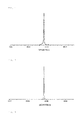
- FIG. 1 is a GPC chart of a phenol compound obtained in Synthesis Example 1.
- FIG. 2 is a GPC chart of an isolated cyclic compound obtained in Synthesis Example 1.
- FIG. 3 is an 1 H-NMR chart of the isolated cyclic compound obtained in Synthesis Example 1.
- FIG. 4 is an IR spectrum of the isolated cyclic compound obtained in Synthesis Example 1.
- FIG. 5 is an FD-MS spectrum of the isolated cyclic compound obtained in Synthesis Example 1.
- FIG. 7 is a GPC chart of a cyclic compound (3-b) obtained in Synthesis Example 3.
- FIG. 8 is a GPC chart of a cyclic compound (3-c) obtained in Synthesis Example 4.
- FIG. 9 is a GPC chart of a novolac resin obtained in Synthesis Example 5.
- a photosensitive composition or a resist material which is capable of forming a resist coating film having photosensitivity, resolution, and an alkali developing property, and heat resistance in combination, which is difficult to be achieved in the related art, can be obtained.
- the compound containing a modified phenolic hydroxy group according to the present invention has a molecular structure represented by the following General Formula (1).
- General Formula (1) p represents 0, 1, or 2
- q represents 0, 1, or 2
- r represents 4 or 5, with the proviso that the sum of p and q is 1 or 2 and the sum of p, q, and r is 6.
- R 1 represents a tertiary alkyl group, an alkoxyalkyl group, an aryloxyalkyl group, an acyl group, an alkoxycarbonyl group, an aryloxycarbonyl group, a cyclic aliphatic hydrocarbon group containing a hetero atom, or a trialkylsilyl group.
- p is 2
- plural R 1 's are present, and in this case, they may be the same as or different from each other.
- R 1 is a tertiary alkyl group in General Formula (1)
- R 1 is preferably a tertiary alkyl group having 4 to 12 carbon atoms, more preferably an alkyl group having 4 to 8 carbon atoms, and still more preferably an alkyl group having 4 to 6 carbon atoms.
- examples of the alkyl group include a t-butyl group, a t-pentyl group, and a t-hexyl group.
- R 1 in General Formula (1) is an alkoxyalkyl group
- the alkyl group portion in the alkoxyalkyl group may be linear, branched, or may be a group having a cyclic structure, and is preferably a linear group, more preferably an alkyl group having 1 to 6 carbon atoms, and still more preferably a linear or branched alkyl group having 1 to 6 carbon atoms.
- the alkoxy group portion in the alkoxyalkyl group is preferably an alkoxy group having 1 to 12 carbon atoms, more preferably an alkoxy group having 1 to 8 carbon atoms, and still more preferably an alkoxy group having 1 to 6 carbon atoms.
- examples of the alkoxyalkyl group include a methoxymethyl group, a methoxyethyl group, an ethoxyethyl group, a propoxyethyl group, a butyloxyethyl group, a t-butyloxymethyl group, a t-butyloxypropyl group, a pentyloxyethyl group, an isoamyloxyethyl group, a hexyloxyethyl group, a cyclohexyloxymethyl group, and a cyclohexyloxyethyl group, and a methoxyethyl group, an ethoxyethyl group, a propoxyethyl group, a butyloxyethyl group, or a cyclohexyloxyethyl group is preferable.
- R 1 in General Formula (1) is an aryloxyalkyl group
- the alkyl group portion in the aryloxyalkyl group may be linear, branched, or may be a group having a cyclic structure, and is preferably a linear group, more preferably an alkyl group having 1 to 6 carbon atoms, and still more preferably a linear or branched alkyl group having 1 to 6 carbon atoms.
- the aryl group portion in the aryloxyalkyl group include a phenyl group, a naphthyl group, an indenyl group, and a biphenyl group.
- examples of the aryloxyalkyl group include a phenoxymethyl group, a phenoxyethyl group, a phenoxypropyl group, a naphthyloxymethyl group, a naphthyloxyethyl group, and a naphthyloxypropyl group, and a phenoxyethyl group is preferable.
- R 1 in General Formula (1) is an acyl group
- the hydrocarbon group portion in the acyl group may be linear or branched, or may be a group having a cyclic structure.
- the hydrocarbon group portion may be an aliphatic hydrocarbon group, or an aromatic hydrocarbon group.
- acyl group examples include an acetyl group, an ethanoyl group, a propanoyl group, an n-butanoyl group, a t-butanoyl group, a hexanoyl group, a 2-ethylhexanoyl group, an octanoyl group, a decanoyl group, a cyclohexanecarbonyl group, a benzoyl group, and a 2-naphthoyl group, and an acetyl group, an ethanoyl group, a propanoyl group, a butanoyl group, a cyclohexanecarbonyl group, or a benzoyl group is preferable.
- R 1 in General Formula (1) is an alkoxycarbonyl group
- the alkoxy group portion in the alkoxycarbonyl group is preferably an alkoxy group having 1 to 12 carbon atoms, more preferably an alkoxy group having 1 to 8 carbon atoms, and still more preferably an alkoxy group having 1 to 6 carbon atoms.
- examples of the alkoxycarbonyl group include a methoxycarbonyl group, an ethoxycarbonyl group, a propoxycarbonyl group, a butyloxycarbonyl group, a t-butyloxycarbonyl group, a pentyloxycarbonyl group, an isoamyloxycarbonyl group, a hexyloxycarbonyl group, and a cyclohexyloxycarbonyl group, and a methoxycarbonyl group, an ethoxycarbonyl group, a propoxycarbonyl group, a butyloxycarbonyl group, or a cyclohexyloxycarbonyl group is preferable.
- R 1 in General Formula (1) is an aryloxycarbonyl group
- examples of the aryl group portion in the aryloxycarbonyl group include a phenyl group, a naphthyl group, an indenyl group, and a biphenyl group.
- examples of the aryloxycarbonyl group include a phenoxycarbonyl group, a naphthyloxycarbonyl group, an indenyloxycarbonyl group, and a biphenyloxycarbonyl group, and a phenoxycarbonyl group is preferable.
- R 1 in General Formula (1) is a cyclic aliphatic hydrocarbon group containing a hetero atom
- the cyclic aliphatic hydrocarbon group containing a hetero atom is a monovalent group in which one or two carbon atoms constituting the ring of the cyclic aliphatic hydrocarbon group has been substituted with an oxygen atom, a nitrogen atom, or a sulfur atom.
- the cyclic aliphatic hydrocarbon group containing a hetero atom is preferably a 5- or 6-membered cyclic aliphatic hydrocarbon group containing a hetero atom, more preferably a 5- or 6-membered cyclic aliphatic hydrocarbon group containing an oxygen atom.
- Examples of the cyclic aliphatic hydrocarbon group containing a hetero atom include a tetrahydrofuranyl group, a tetrahydropyranyl group, a dioxanyl group, a pyrrolidinyl group, an imidazolidinyl group, a pyrazolidinyl group, an oxazolidinyl group, a piperidinyl group, a piperazinyl group, a tetrahydrothiophenyl group, and a tetrahydrothiopyranyl group, and a tetrahydrofuranyl group or a tetrahydropyranyl group is preferable.
- R 1 in General Formula (1) is a trialkylsilyl group
- the three alkyl group portions which are bonded to a silicon atom of the trialkylsilyl group may be the same as or different from each other.
- the alkyl group portion in the trialkylsilyl group may be linear, branched, or may be a group having a cyclic structure, and is preferably a linear group, more preferably an alkyl group having 1 to 6 carbon atoms, and still more preferably a linear or branched alkyl group having 1 to 6 carbon atoms.
- trialkylsilyl group examples include a trimethylsilyl group, a triethylsilyl group, a triisopropylsilyl group, and a t-butyldimethylsilyl group, and a trimethylsilyl group, a triethylsilyl group, or a t-butyldimethylsilyl group is preferable.
- R 1 in General Formula (1) is preferably any of an alkoxyalkyl group, an alkoxycarbonyl group, and a cyclic hydrocarbon group containing a hetero atom, more preferably a methoxyethyl group, an ethoxyethyl group, a propoxyethyl group, a butyloxyethyl group, a cyclohexyloxyethyl group, a methoxycarbonyl group, an ethoxycarbonyl group, a propoxycarbonyl group, a butyloxycarbonyl group, a cyclohexyloxycarbonyl group, a tetrahydrofuranyl group, or a tetrahydropyranyl group, and still more preferably an e
- R 2 represents a hydrogen atom, an alkyl group, an alkoxy group, an aryl group which may have a substituent, an aralkyl group which may have a substituent, or a halogen atom. While four or five R 2 's are present in Formula (1), plural R 2 's may be the same as or different from each other.
- R 2 in General Formula (1) is an alkyl group
- the alkyl group may be linear, branched, or may be a group having a cyclic structure, and is preferably a linear group.
- R 2 is preferably an alkyl group having 1 to 12 carbon atoms, more preferably an alkyl group having 1 to 8 carbon atoms, and still more preferably an alkyl group having 1 to 6 carbon atoms.
- examples of the alkyl group include a methyl group, an ethyl group, a propyl group, an isopropyl group, an n-butyl group, an isobutyl group, a t-butyl group, a pentyl group, an isoamyl group, a hexyl group, a cyclohexyl group, a heptyl group, a cyclohexylmethyl group, an octyl group, a cyclohexylethyl group, a nonyl group, a decyl group, an adamantyl group, a undecyl group, an adamantylmethyl group, a dodecyl group, and an adamantylethyl group, and a methyl group, an ethyl group, a propyl group, an isopropyl group, an n-butyl group, an isobutyl group
- R 2 in General Formula (1) is an alkoxy group
- the alkyl group portion in the alkoxy group may be linear, branched, or may be a group having a cyclic structure, and is preferably a linear group.
- R 2 is preferably an alkoxy group having 1 to 12 carbon atoms, more preferably an alkoxy group having 1 to 8 carbon atoms, and still more preferably an alkoxy group having 1 to 6 carbon atoms.
- examples of the alkoxy group include a methoxy group, an ethoxy group, a propyloxy group, an isopropyloxy group, an n-butyloxy group, an isobutyloxy group, a t-butyloxy group, a pentyloxy group, an isoamyloxy group, a hexyloxy group, a cyclohexyloxy group, a heptyloxy group, an octyloxy group, a nonyloxy group, a decyloxy group, a undecyloxy group, and a dodecyloxy group, and a methoxy group, an ethoxy group, a propyloxy group, a butyloxy group, a pentyloxy group, a hexyloxy group, or a cyclohexyloxy group is preferable.
- R 2 in General Formula (1) is an aryl group which may have a substituent
- examples of the aryl group include a phenyl group, a naphthyl group, an indenyl group, and a biphenyl group.
- the hydrogen atoms in the aryl group each may be substituted with a substituent, and examples of the substituent include a hydroxy group, an alkyl group having 1 to 6 carbon atoms, and an alkoxyl group having 1 to 6 carbon atoms.
- the number of the substituents which the aryl group has is not particularly limited, and the number is preferably 1 to 3, and more preferably 1 or 2.
- aryl group has plural substituents
- respective substituents may be the same as or different from each other.
- the aryl group which may have a substituent include a phenyl group, a hydroxyphenyl group, a dihydroxyphenyl group, a hydroxyalkoxyphenyl group, an alkoxyphenyl group, a tolyl group, a xylyl group, a naphthyl group, a hydroxynaphthyl group, and a dihydroxynaphthyl group, and a phenyl group is preferable.
- R 2 in General Formula (1) is an aralkyl group which may have a substituent
- examples of the aryl group portion in the aralkyl group include a phenyl group, a naphthyl group, an indenyl group, and a biphenyl group, and a phenyl group is preferable.
- the alkyl group portion in the aralkyl group may be linear, branched, or may be a group having a cyclic structure, and is preferably a linear group, more preferably an alkyl group having 1 to 6 carbon atoms, and still more preferably a linear or branched alkyl group having 1 to 6 carbon atoms.
- the hydrogen atom in the aryl group in the aralkyl group may be substituted with a substituent, and examples of the type and number of the substituent include the same type and number of the substituent as those exemplified as the substituent which the aryl group may have.
- examples of the aralkyl group which may have a substituent include a phenylmethyl group, a hydroxyphenylmethyl group, a dihydroxyphenylmethyl group, a tolylmethyl group, a xylylmethyl group, a naphthylmethyl group, a hydroxynaphthylmethyl group, a dihydroxynaphthylmethyl group, a phenylethyl group, a hydroxyphenylethyl group, a dihydroxyphenylethyl group, a tolylethyl group, a xylylethyl group, a naphthylethyl group, a hydroxynaphthylethyl group, and a dihydroxynaphthylethyl group, and a phenylmethyl group, a hydroxyphenylmethyl group, or a dihydroxyphenylmethyl group is preferable.
- R 2 in General Formula (1) is a halogen atom
- examples of the halogen atom include a fluorine atom, a chlorine atom, and a bromine atom.
- R 2 is preferably a hydrogen atom, an alkyl group, or an alkoxy group, all of R 2 are more preferably hydrogen atoms or alkyl groups since a resin becomes excellent in heat resistance, all of R 2 are still more preferably hydrogen atoms, methyl groups, ethyl groups, propyl groups, isopropyl groups, n-butyl groups, isobutyl groups, t-butyl groups, pentyl groups, isoamyl groups, hexyl groups, or cyclohexyl groups, all of R 1 are still more preferably hydrogen atoms, methyl groups, ethyl groups, propyl groups, isopropyl groups, n-butyl groups, isobutyl groups, or t-butyl groups, and all of R 2 are particularly preferably hydrogen atoms.
- R 3 in General Formula (1) represents a hydrogen atom, an alkyl group which may have a substituent or an aryl group which may have a substituent.
- R 3 in General Formula (1) is an alkyl group which may have a substituent
- the alkyl group may be linear, branched, or may be a group having a cyclic structure, and is preferably a linear group.
- R 3 is preferably an alkyl group having 1 to 12 carbon atoms, more preferably an alkyl group having 1 to 8 carbon atoms, and still more preferably an alkyl group having 1 to 6 carbon atoms.
- R 3 in General Formula (1) is an alkyl group
- the hydrogen atom in the alkyl group may be substituted by a substituent.
- the substituent include a hydroxy group, an alkoxy group having 1 to 6 carbon atoms, an aryl group which may have a substituent, and a halogen atom.
- the alkoxy group and the aryl group having 1 to 6 carbon atoms include the same alkoxy group and aryl group as the alkoxy group and the aryl group capable of being taken by R 2 respectively.
- the number of the hydrogen atoms obtained by substitution is not particularly limited, and the number is preferably 1 to 3, and more preferably 1 or 2.
- alkyl group represented by R 3 examples include a methyl group, an ethyl group, a propyl group, an isopropyl group, an n-butyl group, an isobutyl group, a t-butyl group, a pentyl group, an isoamyl group, a hexyl group, a cyclohexyl group, a hydroxyethyl group, a hydroxypropyl group, a fluoromethyl group, a methoxyethyl group, an ethoxyethyl group, a methoxypropyl group, a phenylmethyl group, a hydroxyphenylmethyl group, a dihydroxyphenylmethyl group, a tolylmethyl group, a xylylmethyl group, a naphthylmethyl group, a
- R 3 in General Formula (1) is an aryl group which may have a substituent
- examples of the aryl group include a phenyl group, a naphthyl group, an indenyl group, and a biphenyl group.
- the hydrogen atoms in the aryl group each may be substituted by a substituent.
- examples of the substituent include a hydroxy group, an alkoxy group having 1 to 6 carbon atoms, an aryl group, and a halogen atom.
- Examples of the alkoxy group and the aryl group having 1 to 6 carbon atoms include the same alkoxy group and aryl group as the alkoxy group and the aryl group capable of being taken by R 2 respectively.
- R 3 is preferably an aryl group which may have a substituent, and more preferably an aryl group containing a hydroxy group such as a hydroxyphenyl group, a dihydroxyphenyl group, a hydroxyalkoxyphenyl group, a hydroxynaphthyl group, or a dihydroxynaphthyl group.
- n in General Formula (1) represents the number of repeating units and is an integer of 2 to 10. Among them, from the viewpoint of the fact that the compound containing a modified phenolic hydroxy group having excellent structural stability and resistance to thermal decomposition can be obtained, n is preferably any one of 2, 3, 4, 5, 6, and 8, and particularly preferably 4.
- the substitution position of —O—R 1 or —OH (phenolic hydroxy group) bonded to the naphthalene ring is arbitrary, and may be bonded to either of two aromatic rings in a naphthalene ring.
- the substitution position of —O—R 1 or —OH bonded to the naphthalene ring is preferably 1 position, and in the case where the sum of p and q is 2, the substitution position of —O—R 1 or —OH bonded to the naphthalene ring is preferably a 2 or 7 position.
- the compound containing a modified phenolic hydroxy group according to the present invention preferably has a molecular structure represented by the following General Formula (1-1), but a compound having a molecular structure represented by the following General Formula (2-1) is excluded.
- R's each independently represent a hydrogen atom or a R 1
- R 1 , R 2 , and R 3 are the same as those in General Formula (1).
- Plural R's and R 2 's may be the same as or different from each other.
- R 2 and R 3 are the same as those in General Formula (1).
- the abundance ratio [(—O—R 1 )/(OH)] of —O—R 1 and —OH (phenolic hydroxy group) which each bonds to one of the carbon atoms constituting the naphthylene skeleton is preferably within a range of 5/95 to 50/50, and more preferably within a range of 10/90 to 40/60 from the viewpoint of the fact that a compound which has high photosensitivity, resolution, and alkali developing property, and also has excellent heat resistance can be obtained.
- the abundance ratio of the structural portion represented by —O—R 1 present in the compound containing a modified phenolic hydroxy group and the phenolic hydroxy group is a value calculated from the ratio of the peak of 145 to 160 ppm derived from the carbon atom on the naphthalene ring to which the phenolic hydroxy group is bonded to the peak of 95 to 105 ppm derived from the carbon atom in R 1 bonded to the oxygen atom derived from the phenolic hydroxy group in the structural portion represented by —O—R 1 , in 13 C-NMR measurement measured under the following conditions.
- JNM-LA300 manufactured by JEOL Ltd.
- the compound containing a modified phenolic hydroxy group according to the present invention is obtained from an intermediate containing a phenolic hydroxy group obtained by allowing the hydroxynaphthalenes (A) represented by the following General Formula (3) and the aldehydes (B) represented by the following General Formula (4) to react with each other.
- R 2 and r are the same as those in General Formula (1), and s represents 1 or 2. The sum of s and r is 6.
- R 3 is the same as that in General Formula (1).
- the compound containing a modified phenolic hydroxy group according to the present invention can be produced by allowing the hydroxynaphthalenes (A) represented by General Formula (3) and the aldehydes (B) represented by General Formula (4) to react with each other in a mixed solvent of a hydrophobic organic solvent and water under acid catalysis conditions to obtain an intermediate containing a phenolic hydroxy group and then substituting at least a part of the hydrogen atoms of the phenolic hydroxy group of the obtained intermediate containing a phenolic hydroxy group with one or more selected from the group consisting of a tertiary alkyl group, an alkoxyalkyl group, an aryloxyalkyl group, an acyl group, an alkoxycarbonyl group, an aryloxycarbonyl group, a cyclic aliphatic hydrocarbon group containing a hetero atom, and a trialkylsilyl group.
- the hydroxynaphthalenes (A) are not particularly limited as long as they are represented by General Formula (3), and examples thereof include 1-naphthol, 2-naphthol, 1,4-dihydroxynaphthalene, 1,5-dihydroxynaphthalene, 1,6-dihydroxynaphthalene, 2,6-dihydroxynaphthalene, 2,7-dihydroxynaphthalene, and compounds in which these aromatic nuclei have been substituted with one or a plurality of alkyl groups, alkoxy groups, aryl groups, aralkyl groups and halogen atoms, 1-naphthol, 2-naphthol, 1,4-dihydroxynaphthalene, 1,5-dihydroxynaphthalene, 1,6-dihydroxynaphthalene, 2,3-dihydroxynaphthalene, or 2,7-dihydroxynaphthalene is preferable, and 2,7-dihydroxynaphthalene is particularly preferable.
- aldehydes (B) are not particularly limited as long as they are represented by General Formula (4), and among them, alkyl aldehydes such as acetaldehyde, propylaldehyde, butyraldehyde, isobutyraldehyde, pentyl aldehyde, and hexyl aldehyde; hydroxybenzaldehydes such as salicylaldehyde, 3-hydroxybenzaldehyde, 4-hydroxybenzaldehyde, 2-hydroxy-4-methylbenzaldehyde, 2,4-dihydroxybenzaldehyde, and 3,4-dihydroxybenzaldehyde; benzaldehydes having both a hydroxy group and an alkoxy group such as 2-hydroxy-3-methoxybenzaldehyde, 3-hydroxy-4-methoxybenzaldehyde, 4-hydroxy-3-methoxybenzaldehyde, 3-ethoxy-4-hydroxybenzaldehyde, and 4-hydroxy-3,
- a reaction of the hydroxynaphthalenes (A) with the aldehydes (B) is performed in a mixed solvent of water and an organic solvent.
- the organic solvent used in the reaction include alcohols such as propanol, butanol, octanol, ethylene glycol, glycerin, ethylene glycol monomethyl ether, ethylene glycol monoethyl ether, ethylene glycol monobutyl ether, and propylene glycol monomethyl ether; ketones such as methyl ethyl ketone and methyl isobutyl ketone; and esters such as butyl acetate, ethylene glycol monomethyl ether acetate, ethylene glycol monoethyl ether acetate, and propylene glycol monomethyl ether acetate.
- water of 30 to 300 parts by mass is used with respect to 100 parts by mass of the hydroxynaphthalenes (A). If a large amount of water is present in the reaction system, low molecular weight substances regardless of the size of molecular weight and intermediates containing a phenolic hydroxy group in which the residual amount of residual monomer (hydroxynaphthalenes (A)) is small are obtained.
- the amount of water in the reaction system is more preferably 35 to 250 parts by mass with respect to 100 parts by mass of the hydroxynaphthalenes (A).
- Examples of the acid catalyst used in the reaction include inorganic acids such as sulfuric acid, hydrochloric acid, nitric acid, hydrobromic acid, perchloric acid, and phosphoric acid, sulfonic acids such as p-toluenesulfonic acid, methanesulfonic acid, and benzenesulfonic acid, organic acids such as oxalic acid, succinic acid, malonic acid, monochloroacetic acid, and dichloroacetic acid, and Lewis acids such as boron trifluoride, anhydrous aluminum chloride, and zinc chloride.
- inorganic acids such as sulfuric acid, hydrochloric acid, nitric acid, hydrobromic acid, perchloric acid, and phosphoric acid
- sulfonic acids such as p-toluenesulfonic acid, methanesulfonic acid, and benzenesulfonic acid
- organic acids such as oxalic acid, succinic acid, mal
- the temperature conditions when reacting the hydroxynaphthalenes (A) with the aldehydes (B) are preferably within a range of 50° C. to 120° C. from the viewpoint of high reaction efficiency.
- the reaction is preferably performed at 60° C. to 90° C.
- the reaction of the hydroxynaphthalenes (A) with the aldehydes (B) can be performed, for example, in the following manner.
- First, the hydroxynaphthalenes (A), an organic solvent, the aldehydes (B), and water are put into a flask provided with a thermometer, a cooling tube, a fractionating column, and a stirrer.
- An acid catalyst is added while stirring.
- the amount of the acid catalyst used is typically 0.01 to 5 parts by mass with respect to 100 parts by mass of the hydroxynaphthalenes (A). An amount greater than the above amount may be used, but since a large amount of alkali is used in the neutralization step, extra time is required, and therefore, the amount may be suitably determined.
- the hydroxynaphthalenes (A), the aldehydes (B), an organic solvent, and water By putting the hydroxynaphthalenes (A), the aldehydes (B), an organic solvent, and water into the reaction system, the hydroxynaphthalenes (A) are dissolved or dispersed in the organic solvent phase, and the aldehydes (B) are dissolved or dispersed in the aqueous phase. Even in the case where the organic solvent phase and the aqueous layer in the reaction system are stirred, they are not “homogeneously” mixed (dissolved), and thus, they are in a “heterogeneous” state.
- the temperature of the reaction system is raised. After the temperature is raised to reaction temperature, the hydroxynaphthalenes (A) and the aldehydes (B) are allowed to react with stirring. The reaction time is typically 0.5 to 10 hours. After the reaction ends, the reaction system is transferred to a separating funnel, and the aqueous layer was separated from the organic layer and removed. Thereafter, the organic layer is washed until the washing liquid becomes neutral. After washing, by leaving the organic layer to stand under heating and reduced pressure and by removing the organic solvent from the organic layer, it is possible to obtain an intermediate containing a phenolic hydroxy group in which the residual amount of unreacted monomer (hydroxynaphthalenes (A)) is small.
- At least a part of the hydrogen atoms of the phenolic hydroxy group of the obtained intermediate containing a phenolic hydroxy group is substituted with any of a tertiary alkyl group, an alkoxyalkyl group, an aryloxyalkyl group, an acyl group, an alkoxycarbonyl group, an aryloxycarbonyl group, a cyclic aliphatic hydrocarbon group containing a hetero atom, or a trialkylsilyl group.
- a protecting group-introducing agent selected from the group consisting of the following General Formulas (6-1) to (6-8)
- a compound containing a modified phenolic hydroxy group according to the present invention is obtained.
- Y represents a halogen atom
- R 4 to R 8 each independently represent an alkyl group having 1 to 6 carbon atoms or a phenyl group.
- m represents 1 or 2.
- a compound represented by General Formula (6-2), (6-5), or (6-7) is preferable, and ethyl vinyl ether, di-t-butyl dicarbonate, or dihydropyran is particularly preferable since cleavage under acid catalysis conditions is likely to proceed and a compound containing a modified phenolic hydroxy group having excellent photosensitivity, resolution, and alkali developing property is obtained.
- the reaction of the intermediate containing a phenolic hydroxy group with the protecting group-introducing agent represented by any one of General Formulas (6-1) to (6-8) varies depending on the compound used as a protecting group-introducing agent.
- a compound represented by any of General Formulas (6-1), (6-3), (6-4), (6-5), (6-6), and (6-8) is used as a protecting group-introducing agent, for example, a method of reacting under conditions of a basic catalyst such as pyridine or triethylamine is exemplified.
- a compound represented by General Formula (6-2) or (6-7) is used as a protecting group-introducing agent, for example, a method of reacting under conditions of an acid catalyst such as hydrochloric acid is exemplified.
- the reaction proportion of the intermediate containing a phenolic hydroxy group with the protecting group-introducing agent represented by any one of General Formulas (6-1) to (6-8) varies depending on the compound used as a protecting group-introducing agent, but the reaction is preferably performed in a ratio at which the abundance ratio [(—O—R 1 )/(OH)] of the structural portion represented by —O—R 1 present in the obtained compound containing a modified phenolic hydroxy group to the phenolic hydroxy group is within a range of 5/95 to 50/50.
- the reaction is preferably performed in a ratio at which the protecting group-introducing agent becomes 0.1 to 0.75 moles, and more preferably performed in a ratio at which the protecting group-introducing agent becomes 0.15 to 0.5 moles, with respect to the total 1 mole of the phenolic hydroxy group of the intermediate containing a phenolic hydroxy group.
- the reaction of the intermediate containing a phenolic hydroxy group with the protecting group-introducing agent may be performed in an organic solvent.
- organic solvent used herein include 1,3-dioxolane. These organic solvents may be used alone respectively, or may be used as a mixed solvent of two or more types.
- the compound containing a modified phenolic hydroxy group according to the present invention is excellent in solubility in general-purpose organic solvents and resistance to thermal decomposition, the compound can be used in various electric and electronic member applications such as adhesives, paints, photoresists, and printed circuit boards.
- the compound containing a modified phenolic hydroxy group according to the present invention becomes a phenolic hydroxy group by dissociation of —O—R 1 bonded to the naphthalene ring by an acid, that is, is a compound of which alkali solubility changes by an acid, the compound is suitable as a main component of the photosensitive composition, and becomes a resist material having excellent photosensitivity and resolution.
- the photosensitive composition is used as a positive resist application, it is possible to form a resist coating film having high photosensitivity which is excellent in both resistance to alkali solubility before exposure and alkali solubility after exposure, and formation of a fine resist pattern is possible.
- the photosensitive composition according to the present invention preferably contains a photoacid generator, together with the compound containing a modified phenolic hydroxy group according to the present invention.
- a photoacid generator include an organic halogen compound, a sulfonic acid ester, an onium salt, diazonium salt, and a disulfone compound. They may be used alone respectively, or in combination of two or more types thereof.
- s-triazine derivatives containing a haloalkyl group such as tris(trichloromethyl)-s-triazine, tris(tribromomethyl)-s-triazine, tris(dibromomethyl)-s-triazine, and 2,4-bis(tribromomethyl)-6-p-methoxyphenyl-s-triazine;
- halogen-substituted paraffin-based hydrocarbon compounds such as 1,2,3,4-tetrabromobutane, 1,1,2,2-tetrabromoethane, carbon tetrabromide, and iodoform
- halogen-substituted cycloparaffin-based hydrocarbon compounds such as hexabromocyclohexane, hexachlorocyclohexane, and hexabromocyclododecane
- benzene derivatives containing a haloalkyl group such as bis(trichloromethyl)benzene and bis(tribromomethyl)benzene; sulfone compounds containing a haloalkyl group such as tribromomethyl phenyl sulfone and trichloromethyl phenyl sulfone; sulfolane compounds containing halogen such as 2,3-dibromosulfolane; isocyanurate compounds containing a haloalkyl group such as tris(2,3-dibromopropyl)isocyanurate;
- sulfonium salts such as triphenylsulfonium chloride, triphenylsulfonium methanesulfonate, triphenylsulfonium trifluoromethanesulfonate, triphenylsulfonium p-toluenesulfonate, triphenylsulfonium tetrafluoroborate, triphenylsulfonium hexafluoroarsenate, and triphenylsulfonium hexafluorophosphonate;
- iodonium salts such as diphenyliodonium trifluoromethanesulfonate, diphenyliodonium p-toluenesulfonate, diphenyliodonium tetrafluoroborate, diphenyliodonium hexafluoroarsenate, and diphenyliodonium hexafluorophosphonate;
- sulfonic acid ester compounds such as methyl p-toluenesulfonate, ethyl p-toluenesulfonate, butyl p-toluenesulfonate, phenyl p-toluenesulfonate, 1,2,3-tris(p-toluenesulfonyloxy)benzene, p-toluenesulfonic acid benzoin ester, methyl methanesulfonate, ethyl methanesulfonate, butyl methanesulfonate, 1,2,3-tris(methanesulfonyloxy)benzene, phenyl methanesulfonate, methane sulfonic acid benzoin ester, methyl trifluoromethanesulfonate, ethyl trifluoromethanesulfonate, butyl trifluoromethanes
- sulfone diazide compounds such as bis(phenylsulfonyl)diazomethane, bis(2,4-dimethylphenylsulfonyl)diazomethane, bis(cyclohexylsulfonyl)diazomethane, cyclohexylsulfonyl-(2-methoxyphenylsulfonyl)diazomethane, cyclohexylsulfonyl-(3-methoxyphenylsulfonyl)diazomethane, cyclohexylsulfonyl-(4-methoxyphenylsulfonyl)diazomethane, cyclopentylsulfonyl-(2-methoxyphenylsulfonyl)diazomethane, cyclopentylsulfonyl-(3-methoxyphenylsulfonyl)di
- o-nitrobenzyl ester compounds such as o-nitrobenzyl-p-toluenesulfonate
- sulfonehydrazide compounds such as N,N′-di(phenylsulfonyl)hydrazide.
- the amount of these photoacid generators added is preferably within a range of 0.1 to 20 parts by mass with respect to 100 parts by mass of the compound containing a modified phenolic hydroxy group according to the present invention, from the viewpoint of the fact that the photosensitive composition becomes highly photosensitive.
- the photosensitive composition according to the present invention may contain an organic base compound to neutralize the acid generated from the photoacid generator at the time of exposure. Addition of the organic base compound has effects of preventing the dimensional variation of the resist pattern due to the movement of the acid generated from the photoacid generator.
- the organic base compound used herein include an organic amine compound selected from compounds containing nitrogen.
- examples thereof include pyrimidine compounds such as pyrimidine, 2-aminopyrimidine, 4-aminopyrimidine, 5-aminopyrimidine, 2,4-diaminopyrimidine, 2,5-diaminopyrimidine, 4,5-diaminopyrimidine, 4,6-diaminopyrimidine, 2,4,5-triaminopyrimidine, 2,4,6-triaminopyrimidine, 4,5,6-triaminopyrimidine, 2,4,5,6-tetraaminopyrimidine, 2-hydroxypyrimidine, 4-hydroxypyrimidine, 5-hydroxypyrimidine, 2,4-dihydroxypyrimidine, 2,5-dihydroxypyrimidine, 4,5-dihydroxypyrimidine, 4,6-dihydroxypyrimidine, 2,4,5-trihydroxypyrimidine, 2,4,6-trihydroxypyrimidine, 4,5,6-trihydroxypyrimidine, 2,4,5,6-tetrahydroxypyrimidine, 2-amino-4-hydroxypyrimidine, 2-amino
- pyridine compounds such as pyridine, 4-dimethylaminopyridine, and 2,6-dimethylpyridine;
- amine compounds substituted with a hydroxyalkyl group having 1 to 4 carbon atoms such as diethanolamine, triethanolamine, triisopropanolamine, tris(hydroxymethyl)aminomethane, and bis(2-hydroxyethyl)iminotris(hydroxymethyl)methane; and
- aminophenol compounds such as 2-aminophenol, 3-aminophenol, and 4-aminophenol. They may be used alone respectively, or in combination of two or more types thereof.
- the pyrimidine compound, the pyridine compound, or the amine compound having a hydroxy group is preferable, and the amine compound having a hydroxy group is particularly preferable, from the viewpoint of excellence in dimensional stability of the resist pattern after exposure.
- the amount added is preferably within a range of 0.1% to 100% by mole, and more preferably within a range of 1% to 50% by mole, with respect to the content of the photoacid generator.
- alkali soluble resins may be used in combination in the photosensitive composition according to the present invention, in addition to the compound containing a modified phenolic hydroxy group according to the present invention.
- any alkali soluble resin can be used as long as the alkali soluble resin is soluble in an alkali developer, or as the compound containing a modified phenolic hydroxy group according to the present invention, by using in combination with an additive such as a photoacid generator, the alkali soluble resin becomes soluble in the alkali developer.
- a co-condensation novolac resin of a cresol novolac resin or cresol and other phenolic compounds is preferable from the viewpoint of the fact that the sensitivity is high and the photosensitive resin composition becomes excellent in heat resistance.
- a cresol novolac resin or a co-condensation novolac resin of cresol and other phenolic compounds is, specifically, a novolac resin obtained by using at least one cresol selected from the group consisting of o-cresol, m-cresol, and p-cresol and an aldehyde compound as essential raw materials and suitably using other phenolic compounds in combination.
- phenol examples include phenol; xylenols such as 2,3-xylenol, 2,4-xylenol, 2,5-xylenol, 2,6-xylenol, 3,4-xylenol, and 3,5-xylenol; ethylphenols such as o-ethylphenol, m-ethylphenol, and p-ethylphenol; butylphenols such as isopropylphenol, butylphenol, and p-t-butylphenol; alkylphenols such as p-pentylphenol, p-octylphenol, p-nonylphenol, and p-cumylphenol; halogenated phenols such as fluorophenol, chlorophenol, bromophenol, and iodophenol; monosubstituted phenols such as p-phenylphenol, aminophenol, nitrophenol, dinitrophenol, and tri
- formaldehyde is preferable, and formaldehyde and other aldehyde compounds may be used in combination.
- the amount of other aldehyde compounds used is preferably within a range of 0.05 to 1 mole with respect to 1 mole of formaldehyde.
- the aldehyde compound with respect to 1 mole of the phenolic compound is preferably within a range of 0.3 to 1.6 mole, and more preferably within a range of 0.5 to 1.3 from the viewpoint of the fact that a photosensitive composition having excellent sensitivity and heat resistance can be obtained.
- the photosensitive composition according to the present invention may further contain a photosensitive agent used in typical resist materials.
- the photosensitive agent used herein include compounds having a quinonediazide group.
- Specific examples of the compound having a quinonediazide group include a complete ester compound of an aromatic (poly)hydroxy compound and sulfonic acid having a quinonediazide group such as naphthoquinone-1,2-diazido-5-sulfonic acid, naphthoquinone-1,2-diazido-4-sulfonic acid, or o-anthraquinonediazidosulfonic acid, a partial ester compound, an amidated product, and a partially amidated product.
- the blending amount is preferably within a range of 5 to 30 parts by mass with respect to 100 parts by mass of the resin solid content in the photosensitive composition according to the present invention (the solid content of the compound containing a modified phenolic hydroxy group according to the present invention is included).
- the photosensitive composition according to the present invention may contain a surfactant for the purpose of improving the film forming properties or the adhesion of patterns in the case of being used in resist applications, and reducing development defects.
- a surfactant for the purpose of improving the film forming properties or the adhesion of patterns in the case of being used in resist applications, and reducing development defects.
- the surfactant used herein include nonionic surfactants such as polyoxyethylene alkyl ether compounds including polyoxyethylene lauryl ether, polyoxyethylene stearyl ether, polyoxyethylene cetyl ether, and polyoxyethylene oleyl ether, polyoxyethylene alkyl allyl ether compounds including polyoxyethylene octylphenol ether and polyoxyethylene nonylphenol ether, sorbitan fatty acid ester compounds including a polyoxyethylene-polyoxypropylene block copolymer, sorbitan monolaurate, sorbitan monopalmitate, sorbitan monostearate, sorbitan monoo
- the blending amount of these surfactants is preferably within a range of 0.001 to 2 parts by mass with respect to 100 parts by mass of the resin solid content in the photosensitive composition according to the present invention.
- the photosensitive composition according to the present invention may further contain a filler.
- a filler By a filler, it is possible to improve the hardness and the heat resistance of a coating film.
- the filler contained in the photosensitive composition according to the present invention may be an organic filler, but an inorganic filler is preferable.
- the inorganic filler include silica, mica, talc, clay, bentonite, montmorillonite, kaolinite, wollastonite, calcium carbonate, calcium hydroxide, magnesium carbonate, titanium oxide, alumina, aluminum hydroxide, barium sulfate, barium titanate, potassium titanate, zinc oxide, and glass fiber. Among them, since the thermal expansion coefficient can be lowered, silica is preferably used.
- the photoacid generator by adding various additives in addition to the compound containing a modified phenolic hydroxy group, the photoacid generator, if necessary, such as an organic base compound and other resins, a photosensitive agent, a surfactant, a dye, a filler, a crosslinking agent, and a dissolution accelerator and by dissolving or dispersing in an organic solvent, a resist material can be obtained.
- This may be directly used as a positive type resist solution, or that obtained by applying the resist material into a film shape and removing the solvent may be used as a resist film.
- the support film when used as a resist film synthetic resin films such as polyethylene, polypropylene, polycarbonate, and polyethylene terephthalate can be exemplified, and the support film may be a single layer film or a plurality of laminated film.
- the surface of the support film may be a surface subjected to a corona treatment or applied with a release agent.
- Examples of the organic solvent used in the resist material according to the present invention include alkylene glycol monoalkyl ethers such as ethylene glycol monomethyl ether, ethylene glycol monoethyl ether, ethylene glycol monopropyl ether, and ethylene glycol monobutyl ether propylene glycol monomethyl ether; dialkylene glycol dialkyl ethers such as diethylene glycol dimethyl ether, diethylene glycol diethyl ether, diethylene glycol dipropyl ether, and diethylene glycol dibutyl ether; alkylene glycol alkyl ether acetates such as ethylene glycol monomethyl ether acetate, ethylene glycol monoethyl ether acetate, and propylene glycol monomethyl ether acetate; ketone compounds such as acetone, methyl ethyl ketone, cyclohexanone, and methyl amyl ketone; cyclic ethers such as dioxane; and ester compounds such
- the photosensitive composition of the present invention can be adjusted by blending the above-described respective components and mixing them using a stirrer or the like.
- a dispersing device such as a dissolver, a homogenizer, or a three-roll mill.
- the compound containing a modified phenolic hydroxy group according to the present invention has a calixarene structure formed by including a plurality of naphthalene ring structure, the compound is rich in rigidity, and in the case where the compound is used in resist lower layer film applications, the film becomes excellent in dry etching resistance and resistance to thermal decomposition by the halogen-based plasma gas or the like. Furthermore, since such a compound containing many naphthalene ring structures has high refractive index and absorbance, light reflectivity in the cured product is low, and the compound containing a modified phenolic hydroxy group according to the present invention is also a suitable material as a resist under layer film material.
- a thin film formed of a photosensitive composition which has the compound containing a modified phenolic hydroxy group as a main component is suitable as a permanent film also remaining in a final product after forming a resist pattern if necessary.
- a permanent film formed of a photosensitive composition which has the compound containing a modified phenolic hydroxy group according to the present invention as a main component has an excellent property that such a distortion hardly occurs.
- the compound containing a modified phenolic hydroxy group according to the present invention has a calixarene structure
- application to qualitative or quantitative analysis of metal ions, separation of metal ions, molecular sensors, artificial enzymes, various materials for chromatography, and charge control agent in a toner can also be expected by using inclusion properties or a catalytic function due to the structure.
- the molecular weight distribution of the resin was measured under the following measuring conditions by GPC by the polystyrene standard method.
- Sample a solution (5 ⁇ L) obtained by filtering a tetrahydrofuran solution of 1.0% by mass in terms of the resin solid content through a microfilter,
- Apparatus AL-400 manufactured by JEOL Ltd.,
- Pulse angle 450 pulse
- FD-MS spectrum of a resin was measured using a double-focusing mass spectrometer “AX505H (FD505H)” manufactured by JEOL Ltd.
- the organic layer was washed seven times with 160 g of ion exchange water, and it was confirmed that the pH of the dismissed aqueous layer was 4.
- the upper organic layer was subjected to heating concentration under reduced pressure using an evaporator and drying, whereby 247 parts by mass of a phenol compound including a target cyclic compound of 89% in a GPC area ratio was obtained.
- the yield was 93%, and a peak of 1156 indicating a cyclic compound was detected from the FD-MS spectrum.
- the GPC spectrum of the obtained phenolic compound is shown in FIG. 1 .
- the obtained reaction product was dried under reduced pressure at 80° C. and at 1.3 kPa, whereby 4.3 g of a cyclic compound (3-a) was obtained.
- the GPC spectrum of the obtained cyclic compound (3-a) is shown in FIG. 6 . From the fact that the peaks were broadened, it was confirmed that the target product was obtained.
- a reaction was performed in the same manner as in Synthesis Example 2 except that 3.6 g of ethyl vinyl ether was used instead of 4.2 g of dihydropyran, and the obtained reaction product was precipitated and dried under reduced pressure, whereby 4.1 g of a cyclic compound (3-b) was obtained.
- the GPC spectrum of the obtained cyclic compound (3-b) is shown in FIG. 7 . From the fact that the peaks were broadened, it was confirmed that the target product was obtained.
- a reaction was performed in the same manner as in Synthesis Example 2 except that 10.9 g of di-t-butyl dicarbonate was used instead of 4.2 g of dihydropyran, and the obtained reaction product was precipitated and dried under reduced pressure, whereby 4.2 g of a cyclic compound (3-c) was obtained.
- the GPC spectrum of the obtained cyclic compound (3-c) is shown in FIG. 8 . From the fact that the peaks were broadened, it was confirmed that the target product was obtained.
- a reaction was performed in the same manner as in Synthesis Example 2 except that 6.1 g of the novolac resin obtained in Synthesis Example 5 was used instead of 4.4 g of the cyclic compound isolated in Synthesis Example 1, and the obtained reaction product was precipitated and dried under reduced pressure, whereby 6.0 g of a novolac resin (3-d) was obtained.
- WPAG-336 diphenyl (4-methylphenyl)sulfonium trifluoromethanesulfonate
- PMEA propylene glycol monomethyl ether acetate
- the photosensitive composition was applied to be a thickness of about 1 ⁇ m on a 5 inch silicon wafer by a spin coater, and dried for 60 seconds on a hot plate at 110° C.
- the obtained wafer was immersed in a developer (2.38% aqueous tetramethylammonium hydroxide solution) for 60 seconds, and dried for 60 seconds on a hot plate at 110° C.
- the thickness of the coating film of the photosensitive composition was measured before and after immersion in the developer, and the value obtained by dividing the difference by 60 was used as an alkali developing property (ADR (nm/s)).
- a photo mask was placed on a silicon wafer to which a photosensitive composition had been applied and dried, and exposure was performed by 100 mJ/cm 2 irradiation using a ghi line lamp (a multilight manufactured by Ushio Inc.) was performed.
- the coating film after irradiation was developed and dried in the same manner as the ADR measurement.
- the pattern state of the resist pattern on the wafer after development was evaluated using a laser microscope (VK-8500) manufactured by Keyence Corporation. One that can be resolved at L/S of 5 ⁇ m was evaluated as “A”, and one that cannot be resolved at L/S of 5 ⁇ m was evaluated as “B”.
- the photosensitive composition was applied to be a thickness of about 1 ⁇ m on a 5 inch silicon wafer by a spin coater, and dried for 60 seconds on a hot plate at 110° C.
- the resin was scrapped from the obtained wafer, and Tg was measured.
- Tg scanning was performed using a differential calorimeter (differential scanning calorimetry (DSC)Q100 manufactured by TA Instruments) under conditions of a nitrogen atmosphere, a temperature range of ⁇ 100° C. to 200° C., and a temperature-increase rate of 10° C./min, and the measurement results were used as a glass transition temperature (Tg).
- DSC differential calorimeter
- Tg glass transition temperature
- the coating film formed of a photosensitive composition containing each of cyclic compounds (3-a) to (3-c) which were the compounds containing a modified phenolic hydroxy group according to the present invention had good ADR after exposure of equal to or greater than 150 nm/s, high sensitivity and resolution, a sufficiently high Tg of equal to or higher than 200° C., and good heat resistance.
Landscapes
- Chemical & Material Sciences (AREA)
- Organic Chemistry (AREA)
- Physics & Mathematics (AREA)
- General Physics & Mathematics (AREA)
- Chemical Kinetics & Catalysis (AREA)
- Spectroscopy & Molecular Physics (AREA)
- Medicinal Chemistry (AREA)
- Health & Medical Sciences (AREA)
- Polymers & Plastics (AREA)
- Wood Science & Technology (AREA)
- Materials Engineering (AREA)
- Engineering & Computer Science (AREA)
- Life Sciences & Earth Sciences (AREA)
- Materials For Photolithography (AREA)
- Pyrane Compounds (AREA)
- Organic Low-Molecular-Weight Compounds And Preparation Thereof (AREA)
- Phenolic Resins Or Amino Resins (AREA)
Applications Claiming Priority (3)
| Application Number | Priority Date | Filing Date | Title |
|---|---|---|---|
| JP2014101560 | 2014-05-15 | ||
| JP2014-101560 | 2014-05-15 | ||
| PCT/JP2015/061676 WO2015174199A1 (ja) | 2014-05-15 | 2015-04-16 | 変性フェノール性水酸基含有化合物、変性フェノール性水酸基含有化合物の製造方法、感光性組成物、レジスト材料及びレジスト塗膜 |
Publications (2)
| Publication Number | Publication Date |
|---|---|
| US20170066703A1 US20170066703A1 (en) | 2017-03-09 |
| US9975830B2 true US9975830B2 (en) | 2018-05-22 |
Family
ID=54479743
Family Applications (1)
| Application Number | Title | Priority Date | Filing Date |
|---|---|---|---|
| US15/307,959 Active US9975830B2 (en) | 2014-05-15 | 2015-04-16 | Compound containing modified phenolic hydroxy group, method for producing compound containing modified phenolic hydroxy group, photosensitive composition, resist material, and resist coating film |
Country Status (6)
| Country | Link |
|---|---|
| US (1) | US9975830B2 (ja) |
| JP (1) | JP5928666B2 (ja) |
| KR (1) | KR102321822B1 (ja) |
| CN (1) | CN106458812B (ja) |
| TW (1) | TWI659983B (ja) |
| WO (1) | WO2015174199A1 (ja) |
Cited By (2)
| Publication number | Priority date | Publication date | Assignee | Title |
|---|---|---|---|---|
| US20170329226A1 (en) * | 2014-10-10 | 2017-11-16 | Dic Corporation | Naphthol-type calixarene compound and method for producing the same, photosensitive composition, resist material, and coating |
| US20180346635A1 (en) * | 2015-12-11 | 2018-12-06 | Dic Corporation | Novolac resin and resist film |
Families Citing this family (9)
| Publication number | Priority date | Publication date | Assignee | Title |
|---|---|---|---|---|
| WO2016114000A1 (ja) * | 2015-01-16 | 2016-07-21 | Dic株式会社 | レジスト永久膜用硬化性組成物及びレジスト永久膜 |
| US10266471B2 (en) * | 2015-01-16 | 2019-04-23 | Dic Corporation | Phenolic hydroxyl-containing compound, composition containing the same, and cured film of the composition |
| TWI705991B (zh) * | 2015-12-07 | 2020-10-01 | 日商迪愛生股份有限公司 | 酚醛清漆型樹脂及抗蝕劑膜 |
| TW201734071A (zh) * | 2015-12-11 | 2017-10-01 | Dainippon Ink & Chemicals | 酚醛清漆型樹脂及抗蝕劑膜 |
| JP6828279B2 (ja) * | 2016-06-13 | 2021-02-10 | Dic株式会社 | ノボラック型樹脂及びレジスト膜 |
| US11487204B2 (en) * | 2017-07-27 | 2022-11-01 | Dic Corporation | Resist material |
| KR102288387B1 (ko) * | 2018-09-03 | 2021-08-10 | 삼성에스디아이 주식회사 | 감광성 수지 조성물, 이를 이용한 감광성 수지막 및 전자 소자 |
| WO2022065041A1 (ja) * | 2020-09-28 | 2022-03-31 | Dic株式会社 | フェノール性水酸基含有樹脂、アルカリ現像性レジスト用樹脂組成物、及びレジスト硬化性樹脂組成物、並びにフェノール性水酸基含有樹脂の製造方法 |
| CN113504289B (zh) * | 2021-06-29 | 2022-08-19 | 上海彤程电子材料有限公司 | 一种含醌二叠氮基化合物样品中酚类骨架的鉴定方法 |
Citations (16)
| Publication number | Priority date | Publication date | Assignee | Title |
|---|---|---|---|---|
| JPH0570556A (ja) * | 1991-09-13 | 1993-03-23 | Dai Ichi Kogyo Seiyaku Co Ltd | エポキシ樹脂組成物 |
| US5756254A (en) * | 1995-06-01 | 1998-05-26 | Kabushiki Kaisha Toshiba | Resist, method of forming a resist pattern and manufacturing an electronic parts using the resist |
| US5814432A (en) * | 1994-11-07 | 1998-09-29 | Kabushiki Kaisha Toshiba | Method of forming patterns for use in manufacturing electronic devices |
| JPH11322656A (ja) * | 1998-05-11 | 1999-11-24 | Jsr Corp | 新規なカリックスアレーン誘導体およびカリックスレゾルシナレーン誘導体、ならびに感光性組成物 |
| US6051370A (en) * | 1990-03-13 | 2000-04-18 | Basf Aktiengesellschaft | Radiation-sensitive mixture |
| US6093517A (en) * | 1998-07-31 | 2000-07-25 | International Business Machines Corporation | Calixarenes for use as dissolution inhibitors in lithographic photoresist compositions |
| US20030129505A1 (en) * | 2001-12-28 | 2003-07-10 | Hiroshi Shiraishi | Photo mask |
| US20100239982A1 (en) * | 2007-11-26 | 2010-09-23 | Cheil Industries, Inc. | Photoresist composition with high etching resistance |
| JP2010248435A (ja) | 2009-04-20 | 2010-11-04 | Dic Corp | ノボラック樹脂の製造方法 |
| JP2012128346A (ja) * | 2010-12-17 | 2012-07-05 | Mitsubishi Gas Chemical Co Inc | 包摂化合物および感放射線性組成物 |
| JP2012162474A (ja) | 2011-02-04 | 2012-08-30 | Dic Corp | ナフトール型カリックス(4)アレーン化合物の製造方法 |
| US20130048604A1 (en) * | 2011-08-29 | 2013-02-28 | Min Kang | Photoresist composition and method of forming a fine pattern using the same |
| JP2013181164A (ja) * | 2012-03-05 | 2013-09-12 | Dic Corp | 活性エステル樹脂、硬化性樹脂組成物、その硬化物、半導体封止材料、プリプレグ、回路基板、及びビルドアップフィルム |
| WO2014038680A1 (ja) * | 2012-09-10 | 2014-03-13 | Jsr株式会社 | レジスト下層膜形成用組成物及びパターン形成方法 |
| US9765175B2 (en) * | 2013-09-18 | 2017-09-19 | Dic Corporation | Modified hydroxy naphthalene novolak resin, production method for modified hydroxy naphthalene novolak resin, photosensitive composition, resist material and coating |
| US9828457B2 (en) * | 2013-07-19 | 2017-11-28 | Dic Corporation | Compound containing phenolic hydroxy group, photosensitive composition, composition for resists, resist coating film, curable composition, composition for resist underlayer films, and resist underlayer film |
Family Cites Families (5)
| Publication number | Priority date | Publication date | Assignee | Title |
|---|---|---|---|---|
| US5409959A (en) * | 1991-01-29 | 1995-04-25 | Genelabs Incorporated | Antithrombotic treatment with calix(n)arene compounds |
| JPH10239843A (ja) * | 1997-02-28 | 1998-09-11 | Jsr Corp | ネガ型感放射線性組成物 |
| JP3842750B2 (ja) * | 2003-03-25 | 2006-11-08 | Azエレクトロニックマテリアルズ株式会社 | 感光性樹脂組成物 |
| JP5954571B2 (ja) * | 2012-06-06 | 2016-07-20 | Dic株式会社 | 硬化性組成物、硬化物、及びプリント配線基板 |
| JP2014038680A (ja) * | 2012-08-20 | 2014-02-27 | Ps4 Luxco S A R L | 半導体装置 |
-
2015
- 2015-04-16 KR KR1020167031334A patent/KR102321822B1/ko active Active
- 2015-04-16 US US15/307,959 patent/US9975830B2/en active Active
- 2015-04-16 CN CN201580026371.XA patent/CN106458812B/zh active Active
- 2015-04-16 JP JP2015543614A patent/JP5928666B2/ja active Active
- 2015-04-16 WO PCT/JP2015/061676 patent/WO2015174199A1/ja not_active Ceased
- 2015-05-14 TW TW104115338A patent/TWI659983B/zh active
Patent Citations (18)
| Publication number | Priority date | Publication date | Assignee | Title |
|---|---|---|---|---|
| US6051370A (en) * | 1990-03-13 | 2000-04-18 | Basf Aktiengesellschaft | Radiation-sensitive mixture |
| JPH0570556A (ja) * | 1991-09-13 | 1993-03-23 | Dai Ichi Kogyo Seiyaku Co Ltd | エポキシ樹脂組成物 |
| US5814432A (en) * | 1994-11-07 | 1998-09-29 | Kabushiki Kaisha Toshiba | Method of forming patterns for use in manufacturing electronic devices |
| US5756254A (en) * | 1995-06-01 | 1998-05-26 | Kabushiki Kaisha Toshiba | Resist, method of forming a resist pattern and manufacturing an electronic parts using the resist |
| JPH11322656A (ja) * | 1998-05-11 | 1999-11-24 | Jsr Corp | 新規なカリックスアレーン誘導体およびカリックスレゾルシナレーン誘導体、ならびに感光性組成物 |
| US6093517A (en) * | 1998-07-31 | 2000-07-25 | International Business Machines Corporation | Calixarenes for use as dissolution inhibitors in lithographic photoresist compositions |
| US20030129505A1 (en) * | 2001-12-28 | 2003-07-10 | Hiroshi Shiraishi | Photo mask |
| US20100239982A1 (en) * | 2007-11-26 | 2010-09-23 | Cheil Industries, Inc. | Photoresist composition with high etching resistance |
| JP2010248435A (ja) | 2009-04-20 | 2010-11-04 | Dic Corp | ノボラック樹脂の製造方法 |
| JP2012128346A (ja) * | 2010-12-17 | 2012-07-05 | Mitsubishi Gas Chemical Co Inc | 包摂化合物および感放射線性組成物 |
| JP2012162474A (ja) | 2011-02-04 | 2012-08-30 | Dic Corp | ナフトール型カリックス(4)アレーン化合物の製造方法 |
| US20130048604A1 (en) * | 2011-08-29 | 2013-02-28 | Min Kang | Photoresist composition and method of forming a fine pattern using the same |
| JP2013181164A (ja) * | 2012-03-05 | 2013-09-12 | Dic Corp | 活性エステル樹脂、硬化性樹脂組成物、その硬化物、半導体封止材料、プリプレグ、回路基板、及びビルドアップフィルム |
| WO2014038680A1 (ja) * | 2012-09-10 | 2014-03-13 | Jsr株式会社 | レジスト下層膜形成用組成物及びパターン形成方法 |
| US20150185613A1 (en) * | 2012-09-10 | 2015-07-02 | Jsr Corporation | Composition for forming a resist underlayer film, and pattern-forming method |
| US9400429B2 (en) * | 2012-09-10 | 2016-07-26 | Jsr Corporation | Composition for forming a resist underlayer film, and pattern-forming method |
| US9828457B2 (en) * | 2013-07-19 | 2017-11-28 | Dic Corporation | Compound containing phenolic hydroxy group, photosensitive composition, composition for resists, resist coating film, curable composition, composition for resist underlayer films, and resist underlayer film |
| US9765175B2 (en) * | 2013-09-18 | 2017-09-19 | Dic Corporation | Modified hydroxy naphthalene novolak resin, production method for modified hydroxy naphthalene novolak resin, photosensitive composition, resist material and coating |
Non-Patent Citations (4)
| Title |
|---|
| Ashram, "Synthesis of calix[4]naphthalenes and their properties", Thesis, Memorial University of Newfoundland , Canada (Jul. 1997). * |
| International Search Report dated Jul. 14, 2015, issued for PCT/JP2015/061676. |
| Li "Synthesis and properties of calix[4]naphthalenes", Thesis, Memorial University of Newfoundland , Canada (Jan. 1996). * |
| Machine translation of JP 2012-162474 (2012). * |
Cited By (3)
| Publication number | Priority date | Publication date | Assignee | Title |
|---|---|---|---|---|
| US20170329226A1 (en) * | 2014-10-10 | 2017-11-16 | Dic Corporation | Naphthol-type calixarene compound and method for producing the same, photosensitive composition, resist material, and coating |
| US10466590B2 (en) * | 2014-10-10 | 2019-11-05 | Dic Corporation | Naphthol-type calixarene compound and method for producing the same, photosensitive composition, resist material, and coating |
| US20180346635A1 (en) * | 2015-12-11 | 2018-12-06 | Dic Corporation | Novolac resin and resist film |
Also Published As
| Publication number | Publication date |
|---|---|
| CN106458812B (zh) | 2019-03-26 |
| KR20170008737A (ko) | 2017-01-24 |
| US20170066703A1 (en) | 2017-03-09 |
| WO2015174199A1 (ja) | 2015-11-19 |
| KR102321822B1 (ko) | 2021-11-05 |
| JP5928666B2 (ja) | 2016-06-01 |
| TWI659983B (zh) | 2019-05-21 |
| TW201602175A (zh) | 2016-01-16 |
| JPWO2015174199A1 (ja) | 2017-04-20 |
| CN106458812A (zh) | 2017-02-22 |
Similar Documents
| Publication | Publication Date | Title |
|---|---|---|
| US20170066703A1 (en) | Compound containing modified phenolic hydroxy group, method for producing compound containing modified phenolic hydroxy group, photosensitive composition, resist material, and resist coating film | |
| TWI629304B (zh) | 改質羥基萘酚醛樹脂、改質羥基萘酚醛樹脂的製造方法、感光性組成物、抗蝕劑材料及塗膜 | |
| US20160017083A1 (en) | Modified novolac phenol resin, resist material, coating film, and resist permanent film | |
| CN106795077B (zh) | 萘酚型杯芳烃化合物及其制造方法、感光性组合物、抗蚀材料、以及涂膜 | |
| KR102540086B1 (ko) | 노볼락형 수지 및 레지스트막 | |
| TWI670299B (zh) | 酚醛型酚樹脂、其製造方法、感光性組成物、抗蝕劑材料、及塗膜 | |
| US20170329221A1 (en) | Photosensitive composition for forming resist underlayer film, and resist underlayer film | |
| CN108368214B (zh) | 酚醛清漆型树脂及抗蚀膜 | |
| TW201734071A (zh) | 酚醛清漆型樹脂及抗蝕劑膜 | |
| JP6418445B2 (ja) | 変性ヒドロキシナフタレンノボラック樹脂、変性ヒドロキシナフタレンノボラック樹脂の製造方法、感光性組成物、レジスト材料、及び塗膜 | |
| JP2016113587A (ja) | 変性ノボラック型フェノール樹脂、変性ノボラック型フェノール樹脂の製造方法、感光性組成物、レジスト材料、及びレジスト塗膜 |
Legal Events
| Date | Code | Title | Description |
|---|---|---|---|
| AS | Assignment |
Owner name: DIC CORPORATION, JAPAN Free format text: ASSIGNMENT OF ASSIGNORS INTEREST;ASSIGNOR:IMADA, TOMOYUKI;REEL/FRAME:040176/0349 Effective date: 20161014 |
|
| STCF | Information on status: patent grant |
Free format text: PATENTED CASE |
|
| MAFP | Maintenance fee payment |
Free format text: PAYMENT OF MAINTENANCE FEE, 4TH YEAR, LARGE ENTITY (ORIGINAL EVENT CODE: M1551); ENTITY STATUS OF PATENT OWNER: LARGE ENTITY Year of fee payment: 4 |
|
| MAFP | Maintenance fee payment |
Free format text: PAYMENT OF MAINTENANCE FEE, 8TH YEAR, LARGE ENTITY (ORIGINAL EVENT CODE: M1552); ENTITY STATUS OF PATENT OWNER: LARGE ENTITY Year of fee payment: 8 |