US7592350B2 - Polycyclic compounds as potent alpha2-adrenoceptor antagonists - Google Patents
Polycyclic compounds as potent alpha2-adrenoceptor antagonists Download PDFInfo
- Publication number
- US7592350B2 US7592350B2 US10/510,019 US51001903A US7592350B2 US 7592350 B2 US7592350 B2 US 7592350B2 US 51001903 A US51001903 A US 51001903A US 7592350 B2 US7592350 B2 US 7592350B2
- Authority
- US
- United States
- Prior art keywords
- alkyl
- alkoxy
- aza
- hexahydro
- benzo
- Prior art date
- Legal status (The legal status is an assumption and is not a legal conclusion. Google has not performed a legal analysis and makes no representation as to the accuracy of the status listed.)
- Expired - Fee Related, expires
Links
- 0 CC.[3*]C1([4*])C2C3=C(C4=CC=CC=C4C3)C([16*])C([15*])N2CC([7*])C1([5*])[6*] Chemical compound CC.[3*]C1([4*])C2C3=C(C4=CC=CC=C4C3)C([16*])C([15*])N2CC([7*])C1([5*])[6*] 0.000 description 19
Images



Classifications
-
- C—CHEMISTRY; METALLURGY
- C07—ORGANIC CHEMISTRY
- C07D—HETEROCYCLIC COMPOUNDS
- C07D455/00—Heterocyclic compounds containing quinolizine ring systems, e.g. emetine alkaloids, protoberberine; Alkylenedioxy derivatives of dibenzo [a, g] quinolizines, e.g. berberine
-
- A—HUMAN NECESSITIES
- A61—MEDICAL OR VETERINARY SCIENCE; HYGIENE
- A61K—PREPARATIONS FOR MEDICAL, DENTAL OR TOILETRY PURPOSES
- A61K31/00—Medicinal preparations containing organic active ingredients
- A61K31/33—Heterocyclic compounds
- A61K31/395—Heterocyclic compounds having nitrogen as a ring hetero atom, e.g. guanethidine or rifamycins
- A61K31/435—Heterocyclic compounds having nitrogen as a ring hetero atom, e.g. guanethidine or rifamycins having six-membered rings with one nitrogen as the only ring hetero atom
- A61K31/4353—Heterocyclic compounds having nitrogen as a ring hetero atom, e.g. guanethidine or rifamycins having six-membered rings with one nitrogen as the only ring hetero atom ortho- or peri-condensed with heterocyclic ring systems
- A61K31/4375—Heterocyclic compounds having nitrogen as a ring hetero atom, e.g. guanethidine or rifamycins having six-membered rings with one nitrogen as the only ring hetero atom ortho- or peri-condensed with heterocyclic ring systems the heterocyclic ring system containing a six-membered ring having nitrogen as a ring heteroatom, e.g. quinolizines, naphthyridines, berberine, vincamine
-
- A—HUMAN NECESSITIES
- A61—MEDICAL OR VETERINARY SCIENCE; HYGIENE
- A61K—PREPARATIONS FOR MEDICAL, DENTAL OR TOILETRY PURPOSES
- A61K31/00—Medicinal preparations containing organic active ingredients
- A61K31/33—Heterocyclic compounds
- A61K31/395—Heterocyclic compounds having nitrogen as a ring hetero atom, e.g. guanethidine or rifamycins
- A61K31/55—Heterocyclic compounds having nitrogen as a ring hetero atom, e.g. guanethidine or rifamycins having seven-membered rings, e.g. azelastine, pentylenetetrazole
-
- A—HUMAN NECESSITIES
- A61—MEDICAL OR VETERINARY SCIENCE; HYGIENE
- A61P—SPECIFIC THERAPEUTIC ACTIVITY OF CHEMICAL COMPOUNDS OR MEDICINAL PREPARATIONS
- A61P15/00—Drugs for genital or sexual disorders; Contraceptives
-
- A—HUMAN NECESSITIES
- A61—MEDICAL OR VETERINARY SCIENCE; HYGIENE
- A61P—SPECIFIC THERAPEUTIC ACTIVITY OF CHEMICAL COMPOUNDS OR MEDICINAL PREPARATIONS
- A61P15/00—Drugs for genital or sexual disorders; Contraceptives
- A61P15/10—Drugs for genital or sexual disorders; Contraceptives for impotence
-
- A—HUMAN NECESSITIES
- A61—MEDICAL OR VETERINARY SCIENCE; HYGIENE
- A61P—SPECIFIC THERAPEUTIC ACTIVITY OF CHEMICAL COMPOUNDS OR MEDICINAL PREPARATIONS
- A61P25/00—Drugs for disorders of the nervous system
-
- A—HUMAN NECESSITIES
- A61—MEDICAL OR VETERINARY SCIENCE; HYGIENE
- A61P—SPECIFIC THERAPEUTIC ACTIVITY OF CHEMICAL COMPOUNDS OR MEDICINAL PREPARATIONS
- A61P25/00—Drugs for disorders of the nervous system
- A61P25/04—Centrally acting analgesics, e.g. opioids
-
- A—HUMAN NECESSITIES
- A61—MEDICAL OR VETERINARY SCIENCE; HYGIENE
- A61P—SPECIFIC THERAPEUTIC ACTIVITY OF CHEMICAL COMPOUNDS OR MEDICINAL PREPARATIONS
- A61P25/00—Drugs for disorders of the nervous system
- A61P25/14—Drugs for disorders of the nervous system for treating abnormal movements, e.g. chorea, dyskinesia
-
- A—HUMAN NECESSITIES
- A61—MEDICAL OR VETERINARY SCIENCE; HYGIENE
- A61P—SPECIFIC THERAPEUTIC ACTIVITY OF CHEMICAL COMPOUNDS OR MEDICINAL PREPARATIONS
- A61P25/00—Drugs for disorders of the nervous system
- A61P25/14—Drugs for disorders of the nervous system for treating abnormal movements, e.g. chorea, dyskinesia
- A61P25/16—Anti-Parkinson drugs
-
- A—HUMAN NECESSITIES
- A61—MEDICAL OR VETERINARY SCIENCE; HYGIENE
- A61P—SPECIFIC THERAPEUTIC ACTIVITY OF CHEMICAL COMPOUNDS OR MEDICINAL PREPARATIONS
- A61P25/00—Drugs for disorders of the nervous system
- A61P25/18—Antipsychotics, i.e. neuroleptics; Drugs for mania or schizophrenia
-
- A—HUMAN NECESSITIES
- A61—MEDICAL OR VETERINARY SCIENCE; HYGIENE
- A61P—SPECIFIC THERAPEUTIC ACTIVITY OF CHEMICAL COMPOUNDS OR MEDICINAL PREPARATIONS
- A61P25/00—Drugs for disorders of the nervous system
- A61P25/22—Anxiolytics
-
- A—HUMAN NECESSITIES
- A61—MEDICAL OR VETERINARY SCIENCE; HYGIENE
- A61P—SPECIFIC THERAPEUTIC ACTIVITY OF CHEMICAL COMPOUNDS OR MEDICINAL PREPARATIONS
- A61P25/00—Drugs for disorders of the nervous system
- A61P25/24—Antidepressants
-
- A—HUMAN NECESSITIES
- A61—MEDICAL OR VETERINARY SCIENCE; HYGIENE
- A61P—SPECIFIC THERAPEUTIC ACTIVITY OF CHEMICAL COMPOUNDS OR MEDICINAL PREPARATIONS
- A61P25/00—Drugs for disorders of the nervous system
- A61P25/28—Drugs for disorders of the nervous system for treating neurodegenerative disorders of the central nervous system, e.g. nootropic agents, cognition enhancers, drugs for treating Alzheimer's disease or other forms of dementia
-
- A—HUMAN NECESSITIES
- A61—MEDICAL OR VETERINARY SCIENCE; HYGIENE
- A61P—SPECIFIC THERAPEUTIC ACTIVITY OF CHEMICAL COMPOUNDS OR MEDICINAL PREPARATIONS
- A61P3/00—Drugs for disorders of the metabolism
- A61P3/06—Antihyperlipidemics
-
- A—HUMAN NECESSITIES
- A61—MEDICAL OR VETERINARY SCIENCE; HYGIENE
- A61P—SPECIFIC THERAPEUTIC ACTIVITY OF CHEMICAL COMPOUNDS OR MEDICINAL PREPARATIONS
- A61P3/00—Drugs for disorders of the metabolism
- A61P3/08—Drugs for disorders of the metabolism for glucose homeostasis
- A61P3/10—Drugs for disorders of the metabolism for glucose homeostasis for hyperglycaemia, e.g. antidiabetics
-
- A—HUMAN NECESSITIES
- A61—MEDICAL OR VETERINARY SCIENCE; HYGIENE
- A61P—SPECIFIC THERAPEUTIC ACTIVITY OF CHEMICAL COMPOUNDS OR MEDICINAL PREPARATIONS
- A61P9/00—Drugs for disorders of the cardiovascular system
-
- A—HUMAN NECESSITIES
- A61—MEDICAL OR VETERINARY SCIENCE; HYGIENE
- A61P—SPECIFIC THERAPEUTIC ACTIVITY OF CHEMICAL COMPOUNDS OR MEDICINAL PREPARATIONS
- A61P9/00—Drugs for disorders of the cardiovascular system
- A61P9/02—Non-specific cardiovascular stimulants, e.g. drugs for syncope, antihypotensives
-
- C—CHEMISTRY; METALLURGY
- C07—ORGANIC CHEMISTRY
- C07D—HETEROCYCLIC COMPOUNDS
- C07D471/00—Heterocyclic compounds containing nitrogen atoms as the only ring hetero atoms in the condensed system, at least one ring being a six-membered ring with one nitrogen atom, not provided for by groups C07D451/00 - C07D463/00
- C07D471/12—Heterocyclic compounds containing nitrogen atoms as the only ring hetero atoms in the condensed system, at least one ring being a six-membered ring with one nitrogen atom, not provided for by groups C07D451/00 - C07D463/00 in which the condensed system contains three hetero rings
- C07D471/14—Ortho-condensed systems
-
- C—CHEMISTRY; METALLURGY
- C07—ORGANIC CHEMISTRY
- C07D—HETEROCYCLIC COMPOUNDS
- C07D491/00—Heterocyclic compounds containing in the condensed ring system both one or more rings having oxygen atoms as the only ring hetero atoms and one or more rings having nitrogen atoms as the only ring hetero atoms, not provided for by groups C07D451/00 - C07D459/00, C07D463/00, C07D477/00 or C07D489/00
- C07D491/12—Heterocyclic compounds containing in the condensed ring system both one or more rings having oxygen atoms as the only ring hetero atoms and one or more rings having nitrogen atoms as the only ring hetero atoms, not provided for by groups C07D451/00 - C07D459/00, C07D463/00, C07D477/00 or C07D489/00 in which the condensed system contains three hetero rings
- C07D491/14—Ortho-condensed systems
Definitions
- the present invention relates to pharmacologically active arylquinolizine derivatives and related compounds and to their pharmaceutically acceptable salts and esters thereof, as well as to pharmaceutical compositions containing them and to their use as alpha2 antagonists.
- Some compounds exhibiting alpha adrenergic activity are well known in the art. It is also generally known and accepted in the art that those compounds may be used for the treatment of a wide variety of diseases and conditions of the peripheric system and the central nervous system (CNS).
- CNS central nervous system
- alpha adrenergic receptors can be divided on a pharmacological basis into alpha1- and alpha2-adrenoceptors, which can both be further divided into subtypes.
- Three genetically encoded subtypes namely alpha2A-, alpha2B- and alpha2C-adrenoceptors, have been discovered in human. Accordingly, alpha2-adrenoceptors in humans have been subdivided into three pharmacological subtypes known as alpha2A-, alpha2B- and alpha2C-adrenoceptors.
- a fourth, pharmacologically defined subtype, alpha2D is known in rodents and in some other mammals, and it corresponds to the genetically defined alpha2A-adrenoceptors.
- alpha2-adrenoceptor subtypes have distinct tissue distributions and functional roles. For instance, while alpha2A-adrenoceptors are widely expressed in various tissues, alpha2C-adrenoceptors are concentrated in the CNS, and they appear to play a role in the modulation of specific CNS-mediated behavioural and physiological responses.
- atipamezole is a non-specific alpha2 antagonist.
- Atipamezole has been described in, for example, EP-A-183 492 (cf. p. 13, compound XV) and Haapalinna, A. et al., Naunyn - Schmiedeberg's Arch. Phannacol. 356 (1997) 570-582.
- U.S. Pat. No. 5,902,807 describes compounds that are selective antagonists for the alpha2C subtype and may be used in the treatment of mental illness, e.g. mental disturbance induced by stress.
- Such compounds include, for example, MK-912 and BAM-1303.
- WO-A-99 28300 discloses substituted imidazole derivatives having agonist-like activity for alpha2B- or 2B/2C-adrenoceptors.
- WO 01/64645 relates to derivatives of quinoline useful as alpha2 antagonists, as well as to selective alpha2C antagonist agents. The disclosures of all documents cited above in this paragraph are incorporated by reference herein.
- 3,492,303 relates to indolo[2,3-a]quinolizidines useful as central nervous system depressants.
- Molecular modelling of targets for synthesis of alpha1A and alpha2 selective ligands is discussed in Griffith, R. et al., J. Comput. - Aided Mol. Design 13 (1999) 69-78.
- An object of the present invention is to provide further antagonists of alpha2-adrenoceptors that can be used for the treatment of diseases or conditions of the peripheric or central nervous system where alpha2-antagonists are indicated to be useful. Accordingly, an object of the present invention is to provide further compounds to be used as alpha2 antagonist agents in the treatment of mammals, including humans and animals.
- the invention also provides compounds usefuil as selective alpha2C antagonist agents for the treatment of various disorders or conditions of the central nervous system where alpha2C antagonists are indicated to be useful.
- FIGS. 1 a and b show the results from two separate locomotor activity tests where the locomotor activity of mice was tested after injections of vehicle or amphetamine (amph) (4 micromol/kg).
- the mice were pre-treated (20 min before amphetamine) either with vehicle, the subtype non-selective alpha2-antagonist atipamezole (1 micromol/kg) or the alpha2C-antagonists, compound K (3 micromol/kg)(FIG. a) or compound L (3 micromol/kg)(FIG. b).
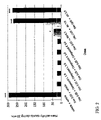
- FIG. 2 shows alpha2-agonist-induced sedation (measured as locomotor inhibition) in mice.
- the non-selective alpha-antagonist atipamnezole (Ati) antagonised the sedative effects of the alpha2-subtype non-selective agonist, dexmedetomidine (Dex; 50 nmol/kg s.c.), while the alpha2C-selective antagonists did not have significant effects.
- (veh vehicle).
- FIG. 3 shows the effect of the alpha2C-selective antagonists compound K (3 micromol/kg) and compound L (3 micromol/kg), the non-selective antagonist atipamezole (10 micromol/kg) and the reference antidepressants desipramine (10 micromol/kg) and fluoxetine (10 micromol/kg) in the forced swimming test in rats. All compounds, except atipamezole, increased activity (***p ⁇ 0.001, compared to vehicle).
- FIGS. 4 a and 4 b show the effect of compounds K and L on the startle reflex and its prepulse inhibition in rats.
- Veh vehicle).
- One embodiment of the present invention covers the use of compounds of formula I,
- X is CR 2 R 2 ′, O, S or NR 2 ;
- Z is —CHR 8 —(CH 2 )n- or a single bond
- R 1 is hydroxy, (C 1 -C 6 )alkyl, (C 1 -C 6 )alkoxy, halogen, halo(C 1 -C 6 )alkyl, (C 1 -C 6 )alkoxy-CO—, CN, NO 2 , NH 2 , mono- or di(C 1 -C 6 )alkylamino or carboxyl;
- R 2 and R 2 ′ are independently H, hydroxy or (C 1 -C 6 )alkyl or R 2 and R 2 ′ form, together with the carbon ring atoms to which they are attached, a carbonyl group;
- R 3 is H, hydroxy, (C 1 -C 6 )alkyl, (C 2 -C 6 )alkenyl, hydroxy(C 1 -C 6 )alkyl, (C 1 -C 6 )alkoxy, (C 1 -C 6 )alkoxy(C 1 -C 6 )alkyl, hydroxy(C 1 -C 6 )alkoxy(C 1 -C6)alkyl, (C 3 -C 7 )cycloalkyl, (C 3 -C 7 )cycloalkyl(C 1 -C 6 )alkyl, aryl, aryl(C 1 -C 6 )alkyl, aryloxy, aryl(C 1 -C 6 )alkoxy, aryloxy(C 1 -C 6 )alkyl, aryl(C 1 -C 6 )alkoxy(C 1 -C 6 )alkyl, halo(C 1 -C 6 )al
- R 4 is H, hydroxy, (C 1 -C 6 )alkyl, hydroxy(C 1 -C 6 )alkyl, (C 1 -C 6 )alkoxy or (C 1 -C 6 )alkoxy(C 1 -C 6 )alkyl;
- R 5 is H, hydroxy, (C 1 -C 6 )allyl, (C 2 -C 6 )alkenyl, (C 1 -C 6 )alkoxy, (C 1 -C 6 )alkoxy(C 1 -C 6 )alkyl, (C 3 -C 7 )cycloalkyl, (C 3 -C 7 )cycloalkyl(C 1 -C 6 )alkyl, aryl, aryl(C 1 -C 6 )alkyl, aryloxy, aryl(C 1 -C 6 )alkoxy, aryloxy(C 1 -C 6 )alkyl, aryl(C 1 -C 6 )alkoxy(C 1 -C 6 )alkyl, halo(C 1 -C 6 )alkyl, (C 1 -C 6 )alkyl-CO—O—, (C 1 -C 6 )alkyl-CO—O—(C 1
- R 6 is H, hydroxy, (C 1 -C 6 )alkyl, (C 1 -C 6 )alkoxy or (C 1 -C 6 )alkoxy(C 1 -C 6 )alkyl or R 6 forms a bond between the ring atom to which it is attached and the ring atom to which R 7 is attached;
- R 7 is H, hydroxy, (C 1 -C 6 )alkyl, hydroxy(C 1 -C 6 )atkyl, (C 1 -C 6 )alkoxy or (C 1 -C 6 )alkoxy(C 1 -C 6 )alkyl;
- R 8 is H,hydroxy, (C 1 -C 6 )alkyl, hydroxy(C 1 -C 6 )alkyl, (C 1 -C 6 )alkoxy or (C 1 -C 6 )alkoxy(C 1 -C 6 )alkyl or, only when n is 0, R 7 and R 8 form, together with the carbon ring atoms to which they are attached, a condensed five to seven membered saturated carbocyclic ring unsubstituted or substituted with 1 to 3 substituent(s) R 10 each independently being hydroxy, (C 1 -C 6 )alkyl, halogen, NH 2 , NO 2 , (C 3 -C 7 )cycloalkyl, hydroxy(C 1 -C 6 )alkyl, halo(C 1 -C 6 )alkyl, amino(C 1 -C 6 )alkyl, mono- or di(C 1 -C 6 )alkylamino, mono- or
- R 15 is H, (C 1 -C 6 )alkyl, (C 2 -C 6 )alkenyl, hydroxy(C 1 -C 6 )alkyl, (C 1 -C 6 )alkoxy(C 1 -C 6 )alkyl, hydroxy(C 1 -C 6 )alkoxy(C 1 -C 6 )alkyl, halo(C 1 -C 6 )alkyl, amino(C 1 -C 6 )alkyl, mono- or di(C 1 -C 6 )alkylamino(C 1 -C 6 )alkyl, (C 1 -C 6 )alkyl-CO—, (C 1 -C 6 )alkyl-CO—O—(C 1 -C 6 )alkyl, (C 1 -C 6 )alkoxy-CO—, (C 1 -C 6 )alkoxy-CO—(C 1 -C 6 )alkyl, (C 1
- R 16 is H or (C 1 -C 6 )alkyl
- R 7 and R 8 are attached to the carbon ring atoms, which are adjacent;
- n 0 to 2;
- n 0 or 1
- R 2 is H
- R 3 is H, hydroxy, (C 1 -C 6 )alkyl, hydroxy(C 1 -C 6 )alkyl, (C 1 -C 6 )alkoxy(C 1 -C 6 )alkyl, (C 3 -C 7 )cycloalkyl, halo(C 1 -C 6 )alkyl, (C 1 -C 6 )alkyl-CO—, (C 1 -C 6 )alkyl-CO—O—(C 1 -C 6 )alkyl, (C 1 -C 6 )alkoxy-CO—or (C 1 -C 6 )alkoxy-CO—(C 1 -C 6 )alkyl
- R 4 is H, hydroxy, (C 1 -C 6 )alkyl or hydroxy(C 1 -C 6 )alkyl
- R 5 is H, hydroxy, (C 1 -C 6 )alkyl or hydroxy(C 1 -
- R 3 is H or (C 1 -C 6 )alkyl and R 4 is hydroxy or hydroxy(C 1 -C 6 )alkyl.
- R 4 and R 5 form, together with the carbon ring atoms to which they are attached, a condensed six membered saturated carbocyclic ring.
- R 4 and R 6 together form a bond between the ring atoms to which they are attached or R 6 forms a bond between the ring atom to which it is attached and the ring atom to which R 7 is attached.
- the compound is 1 ⁇ -ethyl-1,2,3,4,6,7,12,12b ⁇ -octahydro-indolo[2,3-a]quinolizin-1-ol, (1 ⁇ -ethyl-1,2,3,4,6,7,12,12b ⁇ -octahydro-indolo[2,3-a]quinolizin-1-yl)-methanbl, 1 ⁇ -Methyl-1,2,3,4,6,7,12,12b ⁇ -octahydroindolo[2,3-a]quinolizin-1-ol, (1 ⁇ -Methyl-1,2,3,4,6,7,12,12b ⁇ -octahydroindolo[2,3-a]quinolizin-1-yl)-methanol or 3,4,4a ⁇ ,5,6,7,8,13,13b ⁇ ,13c ⁇ -decahydro-2H-6a,13-diaza-indeno[1,2-c
- one possible subgroup of the compounds of formula I includes R 5 and R 3 as defined in the description of the use of the compounds of formula I above.
- R 5 is H, hydroxy, (C 1 -C 6 )alkyl, (C 2 -C 6 )alkenyl, (C 1 -C 6 )alkoxy, (C 1 -C 6 )alkoxy(C 1 -C 6 )alkyl, (C 3 -C 7 )cycloalkyl, (C 3 -C 7 )cycloalkyl(C 1 -C 6 )alkyl, aryl, aryl(C 1 -C 6 )alkyl, aryloxy, aryl(C 1 -C 6 )alkoxy, aryloxy(C 1 -C 6 )alkyl, aryl(C 1 -C 6 )alkoxy(C 1 -C 6 )alkyl, halo(C 1 -C 6 )alkyl, (C 1 -C 6 )alkyl-CO—O—, (C 1 -C 6 )alkyl-CO—O—, (
- X is CR 2 R 2 ′, O or S
- R 1 , R 2 , R 2 ′, R 3 -R 10 , R 15 and R 16 , m and n are as defined in claim 1 , or a pharmaceutically acceptable salt or ester thereof, with the provisos, that
- R 3 is hydroxy, (C 1 -C 6 )alkyl, hydroxy(C 1 -C 6 )alkyl, (C 1 -C 6 )alkoxy(C 1 -C 6 )alkyl, (C 1 -C 6 )alkoxy-CO— or (C 1 -C 6 )alkyl-CO—O—(C 1 -C 6 )alkyl and R 4 is H, (C 1 -C 6 )alkyl or hydroxy(C 1 -C 6 )alkyl; or
- R 3 is hydroxy, hydroxy(C 1 -C 6 )alkyl or (C 1 -C 6 )alkoxy(C 1 -C 6 )alkyl and R 4 is (C 1 -C 6 )alkyl; or
- R 4 and R 5 form, together with the carbon ring atoms to which they are attached, a condensed six membered saturated carbocyclic ring;
- the compound is 1 ⁇ -Methyl-1,3,4,5,6,11b-hexahydro-2H-11-oxa4a-aza-benzo[a]fluoren-1-ol, (1 ⁇ -Methyl-1,3,4,5,6,11b ⁇ -hexahydro-2H-11-oxa-4a-aza-benzo[a]fluoren-1-yl)-methanol, ( ⁇ )-(1 ⁇ -Methyl-1,3,4,5,6,11b ⁇ -hexahydro-2H-11-oxa-4a-aza-benzo[a]fluoren-1-yl)-methanol, (+)-(1 ⁇ -Methyl-1,3,4,5,6,11b ⁇ -hexahydro-2H-11-oxa-4a-aza-benzo[a]fluoren-1-yl)-methanol, 1 ⁇ -Isopropyl-1,3,4,5,6,11b-Hexahydro-2H-11-oxa-4a-aza-benzo[a]fluoren
- X is NR 2 ;
- R 2 is (C 1 -C 6 )alkyl
- R 1 , R 3 -R 10 , R 15 , R 16 , m and n are as defined in claim 1 , or a pharmaceutically acceptable salt and ester thereof, with the provisos, that
- R 3 is hydroxy, (C 1 -C 6 )alkyl, hydroxy(C 1 -C 6 )alkyl or (C 1 -C 6 )alkoxy(C 1 -C 6 )alkyl and R 4 is H, (C 1 -C 6 )alkyl or hydroxy(C 1 -C 6 )alkyl; or
- the compound is 1 ⁇ -Ethyl-12-methyl-1,2,3,4,6,7,12b ⁇ -octahydro-indolo[2,3-a]quinolizin-1-ol or 1 ⁇ -Ethyl-12-ethyl-1,2,3,4,6,7,12b ⁇ -octahydro-indolo[2,3-a]quinolizin-1-ol.
- X is NR 2 ;
- R 2 is H
- Z is —CHR 8 —(CH 2 )n- or a single bond
- n 0,
- R 1 , R 3 , R 6 -R 9 , R 15 , R 16 and m are as defined in claim 1 ;
- r 1 to 3;
- the compound is not 10-methyl-5,7,7a,8,9,10,11,11a,11b,12-decahydro-6H-6a,12-diaza-indeno[1,2-a]fluorene; 3-hydroxy-1,2,3,4,4a,5,6,7,8,13,13b, 13c-dodecahydro-6a,13-diaza-indeno[1,2-c]phenanthrene-4-carboxylic acid methyl ester; methyl-3-ethyl-1,2,3a,4,6,7,12b,12c-octahydro-3H, 12H-indolo[2,3-g]cyclopent[a]indolizine-2-carboxylate; methyl-1,2,3a,4,6,7,12b,12c-octahydro-3H,12H-indolo[2,3-g]cyclopent[a]indolizine-2-carboxylate; methyl-1,2,3a,4,6,7,
- r 1 and R 3 is H, hydroxy, (C 1 -C 6 ) or hydroxy(C 1 -C 6 )alkyl; or
- the compound is 3,4,4a ⁇ ,5,6,7,8,13,13b ⁇ ,13c ⁇ -decahydro-2H-6a,13-diaza-indeno[1,2-c]phenanthren-1-one, 1,2,3,4,5,6,7,8,13,13b-decahydro-6a,13-diaza-indeno[1,2-c]phenanthrene, acetic acid 1 ⁇ ,2,3,4,4 ⁇ ,5,6,7,8,13,13b ⁇ ,13c ⁇ -dodecahydro-6a,13-diaza-indeno[1,2-c]phenanthren-1-yl ester or acetic acid 1 ⁇ ,2,3,4,4 ⁇ ,5,6,7,8,13,13b ⁇ ,13c ⁇ -dodecahydro-6a,13-diaza-indeno[1,2-c]phenanthren-1-yl ester.
- X is NR 2 ;
- R 2 is H
- Z is —CH—(CH 2 )n-;
- n 0;
- R 1 , R 3 -R 10 R 15 , R 16 and m are as defined in claim 1 ;
- t 0 to 3;
- the compound is not 1,2,3,4,4a,5,6,11,11b,12,13,13a-dodecahydro-4b,11-diaza-indeno[2,1-a]phenanthrene; 1,2,3,4,4a,5,6,11,11b,12-decahydro-4b,11-diaza-indeno[2,1-a]phenanthrene; 9-methoxy- 1,2,3,4,4a,5,6,11,11b,12-decahydro-4b,11-diaza-indeno[2,1-a]phenanthrene or 1-hydroxy-1,2,3,4,4a,5,6,11,11b,12,13,13a-dodecahydro-4b,11-diaza-indeno[2,1-a]phenanthrene-2-carboxylic acid methyl ester.
- X is NR 2 ;
- R 2 is H
- n 1,
- Another embodiment of the invention provides new compounds which are 2 ⁇ -Methoxy-1,2,3,4,6,7,12,12b ⁇ -octahydro-indolo[2,3-a]quinolizine, 2 ⁇ -methoxy-1,2,3,4,6,7,12,12b ⁇ -octahydro-indolo[2,3-a]quinolizine, 1 ⁇ -Ethyl-2 ⁇ -methyl-1,2,3,4,6,7,12,12b ⁇ -octahydro-indolo[2,3-a]quinolizin-1-ol, 1 ⁇ -Isopropyl-1,2,3,4,6,7,12,12b ⁇ -octahydro-indolo[2,3-a]quinolizin-1-ol, ( ⁇ )-1 ⁇ -isopropyl-1,2,3,4,6,7,12,12b ⁇ -octahydroindolo[2,3-a]quinolizin-1-ol, (+)-1 ⁇ -isopropyl
- halo or “halogen”, as employed herein as such or as part of another group, refers to chlorine, bromine, fluorine or iodine.
- oxo refers to an ⁇ O group.
- (C 1 -C 6 )alkyl refers to a straight or branched carbon chain having 1 to 6 carbon atoms.
- Representative examples of (C 1 -C 6 ) alkyl include, but are not limited to, methyl, ethyl, n-propyl, isopropyl, n-butyl, isobutyl, sec-butyl, tert-butyl, n-pentyl, isopentyl, neopentyl, n-hexyl, and the like.
- (C 2 -C 6 )alkenyl refers to a straight or branched chain radical having 2 to 6 carbon atoms, and containing (a) double bond(s).
- (C 3 -C 7 )cycloalkyl refers to a saturated cyclic hydrocarbon group containing 3 to 7 carbons.
- Representative examples of cycloalkyl include, but are not limited to, cyclopropyl, cyclobutyl, cyclopentyl, cyclohexyl, and the like.
- (C 3 -C 7 )cycloalkyl(C 1 -C 6 )alkyl refers to a (C 3 -C 7 )cycloalkyl group, as defined herein, appended to the parent molecular moiety through a (C 1 -C 6 )alkyl group, as defined herein.
- aryl refers to a monocyclic or bicyclic aromatic group containing 6 to 12 carbon atoms.
- Representative examples of aryl include, but are not limited to, phenyl, naphthyl, and the like.
- aryl(C 1 -C 6 )alkyl refers to an aryl group, as defined herein, appended to the parent molecular moiety through an (C 1 -C 6 )alkyl group, as defined herein.
- aryloxy refers to an aryl group, as defined herein, appended to the parent molecular moiety through an —O— group.
- aryl(C 1 -C 6 )alkoxy refers to an aryl group, as defined herein, appended to the parent molecular moiety through an (C 1 -C 6 )alkoxy group, as defined herein.
- aryloxy(C 1 -C 6 )alkyl refers to an aryloxy group, as defined herein, appended to the parent molecular moiety through an C 1 -C 6 )group, as defined herein.
- aryl(C 1 -C 6 )alkyl refers to an aryl(C 1 -C 6 )alkoxy group, as defined herein, appended to the parent molecular moiety through an (C 1 -C 6 )alkyl group, as defined herein.
- hydroxy refers to an —OH group.
- hydroxy(C 1 -C 6 )alkyl refers to at least one hydroxy group, as defined herein, appended to the parent molecular moiety through a (C 1 -C 6 )alkyl group, as defined herein.
- Representative examples of hydroxy(C 1 -C 6 )alkyl include, but are not limited to, hydroxymethyl, 2-hydroxyethyl, 1-hydroxyethyl, 3-hydroxypropyl, 1-hydroxypropyl, 1-methyl-1-hydroxyethyl, 1-methyl-1-hydroxypropyl, and the like.
- halo(C 1 -C 6 )alkyl refers to one or more halogen, as defined herein, appended to the parent molecular moiety through a (C 1 -C -6 )alkyl group, as defined herein.
- Representative examples of halo(C 1 -C 6 )alkyl include, but are not limited to, fluoromethyl, difluoromethyl, trifluoromethyl, 2-chloroethyl, 3-bromopropyl, and the like.
- amino as employed herein as such or as part of another group, refers to a —NH 2 group.
- amino(C 1 -C 6 )alkyl refers to an amino group, as defined herein, appended to the parent molecular moiety through a (C 1 -C 6 )alkyl group, as defined herein.
- Representative examples of amino(C 1 -C 6 )alkyl include, but are not limited to, aminomethyl, 2-aminoethyl, 1-aminoethyl, 3-aminopropyl, 2-aminopropyl, 4-aminobutyl, 1-methyl-1-aminoethyl, and the like.
- mono- or di(C 1 -C 6 )alkylamino refers to one or two (C 1 -C 6 )alkyl group(s), as defined herein, appended to the parent molecular moiety through an amino group, as defined herein.
- Representative examples of mono- or di(C 1 -C 6 )alkylamino include, but are not limited to methylaamino, ethylamino, propylamino, butylamino, dimethylamino, diethylamino, N-ethyl-N-methylamino, and the like.
- mono- or di(C 1 -C 6 )alkylamino(C 1 -C 6 )alkyl include, but are not limited to, N,N-dimethylaminomethyl, N,N-diethylaminomethyl, N-methylamninoethyl, N-methylaminopropyl, N-ethyl-N-methylaminomethyl, and the like.
- (C 1 -C 6 )alkoxy refers to a (C 1 -C 6 )alkyl, as defined herein, appended to the parent molecular moiety through an —O—group.
- Representative examples of (C 1 -C 6 )alkoxy include, but are not limited to methoxy, ethoxy, propoxy, butoxy, isobutoxy, sec-butoxy, tert-butoxy, and the like.
- (C 1 -C 6 )alkoxy(C 1 -C 6 )alkyl refers to at least one (C 1 -C 6 )alkoxy group, as defined herein, appended to the parent molecular moiety through an (C 1 -C 6 )alkyl group, as defined herein.
- Representative examples of (C 1 -C 6 )alkoxy(C 1 -C 6 )alkyl include, but are not limited to mnethoxymethyl, ethoxymethyl, 2-methoxyethyl, 2-ethoxyethyl, 3,3-dimethoxypropyl, 2,4-dimethoxybutyl and the like.
- hydroxy(C 1 -C 6 )alkoxy refers to a hydroxy group, as defined herein, appended to the parent molecular moiety through an (C 1 -C6)alkoxy group, as defined herein.
- hydroxy(C 1 -C 6 )alkoxy(C 1 -C 6 )alkyl refers to a hydroxy(C 1 -C 6 )alkoxy group, as defined herein, appended to the parent molecular moiety through an (C 1 -C 6 )alkyl group, as defined herein.
- mono- or di(C 1 -C 6 )-alkylcarbamoyl refers to one or two (C 1 -C 6 )alkyl group(s), as defined herein, appended to the parent molecular moiety through a —HNCO— or —NCO— group.
- Representative examples of mono- or di(C 1 -C 6 )-alkylcarbamoyl include, but are not limited to N-methylcarbamoyl, N-ethylcarbamoyl, N-propylcarbamoyl, N,N-dimethylcarbamoyl, N,N-diethylcarbamoyl and the like.
- the invention includes within its scope all the possible stereoisomers of the compounds, including geometric isomers, e.g. Z and E isomers (cis and trans isomers), and optical isomers, e.g. diastereomers and enantiomers. Furthermore, the invention includes in its scope both the individual isomers and any mixtures thereof, e.g. racemic mixtures.
- the individual isomers may be obtained using the corresponding isomeric forms of the starting material or they may be separated after the preparation of the end compound according to conventional separation methods.
- optical isomers e.g. enantiomers
- the conventional resolution methods e.g. fractional crystallisation
- Pharmaceutically acceptable salts e.g. acid addition salts with both organic and inorganic acids are well known in the field of pharmaceuticals.
- Non-limiting examples of these salts include chlorides, bromides, sulfates, nitrates, phosphates, sulfonates, formates, tartrates, maleates, citrates, benzoates, salicylates and ascorbates.
- Pharmaceutically acceptable esters when applicable, may be prepared by known methods using pharmaceutically acceptable acids that are conventional in the field of pharmaceuticals and that retain the pharmacological properties of the free form.
- Non-limiting examples of those esters include esters of aliphatic or aromatic alcohols, e.g. methyl, ethyl, propyl, isopropyl, butyl, isobutyl, sec-butyl and tert-butyl esters.
- the compounds of the invention can be prepared analogously or according to the methods known in the literature using suitable starting materials.
- the starting materials of formulae II, m and IV are commercially available or can be prepared via a variety of known svnth-etic routes known in the literature.
- the starting materials used are arylalkylamines of formula (II)
- R1 is as defined above and X is NH, O, CH2 or S.
- the amines of formula (II) can be prepared, for example, according to the process disclosed in the U.S. Pat. No. 4,710,504.
- X is CH 2
- the compounds of formula (II) can be prepared as described in J. Med. Chem. 10 (1967) 856-859.
- X is S
- the compounds of formula (II) can be prepared by decarboxylation of the corresponding 3-(thianaphten-3-yl)-L-alanine.
- R 3 is as defined above and R 11 is OH or halogen.
- R 3 -R 7 and Z are as defined above and Y is O or NH.
- Compounds of formula (IV) can be prepared according to the methods described in Tetrahedron 33 (1977) 1803-1808. Analogously, the corresponding acid chlorides can be used instead of lactones (Y ⁇ O). When R 3 and R 5 form a ring, compounds of formula (IV) are obtained by the partial reduction of their corresponding anhydrides.
- R 1 , R 3 -R 7 and Z are as defined above.
- X is NR 2 , O, CH 2 or S, R 1 -R 7 and Z are as defined above.
- R 2 is BOC and R 1 , R 5 and R 6 are as defined above.
- R 12 can be H or OCH 3 and R 13 can be an alkyl or aryl group.
- R 14 is a lower alkyl group.
- the resolution of the racemic compounds of formula (I) can be performed, for example, by converting compounds of formula (I) into their diastereoisomers salt mixture by reaction with an optically active acid such as D-tartaric acid, dibenzoyl-D-tartaric acid, etc and by separation of the diastereoisomers by crystallization.
- an optically active acid such as D-tartaric acid, dibenzoyl-D-tartaric acid, etc
- any starting material or intermediate can be protected, if necessary, in manner well known in the chemical field. Any protected functionality is subsequently deprotected in a usual manner.
- the compounds of the invention may be converted, if desired, into their pharmaceutically acceptable salt or ester form using methods well known in the art.
- aqueous layer was extracted with dichloromethane (3 ⁇ 20 ml) and the combined organic layers were washed with water. Drying over sodium sulfate, filtration and evaporation of the solvent gave the crude enamine, which was dissolved in 50 ml of methanol saturated with hydrogen chloride and the resulting solution was stirred for 16 h at room temperature. The solvent was evaporated and the residue was treated with aqueous sodium hydrogen carbonate.
- Trifluoroacetic acid (0.12 ml, 1.53 mmol) in dichloromethane (10 ml) was added and the reaction mixture was stirred for 2 h at rt.
- Alkaline work-up (4 M sodium hydroxide), gave the amide intermediate, which was dissolved in diethyl ether (15 ml), 0.1 g (2.63 mmol) of lithium aluminum hydride was added and the reaction mixture was refluxed for 1.5 h. Water was slowly added under cooling. After normal extraction procedures, the crude product was purified by column chromatography (silica gel, dichloromethane/methanol, 90:10).
- 1,2,3,4,5,7,12,12b ⁇ -Octahydroindolo[2,3-a]quinolizin-1 ⁇ -ol and 1,2,3,4,6,7,12,12b ⁇ -octahydrindolo[2,3-a]quinilizin-1 ⁇ -ol are prepared according to the method described in J. Chem. Soc., Chem. Comm ., (1972) 461.
- 1,4,6,7,12,12b-Hexahdroindolo[2,3-a]quinolizine (Compound I) is prepared according to the method described in Tetrahedron 45 (1989) 3975-3992.
- 2-tert-Butyl-1,4,6,7,12,12b-hexahydroindolo[2,3-a]quinolizine and 2-tert-butyl-3,4,6,7,12,12b-hexahydro-indolo[2,3-a]quinolizine are prepared according to the method described in Tetrahedron 47 (1991) 2879-2894.
- the compounds of the present invention show interesting pharmacological properties, namely they exhibit affinity for alpha2 adrenoceptors.
- the said pharmacological activity of the compounds of the invention is demostrated with the pharmacological tests presented below.
- alpha2-adrenoceptor binding affinities of the compounds including in the present invention are shown in the Table 1. Many of these compouinds are high-affinity ligands for all the alpha2-receptors, but some of them display selectivity for the alpha2C-subtype.
- Binding affinity (Ki; nM) Compound alpha2A alpha2B alpha2C A 480 330 61 B 130 160 25 C 710 580 87 D 29 81 17 E 30 110 26 F 514 not measured 70 G 96 not measured 22 H 280 45 23 I 150 460 85 J 210 520 75 K 359 245 31 L 85 20 18 M 440 470 110 N 130 1110 46 O 380 270 110 P 290 410 90 Q 27 40 6.4
- the functional activities of two compounds (K and L) displaying alpha2C-selectivity in binding experiments were determined as the abilities of the compounds to inhibit the epinephrine-stimulated binding of 35 S-GTP ⁇ S to G proteins (Jasper, J. R. et al., Biochem. Pharmacol. 55(7) (1998) 103544) in membranes of CHO cells stably transfected with the human alpha2-adrenoceptor subtypes.
- the antagonist potencies of compound K and compound L are presented in the Table 2. The results show that these compounds are selective antagonists for the alpha2C-subtypes.
- mice having non-finctional alpha2C-adrenoceptors are more sensitive to the locomotor-enhancing effects of the psychostimulant d-amphetamine and, on the other-hand, over-expression of the alpha2C-adrenoceptor in mice (alpha2C-OE) leads to an opposite effect, i.e. to attenuation of the stimulant effect (Scheinin, M. et al., Life Sci 68(19-20) (2001) 2277-85).
- alpha2C-antagonist would potentiate the locomotor effects of d-amphetamine.
- anpheampine 4 micromol/kg sc.
- the alpha2C 1 -antagonists 3 micromol/kg s.c.
- the alpha2-subtype non-selective potent alpha2-antagonist 1 micromol/kg s.c.
- mice 356 (1997) 570-582), and by subsequently measuring the locomotor activity of mice with an automated infrared photobeam system designed for activity studies (PAS CageRack, SanDiego Instruments, San Diego, Calif., USA).
- PAS CageRack an automated infrared photobeam system designed for activity studies.
- both of the tested alpha2C-selective antagonists increased the activity of mice ( FIG. 1 a+b ), as was expected for alpha2C-antagonist.
- the subtype non-selective alpha2-antagonist also potentiated the d-amphetamine effect.
- the tested compounds did not affect the baseline locomotor activity of mice (at doses between 0.1-10 mg/kg s.c.).
- alpha2-agonists One of the prominent effects of non-selective alpha2-agonists in rodents is their ability to cause profound sedation. This effect, measured as locomotor inhibition by the alpha2-agonist dexmedetomidine was not modified in mice with genetically altered alpha2C-expression (Scheinin, M. et al., Life Sci 68(19-20) (2001) 2277-85). On the other hand, alpha2-agonist did not have sedative effect in mice with genetically disrupted alpha2A-adrenoceptor (Hunter, J. C. et al., British Journal Pharmacology 122(7) (1997) 1339-44).
- alpha2C-antagonists would not modulate significantly the alpha2-agonist-induced sedation.
- This assumption was tested in experiment, where dexmedetomidine was administered to mice pre-treated with the alpha2C-antagonists compound K or compound L, or the subtype non-selective antagonist atipamezole (Haapalinna, A. et al., Naunyn - Schmiedeberg's Arch. Pharmacol. 356 (1997) 570-582).
- Forced swimming test (FST, i.e. Porsolt's test) is generally used in the pharmacological screening of new-antidepressants.
- FST Forced swimming test
- antidepressants increase the animals' activity compared to non-treated controls.
- Alpha2C-KO mice appeared to be more active, and alpha2C-OE mice were less active in FST (U.S. Pat. No. 5,902,807 and Scheinin, M. et al., Life Sci 68(19-20) (2001) 2277-85). Therefore, it was tested, whether a selective alfa2C-antagonist would have antidepressant-like activity (e.g. activity-increasing property) in the FST.
- Prepulse-inhibition (PPI) of a startle response refers to the reduction in the startle response caused by a low intensity non-startling stimulus (the prepulse) which is presented shortly before the startle stimulus.
- PPI can be used as an operational measure of sensorimotor gating and appears to be present in all mammals, including rats and humans (Swerdlow, N. R. et al., The archives of general psychiatry 51 (1994) 139-154).
- Normally finctioning PPI can be disrupted by psychostimulants, such as d-amphetamine or phencyclidine (PCP), and reversed by clinically effective antipsychotics.
- alpha2C-KO mutation was associated with weakened PPI whereas alpha2C-OE demonstrated increased PPI.
- the genetically altered alpha2C-expression in mice was associated with changes in PPI in a way suggesting that an alpha2C-antagonist would decrease PPI (Scheinin, M. et al., Life Sci 68(19-20) (2001) 2277-85). This hypothesis was tested with compounds K and L alone and against PCP disruption of the PPI.
- atipamezole produced different effects than was observed with the selective alpha2C-antagonists: atipamezole did not enhance PPI, but it increased the startle reflex per se (i.e. startle without prepulses)( Figure 4).
- the results presented in this chapter show that those antagonists which are classified as alpha2C-selective according to in vitro experiments, appeared to fluction as alpha2C-selective antagonists also in vivo in a manner that was predicted based on the available knowledge on alpha2C-antagonism.
- the compounds according to the invention may be used to treat any disease or condition wherein alpha-2 antagonists are indicated to be effective.
- the compounds can also be used to reverse effects induced by alpha-2 agonists.
- the compounds of the invention may be useful in the treatment of various disorders of the central nervous system (CNS), i.e. different neurological, psychiatric and cognition disorders (such as depression, anxiety disorders, post traumatic stress disorder, schizophrenia, Parkinson's disease and other movement disorders).
- CNS central nervous system
- psychiatric and cognition disorders such as depression, anxiety disorders, post traumatic stress disorder, schizophrenia, Parkinson's disease and other movement disorders.
- peripheral disorders e.g. diabetes, orthostatic hypotension, lipolytic disorders (such as obesity), Raynaud's disease or both male and female sexual dysfunctions.
- the selective alpha-2C antagonists of the present invention may be used for the treatment of various disorders or conditions of CNS-system where alpha-2C antagonists are indicated to be beneficial, for example, to alleviate the symptoms of various mental disorders propagated by stress, Parkinson's disease, depression, negative symptoms of schizophrenia, attention deficit hyperactivity disorder, post-traumatic stress-disorder, and anxiety disorders.
- the alpha2C-selective compounds can also be used to treat disorders and conditions associated with sensorimotor gating deficits, particularly disorders and conditions wherein the sensorimotor gating deficits results in sensory flooding and cognitive fragmentation causing dysfiunction in attention and perception.
- Such disorders and conditions include, but are not limited to, schizophrenia, obsessive compulsive disorder, Tourette's syndrome, blepharospasm and other focal dystonias, temporal lobe epilepsy with psychosis, drug-induced psychosis (for example, psychosis caused by chronic use of dopaminergic agents) (Braff, D.L. et al., Psychopharmacology ( Berl ) 156(2-3) (2001) 234-258), Huntington's disease, Parkinson's disease, disorders caused by fluctuation of the levels of sex hormones (such as premenstrual syndrome), and panic disorder.
- the symptoms which are usually associated with above-mentioned disorders or conditions include, but are not limited to, hallucination, delusion, parathymia, agitation, psychotic cognitive impairment (including deficits in thinking and speech), social withdrawal and withdrawal symptoms (including delirium) associated with cessation of cigarette smoking or alcohol or drug abuse. These symptoms may also be seen in animals in exceptional circumstances, for example, during withdrawal from masters or during transportation.
- the alpha-2C antagonists of the invention Due to their selectivity of action, the alpha-2C antagonists of the invention have less or no undesirable side-effects attributed to non-selective alpha2-antagonism, such as increases in blood pressure, heart rate, salival secretions, gastrointestinal secretion, anxiety, and startle reactivity per se (Ruffolo, R. R. J. et al., Annu Rev Pharmacol Toxicol 32 (1993) 243-279).
- the compound of the invention can be administered for example enterally, topically or parenterally by means of any pharmaceutical formulation useful for said administration, and containing at least one active compound of formula I in pharmaceutically acceptable and effective amounts together with pharmaceutically acceptable diluents, carriers, and/or excipients known in the art.
- pharmaceutically acceptable diluents, carriers, and/or excipients known in the art.
- manufacture of such pharmaceutical formulations is well known in the art.
- the therapeutic dose to be given to a patient in need of treatment will vary depending on the compound being administered, the species, age and the sex of the subject being treated, the particular condition being treated, as well as the route and method of administration, and are easily determined by person skilled in the art. Accordingly, the typical dosage for oral administration is from 5 ⁇ g/kg to 100 mg/kg per day and that for parenteral administration from 0.5 ⁇ g/kg to 10 mglkg for an adult mammal.
- the present invention further provides a compound of the invention or an ester or salt thereof for use as alpha-2 antagonist.
- a method for the treatment of diseases or conditions where alpha-2 antagonists, e.g. alpha-2C antagonists, are indicated to be useful e.g. a method for the treatment of diseases or conditions of the central nervous system.
- a therapeutically effective amount of a compound of the invention is administered to a subject in need of such treatment.
- the use of the compounds of the invention for the manufacture of a medicament to be used for the above indications is also provided.
Landscapes
- Health & Medical Sciences (AREA)
- Chemical & Material Sciences (AREA)
- Organic Chemistry (AREA)
- Life Sciences & Earth Sciences (AREA)
- Engineering & Computer Science (AREA)
- Bioinformatics & Cheminformatics (AREA)
- Veterinary Medicine (AREA)
- Public Health (AREA)
- General Health & Medical Sciences (AREA)
- Medicinal Chemistry (AREA)
- Animal Behavior & Ethology (AREA)
- Pharmacology & Pharmacy (AREA)
- Chemical Kinetics & Catalysis (AREA)
- Nuclear Medicine, Radiotherapy & Molecular Imaging (AREA)
- General Chemical & Material Sciences (AREA)
- Biomedical Technology (AREA)
- Neurology (AREA)
- Neurosurgery (AREA)
- Diabetes (AREA)
- Epidemiology (AREA)
- Psychiatry (AREA)
- Heart & Thoracic Surgery (AREA)
- Endocrinology (AREA)
- Cardiology (AREA)
- Pain & Pain Management (AREA)
- Reproductive Health (AREA)
- Obesity (AREA)
- Psychology (AREA)
- Hematology (AREA)
- Hospice & Palliative Care (AREA)
- Gynecology & Obstetrics (AREA)
- Emergency Medicine (AREA)
- Pharmaceuticals Containing Other Organic And Inorganic Compounds (AREA)
- Acyclic And Carbocyclic Compounds In Medicinal Compositions (AREA)
- Organic Low-Molecular-Weight Compounds And Preparation Thereof (AREA)
- Nitrogen Condensed Heterocyclic Rings (AREA)
- Secondary Cells (AREA)
- Heterocyclic Carbon Compounds Containing A Hetero Ring Having Oxygen Or Sulfur (AREA)
- Steroid Compounds (AREA)
- Peptides Or Proteins (AREA)
Priority Applications (1)
| Application Number | Priority Date | Filing Date | Title |
|---|---|---|---|
| US10/510,019 US7592350B2 (en) | 2002-04-03 | 2003-04-03 | Polycyclic compounds as potent alpha2-adrenoceptor antagonists |
Applications Claiming Priority (5)
| Application Number | Priority Date | Filing Date | Title |
|---|---|---|---|
| US36934702P | 2002-04-03 | 2002-04-03 | |
| FI20020642A FI20020642A0 (fi) | 2002-04-03 | 2002-04-03 | Polysykliset yhdisteet tehokkaina alfa2-adrenoseptoriantagonisteina |
| FI20020642 | 2002-04-03 | ||
| PCT/FI2003/000255 WO2003082866A1 (en) | 2002-04-03 | 2003-04-03 | Polycyclic compounds as potent alpha2-adrenoceptor antagonists |
| US10/510,019 US7592350B2 (en) | 2002-04-03 | 2003-04-03 | Polycyclic compounds as potent alpha2-adrenoceptor antagonists |
Publications (3)
| Publication Number | Publication Date |
|---|---|
| US20060094740A1 US20060094740A1 (en) | 2006-05-04 |
| US20070293527A9 US20070293527A9 (en) | 2007-12-20 |
| US7592350B2 true US7592350B2 (en) | 2009-09-22 |
Family
ID=28676457
Family Applications (1)
| Application Number | Title | Priority Date | Filing Date |
|---|---|---|---|
| US10/510,019 Expired - Fee Related US7592350B2 (en) | 2002-04-03 | 2003-04-03 | Polycyclic compounds as potent alpha2-adrenoceptor antagonists |
Country Status (19)
| Country | Link |
|---|---|
| US (1) | US7592350B2 (de) |
| EP (1) | EP1490361B1 (de) |
| JP (1) | JP2005522468A (de) |
| CN (1) | CN100372845C (de) |
| AT (1) | ATE374773T1 (de) |
| AU (1) | AU2003216760A1 (de) |
| BR (1) | BR0309028A (de) |
| CA (1) | CA2480695A1 (de) |
| DE (1) | DE60316672T2 (de) |
| EA (1) | EA008537B1 (de) |
| HR (1) | HRP20041026A2 (de) |
| HU (1) | HUP0500201A2 (de) |
| IL (1) | IL164203A0 (de) |
| IS (1) | IS7482A (de) |
| MX (1) | MXPA04009601A (de) |
| NZ (1) | NZ535950A (de) |
| PL (1) | PL372657A1 (de) |
| RS (1) | RS87204A (de) |
| WO (1) | WO2003082866A1 (de) |
Families Citing this family (23)
| Publication number | Priority date | Publication date | Assignee | Title |
|---|---|---|---|---|
| TWI457122B (zh) | 2007-07-20 | 2014-10-21 | Orion Corp | 作為用於治療周邊和中央神經系統疾病之alpha2C拮抗劑的2,3-二氫苯並[1,4]戴奧辛-2-基甲基衍生物 |
| US8906647B2 (en) | 2008-02-21 | 2014-12-09 | Sequoia Pharmaceuticals, Inc. | Diamide inhibitors of cytochrome P450 |
| TW201024282A (en) | 2008-11-20 | 2010-07-01 | Orion Corp | New pharmaceutical compounds |
| US9079904B2 (en) | 2009-09-23 | 2015-07-14 | Medivation Technologies, Inc. | Pyrido[3,4-B]indoles and methods of use |
| GB2503187A (en) * | 2011-09-15 | 2013-12-25 | Univ Sussex | Composition for use in the treatment of neurodevelopmental disorders |
| AR104882A1 (es) | 2015-06-05 | 2017-08-23 | Orion Corp | DERIVADOS DE 2-(1-HETEROARILPIPERAZIN-4-IL)METIL-1,4-BENZODIOXANO COMO ANTAGONISTAS DE a2C |
| CN107286158A (zh) * | 2016-03-30 | 2017-10-24 | 中国科学院上海药物研究所 | 苯基[a]吲哚[2,3-g]并喹嗪类化合物、其制备方法、药物组合物及其应用 |
| US20190152992A1 (en) | 2016-06-29 | 2019-05-23 | Orion Corporation | Benzodioxane derivatives and their pharmaceutical use |
| EP3773582B1 (de) | 2018-03-31 | 2023-10-25 | Molecular International Research, Inc. | Selektives antikrebsmittel zur vorbeugung und behandlung |
| CN110922412A (zh) * | 2018-09-20 | 2020-03-27 | 复旦大学 | 具有抗精神病作用药物化合物的不对称合成方法 |
| IT201800009072A1 (it) * | 2018-10-01 | 2020-04-01 | Universita' Degli Studi Di Cagliari | IL COMPOSTO (8aR,12aS,13aS)-5,8,8a,9,10,11,12,12a, 13,13a-DECAIDRO-3-METOSSI-12-(ETILSOLFONIL)-6H-ISOCHINO [2,1-g][1,6]NAFTIRIDINA PER L’USO NEL TRATTAMENTO DELLE PSICOSI |
| WO2020072675A1 (en) * | 2018-10-02 | 2020-04-09 | Northwestern University | Beta-carbolines as positive allosteric modulators of the human serotonin receptor 2c (5-ht2c) |
| CA3139298A1 (en) | 2019-05-09 | 2020-11-12 | Bayer Aktiengesellschaft | Combination of an a2-adrenoceptor subtype c (alpha-2c) antagonists with a task1/3 channel blocker for the treatment of sleep apnea |
| EP3965763A1 (de) | 2019-05-09 | 2022-03-16 | Bayer Aktiengesellschaft | Arylchinozilinderivate als alpha2-adrenozeptor subtyp c (alpha-2c)-antagonisten zur behandlung von schlafapnoe |
| CN111116578B (zh) * | 2019-12-26 | 2021-06-04 | 深圳市老年医学研究所 | 去亚甲基小檗碱的制备方法及其应用 |
| WO2022008426A1 (en) | 2020-07-06 | 2022-01-13 | Bayer Aktiengesellschaft | Combination of an alpha2-adrenoceptor subtype c (alpha-2c) antagonist with a task1/3 channel blocker for the treatment of sleep apnea |
| CN112457314A (zh) * | 2020-11-19 | 2021-03-09 | 烟台大学 | 手性吲哚并吲哚里西啶类化合物及其制备方法 |
| CN116143783B (zh) * | 2021-11-23 | 2024-09-20 | 中国科学院大连化学物理研究所 | 一种单萜吲哚生物碱化合物及其制备和应用及药物 |
| KR20240124995A (ko) | 2021-12-22 | 2024-08-19 | 바이엘 악티엔게젤샤프트 | 수면 무호흡의 치료를 위한 a2-아드레날린수용체 하위유형 c (알파-2c) 길항제와 노르에피네프린 재흡수 억제제의 조합물 |
| CA3259602A1 (en) | 2021-12-22 | 2023-06-29 | Bayer Aktiengesellschaft | Combination of an .alpha.2-adrenoceptor subtype c (alpha-2c) antagonists with a muscarinic receptor antagonist for the treatment of sleep apnea |
| EP4460298A1 (de) | 2022-01-07 | 2024-11-13 | Bayer Aktiengesellschaft | ?2-adrenozeptor-subtyp-c-antagonisten zur behandlung von schlafapnoe |
| EP4460307A1 (de) | 2022-01-07 | 2024-11-13 | Bayer Aktiengesellschaft | 2,3-dihydrobenzo[b [1,4 dioxin-2-ylmethyl) piperazin-1-yl-derivate zur behandlung von schlafapnoe |
| WO2025068514A1 (en) | 2023-09-28 | 2025-04-03 | Bayer Aktiengesellschaft | Substituted heterocyclic carboxamindes and use thereof |
Citations (23)
| Publication number | Priority date | Publication date | Assignee | Title |
|---|---|---|---|---|
| FR1209650A (fr) | 1957-09-12 | 1960-03-02 | Hoffmann La Roche | Procédé pour la préparation de dérivés d'indolo-quinolizines |
| GB844342A (en) | 1958-04-24 | 1960-08-10 | Roche Products Ltd | Novel quinolizine derivatives and a process for the manufacture thereof |
| GB983848A (en) | 1960-03-12 | 1965-02-17 | Philips Nv | Improvements in or relating to indoloquinolizine compounds |
| US3203860A (en) | 1963-03-21 | 1965-08-31 | Mead Johnson & Co | 1, 2, 3, 5, 6, 11b-hexahydroindolo[3, 2-g] indolizinyl-2-methyl 3, 4, 5-trimethoxybenzoate and salts thereof |
| GB1003645A (en) | 1962-10-09 | 1965-09-08 | Koninklijke Pharma Fab Nv | Indolo-indolizine compounds |
| FR1524953A (fr) | 1962-03-26 | 1968-05-17 | Konink Pharmaceutische Fabrike | Procédé de préparation des dérivés de la quinolizine |
| US3492303A (en) | 1967-07-28 | 1970-01-27 | Warner Lambert Pharmaceutical | 1,2,3,4,4a,5,6,8,9,14,14b,14c-dodecahydrobenz(h)indolo(2,3-a)quinolizines |
| GB1435573A (en) | 1973-05-25 | 1976-05-12 | Wyeth John & Brother Ltd | Indoloquinolizines |
| US4036841A (en) | 1974-05-07 | 1977-07-19 | Richter Gedeon Vegyeszeti Gyar Rt. | Indolo[2,3α]quinolizine derivatives |
| US4044012A (en) | 1974-05-07 | 1977-08-23 | Richter Gedeon Vegyeszeti Gyar Rt. | Indolo-quinolizidine derivatives |
| FR2478639A1 (fr) | 1980-03-20 | 1981-09-25 | Sanofi Sa | Nouveaux derives de l'indolizino (8,7-b) indole et intermediaires, leur procede de preparation et leur utilisation en therapeutique |
| GB2106909A (en) | 1981-10-07 | 1983-04-20 | Wyeth John & Brother Ltd | Benzoquinolizines |
| EP0089926A2 (de) | 1982-03-24 | 1983-09-28 | Ciba-Geigy Ag | Pharmazeutische Präparate enthaltend stickstoffhaltige Tetracyclen sowie neue Verbindungen dieser Art |
| EP0130823A2 (de) | 1983-06-29 | 1985-01-09 | Richter Gedeon Vegyeszeti Gyar R.T. | Indolo(2,3-a)chinolizin- und Indolo(2,3-g)cyclopent(a)indolizinderivate |
| EP0183492A1 (de) | 1984-11-23 | 1986-06-04 | Farmos-Yhtyma Oy | Substituierte Imidazolderivate, Verfahren zu ihrer Herstellung und ihre Verwendung |
| EP0204254A2 (de) | 1985-06-03 | 1986-12-10 | Merck & Co. Inc. | Substituierte Hexahydroarylchinolizine, Verfahren zu ihrer Herstellung und diese enthaltende pharmazeutische Zubereitungen |
| EP0213793A2 (de) | 1985-08-10 | 1987-03-11 | JOHN WYETH & BROTHER LIMITED | Sulphonamide |
| US4686226A (en) | 1985-09-03 | 1987-08-11 | Merck & Co., Inc. | Substituted benzo[b]furo- and benzo[b]thieno quinolizines |
| US4710504A (en) | 1986-04-04 | 1987-12-01 | Merck & Co., Inc. | Anti-depressant spiro hexahydro arylquinolizine derivatives, composition, and method of use therefor |
| US4806545A (en) | 1985-04-19 | 1989-02-21 | Richter Gedeon Vegyeszeti Gyar Rt. | (-)-1β-ethyl-1α-hydroxymethyl-1,2,3,4,6,7,12, 12Bα-octahydroindolo(2,3-A)quinolizine, process for its preparation and pharmaceutical compositions containing same |
| US5902807A (en) | 1997-05-12 | 1999-05-11 | Antti Haapalinna | Method for the treatment of mental illness in mammals and a composition therefor |
| WO1999028300A1 (en) | 1997-12-04 | 1999-06-10 | Allergan Sales, Inc. | Substituted imidazole derivatives having agonist-like activity at alpha 2b or 2b/2c adrenergic receptors |
| WO2001064645A2 (en) | 2000-03-01 | 2001-09-07 | Orion Corporation | Derivatives of quinoline as alpha-2 antagonists |
-
2003
- 2003-04-03 HR HR20041026A patent/HRP20041026A2/xx not_active Application Discontinuation
- 2003-04-03 PL PL03372657A patent/PL372657A1/xx not_active Application Discontinuation
- 2003-04-03 JP JP2003580331A patent/JP2005522468A/ja active Pending
- 2003-04-03 HU HU0500201A patent/HUP0500201A2/hu unknown
- 2003-04-03 BR BR0309028-0A patent/BR0309028A/pt not_active IP Right Cessation
- 2003-04-03 IL IL16420303A patent/IL164203A0/xx unknown
- 2003-04-03 CA CA002480695A patent/CA2480695A1/en not_active Abandoned
- 2003-04-03 DE DE60316672T patent/DE60316672T2/de not_active Expired - Lifetime
- 2003-04-03 NZ NZ535950A patent/NZ535950A/en unknown
- 2003-04-03 RS YU87204A patent/RS87204A/sr unknown
- 2003-04-03 AU AU2003216760A patent/AU2003216760A1/en not_active Abandoned
- 2003-04-03 EP EP03712185A patent/EP1490361B1/de not_active Expired - Lifetime
- 2003-04-03 US US10/510,019 patent/US7592350B2/en not_active Expired - Fee Related
- 2003-04-03 WO PCT/FI2003/000255 patent/WO2003082866A1/en not_active Ceased
- 2003-04-03 MX MXPA04009601A patent/MXPA04009601A/es not_active Application Discontinuation
- 2003-04-03 EA EA200401301A patent/EA008537B1/ru not_active IP Right Cessation
- 2003-04-03 CN CNB038084716A patent/CN100372845C/zh not_active Expired - Fee Related
- 2003-04-03 AT AT03712185T patent/ATE374773T1/de not_active IP Right Cessation
-
2004
- 2004-10-01 IS IS7482A patent/IS7482A/is unknown
Patent Citations (26)
| Publication number | Priority date | Publication date | Assignee | Title |
|---|---|---|---|---|
| FR1209650A (fr) | 1957-09-12 | 1960-03-02 | Hoffmann La Roche | Procédé pour la préparation de dérivés d'indolo-quinolizines |
| GB844342A (en) | 1958-04-24 | 1960-08-10 | Roche Products Ltd | Novel quinolizine derivatives and a process for the manufacture thereof |
| GB983848A (en) | 1960-03-12 | 1965-02-17 | Philips Nv | Improvements in or relating to indoloquinolizine compounds |
| FR1524953A (fr) | 1962-03-26 | 1968-05-17 | Konink Pharmaceutische Fabrike | Procédé de préparation des dérivés de la quinolizine |
| GB1003645A (en) | 1962-10-09 | 1965-09-08 | Koninklijke Pharma Fab Nv | Indolo-indolizine compounds |
| US3203860A (en) | 1963-03-21 | 1965-08-31 | Mead Johnson & Co | 1, 2, 3, 5, 6, 11b-hexahydroindolo[3, 2-g] indolizinyl-2-methyl 3, 4, 5-trimethoxybenzoate and salts thereof |
| US3492303A (en) | 1967-07-28 | 1970-01-27 | Warner Lambert Pharmaceutical | 1,2,3,4,4a,5,6,8,9,14,14b,14c-dodecahydrobenz(h)indolo(2,3-a)quinolizines |
| GB1435573A (en) | 1973-05-25 | 1976-05-12 | Wyeth John & Brother Ltd | Indoloquinolizines |
| US4036841A (en) | 1974-05-07 | 1977-07-19 | Richter Gedeon Vegyeszeti Gyar Rt. | Indolo[2,3α]quinolizine derivatives |
| US4044012A (en) | 1974-05-07 | 1977-08-23 | Richter Gedeon Vegyeszeti Gyar Rt. | Indolo-quinolizidine derivatives |
| FR2478639A1 (fr) | 1980-03-20 | 1981-09-25 | Sanofi Sa | Nouveaux derives de l'indolizino (8,7-b) indole et intermediaires, leur procede de preparation et leur utilisation en therapeutique |
| GB2106909A (en) | 1981-10-07 | 1983-04-20 | Wyeth John & Brother Ltd | Benzoquinolizines |
| EP0089926A2 (de) | 1982-03-24 | 1983-09-28 | Ciba-Geigy Ag | Pharmazeutische Präparate enthaltend stickstoffhaltige Tetracyclen sowie neue Verbindungen dieser Art |
| EP0089926A3 (de) | 1982-03-24 | 1984-05-16 | Ciba-Geigy Ag | Pharmazeutische Präparate enthaltend stickstoffhaltige Tetracyclen sowie neue Verbindungen dieser Art |
| EP0130823A2 (de) | 1983-06-29 | 1985-01-09 | Richter Gedeon Vegyeszeti Gyar R.T. | Indolo(2,3-a)chinolizin- und Indolo(2,3-g)cyclopent(a)indolizinderivate |
| US4587251A (en) | 1983-06-29 | 1986-05-06 | Richter Gedeon Vegyeszeti Gyar R.T. | Indolo[2,3-a]quinolizine and indolo[2,3-g]cyclopent[a]indolizine derivatives, compositions and methods employing them for treating ulcers |
| EP0183492A1 (de) | 1984-11-23 | 1986-06-04 | Farmos-Yhtyma Oy | Substituierte Imidazolderivate, Verfahren zu ihrer Herstellung und ihre Verwendung |
| US4806545A (en) | 1985-04-19 | 1989-02-21 | Richter Gedeon Vegyeszeti Gyar Rt. | (-)-1β-ethyl-1α-hydroxymethyl-1,2,3,4,6,7,12, 12Bα-octahydroindolo(2,3-A)quinolizine, process for its preparation and pharmaceutical compositions containing same |
| EP0204254A3 (de) | 1985-06-03 | 1988-03-02 | Merck & Co. Inc. | Substituierte Hexahydroarylchinolizine, Verfahren zu ihrer Herstellung und diese enthaltende pharmazeutische Zubereitungen |
| EP0204254A2 (de) | 1985-06-03 | 1986-12-10 | Merck & Co. Inc. | Substituierte Hexahydroarylchinolizine, Verfahren zu ihrer Herstellung und diese enthaltende pharmazeutische Zubereitungen |
| EP0213793A2 (de) | 1985-08-10 | 1987-03-11 | JOHN WYETH & BROTHER LIMITED | Sulphonamide |
| US4686226A (en) | 1985-09-03 | 1987-08-11 | Merck & Co., Inc. | Substituted benzo[b]furo- and benzo[b]thieno quinolizines |
| US4710504A (en) | 1986-04-04 | 1987-12-01 | Merck & Co., Inc. | Anti-depressant spiro hexahydro arylquinolizine derivatives, composition, and method of use therefor |
| US5902807A (en) | 1997-05-12 | 1999-05-11 | Antti Haapalinna | Method for the treatment of mental illness in mammals and a composition therefor |
| WO1999028300A1 (en) | 1997-12-04 | 1999-06-10 | Allergan Sales, Inc. | Substituted imidazole derivatives having agonist-like activity at alpha 2b or 2b/2c adrenergic receptors |
| WO2001064645A2 (en) | 2000-03-01 | 2001-09-07 | Orion Corporation | Derivatives of quinoline as alpha-2 antagonists |
Non-Patent Citations (67)
Also Published As
| Publication number | Publication date |
|---|---|
| AU2003216760A1 (en) | 2003-10-13 |
| CN1646528A (zh) | 2005-07-27 |
| NZ535950A (en) | 2007-11-30 |
| ATE374773T1 (de) | 2007-10-15 |
| MXPA04009601A (es) | 2004-12-13 |
| US20060094740A1 (en) | 2006-05-04 |
| HUP0500201A2 (hu) | 2005-07-28 |
| EA200401301A1 (ru) | 2005-06-30 |
| EP1490361A1 (de) | 2004-12-29 |
| EA008537B1 (ru) | 2007-06-29 |
| IL164203A0 (en) | 2005-12-18 |
| CN100372845C (zh) | 2008-03-05 |
| EP1490361B1 (de) | 2007-10-03 |
| DE60316672D1 (de) | 2007-11-15 |
| IS7482A (is) | 2004-10-01 |
| HK1075660A1 (en) | 2005-12-23 |
| DE60316672T2 (de) | 2008-07-17 |
| HRP20041026A2 (en) | 2005-06-30 |
| US20070293527A9 (en) | 2007-12-20 |
| WO2003082866A1 (en) | 2003-10-09 |
| PL372657A1 (en) | 2005-07-25 |
| JP2005522468A (ja) | 2005-07-28 |
| RS87204A (sr) | 2006-10-27 |
| BR0309028A (pt) | 2005-02-15 |
| CA2480695A1 (en) | 2003-10-09 |
Similar Documents
| Publication | Publication Date | Title |
|---|---|---|
| US7592350B2 (en) | Polycyclic compounds as potent alpha2-adrenoceptor antagonists | |
| US8071786B2 (en) | Indole compounds useful as serotonin selective agents | |
| JP4094950B2 (ja) | インドール誘導体および5−ht2bおよび5−ht2c受容体リガンドとしてのそれらの使用 | |
| JP5597188B2 (ja) | 置換されたスピロ環状シクロヘキサン誘導体 | |
| US20060160816A1 (en) | Pirazino(AZA) indole derivatives | |
| HUT65831A (en) | Process for producing substituted 3-amino-quinuclidine derivatives and pharmaceutically acceptable salts | |
| JP5926272B2 (ja) | Wnt経路のアンタゴニストとしてのクロメン誘導体及びそれらの類似体 | |
| US5922716A (en) | 5H-indeno 1,2-b!pyrazine-2,3-dione derivatives, their preparation and medicinal products containing them | |
| EP0858996A1 (de) | Mittel zum schutz von nervenzellen | |
| WO2003057161A2 (en) | BENZOTHIENO [3,2-c]PYRAZOLYL AND BENZOFURANO [3,2-c] PYRAZOLYL COMPOUNDS, THEIR USE IN DISEASES ASSOCIATED WITH THE 5-HT2C RECEPTOR AND INTERMEDIATE COMPOUNDS THEREOF | |
| US20080096867A1 (en) | Imidazo[1,2-A] Pyridine Anxiolytics | |
| JP6200996B2 (ja) | (−)−フペルジンaの関連組成物 | |
| AU2010340745B2 (en) | Sulfone compounds as 5-HT6 receptor ligands | |
| PL170889B1 (pl) | S posób wytwarzania nowej (7S,9aS)-2-(benzo[d]izoksazoliio-3) perhydro-7-{2-[(2aS)-2a- hydroksy-3,3- czterometylenogluta-rimido]etyio}-1H-pirydo[1,2-a] pirazyny i nowej(7S,9aS)-2-(benzo[d]izoksazolilo-3) perhydro-7-{2[(2aR)-2a-hydroksy-3,3- czterometylenoglutarimido]-etylo}-1 H-pirydo[1,2-a] pirazyny PL PL | |
| JP2008540368A (ja) | 5−ht2リガンドとしての四環式アザピラジノインドリン | |
| FI86301C (fi) | Foerfarande foer framstaellning av farmaceutiskt anvaendbara naftoxaziner. | |
| WO1998043976A1 (en) | Biphenyl derivatives and medicinal compositions | |
| WO2008047839A1 (en) | 5-ht1a receptor agonist | |
| FI102276B (fi) | Menetelmä uusien terapeuttisesti käyttökelpoisten 5-N,N-dialkyylisulfa moyyli-1H-6,7,8,9-tetrahydro£g|indoli-2,3-dioni-3-oksiimien valmistami seksi | |
| KR20040111473A (ko) | 강력한 알파 2-아드레노셉터 길항제인 폴리사이클릭 화합물 | |
| WO2010032258A1 (en) | Aryl sulfonamide amine compounds and their use as 5-ht6 ligands | |
| HK1075660B (en) | Polycyclic compounds as potent alpha2-adrenoceptor antagonists | |
| JPWO1997032848A1 (ja) | 縮合へテロ環化合物およびその医薬用途 |
Legal Events
| Date | Code | Title | Description |
|---|---|---|---|
| AS | Assignment |
Owner name: ORION CORPORATION, FINLAND Free format text: ASSIGNMENT OF ASSIGNORS INTEREST;ASSIGNORS:BELLE, DAVID DIN;JOKELA, REIJA;TOLVANEN, ARTO;AND OTHERS;SIGNING DATES FROM 20041117 TO 20041129;REEL/FRAME:016075/0854 Owner name: ORION CORPORATION, FINLAND Free format text: ASSIGNMENT OF ASSIGNORS INTEREST;ASSIGNORS:BELLE, DAVID DIN;JOKELA, REIJA;TOLVANEN, ARTO;AND OTHERS;REEL/FRAME:016075/0854;SIGNING DATES FROM 20041117 TO 20041129 |
|
| FEPP | Fee payment procedure |
Free format text: PAYOR NUMBER ASSIGNED (ORIGINAL EVENT CODE: ASPN); ENTITY STATUS OF PATENT OWNER: LARGE ENTITY |
|
| CC | Certificate of correction | ||
| REMI | Maintenance fee reminder mailed | ||
| LAPS | Lapse for failure to pay maintenance fees | ||
| STCH | Information on status: patent discontinuation |
Free format text: PATENT EXPIRED DUE TO NONPAYMENT OF MAINTENANCE FEES UNDER 37 CFR 1.362 |
|
| STCH | Information on status: patent discontinuation |
Free format text: PATENT EXPIRED DUE TO NONPAYMENT OF MAINTENANCE FEES UNDER 37 CFR 1.362 |
|
| FP | Lapsed due to failure to pay maintenance fee |
Effective date: 20130922 |