KR20180098655A - Preparation of brightstock from deaslactated oil - Google Patents
Preparation of brightstock from deaslactated oil Download PDFInfo
- Publication number
- KR20180098655A KR20180098655A KR1020187021933A KR20187021933A KR20180098655A KR 20180098655 A KR20180098655 A KR 20180098655A KR 1020187021933 A KR1020187021933 A KR 1020187021933A KR 20187021933 A KR20187021933 A KR 20187021933A KR 20180098655 A KR20180098655 A KR 20180098655A
- Authority
- KR
- South Korea
- Prior art keywords
- less
- molecules
- composition
- base stock
- lubricant
- Prior art date
- Legal status (The legal status is an assumption and is not a legal conclusion. Google has not performed a legal analysis and makes no representation as to the accuracy of the status listed.)
- Granted
Links
Images




Classifications
-
- C—CHEMISTRY; METALLURGY
- C10—PETROLEUM, GAS OR COKE INDUSTRIES; TECHNICAL GASES CONTAINING CARBON MONOXIDE; FUELS; LUBRICANTS; PEAT
- C10M—LUBRICATING COMPOSITIONS; USE OF CHEMICAL SUBSTANCES EITHER ALONE OR AS LUBRICATING INGREDIENTS IN A LUBRICATING COMPOSITION
- C10M101/00—Lubricating compositions characterised by the base-material being a mineral or fatty oil
- C10M101/02—Petroleum fractions
-
- C—CHEMISTRY; METALLURGY
- C10—PETROLEUM, GAS OR COKE INDUSTRIES; TECHNICAL GASES CONTAINING CARBON MONOXIDE; FUELS; LUBRICANTS; PEAT
- C10G—CRACKING HYDROCARBON OILS; PRODUCTION OF LIQUID HYDROCARBON MIXTURES, e.g. BY DESTRUCTIVE HYDROGENATION, OLIGOMERISATION, POLYMERISATION; RECOVERY OF HYDROCARBON OILS FROM OIL-SHALE, OIL-SAND, OR GASES; REFINING MIXTURES MAINLY CONSISTING OF HYDROCARBONS; REFORMING OF NAPHTHA; MINERAL WAXES
- C10G67/00—Treatment of hydrocarbon oils by at least one hydrotreatment process and at least one process for refining in the absence of hydrogen only
- C10G67/02—Treatment of hydrocarbon oils by at least one hydrotreatment process and at least one process for refining in the absence of hydrogen only plural serial stages only
- C10G67/04—Treatment of hydrocarbon oils by at least one hydrotreatment process and at least one process for refining in the absence of hydrogen only plural serial stages only including solvent extraction as the refining step in the absence of hydrogen
- C10G67/0454—Solvent desasphalting
-
- C—CHEMISTRY; METALLURGY
- C10—PETROLEUM, GAS OR COKE INDUSTRIES; TECHNICAL GASES CONTAINING CARBON MONOXIDE; FUELS; LUBRICANTS; PEAT
- C10G—CRACKING HYDROCARBON OILS; PRODUCTION OF LIQUID HYDROCARBON MIXTURES, e.g. BY DESTRUCTIVE HYDROGENATION, OLIGOMERISATION, POLYMERISATION; RECOVERY OF HYDROCARBON OILS FROM OIL-SHALE, OIL-SAND, OR GASES; REFINING MIXTURES MAINLY CONSISTING OF HYDROCARBONS; REFORMING OF NAPHTHA; MINERAL WAXES
- C10G67/00—Treatment of hydrocarbon oils by at least one hydrotreatment process and at least one process for refining in the absence of hydrogen only
- C10G67/02—Treatment of hydrocarbon oils by at least one hydrotreatment process and at least one process for refining in the absence of hydrogen only plural serial stages only
- C10G67/04—Treatment of hydrocarbon oils by at least one hydrotreatment process and at least one process for refining in the absence of hydrogen only plural serial stages only including solvent extraction as the refining step in the absence of hydrogen
- C10G67/0454—Solvent desasphalting
- C10G67/0463—The hydrotreatment being a hydrorefining
-
- C—CHEMISTRY; METALLURGY
- C10—PETROLEUM, GAS OR COKE INDUSTRIES; TECHNICAL GASES CONTAINING CARBON MONOXIDE; FUELS; LUBRICANTS; PEAT
- C10G—CRACKING HYDROCARBON OILS; PRODUCTION OF LIQUID HYDROCARBON MIXTURES, e.g. BY DESTRUCTIVE HYDROGENATION, OLIGOMERISATION, POLYMERISATION; RECOVERY OF HYDROCARBON OILS FROM OIL-SHALE, OIL-SAND, OR GASES; REFINING MIXTURES MAINLY CONSISTING OF HYDROCARBONS; REFORMING OF NAPHTHA; MINERAL WAXES
- C10G2300/00—Aspects relating to hydrocarbon processing covered by groups C10G1/00 - C10G99/00
- C10G2300/10—Feedstock materials
- C10G2300/1077—Vacuum residues
-
- C—CHEMISTRY; METALLURGY
- C10—PETROLEUM, GAS OR COKE INDUSTRIES; TECHNICAL GASES CONTAINING CARBON MONOXIDE; FUELS; LUBRICANTS; PEAT
- C10G—CRACKING HYDROCARBON OILS; PRODUCTION OF LIQUID HYDROCARBON MIXTURES, e.g. BY DESTRUCTIVE HYDROGENATION, OLIGOMERISATION, POLYMERISATION; RECOVERY OF HYDROCARBON OILS FROM OIL-SHALE, OIL-SAND, OR GASES; REFINING MIXTURES MAINLY CONSISTING OF HYDROCARBONS; REFORMING OF NAPHTHA; MINERAL WAXES
- C10G2400/00—Products obtained by processes covered by groups C10G9/00 - C10G69/14
- C10G2400/10—Lubricating oil
-
- C—CHEMISTRY; METALLURGY
- C10—PETROLEUM, GAS OR COKE INDUSTRIES; TECHNICAL GASES CONTAINING CARBON MONOXIDE; FUELS; LUBRICANTS; PEAT
- C10M—LUBRICATING COMPOSITIONS; USE OF CHEMICAL SUBSTANCES EITHER ALONE OR AS LUBRICATING INGREDIENTS IN A LUBRICATING COMPOSITION
- C10M2203/00—Organic non-macromolecular hydrocarbon compounds and hydrocarbon fractions as ingredients in lubricant compositions
- C10M2203/10—Petroleum or coal fractions, e.g. tars, solvents, bitumen
- C10M2203/1006—Petroleum or coal fractions, e.g. tars, solvents, bitumen used as base material
-
- C—CHEMISTRY; METALLURGY
- C10—PETROLEUM, GAS OR COKE INDUSTRIES; TECHNICAL GASES CONTAINING CARBON MONOXIDE; FUELS; LUBRICANTS; PEAT
- C10N—INDEXING SCHEME ASSOCIATED WITH SUBCLASS C10M RELATING TO LUBRICATING COMPOSITIONS
- C10N2020/00—Specified physical or chemical properties or characteristics, i.e. function, of component of lubricating compositions
- C10N2020/01—Physico-chemical properties
- C10N2020/011—Cloud point
-
- C—CHEMISTRY; METALLURGY
- C10—PETROLEUM, GAS OR COKE INDUSTRIES; TECHNICAL GASES CONTAINING CARBON MONOXIDE; FUELS; LUBRICANTS; PEAT
- C10N—INDEXING SCHEME ASSOCIATED WITH SUBCLASS C10M RELATING TO LUBRICATING COMPOSITIONS
- C10N2020/00—Specified physical or chemical properties or characteristics, i.e. function, of component of lubricating compositions
- C10N2020/01—Physico-chemical properties
- C10N2020/015—Distillation range
-
- C—CHEMISTRY; METALLURGY
- C10—PETROLEUM, GAS OR COKE INDUSTRIES; TECHNICAL GASES CONTAINING CARBON MONOXIDE; FUELS; LUBRICANTS; PEAT
- C10N—INDEXING SCHEME ASSOCIATED WITH SUBCLASS C10M RELATING TO LUBRICATING COMPOSITIONS
- C10N2020/00—Specified physical or chemical properties or characteristics, i.e. function, of component of lubricating compositions
- C10N2020/01—Physico-chemical properties
- C10N2020/02—Viscosity; Viscosity index
-
- C—CHEMISTRY; METALLURGY
- C10—PETROLEUM, GAS OR COKE INDUSTRIES; TECHNICAL GASES CONTAINING CARBON MONOXIDE; FUELS; LUBRICANTS; PEAT
- C10N—INDEXING SCHEME ASSOCIATED WITH SUBCLASS C10M RELATING TO LUBRICATING COMPOSITIONS
- C10N2020/00—Specified physical or chemical properties or characteristics, i.e. function, of component of lubricating compositions
- C10N2020/01—Physico-chemical properties
- C10N2020/065—Saturated Compounds
-
- C—CHEMISTRY; METALLURGY
- C10—PETROLEUM, GAS OR COKE INDUSTRIES; TECHNICAL GASES CONTAINING CARBON MONOXIDE; FUELS; LUBRICANTS; PEAT
- C10N—INDEXING SCHEME ASSOCIATED WITH SUBCLASS C10M RELATING TO LUBRICATING COMPOSITIONS
- C10N2030/00—Specified physical or chemical properties which is improved by the additive characterising the lubricating composition, e.g. multifunctional additives
- C10N2030/40—Low content or no content compositions
- C10N2030/43—Sulfur free or low sulfur content compositions
-
- C10N2220/022—
-
- C10N2220/031—
-
- C10N2230/43—
Landscapes
- Chemical & Material Sciences (AREA)
- Oil, Petroleum & Natural Gas (AREA)
- Engineering & Computer Science (AREA)
- Chemical Kinetics & Catalysis (AREA)
- General Chemical & Material Sciences (AREA)
- Organic Chemistry (AREA)
- Production Of Liquid Hydrocarbon Mixture For Refining Petroleum (AREA)
- Lubricants (AREA)
- Organic Low-Molecular-Weight Compounds And Preparation Thereof (AREA)
Abstract
진공 잔유 또는 다른 510℃+ 공급물과 같은 공급물로부터 제조된 윤활유 베이스 스톡을 위한 조성물이 제공된다. 공급물은 탈아스팔트화된 다음 촉매적으로 및/또는 용매 처리되어 헤이즈 형성에 대해 저항성인 브라이트 스톡을 포함하는 윤활유 베이스 스톡을 형성할 수 있다.A composition is provided for a lubricant base stock made from a feed such as a vacuum residue or other 510 ° C + feed. The feed may be deasphalted and then catalytically and / or solvent treated to form a lubricant base stock comprising a brightstock that is resistant to haze formation.
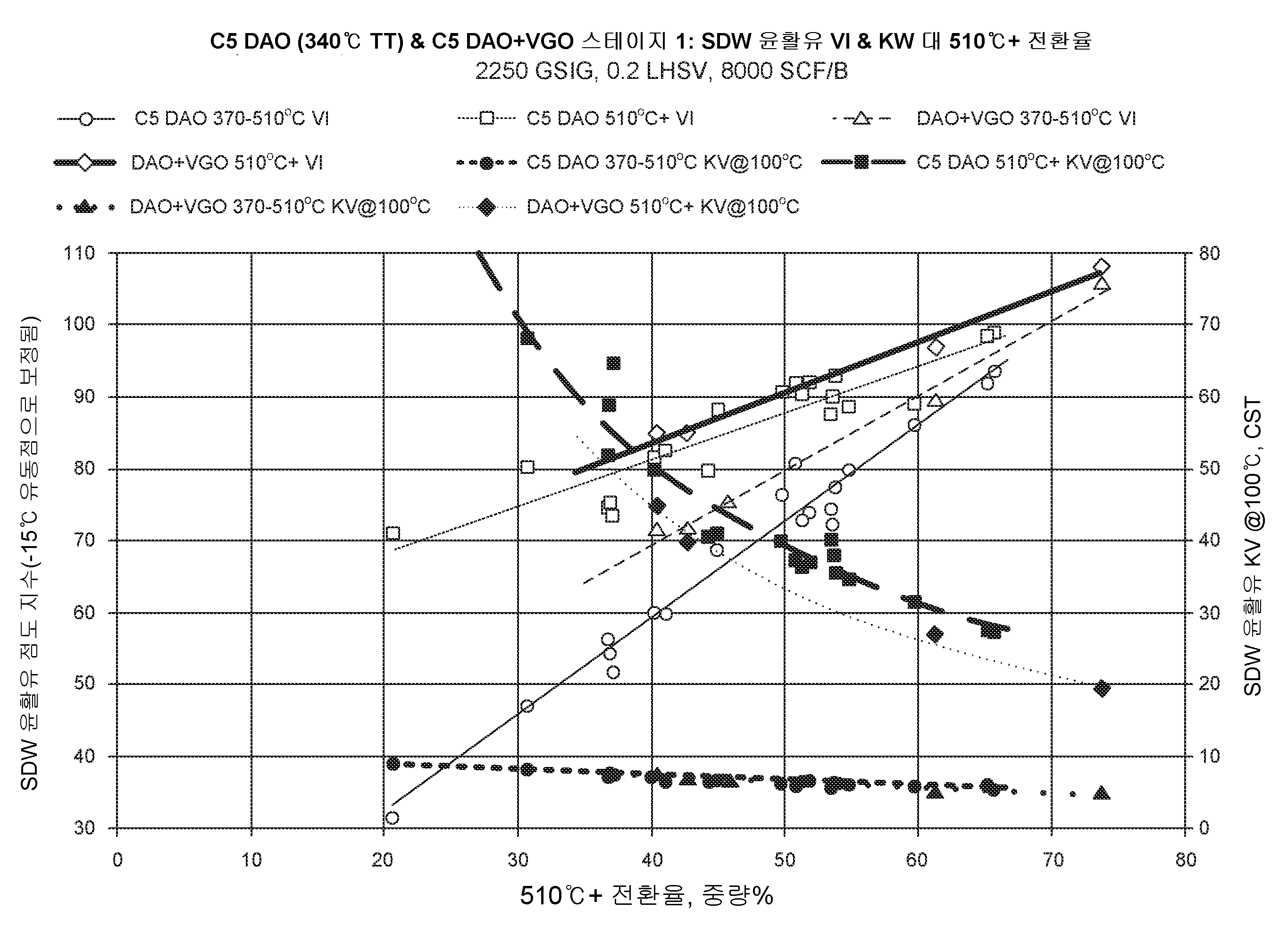
Description
잔유(resid) 분획의 저-가혹도(low severity) 탈아스팔트화에 의해 생성된 탈아스팔트화된 오일로부터 유도된 윤활유 베이스 스톡을 위한 조성물이 제공된다. Compositions for lubricant base stock derived from deasphalted oils produced by low severity deasphalting of resid fractions are provided.
윤활유 베이스 스톡은 원유 또는 원유 분획으로부터 생성될 수 있는 고 부가가치 제품 중 하나이다. 원하는 품질의 윤활유 베이스 스톡을 생성하는 능력은 종종 적합한 공급원료의 이용가능성에 의해 제약을 받는다. 예를 들어, 윤활유 베이스 스톡 생산을 위한 대부분의 통상적인 공정은 중간 내지 저급 수준의 초기 황 함량을 갖는 원유로부터의 진공 가스 오일 분획과 같이 가혹한 조건 하에서 이전에 처리되지 않은 원유 분획으로 시작하는 단계를 포함한다. Lubricant base stock is one of the high value added products that can be generated from crude oil or crude oil fractions. The ability to produce a desired quality lubricant base stock is often limited by the availability of a suitable feedstock. For example, most common processes for the production of lubricant base stocks begin with crude oil fractions that have not been previously treated under harsh conditions, such as vacuum gas oil fractions from crude oil with intermediate to low levels of initial sulfur content .
경우에 따라, 진공 잔유의 프로판 탈아스팔트화에 의해 형성된 탈아스팔트화된 오일이 추가적인 윤활유 베이스 스톡 생산에 사용될 수 있다. 탈아스팔트화된 오일은 잠재적으로 브라이트 스톡과 같이 더 중질의 베이스 스톡의 생산에 적합할 수 있다. 그러나, 윤활유 베이스 스톡 생산에 적합한 공급물을 제조하기 위해 요구되는 프로판 탈아스팔트화의 가혹도는 전형적으로 진공 잔유 공급물에 비하여 단지 약 30 중량%의 탈아스팔트화된 오일의 수율을 초래한다. In some cases, deasphalted oils formed by propane deasphalting of the vacuum residue can be used in the production of additional lubricant base stocks. Deasphalted oils can potentially be suitable for the production of heavier base stocks such as bright stock. However, the severity of propane asphaltization required to produce a feed suitable for lubricant base stock production typically results in a yield of only about 30 weight percent deasphalted oil relative to the vacuum residue feed.
미국 특허 제3,414,506호는 펜탄-알콜-탈아스팔트화된 짧은 잔사를 수첨 처리하여 윤활유를 제조하는 방법에 대해 기재하고 있다. 상기 방법은 펜탄과 같은 알칸과 메탄올 및 이소프로필 알콜과 같은 하나 이상의 단쇄 알콜의 혼합물을 포함하는 탈아스팔트화 용매에 의해 진공 잔유 분획에 대해 탈아스팔트화를 수행하는 것을 포함한다. 이어서, 탈아스팔트화된 오일을 수첨 처리하고, 이어서 용매 추출을 수행하여 윤활유를 형성하기에 충분한 VI 상승을 수행한다.U.S. Patent No. 3,414,506 describes a process for the preparation of lubricating oils by hydrotreating pentane-alcohol-deasphalted short residues. The process comprises deasphalting the vacuum residue fraction by a deasphalting solvent comprising an alkane such as pentane and a mixture of one or more short chain alcohols such as methanol and isopropyl alcohol. The deasphalted oil is then hydrotreated and then solvent extraction is performed to effect a VI rise sufficient to form the lubricating oil.
미국 특허 제7,776,206호에는 브라이트 스톡을 형성하기 위해 잔유 및/또는 탈아스팔트화된 오일을 촉매 처리하는 방법이 기재되어 있다. 탈아스팔트화된 오일과 같은 잔유-유래된 스트림은 황 함량을 1 중량% 미만으로 감소시키고 질소 함량을 0.5 중량% 미만으로 감소시키기 위해 수첨 처리된다. 수첨 처리된 스트림은 이어서 분별되어 1150℉내지 1300℉(620℃ 내지 705℃) 사이의 컷 포인트(cut point)에서 중질 분획과 경질 분획을 형성한다. 상기 경질 분획은 이어서 다양한 방식으로 촉매 처리되어 브라이트 스톡을 형성한다.U.S. Patent No. 7,776,206 describes a method of catalytically treating residual and / or deasphalted oils to form a brightstock. The residue-derived stream, such as deasphalted oil, is hydrotreated to reduce the sulfur content to less than 1 wt% and to reduce the nitrogen content to less than 0.5 wt%. The hydrotreated stream is then fractionated to form a heavy fraction with the heavy fraction at a cut point between 1150 ° F and 1300 ° F (620 ° C to 705 ° C). The hard fraction is then catalytically treated in various ways to form a brightstock.
다양한 양태에서, 윤활유 베이스 스톡 조성물이 제공된다. 상기 조성물은 900℉(482℃) 이상의 T10 증류점, 80 이상의 점도 지수; 90 중량% 이상의 포화물 함량; 300 wppm 미만의 황 함량; 100℃에서 14 cSt 이상의 동점도; 40℃에서 320 cSt 이상의 동점도; 및 조성물의 100개의 탄소 원자 당 1.7개 이상인 말단/펜던트 프로필 기 및 말단/펜던트 에틸 기의 합을 포함할 수 있다. 상기 조성물은 추가적으로 또는 대안적으로 조성물 내 분자 내의 분지화 및/또는 포화 고리의 수와 관련된 하나 이상의 추가적인 조성 특성을 포함할 수 있다.In various embodiments, a lubricant basestock composition is provided. Said composition having a T10 distillation point of at least 900 ((482 캜), a viscosity index of at least 80; A filler content of at least 90% by weight; A sulfur content of less than 300 wppm; A kinematic viscosity of at least 14 cSt at 100 캜; A kinematic viscosity of at least 320 cSt at 40 캜; And a sum of terminal / pendant propyl groups and terminal / pendant ethyl groups of at least 1.7 per 100 carbon atoms of the composition. The composition may additionally or alternatively comprise one or more additional compositional properties related to the number of branching and / or saturated rings in the molecule in the composition.
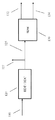
도 1은 탈아스팔트화된 오일을 가공하여 윤활유 베이스 스톡을 형성하기 위한 구성의 일례를 개략적으로 도시한다.
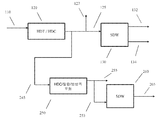
도 2는 탈아스팔트화된 오일을 가공하여 윤활유 베이스 스톡을 형성하기 위한 구성의 또 다른 예를 개략적으로 도시한다.
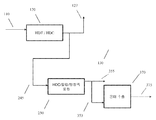
도 3은 탈아스팔트화된 오일을 가공하여 윤활유 베이스 스톡을 형성하기 위한 구성의 또 다른 예를 개략적으로 도시한다.
도 4는 다양한 수준의 수첨 처리 가혹도에서 펜탄 탈아스팔트화된 오일을 처리한 결과를 나타낸다.
도 5는 산성(sour) 수첨 분해와 비-산성(sweet) 수첨분해의 다양한 조합 구성으로 탈아스팔트화된 오일을 처리한 결과를 도시한다.
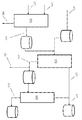
도 6은 탈아스팔트화된 오일을 가공하여 윤활유 베이스 스톡을 형성하기 위한 구성의 일례를 개략적으로 도시한다.
도 7은 다양한 프로판 탈아스팔트화된 공급물 및 기준 베이스 스톡으로부터 제조된 윤활유 베이스 스톡의 특성을 도시한다.
도 8은 다양한 부탄 탈아스팔트화된 공급물로부터 제조된 윤활유 베이스 스톡의 특성을 도시한다.
도 9는 그룹 I 및 그룹 II 브라이트 스톡을 사용하여 형성된 제형화된 윤활유의 특성을 도시한다.
도 10은 그룹 I 및 그룹 II 브라이트 스톡을 사용하여 형성된 제형화된 윤활유의 특성을 도시한다.
도 11은 그룹 I 및 그룹 II 브라이트 스톡을 사용하여 형성된 제형화된 윤활유의 특성을 도시한다.
도 12는 다양한 펜탄 탈아스팔트화된 공급물로부터 제조된 윤활유 베이스 스톡의 특성을 도시한다.
도 13은 다양한 펜탄 탈아스팔트화된 공급물로부터 제조된 윤활유 베이스 스톡의 특성을 도시한다.Figure 1 schematically illustrates an example of a configuration for processing a deasphalted oil to form a lubricant base stock.
Fig. 2 schematically shows another example of the construction for processing a deasphalted oil to form a lubricant base stock.
Figure 3 schematically shows another example of a configuration for processing a deasphalted oil to form a lubricant base stock.
Figure 4 shows the results of treating pentane deasphalted oil at varying degrees of hydrogenation severity.
Figure 5 shows the results of treating deasphalted oils in various combinations of sour hydrolysis and non-acid hydrolysis.
Figure 6 schematically illustrates an example of a configuration for processing a deasphalted oil to form a lubricant base stock.
Figure 7 shows the properties of a lubricant base stock made from various propane asphalted feeds and a reference base stock.
Figure 8 shows the characteristics of a lubricant base stock made from various butane deasphalted feeds.
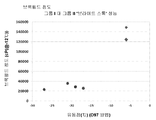
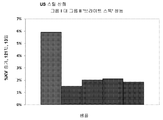
Figure 9 shows the characteristics of a formulated lubricant formed using group I and group II bright stock.
Figure 10 shows the properties of a formulated lubricant formed using group I and group II bright stock.
Figure 11 shows the characteristics of formulated lubricants formed using Group I and Group II Bright Stock.
Figure 12 shows the characteristics of a lubricant base stock made from various pentane deasphalted feeds.
Figure 13 shows the characteristics of a lubricant base stock made from various pentane deasphalted feeds.
본원의 상세한 설명 및 특허청구범위 내의 모든 수치는 지시된 값에 대해 "약" 또는 "대략"에 의해 수정되고, 당업자에 의해 예상되는 실험적 오차 및 변동을 고려한다.All numerical values in the description and claims are to be modified by "about" or "about" the indicated values and take into account the experimental errors and variations expected by those skilled in the art.
개요summary
다양한 양태에서, 저-가혹도 C4+ 탈아스팔트화에 의해 생성된 탈아스팔트화된 오일로부터 그룹 I 및 그룹 II의 브라이트 스톡을 포함하는 그룹 I 및 그룹 II 윤활유 베이스 스톡을 제조하는 방법이 제공된다. 본원에 사용된 저-가혹도 탈아스팔트화는 탈아스팔트화에 대한 공급물에 대해 50 중량% 이상, 또는 55 중량% 이상, 60 중량% 이상, 또는 65 중량% 이상, 또는 70 중량% 이상, 또는 75 중량% 이상의 탈아스팔트화된 오일 수율과 같은 고 수율의 탈아스팔트화된 오일(및/또는 감소된 양의 제거된 아스팔트 또는 암반)을 생성하는 조건 하에서의 탈아스팔트화를 의미한다. 탈아스팔트화된 오일에 대해 용매 추출을 수행하지 않고도 그룹 I 베이스 스톡(브라이트 스톡을 포함함)을 형성할 수 있다. 그룹 II 베이스 스톡(브라이트 스톡을 포함함)은 촉매 공정과 용매 공정의 조합을 사용하여 형성될 수 있다. 저-가혹도 조건에서 형성된 탈아스팔트화된 오일로부터 제조된 통상적인 브라이트 스톡과는 달리, 본원에 기재된 그룹 I 및 그룹 II 브라이트 스톡은 장시간 동안 저장 후 헤이즈가 실질적으로 없어질 수 있다. 이러한 헤이즈 부재 그룹 II 브라이트 스톡은 예상치 못한 조성의 브라이트 스톡에 상응할 수 있다.In various embodiments, a method is provided for preparing Group I and Group II lubricant base stocks comprising Group I and Group II brightstocks from deasphalted oils produced by low-severity C 4+ deasphalting . The low-shear deasphalting used herein may be at least 50 wt%, or at least 55 wt%, at least 60 wt%, or at least 65 wt%, or at least 70 wt%, based on the feed for de- Deasphalting under conditions that produce a high yield of deasphalted oil (and / or a reduced amount of removed asphalt or rock), such as a deasphalted oil yield of at least 75 wt%. Group I base stock (including bright stock) can be formed without solvent extraction for deasphalted oil. Group II base stocks (including brightstocks) can be formed using a combination of catalytic and solvent processes. Unlike conventional brightstocks made from deasphalted oils formed in low-severity conditions, Group I and Group II brightstocks described herein can substantially eliminate haze after storage for extended periods of time. Such haze element group II bright stock may correspond to a brightstock of unexpected composition.
다양한 추가적인 양태에서, 그룹 II 브라이트 스톡을 형성하기 위한 C3 탈아스팔트화된 오일의 촉매 처리 방법이 제공된다. 촉매 처리에 의해 그룹 II 브라이트 스톡을 형성하는 것은 예기치 않은 조성 특성을 갖는 브라이트 스톡을 제공할 수 있다.In various additional embodiments, a method of catalytic treatment of C 3 deasphalted oil to form a Group II brightstock is provided. Formation of a Group II brightstock by catalytic treatment can provide a brightstock with unexpected compositional properties.
통상적으로, 원유는 종종 다양한 비등 범위로 구성되는 것으로 기술된다. 원유 중 낮은 비등 범위의 화합물은 나프타 또는 등유 연료에 상응한다. 중간 비등 범위의 증류물 화합물은 디젤 연료 또는 윤활유 베이스 스톡으로 사용될 수 있다. 임의의 고 비등 범위의 화합물이 원유에 존재하는 경우, 이러한 화합물은 원유에 대해 대기 및/또는 진공 증류를 수행한 후에 남겨진 원유 부분에 상응하는 잔사(residual) 또는 "잔유(resid)" 화합물로 간주된다. Typically, crude oil is often described as being composed of various boiling ranges. Low boiling range compounds in crude oil correspond to naphtha or kerosene fuels. Distillate compounds in the intermediate boiling range can be used as diesel fuel or lubricant base stock. If any high boiling range compounds are present in the crude oil, then these compounds are regarded as residual or "resid" compounds corresponding to the crude oil portion remaining after performing atmospheric and / or vacuum distillation on the crude oil do.
일부 통상적인 제조 공정에서, 잔유 분획은 탈아스팔트화될 수 있고, 탈아스팔트화된 오일은 윤활유 베이스 스톡을 형성하기 위한 공급물의 일부로서 사용된다. 통상의 제조 공정에서, 윤활유 베이스 스톡을 형성하기 위한 공급물로서 사용되는 탈아스팔트화된 오일은 프로판 탈아스팔트화를 사용하여 제조된다. 이러한 프로판 탈아스팔트화는 초기 잔유 분획에 비해 약 40 중량% 이하, 종종 30 중량% 이하의 탈아스팔트화된 오일의 전형적인 수율에 의해 나타나는 바와 같이, "고-가혹도(high severity)" 탈아스팔트화에 상응한다. 전형적인 윤활유 베이스 스톡 생산 공정에서, 탈아스팔트화된 오일은 그후 방향족 함량을 감소시키기 위해 용매 추출될 수 있고, 이어서 용매 탈랍(solvent dewaxing)시켜 베이스 스톡을 형성할 수 있다. 탈아스팔트화된 오일의 낮은 수율은 부분적으로는 시간 경과에 따라 헤이즈를 형성하지 않는 초저-가혹도 탈아스팔트화로부터 윤활유 베이스 스톡을 생산하는 종래 방법의 불능에 기초한다. In some conventional manufacturing processes, the remaining fraction can be de-asphaltated and the de-asphaltated oil is used as part of the feed to form the lubricant base stock. In a typical manufacturing process, deasphalted oils used as feedstock to form a lubricant base stock are made using propane deasphalting. This propane asphaltization is referred to as "high severity" deasphalting, as indicated by typical yields of deasphalted oils of up to about 40 wt%, often up to 30 wt% ≪ / RTI > In a typical lubricant base stock production process, the deasphalted oil may then be solvent extracted to reduce the aromatic content, followed by solvent dewaxing to form the base stock. The low yield of deasphalted oil is based in part on the inability of the conventional process to produce a lubricant base stock from ultra low-dehydration deasphalting that does not form haze over time.
일부 양태들에서, 수첨 처리와 같은 촉매 처리와 용매 탈랍과 같은 용매 처리를 혼합해서 사용하면 탈아스팔트화된 오일로부터 윤활유 베이스 스톡을 생산하는 동시에 장시간 동안 헤이즈를 형성하는 경향이 거의 없거나 전혀 없는 베이스 스톡을 생산할 수 있음을 발견했다. 탈아스팔트화된 오일은 C4 용매, C5 용매, C6+ 용매, 2종 이상의 C4+ 용매들의 혼합물 또는 2종 이상의 C5+ 용매들의 혼합물을 사용하는 탈아스팔트화 공정에 의해 제조될 수 있다. 탈아스팔트화 공정은 또한 T10 증류점(또는 임의적으로 T5 증류점)이 400℃ 이상 또는 510℃ 이상인 진공 잔유 공급물에 대해 50 중량% 이상, 또는 60 중량% 이상, 또는 65 중량% 이상, 또는 70 중량% 이상, 또는 75 중량% 이상의 탈아스팔트화된 오일의 수율을 갖는 공정에 상응할 수 있다. 감소된 헤이즈 형성은 부분적으로는 베이스 스톡에 대한 유동점(pour point)과 운점(cloud point) 간의 감소되거나 최소화된 차등 때문이고/이거나 부분적으로는 -2℃ 이하, 또는 -5℃ 이하의 운점을 갖는 브라이트 스톡을 형성하기 때문인 것으로 여겨진다.In some embodiments, the use of a combination of catalytic treatments such as hydrotreating and solvent treatments such as solvent dewatering can be used to produce lubricant base stocks from deasphalted oils, and at the same time to provide base stocks with little or no tendency to form haze over an extended period of time. Can be produced. The deasphalted oil may be prepared by a deasphalting process using a mixture of C 4 solvent, C 5 solvent, C 6 + solvent, a mixture of two or more C 4+ solvents, or a mixture of two or more C 5+ solvents have. The de-asphaltization process may also be carried out at a temperature of at least 50 wt%, or at least 60 wt%, or at least 65 wt%, or at least 70 wt%, relative to a vacuum residue feed having a T10 distillation point (or optionally a T5 distillation point) By weight, or more, or 75% or more by weight of deasphalted oil. Reduced haze formation is partly due to reduced or minimized differential between pour point and cloud point to base stock and / or has a haze of less than -2 占 폚, or less than -5 占It is believed that this is due to the formation of bright stock.
그룹 I 베이스 스톡의 생산을 위해, 탈아스팔트화된 오일은 생성 베이스 스톡 제품에 대해 원하는 점도 지수 증가를 달성하기에 충분한 조건 하에서 수첨 가공(수첨 처리 및/또는 수첨 분해)될 수 있다. 수첨 처리된 유출물은 윤활유 베이스 스톡 비등 범위 부분으로부터 저 비등 부분을 분리하도록 분별될 수 있다. 그 다음, 윤활유 베이스 스톡 비등 범위 부분은 용매 탈랍되어 탈랍된 유출물을 생성할 수 있다. 탈랍된 유출물은 분리되어 시간이 지남에 따라 헤이즈를 형성하는 감소된 경향(예를 들면, 경향이 없는)을 갖는 복수의 베이스 스톡을 형성할 수 있다. For the production of the Group I base stock, the deasphalted oil may be hydrogenated (hydrotreated and / or hydrocracked) under conditions sufficient to achieve the desired viscosity index increase for the resulting base stock product. The hydrotreated effluent can be separated to separate the low boiling fraction from the lubricant base stock boiling range fraction. The lubricant base stock boiling range portion may then be solvent dewatered to produce a dewatered effluent. The dewatered effluent may be separated to form a plurality of base stocks having a reduced tendency (e. G., No tendency) to form haze over time.
그룹 II 베이스 스톡의 생산을 위해, 일부 양태에서, 탈아스팔트화된 오일은 수첨 가공(수첨 처리 및/또는 수첨 분해)될 수 있으므로 약 700℉+(370℃+) 전환율은 10 중량% 내지 40 중량%이다. 수첨 처리된 유출물은 윤활유 베이스 스톡 비등 범위 부분으로부터 저 비등 부분을 분리하도록 분별될 수 있다. 그 다음, 윤활유 비등 범위 부분은 수첨 분해되고, 탈랍 처리되고, 수첨 마무리되어 촉매적으로 탈랍 처리된 유출물을 생성할 수 있다. 임의적으로 그러나 바람직하게는, 윤활유 비등 범위 부분은 과소 탈랍될 수 있어 유출물의 촉매적으로 탈랍 처리된 중질 부분 또는 잠재적인 브라이트 스톡 부분의 왁스 함량은 6 중량% 이상, 또는 8 중량% 이상, 또는 10 중량% 이상이다. 이러한 과소 탈랍은 또한 무-헤이즈 베이스 스톡을 형성하기 위해 추가로 용매를 업그레이드할 필요가 없는 경질 또는 중질 또는 중질의 중성 윤활유 베이스 스톡을 형성하는 데 적합할 수 있다. 이 논의에서, 중질 부분/잠재적 브라이트 스톡은 대략 탈랍된 유출물의 538℃+ 부분에 상응할 수 있다. 그 다음, 촉매적으로 탈랍 처리된 더 중질의 유출물 부분은 용매 탈랍에 의해 용매 처리되어 용매 탈랍된 유출물을 형성할 수 있다. 용매 탈랍 처리된 유출물은 분리되어 그룹 II 브라이트 스톡의 적어도 일부를 포함하여 시간이 지남에 따라 헤이즈를 형성하는 경향이 감소된(예를 들면, 경향이 없는) 복수의 베이스 스톡을 형성할 수 있다. For production of Group II base stock, in some embodiments deasphalted oil can be hydrotreated (hydrotreated and / or hydrocracked), so the conversion of about 700 ° F + (370 ° C +) is between 10% and 40% %to be. The hydrotreated effluent can be separated to separate the low boiling fraction from the lubricant base stock boiling range fraction. The lubricant boiling range portion can then be hydrocracked, dewaxed, and hydrogenated to produce a catalytically dewatered effluent. Optionally, but preferably, the lubricating oil boiling range portion can be underdrawn so that the wax content of the catalytically dewaxed heavy or potentially bright stock portion of the effluent is greater than or equal to 6 wt%, or greater than or equal to 8 wt%, or greater than or equal to 10 wt% By weight or more. Such underdelivery may also be suitable for forming a light or heavy or heavy neutral lubricant base stock that does not require additional solvent upgrades to form a no-haze base stock. In this discussion, the heavy portion / potential bright stock may correspond to approximately 538 < 0 > C + portion of the dewatered effluent. The heavier fraction of the catalytically dewatered effluent can then be solvent treated by solvent dewatering to form a solvent dewatered effluent. The solvent-dewatered effluent may be separated to form a plurality of reduced (e.g., unfavorable) base stocks that tend to form haze over time, including at least a portion of the Group II bright stock .
그룹 II 베이스 스톡의 생산을 위해, 일부 양태에서, 탈아스팔트화된 오일은 수첨 가공(수첨 처리 및/또는 수첨 분해)될 수 있으므로 약 370℃+ 전환율은 40 중량% 이상 또는 50 중량% 이상이다. 수첨 처리된 유출물은 윤활유 베이스 스톡 비등 범위 부분으로부터 저 비등 부분을 분리하도록 분별될 수 있다. 그 다음, 윤활유 베이스 스톡 비등 범위 부분은 수첨 분해되고, 탈랍 처리되고, 수첨 마무리되어 촉매적으로 탈랍 처리된 유출물을 생성할 수 있다. 촉매적으로 탈랍 처리된 유출물은 이어서 용매 추출되어 라피네이트를 형성할 수 있다. 라피네이트는 분리되어 그룹 II 브라이트 스톡의 적어도 일부를 포함하여 시간이 지남에 따라 헤이즈를 형성하는 경향이 감소된(예를 들면, 경향이 없는) 복수의 베이스 스톡을 형성할 수 있다. 또 다른 양태에서, 그룹 II 브라이트 스톡 생성물은 촉매적 탈랍 이후 추가적인 용매 처리를 수행하지 않고 형성될 수 있다.For the production of Group II base stocks, in some embodiments deasphalted oil can be hydrotreated (hydrotreated and / or hydrocracked) at about 370 DEG C + conversion of at least 40 wt% or at least 50 wt%. The hydrotreated effluent can be separated to separate the low boiling fraction from the lubricant base stock boiling range fraction. The lubricant base stock boiling range portion can then be hydrocracked, dewaxed, and hydrogenated to produce a catalytically effluent effluent. The catalytically effluent effluent may then be solvent extracted to form a raffinate. The raffinate may be separated to form a plurality of base stocks that include at least a portion of the Group II bright stock and that tend to have a reduced (e.g., non-trending) tendency to form haze over time. In another embodiment, the Group II brightstock product can be formed without further solvent treatment following catalytic dewatering.
다른 양태에서, C3, C4, C5 및/또는 C5+ 탈아스팔트화된 오일로부터 예상치 못한 조성 특성을 갖는 그룹 II 브라이트 스톡을 제조하기 위해 촉매적 처리가 사용될 수 있음이 밝혀졌다. 탈아스팔트화된 오일은 수첨 처리되어 헤테로원자(예를 들어, 황 및 질소) 함량을 줄인 후 비-산성 조건하에서 촉매적 탈랍을 수행할 수 있다. 임의적으로, 수첨 분해는 산성 수첨 처리 단계의 일부 및/또는 비-산성 탈랍 단계의 일부로서 포함될 수 있다. In another embodiment, it has been found that catalytic treatments can be used to produce Group II brightstocks having unexpected compositional properties from C 3 , C 4 , C 5 and / or C 5 + deasphalted oils. The deasphalted oil may be hydrogenated to reduce the content of heteroatoms (e. G., Sulfur and nitrogen) and then perform catalytic dewaxing under non-acidic conditions. Optionally, hydrocracking may be included as part of the acidic hydrotreating step and / or as part of the non-acidic dewatering step.
다양한 양태에서, 촉매 및/또는 용매 처리의 다양한 조합이 탈아스팔트화된 오일로부터 그룹 II 브라이트 스톡을 포함하는 윤활유 베이스 스톡을 형성하는 데 사용될 수 있다. 이러한 조합은 다음을 포함하지만 이에 국한되지 않는다.In various embodiments, various combinations of catalyst and / or solvent treatment may be used to form a lubricant base stock comprising Group II brightstock from deasphalted oils. Such combinations include, but are not limited to:
a) 산성 조건(즉, 적어도 500 wppm의 황 함량) 하에서 탈아스팔트화된 오일의 수첨 가공; 적어도 윤활유 비등 범위 분획을 형성하기 위한 상기 수첨 가공된 유출물의 분리; 및 상기 윤활유 비등 범위 분획의 용매 탈랍 단계. 일부 양태에서, 탈아스팔트화된 오일의 수첨 가공은 수첨 처리, 수첨 분해 또는 이들의 조합에 상응할 수 있다.a) hydrogenation of deasphalted oil under acidic conditions (i. e. at least 500 wppm sulfur content); Separation of said hydrogenated effluent to form at least a lubricating oil boiling fraction; And removing the solvent of the lubricating oil boiling range fraction. In some embodiments, the hydrogenation of the deasphalted oil may correspond to hydrotreating, hydrocracking, or a combination thereof.
b) 산성 조건(즉, 500 wppm 이상의 황 함량) 하에서 탈아스팔트화된 오일의 수첨 가공; 적어도 윤활유 비등 범위 분획을 형성하기 위한 상기 수첨 가공된 유출물의 분리; 및 상기 윤활유 비등 범위 분획의 비-산성 조건(즉, 500 wppm 이하의 황 함량) 하에서의 촉매적 탈랍 단계. 촉매적 탈랍은 임의적으로는 8.4 옹스트롬 초과의 기공 크기를 갖는 탈랍 촉매를 사용하는 촉매적 탈랍에 상응할 수 있다. 임의적으로, 비-산성 가공 조건은 수첨 분해, 귀금속 수첨 처리 및/또는 수첨 마무리 공정을 추가로 포함할 수 있다. 임의적인 수첨 분해, 귀금속 수첨 처리 및/또는 수첨 마무리 공정은 촉매적 탈랍 이전 및/또는 이후에 발생할 수 있다. 예를 들면, 비-산성 가공 조건 하에서의 촉매 처리의 순서는 귀금속 수첨 처리에 이어서 수첨 분해 및 촉매적 탈랍화일 수 있다.b) hydrogenation of the deasphalted oil under acidic conditions (i.e., a sulfur content of at least 500 wppm); Separation of said hydrogenated effluent to form at least a lubricating oil boiling fraction; And a catalytic dewaxing step under non-acidic conditions of the lubricating oil boiling range fraction (i.e., a sulfur content of less than or equal to 500 wppm). The catalytic dewatering may optionally correspond to a catalytic dewaxing using a dewaxing catalyst having a pore size of greater than 8.4 Angstroms. Optionally, the non-acidic processing conditions may further include hydrocracking, noble metal hydrotreating, and / or hydrogenation finishing. Optional hydrocracking, noble metal hydrotreating and / or hydrogenation finishing may occur before and / or after catalytic dewaxing. For example, the order of catalytic treatment under non-acidic processing conditions may be hydrogenolysis followed by noble metal hydrolysis and catalytic dewaxing.
c) 상기 b)의 공정 후, 촉매적으로 탈랍 처리된 유출물의 적어도 일부를 추가로 분리하는 단계. 추가 분리는 용매 탈랍, 용매 추출(예를 들어 푸르푸랄 또는 n-메틸피롤리돈에 의한 용매 추출), 물리적 분리 예컨대 초원심 분리, 또는 이들의 조합에 상응할 수 있다. c) further separating at least a portion of the catalytically dewatered effluent after the process of b). Additional separation may correspond to solvent removal, solvent extraction (e.g., solvent extraction with furfural or n-methyl pyrrolidone), physical separation such as ultracentrifugation, or a combination thereof.
d) 상기 a)의 공정 후, 용매 탈랍된 생성물의 적어도 일부의 촉매적 탈랍(비-산성 조건) 단계. 임의적으로, 상기 비-산성 가공 조건은 수첨 처리(예를 들어, 귀금속 수첨 처리), 수첨 분해 및/또는 수첨 마무리 공정을 추가로 포함할 수 있다. 추가적인 비-산성 수첨 가공 공정은 촉매적 탈랍 이전 및/또는 이후에 수행될 수 있다.d) catalytic dewatering of at least a portion of the solvent-dewatered product (non-acidic conditions) after the process of a). Optionally, the non-acidic processing conditions may further include a hydrotreating treatment (e.g., precious metal hydrotreating), a hydrocracking and / or a hydrogenation finishing process. Additional non-acidic hydrogenation processes may be performed before and / or after the catalytic dewatering.
그룹 I 베이스 스톡 또는 베이스 오일은 90 중량% 미만의 포화 분자 및/또는 0.03 중량% 이상의 황 함량을 갖는 베이스 스톡으로 정의된다. 그룹 I 베이스 스톡은 또한 점도 지수(VI)가 80 이상 120 미만이다. 그룹 II 베이스 스톡 또는 베이스 오일은 90 중량% 이상의 포화 분자 및 0.03 중량% 미만의 황 함량을 함유한다. 그룹 II 베이스 스톡은 또한 점도 지수가 80 이상 120 미만이다. 그룹 III 베이스 스톡 또는 베이스 오일은 90 중량% 이상의 포화 분자 및 0.03 중량% 미만의 황 함량을 함유하며, 120 이상의 점도 지수를 갖는다. The Group I base stock or base oil is defined as a base stock having a saturated content of less than 90 wt% and / or a sulfur content of 0.03 wt% or more. The Group I base stock also has a viscosity index (VI) of 80 or more and less than 120. The Group II base stock or base oil contains at least 90% by weight saturated molecules and a sulfur content of less than 0.03% by weight. Group II base stocks also have a viscosity index of greater than 80 and less than 120. Group III base stocks or base oils contain 90% or more saturated molecules and a sulfur content of less than 0.03% by weight, and have a viscosity index of 120 or greater.
몇몇 양태에서, 본원에 기술된 그룹 Ⅲ 베이스 스톡은 그룹 Ⅲ 베이스 스톡에 상응할 수 있다. 일반적으로 받아들여지는 정의를 사용할 수는 없지만, 그룹 III+ 베이스 스톡은 그룹 III 베이스 스톡에 대한 요건을 충족하는 베이스 스톡에 상응하는 동시에 그룹 III 사양에 비해 상대적으로 향상된 하나 이상의 특성을 가질 수 있다. 상기 향상된 특성은 예를 들어 130 이상, 또는 135 이상, 또는 140 이상의 VI를 갖는 그룹 III 베이스 스톡과 같이 120의 요건보다 실질적으로 큰 점도 지수를 갖는 것에 상응할 수 있다. 유사하게, 몇몇 양태에서, 본원에 기술된 그룹 II 베이스 스톡은 그룹 II+ 베이스 스톡에 상응할 수 있다. 일반적으로 받아들여지는 정의를 사용할 수는 없지만, 그룹 II+ 베이스 스톡은 그룹 II 베이스 스톡에 대한 요건을 충족하는 베이스 스톡에 상응하는 동시에 그룹 II 사양에 비해 상대적으로 향상된 하나 이상의 특성을 가질 수 있다. 상기 향상된 특성은 예를 들어 103 이상, 또는 108 이상, 또는 113 이상의 VI를 갖는 그룹 II 베이스 스톡과 같이 80의 사양 요건보다 실질적으로 큰 점도 지수를 갖는 것에 상응할 수 있다. In some embodiments, the Group III basestock described herein may correspond to a Group III basestock. Group III + base stocks may have one or more properties that correspond to base stocks that meet the requirements for Group III base stocks and that are relatively improved relative to the Group III specifications, although generally accepted definitions are not available. The improved properties may correspond to having a viscosity index substantially greater than the requirement of 120, such as a Group III base stock having a VI of at least 130, or at least 135, or at least 140. Similarly, in some embodiments, the Group II base stock described herein may correspond to Group II + base stock. Group II + base stocks may have one or more properties that correspond to base stocks that meet the requirements for group II base stock and that are relatively improved relative to the Group II specification, although generally accepted definitions are not available. The improved properties may correspond to having a viscosity index substantially greater than the specification requirement of 80, such as a Group II base stock having a VI of greater than or equal to 103, or greater than or equal to 108, or greater than or equal to 113.
하기 논의에서, 스테이지는 단일 반응기 또는 복수의 반응기에 상응할 수 있다. 임의적으로, 하나 이상의 공정을 수행하기 위해 복수의 병렬 반응기가 사용되거나, 스테이지의 모든 공정에 대해 복수의 병렬 반응기가 사용될 수 있다. 각각의 스테이지 및/또는 반응기는 수첨 가공 촉매를 함유하는 하나 이상의 촉매 베드(bed)를 포함할 수 있다. 하기 논의에서 촉매의 "베드"는 부분적인 물리적 촉매 베드를 의미할 수 있음에 유념한다. 예를 들어, 반응기 내의 촉매 베드는 수첨 분해 촉매로 부분적으로 충전되고 탈랍 촉매로 부분적으로 충전될 수 있다. 설명의 편의상, 2개의 촉매가 단일 촉매 베드에서 함께 적층될 수 있음에도 불구하고, 수첨 분해 촉매 및 탈랍 촉매가 각각 개념적으로는 개별 촉매 베드로 지칭될 수 있다. In the following discussion, the stage may correspond to a single reactor or a plurality of reactors. Optionally, a plurality of parallel reactors may be used to perform one or more processes, or a plurality of parallel reactors may be used for all processes of the stage. Each stage and / or reactor may comprise one or more catalyst beds containing hydrotreating catalysts. It is noted that in the following discussion the "bed" of the catalyst may mean a partial physical catalyst bed. For example, the catalyst bed in the reactor may be partially filled with a hydrocracking catalyst and partially filled with a dewaxing catalyst. For convenience of explanation, although the two catalysts can be stacked together in a single catalyst bed, the hydrocracking catalyst and the dewaxing catalyst, respectively, can conceptually be referred to as individual catalyst beds.
이러한 논의에서, 다양한 유형의 공급물 또는 유출물의 수첨 가공를 위한 조건이 제공될 수 있다. 수첨 가공의 예로는 수첨 처리, 수첨 분해, 촉매적 탈랍 및 수첨 마무리/방향족 포화 중 하나 이상을 들 수 있지만, 이에 한정되는 것은 아니다. 이러한 수첨 가공 조건은 하나 이상의 수첨 가공 조건을 제어하기 위해 복수의 제어기와 같은 하나 이상의 제어기를 사용함으로써 조건(예를 들어, 온도, 압력, LHSV, 처리 가스 속도)에 대해 원하는 값을 갖도록 제어될 수 있다. 일부 양태에서, 주어진 유형의 수첨 가공에 대해, 적어도 하나의 제어기가 각 유형의 수첨 가공 조건과 관련될 수 있다. 일부 양태에서, 하나 이상의 수첨 가공 조건은 관련 제어기에 의해 제어될 수 있다. 제어기에 의해 제어될 수 있는 구조물의 예는 유속, 압력 또는 이들의 조합을 제어하는 밸브; 온도를 제어하는 열교환기 및/또는 히터; 및 하나 이상의 유량계 및 적어도 2개의 흐름의 상대적 유속을 제어하는 하나 이상의 관련 밸브를 포함할 수 있지만 이들에 한정되지 않는다. 이러한 제어기는 임의적으로 적어도 프로세서, 제어 변수(예를 들어, 온도, 압력, 유속)의 값을 검출하는 검출기, 및 조작 변수의 값을 제어하기 위한(예를 들어, 밸브의 위치를 변경하거나, 히터의 듀티 사이클 및/또는 온도를 증가시키거나 감소시키기 위한) 프로세서 출력을 포함하는 제어기 피드백 루프를 포함할 수 있다. 임의적으로, 주어진 유형의 수첨 가공에 대한 적어도 하나의 수첨 가공 조건은 관련 제어기를 갖지 않을 수 있다. In this discussion, conditions for hydrotreating various types of feeds or effluents can be provided. Examples of hydrotreating include, but are not limited to, one or more of hydrotreating, hydrocracking, catalytic dewaxing and hydrofinishing / aromatic saturation. Such hydrotreating conditions can be controlled to have desired values for conditions (e.g., temperature, pressure, LHSV, process gas velocity) by using one or more controllers, such as a plurality of controllers, to control one or more hydrotreating conditions have. In some embodiments, for a given type of hydroentangling, at least one controller may be associated with each type of hydroentangling condition. In some embodiments, one or more hydrogen processing conditions may be controlled by an associated controller. Examples of structures that can be controlled by the controller include valves controlling the flow rate, pressure or a combination thereof; Heat exchangers and / or heaters for controlling the temperature; And one or more associated valves that control the relative flow rate of the at least two flow and at least two flow meters. The controller may optionally include at least a processor, a detector for detecting a value of a control variable (e.g., temperature, pressure, flow rate), and a controller for controlling the value of the manipulated variable (e.g., (E.g., to increase or decrease the duty cycle and / or temperature of the controller). Optionally, at least one hydrotreating condition for hydrotreating of a given type may not have an associated controller.
이러한 논의에서, 달리 명시되지 않는 한, 윤활유 비등 범위 분획은 초기 비등점 또는 대안적으로 적어도 약 370℃(약 700℉)의 T5 비등점을 갖는 분획에 상응한다. 디젤 생성물 분획과 같은 증류물 연료 비등 범위 분획은 약 193℃(375℉) 내지 약 370℃(약 700℉)의 비등 범위를 갖는 분획에 상응한다. 따라서, 증류물 연료 비등 범위 분획(예를 들어 증류물 연료 생성물 분획)은 적어도 약 193℃의 초기 비등점(또는 대안적으로 T5 비등점) 및 약 370℃이하의 최종 비등점(또는 대안적으로 T95 비등점)을 가질 수 있다. 나프타 비등 범위 분획은 약 36℃(122℉) 내지 약 193℃(375℉) 내지 약 370℃(700℉)의 비등 범위를 갖는 분획에 상응한다. 따라서, 나프타 연료 생성물 분획은 적어도 약 36℃의 초기 비등점(또는 대안적으로 T5 비등점) 및 약 193℃ 이하의 최종 비등점(또는 대안적으로 T95 비등점)을 가질 수 있다. 36℃는 C5 알칸의 다양한 이성질체에 대한 비등점과 대략적으로 일치한다는 것을 알 수 있다. 연료 비등 범위 분획은 증류물 연료 비등 범위 분획, 나프타 비등 범위 분획, 또는 증류물 연료 비등 범위 및 나프타 비등 범위 성분 모두를 포함하는 분획에 상응할 수 있다. 경질 엔드(end)는 다양한 C1-C4 화합물을 포함하여 약 36℃ 미만의 비등점을 갖는 생성물로 정의된다. 공급물 또는 생성물 분획의 비등점 또는 비등 범위를 결정할 때, ASTM D2887, D2892 및/또는 D86에 설명된 절차와 같은 적절한 ASTM 시험 방법을 사용할 수 있다. 바람직하게는, 샘플이 ASTM D2887에 기초한 특성화에 적합하지 않은 경우, ASTM D2887을 사용해야 한다. 예를 들어, 크로마토그래피 컬럼에서 완전히 용리되지 않는 샘플의 경우, ASTM D7169를 사용할 수 있다.In this discussion, unless otherwise specified, the lubricant boiling range fraction corresponds to an initial boiling point or alternatively a fraction having a T5 boiling point of at least about 370 ° C (about 700 ° F). Distillate fuel boiling range fractions such as diesel product fractions correspond to fractions having a boiling range of about 193 ° C (375 ° F) to about 370 ° C (about 700 ° F). Thus, the distillate fuel boiling fraction (e.g., distillate fuel product fraction) has an initial boiling point (or alternatively a T5 boiling point) of at least about 193 ° C and a final boiling point (or alternatively a T95 boiling point) Lt; / RTI > The naphtha boiling range fraction corresponds to fractions having a boiling range of about 36 ° C (122 ° F) to about 193 ° C (375 ° F) to about 370 ° C (700 ° F). Thus, the naphtha fuel product fraction may have an initial boiling point (or alternatively a T5 boiling point) of at least about 36 ° C and a final boiling point (or alternatively a T95 boiling point) of about 193 ° C or less. It can be seen that 36 [deg.] C approximately coincides with the boiling point for the various isomers of the C 5 alkane. Fuel boiling range fractions can correspond to fractions including distillate fuel boiling fraction, naphtha boiling fraction, or distillate fuel boiling range and naphtha boiling range component. The rigid end is defined as a product having a boiling point of less than about 36 캜 including various C 1 -C 4 compounds. When determining the boiling point or boiling range of the feed or product fraction, a suitable ASTM test method such as the procedures described in ASTM D2887, D2892 and / or D86 may be used. Preferably, if the sample is not suitable for characterization based on ASTM D2887, ASTM D2887 should be used. For example, for samples that are not fully eluted in the chromatography column, ASTM D7169 can be used.
공급원료Feedstock
다양한 양태에서, 본원에 기술된 공정을 위한 공급원료의 적어도 일부는 진공 잔유 분획 또는 다른 유형의 950℉+(510℃+) 또는 1000℉+(538℃+) 분획에 상응할 수 있다. 950℉+(510℃+) 또는 1000℉+(538℃+) 분획을 형성하는 방법의 또 다른 예는 고온 플래시 분리를 수행하는 것이다. 고온 플래시에서 형성된 950℉+(510℃+) 또는 1000℉+(538℃+) 분획은 진공 잔유와 유사한 방식으로 처리될 수 있다.In various embodiments, at least a portion of the feedstock for the process described herein may correspond to a vacuum residue fraction or other type of 950 < 0 > F + (510 < 0 > C +) or 1000 & Another example of a method of forming a 950 F + (510 C +) or 1000 F + (538 C +) fraction is to perform a hot flash separation. The 950 F + (510 C +) or 1000 F + (538 C +) fraction formed in the high temperature flash can be processed in a similar manner to the vacuum residue.
다른 공정(예를 들어, 플래시 분획화 저부 또는 역청 분획)에 의해 형성된 진공 잔유 분획 또는 950℉+(510℃+) 분획은 저-가혹도에서 탈아스팔트화되어 탈 아스팔트화된 오일을 형성할 수 있다. 임의적으로, 공급원료는 또한 진공 가스 오일과 같은 윤활유 베이스 스톡 생산을 위한 통상적인 공급물의 일부를 포함할 수 있다.Vacuum residue fractions or 950 ° F + (510 ° C +) fractions formed by other processes (eg, flash fractionation bottoms or bituminous fractions) can deasphalted at low-severity to form deasphalted oils have. Optionally, the feedstock may also comprise a portion of a conventional feedstock for producing a lubricant base stock such as a vacuum gas oil.
진공 잔유(또는 다른 510℃+) 분획은 적어도 약 900℉(482℃) 이상, 950℉(510℃) 이상 또는 1000℉(538℃) 이상의 T5 증류점(크로마토그래피 시스템에서 완전히 용리되지 않을 경우, ASTM D2892 또는 ASTM D7169)을 갖는 분획에 상응할 수 있다. 대안적으로, 진공 잔유 분획은 약 900℉(482℃) 이상, 950℉(510℃) 이상 또는 1000℉(538℃) 이상의 T10 증류점(ASTM D2892/D7169)에 기초한 것을 특징으로 할 수 있다. The vacuum residue (or other 510 ° C +) fraction should be at least about 900 ° F (482 ° C), at least 950 ° F (510 ° C) or at least 1000 ° F (538 ° C) T5 distillation point (if not fully eluted in the chromatographic system, ASTM D2892 or ASTM D7169). Alternatively, the vacuum residue fraction may be characterized by a T10 distillation point (ASTM D2892 / D7169) above about 900 ((482 캜), above 950 ((510 캜) or above 1000 ((538 캜).
잔유(또는 다른 510℃+) 분획은 금속이 많을 수 있다. 예를 들어, 잔유 분획은 전체적으로 니켈, 바나듐 및 철 함량이 높을 수 있다. 일 양태에서, 잔유 분획은 니켈, 바나듐 및 철의 총 원소 기준으로 잔유 그램 당 0.00005 그램 이상의 Ni/V/Fe(50 wppm) 또는 0.0002 그램 이상의 Ni/V/Fe(200 wppm)을 함유할 수 있다. 다른 양태에서, 중질 오일은 500 wppm 이상 예를 들어 최대 1000 wppm 또는 그 이상의 철, 바나듐 및 철을 함유할 수 있다.Residual (or other 510 ° C +) fractions may be metal rich. For example, the residual fraction may have a high nickel, vanadium and iron content as a whole. In one embodiment, the residual fraction may contain greater than 0.00005 grams Ni / V / Fe (50 wppm) or greater than 0.0002 grams Ni / V / Fe (200 wppm) per gram of residue based on total elements of nickel, vanadium and iron . In another embodiment, the heavy oil may contain greater than 500 wppm, for example up to 1000 wppm or more of iron, vanadium and iron.
질소 및 황과 같은 오염 물질은 전형적으로 잔유(또는 다른 510℃+) 분획에서 발견되며, 종종 유기-결합 형태로 발견된다. 질소 함량은 잔유 분획의 총 중량을 기준으로 약 50 wppm 내지 약 10,000 wppm의 원소 질소 또는 그 이상의 범위일 수 있다. 황 함량은 잔유 분량의 총 중량을 기준으로 500 wppm 내지 100,000 wppm, 또는 1000 wppm 내지 50,000 wppm, 또는 1000 wppm 내지 30,000 wppm의 원소 황의 범위일 수 있다.Contaminants such as nitrogen and sulfur are typically found in residual (or other 510 ° C +) fractions and are often found in organic-bonded form. The nitrogen content may range from about 50 wppm to about 10,000 wppm elemental nitrogen or higher based on the total weight of the remaining fraction. The sulfur content may range from 500 wppm to 100,000 wppm, or from 1000 wppm to 50,000 wppm, or from 1000 wppm to 30,000 wppm, elemental sulfur, based on the total weight of the residue.
잔유(또는 다른 510℃+)를 특성화하는 또 다른 방법은 공급원료의 콘라드손(Conradson) 탄소 잔사(CCR)에 기초한다. 잔유 분획의 콘라드손 탄소 잔사는 약 5 중량% 이상 예컨대 약 10 중량% 이상 또는 약 20 중량% 이상일 수 있다. 추가적으로 또는 대안적으로, 잔유 분획의 콘라드손 탄소 잔사는 약 50 중량% 이하 예컨대 약 40 중량% 이하 또는 약 30 중량% 이하일 수 있다.Another way to characterize the resid (or other 510 ° C +) is based on the Conradson carbon residue (CCR) of the feedstock. The condened carbon residue of the remaining fraction may be at least about 5 weight percent, such as at least about 10 weight percent, or at least about 20 weight percent. Additionally or alternatively, the condened carbon residue of the remainder fraction may be up to about 50% by weight, such as up to about 40% by weight, or up to about 30% by weight.
몇몇 양태에서, 진공 가스 오일 분획은 탈아스팔트화된 오일과 함께 처리될 수 있다. 진공 가스 오일은 20 (중량)부의 탈아스팔트화된 오일 대 1 중량부의 진공 가스 오일(즉, 20:1) 내지 1 중량부의 탈아스팔트화된 오일 대 1 중량부의 진공 가스 오일에 이르는 다양한 양으로 탈아스팔트화된 오일과 조합될 수 있다. 일부 양태에서, 탈아스팔트화된 오일 대 진공 가스 오일의 비는 중량비로 적어도 1:1, 또는 적어도 1.5:1, 또는 적어도 2:1일 수 있다. 전형적인 (진공) 가스 오일 분획은 T5 증류점 내지 T95 증류점이 예를 들어 650℉(343℃) 내지 1050℉(566℃) 또는 650℉(343℃) 내지 1000℉(338℃), 또는 650℉(343℃) 내지 950℉(510℃), 또는 650℉(343℃) 내지 900℉(482℃), 또는 약 700℉(370℃) 내지 1050℉(566℃), 또는약 700℉(370℃) 내지 1000℉(538℃), 또는 약 700℉(370℃) 내지 950℉(510℃), 또는 약 700℉(370℃) 내지 900℉(482℃), 또는 750℉(399℃) 내지 1050℉(566℃), 또는 750℉(399℃) 내지 1000℉(538℃), 또는 750℉(399℃) 내지 950℉(510℃), 또는 750℉(399℃) 내지 900℉(482℃)인 분획을 포함할 수 있다. 예를 들어, 적절한 진공 가스 오일 분획은 343℃ 이상의 T5 증류점 및 566℃ 이하의 T95 증류점을 가질 수 있고; 또는 343℃ 이상의 T10 증류점 및 566℃ 이하의 T90 증류점; 또는 370℃ 이상의 T5 증류점 및 566℃ 이하의 T95 증류점; 또는 343℃ 이상의 T5 증류점 및 538℃ 이하의 T95 증류점을 가질 수 있다.In some embodiments, the vacuum gas oil fraction can be treated with deasphalted oil. Vacuum gas oils are degassed in various amounts ranging from 20 parts by weight deasphalted oil to 1 part by weight vacuum gas oil (i.e., 20: 1) to 1 part deasphalted oil to 1 part by weight vacuum gas oil It can be combined with asphaltized oil. In some embodiments, the ratio of deasphalted oil to vacuum gas oil may be at least 1: 1, or at least 1.5: 1, or at least 2: 1 by weight. Typical (vacuum) gas oil fractions have a T5 distillation point to a T95 distillation point at, for example, 650 ° F (343 ° C) to 1050 ° F (566 ° C) or 650 ° F (343 ° C) to 1000 ° F (338 ° C) 340 C to 950 F or 650 to 349 C to 900 F or about 700 F to 370 C to 1050 F or 568 C, To about 1000 F (538 C), or from about 700 F to about 950 F, or from about 700 F to about 900 F, or from 750 F to 390 C to 1050 F (566 占 폚) or 750 占 ((399 占 폚) to 1000 占 ((538 占 폚), or 750 占 ((399 占 폚) to 950 占 ((510 占 폚), or 750 占 ( Fractions thereof. For example, a suitable vacuum gas oil fraction may have a T5 distillation point of at least 343 DEG C and a T95 distillation point of at most 566 DEG C; Or a T10 distillation point of at least 343 DEG C and a T90 distillation point of not more than 566 DEG C; Or a T5 distillation point of not less than 370 DEG C and a T95 distillation point of not more than 566 DEG C; Or a T5 distillation point of 343 DEG C or higher and a T95 distillation point of 538 DEG C or lower.
용매 탈아스팔트화Solvent deasphalting
용매 탈아스팔트화는 용매 추출 공정이다. 일부 양태에서, 본원에 기재된 방법에 적합한 용매는 분자 당 4 내지 7개의 탄소를 함유하는 알칸 또는 다른 탄화수소(예컨대 알켄)를 포함한다. 적합한 용매의 예는 n-부탄, 이소부탄, n-펜탄, C4+ 알칸, C5+ 알칸, C4+ 탄화수소 및 C5+ 탄화수소를 포함한다. 다른 양태에서, 적합한 용매는 C3 탄화수소 예컨대 프로판을 포함할 수 있다. 이러한 다른 양태에서, 적합한 용매의 예는 프로판, n-부탄, 이소부탄, n-펜탄, C3+ 알칸, C4+ 알칸, C5+ 알칸, C3+ 탄화수소, C4+ 탄화수소 및 C5+ 탄화수소를 포함한다.Solvent deasphalting is a solvent extraction process. In some embodiments, solvents suitable for the processes described herein include alkanes or other hydrocarbons (such as alkenes) containing from 4 to 7 carbons per molecule. Examples of suitable solvents include n-butane, isobutane, n-pentane, C 4+ alkanes, C 5+ alkanes, C 4+ hydrocarbons and C 5+ hydrocarbons. In another embodiment, suitable solvents may include C 3 hydrocarbons such as propane. In this aspect, examples of suitable solvents are propane, n- butane, isobutane, n- pentane, C 3+ alkanes, C 4+ alkanes, C 5+ alkane, C 3+ hydrocarbon, C 4+ hydrocarbons, and C 5 + Hydrocarbons.
이러한 논의에서, Cn(탄화수소)을 포함하는 용매는 n 개의 탄소 원자를 갖는 80 중량% 이상의 알칸(탄화수소), 또는 85 중량% 이상, 또는 90 중량% 이상, 또는 95 중량% 이상, 또는 98 중량% 이상으로 구성된 용매로 정의된다. 유사하게, Cn+(탄화수소)를 포함하는 용매는 탄소수가 n 개 이상인 80 중량% 이상, 또는 85 중량% 이상, 또는 90 중량% 이상, 또는 95 중량% 이상, 또는 98 중량% 이상의 알칸(탄화수소)으로 구성된 용매로 정의된다.In this discussion, the solvent comprising C n (hydrocarbon) comprises at least 80 wt% alkane (hydrocarbon), or at least 85 wt%, or at least 90 wt%, or at least 95 wt% % ≪ / RTI > Similarly, a solvent comprising C n + (hydrocarbon) may be an alkane (hydrocarbon) having at least 80 carbon atoms, or at least 85 wt%, or at least 90 wt%, or at least 95 wt%, or at least 98 wt% ≪ / RTI >
이러한 논의에서, Cn 알칸(탄화수소)을 포함하는 용매는 용매가 n 개(예를 들어, n = 3, 4, 5, 6, 7)의 탄소 원자를 함유하는 단일 알칸(탄화수소)에 상응하는 경우를 포함할 뿐만 아니라 용매가 n 개의 탄소 원자를 함유하는 알칸(탄화수소)의 혼합물로 구성되는 경우를 포함하도록 정의된다. 유사하게, Cn+ 알칸(탄화수소)을 포함하는 용매는 용매가 n 개 이상(예를 들어, n = 3, 4, 5, 6, 7)의 탄소 원자를 함유하는 단일 알칸(탄화수소)에 상응하는 경우를 포함할 뿐만 아니라 용매가 n 개 이상의 탄소 원자를 함유하는 알칸(탄화수소)의 혼합물에 상응하는 경우를 포함하도록 정의된다. 따라서, C4+ 알칸을 포함하는 용매는 n-부탄을 포함하는 용매에 상응하거나; n-부탄 및 이소부탄을 포함하는 용매; 하나 이상의 부탄 이성질체와 하나 이상의 펜탄 이성질체의 혼합물에 상응하는 용매; 또는 4개 이상의 탄소 원자를 함유하는 알칸의 임의의 다른 편리한 조합에 상응할 수 있다. 유사하게, C5+ 알칸(탄화수소)을 포함하는 용매는 단일 알칸(탄화수소)에 상응하는 용매 또는 5개 이상의 탄소 원자를 함유하는 알칸(탄화수소)의 혼합물에 상응하는 용매를 포함하도록 정의된다. 대안적으로, 초임계 유체와 같은 다른 유형의 용매도 적합할 수 있다. 다양한 양태에서, 용매 탈아스팔트화를 위한 용매는 본질적으로 탄화수소로 이루어지므로 용매의 98 중량% 이상 또는 99 중량% 이상이 탄소 및 수소만을 함유하는 화합물에 상응한다. 탈아스팔트화 용매가 C4+ 탈아스팔트화 용매에 상응하는 양태에서, C4+ 탈아스팔트화 용매는 15 중량% 미만의 프로판 및/또는 다른 C3 탄화수소, 또는 10 중량% 미만, 또는 5 중량% 미만을 포함하거나, 또는 C4+ 탈아스팔트화 용매는 프로판 및/또는 다른 C3 탄화수소(1 중량% 미만)를 실질적으로 함유하지 않을 수 있다. 탈아스팔트화 용매가 C5+ 탈아스팔트화 용매에 상응하는 양태에서, C5+ 탈아스팔트화 용매는 15 중량% 미만의 프로판, 부탄 및/또는 다른 C3-C4 탄화수소, 또는 10 중량% 미만, 또는 5 중량%을 포함하거나, 또는 C5+ 탈아스팔트화 용매는 프로판, 부탄 및/또는 다른 C3-C4 탄화수소(1 중량% 미만)를 실질적으로 함유하지 않을 수 있다. 탈아스팔트화 용매가 C3+ 탈아스팔트화 용매에 상응하는 양태에서, C3+ 탈아스팔트화 용매는 10 중량% 미만의 에탄 및/또는 다른 C2 탄화수소, 또는 5 중량% 미만을 포함할 수 있거나, 또는 C3+ 탈아스팔트화 용매는 실질적으로 에탄 및/또는 다른 C2 탄화수소를 포함하지 않을 수 있다(1 중량% 미만).In such a discussion, a solvent comprising Cn alkanes (hydrocarbons) may be used when the solvent corresponds to a single alkane (hydrocarbon) containing n carbon atoms (e.g. n = 3, 4, 5, 6, 7) But also the case where the solvent consists of a mixture of alkanes (hydrocarbons) containing n carbon atoms. Similarly, a solvent comprising a C n + alkane (hydrocarbon) may be a solvent in which the solvent corresponds to a single alkane (hydrocarbon) containing at least n carbon atoms (e.g., n = 3, 4, 5, 6, 7) , As well as the case where the solvent corresponds to a mixture of alkanes (hydrocarbons) containing at least n carbon atoms. Thus, the solvent containing C 4+ alkane corresponds to a solvent comprising n-butane; n-butane and isobutane; A solvent corresponding to a mixture of at least one butane isomer and at least one pentane isomer; Or any other convenient combination of alkanes containing at least 4 carbon atoms. Similarly, a solvent comprising a C 5+ alkane (hydrocarbon) is defined to include a solvent corresponding to a single alkane (hydrocarbon) or a solvent corresponding to a mixture of alkanes (hydrocarbons) containing at least 5 carbon atoms. Alternatively, other types of solvents such as supercritical fluids may be suitable. In various embodiments, the solvent for solvent deasphalting consists essentially of hydrocarbons, so that at least 98 wt% or at least 99 wt% of the solvent corresponds to a compound containing only carbon and hydrogen. In the aspect that the C 4+ solvent deasphalted screen corresponding to the screen solvent deasphalted, C 4+ deasphalted Chemistry solvent is less than 15% by weight of propane and / or other C 3 hydrocarbons, or less than 10 wt%, or 5 wt% , Or the C 4+ deasphalting solvent may be substantially free of propane and / or other C 3 hydrocarbons (less than 1% by weight). In embodiments where the solvent deasphalted screen corresponding to C 5+ deasphalted Chemistry solvent, C 5+ deasphalted Chemistry solvent is less than 15% by weight of propane, butane and / or other C 3 -C 4 hydrocarbons, or less than 10% by weight , Or 5 wt%, or the C 5+ deasphalting solvent may be substantially free of propane, butane and / or other C 3 -C 4 hydrocarbons (less than 1 wt%). In embodiments the deasphalted Chemistry solvents corresponding to C 3+ deasphalted Chemistry solvent, C 3+ deasphalted Chemistry solvent may include less than ethane and / or other C 2 hydrocarbons, or 5% by weight of less than 10% by weight or , Or C 3+ deasphalting solvent may be substantially free of ethane and / or other C 2 hydrocarbons (less than 1% by weight).
진공 잔유와 같은 중질 탄화수소의 탈아스팔트화는 당업계에 공지되어 있으며 상업적으로 실시된다. 탈아스팔트화 공정은 전형적으로 중질 탄화수소를 순수한 형태 또는 혼합물 형태의 알칸 용매(프로판, 부탄, 펜탄, 헥산, 헵탄 등 및 이들의 이성질체)와 접촉시켜 두 가지 유형의 생성물 스트림을 생성시키는 것에 상응한다. 한 가지 유형의 생성물 스트림은 알칸에 의해 추출된 탈아스팔트화 오일일 수 있으며, 이 오일은 또한 분리되어 탈아스팔트화된 오일 스트림을 생성한다. 제2 유형의 생성물 스트림은 종종 암반 또는 아스팔텐 분획으로 언급되는 용매에 용해되지 않는 공급물의 잔사 부분일 수 있다. 탈아스팔트화 오일 분획은 추가로 연료 또는 윤활유로 가공될 수 있다. 암반 분획은 아스팔트, 연료유 및/또는 다른 제품을 제조하기 위한 블렌드 성분으로서 추가로 사용될 수 있다. 암반 분획은 또한 부분 산화, 유동층 연소 또는 코킹 공정과 같은 가스화 공정에 대한 공급물로 사용될 수 있다. 암반은 액체(추가 성분의 유무에 상관없이) 또는 고체(펠렛 또는 덩어리로서)로서 이들 공정에 전달될 수 있다.De-asphaltization of heavy hydrocarbons such as vacuum residues is known in the art and is carried out commercially. Deasphalting processes typically correspond to the production of two types of product streams by contacting heavy hydrocarbons with alkane solvents (propane, butane, pentane, hexane, heptane, and the like and their isomers) in pure or mixed form. One type of product stream may be a deasphalted oil extracted by an alkane, which also separates to produce a deasphalted oil stream. The second type of product stream may be a residue portion of a feed that is often not soluble in a solvent referred to as rock or asphaltene fraction. The deasphalted oil fraction can be further processed with fuel or lubricating oil. The rock fraction can further be used as a blend component for making asphalt, fuel oil and / or other products. The rock fraction can also be used as a feed for gasification processes such as partial oxidation, fluidized bed combustion or coking processes. Rock masses can be transferred to these processes as liquids (with or without additional components) or solids (as pellets or agglomerates).
용매 탈아스팔트화 동안, 잔유 비등 범위 공급물(임의적으로 또한 진공 가스 오일 공급물의 일부를 포함함)을 용매와 혼합할 수 있다. 그후, 용매에 용해되는 공급물의 일부가 추출되어 용매에 용해성이 거의 또는 전혀 없는 잔사를 남긴다. 용매로 추출되는 탈아스팔트화된 공급원료의 부분은 종종 탈아스팔트화된 오일이라고도 불린다. 전형적인 용매 탈아스팔트화 조건은 약 1:2 내지 약 1:10, 예컨대 약 1:8 또는 그 미만의 중량비로 공급원료 분획을 용매와 혼합하는 것을 포함한다. 전형적인 용매 탈아스팔트화 온도는 공급물 및 용매의 성질에 따라 40℃ 내지 200℃ 또는 40℃ 내지 150℃ 범위이다. 용매 탈아스팔트화 동안의 압력은 약 50 psig(345 kPag) 내지 약 500 psig(3447 kPag)일 수 있다.During solvent deasphalting, the residual boiling range feed (optionally also including a portion of the vacuum gas oil feed) may be mixed with the solvent. Thereafter, a portion of the feed dissolved in the solvent is extracted, leaving a residue with little or no solubility in the solvent. The portion of the deasphalted feedstock extracted with the solvent is often also referred to as deasphalted oil. Typical solvent deasphalting conditions include mixing the feedstock fraction with a solvent in a weight ratio of about 1: 2 to about 1: 10, such as about 1: 8 or less. Typical solvent deasphalting temperatures range from 40 ° C to 200 ° C or from 40 ° C to 150 ° C, depending on the nature of the feed and solvent. The pressure during solvent deasphalting can be from about 50 psig (345 kPag) to about 500 psig (3447 kPag).
상기 용매 탈아스팔트화 조건은 일반적인 범위를 나타내며, 조건은 공급물에 따라 달라질 것에 주목한다. 예를 들어, 전형적인 탈아스팔트화 조건 하에서, 온도를 증가시키면 생성된 탈아스팔트화 오일의 품질을 증가시키면서 수율을 감소시키는 경향이 있다. 전형적인 탈아스팔트화 조건 하에서, 용매의 분자량을 증가시키는 것은 생성 탈아스팔트화된 오일의 품질을 감소시키면서 수율을 증가시키는 경향이 있으며, 이는 잔유 분획 내의 부가 화합물이 고 분자량 탄화수소로 구성된 용매에 용해될 수 있기 때문이다. 전형적인 탈아스팔트화 조건 하에서, 용매의 양을 증가시키는 것은 생성 탈아스팔트화된 오일의 수율을 증가시키는 경향이 있다. 당업자에게 이해되는 바와 같이, 특정 공급물에 대한 조건은 용매 탈아스팔트화로부터의 탈아스팔트화된 오일의 생성 수율에 기초하여 선택될 수 있다. C3 탈아스팔트화 용매가 사용되는 양태에서, 용매 탈아스팔트화로부터의 수율은 40 중량% 이하일 수 있다. 몇몇 양태에서, C4 탈아스팔트화는 50 중량% 이하, 또는 40 중량% 이하의 탈아스팔트화된 오일의 수율로 수행될 수 있다. 다양한 양태에서, C4+ 용매를 갖는 탈아스팔트화 용매로부터의 탈아스팔트화된 오일의 수율은 탈아스팔트화에 대한 공급물의 중량에 대하여 50 중량% 이상, 또는 55 중량% 이상, 또는 60 중량% 이상, 또는 65 중량% 이상, 또는 70 중량% 이상이다. 탈아스팔트화에 대한 공급물이 진공 가스 오일 부분을 포함하는 양태에서, 용매 탈아스팔트화로부터의 수율은 공급물의 510℃+ 부분의 중량에 대해 탈아스팔트화된 오일의 950℉+(510℃) 부분의 중량에 의한 수율에 기초하여 특징지어질 수 있다. C4+ 용매가 사용되는 이러한 양태에서, 용매 탈아스팔트화로부터의 510℃+ 탈아스팔트화된 오일의 수율은 탈아스팔트화에 대한 공급물의 510℃+ 부분의 중량에 대하여 40 중량% 이상일 수 있거나, 또는 50 중량% 이상, 또는 55 중량% 이상, 또는 60 중량% 이상, 또는 65 중량% 이상, 또는 70 중량% 이상일 수 있다. C4- 용매가 사용되는 이러한 양태에서, 용매 탈아스팔트화로부터의 510℃+ 탈아스팔트화된 오일의 수율은 탈아스팔트화에 대한 공급물의 510℃+ 부분의 중량에 대해 50 중량% 이하일 수 있거나, 또는 40 중량% 이하, 또는 35 중량% 이하일 수 있다.It is noted that the solvent deasphalting conditions represent a general range, and the conditions will vary depending on the feed. For example, under typical de-asphalting conditions, increasing the temperature tends to decrease the yield while increasing the quality of the resulting de-asphaltated oil. Under typical de-asphaltization conditions, increasing the molecular weight of the solvent tends to increase the yield while reducing the quality of the product deasphalted oil, since the addition compound in the residual fraction can be dissolved in a solvent composed of high molecular weight hydrocarbons It is because. Under typical de-asphalting conditions, increasing the amount of solvent tends to increase the yield of product deasphalted oil. As will be appreciated by those skilled in the art, the conditions for a particular feed may be selected based on the yield yield of deasphalted oil from solvent deasphalting. In embodiments where a C 3 deasphalting solvent is used, the yield from solvent deasphalting may be up to 40 wt%. In some embodiments, the C 4 deasphalting can be performed at a yield of deasphalted oil of up to 50 wt%, or up to 40 wt%. In various embodiments, the yield of deasphalted oil from a deasphalting solvent having a C 4+ solvent is greater than or equal to 50 wt%, or greater than or equal to 55 wt%, or greater than or equal to 60 wt%, based on the weight of the feed for de- , Or at least 65 wt%, or at least 70 wt%. In the embodiment wherein the feed for deasphalting comprises a portion of the vacuum gas oil, the yield from solvent deasphalting is less than the 950 < 0 > F < + & Based on the weight of the product. In this embodiment where a C 4+ solvent is used, the yield of 510 ° C + deasphalted oil from solvent deasphalting may be at least 40% by weight based on the weight of the 510 ° C + portion of the feed for deasphalting, Or 50 wt% or more, or 55 wt% or more, or 60 wt% or more, or 65 wt% or more, or 70 wt% or more. In this embodiment where a C 4 -solvent is used, the yield of 510 ° C + deasphalted oil from solvent deasphalting may be up to 50% by weight based on the weight of the 510 ° C + portion of the feed for de-asphalting, Or 40 wt% or less, or 35 wt% or less.
수첨 처리 및 수첨 분해Hydrotreating and hydrolysis
탈아스팔트화 후, 탈아스팔트화된 오일(및 탈아스팔트화된 오일과 조합된 임의의 추가 분획)은 윤활유 베이스 스톡을 형성하기 위해 추가 공정을 거칠 수 있다. 이는 원하는 수준으로 헤테로원자를 제거하고, 콘라드손 탄소 함량을 감소시키고/시키거나 점도 지수(VI)를 향상시키는 수첨 처리 및/또는 수첨 분해를 포함할 수 있다. 양태에 따라, 탈아스팔트화된 오일은 수첨 처리, 수첨 분해, 또는 수첨 처리와 수첨 분해에 의해 수첨 가공될 수 있다.After de-asphalting, deasphalted oil (and any additional fraction combined with the deasphalted oil) may be subjected to further processing to form a lubricant base stock. This may include hydrotreating and / or hydrocracking to remove the heteroatom to the desired level, reduce the Conradson carbon content and / or increase the viscosity index (VI). According to an embodiment, the deasphalted oil may be hydrogenated by hydrotreating, hydrocracking, or by hydrogenation and hydrocracking.
탈아스팔트화된 오일은 탈아스팔트화 이전 및/또는 이후에 수행되는 용매 추출을 거의 또는 전혀 사용하지 않고 수첨 처리 및/또는 수첨 분해될 수 있다. 결과적으로, 수첨 처리 및/또는 수첨 분해를 위한 탈아스팔트화된 오일 공급물은 상당한 방향족 함량을 가질 수 있다. 다양한 양태에서, 탈아스팔트화된 오일 공급물의 방향족 함량은 50 중량% 이상, 또는 55 중량% 이상, 또는 60 중량% 이상, 또는 65 중량% 이상, 또는 70 중량% 이상, 또는 75 중량% 이상, 예를 들면 최대 90 중량% 이상일 수 있다. 추가적으로 또는 대안적으로, 탈아스팔트화된 오일 공급물의 포화물 함량은 50 중량% 이하, 또는 45 중량% 이하, 또는 40 중량% 이하, 또는 35 중량% 이하, 또는 30 중량% 이하, 또는 25 중량% 이하, 예를 들어 10 중량% 이하일 수 있다. 이러한 논의 및 하기 청구범위에서, 분획의 방향족 함량 및/또는 포화물 함량은 ASTM D7419에 기초하여 결정될 수 있다.The deasphalted oil may be hydrotreated and / or hydrocracked with little or no solvent extraction performed before and / or after de-asphaltization. As a result, deasphalted oil feeds for hydrotreating and / or hydrocracking can have significant aromatic content. In various embodiments, the aromatics content of the deasphalted oil feed is at least 50 wt%, or at least 55 wt%, or at least 60 wt%, or at least 65 wt%, or at least 70 wt%, or at least 75 wt% For example up to 90% by weight or more. Additionally or alternatively, the deodorized oil feed may have up to 50 weight percent, or up to 45 weight percent, or up to 40 weight percent, or up to 35 weight percent, or up to 30 weight percent, or up to 25 weight percent, Or less, for example, 10% by weight or less. In these discussions and claims below, the aromatic content and / or the fuget content of the fraction may be determined based on ASTM D7419.
탈아스팔트화된 오일(및 임의적인 진공 가스 오일 공-공급물)의 탈금속화 및/또는 수첨 처리 및/또는 수첨 분해 동안의 반응 조건은 공급물의 원하는 수준의 전환을 발생시키도록 선택될 수 있다. 고정 베드(예컨대, 세류(trickle) 베드) 반응기와 같은 임의의 편리한 유형의 반응기를 사용할 수 있다. 공급물의 전환은 온도 임계값 이상으로 끓는 분자가 그 임계값 아래의 분자로 전환되는 관점에서 정의될 수 있다. 전환 온도는 약 700℉(370℃) 또는 1050℉(566℃)와 같은 편리한 온도일 수 있다. 전환 양은 탈아스팔트화된 오일에 대해 조합된 수첨 처리와 수첨 분해 스테이지 내 분자들의 총 전환율에 상응할 수 있다. 1050℉(566℃) 이상에서 끓는 분자의 566℃ 이하에서 끓는 분자에 대한 적절한 전환량은 566℃에 대해 30 중량% 내지 90 중량% 전환율, 또는 30 중량% 내지 80 중량%, 또는 30 중량% 내지 70 중량%, 또는 40 중량% 내지 90 중량%, 또는 40 중량% 내지 80 중량%, 또는 40 중량% 내지 70 중량%, 또는 50 중량% 내지 90 중량%, 또는 50 중량% 내지 80 중량%, 또는 50 중량% 내지 70 중량%을 포함한다. 특히, 566℃에 대한 전환량은 30 중량% 내지 90 중량%, 또는 30 중량% 내지 70 중량%, 또는 50 중량% 내지 90 중량%일 수 있다. 추가적으로 또는 대안적으로, 약 700℉(370℃) 초과에서 끓는 분자의 370℃ 미만에서 끓는 분자로의 전환의 적합한 양은 370℃에 대해 10 중량% 내지 70 중량%, 또는 10 중량% 내지 60 중량%, 또는 10 중량% 내지 50 중량%, 또는 20 중량% 내지 70 중량%, 또는 20 중량% 내지 60 중량%, 또는 20 중량% 내지 50 중량%, 또는 30 중량% 내지 70 중량%, 또는 30 중량% 내지 60 중량%, 또는 30 중량% 내지 50 중량%를 포함한다. 특히, 370℃에 대한 전환량은 10 중량% 내지 70 중량%, 또는 20 중량% 내지 50 중량%, 또는 30 중량% 내지 60 중량%일 수 있다. The reaction conditions during the demineralization and / or hydrotreatment and / or hydrocracking of the deasphalted oil (and optional vacuum gas oil co-feed) can be selected to produce the desired level of conversion of the feed . Any convenient type of reactor may be used, such as a fixed bed (e.g., a trickle bed) reactor. The conversion of the feed can be defined in terms of the conversion of the boiling molecule to a molecule below its threshold value above the temperature threshold. The conversion temperature may be a convenient temperature such as about 700 ° F (370 ° C) or 1050 ° F (566 ° C). The conversion amount may correspond to the total conversion of the molecules in the hydrotreated stage and the hydrotreated process combined with deasphalted oil. Suitable conversions for boiling molecules at 566 캜 or below of boiling molecules above 1050 ((566 캜) are 30% to 90% by weight conversion, or 30% to 80%, or 30% Or 40 wt% to 90 wt%, or 40 wt% to 80 wt%, or 40 wt% to 70 wt%, or 50 wt% to 90 wt%, or 50 wt% to 80
수첨 가공된 탈아스팔트화된 오일은 또한 제품 품질에 따라 특징지어질 수 있다. 수첨 가공(수첨 처리 및/또는 수첨 분해) 후, 수첨 가공된 탈아스팔트화된 오일은 200 wppm 이하, 또는 100 wppm 이하, 또는 50 wppm 이하(예컨대, 약 0 wppm 이하)의 황 함량을 가질 수 있다. 추가적으로 또는 대안적으로, 수첨 가공된 탈아스팔트화된 오일은 200 wppm 이하, 또는 100 wppm 이하, 또는 50 wppm 이하(예컨대, 약 0 wppm 이하)의 질소 함량을 가질 수 있다. 추가적으로 또는 대안적으로, 수첨 가공된 탈아스팔트화된 오일은 1.5 중량% 이하, 또는 1.0 중량% 이하, 또는 0.7 중량% 이하, 또는 0.1 중량% 이하, 또는 0.02 중량% 이하(예컨대, 약 0 중량%이하)의 콘라드손 탄소 잔사를 가질 수 있다. 콘라드손 탄소 잔사 함량은 ASTM D4530에 따라 결정될 수 있다.Hydrogenated deasphalted oils can also be characterized by product quality. After hydrotreating (hydrotreating and / or hydrocracking), the hydrogenated deasphalted oil may have a sulfur content of 200 wppm or less, or 100 wppm or less, or 50 wppm or less (e.g., about 0 wppm or less) . Additionally or alternatively, the hydrogen treated deasphalted oil may have a nitrogen content of 200 wppm or less, or 100 wppm or less, or 50 wppm or less (e.g., about 0 wppm or less). Additionally or alternatively, the hydrogenated deasphalted oil may contain up to 1.5 wt.%, Or up to 1.0 wt.%, Or up to 0.7 wt.%, Or up to 0.1 wt.%, Or up to 0.02 wt.%, Or less) of Conradson carbon residue. Conradson carbon residue content can be determined according to ASTM D4530.
다양한 양태에서, 공급물은 수첨 처리 촉매에 공급물을 노출시키기 전에 초기에 탈금속화 촉매에 노출될 수 있다. 탈아스팔트화된 오일은 10 내지 100 wppm 정도의 금속 농도(Ni + V + Fe)를 가질 수 있다. 금속 함량이 10 wppm 이상인 공급물에 통상적인 수첨 처리 촉매를 노출시키면 상업적 조건에서 바람직할 수 있는 것보다 더 빠른 속도로 촉매가 비활성화될 수 있다. 수첨 처리 촉매에 앞서 금속 함유 공급물을 탈금속화 촉매에 노출시키면 금속의 적어도 일부가 금속화 촉매에 의해 제거될 수 있게 하여, 공정 흐름 내의 수첨 처리 촉매 및/또는 다른 후속 촉매의 탈활성화를 감소시키거나 최소화할 수 있다. 상업적으로 입수가능한 탈금속화 촉매 예컨대 일부 수소화 활성을 제공하기 위한 VI 족 및/또는 VIII 족 비-귀금속을 임의적으로 포함할 수 있는 큰 기공 비정형 산화물 촉매가 적합할 수 있다.In various embodiments, the feed may be initially exposed to the demethalization catalyst prior to exposing the feed to the hydrotreating catalyst. The deasphalted oil may have a metal concentration (Ni + V + Fe) of about 10 to 100 wppm. Exposure of conventional hydrotreating catalysts to a feed having a metal content of 10 wppm or greater can deactivate the catalyst at a faster rate than may be desirable under commercial conditions. Exposing the metal containing feed to the demethalization catalyst prior to the hydrotreating catalyst allows at least a portion of the metal to be removed by the metallization catalyst to reduce the deactivation of the hydrotreated catalyst and / Or minimized. Large pore amorphous oxide catalysts, which may optionally comprise a commercially available demetallation catalyst such as a Group VI and / or a Group VIII non-noble metal to provide some hydrogenation activity, may be suitable.
다양한 양태에서, 탈아스팔트화된 오일은 효과적인 수첨 처리 조건하에 수첨 처리 촉매에 노출될 수 있다. 사용된 촉매는 통상적인 수첨 가공 촉매 예를 들어 하나 이상의 VIII 족 비-귀금속 금속(IUPAC 주기율표의 칼럼 8 내지 10), 바람직하게는 Fe, Co 및/또는 Ni 예컨대 Co 및/또는 Ni; 및 하나 이상의 VI 족 금속(IUPAC 주기율표의 칼럼 6)을 포함하는 것들을 포함할 수 있다. 이러한 수첨 가공 촉매는 임의적으로 알루미나 및/또는 실리카와 같은 내화성 지지체 또는 담체에 함침되거나 분산된 전이 금속 설파이드를 포함한다. 지지체 또는 담체 자체는 전형적으로 의미있는/측정가능한 촉매 활성을 갖지 않는다. 통상적으로 벌크 촉매로 지칭되는 실질적으로 담체- 또는 지지체-부재 촉매는 일반적으로 이들의 지지된 상응물보다 체적 활성이 높다.In various embodiments, the deasphalted oil may be exposed to the hydrotreating catalyst under effective hydrotreating conditions. The catalyst used may be a conventional hydrotreating catalyst, for example one or more VIII non-noble metal (columns 8-10 of the IUPAC periodic table), preferably Fe, Co and / or Ni such as Co and / or Ni; And one or more Group VI metals (
촉매는 벌크 형태 또는 지지된 형태일 수 있다. 알루미나 및/또는 실리카 이외에, 다른 적합한 지지체/담체 물질은 제올라이트, 티타니아, 실리카-티타니아 및 티타니아-알루미나를 포함할 수 있지만, 이에 한정되는 것은 아니다. 적합한 알루미나는 50 내지 200Å, 또는 75 내지 150Å의 평균 기공 크기; 100 내지 300 m2/g 또는 150 내지 250 m2/g의 표면적; 및 0.25 내지 1.0 cm3/g, 또는 0.35 내지 0.8 cm3/g의 기공 체적을 갖는 감마 또는 η와 같은 다공성 알루미나이다. 보다 일반적으로, 통상적인 방식으로 증류물(윤활유 베이스 스톡을 포함함) 비등 범위 공급물의 수첨 처리에 적합한 촉매에 대한 임의의 편리한 크기, 형상 및/또는 기공 크기 분포가 사용될 수 있다. 바람직하게는, 지지체 또는 담체 물질은 내화성 산화물과 같은 비정형 지지체이다. 바람직하게는, 지지체 또는 담체 물질은 분자체의 존재가 없거나 실질적으로 존재하지 않을 수 있으며, 여기서 실질적으로 분자체가 없는 것은 분자체의 함량이 약 0.01 중량% 미만인 것으로 정의된다.The catalyst may be in bulk or supported form. In addition to alumina and / or silica, other suitable support / carrier materials may include, but are not limited to, zeolite, titania, silica-titania and titania-alumina. Suitable alumina has an average pore size of 50 to 200 ANGSTROM, or 75 to 150 ANGSTROM; A surface area of 100 to 300 m 2 / g or 150 to 250 m 2 / g; And a porous alumina, such as 0.25 to 1.0 cm 3 / g, or from 0.35 to 0.8 cm gamma or η has a pore volume of 3 / g. More generally, any convenient size, shape, and / or pore size distribution for a catalyst suitable for the hydrotreating of boiling feeds in distillates (including lubricant base stocks) in a conventional manner may be used. Preferably, the support or carrier material is an amorphous support such as a refractory oxide. Preferably, the support or carrier material may or may not be substantially free of molecular sieves, wherein substantially no molecular sieve is defined as having a molecular sieve content of less than about 0.01% by weight.
산화물 형태의 하나 이상의 VIII 족 비-귀금속은 전형적으로 약 2 중량% 내지 약 40 중량%, 바람직하게는 약 4 중량% 내지 약 15 중량% 범위의 양으로 존재할 수 있다. 산화물 형태의 하나 이상의 VI 족 금속은 전형적으로 약 2 중량% 내지 약 70 중량%, 바람직하게는지지된 촉매에 대해 약 6 중량% 내지 약 40 중량% 또는 약 10 중량% 내지 약 30 중량% 범위의 양으로 존재할 수 있다. 이러한 중량 퍼센트는 촉매의 총 중량을 기준으로 한다. 적합한 금속 촉매는 알루미나, 실리카, 실리카-알루미나, 또는 티타니아 상에 코발트/몰리브덴(산화물로서 1 내지 10%의 Co, 산화물로서 10 내지 40%의 Mo), 니켈/몰리브덴(산화물로서 1 내지 10%의 Ni, 산화물로서 10 내지 40%의 Co), 또는 니켈/텅스텐(산화물로서 1 내지 10%의 Ni, 산화물로서 10 내지 40%의 W)을 포함한다. 수첨 처리는 수소의 존재하에 수행된다. 따라서, 수소 스트림이 수첨 처리 촉매가 위치한 용기 또는 반응 구역 또는 수첨 가공 구역으로 공급되거나 주입된다. 수소 "처리 가스"에 함유된 수소가 반응 구역에 제공된다. 본 발명에서 언급되는 처리 가스는 순수한 수소, 또는 의도된 반응(들)에 충분한 양의 수소를 함유하고 임의적으로는 하나 이상의 다른 가스(예컨대, 질소 및 경질 탄화수소 예컨대 메탄)를 포함하는 가스 스트림인 수소-함유 가스일 수 있다. 반응 스테이지에 도입되는 처리 가스 스트림은 바람직하게는 적어도 약 50 부피%, 보다 바람직하게는 약 75 부피% 이상의 수소를 함유한다. 임의적으로, 수소 처리 가스는 H2S 및 NH3와 같은 불순물을 실질적으로 함유하지 않을 수 있고/있거나(1 부피% 미만), 이러한 불순물은 사용 전에 처리 가스로부터 실질적으로 제거될 수 있다.One or more VIII non-noble metals in oxide form may typically be present in an amount ranging from about 2 wt% to about 40 wt%, preferably from about 4 wt% to about 15 wt%. The one or more Group VI metals in the oxide form are typically present in an amount ranging from about 2% to about 70% by weight, preferably from about 6% to about 40% by weight, or from about 10% to about 30% It can be present in an amount. This weight percentage is based on the total weight of the catalyst. Suitable metal catalysts are cobalt / molybdenum (1 to 10% of Co as oxide, 10 to 40% of Mo as oxide), nickel / molybdenum (1 to 10% of oxides as oxides) on alumina, silica, silica- Ni, 10 to 40% of Co as an oxide) or nickel / tungsten (1 to 10% of Ni as an oxide and 10 to 40% of W as an oxide). Hydrotreating is carried out in the presence of hydrogen. Thus, the hydrogen stream is fed or injected into a vessel or reaction zone or hydrotreating zone in which the hydrotreating catalyst is located. Hydrogen contained in the hydrogen "process gas" is provided in the reaction zone. The process gas referred to in the present invention may be pure hydrogen or a gas stream containing a sufficient amount of hydrogen in the intended reaction (s) and optionally containing one or more other gases (e.g., nitrogen and light hydrocarbons such as methane) - containing gas. The process gas stream introduced into the reaction stage preferably contains at least about 50% by volume, more preferably at least about 75% by volume hydrogen. Optionally, the hydrotreating gas may be substantially free of impurities such as H 2 S and NH 3 ( and less than 1% by volume), and such impurities may be substantially removed from the process gas prior to use.
수소는 약 100 SCF/B(공급물 배럴당 표준 입방 피트 수소)(17 Nm3/m3) 내지 약 10000 SCF/B(1700 Nm3/m3)의 비율로 공급될 수 있다. 바람직하게는, 수소는 약 200 SCF/B(34 Nm3/m3) 내지 약 2500 SCF/B(420 Nm3/m3)의 범위로 제공된다. 수소는 수첨 처리 반응기 및/또는 반응 구역으로의 입력 공급물과 동시에 또는 별도의 가스 도관을 통해 수첨 처리 구역으로 공급될 수 있다.The hydrogen may be supplied at a rate of about 100 SCF / B (standard cubic foot hydrogen per feed barrel) (17 Nm 3 / m 3 ) to about 10000 SCF / B (1700 Nm 3 / m 3 ). Preferably, the hydrogen is provided in the range of about 200 SCF / B (34 Nm 3 / m 3 ) to about 2500 SCF / B (420 Nm 3 / m 3 ). The hydrogen may be supplied to the hydrogenation reactor and / or to the hydrogenation zone either simultaneously with the input feed to the reaction zone or through a separate gas conduit.
수첨 처리 조건은 200℃ 내지 450℃, 또는 315℃ 내지 425℃의 온도; 250 psig(1.8 MPag) 내지 5000 psig(34.6 MPag), 또는 300 psig(2.1 MPag) 내지 3000 psig(20.8 MPag)의 압력; 0.1 hr-1 내지 10 hr-1의 액체 시공간 속도(LHSV); 및 200 scf/B(35.6 m3/m3) 내지 10,000 scf/B(1781 m3/m3), 또는 500(89 m3/m3) 내지 10,000 scf/B(1781 m3/m3)의 수소 처리 속도를 포함할 수 있다. Hydrotreating conditions include a temperature of 200 ° C to 450 ° C, or 315 ° C to 425 ° C; A pressure of from 250 psig (1.8 MPag) to 5000 psig (34.6 MPag), or 300 psig (2.1 MPag) to 3000 psig (20.8 MPag); A liquid hourly space velocity (LHSV) of from 0.1 hr -1 to 10 hr -1 ; And 200 scf / B (35.6 m 3 / m 3) to about 10,000 scf / B (1781 m 3 / m 3), or 500 (89 m 3 / m 3 ) to about 10,000 scf / B (1781 m 3 / m 3) Of the hydrotreating rate.
다양한 양태에서, 탈아스팔트화된 오일은 효과적인 수첨 분해 조건 하에서 수첨 분해 촉매에 노출될 수 있다. 수첨 분해 촉매는 전형적으로 비정형 실리카 알루미나, USY와 같은 분해성 제올라이트 또는 산성화된 알루미나와 같은 산성 지지체 상에 황화된 비금속을 함유한다. 종종, 이들 산성 지지체는 알루미나, 티타니아 또는 실리카와 같은 다른 금속 산화물과 혼합되거나 결합된다. 적합한 산성 지지체의 예는 산성 분자체 예를 들어 제올라이트 또는 실리코알루미노포스페이트를 포함한다. 적합한 제올라이트의 한 예는 USY 예를 들어 24.30 옹스트롬 이하의 셀 크기를 갖는 USY 제올라이트이다. 추가적으로 또는 대안적으로, 촉매는 Si 대 Al 비가 약 20 이상, 바람직하게는 약 40 또는 50 이상인 USY 제올라이트와 같은 저 산성 분자체일 수 있다. ZSM-48 예를 들어 약 110 이하 예컨대 약 90 이하의 SiO2 대 Al2O3 비를 갖는 ZSM-48이 잠재적으로 적합한 수첨 분해 촉매의 또 다른 예이다. 또 다른 옵션은 USY와 ZSM-48의 조합을 사용하는 것이다. 또 다른 옵션에는 제올라이트 베타, ZSM-5, ZSM-35 또는 ZSM-23 중 하나 이상을 단독으로 또는 USY 촉매와 함께 사용하는 것이 포함된다. 수첨 분해 촉매용 금속의 비-제한적인 예는 하나 이상의 VIII 족 금속 예를 들어 니켈, 니켈-코발트-몰리브덴, 코발트-몰리브덴, 니켈-텅스텐, 니켈-몰리브덴 및/또는 니켈-몰리브덴-텅스텐을 포함하는 금속 또는 금속들의 조합을 포함한다. 추가적으로 또는 대안적으로, 귀금속을 사용한 수첨 분해 촉매가 또한 사용될 수 있다. 귀금속 촉매의 비-제한적인 예는 백금 및/또는 팔라듐을 기재로 하는 귀금속 촉매를 포함한다. 귀금속 및 비-귀금속 촉매 모두에 사용될 수 있는 지지체 물질은 내화성 산화물 물질 예를 들어 알루미나, 실리카, 알루미나-실리카, 규조토, 마그네시아, 지르코니아 또는 이들의 조합물을 포함할 수 있고, 이때 알루미나, 실리카, 알루미나-실리카가 가장 일반적이다(일 실시양태에서는 바람직하다).In various embodiments, the deasphalted oil may be exposed to the hydrocracking catalyst under effective hydrocracking conditions. Hydrocracking catalysts typically contain a sulphided base metal on acidic supports such as amorphous silica alumina, degradable zeolites such as USY or acidified alumina. Often, these acidic supports are mixed or combined with other metal oxides such as alumina, titania or silica. Examples of suitable acidic supports include acidic molecular sieves such as zeolites or silicoaluminophosphates. One example of a suitable zeolite is USY zeolite having a cell size of, for example, less than or equal to 24.30 Angstroms. Additionally or alternatively, the catalyst may be a low acid molecular sieve such as USY zeolite having a Si to Al ratio of about 20 or greater, preferably about 40 or 50 or greater. ZSM-48 for example, is another example of about 110 or less, for example hydrogenated cracking catalyst ZSM-48 having a potentially suitable dae SiO 2 Al 2 O 3 ratio of about 90 or less. Another option is to use a combination of USY and ZSM-48. Another option includes using at least one of zeolite beta, ZSM-5, ZSM-35, or ZSM-23, either alone or in combination with a USY catalyst. Non-limiting examples of metals for hydrocracking catalysts include those comprising one or more Group VIII metals such as nickel, nickel-cobalt-molybdenum, cobalt-molybdenum, nickel-tungsten, nickel-molybdenum and / Metals or combinations of metals. Additionally or alternatively, hydrocracking catalysts using noble metals may also be used. Non-limiting examples of noble metal catalysts include noble metal catalysts based on platinum and / or palladium. Support materials that can be used for both noble metal and non-noble metal catalysts can include refractory oxide materials such as alumina, silica, alumina-silica, diatomaceous earth, magnesia, zirconia or combinations thereof, -Silica is the most common (which is preferred in one embodiment).
단지 하나의 수소화 금속이 수첨 분해 촉매 상에 존재하는 경우, 수소화 금속의 양은 촉매의 총 중량을 기준으로 약 0.1 중량% 이상, 예를 들면, 약 0.5 중량% 이상 또는 약 0.6 중량% 이상일 수 있다. 추가적으로 또는 대안적으로, 단지 하나의 수소화 금속이 존재하는 경우, 수소화 금속의 양은 촉매의 총 중량을 기준으로 약 5.0 중량% 이하, 예를 들어, 약 3.5 중량% 이하, 약 2.5 중량% 이하, 약 1.5 중량% 이하, 약 1.0 중량% 이하, 약 0.9 중량% 이하, 약 0.75 중량% 이하, 또는 약 0.6 중량% 이하일 수 있다. 추가적으로 또는 대안적으로, 하나 초과의 수소화 금속이 존재하는 경우, 수소화 금속의 총량은 촉매의 총 중량을 기준으로 약 0.1 중량% 이상, 예를 들어, 적어도 약 0.25 중량% 이상, 약 0.5 중량% 이상, 약 0.6 중량% 이상, 약 0.75 중량% 이상, 또는 약 1 중량% 이상일 수 있다. 추가적으로 또는 대안적으로, 하나 초과의 수소화 금속이 존재하는 경우, 수소화 금속의 총량은 촉매의 총 중량을 기준으로 약 35 중량% 이하, 예를 들어, 약 30 중량% 이하, 약 25 중량% 이하, 약 20 중량% 이하, 약 15 중량% 이하, 약 10 중량% 이하, 또는 약 5 중량% 이하일 수 있다. 지지된 금속이 귀금속을 포함하는 실시양태에서, 귀금속(들)의 양은 전형적으로 약 2 중량% 미만, 예를 들어, 약 1 중량% 미만, 약 0.9 중량% 이하, 약 0.75 중량% 이하, 또는 약 0.6 중량% 이하이다. 산성 조건 하에서의 수첨 분해는 전형적으로 수소화 금속으로서 염기 금속(또는 금속)을 사용하여 수행된다는 점에 주목해야 한다.If only one hydrogenation metal is present on the hydrocracking catalyst, the amount of hydrogenation metal may be at least about 0.1 wt.%, Such as at least about 0.5 wt.%, Or at least about 0.6 wt.%, Based on the total weight of the catalyst. Additionally, or alternatively, where there is only one hydride metal present, the amount of metal hydride may be less than or equal to about 5.0 wt%, e.g., less than or equal to about 3.5 wt%, less than or equal to about 2.5 wt% About 1.5% or less, about 1.0% or less, about 0.9% or less, about 0.75% or less, or about 0.6% or less. Additionally, or alternatively, if more than one hydrogenation metal is present, the total amount of metal hydride may be at least about 0.1 wt%, e.g., at least about 0.25 wt%, at least about 0.5 wt% , At least about 0.6 wt%, at least about 0.75 wt%, or at least about 1 wt%. Additionally, or alternatively, if more than one hydrogenation metal is present, the total amount of metal hydride is less than or equal to about 35 wt%, e.g., less than or equal to about 30 wt%, less than or equal to about 25 wt% About 20 wt% or less, about 15 wt% or less, about 10 wt% or less, or about 5 wt% or less. In embodiments where the supported metal comprises a noble metal, the amount of noble metal (s) is typically less than about 2 wt%, such as less than about 1 wt%, less than about 0.9 wt%, less than about 0.75 wt% 0.6% by weight or less. It should be noted that hydrocracking under acidic conditions is typically carried out using a base metal (or metal) as the hydrogenation metal.
다양한 양태에서, 윤활유 베이스 스톡 제조를 위한 수첨 분해에 대해 선택된 조건은 원하는 수준의 전환율, 수첨 분해 스테이지에 대한 유입 공급물의 오염 수준 및 잠재적으로 다른 요인에 좌우될 수 있다. 예를 들어, 단일 스테이지 또는 다중-스테이지 시스템의 제1 스테이지 및/또는 제2 스테이지에서 수첨 분해 조건은 반응 시스템에서 원하는 수준의 전환율을 달성하도록 선택될 수 있다. 수첨 분해 조건은 공급물 내에 존재하는 황 및/또는 질소의 수준에 따라 산성 조건 또는 비-산성 조건으로 지칭될 수 있다. 예를 들어, 100 wppm 이하의 황 및 50 wppm 이하의 질소, 바람직하게는 25 wppm 미만의 황 및/또는 10 wppm 미만의 질소를 갖는 공급물은 비-산성 조건 하에서의 수첨 분해를 위한 공급물을 나타낸다. 다양한 양태에서, 수첨 분해는 열분해 잔유에서 유래된 탈아스팔트화된 오일과 같은 열분해 잔유에서 수행될 수 있다. 임의적인 수첨 처리 단계가 수첨 분해 전에 사용되는 양태와 같은 일부 양태에서, 열분해 잔유는 비-산성 공급물에 상응할 수 있다. 다른 양태에서, 열분해 잔유는 산성 조건 하에서의 수첨 분해를 위한 공급물을 나타낼 수 있다.In various embodiments, the conditions selected for hydrocracking for the manufacture of lubricant base stocks may depend on the desired level of conversion, the level of contamination of the incoming feed to the hydrocracking stage, and potentially other factors. For example, in the first stage and / or the second stage of the single stage or multi-stage system, the hydrocracking conditions may be selected to achieve the desired level of conversion in the reaction system. The hydrocracking conditions may be referred to as acidic or non-acidic conditions depending on the level of sulfur and / or nitrogen present in the feed. For example, a feed having less than 100 wppm of sulfur and less than 50 wppm of nitrogen, preferably less than 25 wppm of sulfur and / or less than 10 wppm of nitrogen represents a feed for hydrocracking under non-acidic conditions . In various embodiments, hydrocracking can be performed in pyrolysis residues such as deasphalted oils derived from pyrolysis residues. In some embodiments, such as where the optional hydrotreating step is used prior to hydrocracking, the pyrolytic residue may correspond to a non-acidic feed. In another embodiment, the pyrolysis residue may represent a feed for hydrocracking under acidic conditions.
산성 조건 하에서의 수첨 분해 공정은 약 550℉(288℃) 내지 약 840℉(449℃)의 온도, 약 1500 psig 내지 약 5000 psig(10.3 MPag 내지 34.6 MPag)의 수소 분압, 0.05 h-1 내지 10 h-1의 액체 시간당 공간 속도, 및 35.6 m3/m3 내지 1781 m3/m3(200 SCF/B 내지 10,000 SCF/B)의 수소 처리 가스 속도에서 수행될 수 있다. 다른 실시양태에서, 조건은 약 600℉(343℃) 내지 약 815℉(435℃)의 범위의 온도, 약 1500 psig 내지 약 3000 psig(10.3 MPag 내지 20.9 MPag)의 수소 분압 및 약 213 m3/m3 내지 약 1068 m3/m3(1200 SCF/B 내지 6000 SCF/B)의 수소 처리 가스 속도를 포함할 수 있다. LHSV는 약 0.25 h-1 내지 약 50 h-1, 또는 약 0.5 h-1 내지 약 20 h-1, 바람직하게는 약 1.0 h-1 내지 약 4.0 h-1일 수 있다.Hydrogenated cracking process under acidic conditions, hydrogen partial pressure of about 550 ℉ (288 ℃) to a temperature of about 840 ℉ (449 ℃), from about 1500 psig to about 5000 psig (10.3 MPag to 34.6 MPag), 0.05 h -1 to 10 h -1 , and a hydrogen treatment gas velocity of from 35.6 m 3 / m 3 to 1781 m 3 / m 3 (200 SCF / B to 10,000 SCF / B). In another embodiment, the condition is about 600 ℉ (343 ℃) to a temperature in the range of about 815 ℉ (435 ℃), from about 1500 psig to about 3000 psig hydrogen partial pressure, and about 213 m in (10.3 MPag to 20.9 MPag) 3 / m 3 to about 1068 m 3 / m 3 (1200 SCF / B to 6000 SCF / B). The LHSV may be from about 0.25 h- 1 to about 50 h- 1 , or from about 0.5 h- 1 to about 20 h- 1 , preferably from about 1.0 h- 1 to about 4.0 h- 1 .
일부 양태에서, 수첨 분해촉매의 일부는 제2 반응기에 함유될 수 있다. 이러한 양태에서, 수첨 가공 반응 시스템의 제1 반응 스테이지는 하나 이상의 수첨 처리 및/또는 수첨 분해 촉매를 포함할 수 있다. 제1 반응 스테이지의 조건은 공급원료의 황 및/또는 질소 함량을 감소시키는 데 적합할 수 있다. 그런 다음 분리기를 반응 시스템의 제1 및 제2 스테이지 사이에 사용하여 가스 상의 황 및 질소 오염물을 제거할 수 있다. 분리기에 대한 하나의 옵션은 오염 물질을 제거하기 위해 단순히 가스-액체 분리를 수행하는 것이다. 또 다른 옵션은 더 높은 고온에서 분리를 수행할 수 있는 플래시 분리기와 같은 분리기를 사용하는 것이다. 이러한 고온 분리기는 예를 들어 공급물을 약 350℉(177℃) 또는 400℉(약 204℃)와 같은 온도 컷 포인트 아래에서 비등하는 부분과 상기 온도 컷 포인트보다 높은 온도에서 비등하는 부분으로 분리하기 위해 사용될 수 있다. 이러한 분리 유형에서, 제1 반응 스테이지로부터의 유출물의 나프타 비등 범위 부분도 또한 제거될 수 있으므로, 제2 또는 다른 후속 스테이지에서 처리되는 유출물의 부피가 감소된다. 물론, 제1 스테이지로부터의 유출물 중의 저비점 오염 물질은 또한 온도 컷 포인트 아래에서 비등하는 부분으로 분리될 것이다. 제1 스테이지에서 충분한 오염 물질 제거가 수행되면, 제2 스테이지는 "비-산성" 또는 낮은 오염 물질 스테이지로서 작동될 수 있다.In some embodiments, a portion of the hydrocracking catalyst may be contained in the second reactor. In such embodiments, the first reaction stage of the hydrotreating reaction system may comprise one or more hydrotreating and / or hydrocracking catalysts. The conditions of the first reaction stage may be suitable to reduce the sulfur and / or nitrogen content of the feedstock. The separator can then be used between the first and second stages of the reaction system to remove sulfur and nitrogen contaminants on the gas. One option for the separator is simply to perform a gas-liquid separation to remove contaminants. Another option is to use a separator, such as a flash separator, which can perform separation at higher temperatures. Such a hot separator may, for example, separate the feed into a boiling portion below a temperature cut point such as about 350 DEG F (177 DEG C) or 400 DEG F (about 204 DEG C) and a boiling portion above a temperature cut point Lt; / RTI > In this type of separation, the naphtha boiling range portion of the effluent from the first reaction stage can also be removed, so that the volume of effluent treated in the second or other subsequent stages is reduced. Of course, the low boiling point contaminants in the effluent from the first stage will also be separated into boiling portions below the temperature cut point. If sufficient contaminant removal is performed in the first stage, the second stage may be operated as a "non-acidic" or low contaminant stage.
또 다른 옵션은 제1 스테이지로부터의 유출물의 적어도 부분 분별을 또한 수행할 수 있는 수첨 가공 반응 시스템의 제1 스테이지와 제2 스테이지 사이에서 분리기를 사용하는 것일 수 있다. 이러한 유형의 양태에서, 제1 수첨 가공 스테이지로부터의 유출물은 증류물(예를 들어 디젤 연료) 연료 범위 아래에서 비등하는 적어도 일부분, 증류물 연료 범위에서 비등하는 부분, 및 증류물 연료 범위 위에서 비등하는 부분으로 분리될 수 있다. 증류물 연료 범위는 약 350℉(177℃) 이상 또는 약 400℉(204℃) 이상의 하한 컷 포인트 온도 내지 약 700℉(371℃) 이하 또는 650℉(343℃) 이하의 상한 컷 포인트 온도를 갖는 것과 같은 통상적인 디젤 비등 범위에 기초하여 정의될 수 있다. 임의적으로, 증류물 연료 범위는 예를 들어 약 300℉(149℃) 이상의 하한 컷 포인트 온도를 선택함으로써 추가의 등유를 포함하도록 연장될 수 있다.Another option may be to use a separator between the first stage and the second stage of the hydrotreating reaction system which may also perform at least partial fractionation of the effluent from the first stage. In this type of embodiment, the effluent from the first hydrogenation stage is at least partially boiling below the distillate (e.g., diesel fuel) fuel range, boiling in the distillate fuel range, and boiling above the distillate fuel range As shown in FIG. The distillate fuel range may have a cut-point temperature that is less than about 350 DEG F (177 DEG C) or less than about 400 DEG F (204 DEG C) to less than about 700 DEG F (371 DEG C) or 650 DEG F (343 DEG C) , ≪ / RTI > and the like. Optionally, the distillate fuel range may be extended to include additional kerosene, for example, by selecting a lower cut-point temperature of about 300 ° F (149 ° C) or higher.
스테이지-간 분리기가 또한 증류물 연료 분획을 생성하기 위해 사용되는 양태에서, 증류물 연료 분획 아래에서 비등하는 부분은 나프타 비등 범위 분자, 경질 엔드, 및 오염 물질 예컨대 H2S를 포함한다. 이러한 상이한 생성물은 임의의 편리한 방식으로 서로 분리될 수 있다. 유사하게, 하나 이상의 증류물 연료 분획은 필요에 따라 증류물 비등 범위 분획으로부터 형성될 수 있다. 증류물 연료 범위 위에서 비등하는 부분은 잠재적인 윤활유 베이스 스톡을 나타낸다. 이러한 양태에서, 증류 물 연료 범위 위에서 비등하는 부분은 제2 수첨 가공 스테이지에서 추가로 수첨 가공 처리된다.Stage-between the separators also distilled aspect used to generate the fuel water fraction, the portion boiling below the distillate fuels fraction containing naphtha boiling range molecules, a rigid end, and the contaminants, for example H 2 S. These different products can be separated from one another in any convenient manner. Similarly, one or more distillate fuel fractions may be formed from the distillate boiling fraction as needed. The portion boiling above the distillate fuel range represents the potential lubricant base stock. In this embodiment, the portion boiling above the distillate fuel range is further hydrotreated at the second hydrogenation stage.
비-산성 조건 하에서의 수첨 분해 공정은 산성 수첨 분해 공정에 사용되는 것과 유사한 조건 하에서 수행되거나 또는 조건이 상이할 수 있다. 한 실시양태에서, 비-산성 수첨 분해 스테이지에서의 조건은 산성 스테이지의 수첨 분해 공정보다 덜 가혹한 조건을 가질 수 있다. 비-산성 스테이지에 적절한 수첨 분해 조건은 제1 또는 산성 스테이지와 유사한 조건을 포함할 수 있지만, 이에 한정되는 것은 아니다. The hydrocracking process under non-acidic conditions may be performed under conditions similar to those used in the acidic hydrocracking process, or the conditions may be different. In one embodiment, the conditions in the non-acidic hydrocracking stage may have less severe conditions than the hydrocracking process of the acidic stage. Suitable hydrocracking conditions for the non-acidic stage may include, but are not limited to, conditions similar to the first or acidic stage.
적절한 수첨 분해 조건은 약 500℉(260℃) 내지 약 840℉(449℃)의 온도, 약 1500 psig 내지 약 5000 psig(10.3 MPag 내지 34.6 MPag)의 수소 분압, 0.05 h-1 내지 10 h-1의 액체 시공간 속도, 및 35.6 m3/m3 내지 1781 m3/m3(200 SCF/B 내지 10,000 SCF/B)의 수소 처리 가스 속도를 포함할 수 있다. 다른 실시양태에서, 상기 조건은 약 600℉(343℃) 내지 약 815℉(435℃)의 온도, 약 1500 psig 내지 약 3000 psig(10.3 MPag 내지 20.9 MPag)의 수소 분압, 및 약 213 m3/m3 내지 약 1068 m3/m3(1200 SCF/B 내지 6000 SCF/B)의 수소 처리 가스 속도를 포함할 수 있다. LHSV는 약 0.25 h-1 내지 약 50 h-1, 또는 약 0.5 h-1 내지 약 20 h-1, 바람직하게는 약 1.0 h-1 내지 약 4.0 h-1일 수 있다.Suitable hydrocracking conditions include a hydrogen partial pressure of from about 500 ℉ (260 캜) to about 840 ℉ (449 캜), from about 1500 psig to about 5000 psig (10.3 MPag to 34.6 MPag), from 0.05 h -1 to 10 h -1 And a hydrotreating gas velocity of from 35.6 m 3 / m 3 to 1781 m 3 / m 3 (200 SCF / B to 10,000 SCF / B). In another embodiment, the condition is a hydrogen partial pressure of about 600 ℉ (343 ℃) to a temperature of about 815 ℉ (435 ℃), from about 1500 psig to about 3000 psig (10.3 MPag to 20.9 MPag), and about 213 m 3 / m 3 to about 1068 m 3 / m 3 (1200 SCF / B to 6000 SCF / B). The LHSV may be from about 0.25 h- 1 to about 50 h- 1 , or from about 0.5 h- 1 to about 20 h- 1 , preferably from about 1.0 h- 1 to about 4.0 h- 1 .
또 다른 양태에서, 동일한 조건들이 수첨 처리 및 수첨 분해 베드 또는 스테이지에 대해 사용될 수 있으며, 예를 들어 둘 모두에 수첨 처리 조건을 사용하거나 둘 모두에 수첨 분해 조건을 사용할 수 있다. 또 다른 실시양태에서, 수첨 처리 및 수첨 분해 베드 또는 스테이지에 대한 압력은 동일할 수 있다.In another embodiment, the same conditions may be used for the hydrotreating and hydrocracking bed or stage, for example both hydrotreating conditions may be used or both hydrocracking conditions may be used. In another embodiment, the pressure on the hydrotreated and hydrocracked bed or stage may be the same.
또 다른 양태에서, 수첨 가공 반응 시스템은 하나 초과의 수첨 분해 스테이지를 포함할 수 있다. 복수의 수첨 분해 스테이지가 존재하는 경우, 적어도 하나의 수첨 분해 단계는 약 1500 psig(10.3 MPag) 이상의 수소 분압을 포함하는 상술한 바와 같은 유효한 수첨 분해 조건을 가질 수 있다. 이러한 양태에서, 다른 수첨 분해 공정은 낮은 수소 분압을 포함할 수 있는 조건 하에서 수행될 수 있다. 추가적인 수첨 분해 스테이지에 적절한 수첨 분해 조건은 약 500℉(260℃) 내지 약 840℉(449℃)의 온도, 약 250 psig 내지 약 5000 psig(1.8 MPag 내지 34.6 MPag)의 수소 분압, 0.05 h-1 내지 10 h-1의 액체 시공간 속도, 및 35.6 m3/m3 내지 1781 m3/m3(200 SCF/B 내지 10,000 SCF/B)의 수소 처리 가스 속도를 포함할 수 있으나, 이들에 한정되는 것은 아니다. 다른 실시양태에서, 추가적인 수첨 분해 스테이지에 대한 조건은 약 600℉(343℃) 내지 약 815℉(435℃)의 온도, 약 500 psig 내지 약 3000 psig(3.5 MPag 내지 20.9 MPag)의 수소 분압, 및 213 m3/m3 내지 1068 m3/m3(1200 SCF/B 내지 6000 SCF/B)의 수소 처리 가스 속도를 포함할 수 있다. LHSV는 약 0.25 h-1 내지 약 50 h-1 또는 약 0.5 h-1 내지 약 20 h-1, 바람직하게는 약 1.0 h-1 내지 약 4.0 h-1일 수 있다. In another embodiment, the hydrotreating reaction system may comprise more than one hydrocracking stage. When multiple hydrocracking stages are present, the at least one hydrocracking step may have effective hydrocracking conditions as described above, including a hydrogen partial pressure of at least about 1500 psig (10.3 MPa). In such embodiments, other hydrocracking processes may be performed under conditions that may include a low hydrogen partial pressure. Suitable hydrocracking conditions for additional hydrocracking stages include temperatures of about 500 ((260 캜) to about 840 ℉ (449 캜), hydrogen partial pressures of about 250 psig to about 5000 psig (1.8 MPag to 34.6 MPag), 0.05 h -1 to about 10 h -1 in liquid hourly space velocity, and 35.6 m 3 / m 3 to 1781 m 3 / m 3 (200 SCF / B to 10,000 SCF / B), but may contain a hydrogen gas rate of processing, limited to these It is not. In another embodiment, the conditions for the additional hydrocracking stage include a temperature of about 600 DEG F (343 DEG C) to about 815 DEG F (435 DEG C), a hydrogen partial pressure of about 500 psig to about 3000 psig (3.5 MPag to 20.9 MPag) And a hydrogen treatment gas velocity of from 213 m 3 / m 3 to 1068 m 3 / m 3 (1200 SCF / B to 6000 SCF / B). The LHSV may be from about 0.25 h -1 to about 50 h -1, or from about 0.5 h -1 to about 20 h -1 , preferably from about 1.0 h -1 to about 4.0 h -1 .
수첨 가공된 유출물 - 그룹 I 브라이트 스톡을 형성하는 용매 탈랍Hydrogenated effluent - Solvent dehydration to form Group I bright stock
수첨 가공된 탈아스팔트화된 오일(임의적으로 수첨 가공된 진공 가스 오일을 포함함)은 하나 이상의 연료 비등 범위 분획(예컨대, 나프타 또는 증류물 연료 비등 범위 분획) 및 하나 이상의 윤활유 베이스 스톡 비등 범위 분획을 형성하도록 분리될 수 있다. 윤활유 베이스 스톡 비등 범위 분획(들)은 그 다음 헤이즈를 형성하는 경향이 감소된(또는 제거된) 윤활유 베이스 스톡 생성물을 생성하기 위해 용매 탈랍될 수 있다. 탈아스팔트화된 오일을 수첨 가공한 다음 수첨 가공된 유출물을 용매 탈랍함으로써 형성된 윤활유 베이스 스톡(브라이트 스톡을 포함함)은 방향족 함량이 10 중량% 이상 및/또는 포화물 함량이 90 중량% 미만이기 때문에 그룹 I 베이스 스톡이 될 수 있다.The hydrogen treated deasphalted oil (including optionally hydrogenated vacuum gas oil) may contain at least one fuel boiling fraction (e.g., naphtha or distillate fuel boiling fraction) and at least one lubricant base stock boiling fraction . The lubricant base stock boiling range fraction (s) can then be solvent dewatered to produce a reduced (or eliminated) lubricant base stock product that is prone to form haze. The lubricant base stock (including brightstock) formed by hydrogenating the deasphalted oil and then solvent dripping the hydrogenated effluent has an aromatic content of at least 10% by weight and / or a content of less than 90% by weight So it can be Group I base stock.
용매 탈랍은 전형적으로 공급물을 냉각된 탈랍 용매와 혼합하여 오일-용매 용액을 형성하는 단계를 포함한다. 그런 다음, 침강된 왁스를 예를 들어 여과에 의해 분리한다. 온도 및 용매는 왁스가 침전되는 동안 오일이 냉각된 용매에 의해 용해되도록 선택된다.Solvent removal typically involves mixing the feed with a cooled dewaxing solvent to form an oil-solvent solution. The precipitated wax is then separated, for example, by filtration. The temperature and the solvent are selected so that the oil is dissolved by the cooled solvent while the wax is being precipitated.
적합한 용매 탈랍 공정의 예는 용매가 예비-냉각되고 냉각탑의 높이를 따라 여러 지점에서 점진적으로 첨가되는 냉각탑의 사용을 포함한다. 오일-용매 혼합물은 예비-냉각된 용매와 오일을 실질적으로 순간적으로 혼합할 수 있도록 냉각 단계 동안 교반된다. 예비-냉각된 용매는 분당 10℉ 또는 일반적으로 분당 약 1 내지 5℉에서 평균 냉각 속도를 유지하도록 냉각탑의 길이를 따라 점진적으로 첨가된다. 냉각탑에서 오일-용매/침전된 왁스 혼합물의 최종 온도는 일반적으로 0 내지 50℉(-17.8 내지 10℃)일 것이다. 그 다음, 혼합물은 혼합물로부터 침강된 왁스를 분리하기 위해 스크래핑된 표면 냉각기(scraped surface chiller)로 보내질 수 있다.Examples of suitable solvent dewatering processes include the use of cooling towers in which the solvent is pre-cooled and gradually added at several points along the height of the cooling tower. The oil-solvent mixture is stirred during the cooling step so that the pre-cooled solvent and the oil are allowed to mix substantially instantaneously. The pre-cooled solvent is gradually added along the length of the cooling tower to maintain an average cooling rate at 10 ° F per minute or generally about 1-5 ° F per minute. The final temperature of the oil-solvent / precipitated wax mixture in the cooling tower will generally be from 0 to 50 ° F (-17.8 to 10 ° C). The mixture can then be sent to a scraped surface chiller to separate the precipitated wax from the mixture.
대표적인 탈랍 용매는 3 내지 6개의 탄소 원자를 갖는 지방족 케톤 예컨대 메틸 에틸 케톤 및 메틸 이소부틸 케톤, 저 분자량 탄화수소 예컨대 프로판 및 부탄, 및 이들의 혼합물이다. 용매는 벤젠, 톨루엔 또는 자일렌과 같은 다른 용매와 혼합될 수 있다.Representative dewaxing solvents are aliphatic ketones having from 3 to 6 carbon atoms such as methyl ethyl ketone and methyl isobutyl ketone, low molecular weight hydrocarbons such as propane and butane, and mixtures thereof. The solvent may be mixed with other solvents such as benzene, toluene or xylene.
일반적으로, 첨가된 용매의 양은 탈랍 온도에서 5/1 및 20/1의 범위의 액체/고체 중량비 및 1.5/1 내지 5/1의 용매/오일 부피비를 제공하기에 충분할 것이다. 용매 탈랍된 오일은 표적 윤활유 베이스 스톡 생성물의 성질에 따라 -6℃ 이하 또는 -10℃ 이하 또는 -15℃ 이하의 유동점으로 탈랍될 수 있다. 추가적으로 또는 대안적으로, 용매 탈랍된 오일은 표적 윤활유 베이스 스톡 생성물의 성질에 따라 -2℃ 이하 또는 -5℃ 이하 또는 -10℃ 이하의 운점까지 탈랍될 수 있다. 생성된 용매 탈랍된 오일은 하나 이상의 유형의 그룹 Ⅰ 베이스 스톡을 형성하는 데 사용하기에 적합할 수 있다. 바람직하게는, 용매 탈랍된 오일로부터 형성된 브라이트 스톡은 -5℃ 미만의 운점을 가질 수 있다. 생성된 용매 탈랍된 오일은 90 이상, 또는 95 이상, 또는 100 이상의 점도 지수를 가질 수 있다. 바람직하게는, 생성된 용매 탈랍된 오일의 10 중량% 이상(또는 20 중량% 이상, 또는 30 중량% 이상)은 100℃에서 15 cSt 이상, 또는 20 cSt 이상, 또는 25 cSt 이상, 예컨대 최대 0 cSt 또는 그 이상과 같은 동점도를 갖는 그룹 I 브라이트 스톡에 상응할 수 있다.Generally, the amount of added solvent will be sufficient to provide a liquid / solid weight ratio in the range of 5/1 and 20/1 and a solvent / oil volume ratio of 1.5 / 1 to 5/1 at the dewatering temperature. The solvent dewaxed oil may be tapped to a pour point of -6 占 폚 or below or -10 占 폚 or below -15 占 폚, depending on the nature of the target lubricant base stock product. Additionally or alternatively, solvent dewatered oil may be tapped down to -2 ° C or below -5 ° C or below -10 ° C depending on the nature of the target lubricant base stock product. The resulting solvent-dewaxed oil may be suitable for use in forming one or more types of Group I base stock. Preferably, the brightstock formed from the solvent dewaxed oil may have a cloud point below -5 < 0 > C. The resulting solvent-extracted oil may have a viscosity index of 90 or more, or 95 or more, or 100 or more. Preferably, at least 10 wt.% (Or at least 20 wt.%, Or at least 30 wt.%) Of the resulting solvent-dewaxed oil has a viscosity of at least 15 cSt, or at least 20 cSt, or at least 25 cSt, Or more of the group I bright stock.
일부 양태에서, 용매 탈랍된 오일로부터 형성된 윤활유 베이스 스톡에 대한 헤이즈를 형성하는 경향의 감소 또는 제거는 윤활유 베이스 스톡에 대한 운점 온도와 유동점 온도 사이의 차이 감소 또는 최소화에 의해 입증될 수 있다. 다양한 양태에서, 생성된 용매 탈랍된 오일 및/또는 용매 탈랍된 오일로부터 형성된 하나 이상의 브라이트 스톡을 포함하는 하나 이상의 윤활유 베이스 스톡에 대한 운점과 유동점의 차이는 22℃ 이하, 또는 20℃ 이하, 15℃ 이하, 또는 10℃ 이하, 또는 8℃ 이하, 또는 5℃ 이하일 수 있다. 추가적으로 또는 대안적으로, 브라이트 스톡이 시간이 지남에 따라 헤이즈를 형성하는 경향을 감소시키거나 최소화시키면 -10℃ 이하 또는 -8℃ 이하 또는 -5℃ 이하 또는 -2℃ 이하의 운점을 갖는 브라이트 스톡에 상응할 수 있다.In some embodiments, the reduction or elimination of the tendency to form haze for the lubricant base stock formed from the solvent dewatered oil can be demonstrated by reducing or minimizing the difference between the melting point temperature and the pour point temperature for the lubricant base stock. In various embodiments, the difference in cloud point and pour point for one or more lubricant base stocks comprising at least one bright stock formed from the resulting solvent-dewatered oil and / or solvent dewaxed oil may be less than or equal to 22 ° C, or less than or equal to 20 ° C, Or 10 占 폚 or lower, or 8 占 폚 or lower, or 5 占 폚 or lower. Additionally or alternatively, if the brightstock reduces or minimizes the tendency to form haze over time, a brightstock with a haze of less than -10 占 폚 or below -8 占 폚 or below -5 占 폚 or below -2 占 폚 ≪ / RTI >
추가적인 수첨 가공 - 촉매적 탈랍, 수첨 마무리 및 임의적인 수첨 분해Additional hydrogen processing - catalytic dewaxing, hydration finishing and optional hydrocracking
일부 다른 양태에서, 수첨 가공된 탈아스팔트화된 오일의 적어도 윤활유 비등 범위 부분은 그룹 I 및/또는 그룹 II 브라이트 스톡 예를 들어 그룹 I 및/또는 II 브라이트 스톡을 형성하기 위해 추가의 수첨 처리(촉매적 탈랍을 포함함)에 노출될 수 있다. 일부 양태에서, 수첨 가공된 탈아스팔트화된 오일의 제1 윤활유 비등 범위 부분은 전술한 바와 같이 용매 탈랍될 수 있는 반면, 제2 윤활유 비등 범위 부분은 추가의 수첨 가공에 노출될 수 있다. 다른 양태에서, 수첨 가공된 탈아스팔트화된 오일의 윤활유 비등 범위 부분을 처리하기 위해 용매 탈랍 또는 추가의 수첨 가공만이 사용될 수 있다.In some other embodiments, at least the lubricating oil boiling range portion of the hydrogenated deasphalted oil is subjected to additional hydrotreating (catalysts) to form Group I and / or Group II bright stock, e.g., Group I and / Lt; RTI ID = 0.0 > and / or < / RTI > In some embodiments, the first lubricating oil boiling range portion of the hydrogenated deasphalted oil may be solvent bleed as described above, while the second lubricating oil boiling range portion may be exposed to additional hydrofinishing. In other embodiments, only solvent dispensation or further hydrogenation may be used to treat the lubricating oil boiling range portion of the hydrogen treated deasphalted oil.
임의적으로, 수첨 가공된 탈아스팔트화된 오일의 윤활유 비등 범위 부분의 추가적인 수첨 가공은 또한 촉매적 탈랍 조건에 노출되기 전 및/또는 후에 수첨 분해 조건에 대한 노출을 포함할 수 있다. 공정의 이 시점에서, 수첨 가공된 탈아스팔트화된 오일은 황 함량이 200 wppm 이하일 수 있으므로 수첨 분해는 "비-산성" 수첨 분해로 간주될 수 있다.Optionally, further hydrotreating of the lubricating oil boiling range portion of the hydrogenated deasphalted oil may also include exposure to hydrocracking conditions before and / or after exposure to the catalytic dewaxing conditions. At this point in the process, the hydrogenated deasphalted oil may be considered to be "non-acidic" hydrocracking since the sulfur content may be below 200 wppm.
적절한 수첨 분해 조건은 상기한 바와 같이 수첨 분해 촉매에 공급물을 노출시키는 것을 포함할 수 있다. 임의적으로, 수첨 분해 촉매의 제올라이트로서 30 이상의 실리카 대 알루미나 비 및 24.32 옹스트롬 미만의 단위 셀 크기를 갖는 USY 제올라이트를 사용하여 수첨 분해로부터 VI 상승을 개선시키고/시키거나 연료 비등 범위 생성물에서의 증류물 연료 수율 대 나프타 연료 수율의 비를 향상시킬 수 있다.Suitable hydrocracking conditions may include exposing the feed to the hydrocracking catalyst as described above. Optionally, USY zeolites having a silica to alumina ratio of 30 or more as the zeolite of the hydrocracking catalyst and a unit cell size of less than 24.32 Angstroms may be used to improve the VI rise from hydrocracking and / or to improve the distillate fuels The ratio of yield to naphtha fuel yield can be improved.
적합한 수첨 분해 조건은 또한 약 500℉(260℃) 내지 약 840℉(449℃)의 온도, 약 1500 psig 내지 약 5000 psig(10.3 MPag 내지 34.6 MPag)의 수소 분압, 0.05 h-1 내지 10 h-1의 액체 시간당 공간 속도, 및 35.6 m3/m3 내지 1781 m3/m3(200 SCF/B 내지 10,000 SCF/B)의 수소 처리 가스 속도를 포함할 수 있다. 다른 실시양태에서, 상기 조건은 약 600℉(343℃) 내지 약 815℉(435℃)의 범위의 온도, 약 1500 psig 내지 약 3000 psig(10.3 MPag 내지 20.9 MPag)의 수소 분압 및 약 213 m3/m3 내지 약 1068 m3/m3(1200 SCF/B 내지 6000 SCF/B)의 수소 처리 가스 속도를 포함할 수 있다. LHSV는 약 0.25 h-1 내지 약 50 h-1, 또는 약 0.5 h-1 내지 약 20 h-1, 바람직하게는 약 1.0 h-1 내지 약 4.0 h-1일 수 있다.Suitable hydrogenation decomposition conditions are also hydrogen partial pressure of about 500 ℉ (260 ℃) to a temperature of about 840 ℉ (449 ℃), from about 1500 psig to about 5000 psig (10.3 MPag to 34.6 MPag), 0.05 h -1 to 10 h - 1 and a hydrotreating gas velocity of from 35.6 m 3 / m 3 to 1781 m 3 / m 3 (200 SCF / B to 10,000 SCF / B). In another embodiment, the condition is a hydrogen partial pressure and approximately 213 to approximately 600 ℉ (343 ℃) to a temperature in the range of about 815 ℉ (435 ℃), from about 1500 psig to about 3000 psig (10.3 MPag to 20.9 MPag) m 3 / m 3 to about 1068 m 3 / m 3 (1200 SCF / B to 6000 SCF / B). The LHSV may be from about 0.25 h- 1 to about 50 h- 1 , or from about 0.5 h- 1 to about 20 h- 1 , preferably from about 1.0 h- 1 to about 4.0 h- 1 .
촉매적 탈랍을 위해, 적합한 탈랍 촉매는 결정성 알루미노실리케이트(제올라이트)와 같은 분자체를 포함할 수 있다. 일 실시양태에서, 분자체는 ZSM-22, ZSM-23, ZSM-48을 포함하거나 본질적으로 이들로 구성될 수 있다. 임의적으로 그러나 바람직하게는, ZSM-48, ZSM-23 또는 이들의 조합과 같은 크래킹과는 반대로 이성질체 화에 의한 탈랍에 대해 선택적인 분자체가 사용될 수 있다. 추가적으로 또는 대안적으로, 분자체는 EU-2, EU-11, ZBM-30, ZSM-48 또는 ZSM-23과 같은 10-원 고리 1-D 분자체를 포함하거나, 본질적으로 구성되거나, 또는 상기 분차체일 수 있다. ZSM-48이 가장 바람직합니다. 약 20:1 내지 약 40:1의 실리카 대 알루미나 비를 갖는 ZSM-23 구조를 갖는 제올라이트는 종종 SSZ-32로 언급될 수 있음을 주목한다. 임의적으로 그러나 바람직하게는 탈랍 촉매는 분자체를 위한 결합제 예를 들어 알루미나, 티타니아, 실리카, 실리카-알루미나, 지르코니아 또는 이들의 조합물, 예컨대, 알루미나 및/또는 티타니아 또는 실리카 및/또는 지르코니아 및/또는 티타니아를 포함할 수 있다.For catalytic dewaxing, suitable dewaxing catalysts can include molecular sieves such as crystalline aluminosilicates (zeolites). In one embodiment, the molecular sieve may comprise or consist essentially of ZSM-22, ZSM-23, ZSM-48. Optionally but preferably, molecular sieves that are selective for debinding by isomerization as opposed to cracking such as ZSM-48, ZSM-23 or combinations thereof may be used. Additionally or alternatively, the molecular sieve may comprise, consist essentially of, or consist of a 10-membered ring 1-D molecular sieve such as EU-2, EU-11, ZBM-30, ZSM-48 or ZSM- Minute body. ZSM-48 is the most desirable. It is noted that zeolites having a ZSM-23 structure with a silica to alumina ratio of about 20: 1 to about 40: 1 can often be referred to as SSZ-32. Optionally but preferably, the dewaxing catalyst comprises a binder for molecular sieves, such as alumina, titania, silica, silica-alumina, zirconia or combinations thereof such as alumina and / or titania or silica and / or zirconia and / Titania.
바람직하게는, 본 발명에 따른 방법에서 사용되는 탈랍 촉매는 실리카 대 알루미나의 비율이 낮은 촉매이다. 예를 들어, ZSM-48의 경우, 제올라이트 내의 실리카 대 알루미나의 비는 약 100:1 이하, 예를 들어 약 90:1 이하, 또는 약 75:1 이하 또는 약 70:1 이하일 수있다 . 추가적으로 또는 대안적으로, ZSM-48 내의 실리카 대 알루미나의 비는 적어도 약 50:1, 예컨대 적어도 약 60:1 또는 적어도 약 65:1일 수 있다.Preferably, the dewaxing catalyst used in the process according to the invention is a catalyst with a low ratio of silica to alumina. For example, in the case of ZSM-48, the ratio of silica to alumina in the zeolite can be about 100: 1 or less, such as about 90: 1 or less, or about 75: 1 or less or about 70: Additionally or alternatively, the ratio of silica to alumina in ZSM-48 can be at least about 50: 1, such as at least about 60: 1 or at least about 65: 1.
다양한 실시양태에서, 본 발명에 따른 촉매는 금속 수소화 성분을 추가로 포함한다. 금속 수소화 성분은 전형적으로 VI 족 및/또는 VIII 족 금속이다. 바람직하게는, 금속 수소화 성분은 비-귀금속 VIII 족 금속과 Ⅵ 족 금속의 조합일 수 있다. 적합한 조합은 Mo 또는 W와 함께 Ni, Co 또는 Fe, 바람직하게는 Mo 또는 W와 함께 Ni를 포함할 수 있다.In various embodiments, the catalyst according to the present invention further comprises a metal hydrogenation component. The metal hydrogenation component is typically a Group VI and / or Group VIII metal. Preferably, the metal hydrogenation component may be a combination of non-noble metal Group VIII metal and Group VI metal. Suitable combinations may include Ni, Co or Fe together with Mo or W, preferably Ni or Mo together with Ni.
금속 수소화 성분은 임의의 편리한 방식으로 촉매에 첨가될 수 있다. 금속 수소화 성분을 첨가하기 위한 하나의 기술은 초기 습윤에 의한 것이다. 예를 들어, 제올라이트 및 결합제를 조합한 후에, 조합된 제올라이트 및 결합제는 촉매 입자로 압출될 수 있다. 그런 다음 이들 촉매 입자는 적합한 금속 전구체를 함유하는 용액에 노출될 수 있다. 대안적으로, 금속은 이온 교환에 의해 촉매에 첨가될 수 있으며, 여기서 금속 전구체가 압출 전에 제올라이트(또는 제올라이트와 결합제)의 혼합물에 첨가된다. The metal hydrogenation component may be added to the catalyst in any convenient manner. One technique for adding metal hydrogenation components is by initial wetting. For example, after combining the zeolite and the binder, the combined zeolite and binder may be extruded into the catalyst particles. These catalyst particles can then be exposed to a solution containing a suitable metal precursor. Alternatively, the metal may be added to the catalyst by ion exchange, wherein the metal precursor is added to the mixture of zeolite (or zeolite and binder) prior to extrusion.
촉매 중의 금속의 양은 촉매를 기준으로 0.1 중량% 이상, 또는 촉매를 기준으로 0.5 중량% 이상, 또는 1.0 중량% 이상, 또는 2.5 중량% 이상, 또는 5.0 중량% 이상일 수 있다. 촉매 중의 금속의 양은 촉매를 기준으로 20 중량% 이하, 또는 10 중량% 이하, 또는 5 중량% 이하, 또는 2.5 중량% 이하, 또는 1 중량% 이하일 수 있다. 금속이 비-귀금속 VIII 족 금속과 VI 족 금속의 조합인 실시양태에서, 금속의 합한 양은 0.5 중량% 내지 20 중량%, 또는 1 중량% 내지 15 중량%, 또는 2.5 중량% 내지 10 중량%일 수 있다.The amount of metal in the catalyst may be at least 0.1 wt%, or at least 0.5 wt%, or at least 1.0 wt%, or at least 2.5 wt%, or at least 5.0 wt%, based on the catalyst. The amount of metal in the catalyst may be up to 20 wt%, or up to 10 wt%, or up to 5 wt%, or up to 2.5 wt%, or up to 1 wt%, based on the catalyst. In embodiments where the metal is a combination of a non-noble metal Group VIII metal and a Group VI metal, the combined amount of metal may be from 0.5 wt% to 20 wt%, alternatively from 1 wt% to 15 wt%, alternatively from 2.5 wt% to 10 wt% have.
본 발명에 따른 방법에 유용한 탈랍 촉매는 또한 결합제를 포함할 수 있다. 일부 실시양태에서, 본 발명에 따른 방법에 사용되는 탈랍 촉매는 저 표면적 결합제를 사용하여 제형화되고, 저 표면적 결합제는 100 m2/g 이하, 또는 80 m2/g 이하, 또는 70 M2/g 이하의 표면적을 갖는 결합제를 나타낸다. 추가적으로 또는 대안적으로, 결합제는 약 25 ㎡/g의 표면적을 가질 수 있다. 결합제를 사용하여 제형화된 촉매 중의 제올라이트의 양은 결합제와 제올라이트의 조합된 중량에 대하여 약 30 중량%의 제올라이트 내지 90 중량%의 제올라이트일 수 있다. 바람직하게는, 제올라이트의 양은 제올라이트와 결합제의 조합된 중량의 약 50 중량% 이상, 예컨대 약 60 중량% 이상 또는 약 65 중량% 내지 약 80 중량%이다.Scavenging catalysts useful in the process according to the invention may also comprise a binder. In some embodiments, the talrap catalyst used in the process according to the invention is formulated using a low surface area binder, a low surface area binder is 100 m 2 / g or less, or 80 m 2 / g, alternatively no more than 70 M 2 / g or less. Additionally or alternatively, the binder may have a surface area of about 25
임의의 특정 이론에 구애됨이 없이, 저 표면적 결합제의 사용은 촉매 상에 지지된 수소화 금속에 대해 이용가능한 결합제 표면적의 양을 감소시키는 것으로 여겨진다. 이는 촉매 내의 분자체의 기공 내에서 지지되는 수소화 금속의 양을 증가시킨다.Without wishing to be bound by any particular theory, it is believed that the use of a low surface area binder reduces the amount of binder surface area available for the supported hydrogenation metal on the catalyst. This increases the amount of metal hydride supported in the pores of the molecular sieve in the catalyst.
제올라이트는 임의의 편리한 방식으로 결합제와 결합될 수 있다. 예를 들어, 결합된 촉매는 제올라이트 및 결합제 모두의 분말로 출발하고, 분말을 첨가된 물과 혼합하고 혼련하여 혼합물을 형성한 다음, 혼합물을 압출하여 원하는 크기의 결합된 촉매를 생성함으로써 제조될 수 있다. 또한, 압출 보조제가 제올라이트와 결합제 혼합물의 압출 유동 특성을 개질시키는 데 사용될 수 있다. 촉매 중의 골격 알루미나의 양은 0.1 내지 3.33 중량%, 또는 0.1 내지 2.7 중량%, 또는 0.2 내지 2 중량%, 또는 0.3 내지 1 중량%일 수 있다.The zeolite can be combined with the binder in any convenient manner. For example, the combined catalyst may be prepared by starting with a powder of both zeolite and binder, mixing and kneading the powder with the added water to form a mixture, and then extruding the mixture to produce the desired sized bonded catalyst have. Extrusion aids can also be used to modify the extrusion flow properties of the zeolite and binder mixture. The amount of skeletal alumina in the catalyst may be from 0.1 to 3.33 wt%, alternatively from 0.1 to 2.7 wt%, alternatively from 0.2 to 2 wt%, alternatively from 0.3 to 1 wt%.
탈랍 촉매의 존재하에 공급원료의 촉매적 탈랍을 위한 효과적인 조건은 280℃ 내지 450℃의 온도, 바람직하게는 343℃ 내지 435℃의 온도, 3.5 MPag 내지 34.6 MPag(500 psig 내지 5000 psig), 4.8 MPag 내지 20.8 MPag의 수소 분압, 및 178 m3/m3(1000 SCF/B) 내지 1781 m3/m3(10,000 SCF/B), 바람직하게는 213 m3/m3(1200 SCF/B) 내지 1068 m3/m3(6000 SCF/B)의 수소 처리 가스 속도를 포함할 수 있다. LHSV는 약 0.2 h-1 내지 약 10 h-1, 예컨대 약 0.5 h-1 내지 약 5 h-1, 및/또는 약 1 h-1 내지 약 4 h-1일 수 있다.Effective conditions for the catalytic dewaxing of the feedstock in the presence of the dewaxing catalyst are temperatures from 280 DEG C to 450 DEG C, preferably from 343 DEG C to 435 DEG C, from 500 to 5,000 psig, from 4.8 MPaG to hydrogen partial pressure of 20.8 MPag, and 178 m 3 / m 3 (1000 SCF / B) to about 1781 m 3 / m 3 (10,000 SCF / B), preferably from 213 m 3 / m 3 (1200 SCF / B) to And a hydrogen process gas velocity of 1068 m 3 / m 3 (6000 SCF / B). The LHSV may be from about 0.2 h -1 to about 10 h -1 , such as from about 0.5 h -1 to about 5 h -1 , and / or from about 1 h -1 to about 4 h -1 .
촉매적 탈랍 전 및/또는 후에, 수첨 가공된 탈아스팔트화된 오일(즉, 이의 적어도 윤활유 비등 범위 부분)은, 다르게는 수첨 마무리 촉매로 지칭될 수 있는 방향족 포화 촉매에 임의적으로 노출될 수 있다. 방향족 포화 촉매에 대한 노출은 분별화 이전 또는 이후에 발생할 수 있다. 분별화 후에 방향족 포화가 발생하는 경우, 방향족 포화는 분별된 생성물의 하나 이상의 부분에서 수행될 수 있다. 대안적으로, 최종 수첨 분해 또는 탈랍 공정으로부터의 전체 유출물은 수첨 마무리 및/또는 방향족 포화를 수행할 수 있다.Before and / or after catalytic dewatering, the hydrogenated deasphalted oil (i. E. At least its lubricating oil boiling range portion) may optionally be exposed to an aromatic saturated catalyst, which may alternatively be referred to as a hydrogenated catalyst. Exposure to aromatic saturated catalysts can occur before or after fractionation. Where aromatic saturation occurs after fractionation, aromatic saturation can be carried out in one or more portions of the separated product. Alternatively, the entire effluent from the final hydrocracking or dewatering process may be subjected to hydration finishing and / or aromatic saturation.
수첨 마무리 및/또는 방향족 포화 촉매는 VI 족 금속, VIII 족 금속 및 이들의 혼합물을 함유하는 촉매를 포함할 수 있다. 일 실시양태에서, 바람직한 금속은 강한 수소화 기능을 갖는 하나 이상의 금속 황화물을 포함한다. 또 다른 실시양태에서, 수첨 마무리 촉매는 Pt, Pd 또는 이들의 조합과 같은 VIII 족 귀금속을 포함할 수 있다. 금속의 혼합물은 또한 벌크 금속 촉매로서 존재할 수 있고, 이때 금속의 양은 촉매를 기준으로 약 30 중량% 이상이다. 지지된 수첨 처리 촉매의 경우, 적합한 금속 산화물 지지체는 저 산성 산화물 예를 들어 실리카, 알루미나, 실리카-알루미나 또는 티타니아, 바람직하게는 알루미나를 포함한다. 방향족 포화에 대한 바람직한 수첨 마무리 촉매는 다공성 지지체 상에 비교적 강한 수소화 기능을 갖는 하나 이상의 금속을 포함할 것이다. 전형적인 지지체 물질은 비정형 또는 결정성 산화물 물질 예컨대 알루미나, 실리카 및 실리카-알루미나를 포함한다. 지지체 물질은 또한 예를 들어 할로겐화 또는 특히 플루오르화에 의해 개질될 수 있다. 촉매의 금속 함량은 종종 비-귀금속의 경우 약 20 중량%만큼 높다. 한 실시양태에서, 바람직한 수첨 마무리 촉매는 M41S 부류 또는 촉매 군에 속하는 결정성 물질을 포함할 수 있다. 촉매의 M41S 계열은 높은 실리카 함량을 갖는 메조-다공성(mesoporous) 물질이다. 예로는 MCM-41, MCM-48 및 MCM-50을 포함한다. 이들 유형에서 선호되는 구성원은 MCM-41이다.The hydrogenated finishing and / or aromatic saturated catalyst may comprise a catalyst containing a Group VI metal, a Group VIII metal, and mixtures thereof. In one embodiment, the preferred metal comprises at least one metal sulfide having a strong hydrogenation function. In another embodiment, the hydrogenation-finishing catalyst may comprise a Group VIII noble metal such as Pt, Pd or combinations thereof. Mixtures of metals may also be present as bulk metal catalysts, wherein the amount of metal is at least about 30 weight percent based on the catalyst. For supported hydrotreating catalysts, suitable metal oxide supports include low acid oxides such as silica, alumina, silica-alumina or titania, preferably alumina. A preferred hydrogenation finishing catalyst for aromatic saturation will comprise one or more metals having a relatively strong hydrogenation function on the porous support. Typical support materials include amorphous or crystalline oxide materials such as alumina, silica and silica-alumina. The support material may also be modified, for example, by halogenation or in particular by fluorination. The metal content of the catalyst is often as high as about 20% by weight for non-noble metals. In one embodiment, the preferred hydrogenation catalyst may comprise a crystalline material belonging to the M41S class or catalyst group. The M41S family of catalysts is a mesoporous material with a high silica content. Examples include MCM-41, MCM-48 and MCM-50. The preferred member of these types is the MCM-41.
수첨 마무리 조건은 약 125℃ 내지 약 425℃, 바람직하게는 약 180℃ 내지 약 280℃의 온도, 약 500 psig(3.4 MPa) 내지 약 3000 psig(20.7 MPa), 바람직하게는 약 1500 psig(10.3 MPa) 내지 2500 psig(17.2 MPa)의 수소 분압, 및 약 0.1 hr-1 내지 약 5 hr-1 LHSV, 바람직하게는 약 0.5 hr-1 내지 약 1.5 hr-1의 액체 시공간 속도를 포함한다. 또한, 35.6 m3/m3 내지 1781 m3/m3(200 SCF/B 내지 10,000 SCF/B)의 수소 처리 가스 속도가 사용될 수 있다.The hydrogenation finishing conditions may range from about 125 캜 to about 425 캜, preferably from about 180 캜 to about 280 캜, from about 500 psig (3.4 MPa) to about 3000 psig (20.7 MPa), preferably from about 1500 psig ) To 2500 psig (17.2 MPa), and a liquid hourly space velocity of from about 0.1 hr -1 to about 5 hr -1 LHSV, preferably from about 0.5 hr -1 to about 1.5 hr -1 . In addition, hydrotreating gas velocities of 35.6 m 3 / m 3 to 1781 m 3 / m 3 (200 SCF / B to 10,000 SCF / B) can be used.
촉매적 탈랍된 유출물 또는 촉매적 탈랍화에 대한 유입 흐름의 용매 처리 Solvent treatment of the incoming stream for catalytically dewatered effluent or catalytic de-salification
프로판 탈아스팔트화에서 유도된 탈아스팔트화된 오일의 경우, 추가의 수첨 가공(촉매적 탈랍을 포함함)은 낮은 헤이즈 형성 및 예기치 않은 조성 특성을 갖는 윤활유 베이스 스톡을 형성하기에 충분할 수 있다. C4+ 탈아스팔트화에서 유도된 탈아스팔트화된 오일의 경우, 추가의 수첨 가공(촉매적 탈랍을 포함함) 후에, 생성된 촉매적 탈랍된 유출물은 용매 처리되어 헤이즈를 형성하는 경향이 감소되거나 제거된 하나 이상의 윤활유 베이스 스톡 제품을 형성할 수 있다. 용매 가공의 유형은 초기 수첨 가공(수첨 처리 및/또는 수첨 분해)의 성질 및 추가 수첨 가공(탈랍을 포함함)의 성질에 의존할 수 있다.In the case of deasphalted oils derived from propane asphaltening, further hydrotreating (including catalytic dewatering) may be sufficient to form a lubricant base stock with low haze formation and unexpected composition properties. In the case of deasphalted oil derived from C 4+ deasphalting, after further hydrogenation (including catalytic dewaxing), the resulting catalytically dewatered effluent is solvent treated to reduce the tendency to form haze Or one or more lubricant base stock products may be formed. The type of solvent processing may depend on the nature of the initial hydrotreating (hydrotreating and / or hydrocracking) and the nature of the further hydrotreating (including dripping).
초기 수첨 가공이 약 700℉(370℃)에 비해 10 중량% 내지 40 중량%의 전환율에 상응하는 덜 심각한 양태에서, 후속 용매 처리는 용매 탈랍에 상응할 수 있다. 용매 탈랍은 전술한 용매 탈랍과 유사한 방식으로 수행될 수 있다. 그러나, 이러한 용매 탈랍은 그룹 II 윤활유 베이스 스톡을 제조하는 데 사용될 수 있다. 일부 양태에서, 초기 수첨 가공이 370℃에 대해 10 중량% 내지 40 중량% 전환율에 상응하는 경우, 추가 수첨 가공 동안의 촉매적 탈랍은 또한 저 가혹도에서 수행되어, 6 중량% 이상, 8 중량% 이상, 또는 10 중량% 이상, 또는 12 중량% 이상, 또는 15 중량% 이상, 예컨대 20 중량% 이하의 왁스가 촉매적 탈랍된 유출물에 잔류한다. 용매 탈랍은 그후 촉매적 탈랍된 유출물 내의 왁스 함량을 2 중량% 내지 10 중량%로 감소시키는 데 사용될 수 있다. 이는 0.1 중량% 내지 12 중량%, 또는 0.1 중량% 내지 10 중량%, 또는 0.1 중량% 내지 8 중량%, 또는 0.1 중량% 내지 6 중량%, 또는 1 중량% 내지 12 중량%, 또는 1 중량% 내지 10 중량%, 또는 1 중량% 내지 8 중량%, 또는 4 중량% 내지 12 중량%, 또는 4 중량% 내지 10 중량%, 또는 4 중량% 내지 8 중량%, 또는 6 중량% 내지 12 중량%, 또는 6 중량% 내지 10 중량%의 왁스 함량을 갖는 용매 탈랍된 오일 생성물을 생성할 수 있다. 특히, 용매 탈랍된 오일은 0.1 중량% 내지 12 중량%, 또는 0.1 중량% 내지 6 중량%, 또는 1 중량% 내지 10 중량%, 또는 4 중량% 내지 12 중량%의 왁스 함량을 가질 수 있다.In less severe embodiments where the initial hydrogenation process corresponds to a conversion of 10% to 40% by weight relative to about 700 ° F (370 ° C), subsequent solvent treatment may correspond to solvent brewing. The solvent dropping can be performed in a similar manner to the solvent dropping described above. However, such solvent degassing can be used to make a Group II lubricant base stock. In some embodiments, when the initial hydrogenation process corresponds to a conversion of from 10% to 40% by weight with respect to 370 ° C, the catalytic dewaxing during the further hydrogenation is also performed at low severity to provide greater than or equal to 6% Or greater, or greater than 10 weight percent, or greater than or equal to 12 weight percent, or greater than or equal to 15 weight percent, such as less than or equal to 20 weight percent, of the wax remains in the catalytically dewatered effluent. Solvent scavenging can then be used to reduce the wax content in the catalytically dewatered effluent to between 2% and 10% by weight. Or 0.1 wt.% To 8 wt.%, Or 0.1 wt.% To 6 wt.%, Or 1 wt.% To 12 wt.%, Or 1 wt.% To 0.1 wt. 10 wt%, or 1 wt% to 8 wt%, or 4 wt% to 12 wt%, or 4 wt% to 10 wt%, or 4 wt% to 8 wt%, or 6 wt% to 12 wt% A solvent degummed oil product having a wax content of 6% to 10% by weight can be produced. In particular, the solvent-extracted oil may have a wax content of 0.1 wt% to 12 wt%, or 0.1 wt% to 6 wt%, or 1 wt% to 10 wt%, or 4 wt% to 12 wt%.
다양한 양태에서, 후속 용매 처리는 용매 추출에 상응할 수 있다. 용매 추출은 방향족 함량 및/또는 극성 분자의 양을 감소시키는 데 사용될 수 있다. 용매 추출 공정은 방향족 성분을 선택적으로 용해시켜 방향족이 풍부한 추출물 상을 형성시키지만, 방향족이 부족한 라피네이트 상에서 보다 많은 파라핀 성분을 남긴다. 나프 텐은 추출물과 라피네이트 상 사이에 분포한다. 용매 추출을 위한 전형적인 용매는 페놀, 푸르푸랄 및 N-메틸 피롤리돈을 포함한다. 용매 대 오일 비, 추출 온도 및 추출되는 증류물을 용매와 접촉시키는 방법을 제어함으로써, 추출물과 라피네이트 상 사이의 분리 정도를 조절할 수 있다. 역류 액체-액체 추출기와 같은 임의의 편리한 유형의 액체-액체 추출기를 사용할 수 있다. 탈아스팔트화된 오일에서 방향족 화합물의 초기 농도에 따라, 라피네이트 상은 5 중량% 내지 25 중량%의 방향족 함량 및/또는 75 중량% 내지 95 중량%(또는 그 이상)의 포화물 함량을 가질 수 있다. 전형적인 공급물의 경우, 방향족 화합물의 함량은 10 중량% 이상일 수 있고/거나 포화물 함량은 90 중량% 이하일 수 있다. 다양한 양태에서, 용매 추출로부터 라피네이트 수율은 40 중량% 이상, 또는 50 중량% 이상, 또는 60 중량% 이상, 또는 70 중량% 이상일 수 있다.In various embodiments, subsequent solvent treatment may correspond to solvent extraction. Solvent extraction may be used to reduce the aromatic content and / or the amount of polar molecules. The solvent extraction process selectively dissolves the aromatic component to form an aromatic-rich extract phase, but leaves more paraffin components on the aromatic-deficient raffinate. Naphthene is distributed between the extract and the raffinate phase. Typical solvents for solvent extraction include phenol, furfural and N-methylpyrrolidone. The degree of separation between the extract and the raffinate phase can be controlled by controlling the solvent to oil ratio, the extraction temperature and the method of contacting the distillate with the solvent. Any convenient type of liquid-liquid extractor, such as a countercurrent liquid-liquid extractor, may be used. Depending on the initial concentration of aromatics in the deasphalted oil, the raffinate phase may have an aromatic content of from 5% to 25% by weight and / or a bauxite content of from 75% to 95% by weight (or more) . For typical feeds, the aromatics content can be at least 10 wt% and / or the baux content can be at most 90 wt%. In various embodiments, the raffinate yield from solvent extraction may be at least 40 wt%, or at least 50 wt%, or at least 60 wt%, or at least 70 wt%.
임의적으로, 용매 추출로부터의 라피네이트는 과소-추출될 수 있다. 이러한 양태에서, 추출은 라피네이트 수율이 최대가 되면서도 여전히 공급물로부터 최저 품질의 분자의 대부분을 제거하는 조건 하에서 수행된다. 라피네이트 수율은 추출 조건을 조절함으로써, 예를 들어, 용매를 오일 처리 비율로 낮추고/낮추거나 추출 온도를 감소시킴으로써 최대화될 수 있다. Optionally, the raffinate from the solvent extraction can be under-extracted. In this embodiment, the extraction is carried out under conditions that remove most of the lowest quality molecules from the feed while still maximizing the raffinate yield. The raffinate yield can be maximized by controlling the extraction conditions, for example, by lowering / lowering the solvent to the oil treatment rate or by decreasing the extraction temperature.
용매 처리된 오일(용매 탈랍되거나 용매 추출된)은 표적 윤할유 베이스 스톡 생성물의 성질에 따라 -6℃ 이하, 또는 -10℃ 이하, 또는 -15℃ 이하, 또는 -20℃ 이하의 유동점을 가질 수 있다. 추가적으로 또는 대안적으로, 용매 처리된 오일(용매 탈랍되거나 용매 추출된)은 표적 윤활유 베이스 스톡의 성질에 따라 -2℃ 이하, -5℃ 이하, 또는 -1`0℃ 이하의 운점을 가질 수 있다. 유동점 및 운점은 각각 ASTM D97 및 ASTM D2500에 따라 결정될 수 있다. 생성된 용매 처리된 오일은 하나 이상의 유형의 그룹 II 베이스 스톡을 형성하는 데 사용하기에 적합할 수 있다. 생성된 용매 탈랍된 오일은 80 이상, 또는 90 이상, 또는 95 이상, 또는 100 이상, 또는 110 이상, 또는 120 이상의 점도 지수를 가질 수 있다. 점도 지수는 ASTM D2270에 따라 측정될 수 있다. 바람직하게는, 생성된 용매 처리된 오일의 10 중량% 이상(또는 20 중량% 이상, 또는 30 중량% 이상)은 100℃에서의 동점도가 14 cSt 이상, 또는 15 cSt 이상, 또는 20 cSt 이상, 또는 25 cSt 이상, 또는 30 cSt 이상, 또는 32 cSt 이상, 예컨대 50 cSt 또는 그 이상까지인 그룹 Ⅱ 브라이트 스톡에 상응한다. 추가적으로 또는 대안적으로, 그룹 II 브라이트 스톡은 40℃에서의 동점도가 300 cSt 이상, 또는 320 cSt 이상, 또는 340 cSt 이상, 또는 350 cSt 이상, 예컨대 500 cSt 또는 그 이상일 수 있다. 동점도는 ASTM D445에 따라 결정될 수 있다. 추가적으로 또는 대안적으로, 콘라드손 탄소 잔사 함량은 약 0.1 중량% 이하, 또는 약 0.02 중량% 이하일 수 있다. 콘라드손 탄소 잔사 함량은 ASTM D4530에 따라 결정될 수 있다. 추가적으로 또는 대안적으로, 생성된 베이스 스톡은 1.5 이상의 탁도(turbidity)(0℃ 미만의 운점과 함께)를 갖거나 2.0 이상의 탁도를 가질 수 있고/있거나 4.0 이하, 또는 3.5 이하, 또는 3.0 이하의 탁도를 가질 수 있다. 특히 탁도는 1.5 내지 4.0, 또는 1.5 내지 3.0, 또는 2.0 내지 4.0, 또는 2.0 내지 3.5일 수 있다.The solvent treated oil (solvent tapped or solvent extracted) may have a pour point of less than or equal to -6 ° C, or less than or equal to -10 ° C, or less than or equal to -15 ° C, or less than or equal to -20 ° C, depending on the nature of the target lubricant base stock product have. Additionally or alternatively, the solvent treated oil (solvent dewaxed or solvent extracted) may have a haze of -2 ° C or less, -5 ° C or less, or -1 ° 0 ° C or less, depending on the nature of the target lubricant base stock . The pour point and cloud point can be determined according to ASTM D97 and ASTM D2500, respectively. The resulting solvent treated oil may be suitable for use in forming one or more types of Group II base stock. The resulting solvent-extracted oil may have a viscosity index of 80 or more, or 90 or more, or 95 or more, or 100 or more, or 110 or more, or 120 or more. The viscosity index can be measured according to ASTM D2270. Preferably, at least 10 wt.% (Or at least 20 wt.%, Or at least 30 wt.%) Of the resulting solvent-treated oil has a kinematic viscosity at 100 ° C of at least 14 cSt, or at least 15 cSt, or at least 20 cSt, 25 cSt or more, or 30 cSt or more, or 32 cSt or more, such as 50 cSt or more. Additionally or alternatively, the Group II brightstock may have a kinematic viscosity at 40 占 폚 of 300 cSt or more, or 320 cSt or more, or 340 cSt or more, or 350 cSt or more, such as 500 cSt or more. The kinematic viscosity can be determined according to ASTM D445. Additionally or alternatively, the Conrad's carbon residue content can be up to about 0.1 wt%, or up to about 0.02 wt%. Conradson carbon residue content can be determined according to ASTM D4530. Additionally or alternatively, the resulting base stock may have a turbidity (with a cloud point below 0 DEG C) of at least 1.5, or may have a turbidity of at least 2.0 and / or a turbidity of 4.0 or less, or 3.5 or less, or 3.0 or less Lt; / RTI > In particular, the turbidity may be 1.5 to 4.0, or 1.5 to 3.0, or 2.0 to 4.0, or 2.0 to 3.5.
용매 처리된 오일로부터 형성된 윤활유 베이스 스톡에 대한 헤이즈를 형성하는 경향의 감소 또는 제거는 윤활유 베이스 스톡에 대한 운점 온도와 유동점 온도 사이의 감소 또는 최소화된 차이에 의해 입증될 수 있다. 다양한 양태에서, 용매 처리된 오일로부터 형성된 1종 이상의 브라이트 스톡을 포함하는 하나 이상의 그룹 II 윤활유 베이스 스톡 및/또는 생성된 용매 탈랍된 오일에 대한 운점과 유동점의 차이는 22℃ 이하, 또는 20℃ 이하, 또는 15℃ 이하, 또는 10℃ 이하, 예를 들어 약 1℃ 이하의 차이일 수 있다.The reduction or elimination of the tendency to form haze for the lubricant base stock formed from the solvent treated oil can be demonstrated by the reduction or minimized difference between the melting point temperature and the pour point temperature for the lubricant base stock. In various embodiments, the difference between the cloud point and the pour point for the at least one Group II lubricant base stock and / or resulting solvent-dewaxed oil comprising at least one bright stock formed from the solvent treated oil is no greater than 22 ° C, or no greater than 20 ° C , Or 15 ° C or less, or 10 ° C or less, such as about 1 ° C or less.
일부 다른 양태에서, 상기 용매 처리는 촉매적 탈랍 전에 수행될 수 있다.In some other embodiments, the solvent treatment may be performed prior to catalytic bleaching.
그룹 II 베이스 스톡 제품Group II base stock products
프로판, 부탄, 펜탄, 헥산 및 이들의 혼합물로부터 유도된 탈아스팔트화된 오일의 경우, 추가의 수첨 가공(촉매적 탈랍을 포함함) 및 잠재적으로 용매 처리는 낮은 헤이즈 형성(또는 헤이즈 형성 없음) 및 신규한 조성 특성을 갖는 윤활유 베이스 스톡을 형성하기에 충분할 수 있다. 100℃에서 동점도가 약 32 cSt인 최근에 제조된 전통적인 제품은 베이스 오일의 10% 초과의 방향족 물질 및/또는 0.03% 초과의 황을 함유한다. In the case of deasphalted oils derived from propane, butane, pentane, hexane, and mixtures thereof, additional hydrogenation processes (including catalytic dewatering) and potentially solvent treatments result in low haze formation (or no haze formation) and May be sufficient to form a lubricant base stock having novel compositional properties. A recently produced conventional product having a kinematic viscosity of about 32 cSt at 100 占 폚 contains more than 10% of the aromatic oil and / or more than 0.03% sulfur of the base oil.
다양한 양태에서, 본원에 기술된 방법에 따라 제조된 베이스 스톡은 100℃에서 14 cSt 이상, 또는 20 cSt 이상, 또는 25 cSt 이상, 또는 30 cSt 이상, 또는 32 cSt 이상의 동점도를 가질 수 있고, 10 중량% 미만의 방향족/90 중량% 초과의 포화물 및 0.03% 미만의 황을 함유할 수 있다. 임의적으로, 포화물 함량은 95 중량% 초과 또는 97 중량% 초과와 같이 여전히 더 높을 수 있다. 또한, C-NMR에 의한 분자의 분지도(분지화)의 상세한 특성 분석은 하기 실시예에서 보다 상세하게 설명되는 바와 같이 높은 정도의 분지점을 나타낸다. 이는 메틸 분지, 에틸 분지, 또는 프로필 분지의 절대 수를 개별적으로 또는 이들의 조합으로서 시험함으로써 정량화될 수 있다. 이것은 또한 C-NMR에 의해 엡실론 탄소로 표지된 내부 탄소의 수에 비해 분지점(메틸, 에틸 또는 프로필)의 비율을 조사함으로써 정량화될 수 있다. 이러한 분지의 정량화는 베이스 스톡이 시간이 지남에 따라 헤이즈 형성에 대해 안정적인지 여부를 결정하는 데 사용될 수 있다. 본원에 보고된 13C-NMR 결과에 대해, 완화제로서 7%의 크롬(III)-아세틸아세토네이트를 첨가한 CDCl3에서 샘플을 25 내지 30 중량%로 제조하였다. 13C-NMR 실험은 양성자 공명 주파수가 400 MHz인 JEOL ECS NMR 분광기에서 수행되었다. 정량적 13C-NMR 실험은 27℃에서 45°플립(flip) 각, 펄스 간 6.6초, 64 K 데이터 포인트 및 2400 스캔의 역 게이티드 디커플링(inverse gated decoupling) 실험을 사용하여 수행되었다. 모든 스펙트럼은 0 ppm에서 TMS를 기준으로 하였다. 스펙트럼은 0.2 내지 1 Hz의 선폭 증가로 처리되었으며 수동 통합 전에 기준선 보정이 적용되었다. 전체 스펙트럼을 통합하여 다음과 같이 상이한 통합 영역의 몰%를 결정하였다: 170 내지 190 PPM(방향족 C); 30 내지 29.5 PPM (엡실론 탄소); 15 내지 14.5 PPM(말단 및 펜던트 프로필 기) 14.5 내지 14 PPM - 장쇄(알파) 말단의 메틸; 12 내지 10 PPM(펜던트 및 말단 에틸 기). 총 메틸 함량은 양성자 NMR로부터 얻었다. 0 내지 1.1 PPM의 메틸 신호가 통합되었다. 전체 스펙트럼은 메틸의 몰%를 결정하기 위해 통합되었다. 가스 크로마토 그래피로부터 얻은 평균 탄소수는 몰% 메틸을 총 메틸로 전환시키는 데 사용되었다.In various embodiments, the base stock prepared according to the process described herein can have a kinematic viscosity at 100 C of at least 14 cSt, or at least 20 cSt, or at least 25 cSt, or at least 30 cSt, or at least 32 cSt, Less than aromatics / greater than 90% by weight saturates and less than 0.03% sulfur. Optionally, the volatile content may still be higher, such as greater than 95% by weight or greater than 97% by weight. In addition, detailed characterization of the branching (branching) of the molecule by C-NMR shows a high degree of branching as described in more detail in the following examples. This can be quantified by testing the absolute number of methyl, ethyl, or propyl branched, individually or as a combination thereof. It can also be quantified by investigating the ratio of the branch points (methyl, ethyl or propyl) to the number of internal carbons labeled with epsilon carbon by C-NMR. Quantification of these branches can be used to determine whether the base stock is stable over time with respect to haze formation. For the 13 C-NMR results reported herein, samples were prepared at 25-30% by weight in CDCl 3 with 7% chromium (III) -acetylacetonate as an emollient. 13 C-NMR experiments were performed on a JEOL ECS NMR spectrometer with a proton resonance frequency of 400 MHz. Quantitative 13 C-NMR experiments were performed using a 45 ° flip angle at 27 ° C, 6.6 seconds between pulses, 64 K data points and 2400 scans of inverse gated decoupling experiments. All spectra were based on TMS at 0 ppm. The spectra were processed with a line width increase of 0.2 to 1 Hz and baseline correction was applied prior to passive integration. The overall spectrum was integrated to determine the molar% of different integration areas as follows: 170 to 190 PPM (aromatic C); 30 to 29.5 PPM (epsilon carbon); 15 to 14.5 PPM (terminal and pendant propyl groups) 14.5 to 14 PPM - long chain (alpha) terminated methyl; 12 to 10 PPM (pendant and terminal ethyl groups). The total methyl content was obtained from the proton NMR. Methyl signals of 0 to 1.1 PPM were incorporated. The overall spectrum was integrated to determine the mole percent of methyl. The average number of carbon atoms from the gas chromatography was used to convert the mole percent methyl to total methyl.
또한 조성물에서 예상치 못한 발견은 푸리에 변환 이온 사이클로트론 공명-질량 분석기(FTICR-MS) 및/또는 필드 탈착 질량 분석기(FDMS)를 사용한 결과, 6개 이하 또는 7개 이하 또는 8개 이하의 나프텐 고리의 분포는 유사할 수 있지만 7개 이상의 고리 또는 8개 이상의 고리 또는 9개 이상의 고리 또는 10개 이상의 고리를 갖는 보다 큰 나프텐 고리 구조의 잔류 개수는 헤이즈 형성에 대해 안정한 베이스 스톡에서 감소된 점이다.Also unexpected discoveries in the compositions have been observed using Fourier transform ion cyclotron resonance-mass spectrometry (FTICR-MS) and / or field desorption mass spectrometry (FDMS), resulting in less than or equal to 6 or less than or equal to 8 naphthenic rings The distribution may be similar, but the residual number of larger naphthenic ring structures having 7 or more rings or 8 or more rings or 9 or more rings or 10 or more rings is a reduced point in the base stock stable to haze formation.
본원에 보고된 FTICR-MS 결과에 대해서는, 미국 특허 제9,418,828호에 기재된 방법에 따라 결과를 생성하였다. 미국 특허 제9,418,828호에 기재된 방법은 일반적으로 분자 이온 구조의 단편화 없이 석유 포화 분자(538℃+ 분자 포함)를 이온화하기 위해 Ag 이온 착물 형성(LDI-Ag)으로 레이저 탈착을 사용하는 것을 포함한다. 초-고분해도 푸리에 변환 이온 사이클로트론 공명 질량 분석법은 포화물-Ag 양이온 및 상응하는 풍부량의 정확한 원소 화학식을 결정하기 위해 적용된다. 포화물 분획 조성물은 상동성 시리즈 및 분자량에 의해 배열될 수 있다. 샘플에서 포화물 고리 구조의 함량을 결정하는 것과 관련한 미국 특허 제9,418,828호 부분은 본원에 참고로 인용된다.For the FTICR-MS results reported herein, results were generated according to the method described in U.S. Patent No. 9,418,828. The process described in U.S. Patent No. 9,418,828 generally involves using laser desorption with Ag ion complex formation (LDI-Ag) to ionize petroleum saturated molecules (including 538 ° C + molecules) without fractionation of the molecular ion structure. The Fourier Transform Ionic Cyclotron Resonance Mass Spectrometry is applied to determine the exact elemental formula of the saturate-Ag cation and the corresponding abundance. The inclusion fraction compositions can be arranged by homology series and molecular weight. U.S. Pat. No. 9,418,828, which is hereby incorporated by reference herein in its entirety, for determining the content of the framework ring structure in the sample.
본원에 보고된 FDMS 결과에 대해, 필드 탈착(FD)은 분석물의 가스 분자를 이온화시키는 희석된 샘플로 코팅된 에미터(미세한 "위스커(whisker)"가 형성된 필라멘트)에 고 전위 전기장을 인가하는 소프트 이온화 방법이다. FD에 의해 생성된 질량 스펙트럼은 분자 라디칼 양이온 M+에 의해 또는 경우에 따라 양성자화된 분자 이온[M+H]+에 의해 지배된다. FDMS는 'n' 나프텐 고리를 갖는 분자와 'n+7' 고리를 갖는 분자를 구별할 수 없기 때문에, 가장 유사한 샘플의 FTICR-MS 데이터를 사용하여 FDMS 데이터를 "보정"했다. FDMS 보정은 FTICR-MS로부터 "n" 대 "n+7" 고리의 분해율을 해당 특정 종류의 분자에 대한 미분해된 FDMS 데이터에 적용하여 수행했다. 따라서, FDMS 데이터는 도면에서 "보정된" 것으로 도시된다.For the FDMS results reported herein, Field Desorption (FD) is a software that applies a high electric field to an emitter (a filament with a fine "whisker" formed) coated with a diluted sample that ionizes the gas molecules of the analyte Ionization method. The mass spectrum generated by the FD is governed by the molecular radical cation M + or possibly by the protonated molecular ion [M + H] +. Since FDMS can not distinguish between molecules with an 'n' naphthenic ring and molecules with an 'n + 7' ring, FDMS data is "corrected" using FTICR-MS data from the most similar samples. The FDMS correction was performed by applying the decomposition rates of the "n" to "n + 7" rings from the FTICR-MS to the undifferentiated FDMS data for that particular type of molecule. Thus, the FDMS data is shown as being "calibrated" in the figure.
전술한 조성물의 베이스 오일은 또한 초기 생산시에 헤이즈가 없고 장시간 동안 잔류 헤이즈가 없는 이점을 제공하는 것으로 밝혀졌다. 이것은 예상치 못한 고 포화 중질 베이스 스톡의 선행 기술에 대한 이점이다.The base oil of the compositions described above was also found to provide the advantages of no haze during initial production and no residual haze over an extended period of time. This is an advantage over the prior art of unexpectedly high saturation heavy base stock.
또한, 이들 베이스 스톡은 마린 오일, 엔진 오일, 그리스, 제지기 오일 및 기어 오일과 같은 (그러나 이에 국한되지 않음) 제형화된 윤활유를 형성하기 위한 첨가제와 혼합될 수 있음이 밝혀졌다. 이러한 첨가제는 세정제, 분산제, 산화방지제, 점도 개질제 및 유동점 강하제를 포함할 수 있지만, 이에 한정되는 것은 아니다.It has also been found that these base stocks can be mixed with additives for forming (but not limited to) formulated lubricating oils such as marine oils, engine oils, greases, papermaking oils and gear oils. Such additives may include, but are not limited to, detergents, dispersants, antioxidants, viscosity modifiers, and pour point depressants.
이렇게 블렌딩된 경우, 미니 회전 점도계(MRV) 및 브룩필드(Brookfield) 테스트와 같은 표준 저온 테스트로 측정한 성능은 종래의 베이스 오일과 블렌딩된 제형보다 우수함이 입증되었다.When blended in this manner, the performance measured by standard low temperature tests such as Mini Rotational Viscometer (MRV) and Brookfield tests proved to be superior to blends of conventional base oils.
소포제, 유동점 강하제, 산화방지제, 방청제와 같은 일반적인 첨가제를 사용하여 산업용 오일에 블렌딩할 때의 산화 성능은 종래의 베이스 스톡에 비해 미국 철강 산화 시험(US Steel Oxidation testing)과 같은 표준 산화 시험에서 우수한 산화 성능을 보이는 것으로 밝혀졌다.The oxidation performance when blended with industrial oils using common additives such as antifoaming agents, pour point depressants, antioxidants and rust inhibitors is superior to conventional base stocks in standard oxidation tests such as US steel oxidation testing Performance.
계면 특성, 침착 제어, 저장 안정성 및 독성과 같은 다른 성능 매개변수를 또한 조사하였으며 종래의 베이스 오일과 비슷하거나 더 낫다.Other performance parameters such as interfacial properties, deposition control, storage stability and toxicity have also been investigated and are similar to or better than conventional base oils.
첨가제와 블렌딩될 뿐만 아니라, 본원에 기재된 베이스 스톡은 다른 베이스 스톡과 블렌딩되어 베이스 오일을 제조할 수 있다. 이러한 다른 베이스 스톡은 용매 처리된 베이스 스톡, 수첨 가공된 베이스 스톡, 합성 베이스 스톡, 피셔-트롭쉬 공정에서 유도된 베이스 스톡, PAO 및 나프텐계 베이스 스톡을 포함한다. 추가적으로 또는 대안적으로, 다른 베이스 스톡은 그룹 I 베이스 스톡, 그룹 II 베이스 스톡, 그룹 III 베이스 스톡, 그룹 IV 베이스 스톡 및/또는 그룹 V 베이스 스톡을 포함할 수 있다. 추가적으로 또는 대안적으로, 블렌딩을 위한 또 다른 유형의 베이스 스톡은 하이드로카빌 방향족, 알킬화된 방향족, 에스터(합성 및/또는 재생가능한 에스터를 포함함), 및/또는 다른 비-통상적인 또는 일반적이지 않은 베이스 스톡을 포함할 수 있다. 본 발명의 베이스 스톡과 다른 베이스 스톡의 베이스 오일 블렌드는 또한 전술한 바와 같은 첨가제와 조합하여 제형화된 윤활제를 제조할 수 있다.In addition to being blended with additives, the base stock described herein can be blended with other base stocks to produce a base oil. These other base stocks include solvent treated base stock, hydrogenated base stock, synthetic base stock, base stock derived from the Fischer-Tropsch process, PAO and naphthenic base stock. Additionally or alternatively, other base stocks may include Group I base stock, Group II base stock, Group III base stock, Group IV base stock, and / or Group V base stock. Additionally or alternatively, another type of base stock for blending may include hydrocarbyl aromatics, alkylated aromatics, esters (including synthetic and / or regenerable esters), and / or other non-conventional or non- Base stock. The base oil blend of the base stock of the present invention and other base stocks may also be combined with the additives as described above to formulate the formulated lubricant.
기타 첨가제Other additives
본 발명에 유용한 제형화된 윤활유는 추가로 통상적으로 사용되는 윤활유 성능 첨가제 중 하나 이상을 포함할 수 있으며, 이에는 내마모제, 분산제, 다른 세정제, 부식 방지제, 방청제, 금속 비활성화제, 극압 첨가제, 융착방지제, 왁스 개질제, 점도 지수 향상제, 점도 개질제, 유체-손실 첨가제, 밀봉 상용성제, 마찰 개질제, 윤활제, 오염 방지제, 발색제, 소포제, 탈유화제, 유화제, 조밀제, 습윤제, 겔화제, 점착제, 착색제 등이 포함되지만 이들에 한정되지 않다. 통상적으로 많이 사용되는 첨가제를 검토하려면, 문헌[Klamann in Lubricants and Related Products, Verlag Chemie, Deerfield Beach, FL; ISBN 0-89573-177-0] 참조. 문헌["Lubricant Additives" by M. W. Ranney, published by Noyes Data Corporation of Parkridge, NJ (1973)] 참조; 또한 미국 특허 제7,704,930호 참조, 이들의 개시내용을 그 전체로 본원에 인용한다. 이들 첨가제는 통상적으로 5 중량% 내지 50 중량%의 범위일 수 있는 다양한 양의 희석제 오일과 함께 전달된다.The formulated lubricants useful in the present invention may further comprise one or more of the commonly used lubricating oil performance additives, including but not limited to wear resistance agents, dispersants, other detergents, corrosion inhibitors, rust inhibitors, metal deactivators, extreme pressure additives, Lubricants, antifouling agents, coloring agents, defoamers, demulsifiers, emulsifiers, thickeners, wetting agents, gelling agents, pressure-sensitive adhesives, coloring agents, and the like may be added to the composition of the present invention in the form of a wax, a viscosity modifier, a viscosity modifier, But are not limited to these. For a review of commonly used additives, see Klamann in Lubricants and Related Products, Verlag Chemie, Deerfield Beach, FL; ISBN 0-89573-177-0]. See "Lubricant Additives" by M. W. Ranney, published by Noyes Data Corporation of Parkridge, NJ (1973); See also U.S. Patent No. 7,704,930, the disclosures of which are incorporated herein by reference in their entirety. These additives are usually delivered with varying amounts of diluent oil, which may range from 5% to 50% by weight.
윤활제 조성물에서의 본원의 개시와 함께 사용되는 성능 첨가제의 유형 및 양은 본원에 도시된 예에 의해 한정되지 않는다.The type and amount of performance additives used in conjunction with the disclosure herein in the lubricant composition are not limited by the examples shown herein.
기타 첨가제 - 세정제Other additives - Detergent
본원에서 유용한 예시적인 세정제는 예를 들어 알칼리 금속 세정제, 알칼리 토금속 세정제, 또는 하나 이상의 알칼리 금속 세정제와 하나 이상의 알칼리 토금속 세정제의 혼합물을 포함한다. 전형적인 세정제는 분자의 장쇄 소수성 부분 및 분자의 보다 작은 음이온성 또는 소유성 소수성 부분을 함유하는 음이온성 물질이다. 세정제의 음이온 부분은 전형적으로 황산, 카복실산, 아인산, 페놀 또는 이들의 혼합물과 같은 유기산으로부터 유도된다. 반대 이온은 전형적으로 알칼리 토금속 또는 알칼리 금속이다.Exemplary detergents useful herein include, for example, alkali metal detergents, alkaline earth metal detergents, or mixtures of one or more alkali metal detergents and one or more alkaline earth metal detergents. A typical detergent is an anionic material containing a longer chain hydrophobic portion of the molecule and a smaller anionic or lipophobic portion of the molecule. The anion portion of the detergent is typically derived from organic acids such as sulfuric acid, carboxylic acids, phosphorous acids, phenols or mixtures thereof. The counterion is typically an alkaline earth metal or an alkali metal.
실질적으로 화학양론적 양의 금속을 함유하는 염은 중성 염으로서 기재되며, 0 내지 80의 총 염기 수(TBN, ASTM D2896에 의해 측정됨)를 갖는다. 많은 조성물은, 과량의 금속 화합물(예를 들어, 금속 수산화물 또는 산화물)을 산성 가스(예를 들어, 이산화탄소)와 반응시킴으로써 달성되는 다량의 금속 염기를 함유하는, 과염기성이다. 유용한 세정제는 중성이거나, 약간 과염기성이거나, 고도의 과염기성일 수 있다. 이들 세정제는 중성, 과염기성, 고도로 과염기성화된 칼슘 살리실레이트, 술포네이트, 페네이트 및/또는 마그네슘 살리실레이트, 설포네이트, 페네이트의 혼합물로 사용될 수 있다. TBN 범위는 0에서 최대 600까지를 포함하여 저 TBN 제품, 중 TBN 제품에서부터 고 TBN 제품까지 다양할 수 있다. 저, 중, 고 TBN의 혼합물을 칼슘 및 마그네슘 금속 기반 세정제의 혼합물과 함께 사용할 수 있고, 설포네이트, 페네이트, 살리실레이트 및 카복실레이트를 포함할 수 있다. 2의 금속 비를 갖는 세정제 및 5의 금속 비를 갖는 세정제와 함께 금속 비가 1인 세정제 혼합물이 사용될 수 있다. 보레이트화된 세정제도 사용할 수 있다.Salts containing a substantially stoichiometric amount of the metal are described as neutral salts and have a total base number of 0 to 80 (TBN, as determined by ASTM D2896). Many compositions are overbased, containing large amounts of metal bases, which are achieved by reacting excess metal compounds (e.g., metal hydroxides or oxides) with acidic gases (e. G., Carbon dioxide). Useful detergents can be neutral, slightly overbased, or highly overbased. These detergents may be used as a mixture of neutral, overbased, highly overbased, calcium salicylates, sulfonates, phenates and / or magnesium salicylates, sulfonates, phenates. The TBN range can range from low TBN products, including TBN products to high TBN products, including from 0 to a maximum of 600. Mixtures of low, medium and high TBN may be used with mixtures of calcium and magnesium metal based cleaners and may include sulfonates, phenates, salicylates, and carboxylates. A detergent mixture having a metal ratio of 1 and a detergent having a metal ratio of 5 may be used together with a detergent having a metal ratio of 5. Borated cleaning agents may also be used.
알칼리 토금속 페네이트는 세정제의 또 다른 유용한 부류이다. 이들 세정제는 알칼리 토금속 수산화물 또는 산화물(CaO, Ca(OH)2, BaO, Ba(OH)2, MgO, Mg(OH)2)을 알킬 페놀 또는 황화 알킬페놀과 반응시킴으로써 제조될 수 있다. 유용한 알킬기는 직쇄 또는 분지쇄 C1-C30 알킬기, 바람직하게는 C4-C20 또는 이들의 혼합물을 포함한다. 적합한 페놀의 예는 이소부틸페놀, 2-에틸헥실페놀, 노닐페놀, 도데실 페놀 등을 포함한다. 출발 알킬페놀은 각각 독립적으로 직쇄 또는 분지쇄이고 0.5 내지 6 중량%로 사용될 수 있는 하나 이상의 알킬 치환체를 함유할 수 있음을 알아야한다. 비-황화 알킬페놀이 사용되는 경우, 황화 생성물은 당업계에 공지된 방법에 의해 수득될 수 있다. 이들 방법은 알킬페놀과 황화제(원소 황, 황 할로겐화물 예컨대 황 이염화물 등을 포함함)의 혼합물을 가열한 다음, 황화 페놀을 알칼리 토금속 염기와 반응시키는 것을 포함한다.Alkaline earth metal phenates are another useful class of detergents. These detergents can be prepared by reacting alkaline earth metal hydroxides or oxides (CaO, Ca (OH) 2 , BaO, Ba (OH) 2 , MgO, Mg (OH) 2 ) with alkyl phenols or alkylated phenols. Useful alkyl groups include straight chain or branched C 1 -C 30 alkyl groups, preferably C 4 -C 20, or mixtures thereof. Examples of suitable phenols include isobutylphenol, 2-ethylhexylphenol, nonylphenol, dodecylphenol and the like. It is to be understood that the starting alkylphenols may each independently comprise straight chain or branched chain and may contain one or more alkyl substituents which may be used in amounts of 0.5 to 6% by weight. When non-sulfated alkylphenols are used, the sulfided products can be obtained by methods known in the art. These methods include heating a mixture of an alkylphenol and a sulfurizing agent (including elemental sulfur, a sulfur halide such as a sulfur diboride and the like), and then reacting the sulfurized phenol with an alkaline earth metal base.
카복실산의 금속염은 또한 세정제로서 유용하다. 이들 카복실산 세정제는 염기성 금속 화합물을 적어도 하나의 카복실산과 반응시키고 반응 생성물로부터 유리 수분을 제거함으로써 제조될 수 있다. 이들 화합물은 원하는 TBN 수준을 생산하기 위해 과염기화될 수 있다. 살리실산으로 제조된 세정제는 카복실산으로부터 유래된 세정제의 바람직한 부류 중 하나이다. 유용한 살리실레이트는 장쇄 알킬 살리실레이트를 포함한다. 하나의 유용한 조성물 군은 하기 화학식의 것이다:Metal salts of carboxylic acids are also useful as detergents. These carboxylic acid cleaners can be prepared by reacting a basic metal compound with at least one carboxylic acid and removing the glass water from the reaction product. These compounds may be overbased to produce the desired level of TBN. Detergents made from salicylic acid are one of the preferred classes of detergents derived from carboxylic acids. Useful salicylates include long chain alkyl salicylates. One useful group of compositions is of the formula:

상기 식에서,In this formula,
R은 1 내지 30개의 탄소 원자를 갖는 알킬기이고, n은 1 내지 4의 정수이고, M은 알칼리 토금속이다. 바람직한 R 기는 적어도 C11, 바람직하게는 C13 이상의 알킬 쇄이다. R은 세정제의 기능을 방해하지 않는 치환체로 임의로 치환될 수 있다. M은 바람직하게는 칼슘, 마그네슘 또는 바륨이다. 보다 바람직하게는, M은 칼슘이다.R is an alkyl group having 1 to 30 carbon atoms, n is an integer of 1 to 4, and M is an alkaline earth metal. A preferred R group is at least C 11 , preferably C 13 or more alkyl chains. R may optionally be substituted with a substituent that does not interfere with the function of the detergent. M is preferably calcium, magnesium or barium. More preferably, M is calcium.
하이드로카빌-치환된 살리실산은 콜베(Kolbe) 반응에 의해 페놀로부터 제조될 수 있다(미국 특허 제3,595,791호 참조). 하이드로카빌-치환된 살리실산의 금속염은 물 또는 알콜과 같은 극성 용매 중 금속염의 이중 분해에 의해 제조될 수 있다.Hydrocarbyl-substituted salicylic acid can be prepared from phenol by the Kolbe reaction (see U.S. Patent No. 3,595,791). The metal salt of the hydrocarbyl-substituted salicylic acid can be prepared by double decomposition of a metal salt in a polar solvent such as water or an alcohol.
알칼리 토금속 인산염은 또한 세정제로서 사용되며 당업계에 공지되어 있다.Alkali earth metal phosphates are also used as detergents and are known in the art.
세정제는 단순 세정제 또는 하이브리드 또는 복합 세정제로 공지된 것일 수 있다. 후자의 세정제는 별도의 물질을 혼합할 필요 없이 2종의 세정제의 특성을 제공할 수 있다. 미국 특허 제6,034,039호 참조.The detergent may be a simple detergent or a hybrid or complex detergent. The latter detergent can provide the characteristics of the two detergents without the need to mix separate materials. See U.S. Patent No. 6,034,039.
바람직한 세정제는 칼슘 페네이트, 칼슘 설포네이트, 칼슘 살리실레이트, 마그네슘 페네이트, 마그네슘 설포네이트, 마그네슘 살리실레이트 및 기타 관련 성분(보레이트화된 세정제 포함) 및 이들의 혼합물을 포함한다. 바람직한 세정제의 혼합물은 마그네슘 설포네이트와 칼슘 살리실레이트, 마그네슘 설포네이트와 칼슘 설포네이트, 마그네슘 설포네이트와 칼슘 페네이트, 칼슘 페네이트와 칼슘 살리실레이트, 칼슘 페네이트와 칼슘 설포네이트, 칼슘 페네이트와 마그네슘 살리실레이트, 칼슘 페네이트와 마그네슘 페네이트를 포함한다.Preferred detergents include calcium phenate, calcium sulfonate, calcium salicylate, magnesium phenate, magnesium sulfonate, magnesium salicylate and other related components (including borated detergents) and mixtures thereof. Preferred mixtures of detergents include magnesium sulphonate and calcium salicylate, magnesium sulphonate and calcium sulphonate, magnesium sulphonate and calcium phenate, calcium phenate and calcium salicylate, calcium phenate and calcium sulphonate, calcium phenate And magnesium salicylate, calcium phenate, and magnesium phenate.
또 다른 세정제 계열은 오일 가용성 무회분 비이온성 세정제이다. 전형적인 비이온성 세정제는 폴리옥시에틸렌, 폴리옥시프로필렌, 폴리옥시부틸렌 알킬 에터 또는 노닐페놀 에톡실레이트이다. 참고로, 문헌["Nonionic Surfactants: Physical Chemistry" Martin J. Schick, CRC Press; 2 edition (March 27, 1987)] 참조. 이러한 세정제는 엔진 윤활제 제형에서는 덜 일반적이지만, 에스터 베이스 스톡에서 향상된 용해도와 같은 많은 이점을 제공한다. 탄화수소에 용해되는 비이온성 세정제는 일반적으로 친수성-친유성 균형(HLB) 값이 10 이하이다.Another class of detergents is oil-free, ashless nonionic detergents. Typical nonionic detergents are polyoxyethylene, polyoxypropylene, polyoxybutylene alkyl ethers or nonylphenol ethoxylates. For reference, "Nonionic Surfactants: Physical Chemistry" Martin J. Schick, CRC Press; 2 edition (March 27, 1987). These detergents are less common in engine lubricant formulations, but offer many advantages such as improved solubility in ester base stocks. Nonionic detergents dissolved in hydrocarbons generally have a hydrophilic-lipophile balance (HLB) value of 10 or less.
저속 예비-점화를 포함하여 엔진 노크 및 예비-점화에 대한 회분 침착물의 효과를 최소화하기 위해, 본원에서 가장 바람직한 세정제는 10 이하의 친수성-친유성 균형(HLB) 값을 갖는 무회분 비이온성 세정제이다. 이들 세정제는 예를 들어 크로다 인코포레이티드(Croda Inc.)로부터 상표명 "알라몰(Alarmol) PS11E" 및 "알라몰 PS15E" 하에 그리고 다우 케미칼 캄파니(Dow Chemical Co.)로부터 상표명 "에코서프(Ecosurf) EH-3", "터지톨(Tergitol) 15-S-3" "터지톨 L-61", "터지톨 L-62", "터지톨 NP-4", "터지톨 NP-6 ", "터지톨 NP-7", "터지톨 NP-8", "터지톨 NP-9", "트리톤(Triton) X-15" 및 "트리톤 X-35" 하에 입수가능하다.To minimize the effects of batch deposits on engine knock and pre-ignition, including low-speed pre-ignition, the most preferred detergent herein is a non-asymmetric nonionic detergent with a hydrophilic-lipophilic balance (HLB) value of 10 or less . These detergents are commercially available, for example, from Croda Inc. under the trade designations "Alarmol PS11E" and "Alamol PS15E" and from Dow Chemical Co. under the trade designation " Tergitol 15-S-3, Tergitol L-61, Tergitol L-62, Tergitol NP-4, Tertiary NP-7, Tertiary NP-8, Tertiary NP-9, Triton X-15 and Triton X-35.
본원의 윤활유에서의 세정제 농도는 윤활유의 총 중량을 기준으로 0.5 내지 6.0 중량%, 바람직하게는 0.6 내지 5.0 중량%, 보다 바람직하게는 0.8 내지 4.0 중량%의 범위일 수 있다.The detergent concentration in the lubricating oil herein may range from 0.5 to 6.0% by weight, preferably from 0.6 to 5.0% by weight, more preferably from 0.8 to 4.0% by weight, based on the total weight of the lubricating oil.
기타 첨가제 - 분산제Other additives - dispersant
엔진 작동 중에, 오일-불용성 산화 부산물이 생성된다. 분산제는 이러한 부산물을 용액 상태로 유지하여 금속 표면에 대한 침착을 감소시킨다. 윤활유의 제형에 사용되는 분산제는 본질적으로 무회분 또는 회분-형성 특성일 수 있다. 바람직하게는, 분산제는 무회분이다. 소위 무회분 분산제는 연소시 실질적으로 회분을 형성하지 않는 유기 물질이다. 예를 들어, 비금속-함유 또는 보레이트화된 금속-비함유 분산제는 무회분으로 간주된다. 대조적으로, 상기 논의된 금속-함유 세정제는 연소시 회분을 형성한다.During engine operation, oil-insoluble oxidation by-products are produced. The dispersant keeps these by-products in solution to reduce deposition on the metal surface. The dispersant used in the formulation of the lubricant may be essentially ashless or ash-forming. Preferably, the dispersant is ashless. So-called ashless dispersants are organic substances that do not substantially form ash during combustion. For example, non-metal-containing or borated metal-free dispersants are considered to be ashless. In contrast, the metal-containing detergents discussed above form ash during combustion.
적합한 분산제는 전형적으로 비교적 고 분자량 탄화수소 사슬에 부착된 극성기를 함유한다. 극성기는 전형적으로 질소, 산소 또는 인 중 적어도 하나의 원소를 함유한다. 전형적인 탄화수소 사슬은 50 내지 400개의 탄소 원자를 함유한다.Suitable dispersants typically contain polar groups attached to relatively high molecular weight hydrocarbon chains. The polar group typically contains at least one element of nitrogen, oxygen or phosphorus. Typical hydrocarbon chains contain 50 to 400 carbon atoms.
특히 유용한 부류의 분산제는 전형적으로 장쇄 하이드로카빌 치환된 숙신산 화합물, 통상 하이드로카빌 치환된 숙신산 무수물과 폴리하이드록시 또는 폴리아미노 화합물의 반응에 의해 생성되는 알케닐숙신산 유도체이다. 오일에 용해도를 부여하는 분자의 친유성 부분을 구성하는 장쇄 하이드로카빌 기는 일반적으로 폴리이소부틸렌 기이다. 이러한 유형의 분산제의 많은 예는 상업적으로 및 문헌에 잘 알려져 있다. 상기 분산제를 기술하는 예시적인 미국 특허는 미국 특허 제3,172,892호; 제3,215,707호; 제3,219,666호; 제3,316,177허; 제3,341,542호; 제3,444,170호; 제3,454,607호; 제3,541,012호; 제3,630,904호; 제3,632,511호; 제3,787,374호 및 제4,234,435호에 개시되어 있다. 다른 유형의 분산제는 미국 특허 제3,036,003호; 제3,200,107호; 제3,254,025호; 제3,275,554호; 제3,438,757호; 제3,454,555호; 제3,565,804호; 제3,413,347호; 제3,697,574호; 제3,725,277호; 제3,725,480호; 제3,726,882호; 제4,454,059호; 제3,329,658호; 제3,449,250호; 제3,519,565호; 제3,666,730호; 제3,687,849호; 제3,702,300호; 제4,100,082호; 제5,705,458호에 기술되어 있다. 분산제의 추가 설명은 예를 들어 유럽 특허 출원 제471 071호에서 발견될 수 있으며, 이 목적을 위해 참조된다.Particularly useful classes of dispersants are typically long chain hydrocarbyl substituted succinic acid compounds, usually alkenyl succinic acid derivatives produced by reaction of hydrocarbyl substituted succinic anhydrides with polyhydroxy or polyamino compounds. The long-chain hydrocarbyl group constituting the lipophilic portion of the molecule that imparts solubility to oil is generally a polyisobutylene group. Many examples of these types of dispersants are well known in the art and in the literature. Exemplary US patents describing such dispersants are described in U.S. Patent Nos. 3,172,892; 3,215,707; 3,219,666; 3,316,177; 3,341,542; 3,444,170; 3,454,607; 3,541,012; 3,630,904; 3,632,511; 3,787,374 and 4,234,435. Other types of dispersants are disclosed in U.S. Patent Nos. 3,036,003; 3,200,107; 3,254,025; 3,275,554; 3,438,757; 3,454,555; 3,565,804; 3,413,347; 3,697,574; 3,725,277; 3,725,480; 3,726,882; 4,454,059; 3,329,658; 3,449,250; 3,519,565; 3,666,730; 3,687,849; 3,702,300; 4,100,082; 5,705,458. Further descriptions of dispersants can be found, for example, in European Patent Application No. 471 071, which is incorporated herein by reference.
하이드로카빌-치환된 숙신산 및 하이드로카빌-치환된 숙신산 무수물 유도체는 유용한 분산제이다. 특히, 탄화수소 치환체에 바람직하게는 적어도 50개의 탄소 원자를 갖는 탄화수소-치환된 숙신산 화합물과 1 당량 이상의 알킬렌 아민의 반응에 의해 제조된 석신이미드, 숙신산 에스터 또는 숙신산 에스터 아미드가 특히 유용하나, 때때로, 20 내지 50개의 탄소 원자를 갖는 탄화수소 치환체를 갖는 것이 유용할 수 있다.Hydrocarbyl-substituted succinic acid and hydrocarbyl-substituted succinic anhydride derivatives are useful dispersants. In particular, succinimide, succinic acid ester or succinic acid ester amide prepared by the reaction of a hydrocarbon-substituted succinic acid compound having at least 50 carbon atoms, preferably at least 50 carbon atoms, with at least one equivalent of alkylene amine is particularly useful, , And having a hydrocarbon substituent having 20 to 50 carbon atoms may be useful.
숙신이미드는 하이드로카빌 치환된 숙신산 무수물과 아민 간의 축합 반응에 의해 형성된다. 몰비는 폴리아민에 따라 달라질 수 있다. 예를 들어, TEPA에 대한 하이드로카빌 치환된 숙신산 무수물의 몰비는 1:1 내지 5:1로 다양할 수 있다. 대표적인 예가 미국 특허 제3,087,936호; 제3,172,892호; 제3,219,666호; 제3,272,746호; 제3,322,670호; 및 제3,652,616호, 제3,948,800호; 및 캐나다 특허 제1,094,044호에 기재되어 있다.The succinimide is formed by the condensation reaction between the hydrocarbyl-substituted succinic anhydride and the amine. The molar ratio may vary depending on the polyamine. For example, the molar ratio of hydrocarbyl substituted succinic anhydride to TEPA may vary from 1: 1 to 5: 1. Representative examples are disclosed in U.S. Patent Nos. 3,087,936; 3,172,892; 3,219,666; 3,272,746; 3,322,670; And 3,652,616, 3,948,800; And Canadian Patent No. 1,094,044.
숙신산 에스터는 하이드로카빌 치환된 숙신산 무수물과 알콜 또는 폴리올 간의 축합 반응에 의해 형성된다. 몰 비는 사용된 알콜 또는 폴리올에 따라 달라질 수 있다. 예를 들어, 하이드로카빌 치환된 숙신산 무수물과 펜타에리트리톨의 축합 생성물은 유용한 분산제이다.The succinic acid ester is formed by a condensation reaction between a hydrocarbyl substituted succinic anhydride and an alcohol or a polyol. The molar ratio may vary depending on the alcohol or polyol used. For example, the condensation product of hydrocarbyl substituted succinic anhydride and pentaerythritol is a useful dispersant.
숙신산 에스터 아미드는 하이드로카빌 치환된 숙신산 무수물과 알칸올 아민 간의 축합 반응에 의해 형성된다. 예를 들어, 적합한 알칸올 아민은 에톡시화된 폴리알킬폴리아민, 프로폭실화된 폴리알킬폴리아민 및 폴리알케닐폴리아민 예컨대 폴리에틸렌 폴리아민을 포함한다. 일례는 프로폭실화된 헥사메틸렌다이아민이다. 대표적인 예가 미국 특허 제4,426,305호에 개시되어 있다.The succinic ester amide is formed by a condensation reaction between a hydrocarbyl substituted succinic anhydride and an alkanolamine. For example, suitable alkanolamines include ethoxylated polyalkyl polyamines, propoxylated polyalkyl polyamines, and polyalkenyl polyamines such as polyethylene polyamines. An example is propoxylated hexamethylenediamine. A representative example is disclosed in U.S. Patent No. 4,426,305.
전술한 단락에서 사용된 하이드로카빌 치환된 숙신산 무수물의 분자량은 전형적으로 800 내지 2,500 또는 그 이상의 범위일 것이다. 상기 생성물은 황, 산소, 포름알데히드, 카복실산 예컨대 올레산과 같은 다양한 시약과 후-반응할 수 있다. 상기 생성물은 또한 붕산, 보레이트 에스터 또는 고도로 보레이트화된 분산제와 같은 붕소 화합물과 후-반응되어 일반적으로 분산제 반응 생성물 1 몰당 붕소 0.1 내지 5 몰을 갖는 보레이트화된 분산제를 형성할 수 있다.The molecular weight of the hydrocarbyl substituted succinic anhydride used in the preceding paragraph will typically range from 800 to 2,500 or more. The product may be post-reacted with various reagents such as sulfur, oxygen, formaldehyde, carboxylic acids such as oleic acid. The product may also be post-reacted with a boron compound such as boric acid, a borate ester or a highly borated dispersant to form a borated dispersant generally having from 0.1 to 5 moles of boron per mole of dispersant reaction product.
만니히 염기 분산제는 알킬페놀, 포름알데하이드 및 아민의 반응으로부터 제조된다. 본원에 참고문헌으로 인용된 미국 특허 제4,767,551호를 참조한다. 올레산 및 설폰산과 같은 공정 보조제 및 촉매 또한 반응 혼합물의 일부일 수 있다. 알킬페놀의 분자량은 800 내지 2,500의 범위이다. 대표적인 예가 미국 특허 제3,697,574호; 제3,703,536호; 제3,704,308호; 제3,751,365호; 제3,756,953호; 제3,798,165호; 및 제3,803,039호에 개시되어 있다.Mannich base dispersants are prepared from the reaction of alkyl phenols, formaldehyde and amines. See U.S. Patent No. 4,767,551, which is incorporated herein by reference. Process aids such as oleic acid and sulfonic acid and catalysts may also be part of the reaction mixture. The molecular weight of the alkylphenol ranges from 800 to 2,500. Representative examples are described in U.S. Patent Nos. 3,697,574; 3,703,536; 3,704,308; 3,751,365; 3,756,953; 3,798,165; And 3,803,039.
본원에서 유용한 전형적인 고 분자량 지방산 개질된 만니히 축합 생성물은 고 분자량 알킬-치환된 하이드록시방향족 또는 HNR2 기-함유 반응물로부터 제조될 수 있다.Typical useful high molecular weight fatty acid modified Mannich condensation products herein, the high molecular weight alkyl-containing reactant can be prepared from di-substituted hydroxy-aromatic or HNR 2 group.
하이드로카빌 치환된 아민 무회 분산제 첨가제는 당업자에게 잘 알려져 있다; 예를 들어 미국 특허 제3,275,554호; 제3,438,757호; 제3,565,804호; 제3,755,433호, 제3,822,209호 및 제5,084,197호 참조.Hydrocarbyl substituted amine ashless dispersant additives are well known to those skilled in the art; For example, U.S. Patent Nos. 3,275,554; 3,438,757; 3,565,804; 3,755,433, 3,822,209 and 5,084,197.
바람직한 분산제는 모노-숙신이미드, 비스-숙신이미드 및/또는 모노- 및 비스-숙신이미드의 혼합물로부터의 유도체를 포함하는 보레이트화된 및 비-보레이트화된 숙신이미드를 포함하며, 이때 하이드로카빌 숙신이미드는, 종종 고급 말단 비닐기를 갖는, 500 내지 5000, 또는 1000 내지 3000, 또는 1000 내지 2000의 Mn을 갖는 폴리이소부틸렌과 같은 하이드로카빌렌 기, 또는 이러한 하이드로카빌렌 기들의 혼합물로부터 유도된다. 다른 바람직한 분산제는 숙신산-에스터 및 아미드, 알킬페놀-폴리아민-결합된 만니히 부가물, 이들의 캡핑된 유도체 및 기타 관련된 성분들을 포함한다.Preferred dispersing agents include borated and non-borated succinimides including derivatives from a mixture of mono-succinimides, bis-succinimides and / or mono- and bis-succinimides, The hydrocarbyl succinimide may be a hydrocarbyl group, such as polyisobutylene, often having a higher terminal vinyl group, having a Mn of 500 to 5000, or 1000 to 3000, or 1000 to 2000, or a mixture of such hydrocarbylene groups . Other preferred dispersants include succinic acid esters and amides, alkylphenol-polyamine-linked Mannich adducts, capped derivatives thereof and other related components.
폴리메타크릴레이트 또는 폴리아크릴레이트 유도체는 또 다른 부류의 분산제이다. 이들 분산제는 전형적으로 질소 함유 단량체 및 에스터 기에 5 내지 25개의 탄소 원자를 함유하는 메타크릴산 또는 아크릴산 에스터를 반응시킴으로써 제조된다. 대표적인 예가 미국 특허 제2,100,993호 및 제6,323,164호에 개시되어 있다. 폴리메타크릴레이트 및 폴리아크릴레이트 분산제는 일반적으로 다기능 점도 지수 향상제로서 사용된다. 저 분자량 버전은 윤활제 분산제 또는 연료 세정제로 사용할 수 있다.Polymethacrylate or polyacrylate derivatives are another class of dispersants. These dispersants are typically prepared by reacting methacrylic acid or acrylic ester containing 5 to 25 carbon atoms with nitrogen-containing monomers and ester groups. Representative examples are disclosed in U.S. Patent Nos. 2,100,993 and 6,323,164. Polymethacrylates and polyacrylate dispersants are generally used as multifunctional viscosity index improvers. Low molecular weight versions can be used as lubricant dispersants or fuel cleaners.
폴리메타크릴레이트 또는 폴리아크릴레이트 분산제의 사용은 비-방향족 다이카복실산의 극성 에스터, 바람직하게는 아디페이트 에스터에서 바람직한데, 그 이유는 많은 다른 통상적인 분산제가 덜 가용성이기 때문이다. 본원에서 폴리올 에스터에 바람직한 분산제는 폴리메타크릴레이트 및 폴리아크릴레이트 분산제를 포함한다.The use of polymethacrylates or polyacrylate dispersants is preferred in polar esters of non-aromatic dicarboxylic acids, preferably adipate esters, since many other conventional dispersants are less soluble. Preferred dispersants for polyol esters herein include polymethacrylates and polyacrylate dispersants.
상기 분산제는 0.1 내지 20 중량%, 바람직하게는 0.5 내지 8 중량%, 보다 바람직하게는 0.5 내지 4 중량%의 양으로 사용될 수 있다. 분산제 원자의 탄화수소 수는 C60 내지 C1000, 또는 C70 내지 C300, 또는 C70 내지 C200의 범위일 수 있다. 이들 분산제는 중성 및 염기성 질소 및 이들의 혼합물을 모두 함유할 수 있다. 분산제는 보레이트 및/또는 환형 카보네이트에 의해 말단-캡핑될 수 있다.The dispersant may be used in an amount of 0.1 to 20% by weight, preferably 0.5 to 8% by weight, more preferably 0.5 to 4% by weight. The hydrocarbon number of the dispersant atom may range from C 60 to C 1000 , or C 70 to C 300 , or C 70 to C 200 . These dispersants may contain both neutral and basic nitrogen and mixtures thereof. The dispersant may be end-capped with borate and / or cyclic carbonate.
또 다른 잠재적 분산제는 폴리알케닐 예를 들어 900 이상의 분자량 및 폴리알케닐 잔기 당 평균 1.3 내지 1.7개의 작용기를 갖는 폴리알케닐을 포함할 수 있다. 또 다른 적합한 중합체는 이소부텐 및/또는 스티렌과 같은 단량체의 양이온 중합에 의해 형성된 중합체를 포함할 수 있다.Another potential dispersant may include polyalkenyl, e.g., polyalkenyl having a molecular weight of 900 or greater and an average of 1.3 to 1.7 functional groups per polyalkenyl moiety. Still other suitable polymers may include polymers formed by cationic polymerization of monomers such as isobutene and / or styrene.
기타 첨가제 - 내마모제Other additives - Antiwear agents
금속 알킬티오포스페이트, 보다 구체적으로 금속 성분이 아연인 금속 다이알킬 다이티오 포스페이트 또는 아연 다이알킬 다이티오 포스페이트(ZDDP)는 본 발명의 윤활유의 유용한 성분이다. ZDDP는 1급 알콜, 2급 알콜 또는 이들의 혼합물로부터 유도될 수 있다. ZDDP 화합물은 일반적으로 하기 화학식을 갖는다:Metal dialkyldithiophosphates or zinc dialkyldithiophosphates (ZDDP), in which the metal component is zinc, are useful components of the lubricating oils of the present invention. ZDDP can be derived from primary alcohols, secondary alcohols or mixtures thereof. ZDDP compounds generally have the formula:
Zn[SP(S)(OR1)(OR2)]2 Zn [SP (S) (1 OR) (OR 2)] 2
상기 식에서, R1 및 R2는 C1-C18 알킬기, 바람직하게는 C2-C12 알킬기이다. Wherein R 1 and R 2 are C 1 -C 18 alkyl groups, preferably C 2 -C 12 alkyl groups.
이들 알킬기는 직쇄 또는 분지쇄일 수 있다. ZDDP에서 사용되는 알콜은 2-프로판올, 부탄올, 2급 부탄올, 펜탄올, 헥산올 예컨대 4-메틸-2-펜탄올, n-헥산올, n-옥탄올, 2-에틸 헥산올 및 알킬화된 페놀 등일 수 있다. 2급 알콜 또는 1급과 2급 알콜의 혼합물이 바람직할 수 있다. 알킬 아릴 기가 또한 사용될 수 있다.These alkyl groups may be linear or branched. Alcohols used in ZDDP include but are not limited to 2-propanol, butanol, secondary butanol, pentanol, hexanol such as 4-methyl-2-pentanol, n-hexanol, And so on. A secondary alcohol or a mixture of primary and secondary alcohols may be preferred. Alkylaryl groups may also be used.
상업적으로 입수가능한 바람직한 아연 다이티오포스페이트는 2급 아연 다이티오포스페이트 예컨대 상표명 "LZ 677A", "LZ 1095" 및 "LZ 1371" 하에 루브리졸 코포레이션(Lubrizol Corporation)으로부터 입수가능하고, 예컨대 상표명 "OLOA 262" 하에 셰브론 오로나이트(Chevron Oronite)로부터 입수가능하고, 예컨대 상표명 "HITEC 7169" 하에 아프톤 케미컬(Afton Chemical)로부터 입수가능하다.Preferred commercially available zinc dithiophosphates are commercially available from Lubrizol Corporation under the trade designation "LZ 677A", "LZ 1095" and "LZ 1371" of secondary zinc dithiophosphate, Available under the trade designation "HITEC 7169" from Chevron Oronite under the trademark " 262 ", available from Afton Chemical.
ZDDP는 전형적으로 윤활유의 총 중량을 기준으로 0.4 중량% 내지 1.2 중량%, 바람직하게는 0.5 중량% 내지 1.0 중량%, 보다 바람직하게는 0.6 중량% 내지 0.8 중량%의 양으로 사용되지만, 종종 더 많거나 적게도 유리하게 사용될 수 있다. 바람직하게는, ZDDP는 2급 ZDDP이고, 윤활유의 총 중량의 0.6 내지 1.0 중량%의 양으로 존재한다.ZDDP is typically used in an amount of from 0.4 wt% to 1.2 wt%, preferably from 0.5 wt% to 1.0 wt%, more preferably from 0.6 wt% to 0.8 wt%, based on the total weight of the lubricating oil, Or less. Preferably, the ZDDP is a secondary ZDDP and is present in an amount of 0.6 to 1.0 wt% of the total weight of the lubricating oil.
보다 일반적으로, 다른 유형의 적합한 내마모성 첨가제는 예를 들어 카복실산의 금속염을 포함할 수 있다. 금속은 전이 금속 또는 IUPAC 주기율표의 10, 11 또는 12 족의 하나 이상의 금속과 같은 전이 금속들의 혼합물일 수 있다. 카복실산은 지방족 카복실산, 지환족 카복실산, 방향족 카복실산 또는 이들의 혼합물일 수 있다.More generally, other types of suitable abrasion-resistant additives may include, for example, metal salts of carboxylic acids. The metal may be a transition metal or a mixture of transition metals, such as one or more metals of
저급 인 엔진 오일 제형이 본원에 포함된다. 이러한 제형의 경우, 인 함량은 전형적으로 0.12 중량% 미만, 바람직하게는 0.10 중량% 미만, 가장 바람직하게는 0.085 중량% 미만이다. 저급 인은 마찰 개질제와 조합하는 것이 바람직할 수 있다.Low-grade engine oil formulations are included herein. For such formulations, the phosphorus content is typically less than 0.12 wt%, preferably less than 0.10 wt%, and most preferably less than 0.085 wt%. It may be desirable to combine the lower phosphorus with a friction modifier.
기타 첨가제 - 점조 지수 향상제Other Additives - Tensile Index Enhancer
점도 지수 향상제(VI 향상제, 점도 개질제 및 점도 향상제로도 공지됨)가 본 발명의 윤활유 조성물에 포함될 수 있다. 점도 지수 향상제는 윤활제에 고온 및 저온 조작성을 제공한다. 이러한 첨가제는 고온에서 전단 안정성을 부여하고 저온에서 허용가능한 점도를 부여한다.Viscosity index improvers (also known as VI improvers, viscosity modifiers and viscosity improvers) may be included in the lubricating oil compositions of the present invention. The viscosity index improvers provide high temperature and low temperature operability to lubricants. These additives impart shear stability at high temperatures and impart acceptable viscosity at low temperatures.
적합한 점도 지수 향상제는 고 분자량 탄화수소, 폴리에스터 및 점도 지수 향상제 및 분산제 모두로서 기능하는 점도 지수 향상제 분산제를 포함한다. 이들 중합체의 전형적인 분자량은 약 10,000 내지 1,500,000, 보다 전형적으로는 약 20,000 내지 1,200,000, 더욱 전형적으로는 약 50,000 내지 1,000,000이다. 폴리메타크릴레이트 또는 폴리아크릴레이트 점도 지수 향상제의 전형적인 분자량은 약 50,000 미만이다.Suitable viscosity index improvers include high molecular weight hydrocarbons, polyesters, and viscosity index improver dispersants that function as both viscosity index improvers and dispersants. Typical molecular weights of these polymers are from about 10,000 to 1,500,000, more typically from about 20,000 to 1,200,000, and more typically from about 50,000 to 1,000,000. Typical molecular weights of polymethacrylate or polyacrylate viscosity index improvers are less than about 50,000.
적합한 점도 지수 향상제의 예로는 선형 또는 별형 중합체 및 메타크릴레이트, 부타디엔, 올레핀 또는 알킬화된 스티렌의 공중합체가 있다. 폴리이소부틸렌은 일반적으로 사용되는 점도 지수 향상제이다. 또 다른 적합한 점도 지수 향상제는 폴리메타크릴레이트(예를 들어, 다양한 사슬 길이의 알킬 메타크릴레이트의 공중합체)이며, 이의 일부 제형은 또한 유동점 강하제로서 작용한다. 다른 적합한 점도 지수 향상제는 에틸렌과 프로필렌의 공중합체, 스티렌과 이소프렌의 수첨된 블록 공중합체, 및 폴리아크릴레이트(예를 들어, 다양한 사슬 길이의 아크릴레이트의 공중합체)를 포함한다. 구체적인 예로는 분자량이 50,000 내지 200,000인 스티렌-이소프렌 또는 스티렌-부타디엔-계 중합체를 들 수 있다.Examples of suitable viscosity index improvers include linear or star polymers and copolymers of methacrylate, butadiene, olefins or alkylated styrenes. Polyisobutylene is a commonly used viscosity index improver. Another suitable viscosity index improver is polymethacrylate (e. G., A copolymer of alkyl chain methacrylates of various chain lengths), some of which also serve as pour point depressants. Other suitable viscosity index improvers include copolymers of ethylene and propylene, hydrogenated block copolymers of styrene and isoprene, and polyacrylates (e.g., copolymers of acrylates of various chain lengths). Specific examples include styrene-isoprene or styrene-butadiene-based polymers having a molecular weight of 50,000 to 200,000.
올레핀 공중합체는 상표명 "파라톤(PARATONE)®"(예컨대, "PARATONE® 8921" 및 "PARATONE® 8941")하에 쉐브론 오로나이트 컴퍼니 엘엘씨(Chevron Oronite Company LLC)로부터 입수가능하고; 상표명 "하이텍(HiTEC)®"(예컨대, "HiTEC® 5850B") 하에 아프톤 케미컬 코포레이션(Afton Chemical Corporation)으로부터 입수가능하고, 상표명 "루브리졸(Lubrizol)® 7067C" 하에 루브리졸 코포레이션(Lubrizol Corporation)으로부터 입수가능하다. 수첨된 폴리이소프렌 별형 중합체는 예를 들어 상표명 "SV200" 및 "SV600" 하에 인피늄 인터내셔널 리미티드(Infineum International Limited)로부터 상업적으로 입수가능하다. 수첨된 다이엔-스티렌 블록 공중합체는 예를 들어 상표명 "SV 50" 하에 인피늄 인터내셔널 리미티드로부터 상업적으로 입수가능하다.Olefin copolymers are available from Chevron Oronite Company LLC under the trade designations "PARATONE®" (eg, "PARATONE® 8921" and "PARATONE® 8941"); Available from Afton Chemical Corporation under the tradename "HiTEC" (e.g., "HiTEC® 5850B), under the trade designation" Lubrizol® 7067C " Lt; / RTI > Corporation. Hydrogenated polyisoprene star polymers are commercially available, for example, from Infineum International Limited under the trade names "SV200" and "SV600 ". Hydrogenated diene-styrene block copolymers are commercially available, for example, under the trade designation "
비-방향족 다이카복실산의 에스터, 바람직하게는 알킬 아디페이트 에스터가 베이스 스톡으로 사용되는 경우에 바람직한 본 발명의 점도 지수 향상제는 폴리메타크릴레이트 및 폴리아크릴레이트 중합체 예를 들어 분산제 폴리메타크릴레이트 및 분산제 폴리아크릴레이트 중합체이다. 이들 중합체는 비-방향족 다이카복실산의 에스터, 바람직하게는 알킬 아디페이트 에스터의 용해도에 상당한 이점을 제공한다. 폴리메타크릴레이트 또는 폴리아크릴레이트 중합체는 상표명 "비스코플렉스(Viscoplex)®"(예를 들어, Viscoplex 6-954) 하에 에보닉 인더스트리즈(Evonik Industries)로부터 입수가능한 선형 중합체 또는 상표명 아스터릭(Asteric)™(예를 들어, 루브리졸 87708 및 루브리졸 87725) 하에 루브리졸 코포레이션으로부터 입수가능한 별형 중합체일 수 있다.The viscosity index improvers of the present invention, which are preferred when an ester of a non-aromatic dicarboxylic acid, preferably an alkyl adipate ester, is used as the base stock, are polymethacrylates and polyacrylate polymers such as dispersant polymethacrylates and dispersants Polyacrylate polymers. These polymers provide significant advantages over the solubility of esters of non-aromatic dicarboxylic acids, preferably alkyl adipate esters. The polymethacrylate or polyacrylate polymer is a linear polymer available from Evonik Industries under the trade designation "Viscoplex" (e.g. Viscoplex 6-954) (E. G., Lubrizol 87708 and Lubrizol 87725). ≪ / RTI >
본 발명의 실시양태에서, 점도 지수 향상제는 제형화된 오일 또는 윤활유 엔진 오일의 총 중량을 기준으로 약 1.0 내지 약 20 중량%, 바람직하게는 5 내지 약 15 중량%, 보다 바람직하게는 8.0 내지 약 12 중량%의 양으로 사용될 수 있다.In an embodiment of the present invention, the viscosity index improver is present in an amount of from about 1.0 to about 20% by weight, preferably from 5 to about 15% by weight, more preferably from 8.0 to about 20% by weight, based on the total weight of the formulated oil or lubricating oil engine oil And may be used in an amount of 12% by weight.
본원에 사용된 점도 지수 향상제 농도는 "전달된 상태(as delivered)"를 기준으로 제공된다. 전형적으로, 활성 중합체는 희석제 오일과 함께 전달된다. "전달된 상태"의 점도 지수 향상제는 "전달된 상태"의 중합체 농축물 내에 전형적으로 폴리메타크릴레이트 또는 폴리아크릴레이트 중합체에 대한 활성 중합체의 20 중량% 내지 75 중량% 또는 올레핀 공중합체, 수첨된 폴리이소프렌 별형 중합체, 또는 수첨된 다이엔-스티렌 블록 공중합체에 대한 활성 중합체의 8 중량% 내지 20 중량%를 함유한다.The viscosity index improver concentrations used herein are provided on a "as delivered" basis. Typically, the active polymer is delivered with the diluent oil. The viscosity index improver in the "delivered state" is typically present in the " transferred state "polymer concentrate in an amount ranging from 20 wt% to 75 wt% of the active polymer to the polymethacrylate or polyacrylate polymer or olefin copolymer, Polyisoprene star polymer, or from 8% to 20% by weight of the active polymer for the hydrogenated diene-styrene block copolymer.
기타 첨가제 - 산화방지제Other additives - Antioxidants
산화방지제는 사용중 베이스 스톡의 산화적 분해를 지연시킨다. 이러한 분해는 금속 표면에 침전물, 슬러지의 존재 또는 윤활제의 점도 증가를 초래할 수 있다. 당업자는 윤활유 조성물에 유용한 다양한 산화 방지제를 알고 있다. 예를 들어 상기 문헌[Klamann in Lubricants and Related Products] 및 미국 특허 제4,798,684호 및 제5,084,197호 참조.Antioxidants delay oxidative degradation of the base stock during use. This decomposition can lead to the presence of sediments, sludge on the metal surface or an increase in the viscosity of the lubricant. Those skilled in the art are aware of various antioxidants useful in lubricating oil compositions. See, for example, Klamann in Lubricants and Related Products, and U.S. Patent Nos. 4,798,684 and 5,084,197.
유용한 산화방지제는 장애 페놀을 포함한다. 이들 페놀계 산화방지제는 무회(무-금속) 페놀계 화합물 또는 특정 페놀계 화합물의 중성 또는 염기성 금속염일 수 있다. 전형적인 페놀계 산화방지 화합물은 입체 장애 하이드록실 기를 함유하는 장애 페놀계 화합물이며, 이들은 하이드록실 기가 서로에 대해 o- 또는 p-위치에 존재하는 다이하이드록시 아릴 화합물의 유도체를 포함한다. 전형적인 페놀계 산화방지제는 C6+ 알킬기로 치환된 장애 페놀 및 이들 장애 페놀의 알킬렌 커플링된 유도체를 포함한다. 이러한 유형의 페놀계 물질의 예는 2-t-부틸-4-헵틸 페놀; 2-t-부틸-4-옥틸 페놀; 2-t-부틸-4-도데실 페놀; 2,6-다이-t-부틸-4-헵틸 페놀; 2,6-다이-t-부틸-4-도데실 페놀; 2-메틸-6-t-부틸-4-헵틸 페놀; 및 2-메틸-6-t-부틸-4-도데실 페놀을 포함한다. 다른 유용한 장애 모노-페놀계 산화방지제는 예를 들어 장애 2,6-다이-알킬-페놀계 프로피온산 에스터 유도체를 포함할 수 있다. 비스-페놀계 산화방지제는 또한 본 발명과 함께 유리하게 사용될 수 있다. 오르토-커플링된 페놀의 예는 2,2'-비스(4-헵틸-6-t-부틸-페놀); 2,2'-비스(4-옥틸-6-t-부틸-페놀); 및 2,2'-비스(4-도데실-6-t-부틸-페놀)을 포함한다. 파라-커플링된 비스페놀은 예를 들어 4,4'-비스(2,6-다이-t-부틸 페놀) 및 4,4'-메틸렌-비스(2,6-다이-t-부틸 페놀)을 포함한다.Useful antioxidants include hindered phenols. These phenolic antioxidants may be ashless (no-metal) phenolic compounds or neutral or basic metal salts of certain phenolic compounds. Typical phenolic antioxidant compounds are hindered phenolic compounds containing sterically hindered hydroxyl groups, which include derivatives of dihydroxyaryl compounds in which the hydroxyl groups are in the o- or p-position relative to each other. Typical phenolic antioxidants include hindered phenols substituted with C 6+ alkyl groups and alkylene-coupled derivatives of these hindered phenols. Examples of this type of phenolic material are 2-t-butyl-4-heptylphenol; 2-t-butyl-4-octylphenol; 2-t-butyl-4-dodecylphenol; 2,6-di-t-butyl-4-heptylphenol; 2,6-di-t-butyl-4-dodecylphenol; 2-methyl-6-t-butyl-4-heptylphenol; And 2-methyl-6-t-butyl-4-dodecylphenol. Other useful disabling mono-phenolic antioxidants may include, for example, a disordered 2,6-di-alkyl-phenolic propionic acid ester derivative. Bis-phenolic antioxidants may also be advantageously used in conjunction with the present invention. Examples of ortho-coupled phenols include 2,2'-bis (4-heptyl-6-t-butyl-phenol); 2,2'-bis (4-octyl-6-t-butyl-phenol); And 2,2'-bis (4-dodecyl-6-t-butyl-phenol). Para-coupled bisphenols include, for example, 4,4'-bis (2,6-di-t-butylphenol) and 4,4'-methylene- bis (2,6- .
하나 이상의 촉매적 산화방지제의 유효량이 또한 사용될 수 있다. 촉매적 산화방지제는 유효량의 a) 하나 이상의 지용성 폴리메탈 유기 화합물; 및 유효량의 b) 하나 이상의 치환된 N,N'-다이아릴-o-페닐렌다이아민 화합물, 또는 유효량의 c) 하나 이상의 장애 페놀 화합물; 또는 b)와 c)의 조합물을 포함한다. 촉매적 산화방지제는 그 전체가 본원에 참고로 인용된 미국 특허 제8,048,833호에 더 상세히 기술되어 있다.An effective amount of one or more catalytic antioxidants may also be used. The catalytic antioxidant may comprise an effective amount of a) one or more oil soluble poly metal organic compounds; And an effective amount of b) at least one substituted N, N'-diaryl-o-phenylenediamine compound, or an effective amount of c) at least one hindered phenolic compound; Or a combination of b) and c). Catalytic antioxidants are described in greater detail in U.S. Patent No. 8,048,833, which is incorporated herein by reference in its entirety.
사용될 수 있는 비-페놀계 산화방지제는 방향족 아민 산화방지제를 포함하며, 이들은 그대로 또는 페놀계와 함께 사용될 수 있다. 비-페놀계 산화방지제의 전형적인 예로는 알킬화된 및 비-알킬화된 방향족 아민 예컨대 화학식 R8R9R10N의 방향족 모노아민이 포함되며, 상기 식에서, R8은 지방족, 방향족 또는 치환된 방향족 기이고, R9는 방향족 또는 치환된 방향족 기이고, R10은 H, 알킬, 아릴 또는 R11S(O)xR12(여기서, R11은 알킬렌, 알케닐렌 또는 아르알킬렌 기이고, R12는 고급 알킬기, 또는 알케닐, 아릴 또는 알크아릴 기이고, x는 0, 1 또는 2이다)이다. 지방족 기 R8은 1 내지 20개의 탄소 원자를 함유할 수 있고, 바람직하게는 6 내지 12개의 탄소 원자를 함유한다. 지방족 기는 지방족 기이다. 바람직하게는, R8 및 R9는 방향족 또는 치환된 방향족 기이고, 방향족 기는 나프틸과 같은 축합 고리 방향족 기일 수 있다. 방향족 기 R8 및 R9는 S와 같은 다른 기들과 함께 결합될 수 있다.Non-phenolic antioxidants that may be used include aromatic amine antioxidants, which may be used as such or in conjunction with phenolic compounds. Typical examples of non-phenolic antioxidants include alkylated and non-alkylated aromatic amines such as aromatic monoamines of the formula R 8 R 9 R 10 N, wherein R 8 is an aliphatic, aromatic or substituted aromatic group R 9 is an aromatic or substituted aromatic group and R 10 is H, alkyl, aryl or R 11 S (O) x R 12 wherein R 11 is an alkylene, alkenylene or aralkylene group and R 12 is a higher alkyl group, or an alkenyl, aryl or alkaryl group, and x is 0, 1 or 2. The aliphatic group R 8 may contain from 1 to 20 carbon atoms, preferably from 6 to 12 carbon atoms. The aliphatic group is an aliphatic group. Preferably, R 8 and R 9 are aromatic or substituted aromatic groups, and the aromatic group may be a condensed ring aromatic group such as naphthyl. The aromatic groups R < 8 > and R < 9 > may be combined with other groups such as S.
전형적인 방향족 아민 산화방지제는 6개 이상의 탄소 원자의 알킬 치환기를 갖는다. 지방족 기의 예는 헥실, 헵틸, 옥틸, 노닐 및 데실을 포함한다. 일반적으로, 지방족 기는 14개 이상의 탄소 원자를 함유하지 않을 것이다. 본 발명의 조성물에 유용한 아민 산화방지제의 일반적인 유형은 다이페닐아민, 페닐 나프틸아민, 페노티아진, 이미도다이벤질 및 다이페닐 페닐렌 다이아민을 포함한다. 둘 이상의 방향족 아민의 혼합물 또한 유용하다. 중합체성 아민 산화방지제도 사용될 수 있다. 본 발명에 유용한 방향족 아민 산화방지제의 특정 예는 p,p'-다이옥틸다이페닐아민; t-옥틸페닐-알파-나프틸아민; 페닐-알파나프틸아민; 및 p-옥틸페닐-알파-나프틸아민을 포함한다.Typical aromatic amine antioxidants have alkyl substituents of at least 6 carbon atoms. Examples of aliphatic groups include hexyl, heptyl, octyl, nonyl and decyl. Generally, the aliphatic group will not contain more than 14 carbon atoms. Common types of amine antioxidants useful in the compositions of the present invention include diphenylamine, phenylnaphthylamine, phenothiazine, imidodibenzyl, and diphenylphenylene diamine. Mixtures of two or more aromatic amines are also useful. Polymeric amine antioxidants may also be used. Specific examples of aromatic amine antioxidants useful in the present invention are p, p'-dioctyldiphenylamine; t-octylphenyl-alpha-naphthylamine; Phenyl-alpha-naphthylamine; And p-octylphenyl-alpha-naphthylamine.
본원에서 바람직한 아민 산화방지제는 하나 이상의 치환된 또는 하이드로카빌-치환된 다이페닐 아민, 하나 이상의 비치환된 또는 하이드로카빌-치환된 페닐 나프틸 아민, 또는 하나 이상의 비치환된 또는 하이드로카빌-치환된 다이페닐아민과 하나 이상의 비치환된 또는 하이드로카빌-치환된 페닐 나프틸 아민의 중합 반응 생성물인 중합체성 또는 올리고머성 아민을 포함한다.Preferred amine antioxidants herein include those derived from one or more substituted or hydrocarbyl-substituted diphenylamines, one or more unsubstituted or hydrocarbyl-substituted phenylnaphthylamines, or one or more unsubstituted or hydrocarbyl-substituted diesters Polymeric or oligomeric amines which are polymerisation products of phenylamines and at least one unsubstituted or hydrocarbyl-substituted phenylnaphthylamines.
다른 보다 광범위한 올리고머가 본 개시의 범주 내에 있지만, 화학식 A, B, C 및 D의 물질이 바람직하다. 그 예들은 미국 특허 제8,492,321호에서도 찾을 수 있다.Other broader oligomers are within the scope of this disclosure, but materials of formulas A, B, C and D are preferred. Examples can also be found in U.S. Patent No. 8,492,321.
중합체성 또는 올리고머성 아민은 상표명 나이코퍼프(Nycoperf) AO337 하에 나이코 에스 에이(Nyco S.A.)로부터 상업적으로 입수가능하다. 중합체성 또는 올리고머성 아민 산화방지제는, 존재할 수 있거나 또는 임의의 첨가된 산화방지제일 수 있는 임의의 비중합된 아릴 아민을 제외한 중합된 아민계 산화방지제의 0.5 내지 10 중량%(활성 성분), 바람직하게는 2 내지 5 중량%(활성 성분)의 범위의 양으로 존재한다. 또한, 황화된 알킬 페놀 및 이의 알칼리 또는 알칼리 토금속 염이 유용한 산화방지제이다.Polymeric or oligomeric amines are commercially available from Nyco S.A. under the trade designation Nycoperf AO337. The polymeric or oligomeric amine antioxidant may be present in an amount ranging from 0.5 to 10% by weight (active ingredient) of the polymerized amine antioxidant except for any non-polymerized arylamine that may be present or that may be any added antioxidant, Is present in an amount ranging from 2 to 5% by weight (active ingredient). In addition, sulfated alkylphenols and their alkali or alkaline earth metal salts are useful antioxidants.
바람직한 산화방지제는 또한 장애 페놀, 아릴아민을 포함한다. 이들 산화방지제는 각각 단독으로 또는 서로 조합하여 사용될 수 있다. 이러한 첨가제는 0.01 내지 5 중량%, 바람직하게는 0.01 내지 1.5 중량%, 보다 바람직하게는 0 내지 1.5 중량% 미만, 보다 바람직하게는 0 내지 1 중량% 미만의 양으로 사용될 수 있다.Preferred antioxidants also include hindered phenols, aryl amines. These antioxidants may be used alone or in combination with each other. Such an additive may be used in an amount of 0.01 to 5% by weight, preferably 0.01 to 1.5% by weight, more preferably 0 to 1.5% by weight, and more preferably 0 to 1% by weight.
기타 첨가제 - 유동점 강하제(PPD)Other additives - Pour point depressant (PPD)
종래의 유동점 강하제(윤활유 유동 개선제로도 공지됨)가 필요에 따라 본 발명의 조성물에 첨가될 수 있다. 이들 유동점 강하제는 유체가 유동하거나 주입될 수 있는 최소 온도를 낮추기 위해 본 발명의 윤활유 조성물에 첨가될 수 있다. 적합한 유동점 강하제의 예는 폴리메타크릴레이트, 폴리아크릴레이트, 폴리아릴아미드, 할로파라핀 왁스와 방향족 화합물의 축합 생성물, 비닐 카복실레이트 중합체, 및 다이알킬푸마레이트, 지방산의 비닐 에스터 및 알릴 비닐 에터의 삼원 공중합체를 포함한다. 미국 특허 제1,815,022호; 제2,015,748호; 제2,191,498호; 제2,387,501호; 제2,655,479호; 제2,666,746호; 제2,721,877호; 제2,721,878호; 및 제3,250,715호는 유용한 유동점 강하제 및/또는 이의 제형을 기재하고 있다. 이러한 첨가제는 약 0.01 내지 5 중량%, 바람직하게는 약 0.01 내지 1.5 중량%의 양으로 사용될 수 있다.Conventional pour point depressants (also known as lubricant flow improvers) can be added to the compositions of the present invention as needed. These pour point depressants may be added to the lubricating oil composition of the present invention to lower the minimum temperature at which the fluid can flow or be injected. Examples of suitable pour point depressants include polymethacrylates, polyacrylates, polyaryl amides, condensation products of aromatic compounds with haloparaffin waxes, vinyl carboxylate polymers, and dialkyl fumarates, vinyl esters of fatty acids and triols of allyl vinyl ether ≪ / RTI > U.S. Patent No. 1,815,022; 2,015,748; 2,191,498; 2,387,501; 2,655,479; 2,666,746; 2,721,877; 2,721,878; And 3,250, 715 describe useful pour point depressants and / or formulations thereof. Such additives may be used in an amount of about 0.01 to 5% by weight, preferably about 0.01 to 1.5% by weight.
기타 첨가제 - 밀봉 상용성제Other Additives - Sealant
밀봉 상용성제는 엘라스토머 내의 유체 또는 물리적 변화에서 화학 반응을 일으킴으로써 엘라스토머 밀봉을 팽윤시키는 것을 돕는다. 윤활유에 적합한 밀봉 상용성제는 유기 포스페이트, 방향족 에스터, 방향족 탄화수소, 에스터(예컨대, 부틸벤질 프탈레이트) 및 폴리부테닐 숙신산 무수물을 포함한다. 이러한 첨가제는 약 0.01 내지 3 중량%, 바람직하게는 약 0.01 내지 2 중량%의 양으로 사용될 수 있다.The seal compatibilizer helps to swell the elastomeric seal by causing a chemical reaction in the fluid or physical changes within the elastomer. Suitable seal compatibilizers for lubricating oils include organic phosphates, aromatic esters, aromatic hydrocarbons, esters (e.g., butyl benzyl phthalate) and polybutenyl succinic anhydrides. Such additives may be used in an amount of about 0.01 to 3% by weight, preferably about 0.01 to 2% by weight.
기타 첨가제 - 소포제Other additives - Defoamer
소포제는 윤활제 조성물에 유리하게 첨가될 수 있다. 이러한 제제는 안정한 발포체의 형성을 지연시킨다. 실리콘 및 유기 중합체는 전형적인 소포제이다. 예를 들어, 규소 오일 또는 폴리다이메틸 실록산과 같은 폴리실록산은 소포 성질을 제공한다. 소포제는 상업적으로 입수가능하며 해유화제와 같은 다른 첨가제와 함께 통상적인 소량으로 사용될 수 있다. 일반적으로 이들 첨가제의 배합량은 1 중량% 미만이고 종종 0.1 중량% 미만이다.Antifoaming agents may be added advantageously to the lubricant composition. These formulations delay the formation of stable foams. Silicone and organic polymers are typical antifoaming agents. For example, polysiloxanes such as silicone oil or polydimethylsiloxane provide a defoaming property. Defoamers are commercially available and may be used in conventional small quantities with other additives such as demulsifiers. Generally, the blending amount of these additives is less than 1% by weight and often less than 0.1% by weight.
기타 첨가제 - 억제제 및 방청 첨가제Other Additives - Inhibitors & Anti-rust Additives
방청 첨가제(또는 부식 억제제)는 윤활된 금속 표면을 물 또는 다른 오염 물질에 의한 화학적 공격으로부터 보호하는 첨가제이다. 다양한 이들이 상업적으로 입수가능하다.A rust inhibitor (or corrosion inhibitor) is an additive that protects a lubricated metal surface from chemical attack by water or other contaminants. A variety of these are commercially available.
방청 첨가제의 한 가지 유형은 금속 표면을 우선적으로 습윤시켜 오일 막으로 보호하는 극성 화합물이다. 방청 첨가제의 또 다른 유형은 오일만이 금속 표면에 닿도록 유중수 에멀젼에 혼입함으로써 물을 흡수한다. 또 다른 유형의 방청 첨가제는 금속에 화학적으로 부착하여 비-반응성 표면을 생성한다. 적합한 첨가제의 예는 아연 다이티오포스페이트, 금속 페놀레이트, 염기성 금속 설포네이트, 지방산 및 아민을 포함한다. 이러한 첨가제는 약 0.01 내지 5 중량%, 바람직하게는 약 0.01 내지 1.5 중량%의 양으로 사용될 수 있다.One type of rust-inhibiting additive is polar compounds that preferentially wet the metal surface to protect it with an oil film. Another type of rust-inhibiting additive absorbs water by incorporating it into the water-in-oil emulsion so that only oil touches the metal surface. Another type of rust-inhibiting additive is chemically attached to the metal to create a non-reactive surface. Examples of suitable additives include zinc dithiophosphates, metal phenolates, basic metal sulfonates, fatty acids and amines. Such additives may be used in an amount of about 0.01 to 5% by weight, preferably about 0.01 to 1.5% by weight.
기타 첨가제 - 마찰 개질제Other additives - Friction modifier
마찰 개질제는 임의의 윤활제 또는 이러한 물질(들)을 함유하는 유체에 의해 윤활된 표면의 마찰 계수를 변경시킬 수 있는 임의의 물질 또는 물질들이다. 마찰 감소제 또는 윤활제 또는 유성 제제(oiliness agent)로도 알려진 마찰 개질제 및 윤활된 표면의 마찰 계수를 변경하기 위해 베이스 스톡, 제형화된 윤활제 조성물 또는 기능성 유체의 능력을 변화시키는 기타 제제가 필요한 경우에 본 발명의 베이스 스톡 또는 윤활유 조성물과 조합하여 효과적으로 사용될 수 있다. 마찰 계수를 낮추는 마찰 개질제는 본 발명의 베이스 스톡 및 윤활유 조성물과 조합하면 특히 유리하다.A friction modifier is any material or substance that is capable of altering the friction coefficient of any lubricant or surface lubricated by a fluid containing such material (s). If friction modifiers, also known as friction modifiers or lubricants or oiliness agents, and other agents that alter the ability of the base stock, formulated lubricant composition or functional fluid to change the coefficient of friction of the lubricated surface are desired, Can be effectively used in combination with the base stock or lubricating oil composition of the invention. Friction modifiers that lower the coefficient of friction are particularly advantageous when combined with the base stock and lubricating oil composition of the present invention.
예시적인 마찰 개질제는 예를 들어 유기금속성 화합물 또는 물질, 또는 이들의 혼합물을 포함할 수 있다. 본 발명의 윤활 엔진 오일 제형에 유용한 예시적인 유기금속성 마찰 개질제는 예를 들어 몰리브덴 아민, 몰리브덴 다이아민, 오가노텅스테네이트, 몰리브덴 다이티오카바메이트, 몰리브덴 다이티오포스페이트, 몰리브덴 아민 복합체 및 몰리브덴 카복실레이트 등 및 이들의 혼합물을 포함한다. 유사한 텅스텐계 화합물이 바람직할 수 있다.Exemplary friction modifiers may include, for example, organometallic compounds or materials, or mixtures thereof. Exemplary organometallic friction modifiers useful in the lubricating engine oil formulations of the present invention include, for example, molybdenum amine, molybdenum diamine, organotungstate, molybdenum dithiocarbamate, molybdenum dithiophosphate, molybdenum amine complex and molybdenum carboxylate And mixtures thereof. Similar tungsten-based compounds may be preferred.
본 발명의 윤활 엔진 오일 제형에 유용한 다른 예시적인 마찰 개질제는 예를 들어 알콕시화된 지방산 에스터, 알칸올아미드, 폴리올 지방산 에스터, 보레이트화된 글리세롤 지방산 에스터, 지방 알콜 에터 및 이들의 혼합물을 포함한다.Other exemplary friction modifiers useful in the lubricating engine oil formulations of the present invention include, for example, alkoxylated fatty acid esters, alkanolamides, polyol fatty acid esters, borated glycerol fatty acid esters, fatty alcohol ethers, and mixtures thereof.
예시적인 알콕시화된 지방산 에스터는 예를 들어 폴리옥시에틸렌 스테아레이트, 지방산 폴리글리콜 에스터 등을 포함한다. 이들은 폴리옥시프로필렌 스테아레이트, 폴리옥시부틸렌 스테아레이트, 폴리옥시에틸렌 이소스테아레이트, 폴리옥시프로필렌 이소스테아레이트, 폴리옥시에틸렌 팔미테이트 등을 포함할 수 있다.Exemplary alkoxylated fatty acid esters include, for example, polyoxyethylene stearate, fatty acid polyglycol esters, and the like. These may include polyoxypropylene stearate, polyoxybutylene stearate, polyoxyethylene isostearate, polyoxypropylene isostearate, polyoxyethylene palmitate, and the like.
예시적인 알칸올아미드로는 예를 들어 라우르산 다이에틸알칸올아미드, 팔미트산 다이에틸알칸올아미드 등이 포함된다. 이들은 올레산 다이에틸알칸올아미드, 스테아르산 다이에틸알칸올아미드, 올레산 다이에틸알칸올아미드, 폴리에톡실레이트화된 하이드로카빌아미드, 폴리프로폭실화된 하이드로카빌아미드 등을 포함할 수 있다.Exemplary alkanolamides include, for example, lauric acid diethanolalkanolamide, palmitic acid diethanolalkanolamide, and the like. These may include oleic acid diethanolalkanolamide, stearic acid diethanolalkanolamide, oleic acid diethanolalkanolamide, polyethoxylated hydrocarbyl amide, polypropoxylated hydrocarbyl amide, and the like.
예시적인 폴리올 지방산 에스터는 예를 들어 글리세롤 모노-올레에이트, 포화 모노-, 다이- 및 트라이-글리세라이드 에스터, 글리세롤 모노-스테아레이트 등을 포함한다. 이들은 폴리올 에스터, 하이드록실-함유 폴리올 에스터 등을 포함할 수 있다.Exemplary polyol fatty acid esters include, for example, glycerol mono-oleate, saturated mono-, di- and tri-glyceride esters, glycerol mono-stearate and the like. These may include polyol esters, hydroxyl-containing polyol esters, and the like.
예시적인 보레이트화된 글리세롤 지방산 에스터는 예를 들어 보레이트화된 글리세롤 모노-올레에이트, 보레이트화된 포화 모노-, 다이- 및 트라이-글리세라이드 에스터, 보레이트화된 글리세롤 모노-스테아레이트 등을 포함한다. 글리세롤 폴리올 이외에, 이들은 트라이메틸올프로판, 펜타에리트리톨, 소르비탄 등을 포함할 수 있다. 이들 에스터는 폴리올 모노 카복실레이트 에스터, 폴리올 다이카복실레이트 에스터, 및 때때로 폴리올트라이카복실레이트 에스터일 수 있다. 글리세롤 모노-올레에이트, 글리세롤 다이올레에이트, 글리세롤 트라이올레에이트, 글리세롤 모노스테아레이트, 글리세롤 다이스테아레이트 및 글리세롤 트라이스테아레이트, 및 상응하는 글리세롤 모노팔미테이트, 글리세롤 다이팔미테이트 및 글리세롤 트라이팔미테이트, 및 각각의 이소스테아레이트, 리놀레에이트 등이 바람직할 수 있다. 경우에 따라 글리세롤 에스터뿐만 아니라 이들 중 어느 하나를 함유하는 혼합물이 바람직할 수 있다. 폴리올의 에톡시화, 프로폭실화, 부톡시화 지방산 에스터, 특히 글리세롤을 기저 폴리올로 사용하는 것이 바람직할 수 있다. 예시적인 지방 알코올 에터는 예를 들어 스테아릴 에터, 미리스틸 에터 등을 포함한다. C3 내지 C5의 탄소수를 가진 알콜을 포함한 알콜은 에톡시화, 프로폭실화 또는 부톡시화되어 해당 지방 알킬 에터를 형성할 수 있다. 기저 알콜 부분은 바람직하게는 스테아릴, 미리스틸, C11-C13 탄화수소, 올레일, 이소스테릴 등일 수 있다.Exemplary borated glycerol fatty acid esters include, for example, borated glycerol mono-oleate, borated saturated mono-, di- and tri-glyceride esters, borated glycerol mono-stearate, and the like. In addition to the glycerol polyols, they may include trimethylolpropane, pentaerythritol, sorbitan, and the like. These esters may be polyol monocarboxylate esters, polyol dicarboxylate esters, and sometimes polyol tricarboxylate esters. Glycerol mono-oleate, glycerol diol oleate, glycerol trioleate, glycerol monostearate, glycerol distearate and glycerol tristearate, and the corresponding glycerol monopalmitate, glycerol dipalmitate and glycerol tri-palmitate, and Each isostearate, linoleate and the like may be preferred. Optionally, glycerol esters as well as mixtures containing any of these may be preferred. It may be desirable to use ethoxylation, propoxylation, butoxy fatty acid esters of polyols, especially glycerol, as the base polyol. Exemplary fatty alcohols include, for example, stearyl ether, myristate, and the like. Alcohols containing alcohols having a C 3 to C 5 carbon number can be ethoxylated, propoxylated or butoxyated to form the corresponding fatty alkyl ether. The base alcohol moiety may preferably be stearyl, myristyl, C 11 -C 13 hydrocarbons, oleyl, isostearyl, and the like.
마찰 개질제의 유용한 농도는 0.01 중량% 내지 5 중량%, 또는 약 0.1 중량% 내지 약 2.5 중량%, 또는 약 0.1 중량% 내지 약 1.5 중량%, 또는 약 0.1 중량% 내지 약 1 중량%의 범위일 수 있다. 몰리브덴-함유 물질의 농도는 종종 Mo 금속 농도의 관점에서 기술된다. 유익한 Mo 농도는 25 ppm 내지 2000 ppm 또는 그 이상의 범위일 수 있으며, 종종 바람직한 범위는 50 내지 1500 ppm이다. 모든 유형의 마찰 개질제는 단독으로 또는 본원의 물질들과 혼합하여 사용될 수 있다. 종종 2종 이상의 마찰 개질제의 혼합물, 또는 마찰 개질제(들)와 다른 표면 활성 물질(들)의 혼합물이 또한 바람직하다.A useful concentration of the friction modifier may range from 0.01 wt% to 5 wt%, or from about 0.1 wt% to about 2.5 wt%, or from about 0.1 wt% to about 1.5 wt%, or from about 0.1 wt% to about 1 wt% have. The concentration of the molybdenum-containing material is often described in terms of the Mo metal concentration. The beneficial Mo concentration can range from 25 ppm to 2000 ppm or higher, and often the preferred range is from 50 to 1500 ppm. All types of friction modifiers may be used alone or in combination with the materials herein. Mixtures of two or more friction modifiers, or mixtures of friction modifier (s) and other surface active material (s) are also often desirable.
윤활유 조성물이 상기 논의된 하나 이상의 첨가제를 함유하는 경우, 첨가제(들)는 그 의도된 기능을 수행하기에 충분한 양으로 조성물에 블렌딩된다. 본 발명에서 유용한 이러한 첨가제의 통상적인 양은 하기 표 1에 나타내었다. 많은 첨가제가 하나 이상의 첨가제를 함께 함유하고 특정 양의 베이스 스톡 희석제를 함유하는 농축물로서 첨가제 제조자로부터 선적됨을 알 수 있다. 따라서,하기 표에서의 중량 및 본원에서 언급된 다른 양은 활성 성분(즉, 성분의 비-희석제 부분)의 양에 관한 것이다. 하기 나타낸 중량%(wt%)는 윤활유 조성물의 총 중량을 기준으로 한다.When the lubricant composition contains one or more additives as discussed above, the additive (s) are blended into the composition in an amount sufficient to perform its intended function. Typical amounts of such additives useful in the present invention are shown in Table 1 below. It can be seen that many additives are shipped from the additive manufacturer as a concentrate containing one or more additives and containing a certain amount of base stock diluent. Thus, the weight in the following table and other amounts referred to herein pertain to the amount of active ingredient (i.e., non-diluent portion of the ingredient). The wt% shown below is based on the total weight of the lubricating oil composition.
화합물
compound
중량%
(유용함)Approximate
weight%
(Useful)
(바람직함)Approximate Weight%
(Preferred)
세정제Dispersant
detergent
0.1-200.1-20
0.1-20
0.1-80.1-8
0.1-8
(순수 중합체 기준)Viscosity index modifier
(Pure polymer basis)
상기 첨가제들은 모두 상업적으로 입수가능한 물질이다. 이들 첨가제는 독립적으로 첨가될 수 있지만, 일반적으로 윤활유 첨가제의 공급자로부터 얻을 수 있는 패키지로 사전-조합된다. 다양한 성분, 비율 및 특성을 가진 첨가제 패키지가 입수가능하며, 적절한 패키지를 선택하면 궁극적인 조성물의 사용을 필수적으로 고려하게 된다.All of these additives are commercially available materials. These additives may be added independently, but are pre-assembled into a package generally obtainable from the supplier of the lubricant additive. Additive packages with various components, ratios, and characteristics are available, and the selection of the appropriate package will necessarily consider the use of the ultimate composition.
구성예Configuration Example
도 1은 탈아스팔트화된 오일 공급물(110)을 처리하기 위한 제1 구성을 개략적으로 도시한다. 임의적으로, 탈아스팔트화된 오일 공급물(110)은 진공 가스 오일 비등 범위 부분을 포함할 수 있다. 도 1에서, 탈아스팔트화된 오일 공급물(110)은 제1 수첨 가공 스테이지(120)에서 수첨 처리 및/또는 수첨 분해 촉매에 노출된다. 제1 수첨 가공 스테이지(120)로부터의 수첨 가공된 유출물은 하나 이상의 연료 분획(127) 및 370℃+ 분획(125)으로 분리될 수 있다. 370℃+ 분획(125)은 하나 이상의 경질 중성 또는 중질 중성 베이스 스톡 생성물(132) 및 브라이트 스톡 생성물(134)과 같은 하나 이상의 윤활유 베이스 스톡 생성물을 형성하기 위해 용매 탈랍(130)될 수 있다.1 schematically illustrates a first configuration for treating a
도 2는 탈아스팔트화된 오일 공급물(110)을 처리하기 위한 제2 구성을 개략적으로 도시한다. 도 2에서, 용매 탈랍 스테이지(130)는 임의적이다. 제1 수첨 가공 스테이지(120)로부터의 유출물은 분리되어, 임의적인 용매 탈랍 스테이지(130)를 위한 투입물로서 사용될 수 있는 적어도 하나 이상의 연료 분획(127), 제1 370℃+ 부분(245) 및 제2 임의적인 370℃+ 부분(225)을 형성할 수 있다. 제1 370℃+ 부분(245)은 제2 수첨 가공 스테이지(250)에 대한 투입물로서 사용될 수 있다. 제2 수첨 가공 스테이지는 촉매적 탈랍, 방향족 포화 및 임의적으로 추가로 수첨 분해를 수행하기 위한 비-산성 수첨 가공 스테이지에 상응할 수 있다. 도 2에서, 제2 수첨 가공 스테이지(250)로부터 촉매적으로 탈랍 처리된 배출물(255)의 적어도 일부(253)는 용매 탈랍(260)되어 510℃ 이상의 T10 비등점을 갖고 그룹 II 브라이트 스톡에 상응하는 적어도 용매 처리된 윤활유 비등 범위 생성물(265)을 형성할 수 있다.FIG. 2 schematically illustrates a second configuration for treating the
도 3은 그룹 II 브라이트 스톡을 제조하기 위한 다른 구성을 개략적으로 도시한다. 도 3에서, 제2 수첨 가공 스테이지(250)로부터 촉매적으로 탈랍 처리된 배출물(355)의 적어도 일부(353)는 510℃ 이상의 T10 비등점을 갖고 그룹 II 브라이트 스톡에 상응하는 적어도 가공된 윤활유 비등 범위 생성물(375)을 형성할 수 있다.Figure 3 schematically shows another configuration for manufacturing a Group II bright stock. In Figure 3, at least a
도 6은 그룹 II 브라이트 스톡을 제조하기 위한 또 다른 구성을 개략적으로 도시한다. 도 6에서, 진공 잔유 공급물(675) 및 탈아스팔트화 용매(676)는 탈아스팔트화 유닛(680)으로 통과된다. 일부 양태에서, 탈아스팔트화 유닛(680)은 프로판 탈아스팔트화를 수행할 수 있지만, 다른 양태에서는 C4+ 용매가 사용될 수 있다. 탈아스팔트화 유닛(680)은 암반 또는 아스팔트 분획(682) 및 탈아스팔트화 오일(610)을 생성할 수 있다. 임의적으로, 제1 (산성) 수첨 가공 스테이지(620)로 도입되기 전에 탈아스팔트화된 오일(610)은 다른 진공 가스 오일 비등 범위 공급물(671)과 조합될 수 있다. 수첨 가공 스테이지(620)로부터의 유출물의 저 비등 부분(627)은 하나 이상의 나프타 분획 및/또는 증류물 분획으로서 추가 사용 및/또는 처리를 위해 분리될 수 있다. 수첨 가공 유출물의 고 비등 부분(625)은 a) 연료 오일 또는 연료 오일 블렌드 스톡과 같은 연료로서 사용하기 위해 제2 (비-산성)수첨 가공 스테이지(650)로 통과되고/되거나 상기 처리 시스템으로부터 회수(626)될 수 있다. 제2 수첨 가공 스테이지(650)는 하나 이상의 연료 분획(657) 및 하나 이상의 윤활유 베이스 스톡 분획(655) 예컨대 하나 이상의 브라이트 스톡 분획을 형성하도록 분리될 수 있는 유출물을 생성할 수 있다.Figure 6 schematically shows another configuration for manufacturing a Group II bright stock. In Figure 6, the
실시예 1Example 1
도 2와 유사한 구성을 사용하여 부탄 탈아스팔트화로부터 형성된 탈아스팔트화된 오일을 처리하였다(55 중량% 탈아스팔트화된 오일 수율). 탈아스팔트화된 오일의 특성을 하기 표 2에 나타내었다.The deasphalted oil formed from butane deasphalting was treated (55 wt% deasphalted oil yield) using a similar configuration to that of Fig. The properties of deasphalted oil are shown in Table 2 below.
표 2의 탈아스팔트화된 오일은 그 후 50 부피% 탈금속화 촉매, 42.5 부피% 수첨 처리 촉매 및 7.5 부피% 수첨 분해 촉매의 촉매 충전물에 대해 0.2 hr-1 LHSV, 8000 scf/b의 처리 가스 속도, 371℃의 온도 및 2250 psig의 압력에서 처리되었다. 탈금속화 촉매는 상업적으로 입수가능한 큰 기공의 지지된 탈금속화 촉매였다. 수첨 처리 촉매는 상업적으로 입수가능한 지지된 NiMo 수첨 처리 촉매와 상업적으로 입수가능한 벌크 NiMo 촉매의 적층 층이었다. 수첨 분해 촉매는 산업에서 사용되는 표준 증류물 선택적 촉매였다. 이러한 촉매는 전형적으로 제올라이트/알루미나 지지체 상에 NiMo 또는 NiW를 포함한다. 이러한 촉매는 전형적으로 34.38 옹스트롬 미만의 단위 셀 크기를 갖는 제올라이트의 40 중량% 미만의 제올라이트를 갖는다. 바람직한 제올라이트 함량은 25 중량% 미만일 수 있고/있거나 바람직한 단위 셀 크기는 24.32 옹스트롬 미만일 수 있다. 이러한 촉매에 대한 활성은 제올라이트의 단위 셀 크기와 관련될 수 있으므로, 촉매의 활성은 제올라이트의 양을 선택함으로써 조정될 수 있다. 이어서, 수첨 가공된 탈아스팔트화된 오일의 적어도 일부를 용매 탈랍 없이 추가의 수첨 가공에 노출시켰다.The deasphalted oil of Table 2 was then treated with 0.2 hr < -1 > LHSV, 8000 scf / b of process gas for a catalyst fill of 50 vol% demetallization catalyst, 42.5 vol% hydrogenated catalyst and 7.5 vol% 0.0 > 371 C < / RTI > and a pressure of 2250 psig. The demetallation catalyst was a commercially available large pore supported demetallation catalyst. The hydrotreating catalysts were a commercially available supported NiMo hydrotreated catalyst and a laminate of commercially available bulk NiMo catalysts. Hydrocracking catalysts were standard distillate selective catalysts used in industry. Such catalysts typically include NiMo or NiW on a zeolite / alumina support. Such catalysts typically have less than 40% by weight zeolite of zeolite having a unit cell size of less than 34.38 angstroms. The preferred zeolite content may be less than 25% by weight and / or the preferred unit cell size may be less than 24.32 angstroms. The activity for this catalyst can be related to the unit cell size of the zeolite, so the activity of the catalyst can be adjusted by selecting the amount of zeolite. Subsequently, at least a portion of the hydrogenated deasphalted oil was subjected to further hydrogenation without solvent bleaching.
탈랍 처리되지 않은 수첨 처리된 생성물을 낮은 단위 셀 크기 USY와 ZSM-48의 조합을 통해 처리하였다. 생성된 생성물은 유동 운점 분포 차이가 커서 헤이지(hazy) 생성물을 생성하였다. 그러나, 후-처리 용매 탈랍은 수율의 적당한 3% 손실로 상기 헤이즈를 제거할 수 있었다. 제2 수첨 가공 스테이지의 가공 조건은 1950 psig의 수소 압력 및 4000 scf/b의 처리 가스 속도를 포함하였다. 제2 수첨 가공 스테이지로의 공급물을 a) USY 수첨 분해 촉매(단위 셀 크기가 24.32 미만, 실리카 대 알루미나 비가 35, 65 중량% 제올라이트/35 중량% 결합제) 상의 0.6 중량% Pt에 3.1 hr-1 LHSV 및 665℉의 온도; b) ZSM-48 탈랍 촉매(90:1 실리카 대 알루미나, 65 중량% 제올라이트/35 중량% 결합제) 상의 0.6 중량% Pt에 2.1 hr-1 LHSV 및 635℉의 온도; 및 c) MCM-41 방향족 포화 촉매(65 중량% 제올라이트/35 중량% 결합제) 상의 0.3 중량% Pt/0.9 중량% Pd에 0.9 hr-1 LHSV 및 480℉의 온도에서 노출시켰다. 생성된 촉매적으로 탈랍 처리된 유출물의 510℃+ 부분의 특성을 수첨 분해/촉매적 탈랍/방향족 포화 공정 내에서의 510℃ 전환과 함께 표 7에 나타내었다.The untouched hydrotreated product was treated through a combination of low unit cell size USY and ZSM-48. The resulting product had a large difference in flow moon distribution, producing a hazy product. However, post-treatment solvent dripping was able to remove the haze with a reasonable 3% loss in yield. The processing conditions of the second hydrogenation stage included a hydrogen pressure of 1950 psig and a process gas velocity of 4000 scf / b. The second feed to the hydrogenation process stage a) USY hydrogenation decomposition catalyst (unit cell size of 0.6 to 3.1 hr -1% Pt by weight on less than 24.32, silica to alumina ratio of 35, 65 wt.% Zeolite / 35% binder) LHSV and 665 < 0 >F; b) 2.1 hr < -1 > LHSV and 635 [deg.] F at 0.6 wt% Pt on a ZSM-48 dewaxing catalyst (90: 1 silica to alumina, 65 wt% zeolite / 35 wt% And c) 0.3 wt% Pt / 0.9 wt% Pd on an MCM-41 aromatic saturated catalyst (65 wt% zeolite / 35 wt% binder) at 0.9 hr -1 LHSV and 480 ° F. The characteristic of the 510 ° C + portion of the resulting catalytically dewatered effluent is shown in Table 7, with 510 ° C conversion in the hydrocracking / catalytic dewaxing / aromatic saturation process.
표 3에 나타낸 생성물은 헤이지하다. 그러나, 단지 2.5 중량% 수율 손실의 용매 탈랍의 추가 단계는 하기 표 4에 나타낸 특성을 갖는 밝고 투명한 생성물을 생성하였다. 유동점과 운점은 20℃보다 조금 더 차이가 있음을 알 수 있다. 용매 탈랍 조건은 -30℃의 슬러리 온도, 35 중량% 메틸 에틸 케톤 및 65 중량% 톨루엔에 상응하는 용매 및 용매 희석 비가 3:1인 것을 포함한다.The products shown in Table 3 are hazy. However, a further step of solvent dripping with a yield loss of only 2.5% by weight yielded a bright transparent product with the properties shown in Table 4 below. It can be seen that the pour point and cloud point are slightly different from 20 ° C. The solvent dewaxing conditions include a slurry temperature of -30 DEG C, a solvent corresponding to 35 wt% methyl ethyl ketone and 65 wt% toluene, and a solvent dilution ratio of 3: 1.
실시예 2Example 2
표 4에 나타낸 탈아스팔트화된 오일 및 진공 가스 오일 혼합물을도 3과 유사한 구성으로 처리하였다. The deasphalted oils and vacuum gas oil mixtures shown in Table 4 were treated in a similar configuration to that of Fig.
제1 수첨 가공 스테이지에서의 조건 및 촉매는 촉매 에이징을 설명하기 위한 온도의 조정을 제외하고는 실시예 1과 유사하였다. 탈금속화 촉매는 744℉(396℃)에서 작동하고 HDT/HDC 조합은 761℉(405℃)에서 작동되었다. 이로 인해 510℃에서 73.9 중량%로의 전환율 및 370℃에서 50 중량%로의 전환율이 나타났다. 수첨 가공된 유출물을 분리하여 370℃+ 부분으로부터 연료 비등 범위 부분을 제거했다. 이어서 생성된 370℃+ 부분을 추가로 수첨 가공하였다. 추가 수첨 가공은 상기 370℃+ 부분을 ZSM-48 탈랍 촉매(70:1 실리카 대 알루미나 비율, 65 중량% 제올라이트 대 35 중량% 결합제) 상의 0.6 중량% Pt에 노출시킨 다음 MCM-41 방향족 포화 촉매(65% 제올라이트 대 35 중량% 결합제) 상의 0.3 중량% Pt/0.9 중량% Pd에 노출시켰다. 작동 조건은 2400 psig의 수소 압력, 5000 scf/b의 처리 가스 속도, 658℉(348℃)의 탈랍 온도, 1.0 hr-1의 탈랍 촉매 공간 속도, 460℉(238℃)의 방향족 포화 온도 및 1.0 hr-1의 방향족 포화 촉매 공간 속도를 포함했다. 촉매적으로 탈랍 처리된 유출물의 560℃+ 부분의 특성을 하기 표 6에 나타내었다. 촉매적으로 탈랍 처리된 유출물로부터 유도된 라피네이트 분획 및 추출물 분획에 대한 특성을 또한 나타내었다.The conditions in the first hydrogenation stage and the catalyst were similar to those of Example 1 except for the adjustment of the temperature to account for catalyst aging. The demetallation catalyst operated at 744 ° F (396 ° C) and the HDT / HDC combination operated at 761 ° F (405 ° C). This resulted in a conversion of 73.9 wt% at 510 ° C and a conversion of 50 wt% at 370 ° C. The hydrogenated effluent was separated and the fuel boiling range portion was removed from the 370 ° C + portion. The resulting 370 < 0 > C + portion was further hydrogenated. Additional hydrogenation was done by exposing the 370 ° C + portion to 0.6 wt% Pt on a ZSM-48 dewaxing catalyst (70: 1 silica to alumina ratio, 65 wt% zeolite to 35 wt% binder) followed by an MCM-41 aromatic saturation catalyst 65% zeolite to 35% by weight binder) of 0.3 wt% Pt / 0.9 wt% Pd. The operating conditions were a hydrogen pressure of 2400 psig, a process gas velocity of 5000 scf / b, a desorption temperature of 658 ° F (348 ° C), a desorption catalyst space velocity of 1.0 hr -1 , an aromatic saturation temperature of 460 ° F (238 ° C) hr < -1 > of aromatic saturation catalyst space velocity. The properties of the catalytically dewatered effluent at 560 ° C + part are shown in Table 6 below. The properties for the raffinate fraction and the extract fraction derived from the catalytically dewatered effluent are also shown.
촉매적으로 탈랍 처리된 유출물 생성물은 초기에 투명하였지만, 2일 이내에 헤이즈가 나타났다. 표 6에서 촉매적으로 탈랍 처리된 유출물 생성물의 용매 탈랍은 이전의 촉매적 탈랍의 가혹도에 부분적으로 기인하여 운점을 현저하게 감소시키지 않고(용매 탈랍 후 6.5℃의 운점) 단지 약 1 중량%의 왁스만을 제거하였다. 그러나, 표 6에 나타낸 촉매적으로 탈랍 처리된 생성물을 n-메틸 피롤리돈(NMP)으로 1의 용매/물 비에서 100℃의 온도에서 추출하면 헤이즈 형성에 대해 안정한 것으로 나타난 -24℃의 운점을 갖는 투명하고 밝은 생성물이 생성되었다. 상기 추출은 또한 촉매적으로 탈랍 처리된 생성물의 방향족 함량을 약 2 중량%의 방향족 화합물에서 약 1 중량%의 방향족 화합물로 감소시켰다. 이는 촉매적으로 탈랍 처리된 유출물의 3-고리 방향족 함량(초기에는 약 0.2 중량%)을 약 80% 감소시키는 것을 포함한다. 이러한 결과는 브라이트 스톡 내에서의 왁스성 헤이즈 형성과 다핵 방향족 화합물의 존재 사이의 잠재적인 관계를 나타낸다. The catalytically dewatered effluent product was initially clear but exhibited haze within 2 days. Solvent scavenging of the catalytically dewatered effluent product in Table 6 resulted in only about 1% by weight of dewatering of the effluent product at 6.5 [deg.] C after solvent dewatering without significantly reducing the pour point due in part to the severity of the previous catalytic dewatering, Only wax was removed. However, when the catalytically dewaxed product shown in Table 6 was extracted with n-methyl pyrrolidone (NMP) at a solvent / water ratio of 1 at a temperature of 100 占 폚, a chilling point of -24 占 폚, which appeared stable for haze formation ≪ / RTI > was produced. The extraction also reduced the aromatic content of the catalytically dewaxed product from about 2 wt% aromatic compound to about 1 wt% aromatic compound. This includes reducing the 3-ring aromatic content (initially about 0.2% by weight) of the catalytically dewaxed effluent by about 80%. These results indicate the potential relationship between waxy haze formation in brightstock and the presence of polynuclear aromatic compounds.
실시예 3Example 3
실시예 2와 유사한 공급물을 도 2와 유사한 구성으로 다양한 처리 조건을 수정하여 처리하였다. 초기 수첨 가공 가혹도는 실시예 2의 조건에 비해 감소되어, 초기 수첨 가공 전환율은 510℃에 대해 59 중량% 및 370℃에 대해 34.5 중량%였다. 이러한 낮은 전환율은 739℉(393℃)에서 탈금속화 촉매를 작동시키고 756℉(402℃)에서 수첨 처리/수첨 분해 촉매 조합을 작동시킴으로써 달성되었다.A feed similar to that of Example 2 was processed by modifying various processing conditions in a configuration similar to that of FIG. The initial hydrogenation processing severity was reduced as compared with the condition of Example 2, and the initial hydrogenation processing conversion was 59 wt% with respect to 510 캜 and 34.5 wt% with respect to 370 캜. This low conversion was achieved by operating the demineralization catalyst at 739 ° F (393 ° C) and operating the hydrotreating / hydrocracking catalyst combination at 756 ° F (402 ° C).
수첨 가공된 유출물은 수첨 가공된 유출물의 370℃+ 부분으로부터 연료 비등 범위 분획(들)을 분리하기 위해 분리되었다. 그 다음, 370℃+ 부분을 실시예 1에 기술된 수첨 분해 촉매 및 탈랍 촉매상에서 제2 수첨 가공 스테이지에서 처리하였다. 또한, 수첨 분해 촉매 이전에 소량의 수첨 처리 촉매(수첨 처리 촉매 LHSV 10 hr-1)가 첨가되었고, 공급물을 수첨 분해 촉매와 실질적으로 동일한 조건하에 수첨 처리 촉매에 노출시켰다. 반응 조건은 2400 psig의 수소 압력 및 5000 scf/b의 처리 가스 속도를 포함하였다. 첫 번째 실행에서, 제2 수첨 가공 조건은 수첨 가공된 유출물을 과소-탈랍하도록 선택되었다. 과소-탈랍 조건은 675℉(357℃)의 수첨 분해 온도, 1.2 hr-1의 수첨 분해 촉매 LHSV, 615℉(324℃)의 탈랍 온도, 1.2 hr-1의 탈랍 촉매 LHSV, 460℉(238℃)의 방향족 포화 온도 및 1.2 hr-1의 방향족 포화 촉매 LHSV에 상응한다. 두 번째 실행에서, 제2 수첨 가공 조건은 수첨 가공된 유출물을 더 가혹하게 탈랍 처리하도록 선택되었다. 보다 가혹한 탈랍 조건은 675℉(357℃)의 수첨 분해 온도, 1.2 hr-1의 수첨 분해 촉매 LHSV, 645℉(340℃)의 탈랍 온도, 1.2 hr-1의 탈랍 촉매 LHSV, 460℉(238℃)의 방향족 포화 온도 및 1.2 hr-1의 방향족 포화 촉매 LHSV에 상응한다. 촉매적으로 탈랍 처리된 유출물의 510℃+ 부분을 하기 표 10에 나타내었다.The hydrogenated effluent was separated to separate the fuel boiling fraction (s) from the 370 ° C + portion of the hydrogenated effluent. The 370 < 0 > C + portion was then treated in the second hydrogenation stage on the hydrocracking catalyst and the dewaxing catalyst described in Example 1. In addition, before the hydrocracking catalyst, a small amount of hydrotreating catalyst (hydrotreating catalyst LHSV 10 hr -1 ) was added and the feed was exposed to the hydrotreating catalyst under substantially the same conditions as the hydrocracking catalyst. The reaction conditions included a hydrogen pressure of 2400 psig and a process gas velocity of 5000 scf / b. In the first run, the second hydrogenation processing conditions were selected to under-drip the hydrotreated effluent. Under-
표 7의 두 샘플은 모두 초기에 밝고 투명했지만 1 주일 이내에 두 샘플 모두에서 헤이즈가 나타났다. 두 샘플 모두 실시예 1에서 기술된 조건 하에서 용매 탈랍 처리되었다. 이것은 과소-탈랍 샘플의 왁스 함량을 6.8 중량%로, 고-가혹도 탈랍 샘플의 왁스 함량을 1.1 중량%로 감소시켰다. 고-가혹도 탈랍 샘플은 여전히 약간의 헤이즈를 보였다. 그러나, 용매 탈랍 후, 과소-탈랍 샘플은 -21℃의 운점을 가졌고 헤이즈 형성에 대해 안정한 것으로 나타났다.Both of the samples in Table 7 were initially bright and transparent, but within a week haze was seen in both samples. Both samples were solvent dewaxed under the conditions described in Example 1. This reduced the wax content of the under-dewatered sample to 6.8 wt.% And the wax content of the higher-severity dewatered sample to 1.1 wt.%. High-harsh dripping samples still showed some haze. However, after solvent bleaching, the under-dewaxing sample had a haze of -21 DEG C and appeared stable to haze formation.
실시예 4 - 점도 및 점도 지수 관계Example 4 - Viscosity and viscosity index relationship
도 4는 탈아스팔트화된 오일로부터 형성된 윤활유 베이스 스톡에 대한 처리 가혹도, 동점도 및 점도 지수 사이의 관계의 예를 도시한다. 도 4의 데이터는 잔유 공급물에서 75 중량% 수율의 펜탄 탈아스팔트화된 오일로부터 형성된 윤활유 베이스 스톡에 상응한다. 탈아스팔트화된 오일은 75.8의 용매 탈랍된 VI 및 100℃에서 333.65의 용매 탈랍된 동점도를 가졌다.Figure 4 shows an example of the relationship between processing severity, kinematic viscosity and viscosity index for a lubricant base stock formed from deasphalted oil. The data in FIG. 4 corresponds to a lubricant base stock formed from 75% by weight of pentane deasphalted oil in the residual feed. The deasphalted oil had solvent dewaxed VI of 75.8 and solvent dewaxed kinematic viscosity of 333.65 at 100 < 0 > C.
도 4에서, 동점도(오른쪽 축) 및 점도 지수(왼쪽 축)는 도 1과 유사한 구성으로 처리된 탈아스팔트화된 오일에 대한 수첨 가공 가혹도(510℃+ 전환율)의 함수로서 실시예 1에 기술된 촉매와 함께 도시되었다. 도 4에 도시된 바와 같이, 수첨 가공 가혹도를 증가시키면 VI 상승을 제공하여 탈아스팔트화된 오일이 (용매 탈랍 후) 윤활유 베이스 스톡으로 전환될 수 있다. 그러나, 가혹도가 증가하면 베이스 스톡의 510℃+ 부분의 동점도가 감소되어 브라이트 스톡의 수율을 제한할 수 있다. 용매 탈랍 처리된 생성물의 370℃ 내지 510℃ 부분은 경질 중성 및/또는 중질 중성 베이스 스톡을 형성하는 데 적합할 수 있지만 510℃+ 부분은 브라이트 스톡 및/또는 중질 중성 베이스 스톡을 형성하는 데 적합할 수 있다.4, the kinematic viscosity (right axis) and the viscosity index (left axis) are the same as in Example 1, as a function of hydrotreating roughness (510 DEG C + conversion) for deasphalted oil treated in a similar configuration to that of FIG. Lt; / RTI > catalyst. As shown in FIG. 4, increasing the hydrotreating severity can provide a VI rise, so that the deasphalted oil can be converted to a lubricant base stock (after solvent bleaching). However, if the degree of severity increases, the kinematic viscosity of the 510 < 0 > C + portion of the base stock may be reduced to limit the yield of the bright stock. The 370 < 0 > C to 510 < 0 > C portion of the solvent-dewaxed product may be suitable for forming a light neutral and / or heavy neutral base stock, but the 510 < 0 > C + portion is suitable for forming bright stock and / .
실시예 5 - 비-산성 및 산성 수첨 분해의 변형Example 5 - Variations of non-acidic and acidic hydrocracking
해당 공급물로부터 그룹 II 베이스 스톡을 형성하는 방법을 제공하는 것 이외에, 본원에 기술된 방법은 또한 산성 조건 대 비-산성 조건에서 수행된 전환 양을 변화시킴으로써 공급물로부터 형성된 베이스 스톡의 분포를 제어하는 데 사용될 수 있다. 이것은 도 5에 도시된 결과에 의해 예시된다.In addition to providing a method of forming a Group II base stock from the feed, the methods described herein also control the distribution of the base stock formed from the feed by varying the amount of conversion performed in acidic to non-acidic conditions Can be used. This is illustrated by the results shown in Fig.
도 5에서, 상부 2개의 곡선은 생성 베이스 스톡의 원하는 점도(하부 축)의 윤활유 베이스 스톡을 형성하는 데 사용된 컷 포인트과 생성된 베이스 스톡의 점도 지수(왼쪽 축) 사이의 관계를 나타낸다. 원 데이터 포인트에 상응하는 곡선은 도 2와 유사한 구성을 사용하는 C5 탈아스팔트화된 오일의 공정을 나타내고, 이때 수첨 분해는 모두 산성 스테이지에서 일어난다. 사각 데이터 포인트에 상응하는 곡선은 산성 스테이지에서 수첨 분해 전환의 대략 절반을 수행하고 (촉매적 탈랍과 함께) 비-산성 스테이지에서 잔류 수첨 분해 전환을 수행하는 것과 상응한다. 상부 곡선의 각각의 개별 데이터 포인트는 산성 가공 스테이지에 도입된 공급물의 양에 대한 상이한 베이스 스톡 각각의 수율을 나타낸다. 각 곡선에서 데이터 포인트를 합산하면 베이스 스톡의 동일한 총 수율이 나타남을 알 수 있고, 이는 동일한 양의 수첨 분해 전환이 두 가지 유형의 공정에서 모두 수행되었다는 사실을 반영한다. 수첨 분해 전환(모든 산성, 또는 산성과 비-산성 사이의 분리)의 위치만 변했다.In Figure 5, the top two curves represent the relationship between the cut point used to form the lubricant base stock at the desired viscosity (bottom axis) of the produced base stock and the viscosity index (left axis) of the resulting base stock. The curve corresponding to the raw data points represents the process of C 5 deasphalted oil using a configuration similar to that of FIG. 2, in which the hydrocracking takes place in an acidic stage. The curve corresponding to the square data point corresponds to performing approximately half of the hydrocracking conversion in the acidic stage and performing the residual hydrocracking conversion in the non-acidic stage (with catalytic dewatering). Each individual data point of the upper curve represents the yield of each of the different base stocks relative to the amount of feed introduced into the acid processing stage. It can be seen that summing the data points on each curve shows the same overall yield of basestock, reflecting the fact that the same amount of hydrocracking conversion was performed in both types of processes. The position of hydrolysis conversion (all acidic, or separation between acidic and non-acidic) only changed.
하부 곡선 쌍은 동일한 공정 실행 쌍에 대한 추가 정보를 제공한다. 상부 곡선 쌍에 대하여, 하부 곡선 쌍의 원 데이터 포인트는 산성 스테이지의 모든 수첨 분해를 나타내고, 사각 데이터 포인트는 산성 스테이지와 비-산성 스테이지 사이의 수첨 분해의 분할에 상응한다. 하부 곡선 쌍은 컷 포인트(하단 축)와 100℃에서 생성된 동점도(오른쪽 축) 사이의 관계를 보여준다. 하부 곡선 쌍에 표시된 바와 같이, 세 개의 컷 포인트는 경질 중성 베이스 스톡(5 또는 6cSt), 중질 중성 베이스 스톡(10 내지 12 cSt) 및 브라이트 스톡(약 30 cSt)의 형성을 나타낸다. 하부 곡선에 대한 개별 데이터 포인트는 생성된 베이스 스톡의 유동점도 나타낸다.The bottom curve pair provides additional information for the same process execution pair. For the upper curve pair, the raw data points of the lower curve pair represent all hydrocracking of the acidic stage, and the square data points correspond to the resolution of hydrocracking between the acidic and non-acidic stages. The bottom curve pair shows the relationship between the cut point (bottom axis) and the kinematic viscosity (right axis) generated at 100 ° C. As shown in the bottom curve pair, the three cut points represent the formation of a light neutral base stock (5 or 6 cSt), a heavy neutral base stock (10-12 cSt) and a bright stock (about 30 cSt). The individual data points for the bottom curve also indicate the pour point of the generated base stock.
도 5에 도시된 바와 같이, 수첨 분해가 수행되는 조건을 변경하면 생성 윤활유 베이스 스톡의 성질이 변경될 수 있다. 제1 (산성) 수첨 가공 스테이지 동안 모든 수첨 분해 전환을 수행하면 중질 중성 베이스 스톡 및 브라이트 스톡 생성물의 점도 지수 값이 높아지면서도, 중질 중성 베이스 스톡의 생산 수율을 증가시킬 수도 있다. 비-산성 조건에서 수첨 분해의 일부를 수행하면 중질 중성 베이스 스톡 수율은 감소시키면서 경질 중성 베이스 스톡 및 브라이트 스톡의 수율을 증가시켰다. 비-산성 조건 하에서 수첨 분해의 일부를 수행하면 또한 중질 중성 베이스 스톡 및 브라이트 스톡 생성물에 대한 점도 지수 값이 감소되었다. 이는 베이스 스톡의 수율 및/또는 베이스 스톡의 최종 품질이 산성 조건 대 비-산성 조건 하에서 수행되는 전환량을 변화시킴으로써 변경될 수 있음을 증명한다.As shown in Figure 5, changing the conditions under which hydrocracking is performed may change the properties of the resulting lubricant base stock. Performing all hydrocracking conversions during the first (acidic) hydrotreating stage may increase the yield of the heavy neutral base stock while increasing the viscosity index value of the heavy neutral base stock and bright stock products. Performing some of the hydrocracking under non-acidic conditions increased the yield of the light neutral base stock and bright stock while reducing the heavy neutral base stock yield. Performing some of the hydrocracking under non-acidic conditions also reduced the viscosity index values for the heavy neutral base stock and bright stock products. This proves that the yield of the base stock and / or the final quality of the base stock can be varied by varying the amount of conversion carried out under acidic to non-acidic conditions.
실시예 6 - 공급원료 및 DAOExample 6 - Feedstock and DAO
표 8은 이 실시예에서 잔유 A 및 잔유 B로 지칭되는, 탈아스팔트화에 잠재적으로 적합한 2가지 유형의 진공 잔유 공급물의 특성을 도시한다. 두 가지 공급물 모두 API 도가 6 미만이고 비중이 1.0 이상이며 황, 질소 및 금속 함량이 높고 탄소 잔사 및 n-헵탄 불용물 함량이 높다.Table 8 shows the characteristics of two types of vacuum residue feeds potentially suitable for de-asphaltation, referred to as Residue A and Residue B in this example. Both feeds have an API value of less than 6, specific gravity of 1.0 or higher, high sulfur, nitrogen and metal content, and high carbon residue and n-heptane insoluble content.
표 8에 나타낸 잔유를 사용하여 탈아스팔트화된 오일을 형성하였다. 잔유 A는 프로판 탈아스팔트화 조건에 노출시키고(탈아스팔트화된 오일 수율 <40%) 펜탄 탈아스팔트화 조건에 노출되었다(탈아스팔트화된 오일 수율 약 65%). 잔유 B는 부탄 탈아스팔트화 조건에 노출되었다(탈아스팔트화된 오일 수율 약 75%). 하기 표 9는 생성된 탈아스팔트화된 오일의 특성을 나타낸다.The deasphalted oil was formed using the residues shown in Table 8. Residue A was exposed to pentane deasphalting conditions (deasphalted oil yield of about 65%) exposed to propane asphaltization conditions (deasphalted oil yield <40%). Residue B was exposed to butane deasphalting conditions (deasphalted oil yield of about 75%). Table 9 below shows the properties of the deasphalted oils produced.
(ASTM D2887) ℃SimDist
(ASTM D2887) °
표 9에서 알 수 있는 바와 같이, 프로판 탈아스팔트화에 의해 제공되는 고-가혹도 탈아스팔트화는 본 실시예에서 사용된 저-가혹도 C4 및 C5 탈아스팔트화와 상이한 품질의 탈아스팔트화된 오일을 생성한다. C3 DAO는 35℃ 미만의 100℃에서의 동점도를 갖는 반면, C4 DAO 및 C5 DAO는 100보다 큰 동점도를 갖는다는 점을 알 수 있다. C3 DAO는 또한 일반적으로 보다 높은 API 도, 보다 낮은 금속 함량/황 함량/질소 함량, 보다 낮은 CCR 수준 및/또는 보다 높은 점도 지수와 같은 윤활유 베이스 스톡 생성물과 더 유사한 특성을 갖는다. As can be seen in Table 9, the high-harsh de-asphaltation provided by propane asphaltation can be accomplished with the low-severity C 4 and C 5 deasphalting used in this example and de- Gt; oil. ≪ / RTI > It can be seen that C 3 DAO has a kinematic viscosity at 100 ° C of less than 35 ° C, while C 4 DAO and C 5 DAO have a kinematic viscosity greater than 100. C 3 DAO also generally has a higher API and more similar properties to lubricant base stock products such as lower metal content / sulfur content / nitrogen content, lower CCR level and / or higher viscosity index.
실시예 7 - CExample 7-C 33 및 C And C 44 탈아스팔트화된 오일의 촉매 가공으로부터의 윤활유 베이스 스톡 Lubricant base stock from catalytic processing of deasphalted oil
도 6과 유사한 구성을 사용하여 프로판 탈아스팔트화에 의해 형성된 탈아스팔트화된 오일로부터 윤활유 베이스 스톡을 형성하였다. 도 7은 C3 탈아스팔트화된 오일(도 7의 샘플 I 및 II)의 촉매 처리로부터 제조된 브라이트 스톡의 예에 대한 조성 세부사항을 도시한다. 도 7은 또한 용매 탈랍 또는 촉매적 탈랍(참조 1 및 참조 2)에 의해 형성된 2개의 참조 브라이트 스톡 및 C3 탈아스팔트화된 오일(샘플 III)로부터 형성된 추가의 브라이트 스톡을 나타내지만, 6℃의 높은 운점을 갖는다.A composition similar to that of FIG. 6 was used to form a lubricant base stock from deasphalted oil formed by propane asphalting. Figure 7 shows compositional details for an example of a brightstock prepared from the catalytic treatment of C 3 deasphalted oil (Samples I and II of Figure 7). Figure 7 also shows an additional brightstock formed from two reference brightstocks and C 3 deasphalted oil (Sample III) formed by solvent dewaxing or catalytic dewaxing (see
도 7의 샘플 I 및 II로 나타낸 브라이트 스톡에 대하여, 브라이트 스톡은 C3 탈아스팔트화된 오일의 수첨처리(산성 조건)에 이어 촉매적 탈랍(비-산성 조건)에 의해 형성되었다. 도 7의 샘플 I 및 II는 0.03 중량% 미만의 황 및 10 중량% 미만의 방향족/90 중량% 초과의 포화물을 갖는 브라이트 스톡에 상응한다. 따라서, 샘플 I 및 II는 그룹 II 브라이트 스톡에 상응한다. 샘플 III 뿐만 아니라도 도 7의 첫 번째 두 칼럼의 참조 브라이트 스톡은 또한 10 중량% 미만의 방향족/90 중량% 초과의 포화물을 가지므로 그룹 II 브라이트 스톡에 상응한다.For the brightstock shown in Samples I and II of FIG. 7, the brightstock was formed by catalytic dewatering (non-acidic conditions) followed by hydrogenation of the C 3 deasphalted oil (acidic conditions). Samples I and II of Figure 7 correspond to a brightstock having less than 0.03 wt% sulfur and less than 10 wt% aromatics / 90 wt% saturation. Thus, Samples I and II correspond to Group II Brightstock. In addition to Sample III, the reference Brightstock in the first two columns of Figure 7 also corresponds to Group II Brightstock because it has less than 10% aromatics / 90% by weight saturation.
조성의 특성 분석은 13C-NMR, 필드 탈착 질량 분석기(Field Desorption Mass Spectrometry, FDMS), 푸리에-변환 이온 사이클로트론 공명 질량 분석기(Fourier-Transform Ion Cyclotron Resonance Mass Spectrometry, FTICR-MS) 및 차동 주사 열량계(Differential Scanning Calorimetry, DSC)를 사용하여 수행되었다. 조성의 차이는 종래의 브라이트 스톡보다 분지화도가 높은 본 발명의 베이스 스톡을 포함한다. 예를 들어, 프로필과 에틸 기의 합(라인 9)은 샘플 I 및 II에서 탄소 원자 100 개당 1.7, 1.8 또는 1.9 초과이다. 또한, 샘플 I과 II에서는 개별 분지화 유형이 이들 참조보다 높다. 샘플 I 및 II는 100개의 탄소 원자 당 0.85 초과, 또는 0.86 초과, 또는 0.90 초과의 말단/펜던트 프로필 기의 총 수를 나타내고; 이들은 100개 탄소 원자 당 0.85 초과, 또는 0.88 초과, 또는 0.90 초과, 또는 0.93 초과, 또는 0.95 초과의 총 에틸기 수를 나타낸다. 또한, 도 1에는 도시되지 않았지만, 샘플 I 및 II는 100개 탄소 원자 당 2.1 초과, 또는 2.2 초과, 또는 2.22 초과, 또는 2.3 초과의 알파 탄소 원자 총수를 갖는다.The composition was characterized by 13 C-NMR, Field Desorption Mass Spectrometry (FDMS), Fourier-Transform Ion Cyclotron Resonance Mass Spectrometry (FTICR-MS) and differential scanning calorimetry Differential Scanning Calorimetry, DSC). The difference in composition includes the base stock of the present invention having a higher degree of branching than the conventional bright stock. For example, the sum of the propyl and ethyl groups (line 9) is 1.7, 1.8 or 1.9 per 100 carbon atoms in samples I and II. Also, in Samples I and II, individual branching types are higher than these references. Samples I and II represent a total number of terminal / pendant propyl groups of greater than 0.85, or greater than 0.86, or greater than 0.90 per 100 carbon atoms; They represent greater than 0.85, or greater than 0.88, or greater than 0.90, or greater than 0.93, or greater than 0.95 total ethyl groups per 100 carbon atoms. Also, although not shown in FIG. 1, Samples I and II have a total number of alpha carbon atoms greater than 2.1, or greater than 2.2, or greater than 2.22, or greater than 2.3, per 100 carbon atoms.
또한, 본 발명의 베이스 스톡은 파라핀 쇄 내에 보다 많은 외부 분지를 나타내었다. 샘플 I 및 II에 대하여, 엡실론 탄소 원자에 대한 프로필 및 에틸 기의 총 수는 0.127 초과, 0.130 초과, 0.133 초과, 또는 0.140 초과, 또는 0.150 초과, 또는 0.160 초과였다. 유사하게, 엡실론 탄소 원자에 대한 프로필 기의 비율은 0.063 초과, 또는 0.065 초과이고, 엡실론 탄소 원자에 대한 에틸 기의 비율은 각각 0.064 초과, 또는 0.065 초과, 또는 0.068 초과, 또는 0.070 초과였다. 또한, 도 7에 도시되지는 않았지만, 프로필 및 에틸 기의 합에 대한 알파 카본의 비율은 샘플 I 및 II에서 1.36 미만, 또는 1.3 미만, 또는 1.25 미만, 또는 1.24 미만으로 더 작다.In addition, the base stock of the present invention exhibited more outer branches in the paraffin chain. For Samples I and II, the total number of propyl and ethyl groups for epsilon carbon atoms was greater than 0.127, greater than 0.130, greater than 0.133, or greater than 0.140, or greater than 0.150, or greater than 0.160. Similarly, the ratio of propyl groups to epsilon carbon atoms was greater than 0.063, or greater than 0.065, and the ratio of ethyl groups to epsilon carbon atoms was greater than 0.064, or greater than 0.065, or greater than 0.068, or greater than 0.070, respectively. Also, although not shown in FIG. 7, the ratio of alpha carbon to the sum of the propyl and ethyl groups is less than 1.36, or less than 1.3, or less than 1.25, or less than 1.24 in samples I and II.
참조들에 대한 샘플 I 및 II의 조성의 또 다른 차이는 FDMS에 의해 결정되는 바와 같이 사이클로파라핀 종의 분포에서 알 수 있다. 예를 들어, 본 발명의 브라이트 스톡은 2-고리 사이클로파라핀의 20% 이상(즉, 조성물의 분자 100개당 20개 이상의 분자); 3-고리 사이클로파라핀의 22% 이상(즉, 조성물의 분자 100개당 22개 이상의 분자); 5-고리 사이클로파라핀의 13.5% 미만(즉, 조성물의 분자 100개당 13.5개 미만의 분자); 및 6-고리 사이클로파라핀의 8.5 몰% 미만(즉, 조성물의 분자 100개당 8.5개 미만의 분자), 또는 100개 분자 당 8.0개 미만의 분자, 또는 7.0개 미만의 분자를 갖는다. 1, 2 및 3 고리 사이클로파라핀 대 4, 5 및 6 고리 사이클로파라핀의 비를 비교하면, 샘플 I 및 II의 비가 1.1 이상인 점에서 차이가 관찰된다. 또한, 2 및 3 고리 사이클로파라핀에 대한 5 및 6 고리 사이클로파라핀의 비는 0.58 미만 또는 0.57 미만이다.Another difference in the composition of samples I and II for the references is found in the distribution of the cycloparaffin species as determined by FDMS. For example, the brightstock of the present invention may comprise at least 20% of the 2-cyclic paraffin (i.e., at least 20 molecules per 100 molecules of the composition); At least 22% of the 3-ring cycloparaffins (i.e., at least 22 molecules per 100 molecules of the composition); Less than 13.5% of 5-ring cycloparaffins (i.e., less than 13.5 molecules per 100 molecules of the composition); And less than 8.5 mole% of the 6-ring cycloparaffin (i.e., less than 8.5 molecules per 100 molecules of the composition), or less than 8.0 molecules per 100 molecules, or less than 7.0 molecules. When comparing the ratios of 1, 2 and 3 ring cycloparaffins to 4, 5 and 6 ring cycloparaffins, a difference is observed in that the ratio of samples I and II is 1.1 or more. Also, the ratio of 5 and 6 ring cycloparaffins to 2 and 3 ring cycloparaffins is less than 0.58 or less than 0.57.
또한, 본 발명의 오일은 시차 주사 열량계(DSC)를 사용하여 잔류 왁스의 총량 및 잔류 왁스의 분포를 온도의 함수로서 결정하는 것을 특징으로 한다. DSC 냉각 및 가열 곡선은 본원에 기술된 베이스 스톡에 대해 얻어졌다. 특히, 가열 곡선은 거의 -80℃의 저온에서 시작하여 샘플이 완전히 고화된 다음 약 10℃/분의 속도로 샘플을 가열함으로써 생성되었다. 온도가 증가함에 따라, 전형적으로, 열 흐름은 빠르게 감소하고 약 -20℃ 내지 -10℃에서 최소에 도달한다. -20℃ 내지 +10℃ 사이에서, 미세결정성 왁스가 용융하면서 열 흐름 속도가 증가한다. 참조에서 발견된 전형적인 증가율은 0.00068로부터 0.013 W/g-℃ 범위였고, 반면에 칼럼 4는 0.00042 W/g-℃의 열 흐름 속도에서 덜 급격한 변화를 보였으며, 이는 왁스 종의 새로운 조성 및 분포를 나타냈다.The oil of the present invention is characterized in that the total amount of the residual wax and the distribution of the residual wax are determined as a function of the temperature by using a differential scanning calorimeter (DSC). DSC cooling and heating curves were obtained for the base stock described herein. In particular, the heating curve was generated by starting the sample at a low temperature of approximately -80 占 폚 and heating the sample at a rate of about 10 占 폚 / minute after the sample was completely solidified. As the temperature increases, typically, the heat flow rapidly decreases and reaches a minimum at about -20 캜 to -10 캜. Between -20 ° C and + 10 ° C, the microcrystalline wax melts and increases the heat flow rate. Typical growth rates found in the references ranged from 0.00068 to 0.013 W / g- ° C, while
도 7에 도시된 신규 생성물 조성 공간은 약 96의 VI, 약 1.6 중량%의 CCR 및 약 504 ppmw의 질소를 갖는 C3 탈아스팔트화된 오일의 촉매 처리를 사용하여 달성될 수 있는 것으로 결정되었다. 유사한 신규 생성물 조성 공간이 C4 탈아스팔트화된 오일 또는 C5 탈아스팔트화된 오일 또는 C6+ 탈아스팔트화된 오일 또는 이들의 혼합물로부터 제조된 베이스 스톡과 같은 보다 도전적인 공급원료를 사용하여 달성될 수 있음이 또한 밝혀졌다. 이는 C4 탈아스팔트화된 오일(55 내지 65% 탈아스팔트화된 오일 수율)로부터 유도된 베이스 스톡 조성물이 도시되어 있는 도 8에 예시되어 있다. 제시된 베이스 스톡은 용매 후-처리 단계가 있거나 없는 촉매 처리를 이용하여 제조되었다. 상기 스톡이 하기 기술되는 조성 공간을 차지하지 않으면 최종 제품에서 헤이즈가 나타날 위험이 커진다. C4+ DAO로부터 베이스 스톡을 형성하려고 시도할 때 통상적으로 기대되는 바와 같이, 도 8의 샘플 Ⅳ 및 Ⅴ는 투명하고 밝은 채로 남아있는 베이스 스톡에 상응하는 반면, 샘플 VI, VII 및 VIII는 헤이즈가 나타나는 베이스 스톡에 상응한다. 도 8의 참조 1 및 참조 2는, 도 7의 참조와 동일하다.The new product composition space shown in Figure 7 was determined to be achievable using catalytic treatment of C 3 deasphalted oil with about VI VI, about 1.6 wt% CCR and about 504 ppm w nitrogen. A similar novel product composition space is achieved using more challenging feedstocks such as base stock prepared from C 4 deasphalted oils or C 5 deasphalted oils or C 6 + deasphalted oils or mixtures thereof It is also revealed that This is illustrated in FIG. 8 where a base stock composition derived from C 4 deasphalted oil (55-65% deasphalted oil yield) is shown. The proposed base stock was prepared using a catalytic process with or without a solvent post-treatment step. If the stock does not occupy the composition space described below, there is a greater risk of haze in the final product. C 4+ other hand, when an attempt is made to form a base stock from the DAO as will be commonly expected,
조성의 특성 분석은 13C-NMR, FDMS, FTICR-MS 및 DSC를 사용하여 수행하였다. 조성의 차이는 종래의 브라이트 스톡보다 분지화도가 높은 본 발명의 베이스 스톡을 포함한다. 예를 들어, 말단/펜던트 프로필 및 에틸 기의 합은 샘플 IV 및 V에서 탄소 원자 100개 당 1.7, 또는 1.75, 또는 1.8, 또는 1.85, 또는 1.9개 초과이다. 또한, 샘플 IV 및 V에서 개별 분지화의 유형은 참조보다 높다. 구체적으로, 샘플 IV 및 V는 100개의 탄소 원자 당 0.86 초과, 또는 0.88 초과의 총 말단/펜던트 프로필 기의 수를 나타내고; 이들은 또한 100개의 탄소 원자 당 0.88 초과, 또는 0.90 초과, 또는 0.93 초과, 또는 0.95 초과의 총 말단/펜던트 에틸 기의 수를 나타낸다. 도 8에 도시되지 않았지만, 샘플 IV 및 V는 또한 100개의 탄소 원자 당 2.3개 이상의 총 알파 탄소 원자 개수를 갖는다.Characterization of the composition was carried out using 13 C-NMR, FDMS, FTICR-MS and DSC. The difference in composition includes the base stock of the present invention having a higher degree of branching than the conventional bright stock. For example, the sum of the terminal / pendent propyl and ethyl groups is 1.7, or 1.75, or 1.8, or 1.85, or 1.9 per 100 carbon atoms in samples IV and V. Also, the type of individual branching in Samples IV and V is higher than the reference. Specifically, Samples IV and V represent a number of total terminal / pendant propyl groups of greater than 0.86 or greater than 0.88 per 100 carbon atoms; They also represent a number of total terminal / pendant ethyl groups of greater than 0.88, or greater than 0.90, or greater than 0.93, or greater than 0.95 per 100 carbon atoms. Although not shown in Figure 8, Samples IV and V also have a total number of alpha carbon atoms of 2.3 or more per 100 carbon atoms.
또한, 본 발명의 베이스 스톡은 파라핀 쇄 내에 보다 많은 외부 분지를 나타내었다. 샘플 IV 및 V에 대해, 엡실론 탄소 원자에 대한 프로필 및 에틸 기의 총수는 0.124 초과, 또는 0.127 초과, 또는 0.130 초과, 또는 0.133 초과였다. 유사하게, 엡실론 탄소 원자에 대한 프로필 기의 비 및 엡실론 탄소 원자에 대한 에틸 기의 비는 각각 0.060 초과, 또는 0.063 초과, 또는 0.064 초과, 또는 0.065 초과이고, 0.064 초과, 또는 0.065 초과, 또는 0.068 초과였다.In addition, the base stock of the present invention exhibited more outer branches in the paraffin chain. For samples IV and V, the total number of propyl and ethyl groups for the epsilon carbon atoms was greater than 0.124, or greater than 0.127, or greater than 0.130, or greater than 0.133. Similarly, the ratio of propyl group to epsilon carbon atom and ethyl group to epsilon carbon atom may be greater than 0.060, or greater than 0.063, or greater than 0.064, or greater than 0.065, greater than 0.064, or greater than 0.065, or greater than 0.068, respectively Respectively.
FDMS는 본 발명의 브라이트 스톡의 고리 구조에 관한 더 많은 정보를 제공한다. 샘플 IV 및 V는 1, 2 및 3 고리 사이클로파라핀의 분포 증가 및 4, 5 및 6 고리 사이클로파라핀의 분포 감소를 나타낸다. 예를 들어, 샘플 IV 및 V는 적어도 10.7%(즉, 조성물의 100개 분자 당 적어도 10.7개 분자), 또는 11% 이상, 또는 11.5% 이상, 또는 11.9% 이상의 1 고리 사이클로파라핀; 및 19.8% 이상, 또는 20% 이상(즉, 조성물의 100개 분자 당 20.0개 이상의 분자), 또는 20.5% 이상, 또는 20.8% 이상의 2 고리 사이클로파라핀; 및 21.8% 이상, 또는 21.9% 이상, 또는 22% 이상(즉, 조성물의 분자 100개당 22.0개 이상의 분자)의 3 고리 사이클로파라핀; 17.6% 미만(즉, 조성물의 100개 분자 당 17.6개 미만의 분자), 또는 17.5% 미만, 또는 17.1% 미만, 또는 17% 미만의 4 고리 사이클로파라핀; 11.9% 미만(즉, 조성물의 100개 분자 당 11.9개 미만의 분자), 또는 11.5% 미만, 또는 11% 미만, 또는 10.9% 미만의 5 고리 사이클로파라핀; 및 7.2% 미만, 또는 7% 미만(즉, 조성물의 100개 분자 당 7.0개 미만의 분자), 또는 6.5% 미만, 또는 6.3% 미만의 6 고리 사이클로파라핀을 갖는다. 4, 5 및 6 고리 사이클로파라핀에 대한 1, 2 및 3 고리 사이클로파라핀의 비를 비교하면, 샘플 IV 및 V에서의 비가 1.41 이상, 또는 1.45 이상, 1.5 이상, 또는 1.55 이상, 또는 1.59 이상(라인 68)의 차이가 관찰된다. 샘플 IV 및 V는 또한 2 및 3 고리 사이클로파라핀에 대한 5 및 6 고리 사이클로파라핀의 비가 0.40 이하임을 나타낸다.FDMS provides more information about the ring structure of the brightstock of the present invention. Samples IV and V show increased distribution of 1, 2 and 3-ring cycloparaffins and decreased distribution of 4, 5 and 6-ring cycloparaffins. For example, samples IV and V may comprise at least 10.7% (i.e., at least 10.7 molecules per 100 molecules of the composition), or 11% or more, or 11.5% or more, or 11.9% And at least 19.8%, or at least 20% (i.e., at least 20.0 molecules per 100 molecules of the composition), or at least 20.5%, or at least 20.8% of bicyclic cycloparaffins; And 21.8% or more, or 21.9% or more, or 22% or more (i.e., 22.0 or more molecules per 100 molecules of the composition); Less than 17.6% (i.e., less than 17.6 molecules per 100 molecules of the composition), or less than 17.5%, or less than 17.1%, or less than 17% of 4-cyclic paraffin; Less than 11.9% (i.e., less than 11.9 molecules per 100 molecules of the composition), or less than 11.5%, or less than 11%, or less than 10.9% of 5 ring cycloparaffins; And less than 7.2%, or less than 7% (i.e., less than 7.0 molecules per 100 molecules of the composition), or less than 6.5%, or less than 6.3% of the 6-ring cycloparaffins. Comparing the ratios of 1, 2 and 3 cyclic paraffins to 4, 5 and 6 cyclic paraffins, the ratios in samples IV and V are not less than 1.41, or not less than 1.45, not less than 1.5, or not less than 1.55, or not less than 1.59 68) is observed. Samples IV and V also show that the ratio of 5 and 6 ring cycloparaffins to 2 and 3 ring cycloparaffins is 0.40 or less.
실시예 8 - 제형화된 윤활제 특성Example 8 - Formulated lubricant properties
실시예 11(C3 및 C4 탈아스팔트화된 오일로 형성됨)에 기술된 투명하고 밝은 그룹 II 브라이트 스톡의 몇 가지를 제형화된 엔진 오일 및 기어 오일 제조에 사용하였다. 실시예 11에 도시된 두 개의 참조 그룹 I을 또한 특성의 비교가 가능하도록 유사한 방식으로 제형화하였다.Some of the clear and bright Group II brightstocks described in Example 11 (formed with C 3 and C 4 deasphalted oils) were used in the formulation of engine oils and gear oils. The two reference groups I shown in Example 11 were also formulated in a similar manner to enable comparison of properties.
도 9는 a) 본원에 기술된 방법에 따라 제조된 다양한 그룹 II 브라이트 스톡 및 b) 참조 그룹 I 브라이트 스톡으로 형성된 25W-50 엔진 오일의 MRV 테스트의 결과를 나타낸다. 원은 그룹 II 브라이트 스톡에 상응하는 반면, 다이아몬드는 참조 그룹 I 브라이트 스톡에 상응한다. 도 9는 실시예 11의 그룹 Ⅱ 브라이트 스톡이 결과적으로 생성된 25W-50 엔진 오일에 대해 실질적으로 더 낮은 유동점을 제공함을 보여준다. 그룹 II 브라이트 스톡은 또한 낮은 겉보기 MRV 점도를 제공했다.Figure 9 shows the results of an MRV test of a) 25W-50 engine oil formed with various Group II Brightstocks made according to the process described herein and b) Reference Group I Brightstock. The circle corresponds to the Group II Bright Stock, whereas the diamond corresponds to the Reference Group I Bright Stock. Figure 9 shows that the Group II brightstock of Example 11 provides a substantially lower pour point for the resulting 25W-50 engine oil. Group II Brightstock also provided low apparent MRV viscosities.
도 10은 그룹 II 브라이트 스톡 및 참조 그룹 I 브라이트 스톡으로부터 제조된 경우 85W-140 기어 오일의 브룩필드(Brookfield) 점도 시험 결과를 나타낸다. 도 10은 그룹 II 브라이트 스톡이 다시 낮은 유동점과 낮은 브룩필드 점도의 개선된 조합을 제공함을 보여준다.10 shows the Brookfield viscosity test results of 85W-140 gear oils made from Group II Bright Stock and Reference Group I Bright Stock. Figure 10 shows that Group II brightstock again provides an improved combination of low pour point and low Brookfield viscosity.
도 11은 참조 그룹 I 브라이트 스톡(왼쪽 막대) 및 다양한 그룹 II 브라이트 스톡(오른쪽 4개 막대)로부터 형성된 기어 오일의 미국 철강 산화 시험의 결과를 도시한다. 도 11은 그룹 II 브라이트 스톡으로 제형 된 기어 오일이 상기 산화 시험 과정 동안 동점도에서 실질적으로 더 작은 백분율 증가를 나타냈음을 보여준다.Figure 11 shows the results of the American Iron Oxide Test of gear oil formed from reference group I bright stock (left bar) and various group II bright stock (right four bars). Figure 11 shows that the gear oil formulated with Group II Brightstock exhibited a substantially smaller percent increase in kinetic viscosity during the oxidation test procedure.
실시예 9 - CExample 9 - Preparation of C 55 탈아스팔트화된 오일의 촉매 처리로부터의 윤활유 베이스 스톡 Lubricant base stock from catalytic treatment of deasphalted oil
도 12 및 13은 C5 탈아스팔트화된 오일로부터 형성된 다양한 베이스 스톡 조성물의 특성화로부터의 세부사항을 제공한다. 도 12는 13C-NMR을 포함하여 다양한 기술을 사용하여 결정된 특성을 도시하고, 도 13은 FTICR-MS 및 FDMS를 사용하여 결정된 특성을 나타낸다. 참조 1은 도 7 및 8의 참조 1과 동일하다. 샘플 A, B 및 C는 새로운 조성물에 상응하는 반면, 샘플 D, E, F 및 G는 C5 탈아스팔트화된 오일로부터 제조된 추가의 비교용 베이스 스톡에 상응한다.Figures 12 and 13 provide details from the characterization of various basestock compositions formed from C 5 deasphalted oils. Figure 12 shows properties determined using various techniques, including < 13 > C-NMR, and Figure 13 shows properties determined using FTICR-MS and FDMS.
조성의 특성 분석은 13C-NMR, FDMS, FTICR-MS 및 DSC를 사용하여 수행하였다. 조성의 차이는 NMR을 사용하여 관측된 바와 같이 종래의 브라이트 스톡보다 분지화도가 높은 본 발명의 베이스 스톡을 포함한다. 예를 들어,도 12에 도시된 바와 같이, 비교 및 참조 브라이트 스톡은 조성물 중의 100개 탄소 원자 당 1.67(또는 그 이하)의 말단/펜던트 프로필 및 말단/펜던트 에틸 기의 합계를 갖는다. 대조적으로, 도 16의 라인 11에서, 본 발명의 브라이트 스톡은 100개의 탄소 당 1.7 이상, 또는 1.8 이상, 또는 1.9 이상, 또는 2 이상, 또는 2.2 이상의 값을 갖는다. 유사하게, 참조/비교용 브라이트 스톡에 대한 말단/펜던트 프로필 및 에틸 기의 개별 값은 100개의 탄소 당 (각각) 0.84 이하 및 1.04 이하이다. 본 발명의 브라이트 스톡(샘플 A, B 및 C)은 프로필 기의 경우 100개의 탄소 당 0.85 이상, 또는 0.9 이상, 또는 1.0 이상, 및 에틸 기의 경우 100개의 탄소 당 0.85 이상, 또는 1.0 이상, 또는 1.1 이상, 또는 1.15 이상, 또는 1.2 이상의 값을 갖는다. 또한, 도 12에 도시되지는 않았지만, 샘플 A, B 및 C의 분지점은 100개의 탄소 원자 당 4.1개 이상의 총 분지점을 가지며, 이들 분지점 중 100개의 탄소 당 2.8개 미만은 알파 탄소이다.Characterization of the composition was carried out using 13 C-NMR, FDMS, FTICR-MS and DSC. The difference in composition includes the base stock of the present invention having a higher degree of branching than conventional bright stocks as observed using NMR. For example, as shown in Figure 12, the comparative and reference brightstocks have a total of 1.67 (or less) terminal / pendant propyl and terminal / pendant ethyl groups per 100 carbon atoms in the composition. In contrast, in
샘플 A, B 및 C는 엡실론 탄소에 대한 다양한 분지점의 비율을 비교할 경우 알 수 있는 바와 같이 파라핀 쇄 내에 더 많은 외부 분지를 보였다. 엡실론 탄소에 대한 프로필 기와 에틸 기의 합계의 비를 비교하면 본 발명의 브라이트 스톡에서 분지화도가 높다는 것을 알 수 있다. 참조/비교용 브라이트 스톡은 엡실론 탄소의 수에 대한 에틸 및 프로필 기의 합에 대해 0.13 미만의 비를 가지는 반면, 본 발명의 브라이트 스톡은 엡실론 탄소에 대한 에틸 및 프로필 기의 합에 대해 0.1 이상, 또는 0.13 이상, 또는 0.14 이상, 또는 0.15 이상, 또는 0.16 이상, 또는 0.19 이상을 갖는다. 엡실론 탄소에 대한 프로필 또는 에틸 기를 개별적으로 비교하면, 각각 0.058 및 0.059 미만의 참조 브라이트 스톡과 유사한 관계를 나타낸다. 샘플 A, B 및 C는 프로필/엡실론에서 0.06 이상, 또는 0.07 이상, 또는 0.08 이상, 또는 0.09 이상의 값 및 에틸렌/엡실론에서 0.06 이상, 또는 0.07 이상, 또는 0.08 이상, 또는 0.1 이상의 값을 갖는다. 또한, 총 엡실론 탄소의 수는 본 발명의 브라이트 스톡이 더 낮다: 참조/비교용 브라이트 스톡의 경우 14.5 초과이고 본 발명의 브라이트 스톡의 경우 14.5 미만, 또는 13.5 미만, 또는 12.5 미만, 또는 12.35 미만, 또는 11 미만이다.Samples A, B, and C showed more external branches in the paraffin chain, as can be seen by comparing the ratio of the various branches to the epsilon carbon. Comparing the ratio of the total of the propyl group and the ethyl group to the epsilon carbon, the degree of branching in the bright stock of the present invention is high. The reference / comparative brightstock has a ratio of less than 0.13 to the sum of ethyl and propyl groups relative to the number of epsilon carbons, while the inventive brightstock has a ratio of ethyl or propyl groups to the sum of ethyl and propyl groups of 0.1 or more, Or 0.13 or more, or 0.14 or more, or 0.15 or more, or 0.16 or more, or 0.19 or more. A comparison of the propyl or ethyl groups for epsilon carbon individually shows a similar relationship to reference bright stocks of 0.058 and 0.059, respectively. Samples A, B and C have a value of 0.06 or more, or 0.07 or more, or 0.08 or more, or 0.09 or more, and 0.06 or more, or 0.07 or more, or 0.08 or more, or 0.1 or more, in ethylene / epsilon. Also, the total number of epsilon carbons is lower in the inventive brightstock: greater than 14.5 for the reference / comparative brightstock and less than 14.5, or less than 13.5, or less than 12.5, or less than 12.35 for the inventive brightstock, Or less than 11.
도 12에 도시되지는 않았지만, 분지점 유형의 비율은 또한 본 발명의 브라이트 스톡에서 특이적이다. 참조 베이스 스톡은 알파 탄소 대 에틸 기의 비가 2.8 이상이고 알파 탄소 대 에틸 및 프로필 기의 합계의 비가 1.8 이상이다. 본 발명의 브라이트 스톡은 알파 탄소 대 에틸 기의 비가 2.6 미만, 또는 2.54 미만, 또는 2.5 미만, 또는 2.2 미만, 또는 2 미만이며, 알파 탄소 대 에틸 및 프로필 기의 합계의 비가 2 미만, 또는 1.4 미만, 또는 1.38 미만, 또는 1.3 미만, 또는 1.1 미만, 또는 1 미만, 또는 0.9 미만이다. 유사하게, 총 분지점에 대한 프로필 및 에틸 기의 비는 참조/비교용 브라이트 스톡에 대해 0.41 미만이거나, 본 발명의 브라이트 스톡에 대해 0.4 이상, 또는 0.2 이상, 또는 0.43 이상, 또는 0.45 이상, 또는 0.46 이상, 또는 0.48 이상이고, 분지점의 나머지를 구성하는 알파 탄소는 참조/비교용 브라이트 스톡에 대해 0.59 이상이고, 본 발명의 브라이트 스톡에 대해 0.58 미만, 또는 0.57 미만, 또는 0.56 미만, 또는 0.55 미만, 또는 0.52 미만이다. Although not shown in FIG. 12, the ratio of the branch point type is also specific in the brightstock of the present invention. The reference base stock has a ratio of alpha carbon to ethyl group of at least 2.8 and a ratio of the sum of alpha carbon to ethyl and propyl group of at least 1.8. The brightstock of the present invention is characterized in that the ratio of alpha carbon to ethyl groups is less than 2.6, or less than 2.54, or less than 2.5, or less than 2.2, or less than 2 and the ratio of the sum of alpha carbon to ethyl and propyl groups is less than 2, , Or less than 1.38, or less than 1.3, or less than 1.1, or less than 1, or less than 0.9. Similarly, the ratio of the propyl and ethyl groups to the total branch points may be less than 0.41 for the reference / comparative brightstock, or at least 0.4, or at least 0.2, or at least 0.43, or at least 0.45 for the inventive brightstock, or 0.46 or more, or 0.48 or more, and the alpha carbon constituting the remainder of the branching point is 0.59 or more for the reference / comparison bright stock, and less than 0.58, or less than 0.57, or less than 0.56, or 0.55 , Or less than 0.52.
본 발명의 브라이트 스톡의 조성의 또 다른 차이는 도 13에 도시된 바와 같이 FTICR-MS 및/또는 FDMS에 의해 측정된 사이클로파라핀 분포이다. 이러한 측정은 본 발명의 브라이트 스톡이 2개의 고리를 갖는 더 많은 수의 분자를 갖는 것으로 나타났다: 참조/비교용 브라이트 스톡의 경우 100개 분자 당 18.01 미만 및 17.0 이상, 또는 18.01 이상, 또는 18.5 이상, 또는 19 이상, 또는 20 이상(즉, 조성물의 100개 분자 당 20.0개 이상의 분자), 또는 샘플 A, B 및 C의 경우 100개 분자 당 20.07 이상을 갖는다. 3개의 고리를 갖는 분자는 참조/비교용 브라이트 스톡의 경우 100개 분자 당 19.7 미만이고, 본 발명의 브라이트 스톡의 경우 19.7 이상, 또는 20 이상(즉, 조성물의 100개 분자 당 20.0개 이상의 분자), 또는 20.5 이상, 또는 20.62 이상이다. 6, 7 또는 8개의 고리를 갖는 분자는 본 발명의 브라이트 스톡에서 이들 분자의 수가 적을수록 반대의 경향을 따르며, 즉, 참조/비교용 브라이트 스톡에서 100개의 분자 당 6개의 고리를 갖는 7.2개 이상의 분자, 7개의 고리를 갖는 4.8개 이상의 분자 및 8개의 고리를 갖는 2.1개 이상의 분자를 갖는다. 본 발명의 브라이트 스톡은 100개 분자 당 6개 고리를 갖는 7.1 미만, 또는 7 미만(즉, 조성물의 100개 분자 당 7.0 미만의 분자), 또는 100개의 분자 당 6개의 고리를 갖는 6.9 미만 또는 6.8 미만; 100개의 분자 당 7개의 고리를 갖는 4.2 미만, 또는 4 미만(즉, 조성물의 100개 분자 당 4.0 미만의 분자), 또는 3.8 미만, 3.6 미만, 또는 3.3 미만의 분자; 및 100개의 분자 당 8개의 고리를 갖는 2 미만(즉, 조성물의 100개 분자 당 2.0 미만의 분자), 또는 1.9 미만, 또는 1.8 미만, 또는 1.5 미만의 분자를 갖는다. 또한, 본 발명의 브라이트 스톡은 100개 분자 당 9개의 고리를 갖는 1 미만(즉, 조성물의 100개 분자 당 1.0 미만의 분자), 또는 0.9 미만, 또는 0.8 미만, 또는 0.3 미만의 분자를 갖는다.Another difference in the composition of the brightstock of the present invention is the cycloparaffin distribution measured by FTICR-MS and / or FDMS as shown in Fig. These measurements show that the brightstock of the invention has a larger number of molecules with two rings: for reference / comparative brightstocks, less than 18.01 and 17.0 or more, or 18.01 or more, or 18.5 or more, Or greater than or equal to 19, or greater than or equal to 20 (i.e., greater than or equal to 20.0 molecules per 100 molecules of the composition), or, in the case of samples A, B, and C, greater than or equal to 20.07 per 100 molecules. The molecule with three rings is less than 19.7 molecules per 100 molecules for the reference / comparative brightstock and greater than or equal to 19.7 or 20 or more molecules per 100 molecules of the composition (i.e., more than 20.0 molecules per 100 molecules of the composition) , Or 20.5 or more, or 20.62 or more. Molecules with 6, 7 or 8 rings follow the opposite tendency as the number of these molecules in the brightstock of the invention is reversed, i.e., 7.2 or more with 6 rings per 100 molecules in the reference / Molecules, 4.8 or more molecules having 7 rings, and 2.1 or more molecules having 8 rings. The brightstock of the invention is less than 7.1, or less than 7 (i.e., less than 7.0 molecules per 100 molecules of the composition) with 6 rings per 100 molecules, or less than 6.9 with 6 rings per 100 molecules or 6.8 under; Less than 4.2, or less than 4 (i.e., less than 4.0 molecules per 100 molecules of the composition), or less than 3.8, less than 3.6, or less than 3.3 with 7 rings per 100 molecules; And molecules less than 2 (i.e., less than 2.0 molecules per 100 molecules of the composition), or less than 1.9, or less than 1.8, or less than 1.5 with eight rings per 100 molecules. In addition, the brightstock of the invention has molecules less than 1 (i.e., less than 1.0 molecule per 100 molecules of the composition), or less than 0.9, or less than 0.8, or less than 0.3, with 9 rings per 100 molecules.
5개 이상, 6개 이상, 7개 이상 및 11개 이상의 고리를 갖는 분자의 수를 비교할 때, 보다 적은 고리를 갖는 분자가 본 발명의 브라이트 스톡에 바람직하다. 예를 들어, 참조/비교용 브라이트 스톡은 각각 100개의 분자 당 5개 이상, 6개 이상, 7개 이상 및 11개 이상의 고리를 갖는 적어도 25.6, 14.9, 7.3 및 0.02개 분자를 갖는다. 본 발명의 브라이트 스톡은 100개 분자 당 5개 이상의 고리를 갖는 25.5 미만, 또는 25 미만, 또는 24.5 미만, 또는 24 미만, 또는 23 미만의 분자; 100개 분자 당 6개 이상의 고리를 갖는 15 미만, 또는 14.5 미만, 또는 14 미만, 또는 13 미만, 또는 12 미만의 분자; 100개 분자 당 7개 이상의 고리를 갖는 7.2 미만, 7 미만, 또는 6.5 미만, 또는 6 미만, 또는 5 미만의 분자; 및 100개의 분자 당 11개 이상의 고리를 갖는 0.02 미만, 또는 0.01 미만, 또는 0개의 분자를 갖는다. 또한, 5개 이상의 고리를 갖는 분자와 2개의 고리를 갖는 분자의 비율을 비교할 때, 참조/비교용 브라이트 스톡은 1.5 이상의 비를 갖지만, 본 발명의 브라이트 스톡은 1.4 미만, 또는 1.3 미만, 또는 1.2 미만의 비를 갖는다. 본 발명의 브라이트 스톡은 또한 6개 이상의 고리를 갖는 분자 및 7개 이상의 고리를 갖는 분자 대 2개의 고리를 갖는 분자의 비가 더 작다: 즉, 6개 이상의 고리를 갖는 분자가 2개의 고리를 갖는 것에 대해 0.9 미만, 0.8 미만, 0.7 미만, 또는 0.6 미만이고 7개 이상의 고리를 갖는 분자가 2개의 고리를 갖는 것에 대해 0.4 미만, 또는 0.3 미만이다.When comparing the numbers of molecules having 5 or more, 6 or more, 7 or more, and 11 or more rings, molecules with fewer rings are preferred for the bright stock of the present invention. For example, reference / comparative brightstocks have at least 25.6, 14.9, 7.3, and 0.02 molecules each having at least 5, at least 6, at least 7, and at least 11 rings per 100 molecules. The brightstock of the present invention is a molecule of less than 25.5, or less than 25, or less than 24.5, or less than 24, or less than 23, having five or more rings per 100 molecules; Less than 15, or less than 14.5, or less than 14, or less than 13, or less than 12 with more than 6 rings per 100 molecules; Less than 7.2, less than 7, or less than 6.5, or less than 6, or less than 5, having 7 or more rings per 100 molecules; And less than 0.02, or less than 0.01, or zero molecules with more than 11 rings per 100 molecules. Further, when comparing the ratio of molecules having five rings or more to molecules having two rings, the reference / comparison brightstock has a ratio of 1.5 or more, but the brightstock of the present invention is less than 1.4 or less than 1.3 or 1.2 ≪ / RTI > The brightstock of the invention also has a smaller ratio of molecules having six or more rings and molecules having seven or more rings to molecules having two rings: i.e., molecules having six or more rings having two rings Less than 0.9, less than 0.8, less than 0.7, or less than 0.6, and less than 0.4, or less than 0.3, for molecules having seven or more rings with two rings.
고리의 전체 분포는 본 발명의 브라이트 스톡이 보다 적은 수의 고리를 갖는 분자를 선호한다는 것을 입증한다. 참조 브라이트 스톡은 각각 11개 이상, 10개 이상, 8개 이상, 7개 이상, 7개 이상 및 5개 이상의 고리를 갖는 분자를 0.05% 이상, 0.08% 이상, 2.22% 이상, 6.14% 이상, 16.6% 이상 및 32.2% 이상 갖는다. 본 발명의 브라이트 스톡은 11개 이상의 고리를 갖는 100개 당 0.05 미만, 또는 0.03 미만, 또는 0개의 분자, 10개 이상의 고리를 갖는 100개 당 0.08 미만, 또는 0.07 미만, 또는 0개의 분자, 8개 이상의 고리를 갖는 100개 당 2.2 미만, 또는 2.1 미만, 또는 2 미만, 또는 1.9 미만, 또는 1.5 미만, 또는 1개 미만의 분자, 7개 이상의 고리를 갖는 100개 당 6.5 미만, 또는 4.5 미만, 또는 4 미만, 또는 3 미만, 또는 2개 미만의 분자, 6개 이상의 고리를 갖는 100개 당 16 미만, 또는 15 미만, 또는 14 미만, 또는 13 미만, 또는 12 미만, 또는 11 미만, 또는 10개 미만의 분자, 및 5개 이상의 고리를 갖는 100개 당 30 미만, 또는 29 미만, 또는 28 미만, 또는 27 미만, 또는 26 미만, 또는 25개 미만의 분자를 갖는다. 참조/비교용 브라이트 스톡은 또한 4개 이하의 고리를 갖는 100개의 분자 당 70개 이상, 또는 71개 이상, 또는 72개 이상, 또는 74개 이상의 분자를 갖는 본 발명의 브라이트 스톡에 비해 4개 이하의 고리를 갖는 100개의 분자 당 70개 미만의 분자를 갖는다. 조성물에 나타난 큰 고리 종의 이러한 낮은 개수는 도 12의 샘플 A, B 및 C에 대한 더 낮은 콘라드손 탄소 잔사(CCR) 값에도 반영된다.The overall distribution of the rings demonstrates that the brightstock of the present invention prefers molecules with fewer rings. The reference brightstock may contain at least 0.05, at least 0.08, at least 2.22, at least 6.14, at least 16.6, at least 11, at least 10, at least 8, at least 7, at least 7, % And not less than 32.2%. The brightstock of the present invention can have less than 0.05, or less than 0.03, or 0 molecules per 100 molecules with more than 11 rings, less than 0.08, or less than 0.07 molecules per 100 molecules with 10 or more rings, or 0 molecules, Less than 2.2, or less than 2.1, or less than 2, or less than 1.9, or less than 1.5, or less than 1 molecule per 100 with more than one ring, less than 6.5, or less than 4.5 per 100 with more than 7 rings, or Less than 4, or less than 3, or less than 2 molecules, less than 16, or less than 15, or less than 14, or less than 13, or less than 12, or less than 11, or less than 10 Of molecules having less than 5 rings, and less than 30, or less than 29, or less than 28, or less than 27, or less than 26, or less than 25 molecules per 100 molecules having more than five rings. The reference / comparative brightstock may also contain up to four or fewer molecules of the inventive brightstock having more than 70, or more than 71, or more than 72, or more than 74 molecules per 100 molecules with less than four rings Lt; RTI ID = 0.0 > 70 molecules < / RTI > This low number of large ring species present in the composition is also reflected in the lower Conrad Hands Carbon Residue (CCR) values for Samples A, B, and C in Fig.
본 발명의 브라이트 스톡에서의 고리 수의 분포는 보다 적은 수의 고리를 선호한다. 예를 들어, 2 및 3개 고리 분자에 대한 5 및 6개 고리 분자의 비율은 참조/비교용 브라이트 스톡에 대해 0.7 초과이고, 본 발명의 브라이트 스톡에 대해 0.7 미만, 또는 0.65 미만, 또는 0.6 미만이다. 1개 고리를 갖는 분자에 대한 2 및 3개 고리 분자의 비율은 또한 본 발명의 브라이트 스톡에서 더 크다: 참조/비교용 브라이트 스톡에 대해 100개 당 3.5개 미만이고, 본 발명에 대해서는 100개 당 3.5개 이상, 또는 4개 이상이다. 또한, 5개 이상의 고리를 갖는 분자의 비율을 3개 이하 또는 4개 이하의 고리를 갖는 분자의 비율과 비교할 때, 추가적인 차이가 관찰된다. 참조/비교용 브라이트 스톡은 5개 이상의 고리를 갖는 분자 대 3개 이하의 고리를 갖는 분자의 비율이 0.57 이상이고, 5개 이상의 고리를 갖는 분자 대 4개 이하의 고리를 갖는 분자의 비율이 0.43 미만이다. 본 발명의 브라이트 스톡은 3개 이하 고리를 갖는 분자에 대한 5개 이상의 고리를 갖는 분자의 비가 0.57 미만, 또는 0.55 미만, 또는 0.53 미만이고, 4개 이하의 고리를 갖는 분자에 대한 5개 이상의 고리를 갖는 분자의 비가 0.43 이상, 또는 0.4 이상, 또는 0.38 이상이다.The distribution of the number of rings in the brightstock of the present invention favor fewer rings. For example, the ratio of 5 and 6 ring molecules to 2 and 3 ring molecules is greater than 0.7 for the reference / comparative bright stock, less than 0.7, or less than 0.65, or less than 0.6 to be. The ratio of 2 and 3 ring molecules to molecules with one ring is also greater in the brightstock of the invention: less than 3.5 per 100 for the reference / comparative brightstock, and less than 100 per 100 for the present invention 3.5 or more, or 4 or more. Further, when comparing the ratio of molecules having 5 or more rings to the ratio of molecules having 3 or less rings or 4 or less rings, further differences are observed. The reference / comparative brightstock has a ratio of molecules having 5 or more rings to molecules having 3 or less rings of 0.57 or more, and a ratio of molecules having 5 or more rings to molecules having 4 or less rings is 0.43 . The brightstock of the present invention is characterized in that the ratio of molecules having five or more rings to molecules having three or less rings is less than 0.57, or less than 0.55, or less than 0.53, and more than five rings Is 0.43 or more, or 0.4 or more, or 0.38 or more.
추가적인 실시양태Additional embodiments
실시양태 1. 900℉(482℃) 이상의 T10 증류점; 80 이상의 점도 지수; 90 중량% 이상(또는 95 중량% 이상)의 포화물 함량; 300 wppm 미만의 황 함량; 100℃에서 14 cSt 이상의 동점도; 40℃에서 320 cSt 이상(또는 340 cSt 이상, 또는 350 cSt 이상)의 동점도; 및 조성물의 100개의 탄소 원자 당 1.7개 이상(또는 1.8개 이상 또는 1.9개 이상)의 말단/펜던트 프로필 기와 말단/펜던트 에틸 기의 합을 포함하는 윤활유 베이스 스톡 조성물.
실시양태 2. 실시양태 1에 있어서, 말단/펜던트 프로필 기의 총 수가 조성물의 100개의 탄소 원자 당 0.85개 초과(또는 0.86 초과, 또는 0.87 초과, 또는 0.88 초과, 또는 0.90 초과, 또는 1.0개 초과)하거나, 또는 말단/펜던트 에틸기의 총 수가 조성물의 100개의 탄소 원자 당 0.85개 초과(또는 0.88 초과, 또는 0.90 초과, 또는 0.93 초과, 또는 1.0개 초과)하거나, 또는 이들의 조합인, 윤활유 베이스 스톡 조성물.
실시양태 3. 상기 실시양태들 중 어느 하나에 있어서, a) 상기 윤활유 베이스 스톡 조성물이 -6℃ 이하, 또는 -10℃ 이하, 또는 -15℃ 이하, 또는 -20℃ 이하의 유동점을 갖거나; b) 상기 윤활제 베이스 스톡 조성물이 0℃ 이하, 또는 -2℃ 이하, 또는 -5℃ 이하, 또는 -10℃ 이하의 운점을 갖거나; c) 상기 윤활유 베이스 스톡 조성물이 25℃ 이하, 또는 20℃ 이하, 또는 15℃ 이하의 운점과 유동점의 차이를 포함하거나; 또는 d) a)와 b), a)와 c), b)와 c), 또는 a)와 b)와 c)의 조합을 갖는, 윤활유 베이스 스톡 조성물.3. The lubricant base stock composition of any one of the preceding embodiments, wherein: a) the lubricant base stock composition has a pour point of -6 ° C or less, or -10 ° C or less, or -15 ° C or less, or -20 ° C or less; b) the lubricant base stock composition has a haze of 0 占 폚 or lower, -2 占 폚 or lower, -5 占 폚 or lower, or -10 占 폚 or lower; c) the lubricant base stock composition comprises a difference in pour point and pour point of not more than 25 占 폚, or not more than 20 占 폚, or not more than 15 占 폚; Or d) a lubricant base stock composition having a combination of a) and b), a) and c), b) and c), or a) and b) and c).
실시양태 4. 상기 실시양태들 중 어느 하나에 있어서, 상기 윤활유 베이스 스톡 조성물이 0.060 이상(또는 0.063 이상, 또는 0.063 이상)의 엡실론 탄소 원자에 대한 말단/펜던트 프로필 기의 비를 갖거나; 또는 상기 윤활유 베이스 스톡 조성물이 0.060 이상(또는 0.064 이상, 또는 0.065 이상)의 엡실론 탄소 원자에 대한 말단/펜던트 에틸 기의 비를 갖거나; 또는 이들의 조합을 갖는, 윤활유 베이스 스톡 조성물.
실시양태 5. 상기 실시양태들 중 어느 하나에 있어서, 상기 윤활유 베이스 스톡 조성물이 0.10 이상(또는 0.13 이상)의 엡실론 탄소 원자에 대한 말단/펜던트 프로필 기와 말단/펜던트 에틸 기의 합의 비를 갖는, 윤활유 베이스 스톡 조성물.5. The lubricant base stock composition of any one of the preceding embodiments, wherein the lubricant base stock composition has a ratio of the sum of the terminal / pendant propyl groups to the terminal / pendant ethyl groups to epsilon carbon atoms of at least 0.10 (or at least 0.13) Base stock composition.
실시양태 6. 상기 실시양태들 중 어느 하나에 있어서, 상기 윤활유 베이스 스톡 조성물이 1.5 이상의 탁도(turbidity) 및 0℃ 이하의 운점을 갖거나, 또는 상기 윤활유 베이스 스톡 조성물이 2.0 이상의 탁도를 갖거나, 또는 상기 윤활유 베이스 스톡 조성물이 4.0 이하(또는 3.5 이하, 또는 3.0 이하)의 탁도를갖거나, 또는 이들의 조합을 갖는, 윤활유 베이스 스톡 조성물.6. The lubricant base stock composition of any of the preceding embodiments, wherein the lubricant base stock composition has a turbidity of at least 1.5 and a haze of 0 C or less, or wherein the lubricant base stock composition has a turbidity of at least 2.0, Or the lubricant basestock composition has a turbidity of 4.0 or less (or 3.5 or less, or 3.0 or less), or a combination thereof.
실시양태 7. 상기 실시양태들 중 어느 하나에 있어서, 상기 윤활유 베이스 스톡 조성물이 1000℉(538℃) 이상 또는 1050℉(566℃) 이상의 T50 증류점을 포함하거나, 또는 1150℉(621℃) 이상 또는 1200℉(649℃) 이상의 T90 증류점을 포함하거나, 또는 이들의 조합을 포함하는, 윤활유 베이스 스톡 조성물.7. The lubricant base stock composition of any one of the preceding embodiments, wherein the lubricant base stock composition comprises a T50 distillation point of at least 1000 F (538 C) or at least 1050 F (566 C), or at least 1150 F (621 C) Or a T90 distillation point of at least 1200 F (649 C), or a combination thereof.
실시양태 8. 상기 실시양태들 중 어느 하나에 있어서, 상기 윤활유 베이스 스톡 조성물이 (FDMS에 의해 결정시) 100개의 분자 당 2개의 포화 고리를 포함하는 17개 이상의 분자(또는 100개의 분자 당 20개 이상의 분자) 및 100개의 분자 당 3개의 포화 고리를 포함하는 20개 이상의 분자(또는 100개의 분자 당 22개 이상의 분자)를 포함하는, 윤활유 베이스 스톡 조성물.
실시양태 9. 상기 실시양태들 중 어느 하나에 있어서, 상기 윤활유 베이스 스톡 조성물이 0.1 중량% 이하, 또는 0.02 중량% 이하의 콘라드손 탄소 잔사(Conradson Carbon Residue) 함량을 포함하는, 윤활유 베이스 스톡 조성물.9. The lubricant basestock composition of any one of the preceding embodiments, wherein the lubricant basestock composition comprises a Conradson Carbon Residue content of no more than 0.1 wt%, or no more than 0.02 wt%.
실시양태 10. 상기 실시양태들 중 어느 하나에 있어서, 상기 윤활유 베이스 스톡 조성물이 (FDMS에 의해 결정시 또는 FTICR-MS에 의해 결정시) 100개의 분자 당 6개의 포화 고리를 포함하는 7개 미만의 분자를 포함하거나, 100개의 분자 당 6개 이상의 포화 고리를 포함하는 16개 미만의 분자(또는 14개 미만의 분자)를 포함하거나, 또는 2개의 포화 고리를 포함하는 분자에 대한 6개 이상의 포화 고리를 포함하는 분자의 비가 0.8 이하이거나, 또는 이들의 조합을 포함하는, 윤활유 베이스 스톡 조성물.10. The lubricant basestock composition of any of the preceding embodiments, wherein the lubricant basestock composition comprises less than 7 < RTI ID = 0.0 > (s) < / RTI > of 6 saturated rings per 100 molecules (as determined by FDMS or as determined by FTICR- Or less than 16 molecules (or less than 14 molecules) containing more than 6 saturated rings per 100 molecules, or more than 6 saturated rings for molecules containing two saturated rings Is less than or equal to 0.8, or a combination thereof.
실시양태 11. 상기 실시양태들 중 어느 하나에 있어서, 상기 점도 지수가 90 이상(또는 95 이상, 또는 100 이상, 또는 105 이상, 또는 110 이상, 또는 120 이상)이거나, 또는 100℃에서의 동점도가 20 cSt 이상, 또는 25 cSt 이상, 또는 28 cSt 이상, 또는 30 cSt 이상, 또는 32 cSt 이상이거나, 또는 40℃에서의 동점도가 340 cSt 이상, 또는 350 cSt 이상이거나, 또는 이들의 조합인, 윤활유 베이스 스톡 조성물.11. A composition according to any one of the preceding embodiments, wherein the viscosity index is at least 90 (or at least 95, or at least 100, or at least 105, or at least 110, or at least 120) Wherein the lubricant base has a kinematic viscosity of at least 40 cSt, at least 40 cSt, at least 25 cSt, or at least 28 cSt, or at least 30 cSt, or at least 32 cSt, or at 40 C of at least 340 cSt, or at least 350 cSt, Stock composition.
실시양태 12. 상기 실시양태들 중 어느 하나에 있어서, 상기 윤활유 베이스 스톡 조성물이 조성물 중의 탄소 원자 100개 당 14.5개 미만의 엡실론 탄소 원자를 포함하는, 윤활유 베이스 스톡 조성물.12. The lubricant basestock composition of any one of the preceding embodiments, wherein the lubricant basestock composition comprises less than 14.5 epsilon carbon atoms per 100 carbon atoms in the composition.
실시양태 13. 상기 실시양태들 중 어느 하나에 있어서, 상기 윤활유 베이스 스톡 조성물이 (FTICR-MS에 의해 결정시) 100개의 분자 당 6개의 포화 고리를 포함하는 7개 미만의 분자, 100개의 분자 당 7개의 포화 고리를 포함하는 4개 미만의 분자, 100개의 분자 당 8개의 포화 고리를 포함하는 2개 미만의 분자, 및 100개의 분자 당 9개의 포화 고리를 포함하는 1개 미만의 분자를 포함하는, 윤활유 베이스 스톡 조성물.
실시양태 14. 상기 실시양태들 중 어느 하나에 있어서, i) 상기 윤활유 베이스 스톡 조성물이 (FDMS에 의해 결정시) 100개의 분자 당 2개의 포화 고리를 포함하는 20개 이상의 분자 및 100개의 분자 당 3개의 포화 고리를 포함하는 22개 이상의 분자를 포함하고, 이때 상기 윤활유 베이스 스톡 조성물은 임의적으로 0.02 중량% 이하의 콘라드손 탄소 잔사 함량을 포함하거나; ii) 상기 윤활유 베이스 스톡 조성물이 (FDMS에 의해 결정시) 100개의 분자 당 6개의 포화 고리를 포함하는 7개 미만의 분자를 포함하고, 이때 상기 윤활유 베이스 스톡 조성물은 임의적으로 0.1 중량% 이하의 콘라드손 탄소 잔사 함량을 포함하거나; 또는 iii) i) 및 ii)의 조합을 포함하는, 윤활유 베이스 스톡 조성물.14. The lubricant base stock composition of any one of the preceding embodiments, wherein: i) the lubricant base stock composition comprises 20 or more molecules comprising two saturated rings per 100 molecules (as determined by FDMS) and 3 And wherein the lubricant basestock composition optionally comprises a condened carbon residue content of 0.02 wt% or less; ii) the lubricant basestock composition comprises less than 7 molecules comprising six saturated rings per 100 molecules (as determined by FDMS), wherein the lubricant basestock composition optionally comprises up to 0.1% by weight of Conrad Contains the residual carbon residue content; Or iii) a combination of i) and ii).
실시양태 15. 상기 실시양태들 중 어느 하나에 있어서, 상기 윤활유 베이스 스톡 조성물이, (FTICR-MS에 의해 결정시) 100개의 분자 당 6개 이상의 포화 고리를 포함하는 16개 미만의 분자를 포함하거나, 4 내지 6개의 포화 고리를 포함하는 분자에 대한 1 내지 3개의 포화 고리를 포함하는 분자의 비가 1.1 이상이거나, 또는 이들의 조합을 포함하는, 윤활유 베이스 스톡 조성물.15. The method of any one of the preceding embodiments wherein the lubricant basestock composition comprises less than 16 molecules comprising six or more saturated rings per 100 molecules (as determined by FTICR-MS) , A ratio of molecules comprising from 1 to 3 saturated rings to molecules comprising from 4 to 6 saturated rings of at least 1.1, or a combination thereof.
실시양태 16. 실시양태 1 내지 15 또는 18 내지 19 중 어느 하나의 윤활유 베이스 스톡 조성물 및 1종 이상의 첨가제를 포함하는 제형화된 윤활제.
실시양태 17. 실시양태 16에 있어서, 상기 1종 이상의 첨가제가 1종 이상의 세정제, 분산제, 산화방지제, 점도 개질제 및/또는 유동점 강하제를 포함하거나; 또는 상기 1종 이상의 첨가제가 1종 이상의 소포제, 유동점 강하제, 산화방지제 및/또는 방청제를 포함하거나; 또는 상기 제형화된 윤활제가 1종 이상의 추가적인 베이스 스톡을 추가로 포함하고, 이때 상기 1종 이상의 추가적인 베이스 스톡이 용매 처리된 베이스 스톡, 수첨 가공된 베이스 스톡, 합성 베이스 스톡, 피셔-트롭쉬(Fisher-Tropsch) 공정으로부터 유도된 베이스 스톡, PAO, 및 나프텐계 베이스 스톡을 포함하거나; 또는 이들의 조합을 포함하는, 윤활제.17. The composition of
실시양태 18. 실시 양태 1 내지 15 중 어느 하나에 있어서, 상기 윤활유 베이스 스톡 조성물이, 조성물의 100개의 탄소 원자 당 3.9개 이상 또는 100개의 탄소 원자 당 4.1개 이상의 알파 탄소, 말단/펜던트 프로필 기 및 말단/펜던트 에틸 기의 합친 수를 갖는, 윤활유 베이스 스톡 조성물.18. The lubricant basestock composition of any one of embodiments 1-15, wherein the lubricant basestock composition comprises 3.9 or more per 100 carbon atoms or 4.1 or more alpha carbon atoms per 100 carbon atoms, a terminal / pendant propyl group and / Terminal / pendant ethyl groups. ≪ Desc /
실시양태 19. 실시양태 1 내지 15 또는 18 중 어느 하나에 있어서, 상기 윤활유 베이스 스톡 조성물이, 조성물의 100개의 탄소 원자 당 2.8개 미만의 알파 탄소 수를 갖거나, 또는 조성물의 100개의 탄소 원자 당 2.1개 이상의 알파 탄소 수를 갖거나, 또는 이들의 조합을 갖는, 윤활유 베이스 스톡 조성물.19. The lubricant basestock composition of any one of
수치 하한 및 수치 상한이 본원에 열거되는 경우, 임의의 하한으로부터 임의의 상한까지의 범위가 고려된다. 본 발명의 예시적인 실시양태가 상세하게 설명되었지만, 본 발명의 취지 및 범주를 벗어나지 않으면서 당업자에 의해 다양한 다른 수정이 명백하게 이루어질 수 있음을 이해할 것이다. 따라서, 본원에 첨부된 특허청구범위는 본원에 개시된 실시예 및 설명에 한정되는 것이 아니라 오히려 본 발명이 속하는 분야의 당업자에 의해 균등물로 처리되는 모든 특징들을 비롯하여 본 발명에 속하는 특허가능한 신규성의 모든 특징을 포함하는 것으로 해석되도록 의도 된다. Where numerical lower limits and numerical upper limits are recited herein, ranges from any lower limit to any upper limit are contemplated. While the exemplary embodiments of this invention have been described in detail, it will be understood that various other modifications may be apparent to those skilled in the art without departing from the spirit and scope of the invention. Accordingly, the claims appended hereto are not intended to be limited to the embodiments and descriptions disclosed herein, but rather, are to be construed as encompassing all the features that are to be treated equivalents by those skilled in the art to which the invention pertains, And is intended to be interpreted as including features.
본 발명은 다수의 실시양태 및 특정 실시예를 참조하여 상술되었다. 전술한 상세한 설명에 비추어 많은 변형이 당업자에게 제안될 것이다. 이러한 모든 명백한 변형은 첨부된 특허청구범위의 의도된 전체 범주 내에 있다.The invention has been described above with reference to a number of embodiments and specific examples. Many modifications will be apparent to those skilled in the art in light of the foregoing detailed description. All such obvious variations are within the entire intended scope of the appended claims.
Claims (15)
상기 말단/펜던트 프로필 기의 총 수가 조성물의 100개의 탄소 원자 당 0.85개 초과이거나, 또는 상기 말단/펜던트 에틸기의 총 수가 조성물의 100개의 탄소 원자 당 0.85개 초과이거나, 또는 이들의 조합인, 윤활유 베이스 스톡 조성물.The method according to claim 1,
Wherein the total number of said terminal / pendent propyl groups is greater than 0.85 per 100 carbon atoms of the composition, or wherein the total number of said terminal / pendant ethyl groups is greater than 0.85 per 100 carbon atoms of the composition, or a combination thereof, Stock composition.
a) 상기 윤활유 베이스 스톡 조성물이 -6℃ 이하의 유동점을 갖거나;
b) 상기 윤활제 베이스 스톡 조성물이 -2℃ 이하의 운점을 갖거나;
c) 상기 윤활유 베이스 스톡 조성물이 25℃ 이하의 운점과 유동점의 차이를 포함하거나; 또는
d) a)와 b), a)와 c), b)와 c), 또는 a)와 b)와 c)의 조합인,
윤활유 베이스 스톡 조성물.3. The method according to claim 1 or 2,
a) the lubricant base stock composition has a pour point of less than or equal to -6 [deg.] C;
b) the lubricant basestock composition has a haze of -2 DEG C or lower;
c) the lubricant base stock composition comprises a difference of pour point and pour point of not more than 25 占 폚; or
d) a combination of a) and b), a) and c), b) and c), or a) and b) and c)
Lubricant base stock composition.
상기 윤활유 베이스 스톡 조성물이 0.060 이상의 엡실론 탄소 원자에 대한 말단/펜던트 프로필 기의 비를 갖거나; 또는 상기 윤활유 베이스 스톡 조성물이 0.060 이상의 엡실론 탄소 원자에 대한 말단/펜던트 에틸 기의 비를 갖거나; 또는 이들의 조합인, 윤활유 베이스 스톡 조성물.4. The method according to any one of claims 1 to 3,
Wherein the lubricant base stock composition has a ratio of terminal / pendent propyl groups to epsilon carbon atoms of 0.060 or greater; Or the lubricant basestock composition has a ratio of terminal / pendant ethyl groups to epsilon carbon atoms of 0.060 or greater; Or a combination thereof.
상기 윤활유 베이스 스톡 조성물이 0.10 이상의 엡실론 탄소 원자에 대한 말단/펜던트 프로필 기와 말단/펜던트 에틸 기의 합의 비를 갖는, 윤활유 베이스 스톡 조성물.5. The method according to any one of claims 1 to 4,
Wherein the lubricant base stock composition has a ratio of sum of terminal / pendant propyl groups to terminal / pendant ethyl groups to epsilon carbon atoms of at least 0.10.
상기 윤활유 베이스 스톡 조성물이 1.5 이상의 탁도(turbidity) 및 0℃ 이하의 운점을 갖거나, 또는 상기 윤활유 베이스 스톡 조성물이 2.0 이상의 탁도를 갖거나, 또는 상기 윤활유 베이스 스톡 조성물이 4.0 이하의 탁도를 갖거나, 또는 이들의 조합인, 윤활유 베이스 스톡 조성물.6. The method according to any one of claims 1 to 5,
Wherein the lubricant basestock composition has a turbidity of at least 1.5 and a haze of 0 C or less, or wherein the lubricant basestock composition has a turbidity of 2.0 or greater, or the lubricant basestock composition has a turbidity of 4.0 or less , Or a combination thereof.
상기 윤활유 베이스 스톡 조성물이 1000℉(538℃) 이상 또는 1050℉(566℃) 이상의 T50 증류점을 포함하거나, 또는 1150℉(621℃) 이상 또는 1200℉(649℃) 이상의 T90 증류점을 포함하거나, 또는 이들의 조합인, 윤활유 베이스 스톡 조성물.7. The method according to any one of claims 1 to 6,
Wherein the lubricant base stock composition comprises a T50 distillation point of at least 1000 ((538 캜) or at least 1050 ((566 캜), or at least a T90 distillation point of at least 1150 ((621 캜) or at least 1200 ((649 캜) , Or a combination thereof.
상기 윤활유 베이스 스톡 조성물이 (FDMS에 의해 결정시) 100개의 분자 당 2개의 포화 고리를 포함하는 분자 17개 이상 및 100개의 분자 당 3개의 포화 고리를 포함하는 분자 20개 이상을 포함하는, 윤활유 베이스 스톡 조성물.8. The method according to any one of claims 1 to 7,
Wherein the lubricant base stock composition comprises at least 20 molecules comprising at least 17 molecules including two saturated rings per 100 molecules (as determined by FDMS) and 3 saturated rings per 100 molecules, Stock composition.
상기 윤활유 베이스 스톡 조성물이 0.1 중량% 이하의 콘라드손 탄소 잔사(Conradson Carbon Residue) 함량을 포함하거나, 또는 상기 점도 지수가 90 이상이거나, 또는 100℃에서의 동점도가 20 cSt 이상이거나, 또는 40℃에서의 동점도가 340 cSt 이상이거나, 또는 이들의 조합인, 윤활유 베이스 스톡 조성물.9. The method according to any one of claims 1 to 8,
Wherein the lubricant base stock composition comprises a Conradson Carbon Residue content of 0.1 wt% or less, or the viscosity index is 90 or more, or the kinematic viscosity at 100 DEG C is 20 cSt or more, The kinematic viscosity of the lubricant base stock is at least 340 cSt, or a combination thereof.
상기 윤활유 베이스 스톡 조성물이 (FDMS에 의해 결정시 또는 FTICR-MS에 의해 결정시) 100개의 분자 당 6개의 포화 고리를 포함하는 분자 7개 미만을 포함하거나, 100개의 분자 당 6개 이상의 포화 고리를 포함하는 분자 16개 미만을 포함하거나, 또는 2개의 포화 고리를 포함하는 분자에 대한 6개 이상의 포화 고리를 포함하는 분자의 비가 0.8 이하이거나, 또는 이들의 조합인, 윤활유 베이스 스톡 조성물.10. The method according to any one of claims 1 to 9,
The lubricant base stock composition contains less than 7 molecules containing 6 saturated rings per 100 molecules (as determined by FDMS or determined by FTICR-MS), or contains 6 or more saturated rings per 100 molecules Wherein the ratio of molecules comprising less than sixteen molecules comprising, or including molecules having six or more saturated rings for molecules comprising two saturated rings is no more than 0.8, or a combination thereof.
상기 윤활유 베이스 스톡 조성물이 조성물 중의 100개의 탄소 원자 당 14.5개 미만의 엡실론 탄소 원자를 포함하는, 윤활유 베이스 스톡 조성물.11. The method according to any one of claims 1 to 10,
Wherein the lubricant base stock composition comprises less than 14.5 epsilon carbon atoms per 100 carbon atoms in the composition.
상기 윤활유 베이스 스톡 조성물이 (FTICR-MS에 의해 결정시) 100개의 분자 당 6개의 포화 고리를 포함하는 분자 7개 미만, 100개의 분자 당 7개의 포화 고리를 포함하는 분자 4개 미만, 100개의 분자 당 8개의 포화 고리를 포함하는 분자 2개 미만, 및 100개의 분자 당 9개의 포화 고리를 포함하는 분자 1개 미만을 포함하는, 윤활유 베이스 스톡 조성물.12. The method according to any one of claims 1 to 11,
Wherein the lubricant base stock composition has less than 7 molecules (as determined by FTICR-MS) of 6 saturated rings per 100 molecules, less than 4 molecules containing 7 saturated rings per 100 molecules, 100 molecules Less than two molecules containing eight saturated rings per molecule and no more than one molecule comprising nine saturated rings per 100 molecules.
i) 상기 윤활유 베이스 스톡 조성물이 (FDMS에 의해 결정시) 100개의 분자 당 2개의 포화 고리를 포함하는 분자 20개 이상 및 100개의 분자 당 3개의 포화 고리를 포함하는 분자 22개 이상을 포함하고, 이때 상기 윤활유 베이스 스톡 조성물은 임의적으로 0.02 중량% 이하의 콘라드손 탄소 잔사 함량을 포함하거나;
ii) 상기 윤활유 베이스 스톡 조성물이 (FDMS에 의해 결정시) 100개의 분자 당 6개의 포화 고리를 포함하는 분자 7개 미만을 포함하고, 이때 상기 윤활유 베이스 스톡 조성물은 임의적으로 0.1 중량% 이하의 콘라드손 탄소 잔사 함량을 포함하거나; 또는
iii) i) 및 ii)의 조합인, 윤활유 베이스 스톡 조성물.13. The method according to any one of claims 1 to 12,
i) the lubricant basestock composition comprises at least 22 molecules comprising two saturation rings per 100 molecules (as determined by FDMS) and at least 22 molecules containing three saturation rings per 100 molecules, Wherein the lubricant basestock composition optionally comprises a conrad hard carbon residue content of 0.02 wt.% Or less;
ii) the lubricant basestock composition comprises less than 7 molecules comprising six saturated rings per 100 molecules (as determined by FDMS), wherein the lubricant basestock composition optionally comprises not more than 0.1% Carbon residue content; or
iii) a lubricant basestock composition which is a combination of i) and ii).
상기 윤활유 베이스 스톡 조성물이, (FTICR-MS에 의해 결정시) 100개의 분자 당 6개 이상의 포화 고리를 포함하는 분자 16개 미만을 포함하거나, 4 내지 6개의 포화 고리를 포함하는 분자에 대한 1 내지 3개의 포화 고리를 포함하는 분자의 비가 1.1 이상이거나, 또는 이들의 조합인, 윤활유 베이스 스톡 조성물.14. The method according to any one of claims 1 to 13,
Wherein the lubricant basestock composition comprises less than 16 molecules comprising at least 6 saturated rings per 100 molecules (as determined by FTICR-MS), or comprises from 1 to 20 molecules for molecules comprising from 4 to 6 saturated rings, A ratio of molecules comprising three saturated rings of at least 1.1, or a combination thereof.
Applications Claiming Priority (5)
| Application Number | Priority Date | Filing Date | Title |
|---|---|---|---|
| US201562271543P | 2015-12-28 | 2015-12-28 | |
| US62/271,543 | 2015-12-28 | ||
| US15/390,943 | 2016-12-27 | ||
| US15/390,943 US10590360B2 (en) | 2015-12-28 | 2016-12-27 | Bright stock production from deasphalted oil |
| PCT/US2016/068806 WO2017117178A1 (en) | 2015-12-28 | 2016-12-28 | Bright stock production from deasphalted oil |
Publications (2)
| Publication Number | Publication Date |
|---|---|
| KR20180098655A true KR20180098655A (en) | 2018-09-04 |
| KR102762110B1 KR102762110B1 (en) | 2025-02-03 |
Family
ID=57799912
Family Applications (1)
| Application Number | Title | Priority Date | Filing Date |
|---|---|---|---|
| KR1020187021933A Active KR102762110B1 (en) | 2015-12-28 | 2016-12-28 | Preparation of bright stock from de-astalted oil |
Country Status (8)
| Country | Link |
|---|---|
| US (1) | US10590360B2 (en) |
| EP (1) | EP3397730B1 (en) |
| JP (2) | JP6997721B2 (en) |
| KR (1) | KR102762110B1 (en) |
| CN (1) | CN108473887B (en) |
| AU (1) | AU2016381604A1 (en) |
| SG (1) | SG11201804665WA (en) |
| WO (1) | WO2017117178A1 (en) |
Families Citing this family (11)
| Publication number | Priority date | Publication date | Assignee | Title |
|---|---|---|---|---|
| US10947464B2 (en) | 2015-12-28 | 2021-03-16 | Exxonmobil Research And Engineering Company | Integrated resid deasphalting and gasification |
| US10590360B2 (en) * | 2015-12-28 | 2020-03-17 | Exxonmobil Research And Engineering Company | Bright stock production from deasphalted oil |
| CN108127083A (en) * | 2017-12-23 | 2018-06-08 | 安徽鑫宏机械有限公司 | A kind of dewaxing recycling investment casting process of precision casting sand mold formwork |
| CN108929764B (en) * | 2018-08-28 | 2021-11-02 | 广东山之风环保科技有限公司 | Semisynthetic stainless steel cutting fluid and preparation method thereof |
| KR102979756B1 (en) * | 2019-03-15 | 2026-06-18 | 루머스 테크놀로지 엘엘씨 | Process for mixing dilution steam with liquid hydrocarbons before steam cracking |
| US11485920B2 (en) * | 2020-05-22 | 2022-11-01 | ExxonMobil Technology and Engineering Company | Ultra low sulfur marine fuel compositions |
| CN115667469B (en) * | 2020-06-09 | 2025-10-28 | 埃克森美孚技术与工程公司 | Lubricants with improved oxidation and deposit control properties |
| CN115667468B (en) * | 2020-06-09 | 2025-12-09 | 埃克森美孚技术与工程公司 | Lubricants with improved low-temperature, oxidation, and deposit control properties |
| CN115386395B (en) * | 2021-05-20 | 2024-06-04 | 国家能源投资集团有限责任公司 | Method for reducing cloud point of Fischer-Tropsch synthetic oil, complexing agent and application of complexing agent |
| EP4705418A1 (en) | 2023-05-01 | 2026-03-11 | ExxonMobil Technology and Engineering Company | High performance gear oil and related methods |
| US20260085252A1 (en) * | 2024-09-26 | 2026-03-26 | ExxonMobil Technology and Engineering Company | Paper machine lubricant compositions with mixed basestock oils |
Citations (4)
| Publication number | Priority date | Publication date | Assignee | Title |
|---|---|---|---|---|
| KR870005068A (en) * | 1985-11-01 | 1987-06-04 | 에드워드 에취. 바란스 | Manufacturing Process of Lubricants |
| US6191078B1 (en) * | 1999-09-21 | 2001-02-20 | Exxonmobil Research And Engineering Company | Part-synthetic, aviation piston engine lubricant |
| US20050000857A1 (en) * | 2002-10-30 | 2005-01-06 | Eric Benazzi | Flexible process for the production of oil bases and middle distillates with a converting pretreatment stage followed by a catalytic dewaxing stage |
| US20050051463A1 (en) * | 2003-09-09 | 2005-03-10 | Chevron U.S.A. Inc. | Production of high quality lubricant bright stock |
Family Cites Families (204)
| Publication number | Priority date | Publication date | Assignee | Title |
|---|---|---|---|---|
| US1815022A (en) | 1930-05-03 | 1931-07-14 | Standard Oil Dev Co | Hydrocarbon oil and process for manufacturing the same |
| US1948296A (en) | 1930-07-07 | 1934-02-20 | Union Oil Co | Method for producing asphalt |
| US1988712A (en) | 1931-08-04 | 1935-01-22 | Union Oil Co | Process for production of lubricating oil |
| US2015748A (en) | 1933-06-30 | 1935-10-01 | Standard Oil Dev Co | Method for producing pour inhibitors |
| US2100993A (en) | 1934-12-14 | 1937-11-30 | Rohm & Haas | Process for preparing esters and products |
| US2191498A (en) | 1935-11-27 | 1940-02-27 | Socony Vacuum Oil Co Inc | Mineral oil composition and method of making |
| US2213798A (en) | 1938-06-18 | 1940-09-03 | Texas Co | Removal of asphalt from hydrocarbon oil |
| US2387501A (en) | 1944-04-04 | 1945-10-23 | Du Pont | Hydrocarbon oil |
| US2655479A (en) | 1949-01-03 | 1953-10-13 | Standard Oil Dev Co | Polyester pour depressants |
| US2721878A (en) | 1951-08-18 | 1955-10-25 | Exxon Research Engineering Co | Strong acid as a polymerization modifier in the production of liquid polymers |
| US2721877A (en) | 1951-08-22 | 1955-10-25 | Exxon Research Engineering Co | Lubricating oil additives and a process for their preparation |
| US2666746A (en) | 1952-08-11 | 1954-01-19 | Standard Oil Dev Co | Lubricating oil composition |
| US3036003A (en) | 1957-08-07 | 1962-05-22 | Sinclair Research Inc | Lubricating oil composition |
| US2940920A (en) | 1959-02-19 | 1960-06-14 | Kerr Mc Gee Oil Ind Inc | Separation of asphalt-type bituminous materials |
| US3444170A (en) | 1959-03-30 | 1969-05-13 | Lubrizol Corp | Process which comprises reacting a carboxylic intermediate with an amine |
| DE1248643B (en) | 1959-03-30 | 1967-08-31 | The Lubrizol Corporation, Cleveland, Ohio (V. St. A.) | Process for the preparation of oil-soluble aylated amines |
| US3215707A (en) | 1960-06-07 | 1965-11-02 | Lubrizol Corp | Lubricant |
| US3200107A (en) | 1961-06-12 | 1965-08-10 | Lubrizol Corp | Process for preparing acylated amine-cs2 compositions and products |
| US3087936A (en) | 1961-08-18 | 1963-04-30 | Lubrizol Corp | Reaction product of an aliphatic olefinpolymer-succinic acid producing compound with an amine and reacting the resulting product with a boron compound |
| US3329658A (en) | 1962-05-14 | 1967-07-04 | Monsanto Co | Dispersency oil additives |
| US3449250A (en) | 1962-05-14 | 1969-06-10 | Monsanto Co | Dispersency oil additives |
| NL137371C (en) | 1963-08-02 | |||
| NL296536A (en) | 1963-08-12 | |||
| US3322670A (en) | 1963-08-26 | 1967-05-30 | Standard Oil Co | Detergent-dispersant lubricant additive having anti-rust and anti-wear properties |
| US3250715A (en) | 1964-02-04 | 1966-05-10 | Lubrizol Corp | Terpolymer product and lubricating composition containing it |
| US3287254A (en) | 1964-06-03 | 1966-11-22 | Chevron Res | Residual oil conversion process |
| US3316177A (en) | 1964-12-07 | 1967-04-25 | Lubrizol Corp | Functional fluid containing a sludge inhibiting detergent comprising the polyamine salt of the reaction product of maleic anhydride and an oxidized interpolymer of propylene and ethylene |
| NL145565B (en) | 1965-01-28 | 1975-04-15 | Shell Int Research | PROCESS FOR PREPARING A LUBRICANT COMPOSITION. |
| US3574576A (en) | 1965-08-23 | 1971-04-13 | Chevron Res | Distillate fuel compositions having a hydrocarbon substituted alkylene polyamine |
| US3798165A (en) | 1965-10-22 | 1974-03-19 | Standard Oil Co | Lubricating oils containing high molecular weight mannich condensation products |
| US3751365A (en) | 1965-10-22 | 1973-08-07 | Standard Oil Co | Concentrates and crankcase oils comprising oil solutions of boron containing high molecular weight mannich reaction condensation products |
| US3704308A (en) | 1965-10-22 | 1972-11-28 | Standard Oil Co | Boron-containing high molecular weight mannich condensation |
| US3697574A (en) | 1965-10-22 | 1972-10-10 | Standard Oil Co | Boron derivatives of high molecular weight mannich condensation products |
| US3756953A (en) | 1965-10-22 | 1973-09-04 | Standard Oil Co | Vatives of high molecular weight mannich reaction condensation concentrate and crankcase oils comprising oil solutions of boron deri |
| US3272746A (en) | 1965-11-22 | 1966-09-13 | Lubrizol Corp | Lubricating composition containing an acylated nitrogen compound |
| US3413347A (en) | 1966-01-26 | 1968-11-26 | Ethyl Corp | Mannich reaction products of high molecular weight alkyl phenols, aldehydes and polyaminopolyalkyleneamines |
| US3822209A (en) | 1966-02-01 | 1974-07-02 | Ethyl Corp | Lubricant additives |
| GB1174593A (en) | 1966-05-02 | 1969-12-17 | Ruberoid Co Ltd | Bituminous Sheeting |
| GB1216198A (en) | 1967-02-02 | 1970-12-16 | Gulf Research Development Co | Improved process for the production of lubricating oil |
| US3519565A (en) | 1967-09-19 | 1970-07-07 | Lubrizol Corp | Oil-soluble interpolymers of n-vinylthiopyrrolidones |
| US3703536A (en) | 1967-11-24 | 1972-11-21 | Standard Oil Co | Preparation of oil-soluble boron derivatives of an alkylene polyamine-substituted phenol-formaldehyde addition product |
| US3541012A (en) | 1968-04-15 | 1970-11-17 | Lubrizol Corp | Lubricants and fuels containing improved acylated nitrogen additives |
| GB1244435A (en) | 1968-06-18 | 1971-09-02 | Lubrizol Corp | Oil-soluble graft polymers derived from degraded ethylene-propylene interpolymers |
| DE1930607A1 (en) | 1968-07-03 | 1970-01-29 | Sun Oil Co | Process for the production of lubricating oil with a high viscosity index |
| GB1282887A (en) | 1968-07-03 | 1972-07-26 | Lubrizol Corp | Acylation of nitrogen-containing products |
| US3725480A (en) | 1968-11-08 | 1973-04-03 | Standard Oil Co | Ashless oil additives |
| US3726882A (en) | 1968-11-08 | 1973-04-10 | Standard Oil Co | Ashless oil additives |
| US3702300A (en) | 1968-12-20 | 1972-11-07 | Lubrizol Corp | Lubricant containing nitrogen-containing ester |
| US3454607A (en) | 1969-02-10 | 1969-07-08 | Lubrizol Corp | High molecular weight carboxylic compositions |
| US3595791A (en) | 1969-03-11 | 1971-07-27 | Lubrizol Corp | Basic,sulfurized salicylates and method for their preparation |
| US3652616A (en) | 1969-08-14 | 1972-03-28 | Standard Oil Co | Additives for fuels and lubricants |
| US3627675A (en) | 1969-10-16 | 1971-12-14 | Foster Wheeler Corp | Solvent deasphalting with two light hydrocarbon solvents |
| US3632511A (en) | 1969-11-10 | 1972-01-04 | Lubrizol Corp | Acylated nitrogen-containing compositions processes for their preparationand lubricants and fuels containing the same |
| FR2194767B1 (en) | 1972-08-04 | 1975-03-07 | Shell France | |
| US3803039A (en) | 1970-07-13 | 1974-04-09 | Standard Oil Co | Oil solution of aliphatic acid derivatives of high molecular weight mannich condensation product |
| US3765911A (en) | 1970-10-27 | 1973-10-16 | London Oil Refining Co | Processing of rubber and the like, and to processing compositions therefor |
| US3804763A (en) | 1971-07-01 | 1974-04-16 | Lubrizol Corp | Dispersant compositions |
| US3787374A (en) | 1971-09-07 | 1974-01-22 | Lubrizol Corp | Process for preparing high molecular weight carboxylic compositions |
| US3755433A (en) | 1971-12-16 | 1973-08-28 | Texaco Inc | Ashless lubricating oil dispersant |
| CA1003778A (en) | 1972-04-06 | 1977-01-18 | Peter Ladeur | Hydrocarbon conversion process |
| US4100082A (en) | 1976-01-28 | 1978-07-11 | The Lubrizol Corporation | Lubricants containing amino phenol-detergent/dispersant combinations |
| US4454059A (en) | 1976-11-12 | 1984-06-12 | The Lubrizol Corporation | Nitrogenous dispersants, lubricants and concentrates containing said nitrogenous dispersants |
| BR7800984A (en) | 1977-02-25 | 1979-01-02 | Lubrizol Corp | LUBRICATING COMPOSITION AND CONCENTRATE FOR FORMULATION OF LUBRICATING COMPOSITIONS |
| US4125459A (en) | 1977-03-28 | 1978-11-14 | Kerr-Mcgee Refining Corporation | Hydrocarbon solvent treatment of bituminous materials |
| US4234435A (en) | 1979-02-23 | 1980-11-18 | The Lubrizol Corporation | Novel carboxylic acid acylating agents, derivatives thereof, concentrate and lubricant compositions containing the same, and processes for their preparation |
| US4426305A (en) | 1981-03-23 | 1984-01-17 | Edwin Cooper, Inc. | Lubricating compositions containing boronated nitrogen-containing dispersants |
| NL8202827A (en) | 1982-07-13 | 1984-02-01 | Shell Int Research | PROCESS FOR THE PREPARATION OF LOW-ASPHALTENE HYDROCARBON MIXTURES. |
| FR2579985B1 (en) | 1985-04-05 | 1988-07-15 | Inst Francais Du Petrole | |
| US4686028A (en) | 1985-04-05 | 1987-08-11 | Driesen Roger P Van | Upgrading of high boiling hydrocarbons |
| US4767551A (en) | 1985-12-02 | 1988-08-30 | Amoco Corporation | Metal-containing lubricant compositions |
| FR2598716B1 (en) | 1986-05-15 | 1988-10-21 | Total France | PROCESS FOR DEASPHALTING A HEAVY HYDROCARBON LOAD |
| US4798684A (en) | 1987-06-09 | 1989-01-17 | The Lubrizol Corporation | Nitrogen containing anti-oxidant compositions |
| US5124025A (en) | 1989-07-18 | 1992-06-23 | Amoco Corporation | Process for deasphalting resid, recovering oils, removing fines from decanted oil and apparatus therefor |
| US4982051A (en) | 1990-01-18 | 1991-01-01 | Texaco Inc. | Separation of furfural/middle distillate streams |
| US5366648A (en) | 1990-02-23 | 1994-11-22 | The Lubrizol Corporation | Functional fluids useful at high temperatures |
| US5084197A (en) | 1990-09-21 | 1992-01-28 | The Lubrizol Corporation | Antiemulsion/antifoam agent for use in oils |
| US5358627A (en) | 1992-01-31 | 1994-10-25 | Union Oil Company Of California | Hydroprocessing for producing lubricating oil base stocks |
| US5302279A (en) | 1992-12-23 | 1994-04-12 | Mobil Oil Corporation | Lubricant production by hydroisomerization of solvent extracted feedstocks |
| AU719520B2 (en) | 1995-09-19 | 2000-05-11 | Lubrizol Corporation, The | Additive compositions for lubricants and functional fluids |
| US5976353A (en) | 1996-06-28 | 1999-11-02 | Exxon Research And Engineering Co | Raffinate hydroconversion process (JHT-9601) |
| US5871634A (en) | 1996-12-10 | 1999-02-16 | Exxon Research And Engineering Company | Process for blending potentially incompatible petroleum oils |
| JP3866380B2 (en) | 1997-06-30 | 2007-01-10 | 出光興産株式会社 | Diesel fuel oil composition |
| US7513989B1 (en) | 1997-07-15 | 2009-04-07 | Exxonmobil Research And Engineering Company | Hydrocracking process using bulk group VIII/Group VIB catalysts |
| CN1105165C (en) | 1997-11-28 | 2003-04-09 | 英菲诺姆美国公司 | lubricating oil composition |
| FR2777290B1 (en) | 1998-04-09 | 2000-05-12 | Inst Francais Du Petrole | METHOD FOR IMPROVING THE CETANE INDEX OF A GASOIL CUT |
| CA2338980C (en) | 1998-07-29 | 2010-04-27 | Texaco Development Corporation | Integration of solvent deasphalting and gasification |
| US6461497B1 (en) | 1998-09-01 | 2002-10-08 | Atlantic Richfield Company | Reformulated reduced pollution diesel fuel |
| CN1179023C (en) | 1999-01-11 | 2004-12-08 | 德士古发展公司 | Combined process of solvent deasphalting, gasification and hydrotreating |
| US7261805B2 (en) | 1999-02-24 | 2007-08-28 | Exxonmobil Research And Engineering Company | Process for catalytic dewaxing and catalytic cracking of hydrocarbon streams |
| JP3999911B2 (en) | 1999-07-06 | 2007-10-31 | 新日本石油株式会社 | A heavy oil composition |
| JP3999912B2 (en) | 1999-07-06 | 2007-10-31 | 新日本石油株式会社 | A heavy oil composition |
| US20020005374A1 (en) | 2000-02-15 | 2002-01-17 | Bearden Roby | Heavy feed upgrading based on solvent deasphalting followed by slurry hydroprocessing of asphalt from solvent deasphalting (fcb-0009) |
| EP1190019A1 (en) | 2000-02-16 | 2002-03-27 | Indian Oil Corporation Limited | A multi stage selective catalytic cracking process and a system for producing high yield of middle distillate products from heavy hydrocarbon feedstocks |
| US6533925B1 (en) | 2000-08-22 | 2003-03-18 | Texaco Development Corporation | Asphalt and resin production to integration of solvent deasphalting and gasification |
| US6323164B1 (en) | 2000-11-01 | 2001-11-27 | Ethyl Corporation | Dispersant (meth) acrylate copolymers having excellent low temperature properties |
| US7598426B2 (en) | 2001-09-07 | 2009-10-06 | Shell Oil Company | Self-lubricating diesel fuel and method of making and using same |
| US20030191032A1 (en) | 2002-01-31 | 2003-10-09 | Deckman Douglas E. | Mixed TBN detergents and lubricating oil compositions containing such detergents |
| FR2836150B1 (en) | 2002-02-15 | 2004-04-09 | Inst Francais Du Petrole | PROCESS FOR IMPROVING AROMATIC AND NAPHTENO-AROMATIC GAS CUT |
| JP4268373B2 (en) | 2002-05-31 | 2009-05-27 | 新日本石油株式会社 | Light oil composition (2) |
| JP4152127B2 (en) | 2002-05-31 | 2008-09-17 | 新日本石油株式会社 | Light oil composition (1) |
| JP4072396B2 (en) | 2002-08-07 | 2008-04-09 | 新日本石油株式会社 | Light oil composition |
| JP2004067906A (en) | 2002-08-07 | 2004-03-04 | Nippon Oil Corp | Light oil composition and method for producing the same |
| US7144497B2 (en) | 2002-11-20 | 2006-12-05 | Chevron U.S.A. Inc. | Blending of low viscosity Fischer-Tropsch base oils with conventional base oils to produce high quality lubricating base oils |
| WO2004056946A2 (en) | 2002-12-20 | 2004-07-08 | Eni S.P.A. | Process for the conversion of heavy feedstocks such as heavy crude oils and distillation residues |
| SE522918E (en) | 2003-02-27 | 2012-11-06 | Eco Par Ab | A new alternative fuel for low-emission diesel engines with high energy density |
| JP4575646B2 (en) | 2003-03-07 | 2010-11-04 | Jx日鉱日石エネルギー株式会社 | Light oil composition |
| JP4567947B2 (en) | 2003-03-07 | 2010-10-27 | Jx日鉱日石エネルギー株式会社 | Light oil composition |
| JP2004269685A (en) | 2003-03-07 | 2004-09-30 | Nippon Oil Corp | Light oil composition and method for producing the same |
| JP4567948B2 (en) | 2003-03-07 | 2010-10-27 | Jx日鉱日石エネルギー株式会社 | Light oil composition and method for producing the same |
| US7141157B2 (en) | 2003-03-11 | 2006-11-28 | Chevron U.S.A. Inc. | Blending of low viscosity Fischer-Tropsch base oils and Fischer-Tropsch derived bottoms or bright stock |
| BRPI0409261A (en) | 2003-04-11 | 2006-03-28 | Sasol Tech Pty Ltd | process for the production of a synthetic low sulfur diesel fuel and a low soot aviation fuel from a low temperature fischer-tropsch feed load |
| US20040209082A1 (en) | 2003-04-17 | 2004-10-21 | Lee Willy W. | Process of Coating Tacky and Soft Polymer Pellets |
| US7053254B2 (en) | 2003-11-07 | 2006-05-30 | Chevron U.S.A, Inc. | Process for improving the lubricating properties of base oils using a Fischer-Tropsch derived bottoms |
| EP1720961B1 (en) | 2004-03-02 | 2014-12-10 | Shell Internationale Research Maatschappij B.V. | Process to continuously prepare two or more base oil grades and middle distillates |
| JP4620381B2 (en) | 2004-06-02 | 2011-01-26 | 出光興産株式会社 | Light oil composition |
| JP4643966B2 (en) | 2004-10-01 | 2011-03-02 | Jx日鉱日石エネルギー株式会社 | Process for producing hydrorefined gas oil, hydrorefined gas oil and gas oil composition |
| JP4482470B2 (en) | 2004-10-12 | 2010-06-16 | コスモ石油株式会社 | Method for producing light oil composition |
| JP4482469B2 (en) | 2004-10-12 | 2010-06-16 | コスモ石油株式会社 | Method for producing light oil composition |
| US20060101712A1 (en) | 2004-11-15 | 2006-05-18 | Burnett Don E | Small off-road engine green fuel |
| US7279090B2 (en) | 2004-12-06 | 2007-10-09 | Institut Francais Du Pe'trole | Integrated SDA and ebullated-bed process |
| JP4563216B2 (en) | 2005-02-25 | 2010-10-13 | コスモ石油株式会社 | Kerosene composition |
| JP4593376B2 (en) | 2005-06-08 | 2010-12-08 | コスモ石油株式会社 | Fuel oil composition for diesel engines |
| JP5442254B2 (en) | 2005-07-01 | 2014-03-12 | シエル・インターナシヨネイル・リサーチ・マーチヤツピイ・ベー・ウイ | Bright stock blend manufacturing method |
| JP2007009159A (en) | 2005-07-04 | 2007-01-18 | Nippon Oil Corp | Process for producing hydrorefined gas oil, hydrorefined gas oil and gas oil composition |
| JP5166686B2 (en) | 2005-09-16 | 2013-03-21 | コスモ石油株式会社 | Kerosene composition |
| AR059751A1 (en) | 2006-03-10 | 2008-04-23 | Shell Int Research | DIESEL FUEL COMPOSITIONS |
| US7582591B2 (en) | 2006-04-07 | 2009-09-01 | Chevron U.S.A. Inc. | Gear lubricant with low Brookfield ratio |
| JP5052876B2 (en) | 2006-12-05 | 2012-10-17 | コスモ石油株式会社 | Fuel oil composition for diesel engines |
| JP5052875B2 (en) | 2006-12-05 | 2012-10-17 | コスモ石油株式会社 | Fuel oil composition for diesel engines |
| JP5052874B2 (en) | 2006-12-05 | 2012-10-17 | コスモ石油株式会社 | Fuel oil composition for diesel engines |
| FR2910487B1 (en) | 2006-12-21 | 2010-09-03 | Inst Francais Du Petrole | PROCESS FOR CONVERTING RESIDUES INCLUDING 2 SERIES DISASPHALTAGES |
| JP5144316B2 (en) | 2007-03-15 | 2013-02-13 | コスモ石油株式会社 | Kerosene composition |
| CN101796170B (en) | 2007-08-13 | 2014-07-02 | 国际壳牌研究有限公司 | Lubricating base oil blend |
| US8048833B2 (en) | 2007-08-17 | 2011-11-01 | Exxonmobil Research And Engineering Company | Catalytic antioxidants |
| US7964090B2 (en) | 2008-05-28 | 2011-06-21 | Kellogg Brown & Root Llc | Integrated solvent deasphalting and gasification |
| JP5205639B2 (en) | 2008-06-04 | 2013-06-05 | コスモ石油株式会社 | Diesel engine fuel oil composition and method for producing diesel engine fuel oil composition |
| JP5205641B2 (en) | 2008-06-04 | 2013-06-05 | コスモ石油株式会社 | Fuel oil composition for diesel engines |
| JP5043754B2 (en) | 2008-06-04 | 2012-10-10 | コスモ石油株式会社 | Fuel oil composition for diesel engines |
| JP5205640B2 (en) | 2008-06-04 | 2013-06-05 | コスモ石油株式会社 | Method for producing fuel oil composition for diesel engine |
| KR100934331B1 (en) | 2008-06-17 | 2009-12-29 | 에스케이루브리컨츠 주식회사 | Manufacturing method of high quality naphthenic base oil |
| US8361309B2 (en) | 2008-06-19 | 2013-01-29 | Chevron U.S.A. Inc. | Diesel composition and method of making the same |
| US20090313890A1 (en) | 2008-06-19 | 2009-12-24 | Chevron U.S.A. Inc. | Diesel composition and method of making the same |
| JP4994327B2 (en) | 2008-08-08 | 2012-08-08 | Jx日鉱日石エネルギー株式会社 | Kerosene composition and method for producing the same |
| US8932454B2 (en) | 2008-09-18 | 2015-01-13 | Exxonmobile Research And Engineering Co. | Mesoporous Y hydrocracking catalyst and associated hydrocracking processes |
| US8361434B2 (en) | 2008-09-18 | 2013-01-29 | Exxonmobil Research And Engineering Company | Extra mesoporous Y zeolite |
| US8318001B2 (en) | 2008-10-01 | 2012-11-27 | Chevron U.S.A. Inc. | 110 neutral base oil with improved properties |
| FR2937047B1 (en) | 2008-10-10 | 2012-07-27 | Nyco Sa | USE OF OLIGOMERIC ADDITIVE FOR STABILIZING LUBRICATING COMPOSITION FOR CONVEYOR CHAIN |
| CA2738502C (en) | 2008-10-22 | 2017-01-31 | Chevron U.S.A. Inc. | A high energy distillate fuel composition and method of making the same |
| EP2199371A1 (en) | 2008-12-15 | 2010-06-23 | Total Raffinage Marketing | Process for aromatic hydrogenation and cetane value increase of middle distillate feedstocks |
| US8394255B2 (en) | 2008-12-31 | 2013-03-12 | Exxonmobil Research And Engineering Company | Integrated hydrocracking and dewaxing of hydrocarbons |
| US8366908B2 (en) | 2008-12-31 | 2013-02-05 | Exxonmobil Research And Engineering Company | Sour service hydroprocessing for lubricant base oil production |
| FR2943070B1 (en) | 2009-03-12 | 2012-12-21 | Total Raffinage Marketing | HYDROCARBON HYDRODEPARAFFIN FLUID FOR THE MANUFACTURE OF INDUSTRIAL, AGRICULTURAL OR DOMESTIC FLUIDS |
| JP2010215723A (en) | 2009-03-13 | 2010-09-30 | Idemitsu Kosan Co Ltd | Method of manufacturing base material of gas oil |
| JP5361499B2 (en) | 2009-04-01 | 2013-12-04 | Jx日鉱日石エネルギー株式会社 | Fuel oil composition for premixed compression ignition engine with reformer |
| JP2010241869A (en) | 2009-04-01 | 2010-10-28 | Japan Energy Corp | Fuel oil composition for diesel engine with reformer |
| JP2010241875A (en) | 2009-04-01 | 2010-10-28 | Japan Energy Corp | Fuel oil composition for diesel engine with reformer |
| US8658030B2 (en) | 2009-09-30 | 2014-02-25 | General Electric Company | Method for deasphalting and extracting hydrocarbon oils |
| JP5518454B2 (en) | 2009-12-11 | 2014-06-11 | Jx日鉱日石エネルギー株式会社 | Fuel composition for diesel hybrid |
| JP5467890B2 (en) | 2010-02-15 | 2014-04-09 | Jx日鉱日石エネルギー株式会社 | Method for producing fuel oil for premixed compression ignition engine with reformer |
| JP5520101B2 (en) | 2010-03-05 | 2014-06-11 | Jx日鉱日石エネルギー株式会社 | Light oil composition |
| JP5520115B2 (en) | 2010-03-31 | 2014-06-11 | Jx日鉱日石エネルギー株式会社 | Light oil composition |
| JP5520114B2 (en) | 2010-03-31 | 2014-06-11 | Jx日鉱日石エネルギー株式会社 | Light oil composition |
| JP5128631B2 (en) | 2010-04-22 | 2013-01-23 | コスモ石油株式会社 | Fuel oil composition for diesel engines |
| JP5128632B2 (en) | 2010-04-22 | 2013-01-23 | コスモ石油株式会社 | Kerosene composition |
| JP5128633B2 (en) | 2010-04-22 | 2013-01-23 | コスモ石油株式会社 | Kerosene composition |
| KR101796782B1 (en) | 2010-05-07 | 2017-11-13 | 에스케이이노베이션 주식회사 | Process for Manufacturing high quality naphthenic base oil and heavy base oil simultaneously |
| KR101779605B1 (en) | 2010-06-04 | 2017-09-19 | 에스케이이노베이션 주식회사 | Method for producing base oil using deasphalt oil from reduced pressure distillation |
| US8475648B2 (en) | 2010-06-29 | 2013-07-02 | Chevron U.S.A. Inc. | Catalytic processes and systems for base oil production from heavy feedstock |
| US9487723B2 (en) | 2010-06-29 | 2016-11-08 | Exxonmobil Research And Engineering Company | High viscosity high quality group II lube base stocks |
| US8617383B2 (en) | 2010-06-29 | 2013-12-31 | Exxonmobil Research And Engineering Company | Integrated hydrocracking and dewaxing of hydrocarbons |
| US8992764B2 (en) | 2010-06-29 | 2015-03-31 | Exxonmobil Research And Engineering Company | Integrated hydrocracking and dewaxing of hydrocarbons |
| US20120000829A1 (en) | 2010-06-30 | 2012-01-05 | Exxonmobil Research And Engineering Company | Process for the preparation of group ii and group iii lube base oils |
| JP2012021085A (en) | 2010-07-15 | 2012-02-02 | Showa Shell Sekiyu Kk | Gas oil fuel composition |
| US8557106B2 (en) | 2010-09-30 | 2013-10-15 | Exxonmobil Research And Engineering Company | Hydrocracking process selective for improved distillate and improved lube yield and properties |
| US8222471B2 (en) * | 2010-12-13 | 2012-07-17 | Chevron U.S.A. Inc. | Process for making a high viscosity base oil with an improved viscosity index |
| US9418828B2 (en) | 2010-12-16 | 2016-08-16 | Exxonmobil Research And Engineering Company | Characterization of petroleum saturates |
| US8778171B2 (en) | 2011-07-27 | 2014-07-15 | Exxonmobil Research And Engineering Company | Hydrocracking catalysts containing stabilized aggregates of small crystallites of zeolite Y associated hydrocarbon conversion processes |
| JP5615215B2 (en) | 2011-03-22 | 2014-10-29 | Jx日鉱日石エネルギー株式会社 | Light oil composition and method for producing the same |
| US9200218B2 (en) | 2011-03-31 | 2015-12-01 | Exxonmobil Research And Engineering Company | Fuels hydrocracking with dewaxing of fuel products |
| WO2013012661A1 (en) | 2011-07-20 | 2013-01-24 | Exxonmobil Research And Engineering Company | Production of lubricating oil basestocks |
| WO2013015883A1 (en) | 2011-07-27 | 2013-01-31 | Saudi Arabian Oil Company | Production of synthesis gas from solvent deasphalting process bottoms in a membrane wall gasification reactor |
| US8993495B2 (en) | 2011-12-02 | 2015-03-31 | Exxonmobil Research And Engineering Company | Upgrading deasphalting residue to high performance asphalt |
| US9074139B2 (en) | 2011-12-07 | 2015-07-07 | IFP Energies Nouvelles | Process for coal conversion comprising at least one step of liquefaction for the manufacture of aromatics |
| US9005380B2 (en) | 2012-03-23 | 2015-04-14 | Johann Haltermann Limited | High performance liquid rocket propellant |
| WO2013150114A2 (en) | 2012-04-04 | 2013-10-10 | Shell Internationale Research Maatschappij B.V. | Process to prepare residual base oil |
| JP5312646B2 (en) | 2012-07-11 | 2013-10-09 | コスモ石油株式会社 | Fuel oil composition for diesel engines |
| JP5328973B2 (en) | 2012-11-26 | 2013-10-30 | コスモ石油株式会社 | Fuel oil composition for diesel engines |
| FR2999190B1 (en) | 2012-12-10 | 2015-08-14 | Total Raffinage Marketing | PROCESS FOR OBTAINING HYDROCARBON SOLVENTS WITH A BOILING TEMPERATURE EXCEEDING 300 ° C AND A FLOW POINT LESS THAN OR EQUAL TO -25 ° C |
| US9909083B2 (en) | 2012-12-27 | 2018-03-06 | Jx Nippon Oil & Energy Corporation | System lubricating oil composition for crosshead diesel engine |
| US9359565B2 (en) | 2013-01-16 | 2016-06-07 | Exxonmobil Research And Engineering Company | Field enhanced separation of hydrocarbon fractions |
| US8999901B2 (en) | 2013-03-12 | 2015-04-07 | Exxonmobil Research And Engineering Company | Lubricant base stocks with improved filterability |
| EP2970806A1 (en) | 2013-03-14 | 2016-01-20 | ExxonMobil Research and Engineering Company | High viscosity high quality group ii lube base stocks |
| US9284500B2 (en) * | 2013-03-14 | 2016-03-15 | Exxonmobil Research And Engineering Company | Production of base oils from petrolatum |
| JP6026940B2 (en) | 2013-03-29 | 2016-11-16 | Jxエネルギー株式会社 | Lubricating base oil and method for producing the same |
| KR101566581B1 (en) | 2013-04-22 | 2015-11-05 | 에스케이이노베이션 주식회사 | Method for Co-producing Environmentally Friendly Diesel Fuels and Naphthenic Base Oils Using Solvent Extraction of Middle Distillate |
| WO2014205182A1 (en) | 2013-06-20 | 2014-12-24 | Exxonmobil Research And Engineering Company | Integrated hydrocracking and slurry hydroconversion of heavy oils |
| EP3077485B1 (en) | 2013-12-03 | 2018-10-03 | ExxonMobil Research and Engineering Company | Hydrocracking of gas oils with increased distillate yield |
| JP6181538B2 (en) | 2013-12-11 | 2017-08-16 | 出光興産株式会社 | FUEL OIL BASE, PROCESS FOR PRODUCING THE SAME, AND FUEL OIL COMPOSITION |
| US9719034B2 (en) | 2013-12-23 | 2017-08-01 | Exxonmobil Research And Engineering Company | Co-production of lubricants and distillate fuels |
| CN105316036B (en) | 2014-06-16 | 2019-10-25 | 中国石油化工股份有限公司 | A method for producing ultra-high viscosity index lubricating oil base oil |
| JP6294169B2 (en) | 2014-06-24 | 2018-03-14 | 出光興産株式会社 | Kerosene composition and method for producing kerosene composition |
| CN104725222A (en) * | 2015-01-28 | 2015-06-24 | 黄小平 | Base oil of refrigerator oil, preparation method of base oil, refrigerator oil composition prepared from base oil and preparation method of refrigerator oil composition |
| US10590360B2 (en) * | 2015-12-28 | 2020-03-17 | Exxonmobil Research And Engineering Company | Bright stock production from deasphalted oil |
| US10947464B2 (en) | 2015-12-28 | 2021-03-16 | Exxonmobil Research And Engineering Company | Integrated resid deasphalting and gasification |
-
2016
- 2016-12-27 US US15/390,943 patent/US10590360B2/en active Active
- 2016-12-28 JP JP2018553055A patent/JP6997721B2/en active Active
- 2016-12-28 AU AU2016381604A patent/AU2016381604A1/en not_active Abandoned
- 2016-12-28 SG SG11201804665WA patent/SG11201804665WA/en unknown
- 2016-12-28 KR KR1020187021933A patent/KR102762110B1/en active Active
- 2016-12-28 CN CN201680076738.3A patent/CN108473887B/en active Active
- 2016-12-28 EP EP16826637.7A patent/EP3397730B1/en active Active
- 2016-12-28 WO PCT/US2016/068806 patent/WO2017117178A1/en not_active Ceased
-
2021
- 2021-11-05 JP JP2021181294A patent/JP2022025132A/en active Pending
Patent Citations (4)
| Publication number | Priority date | Publication date | Assignee | Title |
|---|---|---|---|---|
| KR870005068A (en) * | 1985-11-01 | 1987-06-04 | 에드워드 에취. 바란스 | Manufacturing Process of Lubricants |
| US6191078B1 (en) * | 1999-09-21 | 2001-02-20 | Exxonmobil Research And Engineering Company | Part-synthetic, aviation piston engine lubricant |
| US20050000857A1 (en) * | 2002-10-30 | 2005-01-06 | Eric Benazzi | Flexible process for the production of oil bases and middle distillates with a converting pretreatment stage followed by a catalytic dewaxing stage |
| US20050051463A1 (en) * | 2003-09-09 | 2005-03-10 | Chevron U.S.A. Inc. | Production of high quality lubricant bright stock |
Also Published As
| Publication number | Publication date |
|---|---|
| US10590360B2 (en) | 2020-03-17 |
| US20170211005A1 (en) | 2017-07-27 |
| EP3397730B1 (en) | 2020-08-26 |
| CN108473887B (en) | 2021-08-17 |
| AU2016381604A1 (en) | 2018-07-19 |
| EP3397730A1 (en) | 2018-11-07 |
| JP2019501274A (en) | 2019-01-17 |
| JP6997721B2 (en) | 2022-02-04 |
| JP2022025132A (en) | 2022-02-09 |
| CN108473887A (en) | 2018-08-31 |
| WO2017117178A1 (en) | 2017-07-06 |
| SG11201804665WA (en) | 2018-07-30 |
| KR102762110B1 (en) | 2025-02-03 |
Similar Documents
| Publication | Publication Date | Title |
|---|---|---|
| KR102762110B1 (en) | Preparation of bright stock from de-astalted oil | |
| KR102909503B1 (en) | A hydrocarbon mixture showing a unique branching structure | |
| US10287516B2 (en) | Block processing configurations for base stock production from deasphalted oil | |
| US20170183578A1 (en) | Bright stock production from low severity resid deasphalting | |
| EP4162013B1 (en) | Lubricants having improved low temperature, oxidation and deposit control performance | |
| US11767489B2 (en) | Fluids for electric vehicles | |
| EP3374472B1 (en) | High viscosity base stock compositions | |
| US10865352B2 (en) | Removal of polynuclear aromatics from severely hydrotreated base stocks | |
| US11352579B2 (en) | Group III base stocks and lubricant compositions | |
| EP3708639B1 (en) | Method of manufacturing a mineral base oil having high viscosity index and improved volatility | |
| EP4162014B1 (en) | Lubricants having improved oxidation and deposit control performance | |
| JP5390743B2 (en) | Heat treated oil composition | |
| US20190194571A1 (en) | Lubricant compositions having improved low temperature performance | |
| US12234424B2 (en) | Hydrocarbon compositions useful as lubricants for improved oxidation stability |
Legal Events
| Date | Code | Title | Description |
|---|---|---|---|
| PA0105 | International application |
Patent event date: 20180727 Patent event code: PA01051R01D Comment text: International Patent Application |
|
| PG1501 | Laying open of application | ||
| A201 | Request for examination | ||
| PA0201 | Request for examination |
Patent event code: PA02012R01D Patent event date: 20211217 Comment text: Request for Examination of Application |
|
| E902 | Notification of reason for refusal | ||
| PE0902 | Notice of grounds for rejection |
Comment text: Notification of reason for refusal Patent event date: 20231221 Patent event code: PE09021S01D |
|
| E90F | Notification of reason for final refusal | ||
| PE0902 | Notice of grounds for rejection |
Comment text: Final Notice of Reason for Refusal Patent event date: 20240826 Patent event code: PE09021S02D |
|
| E701 | Decision to grant or registration of patent right | ||
| PE0701 | Decision of registration |
Patent event code: PE07011S01D Comment text: Decision to Grant Registration Patent event date: 20241030 |
|
| GRNT | Written decision to grant | ||
| PR0701 | Registration of establishment |
Comment text: Registration of Establishment Patent event date: 20250124 Patent event code: PR07011E01D |
|
| PR1002 | Payment of registration fee |
Payment date: 20250124 End annual number: 3 Start annual number: 1 |
|
| PG1601 | Publication of registration |