EP4527727A1 - Modulares lastenfahrzeug - Google Patents
Modulares lastenfahrzeug Download PDFInfo
- Publication number
- EP4527727A1 EP4527727A1 EP23198426.1A EP23198426A EP4527727A1 EP 4527727 A1 EP4527727 A1 EP 4527727A1 EP 23198426 A EP23198426 A EP 23198426A EP 4527727 A1 EP4527727 A1 EP 4527727A1
- Authority
- EP
- European Patent Office
- Prior art keywords
- towing bicycle
- bicycle
- load module
- towing
- module
- Prior art date
- Legal status (The legal status is an assumption and is not a legal conclusion. Google has not performed a legal analysis and makes no representation as to the accuracy of the status listed.)
- Granted
Links
Images


Classifications
-
- B—PERFORMING OPERATIONS; TRANSPORTING
- B62—LAND VEHICLES FOR TRAVELLING OTHERWISE THAN ON RAILS
- B62K—CYCLES; CYCLE FRAMES; CYCLE STEERING DEVICES; RIDER-OPERATED TERMINAL CONTROLS SPECIALLY ADAPTED FOR CYCLES; CYCLE AXLE SUSPENSIONS; CYCLE SIDECARS, FORECARS, OR THE LIKE
- B62K27/00—Sidecars; Forecars; Trailers or the like specially adapted to be attached to cycles
- B62K27/003—Trailers
-
- B—PERFORMING OPERATIONS; TRANSPORTING
- B62—LAND VEHICLES FOR TRAVELLING OTHERWISE THAN ON RAILS
- B62D—MOTOR VEHICLES; TRAILERS
- B62D63/00—Motor vehicles or trailers not otherwise provided for
- B62D63/06—Trailers
- B62D63/062—Trailers with one axle or two wheels
-
- B—PERFORMING OPERATIONS; TRANSPORTING
- B62—LAND VEHICLES FOR TRAVELLING OTHERWISE THAN ON RAILS
- B62K—CYCLES; CYCLE FRAMES; CYCLE STEERING DEVICES; RIDER-OPERATED TERMINAL CONTROLS SPECIALLY ADAPTED FOR CYCLES; CYCLE AXLE SUSPENSIONS; CYCLE SIDECARS, FORECARS, OR THE LIKE
- B62K13/00—Cycles convertible to, or transformable into, other types of cycles or land vehicle
- B62K13/04—Cycles convertible to, or transformable into, other types of cycles or land vehicle to a tricycle
-
- B—PERFORMING OPERATIONS; TRANSPORTING
- B62—LAND VEHICLES FOR TRAVELLING OTHERWISE THAN ON RAILS
- B62K—CYCLES; CYCLE FRAMES; CYCLE STEERING DEVICES; RIDER-OPERATED TERMINAL CONTROLS SPECIALLY ADAPTED FOR CYCLES; CYCLE AXLE SUSPENSIONS; CYCLE SIDECARS, FORECARS, OR THE LIKE
- B62K13/00—Cycles convertible to, or transformable into, other types of cycles or land vehicle
- B62K13/06—Cycles convertible to, or transformable into, other types of cycles or land vehicle to a quadricycle, e.g. by coupling together two bicycles side by side
-
- B—PERFORMING OPERATIONS; TRANSPORTING
- B62—LAND VEHICLES FOR TRAVELLING OTHERWISE THAN ON RAILS
- B62K—CYCLES; CYCLE FRAMES; CYCLE STEERING DEVICES; RIDER-OPERATED TERMINAL CONTROLS SPECIALLY ADAPTED FOR CYCLES; CYCLE AXLE SUSPENSIONS; CYCLE SIDECARS, FORECARS, OR THE LIKE
- B62K13/00—Cycles convertible to, or transformable into, other types of cycles or land vehicle
- B62K13/08—Frames
-
- B—PERFORMING OPERATIONS; TRANSPORTING
- B62—LAND VEHICLES FOR TRAVELLING OTHERWISE THAN ON RAILS
- B62K—CYCLES; CYCLE FRAMES; CYCLE STEERING DEVICES; RIDER-OPERATED TERMINAL CONTROLS SPECIALLY ADAPTED FOR CYCLES; CYCLE AXLE SUSPENSIONS; CYCLE SIDECARS, FORECARS, OR THE LIKE
- B62K19/00—Cycle frames
- B62K19/30—Frame parts shaped to receive other cycle parts or accessories
- B62K19/40—Frame parts shaped to receive other cycle parts or accessories for attaching accessories, e.g. article carriers, lamps
-
- B—PERFORMING OPERATIONS; TRANSPORTING
- B62—LAND VEHICLES FOR TRAVELLING OTHERWISE THAN ON RAILS
- B62K—CYCLES; CYCLE FRAMES; CYCLE STEERING DEVICES; RIDER-OPERATED TERMINAL CONTROLS SPECIALLY ADAPTED FOR CYCLES; CYCLE AXLE SUSPENSIONS; CYCLE SIDECARS, FORECARS, OR THE LIKE
- B62K3/00—Bicycles
-
- B—PERFORMING OPERATIONS; TRANSPORTING
- B62—LAND VEHICLES FOR TRAVELLING OTHERWISE THAN ON RAILS
- B62K—CYCLES; CYCLE FRAMES; CYCLE STEERING DEVICES; RIDER-OPERATED TERMINAL CONTROLS SPECIALLY ADAPTED FOR CYCLES; CYCLE AXLE SUSPENSIONS; CYCLE SIDECARS, FORECARS, OR THE LIKE
- B62K3/00—Bicycles
- B62K3/002—Bicycles without a seat, i.e. the rider operating the vehicle in a standing position, e.g. non-motorized scooters; non-motorized scooters with skis or runners
-
- B—PERFORMING OPERATIONS; TRANSPORTING
- B62—LAND VEHICLES FOR TRAVELLING OTHERWISE THAN ON RAILS
- B62K—CYCLES; CYCLE FRAMES; CYCLE STEERING DEVICES; RIDER-OPERATED TERMINAL CONTROLS SPECIALLY ADAPTED FOR CYCLES; CYCLE AXLE SUSPENSIONS; CYCLE SIDECARS, FORECARS, OR THE LIKE
- B62K5/00—Cycles with handlebars, equipped with three or more main road wheels
- B62K5/02—Tricycles
-
- B—PERFORMING OPERATIONS; TRANSPORTING
- B62—LAND VEHICLES FOR TRAVELLING OTHERWISE THAN ON RAILS
- B62K—CYCLES; CYCLE FRAMES; CYCLE STEERING DEVICES; RIDER-OPERATED TERMINAL CONTROLS SPECIALLY ADAPTED FOR CYCLES; CYCLE AXLE SUSPENSIONS; CYCLE SIDECARS, FORECARS, OR THE LIKE
- B62K7/00—Freight- or passenger-carrying cycles
-
- B—PERFORMING OPERATIONS; TRANSPORTING
- B62—LAND VEHICLES FOR TRAVELLING OTHERWISE THAN ON RAILS
- B62K—CYCLES; CYCLE FRAMES; CYCLE STEERING DEVICES; RIDER-OPERATED TERMINAL CONTROLS SPECIALLY ADAPTED FOR CYCLES; CYCLE AXLE SUSPENSIONS; CYCLE SIDECARS, FORECARS, OR THE LIKE
- B62K7/00—Freight- or passenger-carrying cycles
- B62K7/02—Frames
- B62K7/04—Frames having a carrying platform
-
- B—PERFORMING OPERATIONS; TRANSPORTING
- B62—LAND VEHICLES FOR TRAVELLING OTHERWISE THAN ON RAILS
- B62M—RIDER PROPULSION OF WHEELED VEHICLES OR SLEDGES; POWERED PROPULSION OF SLEDGES OR SINGLE-TRACK CYCLES; TRANSMISSIONS SPECIALLY ADAPTED FOR SUCH VEHICLES
- B62M6/00—Rider propulsion of wheeled vehicles with additional source of power, e.g. combustion engine or electric motor
- B62M6/40—Rider propelled cycles with auxiliary electric motor
- B62M6/60—Rider propelled cycles with auxiliary electric motor power-driven at axle parts
Definitions
- the present invention relates to a modular cargo vehicle for transporting loads by a driver.
- a bicycle for example a two- or three-wheeled bicycle (a trike)
- a bicycle can transport loads on a luggage rack.
- the bicycle can be propelled by a rider using a pedal crank.
- a bicycle can be powered by an electric drive motor.
- a trailer can also be attached to a bicycle to transport larger loads.
- scooters where the rider essentially stands upright on the scooter and propels the vehicle without pedals, by pushing the foot against the ground. Such scooters are typically not capable of transporting large loads.
- Motor vehicles are typically used to transport larger loads. However, in addition to requiring more power, they also require wider access roads than bicycles or scooters.
- a modular cargo vehicle for transporting loads by a driver
- the cargo vehicle comprises a towing bicycle
- the towing bicycle comprises a front axle with a front wheel and a rear axle with one or two rear wheels
- the towing bicycle comprises a driver's seat
- the towing bicycle can be driven by the driver via a pedal crank
- the cargo vehicle comprises a front load module
- the front load module and the towing bicycle are designed such that the rear end of the front load module can be coupled to the front end of the towing bicycle
- the front load module comprises a front axle with a front wheel and a load-bearing surface and does not comprise a rear axle
- the cargo vehicle comprises a trailer load module
- the trailer load module and the towing bicycle are designed such that the front end of the trailer load module can be coupled to the rear end of the towing bicycle
- the trailer load module has a, preferably middle axle with two wheels and a load-bearing surface.
- a towing bicycle is used for transporting loads. It can be driven by a rider via a pedal crank, i.e., a bicycle that can be driven by a single person.
- the bicycle can preferably be designed with three wheels, i.e., as a trike.
- This towing bicycle can be coupled to a trailer designed for this purpose at the rear, as well as to a front load module designed for this purpose at the front, without its own rear axle. Both the front load module and the trailer load module are used to transport loads, in particular goods, and therefore have load-bearing surfaces.
- front refers to the vehicle's usual direction of travel.
- long refers to the vehicle's longitudinal dimension, i.e., the x-direction, the extension from front to rear, which usually also corresponds to the vehicle's direction of travel.
- the towing bicycle and front cargo module are configured such that the front wheel of the front axle of the towing bicycle is not in contact with the ground when the front cargo module is coupled to the towing bicycle.
- the rear axle of the towing bicycle can then be driven by the pedal crank.
- the rear wheel(s) of the rear axle of the towing bicycle can be not in contact with the ground when the trailer cargo module is coupled to the towing bicycle.
- the front axle of the towing bicycle can then be driven by the pedal crank.
- the towing bicycle has a drive battery and an electric drive motor and an axle of the towing bicycle is connected to the electric drive motor, preferably the axle of the towing bicycle that can be driven via the pedal crank.
- the front load module has a drive battery and an electric drive motor, and the front axle of the front load module can be driven via the electric drive motor.
- the trailer load module has a drive battery and an electric drive motor, and the axle of the trailer load module can be driven via the electric drive motor.
- the towing bicycle preferably has a scooter mode in which a standing area of the towing bicycle is usable, so that the rider can stand on the standing area and propel the towing bicycle by pushing off the road with one foot.
- the towing bicycle preferably also has a bicycle mode in which the rider can use the rider's seat and pedal crank, so that the towing bicycle can be propelled by the rider pedaling like a conventional bicycle.
- scooter mode the rider's seat and/or pedal crank can be placed in a non-use position, for example, the rider's seat and/or pedal crank can be removed or folded away.
- the front load module is at least twice as long as the towing bicycle and/or the trailer load module is at least twice as long as the towing bicycle and/or the load-bearing surface of the front load module is at least as long as the towing bicycle, particularly preferably at least twice as long as the towing bicycle.
- the towing bicycle is thus preferably very short, preferably at most 1.3 meters or at most 1 meter from the front axle to the Rear axle, so that it can be used even in the tightest spaces without a front load module and without a trailer load module.
- the cargo vehicle is designed to be operated in the following modes: a towing bicycle solo mode, a towing bicycle solo scooter mode, a towing bicycle front cargo module mode, a towing bicycle front cargo module scooter mode, a towing bicycle trailer cargo module mode, a towing bicycle trailer cargo module scooter mode, a towing bicycle front cargo module trailer cargo module mode and/or a towing bicycle front cargo module trailer cargo module scooter mode.
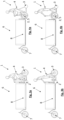
- Fig. 1 is a schematic representation of a towing bicycle 1 of a modular cargo vehicle according to the invention in a first embodiment, wherein the rear axle and thus the rear wheel 3 or the two rear wheels 3 of the towing bicycle 1 are driven, in the operating mode towing bicycle solo mode ( Fig. 1a ) and Train-Bike-Solo-Scooter mode ( Fig. 1b ).
- the same towing bicycle 1 is thus in Fig. 1a operated as a bicycle - namely sitting on a driver's seat 4 and pedaling a pedal crank 5 - and in Fig. 1b operated as a scooter - namely standing on a base 13 and with one foot on the Repelling from the road surface.
- the rear axle has two wheels 3, and the towing bicycle 1 is thus a trike.
- the towing bicycle 1 comprises a front axle with a front wheel 2 and a rear axle with one or, as mentioned, two rear wheels 3.
- the pedal crank 5 of the towing bicycle 1 can be designed to drive the rear axle of the towing bicycle 1 instead of ( Fig. 1a and 1b ), to drive the front axle of the towing bicycle 1.
- the pedal crank 5 can preferably be arranged directly on the front axle.
- the towing bicycle 1 can have a drive battery 12 and a drive motor (see Fig. 9 ).
- the towing bicycle can be used for the rapid transport of small quantities of goods over short and/or narrow distances.
- the towing bicycle 1 can be a self-propelled vehicle (tractor), for example, for the delivery of small goods.
- the towing vehicle 1 can also be used for passenger transport.
- Fig. 3 is a schematic representation of a towing bicycle 1 and a front load module 6 of a modular cargo vehicle according to the invention in an operating mode towing bicycle front load module mode ( Fig. 3a ) and train-bike-front-cargo-module-scooter mode ( Fig. 3b ).
- the cargo vehicle comprises a front load module 6, wherein the front load module 6 and the towing bicycle 1 are designed such that the rear end of the front load module 6 can be coupled to the front end of the towing bicycle 1.
- the front load module 6 comprises a front axle with a front wheel 7 and a load-bearing surface 8.
- the load-bearing surface 8 can have side walls and essentially form a container that is open at the top or can be closed.
- the front load module 6 does not comprise a rear axle.
- the front wheel 2 of the front axle of the towing bicycle 1 can be configured to have no ground contact when the front cargo module 6 is coupled to the towing bicycle 1.
- the rear axle of the towing bicycle 1 can then be driven by the pedal crank 5 and/or by a drive motor.
- the front load module 6 can have a drive battery 12 and an electric drive motor and the front axle of the front load module 6 can be driven via the electric drive motor.
- the ability to attach and detach a front cargo module 6 allows the cargo bike to offer a time advantage: While a rider of a conventional cargo bike is waiting to load, an already loaded front section can be docked to a towing bike 1 to transport the goods immediately. Battery charging times can also be shortened by docking a front cargo module 6 with a pre-charged drive battery 12.
- Fig. 4 is a variant of the modular cargo vehicle according to Fig. 3 , but the front wheel of the traction bike 1 is driven - as in Fig. 2a and 2b .
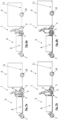
- Fig. 5 is a schematic representation of a towing bicycle 1 and a trailer load module 9 of a modular cargo vehicle in a towing bicycle trailer load module mode ( Fig. 5a ) and train-bicycle-trailer-cargo module-scooter mode ( Fig. 5b ).
- the cargo vehicle comprises a trailer load module 9, wherein the trailer load module 9 and the towing bicycle 1 are configured such that the front end of the trailer load module 9 can be coupled to the rear end of the towing bicycle 1.
- the trailer load module 9 comprises an axle, preferably axially approximately central, with two wheels 10 and a load-bearing surface 11.
- the load-bearing surface 11 can have side walls and essentially form a container that is open at the top or can be closed.
- the trailer load module 9 can have a drive battery 12, preferably a plurality of drive batteries 12, and an electric drive motor, and the axle of the trailer load module 9 can be driven via the electric drive motor.
- trailer load module 9 larger quantities of goods can be transported. The vehicle remains highly mobile.
- Fig. 6a and 6b In the execution according to Fig. 6a and 6b is again directly driven by the front axle of the towing bicycle 1. Again, the rider uses the same towing bicycle in the upper figure ( Fig. 5a and 5b ) sitting, i.e. in bicycle mode, and in the lower figure ( Fig. 5b and 6b ) standing, i.e. in scooter mode.
- the rear wheel(s) 3 of the rear axle of the towing bicycle 1 can be designed such that they have no contact with the ground when the trailer load module 9 is coupled to the towing bicycle 1 and the front axle of the towing bicycle 1 can be driven by the pedal crank 5.
- Fig. 7 is a schematic representation of an entire modular cargo vehicle in a train-bicycle-front-cargo module-trailer-cargo module mode ( Fig. 7a ) and train-bicycle-front-cargo module-trailer-cargo module-scooter mode ( Fig. 7b ).
- the cargo vehicle thus comprises a towing bicycle 1, a front load module 6 and a trailer load module 9.
- a drive battery 12 can be placed in the front part of the bicycle, particularly in the middle, in order to achieve the independence of the individual components (see Fig. 9 ).
- the small wheels of the towing bicycle 1 preferably have no contact with the ground.
- Fig. 8 shows again a vehicle as complete as Fig. 7 , whereby only the front axle of the towing bicycle 1 is driven, instead of the rear axle.
- the front load module 6 can be at least twice as long as the towing bicycle 1.
- the trailer load module 9 can be at least twice as long as the towing bicycle 1.
- the load-bearing surface 8 of the The front load module 6 can be longer than the towing bicycle 1, preferably about twice as long.
- Such a modular cargo vehicle can therefore be used in the Fig. 1 to 8 shown modes: a tow-bike solo mode, a tow-bike solo scooter mode, a tow-bike front cargo module mode, a tow-bike front cargo module scooter mode, a tow-bike trailer cargo module mode, a tow-bike trailer cargo module scooter mode, a tow-bike front cargo module trailer cargo module mode and/or a tow-bike front cargo module trailer cargo module scooter mode.
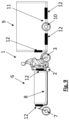
- Fig. 9 is a schematic representation of possible positions of drive batteries 12 in a modular cargo vehicle according to the invention in the first embodiment in the towing bicycle front load module trailer load module mode.
- one drive battery 12 can be arranged in the front load module 6, in particular in the region of the front end of the front load module 6.
- Another drive battery 12 can be arranged in the towing bicycle 1, in particular in the region of the front end of the towing bicycle 1.
- One or more drive batteries 12 can be installed in the trailer load module 9, for example on the load-bearing surface 11, in front of and/or behind the axially central axle.
Landscapes
- Engineering & Computer Science (AREA)
- Mechanical Engineering (AREA)
- Transportation (AREA)
- Chemical & Material Sciences (AREA)
- Combustion & Propulsion (AREA)
- Automatic Cycles, And Cycles In General (AREA)
Abstract
Description
- Die vorliegende Erfindung betrifft ein modulares Lastenfahrzeug, zum Transport von Lasten durch einen Fahrer.
- Es ist bekannt, dass mit einem Fahrrad, beispielsweise mit zwei oder mit drei Rädern (Trike), Lasten auf einem Gepäckträger transportiert werden können. Das Fahrrad kann über eine Tretkurbel durch einen Fahrer angetrieben werden. Zusätzlich oder alternativ kann ein Fahrrad über einen elektrischen Antriebsmotor angetrieben werden. Zum Transport größerer Lasten kann auch ein Anhänger an ein Fahrrad angekoppelt werden.
- Bekannt sind auch Roller, also sog. "Scooter", bei welchen der Fahrer im Wesentlichen aufrecht auf dem Roller steht und ohne Tretkurbel, durch Antauchen mit dem Fuß auf dem Boden, das Fahrzeug antreibt. Auf solchen Rollern können üblicherweise keine größeren Lasten transportiert werden.
- Zum Transport von größeren Lasten werden üblicherweise Kraftfahrzeuge verwendet. Diese benötigen aber, abgesehen von der höheren Antriebsenergie, auch breitere Zufahrtswege als Fahrräder als Roller.
- Insbesondere zur Auslieferung unterschiedlichster Waren durch einen Lieferdienst wäre, je nach Größe und Menge der Waren, der Einsatz verschiedener Transportfahrzeuge besonders effizient und wirtschaftlich.
- Dazu müsste jedoch ein größerer Fuhrpark mit entsprechenden Parkmöglichkeiten bereitgestellt werden. Ein guter Teil der Fahrzeuge wurde dann zu jedem Zeitpunkt unbenutzt verbleiben.
- Es ist eine Aufgabe der Erfindung, ein modulares Lastenfahrzeug anzugeben, das flexibel einsetzbar ist und jeweils einen effizienten Transport unterschiedlicher Mengen oder Größen von Waren in unterschiedlichen Umgebungen ermöglicht.
- Die Lösung der Aufgabe erfolgt durch ein modulares Lastenfahrzeug, zum Transport von Lasten durch einen Fahrer, wobei das Lastenfahrzeug ein Zug-Fahrrad umfasst, wobei das Zug-Fahrrad eine vordere Achse mit einem vorderen Rad und eine hintere Achse mit einem oder zwei hinteren Rädern umfasst, wobei das Zug-Fahrrad einen Fahrersitz umfasst, wobei das Zug-Fahrrad vom Fahrer durch eine Tretkurbel antreibbar ist, wobei das Lastenfahrzeug ein Front-Lastenmodul umfasst, wobei das Front-Lastenmodul und das Zug-Fahrrad dazu ausgebildet sind, dass das hintere Ende des Front-Lastenmoduls an das vordere Ende des Zug-Fahrrads koppelbar ist, wobei das Front-Lastenmodul eine vordere Achse mit einem vorderen Rad und eine Lastenaufnahmefläche umfasst und keine hintere Achse umfasst, wobei das Lastenfahrzeug ein Anhänger-Lastenmodul umfasst, wobei das Anhänger-Lastenmodul und das Zug-Fahrrad dazu ausgebildet sind, dass das vordere Ende des Anhänger-Lastenmoduls an das hintere Ende des Zug-Fahrrads koppelbar ist, wobei das Anhänger-Lastenmodul eine, vorzugsweise mittlere, Achse mit zwei Rädern und eine Lastenaufnahmefläche umfasst.
- Erfindungsgemäß wird ein Zug-Fahrrad zum Transport von Lasten verwendet, dass von einem Fahrer über eine Tretkurbel antreibbar ist, also ein durch eine einzige Person antreibbares Fahrrad. Das Fahrrad kann bevorzugt mit drei Rädern, also als Trike ausgebildet sein. An dieses Zug-Fahrrad kann sowohl hinten ein dazu ausgebildeter Anhänger als auch vorne ein dazu ausgebildetes Front-Lastenmodul, ohne eigene hintere Achse, angekoppelt werden. Sowohl das Front-Lastenmodul als auch das Anhänger-Lastenmodul dienen dem Transport von Lasten, insbesondere Waren und weisen daher Lastenaufnahmeflächen auf.
- Im Rahmen dieser Schrift beziehen sich die Ausdrücke "Front", "vorne" und "hinten" auf die übliche Fahrtrichtung des Fahrzeuges. Ebenso bezieht sich der Ausdruck "lang" auf die Längserstreckung des Fahrzeuges, also die x-Richtung, die Erstreckung von vorne nach hinten, die üblicherweise auch der Fahrtrichtung des Fahrzeuges entspricht.
- Weiterbildungen der Erfindung sind in den abhängigen Ansprüchen, der Beschreibung sowie den beigefügten Zeichnungen angegeben.
- Vorzugsweise sind Zug-Fahrrad und Front-Lastenmodul so ausgebildet, dass das vordere Rad der vorderen Achse des Zug-Fahrrads keinen Bodenkontakt hat, wenn das Front-Lastenmodul an das Zug-Fahrrad gekoppelt ist. Die hintere Achse des Zug-Fahrrads ist dann durch die Tretkurbel antreibbar. Alternativ kann das oder die hinteren Räder der hinteren Achse des Zug-Fahrrads keinen Bodenkontakt haben, wenn das Anhänger-Lastenmodul an das Zug-Fahrrad gekoppelt ist. Die vordere Achse des Zug-Fahrrads ist dann durch die Tretkurbel antreibbar.
- Bevorzugt weist das Zug-Fahrrad eine Antriebsbatterie und einen elektrischen Antriebsmotor auf und eine Achse des Zug-Fahrrads ist über den elektrischen Antriebsmotor antreibbar, vorzugsweise diejenige Achse des Zug-Fahrrads, die über die Tretkurbel antreibbar ist.
- Bevorzugt weist das Front-Lastenmodul eine Antriebsbatterie und einen elektrischen Antriebsmotor auf und die vordere Achse des Front-Lastenmoduls ist über den elektrischen Antriebsmotor antreibbar.
- Bevorzugt weist das Anhänger-Lastenmodul eine Antriebsbatterie und einen elektrischen Antriebsmotor auf und die Achse des Anhänger-Lastenmoduls ist über den elektrischen Antriebsmotor antreibbar.
- Bevorzugt weist das Zug-Fahrrad einen Rollermodus auf, in dem eine Standfläche des Zug-Fahrrads benutzbar ist - so dass der Fahrer auf der Standfläche stehen kann und das Zug-Fahrrad durch Abstoßen von der Straße mit einem Fuß antreiben kann. Das Zug-Fahrrad weist bevorzugt auch einen Fahrradmodus auf, in dem der Fahrer den Fahrersitz und die Tretkurbel benutzen kann, so dass das Zug-Fahrrad wie ein übliches Fahrrad vom Fahrer durch Treten der Pedale angetrieben werden kann. In einer Ausführung der Erfindung kann im Rollermodus der Fahrersitz und/oder die Tretkurbel in eine Nichtgebrauchsstellung gebracht sein, beispielsweise der Fahrersitz und/oder die Tretkurbel entfernt oder weggeklappt sein.
- Vorzugsweise ist das Front-Lastenmodul mindestens doppelt so lange wie das Zug-Fahrrad und/oder ist das Anhänger-Lastenmodul mindestens doppelt so lange ist wie das Zug-Fahrrad und/oder ist die Lastenaufnahmefläche des Front-Lastenmoduls mindestens so lang ist, wie das Zug-Fahrrad, besonders bevorzugt mindestens doppelt so lang, wie das Zug-Fahrrad. Das Zug-Fahrrad ist somit bevorzugt sehr kurz gebaut, bevorzugt höchstens 1,3 Meter oder höchstens 1 Meter von der Vorderachse zur Hinterachse, so dass es ohne Front-Lastenmodul und ohne Anhänger-Lastenmodul auch in engsten Räumen eingesetzt werden kann.
- Vorzugsweise ist das Lastenfahrzeug dazu ausgebildet, in folgenden Modi betrieben zu werden: ein Zug-Fahrrad-Solo-Modus, ein Zug-Fahrrad-Solo-Roller-Modus, ein Zug-Fahrrad-Front-Lastenmodul-Modus, ein Zug-Fahrrad-Front-Lastenmodul-Roller-Modus, ein Zug-Fahrrad-Anhänger-Lastenmodul-Modus, ein Zug-Fahrrad-Anhänger-Lastenmodul-Roller-Modus, ein Zug-Fahrrad-Front-Lastenmodul-Anhänger-Lastenmodul-Modus und/oder ein Zug-Fahrrad-Front-Lastenmodul-Anhänger-Lastenmodul-Roller-Modus.
- Die Erfindung wird im Folgenden beispielhaft unter Bezugnahme auf die Zeichnungen beschrieben.
- Fig. 1a, 1b
- ist eine schematische Darstellung eines Zug-Fahrrads eines erfindungsgemäßen modularen Lastenfahrzeugs in einer ersten Ausführungsform in einem Betriebsmodus Zug-Fahrrad-Solo-Modus (1a) und Zug-Fahrrad-Solo-Roller-Modus (1b).
- Fig. 2a, 2b
- ist eine schematische Darstellung eines Zug-Fahrrads eines erfindungsgemäßen modularen Lastenfahrzeugs in einer zweiten Ausführungsform in einem Betriebsmodus Zug-Fahrrad-Solo-Modus (2a) und Zug-Fahrrad-Solo-Roller-Modus (2b).
- Fig. 3a, 3b
- ist eine schematische Darstellung eines Zug-Fahrrads und eines Front-Lastenmoduls eines erfindungsgemäßen modularen Lastenfahrzeugs in der ersten Ausführungsform in einem Betriebsmodus Zug-Fahrrad-Front-Lastenmodul-Modus (3a) und Zug-Fahrrad-Front-Lastenmodul-Roller-Modus (3b).
- Fig. 4a, 4b
- ist eine schematische Darstellung eines Zug-Fahrrads und eines Front-Lastenmoduls eines erfindungsgemäßen modularen Lastenfahrzeugs in der zweiten Ausführungsform in einem Betriebsmodus Zug-Fahrrad-Front-Lastenmodul-Modus (4a) und Zug-Fahrrad-Front-Lastenmodul-Roller-Modus (4b).
- Fig. 5a, 5b
- ist eine schematische Darstellung eines Zug-Fahrrads und eines Anhänger-Lastenmoduls eines erfindungsgemäßen modularen Lastenfahrzeugs in der ersten Ausführungsform in einem Betriebsmodus Zug-Fahrrad-Anhänger-Lastenmodul-Modus (5a) und Zug-Fahrrad-Anhänger-Lastenmodul-Roller-Modus (5b).
- Fig. 6a, 6b
- ist eine schematische Darstellung eines Zug-Fahrrads und eines Anhänger-Lastenmoduls eines erfindungsgemäßen modularen Lastenfahrzeugs in der zweiten Ausführungsform in einem Betriebsmodus Zug-Fahrrad-Anhänger-Lastenmodul-Modus (6a) und Zug-Fahrrad-Anhänger-Lastenmodul-Roller-Modus (6b).
- Fig. 7a, 7b
- ist eine schematische Darstellung eines erfindungsgemäßen modularen Lastenfahrzeugs in der ersten Ausführungsform in einem Betriebsmodus Zug-Fahrrad-Front-Lastenmodul-Anhänger-Lastenmodul-Modus (7a) und Zug-Fahrrad-Front-Lastenmodul-Anhänger-Lastenmodul-Roller-Modus (7b).
- Fig. 8a, 8b
- ist eine schematische Darstellung eines erfindungsgemäßen modularen Lastenfahrzeugs in der zweiten Ausführungsform in einem Betriebsmodus Zug-Fahrrad-Front-Lastenmodul-Anhänger-Lastenmodul-Modus (8a) und Zug-Fahrrad-Front-Lastenmodul-Anhänger-Lastenmodul-Roller-Modus (8b).
- Fig. 9
- ist eine schematische Darstellung möglicher Positionen von Antriebsbatterien in einem erfindungsgemäßen modularen Lastenfahrzeug in der ersten Ausführungsform im Zug-Fahrrad-Front-Lastenmodul-Anhänger-Lastenmodul-Modus.
-
Fig. 1 ist eine schematische Darstellung eines Zug-Fahrrads 1 eines erfindungsgemäßen modularen Lastenfahrzeugs in einer ersten Ausführungsform, wobei nämlich die hintere Achse und somit das hintere Rad 3 oder die hinteren beiden Räder 3 des Zug-Fahrrads 1 angetrieben sind, in dem Betriebsmodus Zug-Fahrrad-Solo-Modus (Fig. 1a ) und Zug-Fahrrad-Solo-Roller-Modus (Fig. 1b ). Das selbe Zug-Fahrrad 1 ist somit inFig. 1a als Fahrrad betrieben - nämlich sitzend auf einem Fahrersitz 4 und eine Tretkurbel 5 tretend - und inFig. 1b als Roller bzw. Scooter betrieben - nämlich auf einer Standfläche 13 stehend und mit einem Fuß auf der Fahrbahn abstoßend. Vorzugsweise weist die hintere Achse zwei Räder 3 auf und das Zug-Fahrrad 1 ist somit ein Trike. Das Zug-Fahrrad 1 umfasst eine vordere Achse mit einem vorderen Rad 2 und eine hintere Achse mit einem oder wie erwähnt mit zwei hinteren Rädern 3. - Wie in
Fig. 2a und 2b dargestellt, kann die Tretkurbel 5 des Zug-Fahrrads 1 dazu eingerichtet sein, statt die hintere Achse des Zug-Fahrrads 1 anzutreiben (Fig. 1a und 1b ), die vordere Achse des Zug-Fahrrads 1 anzutreiben. Die Tretkurbel 5 kann dazu bevorzugt direkt an der vorderen Achse angeordnet sein. - Zusätzlich zu einem manuellen Antrieb des Zug-Fahrrads 1 über die Tretkurbel 5 durch den Fahrer, kann das Zug-Fahrrad 1 eine Antriebsbatterie 12 und einen Antriebsmotor aufweisen (siehe
Fig. 9 ). - Beispielsweise kann das Zug-Fahrrad für einen schnellen Transport kleinerer Mengen von Gütern auf kurzen und/oder engen Strecken verwendet werden. Das Zug-Fahrrad 1 kann ein selbstfahrendes Fahrzeug (Traktor) sein, beispielsweise für die Auslieferung von Kleingütern. Das ZugFahrzeug 1 kann auch zur Personenbeförderung dienen.
-
Fig. 3 ist eine schematische Darstellung eines Zug-Fahrrads 1 und eines Front-Lastenmoduls 6 eines erfindungsgemäßen modularen Lastenfahrzeugs in einem Betriebsmodus Zug-Fahrrad-Front-Lastenmodul-Modus (Fig. 3a ) und Zug-Fahrrad-Front-Lastenmodul-Roller-Modus (Fig. 3b ). - Das Lastenfahrzeug umfasst dabei ein Front-Lastenmodul 6, wobei das Front-Lastenmodul 6 und das Zug-Fahrrad 1 dazu ausgebildet sind, dass das hintere Ende des Front-Lastenmoduls 6 an das vordere Ende des Zug-Fahrrads 1 koppelbar ist.
- Das Front-Lastenmodul 6 umfasst eine vordere Achse mit einem vorderen Rad 7 und eine Lastenaufnahmefläche 8. Die Lastenaufnahmefläche 8 kann Seitenwände aufweisen und im Wesentlichen einen oben offenen oder schließbaren Behälter bilden. Das Front-Lastenmodul 6 umfasst keine hintere Achse.
- Das vordere Rad 2 der vorderen Achse des Zug-Fahrrads 1 kann dazu eingerichtet sein, keinen Bodenkontakt zu haben, wenn das Front-Lastenmodul 6 an das Zug-Fahrrad 1 gekoppelt ist. Die hintere Achse des Zug-Fahrrads 1 ist dann durch die Tretkurbel 5 und/oder durch einen Antriebsmotor antreibbar.
- Das Front-Lastenmodul 6 kann eine Antriebsbatterie 12 und einen elektrischen Antriebsmotor aufweisen und die vordere Achse des Front-Lastenmoduls 6 kann über den elektrischen Antriebsmotor antreibbar sein.
- Durch die Möglichkeit ein Front-Lastenmoduls 6 an- und abzukoppeln, kann das Lastenfahrrad beispielsweise einen Zeitvorteil bieten: Während ein Fahrer eines üblichen Lastenfahrrads zum Beladen steht kann beispielsweise ein schon beladenes Vorderteil an ein Zug-Fahrrad 1 angedockt werden, um die Waren sofort zu transportieren. Auch können Akku-Ladezeiten durch das Andocken eines Front-Lastenmoduls 6 mit bereits geladener Antriebsbatterie 12 verkürzt werden.
-
Fig. 4 ist eine Variante des modularen Lastenfahrzeugs gemäßFig. 3 , wobei jedoch das vordere Rad des Zug-Fahrrads 1 angetrieben ist - wie inFig. 2a und 2b . -
Fig. 5 ist eine schematische Darstellung eines Zug-Fahrrads 1 und eines Anhänger-Lastenmoduls 9 eines modularen Lastenfahrzeugs in einem Betriebsmodus Zug-Fahrrad-Anhänger-Lastenmodul-Modus (Fig. 5a ) und Zug-Fahrrad-Anhänger-Lastenmodul-Roller-Modus (Fig. 5b ). - Das Lastenfahrzeug umfasst ein Anhänger-Lastenmodul 9, wobei das Anhänger-Lastenmodul 9 und das Zug-Fahrrad 1 dazu ausgebildet sind, dass das vordere Ende des Anhänger-Lastenmoduls 9 an das hintere Ende des Zug-Fahrrads 1 koppelbar ist. Das Anhänger-Lastenmodul 9 umfasst eine, vorzugsweise axial etwa mittige, Achse mit zwei Rädern 10 und eine Lastenaufnahmefläche 11. Die Lastenaufnahmefläche 11 kann Seitenwände aufweisen und im Wesentlichen einen oben offenen oder schließbaren Behälter bilden.
- Das Anhänger-Lastenmodul 9 kann eine Antriebsbatterie 12, bevorzugt mehrere Antriebsbatterien 12, und einen elektrischen Antriebsmotor aufweisen und die Achse des Anhänger-Lastenmoduls 9 kann über den elektrischen Antriebsmotor antreibbar sein.
- In diesem Betriebsmodus - mit Anhänger-Lastenmodul 9 - können größere Mengen an Gütern transportiert werden. Das Fahrzeug bleibt dabei hoch mobil.
- In der Ausführung nach
Fig. 6a und 6b ist wider die vordere Achse des Zug-Fahrrads 1 direkt angetrieben. Wieder benutzt der Fahrer das selbe Zug-Fahrrad in der oberen Figur (Fig. 5a und 5b ) sitzend, also im Fahrradmodus, und in der unteren Figur (Fig. 5b und 6b ) stehend, also im Rollermodus. - Wie in
Fig. 6a und 6b dargestellt, kann das oder die hinteren Räder 3 der hinteren Achse des Zug-Fahrrads 1 so ausgebildet sein, dass diese keinen Bodenkontakt haben, wenn das Anhänger-Lastenmodul 9 an das Zug-Fahrrad ) gekoppelt ist und die vordere Achse des Zug-Fahrrads 1 durch die Tretkurbel 5 antreibbar ist. -
Fig. 7 ist eine schematische Darstellung eines gesamten modularen Lastenfahrzeugs in einem Betriebsmodus Zug-Fahrrad-Front-Lastenmodul-Anhänger-Lastenmodul-Modus (Fig. 7a ) und Zug-Fahrrad-Front-Lastenmodul-Anhänger-Lastenmodul-Roller-Modus (Fig. 7b ). - Das Lastenfahrzeug umfasst somit ein Zug-Fahrrad 1, ein Front-Lastenmodul 6 und ein Anhänger-Lastenmodul 9.
- In diesem Zustand des Lastenfahrzeugs können größere Mengen an Gütern transportiert werden.
- Eine Antriebsbatterie 12 kann im vorderen Teil des Fahrrads, insbesondere in der Mitte, platziert sein, um die Unabhängigkeit der einzelnen Komponenten zu erreichen (siehe
Fig. 9 ). Bei dieser vollständigen Konfiguration haben die kleinen Räder des Zug-Fahrrads 1 bevorzugt keine Verbindung zum Boden. -
Fig. 8 zeigt wieder ein ebenso vollständiges Fahrzeug wieFig. 7 , wobei lediglich die Vorderachse des Zug-Fahrrads 1 angetrieben wird, anstatt der Hinterachse. - Das Front-Lastenmodul 6 kann mindestens doppelt so lange sein wie das Zug-Fahrrad 1. Das Anhänger-Lastenmodul 9 kann mindestens doppelt so lange sein, wie das Zug-Fahrrad 1. Die Lastenaufnahmefläche 8 des Front-Lastenmoduls 6 kann länger als das Zug-Fahrrad 1 sein, bevorzugt etwa doppelt so lang.
- Ein solches modulares Lastenfahrzeug kann somit in den in den
Fig. 1 bis 8 dargestellten Modi betrieben werden: ein Zug-Fahrrad-Solo-Modus, ein Zug-Fahrrad-Solo-Roller-Modus, ein Zug-Fahrrad-Front-Lastenmodul-Modus, ein Zug-Fahrrad-Front-Lastenmodul-Roller-Modus, ein Zug-Fahrrad-Anhänger-Lastenmodul-Modus, ein Zug-Fahrrad-Anhänger-Lastenmodul-Roller-Modus, ein Zug-Fahrrad-Front-Lastenmodul-Anhänger-Lastenmodul-Modus und/oder ein Zug-Fahrrad-Front-Lastenmodul-Anhänger-Lastenmodul-Roller-Modus. -
Fig. 9 ist eine schematische Darstellung möglicher Positionen von Antriebsbatterien 12 in einem erfindungsgemäßen modularen Lastenfahrzeug in der ersten Ausführungsform im Zug-Fahrrad-Front-Lastenmodul-Anhänger-Lastenmodul-Modus. Es kann beispielsweise eine Antriebsbatterie 12 im Front-Lastenmodul 6 angeordnet sein, insbesondere im Bereich des vorderen Endes des Front-Lastenmoduls 6. Eine weitere Antriebsbatterie 12 kann im Zug-Fahrrad 1 angeordnet sein, insbesondere im Bereich des vorderen Endes des Zug-Fahrrads 1. Im Anhänger-Lastenmodul 9 können ein oder mehrere Antriebsbatterien 12 verbaut sein, beispielsweise an der Lastenaufnahmefläche 11, vor und/oder hinter der axial mittigen Achse. - Das Lastenfahrrad kann somit drei Hauptkomponenten aufweisen:
- Einspuriger Frontträger (Front-Lastenmodul 6). Für die Hochlastoption kann das Vorderrad mit einem Nabenmotor ausgestattet werden und kann eine Batterie integriert sein.
- Zugmaschine (Zug-Fahrrads 1), bevorzugt als Trike in V- oder A-Anordnung - eine Achse ist elektrisch angetrieben und das Trike kann mit einer kleinen Batterie ausgestattet sein, um im Stand-Alone-Modus betrieben zu werden.
- Anhänger (Anhänger-Lastenmodul 9): mit oder ohne angetriebene Nabenmotoren und einer Batterie.
-
- 1
- Zug-Fahrrad
- 2
- vorderes Rad des Zug-Fahrrads
- 3
- hinteres Rad des Zug-Fahrrads
- 4
- Fahrersitz
- 5
- Tretkurbel
- 6
- Front-Lastenmodul
- 7
- vorderes Rad des Front-Lastenmoduls
- 8
- Lastenaufnahmefläche des Front-Lastenmoduls
- 9
- Anhänger-Lastenmodul
- 10
- Räder des Anhänger-Lastenmoduls
- 11
- Lastenaufnahmefläche des Anhänger-Lastenmoduls
- 12
- Antriebsbatterie
- 13
- Standfläche
Claims (7)
- Modulares Lastenfahrzeug, zum Transport von Lasten durch einen Fahrer, wobei das Lastenfahrzeug ein Zug-Fahrrad (1) umfasst, wobei das Zug-Fahrrad (1) eine vordere Achse mit einem vorderen Rad (2) und eine hintere Achse mit einem oder zwei hinteren Rädern (3) umfasst, wobei das Zug-Fahrrad (1) einen Fahrersitz (4) umfasst, wobei das Zug-Fahrrad (1) vom Fahrer durch eine Tretkurbel (5) antreibbar ist, wobei das Lastenfahrzeug ein Front-Lastenmodul (6) umfasst, wobei das Front-Lastenmodul (6) und das Zug-Fahrrad (1) dazu ausgebildet sind, dass das hintere Ende des Front-Lastenmoduls (6) an das vordere Ende des Zug-Fahrrads (1) koppelbar ist, wobei das Front-Lastenmodul (6) eine vordere Achse mit einem vorderen Rad (7) und eine Lastenaufnahmefläche (8) umfasst und keine hintere Achse umfasst, wobei das Lastenfahrzeug ein Anhänger-Lastenmodul (9) umfasst, wobei das Anhänger-Lastenmodul (9) und das Zug-Fahrrad (1) dazu ausgebildet sind, dass das vordere Ende des Anhänger-Lastenmoduls (9) an das hintere Ende des Zug-Fahrrads (1) koppelbar ist, wobei das Anhänger-Lastenmodul (9) eine, vorzugsweise axial mittige, Achse mit zwei Rädern (10) und eine Lastenaufnahmefläche (11) umfasst.
- Modulares Lastenfahrzeug nach Anspruch 1,
dadurch gekennzeichnet, dass das vordere Rad (2) der vorderen Achse des Zug-Fahrrads (1) keinen Bodenkontakt hat wenn das Front-Lastenmodul (6) an das Zug-Fahrrad (1) gekoppelt ist und die hintere Achse des Zug-Fahrrads (1) durch die Tretkurbel (5) antreibbar ist und/oder dass das oder die hinteren Räder (3) der hinteren Achse des Zug-Fahrrads (1) keinen Bodenkontakt haben wenn das Anhänger-Lastenmodul (9) an das Zug-Fahrrad (1) gekoppelt ist und die vordere Achse des Zug-Fahrrads (1) durch die Tretkurbel (5) antreibbar ist. - Modulares Lastenfahrzeug nach zumindest einem der vorhergehenden Ansprüche,
dadurch gekennzeichnet, dass das Zug-Fahrrad (1) eine Antriebsbatterie (12) und einen elektrischen Antriebsmotor aufweist und eine Achse des Zug-Fahrrads (1) über den elektrischen Antriebsmotor antreibbar ist, vorzugsweise diejenige Achse des Zug-Fahrrads (1), die über die Tretkurbel (5) antreibbar ist. - Modulares Lastenfahrzeug nach zumindest einem der vorhergehenden Ansprüche,
dadurch gekennzeichnet, dass das Front-Lastenmodul (6) eine Antriebsbatterie (12) und einen elektrischen Antriebsmotor aufweist und die vordere Achse des Front-Lastenmoduls (6) über den elektrischen Antriebsmotor antreibbar ist und/oder dass das Anhänger-Lastenmodul (9) eine Antriebsbatterie (12) und einen elektrischen Antriebsmotor aufweist und die Achse des Anhänger-Lastenmoduls (9) über den elektrischen Antriebsmotor antreibbar ist. - Modulares Lastenfahrzeug nach zumindest einem der vorhergehenden Ansprüche,
dadurch gekennzeichnet, dass das Zug-Fahrrad (1) einen Rollermodus aufweist, in dem eine Standfläche (13) des Zug-Fahrrads (1) benutzbar ist, und einen Fahrradmodus aufweist, in dem der Fahrersitz (4) und die Tretkurbel (5) benutzbar sind. - Modulares Lastenfahrzeug nach zumindest einem der vorhergehenden Ansprüche,
dadurch gekennzeichnet, dass das Front-Lastenmodul (6) mindestens doppelt so lange ist wie das Zug-Fahrrad (1) und/oder dass das Anhänger-Lastenmodul (9) mindestens doppelt so lange ist wie das Zug-Fahrrad (1) und/oder dass die Lastenaufnahmefläche (8) des Front-Lastenmoduls (6) mindestens so lang ist, wie das Zug-Fahrrad (1), bevorzugt mindestens doppelt so lang ist, wie das Zug-Fahrrad (1). - Modulares Lastenfahrzeug nach zumindest einem der vorhergehenden Ansprüche,
dadurch gekennzeichnet, dass das Lastenfahrzeug dazu ausgebildet ist, in folgenden Modi betrieben zu werden: ein Zug-Fahrrad-Solo-Modus, ein Zug-Fahrrad-Solo-Roller-Modus, ein Zug-Fahrrad-Front-Lastenmodul-Modus, ein Zug-Fahrrad-Front-Lastenmodul-Roller-Modus, ein Zug-Fahrrad-Anhänger-Lastenmodul-Modus, ein Zug-Fahrrad-Anhänger-Lastenmodul-Roller-Modus, ein Zug-Fahrrad-Front-Lastenmodul-Anhänger-Lastenmodul-Modus und/oder ein Zug-Fahrrad-Front-Lastenmodul-Anhänger-Lastenmodul-Roller-Modus.
Priority Applications (3)
| Application Number | Priority Date | Filing Date | Title |
|---|---|---|---|
| EP23198426.1A EP4527727B1 (de) | 2023-09-20 | 2023-09-20 | Modulares lastenfahrzeug |
| US18/800,254 US20250091689A1 (en) | 2023-09-20 | 2024-08-12 | Modular cargo vehicle |
| CN202411308209.4A CN119659820A (zh) | 2023-09-20 | 2024-09-19 | 模块化货物车辆 |
Applications Claiming Priority (1)
| Application Number | Priority Date | Filing Date | Title |
|---|---|---|---|
| EP23198426.1A EP4527727B1 (de) | 2023-09-20 | 2023-09-20 | Modulares lastenfahrzeug |
Publications (2)
| Publication Number | Publication Date |
|---|---|
| EP4527727A1 true EP4527727A1 (de) | 2025-03-26 |
| EP4527727B1 EP4527727B1 (de) | 2025-11-05 |
Family
ID=88097512
Family Applications (1)
| Application Number | Title | Priority Date | Filing Date |
|---|---|---|---|
| EP23198426.1A Active EP4527727B1 (de) | 2023-09-20 | 2023-09-20 | Modulares lastenfahrzeug |
Country Status (3)
| Country | Link |
|---|---|
| US (1) | US20250091689A1 (de) |
| EP (1) | EP4527727B1 (de) |
| CN (1) | CN119659820A (de) |
Citations (6)
| Publication number | Priority date | Publication date | Assignee | Title |
|---|---|---|---|---|
| AT140288B (de) * | 1932-10-22 | 1935-01-25 | Hermine Wilhelm Hertl | Lastrad. |
| DE1140479B (de) * | 1960-07-30 | 1962-11-29 | Westfaelische Metall Ind K G H | Hebelroller zum Bewegen und Lenken eines fahrbaren Transportbehaelters |
| JP2013006457A (ja) * | 2011-06-22 | 2013-01-10 | Sanyo Electric Co Ltd | 電動アシスト台車 |
| CH712352A2 (de) * | 2016-04-02 | 2017-10-13 | Von Ah Josef | Mehrbereichs-Kupplung für ein alternierend-werkzeugloses Wechseln diverser Frontrahmen an einem umbaubaren Fahrrad. |
| FR3085938A1 (fr) * | 2018-09-17 | 2020-03-20 | Bertrand Naud | Remorque triporteur |
| US20230278481A1 (en) * | 2022-03-04 | 2023-09-07 | Qingdao Tmz Tools Co., Ltd. | Dual-purpose camper capable of being towed by a bicycle and manually |
-
2023
- 2023-09-20 EP EP23198426.1A patent/EP4527727B1/de active Active
-
2024
- 2024-08-12 US US18/800,254 patent/US20250091689A1/en active Pending
- 2024-09-19 CN CN202411308209.4A patent/CN119659820A/zh active Pending
Patent Citations (6)
| Publication number | Priority date | Publication date | Assignee | Title |
|---|---|---|---|---|
| AT140288B (de) * | 1932-10-22 | 1935-01-25 | Hermine Wilhelm Hertl | Lastrad. |
| DE1140479B (de) * | 1960-07-30 | 1962-11-29 | Westfaelische Metall Ind K G H | Hebelroller zum Bewegen und Lenken eines fahrbaren Transportbehaelters |
| JP2013006457A (ja) * | 2011-06-22 | 2013-01-10 | Sanyo Electric Co Ltd | 電動アシスト台車 |
| CH712352A2 (de) * | 2016-04-02 | 2017-10-13 | Von Ah Josef | Mehrbereichs-Kupplung für ein alternierend-werkzeugloses Wechseln diverser Frontrahmen an einem umbaubaren Fahrrad. |
| FR3085938A1 (fr) * | 2018-09-17 | 2020-03-20 | Bertrand Naud | Remorque triporteur |
| US20230278481A1 (en) * | 2022-03-04 | 2023-09-07 | Qingdao Tmz Tools Co., Ltd. | Dual-purpose camper capable of being towed by a bicycle and manually |
Also Published As
| Publication number | Publication date |
|---|---|
| EP4527727B1 (de) | 2025-11-05 |
| US20250091689A1 (en) | 2025-03-20 |
| CN119659820A (zh) | 2025-03-21 |
Similar Documents
| Publication | Publication Date | Title |
|---|---|---|
| WO2013037646A1 (de) | Transportfahrzeug mit dreirad-fahrwerk | |
| DE102019135795A1 (de) | Verfahren und System zum Laden von wenigstens einer Traktionsbatterie eines elektrisch antreibbaren Kraftwagens | |
| DE102011111419B4 (de) | Fahrzeug mit einem Fahrbrett zum Abstellen wenigstens der Füße des Fahrers des Fahrzeugs | |
| DE19524416A1 (de) | Antriebssystem für Landfahrzeuge | |
| EP4177142A1 (de) | Lastenfahrzeug | |
| EP4527727A1 (de) | Modulares lastenfahrzeug | |
| DE102018109523A1 (de) | Fahrzeugsystem | |
| EP2366604B1 (de) | Geländegängiges Personenkraftfahrzeug | |
| DE102011111497A1 (de) | Steh-Sitz-Roller-Baukastensystem | |
| DE1946253U (de) | Kleinkraftfahrzeug. | |
| WO2007096429A2 (de) | Muskelgetriebenes fahrzeug für zumindest zwei benutzer | |
| DE102019133724B4 (de) | Trailer-Lastenfahrrad | |
| DE9213474U1 (de) | Roller | |
| WO2023031365A1 (de) | Fahrzeug zur personen- und/oder lastenbeförderung | |
| DE202018106199U1 (de) | Dreirädiges Mopedauto | |
| DE3020919A1 (de) | Invaliden-transporter | |
| DE29723276U1 (de) | Kleinfahrzeug mit mindestens zwei Rädern und dafür vorgesehene Halterung | |
| DE4307341A1 (de) | Leichte Elektromobile für den Personen- und/oder Gütertransport mit modularem Aufbau | |
| AT139496B (de) | Mehrachsiges Fahrzeug mit einachsigem Zugwagen. | |
| DE4103378A1 (de) | Nahverkehrssystem mit strassenfahrzeugen und strassenfahrzeug dafuer | |
| DE102010032976A1 (de) | Elektro-Transportfahrzeug-Baukastensystem aus Fahrradteilen | |
| DE455976C (de) | Antriebsvorrichtung fuer nach Art eines Elektrokarrens gebaute Fahrzeuge | |
| DE102008062461A1 (de) | Kraftfahrzeug mit Batterie-Anhänger | |
| DE3119842A1 (de) | Strassenfahrzeug mit elektroantrieb auf der grundlage eines zweirades sowie antriebsaggregat fuer die umruestung eies zweirades in ein strassenfahrzeug mit elektroantrieb | |
| DE19513980C2 (de) | Vorrichtung zur Verladung und Festlegung eines Anhängers in einem Kleinlastfahrzeug |
Legal Events
| Date | Code | Title | Description |
|---|---|---|---|
| PUAI | Public reference made under article 153(3) epc to a published international application that has entered the european phase |
Free format text: ORIGINAL CODE: 0009012 |
|
| STAA | Information on the status of an ep patent application or granted ep patent |
Free format text: STATUS: REQUEST FOR EXAMINATION WAS MADE |
|
| 17P | Request for examination filed |
Effective date: 20240925 |
|
| AK | Designated contracting states |
Kind code of ref document: A1 Designated state(s): AL AT BE BG CH CY CZ DE DK EE ES FI FR GB GR HR HU IE IS IT LI LT LU LV MC ME MK MT NL NO PL PT RO RS SE SI SK SM TR |
|
| RAP1 | Party data changed (applicant data changed or rights of an application transferred) |
Owner name: MAGNA AUTOMOTIVE EUROPE GMBH |
|
| GRAP | Despatch of communication of intention to grant a patent |
Free format text: ORIGINAL CODE: EPIDOSNIGR1 |
|
| STAA | Information on the status of an ep patent application or granted ep patent |
Free format text: STATUS: GRANT OF PATENT IS INTENDED |
|
| RIC1 | Information provided on ipc code assigned before grant |
Ipc: B62K 5/02 20130101ALI20250416BHEP Ipc: B62K 7/00 20060101ALI20250416BHEP Ipc: B62K 3/00 20060101ALI20250416BHEP Ipc: B62K 27/00 20060101AFI20250416BHEP |
|
| INTG | Intention to grant announced |
Effective date: 20250512 |
|
| GRAS | Grant fee paid |
Free format text: ORIGINAL CODE: EPIDOSNIGR3 |
|
| GRAA | (expected) grant |
Free format text: ORIGINAL CODE: 0009210 |
|
| STAA | Information on the status of an ep patent application or granted ep patent |
Free format text: STATUS: THE PATENT HAS BEEN GRANTED |
|
| AK | Designated contracting states |
Kind code of ref document: B1 Designated state(s): AL AT BE BG CH CY CZ DE DK EE ES FI FR GB GR HR HU IE IS IT LI LT LU LV MC ME MK MT NL NO PL PT RO RS SE SI SK SM TR |
|
| REG | Reference to a national code |
Ref country code: CH Ref legal event code: F10 Free format text: ST27 STATUS EVENT CODE: U-0-0-F10-F00 (AS PROVIDED BY THE NATIONAL OFFICE) Effective date: 20251105 Ref country code: GB Ref legal event code: FG4D Free format text: NOT ENGLISH |
|
| REG | Reference to a national code |
Ref country code: DE Ref legal event code: R096 Ref document number: 502023002144 Country of ref document: DE |
|
| REG | Reference to a national code |
Ref country code: IE Ref legal event code: FG4D Free format text: LANGUAGE OF EP DOCUMENT: GERMAN |
|
| REG | Reference to a national code |
Ref country code: NL Ref legal event code: MP Effective date: 20251105 |
|
| PG25 | Lapsed in a contracting state [announced via postgrant information from national office to epo] |
Ref country code: ES Free format text: LAPSE BECAUSE OF FAILURE TO SUBMIT A TRANSLATION OF THE DESCRIPTION OR TO PAY THE FEE WITHIN THE PRESCRIBED TIME-LIMIT Effective date: 20251105 |
|
| REG | Reference to a national code |
Ref country code: LT Ref legal event code: MG9D |
|
| PG25 | Lapsed in a contracting state [announced via postgrant information from national office to epo] |
Ref country code: NO Free format text: LAPSE BECAUSE OF FAILURE TO SUBMIT A TRANSLATION OF THE DESCRIPTION OR TO PAY THE FEE WITHIN THE PRESCRIBED TIME-LIMIT Effective date: 20260205 |
|
| PG25 | Lapsed in a contracting state [announced via postgrant information from national office to epo] |
Ref country code: FI Free format text: LAPSE BECAUSE OF FAILURE TO SUBMIT A TRANSLATION OF THE DESCRIPTION OR TO PAY THE FEE WITHIN THE PRESCRIBED TIME-LIMIT Effective date: 20251105 Ref country code: HR Free format text: LAPSE BECAUSE OF FAILURE TO SUBMIT A TRANSLATION OF THE DESCRIPTION OR TO PAY THE FEE WITHIN THE PRESCRIBED TIME-LIMIT Effective date: 20251105 |
|
| PG25 | Lapsed in a contracting state [announced via postgrant information from national office to epo] |
Ref country code: NL Free format text: LAPSE BECAUSE OF FAILURE TO SUBMIT A TRANSLATION OF THE DESCRIPTION OR TO PAY THE FEE WITHIN THE PRESCRIBED TIME-LIMIT Effective date: 20251105 |
|
| PG25 | Lapsed in a contracting state [announced via postgrant information from national office to epo] |
Ref country code: RS Free format text: LAPSE BECAUSE OF FAILURE TO SUBMIT A TRANSLATION OF THE DESCRIPTION OR TO PAY THE FEE WITHIN THE PRESCRIBED TIME-LIMIT Effective date: 20260205 |
|
| PG25 | Lapsed in a contracting state [announced via postgrant information from national office to epo] |
Ref country code: IS Free format text: LAPSE BECAUSE OF FAILURE TO SUBMIT A TRANSLATION OF THE DESCRIPTION OR TO PAY THE FEE WITHIN THE PRESCRIBED TIME-LIMIT Effective date: 20260305 |
|
| PG25 | Lapsed in a contracting state [announced via postgrant information from national office to epo] |
Ref country code: PT Free format text: LAPSE BECAUSE OF FAILURE TO SUBMIT A TRANSLATION OF THE DESCRIPTION OR TO PAY THE FEE WITHIN THE PRESCRIBED TIME-LIMIT Effective date: 20260305 |
|
| PG25 | Lapsed in a contracting state [announced via postgrant information from national office to epo] |
Ref country code: PL Free format text: LAPSE BECAUSE OF FAILURE TO SUBMIT A TRANSLATION OF THE DESCRIPTION OR TO PAY THE FEE WITHIN THE PRESCRIBED TIME-LIMIT Effective date: 20251105 |
|
| PG25 | Lapsed in a contracting state [announced via postgrant information from national office to epo] |
Ref country code: LV Free format text: LAPSE BECAUSE OF FAILURE TO SUBMIT A TRANSLATION OF THE DESCRIPTION OR TO PAY THE FEE WITHIN THE PRESCRIBED TIME-LIMIT Effective date: 20251105 |