EP4458886A1 - Pellets, molded article, and pellet manufacturing method - Google Patents
Pellets, molded article, and pellet manufacturing method Download PDFInfo
- Publication number
- EP4458886A1 EP4458886A1 EP22915911.6A EP22915911A EP4458886A1 EP 4458886 A1 EP4458886 A1 EP 4458886A1 EP 22915911 A EP22915911 A EP 22915911A EP 4458886 A1 EP4458886 A1 EP 4458886A1
- Authority
- EP
- European Patent Office
- Prior art keywords
- pellets
- thermoplastic resin
- rayon fibers
- bundle
- resin
- Prior art date
- Legal status (The legal status is an assumption and is not a legal conclusion. Google has not performed a legal analysis and makes no representation as to the accuracy of the status listed.)
- Withdrawn
Links
Images

Classifications
-
- B—PERFORMING OPERATIONS; TRANSPORTING
- B29—WORKING OF PLASTICS; WORKING OF SUBSTANCES IN A PLASTIC STATE IN GENERAL
- B29B—PREPARATION OR PRETREATMENT OF THE MATERIAL TO BE SHAPED; MAKING GRANULES OR PREFORMS; RECOVERY OF PLASTICS OR OTHER CONSTITUENTS OF WASTE MATERIAL CONTAINING PLASTICS
- B29B9/00—Making granules
- B29B9/12—Making granules characterised by structure or composition
- B29B9/14—Making granules characterised by structure or composition fibre-reinforced
-
- B—PERFORMING OPERATIONS; TRANSPORTING
- B29—WORKING OF PLASTICS; WORKING OF SUBSTANCES IN A PLASTIC STATE IN GENERAL
- B29B—PREPARATION OR PRETREATMENT OF THE MATERIAL TO BE SHAPED; MAKING GRANULES OR PREFORMS; RECOVERY OF PLASTICS OR OTHER CONSTITUENTS OF WASTE MATERIAL CONTAINING PLASTICS
- B29B7/00—Mixing; Kneading
- B29B7/002—Methods
- B29B7/007—Methods for continuous mixing
-
- B—PERFORMING OPERATIONS; TRANSPORTING
- B29—WORKING OF PLASTICS; WORKING OF SUBSTANCES IN A PLASTIC STATE IN GENERAL
- B29B—PREPARATION OR PRETREATMENT OF THE MATERIAL TO BE SHAPED; MAKING GRANULES OR PREFORMS; RECOVERY OF PLASTICS OR OTHER CONSTITUENTS OF WASTE MATERIAL CONTAINING PLASTICS
- B29B11/00—Making preforms
- B29B11/14—Making preforms characterised by structure or composition
- B29B11/16—Making preforms characterised by structure or composition comprising fillers or reinforcement
-
- B—PERFORMING OPERATIONS; TRANSPORTING
- B29—WORKING OF PLASTICS; WORKING OF SUBSTANCES IN A PLASTIC STATE IN GENERAL
- B29B—PREPARATION OR PRETREATMENT OF THE MATERIAL TO BE SHAPED; MAKING GRANULES OR PREFORMS; RECOVERY OF PLASTICS OR OTHER CONSTITUENTS OF WASTE MATERIAL CONTAINING PLASTICS
- B29B13/00—Conditioning or physical treatment of the material to be shaped
- B29B13/06—Conditioning or physical treatment of the material to be shaped by drying
- B29B13/065—Conditioning or physical treatment of the material to be shaped by drying of powder or pellets
-
- B—PERFORMING OPERATIONS; TRANSPORTING
- B29—WORKING OF PLASTICS; WORKING OF SUBSTANCES IN A PLASTIC STATE IN GENERAL
- B29B—PREPARATION OR PRETREATMENT OF THE MATERIAL TO BE SHAPED; MAKING GRANULES OR PREFORMS; RECOVERY OF PLASTICS OR OTHER CONSTITUENTS OF WASTE MATERIAL CONTAINING PLASTICS
- B29B15/00—Pretreatment of the material to be shaped, not covered by groups B29B7/00 - B29B13/00
- B29B15/08—Pretreatment of the material to be shaped, not covered by groups B29B7/00 - B29B13/00 of reinforcements or fillers
- B29B15/10—Coating or impregnating independently of the moulding or shaping step
- B29B15/12—Coating or impregnating independently of the moulding or shaping step of reinforcements of indefinite length
- B29B15/122—Coating or impregnating independently of the moulding or shaping step of reinforcements of indefinite length with a matrix in liquid form, e.g. as melt, solution or latex
-
- B—PERFORMING OPERATIONS; TRANSPORTING
- B29—WORKING OF PLASTICS; WORKING OF SUBSTANCES IN A PLASTIC STATE IN GENERAL
- B29B—PREPARATION OR PRETREATMENT OF THE MATERIAL TO BE SHAPED; MAKING GRANULES OR PREFORMS; RECOVERY OF PLASTICS OR OTHER CONSTITUENTS OF WASTE MATERIAL CONTAINING PLASTICS
- B29B7/00—Mixing; Kneading
- B29B7/30—Mixing; Kneading continuous, with mechanical mixing or kneading devices
- B29B7/34—Mixing; Kneading continuous, with mechanical mixing or kneading devices with movable mixing or kneading devices
- B29B7/38—Mixing; Kneading continuous, with mechanical mixing or kneading devices with movable mixing or kneading devices rotary
- B29B7/46—Mixing; Kneading continuous, with mechanical mixing or kneading devices with movable mixing or kneading devices rotary with more than one shaft
- B29B7/48—Mixing; Kneading continuous, with mechanical mixing or kneading devices with movable mixing or kneading devices rotary with more than one shaft with intermeshing devices, e.g. screws
-
- B—PERFORMING OPERATIONS; TRANSPORTING
- B29—WORKING OF PLASTICS; WORKING OF SUBSTANCES IN A PLASTIC STATE IN GENERAL
- B29B—PREPARATION OR PRETREATMENT OF THE MATERIAL TO BE SHAPED; MAKING GRANULES OR PREFORMS; RECOVERY OF PLASTICS OR OTHER CONSTITUENTS OF WASTE MATERIAL CONTAINING PLASTICS
- B29B7/00—Mixing; Kneading
- B29B7/80—Component parts, details or accessories; Auxiliary operations
- B29B7/88—Adding charges, i.e. additives
- B29B7/90—Fillers or reinforcements, e.g. fibres
-
- B—PERFORMING OPERATIONS; TRANSPORTING
- B29—WORKING OF PLASTICS; WORKING OF SUBSTANCES IN A PLASTIC STATE IN GENERAL
- B29B—PREPARATION OR PRETREATMENT OF THE MATERIAL TO BE SHAPED; MAKING GRANULES OR PREFORMS; RECOVERY OF PLASTICS OR OTHER CONSTITUENTS OF WASTE MATERIAL CONTAINING PLASTICS
- B29B9/00—Making granules
- B29B9/02—Making granules by dividing preformed material
- B29B9/06—Making granules by dividing preformed material in the form of filamentary material, e.g. combined with extrusion
-
- B—PERFORMING OPERATIONS; TRANSPORTING
- B29—WORKING OF PLASTICS; WORKING OF SUBSTANCES IN A PLASTIC STATE IN GENERAL
- B29B—PREPARATION OR PRETREATMENT OF THE MATERIAL TO BE SHAPED; MAKING GRANULES OR PREFORMS; RECOVERY OF PLASTICS OR OTHER CONSTITUENTS OF WASTE MATERIAL CONTAINING PLASTICS
- B29B9/00—Making granules
- B29B9/12—Making granules characterised by structure or composition
-
- B—PERFORMING OPERATIONS; TRANSPORTING
- B29—WORKING OF PLASTICS; WORKING OF SUBSTANCES IN A PLASTIC STATE IN GENERAL
- B29B—PREPARATION OR PRETREATMENT OF THE MATERIAL TO BE SHAPED; MAKING GRANULES OR PREFORMS; RECOVERY OF PLASTICS OR OTHER CONSTITUENTS OF WASTE MATERIAL CONTAINING PLASTICS
- B29B9/00—Making granules
- B29B9/16—Auxiliary treatment of granules
-
- C—CHEMISTRY; METALLURGY
- C08—ORGANIC MACROMOLECULAR COMPOUNDS; THEIR PREPARATION OR CHEMICAL WORKING-UP; COMPOSITIONS BASED THEREON
- C08J—WORKING-UP; GENERAL PROCESSES OF COMPOUNDING; AFTER-TREATMENT NOT COVERED BY SUBCLASSES C08B, C08C, C08F, C08G or C08H
- C08J3/00—Processes of treating or compounding macromolecular substances
- C08J3/12—Powdering or granulating
-
- C—CHEMISTRY; METALLURGY
- C08—ORGANIC MACROMOLECULAR COMPOUNDS; THEIR PREPARATION OR CHEMICAL WORKING-UP; COMPOSITIONS BASED THEREON
- C08J—WORKING-UP; GENERAL PROCESSES OF COMPOUNDING; AFTER-TREATMENT NOT COVERED BY SUBCLASSES C08B, C08C, C08F, C08G or C08H
- C08J3/00—Processes of treating or compounding macromolecular substances
- C08J3/20—Compounding polymers with additives, e.g. colouring
- C08J3/22—Compounding polymers with additives, e.g. colouring using masterbatch techniques
- C08J3/226—Compounding polymers with additives, e.g. colouring using masterbatch techniques using a polymer as a carrier
-
- C—CHEMISTRY; METALLURGY
- C08—ORGANIC MACROMOLECULAR COMPOUNDS; THEIR PREPARATION OR CHEMICAL WORKING-UP; COMPOSITIONS BASED THEREON
- C08J—WORKING-UP; GENERAL PROCESSES OF COMPOUNDING; AFTER-TREATMENT NOT COVERED BY SUBCLASSES C08B, C08C, C08F, C08G or C08H
- C08J5/00—Manufacture of articles or shaped materials containing macromolecular substances
- C08J5/04—Reinforcing macromolecular compounds with loose or coherent fibrous material
-
- C—CHEMISTRY; METALLURGY
- C08—ORGANIC MACROMOLECULAR COMPOUNDS; THEIR PREPARATION OR CHEMICAL WORKING-UP; COMPOSITIONS BASED THEREON
- C08J—WORKING-UP; GENERAL PROCESSES OF COMPOUNDING; AFTER-TREATMENT NOT COVERED BY SUBCLASSES C08B, C08C, C08F, C08G or C08H
- C08J5/00—Manufacture of articles or shaped materials containing macromolecular substances
- C08J5/04—Reinforcing macromolecular compounds with loose or coherent fibrous material
- C08J5/046—Reinforcing macromolecular compounds with loose or coherent fibrous material with synthetic macromolecular fibrous material
-
- C—CHEMISTRY; METALLURGY
- C08—ORGANIC MACROMOLECULAR COMPOUNDS; THEIR PREPARATION OR CHEMICAL WORKING-UP; COMPOSITIONS BASED THEREON
- C08K—Use of inorganic or non-macromolecular organic substances as compounding ingredients
- C08K7/00—Use of ingredients characterised by shape
- C08K7/02—Fibres or whiskers
-
- C—CHEMISTRY; METALLURGY
- C08—ORGANIC MACROMOLECULAR COMPOUNDS; THEIR PREPARATION OR CHEMICAL WORKING-UP; COMPOSITIONS BASED THEREON
- C08L—COMPOSITIONS OF MACROMOLECULAR COMPOUNDS
- C08L23/00—Compositions of homopolymers or copolymers of unsaturated aliphatic hydrocarbons having only one carbon-to-carbon double bond; Compositions of derivatives of such polymers
- C08L23/02—Compositions of homopolymers or copolymers of unsaturated aliphatic hydrocarbons having only one carbon-to-carbon double bond; Compositions of derivatives of such polymers not modified by chemical after-treatment
- C08L23/10—Homopolymers or copolymers of propene
-
- C—CHEMISTRY; METALLURGY
- C08—ORGANIC MACROMOLECULAR COMPOUNDS; THEIR PREPARATION OR CHEMICAL WORKING-UP; COMPOSITIONS BASED THEREON
- C08L—COMPOSITIONS OF MACROMOLECULAR COMPOUNDS
- C08L23/00—Compositions of homopolymers or copolymers of unsaturated aliphatic hydrocarbons having only one carbon-to-carbon double bond; Compositions of derivatives of such polymers
- C08L23/02—Compositions of homopolymers or copolymers of unsaturated aliphatic hydrocarbons having only one carbon-to-carbon double bond; Compositions of derivatives of such polymers not modified by chemical after-treatment
- C08L23/10—Homopolymers or copolymers of propene
- C08L23/12—Polypropene
-
- C—CHEMISTRY; METALLURGY
- C08—ORGANIC MACROMOLECULAR COMPOUNDS; THEIR PREPARATION OR CHEMICAL WORKING-UP; COMPOSITIONS BASED THEREON
- C08L—COMPOSITIONS OF MACROMOLECULAR COMPOUNDS
- C08L23/00—Compositions of homopolymers or copolymers of unsaturated aliphatic hydrocarbons having only one carbon-to-carbon double bond; Compositions of derivatives of such polymers
- C08L23/26—Compositions of homopolymers or copolymers of unsaturated aliphatic hydrocarbons having only one carbon-to-carbon double bond; Compositions of derivatives of such polymers modified by chemical after-treatment
-
- C—CHEMISTRY; METALLURGY
- C08—ORGANIC MACROMOLECULAR COMPOUNDS; THEIR PREPARATION OR CHEMICAL WORKING-UP; COMPOSITIONS BASED THEREON
- C08L—COMPOSITIONS OF MACROMOLECULAR COMPOUNDS
- C08L59/00—Compositions of polyacetals; Compositions of derivatives of polyacetals
-
- C—CHEMISTRY; METALLURGY
- C08—ORGANIC MACROMOLECULAR COMPOUNDS; THEIR PREPARATION OR CHEMICAL WORKING-UP; COMPOSITIONS BASED THEREON
- C08L—COMPOSITIONS OF MACROMOLECULAR COMPOUNDS
- C08L59/00—Compositions of polyacetals; Compositions of derivatives of polyacetals
- C08L59/04—Copolyoxymethylenes
-
- C—CHEMISTRY; METALLURGY
- C08—ORGANIC MACROMOLECULAR COMPOUNDS; THEIR PREPARATION OR CHEMICAL WORKING-UP; COMPOSITIONS BASED THEREON
- C08L—COMPOSITIONS OF MACROMOLECULAR COMPOUNDS
- C08L2205/00—Polymer mixtures characterised by other features
- C08L2205/14—Polymer mixtures characterised by other features containing polymeric additives characterised by shape
- C08L2205/16—Fibres; Fibrils
-
- C—CHEMISTRY; METALLURGY
- C08—ORGANIC MACROMOLECULAR COMPOUNDS; THEIR PREPARATION OR CHEMICAL WORKING-UP; COMPOSITIONS BASED THEREON
- C08L—COMPOSITIONS OF MACROMOLECULAR COMPOUNDS
- C08L2207/00—Properties characterising the ingredient of the composition
- C08L2207/04—Thermoplastic elastomer
-
- C—CHEMISTRY; METALLURGY
- C08—ORGANIC MACROMOLECULAR COMPOUNDS; THEIR PREPARATION OR CHEMICAL WORKING-UP; COMPOSITIONS BASED THEREON
- C08L—COMPOSITIONS OF MACROMOLECULAR COMPOUNDS
- C08L2666/00—Composition of polymers characterized by a further compound in the blend, being organic macromolecular compounds, natural resins, waxes or and bituminous materials, non-macromolecular organic substances, inorganic substances or characterized by their function in the composition
- C08L2666/02—Organic macromolecular compounds, natural resins, waxes or and bituminous materials
- C08L2666/26—Natural polymers, natural resins or derivatives thereof according to C08L1/00 - C08L5/00, C08L89/00, C08L93/00, C08L97/00 or C08L99/00
Definitions
- the present invention relates to pellets, a molded article, and a method for producing pellets.
- thermoplastic resin are used as metal substitutes for the purpose of weight reduction.
- production and development of a resin composition blended with a reinforcing fiber are in progress.
- a method for producing fiber-reinforced resin pellets including:
- Patent Document 1 JP 2005-349697 A
- pellets are produced by impregnating a reinforcing fiber bundle of glass fibers or the like with a thermoplastic resin, taking up the impregnated fiber bundle as a long-fiber strand, and then cutting the long-fiber strand with a pelletizer.
- a thermoplastic resin such as polyethylene glycol dimethacrylate (PS)
- an object of the present invention is to solve such an issue and provide pellets not liable to crack during production, a molded article formed from the pellets, and a method for producing pellets.
- the present invention has made it possible to provide pellets not liable to crack during production, a molded article formed from the pellets, and a method for producing the pellets.
- the present embodiment(s) Embodiments to implement the present invention (hereinafter referred to simply as "the present embodiment(s)") will be described in detail below.
- the present embodiments below are examples for describing the present invention, and the present invention is not limited only to the present embodiments.
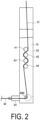
- FIGS. 1 and 2 are each a schematic view, and the scale or the like may not match the actual scale.
- Such a constitution makes it possible to provide pellets not liable to crack during production, a molded article formed from the pellets, and a method for producing pellets.
- a bundle of rayon fibers may be referred to as a rayon fiber bundle.
- a bundle of 2000 to 30000 rayon fibers arranged in parallel in the fiber length direction is used.
- a fiber bundle 1 impregnated with the thermoplastic resin is taken up in the form of a strand with a roll 2 or the like and cut to have a desired pellet length with a pelletizer 3.
- a pelletizer 3 cuts the strand by rotating in the direction A in FIG. 1 .
- energy is applied to the strand.
- fibers with too low a rigidity such as polyester fibers, do not function as reinforcing fibers.
- rayon fibers which are fibers with well-balanced rigidity and toughness, was presumed to be able to prevent the cracking of the pellets.
- thermoplastic resin to be impregnated was able to effectively prevent the cracking of the pellets. That is, the thermoplastic resin to be impregnated having a low MFR was found to make it difficult for the resin component to be impregnated into the bundle of rayon fibers and result in frequent occurrence of cracking of the pellets when the bundle passes through a take-up machine and/or a pelletizer. On the other hand, the thermoplastic resin to be impregnated having a high MFR was found to be brittle and make the pellets liable to crack. In the present embodiment, using the thermoplastic resin satisfying a given MFR was presumed to be able to prevent the cracking of the pellets.
- the pellets of the present embodiment contain a thermoplastic resin.
- the thermoplastic resin used in the present embodiment has a melt flow rate (MFR) of 70 to 200 g/10 min when measured at a temperature of 230°C and a load of 2.16 kg according to JIS K 7210.
- MFR melt flow rate
- the thermoplastic resin can be easily impregnated into the rayon fiber bundle and can effectively prevent the cracking of the pellets during production.
- the thermoplastic resin is made hard and can effectively prevent the cracking of the pellets during production.
- the MFR of the thermoplastic resin is preferably 72 g/10 min or more, more preferably 75 g/10 min or more, even more preferably 78 g/10 min or more, and still more preferably 80 g/10 min, or further may be 90 g/10 min or more or 100 g/10 min or more.
- the MFR of the thermoplastic resin is also preferably 200 g/10 min or less, more preferably 190 g/10 min or less, even more preferably 180 g/10 min or less, still more preferably 170 g/10 min or less, and yet more preferably 160 g/10 min or less, or may be 140 g/10 min or less or 120 g/10 min or less.
- the MFR is that of the mixture.
- thermoplastic resin used in the present embodiment is not particularly specified as long as the MFR is satisfied, but examples include a polyolefin resin, a polyamide resin, a styrene resin, a polycarbonate resin, poly(vinyl chloride), poly(vinylidene chloride), an acrylic resin, a polyester resin, a polyacetal resin, and a polyphenylene sulfide resin.
- the thermoplastic resin preferably contains at least one selected from polyolefin resins and polyacetal resins, more preferably contains at least one selected from polyolefin resins and polyacetal resins, and even more preferably contains a polyolefin resin.
- polystyrene resin examples include a polypropylene resin, a polyethylene resin, a poly-1-butene resin, a polyisobutylene resin, an ethylene-propylene copolymer, an ethylene-propylene-diene terpolymer (provided that the diene component as a raw material is 10 mass% or less), a poly(methylpentene) resin, a random, block, or graft copolymer of ethylene and/or propylene (provided that these components as raw materials are 50 mol% or more) and another copolymerizable monomer (such as vinyl acetate, an alkyl methacrylate, an alkyl acrylate, or an aromatic vinyl).
- a polypropylene resin examples include a polypropylene resin, a polyethylene resin, a poly-1-butene resin, a polyisobutylene resin, an ethylene-propylene copolymer, an ethylene-propylene-diene terpolymer
- thermoplastic resin When a polyolefin resin is used as the thermoplastic resin, a portion of the resin is preferably an acid-modified polyolefin resin to facilitate the impregnation into the rayon fiber bundle.
- the acid-modified polyolefin resin is preferably an acid-modified polyolefin resin modified with maleic anhydride and/or maleic acid (preferably a maleic anhydride-modified polypropylene resin).
- the acid amount in the thermoplastic resins is preferably in a range of 0.005 to 0.5 mass% on average in terms of maleic anhydride.
- the thermoplastic resin particularly preferably contains an acid-unmodified polypropylene resin and a maleic anhydride-modified polypropylene resin.
- the blend ratio (mass ratio) of the acid-unmodified polyolefin resin per part by mass of the acid-modified polyolefin resin is preferably 5 parts by mass or more, more preferably 7 parts by mass or more, even more preferably 10 parts by mass or more, and preferably 99 parts by mass or less, more preferably 70 parts by mass or less, even more preferably 60 parts by mass or less, still more preferably 50 parts by mass or less, and may be 40 parts by mass or less.
- the thermoplastic resin may contain only one each of an acid-modified polyolefin resin and an acid-unmodified polyolefin resin or may contain two or more.
- the total amount is preferably in the above range.
- the type is not particularly limited, and the polyacetal resin may be a homopolymer containing only a divalent oxymethylene group as a constituent unit or a copolymer containing a divalent oxymethylene group and a divalent oxyalkylene group having from 2 to 6 carbons as constituent units.
- Examples of the oxyalkylene group having from 2 to 6 carbons include an oxyethylene group, an oxypropylene group, and an oxybutylene group.
- the proportion of the oxyalkylene group having from 2 to 6 carbons in the total number of moles of the oxymethylene group and the oxyalkylene group having from 2 to 6 carbons is not particularly limited and is from 0.5 to 10 mol%.
- trioxane is usually used as a main raw material.
- a cyclic formal or a cyclic ether can be used.
- the cyclic formal include 1,3-dioxolane, 1,3-dioxane, 1,3-dioxepane, 1,3-dioxocane, 1,3,5-trioxepane, and 1,3,6-trioxocane
- specific examples of the cyclic ether include ethylene oxide, propylene oxide, and butylene oxide.
- 1,3-dioxolane is used as a main raw material.
- 1,3-dioxane is used as a main raw material.
- 1,3-dioxepane is used as a main raw material.
- the amount of a hemiformal end group, the amount of a formyl end group, and the amount of an end group unstable to heat, acid, and base are preferably small.
- the hemiformal end group is a group represented by -OCH2OH
- the formyl end group is a group represented by -CHO.
- thermoplastic resin in the present embodiment may contain a resin additive without departing from the spirit of the present invention.
- a resin additive include stabilizers (such as thermal stabilizers and antioxidants), ultraviolet absorbers, antistatic agents, flame retardants, flame retardant aids, antidripping agents, antifogging agents, antiblocking agents, fluidity improvers, plasticizers, dispersants, and antimicrobial agents.
- stabilizers such as thermal stabilizers and antioxidants
- ultraviolet absorbers such as thermal stabilizers and antioxidants
- antistatic agents such as thermal stabilizers and antioxidants
- flame retardants flame retardant aids
- antidripping agents such as antifogging agents, antiblocking agents
- fluidity improvers such as plasticizers, dispersants, and antimicrobial agents.
- the content of the thermoplastic resin in the pellets of the present embodiment is preferably 60 mass% or more, more preferably 62 mass% or more, even more preferably 64 mass% or more, still more preferably 66 mass% or more, and yet more preferably 67 mass% or more. With the content of not less than the lower limit values above, the strength, rigidity, and impact resistance tend to improve.
- the content of the thermoplastic resin in the pellets of the present embodiment is preferably 90 mass% or less, more preferably 85 mass% or less, even more preferably 80 mass% or less, still more preferably 75 mass% or less, and yet more preferably 70 mass% or less. With the content of not more than the upper limit values above, the impregnability and the preventive effect on strand breakage tend to improve.
- the pellets of the present embodiment may contain only one thermoplastic resin or may contain two or more. In the pellets containing two or more thermoplastic resins, the total amount is preferably in the above ranges.
- the pellets of the present embodiment contain a bundle of 2000 to 30000 rayon fibers arranged in parallel in the fiber length direction. Pellets containing long fibers are obtained by using the bundle of 2000 to 30000 rayon fibers thus aligned in the length direction and cutting the bundle as described above.
- the pellet length is usually the rayon fiber length, thus a molded article with excellent mechanical strength tends to be more easily obtained.
- the rayon fibers used in the present embodiment have a number average fiber diameter of 5 to 30 um. With the number average fiber diameter of not less than the lower limit value above, the impregnability of the thermoplastic resin into the rayon fibers and the preventive effect on strand breakage tend to improve. In addition, with the number average fiber diameter of not more than the upper limit value above, the reinforcing effect of the rayon fibers as the reinforcing fibers tend to further improve.
- the number average fiber diameter of the rayon fibers is preferably 7 um or more, more preferably 9 um or more, even more preferably 10 um or more, and still more preferably 11 um or more.
- the number average fiber diameter of the rayon fibers is preferably 28 um or less, more preferably 25 um or less, even more preferably 20 um or less, still more preferably 15 um or less, and yet more preferably 13 um or less.
- the rayon fibers used in the present embodiment preferably has an X-ray orientation of 90% or more.
- the X-ray orientation of 90% or more cellulose molecules are highly oriented in the longitudinal direction of the fibers, and the rayon fibers have a high apparent Young's modulus and a high interface strength with the thermoplastic resin, resulting in fibers with excellent properties as long fibers. That is, the rayon fibers are quite excellent as fibers for a long-fiber-reinforced resin material.
- the X-ray orientation is preferably 91% or more and more preferably 92% or more.
- the upper limit of the X-orientation may be 100% but is practically 99% or less, 98% or less, 97% or less, 96% or less, or 95% or less.
- the apparent Young's modulus of the rayon fibers used in the present embodiment is preferably 10 GPa or more, more preferably 12 GPa or more, even more preferably 14 GPa or more, still more preferably 15 GPa or more, and yet more preferably 16 GPa or more. With the apparent Young's modulus of not less than the lower limit values above, the rigidity of the pellets tends to further improve.
- the apparent Young's modulus of the rayon fibers is preferably 50 GPa or less, more preferably 45 GPa or less, even more preferably 40 GPa or less, still more preferably 36 GPa or less, and yet more preferably 35 GPa or less. With the apparent Young's modulus of not more than the upper limit values above, the reducing effect on the pellet cracking tends to further improve.
- the tensile elongation of the rayon fibers used in the present embodiment is preferably 3% or more, more preferably 5% or more, even more preferably 7% or more, still more preferably 9% or more, yet more preferably 11% or more, and still even more preferably 13% or more.
- the tensile elongation of not less than the lower limit values above the reducing effect on the pellet cracking tends to further improve.
- the tensile elongation of the rayon fibers is preferably 20% or less, more preferably 19% or less, even more preferably 18% or less, and still more preferably 17% or less. With the tensile elongation of not more than the upper limit values above, the rigidity of the pellets tends to further improve.
- the rayon fibers used in the present embodiment satisfying the above orientation, apparent Young's modulus, and tensile elongation improves the mechanical strength of the resulting molded article.
- Examples of a raw material that can be used for the rayon fibers used in the present embodiment include viscose rayon, polynosic, modal, cupra, lyocell (Tencel), Bocell, and FORTIZAN ([available from CELANESE Corporation] fibers obtained by stretching cellulose acetate and then saponifying the stretched cellulose acetate with an alkali).
- the content of the rayon fibers in the pellets of the present embodiment is preferably 10 parts by mass or more, more preferably 20 parts by mass or more, and even more preferably 30 parts by mass or more per 100 parts by mass of the thermoplastic resin. With the content of not less than the lower limit values above, the strength, rigidity, and impact resistance of the resulting molded article tend to further improve.
- the content of the rayon fibers in the pellets of the present embodiment is preferably 100 parts by mass or less, more preferably 90 parts by mass or less, even more preferably 80 parts by mass, still more preferably 70 parts by mass, and yet more preferably 60 parts by mass per 100 parts by mass of the thermoplastic resin. With the content of not more than the upper limit values above, the reducing effect on the pellet cracking of the resulting molded article tends to further improve.
- the content of the rayon fibers in the pellets of the present embodiment is preferably 10 mass% or more, more preferably 15 mass% or more, even more preferably 16 mass% or more, still more preferably 17 mass% or more, yet more preferably 18 mass% or more, and still even more preferably 19 mass% or more. With the content of not less than the lower limit values above, the strength, rigidity, and impact resistance of the resulting molded article tend to further improve.
- the content of the rayon fibers in the pellets of the present embodiment is preferably 40 mass% or less, more preferably 38 mass% or less, even more preferably 36 mass% or less, still more preferably 35 mass% or less, yet more preferably 34 mass% or less, and still even more preferably 33 mass% or less. With the content of not more than the upper limit values above, the reducing effect on the pellet cracking of the resulting molded article tends to further improve.
- the pellets of the present embodiment may contain only one type of rayon fibers or may contain two or more types. In the pellets containing two or more types of rayon fibers, the total amount is preferably in the above ranges.
- the pellets of the present embodiment are pellets containing a thermoplastic resin and a bundle of 2000 to 30000 rayon fibers arranged in parallel in the fiber length direction.
- the thermoplastic resin is impregnated into the bundle of rayon fibers.
- the thermoplastic resin is ideally impregnated into the center of the rayon fiber bundle, there may be a region not impregnated with the thermoplastic resin in the center of the rayon fiber bundle.
- the pellets of the present embodiment have a number average length of 3 to 30 mm.
- the number average fiber length of the rayon fibers contained in the pellets is usually from 3 to 30 mm.
- Such pellets are also referred to as long-fiber pellets and are known as fibers with long fiber length of the reinforcing fibers in the pellets.
- the number average length of the pellets is preferably 4 mm or more, and preferably 25 mm or less, more preferably 20 mm or less, even more preferably 15 mm or less, still more preferably 10 mm or less, yet more preferably 8 mm or less, or may be 7 mm or less.
- the number average fiber length of the rayon fibers contained in the pellets in the present embodiment is preferably the same as the number average length of the pellets.
- the above “same” is meant to include the “same” in a geometric sense as well as those regarded as the same in the technical field of the present invention.
- the number average length of the pellets and the number average fiber length of the rayon fibers can be said to be the same.
- the preferred range of the number average fiber length of the rayon fibers in the pellets is the same as the preferred range of the pellet length.
- the number of the rayon fibers constituting the rayon fiber bundle exceeds 30000, the molten thermoplastic resin cannot be impregnated into the center of the fiber bundle, and this would reduce the dispersion of the fibers and impair the appearance and mechanical strength when the fiber-reinforced resin composition is molded.
- the number of the rayon fibers is preferably 3000 or more, and more preferably 25000 or less, even more preferably 20000 or less, still more preferably 15000 or less, yet more preferably 10000 or less, still even more preferably 8000 or less, or may be 7000 or less or 6000 or less.
- the total content of the thermoplastic resin and the rayon fibers preferably accounts for 85 mass% or more, more preferably accounts for 90 mass% or more, even more preferably accounts for 95 mass% or more, still more preferably accounts for 98 mass% or more, and yet more preferably accounts for 99 mass% or more of the pellets.
- the pellets of the present embodiment can be produced by impregnating a bundle of 2000 to 30000 rayon fibers in a state of being aligned in the length direction with the thermoplastic resin in a molten state to integrate, and then cutting the integrated bundle to have a number average length of 3 to 30 mm. More specifically, the pellets of the present embodiment can be produced by adhering a thermoplastic resin in a molten state to a bundle of 2000 to 30000 rayon fibers aligned in the length direction, taking up the fibers as a strand, and cutting the strand with a pelletizer.
- the methods for producing the strand can be produced by a well-known production method.
- a method described in JP H06-313050 A , JP 2007-176227 A , JP H06-002344 B , JP H06-114832 A , JP H06-293023 A , JP H07-205317 A , JP H07-216104 A , JP H07-251437 A , JP H08-118490 A , or the like can be applied.
- the pellets of the present embodiment can be molded into a molded article.
- another component can be blended as necessary in addition to the pellets described above.
- thermoplastic resin examples include a polyolefin resin, a polyamide resin, a styrene resin, a polycarbonate resin, poly(vinyl chloride), poly(vinylidene chloride), an acrylic resin, a polyester resin, a polyacetal resin, and a polyphenylene sulfide resin, and at least one selected from polyolefin resins and polyacetal resins is preferred.
- resin additive examples of the resin additive include a low shrinkage agent, a flame retardant, a flame retardant aid, a plasticizer, an antioxidant, an ultraviolet absorber, a colorant, a pigment, and a filler.
- the pellets of the present embodiment may also be used as a pellet blend together with another type of thermoplastic resin pellets. Blending with another type of thermoplastic resin pellets can also adjust the proportion of rayon fibers in the resulting molded article.
- the pellets of the present embodiment have good dispersibility in the molten resin and thus can uniformly disperse the rayon fibers in the resulting molded article.
- the molded product of the present embodiment is formed from the pellets of the present embodiment and/or the above pellet blend.
- the rayon fibers in which cellulose molecules are highly oriented in the longitudinal direction of the fibers can be used.
- this increases the strength of the fibers and effectively prevents the rayon fibers from being shortened due to breakage.
- the fibers themselves also have high strength and elastic modulus and thus can increase the mechanical strength (such as bending modulus of elasticity) of the resulting molded article.
- the molded article obtained from the pellets of the present embodiment contains rayon fibers with a given apparent Young's modulus and is lighter than a molded article containing inorganic fibers, such as glass fibers, (that is, the density can be reduced) and thus can provide a molded article having a large specific elastic modulus (bending modulus of elasticity/density) .
- the molded article of the present embodiment can be formed into a desired shape according to the application, but the specific elastic modulus can be increased as described above.
- a molded article with lightweight and high mechanical strength can be obtained.
- a molded article with high mechanical strength can be obtained even though the thickness is, for example, from 1 to 5 mm.
- the molded article formed from the pellets of the present embodiment contains rayon fibers and thus leaves no combustion residue, such as glass fibers, even when burned.
- the molded article of the present embodiment is lightweight and has high mechanical strength (in particular, specific elastic modulus) and thus can be used as a substitute for a metal part used in various fields, such as electrical/electronic equipment, communication devices, automobiles, building materials, and daily necessities, and is particularly suitable as a housing for various equipment or a plate-shaped exterior material.
- a measuring device used in examples is difficult to obtain due to discontinuation or the like, another device with equivalent performance can be used for measurement.
- Rayon fiber bundle available from Cordenka with a product number of RT700, number average fiber diameter 13 pm, X-ray orientation 92%, number of fibers 1000, apparent Young's modulus 16 GPa, tensile elongation 16%
- Glass fiber bundle available from Nippon Electric Glass Co., Ltd. with a product number of T-431N, number average fiber diameter 17 ⁇ m, number of fibers 4000, apparent Young's modulus 74 GPa, tensile elongation 3%
- the melt flow rates of the thermoplastic resins and the resin components were measured at a temperature of 230°C and a load of 2.16 kg according to JIS K 7210. The unit is g/10 min.
- the apparatuses and conditions used in the measurement were as follows.
- the apparent Young's modulus of the rayon fibers was measured in accordance with JIS L1013 and expressed in units of GPa.
- the tensile elongation of the rayon fibers was measured in accordance with JIS L1013 at a sample fiber length of 2.5 cm and a crosshead speed of 2.5 cm/min after moisture conditioning in an atmosphere of 20°C and a relative humidity of 65% for one week and expressed in units of %.
- the fineness per fiber was measured with an automatic vibrating type fiber fineness meter (DENICON DC-21 available from Search Co., Ltd.) by attaching a 0.1-g weight to one fiber with a sample fiber length of 2.5 cm after moisture conditioning in an atmosphere of 20°C and a relative humidity of 65% for one week.
- the components except for the rayon fibers were supplied from a top feed port of a twin-screw extruder (AS type 30 m/m (trade name) available from Nakatani Machinery Ltd.) in the proportions (unit: mass%) shown in Table 1, melt-kneaded at a cylinder setting temperature of 200°C and a screw rotation speed of 10 rpm, and a melt of the resin components was obtained.
- AS type 30 m/m (trade name) available from Nakatani Machinery Ltd.) in the proportions (unit: mass%) shown in Table 1
- 2 , 31 indicates a roving
- 10 indicates a melt of resin components
- 22 indicates an impregnation die
- 41, 42, 43, and 44 indicate impregnation rolls
- 40B indicates a guide roll
- 24 indicates a nozzle
- 32 indicates a strand.
- the pellets of the present embodiment were able to effectively prevent pellet cracking during production.
Landscapes
- Chemical & Material Sciences (AREA)
- Health & Medical Sciences (AREA)
- Chemical Kinetics & Catalysis (AREA)
- Medicinal Chemistry (AREA)
- Polymers & Plastics (AREA)
- Organic Chemistry (AREA)
- Engineering & Computer Science (AREA)
- Mechanical Engineering (AREA)
- Manufacturing & Machinery (AREA)
- Materials Engineering (AREA)
- General Chemical & Material Sciences (AREA)
- Processing And Handling Of Plastics And Other Materials For Molding In General (AREA)
- Reinforced Plastic Materials (AREA)
Applications Claiming Priority (2)
| Application Number | Priority Date | Filing Date | Title |
|---|---|---|---|
| JP2021213902 | 2021-12-28 | ||
| PCT/JP2022/047396 WO2023127688A1 (ja) | 2021-12-28 | 2022-12-22 | ペレット、成形品およびペレットの製造方法 |
Publications (1)
| Publication Number | Publication Date |
|---|---|
| EP4458886A1 true EP4458886A1 (en) | 2024-11-06 |
Family
ID=86999099
Family Applications (1)
| Application Number | Title | Priority Date | Filing Date |
|---|---|---|---|
| EP22915911.6A Withdrawn EP4458886A1 (en) | 2021-12-28 | 2022-12-22 | Pellets, molded article, and pellet manufacturing method |
Country Status (6)
| Country | Link |
|---|---|
| US (1) | US20250065537A1 (https=) |
| EP (1) | EP4458886A1 (https=) |
| JP (1) | JPWO2023127688A1 (https=) |
| KR (1) | KR20240130725A (https=) |
| CN (1) | CN118434794A (https=) |
| WO (1) | WO2023127688A1 (https=) |
Family Cites Families (15)
| Publication number | Priority date | Publication date | Assignee | Title |
|---|---|---|---|---|
| JPH062344B2 (ja) | 1985-09-10 | 1994-01-12 | 株式会社神戸製鋼所 | 樹脂被覆長繊維束の製造方法並びに成形方法 |
| JP3315444B2 (ja) | 1992-10-05 | 2002-08-19 | 住友化学工業株式会社 | 繊維強化熱可塑性樹脂構造体およびその製造法 |
| JP3321240B2 (ja) | 1993-04-08 | 2002-09-03 | 住友化学工業株式会社 | 長繊維強化熱可塑性樹脂組成物の製造方法 |
| JPH06313050A (ja) | 1993-04-28 | 1994-11-08 | Aisin Chem Co Ltd | 成形材料 |
| JPH07216104A (ja) | 1994-01-26 | 1995-08-15 | Polyplastics Co | 長繊維強化樹脂構造物の製造方法 |
| JP3346872B2 (ja) | 1994-01-26 | 2002-11-18 | 住友化学工業株式会社 | 繊維束の取り出し方法および長繊維強化樹脂構造物の製造方法 |
| JPH07251437A (ja) | 1994-03-15 | 1995-10-03 | Ube Ind Ltd | 長繊維強化熱可塑性複合材料の製造方法およびその製造装置 |
| JP3670321B2 (ja) | 1994-10-18 | 2005-07-13 | 住友化学株式会社 | クロスヘッドダイおよび長繊維強化樹脂構造物の製造方法 |
| JP4606034B2 (ja) * | 2004-02-03 | 2011-01-05 | 株式会社プライムポリマー | 繊維強化ポリオレフィン系樹脂組成物及びその成形品 |
| JP4429087B2 (ja) | 2004-06-10 | 2010-03-10 | 出光興産株式会社 | 繊維強化樹脂ペレットの製造方法 |
| JP2007176227A (ja) | 2005-12-27 | 2007-07-12 | Nsk Ltd | 電動パワーステアリング装置用減速ギア |
| JP5938299B2 (ja) * | 2011-10-05 | 2016-06-22 | ダイセルポリマー株式会社 | 繊維強化樹脂組成物 |
| JP6711876B2 (ja) * | 2014-06-18 | 2020-06-17 | ダイセルポリマー株式会社 | 繊維強化樹脂組成物 |
| JP7433083B2 (ja) * | 2020-02-25 | 2024-02-19 | 三井化学株式会社 | 炭素繊維強化樹脂成形体の製造方法 |
| JP7840128B2 (ja) * | 2020-11-19 | 2026-04-03 | ポリプラスチックス株式会社 | レーヨン長繊維強化樹脂組成物 |
-
2022
- 2022-12-22 US US18/724,005 patent/US20250065537A1/en active Pending
- 2022-12-22 EP EP22915911.6A patent/EP4458886A1/en not_active Withdrawn
- 2022-12-22 WO PCT/JP2022/047396 patent/WO2023127688A1/ja not_active Ceased
- 2022-12-22 CN CN202280085806.8A patent/CN118434794A/zh active Pending
- 2022-12-22 KR KR1020247023932A patent/KR20240130725A/ko not_active Withdrawn
- 2022-12-22 JP JP2023570934A patent/JPWO2023127688A1/ja active Pending
Also Published As
| Publication number | Publication date |
|---|---|
| US20250065537A1 (en) | 2025-02-27 |
| JPWO2023127688A1 (https=) | 2023-07-06 |
| WO2023127688A1 (ja) | 2023-07-06 |
| CN118434794A (zh) | 2024-08-02 |
| KR20240130725A (ko) | 2024-08-29 |
Similar Documents
| Publication | Publication Date | Title |
|---|---|---|
| EP2764968B1 (en) | Fiber-reinforced resin composition | |
| US4713283A (en) | Reinforced composite structures | |
| EP2832798B1 (en) | Resin composite material | |
| TWI383403B (zh) | 導電性聚合型組成物,其製造方法及包含該組成物之物件 | |
| KR20100057860A (ko) | 고유전상수 열가소성 조성물, 그 제조 방법과 이를 포함한 물건 | |
| EP3159371B1 (en) | Fiber-reinforced resin composition | |
| US11931973B2 (en) | Weatherable fiber-reinforced propylene composition | |
| CN101535382A (zh) | 有机纤维增强的复合树脂组合物及有机纤维增强的复合树脂成形品 | |
| DE102007061620A1 (de) | Verfahren zur Herstellung von agglomeratfreien natur- und synthesefaserverstärkten Plastifikaten und thermoplastischen Halbzeugen über Direktverarbeitung von Endlosfasern | |
| EP3342804B1 (en) | Composite and method of preparing the same | |
| DE69511828T2 (de) | Mit langen fasern verstärkter säulenförmiger körper enthaltend langfaser verstärkte kristalline propylenharzzusammensetzung sowie daraus hergestellter propellerförmiger lüfter | |
| US10982059B2 (en) | Long fiber-reinforced propylene composition for use in a thin part | |
| EP3568431A2 (en) | High flow fiber-reinforced propylene composition having low emissions | |
| EP3875533A1 (en) | Long fiber-reinforced propylene-based resin composition and long fiber-reinforced molded body | |
| WO2021044935A1 (ja) | 樹脂組成物および成形品 | |
| EP4458886A1 (en) | Pellets, molded article, and pellet manufacturing method | |
| JP7096036B2 (ja) | 熱可塑性樹脂炭素繊維複合材料の製造方法 | |
| JP4666571B2 (ja) | ガラス長繊維強化ポリアミド樹脂成形材料及びその製造方法 | |
| CN119431946A (zh) | 聚丙烯树脂组合物及包含其的模制产品 | |
| DE102004061767A1 (de) | Thermoplastischer Verbundwerkstoff und Verfahren zu dessen Herstellung | |
| JP7073115B2 (ja) | ペレット | |
| Biswas et al. | Comparative study of zeolite-filled LLDPE and HDPE composite films | |
| JP2009114331A (ja) | 長繊維強化複合樹脂組成物および成形品 | |
| JP2006016462A (ja) | 長繊維強化ポリアミド樹脂成形用組成物及び成形体の製造方法。 | |
| EP4299666A1 (en) | Glass fiber-reinforced propylene-based resin composition |
Legal Events
| Date | Code | Title | Description |
|---|---|---|---|
| STAA | Information on the status of an ep patent application or granted ep patent |
Free format text: STATUS: THE INTERNATIONAL PUBLICATION HAS BEEN MADE |
|
| PUAI | Public reference made under article 153(3) epc to a published international application that has entered the european phase |
Free format text: ORIGINAL CODE: 0009012 |
|
| STAA | Information on the status of an ep patent application or granted ep patent |
Free format text: STATUS: REQUEST FOR EXAMINATION WAS MADE |
|
| 17P | Request for examination filed |
Effective date: 20240716 |
|
| AK | Designated contracting states |
Kind code of ref document: A1 Designated state(s): AL AT BE BG CH CY CZ DE DK EE ES FI FR GB GR HR HU IE IS IT LI LT LU LV MC ME MK MT NL NO PL PT RO RS SE SI SK SM TR |
|
| DAV | Request for validation of the european patent (deleted) | ||
| DAX | Request for extension of the european patent (deleted) | ||
| STAA | Information on the status of an ep patent application or granted ep patent |
Free format text: STATUS: THE APPLICATION HAS BEEN WITHDRAWN |
|
| 18W | Application withdrawn |
Effective date: 20251112 |