EP4293753A1 - Verfahren zur herstellung eines beschichtungsmodifizierten ternären positiven elektrodenmaterials mit hohem nickelgehalt und hergestelltes material - Google Patents
Verfahren zur herstellung eines beschichtungsmodifizierten ternären positiven elektrodenmaterials mit hohem nickelgehalt und hergestelltes material Download PDFInfo
- Publication number
- EP4293753A1 EP4293753A1 EP22766161.8A EP22766161A EP4293753A1 EP 4293753 A1 EP4293753 A1 EP 4293753A1 EP 22766161 A EP22766161 A EP 22766161A EP 4293753 A1 EP4293753 A1 EP 4293753A1
- Authority
- EP
- European Patent Office
- Prior art keywords
- modified
- cathode material
- nickel ternary
- ternary cathode
- coating
- Prior art date
- Legal status (The legal status is an assumption and is not a legal conclusion. Google has not performed a legal analysis and makes no representation as to the accuracy of the status listed.)
- Pending
Links
Images

Classifications
-
- H—ELECTRICITY
- H01—ELECTRIC ELEMENTS
- H01M—PROCESSES OR MEANS, e.g. BATTERIES, FOR THE DIRECT CONVERSION OF CHEMICAL ENERGY INTO ELECTRICAL ENERGY
- H01M4/00—Electrodes
- H01M4/02—Electrodes composed of, or comprising, active material
- H01M4/36—Selection of substances as active materials, active masses, active liquids
- H01M4/362—Composites
- H01M4/366—Composites as layered products
-
- C—CHEMISTRY; METALLURGY
- C01—INORGANIC CHEMISTRY
- C01G—COMPOUNDS CONTAINING METALS NOT COVERED BY SUBCLASSES C01D OR C01F
- C01G53/00—Compounds of nickel
- C01G53/40—Complex oxides containing nickel and at least one other metal element
- C01G53/42—Complex oxides containing nickel and at least one other metal element containing alkali metals, e.g. LiNiO2
- C01G53/44—Complex oxides containing nickel and at least one other metal element containing alkali metals, e.g. LiNiO2 containing manganese
- C01G53/50—Complex oxides containing nickel and at least one other metal element containing alkali metals, e.g. LiNiO2 containing manganese of the type (MnO2)n-, e.g. Li(NixMn1-x)O2 or Li(MyNixMn1-x-y)O2
-
- H—ELECTRICITY
- H01—ELECTRIC ELEMENTS
- H01M—PROCESSES OR MEANS, e.g. BATTERIES, FOR THE DIRECT CONVERSION OF CHEMICAL ENERGY INTO ELECTRICAL ENERGY
- H01M10/00—Secondary cells; Manufacture thereof
- H01M10/05—Accumulators with non-aqueous electrolyte
- H01M10/052—Li-accumulators
- H01M10/0525—Rocking-chair batteries, i.e. batteries with lithium insertion or intercalation in both electrodes; Lithium-ion batteries
-
- H—ELECTRICITY
- H01—ELECTRIC ELEMENTS
- H01M—PROCESSES OR MEANS, e.g. BATTERIES, FOR THE DIRECT CONVERSION OF CHEMICAL ENERGY INTO ELECTRICAL ENERGY
- H01M4/00—Electrodes
- H01M4/02—Electrodes composed of, or comprising, active material
- H01M4/13—Electrodes for accumulators with non-aqueous electrolyte, e.g. for lithium-accumulators; Processes of manufacture thereof
- H01M4/131—Electrodes based on mixed oxides or hydroxides, or on mixtures of oxides or hydroxides, e.g. LiCoOx
-
- H—ELECTRICITY
- H01—ELECTRIC ELEMENTS
- H01M—PROCESSES OR MEANS, e.g. BATTERIES, FOR THE DIRECT CONVERSION OF CHEMICAL ENERGY INTO ELECTRICAL ENERGY
- H01M4/00—Electrodes
- H01M4/02—Electrodes composed of, or comprising, active material
- H01M4/13—Electrodes for accumulators with non-aqueous electrolyte, e.g. for lithium-accumulators; Processes of manufacture thereof
- H01M4/139—Processes of manufacture
- H01M4/1391—Processes of manufacture of electrodes based on mixed oxides or hydroxides, or on mixtures of oxides or hydroxides, e.g. LiCoOx
-
- H—ELECTRICITY
- H01—ELECTRIC ELEMENTS
- H01M—PROCESSES OR MEANS, e.g. BATTERIES, FOR THE DIRECT CONVERSION OF CHEMICAL ENERGY INTO ELECTRICAL ENERGY
- H01M4/00—Electrodes
- H01M4/02—Electrodes composed of, or comprising, active material
- H01M4/36—Selection of substances as active materials, active masses, active liquids
- H01M4/48—Selection of substances as active materials, active masses, active liquids of inorganic oxides or hydroxides
- H01M4/50—Selection of substances as active materials, active masses, active liquids of inorganic oxides or hydroxides of manganese
- H01M4/505—Selection of substances as active materials, active masses, active liquids of inorganic oxides or hydroxides of manganese of mixed oxides or hydroxides containing manganese for inserting or intercalating light metals, e.g. LiMn2O4 or LiMn2OxFy
-
- H—ELECTRICITY
- H01—ELECTRIC ELEMENTS
- H01M—PROCESSES OR MEANS, e.g. BATTERIES, FOR THE DIRECT CONVERSION OF CHEMICAL ENERGY INTO ELECTRICAL ENERGY
- H01M4/00—Electrodes
- H01M4/02—Electrodes composed of, or comprising, active material
- H01M4/36—Selection of substances as active materials, active masses, active liquids
- H01M4/48—Selection of substances as active materials, active masses, active liquids of inorganic oxides or hydroxides
- H01M4/52—Selection of substances as active materials, active masses, active liquids of inorganic oxides or hydroxides of nickel, cobalt or iron
- H01M4/525—Selection of substances as active materials, active masses, active liquids of inorganic oxides or hydroxides of nickel, cobalt or iron of mixed oxides or hydroxides containing iron, cobalt or nickel for inserting or intercalating light metals, e.g. LiNiO2, LiCoO2 or LiCoOxFy
-
- H—ELECTRICITY
- H01—ELECTRIC ELEMENTS
- H01M—PROCESSES OR MEANS, e.g. BATTERIES, FOR THE DIRECT CONVERSION OF CHEMICAL ENERGY INTO ELECTRICAL ENERGY
- H01M4/00—Electrodes
- H01M4/02—Electrodes composed of, or comprising, active material
- H01M4/62—Selection of inactive substances as ingredients for active masses, e.g. binders, fillers
-
- C—CHEMISTRY; METALLURGY
- C01—INORGANIC CHEMISTRY
- C01P—INDEXING SCHEME RELATING TO STRUCTURAL AND PHYSICAL ASPECTS OF SOLID INORGANIC COMPOUNDS
- C01P2006/00—Physical properties of inorganic compounds
- C01P2006/40—Electric properties
-
- H—ELECTRICITY
- H01—ELECTRIC ELEMENTS
- H01M—PROCESSES OR MEANS, e.g. BATTERIES, FOR THE DIRECT CONVERSION OF CHEMICAL ENERGY INTO ELECTRICAL ENERGY
- H01M4/00—Electrodes
- H01M4/02—Electrodes composed of, or comprising, active material
- H01M2004/026—Electrodes composed of, or comprising, active material characterised by the polarity
- H01M2004/028—Positive electrodes
-
- Y—GENERAL TAGGING OF NEW TECHNOLOGICAL DEVELOPMENTS; GENERAL TAGGING OF CROSS-SECTIONAL TECHNOLOGIES SPANNING OVER SEVERAL SECTIONS OF THE IPC; TECHNICAL SUBJECTS COVERED BY FORMER USPC CROSS-REFERENCE ART COLLECTIONS [XRACs] AND DIGESTS
- Y02—TECHNOLOGIES OR APPLICATIONS FOR MITIGATION OR ADAPTATION AGAINST CLIMATE CHANGE
- Y02E—REDUCTION OF GREENHOUSE GAS [GHG] EMISSIONS, RELATED TO ENERGY GENERATION, TRANSMISSION OR DISTRIBUTION
- Y02E60/00—Enabling technologies; Technologies with a potential or indirect contribution to GHG emissions mitigation
- Y02E60/10—Energy storage using batteries
Definitions
- the present disclosure relates to the technical field of lithium-ion battery positive electrode materials, and in particular to a method for preparing a coating-modified high-nickel ternary cathode material, and a prepared material.
- Lithium-ion batteries have developed rapidly because of their special advantages and great attention to high energy storage systems in academia and industry. Especially, with the expansion of LIBs application, it has become an inevitable development trend to realize high volume energy density and power density. Due to the advantages of its high specific capacity, energy density and power density, etc, a ternary layered positive electrode material has become the research focus of lithium-ion battery positive electrode materials in recent years. With the increase of the nickel content in a nickel-based ternary cathode material, the specific capacity of the material will be greatly improved, but the decrease of the cobalt content will lead to the deterioration of the stability of the material.
- Dry doping and coating modification mainly involves use of oxides, such as nano tungsten oxide, tantalum oxide, lanthanum oxide, etc. These oxides are higher in price.
- the process of preparing the modified material still involves sintering, rather than simple mixing and compounding.
- fresh interface exposure tends to occur due to high compaction, which affects the comprehensive performance.
- a patent application with a publication number CN109390579A discloses a method for preparing a carbon-coated high-nickel ternary cathode material by dry and wet processes.
- the dry coating process cannot ensure a homogeneous coating or ensure that all coatings are converted into lithium-containing oxides, which affects the interface stability and the comprehensive performance of the battery.
- the conventional wet coating process may result in a large amount of wastewater, which virtually increases the manufacturing costs.
- the technical problems to be solved by the present disclosure lies in that: the dry coating process in the prior art cannot ensure a homogeneous and continuous coating, which affects the interface stability and the comprehensive performance of the battery; and the conventional wet coating process may result in a large amount of wastewater, which virtually increases the manufacturing costs.
- the present disclosure solves the above technical problems by the following technical means:
- the present disclosure provides a method for preparing a coating-modified high-nickel ternary cathode material, including the following steps:
- Spray drying is used in the present disclosure for curing and film formation, so a polymer coating layer is continuous and homogeneous, which provides the material with good mechanical properties.
- structural changes caused by a reduced cobalt content can be inhibited.
- a large amount of wastewater resulting from a wet coating process is reduced, and the manufacturing costs are reduced.
- the polymer film provided by the present disclosure has excellent elasticity and ductility, and structural stability can be ensured when the material is squeezed, thereby improving the mechanical properties of the film formed by the polymer.
- the obtained polymer has excellent electrochemical stability, and thus can effectively prevent the positive electrode material from directly contacting the electrolyte when being coated on the surface of the positive electrode material, thereby reducing side reactions.
- the lignin-amine is innovatively used to modify the polymer matrix, and the spray drying process is used to prepare the coating-modified positive electrode material.
- the prepared high-nickel positive electrode material has significantly improved cycling stability, which provides a new direction for industrial production.
- Lignin is one of the three main components in plant fiber raw materials, second only to cellulose in content, and has a three-dimensional network structure. There are active groups such as aromatic groups, phenolic hydroxyl groups, alcoholic hydroxyl groups, carbonyl groups, methoxy groups, carboxyl groups and conjugated double bonds in lignin molecules, which can carry out various chemical reactions, making the lignin a potential chemical raw material. However, the lignin has a low reactivity.
- the modified lignin-amine is used instead of the amine chain extender.
- the harm to the human body and environment in the synthesis process can be reduced.
- the lignin has such characteristics that can give the polymer a more stable structure.
- the lignin required in the preparation of the present disclosure is cheap, accessible and extensive, and the method provided by the present disclosure is simple and efficient and has wide application prospects in the field of lithium-ion batteries.
- the polymer emulsion can form a film on its own, but with a very low speed; but with the spray drying, the film can be formed more efficiently and faster, and the type of the polymer can hardly affect the speed of film formation.
- a method for preparing the modified polymer emulsion includes the following steps:
- a mass ratio of the lignin, the organic amine, the deionized water, the formaldehyde and the isopropanol is 1:(1 to 3):(5 to 15):(1 to 3):(20 to 40).
- the mass ratio of the lignin, the organic amine, the deionized water, the formaldehyde and the isopropanol is 1:1.5:10:1.5:28.
- the organic amine is diethanolamine.
- the diisocyanate includes one or all of isophorone diisocyanate, hexamethylene diisocyanate, toluene diisocyanate, 4,4'-diphenylmethane diisocyanate and 4,4'-dicyclohexylmethane diisocyanate.
- the diisocyanate is isophorone diisocyanate.
- the dihydric alcohol includes one or all of polyoxypropylene glycol, trimethylolpropane-polyethylene glycol monomethyl ether, polycarbonate diol and poly(neopentyl glycol adipate).
- a number average molecular weight of the macromolecular dihydric alcohol is 1000 to 3000.
- the dihydric alcohol is trimethylolpropane-polyethylene glycol monomethyl ether.
- the synthesized polymer is a nonionic polymer.
- the dihydric alcohol has a comb structure, which can provide a stable network structure for the polymer as compared with a single segment.
- the synthesized nonionic polymer has good solvent resistance and ion resistance.
- the catalyst includes one or all of stannous octoate, di(dodecylthio)dibutyltin and dibutyltin diacetate.
- the chain extender includes one or all of 1,4-butanediol, diethylene glycol, dimethylolpropionic acid and neopentyl glycol.
- the catalyst is stannous octoate
- the chain extender is diethylene glycol
- a mass ratio of the catalyst to the modified lignin-amine to the catalyst, the modified lignin-amine, the chain extender, the diisocyanate, the dihydric alcohol and the deionized water is 1:(2 to 4):(15 to 35):(30 to 60):(200 to 500):(1500 to 2000).
- the mass ratio of the catalyst to the modified lignin-amine to the catalyst, the modified lignin-amine, the chain extender, the diisocyanate, the dihydric alcohol and the deionized water is 1:2.54:24.48:51.64:447.76:1716.46.
- a molecular formula of the high-nickel ternary cathode material is LiNi 1-x-y Co x M y O 2 , where O ⁇ x ⁇ 0.2, 0 ⁇ y ⁇ 0.2, and M is one or all of Al, Mn or Mg.
- a mass ratio of the high-nickel ternary cathode material to the modified polymer emulsion is (1 to 20):1.
- the present disclosure further provides a coating-modified high-nickel ternary cathode material prepared by the preparation method described above.
- the advantages of the present disclosure lie in that spray drying is used in the present disclosure for curing and film formation, so the polymer coating layer is continuous and homogeneous, which provides the material with good mechanical properties. Thus, structural changes caused by a reduced cobalt content can be inhibited. In addition, a large amount of wastewater resulting from a wet coating process is reduced, and the manufacturing costs are reduced.
- the obtained polymer has excellent electrochemical stability, and thus can effectively prevent the positive electrode material from directly contacting the electrolyte when being coated on the surface of the positive electrode material, thereby reducing side reactions.
- the lignin-amine is innovatively used to modify the polymer matrix, and the spray drying process is used to prepare the coating-modified positive electrode material.
- the high-nickel positive electrode material prepared by the method has significantly improved cycling stability, which provides a new direction for industrial production.
- test materials, reagents and the like used in the following examples are commercially available unless otherwise specified.
- a method for preparing a coating-modified high-nickel ternary cathode material specifically included the following steps:
- a lignin, a diethanolamine and a deionized water were weighed according to a mass ratio of 1:1.5:10 and mixed uniformly.
- a pH was adjusted to 9 with an ammonia water.
- a formaldehyde was added to the resulting solution, and the mixture was heated to 60°C to react for 4 h. Isopropanol was added to obtain a brown precipitate. After vacuum filtration, the solid was washed with isopropanol 4 times and vacuum-dried at 60°C for 2 h to obtain the modified lignin-amine, named L-DEA.
- L-DEA modified lignin-amine
- Trimethylolpropane-polyethylene glycol monomethyl ether and isophorone diisocyanate that had been dehydrated in a vacuum were added to a four-neck flask equipped with a polytetrafluoroethylene stirring rod, a spherical condenser tube and a thermometer, stirred uniformly, and slowly heated to 92°C to react at a constant temperature for 2 h.
- the resulting mixture was cooled with ice water to 40°C, stannous octoate and diethylene glycol were added, and the mixture was heated to 82°C to react for 4 h.
- a high-nickel ternary cathode material LiNi 0.85 Co 0.10 Mn 0.05 O 2 was added to the modified polymer emulsion.
- a mass ratio of the positive electrode material to the emulsion was 3:1. Spray drying was carried out for curing and film formation, thereby obtaining the coating-modified high-nickel ternary cathode material.
- Lithium hexafluorophosphate was added to the polymer emulsion prepared in S2 of step 1. After film formation, a steel sheet, an adhesive film and a lithium sheet were assembled. Linear sweep voltammetry (LSV) testing was carried out under a decomposition voltage of 4.74 V.
- the polymer-coated LiNi 0.80 Co 0.10 Mn 0.10 O 2 material obtained above, a conductive agent (SP) and a binder (PVDF) in a mass ratio of 95:3:2 were used to produce an electrode N-methylpyrrolidone (NMP) as a solvent.
- NMP N-methylpyrrolidone
- the solution was applied to a carbon-coated aluminum foil, dried at 100°C for 5 h and compacted on a roller press.
- the lithium sheet serving as a negative electrode, a 1 M LiPF 6 solution serving as an electrolyte and Cellgard 2300 serving as a separator were assembled with the above positive electrode to form a button battery. Under a cut-off voltage of 2.75 to 4.3 V, the button battery was charged and discharged at a rate of 1 C.
- the specific capacity was 192.2mAh•g -1 , and the Cycle-50 capacity retention was 97.8%.
- a method for preparing a coating-modified high-nickel ternary cathode material specifically included the following steps:
- a high-nickel ternary cathode material LiNi 0.85 Co 0.10 Mn 0.05 O 2 was added to the modified polymer emulsion.
- a mass ratio of the positive electrode material to the emulsion was 5:1.
- Spray drying was carried out for curing and film formation, thereby obtaining the coating-modified high-nickel ternary cathode material.
- the button battery was assembled by using the above positive electrode. Under a cut-off voltage of 2.75 to 4.3 V, the button battery was charged and discharged at a rate of 1 C. The specific capacity was 193.8mAh•g -1 , and the Cycle-50 capacity retention was 98.8%. Lithium hexafluorophosphate was added to the prepared polymer emulsion. After film formation, a steel sheet, an adhesive film and a lithium sheet were assembled. LSV testing was carried out under a decomposition voltage of 4.80 V.
- a method for preparing a coating-modified high-nickel ternary cathode material specifically included the following steps:
- a high-nickel ternary cathode material LiNi 0.85 Co 0.10 Mn 0.05 O 2 was added to the modified polymer emulsion.
- a mass ratio of the positive electrode material to the emulsion was 8:1.
- Spray drying was carried out for curing and film formation, thereby obtaining the coating-modified high-nickel ternary cathode material.
- the button battery was assembled by using the above positive electrode. Under a cut-off voltage of 2.75 to 4.3 V, the button battery was charged and discharged at a rate of 1 C. The specific capacity was 195.9mAh•g -1 , and the Cycle-50 capacity retention was 99.3%. Lithium hexafluorophosphate was added to the prepared polymer emulsion. After film formation, a steel sheet, an adhesive film and a lithium sheet were assembled. LSV testing was carried out under a decomposition voltage of 4.96 V.
- a method for preparing a coating-modified high-nickel ternary cathode material specifically included the following steps:
- a high-nickel ternary cathode material LiNi 0.85 Co 0.10 Mn 0.05 O 2 was added to the modified polymer emulsion.
- a mass ratio of the positive electrode material to the emulsion was 10:1.
- Spray drying was carried out for curing and film formation, thereby obtaining the coating-modified high-nickel ternary cathode material.
- the button battery was assembled by using the above positive electrode. Under a cut-off voltage of 2.75 to 4.3 V, the button battery was charged and discharged at a rate of 1 C. The specific capacity was 192.4mAh•g -1 , and the Cycle-50 capacity retention was 98.1%. Lithium hexafluorophosphate was added to the prepared polymer emulsion. After film formation, a steel sheet, an adhesive film and a lithium sheet were assembled. LSV testing was carried out under a decomposition voltage of 4.87 V.
- This comparative example was different from Example 3 in that the dihydric alcohol was polycarbonate diol.
- the button battery was assembled by using the above positive electrode. Under a cut-off voltage of 2.75 to 4.3 V, the button battery was charged and discharged at a rate of 1 C. The specific capacity was 189.7mAh•g -1 , and the Cycle-50 capacity retention was 96.3%. Lithium hexafluorophosphate was added to the prepared polymer emulsion. After film formation, a steel sheet, an adhesive film and a lithium sheet were assembled. LSV testing was carried out under a decomposition voltage of 4.63 V.
- This comparative example was different from Example 3 in that the dihydric alcohol was poly(neopentyl glycol adipate).
- the button battery was assembled by using the above positive electrode. Under a cut-off voltage of 2.75 to 4.3 V, the button battery was charged and discharged at a rate of 1 C. The specific capacity was 184.1mAh•g -1 , and the Cycle-50 capacity retention was 95.7%. Lithium hexafluorophosphate was added to the prepared polymer emulsion. After film formation, a steel sheet, an adhesive film and a lithium sheet were assembled. LSV testing was carried out under a decomposition voltage of 4.60 V.
- This comparative example was different from Example 3 in that triethylamine was used as the amine chain extender instead of the lignin-amine.
- the button battery was assembled by using the above positive electrode. Under a cut-off voltage of 2.75 to 4.3 V, the button battery was charged and discharged at a rate of 1 C. The specific capacity was 185.2mAh•g -1 , and the Cycle-50 capacity retention was 93.3%. Lithium hexafluorophosphate was added to the prepared polymer emulsion. After film formation, a steel sheet, an adhesive film and a lithium sheet were assembled. LSV testing was carried out under a decomposition voltage of 4.52 V.
- This comparative example was a blank comparative example, i.e., the unmodified LiNi 0.85 Co 0.10 Mn 0.05 O 2 high-nickel ternary cathode material was used.
- the button battery was assembled by using the above positive electrode. Under a cut-off voltage of 2.75 to 4.3 V, the button battery was charged and discharged at a rate of 1 C.
- the specific capacity was 182.1mAh•g -1 , and the Cycle-50 capacity retention was 90.9%.
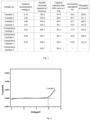
- Fig. 2 shows a curve of LSV testing according to Example 3 of the present disclosure.
- Fig. 3 shows curves of cycle testing of Example 3 and Example 4 at a rate of 1 C of the present disclosure.
- the oxidative decomposition voltages of Examples 1 to 4 of the present disclosure were significantly improved as compared with the comparative examples. From the results of the cyclic charging and discharging testing, the discharge capacities and capacity retentions after the 50th cycle in Examples 1 to 4 were greatly improved.
- the ternary cathode material prepared by the method of the present disclosure has higher capacity retention, and excellent mechanical strength and elongation at break.
Landscapes
- Chemical & Material Sciences (AREA)
- Chemical Kinetics & Catalysis (AREA)
- Electrochemistry (AREA)
- General Chemical & Material Sciences (AREA)
- Inorganic Chemistry (AREA)
- Composite Materials (AREA)
- Engineering & Computer Science (AREA)
- Materials Engineering (AREA)
- Organic Chemistry (AREA)
- Manufacturing & Machinery (AREA)
- Battery Electrode And Active Subsutance (AREA)
Applications Claiming Priority (2)
| Application Number | Priority Date | Filing Date | Title |
|---|---|---|---|
| CN202110271669.4A CN112803008B (zh) | 2021-03-12 | 2021-03-12 | 一种包覆改性高镍三元正极材料的制备方法、制得的材料 |
| PCT/CN2022/077706 WO2022188635A1 (zh) | 2021-03-12 | 2022-02-24 | 一种包覆改性高镍三元正极材料的制备方法、制得的材料 |
Publications (2)
| Publication Number | Publication Date |
|---|---|
| EP4293753A1 true EP4293753A1 (de) | 2023-12-20 |
| EP4293753A4 EP4293753A4 (de) | 2025-07-16 |
Family
ID=75815510
Family Applications (1)
| Application Number | Title | Priority Date | Filing Date |
|---|---|---|---|
| EP22766161.8A Pending EP4293753A4 (de) | 2021-03-12 | 2022-02-24 | Verfahren zur herstellung eines beschichtungsmodifizierten ternären positiven elektrodenmaterials mit hohem nickelgehalt und hergestelltes material |
Country Status (4)
| Country | Link |
|---|---|
| US (1) | US20240072245A1 (de) |
| EP (1) | EP4293753A4 (de) |
| CN (1) | CN112803008B (de) |
| WO (1) | WO2022188635A1 (de) |
Families Citing this family (5)
| Publication number | Priority date | Publication date | Assignee | Title |
|---|---|---|---|---|
| CN112803008B (zh) * | 2021-03-12 | 2022-02-01 | 合肥国轩高科动力能源有限公司 | 一种包覆改性高镍三元正极材料的制备方法、制得的材料 |
| CN115548248B (zh) * | 2021-06-29 | 2024-09-10 | 比亚迪股份有限公司 | 一种正极复合材料及其制备方法、正极极片和全固态锂电池 |
| CN113823799B (zh) * | 2021-09-26 | 2023-10-20 | 珠海冠宇电池股份有限公司 | 一种有机包覆层及含有该包覆层的电极活性材料和锂离子电池 |
| CN115513460B (zh) * | 2022-09-30 | 2024-06-14 | 湖南长远锂科新能源有限公司 | 包覆剂及其制备方法、以及正极材料及其包覆改性方法 |
| CN118943338B (zh) * | 2024-09-06 | 2025-10-28 | 中南大学 | 原位聚合包覆改性超高镍三元材料及其制备方法和应用 |
Family Cites Families (23)
| Publication number | Priority date | Publication date | Assignee | Title |
|---|---|---|---|---|
| JP4487505B2 (ja) * | 2003-07-04 | 2010-06-23 | 株式会社ジーエス・ユアサコーポレーション | 鉛蓄電池 |
| CN100478375C (zh) * | 2006-10-13 | 2009-04-15 | 武汉理工大学 | 一种木质素改性水性聚氨酯的制备方法 |
| US8076026B2 (en) * | 2010-02-05 | 2011-12-13 | International Battery, Inc. | Rechargeable battery using an aqueous binder |
| CN102361071A (zh) * | 2011-06-27 | 2012-02-22 | 湖南中天新能源有限公司 | 一种改性LiFePO4锂离子电池正极材料的制备方法 |
| WO2014021887A1 (en) * | 2012-08-01 | 2014-02-06 | Empire Technology Development Llc | Water based lignin epoxy resins, methods of using and making the same |
| CN102827341B (zh) * | 2012-08-29 | 2014-04-02 | 中科院广州化学有限公司 | 一种木素胺改性水性聚氨酯材料及其制备方法与应用 |
| US10553860B2 (en) * | 2014-06-20 | 2020-02-04 | Sumitomo Metal Mining Co., Ltd. | Covered lithium-nickel composite oxide particles, and method for manufacturing covered lithium-nickel composite oxide particles |
| CN104269526A (zh) * | 2014-09-19 | 2015-01-07 | 易高环保能源研究院有限公司 | 钠离子电池用聚丙烯腈/木质素碳纳米纤维电极的制备 |
| CN105336911A (zh) * | 2015-05-10 | 2016-02-17 | 北京化工大学 | 一种采用木质素包覆改性锂离子电池石墨负极材料的方法 |
| CN106276848B (zh) * | 2016-07-19 | 2018-02-27 | 华南理工大学 | 一种以木质素为原料氮掺杂碳球及其制备方法与应用 |
| CN107732158B (zh) * | 2017-09-06 | 2025-06-06 | 深圳市比克动力电池有限公司 | 锂离子电池负极极片制备方法、负极极片及锂离子电池 |
| CN107768653B (zh) * | 2017-10-26 | 2020-08-14 | 深圳齐锂纳米科技有限公司 | 一种锂离子电池负极浆料、负极材料、锂离子电池及其制备方法 |
| CN110021737A (zh) * | 2018-01-09 | 2019-07-16 | 南方科技大学 | 硅碳负极材料及其制备方法、锂离子电池 |
| CN109390579B (zh) | 2018-06-29 | 2022-06-03 | 福建金山锂科新材料有限公司 | 一种干法和湿法碳包覆高镍三元正极材料的制备方法 |
| CN109088066A (zh) * | 2018-09-26 | 2018-12-25 | 龙能科技如皋市有限公司 | 一种镍钴锰酸锂复合材料及其制备方法 |
| JP7158269B2 (ja) * | 2018-12-20 | 2022-10-21 | 太平洋セメント株式会社 | 二次電池用正極活物質及びその製造方法 |
| CN110021742A (zh) * | 2019-03-30 | 2019-07-16 | 苏州宇量电池有限公司 | 一种镍钴锰酸锂复合材料及其制备方法 |
| CN110093091B (zh) * | 2019-05-29 | 2021-07-06 | 中科广化(重庆)新材料研究院有限公司 | 一种季胺化木质素/α-磷酸锆基复合防腐涂料及其制备方法与应用 |
| CN110606988B (zh) * | 2019-10-15 | 2021-03-02 | 福州大学 | 一种木质素改性石墨烯材料及其制备方法和应用 |
| CN111653766B (zh) * | 2020-06-15 | 2022-10-04 | 郑州大学 | 一种用于水系锌离子电池正极的木质素和金属原子共掺杂MnO2材料及其制备方法与应用 |
| CN111848977A (zh) * | 2020-08-06 | 2020-10-30 | 江南大学 | 一种改性木质素、制备方法及其在增韧阻燃复合材料中的应用 |
| CN112010279B (zh) * | 2020-08-17 | 2021-09-07 | 华南农业大学 | 一种三维多孔碳气凝胶材料的制备方法及其在锂硫电池中的应用 |
| CN112803008B (zh) * | 2021-03-12 | 2022-02-01 | 合肥国轩高科动力能源有限公司 | 一种包覆改性高镍三元正极材料的制备方法、制得的材料 |
-
2021
- 2021-03-12 CN CN202110271669.4A patent/CN112803008B/zh active Active
-
2022
- 2022-02-24 WO PCT/CN2022/077706 patent/WO2022188635A1/zh not_active Ceased
- 2022-02-24 EP EP22766161.8A patent/EP4293753A4/de active Pending
- 2022-02-24 US US18/280,271 patent/US20240072245A1/en active Pending
Also Published As
| Publication number | Publication date |
|---|---|
| CN112803008B (zh) | 2022-02-01 |
| US20240072245A1 (en) | 2024-02-29 |
| CN112803008A (zh) | 2021-05-14 |
| WO2022188635A1 (zh) | 2022-09-15 |
| EP4293753A4 (de) | 2025-07-16 |
Similar Documents
| Publication | Publication Date | Title |
|---|---|---|
| EP4293753A1 (de) | Verfahren zur herstellung eines beschichtungsmodifizierten ternären positiven elektrodenmaterials mit hohem nickelgehalt und hergestelltes material | |
| CN112864369B (zh) | 一种改性高镍三元正极材料及其制备方法 | |
| CN106700013B (zh) | 一种强极性聚合物粘结剂、合成方法及其在锂电池中的应用 | |
| CN110429269A (zh) | 一种共混聚合物包覆的高镍三元正极材料及其制备方法 | |
| CN113363414B (zh) | 一种使用多层包覆三元正极材料的锂离子电池正极片及其制备方法 | |
| CN117894990B (zh) | 一种硅基负极水系粘结剂及其制备方法和应用 | |
| CN104364948A (zh) | 电极保护膜形成剂 | |
| CN110627997A (zh) | 锂离子电池用热塑性聚氨酯粘结剂及其制备方法和应用 | |
| CN114725349A (zh) | 一种锂离子电池改性正极材料的制备、制得材料的应用 | |
| CN102569724B (zh) | 一种用于锂离子电池正极的复合材料的制备方法 | |
| CN116845351A (zh) | 一种自修复聚合物电解质的可控制备方法 | |
| CN117363304B (zh) | 一种用于锂离子电池极片的聚氨酯粘结剂及其制备方法和应用 | |
| CN120137166A (zh) | 水溶性聚酰亚胺及其制备方法和应用 | |
| EP4696756A1 (de) | Sekundärbatteriebinder, negativelektrodenaufschlämmung, elektrodenfolie und sekundärbatterie | |
| CN115347181B (zh) | 一种二氧化锰/醌聚合物复合材料的制备方法及其锌离子存储应用 | |
| CN118126316A (zh) | 一种基于苯醌的有机聚合物电极材料及其制备方法与应用 | |
| CN115536810A (zh) | 一种光固化水性聚氨酯乳液、锂离子电池负极材料及其制备方法和应用 | |
| CN115803929A (zh) | 用于制备固体电解质的组合物、固体电解质和使用其的锂二次电池 | |
| CN117510924B (zh) | 一种中空锆基金属有机框架交联型复合固态电解质、制备方法及应用 | |
| CN118763177B (zh) | 一种补钠添加剂及其在钠离子电池中的用途 | |
| CN115894856B (zh) | 一种具有分子滑轮作用的导离子型聚合物硅负极粘结剂及其制备方法 | |
| CN118572183A (zh) | 一种可自修复纳米复合聚合物电解质的制备及采用该电解质的锂电池 | |
| CN121086221A (zh) | 一种聚芳醚醌型有机正极材料的制备及其在锂离子电池中的应用 | |
| CN118763225A (zh) | 一种用于干式电极的具有交联结构的聚氨酯粘结剂 | |
| CN119661805A (zh) | 一种聚氨酯基聚合物及其制备方法和应用、粘结剂、锂硫电池正极材料 |
Legal Events
| Date | Code | Title | Description |
|---|---|---|---|
| STAA | Information on the status of an ep patent application or granted ep patent |
Free format text: STATUS: THE INTERNATIONAL PUBLICATION HAS BEEN MADE |
|
| PUAI | Public reference made under article 153(3) epc to a published international application that has entered the european phase |
Free format text: ORIGINAL CODE: 0009012 |
|
| STAA | Information on the status of an ep patent application or granted ep patent |
Free format text: STATUS: REQUEST FOR EXAMINATION WAS MADE |
|
| 17P | Request for examination filed |
Effective date: 20230912 |
|
| AK | Designated contracting states |
Kind code of ref document: A1 Designated state(s): AL AT BE BG CH CY CZ DE DK EE ES FI FR GB GR HR HU IE IS IT LI LT LU LV MC MK MT NL NO PL PT RO RS SE SI SK SM TR |
|
| DAV | Request for validation of the european patent (deleted) | ||
| DAX | Request for extension of the european patent (deleted) | ||
| A4 | Supplementary search report drawn up and despatched |
Effective date: 20250617 |
|
| RIC1 | Information provided on ipc code assigned before grant |
Ipc: H01M 4/525 20100101AFI20250611BHEP Ipc: H01M 10/0525 20100101ALI20250611BHEP Ipc: C08L 75/04 20060101ALI20250611BHEP Ipc: H01M 4/1391 20100101ALI20250611BHEP Ipc: H01M 4/36 20060101ALI20250611BHEP Ipc: H01M 4/505 20100101ALI20250611BHEP Ipc: H01M 4/62 20060101ALI20250611BHEP Ipc: H01M 4/131 20100101ALI20250611BHEP |