EP4269487B1 - Infrarote strahlung emittierende polymerzusammensetzung - Google Patents
Infrarote strahlung emittierende polymerzusammensetzung Download PDFInfo
- Publication number
- EP4269487B1 EP4269487B1 EP23161233.4A EP23161233A EP4269487B1 EP 4269487 B1 EP4269487 B1 EP 4269487B1 EP 23161233 A EP23161233 A EP 23161233A EP 4269487 B1 EP4269487 B1 EP 4269487B1
- Authority
- EP
- European Patent Office
- Prior art keywords
- infrared radiation
- emitting
- resin composition
- mass
- emitting material
- Prior art date
- Legal status (The legal status is an assumption and is not a legal conclusion. Google has not performed a legal analysis and makes no representation as to the accuracy of the status listed.)
- Active
Links
Images




Classifications
-
- C—CHEMISTRY; METALLURGY
- C08—ORGANIC MACROMOLECULAR COMPOUNDS; THEIR PREPARATION OR CHEMICAL WORKING-UP; COMPOSITIONS BASED THEREON
- C08K—Use of inorganic or non-macromolecular organic substances as compounding ingredients
- C08K3/00—Use of inorganic substances as compounding ingredients
- C08K3/18—Oxygen-containing compounds, e.g. metal carbonyls
- C08K3/20—Oxides; Hydroxides
- C08K3/22—Oxides; Hydroxides of metals
-
- C—CHEMISTRY; METALLURGY
- C08—ORGANIC MACROMOLECULAR COMPOUNDS; THEIR PREPARATION OR CHEMICAL WORKING-UP; COMPOSITIONS BASED THEREON
- C08J—WORKING-UP; GENERAL PROCESSES OF COMPOUNDING; AFTER-TREATMENT NOT COVERED BY SUBCLASSES C08B, C08C, C08F, C08G or C08H
- C08J3/00—Processes of treating or compounding macromolecular substances
- C08J3/20—Compounding polymers with additives, e.g. colouring
- C08J3/22—Compounding polymers with additives, e.g. colouring using masterbatch techniques
- C08J3/226—Compounding polymers with additives, e.g. colouring using masterbatch techniques using a polymer as a carrier
-
- C—CHEMISTRY; METALLURGY
- C08—ORGANIC MACROMOLECULAR COMPOUNDS; THEIR PREPARATION OR CHEMICAL WORKING-UP; COMPOSITIONS BASED THEREON
- C08J—WORKING-UP; GENERAL PROCESSES OF COMPOUNDING; AFTER-TREATMENT NOT COVERED BY SUBCLASSES C08B, C08C, C08F, C08G or C08H
- C08J5/00—Manufacture of articles or shaped materials containing macromolecular substances
- C08J5/18—Manufacture of films or sheets
-
- C—CHEMISTRY; METALLURGY
- C08—ORGANIC MACROMOLECULAR COMPOUNDS; THEIR PREPARATION OR CHEMICAL WORKING-UP; COMPOSITIONS BASED THEREON
- C08K—Use of inorganic or non-macromolecular organic substances as compounding ingredients
- C08K3/00—Use of inorganic substances as compounding ingredients
- C08K3/02—Elements
- C08K3/04—Carbon
-
- C—CHEMISTRY; METALLURGY
- C08—ORGANIC MACROMOLECULAR COMPOUNDS; THEIR PREPARATION OR CHEMICAL WORKING-UP; COMPOSITIONS BASED THEREON
- C08K—Use of inorganic or non-macromolecular organic substances as compounding ingredients
- C08K3/00—Use of inorganic substances as compounding ingredients
- C08K3/18—Oxygen-containing compounds, e.g. metal carbonyls
- C08K3/24—Acids; Salts thereof
- C08K3/26—Carbonates; Bicarbonates
-
- C—CHEMISTRY; METALLURGY
- C08—ORGANIC MACROMOLECULAR COMPOUNDS; THEIR PREPARATION OR CHEMICAL WORKING-UP; COMPOSITIONS BASED THEREON
- C08L—COMPOSITIONS OF MACROMOLECULAR COMPOUNDS
- C08L101/00—Compositions of unspecified macromolecular compounds
-
- C—CHEMISTRY; METALLURGY
- C08—ORGANIC MACROMOLECULAR COMPOUNDS; THEIR PREPARATION OR CHEMICAL WORKING-UP; COMPOSITIONS BASED THEREON
- C08L—COMPOSITIONS OF MACROMOLECULAR COMPOUNDS
- C08L67/00—Compositions of polyesters obtained by reactions forming a carboxylic ester link in the main chain; Compositions of derivatives of such polymers
- C08L67/02—Polyesters derived from dicarboxylic acids and dihydroxy compounds
-
- C—CHEMISTRY; METALLURGY
- C08—ORGANIC MACROMOLECULAR COMPOUNDS; THEIR PREPARATION OR CHEMICAL WORKING-UP; COMPOSITIONS BASED THEREON
- C08L—COMPOSITIONS OF MACROMOLECULAR COMPOUNDS
- C08L77/00—Compositions of polyamides obtained by reactions forming a carboxylic amide link in the main chain; Compositions of derivatives of such polymers
-
- C—CHEMISTRY; METALLURGY
- C09—DYES; PAINTS; POLISHES; NATURAL RESINS; ADHESIVES; COMPOSITIONS NOT OTHERWISE PROVIDED FOR; APPLICATIONS OF MATERIALS NOT OTHERWISE PROVIDED FOR
- C09K—MATERIALS FOR MISCELLANEOUS APPLICATIONS, NOT PROVIDED FOR ELSEWHERE
- C09K11/00—Luminescent materials, e.g. electroluminescent or chemiluminescent
- C09K11/02—Use of particular materials as binders, particle coatings or suspension media therefor
-
- C—CHEMISTRY; METALLURGY
- C09—DYES; PAINTS; POLISHES; NATURAL RESINS; ADHESIVES; COMPOSITIONS NOT OTHERWISE PROVIDED FOR; APPLICATIONS OF MATERIALS NOT OTHERWISE PROVIDED FOR
- C09K—MATERIALS FOR MISCELLANEOUS APPLICATIONS, NOT PROVIDED FOR ELSEWHERE
- C09K11/00—Luminescent materials, e.g. electroluminescent or chemiluminescent
- C09K11/08—Luminescent materials, e.g. electroluminescent or chemiluminescent containing inorganic luminescent materials
- C09K11/0805—Chalcogenides
-
- C—CHEMISTRY; METALLURGY
- C09—DYES; PAINTS; POLISHES; NATURAL RESINS; ADHESIVES; COMPOSITIONS NOT OTHERWISE PROVIDED FOR; APPLICATIONS OF MATERIALS NOT OTHERWISE PROVIDED FOR
- C09K—MATERIALS FOR MISCELLANEOUS APPLICATIONS, NOT PROVIDED FOR ELSEWHERE
- C09K11/00—Luminescent materials, e.g. electroluminescent or chemiluminescent
- C09K11/08—Luminescent materials, e.g. electroluminescent or chemiluminescent containing inorganic luminescent materials
- C09K11/65—Luminescent materials, e.g. electroluminescent or chemiluminescent containing inorganic luminescent materials containing carbon
-
- D—TEXTILES; PAPER
- D01—NATURAL OR MAN-MADE THREADS OR FIBRES; SPINNING
- D01F—CHEMICAL FEATURES IN THE MANUFACTURE OF ARTIFICIAL FILAMENTS, THREADS, FIBRES, BRISTLES OR RIBBONS; APPARATUS SPECIALLY ADAPTED FOR THE MANUFACTURE OF CARBON FILAMENTS
- D01F1/00—General methods for the manufacture of artificial filaments or the like
- D01F1/02—Addition of substances to the spinning solution or to the melt
- D01F1/10—Other agents for modifying properties
-
- D—TEXTILES; PAPER
- D01—NATURAL OR MAN-MADE THREADS OR FIBRES; SPINNING
- D01F—CHEMICAL FEATURES IN THE MANUFACTURE OF ARTIFICIAL FILAMENTS, THREADS, FIBRES, BRISTLES OR RIBBONS; APPARATUS SPECIALLY ADAPTED FOR THE MANUFACTURE OF CARBON FILAMENTS
- D01F6/00—Monocomponent artificial filaments or the like of synthetic polymers; Manufacture thereof
- D01F6/88—Monocomponent artificial filaments or the like of synthetic polymers; Manufacture thereof from mixtures of polycondensation products as major constituent with other polymers or low-molecular-weight compounds
- D01F6/90—Monocomponent artificial filaments or the like of synthetic polymers; Manufacture thereof from mixtures of polycondensation products as major constituent with other polymers or low-molecular-weight compounds of polyamides
-
- D—TEXTILES; PAPER
- D01—NATURAL OR MAN-MADE THREADS OR FIBRES; SPINNING
- D01F—CHEMICAL FEATURES IN THE MANUFACTURE OF ARTIFICIAL FILAMENTS, THREADS, FIBRES, BRISTLES OR RIBBONS; APPARATUS SPECIALLY ADAPTED FOR THE MANUFACTURE OF CARBON FILAMENTS
- D01F6/00—Monocomponent artificial filaments or the like of synthetic polymers; Manufacture thereof
- D01F6/88—Monocomponent artificial filaments or the like of synthetic polymers; Manufacture thereof from mixtures of polycondensation products as major constituent with other polymers or low-molecular-weight compounds
- D01F6/92—Monocomponent artificial filaments or the like of synthetic polymers; Manufacture thereof from mixtures of polycondensation products as major constituent with other polymers or low-molecular-weight compounds of polyesters
-
- C—CHEMISTRY; METALLURGY
- C08—ORGANIC MACROMOLECULAR COMPOUNDS; THEIR PREPARATION OR CHEMICAL WORKING-UP; COMPOSITIONS BASED THEREON
- C08J—WORKING-UP; GENERAL PROCESSES OF COMPOUNDING; AFTER-TREATMENT NOT COVERED BY SUBCLASSES C08B, C08C, C08F, C08G or C08H
- C08J2323/00—Characterised by the use of homopolymers or copolymers of unsaturated aliphatic hydrocarbons having only one carbon-to-carbon double bond; Derivatives of such polymers
- C08J2323/02—Characterised by the use of homopolymers or copolymers of unsaturated aliphatic hydrocarbons having only one carbon-to-carbon double bond; Derivatives of such polymers not modified by chemical after treatment
- C08J2323/04—Homopolymers or copolymers of ethene
- C08J2323/06—Polyethene
-
- C—CHEMISTRY; METALLURGY
- C08—ORGANIC MACROMOLECULAR COMPOUNDS; THEIR PREPARATION OR CHEMICAL WORKING-UP; COMPOSITIONS BASED THEREON
- C08K—Use of inorganic or non-macromolecular organic substances as compounding ingredients
- C08K3/00—Use of inorganic substances as compounding ingredients
- C08K3/18—Oxygen-containing compounds, e.g. metal carbonyls
- C08K3/20—Oxides; Hydroxides
- C08K3/22—Oxides; Hydroxides of metals
- C08K2003/2237—Oxides; Hydroxides of metals of titanium
- C08K2003/2241—Titanium dioxide
-
- C—CHEMISTRY; METALLURGY
- C08—ORGANIC MACROMOLECULAR COMPOUNDS; THEIR PREPARATION OR CHEMICAL WORKING-UP; COMPOSITIONS BASED THEREON
- C08K—Use of inorganic or non-macromolecular organic substances as compounding ingredients
- C08K3/00—Use of inorganic substances as compounding ingredients
- C08K3/18—Oxygen-containing compounds, e.g. metal carbonyls
- C08K3/24—Acids; Salts thereof
- C08K3/26—Carbonates; Bicarbonates
- C08K2003/267—Magnesium carbonate
-
- C—CHEMISTRY; METALLURGY
- C08—ORGANIC MACROMOLECULAR COMPOUNDS; THEIR PREPARATION OR CHEMICAL WORKING-UP; COMPOSITIONS BASED THEREON
- C08K—Use of inorganic or non-macromolecular organic substances as compounding ingredients
- C08K2201/00—Specific properties of additives
- C08K2201/002—Physical properties
- C08K2201/005—Additives being defined by their particle size in general
-
- C—CHEMISTRY; METALLURGY
- C08—ORGANIC MACROMOLECULAR COMPOUNDS; THEIR PREPARATION OR CHEMICAL WORKING-UP; COMPOSITIONS BASED THEREON
- C08K—Use of inorganic or non-macromolecular organic substances as compounding ingredients
- C08K2201/00—Specific properties of additives
- C08K2201/011—Nanostructured additives
-
- D—TEXTILES; PAPER
- D01—NATURAL OR MAN-MADE THREADS OR FIBRES; SPINNING
- D01F—CHEMICAL FEATURES IN THE MANUFACTURE OF ARTIFICIAL FILAMENTS, THREADS, FIBRES, BRISTLES OR RIBBONS; APPARATUS SPECIALLY ADAPTED FOR THE MANUFACTURE OF CARBON FILAMENTS
- D01F6/00—Monocomponent artificial filaments or the like of synthetic polymers; Manufacture thereof
- D01F6/02—Monocomponent artificial filaments or the like of synthetic polymers; Manufacture thereof from homopolymers obtained by reactions only involving carbon-to-carbon unsaturated bonds
- D01F6/04—Monocomponent artificial filaments or the like of synthetic polymers; Manufacture thereof from homopolymers obtained by reactions only involving carbon-to-carbon unsaturated bonds from polyolefins
-
- D—TEXTILES; PAPER
- D01—NATURAL OR MAN-MADE THREADS OR FIBRES; SPINNING
- D01F—CHEMICAL FEATURES IN THE MANUFACTURE OF ARTIFICIAL FILAMENTS, THREADS, FIBRES, BRISTLES OR RIBBONS; APPARATUS SPECIALLY ADAPTED FOR THE MANUFACTURE OF CARBON FILAMENTS
- D01F6/00—Monocomponent artificial filaments or the like of synthetic polymers; Manufacture thereof
- D01F6/58—Monocomponent artificial filaments or the like of synthetic polymers; Manufacture thereof from homopolycondensation products
- D01F6/60—Monocomponent artificial filaments or the like of synthetic polymers; Manufacture thereof from homopolycondensation products from polyamides
-
- D—TEXTILES; PAPER
- D01—NATURAL OR MAN-MADE THREADS OR FIBRES; SPINNING
- D01F—CHEMICAL FEATURES IN THE MANUFACTURE OF ARTIFICIAL FILAMENTS, THREADS, FIBRES, BRISTLES OR RIBBONS; APPARATUS SPECIALLY ADAPTED FOR THE MANUFACTURE OF CARBON FILAMENTS
- D01F6/00—Monocomponent artificial filaments or the like of synthetic polymers; Manufacture thereof
- D01F6/58—Monocomponent artificial filaments or the like of synthetic polymers; Manufacture thereof from homopolycondensation products
- D01F6/62—Monocomponent artificial filaments or the like of synthetic polymers; Manufacture thereof from homopolycondensation products from polyesters
Definitions
- the present invention relates to an infrared radiation-emitting resin composition. More particularly, the present invention relates to an infrared radiation-emitting resin composition that is utilized for imparting functionality such as drying of various materials and heat retention in clothing materials, for heating and cooling, and for hairdressing, and the like.
- infrared radiation-emitting materials ceramics including alumina, titania, zirconia, silica, and the like have been hitherto suggested. Such materials emit far-infrared radiation, and as far-infrared radiation is absorbed by a substance, the substance is heated.
- Water molecules exhibit vibration such as stretching and bending, and when water molecules absorb far-infrared radiation, the water molecules are excited and then brought into a highly vibrational state. As a result, the temperature of the water molecules is increased. Therefore, when substances including water molecules, human bodies, animals, plants, and the like absorb far-infrared radiation, temperature is increased.
- an infrared radiation-emitting material that emits far-infrared radiation having a wavelength capable of exciting the vibration of water molecules.
- the inventors of the present invention have proposed, in Japanese Patent No. 2137667 , an infrared radiation-emitting material capable of emitting far-infrared radiation that is easily absorbed by animals and plants, such as human bodies.
- US2017238635 A1 relates to a heat-storing and retaining fleece comprising a polyester yarn containing 0.05-3.0 wt.% of composite metal oxide particles comprised of 0.02-0.35 wt.% of WO 3 , 0.01-0.15 wt.% of Cs 2 O and 0.02-2.5 wt.% of TiO 2 .
- the heat-storing and retaining fleece exhibits an excellent far-infrared emission property, an excellent heat-storing and retaining property, excellent spinning processability, and excellent dyeability.
- US2012177852 A1 describes a heat regenerating element comprising a base component composed of a hydrotalcite compound and a remnant including at least one of zinc oxide; and at least one heat regeneration enhancing component selected from a group of zirconium oxide components and zirconium carbide components.
- the heat retaining property material has low costs, efficient heat energy conservation and is excellent in extensive use.
- an infrared radiation-emitting material When an infrared radiation-emitting material is applied to, for example, a fiber that is used for a garment, the infrared radiation-emitting material absorbs far-infrared radiation emitted from the human body wearing the garment to accumulate heat, and it is necessary to emit the accumulated thermal energy to the human body as far-infrared radiation. That is, an infrared radiation-emitting material is required to absorb far-infrared radiation emitting from another substance to thereby accumulate heat, and to emit the accumulated thermal energy efficiently as far-infrared radiation.
- the infrared radiation-emitting material described in Japanese Patent No. 2137667 has a problem that, for example, the efficiency of absorbing far-infrared radiation emitting from a human body and the like and accumulating heat is not sufficient.
- the emission efficiency in a wavelength range for example, 4 to 20 ⁇ m
- absorption and emission of far-infrared radiation by animals and plants, such as a human body occur insufficiently.
- the present invention was achieved in view of such circumstances, and it is an object of the invention to provide an infrared radiation-emitting resin composition including an infrared radiation-emitting material having a high average value of emissivity in a predetermined wavelength range.
- an infrared radiation-emitting resin composition including an infrared radiation-emitting material having a high average value of emissivity in a predetermined wavelength range can be provided.
- the infrared radiation-emitting resin composition according to the present embodiment has an infrared radiation-emitting material and a resin. It is preferable that the infrared radiation-emitting material is in a powder form, and it is preferable that an infrared radiation-emitting material powder is dispersed in the resin in the infrared radiation-emitting resin composition.
- the infrared radiation-emitting material will be described below.
- known resins can be used according to the use applications of the infrared radiation-emitting resin composition.
- the known resins include thermoplastic resins such as a polyester, a polyethylene, a polypropylene, a polystyrene, a polycarbonate, a polyurethane, an acrylic resin, a nylon, and a polylactic acid-based resin; thermosetting resins such as an epoxy resin, a melamine resin and a urea resin; rubbers such as a natural rubber and a synthetic rubber; and regenerated resins such as a rayon.
- polyolefin series such as polypropylene and polyethylene
- polyester series such as polyethylene terephthalate; nylon; and the like are suitably used.
- the infrared radiation-emitting resin composition is used after being molded into various shapes according to the use applications.
- the infrared radiation-emitting resin composition preferably has a plate shape, a tubular shape, a sheet shape, or a fibrous shape, and more preferably a fibrous shape.
- an infrared radiation-emitting material is dispersed in a fibrous-shaped resin.
- a fibrous-shaped infrared radiation-emitting resin composition is fiberized by a spinning process.
- Such a fiber is a chemical fiber artificially produced by using a chemical technique.
- Chemical fibers include fibers other than natural fibers, and examples include synthetic fibers (polyester-based and polyamide-based fibers), semisynthetic fibers (cellulose-based fibers), and regenerated fibers (cellulose-based fibers).
- the mixing ratio of the infrared radiation-emitting material and the resin may be set according to the use application.
- the amount of the infrared radiation-emitting material is 10 parts by mass or more and 20 parts by mass or less with respect to 100 parts by mass of the resin.
- the amount of the infrared radiation-emitting material is 0.5 parts by mass or more and 2.0 parts by mass or less with respect to 100 parts by mass of the resin.
- the infrared radiation-emitting material is a material that emits far-infrared radiation.
- the infrared radiation-emitting material is a material that emits far-infrared radiation having a wavelength suitable for exciting water molecules included in substances, human bodies, animals, plants, and the like.
- this infrared radiation-emitting material is a material having a high far-infrared radiation emissivity at a wavelength in the range of from 5 ⁇ m to 20 ⁇ m, and particularly preferably in the range of from 7 ⁇ m to 14 ⁇ m.
- the far-infrared radiation emissivity can be measured by using a Fourier Transform Infrared Spectroscopy (FTIR) based on, for example, a measurement method approved by the Japan Far Infrared Rays Association.
- FTIR Fourier Transform Infrared Spectroscopy
- the infrared radiation-emitting material includes a titanium dioxide, a calcined hydrotalcite-like compound, and a nano-sized diamond. Furthermore, in the infrared radiation-emitting material, the mass ratio between the titanium dioxide and the calcined hydrotalcite-like compound is 60:40 to 90:10, and the content of the nano-sized diamond is 0.01 parts by mass or more and 0.5 parts by mass or less with respect to 100 parts by mass of the sum of the titanium dioxide and the calcined hydrotalcite-like compound.
- the far-infrared radiation emission efficiency of the infrared radiation-emitting material according to the present embodiment can be increased.
- the mass ratio between the titanium dioxide and the calcined hydrotalcite-like compound is 70:30 to 80:20.
- the nano-sized diamond has a very high thermal conductivity, the absorption and emission efficiency for infrared radiation-emitting thermal energy of the infrared radiation-emitting material can be increased when the infrared radiation-emitting material includes the nano-sized diamond. Therefore, by adjusting the content of the nano-sized diamond to be in the above-described range, the far-infrared radiation emission efficiency of the infrared radiation-emitting material according to the present embodiment can be increased, and the emission efficiency at a wavelength in the range of from 5 ⁇ m to 20 ⁇ m can be made uniform.
- the upper limit of the content of the nano-sized diamond is set to the above-described value.
- the content of the nano-sized diamond is 0.02 parts by mass or more and 0.2 parts by mass or less with respect to 100 parts by mass of the sum of the titanium dioxide and the calcined hydrotalcite-like compound.
- Titanium dioxide exists in the forms of anatase type (tetragonal), rutile type (tetragonal), and brookite type (orthorhombic) according to the difference in the crystal structure.
- the crystal structure of titanium dioxide is not particularly limited; however, from the viewpoint of availability as an industrial raw material, the crystal structure is preferably anatase type or rutile type.
- a chlorine method and a sulfuric acid method are known; however, in the present embodiment, the method for producing titanium dioxide is not particularly limited.
- the titanium dioxide is in a powder form.
- the average particle size D50 of the titanium dioxide powder is preferably 10 nm or more and 1000 nm or less, and more preferably 100 nm or more and 700 nm or less.
- the average particle size D50 is a value measured by a laser diffraction method.
- Examples of commercially available products of the above-described titanium dioxide include "CR-60” (rutile type) manufactured by ISHIHARA SANGYO KAISHA, LTD., "A-100” (anatase type) manufactured by ISHIHARA SANGYO KAISHA, LTD., "TAF-520" (anatase type) manufactured by Fuji Titanium Industry Co., Ltd., "TA301” (anatase type) manufactured by Fuji Titanium Industry Co., Ltd., “JR-800” (rutile type) manufactured by TAYCA CORPORATION, "JA-1” (anatase type) manufactured by TAYCA CORPORATION, "SA-1” (anatase type) manufactured by SAKAI CHEMICAL INDUSTRY CO., LTD., and "R-11.P” (rutile type) manufactured by SAKAI CHEMICAL INDUSTRY CO., LTD.
- a hydrotalcite-like compound is a layered inorganic compound represented by chemical formula: Mg 1-x Al x (OH) 2 (CO 3 ) x/2 ⁇ mH 2 O.
- a hydrotalcite-like compound includes water of crystallization, and the water of crystallization is present between layers. When a hydrotalcite-like compound is heated, elimination of the water of crystallization occurs at around 180°C to 230°C.
- the infrared radiation-emitting resin composition according to the present embodiment is obtained by blending an infrared radiation-emitting material with a resin; however, each treatment (kneading, crosslinking, or the like) at the time of blending may be carried out after heating to a temperature of 200°C or higher.
- each treatment kneading, crosslinking, or the like
- the infrared radiation-emitting resin composition includes a hydrotalcite-like compound
- the water of crystallization included in the hydrotalcite-like compound may be removed and then contaminated the infrared radiation-emitting resin composition, and defects such as molding failure and foaming in the infrared radiation-emitting resin composition may occur.
- a calcined hydrotalcite-like compound obtainable by removing the water of crystallization included in a hydrotalcite-like compound is used.
- "m" in the above-described chemical formula is preferably in the range of 0 ⁇ m ⁇ 0.05 as a result of removal of the water of crystallization.
- the hydrotalcite-like compound may be dried under predetermined drying conditions.
- the drying conditions are not particularly limited; however, for example, the drying temperature is preferably 120°C to 350°C, more preferably 130°C to 340°C, and even more preferably 140°C to 330°C.
- the drying time is preferably 1 to 24 hours, more preferably 1.5 to 22 hours, and even more preferably 2 to 20 hours.
- the calcined hydrotalcite-like compound is in a powder form.
- the average particle size D50 of the calcined hydrotalcite-like compound powder is preferably 10 nm or more and 1000 nm or less, and more preferably 100 nm or more and 700 nm or less.
- the average particle size D50 is a value measured by a laser diffraction method.
- the average particle size of the titanium dioxide powder and the average particle size of the calcined hydrotalcite-like compound powder are similar.
- Examples of commercially available products of the above-described calcined hydrotalcite-like compound include "DHT-4C” (Mg 4.3 Al 2 (OH) 12.6 CO 3 ⁇ mH 2 O: 0 ⁇ m ⁇ 0.05) manufactured by Kyowa Chemical Industry Co., Ltd., "DHT-4A-2” (Mg 4.3 Al 2 (OH) 12.6 CO 3 ⁇ mH 2 O: 0 ⁇ m ⁇ 0.05) manufactured by Kyowa Chemical Industry Co., Ltd., and "HT-9” (Mg 1-x Al x (OH) x/2 CO 3 ⁇ mH 2 O: 0 ⁇ x ⁇ 0.5, 0 ⁇ m ⁇ 0.05) manufactured by SAKAI CHEMICAL INDUSTRY CO., LTD.
- DHT-4C Mg 4.3 Al 2 (OH) 12.6 CO 3 ⁇ mH 2 O: 0 ⁇ m ⁇ 0.05
- DHT-4A-2 Mg 4.3 Al 2 (OH) 12.6 CO 3 ⁇ mH
- Nano-sized diamond is fine particulate diamond, and the surface layer of a core having a diamond structure is coated with a carbon layer such as amorphous carbon, graphene, or graphite. Nano-sized diamond is excited by infrared radiation and emits infrared radiation having a wavelength of about 1 to 10 ⁇ m. Since the number of carriers to be excited is large as compared with oxides, even when the content of the nano-sized diamond is in the above-described range, the far-infrared radiation emission efficiency can be sufficiently increased.
- the nano-sized diamond is a collection of secondary particles composed of aggregates of diamond particles having a primary particle size of about 2 to 7 nm.
- the average particle size D50 of the secondary particles is preferably 50 nm or more and 200 nm or less, and more preferably 80 nm or more and 150 nm or less.
- the average particle size D50 of the nano-sized diamond is a value measured by a dynamic light scattering method using laser light.
- the method for producing the nano-sized diamond is not particularly limited; however, usually, the nano-sized diamond is produced by a detonation (explosion) method.
- detonation method detonating powder including carbon is detonated in a tightly sealed state, and as the crystal structure of a portion of carbon in the detonating powder is changed to the diamond structure under the high temperature and high pressure obtainable at the time of detonation, fine particulate diamond is obtained.
- Examples of commercially available products of the above-described nano-sized diamond include “SCM NANODIA” (average particle size D50: 50 to 100 nm) manufactured by Dia Materials Co., Ltd., “NanoAmando” (average particle size primary particles: 2.6 nm ⁇ 0.5 nm, secondary particles: 50 nm) manufactured by NanoCarbon Research Institute, Ltd., and “DINNOVARE” (average particle size primary particles: 4 to 6 nm) manufactured by Daicel Corporation.
- the infrared radiation-emitting resin composition according to the present embodiment is obtained as a mixture by mixing a resin and an infrared radiation-emitting material. In the mixture, it is preferable that the infrared radiation-emitting material is dispersed in the resin.
- Mixing of the resin and the infrared radiation-emitting material is carried out by, for example, melt-kneading the resin and the infrared radiation-emitting material using a known kneading machine.
- a known kneading machine include a mixer, a kneader, a roll, and an extruder.
- a mixture of the resin and the infrared radiation-emitting material may be obtained by producing a masterbatch including the infrared radiation-emitting material at a high concentration and kneading the masterbatch with the remaining resin raw material.
- the obtained infrared radiation-emitting resin composition is molded into a predetermined shape according to the use application. Molding of the infrared radiation-emitting resin composition may be performed simultaneously with the above-described mixing.
- the infrared radiation-emitting resin composition When the infrared radiation-emitting resin composition is molded into a plate shape, a tubular shape, or a sheet shape, it is preferable to use molding methods such as injection molding, extrusion molding, T-die molding, and calendar molding. Furthermore, when the infrared radiation-emitting resin composition is molded into a fibrous shape, it is preferable to use spinning methods such as melt spinning, dry spinning, wet spinning, and centrifugal spinning.
- the infrared radiation-emitting resin composition that has been molded into a fibrous shape is processed into, for example, a woven fabric, a knitted fabric, a nonwoven fabric, a felt, a punching sheet, and the like.
- a titanium dioxide powder (“TA301” manufactured by Fuji Titanium Industry Co., Ltd.), a calcined hydrotalcite-like compound powder (“HT-9” manufactured by SAKAI CHEMICAL INDUSTRY CO., LTD.), and a nano-sized diamond powder (“NanoAmando” manufactured by NanoCarbon Research Institute, Ltd.) were prepared.
- the average particle size D50 of the titanium dioxide powder was 580 nm
- the average particle size D50 of the calcined hydrotalcite-like compound powder was 500 nm
- the average particle size of secondary particles of the nano-sized diamond was 50 nm.
- the prepared titanium dioxide powder, calcined hydrotalcite-like compound, and nano-sized diamond were mixed in the formulation indicated in Table 1 to obtain infrared radiation-emitting materials.
- 90 parts by mass of the titanium dioxide powder, 10 parts by mass of a silicon dioxide powder ("RHEOROSIL (registered trademark) MT-10" manufactured by Tokuyama Corporation), and 5 parts by mass of a yttrium oxide (“3NUU” manufactured by Shin-Etsu Rare Earths Co., Ltd.) were mixed to obtain an infrared radiation-emitting material.
- Example 1A-1 (parts by mass) Example 1A-2 (parts by mass) Example 1A-3 (parts by mass) Example 1A-4 (parts by mass) Example 1A-5 (parts by mass) Example 1A-6 (parts by mass) Comparative Example 1B-1 (parts by mass) Comparative Example 1B-2 (parts by mass) Comparative Example 1B-3 (parts by mass) Comparative Example 1B-4 (parts by mass) Comparative Example 1B-5 (parts by mass) Comparative Example 1B-6 (parts by mass) Comparative Example 1B-7 (parts by mass) Comparative Example 1B-8 (parts by mass) Titanium dioxide 85 90 80 90 70 60 100 0 50 20 95 25 0 90 Calcined hydrotalcite-like compound 15 10 20 10 30 40 0 100 50 80 5 75 0 Silicon dioxide 10 Nano-sized diamond 0,02 0,02 0,03 0,05 0,1 0,5 0 0 0,005 0 1 0,001 0,005 Yttrium oxide 5
- the obtained infrared radiation-emitting material and a polyethylene resin were blended such that the ratio between the total mass of titanium dioxide and the calcined hydrotalcite-like compound in the infrared radiation-emitting material and the mass of the polyethylene resin was 1:9, and the mixture was kneaded for 10 minutes at a speed of rotation of 50 rpm and a resin temperature of 180°C by using a kneading machine ("PLASTI-CORDER LAB-STATION W50EHT type" manufactured by Brabender GmbH & Co. KG) to obtain pellets.
- a kneading machine (“PLASTI-CORDER LAB-STATION W50EHT type" manufactured by Brabender GmbH & Co. KG)
- the obtained pellets were subjected to hot pressing by using a press molding machine (manufactured by Toho Press Manufacturing, Ltd.) under the conditions of a heating temperature of 200°C and a gauge pressure of 10 MPa, and a sheet-shaped infrared radiation-emitting resin composition having a dimension of 100 mm ⁇ 100 mm ⁇ 0.6 mm was obtained.
- a press molding machine manufactured by Toho Press Manufacturing, Ltd.
- Comparative Example 1B-7 0.005 parts by mass of nano-sized diamond was blended with 100 parts by mass of a polyethylene resin, and a sheet-shaped infrared radiation-emitting resin composition was obtained in the same manner as described above. Furthermore, in Comparative Example 1B-8, the components were blended with a polyethylene resin such that the ratio between the total mass of the titanium dioxide and the silicon dioxide, and the mass of the polyethylene resin was 1:9, and a sheet-shaped infrared radiation-emitting resin composition was obtained in the same manner as described above. In addition, as a blank, a sheet-shaped resin composition composed only of a polyethylene resin, without including an infrared radiation-emitting material, was obtained in the same manner as described above.
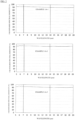
- the far-infrared spectral emissivity was measured as follows. From an obtained sheet-shaped infrared radiation-emitting resin composition, a test specimen having a dimension of 40 mm ⁇ 40 mm was cut out, and the far-infrared spectral emissivity for the wavelength range of far-infrared radiation (5 to 20 ⁇ m) was measured by an FT-IR method by using a far-infrared spectral emissivity measuring machine ("SpectrumOne Frontier T" manufactured by PerkinElmer, Inc.) under the conditions of a measurement temperature of 40°C, an environmental temperature of 20°C, and a humidity of 65%.
- the far-infrared spectral emissivity was measured under the above-described conditions.
- the average emissivity of the blank in the wavelength range of far-infrared radiation (7 to 14 ⁇ m) was calculated from the measurement results, the average emissivity was 83.375%.
- a titanium dioxide powder (“CR-60” manufactured by ISHIHARA SANGYO KAISHA, LTD.), a calcined hydrotalcite-like compound powder (“HT-9” manufactured by SAKAI CHEMICAL INDUSTRY CO., LTD.), and a nano-sized diamond powder (“NanoAmando” manufactured by NanoCarbon Research Institute, Ltd.) were prepared.
- the average particle size D50 of the titanium dioxide powder was 210 nm
- the average particle size D50 of the calcined hydrotalcite-like compound powder was 500 nm
- the average particle size D50 of secondary particles of the nano-sized diamond was 50 nm.
- Example 2A-1 85 parts by mass of the prepared titanium dioxide powder, 15 parts by mass of the calcined hydrotalcite-like compound powder, and 0.02 parts by mass of the nano-sized diamond were mixed to obtain an infrared radiation-emitting material (Example 2A-1).
- Example 2A-1 The infrared radiation-emitting material of Example 2A-1 and a nylon resin were blended such that the mass ratio between the infrared radiation-emitting material and the nylon resin was 1:9, and the mixture was kneaded by using a resin melting and kneading machine ("50C type 150" manufactured by Toyo Seiki Seisaku-sho, Ltd.) under the conditions of a heating temperature of 270°C and a speed of rotation of 100 rpm to produce a masterbatch 2AM-1.
- a resin melting and kneading machine (“50C type 150" manufactured by Toyo Seiki Seisaku-sho, Ltd.) under the conditions of a heating temperature of 270°C and a speed of rotation of 100 rpm to produce a masterbatch 2AM-1.
- the masterbatch 2AM-1 and a nylon resin were blended such that the mass ratio between the masterbatch 2AM-1 and the nylon resin was 1:9, and the mixture was melt-spun by using a multifilament production apparatus (manufactured by Musashino Kikai Co., Ltd.) under the conditions of a heating temperature of 280°C to produce a nylon multifilament yarn AMF-1 having a degree of fineness of 88 dtex and a filament count of 36f.
- a multifilament production apparatus manufactured by Musashino Kikai Co., Ltd.
- the produced nylon multifilament yarn AMF-1 was processed by a POY-DTY method (method of performing partial drawing by spinning at a high speed to obtain a Partially Oriented Yarn (POY) and converting the POY into a Draw Textured Yarn (DTY) through drawing and false twisting processes) under the conditions of a false twisted POY drawing roller winding speed of 4,000 m/min to produce a POY yarn, the POY yarn was subjected to twisting at a rate of 3,200 t/m of draw textured yarn DTY and heat-setting, and the resultant was untwisted and processed into a bulky and elastic yarn.
- a POY-DTY method method of performing partial drawing by spinning at a high speed to obtain a Partially Oriented Yarn (POY) and converting the POY into a Draw Textured Yarn (DTY) through drawing and false twisting processes
- the processed AMF-1 was used to produce cloth by using a circular knitting machine, and a pair of leggings (AMF-1) was produced.
- a nylon multifilament yarn BMF-1 was produced by the same method as described above, except that an infrared radiation-emitting material (Comparative Example 2B-3) obtained by mixing 50 parts by mass of a titanium dioxide powder, 50 parts by mass of a calcined hydrotalcite-like compound powder, and 0.005 parts by mass of nano-sized diamond was used, and a pair of leggings (BMF-1) was produced by using the produced nylon multifilament yarn BMF-1.
- an infrared radiation-emitting material (Comparative Example 2B-3) obtained by mixing 50 parts by mass of a titanium dioxide powder, 50 parts by mass of a calcined hydrotalcite-like compound powder, and 0.005 parts by mass of nano-sized diamond was used, and a pair of leggings (BMF-1) was produced by using the produced nylon multifilament yarn BMF-1.
- a nylon multifilament yarn L-1 was produced by the same method as described above, except that a resin composition composed of a nylon resin without including an infrared radiation-emitting material was used, and a pair of leggings (L-1) was produced by using the produced nylon multifilament yarn L-1.
- the heat retaining property of the leggings was evaluated by wearing the obtained leggings and measuring the body surface temperature after taking off the leggings according to a testing method described below.
- FLIR A615 manufactured by FLIR Systems, Inc.
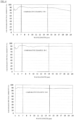
- the body surface temperature of the thigh immediately after taking off the leggings was measured by using a thermography ("FLIR A615" manufactured by FLIR Systems, Inc.). The results are shown in Table 3 and FIG.
- a titanium dioxide powder (“A-100” manufactured by ISHIHARA SANGYO KAISHA, LTD.), a calcined hydrotalcite-like compound powder (“DHT-4A-2” manufactured by Kyowa Chemical Industry Co., Ltd.), and a nano-sized diamond powder (“SCM NANODIA” manufactured by Dia Materials Co., Ltd.) were prepared.
- the average particle size D50 of the titanium dioxide powder was 100 nm
- the average particle size D50 of the calcined hydrotalcite-like compound powder was 400 nm
- the average particle size D50 of secondary particles of the nano-sized diamond was 50 to 100 nm.
- Example 3A-3 80 parts by mass of the prepared titanium dioxide powder, 20 parts by mass of the calcined hydrotalcite-like compound powder, and 0.03 parts by mass of the nano-sized diamond were mixed to obtain an infrared radiation-emitting material (Example 3A-3).
- Example 3A-3 The infrared radiation-emitting material of Example 3A-3 and a polyethylene terephthalate (PET) resin were blended such that the mass ratio between the infrared radiation-emitting material and the polyethylene terephthalate resin was 1:9, and the mixture was kneaded by using a resin melting and kneading machine ("50C type 150" manufactured by Toyo Seiki Seisaku-sho, Ltd.) under the conditions of a heating temperature of 280°C and a speed of rotation of 100 rpm to produce a masterbatch 3MA-1.
- a resin melting and kneading machine 50C type 150 manufactured by Toyo Seiki Seisaku-sho, Ltd.
- the obtained masterbatch 3MA-1 and the PET resin were blended such that the mass ratio between the master batch 3MA-1 and the PET resin was 1:9, and the mixture was melt-spun by using a staple fiber spinning and drawing production apparatus under the conditions of a heating temperature of 280°C to produce a PET resin staple yarn PSA-1 having a degree of fineness of 6.6 dtex and a fiber length of 51 mm.
- the produced staple yarn PSA-1 was used as a raw material, and a web was formed by using a carding machine ("H2DS" manufactured by Ikegami Kikai K.K.).
- the formed web was laminated in layers with a layering machine ("IK30-2" manufactured by Ikegami Kikai K.K.), and the laminate was produced into a PET nonwoven fabric NWA-1 having a width of 1000 mm and a cloth thickness of 100 g/m 2 by using a nonwoven fabric needle punching machine ("NL21" manufactured by Fehrer AG).
- a PET resin staple yarn PSB-1 was produced by the same method as described above, except that an infrared radiation-emitting material (Comparative Example 3B-4) obtained by mixing 20 parts by mass of a titanium dioxide powder and 80 parts by mass of a calcined hydrotalcite-like compound powder was used, and a PET nonwoven fabric NWB-1 was produced by using the produced staple yarn PSB-1.
- an infrared radiation-emitting material Comparative Example 3B-4
- a PET nonwoven fabric NWB-1 was produced by using the produced staple yarn PSB-1.
- a PET resin staple yarn BL-1 was produced by the same method as described above, except that a resin composition composed of a PET resin without including an infrared radiation-emitting material was used, and a PET nonwoven fabric BL-1 was produced by using the produced staple yarn BL-1.
- the temperature changes generated when the produced PET nonwoven fabric was heated were measured as follows.
- a test specimen having a dimension of 200 mm ⁇ 150 mm was cut out from the obtained PET nonwoven fabric.
- the cut test specimen was heated from an upward diagonal direction of the test specimen by using two halogen lamps ("CHP-500" manufactured by CASTER Co., Ltd.) disposed so as to face each other, with the test specimen interposed therebetween, and the average temperature of the test specimen (PET nonwoven fabric) during a time period starting from the initiation of heating to 140 seconds was measured.
- the power output of the halogen lamps was 500 W.
- the average temperature of the test specimen was measured by detecting a spectrum at 7.5 to 14 ⁇ m from above the test specimen by using an infrared camera ("FLIR SC655" manufactured by FLIR Systems, Inc.). The results are shown in Table 4 and FIG.
- Example 3A-3 The infrared radiation-emitting material of Example 3A-3 and a PET resin were blended such that the mass ratio between the infrared radiation-emitting material and the PET resin was 1:9, and the mixture was kneaded by using a resin melting and kneading apparatus ("50C type 150" manufactured by Toyo Seiki Seisaku-sho, Ltd.) under the conditions of a heating temperature of 280°C and a speed of rotation of 100 rpm to produce a masterbatch 3MA-1.
- a resin melting and kneading apparatus 50C type 150 manufactured by Toyo Seiki Seisaku-sho, Ltd.
- the obtained masterbatch 3MA-1 and the PET resin were blended such that the mass ratio between the masterbatch 3MA-1 and the PET resin was 1:9, and the mixture was melt-spun by using a staple fiber spinning and drawing production apparatus under the conditions of a heating temperature of 280°C to produce a PET resin staple yarn PSA-2 having a degree of fineness of 8.8 dtex and a fiber length of 51 mm.
- the produced staple yarn PSA-2 was used as a raw material, and a web was formed by using a carding machine ("H2DS" manufactured by Ikegami Kikai K.K.).
- the formed web was laminated in layers with a layering machine ("IK30-2" manufactured by Ikegami Kikai K.K.), and the laminate was produced into a PET nonwoven fabric board NHA-1 having a dimension of 900 mm ⁇ 900 mm ⁇ 5 mm and a cloth thickness of 350 g/m 2 by using a nonwoven fabric needle punching machine ("NL21" manufactured by Fehrer AG).
- the produced nonwoven fabric board NHA-1 was applied to a wood drying apparatus to evaluate the drying of wood as follows.
- An IF steam type wood drying apparatus (manufactured by Hildebrand Holztechnik GmbH) was used as the wood drying apparatus.
- an air blower is installed in a drying chamber, and drying is implemented by circulating steam with its humidity controlled by a dry-wet temperature sensor into the chamber by using the air blower.
- the produced nonwoven fabric board NHA-1 was installed without gaps in the inside (wall surfaces and ceiling) of a drying chamber of an IF steam type wood drying apparatus, 170 pieces of wood having a dimension of 2300 mm ⁇ 82 mm ⁇ 82 mm and 200 pieces of wood having a dimension of 1150 mm ⁇ 82 mm ⁇ 82 mm were placed on a moisture content sensor and then installed in the drying chamber, steam drying was performed for 1085 hours, and the changes in the water content of the wood (material to be dried) were measured.
- Steam drying was performed by combining an operation of supplying steam having a humidity of 100% for a predetermined time in a state in which the temperature was maintained at 80°C, and an operation of supplying steam having a humidity of less than 100% for a predetermined time in a state in which the temperature was kept lower than 80°C.
- the infrared radiation-emitting resin composition according to the present invention includes an infrared radiation-emitting material having a high average value of emissivity in a predetermined wavelength range
- the infrared radiation-emitting resin composition is suitable as a fiber that is used for clothing materials or the like required to have heat retaining property and as a material that is used for drying of various materials.
Landscapes
- Chemical & Material Sciences (AREA)
- Organic Chemistry (AREA)
- Chemical Kinetics & Catalysis (AREA)
- Medicinal Chemistry (AREA)
- Polymers & Plastics (AREA)
- Health & Medical Sciences (AREA)
- Engineering & Computer Science (AREA)
- Materials Engineering (AREA)
- Inorganic Chemistry (AREA)
- Manufacturing & Machinery (AREA)
- General Chemical & Material Sciences (AREA)
- Textile Engineering (AREA)
- Compositions Of Macromolecular Compounds (AREA)
Claims (5)
- Infrarot-Strahlung emittierende Polymerzusammensetzung, umfassend:ein Infrarot-Strahlung emittierendes Material; undein Polymer,wobei das Infrarot-Strahlung emittierende Material ein Titandioxid, eine kalzinierte hydrotalcitartige Verbindung und einen Diamant in Nanogröße einschließt,in dem Infrarot-Strahlung emittierenden Material ein Massenverhältnis zwischen dem Titandioxid und der kalzinierten hydrotalcitartigen Verbindung 60:40 bis 90:10 beträgt und ein Gehalt des Diamants in Nanogröße 0,01 Massenteile oder mehr und 0,5 Massenteile oder weniger in Bezug auf 100 Massenteile einer Summe des Titandioxids und der kalzinierten hydrotalcitartigen Verbindung beträgt.
- Infrarot-Strahlung emittierende Polymerzusammensetzung nach Anspruch 1, wobei die Infrarot-Strahlung emittierende Polymerzusammensetzung eine Plattenform, eine Röhrenform, eine Blattform oder eine Faserform aufweist, wobei das Infrarot-Strahlung emittierende Material in dem Polymer dispergiert ist.
- Infrarot-Strahlung emittierende Polymerzusammensetzung nach Anspruch 1 oder Anspruch 2, wobei eine durchschnittliche Partikelgröße des Titandioxids 10 nm oder mehr und 1000 nm oder weniger beträgt, gemessen durch ein Laserdiffraktionsverfahren.
- Infrarot-Strahlung emittierende Polymerzusammensetzung nach einem der Ansprüche 1 bis 3, wobei eine durchschnittliche Partikelgröße der kalzinierten hydrotalcitartigen Verbindung 10 nm oder mehr und 1000 nm oder weniger beträgt, gemessen durch ein Laserdiffraktionsverfahren.
- Infrarot-Strahlung emittierende Polymerzusammensetzung nach einem der Ansprüche 1 bis 4, wobei eine durchschnittliche Partikelgröße von Sekundärpartikeln des Diamants in Nanogröße 5 nm oder mehr und 200 nm oder weniger beträgt, gemessen durch ein dynamisches Lichtstreuungsverfahren unter Verwenden von Laserlicht.
Applications Claiming Priority (1)
| Application Number | Priority Date | Filing Date | Title |
|---|---|---|---|
| JP2022038114A JP7104454B1 (ja) | 2022-03-11 | 2022-03-11 | 赤外線放射樹脂組成物 |
Publications (4)
| Publication Number | Publication Date |
|---|---|
| EP4269487A2 EP4269487A2 (de) | 2023-11-01 |
| EP4269487A3 EP4269487A3 (de) | 2024-01-03 |
| EP4269487C0 EP4269487C0 (de) | 2025-01-01 |
| EP4269487B1 true EP4269487B1 (de) | 2025-01-01 |
Family
ID=82492243
Family Applications (1)
| Application Number | Title | Priority Date | Filing Date |
|---|---|---|---|
| EP23161233.4A Active EP4269487B1 (de) | 2022-03-11 | 2023-03-10 | Infrarote strahlung emittierende polymerzusammensetzung |
Country Status (8)
| Country | Link |
|---|---|
| US (1) | US11981847B2 (de) |
| EP (1) | EP4269487B1 (de) |
| JP (1) | JP7104454B1 (de) |
| KR (1) | KR102584200B1 (de) |
| CN (1) | CN116731413B (de) |
| CA (1) | CA3192064C (de) |
| MY (1) | MY202958A (de) |
| TW (1) | TWI847582B (de) |
Families Citing this family (1)
| Publication number | Priority date | Publication date | Assignee | Title |
|---|---|---|---|---|
| CN119433745A (zh) * | 2024-12-12 | 2025-02-14 | 山东万新威纳材料科技有限公司 | 一种具有红外保温功能的水滑石改性合成纤维 |
Family Cites Families (14)
| Publication number | Priority date | Publication date | Assignee | Title |
|---|---|---|---|---|
| JP2687505B2 (ja) | 1988-11-17 | 1997-12-08 | 松下電器産業株式会社 | 加熱装置の加熱方法 |
| JPH07115914B2 (ja) | 1992-08-31 | 1995-12-13 | 株式会社福谷 | 遠赤外線放射材料 |
| JP2778427B2 (ja) | 1993-10-26 | 1998-07-23 | 不二製油株式会社 | 飼料の製造法 |
| JP3982134B2 (ja) * | 1999-09-03 | 2007-09-26 | コニカミノルタホールディングス株式会社 | 平版印刷用原版及びそれを用いた印刷方法 |
| JP2002264280A (ja) * | 2001-03-07 | 2002-09-18 | Mitsubishi Chem Mkv Co | 農業用フィルム |
| JP4175558B2 (ja) * | 2002-07-23 | 2008-11-05 | 株式会社ファーベスト | 遠赤外線放射材料 |
| JP2008150240A (ja) * | 2006-12-15 | 2008-07-03 | Ishihara Sangyo Kaisha Ltd | 酸化チタン及びその製造方法 |
| DK2072666T3 (da) * | 2007-09-28 | 2012-03-05 | Venex Co Ltd | Fiber indeholdende nanodimensioneret diamant og platinnanokolloid og sengetøjsprodukt omfattende fiberen |
| JP2011106035A (ja) * | 2009-11-12 | 2011-06-02 | Teijin Fibers Ltd | 有機機能性材料及びそれを用いた製品 |
| JP4705205B1 (ja) * | 2011-01-06 | 2011-06-22 | 株式会社ファーベスト | 保温性材料、及び、保温用素材 |
| WO2014156824A1 (ja) * | 2013-03-25 | 2014-10-02 | 東レフィルム加工株式会社 | 熱線遮断性フッ素樹脂フィルム |
| KR101651757B1 (ko) * | 2014-12-22 | 2016-09-06 | 주식회사 효성 | 축열 보온성 플리스 및 그의 제조방법 |
| CN111511979B (zh) * | 2017-10-31 | 2023-07-11 | 日本制纸株式会社 | 氧化钛复合纤维及其制造方法 |
| CN109180917A (zh) | 2018-09-07 | 2019-01-11 | 钱圣奎 | 一种eg的制备方法 |
-
2022
- 2022-03-11 JP JP2022038114A patent/JP7104454B1/ja active Active
-
2023
- 2023-01-31 CN CN202310094669.0A patent/CN116731413B/zh active Active
- 2023-02-23 KR KR1020230024082A patent/KR102584200B1/ko active Active
- 2023-02-28 US US18/115,291 patent/US11981847B2/en active Active
- 2023-03-06 MY MYPI2023001175A patent/MY202958A/en unknown
- 2023-03-06 CA CA3192064A patent/CA3192064C/en active Active
- 2023-03-08 TW TW112108463A patent/TWI847582B/zh active
- 2023-03-10 EP EP23161233.4A patent/EP4269487B1/de active Active
Also Published As
| Publication number | Publication date |
|---|---|
| CA3192064C (en) | 2025-07-08 |
| CA3192064A1 (en) | 2023-09-11 |
| MY202958A (en) | 2024-05-31 |
| JP2023132657A (ja) | 2023-09-22 |
| CN116731413A (zh) | 2023-09-12 |
| US11981847B2 (en) | 2024-05-14 |
| EP4269487A2 (de) | 2023-11-01 |
| EP4269487A3 (de) | 2024-01-03 |
| KR102584200B1 (ko) | 2023-09-27 |
| KR20230133766A (ko) | 2023-09-19 |
| EP4269487C0 (de) | 2025-01-01 |
| CN116731413B (zh) | 2024-08-09 |
| US20230287264A1 (en) | 2023-09-14 |
| JP7104454B1 (ja) | 2022-07-21 |
| TW202342656A (zh) | 2023-11-01 |
| TWI847582B (zh) | 2024-07-01 |
Similar Documents
| Publication | Publication Date | Title |
|---|---|---|
| EP3377683B1 (de) | Synthetische faser mit aerogel und polymermaterial sowie verfahren zur herstellung und artikel damit | |
| CN1088478C (zh) | 氟树脂纤维状材料以及使用该纤维状材料的除臭抗菌布 | |
| KR100815459B1 (ko) | 이온광석 분말이 함유된 섬유 및 마스터뱃치의 제조방법 | |
| EP4269487B1 (de) | Infrarote strahlung emittierende polymerzusammensetzung | |
| BRPI0722265A2 (pt) | Fibra funcional, método de preparação da mesma e pano feito dessa fibra | |
| KR20040010009A (ko) | 원적외선 방사 재료 | |
| CN1100079A (zh) | 远红外辐射体 | |
| CN1826373A (zh) | 改进热塑性聚合物的消光度的无机填料 | |
| JP6106487B2 (ja) | 機能性繊維 | |
| JP2015148029A (ja) | 長短複合紡績糸及びそれを用いてなる布帛 | |
| CN1309198A (zh) | 具远红外线放射的纤维的制造方法 | |
| KR101213899B1 (ko) | 복합기능성 나일론 섬유의 제조방법 및 그에 의한 복합기능성 나일론 섬유 | |
| HK40097670A (zh) | 红外线辐射树脂组合物 | |
| HK40097670B (zh) | 红外线辐射树脂组合物 | |
| CN103526420B (zh) | 远红外香蕉纤维家纺面料 | |
| KR930011324B1 (ko) | 바이오 세라믹 섬유의 제조방법 | |
| JP7690245B1 (ja) | 赤外線放射樹脂組成物 | |
| KR101193928B1 (ko) | 보온용 소재 및 그것을 사용하는 보온성 재료 | |
| JP2015105444A (ja) | 機能性複合糸 | |
| EP2997182B1 (de) | Perlit enthaltender funktioneller polyesterfaden und herstellungsverfahren dafür | |
| JP2015148028A (ja) | 複合結束紡績糸及びそれを用いてなる布帛 | |
| KR102959017B1 (ko) | 인체 무독성의 난연성 리사이클 폴리에스터 원사의 제조 방법 | |
| KR960005961B1 (ko) | 폴리에스터 섬유의 제조방법 | |
| HK1166815A (en) | Heat regenerating element and heat regenerating material using same | |
| JP2022181224A (ja) | 光触媒含有繊維 |
Legal Events
| Date | Code | Title | Description |
|---|---|---|---|
| PUAI | Public reference made under article 153(3) epc to a published international application that has entered the european phase |
Free format text: ORIGINAL CODE: 0009012 |
|
| STAA | Information on the status of an ep patent application or granted ep patent |
Free format text: STATUS: THE APPLICATION HAS BEEN PUBLISHED |
|
| AK | Designated contracting states |
Kind code of ref document: A2 Designated state(s): AL AT BE BG CH CY CZ DE DK EE ES FI FR GB GR HR HU IE IS IT LI LT LU LV MC ME MK MT NL NO PL PT RO RS SE SI SK SM TR |
|
| PUAL | Search report despatched |
Free format text: ORIGINAL CODE: 0009013 |
|
| AK | Designated contracting states |
Kind code of ref document: A3 Designated state(s): AL AT BE BG CH CY CZ DE DK EE ES FI FR GB GR HR HU IE IS IT LI LT LU LV MC ME MK MT NL NO PL PT RO RS SE SI SK SM TR |
|
| RIC1 | Information provided on ipc code assigned before grant |
Ipc: D01F 6/96 20060101ALI20231130BHEP Ipc: D01F 6/92 20060101ALI20231130BHEP Ipc: D01F 6/90 20060101ALI20231130BHEP Ipc: D01F 1/10 20060101ALI20231130BHEP Ipc: C08K 3/26 20060101ALI20231130BHEP Ipc: C08K 3/22 20060101ALI20231130BHEP Ipc: C08K 3/04 20060101AFI20231130BHEP |
|
| STAA | Information on the status of an ep patent application or granted ep patent |
Free format text: STATUS: REQUEST FOR EXAMINATION WAS MADE |
|
| 17P | Request for examination filed |
Effective date: 20240304 |
|
| RBV | Designated contracting states (corrected) |
Designated state(s): AL AT BE BG CH CY CZ DE DK EE ES FI FR GB GR HR HU IE IS IT LI LT LU LV MC ME MK MT NL NO PL PT RO RS SE SI SK SM TR |
|
| GRAP | Despatch of communication of intention to grant a patent |
Free format text: ORIGINAL CODE: EPIDOSNIGR1 |
|
| STAA | Information on the status of an ep patent application or granted ep patent |
Free format text: STATUS: GRANT OF PATENT IS INTENDED |
|
| INTG | Intention to grant announced |
Effective date: 20240514 |
|
| GRAJ | Information related to disapproval of communication of intention to grant by the applicant or resumption of examination proceedings by the epo deleted |
Free format text: ORIGINAL CODE: EPIDOSDIGR1 |
|
| STAA | Information on the status of an ep patent application or granted ep patent |
Free format text: STATUS: REQUEST FOR EXAMINATION WAS MADE |
|
| GRAP | Despatch of communication of intention to grant a patent |
Free format text: ORIGINAL CODE: EPIDOSNIGR1 |
|
| STAA | Information on the status of an ep patent application or granted ep patent |
Free format text: STATUS: GRANT OF PATENT IS INTENDED |
|
| INTC | Intention to grant announced (deleted) | ||
| INTG | Intention to grant announced |
Effective date: 20240719 |
|
| GRAS | Grant fee paid |
Free format text: ORIGINAL CODE: EPIDOSNIGR3 |
|
| GRAA | (expected) grant |
Free format text: ORIGINAL CODE: 0009210 |
|
| STAA | Information on the status of an ep patent application or granted ep patent |
Free format text: STATUS: THE PATENT HAS BEEN GRANTED |
|
| AK | Designated contracting states |
Kind code of ref document: B1 Designated state(s): AL AT BE BG CH CY CZ DE DK EE ES FI FR GB GR HR HU IE IS IT LI LT LU LV MC ME MK MT NL NO PL PT RO RS SE SI SK SM TR |
|
| REG | Reference to a national code |
Ref country code: GB Ref legal event code: FG4D |
|
| REG | Reference to a national code |
Ref country code: DE Ref legal event code: R096 Ref document number: 602023001532 Country of ref document: DE |
|
| REG | Reference to a national code |
Ref country code: CH Ref legal event code: EP |
|
| REG | Reference to a national code |
Ref country code: IE Ref legal event code: FG4D |
|
| U01 | Request for unitary effect filed |
Effective date: 20250129 |
|
| U07 | Unitary effect registered |
Designated state(s): AT BE BG DE DK EE FI FR IT LT LU LV MT NL PT RO SE SI Effective date: 20250204 |
|
| U20 | Renewal fee for the european patent with unitary effect paid |
Year of fee payment: 3 Effective date: 20250227 |
|
| PG25 | Lapsed in a contracting state [announced via postgrant information from national office to epo] |
Ref country code: PL Free format text: LAPSE BECAUSE OF FAILURE TO SUBMIT A TRANSLATION OF THE DESCRIPTION OR TO PAY THE FEE WITHIN THE PRESCRIBED TIME-LIMIT Effective date: 20250101 |
|
| PG25 | Lapsed in a contracting state [announced via postgrant information from national office to epo] |
Ref country code: ES Free format text: LAPSE BECAUSE OF FAILURE TO SUBMIT A TRANSLATION OF THE DESCRIPTION OR TO PAY THE FEE WITHIN THE PRESCRIBED TIME-LIMIT Effective date: 20250101 |
|
| PG25 | Lapsed in a contracting state [announced via postgrant information from national office to epo] |
Ref country code: IS Free format text: LAPSE BECAUSE OF FAILURE TO SUBMIT A TRANSLATION OF THE DESCRIPTION OR TO PAY THE FEE WITHIN THE PRESCRIBED TIME-LIMIT Effective date: 20250501 Ref country code: NO Free format text: LAPSE BECAUSE OF FAILURE TO SUBMIT A TRANSLATION OF THE DESCRIPTION OR TO PAY THE FEE WITHIN THE PRESCRIBED TIME-LIMIT Effective date: 20250401 |
|
| PG25 | Lapsed in a contracting state [announced via postgrant information from national office to epo] |
Ref country code: HR Free format text: LAPSE BECAUSE OF FAILURE TO SUBMIT A TRANSLATION OF THE DESCRIPTION OR TO PAY THE FEE WITHIN THE PRESCRIBED TIME-LIMIT Effective date: 20250101 |
|
| PG25 | Lapsed in a contracting state [announced via postgrant information from national office to epo] |
Ref country code: GR Free format text: LAPSE BECAUSE OF FAILURE TO SUBMIT A TRANSLATION OF THE DESCRIPTION OR TO PAY THE FEE WITHIN THE PRESCRIBED TIME-LIMIT Effective date: 20250402 |
|
| PG25 | Lapsed in a contracting state [announced via postgrant information from national office to epo] |
Ref country code: CZ Free format text: LAPSE BECAUSE OF FAILURE TO SUBMIT A TRANSLATION OF THE DESCRIPTION OR TO PAY THE FEE WITHIN THE PRESCRIBED TIME-LIMIT Effective date: 20250101 |
|
| PG25 | Lapsed in a contracting state [announced via postgrant information from national office to epo] |
Ref country code: SM Free format text: LAPSE BECAUSE OF FAILURE TO SUBMIT A TRANSLATION OF THE DESCRIPTION OR TO PAY THE FEE WITHIN THE PRESCRIBED TIME-LIMIT Effective date: 20250101 |
|
| PG25 | Lapsed in a contracting state [announced via postgrant information from national office to epo] |
Ref country code: MC Free format text: LAPSE BECAUSE OF FAILURE TO SUBMIT A TRANSLATION OF THE DESCRIPTION OR TO PAY THE FEE WITHIN THE PRESCRIBED TIME-LIMIT Effective date: 20250101 |
|
| PG25 | Lapsed in a contracting state [announced via postgrant information from national office to epo] |
Ref country code: SK Free format text: LAPSE BECAUSE OF FAILURE TO SUBMIT A TRANSLATION OF THE DESCRIPTION OR TO PAY THE FEE WITHIN THE PRESCRIBED TIME-LIMIT Effective date: 20250101 |
|
| PLBE | No opposition filed within time limit |
Free format text: ORIGINAL CODE: 0009261 |
|
| STAA | Information on the status of an ep patent application or granted ep patent |
Free format text: STATUS: NO OPPOSITION FILED WITHIN TIME LIMIT |
|
| 26N | No opposition filed |
Effective date: 20251002 |
|
| PG25 | Lapsed in a contracting state [announced via postgrant information from national office to epo] |
Ref country code: IE Free format text: LAPSE BECAUSE OF NON-PAYMENT OF DUE FEES Effective date: 20250310 |
|
| U20 | Renewal fee for the european patent with unitary effect paid |
Year of fee payment: 4 Effective date: 20260224 |