EP4233537B1 - Humanisierte m-csf-mäuse und deren verwendungen - Google Patents
Humanisierte m-csf-mäuse und deren verwendungen Download PDFInfo
- Publication number
- EP4233537B1 EP4233537B1 EP23161285.4A EP23161285A EP4233537B1 EP 4233537 B1 EP4233537 B1 EP 4233537B1 EP 23161285 A EP23161285 A EP 23161285A EP 4233537 B1 EP4233537 B1 EP 4233537B1
- Authority
- EP
- European Patent Office
- Prior art keywords
- csf
- mouse
- human
- cells
- cell
- Prior art date
- Legal status (The legal status is an assumption and is not a legal conclusion. Google has not performed a legal analysis and makes no representation as to the accuracy of the status listed.)
- Active
Links
Images








Classifications
-
- A—HUMAN NECESSITIES
- A01—AGRICULTURE; FORESTRY; ANIMAL HUSBANDRY; HUNTING; TRAPPING; FISHING
- A01K—ANIMAL HUSBANDRY; AVICULTURE; APICULTURE; PISCICULTURE; FISHING; REARING OR BREEDING ANIMALS, NOT OTHERWISE PROVIDED FOR; NEW BREEDS OF ANIMALS
- A01K67/00—Rearing or breeding animals, not otherwise provided for; New or modified breeds of animals
- A01K67/027—New or modified breeds of vertebrates
-
- A—HUMAN NECESSITIES
- A01—AGRICULTURE; FORESTRY; ANIMAL HUSBANDRY; HUNTING; TRAPPING; FISHING
- A01K—ANIMAL HUSBANDRY; AVICULTURE; APICULTURE; PISCICULTURE; FISHING; REARING OR BREEDING ANIMALS, NOT OTHERWISE PROVIDED FOR; NEW BREEDS OF ANIMALS
- A01K67/00—Rearing or breeding animals, not otherwise provided for; New or modified breeds of animals
- A01K67/027—New or modified breeds of vertebrates
- A01K67/0271—Chimeric vertebrates, e.g. comprising exogenous cells
-
- A—HUMAN NECESSITIES
- A01—AGRICULTURE; FORESTRY; ANIMAL HUSBANDRY; HUNTING; TRAPPING; FISHING
- A01K—ANIMAL HUSBANDRY; AVICULTURE; APICULTURE; PISCICULTURE; FISHING; REARING OR BREEDING ANIMALS, NOT OTHERWISE PROVIDED FOR; NEW BREEDS OF ANIMALS
- A01K67/00—Rearing or breeding animals, not otherwise provided for; New or modified breeds of animals
- A01K67/027—New or modified breeds of vertebrates
- A01K67/0275—Genetically modified vertebrates, e.g. transgenic
- A01K67/0278—Knock-in vertebrates, e.g. humanised vertebrates
-
- A—HUMAN NECESSITIES
- A61—MEDICAL OR VETERINARY SCIENCE; HYGIENE
- A61K—PREPARATIONS FOR MEDICAL, DENTAL OR TOILETRY PURPOSES
- A61K49/00—Preparations for testing in vivo
- A61K49/0004—Screening or testing of compounds for diagnosis of disorders, assessment of conditions, e.g. renal clearance, gastric emptying, testing for diabetes, allergy, rheuma, pancreas functions
- A61K49/0008—Screening agents using (non-human) animal models or transgenic animal models or chimeric hosts, e.g. Alzheimer disease animal model, transgenic model for heart failure
-
- C—CHEMISTRY; METALLURGY
- C07—ORGANIC CHEMISTRY
- C07K—PEPTIDES
- C07K14/00—Peptides having more than 20 amino acids; Gastrins; Somatostatins; Melanotropins; Derivatives thereof
- C07K14/435—Peptides having more than 20 amino acids; Gastrins; Somatostatins; Melanotropins; Derivatives thereof from animals; from humans
- C07K14/52—Cytokines; Lymphokines; Interferons
- C07K14/53—Colony-stimulating factor [CSF]
-
- C—CHEMISTRY; METALLURGY
- C12—BIOCHEMISTRY; BEER; SPIRITS; WINE; VINEGAR; MICROBIOLOGY; ENZYMOLOGY; MUTATION OR GENETIC ENGINEERING
- C12N—MICROORGANISMS OR ENZYMES; COMPOSITIONS THEREOF; PROPAGATING, PRESERVING, OR MAINTAINING MICROORGANISMS; MUTATION OR GENETIC ENGINEERING; CULTURE MEDIA
- C12N15/00—Mutation or genetic engineering; DNA or RNA concerning genetic engineering, vectors, e.g. plasmids, or their isolation, preparation or purification; Use of hosts therefor
- C12N15/09—Recombinant DNA-technology
- C12N15/63—Introduction of foreign genetic material using vectors; Vectors; Use of hosts therefor; Regulation of expression
- C12N15/79—Vectors or expression systems specially adapted for eukaryotic hosts
- C12N15/85—Vectors or expression systems specially adapted for eukaryotic hosts for animal cells
- C12N15/8509—Vectors or expression systems specially adapted for eukaryotic hosts for animal cells for producing genetically modified animals, e.g. transgenic
-
- G—PHYSICS
- G01—MEASURING; TESTING
- G01N—INVESTIGATING OR ANALYSING MATERIALS BY DETERMINING THEIR CHEMICAL OR PHYSICAL PROPERTIES
- G01N33/00—Investigating or analysing materials by specific methods not covered by groups G01N1/00 - G01N31/00
- G01N33/48—Biological material, e.g. blood, urine; Haemocytometers
- G01N33/50—Chemical analysis of biological material, e.g. blood, urine; Testing involving biospecific ligand binding methods; Immunological testing
- G01N33/5005—Chemical analysis of biological material, e.g. blood, urine; Testing involving biospecific ligand binding methods; Immunological testing involving human or animal cells
- G01N33/5008—Chemical analysis of biological material, e.g. blood, urine; Testing involving biospecific ligand binding methods; Immunological testing involving human or animal cells for testing or evaluating the effect of chemical or biological compounds, e.g. drugs, cosmetics
- G01N33/5082—Supracellular entities, e.g. tissue, organisms
- G01N33/5088—Supracellular entities, e.g. tissue, organisms of vertebrates
-
- A—HUMAN NECESSITIES
- A01—AGRICULTURE; FORESTRY; ANIMAL HUSBANDRY; HUNTING; TRAPPING; FISHING
- A01K—ANIMAL HUSBANDRY; AVICULTURE; APICULTURE; PISCICULTURE; FISHING; REARING OR BREEDING ANIMALS, NOT OTHERWISE PROVIDED FOR; NEW BREEDS OF ANIMALS
- A01K2207/00—Modified animals
- A01K2207/12—Animals modified by administration of exogenous cells
-
- A—HUMAN NECESSITIES
- A01—AGRICULTURE; FORESTRY; ANIMAL HUSBANDRY; HUNTING; TRAPPING; FISHING
- A01K—ANIMAL HUSBANDRY; AVICULTURE; APICULTURE; PISCICULTURE; FISHING; REARING OR BREEDING ANIMALS, NOT OTHERWISE PROVIDED FOR; NEW BREEDS OF ANIMALS
- A01K2207/00—Modified animals
- A01K2207/15—Humanized animals
-
- A—HUMAN NECESSITIES
- A01—AGRICULTURE; FORESTRY; ANIMAL HUSBANDRY; HUNTING; TRAPPING; FISHING
- A01K—ANIMAL HUSBANDRY; AVICULTURE; APICULTURE; PISCICULTURE; FISHING; REARING OR BREEDING ANIMALS, NOT OTHERWISE PROVIDED FOR; NEW BREEDS OF ANIMALS
- A01K2217/00—Genetically modified animals
- A01K2217/07—Animals genetically altered by homologous recombination
- A01K2217/072—Animals genetically altered by homologous recombination maintaining or altering function, i.e. knock in
-
- A—HUMAN NECESSITIES
- A01—AGRICULTURE; FORESTRY; ANIMAL HUSBANDRY; HUNTING; TRAPPING; FISHING
- A01K—ANIMAL HUSBANDRY; AVICULTURE; APICULTURE; PISCICULTURE; FISHING; REARING OR BREEDING ANIMALS, NOT OTHERWISE PROVIDED FOR; NEW BREEDS OF ANIMALS
- A01K2217/00—Genetically modified animals
- A01K2217/15—Animals comprising multiple alterations of the genome, by transgenesis or homologous recombination, e.g. obtained by cross-breeding
-
- A—HUMAN NECESSITIES
- A01—AGRICULTURE; FORESTRY; ANIMAL HUSBANDRY; HUNTING; TRAPPING; FISHING
- A01K—ANIMAL HUSBANDRY; AVICULTURE; APICULTURE; PISCICULTURE; FISHING; REARING OR BREEDING ANIMALS, NOT OTHERWISE PROVIDED FOR; NEW BREEDS OF ANIMALS
- A01K2227/00—Animals characterised by species
- A01K2227/10—Mammal
- A01K2227/105—Murine
-
- A—HUMAN NECESSITIES
- A01—AGRICULTURE; FORESTRY; ANIMAL HUSBANDRY; HUNTING; TRAPPING; FISHING
- A01K—ANIMAL HUSBANDRY; AVICULTURE; APICULTURE; PISCICULTURE; FISHING; REARING OR BREEDING ANIMALS, NOT OTHERWISE PROVIDED FOR; NEW BREEDS OF ANIMALS
- A01K2267/00—Animals characterised by purpose
- A01K2267/03—Animal model, e.g. for test or diseases
-
- A—HUMAN NECESSITIES
- A01—AGRICULTURE; FORESTRY; ANIMAL HUSBANDRY; HUNTING; TRAPPING; FISHING
- A01K—ANIMAL HUSBANDRY; AVICULTURE; APICULTURE; PISCICULTURE; FISHING; REARING OR BREEDING ANIMALS, NOT OTHERWISE PROVIDED FOR; NEW BREEDS OF ANIMALS
- A01K2267/00—Animals characterised by purpose
- A01K2267/03—Animal model, e.g. for test or diseases
- A01K2267/0337—Animal models for infectious diseases
-
- C—CHEMISTRY; METALLURGY
- C12—BIOCHEMISTRY; BEER; SPIRITS; WINE; VINEGAR; MICROBIOLOGY; ENZYMOLOGY; MUTATION OR GENETIC ENGINEERING
- C12N—MICROORGANISMS OR ENZYMES; COMPOSITIONS THEREOF; PROPAGATING, PRESERVING, OR MAINTAINING MICROORGANISMS; MUTATION OR GENETIC ENGINEERING; CULTURE MEDIA
- C12N15/00—Mutation or genetic engineering; DNA or RNA concerning genetic engineering, vectors, e.g. plasmids, or their isolation, preparation or purification; Use of hosts therefor
- C12N15/09—Recombinant DNA-technology
- C12N15/63—Introduction of foreign genetic material using vectors; Vectors; Use of hosts therefor; Regulation of expression
- C12N15/79—Vectors or expression systems specially adapted for eukaryotic hosts
- C12N15/85—Vectors or expression systems specially adapted for eukaryotic hosts for animal cells
- C12N15/8509—Vectors or expression systems specially adapted for eukaryotic hosts for animal cells for producing genetically modified animals, e.g. transgenic
- C12N2015/8527—Vectors or expression systems specially adapted for eukaryotic hosts for animal cells for producing genetically modified animals, e.g. transgenic for producing animal models, e.g. for tests or diseases
- C12N2015/8536—Animal models for genetic diseases
-
- C—CHEMISTRY; METALLURGY
- C12—BIOCHEMISTRY; BEER; SPIRITS; WINE; VINEGAR; MICROBIOLOGY; ENZYMOLOGY; MUTATION OR GENETIC ENGINEERING
- C12N—MICROORGANISMS OR ENZYMES; COMPOSITIONS THEREOF; PROPAGATING, PRESERVING, OR MAINTAINING MICROORGANISMS; MUTATION OR GENETIC ENGINEERING; CULTURE MEDIA
- C12N2800/00—Nucleic acids vectors
- C12N2800/10—Plasmid DNA
- C12N2800/106—Plasmid DNA for vertebrates
- C12N2800/107—Plasmid DNA for vertebrates for mammalian
-
- G—PHYSICS
- G01—MEASURING; TESTING
- G01N—INVESTIGATING OR ANALYSING MATERIALS BY DETERMINING THEIR CHEMICAL OR PHYSICAL PROPERTIES
- G01N2500/00—Screening for compounds of potential therapeutic value
- G01N2500/10—Screening for compounds of potential therapeutic value involving cells
Definitions
- the invention relates to a genetically modified mouse embryonic stem (ES) cell, embryo or targeting construct comprising a gene encoding a human M-CSF protein, and a method of making a humanized M-CSF mouse using the targeting construct.
- ES mouse embryonic stem
- mice have proven to be excellent candidates for the evaluation of the efficiency and efficacy of drugs and therapy options. While the utilization of these surrogate models to study human biology and diseases can be largely justified (due to ethical and technical constrains on the conduct of experimental therapies in humans) studies have highlighted potential limitations of extrapolating data from mice to humans ( Mestas J, Hughes CC. (2004) Of mice and not men: differences between mouse and human immunology. J Immunol. 172:2731-2738 ).
- the most effective candidates of humanized mouse models include the NOD-SCID and the Balb/c strains that lack genes including recombination activating genes (RAG), common gamma chain (yC, also known as "interleukin 2 receptor, gamma", or IL2rg), beta2 microglobin (B2M) and Perforin 1(Prf1) ( Shultz LD, et al. (2007) Humanized mice in translational biomedical research, Nat. Rev. Immunol. 7:118-130 ).
- RAG recombination activating genes
- yC common gamma chain
- B2M beta2 microglobin
- Prf1 Perforin 1
- mice with a complete hematopoietic system and a functional immune system of the human origin While significant progress has been made in generating immunocompromised mice with human T lymphocytes, B lymphocytes, NK cells and dendritic cells (DCs), there are still several challenges in the field, one of which is poor myeloid differentiation in the humanized mice.
- HSCs hematopoietic stem cells
- mice that are capable of improved human myelopoiesis upon engraftment with human HSCs
- Chen et al., PNAS, 106 (51) 21783-21788, 2009 describes a humanized MCSF mouse, comprising a nucleic acid sequence that encodes a human M-CSF protein re hydrodynamically by tail vein injection of a plasmid.
- Willinger, et al., PNAS 108 (6) 2390-2395, 2011 describes a human IL-3/GM-CSF knock-in mouse.
- a mouse embryonic stem (ES) cell is provided according to claim 1. Also provided is a genetically modified mouse embryo according to claim 7, comprising a nucleic acid sequence encoding a human M-CSF protein, and methods for making a humanized M-CSF mouse according to claim 9. These mice find use in a number of applications, such as in modeling human immune disease and pathogen infection; in in vivo screens for agents that modulate hematopoietic cell development and/or activity, e.g.
- in vivo screens for agents that are toxic to hematopoietic cells in in vivo screens for agents that prevent against, mitigate, or reverse the toxic effects of toxic agents on hematopoietic cells; in in vivo screens of human hematopoietic cells from an individual to predict the responsiveness of an individual to a disease therapy, etc.
- the mouse ES cell comprises two copies of the nucleic acid sequence.
- the nucleic acid sequence is located in the mouse genome within the mouse M-CSF locus.
- the nucleic acid sequence is operably linked to the endogenous mouse M-CSF promoter at the mouse M-CSF locus, i.e. the mouse is a M-CSF h / m mouse.
- the mouse ES cell comprises two alleles in which the nucleic acid sequence is located in the mouse genome within the mouse M-CSF locus.
- the nucleic acid sequence of both alleles is operably linked to the endogenous mouse M-CSF promoter at the mouse M-CSF locus, i.e.
- the mouse is a M-CSF h / h mouse.
- the humanized M-CSF mouse ES cell comprises a null mutation in at least one mouse M-CSF allele.
- the humanized M-CSF mouse ES cell comprises a null mutation in both mouse M-CSF alleles.
- the null mutation is a deletion of mouse M-CSF exons 2-9.
- the amount of human M-CSF expressed is substantially the same as the amount of mouse M-CSF expressed in a wild-type mouse ES cell.
- the mouse ES cell expresses both mouse M-CSF and human M-CSF.
- the only M-CSF expressed by the mouse ES cell is human M-CSF.
- the transcriptional and translational control of human M-CSF in the genetically modified mouse ES cell is identical or substantially identical to the transcriptional and translational control of mouse M-CSF in a mouse ES cell that lacks a modification of its endogenous mouse M-CSF gene.
- the mouse ES cell expresses a human M-CSF isoform selected from proteoglycan M-CSF, glycoprotein M-CSF, and cell surface M-CSF, and a combination thereof. In one embodiment, the mouse ES cell expresses at least two of the isoforms in a normal tissue-specific and developmental pattern. In a specific embodiment, the mouse ES cell expresses human proteoglycan CSF-1 and human glycoprotein M-CSF and human cell surface M-CSF.
- the mouse ES cell is homozygous null for Rag2. In some embodiments, the mouse ES cell is homozygous null for IL2rg. In some embodiments, the mouse ES cell is homozygous null for Rag2 and for IL2rg.
- a mouse embryo comprising a nucleic acid sequence encoding a human M-CSF protein operably linked to the promoter of the mouse M-CSF gene.
- a targeting construct for targeting a human M-CSF nucleic acid sequence to the mouse M-CSF locus such that the human M-CSF nucleic acid sequence is operably linked to the endogenous promoter of the mouse M-CSF gene at the mouse M-CSF locus comprising (a) upstream and downstream targeting arms that are complementary or substantially complementary to upstream and downstream nucleotide sequences of either (i) a nucleotide sequence encoding a mouse M-CSF protein, or, (ii) a nucleotide sequence complementary to a nucleotide sequence encoding a mouse M-CSF protein; (b) human nucleic acid sequence encoding a human M-CSF protein or fragment thereof, or a nucleotide sequence encoding the complement of a human M-CSF protein or fragment thereof; and, (c) a marker and/or a selection cassette.
- a method for making a humanized M-CSF mouse expressing biologically active human M-CSF comprises contacting a mouse ES cell with the targeting construct of claim 8 and culturing the ES cell to integrate the nucleic acid sequence encoding the biologically active human M-CSF protein; making a mouse from the mouse ES cell that comprises in its genome the nucleic acid sequence encoding the biologically active human M-CSF protein.
- the nucleic acid sequence is integrated into a target locus.
- the target locus is the endogenous mouse M-CSF locus, e.g.
- the nucleic acid sequence comprising coding sequence for a human M-CSF protein is flanked by sequences that are homologous to the endogenous mouse M-CSF locus, and the nucleic acid sequence is integrated into the endogenous mouse M-CSF locus by homologous recombination.
- the mouse is homozygous null for Rag2.
- the mouse is homozygous null for IL2rg.
- the mouse is homozygous null for Rag2 and IL2rg, i.e., it is Rag2 - / - IL2rg -l-
- mice comprising a nucleic acid sequence encoding a human M-CSF protein are described herein. Also described are genetically modified mice comprising a nucleic acid sequence encoding a human M-CSF protein that have been engrafted with human cells such as human hematopoietic cells, and methods for making such engrafted mice. These mice find use in a number of applications, such as in modeling human immune disease and pathogen infection; in in vivo screens for agents that modulate hematopoietic cell development and/or activity, e.g.
- in vivo screens for agents that are toxic to hematopoietic cells in in vivo screens for agents that prevent against, mitigate, or reverse the toxic effects of toxic agents on hematopoietic cells; in in vivo screens of human hematopoietic cells from an individual to predict the responsiveness of an individual to a disease therapy, etc.
- a humanized M-CSF mouse or "hM-CSF mouse” it is meant a mouse comprising a nucleic acid sequence that encodes a human M-CSF protein.
- a human M-CSF protein it is a meant a protein that is human M-CSF or is substantially identical to human M-CSF, e.g., it is 80% or more identical, 85% or more identical, 90% or more identical, or 95% or more identical to human M-CSF, for example, 97%, 98%, or 99% identical to human M-CSF.
- a nucleic acid sequence that encodes a human M-CSF protein is, therefore, a polynucleotide that comprises coding sequence for a human M-CSF protein, i.e.
- M-CSF or a protein that is substantially identical to human M-CSF.
- M-CSF also known as CSF-1, for "colony stimulating factor 1" is a cytokine that controls the production, differentiation, and function of macrophages.
- Polypeptide sequence for human M-CSF and the nucleic acid sequence that encodes for human M-CSF may be found at Genbank Accession Nos. NM_000757.5 (variant 1), NM_172210.2 (variant 2), and NM_172212.2 (variant 4).
- the genomic locus encoding the human M-CSF protein may be found in the human genome at Chromosome 1; NC_000001.10 (110453233-110472355).
- Protein sequence is encoded by exons 1 through 8 at this locus, while exon 9 comprises untranslated sequence.
- a nucleic acid sequence comprising coding sequence for human M-CSF comprises one or more of exons 1-8 of the human M-CSF gene.
- the nucleic acid sequence also comprises aspects of the genomic locus of the human M-CSF, e.g. introns, 3' and/or 5' untranslated sequence (UTRs).
- the nucleic acid sequence comprises whole regions of the human M-CSF genomic locus.
- the nucleic acid sequence comprises exon 2 of the human M-CSF genomic locus to 633 nt downstream of noncoding exon 9.
- the nucleic acid sequence that encodes a human M-CSF protein is operably linked to one or more regulatory sequences of the mouse M-CSF gene.
- Mouse M-CSF regulatory sequences are those sequences of the mouse M-CSF genomic locus that regulate mouse M-CSF expression, for example, 5' regulatory sequences, e.g. the M-CSF promoter, M-CSF 5' untranslated region (UTR), etc.; 3' regulatory sequences, e.g. the 3'UTR; and enhancers, etc.
- Mouse M-CSF is located on chromosome 3 at about positions 107,543,966-107,563,387, and the mouse M-CSF coding sequence may be found at Genbank Accession Nos. NM_007778.4 (isoform 1), NM_001113529.1 (isoform 2), and NM_001113530.1 (isoform 3).
- the regulatory sequences of mouse M-CSF are well defined in the art, and may be readily identified using in silico methods, e.g. by referring to the above Genbank Accession Nos.
- the regulatory sequences operably linked to the human CSF coding sequence are endogenous, or native, to the mouse genome, i.e. they were present in the mouse genome prior to integration of human nucleic acid sequences.
- the humanized M-CSF mouse is generated by the random integration, or insertion, of human nucleic acid sequence encoding human M-CSF protein or a fragment thereof, i.e. "human M-CSF nucleic acid sequence", or "human M-CSF sequence", into the genome.
- human M-CSF nucleic acid sequence or "human M-CSF sequence”
- the location of the nucleic acid sequence encoding a human M-CSF protein in the genome is unknown.
- the humanized M-CSF mouse is generated by the targeted integration, or insertion, of human M-CSF nucleic acid sequence into the genome, by, for example, homologous recombination.
- a polynucleotide is inserted into the host genome at a target locus while simultaneously removing host genomic material, e.g. 50 base pairs (bp) or more, 100 bp or more, 200 bp or more, 500 bp or more, 1 kB or more, 2 kB or more, 5 kB or more, 10 kB or more, 15 kB or more, 20 kB or more, or 50 kB or more of genomic material, from the target locus.
- host genomic material e.g. 50 base pairs (bp) or more, 100 bp or more, 200 bp or more, 500 bp or more, 1 kB or more, 2 kB or more, 5 kB or more, 10 kB or more, 15 kB or more, 20 kB or more, or 50 kB or more of genomic material, from the target locus.
- human M-CSF nucleic acid sequence may replace some or all of the mouse sequence, e.g. exons and/or introns, at the M-CSF locus.
- human M-CSF nucleic acid sequence is integrated into the mouse M-CSF locus such that expression of the human M-CSF sequence is regulated by the native, or endogenous, regulatory sequences at the mouse M-CSF locus.
- the regulatory sequence(s) to which the nucleic acid sequence encoding a human M-CSF protein is operably linked are the native M-CSF regulatory sequences at the mouse M-CSF locus.
- the integration of human M-CSF sequence does not affect the transcription of the gene into which the human M-CSF sequence has integrated.
- the human M-CSF sequence integrates into coding sequence as an intein, or the human M-CSF sequence comprises a 2A peptide
- the human M-CSF sequence will be transcribed and translated simultaneously with the gene into which the human M-CSF sequence has integrated.
- the integration of the human M-CSF sequence interrupts the transcription of the gene into which the human M-CSF sequence has integrated. For example, upon integration of the human M-CSF sequence by homologous recombination, some or all of the coding sequence at the integration locus may be removed, such that the human M-CSF sequence is transcribed instead.
- null allele is a mutant copy of a gene that completely lacks that gene's normal function. This can be the result of the complete absence of the gene product (protein, RNA) at the molecular level, or the expression of a non-functional gene product. At the phenotypic level, a null allele is indistinguishable from a deletion of the entire locus.
- the humanized M-CSF mouse comprises one copy of the nucleic acid sequence encoding a human M-CSF protein.
- the mouse may be heterozygous for the nucleic acid sequence.
- one allele at a locus will comprise the nucleic acid sequence, while the other will be the endogenous allele.
- human M-CSF nucleic acid sequence is integrated into the mouse M-CSF locus such that it creates a null allele for mouse M-CSF.
- the humanized M-CSF mouse may be heterozygous for the nucleic acid sequence encoding, i.e.
- the humanized M-CSF mouse comprises one null allele for mouse M-CSF (the allele comprising the nucleic acid sequence) and one endogenous M-CSF allele (wild type or otherwise).
- the mouse is a M-CSF h/m mouse, where "h" represents the allele comprising the human sequence and "m” represents the endogenous allele.
- the humanized M-CSF comprises two copies of the nucleic acid sequence encoding a human M-CSF protein.
- the mouse may be homozygous for the nucleic acid sequence, i.e. both alleles for a locus in the diploid genome will comprise the nucleic acid sequence, ,i.e. the humanized M-CSF mouse comprises two null alleles for the mouse M-CSF (the allele comprising the nucleic acid sequence).
- the mouse is a M-CSF hlh mouse.
- humanized M-CSF mice e.g. such as those described above, e.g. M-CSF h/h and M-CSF h/m mice, exhibit normal, or wild type, development and function of macrophages and monocytes and tissues that develop from cells of the macrophage lineage, e.g., bone.
- humanized mice normal teeth and bone properties as well as normal bone marrow content, myeloid cell frequencies in the bone marrow, spleen and peripheral blood, and macrophage frequencies in the bone marrow and spleen.
- the humanized M-CSF mouse comprises other genetic modifications.
- the humanized M-CSF mouse may comprise at least one null allele for the Rag2 gene ("recombination activating gene 2", the coding sequence for which may be found at Genbank Accession No. 1.NM_009020.3).
- the humanized M-CSF mouse comprises two null alleles for Rag2. In other words, the humanized M-CSF mouse is homozygous null for Rag2.
- the humanized M-CSF mouse comprises at least one null allele for the IL2rg gene ("interleukin 2 receptor, gamma", also known as the common gamma chain, or yC, the coding sequence for which may be found at Genbank Accession No. 1.NM_013563.3).
- the humanized M-CSF mouse comprises two null alleles for IL2rg.
- the humanized M-CSF mouse is homozygous null for IL2rg.
- the mouse comprises a null allele for both Rag2 and IL2rg, i.e. it is Rag2 - / - IL2RG - / - .
- the humanized M-CSF mouse may comprise modifications in other genes associated with the development and/or function of hematopoietic cells and the immune system, e.g. the replacement of one or other mouse genes with nucleic acid sequence encoding the human ortholog.
- the humanized M-CSF mouse may comprise modifications in genes associated with the development and/or function of other cells and tissues, e.g. genes associated with human disorders or disease, or genes that, when modified in mice, provide for mouse models of human disorders and disease.
- the humanized M-CSF mouse may be engrafted, or transplanted, with cells.
- Cells may be mitotic cells or post-mitotic cells, and include such cells of interest as pluripotent stem cells, e.g. ES cells, iPS cells, and embryonic germ cells; and somatic cells, e.g. fibroblasts, hematopoietic cells, neurons, muscle cells, bone cells, vascular endothelial cells, gut cells, and the like, and their lineage-restricted progenitors and precursors.
- Cell populations of particular interest include those that comprise hematopoietic stem or progenitor cells, which will contribute to or reconstitute the hematopoietic system of the humanized M-CSF mouse, for example, peripheral blood leukocytes, fetal liver cells, fetal bone, fetal thymus, fetal lymph nodes, vascularized skin, artery segments, and purified hematopoietic stem cells, e.g. mobilized HSCs or cord blood HSCs.
- Cells may be from any mammalian species, e.g. murine, rodent, canine, feline, equine, bovine, ovine, primate, human, etc.
- Cells may be from established cell lines or they may be primary cells, where "primary cells”, “primary cell lines”, and “primary cultures” are used interchangeably herein to refer to cells and cells cultures that have been derived from a subject and allowed to grow in vitro for a limited number of passages, i.e. splittings, of the culture.
- primary cultures are cultures that may have been passaged 0 times, 1 time, 2 times, 4 times, 5 times, 10 times, or 15 times, but not enough times go through the crisis stage.
- the primary cell lines are maintained for fewer than 10 passages in vitro.
- the cells may be harvest from an individual by any convenient method.
- cells e.g. blood cells, e.g. leukocytes
- cells e.g. skin, muscle, bone marrow, spleen, liver, pancreas, lung, intestine, stomach tissue, etc.
- An appropriate solution may be used for dispersion or suspension of the harvested cells.
- Such solution will generally be a balanced salt solution, e.g.
- fetal calf serum or other naturally occurring factors in conjunction with an acceptable buffer at low concentration, generally from 5-25 mM.
- acceptable buffers include HEPES, phosphate buffers, lactate buffers, etc.
- a heterogeneous population of cells will be transplanted into the humanized mouse.
- a population of cells that is enriched for a particular type of cell e.g. a progenitor cell, e.g. a hematopoietic progenitor cell
- a progenitor cell e.g. a hematopoietic progenitor cell
- Enrichment of a cell population of interest may be by any convenient separation technique.
- the cells of interest may be enriched by culturing methods. In such culturing methods, particular growth factors and nutrients are typically added to a culture that promote the survival and/or proliferation of one cell population over others.
- cells of interest may be enriched for by separation the cells of interest from the initial population by affinity separation techniques.
- Techniques for affinity separation may include magnetic separation using magnetic beads coated with an affinity reagent, affinity chromatography, "panning" with an affinity reagent attached to a solid matrix, e.g. plate, cytotoxic agents joined to an affinity reagent or used in conjunction with an affinity reagent, e.g. complement and cytotoxins, or other convenient technique.
- Techniques providing accurate separation include fluorescence activated cell sorters, which can have varying degrees of sophistication, such as multiple color channels, low angle and obtuse light scattering detecting channels, impedance channels, etc.
- the cells may be selected against dead cells by employing dyes associated with dead cells (e.g. propidium iodide). Any technique may be employed which is not unduly detrimental to the viability of the cells of interest.
- cells that are not the cells of interest for transplantation may be depleted from the population by contacting the population with affinity reagents that specifically recognize and selectively bind markers that are not expressed on the cells of interest.
- affinity reagents that specifically recognize and selectively bind markers that are not expressed on the cells of interest.
- to enrich for a population of hematopoietic progenitor cells one might deplete cells expressing mature hematopoietic cell markers.
- positive selection and separation may be performed using by contacting the population with affinity reagents that specifically recognize and selectively bind markers associated with hematopoietic progenitor cells, e.g. CD34, CD133, etc.
- Antibodies and T cell receptors that find use as affinity reagents may be monoclonal or polyclonal, and may be produced by transgenic animals, immunized animals, immortalized human or animal B-cells, cells transfected with DNA vectors encoding the antibody or T cell receptor, etc.
- the details of the preparation of antibodies and their suitability for use as specific binding members are well-known to those skilled in the art.
- Of particular interest is the use of labeled antibodies as affinity reagents. Conveniently, these antibodies are conjugated with a label for use in separation.
- compositions highly enriched for a cell type of interest e.g. hematopoietic cells
- the cells will be about 70%, about 75%, about 80%, about 85% about 90% or more of the cell composition, about 95% or more of the enriched cell composition, and will preferably be about 95% or more of the enriched cell composition.
- the composition will be a substantially pure composition of cells of interest.
- the cell population may be conveniently suspended in an appropriate nutrient medium, such as Iscove's modified DMEM or RPMI-1640, normally supplemented with fetal calf serum (about 5-10%), L-glutamine, a thiol, particularly 2-mercaptoethanol, and antibiotics, e.g. penicillin and streptomycin.
- the culture may contain growth factors to which the cells are responsive. Growth factors, as defined herein, are molecules capable of promoting survival, growth and/or differentiation of cells, either in culture or in the intact tissue, through specific effects on a transmembrane receptor. Growth factors include polypeptides and non-polypeptide factors.
- the genome of the cells may be restricted and used with or without amplification.
- the polymerase chain reaction; gel electrophoresis; restriction analysis; Southern, Northern, and Western blots; sequencing; or the like, may all be employed.
- General methods in molecular and cellular biochemistry for these and other purposes disclosed in this application can be found in such standard textbooks as Molecular Cloning: A Laboratory Manual, 3rd Ed. (Sambrook et al., Cold Spring Harbor Laboratory Press 2001 ); Short Protocols in Molecular Biology, 4th Ed. (Ausubel et al.
- the cells may be transplanted in the humanized M-CSF mouse by any convenient method, including, for example, intra-hepatic injection, tail-vein injection, retro-orbital injection, and the like.
- about 0.5 x 10 5 - 2 x 10 6 pluripotent or progenitor cells are transplanted, e.g. about 1 x 10 5 - 1 x 10 6 cells , or about 2 x 10 5 - 5 x 10 5 cells.
- the mouse is sublethally irradiated prior to transplanting the human cells. In other words, the mouse is exposed to a sublethal dose of radiation, e.g. as described in the examples section below and as well-known in the art.
- humanized M-CSF mice demonstrate a significantly increased ability to engraft and maintain human hematopoietic cells as compared to other mouse strains that have been developed for this purpose and other M-CSF transgenic mice.
- intra-hepatic transfer of human fetal liver-derived hematopoietic stem and progenitor cells (CD34+) to newborn mice results in more efficient differentiation and enhanced frequencies of human monocytes/macrophages in bone marrow, spleen, peripheral blood, lungs, liver and the peritoneal cavity.
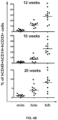
- Significant proportions of human CD14+CD33+ cells are observed at 16-20 weeks.
- humanized M-CSF mice engrafted with hematopoietic cells demonstrate one or more, in some instances two or more, in some instances, three or more, in some instances four or more, in some instances all of the following characteristics: they express human M-CSF in bone marrow, spleen, blood, liver, brain, lung, testis and kidney at a level comparable to expression of mouse M-CSF in a wild-type mouse; exhibit a frequency of hCD14 + CD33 + cells of spleen that is 2- to 6-fold higher than hCD14 + CD33 + in an engrafted mouse that does not express hM-CSF; exhibit a frequency in hCD14 + CD33 + cells of peripheral blood that is 2- to 8-fold higher than hCD14 + CD33 + in an engrafted mouse that does not express hM-CSF; exhibit a level of hCD14 + CD33 + monocyte/macrophage lineage cells in blood of about 15 to about 40%; exhibit a level of hCD14
- mice and humanize M-CSF mice engrafted with human hematopoietic cells are useful in many applications.
- these mice provide a useful system for modeling human immune diseases and human pathogens.
- the subject mice are useful for modeling a human hematopoietic malignancy that originates from an early human hematopoietic cell, e.g. from a human hematopoietic stem or progenitor cell.
- the subject mice are useful for studying human pathogens, e.g. viruses, fungi, and bacteria, that do not normally infect mice.
- Typhoid fever afflicts over 21 million people around the world-principally in the developing world-including about 400 cases/year in the United States.
- Typhoid fever has been treated with the drugs amoxicillin, ampicillin, cefotaxime, ceftriaxone, ceftazidime, chloramphenicol, ciprofloxacin, co-trimoxazole, ertapenem, imipenem, fluoroquinolones (e.g., ciprofloxacin, gatifloxacin, ofloxacin), streptomycin, sulfadiazine, sulfamethoxazole, tetracycline, and combinations thereof.
- Recurrent infections are common, which limits disease management by antibiotic therapy. Further, multi-drug resistance is also prevalent with S. typhi infections.
- New therapeutics, new vaccines, and new ways of testing efficacy of therapeutics and vaccines are needed.
- a mouse capable of being infected by S. typhi, for example, would be useful to identify new therapeutics and new vaccines.
- New therapeutics and new vaccines could be testing in such a mouse by, e.g., determining the amount of S. typhi in the mouse (in blood or a given tissue) in response to treatment with a putative anti-S. typhi agent, or by inoculating the mouse with a putative vaccine followed by exposure to an infective administration of S. typhi, and observing any change in infectivity due to inoculation by the putative vaccine as compared to a control not inoculated with the vaccine but infected with S. typhi.
- a humanized M-CSF mouse engrafted with human hematopoietic cells is useful for studying human pathogens, i.e. pathogens that infect humans; the response of the human immune system to infection by human pathogens; and the effectiveness of agents in protecting against and/or treating infection by human pathogens.
- the pathogen may be a virus, a fungus, a bacterium, etc.
- Non-limiting examples of viral pathogens include human or porcine or avian influenza virus.
- Non-limiting examples of bacterial pathogens include mycobacterium, e.g. Mycobacterium tuberculosis (M. tuberculosis). and enterobacterium, e.g. Salmonella typhi (S. typhi ).
- engrafted humanized M-CSF mice are useful as a non-human animal model of S. typhi infection.
- wild-type mice and other known immune-compromised mice (e.g., RAG1/RAG2 gene knockout mice) are not capable of being infected by S. typhi.
- engrafted human M-CSF mice as described herein display an enhanced engraftment of human cells as compared to an engrafted mice that do not comprise a human M-CSF protein. This enhancement is sufficient to maintain a productive S. typhi infection, that is, the S. typhi is able to reproduce in the mouse, i.e. the infected mouse is able to harbor and reproduce S.
- the mouse is capable of reproducing S. typhi at least a week, 10 days, two weeks, three weeks, or four weeks following an initial introduction or infective exposure of S. typhi
- the mouse is capable of maintaining a S. typhi titer or level in its blood or in at least one tissue for at least a week, 10 days, two week, three weeks, or four weeks following an infective exposure to S. typhi. Examples of methods for infecting mice with S. typhi and for assessing infection may be found in, for example, US Published Application No. 2011/0200982 .
- engrafted humanized M-CSF mice e.g. engrafted Rag2 - / - IL2rg -l- hM-CSF mice
- engrafted Rag2 - / - IL2rg -l- hM-CSF mice are useful as a non-human animal model of infection by M. tuberculosis.
- the enhanced engraftment of human hematopoietic cells in mice comprising a nucleic acid that encodes human M-CSF protein is sufficient to maintain a productive M. tuberculosis infection, that is, the M. tuberculosis is able to reproduce in the mouse, i.e. the infected mouse is able to harbor and reproduce M. tuberculosis in one or more of its cells.
- the mouse mounts an anti-mycobacterial immune response to a human pathogenic mycobacterium, wherein the response comprises formation of a granuloma mediated by human immune cells and that comprises a human immune cell.
- the granuloma is a lung granuloma.
- the granuloma is a well-defined granuloma. Examples of methods for infecting mice with M. tuberculosis and for assessing infection may be found in, for example, US Published Application No. 2011/0200982 .
- human pathogens that do not infect a mouse expressing human M-CSF and in some instances, one or more other genetic modifications e.g. as described herein, or that infect wild-type mice, wherein the wild-type mouse following infection does not model an immune response that a human mounts in response to the pathogen, will be well-known to the ordinarily skilled artisan.
- mouse models of pathogen infection are useful in research, e.g. to better understand the progression of human infection.
- Such mouse models of infection are also useful in drug discovery, e.g. to identify candidate agents that protect against or treat infection.
- Humanized M-CSF mice engrafted with human hematopoietic cells provide a useful system for screening candidate agents for other desired activities in vivo as well, for example, for agents that are able to modulate (i.e., promote or suppress) hematopoietic cell development and/or activity, e.g. the activity of B cells, T cells, NK cells, macrophages, neutrophils, eosinophils, basophils, etc., e.g. in a healthy or a diseased state, e.g. to identify novel therapeutics and/or develop a better understanding of the molecular basis of the development and function of the immune system; for agents that are toxic to hematopoietic cells, e.g.
- the genetically modified mice described herein provide a useful system for predicting the responsiveness of an individual to a disease therapy, e.g. by providing an in vivo platform for screening the responsiveness of an individual's immune system to an agent, e.g. a therapeutic agent, to predict the responsiveness of an individual to that agent.
- humanized M-CSF mice e.g. Rag2 - / - IL2rg -l- hM-CSF mice, that have been engrafted with human hematopoietic cells and in some instances, infected with human pathogens, or cells to be engrafted into a humanized M-CSF mouse, are contacted with a candidate agent of interest and the effect of the candidate agent is assessed by monitoring one or more output parameters.
- output parameters may be reflective of the viability of the cells, e.g.
- the output parameters may be reflective of the differentiation capacity of the cells, e.g. the proportions of differentiated cells and differentiated cell types.
- the output parameters may be reflective of the function of the cells, e.g.
- cytokines and chemokines produced by the cells the ability of the cells to home to and extravasate to a site of challenge, the ability of the cells to modulate, i.e. promote or suppress, the activity of other cells in vitro or in vivo, etc.
- Other output parameters may be reflective of the extent of pathogen infection in the animal, e.g. the titer of pathogen in the mouse, the presence of granuloma in the mouse, etc.
- Parameters are quantifiable components of cells, particularly components that can be accurately measured, desirably in a high throughput system.
- a parameter can be any cell component or cell product including cell surface determinant, receptor, protein or conformational or posttranslational modification thereof, lipid, carbohydrate, organic or inorganic molecule, nucleic acid, e.g. mRNA, DNA, etc. or a portion derived from such a cell component or combinations thereof. While most parameters will provide a quantitative readout, in some instances a semi-quantitative or qualitative result will be acceptable. Readouts may include a single determined value, or may include mean, median value or the variance, etc.
- Characteristically a range of parameter readout values will be obtained for each parameter from a multiplicity of the same assays. Variability is expected and a range of values for each of the set of test parameters will be obtained using standard statistical methods with a common statistical method used to provide single values.
- Candidate agents of interest for screening include known and unknown compounds that encompass numerous chemical classes, primarily organic molecules, which may include organometallic molecules, inorganic molecules, genetic sequences, vaccines, antibiotics or other agents suspected of having antibiotic properties, peptides, polypeptides, antibodies, agents that have been approved pharmaceutical for use in a human, etc.
- Candidate agents include organic molecules comprising functional groups necessary for structural interactions, particularly hydrogen bonding, and typically include at least an amine, carbonyl, hydroxyl or carboxyl group, frequently at least two of the functional chemical groups.
- the candidate agents often comprise cyclical carbon or heterocyclic structures and/or aromatic or polyaromatic structures substituted with one or more of the above functional groups.
- Candidate agents are also found among biomolecules, including peptides, polynucleotides, saccharides, fatty acids, steroids, purines, pyrimidines, derivatives, structural analogs or combinations thereof. Included are pharmacologically active drugs, genetically active molecules, etc.
- Compounds of interest include chemotherapeutic agents, hormones or hormone antagonists, etc.
- Exemplary of pharmaceutical agents are those described in, " The Pharmacological Basis of Therapeutics,” Goodman and Gilman, McGraw-Hill, New York, N.Y., (1996 ), Ninth edition. Also included are toxins, and biological and chemical warfare agents, for example see Somani, S. M. (Ed.), “Chemical Warfare Agents,” Academic Press, New York, 1992 ).
- Candidate agents of interest for screening also include nucleic acids, for example, nucleic acids that encode siRNA, shRNA, antisense molecules, or miRNA, or nucleic acids that encode polypeptides.
- Many vectors useful for transferring nucleic acids into target cells are available.
- the vectors may be maintained episomally, e.g. as plasmids, minicircle DNAs, virus-derived vectors such cytomegalovirus, adenovirus, etc., or they may be integrated into the target cell genome, through homologous recombination or random integration, e.g. retrovirus derived vectors such as MMLV, HIV-1, ALV, etc.
- Vectors may be provided directly to the subject cells. In other words, the pluripotent cells are contacted with vectors comprising the nucleic acid of interest such that the vectors are taken up by the cells.
- nucleic acid vectors such as electroporation, calcium chloride transfection, and lipofection
- the nucleic acid of interest may be provided to the cells via a virus.
- the cells are contacted with viral particles comprising the nucleic acid of interest.
- Retroviruses for example, lentiviruses, are particularly suitable. Commonly used retroviral vectors are "defective", i.e. unable to produce viral proteins required for productive infection. Rather, replication of the vector requires growth in a packaging cell line.
- reagents, devices and kits thereof for practicing one or more of the above-described methods.
- the subject reagents, devices and kits thereof may vary greatly.
- the reagents or kits will comprise one or more agents for use in the methods described.
- the kit may comprise a humanized M-CSF mouse.
- the kit may comprise reagents for breeding humanized M-CSF mice, e.g. primers and, in some instances, reagents for genotyping humanized M-CSF mice.
- the kit may comprise human hematopoietic cells or an enriched population of human hematopoietic progenitor cells for transplantation into the humanized M-CSF mouse, or reagents for preparing a population of hematopoietic cells or an enriched population of hematopoietic cells from a human for transplantation into a humanized M-CSF mouse.
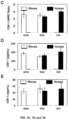
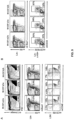
- M-CSF m/m and M-CSF m/h mice engrafted with human CD34+ cells were injected with LPS.
- mice Six hours after injection, mice were bled and the serum levels of human and mouse IL6 and TNF ⁇ were determined by ELISA. Consistent with the increased frequencies of monocytes/macrophages in the humanized M-CSF mice, elevated levels of human IL6 and TNF ⁇ were detected in the M-CSF m/h mice. Although the basal levels of these cytokines were higher in the M-CSF m/h mice, LPS stimulation resulted in augmented levels of human IL6 and TNF ⁇ in the serum ( FIG. 6B and 6C ).
Landscapes
- Life Sciences & Earth Sciences (AREA)
- Health & Medical Sciences (AREA)
- Engineering & Computer Science (AREA)
- Environmental Sciences (AREA)
- Zoology (AREA)
- Biomedical Technology (AREA)
- Chemical & Material Sciences (AREA)
- Genetics & Genomics (AREA)
- Biotechnology (AREA)
- General Health & Medical Sciences (AREA)
- Animal Behavior & Ethology (AREA)
- Biodiversity & Conservation Biology (AREA)
- Animal Husbandry (AREA)
- Organic Chemistry (AREA)
- Veterinary Medicine (AREA)
- Molecular Biology (AREA)
- Bioinformatics & Cheminformatics (AREA)
- Cell Biology (AREA)
- General Engineering & Computer Science (AREA)
- Biochemistry (AREA)
- Wood Science & Technology (AREA)
- Immunology (AREA)
- Urology & Nephrology (AREA)
- Microbiology (AREA)
- Physics & Mathematics (AREA)
- Toxicology (AREA)
- Biophysics (AREA)
- Hematology (AREA)
- Pathology (AREA)
- Plant Pathology (AREA)
- Medicinal Chemistry (AREA)
- Gastroenterology & Hepatology (AREA)
- Tropical Medicine & Parasitology (AREA)
- Food Science & Technology (AREA)
- General Physics & Mathematics (AREA)
- Analytical Chemistry (AREA)
- Public Health (AREA)
- Rheumatology (AREA)
- Endocrinology (AREA)
- Epidemiology (AREA)
Claims (9)
- Embryonale Stamm- (ES-) Zelle einer Maus, die Folgendes umfasst:
eine Nucleinsäuresequenz, die in das Genom der Maus-ES-Zelle eingebaut ist, wobei die Sequenz für ein biologisch aktives, menschliches Makrophagenkolonien-stimulierender-Faktor- (hM-CSF-) Protein kodiert und operabel an den endogenen Promotor des Maus-M-CSF-Gens am Maus-M-CSF-Locus gebunden ist. - Maus-ES-Zelle nach Anspruch 1, wobei die Maus-ES-Zelle zwei Kopien der Nucleinsäuresequenz umfasst.
- Maus-ES-Zelle nach Anspruch 1 oder 2, wobei die Maus-ES-Zelle eine Nullmutation in zumindest einem Maus-M-CSF-Allel umfasst.
- Maus-ES-Zelle nach einem der Ansprüche 1 bis 3, wobei die Nullmutation eine Deletion der Maus-M-CSF-Exons 2-9 ist.
- Maus-ES-Zelle nach einem der Ansprüche 1 bis 4, wobei die Maus-ES-Zelle für Rag2 homozygot null ist.
- Maus-ES-Zelle nach Anspruch 5, wobei die Maus-ES-Zelle für IL2rg homozygot null ist.
- Mausembryo, der eine Maus-ES-Zelle nach einem der Ansprüche 1 bis 6 umfasst.
- Targeting-Konstrukt zum Targeting einer menschlichen M-CSF-Nucleinsäuresequenz auf den Maus-M-CSF-Locus, so dass die menschliche M-CSF-Nucleinsäuresequenz operabel an den endogenen Promotor des Maus-M-CSF-Gens am Maus-M-CSF-Locus gebunden wird, wobei das Targeting-Konstrukt Folgendes umfasst:(a) Stromauf- und Stromab-Targeting-Arme, die komplementär oder im Wesentlichen komplementär zu Stromauf- und Stromab-Nucleotidsequenzen von entweder (i) einer Nucleinsäuresequenz, die für ein Maus-M-CSF-Protein kodiert, oder (ii) eine Nucleotidsequenz, die zu einer Nucleotidsequenz komplementär ist, die für ein Maus-M-CSF-Protein kodiert, sind;(b) eine Nucleotidsequenz, die für ein biologisch aktives, menschliches M-CSF-Protein oder ein Komplement einer für ein biologisch aktives menschliches M-CSF-Protein kodierenden Nucleotidsequenz kodiert; und(c) einen Marker und/oder eine Selektionskassette.
- Verfahren zur Herstellung einer humanisierten M-CSF-Maus, wobei das Verfahren Folgendes umfasst:(a) das In-Kontakt-Bringen einer Maus-ES-Zelle mit einem Targeting-Konstrukt nach Anspruch 8;(b) das Kultivieren der ES-Zelle, um die Nucleotidsequenz, die für das biologisch aktive menschliche M-CSF-Protein kodiert, durch homologe Rekombination in den endogenen Maus-M-CSF-Locus der ES-Zelle einzubauen, so dass die kodierende Sequenz operabel an den endogenen Promotor des Maus-M-CSF-Gens am Maus-M-CSF-Locus gebunden wird; und(c) das Herstellen einer humanisierten M-CSF-Maus aus der Maus-ES-Zelle, wobei die humanisierte M-CSF-Maus in ihrem Genom die Nucleotidsequenz umfasst, die für das biologisch aktive, menschliche M-CSF-Protein kodiert.
Applications Claiming Priority (4)
| Application Number | Priority Date | Filing Date | Title |
|---|---|---|---|
| US201161442946P | 2011-02-15 | 2011-02-15 | |
| EP12746594.6A EP2675271B1 (de) | 2011-02-15 | 2012-02-14 | Humanisierte m-csf-mäuse |
| PCT/US2012/025040 WO2012112544A2 (en) | 2011-02-15 | 2012-02-14 | Humanized m-csf mice |
| EP18166409.5A EP3375284B1 (de) | 2011-02-15 | 2012-02-14 | Humanisierte m-csf-mäuse und deren verwendungen |
Related Parent Applications (2)
| Application Number | Title | Priority Date | Filing Date |
|---|---|---|---|
| EP18166409.5A Division EP3375284B1 (de) | 2011-02-15 | 2012-02-14 | Humanisierte m-csf-mäuse und deren verwendungen |
| EP12746594.6A Division EP2675271B1 (de) | 2011-02-15 | 2012-02-14 | Humanisierte m-csf-mäuse |
Publications (3)
| Publication Number | Publication Date |
|---|---|
| EP4233537A2 EP4233537A2 (de) | 2023-08-30 |
| EP4233537A3 EP4233537A3 (de) | 2023-09-13 |
| EP4233537B1 true EP4233537B1 (de) | 2025-07-09 |
Family
ID=46673120
Family Applications (3)
| Application Number | Title | Priority Date | Filing Date |
|---|---|---|---|
| EP18166409.5A Active EP3375284B1 (de) | 2011-02-15 | 2012-02-14 | Humanisierte m-csf-mäuse und deren verwendungen |
| EP23161285.4A Active EP4233537B1 (de) | 2011-02-15 | 2012-02-14 | Humanisierte m-csf-mäuse und deren verwendungen |
| EP12746594.6A Active EP2675271B1 (de) | 2011-02-15 | 2012-02-14 | Humanisierte m-csf-mäuse |
Family Applications Before (1)
| Application Number | Title | Priority Date | Filing Date |
|---|---|---|---|
| EP18166409.5A Active EP3375284B1 (de) | 2011-02-15 | 2012-02-14 | Humanisierte m-csf-mäuse und deren verwendungen |
Family Applications After (1)
| Application Number | Title | Priority Date | Filing Date |
|---|---|---|---|
| EP12746594.6A Active EP2675271B1 (de) | 2011-02-15 | 2012-02-14 | Humanisierte m-csf-mäuse |
Country Status (17)
| Country | Link |
|---|---|
| US (5) | US8847004B2 (de) |
| EP (3) | EP3375284B1 (de) |
| JP (5) | JP5834097B2 (de) |
| KR (6) | KR102585058B1 (de) |
| CN (3) | CN111808879B (de) |
| AU (1) | AU2012217836B2 (de) |
| CA (1) | CA2826714C (de) |
| DK (3) | DK2675271T3 (de) |
| ES (3) | ES2948210T3 (de) |
| FI (2) | FI3375284T3 (de) |
| IL (7) | IL227704A0 (de) |
| MX (3) | MX338971B (de) |
| MY (1) | MY162984A (de) |
| PT (3) | PT2675271T (de) |
| RU (2) | RU2577978C2 (de) |
| SG (3) | SG10202008003VA (de) |
| WO (1) | WO2012112544A2 (de) |
Families Citing this family (49)
| Publication number | Priority date | Publication date | Assignee | Title |
|---|---|---|---|---|
| EP2449112A1 (de) * | 2009-07-01 | 2012-05-09 | Transposagen Biopharmaceuticals, Inc. | Genetisch modifizierte rattenmodelle für schwere kombinierte immundefizienz (scid) |
| EP4502152A3 (de) | 2009-10-06 | 2025-04-30 | Regeneron Pharmaceuticals, Inc. | Genetisch modifizierte mäuse und transplantation |
| SG10202008003VA (en) | 2011-02-15 | 2020-10-29 | Regeneron Pharma | Humanized m-csf mice |
| CN108866101A (zh) | 2011-10-28 | 2018-11-23 | 瑞泽恩制药公司 | 人源化il-6和il-6受体 |
| US8962913B2 (en) | 2012-06-18 | 2015-02-24 | Regeneron Pharmaceuticals, Inc. | Humanized IL-7 rodents |
| FI2892330T3 (fi) | 2012-09-07 | 2023-03-25 | Univ Yale | Geneettisesti muokattuja hiiriä ja menetelmiä niiden käyttämiseksi |
| MX377561B (es) * | 2012-11-05 | 2025-03-10 | Regeneron Pharma | Animales no humanos genéticamente modificados y métodos de uso de los mismos. |
| MX384291B (es) | 2013-02-20 | 2025-03-14 | Regeneron Pharma | Modificación genética de ratas. |
| CN103409468B (zh) * | 2013-03-20 | 2015-08-12 | 中国科学院广州生物医药与健康研究院 | 一种免疫缺陷小鼠模型的建立方法 |
| DK3456831T3 (da) | 2013-04-16 | 2021-09-06 | Regeneron Pharma | Målrettet modifikation af rottegenom |
| WO2014204763A1 (en) | 2013-06-17 | 2014-12-24 | 3M Innovative Properties Company | Process for preparing guanidino-functional monomers |
| TR201901782T4 (tr) | 2013-09-23 | 2019-03-21 | Regeneron Pharma | İnsanlaştirilmiş bi̇r si̇nyal düzenleyi̇ci̇ protei̇n geni̇ne sahi̇p olan i̇nsan dişi hayvanlar. |
| ES2613379T3 (es) | 2013-10-15 | 2017-05-24 | Regeneron Pharmaceuticals, Inc. | Animales con IL-15 humanizada |
| RU2671101C1 (ru) | 2013-11-19 | 2018-10-29 | Регенерон Фармасьютикалс, Инк. | Отличные от человека животные, содержащие гуманизированный ген индуцирующего пролиферацию лиганда |
| CA2929846C (en) * | 2013-11-19 | 2020-09-15 | Regeneron Pharmaceuticals, Inc. | Non-human animals having a humanized b-cell activating factor gene |
| EP3636073B1 (de) | 2014-05-05 | 2023-11-15 | Regeneron Pharmaceuticals, Inc. | Humanisierte c5- und c3-tiere |
| NO2785538T3 (de) | 2014-05-07 | 2018-08-04 | ||
| MX2016014995A (es) | 2014-05-19 | 2017-03-31 | Regeneron Pharma | Animales no humanos geneticamente modificados que expresan eritropoyetina de humano. |
| MX373055B (es) * | 2014-05-30 | 2020-05-20 | Regeneron Pharma | Animales con dipeptidil peptidasa iv (dpp4) humanizada. |
| HUE064960T2 (hu) | 2014-12-05 | 2024-04-28 | Regeneron Pharma | Differenciációs 47 gén humanizált klasztert tartalmazó nem-humán állatok |
| CN113412818B (zh) | 2014-12-09 | 2022-11-04 | 瑞泽恩制药公司 | 具有人源化分化簇274基因的非人动物 |
| ES2950399T3 (es) * | 2015-04-13 | 2023-10-09 | Regeneron Pharma | Ratones humanizados Sirpa-IL15 insertados y métodos de uso de los mismos |
| CN105994125B (zh) * | 2015-04-15 | 2019-05-17 | 中国科学院广州生物医药与健康研究院 | 一种评价免疫缺陷小鼠模型的免疫缺陷程度的方法 |
| EP3306313B1 (de) * | 2015-05-29 | 2020-07-15 | Central Institute For Experimental Animals | Verfahren zur beurteilung der hämatologischen toxizität eines zu beurteilten arzneimittels |
| HK1255123A1 (zh) | 2015-06-23 | 2019-08-02 | The Jackson Laboratory | 具有患者衍生异种移植物的非hla匹配的人源化nsg小鼠模型 |
| CN105145486A (zh) * | 2015-07-22 | 2015-12-16 | 中国医学科学院医学实验动物研究所 | Rag2基因敲除大鼠在建立个性化肿瘤治疗模型中的应用 |
| WO2017087780A1 (en) | 2015-11-20 | 2017-05-26 | Regeneron Pharmaceuticals, Inc. | Non-human animals having a humanized lymphocyte-activation gene 3 |
| SG11201806176PA (en) | 2016-02-04 | 2018-08-30 | Regeneron Pharma | Non-human animals having an engineered angptl8 gene |
| KR101887051B1 (ko) * | 2016-02-12 | 2018-08-10 | 한국과학기술원 | 오브젝트 탐닉행동을 활용한 동물행동 조절 방법 |
| DK3422845T3 (da) | 2016-02-29 | 2021-08-30 | Regeneron Pharma | Gnavere med et humaniseret tmprss-gen |
| CN110740641A (zh) * | 2016-11-30 | 2020-01-31 | 杰克逊实验室 | 具有改善的人先天免疫细胞发育的人源化小鼠模型 |
| ES2937797T3 (es) | 2017-04-17 | 2023-03-31 | Jackson Lab | Método de determinación de la toxicidad de un fármaco inmunomodulador para el uso en seres humanos |
| US20190098879A1 (en) | 2017-09-29 | 2019-04-04 | Regeneron Pharmaceuticals, Inc. | Non-Human Animals Comprising A Humanized TTR Locus And Methods Of Use |
| HRP20240999T1 (hr) | 2018-07-16 | 2024-10-25 | Regeneron Pharmaceuticals, Inc. | Glodavački modeli bolesti ditra i njihova upotreba |
| WO2020041174A1 (en) * | 2018-08-20 | 2020-02-27 | The Jackson Laboratory | Method of determining toxicity of an immunomodulatory drug |
| US12331320B2 (en) | 2018-10-10 | 2025-06-17 | The Research Foundation For The State University Of New York | Genome edited cancer cell vaccines |
| CN111073907B (zh) * | 2018-12-25 | 2025-07-29 | 百奥赛图江苏基因生物技术有限公司 | 人源化细胞因子csf1基因改造非人动物的构建方法及应用 |
| KR102661779B1 (ko) | 2019-04-04 | 2024-04-30 | 리제너론 파마슈티칼스 인코포레이티드 | 인간화 응고 인자 12 좌위를 포함하는 비-인간 동물 |
| US11891618B2 (en) | 2019-06-04 | 2024-02-06 | Regeneron Pharmaceuticals, Inc. | Mouse comprising a humanized TTR locus with a beta-slip mutation and methods of use |
| MX2021015122A (es) | 2019-06-07 | 2022-04-06 | Regeneron Pharma | Animales no humanos que comprenden un locus de albumina humanizado. |
| WO2021011853A2 (en) * | 2019-07-17 | 2021-01-21 | Yale University | Genetically modified non-human animals and methods of use thereof |
| US11170872B2 (en) | 2019-11-05 | 2021-11-09 | Apeel Technology, Inc. | Prediction of latent infection in plant products |
| WO2021154791A1 (en) * | 2020-01-28 | 2021-08-05 | Regeneron Pharmaceuticals, Inc. | Non-human animals comprising a humanized pnpla3 locus and methods of use |
| KR20230074758A (ko) | 2020-09-24 | 2023-05-31 | 더 잭슨 래보라토리 | 면역 세포 요법을 평가하기 위한 인간화 마우스 모델 |
| CN113100175B (zh) * | 2021-03-08 | 2022-07-12 | 北京大学人民医院 | 一种巨细胞病毒感染的人源化小鼠模型及其构建方法 |
| WO2022222958A1 (en) * | 2021-04-20 | 2022-10-27 | Biocytogen Pharmaceuticals (Beijing) Co., Ltd. | Genetically modified non-human animal with human or chimeric genes |
| IL318159A (en) | 2022-07-19 | 2025-03-01 | Regeneron Pharma | Genetically modified animal model and its use to model the human immune system |
| US20250255282A1 (en) | 2024-02-08 | 2025-08-14 | Regeneron Pharmaceuticals, Inc. | Vectors, genetically modified cells, and genetically modified non-human animals comprising the same |
| WO2025212991A1 (en) | 2024-04-05 | 2025-10-09 | Regeneron Pharmaceuticals, Inc. | Rodent models of disease |
Family Cites Families (68)
| Publication number | Priority date | Publication date | Assignee | Title |
|---|---|---|---|---|
| US4870009A (en) | 1982-11-22 | 1989-09-26 | The Salk Institute For Biological Studies | Method of obtaining gene product through the generation of transgenic animals |
| US4736866B1 (en) | 1984-06-22 | 1988-04-12 | Transgenic non-human mammals | |
| US5573930A (en) * | 1985-02-05 | 1996-11-12 | Cetus Oncology Corporation | DNA encoding various forms of colony stimulating factor-1 |
| WO1988003173A2 (en) | 1986-10-24 | 1988-05-05 | Cetus Corporation | New forms of colony stimulating factor-1 |
| DE3853201T2 (de) | 1987-12-23 | 1995-09-14 | Univ Leland Stanford Junior | Schimäre immunkompromittierende Säugetiere und ihre Verwendung. |
| JP2981486B2 (ja) | 1988-06-14 | 1999-11-22 | メディカル・バイオロジー・インスティチュート | 哺乳動物の免疫系研究方法 |
| US5652373A (en) | 1990-01-15 | 1997-07-29 | Yeda Research And Development Co. Ltd. | Engraftment and development of xenogeneic cells in normal mammals having reconstituted hematopoetic deficient immune systems |
| DK0438053T3 (da) | 1990-01-15 | 1999-11-22 | Yeda Res & Dev | Varig transplantation og udvikling af humane hæmopoietiske cellelinjer i normale pattedyr |
| US5849288A (en) | 1990-01-15 | 1998-12-15 | Yeda Research And Development Co. Ltd. | Method for production of monoclonal antibodies in chimeric mice or rats having xenogeneic antibody-producing cells |
| WO1991016910A1 (en) | 1990-05-03 | 1991-11-14 | Systemix, Inc. | Human lymphoid tissue in an immunocompromised host |
| US5633426A (en) | 1990-05-25 | 1997-05-27 | Systemix, Inc. | In vivo use of human bone marrow for investigation and production |
| WO1991018615A1 (en) | 1990-05-25 | 1991-12-12 | Systemix, Inc. | Human peripheral blood cells in an immunocompromised host |
| US5222982A (en) | 1991-02-11 | 1993-06-29 | Ommaya Ayub K | Spinal fluid driven artificial organ |
| JPH06505186A (ja) | 1991-02-11 | 1994-06-16 | オマーヤ,アユブ ケー. | 脊髄液駆動式人工器官 |
| EP0517199A1 (de) | 1991-06-04 | 1992-12-09 | Yeda Research And Development Company, Ltd. | Dauerhafte Transplantation von menschlichen Zellen und Geweben in normalen Säugetieren |
| WO1993005796A1 (en) | 1991-09-19 | 1993-04-01 | The Scripps Research Institute | Method for producing human antibodies in a non-human animal, and animals therefor |
| EP0539970B1 (de) | 1991-10-30 | 1999-05-26 | Idemitsu Kosan Company Limited | Verfahren zur Herstellung von menschlichen Lymphozyten und menschlichen Antikörpern; und so hergestellte Antikörper |
| US6353150B1 (en) | 1991-11-22 | 2002-03-05 | Hsc Research And Development Limited Partnership | Chimeric mammals with human hematopoietic cells |
| WO1993018144A1 (en) | 1992-03-05 | 1993-09-16 | The Trustees Of Columbia University Of The City Of New York | Recombination activating gene deficient animal |
| US5866757A (en) | 1992-06-02 | 1999-02-02 | Yeda Research And Development Co. Ltd. | Engraftment and development of xenogeneic cells in normal mammals having reconstituted hematopoetic deficient immune systems |
| US6018096A (en) | 1993-05-03 | 2000-01-25 | Surrogen, Inc. | Animal model for engraftment, proliferation and differentiation of human hematopoietic stem cells |
| US5663481A (en) | 1993-08-06 | 1997-09-02 | Mount Sinai Hospital Corporation | Animal model of the human immune system |
| JPH10503092A (ja) | 1994-07-27 | 1998-03-24 | メルク エンド カンパニー インコーポレーテッド | ブラジキニンb2受容体が改変されたトランスジェニック非ヒト動物 |
| US6455756B1 (en) | 1994-08-12 | 2002-09-24 | Novartis Ag | Long term xenogeneic myeloid and lymphoid cell production in chimeric immunocompromised mice |
| US7273753B2 (en) * | 1996-08-02 | 2007-09-25 | Center Of Blood Research | Purification and uses of dendritic cells and monocytes |
| US6248721B1 (en) | 1997-04-09 | 2001-06-19 | Lung-Ji Chang | Method of using mouse model for evaluation of HIV vaccines |
| IL132164A0 (en) | 1997-04-09 | 2001-03-19 | Chang Lung Ji | Animal model for evaluation of vaccines |
| US20030028911A1 (en) | 1999-08-31 | 2003-02-06 | Manley Huang | Transgenic mammal capable of facilitating production of donor-specific functional immunity |
| WO2001015521A1 (en) * | 1999-08-31 | 2001-03-08 | Genencor International, Inc. | Transgenic mammal capable of facilitating production of donor-specific functional immunity |
| AU2066301A (en) | 1999-12-09 | 2001-06-18 | Human Genome Sciences, Inc. | Il-6 like polynucleotide |
| AU2001290855A1 (en) | 2000-09-14 | 2002-03-26 | Genetrol Biotherapeutics, Inc. | Method and cell composition for screening compounds for anti-inflammatory activity |
| US6596541B2 (en) | 2000-10-31 | 2003-07-22 | Regeneron Pharmaceuticals, Inc. | Methods of modifying eukaryotic cells |
| US6586251B2 (en) | 2000-10-31 | 2003-07-01 | Regeneron Pharmaceuticals, Inc. | Methods of modifying eukaryotic cells |
| AU2002363322A1 (en) | 2001-10-26 | 2003-05-19 | Large Scale Biology Corporation | Endothelial cell derived hemotopoietic growth factor |
| EP1452093A4 (de) | 2001-11-15 | 2007-08-15 | Kirin Brewery | Chimäres nichtmenschliches tier |
| JPWO2004005496A1 (ja) | 2002-07-05 | 2005-11-04 | 麒麟麦酒株式会社 | 臍帯血、骨髄、末梢血等に含まれる新規な未分化幹細胞集団 |
| CN101250553A (zh) | 2002-07-13 | 2008-08-27 | 上海医学遗传研究所 | 一种促人血小板生成素表达载体及其构建方法 |
| EP1539946A4 (de) | 2002-09-09 | 2006-03-15 | California Inst Of Techn | Verfahren und zusammensetzungen zur erzeugung humanisierter mäuse |
| EP1418185A1 (de) * | 2002-11-11 | 2004-05-12 | Aventis Pharma Deutschland GmbH | Verwendung des EDG2 Rezeptors in einem Tiermodell von Herzversagen |
| CA2507882A1 (en) | 2002-12-16 | 2004-07-22 | Genentech, Inc. | Transgenic mice expressing human cd20 |
| CN1751236A (zh) * | 2002-12-16 | 2006-03-22 | 健泰科生物技术公司 | 表达人cd20的转基因小鼠 |
| ES2463476T3 (es) | 2004-10-19 | 2014-05-28 | Regeneron Pharmaceuticals, Inc. | Método para generar un ratón homocigótico para una modificación genética |
| US7759541B2 (en) | 2004-12-13 | 2010-07-20 | Iti Life Sciences | Transgenic animals for assessing drug metabolism and toxicity |
| GB2434578A (en) | 2006-01-26 | 2007-08-01 | Univ Basel | Transgenic animals |
| DK2019683T4 (da) | 2006-04-25 | 2022-08-29 | Univ California | Indgivelse af vækstfaktorer til behandling af CNS-lidelser |
| EP1878342A1 (de) | 2006-07-13 | 2008-01-16 | Institut Pasteur | Immundefiziente Mäuse, die transgen für HLA Klassen I und II sind, und deren Verwendungen |
| WO2008060360A2 (en) | 2006-09-28 | 2008-05-22 | Surmodics, Inc. | Implantable medical device with apertures for delivery of bioactive agents |
| WO2008069659A1 (en) | 2006-12-05 | 2008-06-12 | Academisch Ziekenhuis Bij De Universiteit Van Amsterdam | Improved xenogenic immune system in a non-human mammal |
| WO2008153742A2 (en) * | 2007-05-23 | 2008-12-18 | Sangamo Biosciences, Inc. | Methods and compositions for increased transgene expression |
| GB0718029D0 (en) * | 2007-09-14 | 2007-10-24 | Iti Scotland Ltd | Two step cluster deletion and humanisation |
| WO2009042917A1 (en) | 2007-09-28 | 2009-04-02 | The General Hospital Corporation | Methods and compositions for antibody production |
| WO2009097468A2 (en) | 2008-01-29 | 2009-08-06 | Kliman Gilbert H | Drug delivery devices, kits and methods therefor |
| AU2013204613A1 (en) | 2008-12-24 | 2013-05-16 | The Kingdom of The Netherlands, Represented by The Minister of Health, Welfare and Sport | Modified Streptococcus pneumonia pneumolysin (PLY) polypeptides |
| EP2448967B1 (de) | 2009-06-29 | 2015-04-15 | Ilya B. Leskov | Nichtmenschliches säugetiermodell für menschliche hämatopoetische tumore |
| CN102725400A (zh) | 2009-06-29 | 2012-10-10 | 麻省理工学院 | 制造人源化的非人类哺乳动物的方法 |
| RU2425880C2 (ru) | 2009-07-30 | 2011-08-10 | Учреждение Российской академии наук Институт общей генетики им. Н.И. Вавилова РАН | Способ получения трансгенных мышей |
| EP4502152A3 (de) | 2009-10-06 | 2025-04-30 | Regeneron Pharmaceuticals, Inc. | Genetisch modifizierte mäuse und transplantation |
| EP2618656B1 (de) | 2010-09-20 | 2018-06-20 | Yale University, Inc. | TRANSGENE TIERE MIT EXPRESSION HUMANER SIRPalpha UND VERFAHREN ZU IHRER VERWENDUNG |
| WO2012051572A1 (en) | 2010-10-15 | 2012-04-19 | Massachusetts Institute Of Technology | A humanized non-human mammal model of malaria and uses thereof |
| SG10202008003VA (en) | 2011-02-15 | 2020-10-29 | Regeneron Pharma | Humanized m-csf mice |
| CN108866101A (zh) | 2011-10-28 | 2018-11-23 | 瑞泽恩制药公司 | 人源化il-6和il-6受体 |
| FI2892330T3 (fi) * | 2012-09-07 | 2023-03-25 | Univ Yale | Geneettisesti muokattuja hiiriä ja menetelmiä niiden käyttämiseksi |
| MX377561B (es) | 2012-11-05 | 2025-03-10 | Regeneron Pharma | Animales no humanos genéticamente modificados y métodos de uso de los mismos. |
| TR201901782T4 (tr) | 2013-09-23 | 2019-03-21 | Regeneron Pharma | İnsanlaştirilmiş bi̇r si̇nyal düzenleyi̇ci̇ protei̇n geni̇ne sahi̇p olan i̇nsan dişi hayvanlar. |
| ES2613379T3 (es) | 2013-10-15 | 2017-05-24 | Regeneron Pharmaceuticals, Inc. | Animales con IL-15 humanizada |
| MX2016014995A (es) | 2014-05-19 | 2017-03-31 | Regeneron Pharma | Animales no humanos geneticamente modificados que expresan eritropoyetina de humano. |
| ES2950399T3 (es) | 2015-04-13 | 2023-10-09 | Regeneron Pharma | Ratones humanizados Sirpa-IL15 insertados y métodos de uso de los mismos |
| EP3478283A4 (de) | 2016-06-29 | 2020-07-22 | Menlo Therapeutics Inc. | Verwendung von neurokinin-1-antagonisten zur behandlung verschiedener pruriginöser störungen |
-
2012
- 2012-02-14 SG SG10202008003VA patent/SG10202008003VA/en unknown
- 2012-02-14 FI FIEP18166409.5T patent/FI3375284T3/fi active
- 2012-02-14 PT PT12746594T patent/PT2675271T/pt unknown
- 2012-02-14 SG SG10201601067WA patent/SG10201601067WA/en unknown
- 2012-02-14 PT PT181664095T patent/PT3375284T/pt unknown
- 2012-02-14 SG SG2013059076A patent/SG192606A1/en unknown
- 2012-02-14 EP EP18166409.5A patent/EP3375284B1/de active Active
- 2012-02-14 KR KR1020227013434A patent/KR102585058B1/ko active Active
- 2012-02-14 MX MX2013009406A patent/MX338971B/es active IP Right Grant
- 2012-02-14 DK DK12746594.6T patent/DK2675271T3/en active
- 2012-02-14 ES ES18166409T patent/ES2948210T3/es active Active
- 2012-02-14 RU RU2013142043/10A patent/RU2577978C2/ru active
- 2012-02-14 JP JP2013554547A patent/JP5834097B2/ja active Active
- 2012-02-14 CN CN202010697865.3A patent/CN111808879B/zh active Active
- 2012-02-14 DK DK23161285.4T patent/DK4233537T3/da active
- 2012-02-14 ES ES23161285T patent/ES3040596T3/es active Active
- 2012-02-14 MX MX2017011324A patent/MX380588B/es unknown
- 2012-02-14 CN CN201280018139.8A patent/CN103547148B/zh active Active
- 2012-02-14 FI FIEP23161285.4T patent/FI4233537T3/fi active
- 2012-02-14 US US13/372,787 patent/US8847004B2/en active Active
- 2012-02-14 EP EP23161285.4A patent/EP4233537B1/de active Active
- 2012-02-14 KR KR1020217015137A patent/KR102390850B1/ko active Active
- 2012-02-14 KR KR1020207012878A patent/KR102256316B1/ko active Active
- 2012-02-14 AU AU2012217836A patent/AU2012217836B2/en active Active
- 2012-02-14 ES ES12746594.6T patent/ES2685790T3/es active Active
- 2012-02-14 CN CN201610297251.XA patent/CN105861553B/zh active Active
- 2012-02-14 WO PCT/US2012/025040 patent/WO2012112544A2/en not_active Ceased
- 2012-02-14 MX MX2016001791A patent/MX350385B/es unknown
- 2012-02-14 MY MYPI2013002891A patent/MY162984A/en unknown
- 2012-02-14 PT PT231612854T patent/PT4233537T/pt unknown
- 2012-02-14 KR KR1020237033247A patent/KR102714361B1/ko active Active
- 2012-02-14 CA CA2826714A patent/CA2826714C/en active Active
- 2012-02-14 KR KR1020137020995A patent/KR102061143B1/ko active Active
- 2012-02-14 RU RU2016104468A patent/RU2730643C2/ru active
- 2012-02-14 KR KR1020197038167A patent/KR102109172B1/ko active Active
- 2012-02-14 EP EP12746594.6A patent/EP2675271B1/de active Active
- 2012-02-14 DK DK18166409.5T patent/DK3375284T3/da active
-
2013
- 2013-07-29 IL IL227704A patent/IL227704A0/en active IP Right Grant
-
2014
- 2014-08-26 US US14/469,308 patent/US9655352B2/en active Active
-
2015
- 2015-05-13 IL IL238781A patent/IL238781A/en active IP Right Grant
- 2015-06-11 IL IL239350A patent/IL239350A/en active IP Right Grant
- 2015-10-30 JP JP2015214219A patent/JP6188765B2/ja active Active
-
2017
- 2017-04-14 US US15/488,177 patent/US10785966B2/en active Active
- 2017-07-31 IL IL253743A patent/IL253743B/en active IP Right Grant
- 2017-08-01 JP JP2017148922A patent/JP6505786B2/ja active Active
-
2019
- 2019-03-27 JP JP2019059688A patent/JP6732987B2/ja active Active
- 2019-05-26 IL IL266886A patent/IL266886B/en active IP Right Grant
-
2020
- 2020-07-08 JP JP2020117479A patent/JP7181911B2/ja active Active
- 2020-08-21 US US17/000,105 patent/US12127536B2/en active Active
- 2020-10-29 IL IL278385A patent/IL278385B/en unknown
-
2021
- 2021-11-16 IL IL288167A patent/IL288167A/en unknown
-
2024
- 2024-09-24 US US18/895,171 patent/US20250072406A1/en active Pending
Also Published As
Similar Documents
| Publication | Publication Date | Title |
|---|---|---|
| US20250072406A1 (en) | Humanized M-CSF Mice | |
| AU2018213980B2 (en) | Humanized M-CSF mice | |
| HK40098113B (en) | Humanized m-csf mice and uses thereof | |
| HK40098113A (en) | Humanized m-csf mice and uses thereof | |
| AU2015202020B2 (en) | Humanized M-CSF mice | |
| HK1191804A (en) | Humanized m-csf mice | |
| HK1191804B (en) | Humanized m-csf mice | |
| NZ724014B2 (en) | Humanized m-csf mice | |
| NZ708040B2 (en) | Humanized m-csf mice | |
| NZ613948B2 (en) | Humanized m-csf mice |
Legal Events
| Date | Code | Title | Description |
|---|---|---|---|
| PUAI | Public reference made under article 153(3) epc to a published international application that has entered the european phase |
Free format text: ORIGINAL CODE: 0009012 |
|
| STAA | Information on the status of an ep patent application or granted ep patent |
Free format text: STATUS: THE APPLICATION HAS BEEN PUBLISHED |
|
| PUAL | Search report despatched |
Free format text: ORIGINAL CODE: 0009013 |
|
| AC | Divisional application: reference to earlier application |
Ref document number: 2675271 Country of ref document: EP Kind code of ref document: P Ref document number: 3375284 Country of ref document: EP Kind code of ref document: P |
|
| AK | Designated contracting states |
Kind code of ref document: A2 Designated state(s): AL AT BE BG CH CY CZ DE DK EE ES FI FR GB GR HR HU IE IS IT LI LT LU LV MC MK MT NL NO PL PT RO RS SE SI SK SM TR |
|
| AK | Designated contracting states |
Kind code of ref document: A3 Designated state(s): AL AT BE BG CH CY CZ DE DK EE ES FI FR GB GR HR HU IE IS IT LI LT LU LV MC MK MT NL NO PL PT RO RS SE SI SK SM TR |
|
| RIC1 | Information provided on ipc code assigned before grant |
Ipc: A01K 67/027 20060101AFI20230809BHEP |
|
| STAA | Information on the status of an ep patent application or granted ep patent |
Free format text: STATUS: REQUEST FOR EXAMINATION WAS MADE |
|
| REG | Reference to a national code |
Ref country code: HK Ref legal event code: DE Ref document number: 40098113 Country of ref document: HK |
|
| 17P | Request for examination filed |
Effective date: 20240311 |
|
| RBV | Designated contracting states (corrected) |
Designated state(s): AL AT BE BG CH CY CZ DE DK EE ES FI FR GB GR HR HU IE IS IT LI LT LU LV MC MK MT NL NO PL PT RO RS SE SI SK SM TR |
|
| REG | Reference to a national code |
Ref country code: DE Ref legal event code: R079 Free format text: PREVIOUS MAIN CLASS: A01K0067027000 Ipc: A01K0067027100 Ref country code: DE Ref legal event code: R079 Ref document number: 602012081622 Country of ref document: DE Free format text: PREVIOUS MAIN CLASS: A01K0067027000 Ipc: A01K0067027100 |
|
| RIC1 | Information provided on ipc code assigned before grant |
Ipc: C12N 15/85 20060101ALI20241021BHEP Ipc: C07K 14/53 20060101ALI20241021BHEP Ipc: A01K 67/0278 20240101ALI20241021BHEP Ipc: A01K 67/0271 20240101AFI20241021BHEP |
|
| RIN1 | Information on inventor provided before grant (corrected) |
Inventor name: YANCOPOULOS, GEORGE D. Inventor name: FLAVELL, RICHARD Inventor name: MANZ, MARKUS G. Inventor name: EYNON, ELIZABETH Inventor name: RATHINAM, CHOZHAVENDAN Inventor name: STEVENS, SEAN Inventor name: MURPHY, ANDREW J. |
|
| GRAP | Despatch of communication of intention to grant a patent |
Free format text: ORIGINAL CODE: EPIDOSNIGR1 |
|
| STAA | Information on the status of an ep patent application or granted ep patent |
Free format text: STATUS: GRANT OF PATENT IS INTENDED |
|
| INTG | Intention to grant announced |
Effective date: 20250203 |
|
| GRAS | Grant fee paid |
Free format text: ORIGINAL CODE: EPIDOSNIGR3 |
|
| GRAA | (expected) grant |
Free format text: ORIGINAL CODE: 0009210 |
|
| STAA | Information on the status of an ep patent application or granted ep patent |
Free format text: STATUS: THE PATENT HAS BEEN GRANTED |
|
| AC | Divisional application: reference to earlier application |
Ref document number: 2675271 Country of ref document: EP Kind code of ref document: P Ref document number: 3375284 Country of ref document: EP Kind code of ref document: P |
|
| AK | Designated contracting states |
Kind code of ref document: B1 Designated state(s): AL AT BE BG CH CY CZ DE DK EE ES FI FR GB GR HR HU IE IS IT LI LT LU LV MC MK MT NL NO PL PT RO RS SE SI SK SM TR |
|
| REG | Reference to a national code |
Ref country code: GB Ref legal event code: FG4D |
|
| REG | Reference to a national code |
Ref country code: CH Ref legal event code: EP |
|
| REG | Reference to a national code |
Ref country code: IE Ref legal event code: FG4D |
|
| REG | Reference to a national code |
Ref country code: DE Ref legal event code: R096 Ref document number: 602012081622 Country of ref document: DE |
|
| REG | Reference to a national code |
Ref country code: DK Ref legal event code: T3 Effective date: 20250818 |
|
| REG | Reference to a national code |
Ref country code: FI Ref legal event code: FGE Ref country code: NL Ref legal event code: FP |
|
| REG | Reference to a national code |
Ref country code: PT Ref legal event code: SC4A Ref document number: 4233537 Country of ref document: PT Date of ref document: 20250908 Kind code of ref document: T Free format text: AVAILABILITY OF NATIONAL TRANSLATION Effective date: 20250901 |
|
| REG | Reference to a national code |
Ref country code: SE Ref legal event code: TRGR |
|
| REG | Reference to a national code |
Ref country code: ES Ref legal event code: FG2A Ref document number: 3040596 Country of ref document: ES Kind code of ref document: T3 Effective date: 20251103 |
|
| PG25 | Lapsed in a contracting state [announced via postgrant information from national office to epo] |
Ref country code: IS Free format text: LAPSE BECAUSE OF FAILURE TO SUBMIT A TRANSLATION OF THE DESCRIPTION OR TO PAY THE FEE WITHIN THE PRESCRIBED TIME-LIMIT Effective date: 20251109 |
|
| REG | Reference to a national code |
Ref country code: LT Ref legal event code: MG9D |
|
| PG25 | Lapsed in a contracting state [announced via postgrant information from national office to epo] |
Ref country code: HR Free format text: LAPSE BECAUSE OF FAILURE TO SUBMIT A TRANSLATION OF THE DESCRIPTION OR TO PAY THE FEE WITHIN THE PRESCRIBED TIME-LIMIT Effective date: 20250709 |
|
| PG25 | Lapsed in a contracting state [announced via postgrant information from national office to epo] |
Ref country code: GR Free format text: LAPSE BECAUSE OF FAILURE TO SUBMIT A TRANSLATION OF THE DESCRIPTION OR TO PAY THE FEE WITHIN THE PRESCRIBED TIME-LIMIT Effective date: 20251010 |
|
| PG25 | Lapsed in a contracting state [announced via postgrant information from national office to epo] |
Ref country code: LV Free format text: LAPSE BECAUSE OF FAILURE TO SUBMIT A TRANSLATION OF THE DESCRIPTION OR TO PAY THE FEE WITHIN THE PRESCRIBED TIME-LIMIT Effective date: 20250709 |
|
| PG25 | Lapsed in a contracting state [announced via postgrant information from national office to epo] |
Ref country code: BG Free format text: LAPSE BECAUSE OF FAILURE TO SUBMIT A TRANSLATION OF THE DESCRIPTION OR TO PAY THE FEE WITHIN THE PRESCRIBED TIME-LIMIT Effective date: 20250709 Ref country code: PL Free format text: LAPSE BECAUSE OF FAILURE TO SUBMIT A TRANSLATION OF THE DESCRIPTION OR TO PAY THE FEE WITHIN THE PRESCRIBED TIME-LIMIT Effective date: 20250709 |
|
| PG25 | Lapsed in a contracting state [announced via postgrant information from national office to epo] |
Ref country code: RS Free format text: LAPSE BECAUSE OF FAILURE TO SUBMIT A TRANSLATION OF THE DESCRIPTION OR TO PAY THE FEE WITHIN THE PRESCRIBED TIME-LIMIT Effective date: 20251009 |
|
| PGFP | Annual fee paid to national office [announced via postgrant information from national office to epo] |
Ref country code: NL Payment date: 20260121 Year of fee payment: 15 |
|
| REG | Reference to a national code |
Ref country code: CH Ref legal event code: U11 Free format text: ST27 STATUS EVENT CODE: U-0-0-U10-U11 (AS PROVIDED BY THE NATIONAL OFFICE) Effective date: 20260301 |
|
| PG25 | Lapsed in a contracting state [announced via postgrant information from national office to epo] |
Ref country code: SM Free format text: LAPSE BECAUSE OF FAILURE TO SUBMIT A TRANSLATION OF THE DESCRIPTION OR TO PAY THE FEE WITHIN THE PRESCRIBED TIME-LIMIT Effective date: 20250709 |
|
| PGFP | Annual fee paid to national office [announced via postgrant information from national office to epo] |
Ref country code: SE Payment date: 20260121 Year of fee payment: 15 |
|
| PGFP | Annual fee paid to national office [announced via postgrant information from national office to epo] |
Ref country code: GB Payment date: 20260121 Year of fee payment: 15 |
|
| PGFP | Annual fee paid to national office [announced via postgrant information from national office to epo] |
Ref country code: ES Payment date: 20260302 Year of fee payment: 15 |
|
| PGFP | Annual fee paid to national office [announced via postgrant information from national office to epo] |
Ref country code: NO Payment date: 20260123 Year of fee payment: 15 Ref country code: DK Payment date: 20260121 Year of fee payment: 15 Ref country code: IE Payment date: 20260123 Year of fee payment: 15 Ref country code: DE Payment date: 20260121 Year of fee payment: 15 |
|
| PGFP | Annual fee paid to national office [announced via postgrant information from national office to epo] |
Ref country code: AT Payment date: 20260123 Year of fee payment: 15 |
|
| PGFP | Annual fee paid to national office [announced via postgrant information from national office to epo] |
Ref country code: FI Payment date: 20260121 Year of fee payment: 15 Ref country code: BE Payment date: 20260121 Year of fee payment: 15 Ref country code: IT Payment date: 20260121 Year of fee payment: 15 |
|
| PGFP | Annual fee paid to national office [announced via postgrant information from national office to epo] |
Ref country code: FR Payment date: 20260121 Year of fee payment: 15 |
|
| PGFP | Annual fee paid to national office [announced via postgrant information from national office to epo] |
Ref country code: PT Payment date: 20260122 Year of fee payment: 15 Ref country code: CZ Payment date: 20260202 Year of fee payment: 15 Ref country code: CH Payment date: 20260301 Year of fee payment: 15 |
|
| PG25 | Lapsed in a contracting state [announced via postgrant information from national office to epo] |
Ref country code: SK Free format text: LAPSE BECAUSE OF FAILURE TO SUBMIT A TRANSLATION OF THE DESCRIPTION OR TO PAY THE FEE WITHIN THE PRESCRIBED TIME-LIMIT Effective date: 20250709 Ref country code: EE Free format text: LAPSE BECAUSE OF FAILURE TO SUBMIT A TRANSLATION OF THE DESCRIPTION OR TO PAY THE FEE WITHIN THE PRESCRIBED TIME-LIMIT Effective date: 20250709 |