EP4192829B1 - Modulators of cystic fibrosis transmembrane conductance regulator - Google Patents
Modulators of cystic fibrosis transmembrane conductance regulator Download PDFInfo
- Publication number
- EP4192829B1 EP4192829B1 EP21763444.3A EP21763444A EP4192829B1 EP 4192829 B1 EP4192829 B1 EP 4192829B1 EP 21763444 A EP21763444 A EP 21763444A EP 4192829 B1 EP4192829 B1 EP 4192829B1
- Authority
- EP
- European Patent Office
- Prior art keywords
- compound
- independently selected
- optionally substituted
- halogen
- alkyl
- Prior art date
- Legal status (The legal status is an assumption and is not a legal conclusion. Google has not performed a legal analysis and makes no representation as to the accuracy of the status listed.)
- Active
Links
Images




Classifications
-
- C—CHEMISTRY; METALLURGY
- C07—ORGANIC CHEMISTRY
- C07D—HETEROCYCLIC COMPOUNDS
- C07D413/00—Heterocyclic compounds containing two or more hetero rings, at least one ring having nitrogen and oxygen atoms as the only ring hetero atoms
- C07D413/02—Heterocyclic compounds containing two or more hetero rings, at least one ring having nitrogen and oxygen atoms as the only ring hetero atoms containing two hetero rings
- C07D413/04—Heterocyclic compounds containing two or more hetero rings, at least one ring having nitrogen and oxygen atoms as the only ring hetero atoms containing two hetero rings directly linked by a ring-member-to-ring-member bond
-
- A—HUMAN NECESSITIES
- A61—MEDICAL OR VETERINARY SCIENCE; HYGIENE
- A61K—PREPARATIONS FOR MEDICAL, DENTAL OR TOILETRY PURPOSES
- A61K31/00—Medicinal preparations containing organic active ingredients
- A61K31/33—Heterocyclic compounds
- A61K31/395—Heterocyclic compounds having nitrogen as a ring hetero atom, e.g. guanethidine or rifamycins
- A61K31/40—Heterocyclic compounds having nitrogen as a ring hetero atom, e.g. guanethidine or rifamycins having five-membered rings with one nitrogen as the only ring hetero atom, e.g. sulpiride, succinimide, tolmetin, buflomedil
- A61K31/403—Heterocyclic compounds having nitrogen as a ring hetero atom, e.g. guanethidine or rifamycins having five-membered rings with one nitrogen as the only ring hetero atom, e.g. sulpiride, succinimide, tolmetin, buflomedil condensed with carbocyclic rings, e.g. carbazole
- A61K31/404—Indoles, e.g. pindolol
-
- A—HUMAN NECESSITIES
- A61—MEDICAL OR VETERINARY SCIENCE; HYGIENE
- A61K—PREPARATIONS FOR MEDICAL, DENTAL OR TOILETRY PURPOSES
- A61K31/00—Medicinal preparations containing organic active ingredients
- A61K31/33—Heterocyclic compounds
- A61K31/395—Heterocyclic compounds having nitrogen as a ring hetero atom, e.g. guanethidine or rifamycins
- A61K31/435—Heterocyclic compounds having nitrogen as a ring hetero atom, e.g. guanethidine or rifamycins having six-membered rings with one nitrogen as the only ring hetero atom
- A61K31/439—Heterocyclic compounds having nitrogen as a ring hetero atom, e.g. guanethidine or rifamycins having six-membered rings with one nitrogen as the only ring hetero atom the ring forming part of a bridged ring system, e.g. quinuclidine
-
- A—HUMAN NECESSITIES
- A61—MEDICAL OR VETERINARY SCIENCE; HYGIENE
- A61K—PREPARATIONS FOR MEDICAL, DENTAL OR TOILETRY PURPOSES
- A61K31/00—Medicinal preparations containing organic active ingredients
- A61K31/33—Heterocyclic compounds
- A61K31/395—Heterocyclic compounds having nitrogen as a ring hetero atom, e.g. guanethidine or rifamycins
- A61K31/435—Heterocyclic compounds having nitrogen as a ring hetero atom, e.g. guanethidine or rifamycins having six-membered rings with one nitrogen as the only ring hetero atom
- A61K31/44—Non condensed pyridines; Hydrogenated derivatives thereof
- A61K31/4427—Non condensed pyridines; Hydrogenated derivatives thereof containing further heterocyclic ring systems
- A61K31/443—Non condensed pyridines; Hydrogenated derivatives thereof containing further heterocyclic ring systems containing a five-membered ring with oxygen as a ring hetero atom
-
- A—HUMAN NECESSITIES
- A61—MEDICAL OR VETERINARY SCIENCE; HYGIENE
- A61K—PREPARATIONS FOR MEDICAL, DENTAL OR TOILETRY PURPOSES
- A61K31/00—Medicinal preparations containing organic active ingredients
- A61K31/33—Heterocyclic compounds
- A61K31/395—Heterocyclic compounds having nitrogen as a ring hetero atom, e.g. guanethidine or rifamycins
- A61K31/435—Heterocyclic compounds having nitrogen as a ring hetero atom, e.g. guanethidine or rifamycins having six-membered rings with one nitrogen as the only ring hetero atom
- A61K31/44—Non condensed pyridines; Hydrogenated derivatives thereof
- A61K31/4427—Non condensed pyridines; Hydrogenated derivatives thereof containing further heterocyclic ring systems
- A61K31/4439—Non condensed pyridines; Hydrogenated derivatives thereof containing further heterocyclic ring systems containing a five-membered ring with nitrogen as a ring hetero atom, e.g. omeprazole
-
- A—HUMAN NECESSITIES
- A61—MEDICAL OR VETERINARY SCIENCE; HYGIENE
- A61K—PREPARATIONS FOR MEDICAL, DENTAL OR TOILETRY PURPOSES
- A61K31/00—Medicinal preparations containing organic active ingredients
- A61K31/33—Heterocyclic compounds
- A61K31/395—Heterocyclic compounds having nitrogen as a ring hetero atom, e.g. guanethidine or rifamycins
- A61K31/495—Heterocyclic compounds having nitrogen as a ring hetero atom, e.g. guanethidine or rifamycins having six-membered rings with two or more nitrogen atoms as the only ring heteroatoms, e.g. piperazine or tetrazines
- A61K31/505—Pyrimidines; Hydrogenated pyrimidines, e.g. trimethoprim
- A61K31/519—Pyrimidines; Hydrogenated pyrimidines, e.g. trimethoprim ortho- or peri-condensed with heterocyclic rings
-
- A—HUMAN NECESSITIES
- A61—MEDICAL OR VETERINARY SCIENCE; HYGIENE
- A61K—PREPARATIONS FOR MEDICAL, DENTAL OR TOILETRY PURPOSES
- A61K45/00—Medicinal preparations containing active ingredients not provided for in groups A61K31/00 - A61K41/00
- A61K45/06—Mixtures of active ingredients without chemical characterisation, e.g. antiphlogistics and cardiaca
-
- A—HUMAN NECESSITIES
- A61—MEDICAL OR VETERINARY SCIENCE; HYGIENE
- A61P—SPECIFIC THERAPEUTIC ACTIVITY OF CHEMICAL COMPOUNDS OR MEDICINAL PREPARATIONS
- A61P11/00—Drugs for disorders of the respiratory system
-
- A—HUMAN NECESSITIES
- A61—MEDICAL OR VETERINARY SCIENCE; HYGIENE
- A61P—SPECIFIC THERAPEUTIC ACTIVITY OF CHEMICAL COMPOUNDS OR MEDICINAL PREPARATIONS
- A61P43/00—Drugs for specific purposes, not provided for in groups A61P1/00-A61P41/00
-
- C—CHEMISTRY; METALLURGY
- C07—ORGANIC CHEMISTRY
- C07D—HETEROCYCLIC COMPOUNDS
- C07D498/00—Heterocyclic compounds containing in the condensed system at least one hetero ring having nitrogen and oxygen atoms as the only ring hetero atoms
- C07D498/12—Heterocyclic compounds containing in the condensed system at least one hetero ring having nitrogen and oxygen atoms as the only ring hetero atoms in which the condensed system contains three hetero rings
- C07D498/18—Bridged systems
Definitions
- the invention relates to modulators of Cystic Fibrosis Transmembrane Conductance Regulator (CFTR), pharmaceutical compositions containing the modulators, methods of treating cystic fibrosis and CFTR-mediated disorders using such modulators and pharmaceutical compositions, and processes for making such modulators.
- CFTR Cystic Fibrosis Transmembrane Conductance Regulator
- Cystic fibrosis is a recessive genetic disease that affects approximately 83,000 children and adults worldwide. Despite progress in the treatment of CF, there is no cure.
- CFTR endogenously expressed in respiratory epithelia leads to reduced apical anion secretion causing an imbalance in ion and fluid transport.
- anion transport contributes to increased mucus accumulation in the lung and accompanying microbial infections that ultimately cause death in CF patients.
- CF patients In addition to respiratory disease, CF patients typically suffer from gastrointestinal problems and pancreatic insufficiency that, if left untreated, result in death.
- the majority of males with cystic fibrosis are infertile, and fertility is reduced among females with cystic fibrosis.
- the most prevalent disease-causing mutation is a deletion of phenylalanine at position 508 of the CFTR amino acid sequence and is commonly referred to as the F508del mutation. This mutation occurs in many of the cases of cystic fibrosis and is associated with severe disease.
- CFTR is a cAMP/ATP-mediated anion channel that is expressed in a variety of cell types, including absorptive and secretory epithelia cells, where it regulates anion flux across the membrane, as well as the activity of other ion channels and proteins. In epithelial cells, normal functioning of CFTR is critical for the maintenance of electrolyte transport throughout the body, including respiratory and digestive tissue.
- CFTR is composed of 1480 amino acids that encode a protein which is made up of a tandem repeat of transmembrane domains, each containing six transmembrane helices and a nucleotide binding domain. The two transmembrane domains are linked by a large, polar, regulatory (R)-domain with multiple phosphorylation sites that regulate channel activity and cellular trafficking.
- Chloride transport takes place by the coordinated activity of ENaC (epithelial sodium channel) and CFTR present on the apical membrane and the Na + -K + -ATPase pump and Cl - channels expressed on the basolateral surface of the cell. Secondary active transport of chloride from the luminal side leads to the accumulation of intracellular chloride, which can then passively leave the cell via Cl - channels, resulting in a vectorial transport. Arrangement of Na + /2Cl - /K + co-transporter, Na + -K + -ATPase pump and the basolateral membrane K + channels on the basolateral surface and CFTR on the luminal side coordinate the secretion of chloride. Because water is probably never actively transported itself, its flow across epithelia depends on tiny transepithelial osmotic gradients generated by the bulk flow of sodium and chloride.
- CFTR modulators A number of CFTR modulators have recently been identified. These modulators can be characterized as, for example, potentiators, correctors, potentiator enhancers/co-potentiators, amplifiers, readthrough agents, and nucleic acid therapies.
- CFTR modulators that increase the channel gating activity of mutant and wild-type CFTR at the epithelial cell surface are known as potentiators.
- Correctors improve faulty protein processing and resulting trafficking to the epithelial surface. Ghelani and Schneider-Futschik (2020) ACS Pharmacol. Transl. Sci. 3:4-10 . There are three CFTR correctors approved by the U.S. FDA for treatment of cystic fibrosis.
- One aspect of the invention provides novel compounds, including compounds of Formulae I, I ', I", I ′′′, Ia, IIa, IIa', IIb, IIc, IId, IIe, IIf, IIIa, IIIa', IIIb, IIIc, IIId, IIIe, and IIIf, Compounds 1 to 53, Compounds 54 to 77, pharmaceutically acceptable salts thereof, and deuterated derivatives of any of the foregoing.
- compounds of Formula I can be depicted as: and deuterated derivatives and pharmaceutically acceptable salts thereof, wherein:
- X is -O-.
- each R Y is independently selected from hydrogen, halogen, C 1 -C 6 alkyl (optionally substituted with 1-3 groups independently selected from hydroxy and Q ), C 3 -C 8 cycloalkyl, and -O R Y1 , wherein Q and R Y1 are as defined above.
- -O R Y1 is -OH.
- each Q is independently selected from C 3 -C 8 cycloalkyl and C 6 -C 10 aryl optionally substituted with 1-3 groups independently selected from halogen and C 1 -C 6 alkyl. In some embodiments, each Q is independently selected from:
- each R Y is independently selected from: hydrogen, fluorine,
- Ring B is selected from C 3 -C 8 cycloalkyl and phenyl optionally substituted with 1-3 groups independently selected from halogen. In some embodiments, Ring B is selected from:
- n is selected from 4, 5, and 6.
- -( Y ) n - is a group selected from:
- each R 1 is independently selected from C 1 -C 6 alkyl (optionally substituted with 1-6 groups independently selected from halogen and hydroxy), -N( R 2 ) 2 , and -CO 2 R 2 , wherein R 2 is as defined above.
- each R 1 is independently selected from -CF 3 , -NH 2 , -NH(CH 2 CH 3 ), CO 2 H, and CH 2 OH.
- each R 2 is independently selected from hydrogen and C 1 -C 6 alkyl.
- Z is selected from wherein R Z1 , R Z2 , and Ring C are as defined above. In some embodiments, Z is wherein R Z1 and R Z2 are as defined above. In some embodiments, Z is wherein R Z1 and R Z2 are as defined above. In some embodiments, Z is wherein R Z1 and R Z2 are as defined above. In some embodiments, Z is wherein R Z1 and R Z2 are as defined above. In some embodiments, Z is wherein R Z1 and R Z2 are as defined above, and wherein (R) refers to the stereochemical designation of the central carbon atom under the Cahn-Ingold-Prelog convention. In some embodiments, Z is wherein R Z1 and R Z2 are as defined above, and wherein (S) refers to the stereochemical designation of the central carbon atom under the Cahn-Ingold-Prelog convention.
- the group: is selected from:
- the group: is selected from:
- R Z1 is selected from hydrogen and C 1 -C 6 alkyl (optionally substituted with 1-3 groups selected from halogen). In some embodiments, R Z1 is selected from hydrogen and -CF 3 . In some embodiments, R Z1 is -CF 3 .
- R Z2 is hydroxy
- Z is selected from: In some embodiments, Z is . In some embodiments, Z is In some embodiments, Z is In some embodiments, Z is selected from:
- m is selected from 1 and 2.
- compounds of the invention are encompassed by Formula I' and deuterated derivatives and pharmaceutically acceptable salts thereof, wherein:
- each Q of Formula I' is independently selected from:
- each R Y of Formula I' is independently selected from: hydrogen,
- Ring B of Formula I' is N-(2-aminoethyl)-2-aminoethyl-N-(2-aminoethyl)-2-aminoethyl-N-(2-aminoethyl)-2-aminoethyl-N-(2-aminoethyl)-2-aminoethyl-N-(2-aminoethyl)-2-aminoethyl
- -( Y ) n - of Formula I' is a group selected from:
- R Z1 in Formula I' is -CF 3 .
- Z in Formula I' is In some embodiments, Z in Formula I' is
- n in Formula I' is 5. In some embodiments, n in Formula I' is 6.
- compounds of the invention are encompassed by Formula I" : and deuterated derivatives and pharmaceutically acceptable salts thereof, wherein:
- X in Formula I" is -O-.
- each Y in Formula I" is independently selected from -C( R Y ) 2 -, -CO-, and wherein R Y and Ring B are as defined for Formula I" .
- each Y in Formula I" is -C( R Y ) 2 -, wherein R Y is as defined for Formula I".
- each R Y in Formula I" is independently selected from hydrogen, C 1 -C 6 alkyl (optionally substituted with 1-3 groups independently selected from hydroxy and Q ), and -O R Y1 , wherein R Y1 and Q are as defined for Formula I".
- each R Y in Formula I" is independently selected from: hydrogen, wherein Q is as defined for Formula I".
- each Q in Formula I" is independently selected from:
- each Q in Formula I" is independently selected from:
- Ring B in Formula I" is selected from C 6 -C 10 aryl optionally substituted with 1-3 groups independently selected from halogen.
- Ring B in Formula I" is selected from:
- -( Y ) n - in Formula I" is a group selected from:
- each R 1 in Formula I" is independently selected from C 1 -C 6 alkyl (optionally substituted with 1-3 groups independently selected from halogen) and -N( R 2 ) 2 , wherein R 2 is as defined for Formula I". In some embodiments, each R 1 in Formula I" is independently selected from -CF 3 and -N( R 2 ) 2 , wherein R 2 is as defined for Formula I".
- each R 2 in Formula I" is independently selected from hydrogen, C 1 -C 6 alkyl (optionally substituted with 1-3 groups independently selected from halogen), and C 6 -C 10 aryl (optionally substituted with C 1 -C 6 alkoxy optionally substituted with 1-3 groups independently selected from halogen).
- each R 2 in Formula I" is independently selected from hydrogen and C 1 -C 6 alkyl. In some embodiments, each R 2 in Formula I" is hydrogen.
- Z in Formula I" is wherein R Z1 and R Z2 are as defined for Formula I". In some embodiments, Z in Formula I" is , wherein R Z1 and R Z2 are as defined for Formula I". In some embodiments, Z in Formula I" is
- R Z1 in Formula I" is selected from C 1 -C 6 alkyl (optionally substituted with 1-3 groups selected from halogen). In some embodiments, R Z1 in Formula I" is -CF 3 .
- R Z2 in Formula I" is hydroxy
- n in Formula I, I', and/or I" is selected from 4, 5, and 6. In some embodiments, n in Formula I, I', and/or I" is 5. In some embodiments, n in Formula I, I', and/or I" is 6.
- m in Formula I, I', and/or I" is selected from 1 and 2. In some embodiments, m in Formula I, I', and/or I" is 1. In some embodiments, m in Formula I, I', and/or I" is 2.
- compositions comprising at least one compound chosen from the novel compounds disclosed herein, pharmaceutically acceptable salts thereof, and deuterated derivatives of any of the foregoing, and at least one pharmaceutically acceptable carrier, which compositions may further include at least one additional active pharmaceutical ingredient.
- another aspect of the invention provides methods of treating the CFTR-mediated disease cystic fibrosis comprising administering at least one of compound chosen from the novel compounds disclosed herein, pharmaceutically acceptable salts thereof, and deuterated derivatives of any of the foregoing, and at least one pharmaceutically acceptable carrier, optionally as part of a pharmaceutical composition comprising at least one additional component, to a subject in need thereof.
- the pharmaceutical compositions of the invention comprise at least one compound chosen from compounds of Formulae I, I', I", I′′′, Ia, IIa, IIa', IIb, IIc , IId, IIe, IIf, IIIa, IIIa', IIIb, IIIc, IIId, IIIe, and IIIf, Compounds 1 to 53, Compounds 54 to 77, and pharmaceutically acceptable salts and deuterated derivatives thereof.
- compositions comprising at least one compound chosen from compounds of Formulae I, I', I", I′′′ , Ia, IIa , IIa', IIb, IIc , IId, IIe , IIf, IIIa , IIIa' , IIIb, IIIc, IIId , IIIe , and IIIf, Compounds 1 to 53, Compounds 54 to 77, and pharmaceutically acceptable salts and deuterated derivatives thereof may optionally further comprise at least one compound chosen from Compound II, Compound IV, Compound V, Compound VI, Compound VII, Compound VIII, Compound IX, Compound X, and pharmaceutically acceptable salts and deuterated derivatives thereof.
- Another aspect of the invention provides methods of treating the CFTR-mediated disease cystic fibrosis comprising administering to a patient in need thereof at least one compound chosen from the novel compounds disclosed herein, pharmaceutically acceptable salts thereof, and deuterated derivatives of any of the foregoing, and optionally further administering one or more additional CFTR modulating agents selected from ( R )-1-(2,2-difluorobenzo[d][1,3]dioxol-5-yl)- N -(1-(2,3-dihydroxypropyl)-6-fluoro-2-(1-hydroxy-2-methylpropan-2-yl)-1 H -indol-5-yl)cyclopropanecarboxamide (Compound II ), N -[2,4-bis(1,1-dimethylethyl)-5-hydroxyphenyl]-1,4-dihydro-4-oxoquinoline-3-carboxamide (Compound III ) or N -(2-(tert-butyl)-5-hydroxy
- Another aspect of the invention provides methods of treating the CFTR-mediated disease cystic fibrosis comprising administering to a patient in need thereof at least one compound chosen from the novel compounds disclosed herein, pharmaceutically acceptable salts thereof, and deuterated derivatives of any of the foregoing, and optionally further administering one or more additional CFTR modulating agents selected from: disclosed in Journal of Cystic Fibrosis (2016), 17(5), 595-606 , and: disclosed in WO 2016/105485 .
- the additional CFTR modulating agent is ASP-11.
- the additional CFTR modulating agent is PTI-428.
- Another aspect of the invention provides methods of treating the CFTR-mediated disease cystic fibrosis comprising administering to a patient in need thereof at least one compound chosen from the novel compounds disclosed herein, pharmaceutically acceptable salts thereof, and deuterated derivatives of any of the foregoing, and optionally further administering one or more additional CFTR modulating agents selected from: disclosed in United States Patent Application Publication No. 2016-0120841 ; disclosed in WO 2018/065921 ; disclosed in WO 2017/062581 ; ABBV-2851, disclosed in WO 2017/009804 ; GLPG2737, disclosed in United States Patent Application Publication No. 2017-0101405 ; ABBV-3748; ABBV-3903; and ABBV-119.
- Another aspect of the invention provides compounds of Formulae I, I', I" , I′′′ , Ia, IIa, IIa', IIb, IIc, IId , IIe, IIf, IIIa , IIIa', IIIb, IIIc, IIId , IIIe, and IIIf , Compounds 1 to 53, Compounds 54 to 77, and pharmaceutically acceptable salts and deuterated derivatives thereof, for use in any of the methods described herein.
- WO2013/038386 relates to pyridin-oxadiazole/thiadiazole derivatives.
- Compound II refers to (R)-1-(2,2-difluorobenzo[d][1,3]dioxol-5-yl)-N-(1-(2,3-dihydroxypropyl)-6-fluoro-2-(1-hydroxy-2-methylpropan-2-yl)-1 H -indol-5-yl)cyclopropanecarboxamide, which can be depicted with the following structure: Compound II may be in the form of a pharmaceutically acceptable salt. Compound II and methods of making and using Compound II are disclosed in WO 2010/053471 , WO 2011/119984 , WO 2011/133751 , WO 2011/133951 , and WO 2015/160787 .
- Compound III refers to N -(5-hydroxy-2,4-di- tert -butyl-phenyl)-4-oxo-1 H -quinoline-3-carboxamide which is depicted by the structure: Compound III may also be in the form of a pharmaceutically acceptable salt. Compound III and methods of making and using Compound III are disclosed in WO 2006/002421 , WO 2007/079139 , WO 2010/108162 , and WO 2010/019239 .
- a deuterated derivative of Compound III (Compound III-d ) is employed in the compositions and methods disclosed herein.
- a chemical name for Compound III-d is N -(2-( tert -butyl)-5-hydroxy-4-(2-(methyl-d3)propan-2-yl-1,1,1,3,3,3-d6)phenyl)-4-oxo-1,4-dihydroquinoline-3-carboxamide, as depicted by the structure:
- Compound III-d may be in the form of a pharmaceutically acceptable salt.
- Compound III-d and methods of making and using Compound III-d are disclosed in WO 2012/158885 , WO 2014/078842 , and US Patent No. 8,865,902 .
- Compound IV refers to 3-(6-(1-(2,2-difluorobenzo[d][1,3]dioxol-5-yl)cyclopropanecarboxamido)-3-methylpyridin-2-yl)benzoic acid, which is depicted by the chemical structure: Compound IV may be in the form of a pharmaceutically acceptable salt. Compound IV and methods of making and using Compound IV are disclosed in WO 2007/056341 , WO 2009/073757 , and WO 2009/076142 .
- Compound V refers to N -(1,3-dimethylpyrazol-4-yl)sulfonyl-6-[3-(3,3,3-trifluoro-2,2-dimethyl-propoxy)pyrazol-1-yl]-2-[(4 S )-2,2,4-trimethylpyrrolidin-1-yl]pyridine-3-carboxamide, which is depicted by the chemical structure: Compound V may be in the form of a pharmaceutically acceptable salt. Compound V and methods of making and using Compound V are disclosed in WO 2018/107100 and WO 2019/113476 .
- Compound VI refers to N -(benzenesulfonyl)-6-[3-[2-[1-(trifluoromethyl) cyclopropyl]ethoxy]pyrazol-1-yl]-2-[(4 S )-2,2,4-trimethylpyrrolidin-1-yl]pyridine-3-carboxamide, which is depicted by the chemical structure: Compound VI may be in the form of a pharmaceutically acceptable salt. Compound VI and methods of making and using Compound VI are disclosed in WO 2018/064632 .
- Compound VII refers to (14S)-8-[3-(2- ⁇ dispiro[2.0.2.1]heptan-7-yl ⁇ ethoxy)-1 H -pyrazol-1-yl]-12,12-dimethyl-2 ⁇ 6 -thia-3,9,11,18,23-pentaazatetracyclo [17.3.1.111,14.05,10]tetracosa-1(22),5,7,9,19(23),20-hexaene-2,2,4-trione, which is depicted by the chemical structure: Compound VII may be in the form of a pharmaceutically acceptable salt. Compound VII and methods of making and using Compound VII are disclosed in WO 2019/152940 and United States Provisional Patent Application No. 62/886,660 .
- Compound VIII refers to (11 R )-6-(2,6-dimethylphenyl)-11-(2-methylpropyl)-12- ⁇ spiro[2.3]hexan-5-yl ⁇ -9-oxa-2 ⁇ 6 -thia-3,5,12,19-tetraazatricyclo[12.3.1.14,8]nonadeca-1(17),4(19),5,7,14(18),15-hexaene-2,2,13-trione, which is depicted by the chemical structure: Compound VIII may be in the form of a pharmaceutically acceptable salt. Compound VIII and methods of making and using Compound VIII are disclosed in PCT/US2020/026331 ,.
- Compound IX refers to N -(benzenesulfonyl)-6-(3-fluoro-5-isobutoxy-phenyl)-2-[(4 S )-2,2,4-trimethylpyrrolidin-1-yl]pyridine-3-carboxamide, which is depicted by the chemical structure: Compound IX may be in the form of a pharmaceutically acceptable salt. Compound IX and methods of making and using Compound IX are disclosed in WO 2016/057572 .
- Compound X refers to N -[(6-amino-2-pyridyl)sulfonyl]-6-(3-fluoro-5-isobutoxy-phenyl)-2-[(4 S )-2,2,4-trimethylpyrrolidin-1-yl]pyridine-3-carboxamide, which is depicted by the chemical structure: Compound X may be in the form of a pharmaceutically acceptable salt. Compound X and methods of making and using Compound X are disclosed in WO 2016/057572 .
- alkyl refers to a saturated, branched or unbranched aliphatic hydrocarbon containing carbon atoms (such as, for example, 1, 2, 3, 4, 5, 6, 7, 8, 9, 10, 11, 12, 13, 14, 15, 16, 17, 18, 19, or 20 carbon atoms). Alkyl groups may be substituted or unsubstituted.
- pi bond refers to a covalent bond formed by the p orbitals of adjacent atoms. Pi bonds exist where there is a multiple bond, i.e., a double or triple bond, between two atoms. For example, a carbon-carbon double bond consists of one pi bond, and a carbon-carbon triple bond consists of two pi bonds.
- haloalkyl group refers to an alkyl group substituted with one or more halogen atoms.
- alkoxy refers to an alkyl or cycloalkyl covalently bonded to an oxygen atom. Alkoxy groups may be substituted or unsubstituted.
- haloalkoxyl group refers to an alkoxy group substituted with one or more halogen atoms.
- cycloalkyl refers to a cyclic, bicyclic, tricyclic, or polycyclic non-aromatic hydrocarbon groups having 3 to 12 carbons (such as, for example 3-10 carbons).
- Cycloalkyl groups encompass monocyclic, bicyclic, tricyclic, bridged, fused, and spiro rings, including mono spiro and dispiro rings.
- Non-limiting examples of cycloalkyl groups are cyclopropyl, cyclobutyl, cyclopentyl, cyclohexyl, adamantyl, norbornyl, and dispiro[2.0.2.1]heptane. Cycloalkyl groups may be substituted or unsubstituted.
- heteroaryl ring refers to an aromatic ring comprising at least one ring atom that is a heteroatom, such as O, N, or S.
- heterocyclyl ring and “heterocyclyl” refer to a non-aromatic hydrocarbon containing 3 to 12 atoms in a ring (such as, for example 3-10 atoms) comprising at least one ring atom that is a heteroatom, such as O, N, S, or Si.
- heterocyclyl rings encompass monocyclic, bicyclic, tricyclic, polycyclic, bridged, fused, and spiro rings, including mono spiro and dispiro rings.
- Substituted indicates that at least one hydrogen of the "substituted” group is replaced by a substituent.
- an “optionally substituted” group may have a suitable substituent at each substitutable position of the group, and when more than one position in any given structure may be substituted with more than one substituent chosen from a specified group, the substituent may be either the same or different at each position.
- protecting groups for nitrogen include, for example, t-butyl carbamate (Boc), benzyl (Bn), para -methoxybenzyl (PMB), tetrahydropyranyl (THP), 9-fluorenylmethyl carbamate (Fmoc), benzyl carbamate (Cbz), methyl carbamate, ethyl carbamate, 2,2,2-trichloroethyl carbamate (Troc), 2-trimethylsilylethyl carbamate (Teoc), allyl carbamate (Aloc or Alloc), formamide, acetamide, benzamide, allylamine, trifluoroacetamide, triphenylmethylamine, benzylideneamine, and p-toluenesulfonamide.
- a comprehensive list of nitrogen protecting groups can be found in Wuts, P. G. M. "Greene's Protective Groups in Organic Synthesis: Fifth Edition," 2014, John Wiley and Sons.
- deuterated derivative(s) means the same chemical structure, with one or more hydrogen atoms replaced by a deuterium atom.
- the deuterated derivatives are compounds where one or more hydrogen atoms of an alkyl group are replaced by a deuterium atom.
- CTR cystic fibrosis transmembrane conductance regulator
- CFTR modulator refers to a compound that increases the activity of CFTR.
- the increase in activity resulting from a CFTR modulator includes but is not limited to compounds that correct, potentiate, stabilize and/or amplify CFTR.
- CFTR corrector refers to a compound that facilitates the processing and trafficking of CFTR to increase the amount of CFTR at the cell surface.
- CFTR potentiator refers to a compound that increases the channel activity of CFTR protein located at the cell surface, resulting in enhanced ion transport.
- novel compounds disclosed herein are CFTR potentiators.
- CFTR potentiator enhancer As used herein, the term “CFTR potentiator enhancer”, “CFTR potentiation enhancer”, and “CFTR co-potentiator” are used interchangeably and refer to a compound that enhances CFTR potentiation.
- active pharmaceutical ingredient refers to a biologically active compound.
- one or more additional therapeutic agent(s) comprise(s), includes the possibility that there is only one therapeutic agent.
- patient and “subject” are used interchangeably and refer to an animal including humans.
- an effective dose and “effective amount” are used interchangeably herein and refer to that amount of a compound that produces the desired effect for which it is administered (e.g., improvement in CF or a symptom of CF, or lessening the severity of CF or a symptom of CF).
- the exact amount of an effective dose will depend on the purpose of the treatment and will be ascertainable by one skilled in the art using known techniques (see, e.g., Lloyd (1999) The Art, Science and Technology of Pharmaceutical Compounding ).
- treatment generally mean the improvement in one or more symptoms of CF or lessening the severity of CF or one or more symptoms of CF in a subject.
- Treatment includes, but is not limited to, the following: increased growth of the subject, increased weight gain, reduction of mucus in the lungs, improved pancreatic and/or liver function, reduction of chest infections, and/or reductions in coughing or shortness of breath. Improvements in or lessening the severity of any of these symptoms can be readily assessed according to standard methods and techniques known in the art.
- the term "in combination with,” when referring to two or more compounds, agents, or additional active pharmaceutical ingredients, means the administration of two or more compounds, agents, or active pharmaceutical ingredients to the patient prior to, concurrent with, or subsequent to each other.
- the terms “about” and “approximately” mean within 20%, 15%, 10%, 5%, 4%, 3%, 2%, 1%, or 0.5% of a given value or range.
- the symbol “ ⁇ ” appearing immediately before a numerical value has the same meaning as the terms “about” and “approximately.”
- solvent refers to any liquid in which the product is at least partially soluble (solubility of product >1 g/L).
- room temperature or “ambient temperature” means 15 °C to 30 °C.
- a "wedge" ( ) or “hash” ( ) bond to a stereogenic atom indicates a chiral center of known absolute stereochemistry (i.e., one stereoisomer).
- a "wavy" bond ( ) to a stereogenic atom indicates a chiral center of unknown absolute stereochemistry (i.e., one stereoisomer).
- a "wavy" bond ( ) to a double-bonded carbon indicates a mixture of E/Z isomers.
- a (“straight") bond to a stereogenic atom indicates where there is a mixture (e.g., a racemate or enrichment).
- two (“straight") bonds to a double-bonded carbon indicates that the double bond possesses the E/Z stereochemistry as drawn.
- a (a "wavy" line perpendicular to a “straight” bond to group "A") indicates that group "A” is a substituent whose point of attachment is at the end of the bond that terminates at the "wavy” line.
- a stereogenic atom that is notated with an ( R ) or ( S ) indicates the stereochemical designation of the stereogenic atom under the Cahn-Ingold-Prelog convention.
- minimal function (MF) mutations refer to CFTR gene mutations associated with minimal CFTR function (little-to-no functioning CFTR protein) and include, for example, mutations associated with severe defects in ability of the CFTR channel to open and close, known as defective channel gating or "gating mutations"; mutations associated with severe defects in the cellular processing of CFTR and its delivery to the cell surface; mutations associated with no (or minimal) CFTR synthesis; and mutations associated with severe defects in channel conductance.
- the term "pharmaceutically acceptable salt” refers to a salt form of a compound of this disclosure wherein the salt is nontoxic.
- Pharmaceutically acceptable salts of the compounds of this disclosure include those derived from suitable inorganic and organic acids and bases.
- a "free base” form of a compound, for example, does not contain an ionically bonded salt.
- the amount of the pharmaceutically acceptable salt form of the compound is the amount equivalent to the concentration of the free base of the compound. It is noted that the disclosed amounts of the compounds or their pharmaceutically acceptable salts thereof herein are based upon their free base form.
- Suitable pharmaceutically acceptable salts are, for example, those disclosed in S. M. Berge, et al. J. Pharmaceutical Sciences, 1977, 66, 1-19 .
- Table 1 of that article provides the following pharmaceutically acceptable salts: Table 1: Acetate Iodide Benzathine Benzenesulfonate Isethionate Chloroprocaine Benzoate Lactate Choline Bicarbonate Lactobionate Diethanolamine Bitartrate Malate Ethylenediamine Bromide Maleate Meglumine Calcium edetate Mandelate Procaine Camsylate Mesylate Aluminum Carbonate Methylbromide Calcium Chloride Methylnitrate Lithium Citrate Methylsulfate Magnesium Dihydrochloride Mucate Potassium Edetate Napsylate Sodium Edisylate Nitrate Zinc Estolate Pamoate (Embonate) Esylate Pantothenate Fumarate Phosphate/diphosphate Gluceptate Polygalacturon
- Non-limiting examples of pharmaceutically acceptable acid addition salts include: salts formed with inorganic acids, such as hydrochloric acid, hydrobromic acid, phosphoric acid, sulfuric acid, or perchloric acid; salts formed with organic acids, such as acetic acid, oxalic acid, maleic acid, tartaric acid, citric acid, succinic acid or malonic acid; and salts formed by using other methods used in the art, such as ion exchange.
- inorganic acids such as hydrochloric acid, hydrobromic acid, phosphoric acid, sulfuric acid, or perchloric acid
- salts formed with organic acids such as acetic acid, oxalic acid, maleic acid, tartaric acid, citric acid, succinic acid or malonic acid
- salts formed by using other methods used in the art such as ion exchange.
- Non-limiting examples of pharmaceutically acceptable salts include adipate, alginate, ascorbate, aspartate, benzenesulfonate, benzoate, bisulfate, borate, butyrate, camphorate, camphorsulfonate, citrate, cyclopentanepropionate, digluconate, dodecylsulfate, ethanesulfonate, formate, fumarate, glucoheptonate, glycerophosphate, gluconate, hemisulfate, heptanoate, hexanoate, hydroiodide, 2-hydroxy-ethanesulfonate, lactobionate, lactate, laurate, lauryl sulfate, malate, maleate, malonate, methanesulfonate, 2-naphthalenesulfonate, nicotinate, nitrate, oleate, oxalate, palmitate, pamoate,
- Pharmaceutically acceptable salts derived from appropriate bases include alkali metal, alkaline earth metal, ammonium, and N + (C 1-4 alkyl) 4 salts. This disclosure also envisions the quaternization of any basic nitrogen-containing groups of the compounds disclosed herein. Suitable non-limiting examples of alkali and alkaline earth metal salts include sodium, lithium, potassium, calcium, and magnesium. Further non-limiting examples of pharmaceutically acceptable salts include ammonium, quaternary ammonium, and amine cations formed using counterions such as halide, hydroxide, carboxylate, sulfate, phosphate, nitrate, lower alkyl sulfonate and aryl sulfonate. Other suitable, non-limiting examples of pharmaceutically acceptable salts include besylate and glucosamine salts.
- amorphous refers to a solid material having no long-range order in the position of its molecules.
- Amorphous solids are generally supercooled liquids in which the molecules are arranged in a random manner so that there is no well-defined arrangement, e.g., molecular packing, and no long-range order.
- Amorphous solids are generally isotropic, i.e., exhibit similar properties in all directions and do not have definite melting points.
- an amorphous material is a solid material having no sharp characteristic crystalline peak(s) in its X-ray power diffraction (XRPD) pattern (i.e., is not crystalline as determined by XRPD).
- XRPD X-ray power diffraction
- a solid material may comprise an amorphous compound, and the material may, for example, be characterized by a lack of sharp characteristic crystalline peak(s) in its XRPD spectrum (i.e., the material is not crystalline, but is amorphous, as determined by XRPD). Instead, one or several broad peaks (e.g., halos) may appear in the XRPD pattern of the material.
- a solid material comprising an amorphous compound, may be characterized by, for example, a glass transition temperature which is lower than the melting point of a pure crystalline solid.
- Other techniques such as, for example, solid state NMR may also be used to characterize crystalline or amorphous forms.
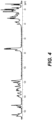
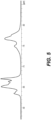
- crystal form As used herein, the terms “crystal form,” “crystalline form,” and “Form” interchangeably refer to a crystal structure (or polymorph) having a particular molecular packing arrangement in the crystal lattice. Crystalline forms can be identified and distinguished from each other by one or more characterization techniques including, for example, X-ray powder diffraction (XRPD), single crystal X-ray diffraction, and 13 C solid state nuclear magnetic resonance ( 13 C SSNMR). Accordingly, as used herein, the terms “crystalline Form [X] of Compound I” refer to unique crystalline forms that can be identified and distinguished from other crystalline forms by one or more characterization techniques including, for example, XRPD, single crystal X-ray diffraction, and 13 C SSNMR. In some embodiments, the novel crystalline forms are characterized by an X-ray powder diffractogram having one or more signals at one or more specified two-theta values (°2 ⁇ ).
- free form refers to a non-ionized version of the compound in the solid state.
- free forms include free bases and free acids.
- solvate refers to a crystal form comprising one or more molecules of a compound of the present disclosure and, incorporated into the crystal lattice, one or more molecules of a solvent or solvents in stoichiometric or nonstoichiometric amounts.
- solvent water
- solvate is referred to as a "hydrate.”
- a solid material may comprise a mixture of crystalline solids and amorphous solids.
- a solid material comprising an amorphous compound may also, for example, contain up to 30% of a crystalline solid.
- a solid material prepared to comprise an amorphous compound may also, for example, contain up to 25%, 20%, 15%, 10%, 5%, or 2% of a crystalline solid.
- the characterizing data such as XRPD, may contain indicators of both crystalline and amorphous solids.
- a crystalline form of this disclosure may contain up to 30% amorphous compound.
- a crystalline preparation of a compound of Formula I may contain up to 25%, 20%, 15%, 10%, 5%, or 2% of an amorphous solid.
- substantially amorphous refers to a solid material having little or no long-range order in the position of its molecules.
- substantially amorphous materials have less than 15% crystallinity (e.g., less than 10% crystallinity, less than 5% crystallinity, or less than 2% crystallinity).
- substantially amorphous includes the descriptor, "amorphous,” which refers to materials having no (0%) crystallinity.
- substantially crystalline refers to a solid material having little or no amorphous molecules.
- substantially crystalline materials have less than 15% amorphous molecules (e.g., less than 10% amorphous molecules, less than 5% amorphous molecules, or less than 2% amorphous molecules).
- substantially crystalline includes the descriptor "crystalline,” which refers to materials that are 100% crystalline form.
- a crystalline form is “substantially pure” when it accounts for an amount by weight equal to or greater than 90% of the sum of all solid form(s) in a sample as determined by a method in accordance with the art, such as quantitative XRPD.
- the solid form is “substantially pure” when it accounts for an amount by weight equal to or greater than 95% of the sum of all solid form(s) in a sample.
- the solid form is “substantially pure” when it accounts for an amount by weight equal to or greater than 99% of the sum of all solid form(s) in a sample. It is also noted that the term “substantially pure” includes the descriptor "pure,” which refers to materials that are 100% pure.
- XRPD refers to the analytical characterization method of X-ray powder diffraction. XRPD patterns disclosed herein were recorded at ambient conditions in transmission or reflection geometry using a diffractometer.
- ambient conditions means room temperature, open air condition and uncontrolled humidity condition.
- room temperature and “ambient temperature” mean 15 °C to 30 °C.
- an X-ray powder diffractogram As used herein, the terms "X-ray powder diffractogram,” “X-ray powder diffraction pattern,” “XRPD pattern,” “XRPD spectrum” interchangeably refer to an experimentally obtained pattern plotting signal positions (on the abscissa) versus signal intensities (on the ordinate).
- an X-ray powder diffractogram may include one or more broad signals; and for a crystalline material, an X-ray powder diffractogram may include one or more signals, each identified by its angular value as measured in degrees 2 ⁇ (° 2 ⁇ ), depicted on the abscissa of an X-ray powder diffractogram, which may be expressed as "a signal at ... degrees two-theta,” “a signal at [a] two-theta value(s)of " and/or "a signal at at least ... two-theta value(s) selected from ."
- a “signal” or “peak” as used herein refers to a point in the XRPD pattern where the intensity as measured in counts is at a local maximum.
- One of ordinary skill in the art would recognize that one or more signals (or peaks) in an XRPD pattern may overlap and may, for example, not be apparent to the naked eye. Indeed, one of ordinary skill in the art would recognize that some art-recognized methods are capable of and suitable for determining whether a signal exists in a pattern, such as Rietveld refinement.
- a signal at ... degrees two-theta refer to X-ray reflection positions as measured and observed in X-ray powder diffraction experiments (° 2 ⁇ ).
- the repeatability of the measured angular values is in the range of ⁇ 0.2° 2 ⁇ , i.e., the angular value can be at the recited angular value + 0.2 degrees two-theta, the angular value - 0.2 degrees two-theta, or any value between those two end points (angular value +0.2 degrees two-theta and angular value -0.2 degrees two-theta).
- signal intensities and “peak intensities” interchangeably refer to relative signal intensities within a given X-ray powder diffractogram. Factors that can affect the relative signal or peak intensities include sample thickness and preferred orientation (e.g., the crystalline particles are not distributed randomly).
- an X-ray powder diffractogram is "substantially similar to that in [a particular] Figure" when at least 90%, such as at least 95%, at least 98%, or at least 99%, of the signals in the two diffractograms overlap.
- substantially similarity one of ordinary skill in the art will understand that there may be variation in the intensities and/or signal positions in XRPD diffractograms even for the same crystalline form.
- the signal maximum values in XRPD diffractograms in degrees two-theta generally mean that value is identified as ⁇ 0.2 degrees two-theta of the reported value, an art-recognized variance.
- a solid state nuclear magnetic resonance (SSNMR) spectrum is "substantially similar to that in [a particular] Figure" when at least 90%, such as at least 95%, at least 98%, or at least 99%, of the signals in the two spectra overlap.
- SSNMR solid state nuclear magnetic resonance
- X-ray powder diffractogram having a signal at ... two-theta values refers to an XRPD pattern that contains X-ray reflection positions as measured and observed in X-ray powder diffraction experiments (° two-theta).
- DSC Differential Scanning Calorimetry
- onset of decomposition refers to the intersection point of the baseline before transition and the interflection tangent.
- glass transition temperature refers to the temperature above which a hard and brittle “glassy” amorphous solid becomes viscous or rubbery.
- TGA refers to the analytical method of Thermo Gravimetric (or thermogravimetric) Analysis.
- the invention provides compounds of Formulae I′′′ , Ia, IIa, IIa', IIb, IIc , IId, IIe, IIf, IIIa, IIIa', IIIb, IIIc, IIId, IIIe, and IIIf, Compounds 1 to 53, Compounds 54 to 77, and pharmaceutically acceptable salts and deuterated derivatives thereof.
- the compound of Formula I is selected from compounds of Formula Ia: and deuterated derivatives and pharmaceutically acceptable salts thereof, wherein:
- X in Formula Ia is -O-.
- each Y in Formula Ia is independently selected from -C( R Y ) 2 -, -CO-, and wherein R Y and Ring B are as defined for Formula Ia.
- each Y in Formula Ia is -C( R Y ) 2 -, wherein R Y is as defined for Formula Ia.
- each R Y in Formula Ia is independently selected from hydrogen, C 1 -C 6 alkyl (optionally substituted with 1-3 groups independently selected from hydroxy and Q ), and -O R Y1 , wherein Q and R Y1 are as defined for Formula Ia.
- each R Y in Formula Ia is independently selected from: hydrogen,
- each Q in Formula Ia is independently selected from:
- each Q in Formula Ia is independently selected from:
- Ring B in Formula Ia is selected from C 6 -C 10 aryl optionally substituted with 1-3 groups independently selected from halogen.
- Ring B in Formula Ia is selected from:
- -( Y ) n - in Formula Ia is a group selected from:
- each R 1 in Formula Ia is independently C 1 -C 6 alkyl (optionally substituted with 1-3 groups independently selected from halogen) and -N( R 2 ) 2 , wherein R 2 is as defined for Formula Ia. In some embodiments, each R 1 in Formula Ia is independently selected from -CF 3 and -N( R 2 ) 2 , wherein R 2 is as defined for Formula Ia.
- each R 2 in Formula Ia is independently selected from hydrogen, C 1 -C 6 alkyl (optionally substituted with 1-3 groups independently selected from halogen), and C 6 -C 10 aryl (optionally substituted with C 1 -C 6 alkoxy, which is optionally substituted with 1-3 groups independently selected from halogen).
- each R 2 in Formula Ia is independently selected from hydrogen and C 1 -C 6 alkyl.
- each R 2 in Formula Ia is hydrogen.
- Z in Formula Ia is wherein R Z1 and R Z2 are as defined for Formula Ia.
- R Z1 in Formula Ia is selected from C 1 -C 6 alkyl (optionally substituted with 1-3 groups selected from halogen). In some embodiments, R Z1 in Formula Ia is -CF 3 .
- R Z2 in Formula Ia is hydroxy
- n in Formula Ia is selected from 4, 5, and 6. In some embodiments, n in Formula Ia is 6.
- the compound of Formula I is selected from compounds of Formulae IIa, IIb, and IIc: and deuterated derivatives and pharmaceutically acceptable salts thereof, wherein:
- m in Formulae IIa, IIb, or IIc is selected from 1 and 2. In some embodiments, m in Formulae IIa, IIb, or IIc is 2.
- the compound of Formula I is selected from compounds of Formulae IId, IIe, and IIf: and deuterated derivatives and pharmaceutically acceptable salts thereof, wherein:
- X in Formulae IIa, IIb, IIc, IId, IIe, or IIf is -O-.
- each Y in Formulae IIa , IIb, IIc, IId, IIe, or IIf is independently selected from -C( R Y ) 2 -, -CO-, and wherein R Y and Ring B are as defined for Formulae IIa, IIb, IIc, IId, IIe, or IIf.
- each Y in Formulae IIa, IIb, IIc, IId, IIe, or IIf is -C( R Y ) 2 -, wherein R Y is as defined for Formulae IIa, IIb , IIc, IId, IIe, or IIf.
- each R Y in Formulae IIa , IIb, IIc , IId, IIe, or IIf is independently selected from hydrogen, C 1 -C 6 alkyl (optionally substituted with 1-3 groups independently selected from hydroxy and Q ), and -O R Y1 , wherein Q and R Y1 are as defined for Formulae IIa, IIb, IIc, IId, IIe, or IIf.
- each R Y in Formulae IIa , IIb, IIc, IId, IIe, or IIf is independently selected from: hydrogen, wherein Q is as defined for Formulae IIa , IIb, IIc , IId, IIe, or IIf.
- each Q in Formulae IIa, IIb , IIc, IId, IIe, or IIf is independently selected from:
- each Q in Formulae IIa, IIb , IIc, IId, IIe, or IIf is independently selected from:
- Ring B in Formulae IIa , IIb, IIc, IId, IIe, or IIf is selected from C 6 -C 10 aryl optionally substituted with 1-3 groups independently selected from halogen.
- Ring B in Formulae IIa , IIb, IIc, IId, IIe, or IIf is selected from:
- each R 1 in Formulae IIa, IIb, IIc, IId, IIe, or IIf is independently C 1 -C 6 alkyl (optionally substituted with 1-3 groups independently selected from halogen) and -N( R 2 ) 2 wherein R 2 is as defined for Formulae IIa, IIb , IIc, IId , IIe, or IIf .
- each R 1 in Formulae IIa , IIb, IIc, IId, IIe, or IIf is independently selected from -CF 3 and -N( R 2 ) 2 wherein R 2 is as defined for Formulae IIa, IIb, IIc , IId, IIe, or IIf.
- each R 2 in Formulae IIa, IIb, IIc, IId, IIe, or IIf is independently selected from hydrogen, C 1 -C 6 alkyl (optionally substituted with 1-3 groups independently selected from halogen), and C 6 -C 10 aryl (optionally substituted with C 1 -C 6 alkoxy, which is optionally substituted with 1-3 groups independently selected from halogen).
- each R 2 in Formulae IIa, IIb, IIc , IId, IIe, or IIf is independently selected from hydrogen and C 1 -C 6 alkyl.
- each R 2 in Formulae IIa, IIb, IIc , IId, IIe, or IIf is hydrogen.
- Z in Formulae IIa, IIb, IIc, IId, IIe, or IIf is wherein R Z1 and R Z2 are as defined for Formulae IIa , IIb, IIc , IId, IIe, or IIf.
- R Z1 in Formulae IIa, IIb, IIc, IId, IIe, or IIf is selected from C 1 -C 6 alkyl (optionally substituted with 1-3 groups selected from halogen). In some embodiments, R Z1 in Formulae IIa, IIb , IIc, IId, IIe, or IIf is -CF 3 .
- R Z2 in Formulae IIa, IIb , IIc, IId, IIe , or IIf is hydroxy.
- the compound of Formula I is selected from compounds of Formulae IIIa , IIIb, and IIIc: and deuterated derivatives and pharmaceutically acceptable salts thereof, wherein:
- m in Formulae IIIa, IIIb, or IIIc is selected from 1 and 2. In some embodiments, m in Formulae IIIa, IIIb, and IIIc is 2.
- the compound of Formula I is selected from compounds of Formulae IIId, IIIe, and IIIf: and deuterated derivatives and pharmaceutically acceptable salts thereof, wherein:
- X in Formulae IIIa, IIIb, IIIc, IIId, IIIe, or IIIf is -O-.
- each Y in Formulae IIIa, IIIb, IIIc, IIId, IIIe, or IIIf is independently selected from -C( R Y ) 2 -, -CO-, and wherein R Y and Ring B as defined for Formulae IIIa, IIIb, IIIc, IIId, IIIe, or IIIf.
- each Y in Formulae IIIa, IIIb, IIIc, IIId, IIIe, or IIIf is -C( R Y ) 2 -, wherein R Y is as defined for Formulae IIIa, IIIb, IIIc, IIId, IIIe, or IIIf.
- each R Y in Formulae IIIa, IIIb, IIIc, IIId, IIIe, or IIIf is independently selected from hydrogen, C 1 -C 6 alkyl (optionally substituted with 1-3 groups independently selected from hydroxy and Q ), and -O R Y1 ,wherein Q and R Y1 are as defined for Formulae IIIa, IIIb, IIIc, IIId, IIIe, or IIIf.
- each R Y in Formulae IIIa, IIIb, IIIc, IIId, IIIe, or IIIf is independently selected from: hydrogen, wherein Q is as defined for Formulae IIIa, IIIb, IIIc, IIId, IIIe, or IIIf.
- each Q in Formulae IIIa, IIIb, IIIc, IIId, IIIe, or IIIf is independently selected from:
- each Q in Formulae IIIa, IIIb, IIIc, IIId, IIIe, or IIIf is independently selected from:
- Ring B in Formulae IIIa, IIIb, IIIc, IIId, IIIe, or IIIf is selected from C 6 -C 10 aryl optionally substituted with 1-3 groups independently selected from halogen.
- Ring B in Formulae IIIa, IIIb, IIIc, IIId, IIIe, or IIIf is selected from:
- each R 1 in Formulae IIIa, IIIb, IIIc, IIId, IIIe, or IIIf is independently C 1 -C 6 alkyl (optionally substituted with 1-3 groups independently selected from halogen) and -N( R 2 ) 2 , wherein R 2 is as defined for Formulae IIIa, IIIb, IIIc, IIId, IIIe, or IIIf.
- each R 1 in Formulae IIIa, IIIb, IIIc, IIId, IIIe, or IIIf is independently selected from -CF 3 and -N( R 2 ) 2 , wherein R 2 is as defined for Formulae IIIa, IIIb, IIIc, IIId, IIIe, or IIIf.
- each R 2 in Formulae IIIa, IIIb, IIIc, IIId, IIIe, or IIIf is independently selected from hydrogen, C 1 -C 6 alkyl (optionally substituted with 1-3 groups independently selected from halogen), and C 6 -C 10 aryl (optionally substituted with C 1 -C 6 alkoxy, which is optionally substituted with 1-3 groups independently selected from halogen).
- each R 2 in Formulae IIIa, IIIb, IIIc, IIId, IIIe, or IIIf is independently selected from hydrogen and C 1 -C 6 alkyl.
- each R 2 in Formulae IIIa, IIIb, IIIc, IIId, IIIe, or IIIf is hydrogen.
- Z in Formulae IIIa, IIIb, IIIc, IIId, IIIe, or IIIf is wherein Z is as defined for Formulae IIIa, IIIb, IIIc, IIId, IIIe, or IIIf.
- R Z1 in Formulae IIIa, IIIb, IIIc, IIId, IIIe, or IIIf is selected from C 1 -C 6 alkyl (optionally substituted with 1-3 groups selected from halogen). In some embodiments, R Z1 in Formulae IIIa, IIIb, IIIc, IIId, IIIe, or IIIf is -CF 3 .
- R Z2 in Formulae IIIa, IIIb, IIIc, IIId, IIIe, or IIIf is hydroxy.
- the compound of Formula I is selected from compounds of Formula I′′′: and deuterated derivatives and pharmaceutically acceptable salts thereof, wherein:
- X in Formula I′′′ is -O-.
- each R Y in Formula I′′′ is independently selected from hydrogen, halogen, C 1 -C 6 alkyl (optionally substituted with 1-3 groups independently selected from hydroxy and Q ), C 3 -C 8 cycloalkyl, and -O R Y1 , wherein Q and R Y1 are as defined for Formula I"'.
- -O R Y1 in Formula I′′′ is -OH.
- each Q in Formula I′′′ is independently selected from C 3 -Cs cycloalkyl and C 6 -C 10 aryl optionally substituted with 1-3 groups independently selected from halogen and C 1 -C 6 alkyl.
- each Q in Formula I′′′ is independently selected from:
- each R Y in Formula I′′′ is independently selected from: hydrogen, fluorine,
- Ring B in Formula I′′′ is selected from C 3 -C 8 cycloalkyl and phenyl optionally substituted with 1-3 groups independently selected from halogen. In some embodiments, Ring B in Formula I′′′ is selected from:
- n in Formula I′′′ is selected from 4, 5, and 6.
- -( Y ) n - in Formula I′′′ is a group selected from:
- each R 1 in Formula I′′′ is independently selected from C 1 -C 6 alkyl (optionally substituted with 1-6 groups independently selected from halogen and hydroxy), -N( R 2 ) 2 , and -CO 2 R 2 , wherein R 2 is as defined for Formula I′′′.
- each R 1 in Formula I′′′ is independently selected from -CF 3 , -NH 2 , -NH(CH 2 CH 3 ), CO 2 H, and CH 2 OH.
- each R 2 in Formula I′′′ is independently selected from hydrogen and C 1 -C 6 alkyl.
- R Z1 in Formula I′′′ is selected from hydrogen and C 1 -C 6 alkyl (optionally substituted with 1-6 groups selected from halogen). In some embodiments, R Z1 in Formula I′′′ is -CF 3 .
- R Z2 in Formula I′′′ is hydroxy
- R Z1 in Formula I′′′ is C 1 -C 6 alkyl (optionally substituted with 1-6 groups selected from halogen) and R Z2 in Formula I′′′ is hydroxy. In some embodiments, R Z1 in Formula I′′′ is -CF 3 and R Z2 in Formula I′′′ is hydroxy.
- m in Formula I′′′ is selected from 1 and 2.
- the compound of Formula I is selected from compounds of Formula IIa': and deuterated derivatives and pharmaceutically acceptable salts thereof, wherein:
- n in Formula IIa' is selected from 1 and 2. In some embodiments, m in Formula IIa' is 2.
- X in Formula IIa' is -O-.
- each Y in Formula IIa' is independently selected from -C( R Y ) 2 -, -CO-, and wherein R Y and Ring B are as defined for Formula IIa'.
- each Y in Formula IIa' is -C( R Y ) 2 -, wherein R Y is as defined for Formula IIa'.
- each R Y in Formula IIa' is independently selected from hydrogen, C 1 -C 6 alkyl (optionally substituted with 1-3 groups independently selected from hydroxy and Q ), and -O R Y1 wherein Q and R Y1 are as defined for Formula IIa'.
- each R Y in Formula IIa' is independently selected from: hydrogen, wherein Q is as defined for Formula IIa'.
- each Q in Formula IIa' is independently selected from:
- each Q in Formula IIa' is independently selected from:
- Ring B in Formula IIa' is selected from C 6 -C 10 aryl optionally substituted with 1-3 groups independently selected from halogen.
- Ring B in Formula IIa' is selected from:
- each R 1 in Formula IIa' is independently C 1 -C 6 alkyl (optionally substituted with 1-3 groups independently selected from halogen) and -N( R 2 ) 2 wherein R 2 is as defined for Formula IIa'. In some embodiments, each R 1 in Formula IIa' is independently selected from -CF 3 and -N( R 2 ) 2 wherein R 2 is as defined for Formula IIa'.
- each R 2 in Formula IIa' is independently selected from hydrogen, C 1 -C 6 alkyl (optionally substituted with 1-3 groups independently selected from halogen), and C 6 -C 10 aryl (optionally substituted with C 1 -C 6 alkoxy, which is optionally substituted with 1-3 groups independently selected from halogen).
- each R 2 in Formula IIa' is independently selected from hydrogen and C 1 -C 6 alkyl.
- each R 2 in Formula IIa' is hydrogen.
- R Z1 in Formula IIa' is selected from C 1 -C 6 alkyl (optionally substituted with 1-6 groups selected from halogen). In some embodiments, R Z1 in Formula IIa' is -CF 3 .
- R Z2 in Formula IIa' is hydroxy
- R Z1 in Formula IIa' is C 1 -C 6 alkyl (optionally substituted with 1-6 groups selected from halogen) and R Z2 in Formula IIa' is hydroxy. In some embodiments, R Z1 in Formula IIa' is -CF 3 and R Z2 in Formula IIa' is hydroxy.
- the compound of Formula I is selected from compounds of Formula IIIa': and deuterated derivatives and pharmaceutically acceptable salts thereof, wherein:
- X in Formula IIIa' is -O-.
- each Y in Formula IIIa' is independently selected from -C( R Y ) 2 -, -CO-, and wherein R Y and Ring B as defined for Formula IIIa'.
- each Y in Formula IIIa' is -C( R Y ) 2 -, wherein R Y is as defined for Formula IIIa'.
- each R Y in Formula IIIa' is independently selected from hydrogen, C 1 -C 6 alkyl (optionally substituted with 1-3 groups independently selected from hydroxy and Q ), and -O R Y1 wherein Q and R Y1 are as defined for Formula IIIa'.
- each R Y in Formula IIIa' is independently selected from: hydrogen, wherein Q is as defined for Formula IIIa'.
- each Q in Formula IIIa' is independently selected from:
- each Q in Formula IIIa' is independently selected from:
- Ring B in Formula IIIa' is selected from C 6 -C 10 aryl optionally substituted with 1-3 groups independently selected from halogen.
- Ring B in Formula IIIa' is selected from:
- each R 1 in Formula IIIa' is independently C 1 -C 6 alkyl (optionally substituted with 1-3 groups independently selected from halogen) and -N( R 2 ) 2 , wherein R 2 is as defined for Formula IIIa'. In some embodiments, each R 1 in Formula IIIa' is independently selected from -CF 3 and -N( R 2 ) 2 , wherein R 2 is as defined for Formula IIIa'.
- each R 2 in Formula IIIa' is independently selected from hydrogen, C 1 -C 6 alkyl (optionally substituted with 1-3 groups independently selected from halogen), and C 6 -C 10 aryl (optionally substituted with C 1 -C 6 alkoxy, which is optionally substituted with 1-3 groups independently selected from halogen). In some embodiments, each R 2 in Formula IIIa' is independently selected from hydrogen and C 1 -C 6 alkyl.
- each R 2 in Formula IIIa' is hydrogen.
- R Z1 in Formula IIIa' is selected from C 1 -C 6 alkyl (optionally substituted with 1-6 groups selected from halogen). In some embodiments, R Z1 in Formula IIIa' is -CF 3 .
- R Z2 in Formula IIIa' is hydroxy
- R Z1 in Formula IIIa' is C 1 -C 6 alkyl (optionally substituted with 1-6 groups selected from halogen) and R Z2 in Formula IIIa' is hydroxy. In some embodiments, R Z1 in Formula IIIa' is -CF 3 and R Z2 in Formula IIIa' is hydroxy.
- Compounds of the invention include Compounds 1-53 and 54-77, and deuterated derivatives and pharmaceutically acceptable salts thereof. 1 2 3 4 5 6 7 8 9 10 11 12 Enantiomer 2 13 14 15 16 17 18 19 20 21 22 23 24 25 26 27 28 29 30 31 32 33 34 35 36 37 38 39 40 41 42 43 44 45 46 47 48 49 50 51 52 53 54 55 56 57 58 59 60 61 62 63 64 65 66 67 68 69 70 71 72 73 74 75 76 77 diastereomer 1
- the references to methods of treatment in the subsequent paragraphs of this description are to be interpreted as references to the compounds, pharmaceutical compositions and medicaments of the present invention for use in a method for treatment of the human (or animal) body by therapy (or for diagnosis).
- any of the novel compounds disclosed herein such as for example, compounds of Formulae I, I', I", I′′′, Ia, IIa, IIa', IIb, IIc, IId, IIe, IIf, IIIa, IIIa', IIIb, IIIc, IIId, IIIe, and IIIf, Compounds 1 to 53, Compounds 54 to 77, pharmaceutically acceptable salts thereof, and deuterated derivatives of such compounds and salts can act as a CFTR modulator, i.e., it modulates CFTR activity in the body. Individuals suffering from a mutation in the gene encoding CFTR may benefit from receiving a CFTR modulator.
- a CFTR mutation may affect the CFTR quantity, i.e., the number of CFTR channels at the cell surface, or it may impact CFTR function, i.e., the functional ability of each channel to open and transport ions.
- Mutations affecting CFTR quantity include mutations that cause defective synthesis (Class I defect), mutations that cause defective processing and trafficking (Class II defect), mutations that cause reduced synthesis of CFTR (Class V defect), and mutations that reduce the surface stability of CFTR (Class VI defect).
- Mutations that affect CFTR function include mutations that cause defective gating (Class III defect) and mutations that cause defective conductance (Class IV defect).
- Some CFTR mutations exhibit characteristics of multiple classes. Certain mutations in the CFTR gene result in cystic fibrosis.
- the invention provides methods of treating, lessening the severity of, or symptomatically treating cystic fibrosis in a patient comprising administering to the patient an effective amount of any of the novel compounds disclosed herein, such as for example, compounds of Formulae I, I', I", I′′′,Ia, IIa, IIa', IIb, IIc, IId, IIe, IIf, IIIa, IIIa', IIIb, IIIc, IIId, IIIe, and IIIf, Compounds 1 to 53, Compounds 54 to 77, pharmaceutically acceptable salts thereof, and/or deuterated derivatives of such compounds and salts, alone or in combination with another active ingredient, such as another CFTR modulating agent.
- compounds of Formulae I, I', I", I′′′,Ia, IIa, IIa', IIb, IIc, IId, IIe, IIf, IIIa, IIIa', IIIb, IIIc, IIId, IIIe, and IIIf Compounds 1 to 53, Compounds 54 to 77, pharmaceutical
- the patient has an F508del/minimal function (MF) genotype, F508del/F508del genotype (homozygous for the F508del mutation), F508del/gating genotype, or F508del/residual function (RF) genotype.
- MF F508del/minimal function
- F508del/F508del genotype homozygous for the F508del mutation
- F508del/gating genotype F508del/gating genotype
- F508del/residual function (RF) genotype F508del/residual function genotype.
- RF F508del/residual function
- the patient is heterozygous and has one F508del mutation.
- the patient is homozygous for the N1303K mutation.
- 1 mg to 1000 mg of a compound disclosed herein, a pharmaceutically acceptable salt thereof, or a deuterated derivative of such compound or salt are administered daily.
- the patient is heterozygous and has an F508del mutation on one allele and a mutation on the other allele selected from Table 2: Table 2: CFTR Mutations Mutation Q2X L218X Q525X R792X E1104X S4X Q220X G542X E822X W1145X W19X Y275X G550X W882X R1158X G27X C276X Q552X W846X R1162X Q39X Q290X R553X Y849X S1196X W57X G330X E585X R851X W1204X E60X W401X G673X Q890X L1254X R75X Q414X Q685X S912X S1255X L88X S434X R709X Y913X W1282X E92X S466X K710X Q1042X Q1313X Q98X S489X Q715X W1089X Q1330
- the disclosure also is directed to methods of treatment using isotope-labelled compounds of the afore-mentioned compounds, or pharmaceutically acceptable salts thereof, wherein the formula and variables of such compounds and salts are each and independently as described above or any other embodiments described above, provided that one or more atoms therein have been replaced by an atom or atoms having an atomic mass or mass number which differs from the atomic mass or mass number of the atom which usually occurs naturally (isotope labelled).
- isotopes which are commercially available and suitable for the disclosure include isotopes of hydrogen, carbon, nitrogen, oxygen, phosphorus, fluorine and chlorine, for example 2 H, 3 H, 13 C, 14 C, 15 N, 18 O, 17 O, 31 P, 32 P, 35 S, 18 F and 36 Cl, respectively.
- the isotope-labelled compounds and salts can be used in a number of beneficial ways. They can be suitable for medicaments and/or various types of assays, such as substrate tissue distribution assays.
- tritium ( 3 H)- and/or carbon-14 ( 14 C)-labelled compounds are particularly useful for various types of assays, such as substrate tissue distribution assays, due to relatively simple preparation and excellent detectability.
- deuterium ( 2 H)-labelled ones are therapeutically useful with potential therapeutic advantages over the non- 2 H-labelled compounds.
- deuterium ( 2 H)-labelled compounds and salts can have higher metabolic stability as compared to those that are not isotope-labelled owing to the kinetic isotope effect described below.
- the isotope-labelled compounds and salts can usually be prepared by carrying out the procedures disclosed in the synthesis schemes and the related description, in the example part and in the preparation part in the present text, replacing a non-isotope-labelled reactant by a readily available isotope-labelled reactant.
- the isotope-labelled compounds and salts are deuterium ( 2 H)-labelled ones.
- the isotope-labelled compounds and salts are deuterium ( 2 H)-labelled, wherein one or more hydrogen atoms therein have been replaced by deuterium.
- deuterium is represented as " 2 H” or "D.”
- the deuterium ( 2 H)-labelled compounds and salts can modulate the oxidative metabolism of the compound by way of the primary kinetic isotope effect.
- the primary kinetic isotope effect is a change of the rate for a chemical reaction that results from exchange of isotopic nuclei, which in turn is caused by the change in ground state energies necessary for covalent bond formation after this isotopic exchange.
- Exchange of a heavier isotope usually results in a lowering of the ground state energy for a chemical bond and thus causes a reduction in the rate-limiting bond breakage. If the bond breakage occurs in or in the vicinity of a saddle-point region along the coordinate of a multi-product reaction, the product distribution ratios can be altered substantially.
- the concentration of the isotope(s) (e.g., deuterium) incorporated into the isotope-labelled compounds and salt of the disclosure may be defined by the isotopic enrichment factor.
- isotopic enrichment factor means the ratio between the isotopic abundance and the natural abundance of a specified isotope.
- a substituent in a compound of the disclosure is denoted deuterium
- such compound has an isotopic enrichment factor for each designated deuterium atom of at least 3500 (52.5% deuterium incorporation at each designated deuterium atom), at least 4000 (60% deuterium incorporation), at least 4500 (67.5% deuterium incorporation), at least 5000 (75% deuterium incorporation), at least 5500 (82.5% deuterium incorporation), at least 6000 (90% deuterium incorporation), at least 6333.3 (95% deuterium incorporation), at least 6466.7 (97% deuterium incorporation), at least 6600 (99% deuterium incorporation), or at least 6633.3 (99.5% deuterium incorporation).
- One aspect disclosed herein provides methods of treating cystic fibrosis and other CFTR-mediated diseases using any of the novel compounds disclosed herein, such as for example, compounds of Formulae I, I', I", I′′′, Ia, IIa, IIa', IIb, IIc, IId, IIe, IIf, IIIa, IIIa',IIIb, IIIc, IIId, IIIe, and IIIf, Compounds 1 to 53, Compounds 54 to 77, pharmaceutically acceptable salts thereof, and deuterated derivatives of such compounds and salts in combination with at least one additional active pharmaceutical ingredient.
- compounds of Formulae I, I', I", I′′′, Ia, IIa, IIa', IIb, IIc, IId, IIe, IIf, IIIa, IIIa',IIIb, IIIc, IIId, IIIe, and IIIf Compounds 1 to 53, Compounds 54 to 77, pharmaceutically acceptable salts thereof, and deuterated derivatives of such compounds and salts in combination with at least one additional active pharmaceutical ingredient
- the invention provides methods of treating, lessening the severity of, or symptomatically treating cystic fibrosis in a patient comprising administering to the patient an effective amount of any of the novel compounds disclosed herein, such as for example, compounds of Formulae I, I', I", I′′′,Ia, IIa, IIa', IIb, IIc, IId, IIe, IIf, IIIa, IIIa', IIIb, IIIc, IIId, IIIe, and IIIf, Compounds 1 to 53, Compounds 54 to 77, pharmaceutically acceptable salts thereof, and/or deuterated derivatives of such compounds and salts, alone or in combination with at least one additional active pharmaceutical ingredient, such as, e.g., a CFTR modulating agent.
- compounds of Formulae I, I', I", I′′′,Ia, IIa, IIa', IIb, IIc, IId, IIe, IIf, IIIa, IIIa', IIIb, IIIc, IIId, IIIe, and IIIf Compounds 1
- At least one additional active pharmaceutical ingredient is selected from mucolytic agents, bronchodilators, antibiotics, anti-infective agents, and anti-inflammatory agents.
- the additional therapeutic agent is an antibiotic.
- antibiotics useful herein include tobramycin, including tobramycin inhaled powder (TIP), azithromycin, aztreonam, including the aerosolized form of aztreonam, amikacin, including liposomal formulations thereof, ciprofloxacin, including formulations thereof suitable for administration by inhalation, levoflaxacin, including aerosolized formulations thereof, and combinations of two antibiotics, e.g., fosfomycin and tobramycin.
- the additional agent is a mucolyte.
- exemplary mucolytes useful herein includes Pulmozyme ® .
- the additional agent is a bronchodilator.
- bronchodilators include albuterol, metaprotenerol sulfate, pirbuterol acetate, salmeterol, or tetrabuline sulfate.
- the additional agent is an anti-inflammatory agent, i.e., an agent that can reduce the inflammation in the lungs.
- agents useful herein include ibuprofen, docosahexanoic acid (DHA), sildenafil, inhaled glutathione, pioglitazone, hydroxychloroquine, or simavastatin.
- the additional agent is a nutritional agent.
- Exemplary nutritional agents include pancrelipase (pancreating enzyme replacement), including Pancrease ® , Pancreacarb ® , Ultrase ® , or Creon ® , Liprotomase ® (formerly Trizytek ® ), Aquadeks ® , or glutathione inhalation.
- the additional nutritional agent is pancrelipase.
- At least one additional active pharmaceutical ingredient is selected from CFTR modulating agents.
- the CFTR modulating agent is a CFTR corrector.
- the CFTR modulating agent is a CFTR potentiator enhancer/co-potentiator (for example, ASP-11).
- the at least one additional active pharmaceutical ingredient is a CFTR amplifier.
- the at least one additional active pharmaceutical ingredient is a CFTR readthrough agent.
- the at least one additional active pharmaceutical ingredient is a CFTR nucleic acid therapy.
- the at least one additional active pharmaceutical ingredient is a ENaC inhibitor. In some embodiments, the at least one additional active pharmaceutical ingredient is a TMEM16A modulator. In some embodiments, the at least one additional active pharmaceutical ingredient is a GPR39 agonist.
- the at least one additional active pharmaceutical ingredient is chosen from (a) Compound II and pharmaceutically acceptable salts and deuterated derivatives thereof; (b) Compound IV and pharmaceutically acceptable salts and deuterated derivatives thereof; (c) Compound V and pharmaceutically acceptable salts and deuterated derivatives thereof; (d) Compound VI and pharmaceutically acceptable salts and deuterated derivatives thereof; (e) Compound VII and pharmaceutically acceptable salts and deuterated derivatives thereof; and (f) Compound VIII and pharmaceutically acceptable salts and deuterated derivatives thereof.
- the combination therapies provided herein comprise a compound selected from compounds of Formulae I, I', I", I′′′, Ia, IIa, IIa', IIb, IIc, IId, IIe, IIf, IIIa, IIIa', IIIb, IIIc, IIId, IIIe, and IIIf, Compounds 1 to 53, Compounds 54 to 77, and pharmaceutically acceptable salts and deuterated derivatives thereof; and at least one compound chosen from Compound II, Compound IV, Compound V, Compound VI, Compound VII, Compound VIII, Compound IX, Compound X, and pharmaceutically acceptable salts and deuterated derivatives thereof.
- the combination therapies provided herein comprise (a) at least one compound chosen from compounds of Formulae I, I', I", I′′′,Ia, IIa, IIa', IIb, IIc, IId, IIe, IIf, IIIa, IIIa',IIIb, IIIc, IIId, IIIe, and IIIf, Compounds 1 to 53, Compounds 54 to 77, and pharmaceutically acceptable salts and deuterated derivatives thereof; (b) at least one compound chosen from Compound II, Compound IV, and pharmaceutically acceptable salts and deuterated derivatives thereof; and (c) at least one compound chosen from Compound V, Compound VI, Compound VII, Compound VIII, Compound IX, Compound X, and pharmaceutically acceptable salts and deuterated derivatives thereof.
- the combination therapies provided herein comprise (a) at least one compound chosen from compounds of Formulae I, I', I", I′′′, Ia, IIa, IIa', IIb, IIc, IId, IIe, IIf, IIIa, IIIa',IIIb, IIIc, IIId, IIIe, and IIIf, Compounds 1 to 53, Compounds 54 to 77, and pharmaceutically acceptable salts and deuterated derivatives thereof; (b) at least one compound selected from Compound II and pharmaceutically acceptable salts and deuterated derivatives thereof; and (c) at least one compound chosen from Compound VII and pharmaceutically acceptable salts and deuterated derivatives thereof.
- the combination therapies provided herein comprise (a) a compound selected from compounds of Formulae I, I', I", I′′′, Ia, IIa, IIa', IIb, IIc, IId, IIe, IIf, IIIa, IIIa',IIIb, IIIc, IIId, IIIe, and IIIf, Compounds 1 to 53, Compounds 54 to 77, and pharmaceutically acceptable salts and deuterated derivatives thereof; (b) at least one compound chosen from Compound II, Compound IV, Compound V, Compound VI, Compound VII, Compound VIII, Compound IX, Compound X, and pharmaceutically acceptable salts and deuterated derivatives thereof; and (c) at least one compound chosen from compounds disclosed in WO 2016/105485 , United States Patent Application Publication No.
- the combination therapies provided herein comprise (a) a compound selected from compounds of Formulae I, I', I", I′′′,Ia, IIa, IIa', IIb, IIc, IId, IIe, IIf, IIIa, IIIa',IIIb, IIIc, IIId, IIIe, and IIIf, Compounds 1 to 53, Compounds 54 to 77, and pharmaceutically acceptable salts and deuterated derivatives thereof; (b) at least one compound chosen from Compound II, Compound IV, Compound V, Compound VI, Compound VII, Compound VIII, Compound IX, Compound X, and pharmaceutically acceptable salts and deuterated derivatives thereof; and (c) at least one compound chosen from PTI-428, ASP-11, ABBV-2222, ABBV-2851, GLPG2737, ABBV-3221, ABBV-3748, ABBV-3903, ABBV-119, and PTI-801.
- the combination therapies provided herein comprise (a) a compound selected from compounds of Formulae I, I', I", I′′′,Ia, IIa, IIa', IIb, IIc, IId, IIe, IIf, IIIa, IIIa',IIIb, IIIc, IIId, IIIe, and IIIf, Compounds 1 to 53, Compounds 54 to 77, and pharmaceutically acceptable salts and deuterated derivatives thereof; and (b) at least two compounds chosen from compounds disclosed in WO 2019/195739 , WO 2019/200246 , WO 2021/030555 , WO 2021/030556 , WO 2017/173274 , WO 2019/010092 , WO 2019/018353 , WO 2010/053471 , WO 2011/119984 , WO 2011/133751 , WO 2011/133951 , WO 2015/160787 , WO 2007/056341 , WO 2009/073757 , WO 2009/0761
- the combination therapies provided herein comprise (a) a compound selected from compounds of Formulae I, I', I", I′′′, Ia, IIa, IIa', IIb, IIc, IId, IIe, IIf, IIIa, IIIa',IIIb, IIIc, IIId, IIIe, and IIIf, Compounds 1 to 53, Compounds 54 to 77, and pharmaceutically acceptable salts and deuterated derivatives thereof; and (b) at least two compounds chosen from Compound II, Compound IV, Compound V, Compound VI, Compound VII, Compound VIII, Compound IX, Compound X, PTI-428, ASP-11, ABBV-2222, ABBV-2851, GLPG2737, ABBV-3221, ABBV-3748, ABBV-3903, ABBV-119, and PTI-801, and pharmaceutically acceptable salts and deuterated derivatives thereof.
- the combination therapies provided herein comprise (a) a compound selected from compounds of Formulae I, I', I", I′′′, Ia, IIa, IIa', IIb, IIc, IId, IIe, IIf, IIIa, IIIa', IIIb, IIIc, IIId, IIIe, and IIIf, Compounds 1 to 53, Compounds 54 to 77, and pharmaceutically acceptable salts and deuterated derivatives thereof; (b) at least one compound chosen from Compound II, Compound III, Compound III-d, Compound IV, Compound V, Compound VI, Compound VII, Compound VIII, Compound IX, Compound X, PTI-428, ASP-11, ABBV-2222, ABBV-2851, GLPG2737, ABBV-3221, ABBV-3748, ABBV-3903, ABBV-119, FDL-169, ARN5562, ARN21586, ARN22081, ARN22652, ARN23765, ARN23766,
- At least one compound chosen from compounds of Formulae I, I', I", I′′′, Ia, IIa, IIa', IIb, IIc, IId, IIe, IIf, IIIa, IIIa', IIIb, IIIc, IIId, IIIe, and IIIf, Compounds 1 to 53, Compounds 54 to 77, and pharmaceutically acceptable salts and deuterated derivatives thereof is administered in combination with at least one compound chosen from Compound II and pharmaceutically acceptable salts and deuterated derivatives thereof.
- At least one compound chosen from compounds of Formulae I, I', I", I′′′, Ia, IIa, IIa', IIb, IIc, IId, IIe, IIf, IIIa, IIIa', IIIb, IIIc, IIId, IIIe, and IIIf, Compounds 1 to 53, Compounds 54 to 77, and pharmaceutically acceptable salts and deuterated derivatives thereof is administered in combination with at least one compound chosen from Compound IV and pharmaceutically acceptable salts and deuterated derivatives thereof.
- At least one compound chosen from compounds of Formulae I, I', I", I′′′,Ia, IIa, IIa', IIb, IIc, IId, IIe, IIf, IIIa, IIIa', IIIb, IIIc, IIId, IIIe, and IIIf, Compounds 1 to 53, Compounds 54 to 77, and pharmaceutically acceptable salts and deuterated derivatives thereof is administered in combination with at least one compound chosen from Compound V and pharmaceutically acceptable salts and deuterated derivatives thereof.
- At least one compound chosen from compounds of Formulae I, I', I", I′′′, Ia, IIa, IIa', IIb, IIc, IId, IIe, IIf, IIIa, IIIa', IIIb, IIIc, IIId, IIIe, and IIIf, Compounds 1 to 53, Compounds 54 to 77, and pharmaceutically acceptable salts and deuterated derivatives thereof is administered in combination with at least one compound chosen from Compound VI and pharmaceutically acceptable salts and deuterated derivatives thereof.
- At least one compound chosen from compounds of Formulae I, I', I", I′′′, Ia, IIa, IIa', IIb, IIc, IId, IIe, IIf, IIIa, IIIa', IIIb, IIIc, IIId, IIIe, and IIIf, Compounds 1 to 53, Compounds 54 to 77, and pharmaceutically acceptable salts and deuterated derivatives thereof is administered in combination with at least one compound chosen from Compound VII and pharmaceutically acceptable salts and deuterated derivatives thereof.
- At least one compound chosen from compounds of Formulae I, I', I", I′′′, Ia, IIa, IIa', IIb, IIc, IId, IIe, IIf, IIIa, IIIa', IIIb, IIIc, IIId, IIIe, and IIIf, Compounds 1 to 53, Compounds 54 to 77, and pharmaceutically acceptable salts and deuterated derivatives thereof is administered in combination with at least one compound chosen from Compound VIII and pharmaceutically acceptable salts and deuterated derivatives thereof.
- At least one compound chosen from compounds of Formulae I, I', I", I′′′, Ia, IIa, IIa', IIb, IIc, IId, IIe, IIf, IIIa, IIIa', IIIb, IIIc, IIId, IIIe, and IIIf, Compounds 1 to 53, Compounds 54 to 77, and pharmaceutically acceptable salts and deuterated derivatives thereof is administered once daily.
- At least one compound chosen from compounds of Formulae I, I', I", I′′′, Ia, IIa, IIa', IIb, IIc, IId, IIe, IIf, IIIa, IIIa', IIIb, IIIc, IIId, IIIe, and IIIf, Compounds 1 to 53, Compounds 54 to 77, and pharmaceutically acceptable salts and deuterated derivatives thereof is administered twice daily.
- At least one compound chosen from compounds of Formulae I, I', I", I′′′, Ia, IIa, IIa', IIb, IIc, IId, IIe, IIf, IIIa, IIIa', IIIb, IIIc, IIId, IIIe, and IIIf , Compounds 1 to 53, Compounds 54 to 77, and pharmaceutically acceptable salts and deuterated derivatives thereof and at least one compound chosen from Compound VII and pharmaceutically acceptable salts thereof are administered twice daily.
- At least one compound chosen from compounds of Formulae I, I', I", I"', Ia, IIa, IIa', IIb, IIc, IId, IIe, IIf, IIIa, IIIa', IIIb, IIIc, IIId, IIIe, and IIIf, Compounds 1 to 53, Compounds 54 to 77, and pharmaceutically acceptable salts and deuterated derivatives thereof; at least one compound chosen from Compound II, Compound IV, and pharmaceutically acceptable salts thereof; and at least one compound chosen from Compound V, Compound VI, Compound VII, Compound VIII, Compound IX, Compound X, and pharmaceutically acceptable salts thereof are administered once daily.
- At least one compound chosen from compounds of Formulae I, I', I", I′′′, Ia, IIa, IIa', IIb, IIc, IId, IIe, IIf, IIIa, IIIa', IIIb, IIIc, IIId, IIIe, and IIIf, Compounds 1 to 53, Compounds 54 to 77, and pharmaceutically acceptable salts and deuterated derivatives thereof; at least one compound chosen from Compound II, Compound IV, and pharmaceutically acceptable salts thereof; and at least one compound chosen from Compound V, Compound VI, Compound VII, Compound VIII, Compound IX, Compound X, and pharmaceutically acceptable salts thereof are administered twice daily.
- Compounds of Formulae I, I', I", I′′′, Ia, IIa, IIa', IIb, IIc, IId, IIe, IIf, IIIa, IIIa', IIIb, IIIc, IIId, IIIe, and IIIf , Compounds 1 to 53, Compounds 54 to 77, Compound II, Compound IV, Compound V, Compound VI, Compound VII, Compound VIII, Compound IX, Compound X, and their pharmaceutically acceptable salts and deuterated derivatives thereof can be administered in a single pharmaceutical composition or separate pharmaceutical compositions. Such pharmaceutical compositions can be administered once daily or multiple times daily, such as twice daily.
- a given amount of API e.g., Compound II, Compound VII, or pharmaceutically acceptable salts thereof
- said given amount is administered per dosing, which may occur once or twice daily.
- At least one compound chosen from compounds of Formulae I, I', I", I′′′, Ia, IIa, IIa', IIb, IIc, IId, IIe, IIf, IIIa, IIIa', IIIb, IIIc, IIId, IIIe, and IIIf, Compounds 1 to 53, Compounds 54 to 77, and pharmaceutically acceptable salts and deuterated derivatives thereof is administered in a first pharmaceutical composition; and at least one compound chosen from Compound VII and pharmaceutically acceptable salts thereof is administered in a second pharmaceutical composition.
- At least one compound chosen from compounds of Formulae I, I', I", I"', Ia, IIa, IIa', IIb, IIc, IId, IIe, IIf, IIIa, IIIa', IIIb, IIIc, IIId, IIIe, and IIIf, Compounds 1 to 53, Compounds 54 to 77, and pharmaceutically acceptable salts and deuterated derivatives thereof is administered in a first pharmaceutical composition; at least one compound chosen from Compound II and pharmaceutically acceptable salts thereof is administered in a second pharmaceutical composition; and at least one compound chosen from Compound VII and pharmaceutically acceptable salts thereof is administered in a third pharmaceutical composition.
- any suitable pharmaceutical compositions known in the art can be used for compounds of Formulae I, I', I", I′′′, Ia, IIa, IIa', IIb, IIc, IId, IIe, IIf, IIIa, IIIa', IIIb, IIIc, IIId, IIIe, and IIIf, Compounds 1 to 53, Compounds 54 to 77, Compound II, Compound IV, Compound V, Compound VI, Compound VII, Compound VIII, Compound IX, Compound X, and pharmaceutically acceptable salts and deuterated derivatives thereof.
- Some exemplary pharmaceutical compositions for Compound II and its pharmaceutically acceptable salts can be found in WO 2011/119984 and WO 2014/014841 .
- Some exemplary pharmaceutical compositions for Compound III and its pharmaceutically acceptable salts can be found in WO 2007/134279 , WO 2010/019239 , WO 2011/019413 , WO 2012/027731 , and WO 2013/130669 , and some exemplary pharmaceutical compositions for Compound III-d and its pharmaceutically acceptable salts can be found in US 8,865,902 , US 9,181,192 , US 9,512,079 , WO 2017/053455 , and WO 2018/080591 .
- Some exemplary pharmaceutical compositions for Compound IV and its pharmaceutically acceptable salts can be found in WO 2010/037066 , WO 2011/127421 , and WO 2014/071122 .
- Some exemplary pharmaceutical compositions for Compound V and its pharmaceutically acceptable salts can be found in WO 2019/152940 .
- Some exemplary pharmaceutical compositions for Compound VI and its pharmaceutically acceptable salts can be found in WO 2019/079760 .
- Another aspect of the invention provides a pharmaceutical composition
- a pharmaceutical composition comprising at least one compound chosen from compounds of Formulae I, I', I", I′′′, Ia, IIa, IIa', IIb, IIc, IId, IIe, IIf, IIIa, IIIa', IIIb, IIIc, IIId, IIIe, and IIIf, Compounds 1 to 53, Compounds 54 to 77, and pharmaceutically acceptable salts and deuterated derivatives thereof, and at least one pharmaceutically acceptable carrier.
- the invention provides pharmaceutical compositions comprising at least one compound chosen from compounds of Formulae I, I', I", I"', Ia, IIa, IIa', IIb, IIc, IId, IIe, IIf, IIIa, IIIa', IIIb, IIIc, IIId, IIIe, and IIIf , Compounds 1 to 53, Compounds 54 to 77, and pharmaceutically acceptable salts and deuterated derivatives thereof in combination with at least one additional active pharmaceutical ingredient.
- the at least one additional active pharmaceutical ingredient is a CFTR modulator.
- the at least one additional active pharmaceutical ingredient is a CFTR corrector.
- the at least one additional active pharmaceutical ingredient is a CFTR potentiator.
- the at least one additional active pharmaceutical ingredient is a compound that enhances CFTR potentiation, i.e., a CFTR potentiator enhancer/co-potentiator.
- the at least one additional active pharmaceutical ingredient is a CFTR amplifier.
- the at least one additional active pharmaceutical ingredient is a CFTR readthrough agent.
- the at least one additional active pharmaceutical ingredient is a CFTR nucleic acid therapy.
- the at least one additional active pharmaceutical ingredient is a ENaC inhibitor.
- the at least one additional active pharmaceutical ingredient is a TMEM16A modulator.
- the at least one additional active pharmaceutical ingredient is a GPR39 agonist.
- the pharmaceutical composition comprises at least one compound chosen from compounds of Formulae I, I' , I", I"', Ia , IIa, IIa', IIb, IIc, IId, IIe, IIf, IIIa, IIIa', IIIb, IIIc, IIId, IIIe, and IIIf, Compounds 1 to 53, Compounds 54 to 77, and pharmaceutically acceptable salts and deuterated derivatives thereof and at least two additional active pharmaceutical ingredients, each of which is a CFTR corrector.
- the pharmaceutical composition comprises at least one compound chosen from compounds of Formulae I, I', I", I"', Ia , IIa, IIa', IIb, IIc, IId, IIe, IIf, IIIa, IIIa', IIIb, IIIc, IIId, IIIe, and IIIf, Compounds 1 to 53, Compounds 54 to 77, and pharmaceutically acceptable salts and deuterated derivatives thereof and at least two additional active pharmaceutical ingredients, one of which is a CFTR corrector and one of which is a CFTR potentiator enhancer.
- the invention provides a pharmaceutical composition
- a pharmaceutical composition comprising (a) at least one compound chosen from compounds of Formulae I, I', I", I′′′ , Ia , IIa, IIa', IIb, IIc, IId, IIe, IIf, IIIa, IIIa', IIIb, IIIc, IIId, IIIe, and IIIf , Compounds 1 to 53, Compounds 54 to 77, and pharmaceutically acceptable salts and deuterated derivatives thereof, (b) at least one compound chosen from Compound II, Compound IV, Compound V, Compound VI, Compound VII, Compound VIII, Compound IX, Compound X, and pharmaceutically acceptable salts thereof, and (c) at least one pharmaceutically acceptable carrier.
- the invention provides a pharmaceutical composition
- a pharmaceutical composition comprising (a) at least one compound chosen from compounds of Formulae I, I', I", I′′′, Ia , IIa, IIa', IIb, IIc, IId, IIe, IIf, IIIa, IIIa', IIIb, IIIc, IIId, IIIe, and IIIf , Compounds 1 to 53, Compounds 54 to 77, and pharmaceutically acceptable salts and deuterated derivatives thereof, (b) at least one compound chosen from Compound II and pharmaceutically acceptable salts thereof, and (c) at least one pharmaceutically acceptable carrier.
- the invention provides a pharmaceutical composition
- a pharmaceutical composition comprising (a) at least one compound chosen from compounds of Formulae I, I', I", I′′′ , Ia , IIa, IIa', IIb, IIc, IId, IIe, IIf, IIIa, IIIa', IIIb, IIIc, IIId, IIIe, and IIIf , Compounds 1 to 53, Compounds 54 to 77, and pharmaceutically acceptable salts and deuterated derivatives thereof, (b) at least one compound chosen from Compound VII and pharmaceutically acceptable salts thereof, and (c) at least one pharmaceutically acceptable carrier.
- the disclosure provides a pharmaceutical composition
- a pharmaceutical composition comprising (a) at least one compound chosen from compounds of Formulae I, I', I", I′′′ , Ia , IIa, IIa', IIb, IIc, IId, IIe, IIf, IIIa, IIIa', IIIb, IIIc, IIId, IIIe, and IIIf , Compounds 1 to 53, Compounds 54 to 77, and pharmaceutically acceptable salts and deuterated derivatives thereof, (b) at least one compound chosen from Compound II, Compound IV, and pharmaceutically acceptable salts thereof, (c) at least one compound chosen from Compound V, Compound VI, Compound VII, Compound VIII, Compound IX, Compound X, and pharmaceutically acceptable salts thereof, and (d) at least one pharmaceutically acceptable carrier.
- the disclosure provides a pharmaceutical composition
- a pharmaceutical composition comprising (a) at least one compound chosen from compounds of Formulae I, I', I", I′′′ , Ia , IIa, IIa', IIb, IIc, IId, IIe, IIf, IIIa, IIIa', IIIb, IIIc, IIId, IIIe, and IIIf , Compounds 1 to 53, Compounds 54 to 77, and pharmaceutically acceptable salts and deuterated derivatives thereof, (b) at least one compound chosen from Compound II and pharmaceutically acceptable salts thereof, (c) at least one compound chosen from Compound VII and pharmaceutically acceptable salts thereof, and (d) at least one pharmaceutically acceptable carrier.
- the pharmaceutical compositions provided herein comprise (a) a compound selected from compounds of Formulae I, I' , I", I′′′ , Ia , IIa, IIa', IIb, IIc, IId, IIe, IIf, IIIa, IIIa', IIIb, IIIc, IIId, IIIe, and IIIf , Compounds 1 to 53, Compounds 54 to 77, and pharmaceutically acceptable salts and deuterated derivatives thereof; (b) at least one compound chosen from Compound II, Compound IV, Compound V, Compound VI, Compound VII, Compound VIII, Compound IX, Compound X, and pharmaceutically acceptable salts and deuterated derivatives thereof; (c) at least one compound chosen from compounds disclosed in WO 2016/105485 , United States Patent Application Publication No.
- the pharmaceutical compositions provided herein comprise (a) a compound selected from compounds of Formulae I, I' , I", I′′′ , Ia , IIa, IIa', IIb, IIc, IId, IIe, IIf, IIIa, IIIa', IIIb, IIIc, IIId, IIIe, and IIIf , Compounds 1 to 53, Compounds 54 to 77, and pharmaceutically acceptable salts and deuterated derivatives thereof; (b) at least one compound chosen from Compound II, Compound IV, Compound V, Compound VI, Compound VII, Compound VIII, Compound IX, Compound X, and pharmaceutically acceptable salts and deuterated derivatives thereof; (c) at least one compound chosen from PTI-428, ASP-11, ABBV-2222, ABBV-2851, GLPG2737, ABBV-3221, ABBV-3748, ABBV-3903, ABBV-119, and PTI-801; and (d) at least one pharmaceutically acceptable carrier
- the pharmaceutical compositions provided herein comprise (a) a compound selected from compounds of Formulae I, I' , I", I′′′ , Ia , IIa, IIa', IIb, IIc, IId, IIe, IIf, IIIa, IIIa', IIIb, IIIc, IIId, IIIe, and IIIf , Compounds 1 to 53, Compounds 54 to 77, and pharmaceutically acceptable salts and deuterated derivatives thereof; (b) at least two compounds chosen from compounds disclosed in WO 2019/195739 , WO 2019/200246 , WO 2021/030555 , WO 2021/030556 , WO 2017/173274 , WO 2019/010092 , WO 2019/018353 , WO 2010/053471 , WO 2011/119984 , WO 2011/133751 , WO 2011/133951 , WO 2015/160787 , WO 2007/056341 , WO 2009/073757 , WO
- the pharmaceutical compositions provided herein comprise (a) a compound selected from compounds of Formulae I, I' , I", I′′′ , Ia , IIa, IIa', IIb, IIc, IId, IIe, IIf, IIIa, IIIa', IIIb, IIIc, IIId, IIIe, and IIIf, Compounds 1 to 53, Compounds 54 to 77, and pharmaceutically acceptable salts and deuterated derivatives thereof; (b) at least two compounds chosen from Compound II, Compound IV, Compound V, Compound VI, Compound VII, Compound VIII, Compound IX, Compound X, PTI-428, ASP-11, ABBV-2222, ABBV-2851, GLPG2737, ABBV-3221, ABBV-3748, ABBV-3903, ABBV-119, and PTI-801, and pharmaceutically acceptable salts and deuterated derivatives thereof; and (c) at least one pharmaceutically acceptable carrier.
- the pharmaceutical compositions provided herein comprise (a) a compound selected from compounds of Formulae I, I' , I", I′′′ , Ia , IIa, IIa', IIb, IIc, IId, IIe, IIf, IIIa, IIIa', IIIb, IIIc, IIId, IIIe, and IIIf , Compounds 1 to 53, Compounds 54 to 77, and pharmaceutically acceptable salts and deuterated derivatives thereof; (b) at least one compound chosen from Compound II, Compound III, Compound III-d, Compound IV, Compound V, Compound VI, Compound VII, Compound VIII, Compound IX, Compound X, PTI-428, ASP-11, ABBV-2222, ABBV-2851, GLPG2737, ABBV-3221, ABBV-3748, ABBV-3903, ABBV-119, FDL-169, ARN5562, ARN21586, ARN22081, ARN22652, ARN23765,
- any pharmaceutical composition disclosed herein may comprise at least one pharmaceutically acceptable carrier.
- the at least one pharmaceutically acceptable carrier is chosen from pharmaceutically acceptable vehicles and pharmaceutically acceptable adjuvants.
- the at least one pharmaceutically acceptable is chosen from pharmaceutically acceptable fillers, disintegrants, surfactants, binders, lubricants.
- compositions described herein are useful for treating cystic fibrosis and other CFTR-mediated diseases.
- compositions disclosed herein may optionally further comprise at least one pharmaceutically acceptable carrier.
- the at least one pharmaceutically acceptable carrier may be chosen from adjuvants and vehicles.
- the at least one pharmaceutically acceptable carrier includes any and all solvents, diluents, other liquid vehicles, dispersion aids, suspension aids, surface active agents, isotonic agents, thickening agents, emulsifying agents, preservatives, solid binders, and lubricants, as suited to the particular dosage form desired.
- Remington The Science and Practice of Pharmacy, 21st edition, 2005, ed. D.B. Troy, Lippincott Williams & Wilkins, Philadelphia , and Encyclopedia of Pharmaceutical Technology, eds. J. Swarbrick and J.
- Non-limiting examples of suitable pharmaceutically acceptable carriers include, but are not limited to, ion exchangers, alumina, aluminum stearate, lecithin, serum proteins (such as human serum albumin), buffer substances (such as phosphates, glycine, sorbic acid, and potassium sorbate), partial glyceride mixtures of saturated vegetable fatty acids, water, salts, and electrolytes (such as protamine sulfate, disodium hydrogen phosphate, potassium hydrogen phosphate, sodium chloride, and zinc salts), colloidal silica, magnesium trisilicate, polyvinyl pyrrolidone, polyacrylates, waxes, polyethylene-polyoxypropylene-block polymers, wool fat, sugars (such as lactose, glucose and sucrose), starches (such as corn starch and potato starch), cellulose and its derivatives (such as sodium carboxymethyl cellulose, ethyl cellulose and cellulose acetate), powdered tragacanth, malt, ge
- the invention provides solvated crystalline forms of Compound 11.
- the solvated crystalline form is a heptane solvate.
- the invention provides Compound 11 heptane solvate.
- FIG. 1 provides an X-ray powder diffractogram of Compound 11 heptane solvate at room temperature.
- Compound 11 heptane solvate is substantially pure. In some embodiments, Compound 11 heptane solvate is substantially crystalline. In some embodiments, Compound 11 heptane solvate is characterized by an X-ray powder diffractogram generated by an X-ray powder diffraction analysis with an incident beam of Cu K ⁇ radiation. In some embodiments, Compound 11 heptane solvate has many molecules in an asymmetric unit. In some embodiments, Compound 11 heptane solvate is a physical mixture of crystal lattices. In some embodiments, Compound 11 heptane solvate has a variable amount of heptane in the crystal lattice.
- Compound 11 heptane solvate has a stoichiometric amount of heptane in the crystal lattice. In some embodiments, Compound 11 heptane solvate has a nonstoichiometric amount of heptane in the crystal lattice.
- Compound 11 heptane solvate is characterized by an X-ray powder diffractogram having a signal at 5.8 ⁇ 0.2 degrees two-theta. In some embodiments, Compound 11 heptane solvate is characterized by an X-ray powder diffractogram having a signal at 10.1 ⁇ 0.2 degrees two-theta. In some embodiments, Compound 11 heptane solvate is characterized by an X-ray powder diffractogram having a signal at 11.7 ⁇ 0.2 degrees two-theta.
- Compound 11 heptane solvate is characterized by an X-ray powder diffractogram having one, two, or three signals selected from 5.8 ⁇ 0.2 degrees two-theta, 10.1 ⁇ 0.2 degrees two-theta, and 11.7 ⁇ 0.2 degrees two-theta.
- Compound 11 heptane solvate is characterized by an X-ray powder diffractogram having (a) one, two, or three signals selected from 5.8 ⁇ 0.2 degrees two-theta, 10.1 ⁇ 0.2 degrees two-theta, and 11.7 ⁇ 0.2 degrees two-theta, and (b) one, two, three, or four signals selected from 5.6 ⁇ 0.2 degrees two-theta, 18.1 ⁇ 0.2 degrees two-theta, 20.5 ⁇ 0.2 degrees two-theta, and 20.9 ⁇ 0.2 degrees two-theta.
- Compound 11 heptane solvate is characterized by an X-ray powder diffractogram having signals at 5.6 ⁇ 0.2 degrees two-theta, 5.8 ⁇ 0.2 degrees two-theta, 10.1 ⁇ 0.2 degrees two-theta, 11.7 ⁇ 0.2 degrees two-theta, 18.1 ⁇ 0.2 degrees two-theta, 20.5 ⁇ 0.2 degrees two-theta, and 20.9 ⁇ 0.2 degrees two-theta.
- Compound 11 heptane solvate is characterized by an X-ray powder diffractogram substantially similar to FIG. 1 .
- Compound 11 heptane solvate is characterized as having a 13 C SSNMR spectrum with a peak at 166.3 ⁇ 0.2 ppm. In some embodiments, Compound 11 heptane solvate is characterized as having a 13 C SSNMR spectrum with a peak at 165.8 ⁇ 0.2 ppm. In some embodiments, Compound 11 heptane solvate is characterized as having a 13 C SSNMR spectrum with a peak at 164.6 ⁇ 0.2 ppm. In some embodiments, Compound 11 heptane solvate is characterized as having a 13 C SSNMR spectrum with a peak at 163.4 ⁇ 0.2 ppm.
- Compound 11 heptane solvate is characterized as having a 13 C SSNMR spectrum with a peak at 154.8 ⁇ 0.2 ppm. In some embodiments, Compound 11 heptane solvate is characterized as having a 13 C SSNMR spectrum with a peak at 154.0 ⁇ 0.2 ppm. In some embodiments, Compound 11 heptane solvate is characterized as having a 13 C SSNMR spectrum with a peak at 152.1 ⁇ 0.2 ppm. In some embodiments, Compound 11 heptane solvate is characterized as having a 13 C SSNMR spectrum with a peak at 151.6 ⁇ 0.2 ppm.
- Compound 11 heptane solvate is characterized as having a 13 C SSNMR spectrum with a peak at 140.2 ⁇ 0.2 ppm. In some embodiments, Compound 11 heptane solvate is characterized as having a 13 C SSNMR spectrum with a peak at 139.4 ⁇ 0.2 ppm. In some embodiments, Compound 11 heptane solvate is characterized as having a 13 C SSNMR spectrum with a peak at 138.5 ⁇ 0.2 ppm. In some embodiments, Compound 11 heptane solvate is characterized as having a 13 C SSNMR spectrum with a peak at 138.0 ⁇ 0.2 ppm.
- Compound 11 heptane solvate is characterized as having a 13 C SSNMR spectrum with a peak at 135.1 ⁇ 0.2 ppm. In some embodiments, Compound 11 heptane solvate is characterized as having a 13 C SSNMR spectrum with a peak at 134.6 ⁇ 0.2 ppm. In some embodiments, Compound 11 heptane solvate is characterized as having a 13 C SSNMR spectrum with a peak at 131.3 ⁇ 0.2 ppm. In some embodiments, Compound 11 heptane solvate is characterized as having a 13 C SSNMR spectrum with a peak at 130.2 ⁇ 0.2 ppm.
- Compound 11 heptane solvate is characterized as having a 13 C SSNMR spectrum with a peak at 129.6 ⁇ 0.2 ppm. In some embodiments, Compound 11 heptane solvate is characterized as having a 13 C SSNMR spectrum with a peak at 128.5 ⁇ 0.2 ppm. In some embodiments, Compound 11 heptane solvate is characterized as having a 13 C SSNMR spectrum with a peak at 125.7 ⁇ 0.2 ppm. In some embodiments, Compound 11 heptane solvate is characterized as having a 13 C SSNMR spectrum with a peak at 123.7 ⁇ 0.2 ppm.
- Compound 11 heptane solvate is characterized as having a 13 C SSNMR spectrum with a peak at 123.2 ⁇ 0.2 ppm. In some embodiments, Compound 11 heptane solvate is characterized as having a 13 C SSNMR spectrum with a peak at 122.9 ⁇ 0.2 ppm. In some embodiments, Compound 11 heptane solvate is characterized as having a 13 C SSNMR spectrum with a peak at 121.1 ⁇ 0.2 ppm. In some embodiments, Compound 11 heptane solvate is characterized as having a 13 C SSNMR spectrum with a peak at 120.2 ⁇ 0.2 ppm.
- Compound 11 heptane solvate is characterized as having a 13 C SSNMR spectrum with a peak at 119.2 ⁇ 0.2 ppm. In some embodiments, Compound 11 heptane solvate is characterized as having a 13 C SSNMR spectrum with a peak at 117.8 ⁇ 0.2 ppm. In some embodiments, Compound 11 heptane solvate is characterized as having a 13 C SSNMR spectrum with a peak at 76.2 ⁇ 0.2 ppm. In some embodiments, Compound 11 heptane solvate is characterized as having a 13 C SSNMR spectrum with a peak at 74.4 ⁇ 0.2 ppm.
- Compound 11 heptane solvate is characterized as having a 13 C SSNMR spectrum with a peak at 73.7 ⁇ 0.2 ppm. In some embodiments, Compound 11 heptane solvate is characterized as having a 13 C SSNMR spectrum with a peak at 73.3 ⁇ 0.2 ppm. In some embodiments, Compound 11 heptane solvate is characterized as having a 13 C SSNMR spectrum with a peak at 40.0 ⁇ 0.2 ppm. In some embodiments, Compound 11 heptane solvate is characterized as having a 13 C SSNMR spectrum with a peak at 38.6 ⁇ 0.2 ppm.
- Compound 11 heptane solvate is characterized as having a 13 C SSNMR spectrum with a peak at 37.6 ⁇ 0.2 ppm. In some embodiments, Compound 11 heptane solvate is characterized as having a 13 C SSNMR spectrum with a peak at 36.9 ⁇ 0.2 ppm. In some embodiments, Compound 11 heptane solvate is characterized as having a 13 C SSNMR spectrum with a peak at 35.7 ⁇ 0.2 ppm. In some embodiments, Compound 11 heptane solvate is characterized as having a 13 C SSNMR spectrum with a peak at 33.6 ⁇ 0.2 ppm.
- Compound 11 heptane solvate is characterized as having a 13 C SSNMR spectrum with a peak at 32.5 ⁇ 0.2 ppm. In some embodiments, Compound 11 heptane solvate is characterized as having a 13 C SSNMR spectrum with a peak at 32.0 ⁇ 0.2 ppm. In some embodiments, Compound 11 heptane solvate is characterized as having a 13 C SSNMR spectrum with a peak at 30.4 ⁇ 0.2 ppm. In some embodiments, Compound 11 heptane solvate is characterized as having a 13 C SSNMR spectrum with a peak at 30.1 ⁇ 0.2 ppm.
- Compound 11 heptane solvate is characterized as having a 13 C SSNMR spectrum with a peak at 29.5 ⁇ 0.2 ppm. In some embodiments, Compound 11 heptane solvate is characterized as having a 13 C SSNMR spectrum with a peak at 28.8 ⁇ 0.2 ppm. In some embodiments, Compound 11 heptane solvate is characterized as having a 13 C SSNMR spectrum with a peak at 28.1 ⁇ 0.2 ppm. In some embodiments, Compound 11 heptane solvate is characterized as having a 13 C SSNMR spectrum with a peak at 27.1 ⁇ 0.2 ppm.
- Compound 11 heptane solvate is characterized as having a 13 C SSNMR spectrum with a peak at 25.3 ⁇ 0.2 ppm. In some embodiments, Compound 11 heptane solvate is characterized as having a 13 C SSNMR spectrum with a peak at 23.1 ⁇ 0.2 ppm. In some embodiments, Compound 11 heptane solvate is characterized as having a 13 C SSNMR spectrum with a peak at 22.7 ⁇ 0.2 ppm. In some embodiments, Compound 11 heptane solvate is characterized as having a 13 C SSNMR spectrum with a peak at 22.0 ⁇ 0.2 ppm.
- Compound 11 heptane solvate is characterized as having a 13 C SSNMR spectrum with a peak at 21.6 ⁇ 0.2 ppm. In some embodiments, Compound 11 heptane solvate is characterized as having a 13 C SSNMR spectrum with a peak at 20.3 ⁇ 0.2 ppm. In some embodiments, Compound 11 heptane solvate is characterized as having a 13 C SSNMR spectrum with a peak at 19.6 ⁇ 0.2 ppm. In some embodiments, Compound 11 heptane solvate is characterized as having a 13 C SSNMR spectrum with a peak at 18.3 ⁇ 0.2 ppm.
- Compound 11 heptane solvate is characterized as having a 13 C SSNMR spectrum with a peak at 17.6 ⁇ 0.2 ppm. In some embodiments, Compound 11 heptane solvate is characterized as having a 13 C SSNMR spectrum with a peak at 13.8 ⁇ 0.2 ppm. In some embodiments, Compound 11 heptane solvate is characterized as having a 13 C SSNMR spectrum with a peak at 13.1 ⁇ 0.2 ppm. In some embodiments, Compound 11 heptane solvate is characterized as having a 13 C SSNMR spectrum with a peak at 12.5 ⁇ 0.2 ppm.
- Compound 11 heptane solvate is characterized as having a 13 C SSNMR spectrum with one, two, three, four, five, six, seven, eight, nine, ten, or more peaks selected from 166.3 ⁇ 0.2 ppm, 165.8 ⁇ 0.2 ppm, 164.6 ⁇ 0.2 ppm, 163.4 ⁇ 0.2 ppm, 154.8 ⁇ 0.2 ppm, 154.0 ⁇ 0.2 ppm, 152.1 ⁇ 0.2 degppm, 151.6 ⁇ 0.2 ppm, 140.2 ⁇ 0.2 ppm, 139.4 ⁇ 0.2 ppm, 138.5 ⁇ 0.2 ppm, 138.0 ⁇ 0.2 ppm, 135.1 ⁇ 0.2 ppm, 134.6 ⁇ 0.2 ppm, 131.3 ⁇ 0.2 ppm, 130.2 ⁇ 0.2 ppm, 129.6 ⁇ 0.2 ppm, 128.5 ⁇ 0.2 ppm, 125.7 ⁇ 0.2 ppm, 12
- Compound 11 heptane solvate is characterized by a 13 C SSNMR spectrum substantially similar to FIG. 3 .
- Compound 11 heptane solvate is characterized as having a 19 F SSNMR spectrum with a peak at -63.5 ⁇ 0.2 ppm. In some embodiments, Compound 11 heptane solvate is characterized as having a 19 F SSNMR spectrum with a peak at -63.8 ⁇ 0.2 ppm. In some embodiments, Compound 11 heptane solvate is characterized as having a 19 F SSNMR spectrum with a peak at -65.1 ⁇ 0.2 ppm. In some embodiments, Compound 11 heptane solvate is characterized as having a 19 F SSNMR spectrum with a peak at -65.8 ⁇ 0.2 ppm.
- Compound 11 heptane solvate is characterized as having a 19 F SSNMR spectrum with a peak at -66.3 ⁇ 0.2 ppm. In some embodiments, Compound 11 heptane solvate is characterized as having a 19 F SSNMR spectrum with a peak at -67.0 ⁇ 0.2 ppm. In some embodiments, Compound 11 heptane solvate is characterized as having a 19 F SSNMR spectrum with a peak at -74.0 ⁇ 0.2 ppm. In some embodiments, Compound 11 heptane solvate is characterized as having a 19 F SSNMR spectrum with a peak at -74.9 ⁇ 0.2 ppm. In some embodiments, Compound 11 heptane solvate is characterized as having a 19 F SSNMR spectrum with a peak at -76.6 ⁇ 0.2 ppm.
- Compound 11 heptane solvate is characterized as having a 19 F SSNMR spectrum with one, two, or three peaks selected from -65.1 ⁇ 0.2 ppm, -67.0 ⁇ 0.2 ppm, and -76.6 ⁇ 0.2 ppm. In some embodiments, Compound 11 heptane solvate is characterized as having a 19 F SSNMR spectrum with one, two, three, four, or five peaks selected from -63.5 ⁇ 0.2 ppm, -65.1 ⁇ 0.2 ppm, -67.0 ⁇ 0.2 ppm, -74.9 ⁇ 0.2 ppm, and -76.6 ⁇ 0.2 ppm.
- Compound 11 heptane solvate is characterized as having a 19 F SSNMR spectrum with one, two, three, four, five, or more peaks selected from -63.5 ⁇ 0.2 ppm, -63.8 ⁇ 0.2 ppm, -65.1 ⁇ 0.2 ppm, -65.8 ⁇ 0.2 ppm, -66.3 ⁇ 0.2 ppm, -67.0 ⁇ 0.2 ppm, -74.0 ⁇ 0.2 ppm, -74.9 ⁇ 0.2 ppm, and -76.6 ⁇ 0.2 ppm.
- Compound 11 heptane solvate is characterized as having a 19 F SSNMR spectrum with one, two, three, four, five, or more peaks selected from -63.5 ⁇ 0.2 ppm, -63.8 ⁇ 0.2 ppm, -65.1 ⁇ 0.2 ppm, -65.8 ⁇ 0.2 ppm, -66.3 ⁇ 0.2 ppm, -67.0 ⁇ 0.2 ppm, -74.0 ⁇ 0.2 ppm, -74.9 ⁇ 0.2 ppm, -76.6 ⁇ 0.2 ppm, and -77.6 ⁇ 0.2 ppm.
- Compound 11 heptane solvate is characterized by a 19 F SSNMR spectrum substantially similar to FIG. 4 .
- Another aspect of the invention provides a process for preparing a solvated crystalline solid form of Compound 11 comprising dissolving Compound 11 in one or more solvents to form a mixture and crystallising the compound from the mixture.
- the one or more solvents comprises heptane.
- the one or more solvents comprises heptane and dichloromethane.
- Another aspect of the invention provides a method of making Compound 11 heptane solvate.
- the method of making Compound 11 heptane solvate comprises: (i) dissolving Compound 11 in heptane and dichloromethane to form a mixture; (ii) concentrating the mixture; (iii) collecting solids from the mixture; and (iv) drying the collected solids.
- (ii) optionally comprises swirling the mixture at room temperature.
- (iii) optionally comprises rinsing the collected solids with cold heptane.
- the method of making Compound 11 heptane solvate comprises dissolving Compound 11 in heptane and dichloromethane, concentrating under rotary evaporation, swirling at room temperature, filtering the solids, washing the solids with cold heptane, and drying under vacuum to provide Compound 11 heptane solvate.
- Proton and carbon NMR spectra were acquired on either a Bruker Biospin DRX 400 MHz FTNMR spectrometer operating at a 1 H and 13 C resonant frequency of 400 and 100 MHz respectively, or on a 300 MHz NMR spectrometer.
- One dimensional proton and carbon spectra were acquired using a broadband observe (BBFO) probe with 20 Hz sample rotation at 0.1834 and 0.9083 Hz/Pt digital resolution respectively. All proton and carbon spectra were acquired with temperature control at 30 °C using standard, previously published pulse sequences and routine processing parameters.
- BBFO broadband observe
- NMR (1D & 2D) spectra were also recorded on a Bruker AVNEO 400 MHz spectrometer operating at 400 MHz and 100 MHz respectively equipped with a 5 mm multinuclear Iprobe.
- NMR spectra were also recorded on a Varian Mercury NMR instrument at 300 MHz for 1 H using a 45 degree pulse angle, a spectral width of 4800 Hz and 28860 points of acquisition. FID were zero-filled to 32k points and a line broadening of 0.3Hz was applied before Fourier transform. 19 F NMR spectra were recorded at 282 MHz using a 30 degree pulse angle, a spectral width of 100 kHz and 59202 points were acquired. FID were zero-filled to 64k points and a line broadening of 0.5 Hz was applied before Fourier transform.
- NMR spectra were also recorded on a Bruker Avance III HD NMR instrument at 400 MHz for 1 H using a 30 degree pulse angle, a spectral width of 8000 Hz and 128k points of acquisition. FID were zero-filled to 256k points and a line broadening of 0.3Hz was applied before fourrier transform. 19 F NMR spectra were recorded at 377 MHz using a 30 deg pulse angle, a spectral width of 89286 Hz and 128k points were acquired. FID were zero-filled to 256k points and a line broadening of 0.3 Hz was applied before Fourier transform.
- NMR spectra were also recorded on a Bruker AC 250MHz instrument equipped with a: 5mm QNP(H1/C13/F19/P31) probe (type: 250-SB, s#23055/0020) or on a Varian 500MHz instrument equipped with a ID PFG, 5 mm, 50-202/500 MHz probe (model/part# 99337300).
- Solid-state NMR (SSNMR) spectra were recorded on a Bruker-Biospin 400 MHz wide-bore spectrometer equipped with Bruker-Biospin 4mm HFX probe. Samples were packed into 4mm ZrO2 rotors and spun under Magic Angle Spinning (MAS) condition with spinning speed typically set to 12.5 kHz.
- the proton relaxation time was measured using 1 H MAS T 1 saturation recovery relaxation experiment in order to set up proper recycle delay of the 13 C cross-polarization (CP) MAS experiment.
- the fluorine relaxation time was measured using 19 F MAS T 1 saturation recovery relaxation experiment in order to set up proper recycle delay of the 19 F MAS experiment.
- the CP contact time of carbon CPMAS experiment was set to 2 ms.
- Another aspect of the disclosure provides methods for making compounds of Formulae I, I', I", I′′′, Ia, IIa, IIa', IIb, IIc, IId, IIe, IIf, IIIa, IIIa', IIIb, IIIc, IIId, IIIe, and IIIf, Compounds 1 to 53, Compounds 54 to 77, and pharmaceutically acceptable salts of any of those compounds, deuterated derivatives of any of the foregoing, and intermediates for making any of the foregoing.
- each nitrogen and oxygen atom may optionally have, in addition to or in place of a specified variable substituent, one or more protecting groups selected from the range of protecting groups disclosed herein.
- each compound may be replaced with its deuterated derivative.
- Scheme 1 refers to processes for preparing an intermediate compound of Formula S1-7 from a compound of Formula S1-1.
- Alk is selected from C 1 -C 6 linear or branched alkyl groups.
- X 1 is selected from halogens such as Cl, I, or Br.
- Y and R Y are as defined for Formula I above.
- any suitable conditions for a Grignard addition can be used to react a compound of Formula S1-1 with a compound of Formula S1-2 to form a compound of Formula S1-3.
- the Grignard addition of a compound of Formula S1-1 with a compound of Formula S1-2 may be performed in Et 2 O at -78 °C, followed by addition of 1 N aqueous HCl to yield a compound of Formula S1-3.
- Conversion of a compound of Formula S1-3 to a compound of Formula S1-4 may be accomplished by any suitable benzylation procedure.
- Conversion of an ester of Formula S1-4 to a carboxylic acid of Formula S1-5 may be accomplished by any suitable hydrolysis conditions.
- conversion of a carboxylic acid of Formula S1-5 to a compound of Formula S1-6 may be accomplished by reacting a compound of Formula S1-5 with HATU and Et 3 N in DMF, followed by addition of tert -butyl N -aminocarbamate.
- Any suitable hydrolysis conditions may be used to convert a carbamate of Formula S1-6 to a hydrazide of Formula S1-7.
- a compound of Formula S1-7 may be obtained by reacting a compound of Formula S1-6 with HCl in CH 2 Cl 2 at ambient temperature.
- Scheme 2 refers to processes for preparing an intermediate compound of Formula S2-3 from a compound of Formula S2-1.
- R 1 , m, X, Y, and R Y are as defined for Formula I above.
- Scheme 3 refers to processes for preparing a compound of Formula S3-8 from a compound of Formula S3-1.
- Alk is selected from C 1 -C 6 linear or branched alkyl groups.
- LG is selected from halogens and oxygen-based leaving groups such as OTf.
- R 1 , m, Y and R Y are as defined for Formula I above.
- the reaction of a compound of Formula S3-1 with a compound of Formula S3-2 to yield a compound of Formula S3-3 may be accomplished by any suitable aromatic substitution conditions.
- a compound of Formula S3-2 may be reacted with sodium hydride in DMF, followed by addition to a compound of Formula S3-1, to yield a compound of Formula S3-3.
- Conversion of an ester of Formula S3-3 to a carboxylic acid of Formula S3-4 may be accomplished by any suitable hydrolysis conditions.
- a compound of Formula S3-5 may be prepared from a compound of Formula S3-4 and a compound of Formula S1-7 using any suitable amide bond formation conditions.
- a compound of Formula S3-5 can be converted to a compound of Formula S3-6 using any conditions suitable for oxadiazole formation.
- a compound of Formula S3-5 can be reacted with methoxycarbonyl-(triethylammonio)sulfonyl-azanide in THF to yield an oxadiazole of Formula S3-6 .
- Macrocyclization of a compound of Formula S3-6 may be accomplished by any suitable ring-closing metathesis conditions.
- a compound of Formula S3-6 may be reacted in the presence of [1,3-bis(2,4,6-trimethylphenyl)imidazolidin-2-ylidene]-dichloro-[(2-isopropoxy-5-nitro-phenyl)methylene]ruthenium in DCE to yield a macrocycle of Formula S3-7 as a mixture of E/Z isomers (as denoted by the bond).
- Conversion of an unsaturated compound of Formula S3-7 to a macrocycle of Formula S3-8 can be accomplished using any suitable procedure for olefin reduction and benzyl deprotection.
- Scheme 4 refers to processes for preparing a compound of Formula S4-4 from a compound of Formula S4-1.
- LG is selected from halogens, hydroxy, and oxygen-based leaving groups such as OTf.
- R 1 , m, Y and R Y are as defined for Formula I above.
- the reaction of a compound of Formula S4-1 with a compound of Formula S3-2 to yield a compound of Formula S4-2 may be accomplished by any suitable aromatic substitution conditions or Mitsunobu conditions.
- a compound of Formula S4-1 may be reacted an alcohol of Formula S3-2 with cesium carbonate and iodocopper in DMSO.
- Macrocyclization of a compound of Formula S4-2 may be accomplished by any suitable ring-closing metathesis conditions.
- a compound of Formula S4-2 may be reacted in the presence of Grubbs 2 nd generation catalyst in DCE to yield a macrocycle of Formula S4-3 as a mixture of E/Z isomers (as denoted by the bond).
- Conversion of an unsaturated compound of Formula S4-3 to a macrocycle of Formula S4-4 can be accomplished using any suitable procedure for olefin reduction and benzyl deprotection.
- Scheme 5 refers to processes for preparing a compound of Formula S5-3 , a compound of Formula S5-6 , and a compound of Formula S5-7 from a compound of Formula S5-1.
- R 1 , m, and Y are as defined for Formula I above.
- the conversion of a compound of Formula S5-1 to a deuterated compound of Formula S5-2 may be accomplished by any suitable catalytic deuteration conditions.
- a compound of Formula S5-1 may be reacted with 10% palladium on carbon in CD 3 OD under a deuterium gas atmosphere to yield a compound of Formula S5-2 .
- Conversion of a benzyl-protected compound of Formula S5-2 to a free alcohol of Formula S5-3 may be accomplished by any suitable deprotection conditions.
- Conversion of an unsaturated compound of Formula S5-1 to an alcohol of Formula S5-4 may be accomplished by any suitable hydroboration/oxidation conditions.
- a compound of Formula S5-1 may be reacted with borane dimethylsulfide complex in THF, followed by quenching with aqueous NaOH and a subsequent addition of hydrogen peroxide to yield an alcohol of Formula S5-4 as a mixture of regioisomers.
- Debenzylation of a compound of Formula S5-4 to yield a compound of Formula S5-5 may be accomplished using any suitable benzyl deprotection conditions.
- Conversion of a compound of Formula S5-5 to a compound Formula S5-7 may be accomplished by any suitable oxidation conditions.
- a compound of Formula S5-5 may be reacted with NaHCO 3 and Dess-Martin periodinane in CH 2 Cl 2 to yield a compound of Formula S5-7.
- conversion of a compound of Formula S5-4 to a compound of Formula S5-6 may be accomplished by any suitable oxidation conditions.
- a compound of Formula S5-4 may be reacted with Dess-Martin periodinane in CH 2 Cl 2 to yield a compound of Formula S5-6 .
- Debenzylation of a compound of Formula S5-6 to yield a compound of Formula S5-7 may be accomplished using any suitable benzyl deprotection conditions.
- Scheme 6 refers to processes for preparing a compound of Formula S6-5 from a compound of Formula S6-1.
- LG is selected from halogens and oxygen-based leaving groups such as OTf.
- R 1 , m, Y, and R Y are as defined for Formula I above.
- the conversion of a compound of Formula S6-1 and a compound of Formula S6-2 to a compound of Formula S6-3 may be accomplished by any suitable aromatic substitution conditions.
- a compound of Formula S6-1 may be reacted with a compound of Formula S6-2 and DMSO.
- Macrocyclization of a compound of Formula S6-3 may be accomplished by any suitable ring-closing metathesis conditions.
- a compound of Formula S6-3 may be reacted in the presence of benzylidene-[1,3-bis(2,4,6-trimethylphenyl)imidazolidin-2-ylidene]-dichloro-ruthenium;tricyclohexylphosphane in DCE to yield a macrocycle of Formula S6-4 as a mixture of E/Z isomers (as denoted by the bond).
- Conversion of an unsaturated compound of Formula S6-4 to a macrocycle of Formula S6-5 can be accomplished using any suitable procedure for olefin reduction and benzyl deprotection.
- Scheme 7 refers to processes for preparation of a compound of Formula S7-6 from a compound of Formula S7-1.
- R 1 , m, Y, and R Y are as defined for Formula I above.
- LG is selected from halogens and oxygen-based leaving groups such as OTf.
- Reaction of a compound of Formula S7-1 with a compound of Formula S7-2 to form a compound of Formula S7-3 can be accomplished by any suitable lithiation procedure.
- the reaction of a compound of Formula S7-1 with a compound of Formula S7-2 may be performed in ether at -78 °C with n -BuLi to form a compound of Formula S7-3.
- Conversion of a compound of Formula S7-3 to a compound of Formula S7-4 may be accomplished by any suitable ring-closing metathesis procedure.
- the ring-closing metathesis reaction of the compound of Formula S7-3 may be accomplished in the presence of benzylidene-[1,3-bis(2,4,6-trimethylphenyl)imidazolidin-2-ylidene]-dichloro-ruthenium;tricyclohexylphosphane in DCE to yield a compound of Formula S7-4 as a mixture of E / Z isomers (as denoted by the bond).
- Conversion of a compound of Formula S7-4 to a compound of Formula S7-5 may be accomplished by any suitable procedure for olefin reduction and benzyl deprotection.
- Conversion of a compound of Formula S7-5 to a compound of Formula S7-6 may be accomplished by any suitable procedure for oxidizing a thioether to a sulfoxide.
- Scheme 8 refers to processes for preparing a compound of Formula S8-8 from a compound of Formula S8-1.
- Alk is selected from C 1 -C 6 linear or branched alkyl groups.
- LG is selected from oxygen-based leaving groups such as OTf and halogens such Cl, I, and Br.
- R 1 , m, Y, R Y , and Ring B are as defined for Formula I above.
- the ring-closing metathesis reaction of the compound of Formula S8-6 may be accomplished in the presence of benzylidene-[1,3-bis(2,4,6-trimethylphenyl)imidazolidin-2-ylidene]-dichloro-ruthenium;tricyclohexylphosphane in DCE to yield a compound of Formula S8-7 as a mixture of E / Z isomers (as denoted by the bond).
- Conversion of a compound of Formula S8-7 to a compound of Formula S8-8 may be accomplished by any suitable procedure for olefin reduction and benzyl deprotection.
- Scheme 9 refers to processes for preparing a compound of Formula S9-6 and a compound of Formula S9-7 from a compound of Formula S9-1.
- R 1 , m, Y, R Y , and Ring B are as defined for Formula I above.
- LG is selected from oxygen-based leaving groups such as OTf and halogens such Cl, I, and Br.
- L x is selected from halogens such as Cl, I, or Br.
- Any suitable conditions for synthesizing an aryl ether from an alcohol and an aryl halide can be used to react a compound of Formula S9-1 with a compound of Formula S9-2 to form a compound of Formula S9-3.
- Conversion of a compound of Formula S9-3 to a compound of Formula S9-4 and/or a compound of Formula S9-5 may be accomplished by any suitable cross-coupling procedure.
- the macrocyclization reaction of the compound of Formula S9-3 may be accomplished in the presence of palladium (II) acetate, tris- o -tolylphosphane, and triethylamine in acetonitrile to yield the compound of Formula S9-4 and/or the compound of Formula S9-5.
- Conversion of a compound of Formula S9-4 to a compound of Formula S9-6 and conversion of a compound of Formula S9-5 to a compound of Formula S9-7 may be accomplished by any suitable procedure olefin reduction and benzyl deprotection.
- Scheme 10 refers to processes for preparing a compound of Formula S10-6 from a compound of Formula S10-1.
- R 1 , m, Y, R Y , and Ring B are as defined for Formula I above.
- L x is selected from halogens such as Cl, I, or Br.
- Reaction of a compound of Formula S10-1 with a compound of Formula S10-2 to yield a compound of Formula S10-3 may be accomplished using any suitable oxadiazole formation procedure.
- a compound of Formula S10-1 may be reacted with a compound of Formula S10-2 and (isocyanoimino)triphenylphosphorane to yield a compound of Formula S10-3.
- Conversion of a compound of Formula S10-3 to a compound of Formula S10-4 may be accomplished by any suitable cross-coupling procedure.
- the macrocyclization reaction of the compound of Formula S10-3 may be accomplished in the presence of palladium (II) acetate, tris-o-tolylphosphane, and triethylamine in acetonitrile to yield a compound of Formula S10-4 as a mixture of E / Z isomers (as denoted by the bond).
- Conversion of a compound of Formula S10-4 to a compound of Formula S10-5 may be accomplished by any suitable procedure for reducing olefins.
- Trifluoroacetic anhydride (291.62 g, 193 mL, 1.3885 mol) was added drop-wise to a mixture of methyl 1-oxido-5-(trifluoromethyl)pyridin-1-ium-2-carboxylate (51.058 g, 230.66 mmol) in DMF (305 mL) at 0 °C. The mixture was then stirred at room temperature overnight. The mixture was concentrated under reduced pressure to remove excess of trifluoroacetic acid. The residual DMF solution was poured dropwise to a 0 °C cooled and stirring water volume (1000 mL). The precipitated solid was collected by filtration and then washed with water (300 mL).
- Mobile phase A H 2 O (0.05 % CF 3 CO 2 H).
- Mobile phase B acetonitrile (0.035 % CF 3 CO 2 H).
- Step 4 Methyl 3-[bis( tert -butoxycarbonyl)amino]-6-bromo-5-(trifluoromethyl)pyridine-2-carboxylate
- Step 1 6-Bromo-3-(tert-butoxycarbonylamino)-5-(trifluoromethyl)pyridine-2-carboxylic acid
- the aqueous phase was extracted with heptane (500 mL). The combined organic phases were washed with brine, dried over MgSO 4 , filtered and concentrated in vacuo.
- the crude oil was dissolved in heptane (600 mL), seeded and stirred at ambient temperature for 18 h affording a thick slurry. The slurry was diluted with cold heptane (500 mL) and the precipitate collected using a medium frit.
- Step 4 tert -Butyl N- [[2-benzyloxy-2-(trifluoromethyl)hex-5-enoyl]amino]carbamate
- Step 1 N' -[2-Benzyloxy-2-(trifluoromethyl)hex-5-enoyl]-6-hydroxy-3-nitro-5-(trifluoromethyl)pyridine-2-carbohydrazide
- reaction mixture was transferred to an extraction funnel rinsing with water (300 mL) and 2-Me THF (400 mL). The mixture was extracted with 2-Me THF (3 X 400 mL). The combined organic layer was washed with 0.5 N aqueous solution of HCl (3 X 300 mL), brine (3 X 250 mL), dried over anhydrous Na 2 SO 4 , filtered and concentrated by evaporation under reduced pressure.
- the mixture was transferred to a separatory funnel provided with ice-cold aqueous 1.0 N solution of HCl, and EtOAc (300 mL). The organic layer was separated, and the aqueous phase extracted with ethyl acetate (2 X 150 mL). The combined organic layer was washed again with ice-cold HCl 1.0 N aqueous solution (60 mL) and brine (3 X 40 mL), dried over anhydrous Na 2 SO 4 , filtered and concentrated under reduced pressure.
- Step 1 tert -Butyl N -[2-[[[2-benzyloxy-2-(trifluoromethyl)hex-5-enoyl]amino]carbamoyl]-6-bromo-5-(trifluoromethyl)-3-pyridyl]carbamate
- the crude product was slurried in warm heptane (2.5 L) and MTBE (0.25 L) and the mixture stirred at ambient temperature for 12 h affording a light yellow slurry.
- the slurry was filtered, and the resultant filter cake was washed 2 times with 1L 10% MTBE/heptane.
- Step 2 tert- Butyl N -[2-[5-[1-benzyloxy-1-(trifluoromethyl)pent-4-enyl]-1,3,4-oxadiazol-2-yl]-6-bromo-5-(trifluoromethyl)-3-pyridyl]carbamate
- the material was purified using silica gel chromatography using a gradient of 15% to 50% of 8% EtOAc in hexanes (B) and Hexanes (A) to provide tert- butyl N -[2-[5-[1-benzyloxy-1-(trifluoromethyl)pent-4-enyl]-1,3,4-oxadiazol-2-yl]-6-bromo-5-(trifluoromethyl)-3-pyridyl]carbamate (91.7 g, 93%).
- Step 1 tert -Butyl N -[2-[5-[1-benzyloxy-1-(trifluoromethyl)pent-4-enyl]-1,3,4-oxadiazol-2-yl]-6-bromo-5-(trifluoromethyl)-3-pyridyl]- N - tert -butoxycarbonyl-carbamate
- the mixture was warmed to about 10 °C over a period of 1 h and added to a mixture of 1 N aqueous HCl (210 mL) and crushed ice (400 g) (pH 4).
- the mixture was extracted with EtOAc, washed with 5% aqueous NaHCO 3 , brine and dried over anhydrous Na 2 SO 4 .
- the mixture was filtered, concentrated and co-evaporated with hexane to give ethyl 2-hydroxy-2-(trifluoromethyl)pent-4-enoate (42.2 g, 90%) as light yellow oil.
- Step 4 tert- Butyl N- [[2-benzyloxy-2-(trifluoromethyl)pent-4-enoyl]amino]carbamate
- Step 1 N '-[2-benzyloxy-2-(trifluoromethyl)pent-4-enoyl]-6-hydroxy-3-nitro-5-(trifluoromethyl)pyridine-2-carbohydrazide
- Step 2 [6-[5-[1-Benzyloxy-1-(trifluoromethyl)but-3-enyl]-1,3,4-oxadiazol-2-yl]-5-nitro-3-(trifluoromethyl)-2-pyridyl] trifluoromethanesulfonate
- Trifluoromethylsulfonyl trifluoromethanesulfonate (14.758 g, 8.8 mL, 52.308 mmol) was added to N' -[2-benzyloxy-2-(trifluoromethyl)pent-4-enoyl]-6-hydroxy-3-nitro-5-(trifluoromethyl)pyridine-2-carbohydrazide (14.7 g, 20.712 mmol) and DIPEA (9.79 g, 13.2 mL, 75.783 mmol) in dichloromethane (175 mL) at 0 °C. The ice-cold bath was removed after 20 min and the reaction was stirred at room temperature for 2.5 h.
- the mixture was transferred to a separatory funnel with ice-cold aqueous 1.0 N solution of HCl (180 mL), and EtOAc (500 mL). The organic layer was separated, and the aqueous phase extracted with ethyl acetate (2 X 120 mL). The combined organic layer was washed again with ice-cold HCl 1.0 N aqueous solution (120 mL) and brine (3 X 120 mL), dried over anhydrous Na 2 SO 4 , filtered and concentrated by evaporation under reduced pressure.
- Step 1 tert -Butyl N -[2-[[[2-benzyloxy-2-(trifluoromethyl)pent-4-enoyl]amino]carbamoyl]-6-bromo-5-(trifluoromethyl)-3-pyridyl]carbamate
- Step 2 tert- Butyl N -[2-[5-[1-benzyloxy-1-(trifluoromethyl)but-3-enyl]-1,3,4-oxadiazol-2-yl]-6-bromo-5-(trifluoromethyl)-3-pyridyl]carbamate
- reaction mixture was cooled, then basified with a saturated solution of sodium bicarbonate (100 mL) and extracted with ethyl acetate (3 X 50 mL). The combined organic layers were washed with brine (50 mL), dried over sodium sulfate, filtered and concentrated.
- Step 1 tert -Butyl N -[2-[[[(2 R )-2-benzyloxy-2-(trifluoromethyl)pent-4-enoyl]amino] carbamoyl]-6-bromo-5-(trifluoromethyl)-3-pyridyl]carbamate
- racemic tert -butyl N -[2-[[[2-benzyloxy-2-(trifluoromethyl)pent-4-enoyl]amino]carbamoyl]-6-bromo-5-(trifluoromethyl)-3-pyridyl]carbamate (24.5 g, 37.38 mmol) was purified by preparative chiral SFC by 500 ⁇ L injections of a 32 mg/mL solution onto a ChiralPak IC (250 X 21.2 mm), 5 ⁇ m column eluted at 40 °C at 70 mL/min with 8 % MeOH (20mM NH 3 ) and 92 % CO 2 .
- Step 2 tert -Butyl N -[2-[5-[(1 R )-1-benzyloxy-1-(trifluoromethyl)but-3-enyl]-1,3,4-oxadiazol-2-yl]-6-bromo-5-(trifluoromethyl)-3-pyridyl]carbamate
- Step 1 tert -Butyl N -[2-[5-[(1 R )-1-benzyloxy-1-(trifluoromethyl)but-3-enyl]-1,3,4-oxadiazol-2-yl]-6-hydroxy-5-(trifluoromethyl)-3-pyridyl]- N - tert -butoxycarbonyl-carbamate
- Step 1 tert -Butyl N -[2-[5-[(1 R )-1-benzyloxy-1-(trifluoromethyl)but-3-enyl]-1,3,4-oxadiazol-2-yl]-6-bromo-5-(trifluoromethyl)-3-pyridyl]- N-tert -butoxycarbonyl-carbamate
- Step-1 (2 R )-2-Benzyloxy-2-(trifluoromethyl)hex-5-enoic acid; ( R )-4-quinolyl-[(2 S ,4 S )-5-vinylquinuclidin-2-yl]methanol
- the mixture was stirred for 10 minutes, then ramped to 20 °C internal temperature over 4 hours, then held overnight at 20 °C.
- the mixture was filtered, cake washed with isopropyl acetate (10.0 L, 2.0 vols) and dried under vacuum. The cake was then dried in vacuo (50 °C, vacuum) to afford 4.7 kg of salt.
- the resulting solid salt was returned to the reactor by making a slurry with a portion of isopropyl acetate (94 L, 20 vol based on current salt wt), and pumped into reactor and stirred.
- the mixture was then heated to 80 °C internal, stirred hot slurry for at least 10 minutes, then ramped to 20 °C over 4-6 h, then stirred overnight at 20 °C.
- the material was then filtered and cake washed with isopropyl acetate (9.4 L, 2.0 vol), pulled dry, cake scooped out and dried in vacuo (50 °C, vacuum) to afford 3.1 kg of solid.
- the solid (3.1 kg) and isopropyl acetate (62 L, 20 vol based on salt solid wt) was slurried and added to a reactor, stirred under N 2 purge and heated to 80 °C and held at temperature at least 10 minutes, then ramped to 20 °C over 4-6 hours, then stirred overnight.
- the mixture was filtered, cake washed with isopropyl acetate (6.2 L, 2 vol), pulled dry, scooped out and dried in vacuo (50 °C, vac) to afford 2.25 kg of solid salt.
- the solid (2.25 kg) and isopropyl acetate (45 L, 20 vol based on salt solid wt) was slurried and added to a reactor, stirred under N 2 purge and heated to 80 °C, held at temperature at least 10 minutes, then ramped to 20 °C over 4 - 6 hours, then stirred overnight.
- Step 2 (2 R )-2-Benzyloxy-2-(trifluoromethyl)hex-5-enoic acid
- Step 1 tert -Butyl N -[[(2 R )-2-benzyloxy-2-(trifluoromethyl)hex-5-enoyl]amino]carbamate
- Step 1 tert -Butyl N -[2-[[[(2 R )-2-benzyloxy-2-(trifluoromethyl)hex-5-enoyl]amino]carbamoyl]-6-bromo-5-(trifluoromethyl)-3-pyridyl]carbamate
- T 3 P (622 g of 50 % w/w, 977.4 mmol) using an ice-water bath to keep the temperature ⁇ 35 °C (temperature rose to 34 °C) and the reaction mixture was stirred at ambient temperature for 18 h.
- DIEA 100 mL, 574.1 mmol
- T 3 P 95 g, 298.6 mmol
- Starting material was still observed and an additional T 3 P (252 g, 792 mmol) was added and stirred for 5 days.
- the reaction was quenched with the slow addition of water (2.5 L) and the mixture stirred for 30 min.
- Step 2 tert -Butyl N -[2-[5-[(1 R )-1-benzyloxy-1-(trifluoromethyl)pent-4-enyl]-1,3,4-oxadiazol-2-yl]-6-bromo-5-(trifluoromethyl)-3-pyridyl]carbamate
- Step 1 tert -Butyl N -[2-[5-[(1 R )-1-benzyloxy-1-(trifluoromethyl)pent-4-enyl]-1,3,4-oxadiazol-2-yl]-6-bromo-5-(trifluoromethyl)-3-pyridyl]- N - tert -butoxycarbonyl-carbamate
- Step 1 tert -Butyl N -[2-[5-[(1 R )-1-benzyloxy-1-(trifluoromethyl)pent-4-enyl]-1,3,4-oxadiazol-2-yl]-6-hydroxy-5-(trifluoromethyl)-3-pyridyl]-N-tert-butoxycarbonyl-carbamate
- reaction mixture was cooled to room temperature and added to a stirred cold emulsion of water (5.5 L) with 1 kg ammonium chloride dissolved in it and a 1:1 mixture of MTBE and heptane (2 L) (in 20 L).
- the phases were separated and the organic phase washed water (3 X 3 L) and with brine (1 X 2.5 L).
- the organic phase was dried with MgSO 4 , filtered and concentrated under reduced pressure.
- the resultant yellow solution was diluted with heptane ( ⁇ 1 L) and seeded with tert -butyl N -[2-[5-[(1 R )-1-benzyloxy-1-(trifluoromethyl)pent-4-enyl]-1,3,4-oxadiazol-2-yl]-6-hydroxy-5-(trifluoromethyl)-3-pyridyl]- N-tert -butoxycarbonyl-carbamate and stirred on the rotavap at 100 mbar pressure at room temperature for 1.5 h.
- Step 1 tert -Butyl N -[2-[5-[(1 R )-1-benzyloxy-1-(trifluoromethyl)pent-4-enyl]-1,3,4-oxadiazol-2-yl]-6-hydroxy-5-(trifluoromethyl)-3-pyridyl]carbamate
- Step 4 N' -[2-Benzyloxy-2-(trifluoromethyl)pent-4-enoyl]-6-pent-4-enoxy-5-(trifluoromethyl)pyridine-2-carbohydrazide
- Step 5 2-[1-Benzyloxy-1-(trifluoromethyl)but-3-enyl]-5-[6-pent-4-enoxy-5-(trifluoromethyl)-2-pyridyl]-1,3,4-oxadiazole
- Step 6 6-Benzyloxy-6,15-bis(trifluoromethyl)-13,19-dioxa-3,4,18-triazatricyclo[12.3.1.12,5]nonadeca-1(17),2,4,8,14(18),15-hexaene ( E / Z mixture)
- reaction mixture was concentrated and the residue was purified by silica gel chromatography eluting with a gradient of ethyl acetate in hexanes (5% to 40%, 12 column volumes) which afforded 6-benzyloxy-6,15-bis(trifluoromethyl)-13,19-dioxa-3,4,18-triazatricyclo[12.3.1.12,5]nonadeca-1(17),2,4,8,14(18),15-hexaene ( E / Z mixture) (35 mg, 14%) as an oil and followed by dimeric side-product (85 mg) as white solid.
- Step 7 6,15-bis(Trifluoromethyl)-13,19-dioxa-3,4,18-triazatricyclo[12.3.1.12,5]nonadeca-1(17),2,4,14(18),15-pentaen-6-ol, Compound 1
- Example 2 Preparation of 6,15-bis(trifluoromethyl)-13,19-dioxa-3,4,18-triazatricyclo[12.3.1.12,5]nonadeca-1(17),2,4,14(18),15-pentaen-6-ol (enantiomer 1), Compound 2, and 6,15-bis(trifluoromethyl)-13,19-dioxa-3,4,18-triazatricyclo[12.3.1.12,5]nonadeca-1(17),2,4,14(18),15-pentaen-6-ol (enantiomer 2), Compound 3
- Step 1 6,15-bis(Trifluoromethyl)-13,19-dioxa-3,4,18-triazatricyclo[12.3.1.12,5]nonadeca-1(17),2,4,14(18),15-pentaen-6-ol (enantiomer 1), Compound 2, and 6,15-bis(Trifluoromethyl)-13,19-dioxa-3,4,18-triazatricyclo[12.3.1.12,5]nonadeca-1(17),2,4,14(18),15-pentaen-6-ol (enantiomer 2), Compound 3
- Racemic 6,15-bis(trifluoromethyl)-13,19-dioxa-3,4,18-triazatricyclo[12.3.1.12,5]nonadeca-1(17),2,4,14(18),15-pentaen-6-ol (9.5 mg, 0.02310 mmol) was separated by SFC using isocratic 3% methanol over 30 min on a Lux2 10 X 250 mm column to provide two single enantiomers.
- the first enantiomer to elute 3.6 mg of 6,15-bis(trifluoromethyl)-13,19-dioxa-3,4,18-triazatricyclo[12.3.1.12,5]nonadeca-1(17),2,4,14(18),15-pentaen-6-ol (enantiomer 1), was enantiomerically pure however LCMS of this compound showed a polar impurity.
- Step 4 N' -[2-Benzyloxy-2-(trifluoromethyl)pent-4-enoyl]-3-bromo-6-pent-4-enoxy-5-(trifluoromethyl)pyridine-2-carbohydrazide
- Step 5 2-[1-Benzyloxy-1-(trifluoromethyl)but-3-enyl]-5-[3-bromo-6-pent-4-enoxy-5-(trifluoromethyl)-2-pyridyl]-1,3,4-oxadiazole
- Step 6 6-Benzyloxy-17-bromo-6,15-bis(trifluoromethyl)-13,19-dioxa-3,4,18-triazatricyclo[12.3.1.12,5]nonadeca-1(17),2,4,8,14(18),15-hexaene (E/Z mixture)
- Step 7 6-Benzyloxy-6,15-bis(trifluoromethyl)-13,19-dioxa-3,4,18-triazatricyclo[12.3.1.12,5]nonadeca-1(17),2,4,8,14(18),15-hexaen-17-amine ( E / Z mixture)
- Step 8 17-Amino-6,15-bis(trifluoromethyl)-13,19-dioxa-3,4,18-triazatricyclo[12.3.1.12,5]nonadeca-1(18),2,4,14,16-pentaen-6-ol, Compound 4
- the reaction was diluted with ethyl acetate, filtered through a pad of Celite eluting with ethyl acetate then concentrated.
- the residue was purified by silica gel chromatography eluting with a gradient of ethyl acetate in hexanes (10% to 50%, 15 column volumes) followed by lyophilization using acetonitrile and water which afforded 17-amino-6,15-bis(trifluoromethyl)-13,19-dioxa-3,4,18-triazatricyclo[12.3.1.12,5]nonadeca-1(18),2,4,14,16-pentaen-6-ol (14.5 mg, 77%) as a light yellow solid.
- Step 1 tert -Butyl N -[2-[5-[(1R)-1-benzyloxy-1-(trifluoromethyl)but-3-enyl]-1,3,4-oxadiazol-2-yl]-6-hydroxy-5-(trifluoromethyl)-3-pyridyl]carbamate
- Step 2 tert- Butyl N -[2-[5-[(1 R )-1-benzyloxy-1-(trifluoromethyl)but-3-enyl]-1,3,4-oxadiazol-2-yl]-6-pent-4-enoxy-5-(trifluoromethyl)-3-pyridyl]carbamate
- Step 3 tert- Butyl N -[(6 R )-6-benzyloxy-6,15-bis(trifluoromethyl)-13,19-dioxa-3,4,18-triazatricyclo[12.3.1.12,5]nonadeca-1(17),2,4,8,14(18),15-hexaen-17-yl]carbamate (E/Z mixture)
- Step 4 tert- Butyl N- [(6 R )-6-hydroxy-6,15-bis(trifluoromethyl)-13,19-dioxa-3,4,18-triazatricyclo[12.3.1.12,5]nonadeca-1(17),2,4,14(18),15-pentaen-17-yl]carbamate
- Step 5 (6 R )-17-Amino-6,15-bis(trifluoromethyl)-13,19-dioxa-3,4,18-triazatricyclo[12.3.1.12,5]nonadeca-1(18),2,4,14,16-pentaen-6-ol, Compound 5
- Step 1 (6 S )-17-Amino-6,15-bis(trifluoromethyl)-13,19-dioxa-3,4,18-triazatricyclo[12.3.1.12,5]nonadeca-1(18),2,4,14,16-pentaen-6-ol, Compound 6
- Racemic 17-amino-6,15-bis(trifluoromethyl)-13,19-dioxa-3,4,18-triazatricyclo[12.3.1.12,5]nonadeca-1(18),2,4,14,16-pentaen-6-ol (32.6 mg, 0.07647 mmol) was separated by preparative SFC using a LUX-4 (25 cm X 2.1 cm, 5 ⁇ M) column using methanol as solvent to give as the second enantiomer to elute, (6 S )-17-amino-6,15-bis(trifluoromethyl)-13,19-dioxa-3,4,18-triazatricyclo[12.3.1.12,5]nonadeca-1(18),2,4,14,16-pentaen-6-ol (11.8 mg, 72%).
- Step 2 Solid form chracterization of crystalline Compound 6 (neat form)
- Table 3 Single crystal elucidation of crystalline Compound 6 (neat form) Crystal System Monoclinic Space Group P 2 1 a ( ⁇ ) 9.5564(4) b ( ⁇ ) 13.5953(5) c ( ⁇ ) 13.8474(5) ⁇ (°) 90 ⁇ (°) 105.3070(10) ⁇ (°) 90 V ( ⁇ 3 ) 1735.26(12) Z/Z' 4/1 Temperature 100 K
- Example 6 Preparation of 17-amino-12-methyl-6,15-bis(trifluoromethyl)-13,19-dioxa- 3,4,18-triazatricyclo[12.3.1.12,5]nonadeca-1(18),2,4,14,16-pentaen-6-ol (hydrochloride salt) (diastereomer pair 1), Compound 7, and 17-amino-12-methyl-6,15- bis(trifluoromethyl)-13,19-dioxa-3,4,18-triazatricyclo[12.3.1.12,5]nonadeca- 1(18),2,4,14,16-pentaen-6-ol (hydrochloride salt) (diastereomer pair 2), Compound 8
- Step 4 N '-[2-Benzyloxy-2-(trifluoromethyl)hex-5-enoyl]-3,6-dichloro-5-(trifluoromethyl)pyridine-2-carbohydrazide
- Step 5 2-[1-Benzyloxy-1-(trifluoromethyl)pent-4-enyl]-5-[3,6-dichloro-5-(trifluoromethyl)-2-pyridyl]-1,3,4-oxadiazole
- Step 6 2-[1-Benzyloxy-1-(trifluoromethyl)pent-4-enyl]-5-[3-chloro-6-(1-methylbut-3-enoxy)-5-(trifluoromethyl)-2-pyridyl]-1,3,4-oxadiazole
- Step 7 tert-Butyl N-[2-[5-[1-benzyloxy-1-(trifluoromethyl)pent-4-enyl]-1,3,4-oxadiazol-2-yl]-6-(1-methylbut-3-enoxy)-5-(trifluoromethyl)-3-pyridyl]carbamate
- Step 8 tert-Butyl N-[6-benzyloxy-12-methyl-6,15-bis(trifluoromethyl)-13,19-dioxa-3,4,18-triazatricyclo[12.3.1.12,5]nonadeca-1(18),2,4,9,14,16-hexaen-17-yl]carbamate (E/Z mixture)
- Step 9 tert-Butyl N-[6-hydroxy-12-methyl-6,15-bis(trifluoromethyl)-13,19-dioxa-3,4,18-triazatricyclo[12.3.1.12,5]nonadeca-1(18),2,4,14,16-pentaen-17-yl]carbamate
- Step 10 17-Amino-12-methyl-6,15-bis(trifluoromethyl)-13,19-dioxa-3,4,18-triazatricyclo[12.3.1.12,5]nonadeca-1(18),2,4,14,16-pentaen-6-ol (hydrochloride salt) (diastereomer pair 1), Compound 7, and 17-amino-12-methyl-6,15-bis(trifluoromethyl)-13,19-dioxa-3,4,18-triazatricyclo[12.3.1.12,5]nonadeca-1(18),2,4,14,16-pentaen-6-ol (hydrochloride salt) (diastereomer pair 2), Compound 8
- the second eluting diastereomer pair isolated as a light brown solid, was 17-amino-12-methyl-6,15-bis(trifluoromethyl)-13,19-dioxa-3,4,18-triazatricyclo[12.3.1.12,5]nonadeca-1(18),2,4,14,16-pentaen-6-ol (hydrochloride salt) (diastereomer pair 2) (3.6 mg, 67%).
- Example 7 Preparation of (6R)-17-amino-13,13-dioxo-6,15-bis(trifluoromethyl)-19-oxa-13 ⁇ 6 -thia-3,4,18-triazatricyclo[12.3.1.12,5]nonadeca-1(18),2,4,14,16-pentaen-6-ol (enantiomer 1), Compound 9, and (6S)-17-amino-13,13-dioxo-6,15-bis(trifluoromethyl)-19-oxa-13 ⁇ 6 -thia-3,4,18-triazatricyclo[12.3.1.12,5]nonadeca-1(18),2,4,14,16-pentaen-6-ol (enantiomer 2), Compound 10
- Step 1 tert -Butyl N -[2-[5-[1-benzyloxy-1-(trifluoromethyl)pent-4-enyl]-1,3,4-oxadiazol-2-yl]-6-but-3-enylsulfonyl-5-(trifluoromethyl)-3-pyridyl]carbamate
- Step 2 tert -Butyl N -[6-(benzyloxy)-13,13-dioxo-6,15-bis(trifluoromethyl)-19-oxa-13 ⁇ 6 - thia-3,4,18-triazatricyclo[12.3.1.12,5]nonadeca-1(18),2,4,9,14,16-hexaen-17-yl]carbamate (E/Z mixture)
- Step 3 tert -Butyl N -[6-hydroxy-13,13-dioxo-6,15-bis(trifluoromethyl)-19-oxa-13 ⁇ 6 -thia-3,4,18-triazatricyclo[12.3.1.12,5]nonadeca-1(18),2,4,14,16-pentaen-17-yl]carbamate
- Step 4 (6 R )-17-Amino-6-hydroxy-6,15-bis(trifluoromethyl)-19-oxa-13 ⁇ 6 -thia-3,4,18-triazatricyclo[12.3.1.12,5]nonadeca-1(18),2,4,14,16-pentaene-13,13-dione (enantiomer 1), Compound 9, and (6 S )-17-amino-6-hydroxy-6,15-bis(trifluoromethyl)-19-oxa-13 ⁇ 6 - thia-3,4,18-triazatricyclo[12.3.1.12,5]nonadeca-1(18),2,4,14,16-pentaene-13,13-dione (enantiomer 2), Compound 10
- Step 1 tert -Butyl N [2-[5-[(1R)-1-benzyloxy-1-(trifluoromethyl)pent-4-enyl]-1,3,4-oxadiazol-2-yl]-6-[(1 R )-1-methylbut-3-enoxy]-5-(trifluoromethyl)-3-pyridyl]- N -tert-butoxycarbonyl-carbamate
- Step 2 tert- Butyl N- [(6 R, 12 R) -6-benzyloxy-12-methyl-6,15-bis(trifluoromethyl)-13,19-dioxa-3,4,18-triazatricyclo[12.3.1.12,5]nonadeca-1(18),2,4,9,14,16-hexaen-17-yl] -N-tert- butoxycarbonyl-carbamate ( E / Z mixture)
- Step 3 tert- Butyl N- [(6 R, 12 R) -6-benzyloxy-12-methyl-6,15-bis(trifluoromethyl)-13,19- dioxa-3,4,18-triazatricyclo[12.3.1.12,5]nonadeca-1(18),2,4,14,16-pentaen-17-yl]-N-tert- butoxycarbonyl-carbamate
- the mixture was cycled 3 times between vacuum/nitrogen and 3 times between vacuum/hydrogen. The mixture was then stirred strongly under hydrogen (balloon) for 7.5 h.
- the catalyst was removed by filtration, replaced with fresh 10% Pd/C (50% water wet, 2.2 g of 5% w/w, 1.034 mmol) and stirred vigorously under hydrogen (balloon) overnight.
- Step 4 (6 R ,12 R )-17-Amino-12-methyl-6,15-bis(trifluoromethyl)-13,19-dioxa-3,4,18-triazatricyclo[12.3.1.12,5]nonadeca-1(18),2,4,14,16-pentaen-6-ol, Compound 11
- Step 5 Solid form chracterization of Compound 11 heptane solvate
- the X-ray powder diffraction (XRPD) diffractogram of the product of Step 4, Compound 11 heptane solvate, was acquired at room temperature in transmission mode using a PANalytical Empyrean system equipped with a sealed tube source and a PIXcel 1D Medipix-3 detector (Malvern PANalytical Inc, Westborough, Massachusetts).
- the X-ray generator operated at a voltage of 45 kV and a current of 40 mA with copper radiation (1.54060 ⁇ ).
- the powder sample was placed on a 96 well sample holder with mylar film and loaded into the instrument. The sample was scanned over the range of about 3° to about 40°2 ⁇ with a step size of 0.0131303° and 49s per step.
- the XRPD diffractogram for Compound 11 heptane solvate is provided in FIG. 1 , and the XRPD data are summarized below in Table 4.
- Table 4 XRPD signals for Compound 11 heptane solvate XRPD Peak No. Angle (degrees 2-Theta ⁇ 0.2) Intensity % 1 5.8265 100 2 10.1389 30.54 3 5.5705 22.28 4 18.1061 21 5 20.5379 15.76 6 11.7247 12.43 7 20.9306 11.25
- XRPD diffractograms for Compound 11 heptane solvate samples prepared under three different drying conditions are provided in FIG. 2 .
- the XRPD diffractograms were recorded at room temperature in continuous mode using a PANalytical Empyrean X-ray Diffract meter (Almelo, The Netherlands).
- the X-Ray was generated using Cu tube operated at 45 kV and 40 mA.
- Pixel 1d detector was used with anti-scatter slit P8.
- the Divergence optics is Bragg Brentano High Definition (BBHD) with a 10mm mask, 1/8 divergence slit, and 1 ⁇ 2 anti-scatter slit.
- BBHD Bragg Brentano High Definition
- the continuous scan mode utilized a 0.0131 degree step size and count time of 13.77 seconds per step, integrated over the range from 4 to 40 degrees two-theta.
- the powder sample was placed on an indented area within a zero background holder and flattened with a glass slide.
- the XRPD diffractograms for Compound 11 heptane solvate samples prepared under Drying Condition 1, Drying Condition 2, and Drying Condition 3 are provided in FIG. 2 , and the XRPD data are summarized below in Tables 5, 6, and 7.
- the top curve corresponds to Drying Condition 2
- the middle curve corresponds to Drying Condition 1
- the bottom curve corresponds to Drying Condition 3.
- Each curve is substantially similar to each other and to the XRPD of FIG. 1 .
- Table 5 XRPD signals for Compound 11 heptane solvate, Drying Condition 1 XRPD Peak No.
- the DSC thermogram for Compound 11 heptane solvate is provided in FIG. 2 .
- the thermogram for Compound 11 heptane solvate shows an endotherm at ⁇ 93.45 °C and recrystallization at ⁇ 103 °C.
- TGA was used to investigate the presence of residual solvents in the lots characterized and identify the temperature at which decomposition of the sample occurs. TGA data were collected on a Mettler Toledo TGA/DSC 3+ STARe System.
- the TGA curve for Compound 11 heptane solvate prepared under Drying Condition 1 is provided in FIG. 6A .
- the TGA curve for Compound 11 heptane solvate prepared under Drying Condition 2 is provided in FIG. 6B .
- the TGA curve for Compound 11 heptane solvate prepared under Drying Condition 3 is provided in FIG. 6C .
- Each of the curves in FIGS. 6A , 6B , and 6C are substantially similar to each other.
- Step 1 tert -Butyl N -[2-[5-[1-benzyloxy-1-(trifluoromethyl)pent-4-enyl]-1,3,4-oxadiazol-2-yl]-6-[(1 R )-1-methylbut-3-enoxy]-5-(trifluoromethyl)-3-pyridyl]carbamate
Landscapes
- Health & Medical Sciences (AREA)
- Chemical & Material Sciences (AREA)
- Organic Chemistry (AREA)
- Public Health (AREA)
- Life Sciences & Earth Sciences (AREA)
- Animal Behavior & Ethology (AREA)
- General Health & Medical Sciences (AREA)
- Pharmacology & Pharmacy (AREA)
- Veterinary Medicine (AREA)
- Medicinal Chemistry (AREA)
- Epidemiology (AREA)
- Engineering & Computer Science (AREA)
- Bioinformatics & Cheminformatics (AREA)
- Chemical Kinetics & Catalysis (AREA)
- General Chemical & Material Sciences (AREA)
- Nuclear Medicine, Radiotherapy & Molecular Imaging (AREA)
- Pulmonology (AREA)
- Pharmaceuticals Containing Other Organic And Inorganic Compounds (AREA)
- Amplifiers (AREA)
- Oscillators With Electromechanical Resonators (AREA)
- Heterocyclic Carbon Compounds Containing A Hetero Ring Having Nitrogen And Oxygen As The Only Ring Hetero Atoms (AREA)
- Plural Heterocyclic Compounds (AREA)
- Nitrogen And Oxygen Or Sulfur-Condensed Heterocyclic Ring Systems (AREA)
- Medicines That Contain Protein Lipid Enzymes And Other Medicines (AREA)
Priority Applications (5)
| Application Number | Priority Date | Filing Date | Title |
|---|---|---|---|
| RS20250633A RS66953B1 (sr) | 2020-08-07 | 2021-08-06 | Modulatori transmembranskog regulatora provodljivosti cistične fibroze |
| MA60597A MA60597B1 (fr) | 2020-08-07 | 2021-08-06 | Modulateurs du régulateur de la conductance transmembranaire de la fibrose kystique |
| SM20250214T SMT202500214T1 (it) | 2020-08-07 | 2021-08-06 | Modulatori del regolatore della conduttanza transmembrana della fibrosi cistica |
| SI202130313T SI4192829T1 (sl) | 2020-08-07 | 2021-08-06 | Modulatorji regulatorja transmembranske prevodnosti pri cistični fibrozi |
| HRP20250694TT HRP20250694T1 (hr) | 2020-08-07 | 2021-08-06 | Modulatori regulatora transmembranske provodljivosti cistične fibroze |
Applications Claiming Priority (2)
| Application Number | Priority Date | Filing Date | Title |
|---|---|---|---|
| US202063063194P | 2020-08-07 | 2020-08-07 | |
| PCT/US2021/044895 WO2022032068A1 (en) | 2020-08-07 | 2021-08-06 | Modulators of cystic fibrosis transmembrane conductance regulator |
Publications (2)
| Publication Number | Publication Date |
|---|---|
| EP4192829A1 EP4192829A1 (en) | 2023-06-14 |
| EP4192829B1 true EP4192829B1 (en) | 2025-05-07 |
Family
ID=77595627
Family Applications (1)
| Application Number | Title | Priority Date | Filing Date |
|---|---|---|---|
| EP21763444.3A Active EP4192829B1 (en) | 2020-08-07 | 2021-08-06 | Modulators of cystic fibrosis transmembrane conductance regulator |
Country Status (35)
| Country | Link |
|---|---|
| US (2) | US12269831B2 (sl) |
| EP (1) | EP4192829B1 (sl) |
| JP (1) | JP2023537484A (sl) |
| KR (1) | KR20230066348A (sl) |
| CN (1) | CN116171154A (sl) |
| AR (1) | AR123183A1 (sl) |
| AU (1) | AU2021322301A1 (sl) |
| BR (1) | BR112023002210A2 (sl) |
| CA (1) | CA3190583A1 (sl) |
| CL (1) | CL2023000375A1 (sl) |
| CO (1) | CO2023002072A2 (sl) |
| CR (1) | CR20230120A (sl) |
| DK (1) | DK4192829T3 (sl) |
| DO (1) | DOP2023000024A (sl) |
| EC (1) | ECSP23015370A (sl) |
| ES (1) | ES3032183T3 (sl) |
| FI (1) | FI4192829T3 (sl) |
| GE (2) | GEP20257825B (sl) |
| HR (1) | HRP20250694T1 (sl) |
| HU (1) | HUE071975T2 (sl) |
| IL (1) | IL300224A (sl) |
| LT (1) | LT4192829T (sl) |
| MA (1) | MA60597B1 (sl) |
| MD (1) | MD4192829T2 (sl) |
| MX (1) | MX2023001465A (sl) |
| PE (1) | PE20231377A1 (sl) |
| PH (1) | PH12023550238A1 (sl) |
| PL (1) | PL4192829T3 (sl) |
| PT (1) | PT4192829T (sl) |
| RS (1) | RS66953B1 (sl) |
| SI (1) | SI4192829T1 (sl) |
| SM (1) | SMT202500214T1 (sl) |
| UY (1) | UY39374A (sl) |
| WO (1) | WO2022032068A1 (sl) |
| ZA (1) | ZA202301228B (sl) |
Families Citing this family (21)
| Publication number | Priority date | Publication date | Assignee | Title |
|---|---|---|---|---|
| ES2939775T3 (es) | 2018-02-15 | 2023-04-26 | Vertex Pharma | Macrociclos como moduladores del regulador de la conductancia transmembrana de la fibrosis quística, composiciones farmacéuticas de los mismos, su uso en el tratamiento de la fibrosis quística, y procesos para elaborarlos |
| AR118555A1 (es) | 2019-04-03 | 2021-10-20 | Vertex Pharma | Agentes moduladores del regulador de la conductancia transmembrana de la fibrosis quística |
| TWI899097B (zh) | 2019-08-14 | 2025-10-01 | 美商維泰克斯製藥公司 | 製備cftr調節劑之方法 |
| TWI867024B (zh) | 2019-08-14 | 2024-12-21 | 美商維泰克斯製藥公司 | 囊腫纖維化跨膜傳導調節蛋白之調節劑 |
| AU2020328028B2 (en) | 2019-08-14 | 2025-03-06 | Vertex Pharmaceuticals Incorporated | Crystalline forms of CFTR modulators |
| CR20230120A (es) | 2020-08-07 | 2023-09-01 | Vertex Pharma | Moduladores del regulador de la conductancia transmembrana de la fibrosis quística |
| US12324802B2 (en) | 2020-11-18 | 2025-06-10 | Vertex Pharmaceuticals Incorporated | Modulators of cystic fibrosis transmembrane conductance regulator |
| MX2023006770A (es) | 2020-12-10 | 2023-08-14 | Vertex Pharma | Metodos de tratamiento para fibrosis quistica. |
| WO2023150237A1 (en) | 2022-02-03 | 2023-08-10 | Vertex Pharmaceuticals Incorporated | Methods of treatment for cystic fibrosis |
| EP4472983A1 (en) | 2022-02-03 | 2024-12-11 | Vertex Pharmaceuticals Incorporated | Methods of preparing and crystalline forms of (6a,12a)-17-amino-12-methyl-6,15-bis(trifluoromethyl)-13,19-dioxa-3,4,18-triazatricyclo[ 12.3.1.12,5]nonadeca-1(18),2,4,14,16-pentaen-6-ol |
| AU2023218262A1 (en) * | 2022-02-08 | 2024-08-22 | Vertex Pharmaceuticals Incorporated | Modulators of cystic fibrosis transmembrane conductance regulator |
| GEAP202516620A (en) | 2022-04-06 | 2025-04-10 | Vertex Pharma | Modulators of cystic fibrosis transmembrane conductance regulator |
| AU2023272562A1 (en) * | 2022-05-16 | 2024-11-07 | Vertex Pharmaceuticals Incorporated | Solid forms of a macrocyclic compounds as cftr modulators and their preparation |
| AU2023273614A1 (en) * | 2022-05-16 | 2024-11-07 | Vertex Pharmaceuticals Incorporated | Methods of treatment for cystic fibrosis |
| WO2024054851A1 (en) * | 2022-09-07 | 2024-03-14 | Sionna Therapeutics | Macrocyclic compounds, compositions and methods of using thereof |
| WO2024054845A1 (en) * | 2022-09-07 | 2024-03-14 | Sionna Therapeutics | Macrocycic compounds, compositions, and methods of using thereof |
| KR20250091331A (ko) * | 2022-09-07 | 2025-06-20 | 시오나 테라퓨틱스 인크. | 거대환식 화합물, 조성물, 및 이의 사용 방법 |
| WO2024097355A1 (en) * | 2022-11-02 | 2024-05-10 | Vicinitas Therapeutics, Inc. | Deubiquitinase-targeting chimeras and related methods |
| WO2025076235A1 (en) | 2023-10-04 | 2025-04-10 | Vertex Pharmaceuticals Incorporated | Modulators of cystic fibrosis transmembrane conductance regulator |
| WO2025076240A1 (en) | 2023-10-04 | 2025-04-10 | Vertex Pharmaceuticals Incorporated | Solid forms of modulators of cystic fibrosis transmembrane conductance regulator |
| WO2025129104A1 (en) * | 2023-12-15 | 2025-06-19 | Sionna Therapeutics Inc. | Compounds, compositions, and methods of using thereof |
Family Cites Families (147)
| Publication number | Priority date | Publication date | Assignee | Title |
|---|---|---|---|---|
| ES2234451T1 (es) | 2001-11-14 | 2005-07-01 | Teva Pharmaceutical Industries Ltd. | Formas cristalinas y amorfas de losartan potasio y procedimiento para su preparacion. |
| EP1572660B1 (en) | 2002-12-20 | 2011-01-26 | X-Ceptor Therapeutics, Inc. | Isoquinolinone derivatives and their use as therapeutic agents |
| EP1601657A1 (en) | 2003-03-12 | 2005-12-07 | Vertex Pharmaceuticals Incorporated | Pyrazole modulators of atp-binding cassette transporters |
| DE602004022819D1 (de) | 2003-06-06 | 2009-10-08 | Vertex Pharma | Von atp-bindende kassette transportern |
| US7973169B2 (en) | 2003-09-06 | 2011-07-05 | Vertex Pharmaceuticals Incorporated | Modulators of ATP-Binding Cassette transporters |
| KR20060121909A (ko) | 2003-10-08 | 2006-11-29 | 버텍스 파마슈티칼스 인코포레이티드 | 사이클로알킬 또는 피라닐 그룹을 포함하는 atp-결합카세트 수송자의 조절자 |
| CN1925854A (zh) | 2003-11-14 | 2007-03-07 | 沃泰克斯药物股份有限公司 | 可用作atp-结合弹夹转运蛋白调控剂的噻唑和噁唑 |
| US7977322B2 (en) | 2004-08-20 | 2011-07-12 | Vertex Pharmaceuticals Incorporated | Modulators of ATP-binding cassette transporters |
| WO2005075435A1 (en) | 2004-01-30 | 2005-08-18 | Vertex Pharmaceuticals Incorporated | Modulators of atp-binding cassette transporters |
| US20140343098A1 (en) | 2004-06-24 | 2014-11-20 | Vertex Pharmaceuticals Incorporated | Modulators of atp-binding cassette transporters |
| RS56873B1 (sr) | 2004-06-24 | 2018-04-30 | Vertex Pharma | Modulatori atp-vezujućih kasetnih transportera |
| US8354427B2 (en) | 2004-06-24 | 2013-01-15 | Vertex Pharmaceutical Incorporated | Modulators of ATP-binding cassette transporters |
| EP2363128B1 (en) | 2005-03-11 | 2016-02-17 | Vertex Pharmaceuticals Incorporated | Indole modulators of ATP-binding cassette transporters |
| JP5426878B2 (ja) | 2005-05-24 | 2014-02-26 | バーテックス ファーマシューティカルズ インコーポレイテッド | Atp−結合カセットトランスポーターのモジュレーター |
| MX2008002019A (es) | 2005-08-11 | 2008-04-16 | Vertex Pharma | Moduladores del regulador de conductancia transmembrana de fibrosis quistica. |
| US8314256B2 (en) | 2005-10-06 | 2012-11-20 | Vertex Pharmaceuticals Incorporated | Modulators of ATP-binding cassette transporters |
| US20120232059A1 (en) | 2005-11-08 | 2012-09-13 | Vertex Pharmaceuticals Incorporated | Modulators of ATP-Binding Cassette Transporters |
| KR101561482B1 (ko) | 2005-11-08 | 2015-10-20 | 버텍스 파마슈티칼스 인코포레이티드 | Atp 결합 카세트 수송체의 헤테로사이클릭 조정제 |
| CA2634113A1 (en) | 2005-12-24 | 2007-07-05 | Vertex Pharmaceuticals Incorporated | Quinolin- 4 - one derivatives as modulators of abc transporters |
| CA2635214A1 (en) | 2005-12-27 | 2007-07-05 | Vertex Pharmaceuticals Incorporated | Compounds useful in cftr assays and methods therewith |
| US7691902B2 (en) | 2005-12-28 | 2010-04-06 | Vertex Pharmaceuticals Incorporated | Modulators of ATP-binding cassette transporters |
| EP3219705B1 (en) | 2005-12-28 | 2020-03-11 | Vertex Pharmaceuticals Incorporated | Pharmaceutical compositions of the amorphous form of n-[2,4-bis(1,1-dimethylethyl)-5-hydroxyphenyl]-1,4-dihydro-4-oxoquinoline-3-carboxamide |
| US7671221B2 (en) | 2005-12-28 | 2010-03-02 | Vertex Pharmaceuticals Incorporated | Modulators of ATP-Binding Cassette transporters |
| JP2009530416A (ja) | 2006-03-20 | 2009-08-27 | バーテックス ファーマシューティカルズ インコーポレイテッド | 医薬組成物 |
| WO2007109604A2 (en) | 2006-03-20 | 2007-09-27 | Vertex Pharmaceuticals Incorporated | Pharmaceutical compositions |
| PT2674428T (pt) | 2006-04-07 | 2016-07-14 | Vertex Pharma | Modeladores de transportadores de cassetes de ligação de atp |
| US7645789B2 (en) | 2006-04-07 | 2010-01-12 | Vertex Pharmaceuticals Incorporated | Indole derivatives as CFTR modulators |
| US10022352B2 (en) | 2006-04-07 | 2018-07-17 | Vertex Pharmaceuticals Incorporated | Modulators of ATP-binding cassette transporters |
| CA2652072A1 (en) | 2006-05-12 | 2007-11-22 | Vertex Pharmaceuticals Incorporated | Compositions of n-[2,4-bis(1,1-dimethylethyl)-5-hydroxyphenyl]-1,4-dihydro-4-oxoquinoline-3-carboxamide |
| RU2009120976A (ru) | 2006-11-03 | 2010-12-10 | Вертекс Фармасьютикалз Инкорпорейтед (Us) | Производные азаиндола в качестве модуляторов cftr |
| US8563573B2 (en) | 2007-11-02 | 2013-10-22 | Vertex Pharmaceuticals Incorporated | Azaindole derivatives as CFTR modulators |
| US7754739B2 (en) | 2007-05-09 | 2010-07-13 | Vertex Pharmaceuticals Incorporated | Modulators of CFTR |
| KR101444489B1 (ko) | 2007-02-01 | 2014-09-24 | 리스버로직스 코퍼레이션 | 심혈관 질환을 예방 및 치료하기 위한 화합물 |
| NZ581259A (en) | 2007-05-09 | 2012-07-27 | Vertex Pharma | Modulators of cystic fibrosis transmembrane conductance regulator |
| WO2008147952A1 (en) | 2007-05-25 | 2008-12-04 | Vertex Pharmaceuticals Incorporated | Modulators of cystic fibrosis transmembrane conductance regulator |
| WO2009023509A2 (en) | 2007-08-09 | 2009-02-19 | Vertex Pharmaceuticals Incorporated | Therapeutic combinations useful in treating cftr related diseases |
| NZ583420A (en) | 2007-08-24 | 2012-06-29 | Vertex Pharma | Isothiazolopyridinones useful for the treatment of (inter alia) cystic fibrosis |
| CA2699292A1 (en) | 2007-09-14 | 2009-03-26 | Vertex Pharmaceuticals Incorporated | Solid forms of n-[2,4-bis(1,1-dimethylethyl)-5-hydroxyphenyl]-1,4-dihydro-4-oxoquinoline-3-carboxamide |
| EP2201010B1 (en) | 2007-09-14 | 2013-11-06 | Vertex Pharmaceuticals Incorporated | Modulators of cystic fibrosis transmembrane conductance regulator |
| HUE026334T2 (en) | 2007-11-16 | 2016-06-28 | Vertex Pharma | Isokinoline modulators of ATP-binding cassette (ABC) transporters |
| EP2237768A2 (en) | 2007-12-07 | 2010-10-13 | Vertex Pharmaceuticals Incorporated | Formulations of 3-(6-(1-(2,2-difluorobenzo[d][1,3]dioxol-5-yl) cyclopropanecarboxamido)-3-methylpyridin-2-yl)benzoic acid |
| HUE031913T2 (en) | 2007-12-07 | 2017-08-28 | Vertex Pharma | Solid forms of 3-(6-(1-(2,2-difluorobenzo[d][1,3]dioxol-5-yl) cyclopropanecarboxamido)-3-methylpyridin-2-yl) benzoic acid |
| US20100036130A1 (en) | 2007-12-07 | 2010-02-11 | Vertex Pharmaceuticals Incorporated | Processes for producing cycloalkylcarboxamido-pyridine benzoic acids |
| NZ585794A (en) | 2007-12-07 | 2012-05-25 | Vertex Pharma | Processes for producing cycloalkylcarboxamido-pyridine benzoic acids |
| ES2422741T3 (es) | 2007-12-13 | 2013-09-13 | Vertex Pharma | Moduladores del regulador de la conductancia transmembrana de la fibrosis quística |
| ES2647531T3 (es) | 2008-02-28 | 2017-12-22 | Vertex Pharmaceuticals Incorporated | Derivados de heteroarilo como moduladores de CFTR |
| CN101981011B (zh) | 2008-03-31 | 2014-05-07 | 沃泰克斯药物股份有限公司 | 作为cftr调节剂的吡啶基衍生物 |
| SMT202100077T1 (it) | 2008-08-13 | 2021-05-07 | Vertex Pharma | Composizione farmaceutica e sue somministrazioni |
| US20100256184A1 (en) | 2008-08-13 | 2010-10-07 | Vertex Pharmaceuticals Incorporated | Pharmaceutical composition and administrations thereof |
| US20100074949A1 (en) | 2008-08-13 | 2010-03-25 | William Rowe | Pharmaceutical composition and administration thereof |
| MX2011003249A (es) | 2008-09-29 | 2011-05-19 | Vertex Pharma | Unidades de dosificacion del acido 3-(6-(1-(2,2-difluorobenzo[d][1 ,3]dioxol-5-il)ciclopropancarboxamido)-3-metilpiridin-2-il)benzoi co. |
| CN102227430A (zh) | 2008-10-23 | 2011-10-26 | 沃泰克斯药物股份有限公司 | 囊性纤维化跨膜传导调节因子的调节剂 |
| AU2009308241B2 (en) | 2008-10-23 | 2016-01-07 | Vertex Pharmaceuticals Incorporated | Solid forms of N-(4-(7-azabicyclo[2.2.1]heptan-7-yl)-2-(trifluoromethyl) phenyl)-4-oxo-5-(trifluoromethyl)-1,4-dihydroquinoline-3-carboxamide |
| US20110257223A1 (en) | 2008-10-23 | 2011-10-20 | Vertex Pharmaceuticals Incorporated | Modulators of Cystic Fibrosis Transmembrane Conductance Regulator |
| JP5645833B2 (ja) | 2008-10-23 | 2014-12-24 | バーテックス ファーマシューティカルズ インコーポレイテッドVertex Pharmaceuticals Incorporated | 嚢胞性線維症膜コンダクタンス制御因子の修飾因子 |
| UA104876C2 (uk) | 2008-11-06 | 2014-03-25 | Вертекс Фармасьютікалз Інкорпорейтед | Модулятори atф-зв'язувальних касетних транспортерів |
| HRP20150288T1 (hr) | 2008-11-06 | 2015-04-24 | Vertex Pharmaceuticals Incorporated | Modulatori atp-vezujuä†ih kasetnih transportera |
| WO2010078103A1 (en) | 2008-12-30 | 2010-07-08 | Vertex Pharmaceuticals Incorporated | Modulators of cystic fibrosis transmembrane conductance regulator |
| NZ595151A (en) | 2009-03-20 | 2013-11-29 | Vertex Pharma | Modulators of cystic fibrosis transmembrane conductance regulator |
| PT2408750E (pt) | 2009-03-20 | 2015-10-15 | Vertex Pharma | Processo para a produção de modeladores do regulador de condutância transmembranar da fibrose cística |
| WO2010151747A1 (en) | 2009-06-26 | 2010-12-29 | Cystic Fibrosis Foundation Therapeutics, Inc. | Pyrimine compounds and methods of making and using same |
| JP5793496B2 (ja) | 2009-09-17 | 2015-10-14 | バーテックス ファーマシューティカルズ インコーポレイテッドVertex Pharmaceuticals Incorporated | アザ二環式化合物を調製するプロセス |
| WO2011050325A1 (en) | 2009-10-22 | 2011-04-28 | Vertex Pharmaceuticals Incorporated | Compositions for treatment of cystic fibrosis and other chronic diseases |
| MX2012004790A (es) | 2009-10-23 | 2013-02-01 | Vertex Pharma | Proceso para preparar moduladores del regulador de conductancia transmembrana de fibrosis quistica. |
| US8389727B2 (en) | 2009-10-23 | 2013-03-05 | Vertex Pharmaceuticals Incorporated | Solid forms of N-(4-(7-Azabicyclo[2.2.1]Heptan-7-yl)-2-Trifluoromethyl)Phenyl)-4-Oxo-5-(Trifluoromethyl)-1,4-Dihydroquinoline-3-Carboxamide |
| AU2011227021A1 (en) | 2010-03-19 | 2012-10-18 | Vertex Pharmaceuticals Incorporated | Solid forms of N-[2,4-bis(1,1-dimethylethyl)-5-hydroxyphenyl]-1,4-dihydro-4-oxoquinoline-3-carboxamide |
| US8802868B2 (en) | 2010-03-25 | 2014-08-12 | Vertex Pharmaceuticals Incorporated | Solid forms of (R)-1(2,2-difluorobenzo[D][1,3]dioxo1-5-yl)-N-(1-(2,3-dihydroxypropyl-6-fluoro-2-(1-hydroxy-2-methylpropan2-yl)-1H-Indol-5-yl)-Cyclopropanecarboxamide |
| EP3181561B1 (en) | 2010-03-25 | 2020-05-20 | Vertex Pharmaceuticals Incorporated | Synthetic intermediate of (r)-1(2,2 -difluorobenzo[d][1,3]dioxol-5yl)-n-(1-(2,3-dihydroxypropyl)-6-fluoro-2-(1-hydroxy-2-methylpropan-2yl)-1h-indol-5yl)cyclopropanecarboxamide |
| LT3150198T (lt) | 2010-04-07 | 2021-12-10 | Vertex Pharmaceuticals Incorporated | 3-(6-(1-(2,2-difluorbenzo[d][1,3]dioksol-5-il) ciklopropankarboksamido)-3-metilpiridin-2-il)benzoinės rūgšties farmacinė kompozicija ir jos įvedimas |
| ME02446B (me) | 2010-04-07 | 2016-09-20 | Vertex Pharma | Čvrste forme 3-(6-(1-(2,2-difluorobenzo[d][1,3]dioksol-5-il)ciklopropankarboksiamido)-3-metilpiridin-2-il)benzoeve kiseline |
| CA2796088C (en) | 2010-04-09 | 2018-02-06 | Ekso Bionics | Exoskeleton load handling system and method of use |
| EP2560650A1 (en) | 2010-04-22 | 2013-02-27 | Vertex Pharmaceuticals Incorporated | Pharmaceutical compositions and administrations thereof |
| EP3138563A1 (en) | 2010-04-22 | 2017-03-08 | Vertex Pharmaceuticals Inc. | Pharmaceutical compositions and administrations thereof |
| CA2796646A1 (en) | 2010-04-22 | 2011-10-27 | Vertex Pharmaceuticals Incorporated | Pharmaceutical compositions and administrations thereof |
| JP2013525371A (ja) | 2010-04-22 | 2013-06-20 | バーテックス ファーマシューティカルズ インコーポレイテッド | シクロアルキルカルボキサミド−インドール化合物の製造方法 |
| AR081920A1 (es) | 2010-05-20 | 2012-10-31 | Vertex Pharma | Procesos de produccion de moduladores del regulador de conductancia transmembrana de fibrosis quistica |
| AU2011255237A1 (en) | 2010-05-20 | 2012-11-29 | Vertex Pharmaceuticals Incorporated | Pharmaceutical compositions and administrations thereof |
| US8563593B2 (en) | 2010-06-08 | 2013-10-22 | Vertex Pharmaceuticals Incorporated | Formulations of (R)-1-(2,2-difluorobenzo[D] [1,3] dioxol-5-yl)-N-(1-(2,3-dihydroxypropyl)-6-fluoro-2-(1-hydroxy-2-methylpropan-2-yl)-1H-indol-5-yl)cyclopropanecarboxamide |
| WO2012027247A2 (en) | 2010-08-23 | 2012-03-01 | Vertex Pharmaceuticals Incorporated | Pharmaceutical composition of (r)-1-(2,2-difluorobenzo[d][1,3]dioxol-5-yl)-n-(1-(2,3-dihydroxy propyl)-6-fluoro-2-(1-hydroxy-2-methylpropan-2-yl)-1h-indol-5-yl) cyclopropanecarboxamide and administration therof |
| RU2013113627A (ru) | 2010-08-27 | 2014-10-10 | Вертекс Фармасьютикалз Инкорпорейтед | Фармацевтическая композиция и ее введения |
| US8802700B2 (en) | 2010-12-10 | 2014-08-12 | Vertex Pharmaceuticals Incorporated | Modulators of ATP-Binding Cassette transporters |
| HUE047354T2 (hu) | 2011-05-18 | 2020-04-28 | Vertex Pharmaceuticals Europe Ltd | Ivacaftor deuterizált származékai |
| MX349159B (es) | 2011-05-18 | 2017-07-14 | Concert Pharmaceuticals Inc | Derivados deuterados de ivacaftor. |
| CN103946221B (zh) * | 2011-09-16 | 2016-08-03 | 诺华股份有限公司 | 用于治疗囊性纤维化的杂环化合物 |
| AU2012332225A1 (en) | 2011-11-02 | 2014-05-15 | Vertex Pharmaceuticals Incorporated | Use of (N- [2, 4 -bis (1, 1 -dimethylethyl) - 5 - hydroxyphenyl] - 1, 4 - dihydro - 4 - oxoquinoline - 3 - ca rboxamide) for treating CFTR mediated diseases |
| US20140127901A1 (en) | 2012-11-08 | 2014-05-08 | Taiwan Semiconductor Manufacturing Company, Ltd. | Low-k damage free integration scheme for copper interconnects |
| CA2852991C (en) | 2011-11-08 | 2019-12-31 | Vertex Pharmaceuticals Incorporated | Modulators of atp-binding cassette transporters |
| CN108066306B (zh) | 2012-01-25 | 2021-09-07 | 沃泰克斯药物股份有限公司 | 药物制剂及其制备方法 |
| EP2819670A1 (en) | 2012-02-27 | 2015-01-07 | Vertex Pharmaceuticals Incorporated | Pharmaceutical composition and administration thereof |
| US8674108B2 (en) | 2012-04-20 | 2014-03-18 | Vertex Pharmaceuticals Incorporated | Solid forms of N-[2,4-bis(1,1-dimethylethy)-5-hydroxyphenyl]-1,4-dihydro-4-oxoquinoline-3-carboxamide |
| CA2869847A1 (en) | 2012-04-20 | 2013-10-24 | Vertex Pharmaceuticals Incorporated | Solid forms of n-[2,4-bis(1,1-dimethylethyl)-5-hydroxyphenyl]-1,4-dihydro-4-oxoquinoline-3-carboxamide |
| WO2013185112A1 (en) | 2012-06-08 | 2013-12-12 | Vertex Pharmaceuticals Incorporated | Pharmaceuticl compositions for the treatment of cftr -mediated disorders |
| HK1209318A1 (en) | 2012-07-16 | 2016-04-01 | Vertex Pharmaceuticals Incorporated | Pharmaceutical compositions of (r)-1-(2,2-diflurorbenzo[d][1,3]dioxol-5-yl)-n-(1-(2,3-dihydroxypropyl)-6-fluoro-2-(1-hydroxy-2-methylpropan-2-yl)-1h-indol-5-yl) cyclopropanecarboxamide and administration thereof |
| SMT202500078T1 (it) | 2012-11-02 | 2025-03-12 | Vertex Pharma | Composizioni farmaceutiche per il trattamento di malattie mediate da cftr |
| WO2014078842A1 (en) | 2012-11-19 | 2014-05-22 | Concert Pharmaceuticals, Inc. | Deuterated cftr potentiators |
| US20140221424A1 (en) | 2013-01-30 | 2014-08-07 | Vertex Pharmaceuticals Incorporated | Pharmaceutical compositions for use in the treatment of cystic fibrosis |
| WO2015048301A1 (en) | 2013-09-26 | 2015-04-02 | Pharmakea, Inc. | Autotaxin inhibitor compounds |
| NZ720958A (en) | 2013-11-12 | 2022-02-25 | Vertex Pharma | Process of preparing pharmaceutical compositions for the treatment of cftr mediated diseases |
| HUE039062T2 (hu) | 2014-04-15 | 2018-12-28 | Vertex Pharma | Gyógyszerészeti készítmények cisztás fibrózis transzmembrán konduktancia regulátor által mediált betegségek kezelésére |
| MX2017004543A (es) | 2014-10-06 | 2017-10-04 | Vertex Pharma | Moduladores de regulador de conductancia transmembranal de fibrosis quística. |
| US9701639B2 (en) | 2014-10-07 | 2017-07-11 | Vertex Pharmaceuticals Incorporated | Co-crystals of modulators of cystic fibrosis transmembrane conductance regulator |
| LT3212189T (lt) | 2014-10-31 | 2020-11-25 | Abbvie Overseas S.A R.L. | Pakeisti chromanai ir naudojimo būdas |
| PT3221692T (pt) | 2014-11-18 | 2021-09-10 | Vertex Pharma | Processo de realização de testagem de alta produtividade por cromatografia líquida de alta eficiência |
| MA41253A (fr) | 2014-12-23 | 2017-10-31 | Proteostasis Therapeutics Inc | Composés, compositions et procédés pour augmenter l'activité du cftr |
| EP3277647A1 (en) | 2015-03-31 | 2018-02-07 | Vertex Pharmaceuticals (Europe) Limited | Deuterated vx-661 |
| US9840513B2 (en) | 2015-07-16 | 2017-12-12 | Abbvie S.Á.R.L. | Substituted tricyclics and method of use |
| JP6849686B2 (ja) | 2015-09-21 | 2021-03-24 | バーテックス ファーマシューティカルズ (ヨーロッパ) リミテッド | 重水素化されたcftr増強剤の投与 |
| EP3352758A2 (en) | 2015-09-25 | 2018-08-01 | Vertex Pharmaceuticals (Europe) Limited | Deuterated cftr potentiators |
| NZ741093A (en) | 2015-10-06 | 2022-12-23 | Proteostasis Therapeutics Inc | Compounds, compositions, and methods for modulating cftr |
| US9890158B2 (en) | 2015-10-09 | 2018-02-13 | Abbvie S.Á.R.L. | N-sulfonylated pyrazolo[3,4-b]pyridin-6-carboxamides and method of use |
| PL3436446T3 (pl) | 2016-03-31 | 2023-09-11 | Vertex Pharmaceuticals Incorporated | Modulatory mukowiscydozowego przezbłonowego regulatora przewodnictwa |
| PT3519401T (pt) | 2016-09-30 | 2021-12-27 | Vertex Pharma | Modulador de regulador de condutância transmembranar de fibrose quística, composições farmacêuticas, métodos de tratamento e processo para fazer o modulador |
| US10399940B2 (en) | 2016-10-07 | 2019-09-03 | Abbvie S.Á.R.L. | Substituted pyrrolidines and methods of use |
| CA3041819A1 (en) | 2016-10-27 | 2018-05-03 | Vertex Pharmaceuticals (Europe) Limited | Methods of treatment with deuterated cftr potentiators |
| US20180125838A1 (en) | 2016-10-27 | 2018-05-10 | Vertex Pharmaceuticals (Europe) Limited | Methods of treatment with deuterated cftr potentiators |
| WO2018107100A1 (en) | 2016-12-09 | 2018-06-14 | Vertex Pharmaceuticals Incorporated | Modulator of cystic fibrosis transmembrane conductance regulator, pharmaceutical compositions, methods of treatment, and process for making the modulator |
| US20180280349A1 (en) | 2017-03-28 | 2018-10-04 | Vertex Pharmaceuticals Incorporated | Methods of treating cystic fibrosis in patients with residual function mutations |
| US11253509B2 (en) | 2017-06-08 | 2022-02-22 | Vertex Pharmaceuticals Incorporated | Methods of treatment for cystic fibrosis |
| WO2019010092A1 (en) | 2017-07-01 | 2019-01-10 | Vertex Pharmaceuticals Incorporated | COMPOSITIONS AND METHODS FOR TREATING CYSTIC FIBROSIS |
| ES3008911T3 (en) | 2017-07-11 | 2025-03-25 | Vertex Pharma | Carboxamides as modulators of sodium channels |
| US20200171015A1 (en) | 2017-07-17 | 2020-06-04 | Vertex Pharmaceuticals Incorporated | Methods of treatment for cystic fibrosis |
| AU2018304168B2 (en) | 2017-07-17 | 2023-05-04 | Vertex Pharmaceuticals Incorporated | Methods of treatment for cystic fibrosis |
| WO2019026075A1 (en) | 2017-07-31 | 2019-02-07 | Technion Research & Development Foundation Limited | METHODS OF DETECTING MODIFIED AND UN-MODIFIED DNA |
| AR112467A1 (es) | 2017-08-02 | 2019-10-30 | Vertex Pharma | Procesos para preparar compuestos |
| IL273831B2 (en) | 2017-10-19 | 2024-10-01 | Vertex Pharma | Crystalline forms and compositions of cftr modulators |
| KR102720000B1 (ko) | 2017-12-01 | 2024-10-21 | 버텍스 파마슈티칼스 인코포레이티드 | 낭포성 섬유증 막관통 조절 인자의 제조 방법 |
| US20210228489A1 (en) | 2017-12-04 | 2021-07-29 | Vertex Pharmaceuticals Incorporated | Compositions for treating cystic fibrosis |
| EP3720849A2 (en) | 2017-12-08 | 2020-10-14 | Vertex Pharmaceuticals Incorporated | Processes for making modulators of cystic fibrosis transmembrane conductance regulator |
| TWI810243B (zh) | 2018-02-05 | 2023-08-01 | 美商維泰克斯製藥公司 | 用於治療囊腫纖化症之醫藥組合物 |
| ES2939775T3 (es) | 2018-02-15 | 2023-04-26 | Vertex Pharma | Macrociclos como moduladores del regulador de la conductancia transmembrana de la fibrosis quística, composiciones farmacéuticas de los mismos, su uso en el tratamiento de la fibrosis quística, y procesos para elaborarlos |
| WO2019191620A1 (en) | 2018-03-30 | 2019-10-03 | Vertex Pharmaceuticals Incorporated | Crystalline forms of modulators of cftr |
| US20210139514A1 (en) | 2018-04-05 | 2021-05-13 | Vertex Pharmaceuticals Incorporated | Modulators of cystic fibrosis transmembrane conductance regulator |
| WO2019200246A1 (en) | 2018-04-13 | 2019-10-17 | Alexander Russell Abela | Modulators of cystic fibrosis transmembrane conductance regulator, pharmaceutical compositions, methods of treatment, and process for making the modulator |
| MA54227B1 (fr) | 2018-11-14 | 2023-03-31 | Vertex Pharma | Méthodes de traitement de la fibrose kystique |
| CA3119656A1 (en) * | 2018-12-21 | 2020-06-25 | Novartis Ag | Macrocyclic compounds and their use in the treatment of disease |
| AR118555A1 (es) | 2019-04-03 | 2021-10-20 | Vertex Pharma | Agentes moduladores del regulador de la conductancia transmembrana de la fibrosis quística |
| WO2020214921A1 (en) | 2019-04-17 | 2020-10-22 | Vertex Pharmaceuticals Incorporated | Solid forms of modulators of cftr |
| WO2020242935A1 (en) | 2019-05-29 | 2020-12-03 | Vertex Pharmaceuticals Incorporated | Methods of treatment for cystic fibrosis |
| AU2020328028B2 (en) | 2019-08-14 | 2025-03-06 | Vertex Pharmaceuticals Incorporated | Crystalline forms of CFTR modulators |
| TWI899097B (zh) | 2019-08-14 | 2025-10-01 | 美商維泰克斯製藥公司 | 製備cftr調節劑之方法 |
| TWI867024B (zh) | 2019-08-14 | 2024-12-21 | 美商維泰克斯製藥公司 | 囊腫纖維化跨膜傳導調節蛋白之調節劑 |
| AU2020328568A1 (en) | 2019-08-14 | 2022-03-03 | Vertex Pharmaceuticals Incorporated | Modulators of cystic fibrosis transmembrane conductance regulator |
| CR20230120A (es) | 2020-08-07 | 2023-09-01 | Vertex Pharma | Moduladores del regulador de la conductancia transmembrana de la fibrosis quística |
| KR20230051216A (ko) | 2020-08-13 | 2023-04-17 | 버텍스 파마슈티칼스 인코포레이티드 | Cftr 조절제의 결정질 형태 |
| US20230365587A1 (en) | 2020-10-07 | 2023-11-16 | Vertex Pharmaceuticals Incorporated | Modulators of cystic fibrosis transmembrane conductance regulator |
| IL301755A (en) | 2020-10-07 | 2023-05-01 | Vertex Pharma | Modulators of cystic fibrosis transmembrane conductance regulator |
| JP2023549547A (ja) | 2020-11-18 | 2023-11-27 | バーテックス ファーマシューティカルズ インコーポレイテッド | 嚢胞性線維症膜コンダクタンス制御因子のモジュレーターとして使用するための1,3,4-オキサジアゾール環を含有する大環状化合物 |
-
2021
- 2021-06-08 CR CR20230120A patent/CR20230120A/es unknown
- 2021-08-06 CA CA3190583A patent/CA3190583A1/en active Pending
- 2021-08-06 BR BR112023002210A patent/BR112023002210A2/pt active IP Right Grant
- 2021-08-06 AU AU2021322301A patent/AU2021322301A1/en active Pending
- 2021-08-06 RS RS20250633A patent/RS66953B1/sr unknown
- 2021-08-06 EP EP21763444.3A patent/EP4192829B1/en active Active
- 2021-08-06 FI FIEP21763444.3T patent/FI4192829T3/fi active
- 2021-08-06 DK DK21763444.3T patent/DK4192829T3/da active
- 2021-08-06 IL IL300224A patent/IL300224A/en unknown
- 2021-08-06 HU HUE21763444A patent/HUE071975T2/hu unknown
- 2021-08-06 LT LTEPPCT/US2021/044895T patent/LT4192829T/lt unknown
- 2021-08-06 PT PT217634443T patent/PT4192829T/pt unknown
- 2021-08-06 SM SM20250214T patent/SMT202500214T1/it unknown
- 2021-08-06 KR KR1020237008061A patent/KR20230066348A/ko active Pending
- 2021-08-06 HR HRP20250694TT patent/HRP20250694T1/hr unknown
- 2021-08-06 GE GEAP202116158A patent/GEP20257825B/en unknown
- 2021-08-06 CN CN202180068965.2A patent/CN116171154A/zh active Pending
- 2021-08-06 JP JP2023507621A patent/JP2023537484A/ja active Pending
- 2021-08-06 MD MDE20230621T patent/MD4192829T2/ro unknown
- 2021-08-06 PE PE2023000219A patent/PE20231377A1/es unknown
- 2021-08-06 US US17/395,838 patent/US12269831B2/en active Active
- 2021-08-06 PH PH1/2023/550238A patent/PH12023550238A1/en unknown
- 2021-08-06 MX MX2023001465A patent/MX2023001465A/es unknown
- 2021-08-06 SI SI202130313T patent/SI4192829T1/sl unknown
- 2021-08-06 ES ES21763444T patent/ES3032183T3/es active Active
- 2021-08-06 GE GEAP202516158A patent/GEAP202516158A/en unknown
- 2021-08-06 PL PL21763444.3T patent/PL4192829T3/pl unknown
- 2021-08-06 WO PCT/US2021/044895 patent/WO2022032068A1/en not_active Ceased
- 2021-08-06 MA MA60597A patent/MA60597B1/fr unknown
- 2021-08-09 UY UY0001039374A patent/UY39374A/es unknown
- 2021-08-09 AR ARP210102214A patent/AR123183A1/es unknown
-
2023
- 2023-01-30 ZA ZA2023/01228A patent/ZA202301228B/en unknown
- 2023-02-06 CL CL2023000375A patent/CL2023000375A1/es unknown
- 2023-02-06 DO DO2023000024A patent/DOP2023000024A/es unknown
- 2023-02-24 CO CONC2023/0002072A patent/CO2023002072A2/es unknown
- 2023-03-02 EC ECSENADI202315370A patent/ECSP23015370A/es unknown
-
2024
- 2024-08-05 US US18/794,848 patent/US20250179091A1/en active Pending
Also Published As
Similar Documents
| Publication | Publication Date | Title |
|---|---|---|
| EP4192829B1 (en) | Modulators of cystic fibrosis transmembrane conductance regulator | |
| EP4247817A1 (en) | Macrocycles containing a 1,3,4-oxadiazole ring for use as modulators of cystic fibrosis transmembrane conductance regulator | |
| JP2023545081A (ja) | 嚢胞性線維症膜コンダクタンス制御因子モジュレーター | |
| JP2023545762A (ja) | 嚢胞性線維症膜貫通コンダクタンス制御因子の調節因子 | |
| CA3197683A1 (en) | Modulators of cystic fibrosis transmembrane conductance regulator | |
| HK40093614A (en) | Modulators of cystic fibrosis transmembrane conductance regulator | |
| HK40093614B (en) | Modulators of cystic fibrosis transmembrane conductance regulator | |
| TWI908847B (zh) | 囊腫纖維化跨膜傳導調節蛋白之調節劑 | |
| OA21166A (en) | Modulators of cystic fibrosis transmembrane conductance regulator. | |
| AU2023272562A1 (en) | Solid forms of a macrocyclic compounds as cftr modulators and their preparation | |
| TWI912411B (zh) | 囊腫纖維化跨膜傳導調節蛋白之調節劑 | |
| US12324802B2 (en) | Modulators of cystic fibrosis transmembrane conductance regulator | |
| EA049659B1 (ru) | Модуляторы регулятора трансмембранной проводимости при муковисцидозе | |
| WO2025076235A1 (en) | Modulators of cystic fibrosis transmembrane conductance regulator | |
| EA049998B1 (ru) | Макроциклы, содержащие 1,3,4-оксадиазольное кольцо для применения в качестве модуляторов регулятора трансмембранной проводимости при муковисцидозе |
Legal Events
| Date | Code | Title | Description |
|---|---|---|---|
| REG | Reference to a national code |
Ref country code: HR Ref legal event code: TUEP Ref document number: P20250694T Country of ref document: HR |
|
| STAA | Information on the status of an ep patent application or granted ep patent |
Free format text: STATUS: UNKNOWN |
|
| STAA | Information on the status of an ep patent application or granted ep patent |
Free format text: STATUS: THE INTERNATIONAL PUBLICATION HAS BEEN MADE |
|
| PUAI | Public reference made under article 153(3) epc to a published international application that has entered the european phase |
Free format text: ORIGINAL CODE: 0009012 |
|
| STAA | Information on the status of an ep patent application or granted ep patent |
Free format text: STATUS: REQUEST FOR EXAMINATION WAS MADE |
|
| 17P | Request for examination filed |
Effective date: 20230301 |
|
| AK | Designated contracting states |
Kind code of ref document: A1 Designated state(s): AL AT BE BG CH CY CZ DE DK EE ES FI FR GB GR HR HU IE IS IT LI LT LU LV MC MK MT NL NO PL PT RO RS SE SI SK SM TR |
|
| REG | Reference to a national code |
Ref country code: HK Ref legal event code: DE Ref document number: 40093614 Country of ref document: HK |
|
| GRAP | Despatch of communication of intention to grant a patent |
Free format text: ORIGINAL CODE: EPIDOSNIGR1 |
|
| STAA | Information on the status of an ep patent application or granted ep patent |
Free format text: STATUS: GRANT OF PATENT IS INTENDED |
|
| INTG | Intention to grant announced |
Effective date: 20240318 |
|
| GRAJ | Information related to disapproval of communication of intention to grant by the applicant or resumption of examination proceedings by the epo deleted |
Free format text: ORIGINAL CODE: EPIDOSDIGR1 |
|
| STAA | Information on the status of an ep patent application or granted ep patent |
Free format text: STATUS: REQUEST FOR EXAMINATION WAS MADE |
|
| GRAP | Despatch of communication of intention to grant a patent |
Free format text: ORIGINAL CODE: EPIDOSNIGR1 |
|
| STAA | Information on the status of an ep patent application or granted ep patent |
Free format text: STATUS: GRANT OF PATENT IS INTENDED |
|
| INTC | Intention to grant announced (deleted) | ||
| INTG | Intention to grant announced |
Effective date: 20240813 |
|
| GRAJ | Information related to disapproval of communication of intention to grant by the applicant or resumption of examination proceedings by the epo deleted |
Free format text: ORIGINAL CODE: EPIDOSDIGR1 |
|
| STAA | Information on the status of an ep patent application or granted ep patent |
Free format text: STATUS: REQUEST FOR EXAMINATION WAS MADE |
|
| GRAP | Despatch of communication of intention to grant a patent |
Free format text: ORIGINAL CODE: EPIDOSNIGR1 |
|
| STAA | Information on the status of an ep patent application or granted ep patent |
Free format text: STATUS: GRANT OF PATENT IS INTENDED |
|
| INTC | Intention to grant announced (deleted) | ||
| INTG | Intention to grant announced |
Effective date: 20241216 |
|
| GRAS | Grant fee paid |
Free format text: ORIGINAL CODE: EPIDOSNIGR3 |
|
| GRAA | (expected) grant |
Free format text: ORIGINAL CODE: 0009210 |
|
| STAA | Information on the status of an ep patent application or granted ep patent |
Free format text: STATUS: THE PATENT HAS BEEN GRANTED |
|
| AK | Designated contracting states |
Kind code of ref document: B1 Designated state(s): AL AT BE BG CH CY CZ DE DK EE ES FI FR GB GR HR HU IE IS IT LI LT LU LV MC MK MT NL NO PL PT RO RS SE SI SK SM TR |
|
| REG | Reference to a national code |
Ref country code: GB Ref legal event code: FG4D |
|
| REG | Reference to a national code |
Ref country code: CH Ref legal event code: EP |
|
| P01 | Opt-out of the competence of the unified patent court (upc) registered |
Free format text: CASE NUMBER: APP_18206/2025 Effective date: 20250415 |
|
| REG | Reference to a national code |
Ref country code: DE Ref legal event code: R096 Ref document number: 602021030476 Country of ref document: DE |
|
| REG | Reference to a national code |
Ref country code: DK Ref legal event code: T3 Effective date: 20250527 |
|
| REG | Reference to a national code |
Ref country code: NL Ref legal event code: FP Ref country code: IE Ref legal event code: FG4D |
|
| REG | Reference to a national code |
Ref country code: PT Ref legal event code: SC4A Ref document number: 4192829 Country of ref document: PT Date of ref document: 20250617 Kind code of ref document: T Free format text: AVAILABILITY OF NATIONAL TRANSLATION Effective date: 20250606 |
|
| REG | Reference to a national code |
Ref country code: FI Ref legal event code: FGE |
|
| REG | Reference to a national code |
Ref country code: MA Ref legal event code: VAGR Ref document number: 60597 Country of ref document: MA Kind code of ref document: B1 |
|
| REG | Reference to a national code |
Ref country code: SE Ref legal event code: TRGR |
|
| REG | Reference to a national code |
Ref country code: ES Ref legal event code: FG2A Ref document number: 3032183 Country of ref document: ES Kind code of ref document: T3 Effective date: 20250716 |
|
| PGFP | Annual fee paid to national office [announced via postgrant information from national office to epo] |
Ref country code: SI Payment date: 20250717 Year of fee payment: 5 |
|
| REG | Reference to a national code |
Ref country code: HR Ref legal event code: T1PR Ref document number: P20250694 Country of ref document: HR |
|
| REG | Reference to a national code |
Ref country code: GR Ref legal event code: EP Ref document number: 20250401431 Country of ref document: GR Effective date: 20250808 Ref country code: SK Ref legal event code: T3 Ref document number: E 46685 Country of ref document: SK |
|
| REG | Reference to a national code |
Ref country code: HR Ref legal event code: ODRP Ref document number: P20250694 Country of ref document: HR Payment date: 20250731 Year of fee payment: 5 |
|
| PGFP | Annual fee paid to national office [announced via postgrant information from national office to epo] |
Ref country code: LU Payment date: 20250827 Year of fee payment: 5 Ref country code: NL Payment date: 20250826 Year of fee payment: 5 |
|
| PGFP | Annual fee paid to national office [announced via postgrant information from national office to epo] |
Ref country code: HU Payment date: 20250730 Year of fee payment: 5 |
|
| PGFP | Annual fee paid to national office [announced via postgrant information from national office to epo] |
Ref country code: SM Payment date: 20250723 Year of fee payment: 5 |
|
| PGFP | Annual fee paid to national office [announced via postgrant information from national office to epo] |
Ref country code: ES Payment date: 20250901 Year of fee payment: 5 Ref country code: PT Payment date: 20250722 Year of fee payment: 5 Ref country code: FI Payment date: 20250825 Year of fee payment: 5 |
|
| PGFP | Annual fee paid to national office [announced via postgrant information from national office to epo] |
Ref country code: LT Payment date: 20250721 Year of fee payment: 5 Ref country code: DE Payment date: 20250827 Year of fee payment: 5 Ref country code: DK Payment date: 20250825 Year of fee payment: 5 |
|
| PGFP | Annual fee paid to national office [announced via postgrant information from national office to epo] |
Ref country code: GR Payment date: 20250826 Year of fee payment: 5 Ref country code: MC Payment date: 20250722 Year of fee payment: 5 Ref country code: NO Payment date: 20250827 Year of fee payment: 5 |
|
| PGFP | Annual fee paid to national office [announced via postgrant information from national office to epo] |
Ref country code: IT Payment date: 20250820 Year of fee payment: 5 Ref country code: TR Payment date: 20250721 Year of fee payment: 5 Ref country code: PL Payment date: 20250822 Year of fee payment: 5 |
|
| REG | Reference to a national code |
Ref country code: EE Ref legal event code: FG4A Ref document number: E025200 Country of ref document: EE Effective date: 20250724 |
|
| VSFP | Annual fee paid to validation state [announced via postgrant information from national office to epo] |
Ref country code: MD Payment date: 20250723 Year of fee payment: 5 |
|
| PGFP | Annual fee paid to national office [announced via postgrant information from national office to epo] |
Ref country code: BG Payment date: 20250820 Year of fee payment: 5 Ref country code: BE Payment date: 20250827 Year of fee payment: 5 Ref country code: GB Payment date: 20250827 Year of fee payment: 5 |
|
| PGFP | Annual fee paid to national office [announced via postgrant information from national office to epo] |
Ref country code: HR Payment date: 20250731 Year of fee payment: 5 |
|
| PGFP | Annual fee paid to national office [announced via postgrant information from national office to epo] |
Ref country code: AT Payment date: 20251020 Year of fee payment: 5 Ref country code: AL Payment date: 20250805 Year of fee payment: 5 Ref country code: FR Payment date: 20250825 Year of fee payment: 5 |
|
| PGFP | Annual fee paid to national office [announced via postgrant information from national office to epo] |
Ref country code: MT Payment date: 20250723 Year of fee payment: 5 Ref country code: SE Payment date: 20250827 Year of fee payment: 5 Ref country code: CH Payment date: 20250901 Year of fee payment: 5 |
|
| PGFP | Annual fee paid to national office [announced via postgrant information from national office to epo] |
Ref country code: IE Payment date: 20250827 Year of fee payment: 5 Ref country code: EE Payment date: 20250808 Year of fee payment: 5 Ref country code: CZ Payment date: 20250723 Year of fee payment: 5 Ref country code: RS Payment date: 20250718 Year of fee payment: 5 |
|
| PGFP | Annual fee paid to national office [announced via postgrant information from national office to epo] |
Ref country code: RO Payment date: 20250725 Year of fee payment: 5 |
|
| PGFP | Annual fee paid to national office [announced via postgrant information from national office to epo] |
Ref country code: SK Payment date: 20250718 Year of fee payment: 5 |
|
| PGFP | Annual fee paid to national office [announced via postgrant information from national office to epo] |
Ref country code: IS Payment date: 20250805 Year of fee payment: 5 |
|
| REG | Reference to a national code |
Ref country code: HU Ref legal event code: AG4A Ref document number: E071975 Country of ref document: HU |
|
| PGFP | Annual fee paid to national office [announced via postgrant information from national office to epo] |
Ref country code: LV Payment date: 20250718 Year of fee payment: 5 |
|
| REG | Reference to a national code |
Ref country code: MD Ref legal event code: VAGR Ref document number: 4192829 Country of ref document: MD Date of ref document: 20251031 Kind code of ref document: T2 |
|
| PGFP | Annual fee paid to national office [announced via postgrant information from national office to epo] |
Ref country code: MK Payment date: 20250721 Year of fee payment: 5 |
|
| VSFP | Annual fee paid to validation state [announced via postgrant information from national office to epo] |
Ref country code: MA Payment date: 20250813 Year of fee payment: 5 |
|
| PGFP | Annual fee paid to national office [announced via postgrant information from national office to epo] |
Ref country code: CY Payment date: 20250724 Year of fee payment: 5 |