EP4181264B1 - Sekundärbatterie und vorrichtung damit - Google Patents
Sekundärbatterie und vorrichtung damit Download PDFInfo
- Publication number
- EP4181264B1 EP4181264B1 EP22216173.9A EP22216173A EP4181264B1 EP 4181264 B1 EP4181264 B1 EP 4181264B1 EP 22216173 A EP22216173 A EP 22216173A EP 4181264 B1 EP4181264 B1 EP 4181264B1
- Authority
- EP
- European Patent Office
- Prior art keywords
- secondary battery
- electrolyte
- battery according
- silicon
- organic solvent
- Prior art date
- Legal status (The legal status is an assumption and is not a legal conclusion. Google has not performed a legal analysis and makes no representation as to the accuracy of the status listed.)
- Active
Links
Images

Classifications
-
- H—ELECTRICITY
- H01—ELECTRIC ELEMENTS
- H01M—PROCESSES OR MEANS, e.g. BATTERIES, FOR THE DIRECT CONVERSION OF CHEMICAL ENERGY INTO ELECTRICAL ENERGY
- H01M10/00—Secondary cells; Manufacture thereof
- H01M10/05—Accumulators with non-aqueous electrolyte
- H01M10/052—Li-accumulators
- H01M10/0525—Rocking-chair batteries, i.e. batteries with lithium insertion or intercalation in both electrodes; Lithium-ion batteries
-
- H—ELECTRICITY
- H01—ELECTRIC ELEMENTS
- H01M—PROCESSES OR MEANS, e.g. BATTERIES, FOR THE DIRECT CONVERSION OF CHEMICAL ENERGY INTO ELECTRICAL ENERGY
- H01M10/00—Secondary cells; Manufacture thereof
- H01M10/05—Accumulators with non-aqueous electrolyte
- H01M10/056—Accumulators with non-aqueous electrolyte characterised by the materials used as electrolytes, e.g. mixed inorganic/organic electrolytes
- H01M10/0564—Accumulators with non-aqueous electrolyte characterised by the materials used as electrolytes, e.g. mixed inorganic/organic electrolytes the electrolyte being constituted of organic materials only
- H01M10/0566—Liquid materials
- H01M10/0568—Liquid materials characterised by the solutes
-
- H—ELECTRICITY
- H01—ELECTRIC ELEMENTS
- H01M—PROCESSES OR MEANS, e.g. BATTERIES, FOR THE DIRECT CONVERSION OF CHEMICAL ENERGY INTO ELECTRICAL ENERGY
- H01M10/00—Secondary cells; Manufacture thereof
- H01M10/05—Accumulators with non-aqueous electrolyte
- H01M10/056—Accumulators with non-aqueous electrolyte characterised by the materials used as electrolytes, e.g. mixed inorganic/organic electrolytes
- H01M10/0564—Accumulators with non-aqueous electrolyte characterised by the materials used as electrolytes, e.g. mixed inorganic/organic electrolytes the electrolyte being constituted of organic materials only
- H01M10/0566—Liquid materials
- H01M10/0569—Liquid materials characterised by the solvents
-
- H—ELECTRICITY
- H01—ELECTRIC ELEMENTS
- H01M—PROCESSES OR MEANS, e.g. BATTERIES, FOR THE DIRECT CONVERSION OF CHEMICAL ENERGY INTO ELECTRICAL ENERGY
- H01M4/00—Electrodes
- H01M4/02—Electrodes composed of, or comprising, active material
- H01M4/04—Processes of manufacture in general
- H01M4/0402—Methods of deposition of the material
- H01M4/0404—Methods of deposition of the material by coating on electrode collectors
-
- H—ELECTRICITY
- H01—ELECTRIC ELEMENTS
- H01M—PROCESSES OR MEANS, e.g. BATTERIES, FOR THE DIRECT CONVERSION OF CHEMICAL ENERGY INTO ELECTRICAL ENERGY
- H01M4/00—Electrodes
- H01M4/02—Electrodes composed of, or comprising, active material
- H01M4/13—Electrodes for accumulators with non-aqueous electrolyte, e.g. for lithium-accumulators; Processes of manufacture thereof
- H01M4/131—Electrodes based on mixed oxides or hydroxides, or on mixtures of oxides or hydroxides, e.g. LiCoOx
-
- H—ELECTRICITY
- H01—ELECTRIC ELEMENTS
- H01M—PROCESSES OR MEANS, e.g. BATTERIES, FOR THE DIRECT CONVERSION OF CHEMICAL ENERGY INTO ELECTRICAL ENERGY
- H01M4/00—Electrodes
- H01M4/02—Electrodes composed of, or comprising, active material
- H01M4/13—Electrodes for accumulators with non-aqueous electrolyte, e.g. for lithium-accumulators; Processes of manufacture thereof
- H01M4/133—Electrodes based on carbonaceous material, e.g. graphite-intercalation compounds or CFx
-
- H—ELECTRICITY
- H01—ELECTRIC ELEMENTS
- H01M—PROCESSES OR MEANS, e.g. BATTERIES, FOR THE DIRECT CONVERSION OF CHEMICAL ENERGY INTO ELECTRICAL ENERGY
- H01M4/00—Electrodes
- H01M4/02—Electrodes composed of, or comprising, active material
- H01M4/13—Electrodes for accumulators with non-aqueous electrolyte, e.g. for lithium-accumulators; Processes of manufacture thereof
- H01M4/134—Electrodes based on metals, Si or alloys
-
- H—ELECTRICITY
- H01—ELECTRIC ELEMENTS
- H01M—PROCESSES OR MEANS, e.g. BATTERIES, FOR THE DIRECT CONVERSION OF CHEMICAL ENERGY INTO ELECTRICAL ENERGY
- H01M4/00—Electrodes
- H01M4/02—Electrodes composed of, or comprising, active material
- H01M4/36—Selection of substances as active materials, active masses, active liquids
- H01M4/362—Composites
- H01M4/364—Composites as mixtures
-
- H—ELECTRICITY
- H01—ELECTRIC ELEMENTS
- H01M—PROCESSES OR MEANS, e.g. BATTERIES, FOR THE DIRECT CONVERSION OF CHEMICAL ENERGY INTO ELECTRICAL ENERGY
- H01M4/00—Electrodes
- H01M4/02—Electrodes composed of, or comprising, active material
- H01M4/36—Selection of substances as active materials, active masses, active liquids
- H01M4/38—Selection of substances as active materials, active masses, active liquids of elements or alloys
- H01M4/386—Silicon or alloys based on silicon
-
- H—ELECTRICITY
- H01—ELECTRIC ELEMENTS
- H01M—PROCESSES OR MEANS, e.g. BATTERIES, FOR THE DIRECT CONVERSION OF CHEMICAL ENERGY INTO ELECTRICAL ENERGY
- H01M4/00—Electrodes
- H01M4/02—Electrodes composed of, or comprising, active material
- H01M4/36—Selection of substances as active materials, active masses, active liquids
- H01M4/48—Selection of substances as active materials, active masses, active liquids of inorganic oxides or hydroxides
- H01M4/50—Selection of substances as active materials, active masses, active liquids of inorganic oxides or hydroxides of manganese
- H01M4/505—Selection of substances as active materials, active masses, active liquids of inorganic oxides or hydroxides of manganese of mixed oxides or hydroxides containing manganese for inserting or intercalating light metals, e.g. LiMn2O4 or LiMn2OxFy
-
- H—ELECTRICITY
- H01—ELECTRIC ELEMENTS
- H01M—PROCESSES OR MEANS, e.g. BATTERIES, FOR THE DIRECT CONVERSION OF CHEMICAL ENERGY INTO ELECTRICAL ENERGY
- H01M4/00—Electrodes
- H01M4/02—Electrodes composed of, or comprising, active material
- H01M4/36—Selection of substances as active materials, active masses, active liquids
- H01M4/48—Selection of substances as active materials, active masses, active liquids of inorganic oxides or hydroxides
- H01M4/52—Selection of substances as active materials, active masses, active liquids of inorganic oxides or hydroxides of nickel, cobalt or iron
- H01M4/525—Selection of substances as active materials, active masses, active liquids of inorganic oxides or hydroxides of nickel, cobalt or iron of mixed oxides or hydroxides containing iron, cobalt or nickel for inserting or intercalating light metals, e.g. LiNiO2, LiCoO2 or LiCoOxFy
-
- H—ELECTRICITY
- H01—ELECTRIC ELEMENTS
- H01M—PROCESSES OR MEANS, e.g. BATTERIES, FOR THE DIRECT CONVERSION OF CHEMICAL ENERGY INTO ELECTRICAL ENERGY
- H01M4/00—Electrodes
- H01M4/02—Electrodes composed of, or comprising, active material
- H01M4/36—Selection of substances as active materials, active masses, active liquids
- H01M4/58—Selection of substances as active materials, active masses, active liquids of inorganic compounds other than oxides or hydroxides, e.g. sulfides, selenides, tellurides, halogenides or LiCoFy; of polyanionic structures, e.g. phosphates, silicates or borates
- H01M4/583—Carbonaceous material, e.g. graphite-intercalation compounds or CFx
-
- H—ELECTRICITY
- H01—ELECTRIC ELEMENTS
- H01M—PROCESSES OR MEANS, e.g. BATTERIES, FOR THE DIRECT CONVERSION OF CHEMICAL ENERGY INTO ELECTRICAL ENERGY
- H01M4/00—Electrodes
- H01M4/02—Electrodes composed of, or comprising, active material
- H01M4/36—Selection of substances as active materials, active masses, active liquids
- H01M4/58—Selection of substances as active materials, active masses, active liquids of inorganic compounds other than oxides or hydroxides, e.g. sulfides, selenides, tellurides, halogenides or LiCoFy; of polyanionic structures, e.g. phosphates, silicates or borates
- H01M4/583—Carbonaceous material, e.g. graphite-intercalation compounds or CFx
- H01M4/587—Carbonaceous material, e.g. graphite-intercalation compounds or CFx for inserting or intercalating light metals
-
- H—ELECTRICITY
- H01—ELECTRIC ELEMENTS
- H01M—PROCESSES OR MEANS, e.g. BATTERIES, FOR THE DIRECT CONVERSION OF CHEMICAL ENERGY INTO ELECTRICAL ENERGY
- H01M50/00—Constructional details or processes of manufacture of the non-active parts of electrochemical cells other than fuel cells, e.g. hybrid cells
- H01M50/40—Separators; Membranes; Diaphragms; Spacing elements inside cells
- H01M50/409—Separators, membranes or diaphragms characterised by the material
- H01M50/449—Separators, membranes or diaphragms characterised by the material having a layered structure
-
- H—ELECTRICITY
- H01—ELECTRIC ELEMENTS
- H01M—PROCESSES OR MEANS, e.g. BATTERIES, FOR THE DIRECT CONVERSION OF CHEMICAL ENERGY INTO ELECTRICAL ENERGY
- H01M4/00—Electrodes
- H01M4/02—Electrodes composed of, or comprising, active material
- H01M2004/021—Physical characteristics, e.g. porosity, surface area
-
- H—ELECTRICITY
- H01—ELECTRIC ELEMENTS
- H01M—PROCESSES OR MEANS, e.g. BATTERIES, FOR THE DIRECT CONVERSION OF CHEMICAL ENERGY INTO ELECTRICAL ENERGY
- H01M4/00—Electrodes
- H01M4/02—Electrodes composed of, or comprising, active material
- H01M2004/026—Electrodes composed of, or comprising, active material characterised by the polarity
- H01M2004/027—Negative electrodes
-
- H—ELECTRICITY
- H01—ELECTRIC ELEMENTS
- H01M—PROCESSES OR MEANS, e.g. BATTERIES, FOR THE DIRECT CONVERSION OF CHEMICAL ENERGY INTO ELECTRICAL ENERGY
- H01M2220/00—Batteries for particular applications
- H01M2220/20—Batteries in motive systems, e.g. vehicle, ship, plane
-
- Y—GENERAL TAGGING OF NEW TECHNOLOGICAL DEVELOPMENTS; GENERAL TAGGING OF CROSS-SECTIONAL TECHNOLOGIES SPANNING OVER SEVERAL SECTIONS OF THE IPC; TECHNICAL SUBJECTS COVERED BY FORMER USPC CROSS-REFERENCE ART COLLECTIONS [XRACs] AND DIGESTS
- Y02—TECHNOLOGIES OR APPLICATIONS FOR MITIGATION OR ADAPTATION AGAINST CLIMATE CHANGE
- Y02E—REDUCTION OF GREENHOUSE GAS [GHG] EMISSIONS, RELATED TO ENERGY GENERATION, TRANSMISSION OR DISTRIBUTION
- Y02E60/00—Enabling technologies; Technologies with a potential or indirect contribution to GHG emissions mitigation
- Y02E60/10—Energy storage using batteries
Definitions
- the application relates to the technical field of batteries, in particular to a secondary battery and a device including the same.
- CN 110 391 414 A discloses a high energy density polymer lithium ion battery, comprising a positive electrode sheet, a negative electrode sheet, a porous separator and an organic electrolyte, wherein the positive electrode sheet includes lithium cobaltate; the negative electrode sheet includes a silicon-based composite material; the porous separator is a mixed coating of alumina and polyvinylidene fluoride; and the electrolyte consists of a lithium salt, a carbonate, a carboxylic acid ester, and several additives.
- CN 106 099 174 A discloses a silicon-based cathode high-voltage lithium ion battery which comprises a negative pole, positive pole, a diaphragm arranged between the negative pole and the positive pole and a nonaqueous electrolyte.
- US 2009/253044 A1 discloses a nonaqueous electrolyte solution comprising a nonaqueous solvent, the nonaqueous solvent comprising a fluorinated solvent including a linear fluorinated carbonate and a fluorinated ethylene carbonate, wherein the total amount of the fluorinated solvent in the nonaqueous solvent is in the range of from 50 to 100 weight %.
- CN 109 244 530 A discloses a lithium ion battery and its preparation method, wherein the lithium ion battery includes a battery case, a positive plate, a negative plate, a first membrane, a second diaphragm and an electrolyte.
- JP 2013 225388 A discloses a battery comprising a positive electrode, a negative electrode, and an electrolyte that includes an electrolytic solution containing a non-aqueous solvent and an electrolyte salt.
- the application aims to provide a secondary battery and a device including the same.
- the secondary battery In the premise of having a high energy density, the secondary battery also can simultaneously give consideration to good high-temperature cycle performance, good high-temperature storage performance and low low-temperature direct current resistance.
- the application provides a secondary battery, including: a negative electrode plate, the negative electrode plate including a negative current collector and a negative electrode film which is arranged on at least one surface of the negative current collector and includes a negative active material; a separation film, the separation film including a base material and a coating arranged on at least one surface of the base material; and an electrolyte, the electrolyte including an organic solvent, wherein the negative active material includes a silicon-based material and a carbon material; thickness of the base material of the separation film is 7 ⁇ m ⁇ 12 ⁇ m; and the organic solvent consists of ethylene carbonate (EC), ethyl methyl carbonate (EMC) and optionally dimethyl carbonate (DMC), and the weight ratio of the ethylene carbonate (EC) in the organic solvent is ⁇ 20%, and the weight ratio of the ethyl methyl carbonate (EMC) in the organic solvent is 60% ⁇ 95%.
- EC ethylene carbonate
- EMC ethyl methyl carbonate
- DMC dimethyl
- the application provides a device, and the device includes the secondary battery according to the first aspect of the application.
- the secondary battery provided by the application includes: a negative electrode including the specific active material, the separation film including the base material with the specific thickness, and the electrolyte including the specific organic solvent. Under the combined action of the negative electrode, the separation film, and the electrolyte, the secondary battery provided by the application, in the premise of having high energy density, also have good high-temperature cycle performance, good high-temperature storage performance, and low low-temperature direct current resistance.
- the device provided by the application in the second aspect includes the secondary battery provided by the application in the first aspect, and thus at least has the same advantages with the secondary battery.
- a secondary battery and a device including the same according to the application will be illustrated in detail below.
- the secondary battery according to the first aspect of the application includes a negative electrode plate, a separation film, and an electrolyte.
- the negative electrode plate includes a negative current collector and a negative electrode film which is arranged on at least one surface of the negative current collector and includes a negative active material;
- the separation film includes a base material and a coating arranged on at least one surface of the base material;
- the electrolyte includes an organic solvent, wherein the negative active material includes a silicon-based material and a carbon material, thickness of the base material of the separation film is 7 ⁇ m ⁇ 12 ⁇ m, the organic solvent consists of ethylene carbonate (EC), ethyl methyl carbonate (EMC) and optionally dimethyl carbonate (DMC), and the weight ratio of the ethylene carbonate (EC) in the organic solvent is ⁇ 20%, and the weight ratio of the ethyl methyl carbonate (EMC) in the organic solvent is 60% ⁇ 95%.
- EC ethylene carbonate
- EMC ethyl methyl carbon
- the silicon-based material has relatively high theoretical specific capacity and can obviously increase capacity of the secondary battery when being used as the negative active material of the secondary battery, but the volume of the silicon-based material can be seriously expanded in the charging and discharging process so as to influence performance of the secondary battery; and the silicon-based material and the carbon material are combined for use to form the negative active material, so that in one aspect, the capacity of the secondary battery can be expanded, and in the other aspect, addition of the carbon material can also relieve influence of volume expansion of the silicon-based material on performance of the secondary battery to a certain degree.
- the organic solvent in the electrolyte includes the ethylene carbonate (EC), and the weight ratio of the ethylene carbonate (EC) in the organic solvent is ⁇ _20%, so that the risk of battery gas production can be effectively reduced; and meanwhile, the inventors have found by research that combined use of the ethylene carbonate (EC) with the specific content and the separation film base material with the specific thickness can enable the electrolyte to be well wet in the separation film so as to effectively improve power performance and cycle performance of the battery.
- EC ethylene carbonate
- the separation film base material with the specific thickness can enable the electrolyte to be well wet in the separation film so as to effectively improve power performance and cycle performance of the battery.
- the thickness of the base material of the separation film is 7 ⁇ m ⁇ 10 ⁇ m.
- a porosity of the separation film is 25% ⁇ 50%. If the porosity of the separation film is excessively low, a path for lithium ions to pass through is relatively long, which is likely to influence the dynamics performance of the secondary battery; and if the porosity of the separation film is excessively high, it may reduce the mechanical strength of the separation film, leaving large potential safety hazards to the secondary battery. More preferably, the porosity of the separation film is 30% ⁇ 48%.
- the base material in the separation film, can be selected from one or more of a polyethylene film, a polypropylene film, a polyvinylidene fluoride film, and their multi-layer composite film.
- the coating arranged on at least one surface of the base material may include one or more of an inorganic particle coating or a polymer coating, and types of the inorganic particle coating and the polymer coating are not specially limited and can be selected as actually required.
- the inorganic particle coating may include one or more of aluminium oxide particles and zirconium oxide particles
- the polymer coating may include one or more of a polyvinylidene fluoride polymer and a polyimide polymer.
- thickness of the separation film i.e., sum of thickness of the base material and thickness of the coating in the separation film
- the thickness of the separation film is 12 ⁇ m ⁇ 14 ⁇ m.
- the weight ratio of the ethylene carbonate (EC) in the organic solvent is ⁇ _15%; and more preferably, the weight ratio of the ethylene carbonate (EC) in the organic solvent is ⁇ _10%.
- the organic solvent consists of ethylene carbonate (EC), ethyl methyl carbonate (EMC) and optionally dimethyl carbonate (DMC).
- the weight ratio of the EMC in the organic solvent is 60%-95%, and preferably, the weight ratio of the EMC in the organic solvent is 75% ⁇ 95%.
- a weight ratio of the DMC in the organic solvent is ⁇ _15%, and more preferably, the weight ratio of the DMC in the organic solvent is ⁇ 10%.
- the electrolyte further includes electrolyte salt
- the electrolyte salt can include one or more of lithium bisfluorosulfonimide (LiFSI) and lithium hexafluorophosphate (LiPF 6 ); and preferably, the electrolyte salt includes the lithium bisfluorosulfonimide (LiFSI) and lithium hexafluorophosphate (LiPF 6 ), molarity of the lithium bisfluorosulfonimide (LiFSI) in the electrolyte is 0.8mol/L ⁇ 1.3mol/L, and molarity of the lithium hexafluorophosphate (LiPF 6 ) in the electrolyte is 0.15mol/L ⁇ 0.4mol/L.
- LiFSI lithium bisfluorosulfonimide
- LiPF 6 lithium hexafluorophosphate
- LiFSI lithium bisfluorosulfonimide
- LiPF 6 lithium hexafluorophosphate
- the molarity of the lithium bisfluorosulfonimide (LiFSI) in the electrolyte is 0.9mol/L ⁇ 1.2mol/L.
- the molarity of the lithium hexafluorophosphate (LiPF 6 ) in the electrolyte is 0.15mol/L ⁇ 0.3mol/L.
- electrical conductivity of the electrolyte at 25°C is 6.5mS/cm ⁇ 9.5mS/cm; and preferably, the electrical conductivity of the electrolyte at 25°C is 7mS/cm ⁇ 9mS/cm.
- a viscosity of the electrolyte at 25°C is 3.5mPa ⁇ s ⁇ 5.5mPa ⁇ s; and preferably, the viscosity of the electrolyte at 25°C is 4mPa ⁇ s ⁇ 5mPa ⁇ s.
- the electrical conductivity of the electrolyte at 25°C can be tested by the method well known in the art, and an adopted test instrument may be a Rex electrical conductivity equipment instrument.
- the viscosity of the electrolyte at 25°C can be tested by the method well known in the art, and an adopted test instrument may be a viscometer.
- the electrolyte further includes an additive
- the additive may include one or more of vinylene carbonate, fluoroethylene carbonate (FEC), 1,3-propane suhone, 1,3-propanedisulfonic anhydride (PDSA), ethylene sulfate, succinic anhydride (SA), tris(trimethylsilane) phosphate (TMSP), trifluoromethanesulfonic anhydride, tetrafluorosuccinic anhydride, and adiponitrile.
- FEC fluoroethylene carbonate
- PDSA 1,3-propane suhone
- PDSA 1,3-propanedisulfonic anhydride
- SA succinic anhydride
- TMSP tris(trimethylsilane) phosphate
- TMSP trifluoromethanesulfonic anhydride
- tetrafluorosuccinic anhydride tetrafluorosuccinic anhydride
- the silicon-based material includes one or more of a silicon simple substance, silicon alloy, a silicon oxygen compound, a silicon carbon compound, and a silicon nitrogen compound; and more preferably, the silicon-based material includes the silicon oxygen compound.
- a mass ratio of the silicon-based material in the negative active material is ⁇ _50%, and more preferably, is 15% ⁇ 30%.
- the carbon material includes one or more of graphite, soft carbon, and hard carbon; and more preferably, the carbon material includes the graphite, and the graphite is selected from one or more of artificial graphite and natural graphite.
- the secondary battery according to the first aspect of the application further includes a positive electrode plate, the positive electrode plate including a positive current collector and a positive electrode film which is arranged on at least one surface of the positive current collector and includes a positive active material; the positive electrode film may be arranged on one surface of the positive current collector, or may be simultaneously arranged on two surfaces of the positive current collector; and the negative electrode film may be arranged on one surface of the negative current collector, or may be simultaneously arranged on two surfaces of the negative current collector.
- the positive active material includes one or more of a lithium nickel cobalt manganese oxygen compound and a lithium nickel cobalt aluminium oxide.
- the lithium nickel cobalt manganese oxygen compound and the lithium nickel cobalt aluminium oxide, as the positive active materials of the secondary battery have advantages of high specific capacity, long cycle life, and the like, and are matched with the negative active material including the silicon-based material for use so as to further improve electrochemical performance of the battery.
- the positive active material includes one or more of a material with a general formula of Li a Ni b Co c M d M' e O f A g or Li a Ni b Co c M d M' e O f A g with a coating layer on at least one part of the surface, wherein 0.8 ⁇ a ⁇ 1.2, 0.5 ⁇ b ⁇ 1, 0 ⁇ c ⁇ 1, 0 ⁇ d ⁇ 1, 0 ⁇ e ⁇ 0.1, 1 ⁇ f ⁇ 2, and 0 ⁇ g ⁇ 1, M is selected from one or more of Mn and Al, M' is selected from one or more of Zr, Al, Zn, Cu, Cr, Mg, Fe, V, Ti, and B, and A is selected from one or more of N, F, S, and Cl.
- the coating layer on the surface of the positive active material may be a carbon layer, an oxide layer, an inorganic salt layer or a conductive macromolecule layer. Coating modification on the surface of the positive active material can further improve the cycle performance of the secondary battery.
- the positive active material further may include one or more of a lithium nickel oxide (e.g., lithium nickelate), a lithium manganese oxide (e.g., spinel type lithium manganate and layer structure lithium manganate), lithium iron phosphate, lithium manganese phosphate, lithium manganese iron phosphate, lithium cobaltate, and their modified compounds.
- a lithium nickel oxide e.g., lithium nickelate
- a lithium manganese oxide e.g., spinel type lithium manganate and layer structure lithium manganate
- lithium iron phosphate lithium manganese phosphate
- lithium manganese iron phosphate lithium cobaltate
- type of the positive current collector is not specifically limited, and can be selected as actually required.
- the positive current collector can be selected from a metal foil, e.g., an aluminium foil.
- type of the negative current collector is not specially limited, and can be selected as actually required.
- the negative current collector can be selected from a metal foil, e.g., a copper foil.
- the secondary battery may include an outer package for packaging the positive electrode plate, the negative electrode plate, and the electrolyte.
- the positive electrode plate, the negative electrode plate and the separation film can be formed into an electrode assembly with a laminated structure or an electrode assembly with a wound structure by lamination or winding, and the electrode assembly is packaged in the outer package; and the electrolyte wets the electrode assembly.
- the number of the electrode assembly in the secondary battery may be one or more, and can be regulated as required.
- the outer package of the secondary battery may be a soft package, e.g., a bag-type soft package.
- Material of the soft package may be plastics, and for example, may include one or more of polypropylene (PP), polybutylene terephthalate (PBT), poly butylene succinate (PBS) and the like.
- the outer package of the secondary battery may also be a hard housing, e.g., an aluminium housing and the like.
- the secondary battery may be of a cylinder shape, a square shape or other random shapes.
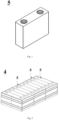
- Fig. 1 shows a secondary battery 5 with a square structure as an example.
- the secondary battery can be assembled into a battery module, the battery module may include a plurality of secondary batteries, and the specific number of the secondary batteries may be regulated according to application and capacity of the battery module.
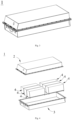
- Fig. 2 is a battery module 4 as an example.
- a plurality of secondary batteries 5 may be sequentially arranged along length direction of the battery module 4.
- the secondary batteries 5 also may be arranged in other random manners. Further, the plurality of secondary batteries 5 can be fixed by fasteners.
- the battery module 4 further can include a housing with an accommodation space, and the plurality of secondary batteries 5 are accommodated in the accommodation space.
- the battery module further can be assembled into a battery pack, and the number of the battery modules included in the battery pack can be regulated according to application and capacity of the battery pack.
- the battery pack 1 may include a battery box and a plurality of battery modules 4 arranged in the battery box.
- the battery box includes an upper box body 2 and a lower box body 3, the upper box body 2 can be covered on the lower box body 3, and an enclosed space for accommodating the battery modules 4 is formed.
- the plurality of battery modules 4 can be arranged in the battery box in a random manner.
- the application provides a device in the second aspect.
- the device includes the secondary battery provided by the application in the first aspect, and the secondary battery can be used as a power supply of the device, or can be used as an energy storage unit of the device.
- the device includes, but is not limited to, a mobile device (e.g., a mobile phone, a notebook computer, and the like), an electric vehicle (e.g., a pure electric vehicle, a hybrid electric vehicle, a plug-in hybrid electric vehicle, an electric bicycle, an electric scooter, an electric golf cart, an electric truck, and the like), an electric train, a ship, a satellite, an energy storage system, and the like.
- the device may select the secondary battery, the battery module or the battery pack according to use demands of the device.
- Fig. 5 shows a device as an example.
- the device is a pure electric vehicle, a hybrid electric vehicle, a plug-in hybrid electric vehicle or the like.
- the battery pack or the battery module can be adopted.
- a device as another example may be a mobile phone, a tablet personal computer, a notebook computer, and the like.
- the device is usually required to be thin and light, and can use the secondary battery as a power supply.
- Secondary batteries in embodiments 1 to 19 and contrast examples 1 to 6 are all prepared according to the following method.
- composition of the additives is that: 8%FEC+0.5%SA+0.5%TMSP, and content of each additive is a weight percent calculated on the basis of a total weight of the electrolyte; and certainly, those skilled in the art can also adopt additives with other composition for replacement, with no influence an overall performance test result of the application, wherein types and concentration of the electrolyte salt used in the electrolyte and specific types and content of the organic solvents are as shown in Table 1. Content of each organic solvent is a weight percent calculated on the basis of a total weight of the organic solvents; and the concentration of each electrolyte salt is molarity in the electrolyte.
- the secondary battery according to the embodiments of the application can have good high-temperature cycle performance, good high-temperature storage performance and low low-temperature direct current resistance.
- the content of the ethylene carbonate (EC) and the thickness of the base material of the separation film in the secondary battery are both within the scope given by the application, and the secondary battery can have good high-temperature cycle performance, good high-temperature storage performance, and low low-temperature direct current resistance.
- the electrolyte salt of the secondary battery simultaneously includes the lithium bisfluorosulfonimide (LiFSI) and the lithium hexafluorophosphate (LiPF 6 ) and conditions that the molarity of the lithium bisfluorosulfonimide (LiFSI) in the electrolyte is 0.8mol/L ⁇ 1.3mol/L and the molarity of the lithium hexafluorophosphate (LiPF 6 ) in the electrolyte is 0.15mol/L ⁇ 0.4mol/L, the performance of the secondary battery and particularly the high-temperature cycle performance and the low-temperature direct current resistance of the secondary battery are further improved.
- LiFSI lithium bisfluorosulfonimide
- LiPF 6 lithium hexafluorophosphate
- the high-temperature cycle performance of the secondary batteries in the contrast examples is all relatively poor.
- the content of the ethylene carbonate (EC) is higher than 20%, and the high-temperature cycle and high-temperature storage performance of the secondary batteries is deteriorated;
- the thicknesses of the base materials of the separation films of the secondary batteries in the contrast examples 3 to 6 are greater than 12 ⁇ m or less than 7 ⁇ m, the high-temperature cycle performance of the secondary batteries is deteriorated, and the high-temperature storage performance and/or the low-temperature direct current resistance are partially deteriorated.
Landscapes
- Chemical & Material Sciences (AREA)
- Chemical Kinetics & Catalysis (AREA)
- Electrochemistry (AREA)
- General Chemical & Material Sciences (AREA)
- Engineering & Computer Science (AREA)
- Inorganic Chemistry (AREA)
- Manufacturing & Machinery (AREA)
- Materials Engineering (AREA)
- General Physics & Mathematics (AREA)
- Condensed Matter Physics & Semiconductors (AREA)
- Physics & Mathematics (AREA)
- Composite Materials (AREA)
- Secondary Cells (AREA)
- Battery Electrode And Active Subsutance (AREA)
- Cell Separators (AREA)
Claims (13)
- Sekundärbatterie, umfassend:eine negative Elektrodenplatte, enthaltend einen negativen Stromkollektor und einen negativen Elektrodenfilm, der auf mindestens einer Oberfläche des negativen Stromkollektors angeordnet ist und ein negatives aktives Material enthält;einen Trennfilm, enthaltend ein Basismaterial und eine auf mindestens einer Oberfläche des Basismaterials angeordnete Beschichtung; undein Elektrolyt, enthaltend ein organisches Lösungsmittel,wobei das negative aktive Material ein Material auf Siliziumbasis und ein Kohlenstoffmaterial enthält;die Dicke des Basismaterials des Trennfilms 7 µm~12 µm beträgt; unddas organische Lösungsmittel aus Ethylencarbonat (EC), Ethylmethylcarbonat (EMC) und gegebenenfalls Dimethylcarbonat (DMC), besteht und das Gewichtsverhältnis des Ethylencarbonats (EC) in dem organischen Lösungsmittel ≤ 20% ist und das Gewichtsverhältnis des Ethylmethylcarbonats (EMC) in dem organischen Lösungsmittel 60%~95% ist.
- Sekundärbatterie nach Anspruch 1, wobei das Gewichtsverhältnis des Ethylencarbonats (EC) in dem organischen Lösungsmittel ≤ 15 % ist; und
vorzugsweise das Gewichtsverhältnis des Ethylencarbonats (EC) in dem organischen Lösungsmittel ≤ 10% ist. - Sekundärbatterie nach einem der Ansprüche 1 bis 2, wobei die Dicke des Basismaterials des Trennfilms 7 µm~10 µm beträgt.
- Sekundärbatterie nach einem der Ansprüche 1 bis 3, wobei die Porosität des Trennfilms 25%~50% beträgt und vorzugsweise die Porosität des Trennfilms 30%~48% beträgt.
- Sekundärbatterie nach Anspruch 1, wobei das Gewichtsverhältnis des Dimethylcarbonats (DMC) in dem organischen Lösungsmittel ≤ 15 % ist; und
vorzugsweise das Gewichtsverhältnis des Dimethylcarbonats (DMC) in dem organischen Lösungsmittel ≤ 10% ist. - Sekundärbatterie nach Anspruch 5, wobei der Elektrolyt ferner ein Elektrolytsalz enthält, und das Elektrolytsalz Lithiumbisfluorsulfonimid (LiFSI) und Lithiumhexafluorphosphat (LiPF6) enthält; und
die Molarität des Lithiumbisfluorsulfonimids (LiFSI) im Elektrolyten 0,8 mol/L~1,3 mol/L beträgt, und die Molarität des Lithiumhexafluorphosphats (LiPF6) im Elektrolyten 0,15 mol/L~0,4 mol/L beträgt. - Sekundärbatterie nach Anspruch 6, wobei die Molarität des Lithiumbisfluorsulfonimids (LiFSI) im Elektrolyten 0,9 mol/L~1,2 mol/L beträgt und die Molarität des Lithiumhexafluorphosphats (LiPF6) im Elektrolyten 0,15 mol/L~0,3 mol/L beträgt.
- Die Sekundärbatterie nach Anspruch 7, wobeidie elektrische Leitfähigkeit des Elektrolyten bei 25°C 6,5 mS/cm~9,5 mS/cm beträgt und vorzugsweise die elektrische Leitfähigkeit des Elektrolyten bei 25°C 7 mS/cm~9 mS/cm beträgt; und/oderdie Viskosität des Elektrolyten bei 25°C 3,5 mPa ·s bis 5,5 mPa·s beträgt und vorzugsweise die Viskosität des Elektrolyten bei 25°C 4 mPa·s bis 5 mPa·s beträgt.
- Sekundärbatterie nach einem der Ansprüche 1 bis 8, wobei das Material auf Siliziumbasis eine oder mehrere von einer einfachen Siliziumsubstanz, einer Siliziumlegierung, einer Silizium-Sauerstoff-Verbindung, einer Silizium-Kohlenstoff-Verbindung und einer Silizium-Stickstoff-Verbindung enthält, und vorzugsweise das Material auf Siliziumbasis die Silizium-Sauerstoff-Verbindung enthält; und/oder
das Kohlenstoffmaterial einen oder mehrere der Stoffe Graphit, weicher Kohlenstoff und harter Kohlenstoff enthält, vorzugsweise das Kohlenstoffmaterial den Graphit enthält, und der Graphit aus einem oder mehreren der Stoffe künstlicher Graphit und natürlicher Graphit ausgewählt ist. - Sekundärbatterie nach einem der Ansprüche 1 bis 9, wobei das Massenverhältnis des Materials auf Siliziumbasis im negativen aktiven Material ≤ 50% und vorzugsweise 15%~30% beträgt.
- Sekundärbatterie nach einem der Ansprüche 1 bis 10, wobei die Dicke des Trennfilms 11 µm~16 µm und vorzugsweise 12 pm~14 µm beträgt.
- Sekundärbatterie nach einem der Ansprüche 1 bis 11, ferner umfassend eine positive Elektrodenplatte, wobei die positive Elektrodenplatte einen positiven Stromkollektor und einen positiven Elektrodenfilm enthält, der auf mindestens einer Oberfläche des positiven Stromkollektors angeordnet ist und ein positives aktives Material enthält, wobei das positive aktive Material eine oder mehrere aus einer Lithium-Nickel-Kobalt-Mangan-Sauerstoffverbindung und einem Lithium-Nickel-Kobalt-Aluminiumoxid enthält, und vorzugsweise das positive aktive Material eines oder mehrere von LiaNibCocMdM'eOfAg oder LiaNibCocMdM'eOfAg mit einer Überzugsschicht auf mindestens einem Teil der Oberfläche enthält, wobei 0,8 ≤ a ≤ 1,2, 0,5 ≤ b < 1, 0 < c < 1, 0 < d < 1, 0 ≤ e ≤ 0.1, 1 ≤ f ≤ 2 und 0 ≤ g ≤ 1, M ausgewählt ist aus einem oder mehreren von Mn und Al, M' ausgewählt ist aus einem oder mehreren von Zr, Al, Zn, Cu, Cr, Mg, Fe, V, Ti und B, und A ausgewählt ist aus einem oder mehreren von N, F, S und Cl.
- Gerät, umfassend die Sekundärbatterie gemäß nach einem der Ansprüche 1 bis 12.
Priority Applications (3)
| Application Number | Priority Date | Filing Date | Title |
|---|---|---|---|
| PL22216173.9T PL4181264T3 (pl) | 2019-12-24 | 2019-12-24 | Bateria wtórna i urządzenie ją zawierające |
| ES22216173T ES2989751T3 (es) | 2019-12-24 | 2019-12-24 | Batería secundaria y dispositivo que incluye la misma |
| EP22216173.9A EP4181264B1 (de) | 2019-12-24 | 2019-12-24 | Sekundärbatterie und vorrichtung damit |
Applications Claiming Priority (3)
| Application Number | Priority Date | Filing Date | Title |
|---|---|---|---|
| PCT/CN2019/127971 WO2021127996A1 (zh) | 2019-12-24 | 2019-12-24 | 二次电池及含有该二次电池的装置 |
| EP19957179.5A EP3930049B1 (de) | 2019-12-24 | 2019-12-24 | Sekundärbatterie und vorrichtung mit der sekundärbatterie |
| EP22216173.9A EP4181264B1 (de) | 2019-12-24 | 2019-12-24 | Sekundärbatterie und vorrichtung damit |
Related Parent Applications (2)
| Application Number | Title | Priority Date | Filing Date |
|---|---|---|---|
| EP19957179.5A Division-Into EP3930049B1 (de) | 2019-12-24 | 2019-12-24 | Sekundärbatterie und vorrichtung mit der sekundärbatterie |
| EP19957179.5A Division EP3930049B1 (de) | 2019-12-24 | 2019-12-24 | Sekundärbatterie und vorrichtung mit der sekundärbatterie |
Publications (2)
| Publication Number | Publication Date |
|---|---|
| EP4181264A1 EP4181264A1 (de) | 2023-05-17 |
| EP4181264B1 true EP4181264B1 (de) | 2024-07-31 |
Family
ID=76575010
Family Applications (2)
| Application Number | Title | Priority Date | Filing Date |
|---|---|---|---|
| EP19957179.5A Active EP3930049B1 (de) | 2019-12-24 | 2019-12-24 | Sekundärbatterie und vorrichtung mit der sekundärbatterie |
| EP22216173.9A Active EP4181264B1 (de) | 2019-12-24 | 2019-12-24 | Sekundärbatterie und vorrichtung damit |
Family Applications Before (1)
| Application Number | Title | Priority Date | Filing Date |
|---|---|---|---|
| EP19957179.5A Active EP3930049B1 (de) | 2019-12-24 | 2019-12-24 | Sekundärbatterie und vorrichtung mit der sekundärbatterie |
Country Status (9)
| Country | Link |
|---|---|
| US (1) | US11777134B2 (de) |
| EP (2) | EP3930049B1 (de) |
| JP (1) | JP7460765B2 (de) |
| KR (1) | KR102648175B1 (de) |
| CN (1) | CN114245943B (de) |
| ES (2) | ES2940776T3 (de) |
| HU (1) | HUE061683T2 (de) |
| PL (2) | PL4181264T3 (de) |
| WO (1) | WO2021127996A1 (de) |
Families Citing this family (9)
| Publication number | Priority date | Publication date | Assignee | Title |
|---|---|---|---|---|
| JP7728271B2 (ja) * | 2021-07-22 | 2025-08-22 | 香港時代新能源科技有限公司 | 電解液、リチウムイオン電池および電気設備 |
| EP4394916A4 (de) * | 2021-11-18 | 2024-10-16 | Ningde Amperex Technology Limited | Elektrochemische vorrichtung und elektronische vorrichtung |
| JP7815423B2 (ja) * | 2022-01-26 | 2026-02-17 | エルジー エナジー ソリューション リミテッド | リチウム二次電池用電解液及びこれを含むリチウム二次電池 |
| CN115810874B (zh) * | 2022-07-11 | 2024-10-11 | 宁德时代新能源科技股份有限公司 | 一种隔离膜、其制备方法及包含其的二次电池和用电装置 |
| JP2025502232A (ja) * | 2022-07-15 | 2025-01-24 | 香港時代新能源科技有限公司 | 二次電池、電池モジュール、電池パック及び電力消費装置 |
| CN118591918A (zh) * | 2023-03-31 | 2024-09-03 | 宁德时代新能源科技股份有限公司 | 二次电池及用电装置 |
| CN117154187B (zh) | 2023-10-30 | 2024-06-18 | 宁德时代新能源科技股份有限公司 | 电池单体、电池和用电装置 |
| CN118156407B (zh) * | 2024-03-25 | 2026-04-03 | 宁德新能源科技有限公司 | 一种二次电池和电子装置 |
| CN118137038A (zh) * | 2024-04-01 | 2024-06-04 | 宁德时代新能源科技股份有限公司 | 电池单体、电池和用电装置 |
Family Cites Families (24)
| Publication number | Priority date | Publication date | Assignee | Title |
|---|---|---|---|---|
| CN101288199B (zh) * | 2005-10-12 | 2011-06-15 | 三井化学株式会社 | 非水电解液以及使用其的锂二次电池 |
| JP2009134943A (ja) * | 2007-11-29 | 2009-06-18 | Sony Corp | 非水電解質電池 |
| JP4992921B2 (ja) | 2009-02-19 | 2012-08-08 | ソニー株式会社 | 非水電解液二次電池 |
| KR101946673B1 (ko) * | 2012-01-18 | 2019-02-11 | 가부시키가이샤 무라타 세이사쿠쇼 | 세퍼레이터, 전지, 전지 팩, 전자 기기, 전동 차량, 축전 장치 및 전력 시스템 |
| JP2013225388A (ja) * | 2012-04-20 | 2013-10-31 | Sony Corp | 電池および電解質、並びに電池パック、電子機器、電動車両、蓄電装置および電力システム |
| CN104995785B (zh) * | 2013-02-18 | 2017-11-24 | 株式会社日本触媒 | 电解液及具备该电解液的锂离子二次电池 |
| JPWO2014147983A1 (ja) * | 2013-03-19 | 2017-02-16 | 三洋電機株式会社 | 非水電解質二次電池 |
| CN103413970B (zh) | 2013-08-06 | 2016-06-22 | 朝阳光达化工有限公司 | 低温型碳酸酯锂电池电解液 |
| CN105981210B (zh) * | 2014-02-28 | 2020-09-18 | 三洋电机株式会社 | 非水电解质二次电池 |
| CN104617333B (zh) * | 2015-01-05 | 2017-10-24 | 深圳新宙邦科技股份有限公司 | 一种非水电解液及锂离子二次电池 |
| KR20160091077A (ko) * | 2015-01-23 | 2016-08-02 | 삼성에스디아이 주식회사 | 유기전해액 및 상기 전해액을 채용한 리튬전지 |
| KR102035247B1 (ko) * | 2015-09-30 | 2019-12-12 | 주식회사 엘지화학 | 비수성 전해액 및 이를 포함하는 리튬 이차전지 |
| KR20170038543A (ko) * | 2015-09-30 | 2017-04-07 | 주식회사 엘지화학 | 비수성 전해액 및 이를 포함하는 리튬 이차전지 |
| CN105261790A (zh) * | 2015-11-03 | 2016-01-20 | 宁德新能源科技有限公司 | 电解液以及包括该电解液的锂离子电池 |
| KR102167590B1 (ko) * | 2016-03-24 | 2020-10-19 | 주식회사 엘지화학 | 비수성 전해액 및 이를 포함하는 리튬 이차전지 |
| JP6414146B2 (ja) * | 2016-06-22 | 2018-10-31 | 株式会社村田製作所 | 電解液、電池、電池パック、電子機器、電動車両、蓄電装置および電力システム |
| CN107634263B (zh) | 2016-07-18 | 2019-07-16 | 万向一二三股份公司 | 一种高温不膨胀的高能量密度硅碳电池 |
| US20180048020A1 (en) * | 2016-08-12 | 2018-02-15 | Lenovo (Beijing) Co., Ltd. | Lithium-ion polymer battery and electronic device |
| CN106099174A (zh) * | 2016-08-26 | 2016-11-09 | 东莞市凯欣电池材料有限公司 | 一种硅基负极高电压锂离子电池 |
| CN108242557B (zh) * | 2016-12-26 | 2020-08-28 | 宁德时代新能源科技股份有限公司 | 电解液及二次电池 |
| CN109119685A (zh) * | 2017-06-23 | 2019-01-01 | 宁德时代新能源科技股份有限公司 | 电解液及锂离子电池 |
| JP7103713B2 (ja) * | 2018-03-27 | 2022-07-20 | 三井化学株式会社 | 電池用非水電解液及びリチウム二次電池 |
| CN109244530A (zh) * | 2018-09-21 | 2019-01-18 | 深圳市卓能新能源股份有限公司 | 一种锂离子电池和制备方法 |
| CN110391414A (zh) * | 2019-06-19 | 2019-10-29 | 重庆市维都利新能源有限公司 | 一种高能量密度聚合物锂离子电池及其制备方法 |
-
2019
- 2019-12-24 PL PL22216173.9T patent/PL4181264T3/pl unknown
- 2019-12-24 WO PCT/CN2019/127971 patent/WO2021127996A1/zh not_active Ceased
- 2019-12-24 ES ES19957179T patent/ES2940776T3/es active Active
- 2019-12-24 KR KR1020227012248A patent/KR102648175B1/ko active Active
- 2019-12-24 EP EP19957179.5A patent/EP3930049B1/de active Active
- 2019-12-24 EP EP22216173.9A patent/EP4181264B1/de active Active
- 2019-12-24 ES ES22216173T patent/ES2989751T3/es active Active
- 2019-12-24 CN CN201980098827.1A patent/CN114245943B/zh active Active
- 2019-12-24 HU HUE19957179A patent/HUE061683T2/hu unknown
- 2019-12-24 PL PL19957179.5T patent/PL3930049T3/pl unknown
- 2019-12-24 JP JP2022521985A patent/JP7460765B2/ja active Active
-
2021
- 2021-11-01 US US17/516,504 patent/US11777134B2/en active Active
Also Published As
| Publication number | Publication date |
|---|---|
| ES2940776T3 (es) | 2023-05-11 |
| ES2989751T3 (es) | 2024-11-27 |
| KR102648175B1 (ko) | 2024-03-19 |
| US20220059867A1 (en) | 2022-02-24 |
| PL3930049T3 (pl) | 2023-05-02 |
| KR20220064394A (ko) | 2022-05-18 |
| EP3930049B1 (de) | 2023-02-22 |
| EP4181264A1 (de) | 2023-05-17 |
| CN114245943A (zh) | 2022-03-25 |
| JP7460765B2 (ja) | 2024-04-02 |
| US11777134B2 (en) | 2023-10-03 |
| JP2022553518A (ja) | 2022-12-23 |
| EP3930049A1 (de) | 2021-12-29 |
| EP3930049A4 (de) | 2022-05-04 |
| HUE061683T2 (hu) | 2023-08-28 |
| CN114245943B (zh) | 2024-10-18 |
| PL4181264T3 (pl) | 2025-06-09 |
| WO2021127996A1 (zh) | 2021-07-01 |
Similar Documents
| Publication | Publication Date | Title |
|---|---|---|
| EP4181264B1 (de) | Sekundärbatterie und vorrichtung damit | |
| KR102502618B1 (ko) | 이차 전지, 이차 전지를 포함하는 전지 모듈, 전지 팩 및 장치 | |
| EP3913722B1 (de) | Sekundärbatterie und vorrichtung mit der sekundärbatterie | |
| JP2023504478A (ja) | 二次電池及び当該二次電池を備える装置 | |
| WO2021127997A1 (zh) | 二次电池及含有该二次电池的装置 | |
| KR102651812B1 (ko) | 이차 배터리 및 이차 배터리를 포함하는 장치 | |
| EP4231368A1 (de) | Lithiumergänzungsverfahren und lade- und entladeverfahren für sekundärbatterie | |
| US12230763B2 (en) | Secondary battery and device comprising the same | |
| EP4693686A1 (de) | Separator und herstellungsverfahren dafür, batterie und elektrische vorrichtung | |
| CN112886050B (zh) | 二次电池及含有该二次电池的装置 | |
| CN115810788A (zh) | 一种锂离子电池、电池模块、电池包及用电装置 | |
| US11996515B2 (en) | Lithium-ion secondary battery, battery module, battery pack, and power consumption apparatus | |
| CN111009687A (zh) | 一种非水电解液和锂离子电池 | |
| EP4087004B1 (de) | Elektrolyt, sekundärbatterie, batteriemodul, batteriepack und vorrichtung | |
| EP4318637A1 (de) | Sekundärbatterie und herstellungsverfahren dafür, batteriemodul, batteriepack und elektrische vorrichtung |
Legal Events
| Date | Code | Title | Description |
|---|---|---|---|
| PUAI | Public reference made under article 153(3) epc to a published international application that has entered the european phase |
Free format text: ORIGINAL CODE: 0009012 |
|
| STAA | Information on the status of an ep patent application or granted ep patent |
Free format text: STATUS: THE APPLICATION HAS BEEN PUBLISHED |
|
| AC | Divisional application: reference to earlier application |
Ref document number: 3930049 Country of ref document: EP Kind code of ref document: P |
|
| AK | Designated contracting states |
Kind code of ref document: A1 Designated state(s): AL AT BE BG CH CY CZ DE DK EE ES FI FR GB GR HR HU IE IS IT LI LT LU LV MC MK MT NL NO PL PT RO RS SE SI SK SM TR |
|
| STAA | Information on the status of an ep patent application or granted ep patent |
Free format text: STATUS: REQUEST FOR EXAMINATION WAS MADE |
|
| 17P | Request for examination filed |
Effective date: 20230926 |
|
| RBV | Designated contracting states (corrected) |
Designated state(s): AL AT BE BG CH CY CZ DE DK EE ES FI FR GB GR HR HU IE IS IT LI LT LU LV MC MK MT NL NO PL PT RO RS SE SI SK SM TR |
|
| STAA | Information on the status of an ep patent application or granted ep patent |
Free format text: STATUS: EXAMINATION IS IN PROGRESS |
|
| 17Q | First examination report despatched |
Effective date: 20231117 |
|
| GRAP | Despatch of communication of intention to grant a patent |
Free format text: ORIGINAL CODE: EPIDOSNIGR1 |
|
| STAA | Information on the status of an ep patent application or granted ep patent |
Free format text: STATUS: GRANT OF PATENT IS INTENDED |
|
| INTG | Intention to grant announced |
Effective date: 20240527 |
|
| GRAS | Grant fee paid |
Free format text: ORIGINAL CODE: EPIDOSNIGR3 |
|
| GRAA | (expected) grant |
Free format text: ORIGINAL CODE: 0009210 |
|
| STAA | Information on the status of an ep patent application or granted ep patent |
Free format text: STATUS: THE PATENT HAS BEEN GRANTED |
|
| AC | Divisional application: reference to earlier application |
Ref document number: 3930049 Country of ref document: EP Kind code of ref document: P |
|
| AK | Designated contracting states |
Kind code of ref document: B1 Designated state(s): AL AT BE BG CH CY CZ DE DK EE ES FI FR GB GR HR HU IE IS IT LI LT LU LV MC MK MT NL NO PL PT RO RS SE SI SK SM TR |
|
| REG | Reference to a national code |
Ref country code: CH Ref legal event code: EP Ref country code: GB Ref legal event code: FG4D |
|
| REG | Reference to a national code |
Ref country code: DE Ref legal event code: R081 Ref document number: 602019056417 Country of ref document: DE Owner name: CONTEMPORARY AMPEREX TECHNOLOGY (HONG KONG) LI, HK Free format text: FORMER OWNER: CONTEMPORARY AMPEREX TECHNOLOGY CO., LIMITED, NINGDE CITY, FUJIAN, CN |
|
| REG | Reference to a national code |
Ref country code: DE Ref legal event code: R096 Ref document number: 602019056417 Country of ref document: DE |
|
| REG | Reference to a national code |
Ref country code: NL Ref legal event code: PD Owner name: CONTEMPORARY AMPEREX TECHNOLOGY (HONG KONG) LIMITED; CN Free format text: DETAILS ASSIGNMENT: CHANGE OF OWNER(S), ASSIGNMENT; FORMER OWNER NAME: CONTEMPORARY AMPEREX TECHNOLOGY CO., LIMITED Effective date: 20240819 Ref country code: IE Ref legal event code: FG4D |
|
| REG | Reference to a national code |
Ref country code: GB Ref legal event code: 732E Free format text: REGISTERED BETWEEN 20240829 AND 20240904 |
|
| RAP2 | Party data changed (patent owner data changed or rights of a patent transferred) |
Owner name: CONTEMPORARY AMPEREX TECHNOLOGY(HONG KONG) LIMITED |
|
| REG | Reference to a national code |
Ref country code: NL Ref legal event code: FP |
|
| P01 | Opt-out of the competence of the unified patent court (upc) registered |
Free format text: CASE NUMBER: APP_52992/2024 Effective date: 20240923 |
|
| REG | Reference to a national code |
Ref country code: LT Ref legal event code: MG9D |
|
| REG | Reference to a national code |
Ref country code: ES Ref legal event code: FG2A Ref document number: 2989751 Country of ref document: ES Kind code of ref document: T3 Effective date: 20241127 |
|
| PG25 | Lapsed in a contracting state [announced via postgrant information from national office to epo] |
Ref country code: PT Free format text: LAPSE BECAUSE OF FAILURE TO SUBMIT A TRANSLATION OF THE DESCRIPTION OR TO PAY THE FEE WITHIN THE PRESCRIBED TIME-LIMIT Effective date: 20241202 |
|
| REG | Reference to a national code |
Ref country code: AT Ref legal event code: MK05 Ref document number: 1709354 Country of ref document: AT Kind code of ref document: T Effective date: 20240731 |
|
| PG25 | Lapsed in a contracting state [announced via postgrant information from national office to epo] |
Ref country code: PT Free format text: LAPSE BECAUSE OF FAILURE TO SUBMIT A TRANSLATION OF THE DESCRIPTION OR TO PAY THE FEE WITHIN THE PRESCRIBED TIME-LIMIT Effective date: 20241202 |
|
| PG25 | Lapsed in a contracting state [announced via postgrant information from national office to epo] |
Ref country code: NO Free format text: LAPSE BECAUSE OF FAILURE TO SUBMIT A TRANSLATION OF THE DESCRIPTION OR TO PAY THE FEE WITHIN THE PRESCRIBED TIME-LIMIT Effective date: 20241031 |
|
| PG25 | Lapsed in a contracting state [announced via postgrant information from national office to epo] |
Ref country code: GR Free format text: LAPSE BECAUSE OF FAILURE TO SUBMIT A TRANSLATION OF THE DESCRIPTION OR TO PAY THE FEE WITHIN THE PRESCRIBED TIME-LIMIT Effective date: 20241101 Ref country code: FI Free format text: LAPSE BECAUSE OF FAILURE TO SUBMIT A TRANSLATION OF THE DESCRIPTION OR TO PAY THE FEE WITHIN THE PRESCRIBED TIME-LIMIT Effective date: 20240731 |
|
| PG25 | Lapsed in a contracting state [announced via postgrant information from national office to epo] |
Ref country code: BG Free format text: LAPSE BECAUSE OF FAILURE TO SUBMIT A TRANSLATION OF THE DESCRIPTION OR TO PAY THE FEE WITHIN THE PRESCRIBED TIME-LIMIT Effective date: 20240731 |
|
| PG25 | Lapsed in a contracting state [announced via postgrant information from national office to epo] |
Ref country code: LV Free format text: LAPSE BECAUSE OF FAILURE TO SUBMIT A TRANSLATION OF THE DESCRIPTION OR TO PAY THE FEE WITHIN THE PRESCRIBED TIME-LIMIT Effective date: 20240731 |
|
| PG25 | Lapsed in a contracting state [announced via postgrant information from national office to epo] |
Ref country code: AT Free format text: LAPSE BECAUSE OF FAILURE TO SUBMIT A TRANSLATION OF THE DESCRIPTION OR TO PAY THE FEE WITHIN THE PRESCRIBED TIME-LIMIT Effective date: 20240731 Ref country code: IS Free format text: LAPSE BECAUSE OF FAILURE TO SUBMIT A TRANSLATION OF THE DESCRIPTION OR TO PAY THE FEE WITHIN THE PRESCRIBED TIME-LIMIT Effective date: 20241130 |
|
| PG25 | Lapsed in a contracting state [announced via postgrant information from national office to epo] |
Ref country code: HR Free format text: LAPSE BECAUSE OF FAILURE TO SUBMIT A TRANSLATION OF THE DESCRIPTION OR TO PAY THE FEE WITHIN THE PRESCRIBED TIME-LIMIT Effective date: 20240731 |
|
| PG25 | Lapsed in a contracting state [announced via postgrant information from national office to epo] |
Ref country code: RS Free format text: LAPSE BECAUSE OF FAILURE TO SUBMIT A TRANSLATION OF THE DESCRIPTION OR TO PAY THE FEE WITHIN THE PRESCRIBED TIME-LIMIT Effective date: 20241031 |
|
| PG25 | Lapsed in a contracting state [announced via postgrant information from national office to epo] |
Ref country code: RS Free format text: LAPSE BECAUSE OF FAILURE TO SUBMIT A TRANSLATION OF THE DESCRIPTION OR TO PAY THE FEE WITHIN THE PRESCRIBED TIME-LIMIT Effective date: 20241031 Ref country code: NO Free format text: LAPSE BECAUSE OF FAILURE TO SUBMIT A TRANSLATION OF THE DESCRIPTION OR TO PAY THE FEE WITHIN THE PRESCRIBED TIME-LIMIT Effective date: 20241031 Ref country code: LV Free format text: LAPSE BECAUSE OF FAILURE TO SUBMIT A TRANSLATION OF THE DESCRIPTION OR TO PAY THE FEE WITHIN THE PRESCRIBED TIME-LIMIT Effective date: 20240731 Ref country code: IS Free format text: LAPSE BECAUSE OF FAILURE TO SUBMIT A TRANSLATION OF THE DESCRIPTION OR TO PAY THE FEE WITHIN THE PRESCRIBED TIME-LIMIT Effective date: 20241130 Ref country code: HR Free format text: LAPSE BECAUSE OF FAILURE TO SUBMIT A TRANSLATION OF THE DESCRIPTION OR TO PAY THE FEE WITHIN THE PRESCRIBED TIME-LIMIT Effective date: 20240731 Ref country code: GR Free format text: LAPSE BECAUSE OF FAILURE TO SUBMIT A TRANSLATION OF THE DESCRIPTION OR TO PAY THE FEE WITHIN THE PRESCRIBED TIME-LIMIT Effective date: 20241101 Ref country code: FI Free format text: LAPSE BECAUSE OF FAILURE TO SUBMIT A TRANSLATION OF THE DESCRIPTION OR TO PAY THE FEE WITHIN THE PRESCRIBED TIME-LIMIT Effective date: 20240731 Ref country code: BG Free format text: LAPSE BECAUSE OF FAILURE TO SUBMIT A TRANSLATION OF THE DESCRIPTION OR TO PAY THE FEE WITHIN THE PRESCRIBED TIME-LIMIT Effective date: 20240731 Ref country code: AT Free format text: LAPSE BECAUSE OF FAILURE TO SUBMIT A TRANSLATION OF THE DESCRIPTION OR TO PAY THE FEE WITHIN THE PRESCRIBED TIME-LIMIT Effective date: 20240731 |
|
| PG25 | Lapsed in a contracting state [announced via postgrant information from national office to epo] |
Ref country code: DK Free format text: LAPSE BECAUSE OF FAILURE TO SUBMIT A TRANSLATION OF THE DESCRIPTION OR TO PAY THE FEE WITHIN THE PRESCRIBED TIME-LIMIT Effective date: 20240731 Ref country code: SM Free format text: LAPSE BECAUSE OF FAILURE TO SUBMIT A TRANSLATION OF THE DESCRIPTION OR TO PAY THE FEE WITHIN THE PRESCRIBED TIME-LIMIT Effective date: 20240731 Ref country code: RO Free format text: LAPSE BECAUSE OF FAILURE TO SUBMIT A TRANSLATION OF THE DESCRIPTION OR TO PAY THE FEE WITHIN THE PRESCRIBED TIME-LIMIT Effective date: 20240731 |
|
| PG25 | Lapsed in a contracting state [announced via postgrant information from national office to epo] |
Ref country code: EE Free format text: LAPSE BECAUSE OF FAILURE TO SUBMIT A TRANSLATION OF THE DESCRIPTION OR TO PAY THE FEE WITHIN THE PRESCRIBED TIME-LIMIT Effective date: 20240731 |
|
| PG25 | Lapsed in a contracting state [announced via postgrant information from national office to epo] |
Ref country code: CZ Free format text: LAPSE BECAUSE OF FAILURE TO SUBMIT A TRANSLATION OF THE DESCRIPTION OR TO PAY THE FEE WITHIN THE PRESCRIBED TIME-LIMIT Effective date: 20240731 |
|
| PG25 | Lapsed in a contracting state [announced via postgrant information from national office to epo] |
Ref country code: SK Free format text: LAPSE BECAUSE OF FAILURE TO SUBMIT A TRANSLATION OF THE DESCRIPTION OR TO PAY THE FEE WITHIN THE PRESCRIBED TIME-LIMIT Effective date: 20240731 Ref country code: IT Free format text: LAPSE BECAUSE OF FAILURE TO SUBMIT A TRANSLATION OF THE DESCRIPTION OR TO PAY THE FEE WITHIN THE PRESCRIBED TIME-LIMIT Effective date: 20240731 |
|
| REG | Reference to a national code |
Ref country code: DE Ref legal event code: R097 Ref document number: 602019056417 Country of ref document: DE |
|
| PLBE | No opposition filed within time limit |
Free format text: ORIGINAL CODE: 0009261 |
|
| STAA | Information on the status of an ep patent application or granted ep patent |
Free format text: STATUS: NO OPPOSITION FILED WITHIN TIME LIMIT |
|
| PG25 | Lapsed in a contracting state [announced via postgrant information from national office to epo] |
Ref country code: MC Free format text: LAPSE BECAUSE OF FAILURE TO SUBMIT A TRANSLATION OF THE DESCRIPTION OR TO PAY THE FEE WITHIN THE PRESCRIBED TIME-LIMIT Effective date: 20240731 |
|
| 26N | No opposition filed |
Effective date: 20250501 |
|
| REG | Reference to a national code |
Ref country code: CH Ref legal event code: PL |
|
| PG25 | Lapsed in a contracting state [announced via postgrant information from national office to epo] |
Ref country code: LU Free format text: LAPSE BECAUSE OF NON-PAYMENT OF DUE FEES Effective date: 20241224 |
|
| PG25 | Lapsed in a contracting state [announced via postgrant information from national office to epo] |
Ref country code: SE Free format text: LAPSE BECAUSE OF FAILURE TO SUBMIT A TRANSLATION OF THE DESCRIPTION OR TO PAY THE FEE WITHIN THE PRESCRIBED TIME-LIMIT Effective date: 20240731 |
|
| REG | Reference to a national code |
Ref country code: BE Ref legal event code: MM Effective date: 20241231 |
|
| PG25 | Lapsed in a contracting state [announced via postgrant information from national office to epo] |
Ref country code: BE Free format text: LAPSE BECAUSE OF NON-PAYMENT OF DUE FEES Effective date: 20241231 |
|
| PG25 | Lapsed in a contracting state [announced via postgrant information from national office to epo] |
Ref country code: CH Free format text: LAPSE BECAUSE OF NON-PAYMENT OF DUE FEES Effective date: 20241231 |
|
| PG25 | Lapsed in a contracting state [announced via postgrant information from national office to epo] |
Ref country code: IE Free format text: LAPSE BECAUSE OF NON-PAYMENT OF DUE FEES Effective date: 20241224 |
|
| PGFP | Annual fee paid to national office [announced via postgrant information from national office to epo] |
Ref country code: DE Payment date: 20251212 Year of fee payment: 7 |
|
| PGFP | Annual fee paid to national office [announced via postgrant information from national office to epo] |
Ref country code: GB Payment date: 20251211 Year of fee payment: 7 |
|
| PGFP | Annual fee paid to national office [announced via postgrant information from national office to epo] |
Ref country code: NL Payment date: 20251217 Year of fee payment: 7 Ref country code: FR Payment date: 20251212 Year of fee payment: 7 |
|
| PGFP | Annual fee paid to national office [announced via postgrant information from national office to epo] |
Ref country code: PL Payment date: 20251126 Year of fee payment: 7 |
|
| PGFP | Annual fee paid to national office [announced via postgrant information from national office to epo] |
Ref country code: ES Payment date: 20260105 Year of fee payment: 7 |