EP4164992B1 - Gefärbte glasartikel mit verbesserter mechanischer beständigkeit - Google Patents
Gefärbte glasartikel mit verbesserter mechanischer beständigkeit Download PDFInfo
- Publication number
- EP4164992B1 EP4164992B1 EP22741911.6A EP22741911A EP4164992B1 EP 4164992 B1 EP4164992 B1 EP 4164992B1 EP 22741911 A EP22741911 A EP 22741911A EP 4164992 B1 EP4164992 B1 EP 4164992B1
- Authority
- EP
- European Patent Office
- Prior art keywords
- equal
- mol
- less
- colored glass
- glass article
- Prior art date
- Legal status (The legal status is an assumption and is not a legal conclusion. Google has not performed a legal analysis and makes no representation as to the accuracy of the status listed.)
- Active
Links
Images


Classifications
-
- C—CHEMISTRY; METALLURGY
- C03—GLASS; MINERAL OR SLAG WOOL
- C03C—CHEMICAL COMPOSITION OF GLASSES, GLAZES OR VITREOUS ENAMELS; SURFACE TREATMENT OF GLASS; SURFACE TREATMENT OF FIBRES OR FILAMENTS MADE FROM GLASS, MINERALS OR SLAGS; JOINING GLASS TO GLASS OR OTHER MATERIALS
- C03C3/00—Glass compositions
- C03C3/04—Glass compositions containing silica
- C03C3/076—Glass compositions containing silica with 40% to 90% silica, by weight
- C03C3/089—Glass compositions containing silica with 40% to 90% silica, by weight containing boron
- C03C3/091—Glass compositions containing silica with 40% to 90% silica, by weight containing boron containing aluminium
- C03C3/093—Glass compositions containing silica with 40% to 90% silica, by weight containing boron containing aluminium containing zinc or zirconium
-
- C—CHEMISTRY; METALLURGY
- C03—GLASS; MINERAL OR SLAG WOOL
- C03C—CHEMICAL COMPOSITION OF GLASSES, GLAZES OR VITREOUS ENAMELS; SURFACE TREATMENT OF GLASS; SURFACE TREATMENT OF FIBRES OR FILAMENTS MADE FROM GLASS, MINERALS OR SLAGS; JOINING GLASS TO GLASS OR OTHER MATERIALS
- C03C1/00—Ingredients generally applicable to manufacture of glasses, glazes, or vitreous enamels
- C03C1/04—Opacifiers, e.g. fluorides or phosphates; Pigments
-
- C—CHEMISTRY; METALLURGY
- C03—GLASS; MINERAL OR SLAG WOOL
- C03C—CHEMICAL COMPOSITION OF GLASSES, GLAZES OR VITREOUS ENAMELS; SURFACE TREATMENT OF GLASS; SURFACE TREATMENT OF FIBRES OR FILAMENTS MADE FROM GLASS, MINERALS OR SLAGS; JOINING GLASS TO GLASS OR OTHER MATERIALS
- C03C21/00—Treatment of glass, not in the form of fibres or filaments, by diffusing ions or metals in the surface
- C03C21/001—Treatment of glass, not in the form of fibres or filaments, by diffusing ions or metals in the surface in liquid phase, e.g. molten salts, solutions
- C03C21/002—Treatment of glass, not in the form of fibres or filaments, by diffusing ions or metals in the surface in liquid phase, e.g. molten salts, solutions to perform ion-exchange between alkali ions
-
- C—CHEMISTRY; METALLURGY
- C03—GLASS; MINERAL OR SLAG WOOL
- C03C—CHEMICAL COMPOSITION OF GLASSES, GLAZES OR VITREOUS ENAMELS; SURFACE TREATMENT OF GLASS; SURFACE TREATMENT OF FIBRES OR FILAMENTS MADE FROM GLASS, MINERALS OR SLAGS; JOINING GLASS TO GLASS OR OTHER MATERIALS
- C03C3/00—Glass compositions
- C03C3/04—Glass compositions containing silica
- C03C3/076—Glass compositions containing silica with 40% to 90% silica, by weight
- C03C3/089—Glass compositions containing silica with 40% to 90% silica, by weight containing boron
- C03C3/091—Glass compositions containing silica with 40% to 90% silica, by weight containing boron containing aluminium
-
- C—CHEMISTRY; METALLURGY
- C03—GLASS; MINERAL OR SLAG WOOL
- C03C—CHEMICAL COMPOSITION OF GLASSES, GLAZES OR VITREOUS ENAMELS; SURFACE TREATMENT OF GLASS; SURFACE TREATMENT OF FIBRES OR FILAMENTS MADE FROM GLASS, MINERALS OR SLAGS; JOINING GLASS TO GLASS OR OTHER MATERIALS
- C03C3/00—Glass compositions
- C03C3/04—Glass compositions containing silica
- C03C3/076—Glass compositions containing silica with 40% to 90% silica, by weight
- C03C3/095—Glass compositions containing silica with 40% to 90% silica, by weight containing rare earths
-
- C—CHEMISTRY; METALLURGY
- C03—GLASS; MINERAL OR SLAG WOOL
- C03C—CHEMICAL COMPOSITION OF GLASSES, GLAZES OR VITREOUS ENAMELS; SURFACE TREATMENT OF GLASS; SURFACE TREATMENT OF FIBRES OR FILAMENTS MADE FROM GLASS, MINERALS OR SLAGS; JOINING GLASS TO GLASS OR OTHER MATERIALS
- C03C4/00—Compositions for glass with special properties
- C03C4/02—Compositions for glass with special properties for coloured glass
-
- C—CHEMISTRY; METALLURGY
- C03—GLASS; MINERAL OR SLAG WOOL
- C03C—CHEMICAL COMPOSITION OF GLASSES, GLAZES OR VITREOUS ENAMELS; SURFACE TREATMENT OF GLASS; SURFACE TREATMENT OF FIBRES OR FILAMENTS MADE FROM GLASS, MINERALS OR SLAGS; JOINING GLASS TO GLASS OR OTHER MATERIALS
- C03C2204/00—Glasses, glazes or enamels with special properties
Definitions
- the present specification generally relates to glass compositions and glass articles and, in particular, to glass compositions and ion-exchangeable, colored glass articles formed therefrom.
- Aluminosilicate glass articles may exhibit superior ion-exchangeability and drop performance.
- Various industries including the consumer electronics industry, desire colored materials with the same or similar strength and fracture toughness properties.
- simply including colorants in conventional aluminosilicate glass compositions may not produce the desired color and/or result in colored glass articles suitable for use in electronic devices transmitting and/or receiving high frequencies (e.g., frequencies of fifth generation (5G) wireless).
- high frequencies e.g., frequencies of fifth generation (5G) wireless
- US2020/189962 A1 discloses ion-exchangeable lithium-containing aluminosilicate glasses.
- US2017/197869 A1 discloses chemically strengthenable lithium aluminosilicate glasses with inherent damage resistance.
- US2013/186140 A1 discloses a lithium aluminosilicate glass with high modulus of elasticity.
- GB1124001 A discloses a coloured transparent or opaque crystallized glass-ceramic formed by in situ crystallization of a coloured base glass to yield crystals of less than 1/3 micron of beta-eucryptite and/or beta-spodumene has a colour which is different from that of the base glass from which it is formed.
- a second aspect A2 includes the colored glass article according to the first aspect A1, wherein NiO + Co 3 O 4 + Cr 2 O 3 + CuO is greater than or equal to 0.001 mol% and less than or equal to 3 mol%.
- a third aspect A3 includes the colored glass article according to the first aspect A1, wherein CeO 2 is greater than or equal to 0.1 mol% and less than or equal to 2 mol%.
- a fourth aspect A4 includes the colored glass article according to the first aspect A1, wherein TiOz is greater than or equal to 0.1 mol% and less than or equal to 2 mol%.
- a fifth aspect A5 includes the colored glass article according to any one of A1 to A4, wherein R 2 O + R'O is greater than or equal to 7 mol% and less than or equal to 25 mol%.
- a sixth A6 includes the colored glass article according to any one of A1 to A5, wherein R 2 O is greater than or equal to 7 mol% and less than or equal to 25 mol%.
- a seventh A7 includes the colored glass article according to any one of A1 to A6, wherein R'O is greater than or equal to 0 mol% and less than or equal to 12 mol%.
- a eighth aspect A8 includes the colored glass article according to any one of A1 to A7, wherein R 2 O - Al 2 O 3 is greater than or equal to -8 mol% and less than or equal to 4 mol%.
- a ninth aspect A9 includes the colored glass article according to any one of A1 to A8, wherein the colored glass article comprises greater than or equal to 7.5 mol% and less than or equal to 13.5 mol% LizO.
- a tenth aspect A10 includes the colored glass article according to any one of A1 to A9, wherein the colored glass article comprises greater than or equal to 0.1 mol% and less than or equal to 7 mol% NazO.
- a eleventh aspect A11 includes the colored glass article according to any one of A1 to A10, wherein the colored glass article comprises greater than or equal to 0.1 mol% and less than or equal to 0.7 mol% KzO.
- a twelfth aspect A12 includes the colored glass article according to any one of A1 to A11, wherein the colored glass article comprises greater than or equal to 0.25 mol% and less than or equal to 6.5 mol% CaO.
- a thirteenth aspect A13 includes the colored glass article according to any one of A1 to A12, wherein the colored glass article comprises greater than or equal to 0.25 mol% and less than or equal to 7 mol% MgO.
- a fourteenth aspect A14 includes the colored glass article according to any one of A1 to A13, wherein the colored glass article comprises greater than or equal to 0.5 mol% and less than or equal to 7 mol% ZnO.
- a fifteenth aspect A15 includes the colored glass article according to any one of A1 to A14, wherein the colored glass article comprises greater than or equal to 0.01 mol% and less than or equal to 1 mol% Fe 2 O 3 .
- a sixteenth aspect A16 includes the colored glass article according to any one of A1 to A14, wherein the glass composition comprises greater than or equal to 0.001 mol% and less than or equal to 0.5 mol% Fe 2 O 3 .
- a seventeenth aspect A17 includes the colored glass article according to any one of A1 to A16, wherein the colored glass article comprises greater than or equal to greater than or equal to 0.01 mol% and less than or equal to 1 mol% SnOz.
- a eighteenth aspect A18 includes the colored glass article according to any one of A1 to A17, wherein the colored glass article comprises greater than or equal to 12 mol% and less than or equal to 17.5 mol% Al 2 O 3 .
- a nineteenth aspect A19 includes the colored glass article according to any one of A1 to A18, wherein the colored glass article comprises greater than or equal to 2 mol% and less than or equal to 9 mol% B 2 O 3 .
- a twentieth aspect A20 includes the colored glass article according to any one of A1 to A19, wherein the colored glass article comprises greater than or equal to 12 mol% and less than or equal to 18 mol% Al 2 O 3 .
- a twenty-first aspect A21 includes the colored glass article according to any one of A1 to A20, wherein the colored glass article comprises greater than or equal to 50 mol% and less than or equal to 67 mol% SiOz.
- a twenty-second aspect A22 includes the colored glass article according to any one of A1 to A21, wherein the colored glass article has a dielectric constant Dk at 10 GHz less than or equal to 6.8.
- a twenty-third aspect A23 includes the colored glass article according to any one of A1 to A22, wherein the colored glass article has a thickness greater than or equal to 250 ⁇ m and less than or equal to 6 mm.
- a twenty-fourth aspect A24 includes the colored glass article according to any one of the A1 to the A23, wherein the ion-exchanged colored glass article has a depth of compression 3 ⁇ m or greater.
- a twenty-fifth aspect A25 includes the colored glass article according to any one of A1 to A24, wherein the ion-exchanged colored glass article has a thickness "t" and a depth of compression greater than or equal to 0.15t.
- consumer electronic devices includes a housing having a front surface, a back surface, and side surfaces; and electrical components provided at least partially within the housing, the electrical components including at least a controller, a memory, and a display, the display being provided at or adjacent the front surface of the housing; wherein the housing comprises the colored glass article according to any one of the first aspect A1 to the twenty-fifth aspect A25.
- a method of forming a colored glass article is as defined in claim 12.
- a twenty-eight aspect A28 includes the method according to the twenty-seventh aspect A27, the heat treating step may comprise: (i) heating the glass composition at a rate of 1-100 °C/min to glass homogenization temperature; (ii) maintaining the glass composition at the glass homogenization temperature for a time greater than or equal to 0.25 hour and less than or equal to 40 hours to produce the colored glass article; and (iii) cooling the formed colored glass article to room temperature.
- a twenty-ninth aspect A29 includes the method according to the twenty-seventh aspect A27 or twenty-eighth aspect A28, further comprising strengthening the colored glass article in an ion exchange bath at a temperature greater than or equal to 350 °C to less than or equal to 500 °C for a time period greater than or equal to 2 hours to less than or equal to 12 hours to form an ion exchanged glass-ceramic article.
- a thirtieth A30 includes the method according to the twenty-ninth aspect A29, wherein the ion exchange bath comprises KNO 3 .
- a thirty-first aspect A21 includes the method according to the thirtieth aspect A30, wherein the ion exchange bath comprises NaNO 3 .
- a glass article is as defined in claim and comprises glass composition including greater than or equal to 50 mol% and less than or equal to 70 mol% SiO 2 ; greater than or equal to 10 mol% and less than or equal to 20 mol% Al 2 O 3 ; greater than or equal to 1 mol% and less than or equal to 10 mol% B 2 O 3 ; greater than or equal to 7 mol% and less than or equal to 14 mol% LizO; greater than 0 mol% and less than or equal to 8 mol% Na 2 O; greater than 0 mol% and less than or equal to 1 mol% KzO; greater than or equal to 0 mol% and less than or equal to 7 mol% CaO; greater than or equal to 0 mol% and less than or equal to 8 mol% MgO; and greater than or equal to 0 mol% and less than or
- R 2 O + R'O is less than or equal to 25 mol%, wherein R 2 O is the sum of LizO, Na 2 O, and K 2 O and R'O is the sum of CaO, MgO, and ZnO.
- the glass composition includes at least one of NiO + Co 3 O 4 + Cr 2 O 3 + CuO is greater than or equal to 0.001 mol%, CeO 2 is greater than or equal to 0.1 mol%, and TiOz is greater than or equal to 0.1 mol%.
- Ranges may be expressed herein as from “about” one particular value, and/or to "about” another particular value. When such a range is expressed, another embodiment includes from the one particular value and/or to the other particular value. Similarly, when values are expressed as approximations, by use of the antecedent "about,” it will be understood that the particular value forms another embodiment. It will be further understood that the endpoints of each of the ranges are significant both in relation to the other endpoint, and independently of the other endpoint.
- the concentrations of constituent components in oxide form are specified in mole percent (mol%) on an oxide basis, unless otherwise specified.
- substantially free when used to describe the concentration and/or absence of a particular constituent component in a glass composition and the resultant colored glass article, means that the constituent component is not intentionally added to the glass composition and the resultant colored glass article.
- the glass composition and the resultant colored glass article may contain traces of the constituent component as a contaminant or tramp in amounts of less than 0.01 mol%, unless specified otherwise herein.
- the definition of “substantially free” is exclusive of NiO, Co 3 O 4 , Cr 2 O3, and CuO, which may be intentionally added to the glass composition in relatively small amounts such as, for example and without limitation, amounts less than 0.01 mol% to achieve a descried color in the resultant colored glass article.
- 0 mol% and free when used to describe the concentration and/or absence of a particular constituent component in a glass composition, means that the constituent component is not present in the glass composition.
- fracture toughness refers to the Kic value, and is measured by the chevron notched short bar method and prior to any ion-exchange processing, unless otherwise indicated.
- the chevron notched short bar (CNSB) method is disclosed in Reddy, K.P.R. et al, "Fracture Toughness Measurement of Glass and Ceramic Materials Using Chevron-Notched Specimens," J. Am. Ceram. Soc., 71 [6], C-310-C-313 (1988 ) except that Y ⁇ m is calculated using equation 5 of Bubsey, R.T.
- a crack "guiding groove” was cut down the length of the sample on both flat faces using a wafer dicing saw with a diamond blade, leaving a "web" of material, approximately half the total plate thickness (dimension b in FIG. 49), with a height of 180 ⁇ m corresponding to the blade thickness.
- the high precision dimensional tolerances of the dicing saw allow for minimal sample-to-sample variation.
- the samples were mounted in a metal sample holder with a steel wire in the bottom hole of the sample.
- a typical drop test is schematically shown in FIG. 2 .
- Each sample 1310 was affixed to a standard test vehicle 1320, which approximates the size, mass, and balance of a generic "smart" phone, and dropped from a drop height h onto a sheet of sandpaper 1330 having an abrasive surface 1335.
- the drop height h ranged from about 0.2 meter to 2.2 meters in incremental heights of 0.1 meter.
- Drop testing was carried out using a 180-grit silicon carbide sandpaper surface and an 80 grit silicon carbide sandpaper surface. The drop performance is reported in terms of the maximum drop height in cm before failure of the colored glass article.
- FSM surface stress meter
- FSM-6000 surface stress meter
- SOC stress optical coefficient
- ASTM standard C770-16 Standard Test Method for Measurement of Glass Stress-Optical Coefficient
- DOC depth of compression
- CIELAB color space refers to a color space defined by the International Commission on Illumination (CIE) in 1976. It expresses color as three values: L* for the lightness from black (0) to white (100), a* from green (-) to red (+), and B* from blue (-) to yellow (+).
- color gamut refers to the pallet of colors that may be achieved by the colored glass articles within the CIELAB color space.
- the dielectric constant of the colored glass articles may be measured using a split post dielectric resonator (SPDR), as is known in the art, at a frequency of 10 GHz.
- SPDR split post dielectric resonator
- the dielectric constant was measured on samples of the colored glass article having a length of 3 inches (76.2 mm), a width of 3 inches (76.2 mm), and a thickness of less than 0.9 mm.
- the dielectric constant of the colored glass articles may also be measured over a range of frequencies from 10 GHz to 60 GHz using a double concave reflecting mirror Fabry-Perot open resonator, as is known in the art.
- the dielectric constant can be measured at different frequencies by adjusting the mirror spacing in the open resonator.
- the dielectric constant may be measured on samples of the colored glass article having a length of 120 mm, a width of 120 mm, and a thickness of 2 mm or less. While not wishing to be bound by theory, it is believed that the dielectric constant of the colored glass articles measured at 10 GHz approximates the dielectric constant at each frequency in the range from 10 GHz to 60 GHz.
- Colorants have been added to conventional aluminosilicate glass compositions to achieve a colored glass article having a desired color and improved mechanical properties. For example, transition metal oxides and/or rare earth oxides may be added. However, simply including colorants in aluminosilicate glass compositions may not produce the desired color and/or result in in colored glass articles suitable for use in electronic devices transmitting and/or receiving high frequencies (e.g., frequencies of fifth generation (5G)).
- high frequencies e.g., frequencies of fifth generation (5G)
- the glass compositions disclosed herein include transition metal oxides and/or rare earth oxides to achieve a desired color.
- the glass compositions disclosed herein include a relatively low concentration (e.g., less than or equal to 25 mol%) of alkali oxides (e.g., LizO, Na 2 O, and K 2 O) and alkaline earth oxides (i.e., CaO, MgO, and ZnO) to achieve a reduced dielectric constant (e.g., less than or equal to 6.90).
- alkali oxides e.g.., LizO, Na 2 O, and K 2 O
- alkaline earth oxides i.e., CaO, MgO, and ZnO
- the glass compositions and colored glass articles described herein may be described as aluminoborosilicate glass compositions and colored glass articles and comprise SiOz, Al 2 O 3 , and B 2 O 3 .
- the glass compositions and colored glass articles described herein include transition metal oxides (e.g., NiO, Co 3 O 4 , Cr 2 O3, CuO, TiOz) and/or rare earth oxides (CeO 2 ) to produce colored glass articles having the desired color.
- the glass compositions and colored glass articles disclosed herein include a relatively low sum (e.g., less than or equal to 25 mol%) of R 2 O (i.e., LizO, Na 2 O, and K 2 O) and R'O (i.e., CaO, MgO, and ZnO) to achieve a reduced dielectric constant (e.g., less than or equal to 6.8).
- R 2 O i.e., LizO, Na 2 O, and K 2 O
- R'O i.e., CaO, MgO, and ZnO
- the glass compositions and colored glass articles described herein also include alkali oxides, such as LizO, Na 2 O, and KzO, to enable the ion-exchangeability of the colored glass articles.
- SiO 2 is the primary glass former in the glass compositions described herein and may function to stabilize the network structure of the colored glass articles.
- concentration of SiO 2 in the glass compositions and resultant colored glass articles should be sufficiently high (e.g., greater than or equal to 50 mol%) to enhance the chemical durability of the glass composition and, in particular, the resistance of the glass composition to degradation upon exposure to acidic solutions, basic solutions, and in water.
- the amount of SiO 2 may be limited (e.g., to less than or equal to 70 mol%) to control the melting point of the glass composition, as the melting point of pure SiO 2 or high SiO 2 glasses is undesirably high. Thus, limiting the concentration of SiO 2 may aid in improving the meltability and the formability of the resultant colored glass article.
- the glass composition and the resultant colored glass article comprise greater than or equal to 50 mol% and less than or equal to 70 mol% SiOz.
- the concentration of SiO 2 in the glass composition and the resultant colored glass article may be greater than or equal to 50 mol%, greater than or equal to 53 mol%, greater than or equal to 55 mol%, or even greater than or equal to 57 mol%.
- the concentration of SiO 2 in the glass composition and the colored resultant glass article may be greater than or equal to 50 mol% and less than or equal to 70 mol%, greater than or equal to 50 mol% and less than or equal to 67 mol%, greater than or equal to 50 mol% and less than or equal to 65 mol% greater than or equal to 50 mol% and less than or equal to 63 mol%, greater than or equal to 53 mol% and less than or equal to 70 mol%, greater than or equal to 53 mol% and less than or equal to 67 mol%, greater than or equal to 53 mol% and less than or equal to 65 mol% greater than or equal to 53 mol% and less than or equal to 63 mol%, greater than or equal to 55 mol% and less than or equal to 70 mol%, greater than or equal to 55 mol% and less than or equal to 67 mol%, greater than or equal to 55 mol% and less than or equal to 65 mol% greater than or equal to 55 mol% and less than or
- Al 2 O 3 may also stabilize the glass network and additionally provides improved mechanical properties and chemical durability to the glass composition and the resultant colored glass article.
- the amount of Al 2 O 3 may also be tailored to control the viscosity of the glass composition.
- Al 2 O 3 may be included such that the resultant glass composition has the desired fracture toughness (e.g., greater than or equal to 0.7 MPa ⁇ m 1/2 ). However, if the amount of Al 2 O 3 is too high (e.g., greater than 20 mol%), the viscosity of the melt may increase, thereby diminishing the formability of the colored glass article.
- the solubility of one or more colorants in the glass melt may decrease, resulting in the formation of undesirable crystal phases in the glass.
- the solubility of Cr 2 O 3 in the glass melt may decrease with increasing Al 2 O 3 concentrations (e.g., concentrations greater than or equal to 17.5 mol%), leading to the precipitation of undesirable crystal phases.
- Al 2 O 3 concentrations e.g., concentrations greater than or equal to 17.5 mol%
- the glass composition and the resultant colored glass article comprise greater than or equal to 10 mol% and less than or equal to 20 mol% Al 2 O 3 .
- the concentration of Al 2 O 3 in the glass composition and the resultant colored glass article may be greater than or equal to 10 mol%, greater than or equal to 12 mol%, greater than or equal to 12.5 mol%, greater than or equal to 13 mol%, greater than or equal to 13.5 mol%, or even greater than or equal to 14 mol%.
- the concentration of Al 2 O 3 in the glass composition and the resultant colored glass article may be less than or equal to 20 mol%, less than or equal to 18 mol%, less than or equal to 17.5 mol%, or even less than or equal to 17 mol%.
- the concentration of Al 2 O 3 in the glass composition and the resultant colored glass article may be greater than or equal to 10 mol% and less than or equal to 20 mol%, greater than or equal to 10 mol% and less than or equal to 18 mol% greater than or equal to 10 mol% and less than or equal to 17.5 mol%, greater than or equal to 10 mol% and less than or equal to 17 mol%, greater than or equal to 12 mol% and less than or equal to 20 mol%, greater than or equal to 12 mol% and less than or equal to 18 mol% greater than or equal to 12 mol% and less than or equal to 17.5 mol%, greater than or equal to 12 mol% and less than or equal to 17 mol%, greater than or equal to 12.5 mol% and less than or equal to 20 mol%, greater than or equal to 12.5 mol% and less than or equal to 18 mol% greater than or equal to 12.5 mol% and less than or equal to 17.5 mol%, greater than or equal to 12.5 mol% and
- B 2 O 3 decreases the melting point of the glass composition, which may improve the retention of certain colorants in the glass. B 2 O 3 may also improve the damage resistance of the resultant colored glass article.
- B 2 O 3 is added to reduce the formation of non-bridging oxygen, the presence of which may reduce fracture toughness.
- the concentration of B 2 O 3 should be sufficiently high (e.g., greater than or equal to 1 mol%) to reduce the melting point of the glass composition, improve the formability, and increase the fracture toughness of the colored glass article.
- B 2 O 3 is too high (e.g., greater than 10 mol%), the annealing point and strain point may decrease, which increases stress relaxation and reduces the overall strength of the colored glass article.
- the glass composition and the resultant colored glass article comprise greater than or equal to 1 mol% and less than or equal to 10 mol% B 2 O 3 .
- the concentration of B 2 O 3 in the glass composition and the resultant colored glass article may be greater than or equal to 1 mol%, greater than or equal to 2 mol%, greater than or equal to 3 mol%, greater than or equal to 4 mol%, greater than or equal to 4.5 mol%, greater than or equal to 5 mol%, or even greater than or equal to 5.5 mol%.
- the concentration of B 2 O 3 in the glass composition and the resultant colored glass article may be less than or equal to 10 mol%, less than or equal to 9 mol%, less than or equal to 8 mol%, less than or equal to 7.5 mol%, less than or equal to 7 mol%, or even less than or equal to 6.5 mol%.
- the concentration of B 2 O 3 in the glass composition and the resultant colored glass article may be greater than or equal to 1 mol% and less than or equal to 10 mol%, greater than or equal to 1 mol% and less than or equal to 9 mol%, greater than or equal to 1 mol% and less than or equal to 8 mol%, greater than or equal to 1 mol% and less than or equal to 7.5 mol%, greater than or equal to 1 mol% and less than or equal to 7 mol%, greater than or equal to 1 mol% and less than or equal to 6.5 mol%, greater than or equal to 2 mol% and less than or equal to 10 mol%, greater than or equal to 2 mol% and less than or equal to 9 mol%, greater than or equal to 2 mol% and less than or equal to 8 mol%, greater than or equal to 2 mol% and less than or equal to 7.5 mol%, greater than or equal to 2 mol% and less than or equal to 7 mol%, greater than or equal to 2 mol
- the glass compositions and the resultant colored glass articles contain alkali oxides, such as LizO, NazO, and KzO, to enable the ion-exchangeability of the colored glass articles.
- alkali oxides such as LizO, NazO, and KzO
- LizO aids in the ion-exchangeability of the colored glass article and also reduces the softening point of the glass composition, thereby increasing the formability of the colored glass articles.
- LizO decreases the melting point of the glass composition, which may help improve retention of colorants in the glass.
- the concentration of LizO in the glass compositions and resultant colored glass articles should be sufficiently high (e.g., greater than or equal to 7 mol%) to reduce the melting point of the glass composition and achieve the desired maximum central tension (e.g., greater than or equal to 40 MPa). However, if the amount of LizO is too high (e.g., greater than 14 mol%), the liquidus temperature may increase, thereby diminishing the manufacturability of the colored glass article.
- the glass composition and the resultant colored glass article comprises greater than or equal to 7 mol% and less than or equal to 14 mol% LizO.
- the concentration of LizO in the glass composition and the resultant colored glass article may be greater than or equal to 7 mol%, greater than or equal to 7.5 mol%, greater than or equal to 8 mol%, or even greater than or equal to 8.5 mol%.
- the concentration of LizO in the glass composition and the resultant colored glass article may be less than or equal to 14 mol%, less than or equal to 13.5 mol%, less than or equal to 13 mol%, or even less than or equal to 12.5 mol%.
- the concentration of LizO in the glass composition and the resultant colored glass article may be greater than or equal to 7 mol% and less than or equal to 14 mol%, greater than or equal to 7 mol% and less than or equal to 13.5 mol%, greater than or equal to 7 mol% and less than or equal to 13 mol%, greater than or equal to 7 mol% and less than or equal to 12.5 mol%, greater than or equal to 7.5 mol% and less than or equal to 14 mol%, greater than or equal to 7.5 mol% and less than or equal to 13.5 mol%, greater than or equal to 7.5 mol% and less than or equal to 13 mol%, greater than or equal to 7.5 mol% and less than or equal to 12.5 mol%, greater than or equal to 8 mol% and less than or equal to 14 mol%, greater than or equal to 8 mol% and less than or equal to 13.5 mol%, greater than or equal to 8 mol% and less than or equal to 13 mol%, greater than or equal to 8
- Na 2 O improves diffusivity of alkali ions in the glass and thereby reduces ion-exchange time and helps achieve the desired surface compressive stress (e.g., greater than or equal to 300 MPa).
- Na 2 O also improves formability of the colored glass article.
- Na 2 O decreases the melting point of the glass composition, which may help improve colorant retention.
- the melting point may be too low.
- the concentration of Li 2 O present in the glass composition and the resultant colored glass article may be greater than the concentration of Na 2 O present in the glass composition and the resultant colored glass article.
- the glass composition and the resultant colored glass article comprise greater than 0 mol% and less than or equal to 8 mol% NazO.
- the concentration of Na 2 O in the glass composition and the resultant colored glass article may be greater than 0 mol%, greater than or equal to 0.1 mol%, greater than or equal to 0.5 mol%, or even greater than or equal to 1 mol%.
- the concentration of Na 2 O in the glass composition and the resultant colored glass article may be less than or equal to 8 mol%, less than or equal to 7 mol%, less than or equal to 6 mol%, less than or equal to 5 mol%, less than or equal to 4 mol%, or even less than or equal to 3 mol%, or any and all sub-ranges formed from any of these endpoints.
- the concentration of Na 2 O in the glass composition and the resultant colored glass article may be greater than 0 mol% and less than or equal to 8 mol%, greater than 0 mol% and less than or equal to 7 mol%, greater than 0 mol% and less than or equal to 6 mol%, greater than 0 mol% and less than or equal to 5 mol%, greater than 0 mol% and less than or equal to 4 mol%, greater than 0 mol% and less than or equal to 3 mol%, greater than or equal to 0.1 mol% and less than or equal to 8 mol%, greater than or equal to 0.1 mol% and less than or equal to 7 mol%, greater than or equal to 0.1 mol% and less than or equal to 6 mol%, greater than or equal to 0.1 mol% and less than or equal to 5 mol%, greater than or equal to 0.1 mol% and less than or equal to 4 mol%, greater than or equal to 0.1 mol% and less than or equal to 3 mol
- K 2 O promotes ion-exchange and may increase the depth of compression and decrease the melting point to improve the formability of the colored glass article. However, adding too much K 2 O may cause the surface compressive stress and melting point to be too low. Accordingly, in embodiments, the amount of K 2 O added to the glass composition may be limited.
- the glass composition and the resultant colored glass article comprise greater than 0 mol% and less than or equal to 1 mol% KzO.
- the concentration of K 2 O in the glass composition and the resultant colored glass article may be greater than or equal to 0.1 mol%, or even greater than or equal to 0.2 mol%.
- the concentration of K 2 O in the glass composition and the resultant colored glass article may be less than or equal to 1 mol%, less than or equal to 0.7 mol%, or even less than or equal to 0.5 mol%.
- the concentration of K 2 O in the glass composition and the resultant colored glass article may be greater than 0 mol% and less than or equal to 1 mol%, greater than 0 mol% and less than or equal to 0.7 mol%, greater than 0 mol% and less than or equal to 0.5 mol%, greater than or equal to 0.1 mol% and less than or equal to 1 mol%, greater than or equal to 0.1 mol% and less than or equal to 0.7 mol%, greater than or equal to 0.1 mol% and less than or equal to 0.5 mol%, greater than or equal to 0.2 mol% and less than or equal to 1 mol%, greater than or equal to 0.2 mol% and less than or equal to 0.7 mol%, or even greater than or equal to 0.2 mol% and less than or equal to 0.5 mol%, or any and all sub-ranges formed from any of these endpoints.
- the alkali oxides aid in decreasing the softening point and molding temperature of the glass composition, thereby offsetting the increase in the softening point and molding temperature of the glass composition due to higher amounts of SiO 2 in the glass composition, for example.
- the softening point and molding temperature may be further reduced by including combinations of alkali oxides (e.g., two or more alkali oxides) in the glass composition, a phenomenon referred to as the "mixed alkali effect.”
- alkali oxides e.g., two or more alkali oxides
- the concentration of R 2 O in the glass composition and the resultant colored glass article may be greater than or equal to 7 mol%, greater than or equal to 8 mol%, greater than 9 mol%, or even greater than or equal to 10 mol%.
- the concentration of R 2 O in the glass composition and the resultant colored glass article is less than or equal to 25 mol%, less than or equal to 23 mol%, or even less than or equal to 20 mol%.
- the concentration of R 2 O in the glass composition and the resultant colored glass article may be greater than or equal to 7 mol% and less than or equal to 25 mol%, greater than or equal to 7 mol% and less than or equal to 23 mol%, greater than or equal to 7 mol% and less than or equal to 20 mol%, greater than or equal to 8 mol% and less than or equal to 25 mol%, greater than or equal to 8 mol% and less than or equal to 23 mol%, greater than or equal to 8 mol% and less than or equal to 20 mol%, greater than or equal to 9 mol% and less than or equal to 25 mol%, greater than or equal to 9 mol% and less than or equal to 23 mol%, greater than or equal to 9 mol% and less than or equal to 20 mol%, greater than or equal to 10 mol% and less than or equal to 25 mol%, greater than or equal to 10 mol% and less than or equal to 23 mol%, or even greater than or equal to 10 mol% and
- the difference between R 2 O and Al 2 O 3 (i.e. R 2 O (mol%) - Al 2 O 3 (mol%)) in the glass composition may be adjusted to reduce the formation of non-bridging oxygen, the presence of which may reduce fracture toughness.
- R 2 O - Al 2 O 3 in the glass composition and the resultant colored glass article is greater than or equal to -8 mol% and less than or equal to 4 mol%, such as greater than or equal to -8 mol% and less than or equal to 3 mol%, greater than or equal to -8 mol% and less than or equal to 2 mol%, greater than or equal to -8 mol% and less than or equal to 1 mol%, greater than or equal to -7 mol% and less than or equal to 4 mol%, greater than or equal to -7 mol% and less than or equal to 3 mol%, greater than or equal to -7 mol% and less than or equal to 2 mol%, greater than or equal to -7 mol% and less than or equal to 1 mol%, greater than or equal to -6 mol% and less than or equal to 4 mol%, greater than or equal to -6 mol% and less than or equal to 3 mol%, greater than or equal to -6 mol% and less than or equal to 2 mol%,
- the glass compositions and the resultant colored glass articles described herein may further comprise CaO.
- CaO lowers the viscosity of a glass composition, which enhances the formability, the strain point and the Young's modulus, and may improve the ion-exchangeability.
- the diffusivity of sodium and potassium ions in the glass composition decreases which, in turn, adversely impacts the ion-exchange performance (i.e., the ability to ion-exchange) of the resultant glass.
- the concentration of CaO in the glass composition and the resultant colored glass article is greater than or equal to 0 mol% and less than or equal to 7 mol%, such as greater than or equal to 0 mol% and less than or equal to 6.5 mol%, greater than or equal to 0 mol% and less than or equal to 6 mol%, greater than or equal to 0 mol% and less than or equal to 5.5 mol%, greater than or equal to 0 mol% and less than or equal to 5 mol%, greater than or equal to 0 mol% and less than or equal to 4.5 mol%, greater than or equal to 0 mol% and less than or equal to 4 mol%, greater than or equal to 0 mol% and less than or equal to 3.5 mol%, greater than or equal to 0 mol% and less than or equal to 3 mol%, greater than or equal to 0 mol% and less than or equal to 2.5 mol%, greater than or equal to 0 mol% and less than or equal to 2 mol%,
- the glass compositions and the resultant colored glass articles described herein may further comprise MgO.
- MgO lowers the viscosity of the glass compositions, which enhances the formability, the strain point, and the Young's modulus, and may improve ion-exchangeability.
- MgO lowers the viscosity of the glass compositions, which enhances the formability, the strain point, and the Young's modulus, and may improve ion-exchangeability.
- MgO lowers the viscosity of the glass compositions, which enhances the formability, the strain point, and the Young's modulus, and may improve ion-exchangeability.
- MgO lowers the viscosity of the glass compositions, which enhances the formability, the strain point, and the Young's modulus, and may improve ion-exchangeability.
- the diffusivity of sodium and potassium ions in the glass composition decreases which, in turn, adversely impacts the ion-exchange performance (i.e., the
- the glass composition and the resultant colored glass article comprise greater than or equal to 0 mol% and less than or equal to 8 mol% MgO.
- the concentration of MgO in the glass composition may be greater than or equal to 0 mol%, greater than or equal to 0.5 mol%, greater than or equal to 1 mol%, or even greater than or equal to 1.5 mol%.
- the concentration of MgO in the glass composition may be less than or equal to 8 mol%, less than or equal to 7 mol%, less than or equal to 6 mol%, less than or equal to 5.5 mol%, less than or equal to 5 mol%, less than or equal to 4.5 mol%, or even less than or equal to 4 mol%.
- the concentration of MgO in the glass composition may be greater than or equal to 0 mol% and less than or equal to 8 mol%, greater than or equal to 0 mol% and less than or equal to 7 mol%, greater than or equal to 0 mol% and less than or equal to 6 mol%, greater than or equal to 0 mol% and less than or equal to 5.5 mol%, greater than or equal to 0 mol% and less than or equal to 5 mol%, greater than or equal to 0 mol% and less than or equal to 4.5 mol%, greater than or equal to 0 mol% and less than or equal to 4 mol%, greater than or equal to 0.5 mol% and less than or equal to 8 mol%, greater than or equal to 0.5 mol% and less than or equal to 7 mol%, greater than or equal to 0.5 mol% and less than or equal to 6 mol%, greater than or equal to 0.5 mol% and less than or equal to 5.5 mol%, greater than or equal to
- the glass compositions and the resultant colored glass articles described herein may further comprise ZnO.
- ZnO lowers the viscosity of the glass compositions, which enhances the formability, the strain point, and the Young's modulus, and may improve ion-exchangeability.
- the diffusivity of sodium and potassium ions in the glass composition decreases which, in turn, adversely impacts the ion-exchange performance (i.e., the ability to ion-exchange) of the resultant colored glass article.
- the glass composition and the resultant colored glass article comprise greater than or equal to 0 mol% and less than or equal to 8 mol% ZnO.
- the concentration of ZnO in the glass composition may be greater than or equal to 0 mol%, greater than or equal to 0.5 mol%, greater than or equal to 1 mol%, or even greater than or equal to 1.5 mol%.
- the concentration of ZnO in the glass composition may be less than or equal to 8 mol%, less than or equal to 7 mol%, less than or equal to 6 mol%, less than or equal to 5.5 mol%, less than or equal to 5 mol%, less than or equal to 4.5 mol%, or even less than or equal to 4 mol%.
- the concentration of ZnO in the glass composition may be greater than or equal to 0 mol% and less than or equal to 8 mol%, greater than or equal to 0 mol% and less than or equal to 7 mol%, greater than or equal to 0 mol% and less than or equal to 6 mol%, greater than or equal to 0 mol% and less than or equal to 5.5 mol%, greater than or equal to 0 mol% and less than or equal to 5 mol%, greater than or equal to 0 mol% and less than or equal to 4.5 mol%, greater than or equal to 0 mol% and less than or equal to 4 mol%, greater than or equal to 0.5 mol% and less than or equal to 8 mol%, greater than or equal to 0.5 mol% and less than or equal to 7 mol%, greater than or equal to 0.5 mol% and less than or equal to 6 mol%, greater than or equal to 0.5 mol% and less than or equal to 5.5 mol%, greater than or equal to
- the concentration of R'O in the glass composition and the resultant colored glass article may be greater than or equal 0 mol%, greater than or equal to 0.5 mol%, greater than or equal to 1 mol%, greater than or equal to 2 mol%, greater than or equal to 3 mol%, or even greater than or equal to 4 mol%.
- the concentration of R'O in the glass composition and the resultant colored glass article may be less than or equal to 12 mol%, less than or equal to 10 mol%, less than or equal to 8 mol%, or even less than or equal to 6 mol%.
- the concentration of R'O in the glass composition and the resultant colored glass article may be greater than or equal to 0 mol% and less than or equal to 12 mol%, greater than or equal to 0 mol% and less than or equal to 10 mol%, greater than or equal to 0 mol% and less than or equal to 8 mol%, greater than or equal to 0 mol% and less than or equal to 6 mol%, greater than or equal to 0.5 mol% and less than or equal to 12 mol%, greater than or equal to 0.5 mol% and less than or equal to 10 mol%, greater than or equal to 0.5 mol% and less than or equal to 8 mol%, greater than or equal to 0.5 mol% and less than or equal to 6 mol%, greater than or equal to 1 mol% and less than or equal to 12 mol%, greater than or equal to 1 mol% and less than or equal to 10 mol%, greater than or equal to 1 mol% and less than or equal to 8 mol%, greater than or equal to 0
- R 2 O and R'O may be relatively low (e.g., less than or equal to 25 mol%) to achieve a reduced dielectric constant (e.g., less than or equal to 6.8), thereby allowing for use of the colored glass article in high frequency applications.
- R 2 O + R'O in the glass composition and the resultant colored glass article may be greater than or equal to 7 mol%, greater than or equal to 9 mol%, greater than or equal to 11 mol%, greater than or equal to 13 mol%, or even greater than or equal to 15 mol%.
- R 2 O + R'O in the glass composition and the resultant colored glass article is less than or equal to 25 mol%, such as less than or equal to 23 mol%, less than or equal to 20 mol%, or even less than or equal to 18 mol%.
- R 2 O + R'O in the glass composition and the resultant colored glass article may be greater than or equal to 7 mol% and less than or equal to 25 mol%, greater than or equal to 7 mol% and less than or equal to 23 mol%, greater than or equal to 7 mol% and less than or equal to 20 mol%, greater than or equal to 7 mol% and less than or equal to 18 mol%, greater than or equal to 9 mol% and less than or equal to 25 mol%, greater than or equal to 9 mol% and less than or equal to 23 mol%, greater than or equal to 9 mol% and less than or equal to 20 mol%, greater than or equal to 9 mol% and less than or equal to 18 mol%, greater than or equal to 11 mol
- the glass compositions and the resultant colored glass articles described herein may further comprise Fe 2 O 3 , which may help improve colorant retention. Fe 2 O 3 may also act as a colorant, producing colored glass articles that may, for example, be pink in color.
- the concentration of FezOs in the glass composition and the resultant colored glass article may be greater than or equal to 0 mol% or even greater than or equal to 0.01 mol%. In embodiments, the concentration of Fe 2 O 3 in the glass composition and the resultant colored glass article may be less than or equal to 1 mol%, less than or equal to 0.75 mol%, or even less than or equal to 0.5 mol%.
- the concentration of Fe 2 O 3 in the glass composition and the resultant colored glass article may be greater than or equal to 0 mol% and less than or equal to 1 mol%, greater than or equal to 0 mol% and less than or equal to 0.75 mol%, greater than or equal to 0 mol% and less than or equal to 0.5 mol%, greater than or equal to 0.01 mol% and less than or equal to 1 mol%, greater than or equal to 0.01 mol% and less than or equal to 0.75 mol%, or even greater than or equal to 0.01 mol% and less than or equal to 0.5 mol%, or any and all sub-ranges formed from any of these endpoints.
- the glass composition and the resultant colored glass article may be substantially free or free of Fe 2 O 3 .
- the concentration of Fe 2 O 3 in the glass composition and the resultant colored glass article may be greater than or equal to 0 mol%, greater than or equal to 0.001 mol%, or even greater than or equal to 0.005 mol%. In embodiment, the concentration of Fe 2 O 3 in the glass composition and the resultant colored glass article may be less than or equal to 0.5 mol%, less than or equal to 0.1 mol%, less than or equal to 0.05 mol%, or even less than or equal to 0.01 mol%.
- the composition and the resultant colored glass article may be greater than or equal to 0 mol% and less than or equal to 0.5 mol%, greater than or equal to 0 mol% and less than or equal to 0.1 mol%, greater than or equal to 0 mol% and less than or equal to 0.05 mol%, greater than or equal to 0 mol% and less than or equal to 0.01 mol%, greater than or equal to 0.001 mol% and less than or equal to 0.5 mol%, greater than or equal to 0.001 mol% and less than or equal to 0.1 mol%, greater than or equal to 0.001 mol% and less than or equal to 0.05 mol%, greater than or equal to 0.001 mol% and less than or equal to 0.01 mol%, greater than or equal to 0.005 mol% and less than or equal to 0.5 mol%, greater than or equal to 0.005 mol% and less than or equal to 0.1 mol%, greater than or equal to 0.005 mol% and less than or equal to
- the glass compositions and the resultant colored glass articles described herein may further comprise SnOz.
- the concentration of SnOz in the glass composition and the resultant colored glass article may be greater than or equal to 0 mol% or even greater than or equal to 0.01 mol%.
- the concentration of SnOz in the glass composition and the resultant colored glass article may be less than or equal to 1 mol%, less than or equal to 0.75 mol%, less than or equal to 0.5 mol%, or even less than or equal to 0.25 mol%.
- the concentration of SnOz in the glass composition and the resultant colored glass article may be greater than or equal to 0 mol% and less than or equal to 1 mol%, greater than or equal to 0 mol% and less than or equal to 0.75 mol%, greater than or equal to 0 mol% and less than or equal to 0.5 mol%, greater than or equal to 0 mol% and less than or equal to 0.25 mol%, greater than or equal to 0.01 mol% and less than or equal to 1 mol%, greater than or equal to 0.01 mol% and less than or equal to 0.75 mol%, greater than or equal to 0.01 mol% and less than or equal to 0.5 mol%, or even greater than or equal to 0.01 mol% and less than or equal to 0.25 mol%, or any and all sub-ranges formed from any of these endpoints.
- the glass composition and the resultant colored glass article may be substantially free or free of SnOz.
- the glass compositions and the resultant colored glass articles may include a colorant that comprises or consists of transition metal oxides, rare earth oxides, or combinations thereof, to achieve a desired color.
- transition metal oxides and/or rare earth oxides may be included in the glass compositions as the sole colorant or in combination with other colorants.
- Colorants based on transition metal oxides and/or rare earth oxides include NiO, Co 3 O 4 , Cr 2 O3, CuO, CeO 2 , TiOz and/or combinations thereof.
- the glass composition and the resultant colored glass article comprise greater than or equal to 0.001 mol% and less than or equal to 10 mol%, NiO + Co 3 O 4 + Cr 2 O 3 + CuO + CeO 2 + TiOz.
- the concentration of NiO + Co 3 O 4 + Cr 2 O 3 + CuO + CeO 2 + TiOz in the glass composition and the resultant colored glass article may be greater than or equal to 0.001 mol% and less than or equal to 5 mol%, greater than or equal to 0.001 mol% and less than or equal to 4 mol%, greater than or equal to 0.001 mol% and less than or equal to 3 mol%, greater than or equal to 0.001 mol% and less than or equal to 2.5 mol%, greater than or equal to 0.001 mol% and less than or equal to 2 mol%, greater than or equal to 0.001 mol% and less than or equal to 1.5 mol%, greater than or equal to 0.01 mol% and less than or equal to 5 mol%, greater than
- the glass composition and the resultant colored glass article may comprise greater than or equal to 0.001 mol%, such as greater than or equal to 0.001 mol% and less than or equal to 3 mol%, NiO + CosOr + Cr 2 O 3 + CuO.
- the concentration of NiO + Co 3 O 4 + Cr 2 O 3 + CuO in the glass composition and the resultant colored glass article may be greater than or equal to 0.001 mol% and less than or equal to 2.5 mol%, greater than or equal to 0.001 mol% and less than or equal to 2 mol%, greater than or equal to 0.001 mol% and less than or equal to 1.5 mol%, greater than or equal to 0.001 mol% and less than or equal to 1 mol%, greater than or equal to 0.001 mol% and less than or equal to 0.5 mol%, greater than or equal to 0.001 mol% and less than or equal to 0.4 mol%, greater than or equal to 0.01 mol% and less than or equal to 2.5 mol%, greater than or equal to 0.01 mol% and less than or equal to 2 mol%, greater than or equal to 0.01 mol% and less than or equal to 1.5 mol%, greater than or equal to 0.01 mol% and less than or equal to 1 mol%, greater than
- the glass composition and the resultant colored glass article may comprise greater than or equal to 0.1 mol%, such as greater than or equal to 0.1 mol% and less than or equal to 2 mol%, CeO 2 .
- the concentration of CeO 2 in the glass composition and the resultant colored glass article may be greater than or equal to 0.1 mol% and less than or equal to 1.5 mol%, greater than or equal to 0.1 mol% and less than or equal to 1 mol%, greater than or equal to 0.1 mol% and less than or equal to 0.75 mol%, greater than or equal to 0.1 mol% and less than or equal to 0.5 mol%, greater than or equal to 0.1 mol% and less than or equal to 0.4 mol%, greater than or equal to 0.2 mol% and less than or equal to 1.5 mol%, greater than or equal to 0.2 mol% and less than or equal to 1 mol%, greater than or equal to 0.2 mol% and less than or equal to 0.75 mol%, greater than or equal to
- the glass composition and the resultant colored glass article may comprise greater than or equal to 0.1 mol%, such as greater than or equal to 0.1 mol% and less than or equal to 2 mol%, TiOz.
- the concentration of TiOz in the glass composition and the resultant colored glass article may be greater than or equal to 0.1 mol% and less than or equal to 1.5 mol%, greater than or equal to 0.1 mol% and less than or equal to 1 mol%, greater than or equal to 0.1 mol% and less than or equal to 0.75 mol%, greater than or equal to 0.1 mol% and less than or equal to 0.5 mol%, greater than or equal to 0.1 mol% and less than or equal to 0.4 mol%, greater than or equal to 0.2 mol% and less than or equal to 1.5 mol%, greater than or equal to 0.2 mol% and less than or equal to 1 mol%, greater than or equal to 0.2 mol% and less than or equal to 0.75 mol%, greater than or equal to
- the glass composition and the resultant colored glass article may comprise greater than or equal to 0.1 mol%, such as greater than or equal to 0.1 mol% and less than or equal to 2 mol%, CeO 2 + TiOz.
- the concentration of CeO 2 + TiOz in the glass composition and the resultant colored glass article may be greater than or equal to 0.1 mol% and less than or equal to 1.5 mol%, greater than or equal to 0.1 mol% and less than or equal to 1 mol%, greater than or equal to 0.1 mol% and less than or equal to 0.75 mol%, greater than or equal to 0.1 mol% and less than or equal to 0.5 mol%, greater than or equal to 0.1 mol% and less than or equal to 0.4 mol%, greater than or equal to 0.2 mol% and less than or equal to 1.5 mol%, greater than or equal to 0.2 mol% and less than or equal to 1 mol%, greater than or equal to 0.2 mol% and less than or equal to 0.75 mol
- the glass composition and the resultant colored glass article may comprise greater than or equal to 0 mol%, such as greater than or equal to 0.01 mol% and less than or equal to 0.05 mol%, NiO.
- the concentration of NiO in the glass composition and the resultant colored glass article may be greater than or equal to 0 mol% and less than or equal to 0.05 mol%, greater than or equal to 0 mol% and less than or equal to 0.04 mol%, greater than or equal to 0 mol% and less than or equal to 0.035 mol%, greater than or equal to 0 mol% and less than or equal to 0.03 mol%, greater than or equal to 0 mol% and less than or equal to 0.025 mol%, greater than or equal to 0 mol% and less than or equal to 0.02 mol%, greater than or equal to 0 mol% and less than or equal to 0.015 mol%, greater than or equal to 0.01 mol% and less than or equal to 0.05 mol%,
- the glass composition and the resultant colored glass article may comprise greater than or equal to 0 mol%, such as greater than or equal to 0.1 mol% and less than or equal to 0.5 mol%, CuO.
- the concentration of CuO in the glass composition and the resultant colored glass article may be greater than or equal to 0.1 mol% and less than or equal to 0.5 mol%, greater than or equal to 0.1 mol% and less than or equal to 0.4 mol%, greater than or equal to 0.1 mol% and less than or equal to 0.35 mol%, greater than or equal to 0.1 mol% and less than or equal to 0.3 mol%, greater than or equal to 0.1 mol% and less than or equal to 0.25 mol%, greater than or equal to 0.1 mol% and less than or equal to 0.2 mol%, greater than or equal to 0.1 mol% and less than or equal to 0.15 mol%, greater than or equal to 0.15 mol% and less than or equal to 0.5 mol%, greater than or
- the glass composition and the resultant colored glass article may comprise greater than or equal to 0 mol%, such as greater than or equal to 0.0001 mol% and less than or equal to 0.01 mol%, Co 3 O 4 .
- the concentration of Co 3 O 4 in the glass composition and the resultant colored glass article may be greater than or equal to 0 mol% and less than or equal to 0.01 mol%, greater than or equal to 0 mol% and less than or equal to 0.0095 mol%, greater than or equal to 0 mol% and less than or equal to 0.009 mol%, greater than or equal to 0 mol% and less than or equal to 0.0085 mol%, greater than or equal to 0 mol% and less than or equal to 0.0075 mol%, greater than or equal to 0 mol% and less than or equal to 0.007 mol%, greater than or equal to 0 mol% and less than or equal to 0.0065 mol%, greater than or equal to 0 mol% and less than or equal to 0.00
- the glass composition and the resultant colored glass article may comprise greater than or equal to 0 mol%, such as greater than or equal to 0.01 mol% and less than or equal to 0.05 mol%, Cr 2 O 3 .
- the concentration of Cr 2 O 3 in the glass composition and the resultant colored glass article may be greater than or equal to 0 mol% and less than or equal to 0.05 mol%, greater than or equal to 0 mol% and less than or equal to 0.04 mol%, greater than or equal to 0 mol% and less than or equal to 0.035 mol%, greater than or equal to 0 mol% and less than or equal to 0.03 mol%, greater than or equal to 0 mol% and less than or equal to 0.025 mol%, greater than or equal to 0 mol% and less than or equal to 0.02 mol%, greater than or equal to 0 mol% and less than or equal to 0.015 mol%, greater than or equal to 0.01 mol% and less than or equal to
- the glass composition and the resultant colored glass article may comprise at least one of: greater than or equal to 0.001 mol% NiO + Co 3 O 4 + Cr 2 O 3 + CuO, such as greater than or equal to 0.001 mol% and less than or equal to 3 mol% NiO + Co 3 O 4 + Cr 2 O 3 + CuO (or any of the ranges of NiO + Co 3 O 4 + Cr 2 O 3 + CuO described herein); greater than or equal to 0.1 mol% CeOz, such as greater than or equal to 0.1 mol% and less than or equal to 1.5 mol% CeO 2 (or any of the ranges of CeOz described herein); and greater than or equal to 0.1 mol% TiOz, such as greater than or equal to 0.1 mol% and less than or equal to 2 mol% TiOz (or any of the ranges of TiOz described herein).
- the glass compositions and the resultant colored glass articles described herein may further include tramp materials such as MnO, MoO 3 , WO 3 , Y 2 O 3 , CdO, As 2 O 3 , sulfur-based compounds, such as sulfates, halogens, or combinations thereof.
- the glass composition and the resultant colored glass article may be substantially free or free of tramp materials such as MnO, MoO 3 , WO 3 , Y 2 O 3 , CdO, As 2 O 3 , sulfur-based compounds, such as sulfates, halogens, or combinations thereof.
- the process for making a glass article includes heat treating a glass composition described herein at one or more preselected temperatures for one or more preselected times to induce glass homogenization.
- the heat treatment for making a glass article may include heating a glass composition at a rate of 1-100 °C/min to glass homogenization temperature; (ii) maintaining the glass composition at the glass homogenization temperature for a time greater than or equal to 0.25 hour and less than or equal to 40 hours (such as 0.25 hours to 4 hours) to produce a glass article; and cooling the glass composition to room temperature to form the glass article to room temperature.
- the glass homogenization temperature may be greater than or equal to 300 °C and less than or equal to 700 °C.
- the formed glass article may be a colored glass article such that additional heat treatment is not necessary.
- the colored glass article may be produced when heating above a certain temperature (e.g., the glass homogenation temperature) such that the maintaining step is not required to produce the colored glass article.
- the sum of R 2 O and R'O may be relatively low (e.g., less than or equal to 25 mol%) to achieve a reduced dielectric constant (e.g., less than or equal to 6.8), thereby allowing for use of the colored glass article in high frequency applications.
- the colored glass articles described herein has a dielectric constant Dk at 10 GHz less than or equal to 6.8 and greater than or equal to 5.7, such as less than or equal to 6.8 and greater than or equal to 5.8, less than or equal to 6.8 and greater than or equal to 5.9, less than or equal to 6.8 and greater than or equal to 6.0, less than or equal to 6.8 and greater than or equal to 6.2, less than or equal to 6.6 and greater than or equal to 5.7, less than or equal to 6.6 and greater than or equal to 5.8, less than or equal to 6.6 and greater than or equal to 5.9, less than or equal to 6.6 and greater than or equal to 6.0, less than or equal to 6.6 and greater than or equal to 6.2, less than or equal to 6.4 and greater than or equal to 5.7, less than or equal to 6.4 and greater than or equal to 5.8, less than or equal to 6.4 and greater than or equal to 5.9, less than or equal to 6.4 and greater than or equal to 6.0, less than or equal to 6.4 and greater greater than or
- the dielectric constant of the colored glass articles measured at 10 GHz approximates the dielectric constant at each frequency in the range from 10 GHz to 60 GHz. Accordingly, a dielectric constant reported for a colored glass article at a frequency of 10 GHz approximates the dielectric constant of the colored glass article at each frequency over the frequency range of 10 GHz to 60 GHz, inclusive of endpoints.
- the dielectric electric constant Dk may be in the desired range (e.g., less than or equal to 6.8).
- the glass composition and the resultant colored glass articles according to the first aspect satisfy the relationship 3.802946 + 0.01747 ⁇ B 2 O 3 + 0.058769 ⁇ Al 2 O 3 + 0.080876*LizO + 0.148433 ⁇ Na 2 O + 0.153264 ⁇ K 2 O + 0.045179*MgO + 0.080113*CaO is less than or equal to 6.8 and greater than or equal to 5.7, such as less than or equal to 6.8 and greater than or equal to 5.8, less than or equal to 6.8 and greater than or equal to 5.9, less than or equal to 6.8 and greater than or equal to 6.0, less than or equal to 6.8 and greater than or equal to 6.2, less than or equal to 6.6 and greater than or equal to 5.7, less than or equal to 6.6 and greater than or equal to 5.8, less than or equal to 6.6 and greater than or equal to 5.9, less than or equal to 6.6 and greater than or equal to 6.0, less than or equal to 6.6 and greater than or equal to 6.2,
- the colored glass articles formed from the glass compositions described herein may be any suitable thickness, which may vary depending on the particular application of the colored glass article.
- the colored glass articles may have a thickness greater than or equal to 250 ⁇ m and less than or equal to 6 mm, greater than or equal to 250 ⁇ m and less than or equal to 4 mm, greater than or equal to 250 ⁇ m and less than or equal to 2 mm, greater than or equal to 250 ⁇ m and less than or equal to 1 mm, greater than or equal to 250 ⁇ m and less than or equal to 750 ⁇ m, greater than or equal to 250 ⁇ m and less than or equal to 500 ⁇ m, greater than or equal to 500 ⁇ m and less than or equal to 6 mm, greater than or equal to 500 ⁇ m and less than or equal to 4 mm, greater than or equal to 500 ⁇ m and less than or equal to 2 mm, greater than or equal to 500 ⁇ m and less than or equal to 1 mm, greater than or equal to 500 ⁇ m and less than or equal to
- colored glass articles formed from the glass compositions described herein may have an increased fracture toughness such that the colored glass articles are more resistant to damage.
- the colored glass article has a K IC fracture toughness as measured by a chevron notch short bar method greater than or equal to 0.7 MPa ⁇ m 1/2 , greater than or equal to 0.8 MPa ⁇ m 1/2 , greater than or equal to 0.9 MPa ⁇ m 1/2 , or even greater than or equal to 1.0 MPa ⁇ m 1/2 .
- the glass compositions described herein are ion-exchangeable to facilitate strengthening the colored glass article made from the glass compositions.
- smaller metal ions in the glass compositions are replaced or "exchanged" with larger metal ions of the same valence within a layer that is close to the outer surface of the colored glass article made from the glass composition.
- the replacement of smaller ions with larger ions creates a compressive stress within the layer of the colored glass article made from the glass composition.
- the metal ions are monovalent metal ions (e.g., Li + , Na + , K + , and the like), and ion-exchange is accomplished by immersing the glass article made from the glass composition in a bath comprising at least one molten salt of the larger metal ion that is to replace the smaller metal ion in the colored glass article.
- a bath comprising at least one molten salt of the larger metal ion that is to replace the smaller metal ion in the colored glass article.
- other monovalent ions such as Ag + , Tl + , Cu + , and the like may be exchanged for monovalent ions.
- the ion-exchange process or processes that are used to strengthen the colored glass article made from the glass composition may include contacting the colored glass article with an ion-exchange medium.
- the ion-exchange medium may be a molten salt bath.
- the ion-exchange process may include, but is not limited to, immersion in a single bath or multiple baths of like or different compositions with optional washing and/or annealing steps between immersions.
- the ion-exchange solution (e.g., KNO 3 and/or NaNO 3 molten salt bath) may, according to embodiments, be at a temperature greater than or equal to 350 °C and less than or equal to 500 °C, greater than or equal to 360 °C and less than or equal to 450 °C, greater than or equal to 370 °C and less than or equal to 440 °C, greater than or equal to 360 °C and less than or equal to 420 °C, greater than or equal to 370 °C and less than or equal to 400 °C, greater than or equal to 375 °C and less than or equal to 475 °C, greater than or equal to 400 °C and less than or equal to 500 °C, greater than or equal to 410 °C and less than or equal to 490 °C, greater than or equal to 420 °C and less than or equal to 480 °C, greater than or equal to 430 °C and less than or
- the colored glass article may be exposed to the ion-exchange solution for a duration greater than or equal to 2 hours and less than or equal to 24 hours, greater than or equal to 2 hours and less than or equal to 12 hours, greater than or equal to 2 hours and less than or equal to 6 hours, greater than or equal to 8 hours and less than or equal to 24 hours, greater than or equal to 6 hours and less than or equal to 24 hours, greater than or equal to 6 hours and less than or equal to 12 hours, greater than or equal to 8 hours and less than or equal to 24 hours, or even greater than or equal to 8 hours and less than or equal to 12 hours, or any and all sub-ranges formed from any of these endpoints.
- a colored glass article made from a glass composition may be ion-exchanged to achieve a depth of compression of 10 ⁇ m or greater, 20 ⁇ m or greater, 30 ⁇ m or greater, 40 ⁇ m or greater, 50 ⁇ m or greater, 60 ⁇ m or greater, 70 ⁇ m or greater, 80 ⁇ m or greater, 90 ⁇ m or greater, or 100 ⁇ m or greater.
- a colored glass article made from a glass composition may be ion-exchanged to achieve a depth of compression of 3 ⁇ m or greater or 5 ⁇ m or greater.
- the colored glass article made from the glass composition may have a thickness "t" and may be ion-exchanged to achieve a depth of compression greater than or equal to 0.15t, greater than or equal to 0.17t, or even greater than or equal to 0.2t. In embodiments, the colored glass article made from the glass composition may have a thickness "t" and may be ion-exchanged to achieve a depth of compression less than or equal to 0.3t, less than or equal to 0.27t, or even less than or equal to 0.25t.
- the colored glass article made from the glass composition described herein may have a thickness "t" and may be ion-exchanged to achieve a depth of compression greater than or equal to 0.15t and less than or equal to 0.3t, greater than or equal to 0.15t and less than or equal to 0.27t, greater than or equal to 0.15t and less than or equal to 0.25t, greater than or equal to 0.17t and less than or equal to 0.3t, greater than or equal to 0.17t and less than or equal to 0.27t, greater than or equal to 0.17t and less than or equal to 0.25t, greater than or equal to 0.2t and less than or equal to 0.3t, greater than or equal to 0.2t and less than or equal to 0.27t, or even greater than or equal to 0.2t and less than or equal to 0.25t, or any and all sub-ranges formed from any of these endpoints.
- the development of this surface compression layer is beneficial for achieving a better crack resistance and higher flexural strength compared to non-ion-exchanged materials.
- the surface compression layer has a higher concentration of the ions exchanged into the colored glass article in comparison to the concentration of the ions exchanged into the colored glass article for the body (i.e., the area not including the surface compression) of the colored glass article.
- the colored glass article made from the glass composition have a surface compressive stress after ion-exchange strengthening greater than or equal to 300 MPa, such as greater than or equal to 400 MPa, greater than or equal to 500 MPa, or even greater than or equal to 600 MPa.
- the colored glass article made from the glass composition may have a surface compressive stress after ion-exchange strengthening less than or equal to 1 GPa, less than or equal to 900 MPa, or even less than or equal to 800 MPa.
- the colored glass article made from the glass composition may have a surface compressive stress after ion-exchange strengthening greater than or equal to 300 MPa and less than or equal to 1 GPa, greater than or equal to 300 MPa and less than or equal to 900 MPa, greater than or equal to 300 MPa and less than or equal to 800 MPa, greater than or equal to 400 MPa and less than or equal to 1 GPa, greater than or equal to 400 MPa and less than or equal to 900 MPa, greater than or equal to 400 MPa and less than or equal to 800 MPa, greater than or equal to 500 MPa and less than or equal to 1 GPa, greater than or equal to 500 MPa and less than or equal to 900 MPa, greater than or equal to 500 MPa and less than or equal to 800 MPa, greater than or
- the colored glass articles made from the glass composition have a central tension after ion-exchange strengthening greater than or equal to 40 MPa, such as greater than or equal to 60 MPa, greater than or equal to 80 MPa, or even greater than or equal to 100 MPa.
- the colored glass article made from the glass composition may have a central tension after ion-exchange strengthening less than or equal to 250 MPa, less than or equal to 200 MPa, or even less than or equal to 150 MPa.
- the colored glass article made from the glass composition may have a central tension after ion-exchange strengthening greater than or equal to 40 MPa and less than or equal to 250 MPa, greater than or equal to 40 MPa and less than or equal to 200 MPa, greater than or equal to 40 MPa and less than or equal to 150 MPa, greater than or equal to 60 MPa and less than or equal to 250 MPa, greater than or equal to 60 MPa and less than or equal to 200 MPa, greater than or equal to 60 MPa and less than or equal to 150 MPa, greater than or equal to 80 MPa and less than or equal to 250 MPa, greater than or equal to 80 MPa and less than or equal to 200 MPa, greater than or equal to 80 MPa and less than or equal to 150 MPa, greater than or equal to 100 MPa and less than or equal to 250 MPa, greater than or equal to 100 MPa and less than or equal to 200 MPa, or even greater than or equal to 100 MPa and less than or equal to 150 MPa, or any and all sub-ranges formed from
- the glass compositions described herein include a colorant that comprises or consists of transition metal oxides, rare earth oxides, or combinations thereof, to achieve a desired color.
- the colored glass article has a transmittance color coordinate in the CIELAB color space, as measured at an article thickness of 1.33 mm under F2 illumination and a 10° standard observer angle, of L* greater than or equal to 65 and less than or equal to 98, a* greater than or equal to -20 and less than or equal to 10, and b* greater than or equal to -15 and less than or equal to 15.
- a colored glass article may have a transmittance color coordinate in the CIELAB color space, as measured under F2 illumination and a 10° standard observer angle, of L* greater than or equal to 65 and less than or equal to 98, a* greater than or equal to -20 and less than or equal to 10, and b* greater than or equal to -15 and less than or equal to 15.
- a colored glass article may have a transmittance color coordinate in the CIELAB color space, as measured at an article thickness of 1.33 mm under F2 illumination and a 10° standard observer angle, of L* greater than or equal to 65 and less than or equal to 98, absolute value of a* (i.e.,
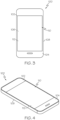
- FIGS. 3 and 4 show a consumer electronic device 100 including a housing 102 having front 104, back 106, and side surfaces 108; electrical components (not shown) that are at least partially inside or entirely within the housing and including at least a controller, a memory, and a display 110 at or adjacent to the front surface of the housing; and a cover substrate 112 at or over the front surface of the housing such that it is over the display.
- housing 102 such as the back 106, may include any of the colored glass articles disclosed herein.
- Table 1 shows batch compositions utilized to form example colored glass articles 1-32 (in terms of mol%).
- Table 2 shows the dielectric constant (calculated) and dielectric constant (as measured at 10 GHz) for select examples from Table 1 at the indicated thickness.
- the dielectric constant was calculated according to the following formula: 3.802946 + 0.01747 ⁇ B 2 O 3 + 0.058769 ⁇ Al 2 O 3 + 0.080876*LizO + 0.148433 ⁇ Na 2 O + 0.153264 ⁇ K 2 O + 0.045179*MgO + 0.080113*CaO.
- Table 2 also shows the CIELAB coordinates for select samples from Table 1.
- Table 3 shows the fracture toughness (Kic) for select examples from Table 1 and a comparative example of a non-colored glass article comprising 58.5 mol% SiOz, 17.8 mol% Al 2 O 3 , 6.0 mol% B 2 O 3 , 10.7 mol% LizO, 1.7 mol% Na 2 O, 0.2 mol% KzO, 4.5 mol% MgO, and 0.6 mol% CaO.
- the fracture toughness was measured using the chevron notch short bar (CNSB) method and the dual cantilever beam (DCB) method.
- Table 4 shows the ion exchange characteristics (CS, DOC, and CT) for select colored glass articles from Table 1 at different thicknesses and ion exchange conditions (temperature, time, and ion exchange bath compositions).
- Table 4 Example Thickness (mm) Temp (°C) Time (hrs.) KNO 3 (wt%) NaNO 3 (wt%) LiNO 3 (wt%) CS (MPa) DOC ( ⁇ m) CT (MPa) 23 0.6 440 6.5 79.2 19.4 1.4 599 5.62 104.67 24 0.6 430 4 79 19.4 1.6 633 6.02 129.51 25 0.6 430 4 79 19.4 1.6 661 5.03 124.41 26 0.6 430 4 79 19.4 1.6 700 3.83 119.67 27 0.6 430 4 79 19.4 1.6 684 3.97 117.14 27 0.6 430 8 79 19.4 1.6 615 4.79 131.67 27 0.6 430 16 79 19.4 1.6 559 6.82 97.64
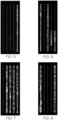
- example colored glass article 8 having a thickness of 0.6 mm and strengthened in an ion-exchange bath of 89.3 wt% KNO 3 , 10 wt% NaNO 3 , and 0.7 wt% LiNO 3 at 400 °C for 9 hours, was subjected to Knoop Scratch Threshold testing with a load of 5N as shown in FIGS. 5 and 6 and a load of 8N as shown in FIGS. 7 and 8 .
- the Knoop Scratch Threshold testing was completed using a Bruker UMT (universal mechanical tester) with a knoop geometry diamond tip from Gilmore Diamonds.
- the tip was loaded into the material at a rate of 0.14 N/s to the desired load of 5N or 8N, at which point the tip was dragged laterally through the material at a rate of 9.34 mm/min. From there, the diamond tip was unloaded at a rate of 0.14 N/s.
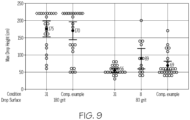
- FIG. 9 the results of an incremental face drop on sandpaper (i.e., a "drop test") for two different sandpaper conditions (180 grit and 80 grit) are shown for Examples 8 and 31 and a comparative example of a non-colored glass article comprising 58.5 mol% SiOz, 17.8 mol% Al 2 O 3 , 6.0 mol% B 2 O 3 , 10.7 mol% LizO, 1.7 mol% Na 2 O, 0.2 mol%
- Example 31 was ion exchanged in a molten salt batch comprising 89.3 wt% KNO 3 , 10 wt% NaNO 3 , and 0.7 wt% LiNO 3 at 440°C for 9 hours.
- Example 8 was ion exchanged in a molten salt batch comprising 79 wt% KNO 3 , 19.9 wt% NaNO 3 , and 1.6 wt% LiNO 3 at 400°C for 5 hours.
- the comparative example was ion exchanged in a molten salt batch comprising 90.3 wt% KNO 3 , 9 wt% NaNO 3 , and 0.7 wt% LiNO 3 at 450°C for 5 hours.
- FIG. 9 The circles in FIG. 9 indicate at what height the sample fractured.
- the diamonds represent samples that were dropped incrementally all the way to 220 cm and did not fracture.
- Examples 8 and 31 colored glass articles, exhibited similar drop performance as compared to a comparative example of a non-colored glass article.
- Example 8 the results of four point break testing after damage with sandpaper (i.e., a "slapper test") for three different sandpaper conditions (1000 grit, 180 grit, and 80 grit) are shown for Example 8 and a comparative example of a non-colored glass article comprising 58.5 mol% SiOz, 17.8 mol% Al 2 O 3 , 6.0 mol% B 2 O 3 , 10.7 mol% LizO, 1.7 mol% NazO, 0.2 mol% K 2 O, 4.5 mol% MgO, and 0.6 mol% CaO.
- Example 8 For the slapper test, samples of Example 8 and the comparative example were loaded onto a puck and slapped onto sandpaper having the identified grit using a particular force. The samples were not fractured, but were damaged after the sandpaper impact. The sample was then loaded into 4 point bending and the applied stress was incrementally increased until the sample broke. The applied stress at fracture is shown in FIG. 10 .
- Example 8 Prior to performing the slapper test, Example 8 was ion exchanged in a molten salt batch comprising 79 wt% KNO 3 , 19.9 wt% NaNO 3 , and 1.6 wt% LiNO 3 at 400°C for 5 hours.
- the comparative example was ion exchanged in a molten salt batch comprising 90.3 wt% KNO 3 , 9 wt% NaNO 3 , and 0.7 wt% LiNO 3 at 450°C for 5 hours.
- a colored glass article exhibited similar slapper test results as compared to a comparative example of a non-colored glass article.
Landscapes
- Chemical & Material Sciences (AREA)
- Life Sciences & Earth Sciences (AREA)
- Engineering & Computer Science (AREA)
- Chemical Kinetics & Catalysis (AREA)
- General Chemical & Material Sciences (AREA)
- Geochemistry & Mineralogy (AREA)
- Materials Engineering (AREA)
- Organic Chemistry (AREA)
- Glass Compositions (AREA)
- Surface Treatment Of Glass (AREA)
Claims (15)
- Gefärbter Glasartikel, umfassend:mehr als oder gleich 50 Mol-% und weniger als oder gleich 70 Mol-% SiO2;mehr als oder gleich 10 Mol-% und weniger als oder gleich 20 Mol-% Al2O3;mehr als oder gleich 1 Mol-% und weniger als oder gleich 10 Mol-% B2O3;mehr als oder gleich 7 Mol-% und weniger als oder gleich 14 Mol-% Li2O;mehr als 0 Mol-% und weniger als oder gleich 8 Mol-% Na2O;mehr als 0 Mol-% und weniger als oder gleich 1 Mol-% K2O;mehr als oder gleich 0 Mol-% und weniger als oder gleich 7 Mol-% CaO;mehr als oder gleich 0 Mol-% und weniger als oder gleich 8 Mol-% MgO; undmehr als oder gleich 0 Mol-% und weniger als oder gleich 8 Mol-% ZnO,wobei R2O + R'O weniger als oder gleich 25 Mol-% ist, wobei R2O die Summe aus Li2O, Na2O und K2O ist und R'O die Summe aus CaO, MgO und ZnO ist;wobei zumindest eines des Folgenden gilt:NiO + Co3O4 + Cr2O3 + CuO ist mehr als oder gleich 0,001 Mol-%;CeO2 ist mehr als oder gleich 0,1 Mol-%; undTiO2 ist mehr als oder gleich 0,1 Mol-%;wobei NiO + Co3O4 + Cr2O3 + CuO + CeO2 + TiO2 mehr als oder gleich 0,001 Mol-% und weniger als oder gleich 10 Mol-% ist;wobei 3,802946 + 0,01747∗B2O3 + 0,058769∗Al2O3 + 0,080876∗Li2O + 0,148433∗Na2O + 0,153264∗K2O + 0,045179*MgO + 0,080113*CaO weniger als oder gleich 6,8 und mehr als oder gleich 5,7 ist;wobei R2O - Al2O3 mehr als oder gleich -8 Mol-% und weniger als oder gleich 4 Mol-% ist;wobei der gefärbte Glasartikel eine KIC-Bruchzähigkeit wie gemessen durch ein Chevron-Kerb-Kurzstabverfahren von mehr als oder gleich 0,7 MPa·m1/2 aufweist;wobei der gefärbte Glasartikel eine Transmissionsfarbkoordinate in dem CIELAB-Farbraum wie gemessen bei einer Artikeldicke von 1,33 mm unter F2-Beleuchtung und einem Standardbetrachterwinkel von 10° von L* mehr als oder gleich 65 und weniger als oder gleich 98, a* mehr als oder gleich -20 und weniger als oder gleich 10 und b* mehr als oder gleich -15 und weniger als oder gleich 15 aufweist;wobei der gefärbte Glasartikel ionenausgetauscht ist und eine Oberflächendruckspannung mehr als oder gleich 300 MPa und eine maximale zentrale Spannung mehr als oder gleich 40 MPa aufweist.
- Gefärbter Glasartikel nach Anspruch 1,wobei NiO + Co3O4 + Cr2O3 + CuO mehr als oder gleich 0,001 Mol-% und weniger als oder gleich 3 Mol-% ist;wobei CeO2 mehr als oder gleich 0,1 Mol-% und weniger als oder gleich 2 Mol-% ist; oderwobei TiO2 mehr als oder gleich 0,1 Mol-% und weniger als oder gleich 2 Mol-% ist.
- Gefärbter Glasartikel nach Anspruch 1 oder Anspruch 2,wobei R2O + R'O mehr als oder gleich 7 Mol-% und weniger als oder gleich 25 Mol-% ist;wobei R2O mehr als oder gleich 7 Mol-% und weniger als oder gleich 25 Mol-% ist; und/oderwobei R'O mehr als oder gleich 0 Mol-% und weniger als oder gleich 12 Mol-% ist.
- Gefärbter Glasartikel nach einem der Ansprüche 1 bis 3,wobei der gefärbte Glasartikel mehr als oder gleich 7,5 Mol-% und weniger als oder gleich 13,5 Mol-% Li2O umfasst;wobei der gefärbte Glasartikel mehr als oder gleich 0,1 Mol-% und weniger als oder gleich 7 Mol-% Na2O umfasst;wobei der gefärbte Glasartikel mehr als oder gleich 0,1 Mol-% und weniger als oder gleich 0,7 Mol-% K2O umfasst;wobei der gefärbte Glasartikel mehr als oder gleich 0,25 Mol-% und weniger als oder gleich 6,5 Mol-% CaO umfasst;wobei der gefärbte Glasartikel mehr als oder gleich 0,25 Mol-% und weniger als oder gleich 7 Mol-% MgO umfasst; und/oderwobei der gefärbte Glasartikel mehr als oder gleich 0,5 Mol-% und weniger als oder gleich 7 Mol-% ZnO umfasst.
- Gefärbter Glasartikel nach einem der Ansprüche 1 bis 4, wobei der gefärbte Glasartikel mehr als oder gleich 0,01 Mol-% und weniger als oder gleich 1 Mol-% Fe2O3 umfasst; oder
wobei die Glaszusammensetzung mehr als oder gleich 0,001 Mol-% und weniger als oder gleich 0,5 Mol-% Fe2O3 umfasst. - Gefärbter Glasartikel nach einem der Ansprüche 1 bis 5,wobei der gefärbte Glasartikel mehr als oder gleich bis mehr als oder gleich 0,01 Mol-% und weniger als oder gleich 1 Mol-% SnO2 umfasst;wobei der gefärbte Glasartikel mehr als oder gleich 12 Mol-% und weniger als oder gleich 17,5 Mol-% Al2O3 umfasst;wobei der gefärbte Glasartikel mehr als oder gleich 2 Mol-% und weniger als oder gleich 9 Mol-% B2O3 umfasst;wobei der gefärbte Glasartikel mehr als oder gleich 12 Mol-% und weniger als oder gleich 18 Mol-% Al2O3 umfasst; und/oderwobei der gefärbte Glasartikel mehr als oder gleich 50 Mol-% und weniger als oder gleich 67 Mol-% SiO2 umfasst.
- Gefärbter Glasartikel nach einem der Ansprüche 1 bis 6, wobei der gefärbte Glasartikel eine Dielektrizitätskonstante Dk bei 10 GHz von weniger als oder gleich 6,8 aufweist.
- Gefärbter Glasartikel nach einem der Ansprüche 1 bis 7, wobei der gefärbte Glasartikel eine Dicke von mehr als oder gleich 250 µm und weniger als oder gleich 6 mm aufweist.
- Gefärbter Glasartikel nach einem der Ansprüche 1 bis 8, wobei der ionenausgetauschte gefärbte Glasartikel eine Kompressionstiefe von 3 µm oder mehr aufweist.
- Gefärbter Glasartikel nach einem der Ansprüche 1 bis 9, wobei der ionenausgetauschte gefärbte Glasartikel eine Dicke "t" und eine Kompressionstiefe von mehr als oder gleich 0,15 t aufweist.
- Elektronische Verbrauchervorrichtung, umfassend:ein Gehäuse, das eine vordere Oberfläche, eine hintere Oberfläche und seitliche Oberflächen aufweist; undelektrische Komponenten, die zumindest teilweise innerhalb des Gehäuses bereitgestellt sind, wobei die elektrischen Komponenten zumindest eine Steuerung, einen Speicher und eine Anzeige beinhalten, wobei die Anzeige an oder benachbart zu der vorderen Oberfläche des Gehäuses bereitgestellt ist;wobei das Gehäuse den gefärbten Glasartikel nach einem der Ansprüche 1-10 umfasst.
- Verfahren zum Bilden eines gefärbten Glasartikels, wobei das Verfahren Folgendes umfasst:
Wärmebehandeln einer Glaszusammensetzung, um den gefärbten Glasartikel zu bilden, wobei die Glaszusammensetzung Folgendes umfasst:mehr als oder gleich 50 Mol-% und weniger als oder gleich 70 Mol-% SiO2;mehr als oder gleich 10 Mol-% und weniger als oder gleich 20 Mol-% Al2O3;mehr als oder gleich 1 Mol-% und weniger als oder gleich 10 Mol-% B2O3;mehr als oder gleich 7 Mol-% und weniger als oder gleich 14 Mol-% Li2O;mehr als 0 Mol-% und weniger als oder gleich 8 Mol-% Na2O;mehr als 0 Mol-% und weniger als oder gleich 1 Mol-% K2O;mehr als oder gleich 0 Mol-% und weniger als oder gleich 7 Mol-% CaO;mehr als oder gleich 0 Mol-% und weniger als oder gleich 8 Mol-% MgO; undmehr als oder gleich 0 Mol-% und weniger als oder gleich 8 Mol-% ZnO,wobei R2O + R'O weniger als oder gleich 25 Mol-% ist, wobei R2O die Summe aus Li2O, Na2O und K2O ist und R'O die Summe aus CaO, MgO und ZnO ist; undwobei zumindest eines des Folgenden gilt:NiO + Co3O4 + Cr2O3 + CuO ist mehr als oder gleich 0,001 Mol-%;CeO2 ist mehr als oder gleich 0,1 Mol-%; undTiO2 ist mehr als oder gleich 0,1 Mol-%;wobei NiO + Co3O4 + Cr2O3 + CuO + CeO2 + TiO2 mehr als oder gleich 0,001 Mol-% und weniger als oder gleich 10 Mol-% ist;wobei 3,802946 + 0,01747∗B2O3 + 0,058769∗Al2O3 + 0,080876∗Li2O + 0,148433∗Na2O + 0,153264∗K2O + 0,045179*MgO + 0,080113*CaO weniger als oder gleich 6,8 und mehr als oder gleich 5,7 ist;wobei R2O - Al2O3 mehr als oder gleich -8 Mol-% und weniger als oder gleich 4 Mol-% ist;wobei der gefärbte Glasartikel eine KIC-Bruchzähigkeit wie gemessen durch ein Chevron-Kerb-Kurzstabverfahren von mehr als oder gleich 0,7 MPa·m1/2 aufweist;wobei der gefärbte Glasartikel eine Transmissionsfarbkoordinate in dem CIELAB-Farbraum wie gemessen bei einer Artikeldicke von 1,33 mm unter F2-Beleuchtung und einem Standardbetrachterwinkel von 10° von L* mehr als oder gleich 65 und weniger als oder gleich 98, a* mehr als oder gleich -20 und weniger als oder gleich 10 und b* mehr als oder gleich -15 und weniger als oder gleich 15 aufweist;wobei der gefärbte Glasartikel ionenausgetauscht ist und eine Oberflächendruckspannung mehr als oder gleich 300 MPa und eine maximale zentrale Spannung mehr als oder gleich 40 MPa aufweist. - Verfahren nach Anspruch 12, wobei der Wärmebehandlungsschritt Folgendes umfassen kann:(i) Erwärmen der Glaszusammensetzung bei einer Rate von 1-100 °C/min auf Glashomogenisierungstemperatur;(ii) Halten der Glaszusammensetzung auf der Glashomogenisierungstemperatur für eine Zeit von mehr als oder gleich 0,25 Stunden und weniger als oder gleich 40 Stunden, um den gefärbten Glasartikel zu produzieren; und(iii) Abkühlen des gebildeten gefärbten Glasartikels auf Raumtemperatur.
- Verfahren nach Anspruch 12 oder Anspruch 13, ferner umfassend Härten des gefärbten Glasartikels in einem Ionenaustauschbad bei einer Temperatur von mehr als oder gleich 350 °C bis weniger als oder gleich 500 °C für einen Zeitraum von mehr als oder gleich 2 Stunden bis weniger als oder gleich 12 Stunden, um einen ionenausgetauschten Glaskeramikartikel zu bilden.
- Verfahren nach Anspruch 14, wobei das Ionenaustauschbad KNO3 umfasst und wobei ferner optional das Ionenaustauschbad NaNO3 umfasst.
Priority Applications (1)
| Application Number | Priority Date | Filing Date | Title |
|---|---|---|---|
| EP23184758.3A EP4230593A3 (de) | 2021-06-18 | 2022-06-17 | Gefärbte glasartikel mit verbesserter mechanischer beständigkeit |
Applications Claiming Priority (5)
| Application Number | Priority Date | Filing Date | Title |
|---|---|---|---|
| US202163212179P | 2021-06-18 | 2021-06-18 | |
| US202263318553P | 2022-03-10 | 2022-03-10 | |
| US202263347095P | 2022-05-31 | 2022-05-31 | |
| US202263347201P | 2022-05-31 | 2022-05-31 | |
| PCT/US2022/033913 WO2022266404A1 (en) | 2021-06-18 | 2022-06-17 | Colored glass articles having improved mechanical durability |
Related Child Applications (2)
| Application Number | Title | Priority Date | Filing Date |
|---|---|---|---|
| EP23184758.3A Division EP4230593A3 (de) | 2021-06-18 | 2022-06-17 | Gefärbte glasartikel mit verbesserter mechanischer beständigkeit |
| EP23184758.3A Division-Into EP4230593A3 (de) | 2021-06-18 | 2022-06-17 | Gefärbte glasartikel mit verbesserter mechanischer beständigkeit |
Publications (3)
| Publication Number | Publication Date |
|---|---|
| EP4164992A1 EP4164992A1 (de) | 2023-04-19 |
| EP4164992B1 true EP4164992B1 (de) | 2023-08-23 |
| EP4164992C0 EP4164992C0 (de) | 2023-08-23 |
Family
ID=82557923
Family Applications (2)
| Application Number | Title | Priority Date | Filing Date |
|---|---|---|---|
| EP22741911.6A Active EP4164992B1 (de) | 2021-06-18 | 2022-06-17 | Gefärbte glasartikel mit verbesserter mechanischer beständigkeit |
| EP23184758.3A Pending EP4230593A3 (de) | 2021-06-18 | 2022-06-17 | Gefärbte glasartikel mit verbesserter mechanischer beständigkeit |
Family Applications After (1)
| Application Number | Title | Priority Date | Filing Date |
|---|---|---|---|
| EP23184758.3A Pending EP4230593A3 (de) | 2021-06-18 | 2022-06-17 | Gefärbte glasartikel mit verbesserter mechanischer beständigkeit |
Country Status (7)
| Country | Link |
|---|---|
| US (4) | US11667562B2 (de) |
| EP (2) | EP4164992B1 (de) |
| JP (1) | JP7472326B2 (de) |
| KR (1) | KR20240023516A (de) |
| CN (2) | CN116854366A (de) |
| TW (1) | TW202337863A (de) |
| WO (1) | WO2022266404A1 (de) |
Families Citing this family (8)
| Publication number | Priority date | Publication date | Assignee | Title |
|---|---|---|---|---|
| US11667562B2 (en) * | 2021-06-18 | 2023-06-06 | Corning Incorporated | Colored glass articles having improved mechanical durability |
| US12378152B2 (en) | 2021-06-18 | 2025-08-05 | Corning Incorporated | Colored glass articles having improved mechanical durability |
| US12304858B2 (en) | 2021-06-18 | 2025-05-20 | Corning Incorporated | Colored glass articles having improved mechanical durability |
| US12054422B2 (en) | 2021-06-18 | 2024-08-06 | Corning Incorporated | Colored glass articles having improved mechanical durability |
| US12454479B2 (en) | 2021-06-18 | 2025-10-28 | Corning Incorporated | Gold containing silicate glass |
| US12240782B2 (en) | 2022-05-31 | 2025-03-04 | Corning Incorporated | Ion exchangeable yellow glass articles |
| WO2024129481A1 (en) * | 2022-12-16 | 2024-06-20 | Corning Incorporated | Glass articles, natively colored glass housings, and methods of making the same |
| WO2025054051A1 (en) | 2023-09-08 | 2025-03-13 | Corning Incorporated | Glass articles, natively colored glass housings, and methods of making the same |
Family Cites Families (128)
| Publication number | Priority date | Publication date | Assignee | Title |
|---|---|---|---|---|
| US2418605A (en) | 1944-12-15 | 1947-04-08 | Polaroid Corp | Filter transparent to infrared radiation and opaque to visible light |
| US3788865A (en) | 1964-07-31 | 1974-01-29 | C Babcock | Crystallized glass ceramics and process for forming same |
| DE1496611B1 (de) * | 1964-07-31 | 1972-02-03 | Owens Illinois Inc | Durchsichtige glaskeramik mit niedrigem waermeausdehnungs koeffizienten verfahren zur herstellung eines aus ihr be stehenden gegenstanes ihre verwendung in teleskopspiegeln sowie thermisch kristallisierbares gla |
| US3524737A (en) | 1967-06-01 | 1970-08-18 | Corning Glass Works | Method for thermochemical strengthening of glass articles |
| US3751238A (en) | 1970-02-25 | 1973-08-07 | Corning Glass Works | Method of chemically strengthening a silicate article containing soda |
| US3902881A (en) | 1971-06-04 | 1975-09-02 | Owens Illinois Inc | Method of forming an opalescent article having a colored bulk and at least one surface strata of a different color than the bulk |
| US3778335A (en) | 1971-09-02 | 1973-12-11 | Corning Glass Works | Sodium aluminosilicate glass article strengthened by a surface compressive stress layer |
| US4086089A (en) | 1977-03-17 | 1978-04-25 | Corning Glass Works | Method for producing tri-color screens for television picture tubes |
| US4102664A (en) | 1977-05-18 | 1978-07-25 | Corning Glass Works | Method for making glass articles with defect-free surfaces |
| JPS5545501A (en) | 1978-09-25 | 1980-03-31 | Hitachi Ltd | Soldering tool |
| US4240836A (en) | 1979-11-19 | 1980-12-23 | Corning Glass Works | Colored photochromic glasses and method |
| US4251278A (en) | 1980-01-21 | 1981-02-17 | Corning Glass Works | Photochromic glasses which darken to a brown hue |
| US4298389A (en) | 1980-02-20 | 1981-11-03 | Corning Glass Works | High transmission glasses for solar applications |
| JPS60145930A (ja) | 1984-01-09 | 1985-08-01 | Toshiba Glass Co Ltd | ガラスフイルタ−およびその製造法 |
| JPS63166736A (ja) | 1986-07-12 | 1988-07-09 | Sumita Kogaku Glass Seizosho:Kk | 低膨張感光性結晶化ガラス |
| US4814297A (en) | 1987-04-01 | 1989-03-21 | Corning Glass Works | Strengthened glass article and method |
| US4786305A (en) | 1987-08-03 | 1988-11-22 | Corning Glass Works | Heat treatment of flat photochromic sheet glass |
| FR2701020B1 (fr) | 1993-02-01 | 1995-04-21 | Corning Inc | Verres photochromiques qui s'assombrissent en prenant une teinte rose. |
| WO1998058884A1 (en) | 1997-06-23 | 1998-12-30 | Corning Incorporated | Composition for optical waveguide article and method for making continuous clad filament |
| US6376403B1 (en) | 1998-04-17 | 2002-04-23 | Nippon Sheet Glass Co., Ltd. | Glass composition and process for producing the same |
| JP4086210B2 (ja) | 1998-04-17 | 2008-05-14 | Hoya株式会社 | 情報記録媒体用基板 |
| JPH11302032A (ja) | 1998-04-17 | 1999-11-02 | Nippon Sheet Glass Co Ltd | ガラス組成物およびそれを用いた情報記録媒体用基板 |
| US6333286B1 (en) | 1998-09-11 | 2001-12-25 | Nippon Sheet Glass Co., Ltd. | Glass composition and substrate for information recording media comprising the same |
| JP4497591B2 (ja) | 1998-09-11 | 2010-07-07 | Hoya株式会社 | ガラス組成物、それを用いた情報記録媒体用基板および情報記録媒体 |
| JP3959588B2 (ja) | 1999-05-13 | 2007-08-15 | 日本板硝子株式会社 | 情報記録媒体用ガラス基板、情報記録媒体用ガラス基板の製造方法及び情報記録媒体 |
| AU2473601A (en) | 2000-01-05 | 2001-07-16 | Schott Glass Technologies, Inc. | Glass substrates for magnetic media and magnetic media based on such glass substrates |
| DE10141666A1 (de) | 2001-08-25 | 2003-03-13 | Schott Glas | Zinkhaltiges Alkalialuminosilicatglas und seine Verwendungen |
| JP2003306348A (ja) | 2002-04-16 | 2003-10-28 | Central Glass Co Ltd | リサイクル可能な着色ガラスの製造方法 |
| US6905219B2 (en) | 2002-05-09 | 2005-06-14 | 3M Innovative Properties Company | Display device |
| JP2004002057A (ja) | 2002-05-29 | 2004-01-08 | Central Glass Co Ltd | ガラスの着色方法 |
| JP4192232B2 (ja) | 2002-12-27 | 2008-12-10 | 独立行政法人産業技術総合研究所 | 着色ガラスの製造方法 |
| JP4303999B2 (ja) | 2003-05-15 | 2009-07-29 | 京セラ株式会社 | 内部にカラーパターンを有するガラスを製造する方法及びガラス体 |
| JP4726399B2 (ja) | 2003-05-29 | 2011-07-20 | コニカミノルタオプト株式会社 | ガラス基板 |
| DE102004022629B9 (de) | 2004-05-07 | 2008-09-04 | Schott Ag | Gefloatetes Lithium-Aluminosilikat-Flachglas mit hoher Temperaturbeständigkeit, das chemisch und thermisch vorspannbar ist und dessen Verwendung |
| US20060211563A1 (en) | 2005-03-21 | 2006-09-21 | Mehran Arbab | Metal nanostructured colorants for high redox glass composition |
| DE102006029073B4 (de) | 2005-07-06 | 2009-07-16 | Schott Ag | Verfahren zum Durchtrennen eines Flachglases unter Verwendung eines Lasertrennstrahls und alkalifreies Flachglas mit besonderer Eignung hierfür |
| WO2007112426A2 (en) | 2006-03-28 | 2007-10-04 | Ppg Industries Ohio, Inc. | Low solar absorbing blue glass, solar reflecting coated blue glass, and insulating unit having a low solar heat gain |
| US8127571B2 (en) | 2006-10-27 | 2012-03-06 | Eurokera S.N.C. | Method of refining a lithium aluminosilicate glass and glass-ceramic obtained |
| US7666511B2 (en) | 2007-05-18 | 2010-02-23 | Corning Incorporated | Down-drawable, chemically strengthened glass for cover plate |
| US8232218B2 (en) | 2008-02-29 | 2012-07-31 | Corning Incorporated | Ion exchanged, fast cooled glasses |
| CN101977860B (zh) | 2008-03-19 | 2013-08-21 | Hoya株式会社 | 磁记录介质基板用玻璃、磁记录介质基板、磁记录介质和它们的制造方法 |
| JP5670901B2 (ja) | 2008-08-08 | 2015-02-18 | コーニング インコーポレイテッド | 強化ガラス物品およびその製造方法 |
| JP2010168270A (ja) | 2008-12-26 | 2010-08-05 | Hoya Corp | ガラス基材及びその製造方法 |
| JP5699434B2 (ja) | 2009-04-02 | 2015-04-08 | 旭硝子株式会社 | 情報記録媒体基板用ガラス、情報記録媒体用ガラス基板および磁気ディスク |
| JP5613164B2 (ja) | 2009-09-28 | 2014-10-22 | Hoya株式会社 | 情報記録媒体用ガラス基板及び情報記録媒体 |
| WO2011093284A1 (ja) | 2010-01-26 | 2011-08-04 | 旭硝子株式会社 | 着色ガラス板 |
| CN102167507B (zh) | 2010-02-26 | 2016-03-16 | 肖特玻璃科技(苏州)有限公司 | 用于3d紧密模压的薄锂铝硅玻璃 |
| DE102010009585B4 (de) * | 2010-02-26 | 2012-04-19 | Schott Ag | Lithium-Aluminosilicatglas mit hohen E-Modul, Verfahren zu dessen Herstellung und Verwendung |
| US9595960B2 (en) | 2010-05-04 | 2017-03-14 | Whirlpool Corporation | Dead-front user interface |
| EP2650264B1 (de) | 2010-05-31 | 2018-06-27 | Nippon Electric Glass Co., Ltd. | Herstellungsverfahren für ein auf li2o-al2o3-sio2 basierendes, kristallisiertes glas |
| JP6202775B2 (ja) | 2010-08-11 | 2017-09-27 | 日本電気硝子株式会社 | Li2O−Al2O3−SiO2系結晶化ガラス |
| DE102010050275A1 (de) | 2010-11-02 | 2012-05-03 | Degudent Gmbh | Lithiumsilikat-Gläser oder -Glaskeramiken, Verfahren zu deren Herstellung sowie deren Verwendung |
| US8883663B2 (en) | 2010-11-30 | 2014-11-11 | Corning Incorporated | Fusion formed and ion exchanged glass-ceramics |
| TW201245080A (en) | 2011-03-17 | 2012-11-16 | Asahi Glass Co Ltd | Glass for chemical strengthening |
| TW201242923A (en) | 2011-03-17 | 2012-11-01 | Asahi Glass Co Ltd | Colored glass casing |
| GB201117058D0 (en) | 2011-10-04 | 2011-11-16 | Qinetiq Ltd | Infrared transparent film |
| US20130136909A1 (en) | 2011-11-30 | 2013-05-30 | John Christopher Mauro | Colored alkali aluminosilicate glass articles |
| JPWO2013099994A1 (ja) | 2011-12-27 | 2015-05-11 | 旭硝子株式会社 | 静電容量式タッチセンサ用表面ガラス |
| US8773848B2 (en) | 2012-01-25 | 2014-07-08 | Apple Inc. | Fused glass device housings |
| US9701570B2 (en) | 2012-02-29 | 2017-07-11 | Corning Incorporated | High CTE opal glass compositions and glass articles comprising the same |
| US9156725B2 (en) | 2012-05-30 | 2015-10-13 | Corning Incorporated | Down-drawable chemically strengthened glass for information storage devices |
| WO2014035791A2 (en) | 2012-08-28 | 2014-03-06 | Corning Incorporated | Colored and opaque glass-ceramic(s), associated colorable and ceramable glass(es), and associated process(es) |
| CN104619664A (zh) | 2012-09-14 | 2015-05-13 | 旭硝子株式会社 | 化学强化用玻璃、化学强化玻璃以及化学强化用玻璃的制造方法 |
| JP5234213B1 (ja) | 2012-09-14 | 2013-07-10 | 旭硝子株式会社 | 化学強化用ガラス及びその製造方法、並びに化学強化ガラス及びその製造方法 |
| JP6060977B2 (ja) | 2012-09-14 | 2017-01-18 | 旭硝子株式会社 | ガラスおよび化学強化ガラス |
| US9403716B2 (en) | 2012-09-27 | 2016-08-02 | Corning Incorporated | Glass-ceramic(s); associated formable and/or color-tunable, crystallizable glass(es); and associated process(es) |
| FR2997391B1 (fr) | 2012-10-30 | 2014-11-21 | Eurokera | Plaque en verre pour dispositif de cuisson par induction |
| EP2956419A2 (de) | 2013-01-31 | 2015-12-23 | Corning Incorporated | Übergangsmetallhaltige farbige gläser mit ionenaustauschfunktion |
| US9440878B2 (en) | 2013-02-28 | 2016-09-13 | Corning Incorporated | Fusion formable lithium aluminosilicate glass ceramic |
| JP6029740B2 (ja) | 2013-03-05 | 2016-11-24 | Hoya株式会社 | 情報記録媒体用ガラス基板および情報記録媒体 |
| EP3038989B1 (de) | 2013-08-30 | 2018-07-25 | Corning Incorporated | Ionenaustauschbares glas, glaskeramik und verfahren zur herstellung davon |
| US9878940B2 (en) | 2014-02-21 | 2018-01-30 | Corning Incorporated | Low crystallinity glass-ceramics |
| US10656454B2 (en) | 2014-09-08 | 2020-05-19 | Corning Incorporated | Anti-glare substrates with low sparkle, DOI and transmission haze |
| TWI695821B (zh) | 2014-09-25 | 2020-06-11 | 美商康寧公司 | 玻璃製品 |
| JPWO2016060202A1 (ja) | 2014-10-17 | 2017-08-31 | 旭硝子株式会社 | カバー部材 |
| EP3230221B1 (de) | 2014-12-11 | 2023-10-11 | Corning Incorporated | Röntgeninduzierte verfärbung bei gegenständen aus glas oder glaskeramik |
| US9944551B2 (en) | 2015-05-07 | 2018-04-17 | Ppg Industries Ohio, Inc. | Glass compositions, fiberizable glass compositions, and glass fibers made therefrom |
| US11472730B2 (en) | 2015-06-02 | 2022-10-18 | Corning Incorporated | Laminated glass article with tinted layer |
| WO2016202689A1 (en) | 2015-06-18 | 2016-12-22 | Agc Glass Europe | Glass sheet having high transmission of infrared radiation |
| CN107787308B (zh) | 2015-06-18 | 2021-04-27 | 旭硝子欧洲玻璃公司 | 具有高红外线辐射透射率的玻璃片 |
| TWI739442B (zh) * | 2015-12-11 | 2021-09-11 | 美商康寧公司 | 具有金屬氧化物濃度梯度之可熔融成形的玻璃基物件 |
| FR3045596B1 (fr) | 2015-12-17 | 2018-01-19 | Saint-Gobain Glass France | Verre mince colore renforce chimiquement |
| US9864116B2 (en) | 2015-12-28 | 2018-01-09 | Apple Inc. | Electronic devices having infrared-transparent window coatings |
| WO2017120424A1 (en) * | 2016-01-08 | 2017-07-13 | Corning Incorporated | Chemically strengthenable lithium aluminosilicate glasses with inherent damage resistance |
| WO2017126605A1 (ja) | 2016-01-21 | 2017-07-27 | 旭硝子株式会社 | 化学強化ガラス及び化学強化ガラスの製造方法 |
| EP3904302A1 (de) * | 2016-04-08 | 2021-11-03 | Corning Incorporated | Glasbasierte artikel mit einem metalloxidkonzentrationsgradienten |
| US11453612B2 (en) * | 2016-04-20 | 2022-09-27 | Corning Incorporated | Glass-based articles including a metal oxide concentration gradient |
| WO2017185354A1 (en) | 2016-04-29 | 2017-11-02 | Schott Glass Technologies (Suzhou) Co. Ltd. | High strength ultrathin glass and the making method therefore |
| US11198639B2 (en) | 2016-06-13 | 2021-12-14 | Corning Incorporated | Multicolored photosensitive glass-based parts and methods of manufacture |
| JP7051720B2 (ja) | 2016-06-28 | 2022-04-11 | コーニング インコーポレイテッド | 装飾用途とディスプレイ用カバー用途のための湾曲成形プラスチック表面への薄い強化ガラスの積層 |
| EP3272717A1 (de) | 2016-07-20 | 2018-01-24 | AGC Glass Europe | Glasscheibe mit einer hohen ir - und sichtbaren transmission mit einer angenehmen leichten farbe bis zu einer neutralen farbe |
| WO2018074335A1 (ja) | 2016-10-18 | 2018-04-26 | 旭硝子株式会社 | 化学強化用ガラス、化学強化ガラスおよび化学強化ガラスの製造方法 |
| RU2645687C1 (ru) | 2016-12-29 | 2018-02-27 | Федеральное государственное бюджетное образовательное учреждение высшего образования - Российский химико-технологический университет имени Д.И. Менделеева (РХТУ им. Д.И. Менделеева) | Прозрачный ситалл и способ его получения |
| FR3067346B1 (fr) | 2017-06-07 | 2023-02-10 | Eurokera | Vitroceramiques de quartz-beta a teneur elevee en zinc |
| WO2019017404A1 (ja) | 2017-07-18 | 2019-01-24 | Agc株式会社 | 強化ガラス |
| CN110958991B (zh) | 2017-07-18 | 2022-06-17 | Agc株式会社 | 强化玻璃 |
| CO2017013094A1 (es) | 2017-09-30 | 2018-03-28 | Agp America Sa | Artículo de vidrio con frita de vidrio y método de formación de fritas de vidrio |
| US10246371B1 (en) | 2017-12-13 | 2019-04-02 | Corning Incorporated | Articles including glass and/or glass-ceramics and methods of making the same |
| CN118702410B (zh) | 2017-10-23 | 2025-11-21 | 康宁股份有限公司 | 玻璃陶瓷和玻璃 |
| CN107935410A (zh) | 2017-11-03 | 2018-04-20 | 廖仲明 | 一种玻璃本体着色方法 |
| US11492286B2 (en) * | 2017-11-30 | 2022-11-08 | Corning Incorporated | Colored glasses with improved tempering capabilities |
| US11053159B2 (en) | 2017-12-13 | 2021-07-06 | Corning Incorporated | Polychromatic articles and methods of making the same |
| US10829408B2 (en) | 2017-12-13 | 2020-11-10 | Corning Incorporated | Glass-ceramics and methods of making the same |
| DE202018102514U1 (de) | 2017-12-22 | 2018-05-22 | Schott Ag | Glaskeramik mit reduziertem Lithium-Gehalt |
| DE202018102534U1 (de) | 2017-12-22 | 2018-05-15 | Schott Ag | Transparente, eingefärbte Lithiumaluminiumsilikat-Glaskeramik |
| CN108147657B (zh) | 2017-12-29 | 2020-11-03 | 重庆鑫景特种玻璃有限公司 | 一种素玻璃、强化玻璃及制备方法 |
| WO2019191480A1 (en) | 2018-03-29 | 2019-10-03 | Corning Incorporated | Glasses having high fracture toughness |
| CN111954647A (zh) * | 2018-04-04 | 2020-11-17 | Agc株式会社 | 化学强化用玻璃 |
| CN108715510A (zh) | 2018-06-06 | 2018-10-30 | 科立视材料科技有限公司 | 一种玻璃制品表面离子交换着色剂及其着色方法 |
| CN113423670B (zh) * | 2018-12-12 | 2024-04-09 | 康宁股份有限公司 | 可离子交换的含锂铝硅酸盐玻璃 |
| WO2020243123A1 (en) | 2019-05-29 | 2020-12-03 | Corning Incorporated | Colored glass-ceramics having petalite and lithium silicate structures |
| CN110255896A (zh) | 2019-05-31 | 2019-09-20 | 彩虹集团(邵阳)特种玻璃有限公司 | 一种3d成型可着色的离子交换玻璃及其制备方法 |
| CN110216384A (zh) | 2019-06-06 | 2019-09-10 | 重庆两江联创电子有限公司 | 一种玻璃表面纹理的加工方法 |
| CN118047533A (zh) | 2019-07-17 | 2024-05-17 | Agc株式会社 | 玻璃、化学强化玻璃和保护玻璃 |
| CN110615610B (zh) | 2019-10-10 | 2020-09-04 | 清远南玻节能新材料有限公司 | 锂锆质铝硅酸盐玻璃、强化玻璃及其制备方法和显示器件 |
| US11584681B2 (en) * | 2019-11-26 | 2023-02-21 | Corning Incorporated | Ion exchangeable alkali aluminosilicate glass compositions having improved mechanical durability |
| WO2021108310A1 (en) | 2019-11-27 | 2021-06-03 | Corning Incorporated | High fracture toughness glasses with high central tension |
| TWI859360B (zh) | 2019-11-27 | 2024-10-21 | 美商康寧公司 | 的玻璃組成、基板、及製品 |
| EP3845504A1 (de) | 2019-12-30 | 2021-07-07 | Ivoclar Vivadent AG | Verfahren zur herstellung einer mehrfarbigen dentalrestauration |
| US11597674B2 (en) | 2021-06-18 | 2023-03-07 | Corning Incorporated | Colored glass articles having improved mechanical durability |
| US11802072B2 (en) | 2021-06-18 | 2023-10-31 | Corning Incorporated | Gold containing silicate glass |
| US11634354B2 (en) | 2021-06-18 | 2023-04-25 | Corning Incorporated | Colored glass articles having improved mechanical durability |
| US11560329B1 (en) | 2021-10-04 | 2023-01-24 | Corning Incorporated | Colored glass articles having improved mechanical durability |
| US11667562B2 (en) * | 2021-06-18 | 2023-06-06 | Corning Incorporated | Colored glass articles having improved mechanical durability |
| CN113845302A (zh) | 2021-08-05 | 2021-12-28 | 河北光兴半导体技术有限公司 | 玻璃用组合物、铝硅酸盐玻璃及其制备方法和应用、玻璃保护盖片及其应用 |
| US12538437B2 (en) | 2021-08-23 | 2026-01-27 | Apple Inc. | Electronic devices including colored glass-based components |
| DE102021130331A1 (de) | 2021-11-19 | 2023-05-25 | Schott Ag | Scheibenförmiger Glasartikel, Verfahren zu dessen Herstellung und dessen Verwendung |
| US20230174411A1 (en) | 2021-12-06 | 2023-06-08 | Corning Incorporated | Glass compositions for forming colored glass articles and glass articles formed therefrom |
-
2022
- 2022-06-17 US US17/843,096 patent/US11667562B2/en active Active
- 2022-06-17 TW TW111122560A patent/TW202337863A/zh unknown
- 2022-06-17 JP JP2022580076A patent/JP7472326B2/ja active Active
- 2022-06-17 EP EP22741911.6A patent/EP4164992B1/de active Active
- 2022-06-17 CN CN202310783384.8A patent/CN116854366A/zh active Pending
- 2022-06-17 CN CN202280006102.7A patent/CN116249679A/zh active Pending
- 2022-06-17 EP EP23184758.3A patent/EP4230593A3/de active Pending
- 2022-06-17 KR KR1020237043001A patent/KR20240023516A/ko active Pending
- 2022-06-17 WO PCT/US2022/033913 patent/WO2022266404A1/en not_active Ceased
-
2023
- 2023-01-04 US US18/093,090 patent/US11834370B2/en active Active
- 2023-01-24 US US18/100,724 patent/US11655181B1/en active Active
- 2023-11-03 US US18/386,703 patent/US12134581B2/en active Active
Also Published As
| Publication number | Publication date |
|---|---|
| KR20240023516A (ko) | 2024-02-22 |
| CN116854366A (zh) | 2023-10-10 |
| TW202337863A (zh) | 2023-10-01 |
| JP7472326B2 (ja) | 2024-04-22 |
| US12134581B2 (en) | 2024-11-05 |
| CN116249679A (zh) | 2023-06-09 |
| EP4230593A3 (de) | 2023-11-22 |
| EP4230593A2 (de) | 2023-08-23 |
| US20230159374A1 (en) | 2023-05-25 |
| US20220402808A1 (en) | 2022-12-22 |
| US20230192532A1 (en) | 2023-06-22 |
| EP4164992A1 (de) | 2023-04-19 |
| US11667562B2 (en) | 2023-06-06 |
| EP4164992C0 (de) | 2023-08-23 |
| WO2022266404A1 (en) | 2022-12-22 |
| US11655181B1 (en) | 2023-05-23 |
| US11834370B2 (en) | 2023-12-05 |
| US20240059604A1 (en) | 2024-02-22 |
| JP2023543103A (ja) | 2023-10-13 |
Similar Documents
| Publication | Publication Date | Title |
|---|---|---|
| EP4164992B1 (de) | Gefärbte glasartikel mit verbesserter mechanischer beständigkeit | |
| US11820701B2 (en) | Method for achieving a stress profile in a glass | |
| JP7260041B2 (ja) | 化学強化ガラス | |
| EP3717424B1 (de) | Gläser mit niedrigem gehalt an überschüssigem modifizierungsmittel | |
| EP3802449B1 (de) | Brille mit verbesserter fallleistung | |
| EP3468932B1 (de) | Gläser mit verbesserter schlagfestigkeit | |
| EP2474511B1 (de) | Hartglassubstrat und Verfahren zu dessen Herstellung | |
| US12246987B2 (en) | Reinforced glass, and method for producing reinforced glass | |
| EP3071526B1 (de) | Ionenausgetauschtes, schadenresistentes glas | |
| JP6536697B2 (ja) | 化学強化ガラス | |
| EP2762459B1 (de) | Deckglas für eine anzeigevorrichtung und herstellungsverfahren dafür | |
| US11613497B2 (en) | Y2O3-containing glass compositions, substrates, and articles | |
| US12415745B2 (en) | Glass, chemically tempered glass, and method for producing same | |
| CN112368249A (zh) | 具有改进的应力分布的基于玻璃的制品 | |
| EP4298069B1 (de) | Gefärbte glasartikel mit verbesserter mechanischer beständigkeit | |
| EP4692013A2 (de) | Gläser mit hoher bruchzähigkeit | |
| JP2024540112A (ja) | 破壊靱性が高いイオン交換可能なガラス | |
| EP4355702A1 (de) | Gefärbte glasartikel mit verbesserter mechanischer beständigkeit | |
| WO2023235211A1 (en) | Ion exchangeable yellow glass articles | |
| KR20250024764A (ko) | 화학 강화용 유리 및 유리 |
Legal Events
| Date | Code | Title | Description |
|---|---|---|---|
| STAA | Information on the status of an ep patent application or granted ep patent |
Free format text: STATUS: UNKNOWN |
|
| STAA | Information on the status of an ep patent application or granted ep patent |
Free format text: STATUS: THE INTERNATIONAL PUBLICATION HAS BEEN MADE |
|
| GRAP | Despatch of communication of intention to grant a patent |
Free format text: ORIGINAL CODE: EPIDOSNIGR1 |
|
| STAA | Information on the status of an ep patent application or granted ep patent |
Free format text: STATUS: GRANT OF PATENT IS INTENDED |
|
| PUAI | Public reference made under article 153(3) epc to a published international application that has entered the european phase |
Free format text: ORIGINAL CODE: 0009012 |
|
| 17P | Request for examination filed |
Effective date: 20230112 |
|
| AK | Designated contracting states |
Kind code of ref document: A1 Designated state(s): AL AT BE BG CH CY CZ DE DK EE ES FI FR GB GR HR HU IE IS IT LI LT LU LV MC MK MT NL NO PL PT RO RS SE SI SK SM TR |
|
| GRAS | Grant fee paid |
Free format text: ORIGINAL CODE: EPIDOSNIGR3 |
|
| GRAA | (expected) grant |
Free format text: ORIGINAL CODE: 0009210 |
|
| STAA | Information on the status of an ep patent application or granted ep patent |
Free format text: STATUS: THE PATENT HAS BEEN GRANTED |
|
| DAV | Request for validation of the european patent (deleted) | ||
| DAX | Request for extension of the european patent (deleted) | ||
| AK | Designated contracting states |
Kind code of ref document: B1 Designated state(s): AL AT BE BG CH CY CZ DE DK EE ES FI FR GB GR HR HU IE IS IT LI LT LU LV MC MK MT NL NO PL PT RO RS SE SI SK SM TR |
|
| REG | Reference to a national code |
Ref country code: GB Ref legal event code: FG4D |
|
| REG | Reference to a national code |
Ref country code: CH Ref legal event code: EP |
|
| REG | Reference to a national code |
Ref country code: DE Ref legal event code: R096 Ref document number: 602022000384 Country of ref document: DE |
|
| REG | Reference to a national code |
Ref country code: IE Ref legal event code: FG4D |
|
| U01 | Request for unitary effect filed |
Effective date: 20230906 |
|
| U07 | Unitary effect registered |
Designated state(s): AT BE BG DE DK EE FI FR IT LT LU LV MT NL PT SE SI Effective date: 20230913 |
|
| PG25 | Lapsed in a contracting state [announced via postgrant information from national office to epo] |
Ref country code: GR Free format text: LAPSE BECAUSE OF FAILURE TO SUBMIT A TRANSLATION OF THE DESCRIPTION OR TO PAY THE FEE WITHIN THE PRESCRIBED TIME-LIMIT Effective date: 20231124 |
|
| PG25 | Lapsed in a contracting state [announced via postgrant information from national office to epo] |
Ref country code: IS Free format text: LAPSE BECAUSE OF FAILURE TO SUBMIT A TRANSLATION OF THE DESCRIPTION OR TO PAY THE FEE WITHIN THE PRESCRIBED TIME-LIMIT Effective date: 20231223 |
|
| PG25 | Lapsed in a contracting state [announced via postgrant information from national office to epo] |
Ref country code: RS Free format text: LAPSE BECAUSE OF FAILURE TO SUBMIT A TRANSLATION OF THE DESCRIPTION OR TO PAY THE FEE WITHIN THE PRESCRIBED TIME-LIMIT Effective date: 20230823 Ref country code: NO Free format text: LAPSE BECAUSE OF FAILURE TO SUBMIT A TRANSLATION OF THE DESCRIPTION OR TO PAY THE FEE WITHIN THE PRESCRIBED TIME-LIMIT Effective date: 20231123 Ref country code: IS Free format text: LAPSE BECAUSE OF FAILURE TO SUBMIT A TRANSLATION OF THE DESCRIPTION OR TO PAY THE FEE WITHIN THE PRESCRIBED TIME-LIMIT Effective date: 20231223 Ref country code: HR Free format text: LAPSE BECAUSE OF FAILURE TO SUBMIT A TRANSLATION OF THE DESCRIPTION OR TO PAY THE FEE WITHIN THE PRESCRIBED TIME-LIMIT Effective date: 20230823 Ref country code: GR Free format text: LAPSE BECAUSE OF FAILURE TO SUBMIT A TRANSLATION OF THE DESCRIPTION OR TO PAY THE FEE WITHIN THE PRESCRIBED TIME-LIMIT Effective date: 20231124 |
|
| PG25 | Lapsed in a contracting state [announced via postgrant information from national office to epo] |
Ref country code: PL Free format text: LAPSE BECAUSE OF FAILURE TO SUBMIT A TRANSLATION OF THE DESCRIPTION OR TO PAY THE FEE WITHIN THE PRESCRIBED TIME-LIMIT Effective date: 20230823 |
|
| PG25 | Lapsed in a contracting state [announced via postgrant information from national office to epo] |
Ref country code: ES Free format text: LAPSE BECAUSE OF FAILURE TO SUBMIT A TRANSLATION OF THE DESCRIPTION OR TO PAY THE FEE WITHIN THE PRESCRIBED TIME-LIMIT Effective date: 20230823 |
|
| PG25 | Lapsed in a contracting state [announced via postgrant information from national office to epo] |
Ref country code: SM Free format text: LAPSE BECAUSE OF FAILURE TO SUBMIT A TRANSLATION OF THE DESCRIPTION OR TO PAY THE FEE WITHIN THE PRESCRIBED TIME-LIMIT Effective date: 20230823 Ref country code: RO Free format text: LAPSE BECAUSE OF FAILURE TO SUBMIT A TRANSLATION OF THE DESCRIPTION OR TO PAY THE FEE WITHIN THE PRESCRIBED TIME-LIMIT Effective date: 20230823 Ref country code: ES Free format text: LAPSE BECAUSE OF FAILURE TO SUBMIT A TRANSLATION OF THE DESCRIPTION OR TO PAY THE FEE WITHIN THE PRESCRIBED TIME-LIMIT Effective date: 20230823 Ref country code: CZ Free format text: LAPSE BECAUSE OF FAILURE TO SUBMIT A TRANSLATION OF THE DESCRIPTION OR TO PAY THE FEE WITHIN THE PRESCRIBED TIME-LIMIT Effective date: 20230823 Ref country code: SK Free format text: LAPSE BECAUSE OF FAILURE TO SUBMIT A TRANSLATION OF THE DESCRIPTION OR TO PAY THE FEE WITHIN THE PRESCRIBED TIME-LIMIT Effective date: 20230823 |
|
| REG | Reference to a national code |
Ref country code: DE Ref legal event code: R097 Ref document number: 602022000384 Country of ref document: DE |
|
| U20 | Renewal fee for the european patent with unitary effect paid |
Year of fee payment: 3 Effective date: 20240513 |
|
| PLBE | No opposition filed within time limit |
Free format text: ORIGINAL CODE: 0009261 |
|
| STAA | Information on the status of an ep patent application or granted ep patent |
Free format text: STATUS: NO OPPOSITION FILED WITHIN TIME LIMIT |
|
| 26N | No opposition filed |
Effective date: 20240524 |
|
| PG25 | Lapsed in a contracting state [announced via postgrant information from national office to epo] |
Ref country code: MC Free format text: LAPSE BECAUSE OF FAILURE TO SUBMIT A TRANSLATION OF THE DESCRIPTION OR TO PAY THE FEE WITHIN THE PRESCRIBED TIME-LIMIT Effective date: 20230823 |
|
| PG25 | Lapsed in a contracting state [announced via postgrant information from national office to epo] |
Ref country code: IE Free format text: LAPSE BECAUSE OF NON-PAYMENT OF DUE FEES Effective date: 20240617 |
|
| U20 | Renewal fee for the european patent with unitary effect paid |
Year of fee payment: 4 Effective date: 20250512 |
|
| PG25 | Lapsed in a contracting state [announced via postgrant information from national office to epo] |
Ref country code: CY Free format text: LAPSE BECAUSE OF FAILURE TO SUBMIT A TRANSLATION OF THE DESCRIPTION OR TO PAY THE FEE WITHIN THE PRESCRIBED TIME-LIMIT; INVALID AB INITIO Effective date: 20220617 |
|
| REG | Reference to a national code |
Ref country code: CH Ref legal event code: H13 Free format text: ST27 STATUS EVENT CODE: U-0-0-H10-H13 (AS PROVIDED BY THE NATIONAL OFFICE) Effective date: 20260127 |