EP4137586A1 - Microrna biomarker for the diagnosis of gastric cancer - Google Patents
Microrna biomarker for the diagnosis of gastric cancer Download PDFInfo
- Publication number
- EP4137586A1 EP4137586A1 EP22187157.7A EP22187157A EP4137586A1 EP 4137586 A1 EP4137586 A1 EP 4137586A1 EP 22187157 A EP22187157 A EP 22187157A EP 4137586 A1 EP4137586 A1 EP 4137586A1
- Authority
- EP
- European Patent Office
- Prior art keywords
- mir
- hsa
- yes
- yes yes
- male
- Prior art date
- Legal status (The legal status is an assumption and is not a legal conclusion. Google has not performed a legal analysis and makes no representation as to the accuracy of the status listed.)
- Pending
Links
Images





Classifications
-
- C—CHEMISTRY; METALLURGY
- C12—BIOCHEMISTRY; BEER; SPIRITS; WINE; VINEGAR; MICROBIOLOGY; ENZYMOLOGY; MUTATION OR GENETIC ENGINEERING
- C12Q—MEASURING OR TESTING PROCESSES INVOLVING ENZYMES, NUCLEIC ACIDS OR MICROORGANISMS; COMPOSITIONS OR TEST PAPERS THEREFOR; PROCESSES OF PREPARING SUCH COMPOSITIONS; CONDITION-RESPONSIVE CONTROL IN MICROBIOLOGICAL OR ENZYMOLOGICAL PROCESSES
- C12Q1/00—Measuring or testing processes involving enzymes, nucleic acids or microorganisms; Compositions therefor; Processes of preparing such compositions
- C12Q1/68—Measuring or testing processes involving enzymes, nucleic acids or microorganisms; Compositions therefor; Processes of preparing such compositions involving nucleic acids
- C12Q1/6876—Nucleic acid products used in the analysis of nucleic acids, e.g. primers or probes
- C12Q1/6883—Nucleic acid products used in the analysis of nucleic acids, e.g. primers or probes for diseases caused by alterations of genetic material
- C12Q1/6886—Nucleic acid products used in the analysis of nucleic acids, e.g. primers or probes for diseases caused by alterations of genetic material for cancer
-
- G—PHYSICS
- G01—MEASURING; TESTING
- G01N—INVESTIGATING OR ANALYSING MATERIALS BY DETERMINING THEIR CHEMICAL OR PHYSICAL PROPERTIES
- G01N33/00—Investigating or analysing materials by specific methods not covered by groups G01N1/00 - G01N31/00
- G01N33/48—Biological material, e.g. blood, urine; Haemocytometers
- G01N33/50—Chemical analysis of biological material, e.g. blood, urine; Testing involving biospecific ligand binding methods; Immunological testing
- G01N33/53—Immunoassay; Biospecific binding assay; Materials therefor
- G01N33/574—Immunoassay; Biospecific binding assay; Materials therefor for cancer
- G01N33/57407—Specifically defined cancers
-
- G—PHYSICS
- G16—INFORMATION AND COMMUNICATION TECHNOLOGY [ICT] SPECIALLY ADAPTED FOR SPECIFIC APPLICATION FIELDS
- G16B—BIOINFORMATICS, i.e. INFORMATION AND COMMUNICATION TECHNOLOGY [ICT] SPECIALLY ADAPTED FOR GENETIC OR PROTEIN-RELATED DATA PROCESSING IN COMPUTATIONAL MOLECULAR BIOLOGY
- G16B20/00—ICT specially adapted for functional genomics or proteomics, e.g. genotype-phenotype associations
-
- G—PHYSICS
- G16—INFORMATION AND COMMUNICATION TECHNOLOGY [ICT] SPECIALLY ADAPTED FOR SPECIFIC APPLICATION FIELDS
- G16B—BIOINFORMATICS, i.e. INFORMATION AND COMMUNICATION TECHNOLOGY [ICT] SPECIALLY ADAPTED FOR GENETIC OR PROTEIN-RELATED DATA PROCESSING IN COMPUTATIONAL MOLECULAR BIOLOGY
- G16B20/00—ICT specially adapted for functional genomics or proteomics, e.g. genotype-phenotype associations
- G16B20/20—Allele or variant detection, e.g. single nucleotide polymorphism [SNP] detection
-
- G—PHYSICS
- G16—INFORMATION AND COMMUNICATION TECHNOLOGY [ICT] SPECIALLY ADAPTED FOR SPECIFIC APPLICATION FIELDS
- G16B—BIOINFORMATICS, i.e. INFORMATION AND COMMUNICATION TECHNOLOGY [ICT] SPECIALLY ADAPTED FOR GENETIC OR PROTEIN-RELATED DATA PROCESSING IN COMPUTATIONAL MOLECULAR BIOLOGY
- G16B25/00—ICT specially adapted for hybridisation; ICT specially adapted for gene or protein expression
-
- G—PHYSICS
- G16—INFORMATION AND COMMUNICATION TECHNOLOGY [ICT] SPECIALLY ADAPTED FOR SPECIFIC APPLICATION FIELDS
- G16B—BIOINFORMATICS, i.e. INFORMATION AND COMMUNICATION TECHNOLOGY [ICT] SPECIALLY ADAPTED FOR GENETIC OR PROTEIN-RELATED DATA PROCESSING IN COMPUTATIONAL MOLECULAR BIOLOGY
- G16B25/00—ICT specially adapted for hybridisation; ICT specially adapted for gene or protein expression
- G16B25/10—Gene or protein expression profiling; Expression-ratio estimation or normalisation
-
- G—PHYSICS
- G16—INFORMATION AND COMMUNICATION TECHNOLOGY [ICT] SPECIALLY ADAPTED FOR SPECIFIC APPLICATION FIELDS
- G16H—HEALTHCARE INFORMATICS, i.e. INFORMATION AND COMMUNICATION TECHNOLOGY [ICT] SPECIALLY ADAPTED FOR THE HANDLING OR PROCESSING OF MEDICAL OR HEALTHCARE DATA
- G16H50/00—ICT specially adapted for medical diagnosis, medical simulation or medical data mining; ICT specially adapted for detecting, monitoring or modelling epidemics or pandemics
- G16H50/20—ICT specially adapted for medical diagnosis, medical simulation or medical data mining; ICT specially adapted for detecting, monitoring or modelling epidemics or pandemics for computer-aided diagnosis, e.g. based on medical expert systems
-
- C—CHEMISTRY; METALLURGY
- C12—BIOCHEMISTRY; BEER; SPIRITS; WINE; VINEGAR; MICROBIOLOGY; ENZYMOLOGY; MUTATION OR GENETIC ENGINEERING
- C12Q—MEASURING OR TESTING PROCESSES INVOLVING ENZYMES, NUCLEIC ACIDS OR MICROORGANISMS; COMPOSITIONS OR TEST PAPERS THEREFOR; PROCESSES OF PREPARING SUCH COMPOSITIONS; CONDITION-RESPONSIVE CONTROL IN MICROBIOLOGICAL OR ENZYMOLOGICAL PROCESSES
- C12Q2600/00—Oligonucleotides characterized by their use
- C12Q2600/106—Pharmacogenomics, i.e. genetic variability in individual responses to drugs and drug metabolism
-
- C—CHEMISTRY; METALLURGY
- C12—BIOCHEMISTRY; BEER; SPIRITS; WINE; VINEGAR; MICROBIOLOGY; ENZYMOLOGY; MUTATION OR GENETIC ENGINEERING
- C12Q—MEASURING OR TESTING PROCESSES INVOLVING ENZYMES, NUCLEIC ACIDS OR MICROORGANISMS; COMPOSITIONS OR TEST PAPERS THEREFOR; PROCESSES OF PREPARING SUCH COMPOSITIONS; CONDITION-RESPONSIVE CONTROL IN MICROBIOLOGICAL OR ENZYMOLOGICAL PROCESSES
- C12Q2600/00—Oligonucleotides characterized by their use
- C12Q2600/112—Disease subtyping, staging or classification
-
- C—CHEMISTRY; METALLURGY
- C12—BIOCHEMISTRY; BEER; SPIRITS; WINE; VINEGAR; MICROBIOLOGY; ENZYMOLOGY; MUTATION OR GENETIC ENGINEERING
- C12Q—MEASURING OR TESTING PROCESSES INVOLVING ENZYMES, NUCLEIC ACIDS OR MICROORGANISMS; COMPOSITIONS OR TEST PAPERS THEREFOR; PROCESSES OF PREPARING SUCH COMPOSITIONS; CONDITION-RESPONSIVE CONTROL IN MICROBIOLOGICAL OR ENZYMOLOGICAL PROCESSES
- C12Q2600/00—Oligonucleotides characterized by their use
- C12Q2600/118—Prognosis of disease development
-
- C—CHEMISTRY; METALLURGY
- C12—BIOCHEMISTRY; BEER; SPIRITS; WINE; VINEGAR; MICROBIOLOGY; ENZYMOLOGY; MUTATION OR GENETIC ENGINEERING
- C12Q—MEASURING OR TESTING PROCESSES INVOLVING ENZYMES, NUCLEIC ACIDS OR MICROORGANISMS; COMPOSITIONS OR TEST PAPERS THEREFOR; PROCESSES OF PREPARING SUCH COMPOSITIONS; CONDITION-RESPONSIVE CONTROL IN MICROBIOLOGICAL OR ENZYMOLOGICAL PROCESSES
- C12Q2600/00—Oligonucleotides characterized by their use
- C12Q2600/158—Expression markers
-
- C—CHEMISTRY; METALLURGY
- C12—BIOCHEMISTRY; BEER; SPIRITS; WINE; VINEGAR; MICROBIOLOGY; ENZYMOLOGY; MUTATION OR GENETIC ENGINEERING
- C12Q—MEASURING OR TESTING PROCESSES INVOLVING ENZYMES, NUCLEIC ACIDS OR MICROORGANISMS; COMPOSITIONS OR TEST PAPERS THEREFOR; PROCESSES OF PREPARING SUCH COMPOSITIONS; CONDITION-RESPONSIVE CONTROL IN MICROBIOLOGICAL OR ENZYMOLOGICAL PROCESSES
- C12Q2600/00—Oligonucleotides characterized by their use
- C12Q2600/16—Primer sets for multiplex assays
-
- C—CHEMISTRY; METALLURGY
- C12—BIOCHEMISTRY; BEER; SPIRITS; WINE; VINEGAR; MICROBIOLOGY; ENZYMOLOGY; MUTATION OR GENETIC ENGINEERING
- C12Q—MEASURING OR TESTING PROCESSES INVOLVING ENZYMES, NUCLEIC ACIDS OR MICROORGANISMS; COMPOSITIONS OR TEST PAPERS THEREFOR; PROCESSES OF PREPARING SUCH COMPOSITIONS; CONDITION-RESPONSIVE CONTROL IN MICROBIOLOGICAL OR ENZYMOLOGICAL PROCESSES
- C12Q2600/00—Oligonucleotides characterized by their use
- C12Q2600/178—Oligonucleotides characterized by their use miRNA, siRNA or ncRNA
-
- G—PHYSICS
- G01—MEASURING; TESTING
- G01N—INVESTIGATING OR ANALYSING MATERIALS BY DETERMINING THEIR CHEMICAL OR PHYSICAL PROPERTIES
- G01N2800/00—Detection or diagnosis of diseases
- G01N2800/50—Determining the risk of developing a disease
Definitions
- the present invention relates to biochemistry in particular biomarkers.
- the present invention relates to biomarkers associated with cancer and methods of using the biomarkers to determine the likelihood that a patient suffers from cancer, such as gastric cancer.
- Gastric cancer is the 4th most common cancer (> 1 million cases per year) and the 2nd most common cause of cancer deaths worldwide. Prognosis of gastric cancer is poor, with a less than 10% 5-year survival rate, largely because the condition is usually presented at an advanced state of the disease. Hence, to improve the clinical outcomes, early detection and accurate monitoring of the disease is necessary.
- endoscopy is the only reliable method for early diagnosis but it is limited as a screening test due to the high cost and risk. A less invasive screening test for gastric cancer is highly desirable and should reduce unnecessary endoscopy.
- the present invention provides an alternative method of detecting gastric cancer.
- a method of detecting or diagnosing gastric cancer in a subject or determining the likelihood of a subject developing gastric cancer comprising: determining an expression level of at least one miRNA having at least 90% sequence identity with an miRNA in a non-cellular biofluid sample obtained from the subject, wherein differential expression of the miRNA expression, as compared to a control, is indicative of the subject having gastric cancer, and wherein the miRNA is either an "up-regulated" miRNA selected from the group consisting of hsa-miR-142-5p, hsa-miR-29c-3p, hsa-miR-93-5p, hsa-miR-140-5p, hsa-miR-148a-3p, hsa-miR-183-5p, hsa-miR-29b-3p, hsa-miR-424-5p, hsa-miR-101-3p, hsa-miR
- a method of detecting or diagnosing gastric cancer stage in a subject or determining the likelihood of a subject having a stage of a gastric cancer comprising: determining the expression level of at least one microRNA (miRNA) having at least 90% sequence identity with an miRNA as listed in at least one of the tables selected from the group consisting of Table 8, Table 15, Table 16, and Table 17, in a non-cellular biofluid sample obtained from the subject; and wherein differential expression of miRNA expression in the sample, as compared to a control, diagnoses the subject to have any one of stage 1, stage 2, stage 3 or stage 4 gastric cancer.
- miRNA microRNA
- a method of detecting or diagnosing gastric cancer in a subject comprising the steps of: (a) measuring an expression level of at least one miRNA in a non-cellular biofluid sample, wherein the miRNA has at least 90% sequence identity with an miRNA selected from the group consisting of hsa-miR-103a-3p, hsa-miR-142-5p, hsa-miR-29c-3p, hsa-miR-30a-5p, hsa-miR-107, hsa-miR-26a-5p, hsa-miR-140-5p, hsa-miR-148a-3p, hsa-miR-29b-3p, hsa-miR-126-3p, hsa-miR-181a-5p, hsa-miR-27a-5p, hsa-miR-616-5p, hsa
- MicroRNAs are small noncoding RNAs that are known to play a role in gene-expression regulation and aberrant expression is implicated in the pathogenesis of a variety of cancers, including gastric cancer. It is known that microRNA can be used to determine the likelihood of a subject developing a cancer.
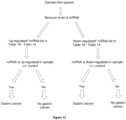
- Figure 12 summarizes the steps of the method for determining the likelihood of a subject developing or having gastric cancer.
- the method may also be for detecting or diagnosing gastric cancer in a subject.
- the method is an in vitro method.
- the method as described herein may comprise measuring or determining the expression level of at least one microRNA (miRNA) having at least 90% sequence identity with an miRNA listed in Table 18 in a non-cellular biofluid sample obtained from the subject, wherein differential expression of miRNA expression, as compared to a control, is indicative of the subject having gastric cancer and wherein the miRNA is either an miRNA listed as "up-regulated” in Table 18 or an miRNA listed as "down-regulated” in Table 18.
- miRNA microRNA
- Table 18 lists miRNA which may be used to determine the likelihood of a patient developing or having gastric cancer and is as follows: Up-regulated Down-regulated hsa-miR-101-3p hsa-miR-107 hsa-miR-106b-3p hsa-miR-122-5p hsa-miR-128 hsa-mi R-126-3p hsa-miR-1280 hsa-miR-136-5p hsa-miR-140-3p hsa-miR-139-5p hsa-miR-140-5p hsa-mi R-146a-5p hsa-miR-142-5p hsa-miR-154-5p hsa-mi R-148a-3p hsa-miR-181a-5p hsa-miR-15b-3p hsa-miR-193b-3p hsa-mi R
- miRNA refers to an RNA (or RNA analog) comprising the product of an endogenous, non-coding gene whose precursor RNA transcripts can form small stem-loops from which mature "miRNAs" are cleaved by the endonuclease Dicer.
- MiRNAs are encoded in genes distinct from the mRNAs whose expression they control.
- the term “miRNA” or “microRNA” refers to single-stranded RNA molecules of at least 10 nucleotides and of not more than 35 nucleotides covalently linked together.
- the polynucleotides are molecules of 10 to 33 nucleotides or of 15 to 30 nucleotides in length, or of 17 to 27 nucleotides or of 18 to 26 nucleotides in length, i.e. 10, 11, 12, 13, 14, 15, 16, 17, 18, 19, 20, 21, 22, 23, 24, 25, 26, 27, 28, 29, 30, 31, 32, 33, 34, or 35 nucleotides in length, not including optionally labels and/or elongated sequences (e.g. biotin stretches).
- the sequences of the miRNAs as described herein are provided in Table 4 provided herein, which includes miRNA sequences SEQ ID NO: 1 to SEQ ID NO: 191.
- miRNA is a type of polynucleotide that has sequences comprising letters such as "ATGC". It will be understood that the nucleotides are in 5' ⁇ 3' order from left to right and that "A” denotes deoxyadenoside, “C” denotes deoxycytidine, “G” denotes doxyguanoside, and “T” denotes deoxythymidine, unless otherwise noted.
- the letters A, C, G, and T can be used to refer to the bases themselves, to the nucleosides, or to nucleotides comprising the bases, as is standard in the art.
- oligonucleotides composed of naturally occurring nucleobases, sugars, and internucleotides (backbone) linkages as well as oligonucleotides having non-naturally-occurring portions which function similarly or with specific improved functions.
- the inter-nucleoside linkage is typically a phosphodiester bond, and the subunits are referred to as "nucleotides”.
- oligonucleotide may also include fully or partly modified or substituted oligonucleotides, such as in the bases and/or sugars.
- the miRNAs may not have 100% sequence identity with the sequences of miRNAs as listed in Table 4.
- the measured miRNA may have at least 75%, or at least 80%, or at least 85%, or at least 90%, or at least 95%, or at least 97.5%, or at least 98%, or at least 99%, or at least 99.9% sequence identity to the miRNAs as listed in any one of Table 8, Table 15, Table 16, Table 17, Table 18, Table 19 or Table 20 (with reference to Table 4).
- the measured miRNAs may have one, two, three or four nucleotide substitutions.
- the miRNAs as used in the methods as described herein may be detected using reagents that may be able to hybridize or bind specifically to the sequences as listed in Table 8, Table 15, Table 16, Table 17, Table 18, Table 19 or Table 20 (with reference to sequences provided in Table 4).
- the terms “hybridizing to” and “hybridization” are interchangeable used with the terms “specific for” and “specifically binding” and refer to the sequence specific non-covalent binding interactions with a complementary nucleic acid, for example, interactions between a target nucleic acid sequence and a target specific nucleic acid primer or probe.
- a nucleic acid probe, which hybridizes is one which hybridizes with a selectivity of greater than 70%, greater than 80%, greater than 90% or of 100% (i.e. cross hybridization with one of the miRNAs as described herein may occur at less than 30%, less than 20%, less than 10%).
- a nucleic acid probe, which "hybridizes" to the miRNA as described herein may be determined taking into account the length and composition.
- the nucleic acid probes, which hybridize with the any of the miRNAs as described herein may have one, or two, or three mismatched base pairing.
- the term "miRNA” as described herein may include miRNAs, which during production, the 3'-end and/or 5' end of the miRNA may be modified and/or digested. In one example, miRNA that has been modified and/or digested at the 3'-end and/or 5' end during production is picked up by the assay of the present invention. In one example, the miRNA as disclosed herein may include miRNAs which may differ from the sequences as listed in Table 4 by 3, or 4, or 5 nucleotides.
- the term “cancer” refers to the presence of cells possessing characteristics typical of cancer-causing cells, such as uncontrolled proliferation, immortality, metastatic potential, rapid growth and proliferation rate, and certain characteristic morphological features known in the art.
- the “cancer” may be gastric cancer or stomach cancer.
- the “cancer” may include pre-malignant as well as malignant cancers.
- gastric cancer covers all stages of gastric cancer as described by the National Cancer Institute of the National Health.
- the methods as described herein do not involve the step performed by a doctor/physician.
- the results as obtained from the methods as described herein would need to be combined with clinical data and other clinical presentations before a final diagnosis performed by a physician can be provided to the subject.
- the final diagnosis on whether a subject has gastric cancer is the scope of a physician and is not considered to be part of the present disclosure.
- the term "determining", "detecting” and “diagnosing” refers to the identification of the chances or likelihood of a subject having disease (such as gastric cancer) at any stage of its development, or the determination of predisposition of a subject to develop the disease.
- diagnosis occurs prior to the manifestation of symptoms.
- diagnosis occurs prior to the manifestation of symptoms.
- diagnosis allows a clinician/physician (in conjunction with other clinical presentations), confirmation of gastric cancer in a subject suspected of having gastric cancer.
- the term "differential expression” refers to a difference in the level of expression of one or more miRNAs, as measured by the amount of miRNA, in one sample as compared with the level of expression of the same one or more miRNA in a second sample or with regard to a predetermined reference value or a control. Differential expression can be determined by methods known in the art, such as by array hybridization, next generation sequencing, RT-PCR and other methods as would be understood by a person skilled in the art.
- control group used to determine whether a differential expression is observed may be different.
- control group in any given method as described herein, may be readily determined by the skilled person in the art.
- the control group may be a subject without any gastric cancer related diseases.
- the control group may be a healthy subject without any existing diseases.
- the control group may be a subject known to have non-gastric cancer related diseases, such as, but is not limited to, gastritis, intestinal metaplasia, intestinal atrophy and the like.
- control may vary on the nature of the sample as well as other factors such as the gender, age, ethnicity of the subjects based on whom the training data set was obtained from.
- control subject may be of an Asian ethnicity or descent, for example a Chinese ethnicity or ethnic Chinese descent.
- differential expression is observed when an miRNA as listed as "up-regulated” in Table 18, when compared to a control, is found to be up-regulated in the sample obtained from a subject suspected to have gastric cancer.
- upregulation of miRNAs as listed as "up-regulated” in Table 18, as compared to the control may be indicative of the subject having gastric cancer or diagnoses the subject to have gastric cancer.
- the term "up-regulated” refers to an increase in the level of miRNA expression or the detection of more copies of miRNA as compared to a control.
- an miRNA may be considered to be "up-regulated” if the level of expression is at least about 1.01 fold change relative to control or more.
- the p-values in a statistical test for the change may be lower than 0.05.
- the p-values may be calculated using a statistical test known in the art such as a t-test (p-value ⁇ 0.01).
- the statistical test is a t-test (p-value ⁇ 0.01) that is corrected for false discovery rate (FDR) estimation using Bonferroni-type multiple comparison procedures as known in the art. This was exemplarily used in the examples below.
- a miRNA may be considered to be "up-regulated” if the level of expression is at least about 1.02-fold change to about 2.5-fold change, relative to control.
- n miRNA may be considered to be "up-regulated” if the level of expression is at least about 1.05-fold change to about 1.53-fold change, relative to control.
- the miRNA may be considered to be "up-regulated” if the level of expression may have about 1.10-fold, or about 1.15-fold, or about 1.20-fold, or about 1.25 fold, or about 1.30 fold, or about 1.35 fold, or about 1.40 fold, or about 1.45 fold, or about 1.50 fold change, relative to control.
- the control may be a gastric cancer free subject.
- differential expression is observed when a miRNA as listed as "down-regulated” in Table 18, when compared to a control, is found to be down-regulated in the sample obtained from a subject suspected to have gastric cancer.
- down-regulation of miRNAs as listed as "down-regulated” in Table 18, as compared to the control may be indicative of the subject having gastric cancer or may diagnose the subject to have gastric cancer.
- the term "down-regulated” refers to a decrease in the level of miRNA expression or the detection of less copies of miRNA as compared to a control.
- an miRNA may be considered to be “down-regulated” if the level of expression is shown to have at least about 0.99 fold change relative to control or less more.
- the p-values in a statistical test for the change may be lower than 0.05.
- the p-values may be calculated using a statistical test known in the art such as a t-test (p-value ⁇ 0.01).
- the statistical test is a t-test (p-value ⁇ 0.01) that is corrected for false discovery rate (FDR) estimation using Bonferroni-type multiple comparison procedures as known in the art. This was exemplarily used in the examples below.
- a miRNA may be considered to be "down-regulated” if the level of expression is at least about 0.98-fold change to about 0.3 fold change, relative to control.
- a miRNA may be considered to be "down-regulated” if the level of expression is shown to have at least about 0.5 fold change to about 0.92 fold change, relative to control.
- the miRNA expression may be considered to be "down-regulated” if the level of expression may have about 0.95 fold, or about 0.90 fold, or about 0.85 fold, or about 0.80 fold, or about 0.75 fold, or about 0.70 fold, or about 0.65 fold, or about 0.60 fold, or about 0.55 fold change, relative to control.
- the control may be a gastric cancer free subject.
- the term "about” is used herein to indicate that a value includes the inherent variation of error as known in the art, which may occur from the use of devices, methods being employed to determine the value, or the variation that exists among the study subjects.
- the term “about”, in the context of fold change in expression, as used throughout the present disclosure as described herein, may mean +/- 5% of the stated value, or +/- 4% of the stated value, or +/- 3% of the stated value, or +/- 2% of the stated value, or +/- 1% of the stated value, or +/- 0.5% of the stated value.
- the method as described herein may measures the differential expression of one or more miRNAs as listed in Table 18.
- the method may measure the differential expression of at least two, or at least three, or at least four, or at least five, or at least six, or at least seven, or at least eight, or at least nine, or at least 10, or at least 11, or at least 12, or at least 13, or at least 14, or at least 15, or at least 20, or at least 25, or at least 30, or at least 35, or at least 40, or at least 45, or at least 50, or at least 55, or at least 60, or at least 65, or at least 70, or at least 75, or at least 80, or at least 85, or at least 90, or at least 95, or at least 100, or at least 105, or at least 107 or all of the miRNA as listed in Table 18.
- the method may measure from one to 108 miRNAs listed in Table 18, or from two to 10, or from 11 to 30, or from 31 to 50, or from 50 to 70, or from 71 to 90, or from 91 to 108 miRNAs as listed in Table 18. In one example, the method may measure differential expression of all miRNAs listed in Table 18.
- the method as described herein may measure the differential expression of at least one miRNA as listed as “up-regulated” in Table 18 and at least one miRNA as listed as “down-regulated in Table 18.
- the method may measure the differential expression of at least two, or at least three, or at least four, or at least five, or at least six, or at least seven, or at least eight, or at least nine, or at least 10, or at least 11, or at least 12, or at least 13, or at least 14, or at least 15, or at least 20, or at least 25, or at least 30, or at least 35, or at least 40, or at least 45, or at least 50, or at least 55, or at least 60, or at least 65, or 70 of the miRNA as listed as "up-regulated” in Table 18; and at least two, or at least three, or at least four, or at least five, or at least six, or at least seven, or at least eight, or at least nine, or at least 10, or at least 11, or at least 12, or at least 13, or at least 14, or at least 15, or at least
- the method as described herein may comprise measuring the expression level of at least one microRNA (miRNA) as listed in Table 14 in a non-cellular biofluid sample obtained from the subject.
- Table 14 lists miRNA which may be used to determine the likelihood of a patient developing or having gastric cancer and is as follows: Up-regulated Down-regulated hsa-miR-101-3p hsa-miR-107 hsa-miR-106b-3p hsa-miR-122-5p hsa-miR-128 hsa-mi R-126-3p hsa-miR-1280 hsa-miR-136-5p hsa-miR-140-3p hsa-miR-139-5p hsa-miR-140-5p hsa-mi R-146a-5p hsa-miR-142-5p hsa-miR-154-5p hsa-mi R-148a-3
- stages of a gastric cancer include, but are not strictly limited within its definition to, the following stages described as follows:
- the present disclosure provides a method of detecting or diagnosing gastric cancer stage in a subject.
- the method determines the likelihood of a subject having a stage of gastric cancer.
- the method comprising measuring the expression level of at least one microRNA (miRNA) having at least 90% sequence identity with an miRNA as listed in at least one of the tables selected from the group consisting of Table 8; Table 9 or Table 15; Table 10 or Table 16; and Table 11 or Table 17, in a non-cellular biofluid sample obtained from the subject, wherein a differential expression of miRNA expression in the sample obtained from the subject, as compared to a control, may be indicative of the likelihood of a subject having any one of stage 1, stage 2, stage 3 or stage 4 gastric cancer, or may diagnose the subject to have any one of stage 1, stage 2, stage 3 or stage 4 gastric cancer.
- the control may be a gastric cancer free subject.
- Figure 13 summarizes the steps of the method for determining the likelihood of a subject developing or having one of the stages of gastric cancer.
- differential expression is observed when an miRNA as listed as “up-regulated” in Table 8, as compared to the control, may be indicative of the subject to have stage 1 gastric cancer or may diagnose the subject to have stage 1 gastric cancer, and wherein the miRNA may include at least one of the miRNA as listed as "up-regulated” in Table 8.
- Table 8 is detailed further in the Experimental section.
- an miRNA may be considered to be "up-regulated” if the level of expression is at least about 1.01 fold change to about 2.5 fold change, relative to control more.
- the p-values in a statistical test for the change may be lower than 0.05.
- the p-values may be calculated using a statistical test known in the art such as a t-test (p-value ⁇ 0.01).
- the statistical test is a t-test (p-value ⁇ 0.01) that is corrected for false discovery rate (FDR) estimation using Bonferroni-type multiple comparison procedures as known in the art. This was exemplarily used in the examples below.
- the miRNA may be considered to be "up-regulated” if the level of expression may have about 1.10 fold, or about 1.15 fold, or about 1.20 fold, or about 1.25 fold, or about 1.30 fold, or about 1.35 fold, or about 1.40 fold, or about 1.45 fold, or about 1.50 fold change, relative to control.
- an miRNA may be considered to be "up-regulated” if the level of expression is at least about 1.11 fold change to about 1.57 fold change, relative to control.
- the method as described herein may measures the differential expression of one or more miRNAs as listed as “up-regulated” in Table 8.
- the method may measure the differential expression of at least two, or at least three, or at least four, or at least five, or at least six, or at least seven, or eight miRNAs as listed as “up-regulated” in Table 8.
- differential expression is observed when an miRNA as listed as “down-regulated” in Table 8, as compared to the control, may be indicative of the subject to have stage 1 gastric cancer or may diagnose the subject to have stage 1 gastric cancer.
- the miRNA may include at least one of the miRNA as listed as “down-regulated” in Table 8.
- an miRNA may be considered to be "down-regulated” if the level of expression has at least about 0.9 fold change or less, relative to control more.
- the p-values in a statistical test for the change may be lower than 0.05.
- the p-values may be calculated using a statistical test known in the art such as a t-test (p-value ⁇ 0.01).
- the statistical test is a t-test (p-value ⁇ 0.01) that is corrected for false discovery rate (FDR) estimation using Bonferroni-type multiple comparison procedures as known in the art.
- FDR false discovery rate
- the miRNA expression may be considered to be "down-regulated” if the level of expression may have about 0.95 fold, or about 0.90 fold, or about 0.85 fold, or about 0.80 fold, or about 0.75 fold, or about 0.70 fold, or about 0.65 fold, or about 0.60 fold, or about 0.55 fold change, relative to control.
- an miRNA may be considered to be "down-regulated” if the level of expression has at least about 0.68 fold change to about 0.84 fold change, relative to control.
- the method as described herein may measure the differential expression of one or more miRNAs as listed as “down-regulated” in Table 8.
- the method may measure the differential expression of at least two, or at least three, or at least four, or at least five, or at least six, or at least seven, or at least eight, or at least nine, or at least ten, or at least eleven or twelve miRNAs as listed as "down-regulated” in Table 8.
- the method as described herein may measure the differential expression of at least one miRNA as listed as “up-regulated” in Table 8 and at least one miRNA as listed as “down-regulated in Table 8.
- the method may measure the differential expression of at least two, or at least three, or at least four, or at least five, or at least six, or at least seven, or 8 of the miRNA as listed as “up-regulated” in Table 8; and at least two, or at least three, or at least four, or at least five, or at least six, or at least seven, or at least eight, or at least nine, or at least 10, or at least 11, or 12 of the miRNA as listed as "down-regulated” in Table 8.
- differential expression is observed when an miRNA as listed as "up-regulated” in Table 9 or Table 15, as compared to the control, may be indicative of the subject to have stage 2 gastric cancer or may diagnose the subject to have stage 2 gastric cancer.
- Table 9 is detailed further in the Experimental section.
- the miRNA may include at least one of the miRNA as listed as "up-regulated” in Table 15.
- Table 15 lists miRNA which may be used to determine the likelihood of a patient developing (or having) or having stage 2 gastric cancer and is as follows: Up-regulated Down-regulated hsa-miR-27a-5p hsa-miR-126-3p hsa-mi R-183-5p hsa-miR-107 hsa-miR-629-5p hsa-miR-320a hsa-miR-424-5p hsa-miR-339-5p hsa-miR-1280 hsa-miR-337-5p hsa-mi R-18b-5p hsa-miR-99b-5p hsa-miR-195-5p hsa-miR-193b-3p hsa-miR-18a-3p hsa-miR-885-5p hsa-miR-550a-5p hsa-miR-197-3p
- an miRNA may be considered to be "up-regulated” if the level of expression is at least about 1.01 fold change to about 2.5 fold change, relative to control more.
- the p-values in a statistical test for the change may be lower than 0.05.
- the p-values may be calculated using a statistical test known in the art such as a t-test (p-value ⁇ 0.01).
- the statistical test is a t-test (p-value ⁇ 0.01) that is corrected for false discovery rate (FDR) estimation using Bonferroni-type multiple comparison procedures as known in the art. This was exemplarily used in the examples below.
- the miRNA may be considered to be "up-regulated” if the level of expression may have about 1.10 fold, or about 1.15 fold, or about 1.20 fold, or about 1.25 fold, or about 1.30 fold, or about 1.35 fold, or about 1.40 fold, or about 1.45 fold, or about 1.50 fold change, relative to control.
- an miRNA may be considered to be "up-regulated” if the level of expression is at least about 1.13 fold change to about 2.13 fold change, relative to control.
- the method as described herein may measures the differential expression of one or more miRNAs as listed as “up-regulated” in Table 9 or Table 15.
- the method may measure the differential expression of at least two, or at least three, or at least four, or at least five, or at least six, or at least seven, or at least eight, or at least nine, or at least 10, or at least 11, or at least 12, or at least 13, or at least 14, or at least 15, or at least 20, or at least 25, or at least 30, or at least 35, or at least 40, or at least 45, or at least 50, or 54 miRNAs as listed as "up-regulated” in Table 9 or Table 15.
- differential expression is observed when an miRNA as listed as “down-regulated” in Table 9 or Table 15, as compared to the control, may be indicative of the subject to have stage 2 gastric cancer or may diagnose the subject to have stage 2 gastric cancer.
- the miRNA may include at least one of the miRNA as listed as "down-regulated” in Table 15.
- an miRNA may be considered to be "down-regulated” if the level of expression has at least about 0.9 fold change or less, relative to control more.
- the p-values in a statistical test for the change may be lower than 0.05.
- the p-values may be calculated using a statistical test known in the art such as a t-test (p-value ⁇ 0.01).
- the statistical test is a t-test (p-value ⁇ 0.01) that is corrected for false discovery rate (FDR) estimation using Bonferroni-type multiple comparison procedures as known in the art.
- FDR false discovery rate
- the miRNA expression may be considered to be "down-regulated” if the level of expression may have about 0.95 fold, or about 0.90 fold, or about 0.85 fold, or about 0.80 fold, or about 0.75 fold, or about 0.70 fold, or about 0.65 fold, or about 0.60 fold, or about 0.55 fold change, relative to control.
- an miRNA may be considered to be "down-regulated” if the level of expression has at least about 0.56 fold change to about 0.87 fold change, relative to control.
- the method as described herein may measures the differential expression of one or more miRNAs as listed as “down-regulated” in Table 9 or 15.
- the method may measure the differential expression of at least two, or at least three, or at least four, or at least five, or at least six, or at least seven, or eight miRNAs as listed as “down-regulated” in Table 9 or 15.
- the method as described herein may measure the differential expression of at least one miRNA as listed as “up-regulated” in Table 9 or 15 and at least one miRNA as listed as “down-regulated in Table 9 or 15.
- the method may measure the differential expression of at least two, or at least three, or at least four, or at least five, or at least six, or at least seven, or at least eight, or at least nine, or at least 10, or at least 11, or at least 12, or at least 13, or at least 14, or at least 15, or at least 20, or at least 25, or at least 30, or at least 35, or at least 40, or at least 45, or at least 50, or 54 miRNAs as listed as “up-regulated” in Table 9 or Table 15; and at least two, or at least three, or at least four, or at least five, or at least six, or at least seven, or eight of the miRNA as listed as "down-regulated” in Table 9 or Table 15.
- the method may further comprise comparing the expression level of any one or more of miRNAs including, but not limited to, of miR-20a-5p, miR-223-3p, miR-17-5p, miR-106b-5p, miR-423-5p, and miR-21-5p.
- differential expression is observed when an miRNA as listed as "up-regulated” in Table 10 or Table 16, as compared to the control, may be indicative of the subject to have stage 3 gastric cancer or may diagnose the subject to have stage 3 gastric cancer.
- Table 10 is detailed further in the Experimental section.
- the miRNA may include at least one of the miRNA as listed as "up-regulated” in Table 16.
- Table 16 lists miRNA which may be used to determine the likelihood of a patient developing (or having) or having stage 3 gastric cancer and is as follows: Up-regulated Down-regulated hsa-miR-629-5p hsa-miR-126-5p hsa-miR-650 hsa-miR-126-3p hsa-miR-1280 hsa-miR-27a-3p hsa-miR-27a-5p hsa-miR-99b-5p hsa-miR-18b-5p hsa-miR-107 hsa-miR-424-5p hsa-miR-30a-5p hsa-miR-500a-3p hsa-miR-629-3p hsa-miR-550a-5p hsa-miR-4306 hsa-miR-197-3p hsa-miR-616-5p
- an miRNA may be considered to be "up-regulated” if the level of expression is at least about 1.01 fold change to about 2.5 fold change, relative to control more.
- the p-values in a statistical test for the change may be lower than 0.05.
- the p-values may be calculated using a statistical test known in the art such as a t-test (p-value ⁇ 0.01).
- the statistical test is a t-test (p-value ⁇ 0.01) that is corrected for false discovery rate (FDR) estimation using Bonferroni-type multiple comparison procedures as known in the art. This was exemplarily used in the examples below.
- the miRNA may be considered to be "up-regulated” if the level of expression may have about 1.10 fold, or about 1.15 fold, or about 1.20 fold, or about 1.25 fold, or about 1.30 fold, or about 1.35 fold, or about 1.40 fold, or about 1.45 fold, or about 1.50 fold change, relative to control.
- an miRNA may be considered to be "up-regulated” if the level of expression is at least about 1.20 fold change to about 1.93 fold change, relative to control.
- the method as described herein may measures the differential expression of one or more miRNAs as listed as “up-regulated” in Table 10 or Table 16.
- the method may measure the differential expression of at least two, or at least three, or at least four, or at least five, or at least six, or at least seven, or at least eight, or at least nine, or at least 10, or at least 11, or at least 12, or at least 13, or at least 14, or at least 15, or at least 20, or at least 25, or at least 30, or at least 35, or 37 miRNAs as listed as “up-regulated” in Table 10 or Table 16.
- differential expression is observed when an miRNA as listed as “down-regulated” in Table 10 or Table 16, as compared to the control, may be indicative of the subject to have stage 3 gastric cancer or may diagnose the subject to have stage 3 gastric cancer.
- the miRNA may include at least one of the miRNA as listed as “down-regulated” in Table 16.
- an miRNA may be considered to be "down-regulated” if the level of expression has at least about 0.9 fold change or less, relative to control.
- the p-values in a statistical test for the change may be lower than 0.05.
- the p-values may be calculated using a statistical test known in the art such as a t-test (p-value ⁇ 0.01).
- the statistical test is a t-test (p-value ⁇ 0.01) that is corrected for false discovery rate (FDR) estimation using Bonferroni-type multiple comparison procedures as known in the art.
- FDR false discovery rate
- the miRNA expression may be considered to be "down-regulated” if the level of expression may have about 0.95 fold, or about 0.90 fold, or about 0.85 fold, or about 0.80 fold, or about 0.75 fold, or about 0.70 fold, or about 0.65 fold, or about 0.60 fold, or about 0.55 fold change, relative to control.
- an miRNA may be considered to be "down-regulated” if the level of expression has at least about 0.72 fold change to about 0.88 fold change, relative to control.
- the method as described herein may measures the differential expression of one or more miRNAs as listed as “down-regulated” in Table 10 or 16.
- the method may measure the differential expression of at least two, or at least three, or at least four, or at least five, or six miRNAs as listed as “down-regulated” in Table 10 or 16.
- the method as described herein may measure the differential expression of at least one miRNA as listed as “up-regulated” in Table 10 or 16 and at least one miRNA as listed as “down-regulated in Table 10 or 16.
- the method may measure the differential expression of at least two, or at least three, or at least four, or at least five, or at least six, or at least seven, or at least eight, or at least nine, or at least 10, or at least 11, or at least 12, or at least 13, or at least 14, or at least 15, or at least 20, or at least 25, or at least 30, or at least 35, or 37 miRNAs as listed as “up-regulated” in Table 10 or Table 16; and at least two, or at least three, or at least four, or at least five, or six of the miRNA as listed as "down-regulated” in Table 10 or Table 16.
- the method as described herein that may provide a diagnosis or an indication on whether a subject may have stage 3 gastric cancer uses Table 16, the method may further comprise comparing the expression level of any one or more of miRNAs including, but not limited to, miR-21-5pm, miR-223-3p and miR-423-5p.
- differential expression is observed when an miRNA as listed as "up-regulated” in Table 11 or Table 17, as compared to the control, may be indicative of the subject to have stage 4 gastric cancer or may diagnose the subject to have stage 4 gastric cancer.
- Table 10 is detailed further in the Experimental section.
- the miRNA may include at least one of the miRNA as listed as "up-regulated” in Table 17.
- Table 17 lists miRNA which may be used to determine the likelihood of a patient developing (or having) stage 4 gastric cancer and is as follows: Up-regulated Down-regulated hsa-miR-27a-5p hsa-miR-181a-5p hsa-miR-338-5p hsa-miR-30d-5p hsa-miR-450a-5p hsa-miR-30b-5p hsa-mi R-183-5p hsa-miR-126-3p hsa-miR-579 hsa-miR-146a-5p hsa-miR-616-5p hsa-miR-107 hsa-miR-424-5p hsa-miR-99b-5p hsa-miR-200b-3p hsa-miR-10a-5p hsa-mi R-148a-3p hsa-miR-139-5
- a miRNA may be considered to be "up-regulated” if the level of expression is at least about 1.01-fold change to about 2.5 fold change, relative to control more.
- the p-values in a statistical test for the change may be lower than 0.05.
- the p-values may be calculated using a statistical test known in the art such as a t-test (p-value ⁇ 0.01).
- the statistical test is a t-test (p-value ⁇ 0.01) that is corrected for false discovery rate (FDR) estimation using Bonferroni-type multiple comparison procedures as known in the art. This was exemplarily used in the examples below.
- the miRNA may be considered to be "up-regulated” if the level of expression may have about 1.10-fold, or about 1.15-fold, or about 1.20 fold, or about 1.25 fold, or about 1.30 fold, or about 1.35 fold, or about 1.40 fold, or about 1.45 fold, or about 1.50 fold change, relative to control.
- a miRNA may be considered to be "up-regulated” if the level of expression is at least about 1.12-fold change to about 1.86 fold change, relative to control.
- the method as described herein may measures the differential expression of one or more miRNAs as listed as “up-regulated” in Table 11 or Table 17.
- the method may measure the differential expression of at least two, or at least three, or at least four, or at least five, or at least six, or at least seven, or at least eight, or at least nine, or at least 10, or at least 11, or at least 12, or at least 13, or at least 14, or at least 15, or at least 20, or at least 25, or at least 30, or at least 35, or at least 40, or at least 45 or 46 miRNAs as listed as "up-regulated” in Table 11 or Table 17.
- differential expression is observed when a miRNA as listed as “down-regulated” in Table 11 or Table 17, as compared to the control, may be indicative of the subject to have stage 4 gastric cancer or may diagnose the subject to have stage 4 gastric cancer.
- the miRNA may include at least one of the miRNA as listed as "down-regulated” in Table 17.
- an miRNA may be considered to be "down-regulated” if the level of expression has at least about 0.9 fold change or less, relative to control more.
- the p-values in a statistical test for the change may be lower than 0.05.
- the p-values may be calculated using a statistical test known in the art such as a t-test (p-value ⁇ 0.01).
- the statistical test is a t-test (p-value ⁇ 0.01) that is corrected for false discovery rate (FDR) estimation using Bonferroni-type multiple comparison procedures as known in the art.
- FDR false discovery rate
- the miRNA expression may be considered to be "down-regulated” if the level of expression may have about 0.95 fold, or about 0.90 fold, or about 0.85 fold, or about 0.80 fold, or about 0.75 fold, or about 0.70 fold, or about 0.65 fold, or about 0.60 fold, or about 0.55 fold change, relative to control.
- an miRNA may be considered to be "down-regulated” if the level of expression has at least about 0.48 fold change to about 0.90 fold change, relative to control.
- the method as described herein may measures the differential expression of one or more miRNAs as listed as “down-regulated” in Table 11 or 17.
- the method may measure the differential expression of at least two, or at least three, or at least four, or at least five, or at least six, or at least seven, or at least eight, or at least nine, or at least 10, or at least 11, or at least 12, or at least 13, or at least 14, or at least 15, or at least 20, or at least 25, or 28 miRNAs as listed as “down-regulated” in Table 11 or 17.
- the method as described herein may measure the differential expression of at least one miRNA as listed as “up-regulated” in Table 11 or 17 and at least one miRNA as listed as “down-regulated in Table 11 or 17.
- the method may measure the differential expression of at least two, or at least three, or at least four, or at least five, or at least six, or at least seven, or at least eight, or at least nine, or at least 10, or at least 11, or at least 12, or at least 13, or at least 14, or at least 15, or at least 20, or at least 25, or at least 30, or at least 35, or at least 40, or at least 45 or 46 miRNAs as listed as "up-regulated” in Table 11 or Table 17; and at least two, or at least three, or at least four, or at least five, or at least six, or at least seven, or at least eight, or at least nine, or at least 10, or at least 11, or at least 12, or at least 13, or at least 14, or at least 15, or at least 20, or at least 25, or 28 of the miRNA as listed as "
- the method as described herein that may provide a diagnosis or an indication on whether a subject may have stage 4 gastric cancer uses Table 17, the method may further comprise comparing the expression level of any one or more of miRNAs including, but not limited to, miR-21-5pm, miR-223-3pm, miR-20a-5pm, miR-106b-5p, and miR-17-5p.
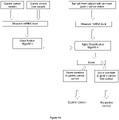
- a method of detecting or diagnosing gastric cancer in a subject or determining the likelihood of a subject having gastric cancer or comprising the steps of: (a) measuring the expression level of at least one miRNAs having at least 90% sequence identity with an miRNA as listed in Table 12 or Table 19 in a non-cellular biofluid sample; (b) generating a score based on the expression level of the miRNAs measured in step (a); and (c) using the score to predict the likelihood of the subject having gastric cancer, wherein the score is calculated by a classification algorithm that compares the expression level of the subject with that of a positive control (sample from gastric cancer subject) or a negative control (sample from gastric cancer free subject), and the score identifies the likelihood of the subject to either: (i) have gastric cancer, which score would fall within the score of the positive control, or (ii) have no gastric cancer (i.e.
- the miRNA may include at least one of the miRNA as listed as in Table 19.
- this method of detecting or diagnosing gastric cancer in a subject or determining the likelihood of a subject having gastric cancer may be referred to as a multivariant method.
- the multivariant method may use miRNAs that have been determined by a clinical data to be representative of a sub-population or group.
- the multivariant biomarker panel may comprise biomarkers as listed in Table 12, which comprises both miRNAs found to be associated with gastric cancer and miRNAs found to be not associated with gastric cancer.
- the miRNAs that may be used in the multivariant method that are associated with gastric cancer may be comprised in Table 19.
- Table 12 is detailed further in the Experimental section.
- Figure 14 summarizes the steps of the multivariant method for determining the likelihood of a subject developing (or having) gastric cancer.
- Table 19 lists miRNAs frequently selected for use in multivariant biomarker panel where the expression levels of the miRNAs were altered in the gastric cancer subjects and is as follows: miRNA altered in gastric cancer hsa-miR-103a-3p hsa-miR-181a-5p hsa-miR-142-5p hsa-miR-27a-5p hsa-miR-26a-5p hsa-miR-616-5p hsa-miR-30a-5p hsa-miR-484 hsa-miR-4306 hsa-miR-590-5p hsa-miR-362-5p hsa-mi R-106b-3p hsa-mi R-497-5p hsa-miR-18b-5p hsa-miR-122-5p hsa-miR-200b-3p hsa-miR-197-3p
- the multivariant method may comprise may comprise determination of biomarkers as listed in Table 12, which comprises both miRNAs found to be associated with gastric cancer and miRNAs found to be not associated with gastric cancer.
- the multivariant method uses miRNAs as listed in Table 19, the method would further comprises measuring the expression level of at least one miRNAs, which when compared to the negative control, the expression level is not altered in the subject.
- the miRNAs, which when compared to the negative control, the expression level is not altered in the subject may be any one of the miRNAs as listed in Table 20.
- Table 20 lists miRNAs frequently selected for use in multivariant biomarker panel where the expression levels of the miRNAs were not associated with gastric cancer subjects and is as follows: gastric cancer unrelated miRNA hsa-miR-532-5p hsa-miR-30e-5p hsa-miR-340-5p hsa-miR-23b-3p hsa-miR-224-5p hsa-miR-185-5p hsa-miR-320d hsa-mi R-374a-5p hsa-miR-584-5p hsa-miR-194-5p
- the score may calculate using a classification algorithm.
- the classification algorithm may include, but is not limited to, support vector machine algorithm, logistic regression algorithm, multinomial logistic regression algorithm, Fisher's linear discriminant algorithm, quadratic classifier algorithm, perceptron algorithm, k-nearest neighbors algorithm, artificial neural network algorithm, random forests algorithm, decision tree algorithm, naive Bayes algorithm, adaptive Bayes network algorithm, and ensemble learning method combining multiple learning algorithms.
- the classification algorithm may be pre-trained using the expression level of the positive control and the negative control.
- the positive control may be a sample obtained from a subject with gastric cancer and the negative control is a sample obtained from a gastric cancer free control.
- the gastric cancer free control may be as described above. That is, in one example, the gastric cancer free control may be a subject without any gastric cancer related diseases. In one example, the gastric cancer free control may be a healthy subject without any existing diseases. In one example, the gastric cancer free control may be a subject known to have non-gastric cancer related diseases, such as, but is not limited to, gastritis, intestinal metaplasia, intestinal atrophy and the like. In one example, the control may vary on the nature of the sample as well as other factors such as the gender, age, ethnicity of the subjects based on whom the training data set was obtained from. In one example, the control subject may be of a Chinese ethnicity or ethnic Chinese descent.
- the expression level of the miRNAs may be any one of concentration, log(concentration), Ct/Cq number, two to the power of Ct/Cq number and the like.
- the method as described herein may use a data-trained formula that may be able to determine the likelihood of a subject having gastric cancer.
- the algorithm combines the measurement of multiple miRNA to give a score for the prediction of the risk of a subject having gastric cancer. It may combine the information of multiple genetic target and gives a better prediction accuracy than using single miRNA biomarker.
- the minimum number of miRNA biomarker to build a useful panel is 4. For example, it is shown in Figure 11 that the biomarker panel with 4 miRNAs has an average AUC > 0.8 in the validation set which is considered to be useful biomarker panel. The improvement on the performance of the biomarker panel (in terms of AUC values) does not increase significantly when the miRNA is more than 7.
- the minimum number of miRNA to build an optimum panel with maximized performance is 7 miRNAs.
- the formula that may be used for calculating the score for determining the likelihood of a subject having gastric cancer may be as follows: A ⁇ miRNA 1 + B ⁇ miRNA 2 + C ⁇ miRNA 3 + D , wherein miRNA1, miRNA2, miRNA3 were values related with the expression level of miRNA which can be the copy number, the log(copy number), the Ct/Cq number or others numbers; and A, B, C, D were the coefficients which can be positive or negative.
- the score for determining the likelihood of a subject having gastric cancer i.e.
- cancer risk score may be calculated by combining 12 miRNAs (Table 21) frequently selected in the multivariant biomarker panel identification process with prevalence >20%, as described in the examples below and in Figure 15 .
- the range may not be clearly defined as the coefficients may be scaled.
- all coefficients i.e. A, B, or C
- the value of the score may be positively or negatively correlated with the risk of having gastric cancer. The actual correlation would depend on the training data set and the skilled person in the art would be familiar with the necessary adjustment required upon establishment of the training data set.
- the range may not be clearly defined as the coefficients may be scaled.
- all coefficients i.e. A, B, or C
- the value of the score may be positively or negatively correlated with the risk of having gastric cancer. The actual correlation would depend on the training data set and the skilled person in the art would be familiar with the necessary adjustment required upon establishment of the training data set.
- all coefficients i.e. A, B, or C
- D may be purposely changed to scale the range of the calculated value based on the formula for most of the subjects from 0 to 100.
- the value of the score may be positively or negatively correlated with the risk of having gastric cancer. The actual correlation would depend on the training data set and the skilled person in the art would be familiar with the necessary adjustment required upon establishment of the training data set.
- the method as described herein may measure the expression level of at least one miRNA as listed as “significant” in Table 12 or as listed in Table 19 and at least one miRNA as listed as “insignificant” in Table 12 or as listed in Table 20.
- the method may measure the differential expression of at least two, or at least three, or at least four, or at least five, or at least six, or at least seven, or at least eight, or at least nine, or at least 10, or at least 11, or at least 12, or at least 13, or at least 14, or at least 15, or at least 20, or at least 25, or at least 30, or at least 35, or 42 miRNAs as listed as "significant” in Table 12 or at least two, or at least three, or at least four, or at least five, or at least six, or at least seven, or at least eight, or at least nine, or at least 10, or at least 11, or at least 12, or at least 13, or at least 14, or at least 15, or at least 20, or at least 25, or at least 30, or at least 35, or 38 of the miRNAs as listed
- the method may further comprise measuring the expression level of any one or more of miRNAs selected from the group consisting of miR-21-5p, miR-20a-5pm, miR-17-5p, miR-423-5p and miR-223-3p.
- the method as described herein may further comprise measuring the expression level of any one or more of miRNAs selected from the group consisting of miR-34a-5p and miR-27b-3p.
- Step 1 Total RNA (or subfractions thereof) is extracted from a sample (such as plasma, serum, or other blood fractions) of a subject or subjects with gastric cancer using suitable kits and/or purification methods.
- a sample such as plasma, serum, or other blood fractions
- Step 2 From the respective sample, the quantity (expression level) of one miRNA or sets of at least one miRNAs selected from the group consisting of SEQ ID NO: 1 to SEQ ID NO: 191 is measured using experimental techniques.
- the at least one miRNA may be selected from the group as listed in Tables 12, 19 and 20.
- These techniques are techniques known in the art, which may include, but are not limited to, array based approaches, amplification methods (PCR, RT-PCR, or qPCR), sequencing, next generation sequencing, and/or mass spectroscopy.
- Step 3 In order to gather information on the diagnostic value and the redundancy of each of the single miRNA biomarkers, mathematical methods are applied. These methods are known methods in the art and may include, but are not limited to, basic mathematic approaches (e.g. Fold Quotients, Signal-to-Noise ratios, Correlation), statistical methods as hypothesis tests (e.g. t-test, Wilcoxon-Mann- Whitney test), the Area under the Receiver operator Characteristics Curve, information theory approaches, (e.g. the Mutual Information, Cross-entropy), probability theory (e.g. joint and conditional probabilities) or combinations and modifications of the previously mentioned methods.
- basic mathematic approaches e.g. Fold Quotients, Signal-to-Noise ratios, Correlation
- hypothesis tests e.g. t-test, Wilcoxon-Mann- Whitney test
- the Area under the Receiver operator Characteristics Curve e.g. the Mutual Information, Cross-entropy
- probability theory e.g.
- Step 4 The information gathered in step 3) is used to estimate for each miRNA biomarker the diagnostic content or value. Usually, however, this diagnostic value is too small to get a highly accurate diagnosis with accuracy rates, specificities and sensitivities beyond the 80% barrier.
- the diagnostic content of the miRNAs suitable for diagnosing gastric cancer is listed in Figure 1 . This Figure includes the miRNAs as listed in Tables 12, 19, and 20.
- Step 5 In order to increase the performance for diagnosing of individuals suffering from gastric cancer, more than one miRNA biomarker may be employed.
- statistical learning/machine learning/bioinformatics/computational approaches are applied for set selection in order to select/define sets of miRNA biomarkers (may comprising miRNAs as listed in Table 12 or Tables 19 and 20) that are tailored for the detection of gastric cancer.
- These techniques include, but are not limited to, Wrapper subset selection techniques (e.g. forward step- wise, backward step-wise, combinatorial approaches, optimization approaches), filter subset selection methods (e.g. the methods mentioned in Step 3), principal component analysis, or combinations and modifications of such methods (e.g. hybrid approaches).
- Step 6 The subsets, selected/defined in Step 5, which may range from only a small number (at least one, or at least two, or more for the set) to all measured miRNA, are then used to carry out a diagnosis of gastric cancer.
- statistical learning/machine learning/bioinformatics/computational approaches are applied that include, but are not limited to, any type of supervised or unsupervised analysis: classification techniques (e.g. naive Bayes, Linear Discriminant Analysis, Quadratic Discriminant Analysis Neural Nets, Tree based approaches, Support Vector Machines, Nearest Neighbor Approaches), Regression techniques (e.g.
- Step 7 By combination of subset selection (Step 5) and machine learning approaches (Step 6) an algorithm or a mathematical function for diagnosing gastric cancer is obtained. This algorithm or mathematical function is applied to a miRNA expression profile (miRNA expression profile data) of an individual (subject) to be diagnosed for gastric cancer.
- the non-cellular biofluid may include any bodily fluid that does not include any cellular component of the fluid.
- the biofluid or bodily fluid upon extraction from the subject, may comprise cellular components generally found in a bodily fluid or biofluid of a subject.
- this biofluid or bodily fluid may be processed with methods known in the art to remove any cellular components contained within the biofluid or bodily fluid. For example, a centrifugation or purification process to remove cellular components of the bodily fluid or biofluid may be performed before the methods of the present disclosure may be conducted.
- the bodily fluid or non-cellular biofluid may include, but is not limited to non-cellular components of amniotic fluid, breast milk, bronchial lavage, cerebrospinal fluid, colostrum, interstitial fluid, peritoneal fluids, pleural fluid, saliva, seminal fluid, urine, tears, whole blood, including plasma, red blood cells, white blood cells and serum.
- the non-cellular biofluid may be serum or plasma.
- the terms “subject” and “patient” may be used interchangeably to refer to an animal (e.g., a mammal, a fish, an amphibian, a reptile, a bird and an insect).
- the subject may be a mammal (e.g., a non-human mammal (such as a dog, a cat, or a primate) and a human).
- the subject may be a primate (e.g., a chimpanzee and a human).
- the subject may be a human.
- the subject may be a human with or without gastric (or stomach) cancer.
- the training data set was obtained from subjects of Chinese ethnicity or Chinese descent.
- the subject may be of an Asian descent.
- the subject may be of a Chinese ethnicity or ethnic Chinese descent.
- the methods as described herein may be provided as a kit.
- the kit may comprise components necessary or detecting the miRNAs as described herein.
- Components may include primers/probes that may hybridizes with the miRNAs as described herein, reagents, containers and/or equipment configured to detect miRNAs and primer/probes as described herein.
- the container within the kit may contain a primer/probe set that may detect or determine the level of the miRNAs as described herein that is radiolabelled before use.
- the kit may comprise containers of substances for reverse transcribing and amplifying one or more miRNAs, such as containers comprising dNTPs (each of the four deoxynucleotides dATP, dCTP, dGTP, and dTTP), buffers, reverse transcriptase and DNA polymerase.
- the kit may also comprise nucleic acid template(s) for a positive control and/or negative control reaction.
- the kits may further include any reaction components or buffer necessary for isolation of miRNAs from samples obtained from subjects.
- Pre-analytics Serum samples from normal (i.e. gastric cancer free control) and gastric cancer subjects were centrally collected by Singapore Gastric Cancer Consortium, processed and stored frozen at -80°C. Total RNA from 200 ⁇ l of serum were isolated using the well-established column based miRNeasy kit (Qiagen, Hilden, Germany), on a semi-automated QiaCube system. Serum contains minute amount of RNA. To reduce the loss of RNA and monitor extraction efficiency, rationally designed isolation enhancers (MS2) and spike-in control RNAs (MiRXES) were added to the specimen prior to isolation.
- MS2 isolation enhancers
- MiRXES spike-in control RNAs
- RT-qPCR The isolated total RNAs and synthetic RNA standards were converted to cDNA in optimized multiplex reverse transcription reactions with a second set of spike-in control RNAs to detect the presence of inhibitors and monitor the RT-qPCR efficiency.
- the Impron II (Promega ® ) reverse transcriptase was used to perform the reverse transcription following manufacture's instruction.
- the synthesized cDNA was then subjected to a multiplex augmentation step and quantified using a Sybr Green based single-plex qPCR assays (MIQE compliant) (MiRXES ® ).
- MIQE compliant Sybr Green based single-plex qPCR assays
- ABI ® ViiA-7 384 machine was used for qPCR reactions.
- the overview and details of miRNA RT-qPCR measurement workflow is summarized in Figure 2 .
- the raw Cycles to Threshold (Ct) values were processed and the absolute copy numbers of the target miRNAs in each sample were determined through intra-polation of the synthetic miRNA standard curves.
- the technical variations introduced during RNA isolation and the processes of RT-qPCR were normalized by the spike-in control RNAs.
- the biological variations were further normalized by a set of validated endogenous reference miRNAs stably expressed across all control and disease samples.
- All spike-in controls were non-natural synthetic miRNAs mimics (small single-stranded RNA with length range from 22-24 bases), which were designed in silica to have exceptionally low similarity in sequence to all known human miRNAs, thus minimizing cross-hybridization to the primers used in the assays.
- the miRNA assays were deliberately divided into a number of multiplex groups in silico to minimize non-specific amplifications and primer-primer interactions. Synthetic miRNAs were used to construct standard curves for the interpolation of absolute copy numbers in all the measurements, thus further correcting for technical variations.
- this workflow with multiple levels of controls, low levels of expression of miRNAs in circulation could be detected reliably and reproducibly.
- a step towards identifying biomarkers is to compare the expression levels of each miRNA in normal (control) and disease state.
- the expression levels of 578 (miRBase Version 10 release) human miRNAs in all 472 serum samples (gastric cancer and normal/control) were quantitatively measured using the robust workflow and highly sensitive qPCR assays (MiRXES, Singapore).
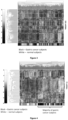
- a heat-map was then constructed to represent the expression levels of all detected serum miRNAs (191 detected miRNAs, Figure 3 ). Although various subgroups of miRNAs were clustered together, there did not appear to be clear distinction between the cancer and control groups by unsupervised hierarchical clustering based on total number of detected miRNAs. Thus, without any feature selection, the overall miRNA profiles for both groups appeared similar.
- Table 1 Summary of serum/ plasma microRNA biomarkers known in the art for being correlated to gastric cancer Up regulated Down regulated Method Samples miR-199a-3p - RT-qPCR Plasma/80GC/70C - miR-195-5p RT-qPCR Serum/20GC/190C miR-106b, miR-20a, miR-221 - RT-qPCR Plasma/90GC/90C miR-181c - RT-qPCR Plasma/30GC/60C miR-199a-3p, miR-151-5p - RT-qPCR Plasma/180GC/100C miR-221, miR-744, miR-376c, miR-191, miR-27a, let-7e, miR-27b, and miR-222 - RT-qPCR Serum/82GC/82C miR-223, miR-21 miR- 218 RT-qPCR Plasma/60GC/60C miR-200c - RT-qPCR whole blood/52GC/15C - miR-375
- miR-376c hsa-miR-376c up N.D.
- miR-378 hsa-miR-378a-3p up no change miR-423-5p hsa-miR-423-5p up up miR-744 hsa-miR-744-5p up N.D.
- miR-375 hsa-miR-375 down no change let-7a hsa-let-7a-5p down N.D.
- miRNAs between the various stages of the disease were then compared. With a two-way Anova test taking account the stages and subtypes, 36 miRNAs (from the pool of 191 serum miRNAs) were found to be differentially expressed between various stages of gastric cancer subjects (p-value of anova test ⁇ 0.01 after false discovery rate correction, data not shown).
- a biomarker panel consisting of at least one miRNA from the each stage specific miRNA list could provide an alternative method for determining the likelihood of a subject having gastric cancer.
- An important criterion to assemble a multivariate panel is to include at least one miRNA from the specific list for each stage of cancer to ensure all cancer subgroups were covered.
- the miRNAs defining the four stages of cancer were not totally distinct as the same miRNAs were similarly found between them ( Figure 9 ).
- large numbers of cancer related or non-related miRNAs were found to be positively correlated ( Figures 6 , 7 ) which makes the choice of the best miRNA combinations for gastric cancer diagnosis challenging.
- a critical requirement for the success of such process is the availability of high quality data.
- the quantitative data of all the detected miRNAs in a large number of well-defined clinical samples not only improved the accuracy as well as precision of the result but also ensured the consistency of the identified biomarker panels for further clinical application using qPCR.
- miRNAs would never have been selected in high-through put screening methods (microarray, sequencing) and would have been excluded for qPCR validation. These miRNAs were not selected randomly as the top two miRNA (hsa-miR-532-5p, hsa-miR-30e-5p) were consistently found in 57.8% and 48.4% of the panels.
- the miRNAs selected to form the multivariate panels showed variability in detecting cancer at various stages (Tables 8-11).
- Tables 8-11 For the top 10 frequently chosen miRNAs in the list with occurrence higher than 20%, only three of the them were found to be commonly regulated in more than two different stages of cancers (hsa-miR-21-5p, hsa-miR-27a-5p, hsa-miR-142-5p) while for the rest, hsa-miR-103a-3p was only significant for stage 1, hsa-miR-181a-5p was only significant for stage 4, hsa-miR-26a-5p was significant for stage 1&4 hsa-miR-20a-5p and hsa-miR-17-5p were significant for stage 2 & 4 and hsa-miR-616-5p and hsa-miR-30a-5p were significant for stage 3 & 4. Excluding stage 4, where large numbers of miRNAs
- the multivariate method for determining the likelihood of a subject having a gastric cancer may comprise at least one miRNA from each of these two frequently selected miRNA groups.
- MiRNAs can be combined to form a biomarker panel to calculate the cancer risk score ( Formula 1 ).
- the 12 miRNAs frequently selected in the multivariant biomarker panel identification process with prevalence > 20% ( Table 21 ) can be combined to form a biomarker panel to calculate the cancer risk score.
- the formula here demonstrates the use of a linear model for gastric cancer risk prediction, where the cancer risk score (unique for each subject) indicates the likelihood of a subject having gastric cancer. This is calculated by the summing the weighted measurements for the 12 miRNAs and a constant of 50.
- K i the coefficients used to weight multiple miRNA targets which can be found in Table 21.
- the values of K i were optimized with support vector machine method and scaled to range from 0 to 100. Subjects with cancer risk score lower than 0 will be considered as 0 and subjects with cancer risk score higher than 100 will be considered as 100.
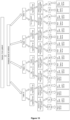
- the control and cancer subjects in these studies have different cancer risk score values calculated based on the formula ( Figure 15A ).
- the fitted probability distributions of the cancer risk scores for the control and cancer subjects can be found in Figure 15B where a clear separation between the two groups can be found.
- the control subjects were non-cancer subjects selected from the high-risk population which has a probability of 0.0067 to have gastric cancer.
- the probability (risk) of an unknown subject having cancer can be calculated based on their cancer risk score values ( Figure 15C ). With higher score, the subject has higher risk of having gastric cancer.
- the cancer risk score can tell the fold change of the probability (risk) of an unknown subject having gastric cancer compared to the cancer incidence rate in high-risk population ( Figure 15D ).
- an unknown high risk subject having cancer risk score of 70 will have 14.6% probability to have gastric cancer which is about 22 times higher than the average risk of the high-risk population.
- the subjects can be defined into three categories based on the cancer risk score Figure 15C , D.
- Subjects with cancer risk score range of 0 - 40 belong to the low cancer risk group having 0.052% chance to have gastric cancer which is 13-fold lower than the average cancer incidence rate in high-risk population.
- Subjects with cancer risk score range of 40 - 70 belong to the medium cancer risk group having 1.4% chance to have gastric cancer which is 2 times higher than the average cancer incidence rate in high-risk population.
- Subjects with cancer risk score range of 70 - 100 belong to the high cancer risk group having 12.2% chance to have gastric cancer which is 18 folds higher than the average cancer incidence rate in high-risk population.
Landscapes
- Health & Medical Sciences (AREA)
- Life Sciences & Earth Sciences (AREA)
- Engineering & Computer Science (AREA)
- Physics & Mathematics (AREA)
- Chemical & Material Sciences (AREA)
- Genetics & Genomics (AREA)
- Bioinformatics & Cheminformatics (AREA)
- Molecular Biology (AREA)
- General Health & Medical Sciences (AREA)
- Biotechnology (AREA)
- Proteomics, Peptides & Aminoacids (AREA)
- Medical Informatics (AREA)
- Analytical Chemistry (AREA)
- Biophysics (AREA)
- Immunology (AREA)
- Pathology (AREA)
- Spectroscopy & Molecular Physics (AREA)
- Theoretical Computer Science (AREA)
- Evolutionary Biology (AREA)
- Bioinformatics & Computational Biology (AREA)
- Organic Chemistry (AREA)
- Biomedical Technology (AREA)
- Wood Science & Technology (AREA)
- Zoology (AREA)
- Oncology (AREA)
- Biochemistry (AREA)
- Hospice & Palliative Care (AREA)
- Microbiology (AREA)
- Urology & Nephrology (AREA)
- Hematology (AREA)
- Public Health (AREA)
- General Engineering & Computer Science (AREA)
- General Physics & Mathematics (AREA)
- Medicinal Chemistry (AREA)
- Food Science & Technology (AREA)
- Cell Biology (AREA)
- Data Mining & Analysis (AREA)
- Primary Health Care (AREA)
- Epidemiology (AREA)
- Databases & Information Systems (AREA)
Applications Claiming Priority (4)
| Application Number | Priority Date | Filing Date | Title |
|---|---|---|---|
| SG10201404742W | 2014-08-07 | ||
| PCT/SG2015/050256 WO2016022076A1 (en) | 2014-08-07 | 2015-08-11 | Microrna biomarker for the diagnosis of gastric cancer |
| EP19204522.7A EP3744859B1 (en) | 2014-08-07 | 2015-08-11 | Microrna biomarker for the diagnosis of gastric cancer |
| EP15828973.6A EP3177739B1 (en) | 2014-08-07 | 2015-08-11 | Microrna biomarker for the diagnosis of gastric cancer |
Related Parent Applications (3)
| Application Number | Title | Priority Date | Filing Date |
|---|---|---|---|
| EP15828973.6A Division EP3177739B1 (en) | 2014-08-07 | 2015-08-11 | Microrna biomarker for the diagnosis of gastric cancer |
| EP19204522.7A Division-Into EP3744859B1 (en) | 2014-08-07 | 2015-08-11 | Microrna biomarker for the diagnosis of gastric cancer |
| EP19204522.7A Division EP3744859B1 (en) | 2014-08-07 | 2015-08-11 | Microrna biomarker for the diagnosis of gastric cancer |
Publications (1)
| Publication Number | Publication Date |
|---|---|
| EP4137586A1 true EP4137586A1 (en) | 2023-02-22 |
Family
ID=55264222
Family Applications (3)
| Application Number | Title | Priority Date | Filing Date |
|---|---|---|---|
| EP22187157.7A Pending EP4137586A1 (en) | 2014-08-07 | 2015-08-11 | Microrna biomarker for the diagnosis of gastric cancer |
| EP19204522.7A Active EP3744859B1 (en) | 2014-08-07 | 2015-08-11 | Microrna biomarker for the diagnosis of gastric cancer |
| EP15828973.6A Active EP3177739B1 (en) | 2014-08-07 | 2015-08-11 | Microrna biomarker for the diagnosis of gastric cancer |
Family Applications After (2)
| Application Number | Title | Priority Date | Filing Date |
|---|---|---|---|
| EP19204522.7A Active EP3744859B1 (en) | 2014-08-07 | 2015-08-11 | Microrna biomarker for the diagnosis of gastric cancer |
| EP15828973.6A Active EP3177739B1 (en) | 2014-08-07 | 2015-08-11 | Microrna biomarker for the diagnosis of gastric cancer |
Country Status (7)
| Country | Link |
|---|---|
| US (1) | US10767230B2 (enExample) |
| EP (3) | EP4137586A1 (enExample) |
| JP (3) | JP6702935B2 (enExample) |
| KR (2) | KR102604163B1 (enExample) |
| CN (1) | CN107109470B (enExample) |
| SG (2) | SG10202011339RA (enExample) |
| WO (1) | WO2016022076A1 (enExample) |
Families Citing this family (33)
| Publication number | Priority date | Publication date | Assignee | Title |
|---|---|---|---|---|
| SG10202011339RA (en) * | 2014-08-07 | 2020-12-30 | Agency Science Tech & Res | Microrna biomarker for the diagnosis of gastric cancer |
| CN113186271B (zh) * | 2015-05-08 | 2025-06-17 | 新加坡科技研究局 | 用于慢性心力衰竭的诊断和预后的方法 |
| CN106636334B (zh) * | 2016-10-09 | 2020-07-03 | 山东大学 | microRNA标志物组及其在制备检测胃癌淋巴结转移试剂盒中的应用 |
| JP6280997B1 (ja) * | 2016-10-31 | 2018-02-14 | 株式会社Preferred Networks | 疾患の罹患判定装置、疾患の罹患判定方法、疾患の特徴抽出装置及び疾患の特徴抽出方法 |
| CN106755377B (zh) * | 2016-12-12 | 2021-05-25 | 浙江省中医院 | 一种胃癌血清学检测鉴定试剂盒及方法 |
| US20200157626A1 (en) * | 2017-03-23 | 2020-05-21 | Quadrant Biosciences Inc. | Method for diagnosing or monitoring conditions characterized by abnormal temporal variations and method of normalizing epigenetic data to compensate for temporal variations |
| CL2017002289A1 (es) | 2017-09-08 | 2019-08-16 | Univ Pontificia Catolica Chile | Método no invasivo de diagnóstico temprano de cáncer gástrico, usando como biomarcador los niveles de metilación de la secuencia de adn del promotor del microrna -335-5p |
| CN107723366B (zh) * | 2017-09-11 | 2019-10-01 | 朱伟 | 一种与贲门癌辅助诊断相关的血清miRNA标志物及其应用 |
| CN107746880B (zh) * | 2017-11-01 | 2018-12-14 | 健生生物技术有限公司 | 一种基于RT-qPCR法检测胃癌的试剂盒及其制备方法和应用 |
| CN108611414A (zh) * | 2018-04-26 | 2018-10-02 | 北京工业大学 | 新的靶向肿瘤微环境与肺癌干细胞相互作用的miRNA的检测及应用 |
| CN108743617A (zh) * | 2018-05-03 | 2018-11-06 | 武汉科技大学 | miR-15a-5p在提高CAR-T细胞抗肿瘤能力中的应用 |
| KR102627788B1 (ko) * | 2018-06-21 | 2024-01-23 | 고리츠다이가쿠호징 나고야시리츠다이가쿠 | 위암 바이오마커 및 그 용도 |
| KR102089559B1 (ko) * | 2018-08-31 | 2020-03-16 | 차의과학대학교 산학협력단 | 난소의 fsh에 대한 반응성의 진단 또는 예측용 바이오마커 및 이의 용도 |
| TW202018727A (zh) | 2018-11-09 | 2020-05-16 | 財團法人工業技術研究院 | 整體式學習預測方法與系統 |
| CN113454242A (zh) * | 2018-12-19 | 2021-09-28 | 新加坡科技研究局 | 使用微小rna诊断胃癌的方法 |
| WO2020132494A2 (en) * | 2018-12-21 | 2020-06-25 | Baylor Research Institute | Methods for prognosing, diagnosing, and treating gastric cancer |
| CN110066870B (zh) * | 2019-04-12 | 2021-12-14 | 江苏省人民医院(南京医科大学第一附属医院) | hsa-miR-382-5p在制备诊断视网膜变性疾病的试剂盒中的应用 |
| CN117683885A (zh) * | 2019-04-30 | 2024-03-12 | 觅瑞实验室私人有限公司 | 一种检测胃癌的miRNA标志物组合及试剂盒 |
| KR102288359B1 (ko) * | 2019-12-06 | 2021-08-10 | 주식회사 레피겐엠디 | 면역력 감소에 의한 질병의 발병 위험 예측용 다중 유전자 마커 및 이를 이용한 질병의 발병 위험 예측 방법 |
| CN111471764B (zh) * | 2019-12-27 | 2023-09-15 | 陈锦飞 | 一种用于筛查或辅助诊断胃癌的生物标志物组合及其试剂盒和应用 |
| WO2021149719A1 (ja) * | 2020-01-24 | 2021-07-29 | アルプスアルパイン株式会社 | miRNAの発現レベルをがんの指標として用いる方法 |
| CN111471683B (zh) * | 2020-04-15 | 2021-09-07 | 湖南省科域生物医药科技有限公司 | miR-93-5p作为诊断和治疗胃癌标志物的应用 |
| KR102489708B1 (ko) * | 2020-09-14 | 2023-01-18 | 서울대학교산학협력단 | GDF11 유전자의 발현을 조절하는 PCBP2와 microRNA를 함유하는 조성물 |
| CN112226514B (zh) * | 2020-11-23 | 2021-08-03 | 苏州京脉生物科技有限公司 | 用于早期胃癌检测的标志物组合、试剂盒及其应用 |
| CN112941185B (zh) * | 2021-03-26 | 2023-06-23 | 杭州医学院 | miR-29a作为标志物在制备恶性间皮瘤检测试剂盒中的应用 |
| CN113151477B (zh) * | 2021-05-08 | 2022-04-15 | 武汉大学中南医院 | 用于检测肠癌的miRNA标记物及其应用 |
| CN113186285B (zh) * | 2021-05-10 | 2022-05-24 | 深圳市展行生物有限公司 | 一种辅助诊断胃癌的方法及其使用的miRNA组合 |
| CN113913516B (zh) * | 2021-05-26 | 2023-08-29 | 东莞市松山湖中心医院(东莞市石龙人民医院、东莞市第三人民医院、东莞市心血管病研究所) | hsa_circ_0006470作为靶点在制备miR-27b-3p的调节剂的应用 |
| JP7406059B1 (ja) | 2022-10-20 | 2023-12-27 | 防衛装備庁長官 | 急性ストレス評価用データの生成方法 |
| WO2024229279A2 (en) * | 2023-05-02 | 2024-11-07 | Dana-Farber Cancer Institute, Inc. | Use of circulating microrna profiles for identification of brca1 or brca2 mutations |
| CN118547069B (zh) * | 2024-05-14 | 2025-08-22 | 北京热景生物技术股份有限公司 | 一种基于细胞外囊泡miRNA的胃癌诊断标志物及其应用 |
| CN119580829A (zh) * | 2024-11-25 | 2025-03-07 | 苏州大学 | 一种早期胃癌检测的标志物识别方法及诊断模型构建方法 |
| CN119351558A (zh) * | 2024-12-10 | 2025-01-24 | 西藏自治区人民政府驻成都办事处医院 | 一种检测胃癌的标志物、检测试剂盒及药物 |
Citations (1)
| Publication number | Priority date | Publication date | Assignee | Title |
|---|---|---|---|---|
| CN103773761A (zh) * | 2014-01-14 | 2014-05-07 | 南京医科大学 | 检测胃癌的血清/血浆微小rna标志物及其应用 |
Family Cites Families (11)
| Publication number | Priority date | Publication date | Assignee | Title |
|---|---|---|---|---|
| ES2531052T3 (es) | 2006-01-05 | 2015-03-10 | Univ Ohio State Res Found | Métodos y composiciones basados en microARN para el diagnóstico de cánceres de mama |
| AU2013245505B2 (en) * | 2006-01-05 | 2016-06-23 | The Ohio State University Research Foundation | MicroRNA-based methods and compositions for the diagnosis and treatment of solid cancers |
| EP2257647B1 (en) | 2008-02-28 | 2016-09-14 | The Ohio State University Research Foundation | Micro rna-based methods and compositions for the diagnosis of gastric cancer |
| US9765334B2 (en) | 2008-06-01 | 2017-09-19 | Rosetta Genomics, Ltd. | Compositions and methods for prognosis of gastric cancer |
| CN101988059B (zh) | 2009-07-30 | 2014-04-02 | 江苏命码生物科技有限公司 | 胃癌检测标记物及其检测试剂盒和生物芯片 |
| WO2012010584A1 (en) | 2010-07-20 | 2012-01-26 | Febit Holding Gmbh | Complex mirna sets as novel biomarkers for gastric cancer |
| US9939442B2 (en) * | 2011-09-08 | 2018-04-10 | The Regents Of The University Of California | Salivary biomarkers for gastric cancer detection |
| JP2013085542A (ja) * | 2011-10-21 | 2013-05-13 | Sysmex Corp | 胃癌の検出方法、胃癌の血液マーカーおよびその使用 |
| GB201317887D0 (en) * | 2013-10-09 | 2013-11-20 | Reneuron Ltd | Product |
| CN103937888B (zh) | 2014-04-14 | 2016-08-17 | 上海交通大学 | 鉴别胃癌的血浆microRNA标志物的筛选与应用 |
| SG10202011339RA (en) * | 2014-08-07 | 2020-12-30 | Agency Science Tech & Res | Microrna biomarker for the diagnosis of gastric cancer |
-
2015
- 2015-08-11 SG SG10202011339RA patent/SG10202011339RA/en unknown
- 2015-08-11 SG SG11201700944RA patent/SG11201700944RA/en unknown
- 2015-08-11 EP EP22187157.7A patent/EP4137586A1/en active Pending
- 2015-08-11 EP EP19204522.7A patent/EP3744859B1/en active Active
- 2015-08-11 EP EP15828973.6A patent/EP3177739B1/en active Active
- 2015-08-11 KR KR1020217009878A patent/KR102604163B1/ko active Active
- 2015-08-11 JP JP2017504739A patent/JP6702935B2/ja active Active
- 2015-08-11 KR KR1020177003456A patent/KR102237960B1/ko active Active
- 2015-08-11 CN CN201580054452.0A patent/CN107109470B/zh active Active
- 2015-08-11 US US15/501,691 patent/US10767230B2/en active Active
- 2015-08-11 WO PCT/SG2015/050256 patent/WO2016022076A1/en not_active Ceased
-
2020
- 2020-05-07 JP JP2020081954A patent/JP7614735B2/ja active Active
-
2022
- 2022-09-12 JP JP2022144766A patent/JP7635186B2/ja active Active
Patent Citations (1)
| Publication number | Priority date | Publication date | Assignee | Title |
|---|---|---|---|---|
| CN103773761A (zh) * | 2014-01-14 | 2014-05-07 | 南京医科大学 | 检测胃癌的血清/血浆微小rna标志物及其应用 |
Non-Patent Citations (7)
| Title |
|---|
| HIDEYUKI ISHIGURO: "Role of microRNAs in gastric cancer", WORLD JOURNAL OF GASTROENTEROLOGY, vol. 20, no. 19, 21 May 2014 (2014-05-21), CN, pages 5694, XP055429693, ISSN: 1007-9327, DOI: 10.3748/wjg.v20.i19.5694 * |
| HUA-HSI WU ET AL: "Advances in molecular biomarkers for gastric cancer: miRNAs as emerging novel cancer markers", EXPERT REVIEWS IN MOLECULAR MEDICINE, vol. 16, 23 January 2014 (2014-01-23), pages 1 - 18, XP055580828, DOI: 10.1017/erm.2013.16 * |
| JIMMY BOK YAN SO ET AL: "Development and validation of a serum microRNA biomarker panel for detecting gastric cancer in a high-risk population", GUT MICROBIOTA, 7 October 2020 (2020-10-07), UK, XP055772058, ISSN: 0017-5749, DOI: 10.1136/gutjnl-2020-322065 * |
| RUI LIU ET AL: "A five-microRNA signature identified from genome-wide serum microRNA expression profiling serves as a fingerprint for gastric cancer diagnosis", EUROPEAN JOURNAL OF CANCER, ELSEVIER, AMSTERDAM, NL, vol. 47, no. 5, 27 October 2010 (2010-10-27), pages 784 - 791, XP028182301, ISSN: 0959-8049, [retrieved on 20101101], DOI: 10.1016/J.EJCA.2010.10.025 * |
| X. ZHANG ET AL: "Combination of hsa-miR-375 and hsa-miR-142-5p as a predictor for recurrence risk in gastric cancer patients following surgical resection", ANNALS OF ONCOLOGY., vol. 22, no. 10, 22 February 2011 (2011-02-22), NL, pages 2257 - 2266, XP055392658, ISSN: 0923-7534, DOI: 10.1093/annonc/mdq758 * |
| XINGYA ZHU ET AL: "Identification of Circulating MicroRNAs as Novel Potential Biomarkers for Gastric Cancer Detection: A Systematic Review and Meta-Analysis", DIGESTIVE DISEASES AND SCIENCES., vol. 59, no. 5, 12 December 2013 (2013-12-12), US, pages 911 - 919, XP055732958, ISSN: 0163-2116, DOI: 10.1007/s10620-013-2970-9 * |
| ZHOU LIHAN ET AL: "Identification and Validation of Serum MicroRNA Biomarker for Early Detection of Gastric Cancer", vol. 146, no. 5, Suppl. 1, 30 April 2014 (2014-04-30), pages S31, XP009523040, ISSN: 0016-5085, Retrieved from the Internet <URL:https://www.sciencedirect.com/science/article/pii/S0016508514601074> [retrieved on 20200922], DOI: 10.1016/S0016-5085(14)60107-4 * |
Also Published As
| Publication number | Publication date |
|---|---|
| JP2017525350A (ja) | 2017-09-07 |
| EP3744859B1 (en) | 2025-05-07 |
| JP2020141684A (ja) | 2020-09-10 |
| US20170233822A1 (en) | 2017-08-17 |
| JP7614735B2 (ja) | 2025-01-16 |
| KR102237960B1 (ko) | 2021-04-08 |
| JP2022188053A (ja) | 2022-12-20 |
| KR102604163B1 (ko) | 2023-11-20 |
| SG10202011339RA (en) | 2020-12-30 |
| JP7635186B2 (ja) | 2025-02-25 |
| EP3744859A2 (en) | 2020-12-02 |
| EP3177739A1 (en) | 2017-06-14 |
| CN107109470B (zh) | 2020-09-15 |
| KR20170035932A (ko) | 2017-03-31 |
| SG11201700944RA (en) | 2017-03-30 |
| US10767230B2 (en) | 2020-09-08 |
| KR20210057079A (ko) | 2021-05-20 |
| JP6702935B2 (ja) | 2020-06-03 |
| EP3177739A4 (en) | 2018-05-02 |
| WO2016022076A1 (en) | 2016-02-11 |
| EP3177739B1 (en) | 2019-10-23 |
| CN107109470A (zh) | 2017-08-29 |
| EP3744859A3 (en) | 2021-03-17 |
Similar Documents
| Publication | Publication Date | Title |
|---|---|---|
| EP3744859B1 (en) | Microrna biomarker for the diagnosis of gastric cancer | |
| EP3268494B1 (en) | Method of determining the risk of developing breast cancer by detecting the expression levels of micrornas (mirnas) | |
| EP2438188B1 (en) | miRNA FINGERPRINT IN THE DIAGNOSIS OF DISEASES | |
| EP2733219B1 (en) | Diagnostic miRNA markers for Alzheimer | |
| WO2013011378A1 (en) | Diagnostic microrna profiling in cutaneous t-cell lymphoma (ctcl) | |
| US20230227914A1 (en) | Biomarkers of oral, pharyngeal and laryngeal cancers | |
| US20180251836A1 (en) | Novel mirna biomarkers and use thereof | |
| HK40053634A (en) | Method of determining the risk of developing breast cancer | |
| HK1249555B (en) | Method of determining the risk of developing breast cancer by detecting the expression levels of micrornas (mirnas) | |
| HK1230668A1 (en) | Mirna fingerprint in the diagnosis of diseases |
Legal Events
| Date | Code | Title | Description |
|---|---|---|---|
| PUAI | Public reference made under article 153(3) epc to a published international application that has entered the european phase |
Free format text: ORIGINAL CODE: 0009012 |
|
| STAA | Information on the status of an ep patent application or granted ep patent |
Free format text: STATUS: THE APPLICATION HAS BEEN PUBLISHED |
|
| AC | Divisional application: reference to earlier application |
Ref document number: 3177739 Country of ref document: EP Kind code of ref document: P Ref document number: 3744859 Country of ref document: EP Kind code of ref document: P |
|
| AK | Designated contracting states |
Kind code of ref document: A1 Designated state(s): AL AT BE BG CH CY CZ DE DK EE ES FI FR GB GR HR HU IE IS IT LI LT LU LV MC MK MT NL NO PL PT RO RS SE SI SK SM TR |
|
| STAA | Information on the status of an ep patent application or granted ep patent |
Free format text: STATUS: REQUEST FOR EXAMINATION WAS MADE |
|
| 17P | Request for examination filed |
Effective date: 20230822 |
|
| RBV | Designated contracting states (corrected) |
Designated state(s): AL AT BE BG CH CY CZ DE DK EE ES FI FR GB GR HR HU IE IS IT LI LT LU LV MC MK MT NL NO PL PT RO RS SE SI SK SM TR |
|
| GRAP | Despatch of communication of intention to grant a patent |
Free format text: ORIGINAL CODE: EPIDOSNIGR1 |
|
| STAA | Information on the status of an ep patent application or granted ep patent |
Free format text: STATUS: GRANT OF PATENT IS INTENDED |
|
| RIC1 | Information provided on ipc code assigned before grant |
Ipc: C12Q 1/6886 20180101AFI20250204BHEP |
|
| INTG | Intention to grant announced |
Effective date: 20250213 |